Side Bets in Blackjack: Are Any of Them Worth Playing? (Complete EV Analysis) (2026)
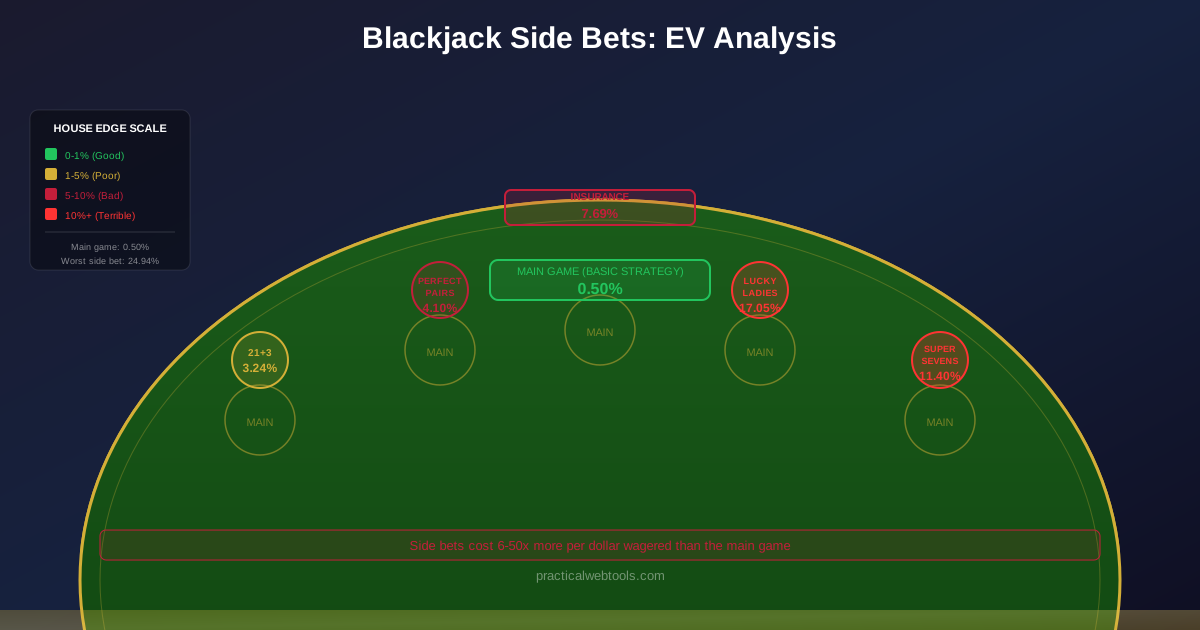
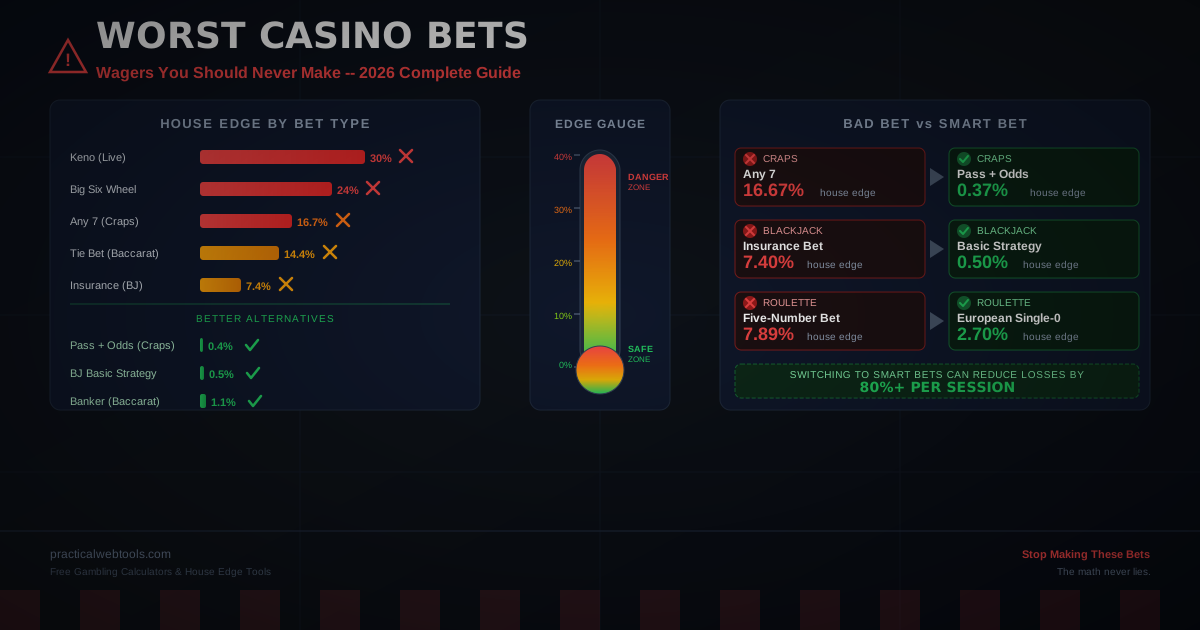
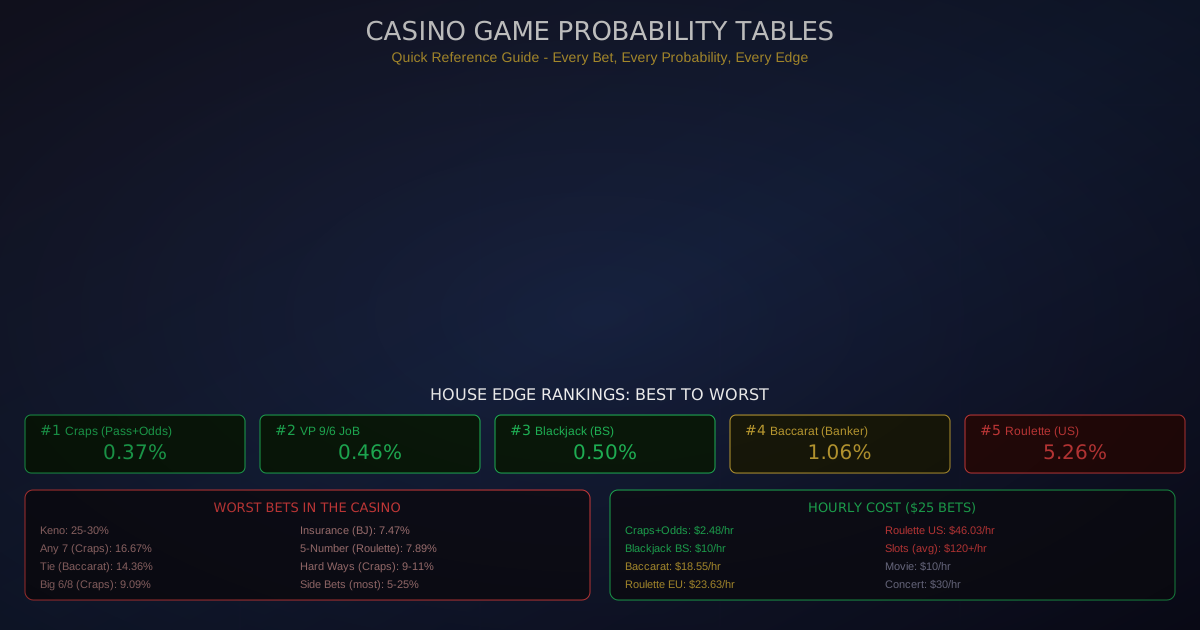
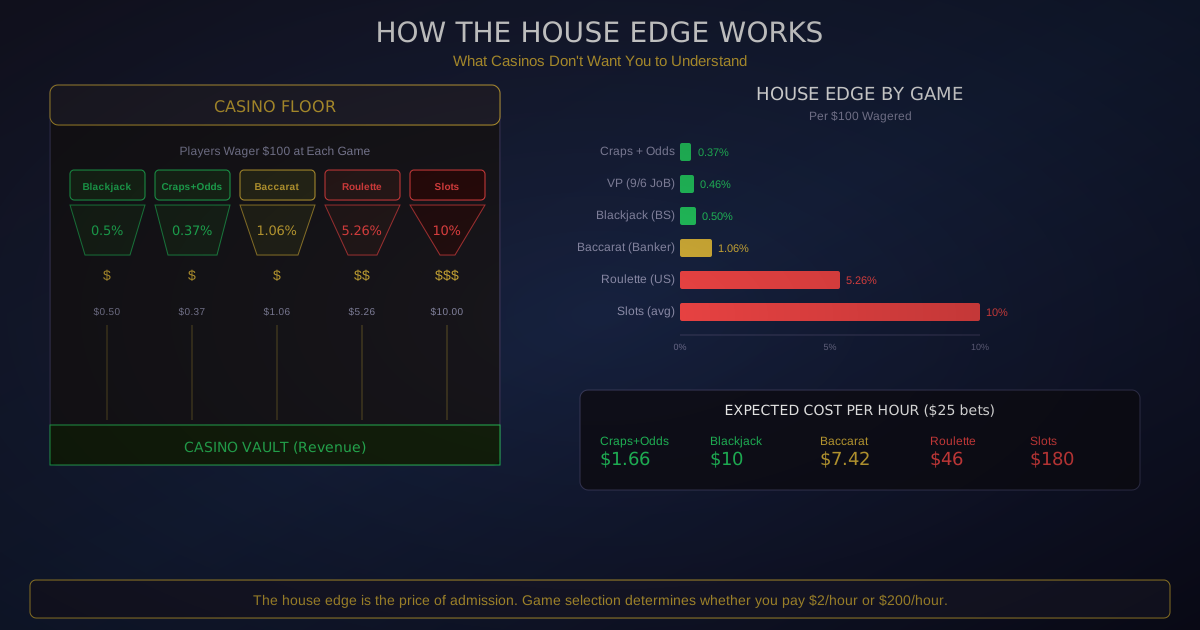
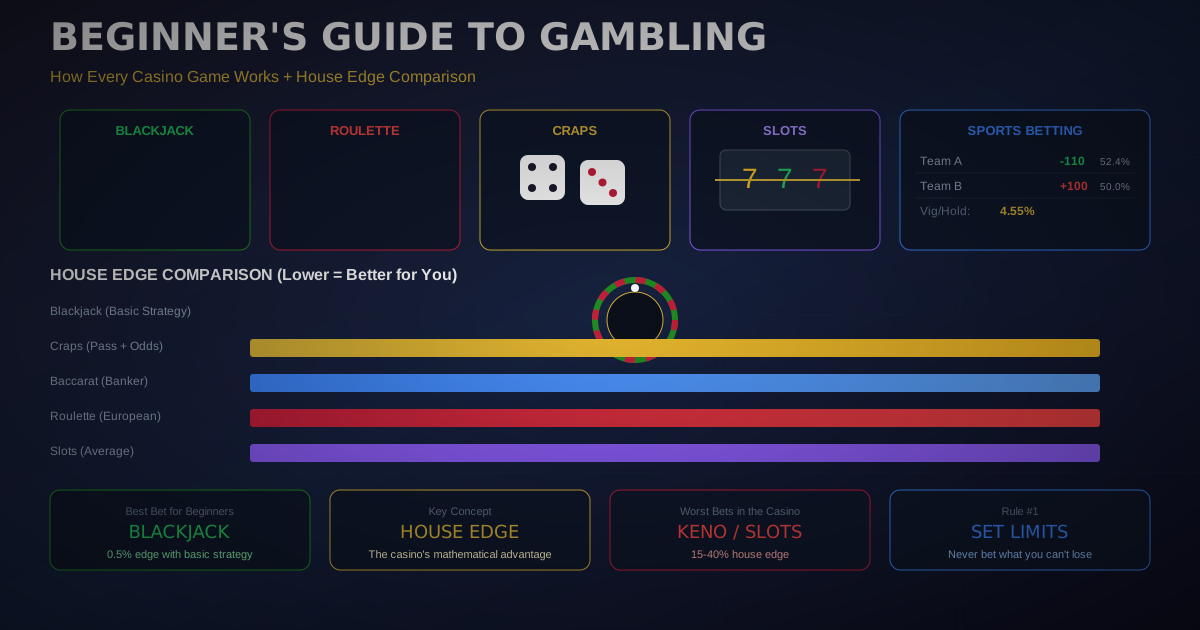
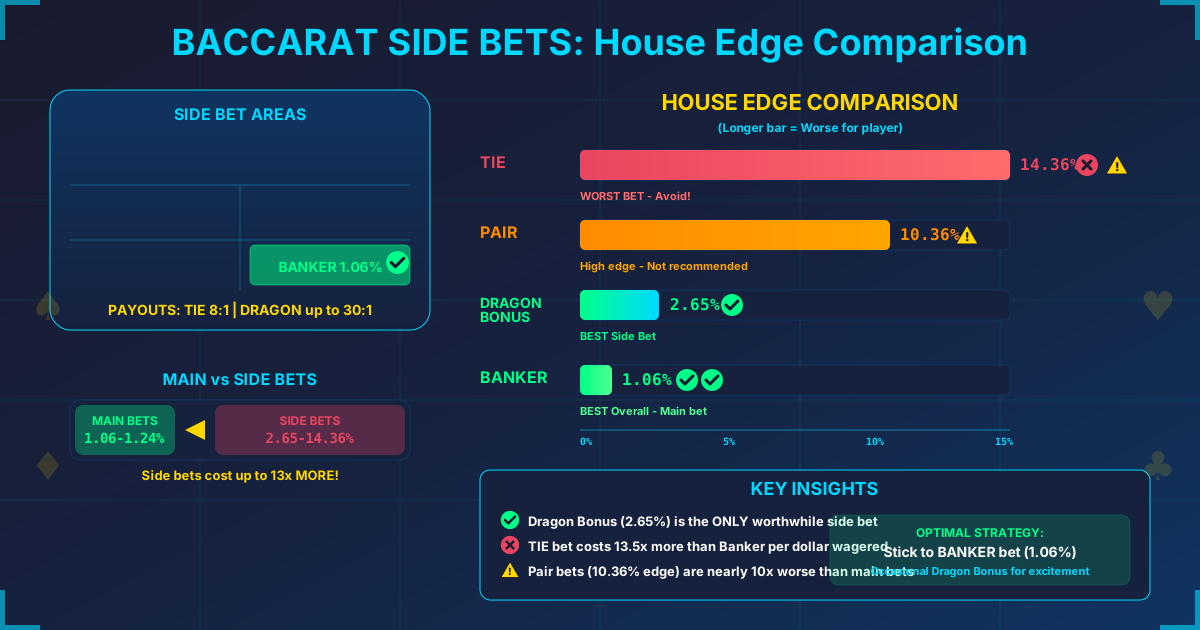
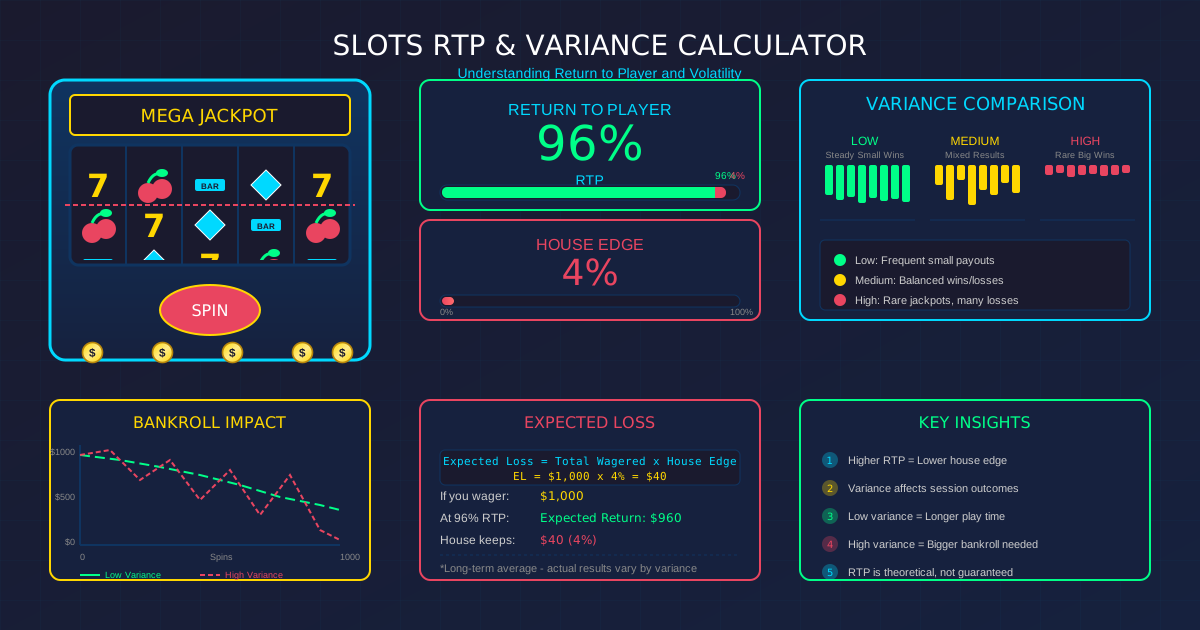
The average blackjack side bet carries a house edge of 3-12%, compared to 0.5% for the main game with basic strategy. That means side bets cost you 6 to 24 times more per dollar wagered than the base game. Some side bets -- like the Tie bet in certain variants -- carry edges above 20%. Yet casinos report that side bet revenue has grown 25-30% over the past decade because they are exciting, easy to understand, and offer large payouts on small wagers. This guide provides the complete expected value analysis for every common blackjack side bet so you can make informed decisions rather than emotional ones.
The uncomfortable truth for most players: nearly every side bet on a blackjack table is a bad bet. The house edges are significantly higher than the main game, the variance is enormous, and the mathematical expectation is strongly negative. However, there are narrow circumstances -- primarily involving card counting -- where specific side bets can become profitable. We will cover those scenarios as well.
Analyze any blackjack side bet with our free Blackjack Side Bets Calculator.
Complete Side Bet House Edge Table
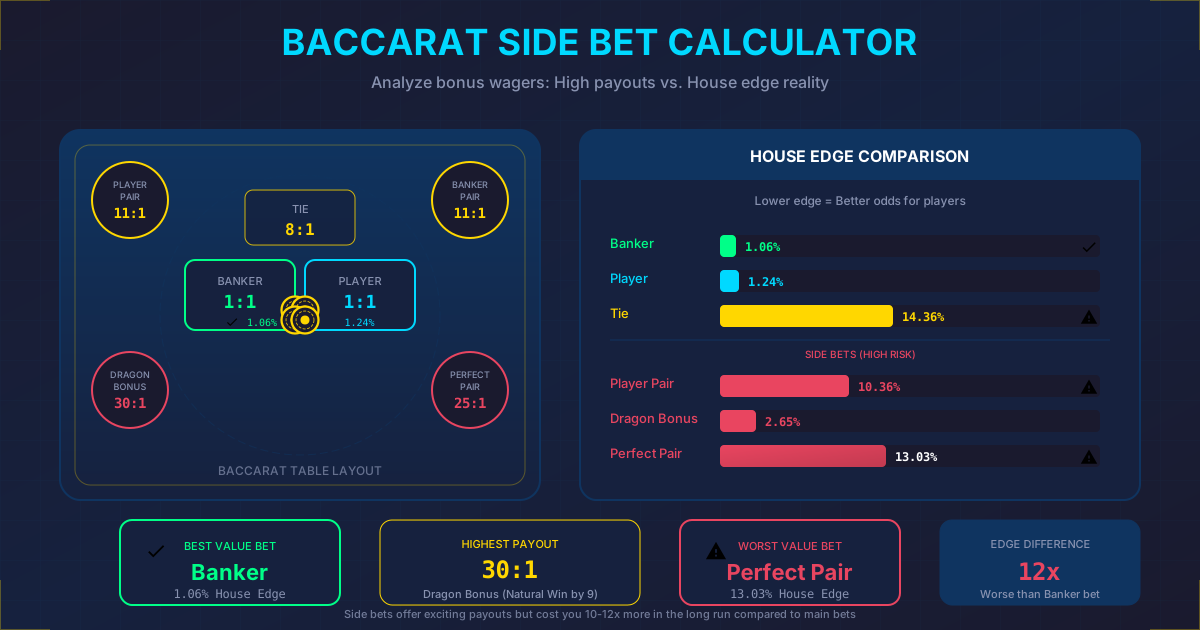
Here is every common blackjack side bet with its house edge, typical payout, and our verdict. This is the most important table in this article.
| Side Bet | House Edge | Top Payout | Variance | Verdict |
|---|---|---|---|---|
| Insurance | 7.69% (non-counter) | 2:1 | Low | Never (unless counting) |
| 21+3 | 3.24% | 100:1 | Medium | Least bad option |
| Perfect Pairs | 4.10-7.95% | 25:1 | Medium | Poor |
| Lucky Ladies | 17.05-24.94% | 200:1-1000:1 | Very High | Terrible |
| Royal Match | 3.78-6.67% | 25:1 | Medium | Poor |
| Super Sevens | 11.40% | 5000:1 | Extreme | Terrible |
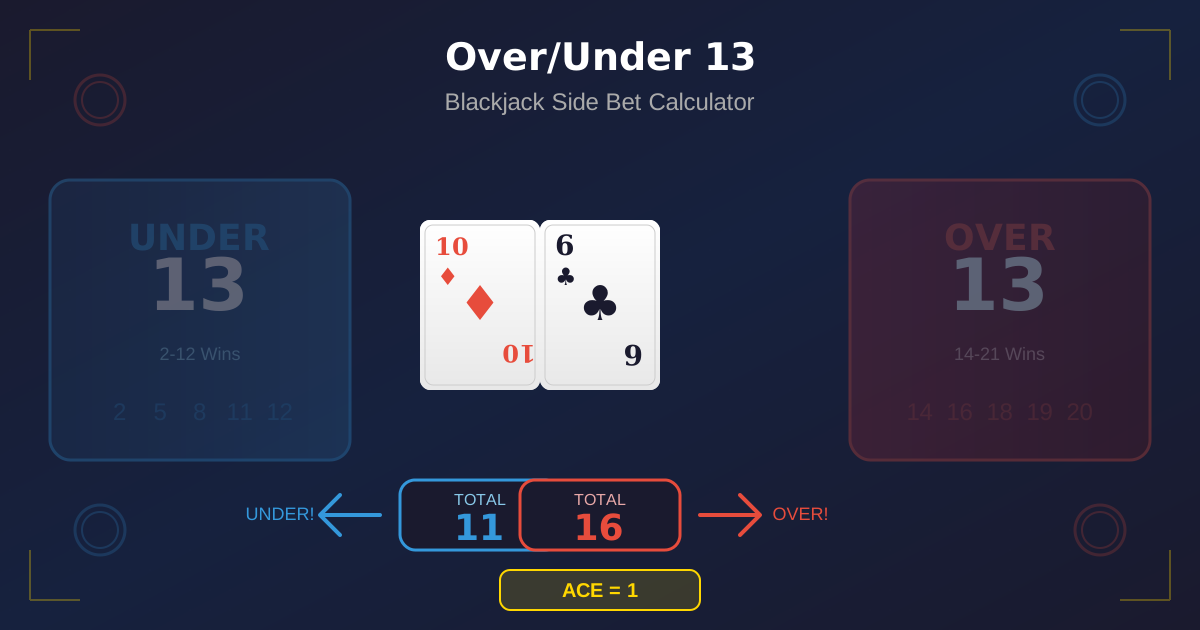
| Over/Under 13 | 6.55-10.07% | 1:1 | Low | Poor |
| Lucky Lucky | 2.44-3.95% | 200:1 | High | Acceptable |
| Bust It | 6.15-8.94% | 250:1 | High | Poor |
| Bet Behind Bonus | 4-8% | Varies | Medium | Poor |
| Main game (basic strategy) | 0.50% | 3:2 | Low | Always play this |
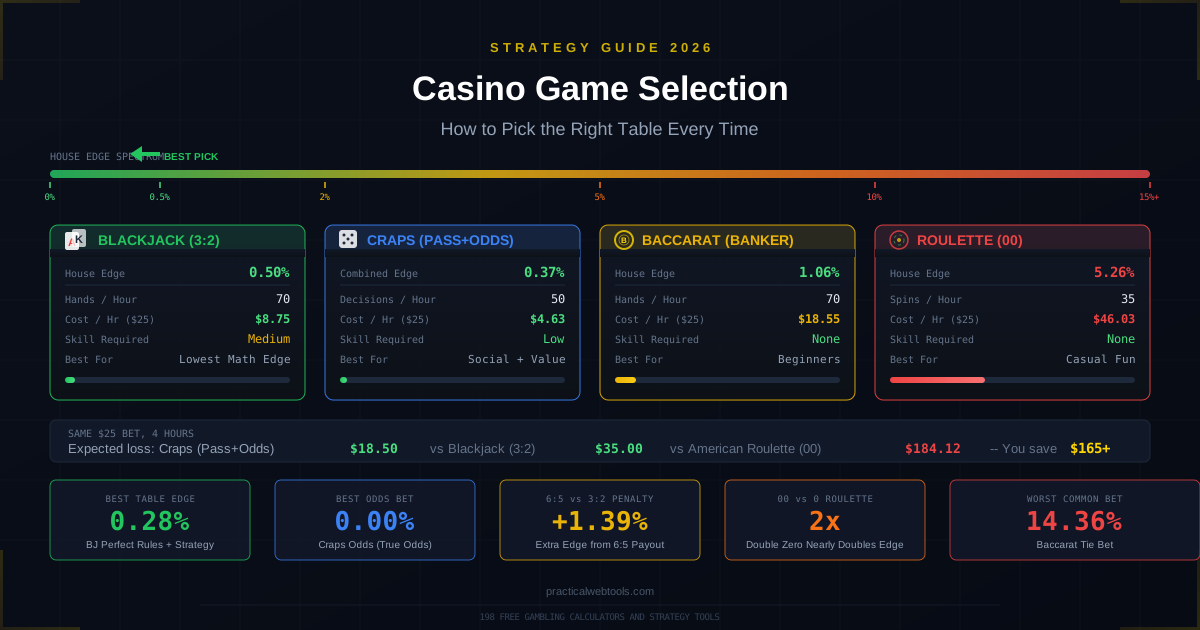
The pattern is clear: the main game at 0.5% house edge is 6-50 times better than any side bet. Every dollar you shift from your main bet to a side bet increases your expected loss.
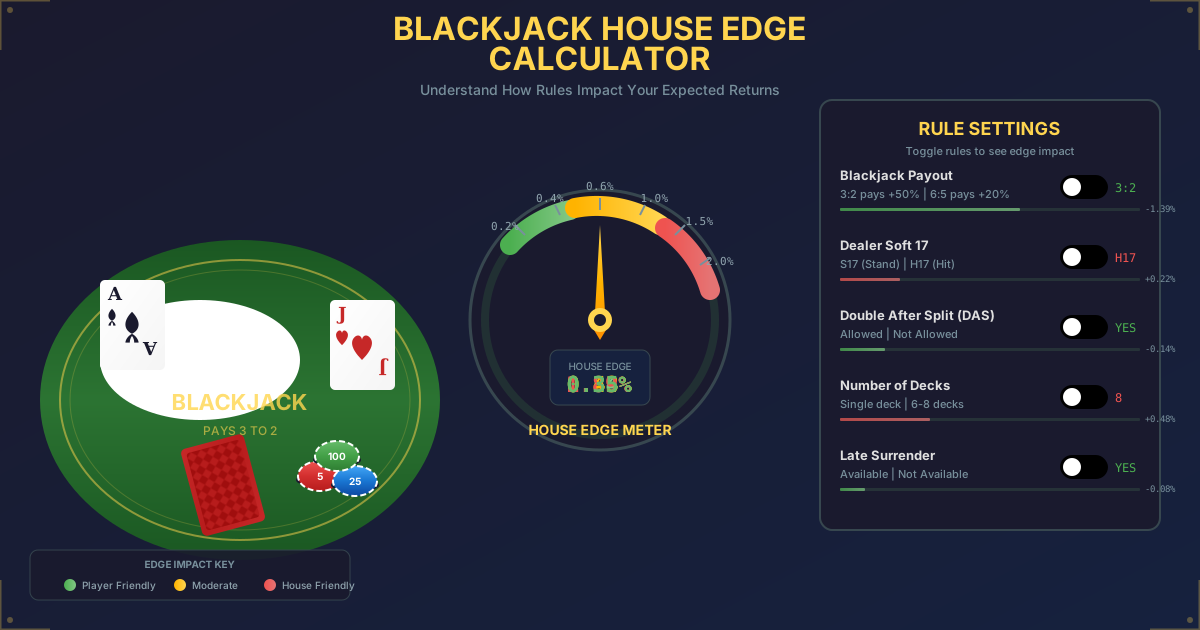
Compare the house edge of any side bet with our Blackjack House Edge Calculator.
Insurance: The Most Common Blackjack Side Bet
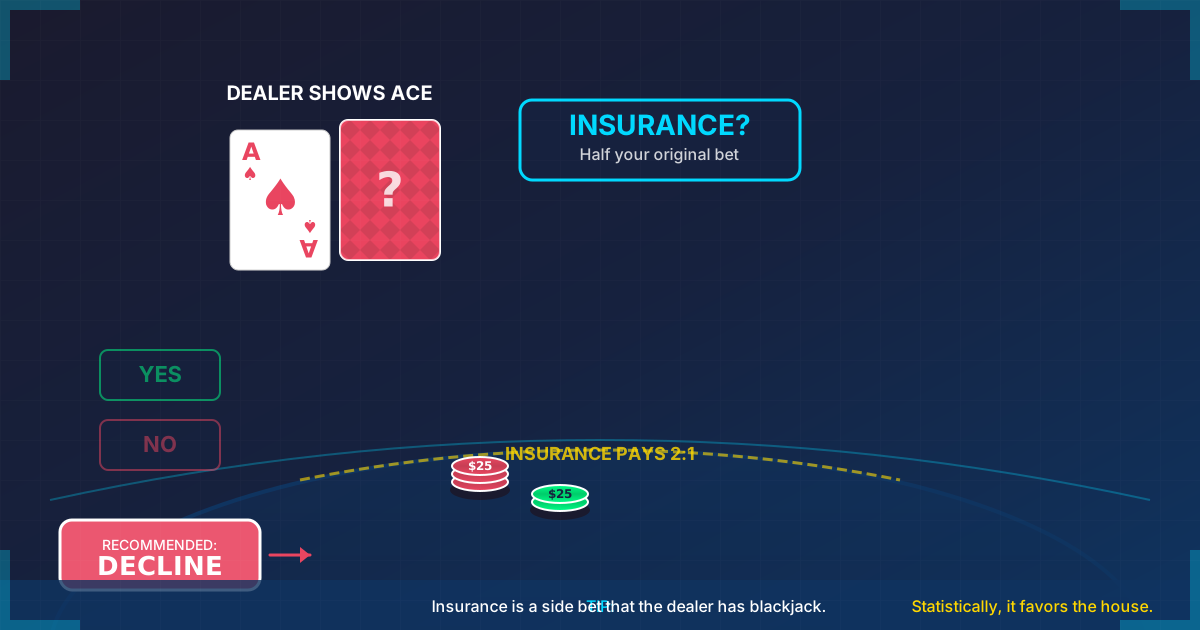
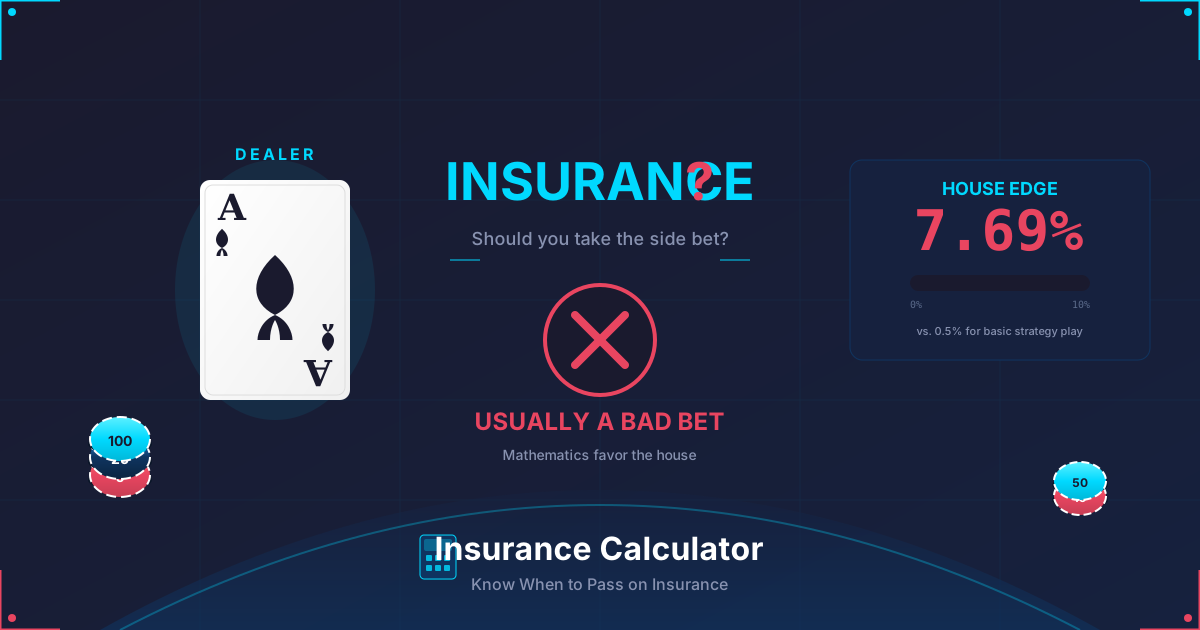
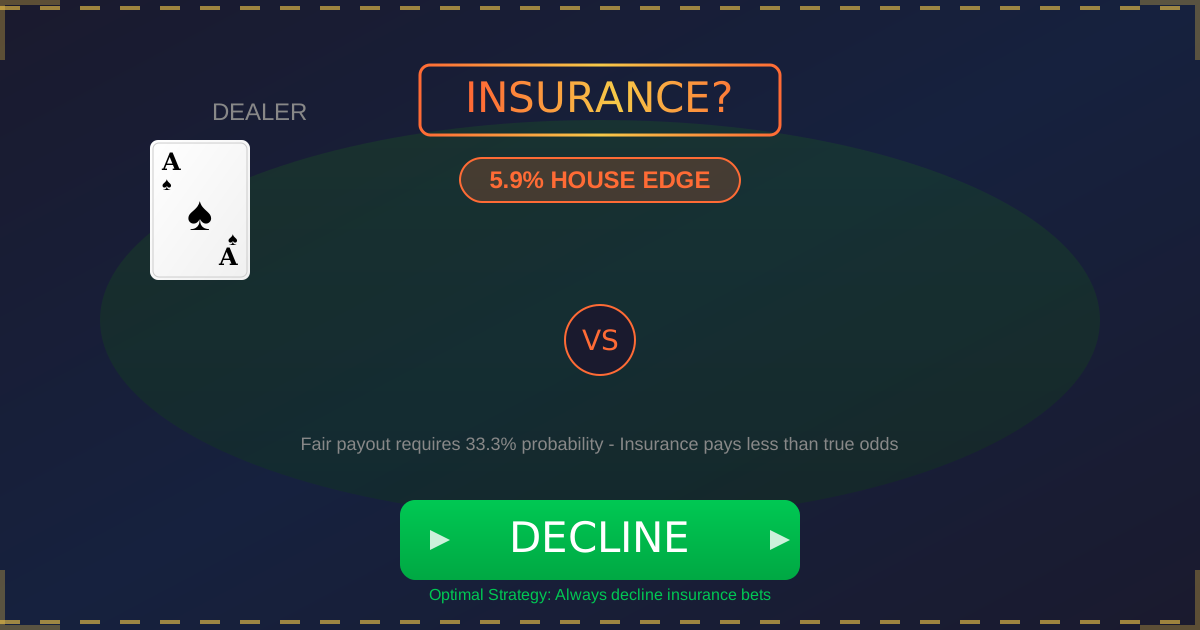
Insurance is offered every time the dealer shows an Ace. It is a side bet that the dealer has a 10-value card in the hole, paying 2:1. Most casinos present it as "protecting" your hand. This framing is misleading.
The Mathematics of Insurance
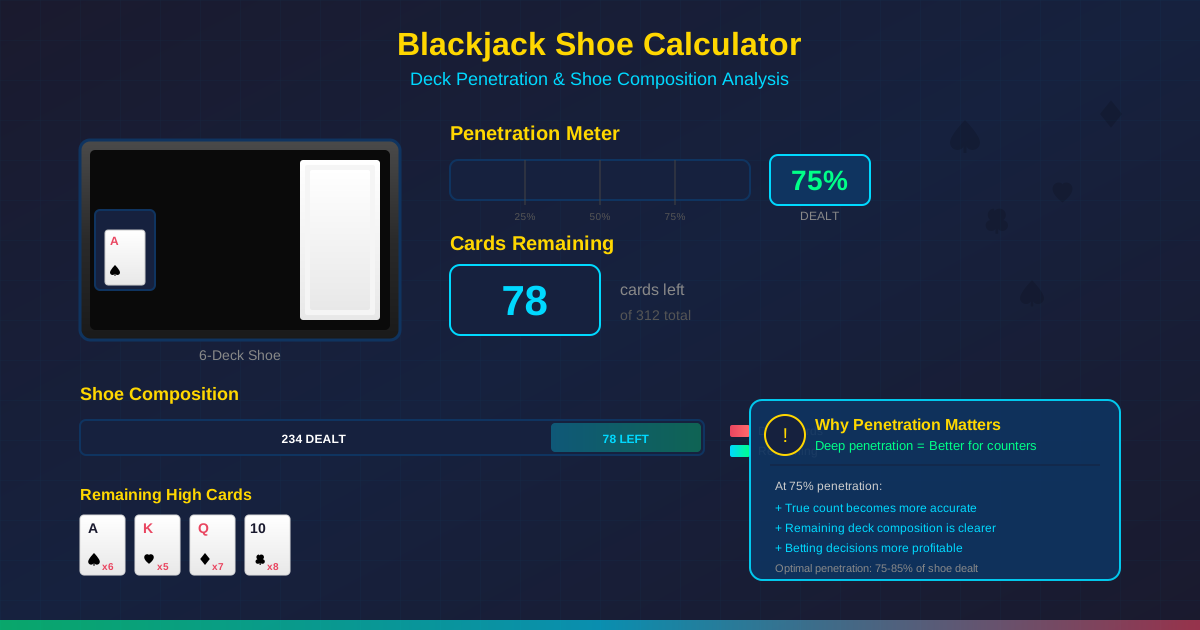
Standard 6-deck shoe:
  Total cards: 312
  After seeing dealer Ace and your two cards: 309 remaining
  10-value cards remaining: 95 or 96 (depending on your hand)
  Non-10 cards remaining: 213 or 214

  Probability of dealer blackjack: ~30.7%
  Probability of no blackjack: ~69.3%

  Insurance bet EV (per $1):
    Win: 0.307 x $2 = $0.614
    Lose: 0.693 x -$1 = -$0.693
    EV = -$0.079

  House Edge: 7.69%
Insurance pays 2:1, but the true odds are approximately 2.25:1 against. This gap is where the casino makes its money.
When Insurance Becomes Profitable
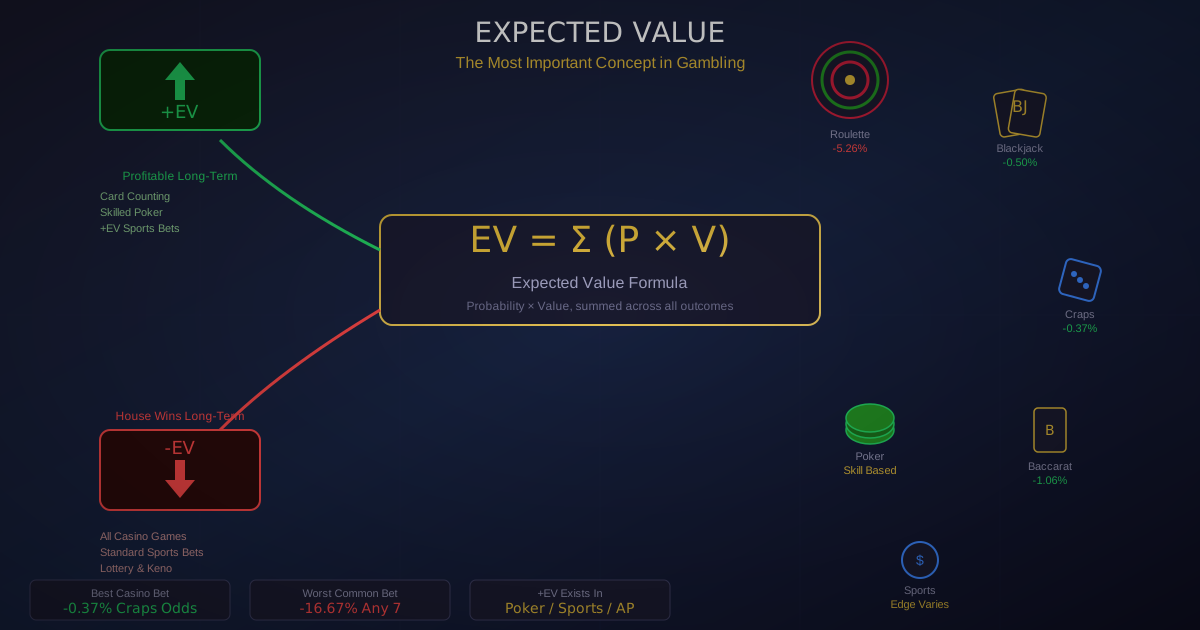
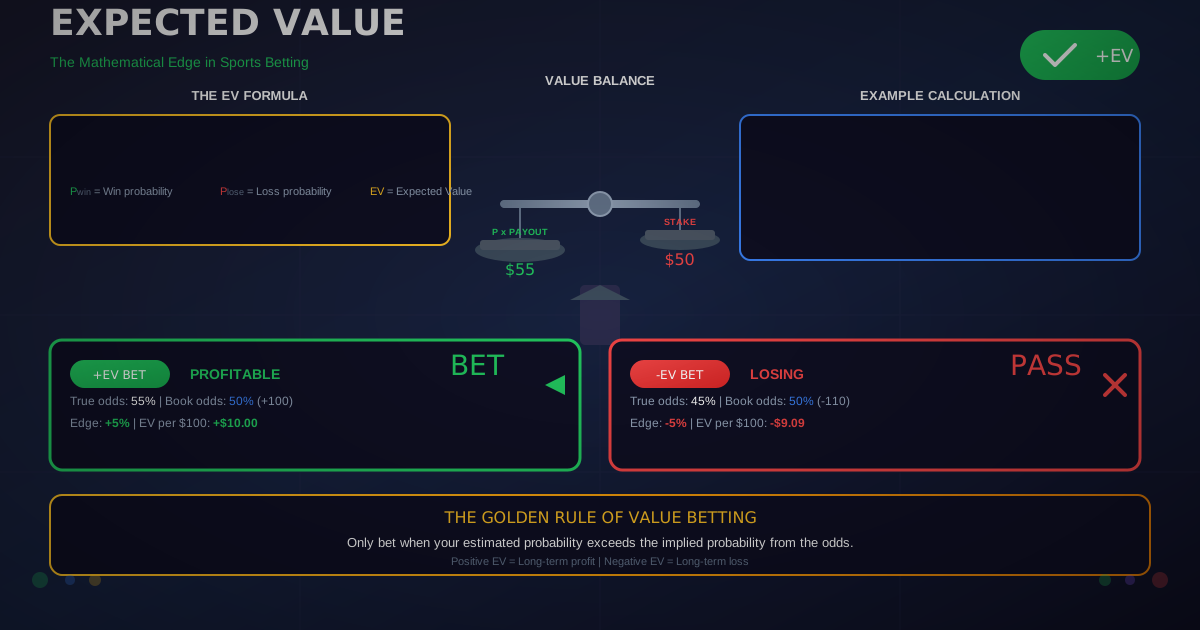
Insurance is profitable when the ratio of 10-value cards to non-10 cards exceeds 2:1. Card counters can identify these situations.
Insurance breakeven calculation:
  For insurance to be +EV:
    P(10 in hole) > 1/3 = 33.33%

  In a standard deck: 16/52 = 30.77% (not profitable)

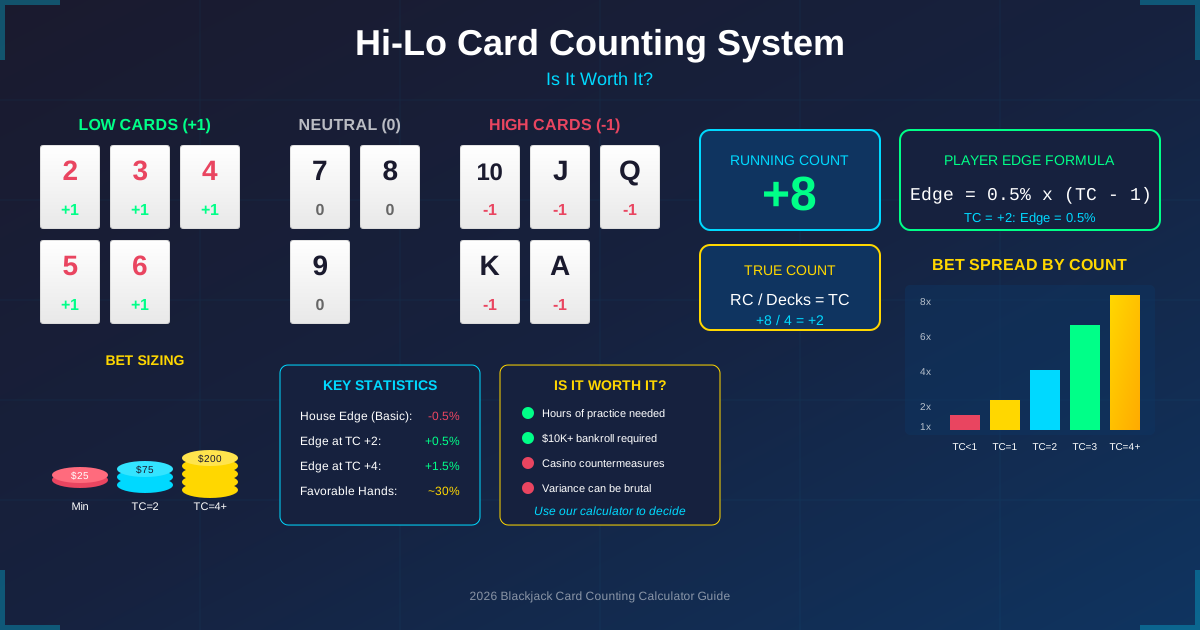
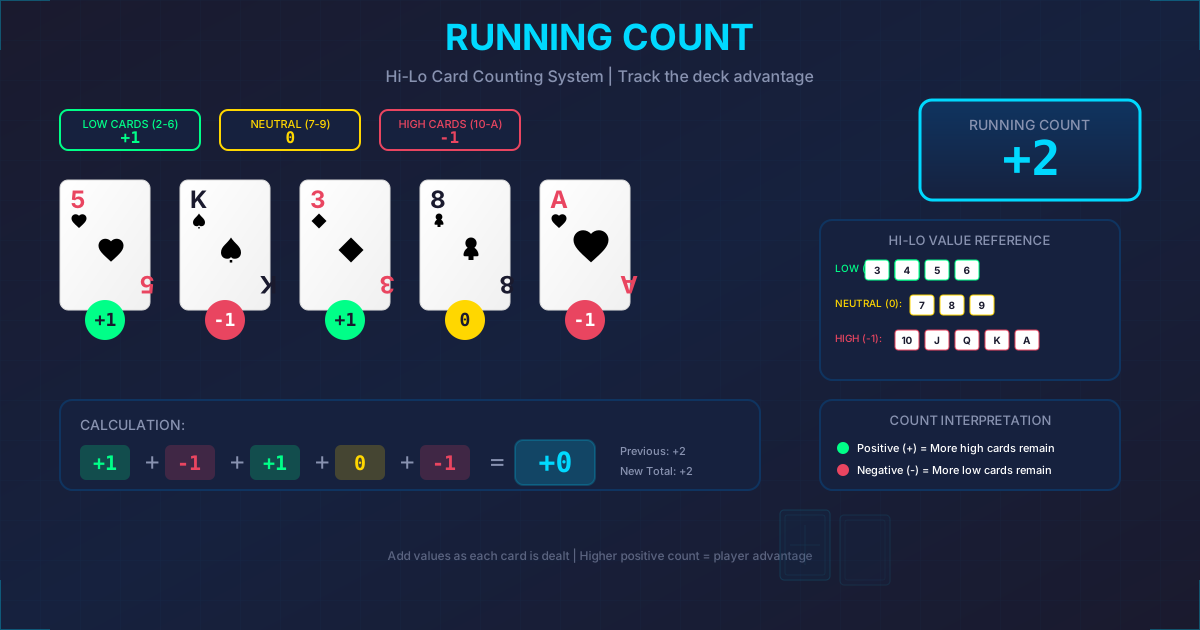
  With Hi-Lo count:
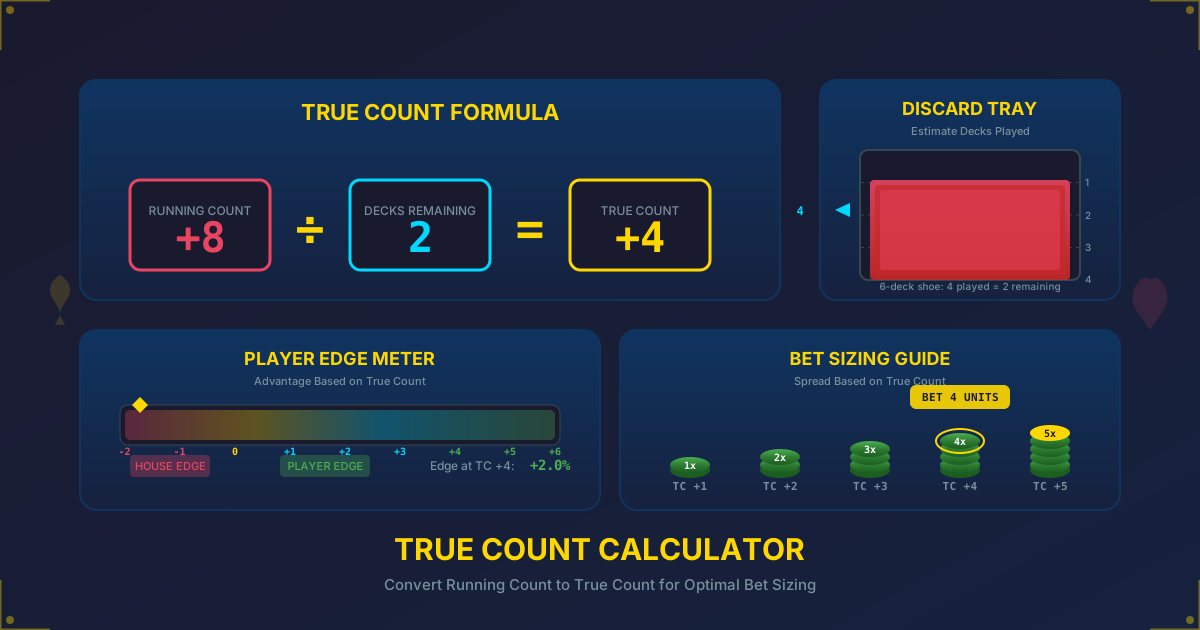
    True count of +3 or higher generally indicates
    sufficient 10-density for insurance to be +EV.
For non-counters: never take insurance. For counters, insurance at high true counts is one of the most valuable plays in the card counter's arsenal because it occurs frequently and the EV swings dramatically with count.
Calculate the exact EV of insurance at any count with our Blackjack Insurance EV Calculator.
"Even Money" Is Insurance in Disguise
When you have a natural blackjack and the dealer shows an Ace, the casino offers "even money" (an immediate 1:1 payout instead of waiting to see if the dealer also has blackjack). This is mathematically identical to taking insurance.
Even Money Analysis:
  You have blackjack, dealer shows Ace.

  Taking even money: +1.00 units guaranteed

  Declining even money:
    Dealer has BJ (30.7%): Push, you get $0
    Dealer no BJ (69.3%): You win 1.5 units (3:2 payout)
    EV = 0.693 x 1.5 + 0.307 x 0 = 1.04 units

  By declining even money, you expect to win 1.04 units
  instead of 1.00 units. Even money costs you 0.04 units
  every time you take it.
Decline even money. Always. Unless you are counting and the true count is +3 or higher.
Run these scenarios through our Blackjack EV Calculator.
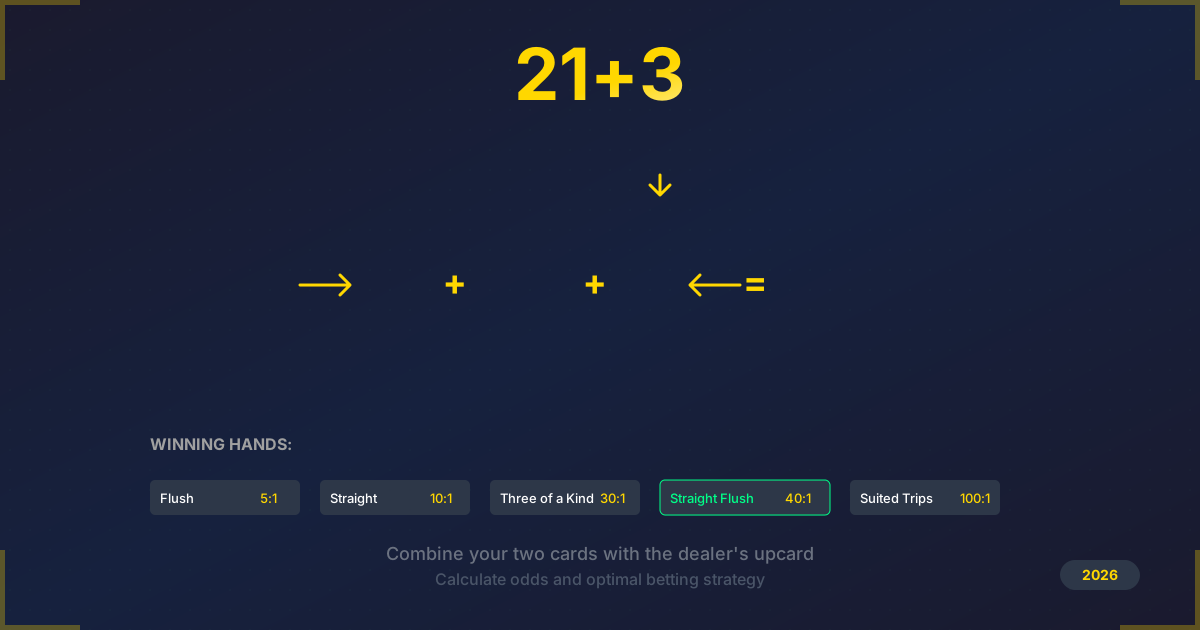
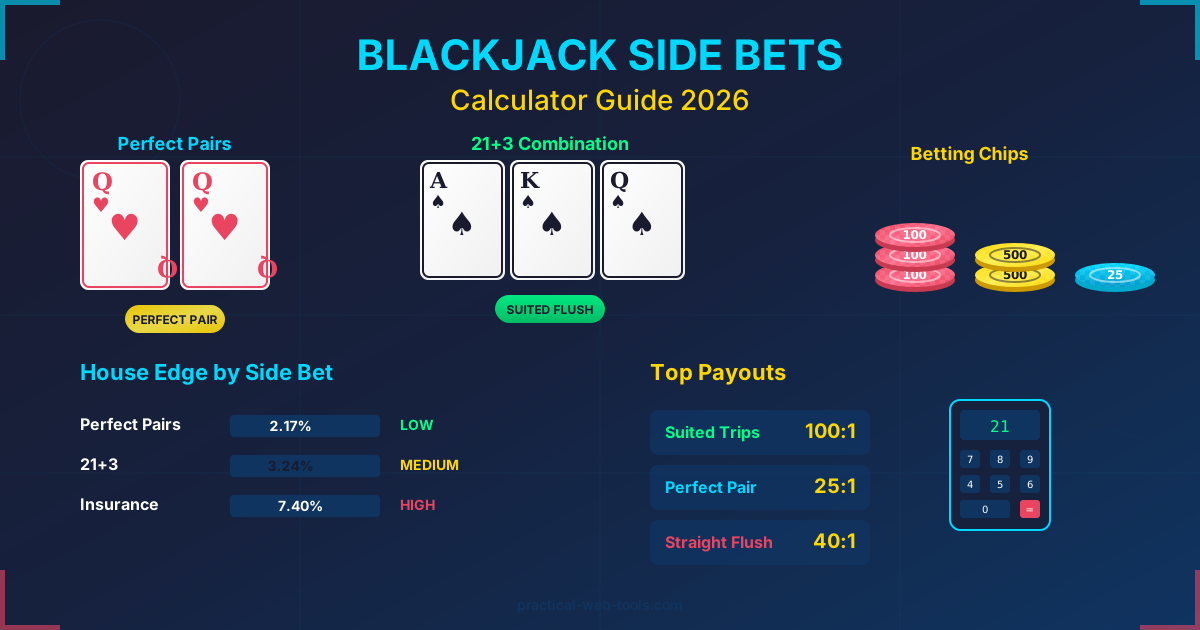
21+3: The Lowest House Edge Side Bet
21+3 is based on your first two cards plus the dealer's upcard forming a three-card poker hand. It is the best side bet on most blackjack tables purely by house edge.
Payout Structure (Standard)
| Hand | Payout | Probability (6-deck) | Contribution to Return |
|---|---|---|---|
| Suited Three of a Kind | 100:1 | 0.0016% | 0.16% |
| Straight Flush | 40:1 | 0.3205% | 12.82% |
| Three of a Kind | 30:1 | 0.2353% | 7.06% |
| Straight | 10:1 | 3.2579% | 32.58% |
| Flush | 5:1 | 7.1405% | 35.70% |
| No qualifying hand | -1 | 89.0442% | -89.04% |
| Total Return | -0.72% to -3.24% |
House Edge Variations
The 21+3 house edge varies significantly based on the pay table and number of decks:
| Version | House Edge |
|---|---|
| Standard (6-deck, above payouts) | 3.24% |
| Enhanced (with suited three-of-a-kind bonus) | 2.15% |
| Single-deck | Higher (fewer combinations) |
| 8-deck | Slightly better |
Card Counting Effect on 21+3
Card counting has minimal impact on 21+3 because the bet depends on three specific cards forming poker hands, not the overall composition of remaining cards. The edge shifts are small and inconsistent, making 21+3 impractical for advantage play.
Evaluate any 21+3 pay table with our Blackjack Side Bets Calculator.
Perfect Pairs: When Both Cards Match
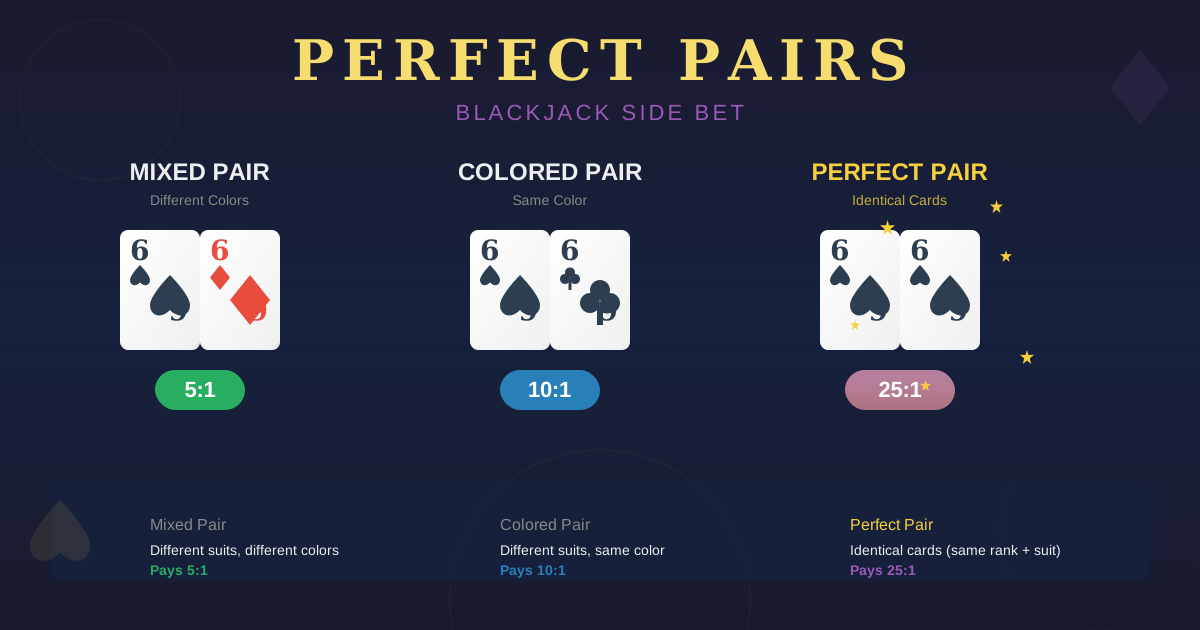
Perfect Pairs pays when your first two cards form a pair. Three tiers of pairs pay different amounts.
Payout Structure
| Pair Type | Description | Payout | Probability (6-deck) | House Edge Contribution |
|---|---|---|---|---|
| Perfect Pair | Same rank, same suit | 25:1 | 1.69% | 42.25% |
| Colored Pair | Same rank, same color | 12:1 | 3.38% | 40.56% |
| Mixed Pair | Same rank, different color | 6:1 | 5.08% | 30.48% |
| No pair | - | -1 | 89.85% | -89.85% |
House Edge by Deck Count
| Decks | Perfect Pair Prob | Overall House Edge |
|---|---|---|
| 2 | 0.83% | 7.95% |
| 4 | 1.27% | 5.49% |
| 6 | 1.69% | 4.10% |
| 8 | 2.04% | 3.37% |
More decks improve the odds for Perfect Pairs because there are more copies of each card, increasing the probability of a perfect match. In a single deck, Perfect Pair is impossible (only one of each card), and the house edge is enormous.
Card Counting Impact
Perfect Pairs is somewhat vulnerable to card counting in theory. When specific ranks are concentrated in the remaining shoe, pair probabilities increase. However, tracking individual ranks is far more complex than standard Hi-Lo counting and offers a smaller edge than simply counting for the main game.
Calculate Perfect Pair probabilities at any point in the shoe with our Blackjack Card Counting Calculator.
Lucky Ladies: High House Edge, High Variance
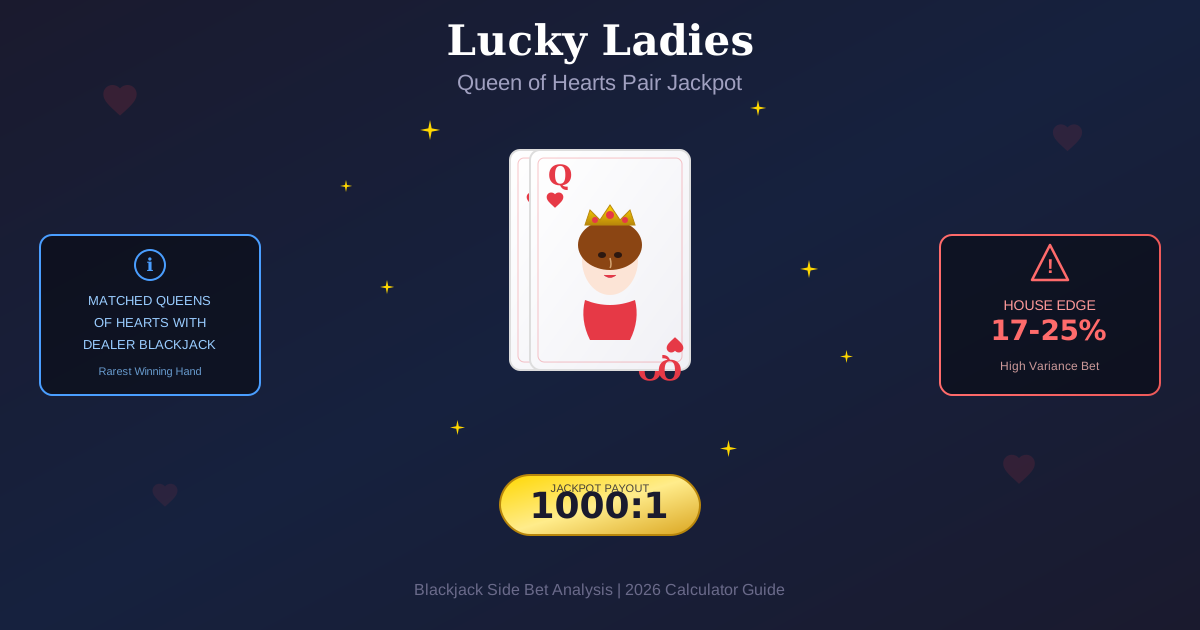
Lucky Ladies pays when your first two cards total 20, with bonus payouts for matched 20s and Queens of Hearts.
Payout Structure
| Hand | Payout | Probability (6-deck) |
|---|---|---|
| Queen of Hearts pair + dealer BJ | 1000:1 | 0.0000726% |
| Queen of Hearts pair | 200:1 | 0.00145% |
| Matched 20 (same rank and suit) | 25:1 | 0.143% |
| Suited 20 (same suit) | 10:1 | 1.33% |
| Unsuited 20 | 4:1 | 8.57% |
| No 20 | -1 | 89.95% |
House Edge: 17.05-24.94%
Lucky Ladies has one of the highest house edges of any blackjack side bet. The headline 1000:1 payout for Queen of Hearts pair with dealer blackjack occurs approximately once every 1.38 million hands. The high house edge is masked by the excitement of potentially winning 1000:1 on a $5 bet.
Lucky Ladies Expected Value:
  A $5 Lucky Ladies bet on every hand for 200 hands:
  Total wagered: $1,000
  Expected loss: $1,000 x 17.05% = $170.50

  Compare to $5 extra on the main bet:
  Total wagered: $1,000
  Expected loss: $1,000 x 0.50% = $5.00

  Lucky Ladies costs 34x more per dollar wagered.
Card Counting Opportunity
Lucky Ladies is one of the few side bets where card counting can create a significant player advantage. When the shoe is rich in 10-value cards (especially Queens), the probability of all Lucky Ladies outcomes increases. At high true counts (+4 and above), skilled counters have reported edges of 5-15% on Lucky Ladies.
However, this requires a separate counting system optimized for 10s and face cards, and the bet limits on side bets are typically low ($5-$25), limiting profitability.
Calculate Lucky Ladies EV at different counts with our Blackjack Side Bets Calculator.
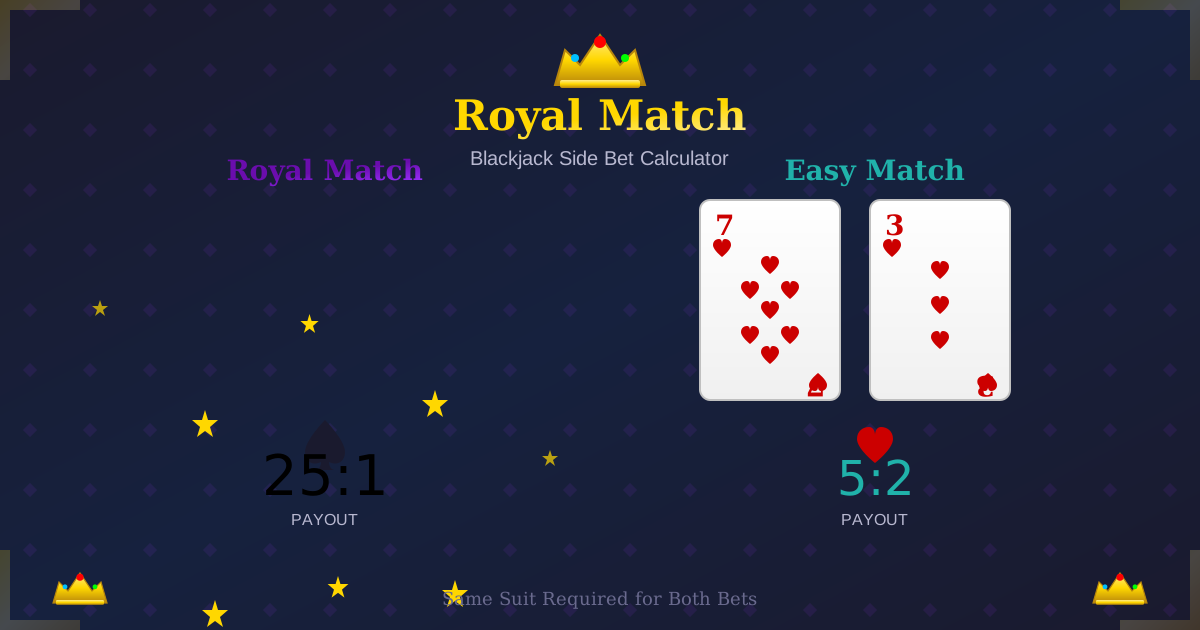
Royal Match: Suited Cards
Royal Match pays when your first two cards are the same suit, with a bonus for a suited King-Queen ("Royal Match").
Payout Structure (6-deck)
| Hand | Payout | Probability |
|---|---|---|
| Royal Match (K-Q suited) | 25:1 | 0.448% |
| Suited pair (any two suited) | 2.5:1 or 3:1 | 24.06% |
| No match | -1 | 75.50% |
House Edge: 3.78-6.67%
The house edge depends heavily on the suited pair payout:
- 3:1 on suited cards: ~3.78% house edge
- 2.5:1 on suited cards: ~6.67% house edge
That half-unit difference in payout dramatically changes the math. Always check the specific payout before playing.
Super Sevens: Extreme Variance Trap
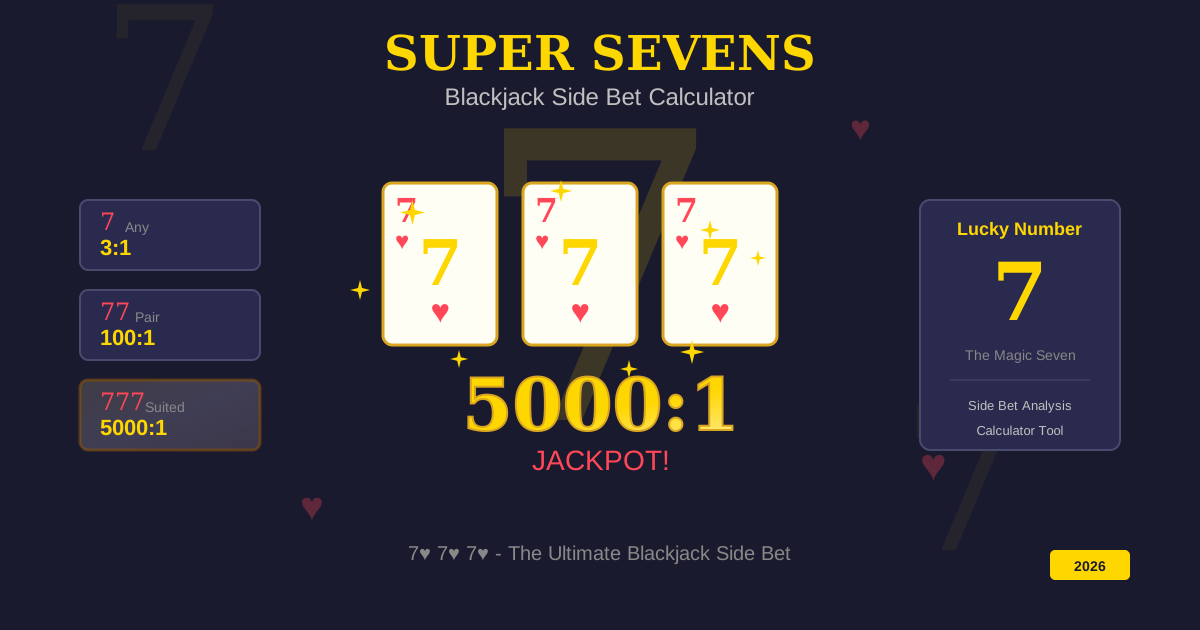
Super Sevens pays based on how many 7s appear in your hand and the dealer's hand. The top payout is 5000:1 for three suited 7s.
Payout Structure
| Hand | Payout | Probability |
|---|---|---|
| Three suited 7s | 5000:1 | 0.00018% |
| Three unsuited 7s | 500:1 | 0.0033% |
| Two suited 7s | 100:1 | 0.013% |
| Two unsuited 7s | 50:1 | 0.039% |
| One 7 (first card) | 3:1 | 7.69% |
| No 7 | -1 | 92.26% |
House Edge: 11.40%
The attraction is the 5000:1 jackpot, which occurs approximately once every 555,000 hands. At 80 hands per hour, you would need to play 6,938 hours (about 3.5 years of full-time play) to have a 50% chance of hitting it once.
Meanwhile, the house edge of 11.40% means a $5 bet on every hand costs:
$5 x 80 hands/hour x 11.40% = $45.60 per hour in expected losses
That is nearly the entire expected cost of the main game at a $50 average bet.
Understand the variance implications with our Blackjack Variance Calculator.
The EV Impact of Side Bets on Your Session
Let us quantify exactly how side bets change your session economics.
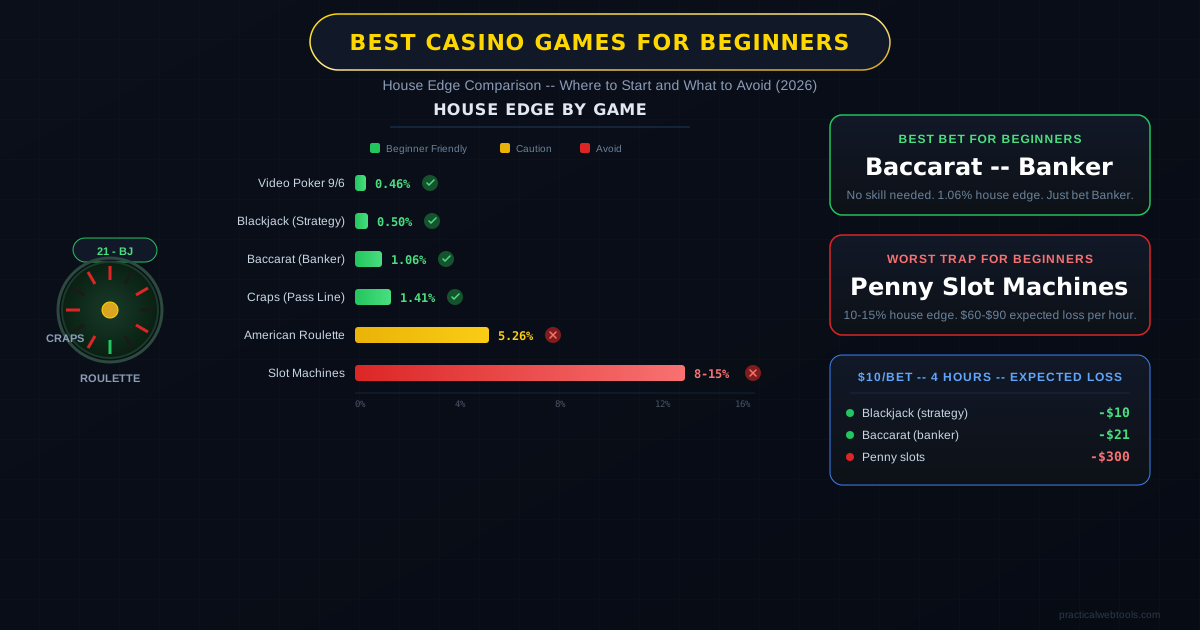
Scenario: 4-Hour Session, $15 Main Bet, 80 Hands/Hour
Player A: Main game only (perfect basic strategy)
Total hands: 320
Total main bet wagered: $4,800
House edge: 0.50%
Expected loss: $24.00
Cost per hour: $6.00
Player B: Main game + $5 21+3 every hand
Main bet: $4,800 x 0.50% = $24.00
21+3 bet: $1,600 x 3.24% = $51.84
Total expected loss: $75.84
Cost per hour: $18.96

The $5 side bet tripled the cost of the session.
Player C: Main game + $5 Perfect Pairs + $5 21+3 every hand
Main bet: $4,800 x 0.50% = $24.00
Perfect Pairs: $1,600 x 4.10% = $65.60
21+3: $1,600 x 3.24% = $51.84
Total expected loss: $141.44
Cost per hour: $35.36

Side bets increased the session cost by 489%.
Player D: Main game + $5 Lucky Ladies every hand
Main bet: $4,800 x 0.50% = $24.00
Lucky Ladies: $1,600 x 17.05% = $272.80
Total expected loss: $296.80
Cost per hour: $74.20

Lucky Ladies alone costs more than 11x the main game.
Model your specific side bet combinations with our Expected Value Calculator.
When Side Bets Can Be Profitable: Card Counting
For advantage players, certain side bets become profitable under specific conditions. This is not recreational advice -- it requires professional-level card counting skills.
Side Bets Most Vulnerable to Counting
| Side Bet | Count Threshold for +EV | Maximum Player Edge | Difficulty |
|---|---|---|---|
| Insurance | True count +3 (Hi-Lo) | 15-20% | Easy |
| Lucky Ladies | True count +4 | 5-15% | Medium |
| Perfect Pairs | Rank-specific count | 3-8% | Hard |
| 21+3 | Minimal impact | <1% | Impractical |
| Super Sevens | 7-specific count | 5-10% | Medium |
How Card Counting Flips Insurance
The most practical advantage play with side bets is insurance at high counts.
Insurance EV by True Count (Hi-Lo, 6-deck):

True Count | Insurance EV | Correct Play
    -5     | -18.4%       | Never take
    -3     | -14.6%       | Never take
    -1     | -10.8%       | Never take
     0     | -7.69%       | Never take
    +1     | -4.50%       | Never take
    +2     | -1.31%       | Never take
    +3     | +1.88%       | Take insurance
    +4     | +5.07%       | Take insurance
    +5     | +8.26%       | Take insurance
    +7     | +14.64%      | Take insurance
   +10     | +24.21%      | Take insurance
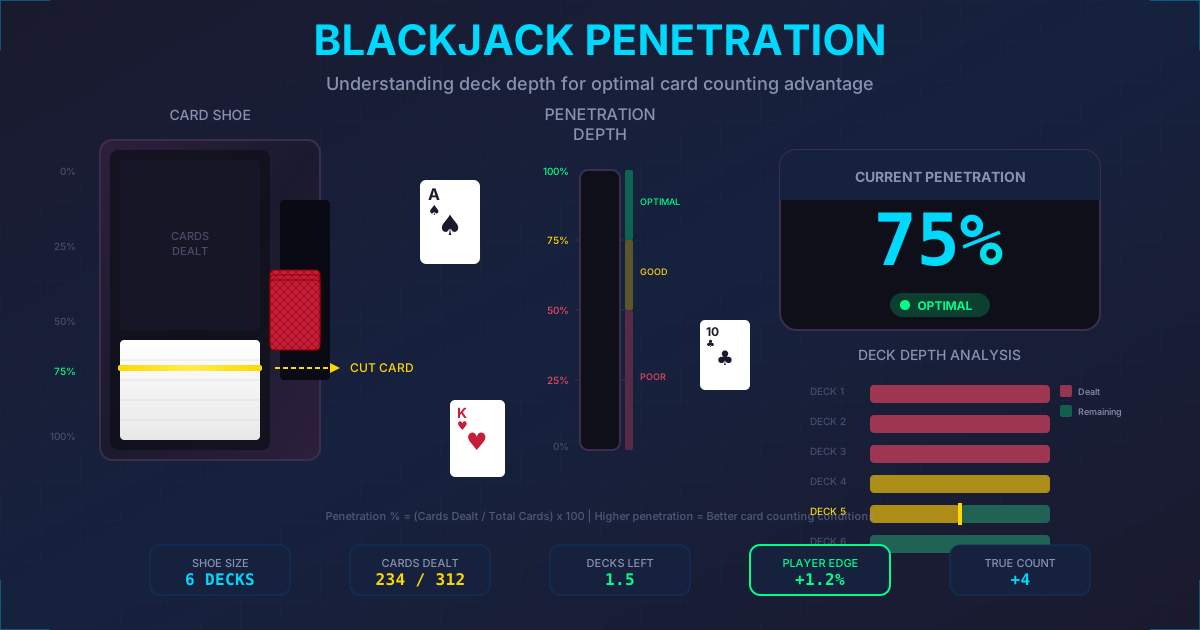
At a true count of +3, the shoe contains enough 10-value cards that insurance becomes a positive-EV bet. The higher the count, the more profitable it becomes. This is one of the most important index plays for card counters.
Practice your count accuracy with our Blackjack Card Counting Tools.
The Psychology of Side Bets
Understanding why side bets are appealing helps you resist their pull.
The Jackpot Illusion
A 1000:1 payout on a $5 bet means a potential $5,000 win. This triggers the same reward anticipation as lottery tickets. The brain evaluates the potential gain ($5,000) far more vividly than the expected cost ($0.85 per bet on Lucky Ladies). You imagine winning $5,000. You do not imagine losing $5 on 170 consecutive hands.
Small Bet Minimization
"It is only $5" per hand. But $5 per hand at 80 hands per hour is $400 per hour in action. On a 17% house edge, that is $68 per hour in expected losses. The small individual bet disguises the large aggregate cost.
Excitement Compensation
The main blackjack game can feel repetitive: bet, cards, decision, result, repeat. Side bets add suspense and variety. You are paying a premium for entertainment, which is a valid choice -- as long as you understand the premium is 3-50x higher than the main game's cost.
Social Pressure
When the table hits a side bet, everyone celebrates. Missing out on those celebrations creates fear of missing out (FOMO). This social dynamic pushes players to join side bets even when they understand the math.
Which Side Bet Is "Least Bad"?
If you are going to play a side bet despite the math, here is how they rank from least to most expensive:
-
Lucky Lucky (2.44-3.95%): The lowest house edge among common side bets. Based on your two cards plus dealer upcard totaling 19, 20, or 21.
-
21+3 (2.15-3.24%): Poker hand formed by your cards + dealer upcard. Reasonable variance, relatively low edge.
-
Royal Match (3.78% at 3:1): Suited cards. Simple and relatively cheap if the pay table is 3:1.
-
Perfect Pairs (3.37-7.95%): Paired cards. Edge varies dramatically with deck count and pay table.
-
Insurance (7.69%): Only for card counters at TC +3 or above.
-
Over/Under 13 (6.55-10.07%): Simple but overpriced.
-
Bust It (6.15-8.94%): Dealer bust side bet. High edge, high variance.
-
Lucky Ladies (17.05-24.94%): Terrible house edge. Only viable for skilled counters.
-
Super Sevens (11.40%): Extreme variance trap with near-impossible jackpot.
Compare any combination of side bets with our Blackjack Side Bets Calculator.
Real-World Side Bet Impact Examples
Example 1: The Casual Side Bettor
Jennifer plays blackjack twice a month, 3 hours per session, $25 main bet with $5 on 21+3 and $5 on Perfect Pairs every hand.
Annual sessions: 24
Hands per session: 240 (80/hour x 3 hours)
Annual hands: 5,760

Main bet expected loss: 5,760 x $25 x 0.50% = $720.00
21+3 expected loss: 5,760 x $5 x 3.24% = $933.12
Perfect Pairs expected loss: 5,760 x $5 x 4.10% = $1,180.80

Total annual expected loss: $2,833.92
Loss from side bets alone: $2,113.92 (74.6% of total)

Without side bets: $720/year
With side bets: $2,834/year
Side bets add $2,114 per year to Jennifer's losses.
Example 2: The High-Roller Side Bet Lover
Marcus plays $100 blackjack with $25 Lucky Ladies and $25 21+3 every hand, 4 hours per week.
Annual hands: 80/hr x 4 hrs/week x 52 weeks = 16,640

Main bet: 16,640 x $100 x 0.50% = $8,320
Lucky Ladies: 16,640 x $25 x 17.05% = $70,928
21+3: 16,640 x $25 x 3.24% = $13,478

Total annual expected loss: $92,726
Loss from side bets: $84,406 (91% of total)
Marcus's side bets cost him more than 10x what the main game costs. Lucky Ladies alone accounts for 76.5% of his total expected annual losses.
Example 3: The Disciplined Counter
Alex counts cards (Hi-Lo) and only takes insurance at true count +3 or above, plus bets Lucky Ladies when the true count exceeds +5.
Insurance opportunities at TC +3+: ~8% of hands
Lucky Ladies at TC +5+: ~3% of hands

Insurance EV at TC +3: +1.88% average
Lucky Ladies EV at TC +5: +6% average

On 10,000 annual hands:
  Insurance profit: 800 hands x $25 x 1.88% = $376
  Lucky Ladies profit: 300 hands x $25 x 6% = $450

  Total side bet profit: $826/year
  (In addition to main game counting edge)
This requires professional-level counting ability and discipline to bet side bets only at the right moments. Fewer than 1% of blackjack players can execute this profitably.
Evaluate your counting strategy with our Blackjack Basic Strategy Calculator and our Blackjack Strategy Chart.
Side Bet Bankroll Considerations
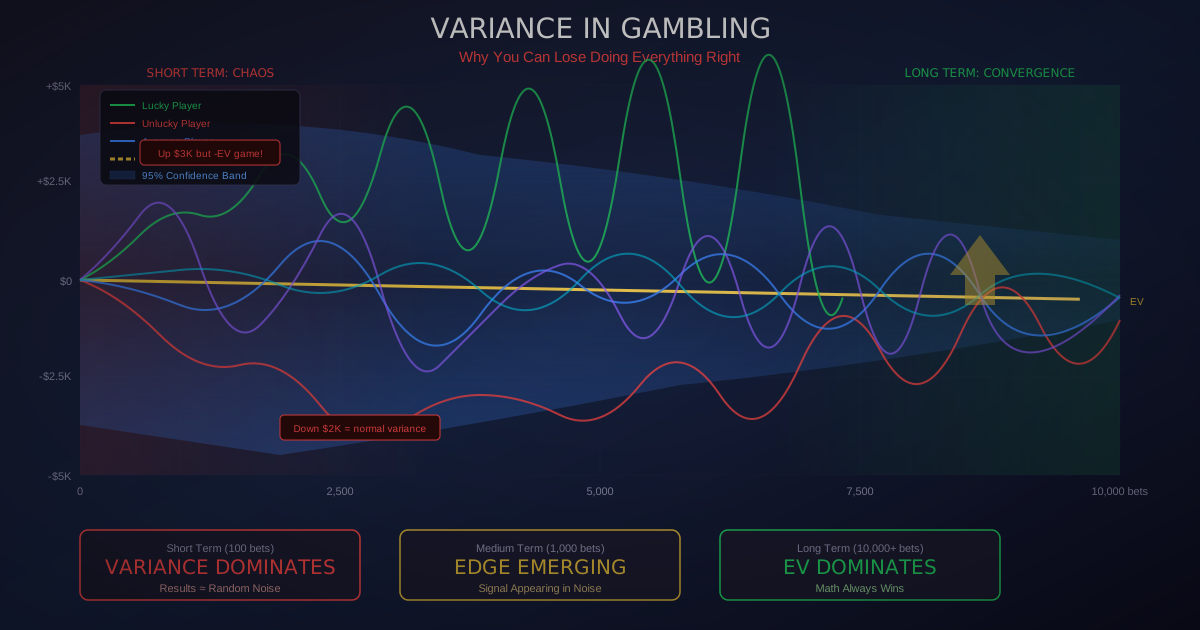
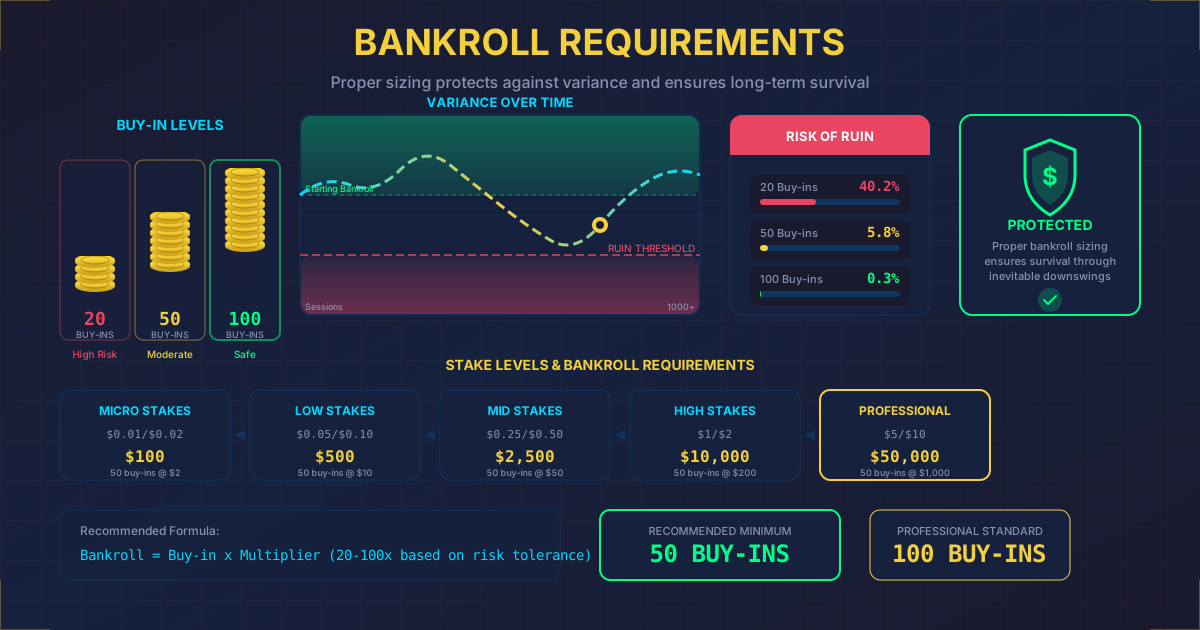
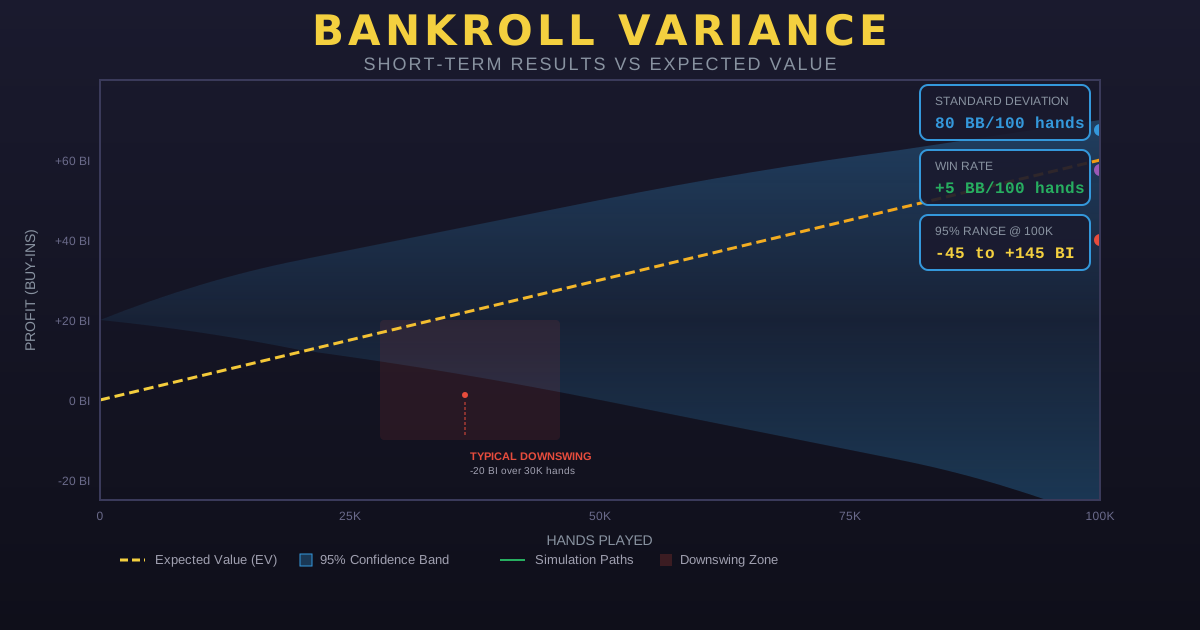
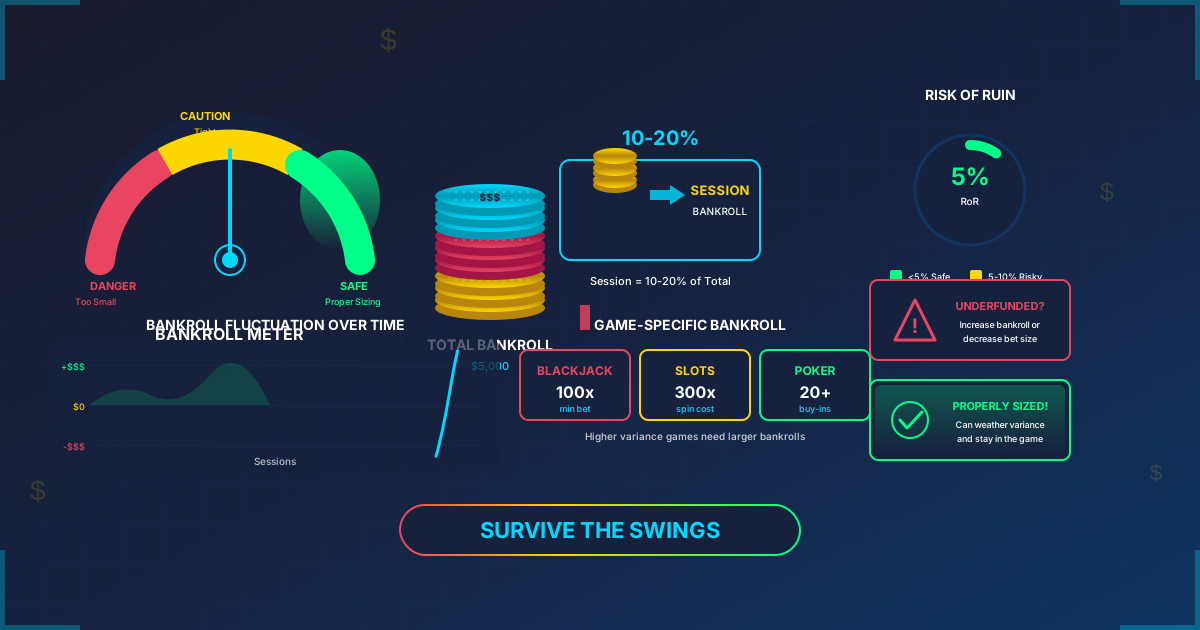
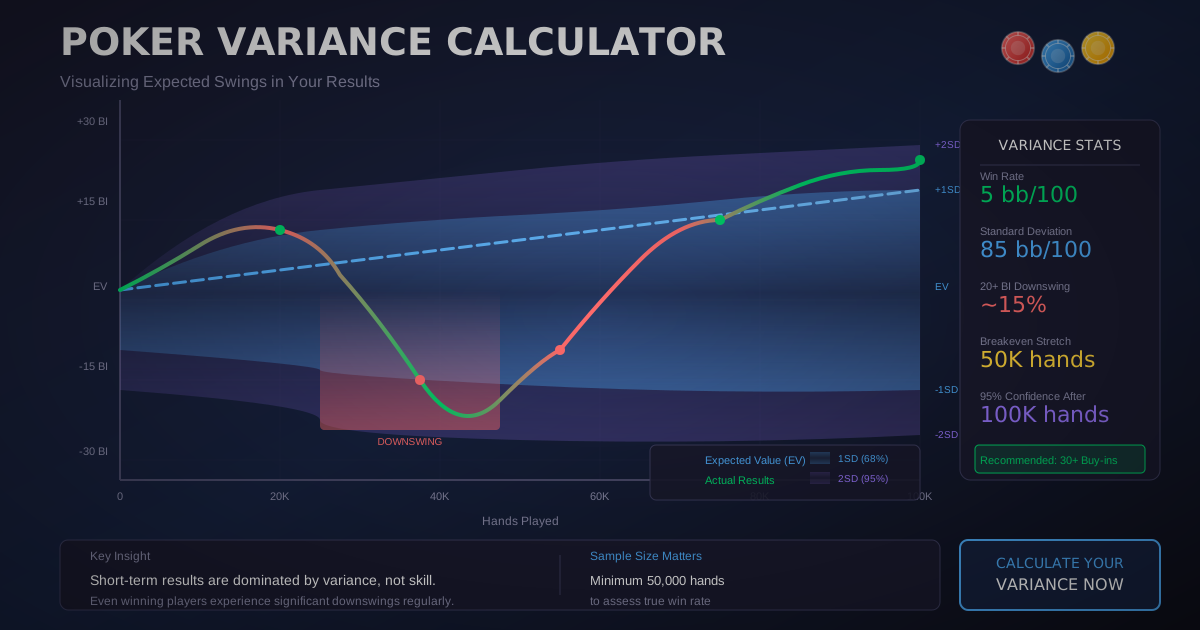
Side bets have much higher variance than the main game, which has significant bankroll implications.
Variance Comparison
| Bet Type | Standard Deviation (per unit) | Bankroll Impact |
|---|---|---|
| Main game (basic strategy) | 1.15 | Low |
| 21+3 | 3.50 | Medium |
| Perfect Pairs | 4.20 | Medium-High |
| Lucky Ladies | 8.90 | Very High |
| Super Sevens | 15.60 | Extreme |
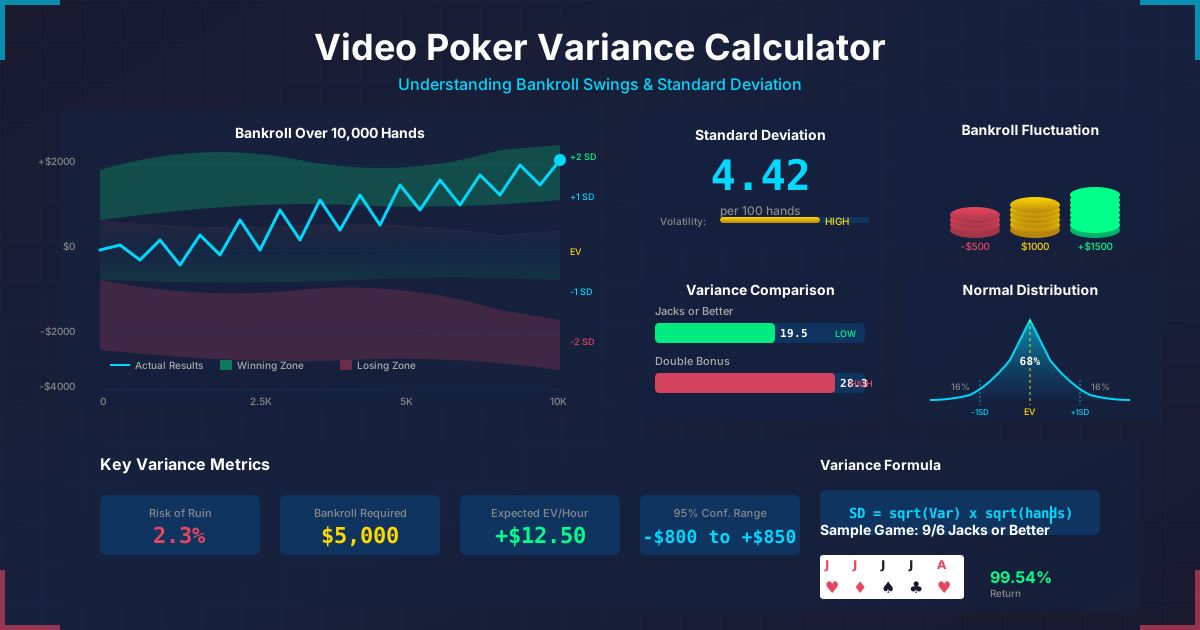
High variance means larger swings in both directions. Lucky Ladies has a standard deviation nearly 8x that of the main game. This means your session results will be far more unpredictable, and your bankroll needs to be substantially larger to absorb the swings.
Calculate your risk of ruin with side bets included using our Blackjack Risk of Ruin Calculator.
Frequently Asked Questions
Are any blackjack side bets worth playing? For recreational players, no blackjack side bet has a positive expected value. The lowest house edge is Lucky Lucky at approximately 2.44%, but even that is 5x worse than the main game at 0.50%. For card counters, Insurance at true count +3 and Lucky Ladies at true count +5 can be profitable. Use our Blackjack Side Bets Calculator to see exact EV for any side bet.
What is the house edge on Insurance in blackjack? Insurance carries a 7.69% house edge for non-counters. It pays 2:1 but the true odds of the dealer having blackjack are approximately 2.25:1 against. The only time insurance is mathematically correct is when card counting reveals a true count of +3 or higher, at which point the density of 10-value cards makes the bet positive EV. Use our Blackjack Insurance EV Calculator for precise calculations.
Is 21+3 a good blackjack side bet? 21+3 has the lowest house edge (2.15-3.24%) among common blackjack side bets, making it the "least bad" option. However, it is still 4-7 times more expensive per dollar wagered than the main game. Card counting has minimal effect on 21+3 because it depends on poker hand combinations rather than high/low card ratios. Analyze 21+3 pay tables with our Blackjack Side Bets Calculator.
Should I take even money on a blackjack when the dealer shows an Ace? No. Even money is mathematically identical to taking insurance, which has a 7.69% house edge. By declining even money, you expect to win 1.04 units on average, compared to 1.00 units with even money. The only exception is if you are counting cards and the true count is +3 or higher. Use our Blackjack EV Calculator to compare the two options.
Can card counting make side bets profitable? Yes, for skilled counters. Insurance becomes +EV at Hi-Lo true count +3. Lucky Ladies can be +EV at true counts of +4 to +5. Perfect Pairs can theoretically be exploited with rank-specific counting but is impractical. However, side bet limits are typically $5-$25, limiting total profit. Use our Blackjack Card Counting Calculator to practice counting.
How much do side bets really cost over a year? A player betting $5 on 21+3 and $5 on Perfect Pairs every hand for 24 sessions of 240 hands loses approximately $2,114 per year on side bets alone, on top of $720 in main game losses. That means side bets account for 74.6% of total losses despite representing only 28.6% of total wagers. Model your specific situation with our Expected Value Calculator.
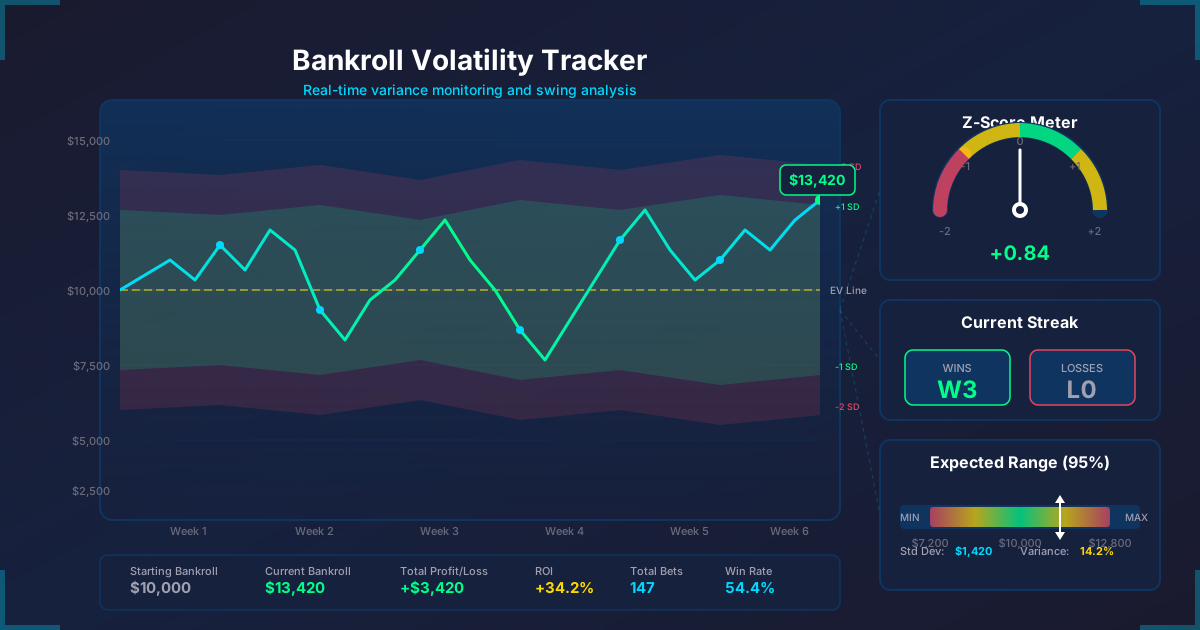
What is the worst blackjack side bet? Lucky Ladies has the highest common house edge at 17.05-24.94%. The top payout of 1000:1 (Queen of Hearts pair with dealer blackjack) occurs approximately once every 1.38 million hands. Super Sevens at 11.40% is also terrible, with the 5000:1 jackpot occurring once per 555,000 hands. Track these long-term costs with our Bankroll Volatility Tracker.
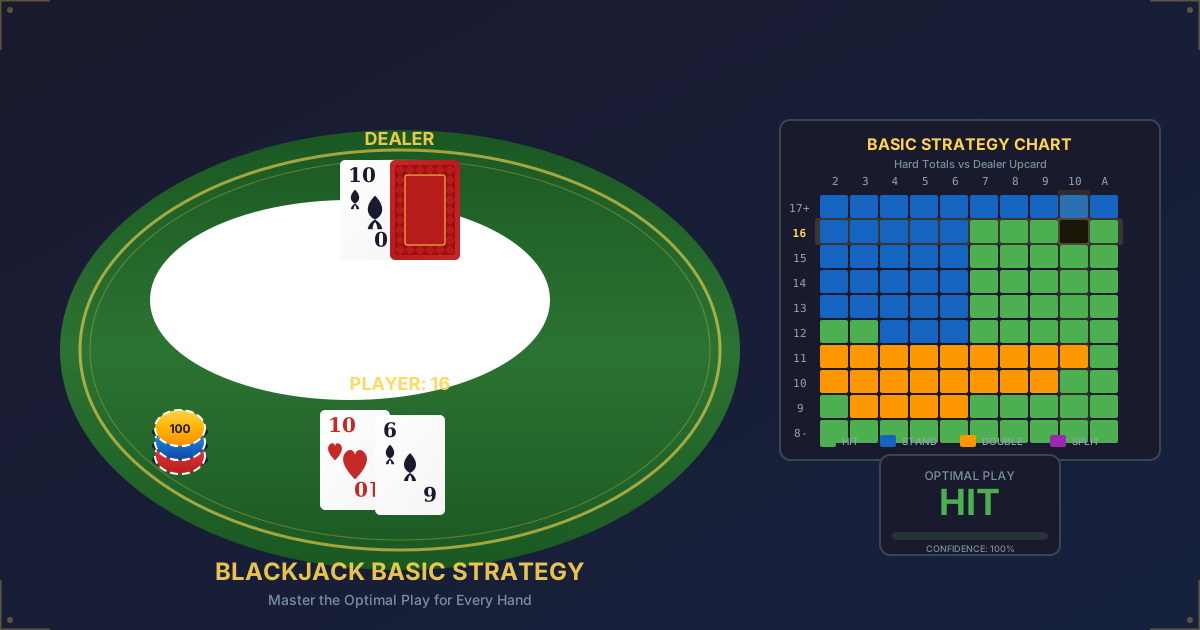
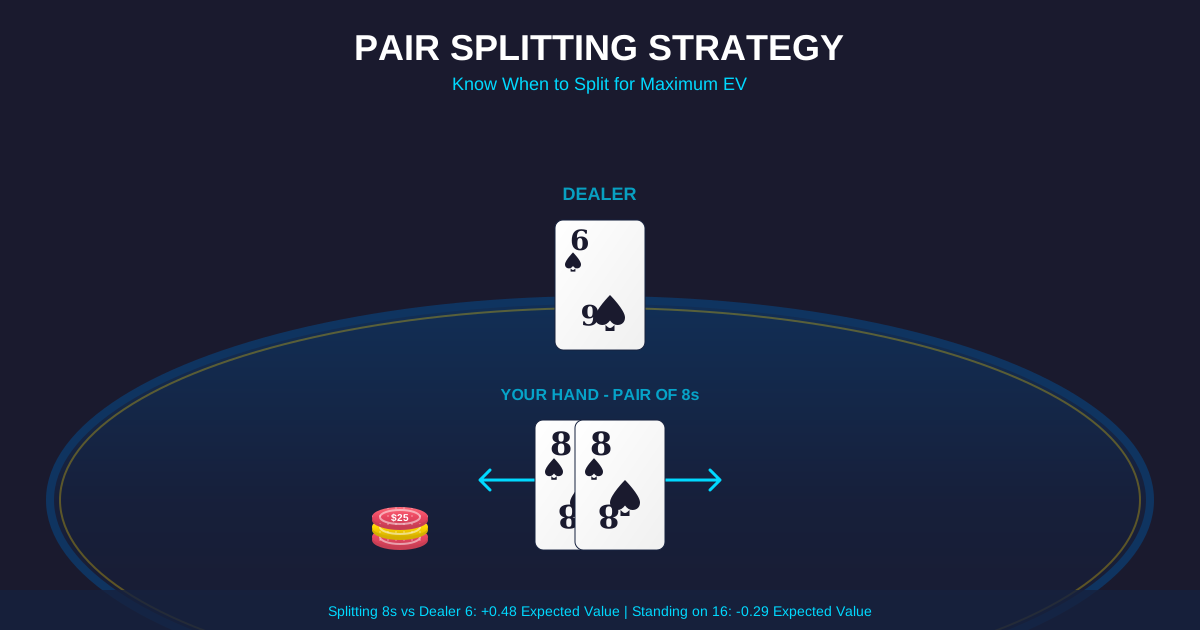
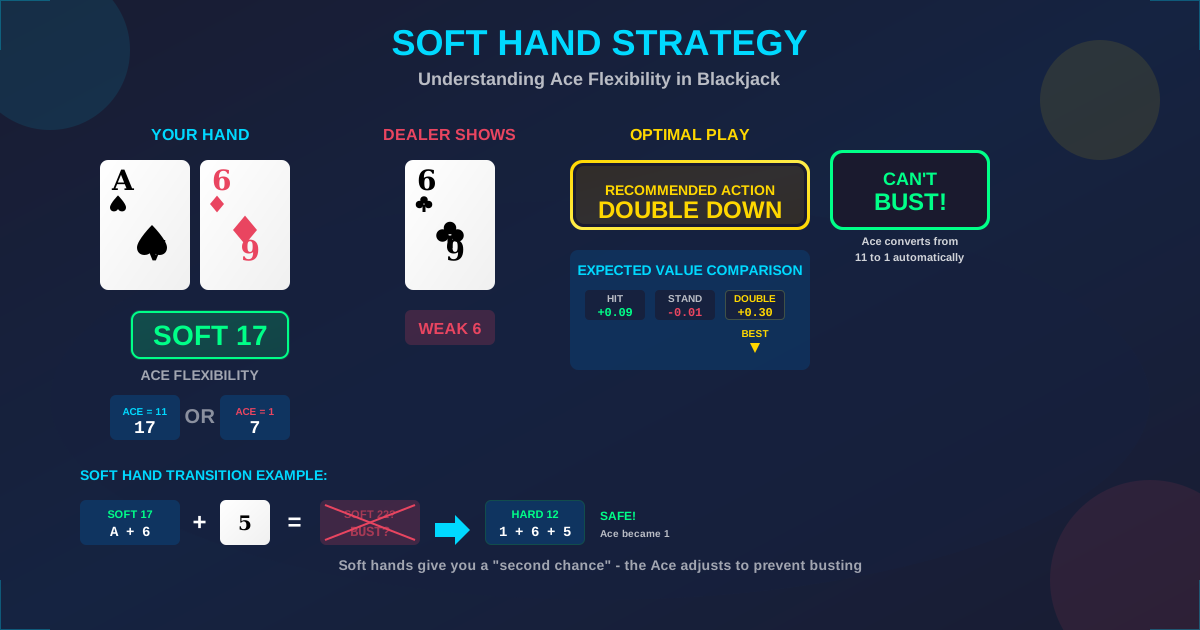
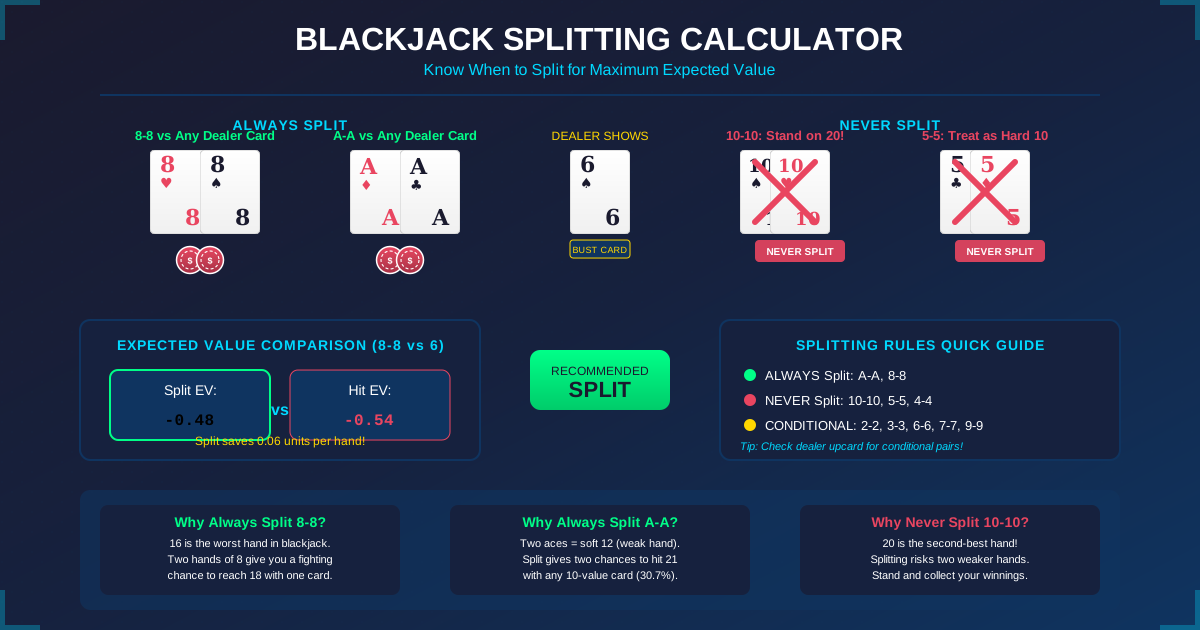
Do side bets affect my main blackjack strategy? No. Side bets are resolved independently of your main hand. Your basic strategy decisions (hit, stand, double, split) should never change based on side bet outcomes. The correct play for your main hand remains the same regardless of what side bets you have in play. Review optimal strategy with our Blackjack Strategy Chart.
Related Tools
- Blackjack Side Bets Calculator: Analyze the EV of any blackjack side bet
- Blackjack House Edge Calculator: Compare the main game edge to side bet edges
- Blackjack EV Calculator: Calculate expected value for any blackjack decision
- Blackjack Insurance EV Calculator: Determine when insurance is worth taking
- Blackjack Card Counting Calculator: Track the running and true count
- Blackjack Basic Strategy Calculator: Perfect strategy for the main game
- Blackjack Variance Calculator: Understand the variance impact of side bets
- Blackjack Risk of Ruin Calculator: Calculate risk with and without side bets
- Blackjack Strategy Chart: Visual reference for every main game decision
- Expected Value Calculator: General-purpose EV calculator for any wager
- Bankroll Volatility Tracker: Track and visualize your session results
Conclusion
Blackjack side bets are, with very few exceptions, mathematically inferior to the main game. The best side bet (Lucky Lucky at 2.44%) is still 5 times more expensive per dollar wagered than the main game with basic strategy. The worst (Lucky Ladies at 17-25%) is 34-50 times more expensive. Side bets account for a disproportionate share of most players' losses.
If you play side bets for entertainment and understand the cost, that is your choice to make. But do it with open eyes: every $5 side bet at a 3-17% house edge costs you $0.15-$0.85 per hand, compared to $0.025 per $5 on the main game.
The smartest move is to skip side bets entirely, play perfect basic strategy, and put your side bet money toward a larger main bet where the house edge is 10-50 times lower.
Start analyzing side bets with our Blackjack Side Bets Calculator and see exactly what each one costs you.
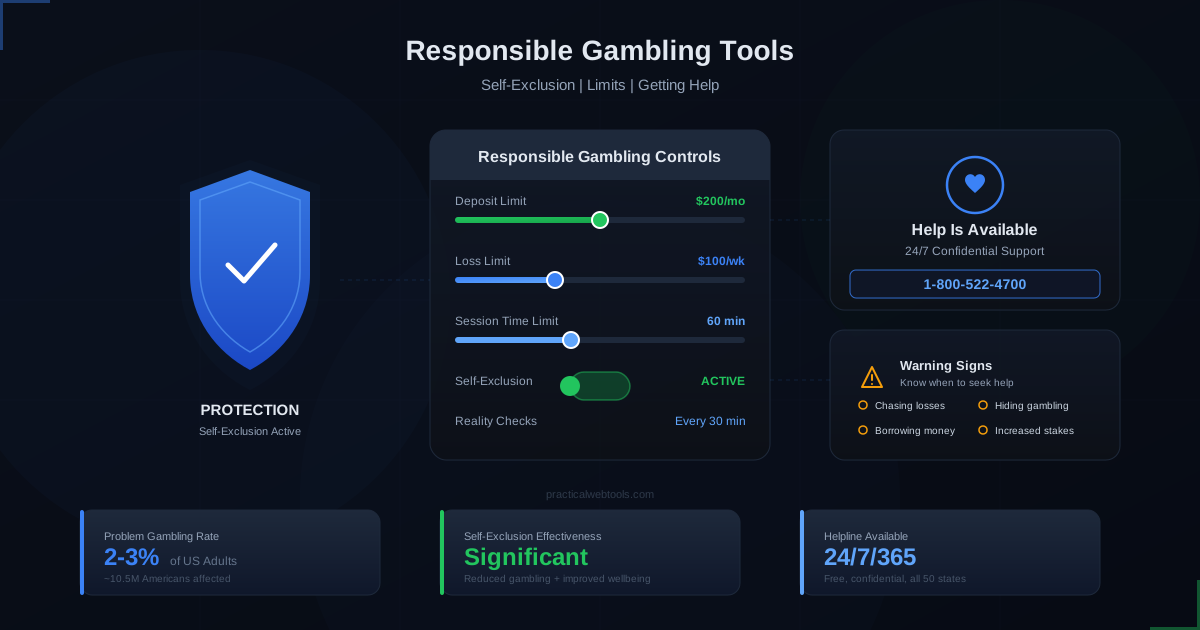
Gambling involves risk. This content is for educational and informational purposes only. Always gamble responsibly, set limits you can afford, and seek help if gambling becomes a problem. Visit the National Council on Problem Gambling or call 1-800-522-4700 for support.