The Gambler's Fallacy: Why Your Brain Lies to You About Probability (2026)
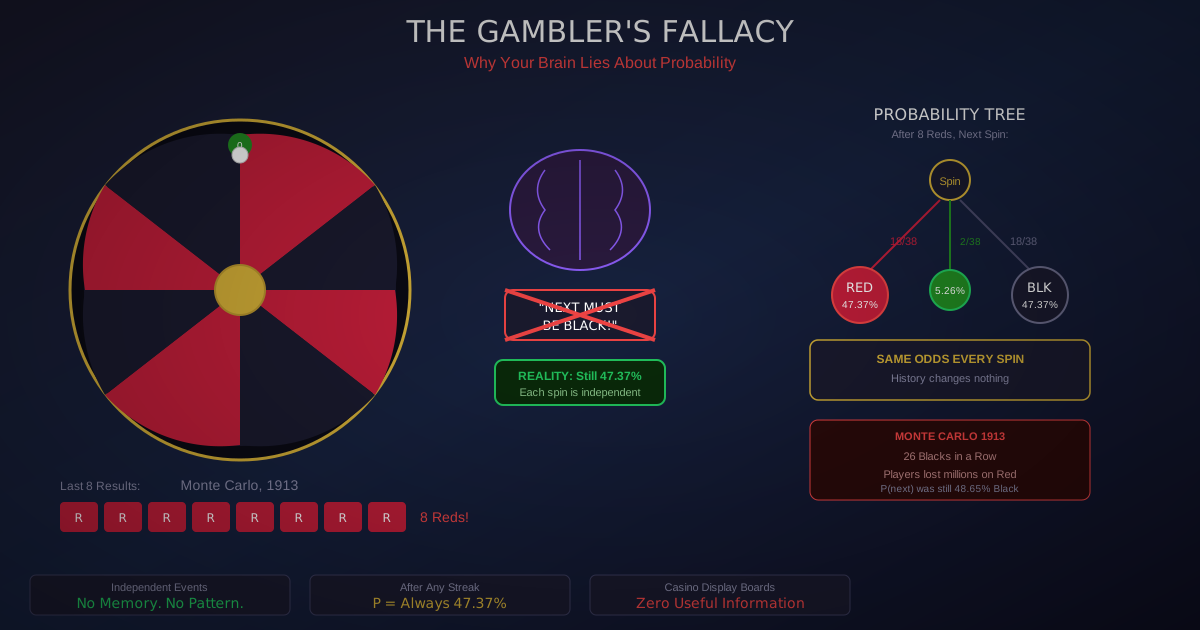
On August 18, 1913, at the Monte Carlo Casino, the roulette ball landed on black twenty-six times in a row. Players lost millions of francs betting on red, absolutely convinced that red was "due." After all, what are the odds of 26 blacks in a row? Surely the next spin had to be red. It did not. The ball does not remember where it landed. It never has. It never will. And this misunderstanding of probability has cost gamblers more money than any single casino game ever invented.
The gambler's fallacy is the mistaken belief that if something happens more frequently than normal during a given period, it will happen less frequently in the future (or vice versa). It is the voice in your head saying "red is due" after a streak of black. It is the slot player who stays at a machine because it "hasn't paid out in a while." It is the sports bettor who thinks a team "can't lose four in a row."
This cognitive bias is hardwired into human psychology. Our brains evolved to find patterns and expect balance in sequences, which serves us well in many areas of life. But in gambling, where events are mathematically independent, this instinct becomes a trap that costs real money.
Test your understanding of probability with our free Roulette Probability Calculator and see exactly why streaks are more common than you think.
What Is the Gambler's Fallacy?
The gambler's fallacy is a cognitive bias in which a person believes that the probability of a random event is influenced by previous events. Specifically, after observing a streak of one outcome, people believe the opposite outcome becomes more likely.
The Core Misconception
The fallacy stems from confusing two different probability statements:
True statement: The probability of getting 10 heads in a row before flipping is (1/2)^10 = 1/1,024, or about 0.098%.
False conclusion: "After 9 heads, the next flip is more likely to be tails."
Actual truth: After 9 heads, the probability of the next flip being tails is still exactly 50%. The coin does not know or care about its history.
The key distinction is between the probability of a sequence (calculated before the sequence starts) and the probability of the next individual event (which is always independent).
Independent Events: The Mathematical Foundation
Two events are independent when the outcome of one has absolutely no effect on the outcome of the other. Most casino games produce independent events:
| Game | Independence? | Why |
|---|---|---|
| Roulette | Yes | Each spin is physically independent |
| Craps | Yes | Each roll is physically independent |
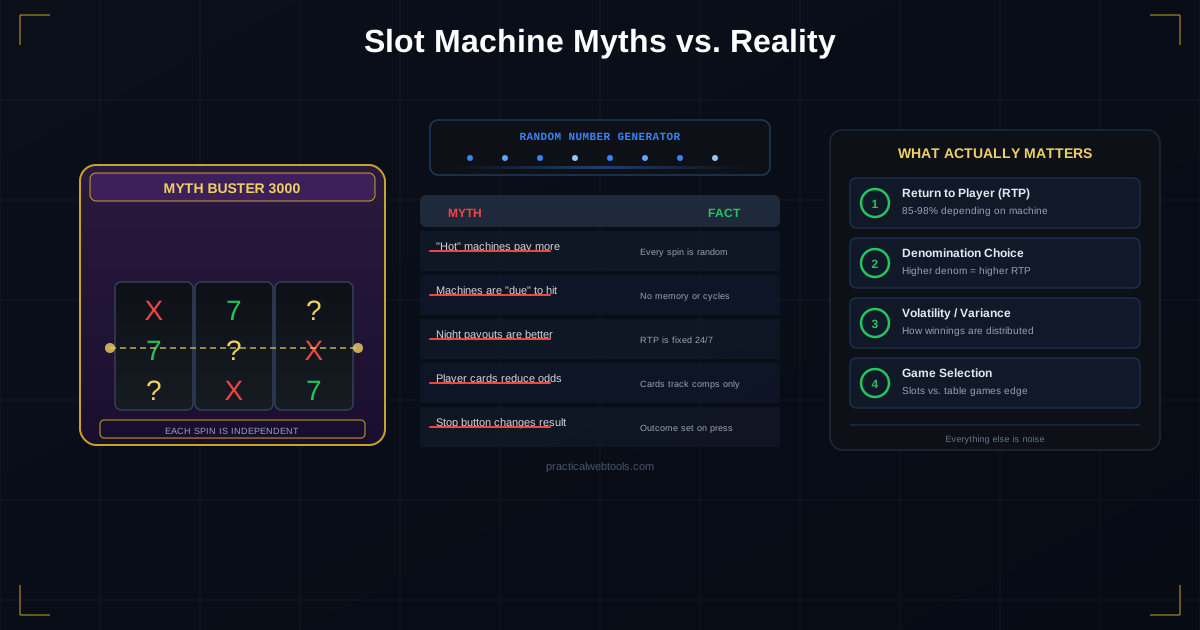
| Slot machines | Yes | Each spin uses an independent RNG |
| Coin flips | Yes | Physics resets between flips |
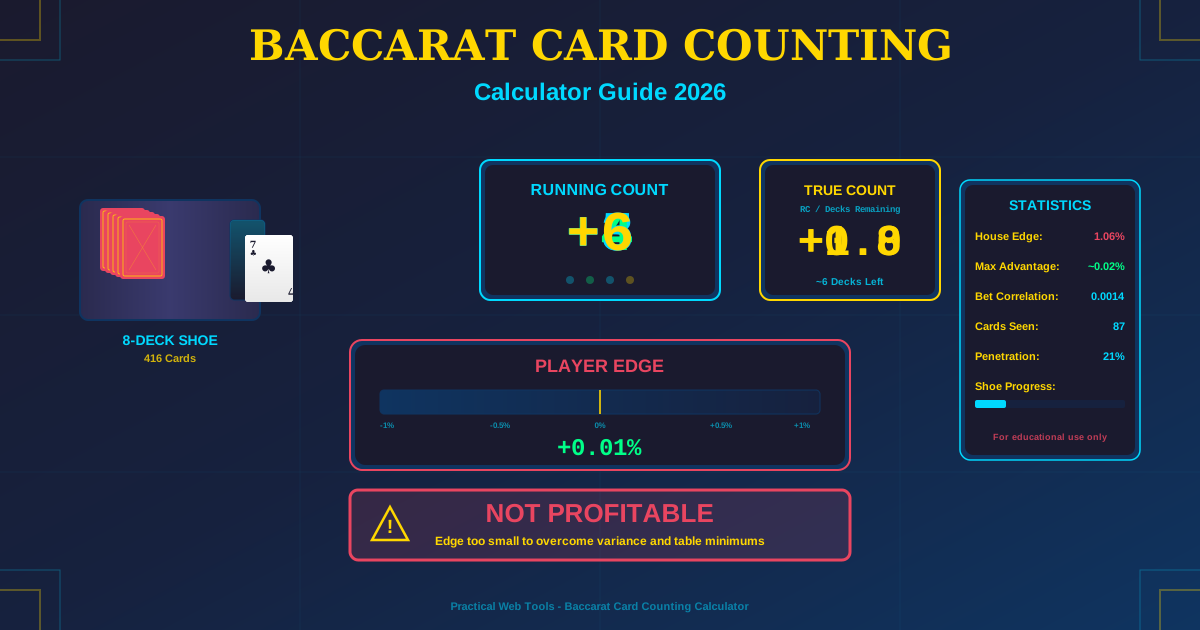
| Baccarat (from shoe) | Partially* | Card removal slightly changes odds |
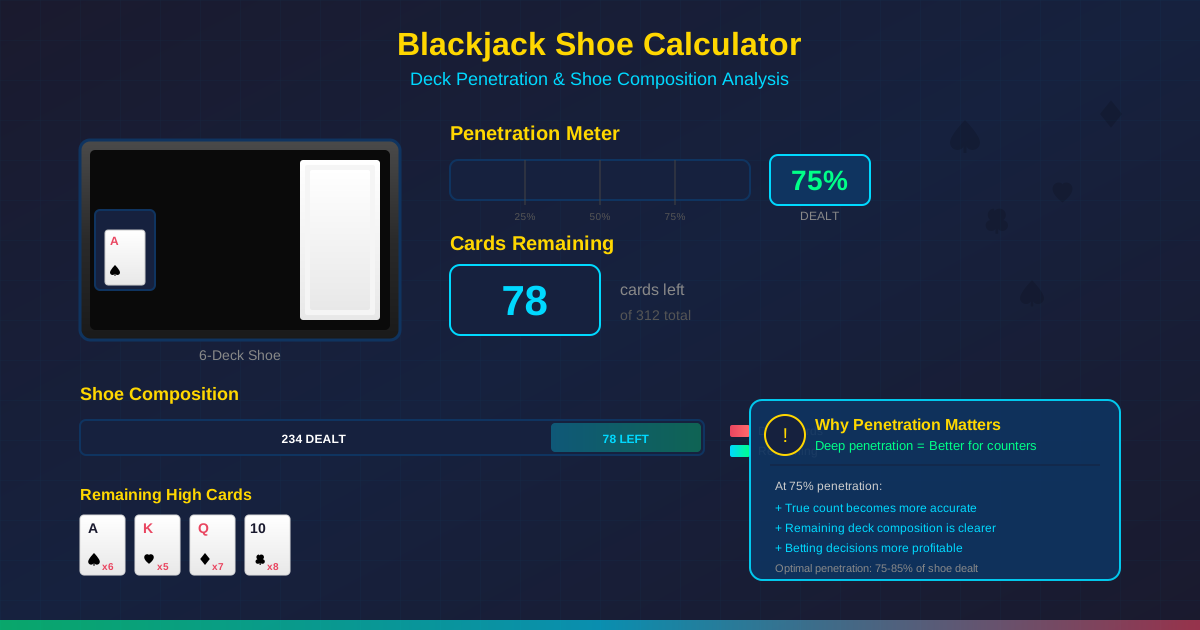
| Blackjack (from shoe) | Partially* | Card removal meaningfully changes odds |
*Baccarat and blackjack involve card removal, which technically makes hands dependent. However, the effect in baccarat is negligible, while in blackjack it is significant enough to enable card counting.
For truly independent events, past outcomes provide zero information about future outcomes. The probability is the same on every single trial, regardless of what happened before.
Simulate roulette sequences and see how streaks actually behave with our Roulette Betting Simulator.
The Mathematics of Why Your Brain Is Wrong
Probability of Streaks
People dramatically underestimate how common streaks are in random sequences. Here is the probability of various streak lengths in roulette (ignoring green for simplicity):
| Streak Length | Probability Before Starting | Probability of Next Being Same | Probability of Extending After Streak |
|---|---|---|---|
| 2 in a row | 25.00% | 47.37%* | 47.37%* |
| 5 in a row | 3.13% | 47.37%* | 47.37%* |
| 10 in a row | 0.098% | 47.37%* | 47.37%* |
| 15 in a row | 0.003% | 47.37%* | 47.37%* |
| 20 in a row | 0.0001% | 47.37%* | 47.37%* |
| 26 in a row | ~0.0000001% | 47.37%* | 47.37%* |
*47.37% accounts for the 18/38 probability on an American roulette wheel.
The key insight: while a long streak is unlikely before it starts, once you are in the middle of one, the next spin is always 47.37% for any specific color (or 47.37% for the other color). The streak's existence does not change anything.
Expected Streaks Over Time
Here is how many streaks you should expect in a normal roulette session:
In 1,000 spins (roughly 25-30 hours of play):
| Streak Type | Expected Occurrences |
|---|---|
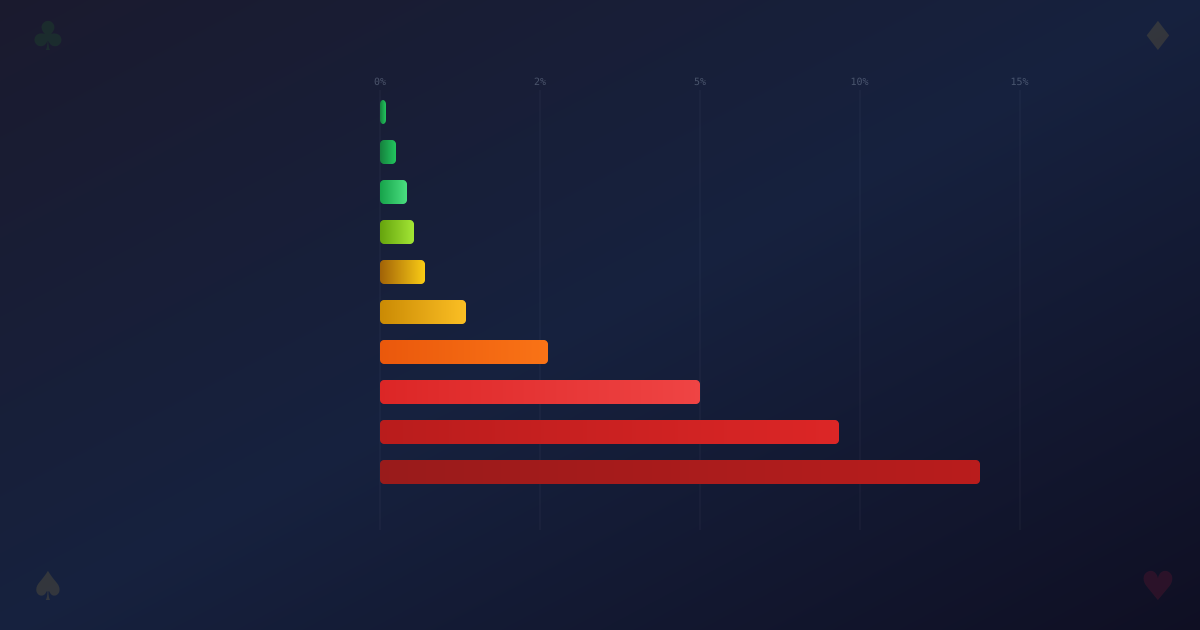
| 3+ same color | ~65 times |
| 5+ same color | ~16 times |
| 7+ same color | ~4 times |
| 10+ same color | ~0.5 times (once every 2,000 spins) |
| 15+ same color | ~0.01 times (once every 100,000 spins) |
Streaks of 5+ happen roughly every 60 spins, which means you will see multiple long streaks in every session. They are not unusual; they are expected.
Calculate the exact probability of any roulette outcome with our Roulette Probability Calculator.
The Conditional Probability Trap
The gambler's fallacy often manifests through misunderstanding conditional probability.
Question: A fair coin has been flipped 9 times and all 9 were heads. What is the probability that the 10th flip is tails?
Fallacious answer: "It must be very high, like 90%+. Ten heads in a row is nearly impossible."
Correct answer: Exactly 50%. The coin does not have memory.
The mathematical proof:
P(10th flip is tails | first 9 were heads) = P(10th flip is tails) = 0.50
The conditional probability equals the unconditional probability because the events are independent. The condition (first 9 heads) provides no information about the 10th flip.
What confuses people is that P(10 heads in a row) = 0.00098 (very unlikely). But P(10th head | 9 heads already happened) = 0.50 (coinflip). The first 9 heads already happened, so they have probability 1 (certainty). Only the 10th flip remains uncertain.
The Monte Carlo Fallacy: History's Most Expensive Probability Mistake
On August 18, 1913, at the Monte Carlo Casino in Monaco, the roulette wheel produced one of the most famous sequences in gambling history. The ball landed on black 26 consecutive times.
What Happened
As the streak grew, players became increasingly convinced that red was imminent. They bet more and more on red with each successive black result. The casino reportedly made millions of francs as players doubled and tripled their red bets, certain that the "law of averages" would bring balance.
The Calculation
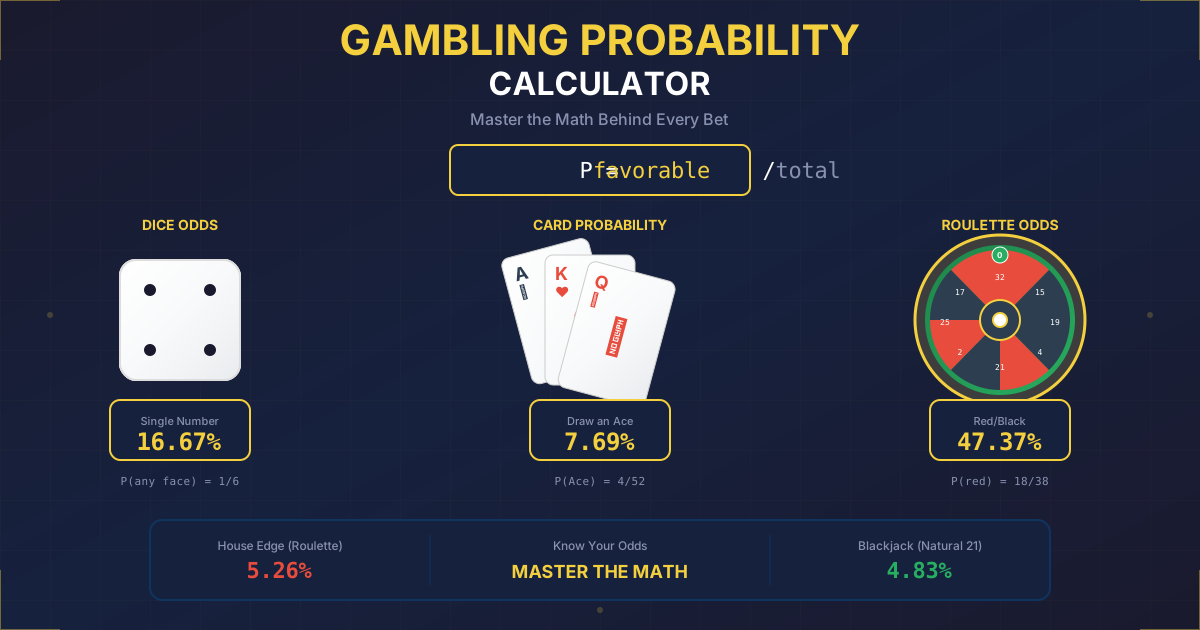
- Probability of 26 blacks in a row (on European wheel): (18/37)^26 = approximately 1 in 136,823,184
- This is extraordinarily unlikely, which is why it became famous
- But the probability of the 27th spin being black was still exactly 18/37 = 48.65%
Why Players Were Wrong
Players confused two things:
- Retrospective probability: "What were the odds of this sequence?" (Extremely low)
- Prospective probability: "What are the odds of the next spin?" (Same as always: ~48.65% for black, ~48.65% for red, ~2.7% for green)
The sequence was remarkable in hindsight, but at no point during the streak was the next spin anything other than an independent event with fixed probabilities.
Modern Equivalents
The Monte Carlo fallacy plays out in casinos worldwide every day:
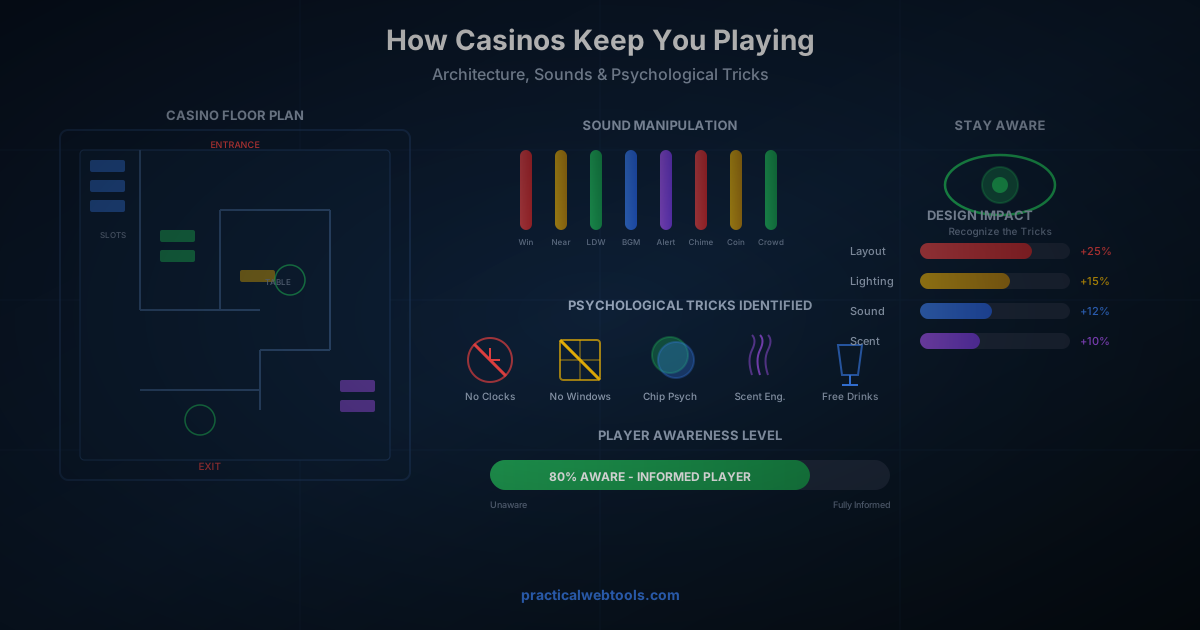
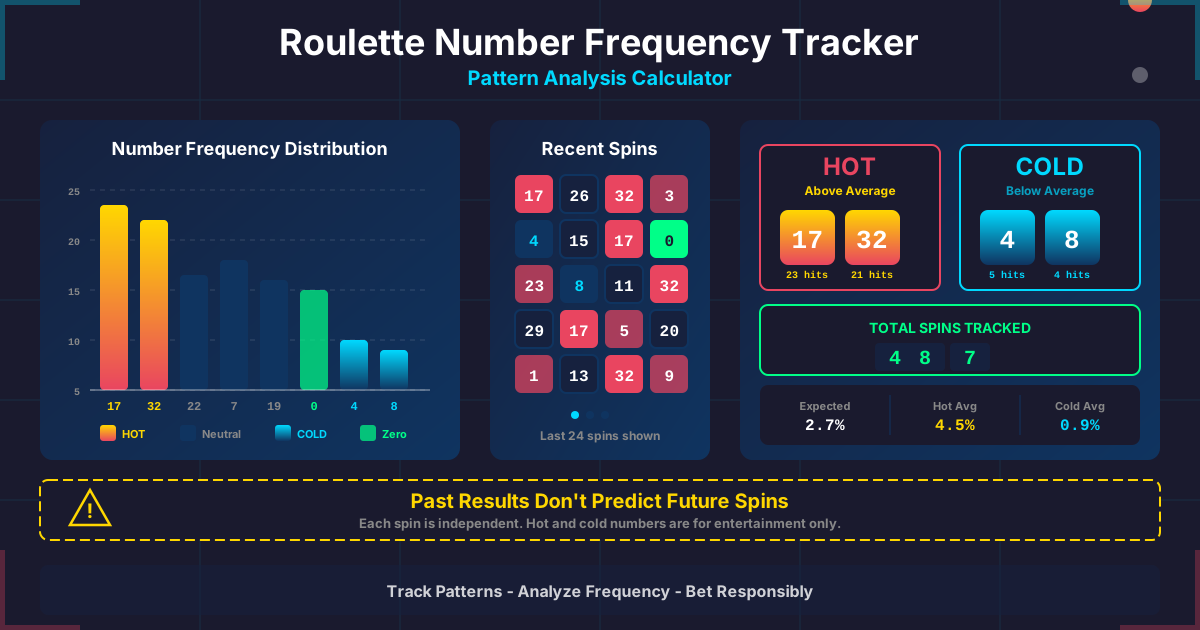
- Roulette display boards: Casinos prominently display the last 15-20 results specifically because they know players will use this information to make irrational decisions
- Slot machine "cold" periods: Players refuse to leave machines that haven't paid, believing a payout is "due"
- Craps shooters: Players bet more after a "cold" streak, expecting the dice to "turn around"
See how roulette results actually unfold over time with our Roulette Betting Simulator.
The Hot Hand Fallacy: The Gambler's Fallacy in Reverse
The hot hand fallacy is the inverse of the gambler's fallacy. Instead of believing a streak must end, people believe a streak will continue because someone is "hot" or "on a roll."
In Gambling
- "This slot machine is hot, keep playing it"
- "That craps shooter is on a roll, bet bigger"
- "I've won 5 hands in a row, I can't lose"
In Sports
The hot hand debate is more nuanced in sports because:
- Athletic performance involves skill, not just randomness
- Confidence and momentum may genuinely affect performance
- Recent research suggests a small hot hand effect may exist in basketball shooting
However, in gambling with independent events, the hot hand is pure fallacy. A roulette wheel cannot be "hot." A slot machine's RNG does not have momentum.
The Critical Distinction
| Scenario | Independence | Hot Hand Valid? |
|---|---|---|
| Roulette wheel | Fully independent | No |
| Dice rolls | Fully independent | No |
| Slot machines | Fully independent | No |
| Basketball shooting | Partially dependent (skill) | Possibly (small effect) |
| Poker decisions | Partially dependent (skill/tilt) | Partially (confidence helps) |
In any game of pure chance, neither the gambler's fallacy nor the hot hand fallacy has any mathematical basis.
How Casinos Exploit the Gambler's Fallacy
Casinos understand probability better than their customers. They actively design their environments to trigger and reinforce the gambler's fallacy.
Roulette Result Displays
Every roulette table prominently displays the last 15-20 results on an electronic board. This display serves no mathematical purpose. Its only function is to encourage fallacious thinking:
- Players see a streak of red and bet black ("red can't keep going")
- Players see a balanced history and feel the game is "fair" (it is always unfair; the house edge never changes)
- Players look for "patterns" in random data
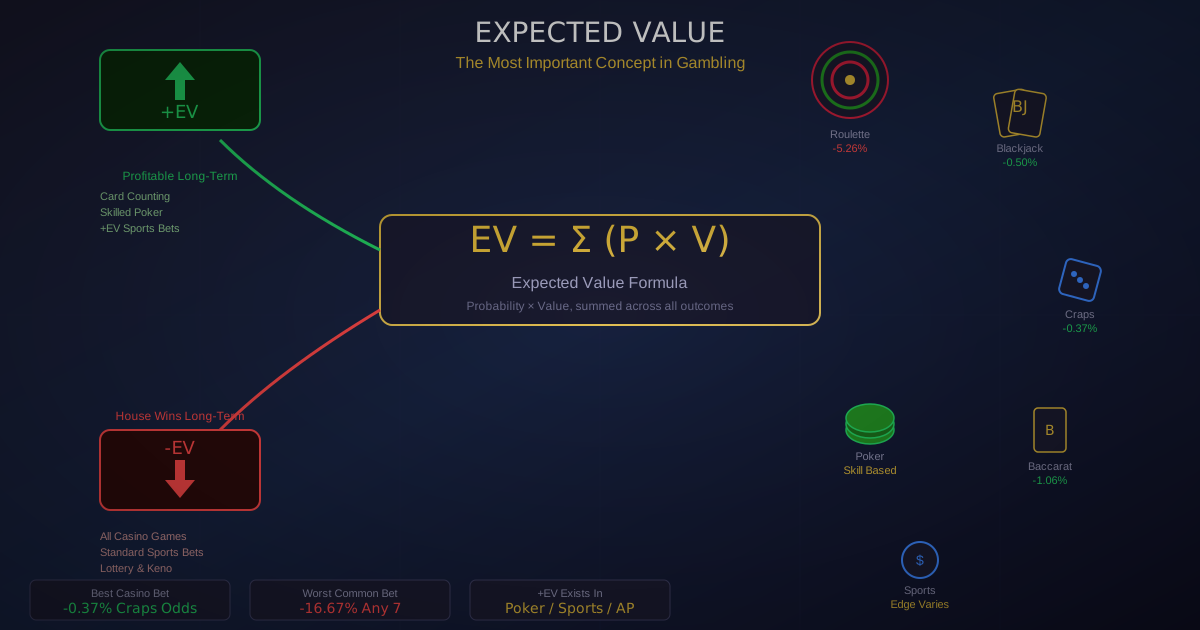
The expected value of every roulette bet remains exactly the same regardless of the display board. Use our Roulette EV Calculator to verify this.
Slot Machine "Near Misses"
Modern slot machines are programmed to show "near misses" more frequently than random chance would produce. Seeing two jackpot symbols followed by a non-jackpot symbol makes players feel they are "close" and should keep playing. This exploits both the gambler's fallacy (the jackpot is "due") and the near-miss effect (a separate psychological bias).
Craps Table Atmosphere
Craps tables celebrate streaks with cheering, chanting, and excitement. This social reinforcement of the hot hand fallacy encourages bigger bets during streaks. The house edge does not change during a "hot" roll.
Tracking Baccarat Results
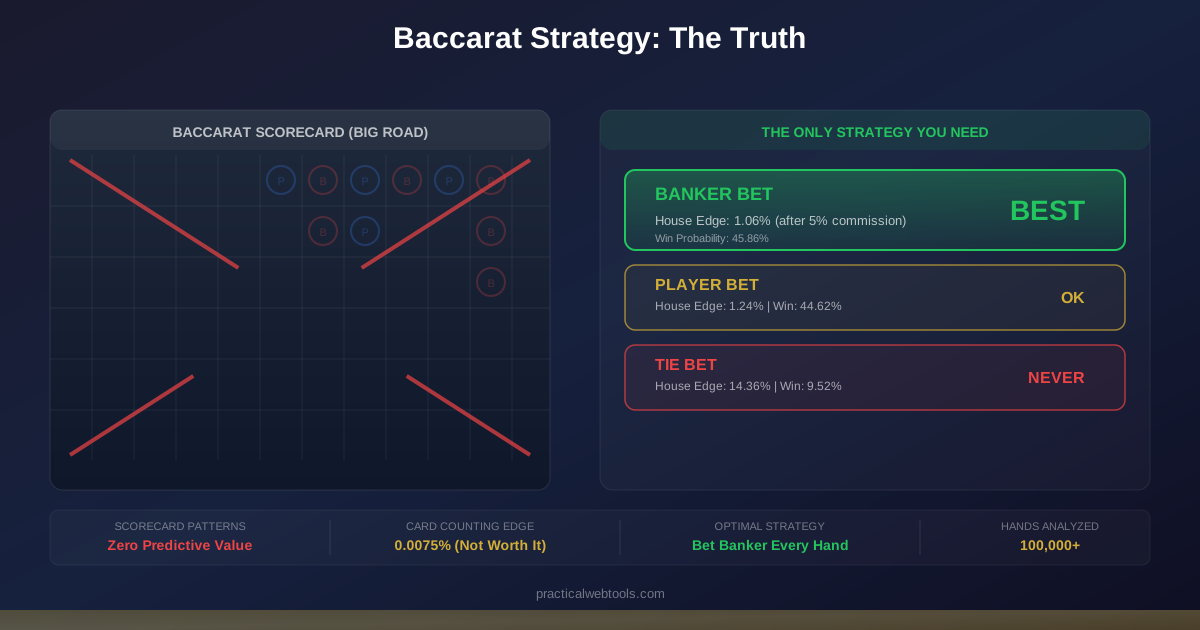
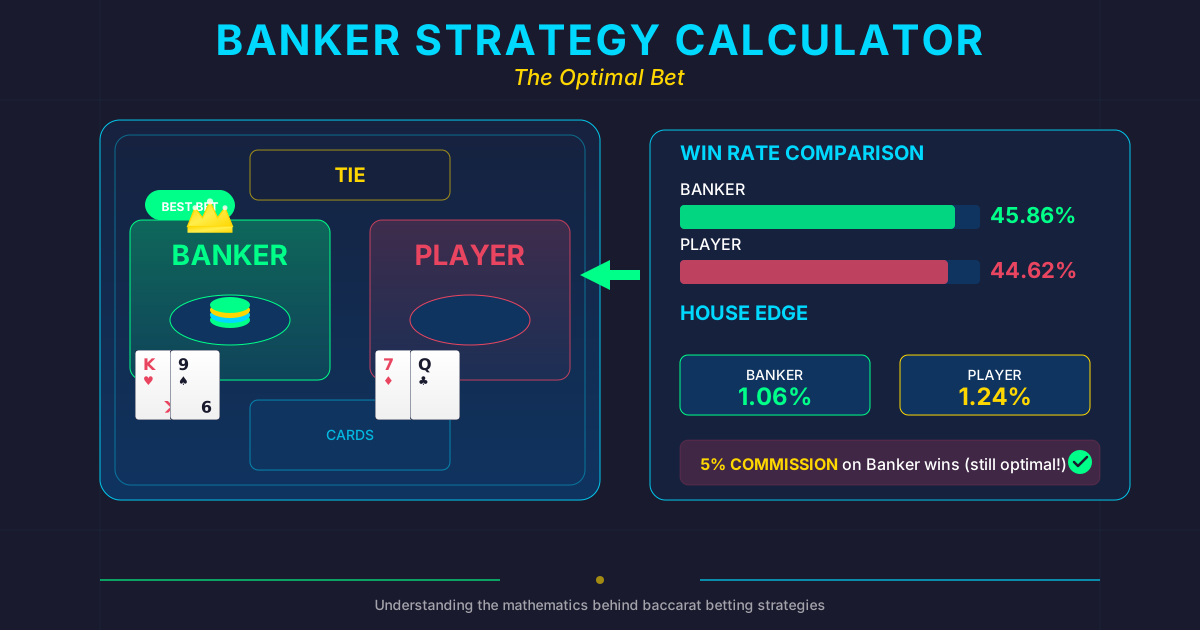
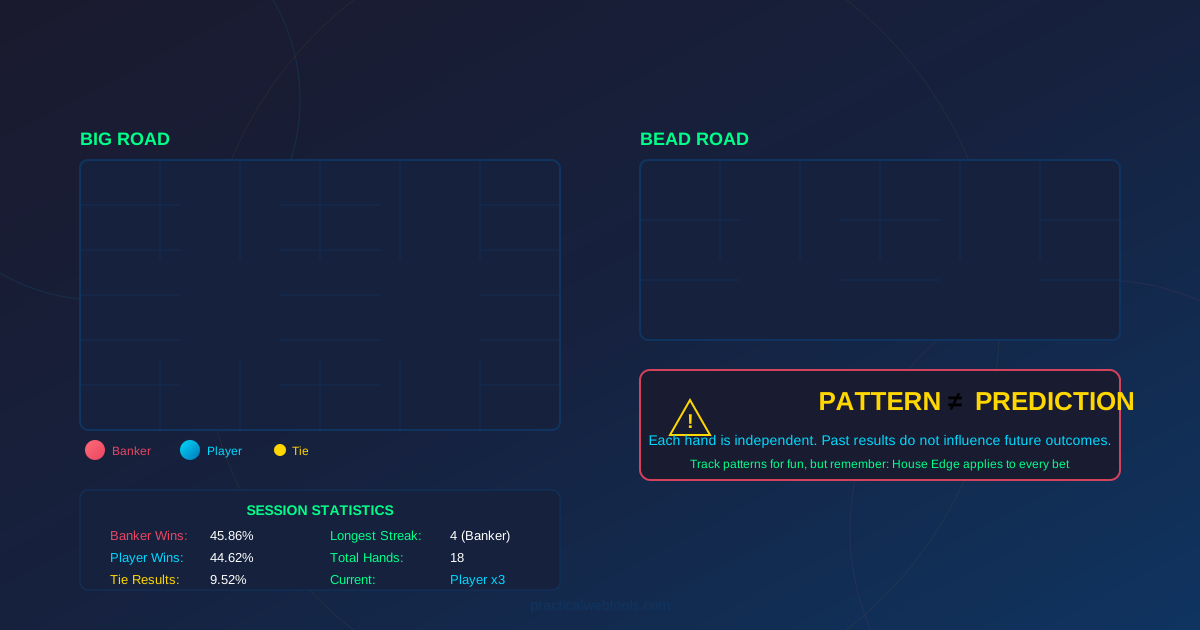
Baccarat players are famously devoted to tracking results on scorecards, looking for patterns like "Big Road," "Bead Road," and "Big Eye Boy." While card removal technically creates minimal dependencies between hands in baccarat, the effect is so small (house edge changes by fractions of a percent) that pattern tracking is effectively useless for the player but excellent at keeping them engaged.
The Inverse Gambler's Fallacy
A lesser-known variant is the inverse gambler's fallacy: observing an unlikely event and concluding it must have been preceded by many failed attempts.
Example
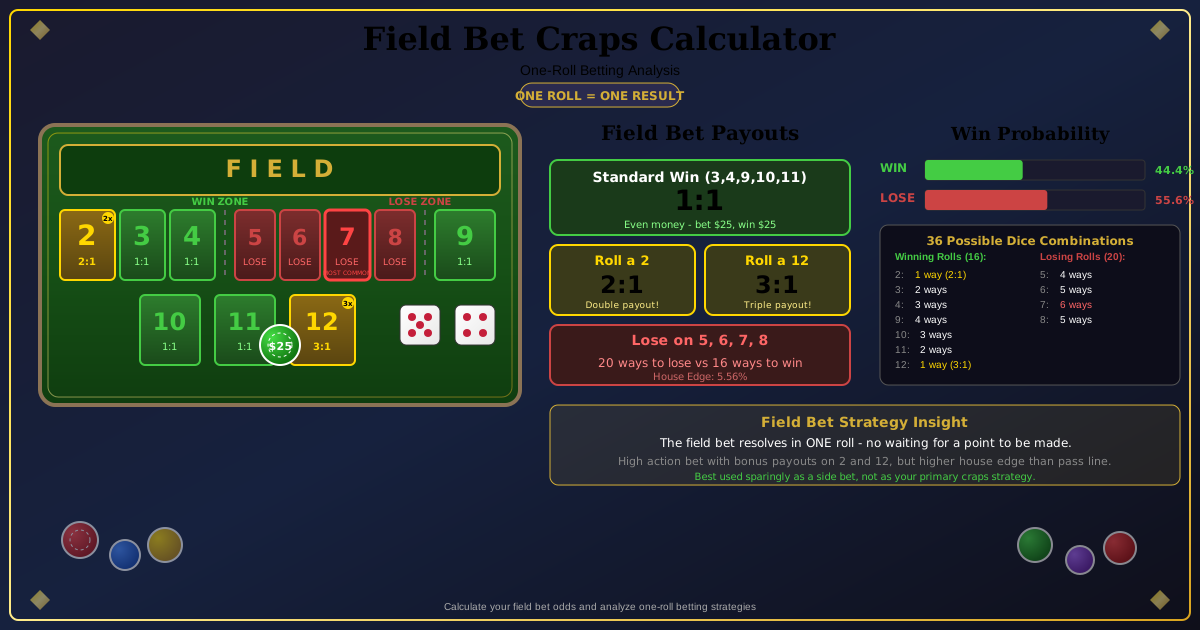
You walk up to a craps table and the shooter rolls a 12 (probability 1/36). You might think: "That's so unlikely on any single roll, there must have been many rolls before this one without a 12."
The inverse gambler's fallacy is the conclusion that because something unlikely happened, it must have been "due." In reality, unlikely events happen on their own schedule, and observing one tells you nothing about the preceding sequence.
Real-World Impact
This fallacy affects thinking about:
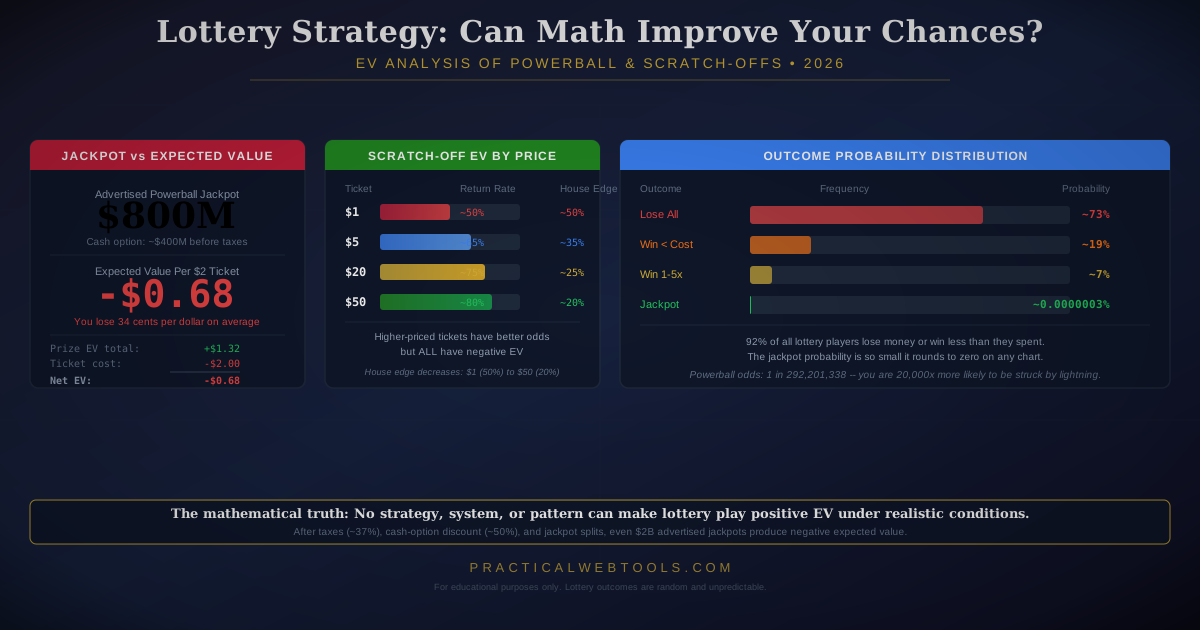
- Lottery wins ("they must have been playing for years")
- Progressive jackpots ("it was due to hit")
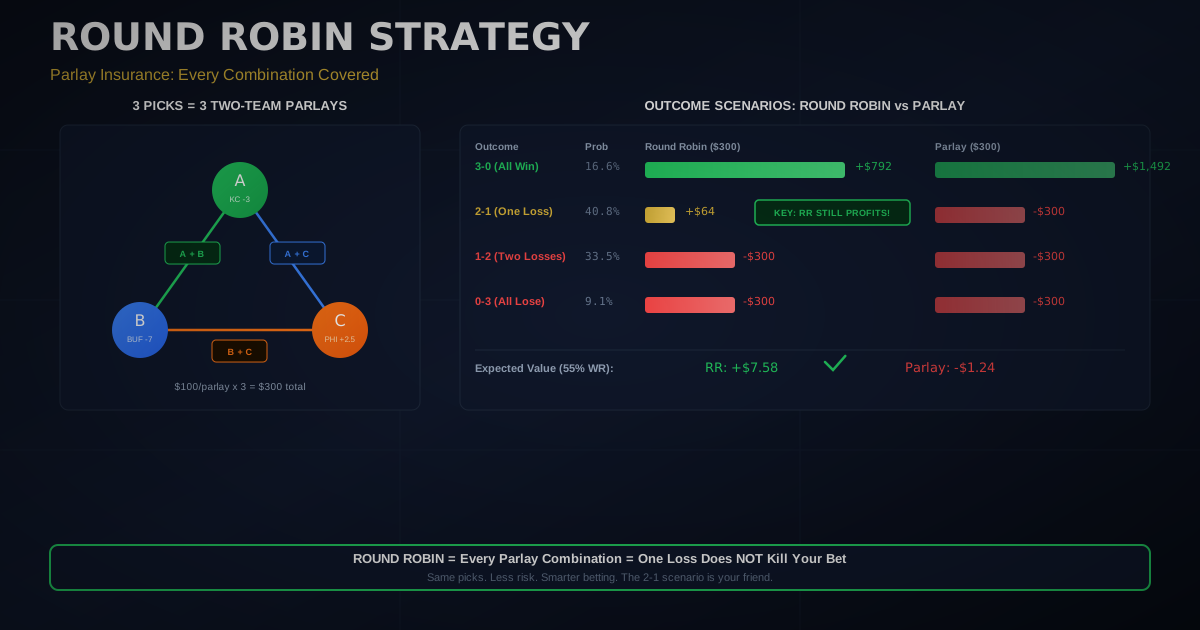
- Sports upsets ("the underdog was overdue")
Practical Examples: What the Gambler's Fallacy Costs You
Example 1: The Roulette Doubler
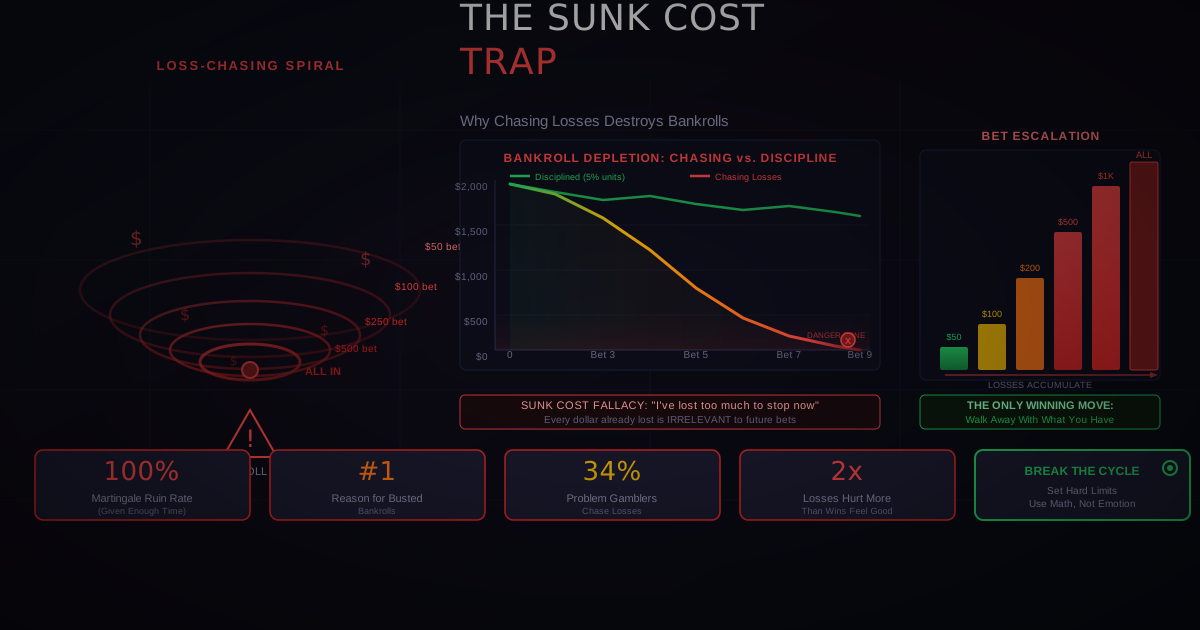
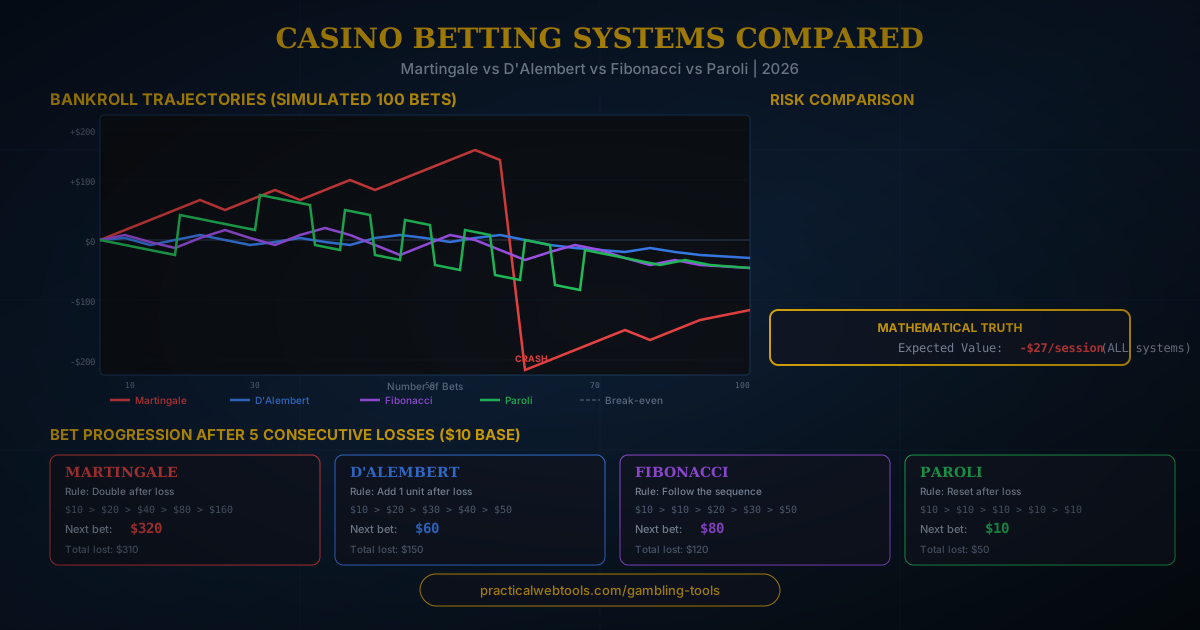
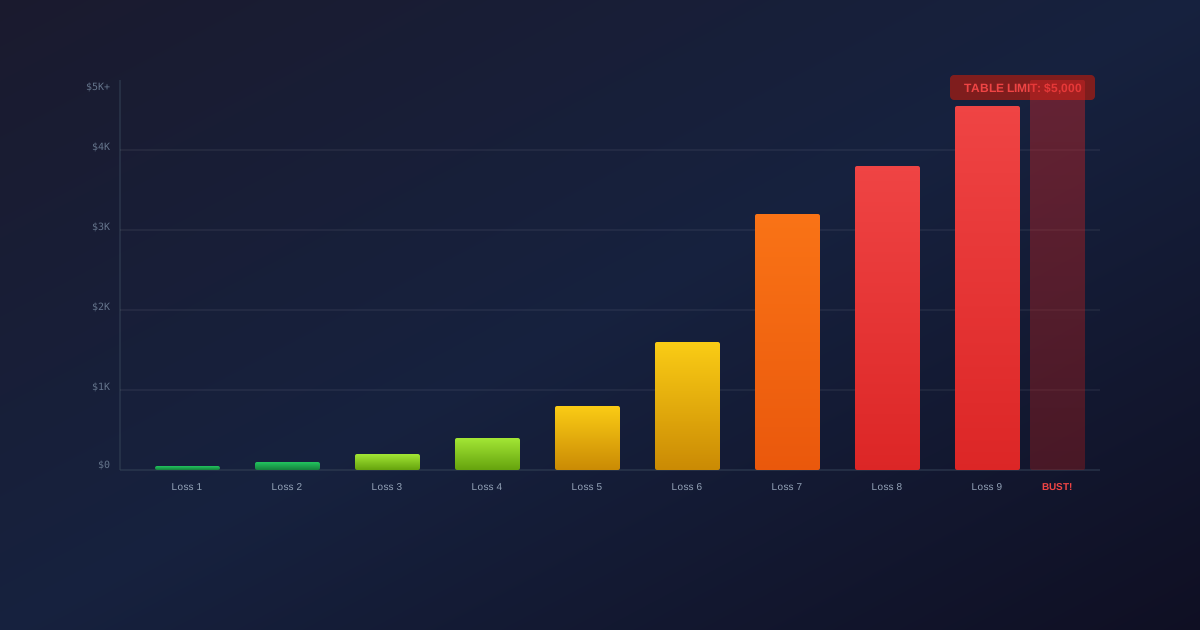
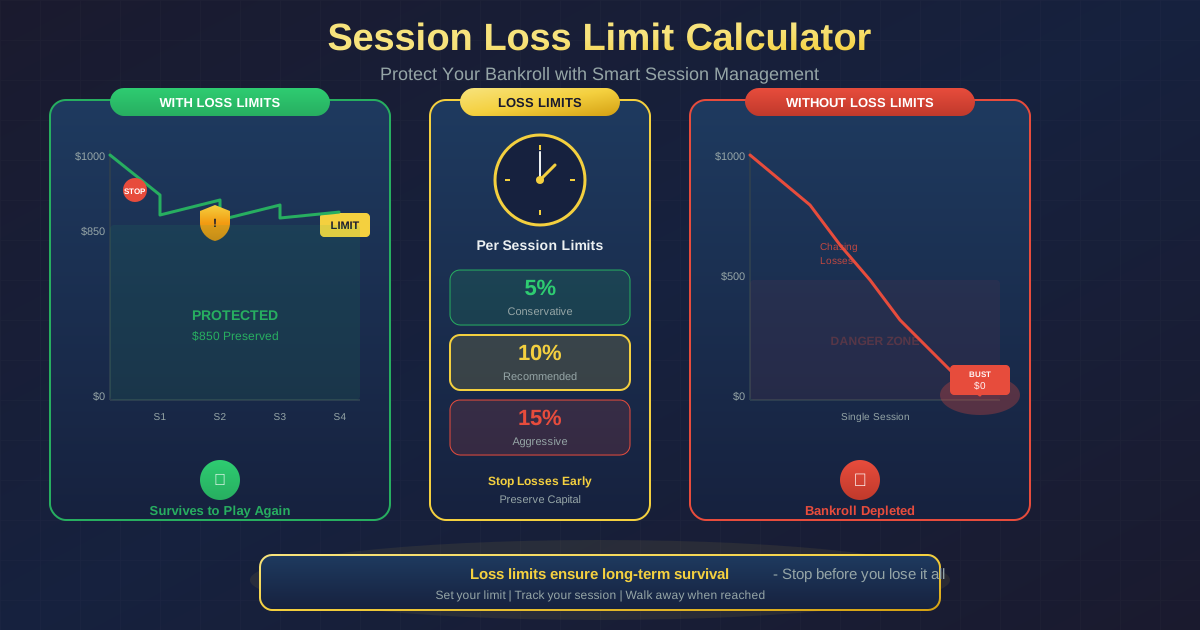
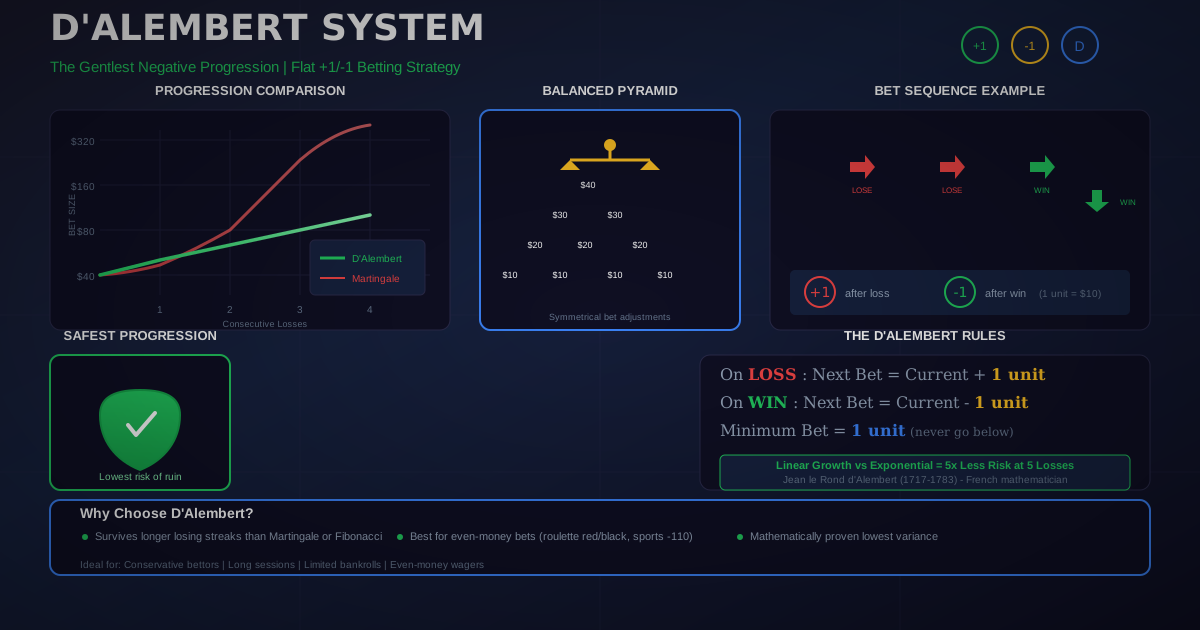
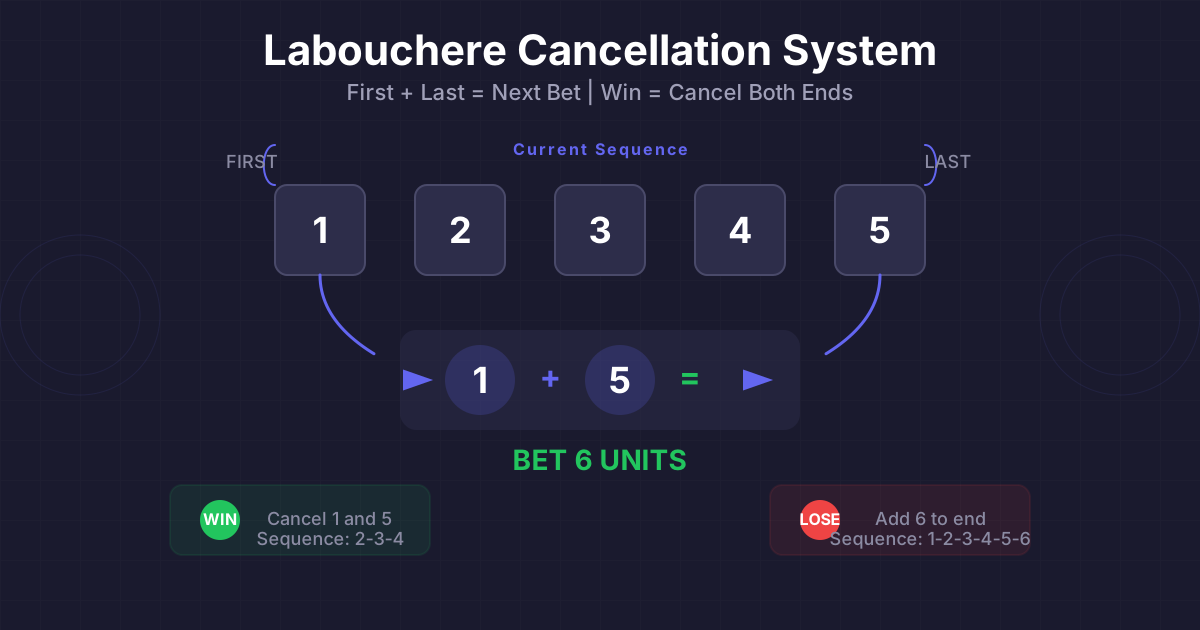
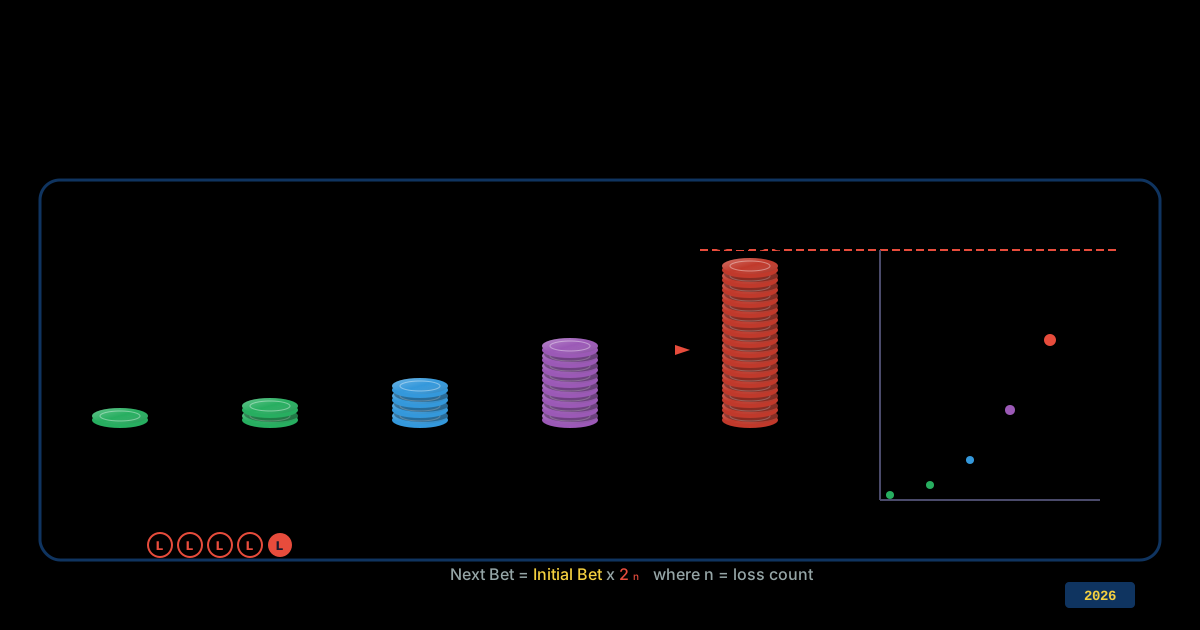
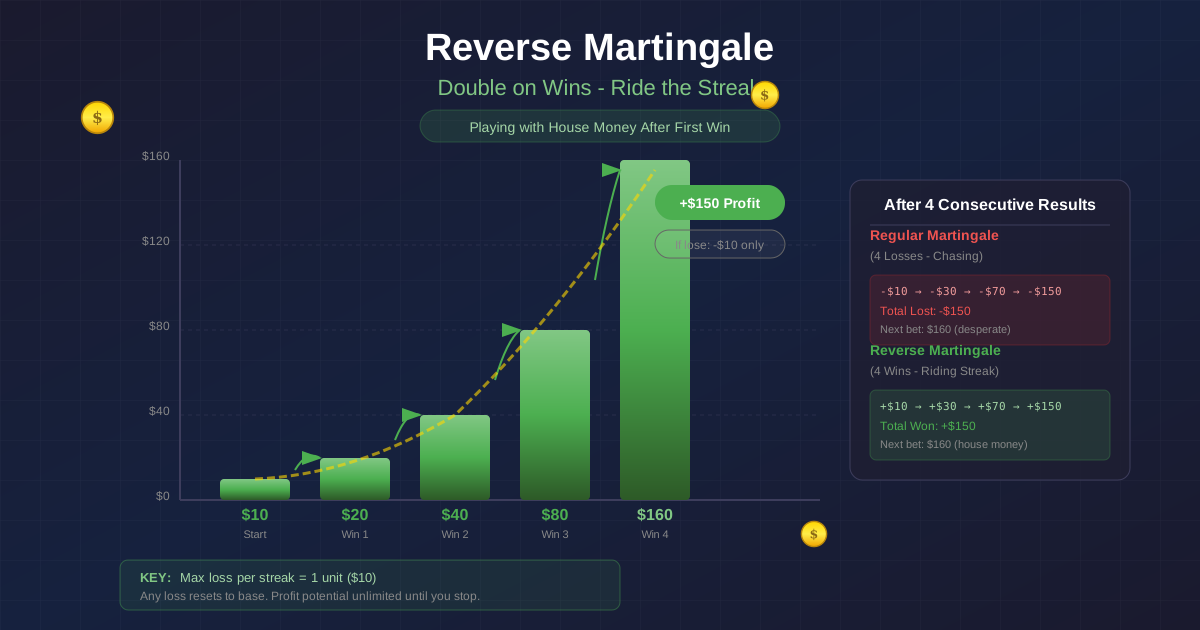
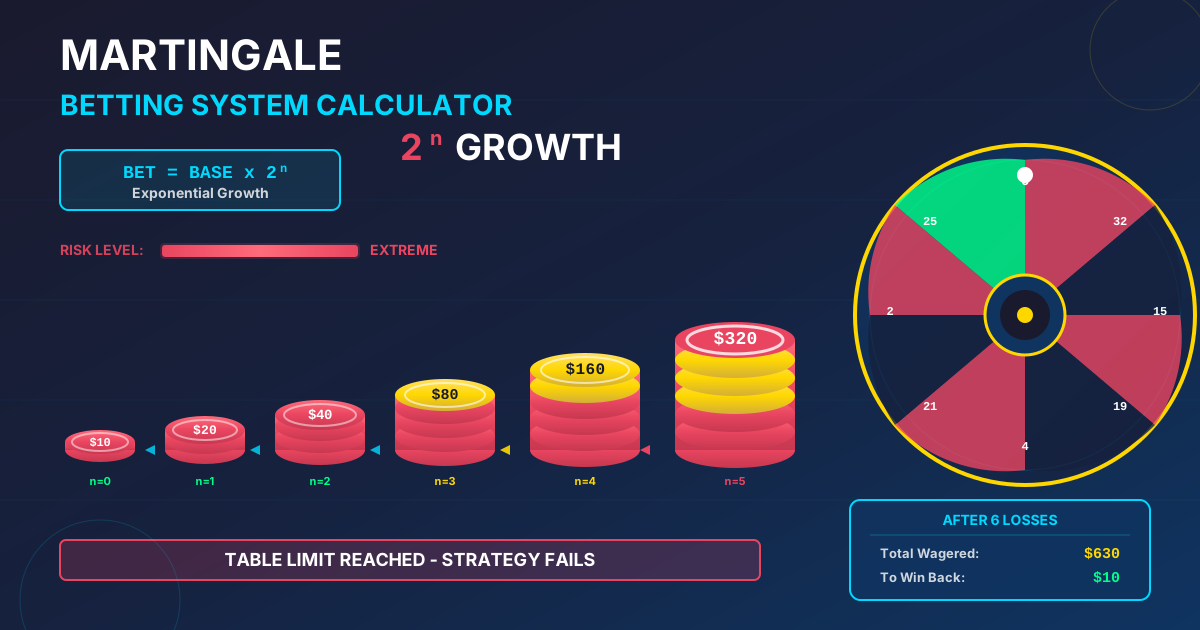
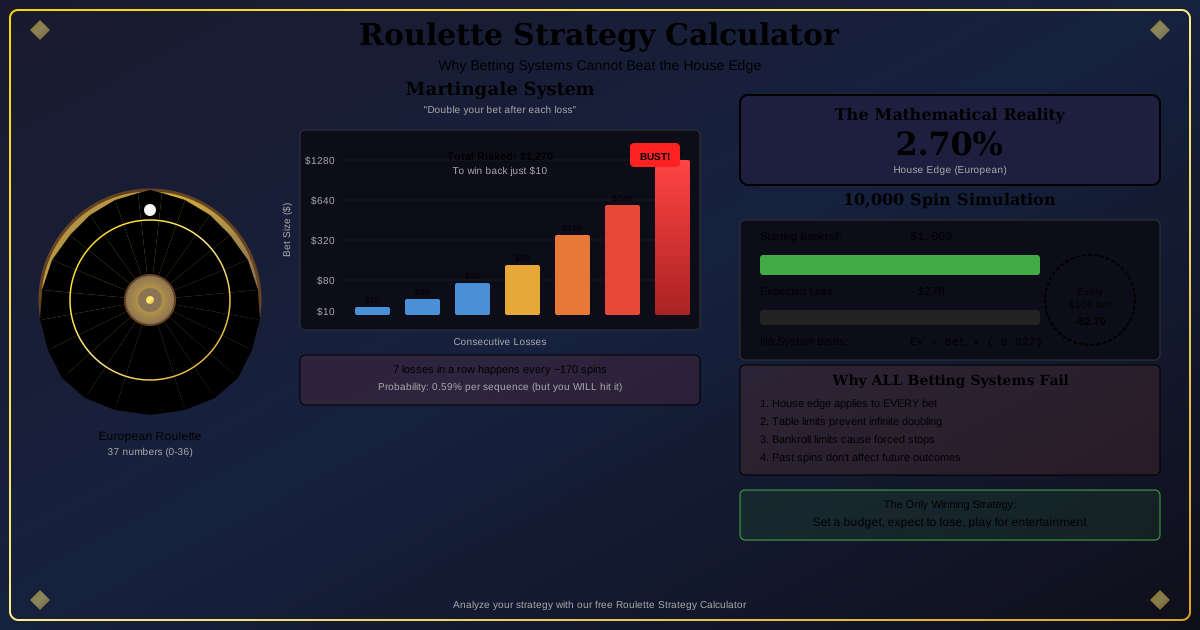
Mark sees 7 reds in a row and decides to bet $100 on black. When black does not hit, he doubles to $200. Then $400. Then $800. After 11 reds in a row (which happens more often than people think), Mark has lost $100 + $200 + $400 + $800 = $1,500 chasing a "guaranteed" black.
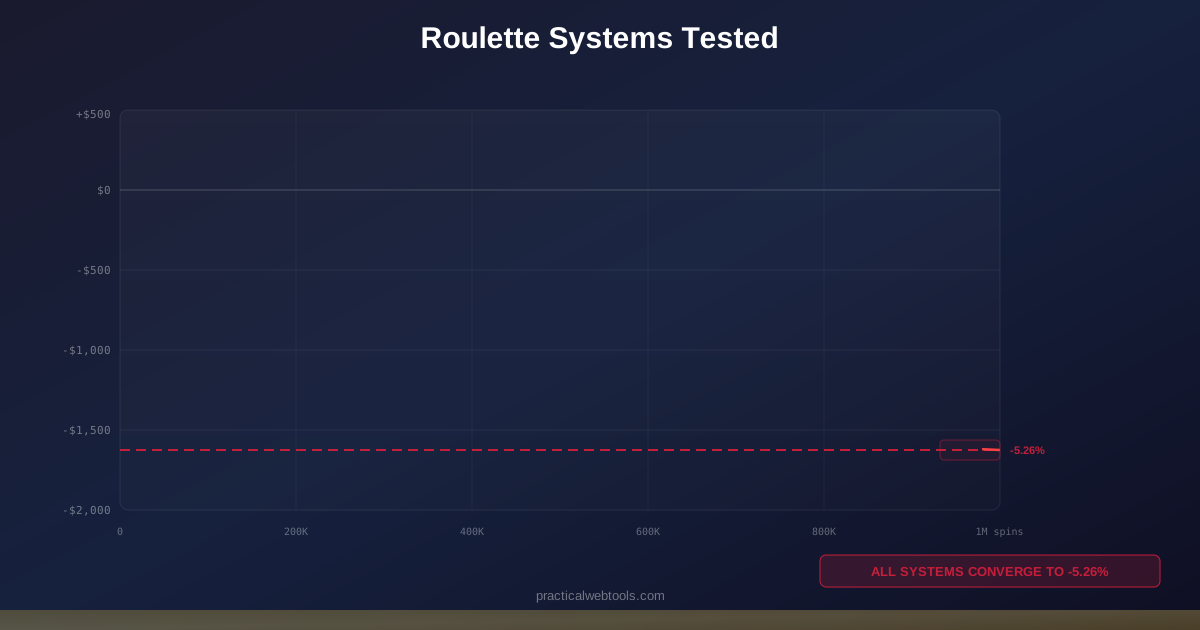
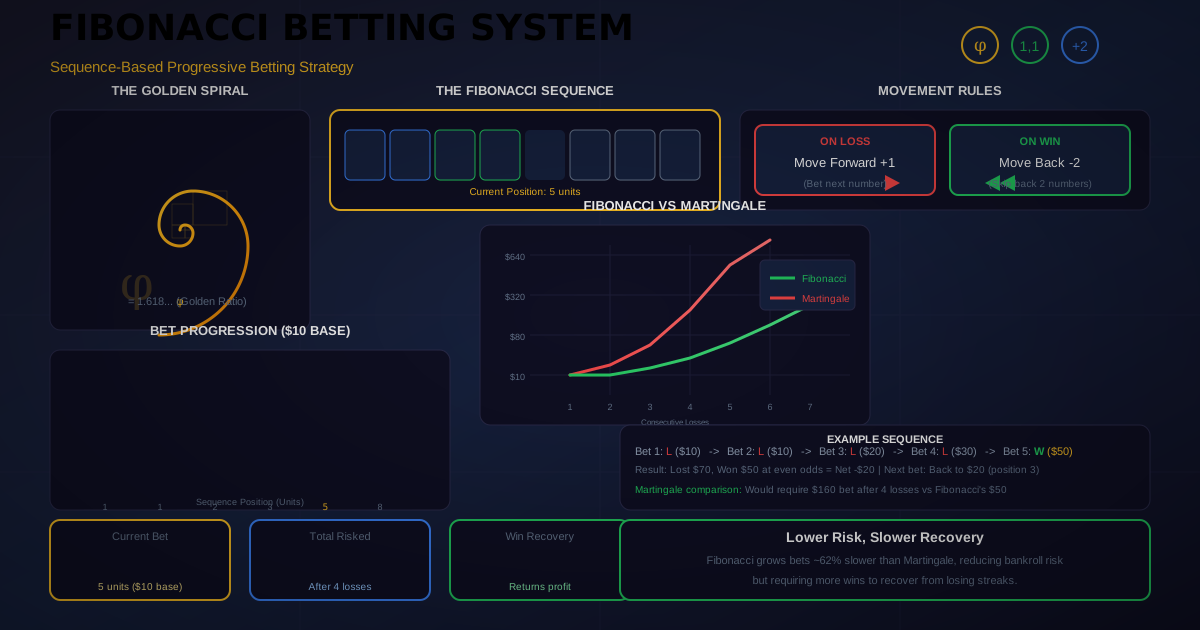
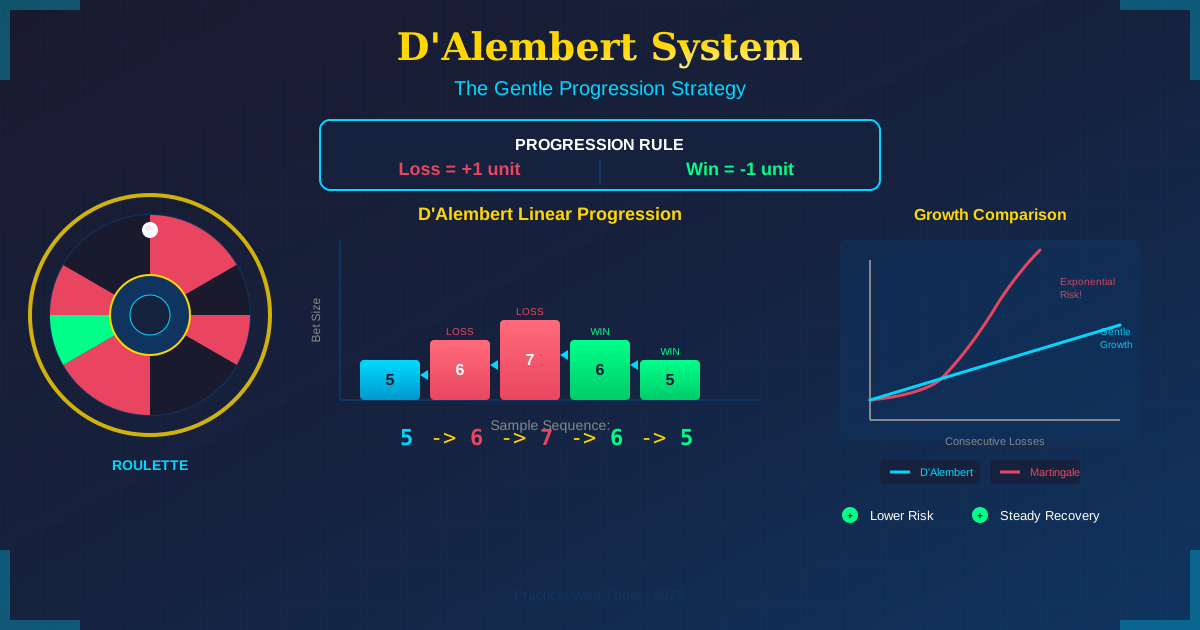
The truth: The probability of black on each spin was 47.37% every single time, regardless of the streak. Mark's strategy (Martingale) combined the gambler's fallacy with a betting system that cannot change the house edge.
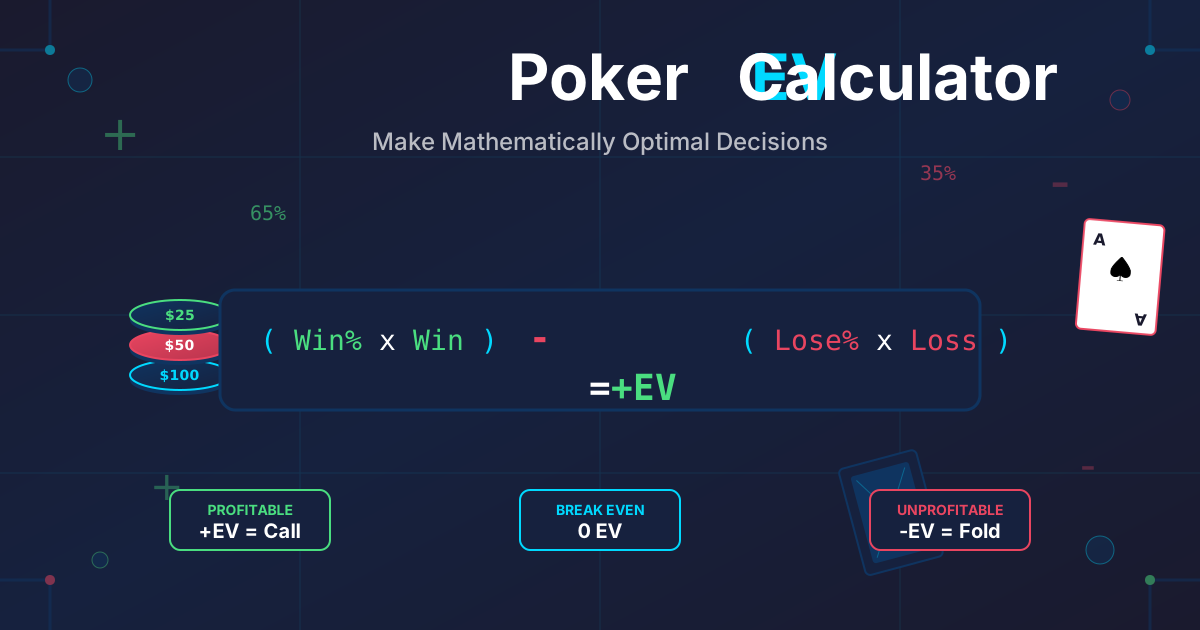
Calculate the true cost of Martingale and other systems with our Expected Value Calculator.
Example 2: The Slot Machine Squatter
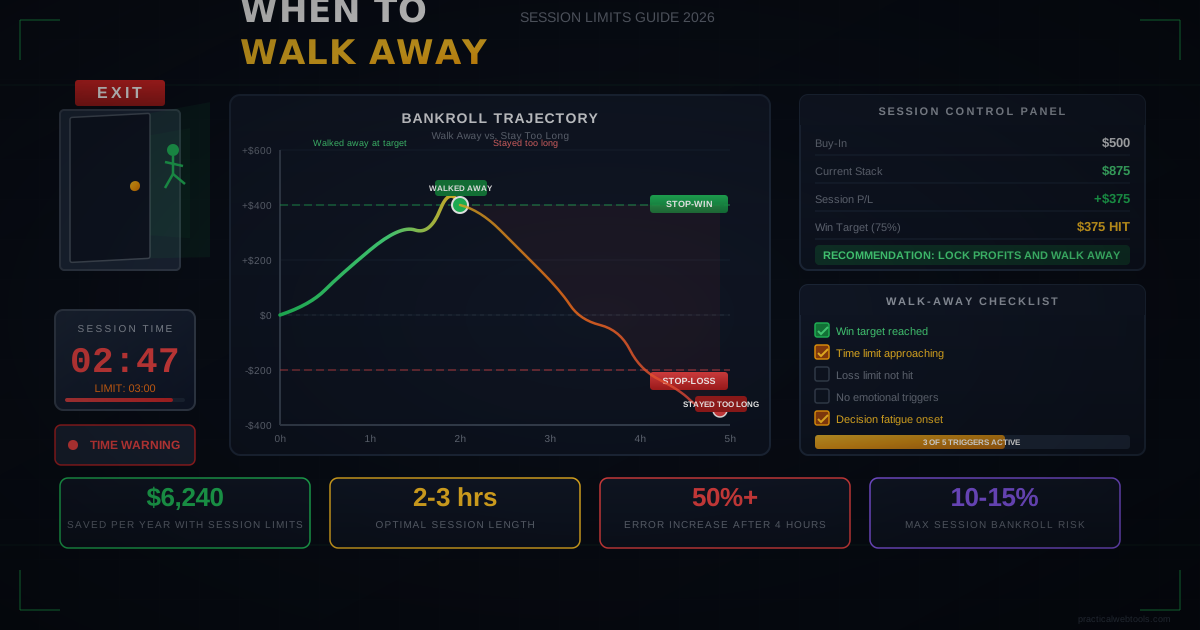
Linda has been playing the same slot machine for 3 hours without a bonus round. She refuses to leave because "it has to hit soon." She has spent $600 and is convinced the next $100 will trigger the bonus.
The truth: Each spin is independent (RNG-based). The machine does not know or track how long it has been since the last bonus. Linda's $600 in losses provide zero information about future outcomes. The probability of hitting the bonus on the next spin is identical to the probability on the first spin she played.
Example 3: The Sports Bettor's Regression Trap
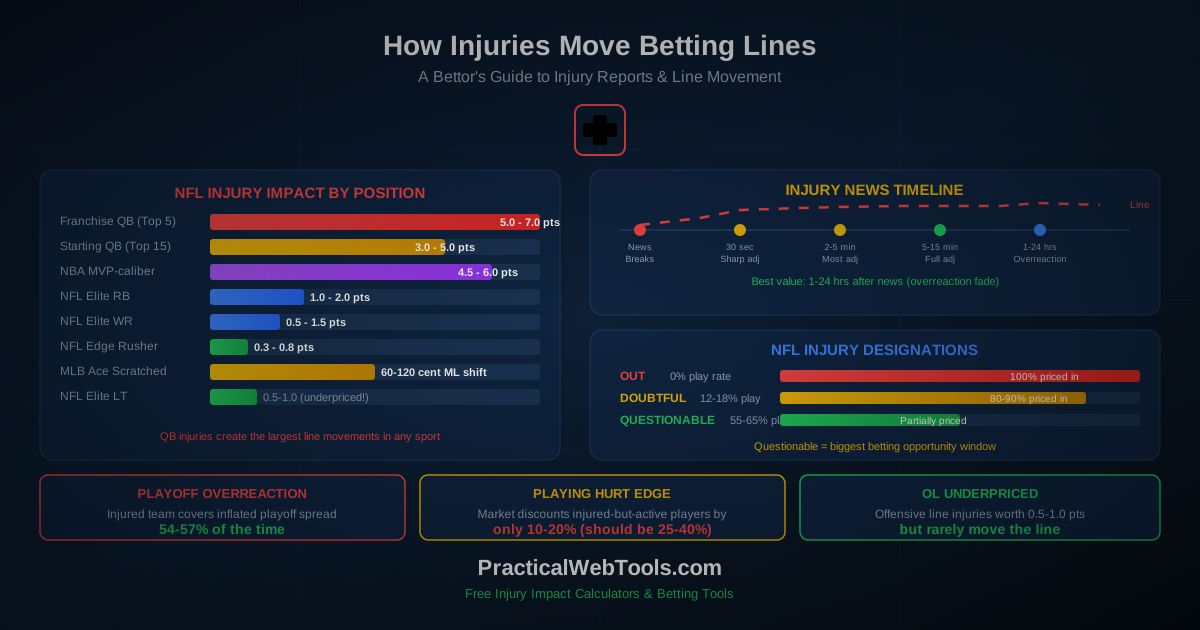
Dave notices that a baseball team has won 8 of their last 10 games. He bets heavily against them, reasoning "they can't keep winning like this." While regression to the mean is a real statistical phenomenon, Dave is confusing a general tendency with a specific prediction.
The truth: A team winning 8 of 10 might be a hot streak or might indicate the team is genuinely better than their pre-season expectations. Regression to the mean describes long-term tendencies, not specific game predictions. Each game's outcome depends on current matchups, injuries, and performance, not on "balancing out" past results.
Example 4: The Baccarat Pattern Hunter
Chen has carefully tracked 200 baccarat hands, noting that Banker has won 115 times to Player's 85. He shifts his bets entirely to Player, believing the results must balance out.
The truth: In an 8-deck shoe, Banker is expected to win approximately 50.68% of decided hands (excluding ties). An excess of 15 Banker wins in 200 hands is within normal statistical variation. The remaining shoe still slightly favors Banker on each individual hand.
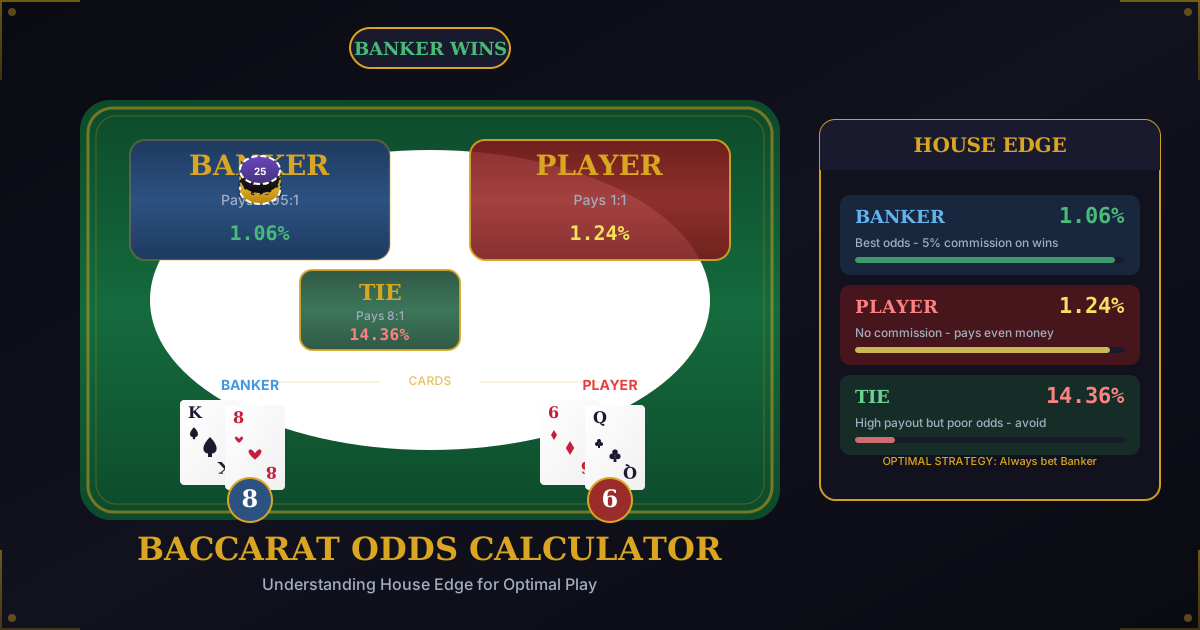
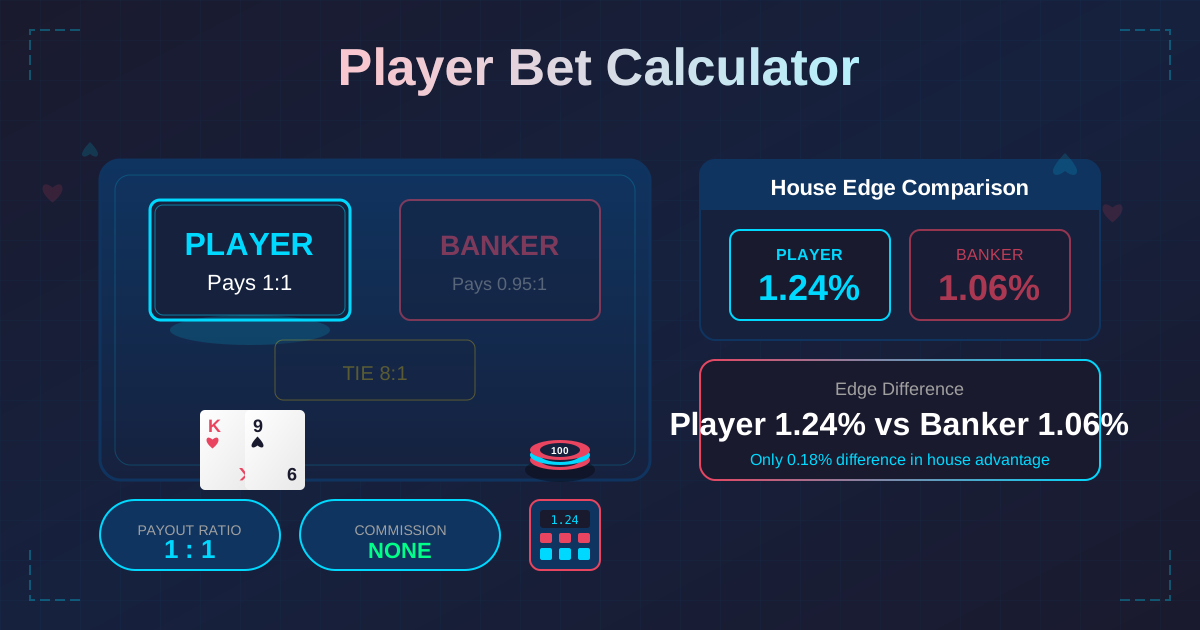
Check the actual odds of baccarat outcomes with our Baccarat Odds Calculator.
Example 5: The Lottery Number Avoider
Maria never picks numbers that won recently in the lottery. She believes previously drawn numbers are less likely to appear again soon.
The truth: Lottery draws are independent. Each number has an equal probability of being drawn regardless of when it last appeared. A number that won last week is exactly as likely to win this week as any other number.
The Psychology Behind the Fallacy
Why Our Brains Fail at Randomness
Human brains evolved to detect patterns. This was essential for survival: recognizing that certain plant patterns meant food, certain animal behaviors meant danger. But this pattern-detection is a blunt instrument that fires even when no pattern exists.
Key cognitive mechanisms:
-
Representativeness heuristic: We expect random sequences to "look random." A sequence like HTHTHT looks more random to us than HHHHHH, even though both are equally likely. We expect short sequences to reflect long-run probabilities, which they should not.
-
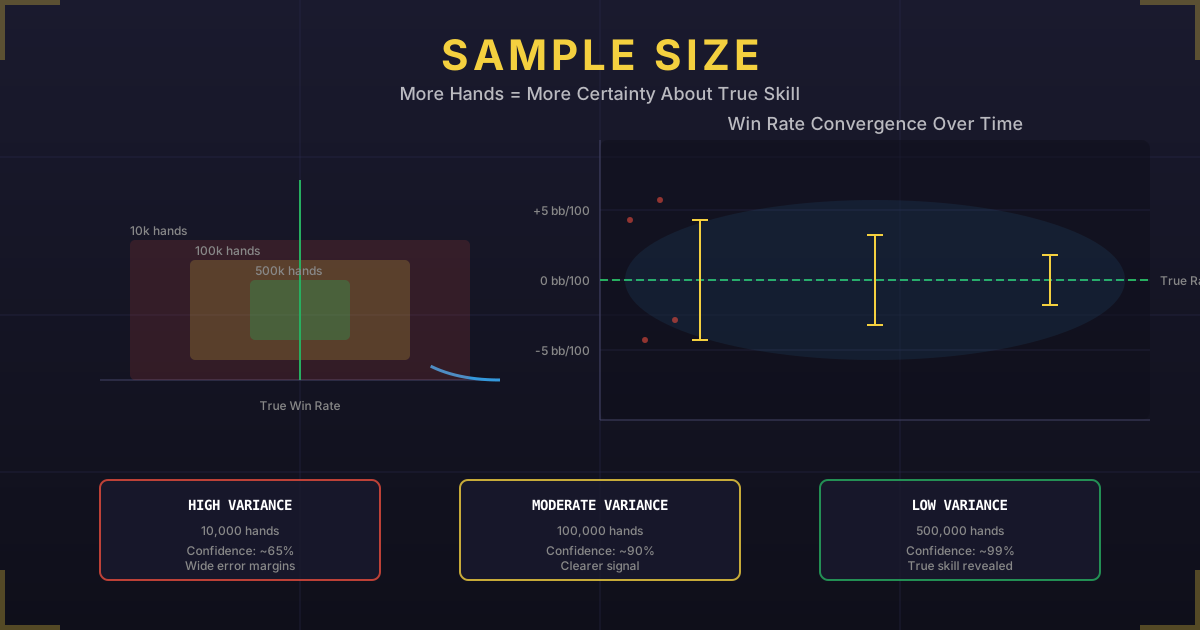
Belief in the law of small numbers: We mistakenly believe that small samples should mirror the population. In reality, small samples are highly variable. Expecting 50-50 results in 10 coin flips is unreasonable.
-
Recency bias: We give more weight to recent events. A recent streak feels more "informative" than it actually is.
-
Illusion of control: We believe we can predict or influence random events, especially when we are involved (choosing numbers, throwing dice, etc.).
What Randomness Actually Looks Like
True random sequences have properties that surprise most people:
- Streaks are common: In 100 fair coin flips, you will almost certainly get a streak of 6+ of the same result
- Clusters appear: Random points on a surface form clusters, not even distributions
- Balance is slow: It takes thousands of trials before proportions reliably approach expected values
- Short sequences look "biased": 10 coin flips with 7 heads is not unusual (17% probability)
Simulate thousands of roulette spins and see how actual randomness behaves with our Roulette Betting Simulator.
How to Overcome the Gambler's Fallacy
1. Internalize Independence
Before every bet, remind yourself: this event is independent. The roulette wheel, the dice, and the RNG have no memory. Repeat it until it becomes automatic.
2. Ignore Result Displays
Roulette result boards, baccarat scorecards, and slot machine histories provide zero useful information for independent games. Actively choose to ignore them.
3. Calculate, Don't Feel
Use calculators to determine probabilities rather than relying on intuition. Your intuition about probability is unreliable. The math is not.
Use our Roulette Odds Calculator instead of guessing.
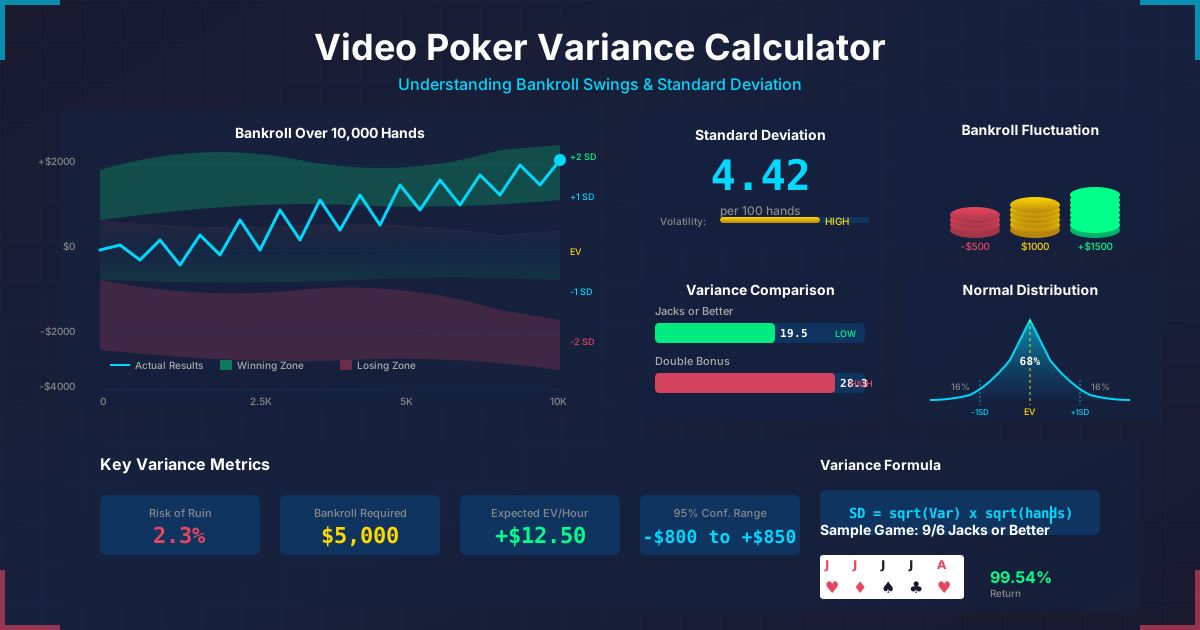
4. Understand Variance
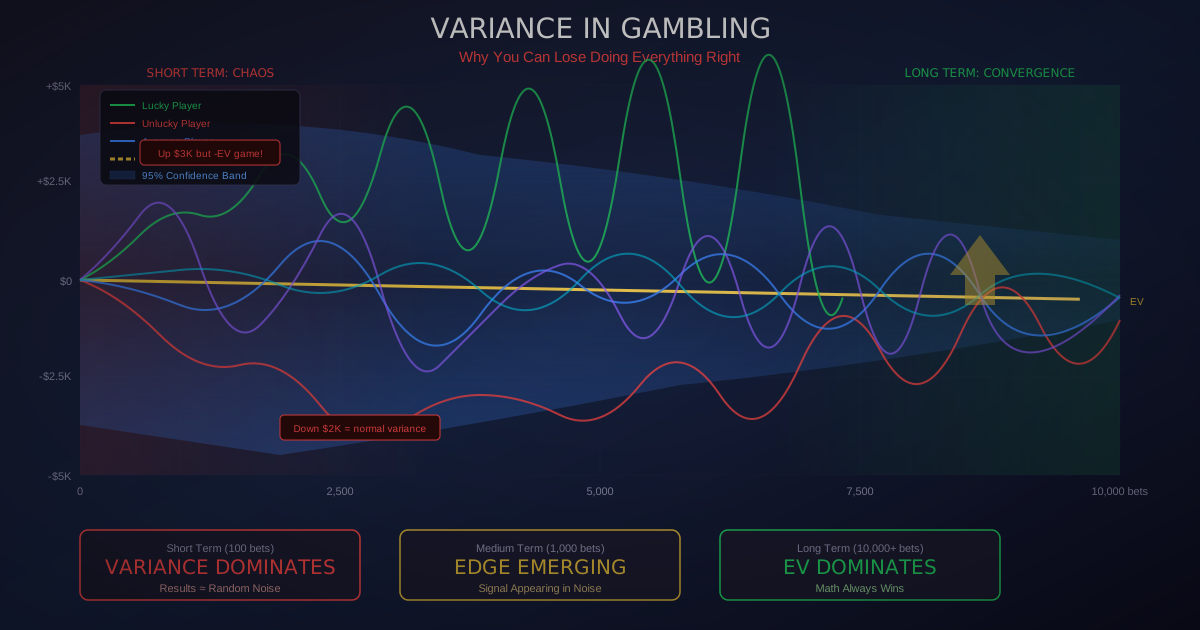
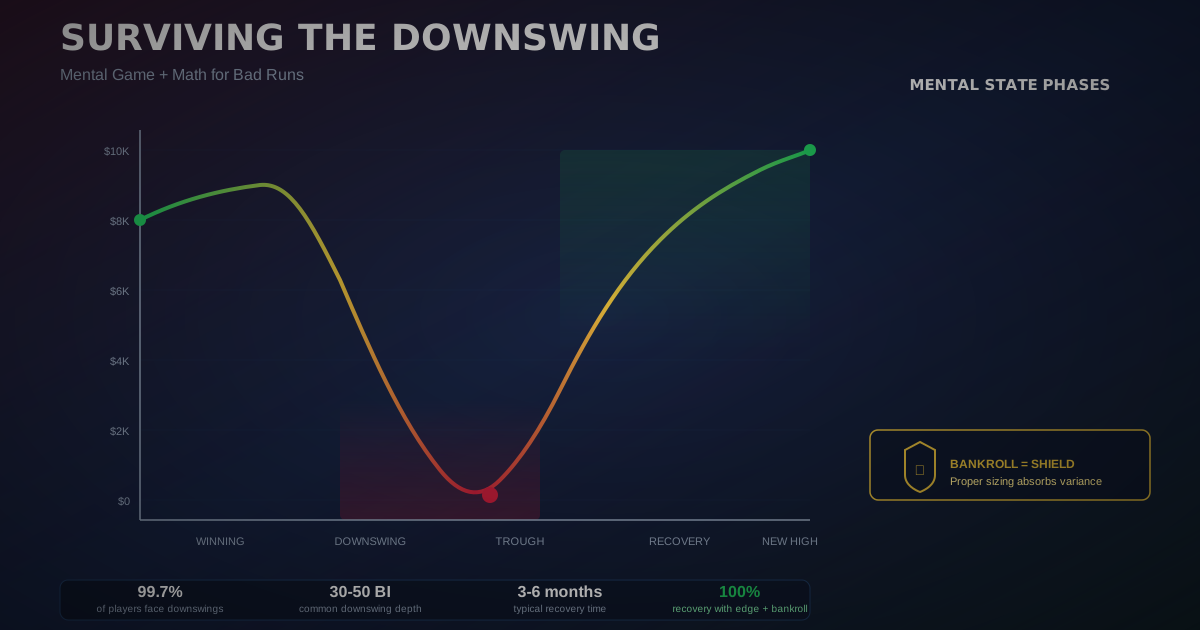
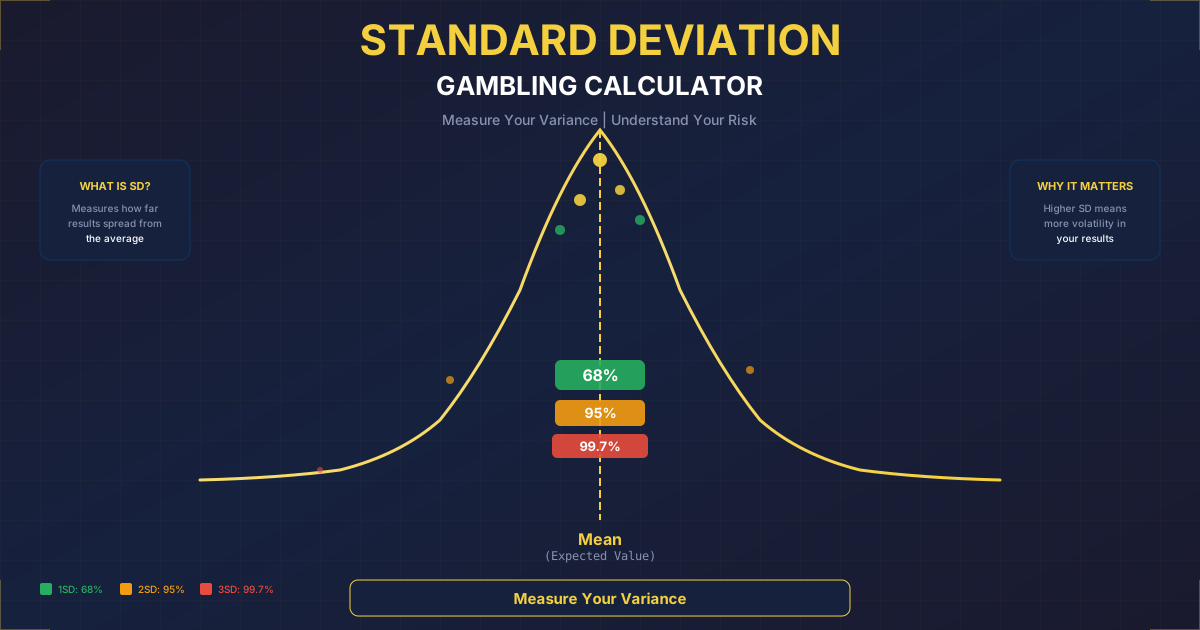
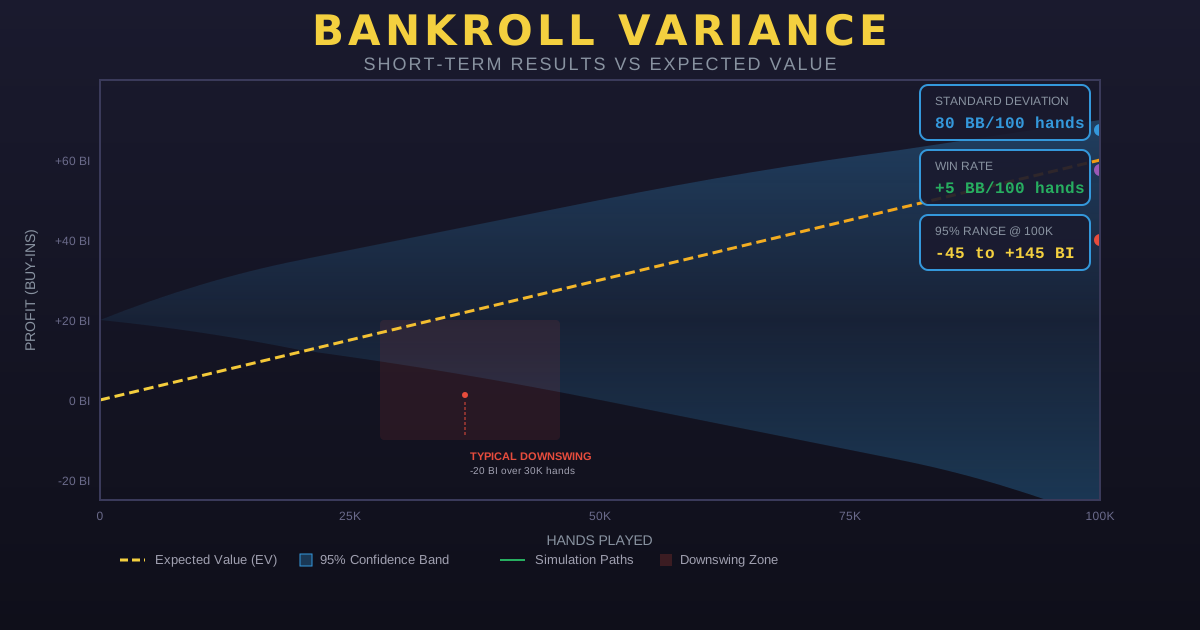
Learn that short-term results are dominated by variance, not expected value. Winning or losing streaks are normal and do not predict future results.
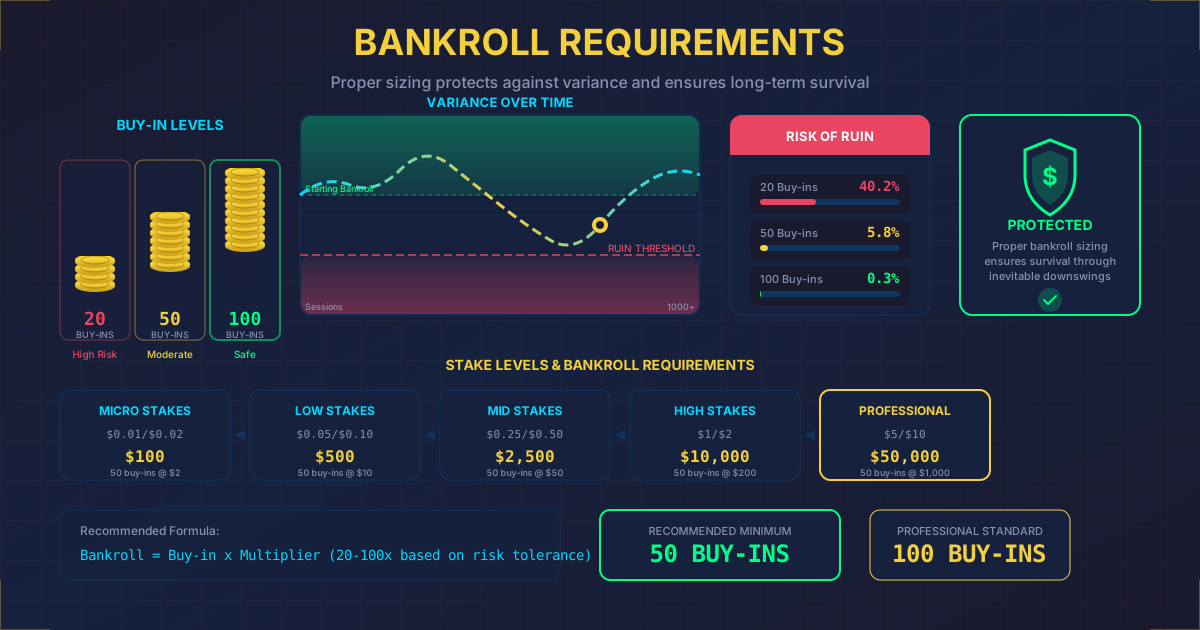
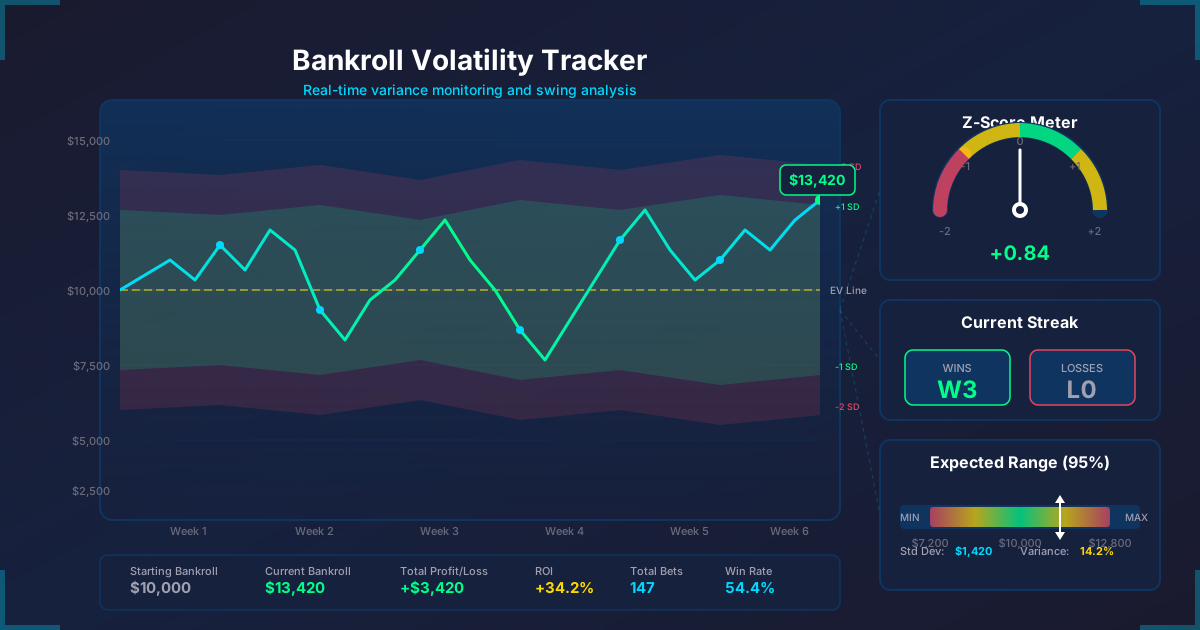
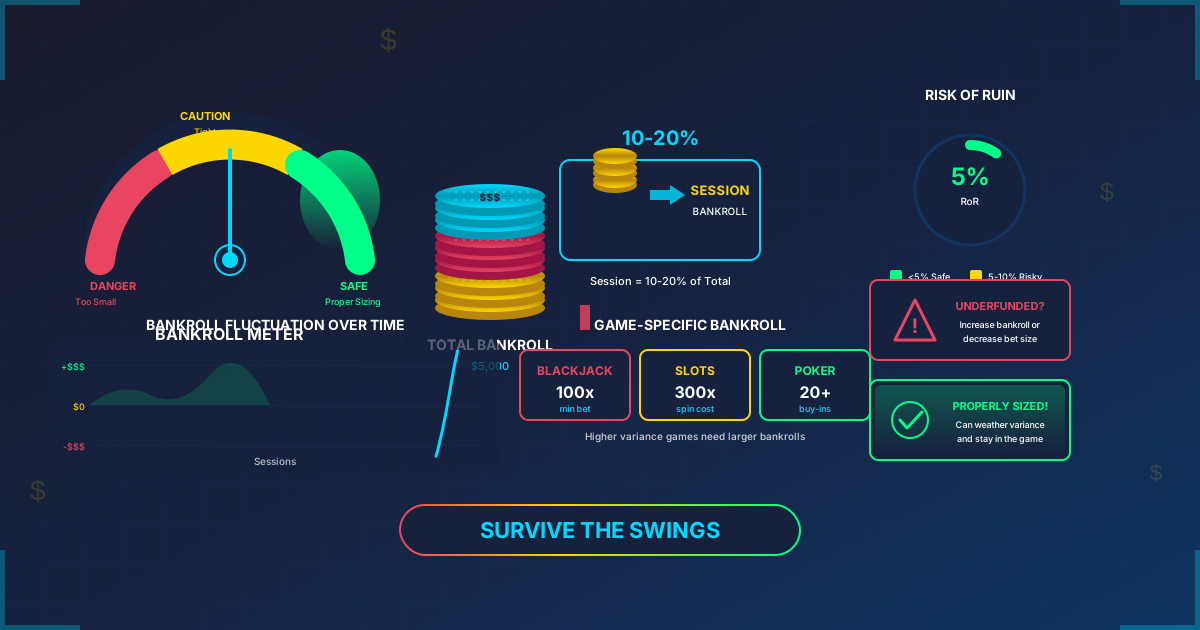
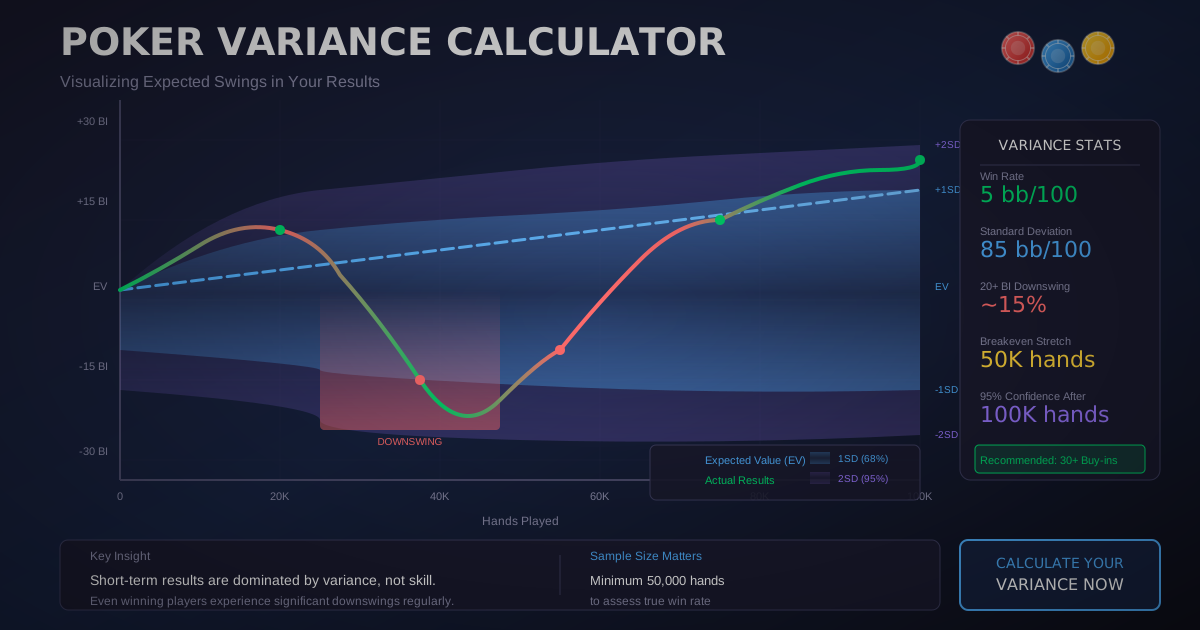
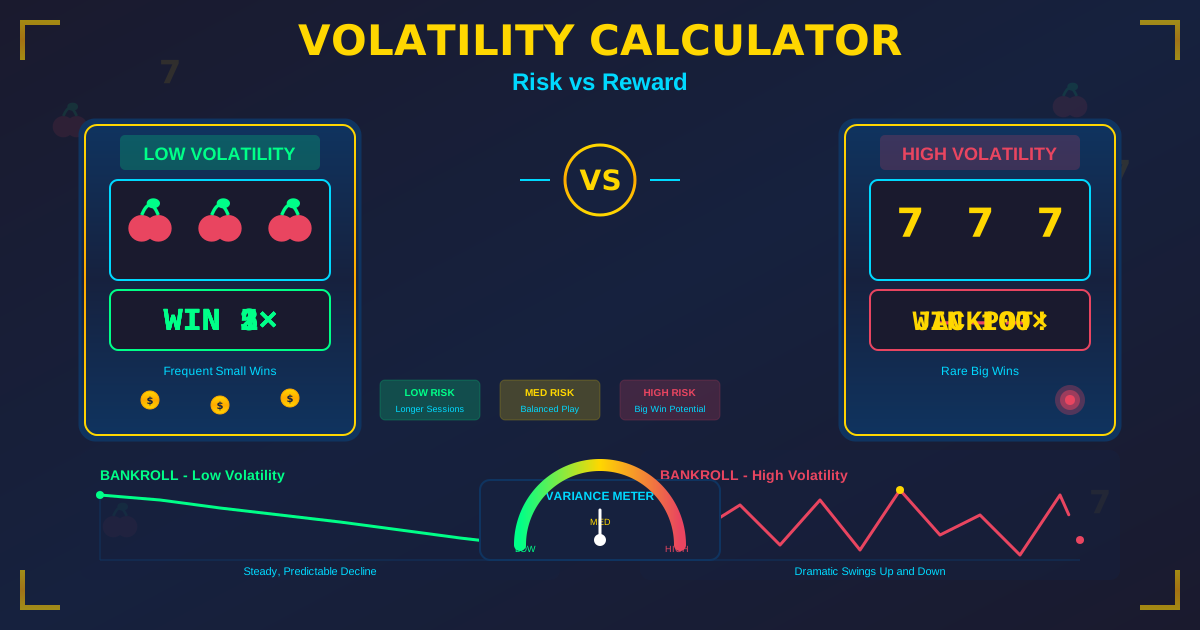
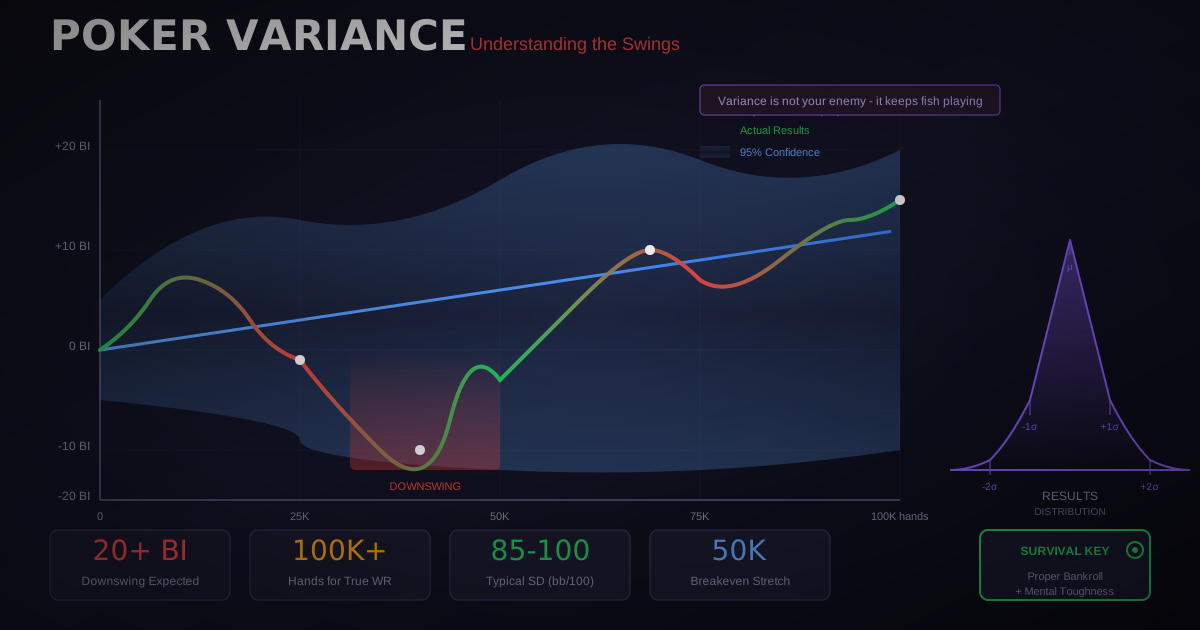
Explore how variance affects your results with our Poker Variance Calculator and Bankroll Volatility Tracker.
5. Set Mechanical Rules
Decide your bets before seeing results. If you planned to bet $25 on each hand of blackjack, do not change that plan because of a winning or losing streak. Mechanical consistency removes the fallacy from your decision-making.
6. Accept the House Edge
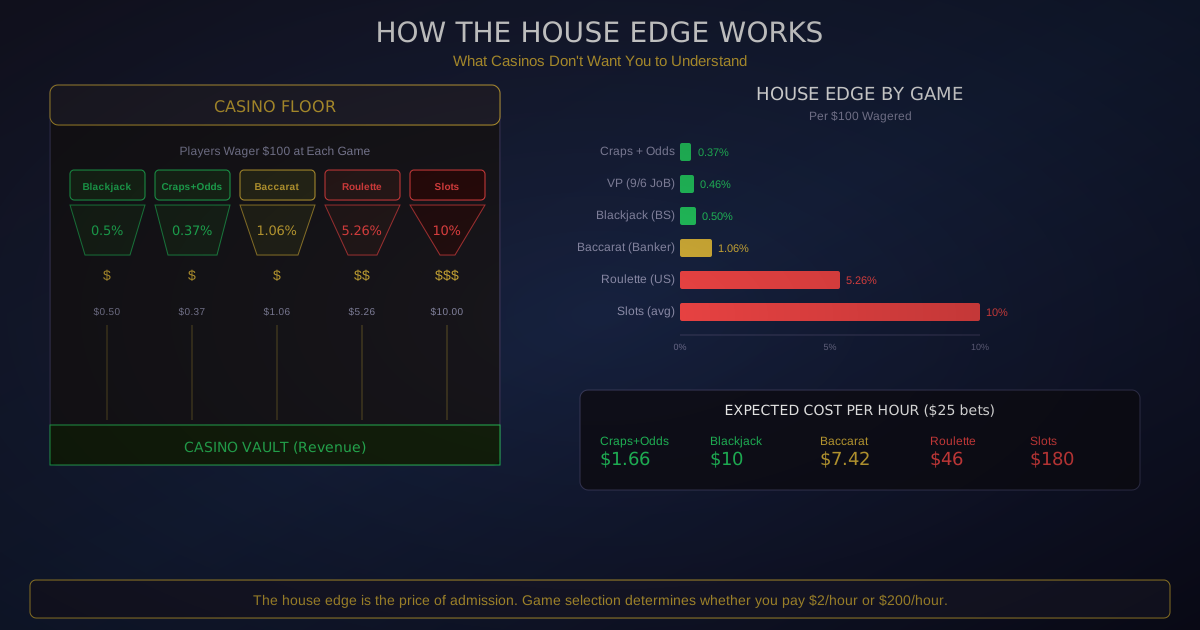
The house edge is constant. It does not change after streaks, near-misses, or long sessions. Accepting this fact makes the gambler's fallacy less tempting because you understand that no betting pattern changes your expected outcome.
Verify that the house edge is constant with our Roulette House Edge Calculator, Blackjack House Edge Calculator, and Craps House Edge Calculator.
Related Statistical Concepts
Regression to the Mean
Regression to the mean is real but different from the gambler's fallacy. It describes the tendency of extreme measurements to be followed by more moderate ones. A basketball player who shoots 90% from the free throw line in one game will likely shoot closer to their average (say 75%) in the next game.
Crucial difference: Regression to the mean describes statistical tendencies over many trials, not predictions about specific events. It does not mean the next free throw is more likely to miss because the last few went in.
The Law of Large Numbers
The Law of Large Numbers states that as sample size increases, the sample average converges toward the expected value. This is often misinterpreted to mean that results must "balance out."
What it actually means: Over millions of roulette spins, the proportion of reds will approach 18/38. It does not mean that after a streak of blacks, reds must "catch up." The proportion converges because future results overwhelm past results in a growing sample, not because future results compensate for past results.
Gambler's Ruin
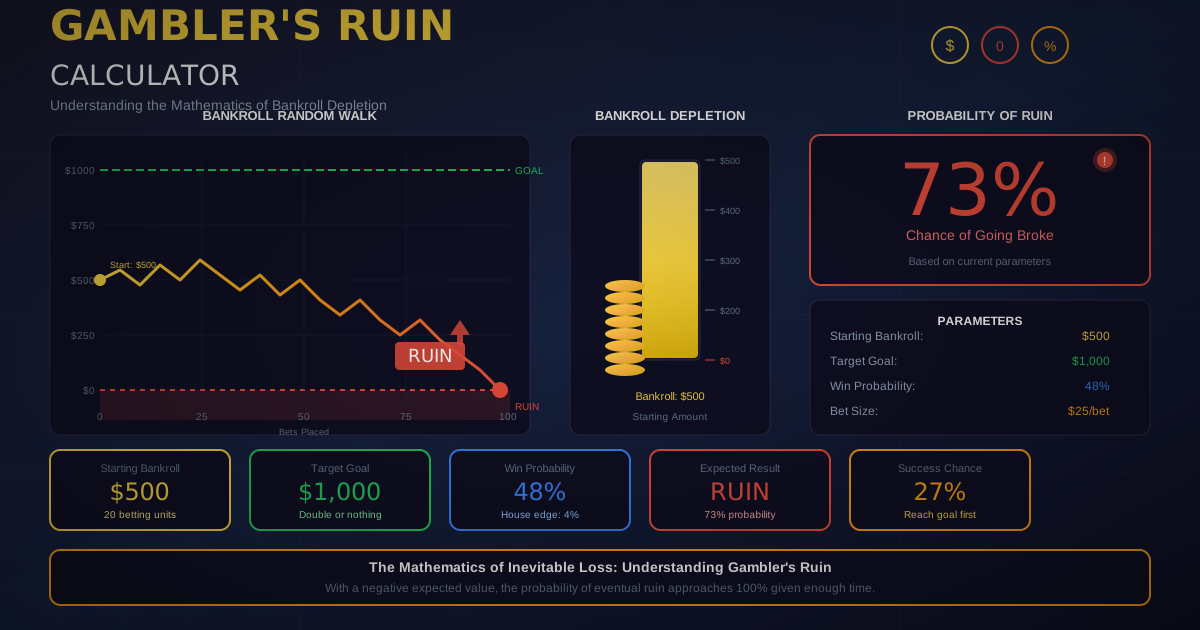
Related to the fallacy is the gambler's ruin theorem: a player with finite bankroll playing a negative-EV game against an opponent with infinite bankroll (the casino) will eventually go broke with certainty. No betting system, streak prediction, or pattern recognition can prevent this mathematical eventuality.
Calculate your expected losses with our Expected Value Calculator and track your risk with our Bankroll Volatility Tracker.
Frequently Asked Questions
What is the gambler's fallacy in simple terms? The gambler's fallacy is the mistaken belief that if something happens more often than expected in the recent past, it is less likely to happen in the near future. For example, after 10 reds in roulette, believing black is "due." Each spin is independent, so past results do not change future probabilities.
Is the gambler's fallacy the same as the hot hand fallacy? They are related but opposite. The gambler's fallacy says a streak must end; the hot hand fallacy says a streak will continue. Both are wrong when applied to independent random events like roulette, dice, or slot machines. In skill-based activities (sports, poker decisions), the hot hand may have a small real effect.
What is the Monte Carlo fallacy? The Monte Carlo fallacy is another name for the gambler's fallacy, named after the famous 1913 incident at the Monte Carlo Casino where 26 consecutive blacks caused players to lose fortunes betting on red. Use our Roulette Probability Calculator to see the actual odds.
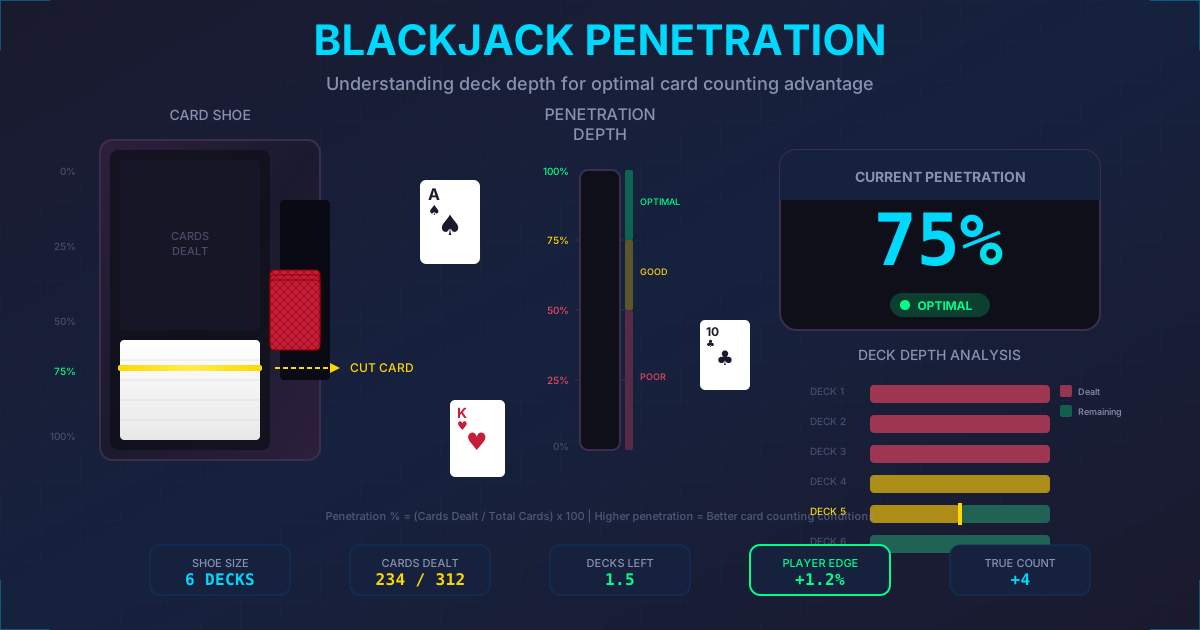
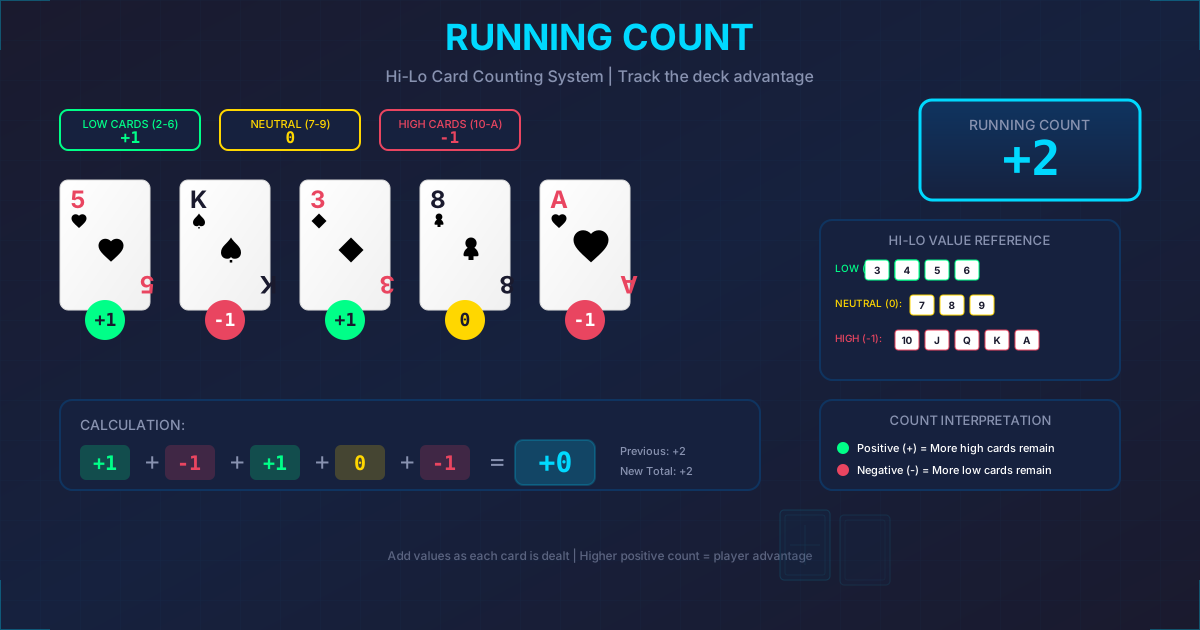
Can past results ever predict future outcomes in gambling? In games with independent events (roulette, craps, slots), past results provide zero predictive information. In games where cards are removed from a finite deck (blackjack), past results do carry information because the composition of the remaining deck changes. This is why card counting works in blackjack but pattern tracking is useless in roulette.
Why do casinos show roulette results on display boards? Casinos display past results because they know players will use this information to make irrational decisions influenced by the gambler's fallacy. The display costs the casino nothing and encourages larger, more frequent bets. It is one of the most effective psychological tools in the casino's arsenal.
How common are long streaks in roulette? More common than most people think. In 1,000 spins, you will typically see about 16 streaks of 5 or more same-color results and about 4 streaks of 7 or more. Streaks of 10+ happen approximately once every 2,000 spins. Use our Roulette Betting Simulator to simulate and observe streaks firsthand.
Does the law of averages mean results will balance out? Not in the way most people think. The Law of Large Numbers says the proportion (percentage) of results converges toward the expected value over many trials. But the absolute difference between outcomes can grow. After 1,000,000 roulette spins, the percentage of reds will be very close to 47.37%, but the actual count might be thousands away from the expected number.
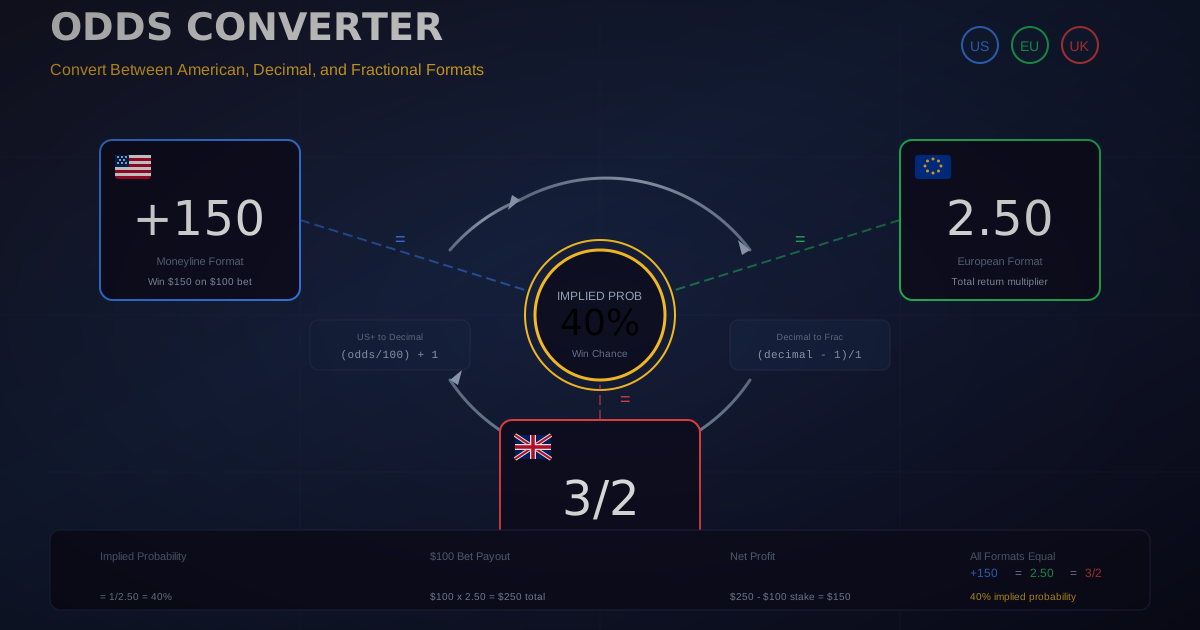
How do I stop falling for the gambler's fallacy? Internalize that independent events have no memory. Use probability calculators instead of intuition. Ignore result display boards. Set mechanical betting rules before seeing results. And accept that the house edge is constant regardless of past outcomes. Our Implied Probability Calculator and Odds Converter help you think in terms of real math rather than gut feeling.
Related Tools for Understanding Probability
Probability and Simulation Tools
- Roulette Probability Calculator - Calculate exact probabilities for any roulette outcome
- Roulette Betting Simulator - Simulate thousands of spins and observe streaks
- Roulette Odds Calculator - Complete odds for every roulette bet
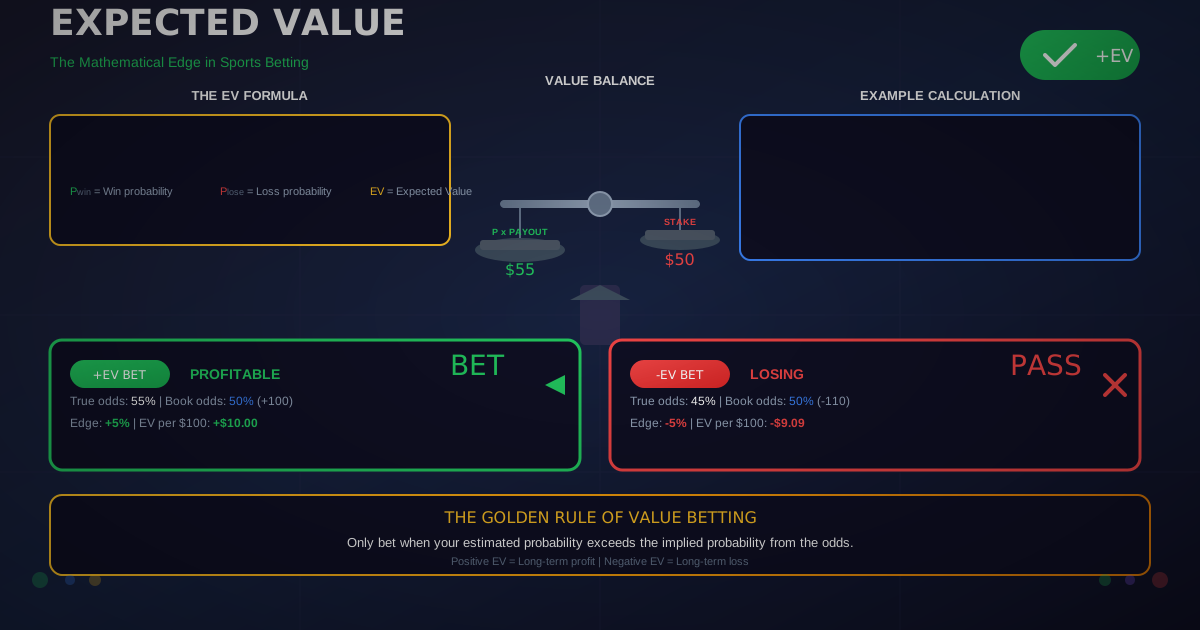
- Expected Value Calculator - Calculate the true EV of any wager
House Edge Verification Tools
- Roulette House Edge Calculator - Verify the constant house edge
- Blackjack House Edge Calculator - Blackjack edge by rule set
- Craps House Edge Calculator - Every craps bet analyzed
- Baccarat House Edge Calculator - Baccarat edge with commission
Variance and Bankroll Tools
- Bankroll Volatility Tracker - Track results against expectations
- Poker Variance Calculator - Understand poker variance
- Implied Probability Calculator - Convert odds to real probabilities
- Odds Converter - Convert between odds formats
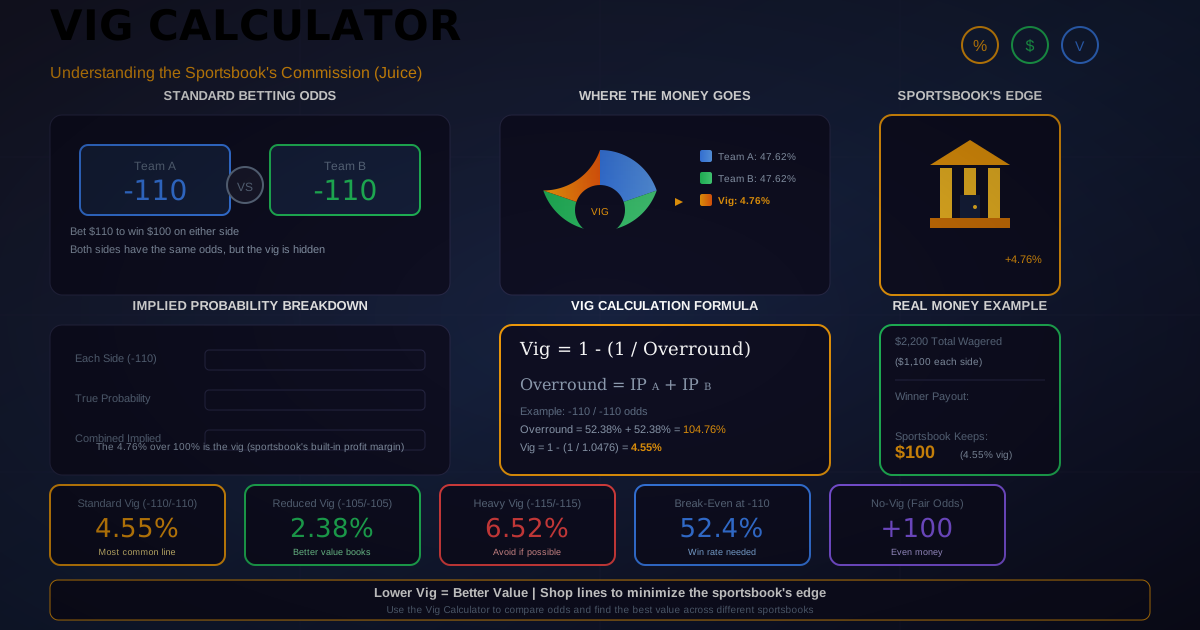
- Hold/Vig Calculator - Calculate sportsbook margins
- Baccarat Odds Calculator - True baccarat probabilities
Conclusion
The gambler's fallacy is perhaps the most expensive cognitive bias in all of gambling. It costs players billions of dollars annually by encouraging them to make bigger bets at exactly the wrong times, chasing imaginary patterns in genuinely random data.
The math is unambiguous: in games with independent events, past outcomes provide exactly zero information about future outcomes. The roulette wheel does not know it just landed on black 15 times. The slot machine does not know how long it has been since the last jackpot. The dice do not remember last roll.
Understanding and internalizing this fact will not make you a winner at negative-EV games. The house edge ensures that over time, the casino wins regardless of whether you fall for the fallacy or not. But it will protect you from the most dangerous behavior the fallacy causes: increasing bet sizes after losses, staying longer than planned, and making emotional decisions based on imaginary patterns.
Start by testing your probability intuition with our Roulette Probability Calculator. Simulate real roulette sessions with our Roulette Betting Simulator. And calculate the true expected value of every bet with our Expected Value Calculator.
The ball has no memory. Once you accept that, you will never look at a roulette display board the same way again.
Gambling involves risk. This content is for educational and informational purposes only. Always gamble responsibly, set limits you can afford, and seek help if gambling becomes a problem. Visit the National Council on Problem Gambling or call 1-800-522-4700 for support.