Is Card Counting Still Worth It in 2026? A Realistic Assessment

Card counting still works mathematically in 2026, but the practical reality has never been harder. Continuous shuffling machines cover roughly 40% of blackjack tables on the Las Vegas Strip, 6:5 payouts dominate low-limit games, deck penetration has been slashed to 50-65% at most properties, and facial recognition technology can flag known counters before they sit down. A skilled counter with a $20,000 bankroll, playing under favorable conditions, can realistically expect to earn $15-$35 per hour---before accounting for travel, time, heat, and the ever-present risk of being backed off.
Is that worth it? For a tiny fraction of players, yes. For the vast majority, absolutely not. This guide provides the complete, unvarnished picture: how card counting actually works, what it realistically pays, what it costs, and whether you should pursue it.
Practice counting speed and accuracy with the Hi-Lo Practice Tool and understand the theory with the Card Counting Calculator.
How Card Counting Actually Works
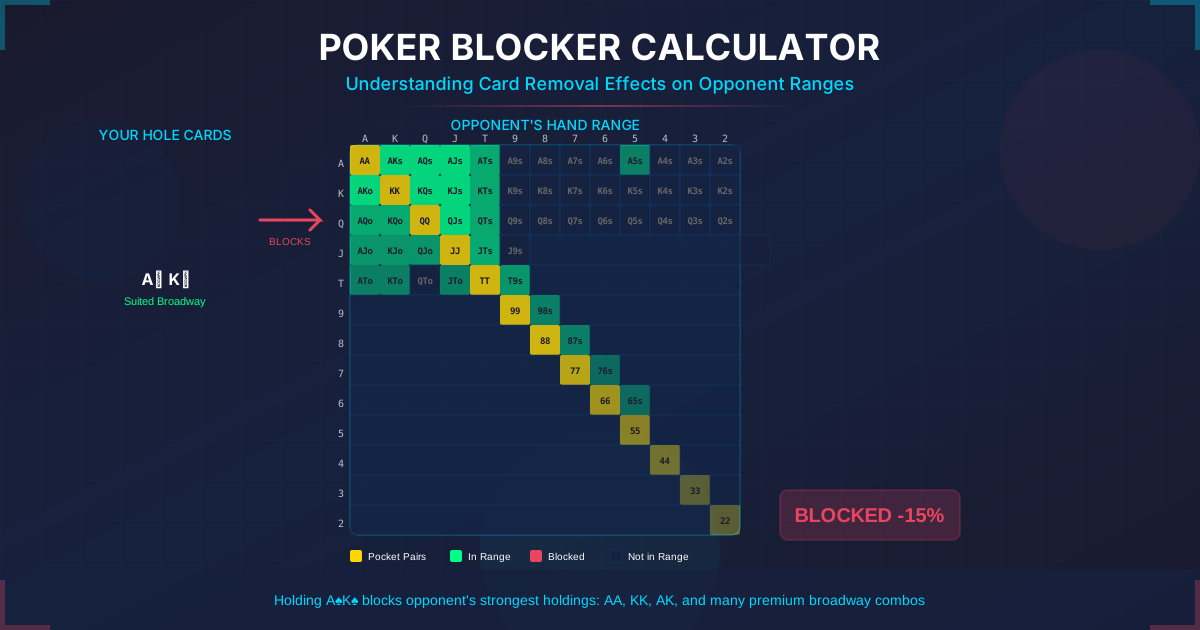
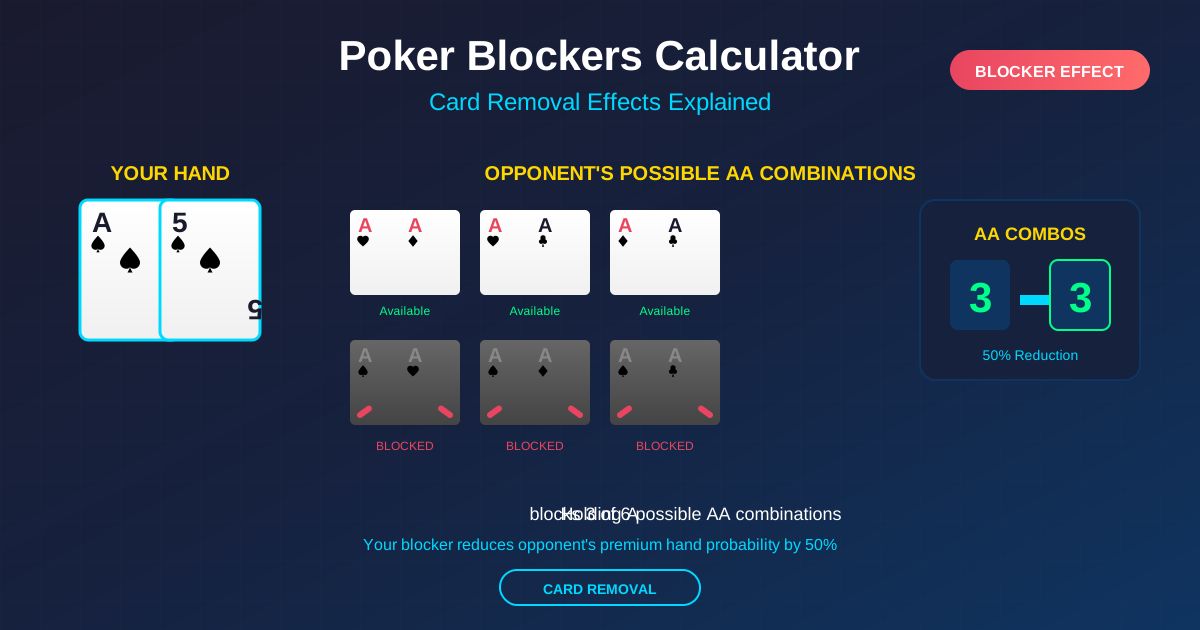
Card counting is not about memorizing every card played. It is about tracking the ratio of high cards (10s, face cards, Aces) to low cards (2-6) remaining in the shoe. When the remaining deck is rich in high cards, the player has an advantage. When it is rich in low cards, the house advantage increases.
Why High Cards Favor the Player
-
Blackjack frequency increases. Blackjack (an Ace and a 10-value card) pays 3:2 (or should---more on this later). More high cards remaining means more blackjacks, which disproportionately benefit the player because the player gets paid 3:2 while the dealer only wins 1:1 when they have blackjack.
-
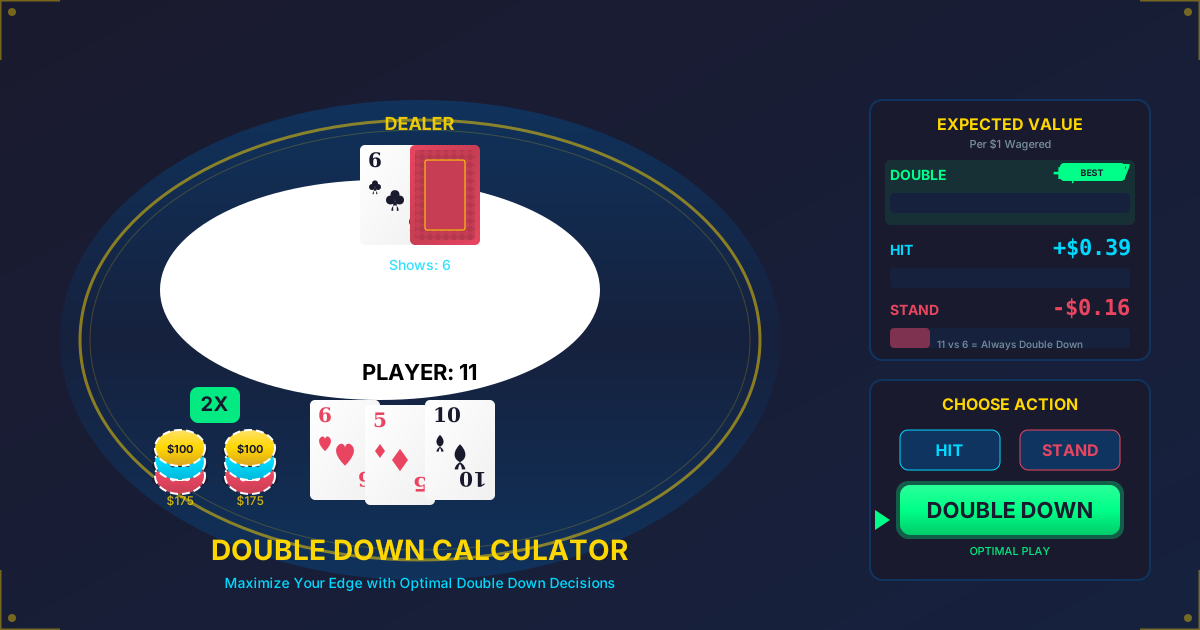
Doubles are more effective. When you double down on 10 or 11, you want to draw a high card. A high-card-rich deck makes doubles more profitable.
-
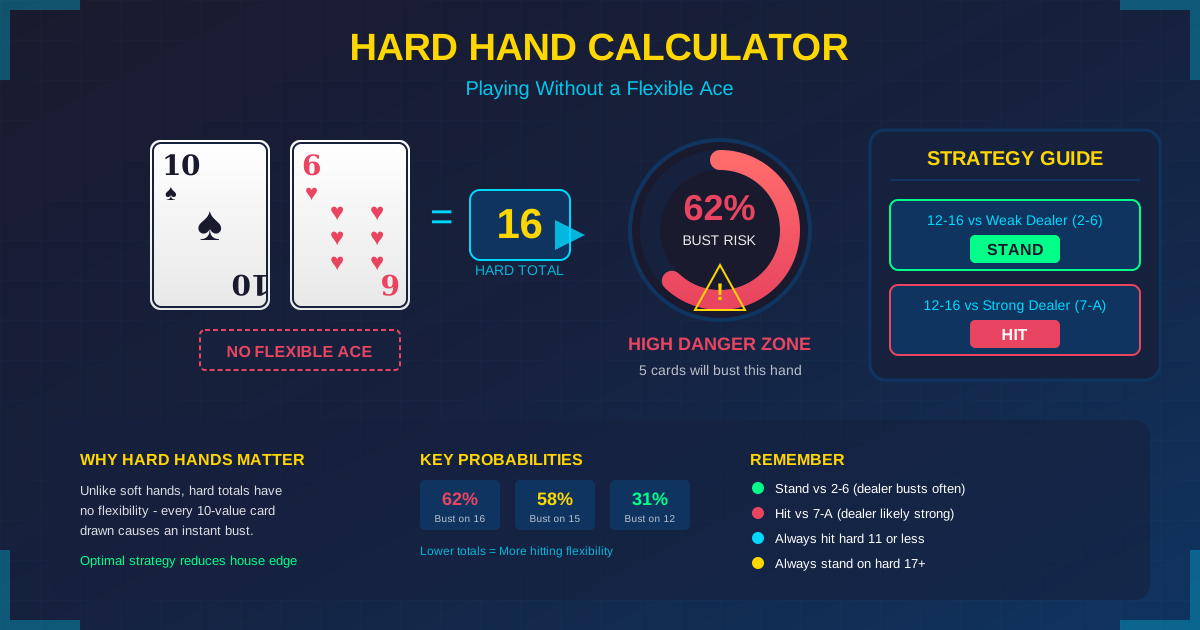
Dealer busts more often. The dealer must hit stiff hands (12-16) regardless. With more high cards remaining, the dealer is more likely to bust these hands.
-
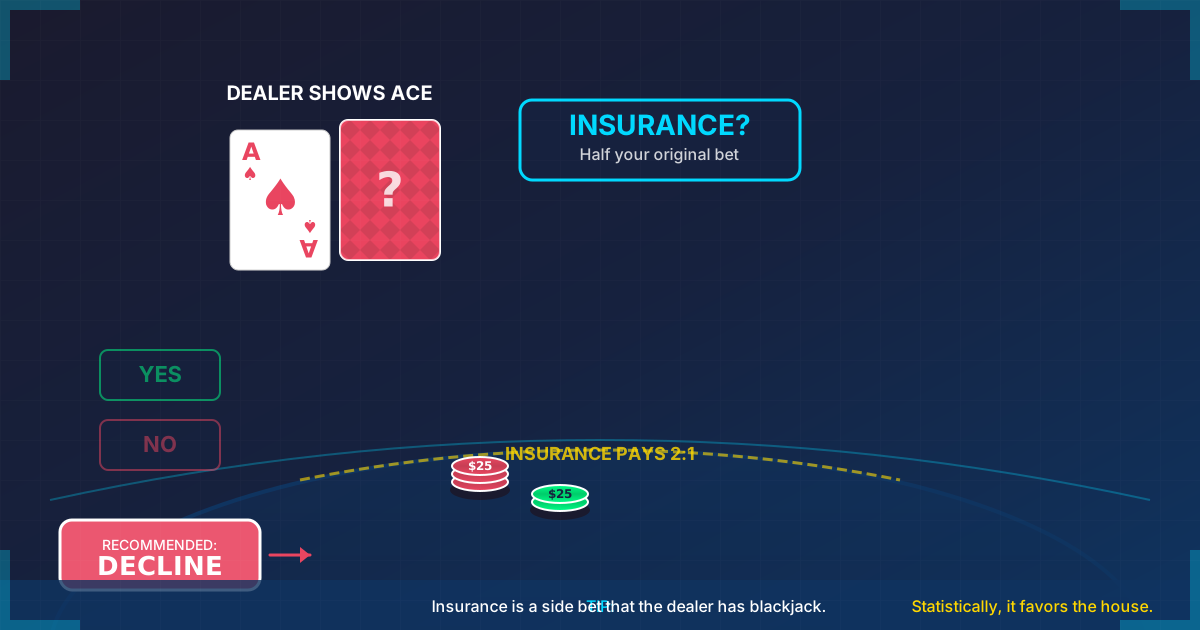
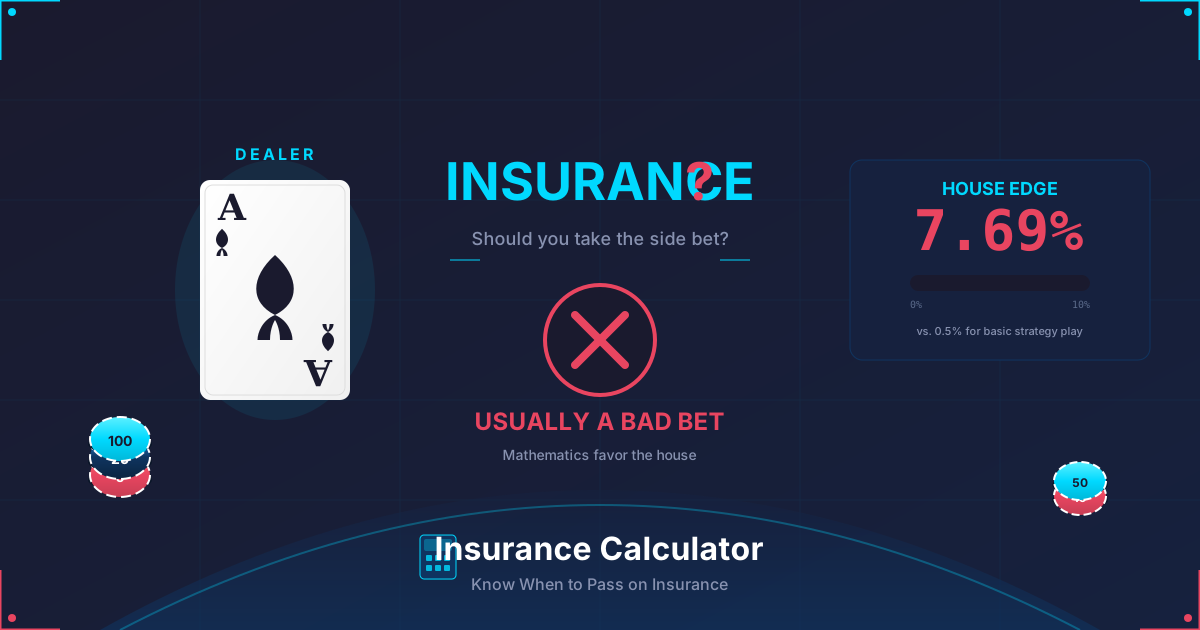
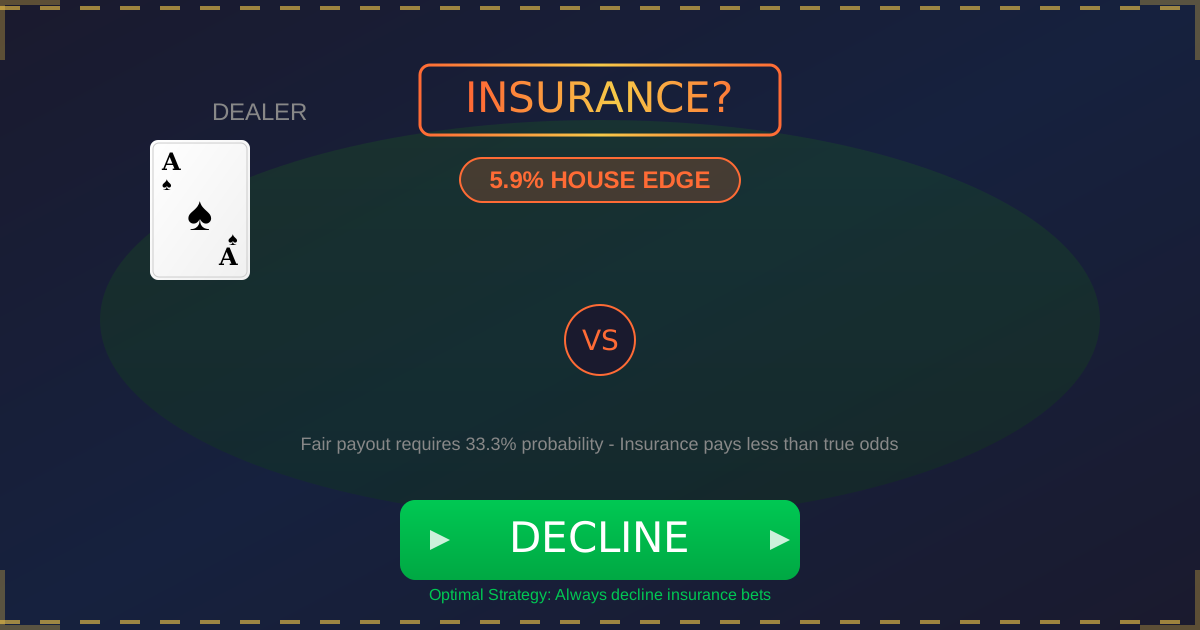
Insurance becomes profitable. With a sufficiently high true count, the probability of the dealer having a 10 in the hole exceeds the breakeven point, making the insurance bet positive EV.
The Hi-Lo Counting System
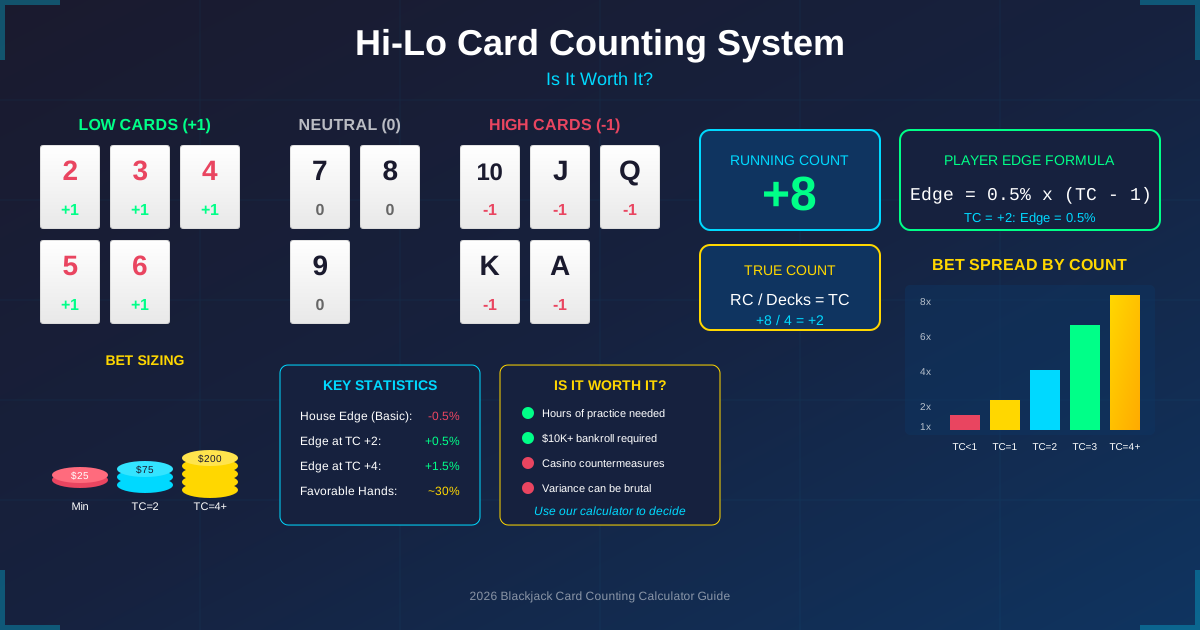
The Hi-Lo system, developed by Harvey Dubner and refined by Stanford Wong, is the most widely used counting system because it balances simplicity and effectiveness.
Card values:
| Cards | Count Value | Reason |
|---|---|---|
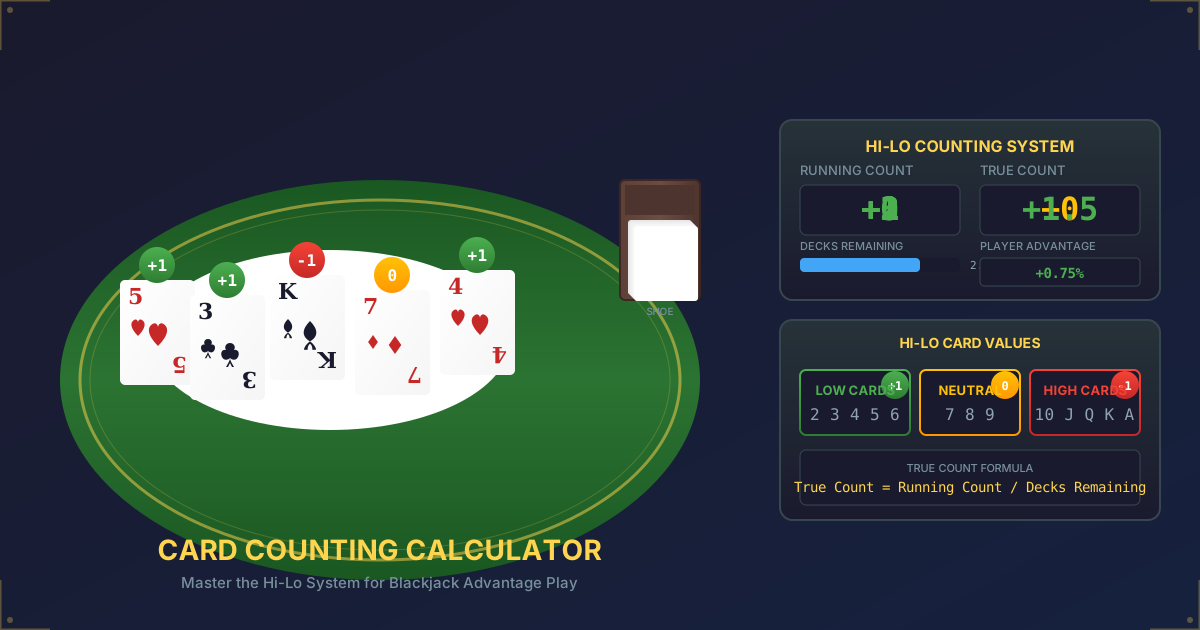
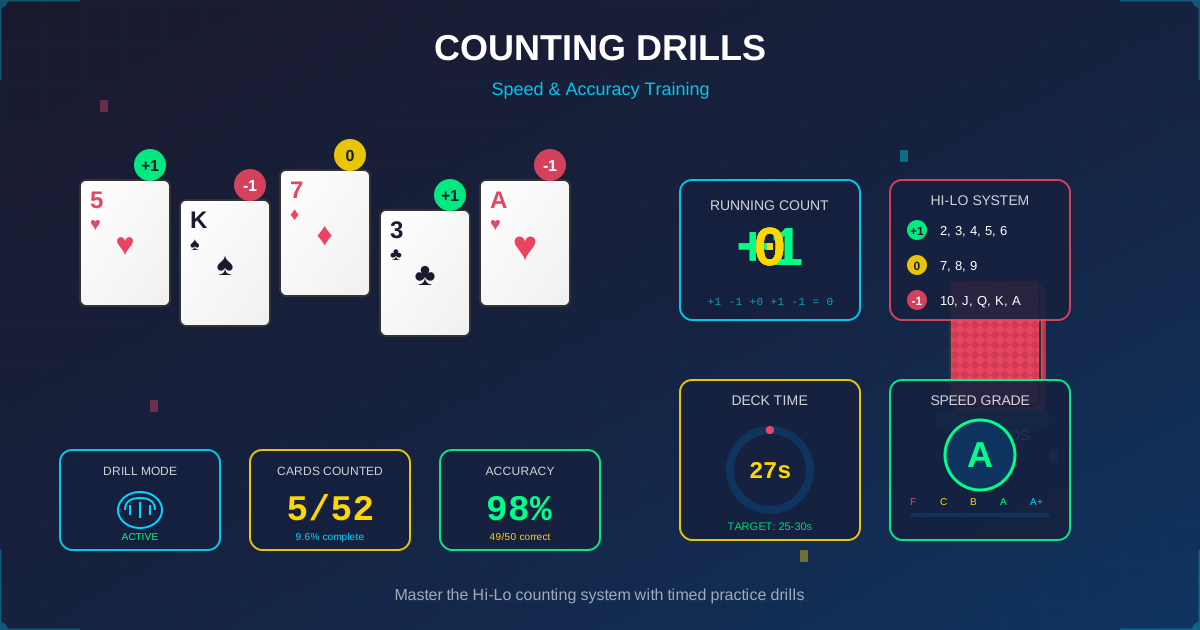
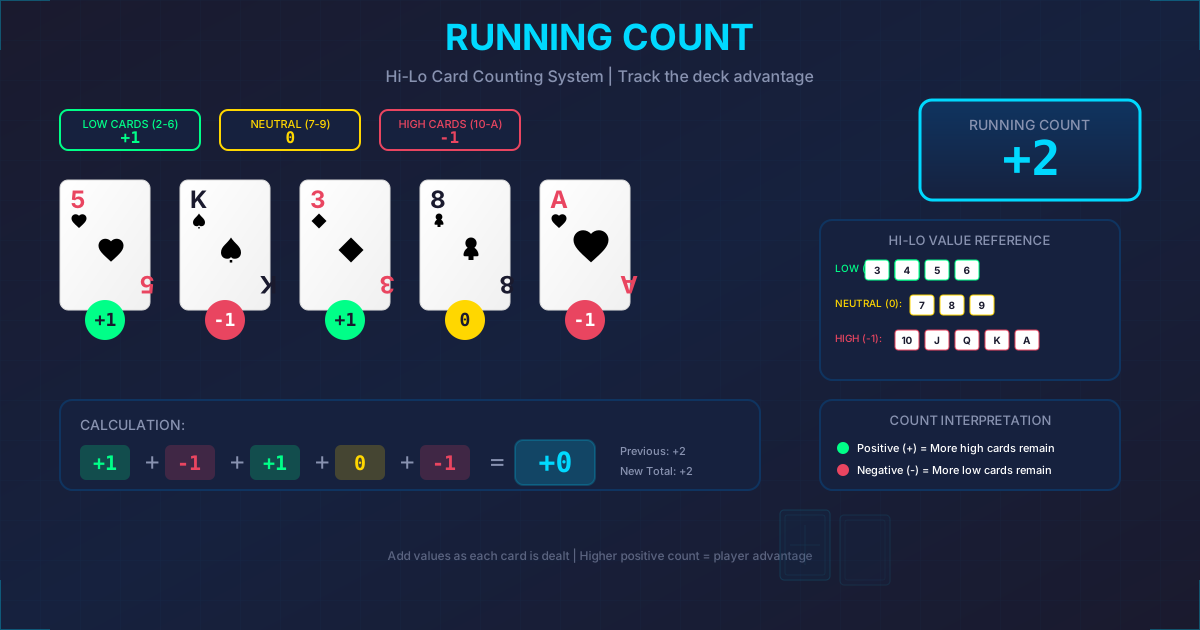
| 2, 3, 4, 5, 6 | +1 | Low cards leaving the deck favor the player |
| 7, 8, 9 | 0 | Neutral cards |
| 10, J, Q, K, A | -1 | High cards leaving the deck favor the house |
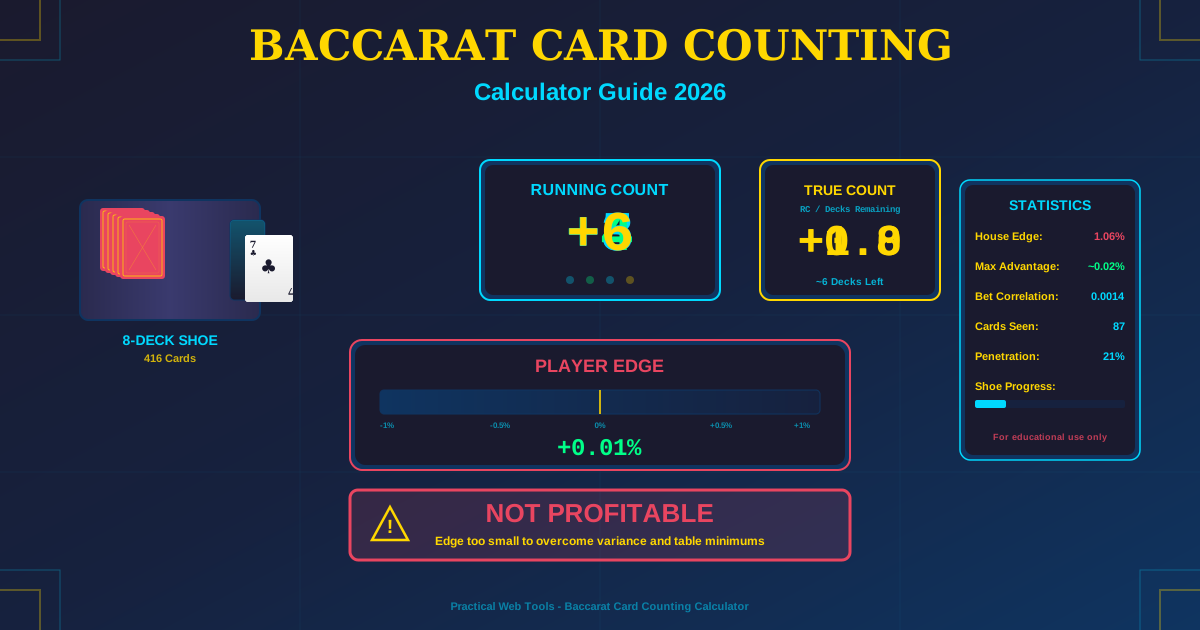
Running Count: The cumulative sum of all card values observed since the shuffle. A positive running count means more low cards have been dealt, so the remaining deck is rich in high cards (favorable).
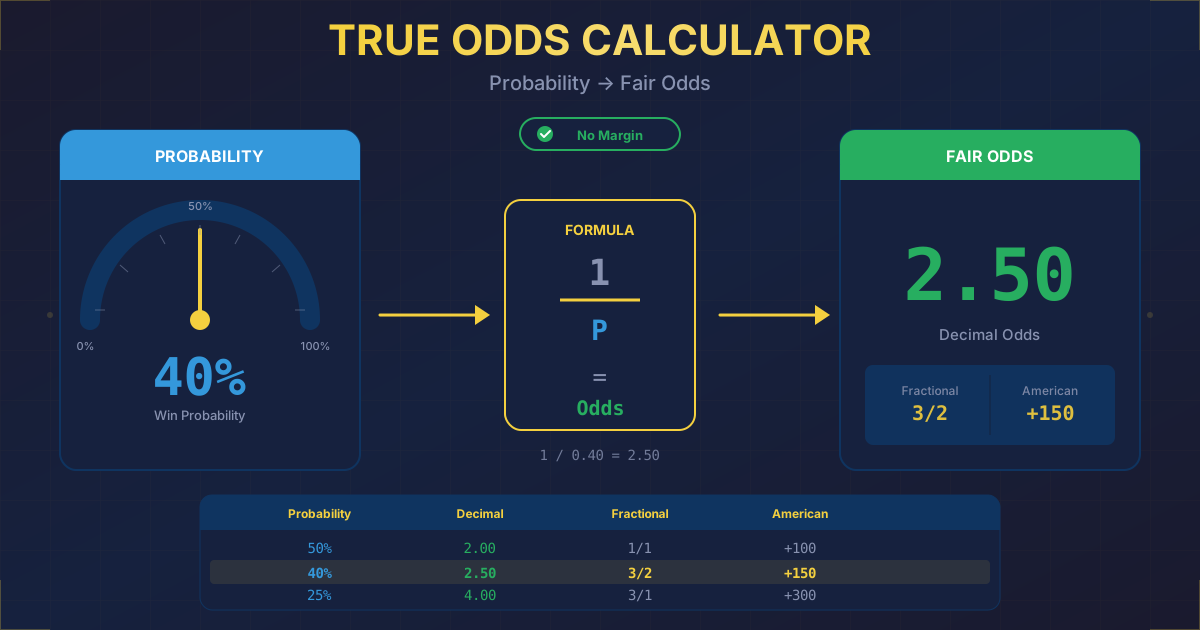
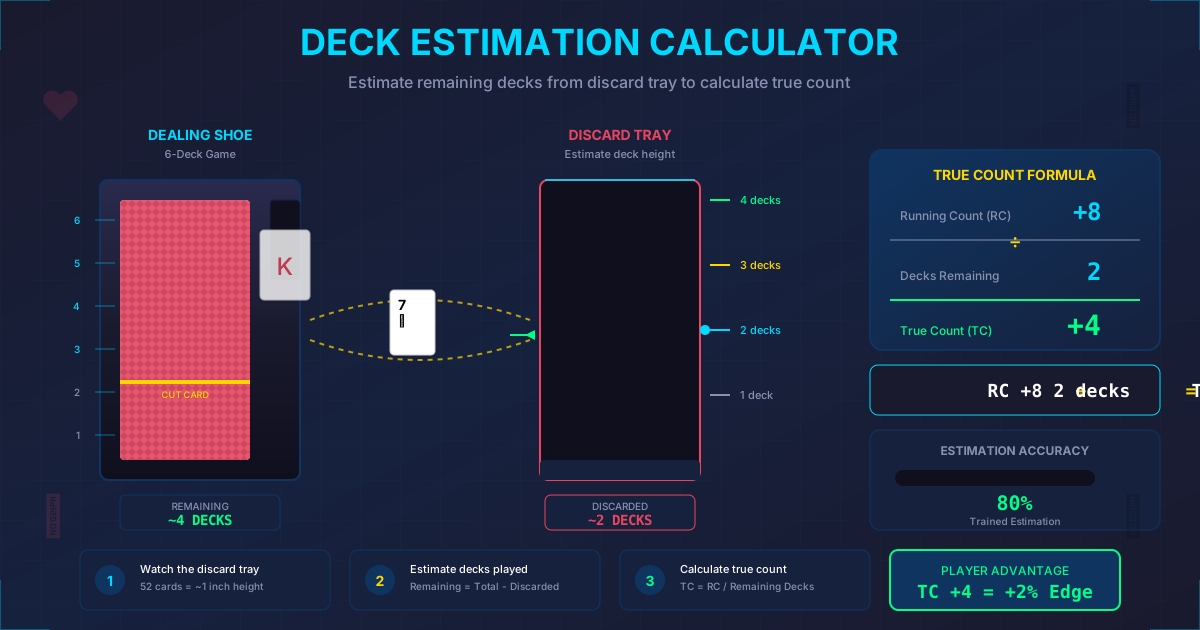
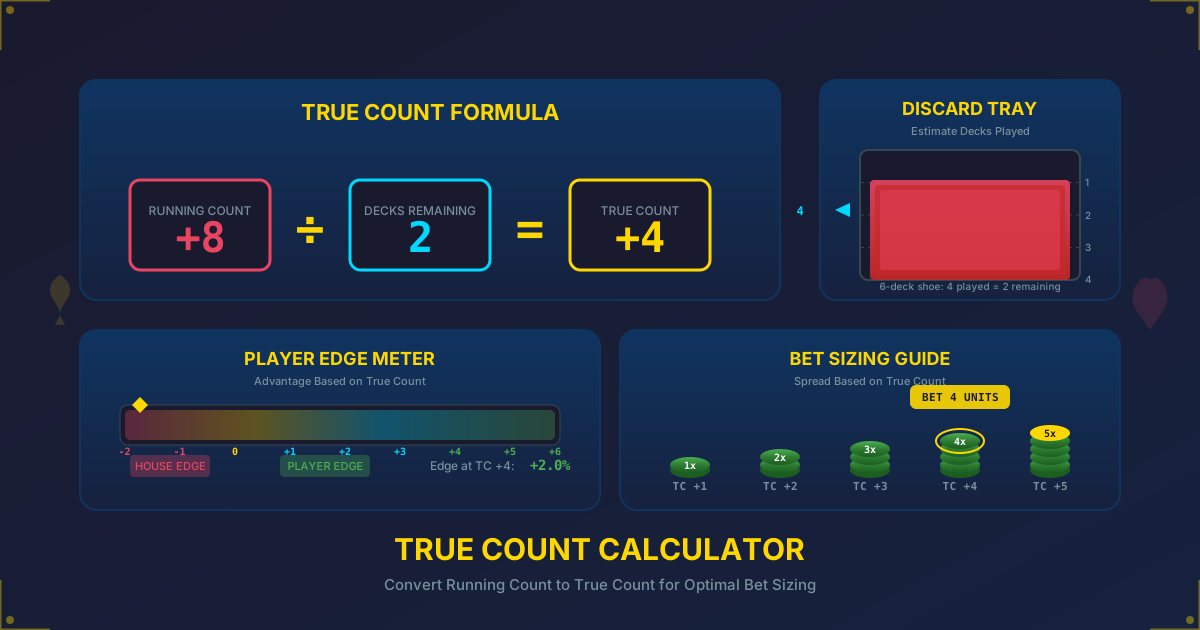
True Count: The running count divided by the estimated number of decks remaining in the shoe. This normalizes the count to account for how deeply into the shoe you are.
True Count = Running Count / Decks Remaining
Example: Running count of +8 with 2 decks remaining = True Count of +4. Running count of +8 with 4 decks remaining = True Count of +2. The first scenario is much more favorable.
Master the conversion from running count to true count with the True Count Calculator and practice the Hi-Lo system with the Hi-Lo Practice Tool.
How Counters Exploit the Advantage
The counter does two things differently from a basic strategy player:
-
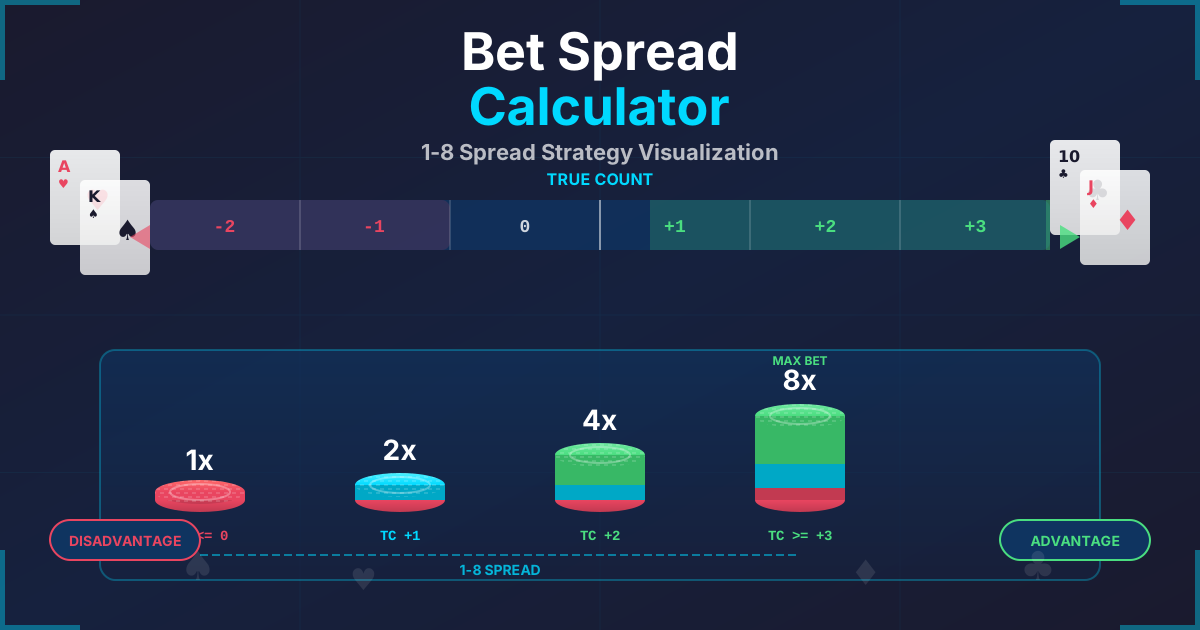
Bet variation: Bet more when the true count is high (player advantage) and bet less (or leave) when the true count is low (house advantage). This is where the money comes from.
-
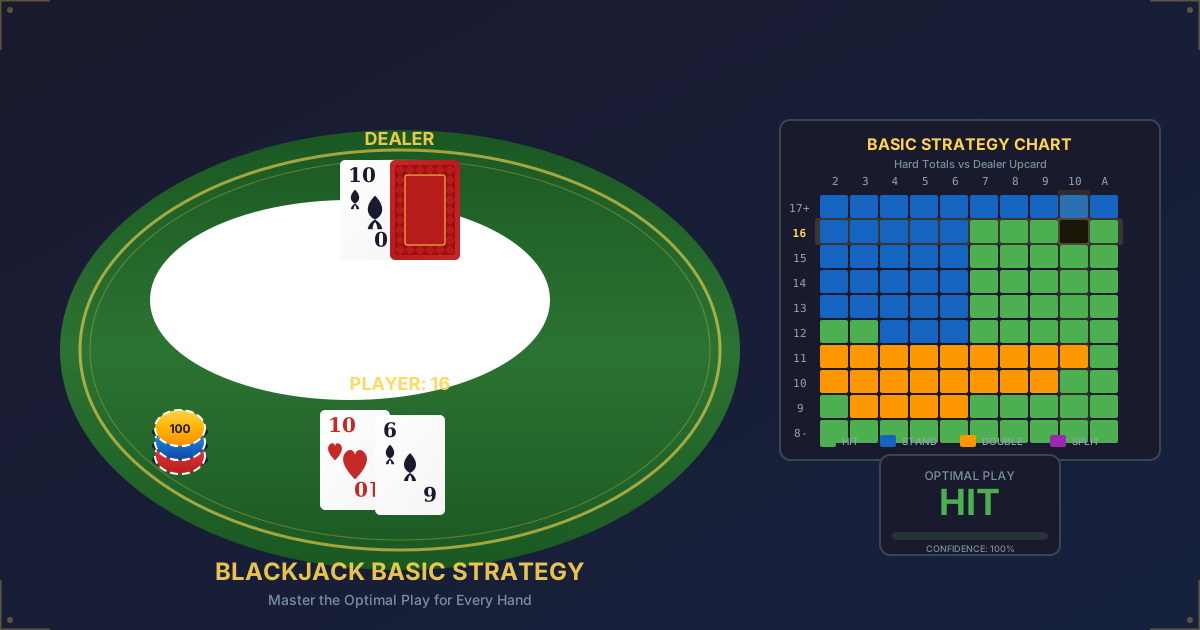
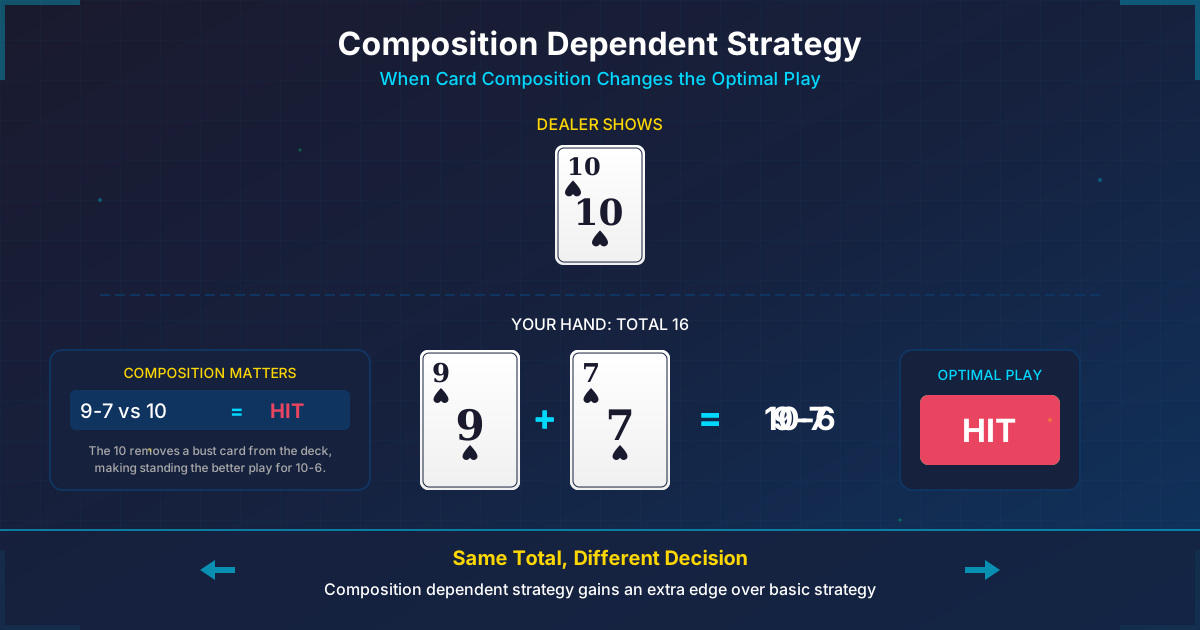
Strategy deviations (index plays): Modify a small number of basic strategy decisions based on the true count. For example, take insurance at TC +3 or higher. Stand on 16 vs. 10 at TC 0 or higher instead of always hitting. These deviations add approximately 10-15% to the counter's edge.
The Math of the Edge
A skilled Hi-Lo counter with standard conditions achieves approximately:
- Base house edge (basic strategy, 6-deck, S17, DAS): -0.50%
- Average edge from bet spread: +0.80% to +1.20%
- Additional edge from index plays: +0.10% to +0.15%
- Net player edge: +0.40% to +0.85%
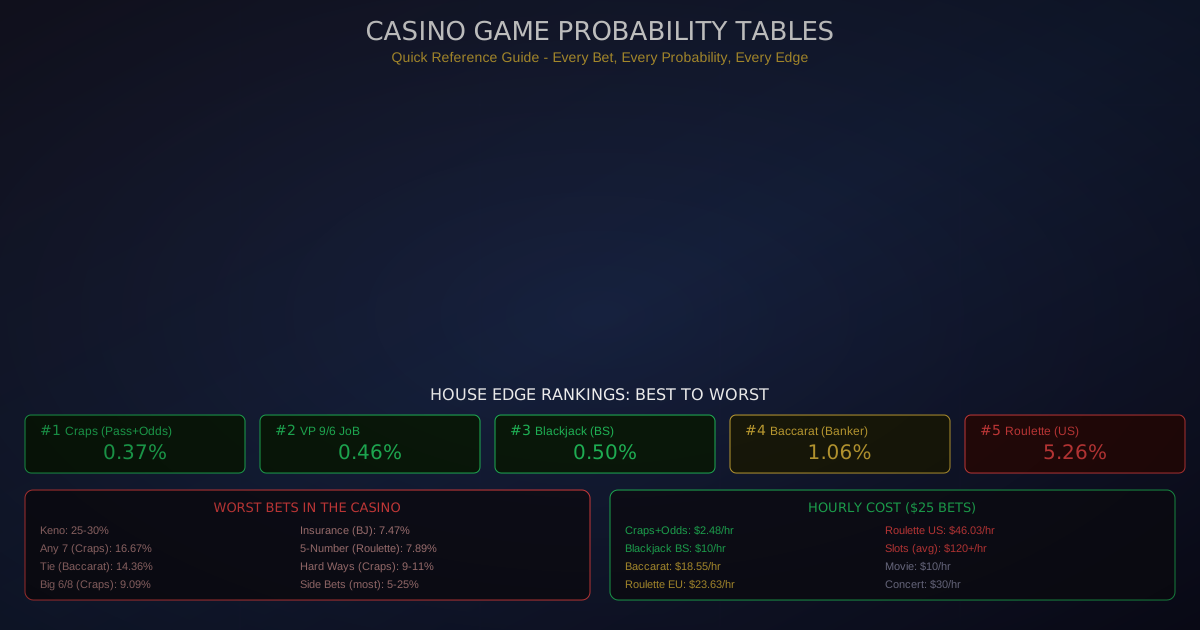
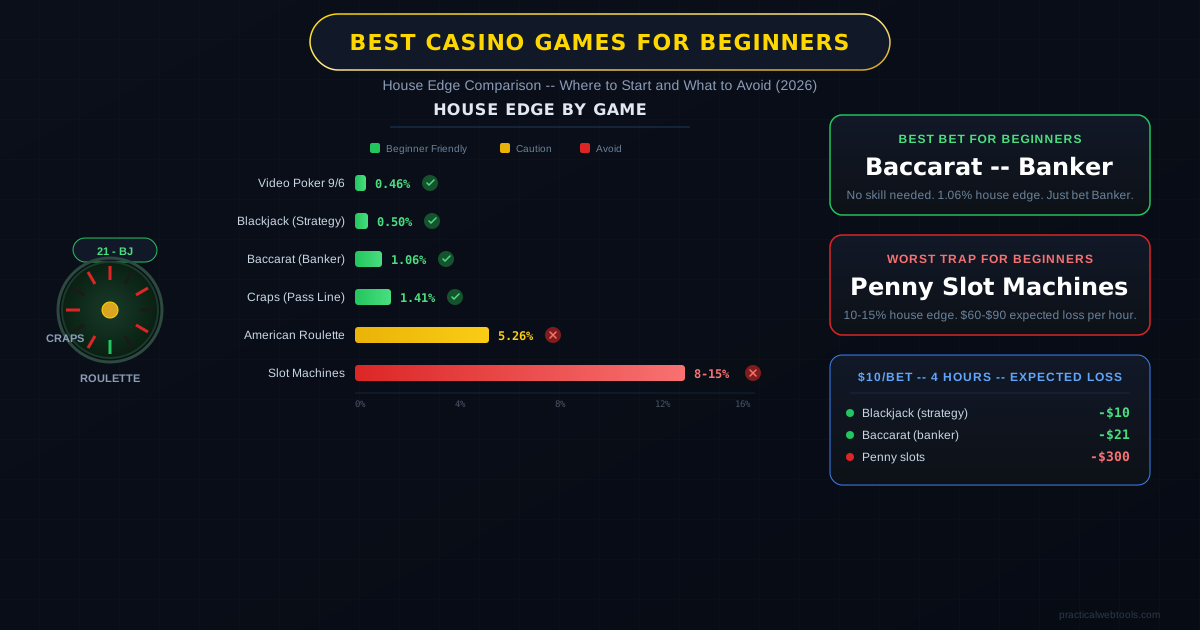
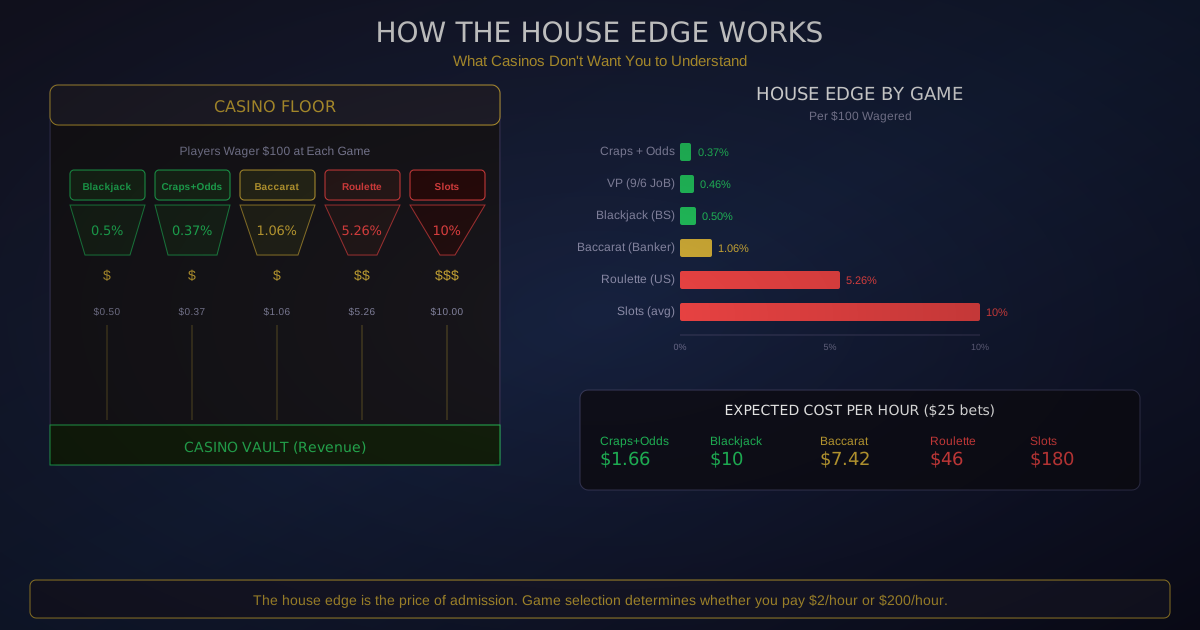
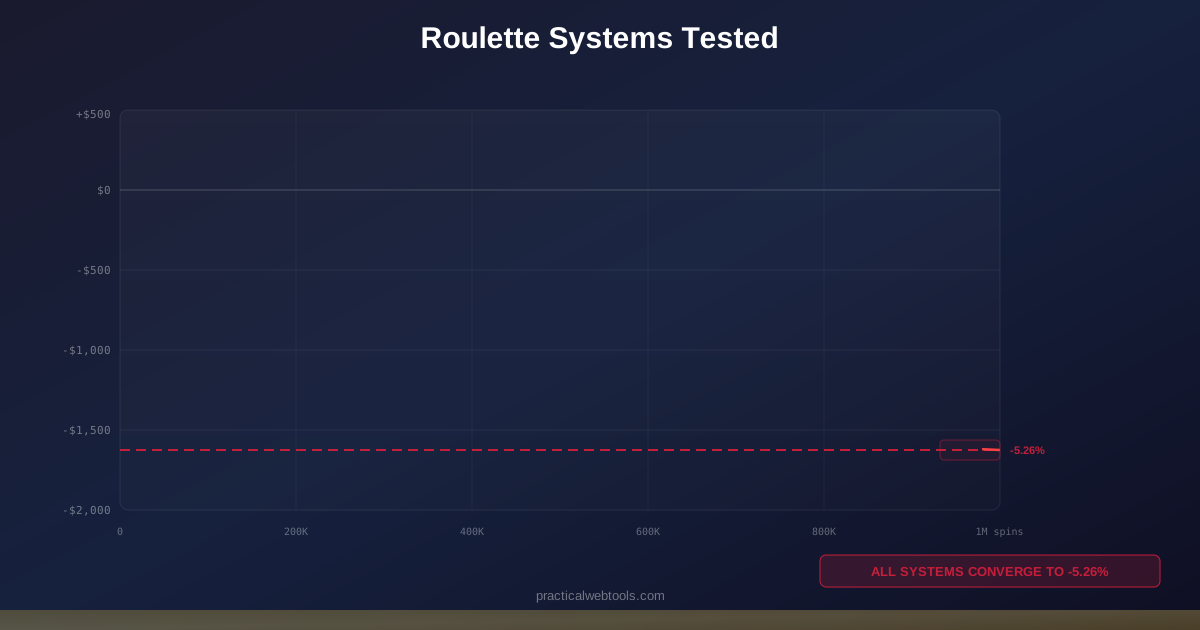
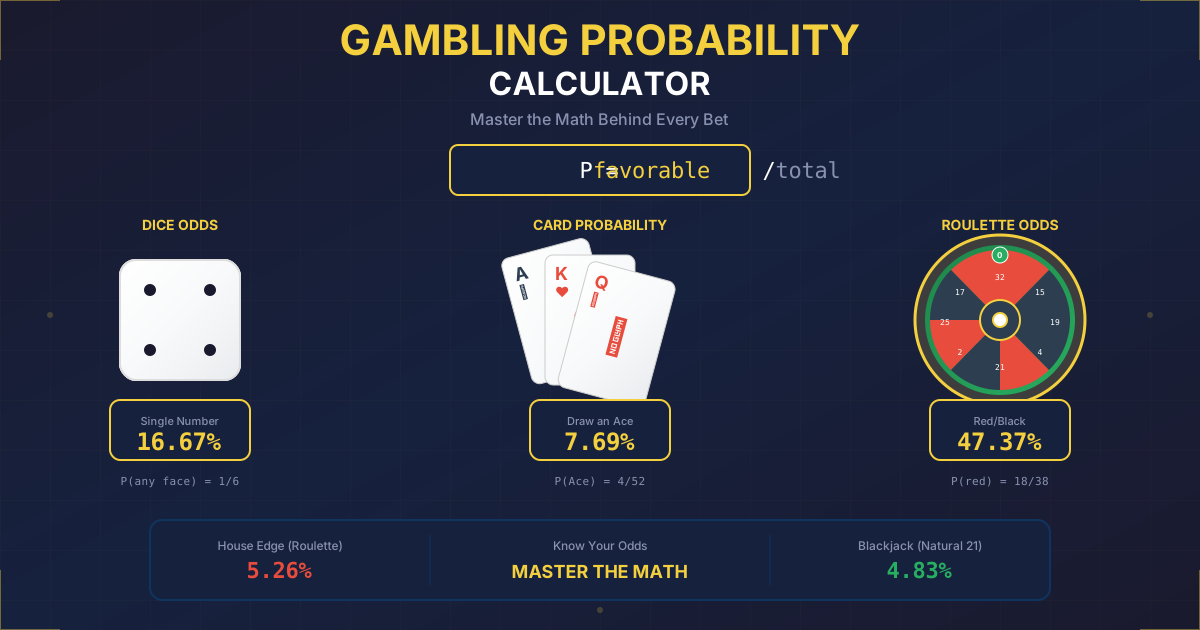
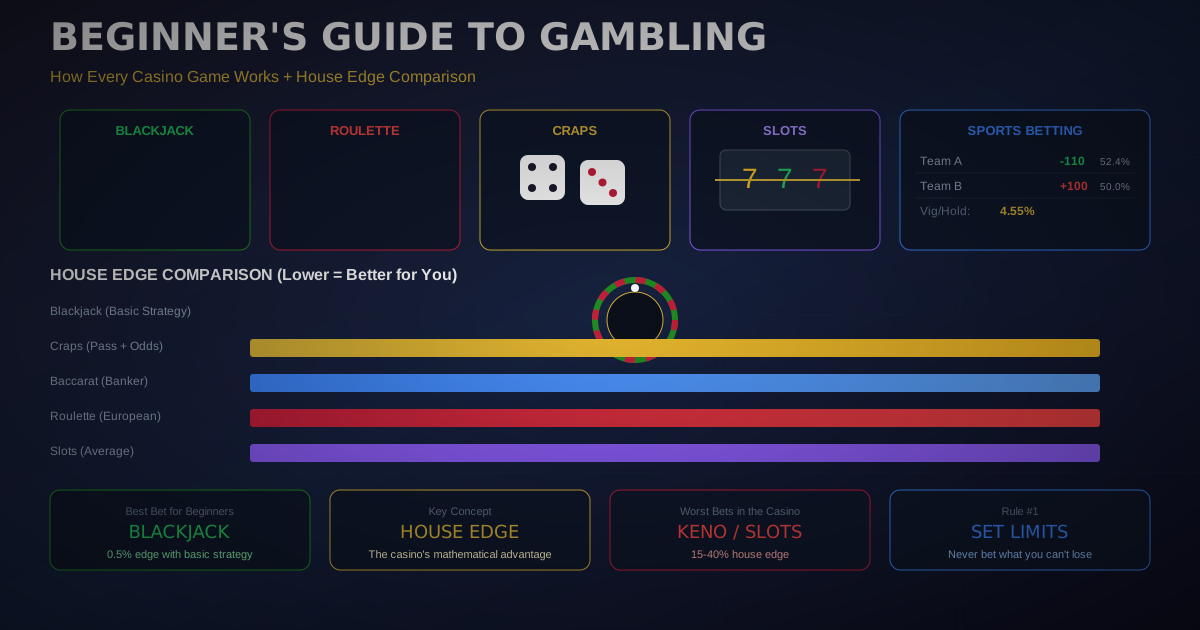
This edge is small. Compared to the house's 5.26% edge on American roulette, the counter's 0.5-0.85% edge is razor-thin. It requires large bet spreads, long hours, and substantial bankrolls to generate meaningful income.
Calculate your expected edge with the Card Counting Calculator and the Blackjack EV Calculator.
Realistic Hourly Rates in 2026
This is where most card counting guides become fiction. They quote hourly rates based on ideal conditions that rarely exist. Here are the realistic numbers.
The Hourly Earnings Formula
Hourly EV = Average Bet x Hands Per Hour x Player Edge
Key Variables
Average bet is not your maximum bet. It is the weighted average of all bets placed, including the many minimum-bet hands during negative and neutral counts. With a 1:8 bet spread ($25 to $200) and standard count distribution:
- Approximately 65% of hands are played at minimum ($25)
- Approximately 20% at 2-4x minimum ($50-$100)
- Approximately 15% at 6-8x minimum ($150-$200)
- Weighted average bet: approximately $60-$70
Hands per hour at a full table: 50-60. Short-handed: 80-120.
Player edge varies based on conditions. Under typical 2026 conditions:
| Condition Factor | Impact on Edge |
|---|---|
| 6-deck shoe, S17, DAS | Baseline |
| 75% penetration | +0.70% average edge (good) |
| 65% penetration | +0.40% average edge (mediocre) |
| 50% penetration | +0.15% average edge (barely worth it) |
| 6:5 payout | -1.39% (makes counting nearly impossible to profit) |
| CSM (continuous shuffler) | N/A (counting impossible) |
Realistic Hourly Rate Scenarios
| Scenario | Avg Bet | Hands/Hr | Edge | Hourly EV |
|---|---|---|---|---|
| Best case: $25 min, 1:10 spread, 75% pen, S17 | $75 | 60 | 0.85% | $38.25 |
| Good case: $25 min, 1:8 spread, 70% pen, S17 | $65 | 60 | 0.65% | $25.35 |
| Average case: $25 min, 1:6 spread, 65% pen | $55 | 55 | 0.40% | $12.10 |
| Poor case: $15 min, 1:5 spread, 60% pen | $35 | 55 | 0.25% | $4.81 |
| 6:5 table (any spread) | Any | 60 | -0.50%+ | Negative |
The realistic range for most counters in 2026 is $10-$30 per hour before adjustments.
Adjustments That Reduce Actual Earnings
| Factor | Impact |
|---|---|
| Table searching time (finding good games) | -20% to -40% of effective playing time |
| Back-offs (being asked to leave) | Lost sessions, travel time |
| Travel costs (gas, flights, hotels) | -$20-$100+ per session for non-locals |
| Mistakes under casino conditions | -5% to -15% of theoretical EV |
| Tipping (expected at many tables) | -$5-$15/hour |
| Emotional/tilt decisions | Variable, often significant |
After adjustments, a realistic net hourly rate for a competent counter in 2026:
- Major market (Vegas, Atlantic City): $8-$20/hour net
- Regional casino: $5-$15/hour net
- Best conditions (rare): $25-$40/hour net
Compare this to minimum wage ($7.25-$15.00/hour depending on state) and ask whether the stress, risk, and capital requirements are justified.
Calculate your own expected hourly rate with the Blackjack EV Calculator.
Bankroll Requirements: The Capital Problem
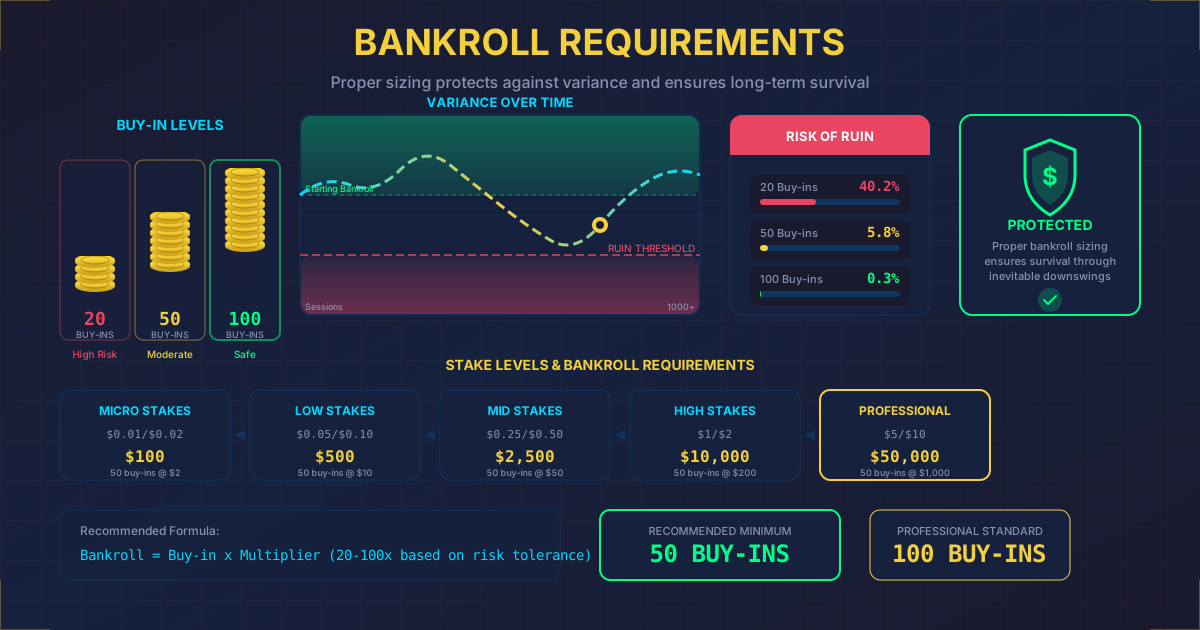
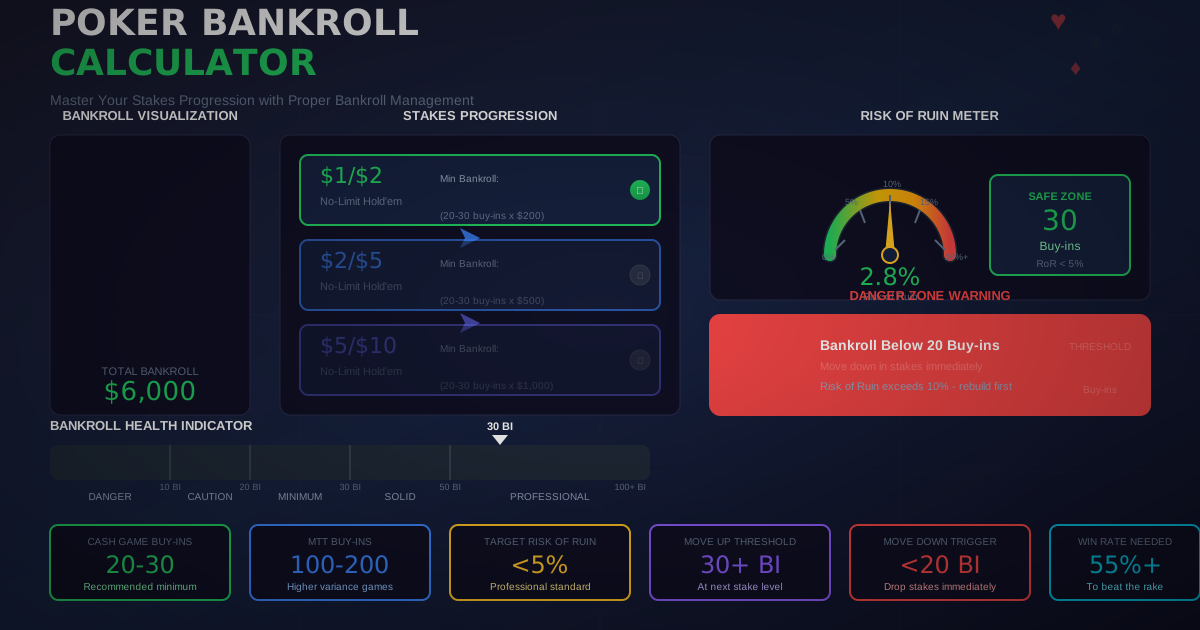
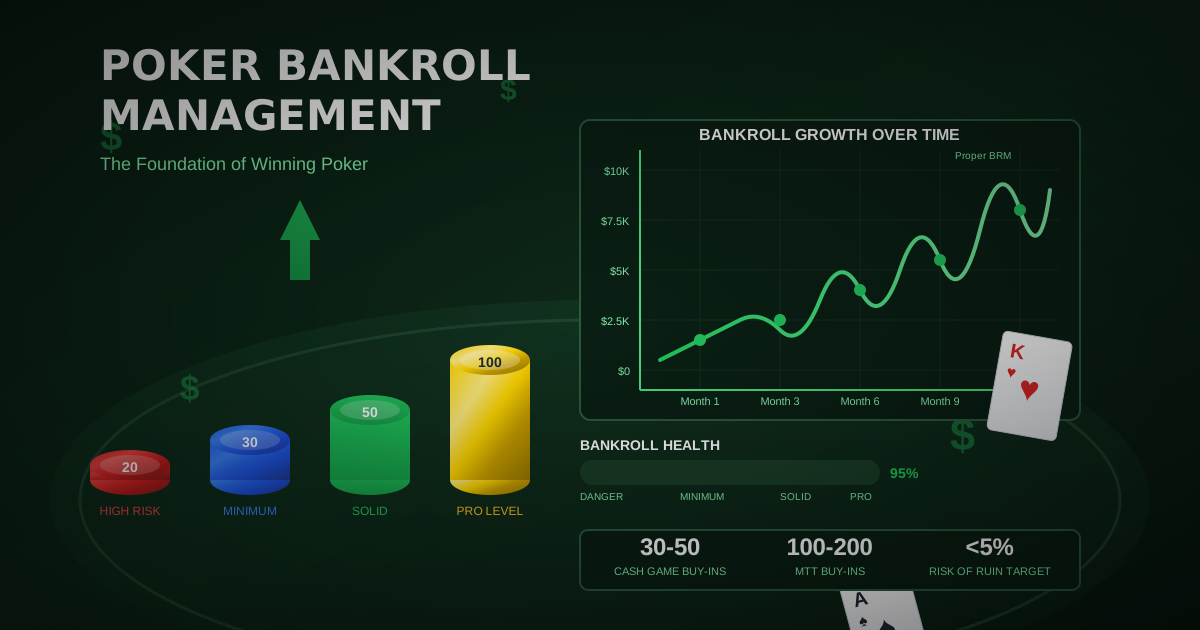
Card counting requires a substantial bankroll relative to expected earnings. The reason: even with an edge, variance in blackjack is high enough that extended losing streaks are common.
The Risk of Ruin Calculation
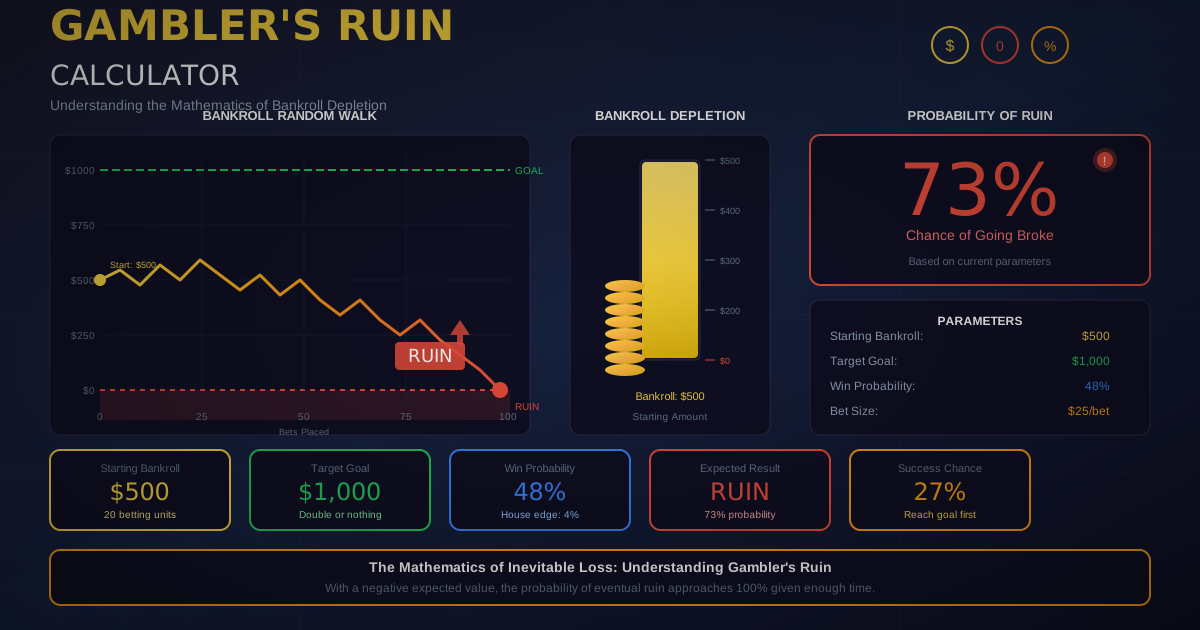
Risk of ruin (RoR) is the probability of losing your entire bankroll before it grows to a target level. For card counters, the standard calculation uses:
RoR = e^(-2 x edge x bankroll / variance)
Required Bankrolls for Common Risk Tolerance
| Risk of Ruin Target | Required Bankroll (in max bets) | Example ($200 max bet) |
|---|---|---|
| 40% (aggressive) | 100 max bets | $20,000 |
| 13.5% (standard) | 200 max bets | $40,000 |
| 5% (conservative) | 300 max bets | $60,000 |
| 1% (very conservative) | 500 max bets | $100,000 |
A counter with a $200 maximum bet and a standard 13.5% risk of ruin needs a $40,000 bankroll. At an expected hourly rate of $25, that bankroll earns approximately 0.0625% per hour of play, or roughly a 6-8% annual return on capital if playing 200-300 hours per year.
Compare that to the S&P 500's historical average annual return of approximately 10%. Card counting requires active, stressful work for a similar or lower return on a much less liquid investment.
Calculate your exact risk of ruin with the Risk of Ruin Calculator and determine proper bet sizing with the Betting Unit Calculator.
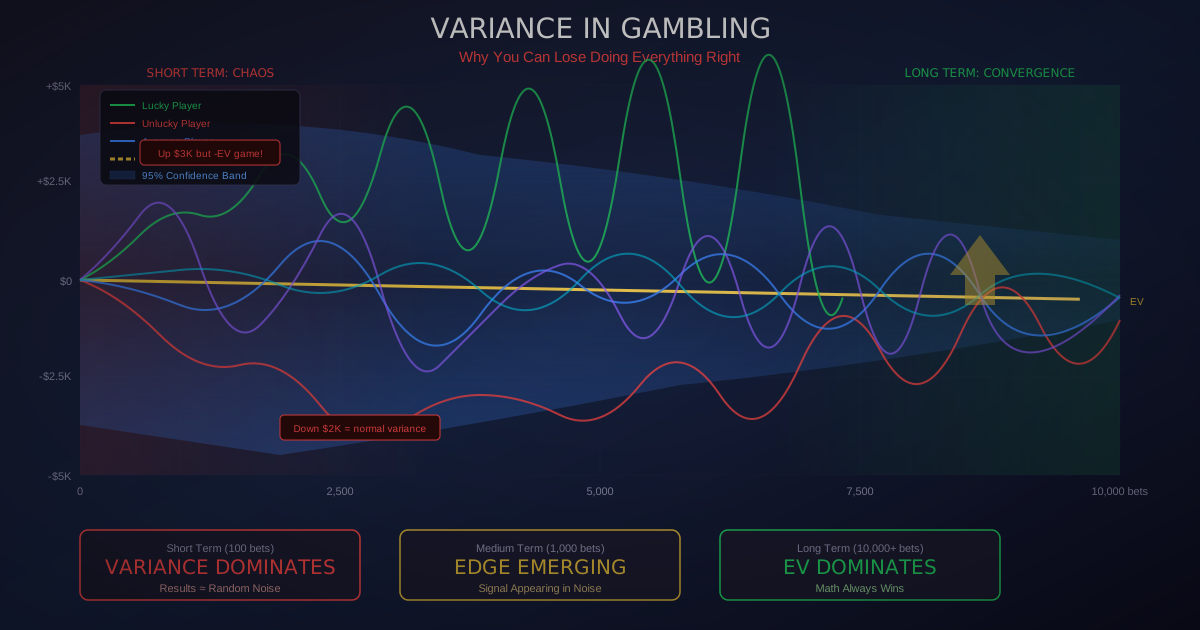
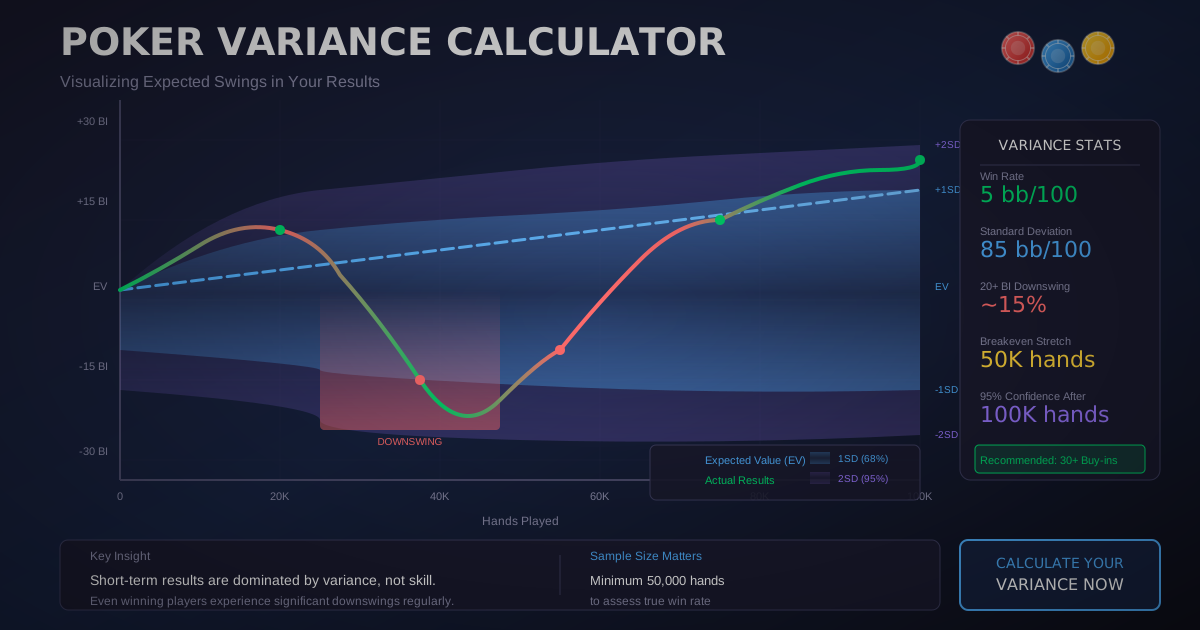
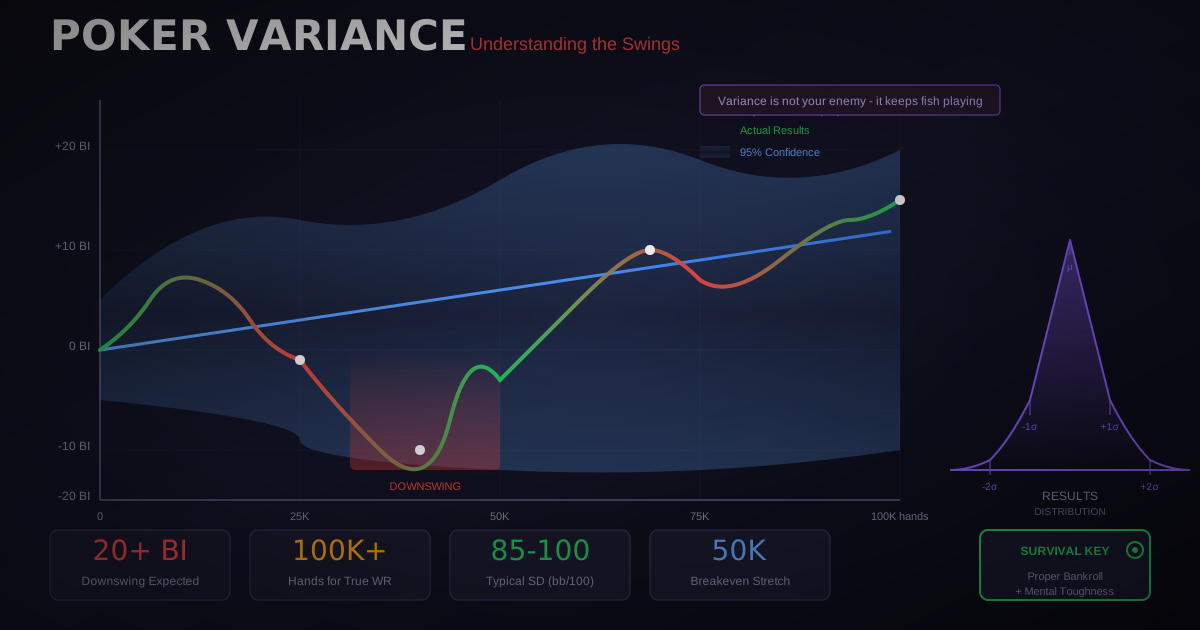
The Variance Problem
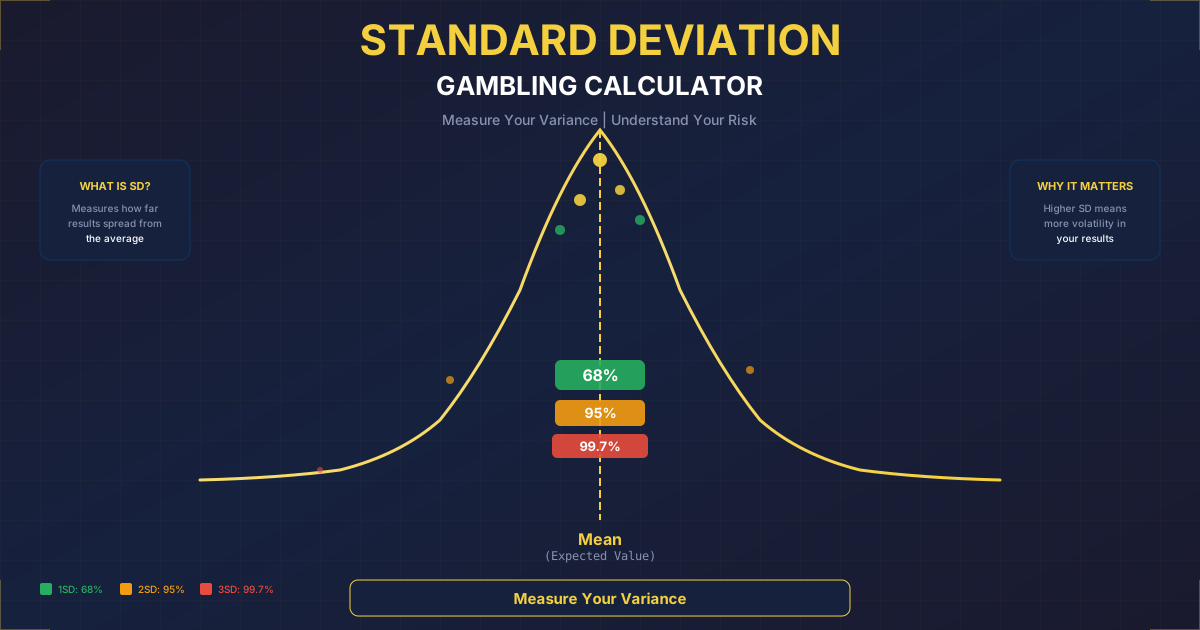
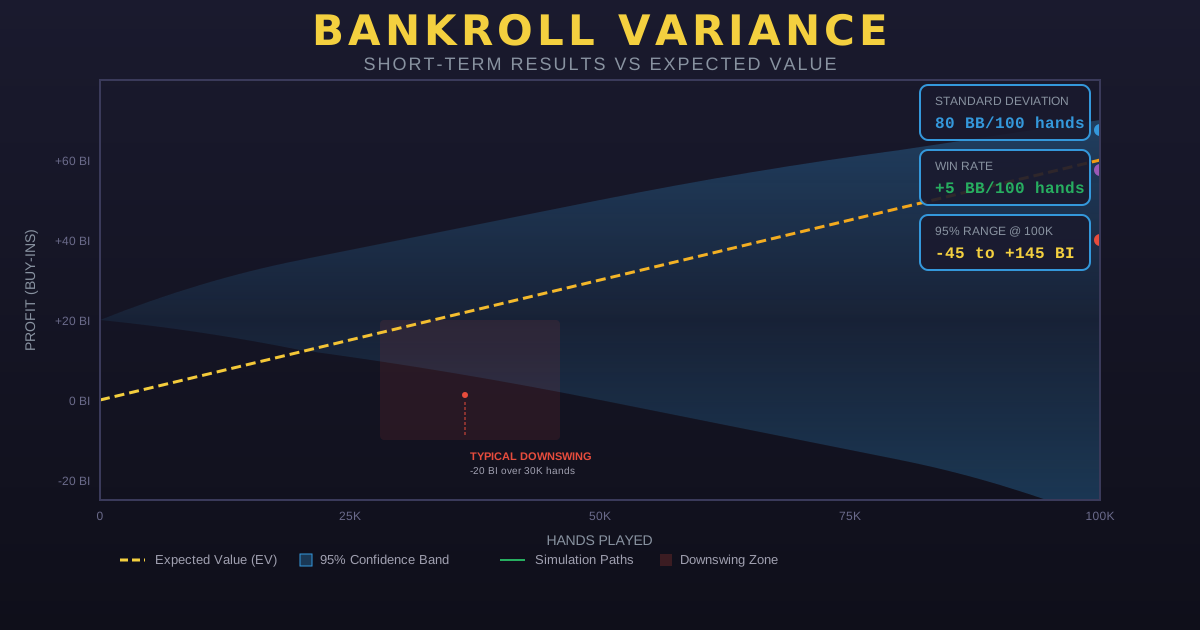
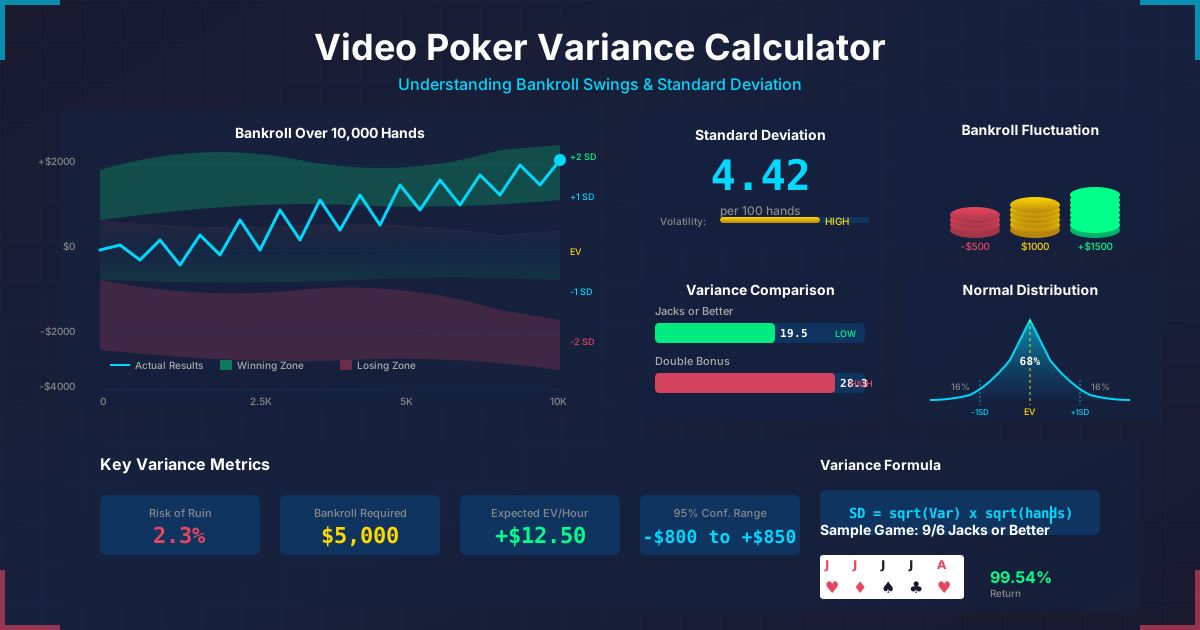
Even with a positive edge, standard deviation in blackjack is approximately 1.15 units per hand. For a counter with a $65 average bet playing 60 hands per hour:
Standard deviation per hour = $65 x 1.15 x sqrt(60) = $579
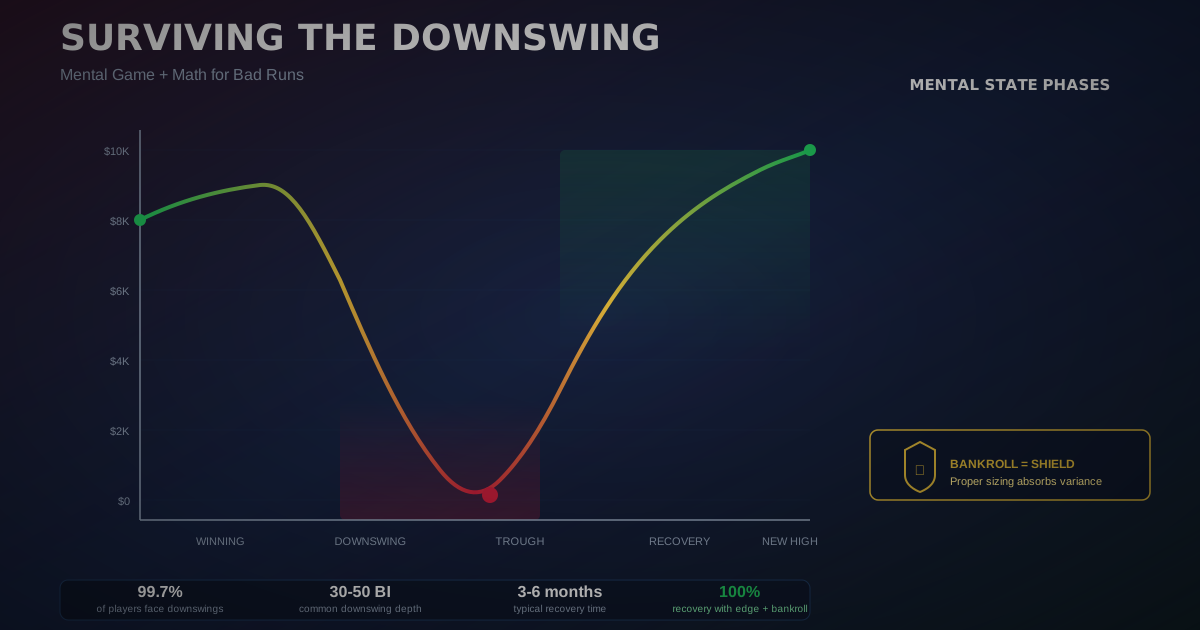
This means in any given hour, the counter's results will typically fall within +/- $579 of their expected value of +$25. Some hours will lose $500+. Some weeks will lose $2,000+.
Over 100 hours of play:
- Expected profit: $2,500
- Standard deviation: $5,790
- Probability of being down after 100 hours: approximately 33%
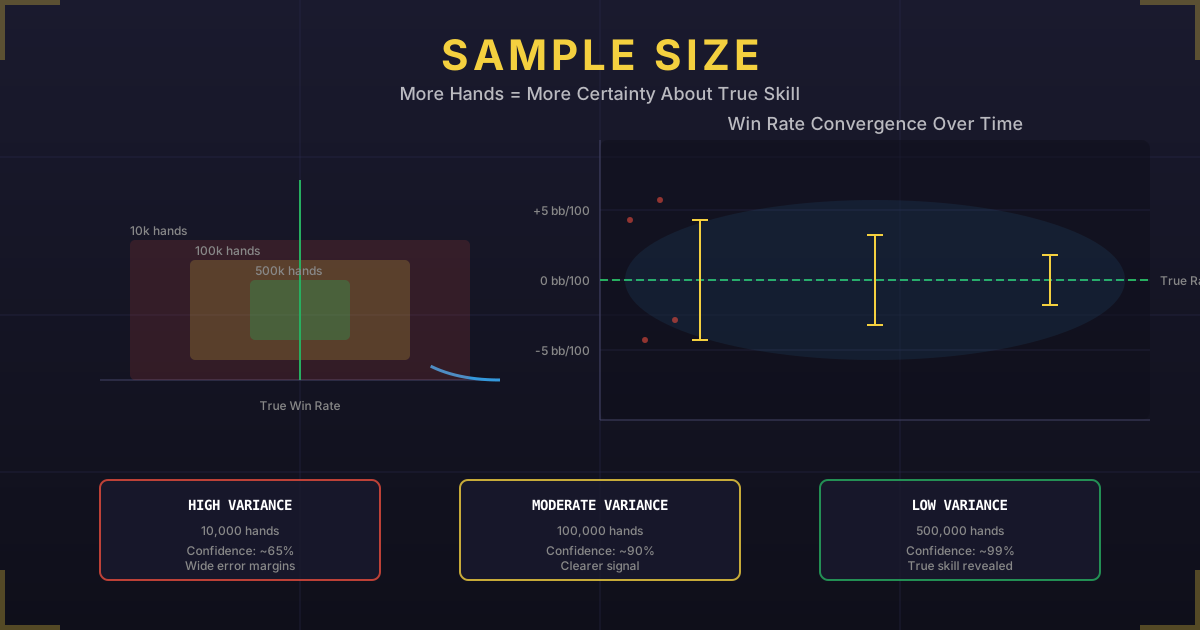
One-third of the time, after 100 hours of skilled card counting, you will be losing money. It takes approximately 400-600 hours before you can be statistically confident that your results reflect your edge rather than variance.
Model your expected variance over any number of hands with the Blackjack Variance Calculator.
Casino Countermeasures in 2026
Casinos have decades of experience identifying and neutralizing card counters. Here is the current state of countermeasures.
Continuous Shuffling Machines (CSMs)
CSMs shuffle discarded cards back into the shoe continuously, eliminating any meaningful count. In 2026, CSMs are present on approximately 30-40% of blackjack tables at major Strip casinos and 10-25% at regional casinos. A table with a CSM is impossible to count.
Impact: Eliminates 30-40% of potential tables in major markets.
6:5 Blackjack Payouts
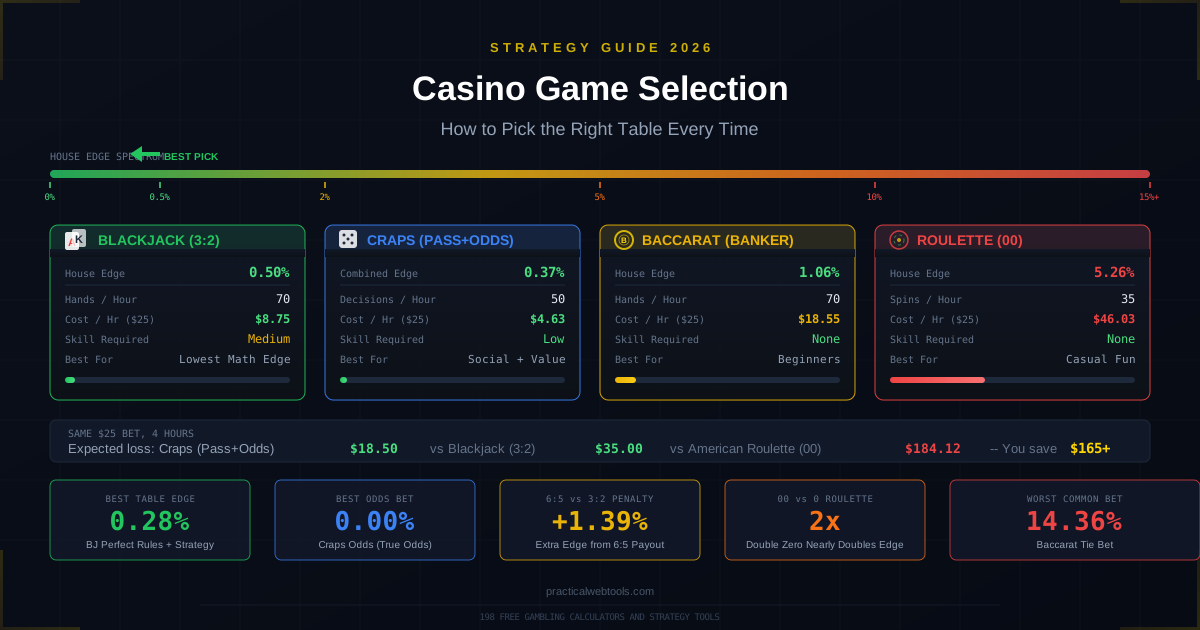
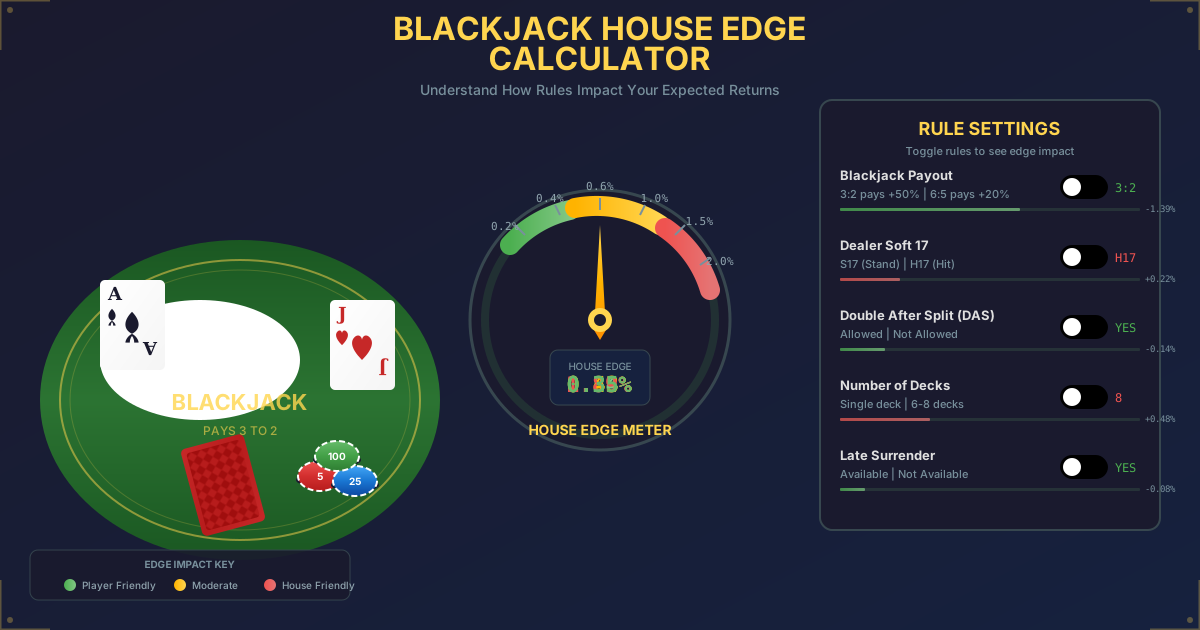
Paying 6:5 instead of 3:2 on blackjack adds 1.39% to the house edge. For a counter with a typical 0.5-0.85% edge from counting, a 6:5 payout turns a positive-expectation game into a negative-expectation game. You cannot profitably count at a 6:5 table under almost any conditions.
In 2026, 6:5 payouts dominate low-limit blackjack ($10-$25 minimums) on the Las Vegas Strip. Finding 3:2 games at low limits requires research and often means playing at off-Strip or downtown properties.
Impact: Eliminates most low-limit tables at major Strip casinos.
Shallow Deck Penetration
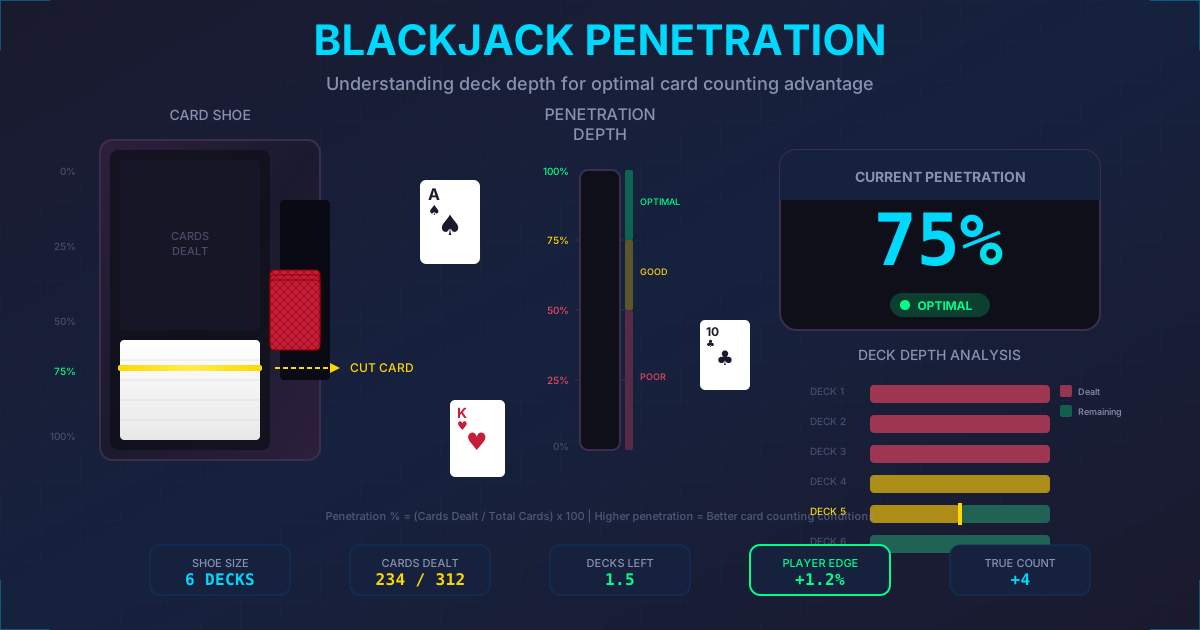
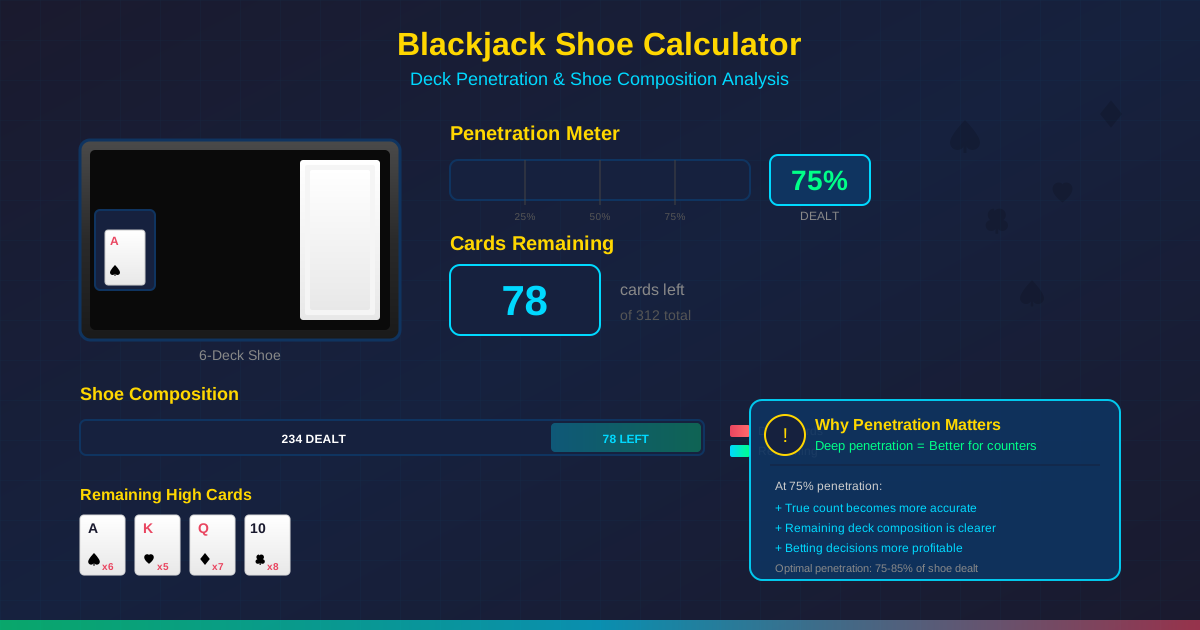
Casinos control how deeply the dealer deals into the shoe before shuffling. Better penetration (75%+) gives the counter more positive-count hands and a higher edge. Shallow penetration (50-60%) dramatically reduces the counter's advantage.
In 2026, most Strip casinos cut 1.5-2.5 decks from a 6-deck shoe, yielding 58-75% penetration. Properties that suspect counting activity often further reduce penetration.
Impact: Reduces the counter's expected edge by 30-60% compared to ideal conditions.
Bet Spread Surveillance
Casinos monitor bet sizes. A player jumping from $25 to $200 between hands is a classic counting indicator. Sophisticated surveillance systems track bet patterns in real time and alert pit bosses to suspicious spreads.
Counters must balance a large enough spread to generate profit with a small enough spread to avoid detection. The standard "1:8" or "1:10" spread that textbooks recommend is well-known to casino surveillance.
Impact: Limits practical bet spread, reducing hourly EV by 20-40%.
Facial Recognition Technology
Major casino companies use facial recognition systems that compare patron faces against databases of known advantage players. A counter who has been backed off at one property in a casino chain may be identified at other properties in the same chain before playing a single hand.
Impact: Limits the number of available venues, especially for long-term counters.
Back-Offs and Bans
Casinos can ask any player to stop playing blackjack or leave the property. In Nevada, this is legal for any reason. In New Jersey (Atlantic City), casinos cannot ban players but can use other countermeasures (shuffling on entry, restricting bet spread, reducing penetration). In most other jurisdictions, casinos can ban players at will.
A back-off means:
- Lost potential earnings from that session
- Potentially being banned from that property or chain
- Time and travel costs wasted
- Emotional stress and frustration
Impact: Creates ongoing attrition that reduces long-term profitability.
Mid-Shoe Entry Restrictions
Some casinos prohibit new players from entering a shoe in progress ("No Mid-Shoe Entry" or NMSE). This eliminates a technique called "Wonging"---entering the shoe only during favorable counts. Wonging dramatically improves the counter's edge because you avoid all negative-count hands.
Impact: Eliminates one of the most effective counting techniques.
The Hi-Lo System: A Complete Overview
For those who decide to pursue counting despite the challenges, here is a practical overview of the Hi-Lo system.
Card Values (Review)
| Cards | Hi-Lo Value |
|---|---|
| 2, 3, 4, 5, 6 | +1 |
| 7, 8, 9 | 0 |
| 10, J, Q, K, A | -1 |
Step-by-Step Process
- Start at 0 when a new shoe begins
- Track the running count by adding or subtracting as each card is revealed
- Estimate decks remaining (typically by eyeballing the discard tray)
- Calculate the true count = Running Count / Decks Remaining
- Adjust your bet based on the true count
- Make strategy deviations at specific true count thresholds
Bet Spread Guidelines
| True Count | Suggested Bet (units) | Edge vs. House |
|---|---|---|
| TC -1 or lower | 1 unit (minimum) or leave | House has edge |
| TC 0 | 1 unit (minimum) | Approximately breakeven |
| TC +1 | 2 units | Slight player edge |
| TC +2 | 4 units | Clear player edge |
| TC +3 | 6 units | Strong player edge |
| TC +4 | 8 units | Very strong edge |
| TC +5 or higher | 8-10 units (max) | Maximum edge |
With a $25 minimum bet (1 unit), the maximum bet at TC +5 would be $200-$250.
Key Index Plays (Strategy Deviations)
The "Illustrious 18" and "Fab 4" are the most important strategy deviations:
| Situation | Basic Strategy Play | Deviate At True Count | Deviation |
|---|---|---|---|
| Insurance | Never take | TC +3 or higher | Take insurance |
| 16 vs. 10 | Hit | TC 0 or higher | Stand |
| 15 vs. 10 | Hit | TC +4 or higher | Stand |
| 12 vs. 2 | Hit | TC +3 or higher | Stand |
| 12 vs. 3 | Hit | TC +2 or higher | Stand |
| 10 vs. 10 | Don't double | TC +4 or higher | Double |
| 10 vs. A | Don't double | TC +4 or higher | Double |
| 9 vs. 2 | Don't double | TC +1 or higher | Double |
These deviations add approximately 10-15% to the counter's overall edge.
Practice these plays with the Blackjack Basic Strategy Chart and the Hi-Lo Practice Tool.
Is Card Counting Worth It? The Decision Framework
It Might Be Worth It If:
-
You have a bankroll of $20,000+ dedicated solely to counting. This money must be completely separate from your living expenses and must be money you can afford to lose entirely.
-
You live near or in a major gambling market. Travel costs destroy the slim margins of counting. Las Vegas locals have a significant advantage.
-
You have verified that 3:2 games with 70%+ penetration are available near you. Without these conditions, the edge may be too thin to overcome variance and expenses.
-
You can tolerate earning $10-$30/hour with extreme variance. Some months you will earn $3,000+. Others you will lose $5,000. The emotional toll is real.
-
You have practiced until your counting speed and accuracy exceed 99%. A 1% error rate in counting can reduce your edge by 10-20%.
-
You are prepared to be backed off and potentially banned. This is not a question of "if" but "when" for any successful counter.
It Is Probably Not Worth It If:
-
You have a job that pays more than $25/hour. The opportunity cost of counting time exceeds the expected earnings.
-
You have less than $10,000 in dedicated bankroll. Undercapitalized counting has a very high risk of ruin.
-
You live far from casinos. Travel costs of $50-$200 per trip can consume most of your edge.
-
You are unwilling or unable to maintain perfect discipline. One tilted session with oversized bets can wipe out months of careful play.
-
You are attracted to counting because it sounds exciting. The reality is tedious, stressful, and often unrewarding. Most of your time is spent betting the minimum in unfavorable counts.
-
You cannot handle the emotional stress of being watched, questioned, and asked to leave. Casino heat is psychologically taxing.
The Honest Numbers
For a well-bankrolled, well-trained counter playing 500 hours per year under average 2026 conditions:
| Metric | Realistic Estimate |
|---|---|
| Bankroll required | $30,000-$50,000 |
| Expected annual earnings (gross) | $7,500-$15,000 |
| Expected annual earnings (net of expenses) | $4,000-$10,000 |
| Annual return on bankroll | 8-20% |
| Hours required (including travel, scouting) | 600-800 |
| Effective hourly rate (net) | $5-$17 |
| Probability of a losing year | 15-25% |
| Average back-off frequency | Every 50-100 hours |
Compare this to investing the same $40,000 in index funds (expected 8-10% annual return with zero effort) or working a part-time job ($15-$25/hour with no bankroll risk).
Model your expected earnings and variance with the Blackjack EV Calculator and the Blackjack Variance Calculator.
Alternatives to Traditional Card Counting
Ace Sequencing
Tracking the exact position of Aces in the discard tray and predicting when they will appear in the next shoe. Extremely difficult, casino-specific, and rare.
Shuffle Tracking
Following clumps of high or low cards through imperfect shuffles. Requires extraordinary visual memory and practice. Effectiveness varies by shuffle procedure and has diminished as casinos have adopted more thorough shuffles.
Hole Carding
Exploiting sloppy dealers who accidentally flash their hole card. Legal in most jurisdictions (you are using publicly visible information). Rare but extremely profitable when found. The edge from seeing the dealer's hole card can exceed 10%.
Online Advantage Play
Online blackjack with live dealers sometimes offers exploitable conditions: deeper penetration, no facial recognition, and faster play. However, most online casinos use 50% penetration or CSMs specifically to prevent counting.
Video Poker Advantage Play
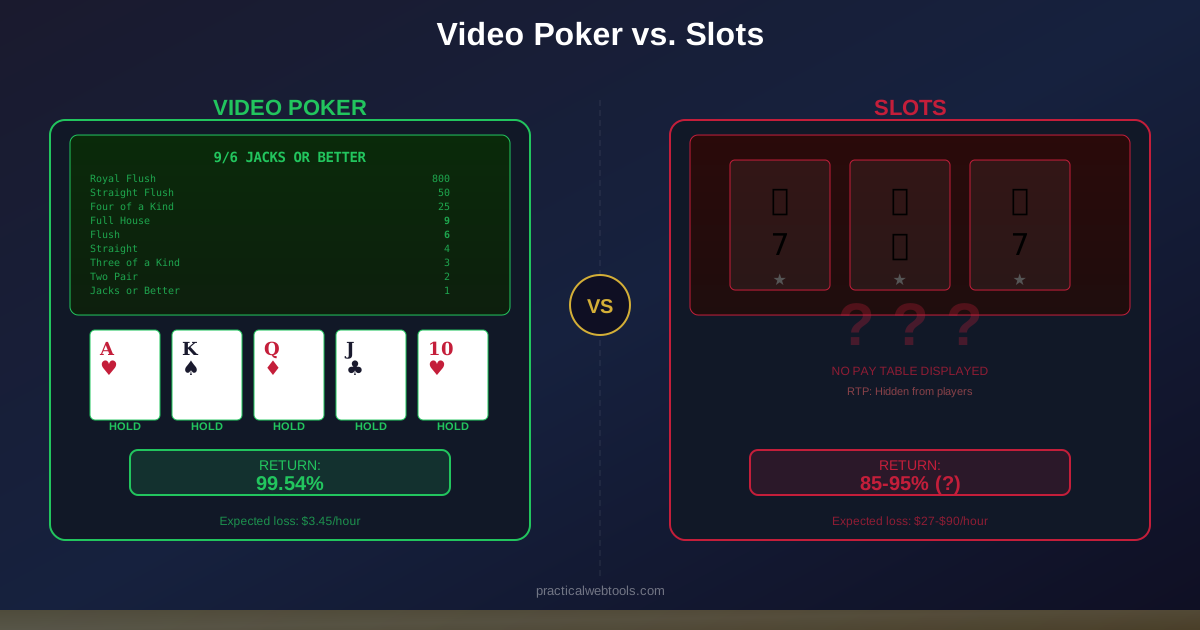
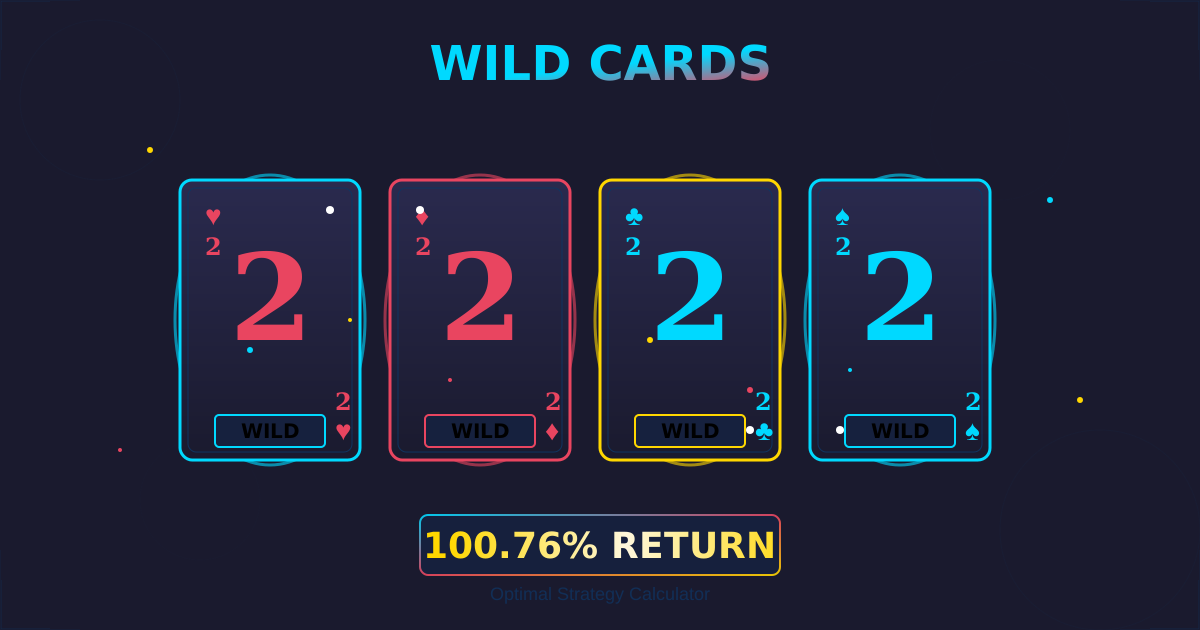
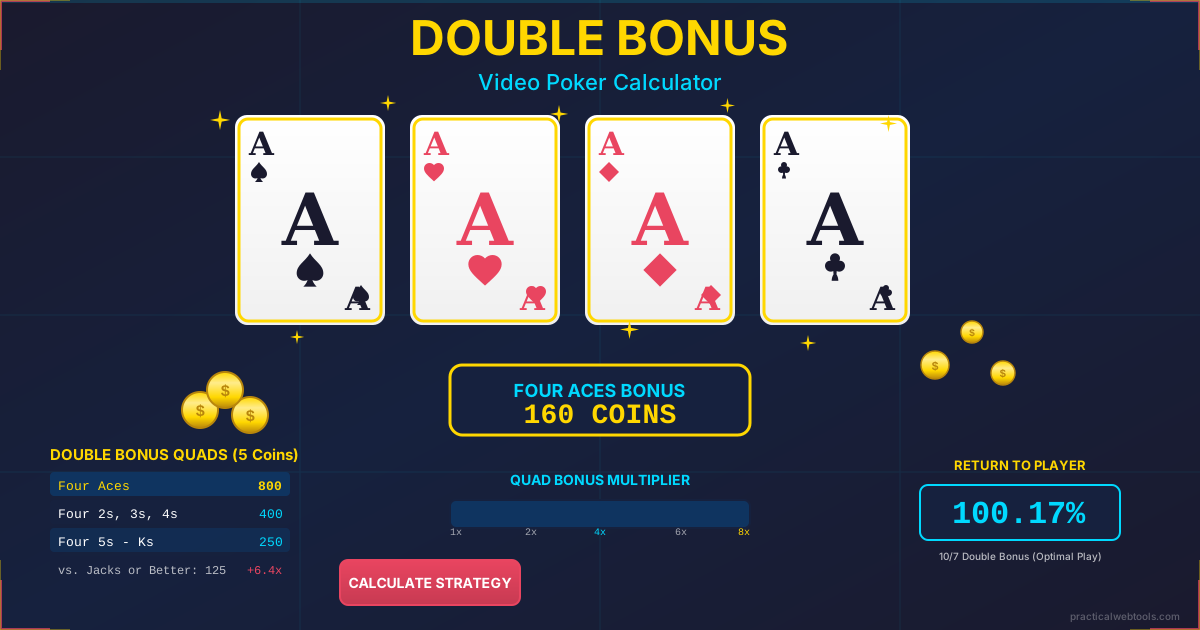
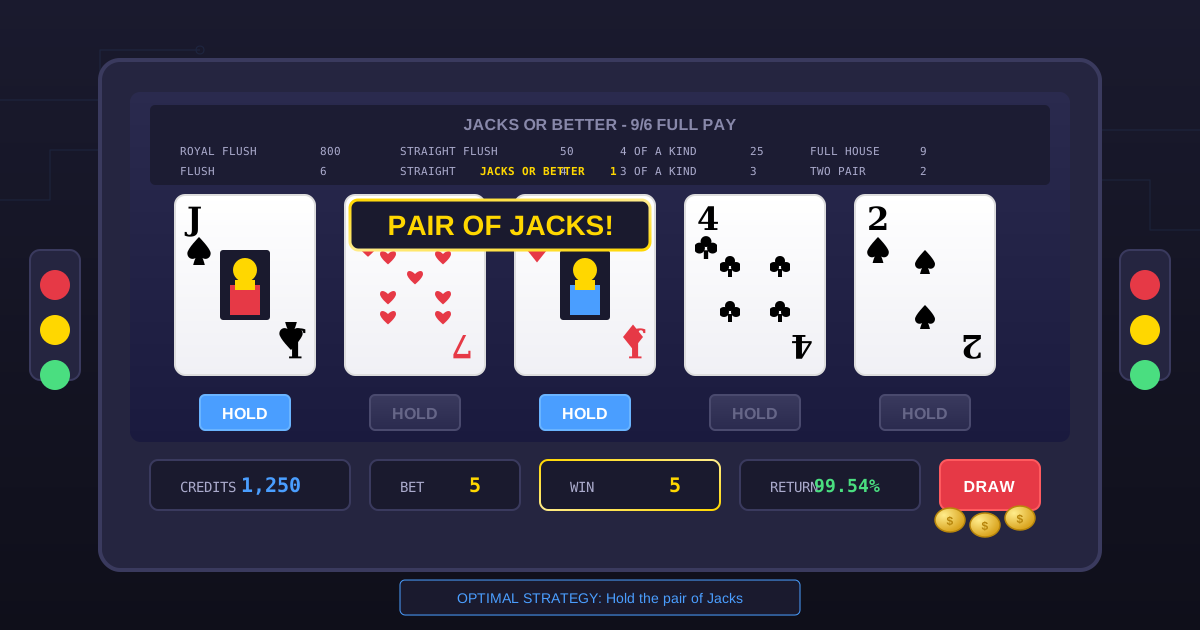
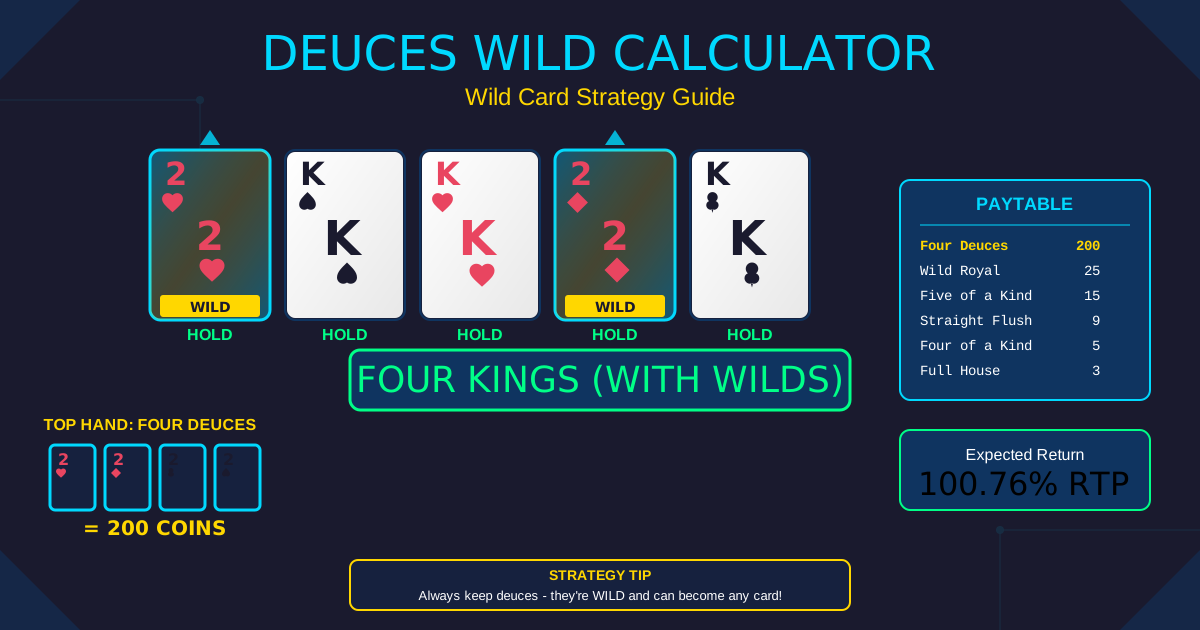
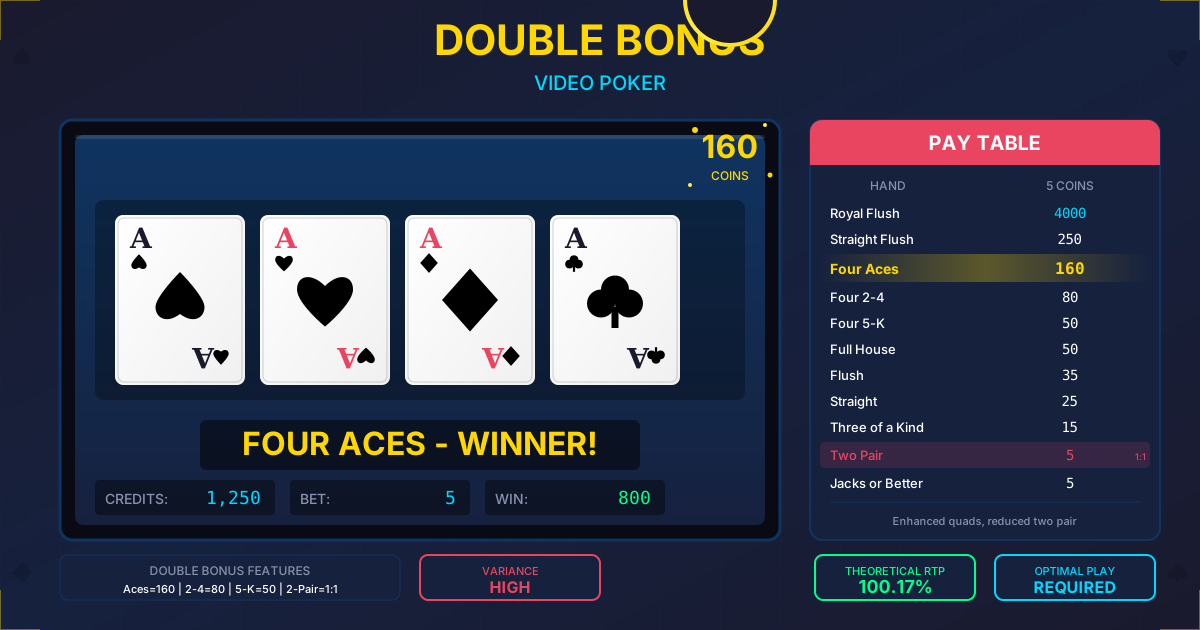
Full-pay Deuces Wild video poker offers a 0.76% player edge with perfect strategy---no counting required. Full-pay 10/7 Double Bonus offers 0.17% player edge. The challenge is finding these machines, which are increasingly rare.
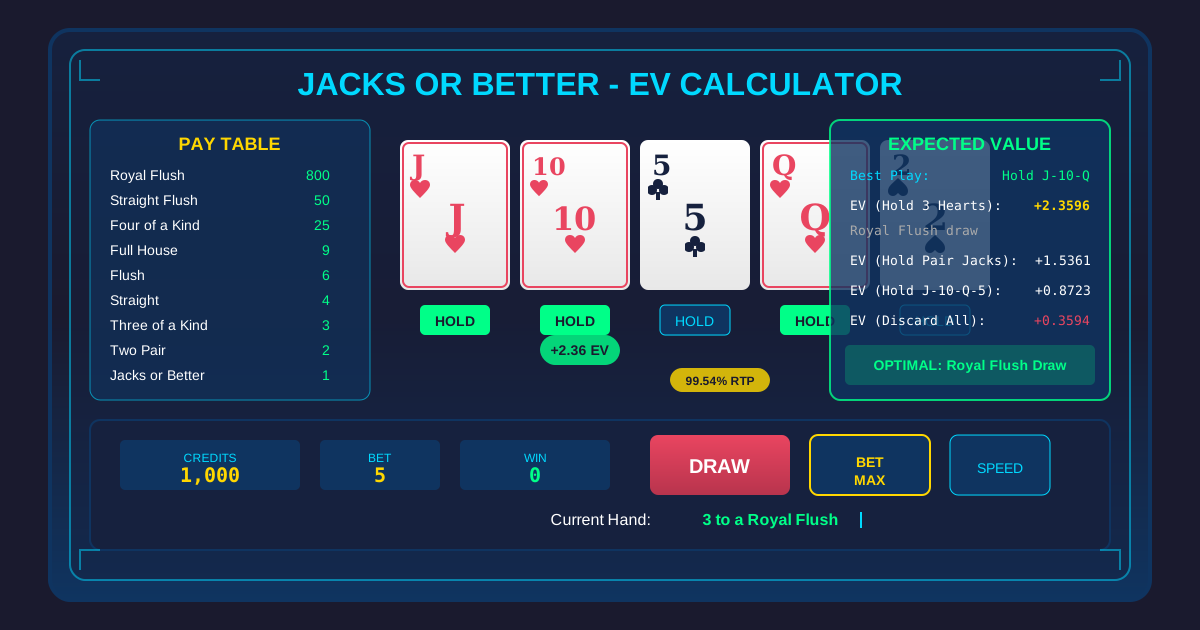
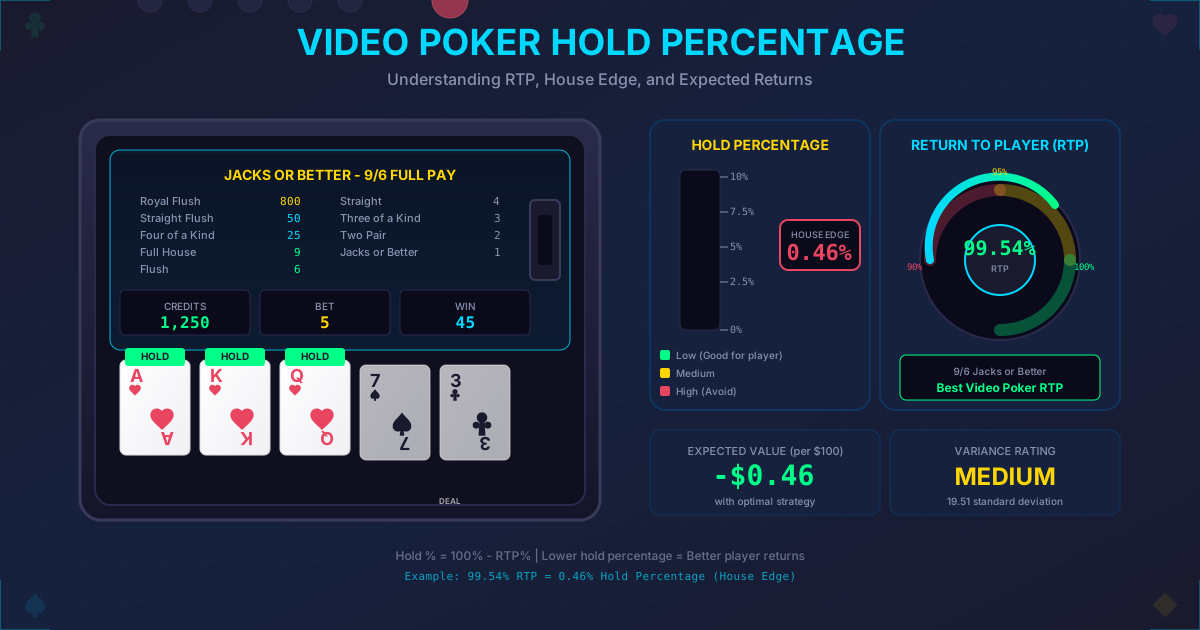
Analyze video poker opportunities with the Video Poker Pay Table Analyzer and optimize your strategy with the Video Poker EV Calculator.
The Legal Reality
Card counting is legal everywhere in the United States and in most international jurisdictions. You are using your brain to process publicly available information. There is no law against thinking.
However:
- Nevada: Casinos can ban any player for any reason. They can ask you to leave, restrict you to non-blackjack games, or trespass you permanently.
- New Jersey: The 1982 Uston v. Resorts ruling prevents Atlantic City casinos from banning counters. However, casinos can use aggressive countermeasures: shuffling when you enter a game, reducing penetration, and limiting bet spreads.
- Other US states: Most follow Nevada's model---casinos can ban at will.
- International: Varies by jurisdiction. Some countries protect players; others give casinos broad authority.
You will never be arrested for counting cards. You may be told to stop playing blackjack. You may be asked to leave. You may be banned from a property. These are unpleasant but legal consequences.
Plan Your Session Properly
If you decide to pursue counting, proper session planning is critical.
Bankroll Allocation
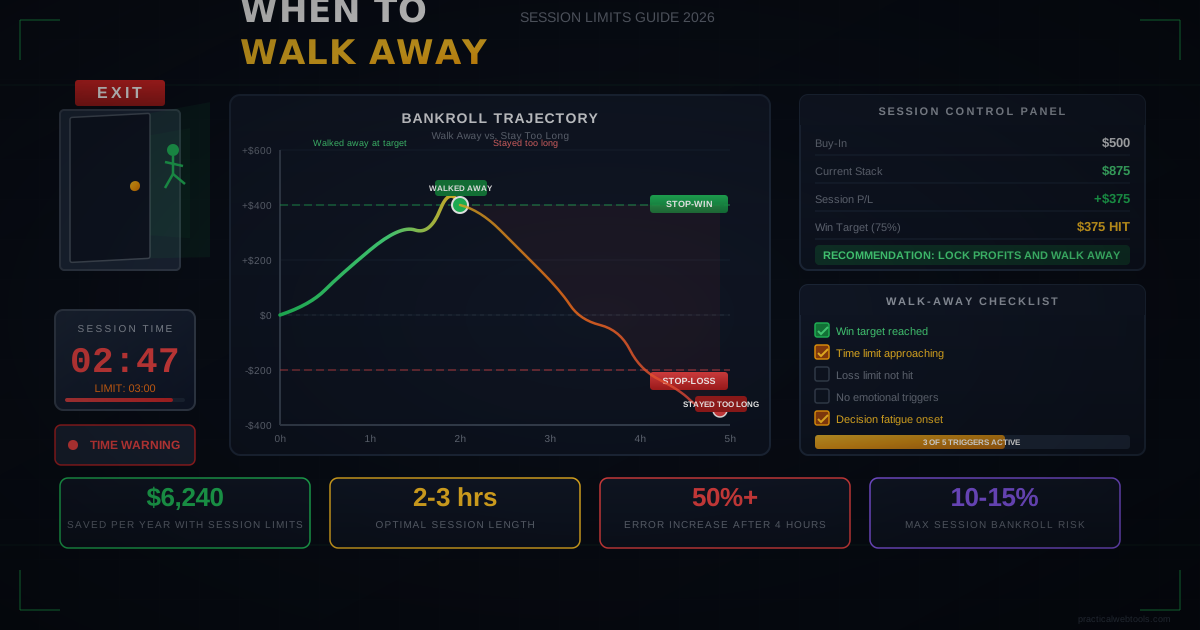
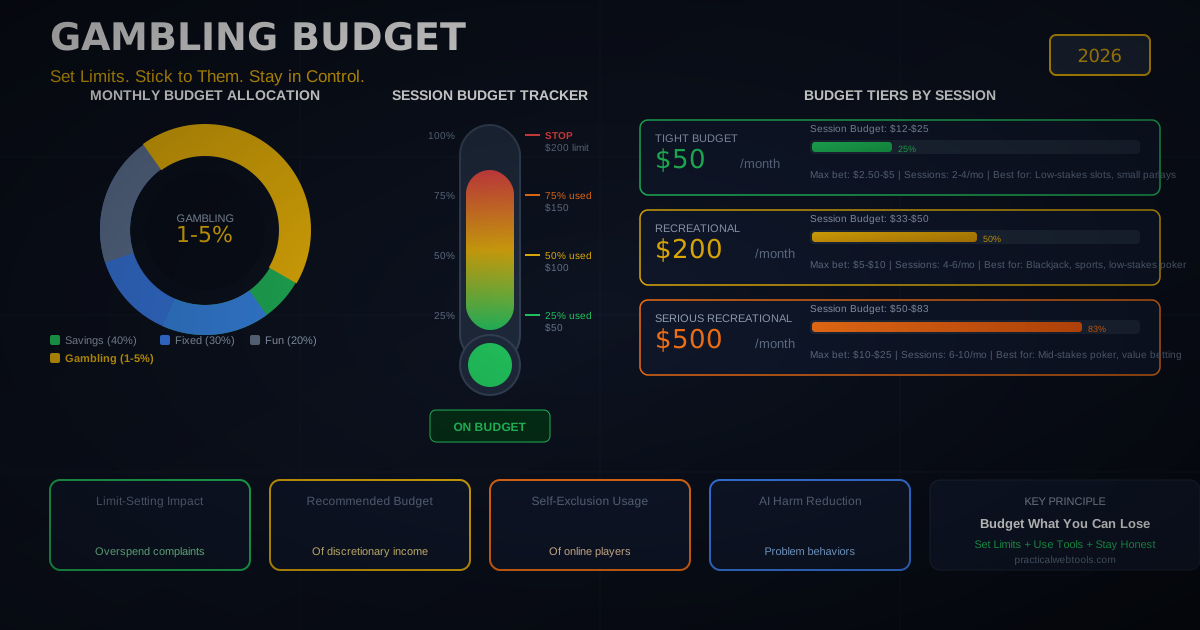
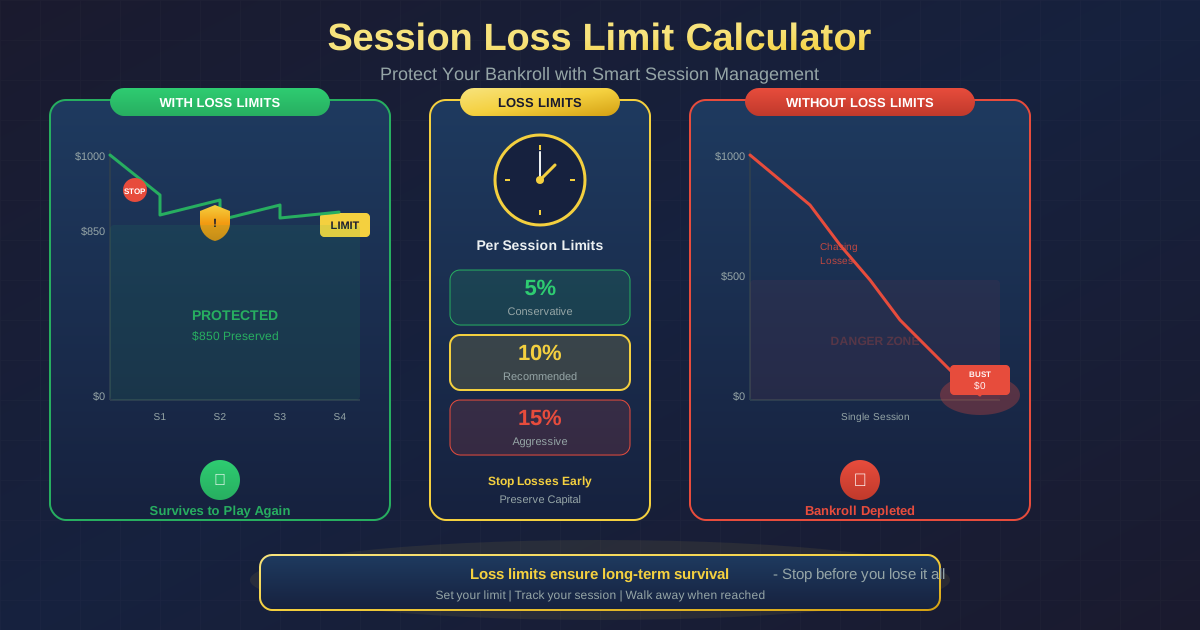
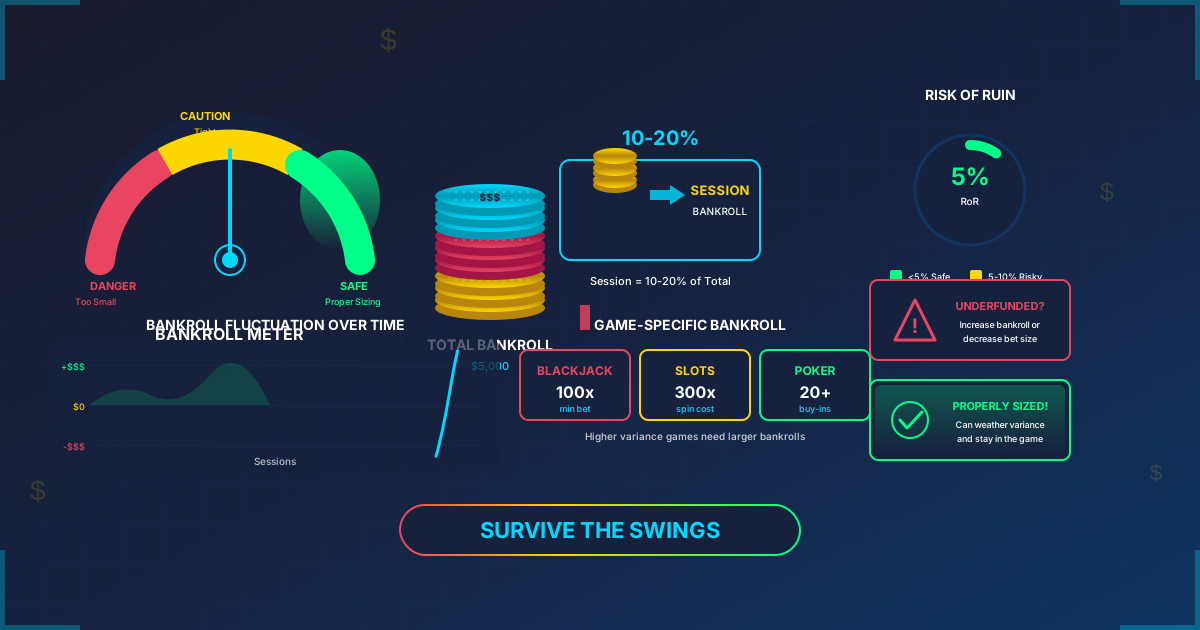
Never risk your entire counting bankroll in a single session. The standard recommendation:
- Session bankroll: 10-15% of total bankroll
- For a $30,000 total bankroll: $3,000-$4,500 per session
- Stop-loss per session: When session bankroll is depleted
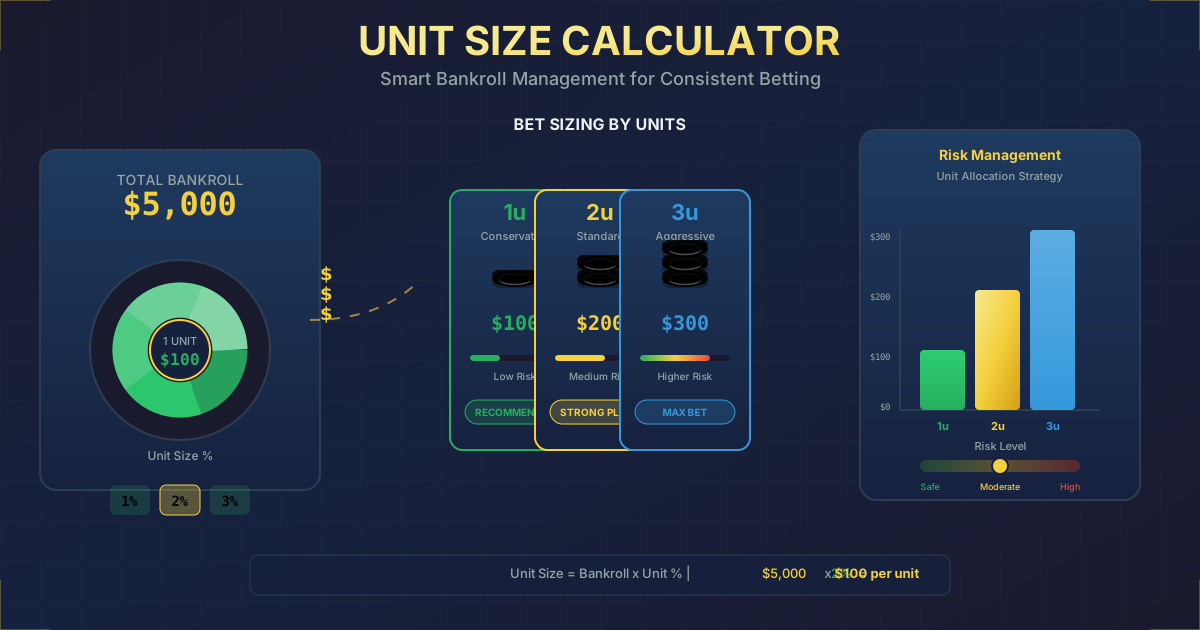
Plan sessions with the Session Bankroll Calculator and size your bets with the Betting Unit Calculator.
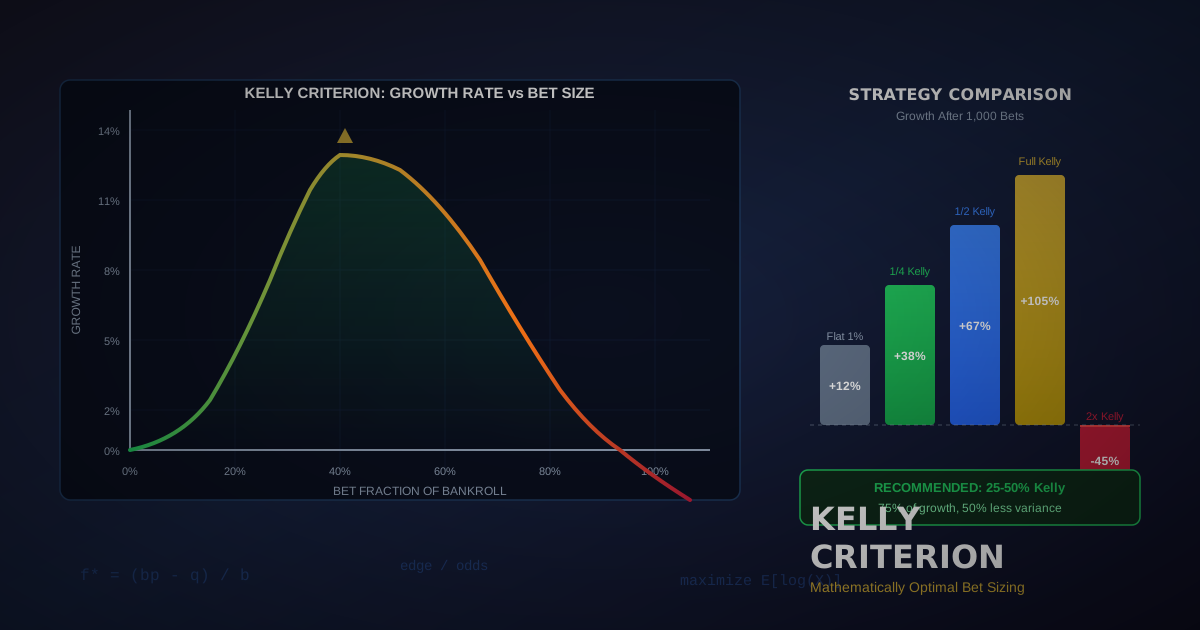
The Kelly Criterion for Bet Sizing
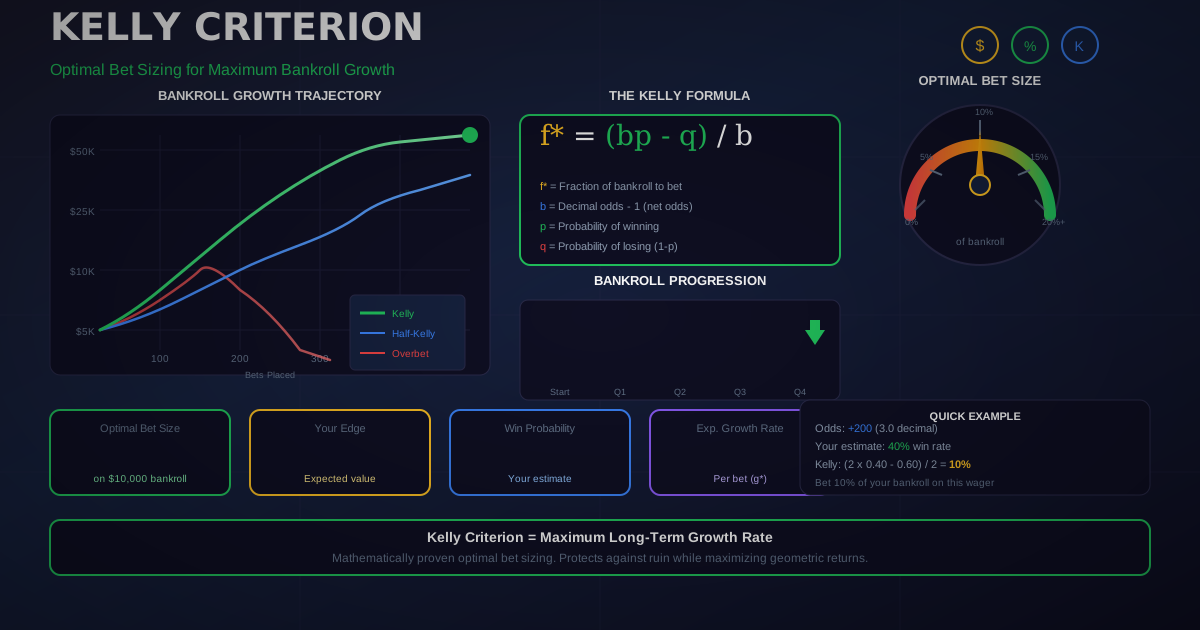
The Kelly Criterion provides the mathematically optimal bet size to maximize long-term bankroll growth:
Kelly Fraction = Edge / Variance
For a counter with a 1% edge at TC +3 and a variance of 1.32 (standard blackjack):
Kelly Bet = 0.01 / 1.32 = 0.758% of bankroll
With a $30,000 bankroll: Kelly bet = $227 at TC +3.
Most professional counters bet "half Kelly" to reduce variance and risk of ruin:
Half Kelly Bet = $113 at TC +3
Calculate optimal Kelly bets for any count with the Kelly Criterion Calculator.
Frequently Asked Questions
Is card counting illegal? No. Card counting is completely legal in the United States and most countries. You are using your brain to process information visible to everyone at the table. Casinos can ask you to leave (which is their right as private businesses), but you will not face any criminal charges. Practice legally with the Hi-Lo Practice Tool.
How much money do I need to start card counting? For a standard 1:8 bet spread with a $25 minimum bet, you need $20,000-$40,000 in dedicated bankroll for a reasonable (5-15%) risk of ruin. With less, you either need to play at lower minimums (reducing hourly EV) or accept a higher risk of going broke. Calculate your needs with the Risk of Ruin Calculator.
How long does it take to learn to count cards? Learning the Hi-Lo system takes a few hours. Becoming fast and accurate enough for casino play typically requires 100-200 hours of practice. You need to count down a full deck in under 25 seconds with zero errors and maintain a count while holding a conversation and making basic strategy decisions under pressure.
Can casinos detect card counting? Yes. Casinos use a combination of pit boss observation, surveillance video analysis, bet tracking software, and player profiles to identify counters. The primary indicator is bet variation correlated with shoe composition. Most counters are identified within 10-50 hours of play at a single property. Use the Card Counting Calculator to understand what the casino is watching for.
What about team play? Team play (as popularized by the MIT Blackjack Team) distributes roles: "spotters" count at minimum bets and signal "big players" to join the table during favorable counts. This is more profitable because the big player always bets large (no suspicious bet spread), but it requires coordination, trust, and splitting earnings. Teams are also a priority target for casino surveillance.
Does card counting work online? Live dealer online blackjack can theoretically be counted, but most online casinos use 50% penetration, CSMs, or 6-8 deck shoes shuffled every 2-3 decks. The conditions are typically too poor for profitable counting. RNG-based online blackjack shuffles after every hand, making counting impossible.
What is the best counting system? Hi-Lo is the best system for most counters because it balances power and simplicity. More complex systems (Hi-Opt II, Omega II, Wong Halves) provide a marginal increase in accuracy (5-10% more edge) at the cost of significantly higher mental effort and error rates. The additional edge from a more complex system is almost always negated by the increased error rate under real casino conditions. Validate any system with the Blackjack EV Calculator.
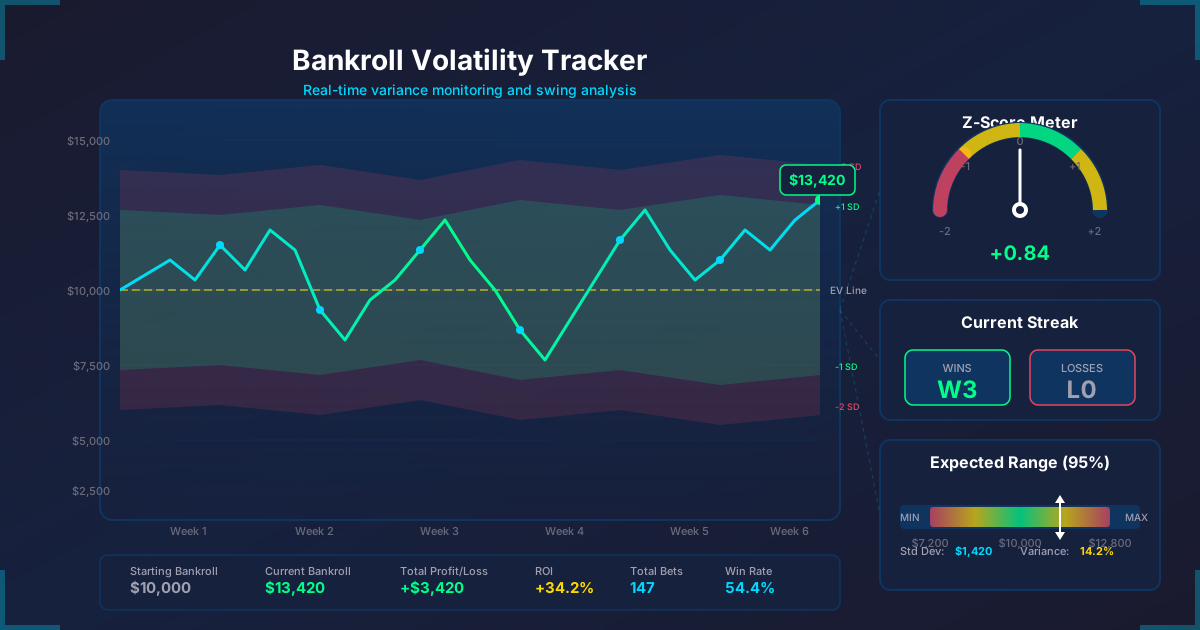
How much can a professional card counter actually make? Under realistic 2026 conditions, a solo counter working 500 hours per year with a $40,000 bankroll can expect $7,000-$15,000 in annual earnings. This translates to an effective hourly rate of $14-$30 before expenses. Expenses (travel, tips, back-off losses) reduce this by $2,000-$5,000 annually. Net income: $5,000-$10,000 per year. Monitor your results with the Bankroll Volatility Tracker.
Related Tools
- Blackjack Card Counting Calculator: Understand the math behind counting systems and how card removal affects the house edge.
- Hi-Lo Practice Tool: Practice the Hi-Lo counting system with timed drills and accuracy tracking.
- True Count Calculator: Convert running count to true count for any number of remaining decks.
- Blackjack House Edge Calculator: Calculate the base house edge for any combination of table rules.
- Blackjack EV Calculator: Model expected value for counting scenarios and specific hand decisions.
- Blackjack Risk of Ruin Calculator: Calculate the probability of losing your entire bankroll given your edge and bet sizing.
- Blackjack Variance Calculator: Understand the standard deviation of your results and expected session swings.
- Blackjack Betting Unit Calculator: Determine proper unit sizing based on bankroll and risk tolerance.
- Blackjack Session Bankroll Calculator: Plan individual session bankrolls based on your total counting bankroll.
- Blackjack Basic Strategy Chart: Master the foundation that all counting builds upon.
- Kelly Criterion Calculator: Calculate mathematically optimal bet sizes for any given count and edge.
- Expected Value Calculator: General-purpose EV calculator for comparing counting to other advantage play opportunities.
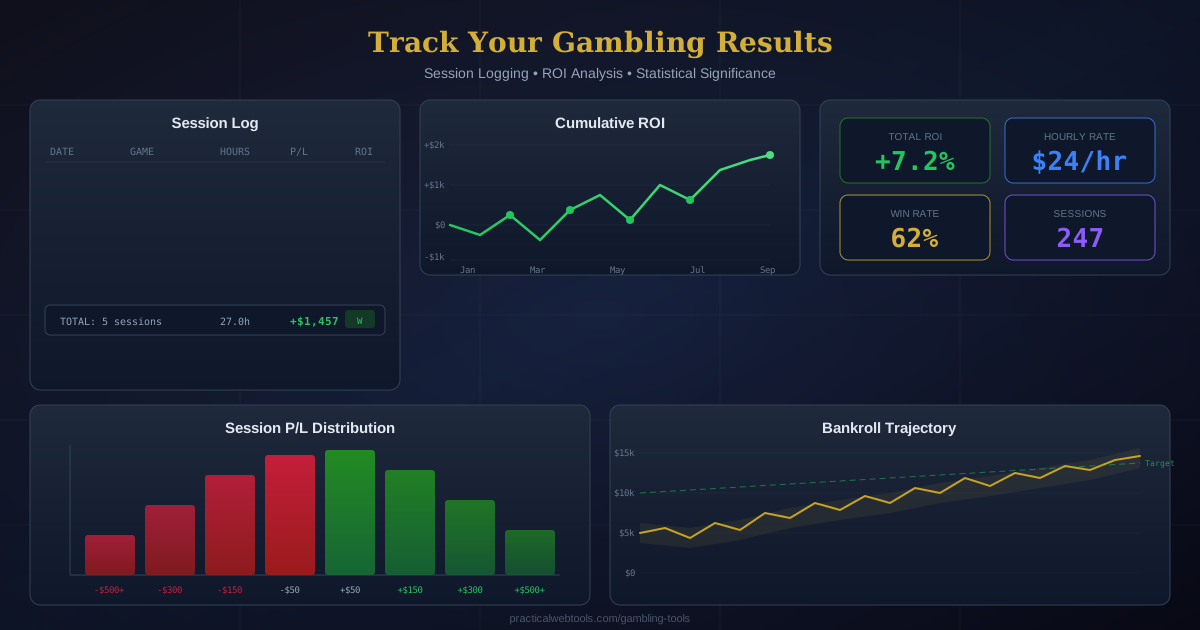
- Bankroll Volatility Tracker: Track your actual counting results over time and compare to theoretical expectations.
Conclusion
Card counting in 2026 is mathematically viable but practically challenged. The edge exists---the math has not changed since Edward Thorp published "Beat the Dealer" in 1962. But the environment in which that edge must be exploited has changed dramatically. CSMs, 6:5 tables, shallow penetration, and sophisticated surveillance have compressed the counter's advantage from a comfortable margin to a razor-thin sliver.
For most people, the answer to "Is card counting worth it?" is no. The hourly rate is modest, the variance is high, the bankroll requirements are substantial, the stress is real, and the constant threat of being backed off makes it an unreliable income source. Investing the same capital in index funds produces similar returns with zero effort and no risk of being asked to leave.
For a small minority---people who live near casinos with good conditions, have adequate bankrolls, derive genuine satisfaction from the intellectual challenge, and can maintain emotional discipline through brutal variance---card counting remains one of the few legal ways to gain a mathematical edge over the casino. Just go in with realistic expectations. You are not going to get rich. You are grinding for $15-$30 per hour while constantly looking over your shoulder.
The most important skill in card counting is not the count itself. It is the ability to honestly assess whether the game is still worth the candle.
Start your assessment with the Card Counting Calculator, practice with the Hi-Lo Practice Tool, and track everything with the Bankroll Volatility Tracker.
Gambling involves risk. This content is for educational and informational purposes only. Always gamble responsibly, set limits you can afford, and seek help if gambling becomes a problem. Visit the National Council on Problem Gambling or call 1-800-522-4700 for support.