Hedging Your Sports Bets: When to Lock in Profit and When to Let It Ride (2026)
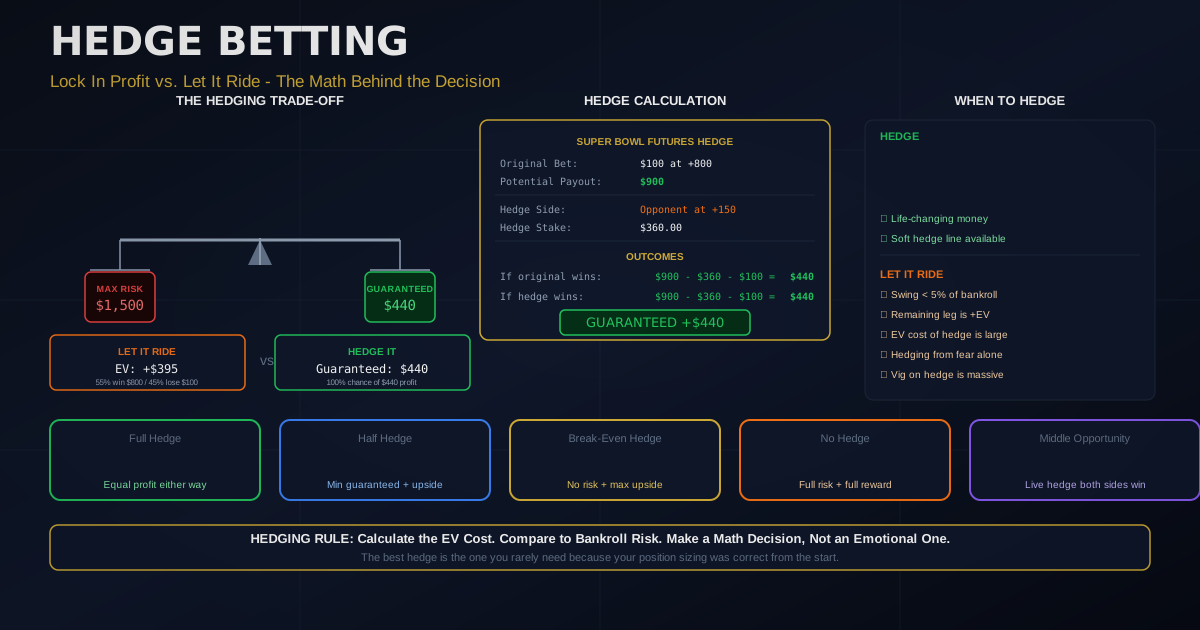
Every sports bettor will face this decision: you are sitting on a winning position, and you can either lock in guaranteed profit or let it ride for a bigger potential payout. The emotional pull to "secure the bag" is powerful. But hedging is not free. Every hedge has a mathematical cost, and understanding that cost is the difference between smart risk management and paying an unnecessary insurance premium.
Hedging a bet means placing a second wager on the opposite outcome to guarantee profit (or reduce loss) regardless of the result. It sounds like a no-brainer in theory. In practice, it is a nuanced decision that depends on the EV of your remaining position, your bankroll situation, and your risk tolerance.
The truth most hedging guides will not tell you: in the majority of situations, hedging is -EV compared to letting it ride. But there are specific, mathematically justified scenarios where hedging is the correct play. This guide will teach you to identify both.
Calculate exact hedge amounts and guaranteed profits with our Hedge Calculator.
How Hedging Works: The Basic Mechanics
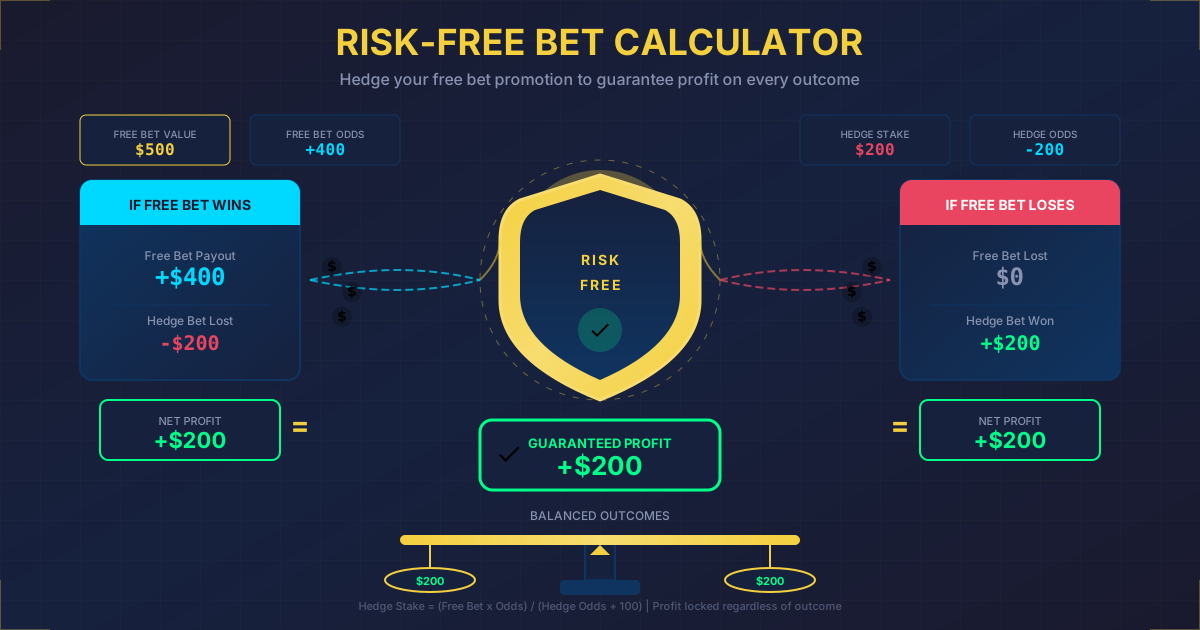
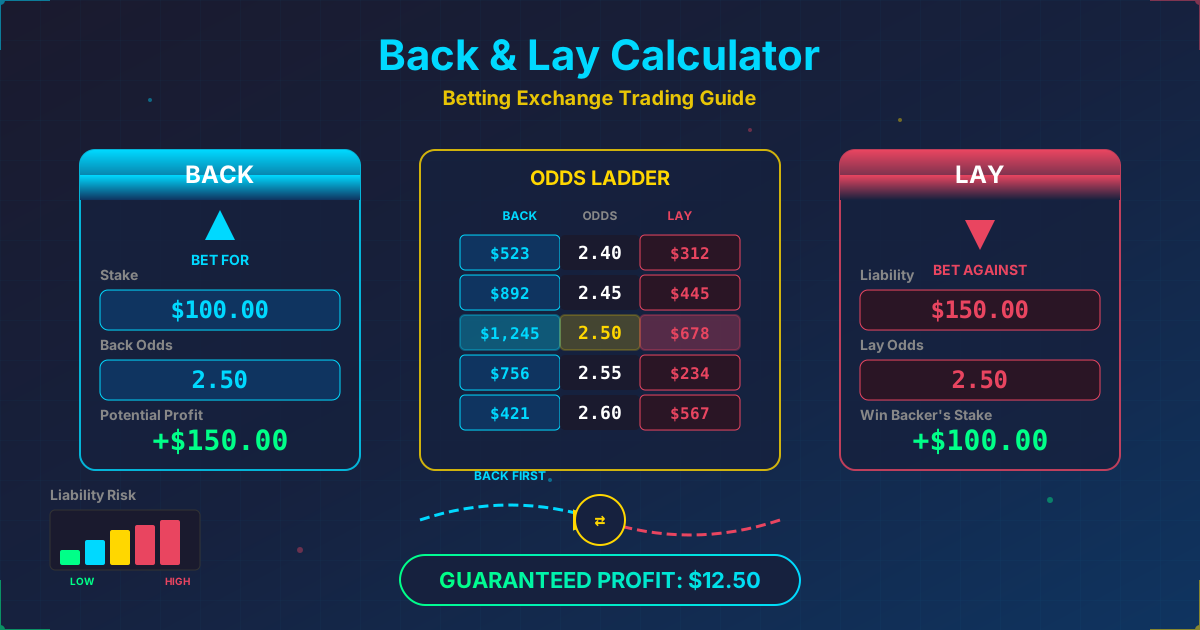
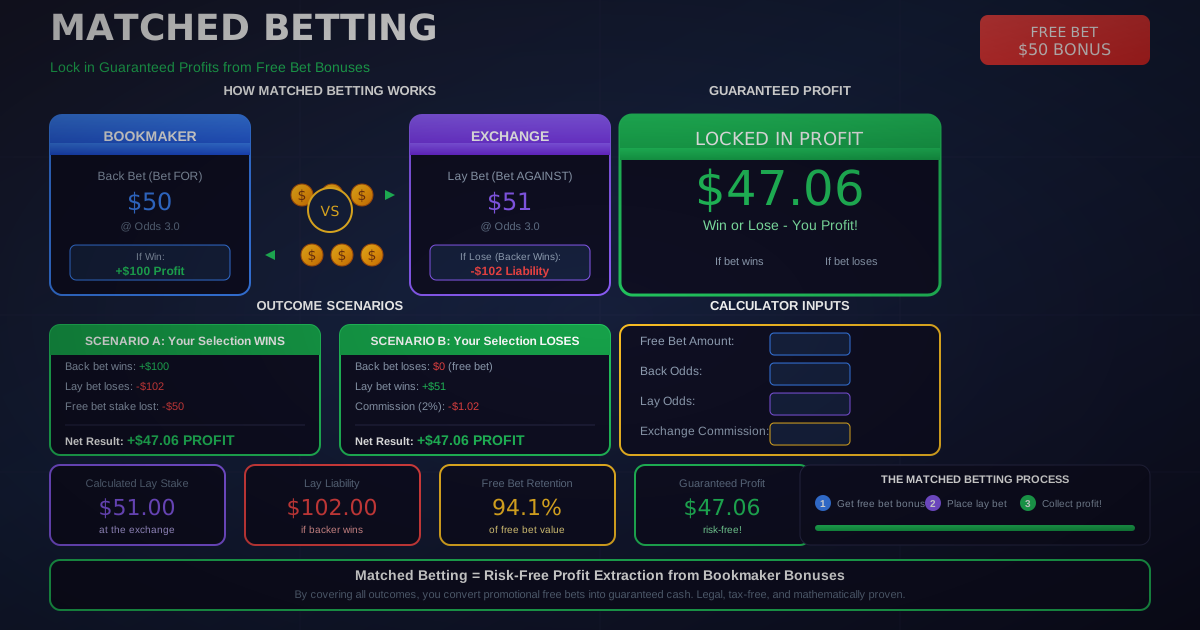
A hedge bet creates a guaranteed profit by covering the remaining risk in your original position. The math is straightforward but requires precision.
The Hedge Formula
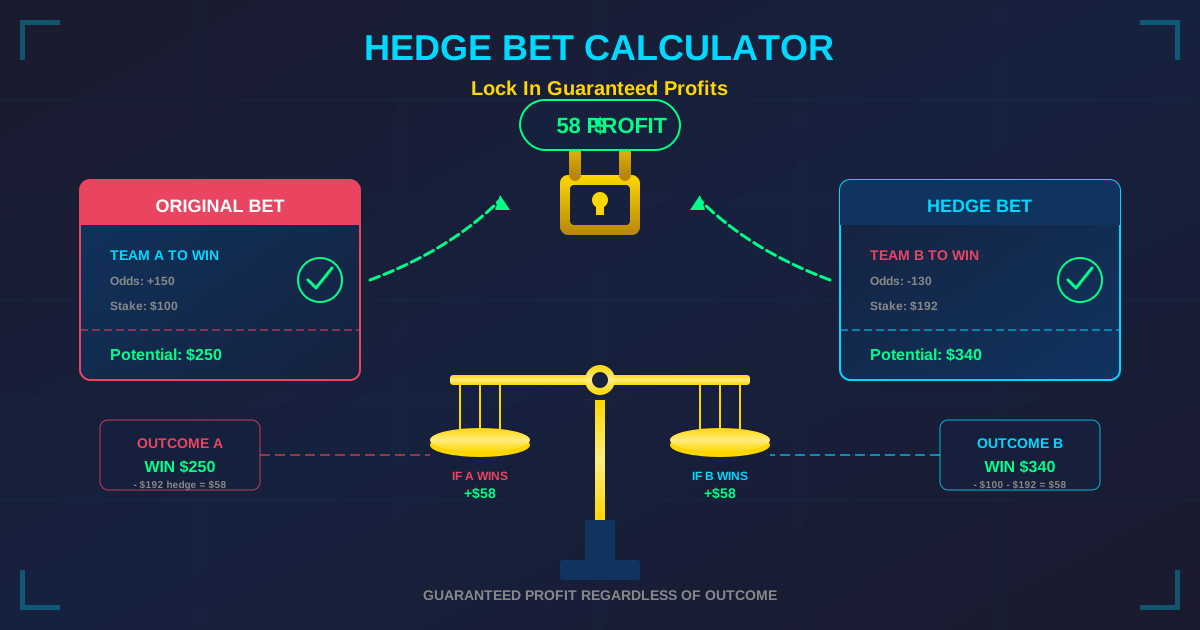
To hedge a bet for equal profit regardless of outcome:
**Hedge Stake = (Original Payout) / (Hedge Odds in Decimal) **
Then your guaranteed profit is:
Guaranteed Profit = Original Payout - Hedge Stake - Original Stake
Or from the hedge side:
Guaranteed Profit = (Hedge Stake x Hedge Decimal Odds) - Hedge Stake - Original Stake
Simple Example
You bet $100 on the Chiefs to win the Super Bowl at +800 before the season. They made it. Now the Super Bowl is one game away.
- Original bet: $100 at +800
- Potential payout if Chiefs win: $900 ($800 profit + $100 stake)
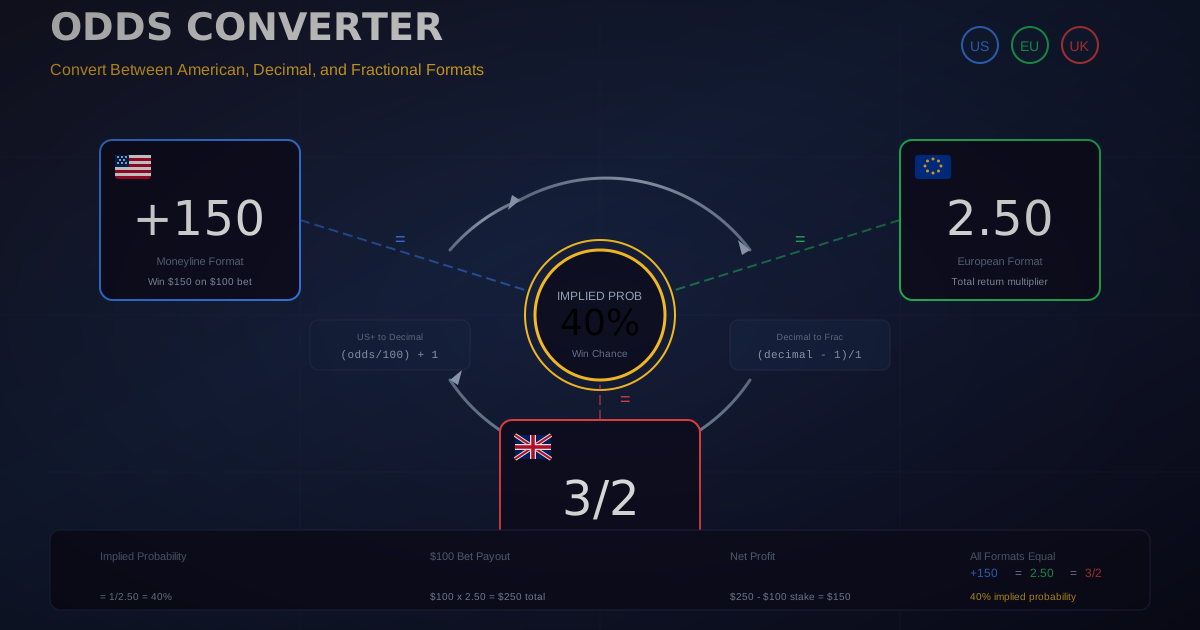
- Super Bowl opponent's moneyline: +150
Hedge calculation:
To guarantee equal profit on both outcomes:
Hedge Stake = $900 / (1 + 150/100) = $900 / 2.50 = $360
If Chiefs win Super Bowl:
- Original bet pays: $900
- Hedge bet loses: -$360
- Net profit: $900 - $360 - $100 = $440
If opponent wins Super Bowl:
- Original bet loses: -$100 (already paid)
- Hedge bet pays: $360 x 2.50 = $900
- Net profit: $900 - $360 - $100 = $440
Guaranteed $440 profit either way. That is hedging at its simplest.
Run this calculation instantly with our Hedge Calculator.
The EV Cost of Hedging
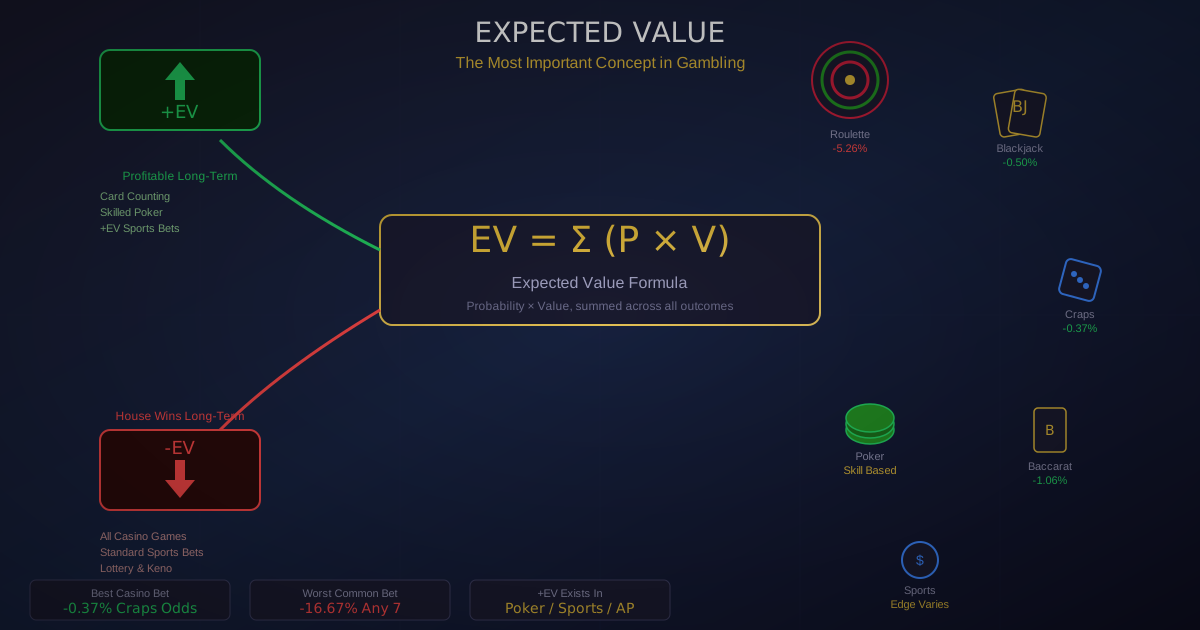
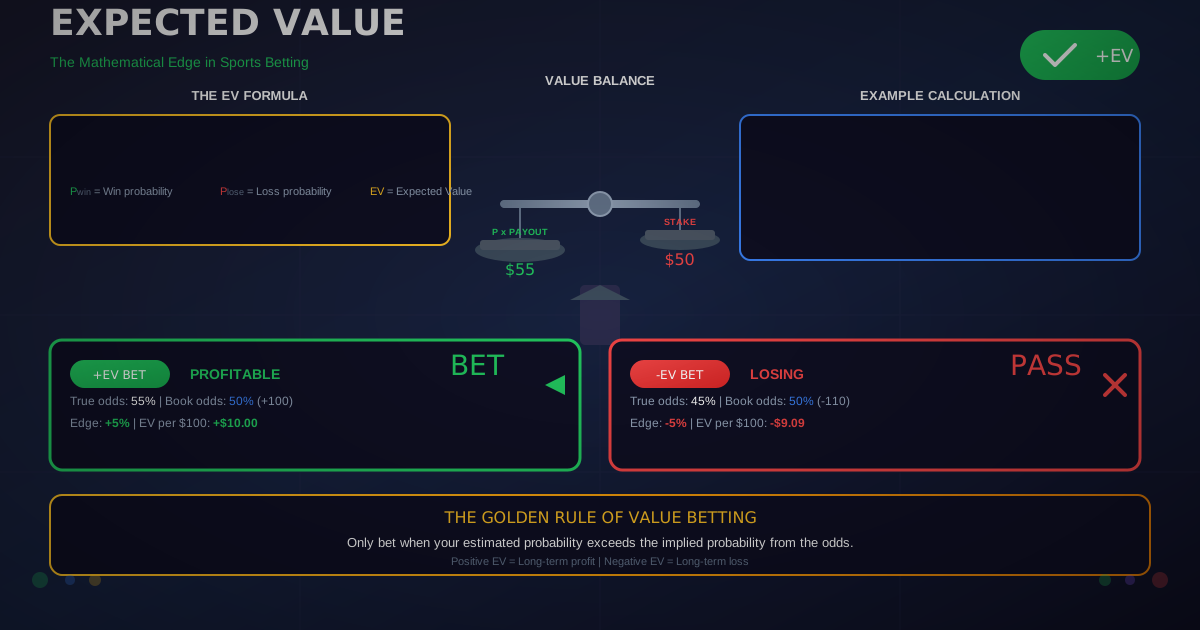
Here is what most hedging guides skip: hedging has an expected value cost. Every time you hedge, you are buying insurance, and insurance costs money.
Why Hedging Reduces EV
Using the Chiefs example above, let us say the Chiefs have a 55% chance to win the Super Bowl (based on the current line).
Without hedging (let it ride):
- 55% chance of winning $800 (profit on $100 bet)
- 45% chance of losing $100
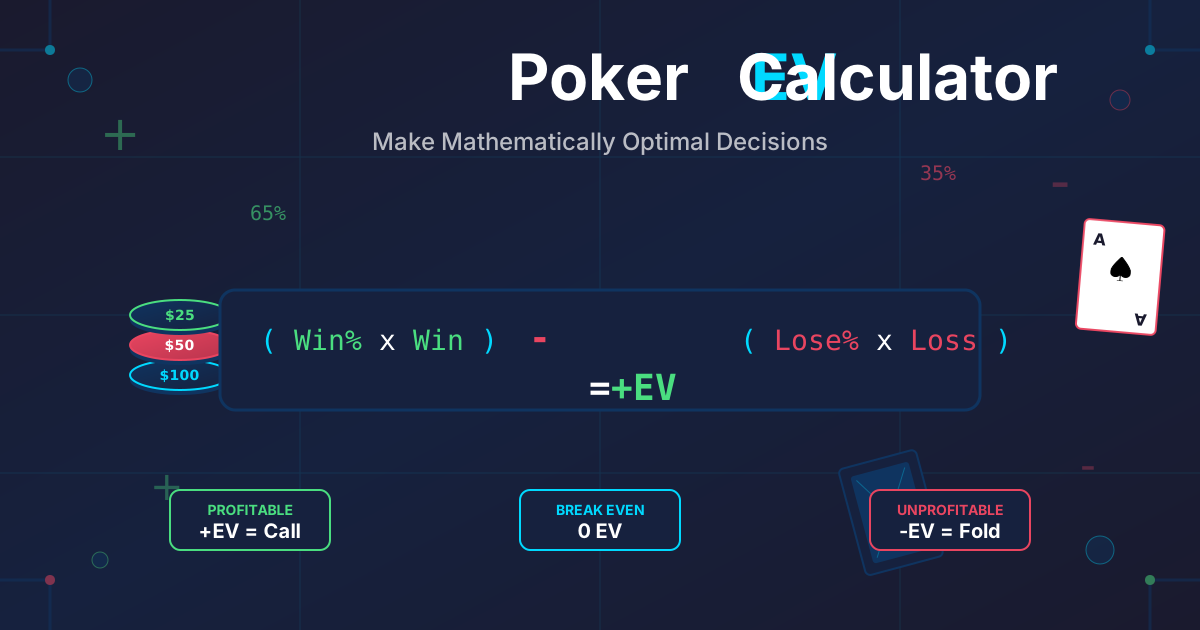
- EV = (0.55 x $800) - (0.45 x $100) = $440 - $45 = +$395
With hedging:
- 100% chance of winning $440
- EV = $440
Wait. Hedging actually gives higher EV in this case ($440 vs. $395)? Not quite. Let us look more carefully. The hedging EV should account for the vig on the hedge bet.
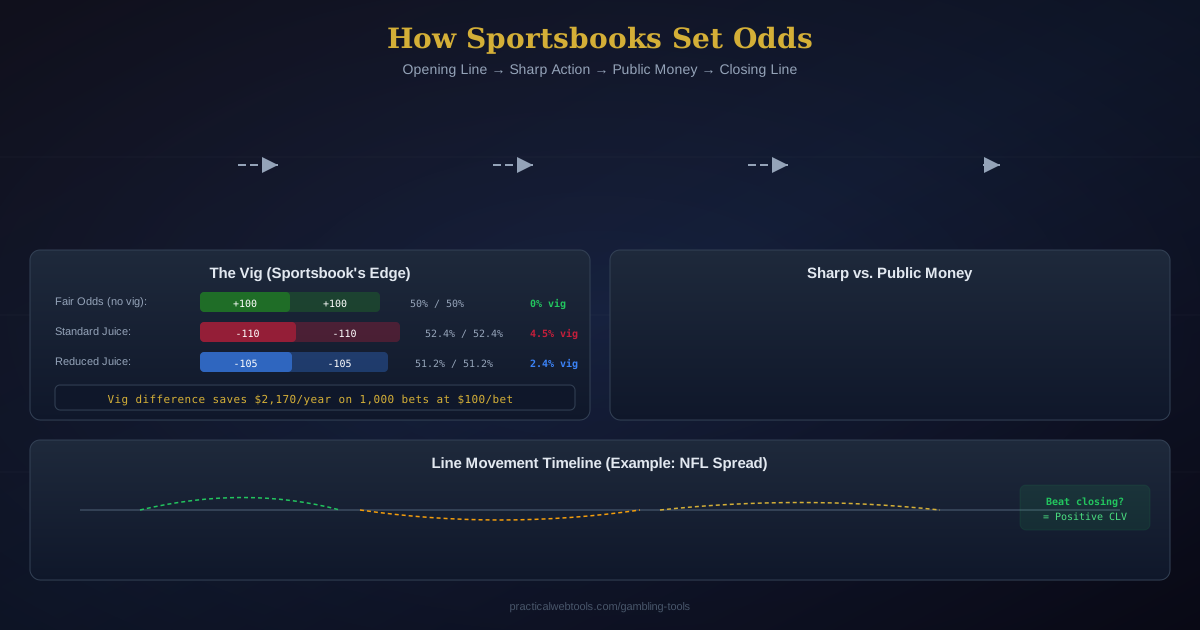
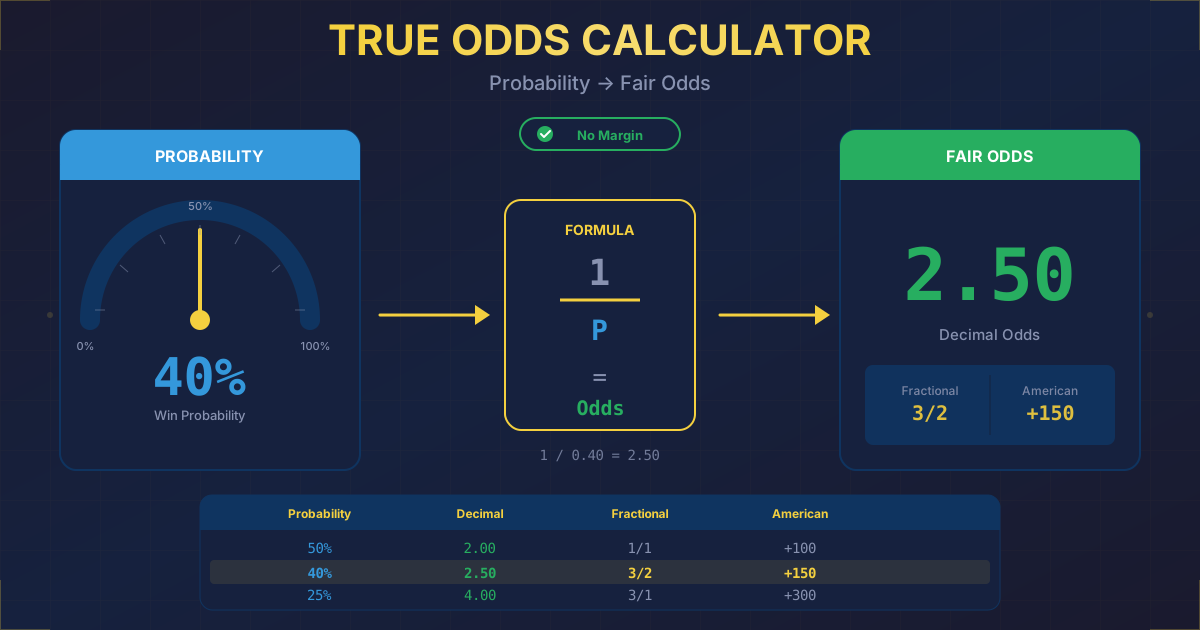
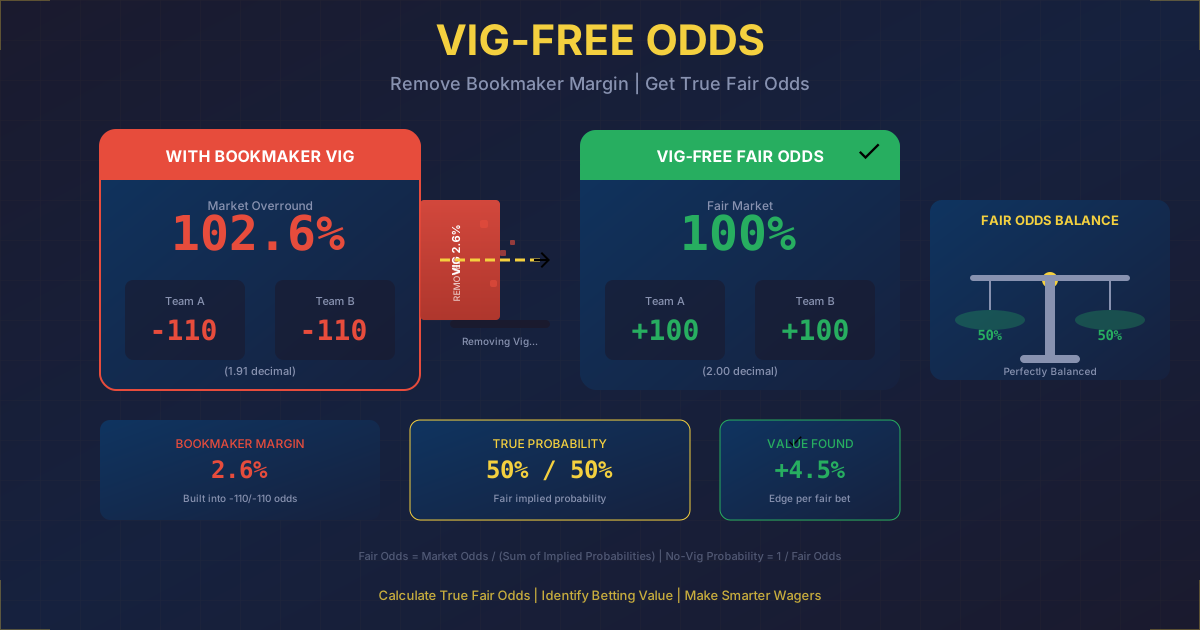
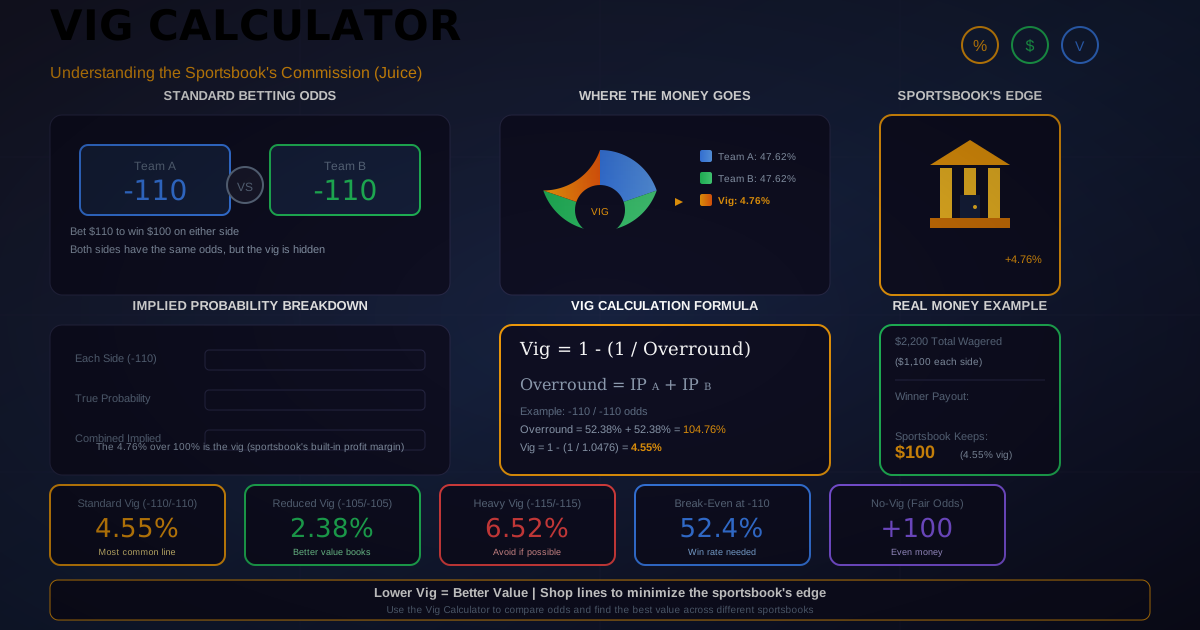
The opponent's true probability of winning is 45%, but the +150 line implies only 40% probability (the vig). You are getting worse than fair odds on the hedge.
Adjusted with vig consideration:
If you could hedge at fair odds (the opponent's true 45% probability, which would be +122):
Fair hedge stake = $900 / 2.222 = $405 Guaranteed profit = $900 - $405 - $100 = $395
At fair odds, the guaranteed profit equals the EV of letting it ride. The vig on the hedge bet is what creates the cost:
- Hedge at fair odds: $395 guaranteed
- Hedge at +150: $440 guaranteed
- Let it ride: $395 EV
In this case, the +150 hedge line is actually better than fair odds for the opponent (the vig favors you here), making the hedge attractive. This happens when you can get a soft line on the hedge side.
But consider the common case: you have a +EV position where the remaining leg is +EV in your favor. Hedging eliminates that edge.
When Hedging Costs You EV
Scenario: You have a 2-leg parlay. Leg 1 won. Leg 2 is a bet on Team A at -110, and you estimate Team A has a 57% chance to win (a +EV position).
- Original parlay bet: $50
- Parlay payout if Leg 2 wins: $240
- Hedge: Team B at -110
Without hedging:
- 57% chance of $240 payout (profit: $190)
- 43% chance of $0 (loss: $50 original stake)
- EV = (0.57 x $190) - (0.43 x $50) = $108.30 - $21.50 = +$86.80
With hedging for equal profit: Hedge stake = $240 / 1.909 = $125.72
If Team A wins: $240 - $125.72 - $50 = $64.28 If Team B wins: $125.72 x 1.909 - $125.72 - $50 = $240.07 - $125.72 - $50 = $64.35
Guaranteed: ~$64.30
EV comparison:
- Let it ride: +$86.80 EV
- Hedge: $64.30 guaranteed
- EV cost of hedging: $22.50
That $22.50 is the price of certainty. Is it worth it? That depends entirely on your bankroll and risk tolerance.
Calculate EV on any bet with our Expected Value Calculator.
When Hedging IS the Right Move
Despite the EV cost, there are legitimate mathematical and practical reasons to hedge.
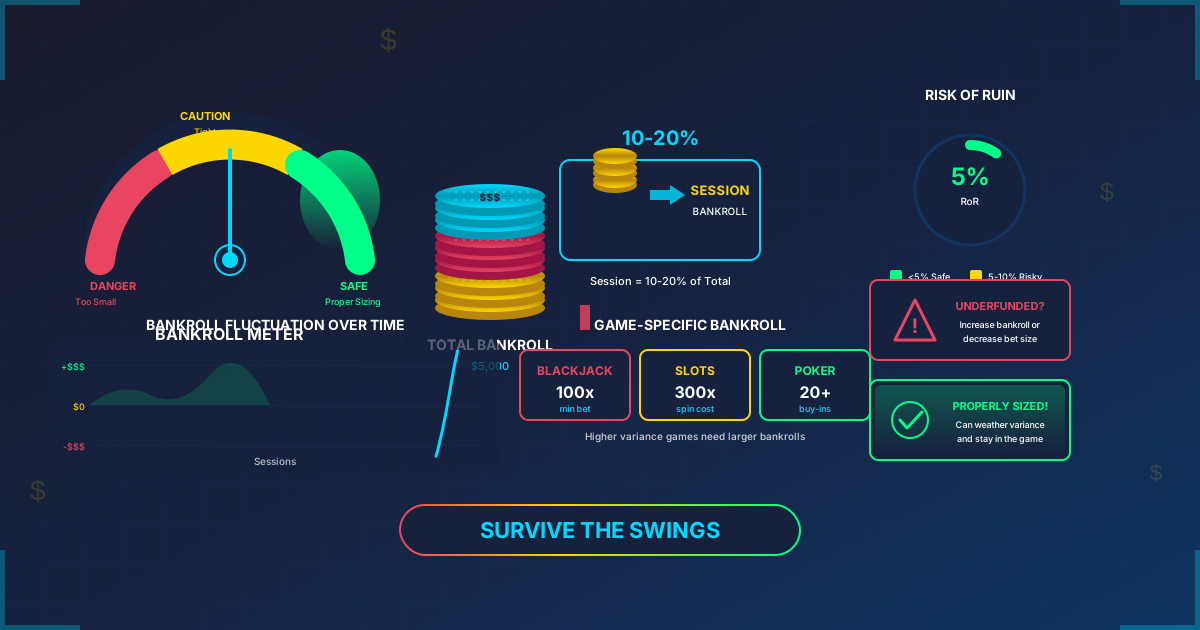
Reason 1: The Bet Represents a Dangerous % of Your Bankroll
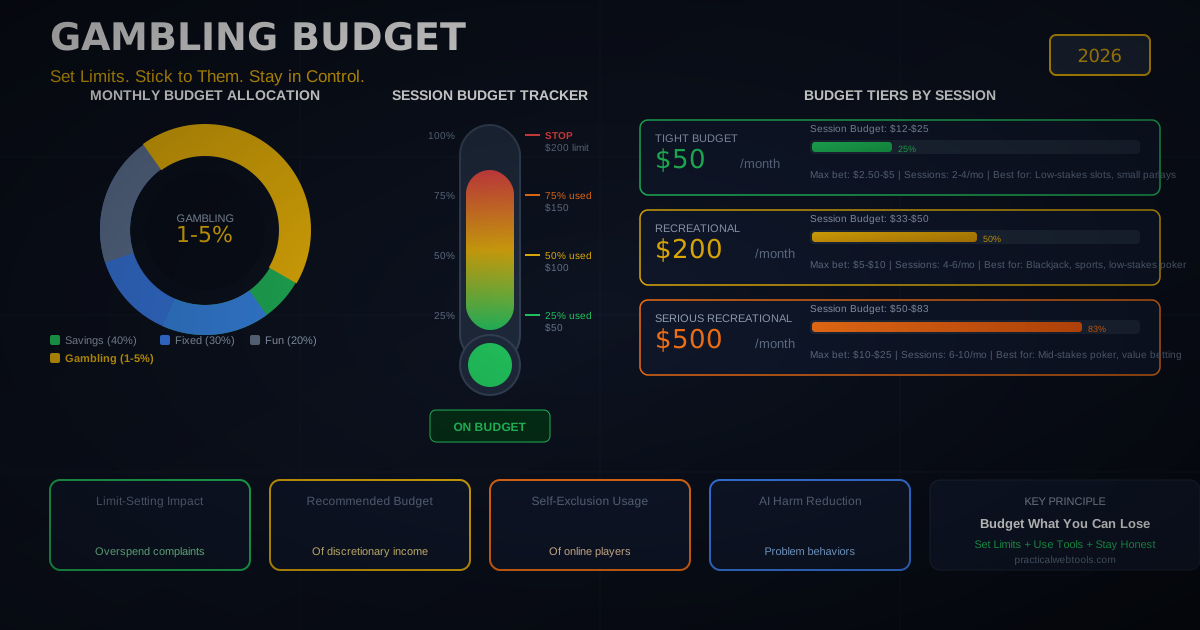
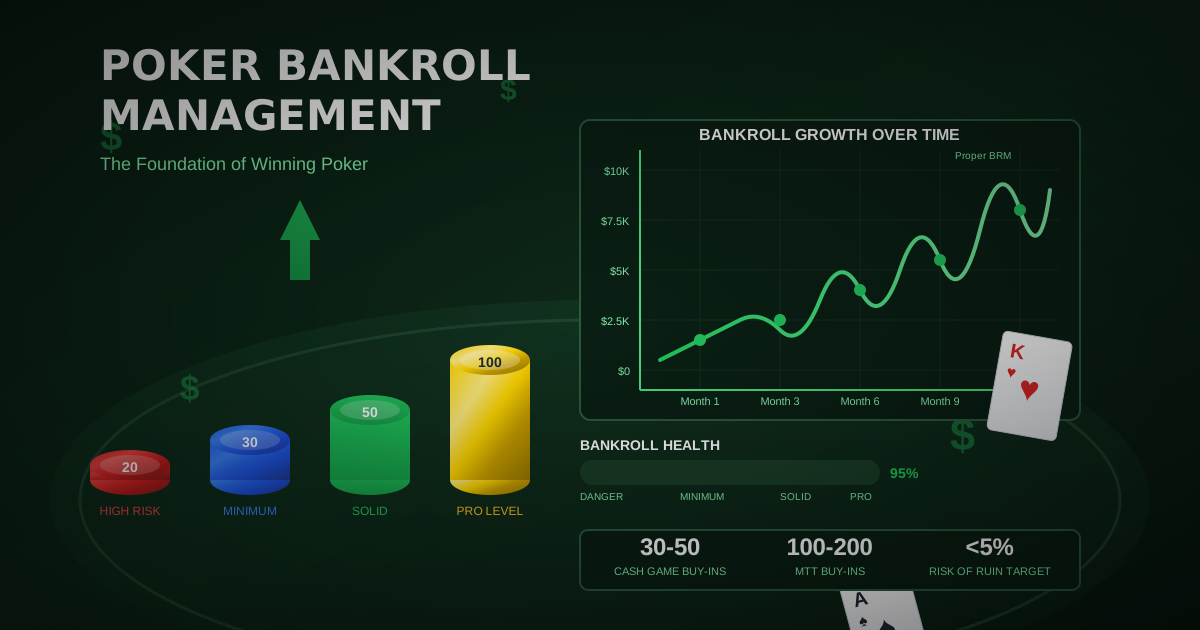
If your original bet was $100 on a $2,000 bankroll (5%), but after winning several legs of a parlay, the potential payout is $3,000. That $3,000 swing represents 150% of your bankroll.
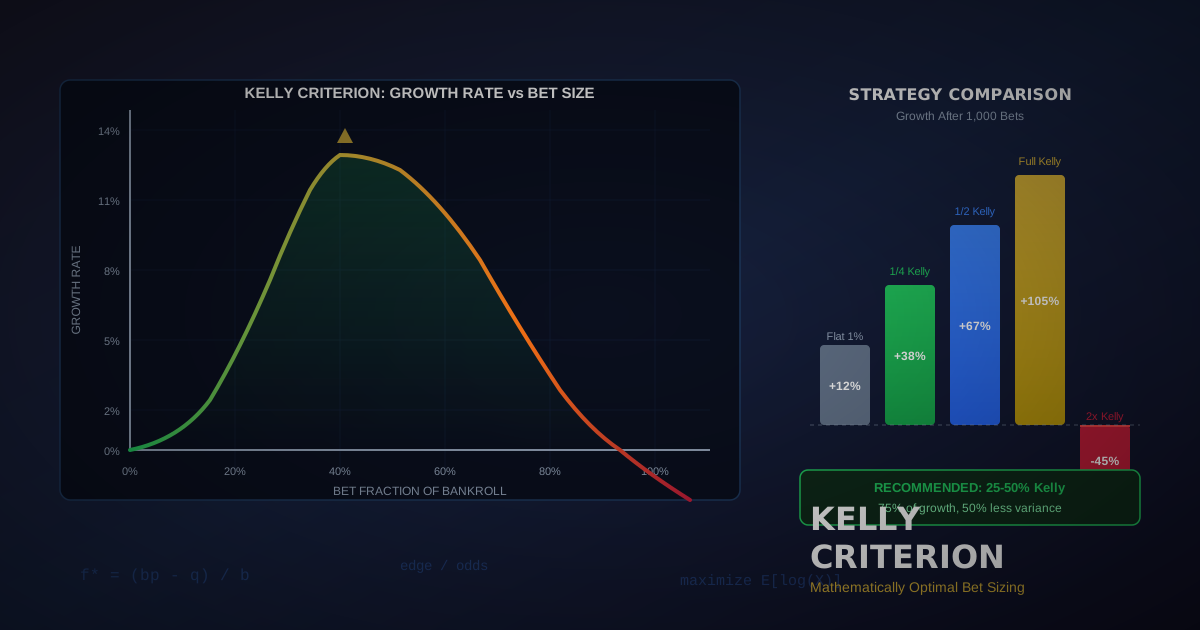
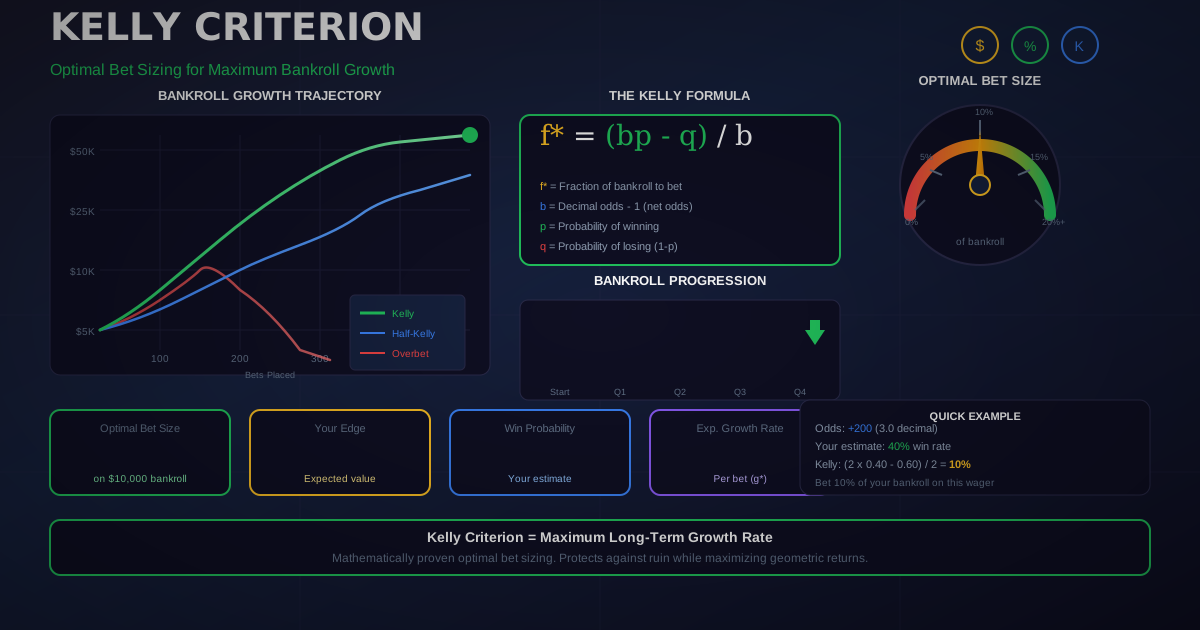
The Kelly Criterion would never recommend a single position that risks 150% of bankroll. Hedging to bring the swing within acceptable risk parameters (say, 5-10% of bankroll) is mathematically justified even at an EV cost.
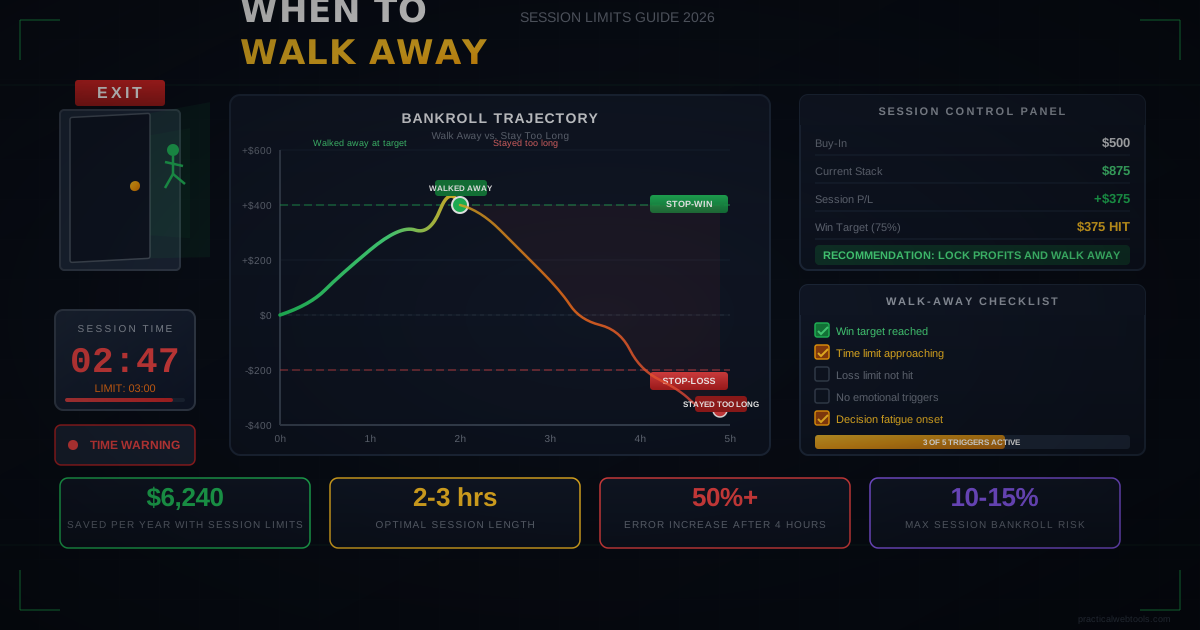
Rule of thumb: If the potential swing (max win minus max loss on the remaining leg) exceeds 20% of your bankroll, hedging some portion of the position is prudent.
Reason 2: The Remaining Leg Is -EV
If the remaining leg of your parlay or the final game of your futures bet is actually -EV for you (the line has moved against your position), hedging is not just acceptable, it is the correct play.
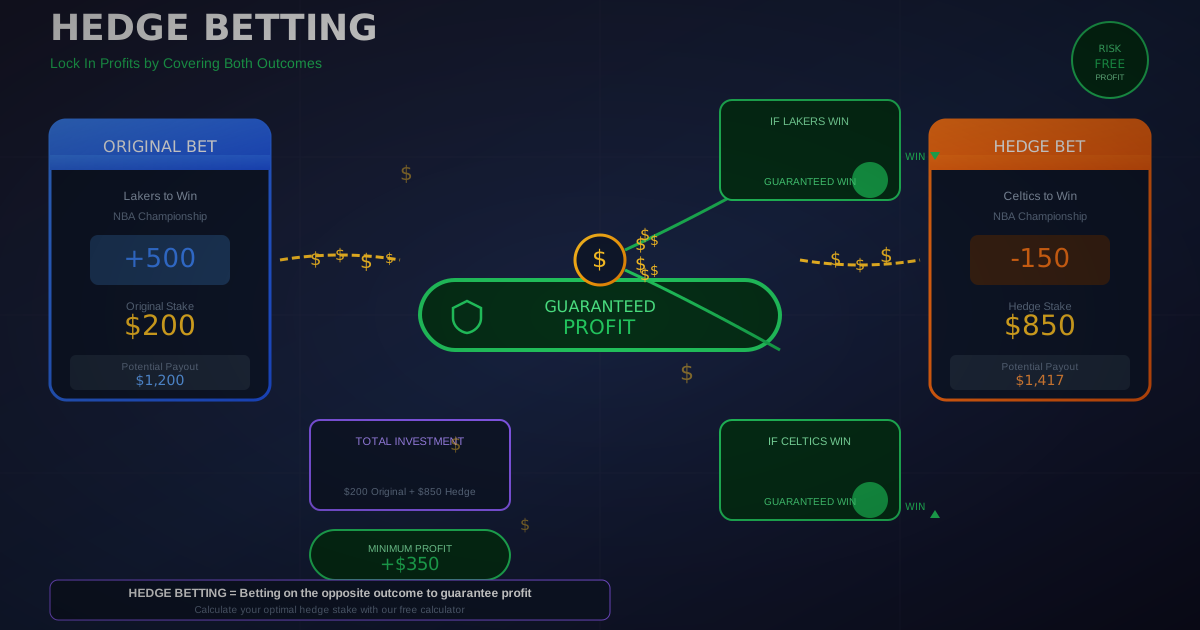
Example: You bet the Lakers to win the NBA Championship at +1200 before the season. They reach the Finals, but the opponent is heavily favored at -250. The Lakers' implied probability of winning is only 28.6%.
Your original $100 bet would pay $1,300. The remaining game is -EV for you:
- Let it ride EV: (0.286 x $1,200) - (0.714 x $100) = $343.20 - $71.40 = +$271.80
- Hedge at opponent -250: Stake $940.91
- Guaranteed profit: $1,300 - $940.91 - $100 = $259.09
The guaranteed $259 is close to the $271.80 EV of letting it ride. In this case, locking in $259 makes excellent sense because the $271.80 EV comes with enormous variance (71.4% chance of losing the entire $100 original stake).
Reason 3: Utility of Money Is Non-Linear
Economic utility theory shows that the value of money decreases as amounts increase. The jump from $0 to $500 is more impactful to most people than $500 to $1,000.
If winning the full parlay payout would be life-changing money (paying off debt, making a down payment), hedging to guarantee that outcome is rational even at an EV cost. A guaranteed $5,000 may be worth more to you than a 40% chance of $15,000.
This is not a mathematical argument. It is a practical one. And it is valid.
Reason 4: You Are Leaving the Market
If you are done betting (depleting a sportsbook account balance, traveling out of a legal state, or simply taking a break), locking in guaranteed profit on open positions makes sense. The EV cost is negligible compared to the risk of leaving money on the table.
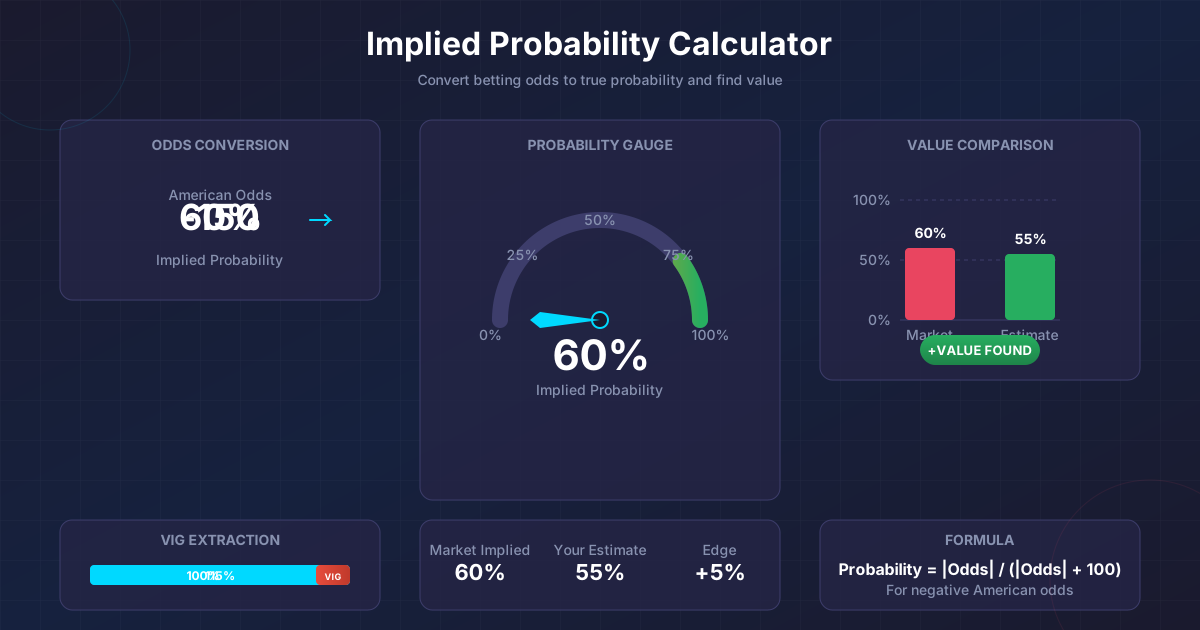
Determine the implied probability of any hedge target with our Implied Probability Calculator.
When Hedging Is a Mistake
Mistake 1: Hedging a +EV Position Just Because You Are Scared
If the remaining leg has genuine positive expected value, and the potential swing is within your bankroll's risk tolerance, hedging costs you money. Fear is not a valid hedging reason when the math says let it ride.
The test: Calculate the EV of letting it ride. Calculate the guaranteed profit from hedging. If the EV difference is large (>15% of the guaranteed amount) and the swing is under 10% of your bankroll, let it ride.
Mistake 2: Hedging Small Parlays
A 2-leg parlay where you won the first leg and the second leg pays $200 on a $100 bet. Your bankroll is $5,000. The potential swing is 4% of bankroll. That is not worth hedging. The EV cost exceeds the risk management benefit.
Mistake 3: Hedging Because You "Feel Like" the Bet Will Lose
Emotional hedging is the most common and most expensive mistake. Your feeling about the outcome is not information. Unless new data has changed the actual probability, hedging based on gut feeling is paying for unnecessary insurance.
Mistake 4: Over-Hedging
If you decide to hedge, you do not have to hedge for equal profit on both sides. You can partial-hedge, locking in a guaranteed minimum while still having upside if the original bet wins.
Optimal partial hedge: Hedge enough to guarantee you break even or make a small profit if the hedge side wins, while preserving most of the upside if the original side wins.
Compare optimal odds for hedging across books with our Odds Converter.
Hedging Specific Bet Types
Hedging Futures Bets
Futures bets (season-long wagers like championship winners) are the most common hedging scenario because the value of the position changes dramatically over months.
The Multi-Stage Futures Hedge
You bet $200 on the Eagles to win the Super Bowl at +2000 (pays $4,200 if correct).
Stage 1: Eagles make the playoffs.
- Current price to win Super Bowl: +800
- You could hedge now, but the remaining path is long with many variables
- Recommendation: Do not hedge yet. Too much future value in the position.
Stage 2: Eagles win divisional round (Final Four).
- Current price: +350
- Your $200 bet is now worth approximately $200 x (implied probability at current price / original implied probability)
- Potential hedge: Bet against Eagles in NFC Championship
- Recommendation: Consider a partial hedge to guarantee break-even if Eagles lose.
Stage 3: Eagles win NFC Championship (Super Bowl bound).
- Only one game remains.
- Opponents are +130 underdogs.
- This is the optimal hedging point. Maximum information, minimum remaining uncertainty.
Hedge calculation (Stage 3):
- Eagles win: $4,200 payout
- Hedge on opponent at +130: Need $4,200 / 2.30 = $1,826.09 to guarantee equal profit
- Guaranteed profit: $4,200 - $1,826.09 - $200 = $2,173.91
Alternatively, if you believe the Eagles have genuine +EV to win (say 55%):
- Let it ride EV: (0.55 x $4,000) - (0.45 x $200) = $2,200 - $90 = +$2,110
- Hedge guaranteed: $2,173.91
Here, hedging actually gives slightly more than the EV. This happens because the hedge line (+130) is generous enough to overcome the vig. Hedge.
Calculate the true vig on any hedge line with our Hold/Vig Calculator.
Hedging Parlays
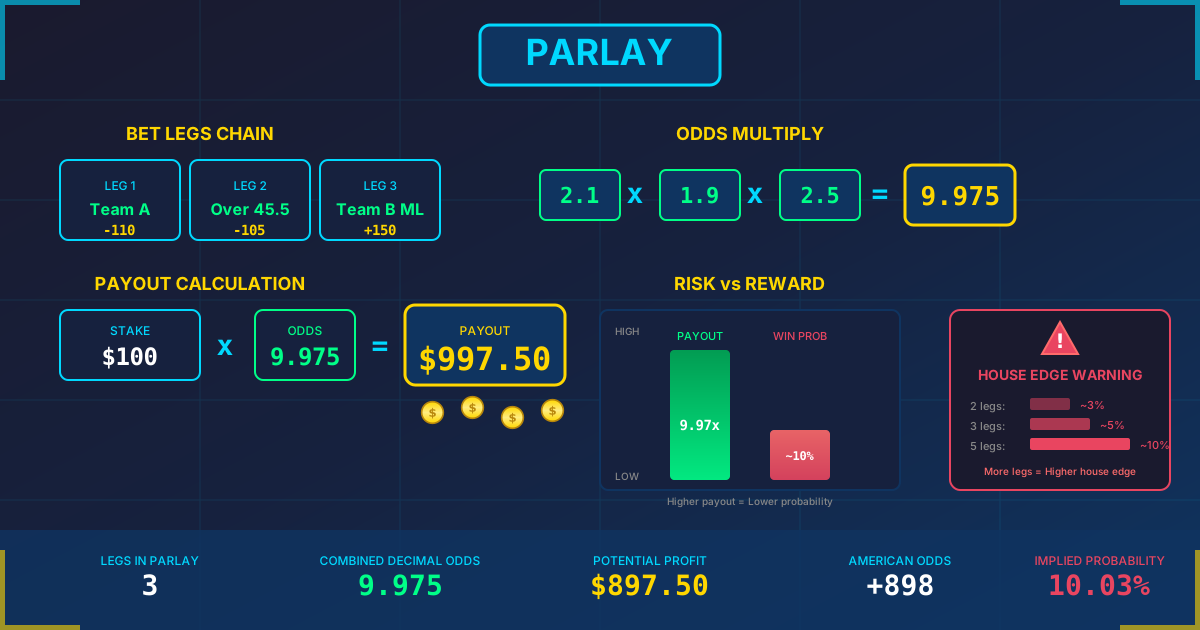
Parlay hedging is the most frequent hedging scenario. You have a multi-leg parlay with all legs won except the last.
Example: 4-Leg NFL Parlay, 3 Legs Won
- Original bet: $25
- Parlay payout if Leg 4 wins: $1,050
- Leg 4: Packers -3 at -110
Full hedge (equal profit): Hedge on opponent +3 at -110: Hedge stake = $1,050 / 1.909 = $550.03
If Packers cover: $1,050 - $550.03 - $25 = $474.97 If opponent covers: $550.03 x 1.909 - $550.03 - $25 = $1,050 - $550.03 - $25 = $474.97
Guaranteed: $474.97
Partial hedge (guarantee break-even, keep upside): Hedge stake needed to break even if Packers do not cover: Hedge stake x 1.909 = $25 (break even on original stake) Hedge stake = $25 / 1.909 = $13.10
If Packers cover: $1,050 - $13.10 - $25 = $1,011.90 If opponent covers: $13.10 x 1.909 - $13.10 - $25 = $25.01 - $13.10 - $25 = -$13.09
Wait, that does not work. Let me recalculate.
The goal is to break even overall: If hedge side wins: Hedge payout - Hedge stake - Original stake = 0 Hedge stake x (decimal odds - 1) = $25 Hedge stake x 0.909 = $25 Hedge stake = $27.50
If Packers cover: $1,050 - $27.50 - $25 = $997.50 If opponent covers: $27.50 x 1.909 - $25 = $52.50 - $25 = $0.00 (break even)
Now you have guaranteed break-even with $997.50 upside. That is a much better risk-reward than full hedging.
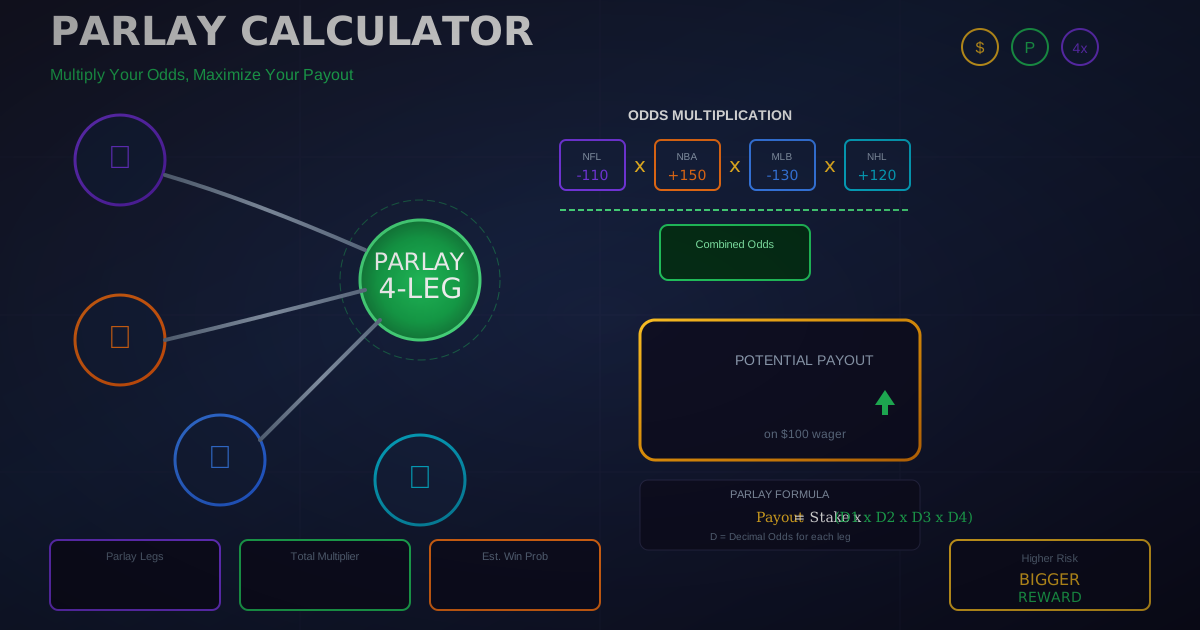
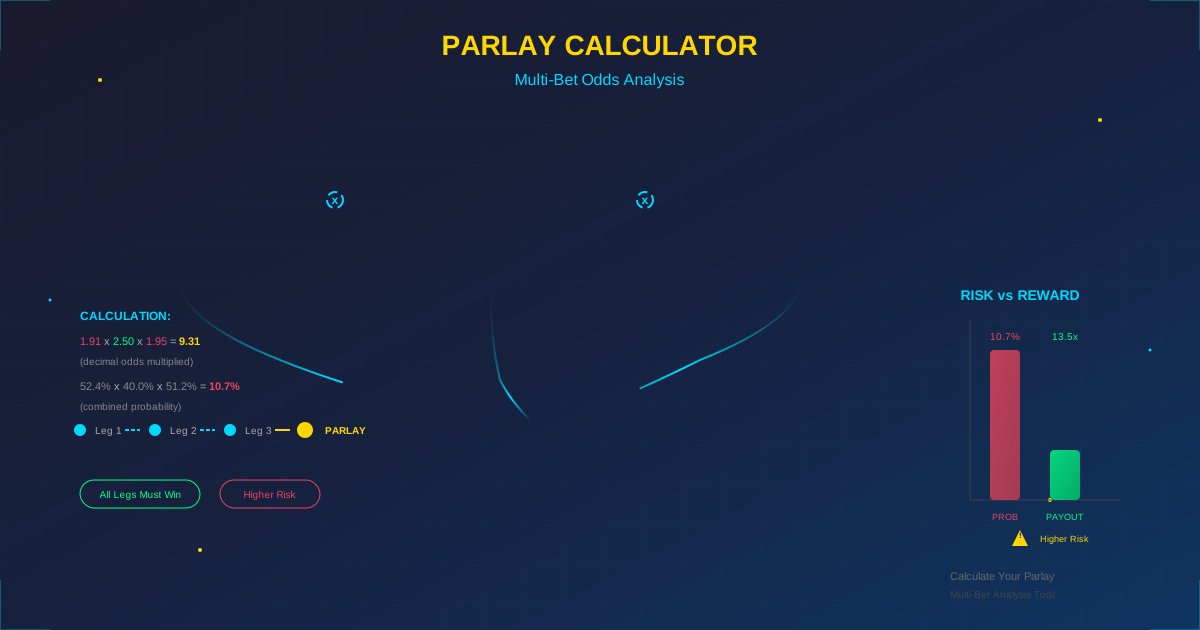
Build and analyze parlays with our Parlay Calculator.
Hedging Live Bets
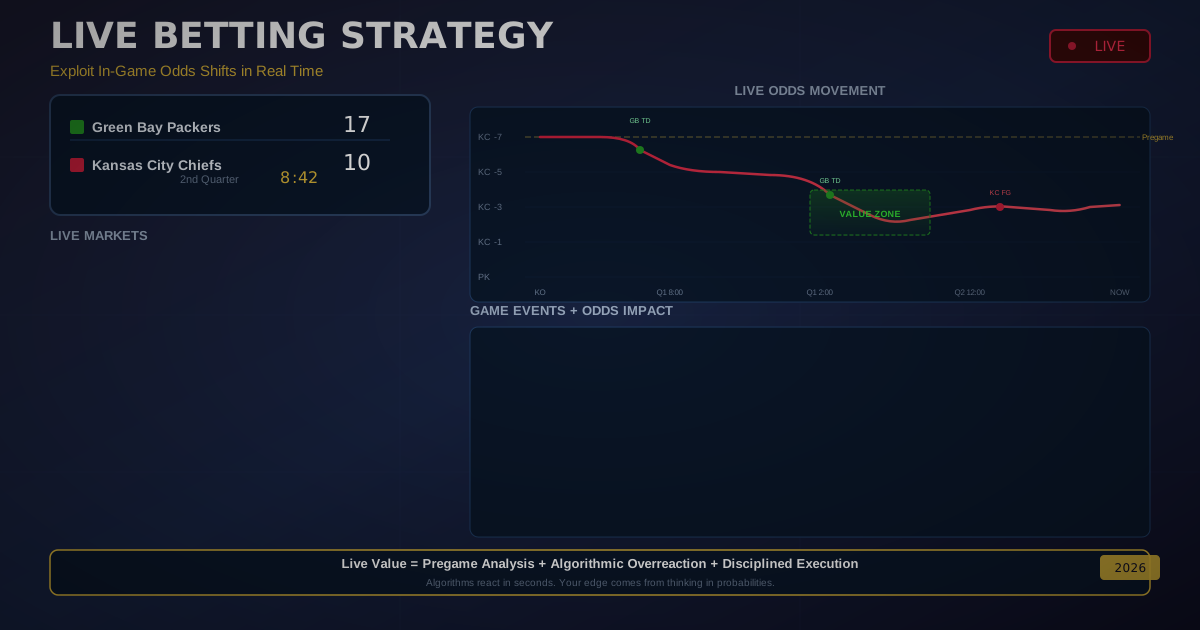
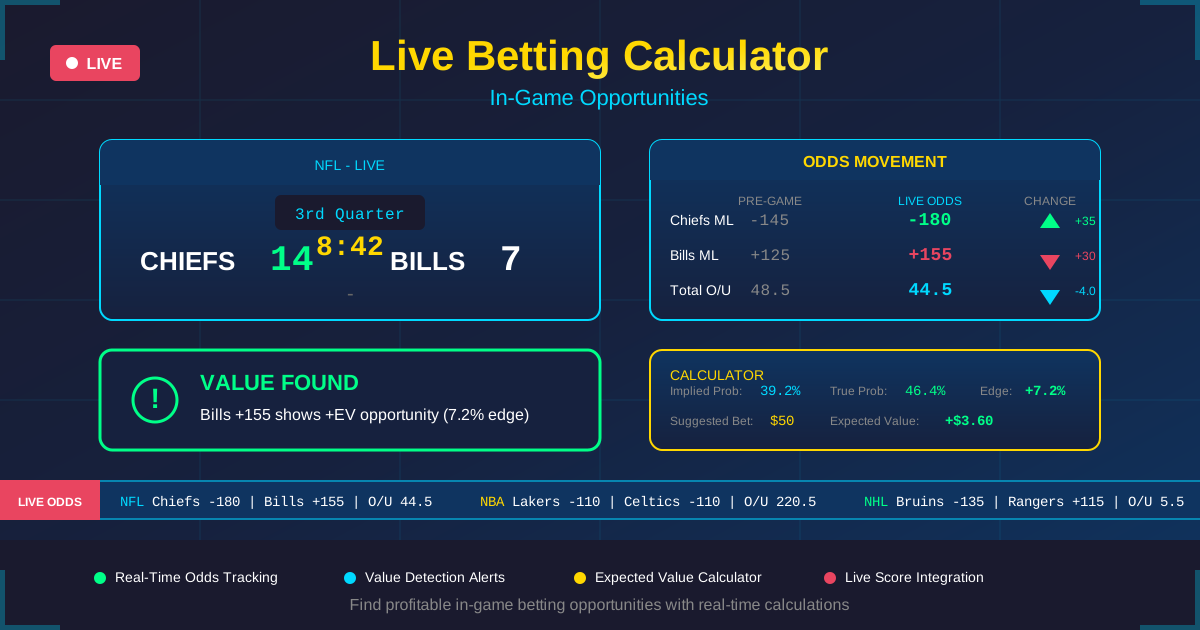
Live hedging occurs during a game when the in-game odds shift in your favor.
Example: NBA Halftime Hedge
Pre-game: You bet $200 on the Celtics -4.5 at -110. At halftime: Celtics lead by 12. The live spread is now Celtics -10.5.
You can hedge by betting the opponent +10.5 live at -110.
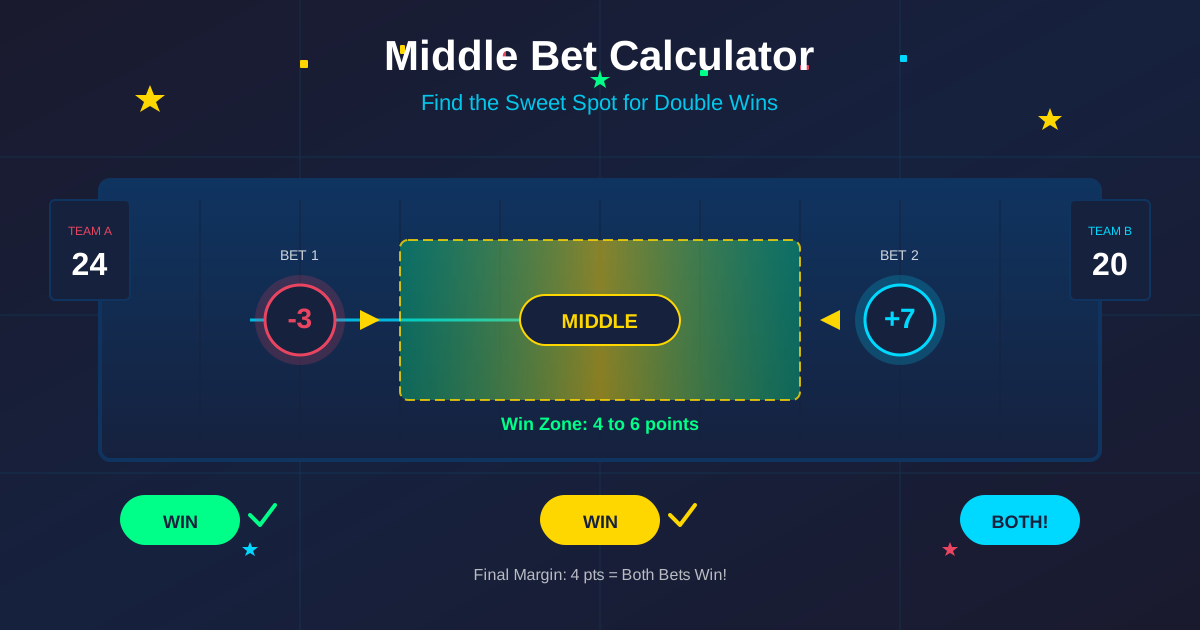
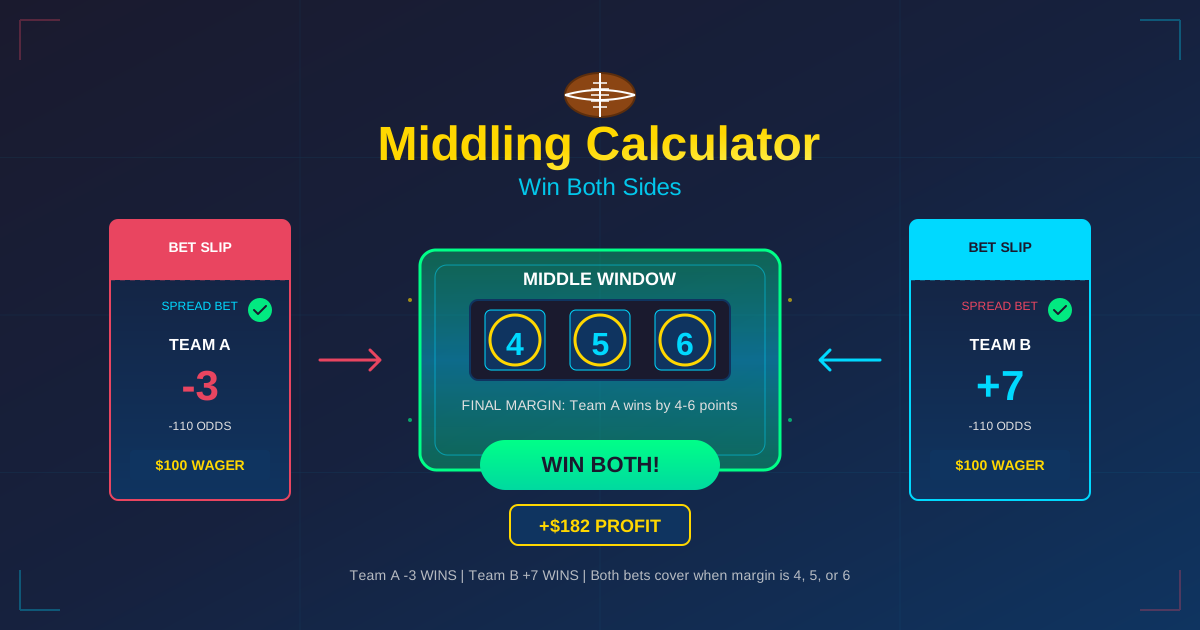
If the Celtics win by 5-10: Both bets win (the middle). You collect approximately $381.82 on $400 wagered. If Celtics win by 11+: Your original bet wins, hedge loses. Net: +$181.82 - $200 = -$18.18 If Celtics win by 4 or less (or lose): Your original loses, hedge wins. Net: -$200 + $181.82 = -$18.18
The middle window (5-10 point margin) has roughly a 20-25% probability in the NBA.
EV = (0.225 x $381.82) + (0.775 x -$18.18) = $85.91 - $14.09 = +$71.82 per $400 wagered
Live hedging through the middle is not a pure hedge. It is a massively +EV strategy.
Calculate the EV of any hedge or middle with our Expected Value Calculator.
Real-World Hedging Scenarios
Example 1: The Season-Long Futures Cash-Out
You bet $50 on the Astros to win the World Series at +2500 in March. By October, they are in the ALCS. The current price is +400.
- Potential payout: $1,300
- Current implied probability: ~20%
- Your position's expected value: (0.20 x $1,250) - (0.80 x $50) = $250 - $40 = +$210
You could hedge now by betting against the Astros in the ALCS. Or you could wait until the World Series for a better hedge point.
ALCS hedge (opponent at -120): Hedge stake for equal profit: $1,300 / 1.833 = $709.22 Guaranteed profit: $1,300 - $709.22 - $50 = $540.78
The guaranteed $540.78 far exceeds the $210 EV. This hedge is clearly optimal because the vig on the opponent's -120 line is small relative to your position's leverage.
Example 2: The 6-Leg Parlay Hedge
You have a 6-leg parlay. Five legs have won. The final leg is the Monday Night Football game.
- Original bet: $10
- Potential parlay payout: $4,750
- Final leg: Bills -6.5 at -110
Full hedge on opponent +6.5 at -110: Hedge stake = $4,750 / 1.909 = $2,488.74
Guaranteed profit: $4,750 - $2,488.74 - $10 = $2,251.26
This is an obvious hedge. You are turning a $10 lottery ticket into a guaranteed $2,251. The EV cost is minimal relative to the guaranteed windfall. Even the most aggressive +EV bettor would hedge this.
Example 3: The Partial Hedge Decision Matrix
You have a futures bet on the Bucks to win the NBA Championship at +1500 ($100 bet, pays $1,600). They are in the Finals against the Celtics, who are -180 favorites.
Option A: No hedge
- 35.7% chance of $1,500 profit
- 64.3% chance of $100 loss
- EV: (0.357 x $1,500) - (0.643 x $100) = $535.50 - $64.30 = +$471.20
Option B: Full hedge on Celtics -180 Hedge stake = $1,600 / 1.556 = $1,028.28 Guaranteed profit = $1,600 - $1,028.28 - $100 = $471.72
Option C: Half hedge Hedge stake = $514.14 on Celtics -180 If Bucks win: $1,600 - $514.14 - $100 = $985.86 If Celtics win: $514.14 x 1.556 - $514.14 - $100 = $800 - $514.14 - $100 = $185.86
Half hedge gives $186 guaranteed with $986 upside. That is an excellent risk-reward profile.
Option D: Break-even hedge Hedge stake needed: $100 / 0.556 = $179.86 If Bucks win: $1,600 - $179.86 - $100 = $1,320.14 If Celtics win: $179.86 x 1.556 - $179.86 - $100 = $279.90 - $179.86 - $100 = $0.04
Break-even hedge preserves $1,320 upside while eliminating all downside. For most bettors, this is the optimal choice.
Example 4: Hedging When the Line Moves Against You
You bet $500 on the Warriors +3 at -110 before the game. Two hours before tip, Steph Curry is ruled out. The line moves to Warriors +7.5.
Your bet is now significantly worse. The pre-injury implied probability was about 48% (Warriors covering +3). Post-injury, covering +3 is maybe 35%.
Hedge on opponent -3 at -110 at another book: You cannot create a pure arb because you are on the same side of the spread (you need the Warriors to cover). But you can hedge by betting the opponent at the new spread.
Bet $250 on opponent -7.5 at -110.
If opponent wins by 8+: Original loses ($500), hedge wins ($250 x 1.909 = $477.27). Net: -$272.73 If opponent wins by 4-7: Original wins ($500 x 1.909 = $954.55 - $500 = $454.55), hedge wins ($477.27 - $250 = $227.27). Net: $454.55 + $227.27 - $500 = +$181.82 If Warriors cover +3: Original wins ($454.55), hedge loses ($250). Net: +$204.55
This is not a clean hedge but a way to reduce maximum loss from $500 to $272.73 while creating a profitable middle zone.
Example 5: The Daily Fantasy Hedge
You enter a DFS tournament for $20. You are in first place going into the Monday Night Football game with $5,000 first-place prize and $2,000 second place. The player in second place has Tyreek Hill, and you do not.
This is not a traditional hedge but the concept applies. If Hill scores 25+ fantasy points, you likely drop to second. You can "hedge" by making a separate $1,000 bet on something correlated with Hill's performance (e.g., Dolphins to score 30+ points at +250).
If Hill goes off: You drop to second ($2,000) but win the side bet ($2,500). Net: $4,500 - $1,020 = $3,480. If Hill underperforms: You win first ($5,000) and lose the side bet ($1,000). Net: $4,000 - $20 = $3,980.
This creates a $3,480-$3,980 range versus the unhedged $2,000-$5,000 range. Dramatically lower variance.
Example 6: The Multi-Sportsbook Line Shopping Hedge
You bet on the Patriots +7 at -110 on DraftKings. By game time, the line has moved to Patriots +4. Now you can hedge by betting the opponent -4 at -110 on FanDuel.
- DraftKings: Patriots +7 at -110 ($200)
- FanDuel: Opponent -4 at -110 ($200)
- Total outlay: $400
If opponent wins by 5, 6, or 7: Both bets win. Payout: $381.82 x 2 = $763.64. Profit: $363.64 If opponent wins by 8+: Patriots +7 loses, opponent -4 wins. Net: -$200 + $181.82 = -$18.18 If opponent wins by 1-3 or Patriots win: Patriots +7 wins, opponent -4 loses. Net: $181.82 - $200 = -$18.18 If game lands on exactly 4: Patriots +7 wins, opponent -4 pushes. Net: $181.82 + $200 - $200 = $181.82
The 3-point middle window (5, 6, 7) has roughly 10-12% probability in NFL games. Plus an additional 3-4% for landing on exactly 4. This is a +EV middle.
Calculate the guaranteed profit zone of any hedge with our Hedge Calculator.
The Hedging Decision Framework
Use this checklist before hedging any bet:
Step 1: Calculate the EV of Letting It Ride
Estimate the true probability of the remaining outcome. Multiply by the profit if it wins. Subtract the probability of losing times the loss.
Step 2: Calculate the Guaranteed Profit from Hedging
Use the hedge formula. Factor in the vig on the hedge bet.
Step 3: Calculate the EV Difference
EV Cost of Hedging = EV of Letting It Ride - Guaranteed Hedge Profit
Step 4: Assess Position Size vs. Bankroll
What percentage of your bankroll is at risk? If the potential swing exceeds 15-20% of bankroll, hedging is likely correct regardless of EV.
Step 5: Consider the Line Quality
Can you get a good line on the hedge? If the hedge line is soft (lower vig), the cost of hedging decreases. If the only available hedge line has massive vig, the cost increases.
Step 6: Make the Decision
| Scenario | Action |
|---|---|
| EV cost is small, swing is large (>15% bankroll) | Full hedge |
| EV cost is small, swing is moderate (5-15% bankroll) | Partial hedge |
| EV cost is large, swing is small (<5% bankroll) | Let it ride |
| Remaining leg is -EV | Always hedge |
| Line moved significantly against you | Hedge to reduce max loss |
| Life-changing money at stake | Hedge (utility > EV) |
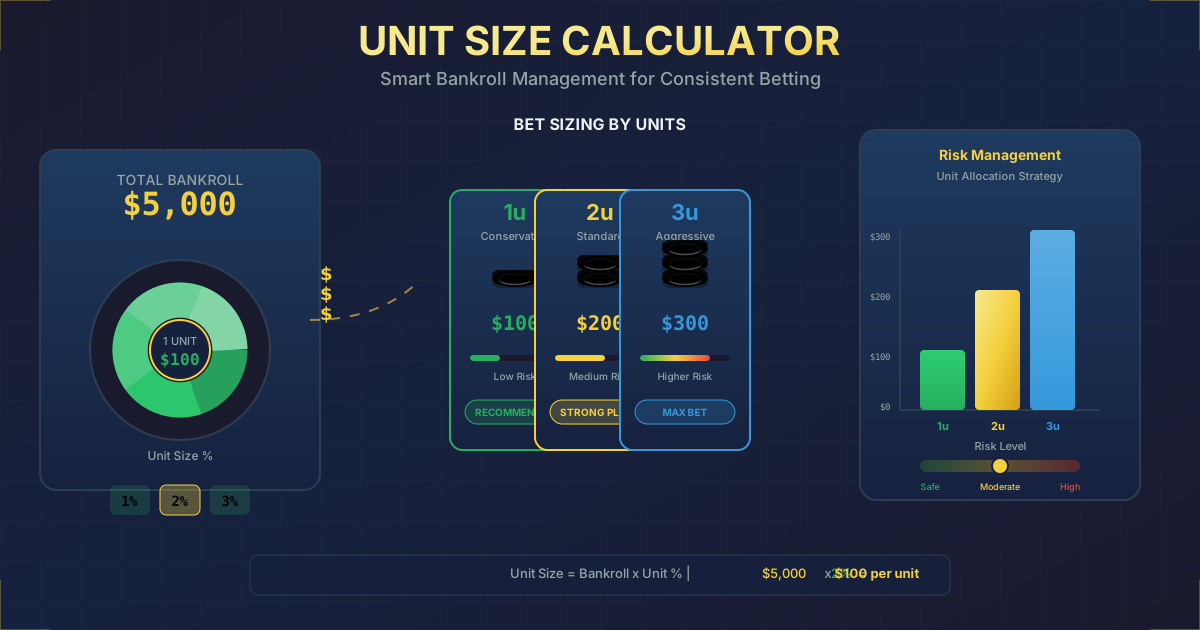
Size your bets optimally to reduce the need for hedging with our Kelly Criterion Calculator.
Frequently Asked Questions
When should I hedge a bet? Hedge when the potential swing exceeds 15-20% of your bankroll, when the remaining leg is -EV, or when the guaranteed profit is close to the EV of letting it ride. Our Hedge Calculator shows exact hedge amounts and guaranteed profits for any scenario.
Does hedging always cost EV? In most cases, yes, because you pay vig on the hedge bet. However, when hedge lines are soft (low vig) or your original position has moved from +EV to -EV, hedging can actually preserve or increase EV. Always calculate both scenarios.
How do I hedge a parlay? Wait until all but the final leg have won. Then place a straight bet on the opposite side of the final leg at another sportsbook. Calculate the hedge amount using the parlay's potential total payout and the hedge line's decimal odds. Our Parlay Calculator shows the potential payout, and our Hedge Calculator sizes the hedge.
Should I hedge a futures bet? Only when your team reaches the final stage (conference finals, World Series, etc.). Hedging too early wastes capital on uncertainty. The optimal hedge point is when one game remains and you have maximum information.
What is a partial hedge? A partial hedge locks in a guaranteed minimum profit while preserving some upside if the original bet wins. Instead of hedging for equal profit, you hedge just enough to break even or guarantee a small profit on the downside, keeping the majority of the upside intact.
Can I hedge live bets? Yes, and live hedging through middles is one of the most +EV strategies in sports betting. When the in-game line moves significantly from the pre-game line, betting the other side creates a middle window where both bets can win. Our Expected Value Calculator can evaluate the EV of any middle.
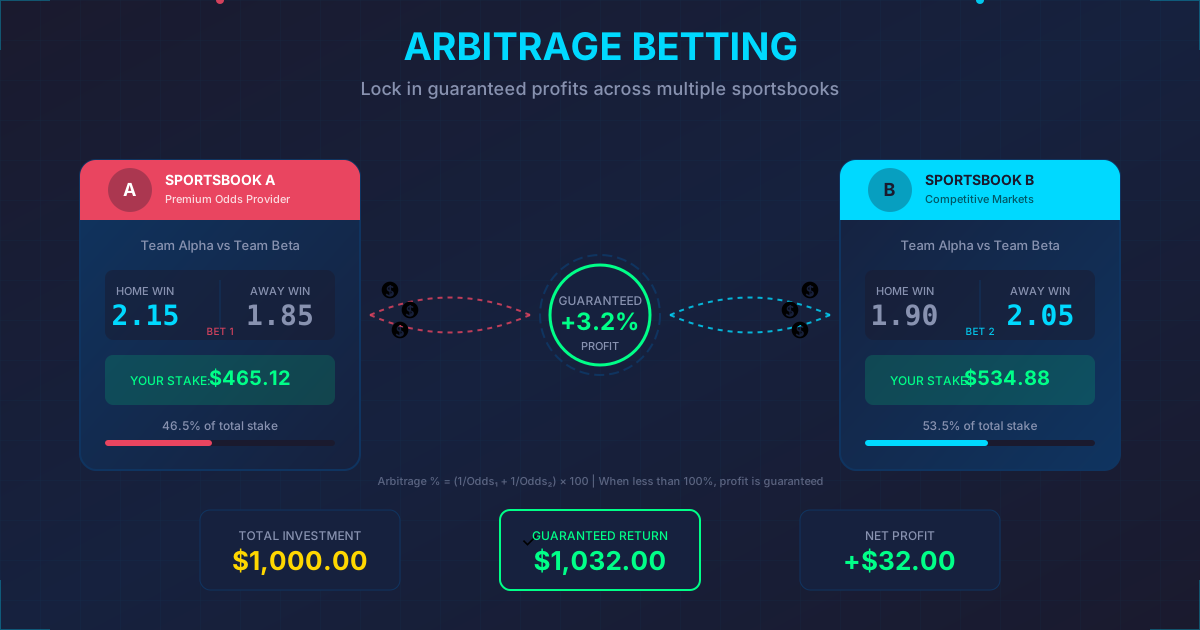
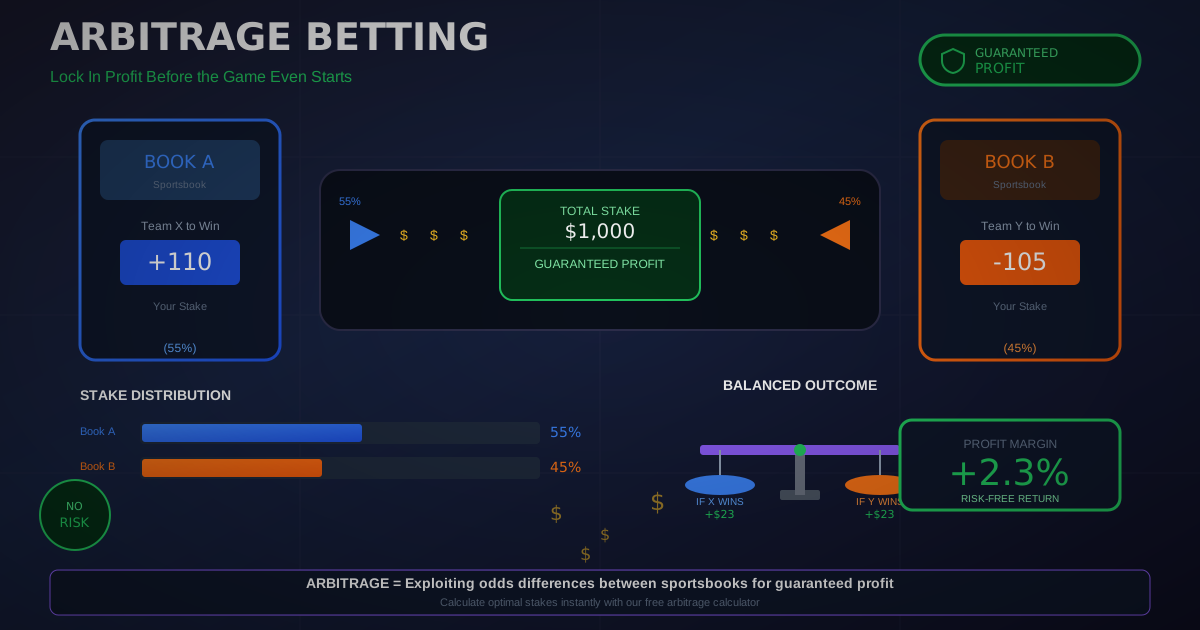
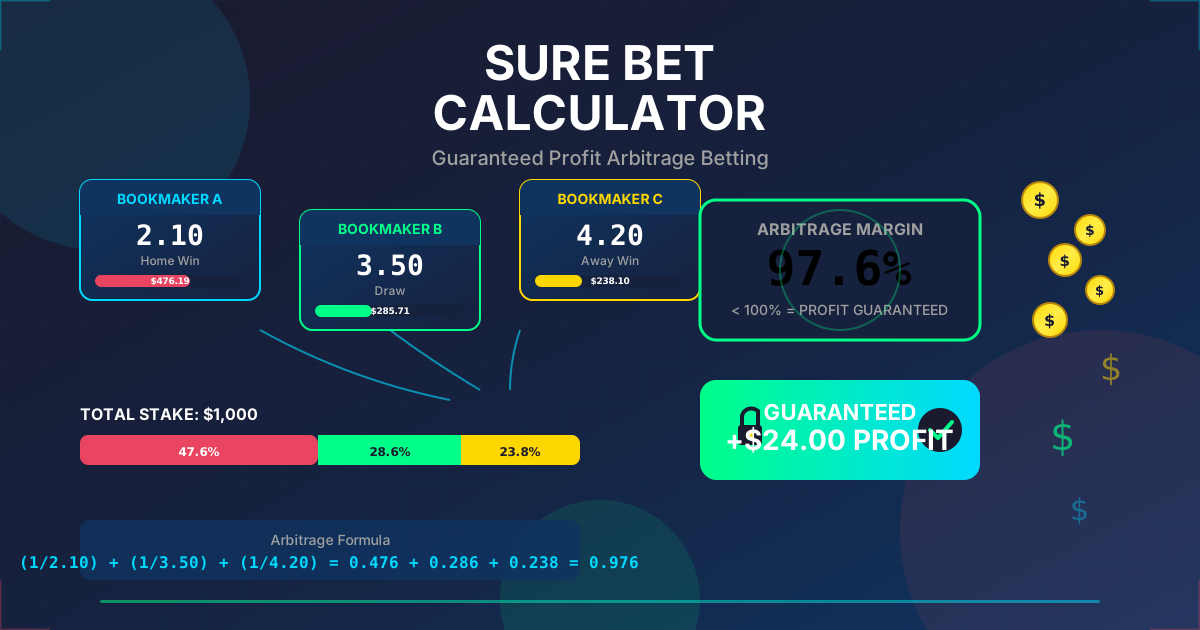
Is hedging the same as arbitrage? Related but different. Arbitrage places opposing bets before any outcome is known, guaranteeing profit from the start. Hedging places an opposing bet after your original position has gained value. Both use similar math. Our Arbitrage Calculator handles pre-event arbs while our Hedge Calculator handles mid-event hedging.
What if I cannot find a good hedge line? If the only available hedge line has massive vig (e.g., -150 on a 50/50 event), the cost of hedging increases significantly. In this case, the EV cost may not justify the risk reduction. Consider partial hedging or letting it ride if the position size is within your bankroll tolerance.
Essential Tools for Hedge Betting
Core Hedging Tools
- Hedge Calculator: Calculate exact hedge stake amounts, guaranteed profit, and EV cost of hedging for any scenario
- Expected Value Calculator: Compare the EV of hedging versus letting it ride to make informed decisions
- Implied Probability Calculator: Convert hedge odds to implied probability for accurate EV comparison
Parlay and Futures Tools
- Parlay Calculator: Calculate parlay payouts to know exactly how much to hedge
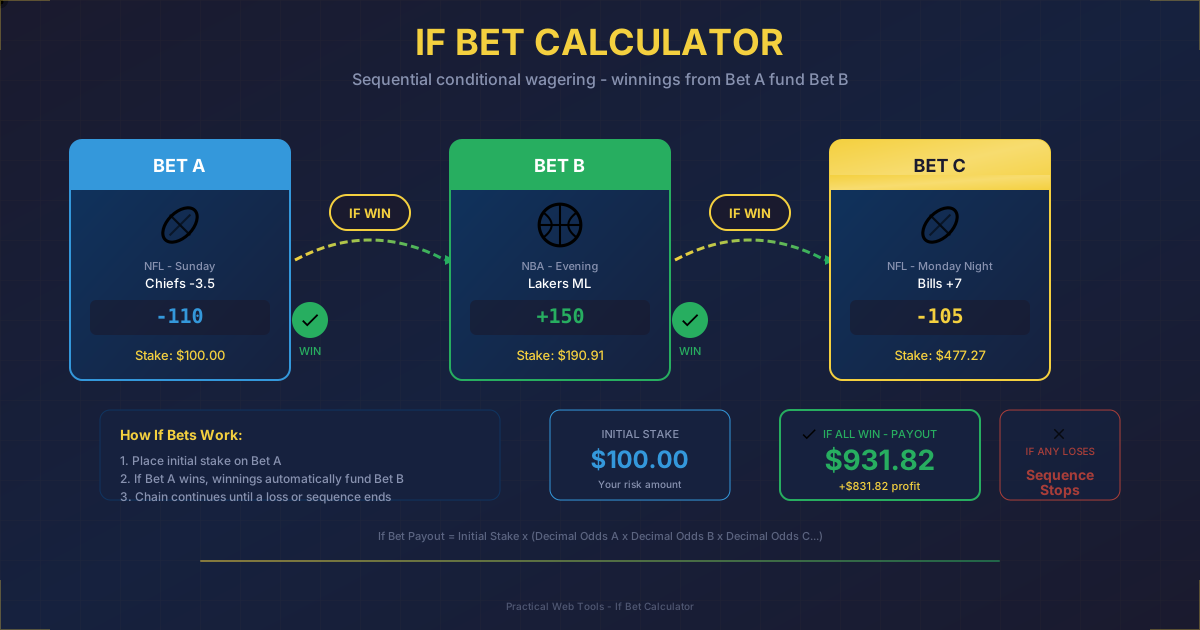
- If-Bet Calculator: Explore if-bet structures as alternatives to parlay hedging
- Arbitrage Calculator: Identify when a hedge creates a full arbitrage opportunity
Bankroll and Sizing Tools
- Kelly Criterion Calculator: Optimize bet sizing to reduce the frequency of positions that require hedging
- Odds Converter: Convert between odds formats when comparing hedge lines across sportsbooks
- Hold/Vig Calculator: Determine the vig cost on your hedge bet to accurately assess the total hedging cost
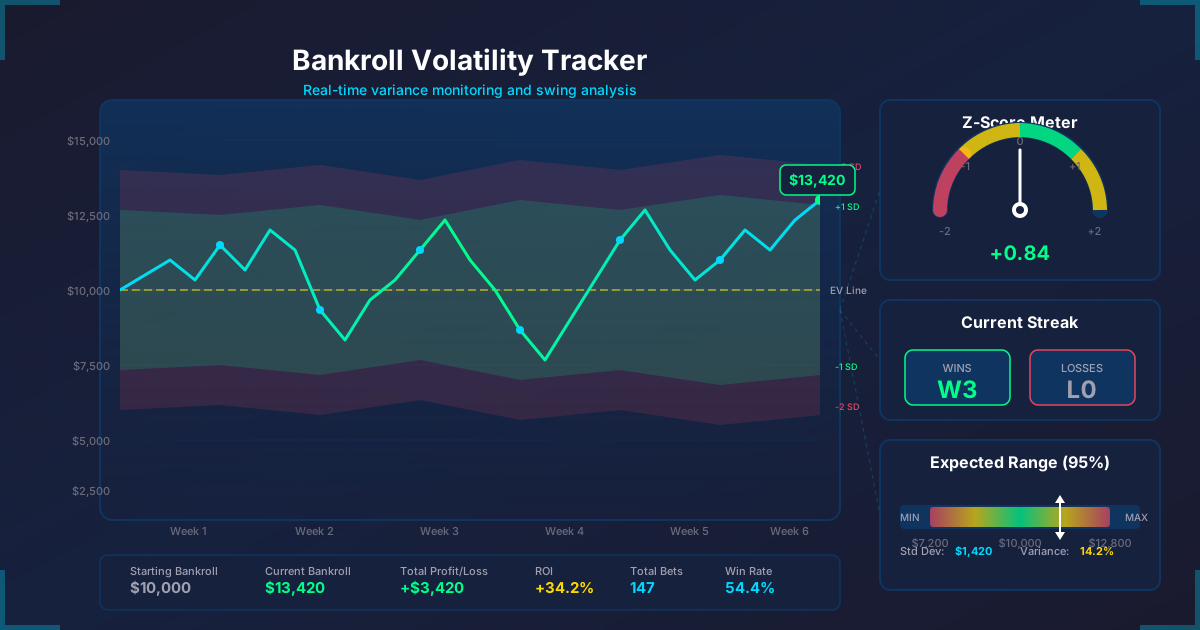
- Bankroll Volatility Tracker: Monitor whether your current position sizes require hedging based on portfolio risk
Conclusion: Hedging Is a Tool, Not a Strategy
Hedging is not inherently good or bad. It is a risk management tool that has a specific cost and a specific benefit. The best bettors use it surgically: hedging when position sizes become too large relative to bankroll, when lines move against them, or when guaranteed profit is close to EV.
The worst bettors hedge out of fear, paying unnecessary insurance premiums on positions that are well within their bankroll's capacity to absorb.
Know your numbers. Calculate the EV of both paths. Assess the position size relative to your bankroll. Then make a rational decision, not an emotional one.
The math will tell you when to lock it in and when to let it ride. Trust the math.
Start calculating your hedge positions with our Hedge Calculator. Compare EV scenarios with our Expected Value Calculator. And size your original bets correctly with our Kelly Criterion Calculator so you rarely need to hedge in the first place.
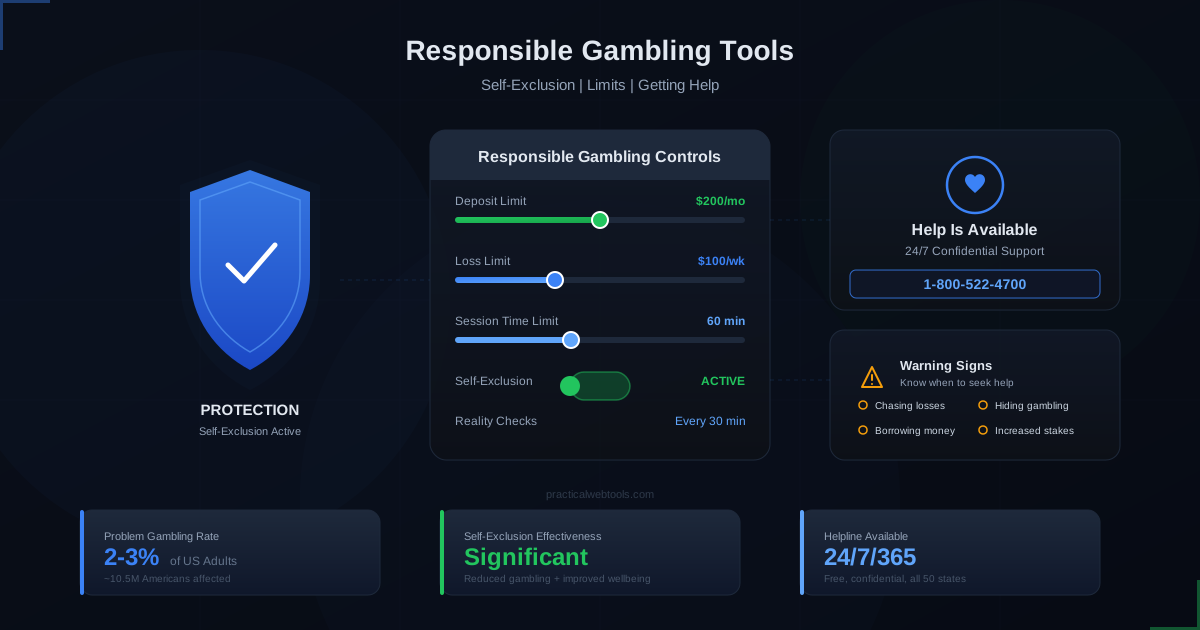
Gambling involves risk. This content is for educational and informational purposes only. Always gamble responsibly, set limits you can afford, and seek help if gambling becomes a problem. Visit the National Council on Problem Gambling or call 1-800-522-4700 for support.