Parlay Betting Strategy: When Parlays Are Smart and When They're a Trap (2026)
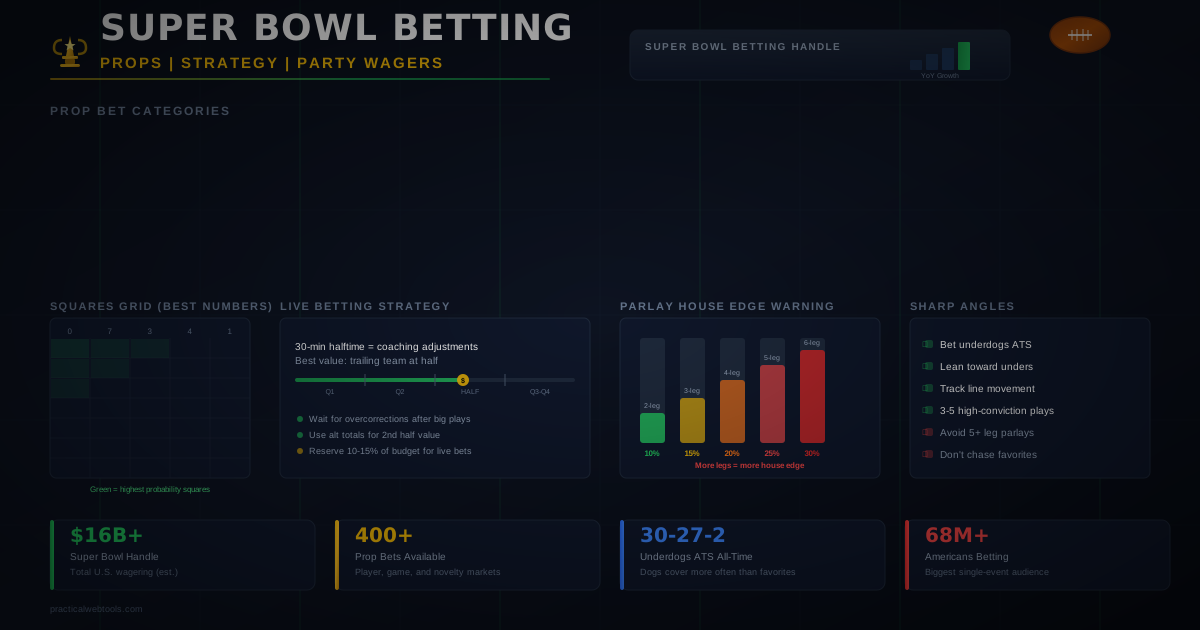
Parlays are the sportsbooks' favorite product for one reason: they make more money on parlays than any other bet type. The average parlay carries a 20-30% house edge compared to 4-5% on straight bets. Sportsbooks actively promote parlays, offer parlay boosts, and build entire marketing campaigns around life-changing payouts because the math overwhelmingly favors the house.
But here is the nuance most "never bet parlays" advice misses. There are specific situations where parlays are not only defensible but mathematically superior to straight bets. Correlated parlays, +EV leg combinations, and strategic round robins can flip the script. The key is understanding exactly when the math works and when it does not.
This guide will break down the mathematics of parlay betting with precision. No vague advice. Concrete numbers showing when parlays destroy your bankroll and when they legitimately belong in your strategy.
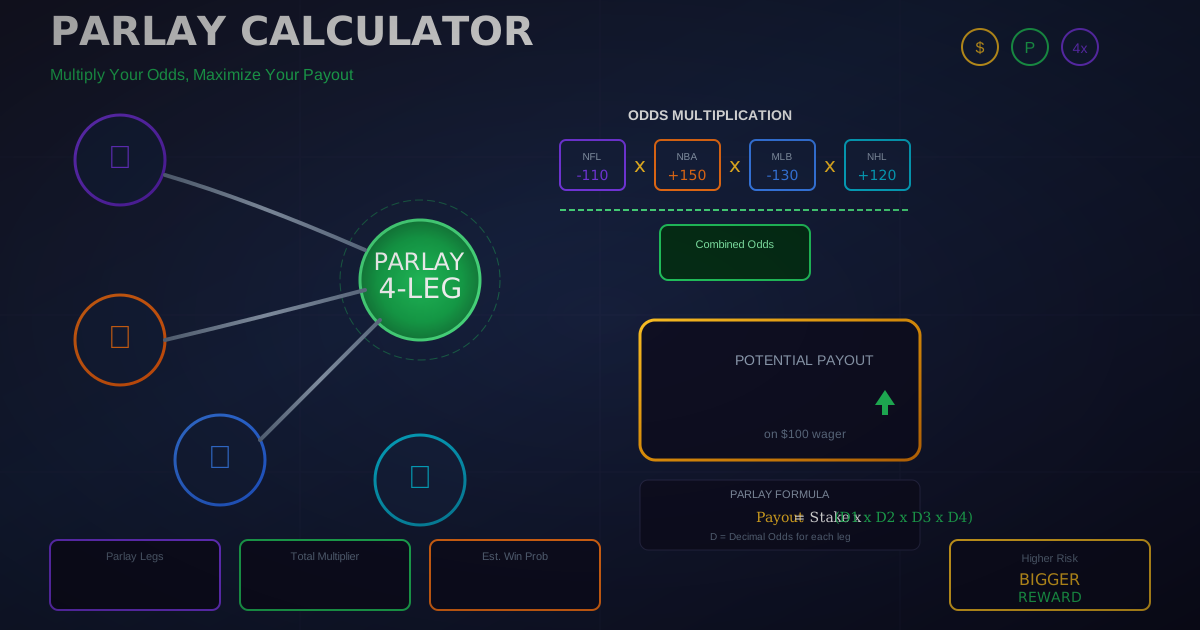
Calculate the exact payout and implied probability of any parlay with our Parlay Calculator.
How Parlay Math Works: The Vig Multiplier Problem
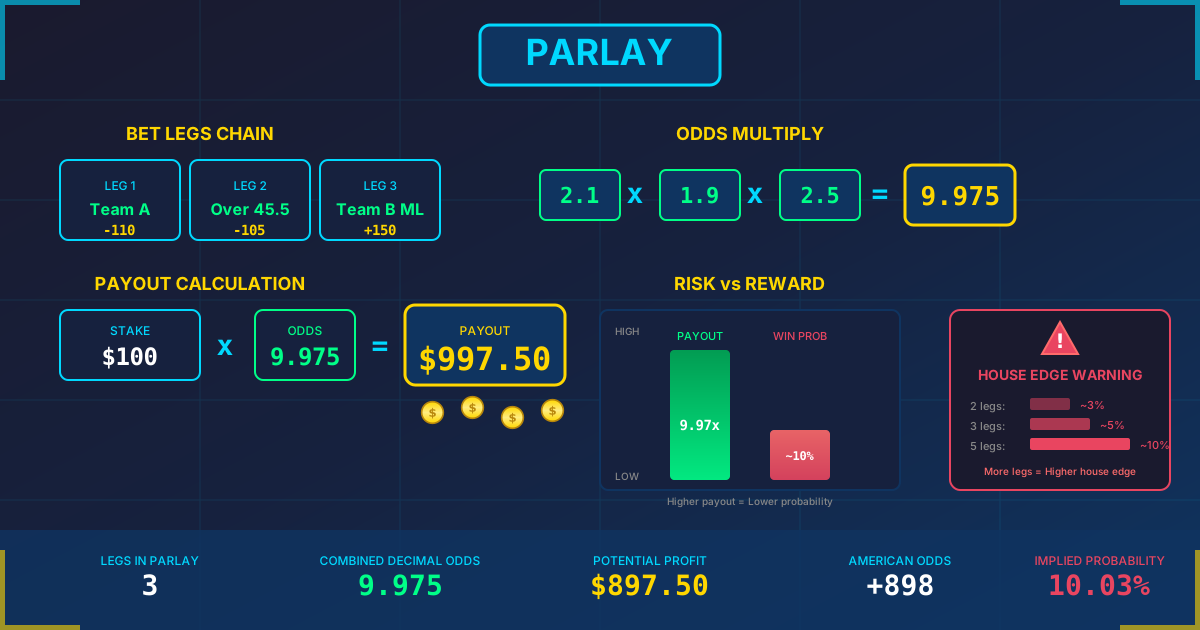
A parlay combines two or more bets into a single wager where every leg must win. The payout reflects the multiplied odds of all legs. This sounds straightforward. The problem is what multiplication does to the vig.
Single Bet Vig vs. Parlay Vig
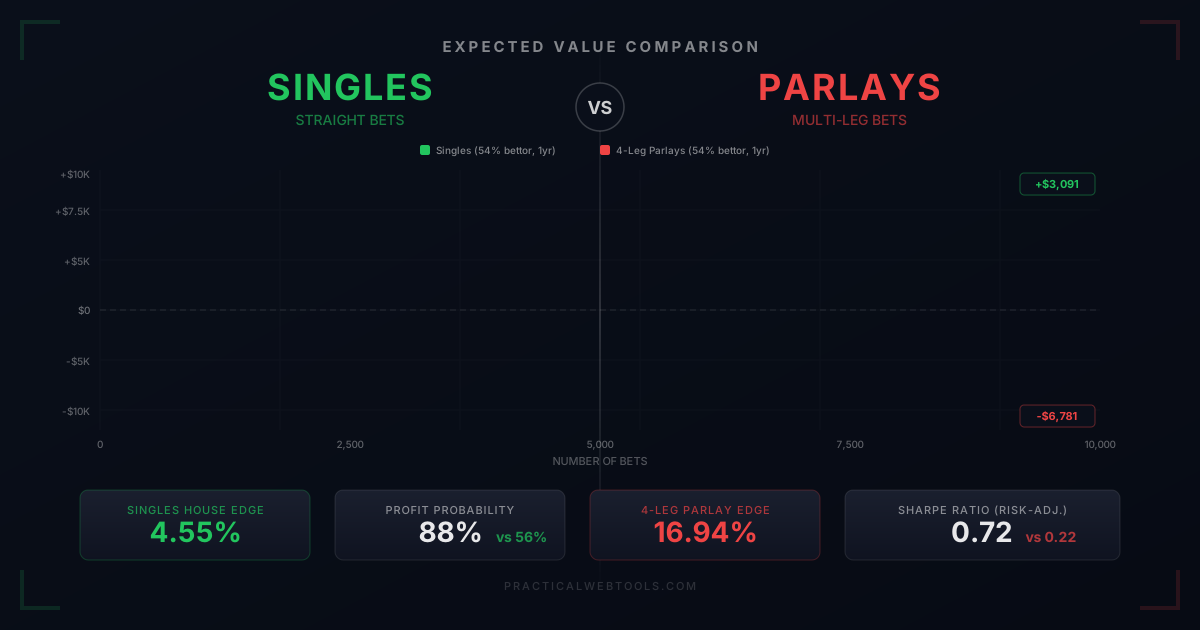
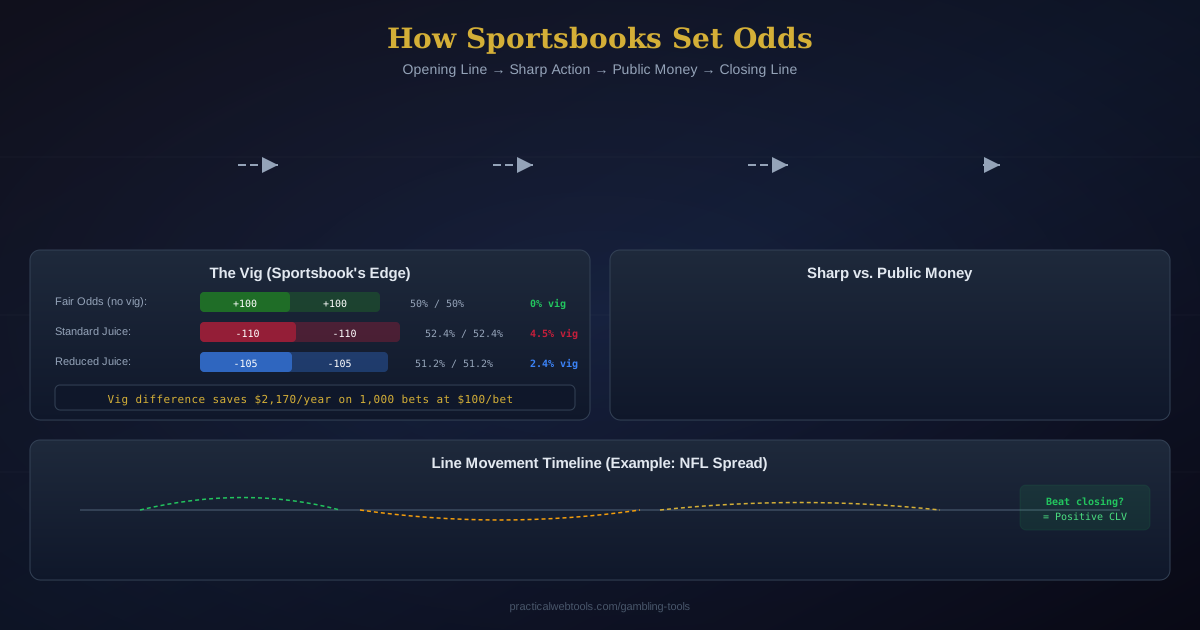
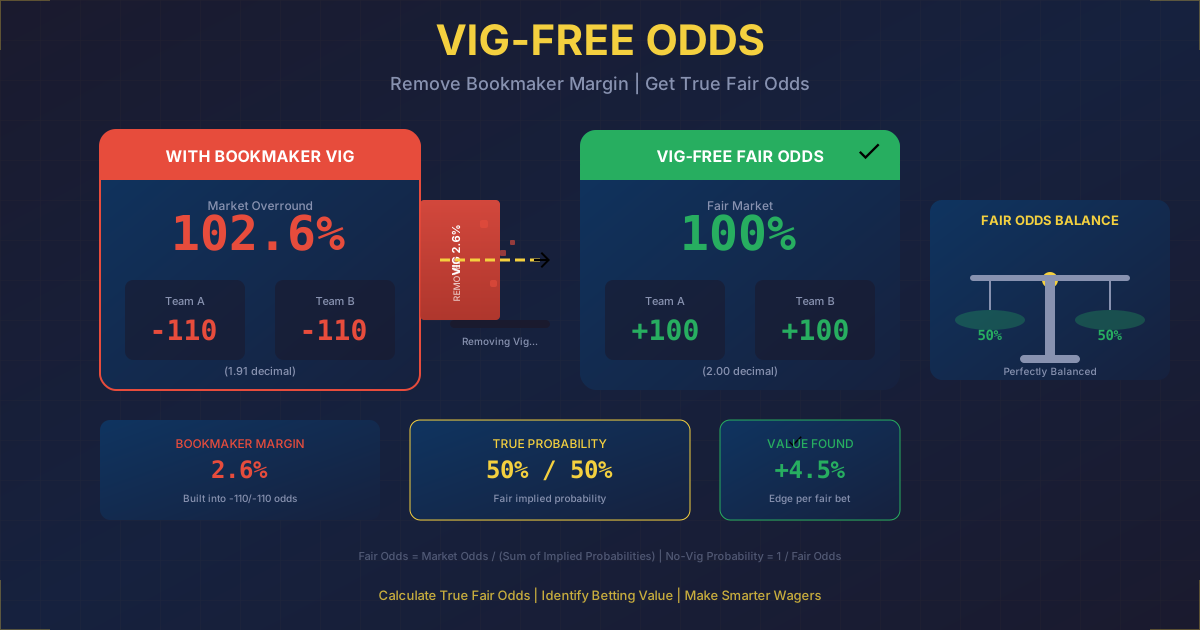
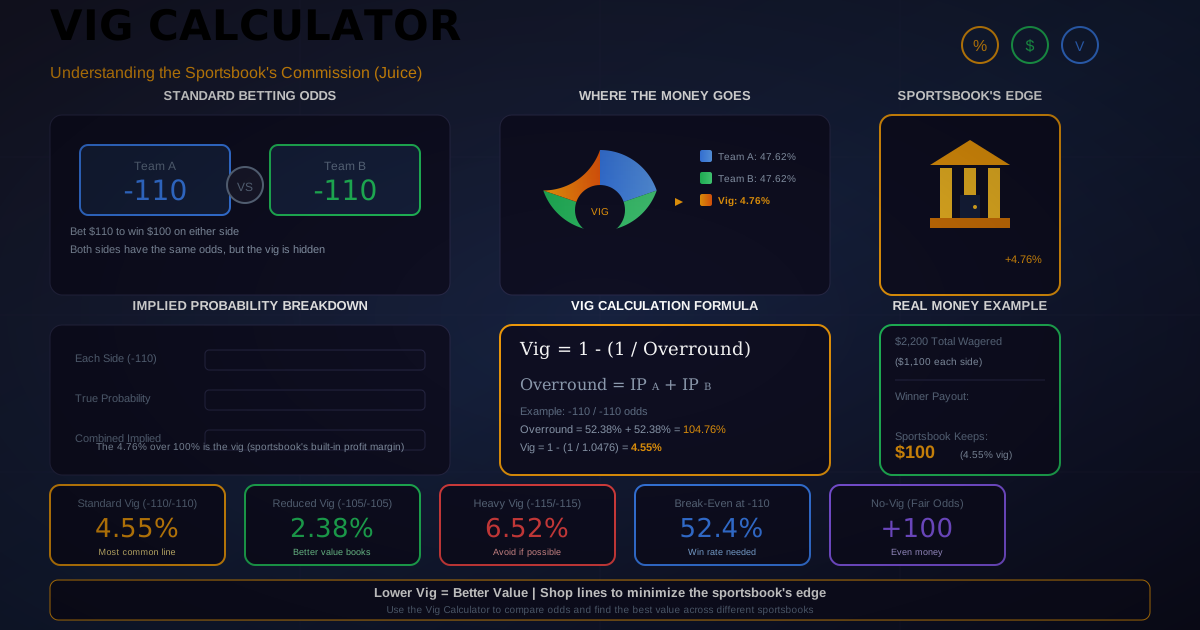
On a standard -110 bet, the sportsbook's hold is 4.55%. You need to win 52.38% of the time to break even. That is manageable.
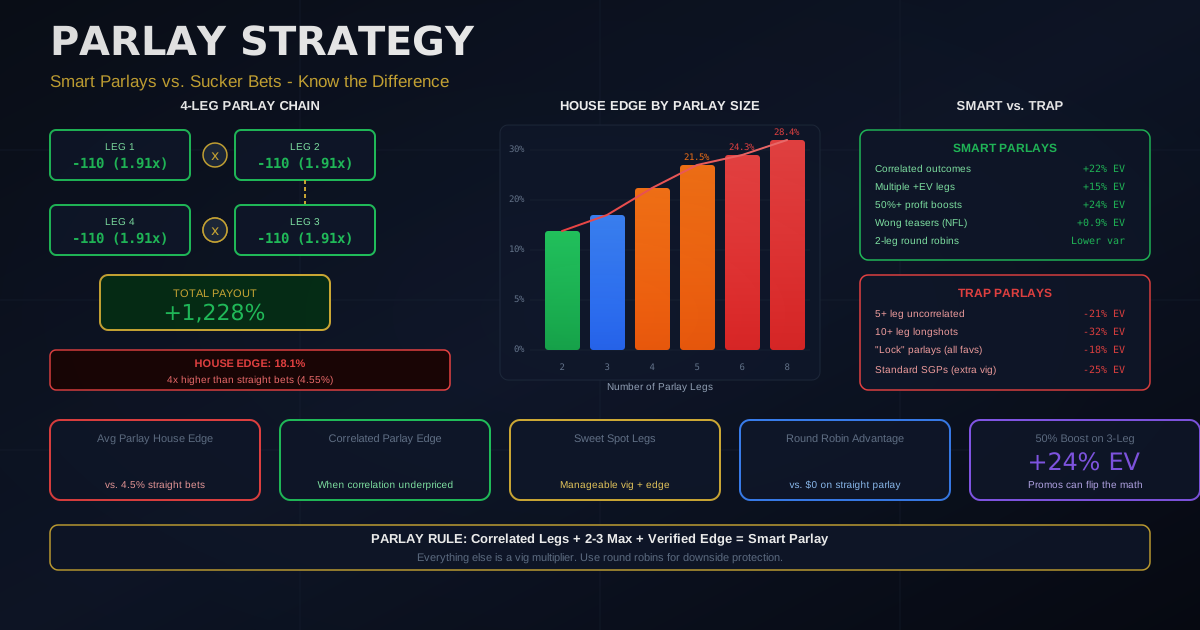
Now consider a 4-leg parlay where every leg is -110. The sportsbook calculates the payout by multiplying the decimal odds:
Parlay odds = 1.909 x 1.909 x 1.909 x 1.909 = 13.30
The true fair odds for four independent 50/50 events should pay 16:1 (2 x 2 x 2 x 2 = 16). The sportsbook pays 13.30:1. The hold on this parlay is:
Hold = 1 - (13.30 / 16) = 16.9%
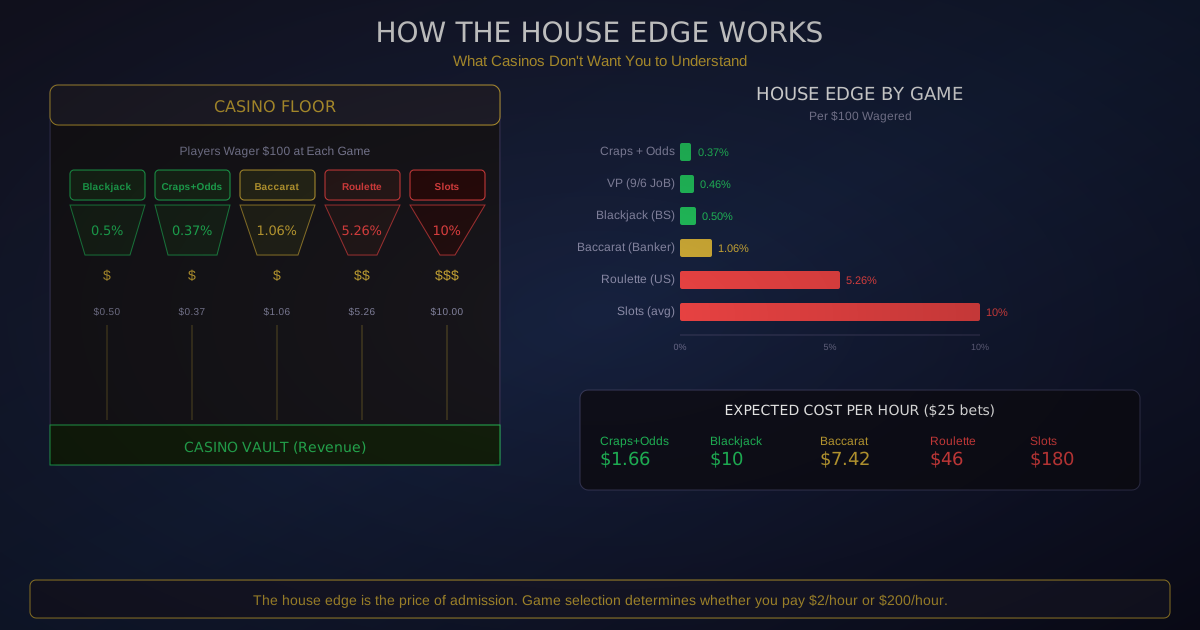
Compare that to the 4.55% hold on a single straight bet. The vig has nearly quadrupled.
| Parlay Legs | Payout (at -110) | True Fair Odds | House Edge |
|---|---|---|---|
| 2-leg | 2.645:1 | 3.0:1 | 11.8% |
| 3-leg | 5.958:1 | 7.0:1 | 14.9% |
| 4-leg | 12.28:1 | 15.0:1 | 18.1% |
| 5-leg | 24.35:1 | 31.0:1 | 21.5% |
| 6-leg | 47.67:1 | 63.0:1 | 24.3% |
| 8-leg | 182.7:1 | 255.0:1 | 28.4% |
| 10-leg | 700.3:1 | 1023.0:1 | 31.5% |
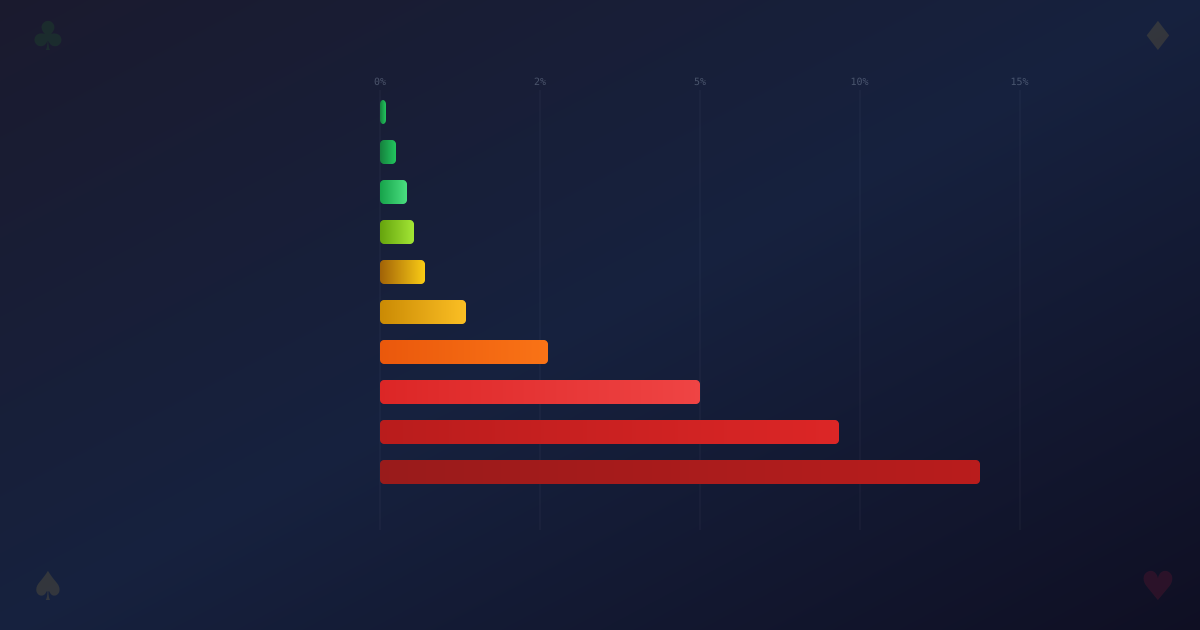
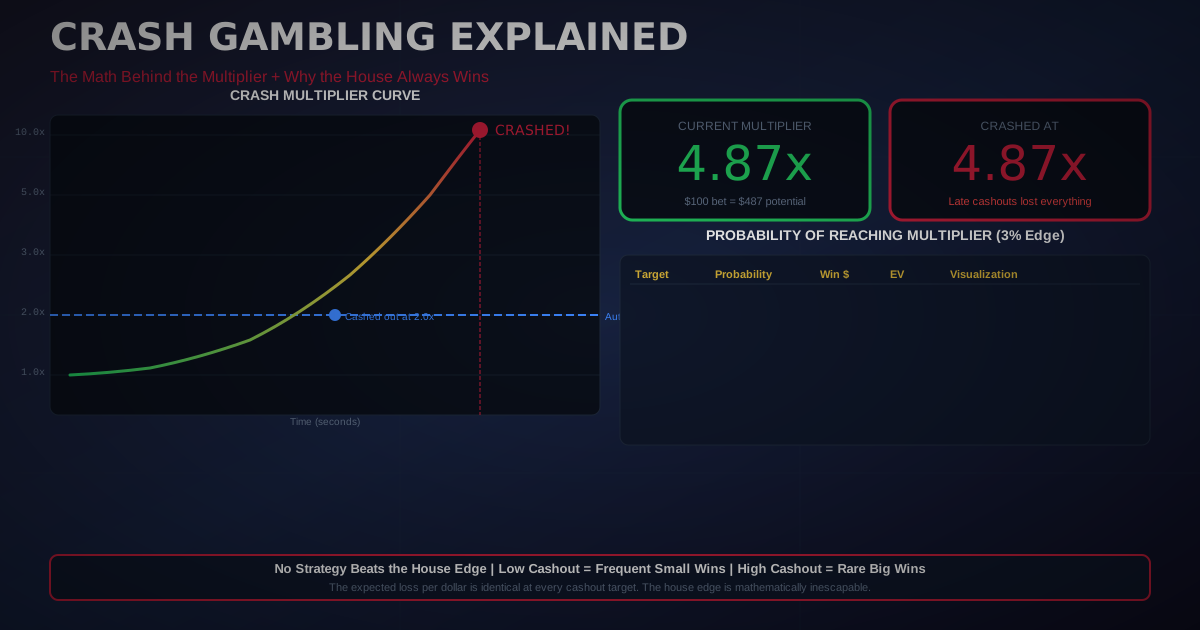
The pattern is clear. Every additional leg increases the house edge because you are multiplying the vig, not just adding it.
Check the exact hold percentage on any odds with our Hold/Vig Calculator.
Why Sportsbooks Love Promoting Parlays
The numbers explain everything. A sportsbook making $4.55 per $100 on straight bets makes $18.10 per $100 on 4-leg parlays. If they can shift even 10% of handle from straight bets to parlays, their revenue nearly doubles on those dollars.
That is why you see parlay boosts, same-game parlay promotions, and "parlay of the day" features everywhere. They are not doing you a favor. They are optimizing their profit margin.
When Parlays Are a Trap: The -EV Reality
For the overwhelming majority of recreational bettors, parlays are a trap. Here is why.
The Break-Even Problem
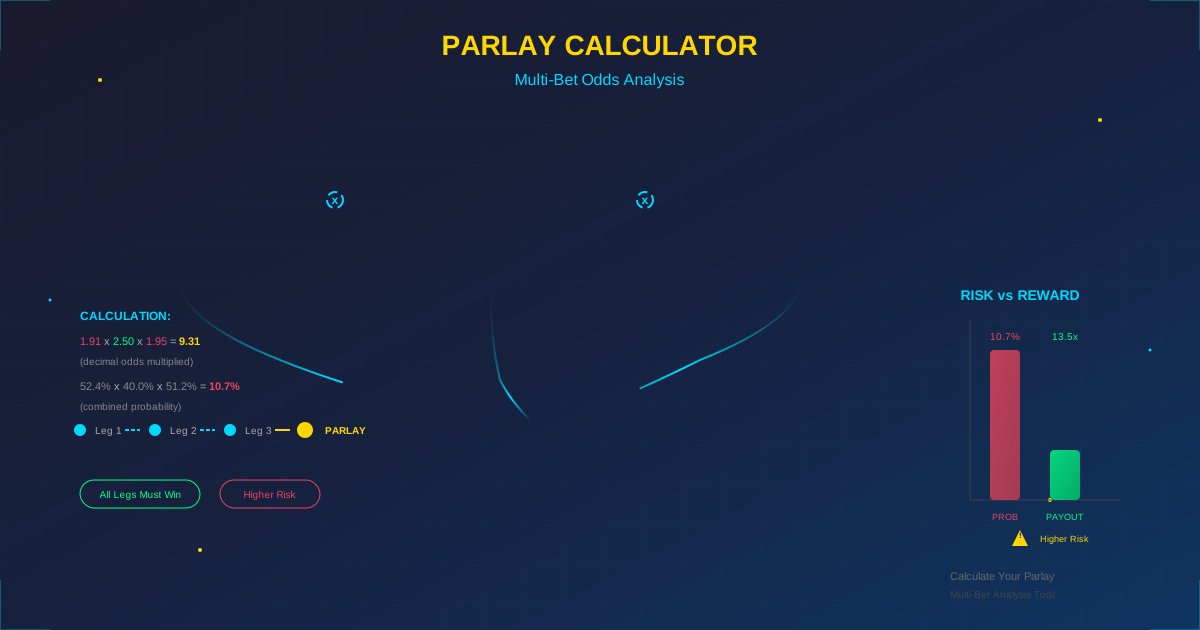
To break even on a 4-leg parlay at standard odds, you need to correctly predict all four outcomes. If each leg has a 52.38% implied probability (which is already generous given the vig), your parlay win probability is:
0.5238^4 = 7.53%
But the payout implies a win probability of:
1 / (12.28 + 1) = 7.54%
This seems close to break even. But remember, the 52.38% includes vig. The true probability of each leg is 50%, making the real win rate:
0.50^4 = 6.25%
You are getting paid as if it hits 7.54% of the time, but it actually hits 6.25%. That 1.29% gap is pure house edge, and it adds up fast over hundreds of parlays.
Real-World Example: The Weekend Warrior
A recreational bettor puts $25 on a 4-leg NFL parlay every Sunday. That is 17 weeks of NFL Sundays.
- Total wagered: $425
- Expected hit rate: 6.25% (1 in 16)
- Expected wins: ~1 parlay hit in 17 weeks
- Payout per hit: $25 x 12.28 = $307
- Expected profit/loss: $307 - $425 = -$118
- ROI: -27.8%
Compare to betting $100 straight each week on the best leg of that parlay:
- Total wagered: $1,700
- At 50% win rate: ~8.5 wins, ~8.5 losses
- Expected loss (vig only): $1,700 x 0.0455 = -$77
- ROI: -4.5%
The straight bettor loses $77. The parlay bettor loses $118. The difference is $41, which is pure waste from the multiplied vig.
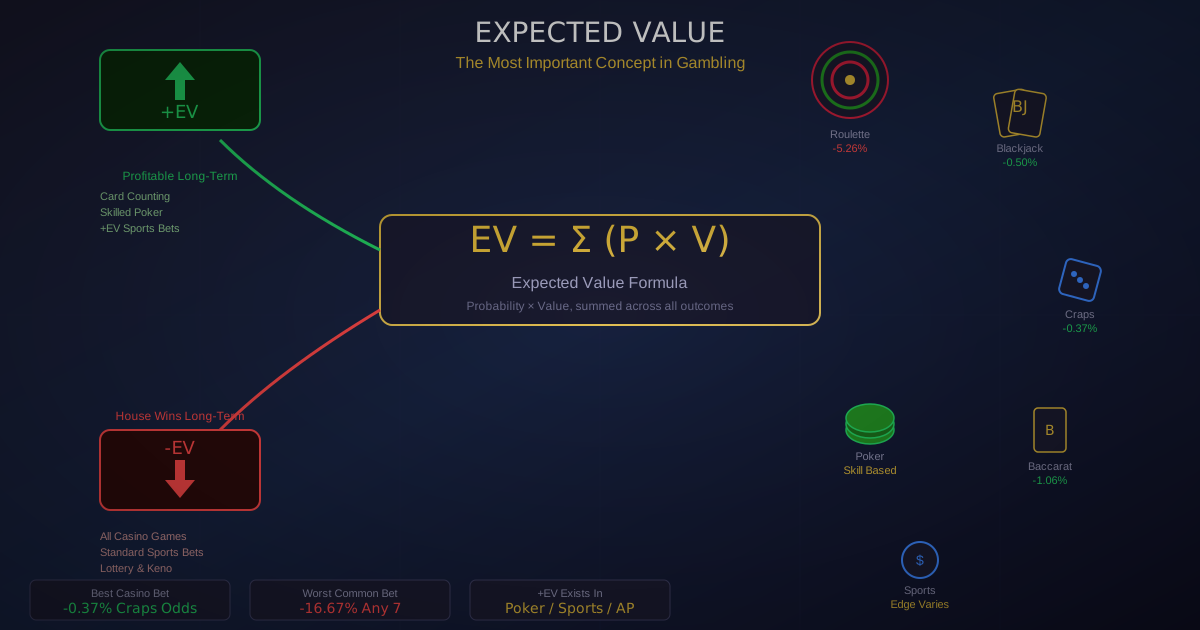
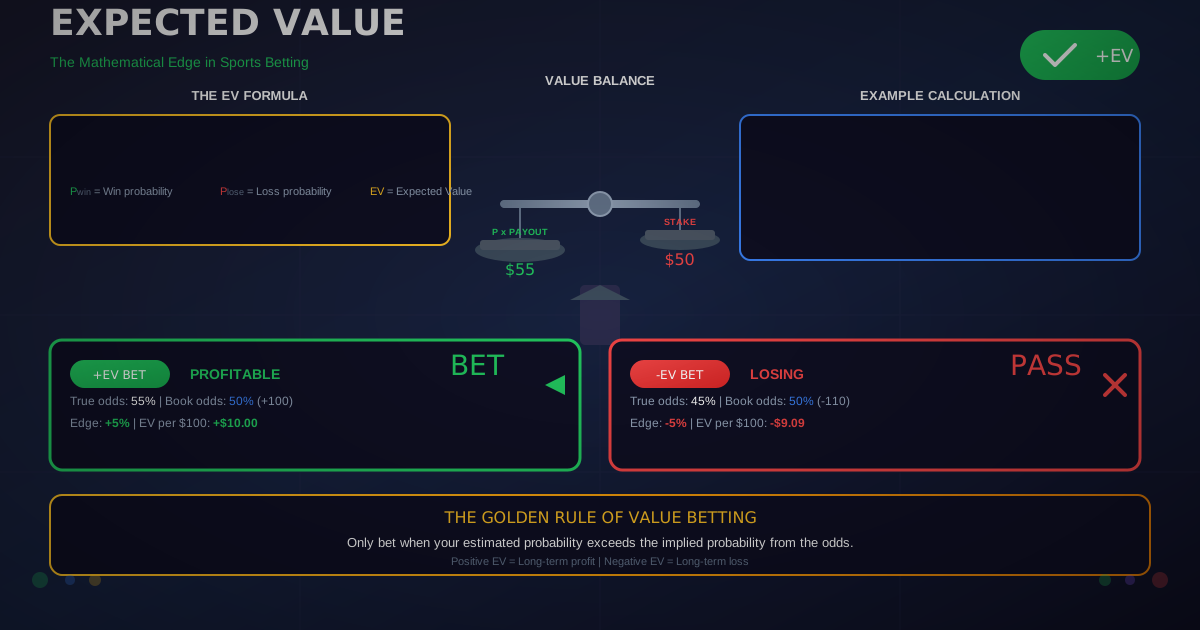
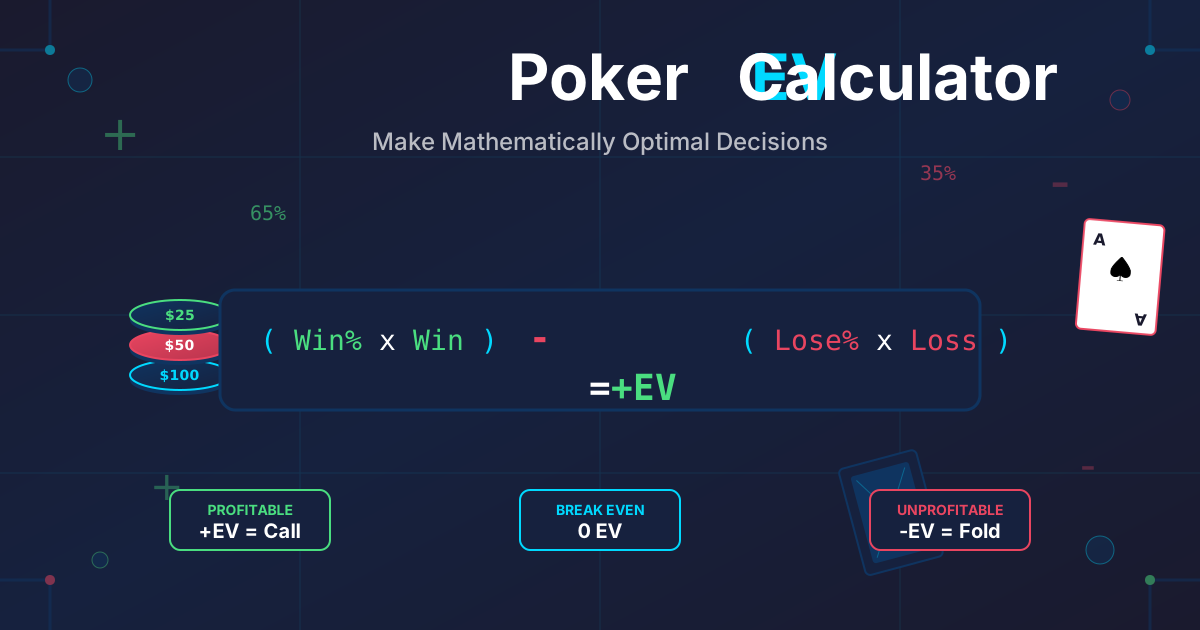
Calculate the true expected value of any bet type with our Expected Value Calculator.
The Psychological Trap
Parlays exploit two cognitive biases:
-
Lottery ticket mentality: The possibility of turning $10 into $500 triggers the same dopamine response as a lottery ticket. The brain overweights the rare win and underweights the frequent losses.
-
Near-miss effect: When you hit 3 of 4 legs, you feel close to winning. But a 3-of-4 parlay pays zero. You lost 100% of your stake, the same as going 0-for-4. The near miss creates an illusion of progress that does not exist.
When Parlays Actually Make Sense: The +EV Exceptions
Now for the part most anti-parlay purists ignore. There are legitimate mathematical cases where parlays are the correct strategy.
Exception 1: Correlated Parlays
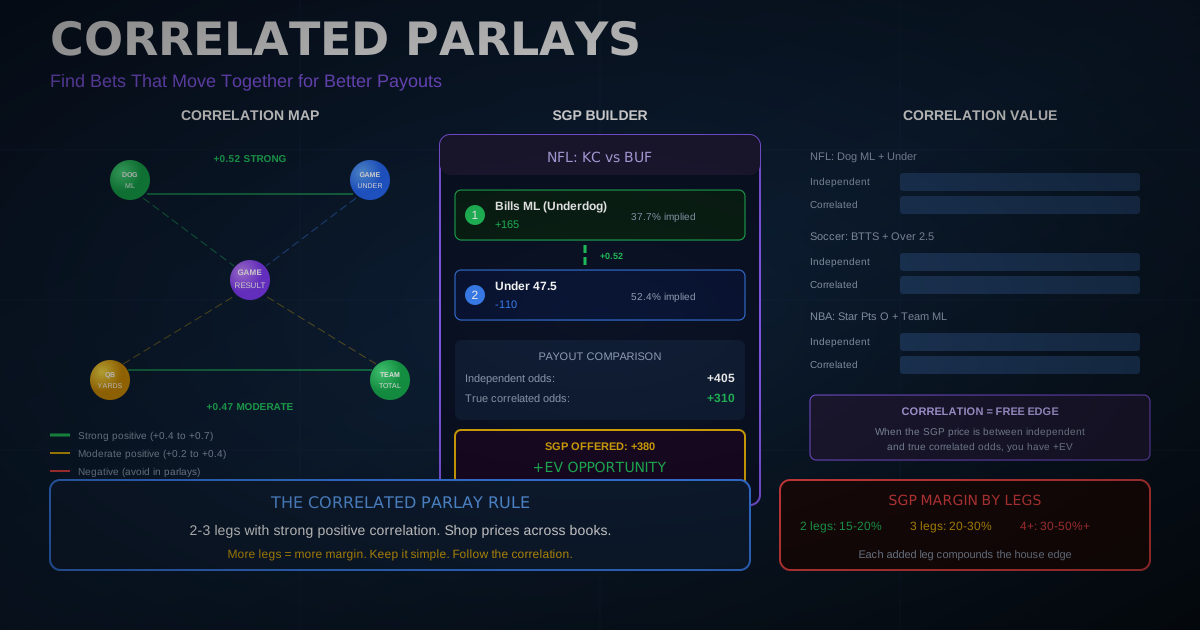
A correlated parlay combines outcomes that are not independent. When one leg winning increases the probability of the other leg winning, the true parlay probability is higher than what the sportsbook prices, because books typically price legs as if they are independent.
Classic NFL correlation: Team to win AND the game to go over the total.
If the Packers are expected to win, it often means they are scoring a lot. Scoring a lot correlates with the total going over. The sportsbook prices each leg independently:
- Packers ML: -150 (60% implied)
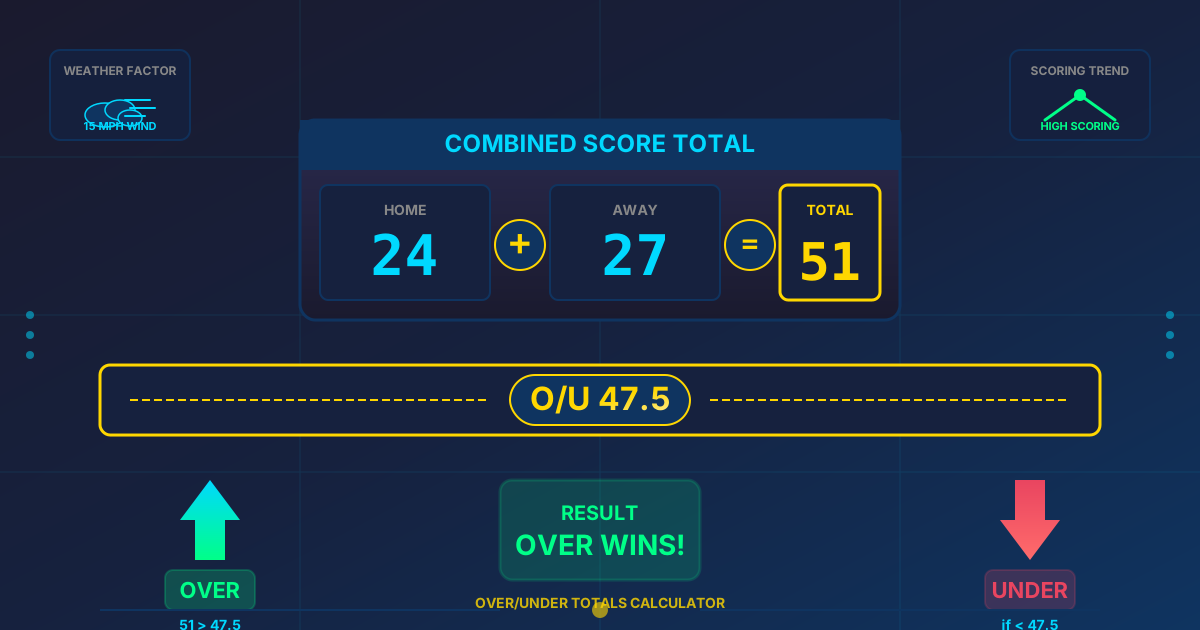
- Over 47.5: -110 (52.38% implied)
Independent parlay probability: 0.60 x 0.5238 = 31.43%
But due to correlation, the true joint probability might be 36-38%. If the book pays based on 31.43% probability but the real probability is 37%, you have a massive edge.
Example payout analysis:
- Parlay odds offered: +230 (implied 30.3%)
- True correlated probability: 37%
- EV% = (0.37 x 3.30) - 1 = +22.1%
That is an enormous +EV bet that you can only access through a parlay structure.
Exception 2: Parlaying Multiple +EV Legs
If you have identified three individual bets, each with +3% EV, parlaying them amplifies your edge. The compounding works in your favor just as the compounding vig works against recreational bettors.
Three +3% EV legs at -110 each:
- Straight bet EV: +$2.73 per $100 per bet = $8.19 total across 3 bets
- Parlay EV calculation:
- True win probabilities: 55%, 55%, 55% (the extra 2.62% above implied 52.38% is your edge)
- Parlay true probability: 0.55^3 = 16.64%
- Parlay payout: 5.958:1
- EV = (0.1664 x 5.958) - (0.8336 x 1) = 0.991 - 0.834 = +$0.157 per $1, or +15.7%
Parlaying three +3% EV bets produces +15.7% EV per parlay. The edge compounds.
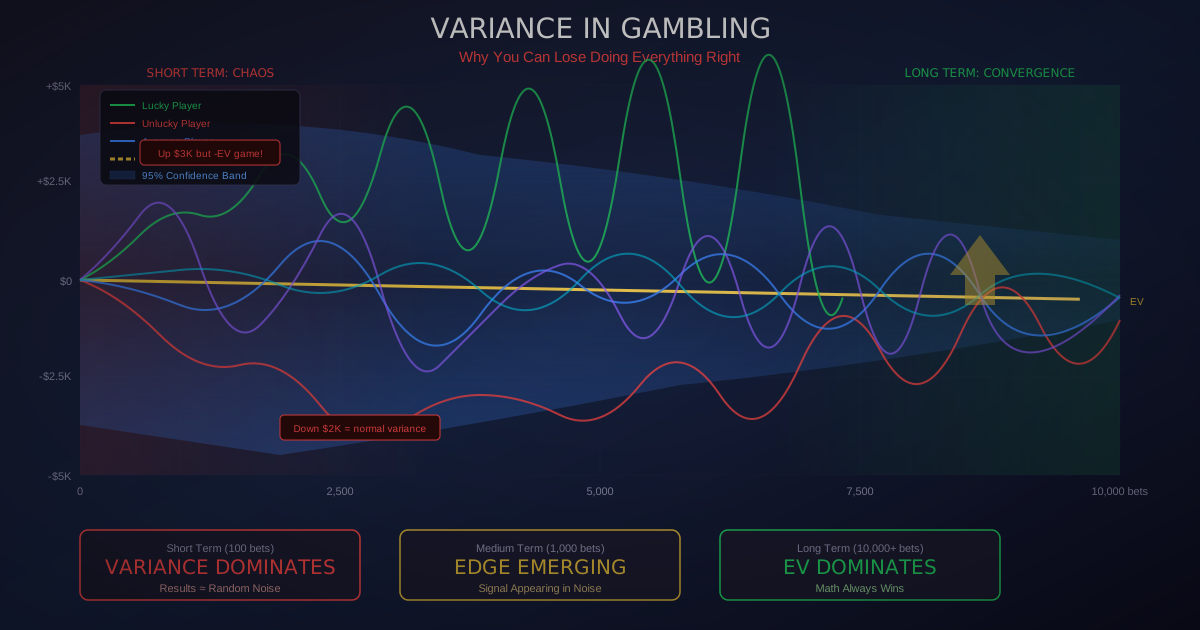
However, the variance also compounds. You will lose this parlay 83.4% of the time. This is only appropriate with proper bankroll management and many repetitions.
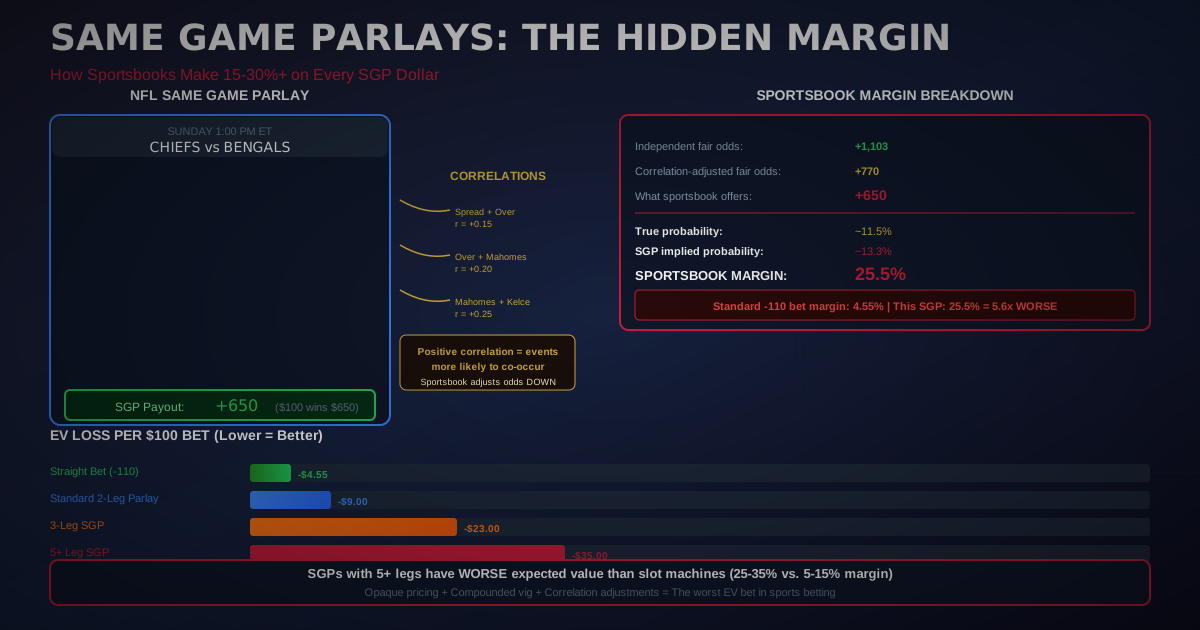
Exception 3: Same-Game Parlays (SGPs) with Correlation
Sportsbooks have made same-game parlays extremely popular, and they typically add extra vig to compensate for potential correlation. However, they do not always get the correlation pricing right.
Profitable SGP pattern in NFL:
- Quarterback to throw 250+ yards AND team to win
- Running back to score a touchdown AND team to win by 7+
- Wide receiver to get 80+ receiving yards AND game total over 50
These outcomes are clearly correlated, and while books have improved their SGP pricing, sharp bettors still find edges where correlation is underpriced.
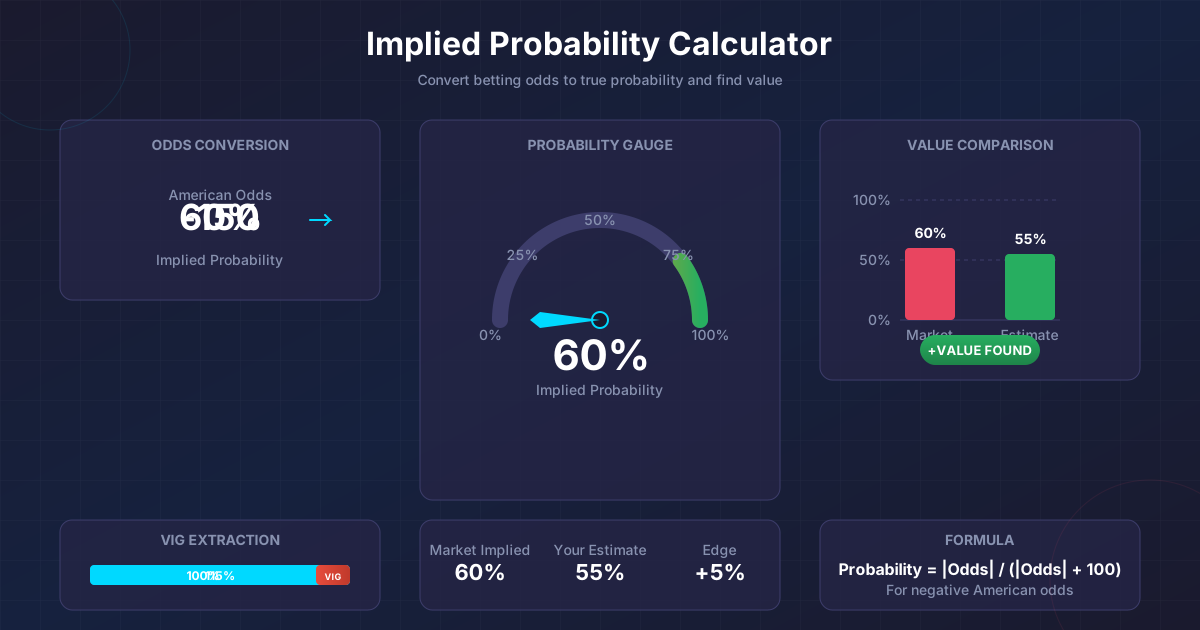
Convert odds to probability for any SGP leg with our Implied Probability Calculator.
Exception 4: Using Parlays as Leverage When Bankroll-Limited
If your bankroll is very small relative to the edge you find, parlays can be a rational choice to increase expected growth rate. A bettor with $500 who finds three +5% EV bets might parlay $20 rather than bet $100 straight on each, because the straight bet approach ties up 60% of the bankroll in correlated risk anyway.
This is a niche case that only applies when:
- Individual bets are confirmed +EV
- Bankroll constraints prevent full Kelly sizing on each
- You accept the higher variance
Round Robins: The Smarter Parlay Alternative
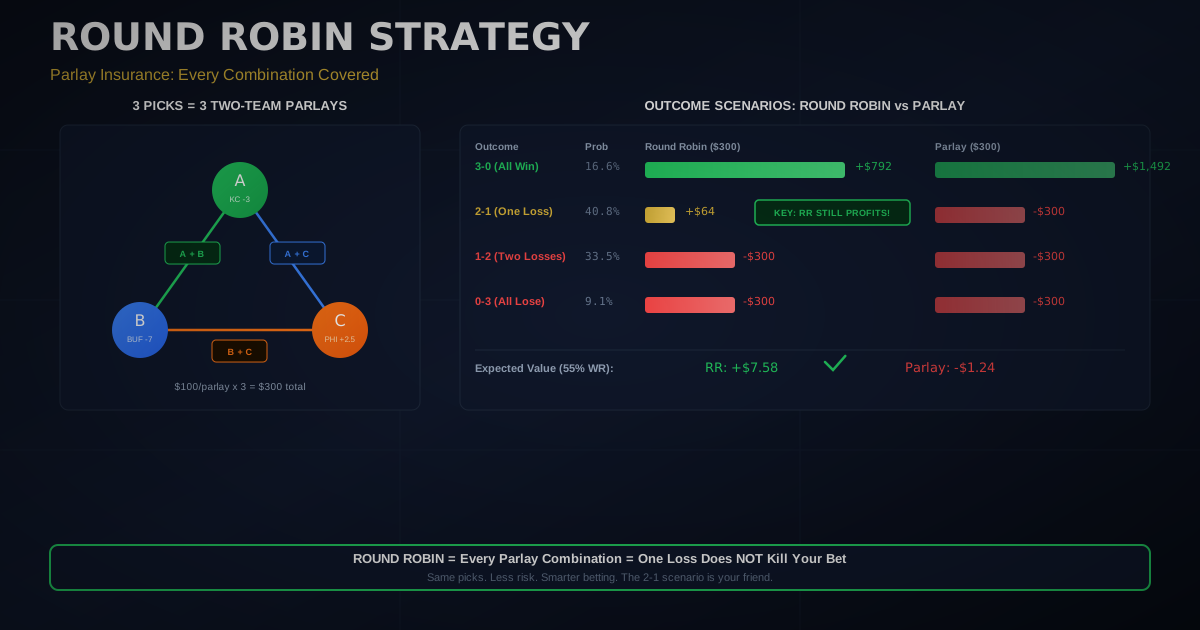
A round robin breaks a multi-leg selection into every possible smaller parlay combination. Instead of one 4-leg parlay that requires all four to hit, you create multiple 2-leg or 3-leg parlays from the same selections.
How Round Robins Work
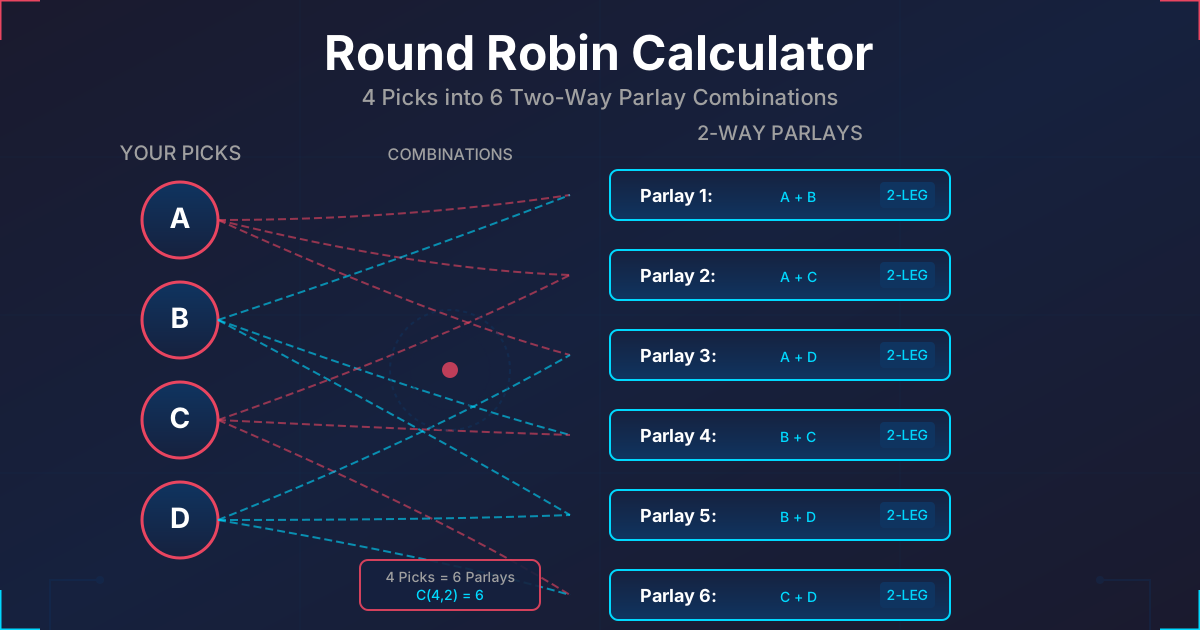
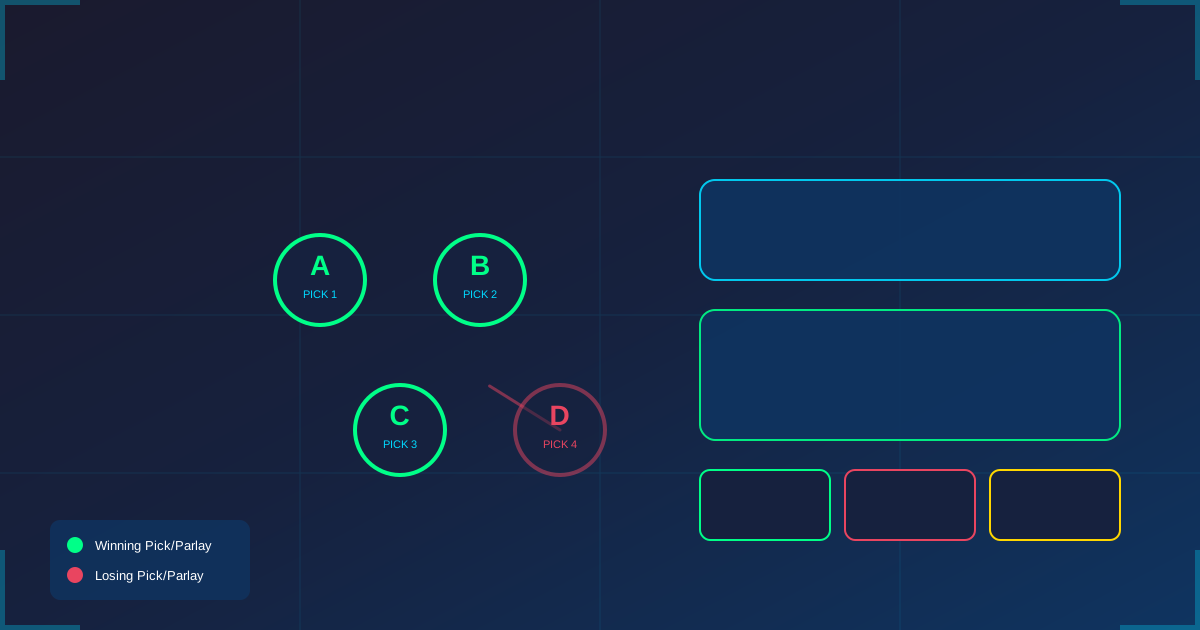
You select 4 teams: A, B, C, D. A 4-pick round robin of 2-team parlays creates:
- A + B
- A + C
- A + D
- B + C
- B + D
- C + D
That is 6 two-team parlays. If you bet $10 on each, your total outlay is $60.
Round Robin vs. Straight Parlay: A Comparison
| Outcome (3 of 4 win) | 4-Leg Parlay ($60) | Round Robin 2s ($60) |
|---|---|---|
| A, B, C win; D loses | $0 (lose all) | 3 parlays win, 3 lose = +$19.35 |
| A, B, D win; C loses | $0 (lose all) | 3 parlays win, 3 lose = +$19.35 |
With the 4-leg parlay, going 3-for-4 means you lose everything. With the round robin, going 3-for-4 still generates profit.
| Results | 4-Leg Parlay Return | Round Robin (2s) Return |
|---|---|---|
| 4 of 4 win | +$676.80 | +$98.70 |
| 3 of 4 win | $0 (lose $60) | +$19.35 |
| 2 of 4 win | $0 (lose $60) | -$33.55 |
| 1 of 4 win | $0 (lose $60) | -$60.00 |
| 0 of 4 win | $0 (lose $60) | -$60.00 |
The round robin trades top-end payout for a dramatically higher hit rate. If you believe in your selections, the round robin often provides better risk-adjusted returns.
Build and calculate round robin combinations with our Round Robin Calculator.
Parlay Boosts and Promotions: Do They Change the Math?
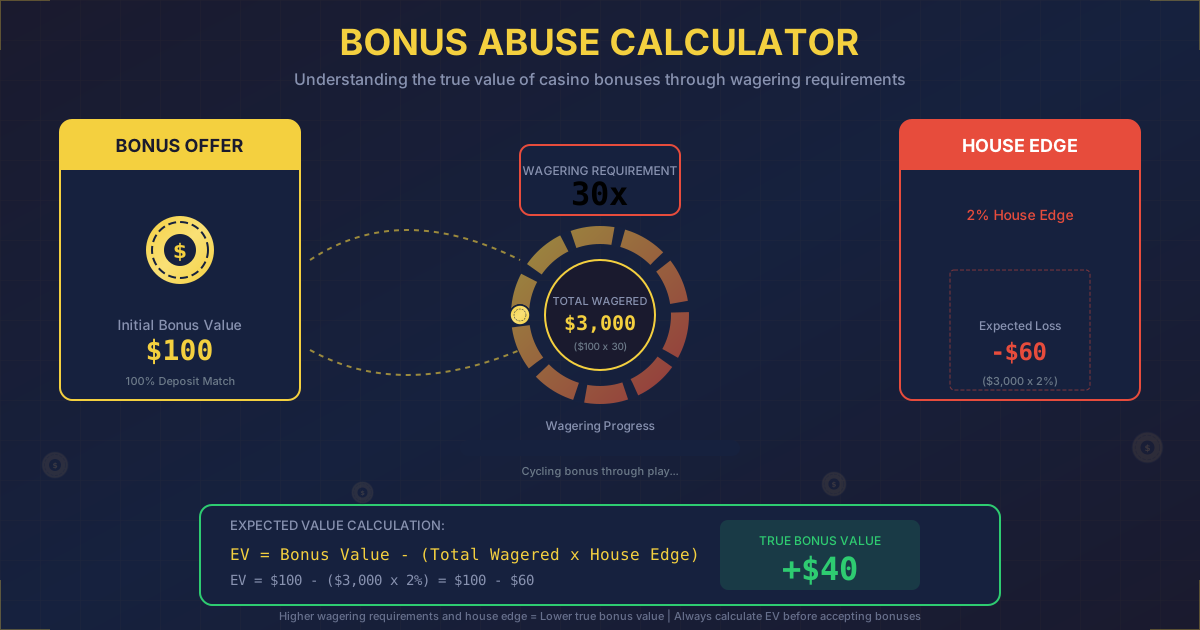
Sportsbooks frequently offer parlay boosts like "25% profit boost on 4+ leg parlays" or "boosted SGP of the day." These promotions can shift individual parlays from -EV to +EV if the boost is large enough.
Evaluating a Parlay Boost
Scenario: DraftKings offers a 50% profit boost on a 3-leg parlay.
Your 3-leg parlay at -110 each normally pays 5.958:1. With a 50% profit boost:
- Normal profit: $595.80 on a $100 bet
- Boosted profit: $595.80 x 1.50 = $893.70
- Boosted total return: $993.70 (9.937:1)
- Fair value for a 3-leg 50/50 parlay: 7:1
- Boosted value: 9.937:1
EV calculation:
- True win probability (3 independent 50% events): 12.5%
- EV = (0.125 x $893.70) - (0.875 x $100) = $111.71 - $87.50 = +$24.21
That is a +24.2% EV bet. Parlay boosts of 50% or more on 3-leg parlays almost always produce +EV when the individual legs are close to fair.
When Boosts Are Not Enough
Smaller boosts on longer parlays often do not overcome the multiplied vig:
| Parlay Legs | House Edge (no boost) | 25% Boost House Edge | 50% Boost House Edge |
|---|---|---|---|
| 2-leg | 11.8% | ~0.5% (near break-even) | -8.5% (+EV) |
| 3-leg | 14.9% | ~3.7% (still -EV) | -7.2% (+EV) |
| 4-leg | 18.1% | ~6.4% (still -EV) | -3.1% (+EV) |
| 5-leg | 21.5% | ~9.4% (still -EV) | +0.2% (break even) |
| 6-leg | 24.3% | ~12% (very -EV) | +2.8% (still -EV) |
Conclusion: A 25% boost only makes 2-leg parlays near break-even. A 50% boost makes 2-4 leg parlays +EV but barely covers 5-leg parlays. Boosts on 6+ leg parlays rarely overcome the vig.
Teasers: The Parlay Variant Worth Understanding
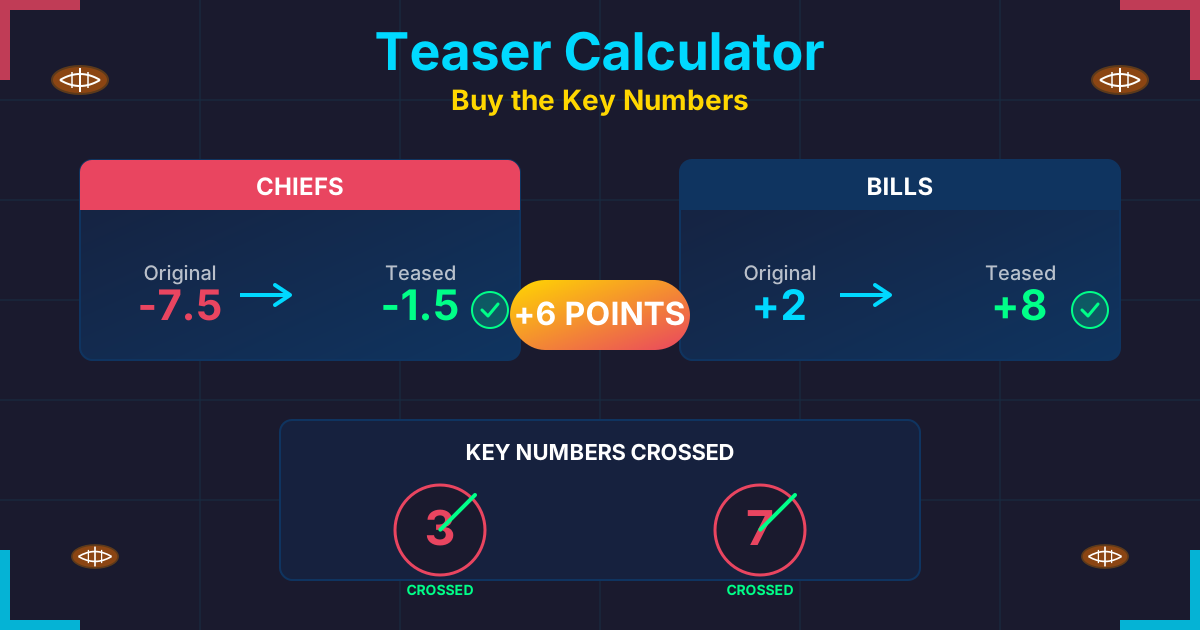
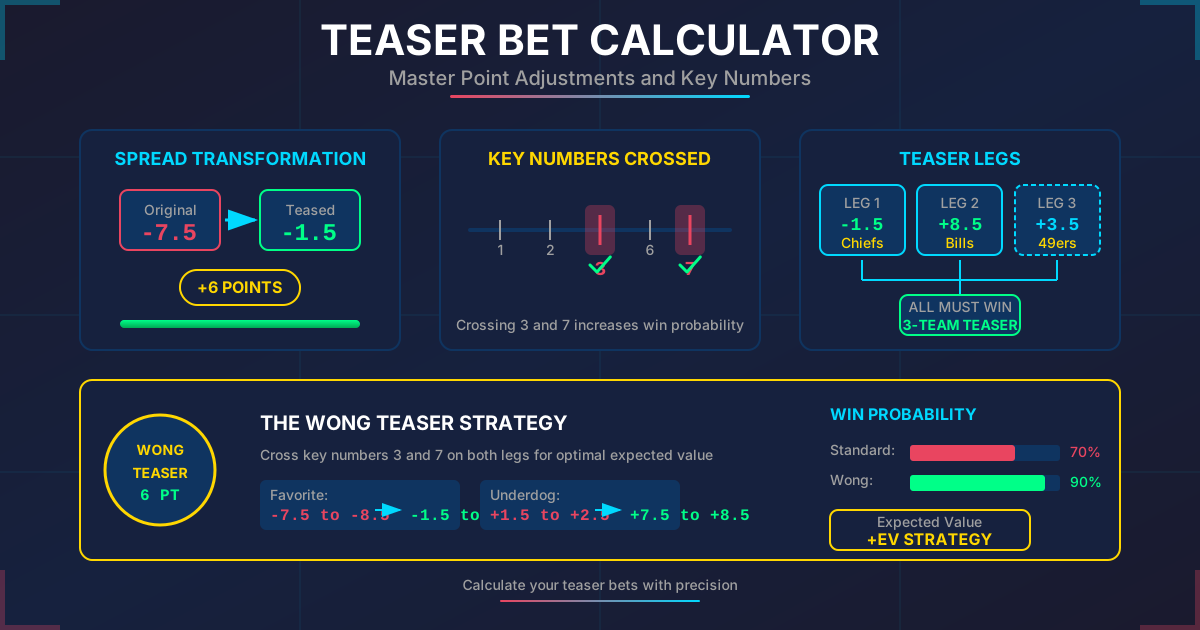
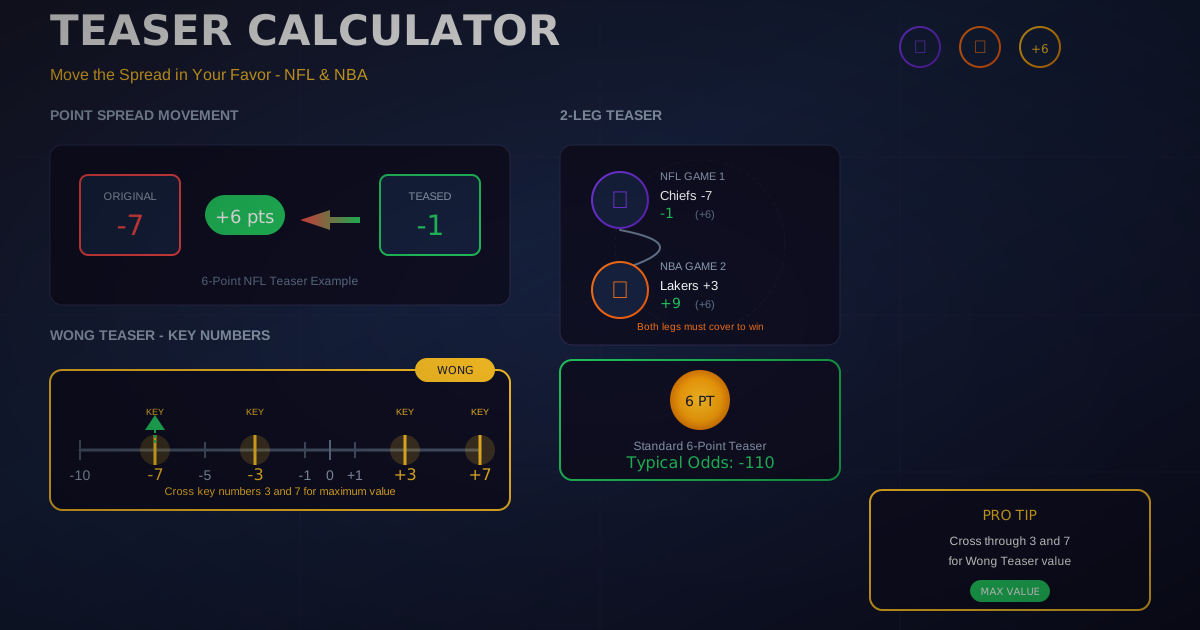
NFL teasers are a special type of parlay where you get additional points on the spread in exchange for reduced odds. The most common teaser is a 6-point, 2-team teaser at -110.
Why 6-Point NFL Teasers Can Be +EV
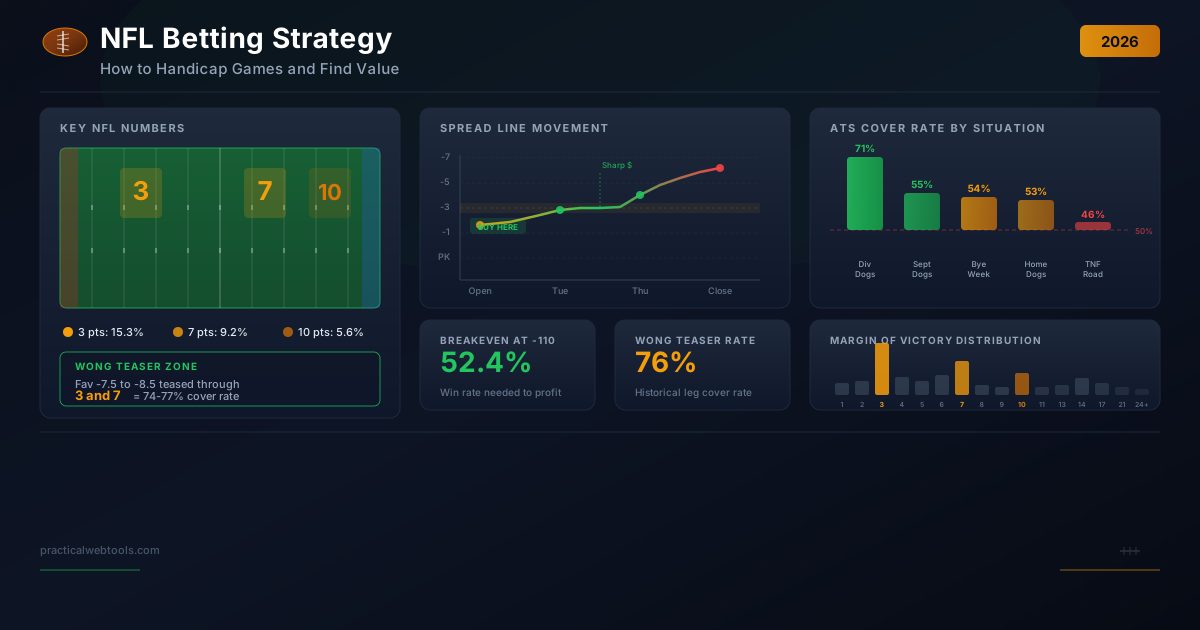
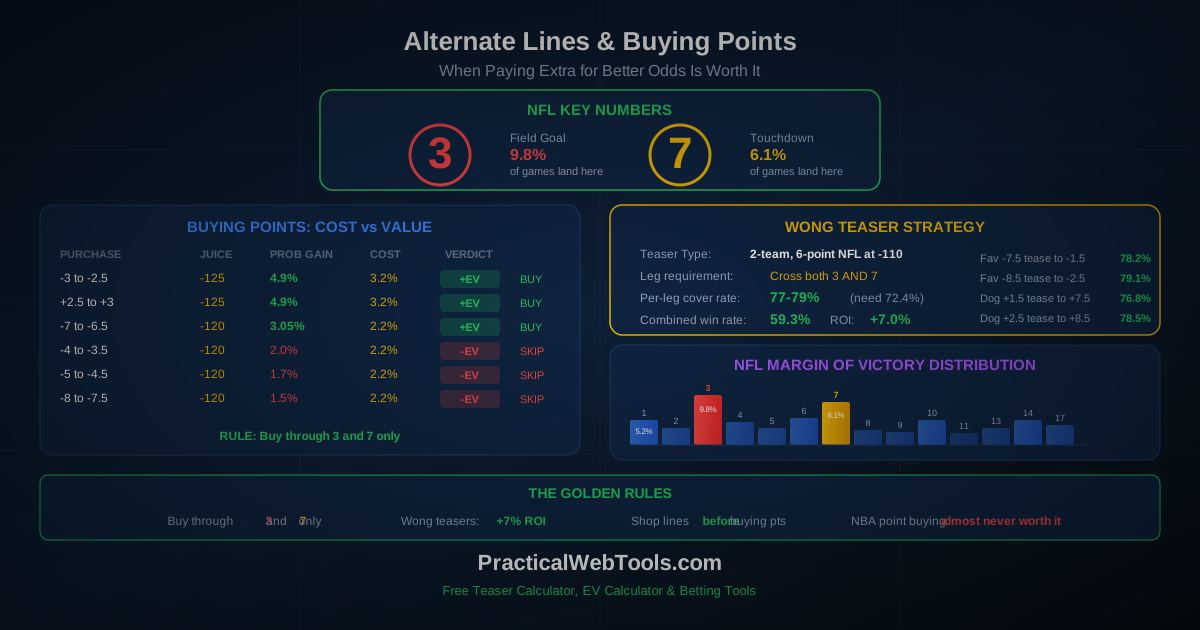
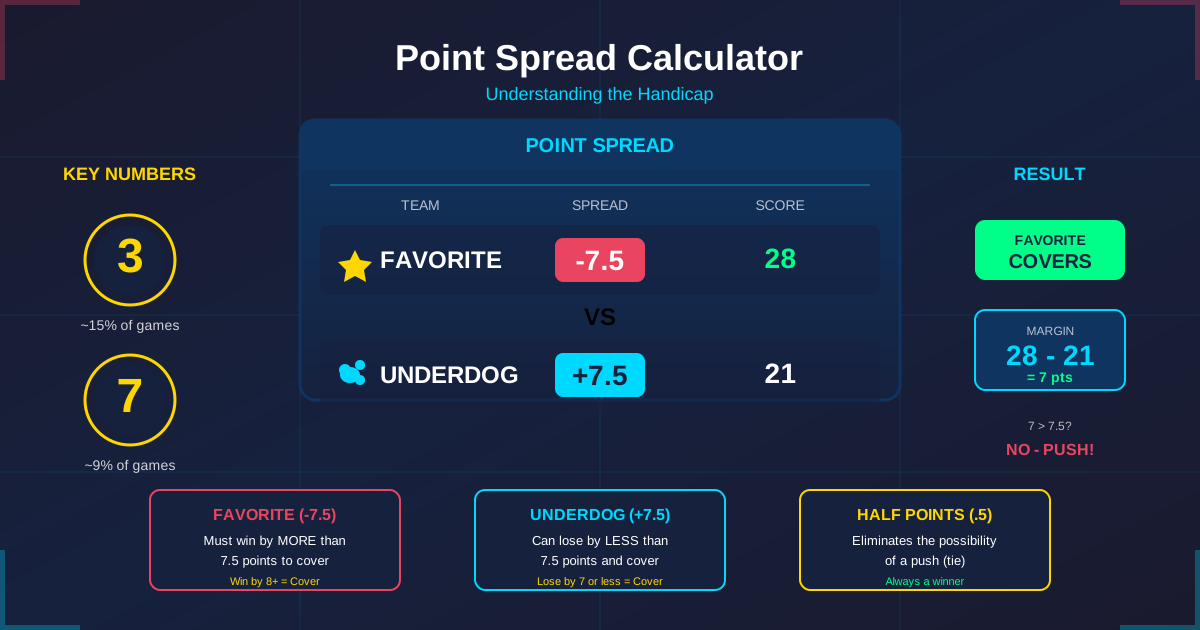
The value in NFL teasers comes from moving through key numbers (3, 7, and 10). An NFL game lands on exactly 3 or 7 points roughly 15% of the time each.
The Wong Teaser: Named after Stanford Wong, this strategy involves teasing favorites of -7.5 to -8.5 down to -1.5 to -2.5, or underdogs of +1.5 to +2.5 up to +7.5 to +8.5. You cross through both 3 and 7.
Win rate data:
- Standard spread bets: ~50% win rate
- 6-point teased through 3 and 7: ~72-75% win rate
EV calculation for 2-team Wong teaser at -110:
- Each leg win rate: 73%
- Parlay win rate: 0.73 x 0.73 = 53.3%
- Break-even at -110: 52.38%
- EV% = +0.92% per teaser
This is a small edge, but it is positive. Wong teasers are one of the few systematically +EV parlay structures available.
Calculate teaser odds and payouts with our Teaser Calculator.
Real-World Parlay Strategy Examples
Example 1: The Correlated NFL SGP
You identify a game where the Bills are 7-point favorites against a team with a weak passing defense. You build an SGP:
- Bills to win (-350)
- Josh Allen over 275.5 passing yards (-115)
- Over 50.5 total points (-110)
These are correlated: if the Bills dominate as 7-point favorites, Allen likely throws for big yards and the game likely goes over. The SGP pays +350.
- Book-implied probability: 22.2%
- Your correlated estimate: 30%
- EV = (0.30 x 4.50) - 1 = +35%
This is a strong correlated parlay. A $50 bet with +35% EV has an expected profit of $17.50.
Example 2: The Round Robin Hedge
You like 4 NFL picks for the Sunday slate. Instead of a 4-leg parlay at $100, you build a round robin of 2-team parlays: 6 parlays at $16.67 each ($100 total).
Results: You go 3-for-4. The 4-leg parlay would pay zero. Your round robin:
- 3 winning parlays: 3 x ($16.67 x 2.645) = $132.38
- 3 losing parlays: 3 x $16.67 = -$50.01
- Net profit: +$32.37
Going 3-for-4 on a round robin still profits. On a straight 4-leg parlay, it is a total loss.
Example 3: The Promotion Exploit
A sportsbook offers "bet $50 on any 3+ leg parlay, get a $25 free bet if one leg loses." You build a 3-leg parlay of heavily favored teams (each at -300, or 75% implied):
- Parlay win probability: 0.75^3 = 42.2%
- Probability of exactly 1 loss (triggers free bet): 3 x (0.75^2 x 0.25) = 42.2%
- Probability of 2+ losses (lose everything): 15.6%
If the parlay wins (+225 payout): $50 x 3.25 = $162.50 If 1 leg loses: lose $50, get $25 free bet (worth ~$17.50 after conversion) = net loss $32.50 If 2+ lose: lose $50
EV = (0.422 x $112.50) + (0.422 x -$32.50) + (0.156 x -$50) EV = $47.48 - $13.72 - $7.80 = +$25.96
The promotion turns this parlay into a massively +EV opportunity.
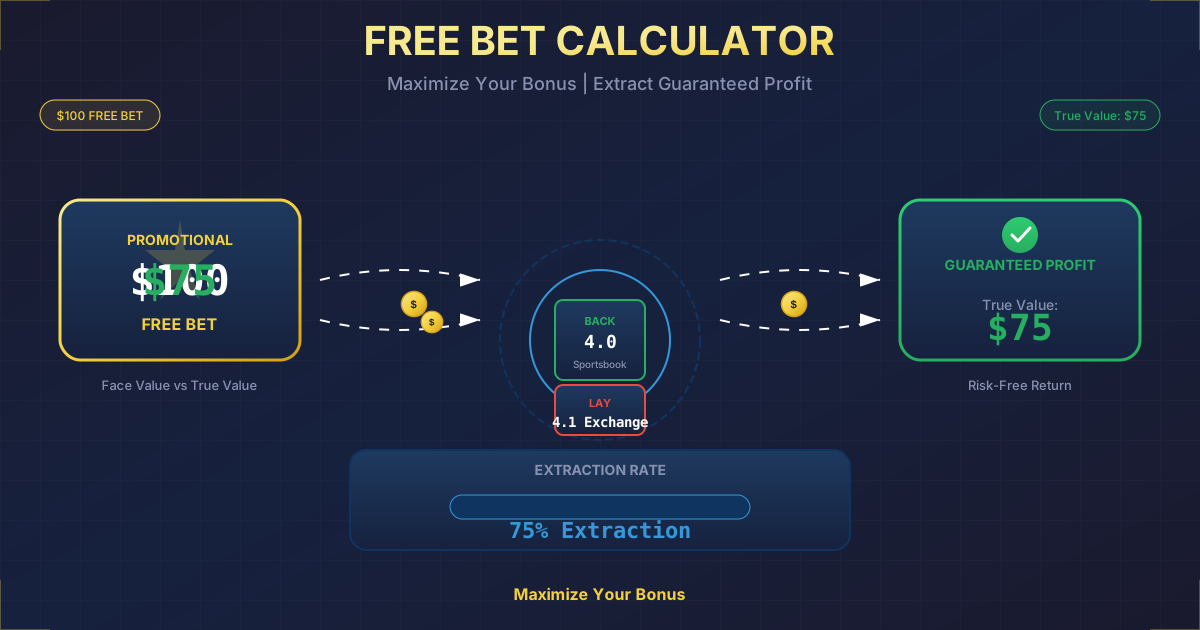
Calculate free bet conversion value with our Free Bet Calculator (SNR).
Example 4: The 2-Leg +EV Parlay
You have identified two bets with solid edges:
- Bet A: True probability 58%, offered at -115 (implied 53.5%). EV: +4.5%
- Bet B: True probability 60%, offered at -120 (implied 54.5%). EV: +5.5%
As straight bets ($100 each):
- Total EV: $4.50 + $5.50 = $10.00 on $200 wagered
As a 2-leg parlay ($100):
- True joint probability: 0.58 x 0.60 = 34.8%
- Parlay payout: (-115 and -120 combined) = roughly +225
- EV = (0.348 x $225) - (0.652 x $100) = $78.30 - $65.20 = +$13.10 on $100 wagered
The parlay produces $13.10 EV on $100. Two straight bets produce $10.00 EV on $200. The parlay achieves higher EV per dollar risked but with much higher variance.
Example 5: The If-Bet Alternative
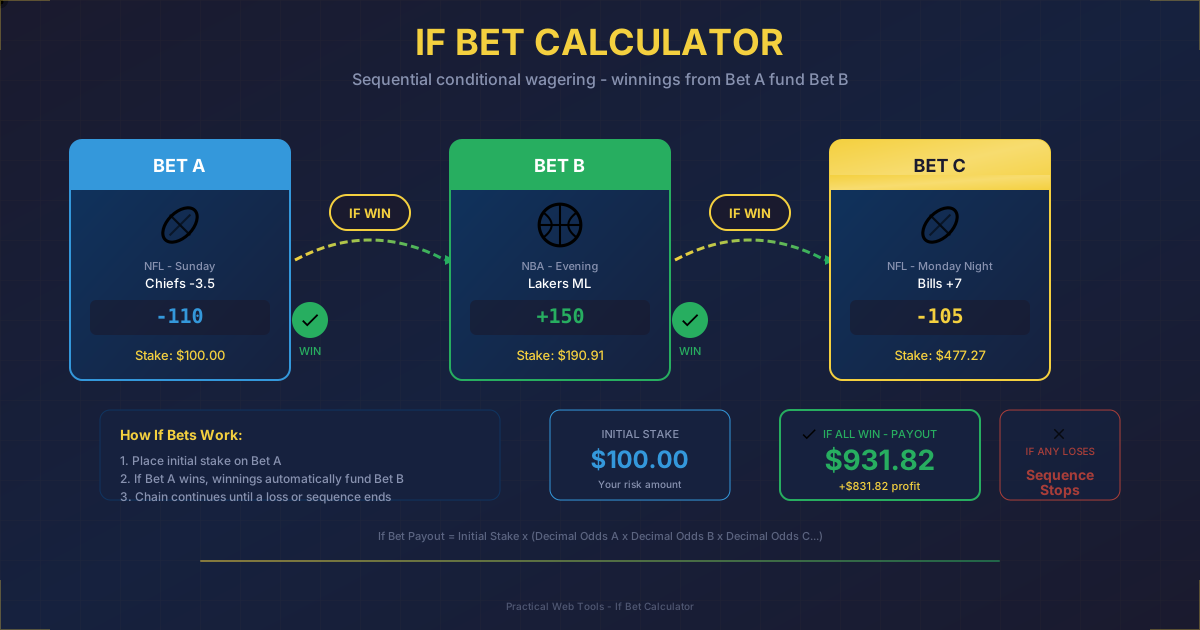
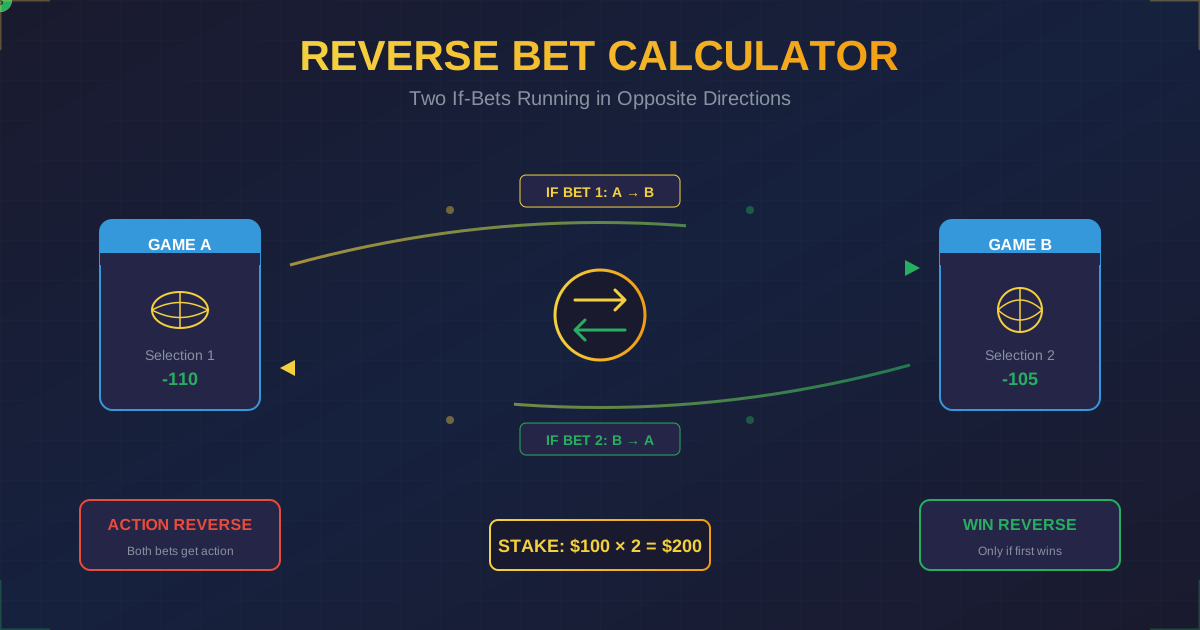
Instead of a parlay, an if-bet places your second bet only if the first bet wins, using the winnings as the stake. This reduces total risk while maintaining compounding upside.
Bet A wins at -110: You receive $190.91 ($100 stake + $90.91 profit). The if-bet automatically places $190.91 on Bet B at -110.
- If both win: Return $190.91 + $173.55 = $364.46. Profit: $264.46
- If A wins, B loses: Lose the $190.91 rolled over. Net: -$100 (original stake)
- If A loses: Lose $100. Net: -$100
Compared to a 2-leg parlay paying +264:
- Parlay profit if both win: $264. Same.
- Parlay loss if either loses: -$100. Same.
The if-bet replicates the parlay payout exactly but gives you the option to adjust the second bet amount.
Explore if-bet structures with our If-Bet Calculator.
Advanced Parlay Math: The Correlation Matrix
For serious parlay bettors, understanding correlation coefficients between bet types unlocks the most profitable opportunities.
Correlation Scale for Common Parlay Combinations
| Combination | Correlation | Parlay Edge Impact |
|---|---|---|
| Team ML + Game Over | Moderate positive (+0.25 to +0.35) | Underpriced by 3-7% |
| Team ML + Opponent Under | Low negative (-0.10 to -0.20) | Overpriced by 1-3% |
| QB Passing Yards Over + Team ML | Moderate positive (+0.20 to +0.30) | Underpriced by 2-5% |
| RB Rushing TD + Team Win | Moderate positive (+0.15 to +0.25) | Underpriced by 1-4% |
| Two unrelated games | Zero (0.00) | No edge from correlation |
| Same division rivals both to win | Slight negative (-0.05 to -0.10) | Slightly overpriced |
The takeaway: always combine positively correlated outcomes in parlays and avoid negatively correlated combinations.
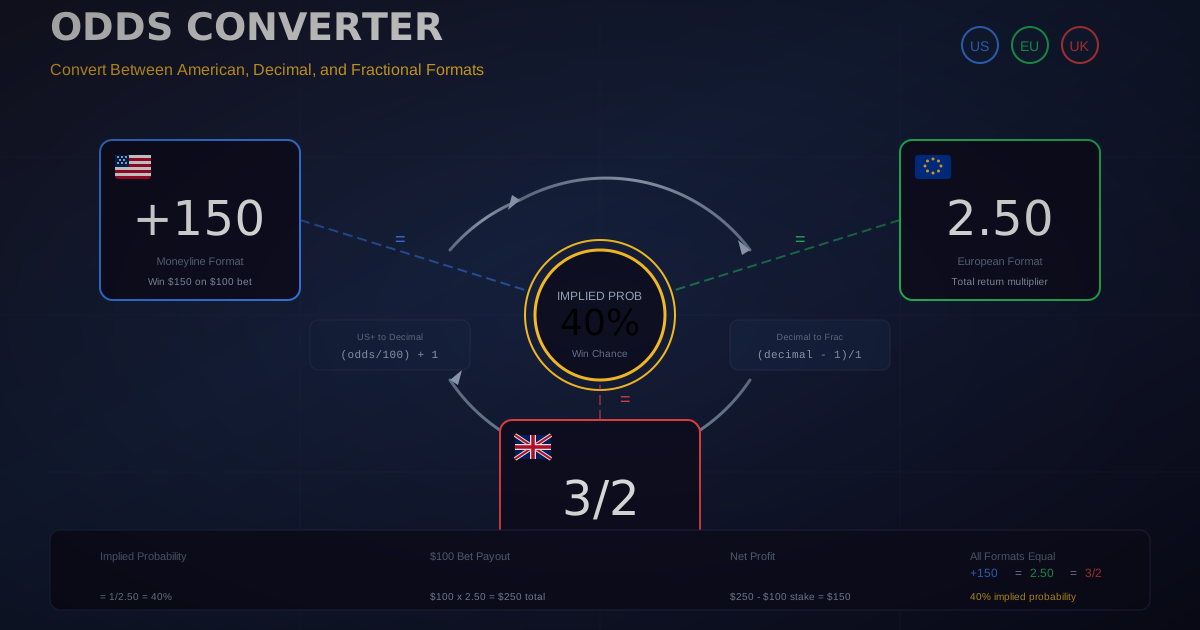
Convert between American, decimal, and fractional odds for each parlay leg with our Odds Converter.
Bankroll Management for Parlay Betting
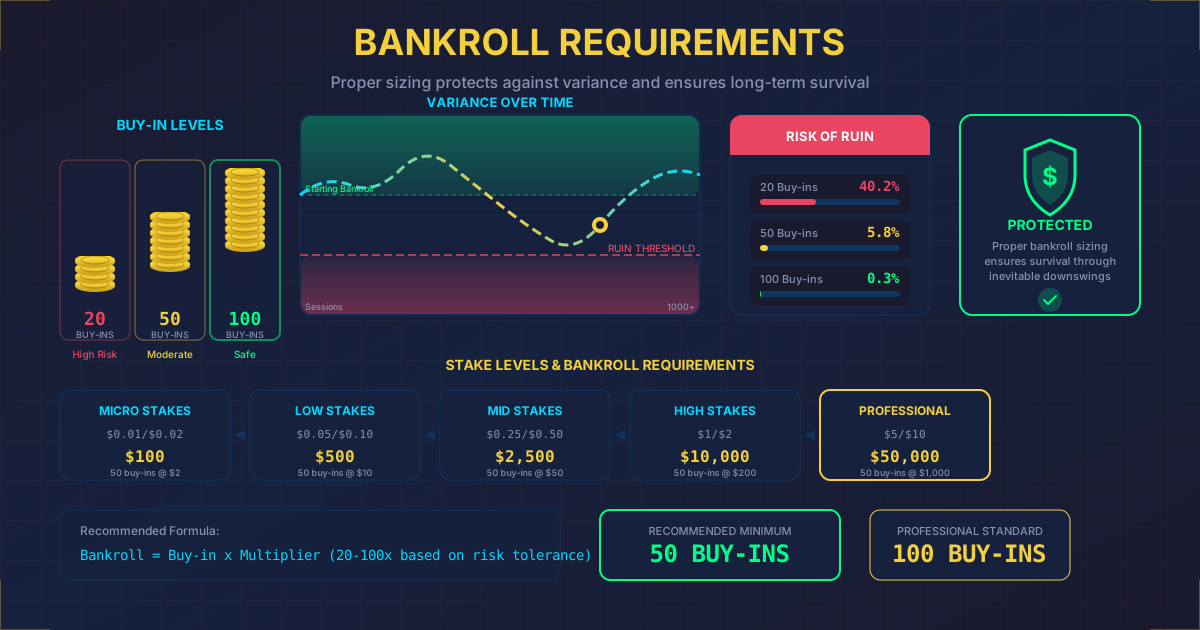
If you are incorporating parlays into your strategy, sizing is critical because the variance is dramatically higher than straight bets.
Parlay Sizing Guidelines
| Parlay Type | Max Bet Size (% of Bankroll) | Rationale |
|---|---|---|
| 2-leg +EV parlay | 2-3% | Moderate variance, high hit rate |
| 3-leg correlated | 1-2% | Higher variance, correlation provides edge |
| 4-leg round robin (2s) | 0.5% per parlay | Spread risk across combinations |
| Promotion/boost parlay | 1-3% | Limited by promo max bet |
| 5+ leg parlay | 0.25-0.5% | Extreme variance, small max bet |
| 10+ leg parlay | Never | Unacceptable house edge |
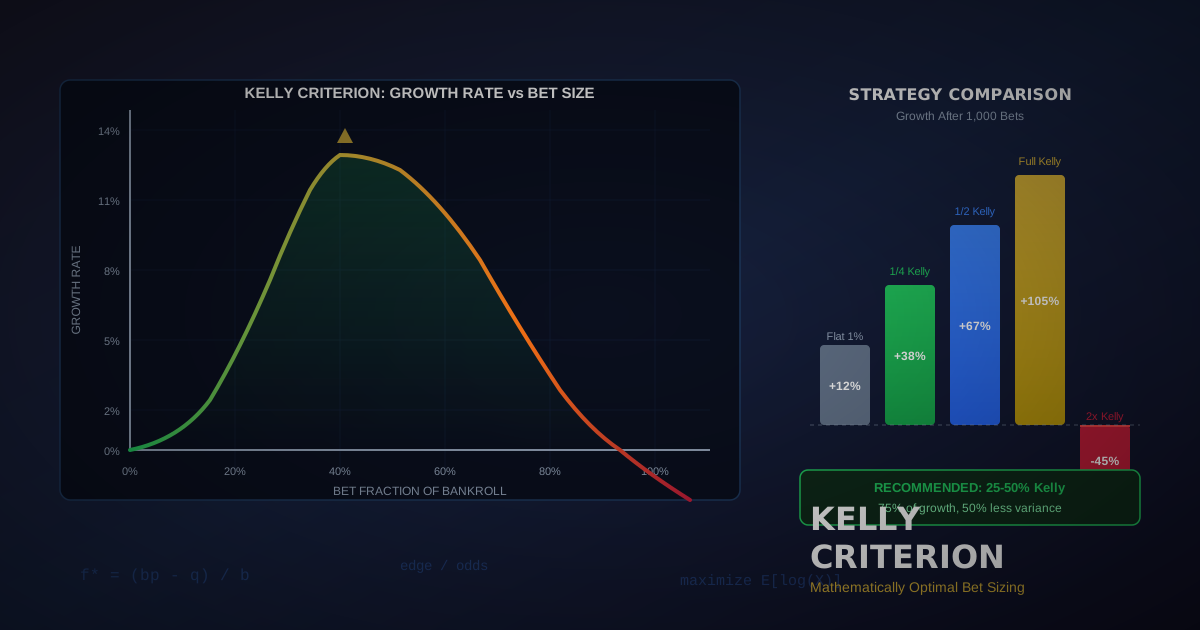
Kelly Criterion for Parlays
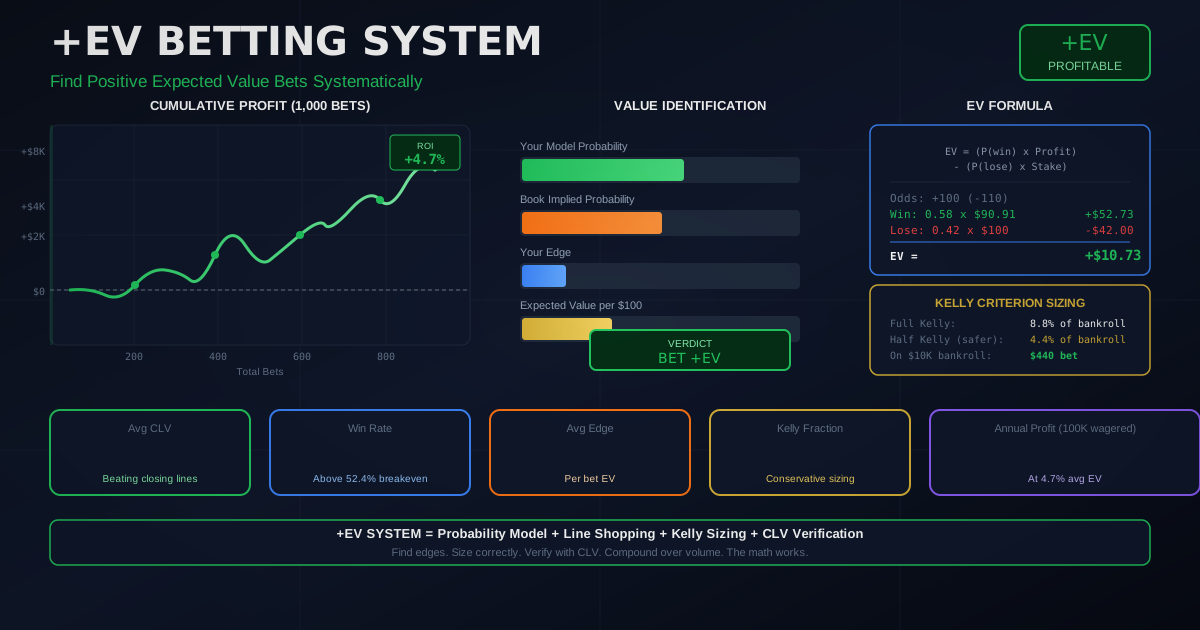
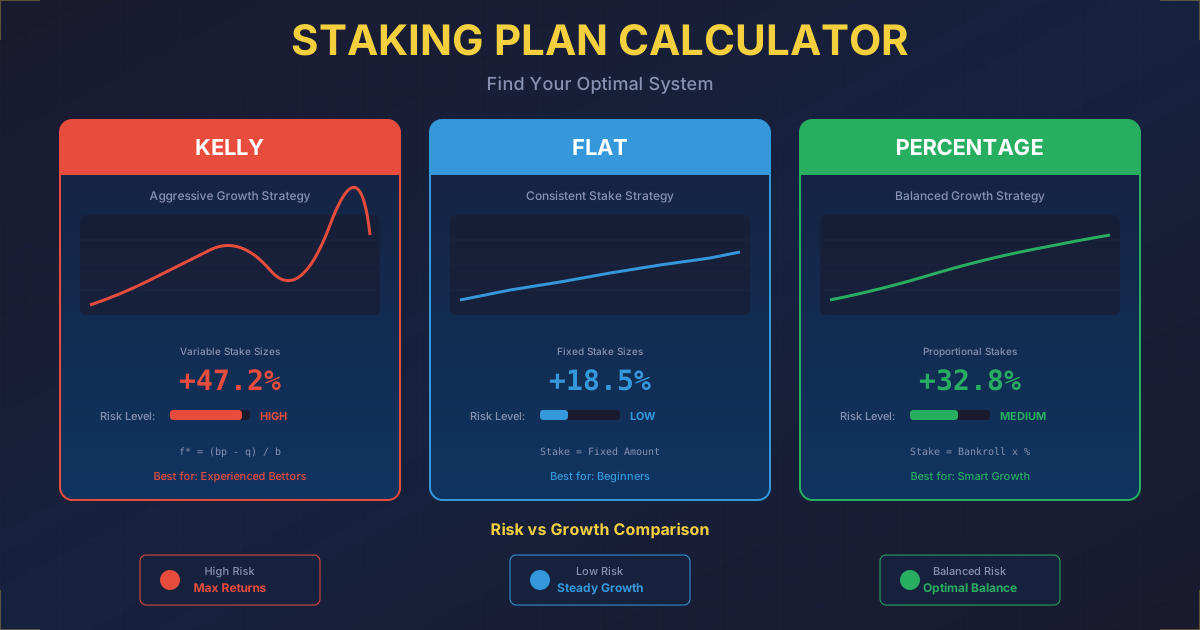
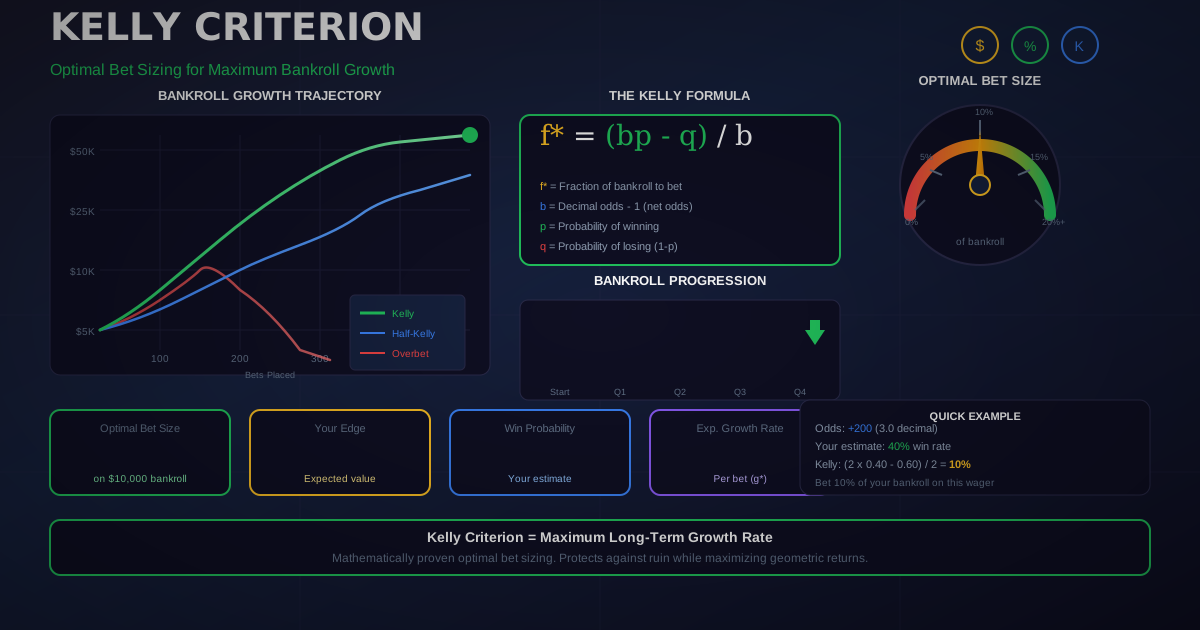
The Kelly formula works for parlays just like straight bets:
Kelly% = (bp - q) / b
For a 3-leg correlated parlay at +350 (b = 3.50) with 30% estimated probability:
- Kelly% = (3.50 x 0.30 - 0.70) / 3.50
- Kelly% = (1.05 - 0.70) / 3.50
- Kelly% = 0.35 / 3.50
- Kelly% = 10%
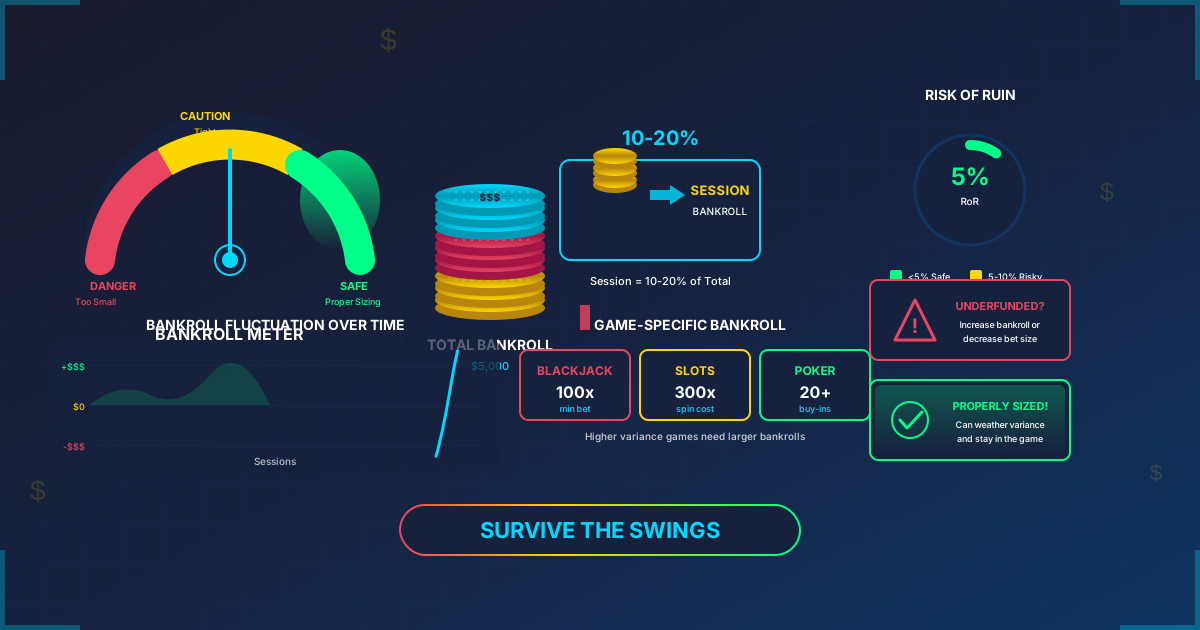
At half Kelly, bet 5% of bankroll. On a $5,000 bankroll, that is $250.
Optimize your parlay bet sizes with our Kelly Criterion Calculator.
Frequently Asked Questions
Are parlays always -EV? No. Standard uncorrelated parlays at standard juice are almost always -EV because the vig multiplies across legs. However, correlated parlays, +EV leg combinations, and boosted promotions can be genuinely +EV. Use our Parlay Calculator to calculate exact payouts and compare to your probability estimates.
What is a correlated parlay? A correlated parlay combines outcomes where one result increases the probability of the other. For example, a team winning and the game going over are positively correlated because winning teams usually score more. Books price legs as independent, creating value when correlation exists.
How many legs should a parlay have? For serious bettors, 2-3 leg parlays are the sweet spot. The house edge on 2-leg parlays (11.8%) is manageable, especially with an edge. Beyond 4 legs, the compounded vig becomes nearly impossible to overcome without massive boosts or extreme correlation.
Are round robins better than straight parlays? Round robins provide much better risk-adjusted returns. They cost more total but protect against the parlay problem of going 0 when one leg loses. Our Round Robin Calculator lets you compare payouts for any combination.
Do same-game parlays have extra vig? Yes. Sportsbooks add extra margin to SGPs to account for potential correlation. However, they often do not fully price in all correlations, especially in complex multi-leg SGPs. The edge comes from finding SGPs where your correlation estimate exceeds the book's pricing.
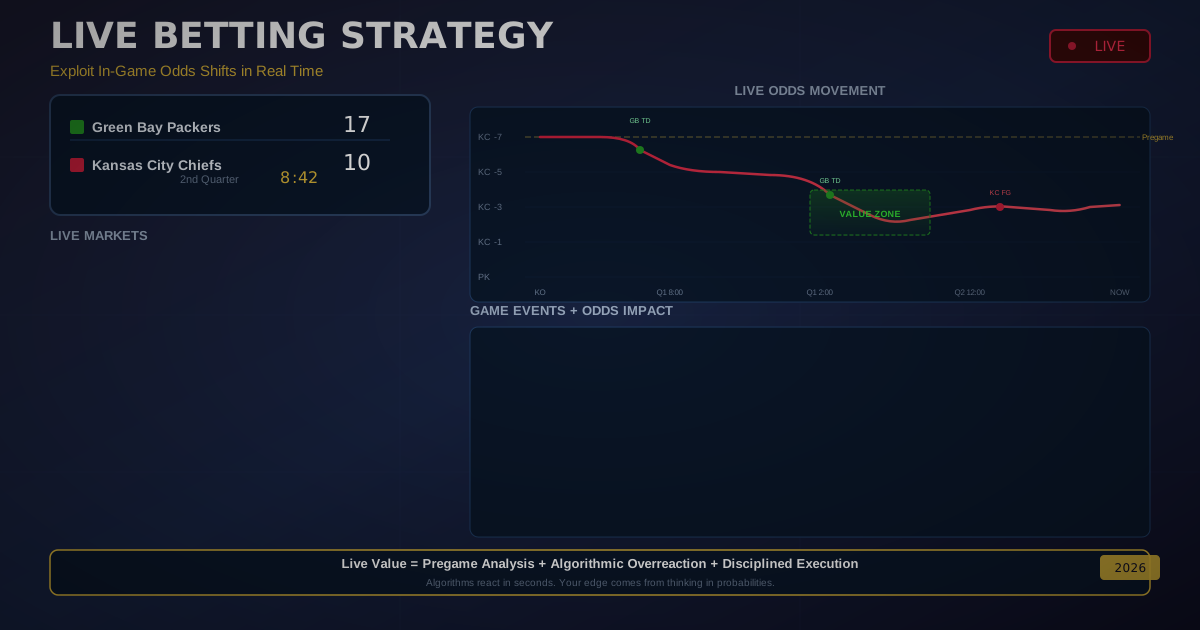
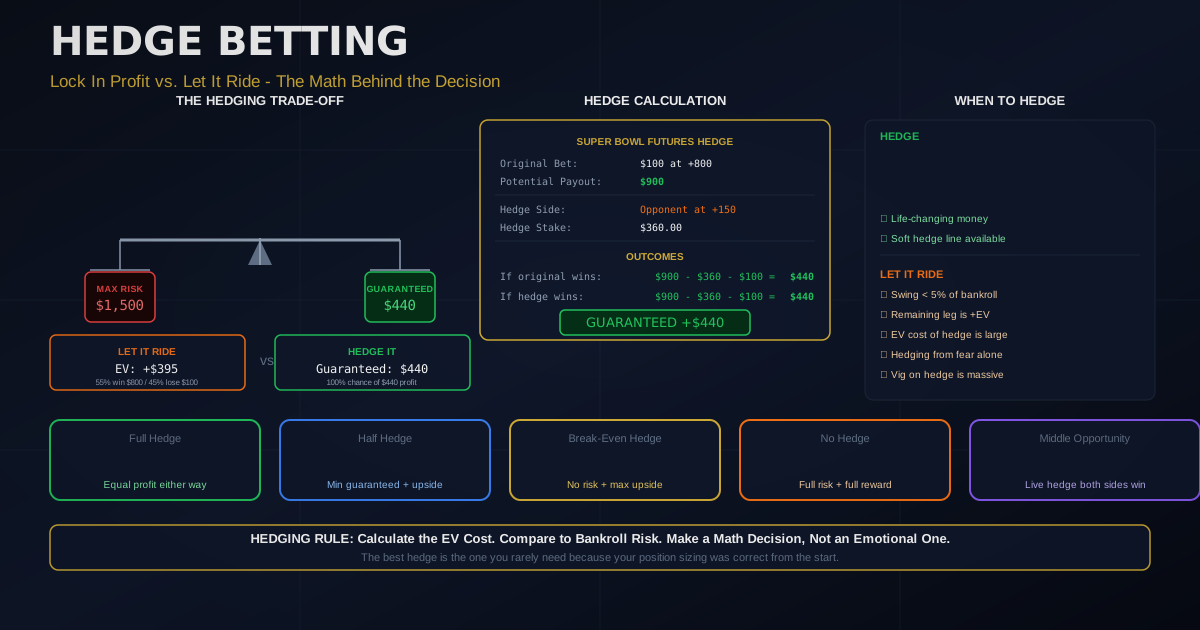
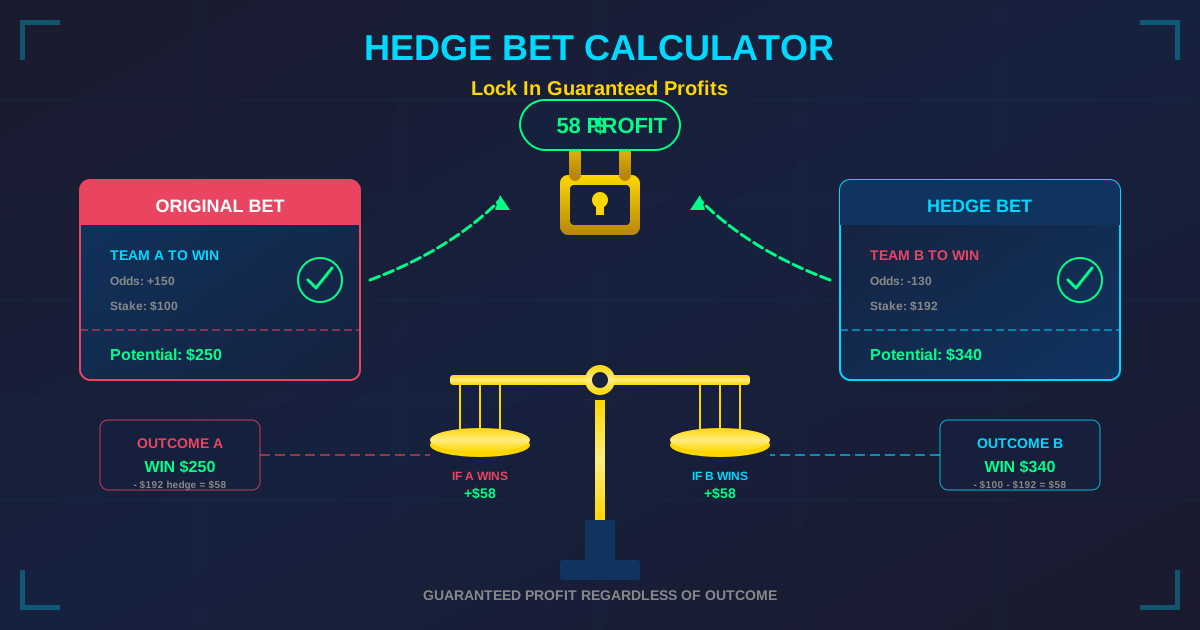
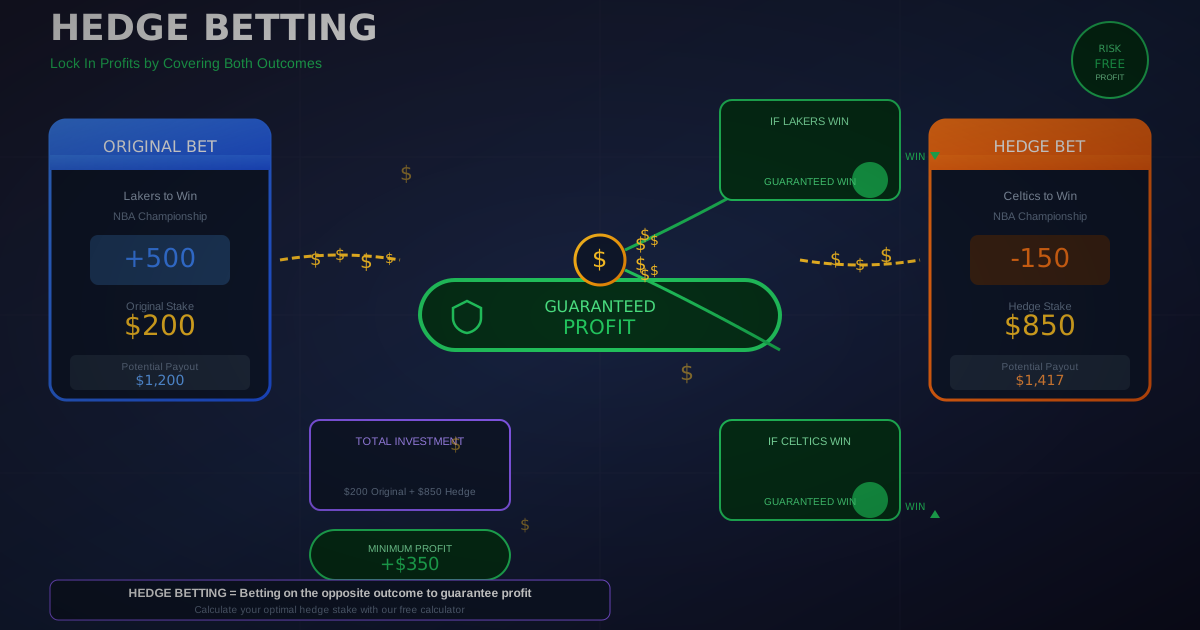
Should I hedge a parlay with one leg remaining? It depends on the size of the remaining leg's edge. If the final leg is +EV, letting it ride maximizes long-term expectation. If you need the guaranteed profit more than the additional expected value, hedging is rational. Use our Hedge Calculator to calculate exact hedge amounts.
What is the difference between a parlay and a teaser? A parlay multiplies odds at face value. A teaser gives you extra points on spreads (typically 6, 6.5, or 7 in the NFL) in exchange for reduced payout. Teasers can be +EV when you cross key numbers (3 and 7 in football). Our Teaser Calculator helps evaluate teaser value.
Can I make money long-term betting only parlays? Only if every parlay you bet is +EV after accounting for the compounded vig. This requires consistently finding correlated parlays, exploiting promotions, or parlaying individually +EV legs. Most recreational parlay bettors lose money because they bet uncorrelated legs at standard odds.
Essential Tools for Parlay Bettors
Parlay Analysis Tools
- Parlay Calculator: Calculate exact parlay payouts, implied probability, and breakeven win rates for any combination of legs
- Round Robin Calculator: Build round robin combinations and compare returns to straight parlays
- Teaser Calculator: Evaluate NFL teaser value across different point spreads
- If-Bet Calculator: Calculate if-bet structures as alternatives to parlays
Value Assessment Tools
- Expected Value Calculator: Determine whether individual parlay legs and the overall parlay are +EV
- Implied Probability Calculator: Convert parlay odds to implied probability for comparison with your estimates
- Odds Converter: Standardize odds across different formats for accurate parlay calculations
- Hold/Vig Calculator: Measure the sportsbook's total edge on any parlay market
Bankroll and Risk Tools
- Kelly Criterion Calculator: Size parlay bets optimally based on your estimated edge and bankroll
- Hedge Calculator: Calculate precise hedge amounts when you want to lock in profit on a live parlay
Conclusion: A Framework for Smart Parlay Betting
Parlays are not inherently bad or good. They are a bet structure with specific mathematical properties that favor the house in most configurations. The smart approach is to use parlays only when the math explicitly favors you:
- Correlated outcomes where the true joint probability exceeds the book's assumption of independence
- Multiple +EV legs where compounding edge outweighs compounding vig
- Promotional boosts that push the payout above fair value
- Wong teasers through key NFL numbers
- Round robins when you want partial parlay exposure with downside protection
If your parlay does not fit one of these categories, it is almost certainly -EV and you should bet the legs straight or not at all.
Start analyzing your parlays with our Parlay Calculator. Compare to round robin structures with our Round Robin Calculator. And always verify the EV with our Expected Value Calculator.
Gambling involves risk. This content is for educational and informational purposes only. Always gamble responsibly, set limits you can afford, and seek help if gambling becomes a problem. Visit the National Council on Problem Gambling or call 1-800-522-4700 for support.