Live Betting Strategy: How to Exploit In-Game Odds Shifts in 2026
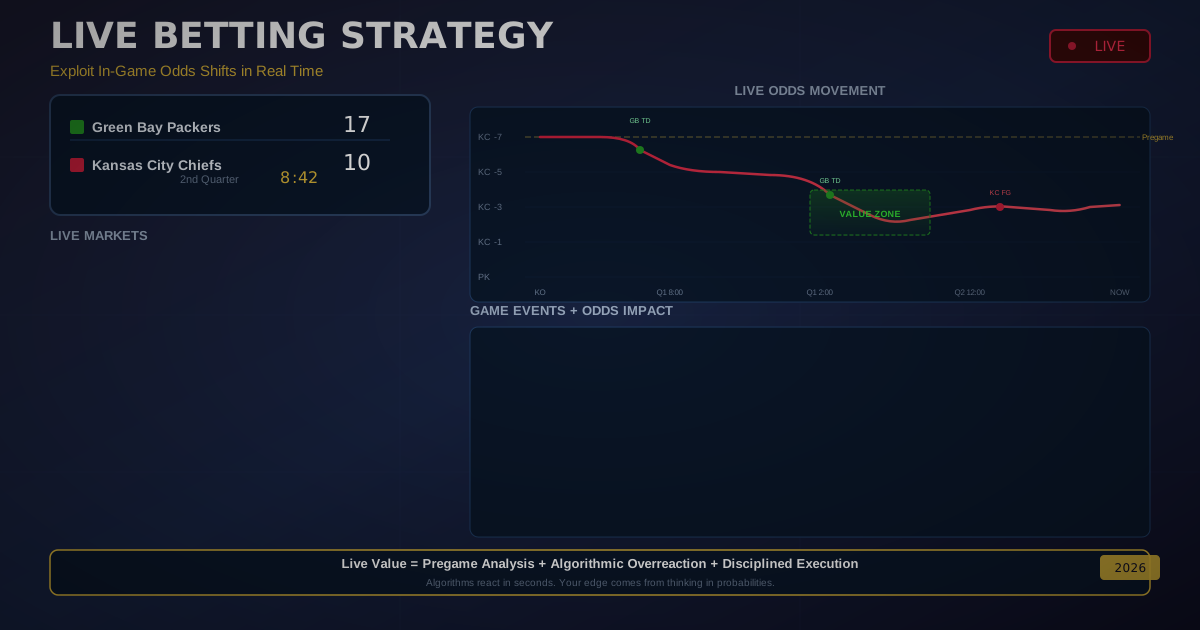
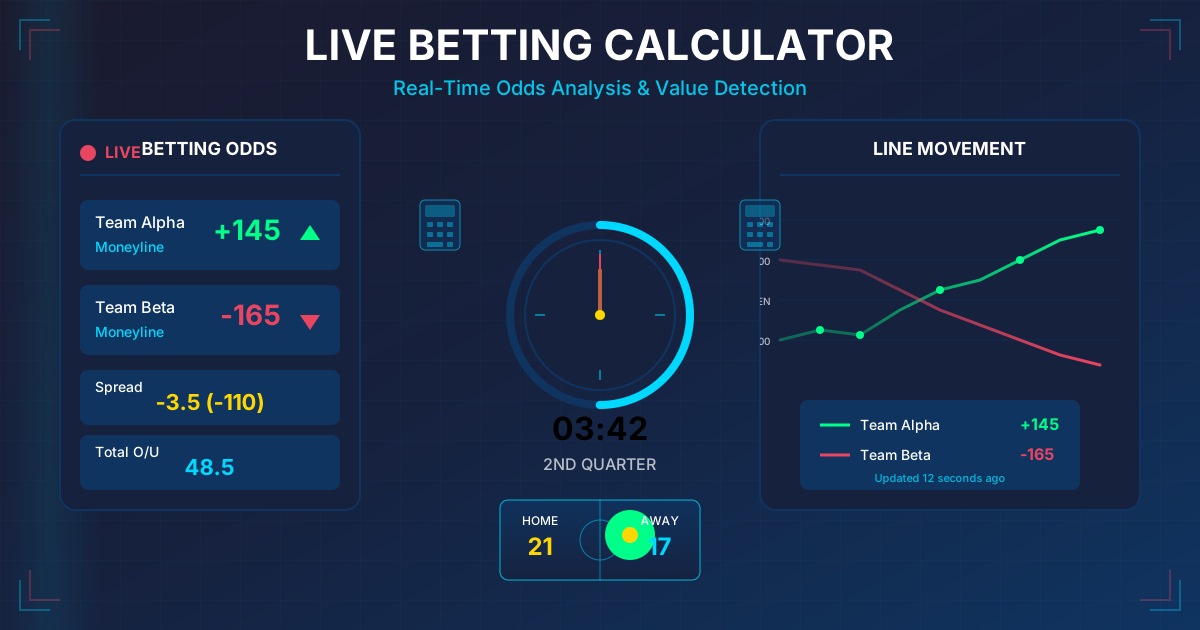
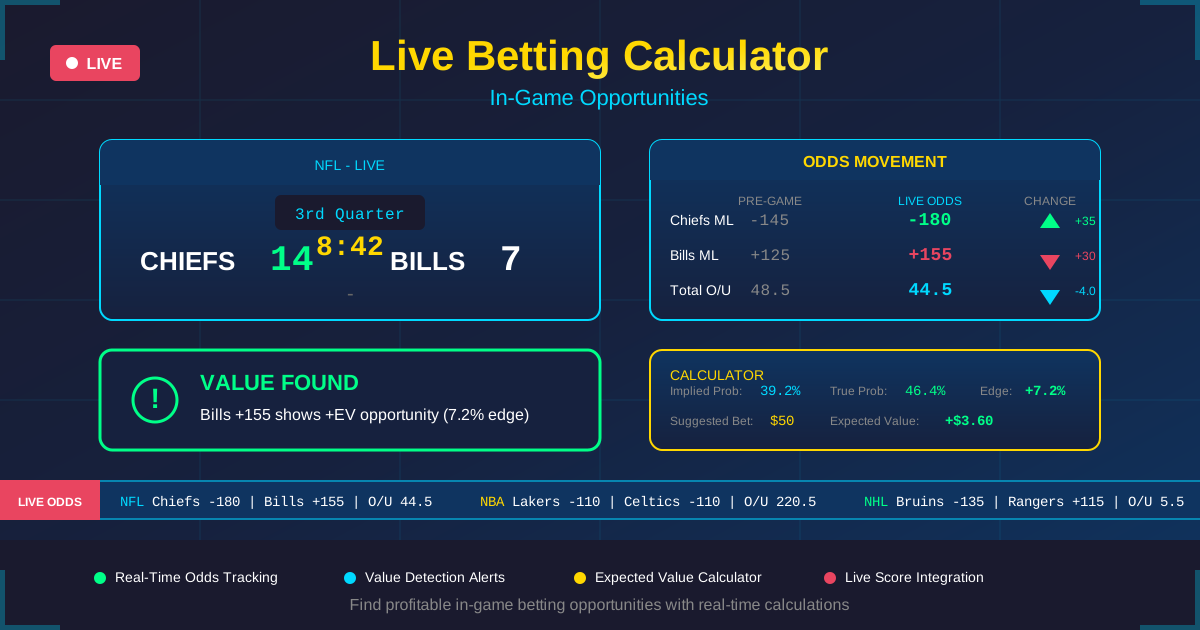
Live betting is the most exploitable market in sports betting, and most bettors are doing it wrong. While pregame lines are sharpened by days of professional action, in-game odds are set by algorithms reacting to game events in real time, and those algorithms make systematic mistakes. The bettor who understands where and why live lines misprice situations has access to edges that simply do not exist in pregame markets.
In-game wagering now accounts for over 50% of total sports betting handle in the United States, and that percentage is growing every year. Sportsbooks love live betting because recreational bettors make impulsive decisions based on emotion rather than math. But for the disciplined bettor who understands probability, game flow, and where algorithms fail, live betting offers the largest and most frequent positive expected value opportunities in the entire sports betting ecosystem.
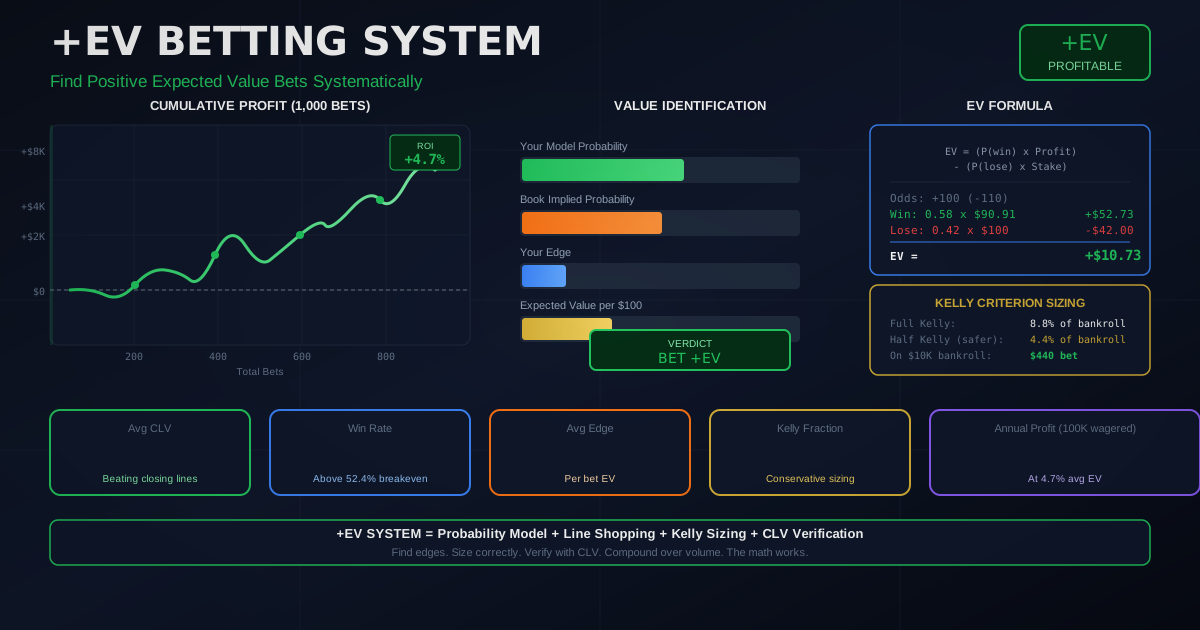
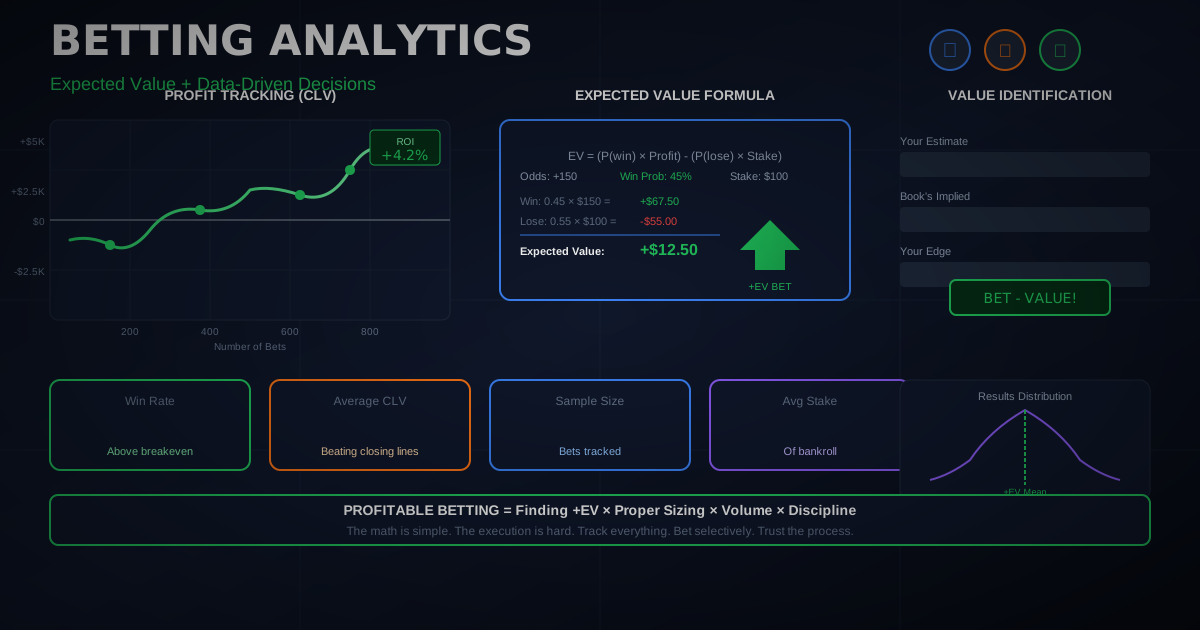
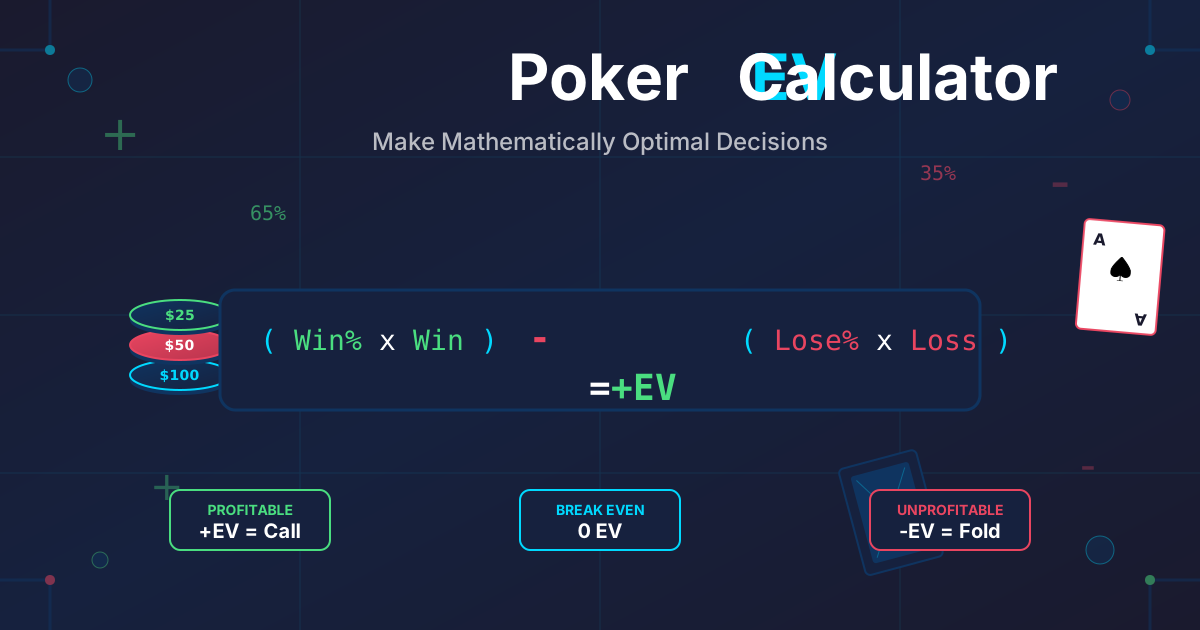
Calculate the expected value of any live bet with our free Expected Value Calculator.
How Live Betting Lines Work
Understanding how sportsbooks set and adjust live lines is the foundation of every live betting strategy.
Algorithmic Line Setting
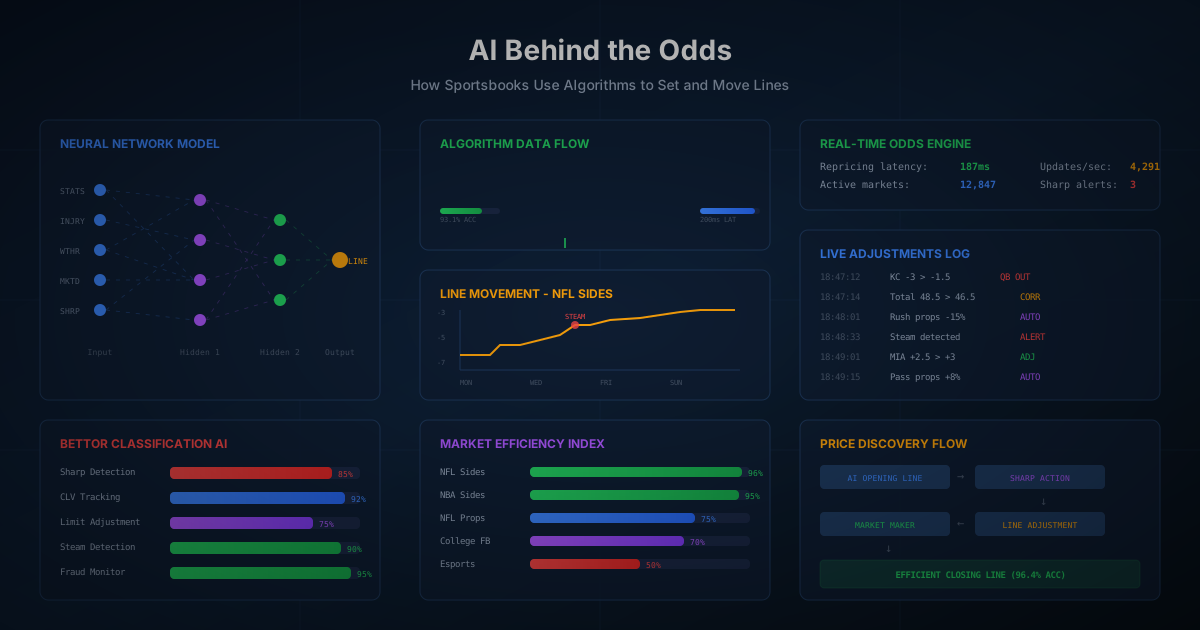
Unlike pregame lines, which are set by experienced oddsmakers and adjusted by sharp action over days, live lines are primarily generated by algorithms. These algorithms consider:
- Current score and game state (time remaining, possession, field position)
- Pregame odds (the starting reference point)
- Historical data (how often teams in similar game states win)
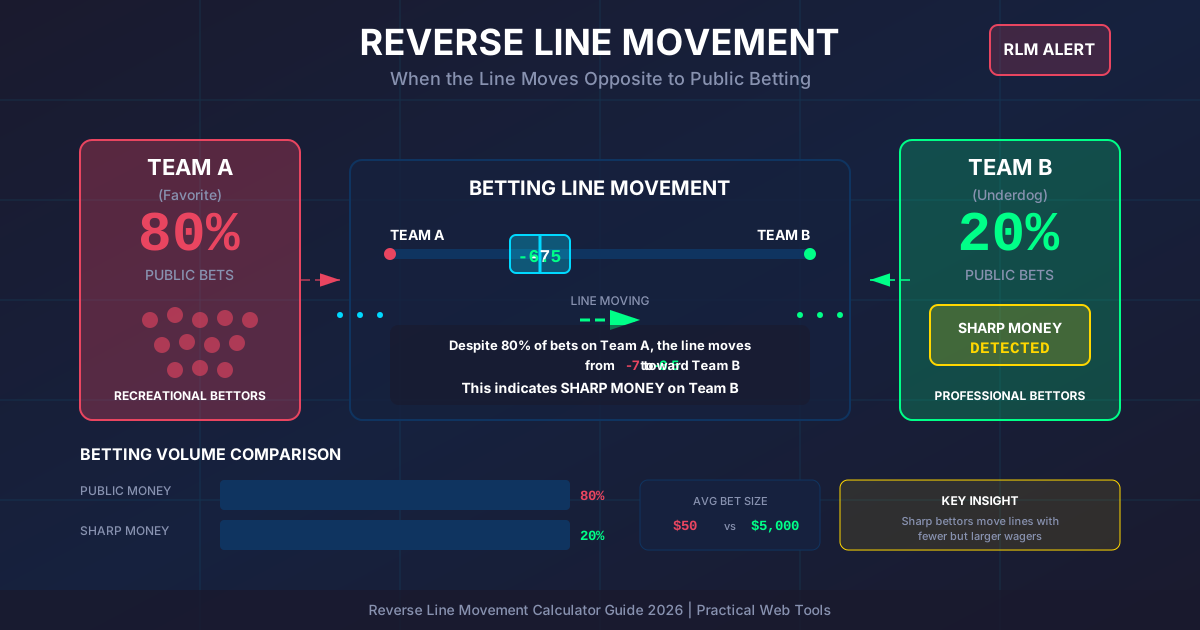
- Real-time betting action (customer money flowing in)
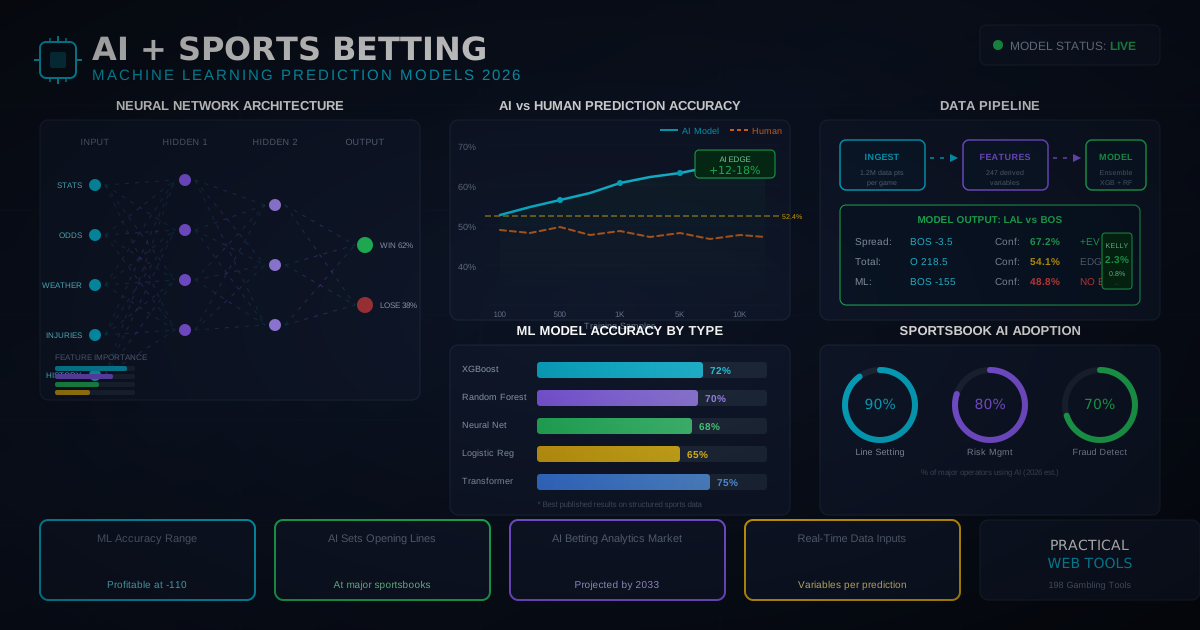
The key insight: these algorithms optimize for speed, not accuracy. They must update odds within seconds of every play, score, or event. That speed requirement means they use simplified models that systematically misprice certain game situations.
Where Live Lines Diverge from True Probability
Live algorithms struggle with several scenarios:
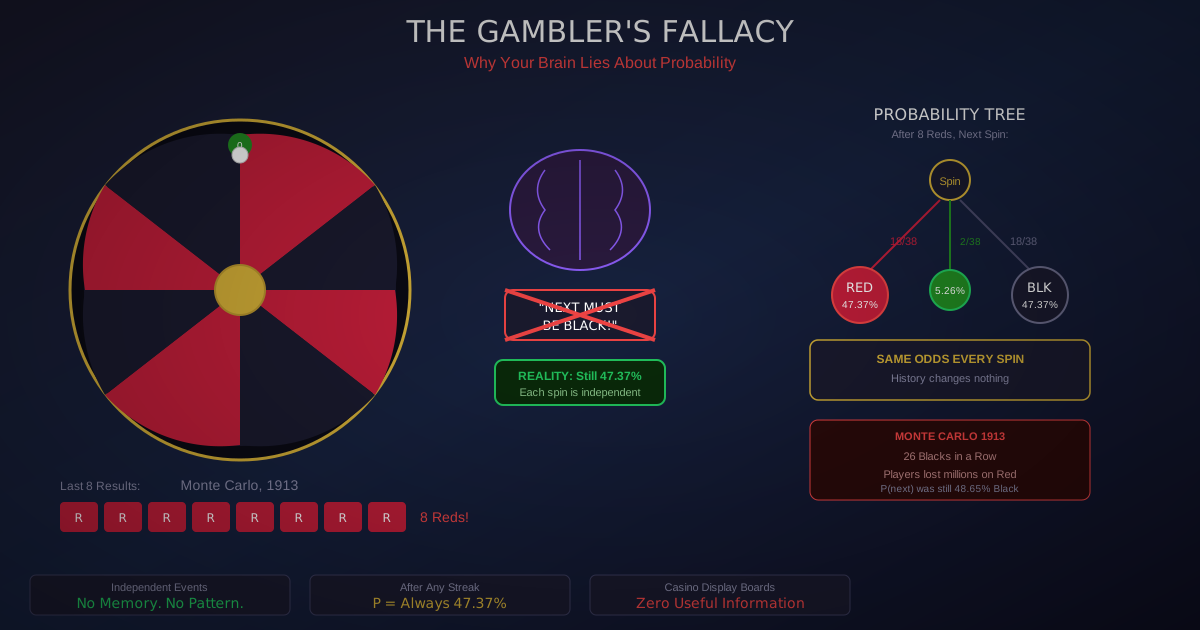
Momentum Shifts: When a team scores quickly to take a lead, the algorithm often overcorrects. A football team that scores a touchdown to go up 7-0 in the first quarter is not 7 points better than the opponent; it may have gotten a lucky break. But the live line often shifts as if the scoring team's probability of winning increased by more than the score alone justifies.
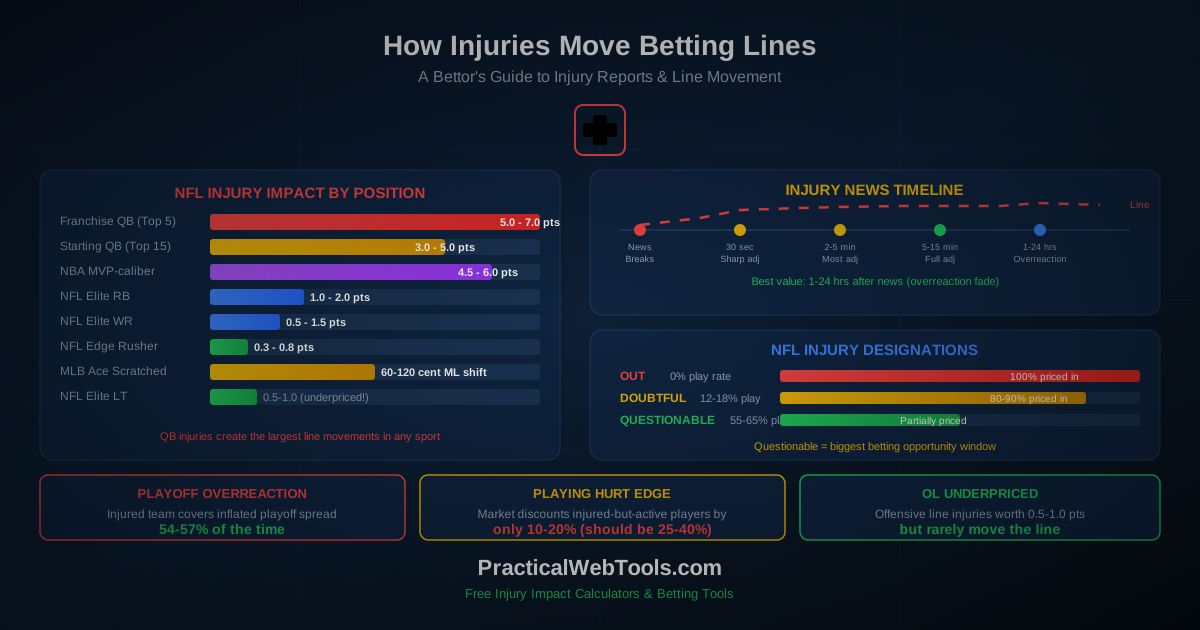
Context-Dependent Events: A key player injury mid-game takes time for algorithms to properly price. The live line might adjust partially, but the full impact on specific game situations (red zone efficiency, passing game, defensive schemes) often is not fully captured for several minutes.
Scoring Pace vs. Expected Pace: In basketball, a team that hits five consecutive three-pointers to start the game has not necessarily increased their true three-point shooting percentage. But the live total may have shifted as if the game pace will continue at that rate. Regression to the mean creates value on the under in these situations.
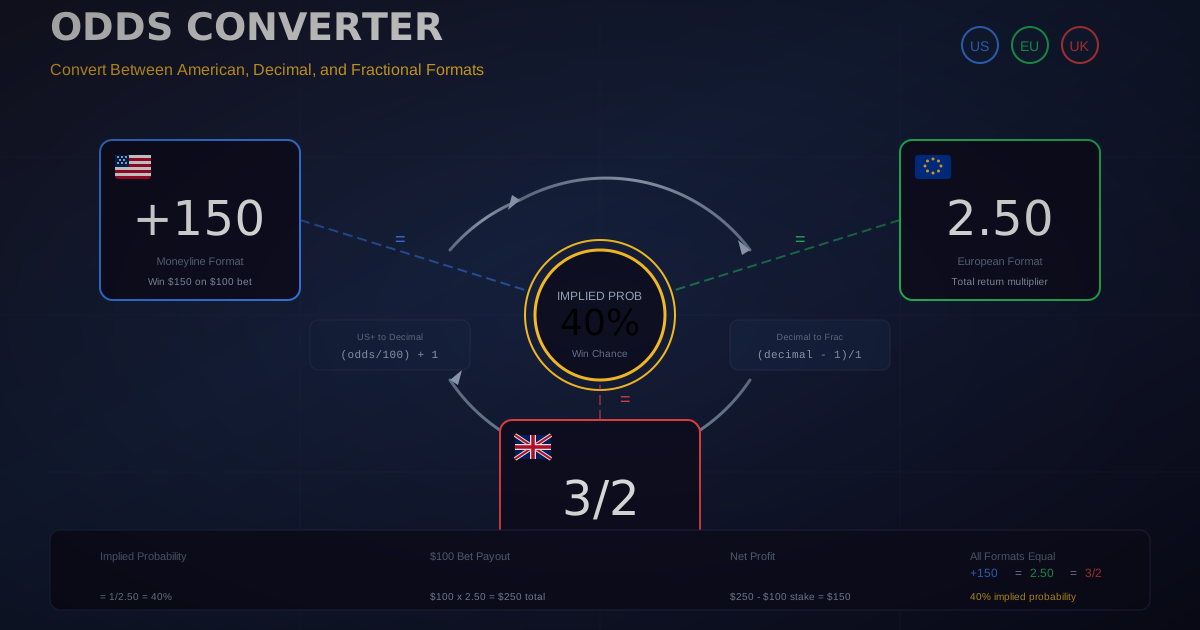
Convert between odds formats instantly with our Odds Converter.
Core Live Betting Strategies
Strategy 1: Overreaction Exploitation
The most reliable live betting strategy targets algorithmic overreactions to game events.
The Principle: Live algorithms weight recent events more heavily than they should. A quick score, a turnover, or a momentum swing causes the line to overreact, creating temporary value on the opposite side.
NFL Example:
- Pregame: Bills -3 (-110) vs. Dolphins
- First quarter: Dolphins score early touchdown, lead 7-0
- Live line: Dolphins -1.5 (-110) or Bills +1.5 (-110)
- Reality: The Bills are still likely the better team. One early touchdown does not invalidate the pregame analysis that made them 3-point favorites
- Value bet: Bills +1.5 live (or even Bills moneyline if the price is right)
The pregame line reflected hundreds of thousands of dollars of sharp money over several days. One first-quarter touchdown should not flip the entire analysis. Yet the live algorithm often does exactly that.
NBA Example:
- Pregame: Celtics -6.5 (-110) vs. Hornets
- End of first quarter: Hornets lead 32-24 after a hot shooting start
- Live line: Celtics -1 (-110)
- Reality: The Celtics were 6.5-point favorites for a reason. An 8-point first-quarter deficit is well within normal variance
- Value bet: Celtics -1 live
Calculate the implied probability of any live odds with our Implied Probability Calculator.
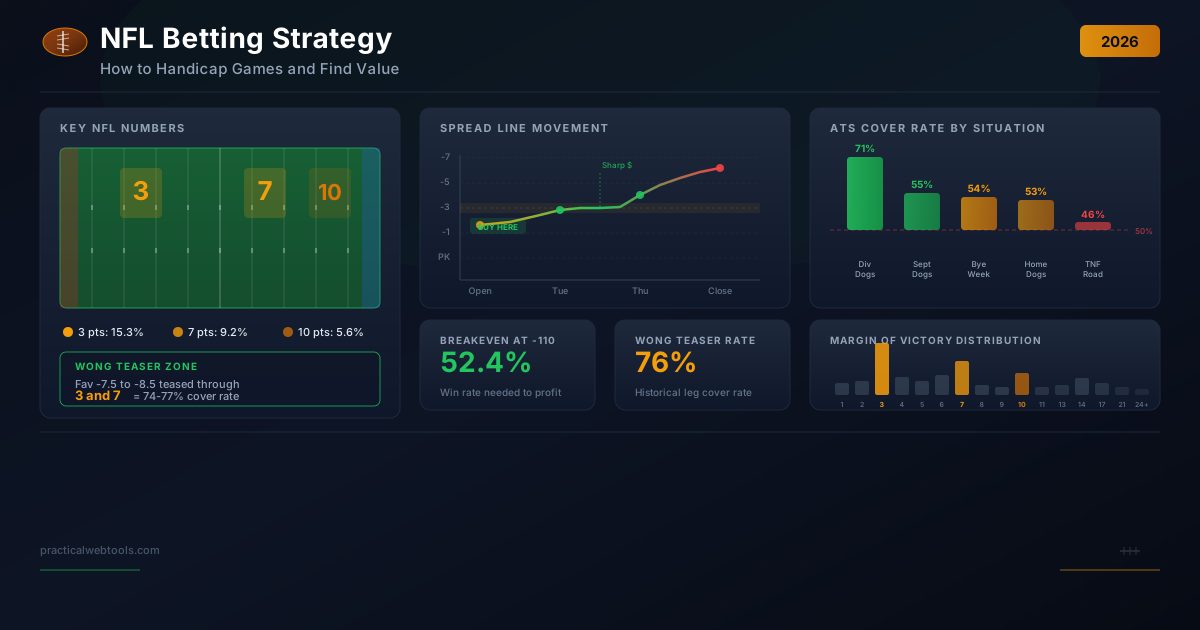
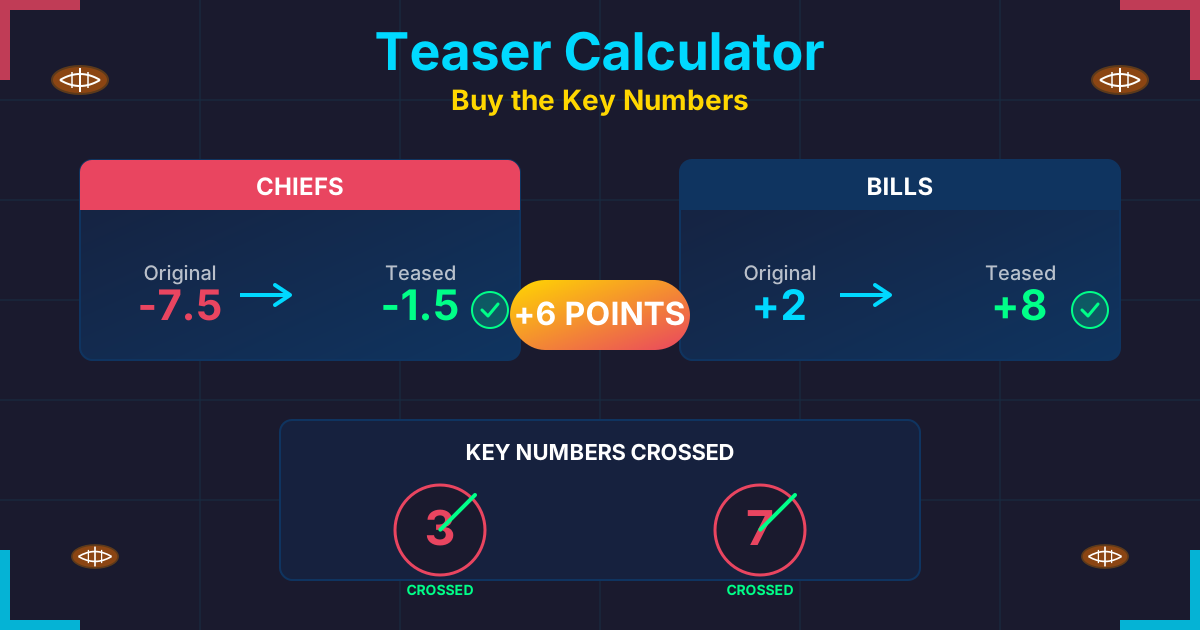
Strategy 2: Key Number Exploitation in Live Football
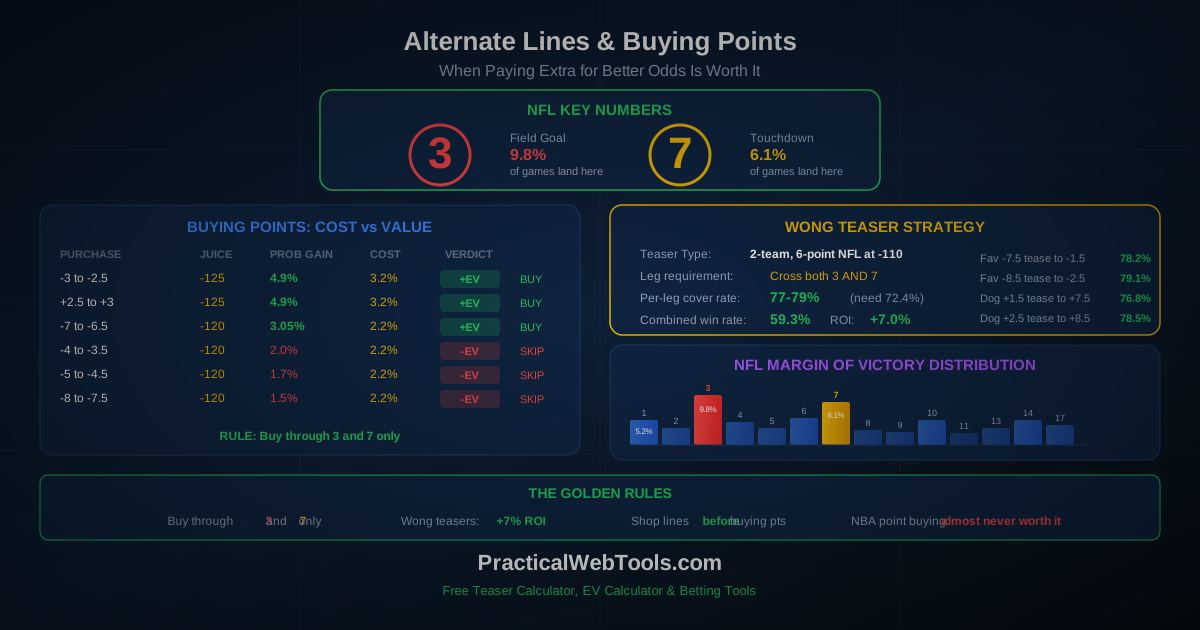
NFL scoring patterns create key numbers that live algorithms sometimes fail to properly value during in-game situations.
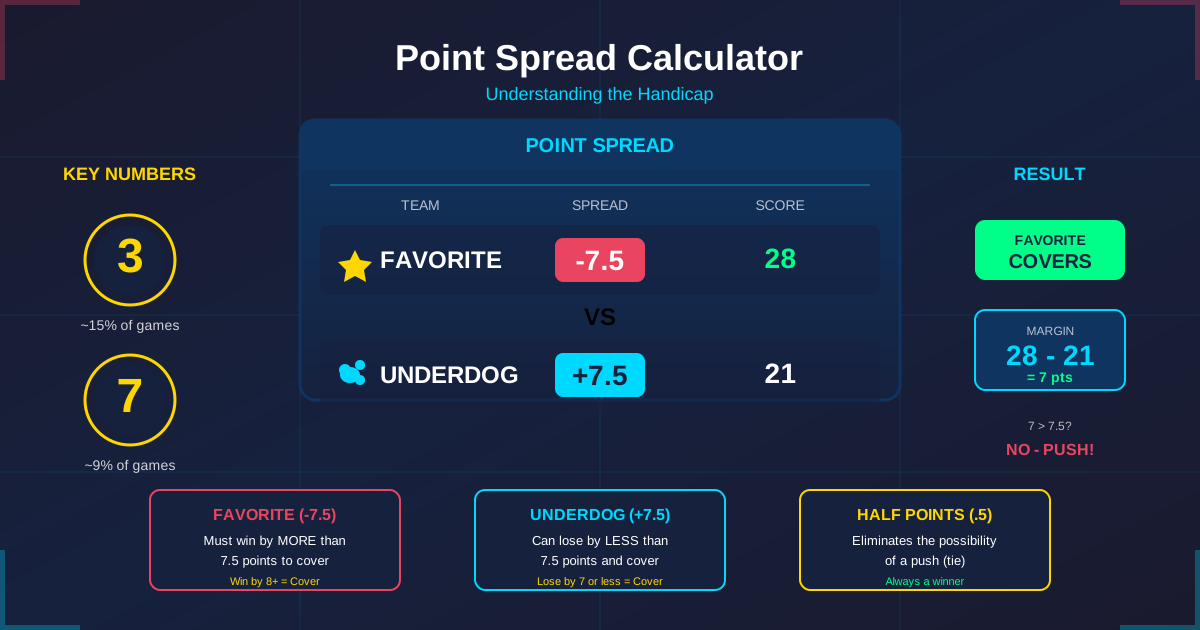
Key Numbers and Their Live Value:
| Score Margin | Key Number? | Why It Matters Live |
|---|---|---|
| 3 points | Yes (critical) | Field goals are the most common scoring play in late-game situations |
| 7 points | Yes (critical) | One-score games behave differently than two-score games |
| 10 points | Yes | Represents TD + FG, a common scoring combination |
| 14 points | Moderate | Two-score game, but not as sharp as 3 or 7 |
| 6 points | Moderate | One score but without extra point |
Live Application: When a live spread crosses the key number 3 or 7, there is often value in the team getting the points. For example:
- The live line moves from Team A -2.5 to Team A -3.5 after a late field goal
- Getting +3.5 in a game that could easily end on a 3-point margin offers significant value
- The algorithm may have overcorrected the line past a key number
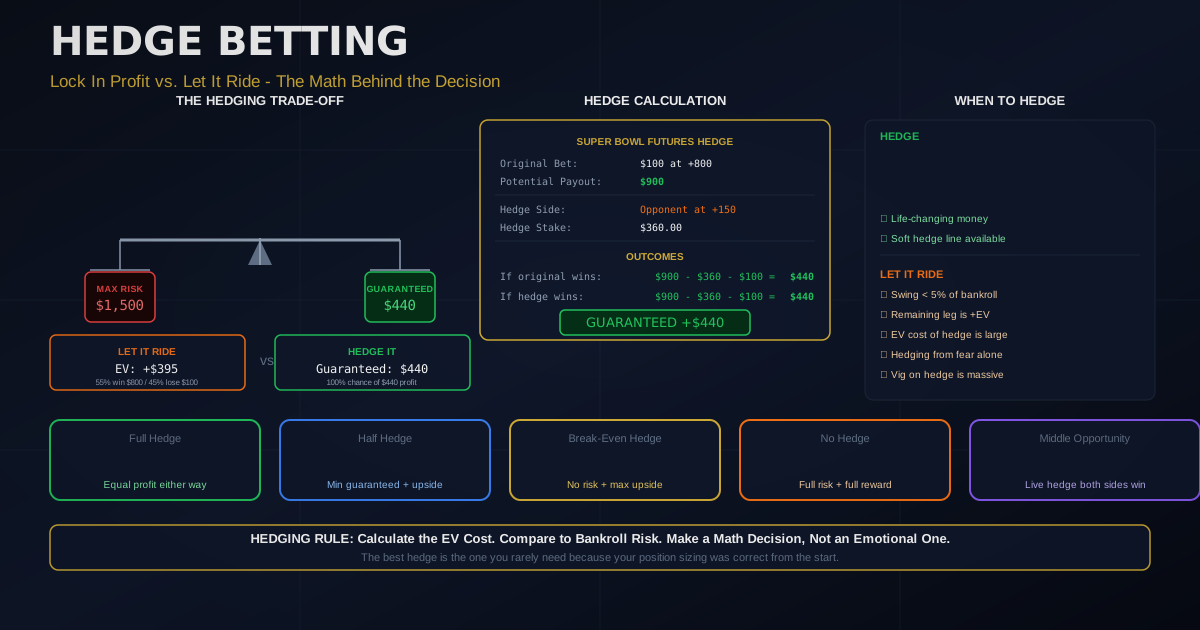
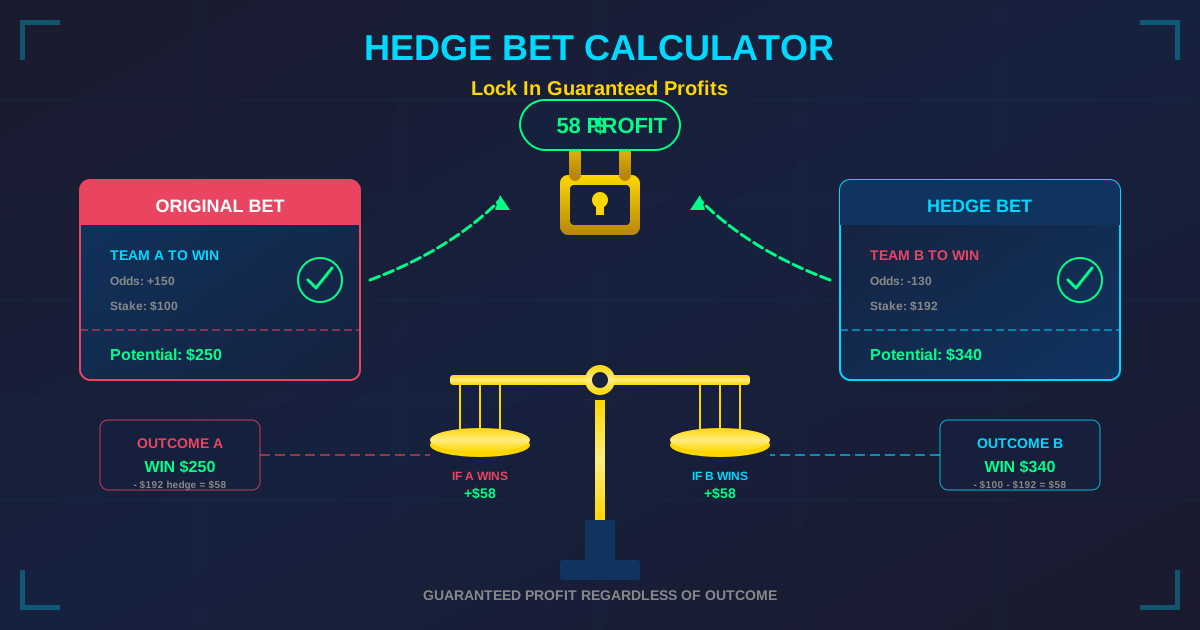
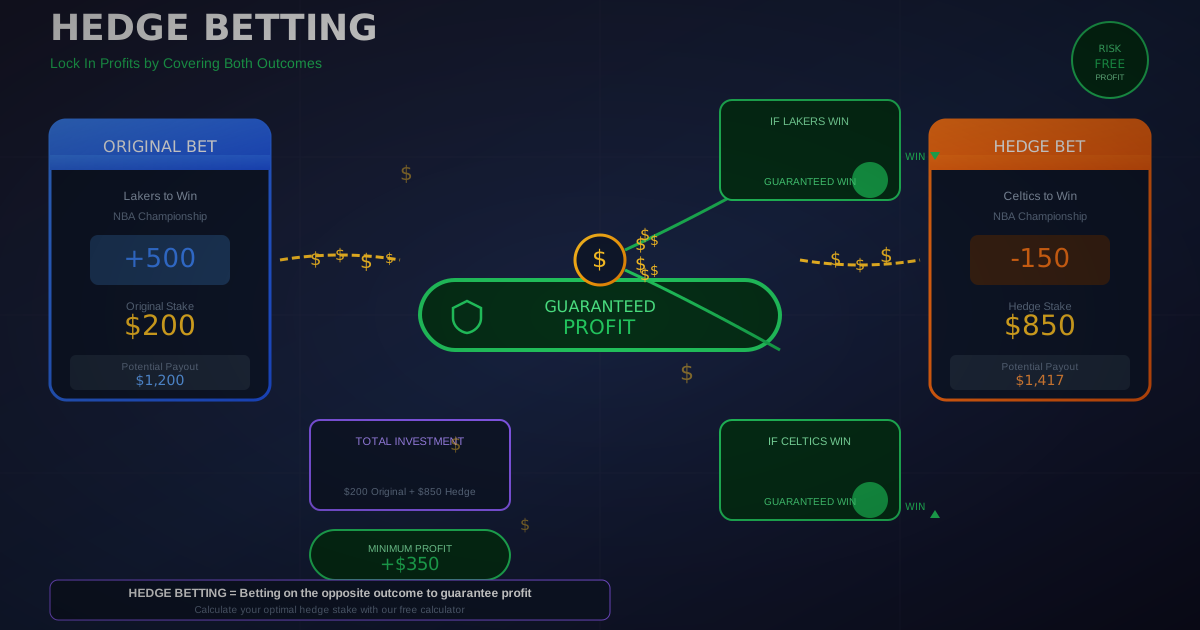
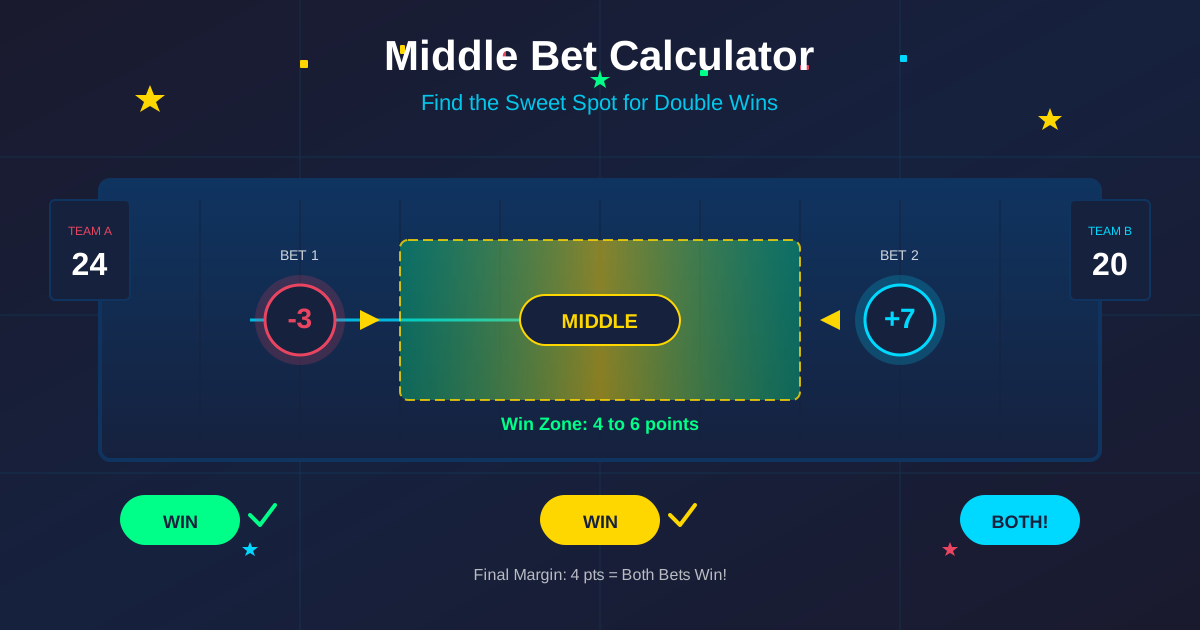
Strategy 3: Live Hedging
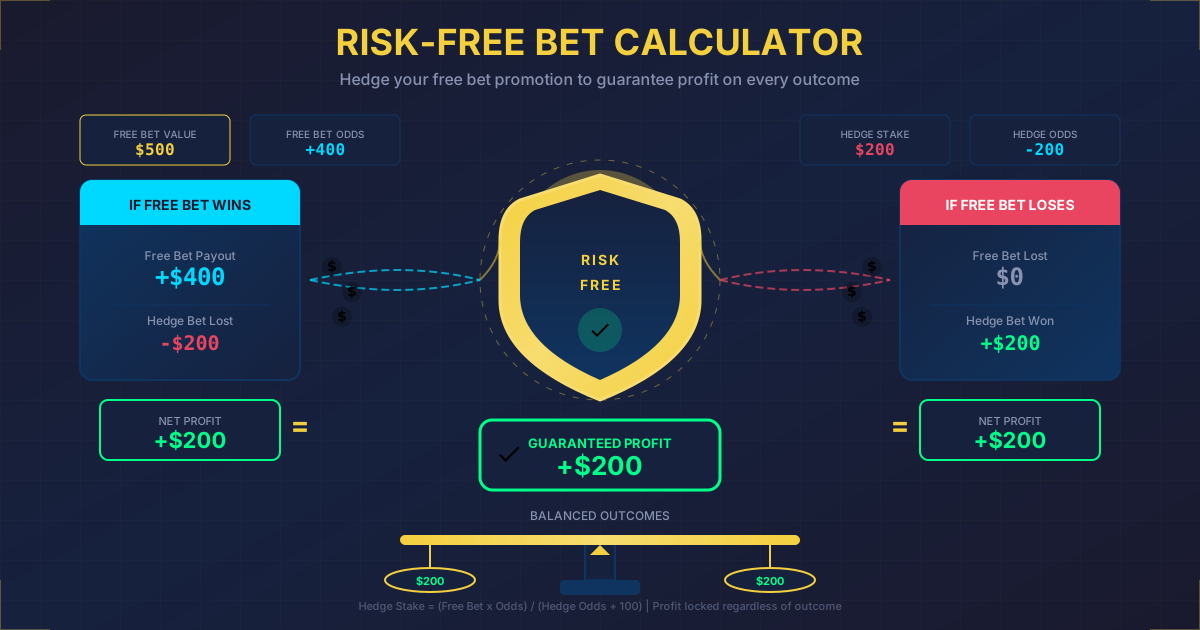
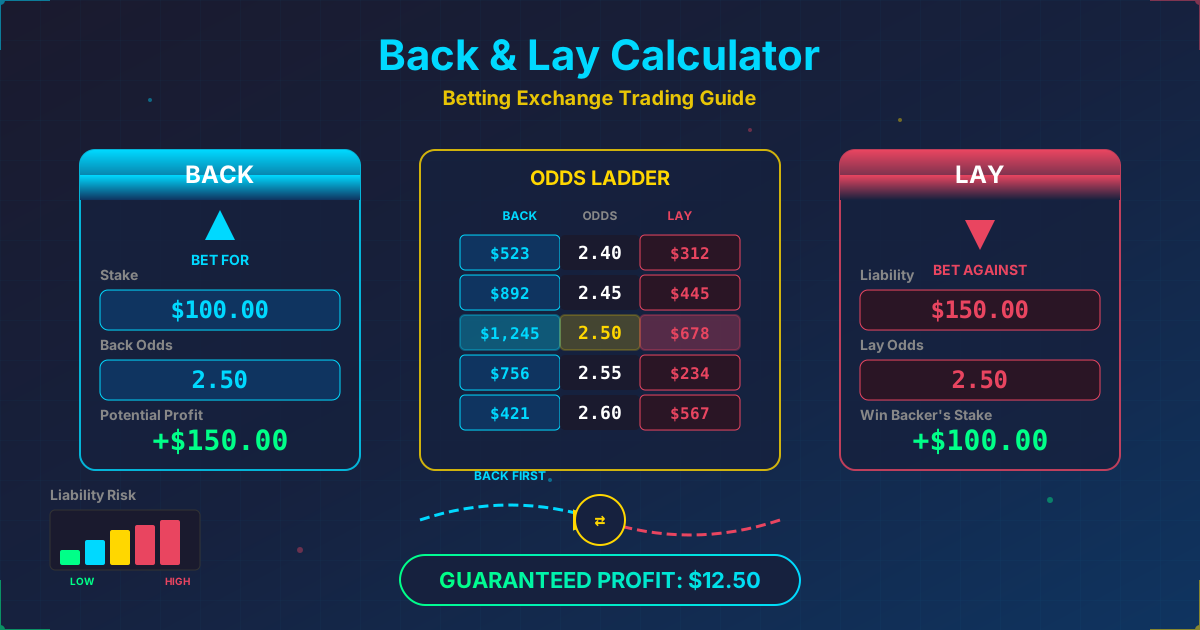
Live betting creates powerful hedging opportunities that lock in profit or minimize loss on pregame positions.
Scenario 1: Pregame Bet Winning, Hedge Live
- Pregame: You bet $200 on Packers +7 (-110) to win $181.82
- Halftime: Packers lead 17-10
- Live line: Packers -3.5 (-110)
- Live hedge: Bet $150 on opponent +3.5 (-110)
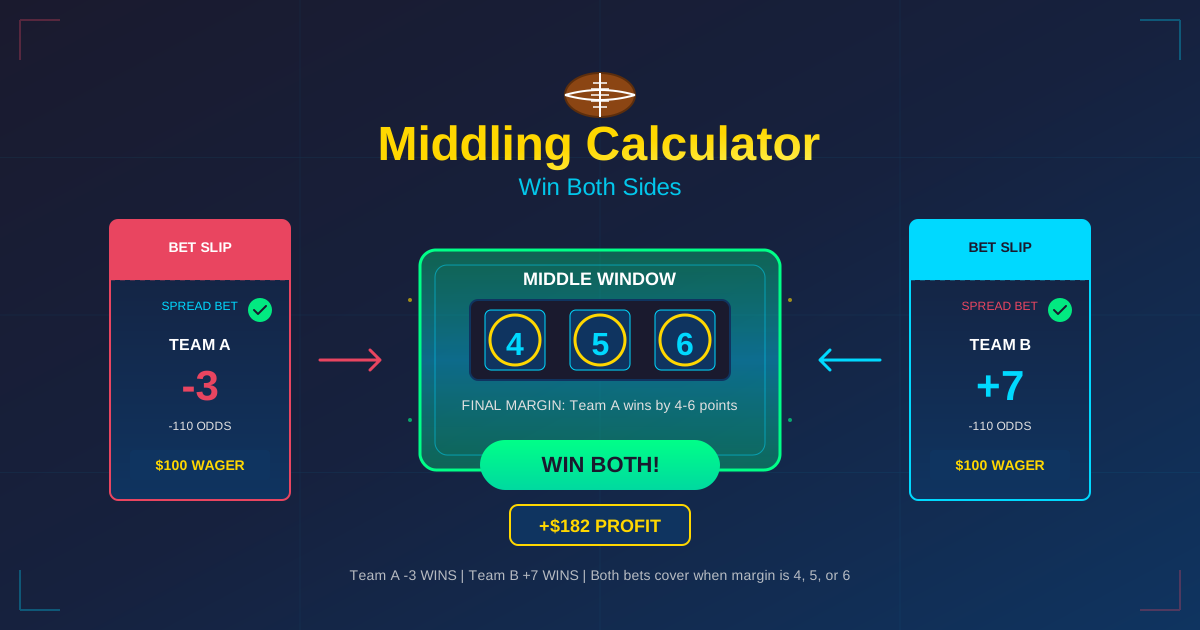
If Packers win by 4+: Win pregame (+$181.82), lose live (-$150) = +$31.82 If opponent wins: Lose pregame (-$200), win live (+$136.36) = -$63.64 If Packers win by 1-3: Win pregame (+$181.82), win live (+$136.36) = +$318.18
You have locked in a profit in one scenario and reduced maximum loss in others.
Scenario 2: Futures Hedge
- Season start: $100 on Eagles to win Super Bowl at +2000 (win $2,000)
- Eagles make the Super Bowl
- Live or pregame hedge: Bet $800 on opponent to win Super Bowl
If Eagles win: +$2,000 - $800 = +$1,200 If Eagles lose: -$100 + $800 win = depends on opponent odds
Calculate exact hedge amounts with our Hedge Calculator.
Strategy 4: Tempo-Based Live Betting on Totals
Game tempo is one of the most mispriced factors in live betting totals.
The Concept: Early game pace does not predict late game pace. Teams that start fast often slow down due to substitutions, coaching adjustments, and natural regression. Live total algorithms extrapolate early pace, creating value.
NBA Application:
- Pregame total: 218.5
- After first quarter: Score is 62-58 (120 combined)
- Live total: 246.5 (algorithms extrapolate the hot start)
- Reality: NBA games rarely sustain first-quarter pace; bench units play, defenses adjust, foul trouble slows the game
- Value bet: Under 246.5
NFL Application:
- Pregame total: 44.5
- First quarter ends 14-10 (24 combined)
- Live total: 58.5
- Reality: High-scoring first quarters in the NFL often lead to coaching adjustments, especially defensive ones
- Value bet: Under 58.5 (if you believe the first-quarter pace was unsustainable)
The Math: If the pregame total was set at 44.5 by sharp money over days of analysis, and 24 points scored in the first quarter represents roughly 54% of the expected total, the second through fourth quarters should average roughly 20.5 more points (44.5 - 24 = 20.5 implied). But the live total of 58.5 implies 34.5 more points. That is a massive discrepancy from the pregame analysis.
Strategy 5: Injury and Situation Exploitation
Live betting provides unique opportunities when in-game events change the fundamental calculus:
Player Injuries: When a key player is injured mid-game, the live line adjusts but often not enough. Specific scenarios where live markets underprice injury impact:
- Starting quarterback leaves the game (NFL)
- Star player enters foul trouble (NBA)
- Starting pitcher pulled early (MLB)
Situational Changes:
- A team trailing by multiple scores must abandon their game plan (pass-heavy in football, small ball in basketball)
- Weather changes during outdoor games (wind picking up affects passing and kicking)
- Ejections that change team dynamics
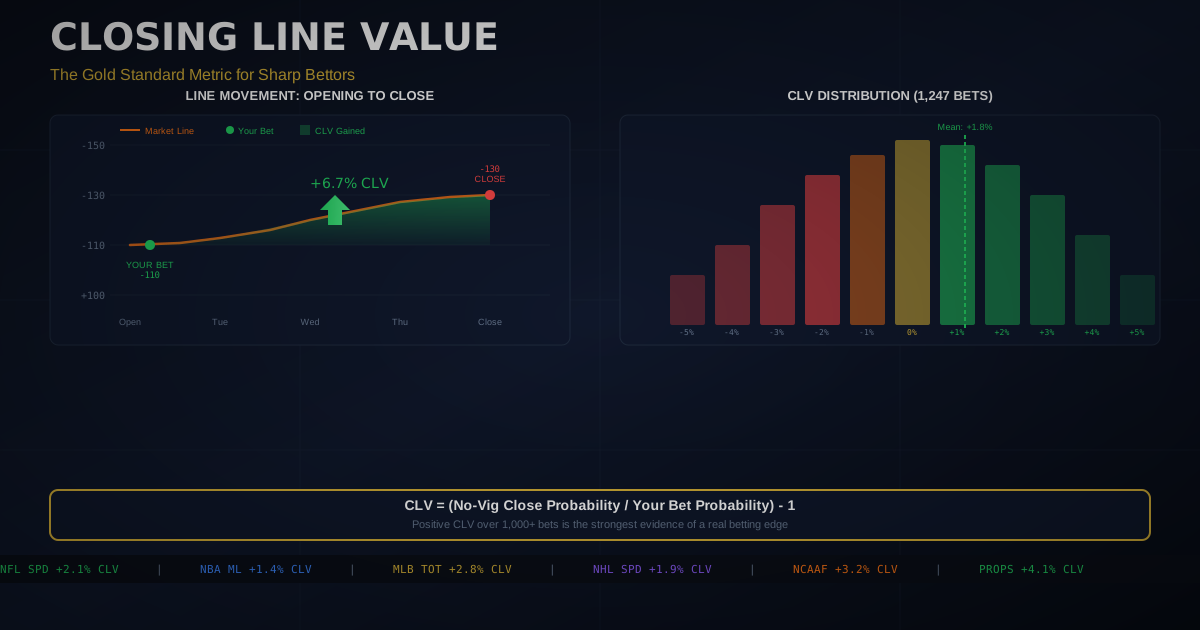
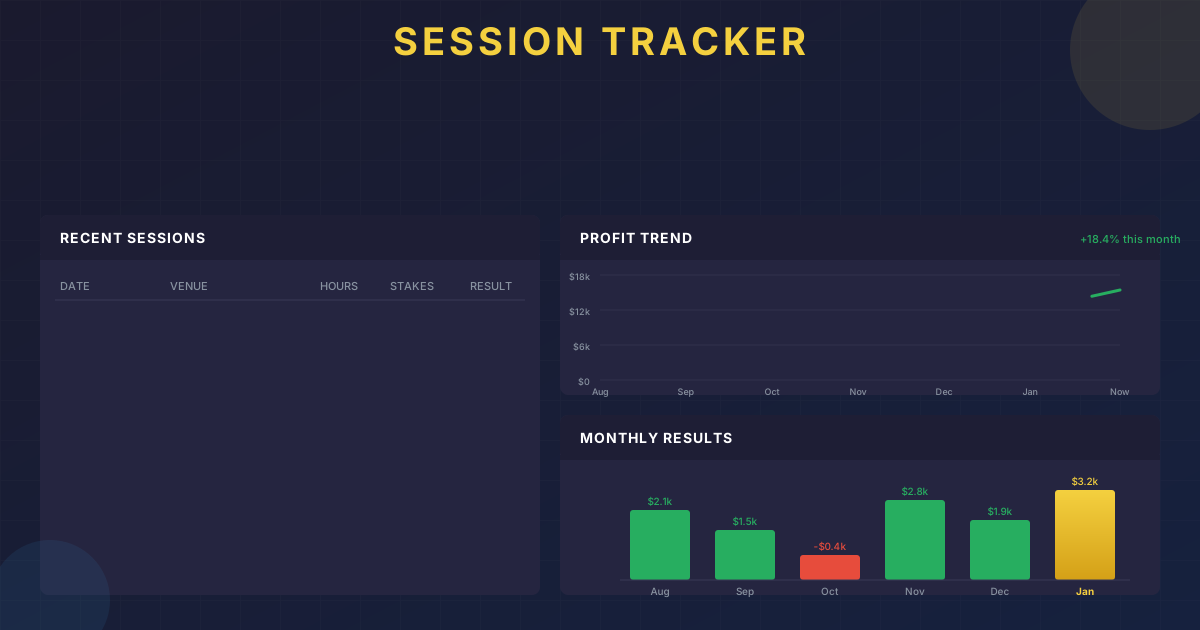
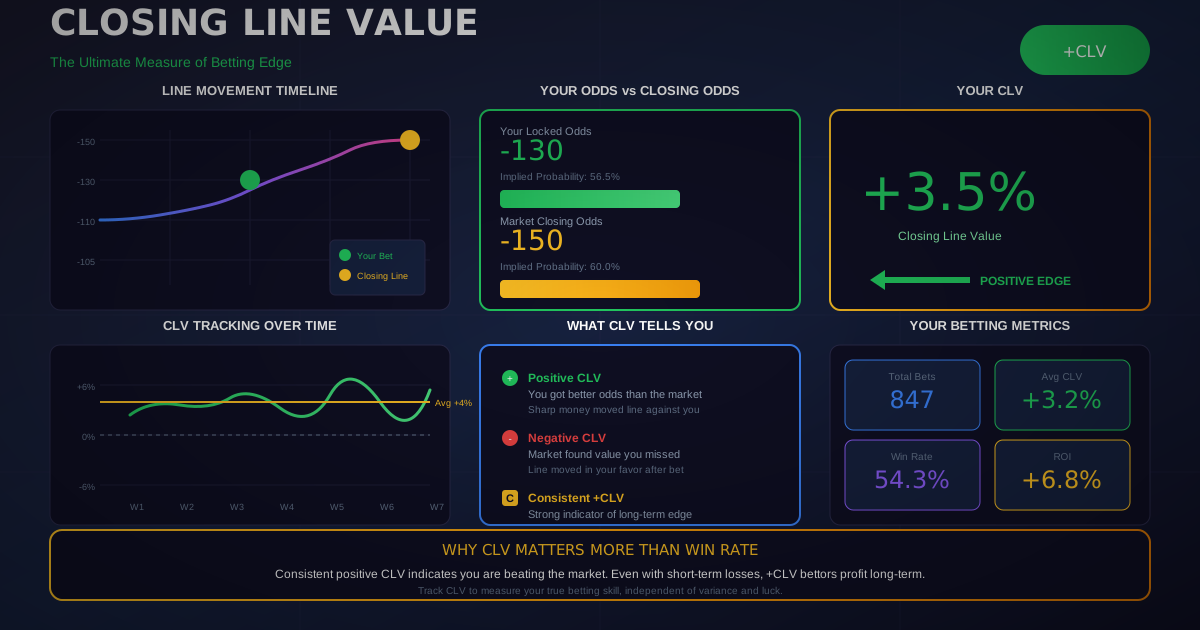
Track your live betting performance alongside all wagers with our CLV Tracker.
The Latency Advantage in Live Betting
Understanding Latency
Latency refers to the time gap between a real-world event occurring and the sportsbook updating its live odds. This gap creates opportunities for bettors who are watching the game and can react faster than the book.
Types of Latency Edges
Broadcast Latency: If you are watching via streaming, you may be 15-60 seconds behind live action. Bettors at the stadium or watching lower-latency feeds see events before the odds update.
Processing Latency: Even with instant information, algorithms need processing time. Between a play happening and the odds updating, there is a window (usually 1-10 seconds) where the old odds are still available.
Interpretation Latency: Some events require human judgment to properly price. An injury that looks minor but is actually serious takes time to assess. During that assessment period, the odds may not fully reflect the new reality.
Ethical and Practical Considerations
While latency-based strategies exist, be aware:
- Sportsbooks may void bets they determine were placed after a deciding event
- Most books have "bet acceptance" delays specifically to counter latency advantages
- Relying purely on latency is unsustainable as books improve their technology
- The most reliable live edges come from analytical skill, not speed
Live Betting Bankroll Management
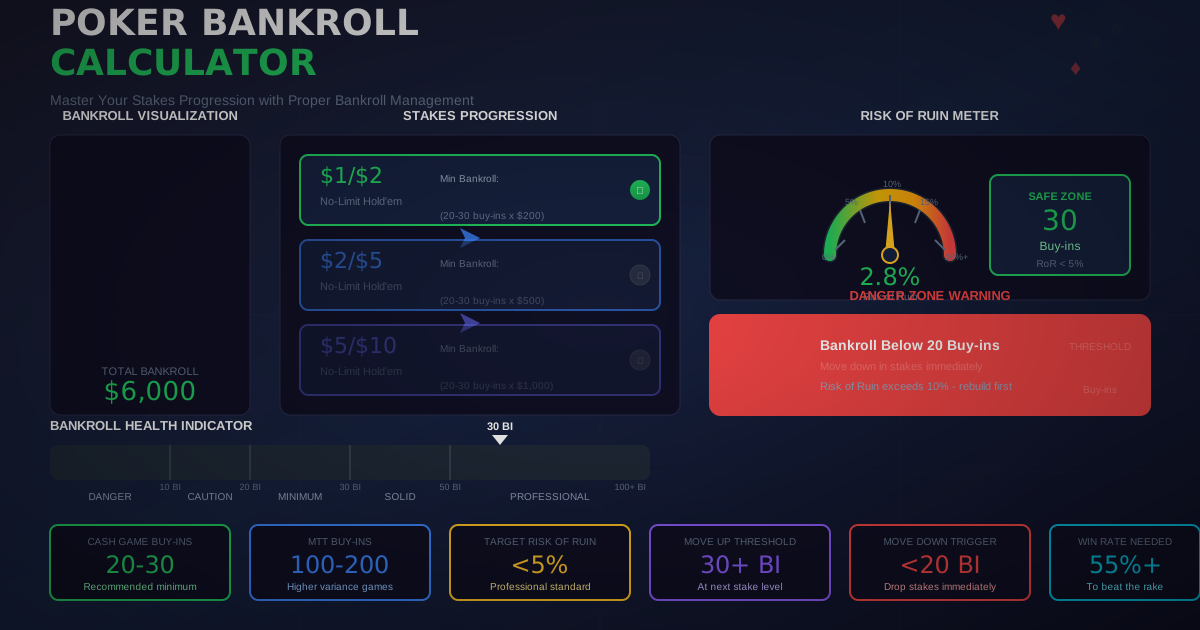
Live betting demands stricter bankroll management than pregame betting because of three factors:
Factor 1: Higher Emotional Risk
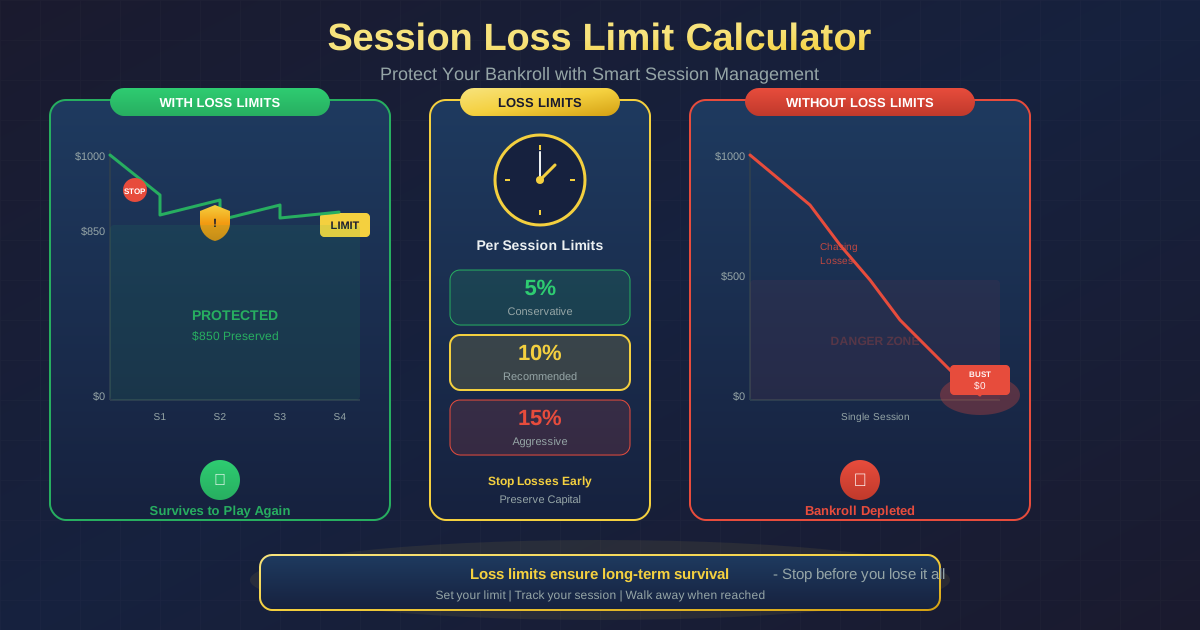
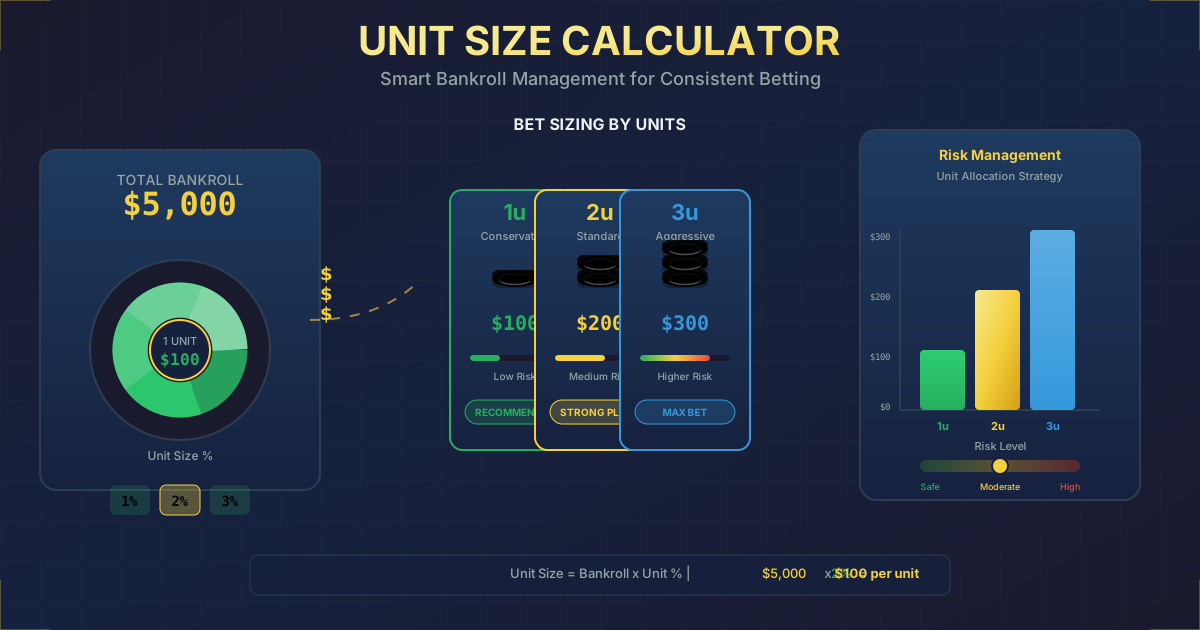
The excitement of live events triggers emotional betting. Watching your team fall behind creates the impulse to chase. Strict unit sizing prevents emotional spiraling.
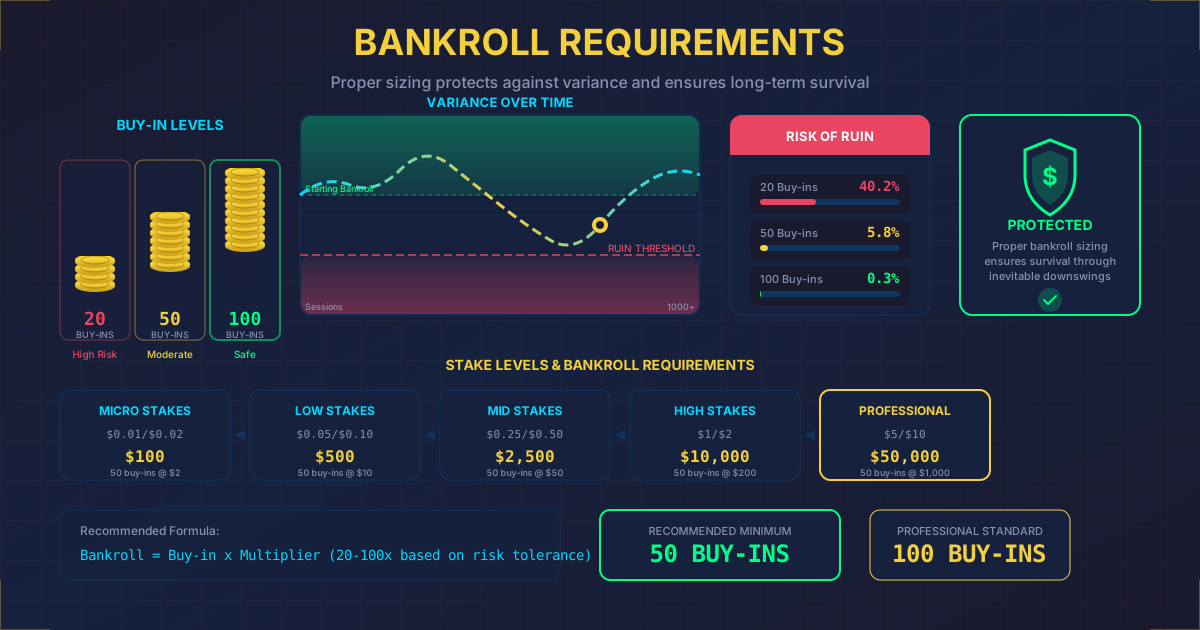
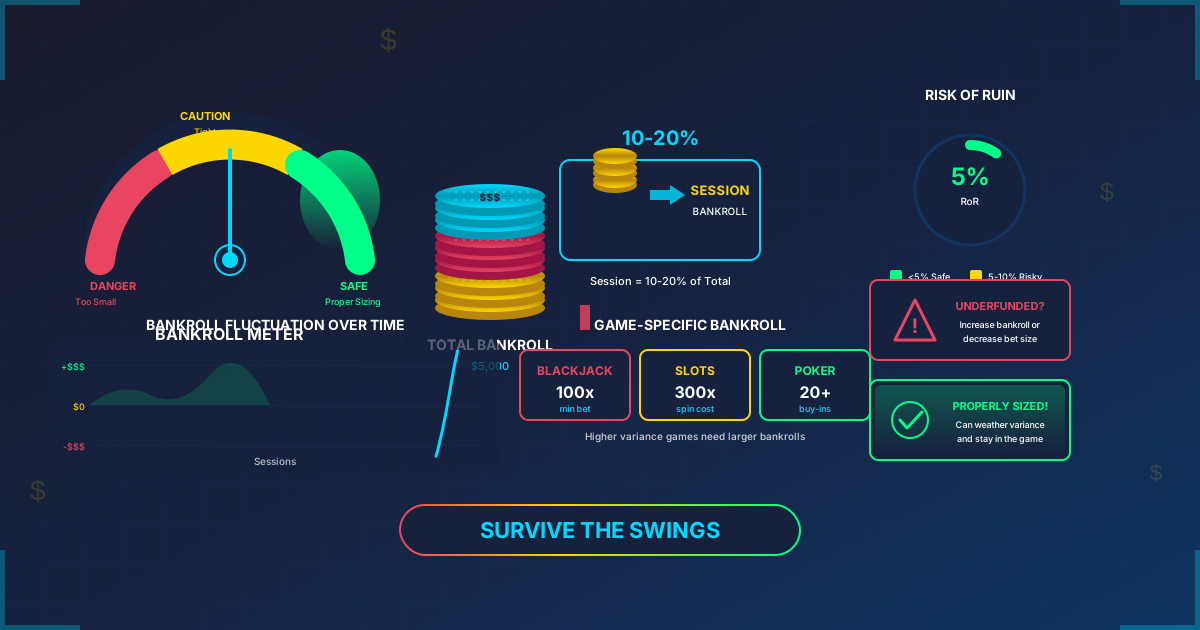
Rule: Never deviate from your standard unit size during live betting. If your standard bet is 1-2% of bankroll, live bets should follow the same discipline.
Factor 2: Higher Volume Possibility
A single game offers dozens of live betting opportunities. Without discipline, you can place 20+ bets during one event, creating excessive exposure.
Rule: Limit yourself to 1-3 live bets per game maximum. Only bet when you identify a clear mispricing, not simply because you can.
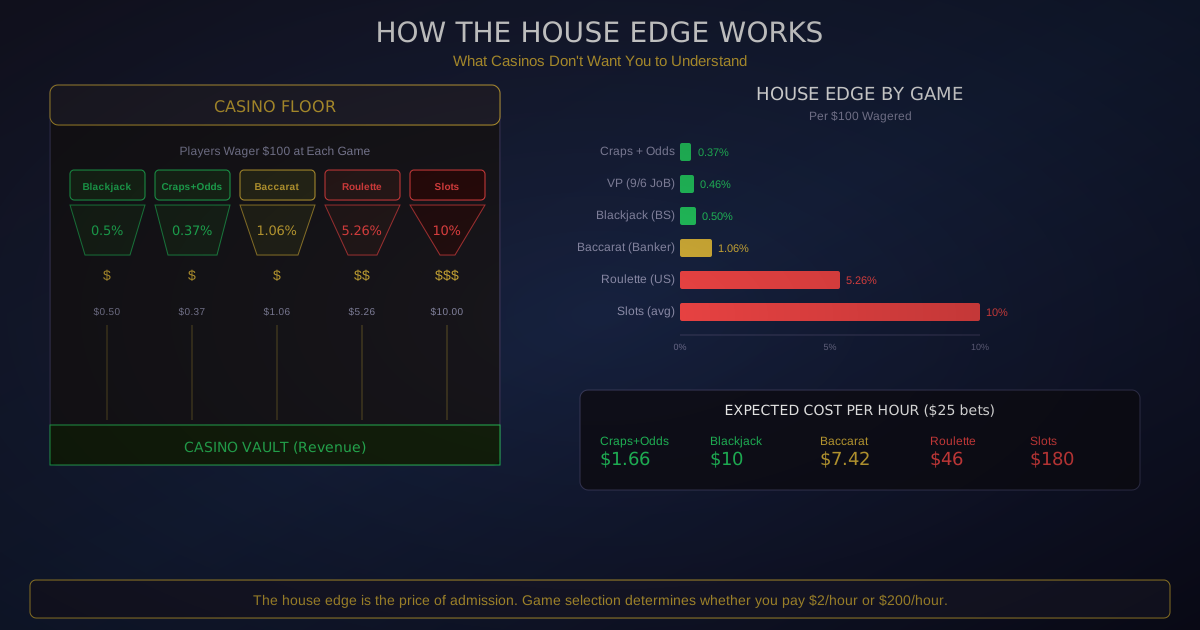
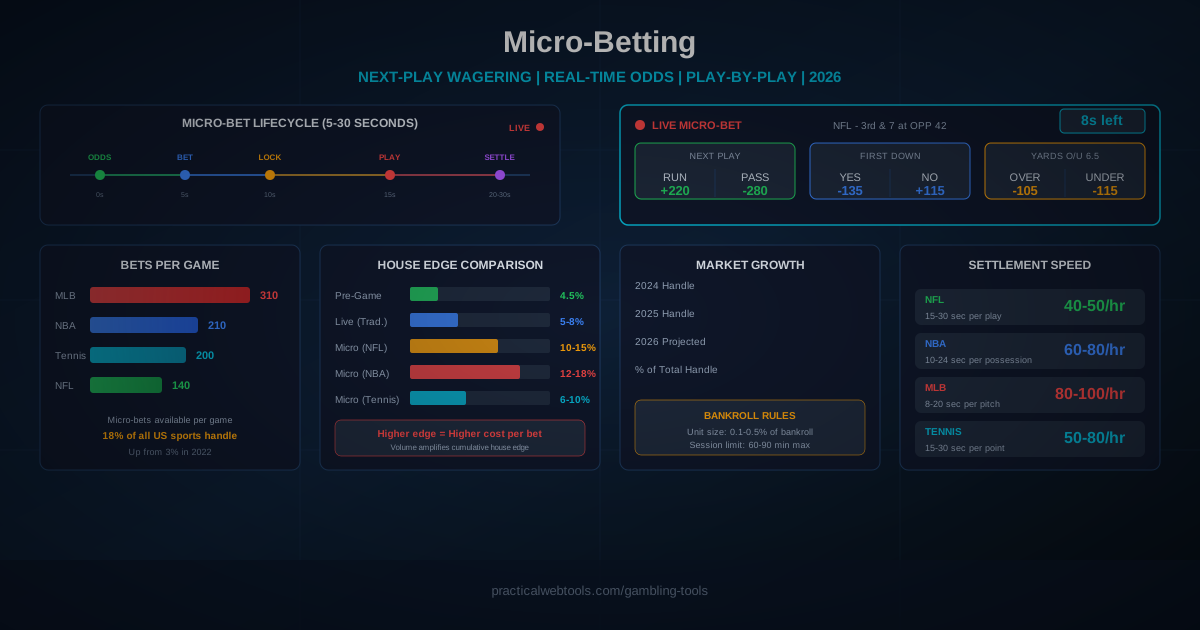
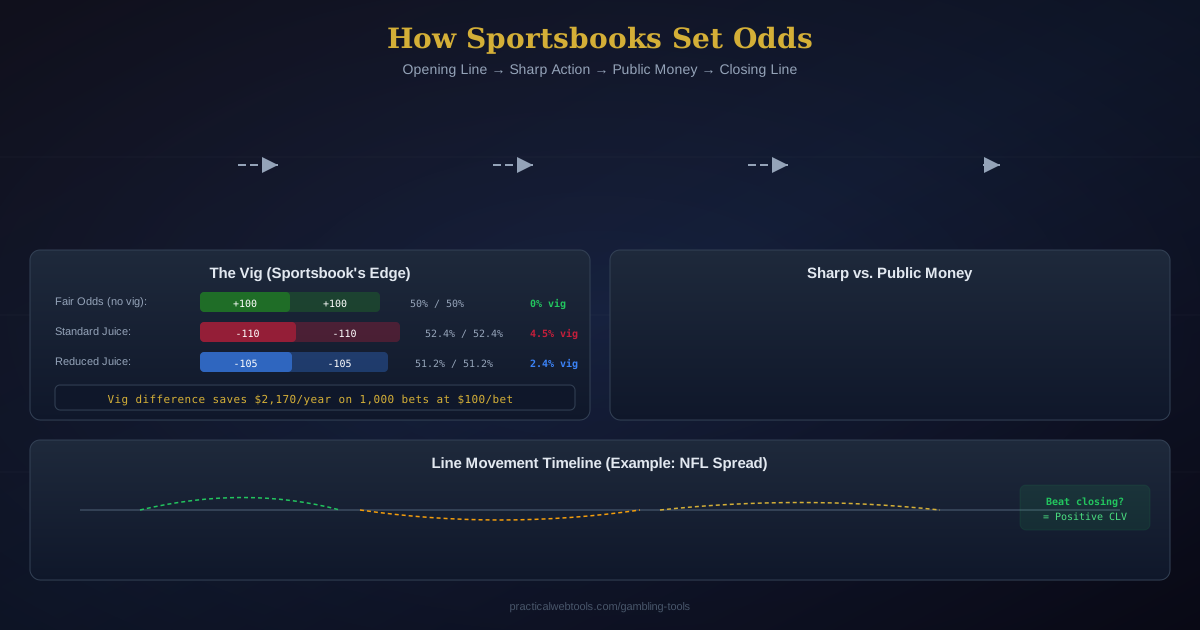
Factor 3: Wider Vig on Live Lines
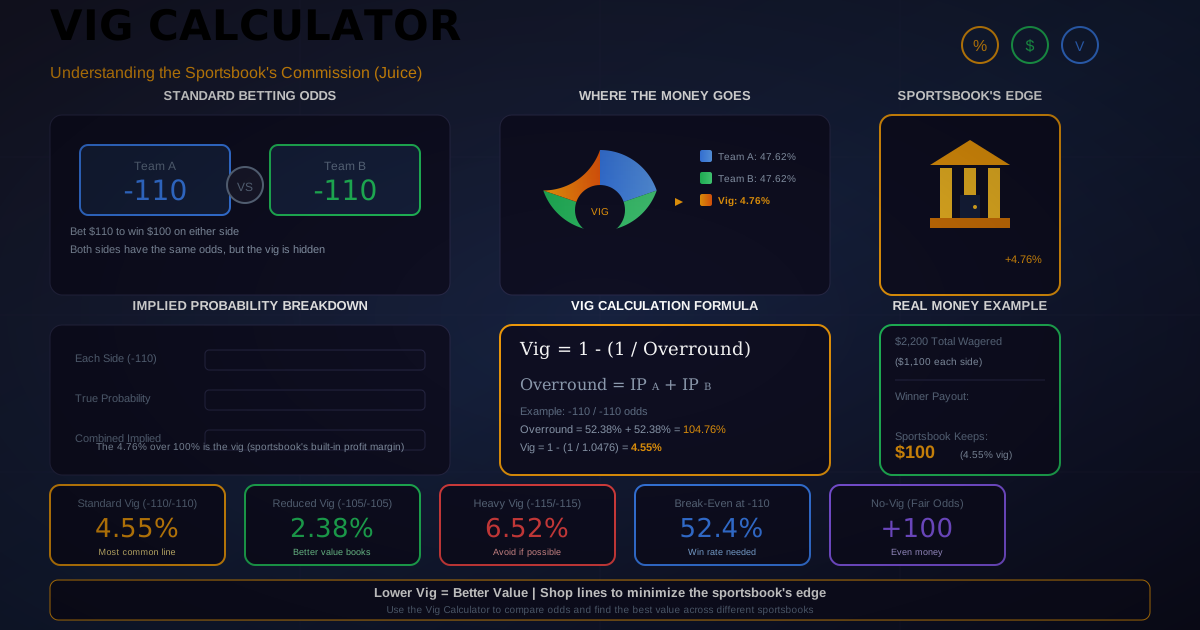
Live odds typically carry higher vig than pregame lines:
| Market Type | Typical Vig | Breakeven Win% |
|---|---|---|
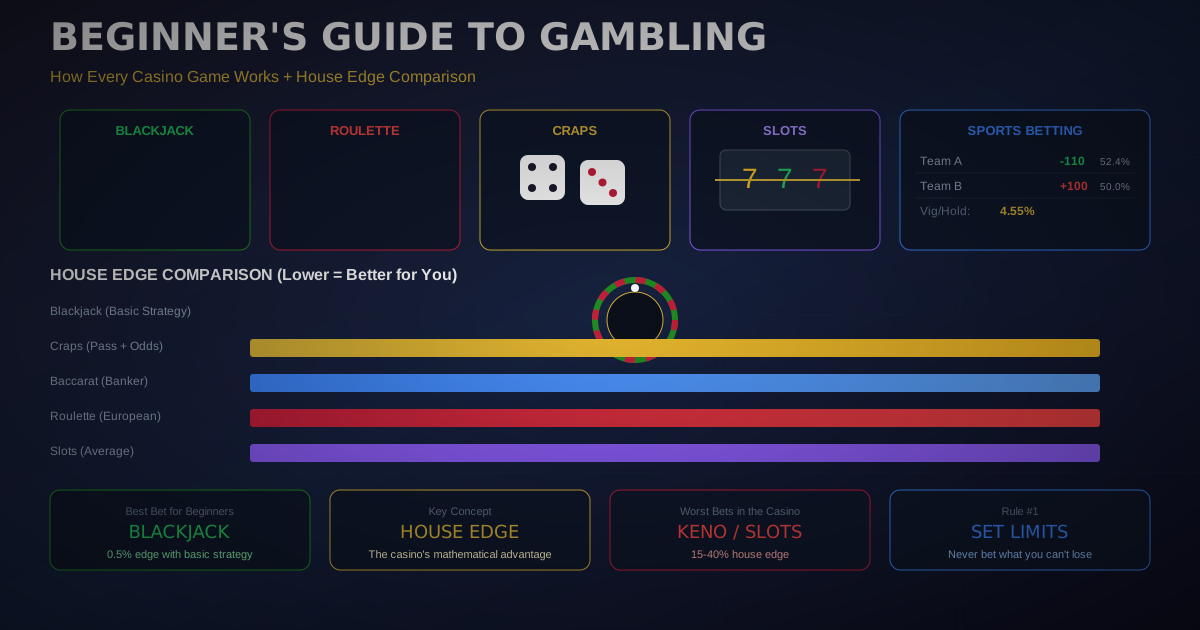
| Pregame spread (-110/-110) | 4.55% | 52.4% |
| Live spread (-115/-105) | ~5.5% | 53.5% |
| Live moneyline (varies) | 6-8% | 54-56% |
| Live props | 8-12% | 56-60% |
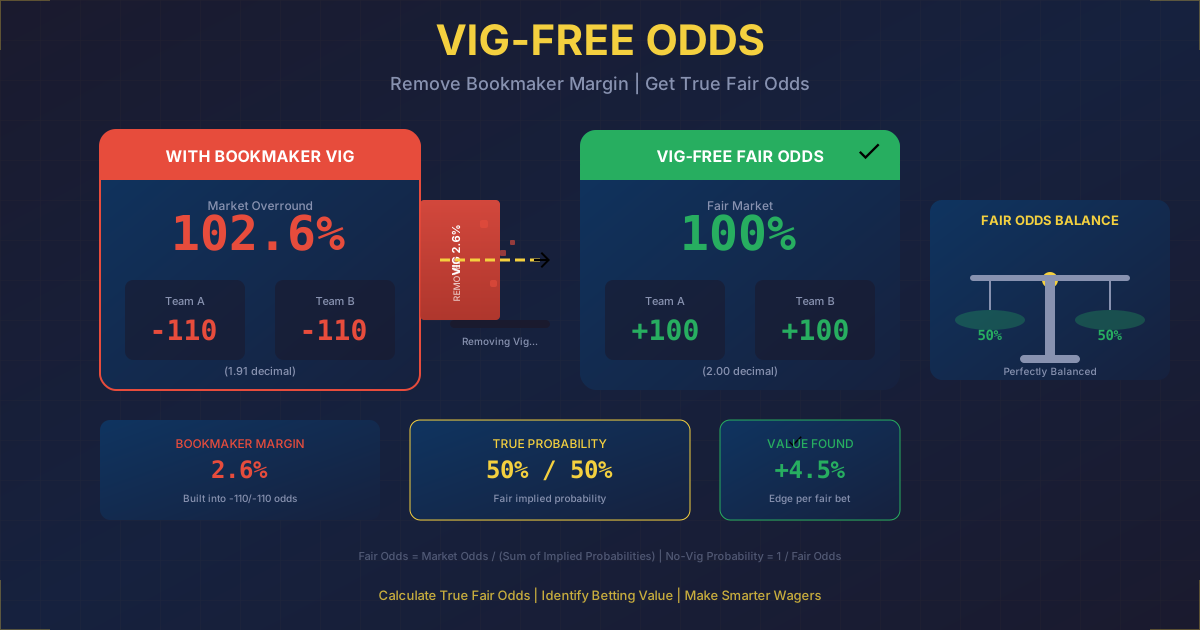
The higher vig means you need a bigger edge to profit live. Only bet when your estimated edge exceeds the vig.
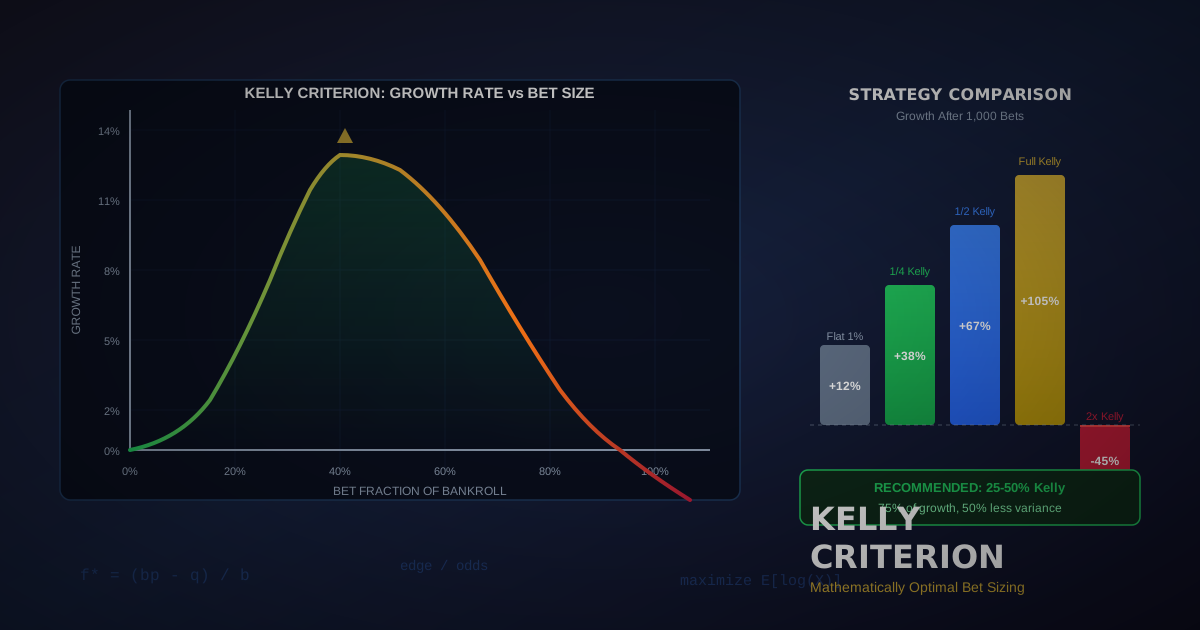
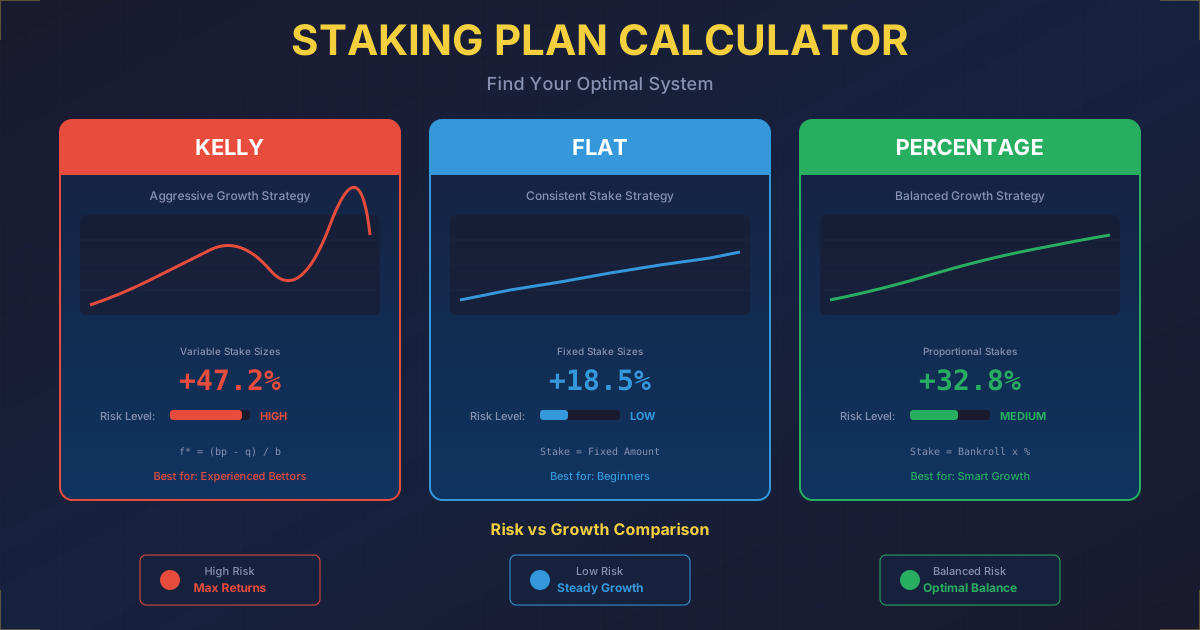
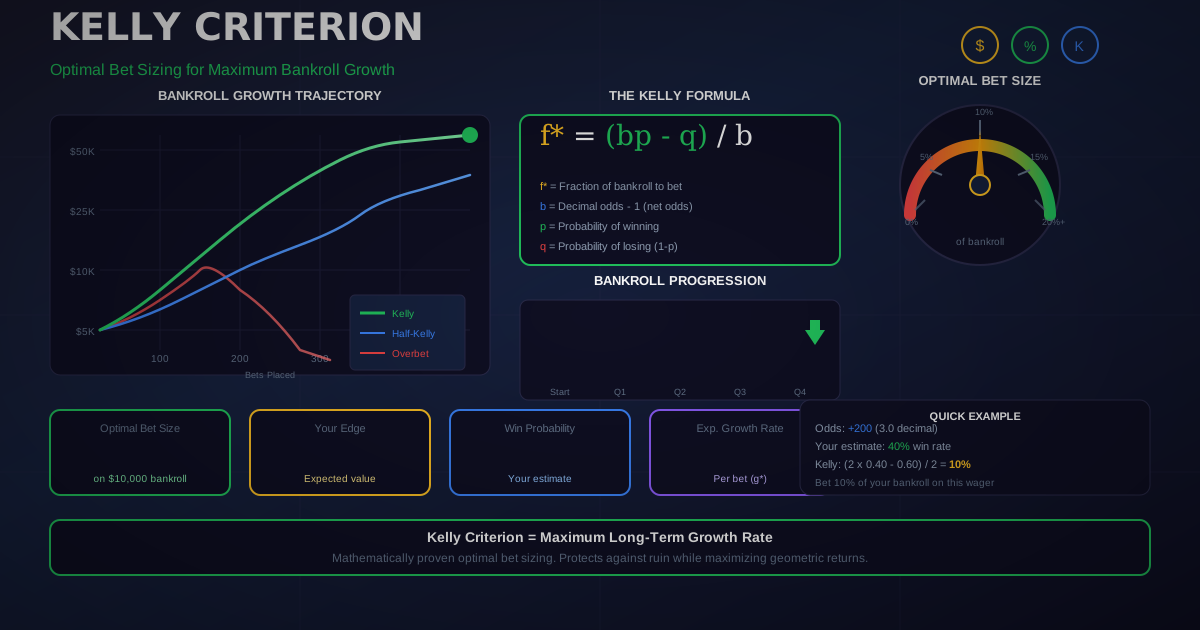
Size your live bets optimally with our Kelly Criterion Calculator.
Sport-Specific Live Betting Strategies
NFL Live Betting
Best Opportunities:
- First-quarter overreactions (the game is long; early scores mean less than algorithms suggest)
- Halftime adjustments (back teams with strong coaching after a bad first half)
- Fourth-quarter live totals (game script becomes predictable)
- Two-minute drill situations (algorithms struggle with the pace change)
Avoid:
- Betting during commercial breaks when algorithms reset and sharps have already acted
- Betting on drive-by-drive outcomes (too noisy, too much vig)
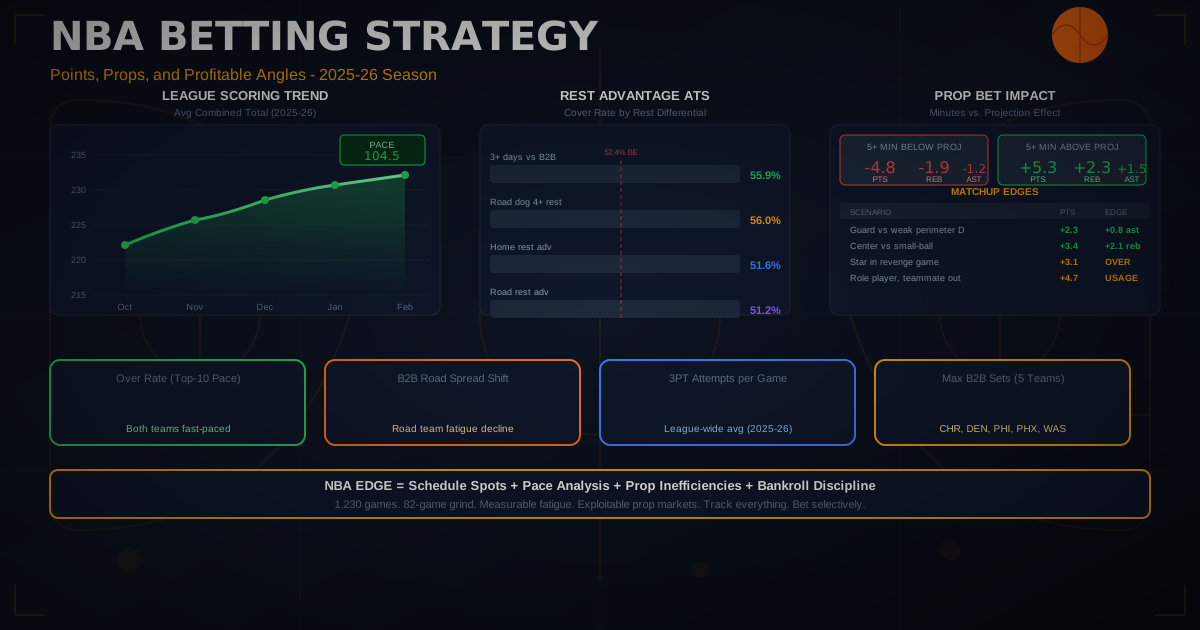
NBA Live Betting
Best Opportunities:
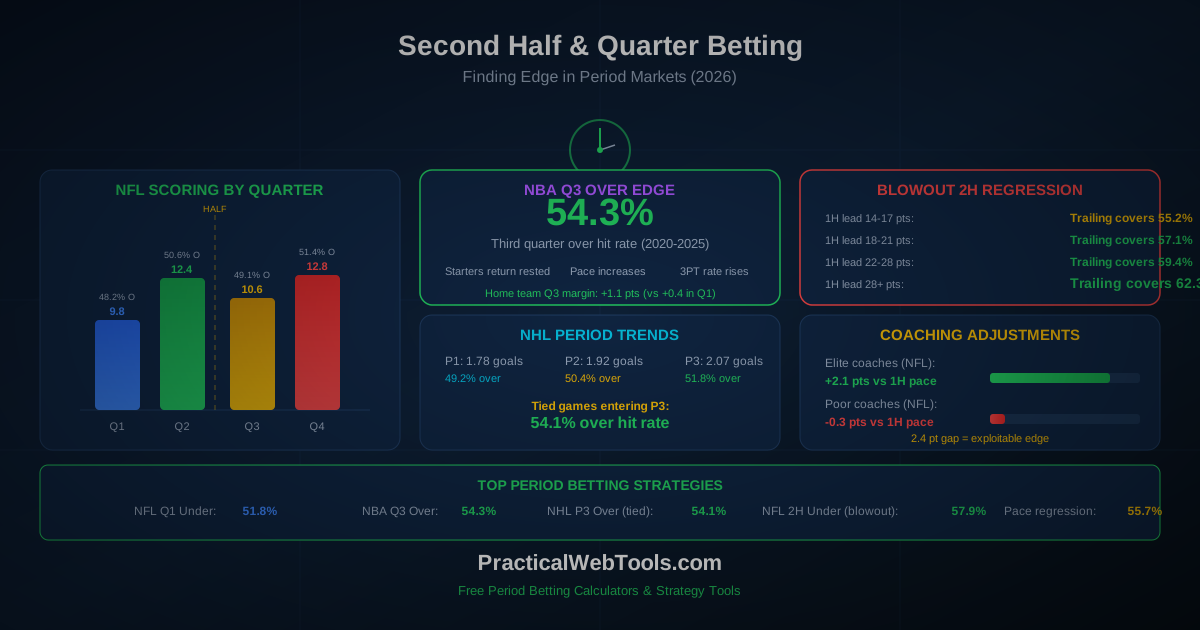
- Third-quarter starts (teams often change pace after halftime adjustments)
- Garbage time totals (blowouts cause pace changes the algorithm underprices)
- First-quarter unders when both teams start hot (regression to the mean)
- Comeback bets when a strong team falls behind by 10-15 points
Avoid:
- Betting every possession change
- Over-betting totals during runs (3-4 minutes of hot shooting does not change a team's true shooting percentage)
MLB Live Betting
Best Opportunities:
- Pitching changes (bullpen transitions create value windows)
- Run expectancy shifts (bases loaded, no outs situations are often mispriced)
- Late-game totals after early offensive explosions (regression opportunity)
- Weather impact during the game (wind direction affects home runs)
Avoid:
- Betting after a single early inning (too much game remaining)
- Live lines immediately after a grand slam (maximum algorithmic overreaction)
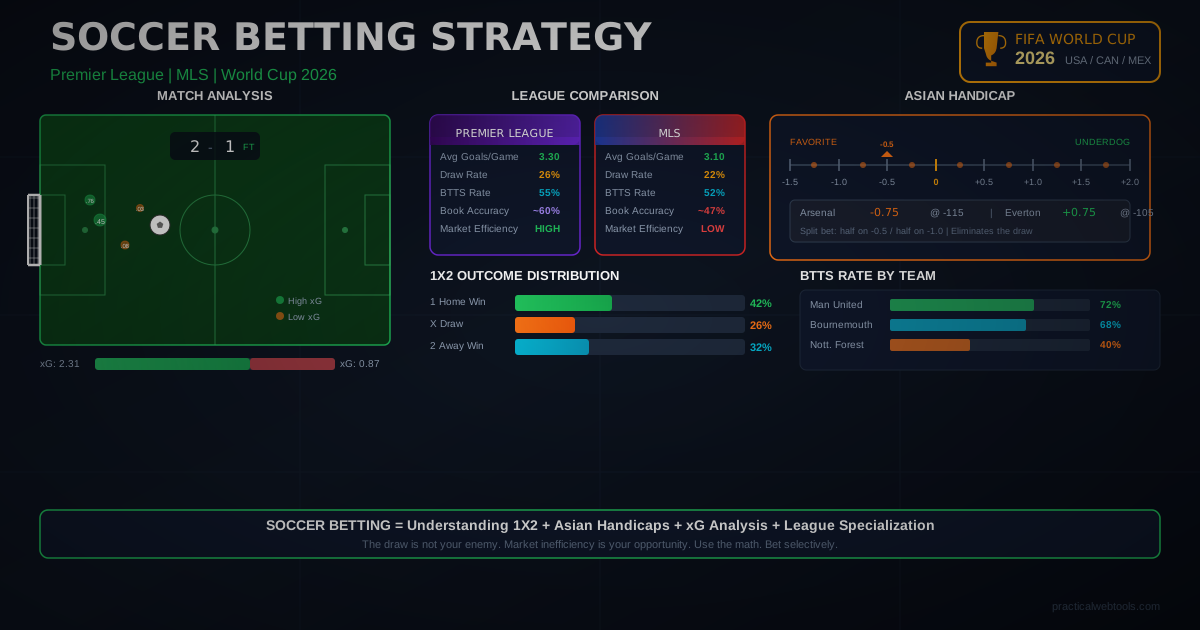
Soccer Live Betting
Best Opportunities:
- Red card situations (algorithms often overprice the impact on the team that received the card)
- Half-time in 0-0 draws (live algorithms may overvalue the draw relative to the pregame spread)
- Late-game corners and throw-ins betting (bookmakers focus less on these markets)
Avoid:
- Early goals in low-scoring matches (one goal changes the entire game dynamic, making accurate pricing difficult)
Analyze the vig on any live odds with our Hold/Vig Calculator.
Building a Live Betting System
Step 1: Pre-Game Preparation
Before any live betting session, complete this preparation:
- Research the game thoroughly using your standard pregame process
- Identify your pregame fair line (what you believe the true spread/total should be)
- Determine trigger points (at what live odds does value appear?)
- Set betting limits (maximum bets per game, maximum stake per game)
Step 2: Create a Decision Framework
Build a checklist for each live bet:
- Does this live line deviate significantly from my pregame assessment?
- Has a fundamental change occurred (injury, weather, ejection)?
- Is the line reacting to a random event (lucky score, turnover) or a systematic change?
- Am I betting based on analysis or emotion?
- Does the expected value exceed the vig?
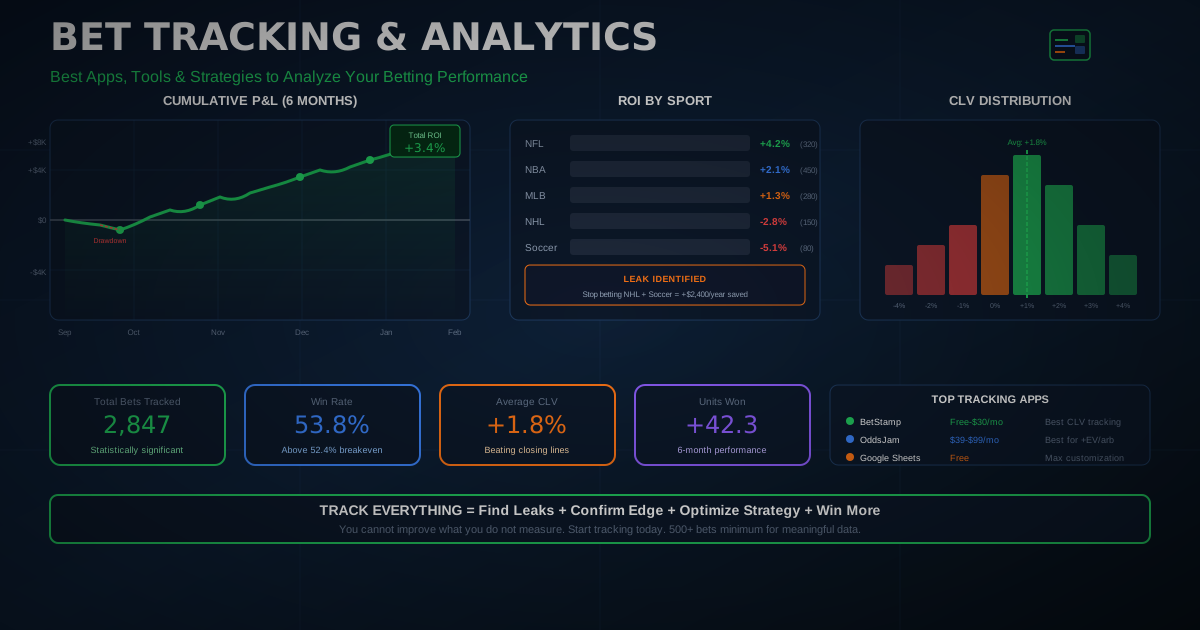
Step 3: Track Everything
Record every live bet with additional fields beyond standard tracking:
- Game state when bet was placed (score, time remaining, possession)
- Reason for the bet (overreaction, key number, hedge, injury)
- Pregame line for reference (to calculate value captured)
- Time between event and bet (to assess latency impact)
Track your live betting performance with our CLV Tracker.
Step 4: Review and Refine
Weekly, review your live betting results:
- Which strategies produced positive results?
- Which sports offered the most live value?
- Were emotional bets flagged and avoided?
- What was your average edge versus the live vig?
Common Live Betting Mistakes
Mistake 1: Betting on Emotion
The single biggest mistake in live betting. Watching your team lose triggers the impulse to bet more to recover. The live betting interface is designed to be fast and frictionless, encouraging impulsive decisions.
The Fix: Never place a live bet within 60 seconds of a major emotional event (your team scoring, your team allowing a score, a controversial call). Use a mandatory cooling-off period.
Mistake 2: Ignoring the Vig
Live markets carry significantly higher vig than pregame. A live bet at -120/-110 has roughly 6.5% vig. You need a bigger edge to overcome this.
The Fix: Only bet live when your estimated edge exceeds 5%. Use our Hold/Vig Calculator to calculate the exact vig on every live line.
Mistake 3: Over-Betting Volume
Placing 10+ live bets on a single game virtually guarantees overexposure. Each individual bet might seem small, but cumulative risk adds up fast.
The Fix: Set a hard limit of 3 live bets per game, 10 per day maximum. Treat live bets as premium opportunities, not entertainment.
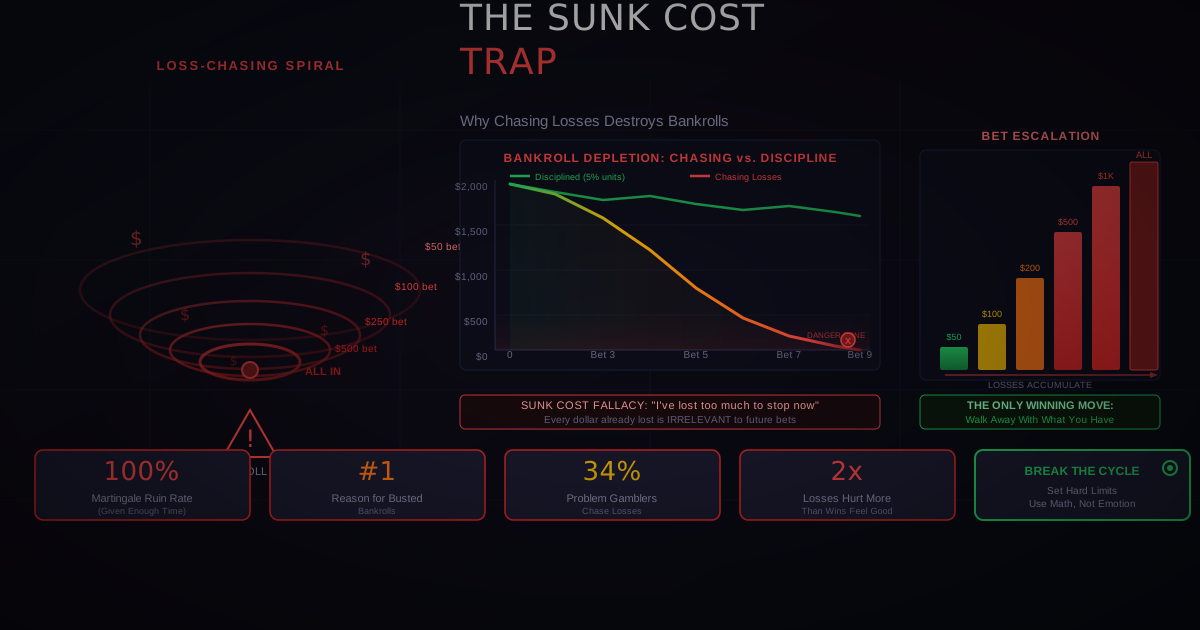
Mistake 4: Chasing Losses with Live Bets
Lost your pregame bet? The temptation to chase by live betting the same game is powerful and destructive.
The Fix: If your pregame bet on a game lost or is losing, do not place a live bet on the same game unless your system specifically identifies value independent of your existing position.
Mistake 5: Not Accounting for Game Context
Betting the over in a blowout because the score is high ignores that blowouts typically slow down (running clock, bench players, prevent defense).
The Fix: Always consider game context. A 35-7 game in the fourth quarter will likely produce fewer points than a 21-14 game.
Real-World Live Betting Examples with Numbers
Example 1: NFL First-Quarter Overreaction
- Pregame: Chiefs -7 (-110), Total 49.5
- After first quarter: Jaguars lead 10-0 after a pick-six and field goal
- Live line: Chiefs -1 (-110)
- Analysis: The pick-six was a fluke; the Chiefs were 7-point favorites for fundamental reasons that have not changed
- Live bet: Chiefs -1 (-110), $200
- Result: Chiefs win 31-17. Live bet wins +$181.82
- Edge captured: Got Chiefs at -1 instead of the pregame -7, a massive +6 points of value
Example 2: NBA Pace Regression
- Pregame: Total 216.5 (-110)
- End of first quarter: Combined score is 68 points (both teams shooting 55%+ from three)
- Live total: 258.5 (-110)
- Analysis: Both teams are shooting unsustainably from deep; regression to their season averages (35-37% from three) is near-certain
- Live bet: Under 258.5 (-110), $150
- Result: Final score 112-108 (220 total). Under wins. Live bet wins +$136.36
- Edge captured: The live total of 258.5 implied 190.5 more points in three quarters, wildly above the pregame rate
Example 3: MLB Pitching Change Value
- Pregame: Yankees -150 / Red Sox +130, Total 9.5
- Third inning: Yankees ace leaves with apparent injury, bullpen enters
- Live line: Yankees -110 / Red Sox -110
- Analysis: Losing the ace is worth more than the 40-cent line move suggests; Yankees' bullpen ERA is 4.50 vs. the ace's 2.80
- Live bet: Red Sox -110, $175
- Result: Red Sox win 6-3. Live bet wins +$159.09
- Edge captured: Algorithm underpriced the impact of the pitching change
Example 4: Successful Live Hedge
- Pregame: $300 on Bills +8.5 (-110) in the Super Bowl
- Third quarter: Bills lead 24-17
- Live line: Bills -3.5 (-120)
- Live hedge: $200 on opponent +3.5 (-110)
- Scenario A (Bills win by 4+): Win pregame +$272.73, lose live -$200 = +$72.73
- Scenario B (Opponent wins): Lose pregame -$300, win live +$181.82 = -$118.18
- Scenario C (Bills win by 1-3): Win pregame +$272.73, win live +$181.82 = +$454.55
- Result: Guaranteed profit or reduced risk in all scenarios
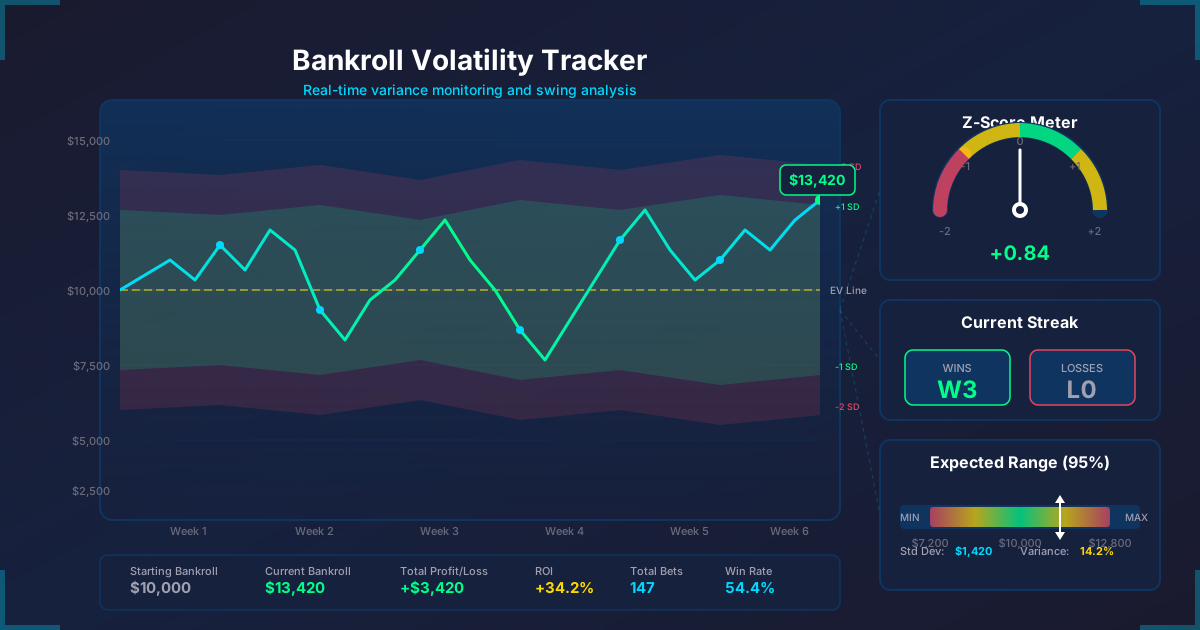
Monitor your bankroll through live betting swings with our Bankroll Volatility Tracker.
Advanced: Building a Live Betting Model
Key Inputs for a Live Model
A quantitative live betting model should incorporate:
- Pregame power ratings (your baseline assessment of each team)
- Win probability curves (how win probability changes with score differential and time)
- Scoring distribution models (expected scoring rates by quarter/period/inning)
- Pace and tempo data (real-time pace versus expected pace)
- Situational adjustments (injuries, ejections, weather changes)
- Key player impact (how specific player absence/presence changes outcomes)
Simplest Actionable Model
Even without a complex model, you can create a basic framework:
- Before each game, note the pregame spread and total
- Use a standard win probability calculator to determine fair live odds at various score differentials
- Compare the sportsbook's live odds to your fair odds
- When the difference exceeds 5%, place a bet
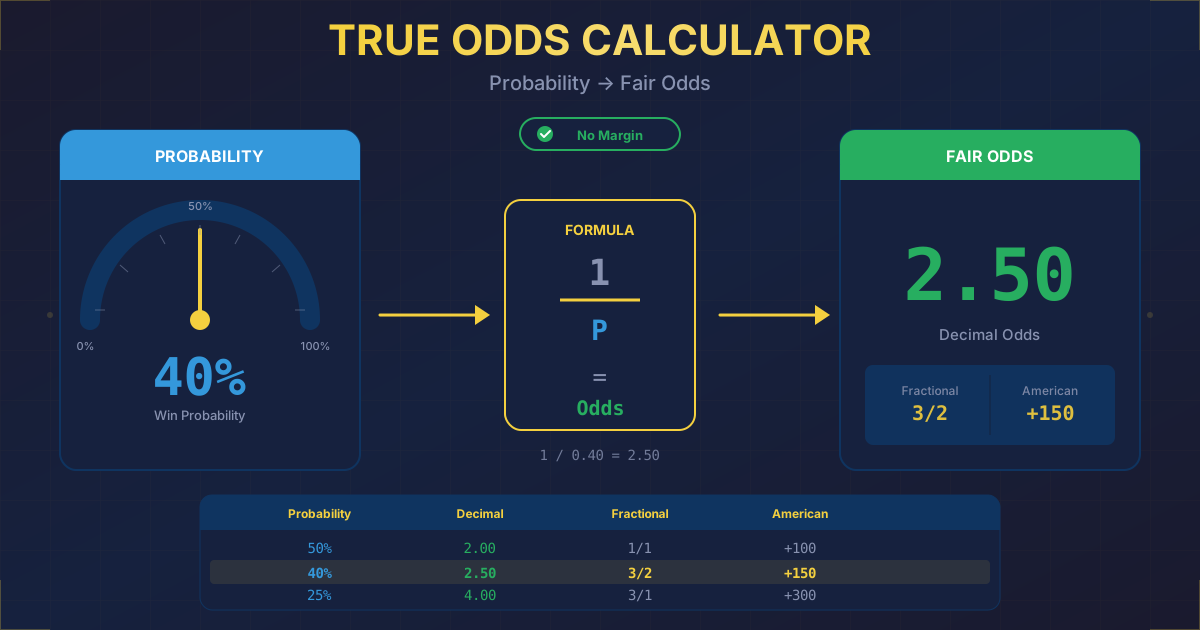
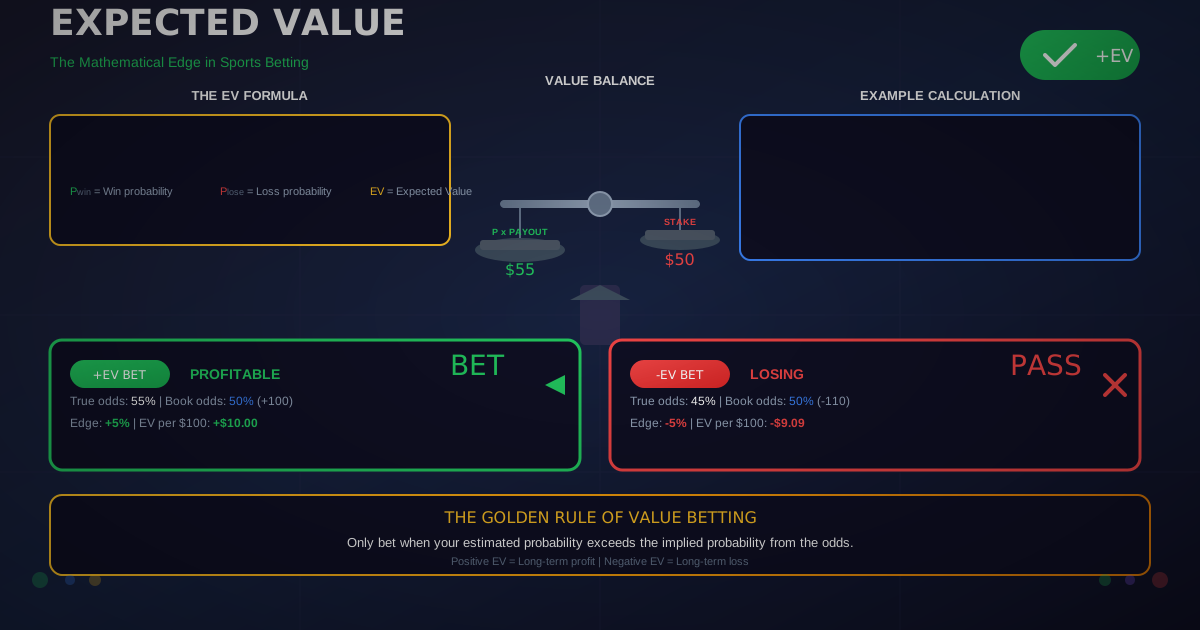
Example framework: An NFL team that was -3 pregame falls behind 7-0 in the first quarter. Your win probability model says they still have a 48% chance to win. The sportsbook posts them at +150 (implied 40%). That is an 8% edge. Bet.
Frequently Asked Questions
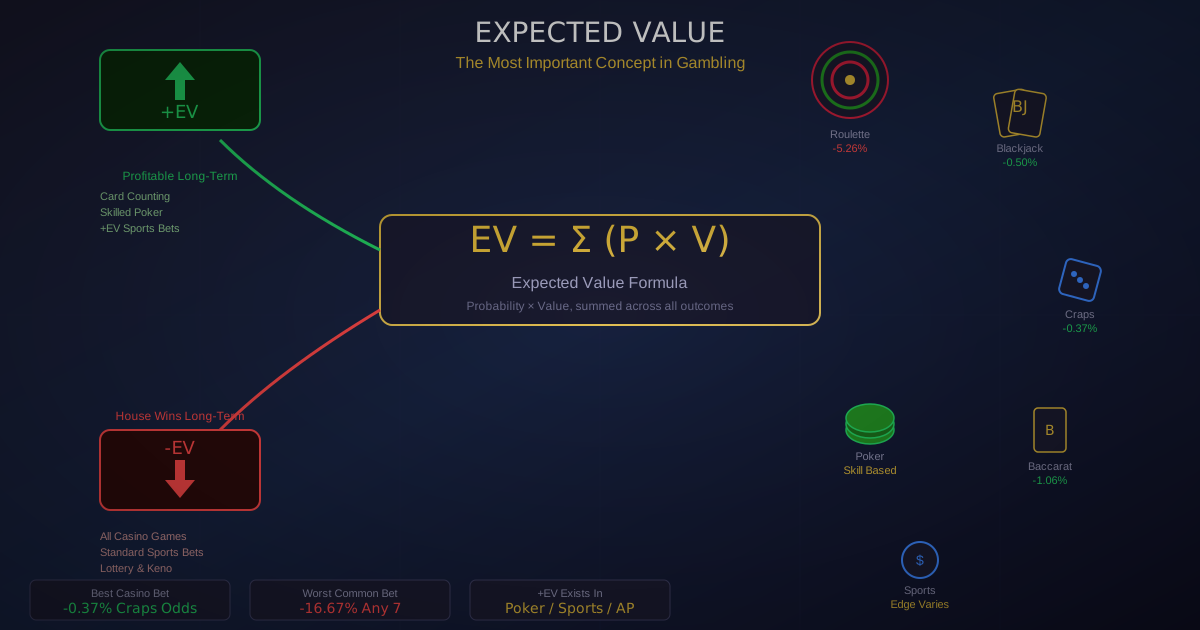
What is live betting in sports? Live betting (also called in-play or in-game betting) allows you to place wagers on a sporting event while it is in progress. Odds update in real time based on the score, time remaining, and game events. Use our Expected Value Calculator to evaluate any live betting opportunity.
Is live betting more profitable than pregame betting? Live betting offers larger but less frequent edges. Pregame lines are sharper because they incorporate days of professional analysis, but live algorithms must react in seconds and make systematic mistakes. The key is selectivity: only bet when you identify a genuine mispricing, not on every available market.
How fast do live odds change? Odds can change within seconds after a score, turnover, injury, or other game-changing event. Some sportsbooks briefly suspend betting during significant events before re-posting odds. Speed of odds changes varies by sport: NFL odds update after every play, NBA after every possession, and MLB after every pitch in some markets.
What is the biggest edge in live betting? Overreaction to early-game events is the most consistent and exploitable edge. When a pregame underdog scores first, algorithms often overcorrect, offering value on the pregame favorite at improved odds. Convert odds to implied probabilities with our Implied Probability Calculator.
How should I size live bets versus pregame bets? Use the same percentage of bankroll for live bets as pregame bets (typically 1-3%). The higher vig on live markets means you need a larger edge to justify the same unit size. Use our Kelly Criterion Calculator with the live odds to calculate optimal sizing.
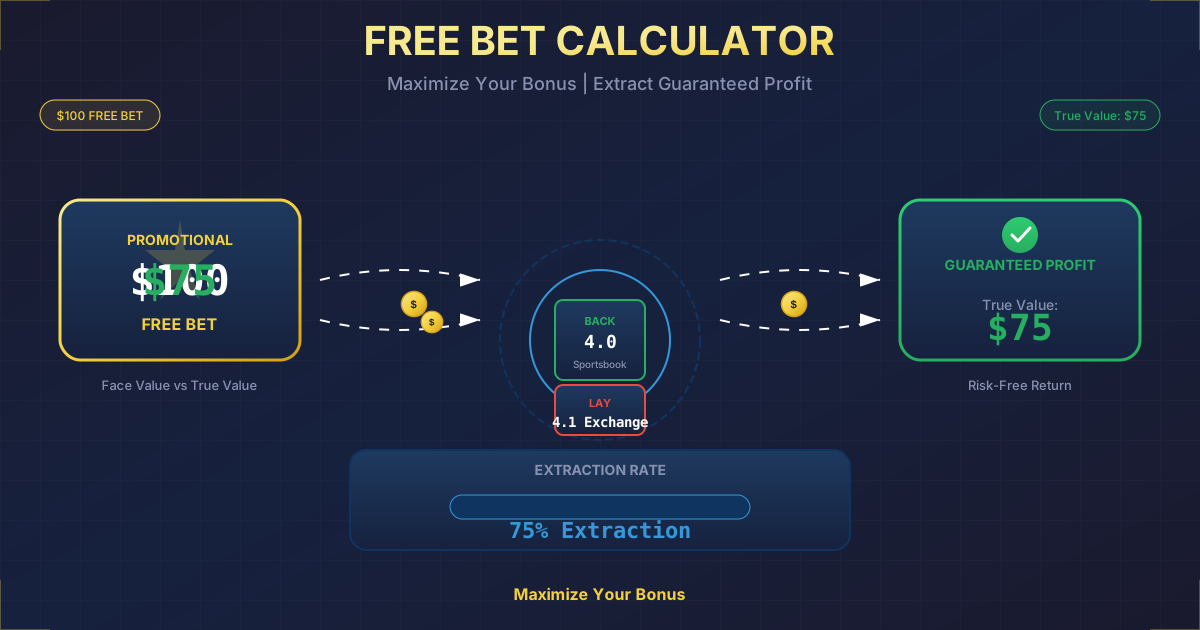
Can I hedge my pregame bets using live betting? Yes, live hedging is one of the most practical uses of in-game betting. If your pregame position is winning, you can bet the other side live to lock in profit. Use our Hedge Calculator to calculate exact hedge amounts.
Why do live lines have higher vig than pregame? Sportsbooks face more risk with live lines because they have less time to balance action, algorithms are less accurate than human-set pregame lines, and they need to protect against latency-based advantage play. The higher vig compensates for this additional risk. Check the vig with our Hold/Vig Calculator.
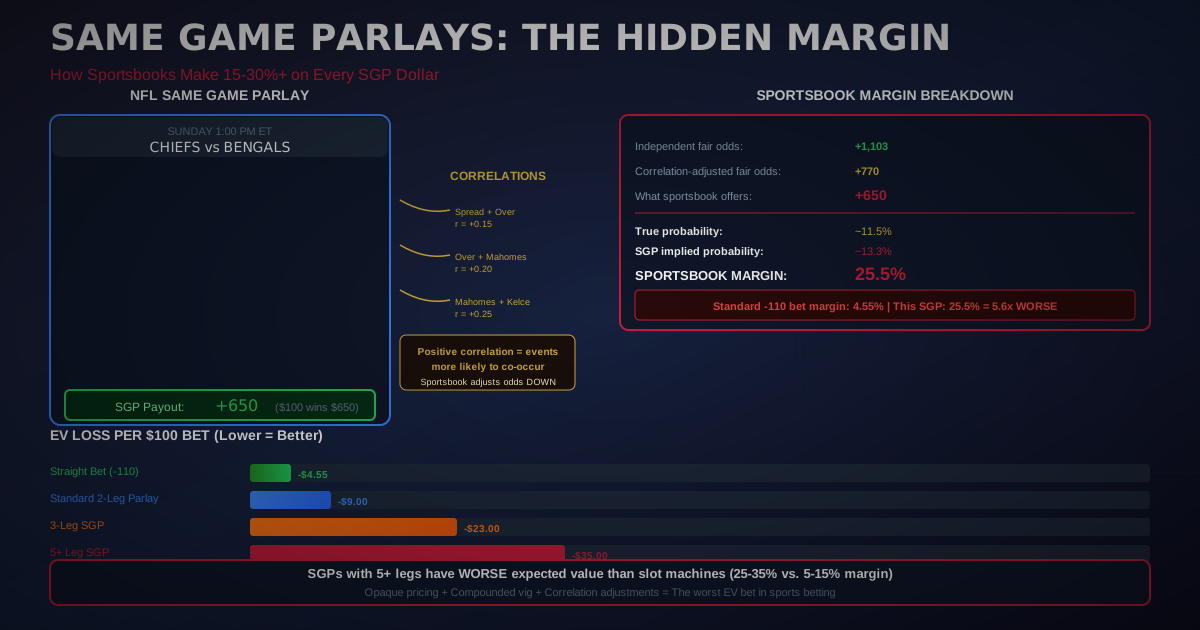
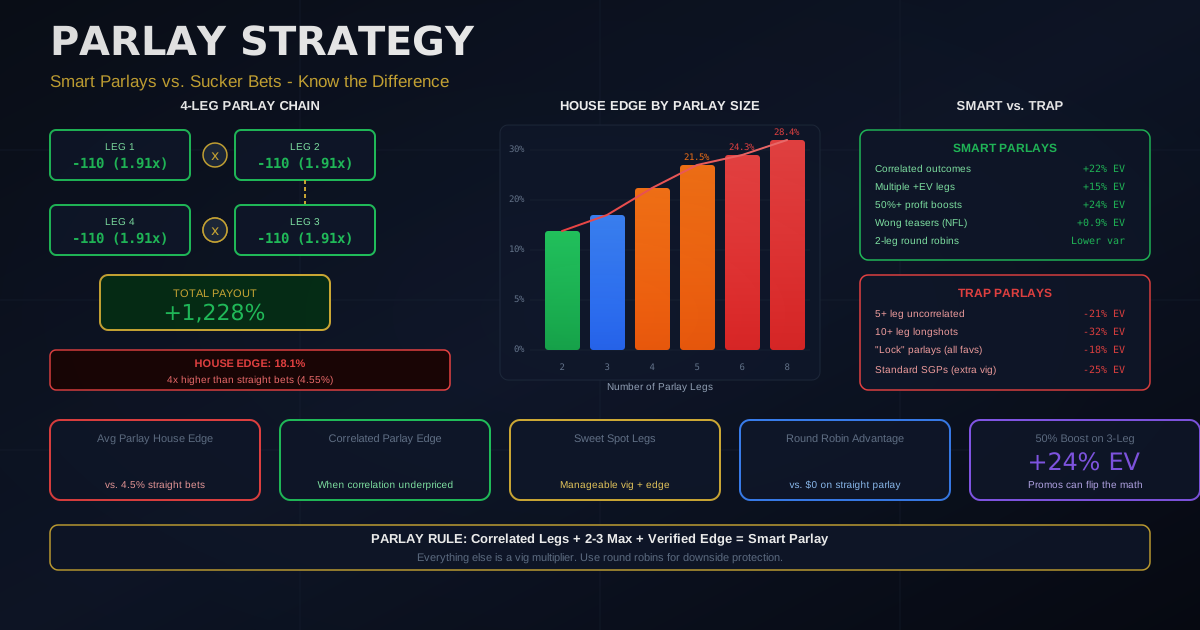
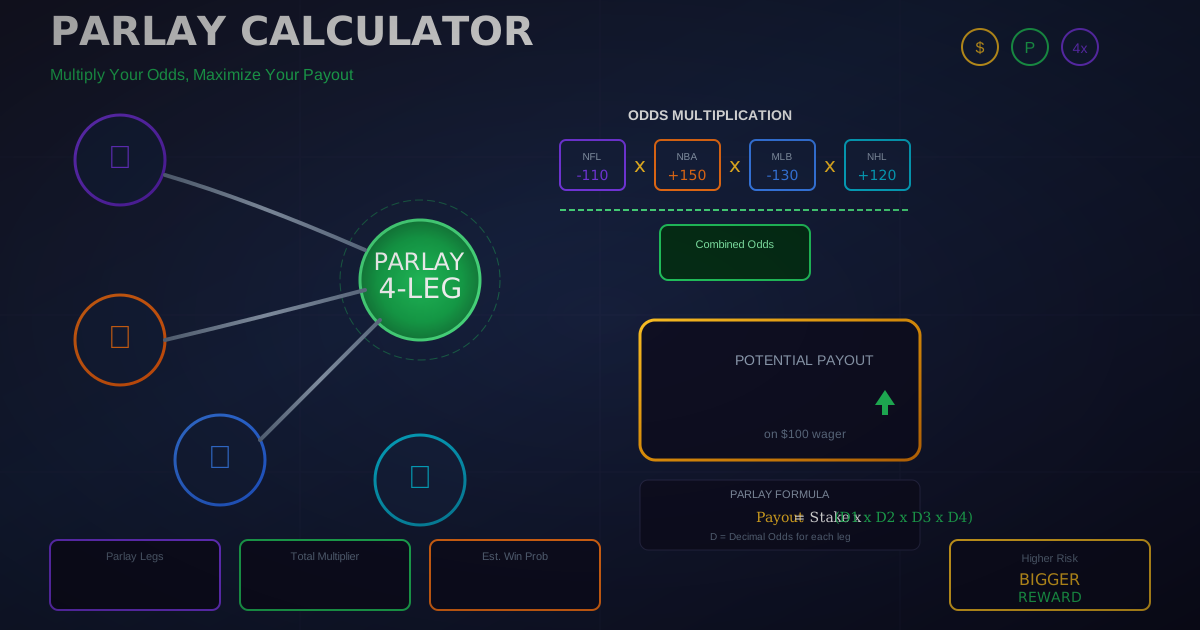
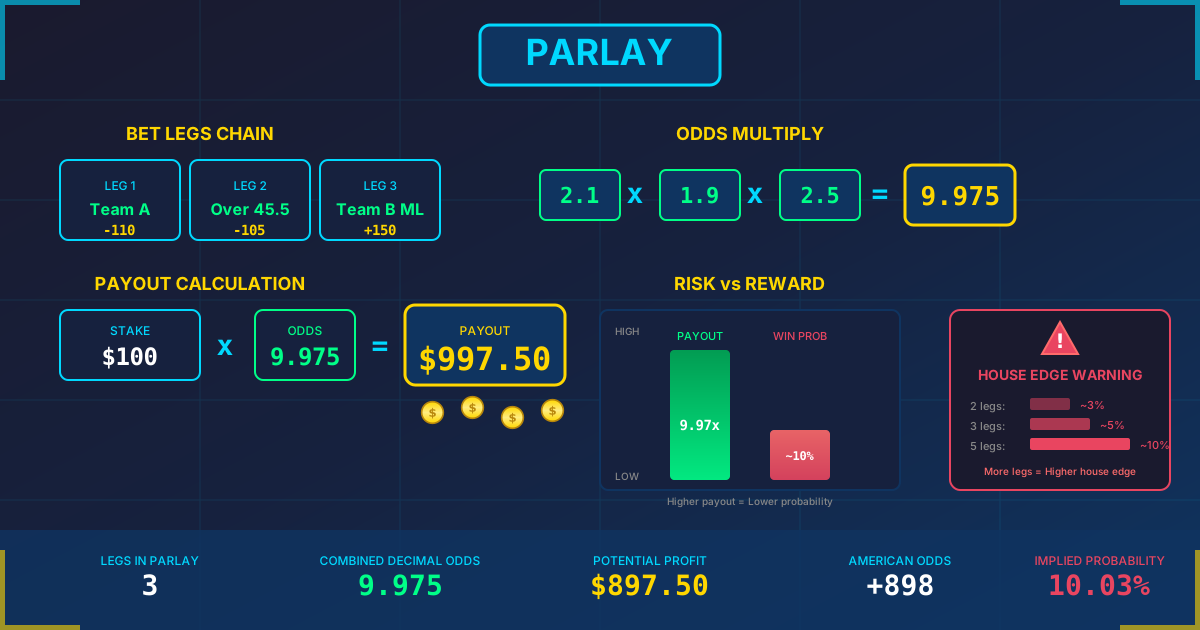
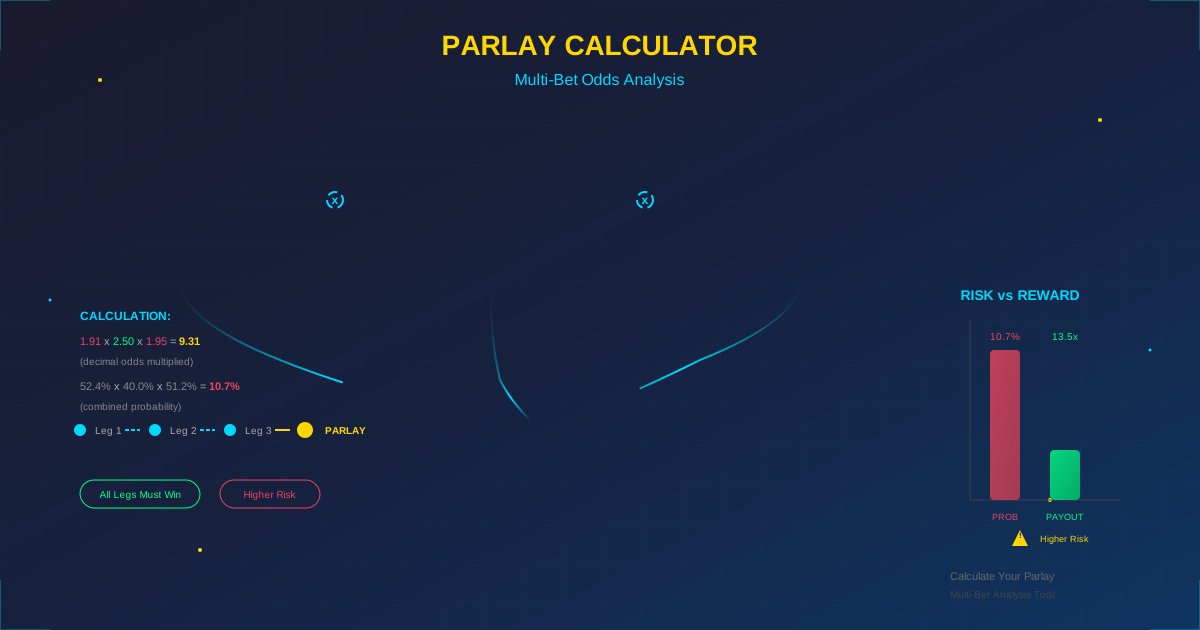
Should I combine live bets into parlays? Generally no. Live parlays compound the higher vig, making them significantly -EV. If you parlay two live bets each with 6% vig, the combined vig is much worse than a pregame parlay. Stick to straight bets for live wagering. If you do parlay, use our Parlay Calculator to understand the true cost.
Essential Live Betting Tools
Probability and Value Analysis
- Expected Value Calculator: Calculate EV on any live betting opportunity
- Implied Probability Calculator: Convert live odds to probabilities for comparison with your model
- Odds Converter: Convert between American, decimal, and fractional odds in real time
Risk Management
- Hedge Calculator: Calculate exact live hedge amounts to lock in profit
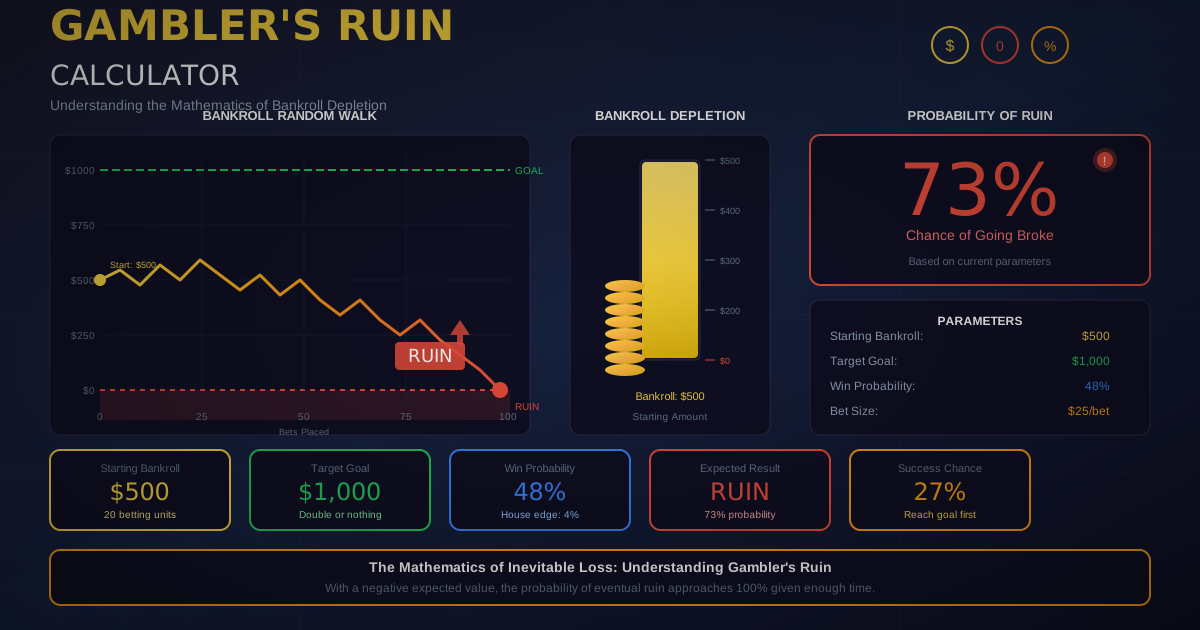
- Kelly Criterion Calculator: Optimize live bet sizing based on your edge
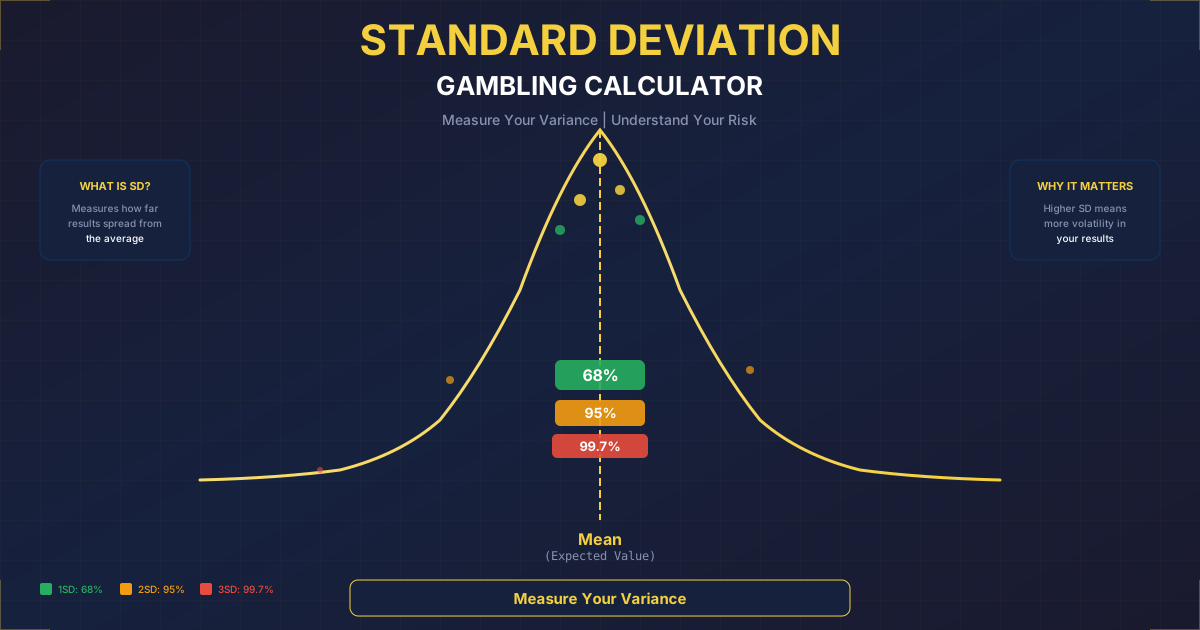
- Bankroll Volatility Tracker: Monitor bankroll impact of live betting volume
Market Analysis
- Hold/Vig Calculator: Calculate the vig on every live line before betting
- CLV Tracker: Track your live betting CLV separately from pregame bets
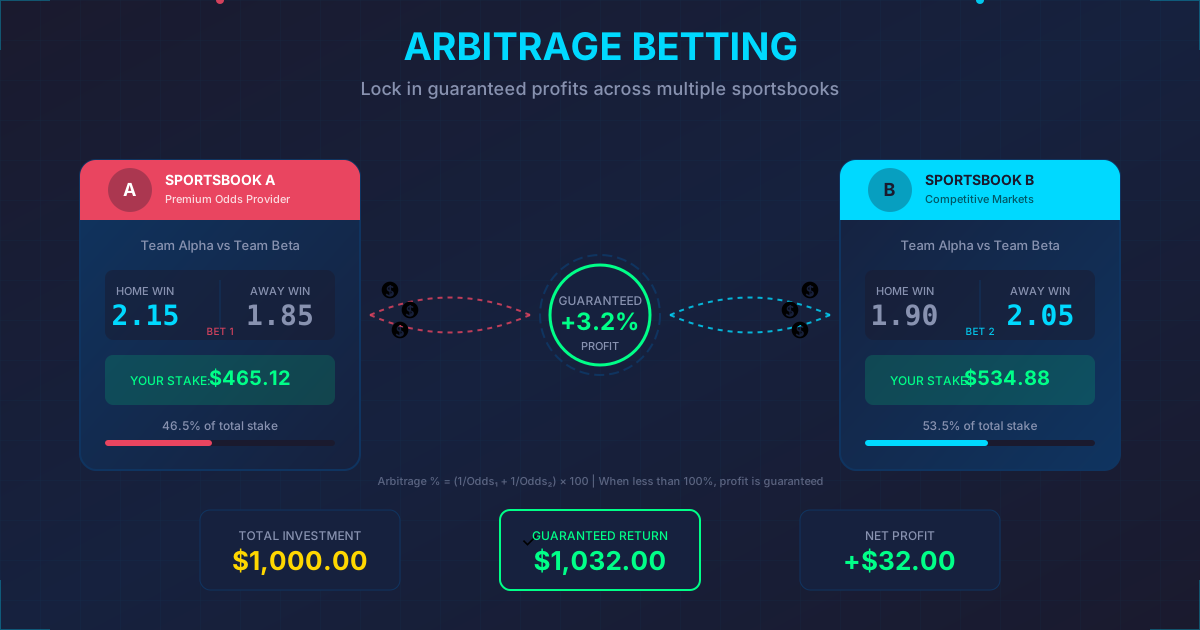
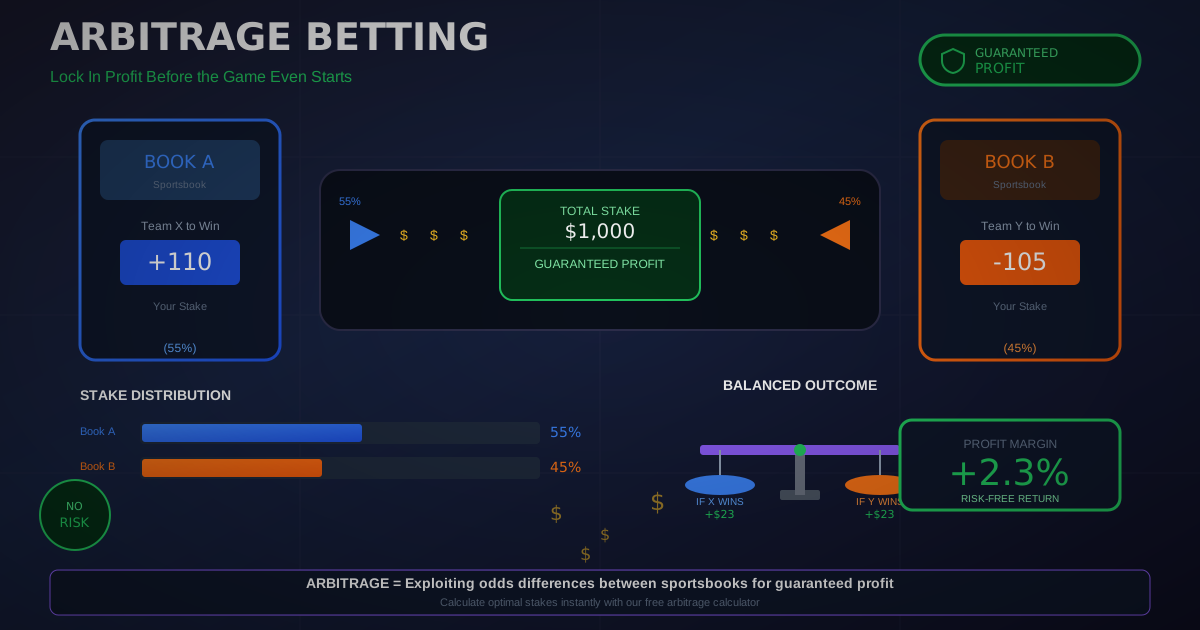
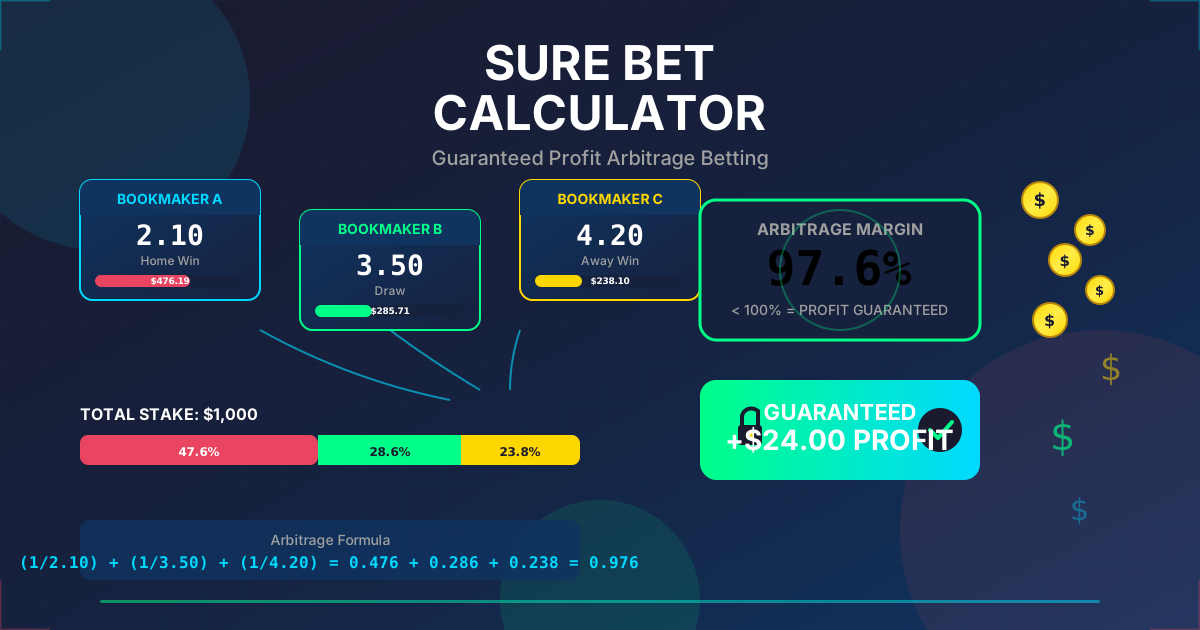
- Arbitrage Calculator: Identify cross-book live arbitrage when odds diverge
Conclusion: Disciplined Live Betting Wins
Live betting is not about reacting to every play. It is about identifying the 2-3 moments per game where the algorithm misprices the situation and the expected value clearly favors you. The bettors who profit from live markets are not the fastest clickers or the most engaged viewers. They are the most disciplined analysts who bet selectively, size appropriately, and track relentlessly.
Your live betting system should follow this framework:
- Prepare pregame: Know the true line and identify trigger points
- Watch for overreactions: Algorithms overcorrect to early-game events
- Check the math: Does the EV exceed the higher live vig?
- Bet selectively: 1-3 live bets per game maximum
- Track and review: Measure your live CLV separately from pregame CLV
Start evaluating live bets with our free Expected Value Calculator. Convert live odds instantly with our Odds Converter. And manage your risk with our Hedge Calculator.
The algorithm makes mistakes. Your job is to find them, size appropriately, and let the math work.
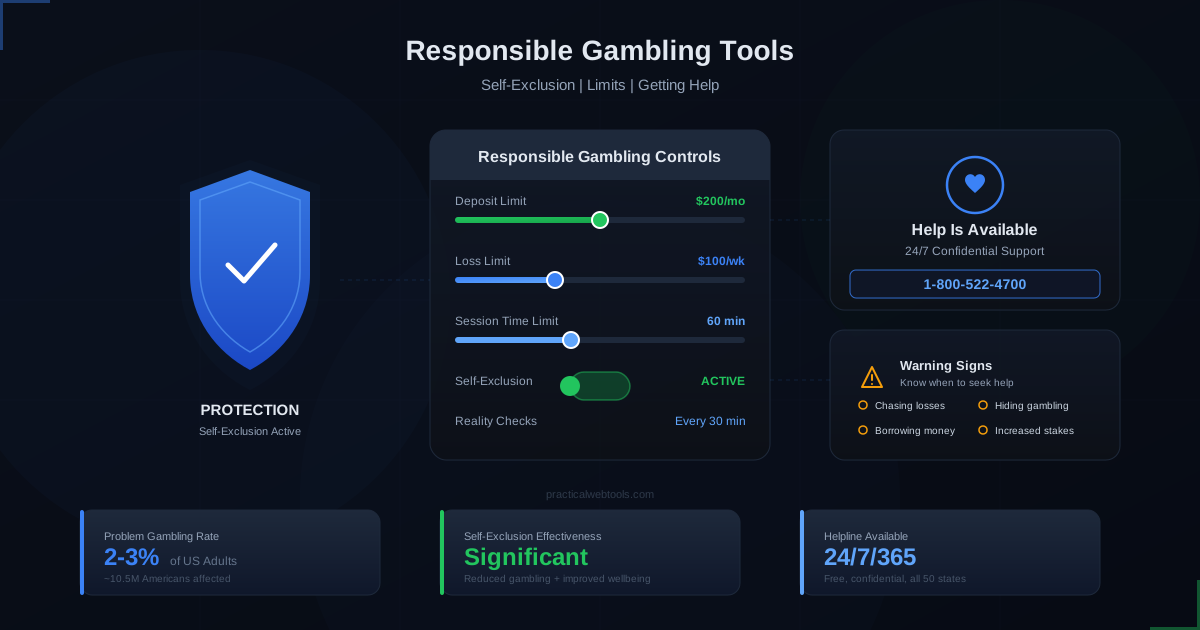
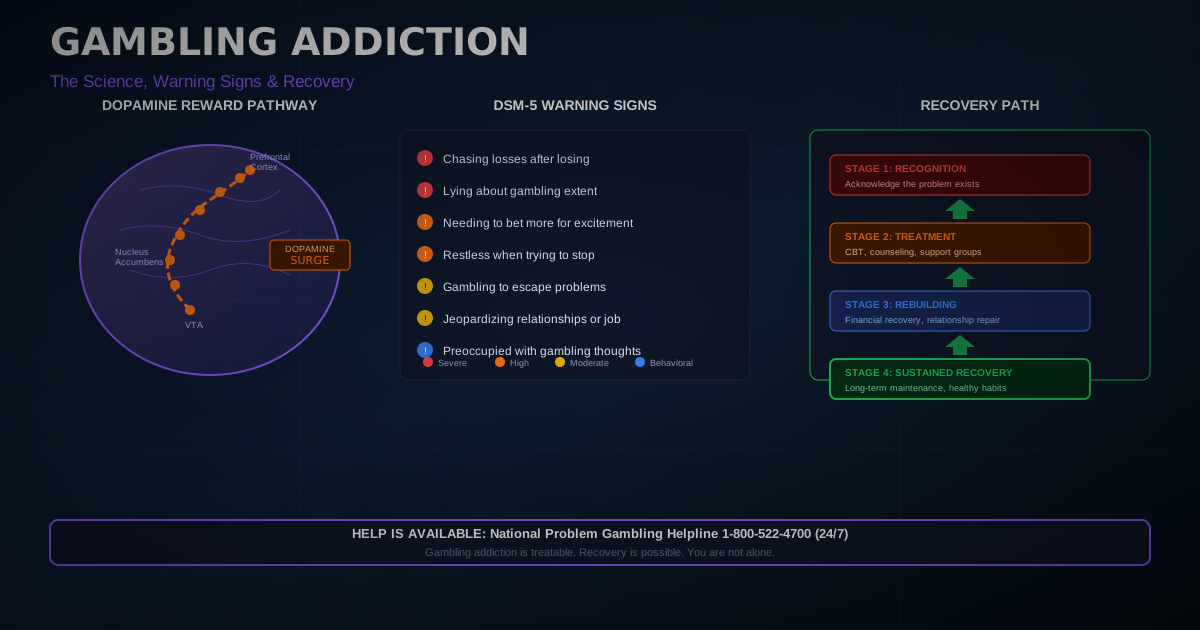
Gambling involves risk. This content is for educational and informational purposes only. Always gamble responsibly, set limits you can afford, and seek help if gambling becomes a problem. Visit the National Council on Problem Gambling or call 1-800-522-4700 for support.