When to Walk Away: The Hardest Skill in Gambling (2026)
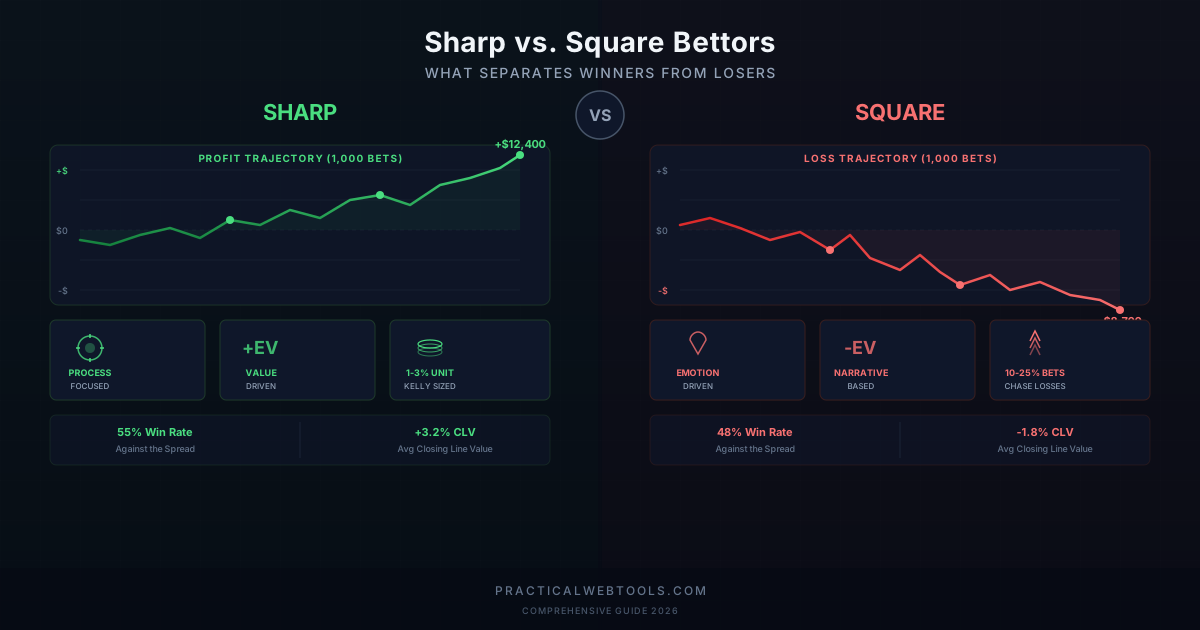
Every gambler alive knows how to place a bet. Precious few know when to stop. You can master basic strategy, memorize GTO charts, and calculate expected value in your sleep, but none of it matters if you cannot do the single hardest thing in gambling: push back from the table and walk away. It is not a knowledge problem. It is a behavior problem. And it is the skill gap that separates disciplined gamblers from the ones who give everything back.
The numbers paint a stark picture. Research published in PLOS One found that within-session chasing -- continuing to gamble in an attempt to recover losses or extend wins -- is one of the strongest predictors of long-term gambling losses. A study on online gambling behavior revealed that players were actually less likely to stop after a win than after a loss, meaning the bigger danger for most gamblers is not chasing losses but chasing the high of winning. The house does not need you to lose every hand. It just needs you to keep playing.
A recreational blackjack player who walks away after doubling a $200 buy-in secures a $200 profit. That same player who stays "just a little longer" returns an average of 40-60% of that profit to the house over the next hour. Across 50 sessions per year, the difference between walking away on time and overstaying by one hour is often $3,000 to $5,000 in real money. Your walk-away discipline is worth more than any strategy card in your wallet.
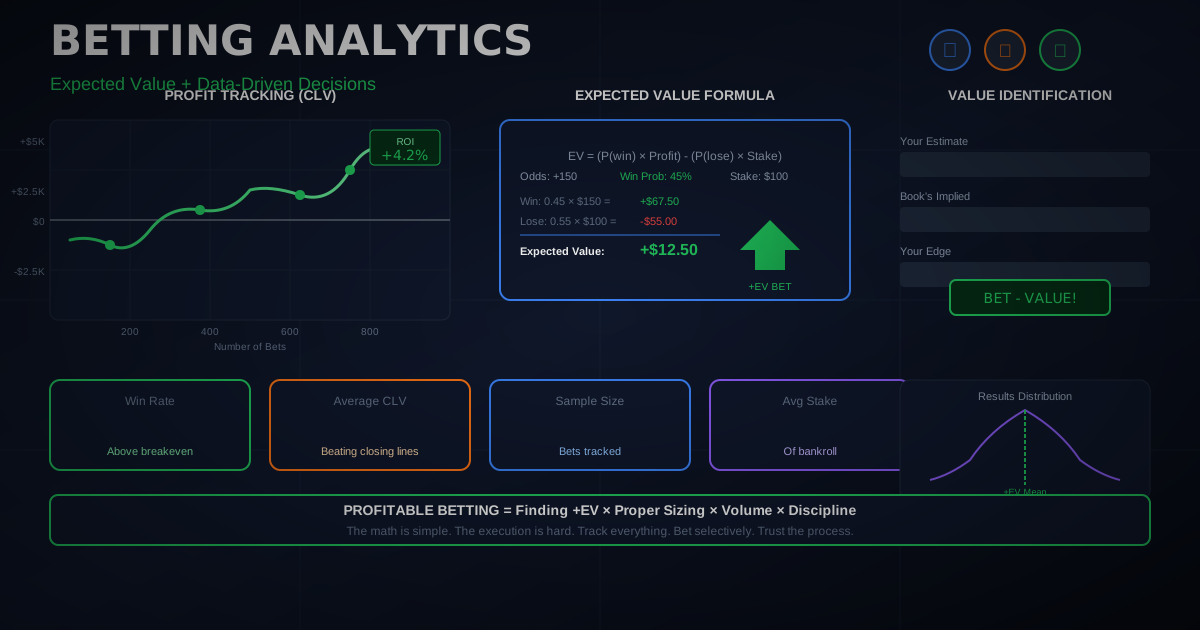
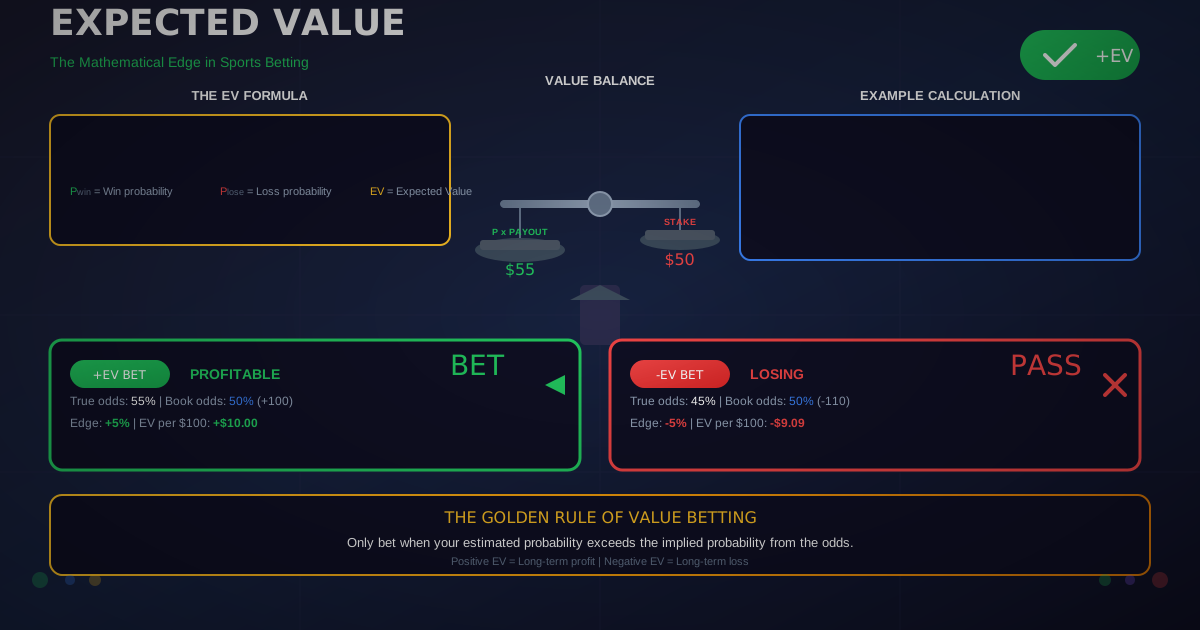
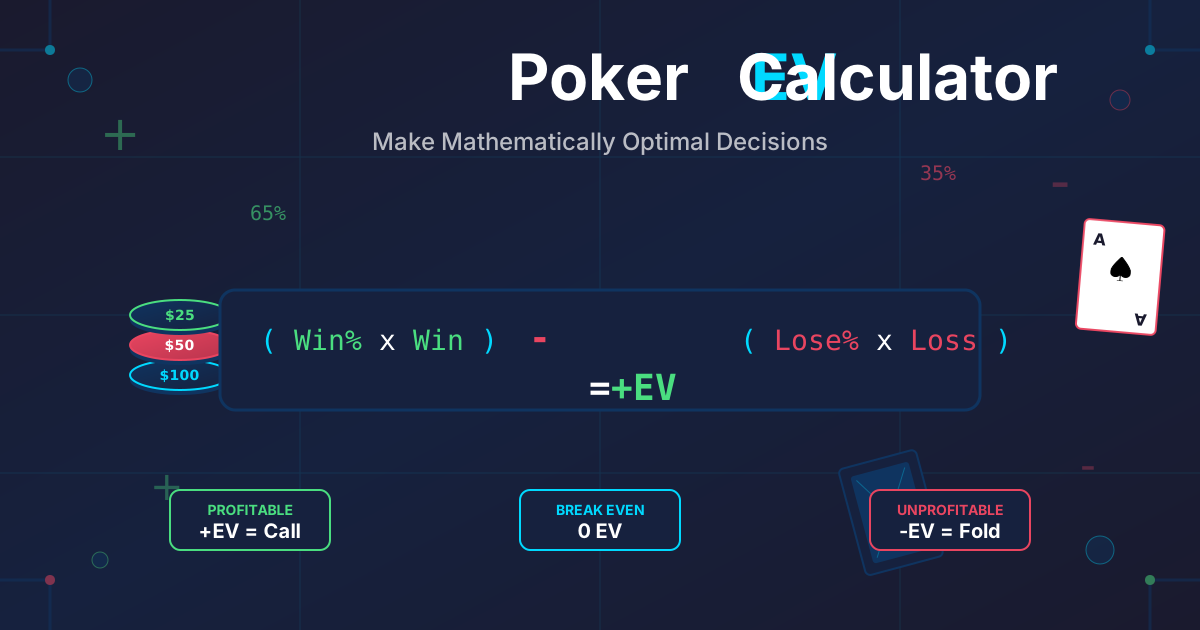
Calculate the true expected value of your sessions with our free Expected Value Calculator -- then use the frameworks in this guide to lock in your edge by walking away at the right time.
Why We Cannot Walk Away: The Psychology of Staying Too Long
Understanding why walking away is so difficult is the first step toward actually doing it. The forces keeping you at the table are not character flaws -- they are deeply wired psychological mechanisms that casinos have spent billions of dollars learning to exploit.
The Sunk Cost Fallacy
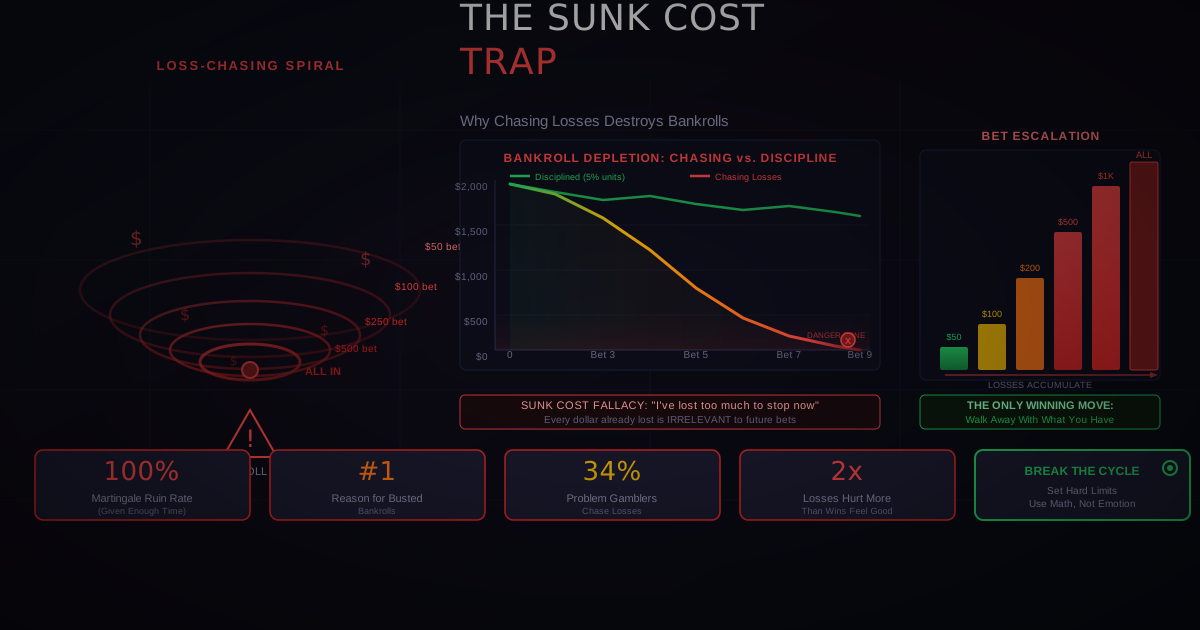
You have been playing for three hours. You are down $400. A voice in your head says: "I have already invested this much time and money. I cannot leave now." This is the sunk cost fallacy, and it is the single most destructive cognitive bias in gambling. The money you have already lost is gone. It cannot influence the probability of future outcomes. Yet your brain treats those losses as an investment that demands a return.
Consider this example. Sarah brings $500 to a craps session. After 90 minutes, she is down $350. Rationally, she should evaluate whether to continue based solely on the expected value of future bets. Instead, she feels compelled to stay because leaving means "admitting" the $350 is gone. She plays another two hours, loses the remaining $150, and then withdraws $200 more from the ATM. Her $500 session becomes a $700 session -- not because the math changed, but because her psychology demanded she chase a breakeven point that kept moving further away.
Loss Aversion and Prospect Theory
Nobel Prize-winning research by Daniel Kahneman and Amos Tversky demonstrated that losses feel approximately twice as painful as equivalent gains feel pleasurable. Losing $100 causes roughly the same emotional intensity as winning $200. This asymmetry means your brain is biologically motivated to avoid crystallizing a loss by walking away, even when continuing guarantees a worse expected outcome.
The Near-Miss Effect
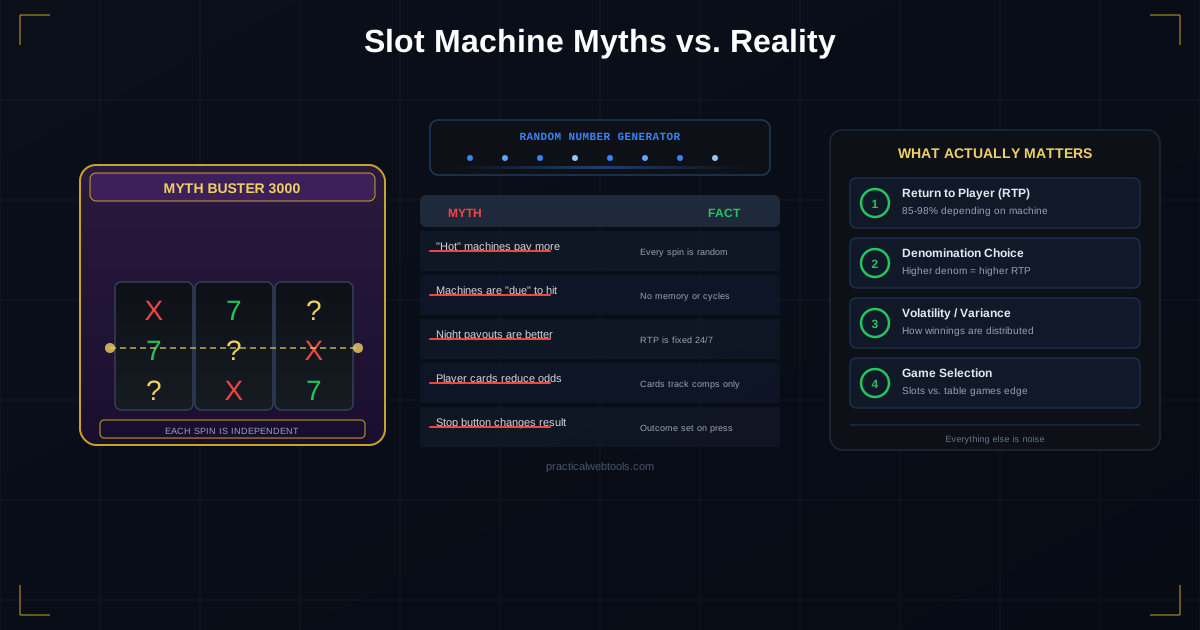
Slot machines are engineered to produce frequent near-misses -- outcomes that look tantalizingly close to a win. But the near-miss effect extends beyond slots. The poker player who lost a big pot with the second-best hand. The sports bettor whose three-leg parlay hit two out of three. The blackjack player who busted at 22 after the dealer showed a 6. These near-misses activate the same reward pathways as actual wins, creating a powerful urge to play "just one more" because the big result feels imminent.
Dopamine and the Gambler's Trance
Extended gambling sessions trigger sustained dopamine release that creates a dissociative, trance-like state researchers call the "machine zone" or "gambler's trance." In this state, your sense of time compresses, external responsibilities fade, and the act of gambling itself becomes self-reinforcing regardless of outcomes. Research published in the Journal of Gambling Studies found that this dissociative state intensifies with session duration, meaning the longer you play, the harder it becomes to make a rational decision to leave.
Social Pressure and Environmental Design
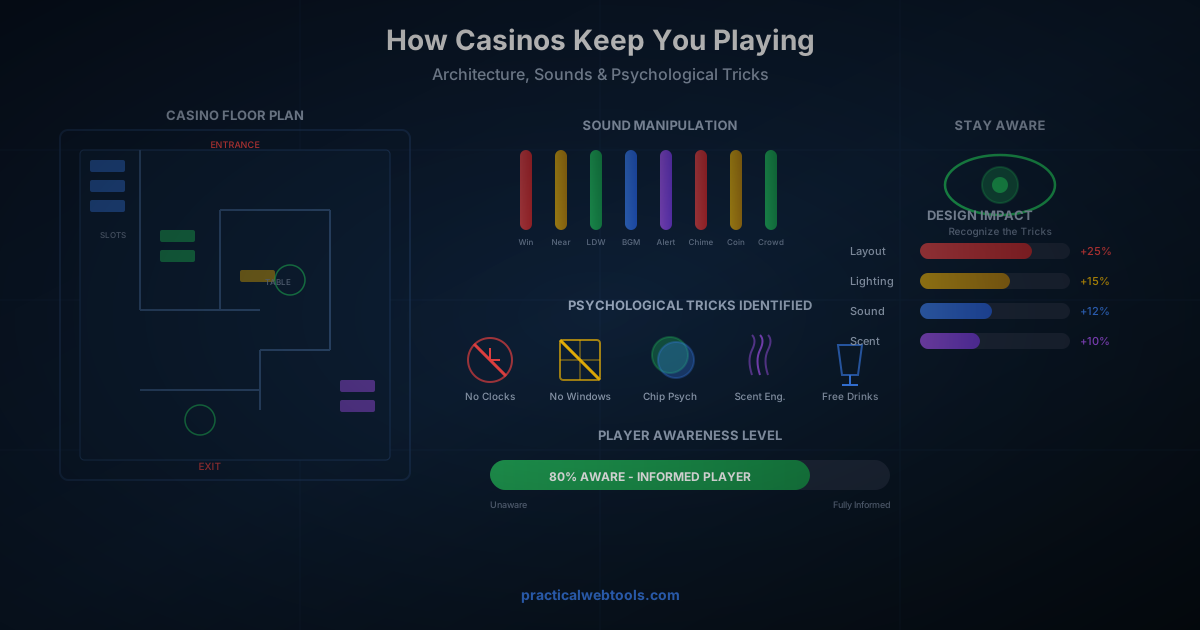
Casinos spend fortunes on environmental psychology. No clocks, no windows, free drinks, comfortable seating, and a spatial layout that makes the exit feel miles away. If you are playing with friends, the social pressure to "stay in the game" adds another layer of resistance. The person who says "I am going to call it a night" while everyone else is still playing feels like the one who is giving up.
Pre-Set Session Limits: Your Non-Negotiable Framework
The only reliable defense against these psychological forces is to set your limits before the session begins, when you are thinking clearly, and then treat those limits as absolute. Not guidelines. Not suggestions. Non-negotiable exit rules.
The Four Pillars of Session Limits
| Limit Type | What It Controls | Why It Matters |
|---|---|---|
| Loss Limit | Maximum amount you will lose before quitting | Prevents catastrophic single-session losses |
| Win Limit | Profit level at which you lock up gains | Stops the "give it all back" cycle |
| Time Limit | Maximum session duration | Guards against decision fatigue and trance states |
| Emotional Limit | Psychological state triggers for leaving | Prevents tilt-driven decisions |
The most effective session plans combine all four. A single limit -- especially a loss limit alone -- leaves gaps that your psychology will exploit.
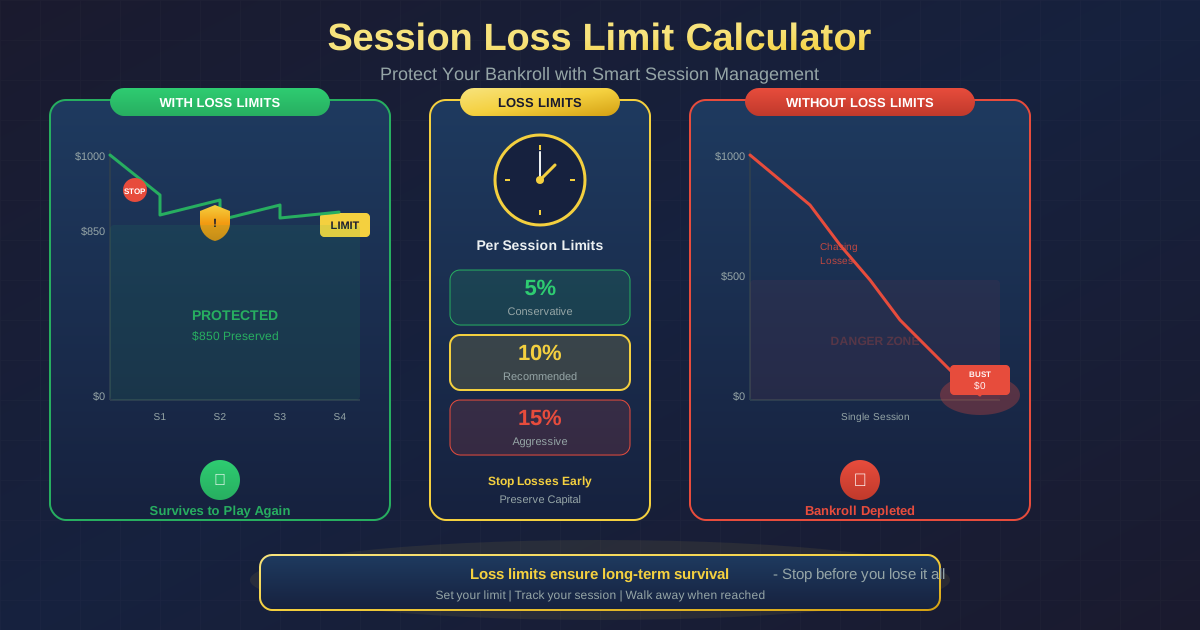
How to Set a Loss Limit
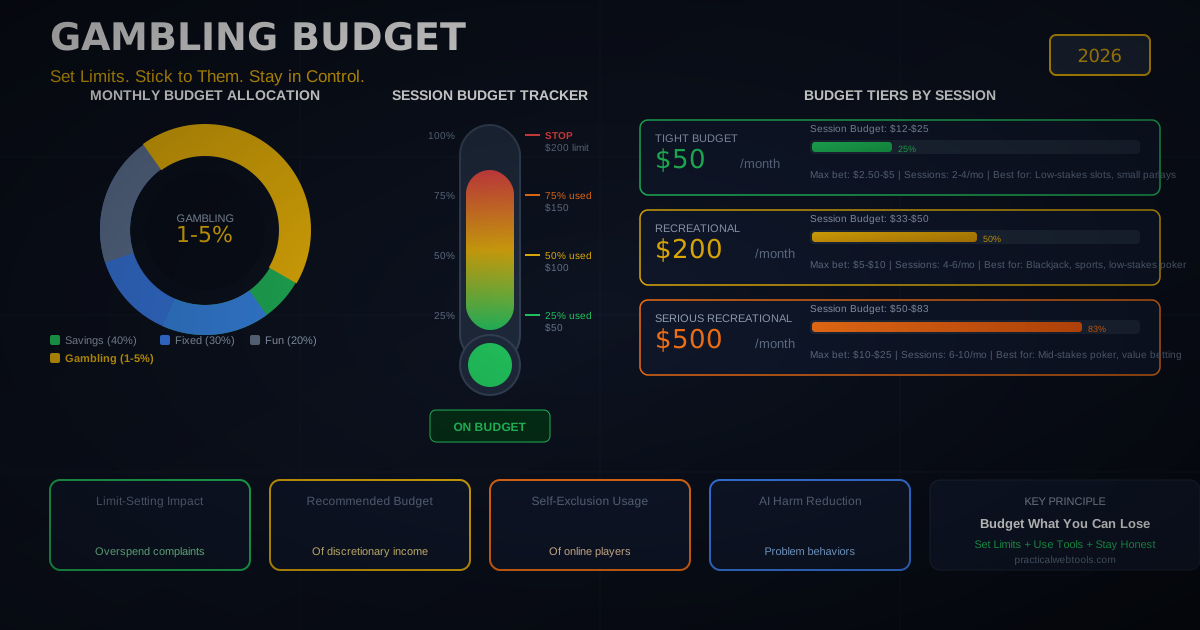
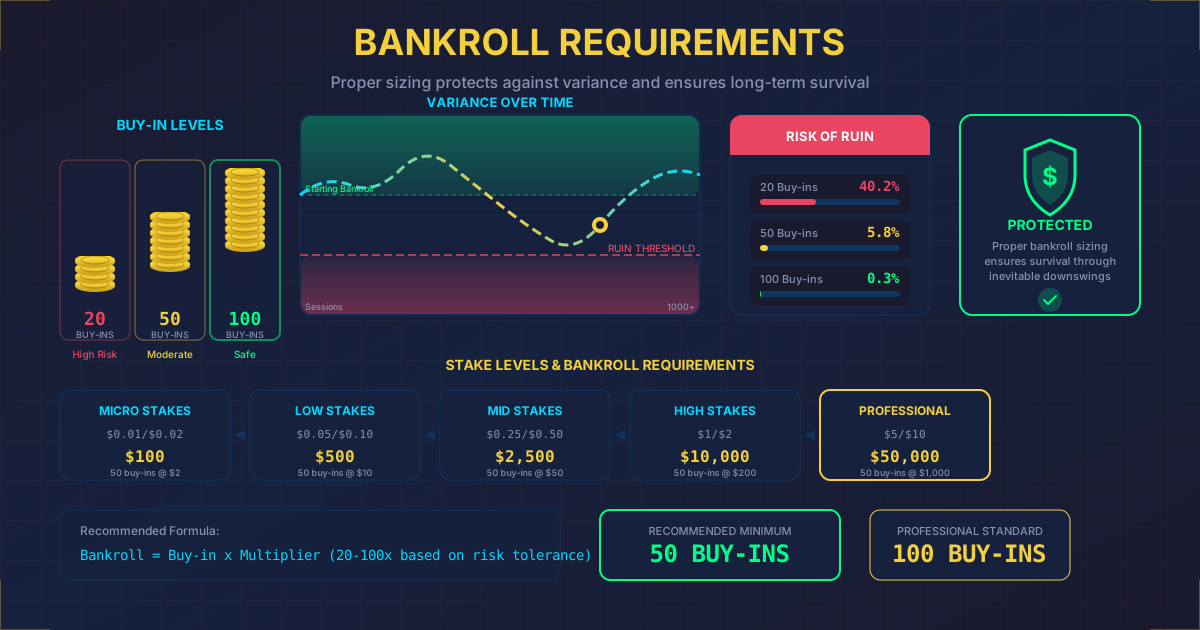
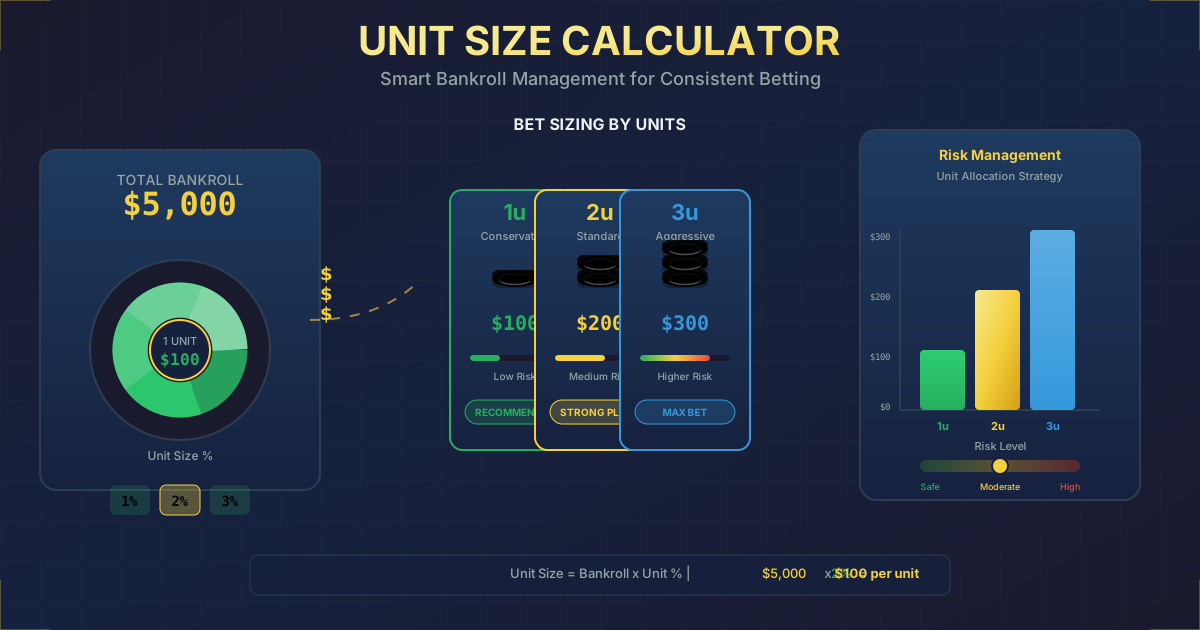
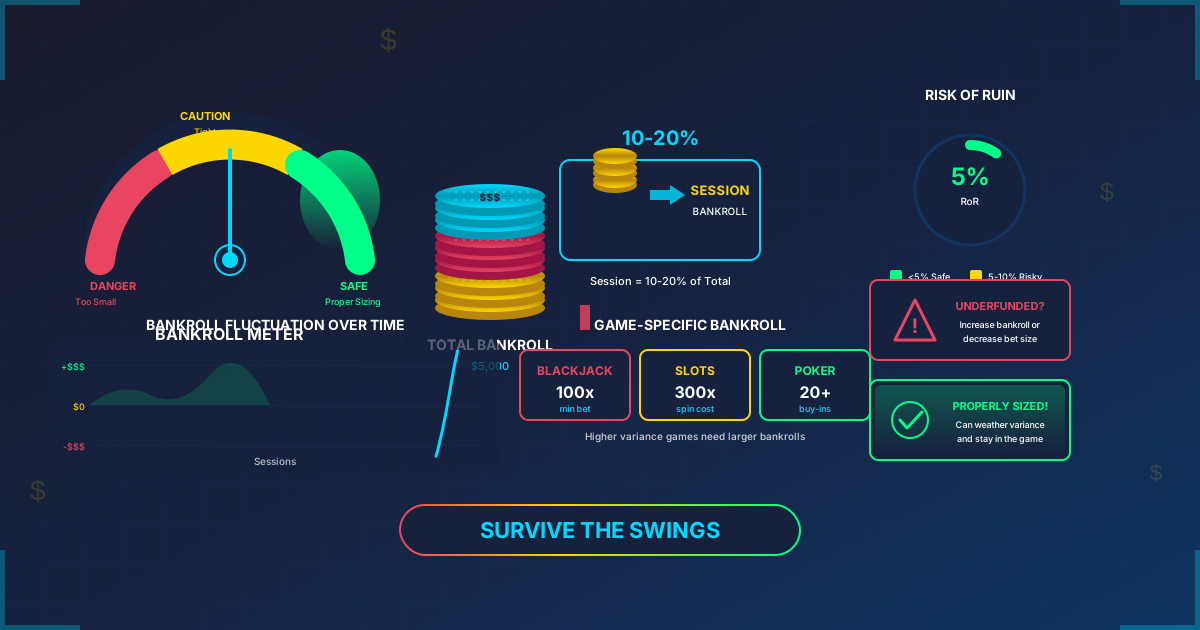
Your loss limit should be tied to your bankroll, not your emotions or your wallet. The table below provides a framework based on bankroll size and risk tolerance:
| Total Bankroll | Conservative Loss Limit (10%) | Moderate Loss Limit (15%) | Aggressive Loss Limit (20%) |
|---|---|---|---|
| $500 | $50 per session | $75 per session | $100 per session |
| $1,000 | $100 per session | $150 per session | $200 per session |
| $2,500 | $250 per session | $375 per session | $500 per session |
| $5,000 | $500 per session | $750 per session | $1,000 per session |
| $10,000 | $1,000 per session | $1,500 per session | $2,000 per session |
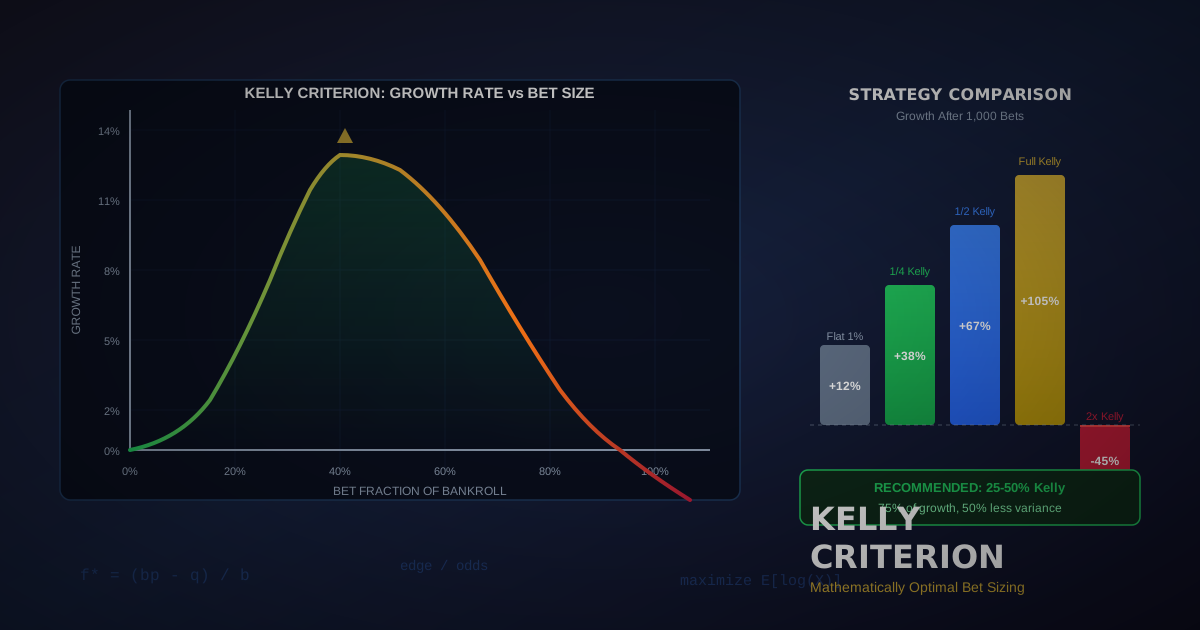
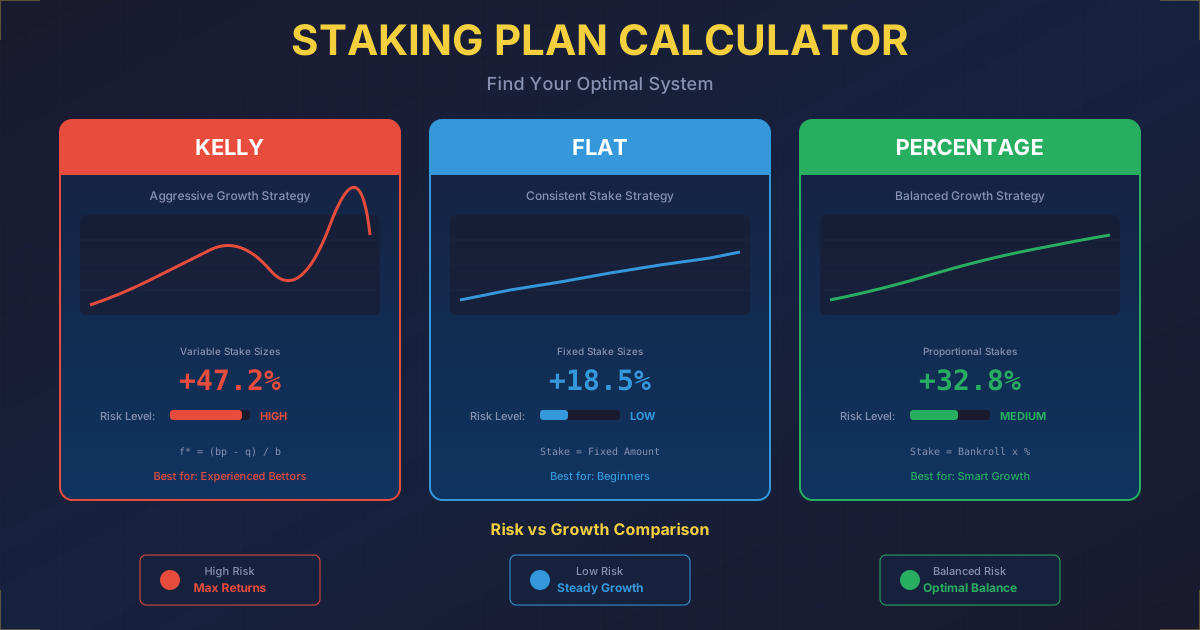
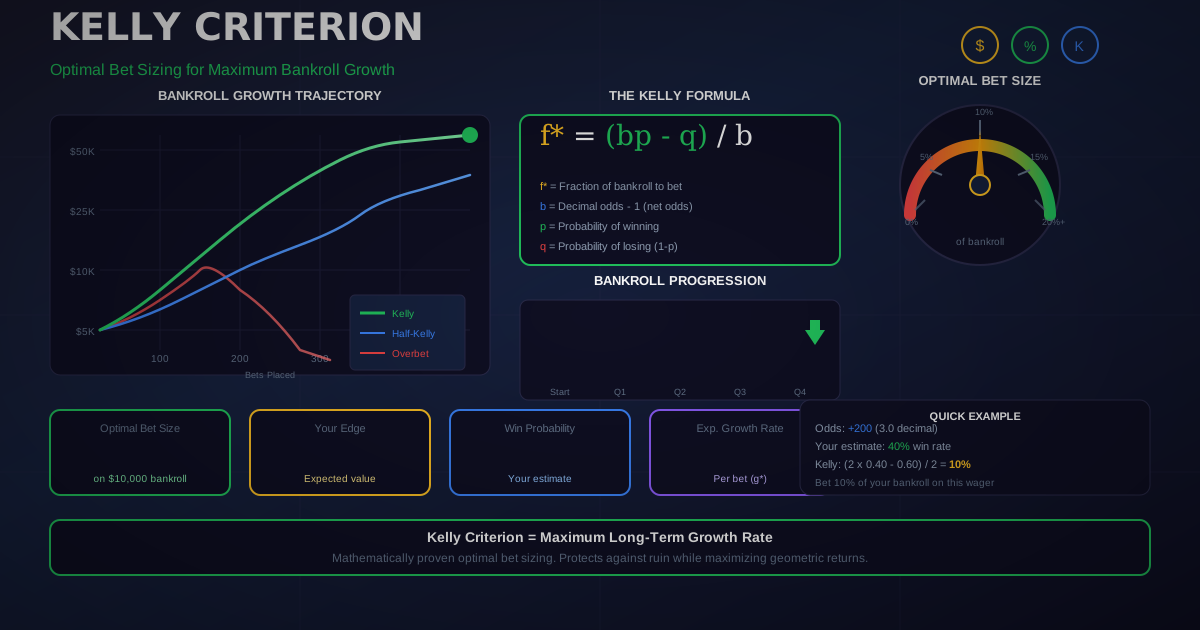
Use our Kelly Criterion Calculator to determine the mathematically optimal bet size for your edge and bankroll, which directly informs your session loss limit.
The principle is simple: your loss limit should be small enough that hitting it causes zero lifestyle impact and leaves your bankroll healthy enough to play again next session. If losing your session limit would cause anxiety about bills, rent, or other obligations, your limit is too high.
How to Set a Win Limit
Win limits are more controversial than loss limits, and many advantage players argue against them. We will address that debate in detail below. For recreational players and negative-expectation games, win limits are essential because they serve one critical function: they force you to actually take profit home.
A practical win-limit framework:
| Session Buy-In | Conservative Win Target (50%) | Moderate Win Target (75%) | Aggressive Win Target (100%) |
|---|---|---|---|
| $100 | Walk away up $50 | Walk away up $75 | Walk away up $100 |
| $200 | Walk away up $100 | Walk away up $150 | Walk away up $200 |
| $500 | Walk away up $250 | Walk away up $375 | Walk away up $500 |
| $1,000 | Walk away up $500 | Walk away up $750 | Walk away up $1,000 |
How to Set a Time Limit
Research from Taylor & Francis Online demonstrated that pop-up time-limit reminders on electronic gaming machines significantly reduced time on device. The study found that players who were asked to consider setting a time limit were more likely to do so and gambled for shorter periods.
For most recreational gamblers, optimal session lengths fall between 1 and 3 hours:
- 1 hour: Ideal for high-variance games like slots or roulette where the house edge erodes bankrolls quickly
- 2 hours: Good for moderate-variance games like blackjack or video poker
- 3 hours: Maximum for skill-intensive games like poker where you have an edge
- 4+ hours: Only for professional players with proven edges, and even then with mandatory breaks
Set a timer on your phone. When it goes off, evaluate your state and your limits. If you are approaching any of your other thresholds, leave immediately.
The Stop-Loss Debate: Do Stop-Losses Actually Work?
This is one of the most contested topics in gambling strategy, and the answer depends entirely on what game you are playing and whether you have a mathematical edge.
The Mathematical Argument Against Stop-Losses
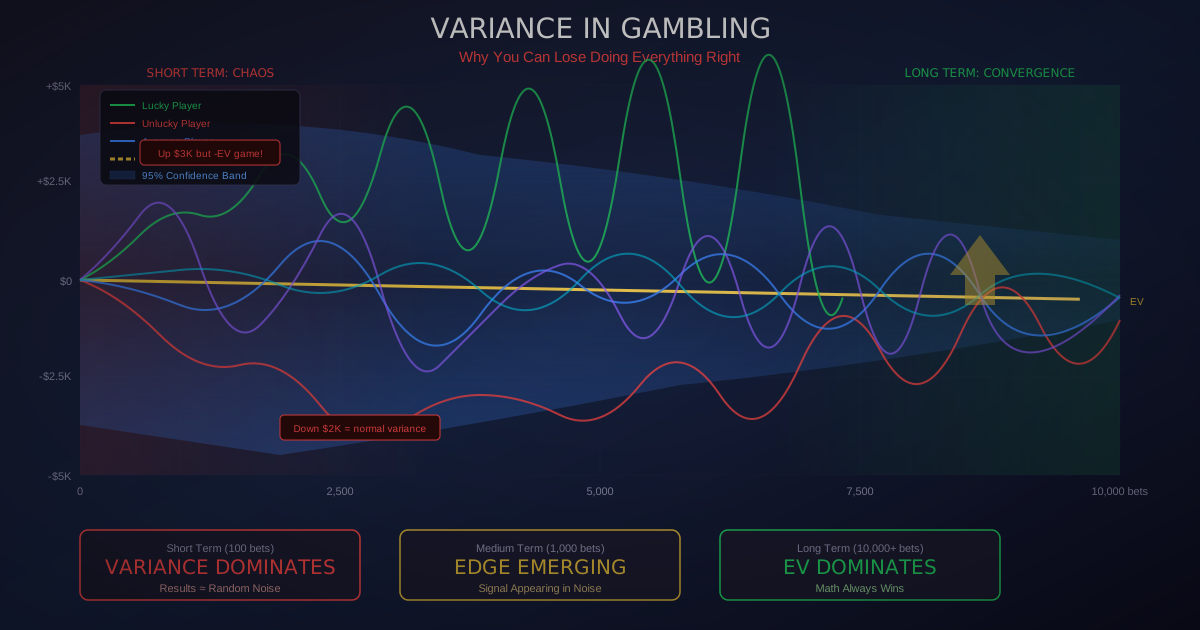
For advantage players -- card counters, professional poker players, skilled sports bettors -- a rigid stop-loss can actually reduce expected value. Here is why: if you have a genuine mathematical edge, every additional hand or bet has positive expectation. Walking away while you are in a positive-EV situation means leaving money on the table. The Wizard of Vegas forums have hosted decades of debate on this point, with mathematicians consistently arguing that stop-losses do not change the house edge or the expected loss from any given bet.
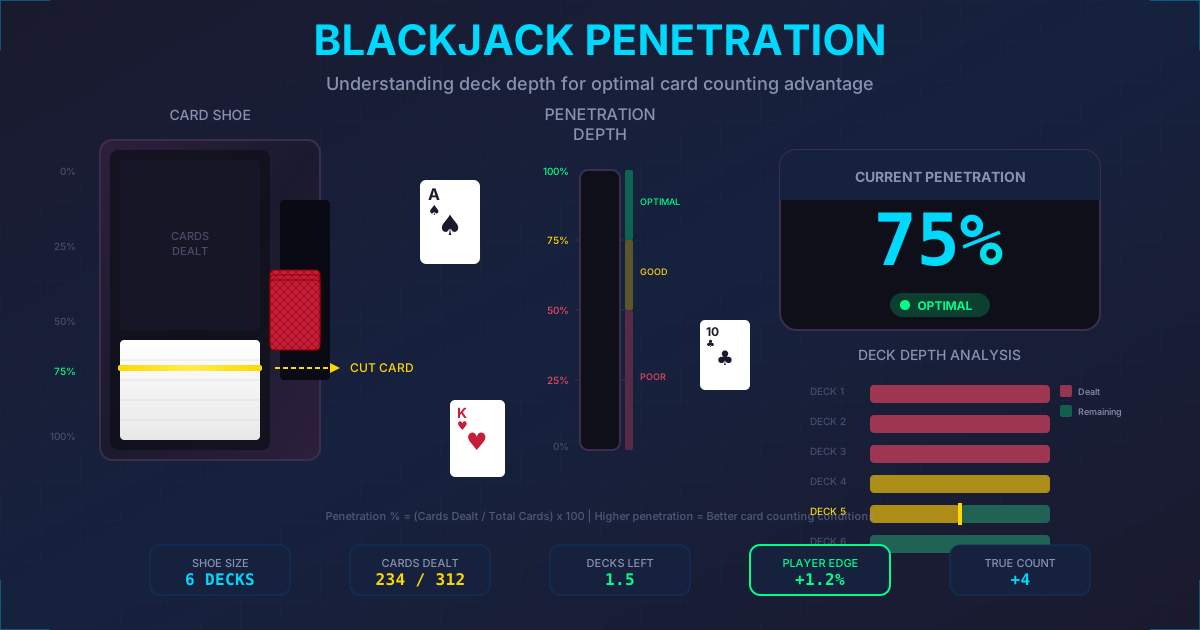
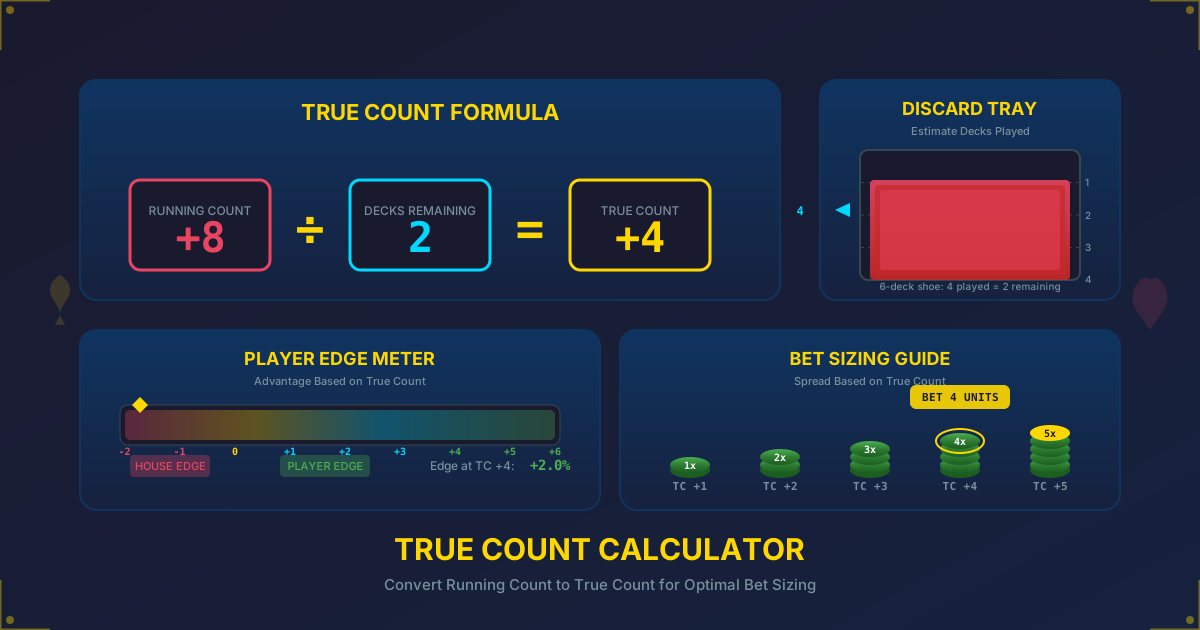
Consider a card counter at blackjack. The count is +5, the remaining deck is rich in tens and aces, and the expected value of the next hand is positive. Walking away because of a predetermined stop-loss means walking away from a profitable situation. In this narrow case, the stop-loss hurts.
The Practical Argument for Stop-Losses
The mathematical argument is technically correct and practically irrelevant for 95% of gamblers. Here is why stop-losses work in the real world:
-
You probably do not have an edge. The vast majority of casino gamblers play negative-expectation games. For these players, every additional minute at the table increases expected losses. A stop-loss limits total exposure.
-
Decision quality degrades over time. Even advantage players make worse decisions as sessions extend. A poker player making optimal decisions in hour one is making measurably worse decisions by hour four. The stop-loss protects you from your own diminishing performance.
-
Emotional escalation is real. Losses trigger emotional responses that lead to larger bets, riskier plays, and tilt. A stop-loss prevents the spiral from reaching catastrophic levels.
-
Bankroll preservation is paramount. A devastating single-session loss can end a gambling career or bankroll that took months to build. The stop-loss acts as insurance against the worst-case scenario.
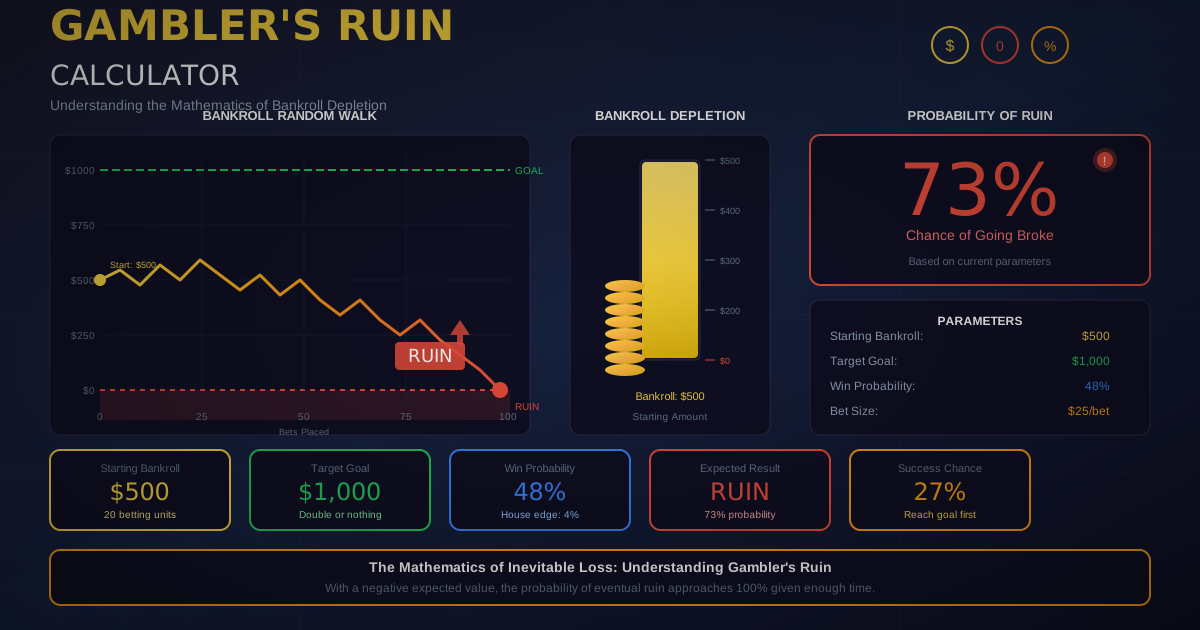
Assess your true risk of going broke with our Poker Risk of Ruin Calculator -- the math applies to any bankrolled gambling activity, not just poker.
The Verdict
If you have a verified, statistically significant edge (tracked over thousands of sessions or hands), rigid stop-losses during positive-EV situations may cost you expected value. For everyone else -- which is nearly everyone -- stop-losses are an essential protection mechanism. When in doubt, use a stop-loss.
Win Limits: The Art of Locking Up Profit
Walking away when you are losing is hard. Walking away when you are winning might be even harder. The feeling that your luck is "hot," that the table is "due" to keep paying, that you should press your advantage -- these are among the most dangerous thoughts in gambling.
Why Winners Give It Back
Research on within-session gambling behavior found something surprising: players are actually less likely to quit after a win than after a loss. This contradicts the popular narrative about loss-chasing being the primary danger. Win-chasing -- the compulsion to keep playing when you are ahead -- is equally destructive.
Here is a real-world example of how win-chasing erases profit:
The $1,200 That Became $200
Tom sits down at a $10 minimum blackjack table with $300. Over the first hour, he runs hot and builds his stack to $1,200. He is up $900 -- a fantastic session by any measure. But instead of walking away, he thinks: "I am on a heater. Let me see if I can hit $2,000."
He increases his bet size to $50 per hand because he is "playing with house money" (a dangerous fallacy -- all money at the table is your money). Over the next two hours, variance kicks in, the shoe goes cold, and his stack bleeds back down. He finally leaves with $500. What should have been a $900 win becomes a $200 win. He lost $700 in potential profit by not walking away.
The Profit Lock Strategy
One of the most effective win-limit techniques is the profit lock. Instead of setting a single win target, you use a ratcheting system:
- Set your initial win target. Example: "If I double my $300 buy-in, I will lock up half my profit."
- When you hit the target, pocket the profit. Physically take $150 in chips off the table and put them in your pocket. Do not touch them.
- Continue playing with original buy-in + remaining profit. You now play with $450 ($300 original + $150 remaining profit).
- If you lose the playing stack back to your original buy-in, walk away. You still leave with your $300 buy-in plus the $150 locked profit -- a $150 win instead of the $0 it would have been without the lock.
This system ensures you always take home something from a winning session. It is not mathematically optimal for advantage players, but it is psychologically powerful for everyone.
The 60/30/10 Withdrawal System
For larger wins, professional gamblers often use a structured withdrawal:
| Portion | Percentage | Purpose | Example on $1,000 Win |
|---|---|---|---|
| Cash Out | 60% | Immediate secure profit | $600 pocketed |
| Play Fund | 30% | Continue current session | $300 stays in play |
| Reserve | 10% | Added to long-term bankroll | $100 to bankroll |
This system acknowledges the desire to keep playing while ensuring the majority of profits are protected.
Decision Fatigue and Late-Session Errors
Decision fatigue is the deterioration of decision-making quality after extended periods of making choices. It affects judges, doctors, CEOs, and yes, gamblers. The phenomenon is well-documented: a study of Israeli parole board judges found that favorable rulings dropped from 65% to nearly 0% over the course of a session, then reset after breaks. Your gambling decisions follow the same pattern.
How Decision Fatigue Manifests at the Table
| Session Duration | Common Symptoms | Impact on Play |
|---|---|---|
| 0-60 minutes | Sharp, focused, following strategy | Optimal decision-making |
| 60-120 minutes | Slight attention drift, minor shortcuts | 5-10% increase in errors |
| 120-180 minutes | Fatigue setting in, strategy deviations | 15-25% increase in errors |
| 180-240 minutes | Significant fatigue, emotional decisions | 30-50% increase in errors |
| 240+ minutes | Mental exhaustion, tilt vulnerability | 50%+ increase in errors, severe tilt risk |
These are not arbitrary numbers. Research from Current Psychology on within-session breaks found that longer response latency between bets (more time to think) was associated with better gambling outcomes. As sessions extend, response latency decreases -- you bet faster, think less, and make worse choices.
The Poker-Specific Problem
Decision fatigue is particularly devastating in poker because the game demands continuous complex decision-making. Every hand requires evaluating position, stack sizes, opponent tendencies, pot odds, implied odds, and equity. By hour four of a poker session, you are making these calculations on a significantly degraded mental processor.
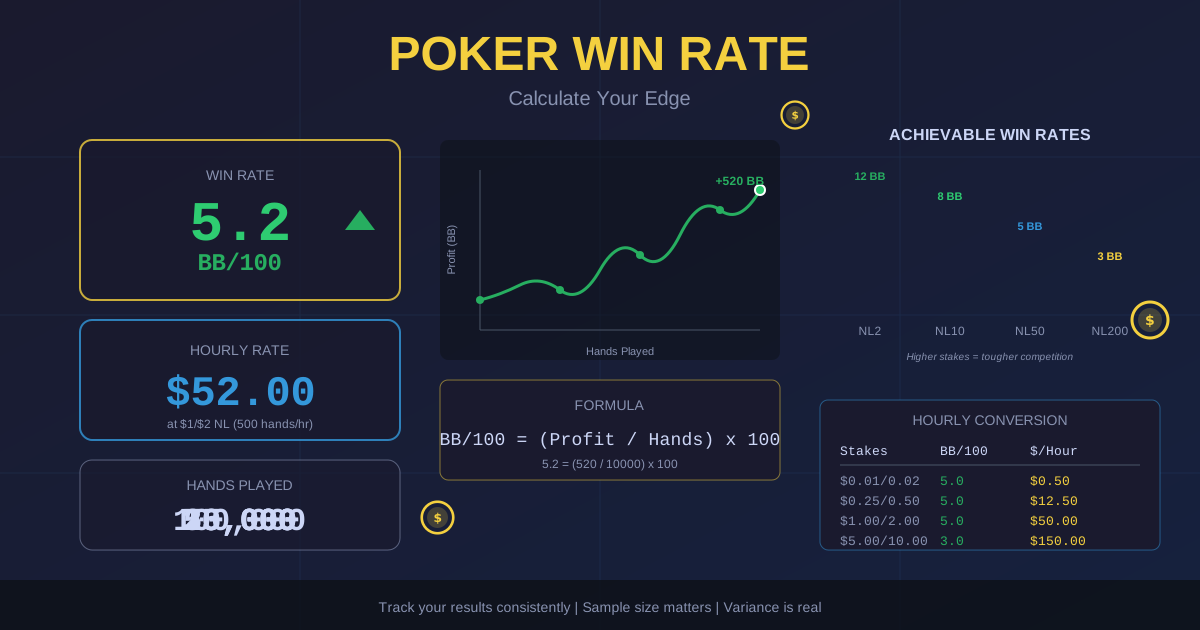
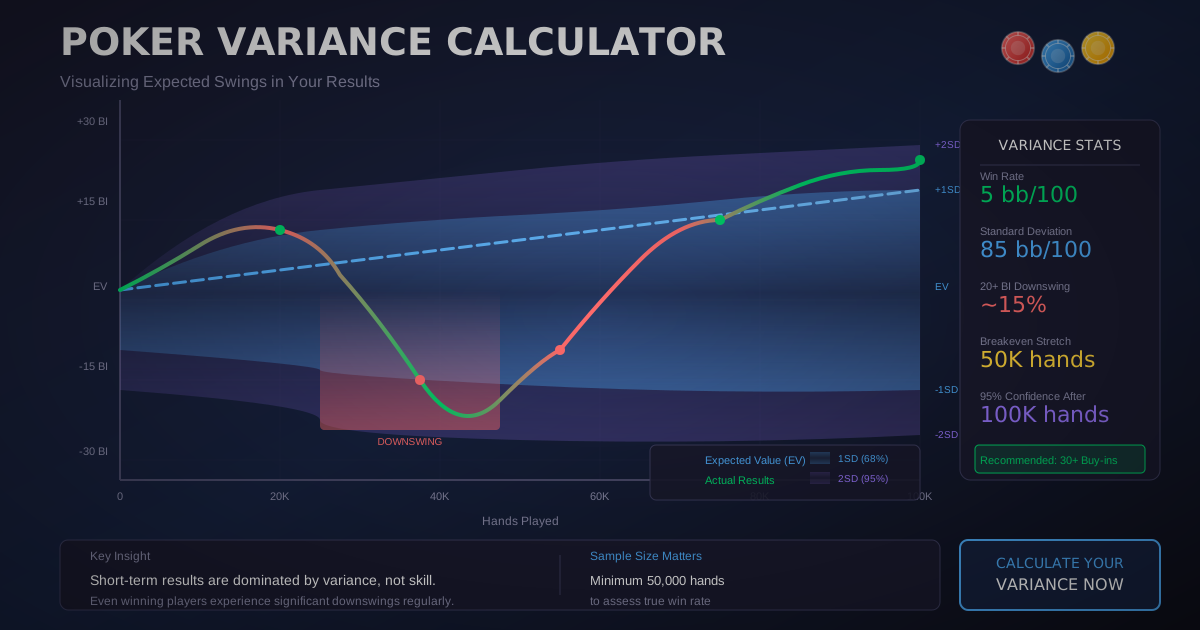
A winning poker player with a 5 bb/100 win rate who plays optimally for the first three hours may become a break-even or losing player in hours four and five. The edge that took years to develop gets erased by fatigue in a single extended session.
Use our Poker Variance Calculator to model how shortened sessions with sharper play compare to longer sessions with degraded decision-making.
The Mandatory Break Protocol
If you must play extended sessions, implement mandatory breaks:
- Every 60 minutes: Stand up, walk away from the table for 5 minutes, drink water
- Every 120 minutes: Take a full 15-minute break, eat something, check your phone for time awareness
- Every 180 minutes: Seriously evaluate whether you should continue, check all four limit pillars
- At 240 minutes: End the session unless you are a professional with a confirmed edge and strong mental state
Physical Walk-Away Triggers: Your Body Is Telling You Something
Your body provides reliable signals that it is time to leave. Most gamblers ignore these signals because they are in the gambler's trance. Learning to recognize and obey these triggers is a concrete, actionable skill.
The Walk-Away Warning Signs Checklist
| Warning Sign | What It Means | Urgency |
|---|---|---|
| Increased heart rate or shallow breathing | Emotional arousal, tilt beginning | HIGH -- leave within 15 minutes |
| Clenching jaw or fists | Frustration building, anger at outcomes | HIGH -- leave within 15 minutes |
| Checking account balance or considering ATM | Loss limit exceeded or approaching | CRITICAL -- leave immediately |
| Thinking "just one more hand/spin/bet" | Chasing behavior activated | CRITICAL -- leave immediately |
| Inability to recall recent hands or bets | Dissociative trance state | HIGH -- take a break or leave |
| Increasing bet sizes after losses | Classic loss-chasing pattern | CRITICAL -- leave immediately |
| Rationalizing why your strategy "should" work | Cognitive dissonance, denial of house edge | MODERATE -- reassess and consider leaving |
| Physical hunger, thirst, or need to use restroom | Basic needs suppressed by gambling focus | MODERATE -- address the need, then evaluate |
| Feeling angry at dealers or other players | Tilt, blaming external factors | HIGH -- leave within 15 minutes |
| Excitement about "making it all back" | Desperation, irrational optimism | CRITICAL -- leave immediately |
If you recognize three or more of these signs simultaneously, stop playing immediately. No exceptions. No "after this hand." Stand up, cash out, and leave the gaming floor.
The Buddy System
One of the most effective walk-away strategies is bringing someone who is not gambling and giving them authority to tell you when it is time to leave. Daniel Negreanu has spoken publicly about the value of having trusted friends who can recognize when you are off your game. If a trusted companion says "it is time to go," treat that as a non-negotiable trigger.
Session Planning Frameworks
Walking away starts before you arrive. The most disciplined gamblers plan every session in advance, when they are calm, rational, and not influenced by the casino environment.
The Pre-Session Checklist
Before every gambling session, complete this framework:
| Planning Element | Your Commitment | Example |
|---|---|---|
| Total bankroll available | $_____ | $5,000 |
| Session buy-in (10-20% of bankroll) | $_____ | $500 |
| Loss limit (% of buy-in) | $_____ | $500 (100% of buy-in) |
| Win target | $_____ | $375 (75% of buy-in) |
| Profit lock threshold | $_____ | Lock 50% at $250+ profit |
| Maximum session time | ___ hours | 2.5 hours |
| Mandatory break intervals | Every ___ minutes | Every 60 minutes |
| Games I will play | __________ | Blackjack $15 min only |
| Games I will NOT play | __________ | No slots, no craps side bets |
| Emotional exit triggers | __________ | Anger, chasing urge, ATM thoughts |
| Accountability partner | __________ | Wife, knows my plan |
Write this plan down. Put it in your wallet or phone. Read it before you walk in the door.
The Session Decision Tree
When you are at the table and uncertain whether to continue, work through this decision sequence:
| Step | Question | If YES | If NO |
|---|---|---|---|
| 1 | Have I hit my loss limit? | LEAVE NOW | Go to Step 2 |
| 2 | Have I hit my time limit? | LEAVE NOW | Go to Step 3 |
| 3 | Am I experiencing 2+ walk-away warning signs? | LEAVE NOW | Go to Step 4 |
| 4 | Have I hit my win target? | Lock profits, reassess | Go to Step 5 |
| 5 | Am I still enjoying this? | Continue with next break check | LEAVE -- gambling should not feel like a grind |
| 6 | Am I playing my best game? | Continue with next break check | Take a 15-minute break, then reassess |
This is not complicated. But following it under pressure, when your brain is screaming at you to stay, is one of the hardest things you will ever do in a casino.
Different Rules for Different Game Types
The optimal walk-away strategy varies significantly by game type because the mathematical structure, variance profile, and player-edge opportunity differ across games.
Negative-Expectation Games (Slots, Roulette, Craps, Baccarat)
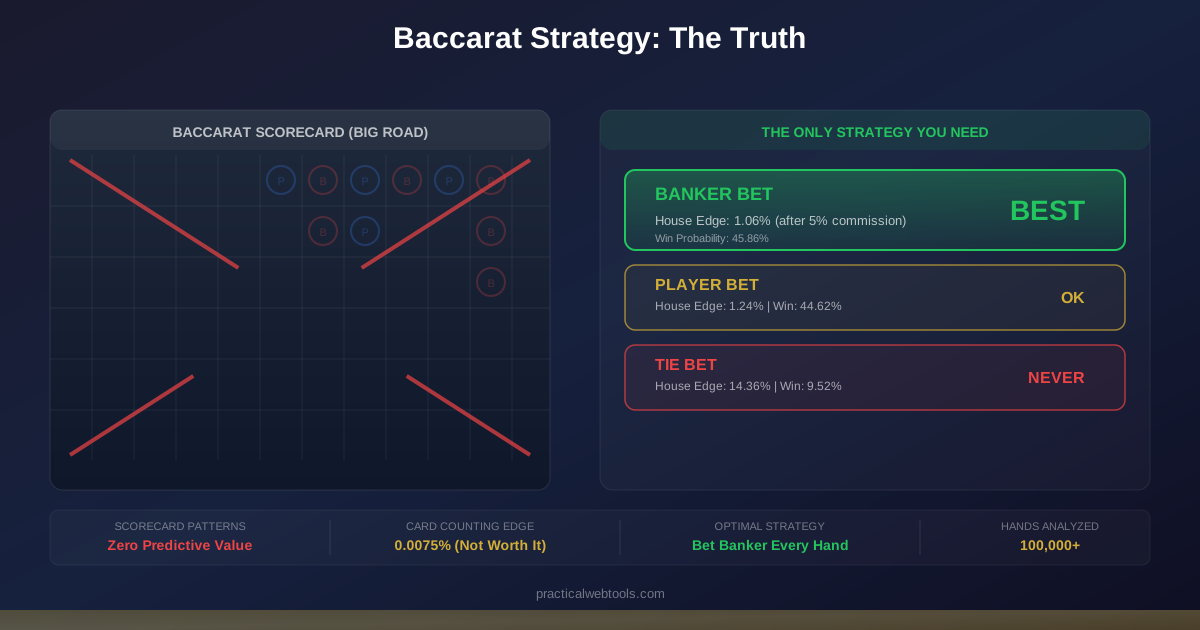
In games where the house has an unbeatable mathematical edge, every minute you play increases your expected loss. Your walk-away strategy for these games should be aggressive:
- Loss limits: Set tight, no more than your session buy-in, period
- Win limits: Essential -- lock profit at 50-75% of buy-in and walk
- Time limits: 1-2 hours maximum; the house edge compounds with time
- Strategy: These are entertainment expenses. Set your budget like a movie ticket and accept the cost. If you win, celebrate by leaving.
Skill-Based Games with Edge Potential (Blackjack Card Counting, Poker, Sports Betting)
If you have a verified positive expected value, your walk-away rules shift:
- Loss limits: Wider tolerance (up to 20% of bankroll for a single session) because you expect to recover over time
- Win limits: Less critical mathematically, but still useful for psychological health
- Time limits: Based on decision fatigue, not house edge. Leave when your mental sharpness declines.
- Strategy: Track your results rigorously over hundreds of sessions. If your verified edge is +EV, the stop-loss debate tilts toward playing longer when conditions are good. But still respect fatigue limits.
Track your long-term results to verify whether you truly have an edge. Use our Poker Variance Calculator to determine if your results reflect skill or luck.
Tournament Poker: A Special Case
Tournament poker has unique walk-away dynamics because you cannot simply cash out mid-tournament. Your session management for tournaments should focus on:
- Pre-tournament selection: Do not enter a tournament that will extend past your time-limit comfort zone
- Break discipline: Use every scheduled break for physical recovery and mental reset
- Satellite and re-entry decisions: Have a hard cap on re-entries before the tournament begins
- Post-tournament discipline: After a tournament ends (especially a deep run or an early bust), do not jump into cash games. Your emotional state is compromised regardless of the outcome.
Plan your tournament buy-ins relative to your bankroll with our Poker Bankroll Requirements Calculator.
Sports Betting Sessions
Sports betting walk-away strategies differ because the action is spread over time rather than concentrated at a table:
- Daily loss limits: Set a maximum number of bets and maximum total stakes per day
- Weekly review: Evaluate your record weekly, not bet-by-bet
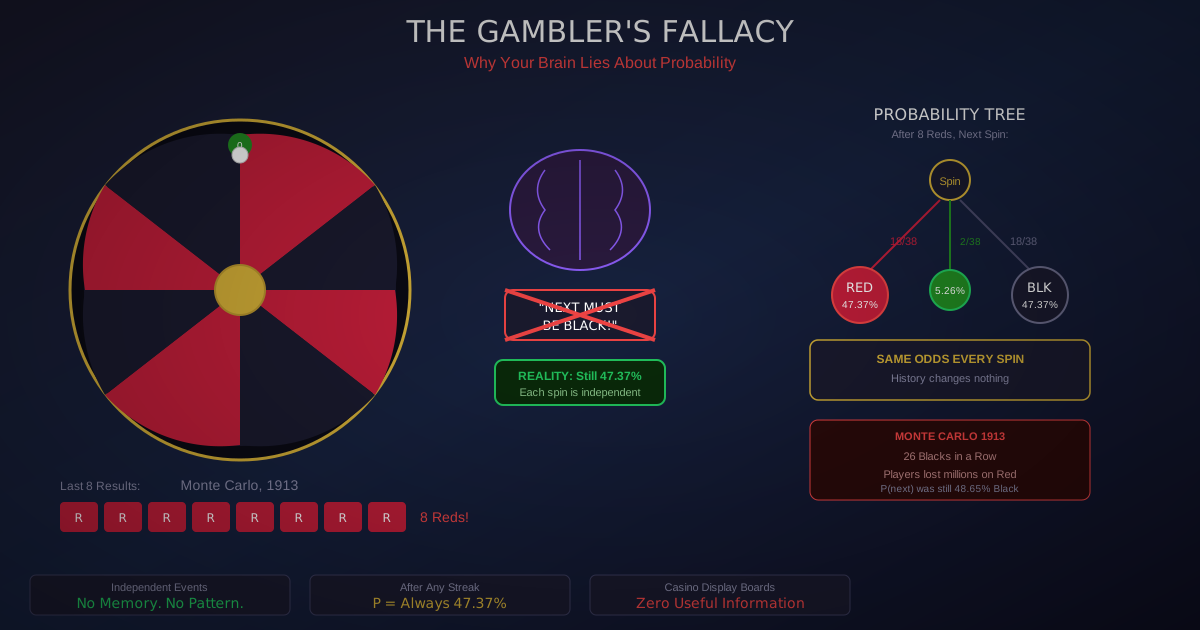
- Chase prevention: Never place a bet to "get back" a loss from a previous game. The next game is a completely independent event.
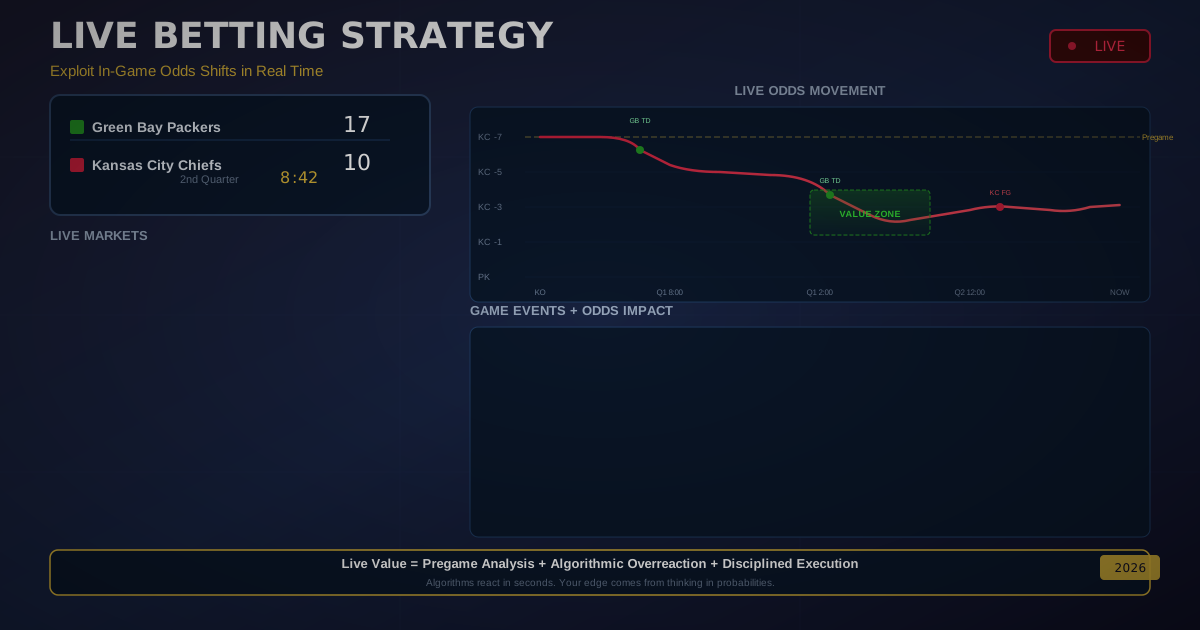
- Live betting traps: In-game live betting is the sports betting equivalent of the slot machine trance. Set strict limits or avoid it entirely.
Building the Walk-Away Habit
Knowing when to walk away is an intellectual exercise. Actually walking away is a behavioral habit. Like any habit, it must be built through repetition, reinforcement, and environmental design.
The 30-Session Challenge
Commit to following your session plan for 30 consecutive sessions. Every session where you successfully walk away at your predetermined limits, mark it as a win regardless of whether you won or lost money. After 30 sessions, the walk-away behavior begins to feel automatic rather than forced.
Track Your Walk-Away Performance
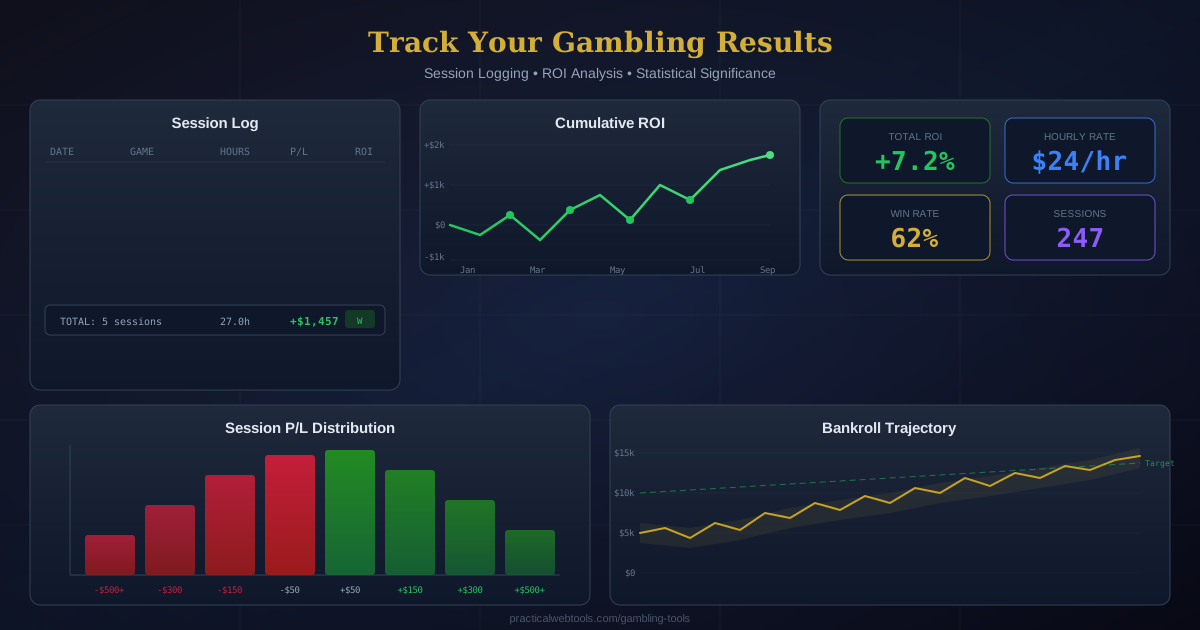
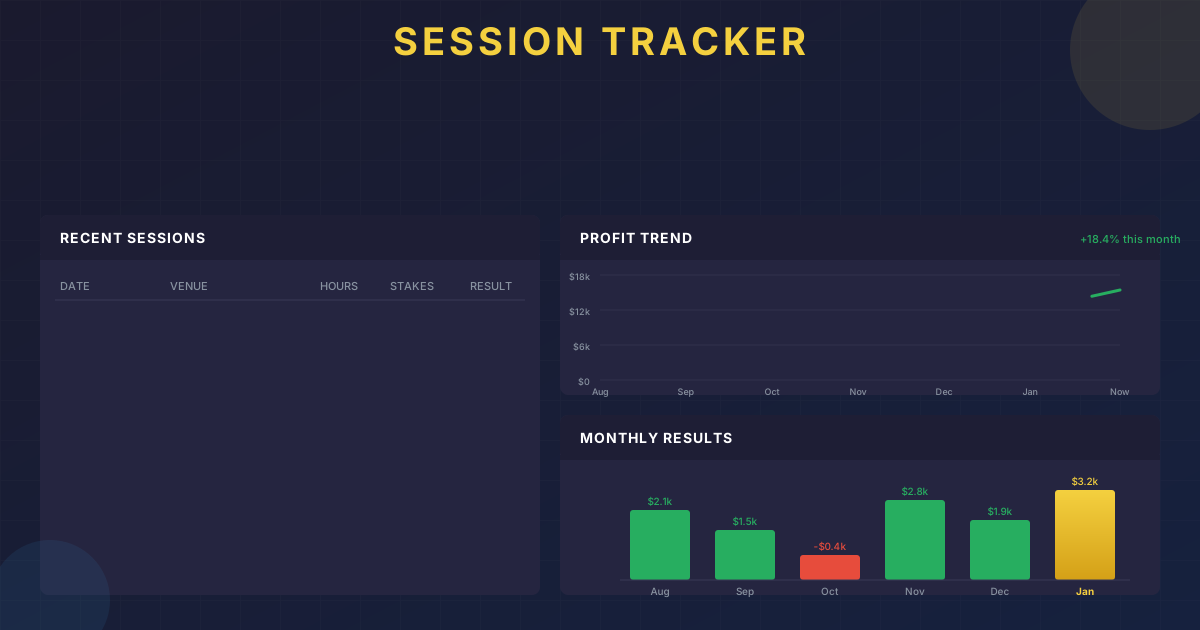
Create a simple tracking system:
| Date | Game | Buy-In | Result | Hit Loss Limit? | Hit Win Limit? | Hit Time Limit? | Walked Away on Plan? |
|---|---|---|---|---|---|---|---|
| 4/1 | BJ | $300 | -$300 | Yes | N/A | No | Yes |
| 4/5 | Poker | $500 | +$650 | No | Yes (locked $325) | No | Yes |
| 4/8 | Slots | $100 | -$60 | No | No | Yes (1 hr) | Yes |
| 4/12 | BJ | $300 | +$225 | No | Yes | No | Yes |
| 4/15 | Poker | $500 | -$200 | No | No | Yes (3 hr) | Yes |
The column that matters most is the last one. Over time, your "Yes" percentage in that column should approach 100%. When it does, you have built the habit.
Reward the Behavior, Not the Outcome
Traditional gambling psychology ties rewards to winning. Disciplined session management ties rewards to following the plan. Consider creating small personal rewards for sessions where you walked away on time:
- Walked away at your loss limit before tilting? Treat yourself to a nice dinner with the money you saved.
- Locked up a profit and left? Buy something small you have been wanting.
- Completed five consecutive on-plan sessions? Take a day off from gambling entirely.
These rewards reinforce the walk-away behavior independently of gambling outcomes, building the habit on a more durable psychological foundation.
Environmental Strategies
- Leave ATM and credit cards at home. Bring only your session buy-in in cash.
- Park close to the exit. The longer the walk to leave, the more time your brain has to talk you out of it.
- Set phone alarms. Multiple alarms at your break intervals and time limit.
- Tell someone your plan. Social accountability is a powerful motivator.
- Avoid alcohol. Even moderate drinking impairs judgment and weakens resolve. Research consistently links alcohol consumption during gambling with longer sessions, larger bets, and greater losses.
The Long-Term Impact of Good Session Management
The gap between disciplined session management and undisciplined play compounds dramatically over time. The numbers below illustrate the difference across a year of recreational gambling.
Scenario: Recreational Blackjack Player, $300 Sessions, Twice Per Month
Undisciplined Player:
- Average session: 4+ hours
- No loss limits; frequently chases losses past buy-in
- No win limits; gives back profits regularly
- Makes ATM withdrawals 30% of sessions
- Average session result: -$380 (losses exceed buy-in due to ATM usage)
- Annual result: -$9,120 across 24 sessions
Disciplined Player (Same skill, Same bankroll):
- Average session: 2 hours
- Strict $300 loss limit (100% of buy-in), no ATM usage
- Win limit at $225 (75% of buy-in) with profit lock
- Walks away on plan 90%+ of sessions
- Average session result: -$120 (limited exposure, profit locks preserve wins)
- Annual result: -$2,880 across 24 sessions
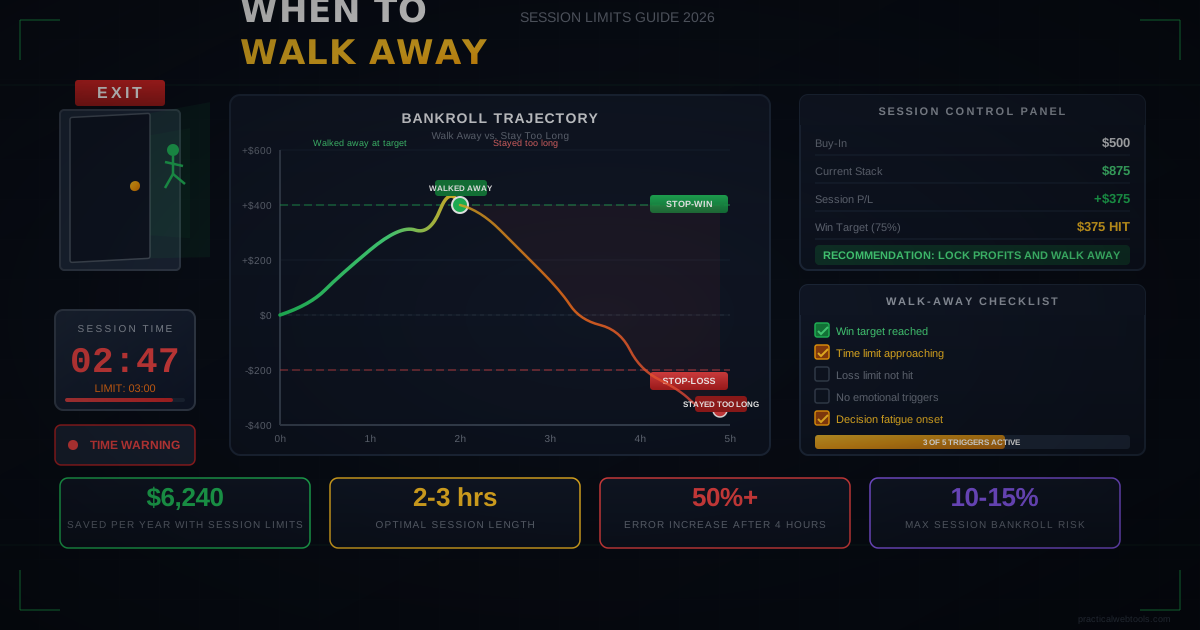
The difference: $6,240 per year. That is the value of walking away. Not a card-counting system. Not a betting progression. Just the discipline to follow a plan.
Over five years, the undisciplined player has lost $45,600. The disciplined player has lost $14,400. Same game, same house edge, same skill level -- but $31,200 in saved losses just from session management.
The Compounding Effect of Good Habits
Disciplined session management creates a positive feedback loop:
- Smaller losses preserve bankroll for future sessions
- Locked profits add to bankroll over time
- Shorter sessions reduce decision fatigue, leading to better in-session play
- Consistent behavior reduces emotional volatility, improving life quality outside gambling
- Better data from planned sessions helps you identify whether your game selection is sound
Each benefit feeds the others. Over time, the disciplined gambler is not just losing less -- they are playing better, thinking clearer, and enjoying the experience more.
Model the long-term impact of different session strategies with our Expected Value Calculator.
When Walking Away Means Walking Away Forever
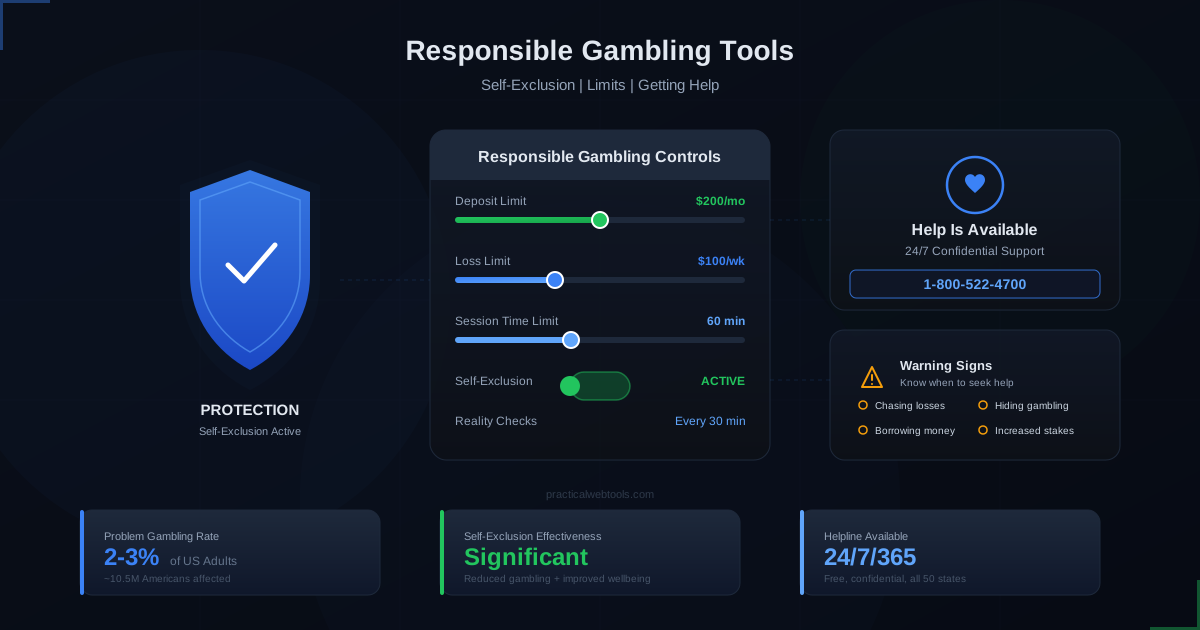
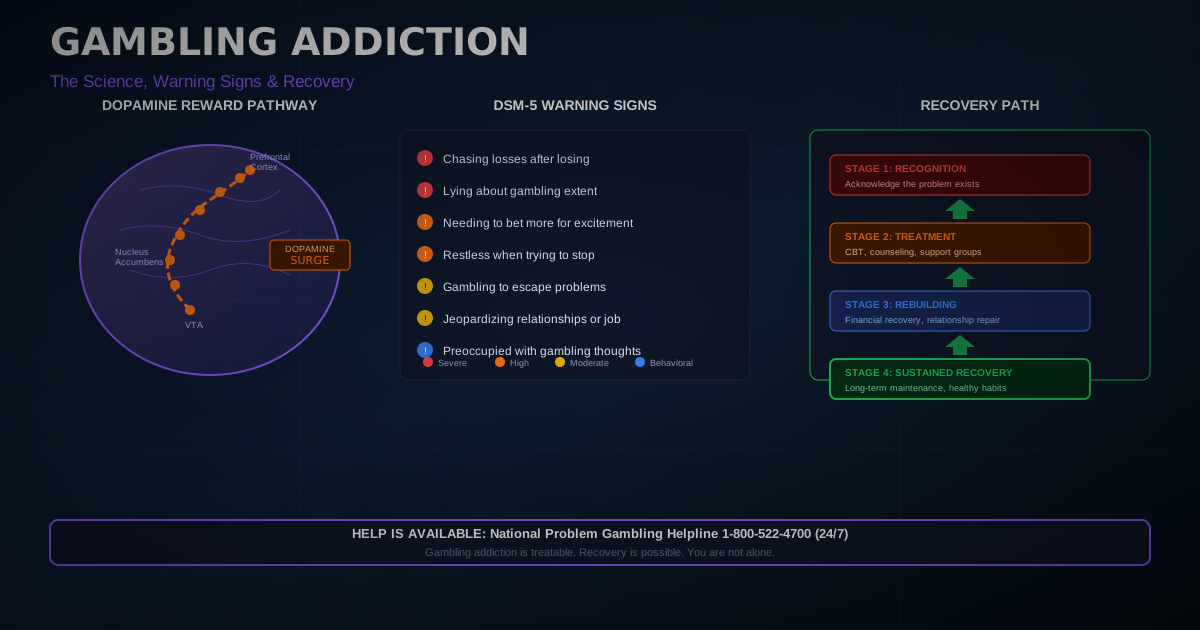
This guide has focused on session-level walk-away strategies. But sometimes the right move is to walk away from gambling entirely, temporarily or permanently. It is important to be honest about the difference between disciplined recreational gambling and a pattern that has become problematic.
Signs That Session Limits Are Not Enough
- You consistently fail to follow your session plan despite genuine effort
- You are gambling with money allocated for bills, rent, food, or debt payments
- Your relationships are suffering because of gambling time or gambling losses
- You are lying to family or friends about how much you gamble or how much you have lost
- You experience significant anxiety or depression related to gambling outcomes
- You have tried to cut back multiple times and been unable to do so
- You are borrowing money to gamble or to cover gambling losses
If any of these apply, the walk-away skill you need is bigger than a session limit. It is a life decision, and it is one that takes real courage.
Resources for Help
The National Council on Problem Gambling provides free, confidential support. The 24/7 helpline is 1-800-522-4700. Text or chat options are also available. There is no shame in reaching out. The bravest walk-away is the one that changes everything.
Frequently Asked Questions
What is the best stop-loss amount for a casual gambler? For casual gamblers, a stop-loss of 100% of your session buy-in is the simplest and most effective rule. If you bring $200 to the casino, $200 is the most you can lose. Never withdraw additional money from an ATM or use credit during a session. Your buy-in is your stop-loss. For players with larger bankrolls who want more structure, 10-15% of total bankroll per session provides a good balance between risk and entertainment value.
Do professional gamblers use stop-losses? Most professional poker players and sports bettors use modified stop-loss rules based on mental state rather than dollar amounts. They will end a session when they recognize they are making poor decisions, feeling tilted, or experiencing fatigue -- even if they have not hit a financial limit. Professional advantage players in games like blackjack card counting may play through short-term losses when the count is favorable, but they still maintain bankroll-level risk management through Kelly Criterion bet sizing.
How do I stop chasing losses during a session? The most effective anti-chasing technique is to set your loss limit before the session and leave your additional money at home or locked in your car. If the money is not physically accessible, you cannot chase. Beyond that, cognitive behavioral approaches teach you to recognize the chasing urge as a signal to stop, not a signal to continue. When you think "I need to win it back," reframe that thought: "The money is gone. Continuing cannot change that. But continuing can make it worse."
Is it better to quit while ahead or keep playing with an edge? This depends entirely on whether you genuinely have an edge. In negative-expectation games (slots, roulette, most casino games), you should always quit while ahead because continued play will erode your winnings. In positive-expectation situations (poker with a skill edge, favorable blackjack counts, +EV sports bets), the mathematical answer is to keep playing. However, even advantage players should respect fatigue limits and emotional state. A compromised advantage player can quickly become a disadvantage player.
How long should a gambling session last? Research suggests that decision-making quality begins declining after 60-90 minutes of continuous play. For recreational gamblers, 1-2 hours is optimal. For skilled players, 2-3 hours with breaks every 60 minutes is a reasonable maximum. Sessions exceeding 4 hours show significant increases in error rates, tilt susceptibility, and chasing behavior regardless of skill level. A study published in the International Journal of Mental Health and Addiction found that setting explicit time limits before sessions significantly reduced total gambling time.
What is the "gambler's trance" and how do I avoid it? The gambler's trance is a dissociative state where you lose awareness of time, money, and your surroundings. It is characterized by automatic, almost robotic gambling behavior with little conscious decision-making. You can avoid it by taking regular breaks (every 45-60 minutes), maintaining awareness of your physical state (hunger, thirst, restroom needs), setting phone alarms as reality checks, and gambling with a companion who can provide external perspective. If you realize you cannot remember the last several hands or bets, you are in the trance and should stop immediately.
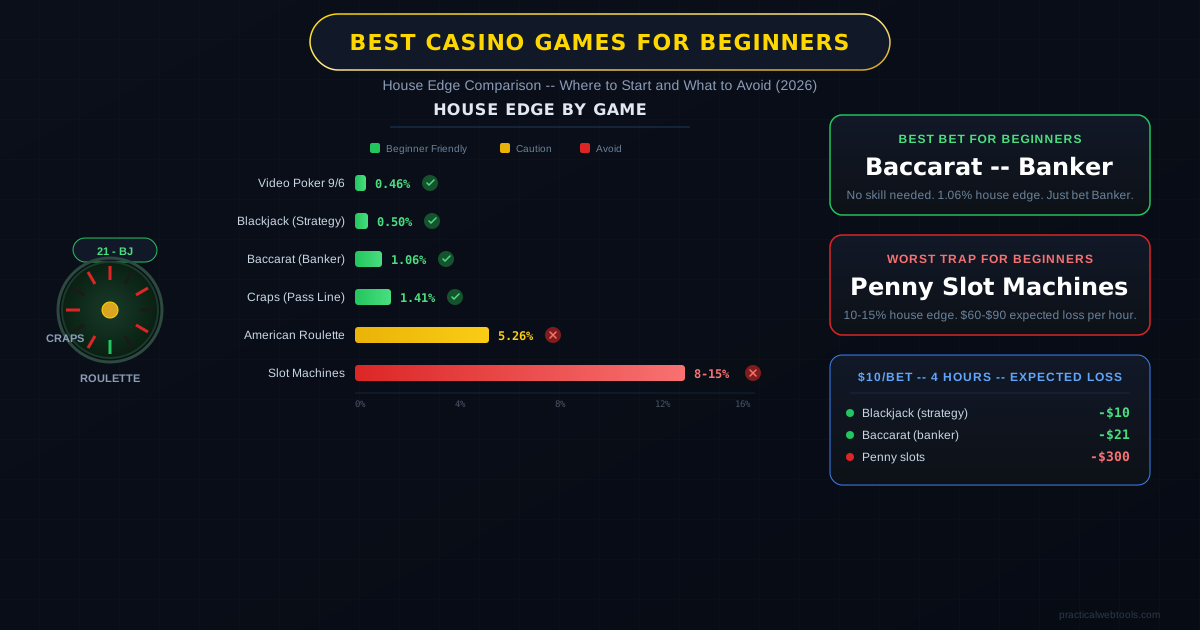
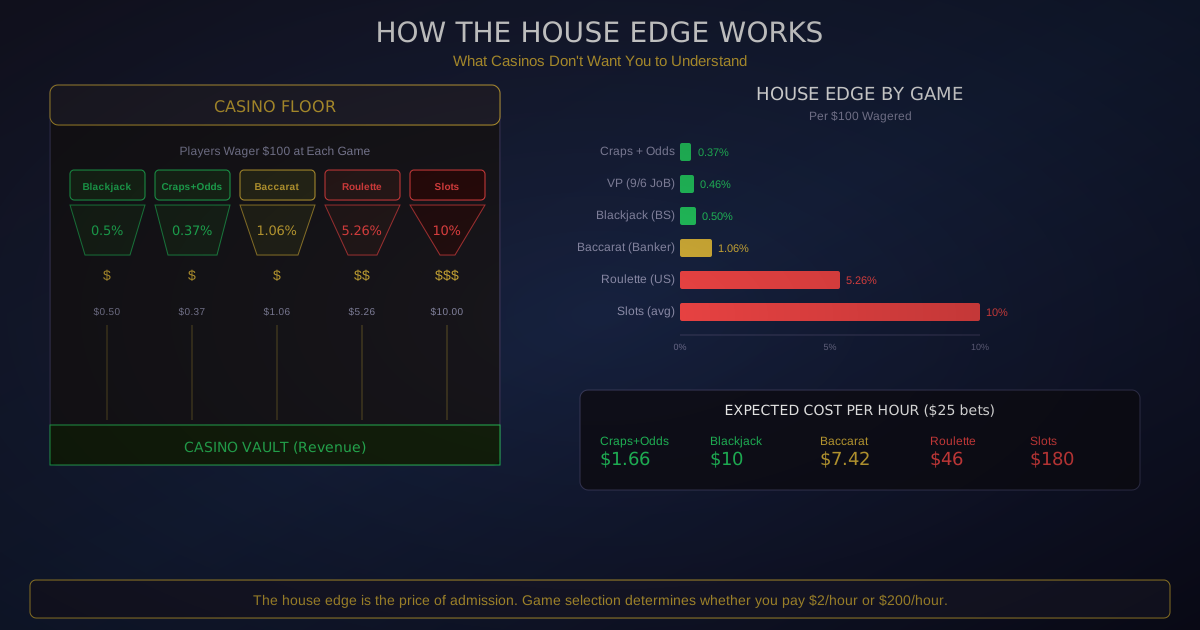
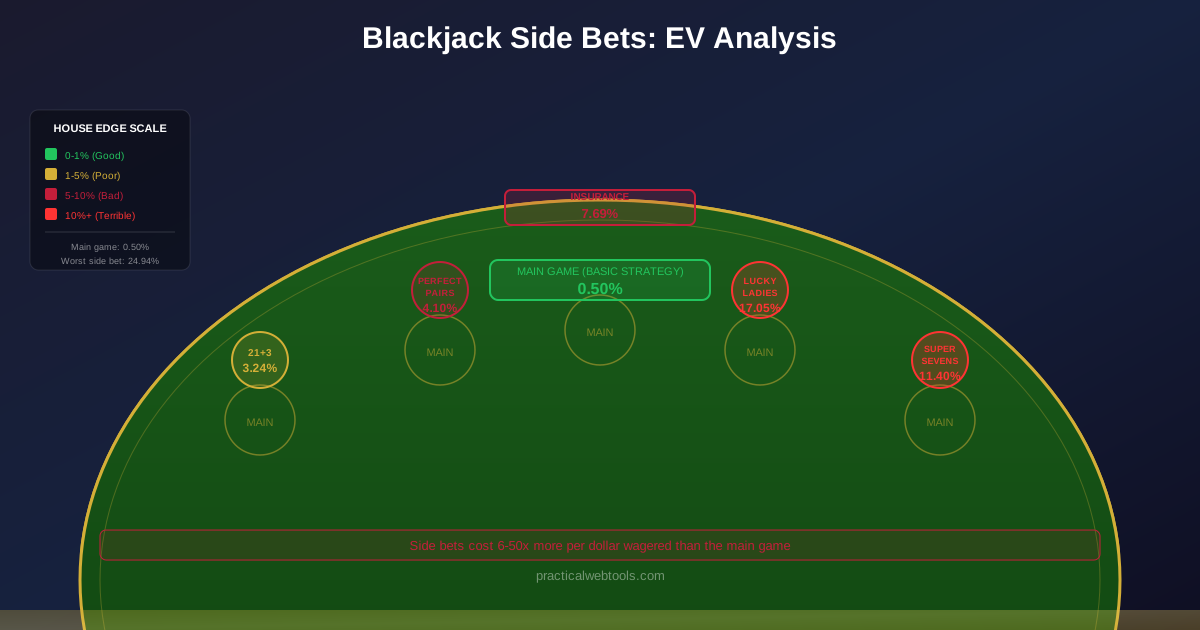
Should I set different limits for different games? Yes. Your limits should reflect the variance and house edge of each game. For high-house-edge games like slots (2-15% edge), use tighter loss limits and shorter time limits. For lower-edge games like basic-strategy blackjack (0.5% edge), you can afford slightly wider limits. For poker, where you may have a skill edge, your limits should be based more on decision-quality and fatigue than on dollar amounts. Use our Expected Value Calculator to compare the expected cost per hour of different games at your bet sizing.
What do I do after hitting my stop-loss? I want to keep playing. This is the moment that defines your gambling discipline. First, recognize that the urge to continue is the exact psychological trap this entire guide is about. Second, physically leave the gaming floor. Do not linger. Do not watch others play. Walk to your car, go to a restaurant, call someone -- anything that creates physical and mental distance from the tables. Third, remind yourself that you made this decision when you were thinking clearly, and your current desire to override it is driven by exactly the emotional state the limit was designed to protect you from. You can always come back another day with a fresh session plan and a clear head.
Essential Tools for Session Management
Build your session management framework with these free calculators:
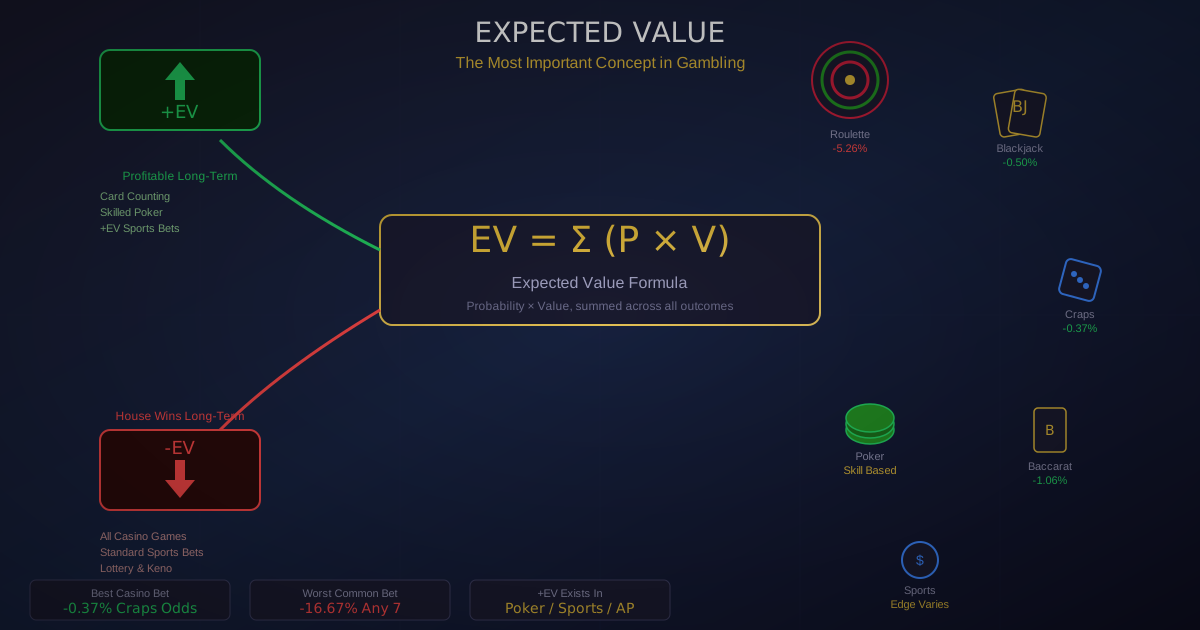
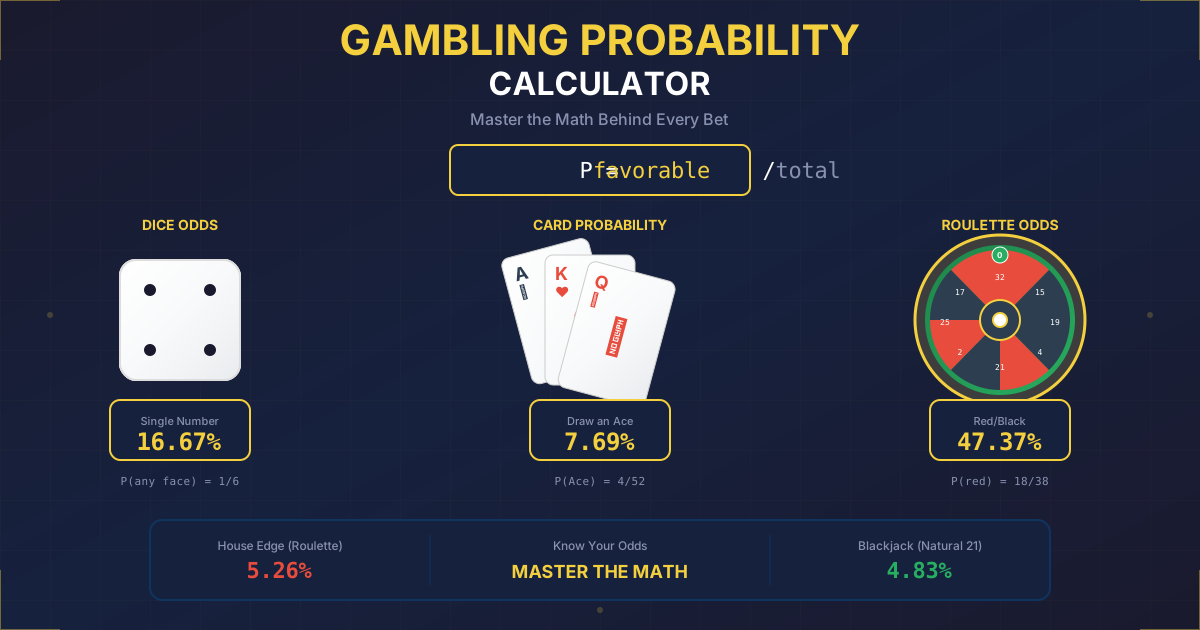
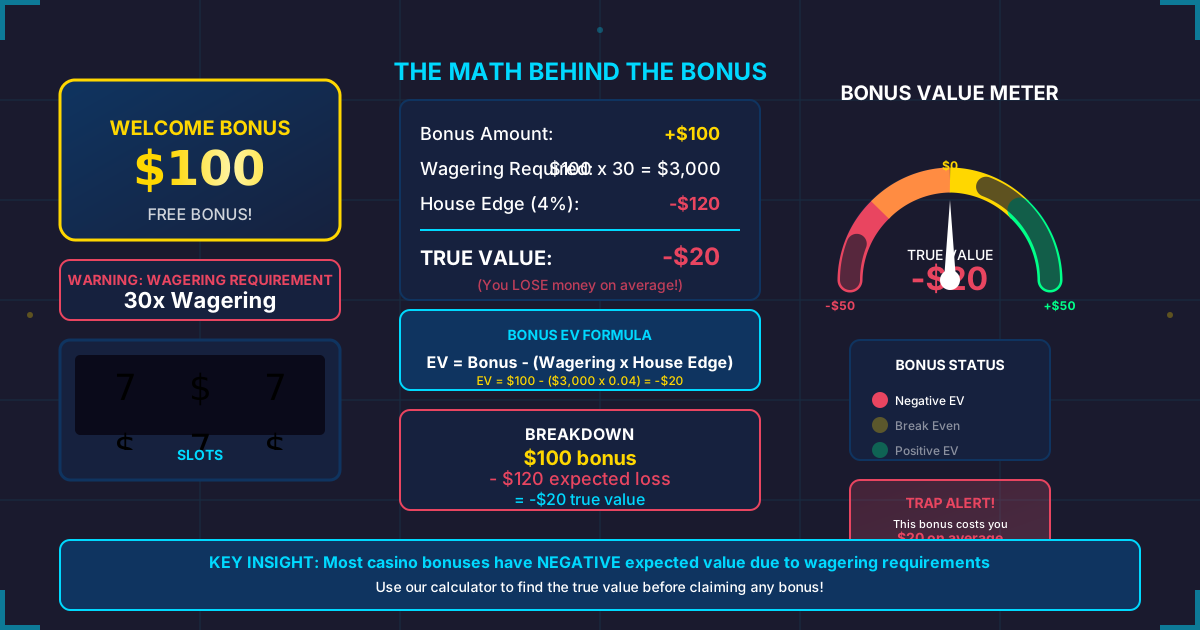
- Expected Value Calculator -- Understand the true mathematical cost of every bet and how session length affects total expected loss
- Kelly Criterion Calculator -- Determine optimal bet sizing that balances growth against risk of ruin
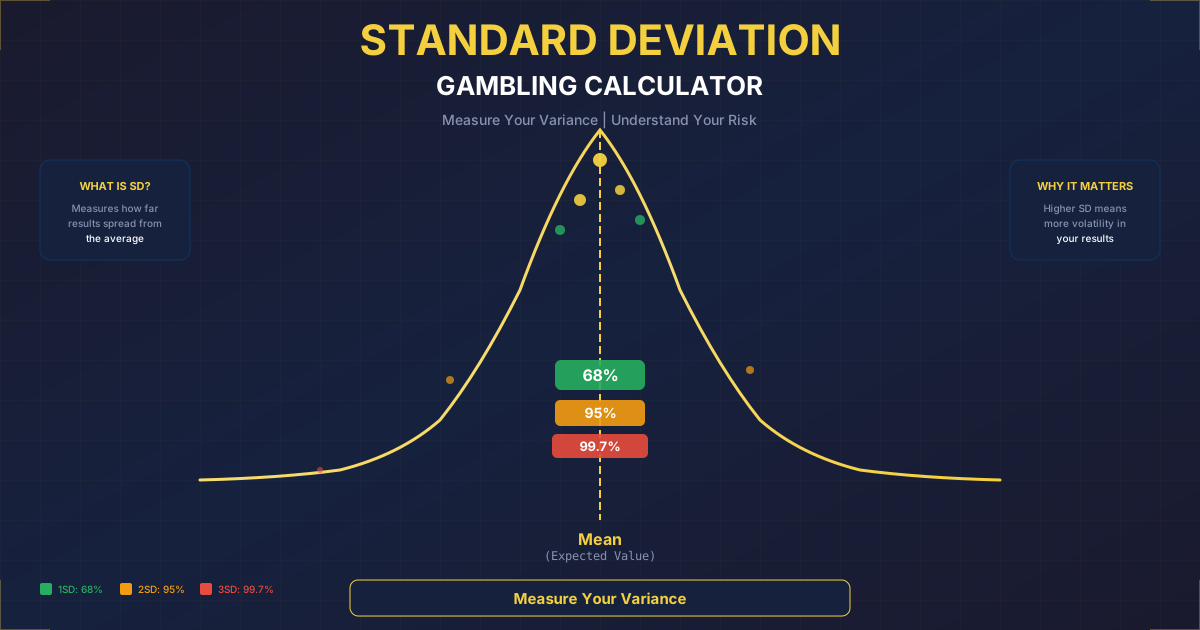
- Poker Variance Calculator -- Simulate thousands of sessions to understand what normal results look like
- Poker Bankroll Requirements Calculator -- Calculate exactly how large your bankroll needs to be for your stakes
- Poker Risk of Ruin Calculator -- Quantify the probability of going broke given your edge and bankroll size
Conclusion: The Walk-Away Skill Is the Whole Game
Every other gambling skill you develop -- reading opponents, counting cards, calculating odds, finding value bets -- operates within the container of your session management. If the container leaks, it does not matter how good the contents are. Walking away at the right time is what seals the container.
You will not master this skill overnight. There will be sessions where you violate your plan, stay too long, chase losses, or give back profits. When that happens, do not punish yourself. Study what went wrong. Identify the trigger that broke your discipline. Adjust your plan. And recommit for the next session.
Start today. Set your limits for your next session with the help of our Expected Value Calculator and Kelly Criterion Calculator. Write them down. Tell someone. And when the moment comes -- when every fiber of your being says stay -- walk away.
The table will be there tomorrow. Your bankroll might not be.
Gambling involves risk. This content is for educational and informational purposes only. Always gamble responsibly, set limits you can afford, and seek help if gambling becomes a problem. Visit the National Council on Problem Gambling or call 1-800-522-4700 for support.