Tilt Management for Gamblers: Stop Emotions from Draining Your Bankroll (2026)

Tilt destroys more bankrolls than bad strategy ever will. You can memorize every poker chart, master GTO theory, and build the sharpest sports betting models on the planet -- and one 45-minute emotional spiral can wipe out months of disciplined profit. The math is devastating: research published in the Journal of Gambling Studies found that tilt episode frequency was the single strongest predictor of excessive gambling losses, with a correlation coefficient of r = 0.49. Not skill deficiency. Not poor game selection. Emotional dysregulation.
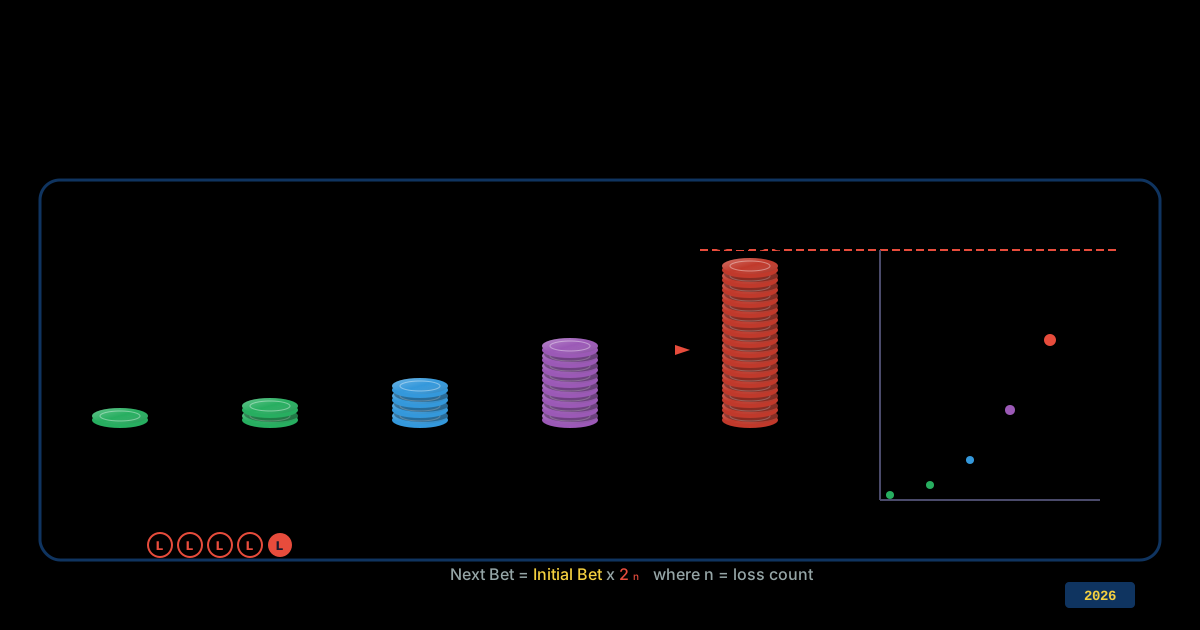
Consider this: a $2/$5 No-Limit Hold'em regular earning $35/hour on their A-game drops to -$80/hour on tilt. A single two-hour tilt session costs them $230 in actual losses plus the $70 they would have earned playing well -- $300 of real bankroll damage from one emotional episode. If that happens twice a month, tilt alone costs $7,200 per year. For sports bettors, the numbers are equally brutal. A bettor with a disciplined 3% edge who chases losses after a bad Sunday can blow through an entire month of positive expected value in a single evening of reckless parlays.
The uncomfortable truth is that nearly every serious gambler already knows when they are tilting. The problem is not recognition -- it is intervention. This guide provides the specific, actionable protocols that professional poker players and sharp bettors use to stop tilt before it starts, interrupt it when it surfaces, and recover from it when it wins.
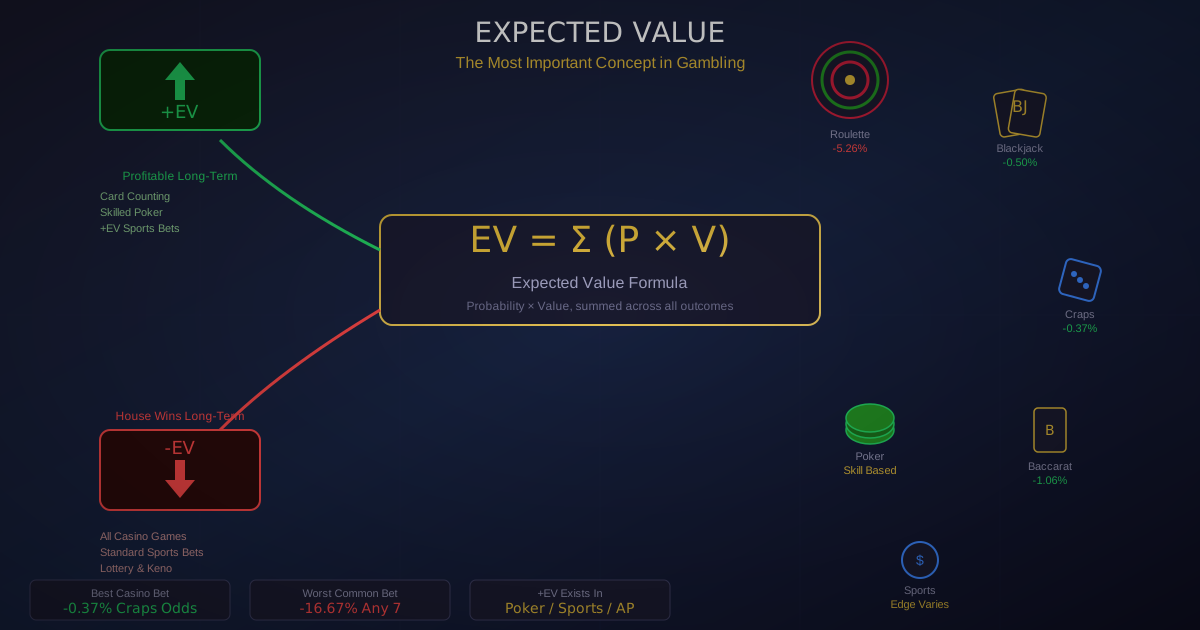
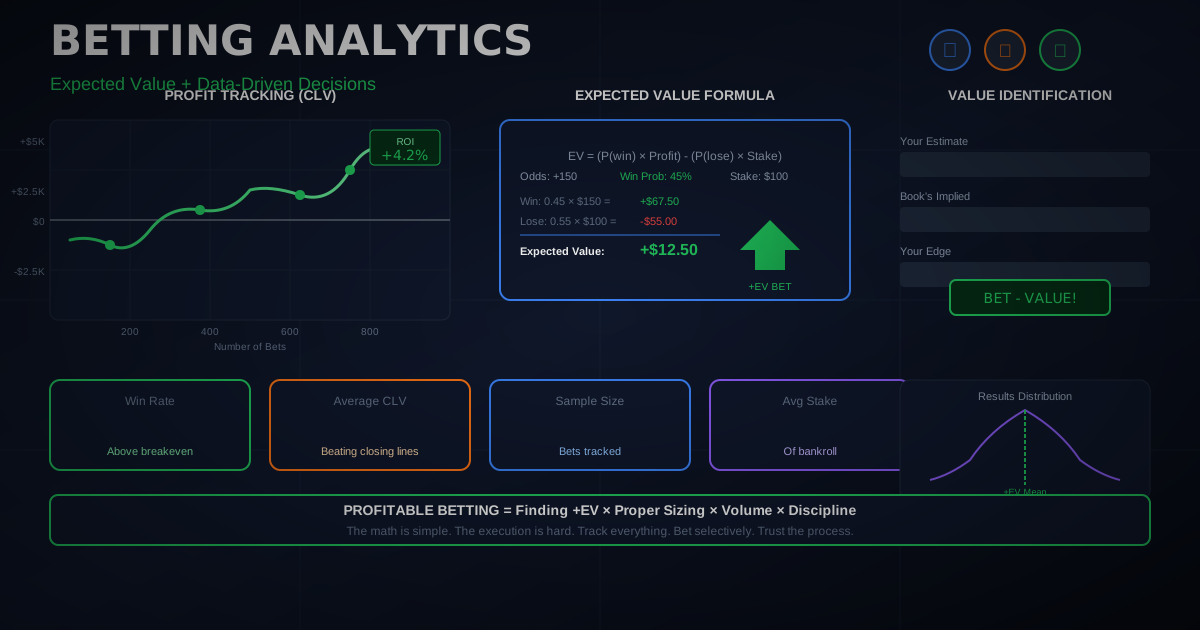
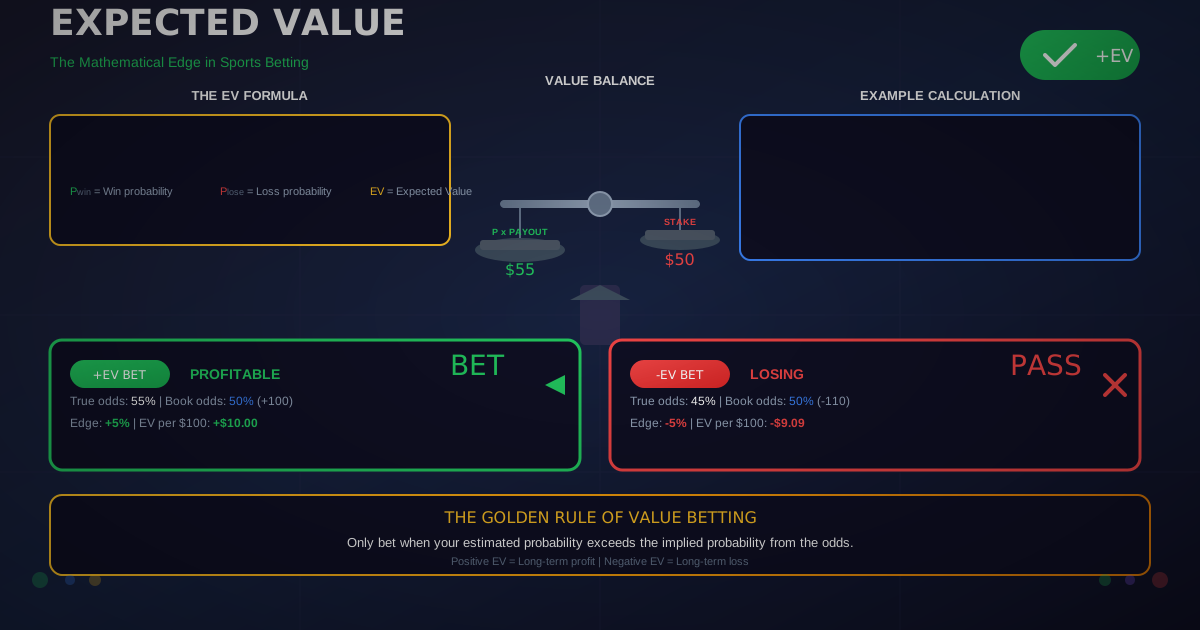
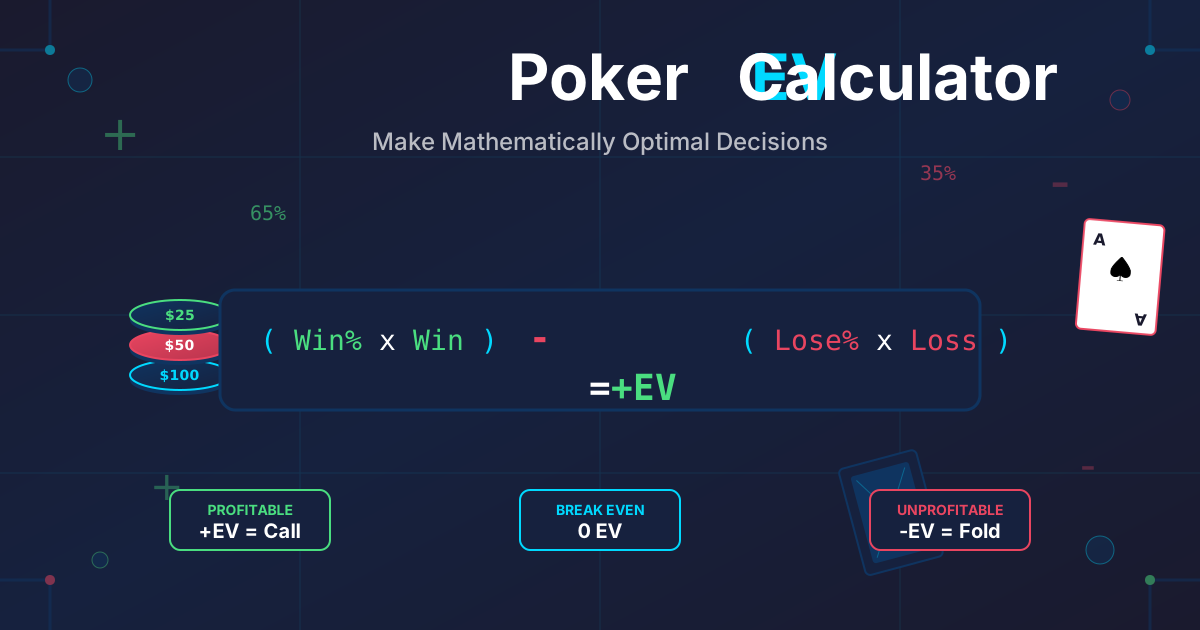
Calculate whether your recent decisions were mathematically sound or emotionally driven with our free Expected Value Calculator.
What Is Tilt in Gambling?
Tilt is a state of emotional and cognitive dysregulation that causes a gambler to abandon their rational decision-making framework and make impulsive, strategically weak choices. The term originated in poker, where it describes the moment a player's emotional response to a negative outcome overrides their trained strategy. However, tilt affects every form of gambling where decisions carry financial consequences.
A 2020 study published in Frontiers in Psychiatry defined tilt as leading to "a loss of control over the game, a loss of emotional regulation, higher cognitive distortion, and a loss of money." Critically, the researchers noted that tilt "could be the gateway to excessive gambling" -- meaning unmanaged tilt does not just cost money in individual sessions, it can fundamentally alter your relationship with gambling itself.
Tilt in Poker
Poker tilt manifests as deviations from your established strategy. A tilted poker player might:
- Call raises with hands they would normally fold
- Bluff into calling stations out of frustration
- Play too many hands to "get even" faster
- Make oversized bets driven by anger rather than pot geometry
- Refuse to fold strong-but-beaten hands because folding feels like "letting them win"
- Move up in stakes to recover losses more quickly
The financial damage compounds because tilted play creates more losing situations, which create more tilt, which creates more losing situations. Professional poker coach Jared Tendler, author of The Mental Game of Poker, calls this the "tilt cycle" -- and breaking it requires intervention at the physiological level, not just the strategic level.
Tilt in Sports Betting
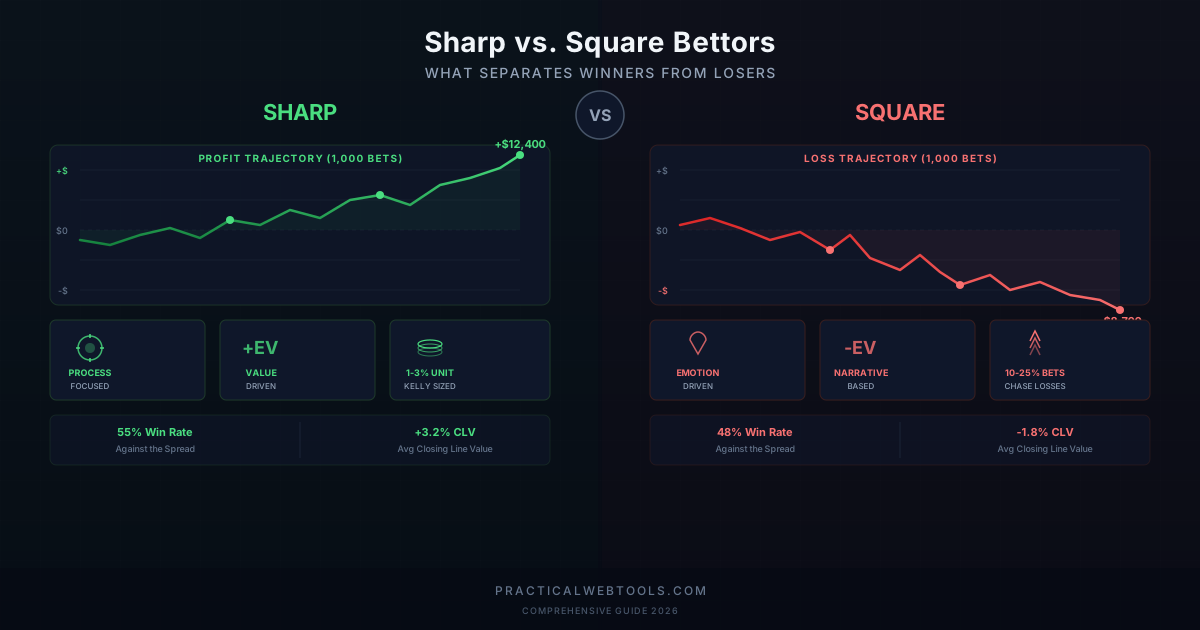
Sports betting tilt looks different from poker tilt but operates on the same emotional mechanics. A tilted sports bettor might:
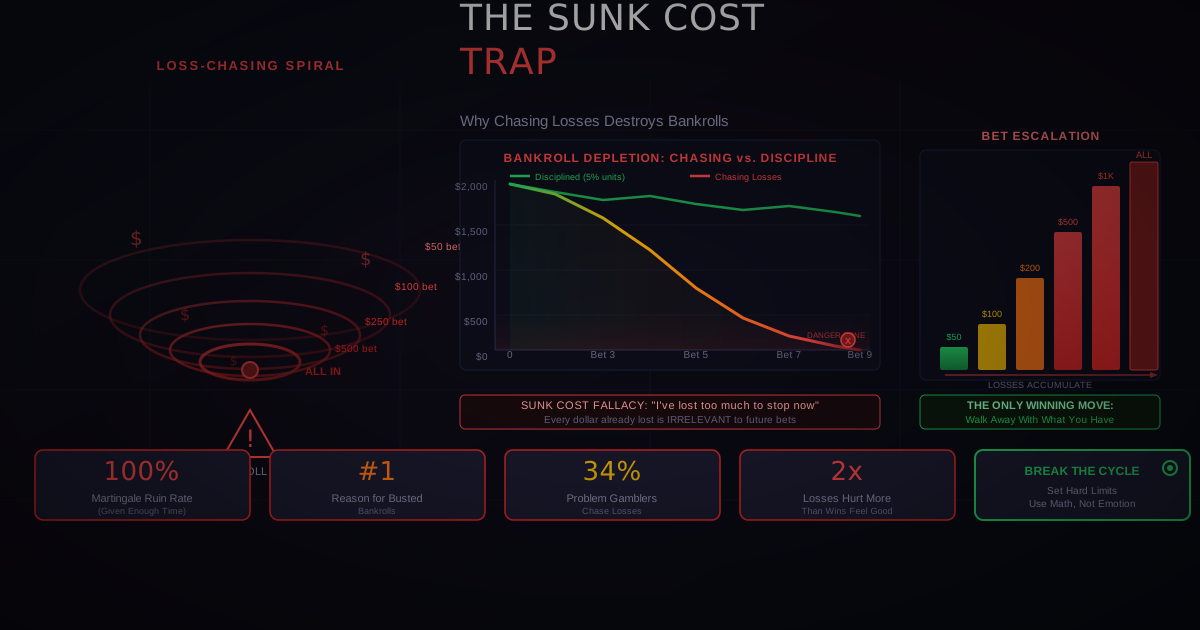
- Chase losses with increasingly large wagers
- Bet on games they have not researched
- Abandon their model or system in favor of "gut feelings"
- Place live bets late at night after a losing day
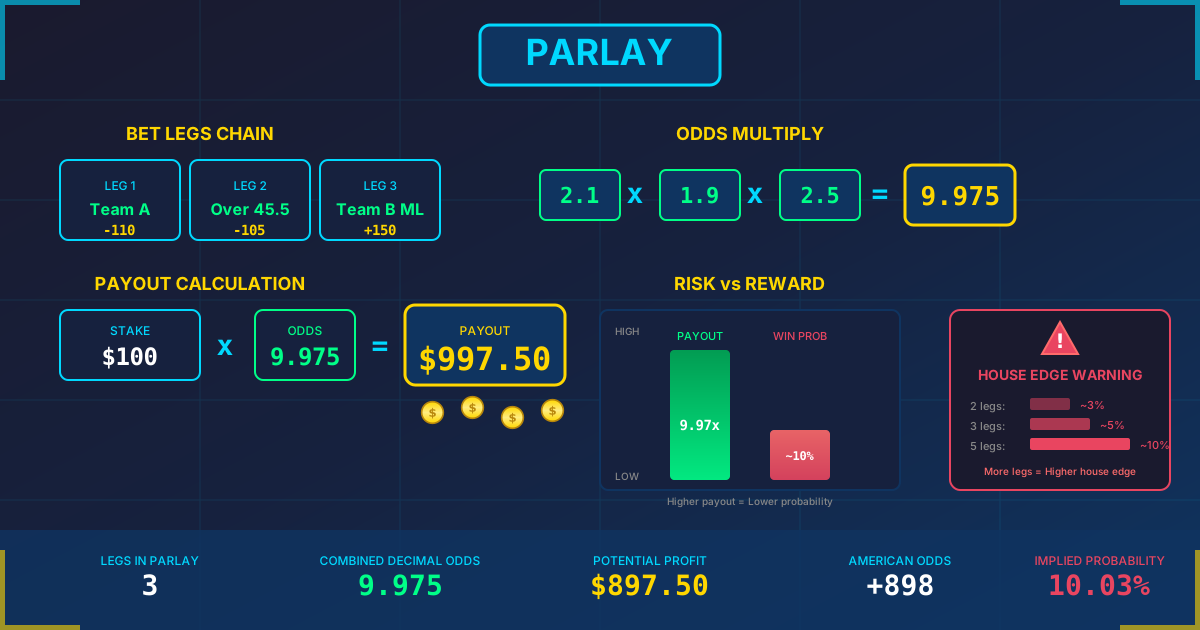
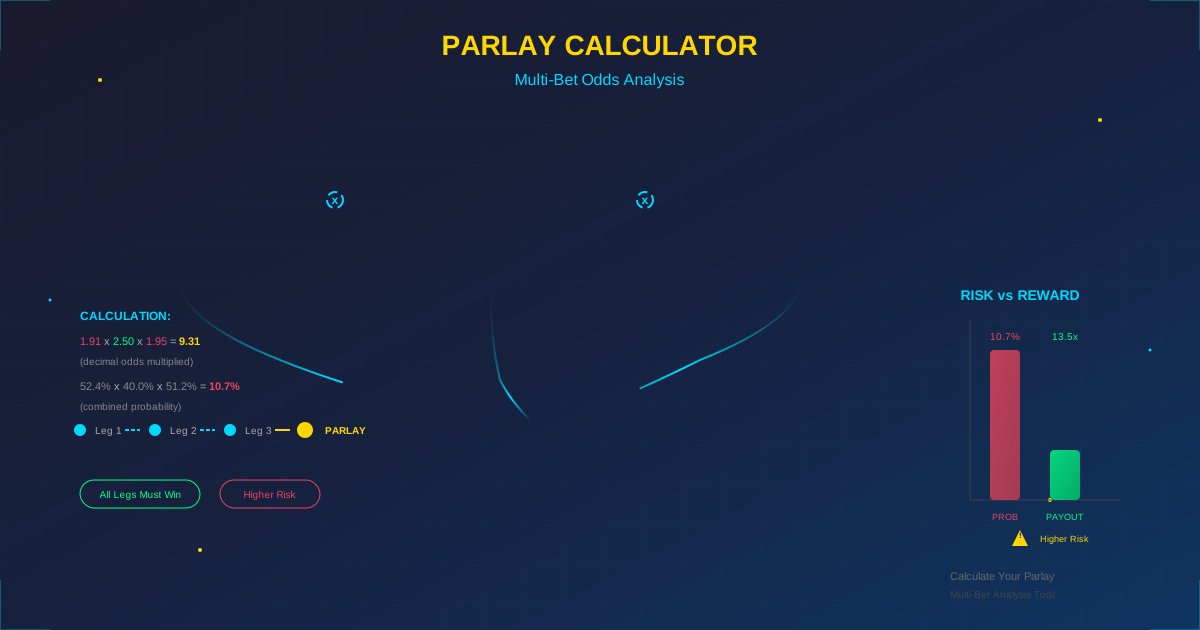
- Stack parlays to recover losses with a single win
- Stop line shopping and accept whatever odds are available
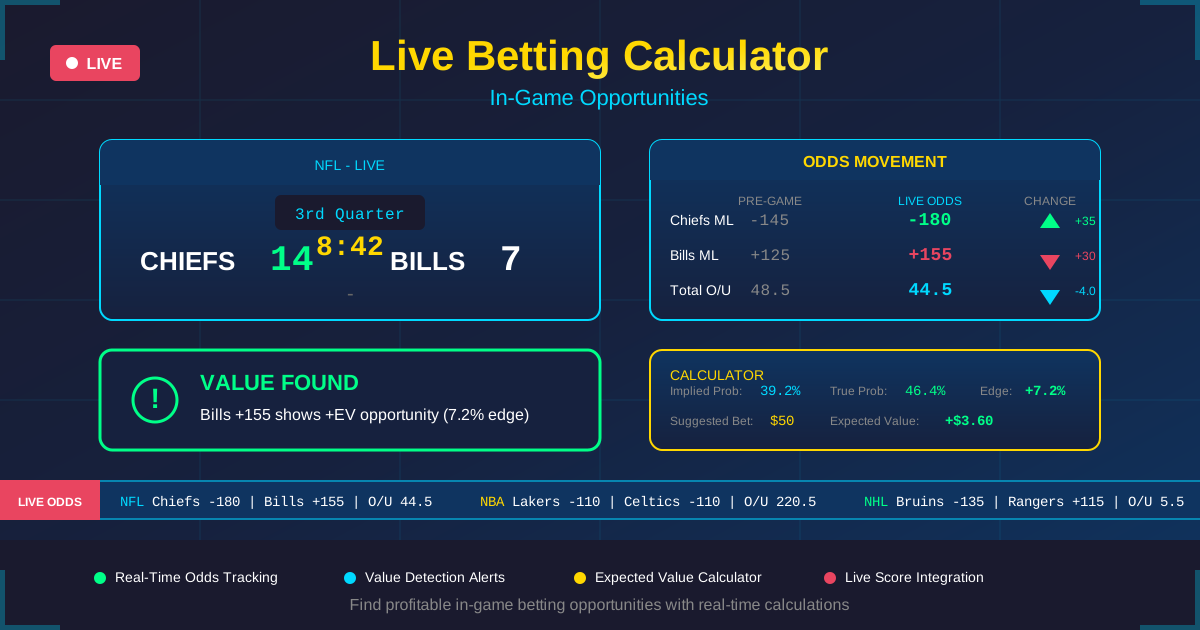
According to survey data from St. Bonaventure University, 53% of all online sports bettors have chased losses, and that number jumps to 61% for bettors aged 18-34. A 2025 U.S. News survey found that one-quarter of sports bettors have been unable to pay a bill because of wagers they made while emotionally compromised. Tilt in sports betting is not a minor inconvenience -- it is a financial crisis waiting to happen.
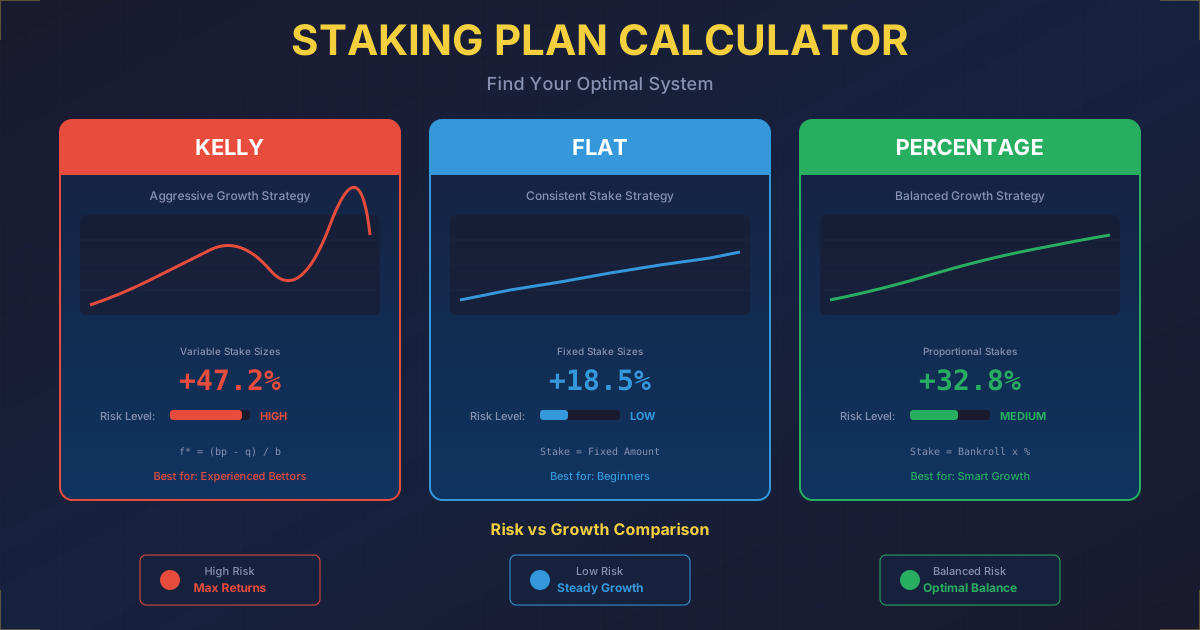
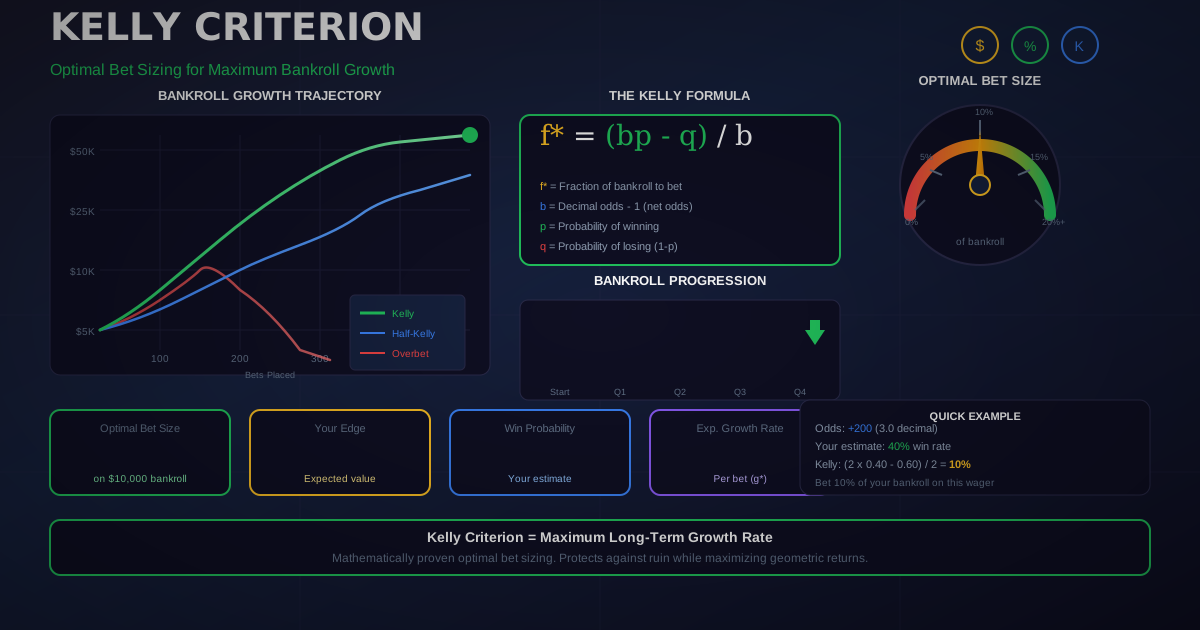
Track your betting edge and whether you are making +EV decisions with our Kelly Criterion Calculator.
The Seven Types of Tilt
Not all tilt looks the same. Understanding which type of tilt you are most susceptible to is the first step toward building effective defenses. The following table breaks down the major tilt categories recognized by gambling psychologists and professional players.
| Tilt Type | Trigger | Behavioral Signs | Typical Cost |
|---|---|---|---|
| Losing Tilt | String of losses or a single devastating loss | Chasing, increased bet sizing, abandoning strategy | 5-20 buy-ins per episode |
| Winning Tilt | Extended hot streak creates overconfidence | Reckless plays, moving up stakes prematurely, ignoring bankroll rules | 10-30 buy-ins (gives back entire winning streak) |
| Injustice Tilt | Bad beats, suckouts, perceived unfairness | Anger-driven plays, revenge targeting specific opponents, "proving" they were right | 3-10 buy-ins per episode |
| Entitlement Tilt | Belief that skill should guarantee results | Frustration with variance, refusal to accept standard swings, blame-shifting | Gradual erosion over weeks |
| Desperation Tilt | Approaching stop-loss limit or session end | Escalating bet sizes, all-or-nothing mentality, abandoning position sizing | Entire remaining bankroll at risk |
| Revenge Tilt | Desire to "get back" at a specific opponent or sportsbook | Targeting one player/event, personal vendetta overrides strategy | 5-15 buy-ins per episode |
| Boredom Tilt | Impatience during slow periods or waiting for setups | Playing marginal hands, betting on events outside your edge, forcing action | 2-5 buy-ins per session |
Losing Tilt: The Most Common Killer
Losing tilt is what most people picture when they hear the word "tilt." You suffer a bad beat, a series of losses, or a single catastrophic hand, and your emotional response overrides your rational brain. A $1/$2 player who loses a $400 pot with aces cracked by a gutshot might immediately buy in for double their normal amount and play every hand for the next 30 minutes. That reaction can easily cost another $400-$800.
Example: Marcus, a semi-professional $2/$5 player, lost a $2,200 pot when his flopped set was cracked by a runner-runner flush. Over the next 90 minutes, he played 65% of hands (his normal VPIP is 22%), called three river bets he would normally fold, and attempted two ill-timed bluffs. He left the session down $4,800 instead of the $2,200 he would have lost if he had simply taken a break after the bad beat. Cost of tilt: $2,600.
Winning Tilt: The Silent Bankroll Drain
Winning tilt is more insidious because it feels good. After a hot streak, your confidence inflates beyond what the math supports. You start taking shots at higher stakes, loosening your starting hand requirements, or increasing your bet sizes without corresponding edge to justify the risk.
Example: Sarah ran up her $5,000 sports betting bankroll to $12,000 over six weeks of sharp, disciplined wagering. Riding the high, she started betting 8-10% of her bankroll per game instead of her usual 2-3%. She also began betting on NBA player props -- a market she had never modeled. Within two weeks, she was back to $4,200. Winning tilt cost her $7,800 and left her below where she started.
Injustice Tilt: When "Fair" Does Not Exist
Injustice tilt strikes when you feel the outcome was unfair. In poker, this might be a one-outer on the river. In sports betting, it might be a last-second backdoor cover or a controversial referee call that swings your bet. The emotional response is fury at the perceived injustice, and the behavioral response is reckless play driven by the need to correct the cosmic wrong.
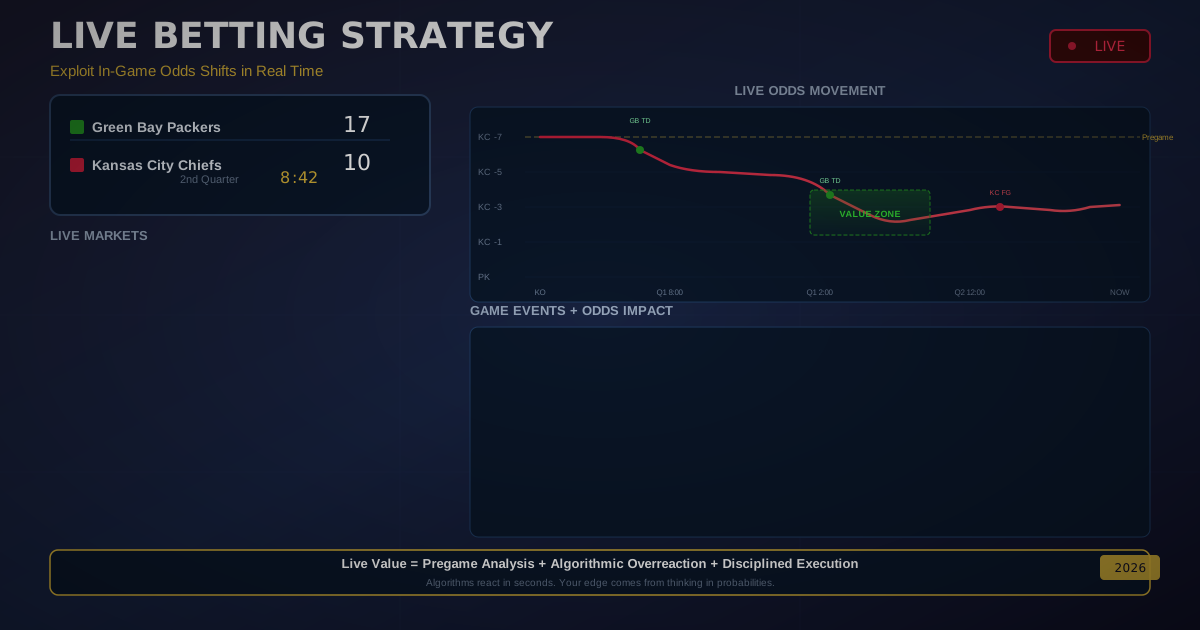
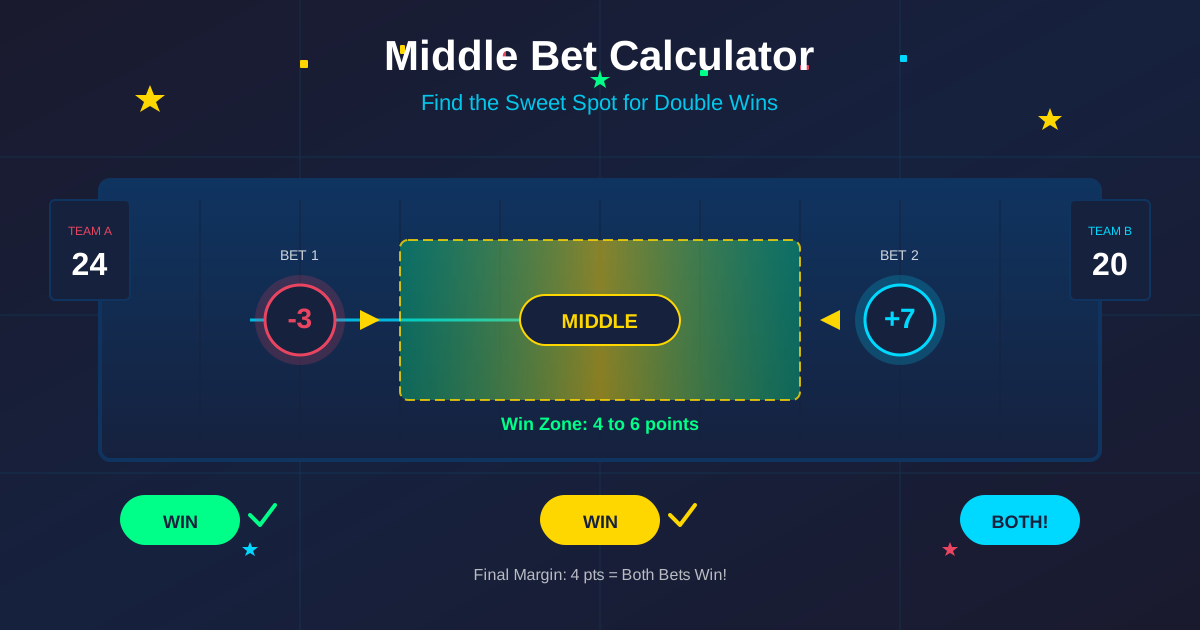
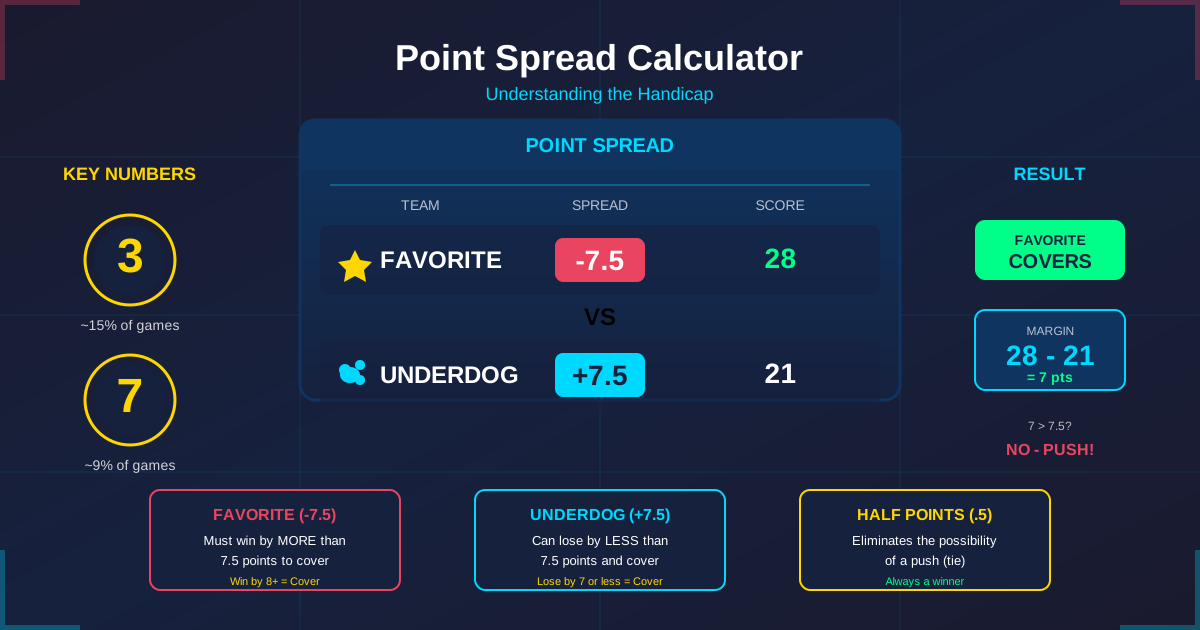
Example: David had a three-team parlay that needed only the Packers to cover -3. They were up 28-10 in the fourth quarter. The opposing team scored two garbage-time touchdowns, and the Packers won 28-24 but failed to cover. David immediately placed $500 on the next available NBA spread -- a game he had not analyzed -- to "make up" for the injustice. He lost. Then he placed $750 on a live tennis bet. He lost that too. Total cost of injustice tilt: $1,250 in 40 minutes.
Recognizing Your Personal Tilt Triggers
Every gambler has specific triggers that push them toward tilt faster than others. The following checklist helps you identify your personal vulnerabilities. Be honest with yourself -- most people have at least 5-8 triggers on this list.
| Category | Trigger | Check If Applies |
|---|---|---|
| Outcome-Based | Losing a large pot/bet you were heavily favored to win | [ ] |
| Outcome-Based | Losing three or more consecutive bets/hands | [ ] |
| Outcome-Based | Being on a hot streak and then losing suddenly | [ ] |
| Opponent-Based | Losing to a player you consider inferior | [ ] |
| Opponent-Based | Being bluffed successfully or shown a bluff | [ ] |
| Opponent-Based | An opponent getting lucky repeatedly against you | [ ] |
| Session-Based | Starting a session with an immediate loss | [ ] |
| Session-Based | Being stuck (losing) for more than 2 hours | [ ] |
| Session-Based | Approaching your stop-loss limit | [ ] |
| External | Gambling while tired, hungry, or sleep-deprived | [ ] |
| External | Gambling after an argument or stressful day at work | [ ] |
| External | Gambling while drinking alcohol | [ ] |
| Financial | Losing money you mentally had "already won" | [ ] |
| Financial | Being down for the week/month after being up | [ ] |
| Financial | Needing a win to "break even" for the session/day | [ ] |
Research from Frontiers in Psychiatry found that sleep-deprived poker sessions produced "higher emotional and behavioral tilt, a higher number of hands played, and unfavorable financial results" compared to sessions played while rested. External factors multiply the impact of gambling-specific triggers.
Your action item: Print this list, check your triggers, and keep it visible during sessions. Awareness of your specific vulnerabilities is the foundation of every tilt management protocol that follows.
The Physiology of Tilt: What Happens in Your Body
Tilt is not just a psychological event -- it is a full-body physiological response. Understanding the biology helps explain why willpower alone is insufficient to combat tilt and why physical intervention techniques (breathing, breaks, physical movement) are essential components of any tilt management strategy.
The Stress Cascade
When you experience a tilt trigger -- a bad beat, a losing streak, an unfair outcome -- your brain initiates the classic stress response:
- Amygdala activation: Your brain's threat-detection center fires, classifying the loss as a threat to your survival (your bankroll)
- Sympathetic nervous system engagement: The "fight-or-flight" response activates via the sympathetic-adrenal-medullary (SAM) system
- Catecholamine release: Adrenaline and noradrenaline flood your system, increasing heart rate, blood pressure, and muscle tension
- Cortisol secretion: The hypothalamic-pituitary-adrenal (HPA) axis releases cortisol, the primary stress hormone
- Prefrontal cortex suppression: Higher-order thinking, probability assessment, and emotional regulation become impaired
Research published in Physiology and Behavior found that casino gambling significantly increases both heart rate and salivary cortisol in regular gamblers. A separate study in Current Addiction Reports documented that gambling activates "norepinephrine, cortisol, and, in pathological gambling subjects, dopamine" -- the same neurochemical cocktail associated with acute stress and compulsive behavior.
Why This Matters for Decision-Making
The critical problem is step 5: prefrontal cortex suppression. Your prefrontal cortex is responsible for:
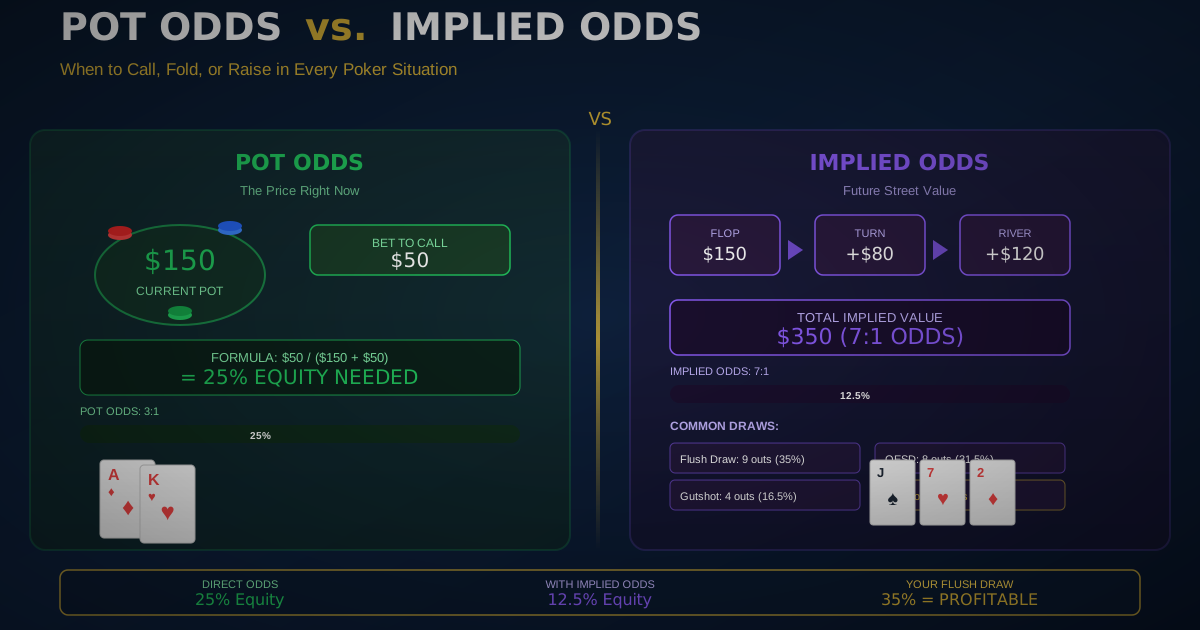
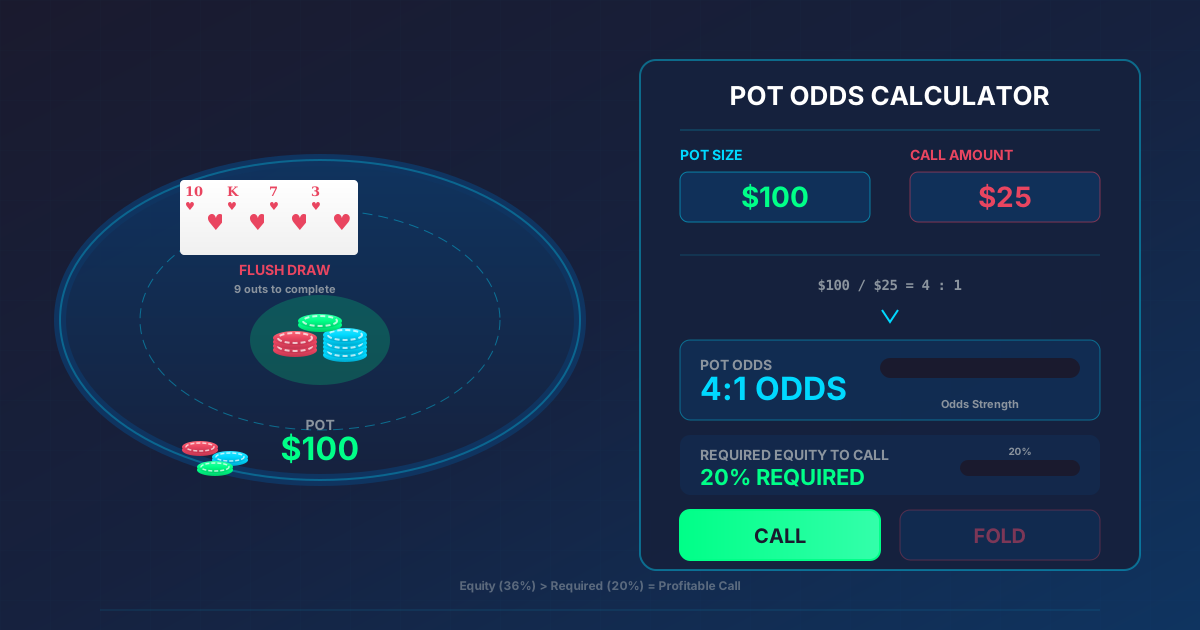
- Calculating pot odds and implied odds
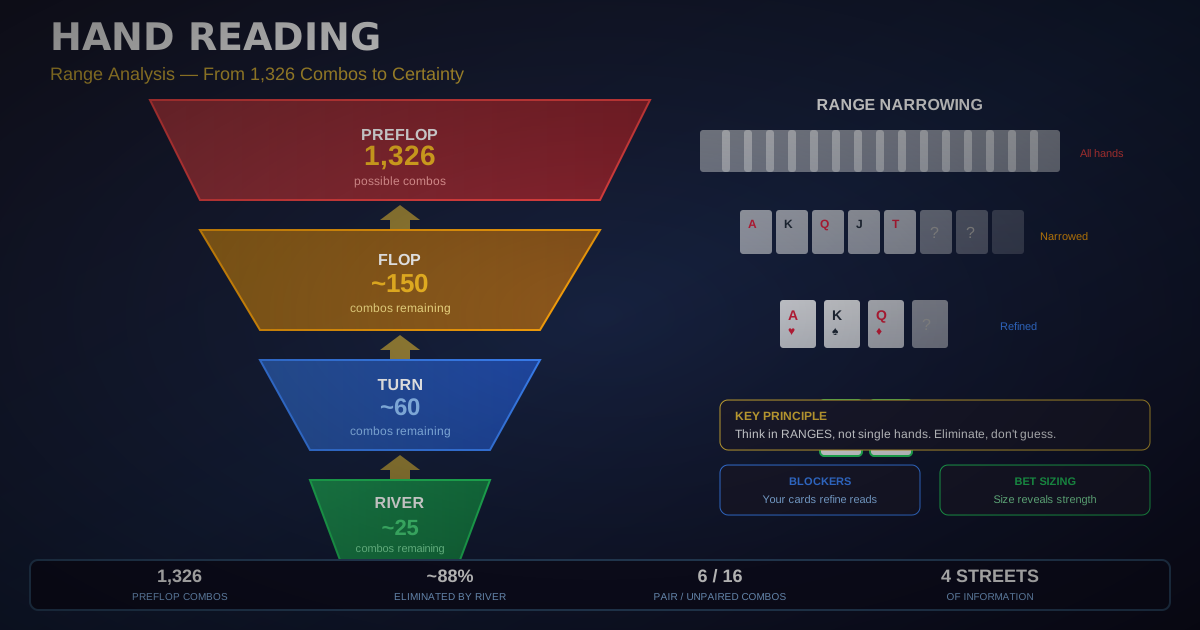
- Assessing opponent ranges
- Evaluating expected value
- Maintaining discipline with bet sizing
- Deciding when to fold strong hands
When cortisol and adrenaline suppress prefrontal function, you are literally operating with a diminished capacity for the exact type of thinking that poker and sharp sports betting require. You are not just emotionally upset -- your brain has physically downgraded its analytical hardware.
| Brain State | Prefrontal Activity | Decision Quality | Typical Duration |
|---|---|---|---|
| Calm / A-Game | Full capacity | Optimal EV decisions | Baseline |
| Mild Frustration | 85-90% capacity | Minor leaks, slightly loose play | 5-15 minutes |
| Moderate Tilt | 60-75% capacity | Significant strategic deviations | 15-60 minutes |
| Full Tilt | 30-50% capacity | Reckless, emotion-driven decisions | 60+ minutes |
| Tilt Spiral | Below 30% capacity | Complete strategic breakdown | Until session ends |
The transition from calm to full tilt can happen in seconds (a single bad beat), but recovery takes 20-45 minutes of non-gambling activity for cortisol levels to return to baseline. This biological reality is why the most effective tilt management strategies all include mandatory breaks.
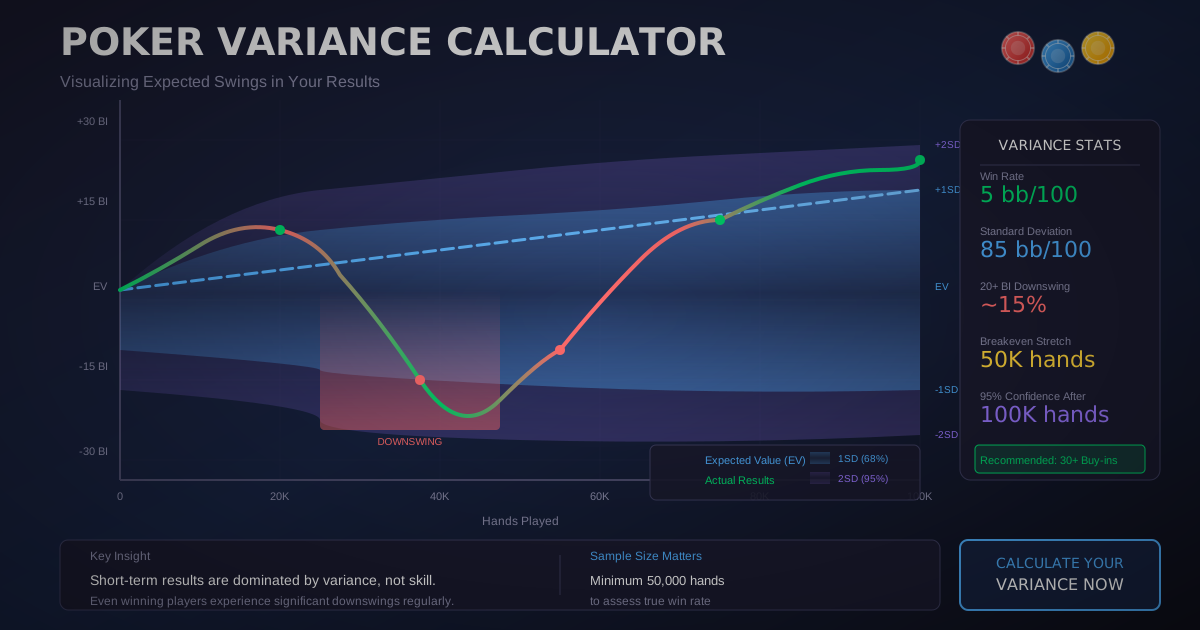
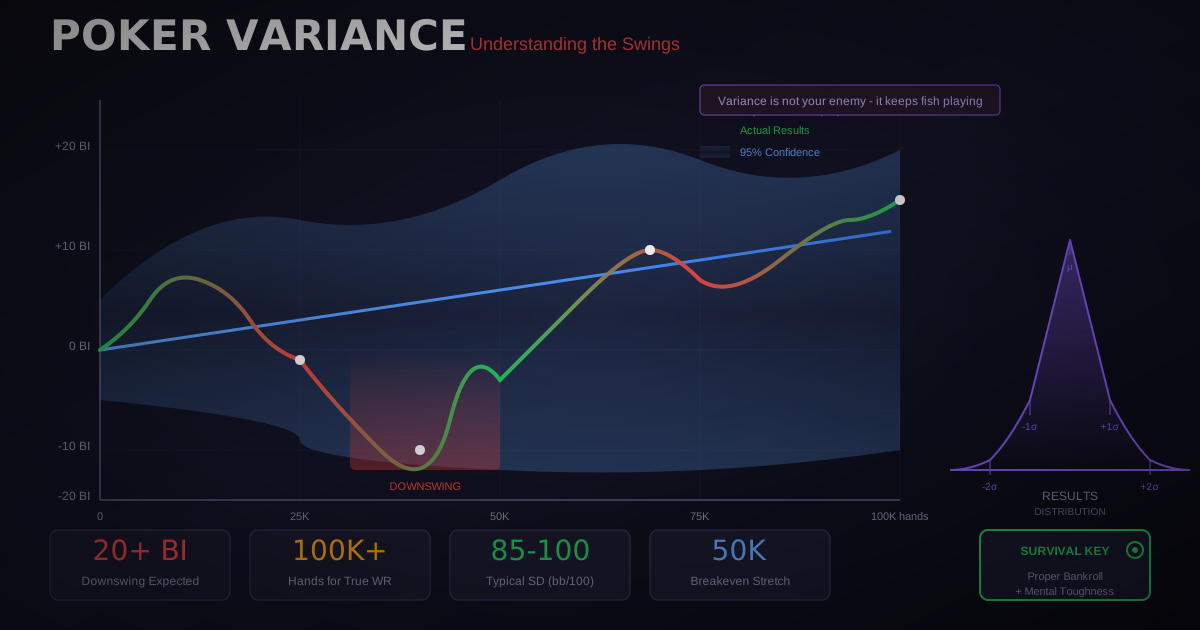
Understand the mathematical reality of your recent swings with our Poker Variance Calculator -- sometimes confirming that your losses are within normal variance is enough to prevent the tilt cascade from starting.
Pre-Session Routines: Building Your Emotional Fortress
The best time to manage tilt is before it happens. Professional poker players and sharp bettors do not wait until they are emotionally compromised to deploy countermeasures. They build resilience into their pre-session routine so they arrive at the table or open their betting app already fortified.
The Pre-Session Checklist
| Step | Action | Time Required | Purpose |
|---|---|---|---|
| 1 | Physical state check (sleep, hunger, stress) | 1 minute | Identify if you are starting impaired |
| 2 | Set specific stop-loss and stop-win limits | 2 minutes | Pre-commit to boundaries before emotions engage |
| 3 | Review your tilt trigger list | 1 minute | Prime your awareness of personal vulnerabilities |
| 4 | Define your strategic plan (game type, bet sizes, position requirements) | 3 minutes | Anchor to strategy before cards are dealt |
| 5 | 5-minute breathing exercise (6-2-7 technique) | 5 minutes | Lower baseline cortisol and activate parasympathetic system |
| 6 | Set a timer for scheduled breaks (every 60-90 minutes) | 30 seconds | Build break structure into the session |
The 6-2-7 Breathing Technique
The 6-2-7 breathing technique is used by professional poker players, military personnel, and high-performance athletes to lower cortisol, reduce heart rate, and activate the parasympathetic nervous system (the "rest and digest" counterpart to fight-or-flight).
How to do it:
- Inhale slowly through your nose for 6 seconds
- Hold your breath for 2 seconds
- Exhale slowly through your mouth for 7 seconds
- Repeat for 5 cycles (approximately 75 seconds total)
The extended exhale is the key mechanism. Exhalation activates the vagus nerve, which signals your brain to downregulate the stress response. Five cycles of this breathing pattern can measurably reduce cortisol levels and heart rate within 90 seconds.
When to use it:
- Before every session (part of your pre-session routine)
- Between hands when you notice tension building
- Immediately after a bad beat or loss (before making any decisions)
- During scheduled session breaks
Setting Your Stop-Loss Before You Start
Your stop-loss must be decided before you sit down, not during the session when your judgment is compromised. The numbers should be based on your bankroll management plan, not your emotions.
| Player Type | Recommended Session Stop-Loss | Reasoning |
|---|---|---|
| Cash game recreational | 2-3 buy-ins | Limits damage while allowing enough play to be enjoyable |
| Cash game semi-pro | 3-4 buy-ins | Balances loss limitation with sufficient sample |
| Cash game professional | 4-5 buy-ins | Larger buffer for professionals who play long sessions |
| Sports bettor (unit-based) | 3-5 units | Prevents chasing; represents a manageable daily loss |
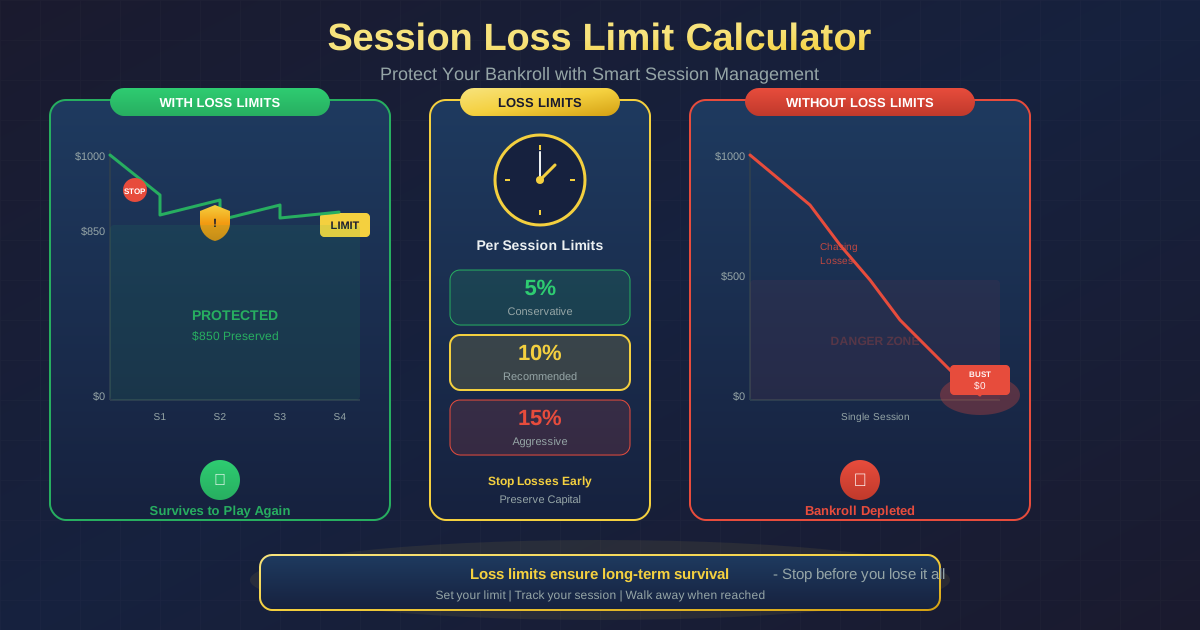
| Sports bettor (percent-based) | 5% of total bankroll | Mathematical ceiling that preserves long-term viability |
Write your stop-loss number down. Put it on a sticky note next to your monitor. Set a bankroll alert in your poker client or sportsbook app. The goal is to make the stop-loss feel like a rule of the game rather than a personal decision you have to make under duress.
Calculate the optimal bet size for your edge and bankroll with our Kelly Criterion Calculator.
In-Session Tilt Management Techniques
Even with the best pre-session routine, tilt will find you. The question is not whether you will be triggered during a session -- it is how quickly you detect the tilt and how effectively you interrupt it before it causes significant damage.
The Three-Check System
Professional players use a rapid self-assessment system that takes less than 10 seconds:
Check 1: Body Scan. Are your shoulders tense? Is your jaw clenched? Are you breathing shallowly? Is your heart rate elevated? Physical symptoms are the earliest tilt indicators.
Check 2: Thought Pattern. Are you thinking about the last hand/bet rather than the current one? Are you having thoughts like "I need to win this one back" or "this player/sportsbook owes me"? Revenge and recovery thoughts signal tilt.
Check 3: Decision Quality. Would you make this exact play or bet if you were starting the session fresh with no prior results? If the answer is "probably not," you are making a tilted decision.
Run this check after every significant loss, every 20-30 minutes during active play, and any time you notice physical tension.
The Circuit Breaker Protocol
When your Three-Check System identifies tilt, deploy circuit breakers -- pre-defined actions that interrupt the tilt cascade before it reaches full strength.
Level 1 Circuit Breaker (Mild Tilt):
- Perform two cycles of 6-2-7 breathing (30 seconds)
- Skip the next hand or wait 5 minutes before placing the next bet
- Remind yourself of your pre-session strategic plan
- Continue playing only if the check clears
Level 2 Circuit Breaker (Moderate Tilt):
- Stand up and walk away from the table/close the app for 10 minutes
- Perform five cycles of 6-2-7 breathing
- Drink water, splash water on your face, or step outside for fresh air
- Review your stop-loss limit: are you approaching it?
- Resume only after you can clearly articulate your strategic plan
Level 3 Circuit Breaker (Full Tilt):
- End the session immediately. No exceptions.
- Do not place another bet or play another hand
- Leave the casino, log out of the poker client, close the sportsbook app
- The session is over. You can come back tomorrow.
Example: Priya, a $1/$3 cash game player, lost two buy-ins in 45 minutes when her aces were cracked and then her flopped flush lost to a full house. She felt her jaw clenching and noticed she was staring at the player who cracked her aces. She ran the Three-Check System: body tense (check), thinking about getting even (check), considering a 3-bet with J-8 suited to "mix it up" (check). She deployed a Level 2 circuit breaker, walked to the bathroom, did her breathing, and came back 12 minutes later with a reset focus. She finished the session down only the two buy-ins instead of the five or six she would have lost if she had continued tilting. Estimated savings: $600-$1,200.
Cognitive Reframing Techniques
Cognitive Behavioral Therapy (CBT) techniques are increasingly used by professional gamblers to interrupt the thought patterns that fuel tilt. The core principle: you cannot always control what happens, but you can control how you interpret and respond to what happens.
| Tilted Thought | Reframed Thought | Why It Works |
|---|---|---|
| "I always get sucked out on" | "Suckouts are a predictable part of variance that affect everyone equally" | Removes personal victimhood narrative |
| "I need to win this money back" | "My next decision should maximize EV regardless of past results" | Disconnects current decisions from past outcomes |
| "This player is terrible and keeps getting lucky" | "Weaker opponents are my profit source; their lucky streaks are temporary" | Reframes frustration as long-term opportunity |
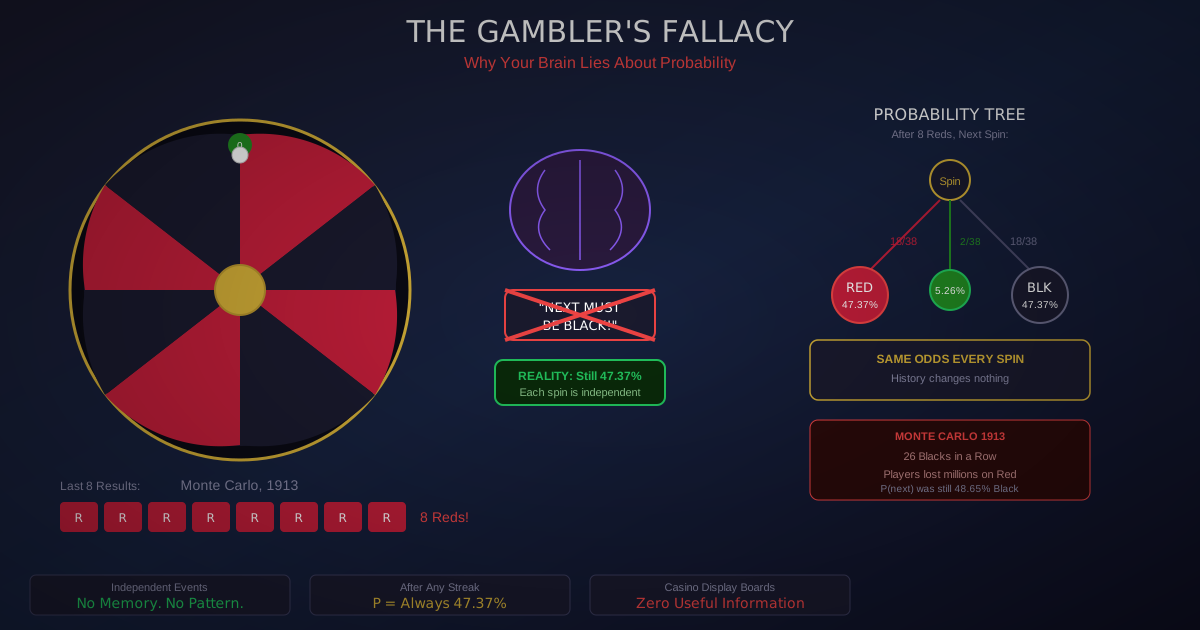
| "I am due for a win" | "Every hand/bet is independent; previous outcomes do not affect this one" | Corrects gambler's fallacy thinking |
| "The sportsbook/casino is rigged" | "I verified my edge mathematically; short-term results do not change long-term EV" | Anchors to data over emotion |
| "If I just win one big hand, I will be even" | "Break-even thinking is a tilt symptom, not a valid strategy" | Identifies the thought itself as a warning sign |
These reframes are not about positive thinking or ignoring reality. They are about replacing irrational, emotionally charged interpretations with accurate, mathematically grounded ones. The tilted thoughts are factually wrong. The reframed thoughts are factually correct. Training yourself to substitute one for the other is a skill that improves with practice.
Verify the math behind your decisions with our Expected Value Calculator -- having concrete numbers to anchor your reframes makes them far more convincing to your emotional brain.
Stop-Loss Protocols: Your Non-Negotiable Safety Net
A stop-loss is the most important single tool in your tilt management arsenal. It is a pre-committed boundary that removes the decision of whether to continue playing from your emotionally compromised in-session self and gives it to your rational pre-session self.
Why Stop-Losses Work
Stop-losses work because they exploit a well-documented finding in behavioral psychology: decisions made before emotional engagement are dramatically better than decisions made during emotional engagement. By committing to a stop-loss before you start playing, you have effectively made the decision to quit while your prefrontal cortex was fully operational.
Implementing Stop-Loss Rules
For Poker Players:
| Rule | Implementation | Example ($1/$2 player, $10,000 bankroll) |
|---|---|---|
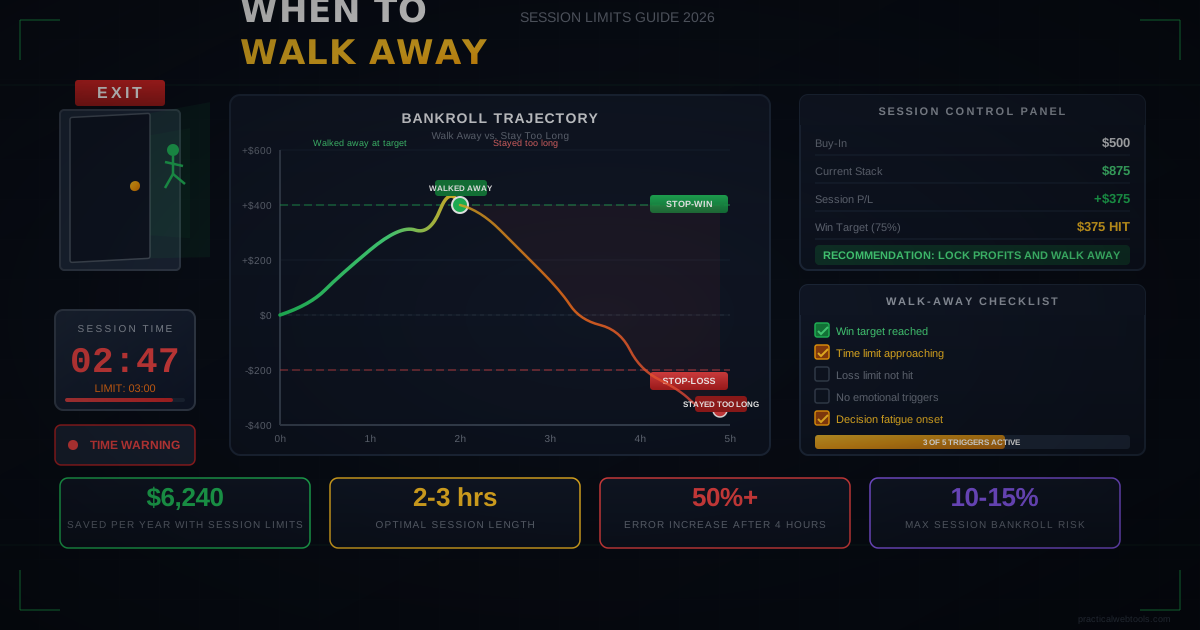
| Session stop-loss | Quit after losing X buy-ins | Quit after losing 3 buy-ins ($600) |
| Time stop-loss | Maximum session length regardless of results | Maximum 4-hour sessions |
| Tilt stop-loss | Quit after X consecutive tilted decisions | Quit after 2 decisions you identify as tilted |
| Weekly stop-loss | Maximum weekly loss before mandatory break | Stop for the week after losing $1,500 (7.5 buy-ins) |
For Sports Bettors:
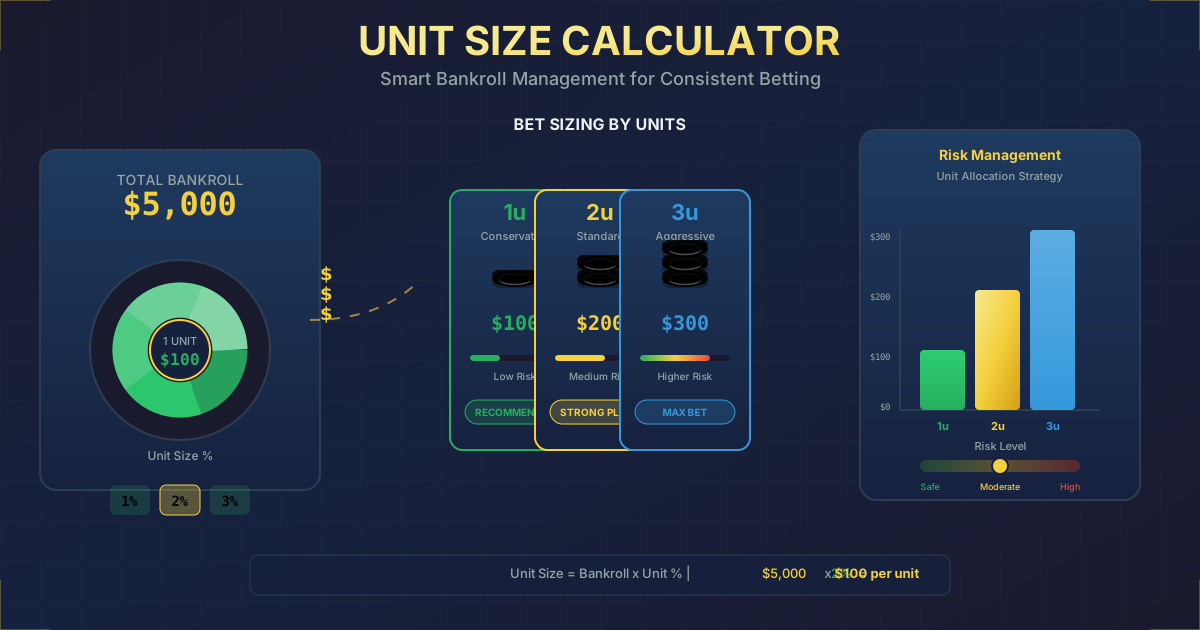
| Rule | Implementation | Example (3% unit bettor, $5,000 bankroll) |
|---|---|---|
| Daily stop-loss | Maximum daily loss | Stop after losing 3 units ($450) |
| Event stop-loss | Maximum loss on a single day's slate of games | Stop after losing 2 units on NFL Sunday |
| Chase prevention | No bets within 30 minutes of a loss | Wait minimum 30 minutes after any losing bet |
| Time-of-day cutoff | No bets after a specific time | No bets placed after 10:00 PM |
The "Three Mistakes" Rule
Beyond financial stop-losses, professional poker player and coach Tommy Angelo advocates the "three mistakes" rule: after making three clear strategic errors in a session -- plays that deviated from your established strategy regardless of their outcome -- pause for a mandatory 15-minute break and reassess whether you should continue playing.
This rule catches a critical scenario that financial stop-losses miss: you might be breaking even or even winning while playing badly. Winning tilted sessions are the most dangerous because they reinforce bad habits and create the illusion that emotional play is acceptable.
Example: Jake was running hot at $2/$5 despite playing poorly. He called a river bet he knew was bad (mistake 1), bluffed into a calling station (mistake 2), and then 3-bet preflop with Q-7 suited because he "felt lucky" (mistake 3). He was up $800 for the session, but triggered his three mistakes rule. He took his 15-minute break, recognized he was on winning tilt, and ended the session with his $800 profit intact instead of giving it back over the next two hours.
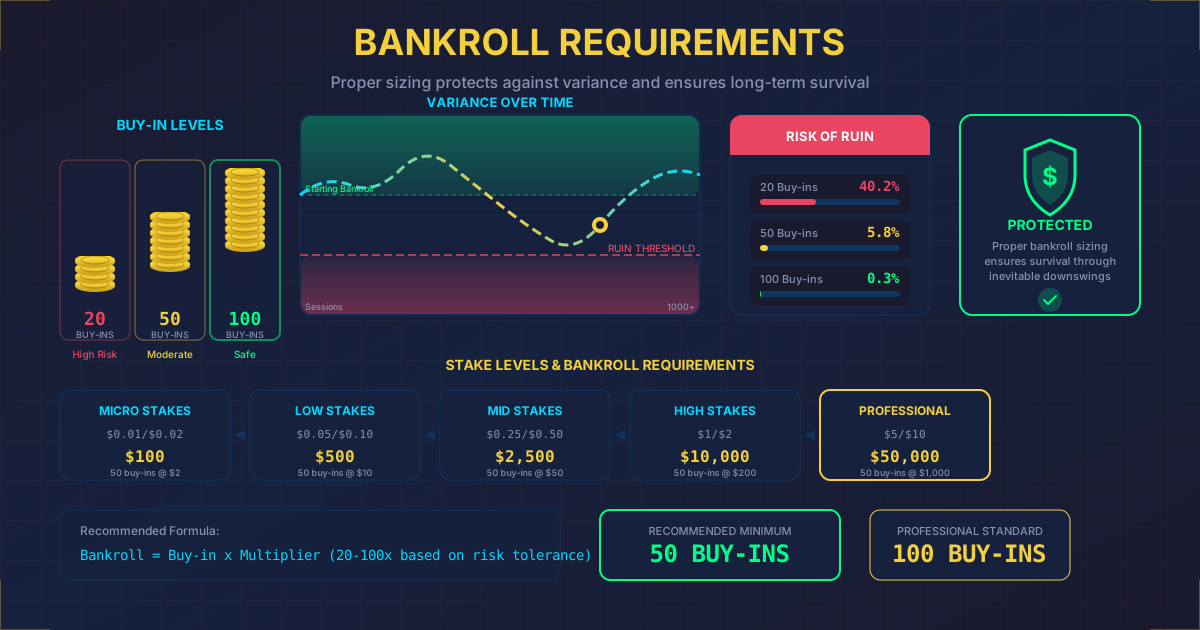
Calculate how many buy-ins you need to survive inevitable losing streaks with our Poker Bankroll Requirements Calculator.
Post-Session Review: Learning from Every Episode
The post-session review is where long-term tilt resilience is built. Most gamblers either skip this step entirely or perform it while still emotionally activated -- both approaches waste the learning opportunity.
The 24-Hour Rule
Do not conduct a detailed session review within 24 hours of a significant tilt episode. Your cortisol levels and emotional state will color your analysis. Instead, make brief notes immediately after the session (what happened, how you felt, what you did) and schedule the full review for the next day.
The Post-Session Review Template
| Review Element | Questions to Answer | What to Record |
|---|---|---|
| Trigger identification | What specific event triggered the tilt? | The hand, bet, or situation |
| Tilt type | Which type of tilt was activated? | Losing, winning, injustice, entitlement, etc. |
| Physical symptoms | What did you notice in your body? | Tension, heart rate, breathing changes |
| Thought patterns | What were you telling yourself? | Exact phrases ("I need to get even") |
| Response quality | Did you deploy your circuit breakers? How quickly? | Time from trigger to intervention |
| Financial impact | How much did the tilt cost in dollars? | Estimated loss attributable to tilted decisions |
| Improvement plan | What will you do differently next time? | Specific protocol adjustments |
Calculating Your Tilt Cost
To understand the real financial impact of tilt, you need to separate losses caused by normal variance from losses caused by tilted decision-making. Here is a framework:
Step 1: Identify the hand or bet where tilt began.
Step 2: Estimate your expected win rate from that point forward if you had been playing your A-game.
Step 3: Calculate the difference between your actual results and your expected results from the tilt-onset point.
Example calculation:
- Tilt began after losing a $500 pot at the 2-hour mark of a 5-hour session
- Remaining 3 hours of play while tilted: lost $1,200
- Expected results for 3 hours at your normal $35/hour win rate: +$105
- Tilt cost: $1,200 + $105 = $1,305
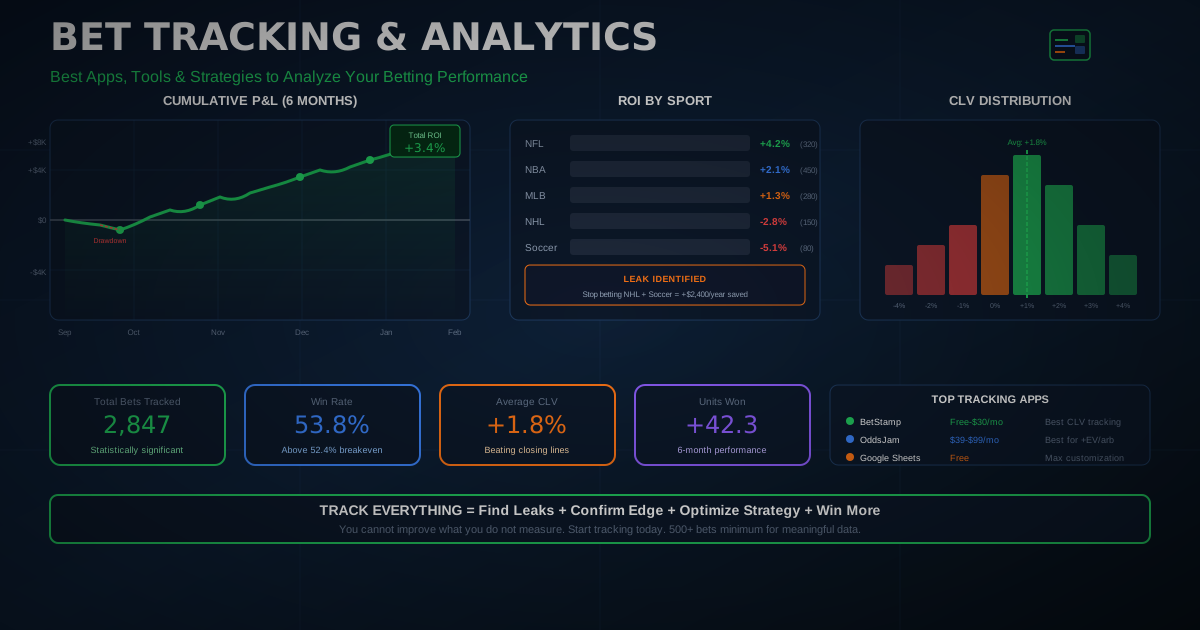
Track this number over time. When you can see that tilt has cost you $5,000, $10,000, or $20,000 over the course of a year, the motivation to improve your tilt management becomes visceral.
Run your key hands through our Poker EV Calculator to determine whether losses were due to bad luck or tilted play.
Building Long-Term Emotional Resilience
Tilt management is not a set of tricks you deploy in the moment -- it is a long-term practice of building emotional resilience that makes you harder to tilt in the first place. The following strategies operate on a timeline of weeks, months, and years rather than seconds and minutes.
Mindfulness Practice
Research from 888poker and multiple professional coaching programs has demonstrated that mindfulness meditation directly improves emotional regulation in gambling contexts. The mechanism is straightforward: mindfulness trains your brain to observe emotional states without automatically reacting to them. Over time, this creates a gap between stimulus (bad beat) and response (tilted play) that you can use to choose a rational response instead.
A minimum effective dose: 10 minutes of daily mindfulness meditation. Apps like Headspace, Calm, or Insight Timer provide guided sessions. Focus on breath awareness and noting thoughts without engaging with them. After 4-6 weeks of consistent practice, most practitioners report noticeably improved emotional regulation in high-stress gambling situations.
Physical Fitness and Sleep
The physiology section of this guide established that tilt is fundamentally a stress response. Anything that improves your baseline stress resilience -- cardiovascular exercise, adequate sleep, proper nutrition -- directly reduces your susceptibility to tilt.
Research from Frontiers in Psychiatry specifically found that sleep-deprived poker sessions produced significantly more tilt episodes, more hands played, and worse financial outcomes. If you are chronically sleep-deprived, no tilt management technique will compensate for the impaired emotional regulation that comes with exhaustion.
| Resilience Factor | Minimum Threshold | Impact on Tilt Susceptibility |
|---|---|---|
| Sleep | 7-8 hours per night | Sleep deprivation increases tilt frequency by 40-60% |
| Exercise | 150 minutes/week moderate activity | Regular exercise reduces cortisol baseline by 15-25% |
| Nutrition | Stable blood sugar during sessions | Blood sugar crashes amplify emotional reactivity |
| Hydration | 2-3 liters of water per day | Dehydration impairs cognitive function similar to mild intoxication |
| Alcohol | Zero during play sessions | Even 1-2 drinks measurably reduce impulse control |
Journaling and Pattern Recognition
Long-term tilt journaling reveals patterns that are invisible in the moment. After three to six months of consistent post-session reviews, you will begin to see your personal tilt fingerprint -- the specific sequences of events, emotional states, and external conditions that most reliably produce tilt episodes.
Common patterns players discover:
- "I almost always tilt on the third losing session in a row, not the first or second"
- "Tuesday evening sessions after work are my worst because I arrive stressed"
- "I handle bad beats fine, but being bluffed is my specific trigger"
- "My tilt starts with boredom, not anger -- I start forcing action before I realize it"
These insights are extraordinarily valuable because they allow you to build targeted defenses. If you know Tuesday evening sessions are problematic, you can either skip them or add extra pre-session preparation on Tuesdays.
Studying Variance and Probability
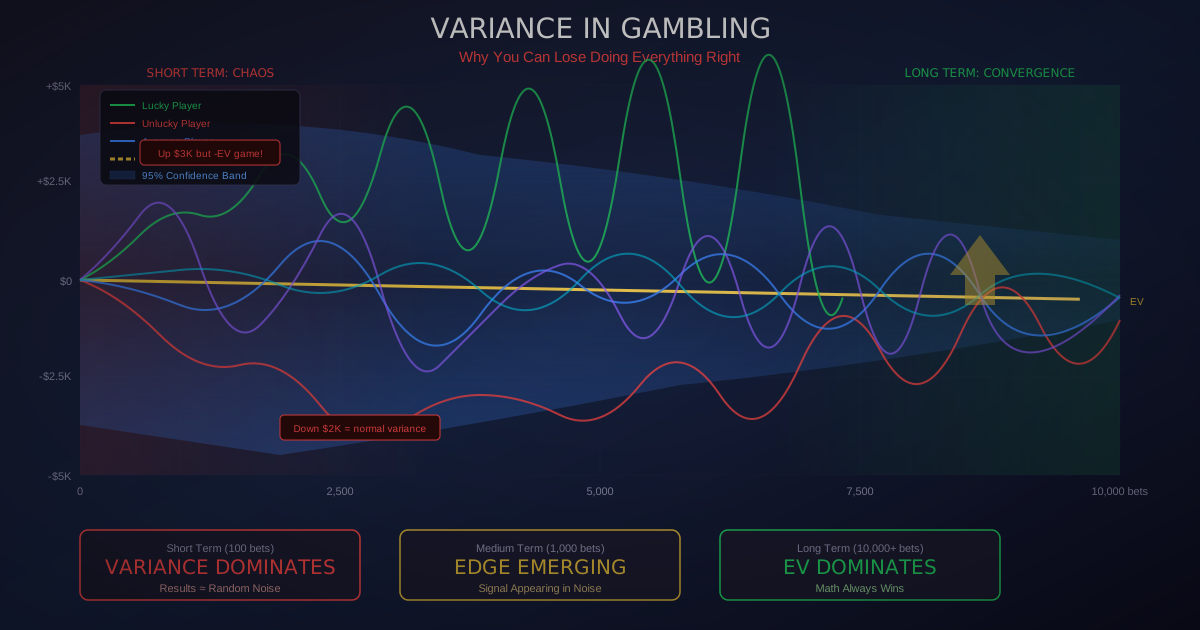
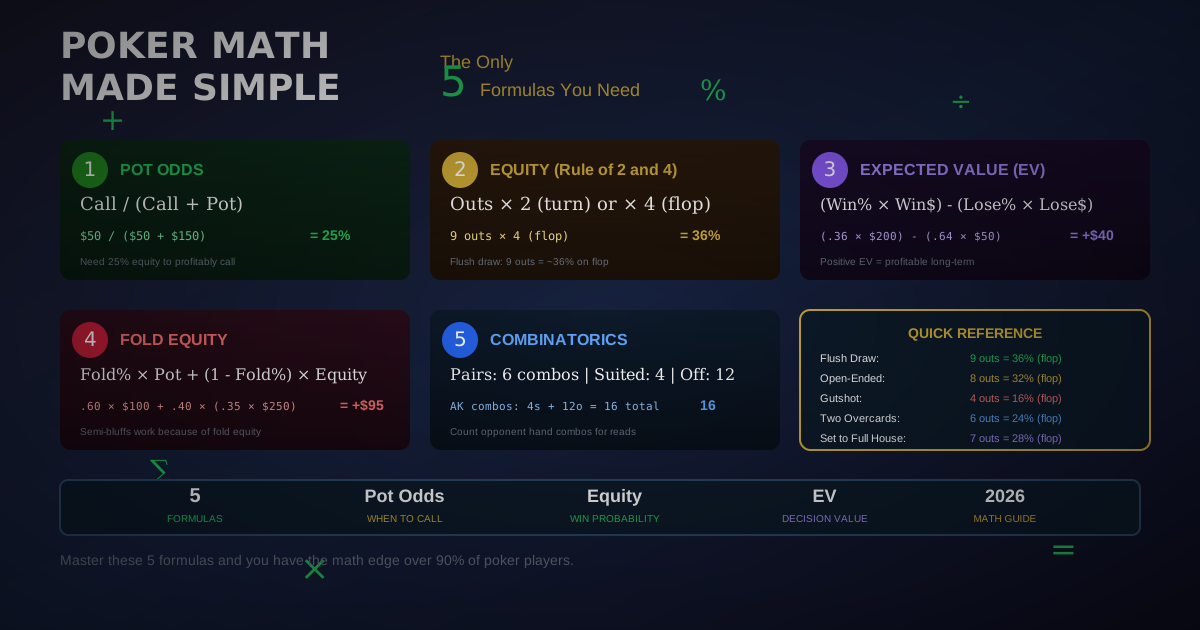
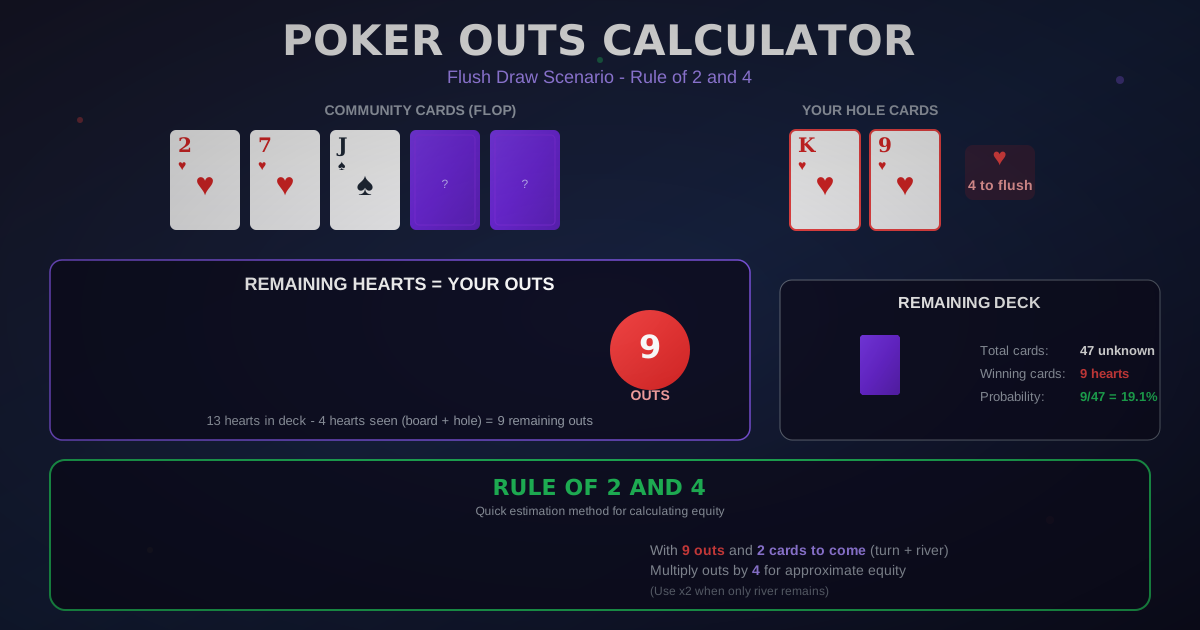
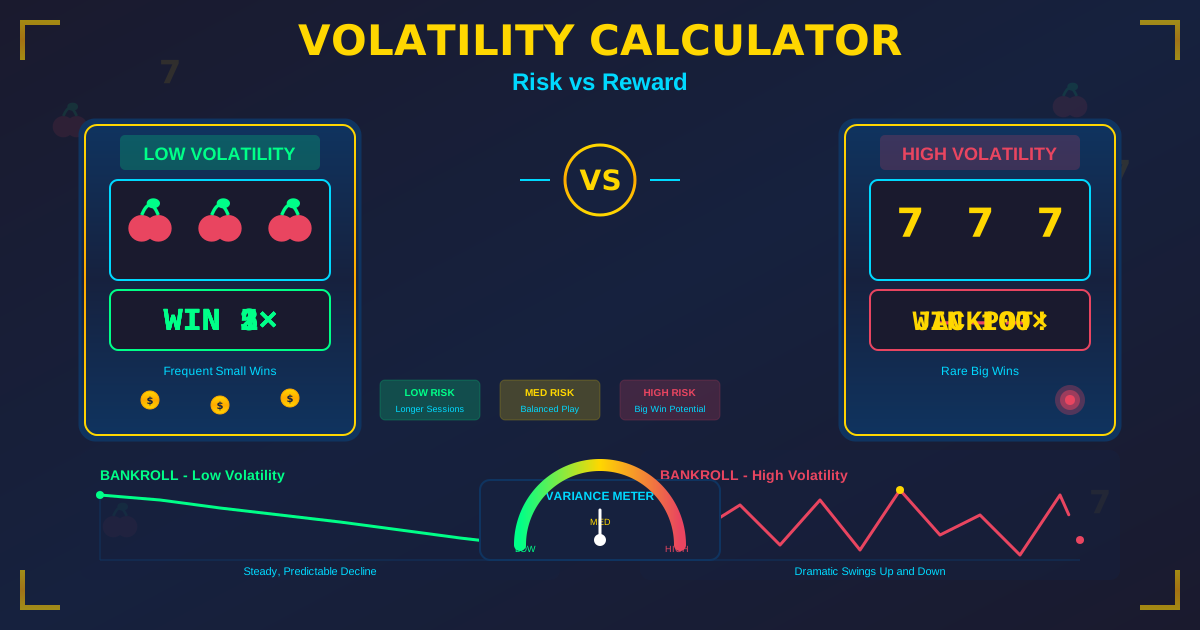
One of the most powerful long-term tilt inoculations is a deep, internalized understanding of variance and probability. When you truly understand -- not just intellectually but viscerally -- that a 5-outer hitting the river is an 11% event that will happen roughly once every nine times, the emotional sting of that specific bad beat diminishes significantly.
Study these concepts until they feel automatic:
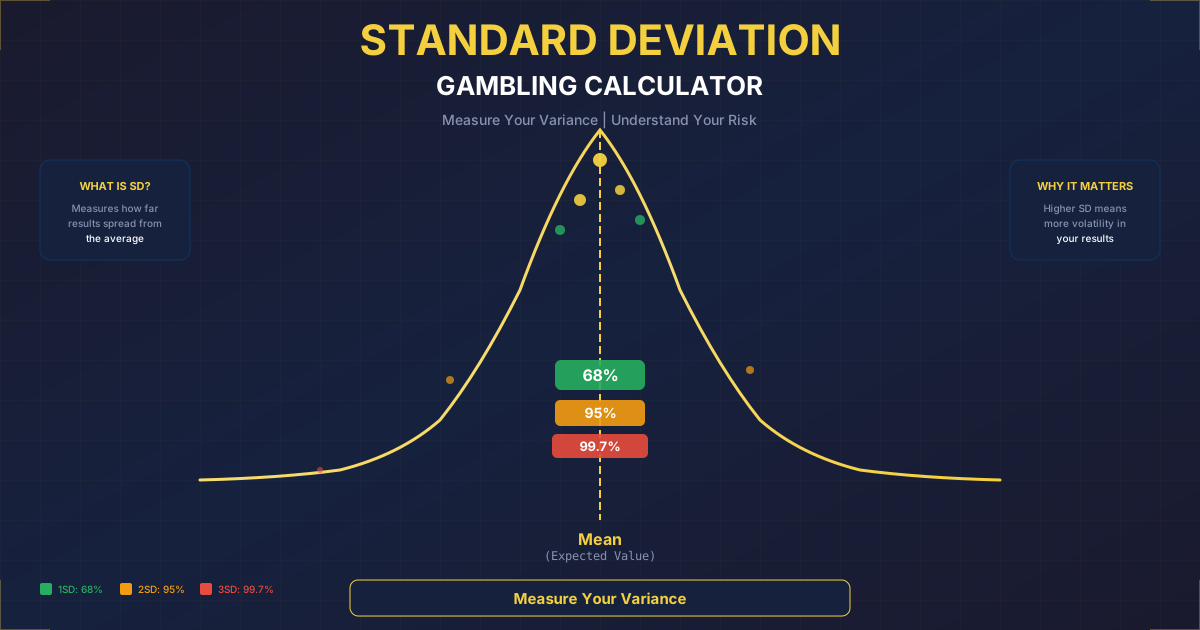
- Standard deviation and what it means for session-to-session results
- The law of large numbers and why short-term results are nearly meaningless
- Risk of ruin calculations and what your bankroll can actually absorb
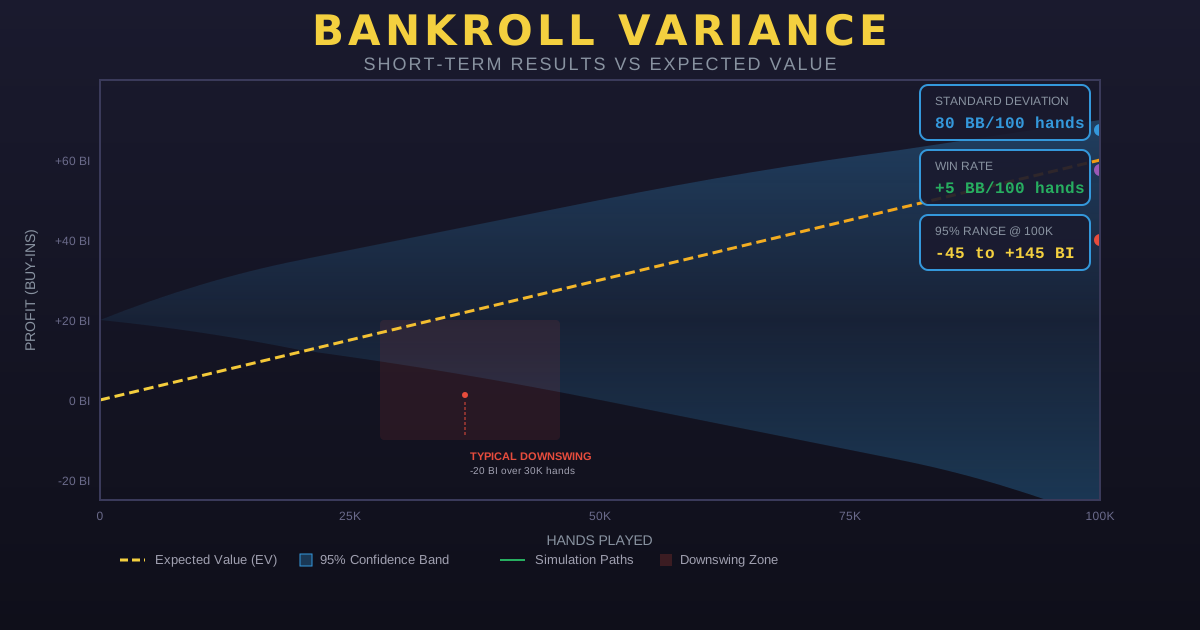
- Expected downswing lengths at your stake and win rate
Simulate your expected variance and see that your recent results are within normal bounds using our Poker Variance Calculator. Understand your risk profile with our Poker Risk of Ruin Calculator.
When Tilt Becomes a Bigger Problem
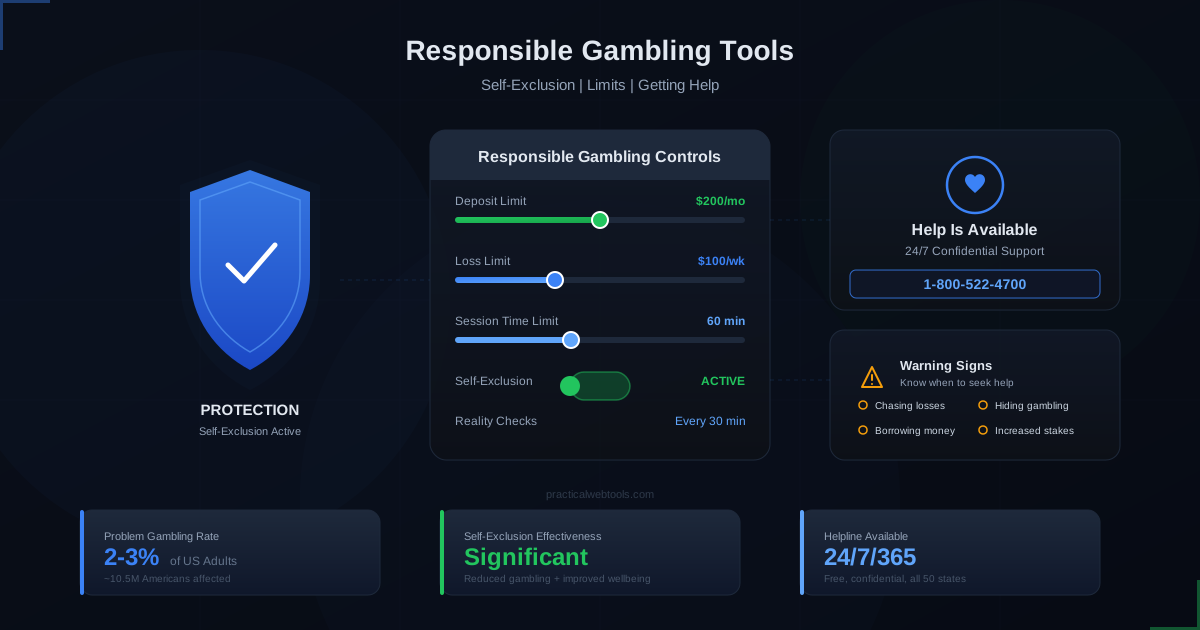
There is a critical line between normal tilt -- a manageable emotional response that every gambler experiences -- and a pattern that signals a more serious problem. This section is not about strategy optimization. It is about recognizing when tilt management alone is insufficient and professional help is needed.
Warning Signs That Tilt Has Become Something More
- You consistently break your stop-loss rules and cannot stop yourself
- You gamble with money allocated for rent, bills, or essential expenses
- You lie to family or friends about your gambling losses
- You feel unable to stop gambling even when you want to
- Gambling has become your primary way of managing stress or emotional pain
- You experience anxiety or depression directly related to gambling behavior
- Your gambling sessions have become longer and more frequent over time
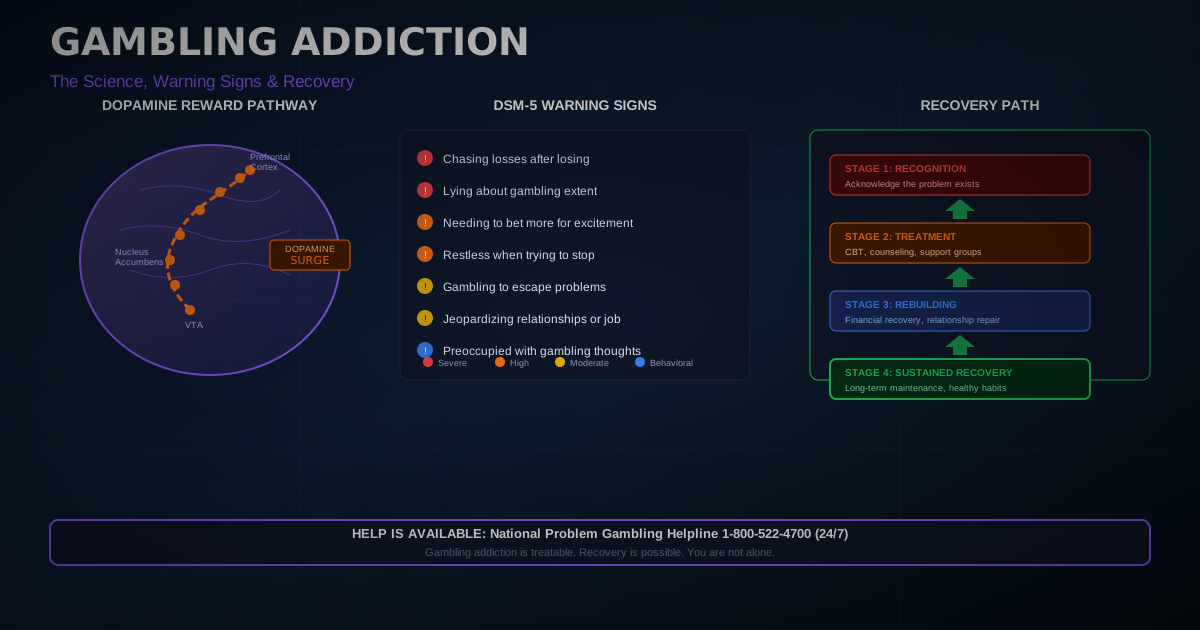
- You need to gamble with increasing amounts to achieve the same excitement
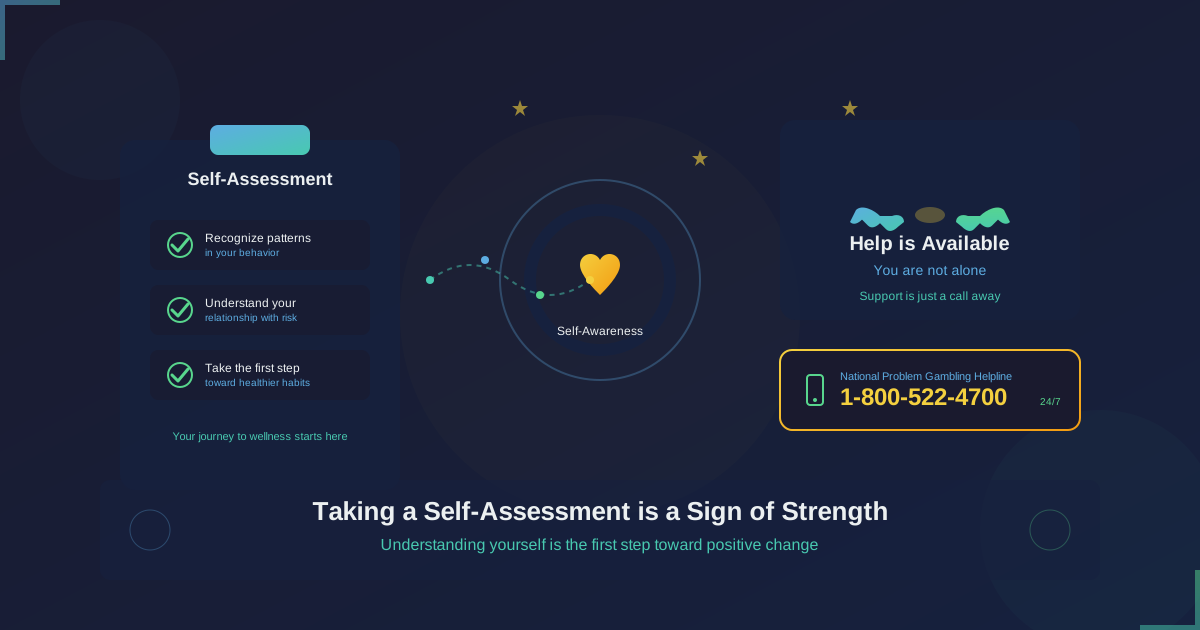
If three or more of these warning signs apply, the issue may have moved beyond tilt management into the territory of disordered gambling. This is not a moral failing -- it is a recognized psychological condition with effective treatments.
Resources for Help
The National Council on Problem Gambling provides free, confidential support:
- Phone: 1-800-522-4700 (24/7)
- Text: 1-800-522-4700
- Chat: ncpgambling.org
Gamblers Anonymous offers peer support meetings (in-person and online): gamblersanonymous.org
There is no shame in seeking help. Many professional poker players, including prominent figures in the community, have publicly discussed their experiences with problem gambling and the effectiveness of professional support.
Frequently Asked Questions
What is the fastest way to stop tilt in the middle of a poker session? The fastest physiological intervention is the 6-2-7 breathing technique: inhale for 6 seconds, hold for 2 seconds, exhale for 7 seconds, repeated for 2-5 cycles. This activates the parasympathetic nervous system and can measurably reduce your heart rate and cortisol within 90 seconds. Pair this with skipping one hand to give yourself a decision-free buffer. If the breathing does not work within two cycles, escalate to a full 10-minute break away from the table.
How much money does tilt actually cost the average poker player? Conservative estimates suggest that tilt accounts for 30-50% of the total losses experienced by recreational poker players. For a $1/$2 player who loses $5,000 per year, $1,500-$2,500 of that may be directly attributable to tilted decisions. For winning players, tilt episodes can reduce annual profit by 20-40%. A semi-professional player earning $30/hour at their A-game who tilts for an average of 5 hours per month at -$60/hour loses approximately $5,400 annually to tilt alone.
Is winning tilt really as dangerous as losing tilt? Winning tilt can be more dangerous because it is harder to detect and creates longer-lasting behavioral changes. Losing tilt typically produces acute, obvious episodes that resolve when you leave the session. Winning tilt can persist for weeks as overconfidence gradually erodes your discipline. Players on winning tilt often move up in stakes prematurely, increase their bet sizes beyond their edge, and abandon the disciplined processes that created the winning streak. The total bankroll damage from a winning tilt episode frequently exceeds any single losing tilt episode because it plays out over a longer timeframe.
Can you completely eliminate tilt from your game? No. Tilt is a fundamental human stress response rooted in neurobiology. Even the most experienced professional players experience tilt triggers. The goal is not elimination but management: reducing the frequency of tilt episodes, minimizing their duration and severity, and limiting their financial impact. Professional players who have practiced tilt management for years still experience tilt -- they are simply better at detecting it early and deploying their countermeasures before it causes significant damage.
How do stop-loss limits interact with taking shots at higher stakes? When taking shots at higher stakes, your stop-loss should be even more conservative than your standard limit. A common approach is a 3 buy-in stop-loss for shot-taking sessions compared to your normal 4-5 buy-in limit. This acknowledges that shot-taking naturally increases emotional stakes (losing money at a higher level feels worse) and reduces the financial damage if the shot does not go well. If you reach your shot-taking stop-loss, drop back to your regular stakes immediately -- do not try to "earn it back" at the higher level.
Should sports bettors use different tilt management strategies than poker players? The core principles are identical -- pre-session routines, stop-losses, breathing techniques, and post-session review -- but the implementation differs. Sports bettors should add a mandatory 30-minute cooling period between losing bets, use a time-of-day cutoff (no betting after 10 PM), and disable one-click betting features in their sportsbook apps. Sports bettors also face unique tilt triggers: real-time live betting creates a particularly dangerous tilt vector because you can impulsively bet on events happening right now without the natural pause that exists between poker hands.
How long does it take to develop strong tilt management skills? Most players report meaningful improvement within 4-8 weeks of consistent practice, including daily mindfulness, pre-session routines, and diligent post-session reviews. However, building robust emotional resilience is a 6-12 month process. The progression typically follows a pattern: first you learn to detect tilt faster, then you learn to deploy countermeasures more effectively, and finally tilt episodes become less frequent as your baseline resilience increases. Like any skill, tilt management requires ongoing maintenance -- even experienced practitioners who stop their routines will see regression.
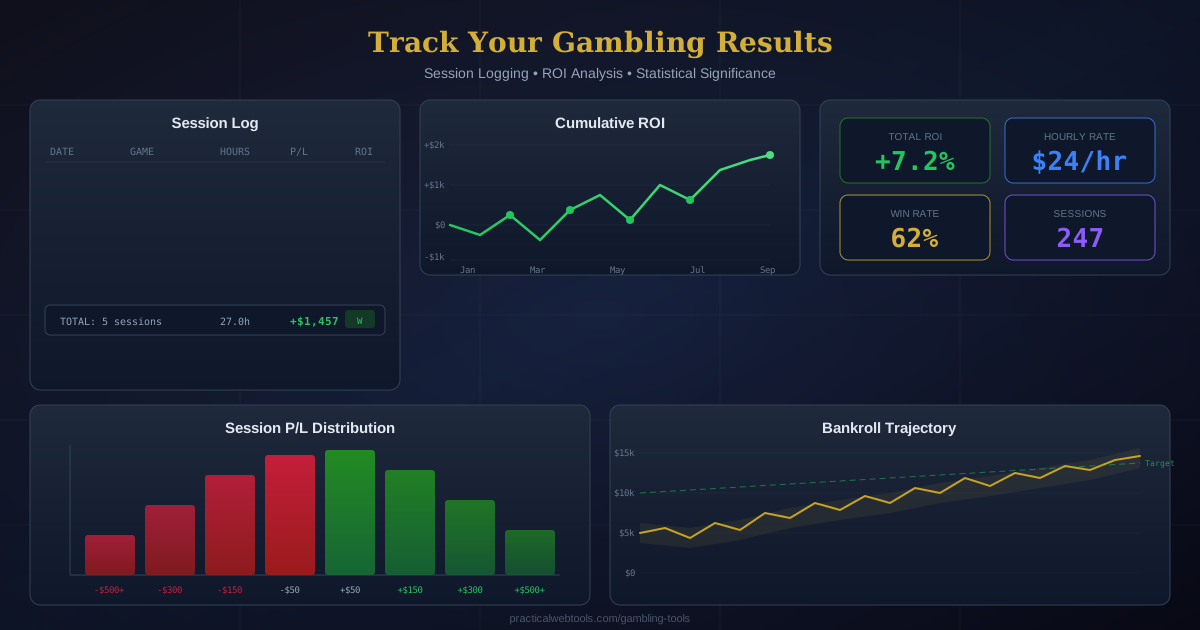
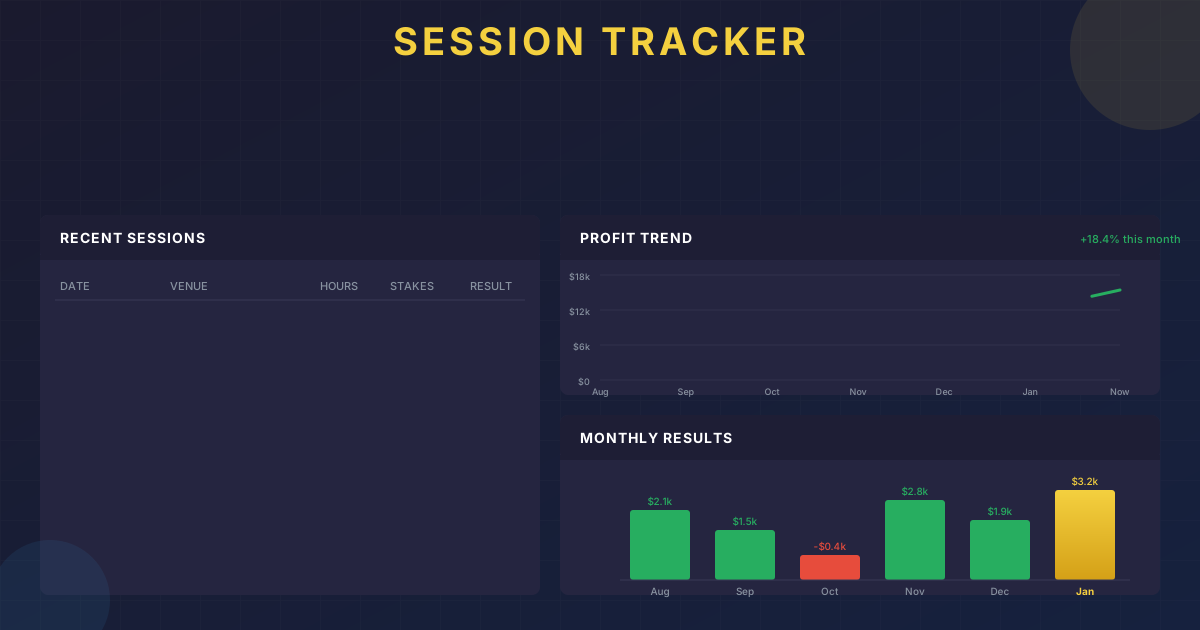
Are there any apps or tools specifically designed for tilt management? Several tools can support your tilt management practice. Session tracking tools (like our Poker Session Tracker) help you identify patterns by logging results alongside emotional state notes. Expected value calculators (like our Expected Value Calculator) provide mathematical anchors that counter emotional narratives. Variance simulators (like our Poker Variance Calculator) help normalize losing streaks by showing they fall within expected ranges. Additionally, general meditation apps (Headspace, Calm) provide guided mindfulness training that directly improves emotional regulation.
Essential Tools for Tilt-Free Gambling
The following tools help you anchor your decisions to mathematics rather than emotion, which is the foundation of effective tilt management:
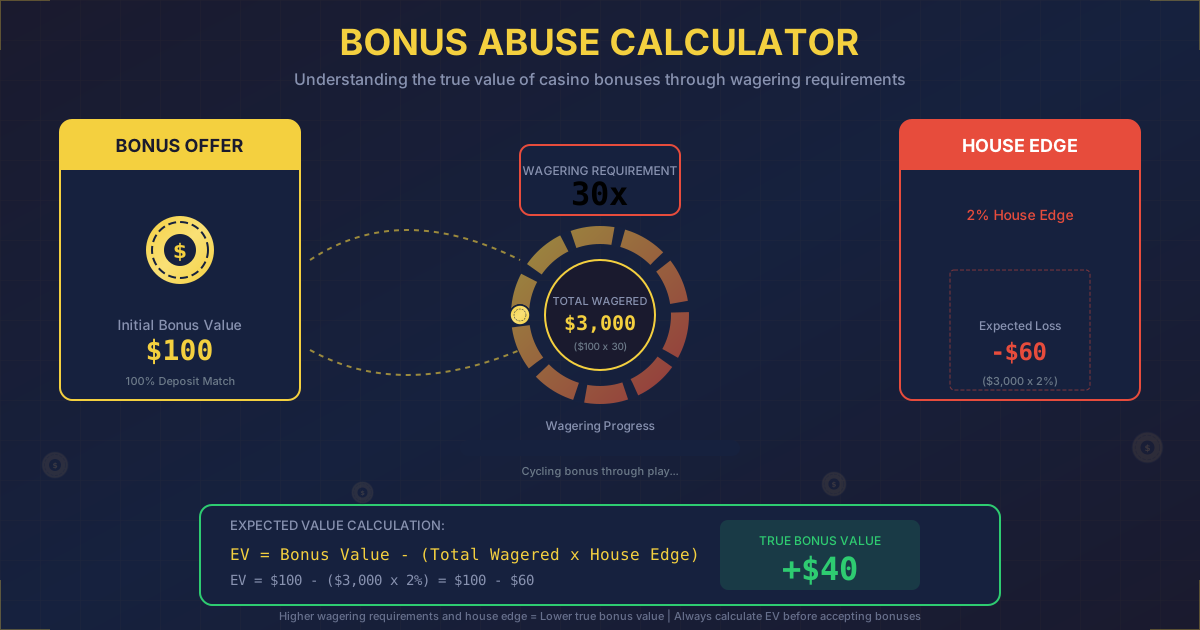
- Expected Value Calculator: Verify whether your bets and plays have positive expected value before and after making them
- Kelly Criterion Calculator: Calculate optimal bet sizing based on your edge and bankroll, removing emotion from the sizing decision
- Poker Variance Calculator: Simulate your expected swings to normalize downswings and prevent injustice tilt
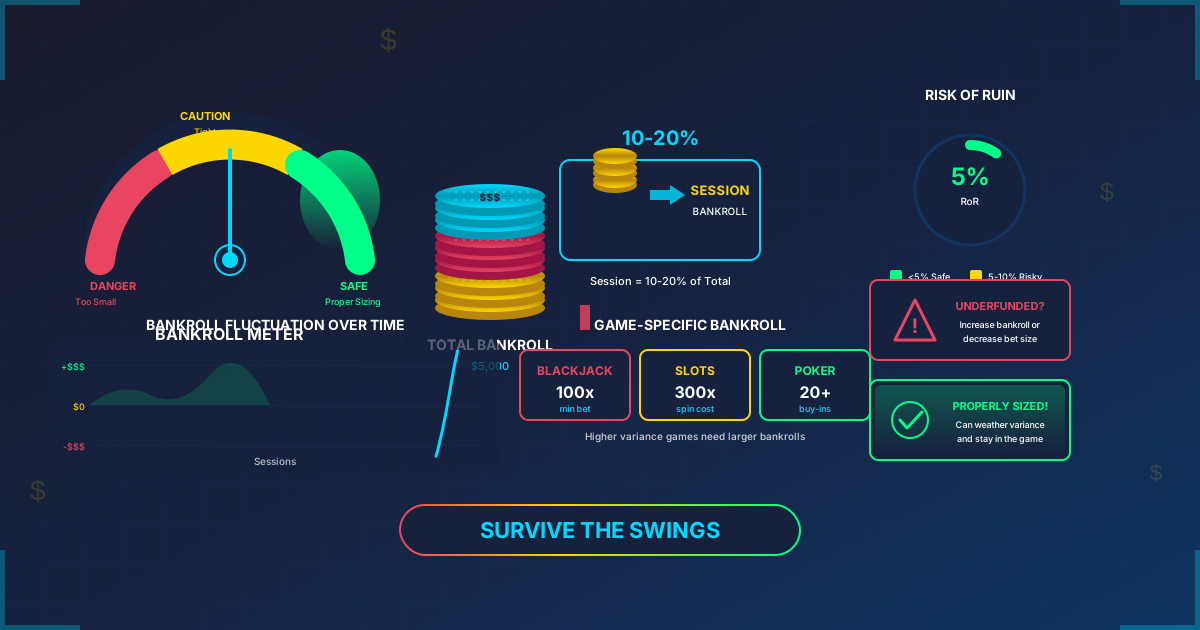
- Poker Bankroll Requirements Calculator: Determine exactly how many buy-ins you need to survive variance without going broke
- Poker Risk of Ruin Calculator: Calculate the probability of losing your entire bankroll given your edge and stake selection
- Poker EV Calculator: Analyze specific hands to determine if losses came from variance or poor play
- Poker Downswing Probability Calculator: Understand how likely your current downswing is based on your win rate
- Poker Session Tracker: Log sessions with emotional state notes to build your tilt pattern database
Conclusion: Tilt Is the Leak You Can Plug
Every serious gambler has strategic leaks -- spots where their game deviates from optimal play. Some of those leaks require hundreds of hours of study to fix. Tilt is different. Tilt is a leak where the solution is well-understood, the tools are freely available, and the improvement can be immediate.
You do not need to become a meditation guru or eliminate all negative emotions from your life. You need three things: a pre-session routine that sets your emotional baseline, a set of circuit breakers that interrupt tilt before it escalates, and a post-session review practice that builds long-term resilience. These three components, applied consistently, can reduce the financial impact of tilt by 50-80% within the first few months.
The math is simple. If tilt costs you $5,000 per year and you cut that by 60%, you have effectively given yourself a $3,000 annual raise without improving a single aspect of your poker strategy or betting model. That is real money, and it is available to anyone willing to put in the emotional work.
Start by calculating your expected value with our free Expected Value Calculator. Then ensure your bankroll can handle inevitable variance with our Poker Bankroll Requirements Calculator. Track your emotional and financial journey with our Poker Session Tracker.
Your bankroll does not care why it shrinks. Protect it from the one opponent you face at every single table: yourself.
Gambling involves risk. This content is for educational and informational purposes only. Always gamble responsibly, set limits you can afford, and seek help if gambling becomes a problem. Visit the National Council on Problem Gambling or call 1-800-522-4700 for support.