World Series and MLB Playoff Betting: October Baseball Strategy (2026)
October baseball is a different sport. The 162-game regular season rewards consistency, depth, and run differential over six months. The postseason rewards dominant pitching, clutch hitting, and managerial chess in a compressed format where one bad bullpen decision ends a season. Bettors who carry regular-season assumptions into October get punished. The public loads up on the 100-win juggernaut at -200 in Game 1, and the 87-win wild card team with a frontline ace throws a two-hit shutout.
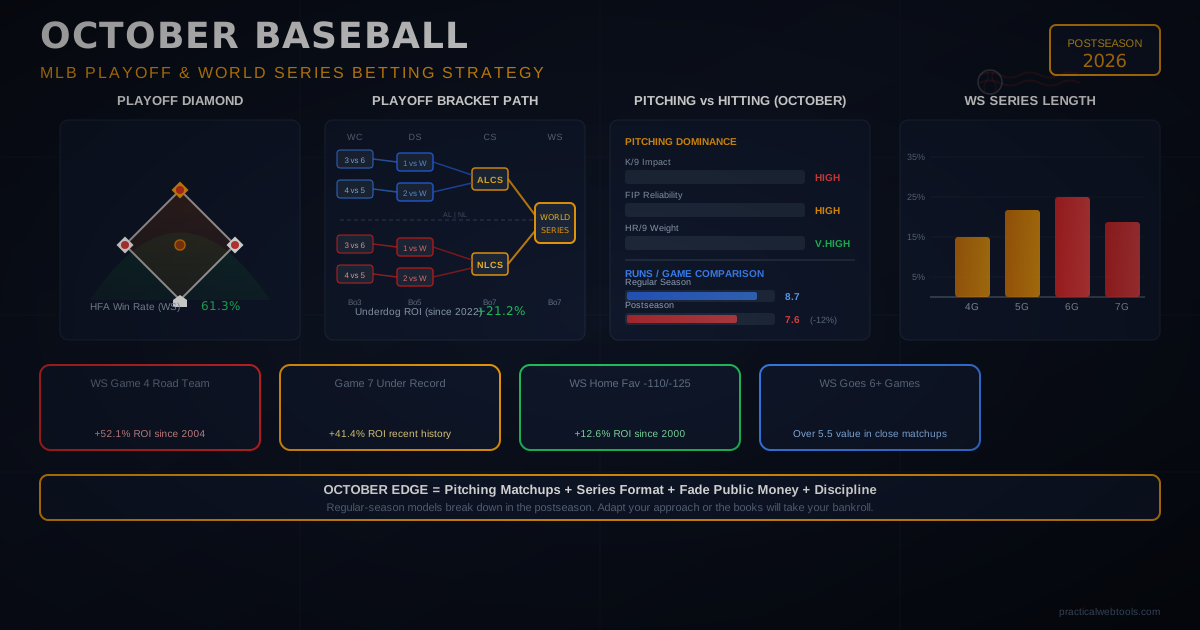
The numbers tell the story. Since the expanded playoff format began in 2022, lower-seeded teams have gone 39-32 straight up in postseason games when entering with fewer than 90 regular-season wins, producing a 21.2% ROI for bettors backing those underdogs. The 2022 Phillies entered as the lowest seed and reached the World Series. The 2023 Diamondbacks and 2024 Mets authored similar Cinderella runs. And in 2025, the Blue Jays pushed the heavily favored Dodgers to a Game 7 as a wild card entrant before Los Angeles escaped with their second consecutive championship.
The postseason is not about which team is best over 162 games. It is about which team is best over 5 or 7 games with their top arms on the mound, their lineup locked in, and the pressure cranked to maximum. That shift changes everything about how you should bet.
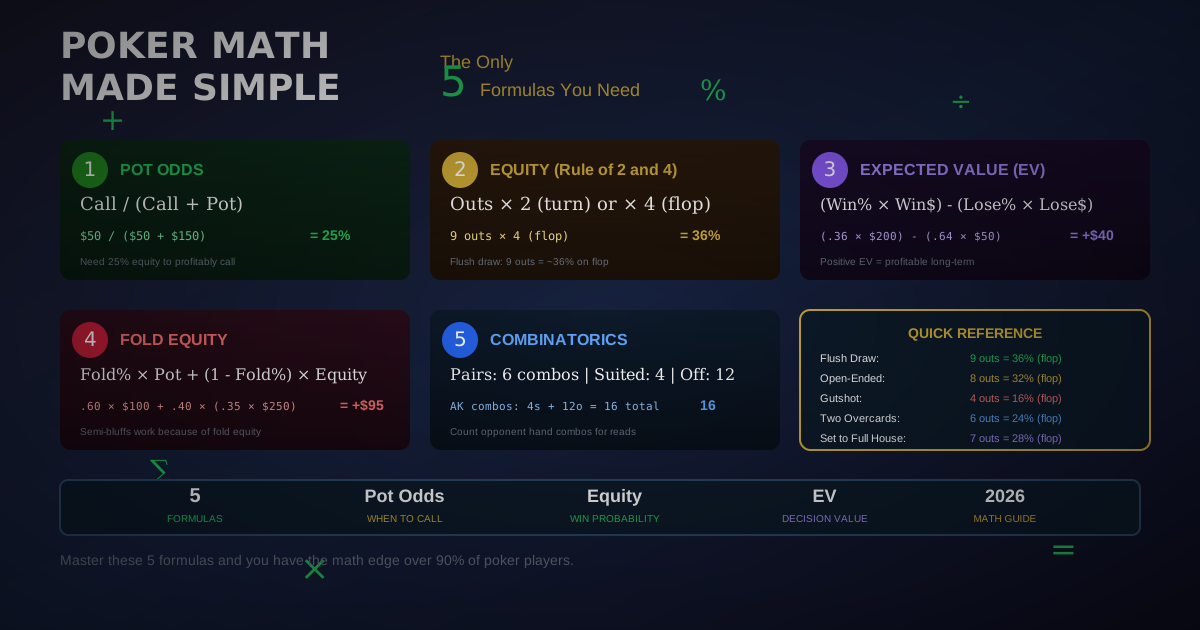
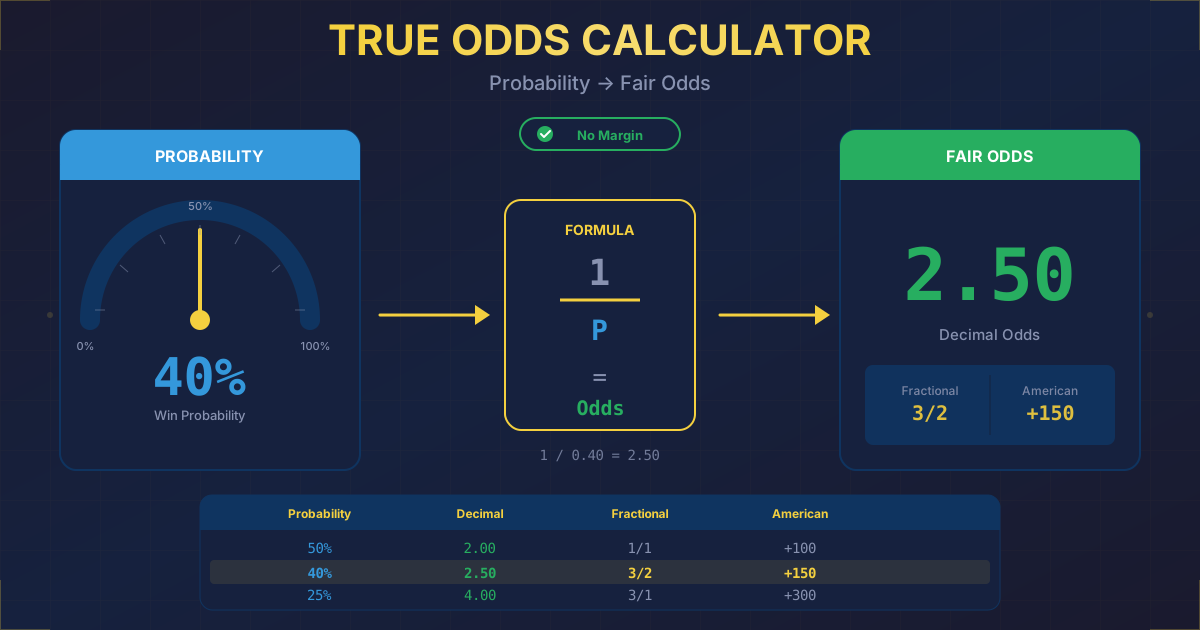
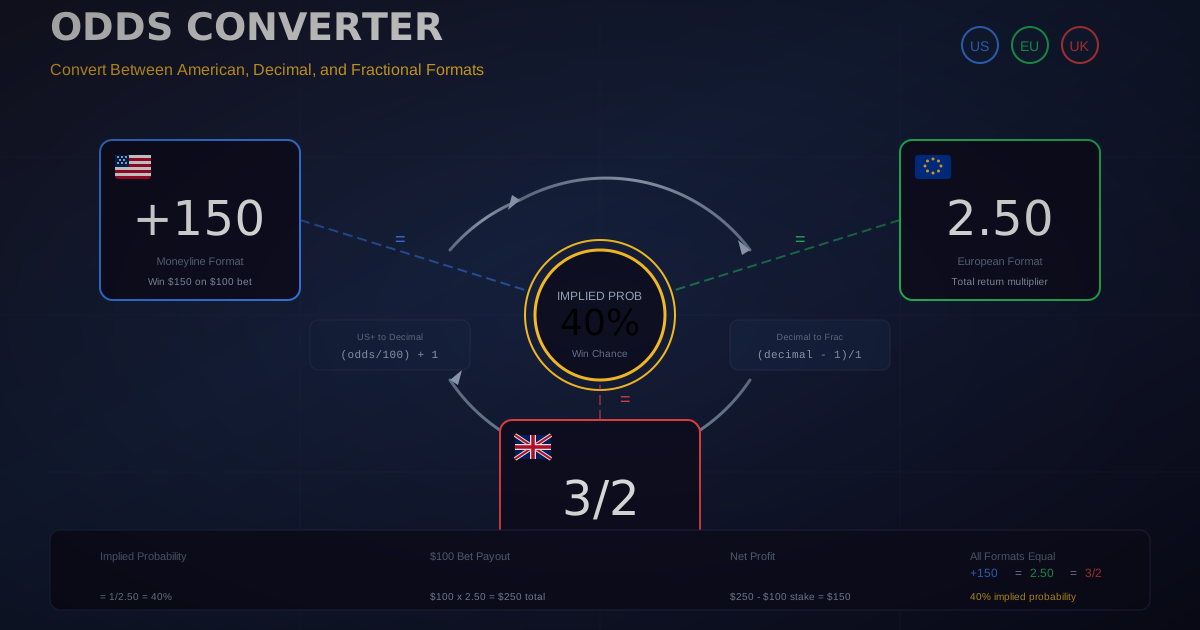
Convert playoff odds instantly with our free Odds Converter and calculate your expected value on every October wager with our Expected Value Calculator.
Understanding the MLB Playoff Format
Before placing a single postseason bet, you need to understand the structure that shapes every wagering opportunity. The MLB postseason is a four-round gauntlet, and each round has distinct characteristics that create different betting dynamics.
The Four Rounds at a Glance
| Round | Format | Teams | Home Field | Key Betting Factor |
|---|---|---|---|---|
| Wild Card Series | Best-of-3 | Seeds 3-6 | Higher seed all games | Ace pitching dominance |
| Division Series (ALDS/NLDS) | Best-of-5 | Seeds 1-2 vs WC winners | Higher seed (2-2-1) | Rotation depth matters |
| Championship Series (ALCS/NLCS) | Best-of-7 | DS winners | Better regular season record (2-3-2) | Bullpen endurance tested |
| World Series | Best-of-7 | League champions | Better regular season record (2-3-2) | Complete roster evaluation |
Twelve teams make the postseason: three division winners and three wild card teams from each league. The top two division winners in each league receive a first-round bye, which is a significant betting factor we will examine closely.
The Bye Week Myth
One of the most discussed angles in playoff betting is whether the first-round bye helps or hurts the top seeds. The data from 2022-2025 tells a nuanced story. Teams coming off the bye are 9-7 in Division Series, a modest advantage that disappears when you account for the fact that these are already the best teams in the league. The bye provides extra rest but eliminates competitive rhythm. Bettors should treat bye-week teams as slight favorites based on talent, not because of the rest itself.
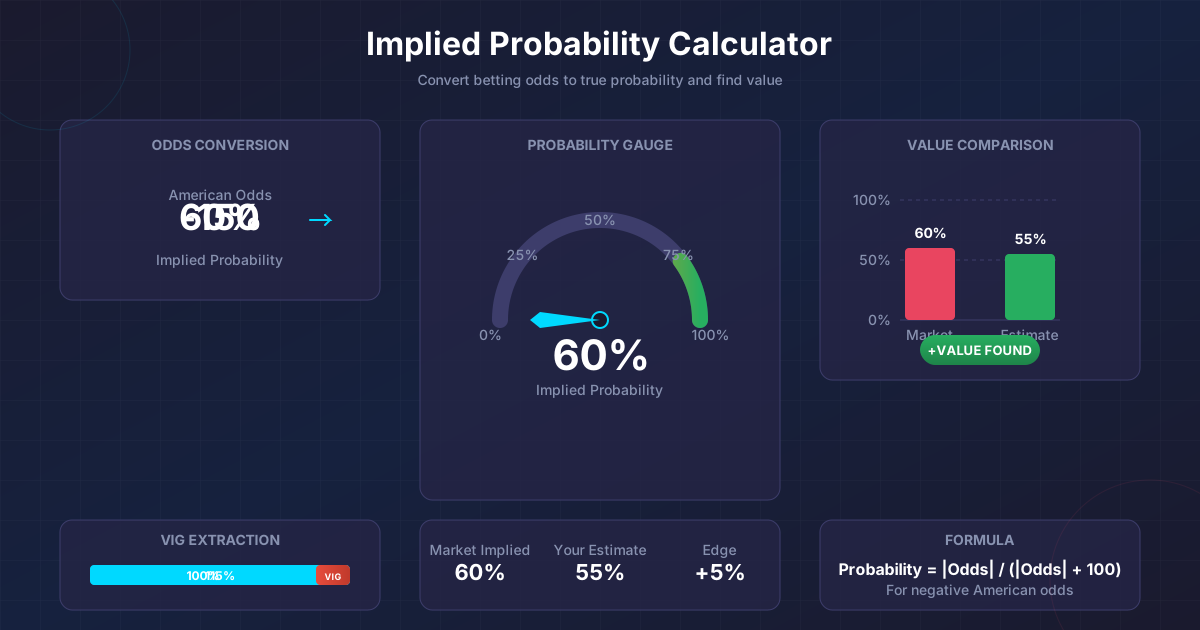
Calculate the implied probability behind any playoff line with our Implied Probability Calculator.
Wild Card Series Betting Strategy
The Wild Card Series is the most volatile and potentially profitable round of the MLB postseason. A best-of-three format is essentially a coin flip with elite pitching, and that compression creates enormous value for sharp bettors.
Why the Wild Card Round Is Different
In a best-of-three, one dominant pitching performance can win the entire series. There is no time for the better team to recover from a bad game. The team with the superior Game 1 starter holds a massive structural advantage because winning Game 1 means they need only one more win in two tries.
Wild Card Series Results Since 2022:
| Year | Matchup | Favored Team | Result | Series Price |
|---|---|---|---|---|
| 2022 | Guardians vs Rays | Rays -145 | Guardians 2-0 | Guardians +125 |
| 2022 | Phillies vs Cardinals | Cardinals -130 | Phillies 2-0 | Phillies +110 |
| 2023 | Phillies vs Marlins | Phillies -210 | Phillies 2-0 | Phillies -250 |
| 2023 | D-backs vs Brewers | Brewers -140 | D-backs 2-0 | D-backs +120 |
| 2024 | Mets vs Brewers | Brewers -150 | Mets 2-1 | Mets +130 |
| 2024 | Tigers vs Astros | Astros -175 | Tigers 2-0 | Tigers +150 |
| 2025 | Blue Jays vs Orioles | Orioles -135 | Blue Jays 2-1 | Blue Jays +115 |
The pattern is clear: underdogs win far more often than the public expects in the Wild Card Series. The compressed format and the importance of a single ace starter create genuine upset potential.
Wild Card Betting Angles
Ace Starter Differential: When one team has a significantly better Game 1 starter (measured by ERA, FIP, or strikeout rate), that team's series price often undervalues the pitching advantage. A team with a Cy Young-caliber arm starting Game 1 should be priced more aggressively than regular-season records suggest.
Bullpen Quality Over Rotation Depth: In a three-game series, you only need two starters and a reliable bullpen. Teams with elite closers and shutdown setup men gain disproportionate value in the Wild Card round. Regular-season rotation depth is nearly irrelevant.
Momentum Is Real (Here): Unlike longer series where regression dominates, a three-game series can genuinely be influenced by momentum. The team that wins Game 1 holds both the series lead and the psychological advantage. Betting the Game 1 winner to close out in Game 2 has been profitable in the expanded format.
Calculate the hold and vig on wild card series prices with our Hold/Vig Calculator.
Division Series Betting: Where Depth Starts to Matter
The Division Series shifts from the Wild Card's sprint to a slightly longer race. At best-of-five, rotation depth begins to matter, but the format is still short enough for a hot team to survive on two quality starters and a dominant bullpen.
The 2-2-1 Format
The higher seed hosts Games 1, 2, and 5 while the lower seed hosts Games 3 and 4. This format heavily favors the higher seed because they get three home games including the decisive Game 5 if needed. Since 2022, higher seeds have won the Division Series at a 62% clip.
Key Division Series Betting Factors
Rest vs. Rust for Bye Teams: Top seeds entering the Division Series after a bye often look rusty in Game 1. This creates a specific angle: backing the Wild Card Series winner in Game 1 of the ALDS/NLDS at plus-money has been profitable. The lower seed is battle-tested and riding adrenaline; the top seed is cold.
Example: In 2024, the Detroit Tigers swept the Cleveland Guardians in the ALDS after Cleveland sat idle during the Wild Card round. The Tigers were +180 underdogs in the series and returned $280 on a $100 bet. Cleveland's lineup looked flat after the extended layoff, managing just 5 runs across the two home games they lost.
Pitching Matchup Math: In a five-game series, your top two starters pitch Games 1, 2, and (potentially) Game 5. Your third starter only pitches if the series reaches Game 3 or Game 4. This means teams with two dominant arms and a weak third starter are actually well-equipped for the Division Series, even if their regular-season rotation looked thin.
| Division Series Game | Typical Starter | Rest Days | Betting Implication |
|---|---|---|---|
| Game 1 | Ace (#1) | Full rest | Highest-quality pitching matchup |
| Game 2 | #2 Starter | Full rest | Second-best matchup; key swing game |
| Game 3 | #3 Starter | Full rest | Biggest quality drop; upset potential |
| Game 4 | Ace (#1) on short rest OR #4 | 3 days rest | Short rest = velocity drop risk |
| Game 5 | #2 on short rest OR ace on normal | Varies | Bullpen game if series is tight |
Short Rest Performance: Starting pitchers on three days of rest in the postseason have historically posted ERAs roughly 0.50-0.75 higher than their season averages. When a manager announces a short-rest start, the betting market often does not fully adjust. Look for value on the opposing team.
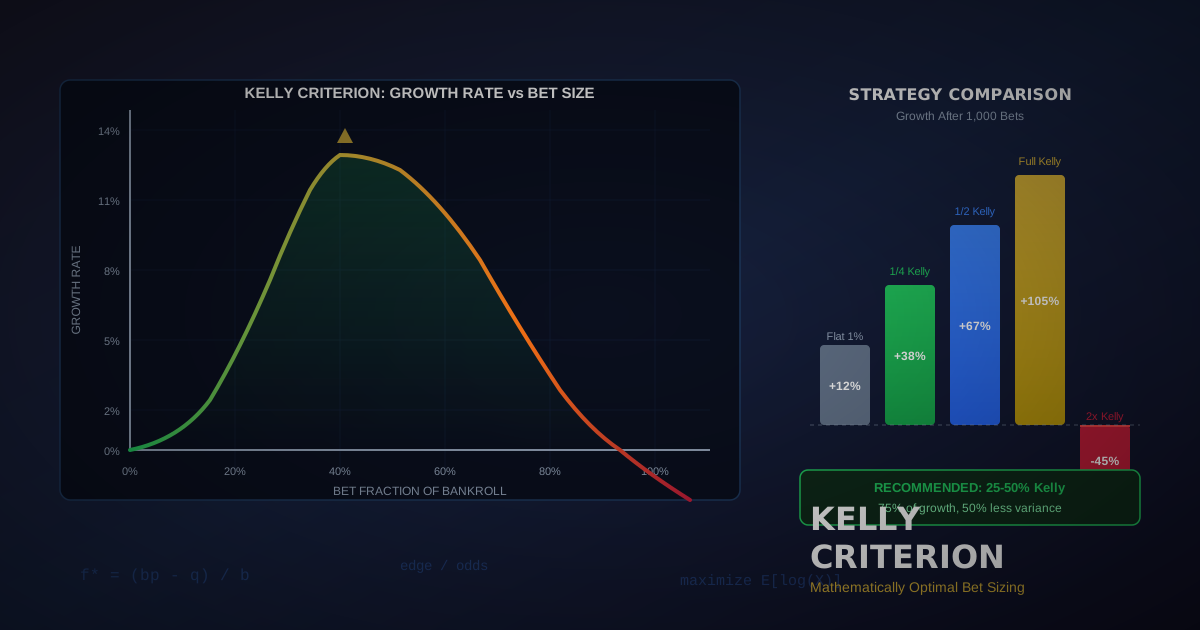
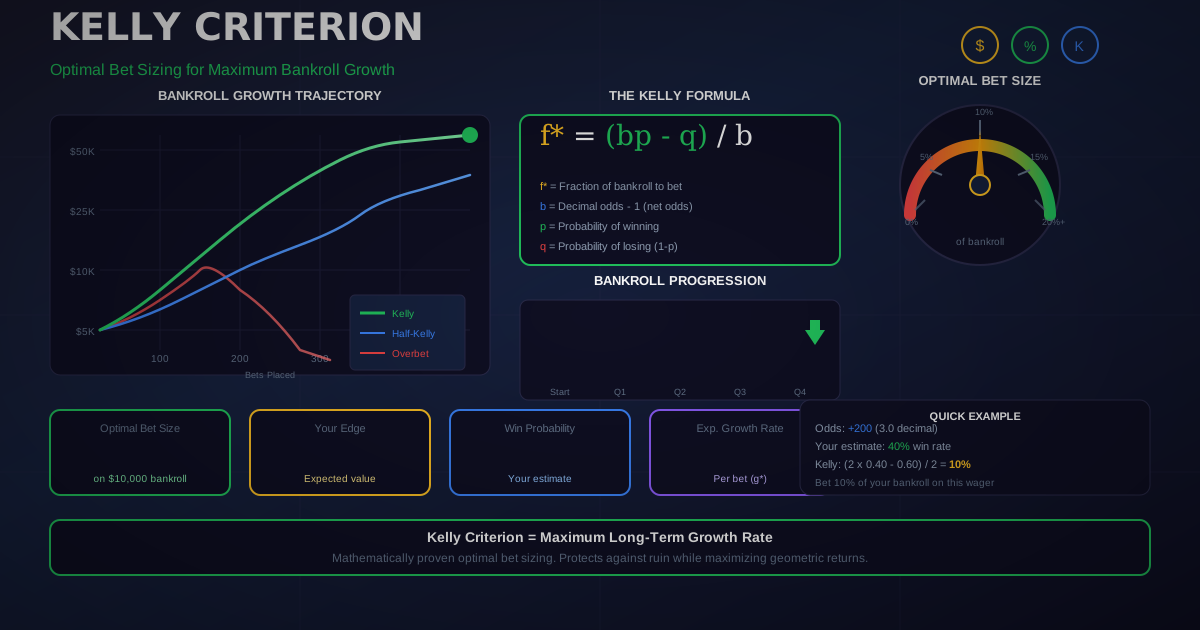
Size your Division Series bets properly with our Kelly Criterion Calculator.
Championship Series Strategy: The Seven-Game Grind
The ALCS and NLCS represent the sweet spot for sharp playoff bettors. Seven games is long enough for the better team to assert itself, but short enough that pitching matchups, home field, and bullpen management create exploitable inefficiencies.
The 2-3-2 Format Creates Unique Dynamics
Games 1-2 are at the higher seed's park, Games 3-5 at the lower seed's park, and Games 6-7 (if needed) back at the higher seed. This format produces a fascinating middle section where the lower seed has three consecutive home games. Since 2000, the team hosting Games 3-5 has won at least two of those three games 58% of the time.
Betting Implication: If the higher seed splits Games 1-2 at home (going 1-1), they are now in trouble heading to three road games. The series price adjustment after a 1-1 split often does not fully account for the lower seed's home-field advantage in the middle stretch. Look for value on the lower seed's adjusted series price after a split.
Championship Series Pitching Dynamics
In a seven-game series, each team's top two starters can pitch three times each if the series goes the distance:
| Game | Higher Seed Starter | Lower Seed Starter | Rest Context |
|---|---|---|---|
| Game 1 | Ace (full rest) | Ace (full rest) | Best-on-best |
| Game 2 | #2 (full rest) | #2 (full rest) | High-quality matchup |
| Game 3 | #3 or bullpen | #3 (full rest) | Lower seed advantage at home |
| Game 4 | #4 or ace short rest | #4 or bullpen | Fatigue begins |
| Game 5 | Ace (normal rest) | Ace (normal rest) | Second ace matchup |
| Game 6 | #2 (normal rest) | #2 (normal rest) | Pressure game at higher seed |
| Game 7 | Bullpen / all hands | Bullpen / all hands | Unpredictable; emotion-driven |
The Game 3 Drop-Off: Game 3 of a Championship Series is often where the first significant pitching quality drop occurs. Both teams have used their top two arms, and the Game 3 starter is typically a clear step down. This game tends to produce higher scoring, and the over has hit at a 57% rate in LCS Game 3s since 2015.
Game 7 Unders: In winner-take-all Game 7s across all MLB playoff series, the under is 8-3 in recent history, producing a 41.4% ROI. The pressure of elimination suppresses offense, managers go to their bullpens early, and starting pitchers pitch on adrenaline. If a Championship Series reaches Game 7, strongly consider the under.
World Series Betting: The Complete Strategy Guide
The World Series is the crown jewel of baseball betting. Handle increases dramatically, casual money floods the market, and sharp bettors find their richest opportunities of the year. Here is how to approach the Fall Classic methodically.
Home Field Advantage in the World Series
Home field advantage in the World Series is one of the most misunderstood factors in baseball betting. The data reveals a complicated picture.
World Series Home Field Data (Wild Card Era, 1995-2025):
| Metric | Record | Win % | ROI |
|---|---|---|---|
| Team with HFA winning series | 19-12 | 61.3% | Varies |
| Home team winning individual games | Varies by game | 54.1% | Slight + |
| Home favorites -110 to -125 | 18-12 | 60.0% | +12.6% |
| Home underdogs +120 or more | 1-8 | 11.1% | -71.7% |
| Road team in Game 4 (since 2004) | 14-5 | 73.7% | +52.1% |
The key takeaway: home field advantage matters most in close matchups. When the home team is a slight favorite (in the -110 to -125 range), the advantage of playing in front of your crowd is meaningful and profitable to bet. But when the home team is a significant underdog, home field does not overcome the talent gap.
The Game 4 Anomaly: Road teams have dominated World Series Game 4 at a stunning 14-5 clip since 2004. This is one of the most profitable single-game angles in postseason baseball. The theory is that teams trailing 2-1 play with desperation while the home team, comfortable after winning a game, relaxes slightly. Whatever the cause, betting the road team in Game 4 of the World Series has produced over 50% ROI across two decades.
Series Length Trends
How long do World Series go? The distribution matters for both series props and individual game betting.
World Series Length Distribution (2000-2025):
| Series Length | Occurrences | Percentage | Avg Series Price Differential |
|---|---|---|---|
| 4 games (sweep) | 5 | 19.2% | Large favorite won |
| 5 games | 7 | 26.9% | Moderate favorite won |
| 6 games | 8 | 30.8% | Competitive series |
| 7 games | 6 | 23.1% | Closely matched teams |
More than half of World Series since 2000 have gone 6 or 7 games. When series prices are relatively close (both teams between -130 and +130), the over on series length (typically set at 5.5 games) has been a strong bet historically.
Example: The 2025 World Series between the Dodgers and Blue Jays was priced with Los Angeles as -180 favorites. The series went the full 7 games, rewarding bettors who took the over on series length at -110. A $110 bet on the over returned $210.
Betting the World Series Game by Game
Sharp bettors do not simply take a series price and wait. They adjust game by game, exploiting line movements and shifting dynamics.
Game-by-Game Adjustment Framework:
-
Before the Series: Evaluate the series price. If you believe the underdog has value, consider splitting your wager between the series price and individual game bets where the pitching matchup favors the underdog.
-
After Game 1: The winner of Game 1 sees their series price compress significantly. If the underdog won Game 1, the favorite's series price often overcorrects, creating value on the original favorite at a better number than pre-series.
-
Trailing 2-1: Teams trailing 2-1 in a best-of-seven have come back to win approximately 30% of the time. If the trailing team has their ace lined up for Game 4 and the series price implies less than a 30% chance, there is value.
-
Facing Elimination: Teams facing elimination in Games 5, 6, or 7 historically play tighter, lower-scoring games. Consider the under in elimination games, especially when the starting pitching matchup features two quality arms.
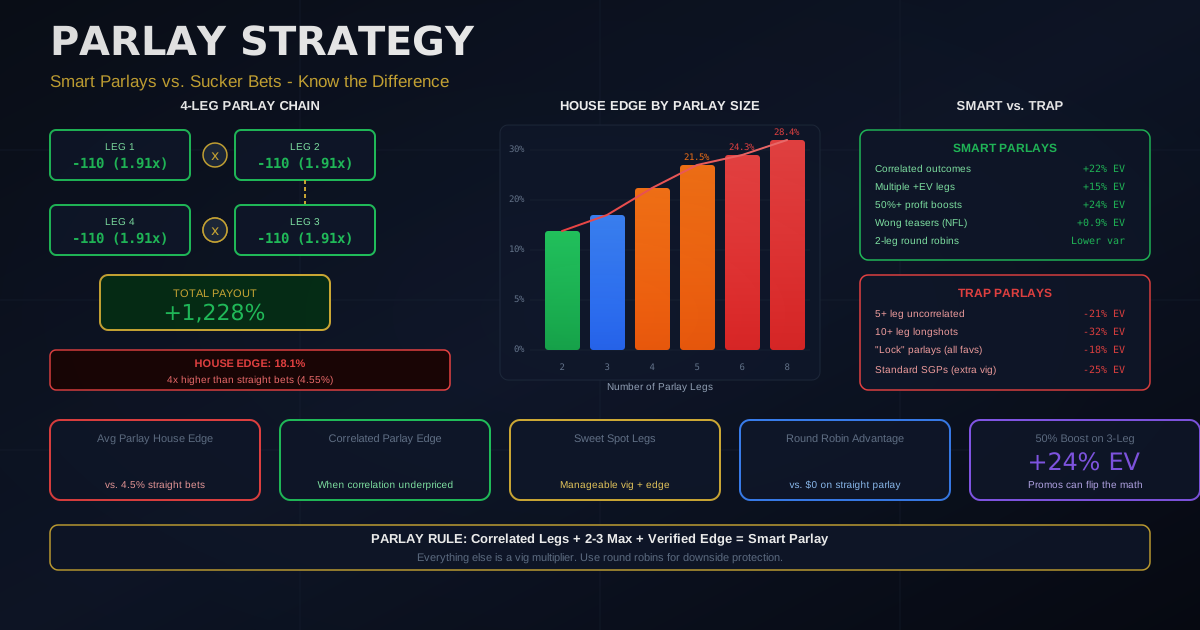
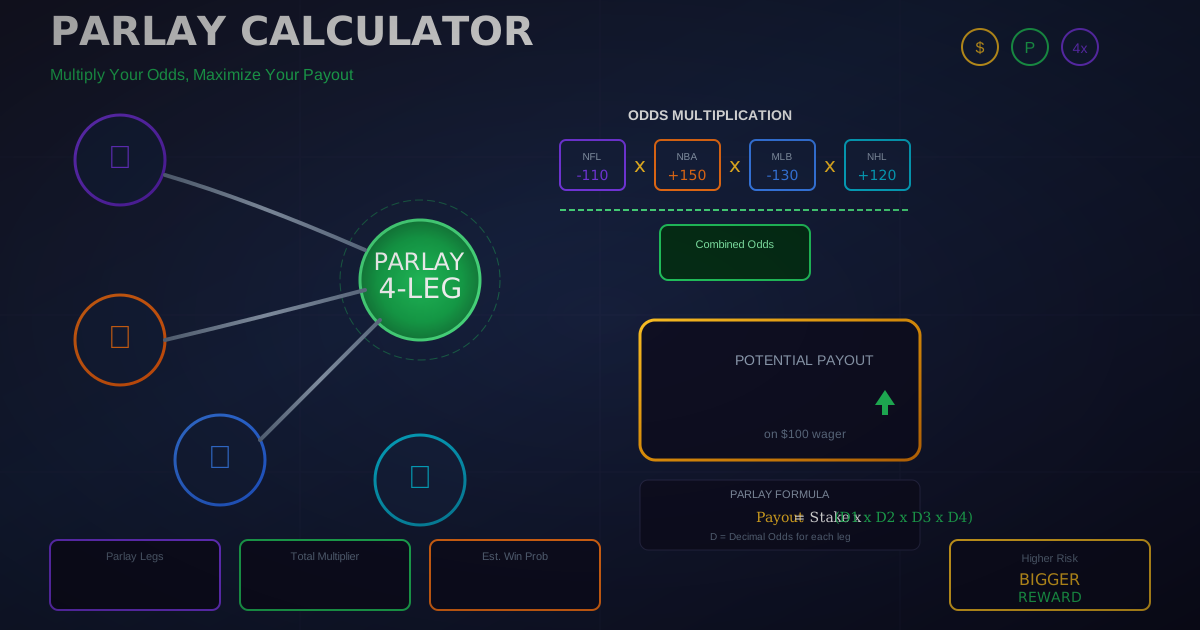
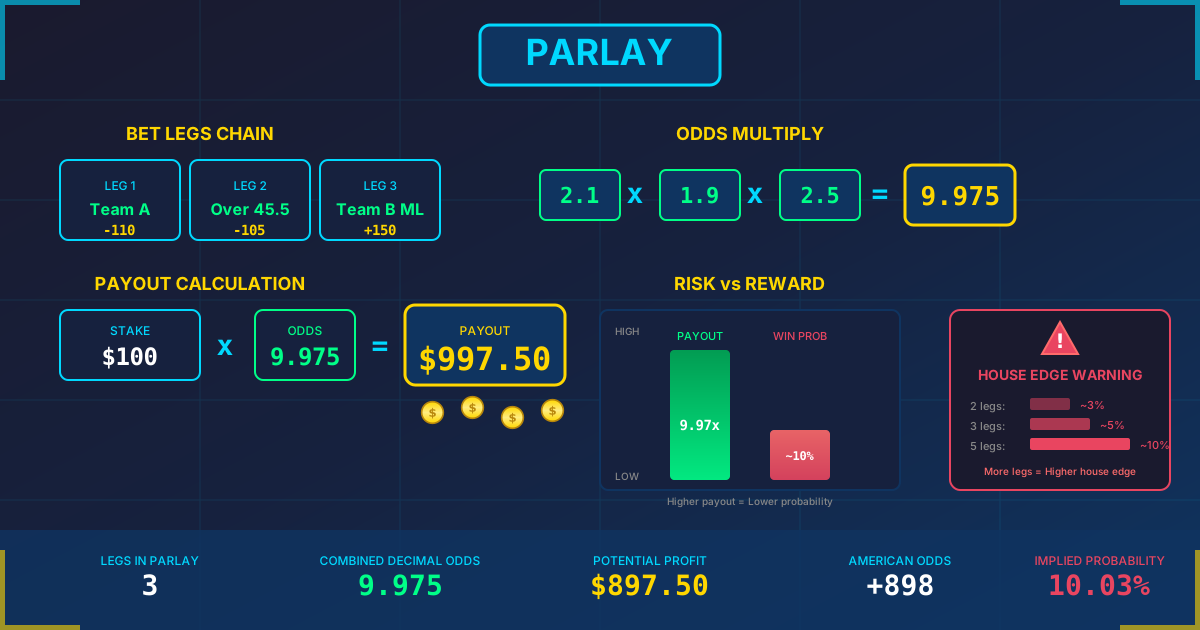
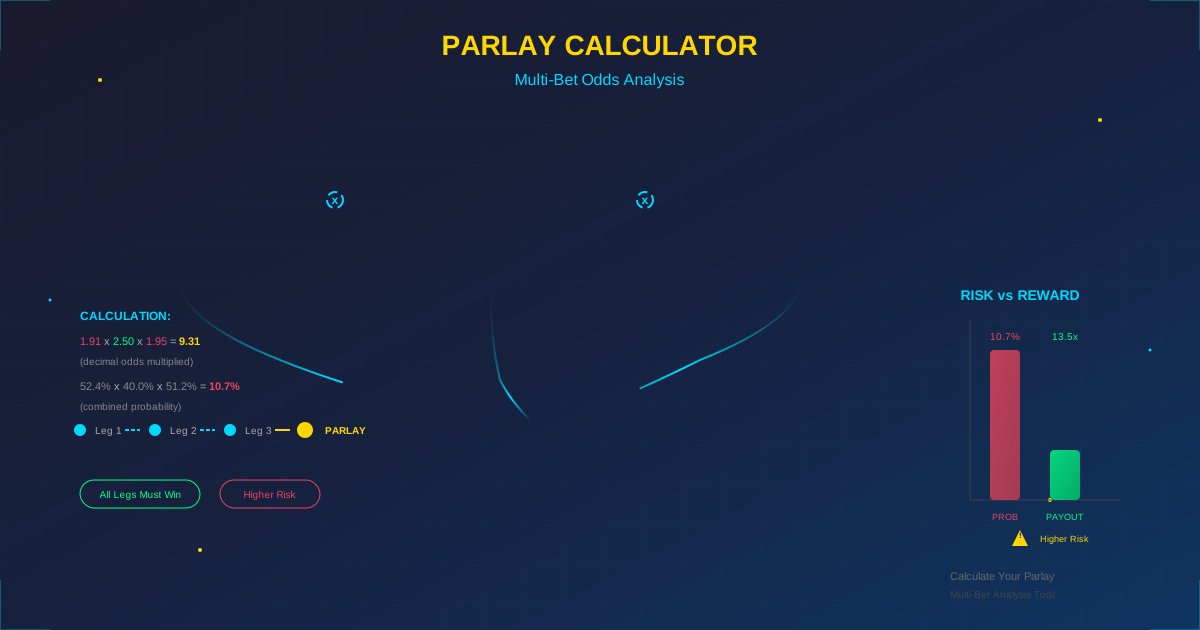
Calculate exact parlay payouts on multi-game World Series bets with our Parlay Calculator.
Pitching Matchups: The Dominant Factor in October
If there is one overriding principle in MLB playoff betting, it is this: pitching matters more than hitting in October. Regular-season lineups that mashed 5.0 runs per game suddenly face a gauntlet of aces, and offensive production drops sharply.
Postseason Scoring Trends
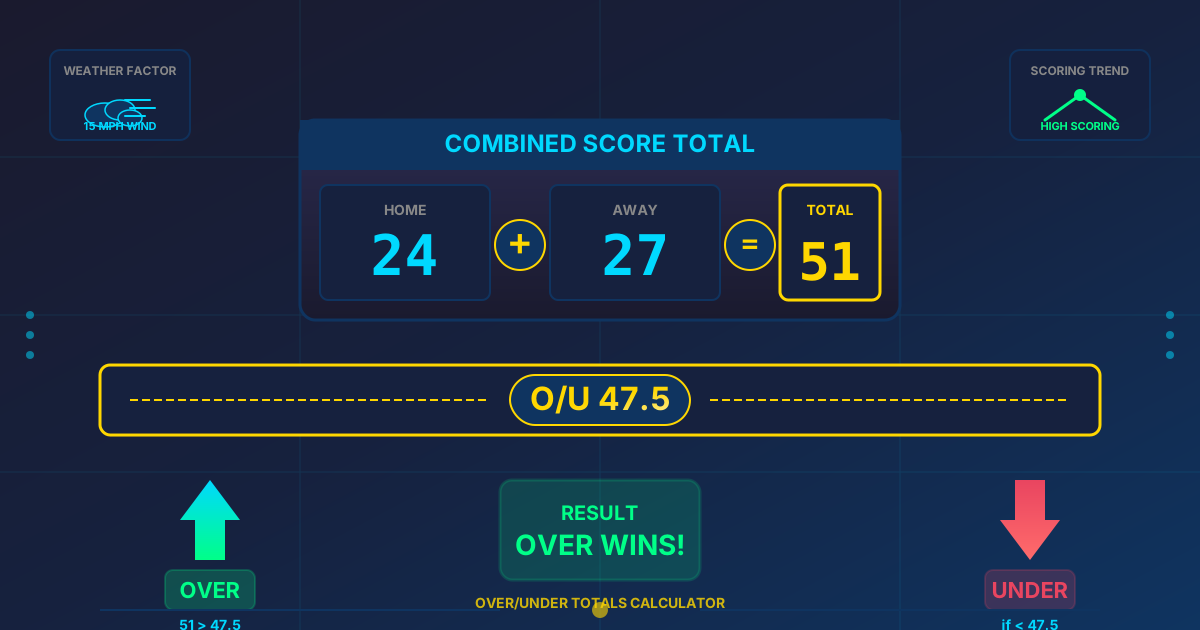
Run scoring consistently drops in the postseason compared to the regular season. Across recent playoff years, postseason games have averaged roughly 7.5-8.0 total runs compared to 8.5-9.0 in the regular season. That 10-15% decline has massive implications for totals betting.
Why Scoring Drops in October:
- Teams face top-of-the-rotation arms instead of the full five-man rotation
- Bullpen usage intensifies with shorter leashes and higher-leverage relievers
- Managers remove struggling starters earlier, limiting damage
- Hitters face unfamiliar pitchers from the opposite league (World Series)
- Pressure and adrenaline affect plate discipline
Evaluating Pitching Matchups for Betting
Not all aces are created equal in October. Here is what to look for when assessing playoff pitching matchups:
| Pitching Metric | Regular Season Importance | Playoff Importance | Why It Changes |
|---|---|---|---|
| ERA | High | Moderate | Small sample inflates variance |
| FIP (Fielding Independent Pitching) | Moderate | High | Better predictor in small samples |
| K/9 (Strikeouts per 9) | Moderate | Very High | Strikeouts avoid defensive chaos |
| HR/9 (Home Runs per 9) | Moderate | Very High | Solo shots decide tight games |
| Career Postseason ERA | Low | Moderate | Some pitchers handle pressure differently |
| Pitch Mix vs. Opponent Lineup | Low | Very High | Specific matchups matter more in short series |
Strikeout Pitchers Dominate October: Pitchers with high strikeout rates (10+ K/9) have historically outperformed their regular-season metrics in the postseason. Strikeouts eliminate the randomness of balls in play, which is critical when one bloop single can change a series.
Example: The 2025 Dodgers posted a 1.40 ERA through their first 10 postseason games, the third-lowest mark through 10 games in a single postseason since 1981. Their rotation leaned heavily on high-strikeout arms, and their dominance was predictable based on regular-season K/9 rates. Bettors who identified this pitching advantage and took Dodgers team totals under in the early rounds found consistent value.
The Bullpen Factor
Modern playoff baseball has evolved into a bullpen-centric game. In the 2024 postseason, starting pitchers accounted for only 45% of total innings pitched across all playoff teams. This shift has several betting implications:
- Bullpen ERA and leverage metrics matter more than starter ERA for games beyond the 5th inning
- Closer experience in October creates real edges; unproven closers in the 9th inning of a playoff game is a different animal than the regular season
- Bullpen depth degrades as a series progresses; by Games 5-7, even good bullpens are running on fumes
- Back-end bullpen arms on consecutive days lose velocity and command; track usage patterns game to game
Check the vig on pitching-adjusted lines with our Hold/Vig Calculator.
Home Field Advantage Deep Dive
Home field advantage in baseball is the smallest of any major North American sport during the regular season (roughly 54% win rate for home teams). But the postseason amplifies it in specific, predictable ways.
How Home Field Changes by Round
| Round | Home Team Win % | Key Home Factors |
|---|---|---|
| Wild Card Series | 58% | Crowd energy in elimination setting |
| Division Series | 55% | Last-at-bat advantage in Game 5 |
| Championship Series | 53% | Less impactful in middle 3 games |
| World Series | 54% | Game 4 road anomaly reduces impact |
The wild card round shows the highest home-field advantage because of the best-of-three format. One dominant home performance can end the series. As series get longer, the home-field advantage diminishes because both teams get multiple home games.
Park Factors in October
Individual ballpark characteristics gain outsized importance in the postseason. A series between two teams in pitcher-friendly parks will play very differently than a series featuring two hitter-friendly venues.
Betting Application: When the World Series features a significant park factor mismatch (for example, a spacious pitcher's park vs. a compact hitter's park), totals should shift dramatically between home and away games. The 2024 World Series between the Dodgers and Yankees illustrated this perfectly: Dodger Stadium's spacious outfield suppressed scoring while Yankee Stadium's short porch inflated it. Sharp bettors adjusted totals by 1.0-1.5 runs based on the venue.
Series Prices and Game-by-Game Adjustments
Series pricing is where some of the most significant edges exist in playoff betting. Understanding how sportsbooks price series outcomes and how those prices shift after each game is essential.
How Series Prices Work
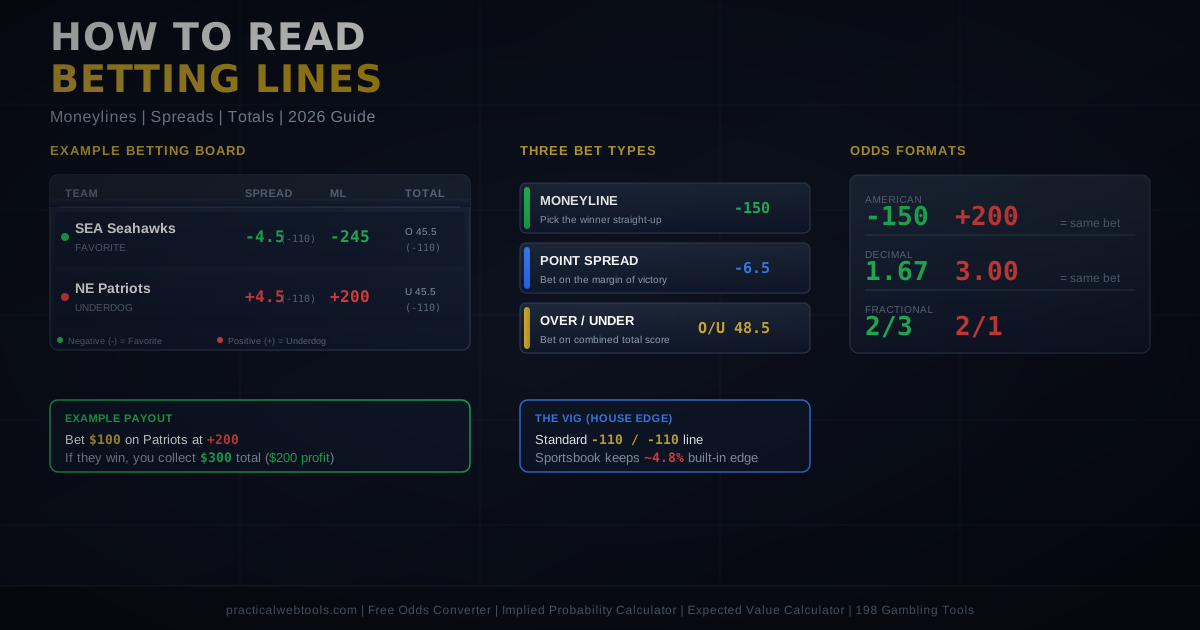
A series price is a bet on which team will win the entire series (not just one game). Before the series starts, sportsbooks post odds for each team. For example:
- Dodgers -180 to win the World Series vs. Blue Jays +155
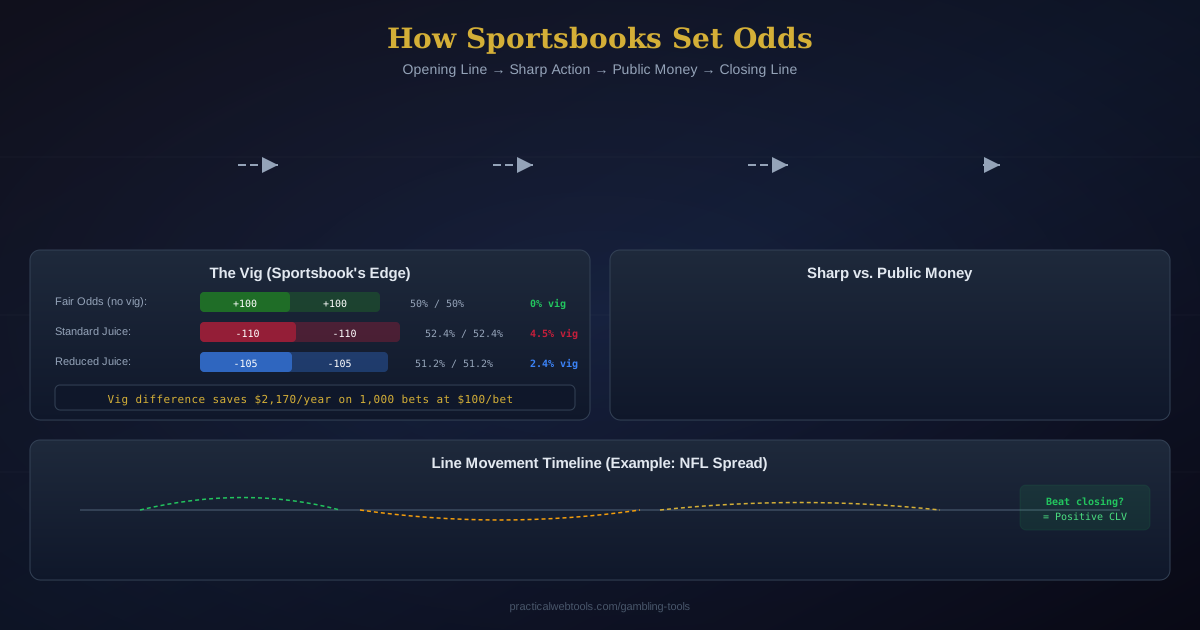
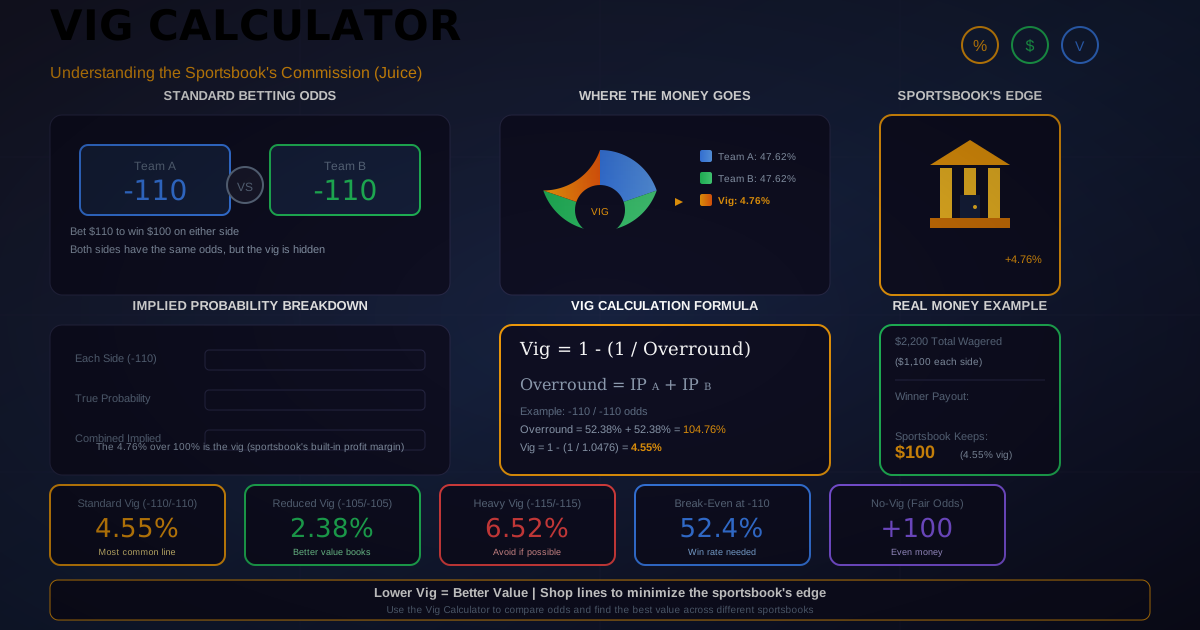
This means you must bet $180 on the Dodgers to win $100, or a $100 bet on the Blue Jays returns $155. The gap between -180 and +155 represents the sportsbook's vig.
Calculate the exact vig in any series price with our Hold/Vig Calculator.
Series Price Movement After Each Game
Series prices shift dramatically after each game. Understanding these shifts helps you identify value:
Example: 2025 World Series Price Movement (Dodgers vs. Blue Jays)
| Series State | Dodgers Price | Blue Jays Price | Implied Prob (LAD) |
|---|---|---|---|
| Pre-series | -180 | +155 | 64.3% |
| Dodgers lead 1-0 | -300 | +245 | 75.0% |
| Series tied 1-1 | -165 | +140 | 62.3% |
| Blue Jays lead 2-1 | +105 | -125 | 48.8% |
| Series tied 2-2 | -150 | +130 | 60.0% |
| Blue Jays lead 3-2 | +155 | -180 | 39.2% |
| Series tied 3-3 | -140 | +120 | 58.3% |
Notice how the Dodgers went from -180 favorites pre-series to +155 underdogs when trailing 3-2. A bettor who believed the Dodgers were still the better team (they ultimately won Game 7) could have gotten extraordinary value by betting them at +155 when they trailed 3-2, compared to laying -180 before the series.
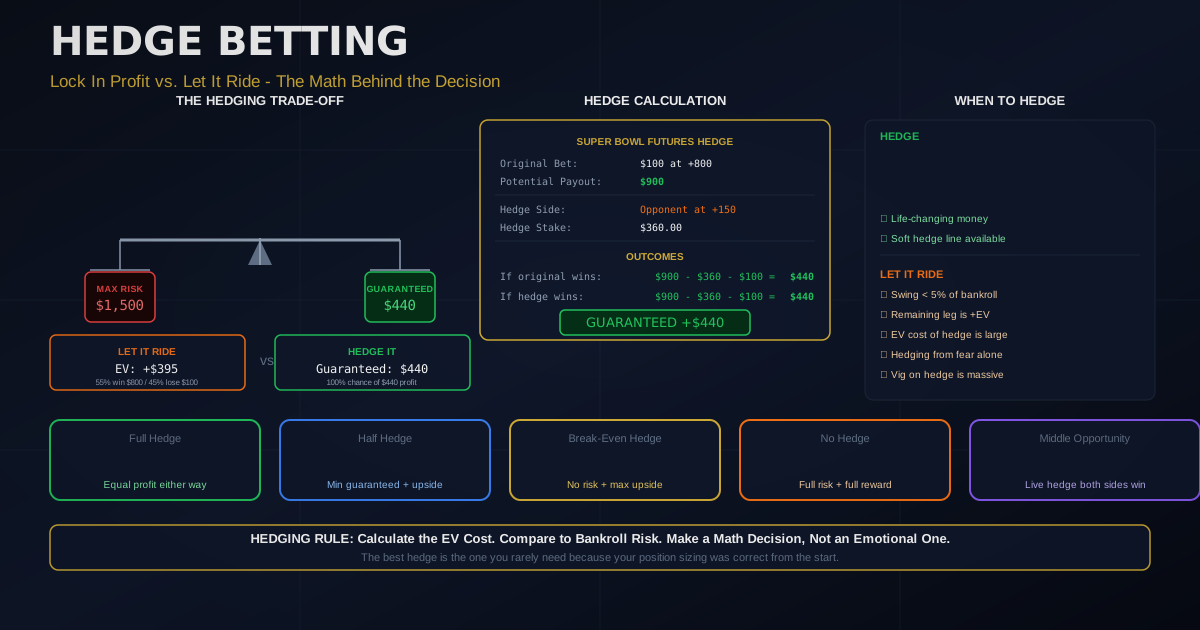
The Hedging Opportunity
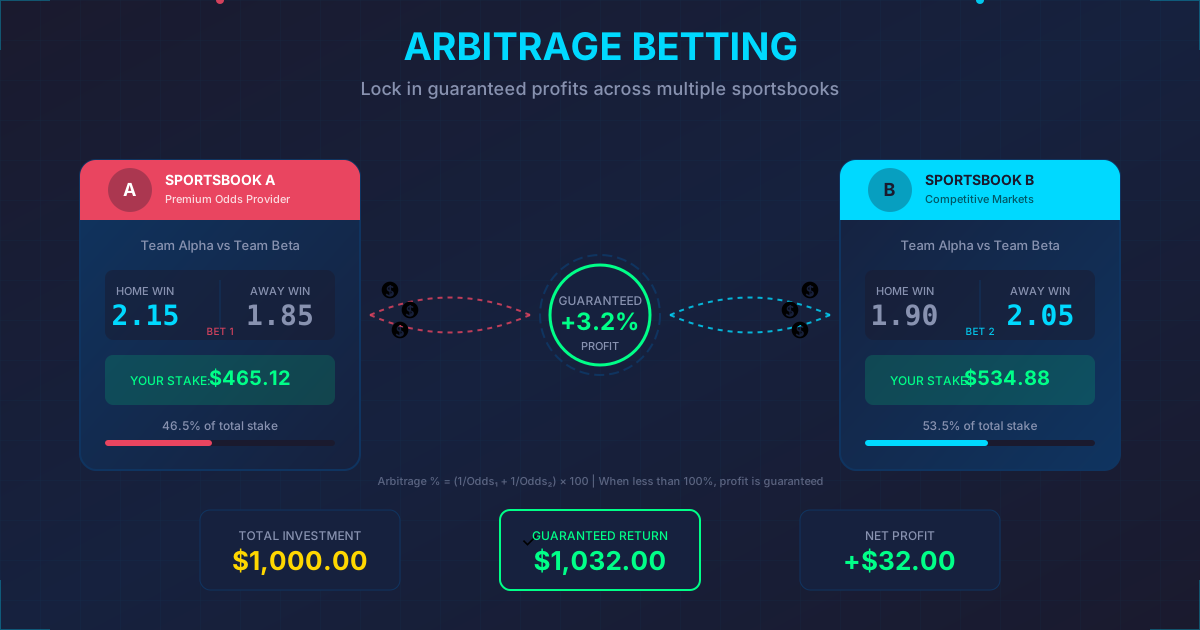
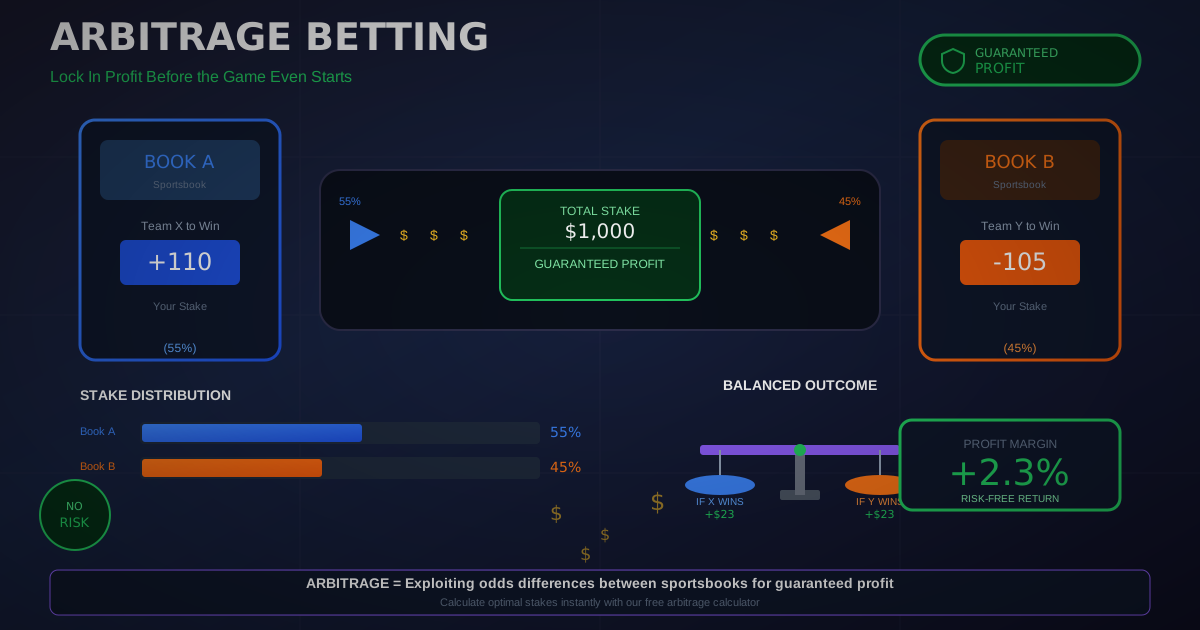
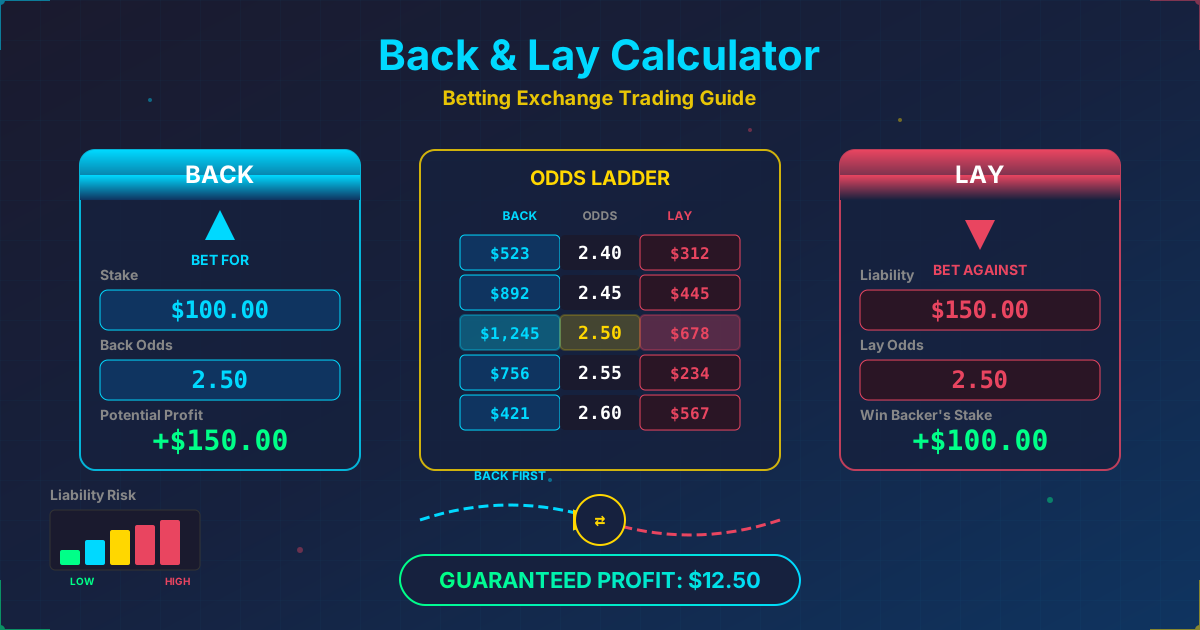
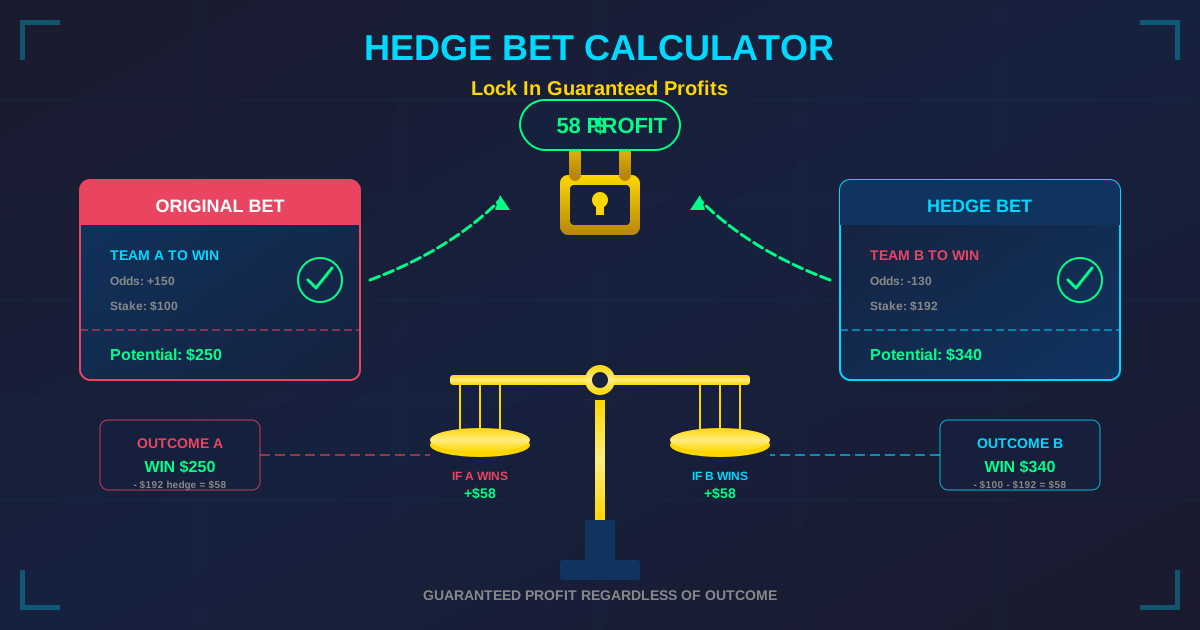
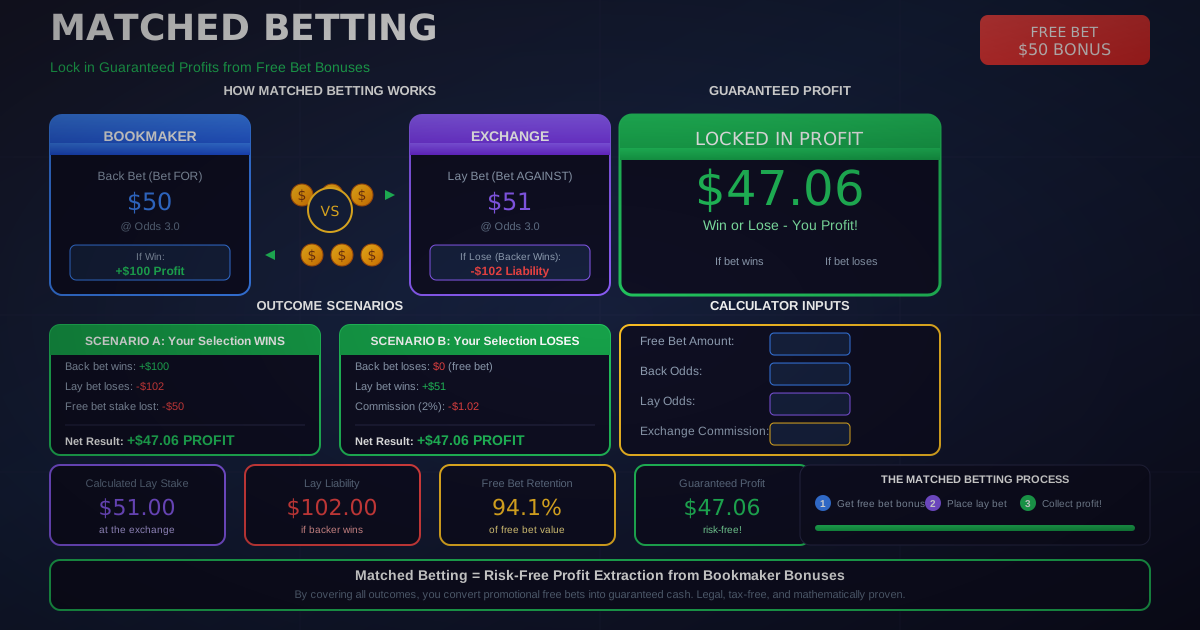
Playoff series create natural hedging opportunities, especially for futures bettors. If you placed a $100 bet on the Blue Jays at +2000 to win the World Series before the season, and they made it to the Fall Classic, your potential payout is $2,100.
At that point, you can hedge by betting the opposing team in the World Series to guarantee profit regardless of the outcome. The math:
- Original Bet: $100 on Blue Jays +2000 (potential return: $2,100)
- Hedge Bet: $1,050 on Dodgers -180 (potential return: $1,633)
- If Blue Jays win: $2,100 - $1,050 (hedge loss) = $1,050 profit
- If Dodgers win: $1,633 - $100 (original loss) = $1,533 profit
You lock in $1,050-$1,533 profit either way, starting from a $100 investment.
Calculate your exact hedge amounts with our Hedge Calculator.
Futures Hedging During the Playoffs
Hedging futures bets during the playoffs is one of the most practical and mathematically sound strategies available to bettors. If you have a live futures ticket, the postseason presents multiple opportunities to lock in profit.
When to Hedge
The optimal time to hedge depends on your risk tolerance and the remaining value in your futures ticket:
| Scenario | Hedge Strategy | Reasoning |
|---|---|---|
| Team reaches Wild Card | Light hedge or hold | Still many games to go; hold for bigger value |
| Team reaches Division Series | Consider partial hedge | Locking in some profit while maintaining upside |
| Team reaches Championship Series | Moderate hedge | Significant value realized; protect gains |
| Team reaches World Series | Full or near-full hedge | Maximum value; guarantee life-changing profit |
| Team leads World Series 3-1 | Full hedge on opponent | Near-certain lock; eliminate remaining variance |
Hedging Math in Practice
Example: You bet $50 on the Seattle Mariners to win the 2026 World Series at +1300 before the season. If the Mariners reach the ALCS, their odds to win the championship might be approximately +350.
- Futures Ticket Value: $50 potential return of $700
- Mariners' Current Win Probability: ~22% (implied by +350)
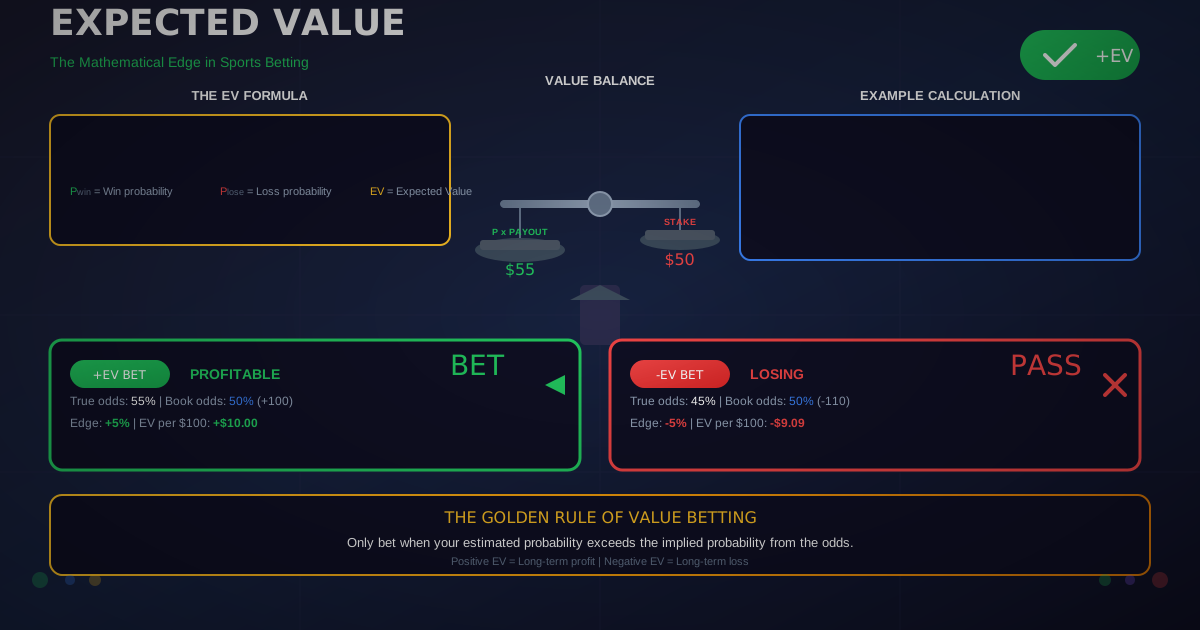
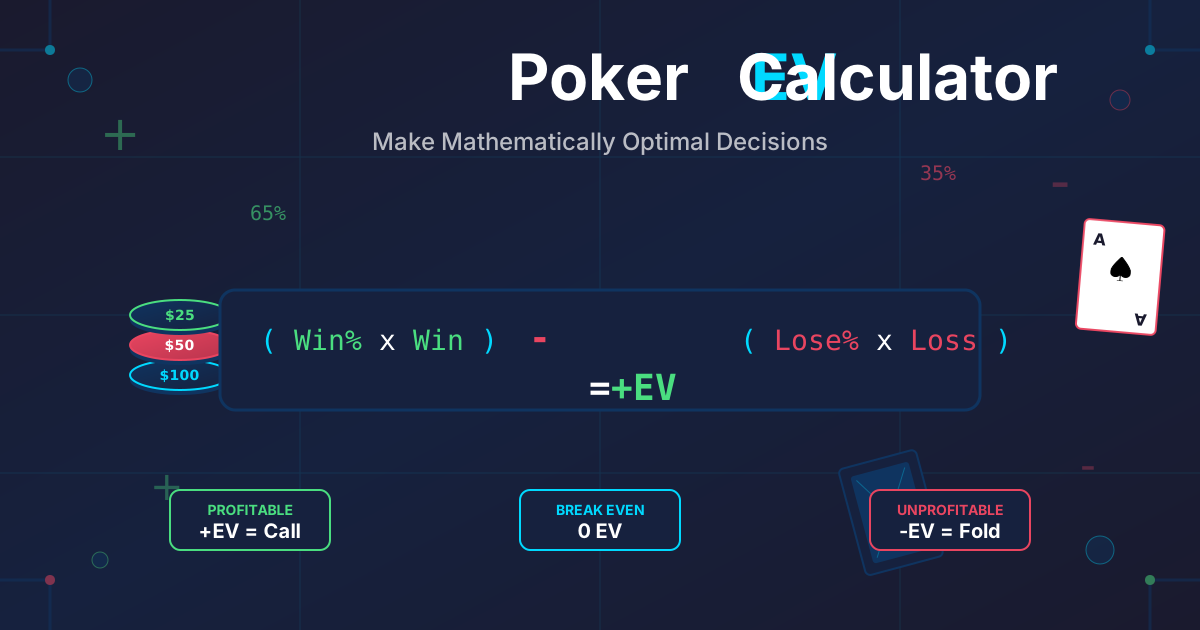
- Ticket's Current Expected Value: 0.22 x $700 = $154
You could sell your position (through hedging) by betting against the Mariners in each remaining series, or you could hold and hedge only if they reach the World Series. The right answer depends on your bankroll and risk tolerance, but the math shows your $50 ticket is now worth $154 in expected value.
Run the exact numbers with our Hedge Calculator and verify with our Expected Value Calculator.
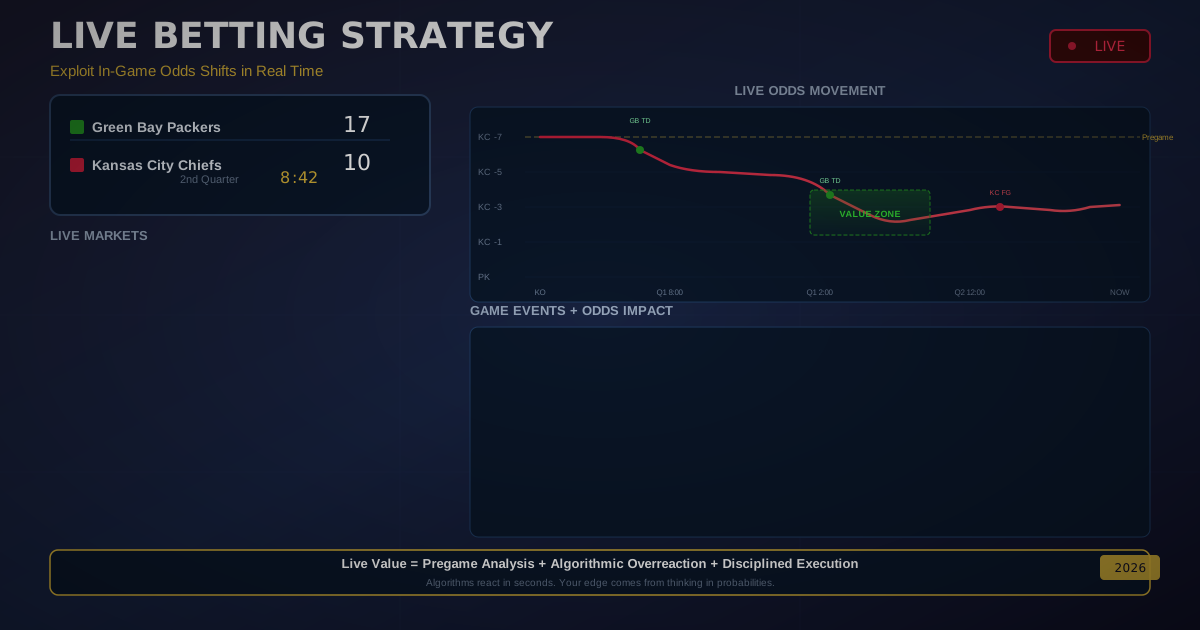
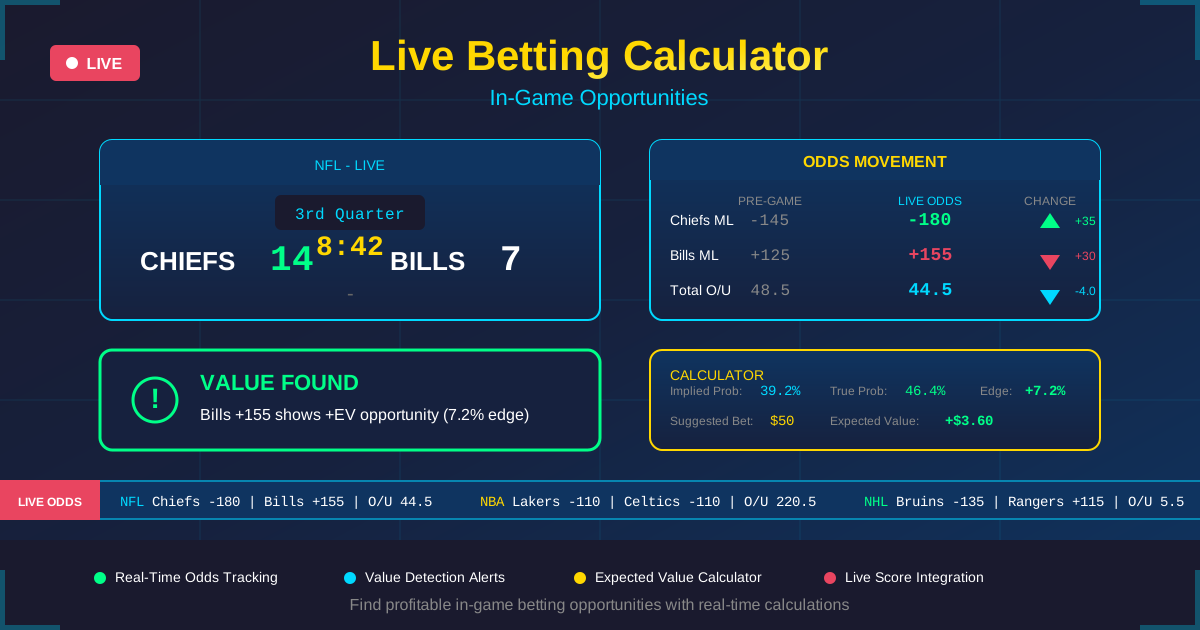
Live Betting October Baseball
Live betting (in-game wagering) during the playoffs offers unique opportunities because postseason games feature heightened emotions, managerial decisions that differ from regular-season tendencies, and dramatic momentum shifts.
Why Live Betting Works in the Postseason
Managerial Overreactions: Playoff managers pull starters earlier than they would in the regular season. If a quality starter gives up 2 runs in the first inning, the manager might go to the bullpen by the 4th inning. The live line often overreacts to early scoring, creating value on the team whose starter just got pulled (because the bullpen may actually be better suited for the situation).
Momentum Pricing Errors: After a team scores 3 runs in the first inning, the live line shifts dramatically. But postseason baseball features frequent comebacks. The trailing team's live odds often present value because the market overweights the current score relative to the remaining 8 innings of baseball.
Pitching Change Opportunities: When a manager makes a pitching change, the live line adjusts based on the reliever's season stats. But postseason relievers are often pitching on short rest, in unfamiliar high-leverage situations, or in parks they have never visited. The live line may not fully account for these factors.
Live Betting Pitfalls to Avoid
- Do not chase: If your pre-game bet is losing, do not double down through live betting to try to recover
- Respect the bullpen hierarchy: Late innings in playoff games feature the best relievers in baseball; do not bet against elite closers just because the line looks attractive
- Account for managerial tendencies: Some managers are aggressive with pinch hitters and double switches; others ride their starters. Know the tendencies before the game.
Advanced Playoff Betting Angles
The "Process Over Results" Framework
Sharp postseason bettors focus on process rather than results. A single series is a tiny sample size, and the outcome often comes down to a handful of pitches. The key metrics to track:
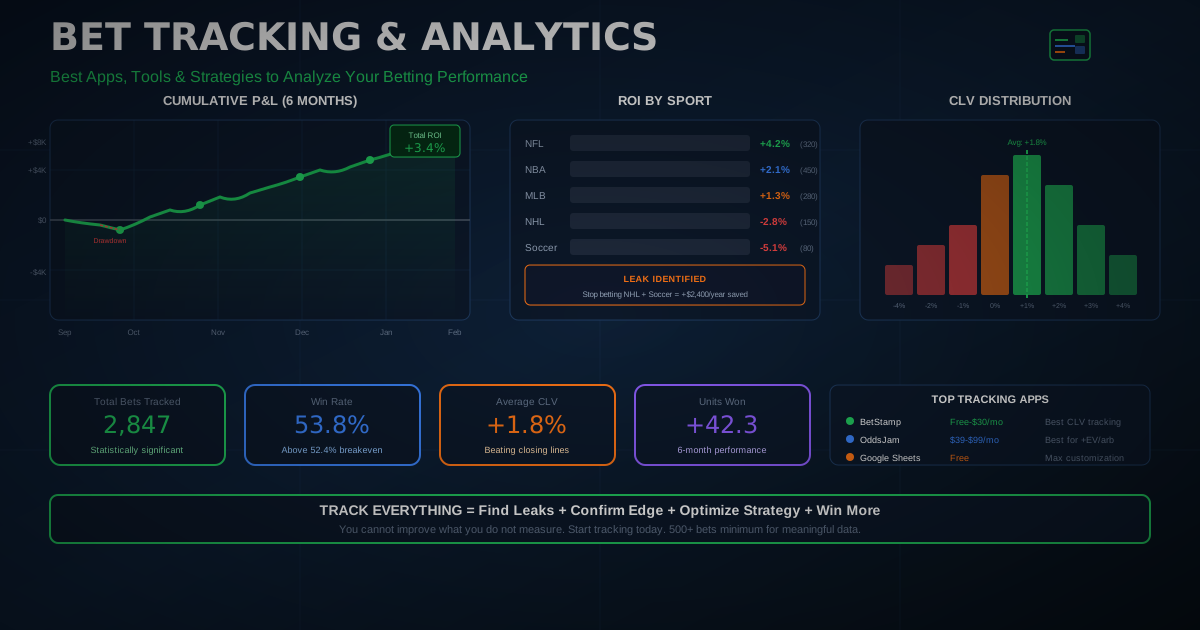
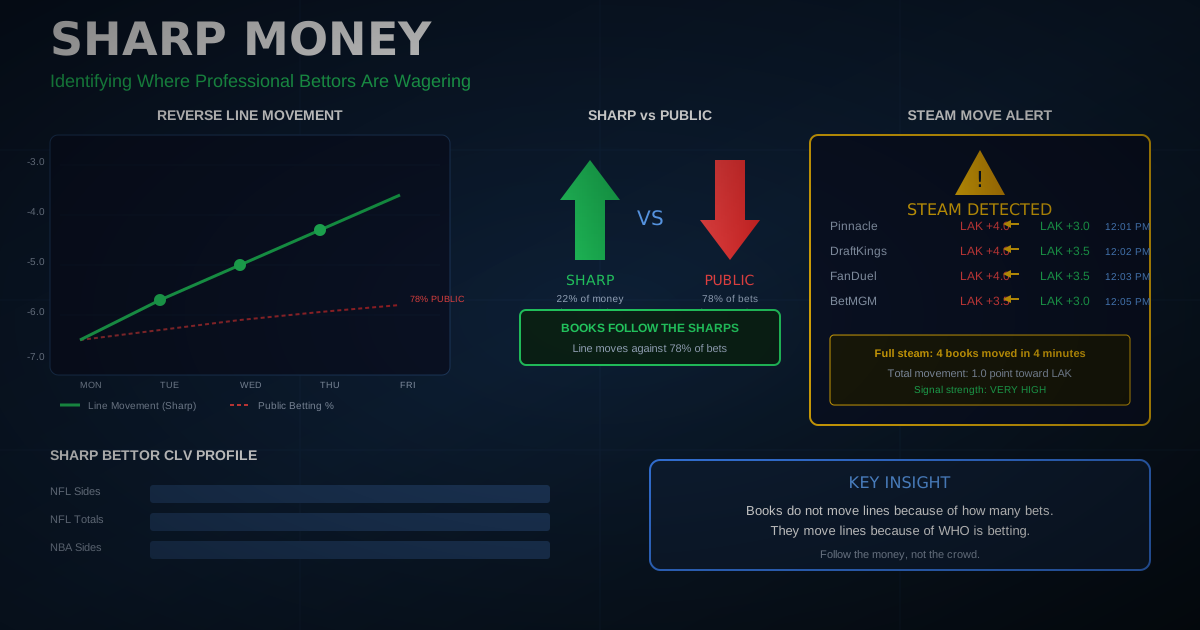
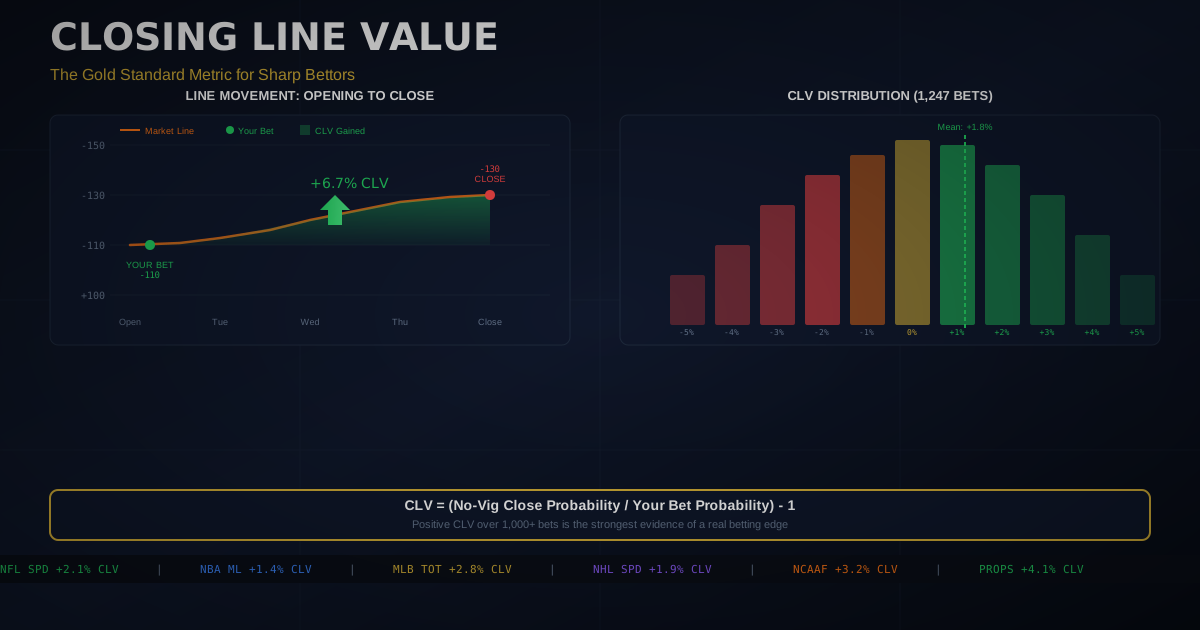
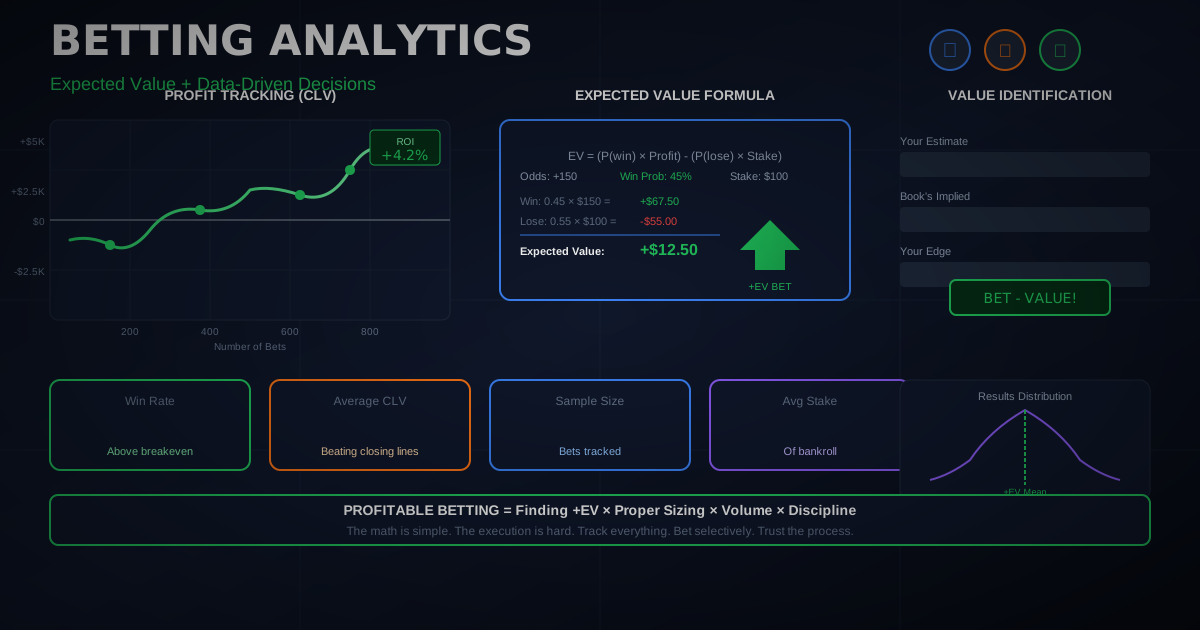
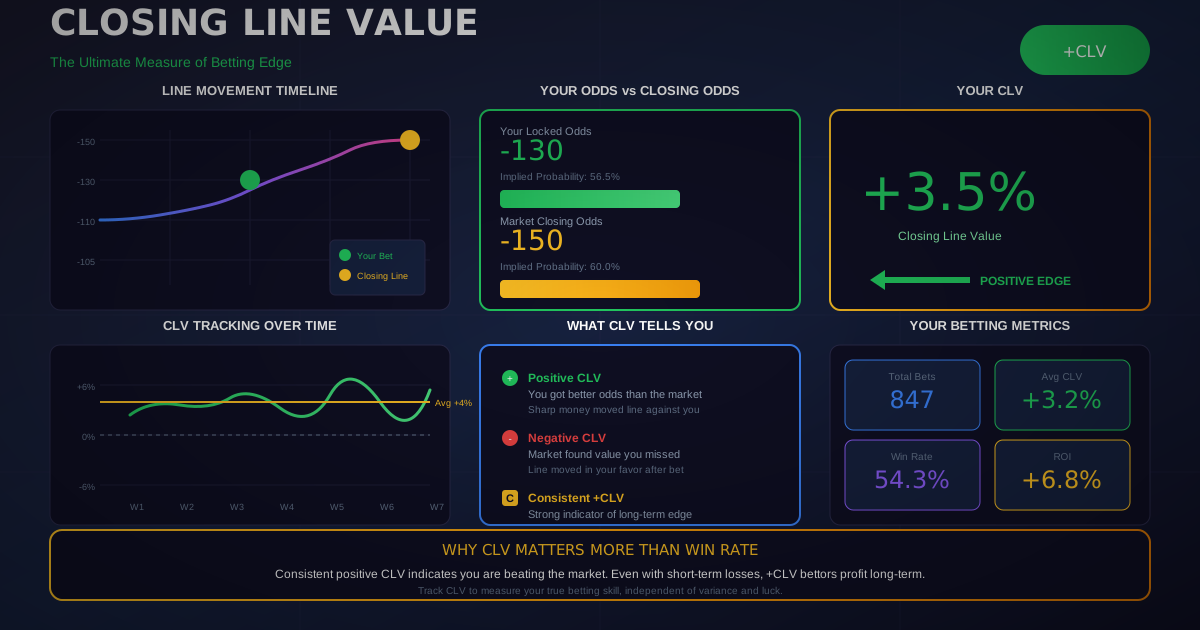
- Closing Line Value (CLV): Are you consistently getting better odds than where the line closes? If you bet a team at +140 and the line closes at +120, you captured CLV regardless of the outcome.
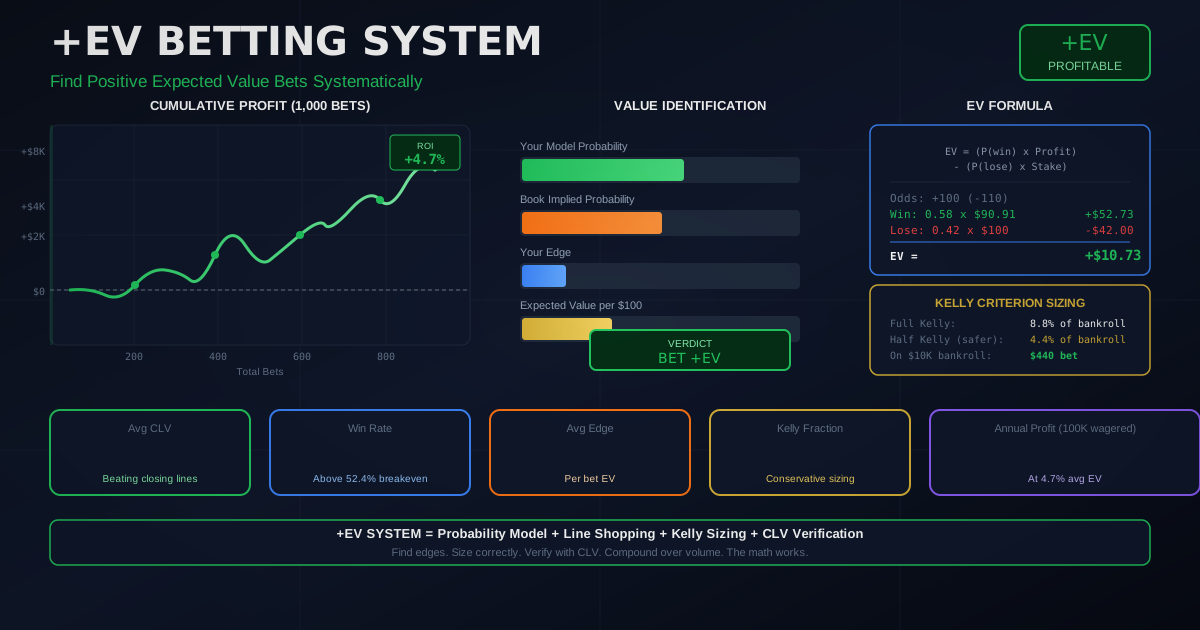
- Expected Value Per Bet: Use implied probability to calculate whether each bet has positive expected value. If you are consistently finding +EV spots, the results will follow over multiple postseasons.
Calculate the expected value of every playoff bet with our Expected Value Calculator.
Contrarian Betting in October
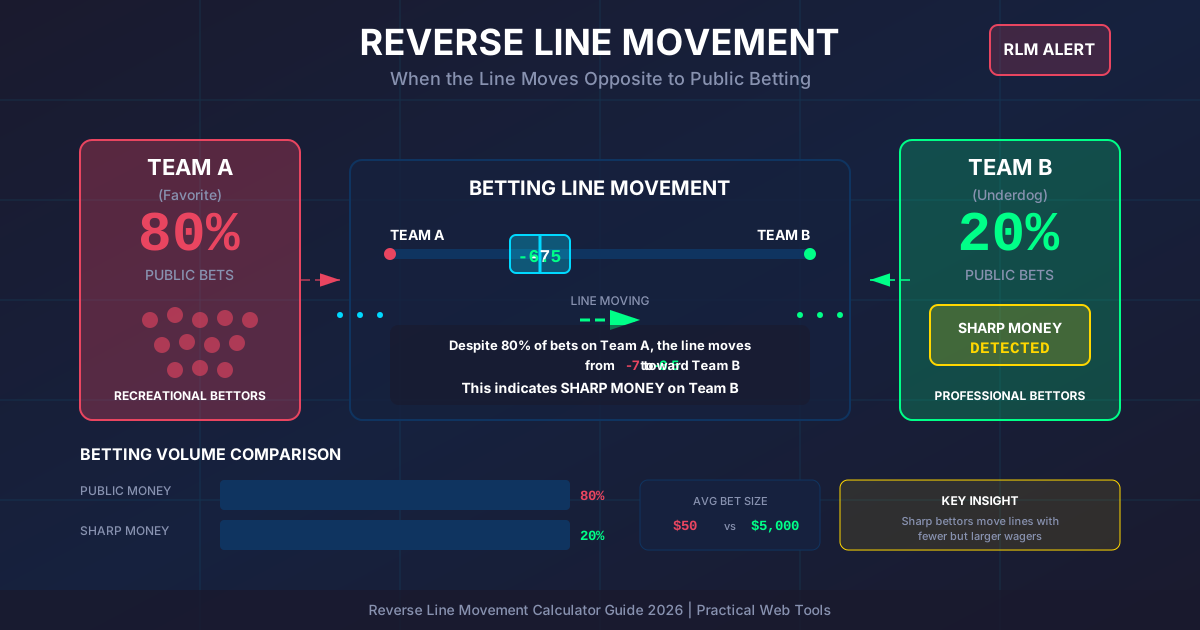
Public money floods toward favorites in the postseason. Casual bettors who do not wager during the regular season suddenly have opinions about the World Series. This influx of recreational money creates lines that overvalue popular teams and undervalue underdogs.
Contrarian Angle: When 70%+ of public money is on one side of a playoff game, the other side has historically produced positive ROI. This is not a guarantee for any single game, but over many postseasons, fading heavy public action in October has been profitable.
Weather and Scheduling
October baseball means cooler temperatures, which suppress offense. Games played in temperatures below 55 degrees Fahrenheit see roughly 0.5 fewer total runs compared to summer games. Late-October World Series games in northern cities (Toronto, New York, Philadelphia) are especially affected. Adjust your totals betting accordingly.
Rest Day Analysis
Rest days between series and during series (off days after Games 2 and 5 in a seven-game set) impact betting in measurable ways:
| Rest Scenario | Impact | Betting Angle |
|---|---|---|
| Off day before Game 1 | Both teams reset rotations | Neutral; standard handicapping |
| Off day after Game 2 | Teams with deeper bullpens lose advantage | Ace pitchers can be used earlier |
| Off day after Game 5 | Both teams rested for final push | Favors team with better top 2 starters |
| No off day (WC Series) | Bullpen wear is immediate | Advantage to team that won Game 1 quickly |
| Extended rest (bye teams) | Rust factor for hitters | Slight fade of bye team in Game 1 of DS |
Frequently Asked Questions
Is World Series betting different from regular-season MLB betting? Yes, significantly. The postseason features compressed formats where pitching matchups dominate, sample sizes are tiny, and public money influx creates different line dynamics. Regular-season trends like home team win rates and run-scoring averages shift materially in October. Successful postseason bettors adjust their models to prioritize starting pitching, bullpen depth, and series-level strategy rather than relying on 162-game statistics.
What is the most profitable World Series betting angle? Historically, betting road teams in Game 4 of the World Series has been one of the most consistently profitable angles, going 14-5 since 2004 for over 50% ROI. Additionally, betting the under in Game 7s has produced a 41.4% ROI. Both angles exploit predictable postseason patterns related to pressure and pitching dynamics. Use our Implied Probability Calculator to verify if the line offers genuine value on these spots.
How important is home field advantage in the World Series? Home field advantage matters more in close matchups than lopsided ones. Home favorites in the -110 to -125 range have gone 18-12 (60%) in the World Series since 2000, producing a 12.6% ROI. However, home underdogs of +120 or higher have gone just 1-8, suggesting home field cannot overcome significant talent gaps. The 2-3-2 format means the team with home field advantage hosts the potential deciding Games 6 and 7.
Should I bet the World Series series price or individual games? Both can be profitable, but they serve different purposes. Series prices offer value when you believe one team will win but are uncertain about individual game outcomes. Individual game bets let you exploit specific pitching matchups, rest situations, and line movements. Many sharp bettors combine both approaches: take a series price pre-series and then bet individual games where they see additional value, sometimes hedging as the series progresses. Calculate payouts for either approach with our Odds Converter.
How do I evaluate pitching matchups for playoff betting? Prioritize FIP (Fielding Independent Pitching) over ERA in small playoff samples, emphasize strikeout rate (K/9) because strikeouts eliminate the randomness of balls in play, and track home run rate (HR/9) because solo shots decide tight postseason games. Also consider the specific matchup between a pitcher's pitch mix and the opposing lineup's weaknesses. A pitcher who throws 60% breaking balls against a lineup that struggles with off-speed pitching has a bigger edge than raw statistics suggest.
When should I hedge my World Series futures bet? Hedge when the expected value of hedging exceeds the expected value of holding. In practical terms, most bettors should begin hedging when their team reaches the Championship Series and fully hedge by the World Series. If you placed a $50 bet at +2000 and your team reaches the Fall Classic, your ticket is worth hundreds of dollars in expected value. Use our Hedge Calculator to determine the exact amounts for a guaranteed profit regardless of the outcome.
Do underdogs have value in the MLB playoffs? Underdogs have been significantly profitable in the expanded playoff format. Since 2022, teams that won fewer than 90 regular-season games have gone 39-32 straight up in playoff games, producing a 21.2% ROI. The compressed formats, ace-pitcher dominance, and public money influx toward favorites all contribute to underdog value. The key is identifying which underdogs have the pitching to compete, not blindly backing every dog.
What is the best bet in a Game 7? The under. In recent MLB Game 7s across all series, the under has gone 8-3 for a 41.4% ROI. Game 7s feature all-hands bullpen usage, heightened pressure that suppresses offense, and managers on quick triggers with their pitching staffs. Favor the under, especially when totals are not already set at depressed levels (if the line is already set at 6.5, the value may already be priced in).
Essential Tools for MLB Playoff Betting
Successful postseason wagering requires the right tools. Here are the calculators every MLB playoff bettor should have bookmarked:
Odds and Probability Tools
- Odds Converter: Convert between American, decimal, and fractional odds instantly for any playoff line
- Implied Probability Calculator: Convert series prices and game odds into win probabilities
- Hold/Vig Calculator: Determine the sportsbook's edge on any postseason line
Value and Sizing Tools
- Expected Value Calculator: Calculate whether a playoff bet offers positive expected value
- Kelly Criterion Calculator: Determine optimal bet sizing based on your estimated edge
- Parlay Calculator: Calculate parlay odds and payouts for multi-game postseason bets
Hedging and Risk Management
- Hedge Calculator: Calculate exact hedge amounts to lock in futures profits during the playoffs
Conclusion: Winning in October Requires Different Thinking
The MLB postseason rewards bettors who adapt their approach to the unique dynamics of October baseball. Regular-season models break down when facing compressed formats, ace-heavy pitching rotations, and a flood of public money. The sharp bettor's postseason checklist:
- Prioritize pitching over hitting in every analysis
- Respect the format -- a best-of-three is a fundamentally different bet than a best-of-seven
- Fade heavy public action on favorites when the line has moved significantly
- Track specific game-number trends like the Game 4 road team angle and Game 7 unders
- Use series price movements to find value as the series develops rather than locking everything in pre-series
- Hedge your futures when the math supports it, not based on emotion
- Bet the under more often than you think, especially in elimination games and later rounds
October baseball is where seasons are defined and betting bankrolls are built or broken. Approach it with the right tools, the right data, and the discipline to trust the process over individual results.
Start your playoff betting preparation with our free Odds Converter, calculate your edge with the Expected Value Calculator, and size your bets with the Kelly Criterion Calculator.
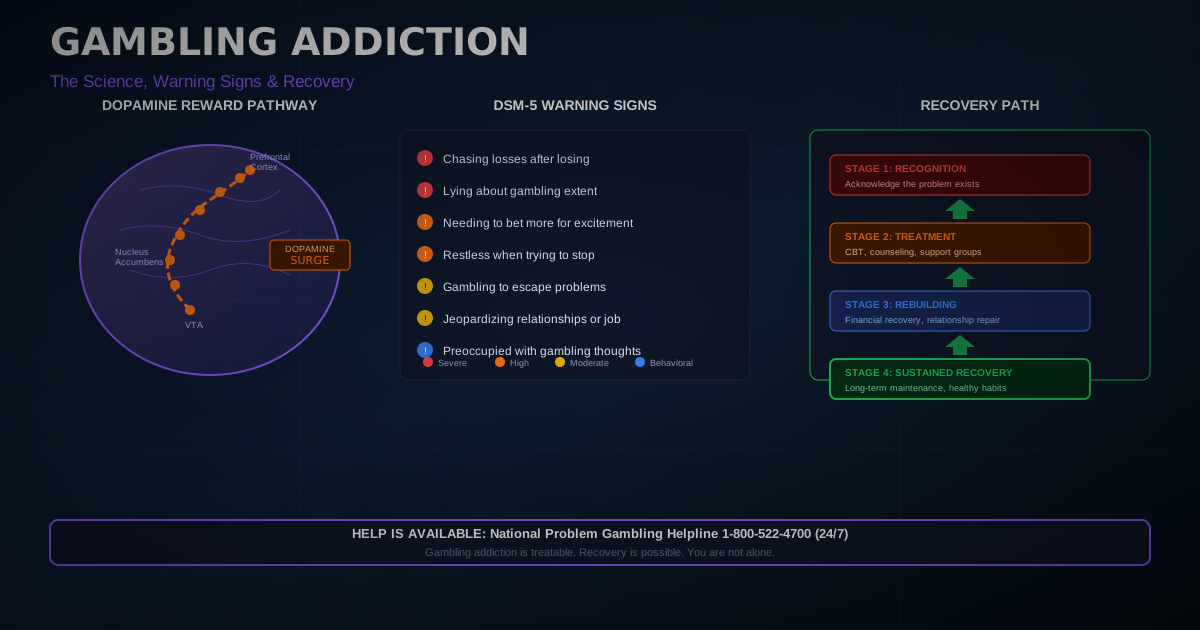
Gambling involves risk. This content is for educational and informational purposes only. Always gamble responsibly, set limits you can afford, and seek help if gambling becomes a problem. Visit the National Council on Problem Gambling or call 1-800-522-4700 for support.