Online Gambling's Future: Trends, Regulations, & Math to Win in 2026

The world of online gambling is undergoing a profound transformation. What was once an emerging digital frontier has matured into a multi-billion dollar industry, rapidly evolving with technological innovation, shifting regulatory landscapes, and an increasingly sophisticated battle between operators and bettors. For anyone participating in this space – whether a casual sports fan or a serious handicapper – understanding these dynamics is no longer optional; it's essential for navigating the market profitably.
From the explosive growth of the global market to the nuanced regulatory crackdowns in the U.S., and from the sportsbook's reliance on high-margin products like Same-Game Parlays to the mathematically rigorous strategies employed by sharp bettors, the industry in 2025-2026 demands a data-driven approach. This report synthesizes the latest insights, arming you with the knowledge and tools to gain a crucial edge.
1. The Exploding Online Gambling Market: Global & US Dynamics
The online gambling sector stands as one of the digital entertainment industry's fastest-growing verticals. Fuelled by smartphone ubiquity, 5G networks, and broader cultural acceptance, its financial footprint continues to expand at a staggering rate.
1.1 Global Scale and Trajectory
Current estimates place the global online gambling market at approximately $117.5 billion in 2025, with projections of reaching over $186.5 billion by 2029, demonstrating a robust compound annual growth rate (CAGR) of 12.3% [cite: 1]. Other models foresee an even more aggressive long-term trajectory, potentially expanding to $255.44 billion by 2035 [cite: 2].
Mobile dominance defines this modern market, with nearly 80% of global online gamblers accessing platforms via smartphones [cite: 1]. Despite this, desktop platforms retain a significant presence, accounting for 45% to 64% of market share in niche segments, favored by users who prefer immersive experiences for complex games like live-dealer casinos [cite: 2, 3].
Regionally, Europe has historically led, holding 42% to 49.1% of the global market in 2025 due to mature regulatory frameworks in countries like the United Kingdom [cite: 1, 2, 3]. However, North America is rapidly accelerating, expected to grow at the fastest regional CAGR of 11.5% between 2026 and 2035 [cite: 2].
1.2 The United States Market: Record Handles & Decelerating Growth
The repeal of PASPA in 2018 unleashed a modern gold rush in American sports betting. Since then, almost $494 billion has been legally wagered in the U.S. [cite: 4]. By 2025, 38 states, Washington D.C., and Puerto Rico had legalized some form of sports betting, with roughly 30 states offering fully remote online wagering [cite: 4, 5].
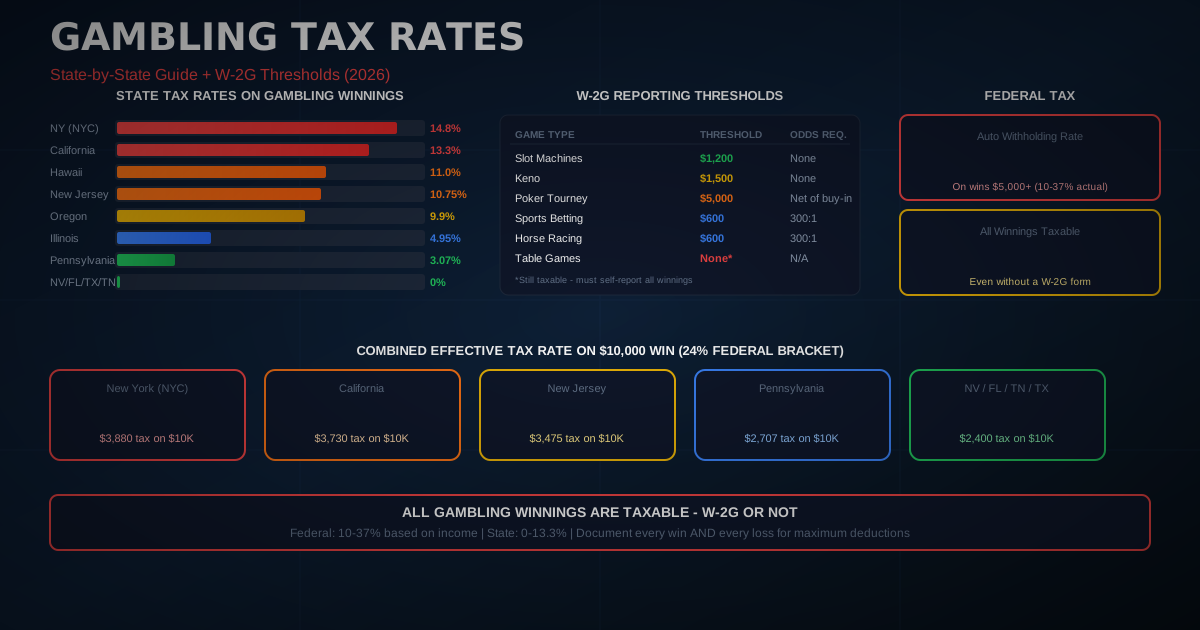
In 2025, the U.S. market hit a historic milestone: over $165 billion was wagered (the "handle") across online and retail sportsbooks, marking an 11% year-over-year increase [cite: 6]. This generated $16 billion in gross revenue and contributed $11 billion in state taxes [cite: 6]. New York led the nation, accounting for nearly 16% of the U.S. handle at $26 billion, followed by Illinois and New Jersey [cite: 6].
However, this growth narrative is nuanced. The 11% handle growth in 2025 represents a significant deceleration from the 24% growth in 2024 and 29% in 2023, suggesting market maturation [cite: 7]. This shift is particularly evident in retail betting, which saw a nearly 12% decline in handle in 2025, dropping to $6.06 billion [cite: 7]. Online/mobile platforms now comprise roughly 90% of all sports betting activity in states with both options [cite: 5].
2. Navigating the Regulatory Minefield: Legislative Flashpoints in 2025–2026
As the market expands, regulatory bodies are increasingly prioritizing consumer protection and market integrity over mere tax revenue. The year 2026 has been marked by a sweeping crackdown across 28 U.S. states, targeting specific wagering types deemed high-risk [cite: 8].
2.1 The Crackdown on College Player Proposition Bets
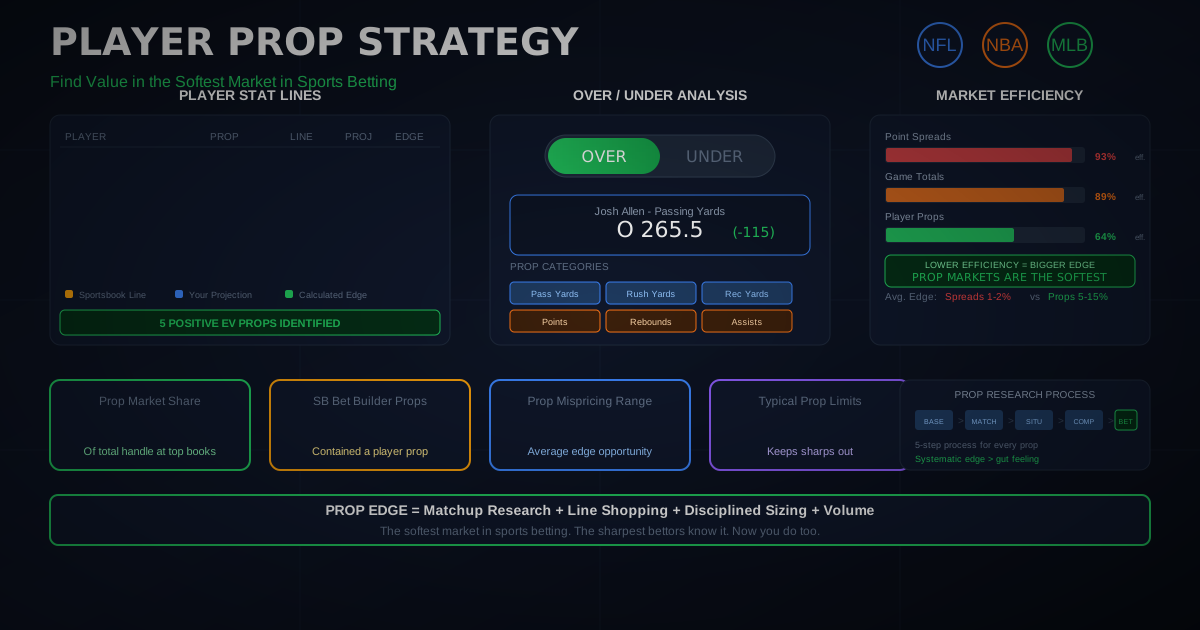
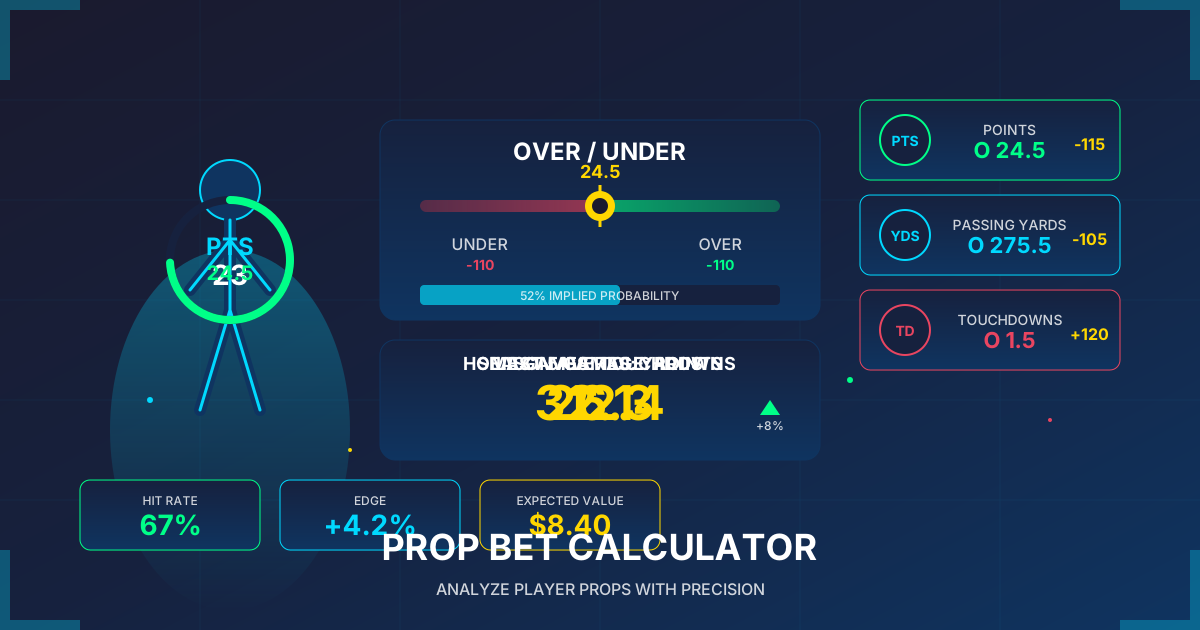
The most prominent regulatory trend is the systematic banning of college athlete proposition bets ("prop bets"). These wagers on individual player statistics (e.g., a basketball player's total points) have faced aggressive lobbying from the NCAA, citing severe harassment of student-athletes and threats to sporting integrity [cite: 9]. A survey revealed that over 4% of student-athletes have been asked for inside information or felt threatened by bettors [cite: 10].
By 2026, 16 states had enacted statewide bans on college player props, including major markets like New York, Massachusetts, Ohio, and Pennsylvania [cite: 11, 12]. Other states, such as New Jersey, implemented partial bans. North Carolina, a massive market, introduced House Bill 828 to enforce a strict ban effective July 2025 [cite: 12]. This rapid proliferation underscores a regulatory consensus that micro-monetizing amateur athletic performances poses an unacceptable systemic risk.
2.2 Wisconsin's Tribal "Hub-and-Spoke" Legislation
In April 2026, Wisconsin legalized online sports betting through a unique "hub-and-spoke" model [cite: 13, 14]. Due to state constitutional constraints, all legal sports wagering must be operated by the state’s 11 federally recognized Native American tribes [cite: 14]. Wagers placed on mobile devices anywhere in the state are legally considered to occur on tribal lands, provided the processing servers are physically located there [cite: 13, 15].
This legislation has created significant friction with commercial operators like FanDuel and DraftKings, who argued that federal regulations requiring 60% of gaming revenues to be shared with tribes render commercial partnerships financially unviable [cite: 16]. Consequently, Wisconsin bettors will likely be limited to bespoke tribal platforms, rather than dominant commercial apps [cite: 16].
2.3 The Targeting of Micro-Betting
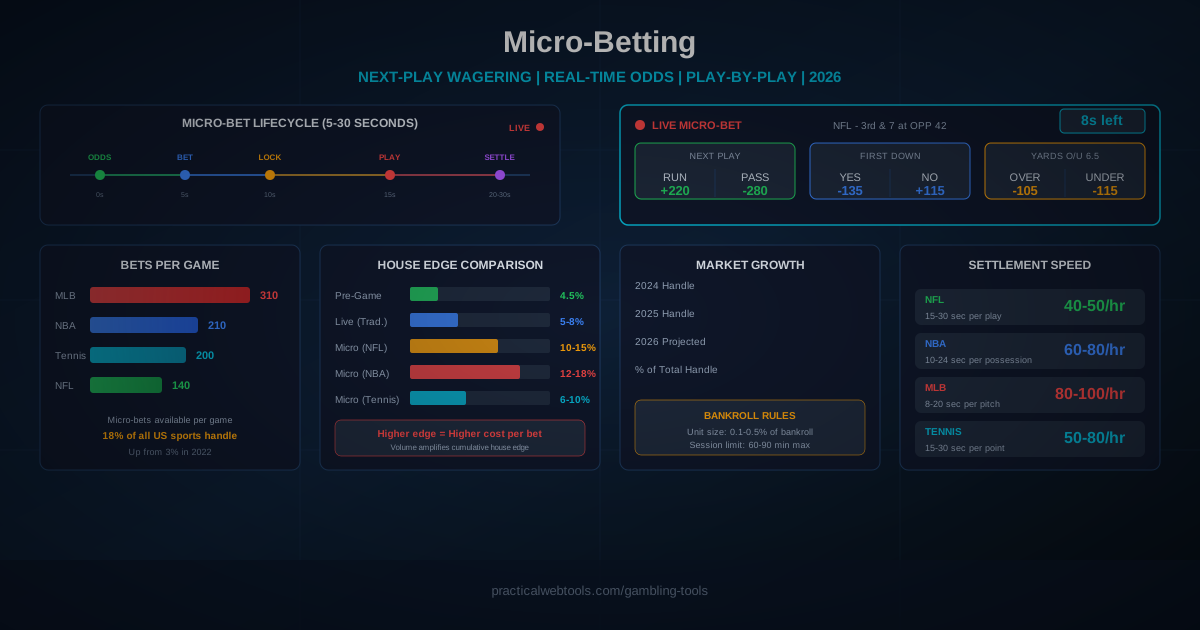
Beyond amateur athletics, state legislatures are scrutinizing "micro-bets"—rapid-fire wagers on play-by-play moments within a live game (e.g., the outcome of the next pitch) [cite: 8]. Lawmakers in states like New Jersey have proposed banning this wagering form, arguing that its high-frequency nature mimics slot machine mechanics, dramatically increasing the risk of impulsive behavior and problem gambling [cite: 8].
3. Sportsbook Secrets: The Supremacy of Same-Game Parlays (SGPs)
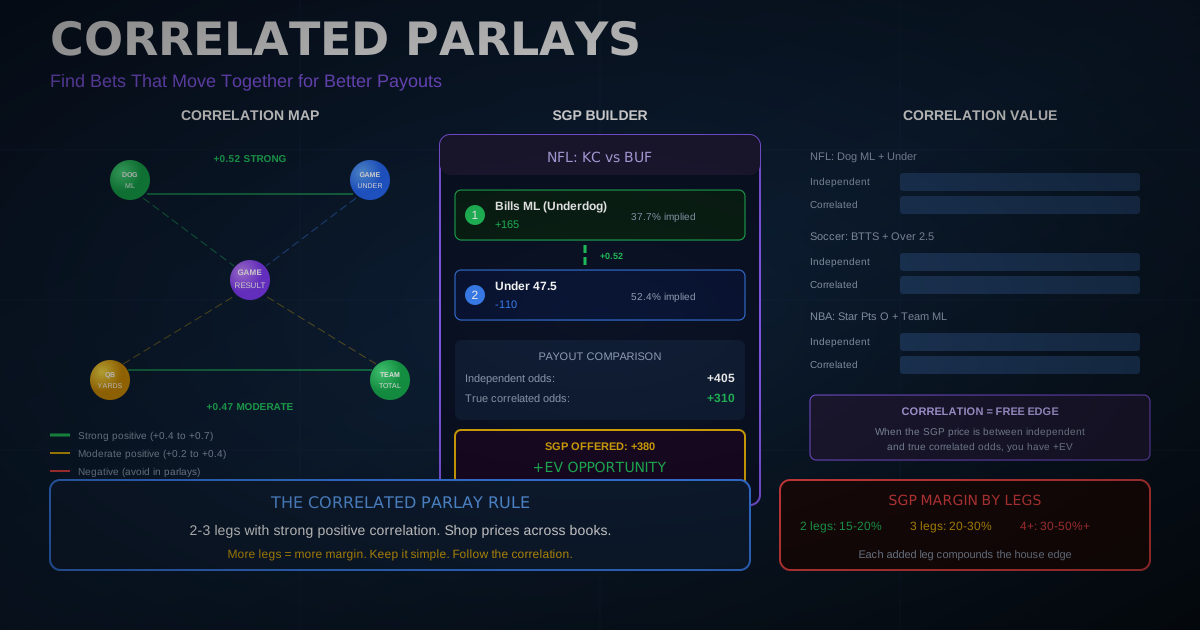
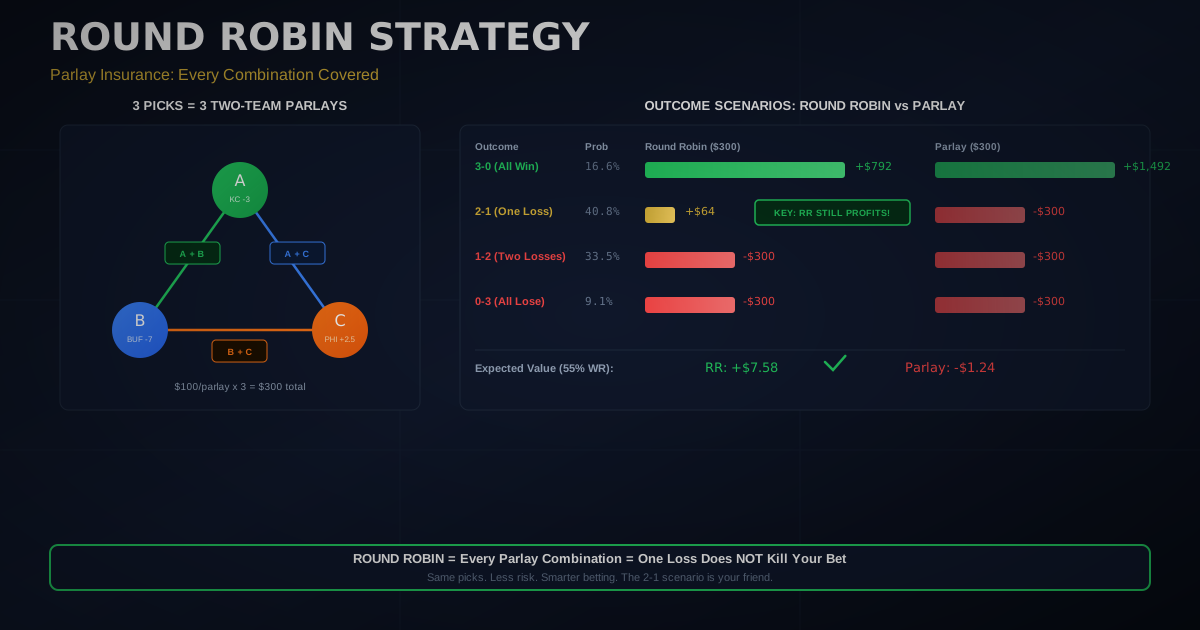
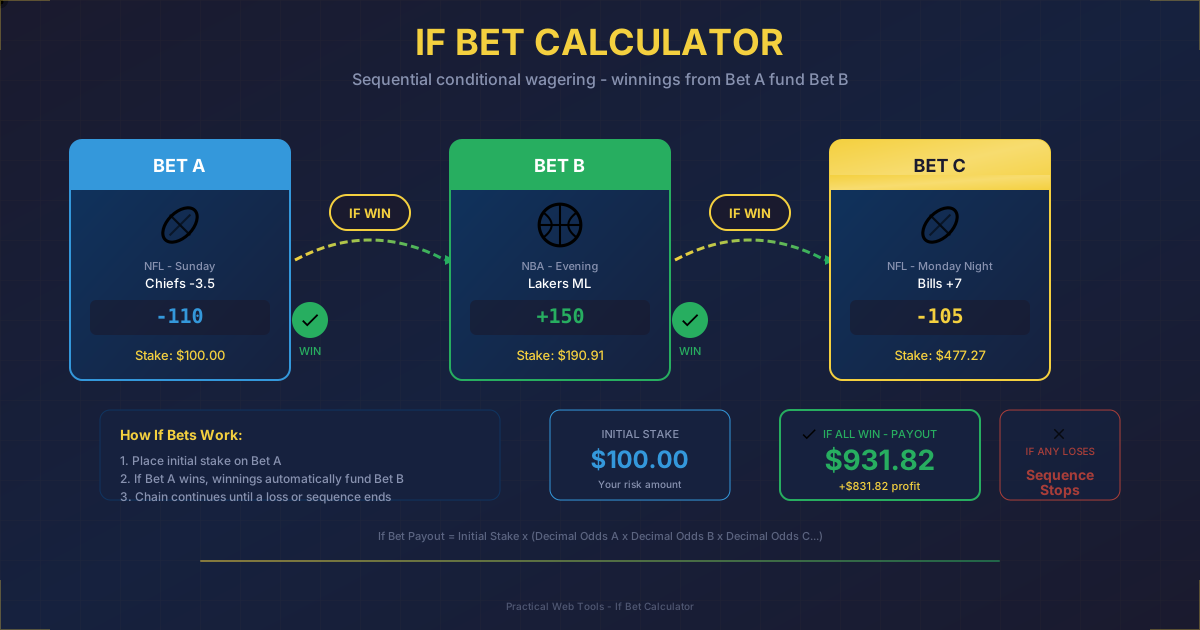
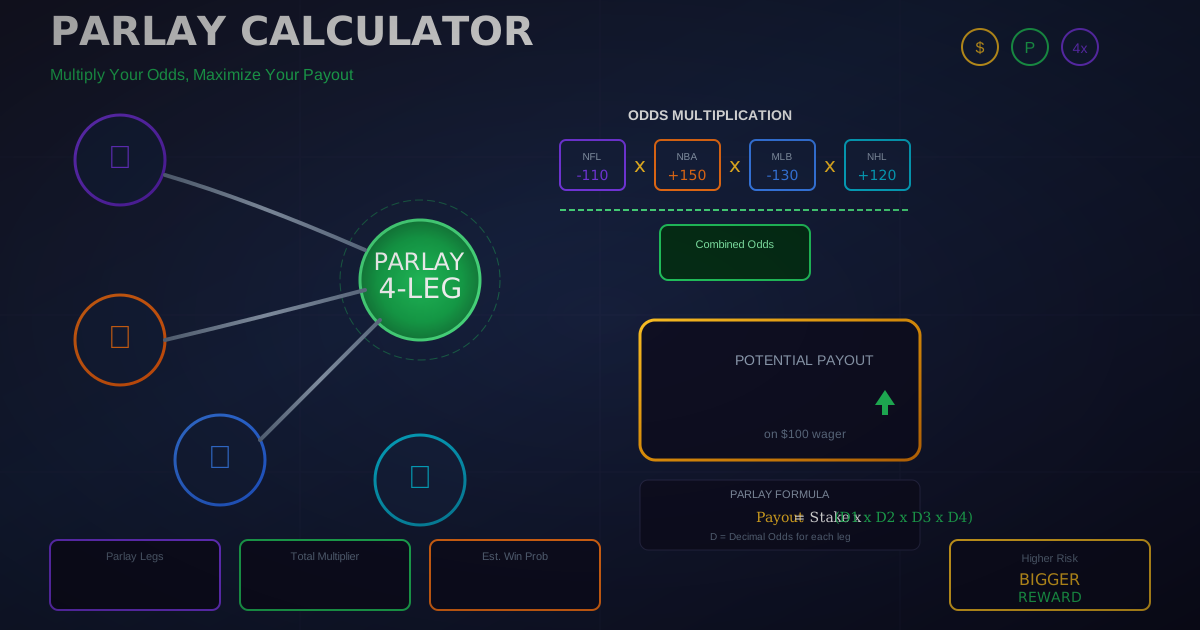
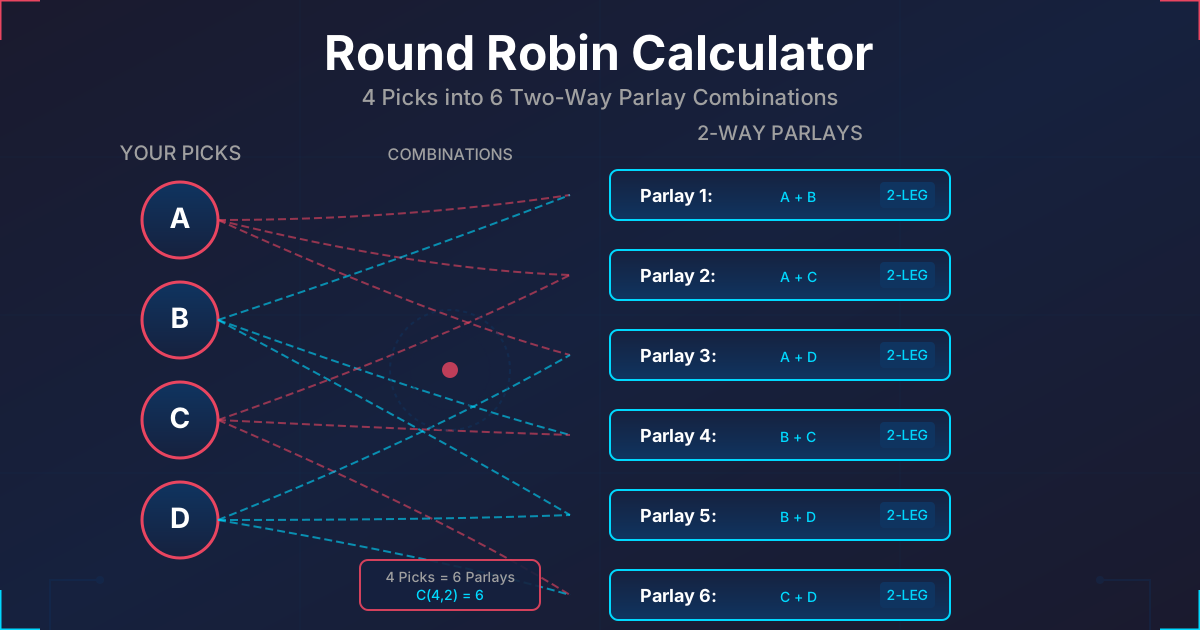
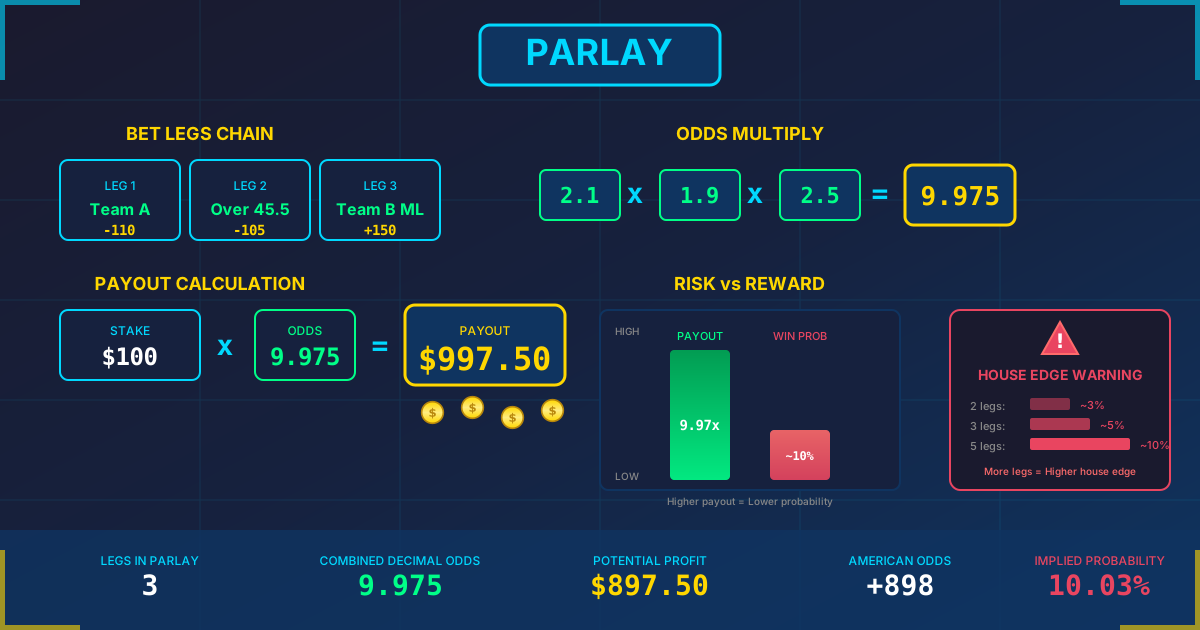
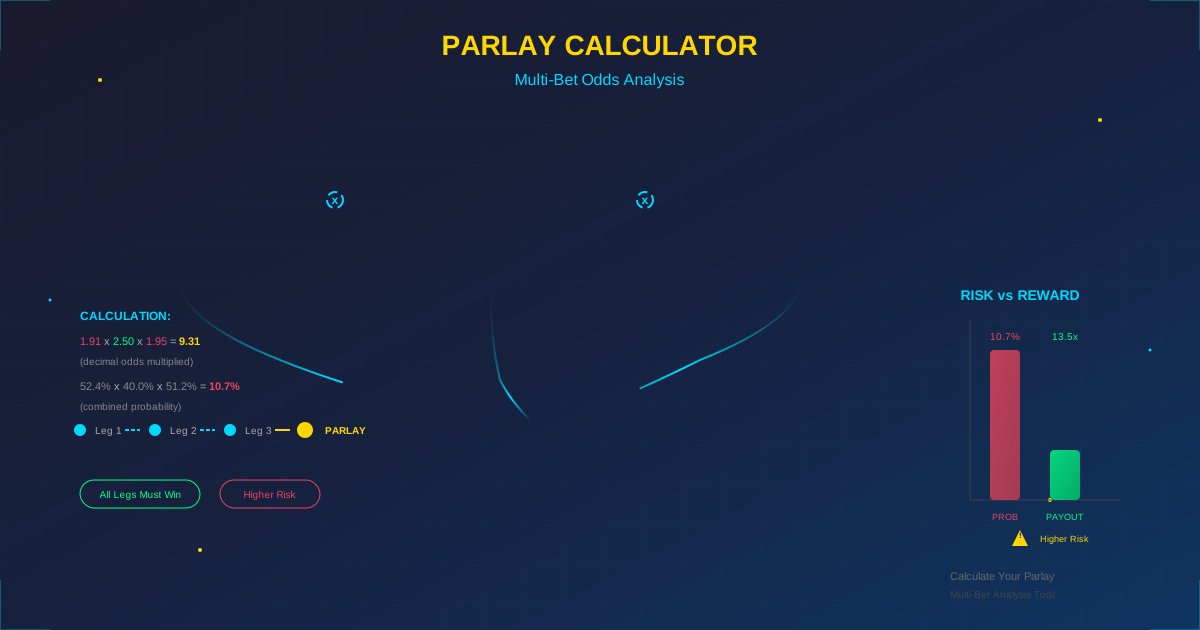
To understand the financial engine of modern sportsbooks, one must examine the Same-Game Parlay (SGP). A parlay links two or more individual bets (legs), requiring all legs to win for the parlay to pay out [cite: 17]. SGPs, popularized by FanDuel in 2019, allow bettors to link multiple outcomes from within the same sporting event [cite: 18].
3.1 The "Cash Cow" of the Industry
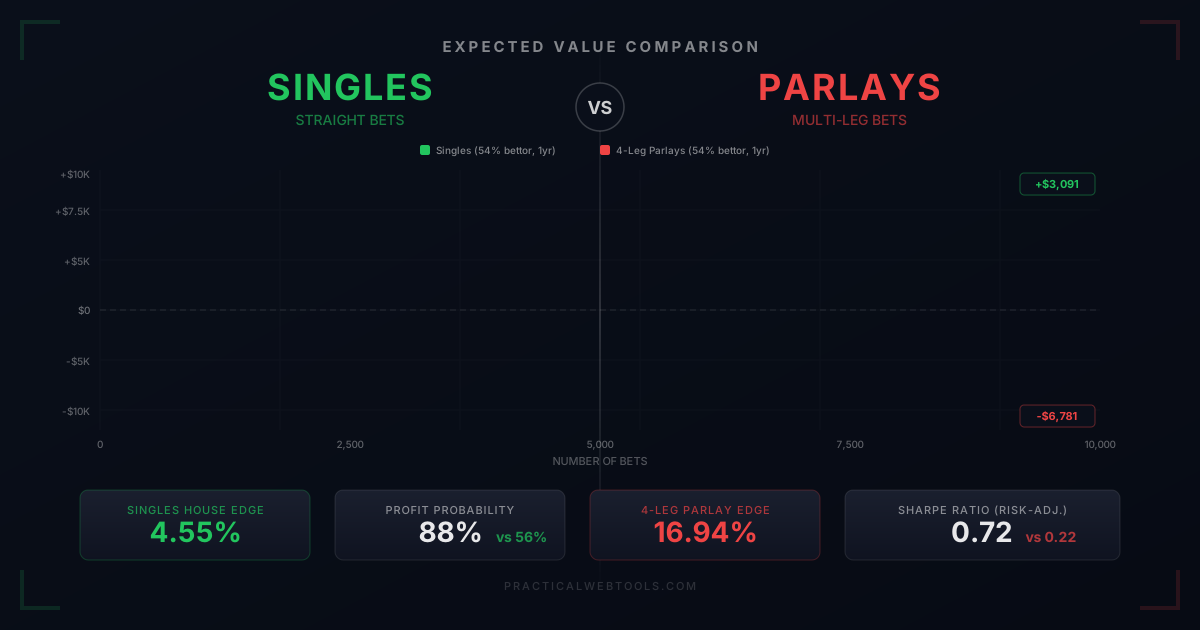
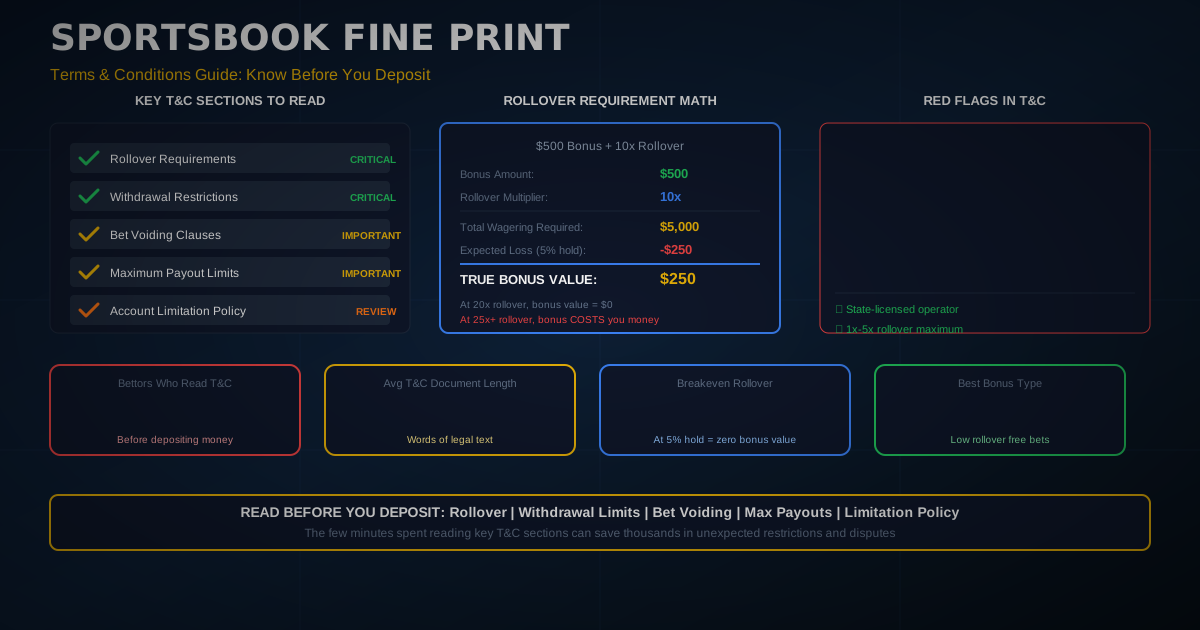
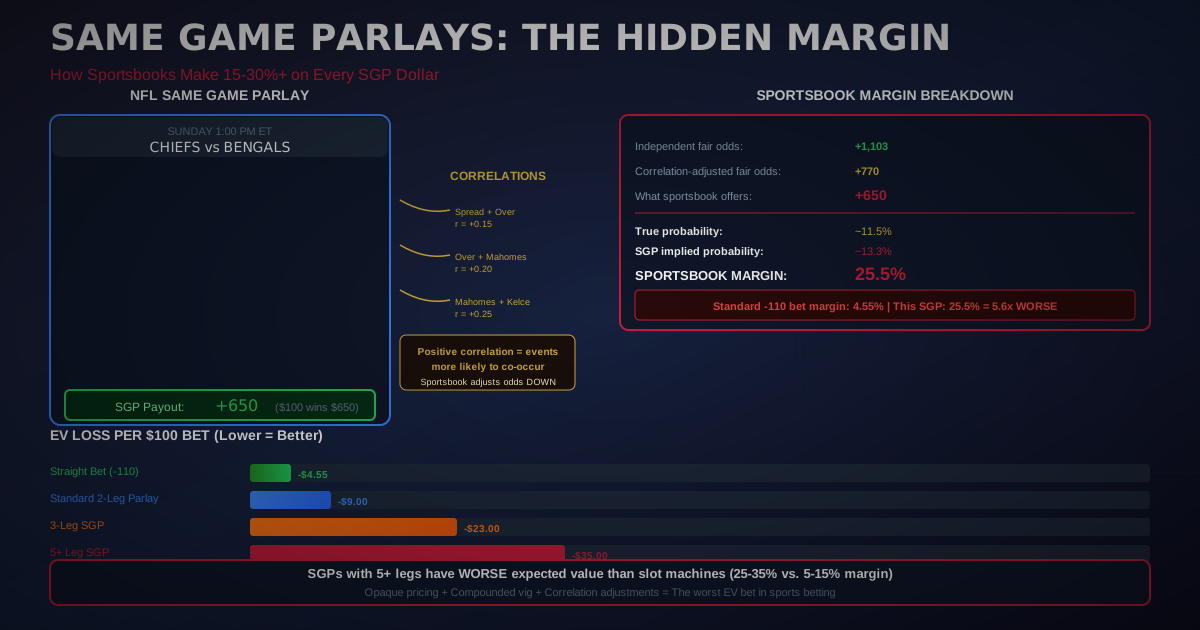
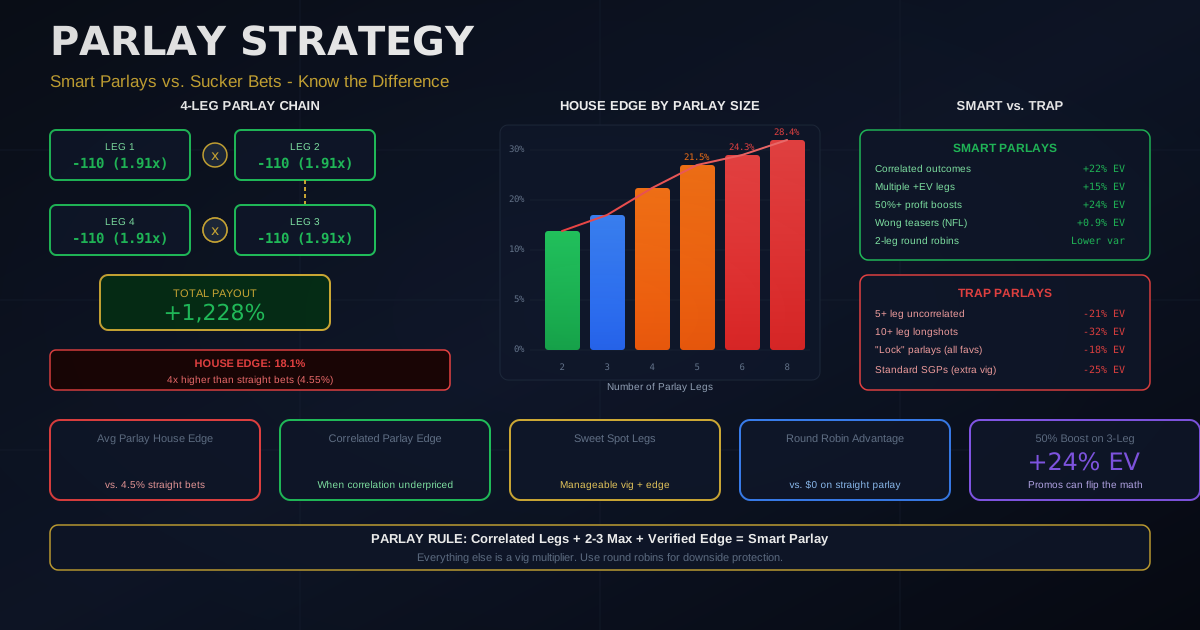
SGPs have fundamentally reshaped sports betting economics [cite: 5]. While standard straight bets carry a "hold" (the percentage of wagered money the sportsbook keeps as profit) of roughly 4% to 6%, parlays command hold percentages well into the double digits, often 15% to over 30% [cite: 18, 19].
Historical data from Nevada shows a 30.97% win rate for sportsbooks on parlays since 1984, compared to just 5.6% on straight bets [cite: 18]. In New Jersey, parlay wagers accounted for an astounding 61% of operator win in the first seven months of 2022 [cite: 20]. This consumer preference for high-variance, lottery-style payouts allows sportsbooks to achieve record-high average annual win rates, which reached 9.7% nationally in 2025 [cite: 6].
3.2 The Mathematics of the "Correlation Tax"
Why are SGPs so profitable for sportsbooks and detrimental to bettors? The answer lies in the compounding of the bookmaker's margin ("vig") and the application of a "correlation tax" [cite: 19].
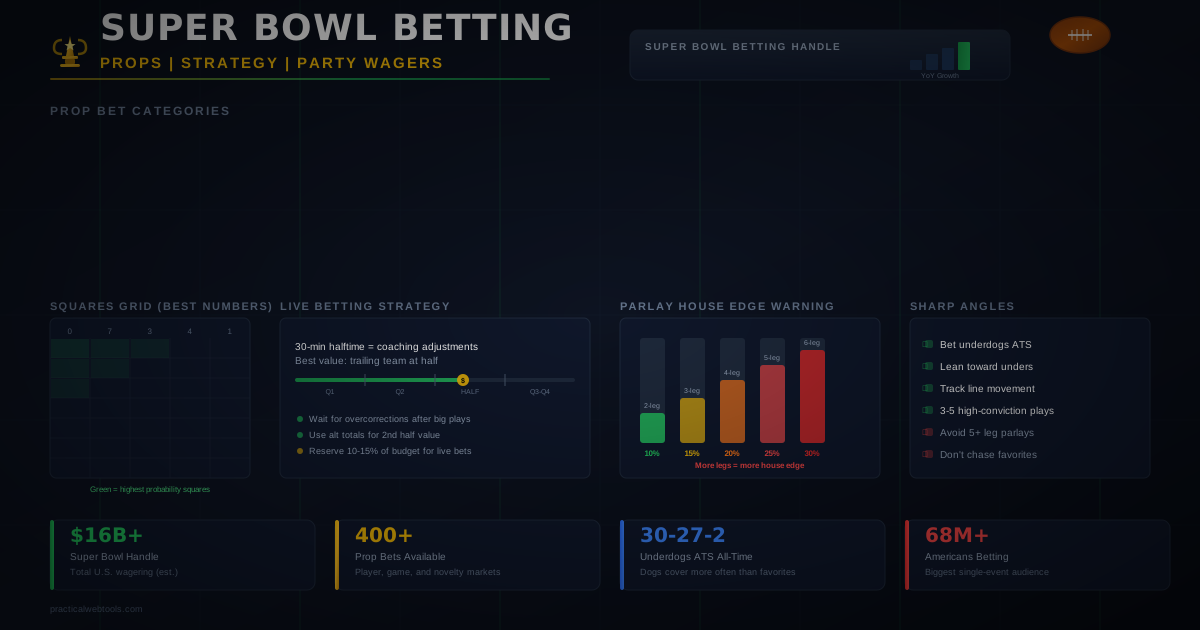
In a traditional parlay with independent events, combined odds are calculated by multiplying the implied probabilities of each leg [cite: 19]. However, events within the same game are often correlated (e.g., a team covering a spread and the game's total points going over). Sportsbooks use complex, opaque algorithms to penalize the payout of correlated events, deliberately offering lower payout odds than the true mathematical probability dictates [cite: 19]. As more legs are added, the offered payout deviates further from the true odds; an 8-leg parlay, for instance, routinely carries a house edge exceeding 40% [cite: 21].
Actionable Advice: Because SGPs are structurally high-margin products with house edges up to 25%, bettors generally should avoid them if their goal is consistent long-term profitability [cite: 19]. For those who still wish to engage, utilizing a tool like the Parlay Calculator is essential. By inputting the odds for each leg, the calculator instantly computes the true parlay payout [cite: 17], allowing you to compare it against the sportsbook's offer and clearly see the magnitude of the "correlation tax" you are paying.
4. The Language of Odds: Fundamentals of Odds and Implied Probability
To execute any profitable betting strategy, a fluent understanding of odds is paramount. Odds represent two critical pieces of information: the potential payout of a wager and the bookmaker's "implied probability" of that event occurring [cite: 22].
4.1 Global Formats of Odds
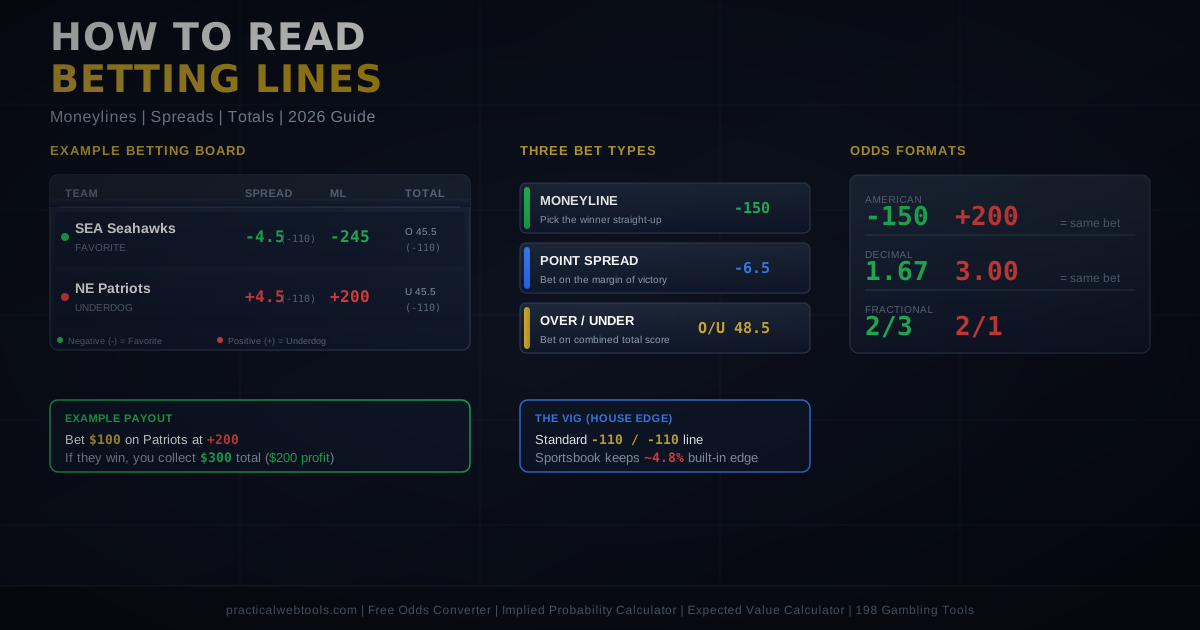
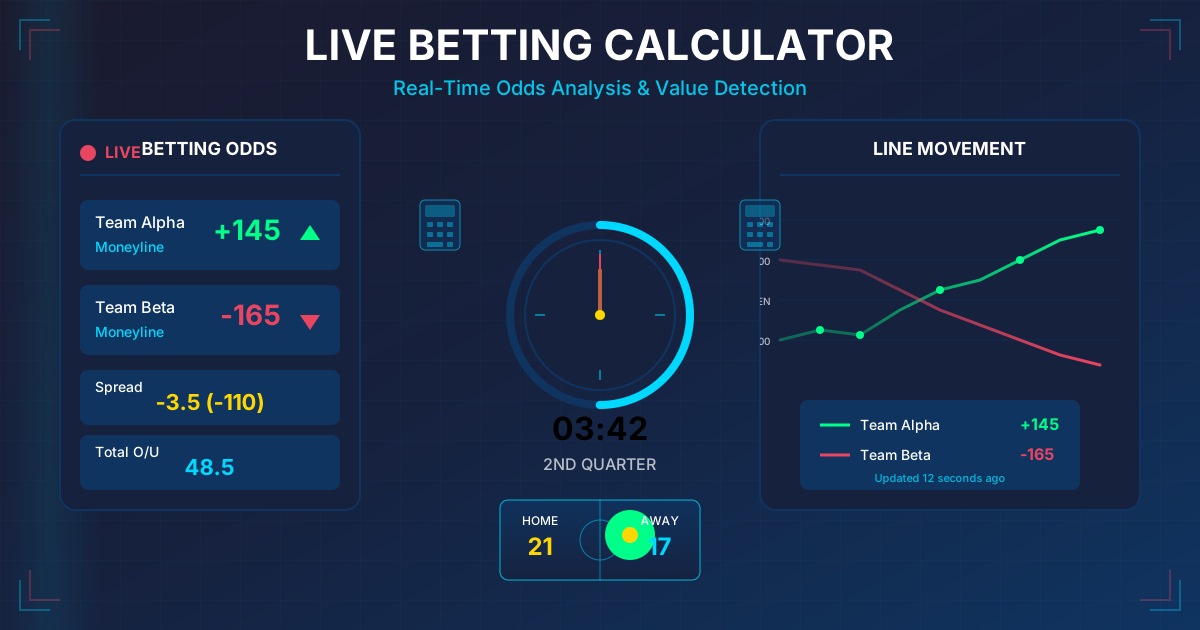
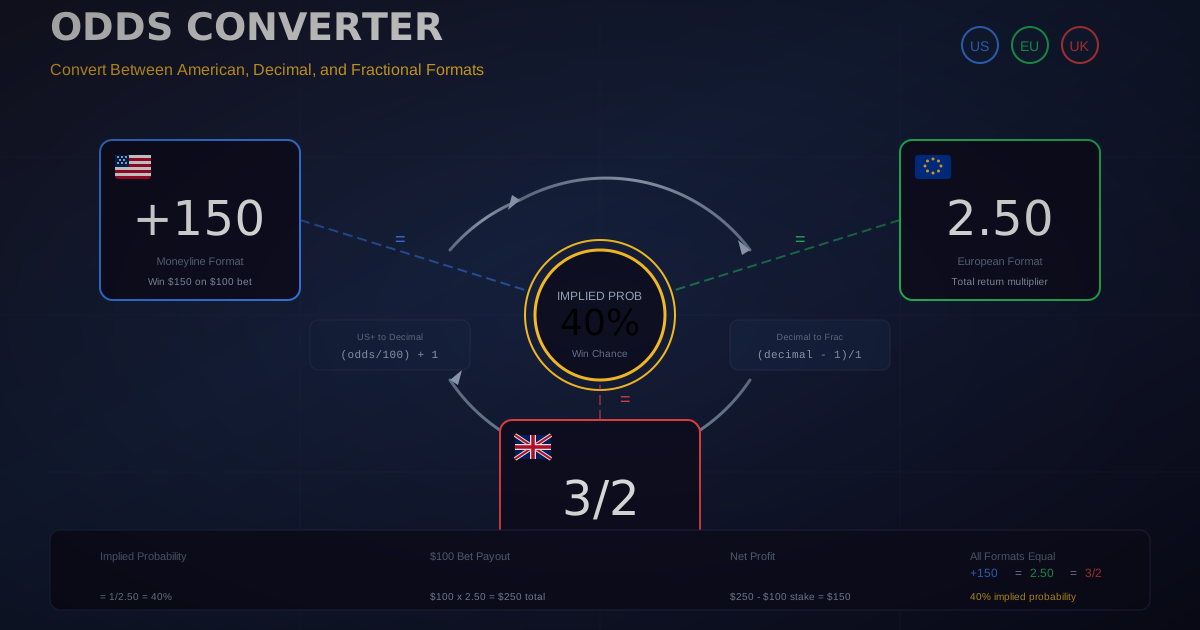
The global market primarily uses three formats, which can be effortlessly translated using an Odds Converter:
- American Odds (Moneyline): Standard in the U.S., displayed as positive or negative numbers [cite: 23].
- Negative Odds (Favorites): Shows how much to stake to win $100 profit (e.g., -150 means wager $150 to win $100) [cite: 22, 23].
- Positive Odds (Underdogs): Shows profit won on a $100 stake (e.g., +200 means $100 wager nets $200 profit) [cite: 22, 23].
- Decimal Odds: Common in Europe and Australia, representing the total return (stake + profit) for every $1 wagered [cite: 23].
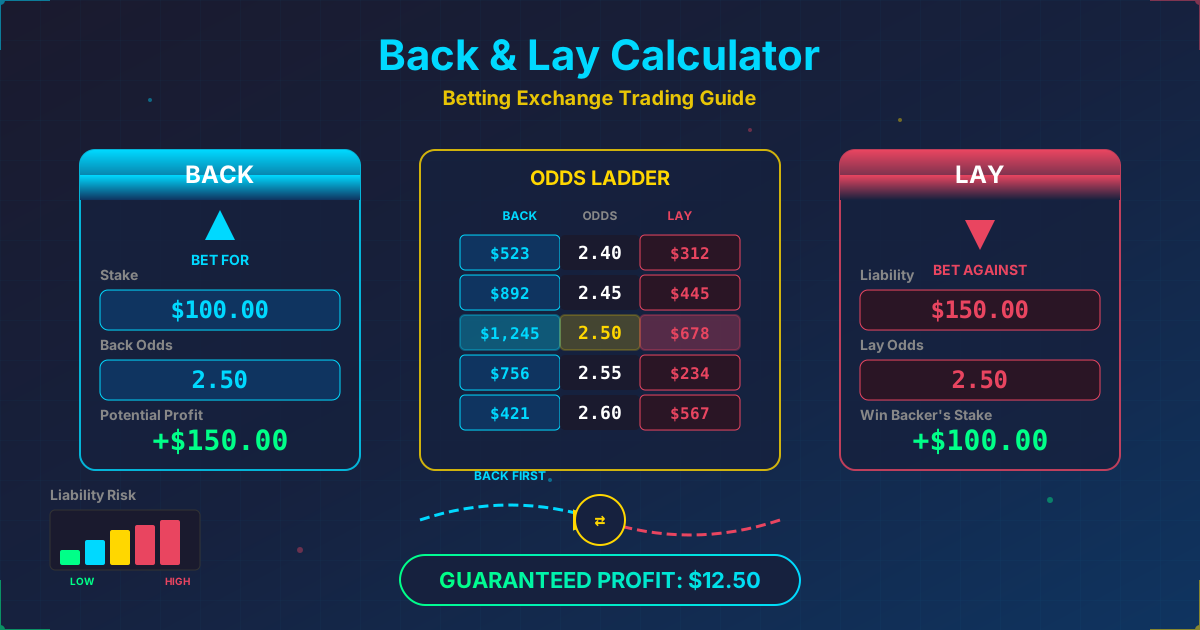
- If odds are 2.50, a $100 bet returns $250 total ($150 profit + $100 stake) [cite: 23].
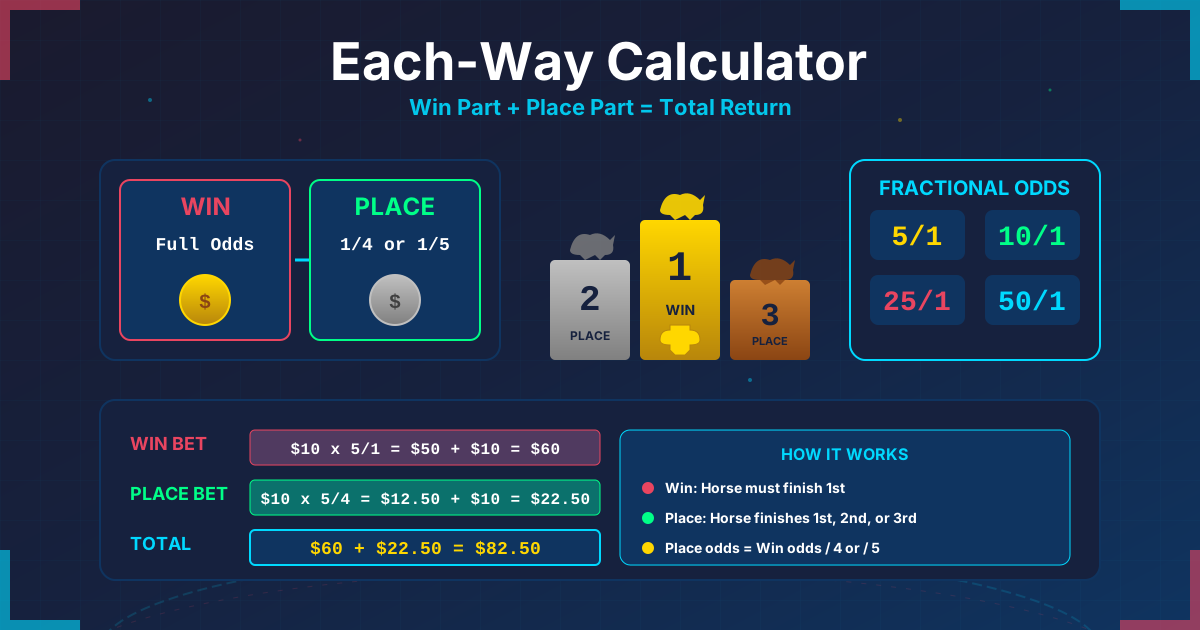
- Fractional Odds: Traditional to the UK and horse racing, displaying profit relative to stake (Profit/Stake) [cite: 23].
- Odds of 5/2 mean for every $2 wagered, the bettor profits $5 [cite: 22].
4.2 Calculating Implied Probability
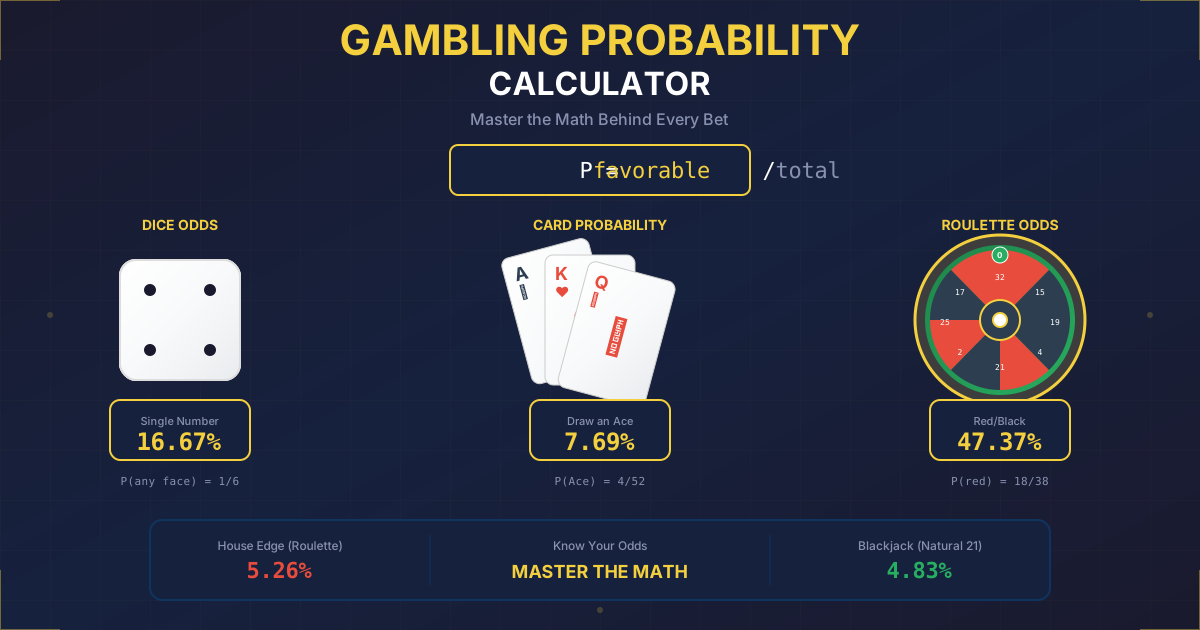
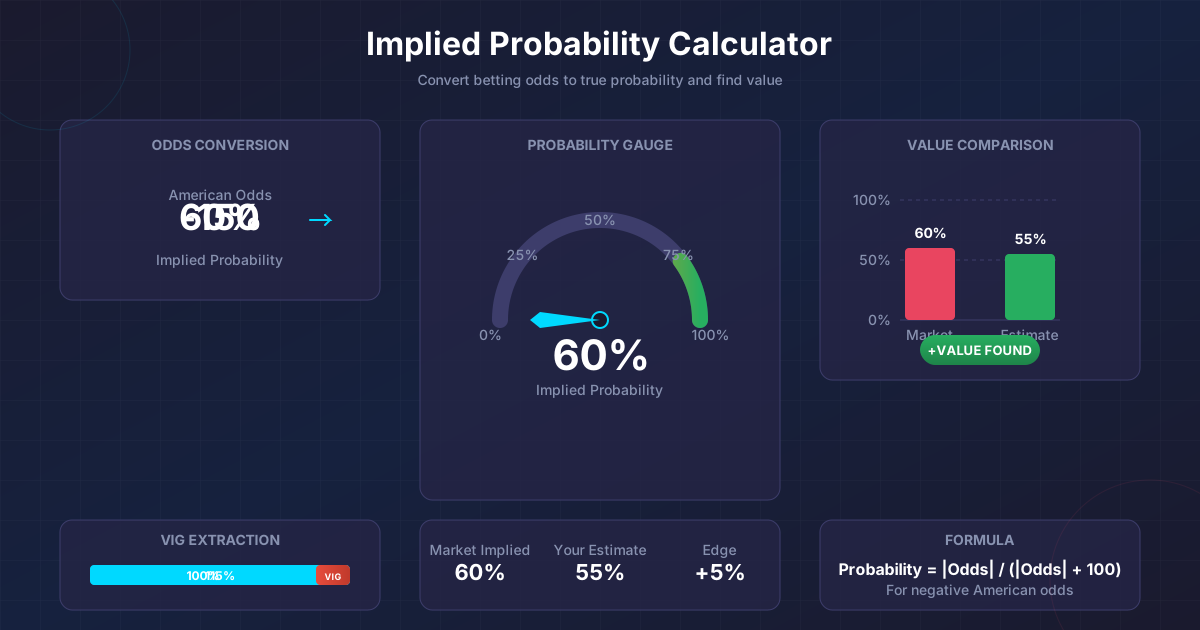
Implied probability translates odds into a percentage chance of an outcome, forming the foundation of value betting [cite: 23].
Formulas for Implied Probability:
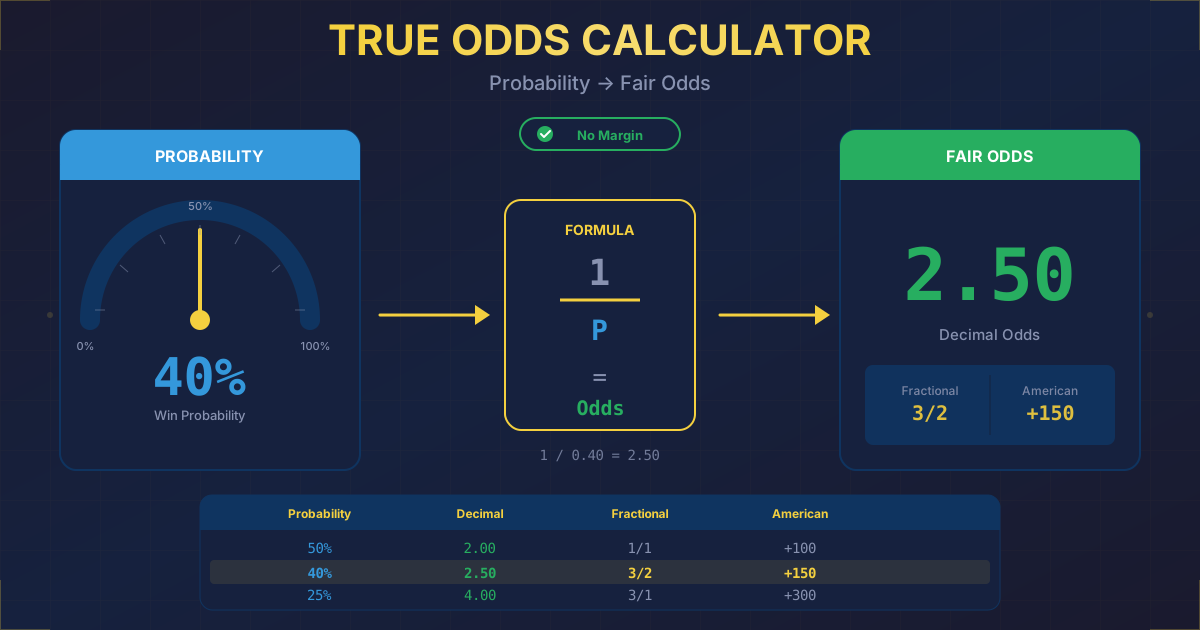
- From Decimal: ( 1 / \ ext{Decimal Odds} ) (e.g., ( 1 / 2.50 = 0.40 ext{ or } 40% )) [cite: 24].
- From Negative American: ( (-\ ext{Odds}) / (-\ ext{Odds} + 100) ) (e.g., -150 becomes ( 150 / 250 = 0.60 ext{ or } 60% )) [cite: 25].
- From Positive American: ( 100 / (\ ext{Odds} + 100) ) (e.g., +200 becomes ( 100 / 300 = 0.333 ext{ or } 33.3% )) [cite: 25].
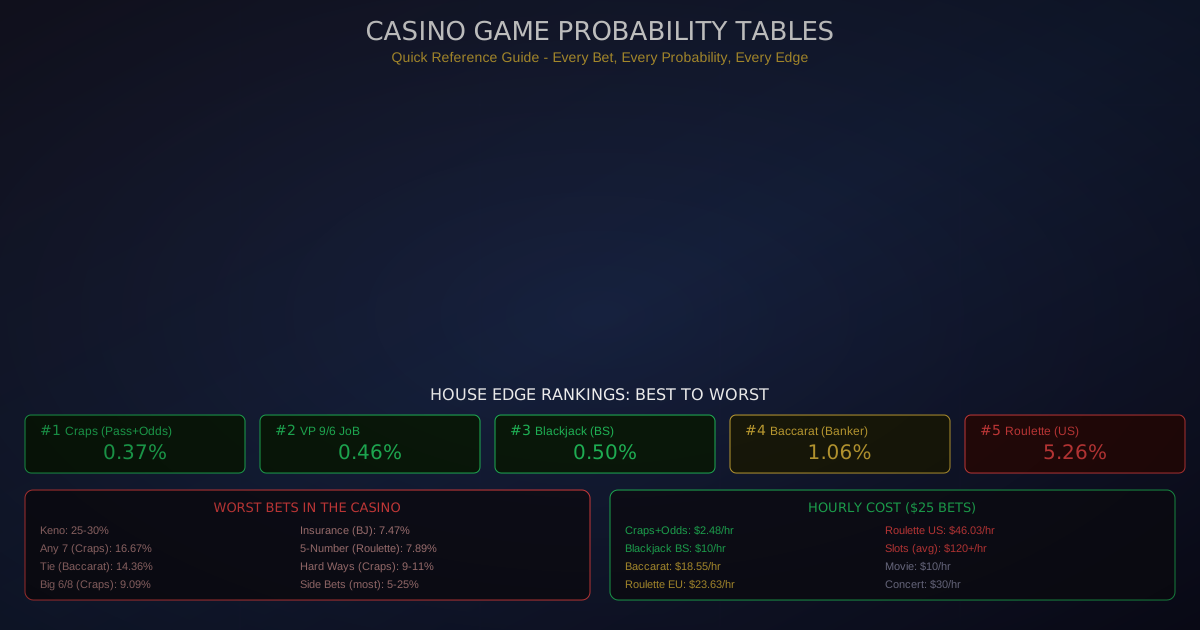
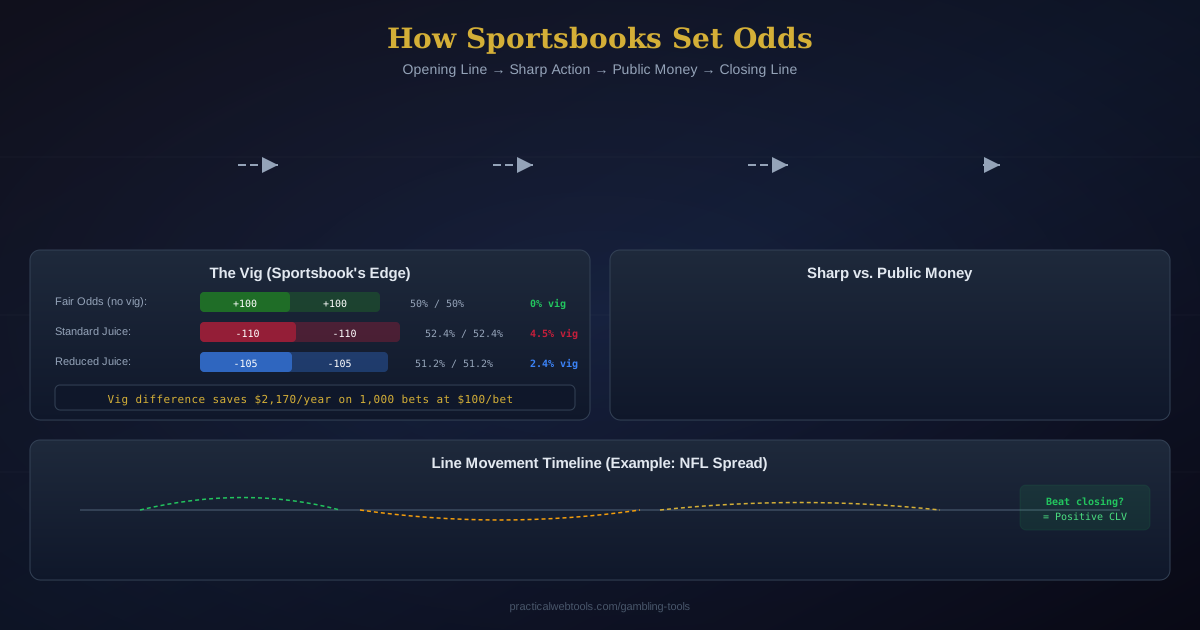
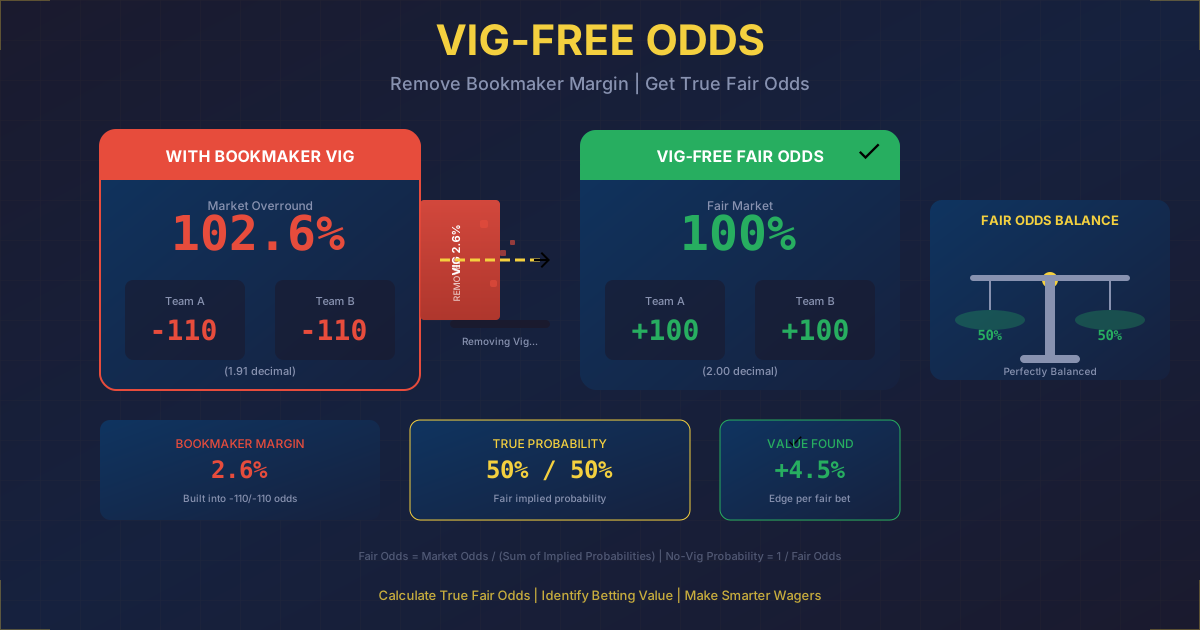
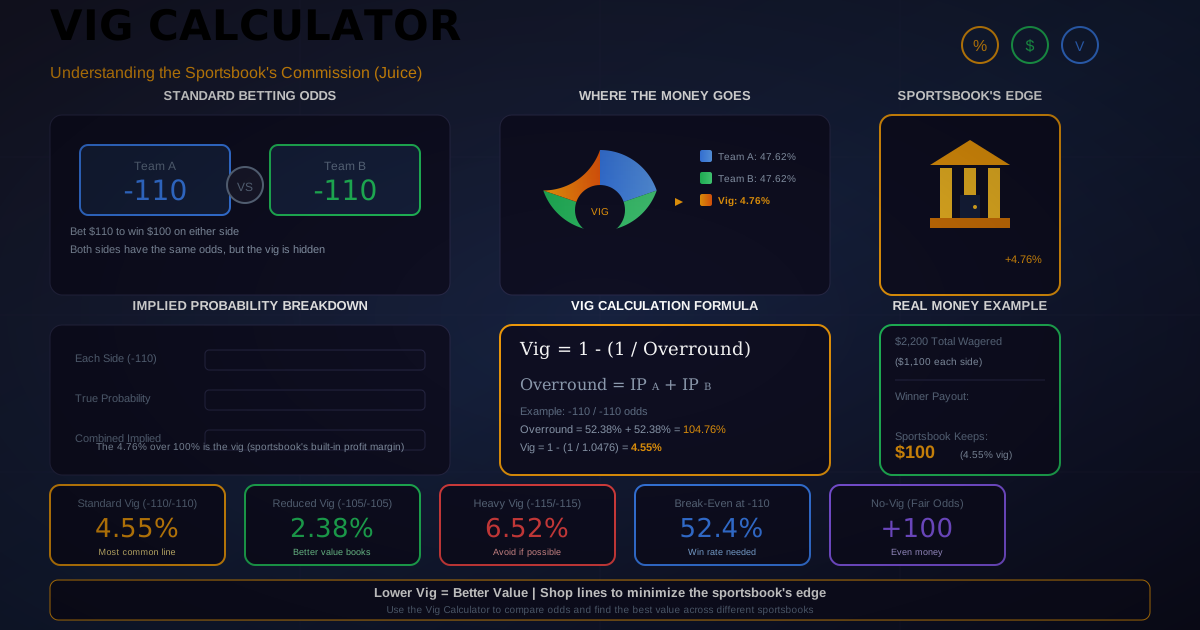
Understanding implied probability is critical because sportsbooks build a profit margin – the "vig," "juice," or "overround" – into their odds [cite: 26]. In a fair market, the sum of implied probabilities for all outcomes equals 100%. Sportsbooks, however, ensure this sum exceeds 100% (often 104% to 106%), creating their inherent mathematical edge [cite: 26, 27].
5. Betting Like a Pro: Positive Expected Value (+EV) Strategies
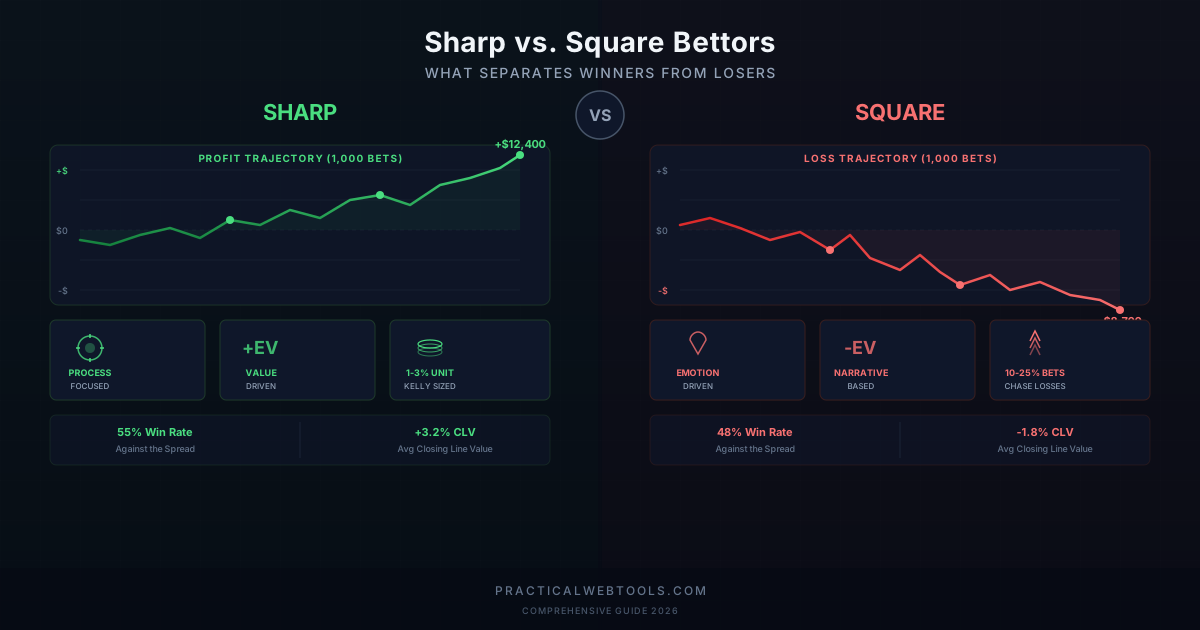
The vast majority of sports bettors are recreational, relying on intuition or loyalty [cite: 28]. The only statistically viable, mathematically sound path to consistent long-term profitability is through Expected Value (EV) betting [cite: 28, 29].
5.1 Understanding Expected Value
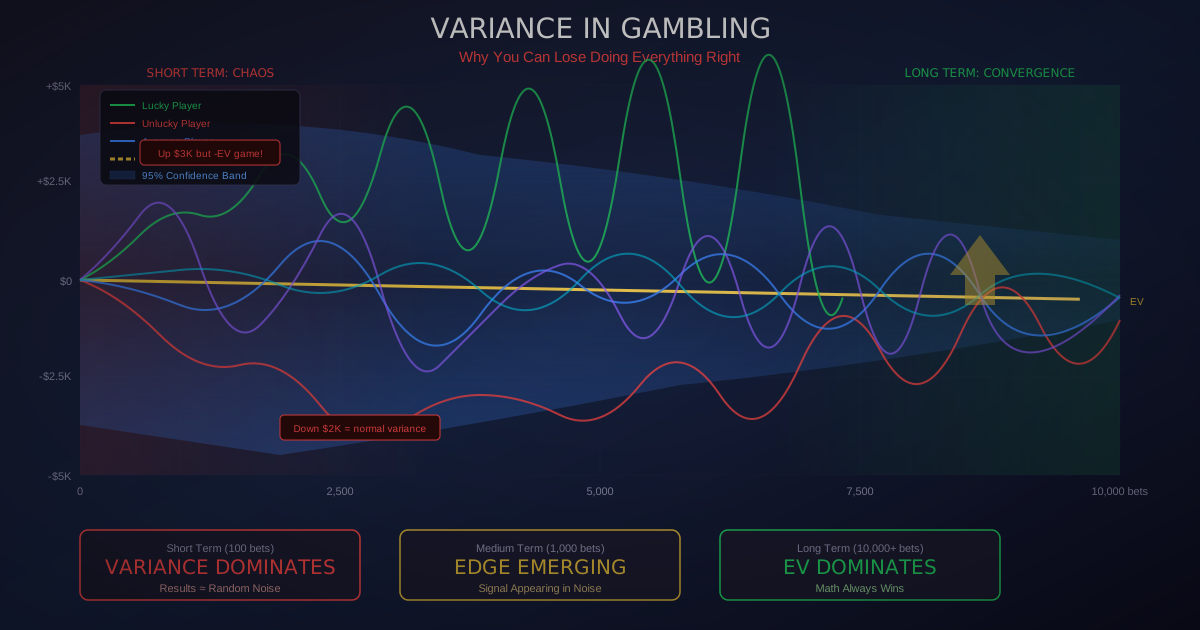
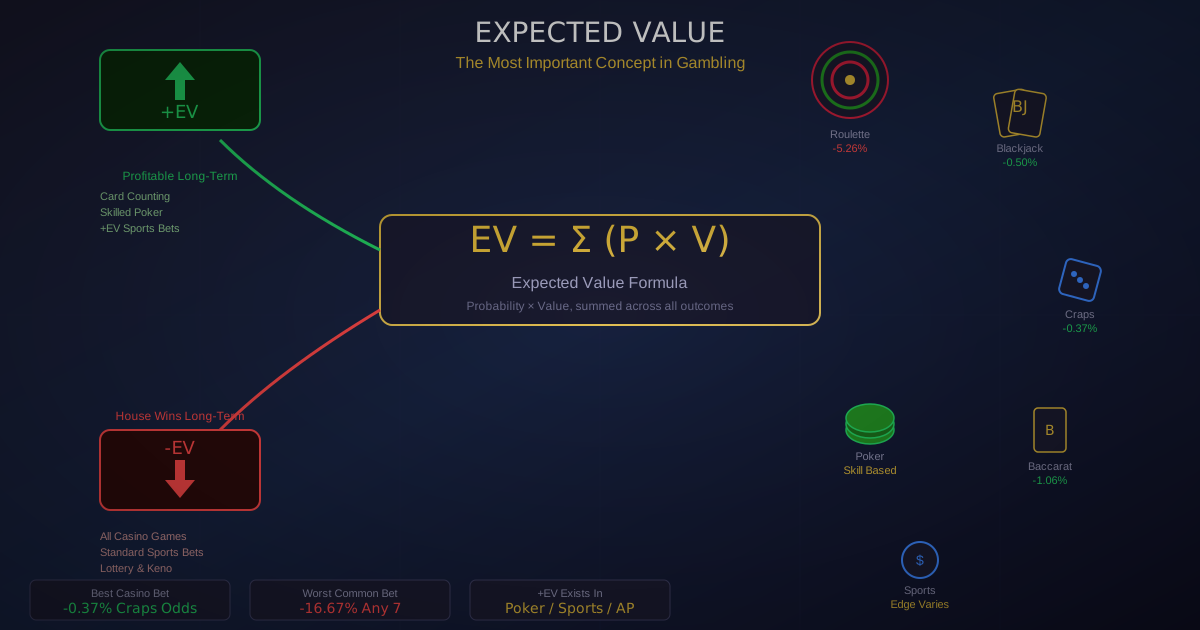
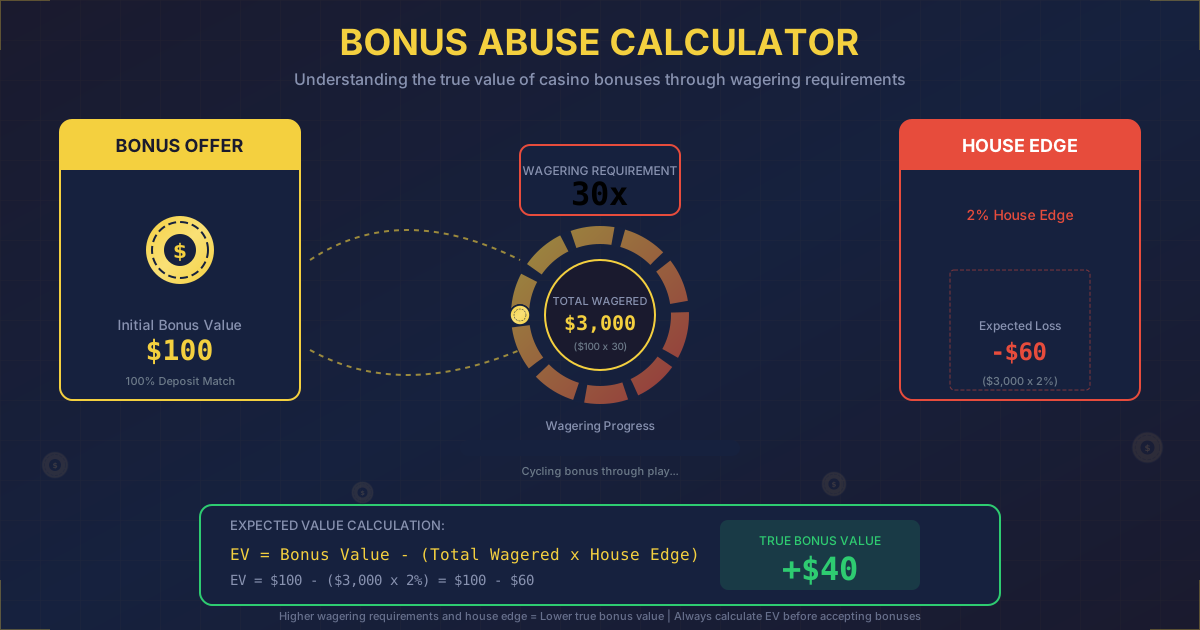
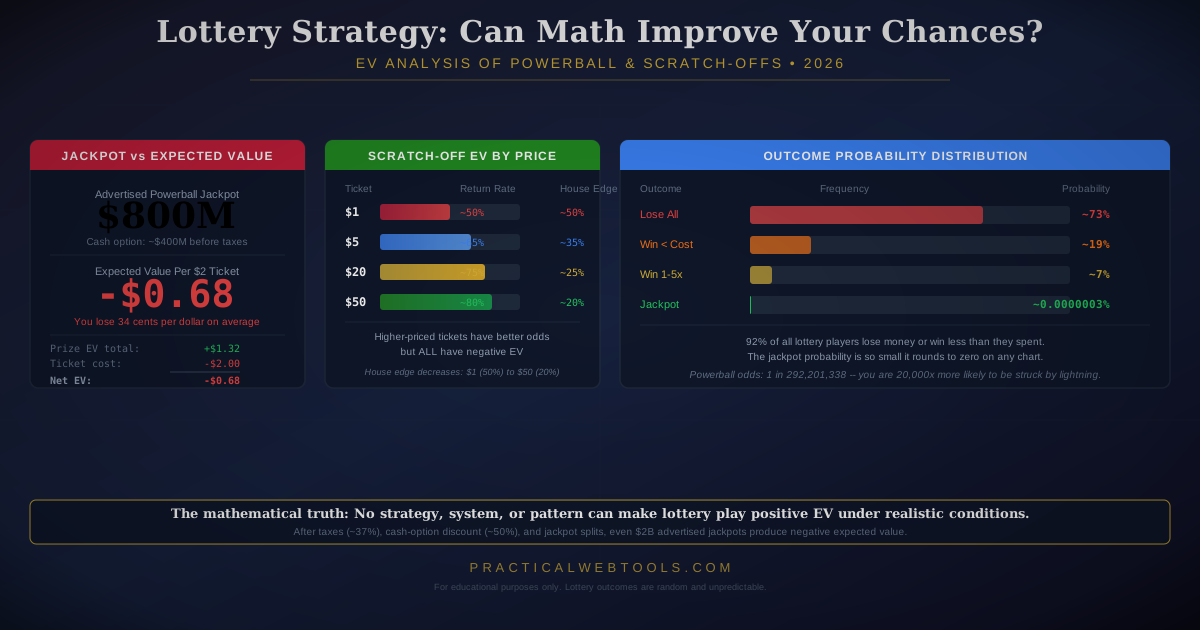
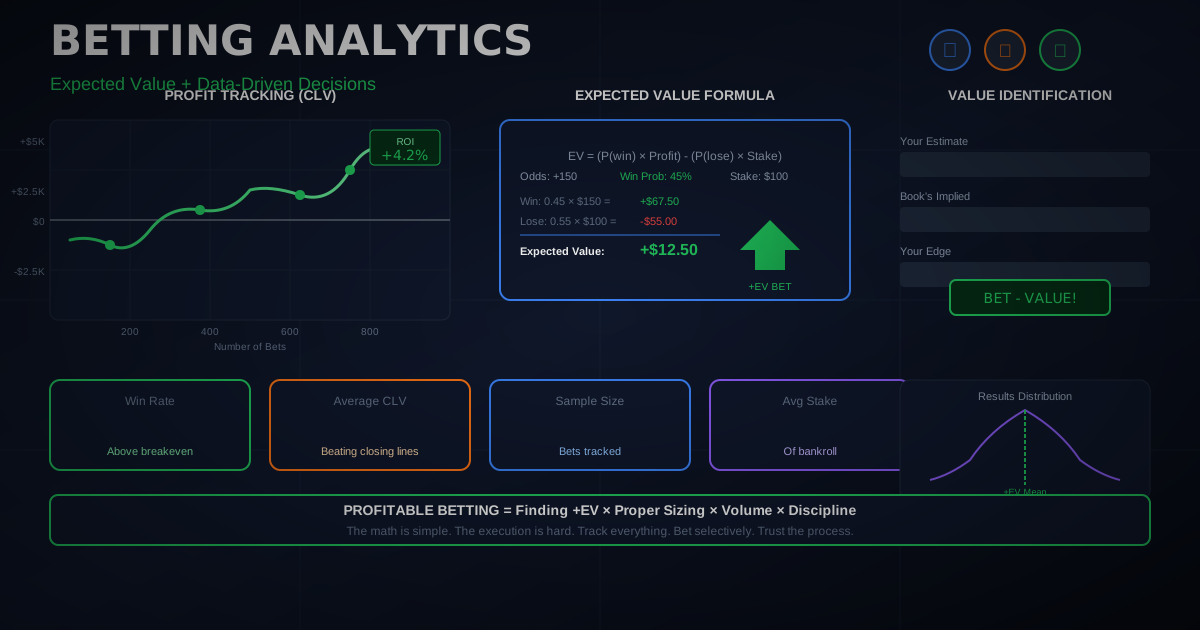
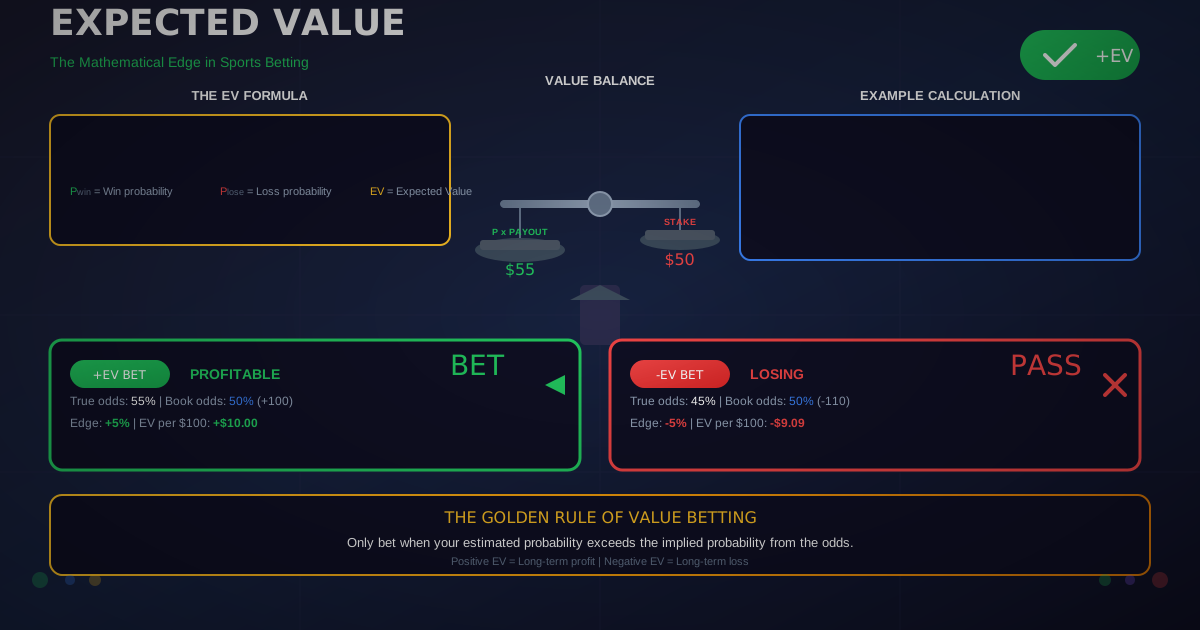
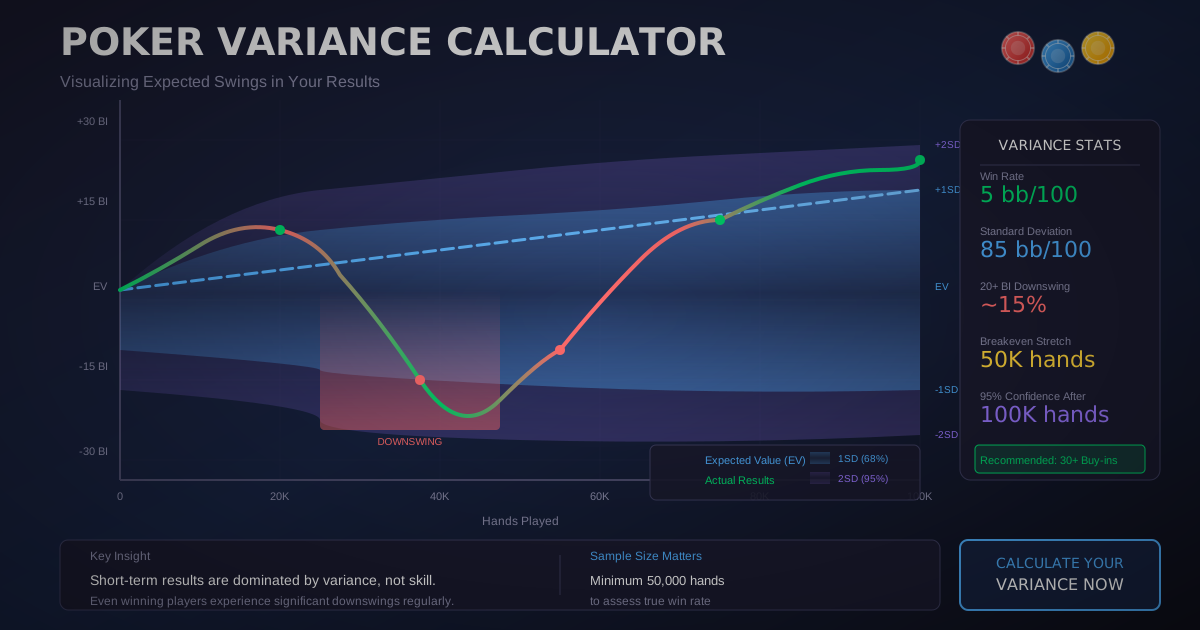
Expected Value (EV) measures the average amount a bettor can expect to win or lose on a specific wager if that bet were placed hundreds or thousands of times [cite: 29, 30].
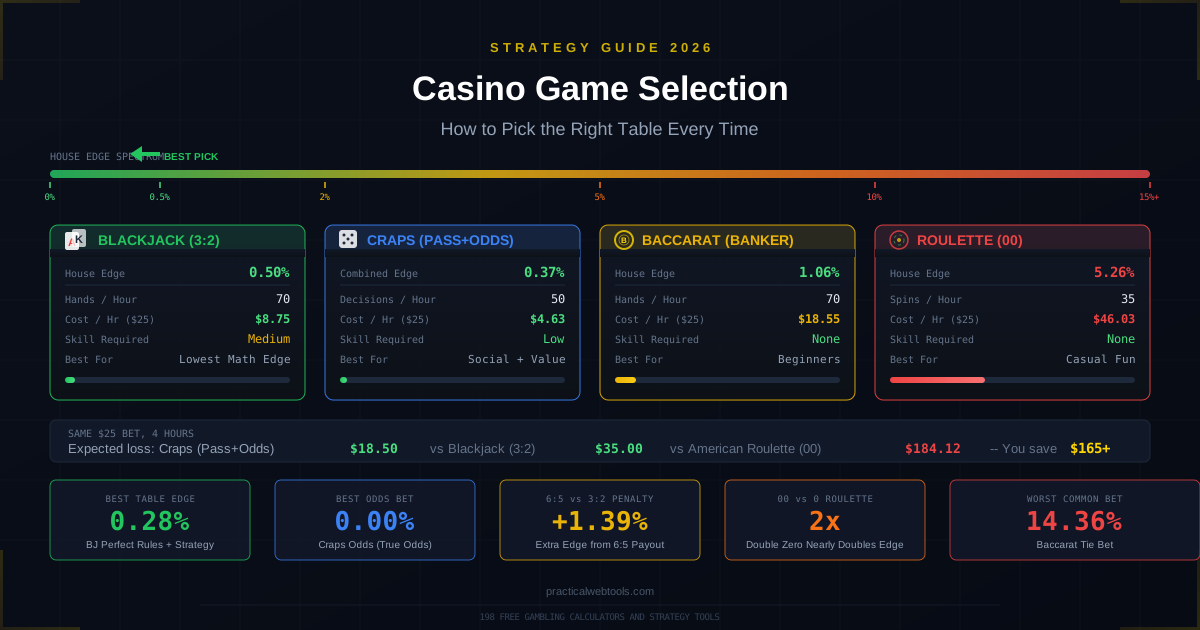
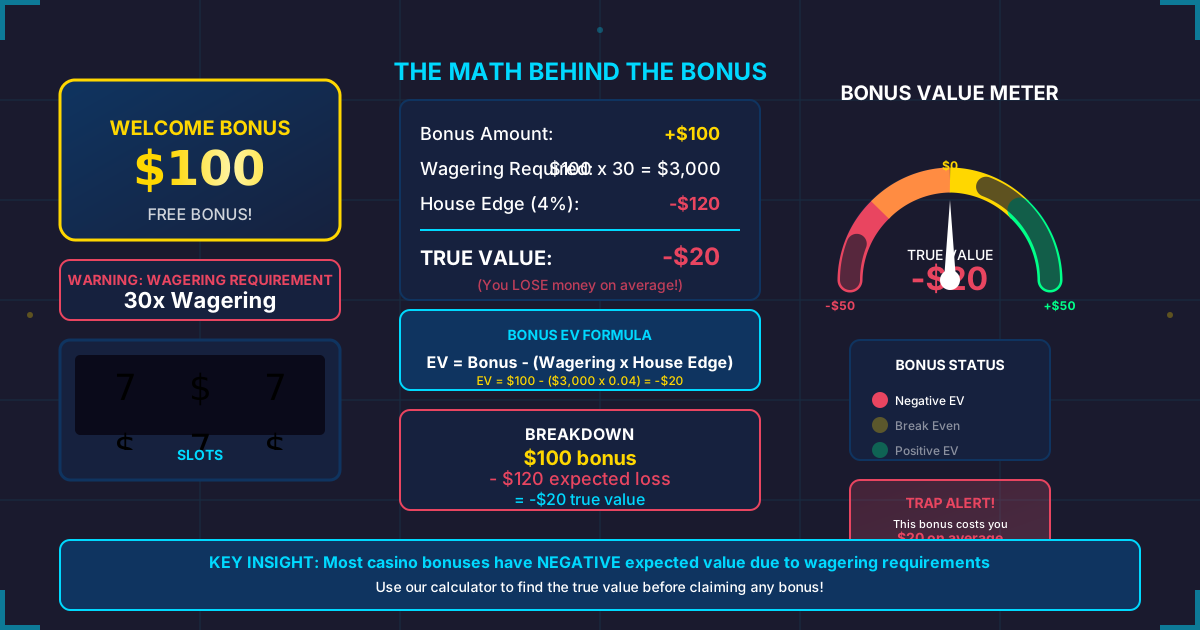
- Negative EV (-EV): The bet will result in a loss of capital over the long term. Due to the sportsbook's vig, most public bets are -EV, akin to the "house edge" in casino games [cite: 28, 29, 31].
- Positive EV (+EV): The bettor holds an edge over the sportsbook. This occurs when the odds offered imply a lower probability of an outcome than its true real-world probability [cite: 28, 29].
5.2 The EV Formula in Practice
To find +EV bets, use this formula:
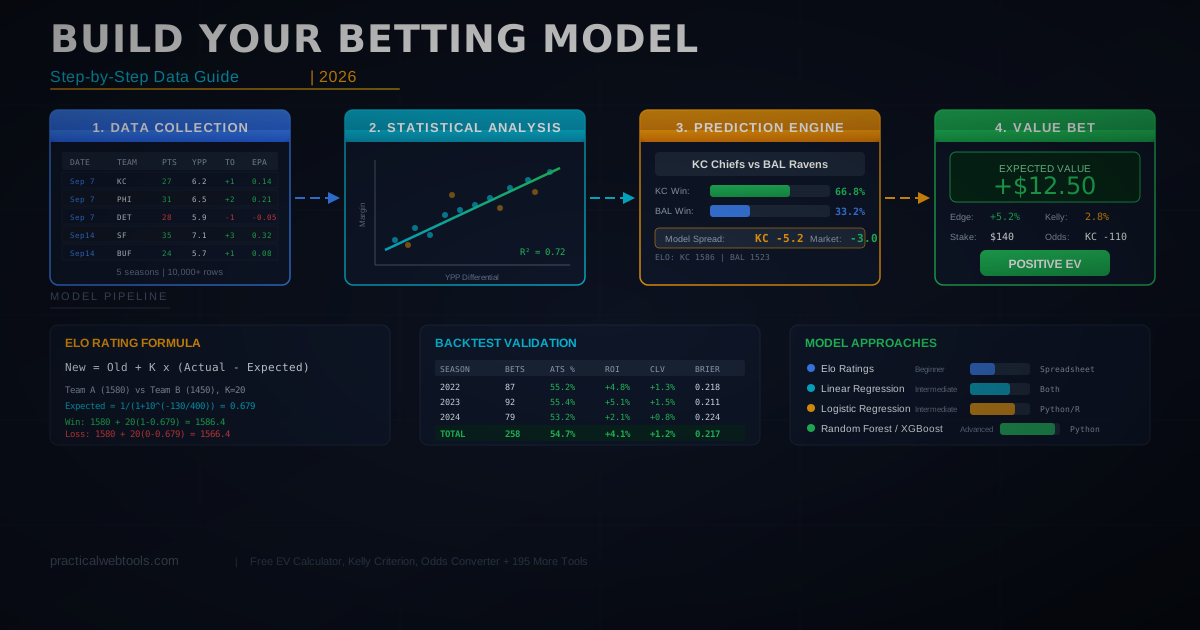
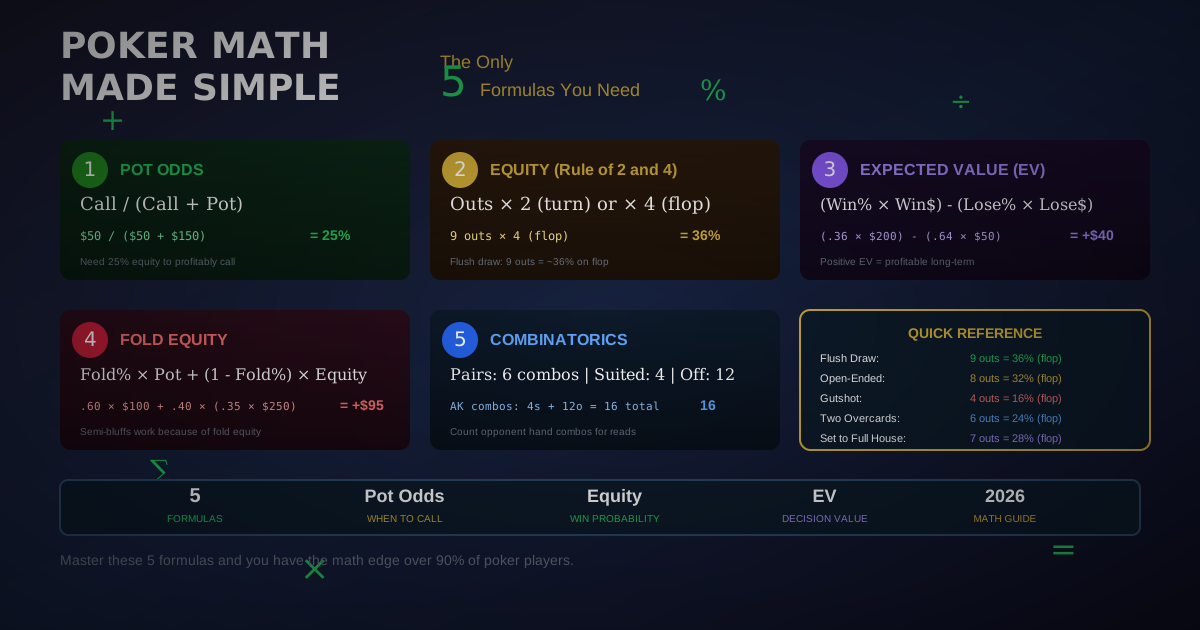
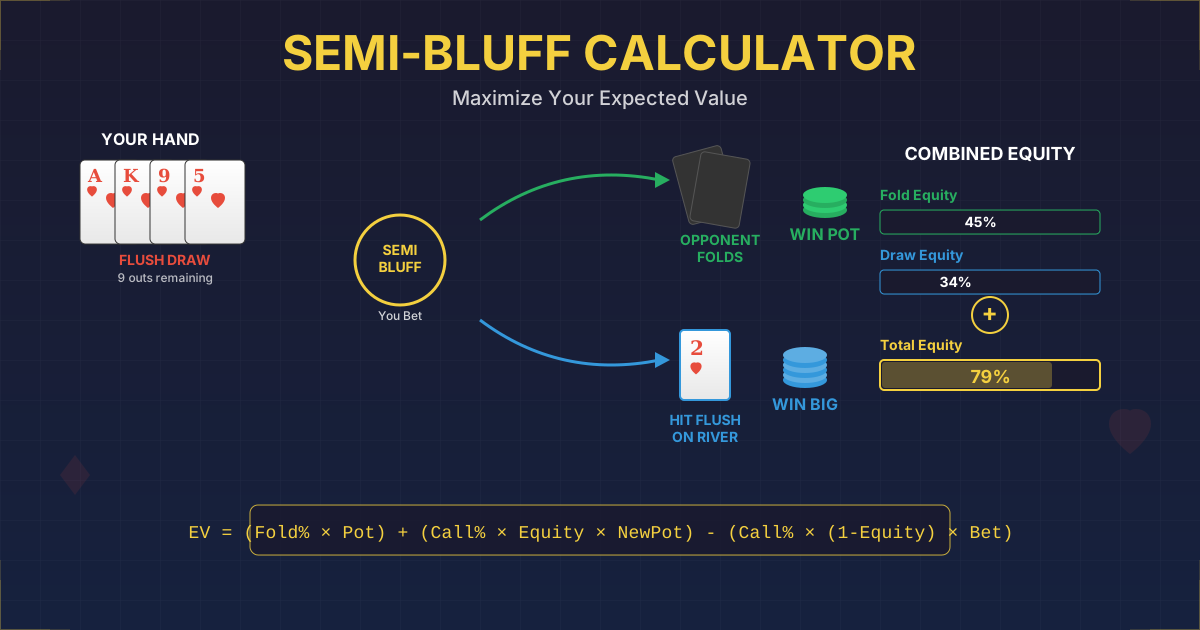
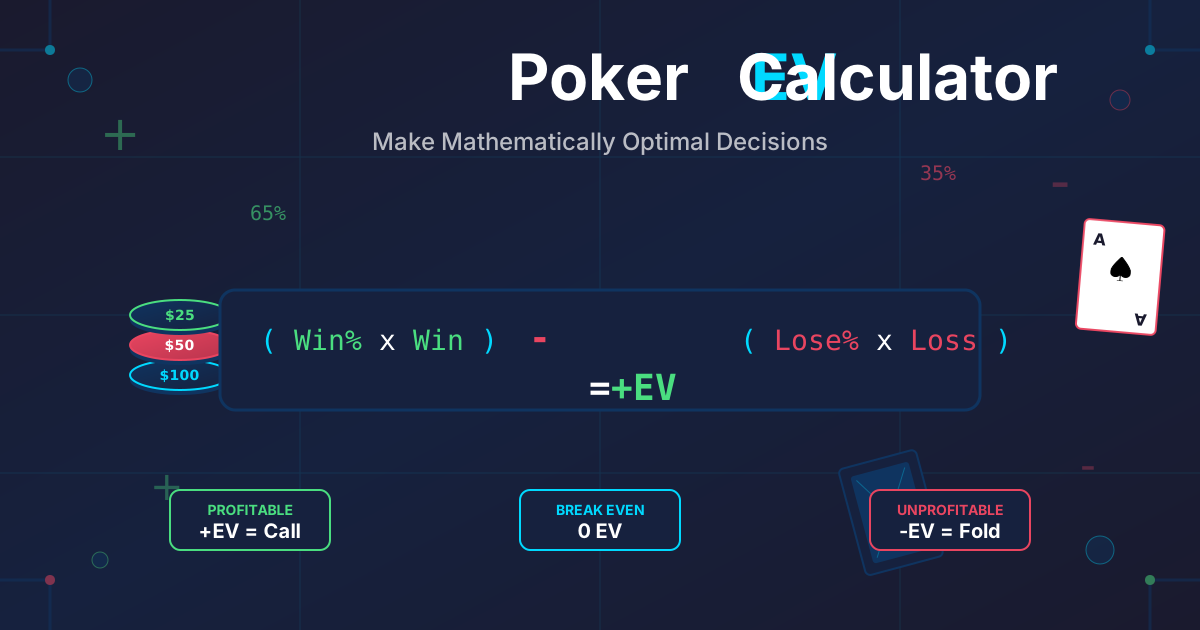
EV = (Probability of Winning × Potential Profit) − (Probability of Losing × Stake) [cite: 25, 28, 29].
Example Walkthrough: Imagine the Los Angeles Lakers are +150 (American odds) to win [cite: 28].
- Bookmaker's Implied Probability: +150 odds imply a 40% chance (100 / (150+100) = 0.40).
- True Probability: Through advanced modeling, you determine the Lakers actually have a 50% true probability of winning [cite: 28].
- Potential Profit/Loss: A $100 stake at +150 yields a $150 profit. A loss costs the $100 stake.
- Apply EV Formula:
- EV = (0.50 × $150) - (0.50 × $100)
- EV = $75 - $50
- EV = +$25 [cite: 28].
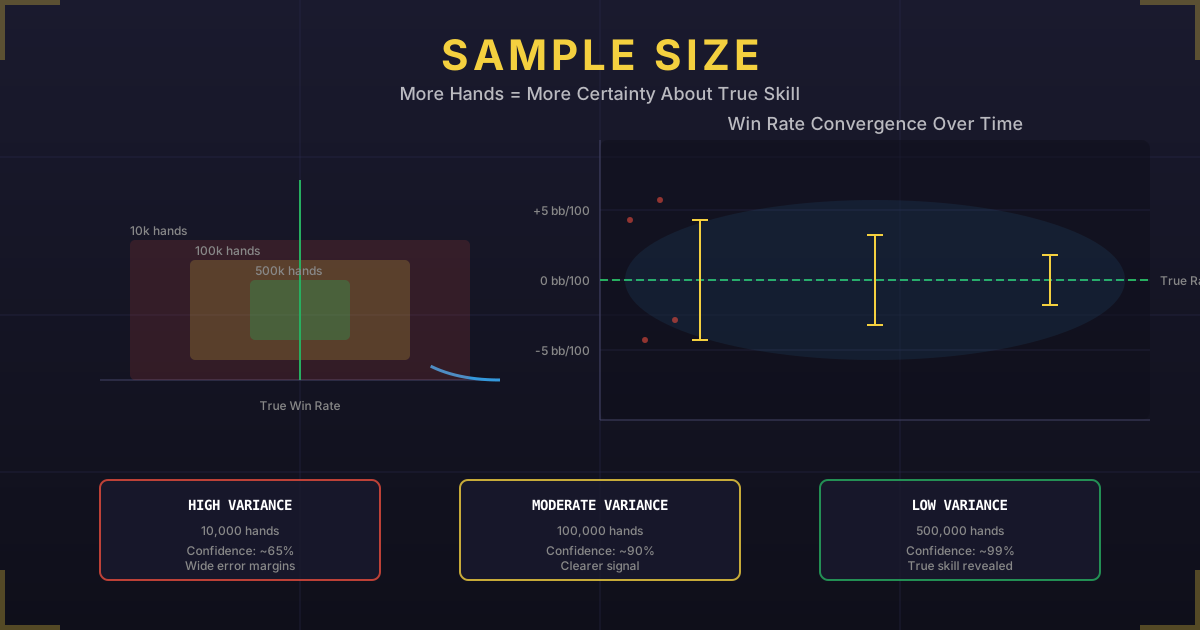
In this scenario, for every $100 wagered, the expected average return is $25. While you'll still lose this bet 50% of the time in the short term, placing this wager repeatedly guarantees profitability due to the law of large numbers [cite: 28, 30].
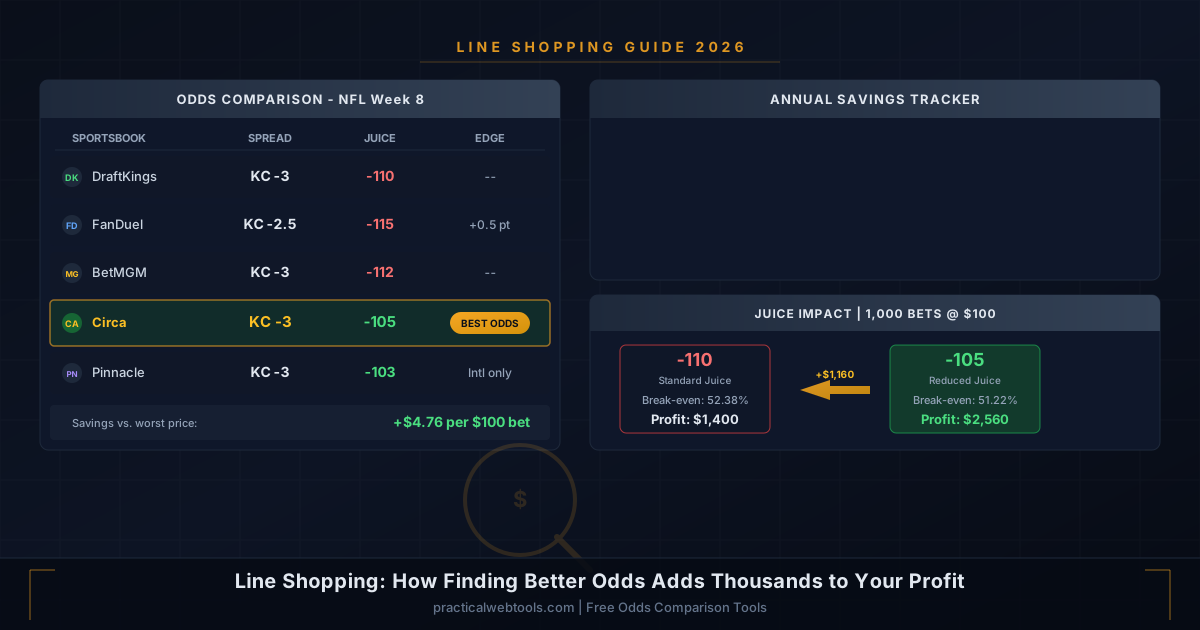
Actionable Advice: Finding +EV bets requires "line shopping" – comparing odds across many sportsbooks to identify inefficiencies compared to "sharp" market makers [cite: 32]. Since odds shift constantly, manual calculation is inefficient. To execute this strategy effectively, leverage tools like the Expected Value Calculator. By inputting the bookmaker's odds and your verified true probability, the calculator instantly reveals whether the wager holds a positive expected value, stripping away the guesswork [cite: 33].
6. Risk-Free Profitability: The Mechanics of Arbitrage Betting
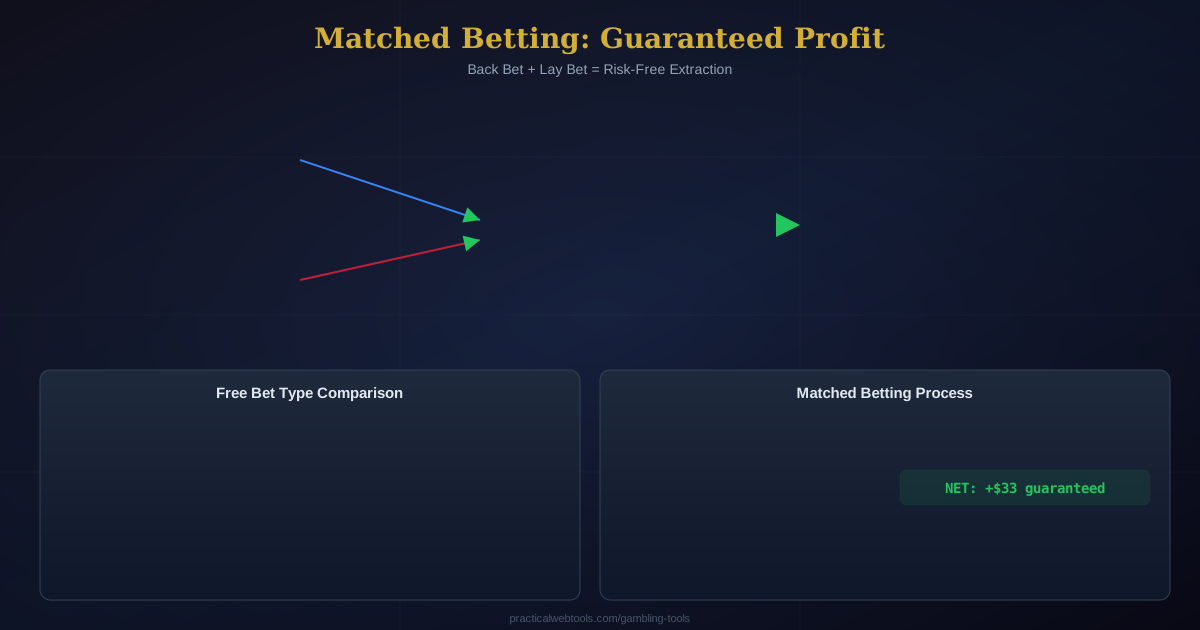
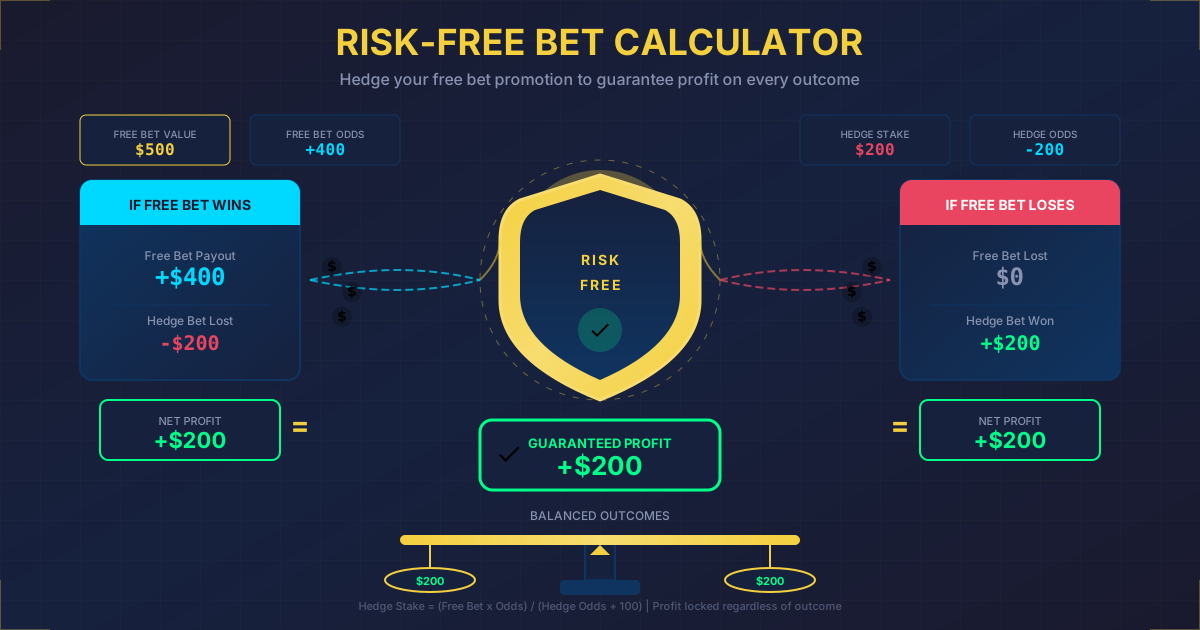
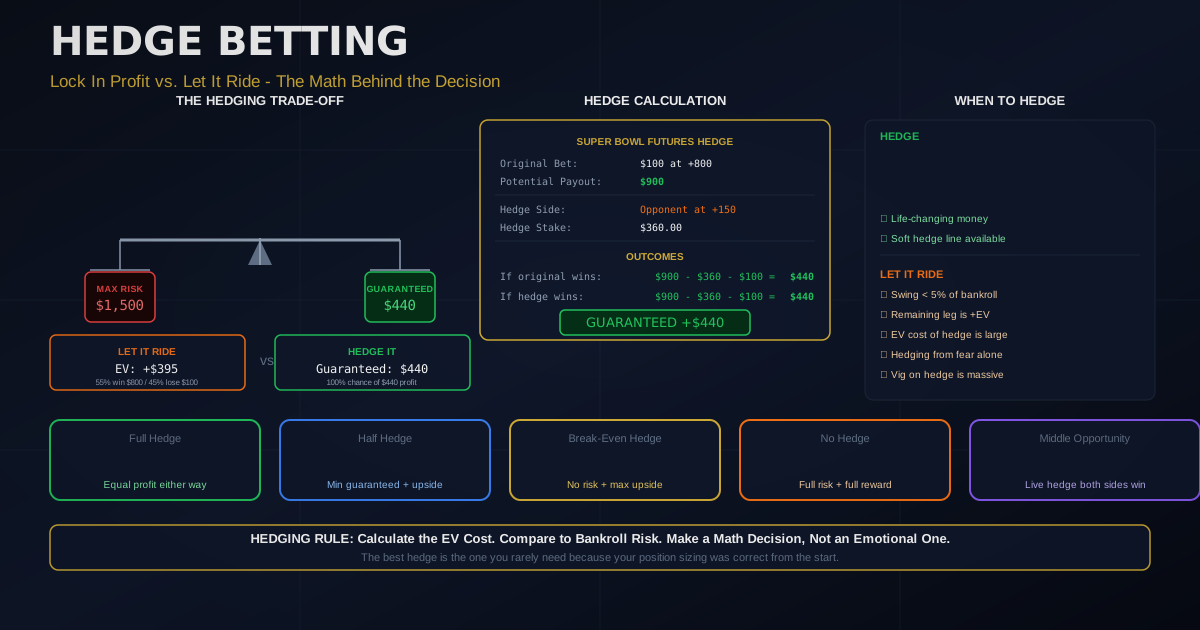
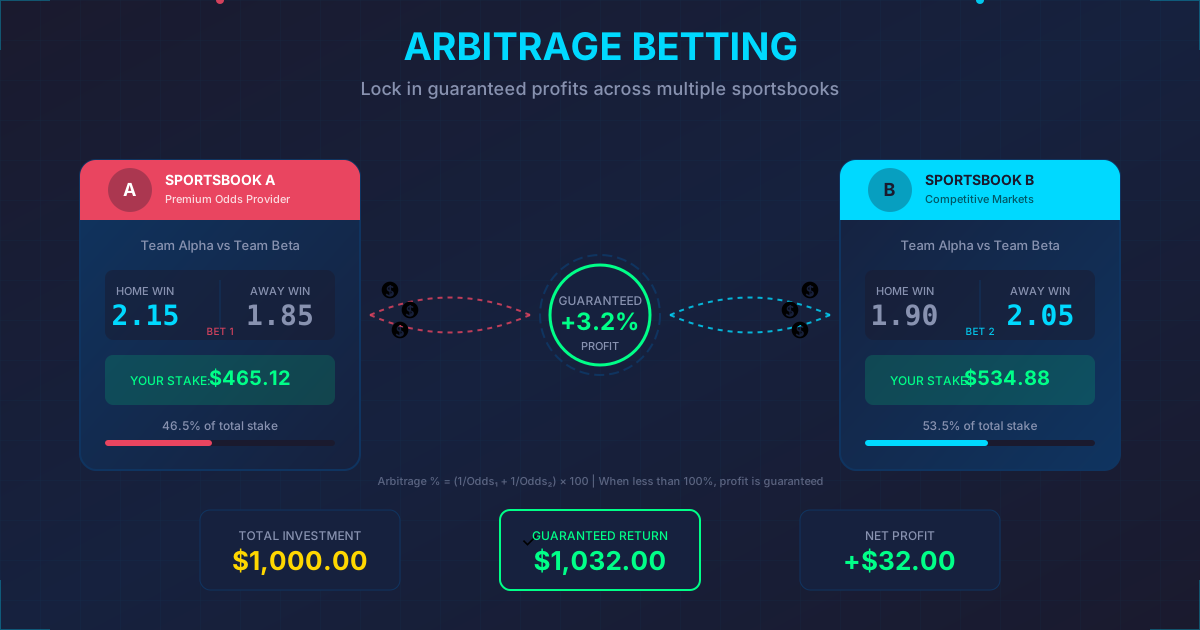
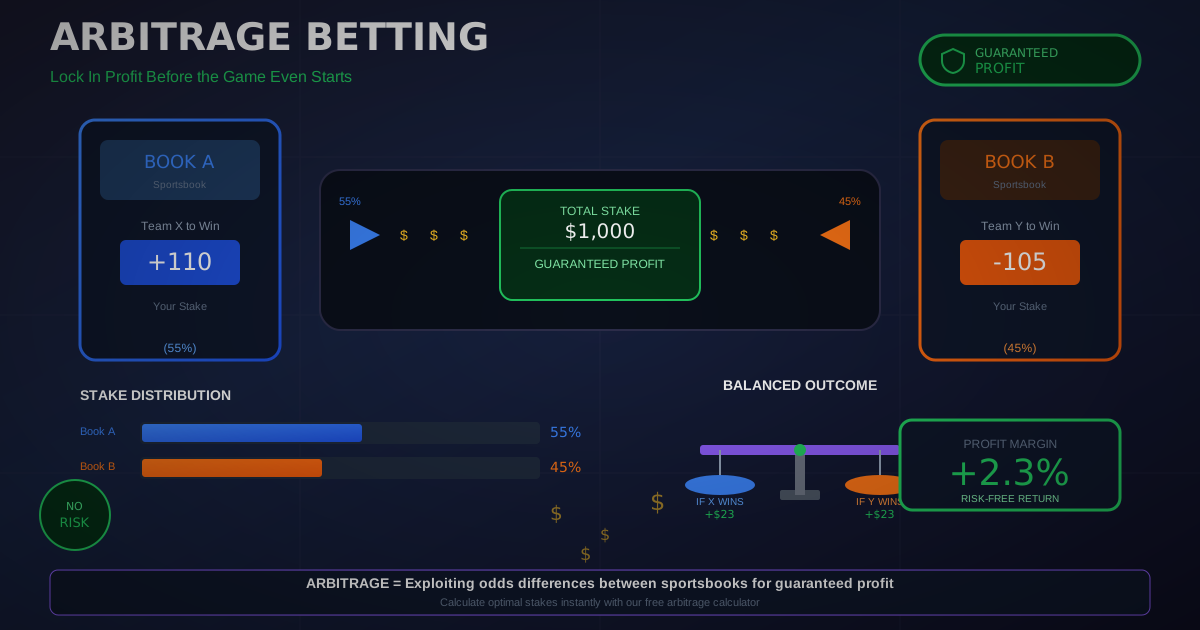
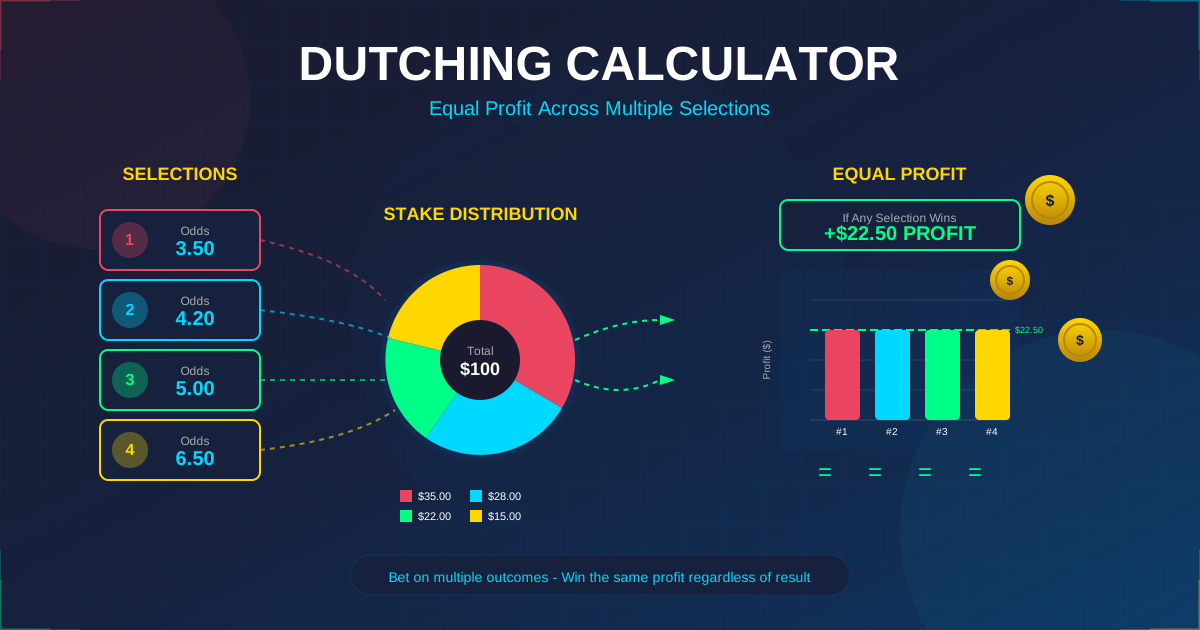
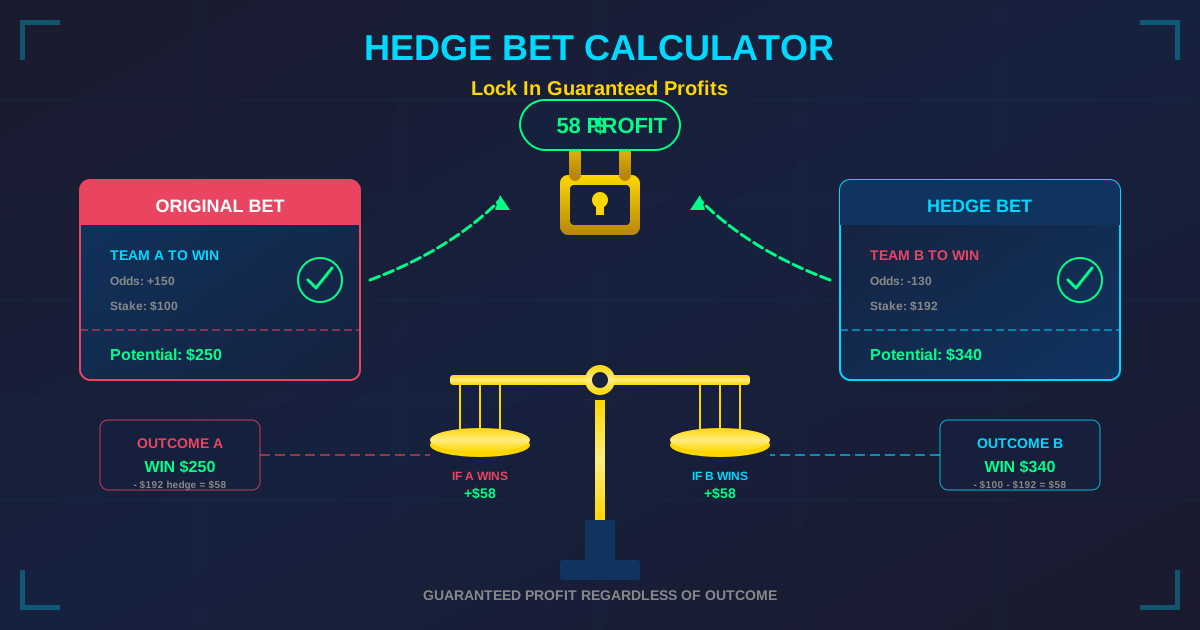
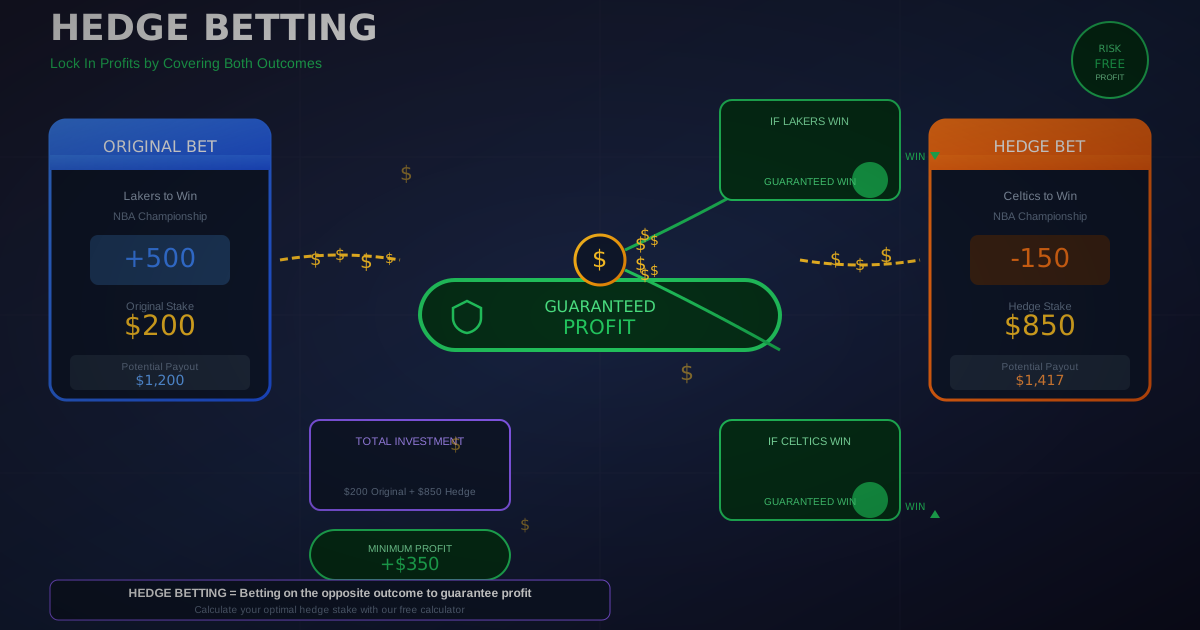
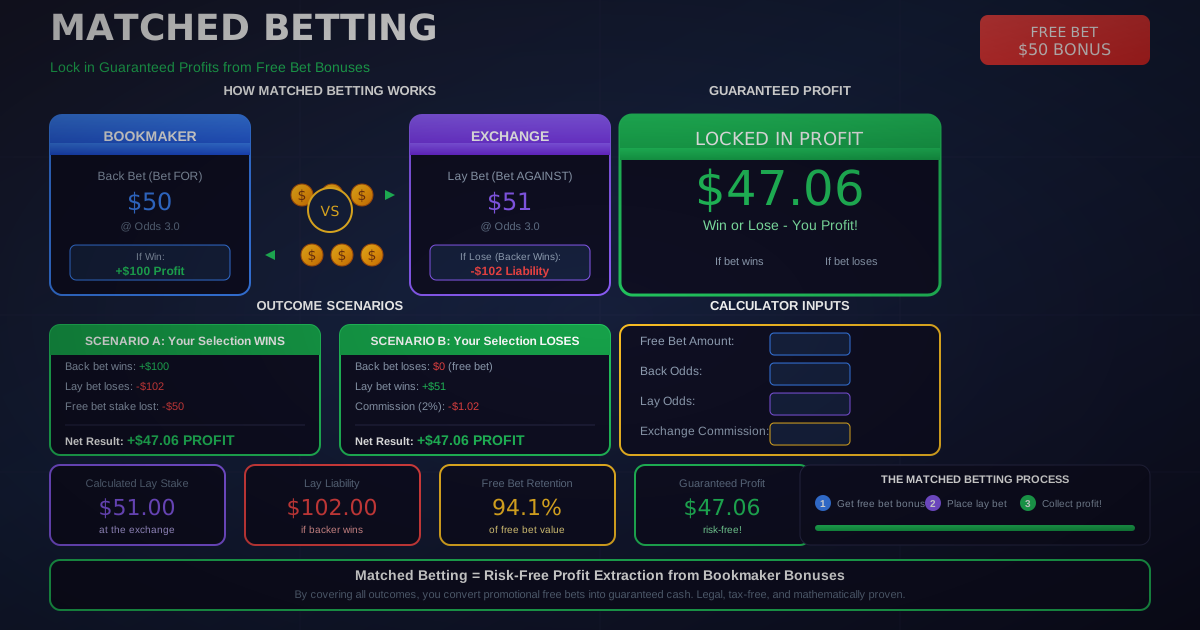
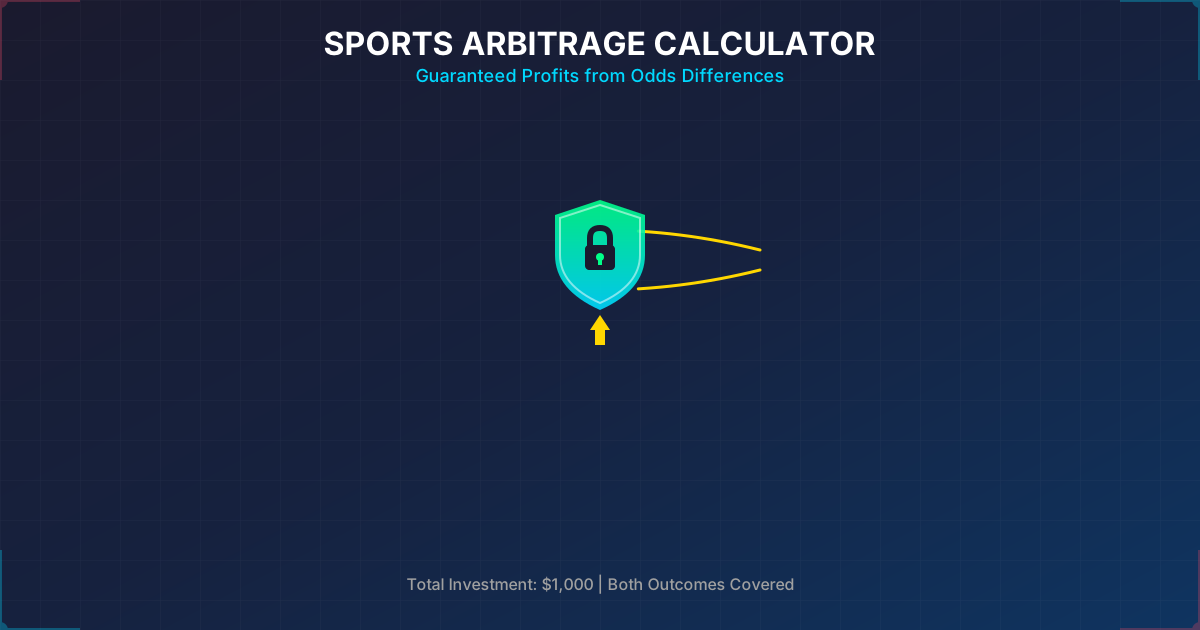
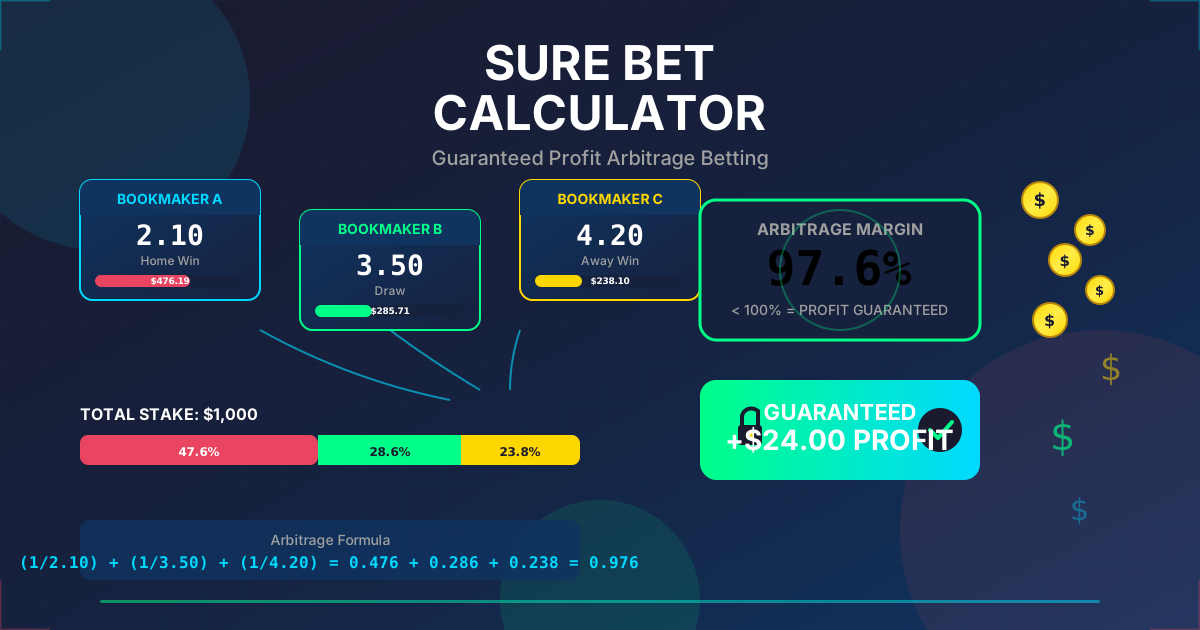
While +EV betting accepts short-term variance for long-term profit, Arbitrage Betting (or "arbing"/"surebets") is a completely different financial instrument. It's a mathematical strategy that guarantees a profit regardless of the event's outcome by exploiting price discrepancies across different bookmakers [cite: 26].
6.1 The Theory of Arbitrage
Arbitrage occurs when two or more sportsbooks heavily disagree on the probability of an outcome [cite: 34]. Bookmakers create an "overround" (implied probabilities summing to over 100%) to build in their profit [cite: 26, 27]. An arbitrage opportunity arises when you combine the best odds from competing sportsbooks such that the total implied probability drops below 100% [cite: 26, 27]. The margin below 100% is your guaranteed profit.
6.2 Calculating an Arbitrage Opportunity
Consider a tennis match between Player A and Player B:
- Sportsbook 1 offers Player A to win at 2.10 (Decimal).
- Sportsbook 2 offers Player B to win at 2.05 (Decimal).
Step 1: Calculate Total Implied Probability
- Implied Probability Player A = (1 / 2.10) * 100 = 47.62%
- Implied Probability Player B = (1 / 2.05) * 100 = 48.78%
- Total Market Probability = 47.62% + 48.78% = 96.40%
Since the total is less than 100%, an arbitrage opportunity exists. The arbitrage percentage here is roughly 3.6% (100% - 96.40%), guaranteeing a ~3.6% return on your total investment [cite: 34].
Step 2: Stake Sizing To guarantee profit, you must stake proportional amounts on each outcome. If you invest $1,000 total:
- Stake on Player A: ($1,000 × 47.62%) / 96.40% = $493.98
- Stake on Player B: ($1,000 × 48.78%) / 96.40% = $506.02
Step 3: Verifying the Profit
- If Player A wins: $493.98 × 2.10 = $1,037.36
- If Player B wins: $506.02 × 2.05 = $1,037.34
- Total Profit = ~$37.35 guaranteed, minus the $1,000 initial investment [cite: 34].
6.3 Risks and Automation in Arbitrage
While mathematically risk-free, arbitrage betting carries operational risks. These include the speed at which sportsbooks alter odds (lines move in seconds), potential human error, and the very real threat of sportsbooks limiting or banning accounts that consistently exploit arbs [cite: 26].
Actionable Advice: Speed and accuracy are paramount. Manual calculations are too slow for live markets. Bettors must use an Arbitrage Calculator to instantly compute the correct stake distribution. Simply input your total bankroll and the respective odds, and the calculator provides the exact fractional bets required to lock in the risk-free return [cite: 27].
7. The Future of Wagering: Technological Evolution and 2026 Betting Trends
As the U.S. and global markets mature towards the $200+ billion threshold, the focus is shifting from sheer customer acquisition to user retention through technological innovation.
7.1 Artificial Intelligence and Machine Learning
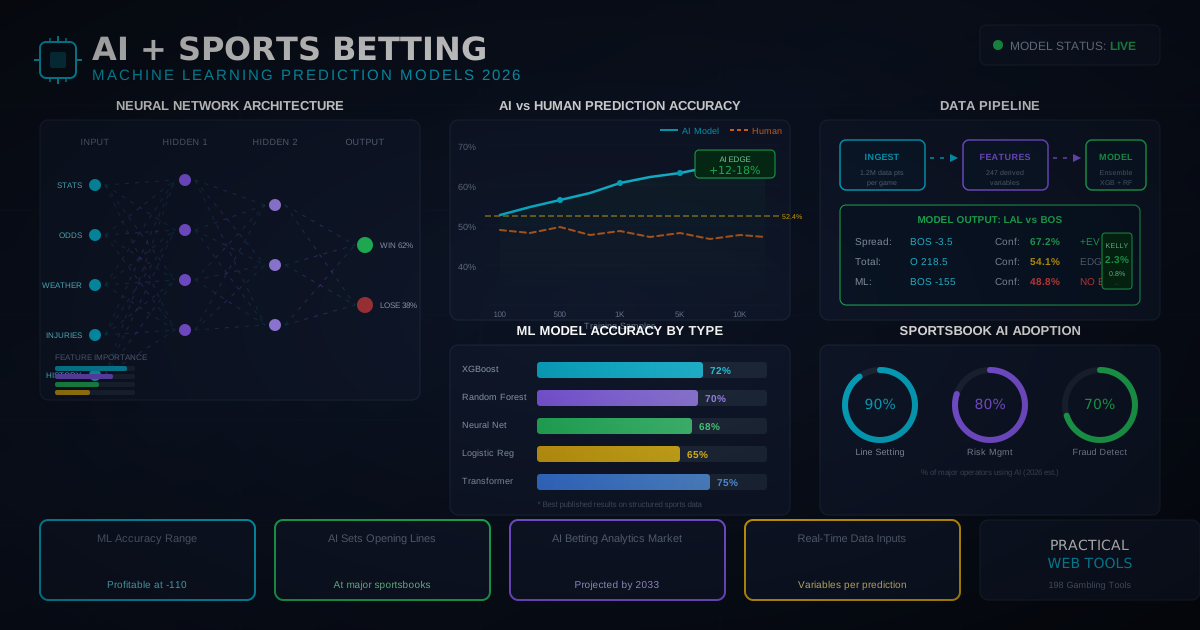
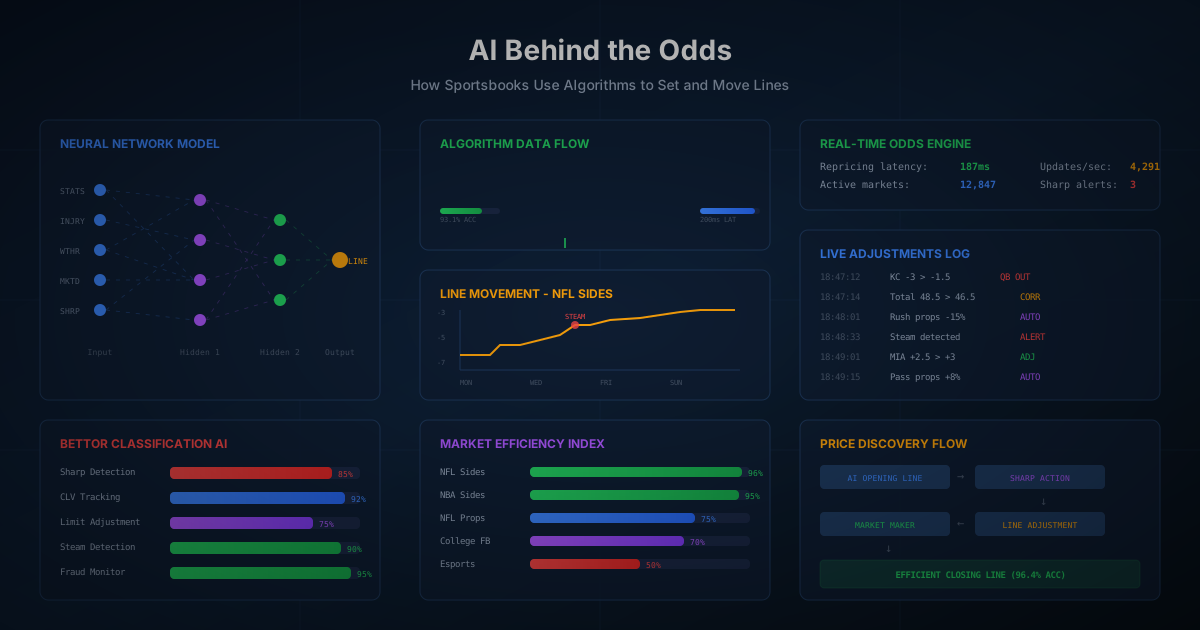
AI is fundamentally reshaping both sides of the sportsbook counter. For operators, nearly half of all bets on prominent networks like Kambi were priced and traded via fully automated AI systems in 2025 [cite: 35]. This allows dynamic risk management, instant live odds adjustments, and infinitely customizable player props without human oversight [cite: 35].
For consumers, AI delivers highly personalized betting recommendations based on historical user habits [cite: 36]. Approximately 70% of leading global sports betting operators integrated AI-driven analytics in 2025, reportedly increasing user interaction by up to 30% [cite: 4, 36]. With 80% of bettors preferring customized experiences, AI is a primary vehicle for user retention [cite: 36].
7.2 Cryptocurrency and Blockchain Integration
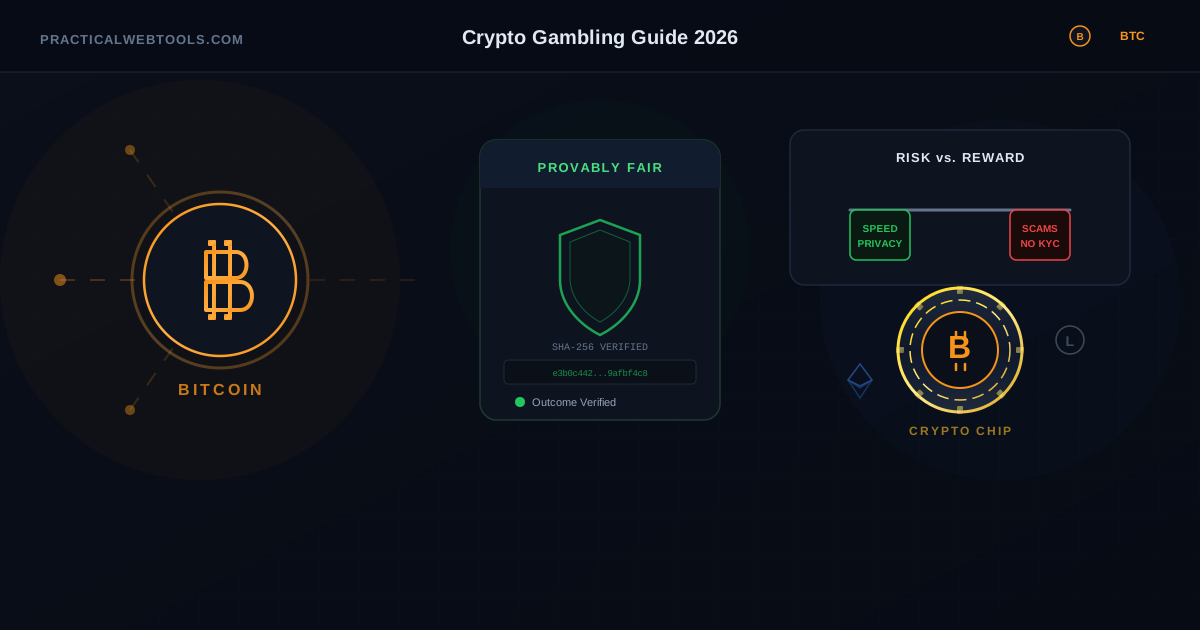
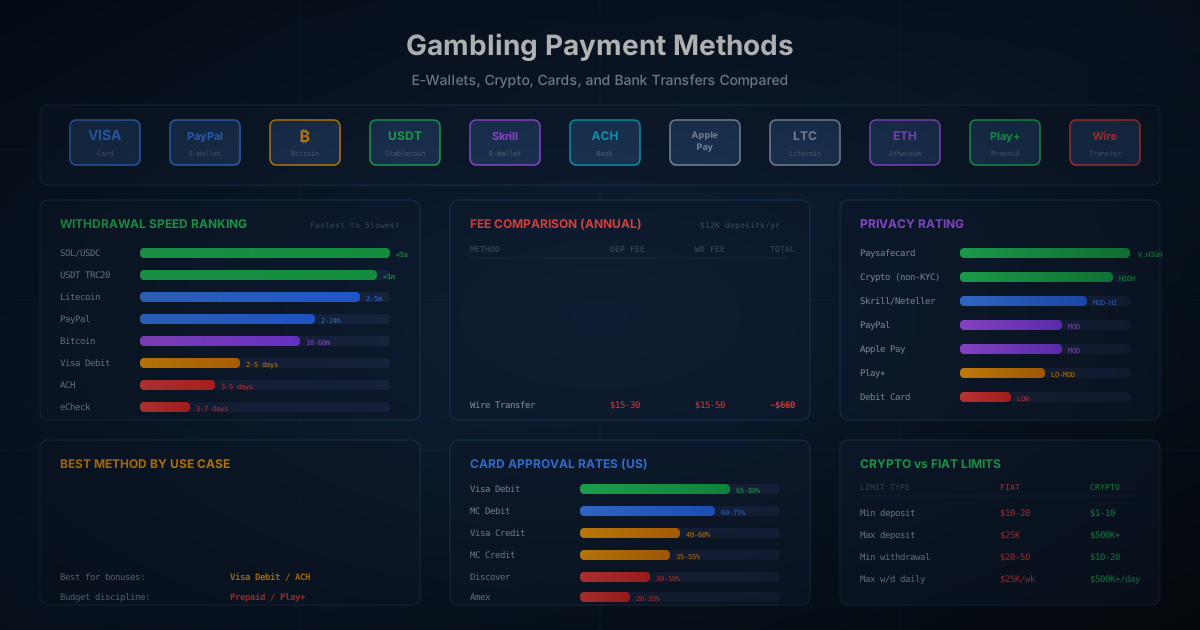
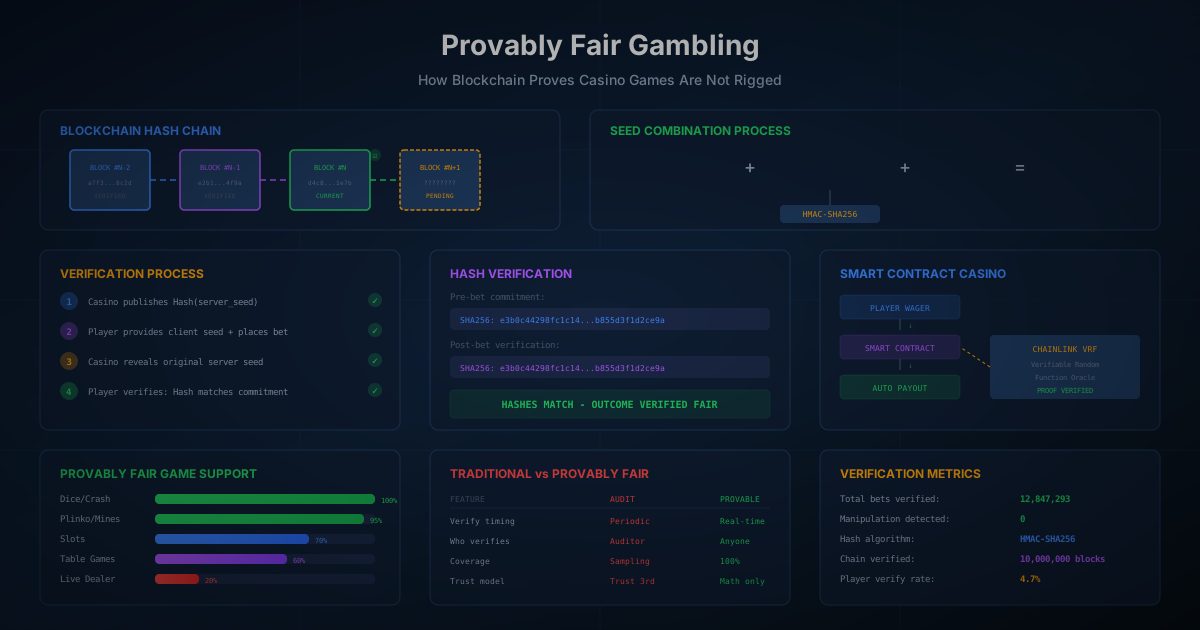
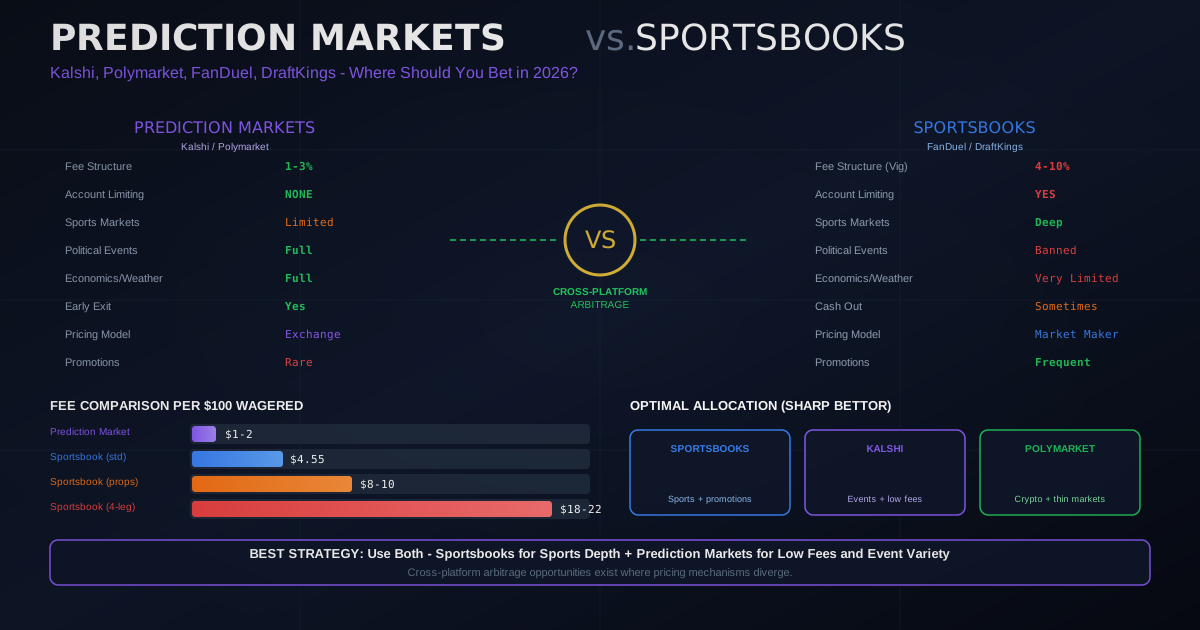
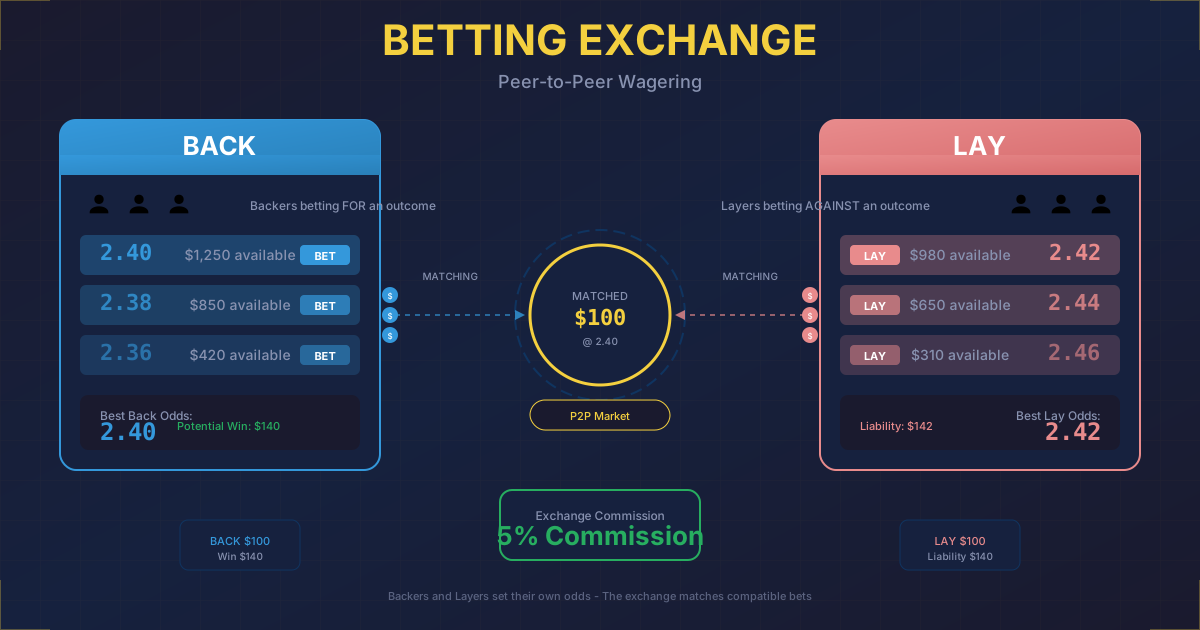
The integration of decentralized finance continues to surge. Cryptocurrencies, particularly stablecoins like USDT and USDC, are projected to account for over 70% of all crypto-betting transactions in 2026, fueling an offshore and decentralized betting sector valued at over $65 billion [cite: 1]. Blockchain technology appeals to bettors by offering faster payouts, zero-commission peer-to-peer exchanges, transparency through smart contracts, and anonymity that bypasses traditional banking restrictions [cite: 36, 37]. Peer-to-peer platforms—such as EPICK Fantasy—are gaining massive traction as they reduce the house edge to a minor 0.5-5% administrative fee, bypassing the sportsbook's typical 10-15% vig [cite: 38].
7.3 Live and Micro-Betting Expansion
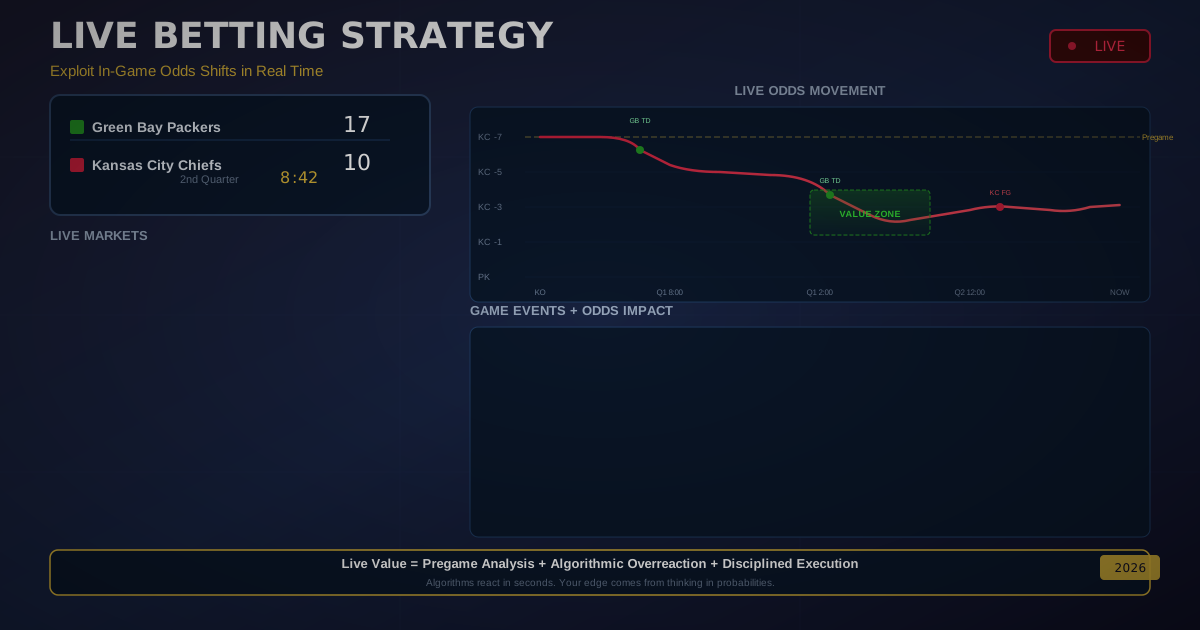
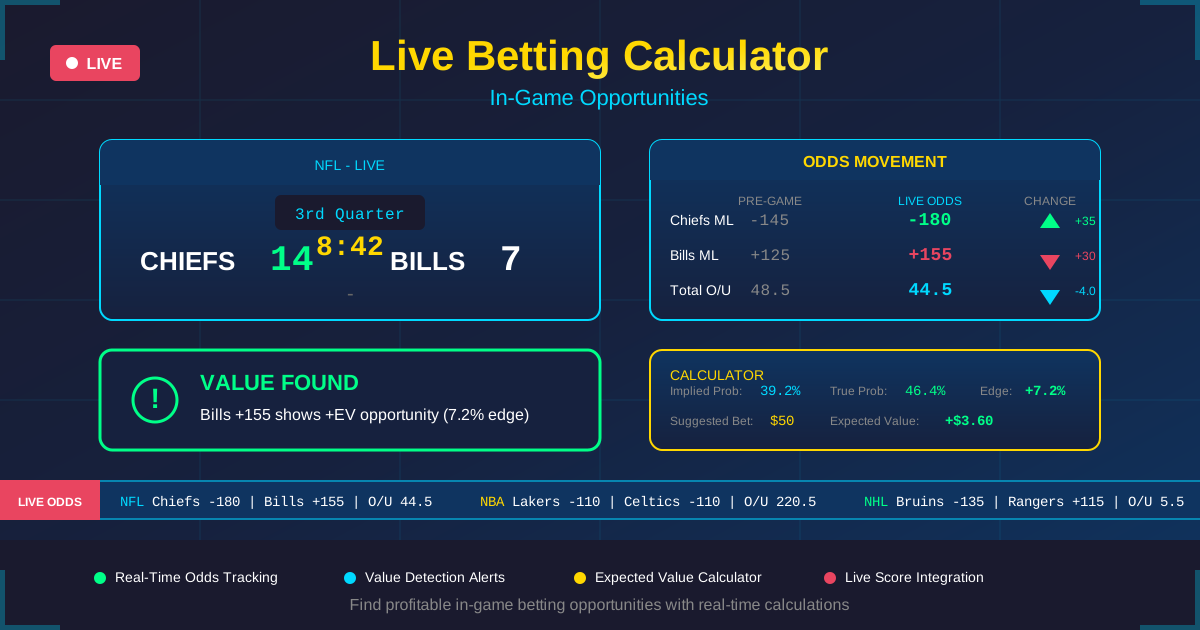
Live (in-play) betting has now transcended pre-match wagering. As of early 2026, live wagering represents 53.4% of all online betting activity, powered by real-time data integration and API connectivity [cite: 1]. This shift necessitates faster, lower-latency data streams to support micro-betting markets, despite parallel legislative efforts in some states to ban these high-frequency wagers [cite: 8].
8. Conclusion: Your Strategic Path to Profitability in a Maturing Market
The online gambling industry is navigating a pivotal transition. The era of exponential, unchecked growth post-PASPA is settling into a phase of mature, data-driven optimization. As handles cross the $165 billion mark in the U.S. alone [cite: 6], state governments are increasingly flexing their regulatory muscles to protect consumers and the integrity of athletic competitions – evidenced by the widespread prohibition of college prop bets [cite: 11] and complex localized structures like Wisconsin's tribal models [cite: 13].
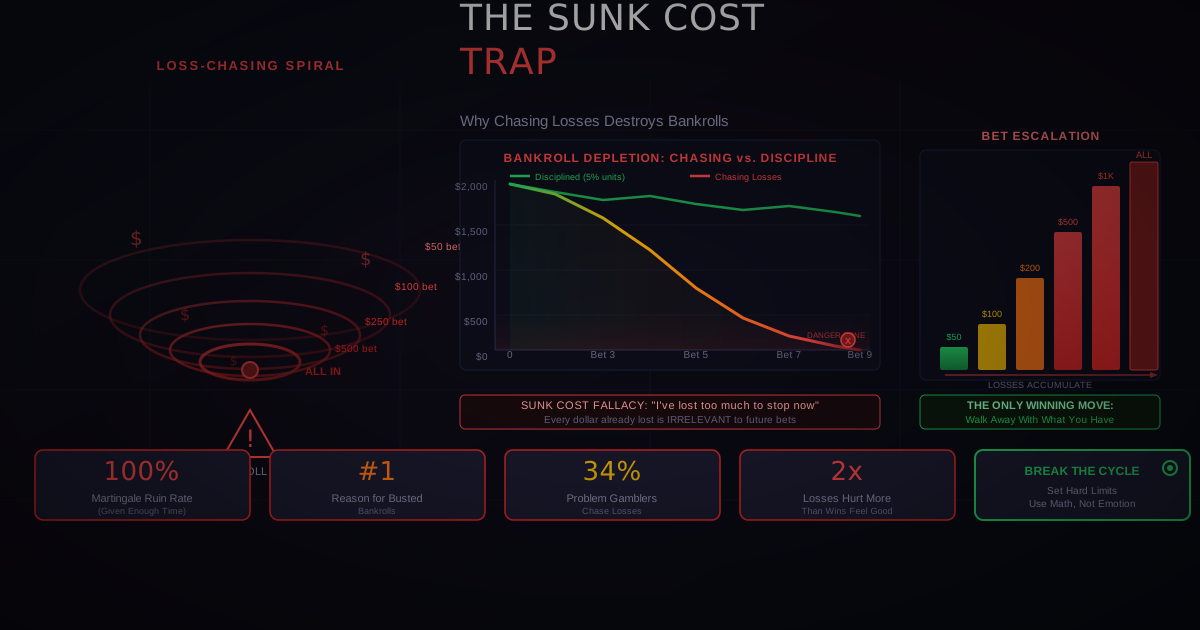
For the consumer, the ecosystem is inherently adversarial. Sportsbooks are leveraging Same-Game Parlays and AI-driven micro-markets to inflate their hold margins to unprecedented heights [cite: 18]. A casual bettor relying solely on intuition and multi-leg parlays is mathematically guaranteed to lose their bankroll over the long term.
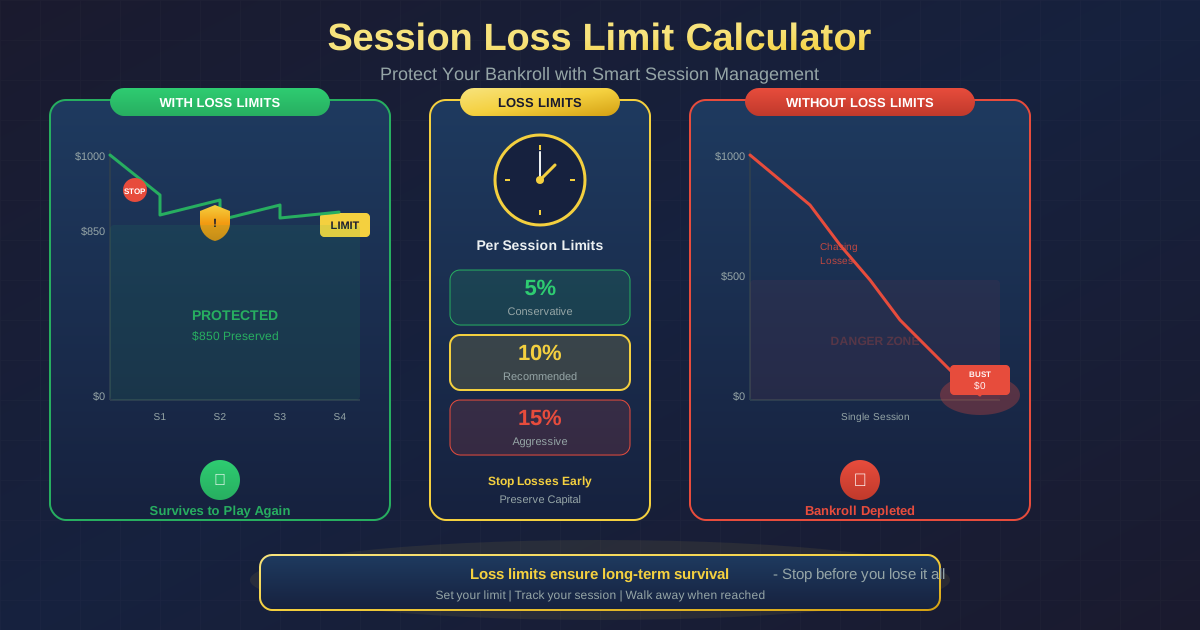
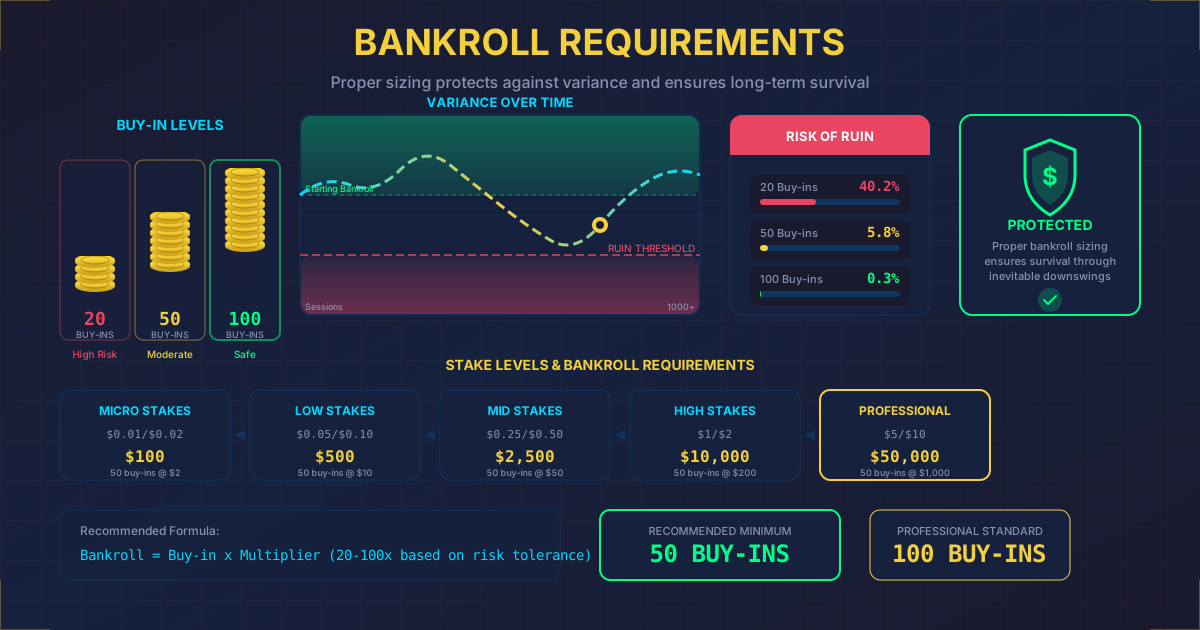
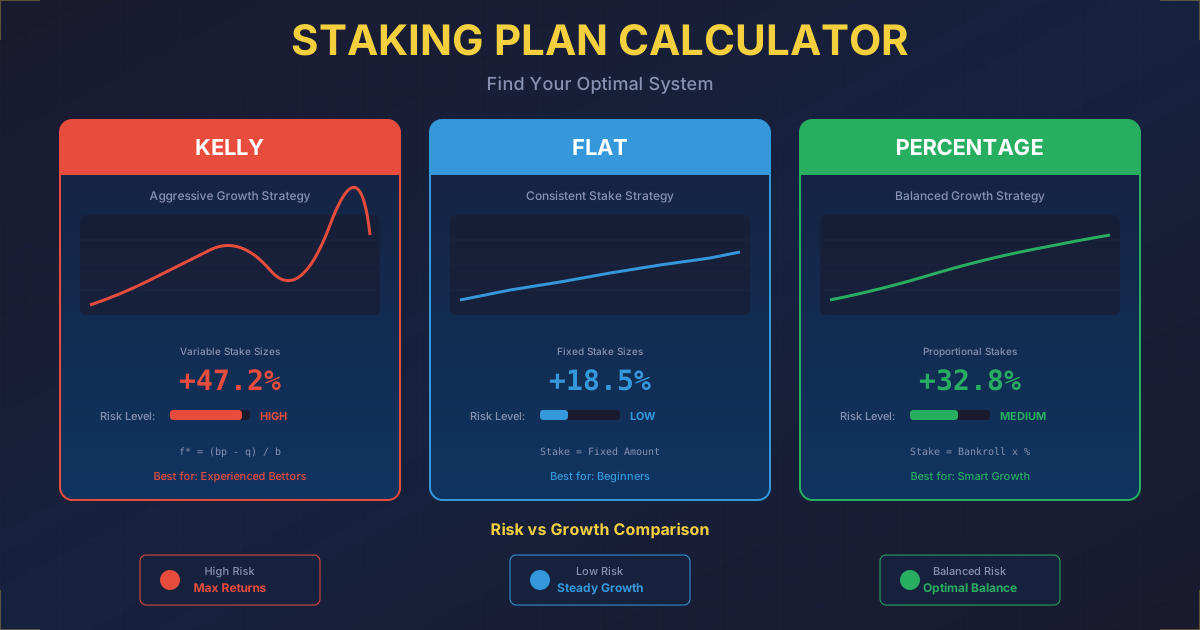
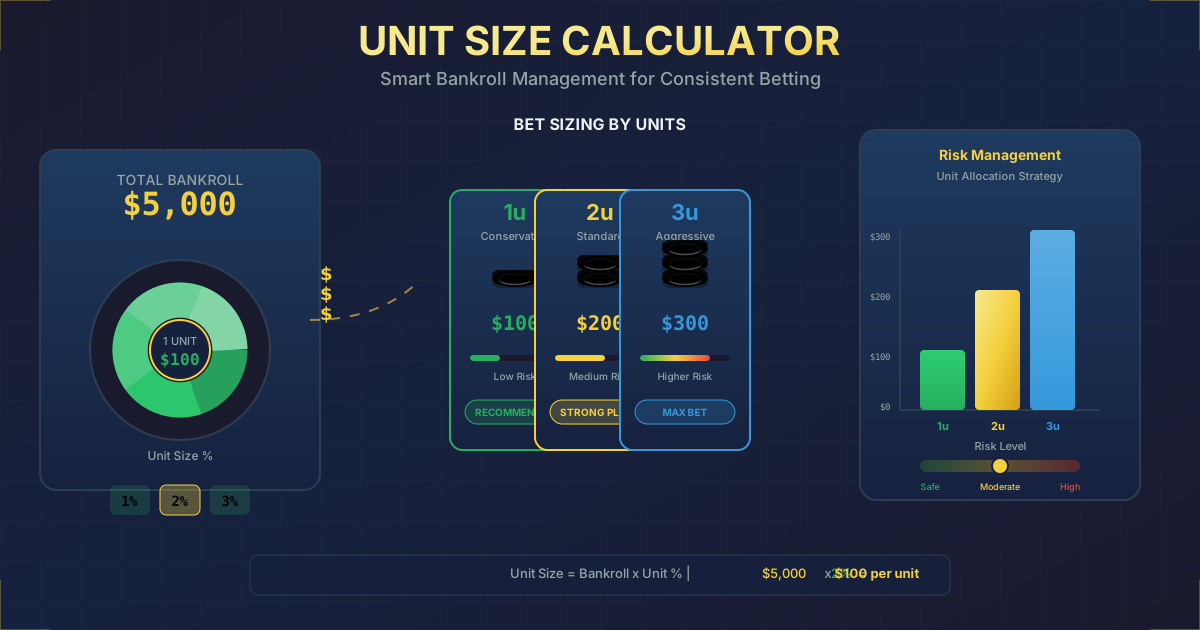
To survive and generate sustainable profits, bettors must treat sports wagering as a financial market, utilizing rigorous mathematical analysis, astute bankroll management, and variance mitigation. Embracing strategies like +EV and Arbitrage betting is what separates the recreational gambler from the consistent investor. However, executing these strategies manually is functionally impossible in a fast-moving digital market.
To arm yourself with the mathematical edge required to beat the bookmakers, utilize the suite of privacy-focused algorithms available at Practical Web Tools' Gambling Tools:
- Compare market lines globally and understand implied probabilities using the Odds Converter.
- Unmask the hidden "correlation tax" of high-variance bets with the Parlay Calculator.
- Lock in risk-free profits on market inefficiencies using the Arbitrage Calculator.
- Ensure every wager holds long-term profitability by verifying the math with the Expected Value Calculator.
By leveraging these computational tools, you can effectively neutralize the sportsbook's inherent advantage, transforming gambling from a game of chance into a disciplined strategy of data analytics. Embrace the math, master the tools, and secure your place as a savvy bettor in the evolving online gambling landscape.