Alternate Lines and Buying Points: When Paying Extra for Better Odds Is Worth It (2026)
Buying a half-point from -3 to -2.5 in the NFL costs you an extra 15 cents of juice on average -- but it saves you from a push on 9.8% of outcomes, making it one of the most mathematically justifiable plays in all of sports betting. Alternate lines, buying points, and teaser bets are among the most misunderstood markets in sports wagering. Recreational bettors either avoid them entirely or use them indiscriminately, while sharp bettors treat them as precision tools that unlock value at specific price points.
This guide breaks down the complete mathematics of alternate lines and point-buying in 2026. You will learn which key numbers justify the extra juice, when buying points offers genuine positive expected value, how teaser strategy works at a mathematical level, and when selling points can be even more profitable than buying them. Every recommendation is grounded in data, with breakeven calculations you can verify yourself.
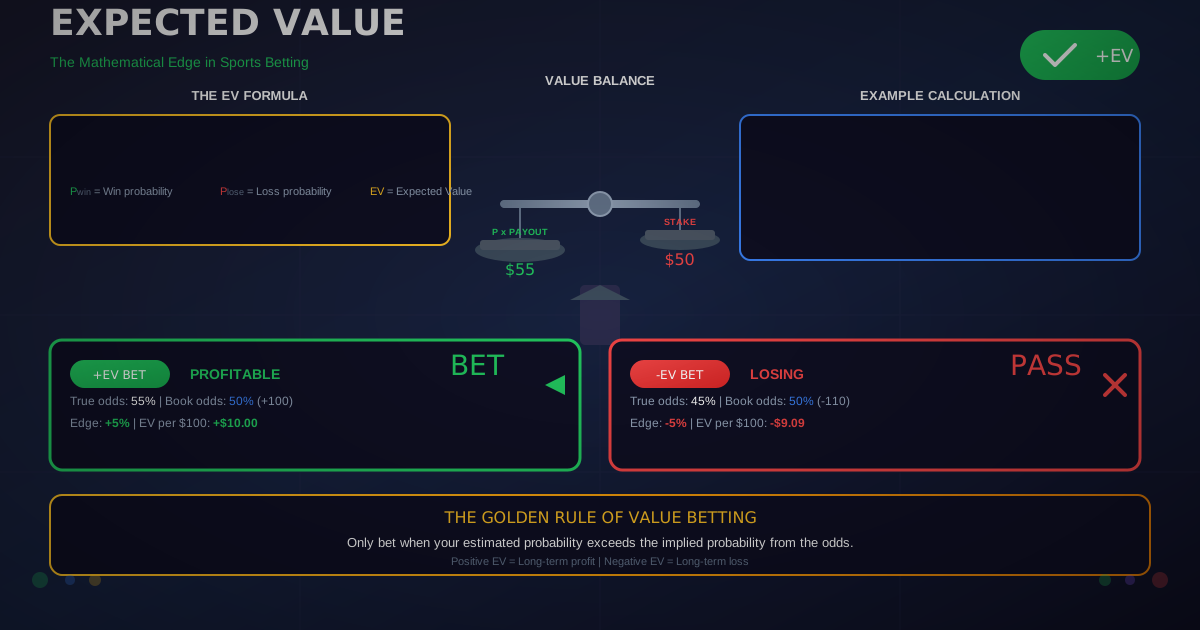
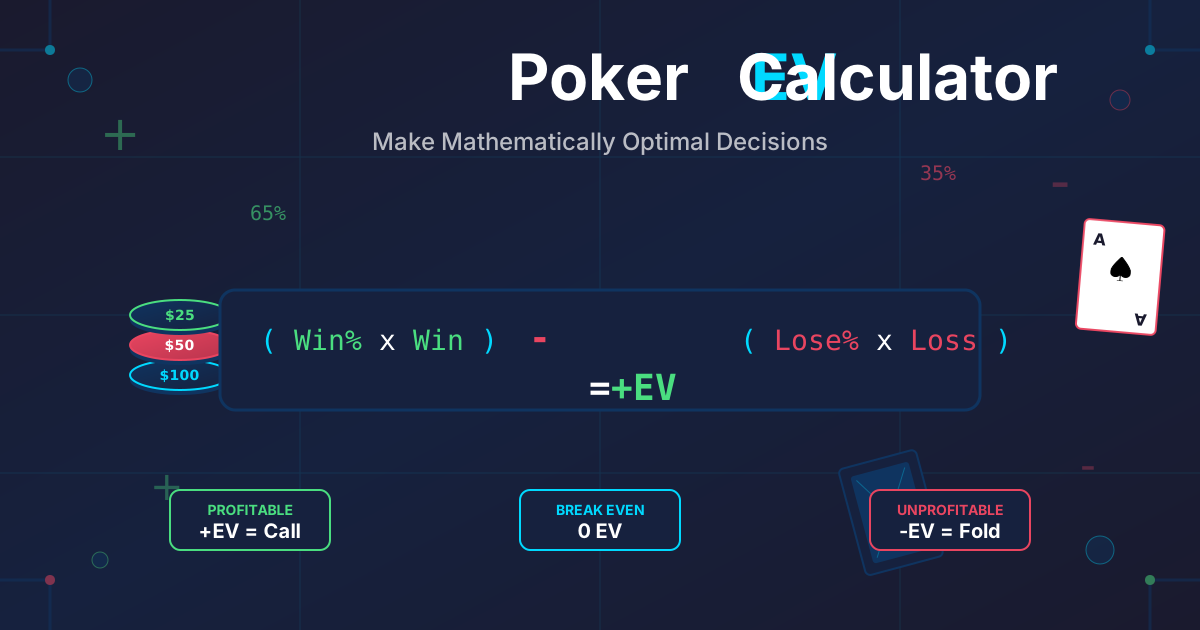
Run the numbers on any alternate line with our free Expected Value Calculator -- the essential tool for evaluating whether the juice is worth the squeeze.
What Are Alternate Lines in Sports Betting?
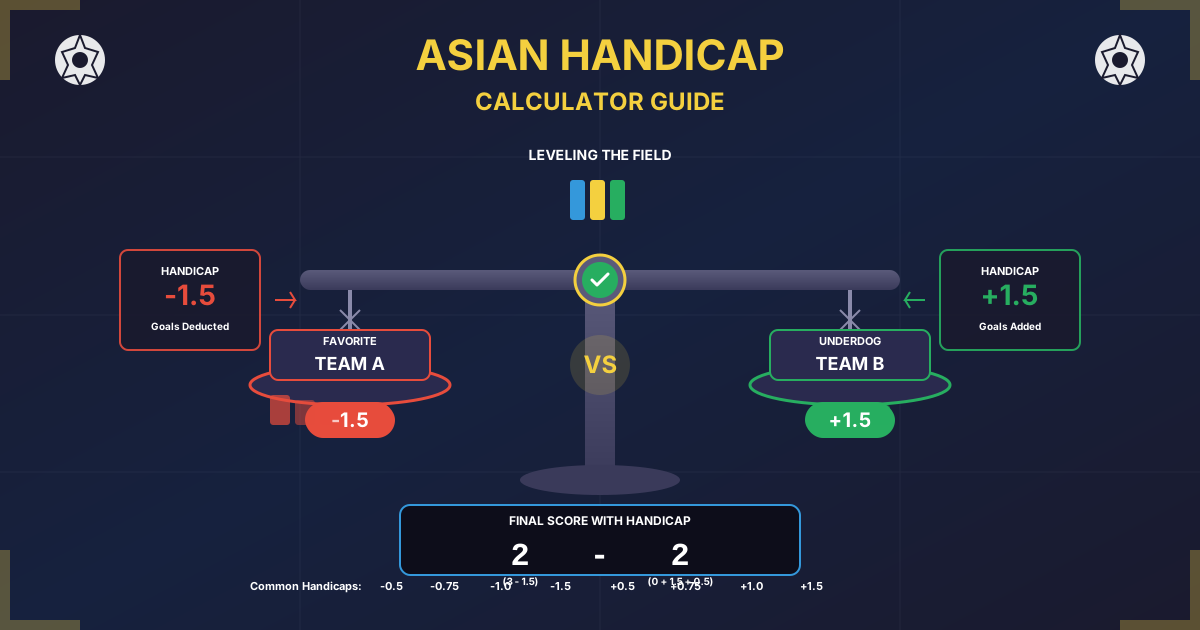
Alternate lines are non-standard point spreads and totals offered at adjusted odds. Instead of the primary line (e.g., Team A -3 at -110), sportsbooks offer the same game at different spreads (Team A -1.5 at -165, Team A -6.5 at +155) with corresponding odds changes. Alternate lines allow bettors to customize their risk/reward profile on any game.
How Alternate Lines Are Structured
Sportsbooks typically offer alternate lines in half-point increments extending 3-10 points in either direction from the primary spread. The further you move from the primary line, the more the odds change.
| Alternate Spread (NFL Example) | Odds (Buying Points) | Odds (Selling Points) | Change vs Standard |
|---|---|---|---|
| Team A -1 | -180 | -- | Bought 2 points from -3 |
| Team A -1.5 | -165 | -- | Bought 1.5 points |
| Team A -2 | -145 | -- | Bought 1 point |
| Team A -2.5 | -130 | -- | Bought 0.5 point |
| Team A -3 (primary) | -110 | -110 | Standard line |
| Team A -3.5 | +100 | -- | Sold 0.5 point |
| Team A -4 | +110 | -- | Sold 1 point |
| Team A -4.5 | +120 | -- | Sold 1.5 points |
| Team A -5 | +130 | -- | Sold 2 points |
| Team A -6.5 | +155 | -- | Sold 3.5 points |
| Team A -7 | +170 | -- | Sold 4 points |
| Team A -10 | +250 | -- | Sold 7 points |
The pricing is not linear. Moving through key numbers (3 and 7 in the NFL) costs significantly more than moving through non-key numbers. Understanding this pricing structure is the foundation of profitable alternate line betting.
Alternate Lines vs. Buying Points
While alternate lines and buying points are often used interchangeably, there is a technical distinction:
- Alternate lines are pre-set offerings at various spreads with corresponding odds. You select from the menu.
- Buying points typically refers to paying extra juice to move the standard line in your favor by a specific increment (e.g., paying -120 instead of -110 to move from -3 to -2.5).
In practice, the result is the same: you get a more favorable spread at a higher price. The question is always whether the price is worth the improvement.
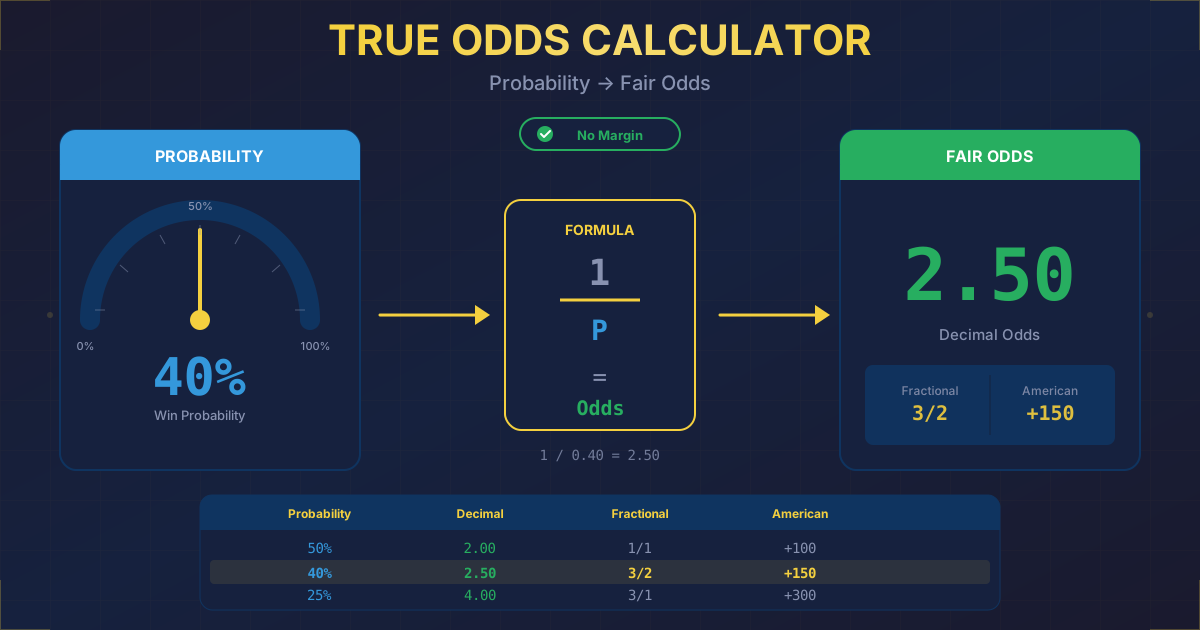
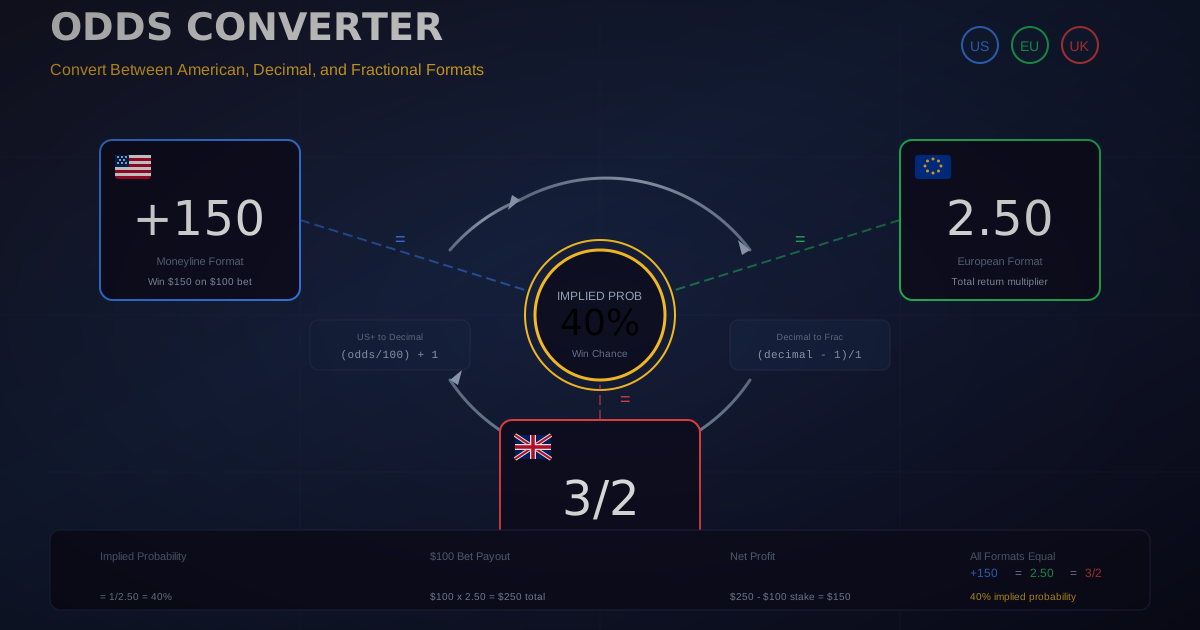
Convert between American, decimal, and fractional odds to compare alternate line prices across books with our Odds Converter.
What Are Key Numbers in NFL Betting and Why Do They Matter?
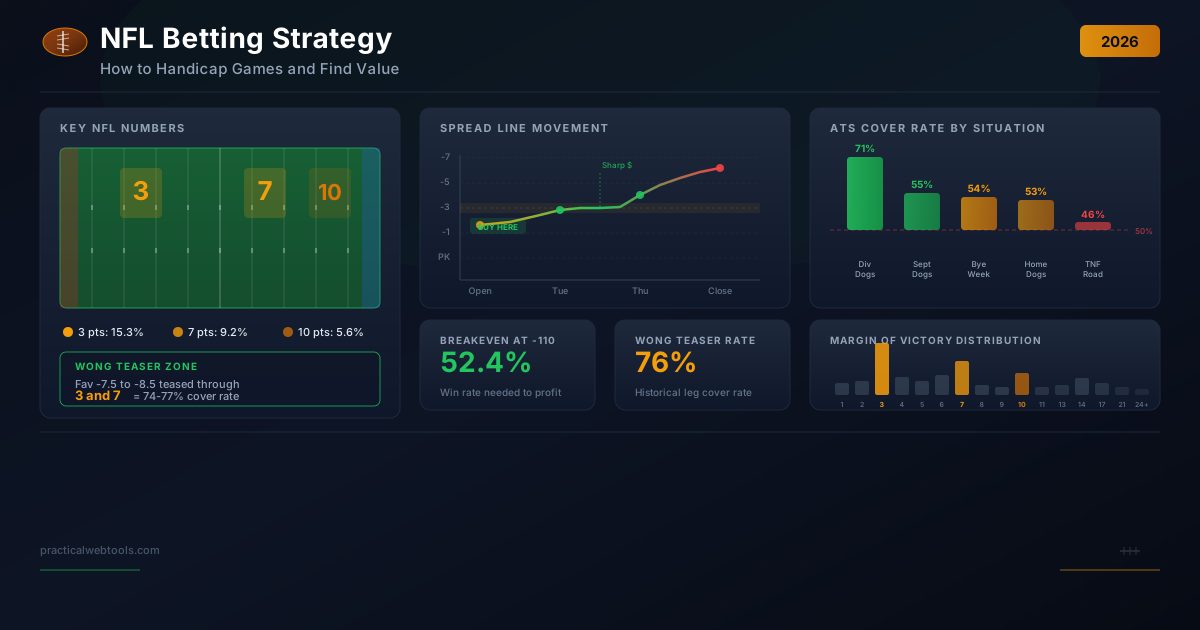
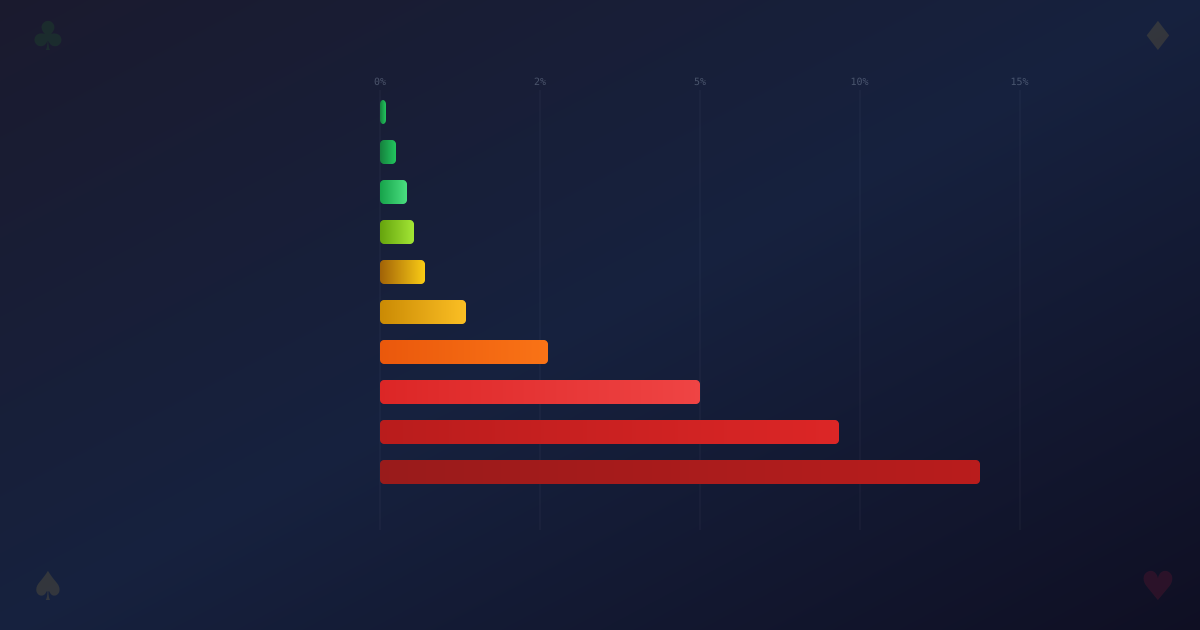
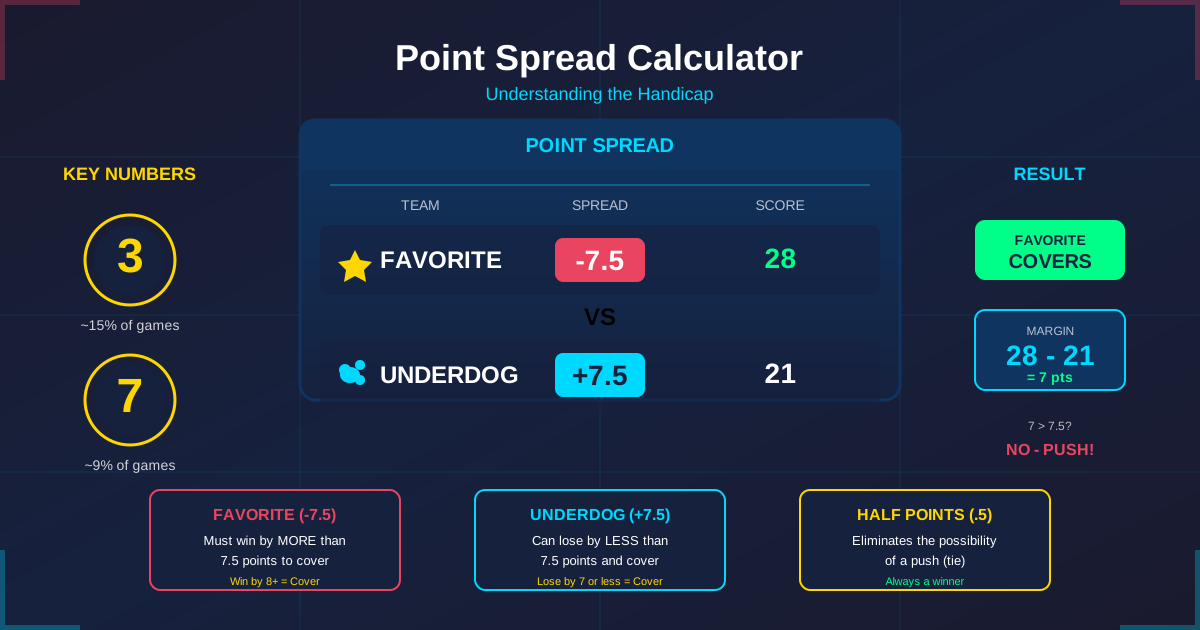
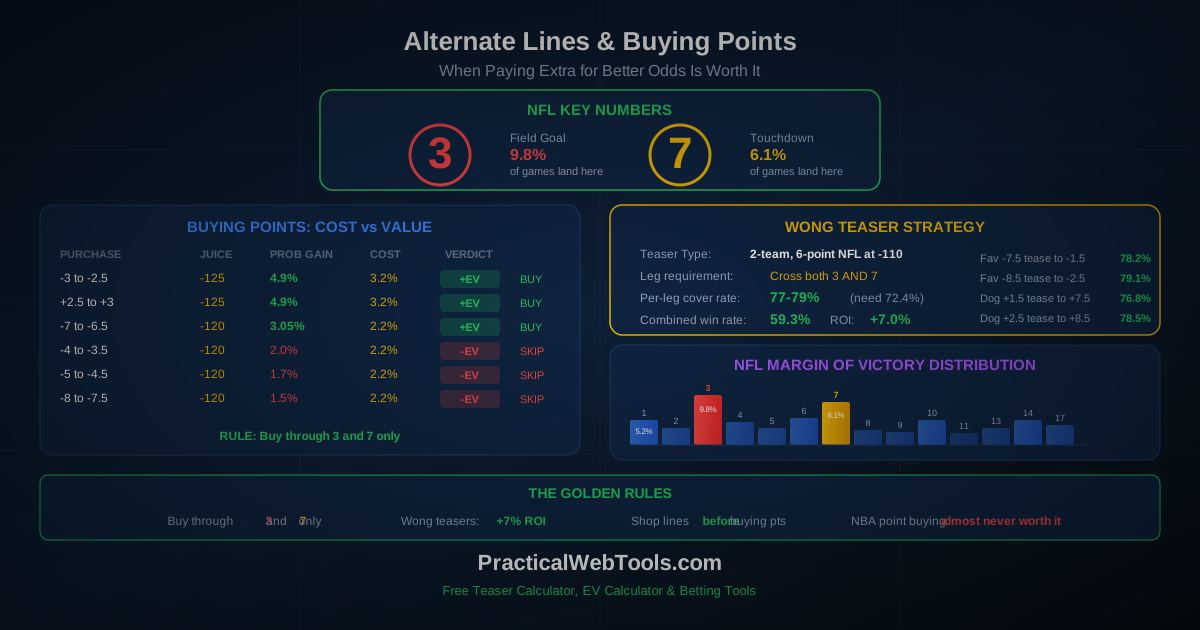
Key numbers in NFL betting are the most common margins of victory. The number 3 (the value of a field goal) is the most important, with approximately 9.8% of NFL games decided by exactly 3 points. The number 7 (touchdown) is second, with approximately 6.1% of games landing on exactly 7 points. These numbers make buying through them disproportionately valuable.
NFL Margin of Victory Distribution
| Margin of Victory | Frequency (2010-2025) | Cumulative % | Key Number Status |
|---|---|---|---|
| 1 point | 5.2% | 5.2% | Minor key |
| 2 points | 3.8% | 9.0% | -- |
| 3 points | 9.8% | 18.8% | Primary key |
| 4 points | 4.5% | 23.3% | -- |
| 5 points | 3.4% | 26.7% | -- |
| 6 points | 5.1% | 31.8% | Minor key |
| 7 points | 6.1% | 37.9% | Secondary key |
| 8 points | 2.9% | 40.8% | -- |
| 9 points | 2.1% | 42.9% | -- |
| 10 points | 4.2% | 47.1% | Minor key |
| 11 points | 1.8% | 48.9% | -- |
| 13 points | 2.7% | -- | -- |
| 14 points | 4.0% | -- | Minor key |
| 17 points | 3.1% | -- | Minor key |
The fact that 9.8% of NFL games land on exactly 3 means that any time you can move from -3 to -2.5 (or from +2.5 to +3), you are changing the outcome of roughly 1 in 10 games from a push/loss to a win. That is an enormous improvement, and it is why the price of crossing 3 is the highest of any half-point increment.
Key Numbers in Other Sports
| Sport | Key Numbers | Explanation |
|---|---|---|
| NFL | 3, 7, 6, 10, 14, 17 | Scoring increments (FG, TD, TD+FG) |
| NBA | None (continuous scoring) | Points scored in 1s, 2s, 3s -- no single key number |
| NHL | 1 (most common final margin) | Low-scoring; 1-goal margins dominate |
| MLB | 1 (most common run-line margin) | Run lines at 1.5 -- the 1-run game is key |
| College Football | 3, 7 (same as NFL) | Same scoring structure |
In the NBA, there are no key numbers because scoring is essentially continuous. This means buying points in the NBA is almost never worth the extra juice -- the probability gained per half-point is roughly constant at every number. The NFL is the only major sport where key numbers create mathematically justifiable point-buying opportunities.
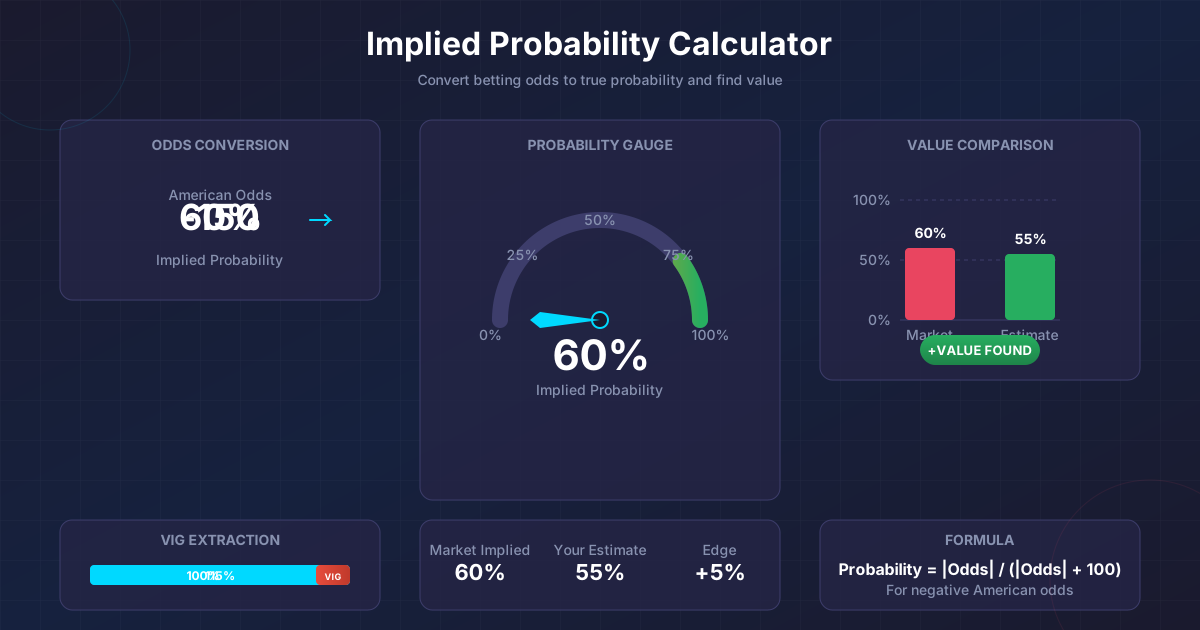
Calculate the implied probability change from buying through key numbers with our Implied Probability Calculator.
When Is Buying a Half Point Worth the Extra Juice?
Buying a half point is worth the extra juice when the probability gain from crossing a key number exceeds the cost of the additional juice. The math is straightforward: calculate the win probability at the standard line, calculate it at the bought line, and compare the gain to the juice premium.
The Breakeven Math for Buying Points
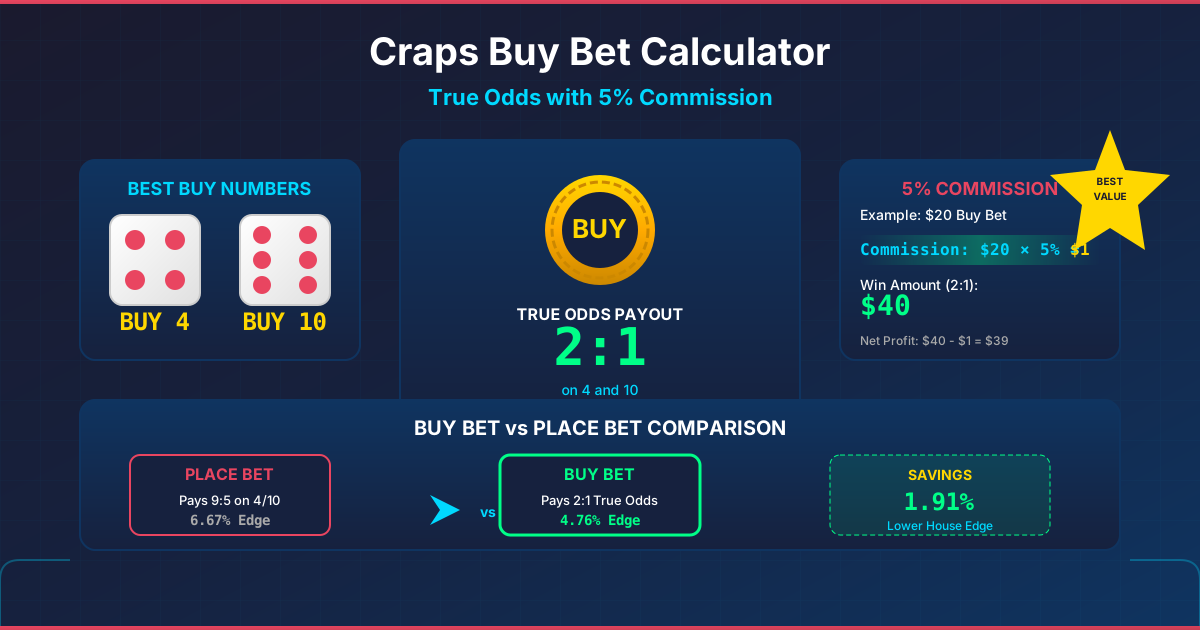
Here is the core calculation. At standard -110 juice, you need to win 52.38% of bets to break even. If buying a half point costs -120 instead of -110, you need to win 54.55% to break even. The additional cost is 2.17 percentage points of win probability. If buying the half point improves your win probability by more than 2.17%, it is profitable.
| Point Purchase | Standard Juice | Bought Juice | Breakeven at Standard | Breakeven at Bought | Required Probability Gain | Worth It? |
|---|---|---|---|---|---|---|
| -3 to -2.5 | -110 | -125 | 52.4% | 55.6% | 3.2% | YES -- 3 lands on 9.8% of games |
| +2.5 to +3 | -110 | -125 | 52.4% | 55.6% | 3.2% | YES -- same logic, gaining 3 |
| -7 to -6.5 | -110 | -120 | 52.4% | 54.5% | 2.2% | YES -- 7 lands on 6.1% of games |
| +6.5 to +7 | -110 | -120 | 52.4% | 54.5% | 2.2% | YES -- gaining 7 |
| -3 to -2 | -110 | -140 | 52.4% | 58.3% | 5.9% | MARGINAL -- gaining 2.5 and 3 |
| -4 to -3.5 | -110 | -120 | 52.4% | 54.5% | 2.2% | NO -- 4 only lands on 4.5% |
| -5 to -4.5 | -110 | -120 | 52.4% | 54.5% | 2.2% | NO -- 5 only lands on 3.4% |
| -8 to -7.5 | -110 | -120 | 52.4% | 54.5% | 2.2% | NO -- 8 only lands on 2.9% |
The Golden Rule of Buying Points
Buy through 3 and 7 in the NFL. Almost never buy through any other number.
This is the single most important takeaway about buying points. The math works at 3 and 7 because these numbers carry significantly higher landing frequencies than their neighbors. At every other number, the probability gain from buying a half point is less than the cost of the extra juice.
The exception is if you can find a book that offers point purchases at a lower price than the market standard. If buying from -3 to -2.5 costs only -115 instead of -125, the math becomes even more favorable. Shopping for the best price on point purchases is just as important as shopping for the best standard line.
Determine whether a specific point purchase offers positive EV with our Expected Value Calculator.
NBA Point Buying: Why It Rarely Makes Sense
In the NBA, the margin of victory distribution is much more evenly spread because scoring is continuous. No single number carries more than about 4% of outcomes. This means buying a half point in the NBA gains you approximately 2% win probability at most, while the juice typically costs 2-3% -- a losing proposition in almost every scenario.
The only NBA exception is buying through 0 (from -0.5 to pick 'em or from +0.5 to having the hook). Since the spread cannot land on 0 (one team must win), moving through 0 only protects against pushes on other numbers, which is rarely worth the cost.
How Do NFL Teasers Work and When Are They Profitable?
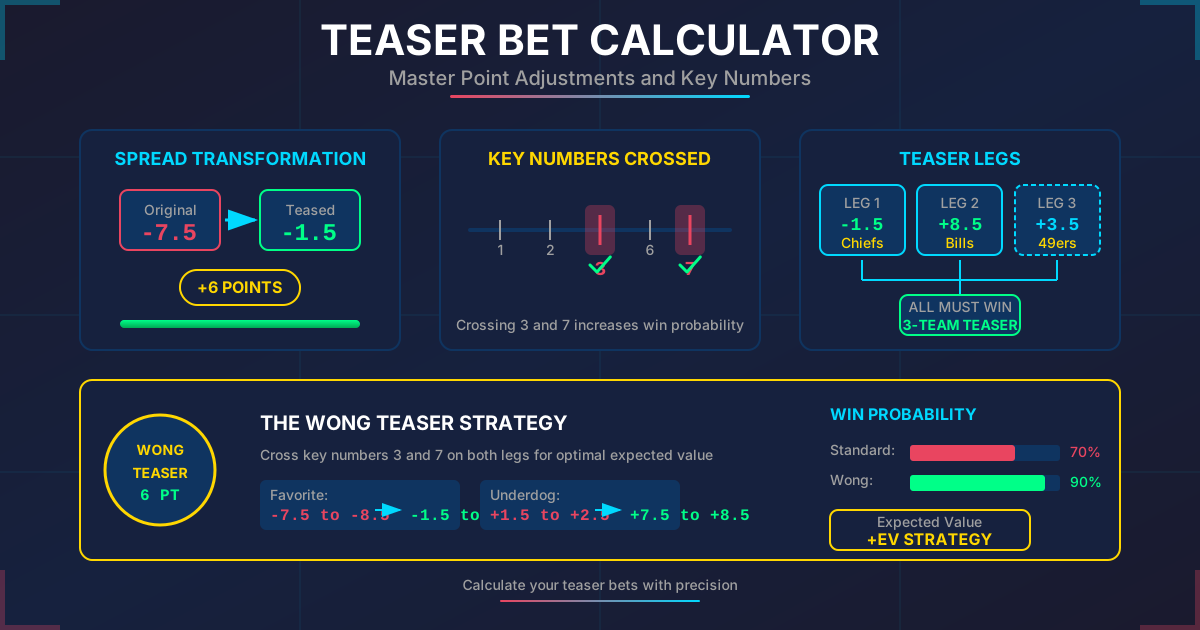
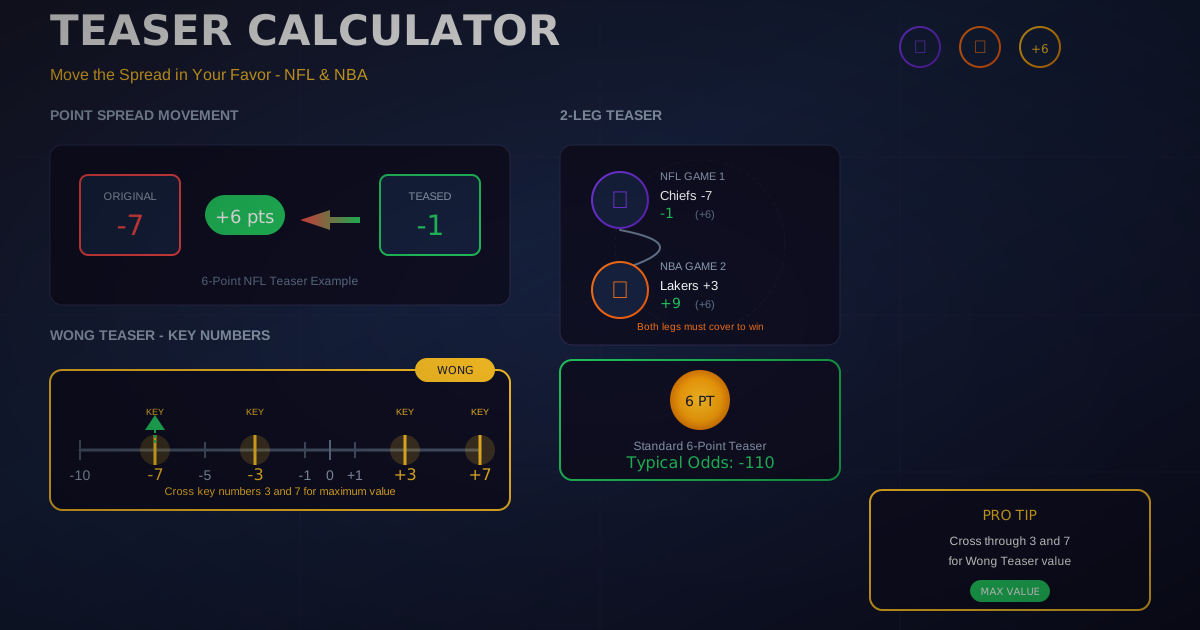
NFL teasers allow you to move the spread by a fixed number of points (typically 6, 6.5, or 7) on two or more games, in exchange for significantly reduced odds. A standard 2-team, 6-point teaser pays approximately -110 to -120. Teasers are profitable when both legs cross key numbers, converting high-probability outcomes into near-certainties.
Standard Teaser Payout Structure
| Teaser Type | Points | Teams Required | Standard Odds | Breakeven Win Rate Per Leg |
|---|---|---|---|---|
| 2-team, 6 pts | 6 | 2 | -110 to -120 | 72.4% - 73.9% |
| 2-team, 6.5 pts | 6.5 | 2 | -120 to -130 | 73.9% - 75.2% |
| 2-team, 7 pts | 7 | 2 | -130 to -140 | 75.2% - 76.4% |
| 3-team, 6 pts | 6 | 3 | +150 to +180 | 69.4% - 71.2% |
| 3-team, 7 pts | 7 | 3 | +120 to +150 | 71.2% - 72.8% |
The Wong Teaser Strategy
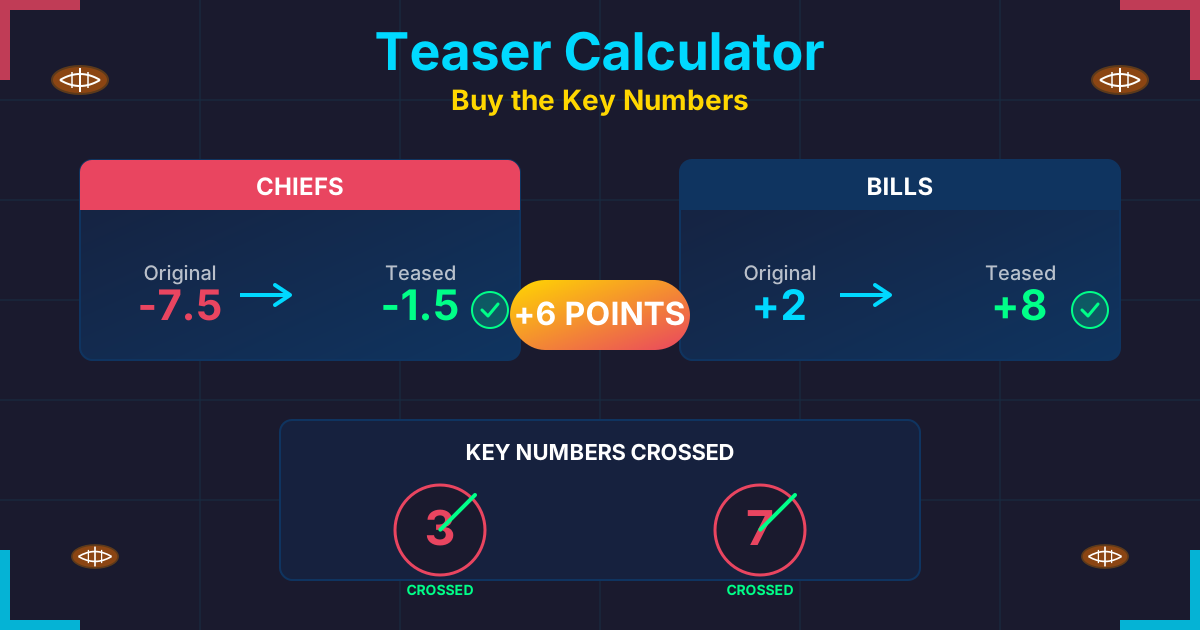
The Wong teaser, named after Stanford Wong who published the original research, is the most mathematically proven teaser strategy. The concept is simple: only tease NFL favorites of -7.5 to -8.5 down through both 7 and 3 (to -1.5 to -2.5), and underdogs of +1.5 to +2.5 up through both 3 and 7 (to +7.5 to +8.5).
By crossing both key numbers (3 and 7) in a single teaser leg, the probability of covering the teased spread exceeds 75%, which is above the breakeven threshold for a standard 2-team teaser.
| Wong Teaser Leg Type | Original Spread | Teased Spread (6 pts) | Key Numbers Crossed | Historical Cover Rate |
|---|---|---|---|---|
| Favorite -7.5 | -7.5 | -1.5 | 7, 3 | 78.2% |
| Favorite -8 | -8 | -2 | 7, 3 | 77.8% |
| Favorite -8.5 | -8.5 | -2.5 | 7, 3 | 79.1% |
| Underdog +1.5 | +1.5 | +7.5 | 3, 7 | 76.8% |
| Underdog +2 | +2 | +8 | 3, 7 | 77.3% |
| Underdog +2.5 | +2.5 | +8.5 | 3, 7 | 78.5% |
Evaluate teaser legs and calculate exact payouts with our Teaser Calculator.
Teaser Math: The Full Breakdown
For a 2-team, 6-point teaser at -110:
- You need to win both legs.
- At -110, you need to win 52.38% of the time to break even.
- Since you must win both legs, each leg needs to cover at approximately the square root rate: ~72.4% per leg.
- If each Wong teaser leg covers at 77%, your combined win rate is 0.77 x 0.77 = 59.29%.
- At -110, a 59.29% win rate yields an ROI of approximately +7.0%.
This is a substantial edge, and it is why Wong teasers have been one of the most consistently profitable strategies in NFL betting for over two decades. However, be aware that some sportsbooks have degraded their teaser payouts (offering -120 or -130 for 2-team, 6-point teasers), which narrows the edge.
When Teasers Are Not Profitable
Teasers lose their edge in several situations:
- NBA teasers. No key numbers means teasing through arbitrary numbers provides no extra value.
- More than 3 teams. Each additional leg compounds the risk exponentially. A 4-team, 6-point teaser at +300 requires each leg to cover at approximately 72%, and the combined probability of all four hitting is only about 26.9% -- below the 25% breakeven for +300.
- Teasing through non-key NFL numbers. A 6-point tease from -4 to +2 crosses 3 but not 7. This is less valuable than crossing both key numbers.
- Teasing totals. NFL totals do not have key numbers with the same concentration as spreads. Teasing a total from Over 44 to Over 38 does not provide the same mathematical advantage as teasing a spread through 3 and 7.
How Do Alternate Totals Create Value?
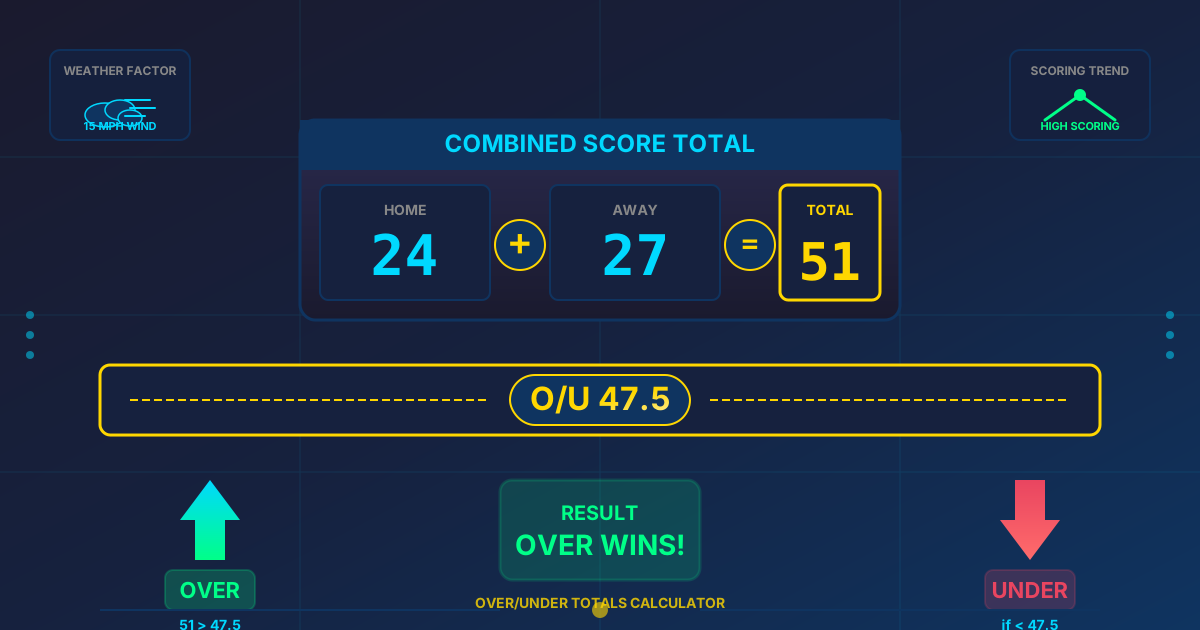
Alternate totals offer the same customization as alternate spreads: you can bet a higher or lower total at adjusted odds. The key to finding value in alternate totals is identifying games where the distribution of outcomes is skewed (clustered around certain numbers) and the alternate pricing does not fully reflect this skew.
Alternate Total Pricing Example (NFL)
| Alternate Total | Over Odds | Under Odds | Probability Shift |
|---|---|---|---|
| 38.5 | -260 | +210 | Heavy over lean |
| 40.5 | -195 | +165 | Strong over lean |
| 42.5 | -145 | +125 | Moderate over lean |
| 44.5 (primary) | -110 | -110 | Standard |
| 46.5 | +125 | -145 | Moderate under lean |
| 48.5 | +165 | -195 | Strong under lean |
| 50.5 | +210 | -260 | Heavy under lean |
When Alternate Totals Offer Edge
Alternate totals offer value in specific game contexts:
- Weather-impacted games. If you project a game total at 38 but the market total is 44.5, taking Under 46.5 at -145 may offer better EV than Under 44.5 at -110 because the probability of landing below 46.5 is very high given your weather projection.
- Extreme pace mismatches. When a fast-paced team faces a slow-paced team, the total distribution can be wider than normal. Alternate totals at the extremes may be mispriced because the model assumes a normal distribution.
- Blowout potential. In games with a large spread (10+ points), the total distribution is skewed upward because blowouts tend to produce more total points (garbage-time scoring). Alternate overs at modest premiums can offer value.
Calculate the expected value of alternate total bets with our Expected Value Calculator.
Alternate Totals in the NBA
NBA alternate totals are more liquid than NFL alternate totals because the higher scoring creates a wider range of reasonable outcomes. A game with a total of 225.5 might see alternate totals ranging from 210.5 to 240.5. The broader range creates more opportunities for mispricing, but also more competition from sharp bettors.
The most common NBA alternate total strategy is taking the alternate under at a modest premium in games between two top-10 defensive teams. These games tend to cluster below the total at higher rates than the market prices, making the alternate under at -145 to -165 a consistently profitable bet.
When Is Selling Points a Smart Strategy?
Selling points -- taking a worse spread in exchange for better odds -- is smart when the points you are giving up have low probability of mattering (non-key numbers) and the odds improvement is significant enough to create positive expected value. Selling points is the mirror image of buying points, and in many cases it offers better value.
The Math of Selling Points
| Point Sale | Standard Line | Sold Line | Odds Improvement | Points Given Up | Probability Lost | Net EV Impact |
|---|---|---|---|---|---|---|
| -3 to -3.5 (sell 0.5) | -110 | +100 | +10 cents | 3.5 (non-key) | ~2% | Positive if you like the team |
| -3 to -4 (sell 1) | -110 | +110 | +20 cents | 4 (non-key) | ~4.5% | Often positive |
| -7 to -7.5 (sell 0.5) | -110 | +100 | +10 cents | 7.5 (non-key) | ~1.5% | Usually positive |
| +3 to +2.5 (sell 0.5) | -110 | +100 | +10 cents | 2.5 (non-key) | ~3.8% | Marginal |
| +7 to +6.5 (sell 0.5) | -110 | +100 | +10 cents | 6.5 (non-key) | ~2.5% | Often positive |
When Selling Is Better Than Buying
Selling points is generally more profitable than buying points outside of key numbers because the market overcharges for buying and undercompensates for selling. Here is why:
- Buying through key numbers is expensive because everyone knows those numbers matter. The price is efficient.
- Selling through non-key numbers is underpriced because the psychological loss aversion of giving up points makes it unpopular. Fewer bettors want to sell, so the odds improvement is often generous.
The strategic approach: if you strongly favor a team, consider selling points to get better odds rather than taking the standard line. If Team A is -3 at -110 and you think they will win by 7+, selling to -4 at +110 gives you a better payout while only risking outcomes that land on exactly 3.5 or 4 -- which is approximately 4.5% of games combined.
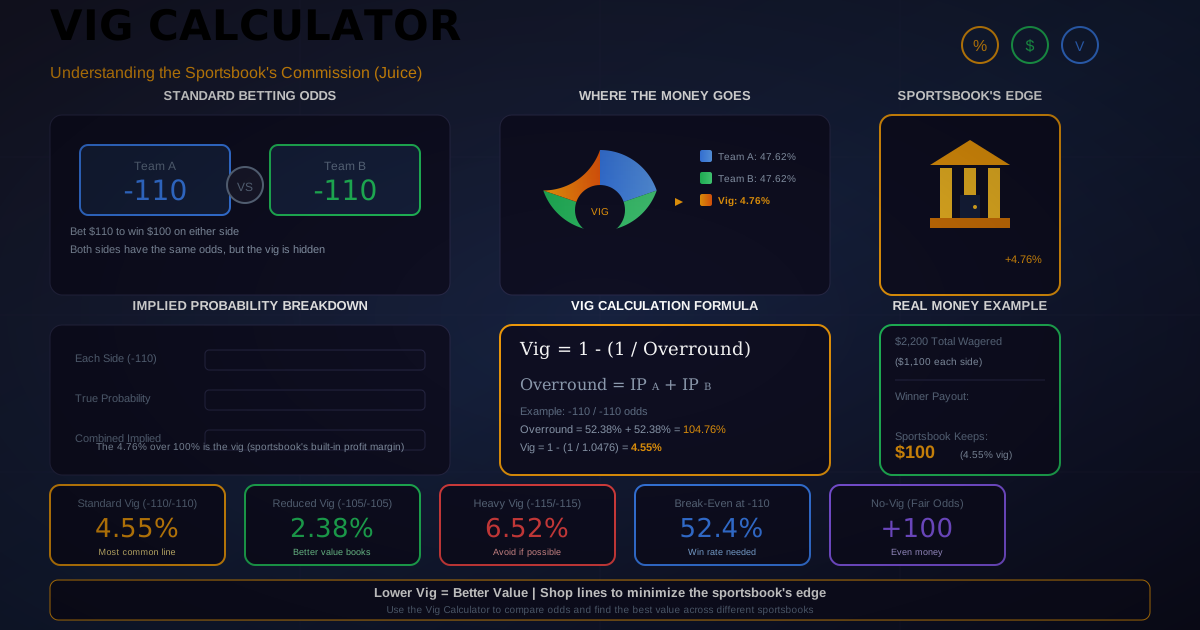
Calculate breakeven win rates at different juice levels with our Hold/Vig Calculator.
Selling Points on Totals
Selling points on totals follows the same logic. If you like the over at 44.5 but want better odds, selling to Over 46.5 at +125 may be profitable if your model projects the total at 48+. The key is that you are comfortable with the outcome range you are giving up.
How Do You Compare Buying Points vs. Shopping for a Better Line?
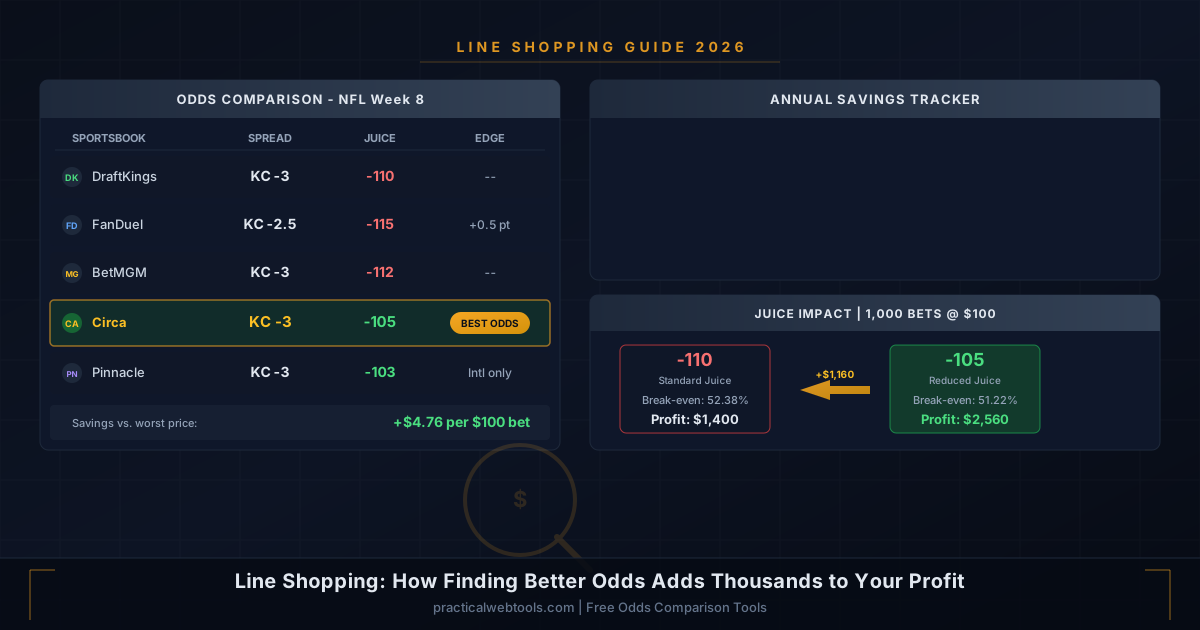
Shopping for a better line at standard juice is almost always preferable to buying points at higher juice. If one sportsbook has Team A -3 at -110 and another has Team A -2.5 at -110, taking -2.5 at the second book is strictly better than buying from -3 to -2.5 at -125 at the first book.
The Line Shopping vs. Point Buying Comparison
| Option | Spread | Odds | Breakeven Win % | Cost vs Best Available |
|---|---|---|---|---|
| Book A: standard line | -3 | -110 | 52.4% | Baseline |
| Book A: buy to -2.5 | -2.5 | -125 | 55.6% | +3.2% breakeven cost |
| Book B: standard line | -2.5 | -110 | 52.4% | FREE -- same price, better number |
| Book C: standard line | -2.5 | -105 | 51.2% | Actually CHEAPER than Book A baseline |
This example illustrates a fundamental principle: always shop the line before buying points. Having accounts at 3-5 sportsbooks and comparing lines before every bet is free and often provides the same or greater benefit as buying points.
When Buying Points Is Your Only Option
There are situations where buying points is the right play even after shopping:
- All books have the same key number. If every sportsbook has Team A -3 at -110 (which happens frequently on key NFL numbers), buying to -2.5 at -125 at the cheapest buy rate may be your only option for getting off the key number.
- You have a specific teaser leg in mind. If you want to construct a Wong teaser and only one book offers the precise teaser terms you need, buying or teasing at that book is the play.
- Late-breaking injury news. If an injury moves the line at most books but one slow-adjusting book still has the old number, grabbing it there -- even with a point buy if needed -- can capture value before it disappears.
Find the best available line across books with our Sure Bet Calculator.
What Is the Breakeven Analysis for Different Point Purchase Prices?
Understanding breakeven analysis ensures you never pay more for a point purchase than it is mathematically worth. The breakeven analysis compares the probability gain from the better number to the cost of the additional juice.
Complete Breakeven Table for NFL Point Purchases
| Purchase | Juice Cost | Breakeven Win % | Probability Gain Needed | Actual Probability Gain (Historical) | +EV? |
|---|---|---|---|---|---|
| -3 to -2.5 at -120 | 10 cents | 54.5% | 2.2% | 4.9% (half of 9.8%) | YES |
| -3 to -2.5 at -125 | 15 cents | 55.6% | 3.2% | 4.9% | YES |
| -3 to -2.5 at -130 | 20 cents | 56.5% | 4.1% | 4.9% | YES (marginal) |
| -3 to -2.5 at -135 | 25 cents | 57.4% | 5.1% | 4.9% | NO (barely) |
| +2.5 to +3 at -120 | 10 cents | 54.5% | 2.2% | 4.9% | YES |
| +2.5 to +3 at -125 | 15 cents | 55.6% | 3.2% | 4.9% | YES |
| -7 to -6.5 at -115 | 5 cents | 53.5% | 1.1% | 3.05% | YES |
| -7 to -6.5 at -120 | 10 cents | 54.5% | 2.2% | 3.05% | YES |
| -7 to -6.5 at -130 | 20 cents | 56.5% | 4.1% | 3.05% | NO |
| +6.5 to +7 at -120 | 10 cents | 54.5% | 2.2% | 3.05% | YES |
| -4 to -3.5 at -120 | 10 cents | 54.5% | 2.2% | ~2.0% | NO |
| -10 to -9.5 at -120 | 10 cents | 54.5% | 2.2% | ~1.5% | NO |
How to Calculate Breakeven Yourself
The formula for determining whether a point purchase is profitable:
- Calculate the standard breakeven: At -110, breakeven = 110/(110+100) = 52.38%.
- Calculate the bought breakeven: At -125, breakeven = 125/(125+100) = 55.56%.
- Find the cost: 55.56% - 52.38% = 3.18% additional win probability needed.
- Estimate the probability gain: What percentage of games land on exactly the number you are buying through? Half of that (since the point on the number was a push at the original spread) is your approximate gain.
- Compare: If gain > cost, buy the point. If cost > gain, do not.
Run this breakeven calculation instantly with our Expected Value Calculator.
How Should You Use Alternate Lines in Live Betting?
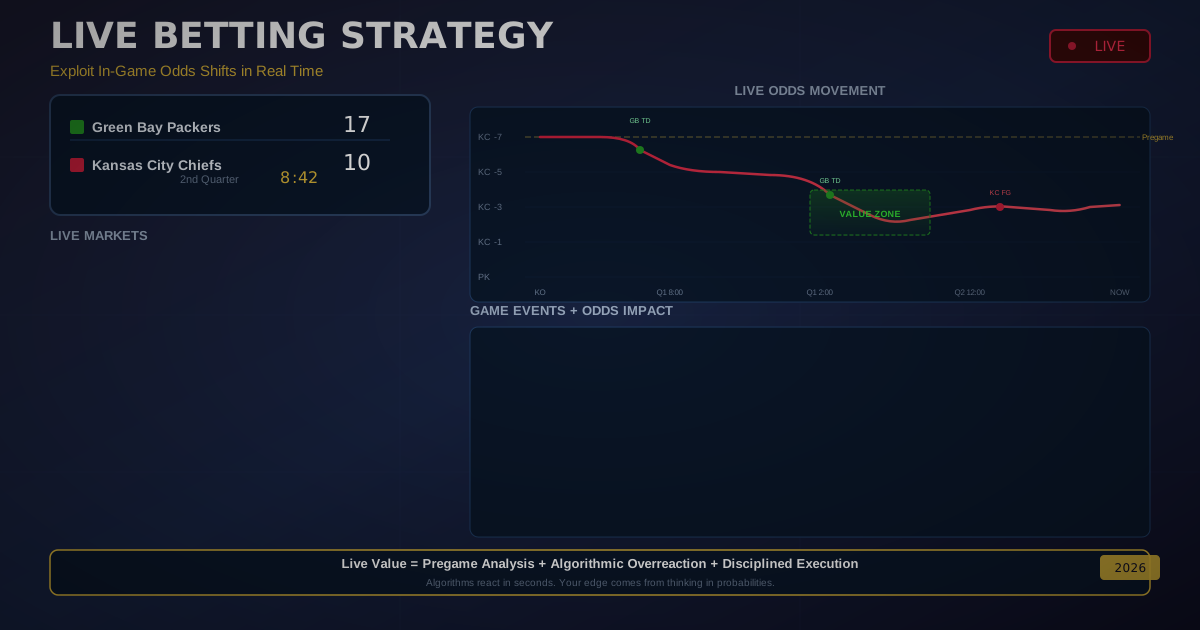
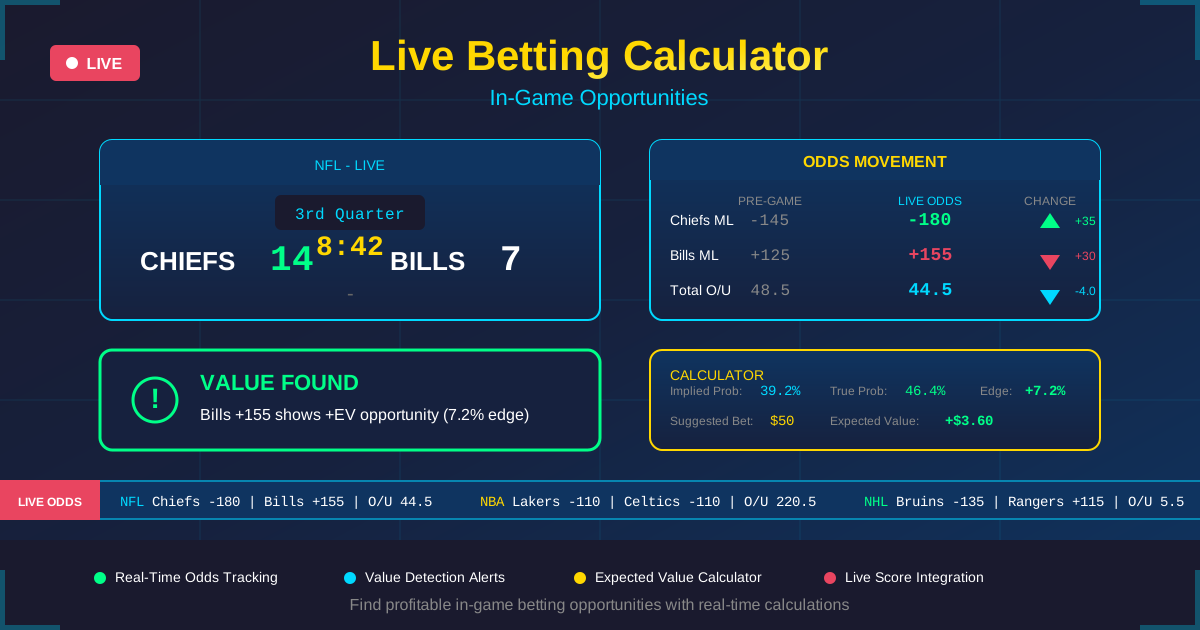
Alternate lines in live betting allow you to lock in specific outcomes mid-game at dynamically updated odds. The most profitable live alternate line strategy is buying through key numbers when in-game developments (score changes, injuries, momentum shifts) make those key numbers more or less likely to be the final margin.
Live Alternate Line Scenarios
| Game Situation | Live Alternate Line Opportunity | Rationale |
|---|---|---|
| Favorite down 7-0 in Q1 | Buy favorite at reduced live spread (e.g., -1 instead of pregame -3) | If you believe the favorite will rally, the reduced line is value |
| Underdog leads by 10 at half | Sell points on underdog (e.g., +1 instead of pregame +3) | Better odds if you think the underdog will at least keep it close |
| Game tied with 5 min left in Q4 | Alt line at pick 'em, better odds than -110 | Coin-flip situations may be mispriced live |
| Star player injured mid-game | Buy through key numbers before full adjustment | Live model may lag the true impact |
| Weather worsens mid-game | Alt under at premium odds | If rain/wind picks up, total drops sharply |
Combining Live Alternate Lines With Pregame Bets
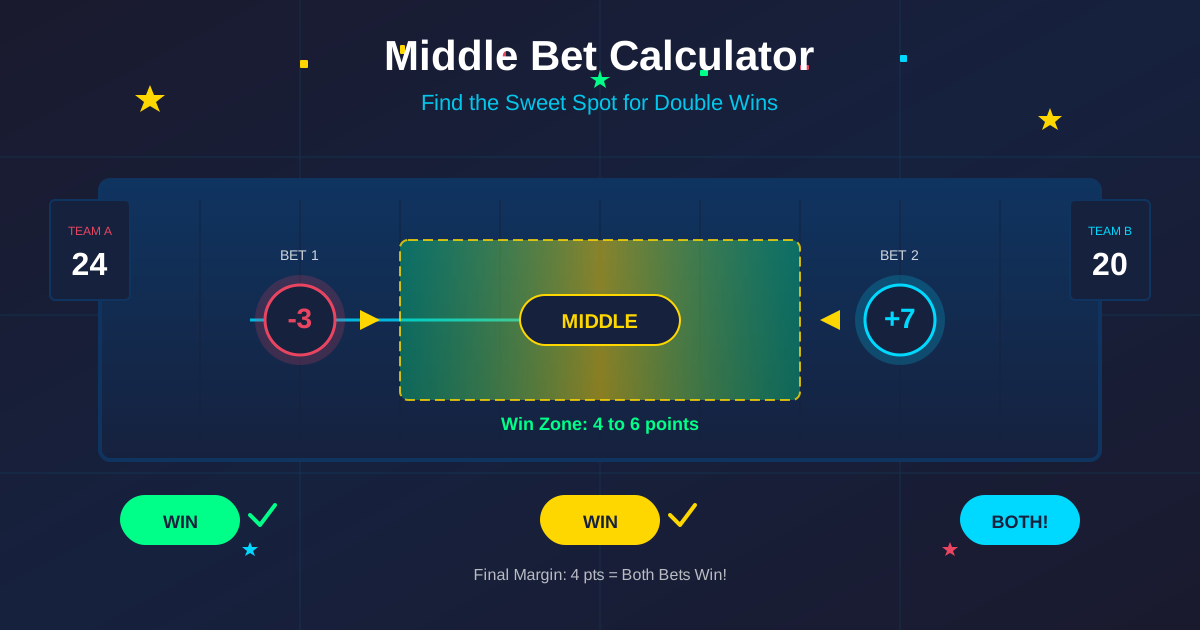
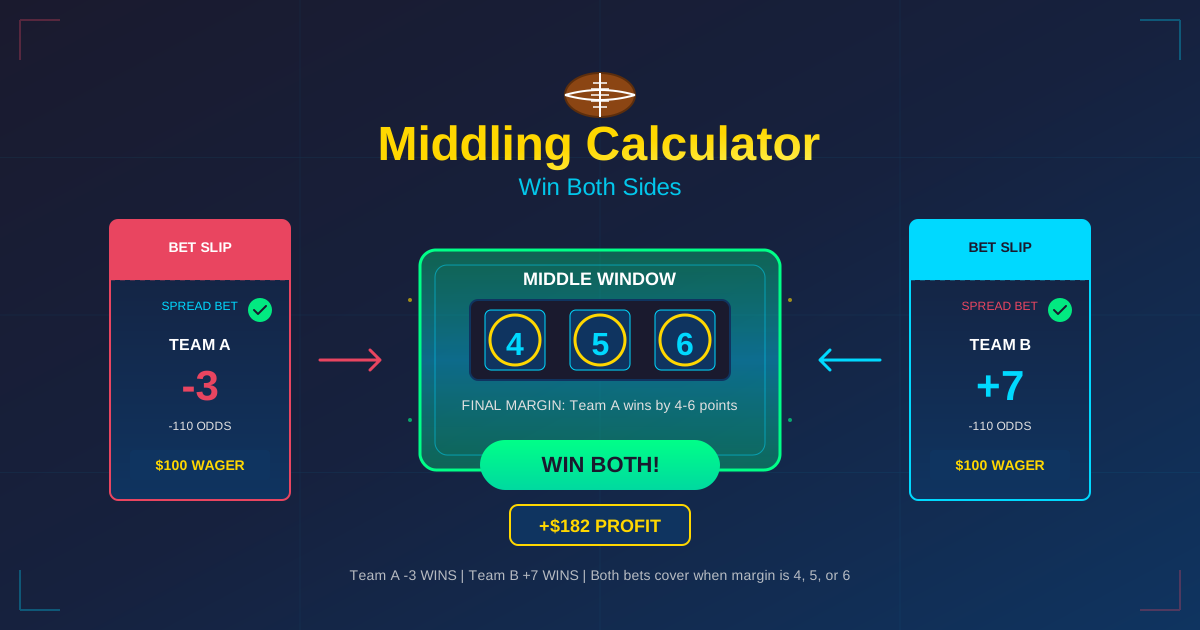
One of the most powerful strategies is using live alternate lines to create a middle. If you bet Team A -3 pregame and the live line moves to Team A -7 after they take a 14-point lead, you can bet Team B +7.5 live. This creates a middle: if Team A wins by 4-7 points, both bets win.
The expected value of middling depends on the probability of the result falling in the middle range. Use our middle bet calculator to determine whether the potential middle is worth the investment.
Calculate whether a live middle opportunity is profitable with our Middle Bet Calculator.
Live Alternate Line Pricing Inefficiencies
Live alternate line pricing is generally less efficient than pregame pricing because:
- The live model must update rapidly and may lag reality
- The range of outcomes is narrower (less time remaining = less variance)
- Key number distributions change based on the current score
- Sharp bettors are less active in live alternate markets
These inefficiencies create opportunities, particularly in the NFL during the second half when the scoring distribution for the remaining game becomes more predictable.
What Advanced Alternate Line Strategies Should You Know?
Advanced alternate line strategies go beyond simple point-buying to include correlated alt-line parlays, reverse teasers (pleasers), and strategic use of alternate totals in combination with alternate spreads.
Correlated Alternate Line Parlays
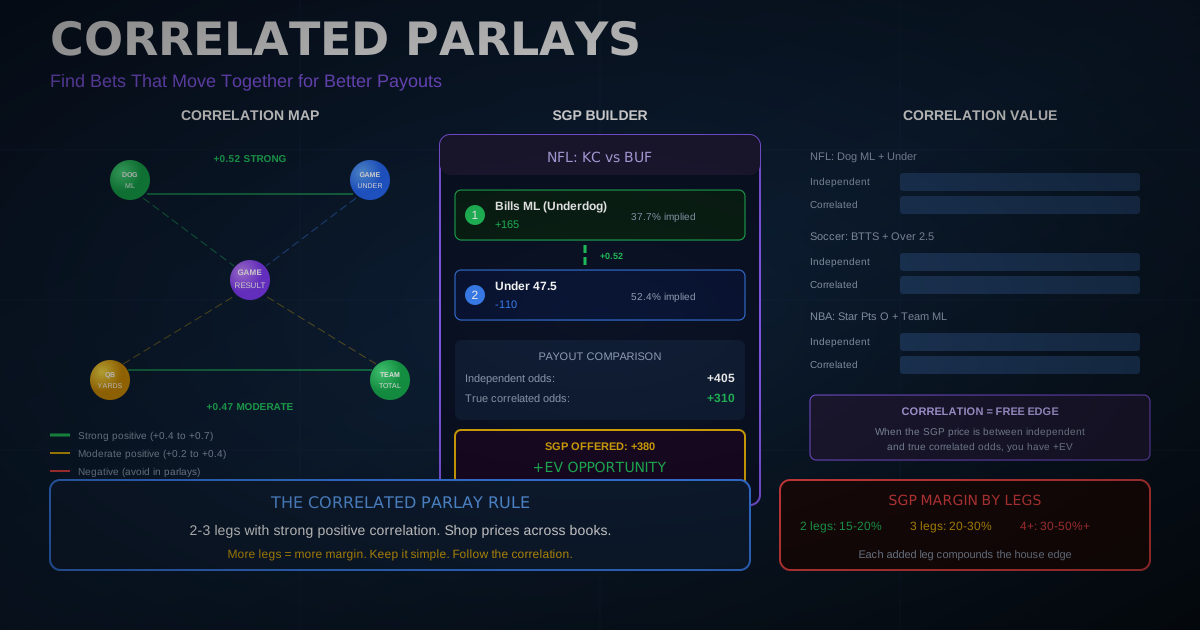
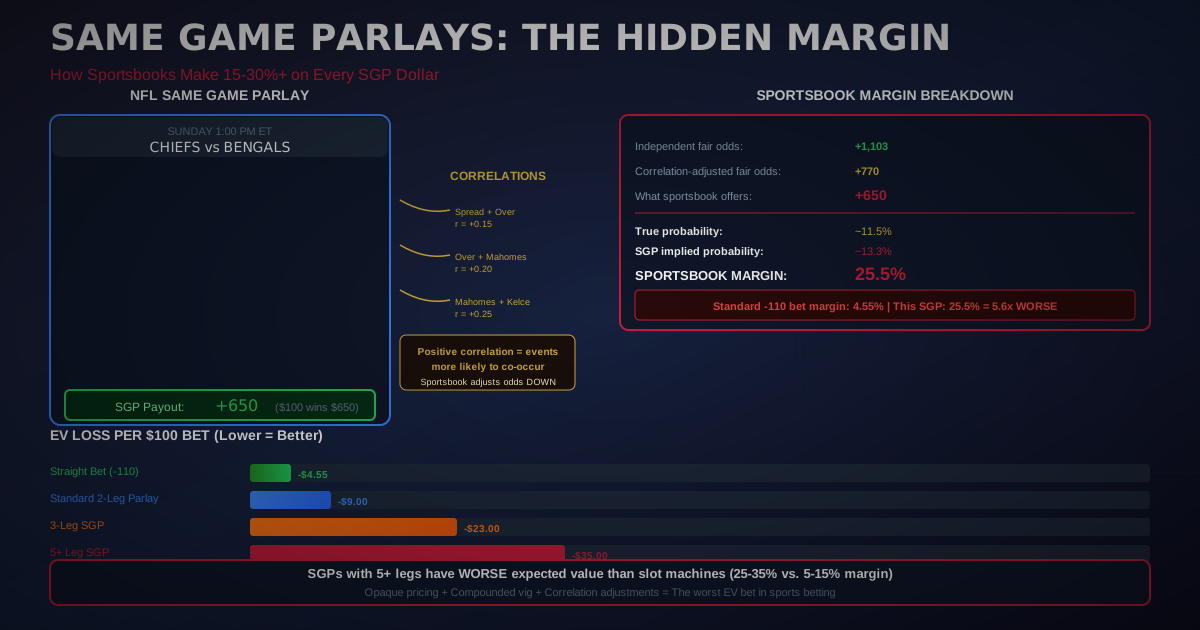
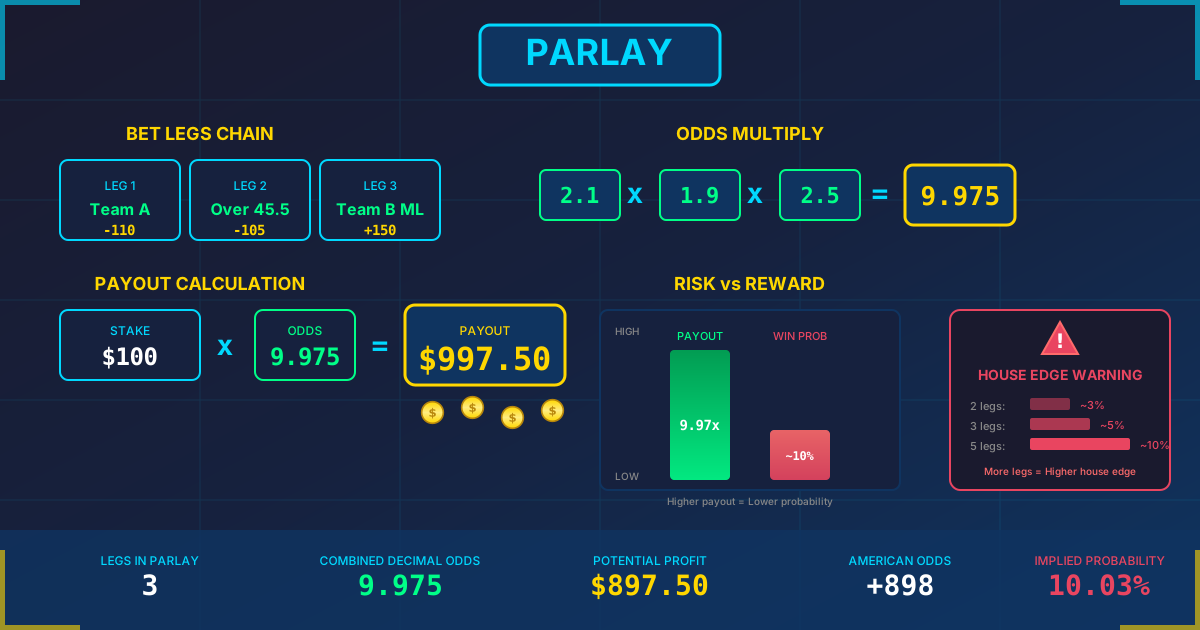
Some sportsbooks allow same-game parlays (SGPs) combining alternate spreads with alternate totals. These bets can be correlated, meaning the outcomes are not independent, which creates potential value when the sportsbook does not properly adjust for correlation.
For example:
| SGP Combination | Correlation | Market Treatment | Potential Edge |
|---|---|---|---|
| Team A -7 + Over 48.5 | Positive (big win = high scoring) | Often underpriced | Moderate |
| Team A -7 + Under 41.5 | Negative (big win + low scoring = unlikely) | Fairly priced | Low |
| Underdog +10 + Under 38.5 | Positive (close loss + low scoring) | Sometimes mispriced | Moderate |
| Underdog +10 + Over 52.5 | Weakly correlated | Fairly priced | Low |
When a sportsbook treats correlated outcomes as independent (which many SGP engines still do in 2026), the true probability of both legs hitting is higher than the implied probability, creating a positive EV opportunity.
Reverse Teasers (Pleasers)
A pleaser (reverse teaser) works opposite to a teaser: instead of adding 6 points in your favor, you give up 6 points. The payout is significantly higher -- a 2-team, 6-point pleaser might pay +600 or more. But the win rate per leg is much lower.
Pleasers are rarely profitable because:
- The per-leg win rate drops below 30% for most spreads
- Two legs at 30% = 9% combined win rate
- +600 requires 14.3% to break even
- 9% < 14.3% = negative expected value
The only theoretically profitable pleaser is selling through key numbers: moving from -3 to -9 (giving through both 3 and 7). Even then, the edge is marginal and the variance is extreme.
Strategic Alternate Totals + Hedging
Another advanced strategy combines an alternate total with a hedge:
- Bet Over 48.5 at +165 pregame.
- If the first half is high-scoring (28+ first-half points), the live total may be 52.5 or higher.
- Bet Under 52.5 live at -110.
- You now have a middle: if the total lands between 49 and 52, both bets win. If the total is 53+, the over wins and the under loses (small net positive or small loss depending on sizing). If the total is 48 or below, the under wins and the over loses.
This creates a risk-free or near-risk-free position if the middle hits, with limited downside either way.
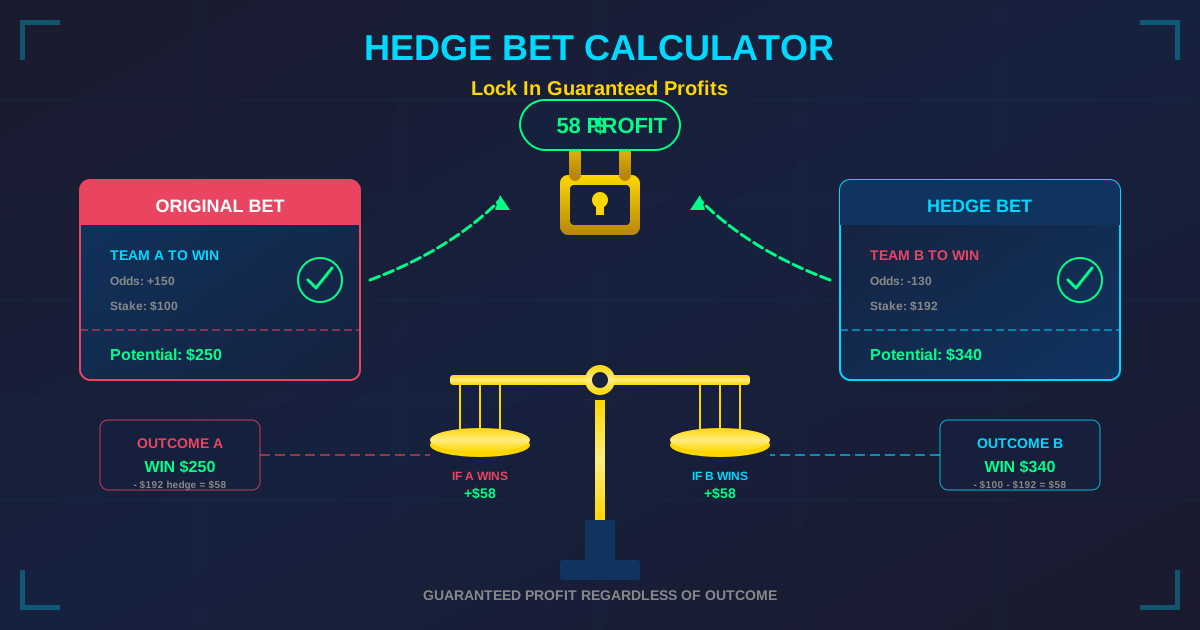
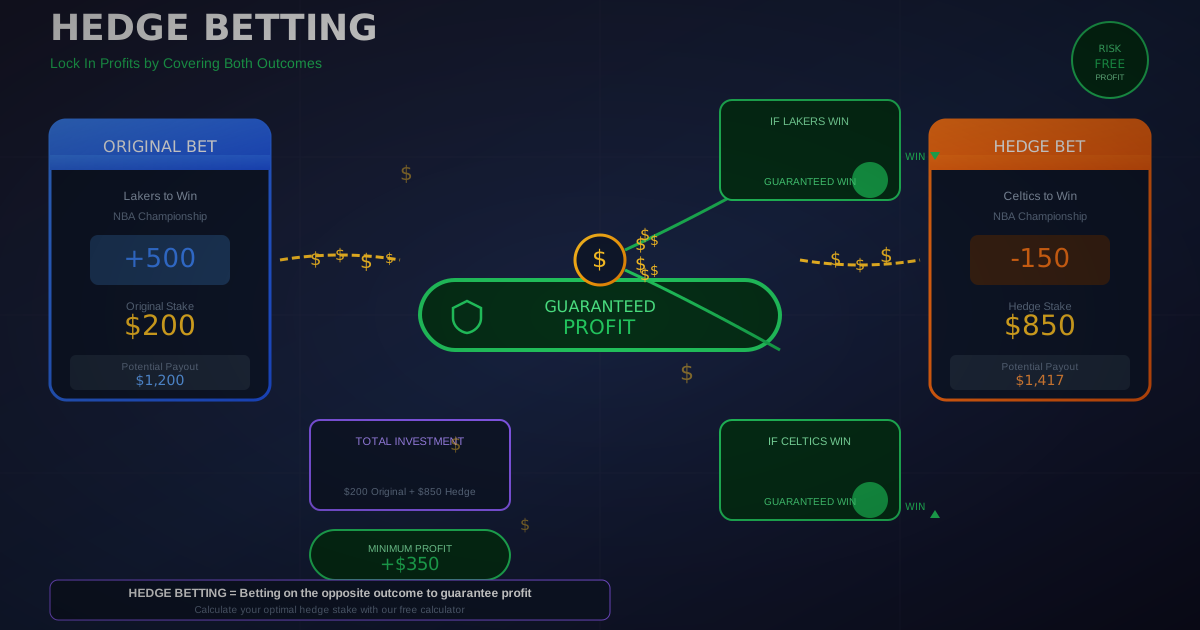
Calculate optimal hedge sizing for alternate line combinations with our Hedge Calculator.
Frequently Asked Questions
What are alternate lines in sports betting? Alternate lines are non-standard point spreads and totals offered at adjusted odds. Instead of the primary line (e.g., -3 at -110), sportsbooks let you bet the same game at different spreads (e.g., -1.5 at -165 or -6.5 at +155). Moving the line in your favor costs more juice (worse odds), while moving it against you provides better odds. This customization lets you tailor risk and reward to your specific outlook.
What are the key numbers in NFL betting? The most important key numbers in NFL betting are 3 and 7. Approximately 9.8% of NFL games are decided by exactly 3 points (a field goal), and 6.1% are decided by exactly 7 points (a touchdown). Other minor key numbers include 1, 6, 10, 14, and 17. These numbers matter for betting because buying through them (e.g., moving from -3 to -2.5) provides a disproportionately large probability gain relative to the cost.
Is buying points in the NFL profitable? Buying points in the NFL is profitable when you buy through the key numbers of 3 and 7, provided the juice premium is reasonable. Buying from -3 to -2.5 at -125 or less is mathematically justified because the 9.8% landing frequency on 3 translates to approximately a 4.9% probability gain, which exceeds the ~3.2% cost at -125 juice. Buying through any other non-key number is almost never profitable.
What is a Wong teaser? A Wong teaser, named after Stanford Wong, is a 2-team, 6-point NFL teaser where both legs cross the key numbers 3 and 7. This means teasing favorites from -7.5 to -8.5 down to -1.5 to -2.5, or underdogs from +1.5 to +2.5 up to +7.5 to +8.5. Historical cover rates for Wong teaser legs exceed 77%, producing consistent positive expected value on 2-team teasers priced at -110 to -120.
Should I buy points in the NBA? Almost never. The NBA has no key numbers because scoring is continuous (1, 2, and 3-point shots create a smooth distribution). No single margin of victory carries more than about 4% of outcomes, so the probability gain from buying a half point is approximately 2% or less -- usually insufficient to justify the juice premium. Shop for better lines across sportsbooks instead of buying points in the NBA.
When should I sell points instead of buying them? Sell points when you have strong confidence in a team winning by a large margin and the non-key numbers you are selling through have low landing frequencies. For example, selling from -3 to -4 at +110 is often profitable if you believe the favorite wins by 5+ points. The 4-point margin only lands on 4.5% of games, so you give up little probability while gaining significant odds improvement.
How do teasers compare to buying points? Teasers give you 6-7 points at a fixed price but require winning multiple legs. Buying points moves the line 0.5-2 points at incrementally higher juice on a single game. For crossing multiple key numbers, teasers are more efficient because you get more points per dollar of juice. For crossing a single key number, buying a half point is simpler and does not require correlating multiple legs.
Are alternate line parlays profitable? Alternate line parlays can be profitable when the legs are positively correlated and the sportsbook's same-game parlay engine does not fully adjust for this correlation. For example, parlaying Team A -7 with Over 48.5 is positively correlated (big wins tend to be high-scoring), and if the SGP prices these as if they were independent, the true probability of both hitting is higher than the implied odds suggest.
How does line shopping compare to buying points for finding value? Line shopping is almost always superior to buying points because it achieves the same result (a better number) at no additional cost. If Book A has -3 at -110 and Book B has -2.5 at -110, taking Book B gives you the better number for free. Buying from -3 to -2.5 at Book A costs -125, which is an unnecessary expense. The only time buying points is justified is when all books show the same number (common on key NFL numbers like 3 and 7), leaving no shopping opportunity. Having accounts at 3-5 sportsbooks is the single most impactful thing a bettor can do to improve long-term results.
Can you tease totals in the NFL profitably? Teasing totals is generally less profitable than teasing spreads because NFL totals do not have key numbers with the same concentration as spreads. While 41 and 44 are slightly more common total outcomes than others, they do not carry the 9.8% and 6.1% frequency that 3 and 7 do for margins of victory. Unless the teaser crosses multiple common total outcomes, the probability gain from teasing a total 6 points is usually not sufficient to justify the reduced payout.
Related Tools
- Expected Value Calculator: Calculate the EV of any alternate line, point purchase, or teaser leg at current odds.
- Odds Converter: Convert between American, decimal, and fractional odds to compare alternate line prices.
- Teaser Calculator: Calculate exact teaser payouts and breakeven rates for any combination of legs and points.
- Implied Probability Calculator: Convert alternate line odds to win probabilities for comparison against your model.
- Kelly Criterion Calculator: Determine optimal bet sizing on alternate line plays based on your estimated edge.
- Parlay Calculator: Calculate payouts for alternate line parlays and same-game combinations.
- Hold/Vig Calculator: Compare the vig charged by different sportsbooks on alternate lines.
- Hedge Calculator: Calculate optimal hedge sizing when using alternate lines to create middles.
- Middle Bet Calculator: Evaluate middle opportunities created by alternate line positions.
- Arbitrage Calculator: Find risk-free plays when alternate line pricing differs across sportsbooks.
- CLV Tracker: Track closing line value on your alternate line bets.
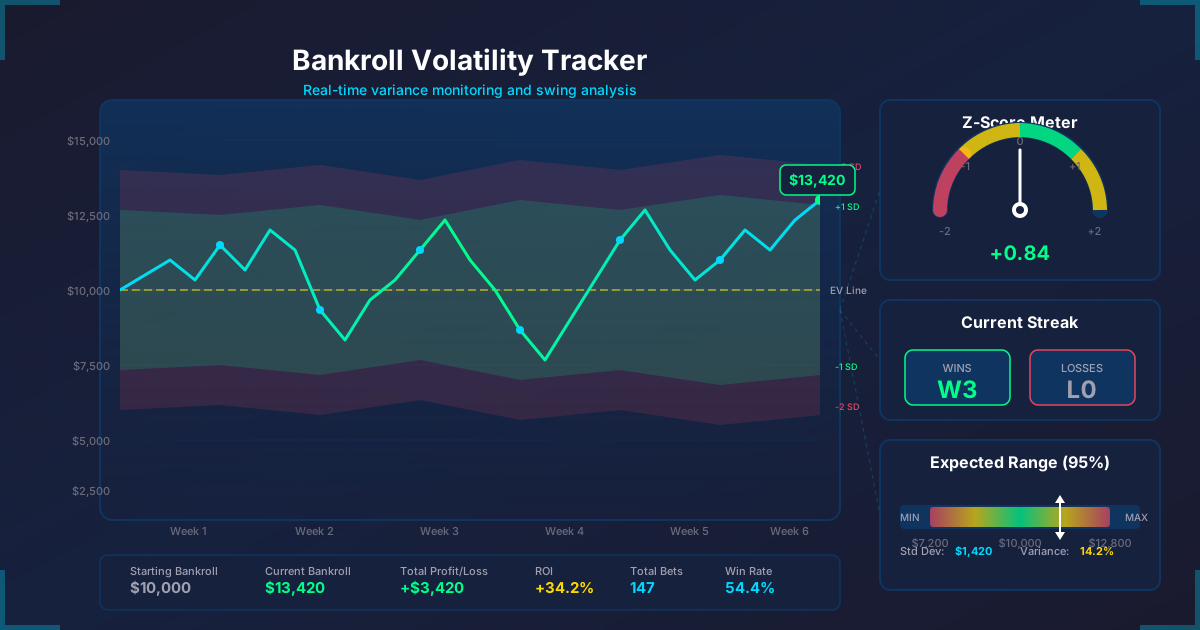
- Bankroll Volatility Tracker: Monitor variance from your alternate line and teaser strategy.
- Sure Bet Calculator: Identify sure bets when alternate lines create pricing discrepancies.
Alternate lines and point-buying are not about getting a better number on every bet -- they are about understanding the precise mathematical value of every half-point and only paying for improvement when the math confirms it is profitable. The key numbers of 3 and 7 in the NFL remain the foundation of every sound point-buying and teaser strategy. Master these numbers, shop aggressively for the best prices, and let the math guide every decision.
Start calculating whether your next point purchase is worth it with our free Expected Value Calculator -- the math never lies.
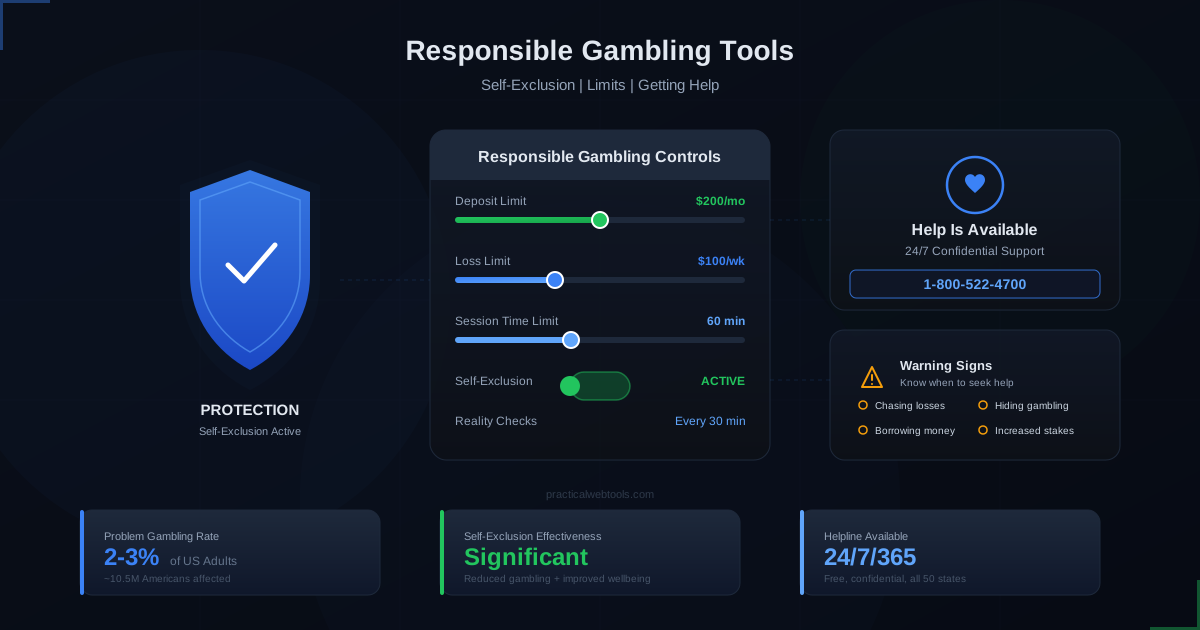
Gambling involves risk and should be approached as entertainment, not as a source of income. Always bet within your means, set strict bankroll limits, and never chase losses. If you or someone you know has a gambling problem, contact the National Council on Problem Gambling at 1-800-522-4700 or visit ncpgambling.org. Must be 21+ to gamble in most US jurisdictions. Please play responsibly.