NBA Betting Strategy: Points, Props, and Profitable Angles (2026)
The NBA is the most bet-on league in North America per game, and it is not close. With 1,230 regular season games, a 7-month schedule packed with back-to-backs, and an explosion in player prop markets, the NBA offers more actionable edges per night than any other major sport. But volume cuts both ways. The same density that creates opportunity also creates noise, and the bettors who profit consistently are the ones who separate signal from chaos.
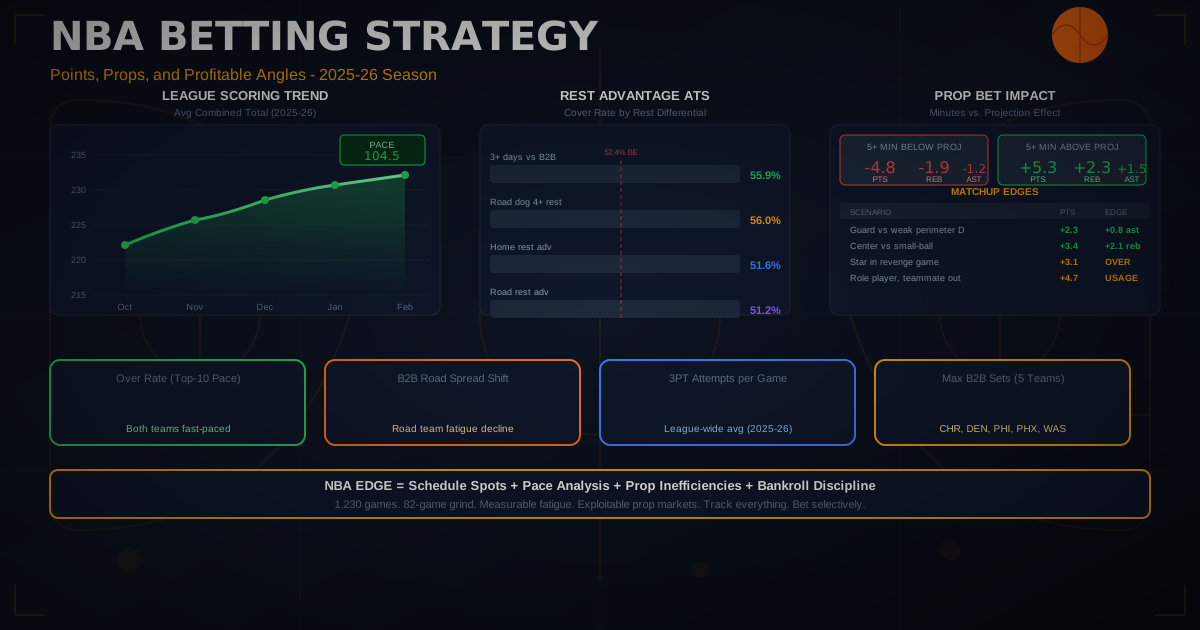
The 2025-26 NBA season has pushed league-wide scoring to historic highs. Average pace sits at roughly 104.5 possessions per game, up from 102.7 last season. Nearly a third of teams are attempting 40 or more three-pointers per night. Teams are routinely crossing 230 combined points, and the proliferation of pace-and-space offenses has made the old "grind it out" total of 195 a relic. These changes have reshaped how sharps approach spreads, totals, and props -- and if you are still betting the NBA the way you did in 2020, you are leaving money on the table.
This guide breaks down every major NBA betting market with real data, actionable angles, and concrete examples from the current season. Whether you are a spread bettor hunting schedule spots, a totals player riding pace differentials, or a prop specialist exploiting minutes correlations, the frameworks here will sharpen your approach.
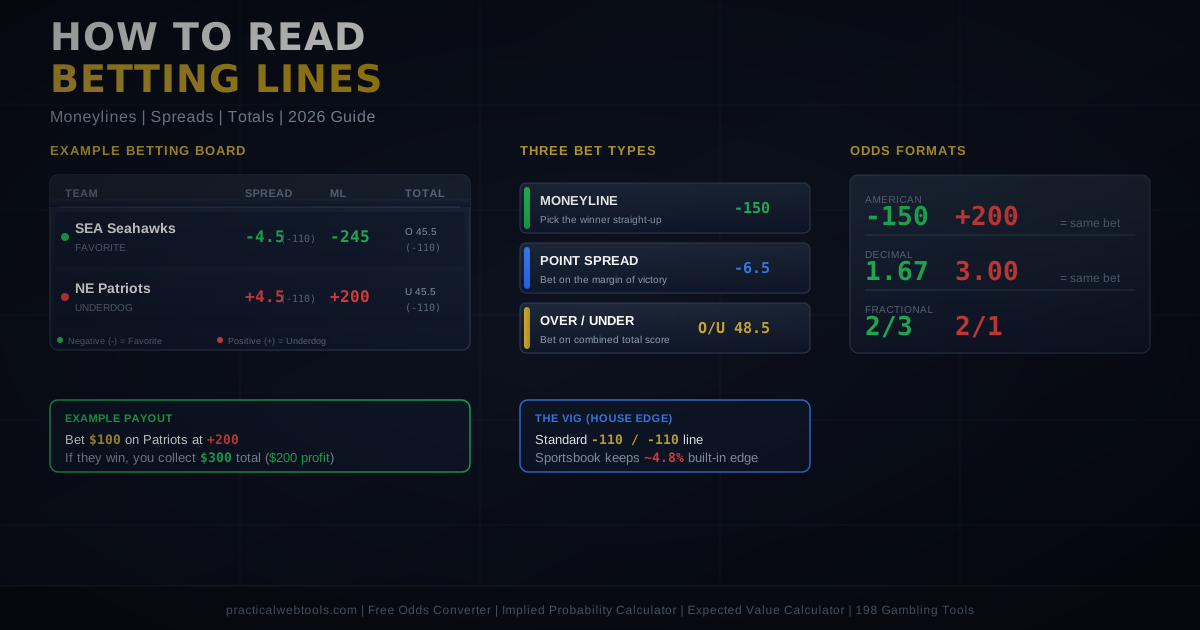
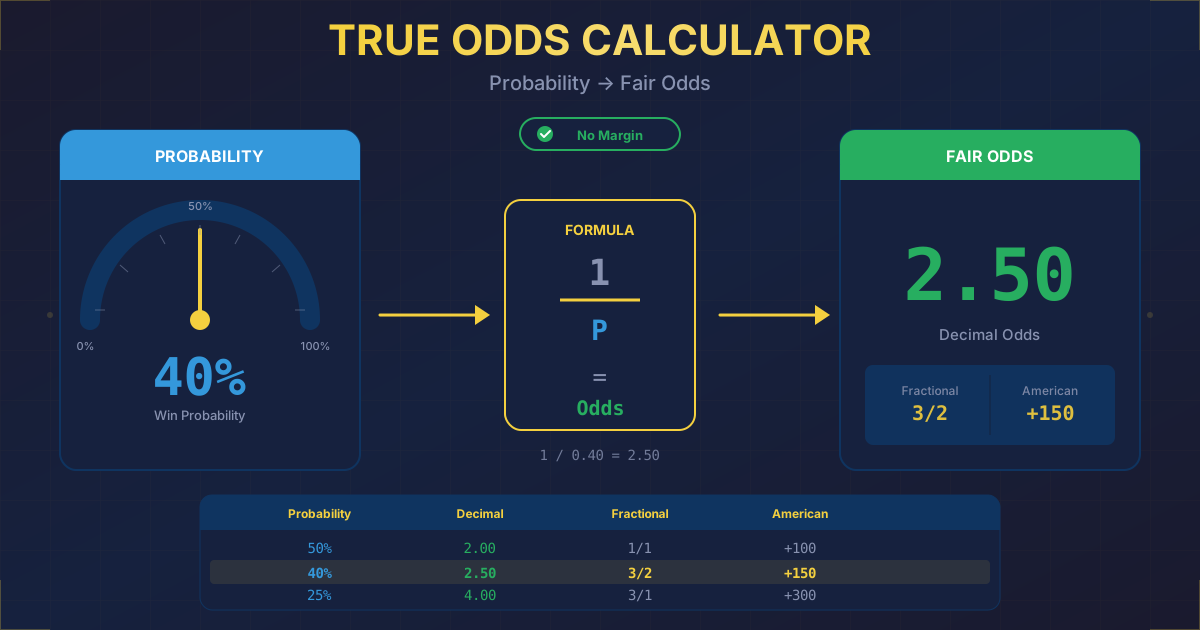
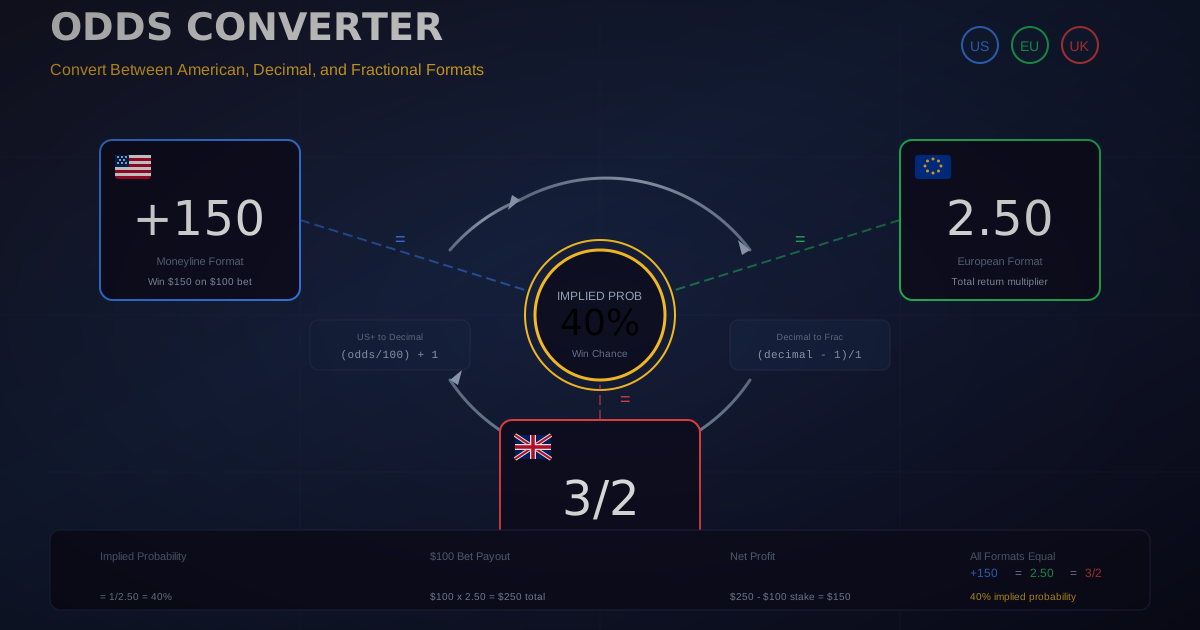
Convert odds between American, decimal, and fractional formats instantly with our free Odds Converter.
Why the NBA Is a Unique Betting Market
The NBA betting market is defined by three characteristics that set it apart from NFL, MLB, or NHL wagering: extreme liquidity, rapid line movement, and structural schedule advantages that are quantifiable.
High Volume, Efficient Lines
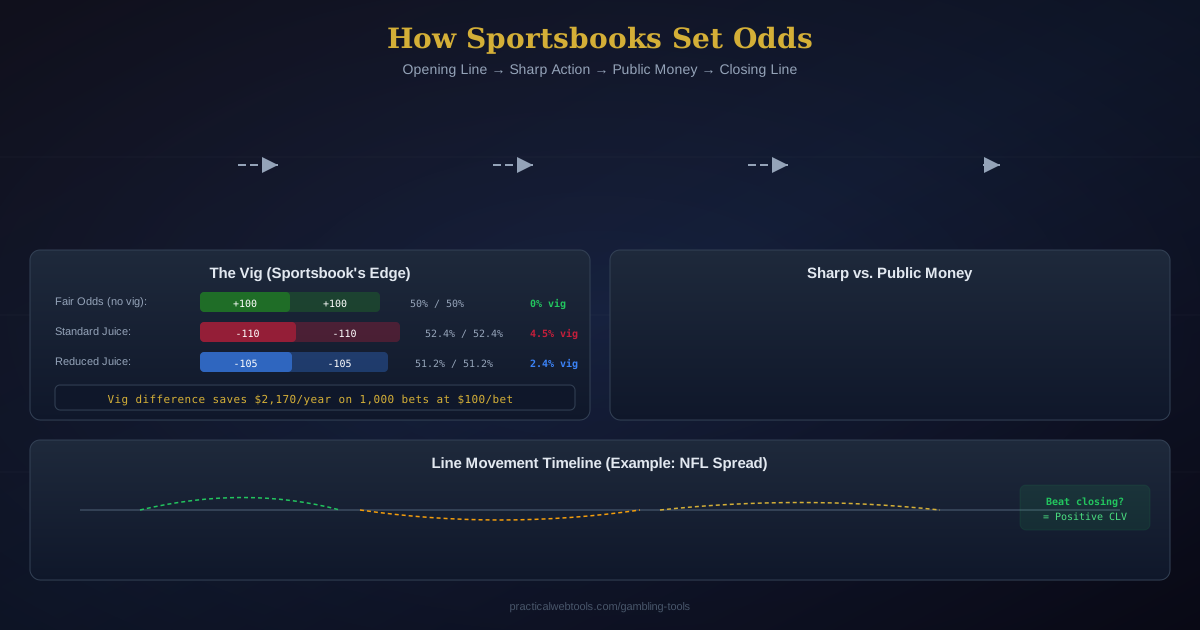
NBA spreads and totals attract enormous handle. On a typical weeknight slate of 8-10 games, combined handle across major U.S. sportsbooks reaches hundreds of millions of dollars. That liquidity makes NBA sides and totals among the most efficient betting markets in the world. Closing lines are sharp. Opening lines, however, are where value lives.
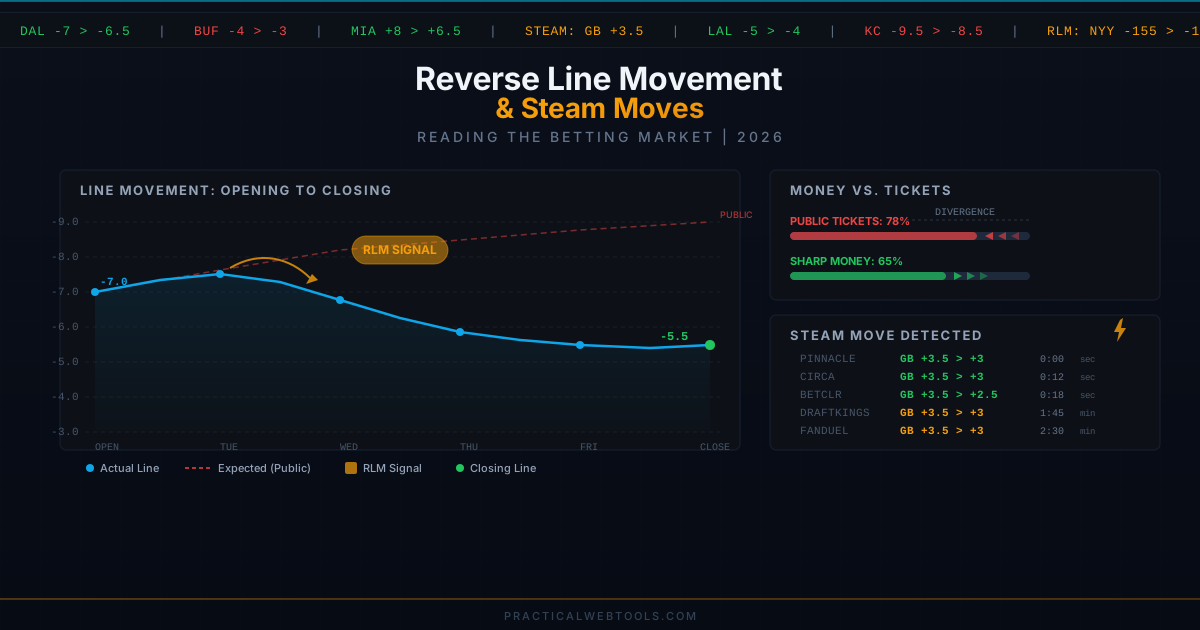
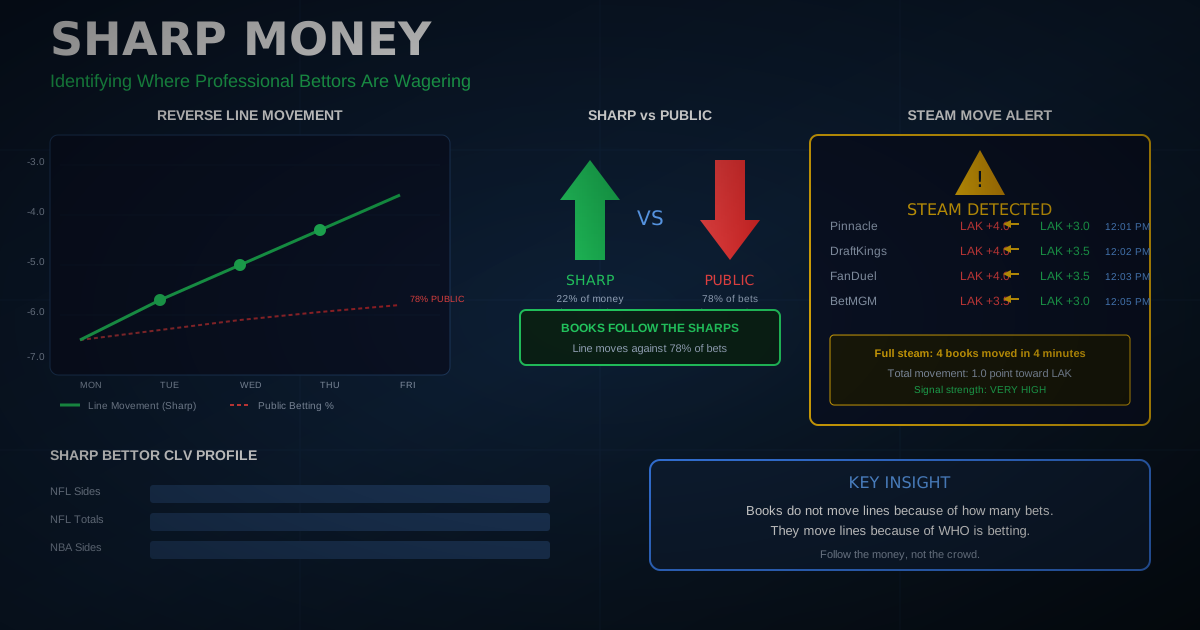
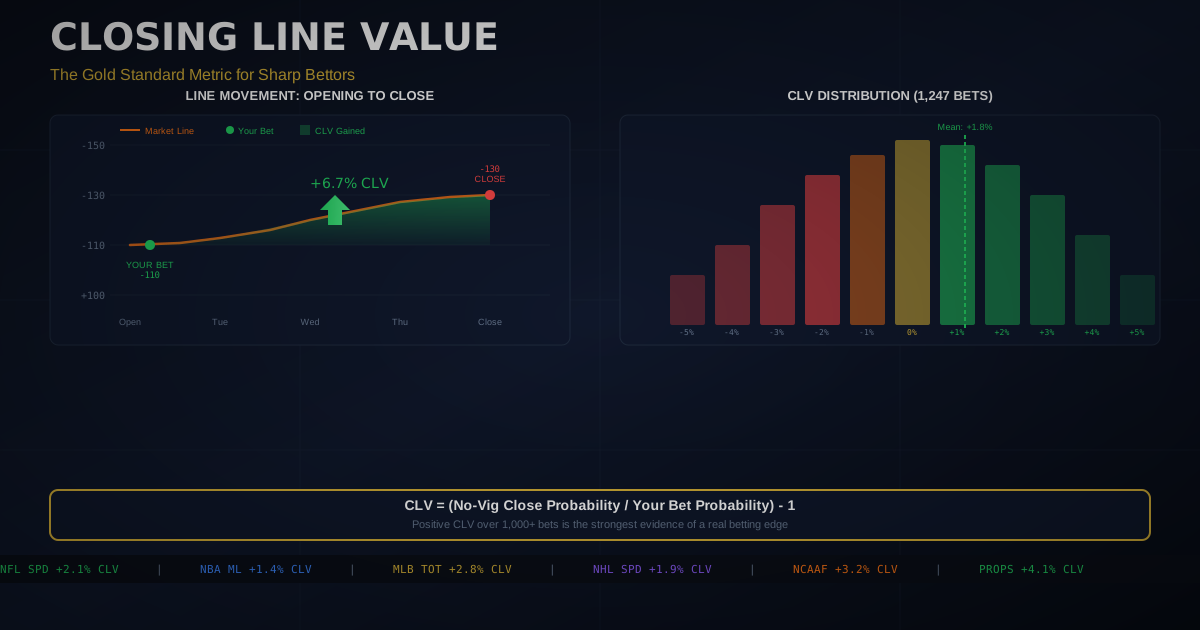
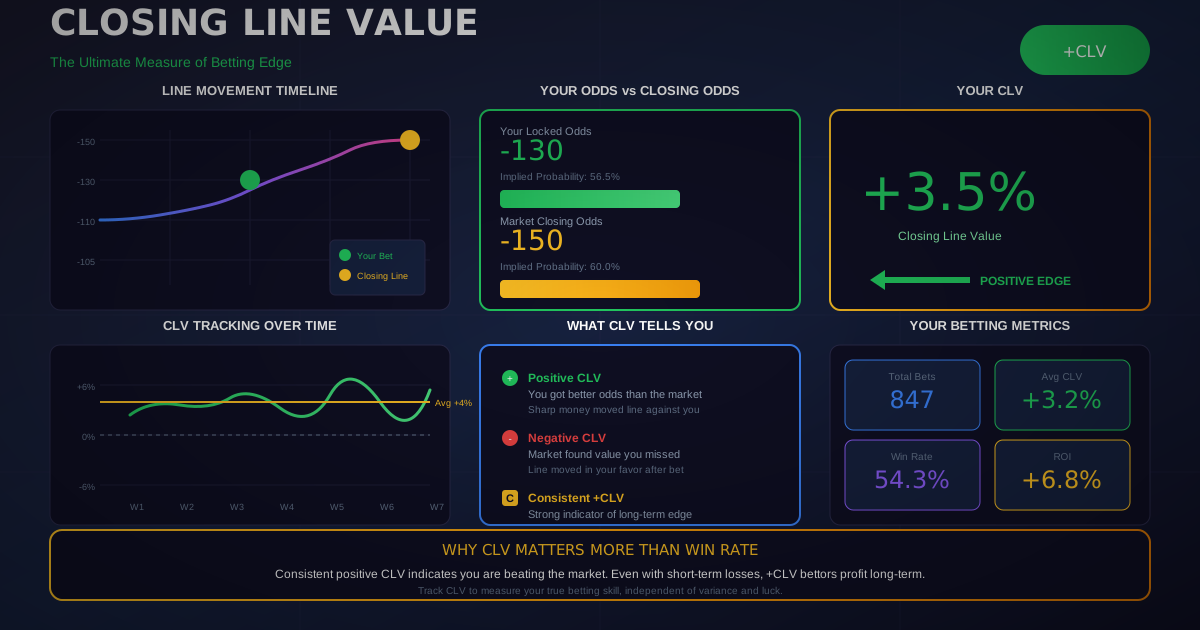
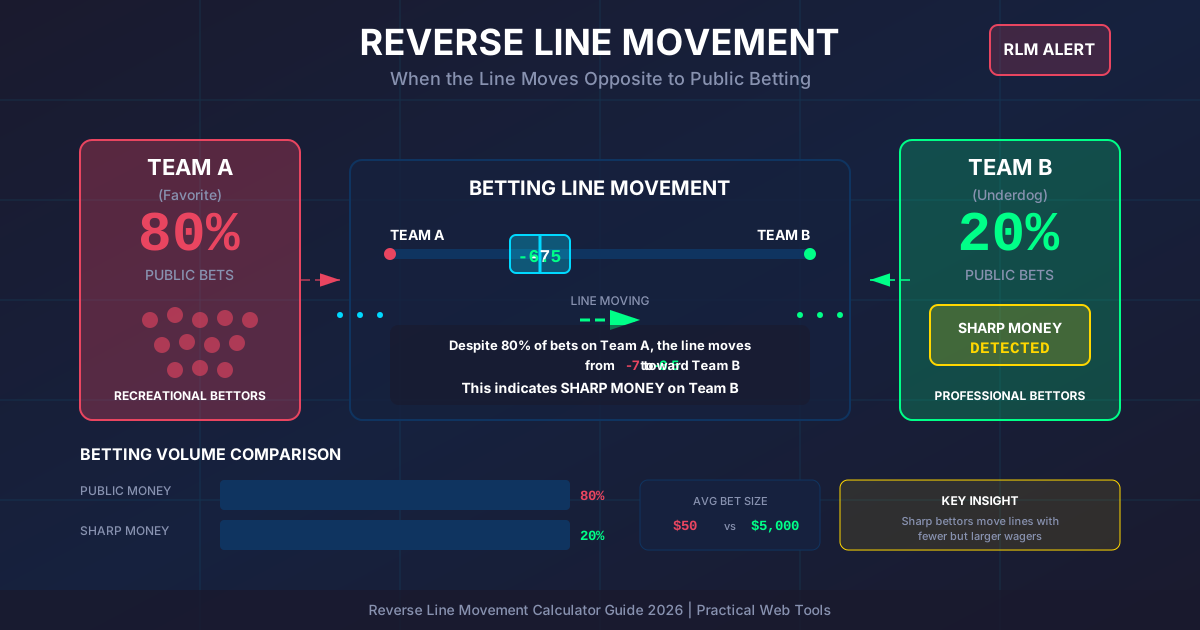
The window between line release (usually 24-48 hours before tip) and closing line is where informed bettors earn their edge. Research consistently shows that beating the closing line -- known as Closing Line Value (CLV) -- is the single best predictor of long-term profitability in sports betting.
The Schedule Creates Edges
Unlike the NFL, where teams play once a week with uniform rest, the NBA's compressed schedule generates measurable performance differentials. Teams play 82 games over roughly 177 days, frequently on back-to-back nights, sometimes three games in four nights, and occasionally four in six. Those fatigue patterns are real, quantifiable, and consistently underpriced by the market.
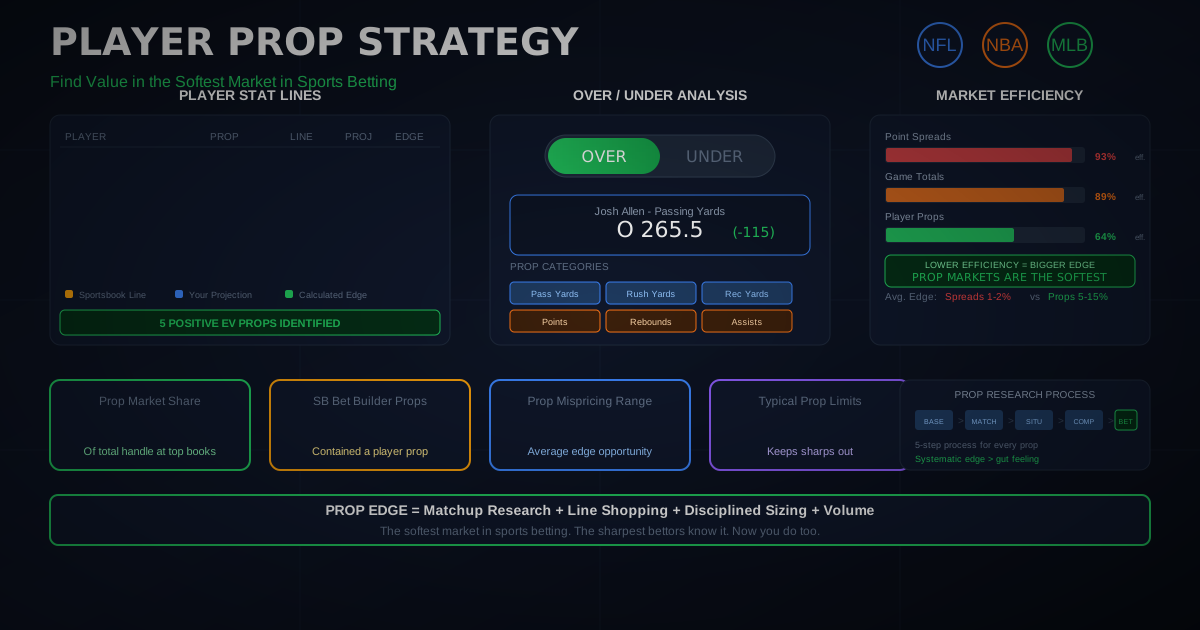
Prop Markets Are Inefficient
The NBA offers hundreds of player prop markets per game. Sportsbooks cannot dedicate the same modeling resources to pricing Jalen Brunson's assist total as they do to the Knicks spread. That resource gap creates persistent inefficiencies, especially in derivative markets like rebounds, assists, and three-pointers made.
NBA Point Spread Strategy: Schedule Spots and Rest Advantage
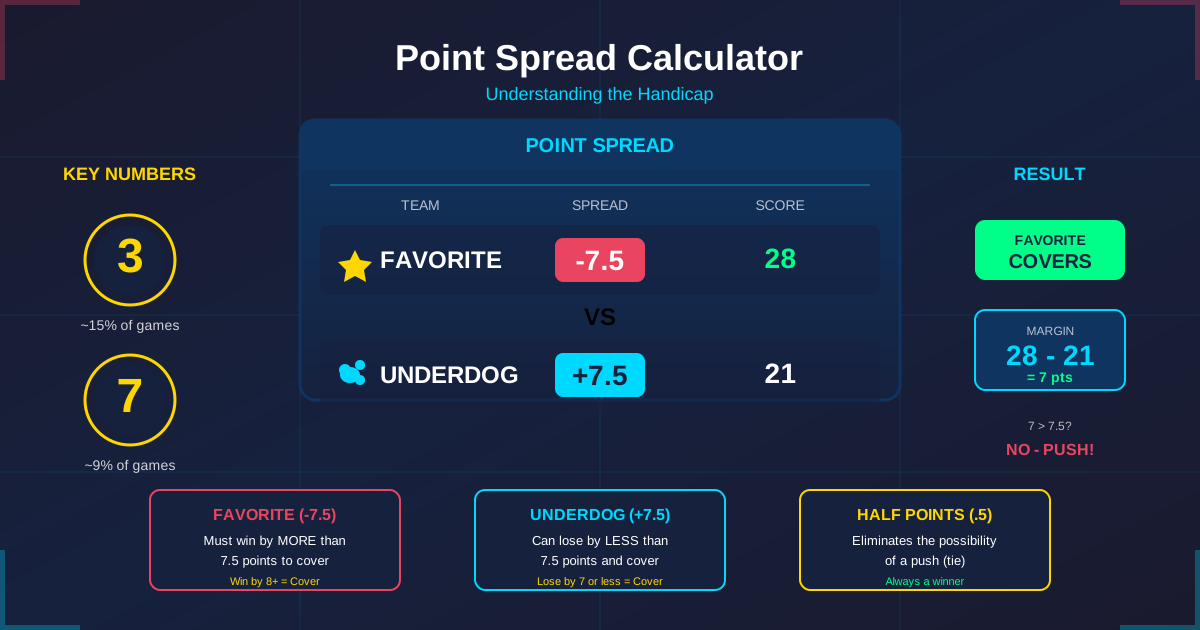
Spread betting in the NBA is a grind. The market is efficient, the vig is real, and you need to hit roughly 52.4% at standard -110 juice to break even. But specific schedule situations create repeatable, data-backed edges that tilt the math in your favor.
Rest Advantage: The Most Reliable NBA Betting Angle
Rest advantage -- when one team has had more days off than its opponent -- remains one of the most well-documented and persistent edges in NBA betting. The 2025-26 season data confirms it.
| Rest Situation | Record ATS | Cover Rate | Avg Margin Shift |
|---|---|---|---|
| 3+ days rest vs. back-to-back opponent | 62-49 | 55.9% | +2.1 pts |
| 2 days rest vs. back-to-back opponent | 89-84 | 51.4% | +1.2 pts |
| Home team rest advantage | 47-44 | 51.6% | +1.4 pts |
| Road team rest advantage | 42-40 | 51.2% | +0.9 pts |
| Road dog 4+ days rest vs. 2 or fewer | 56-44 | 56.0% | +2.4 pts |
Through January 31 of the 2025-26 season, teams with rest advantage are 89-84 ATS overall -- a 51.4% clip. That is marginally profitable at -110, but the edge sharpens dramatically in specific subsets. Road underdogs with 4+ days of rest facing teams on 2 or fewer days have covered at a 56% rate historically, generating 24.1 units of profit since 2005.
Example: On January 14, 2026, the Memphis Grizzlies visited the Denver Nuggets. Denver was playing the second night of a back-to-back after hosting the Clippers the night before. Memphis had three days off. The line opened at Denver -4.5. Memphis, catching rest advantage and points, covered by 7 as Denver's legs gave out in the fourth quarter, losing 108-114. A $110 bet on Memphis +4.5 returned $100 profit.
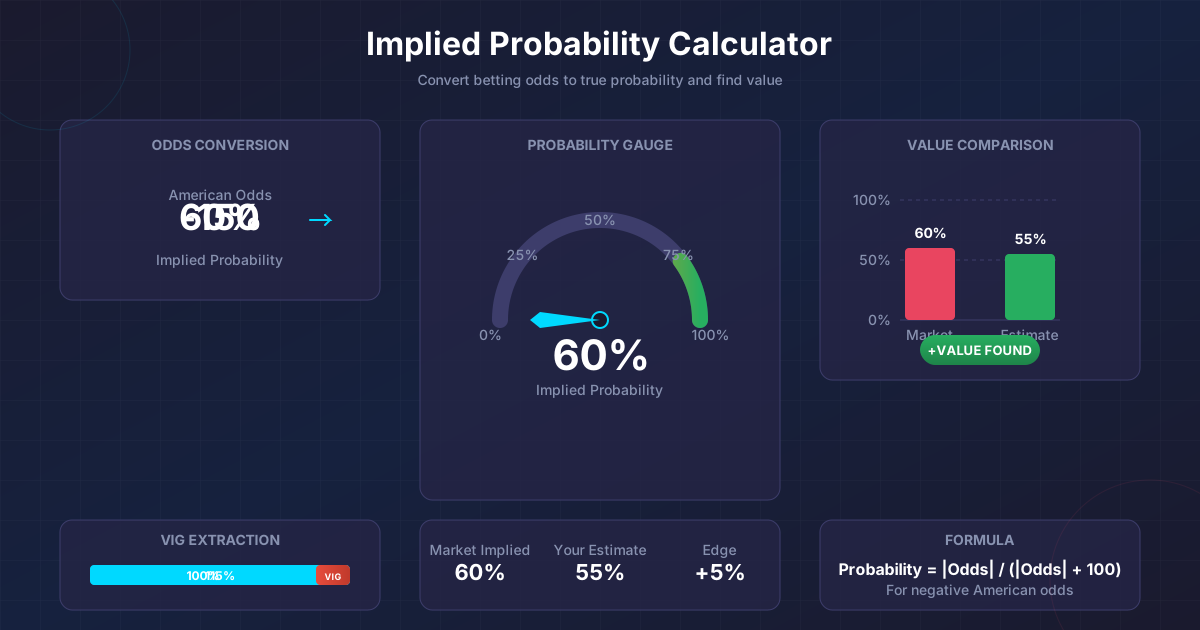
Calculate the implied probability behind any spread line with our Implied Probability Calculator.
Back-to-Back Performance Decline
The second game of a back-to-back is where NBA teams are most vulnerable. Research shows a measurable 1-3 point performance decline, with the effect magnified on the road.
| Back-to-Back Factor | Impact on Spread |
|---|---|
| Home team on B2B, opponent rested | -1.2 points |
| Road team on B2B, opponent rested | -2.4 points |
| B2B with travel (different city) | -2.8 points |
| B2B, 2nd game on the road, opponent rested 3+ days | -3.1 points |
| Star player (30+ min/game) B2B decline | -1.8 PPG scoring, -0.4 APG |
The 2025-26 schedule distributes back-to-backs unevenly. Charlotte, Denver, Philadelphia, Phoenix, and Washington each face a league-high 16 back-to-back sets this season. Utah, Houston, and Portland have just 13. That three-game differential compounds across a full season, creating betting value on specific nights.
Example: Philadelphia is on a league-high 16 back-to-backs in 2025-26. On February 1, the Sixers played in Boston on Saturday night, then traveled to Toronto for a Sunday afternoon game. Joel Embiid sat the second leg (load management), and the Sixers, listed at +7.5, lost by 15. The line moved from +7.5 to +9 once Embiid was ruled out, but the back-to-back travel and star absence made the Raptors side the sharp play. Bettors who waited for the injury news and laid Toronto -9 cashed.
Schedule Spot Angles Worth Tracking
Beyond basic rest, several schedule configurations create consistent value:
Lookahead spots: When a team plays a weaker opponent before a marquee matchup. The psychological letdown is measurable. Teams in lookahead spots have historically underperformed ATS by 1.5-2 points.
Revenge games: The first meeting after a blowout loss (15+ points). Teams coming off embarrassing losses cover at an elevated rate in the rematch, especially at home.
Time zone travel: West Coast teams traveling east for early afternoon games (12:30-1:00 PM local time) underperform their spread by roughly 1 point on average. The body clock disadvantage is real.
Three-in-four-nights: Teams playing their third game in four nights show a performance decline of roughly 2.5 points from baseline, even greater than standard back-to-backs.
NBA Totals Strategy: Pace, Shooting, and the Three-Point Era
Totals betting in the NBA has been reshaped by the three-point revolution. The 2025-26 season has pushed league-wide shooting volume and pace to levels that demand a fundamentally different approach than even five years ago.
The Pace-Totals Connection
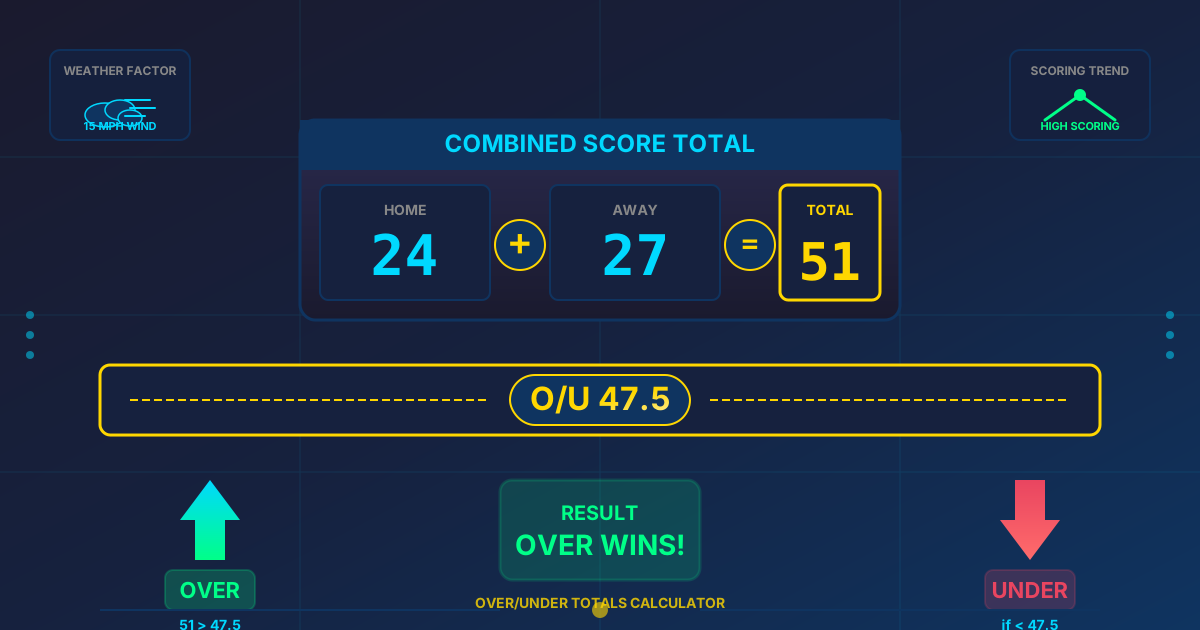
Pace -- possessions per 48 minutes -- is the single most predictive factor for NBA totals. More possessions mean more shot attempts, more free throws, more transition opportunities, and higher combined scores. The correlation between pace and actual game totals is strong and actionable.
| Pace Category | Avg Game Total | Over Hit Rate (2025-26) | Example Teams |
|---|---|---|---|
| Both teams top-10 pace | 232.4 | 57.2% | Indiana vs. Sacramento |
| One top-10, one bottom-10 | 219.1 | 49.8% | OKC vs. Cleveland |
| Both bottom-10 pace | 211.3 | 44.6% | Knicks vs. Cavaliers |
| Top-5 pace differential matchup | 226.8 | 54.1% | Atlanta vs. New Orleans |
When two top-10 pace teams meet, the over hits at a 57.2% rate -- well above the breakeven threshold of 52.4% at -110 juice. The math is straightforward: fast teams generate more possessions, and more possessions produce more points.
Example: On January 22, 2026, Indiana hosted Sacramento. Both teams rank in the top 5 in pace this season. The total was set at 234.5. The game finished 128-121 for a combined 249 points, clearing the over by 14.5 points. A $110 bet on the over returned $100 in profit. This matchup profile -- two up-tempo teams with porous defenses -- is a reliable totals spot.
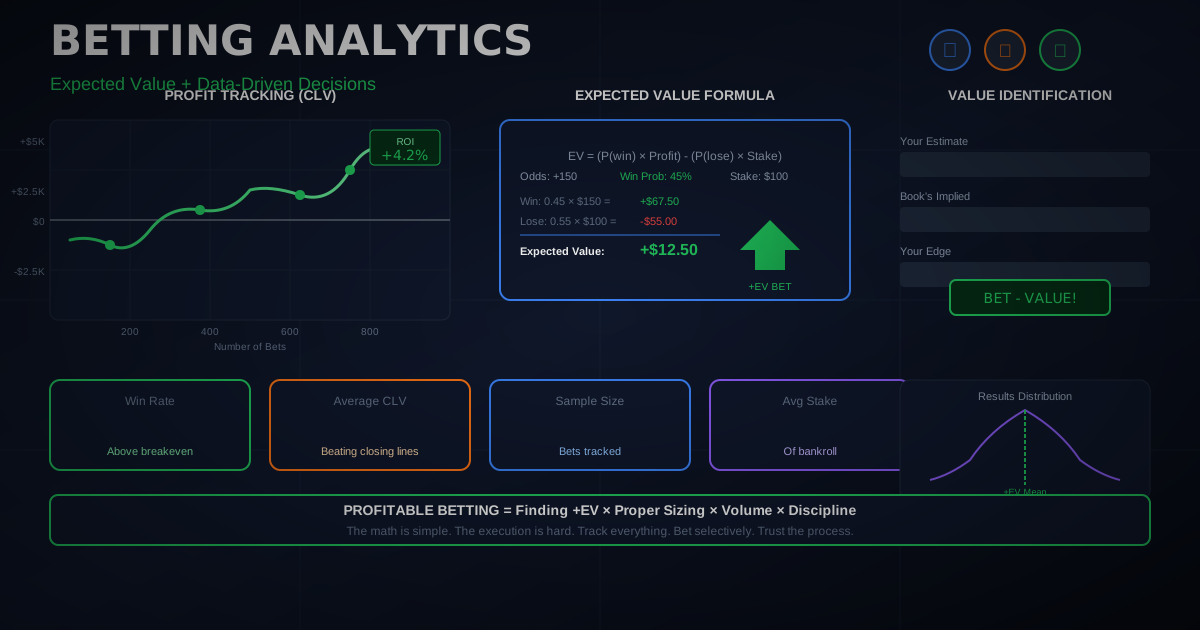
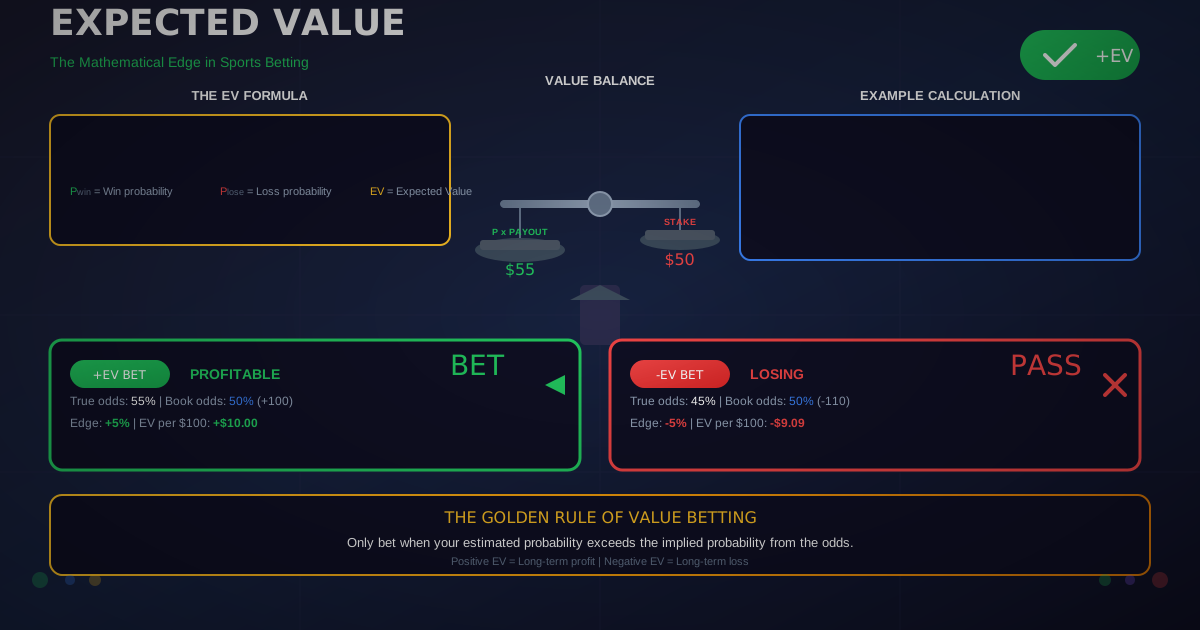
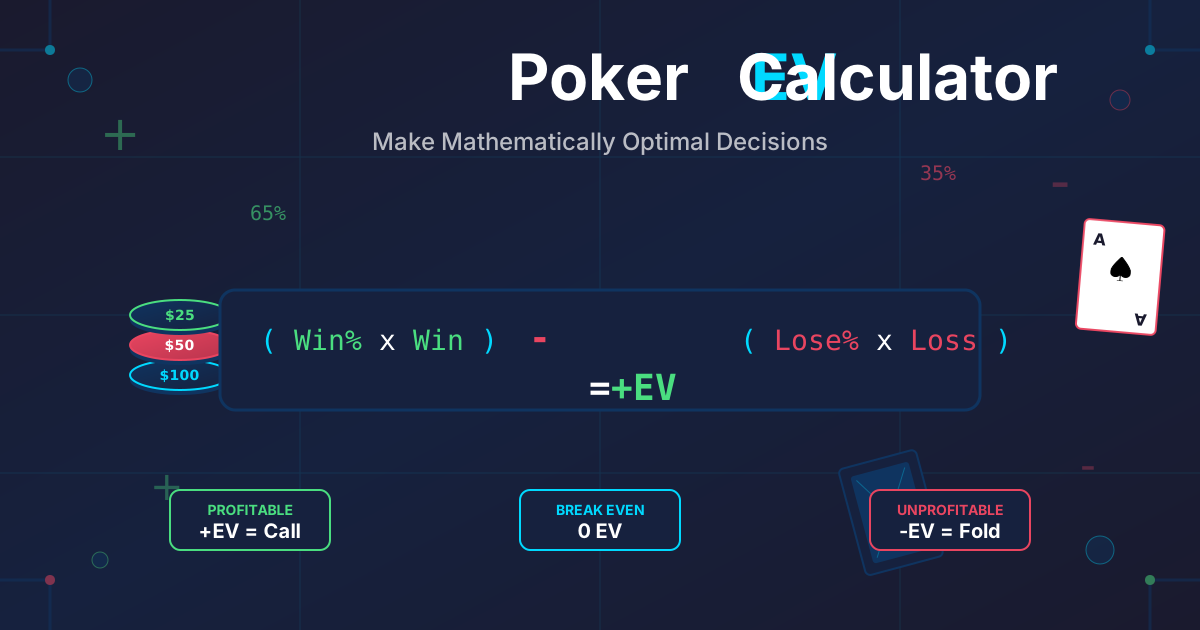
Evaluate the expected value of any over/under bet with our Expected Value Calculator.
Three-Point Volume and Variance
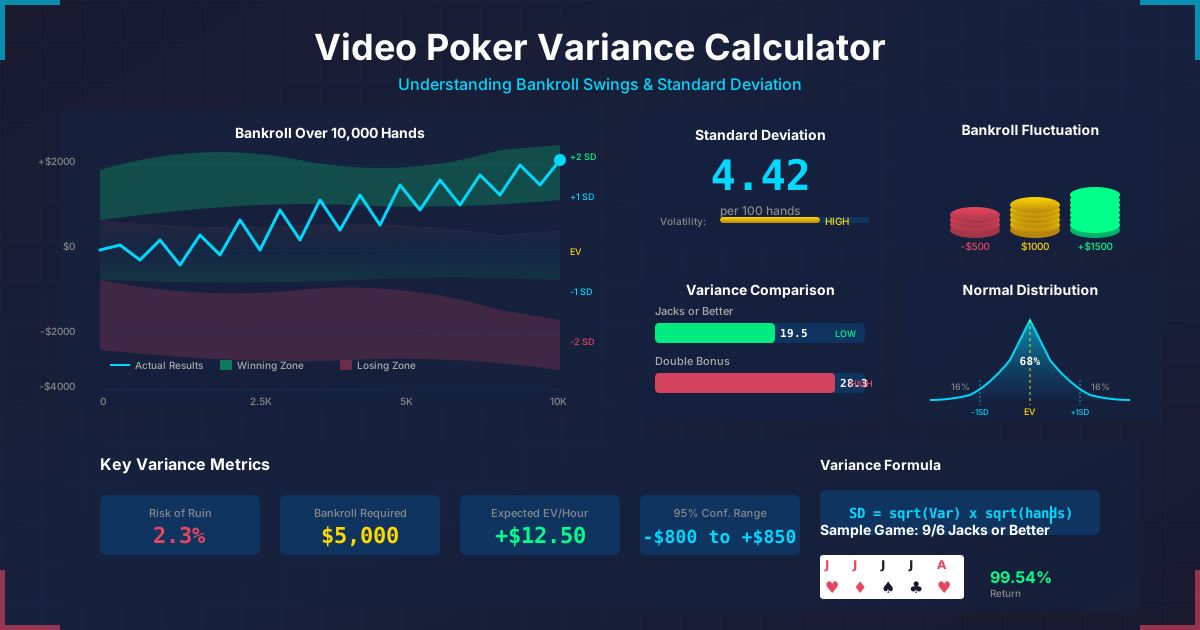
Teams are averaging 37.3 three-point attempts per game in 2025-26, nearly identical to last season's 37.6. But the variance embedded in three-point shooting makes totals less predictable than pace alone would suggest.
A team that shoots 38% from three on 40 attempts scores roughly 45.6 points from beyond the arc. If that same team shoots 30% on the same volume, they score 36.0 points -- a 9.6-point swing from one variable alone. Multiply that by two teams, and you get potential variance of nearly 20 points on a single game total purely from three-point shooting fluctuations.
| 3PT Factor | Impact on Total |
|---|---|
| Both teams top-10 in 3PT volume | +3.2 points above posted total (avg) |
| Both teams bottom-5 in 3PT accuracy | -2.1 points below posted total (avg) |
| Team shooting 40%+ from 3 (hot night) | +6-8 points above their team average |
| Team shooting below 30% from 3 (cold night) | -5-7 points below their team average |
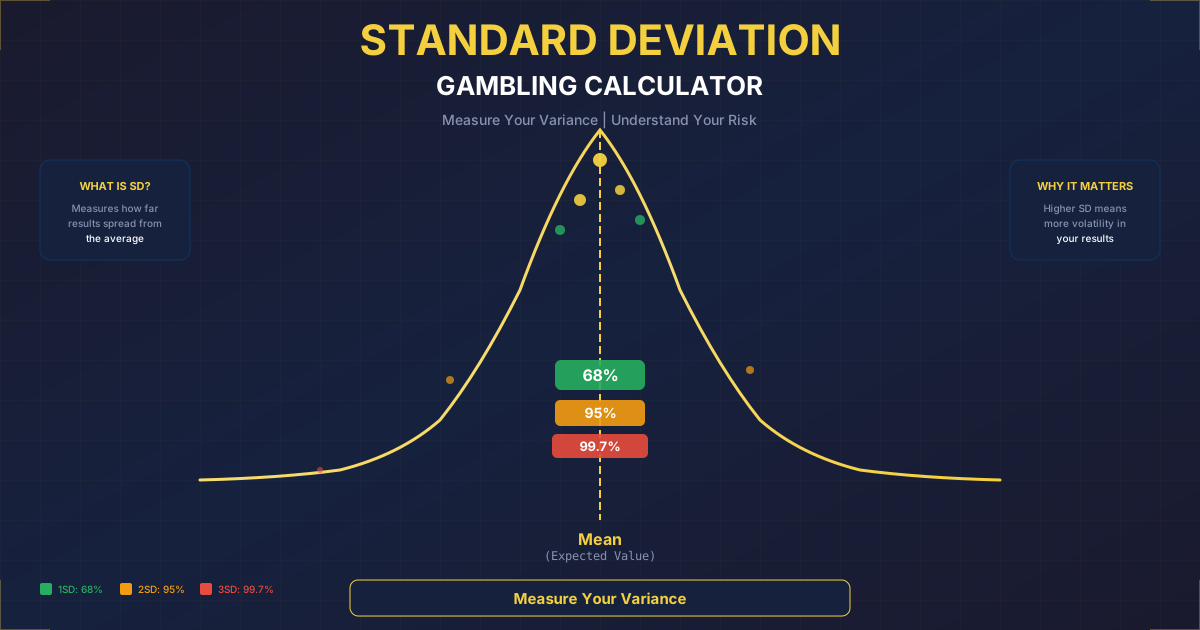
The key insight for totals bettors: pace tells you the baseline, but three-point variance determines the distribution around that baseline. High-pace, high-volume three-point games have wider outcome ranges, which means the over hits bigger when it hits but also misses harder when it misses.
Quarter-by-Quarter Scoring Trends
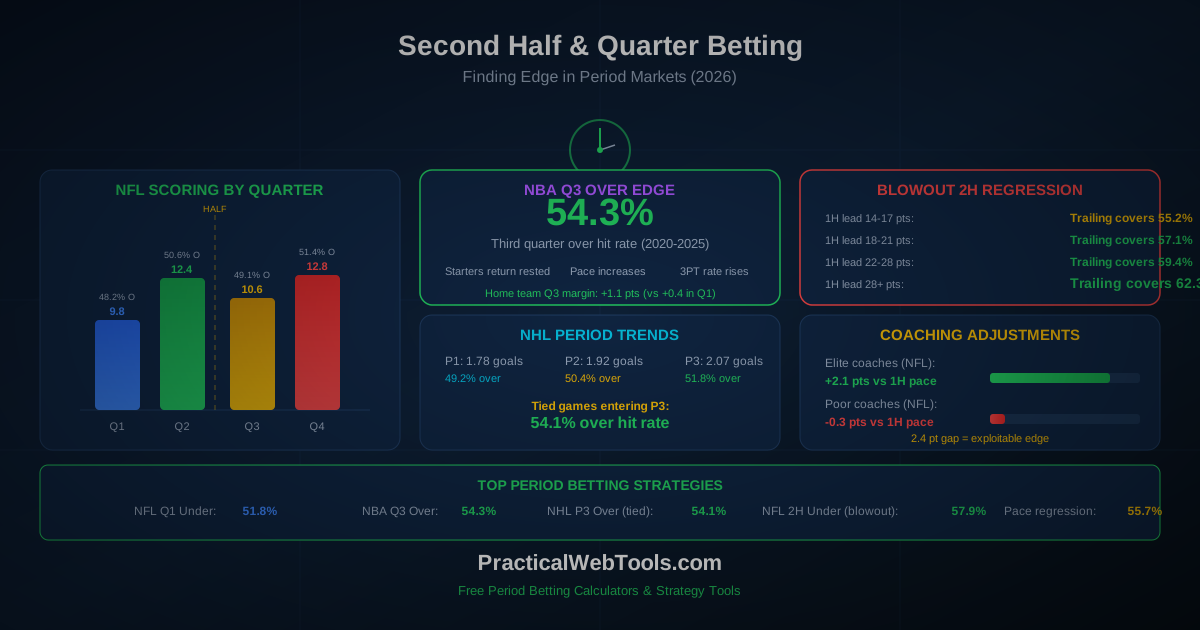
Sharp totals bettors also exploit quarter-by-quarter scoring patterns. First-quarter overs tend to hit at elevated rates in nationally televised games, where teams come out with heightened energy. Fourth-quarter scoring depends heavily on game flow -- blowouts reduce garbage-time scoring as starters sit, while close games extend possessions through fouling.
| Quarter | Avg Points Scored (2025-26) | Trend |
|---|---|---|
| 1st Quarter | 57.8 combined | Higher in prime-time games |
| 2nd Quarter | 56.2 combined | Bench-heavy minutes reduce pace |
| 3rd Quarter | 57.1 combined | Teams push after halftime adjustments |
| 4th Quarter | 55.4 combined | Blowouts suppress; close games inflate |
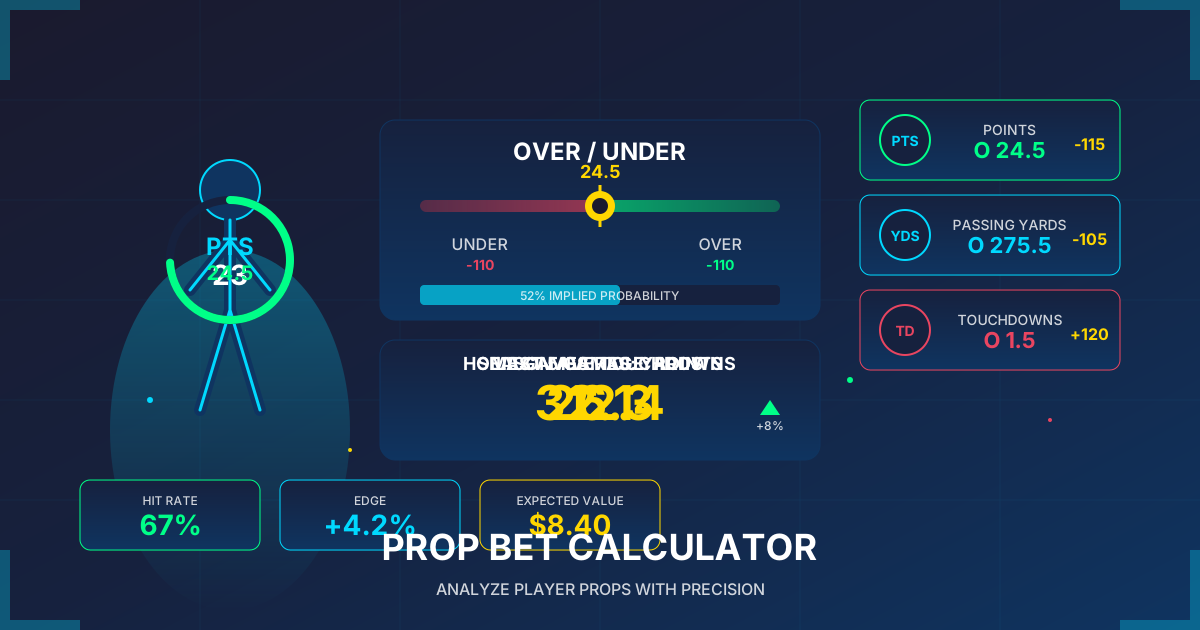
NBA Player Props Strategy: Minutes, Usage, and Matchup Analysis
Player props are where the sharpest edges exist in NBA betting. The market is less efficient than sides and totals because sportsbooks spread their modeling resources thin across hundreds of props per game. A single game between the Celtics and Lakers might generate 200+ individual prop markets. No oddsmaking team can price all of them perfectly.
Minutes Are Everything
The single strongest predictor of whether a player prop hits is minutes played. It sounds obvious, but the market consistently underweights minutes volatility. A player projected for 34 minutes who plays 28 (due to foul trouble, blowout, or coach's decision) will almost certainly miss his scoring over. A player projected for 30 who plays 38 (due to a teammate injury or close game) will likely clear his scoring line.
| Minutes Played vs. Projection | Points Prop Impact | Rebounds Prop Impact | Assists Prop Impact |
|---|---|---|---|
| 5+ minutes below projection | -4.8 points avg | -1.9 rebounds avg | -1.2 assists avg |
| Within 2 minutes of projection | +0.2 points avg | +0.1 rebounds avg | -0.1 assists avg |
| 5+ minutes above projection | +5.3 points avg | +2.3 rebounds avg | +1.5 assists avg |
This means the most important variable for any prop bet is not the player's scoring average -- it is whether he will play his expected minutes. Track injury reports, rest patterns, foul tendencies, and blowout likelihood before placing any prop bet.
Usage Rate and Teammate Absences
When a key teammate is absent, the remaining players absorb additional usage. This creates predictable prop value.
Example: When Ja Morant missed three games in late January 2026 with a knee contusion, Desmond Bane's usage rate jumped from 24.1% to 31.7%. His points prop was set at 22.5 for those games, but he averaged 28.3 points across the three-game absence. Bettors who identified the usage spike and hit the points over at -115 profited $100 per $115 wagered on each game.
Size your prop bets optimally using our Kelly Criterion Calculator.
Matchup-Based Prop Adjustments
Not all opponents are created equal, and specific defensive matchups create consistent over/under tendencies for player props.
Guards vs. poor perimeter defense: Point guards facing bottom-10 perimeter defenses score 2.3 more points per game on average, with assist totals also elevated by 0.8.
Centers vs. small-ball lineups: Traditional centers facing small-ball lineups (no true center in the starting five) see rebounding totals spike by 2.1 per game and scoring increase by 3.4 points.
Three-point shooters vs. switch-heavy defenses: High-volume shooters facing switch-heavy schemes (like OKC or Cleveland) see their three-point attempts increase but accuracy decline, making three-pointers-made props a coin flip.
| Matchup Scenario | Prop Impact | Best Bet Type |
|---|---|---|
| Elite guard vs. bottom-10 perimeter D | +2.3 pts, +0.8 ast | Points over, assists over |
| Center vs. small-ball lineup | +3.4 pts, +2.1 reb | Points over, rebounds over |
| 3PT shooter vs. switch-heavy D | +1.2 3PA, -2.1% accuracy | Avoid 3PM props |
| Star player in revenge game | +3.1 pts vs. season avg | Points over |
| Role player, teammate out | +4.7 pts (usage spike) | Points over, minutes-dependent |
Prop Bet Correlations Worth Exploiting
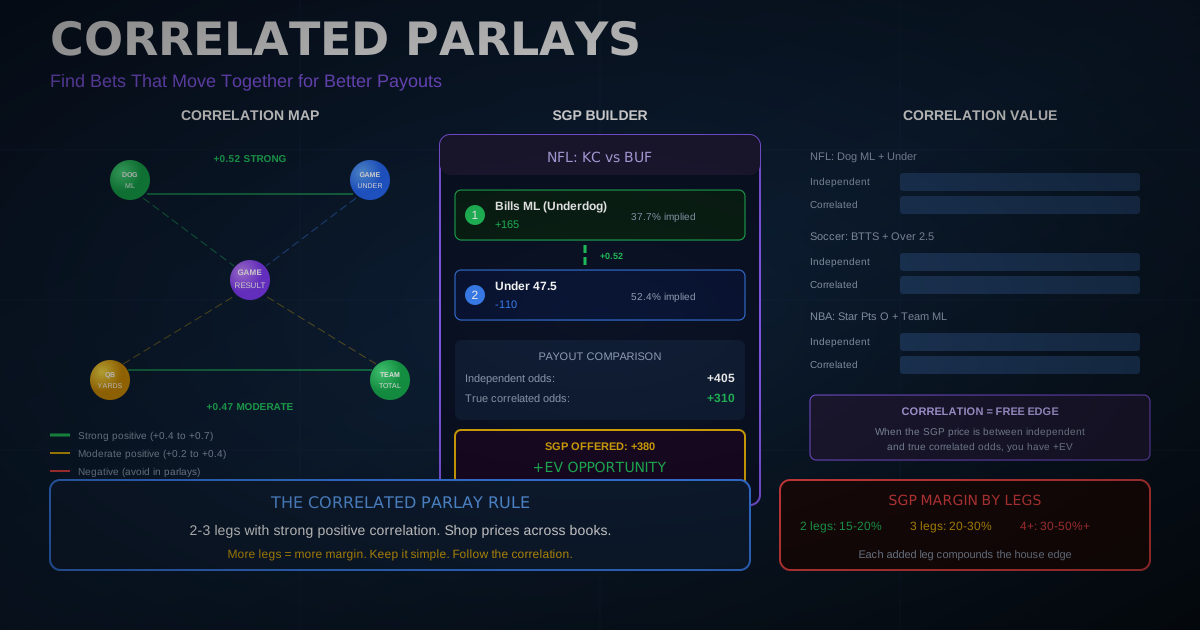
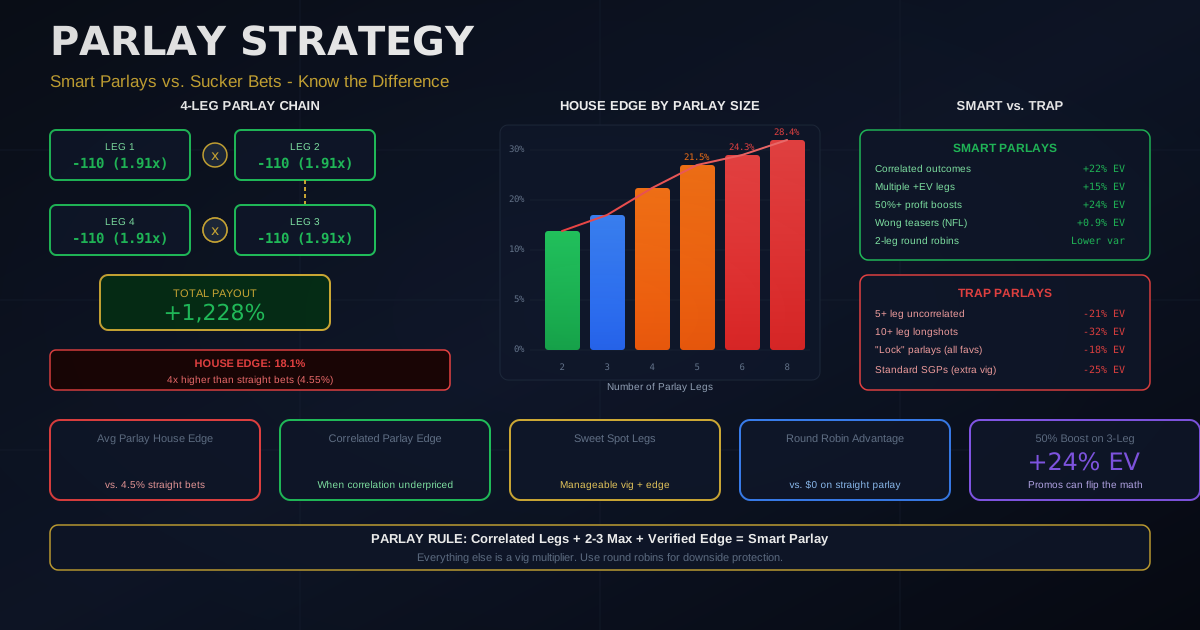
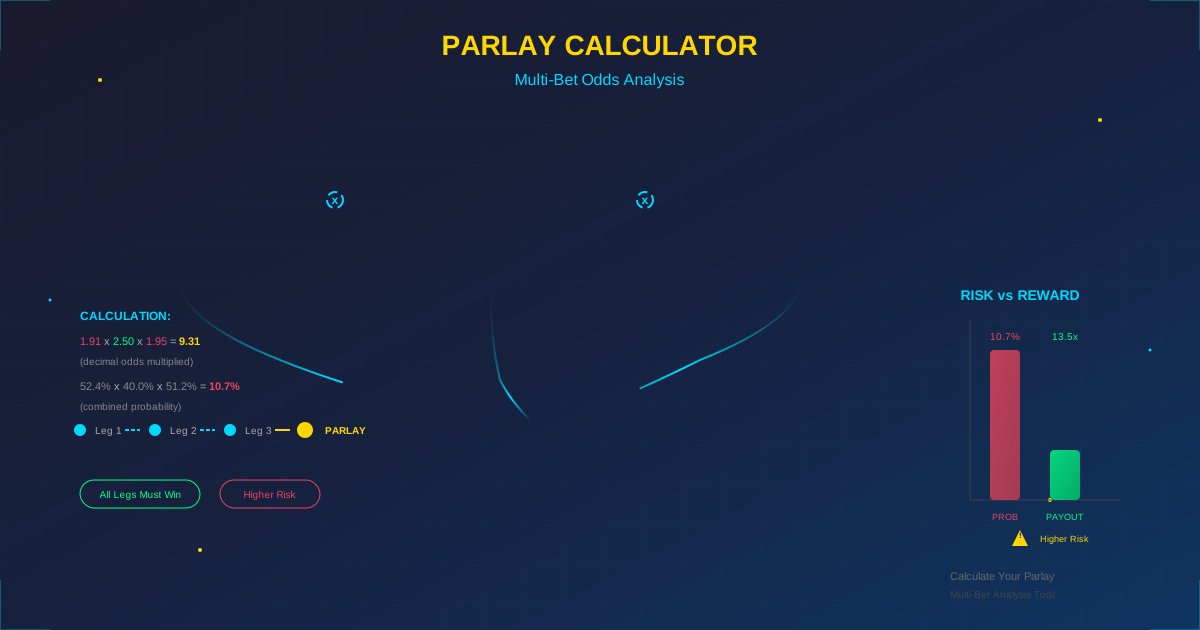
Savvy prop bettors build correlated parlays -- combining props that are logically linked but priced independently by sportsbooks.
Points + rebounds for big men in fast-paced games: When a center's team plays a top-5 pace opponent, both his scoring and rebounding tend to increase due to more possessions and more missed shots to grab.
Assists + points for primary ball handlers: When a point guard's team is favored by 7+ points, he tends to play fewer minutes but accumulate assists at a higher rate due to efficient half-court offense.
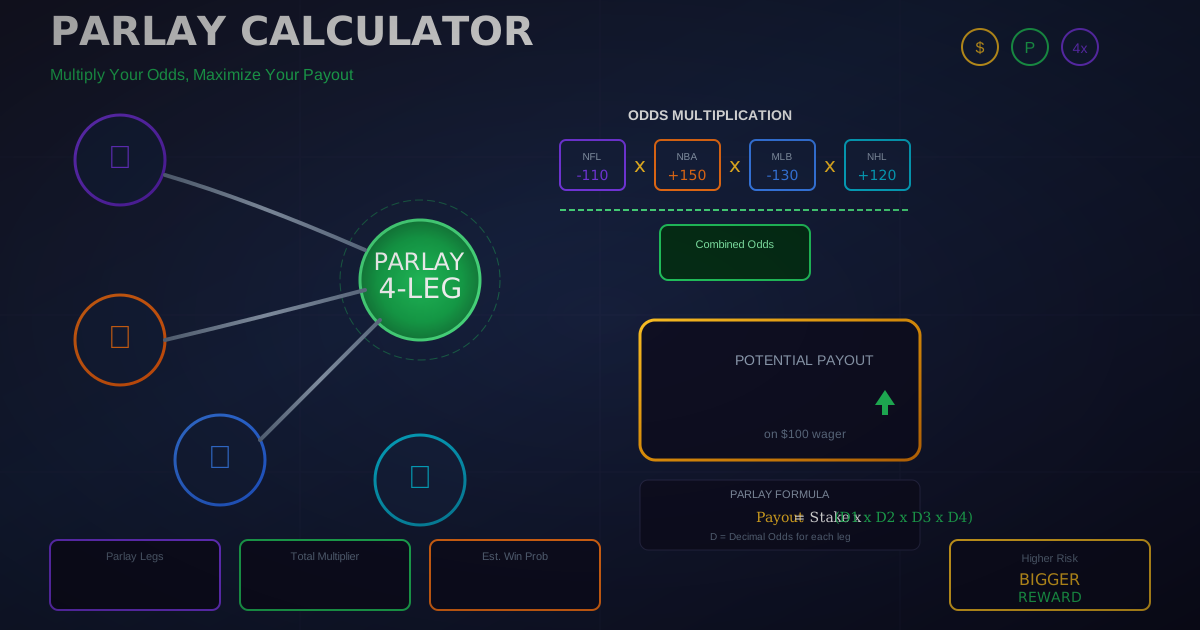
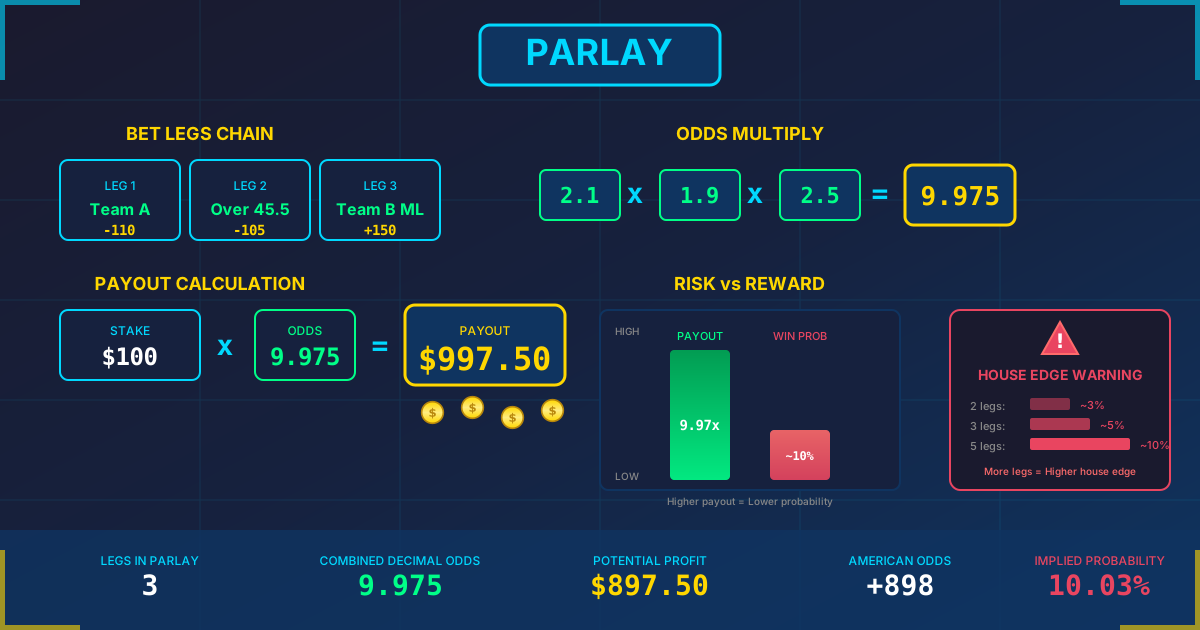
Build correlated prop parlays and calculate combined odds with our Parlay Calculator.
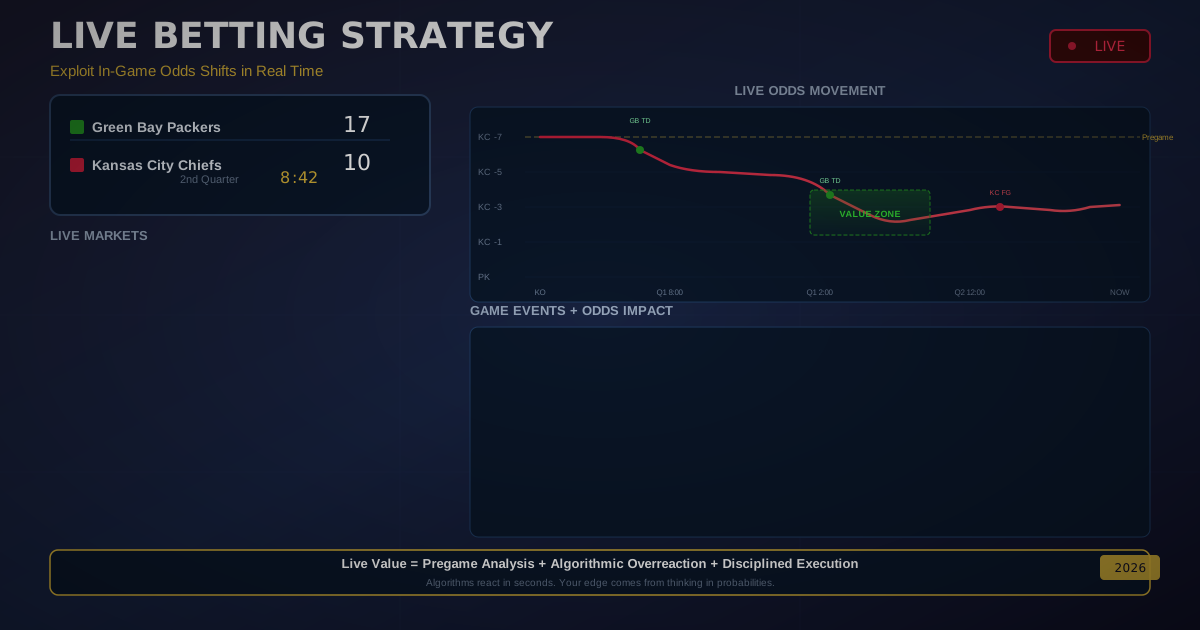
NBA Live Betting Strategy
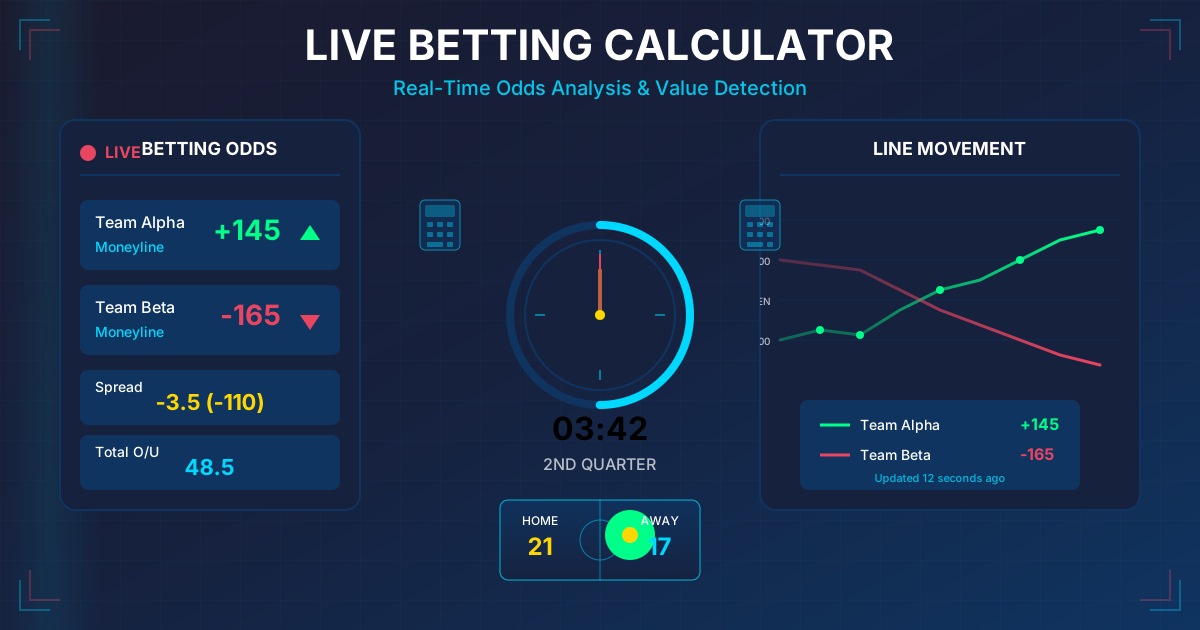
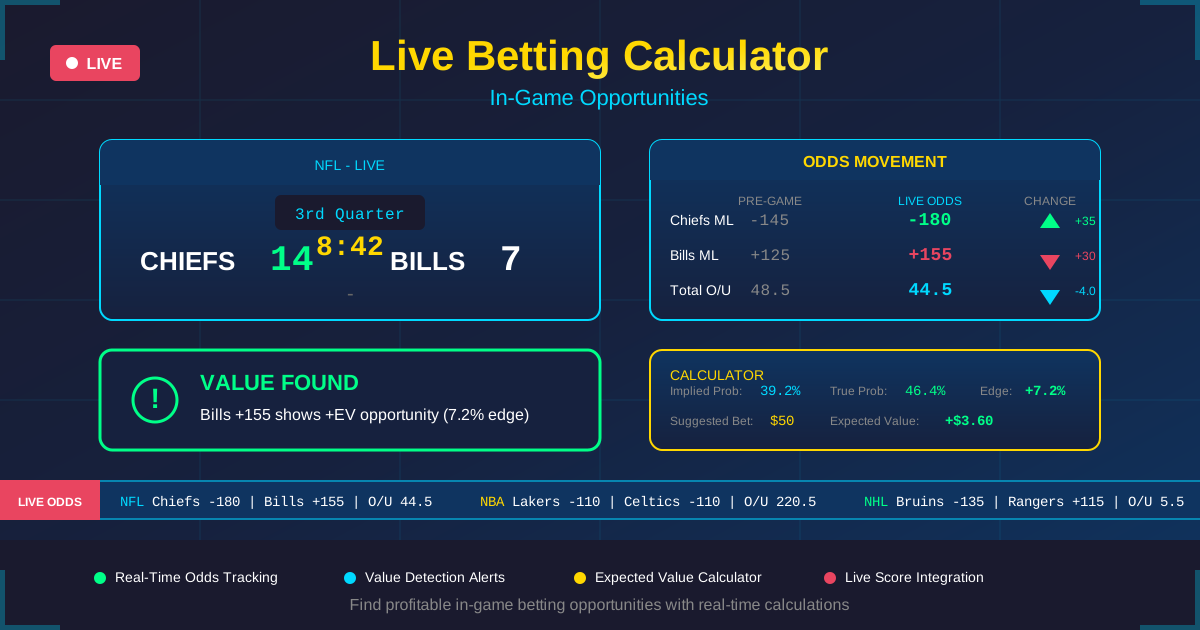
Live betting (in-game wagering) has become the fastest-growing segment of NBA betting. Some estimates suggest live betting now accounts for 40-50% of total NBA handle. The market is faster, more volatile, and -- in specific spots -- less efficient than pre-game lines.
Where Live Edges Exist
Early deficit overreaction: When a good team falls behind by 10-15 points in the first quarter, live spreads often overcorrect. The market prices in recency bias (the team looks bad right now) rather than regression to the mean (good teams routinely erase first-quarter deficits). Historically, teams favored by 5+ points pre-game who trail by 10-15 after the first quarter cover the live spread at elevated rates.
Third-quarter adjustments: The best coaches (think Erik Spoelstra, Joe Mazzulla) consistently make impactful halftime adjustments. Their teams' third-quarter scoring spikes relative to the first half. Live totals set at halftime often underweight this adjustment effect.
Foul trouble live lines: When a star player picks up his third or fourth foul in the first half, live lines adjust sharply. But if that player returns in the third quarter and avoids further fouls, the adjusted line overshot. This creates value on the team whose star was in foul trouble.
Live Betting Mistakes to Avoid
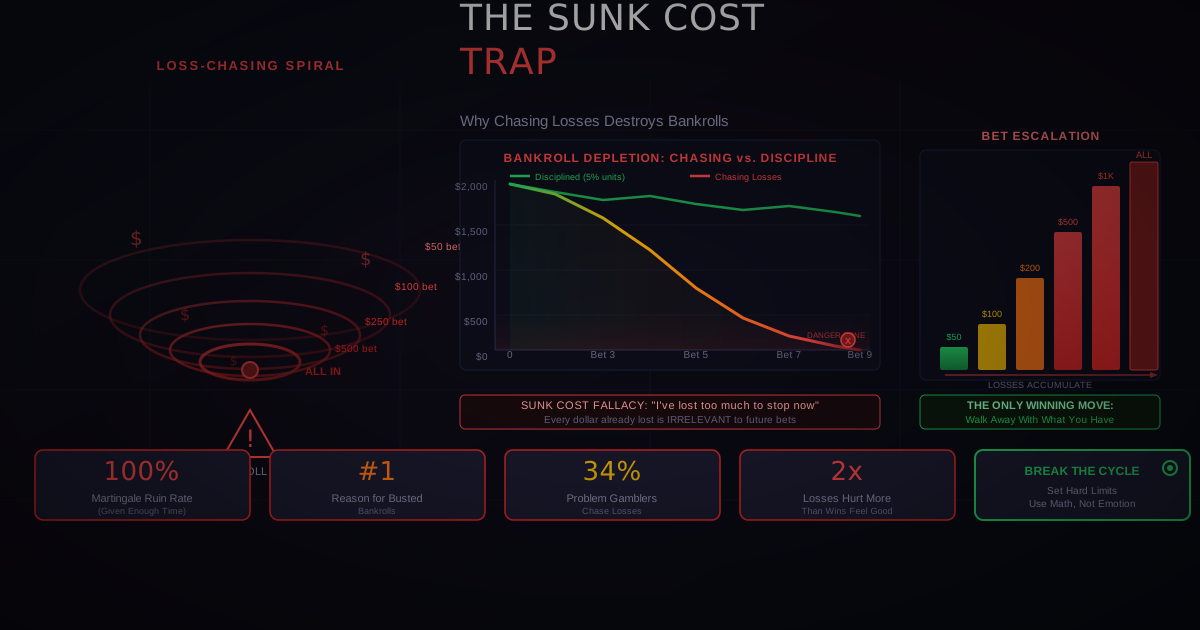
Chasing losses: The speed of live betting makes it easy to double down after a bad first-half bet. Resist.
Betting on blowouts: Once a game reaches a 25+ point differential, the outcome is decided but the margin is not. Garbage-time scoring makes live spreads and totals in blowouts almost purely random.
Ignoring time and score: A team down 8 with 10 minutes left is in a fundamentally different position than a team down 8 with 3 minutes left, even though the margin is identical. Time remaining matters more than current margin for live spread evaluation.
Determine if a live bet offers value with our Hold/Vig Calculator to see how much juice the book is charging.
Playoff vs. Regular Season Betting
The NBA postseason is a fundamentally different betting market than the regular season. Understanding those differences is critical for maintaining profitability year-round.
Why Playoffs Are Different
| Factor | Regular Season | Playoffs |
|---|---|---|
| Games per week | 3-4 | 1-2 (with rest days between) |
| Motivation level | Variable (load management) | Maximum (elimination pressure) |
| Rotation depth | 10-12 players | 7-9 players |
| Coaching adjustments | Limited prep time | Full scouting, game-by-game adjustments |
| Star minutes | 32-36 per game | 38-42 per game |
| Market efficiency | Moderate | Very high |
| Rest advantage angles | Significant | Minimal (equal rest) |
Playoff-Specific Strategies
Home underdogs in the first round: Home teams receiving points in the first round of the NBA playoffs have historically covered at a profitable rate. The home crowd, combined with underdog motivation and the longer playoff rotation giving way to star-heavy minutes, creates value.
Series price vs. game-by-game: Instead of betting individual playoff games (where lines are extremely sharp), consider series prices. The market occasionally misprices a best-of-seven series because it anchors too heavily on regular season records rather than playoff-specific factors like coaching, matchup advantages, and star-player availability.
Unders in grinding series: When two elite defensive teams meet in the playoffs (think Celtics vs. Cavaliers or Thunder vs. Timberwolves), totals compress as defenses tighten. The under hits at elevated rates in playoff series between top-10 defensive teams, especially from Game 3 onward as coaches have had time to implement game-specific defensive schemes.
Example: In the 2025 playoffs, the Knicks-Pacers second-round series saw totals drop from 223.5 in Game 1 to 216.5 by Game 5 as Tom Thibodeau's defense found its footing. The under hit in four of the last five games. Bettors who recognized the defensive adjustment trend after Game 2 profited consistently on unders.
NBA Futures Betting
NBA futures -- championship odds, division winners, win totals, MVP, and award markets -- offer unique value at specific points in the season.
When to Bet Futures
Preseason (September-October): The widest lines and most inefficiency. The market is pricing in narratives from the offseason, and a single injury or unexpected lineup change can create massive value.
December-January (midseason): After 25-30 games, you have a reliable sample size but the market has not fully adjusted. Teams that started slow but have underlying metrics suggesting improvement (strong net rating with a tough early schedule) are often underpriced.
Post-trade deadline (February): Roster changes create immediate value. A team that acquires a key piece may see its championship odds shorten slowly over days, giving you a window to bet before the market catches up.
Post-All-Star break (March): Win totals become increasingly predictable with 20-25 games remaining. If a team needs to go 15-10 to hit the over on their win total and their remaining schedule is favorable, the over may offer value even if the market has not adjusted for schedule difficulty.
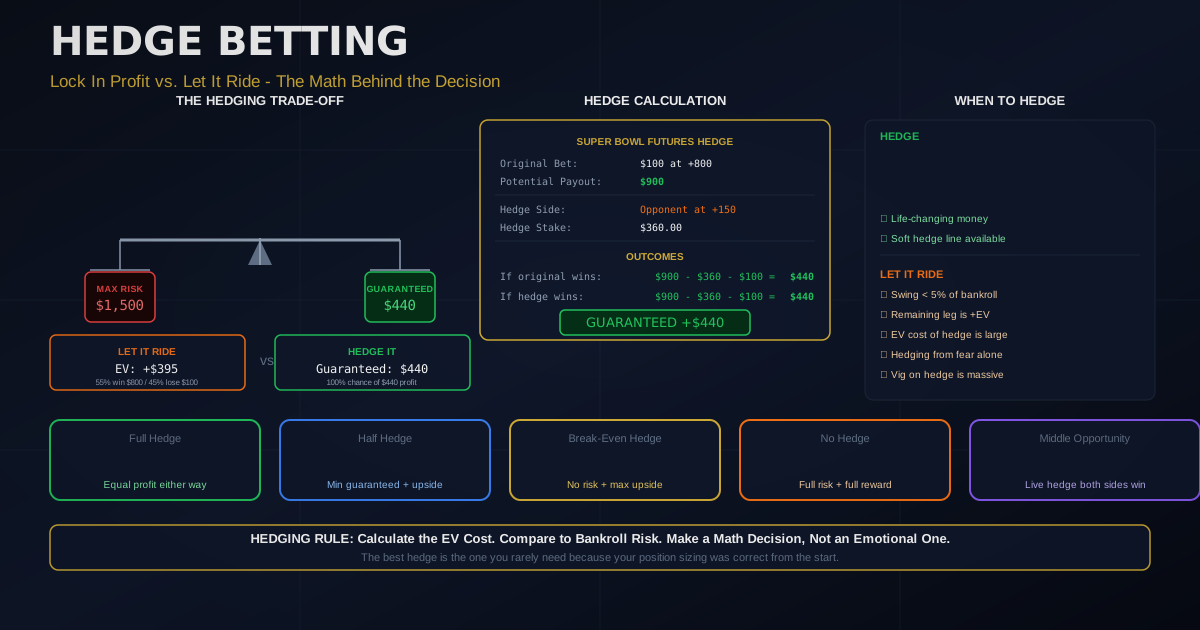
Hedging Futures
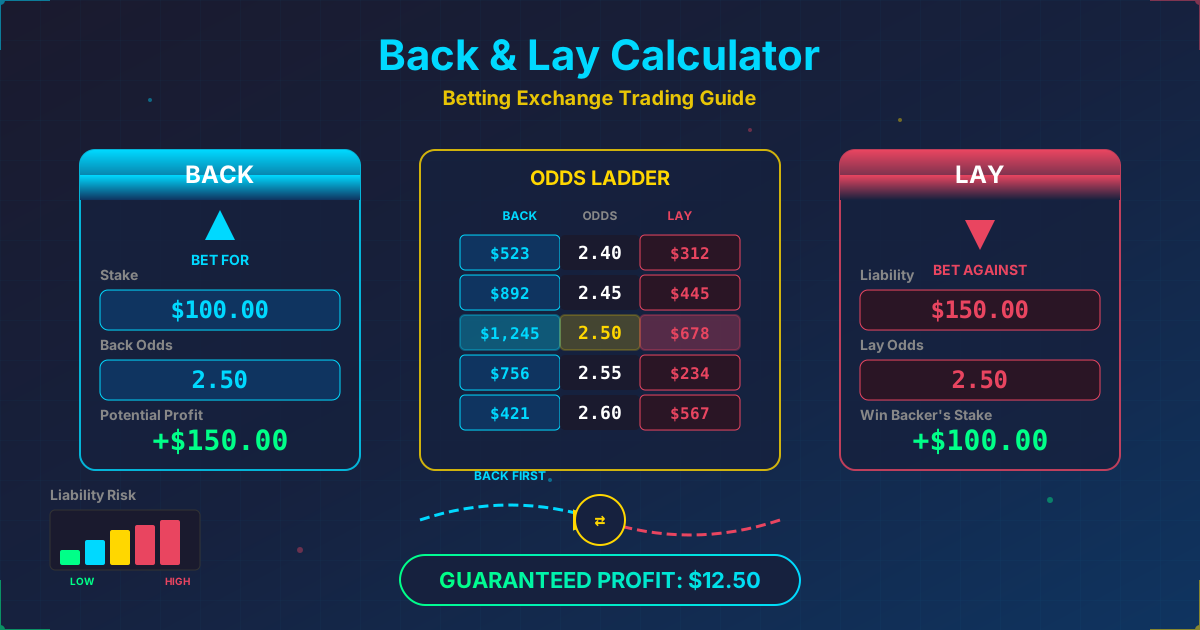
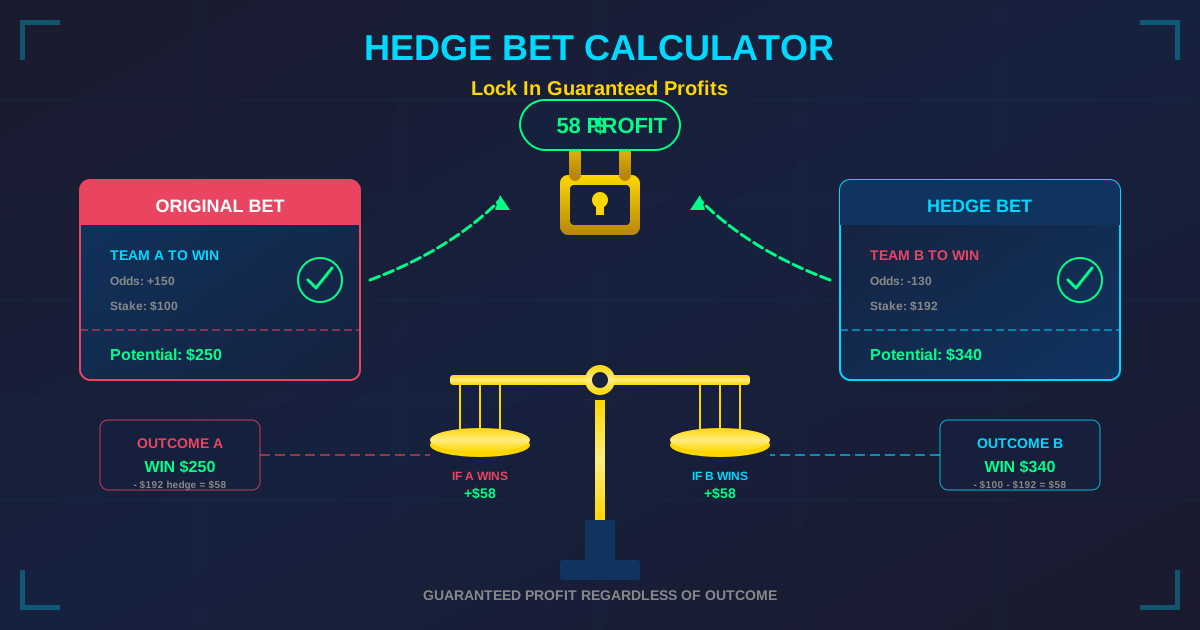
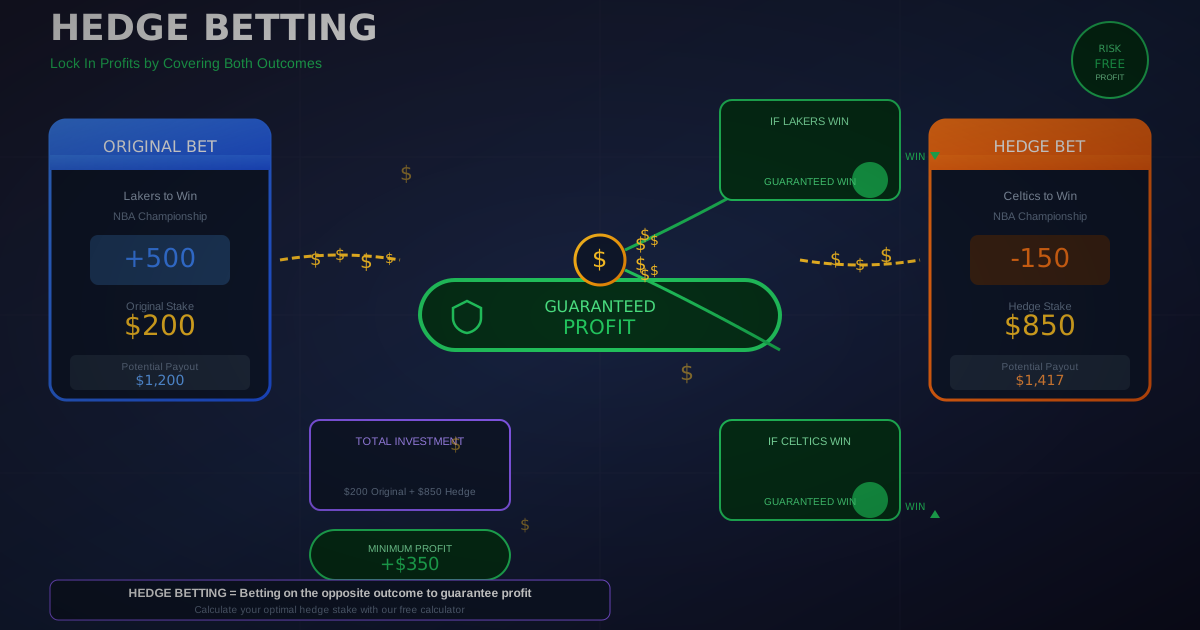
If you bet a team's championship odds at +2500 in October and they reach the Conference Finals, you can lock in profit regardless of outcome by hedging.
Example: You bet $100 on the Sacramento Kings to win the NBA championship at +2500 (potential payout: $2,600). The Kings reach the Western Conference Finals, and their odds have shortened to +350. You can hedge by betting on the opposing team to win the series, guaranteeing a profit regardless of outcome.
Calculate the exact hedge amount for maximum guaranteed profit with our Hedge Calculator.
Advanced NBA Betting Concepts
Closing Line Value (CLV)
CLV is the difference between the odds at which you placed your bet and the closing line (the final odds before tip-off). Research consistently shows that bettors who achieve positive CLV profit long-term, regardless of their short-term win/loss record.
How to achieve CLV: Bet early when you have identified an edge. If you bet a team at -3 and the line closes at -5, you captured 2 points of CLV. The market agreed with your position and moved further in your direction.
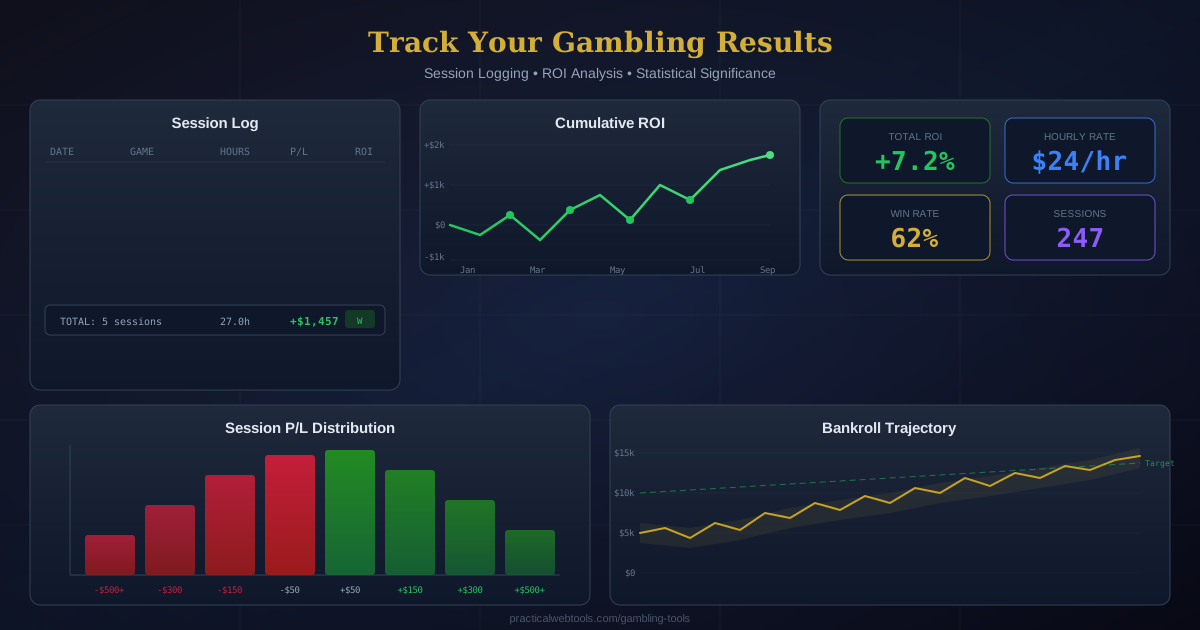
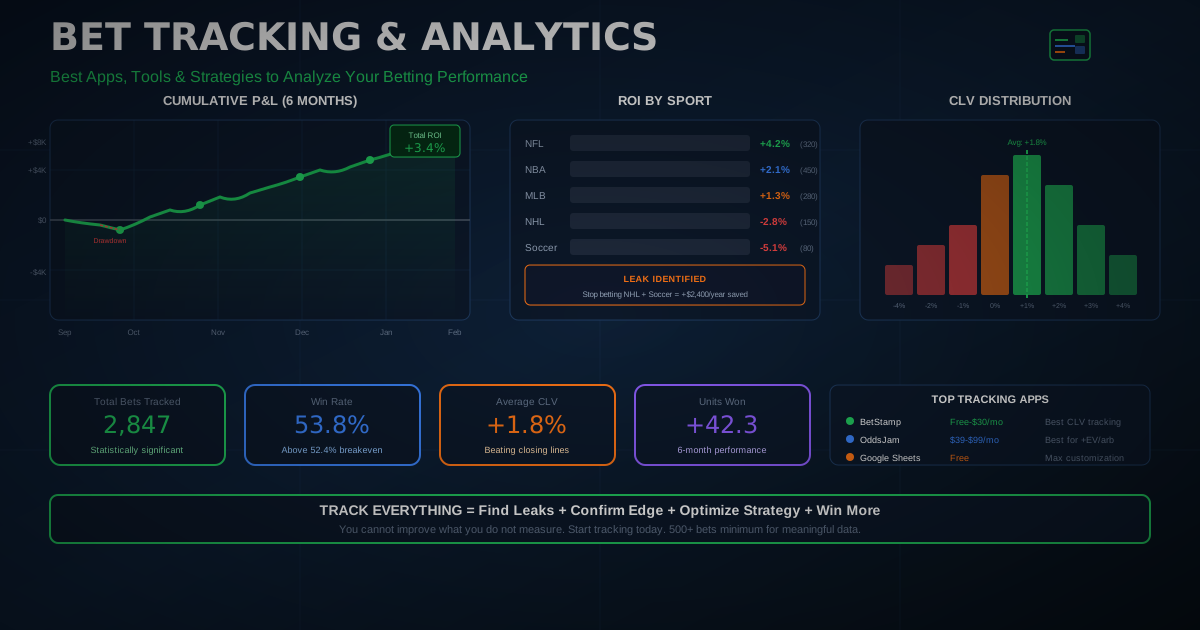
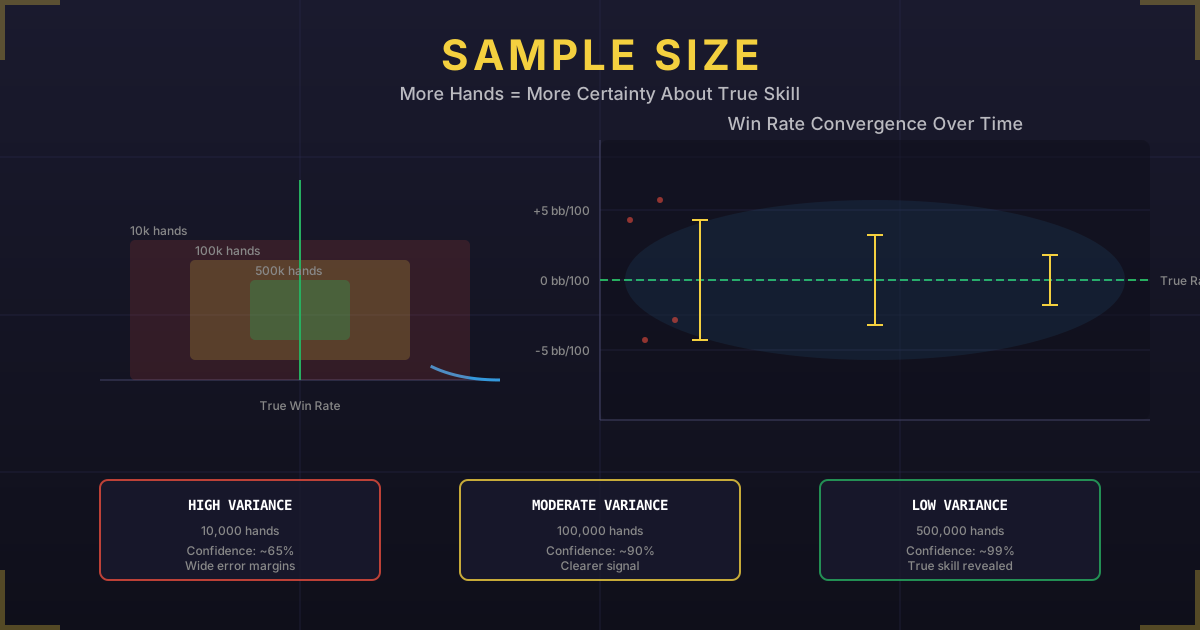
Tracking CLV: Log every bet with the odds you took and the closing odds. Over 500+ bets, your CLV average is a far better indicator of skill than your win rate.
The Vig and Its Impact
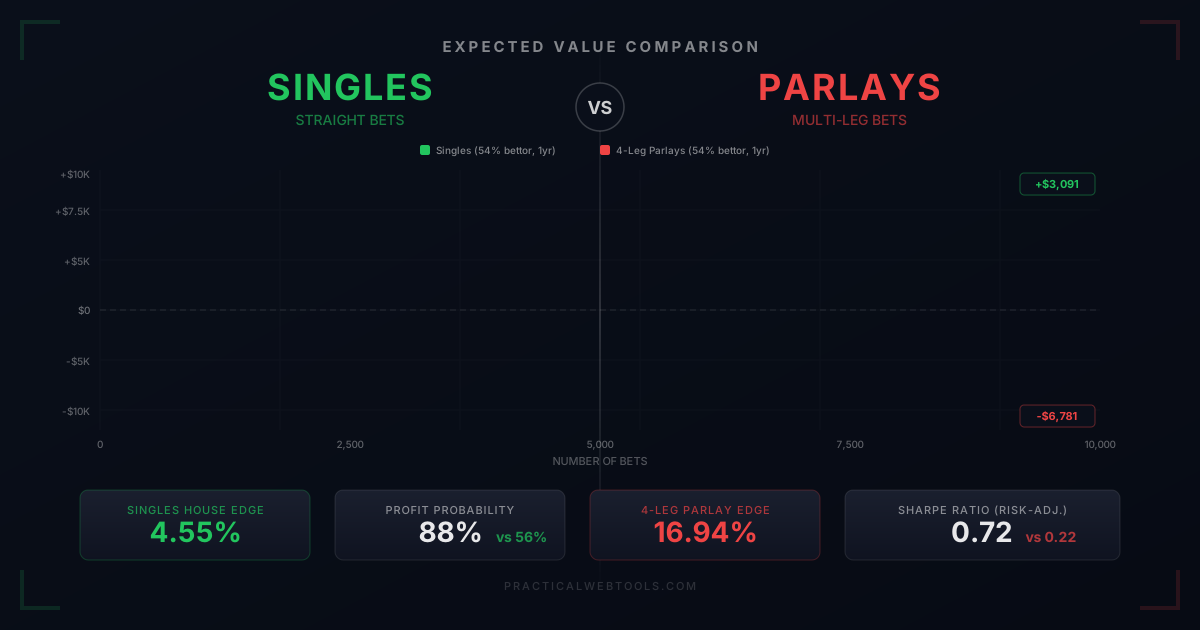
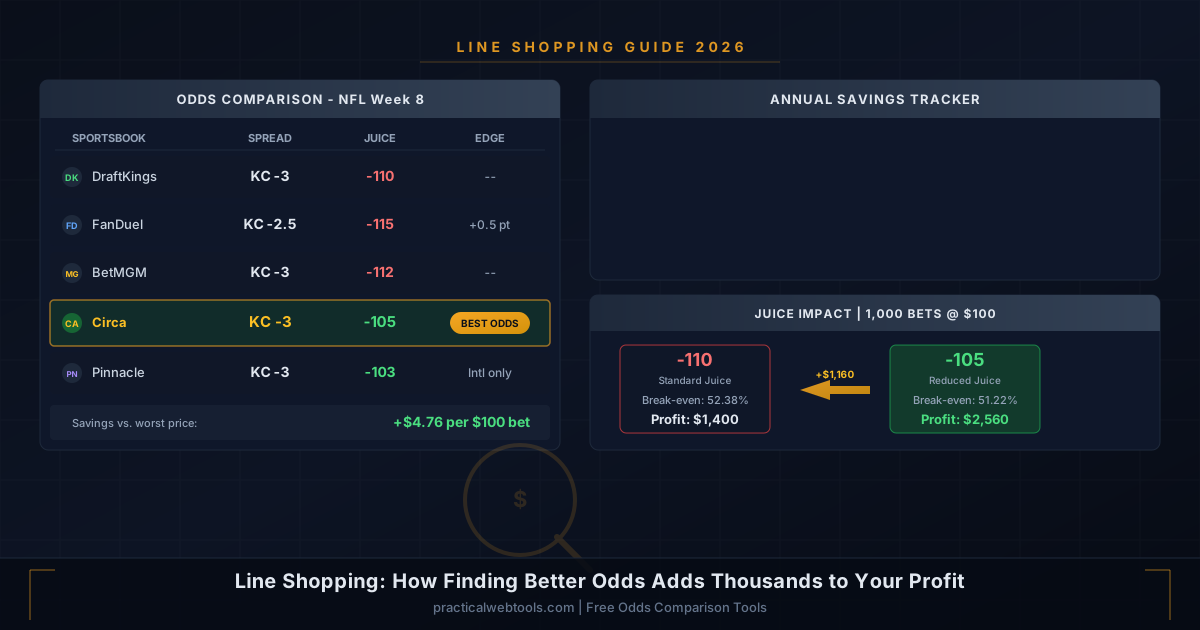
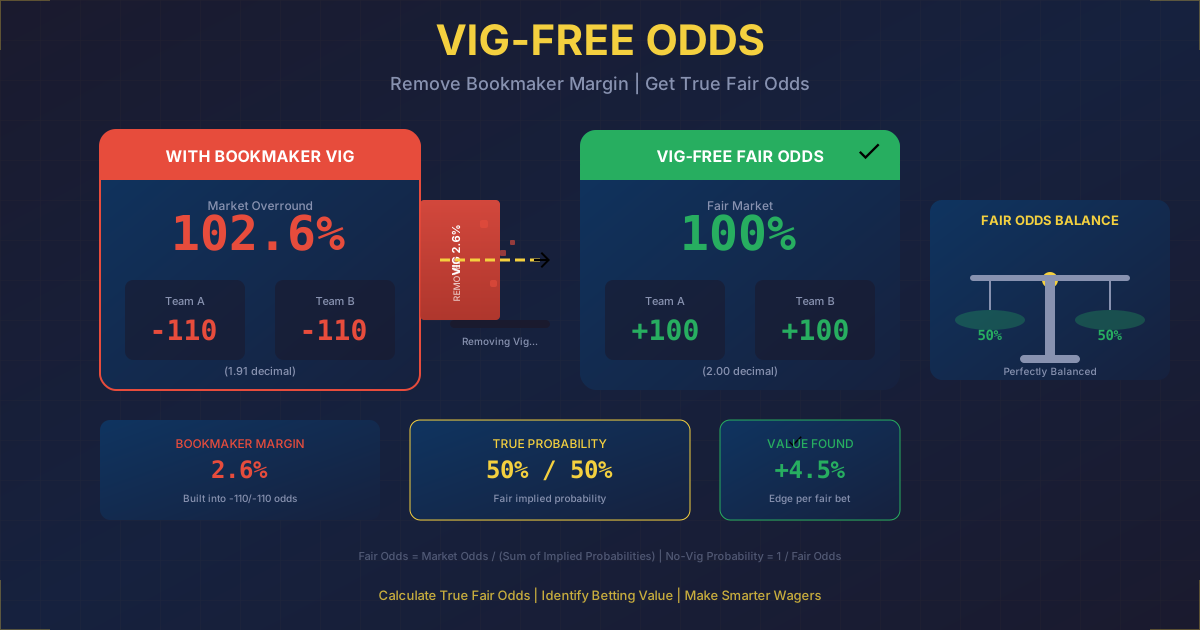
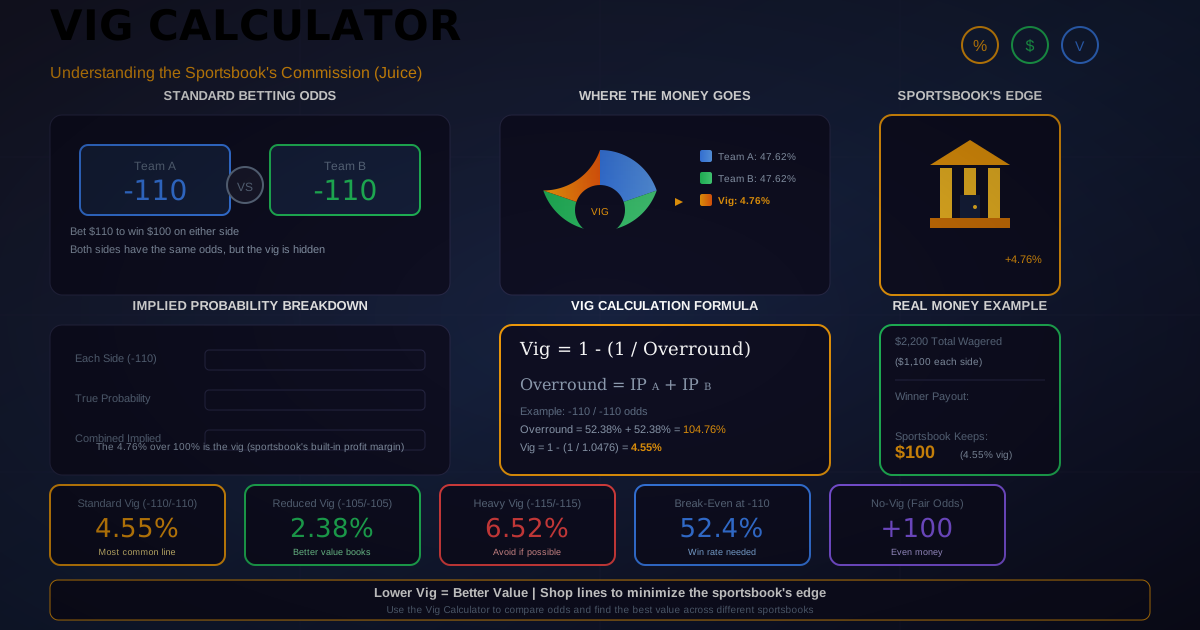
Standard NBA sides are juiced at -110/-110 (4.55% vig). Some sportsbooks offer reduced juice (-108 or -105) on NBA sides, which meaningfully impacts long-term profitability.
| Juice Level | Breakeven Win % | 1,000 Bets at 55% Win Rate | Profit Difference |
|---|---|---|---|
| -110 (standard) | 52.38% | +$1,364 | Baseline |
| -108 (reduced) | 51.92% | +$1,944 | +$580 |
| -105 (sharp book) | 51.22% | +$2,714 | +$1,350 |
Over 1,000 bets at a 55% win rate, betting at -105 instead of -110 generates an additional $1,350 in profit. That is free money for nothing more than choosing the right sportsbook.
See exactly how much vig a sportsbook is charging with our Hold/Vig Calculator.
Line Shopping
Never place an NBA bet without checking odds at multiple sportsbooks. A half-point on a spread or 5 cents on a moneyline might seem trivial, but across hundreds of bets, line shopping adds 1-2% to your ROI.
Example: You want to bet the Bucks -4.5 tonight. Book A has them at -4.5 (-110), Book B has -4 (-115), and Book C has -5 (-105). The best line depends on your model. If you think the Bucks win by 6+, take -5 at -105 (better juice). If you think it will be close, take -4 at -115 (better number). The point is: you have options, and exercising them is free edge.
Arbitrage and Round Robin Strategies
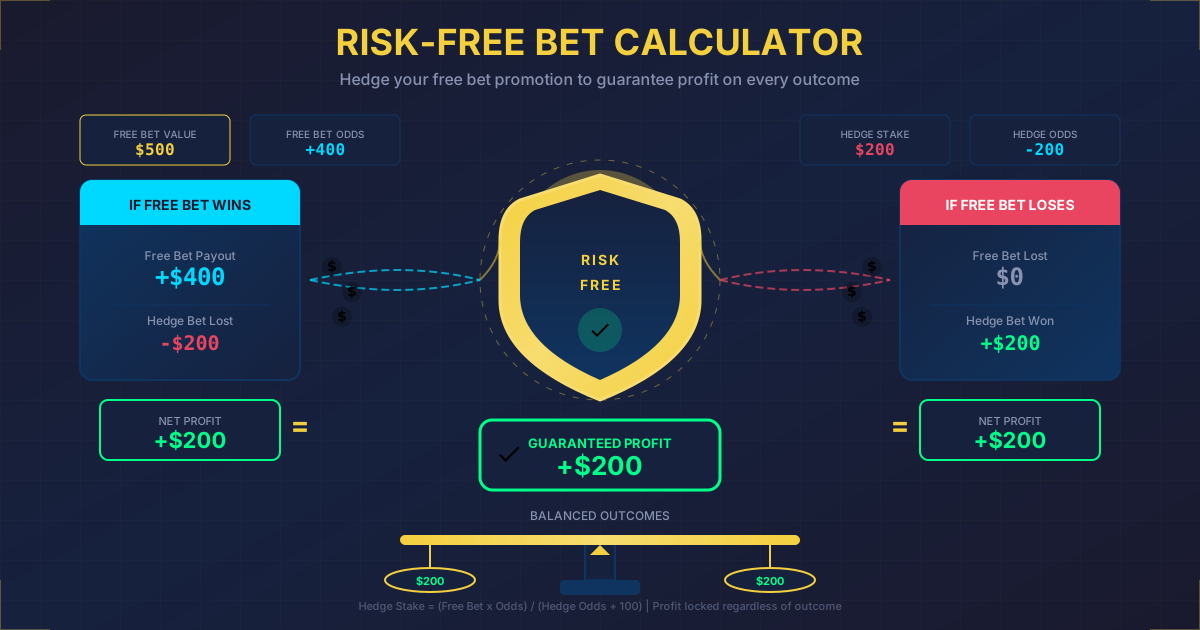
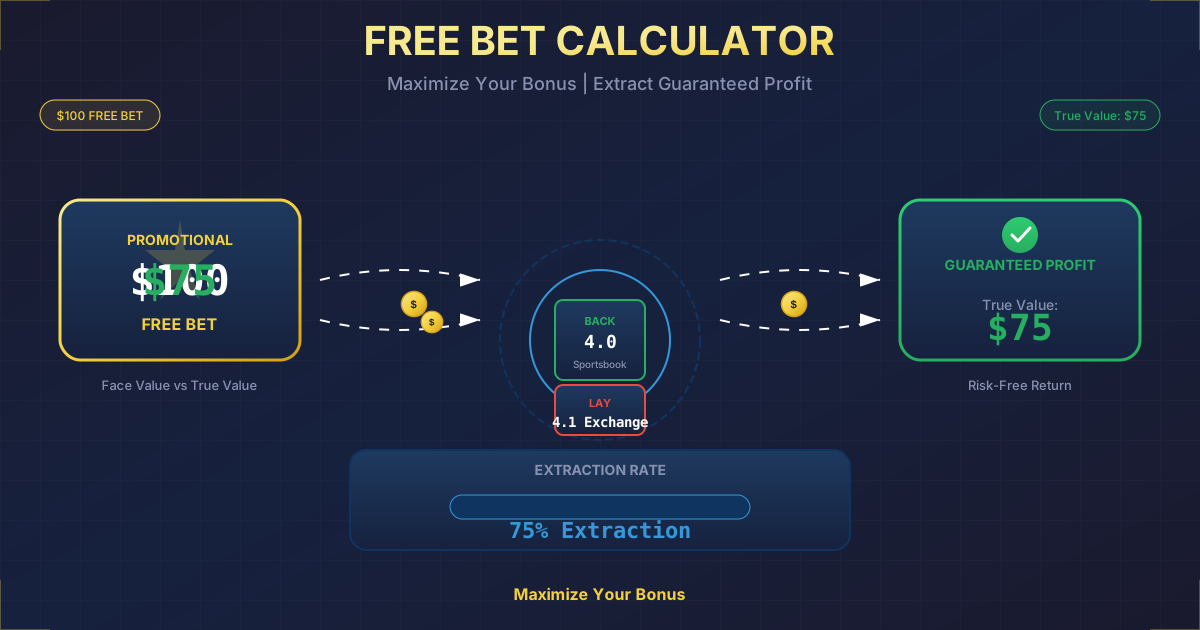
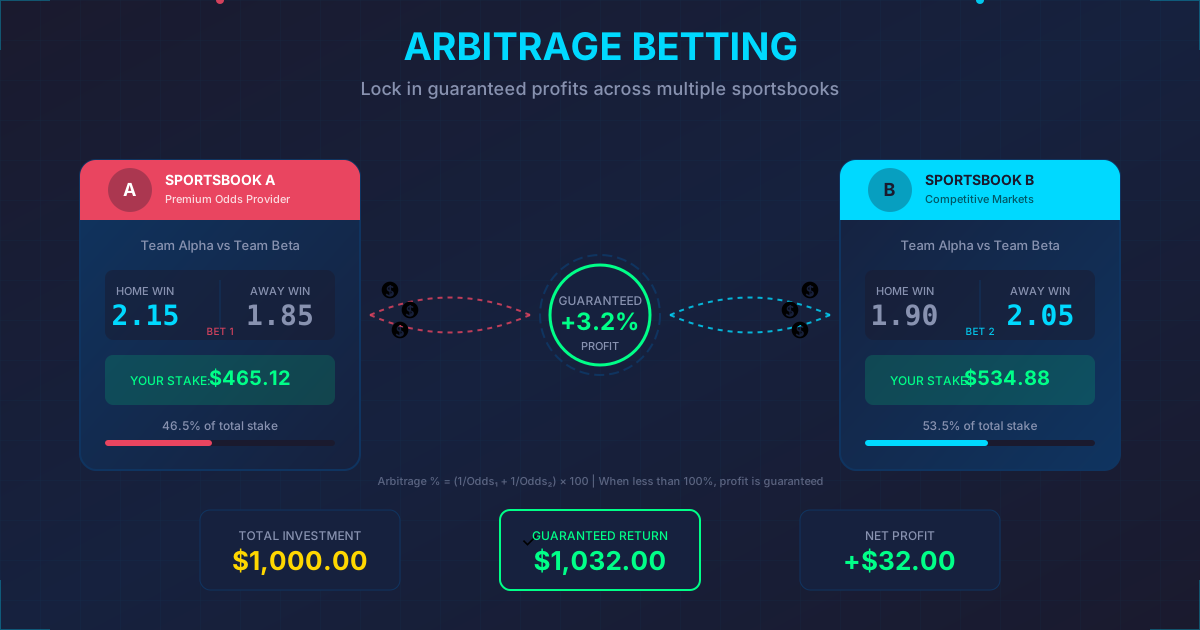
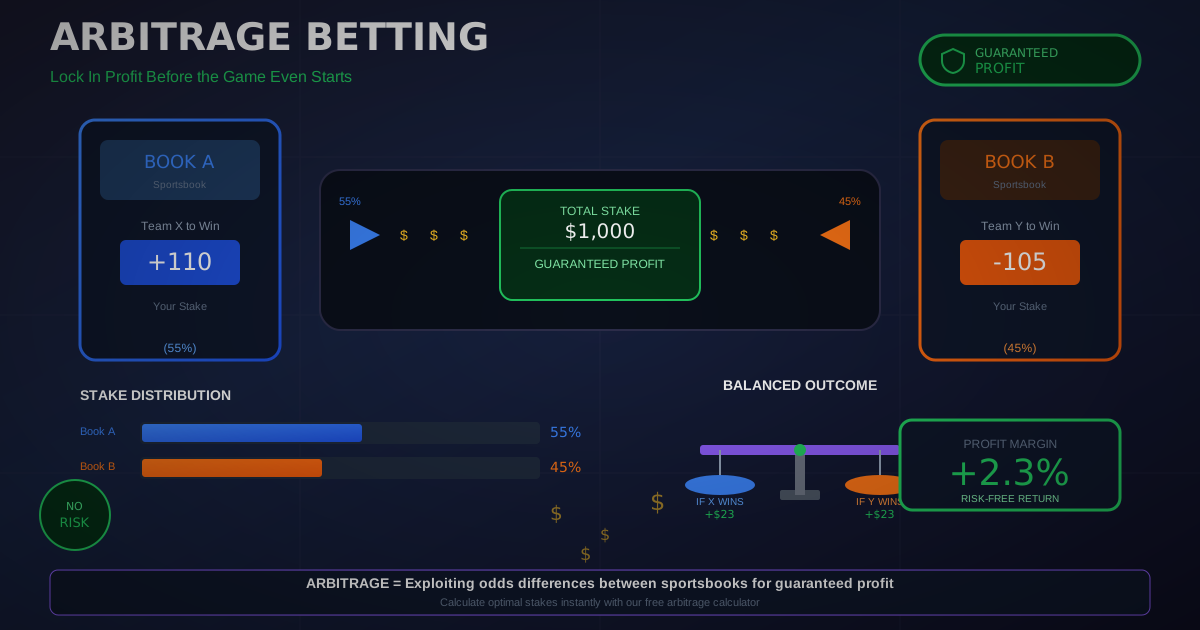
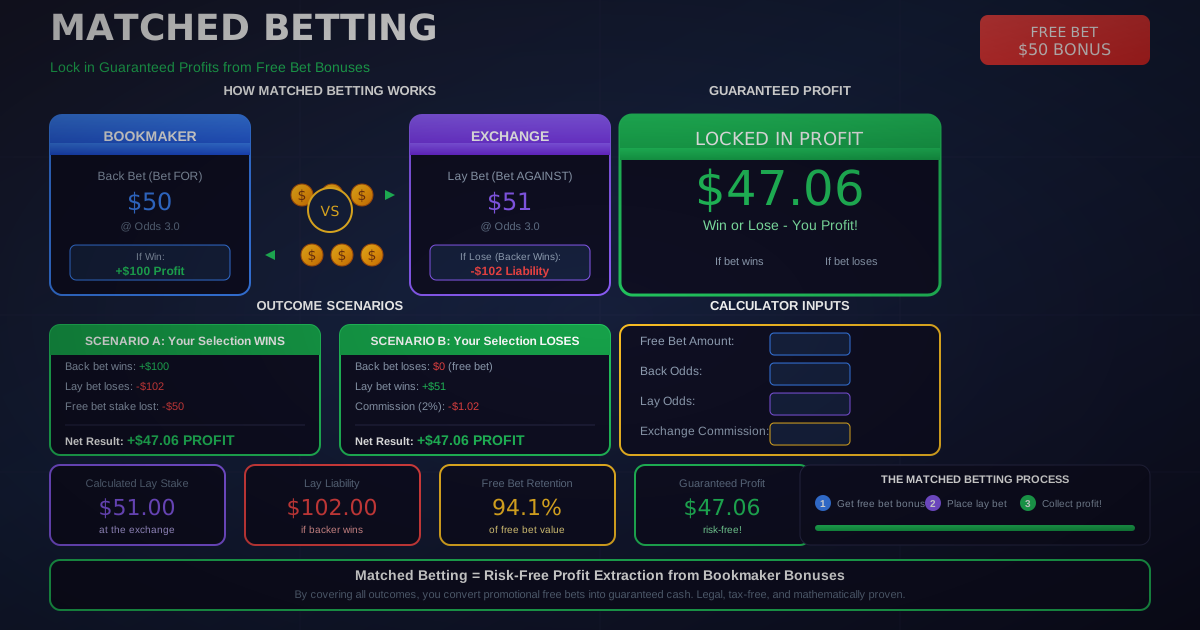
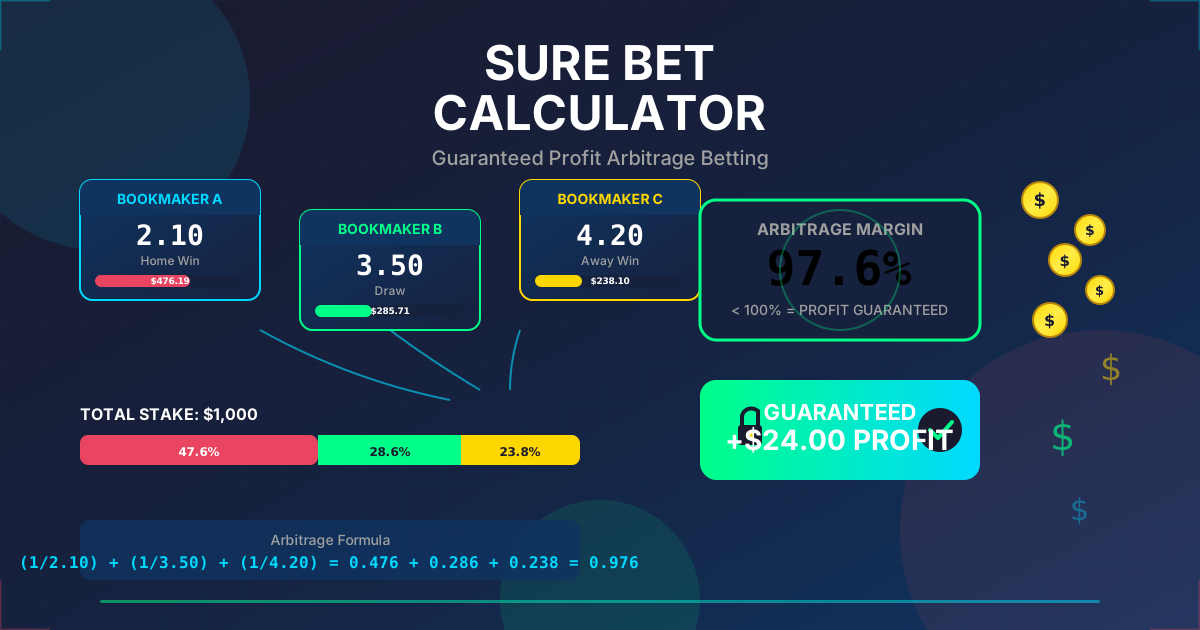
Occasionally, odds discrepancies across sportsbooks create arbitrage opportunities -- risk-free bets where you are guaranteed a profit regardless of outcome.
Check for risk-free profit opportunities with our Arbitrage Calculator.
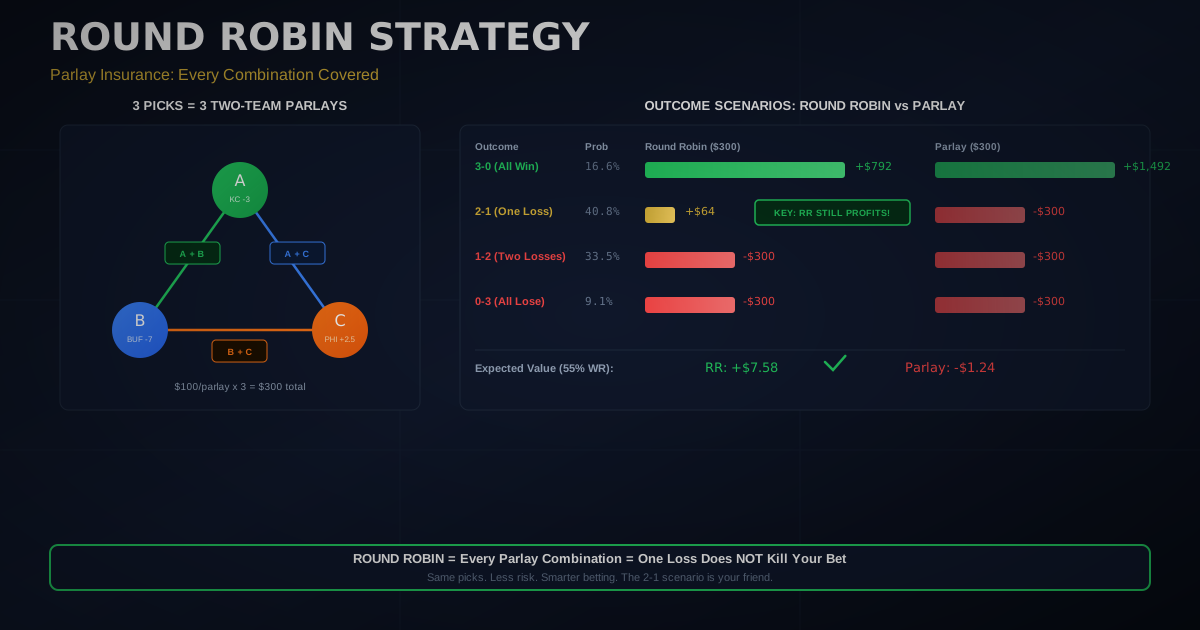
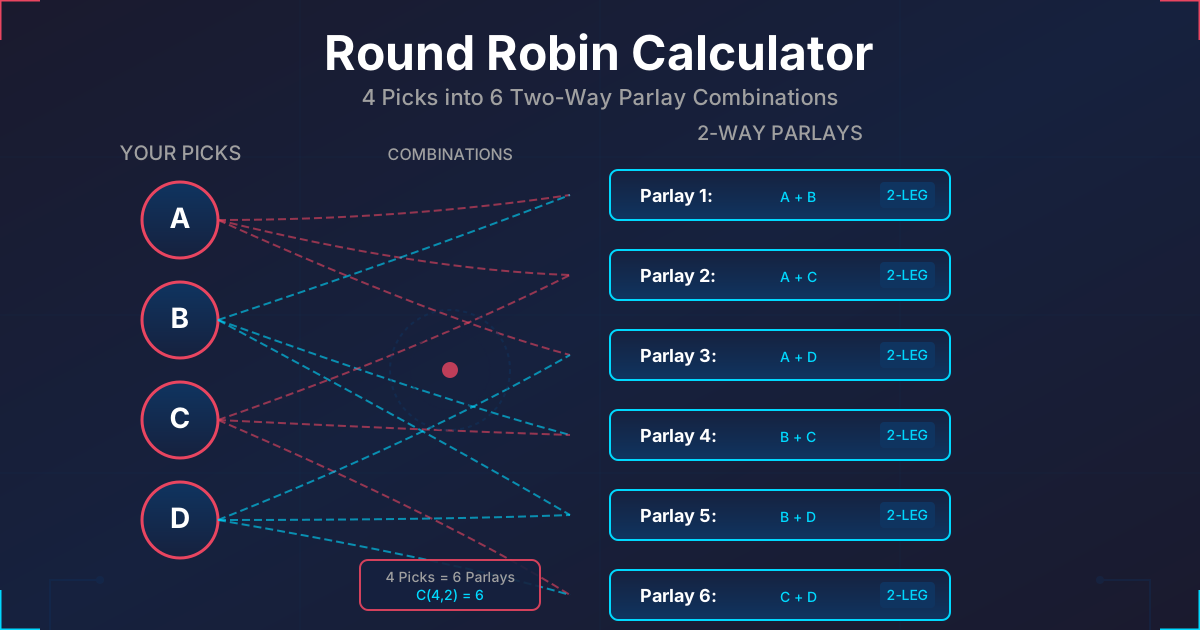
Round robin betting lets you create multiple smaller parlays from a set of selections, reducing the all-or-nothing risk of a traditional parlay while maintaining upside.
Build optimized round robin combinations with our Round Robin Calculator.
Bankroll Management for NBA Betting
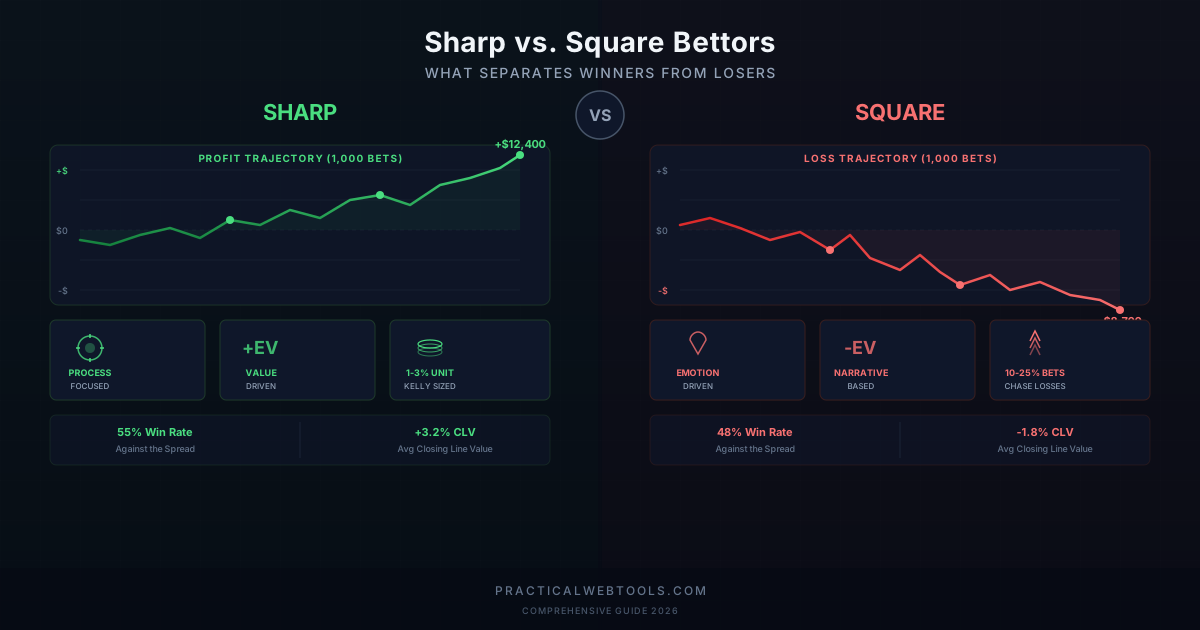
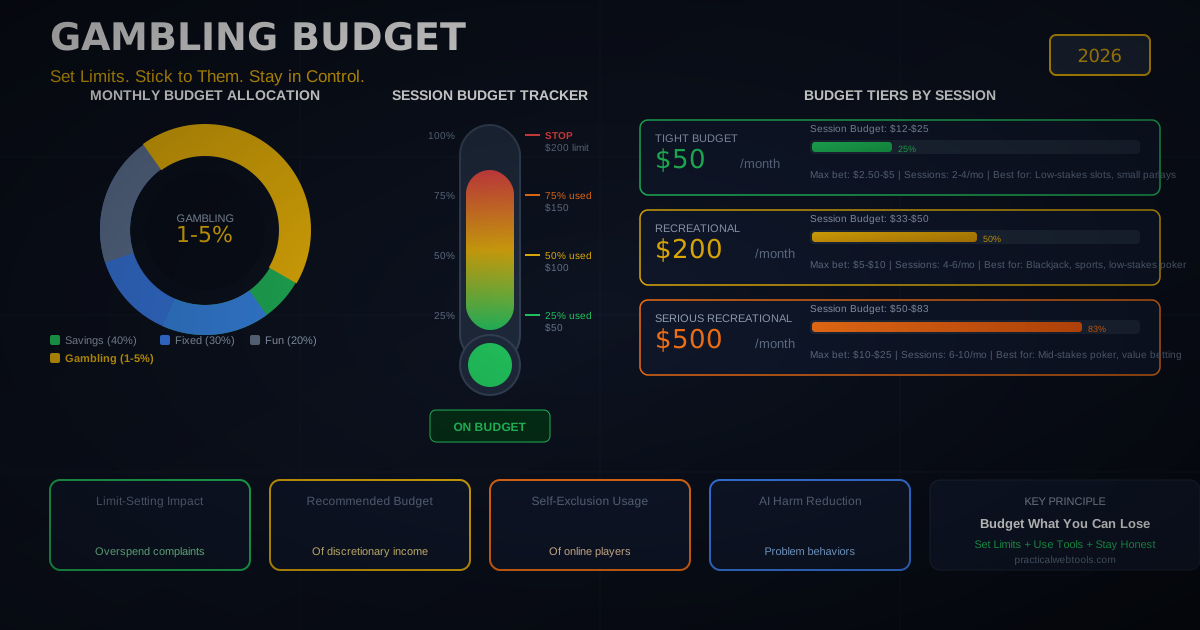
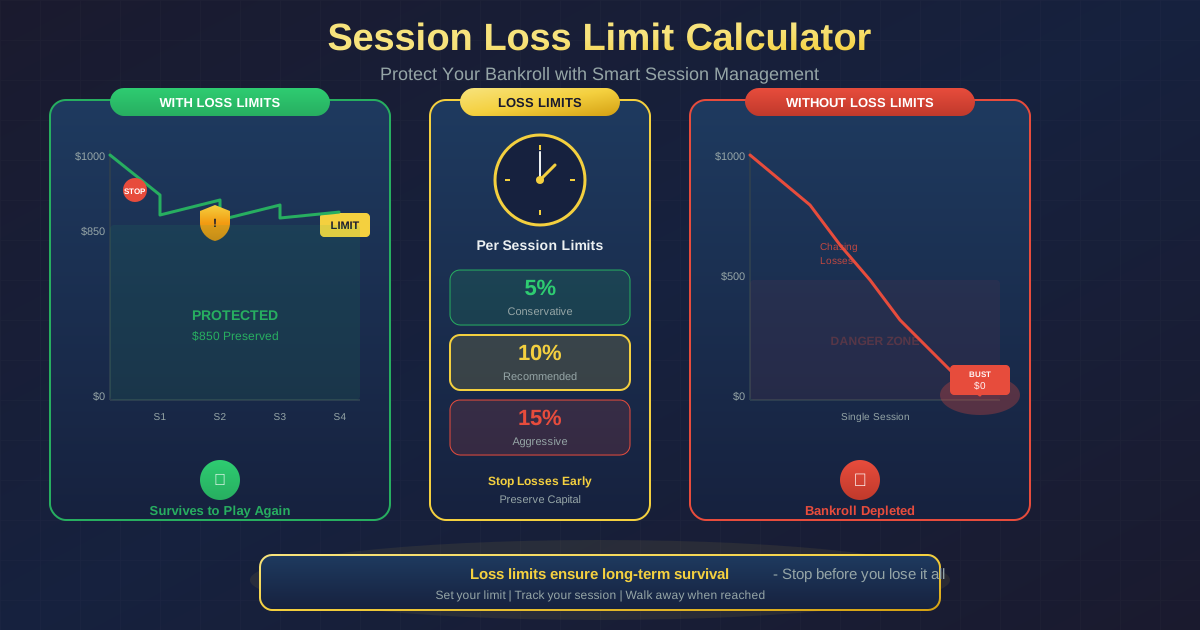
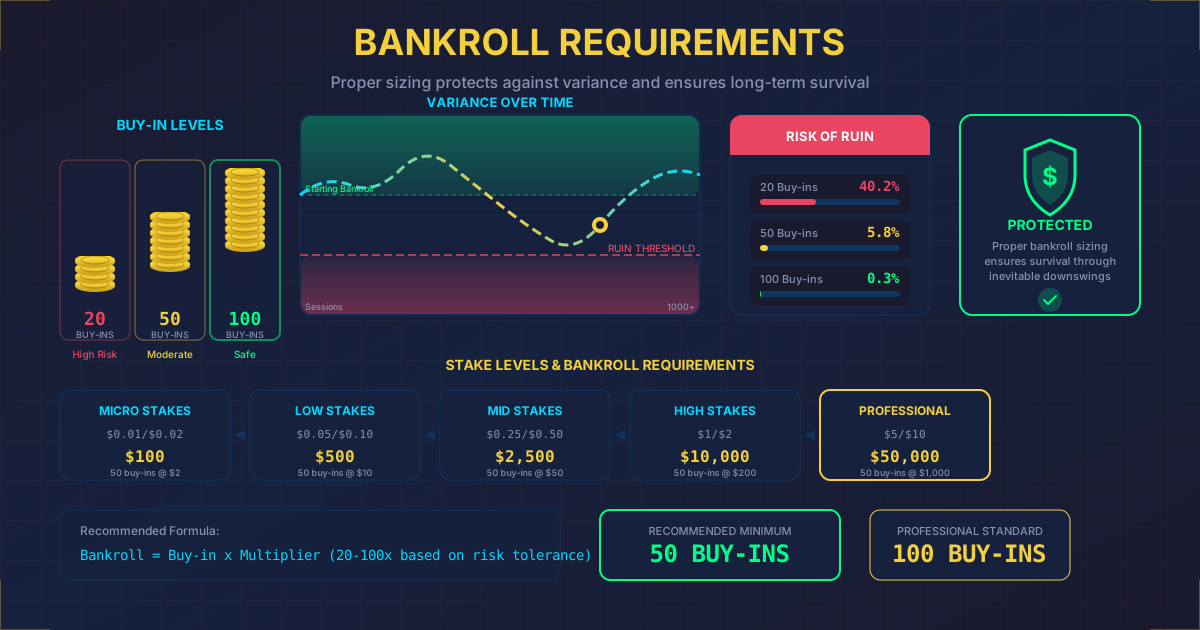
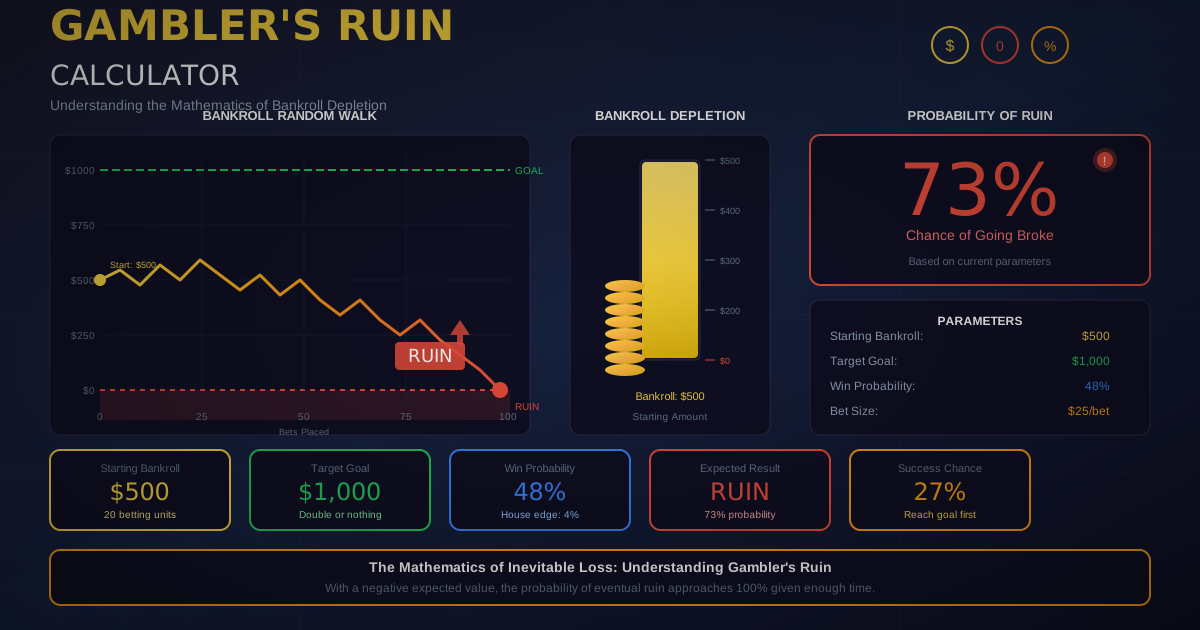
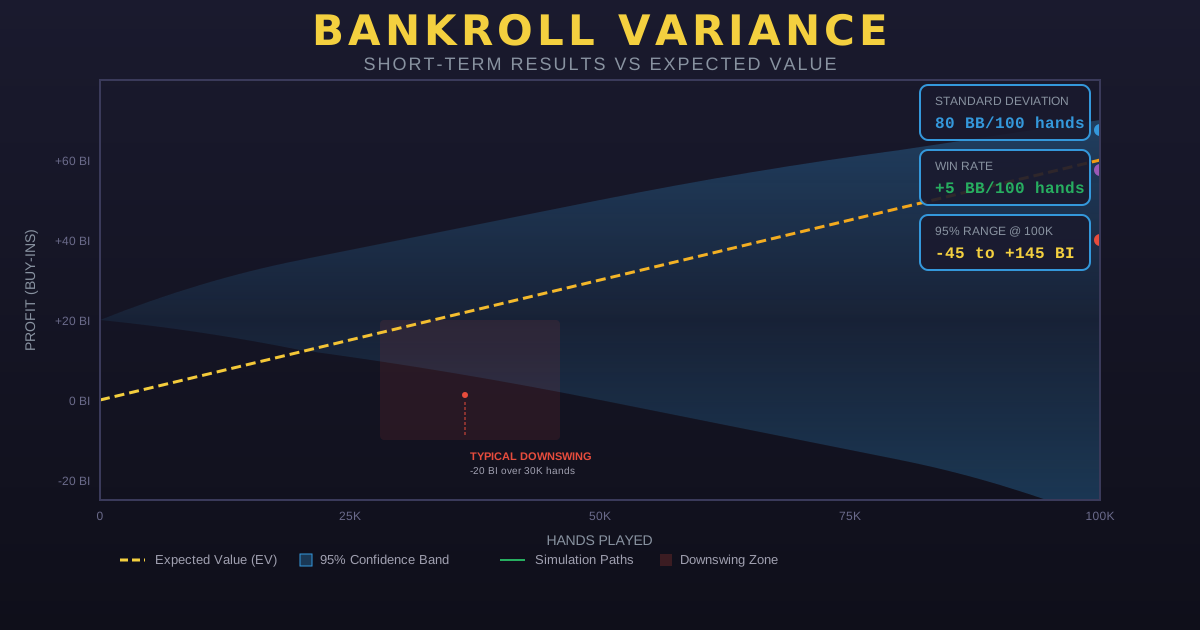
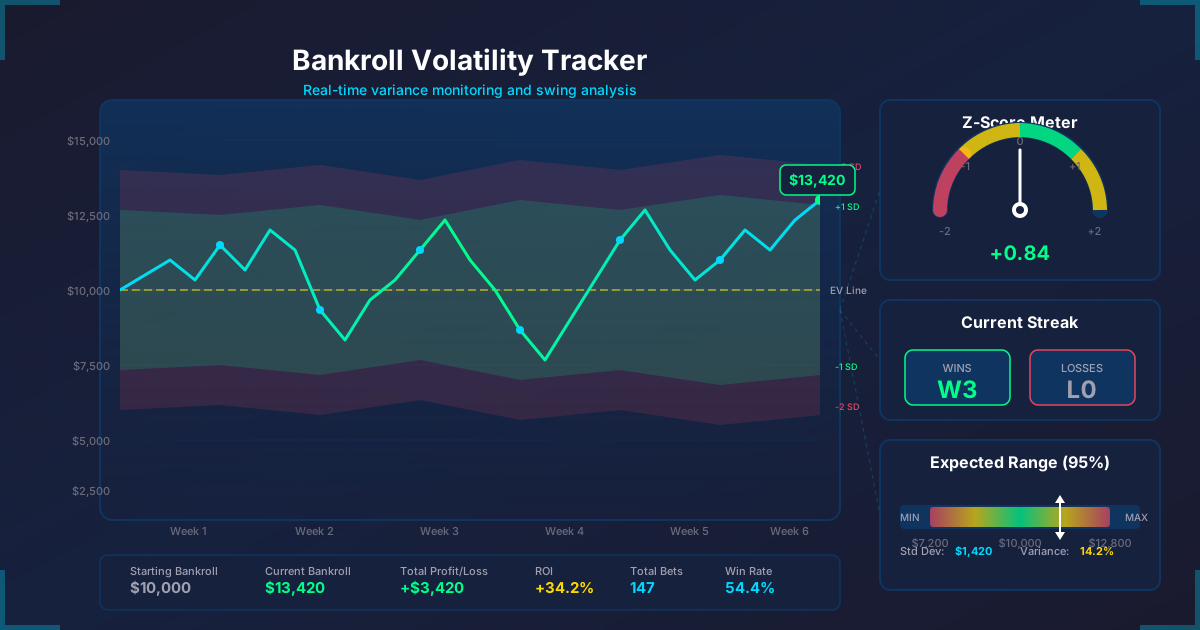
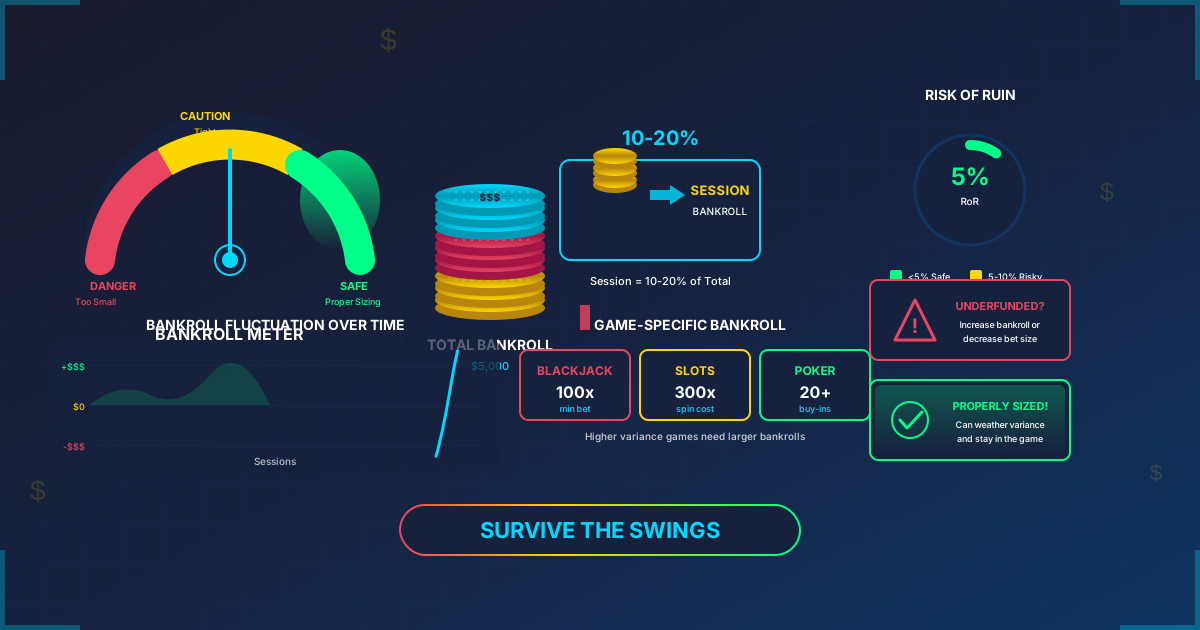
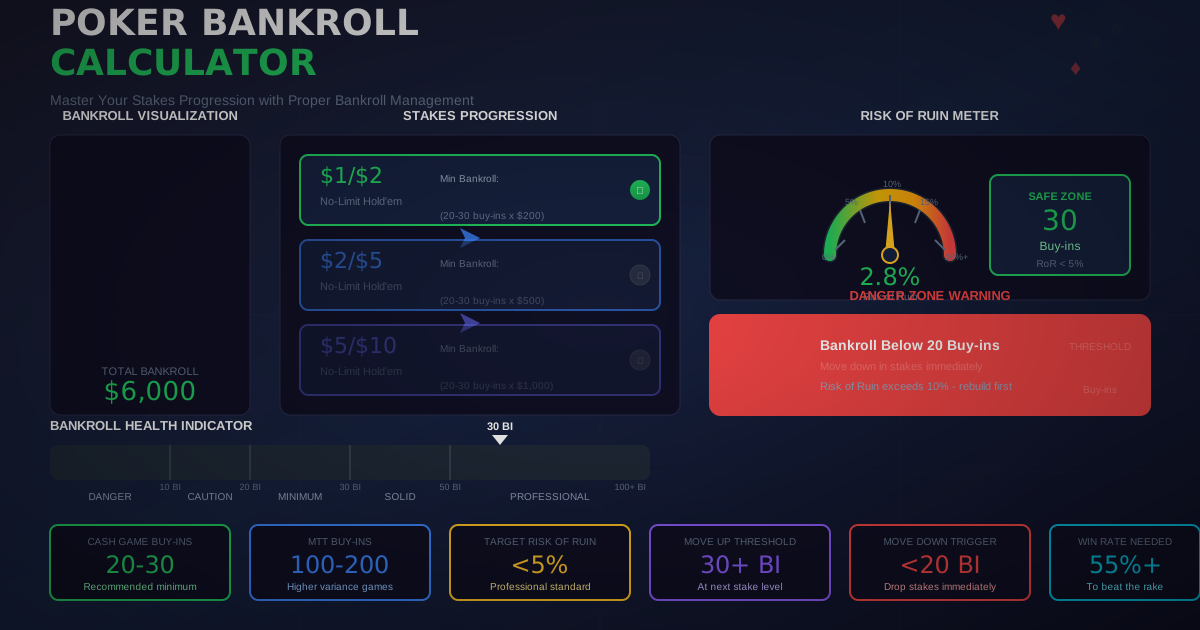
Professional NBA bettors universally agree: bankroll management matters more than picking winners. A 56% ATS bettor with poor bankroll management will go broke. A 53% bettor with disciplined sizing will grind out consistent profits.
The 1-2% Rule
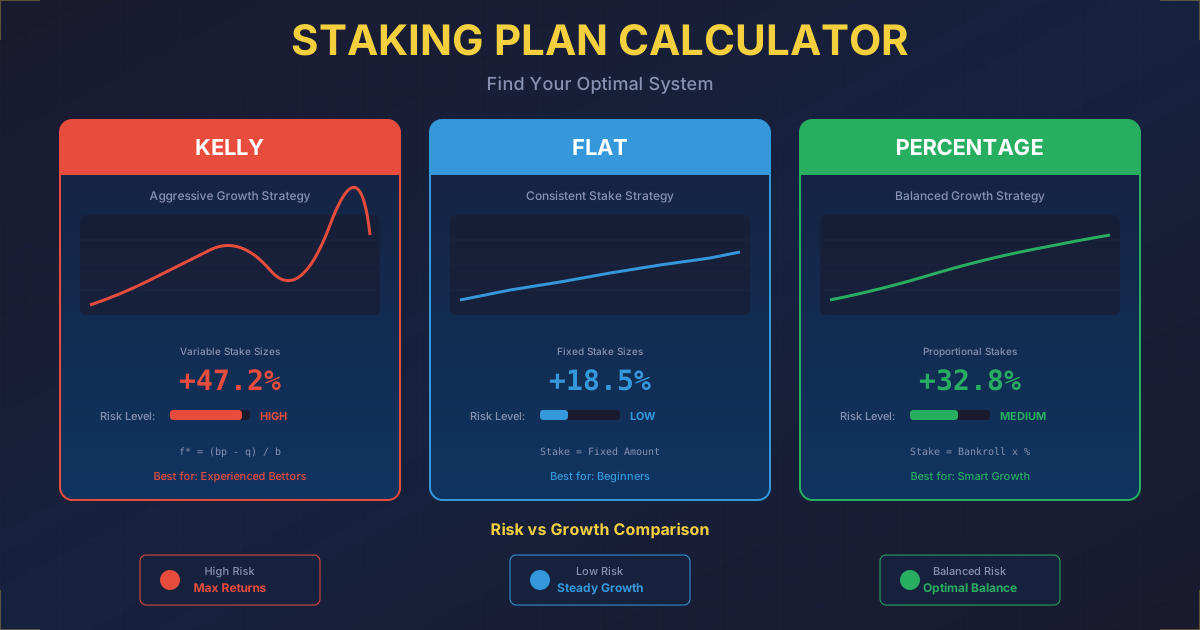
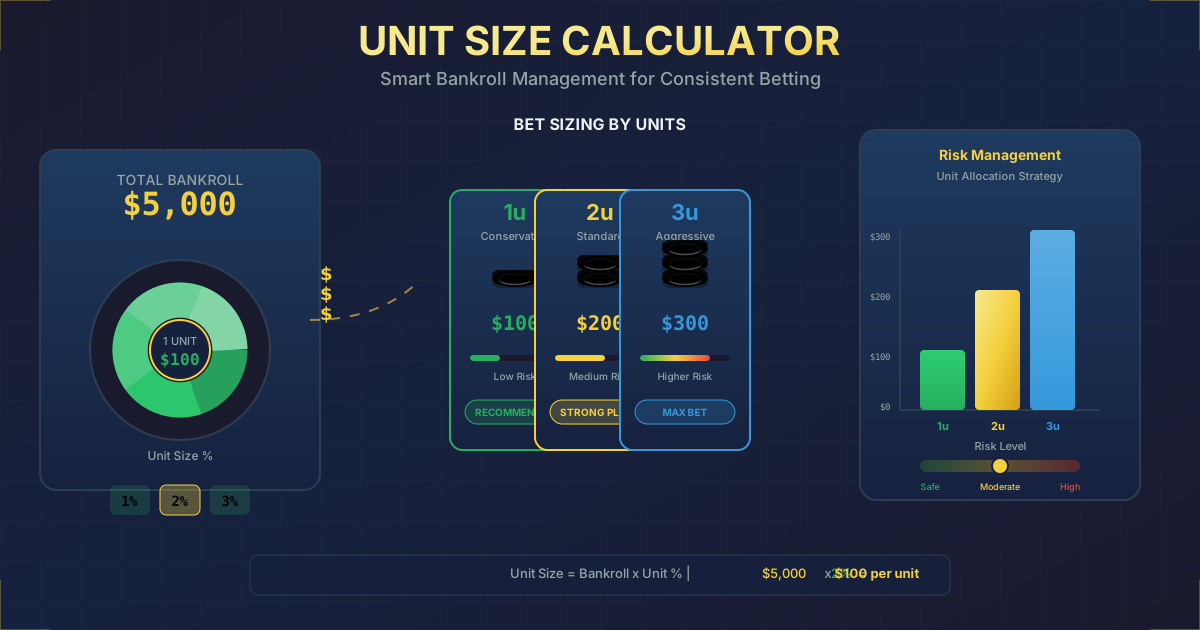
Risk 1-2% of your total bankroll on any single bet. For a $5,000 bankroll, that means $50-100 per wager. This sizing ensures you can withstand the inevitable losing streaks without depleting your bankroll.
Kelly Criterion Sizing
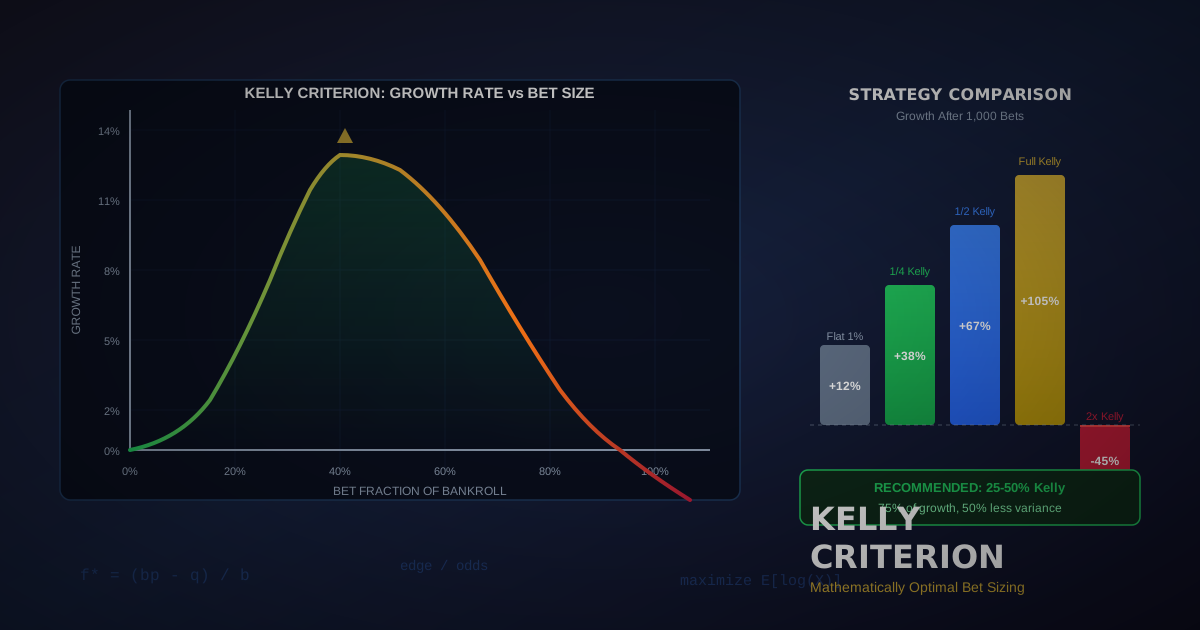
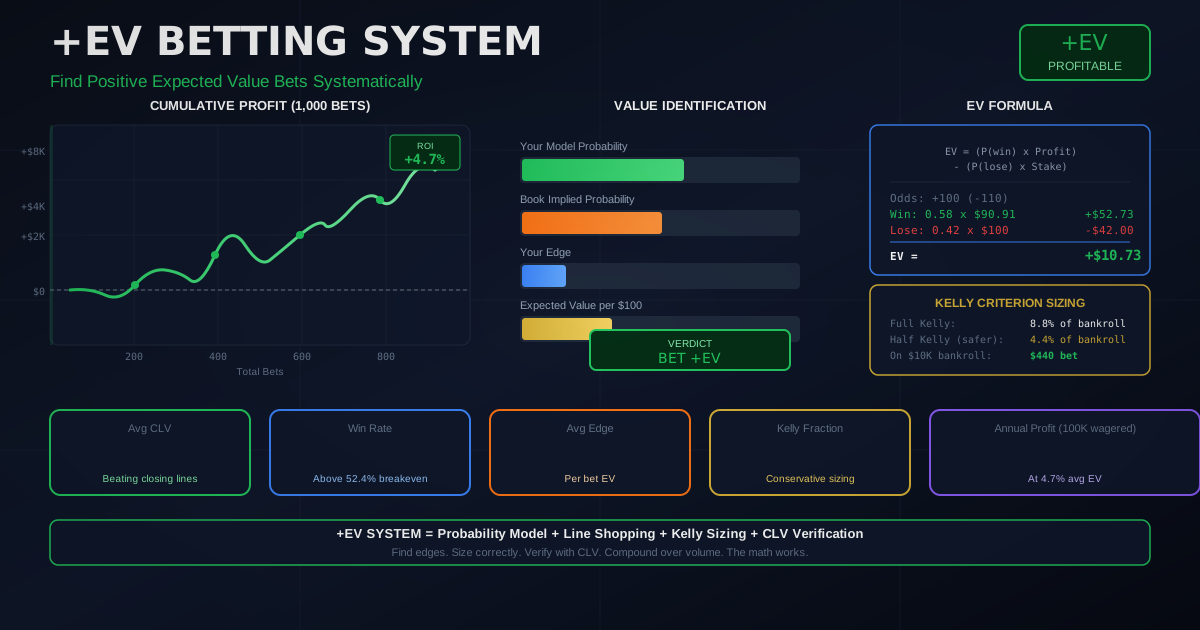
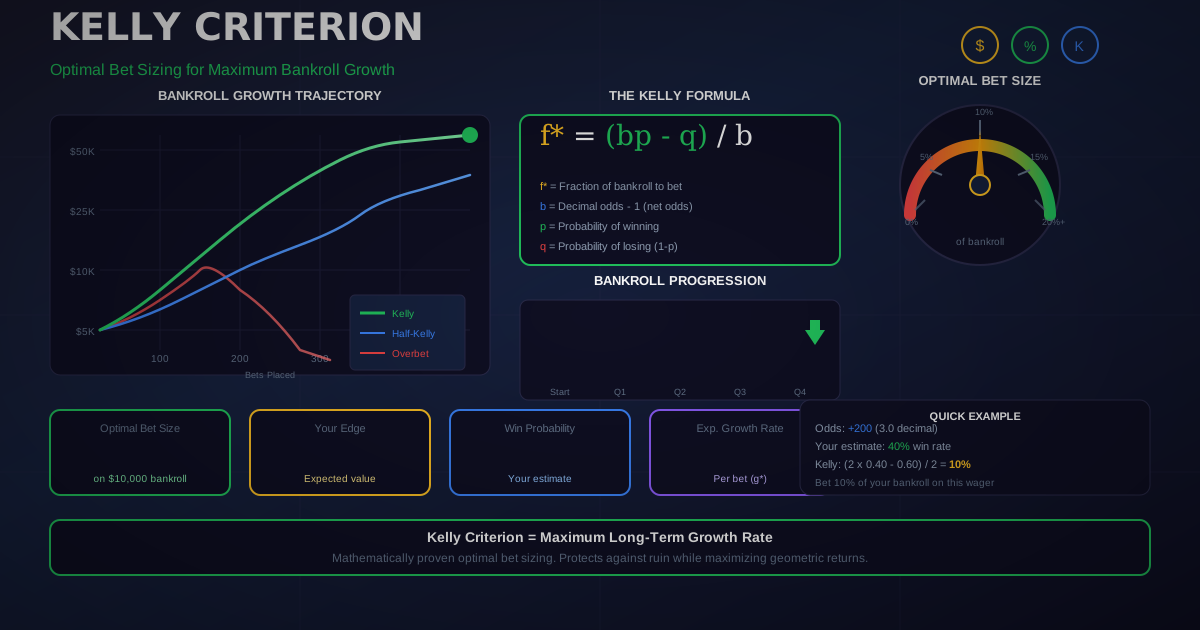
The Kelly Criterion calculates the mathematically optimal bet size based on your edge and the odds offered. Full Kelly is too aggressive for most bettors -- half-Kelly or quarter-Kelly provides a better balance of growth and risk management.
Example: You estimate a 56% win probability on a -110 bet. Full Kelly suggests risking 6.7% of bankroll. Half-Kelly recommends 3.35%. Quarter-Kelly says 1.67%. Most professionals use quarter-Kelly to maximize long-term growth while minimizing ruin probability.
Calculate your optimal bet size with our Kelly Criterion Calculator.
Seasonal Bankroll Planning
The NBA season is long. Smart bettors plan their wagering volume across the season:
- October-November (first 20 games): Small sample sizes. Bet cautiously at 0.5-1% of bankroll. Lines are soft but your reads on teams are too.
- December-February (games 21-55): Your best window. Sample sizes are reliable, lines reflect current form, and schedule spots create value. Bet 1-2% of bankroll.
- March-April (games 56-82): Rest days increase, tanking begins, and motivation is uneven. Be selective. Only bet spots with clear edges.
- Playoffs (April-June): Lines are razor-sharp. Reduce volume and increase selectivity. Focus on series prices and specific game situations.
Frequently Asked Questions
What is the most profitable NBA betting strategy? Exploiting rest advantage and schedule spots remains the most consistently profitable NBA betting strategy. Teams with 3+ days of rest facing back-to-back opponents have covered at a 55.9% rate in the 2025-26 season, which comfortably exceeds the 52.4% breakeven threshold at standard -110 juice. Combining rest advantage with other factors like home/away status, pace differentials, and injury-adjusted lineup analysis increases the edge further.
How do you bet on NBA player props profitably? Profitable NBA player prop betting starts with minutes projection. The strongest predictor of whether a prop hits is whether the player logs his expected minutes. Track teammate injuries (which spike usage for remaining players), foul trouble tendencies, blowout probability (which reduces star minutes), and coach rotation patterns. When a key teammate is out, role players see usage rate increases of 5-8%, creating consistent prop value that the market is slow to price in.
Is NBA totals betting profitable? NBA totals betting can be profitable when you focus on pace-based matchups. Games between two top-10 pace teams have seen overs hit at a 57.2% rate in 2025-26, driven by elevated possessions and transition scoring. The key is filtering for games where both teams play fast -- not just one. Single-sided pace advantages tend to regress toward the slower team's tempo, making those totals closer to 50/50 propositions.
What bankroll percentage should I risk per NBA bet? Professional NBA bettors risk 1-2% of their total bankroll per wager regardless of confidence level. For a $10,000 bankroll, that means $100-200 per game. This sizing withstands inevitable losing streaks (5-10 game losing runs happen even at a 55% win rate) without risking ruin. Use the Kelly Criterion to calculate mathematically optimal sizing based on your estimated edge and the odds offered, but most pros cap at quarter-Kelly to prioritize longevity over maximization.
When is the best time to place NBA bets? There are two optimal windows for placing NBA bets. The first is at line release, typically 24-48 hours before tip-off, when opening lines are softest and have not yet been sharpened by market action. The second is 60-90 minutes before tip-off, when late injury information is confirmed and the line may not have fully adjusted. Avoid the 4-12 hour pre-game window, when lines have been hammered by early sharp action but late information has not yet arrived.
How does back-to-back fatigue affect NBA betting? Back-to-back fatigue creates a measurable 1-3 point performance decline, with the effect strongest for road teams. In the 2025-26 season, five teams (Charlotte, Denver, Philadelphia, Phoenix, and Washington) face a league-high 16 back-to-back sets. The decline is most pronounced for guards, whose scoring and assist props show the most consistent underperformance in back-to-back second legs. Position-specific prop unders on guards in back-to-back situations are one of the most underexploited edges in the NBA prop market.
Should I bet NBA regular season or playoffs? Both offer opportunities, but the edges are different. Regular season betting benefits from schedule spots (rest advantage, back-to-backs, time zone travel) that do not exist in the playoffs, where teams have equal rest between games. Playoff betting rewards deep knowledge of team matchups, coaching adjustments, and series dynamics. Lines are sharper in the playoffs due to higher handle and public interest. Most professional bettors do more volume in the regular season and become highly selective in the postseason.
What tools do I need for NBA betting? Effective NBA betting requires: an odds converter to compare lines across formats, an expected value calculator to determine if a bet is +EV, an implied probability calculator to understand what the line actually means, a Kelly Criterion calculator for optimal bet sizing, a parlay calculator for multi-leg bets, and tracking software to log every bet and monitor your CLV. You also benefit from a hedge calculator for futures positions and an arbitrage calculator to identify risk-free opportunities across sportsbooks.
Essential NBA Betting Tools
Sharpen your NBA betting with these free calculators:
- Odds Converter -- Convert between American, decimal, and fractional odds instantly
- Expected Value Calculator -- Determine if any bet is +EV before placing it
- Implied Probability Calculator -- See the true probability embedded in any betting line
- Kelly Criterion Calculator -- Calculate mathematically optimal bet sizing
- Parlay Calculator -- Build multi-leg parlays and calculate combined payouts
- Hold/Vig Calculator -- Measure exactly how much juice a sportsbook is charging
- Hedge Calculator -- Lock in guaranteed profit on futures and open positions
- Arbitrage Calculator -- Find risk-free betting opportunities across books
- Round Robin Calculator -- Create optimized round robin combinations from your selections
Conclusion
NBA betting rewards preparation, discipline, and mathematical rigor. The edges exist -- rest advantage, pace-based totals, prop market inefficiencies, and schedule spots are all real and documented. But edges do not guarantee profits on any single bet. They guarantee profits over hundreds and thousands of bets, provided you combine sound strategy with proper bankroll management.
The 2025-26 NBA season, with its record-setting pace and scoring, has created a betting landscape where informed bettors can find value in every market. Whether you are grinding spreads, riding totals, picking off mispriced props, or building futures positions, the principles in this guide provide the framework. The execution is up to you.
Track everything. Bet selectively. Trust the math.
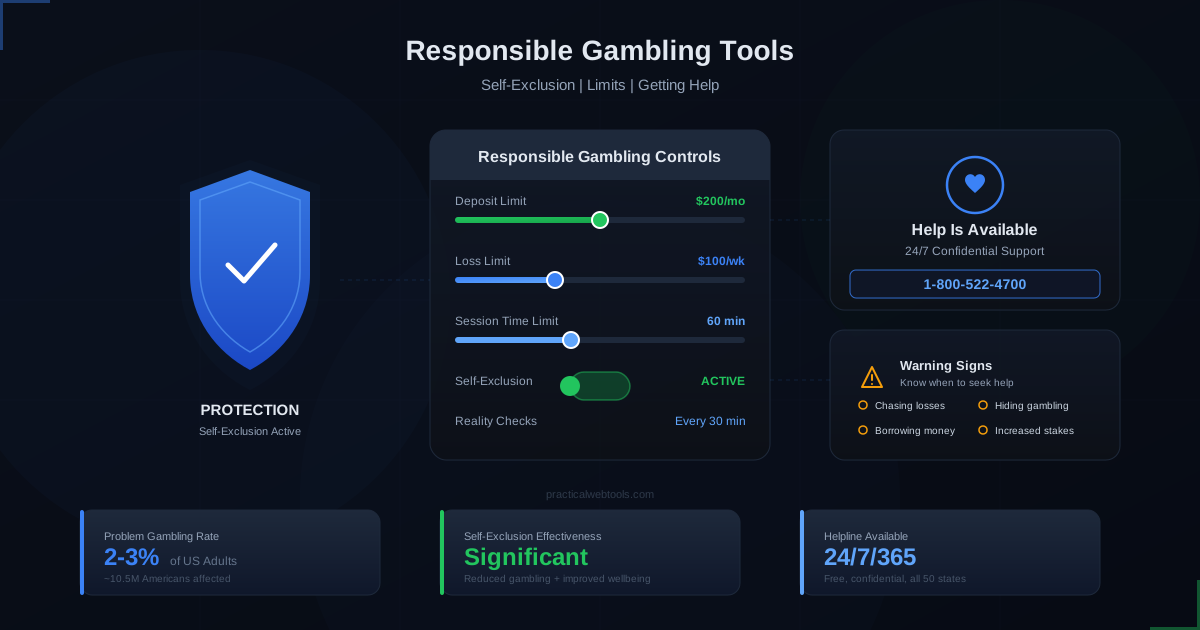
Gambling involves risk. This content is for educational and informational purposes only. Always gamble responsibly, set limits you can afford, and seek help if gambling becomes a problem. Visit the National Council on Problem Gambling or call 1-800-522-4700 for support.