Short Stack Strategy in Poker Tournaments: Push-Fold Charts and ICM Decisions (2026)
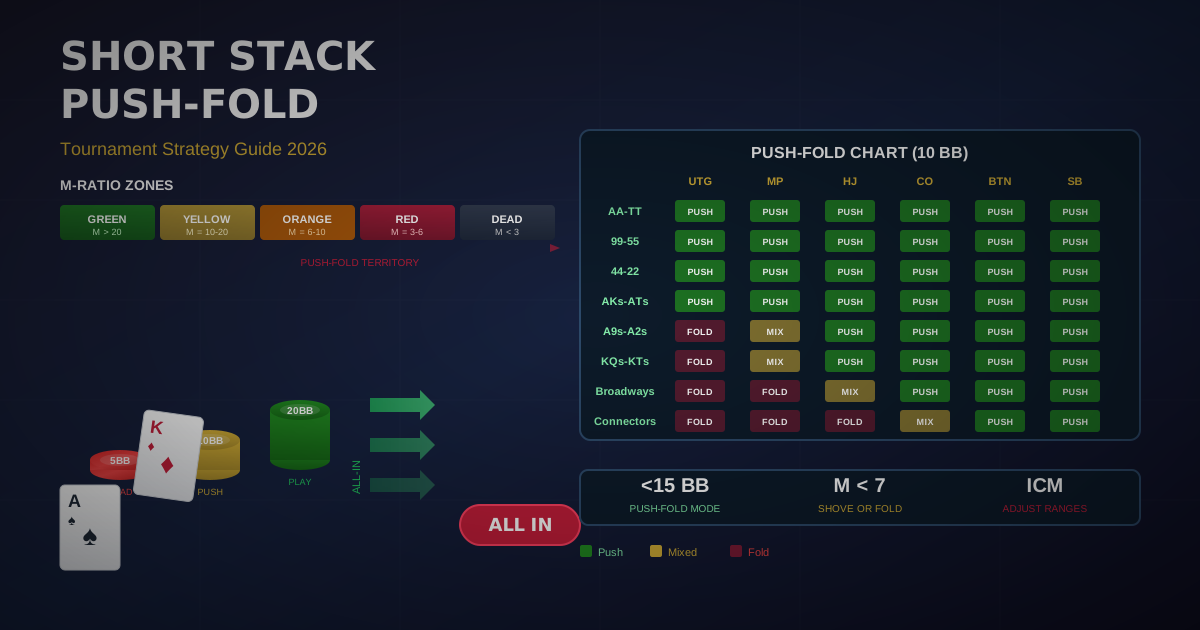
When your tournament stack drops below 15 big blinds, conventional poker strategy stops working and push-fold math takes over. At this point, every hand becomes a binary decision: shove all-in or fold. There is no room for raises, continuation bets, or post-flop maneuvering. The players who understand the math behind these decisions consistently outlast those who rely on gut instinct.
Studies of tournament hand histories show that players who use mathematically correct push-fold ranges survive 23% longer than those who play a "standard" short-stack game of min-raising and folding post-flop. That translates directly into prize pool equity. A player who makes the final table by pushing correctly instead of busting on the bubble earns hundreds or thousands of dollars more per tournament.
The difference between a skilled short-stack player and a panicked one comes down to three elements: knowing your M-ratio zone, understanding your position-based shoving ranges, and adjusting for ICM pressure. This guide covers all three in exhaustive detail, with charts, formulas, and real-world examples you can use immediately.
Calculate your optimal push-fold ranges instantly with our free Push-Fold Calculator.
What Is Push-Fold Poker?
Push-fold is a simplified poker strategy where your only two options are to go all-in (push) or fold. It applies when your stack is so short that standard raise sizes commit too much of your stack to fold later, or when the blinds and antes represent such a large percentage of your stack that stealing them is critical to survival.
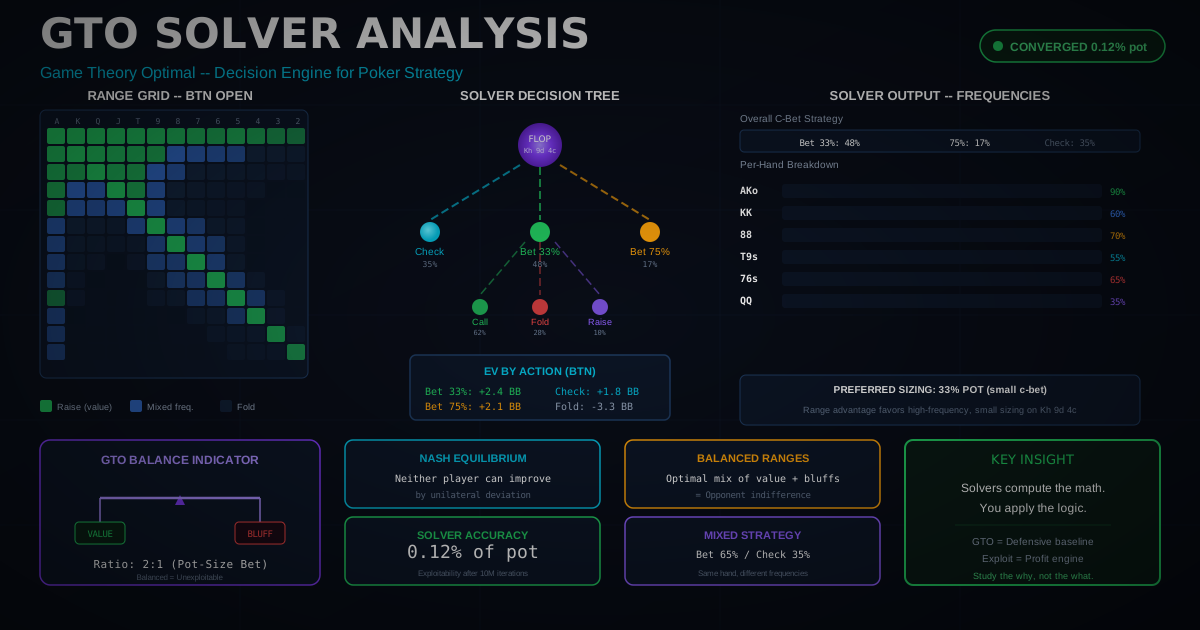
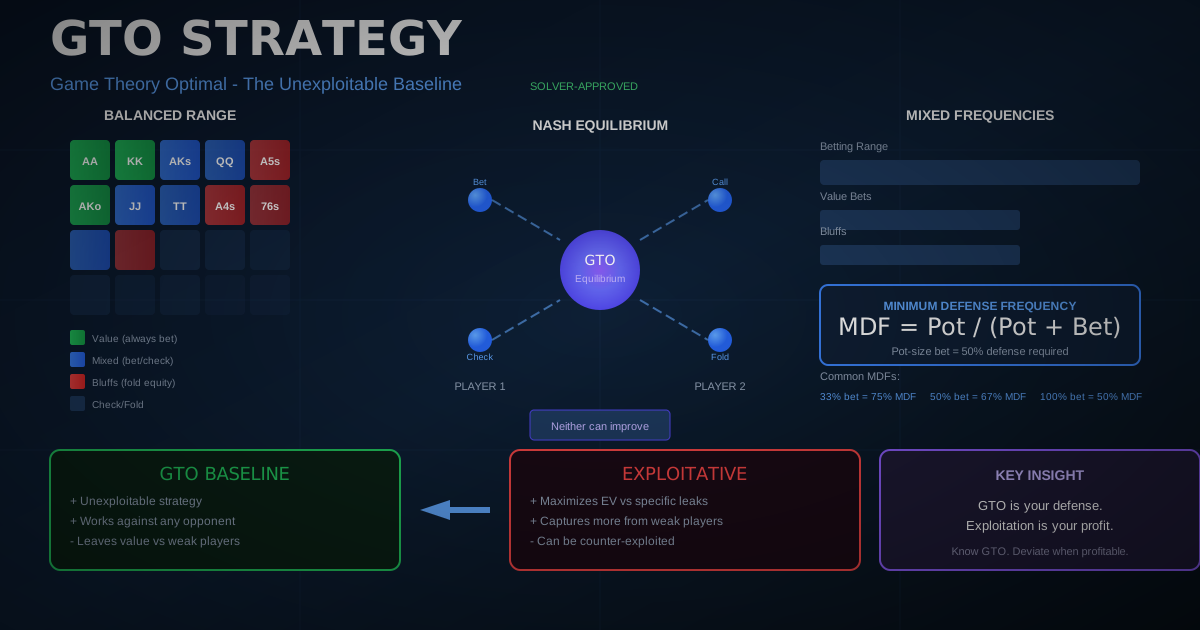
The mathematical foundation of push-fold comes from Independent Chip Model (ICM) theory and Nash Equilibrium calculations. When stacks are shallow, the game tree simplifies enough that computers can calculate exact optimal strategies—and those strategies have been published as push-fold charts.
Why Raising Small Does Not Work with Short Stacks
Consider a common mistake: you have 10 big blinds and raise to 2.2 big blinds from the button. The big blind calls. The flop comes, there are roughly 5.5 big blinds in the pot, and you have 7.8 big blinds behind. Any meaningful bet commits your stack. Your opponent knows this, so your raise size conveys no information about hand strength, and you have zero fold equity post-flop.
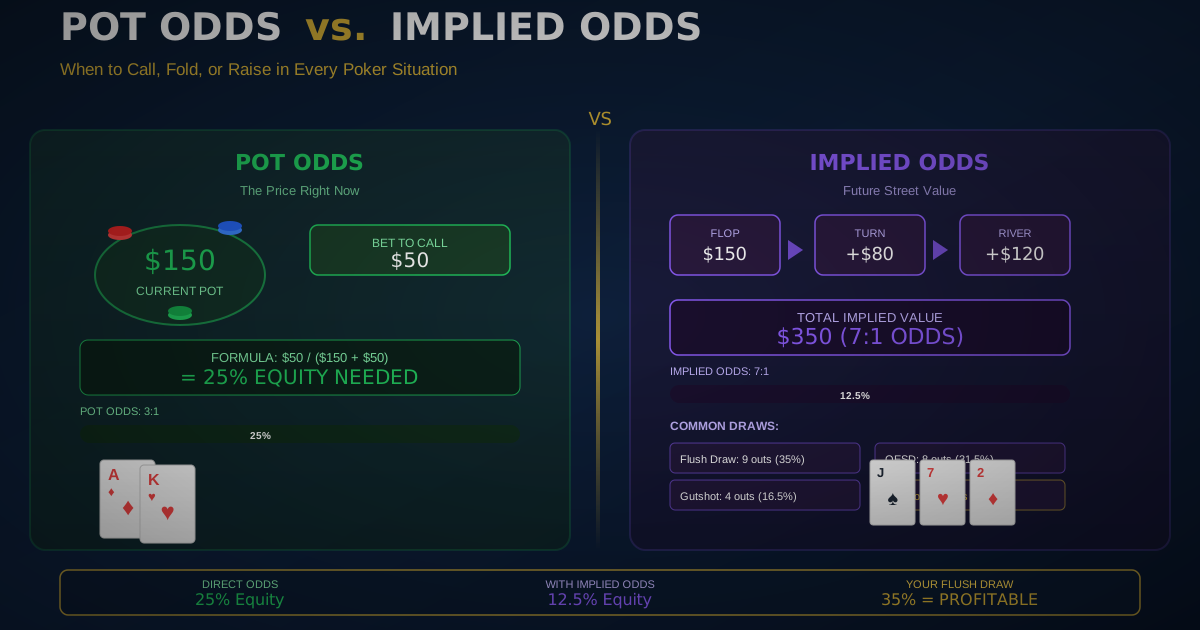
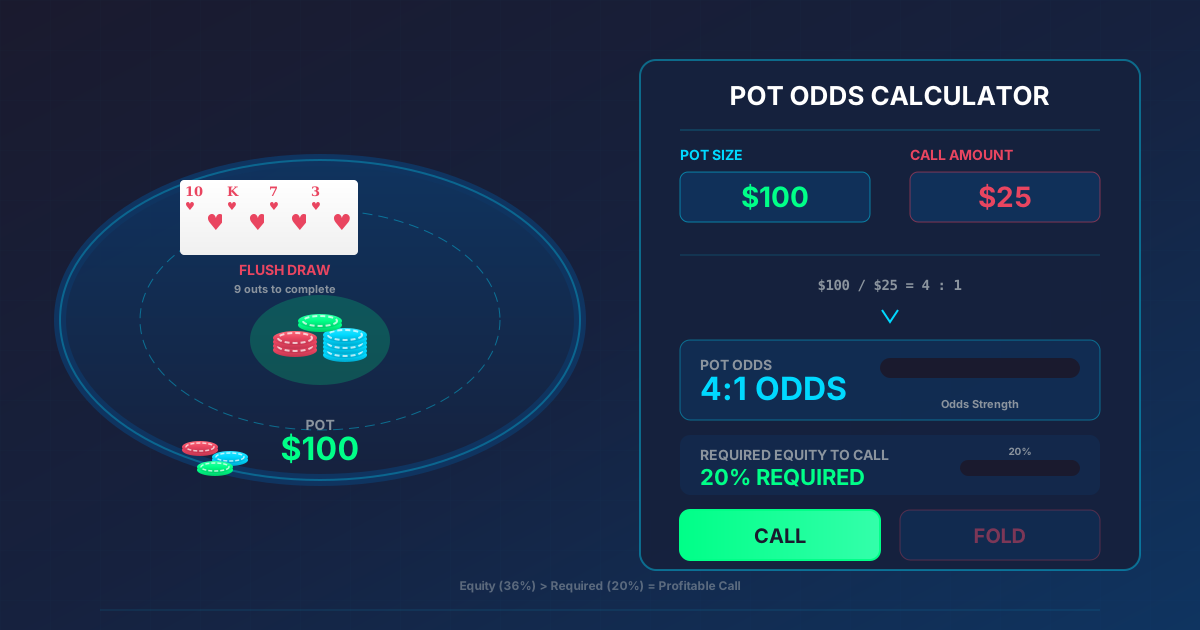
Compare this to shoving all-in for 10 big blinds. Your opponent must risk 10 big blinds to win approximately 12.5 big blinds (your shove plus blinds and antes). This gives them pot odds of about 44%, meaning they need significant equity to call. Most hands cannot profitably call, giving you substantial fold equity.
The threshold is clear: below 15 big blinds, push-fold becomes your primary strategy. Below 10 big blinds, it is your only strategy.
Use our M-Ratio Calculator to determine exactly when to switch to push-fold mode based on your stack, blinds, and antes.
Understanding M-Ratio Zones
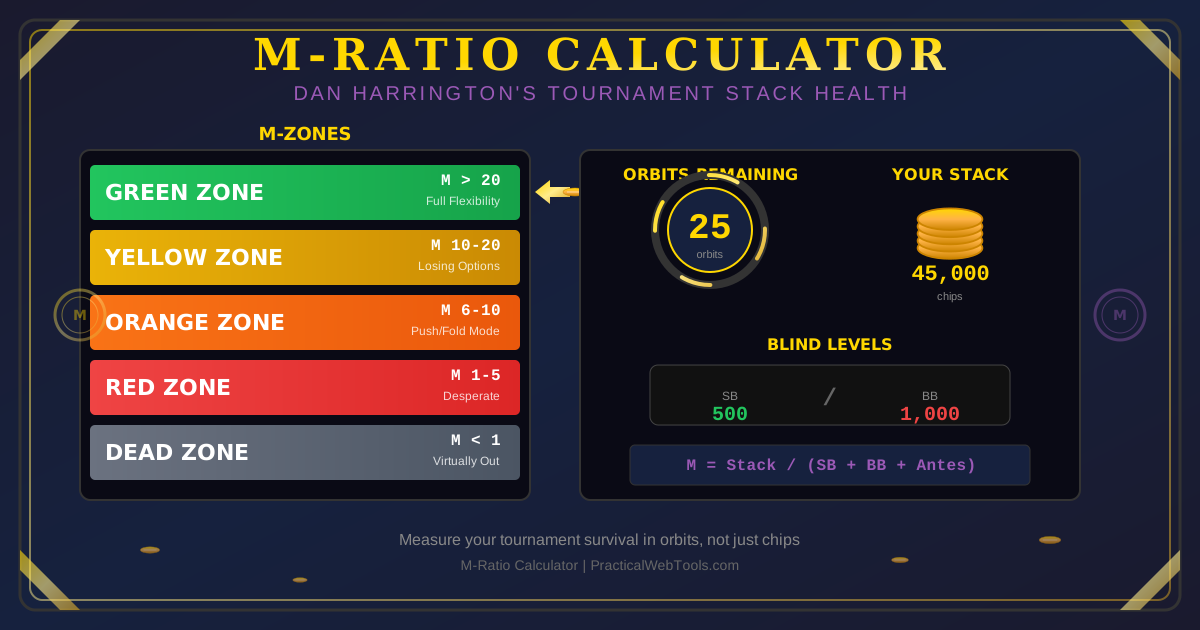
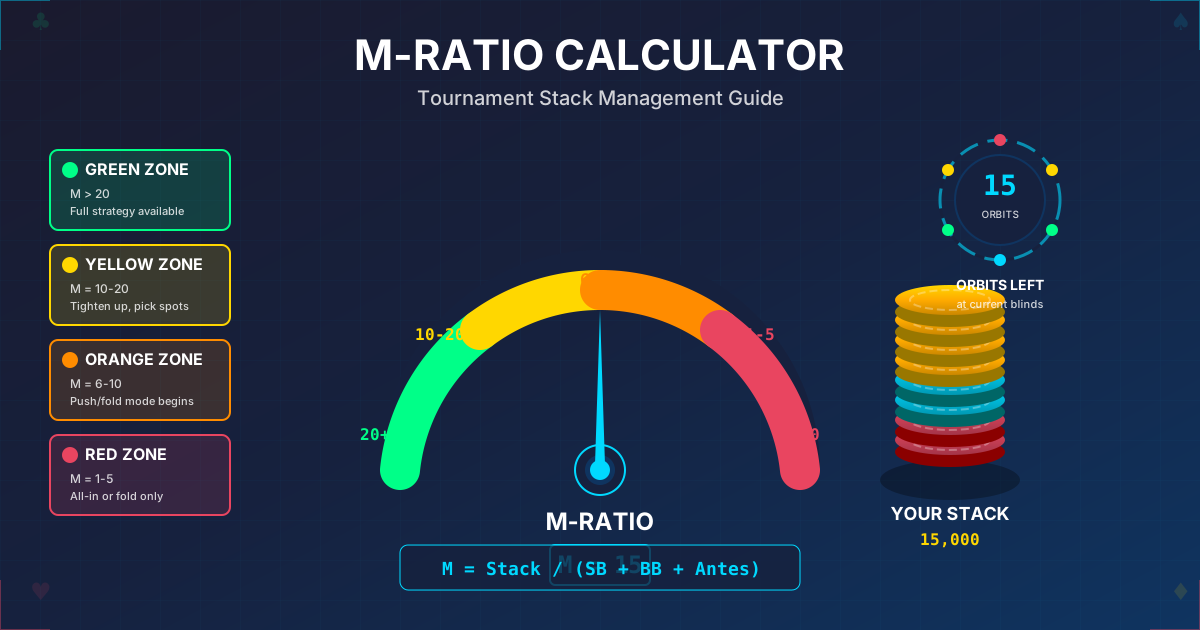
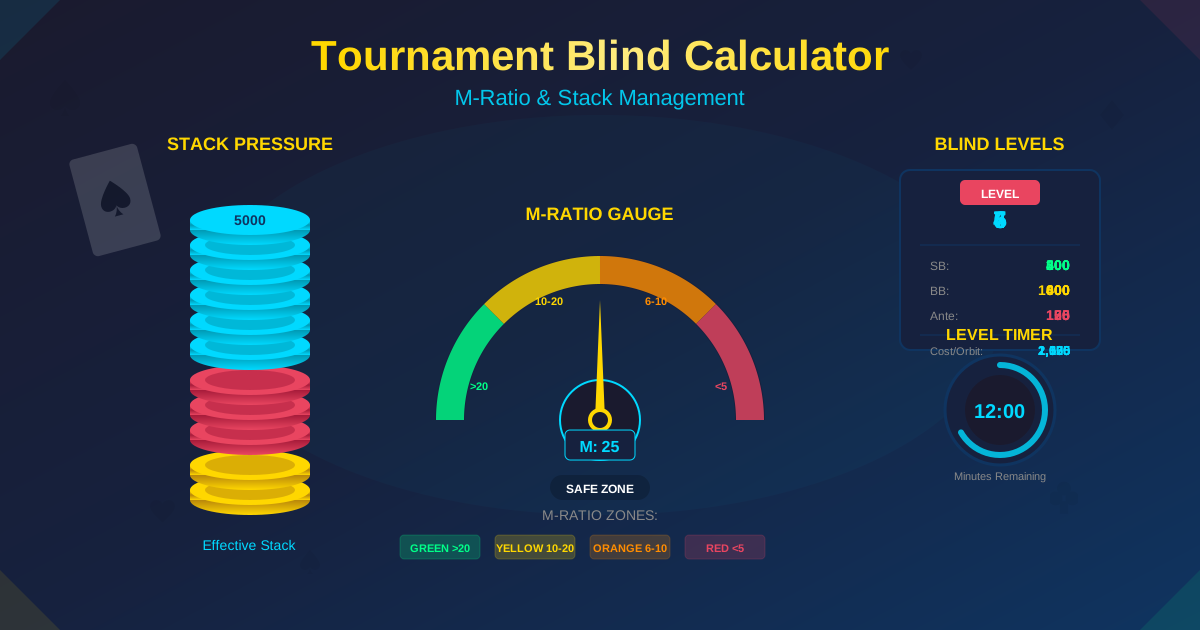
The M-ratio (also called the Marek ratio, named after Paul Magriel and popularized by Dan Harrington) measures how many rounds of blinds and antes you can survive without playing a hand.
M-Ratio Formula
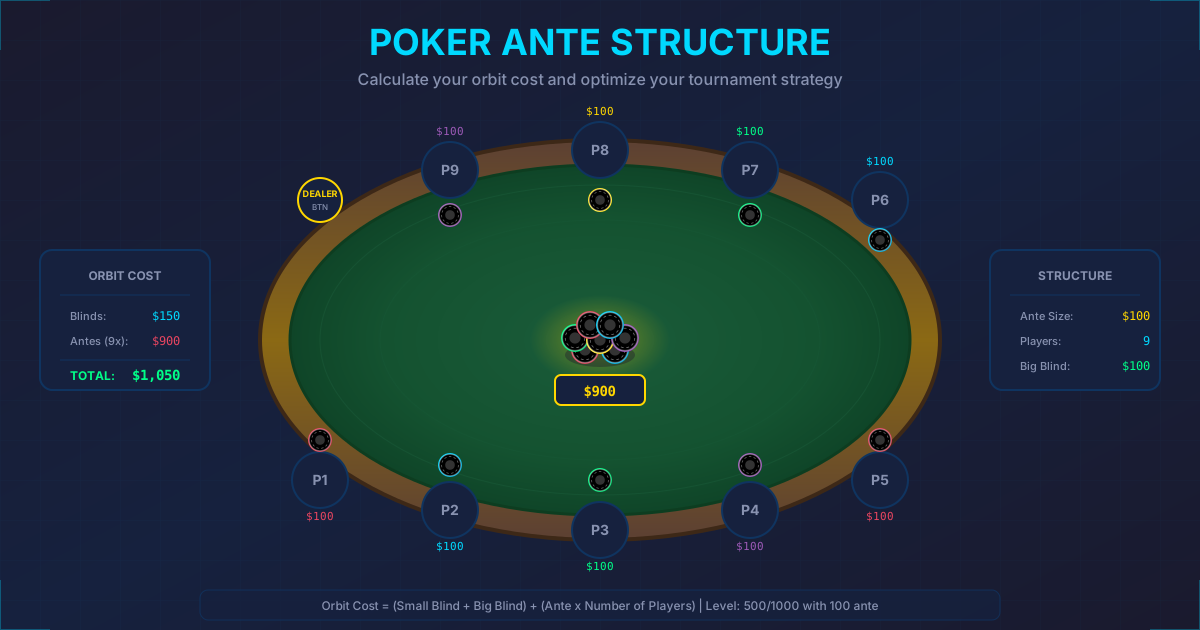
M = Stack / (Small Blind + Big Blind + Total Antes)
For example, if blinds are 500/1,000 with a 100 ante at a 9-handed table, the cost per round is 500 + 1,000 + (100 x 9) = 2,400. A player with 12,000 chips has an M-ratio of 5.
The Five M-Ratio Zones
Dan Harrington defined five strategic zones based on M-ratio:
| Zone | M-Ratio | Color | Strategy |
|---|---|---|---|
| Green Zone | M > 20 | Green | Full poker strategy. Raise, call, 3-bet, play post-flop. |
| Yellow Zone | M = 10-20 | Yellow | Tighten opening ranges. Avoid marginal spots. Start favoring all-in over small raises. |
| Orange Zone | M = 6-10 | Orange | Push-fold territory. Most hands are shove-or-fold. Very selective post-flop play. |
| Red Zone | M = 3-6 | Red | Pure push-fold. Shove any playable hand. Cannot wait for premium holdings. |
| Dead Zone | M < 3 | Black | Desperate. Shove almost anything. Even winning all-ins barely help. |
The transitions between zones are critical moments in tournaments. Missing the Orange Zone window—when your shoves still carry meaningful fold equity—is the most common tournament mistake recreational players make.
Calculate your exact M-ratio and zone with our M-Ratio Calculator.
Why the Zones Matter: Fold Equity Decay
Your fold equity decreases as your stack shrinks. Here is what the numbers look like:
| Stack Size (BB) | Fold Equity vs. Average Opponent | Effective Shoving Power |
|---|---|---|
| 20 BB | 65-75% | High: opponents fold most hands |
| 15 BB | 55-65% | Good: still very effective |
| 10 BB | 45-55% | Moderate: opponents start calling wider |
| 7 BB | 35-45% | Declining: price is getting attractive for callers |
| 5 BB | 20-30% | Low: opponents call with many hands |
| 3 BB | 10-15% | Minimal: almost no fold equity |
This is why the Orange Zone (M = 6-10, roughly 10-15 BB at a 9-handed table) is the critical action zone. You still have enough fold equity to make shoves profitable with a wide range of hands, but waiting much longer will reduce your fold equity below useful levels.
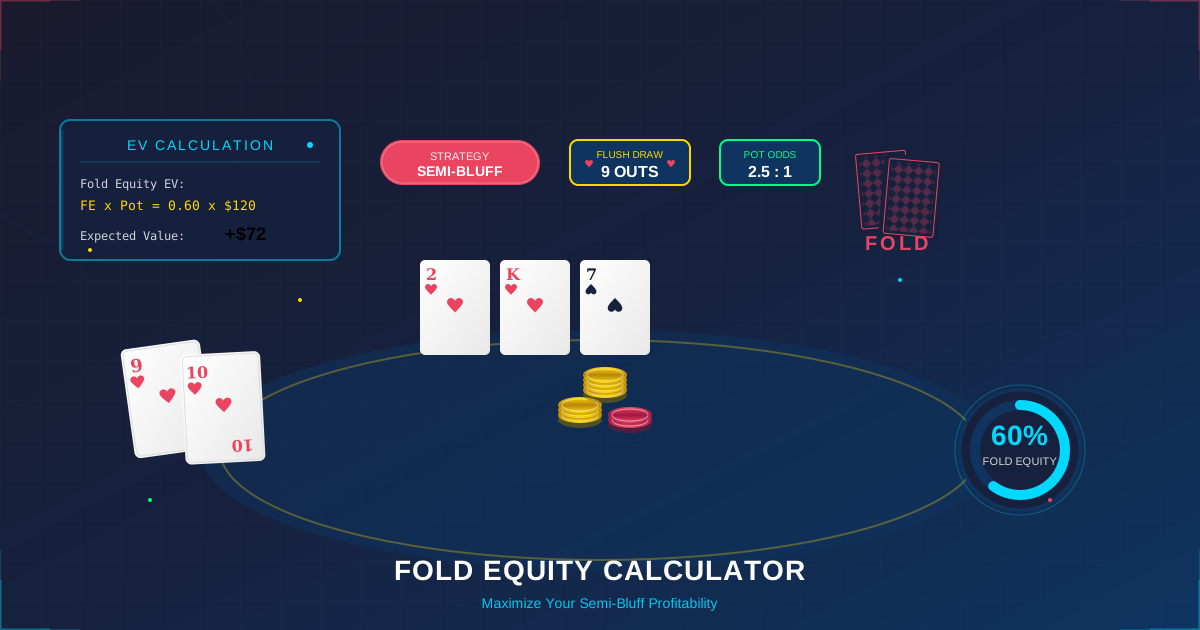
Use our Poker Fold Equity Calculator to calculate exactly how much fold equity you have in specific situations.
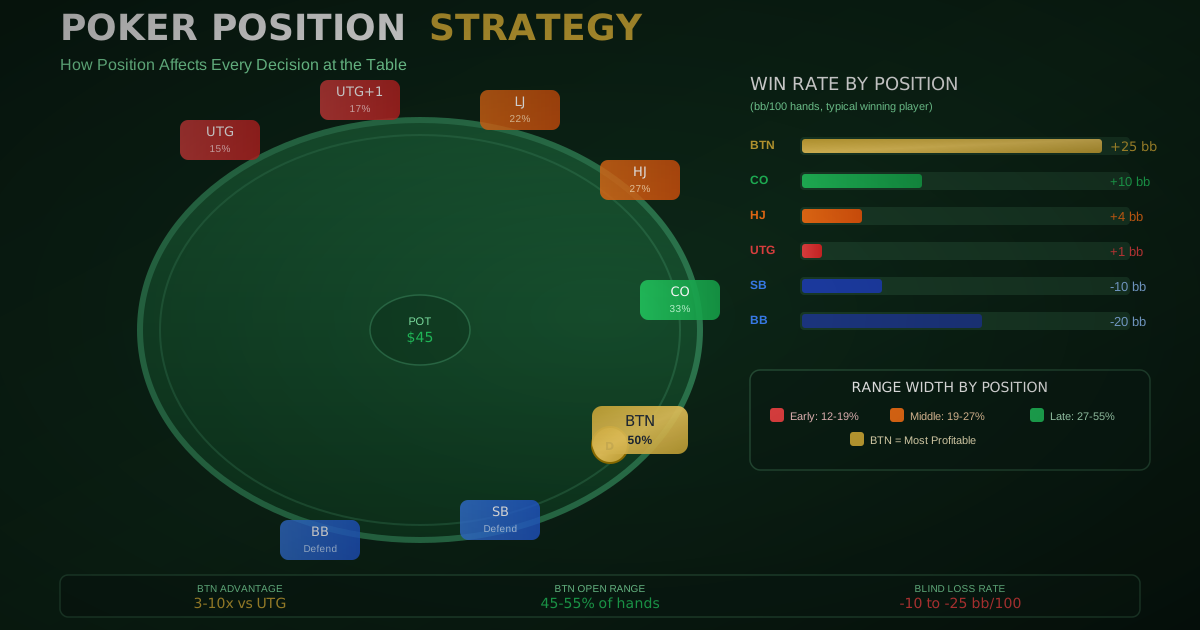
Position-Based Push-Fold Charts
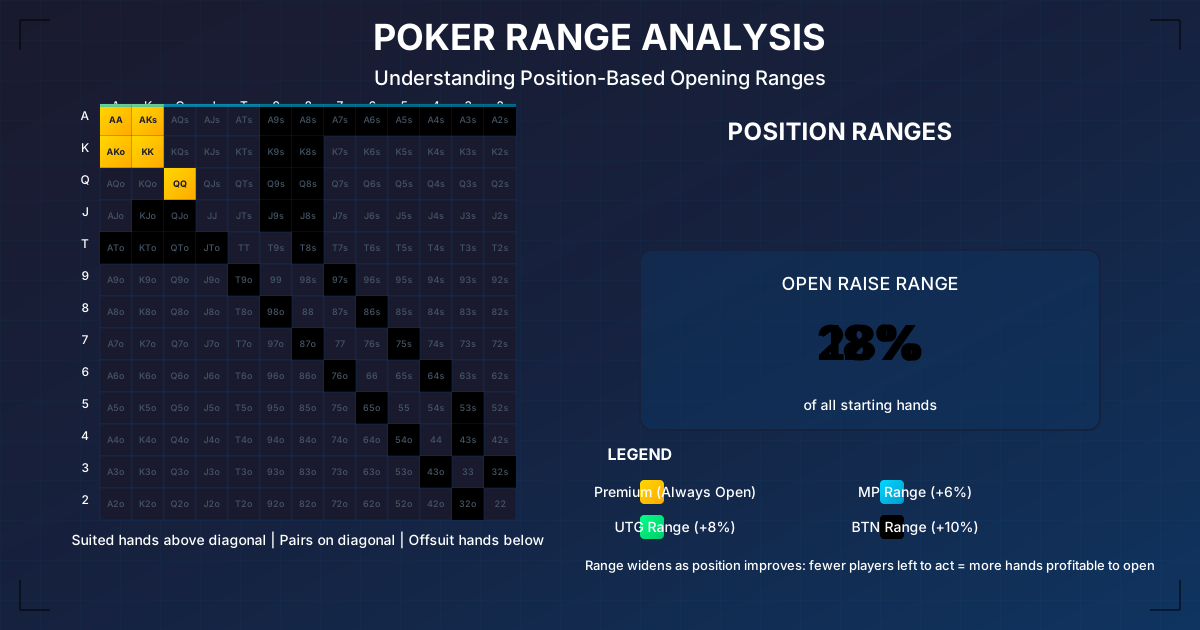
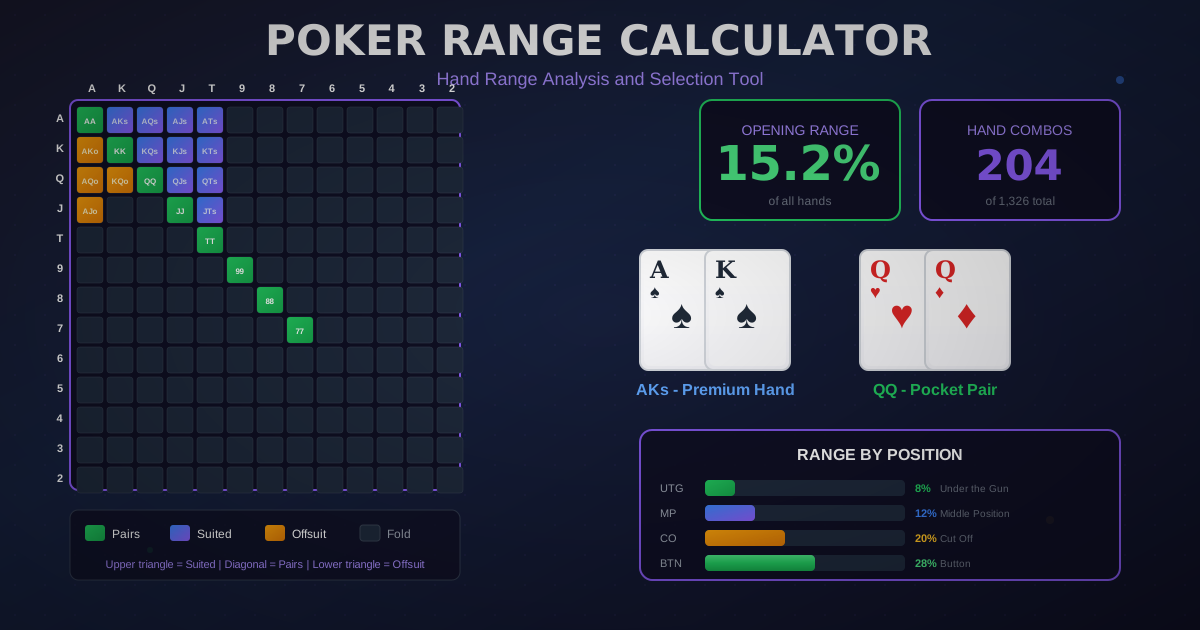
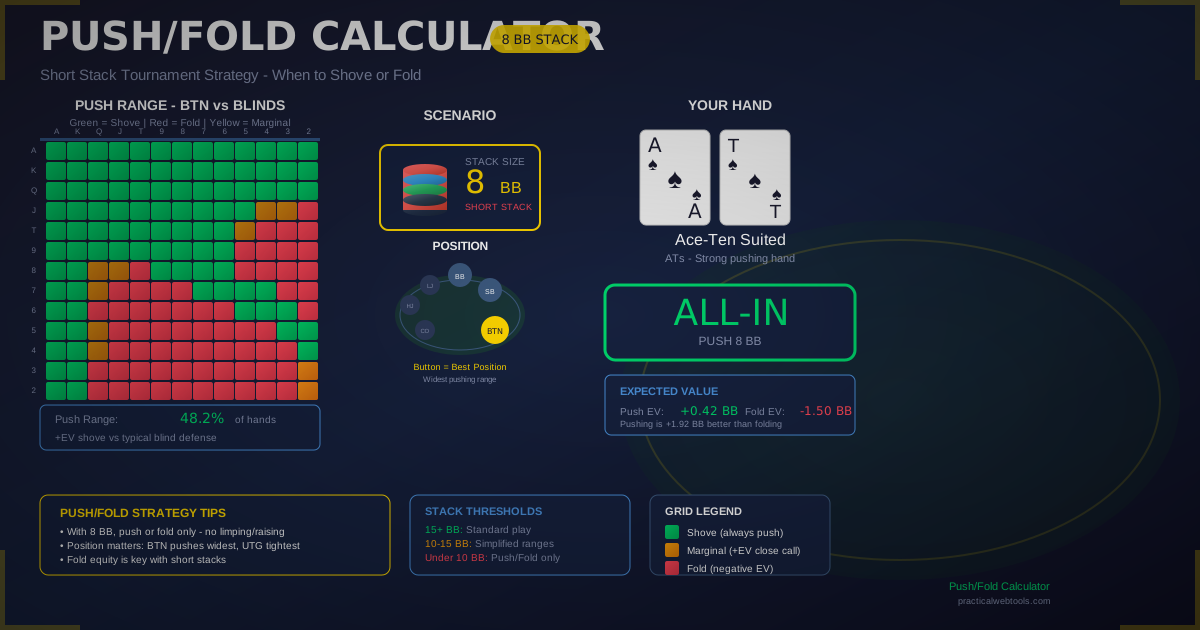
The following charts show approximate shoving ranges for different positions based on the Nash Equilibrium push-fold solution. These assume no ICM considerations (chip EV only) and that opponents are calling optimally.
10 Big Blind Shoving Ranges
| Position | Approximate Shove Range | % of Hands |
|---|---|---|
| UTG (9-handed) | 22+, ATs+, AJo+, KQs | ~10% |
| UTG+1 | 22+, A9s+, ATo+, KQs | ~12% |
| Middle Position | 22+, A8s+, A9o+, KJs+, KQo | ~15% |
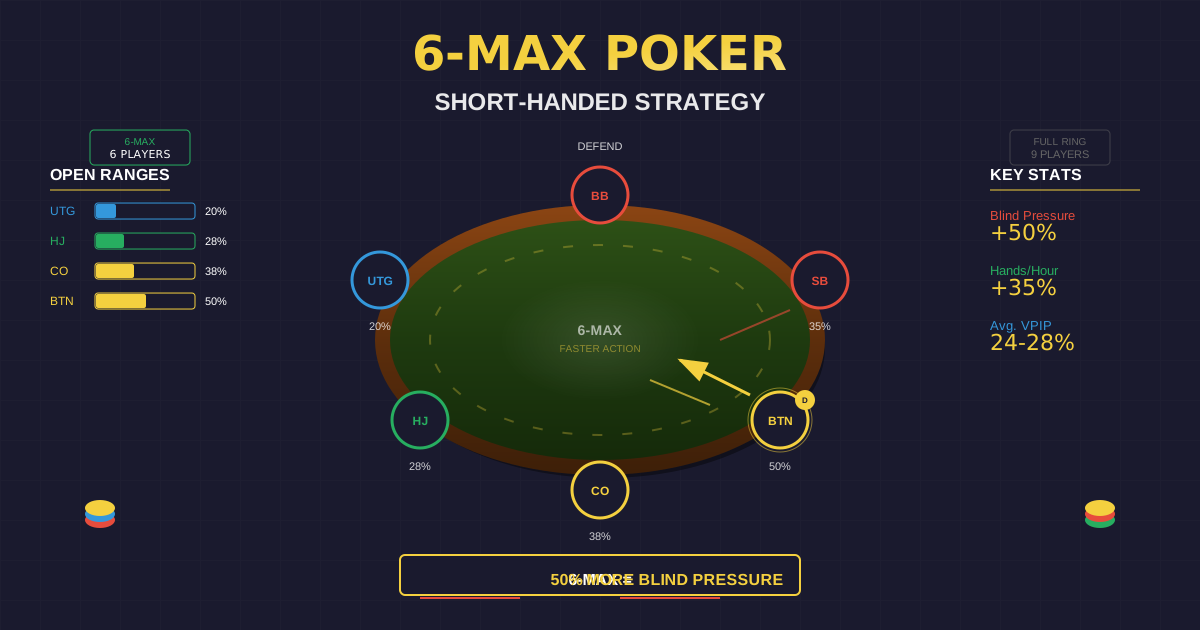
| Hijack | 22+, A5s+, A8o+, KTs+, KJo+, QJs | ~20% |
| Cutoff | 22+, A2s+, A5o+, K8s+, KTo+, Q9s+, QJo, JTs | ~30% |
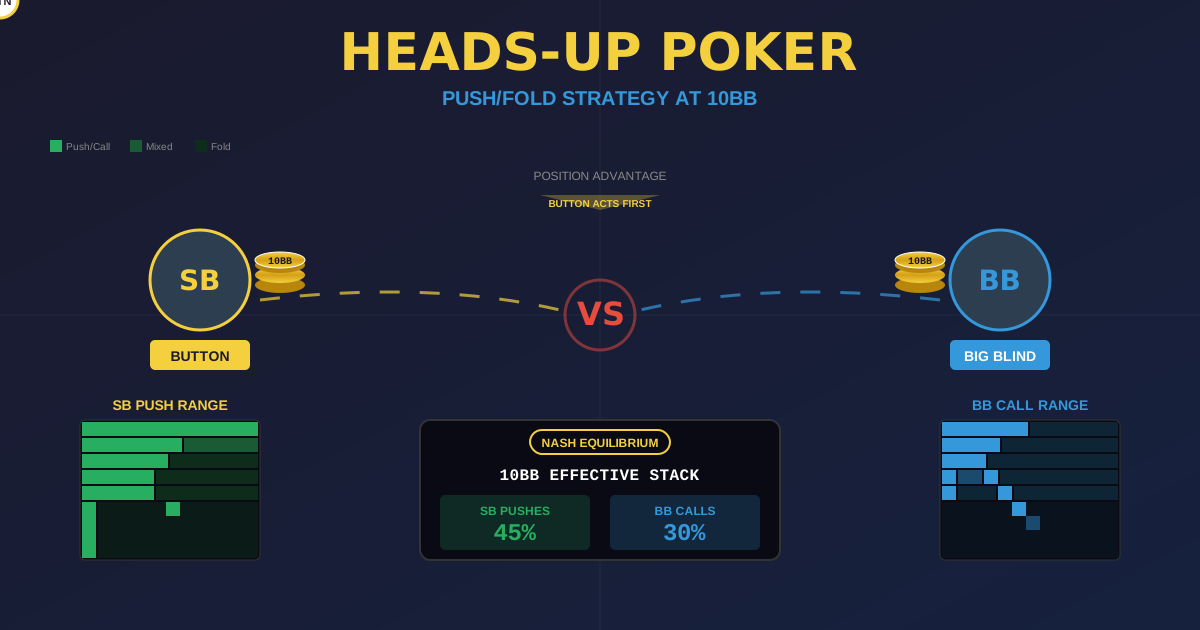
| Button | 22+, A2s+, A2o+, K4s+, K8o+, Q7s+, Q9o+, J8s+, JTo, T8s+, 98s | ~45% |
| Small Blind | 22+, A2s+, A2o+, K2s+, K5o+, Q4s+, Q8o+, J7s+, J9o+, T7s+, T9o, 97s+, 87s, 76s | ~60% |
7 Big Blind Shoving Ranges
At 7 big blinds, ranges widen significantly because your fold equity is diminishing and you need to accumulate chips:
| Position | Approximate Shove Range | % of Hands |
|---|---|---|
| UTG (9-handed) | 22+, A7s+, ATo+, KJs+, KQo | ~14% |
| UTG+1 | 22+, A5s+, A8o+, KTs+, KJo+ | ~17% |
| Middle Position | 22+, A3s+, A7o+, K9s+, KTo+, QJs | ~22% |
| Hijack | 22+, A2s+, A5o+, K7s+, K9o+, QTs+, QJo, JTs | ~28% |
| Cutoff | 22+, A2s+, A2o+, K4s+, K7o+, Q8s+, QTo+, J9s+, JTo, T9s | ~40% |
| Button | 22+, A2s+, A2o+, K2s+, K4o+, Q5s+, Q8o+, J7s+, J9o+, T7s+, T9o, 97s+, 87s | ~55% |
| Small Blind | 22+, A2s+, A2o+, K2s+, K2o+, Q2s+, Q5o+, J5s+, J8o+, T6s+, T8o+, 96s+, 86s+, 76s, 65s | ~70% |
5 Big Blind Shoving Ranges
At 5 big blinds, you are in the Dead Zone and must shove extremely wide:
| Position | Approximate Shove Range | % of Hands |
|---|---|---|
| UTG (9-handed) | 22+, A2s+, A5o+, K9s+, KTo+, QTs+, QJo, JTs | ~22% |
| Middle Position | 22+, A2s+, A2o+, K5s+, K8o+, Q8s+, QTo+, J9s+, JTo, T9s | ~32% |
| Cutoff | 22+, A2s+, A2o+, K2s+, K3o+, Q4s+, Q7o+, J7s+, J9o+, T7s+, T9o, 97s+, 87s | ~50% |
| Button | Any pair, A2+, K2s+, K2o+, Q2s+, Q4o+, J5s+, J7o+, T6s+, T8o+, 96s+, 98o, 86s+, 76s, 65s | ~65% |
| Small Blind | Nearly any two cards (~80-85% of hands) | ~80% |
Generate your exact push-fold ranges for any stack size and position with our Push-Fold Calculator.
Calling Ranges vs. Short-Stack Shoves
Knowing when to call an all-in is just as important as knowing when to shove. Here are approximate calling ranges when facing a short-stack shove.
Calling a 10 BB Shove
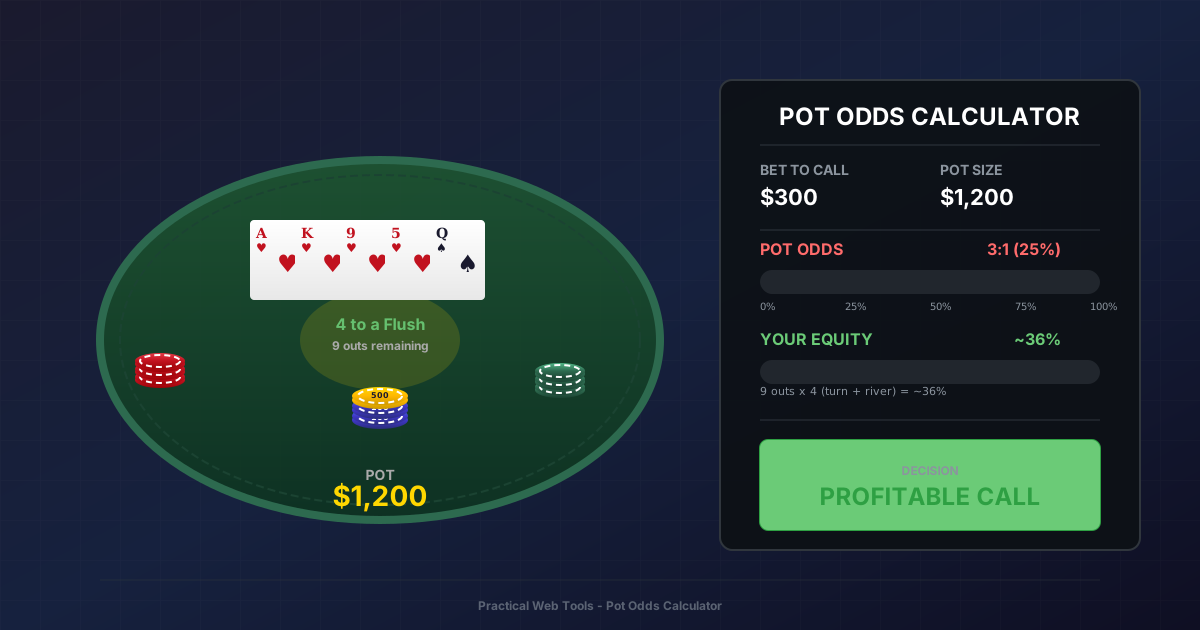
When a short stack shoves 10 big blinds and you are in the big blind, you are getting roughly 1.6:1 odds (need about 38% equity to call).
| Shover's Position | Your Calling Range (in BB) | Explanation |
|---|---|---|
| UTG shove | 66+, AJs+, AQo+ | UTG range is tight; need strong hands |
| Middle Position shove | 55+, ATs+, AJo+, KQs | Moderate range; widen slightly |
| Cutoff shove | 33+, A8s+, ATo+, KJs+, KQo | Wider shove range means wider calls |
| Button shove | 22+, A5s+, A8o+, KTs+, KJo+, QJs | Very wide shove range; call much wider |
| Small Blind shove | 22+, A2s+, A7o+, K9s+, KTo+, QTs+, QJo | Widest shove range; widest calls |
Calling a 5 BB Shove
When facing a 5 BB shove, pot odds are much better (roughly 2.2:1, needing only 31% equity):
| Shover's Position | Your Calling Range (in BB) |
|---|---|
| Any early position | 22+, A2s+, A5o+, KTs+, KJo+, QJs |
| Any late position | 22+, A2s+, A2o+, K8s+, KTo+, Q9s+, QJo, JTs |
| Small Blind | 22+, A2s+, A2o+, K5s+, K8o+, Q8s+, QTo+, J9s+, T9s |
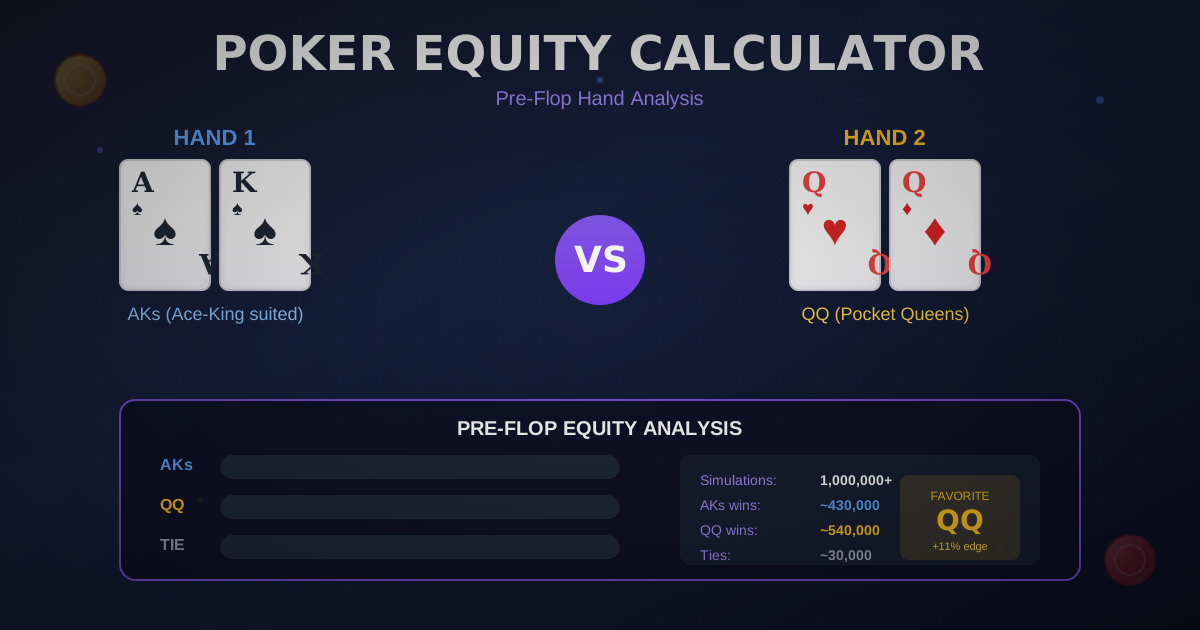
Calculate your equity against any opponent range with our Poker Equity Calculator.
ICM Adjustments to Push-Fold Ranges
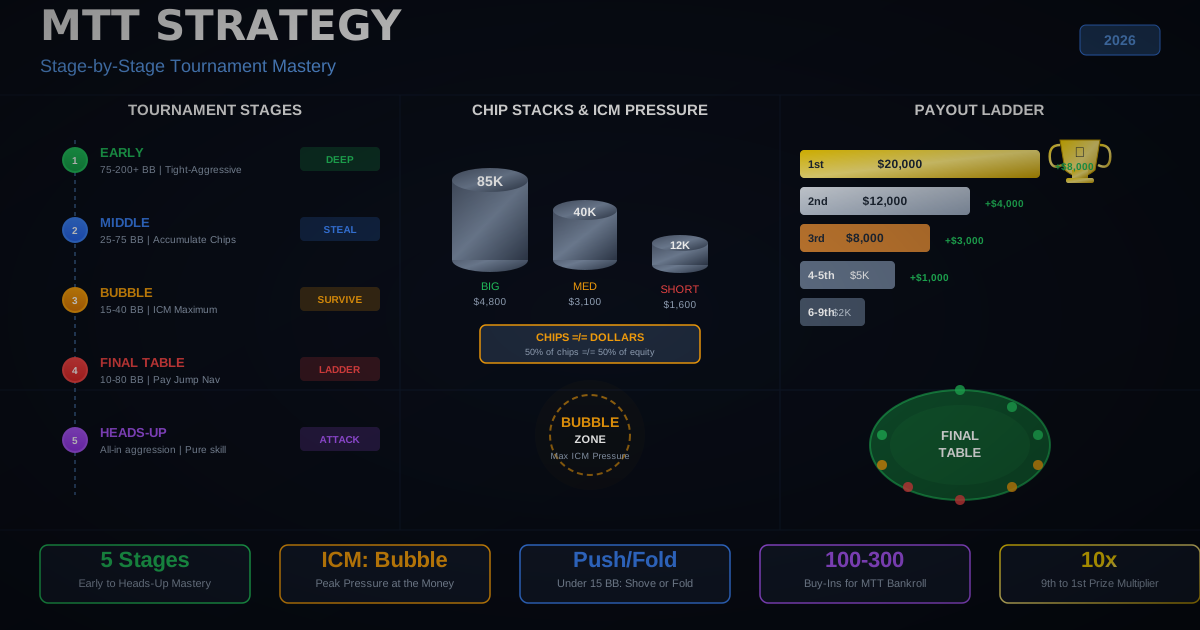
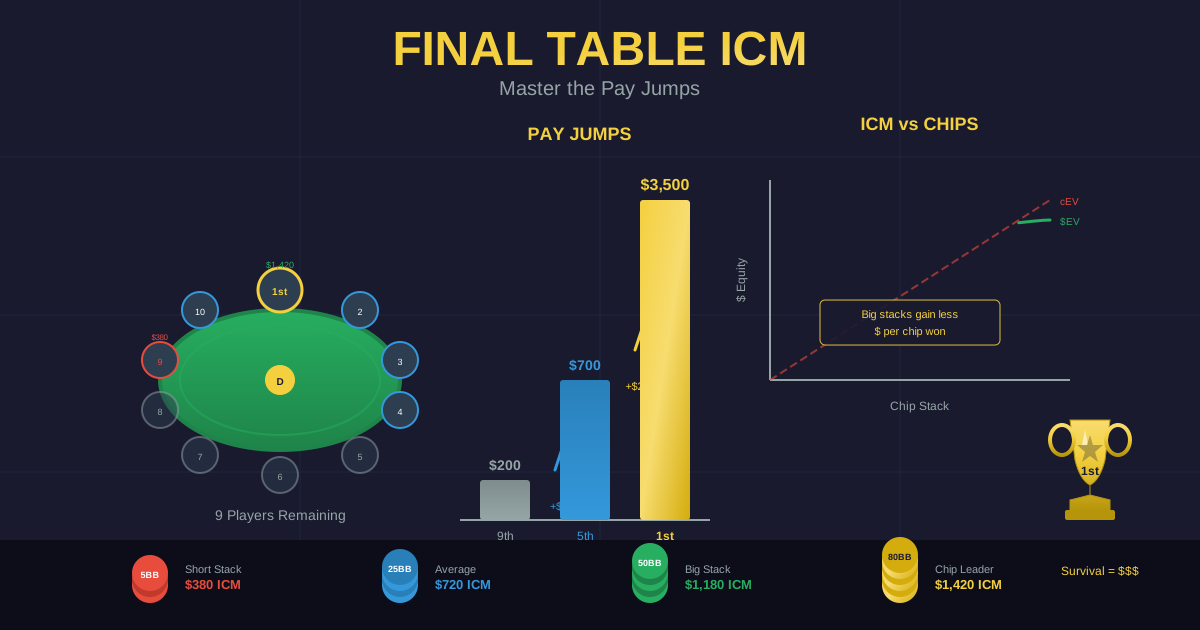
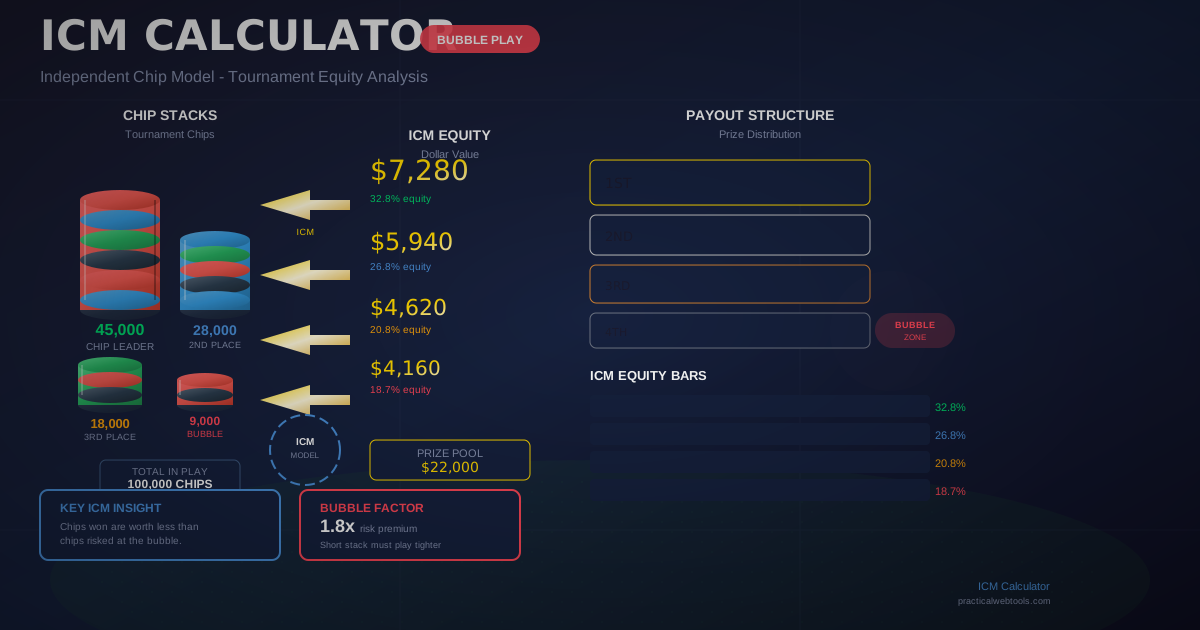
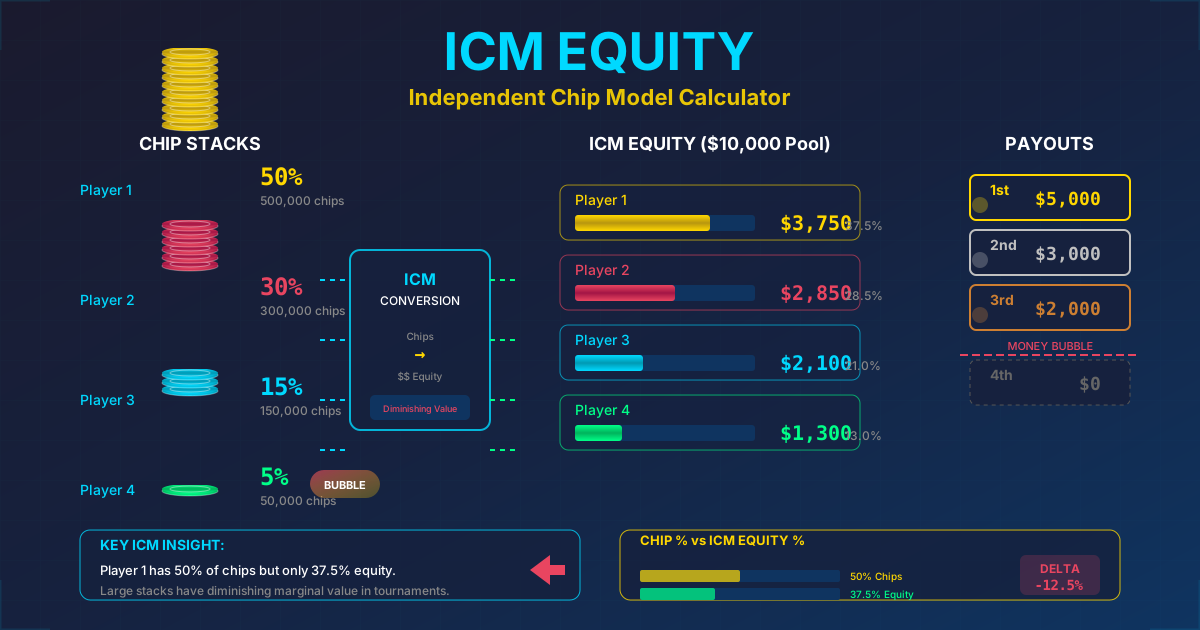
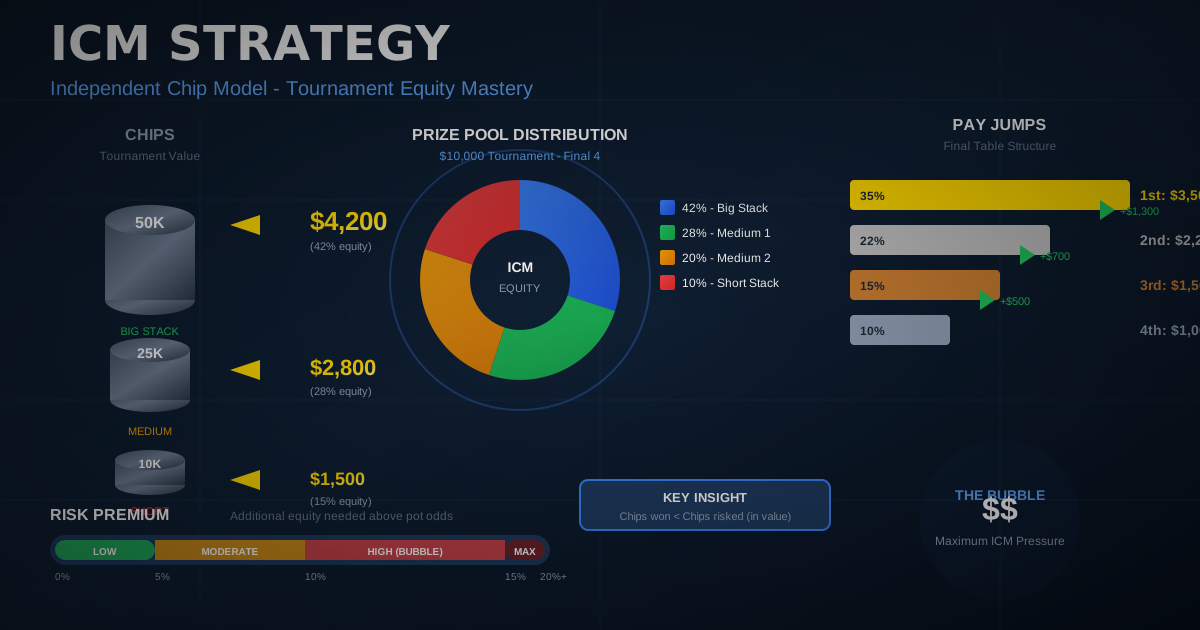
The charts above assume "chip EV"—where all chips are worth the same amount. In tournaments, ICM (Independent Chip Model) means chips have diminishing marginal value, and this significantly tightens both pushing and calling ranges.
How ICM Changes Your Push Range
ICM creates a "risk premium" that you must overcome to justify putting your tournament life at risk. The closer you are to the money bubble or a significant pay jump, the higher this risk premium becomes.
Risk Premium by Tournament Stage:
| Situation | Approximate Risk Premium | Effect on Push Range |
|---|---|---|
| Early tournament | 0-2% | Negligible change |
| Approaching bubble | 5-10% | Moderately tighter |
| On the bubble | 10-20% | Significantly tighter |
| Final table (10th-7th) | 5-10% | Moderately tighter |
| Final table (4th-2nd) | 8-15% | Significantly tighter |
| Heads-up | 0% | Pure chip EV |
Calculate your exact ICM equity and risk premium with our ICM Calculator.
Real-World ICM Example: Bubble Play
Scenario: $200 buy-in tournament, 50 players remain, 45 get paid. Average stack is 30,000 chips. Blinds are 800/1,600 with 200 ante (9-handed).
Your stack: 16,000 chips (10 BB, M-ratio of roughly 5)
Situation: You are on the button with K-J offsuit. Everyone folds to you.
Chip EV analysis: K-J offsuit is a clear shove from the button with 10 BB. The chart says shove roughly 45% of hands from the button at this stack depth, and KJo is well within that range.
ICM analysis: Five players are about to bubble out. Your 16,000 chips represent significant equity in the prize pool just by surviving. If you shove and get called, you risk elimination worth $0 in prize money. If you fold and two shorter stacks bust, you lock in a minimum cash.
The ICM-correct play: This depends on the exact stack distribution at your table and the full tournament. If there are multiple stacks shorter than yours (say, three players with 8,000-12,000 chips), the ICM risk premium might be 12-15%, making this a fold. If you are the shortest stack remaining, the risk premium drops to near zero, and shoving is correct.
Use our Poker All-In EV Calculator to run the exact numbers for situations like these.
ICM Push-Fold Adjustment Table
Here is how ICM roughly adjusts a standard 10 BB button shoving range in different scenarios:
| Scenario | Chip EV Range | ICM-Adjusted Range | Hands Removed |
|---|---|---|---|
| No ICM pressure | ~45% of hands | ~45% of hands | None |
| Moderate bubble (5 from money) | ~45% | ~32% | Weak suited connectors, low offsuit broadways |
| Exact bubble (1 from money) | ~45% | ~20-25% | Most marginal hands; keep only strong Ax, pairs, premium broadways |
| Big stack at final table | ~45% | ~50%+ | None removed; can actually widen due to leverage |
| Short stack at final table | ~45% | ~40-45% | Minimal change; need chips to survive |
Bubble Dynamics: The Push-Fold Battleground
The bubble is where push-fold strategy intersects most dramatically with ICM pressure. Understanding this intersection is worth more money than almost any other poker concept.
The Big Stack Advantage
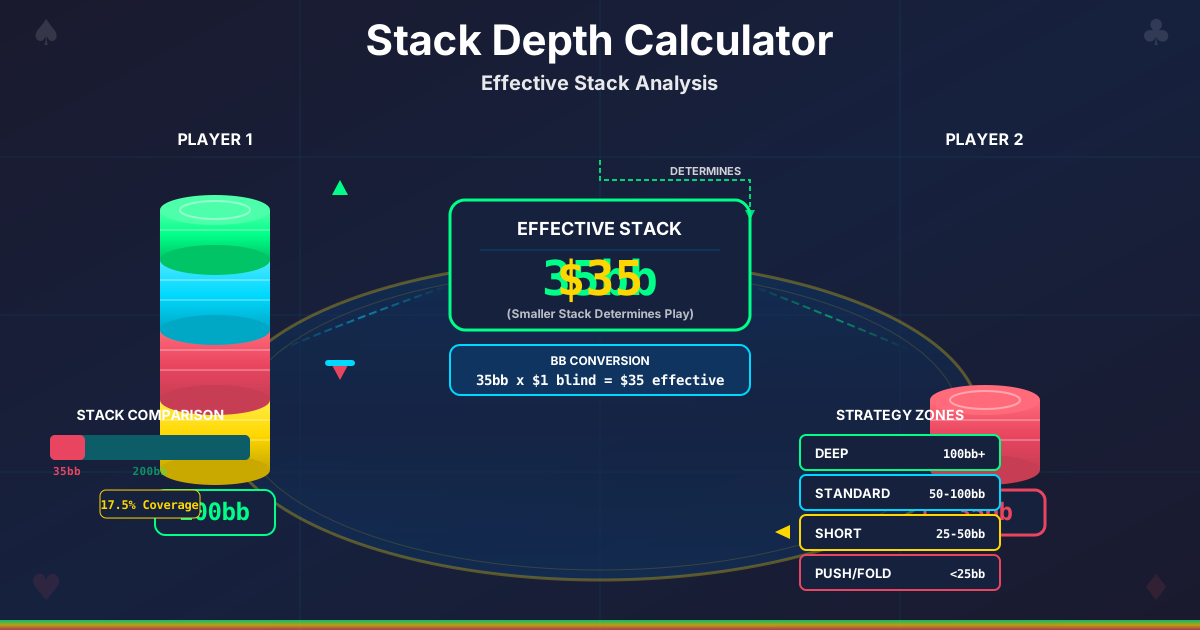
Big stacks on the bubble have enormous leverage because medium stacks cannot afford to call and risk elimination. A big stack with 40 big blinds can profitably shove with a wider range than the charts suggest because the ICM pressure on opponents forces them to fold hands they would normally call with.
Example: Final table bubble, 7 players remain, 6 get paid. You have 60 big blinds (table chip leader). The player in the big blind has 15 big blinds and is the 4th largest stack.
From the button, you can shove with nearly any two cards because the big blind cannot call without a premium hand. Calling and losing means elimination and $0. Folding costs just 1 big blind. The math overwhelmingly favors folding for the big blind in this spot with anything but the top 10-12% of hands.
Analyze your push ranges against specific opponents with our Poker Hand Range Calculator.
The Medium Stack Trap
Medium stacks on the bubble face the hardest decisions. They have enough chips to survive but not enough to bully. Their optimal strategy is extremely tight—often folding hands like AQ offsuit or pocket sevens in spots where chip EV clearly says to shove.
Why? The "ICM tax" on medium stacks is highest because:
- They have significant prize pool equity to protect
- Shorter stacks might bust before them
- Calling a shove and losing is catastrophic
- Even winning a shove does not proportionally increase their equity
The Short Stack Imperative
Ironically, the shortest stack at the table has the most freedom on the bubble. With only 4-5 big blinds, your prize pool equity is minimal compared to what you could gain by doubling up. The ICM risk premium for the shortest stack approaches zero because you have very little equity to protect.
Key short-stack bubble principle: If you are the shortest stack, shove as if ICM does not exist. You need chips to have any chance at meaningful prize money.
Real-World Push-Fold Examples
Example 1: Standard Short-Stack Shove
Situation: Online $55 tournament, 200 players remain (150 get paid). You have 22,000 chips with blinds at 1,000/2,000 and 250 ante (9-handed).
Your stack: 11 BB, M-ratio of approximately 4.5 (Red Zone)
Your hand: A-8 suited (hearts) in the hijack position
Action: Everyone folds to you.
Analysis: At 11 BB, the push-fold chart shows shoving A8s from the hijack with roughly 20% of hands. A8s is well within range. Even with moderate ICM pressure (50 players from the money), the risk premium is only about 3-5% since you are not near the immediate bubble.
Decision: Shove all-in. If called, you have a live hand with decent equity against most calling ranges. If everyone folds, you pick up 4,250 chips (blinds plus antes), increasing your stack by 19%.
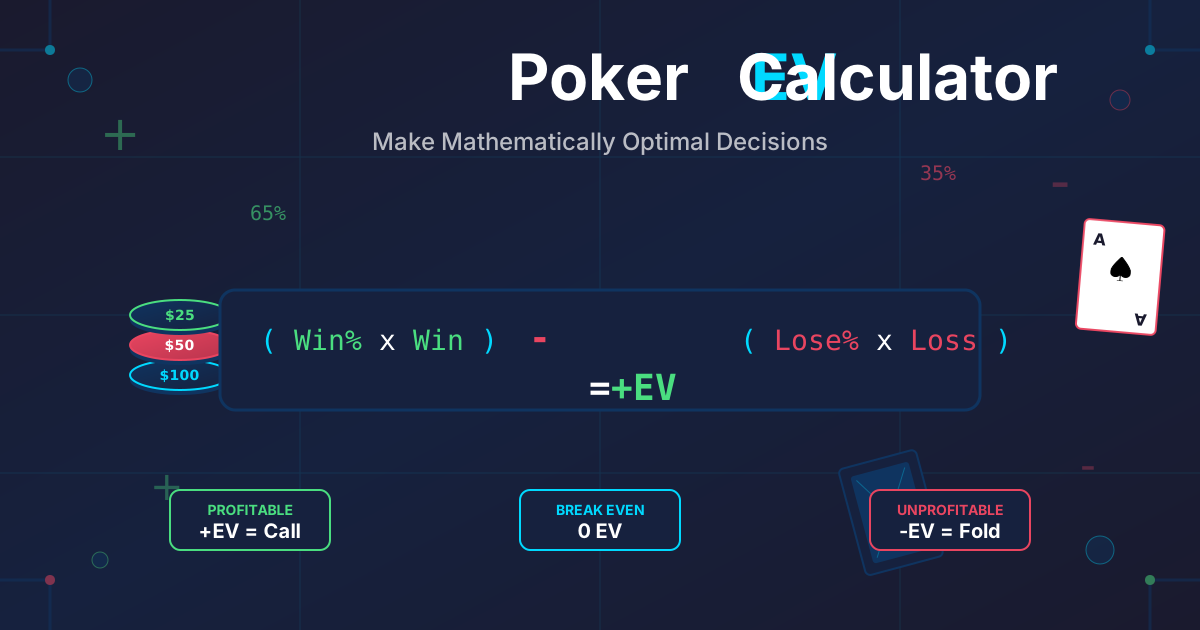
Use our Poker EV Calculator to verify the expected value of shoves in similar situations.
Example 2: ICM-Driven Fold on the Bubble
Situation: $1,000 live tournament, 19 players remain, 18 get paid. Minimum cash is $2,500. You have 180,000 chips with blinds at 6,000/12,000 and 2,000 ante.
Your stack: 15 BB, M-ratio of roughly 6 (Orange Zone)
Your hand: A-Q offsuit in the cutoff
Action: A player with 25 BB shoves from UTG+1.
Analysis: Against a typical UTG+1 shoving range with 25 BB (roughly 77+, ATs+, AQo+, KQs), your AQo has about 42% equity. You need roughly 38% equity based on pot odds alone.
However, ICM changes everything. You are one elimination from guaranteed $2,500. There are two players with 8-10 BB who could bust before you. The ICM risk premium here is approximately 15%.
Required equity with ICM: 38% + 15% = 53%. Your 42% falls well short.
Decision: Fold. Despite having a hand that is profitable in pure chip EV terms, ICM makes this a clear fold. Wait for the two short stacks to bust, lock in your min-cash, then resume aggressive play.
Calculate tournament payouts and ICM equity with our Tournament Payout Calculator.
Example 3: Big Stack Bully on the Bubble
Situation: $200 online tournament, 46 players remain, 45 get paid. You are the chip leader at your table with 85 BB.
Your hand: 9-6 offsuit on the button
Action: Folded to you. Small blind has 22 BB, big blind has 14 BB.
Analysis: This is a textbook big-stack bully spot. The big blind cannot call without a premium hand because elimination means missing the money entirely. The small blind is also constrained. Your hand strength is almost irrelevant—what matters is your leverage.
Even with 96o (a terrible hand), your fold equity is so high that shoving is profitable. The big blind must fold roughly 85%+ of hands here due to ICM pressure. The small blind folds even more often because they would need to beat both your range and survive to get paid.
Decision: Shove all-in. Your opponents' inability to call makes this profitable regardless of your hand.
Example 4: Final Table Short Stack
Situation: $500 tournament final table, 6 players remain. Payouts: 1st ($12,000), 2nd ($7,500), 3rd ($5,000), 4th ($3,500), 5th ($2,500), 6th ($2,000). You have 8 BB.
Your hand: K-T suited in the small blind
Action: Folded to you. Big blind has 30 BB.
Analysis: At a final table with 8 BB, you are in immediate push-fold mode. K-T suited is a strong hand for short-stack play. Against the big blind's calling range (likely top 25-30% given your small stack), KTs has approximately 45% equity.
The pay jumps are significant ($500 between each place), but with only 8 BB, your equity in those pay jumps is minimal unless you accumulate chips. The ICM risk premium for the shortest stack at a final table is low—approximately 3-5%.
Decision: Shove all-in. You need to double up to have any meaningful chance at the top prizes. Folding preserves a tiny equity advantage that evaporates with each subsequent blind.
Example 5: Multi-Way All-In Decision
Situation: $100 tournament, 30 players remain (27 get paid). You have 12 BB on the button.
Your hand: Pocket jacks
Action: UTG (20 BB) shoves. Middle position (15 BB) calls the shove.
Analysis: This is a fascinating spot. You have a strong hand, but two players are already all-in. If you fold, one of them will be eliminated (or severely crippled), moving you closer to the money.
Against likely ranges (UTG: 77+, ATs+, AQo+; MP caller: 88+, AJs+, AQo+), your JJ has approximately 38-42% equity in a 3-way pot.
However, the ICM consideration is that if you fold and one player busts, you move from 30th to surviving 29 players with 27 paying. Your guaranteed equity increases significantly.
Decision: This is stack-dependent. If you are above average stack, fold and let them fight. If you are among the shortest stacks, call and try to triple up. With 12 BB (slightly below average at this stage), most ICM models suggest folding JJ here—a counter-intuitive but mathematically correct play.
Run these complex multi-way scenarios with our Poker Equity Calculator and ICM Calculator.
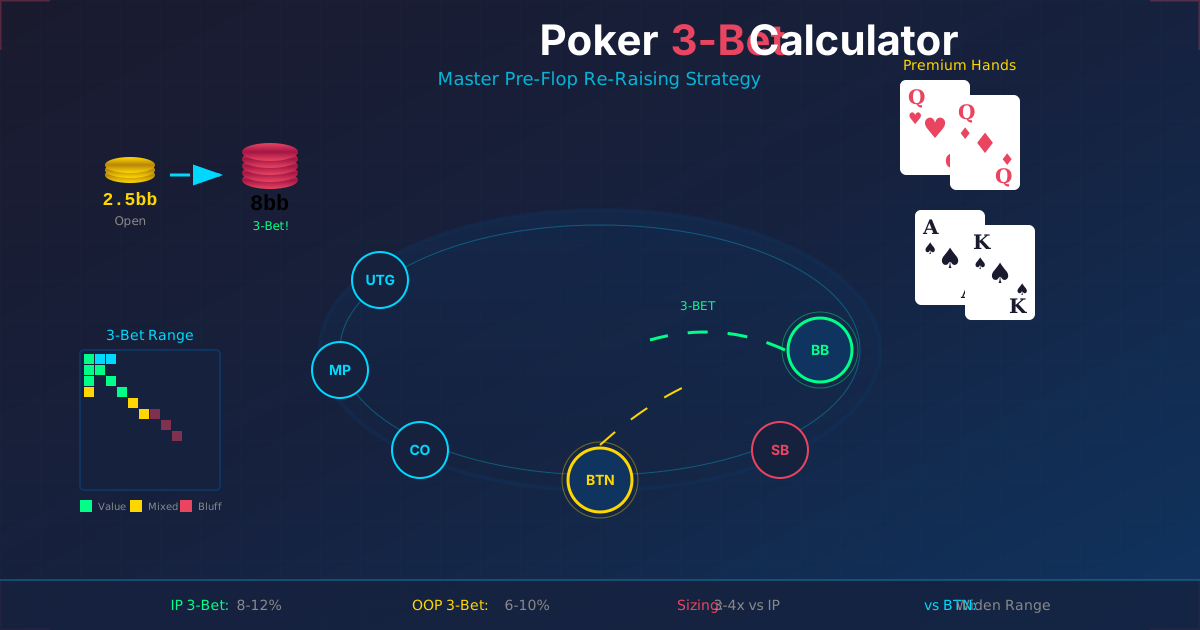
Example 6: The Re-Shove (3-Bet Shove)
Situation: Online $100 tournament, 80 players remain (63 get paid). You have 14 BB in the big blind.
Your hand: A-5 suited
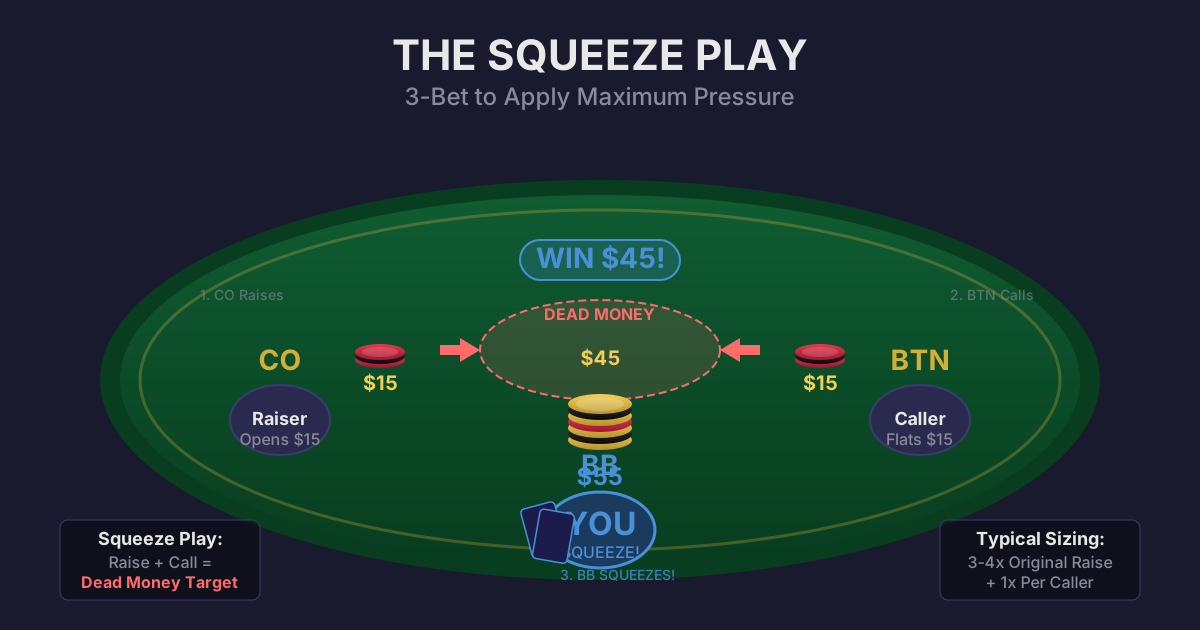
Action: The cutoff (a known aggressive player with 35 BB) raises to 2.2 BB. Button and small blind fold.
Analysis: Against an aggressive cutoff opener who raises roughly 30-35% of hands, A5s has excellent equity (approximately 48-52% against a typical opening range). With 14 BB, you have just enough fold equity to make a re-shove profitable.
Your options:
- Fold: Lose 1 BB (ante). Safe but passive.
- Call: Bad. You are out of position with a marginal hand and a short stack.
- Shove (re-shove): Force the opener to call 11.8 more BB to win approximately 17.4 BB. The opener folds a significant portion of their range.
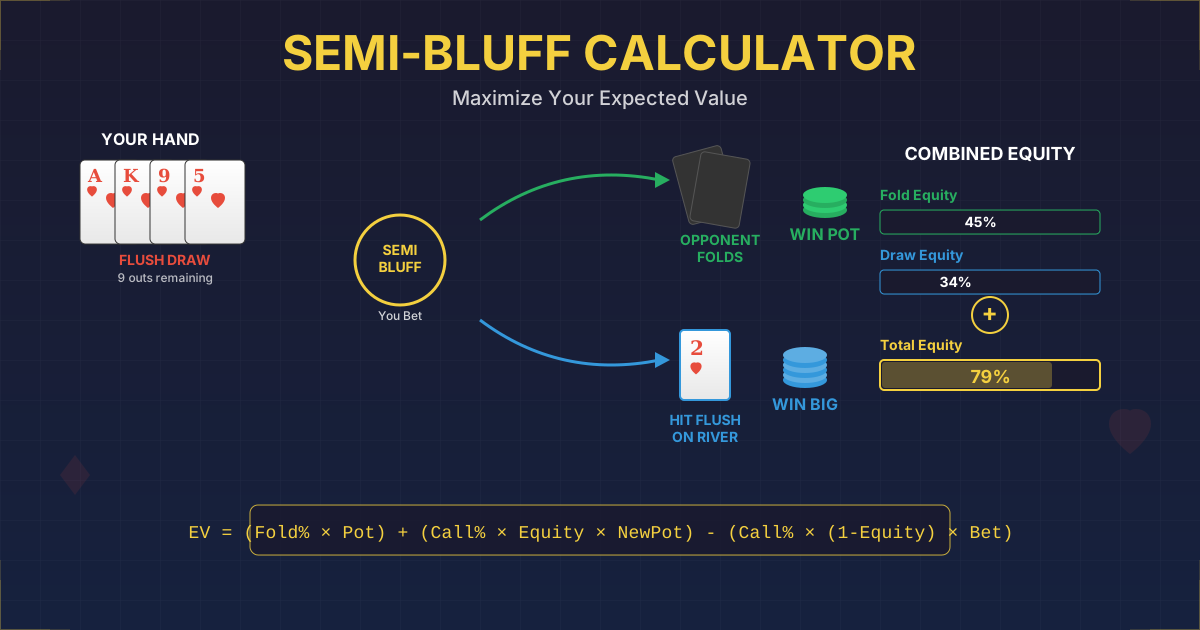
Expected value calculation:
- Opponent folds ~55% of the time: You win 3.4 BB (blinds + antes + their raise)
- Opponent calls ~45% of the time: You have ~42% equity in a 28.4 BB pot
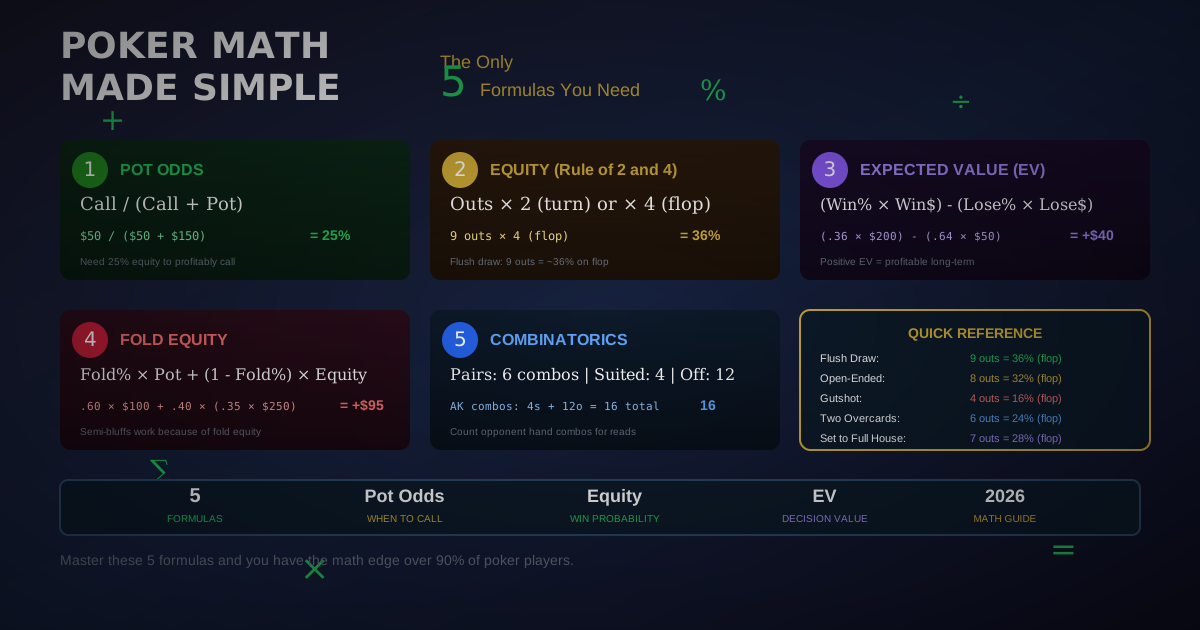
- EV = (0.55 x 3.4) + (0.45 x ((0.42 x 28.4) - 14)) = 1.87 + 0.45 x (11.9 - 14) = 1.87 - 0.95 = +0.92 BB
Decision: Shove. The combination of fold equity and live equity makes this a profitable play worth nearly 1 BB in expected value.
Calculate your fold equity and EV in re-shove spots with our Poker Fold Equity Calculator and Poker EV Calculator.
Advanced Push-Fold Concepts
Ante Adjustments
Antes significantly affect push-fold math. With antes, the pot is larger before the action starts, making steals more profitable and widening optimal shoving ranges.
Example comparison (9-handed, 10 BB stack, button position):
- Without antes: Shove ~40% of hands
- With 10% antes (0.1 BB per player): Shove ~50% of hands
- With 12.5% antes (big blind ante format): Shove ~52% of hands
The presence of antes adds approximately 1 BB per round to the pot, which at 10 BB means 10% of your stack is at risk every orbit regardless. This urgency pushes optimal ranges wider.
Stack-to-Pot Ratio in Push-Fold
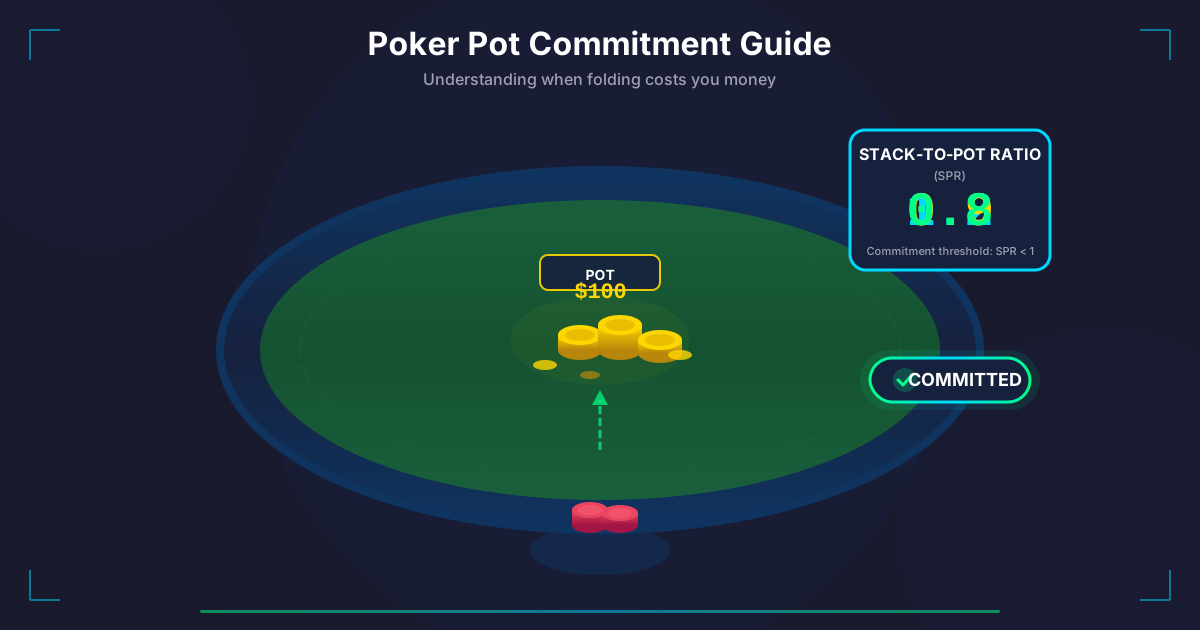
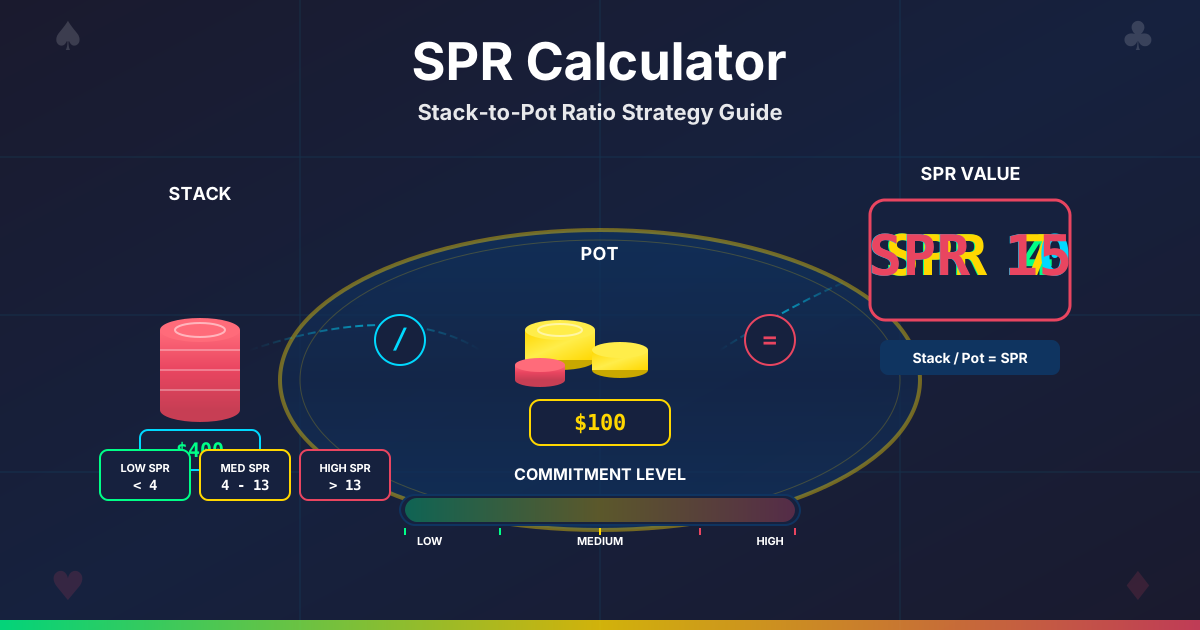
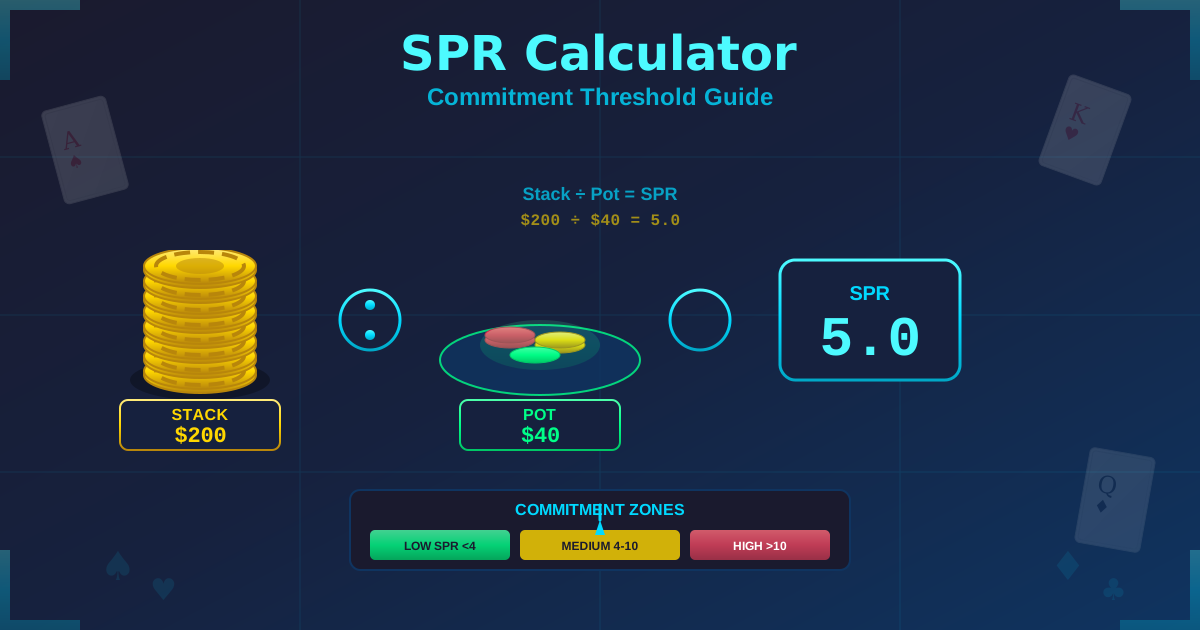
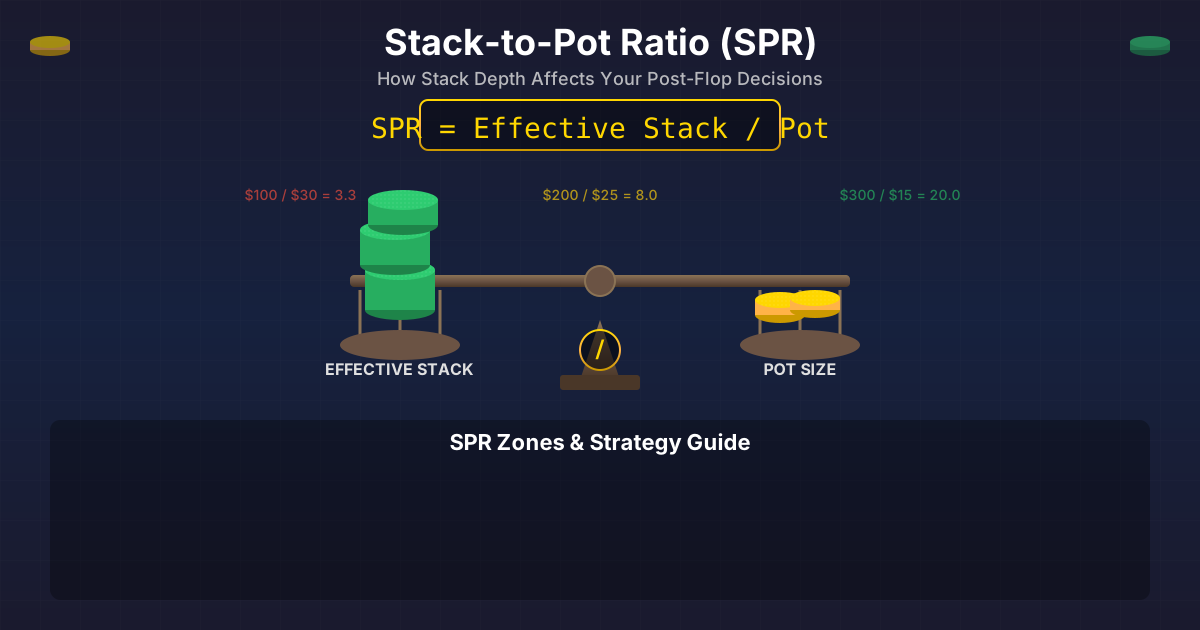
When your stack is exactly equal to the pot (or close to it), interesting dynamics emerge. If you raise to 2.2 BB and the pot becomes 3.5 BB with 7.8 BB behind, your stack-to-pot ratio (SPR) is 2.2:1. At SPR below 3, most hands play themselves on the flop—you are essentially committed.
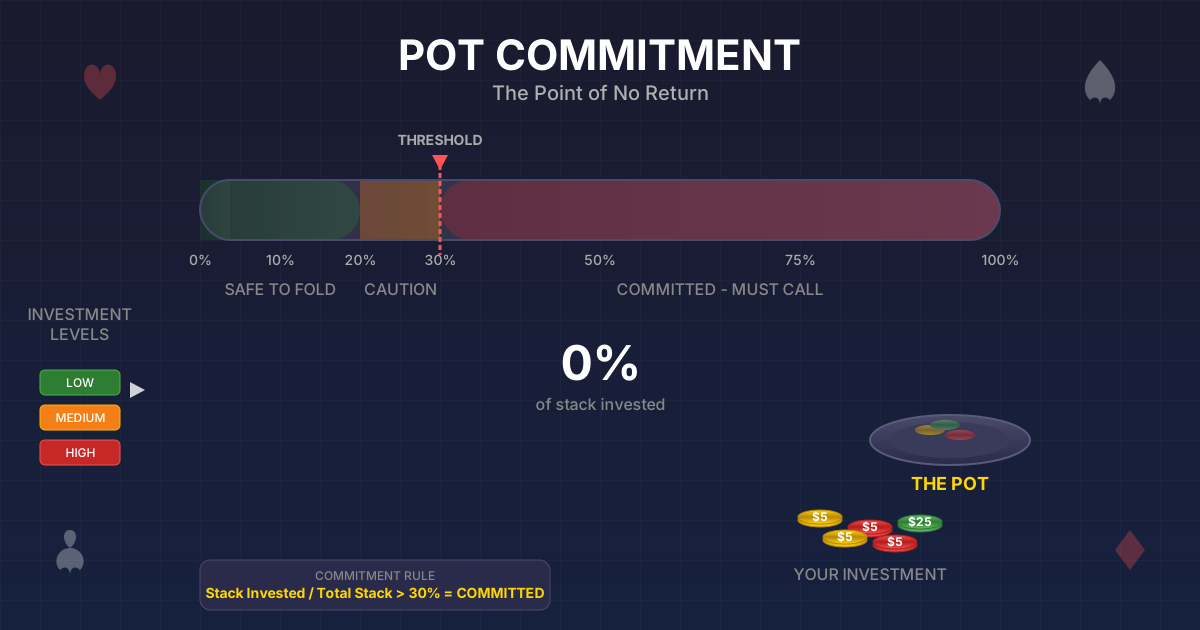
The takeaway: If your raise commits more than 30% of your stack, just shove. The fold equity from a larger all-in outweighs any post-flop advantages of a smaller raise.
Use our Poker SPR Calculator to determine your stack-to-pot ratio in various scenarios.
The Reshove Stack (13-18 BB)
Players with 13-18 big blinds occupy a unique strategic space. They have too many chips for pure push-fold from early position but not enough for standard raise-and-play-post-flop poker. The optimal approach for this stack depth is:
- Open-shove from late position (cutoff, button, small blind)
- Raise-fold from early/middle position with premium hands only (AA-QQ, AK)
- Reshove over opens with a wide range when in the blinds facing a late position raise
This "reshove stack" is the most powerful stack size in tournament poker because:
- Your shove is large enough to apply maximum fold equity
- Opponents opening to 2-2.5 BB must risk 10-15 more BB to call
- The math favors the reshover in almost all configurations
Analyze your hand ranges for reshove spots with our Poker Hand Range Calculator.
Common Push-Fold Mistakes
Mistake #1: Waiting for Premium Hands
The most common short-stack error is folding too much while waiting for aces or kings. At 8 big blinds, you cannot afford to fold for 2-3 orbits hoping for a premium hand. Each orbit costs you roughly 1.5-2 big blinds (blinds plus antes), and after three orbits, your 8 BB stack is down to 3-4 BB with no fold equity.
The math is clear: Shoving K-7 suited with 8 big blinds from the cutoff is far more profitable than waiting two more orbits and shoving A-K with 4 big blinds from under the gun.
Mistake #2: Open-Limping Short
Some players try to limp into pots with short stacks, hoping to see a cheap flop and hit a big hand. This is almost always incorrect because:
- You sacrifice fold equity entirely
- You invite multi-way pots where your equity decreases
- Your post-flop decisions become impossible with a tiny stack
- The big blind checks for free and can outdraw you easily
Mistake #3: Calling Instead of Shoving
When you have 10-12 big blinds and face a min-raise, calling is almost always wrong. You should either fold or reshove. Calling puts you in a terrible spot post-flop with a short stack, out of position, with no fold equity remaining.
Mistake #4: Ignoring Position
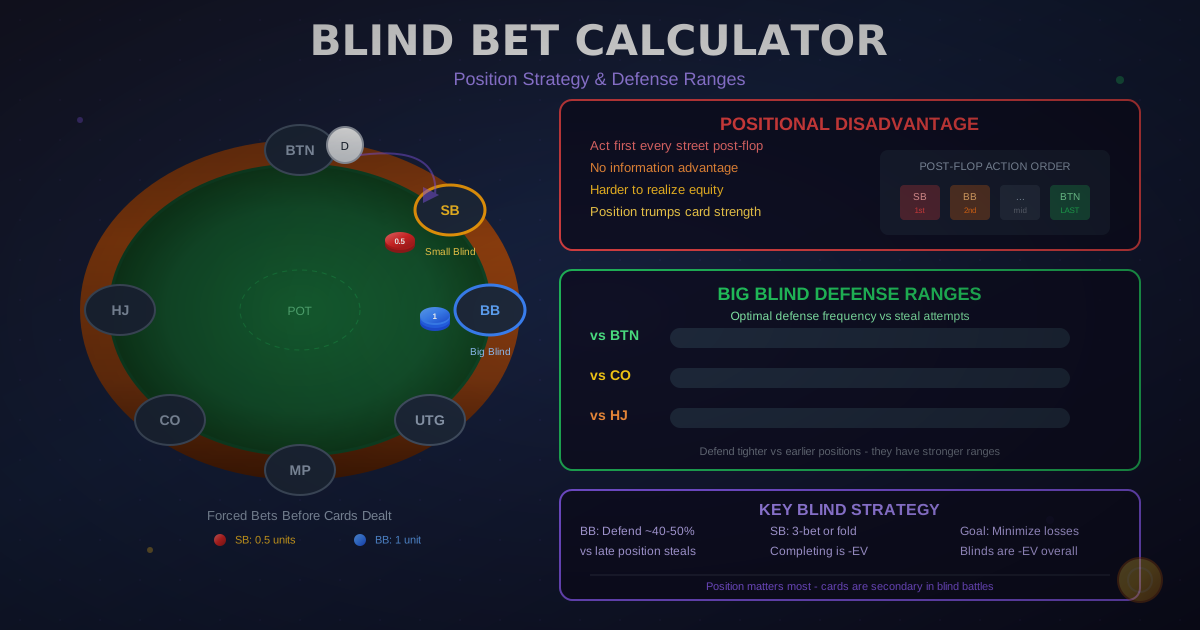
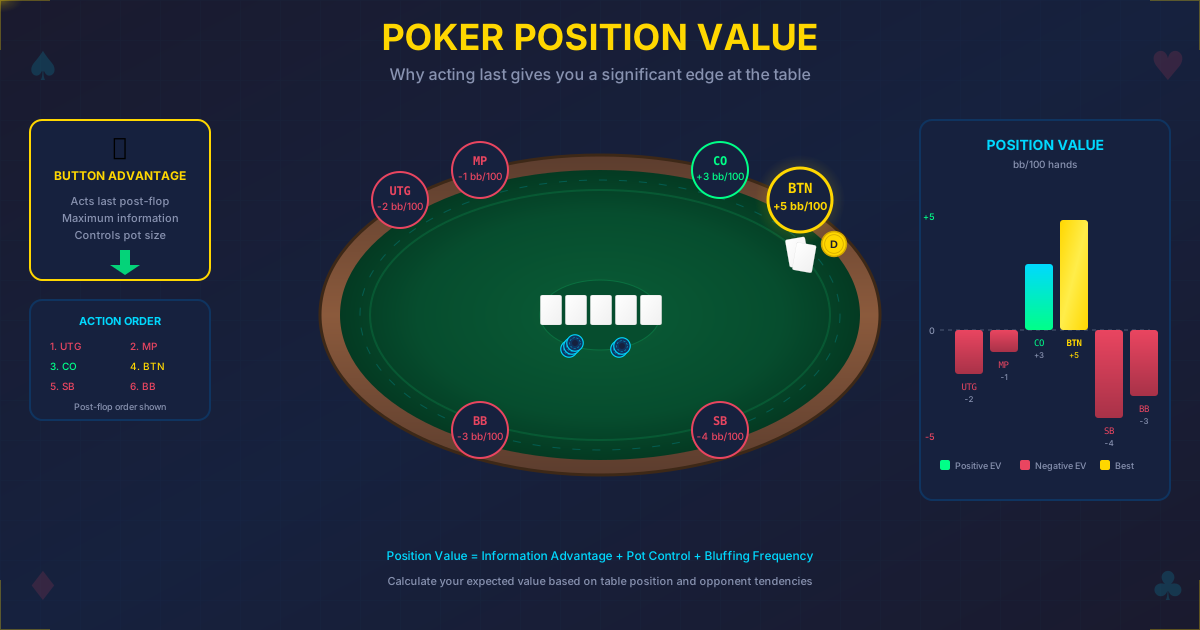
Position matters enormously in push-fold. Shoving A-8 offsuit from under the gun with 10 big blinds at a 9-handed table is a significant mistake (8 players left to act, high probability someone wakes up with a hand). The same A-8 offsuit from the button is a strong shove (only 2 players left to act).
Always adjust your ranges based on position. Our Push-Fold Calculator generates position-specific ranges automatically.
Mistake #5: Not Adjusting for Table Dynamics
Charts give you a baseline, but real opponents deviate from optimal. If the big blind calls every shove with any ace, your shove range should tighten (removing weak aces) and add hands that do well against ace-heavy ranges (like suited connectors and pocket pairs). If the big blind folds everything except pocket aces, your shove range should be nearly any two cards.
Frequently Asked Questions
When should I switch to push-fold in a tournament? Switch to push-fold when your stack drops below 15 big blinds (M-ratio below about 7). Below 10 big blinds, push-fold should be your exclusive strategy. Use our M-Ratio Calculator to track your zone in real-time.
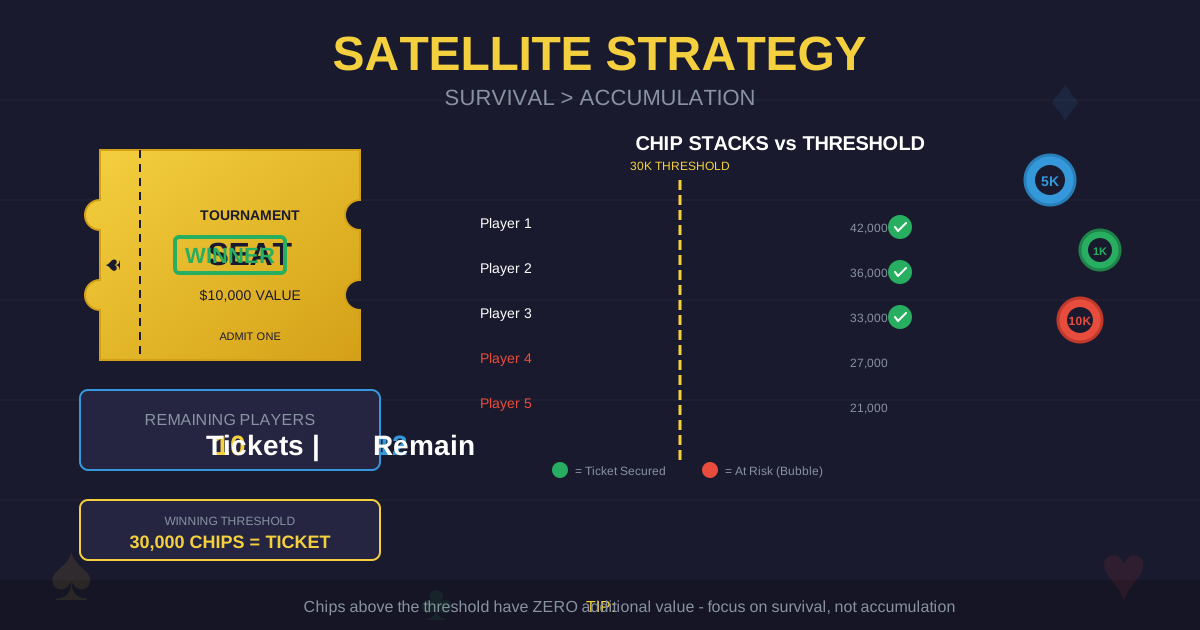
Are push-fold charts the same for all tournament types? No. Charts based on Nash Equilibrium assume chip EV, which works for early/mid tournament stages and heads-up play. Near the bubble and at final tables, you must apply ICM adjustments that tighten ranges. Satellite tournaments with flat payouts require the most extreme ICM adjustments. Use our ICM Calculator to calculate situation-specific adjustments.
What is the minimum stack size where push-fold works? Push-fold works at any stack size below 15 big blinds, but its effectiveness decreases below 3-4 big blinds because you lose almost all fold equity. Even at 2 big blinds, push-fold is still correct—you just have fewer profitable hands because opponents will call very wide.
Should I always push-fold from the small blind? With less than 10 big blinds, yes. The small blind is the most aggressive push-fold position because you only need to get through one opponent. With 10-15 big blinds, you can occasionally complete or raise small, but shoving is usually the strongest play.
How do I memorize push-fold charts? Start with general principles rather than exact hands. Remember "all pairs, all aces, and good kings" for most positions at 10 BB. Then learn that late position adds suited connectors and broadway hands. With practice, the ranges become intuitive. Our Push-Fold Calculator is always available for reference.
What if I am the big stack and face a short-stack shove? Use calling charts based on the shover's likely range and your pot odds. Against a wide button shove (10 BB), you can call with roughly the top 30-35% of hands. Against a tight UTG shove, narrow to the top 8-10%. Calculate your equity against specific ranges with our Poker Equity Calculator.
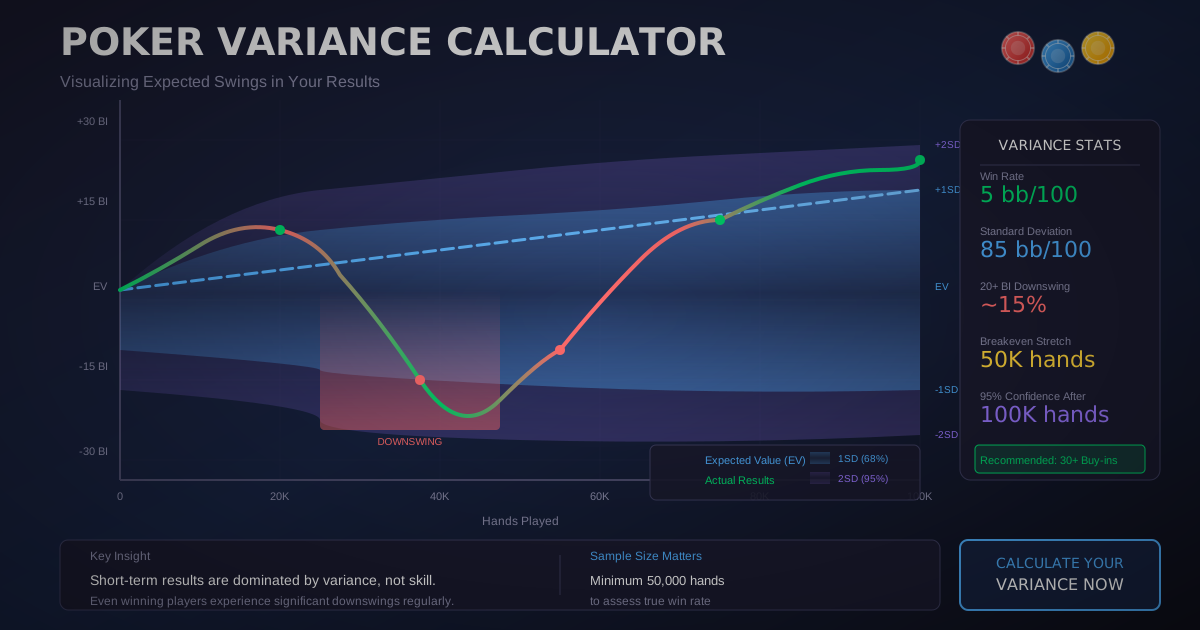
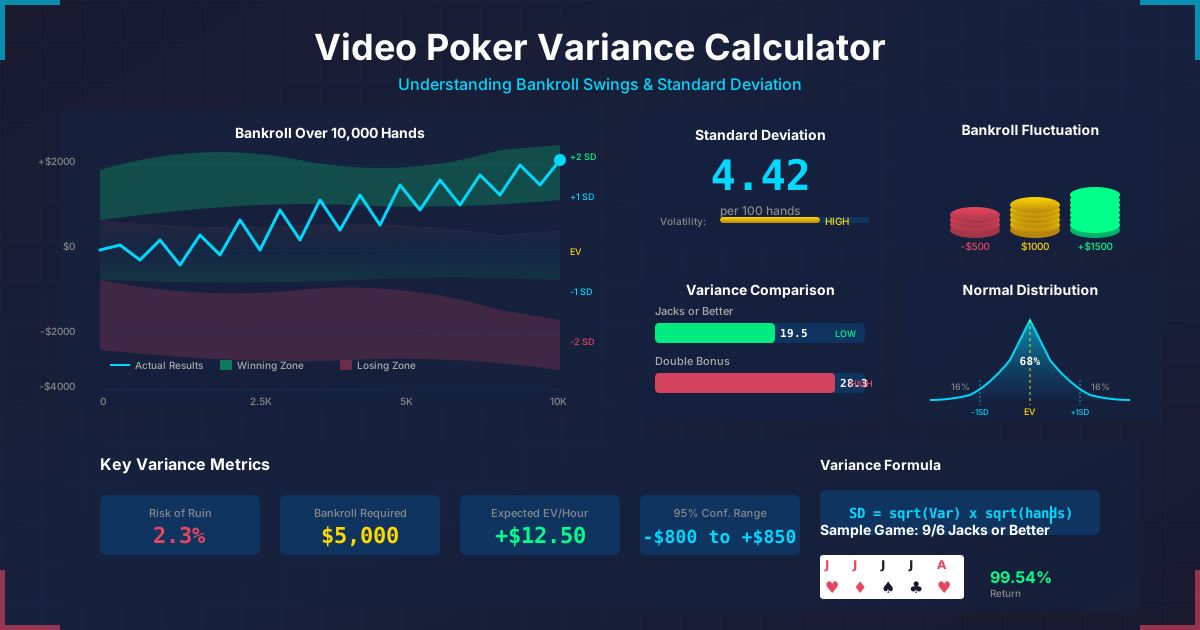
How does push-fold change in turbo and hyper-turbo tournaments? In turbos and hyper-turbos, blinds increase faster, so you spend more time in push-fold mode. This makes push-fold skill disproportionately valuable. Players who master push-fold have a massive edge in fast-structured events because they play more hands in their strongest strategic domain. Check our Poker Variance Calculator to understand how format affects your variance.
Should I push-fold differently online vs. live? The math is the same, but implementation differs. Online, players tend to call tighter (giving you more fold equity) because they can wait for the next tournament. Live, recreational players call wider because they do not want to "waste" their time folding. Adjust your ranges accordingly—slightly tighter in live games.
Related Tools for Tournament Push-Fold Strategy
Build your complete tournament toolkit with these calculators:
- Push-Fold Calculator: Generate optimal push-fold ranges for any stack size and position
- ICM Calculator: Calculate tournament equity with ICM adjustments
- M-Ratio Calculator: Determine your strategic zone based on stack and blind level
- Poker All-In EV Calculator: Analyze the expected value of all-in decisions
- Tournament Payout Calculator: Understand prize pool structures and their ICM impact
- Poker Equity Calculator: Calculate hand vs. range equity for calling decisions
- Poker Hand Range Calculator: Construct and analyze hand ranges
- Poker EV Calculator: Calculate expected value for any poker decision
- Poker Bankroll Requirements Calculator: Determine the bankroll needed for your tournament schedule
- Poker Variance Calculator: Simulate tournament results and expected swings
Conclusion: Master Push-Fold, Master Tournaments
Short-stack play is the most mathematically solvable phase of tournament poker, and that is precisely why it offers such an enormous edge. While your opponents panic, hesitate, and make emotional decisions with 10 big blinds, you can execute a strategy that is provably close to optimal.
The key takeaways are simple:
- Switch to push-fold at 15 big blinds or below
- Use position-based charts as your baseline
- Apply ICM adjustments near bubbles and pay jumps
- Exploit big-stack leverage when you have chips
- Never wait for premium hands with a short stack
Start practicing your push-fold decisions today with our free Push-Fold Calculator. Calculate your M-ratio to know when to switch modes with our M-Ratio Calculator. And when ICM pressure mounts, use our ICM Calculator to make the highest-EV play for your tournament equity.
The tournaments you cash in and the final tables you navigate successfully all depend on these critical short-stack moments. The math is on your side—use it.
Gambling involves risk. This content is for educational and informational purposes only. Always gamble responsibly, set limits you can afford, and seek help if gambling becomes a problem. Visit the National Council on Problem Gambling or call 1-800-522-4700 for support.