NFL Draft Betting: How to Bet Props and Futures on Draft Night (2026)
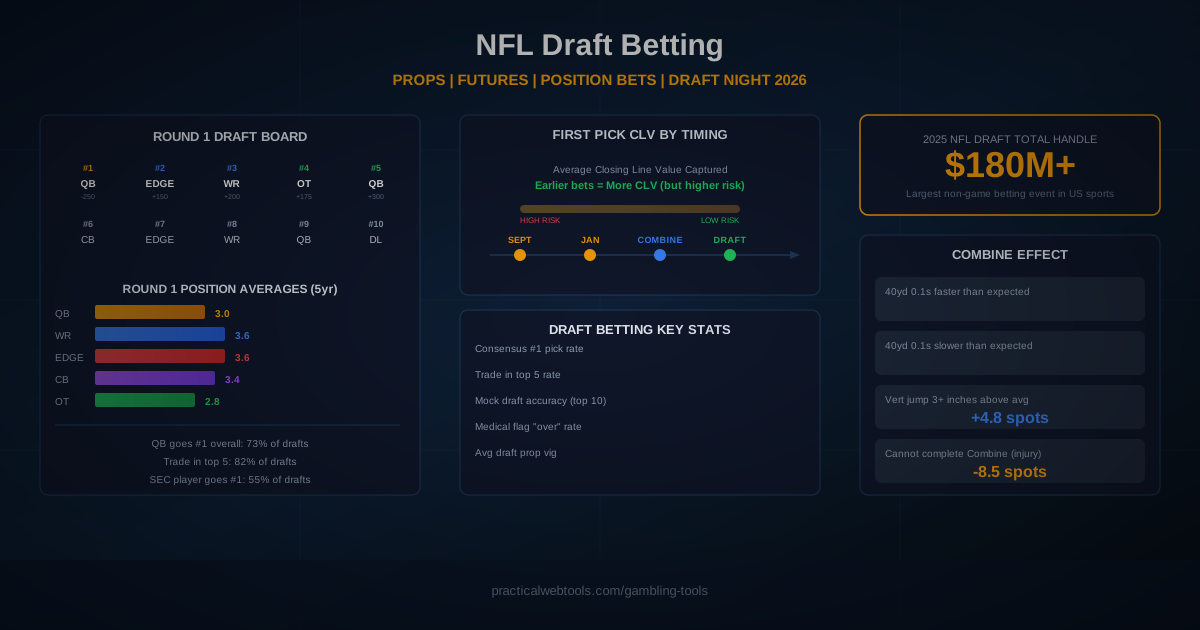
The 2025 NFL Draft generated over $180 million in total betting handle across US sportsbooks, making it the single most-bet non-game event in American sports. Draft betting has exploded from a niche curiosity into a massive market with dozens of prop bets, futures, and exotic wagers available at every major operator. The appeal is clear: unlike game outcomes determined by athletic performance, draft picks are decided by humans in conference rooms, and the information asymmetry between insiders and the public creates genuine opportunities for savvy bettors.
This guide covers everything you need to know about NFL Draft betting in 2026: how to bet the first overall pick, draft position over/unders, positional props, exotic draft night wagers, how to use mock drafts and insider information, historical trends that predict outcomes, and the critical timing strategies that separate winners from losers in draft betting markets.
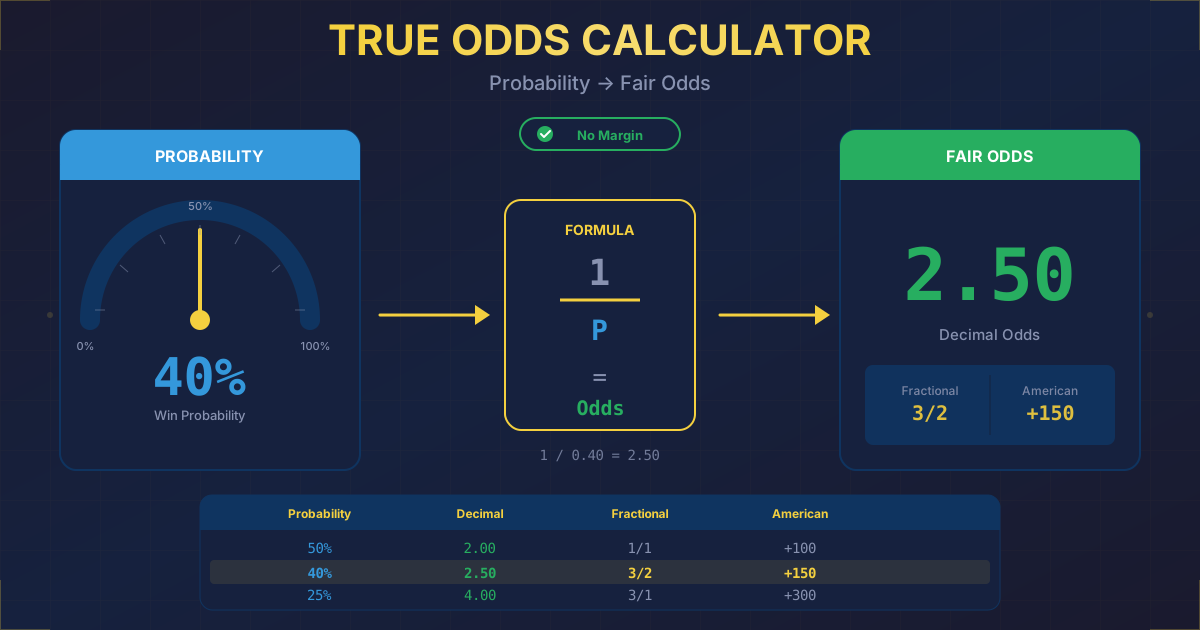
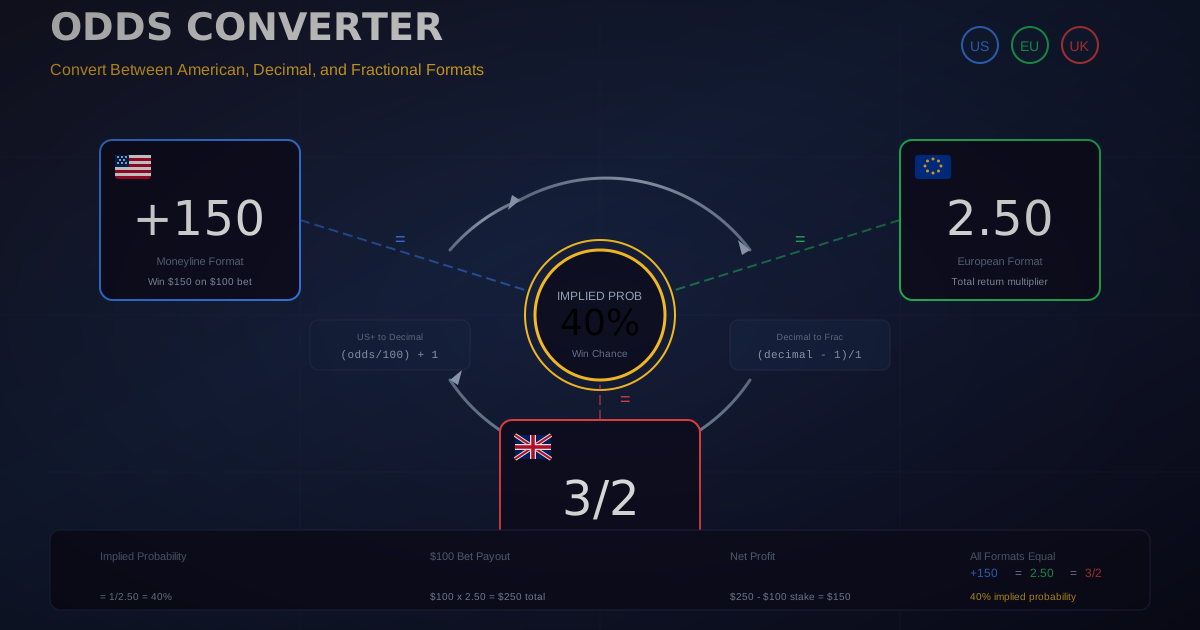
Convert draft prop odds between American, decimal, and fractional formats with our free Odds Converter.
What Types of NFL Draft Bets Are Available?
NFL Draft betting offers a wider variety of wagers than most bettors realize, ranging from straightforward first overall pick bets to exotic props like suit color and handshake duration. Major US sportsbooks now offer 50-100+ distinct draft prop markets, with the number growing each year as handle increases.
Core Draft Betting Markets
| Market Type | Description | Availability | Typical Vig |
|---|---|---|---|
| First Overall Pick | Which player goes #1 | All major books | 5-15% |
| Top 5 Pick (Yes/No) | Will Player X be drafted in top 5 | All major books | 6-12% |
| Draft Position O/U | Player X drafted over/under pick 8.5 | All major books | 5-10% |
| First Player at Position | First QB/WR/OT/etc. drafted | All major books | 8-15% |
| Position Drafted | What position will pick X be | Most books | 10-18% |
| Round 1 Totals by Position | How many QBs/WRs/etc. in Round 1 | Most books | 8-15% |
| First Pick by Team | Which player will Team X draft first | Select books | 12-20% |
| Draft Night Trades | Will there be a trade in top 10 | Select books | 8-15% |
| Head-to-Head Draft Position | Player A vs Player B: who goes first | Most books | 5-10% |
| Conference First Pick | First SEC/Big Ten/etc. player drafted | Select books | 10-18% |
Exotic Draft Props
| Exotic Prop | Example | Typical Odds Range | Where Available |
|---|---|---|---|
| First Pick Suit Color | Black, Blue, Gray, Other | +150 to +400 | DraftKings, FanDuel |
| Handshake Duration | Over/Under 4.5 seconds | -110 / -110 | BetMGM, Caesars |
| Commissioner Booed | Over/Under 8.5 seconds of boos | -130 / +110 | Select books |
| First Pick Walk-Up Song | Genre: Hip-Hop, Country, Pop | +125 to +500 | DraftKings |
| Tears on Camera | Any player shown crying (Round 1) | Yes -200 / No +160 | FanDuel |
| First Trade | Over/Under pick 5.5 | Various | Most books |
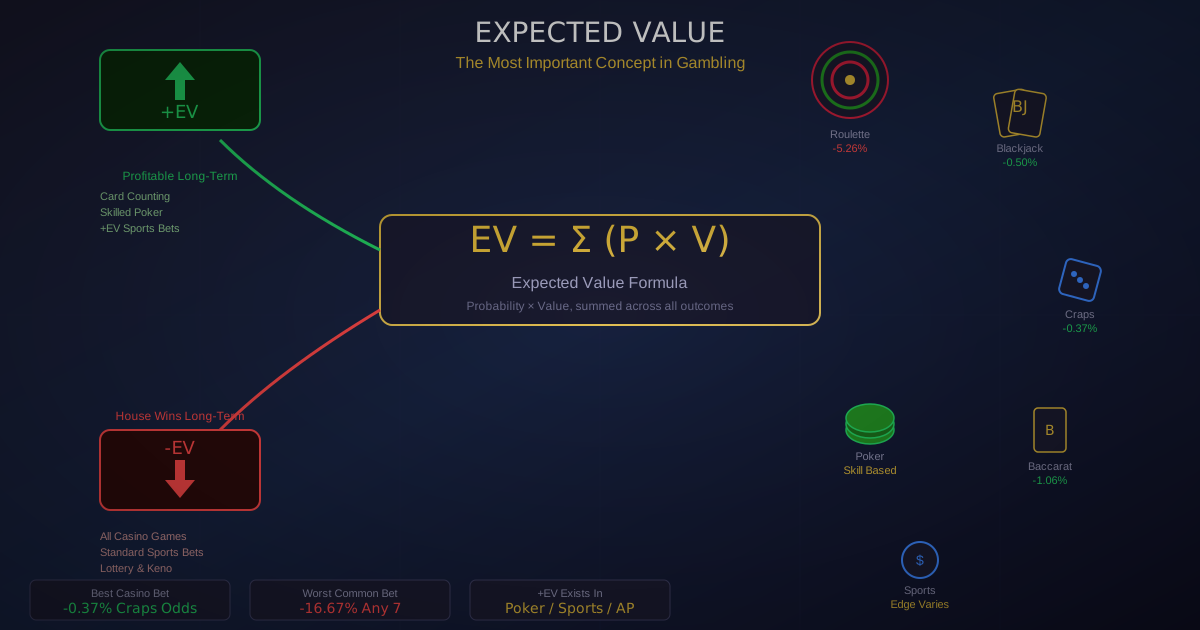
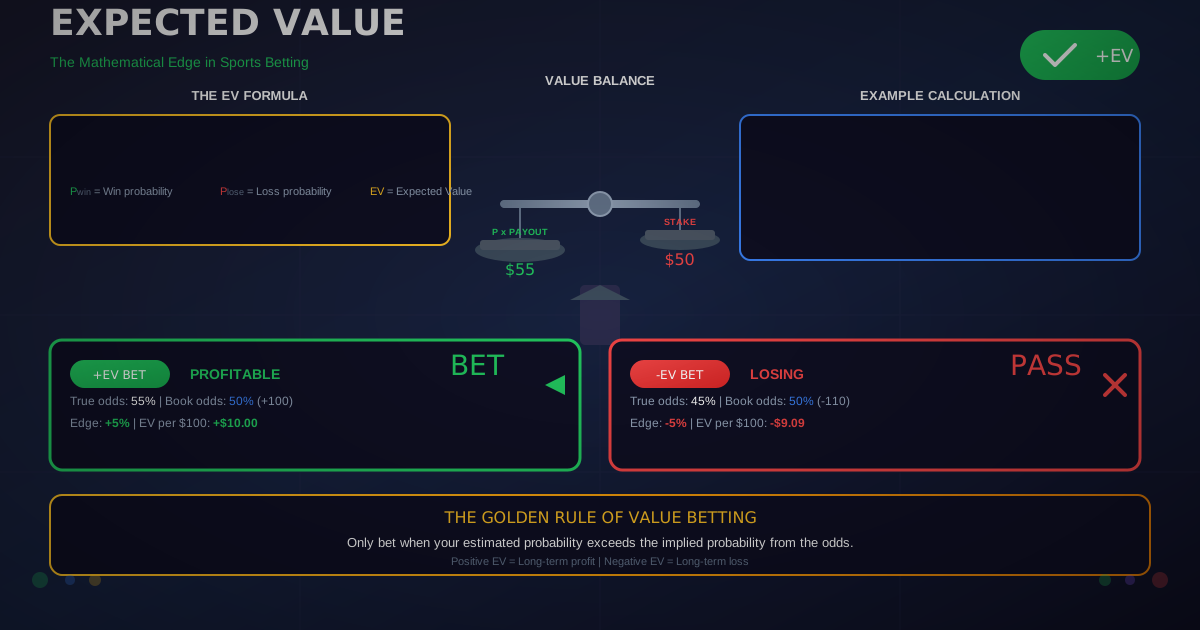
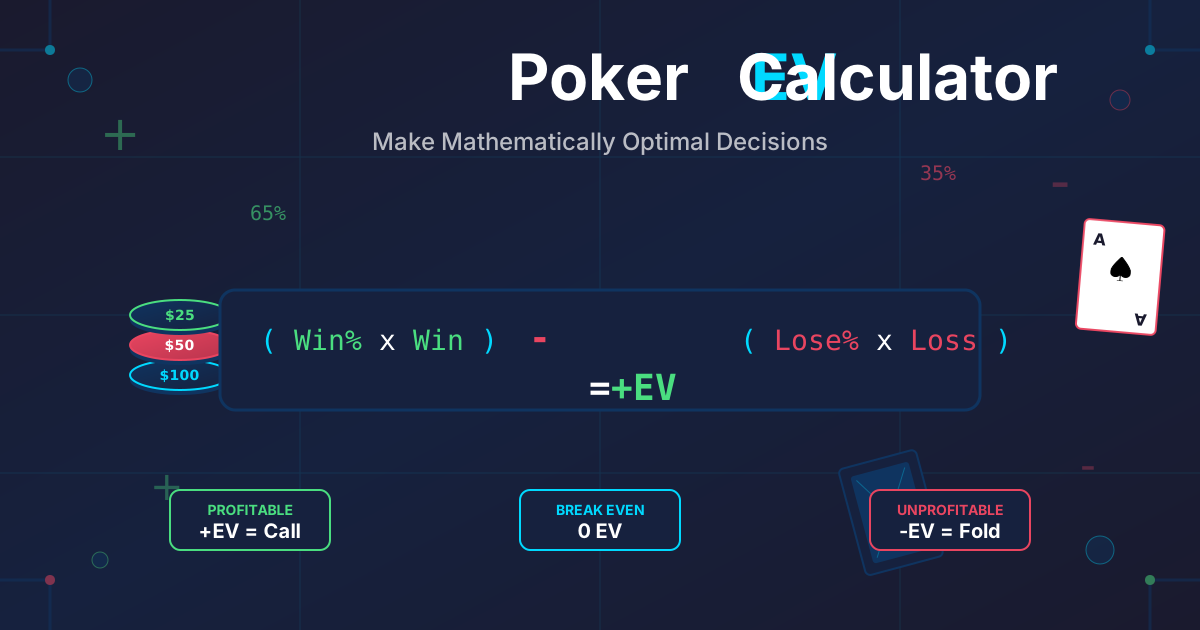
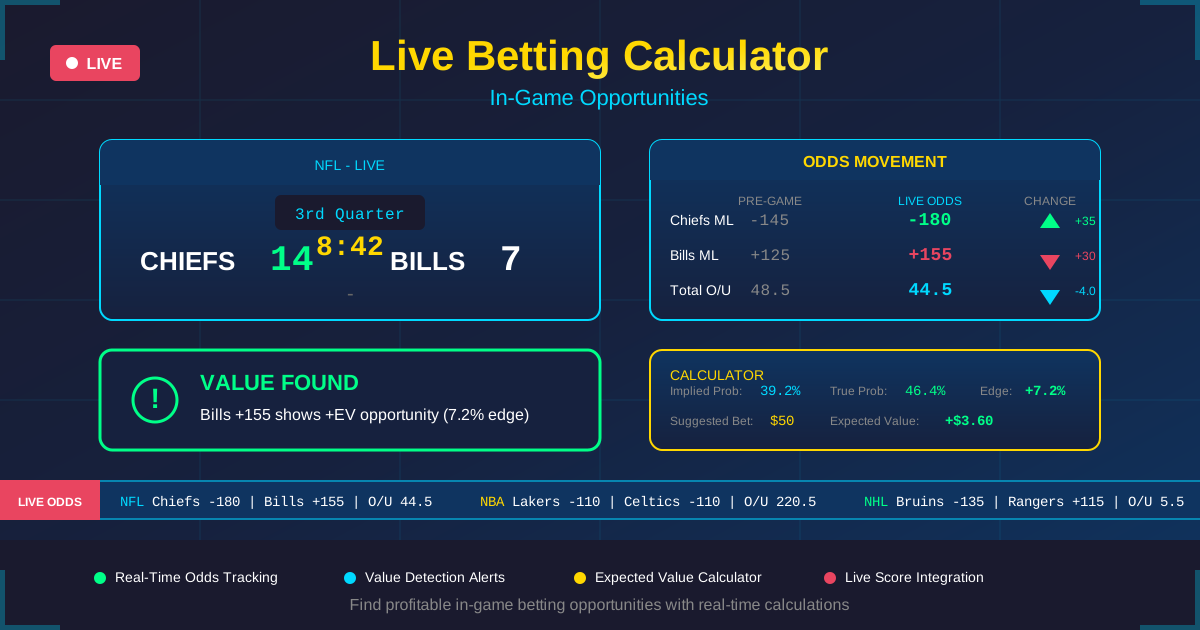
Calculate the expected value of any draft prop with our Expected Value Calculator.
How Do You Bet on the First Overall Pick?
The first overall pick market is the flagship NFL Draft bet, attracting more handle than any other single draft prop. The market typically opens 6-12 months before the draft and the odds shift dramatically based on college football results, the NFL Combine, pro days, team needs, and insider reporting.
Historical First Overall Pick Odds
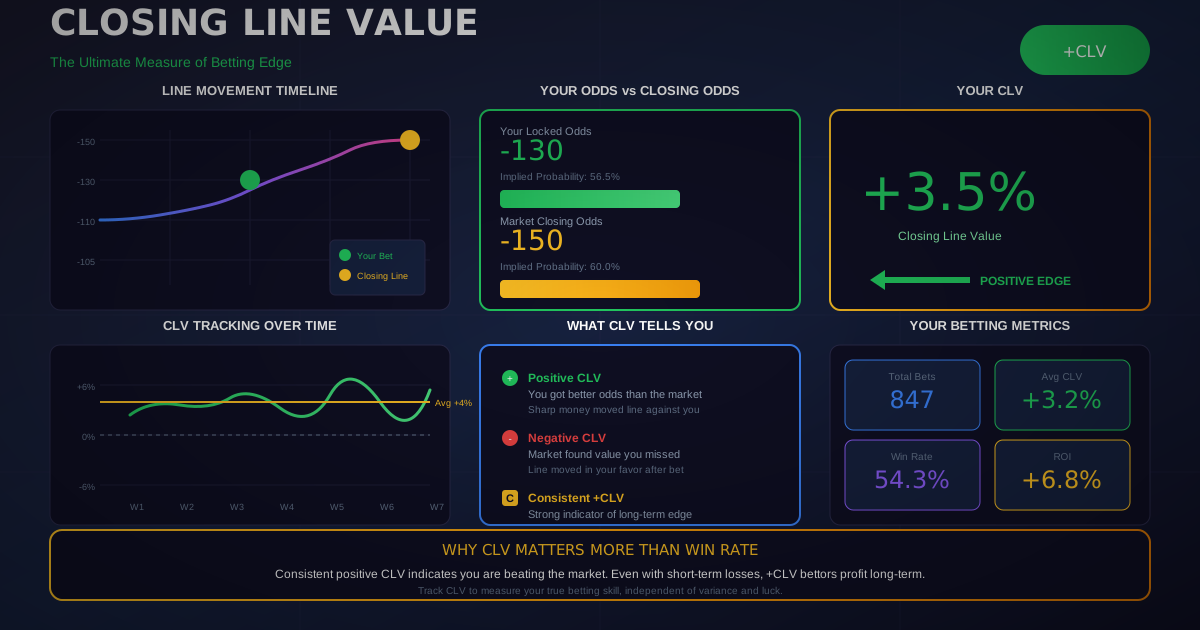
| Draft Year | First Pick | Opening Odds (Sept) | Pre-Combine Odds | Final Odds (Draft Day) | CLV |
|---|---|---|---|---|---|
| 2025 | Cam Ward | +300 | +150 | -250 | +550 |
| 2024 | Caleb Williams | -500 | -800 | -2000 | +1500 |
| 2023 | Bryce Young | +400 | -150 | -300 | +700 |
| 2022 | Travon Walker | +2500 | +800 | -200 | +2700 |
| 2021 | Trevor Lawrence | -5000 | -10000 | -50000 | Minimal |
| 2020 | Joe Burrow | +1200 | -2000 | -10000 | +11200 |
When to Bet the First Overall Pick
Timing is the most important factor in first overall pick betting. The optimal window depends on the level of consensus:
- September-October (college season early): Best value if you can identify the likely #1 pick before the market does. The 2022 draft saw Travon Walker at +2500 in September.
- Post-season (January-February): After the regular season, the pool of realistic candidates narrows. This is when most sharps make their primary bets.
- Post-Combine (March): Physical testing can cause dramatic shifts. If your pick survives the Combine without losing ground, you captured significant CLV.
- Draft week: Lines are sharpest but insider reporting is most actionable. Late-breaking rumors can still move markets.
| Timing Window | Average CLV Captured | Risk Level | Recommended Stake |
|---|---|---|---|
| September (6+ months out) | +800 to +2500 | Very High | 0.25-0.5 units |
| January-February | +300 to +800 | High | 0.5-1 unit |
| Post-Combine (March) | +100 to +400 | Moderate | 1-2 units |
| Draft Week | +50 to +150 | Low-Moderate | 1-3 units |
| Draft Day (final hours) | +0 to +50 | Low | Only if new info |
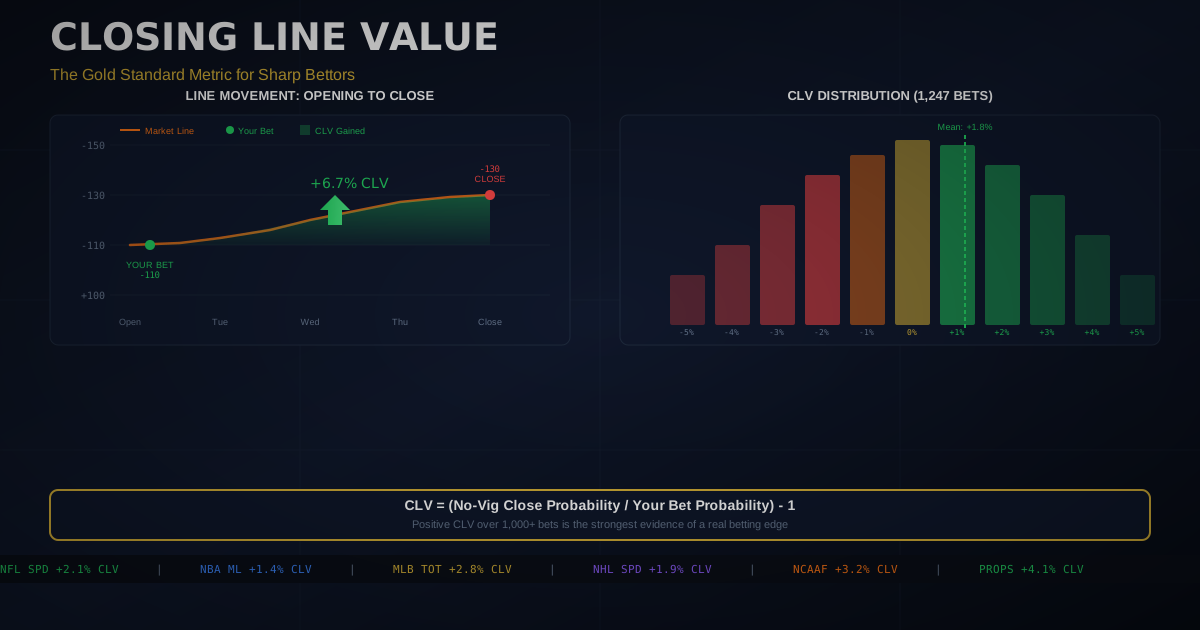
Track your draft betting CLV with our CLV Tracker.
Consensus vs. Surprise First Picks
Over the past 20 years, the pre-draft consensus first pick (the player with the shortest odds on draft day) has actually been selected first approximately 78% of the time. The 22% surprise rate means there is real risk in laying heavy juice on prohibitive favorites.
| First Pick Category | Frequency (2005-2025) | Typical Draft Day Odds |
|---|---|---|
| Consensus pick (shortest odds) | 78% | -300 to -5000 |
| Second favorite | 14% | +200 to +600 |
| Third favorite or longer | 8% | +500 to +2500 |
How Do Draft Position Over/Under Bets Work?
Draft position over/under bets allow you to wager on whether a specific player will be drafted above or below a given pick number. For example, "Player X draft position: Over/Under 12.5" means you bet whether they will be picked 1-12 (under) or 13+ (over). This is one of the most analytical draft markets and offers consistent value for bettors who do their homework.
Key Factors for Draft Position O/U
| Factor | Impact on Draft Position | How to Assess |
|---|---|---|
| Combine performance | Can move 5-15 spots | Compare to positional benchmarks |
| Pro day results | Can move 3-10 spots | Watch for above/below expectations |
| Team needs at position | Can move 5-20 spots | Map team needs to draft order |
| Mock draft consensus | Baseline for the line | Track 10+ mock drafts weekly |
| Medical flags | Can drop 10-30+ spots | Monitor injury reports closely |
| Character concerns | Can drop 5-50+ spots | Track media reports, legal issues |
| Position run (on draft night) | Can push up 3-8 spots | Analyze historical position runs |
| Pre-draft visits | Indicates specific team interest | Track visit reports (30 visit limit) |
Position O/U Historical Accuracy
| Draft Position Line Range | Over Hit Rate | Under Hit Rate | Key Insight |
|---|---|---|---|
| O/U 1.5 to 5.5 (top 5) | 44% | 56% | Under slightly favored - top talent rises |
| O/U 6.5 to 15.5 (mid-first) | 51% | 49% | Most balanced - hardest to predict |
| O/U 16.5 to 32.5 (late first) | 54% | 46% | Over slightly favored - teams trade down |
| O/U 33.5 to 64.5 (Round 2) | 57% | 43% | Over more common - draft slides happen |
| O/U 65.5+ (Round 3+) | 62% | 38% | Significant over bias in later rounds |
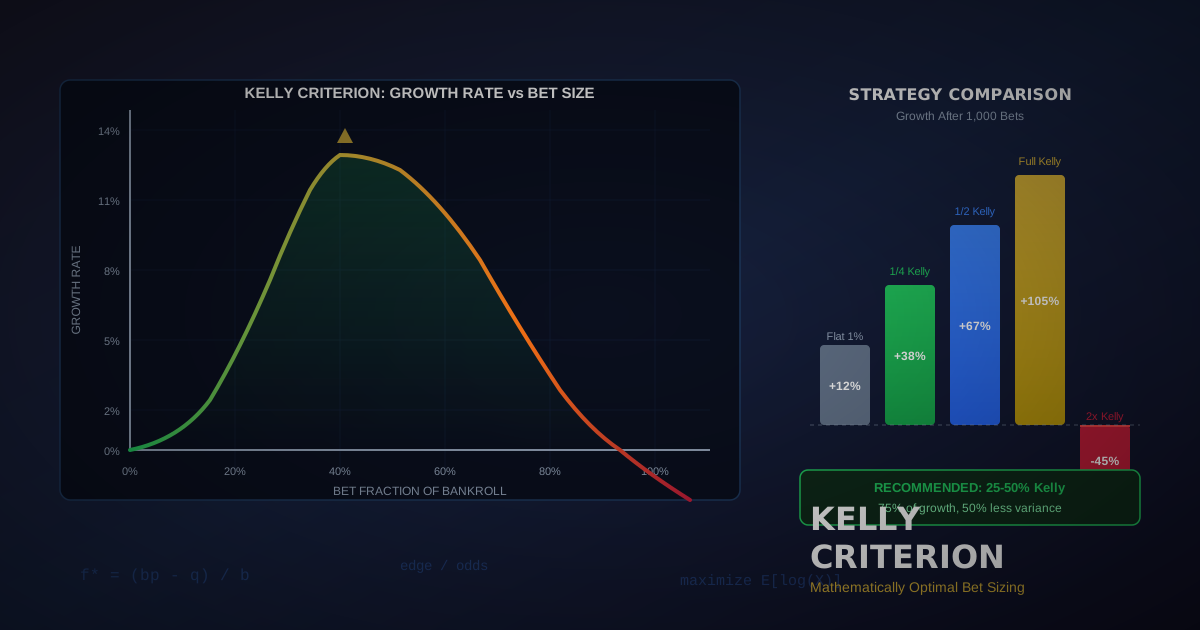
Size your draft position bets with our Kelly Criterion Calculator.
The Medical Flag Discount
Players with medical red flags (injury history, failed physicals, chronic conditions) consistently fall further than their talent suggests. Over the past decade, players with reported medical concerns at the Combine have gone over their pre-Combine draft position line at a 68% rate. This is the single most reliable draft position betting angle.
What Are Round 1 Position Totals and How Do You Bet Them?
Round 1 position totals ask how many players at a given position will be drafted in the first round. Common markets include total quarterbacks, wide receivers, offensive linemen, edge rushers, and cornerbacks selected in Round 1. These bets require understanding both the talent pool depth and historical draft tendencies.
Historical Round 1 Position Totals
| Position | 2021 | 2022 | 2023 | 2024 | 2025 | 5-Year Avg |
|---|---|---|---|---|---|---|
| Quarterbacks | 3 | 1 | 2 | 6 | 3 | 3.0 |
| Wide Receivers | 3 | 6 | 2 | 4 | 3 | 3.6 |
| Offensive Tackles | 4 | 2 | 3 | 3 | 2 | 2.8 |
| Edge Rushers | 4 | 5 | 3 | 2 | 4 | 3.6 |
| Cornerbacks | 3 | 2 | 3 | 4 | 5 | 3.4 |
| Interior DL | 2 | 3 | 2 | 1 | 3 | 2.2 |
| Linebackers | 2 | 1 | 2 | 2 | 1 | 1.6 |
| Safeties | 1 | 1 | 1 | 2 | 2 | 1.4 |
| Tight Ends | 2 | 1 | 2 | 1 | 1 | 1.4 |
| Running Backs | 1 | 0 | 1 | 0 | 1 | 0.6 |
Position Run Theory
One of the most valuable draft betting concepts is the "position run," where multiple players at the same position are drafted in quick succession. Position runs happen because teams fear missing out once one team selects at a premium position. Historically, if one quarterback is drafted in the top 10, there is a 72% chance at least one more goes in the top 20.
| Position Run Trigger | Probability of Follow-Up Pick Within 10 Spots | Probability of 3+ at Position in Round 1 |
|---|---|---|
| First QB goes top 5 | 78% | 62% |
| First WR goes top 10 | 68% | 55% |
| First OT goes top 10 | 55% | 38% |
| First Edge goes top 10 | 62% | 48% |
| First CB goes top 15 | 58% | 42% |
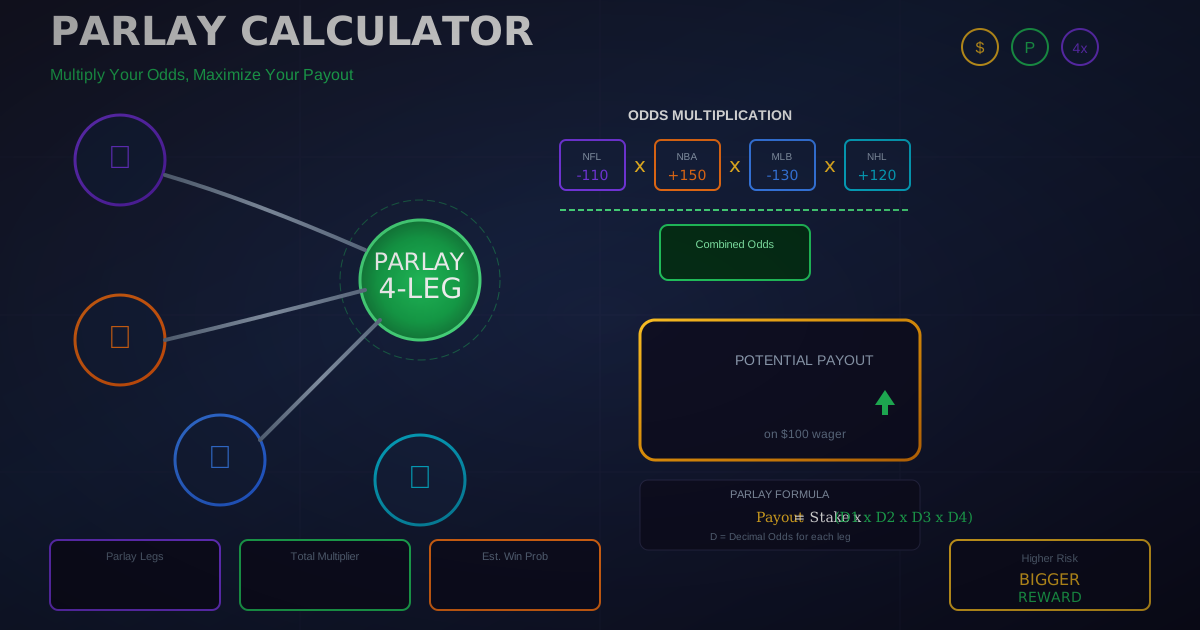
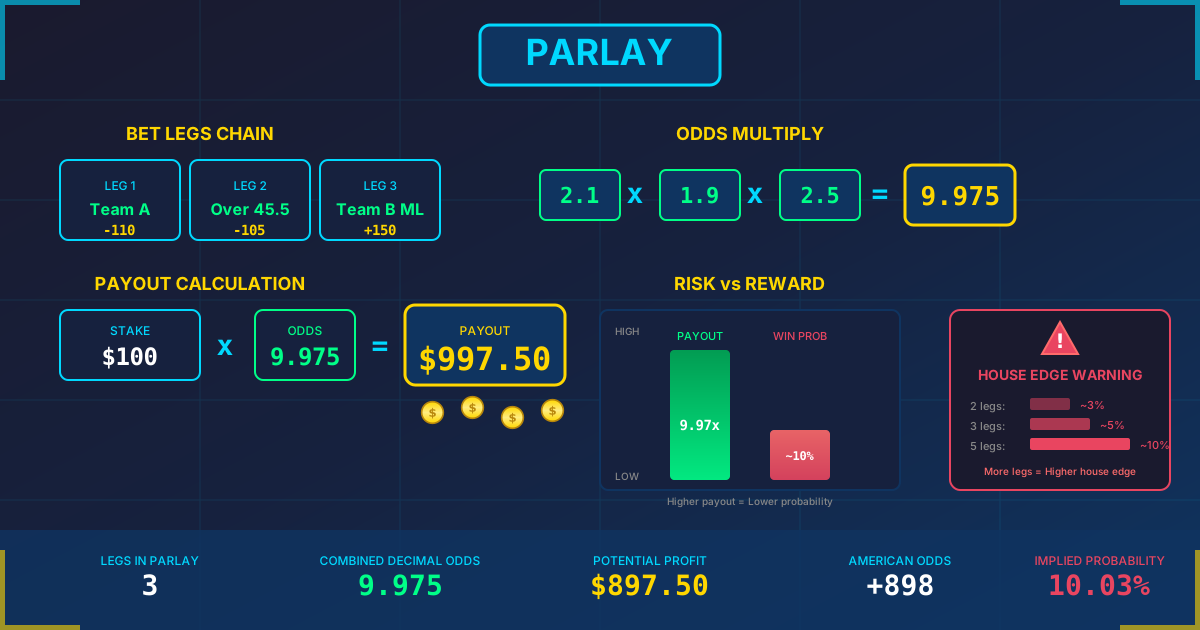
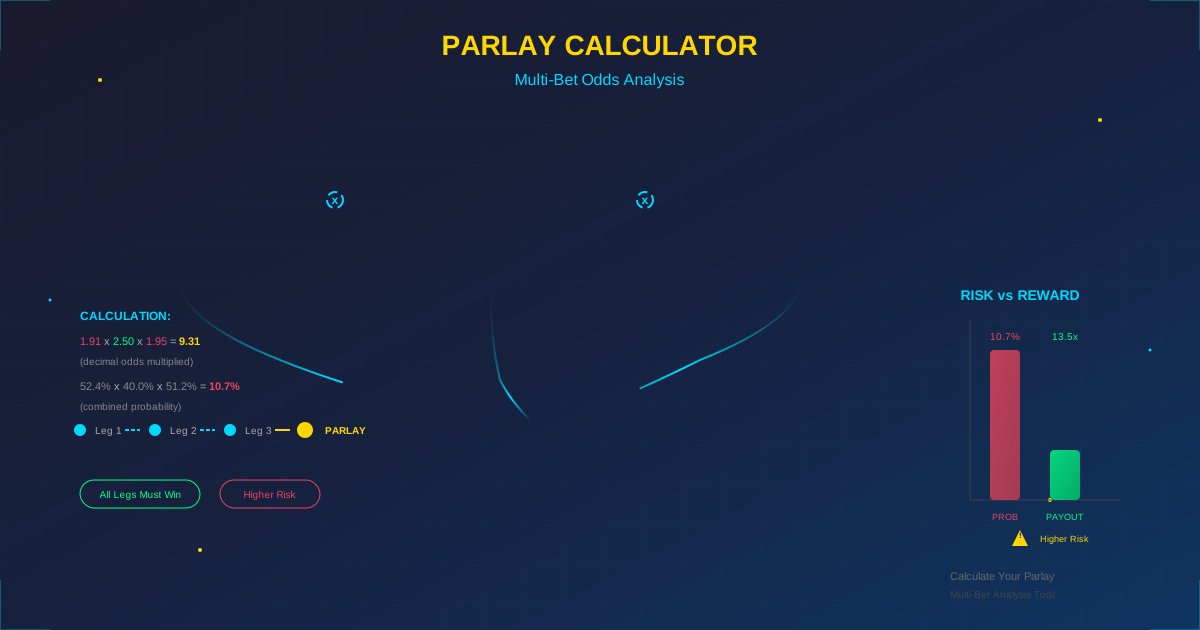
Build multi-prop draft parlays with our Parlay Calculator.
Value in QB Total Over/Unders
The quarterback total is the most heavily bet position total because QBs generate the most public interest. The over on QBs drafted in Round 1 has been profitable in draft classes with 3+ first-round-graded QBs, but unprofitable in weak classes. The key is assessing the depth of the QB class early and getting the over before the line adjusts upward as draft hype builds.
How Do You Use Mock Drafts for Betting?
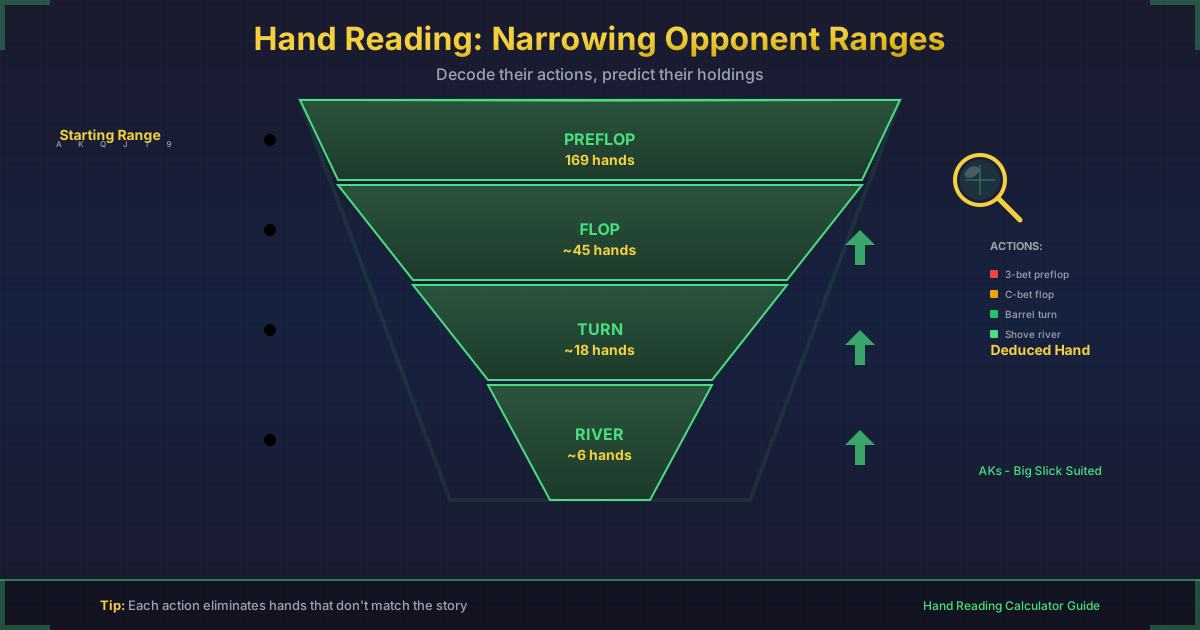
Mock drafts are the primary research tool for NFL Draft bettors, but not all mocks are created equal. Understanding which mock drafters have the best track records, how consensus builds, and when to trust or fade the mock draft consensus is essential for profitable draft betting.
Mock Draft Accuracy by Source
| Mock Draft Source | Avg Pick Accuracy (top 10) | Avg Pick Accuracy (11-32) | Best Used For |
|---|---|---|---|
| NFL Network Insiders (Jeremiah, Zierlein) | 62% within 3 spots | 38% within 5 spots | Team need analysis |
| ESPN (McShay, Miller) | 58% within 3 spots | 35% within 5 spots | Consensus building |
| The Athletic (Brugler, Dane) | 65% within 3 spots | 42% within 5 spots | Most analytically rigorous |
| Community/Aggregator (PFF, TDN) | 55% within 3 spots | 32% within 5 spots | Volume-based consensus |
| Betting market consensus | 71% within 3 spots | 44% within 5 spots | Most accurate overall |
How to Build a Mock Draft Consensus
The most effective approach for draft betting research is to aggregate multiple mock drafts into a consensus ranking. Here is a step-by-step method:
- Collect 15-20 mock drafts from reputable sources within the same 7-day window
- Calculate average draft position (ADP) for each player across all mocks
- Track ADP movement weekly to identify rising and falling prospects
- Compare ADP to sportsbook lines to find discrepancies
- Weight insider mocks more heavily as draft day approaches (final 2 weeks)
| ADP Range | Sportsbook Line Discrepancy | Action |
|---|---|---|
| ADP 3+ spots below O/U line | Strong Over signal | Bet Over (player expected to fall) |
| ADP 1-2 spots below O/U line | Mild Over signal | Monitor for confirmation |
| ADP matches O/U line | No edge | Pass |
| ADP 1-2 spots above O/U line | Mild Under signal | Monitor for confirmation |
| ADP 3+ spots above O/U line | Strong Under signal | Bet Under (player expected to rise) |
Calculate the expected value of ADP-based draft bets with our Expected Value Calculator.
When Mock Drafts Are Wrong
Mock drafts are least reliable in these scenarios:
- Strong draft class at one position: Mock drafters often cluster too many players at one position in the first round when 1-2 will slide
- Post-Combine risers: Players who test exceptionally well at the Combine often rise 5-10 spots above their mock consensus, and mocks are slow to adjust
- Late-breaking trades: Mock drafts cannot predict draft-night trades, which affect 30-40% of first-round picks
- Character concerns: Mock drafters tend to ignore or underweight character red flags that teams take very seriously
How Important Is Insider Information for Draft Betting?
Insider information plays a larger role in NFL Draft betting than in almost any other sports betting market. Because draft decisions are made by small groups of executives rather than determined by athletic competition, leaks and reporting from connected journalists can move markets dramatically.
Types of Insider Information
| Information Type | Reliability | Market Impact | Legal to Use for Betting |
|---|---|---|---|
| Reporter picks (Schefter, Rapoport) | Very High (final 48 hrs) | Major (5-20% probability shift) | Yes |
| Team visit reports | Moderate | Moderate (2-5% shift) | Yes |
| Private workout reports | Moderate-High | Moderate (3-8% shift) | Yes |
| GM/Coach press conference hints | Low-Moderate | Minor (1-3% shift) | Yes |
| Draft board leaks (rare) | Extremely High | Massive (20-50% shift) | Gray area |
| Agent chatter/social media | Variable | Minor to Moderate | Yes |
Following the Right Reporters
Not all NFL reporters are equally connected or accurate when it comes to draft-specific reporting. Track their historical accuracy and weight their information accordingly.
| Reporter | Draft Pick Accuracy (top 10) | Specialty | When Most Useful |
|---|---|---|---|
| Adam Schefter (ESPN) | 78% (final 24 hrs) | Breaking news, trades | Draft day |
| Ian Rapoport (NFL Network) | 72% (final 24 hrs) | Team decisions | Final 48 hours |
| Daniel Jeremiah (NFL Network) | 65% (overall mock accuracy) | Talent evaluation | Pre-draft month |
| Matt Miller (ESPN) | 62% (overall mock accuracy) | Analytical approach | Pre-Combine |
| Jordan Reid (ESPN) | 68% (Round 1 accuracy) | Mock draft specifics | Final 2 weeks |
Track how insider information moves your closing line value with our CLV Tracker.
The Information Cascade
Draft betting markets experience information cascades where a single credible report can cause odds to collapse. When Schefter tweets that a team "loves" a particular prospect, the first overall pick market can shift 20-30% in implied probability within minutes. Bettors who follow these reporters in real-time and can place bets quickly capture significant value, but the window is often 5-15 minutes before lines adjust.
What Are the Best Draft Night Betting Strategies?
Draft night itself offers unique betting opportunities because information flows rapidly, trades create chaos, and sportsbooks cannot adjust fast enough. The most profitable draft bettors have a pre-draft plan, monitor multiple information sources, and execute quickly when edges appear.
Pre-Draft Preparation Checklist
| Preparation Step | Purpose | Timeline |
|---|---|---|
| Map team needs (all 32 teams) | Identify which teams need which positions | 2-4 weeks before draft |
| Build consensus ADP rankings | Baseline for identifying value | Update weekly, finalize day before |
| Identify 5-8 key prop bets | Focus your attention on highest-edge markets | 1 week before draft |
| Open accounts at 4+ sportsbooks | Access to best odds and fastest execution | 2+ weeks before draft |
| Fund accounts pre-draft | No delays when you need to bet fast | Day before draft |
| Set up reporter notification alerts | Real-time insider information | Day before draft |
| Prepare a trade scenario matrix | Predict which trades create which value | 1 week before draft |
Live Draft Night Strategies
| Strategy | When to Execute | Expected Edge |
|---|---|---|
| Fade the first surprise pick | When a surprise selection happens, bet the "under" on the next expected player at that position (they will now rise) | 3-5% EV |
| Trade cascade bets | After the first trade, bet "yes" on additional trades (trades beget trades) | 2-4% EV |
| Position run anticipation | After 2 players at one position go in quick succession, bet the over on total first-round players at that position | 4-8% EV |
| Green room slide | If a projected top-10 player slides past pick 10, bet their position O/U over (the slide often continues) | 5-10% EV |
| Bet the board after a QB | After a QB is selected, the next 2-3 picks typically feature non-QBs at premium positions. Bet the under on those players' position lines | 2-5% EV |
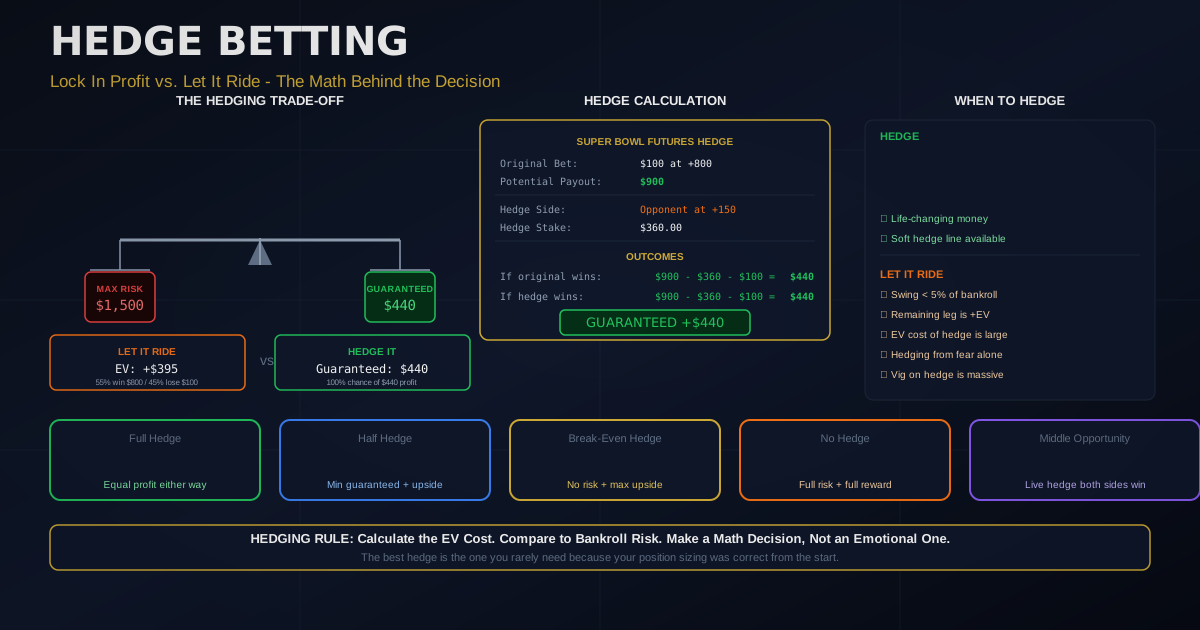
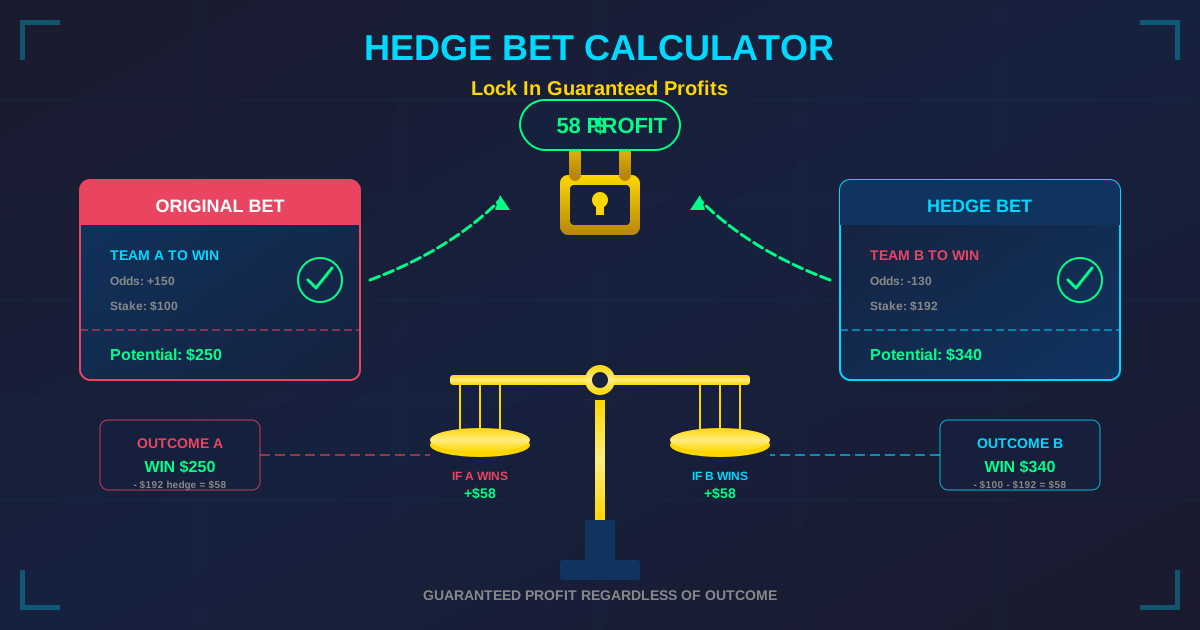
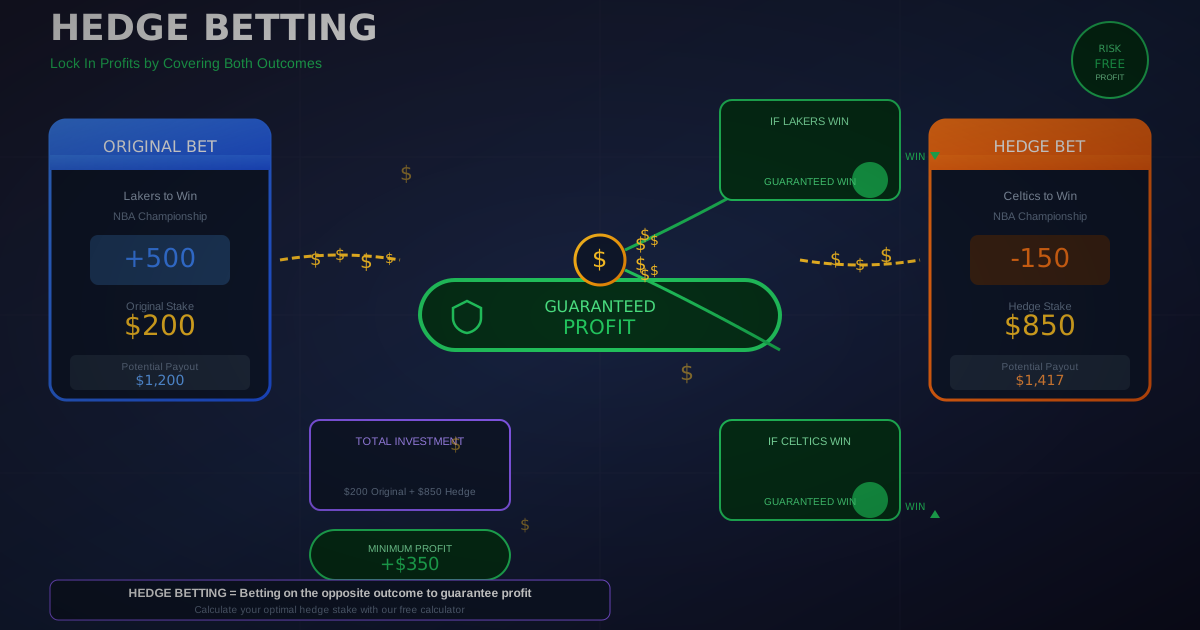
Hedge your draft night bets as picks are announced with our Hedge Calculator.
Managing Multiple Bets on Draft Night
Draft night betting often involves placing 10-20 bets across a 3-4 hour window. Proper bankroll management during this high-intensity period is critical:
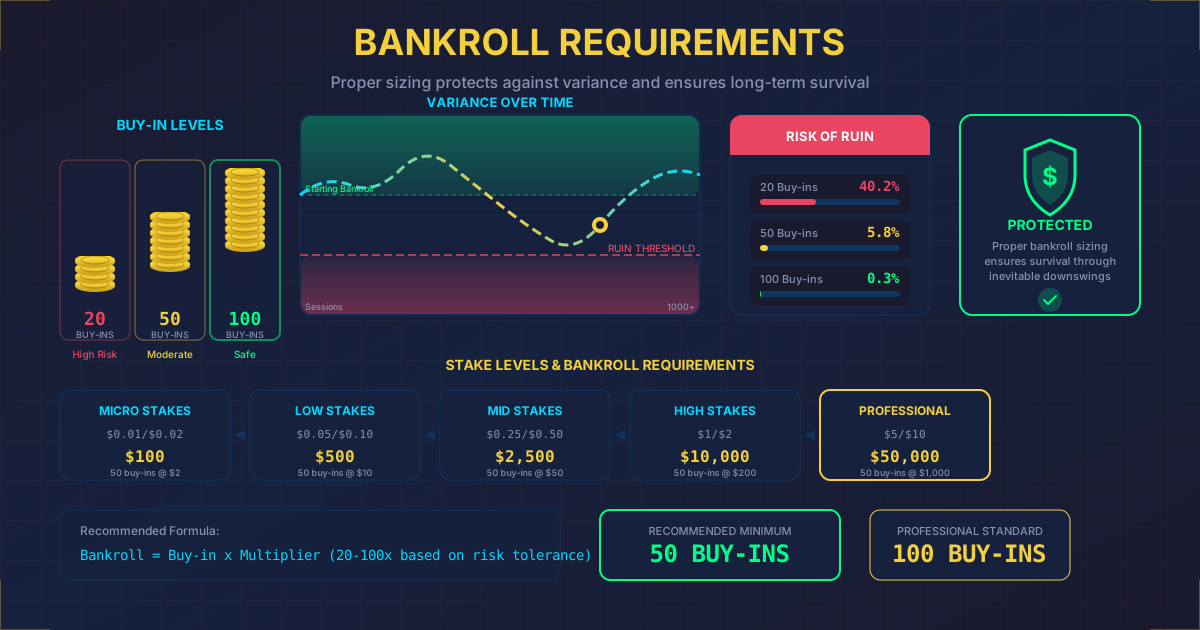
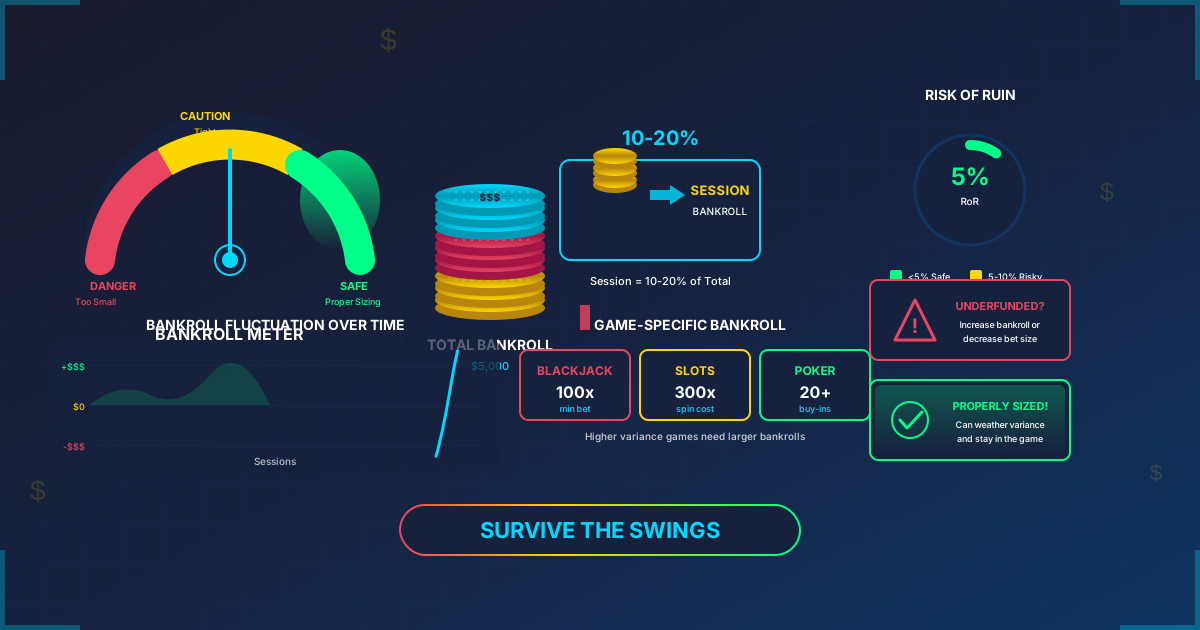
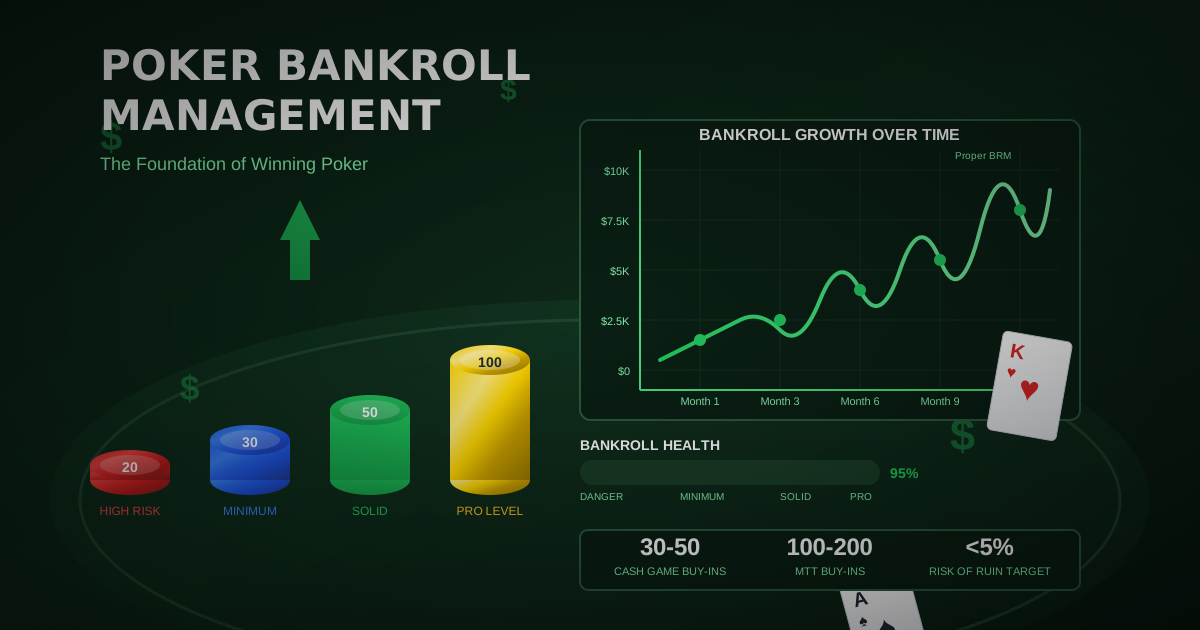
- Pre-allocate your draft night bankroll: Set aside a specific amount (typically 5-10% of your total sports betting bankroll) for all draft bets combined
- Size bets by confidence: Use a 1-3 unit scale where 3 units represents your highest conviction plays
- Track your exposure in real-time: Correlated bets (e.g., multiple props on the same player) increase risk faster than independent bets
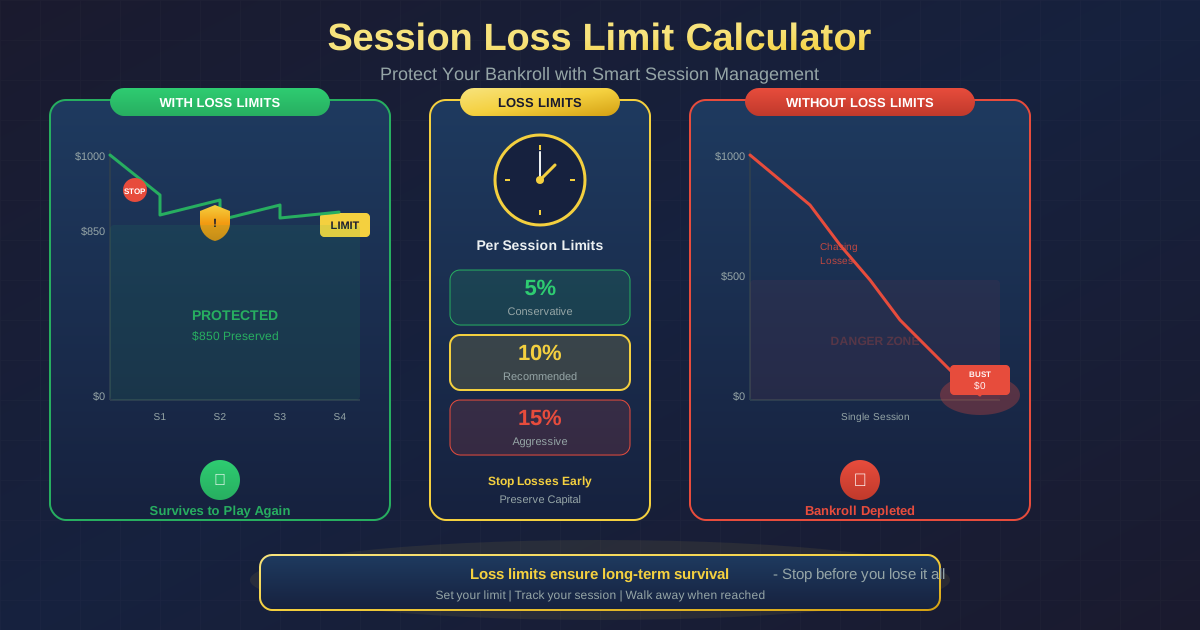
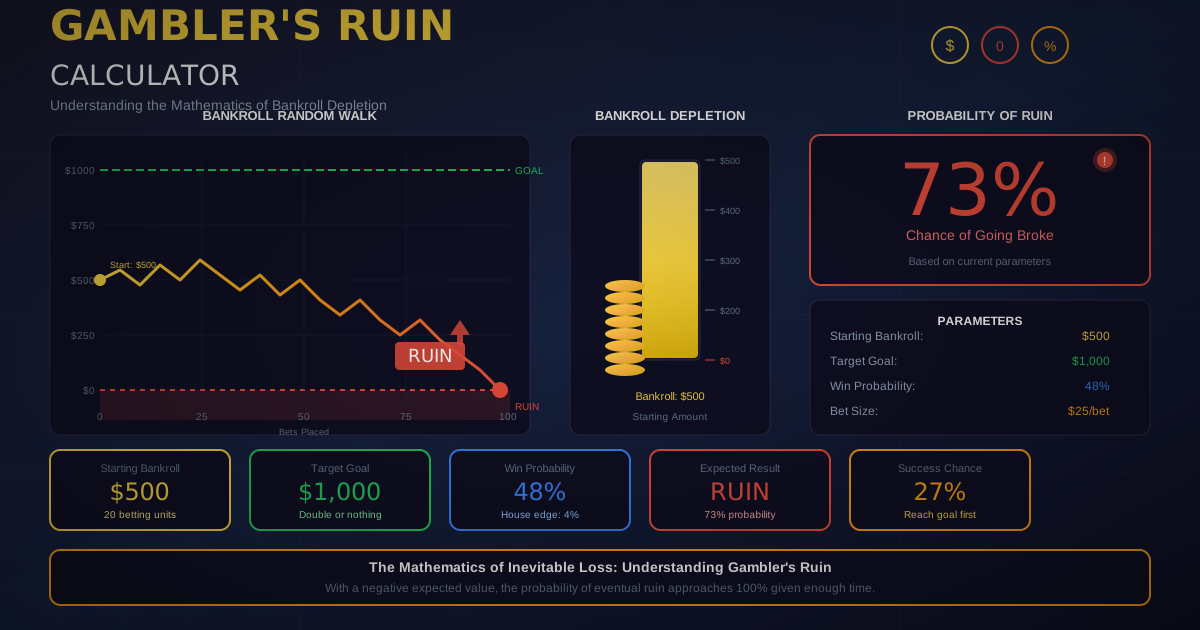
- Set a stop-loss: If you lose 50% of your draft night bankroll, stop betting and watch the rest of the draft
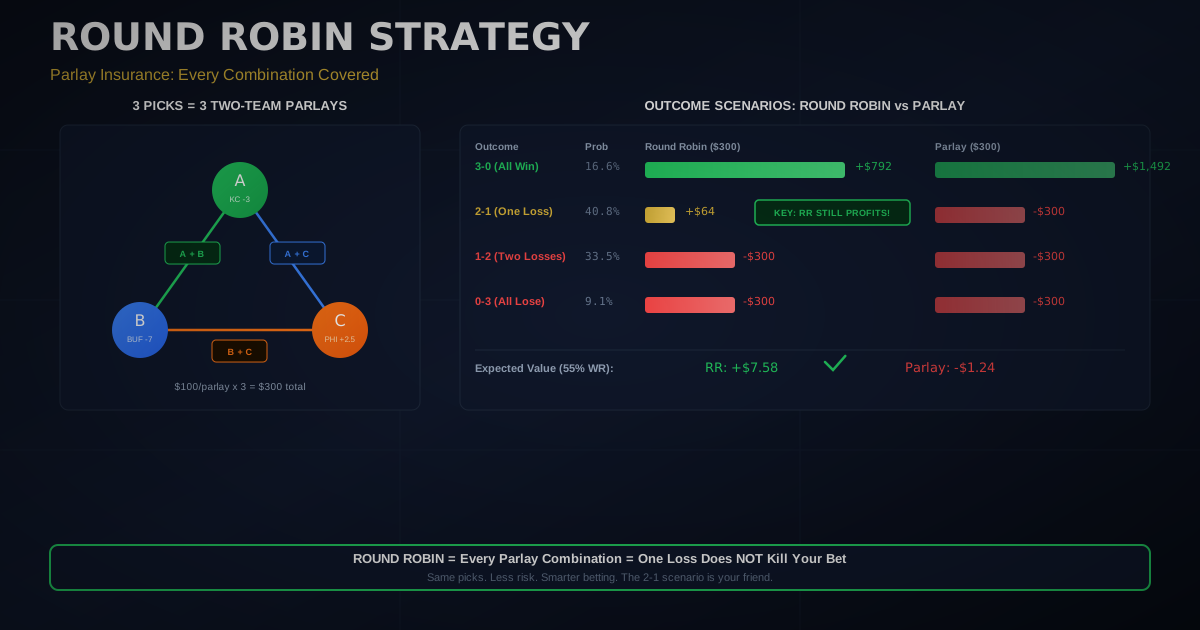
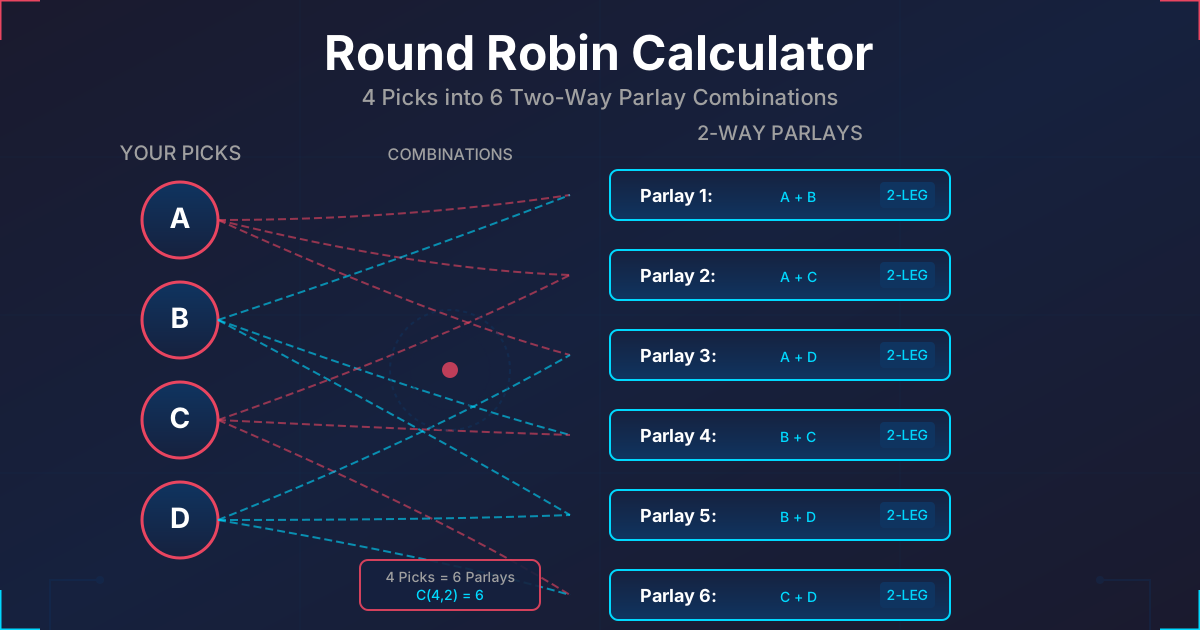
Calculate your round-robin combinations for draft props with our Round Robin Calculator.
What Historical Draft Betting Trends Should You Know?
Historical draft data reveals consistent patterns that repeat year after year. These trends provide a statistical foundation for your draft betting strategy and help identify recurring edges.
Positional Draft Trends (2015-2025)
| Trend | Frequency | Betting Implication |
|---|---|---|
| QB goes first overall | 73% (8 of 11 drafts) | Lean QB for first pick unless clear edge rusher |
| At least 2 QBs in top 10 | 64% | Over on top-10 QB total in strong classes |
| WR is first non-QB/OT drafted | 45% | Edge rusher just as likely (42%) |
| At least 1 trade in top 5 | 82% | Strong lean on "trade in top 5: Yes" |
| 5+ offensive players in top 10 | 68% | Offensive bias in top 10 is real |
| A player from SEC goes #1 | 55% | SEC dominates top picks |
| Heisman winner goes top 5 | 64% | Not guaranteed but strong lean |
| First-round pick from non-Power 5 | 91% | Almost always at least one |
Conference Draft Performance
| Conference | Avg First Round Picks (2020-2025) | Top 10 Picks Per Year | First Overall Picks (Last 10) |
|---|---|---|---|
| SEC | 8.2 | 3.4 | 5 |
| Big Ten | 5.8 | 2.1 | 2 |
| ACC | 3.4 | 1.2 | 2 |
| Big 12 | 2.8 | 0.8 | 0 |
| Pac-12/Big 12 expanded | 3.1 | 1.1 | 1 |
| Other (Group of 5, independents) | 2.5 | 0.6 | 0 |
Build conference-based draft props with our Parlay Calculator.
The Combine Effect on Draft Position
The NFL Combine has a measurable, predictable effect on draft position betting. Players who test significantly above expectations at the Combine move up an average of 8.4 spots in mock drafts over the following two weeks, while players who test below expectations drop an average of 5.2 spots.
| Combine Performance | Average Draft Position Movement | Bet Timing |
|---|---|---|
| 40-yard dash 0.1+ sec faster than expected | +7.2 spots (rises) | Bet under immediately after Combine |
| Vertical jump 3+ inches above positional average | +4.8 spots | Bet under within 48 hours |
| Bench press 5+ reps above average | +2.1 spots | Minor impact, usually not enough |
| 40-yard dash 0.1+ sec slower | -6.8 spots (falls) | Bet over immediately |
| Injury at Combine (cannot complete) | -8.5 spots on average | Bet over if medical concern confirmed |
How Do You Bet NFL Draft Futures (Season-Long)?
Beyond draft night props, the NFL Draft creates opportunities for season-long futures bets tied to drafted players. Markets like Offensive Rookie of the Year, Defensive Rookie of the Year, and team win totals are all significantly affected by draft results.
Rookie of the Year Drafting Strategy
| Historical OROY Trend | Frequency | Betting Angle |
|---|---|---|
| First overall pick wins OROY | 36% | Strong but not dominant |
| Top 5 pick wins OROY | 68% | Focus on top 5 selections |
| QB wins OROY | 55% | QB bias in voting |
| Position: QB, WR, or RB | 91% | Almost always a skill position |
| Player from team with 7+ wins | 82% | Team success matters for stats |
| Best rookie by PFF grade | 45% | Narrative matters more than stats |
Team Win Total Impact
Draft picks can cause team win totals to shift 0.5-2 wins based on the perceived impact of the selection. This creates pre-draft and post-draft value:
- Pre-draft: If you believe a team will draft a franchise QB, bet their win total over before the draft when the line does not yet account for the pick
- Post-draft: After an unexpected pick (or unexpected trade), team win totals take 24-48 hours to fully adjust. The fastest bettors capture the most value
| Draft Scenario | Avg Win Total Movement | Value Window |
|---|---|---|
| Team drafts franchise QB (top 3) | +1.5 to +2.5 wins | 12-48 hours post-pick |
| Team trades up for premium pass rusher | +0.5 to +1.0 wins | 24-72 hours post-trade |
| Star player drafted by weak team | +0.5 to +1.5 wins | 12-48 hours post-pick |
| Team trades down (accumulates picks) | -0.5 to +0.5 wins | Often no immediate impact |
| Surprise pick (perceived reach) | -0.5 to -1.0 wins | 6-24 hours post-pick |
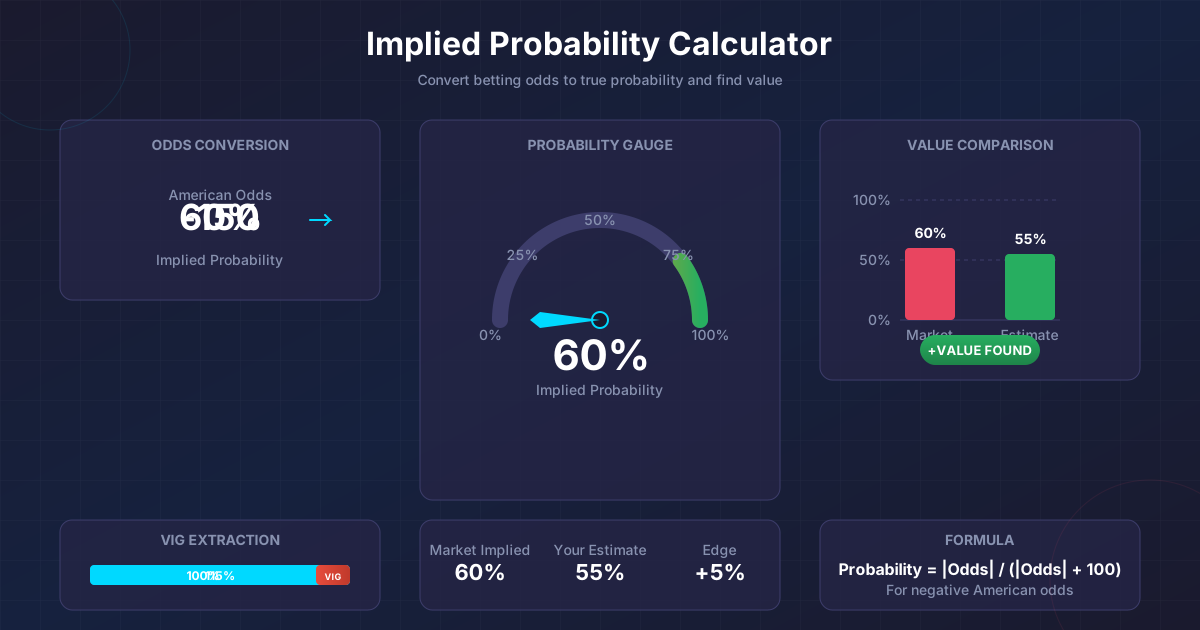
Calculate the implied probability of team futures with our Implied Probability Calculator.
What Are the Biggest Mistakes Draft Bettors Make?
Draft betting attracts a massive amount of casual money, and the most common mistakes are predictable and avoidable. Understanding these errors will save you significant money and improve your hit rate.
Common Draft Betting Errors
| Mistake | How It Hurts | How to Avoid |
|---|---|---|
| Betting too early on thin info | Locking in positions before Combine/Pro Days | Wait for physical testing data before committing big |
| Following one mock draft | Over-reliance on a single analyst's opinion | Aggregate 15-20 mocks for consensus |
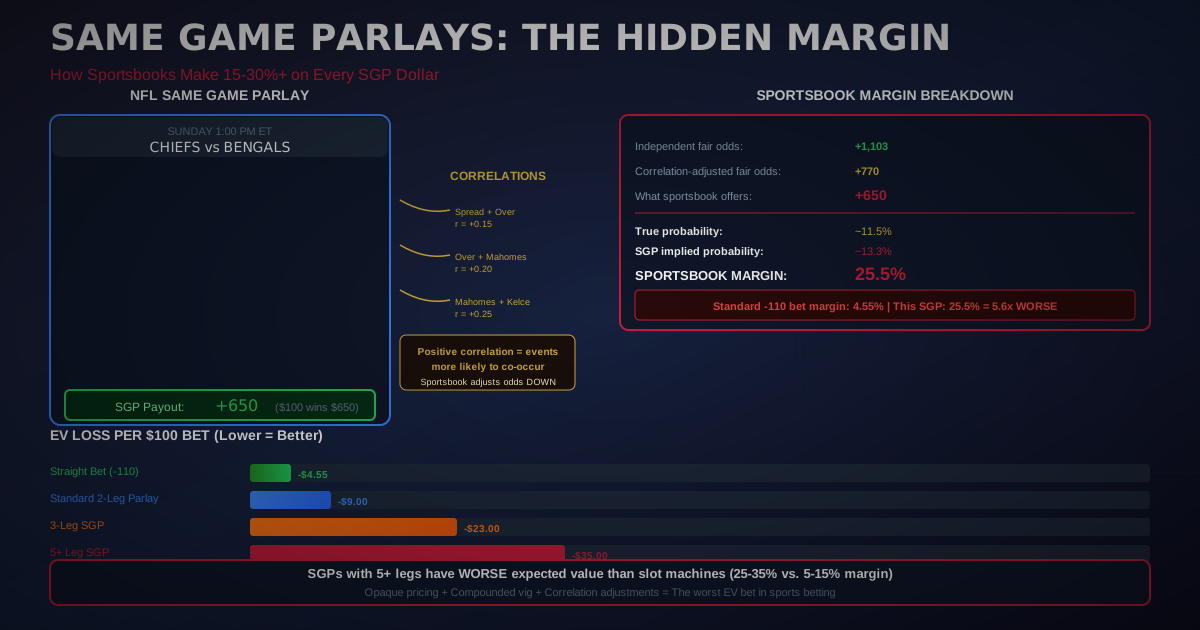
| Ignoring vig on exotic props | Suit color and handshake bets carry 25-40% vig | Only bet exotic props for entertainment, not profit |
| Betting prohibitive favorites | Laying -500 or more on "obvious" picks | The 22% surprise rate makes heavy favorites -EV |
| Not line shopping | Accepting the first odds you see | Draft prop odds vary significantly across books |
| Emotional hometown betting | Betting your team drafts the player you want | Separate fandom from analysis |
| Over-betting draft night | Placing too many correlated bets | Pre-set a draft night bankroll and stick to it |
| Ignoring trade scenarios | Not accounting for trade-up/trade-down | Map realistic trade scenarios before draft |
The Vig Trap on Draft Props
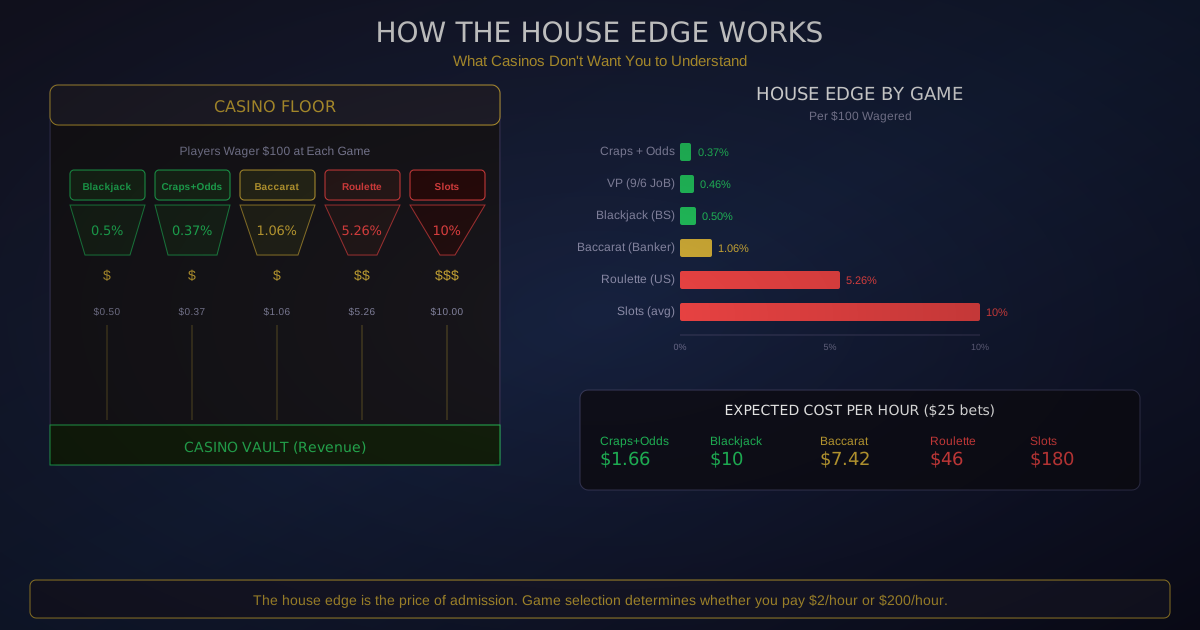
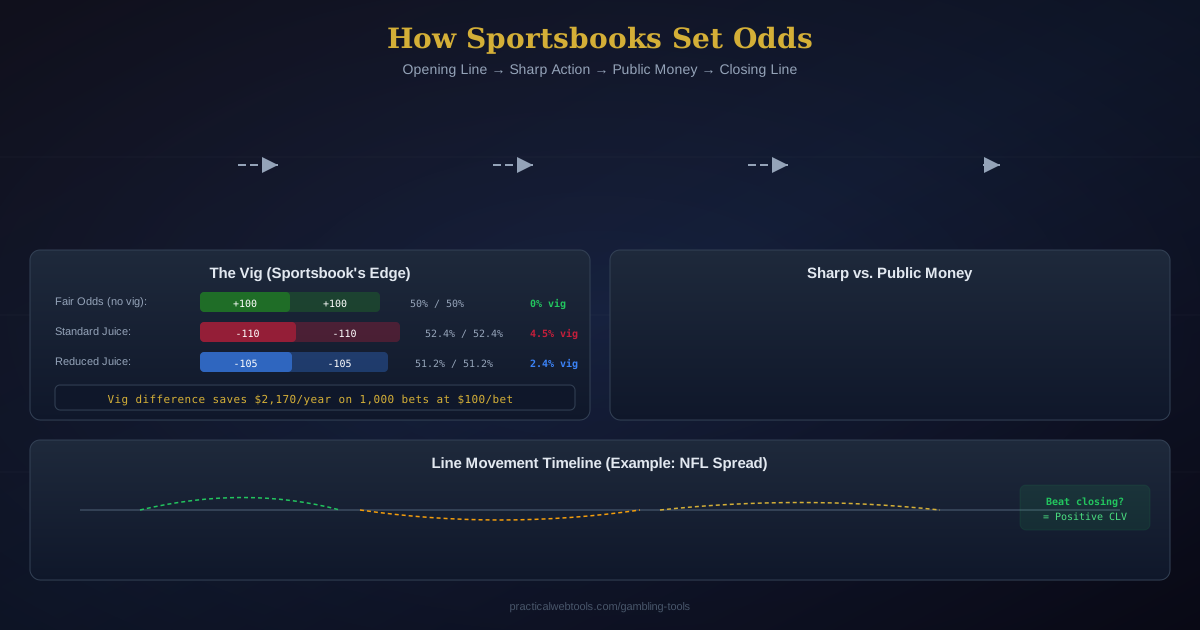
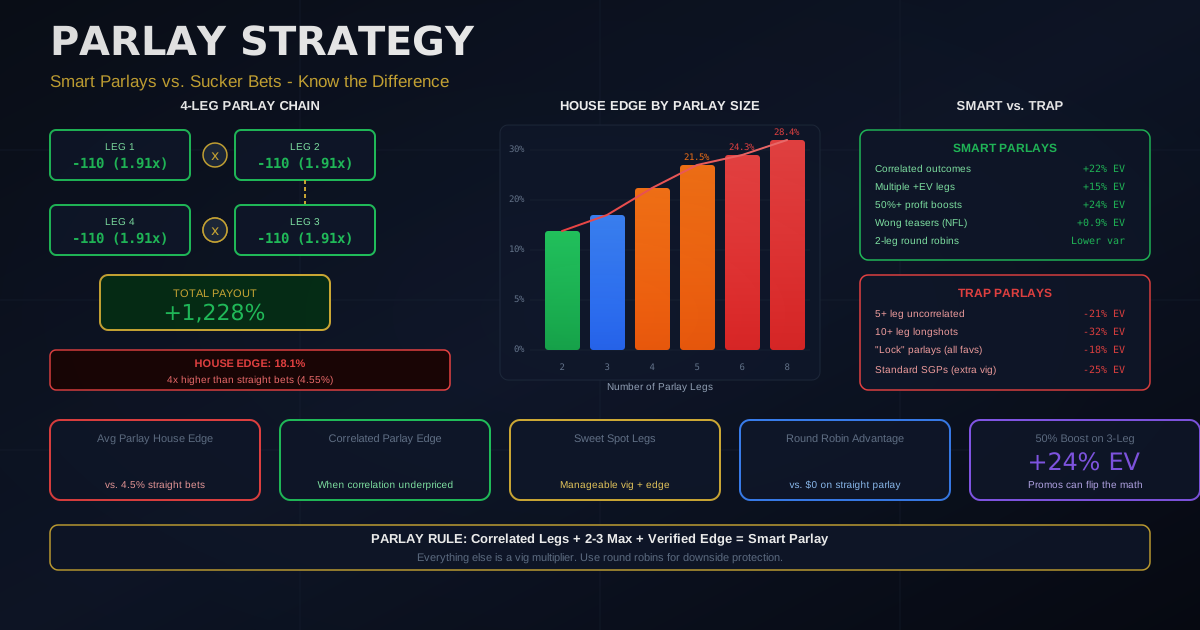
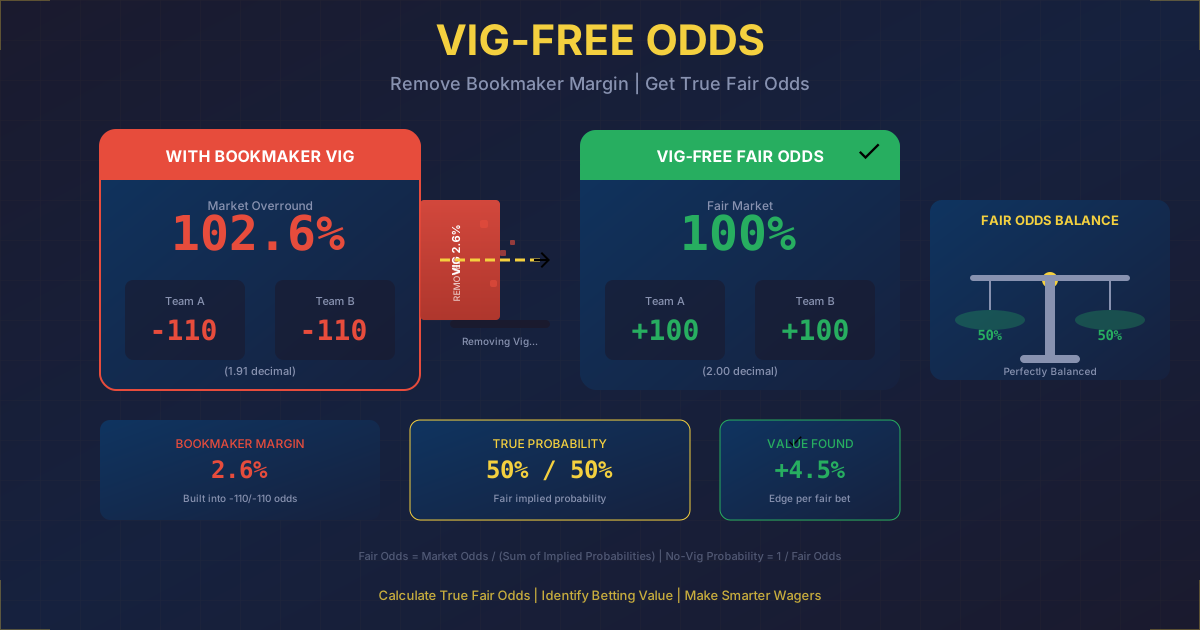
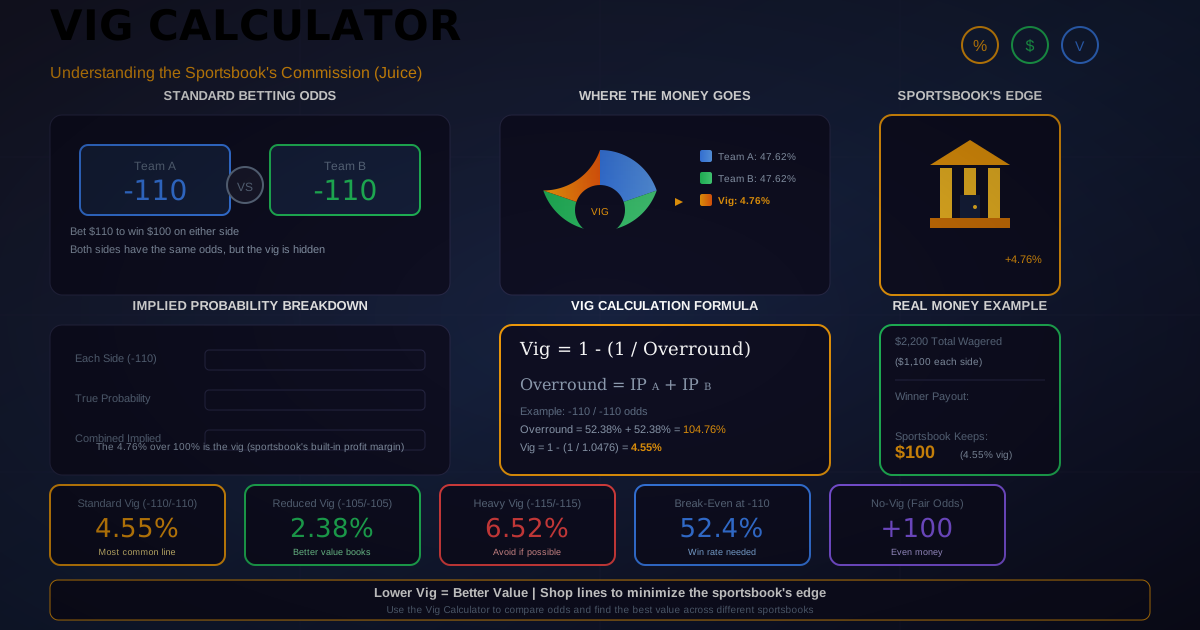
Draft props carry significantly higher vig than standard sports betting markets because the events are one-time occurrences with no opportunity for volume-based edge capture. The average vig on draft props is approximately 12-18%, compared to 4-5% on NFL game spreads.
| Market Type | Average Vig | Break-Even Win Rate | Recommended Approach |
|---|---|---|---|
| First Overall Pick (2-way) | 5-10% | 52-55% | Most efficient draft market |
| Draft Position O/U | 5-10% | 52-55% | Second most efficient |
| Head-to-Head Position | 5-10% | 52-55% | Good value if you have an edge |
| Position Drafted First | 10-18% | 55-59% | Only bet with strong conviction |
| Round 1 Totals | 8-15% | 54-58% | Moderate efficiency |
| Exotic Props (suits, etc.) | 25-40% | 63-70% | Entertainment only |
Calculate the vig on any draft prop with our Hold/Vig Calculator.
How Do You Build a Complete Draft Betting Portfolio?
The most successful draft bettors do not rely on a single bet; they build a portfolio of 5-15 uncorrelated or lightly correlated positions that collectively offer positive expected value. This portfolio approach smooths out the high variance inherent in one-time event betting.
Sample Draft Betting Portfolio
| Bet | Stake | Odds | Rationale | Correlation Group |
|---|---|---|---|---|
| Player A first overall | 2 units | +150 | Strong insider signals | Group 1 (First Pick) |
| Player B draft position under 8.5 | 1.5 units | -120 | ADP consensus at 5.2 | Group 2 (Player B) |
| Total QBs Round 1 over 2.5 | 1 unit | +110 | Deep QB class | Group 3 (QB class) |
| First WR drafted: Player C | 1 unit | +175 | Best WR by talent grade | Group 4 (WR position) |
| Trade in top 5: Yes | 1 unit | -140 | 82% historical rate | Group 5 (Trades) |
| Player D position O/U over 15.5 | 1 unit | -110 | Medical flag, ADP at 18 | Group 6 (Player D) |
| First SEC player: under 1.5 | 0.5 units | +130 | Top 2 QBs both SEC | Group 7 (Conference) |
| Total offensive players top 10: over 5.5 | 1 unit | -105 | 68% historical rate | Group 8 (Offense/Defense) |
Portfolio Risk Management
| Portfolio Metric | Target | Why |
|---|---|---|
| Total stake | 8-12 units | 5-10% of sports bankroll |
| Correlation groups | 5-8 independent groups | Diversifies risk |
| Average odds | +100 to +200 | Balanced risk/reward |
| Max single bet | 2-3 units | No single bet dominates |
| Expected ROI | 5-15% | Realistic for well-researched portfolio |
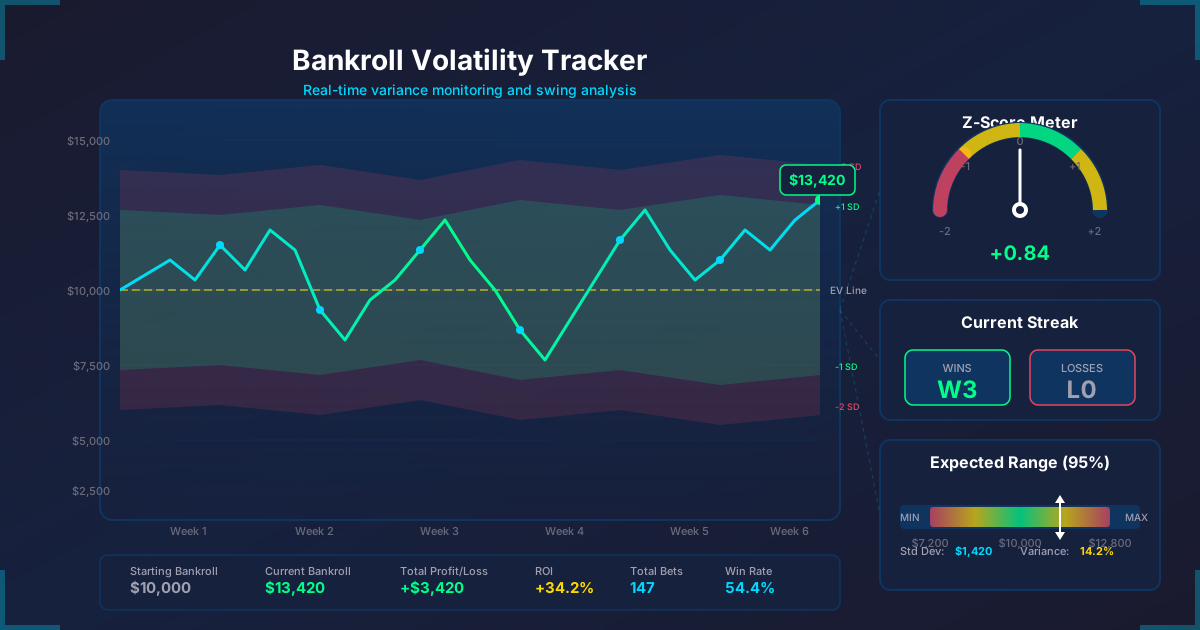
Track your draft portfolio with our Bankroll Volatility Tracker.
Using If-Bets for Draft Sequences
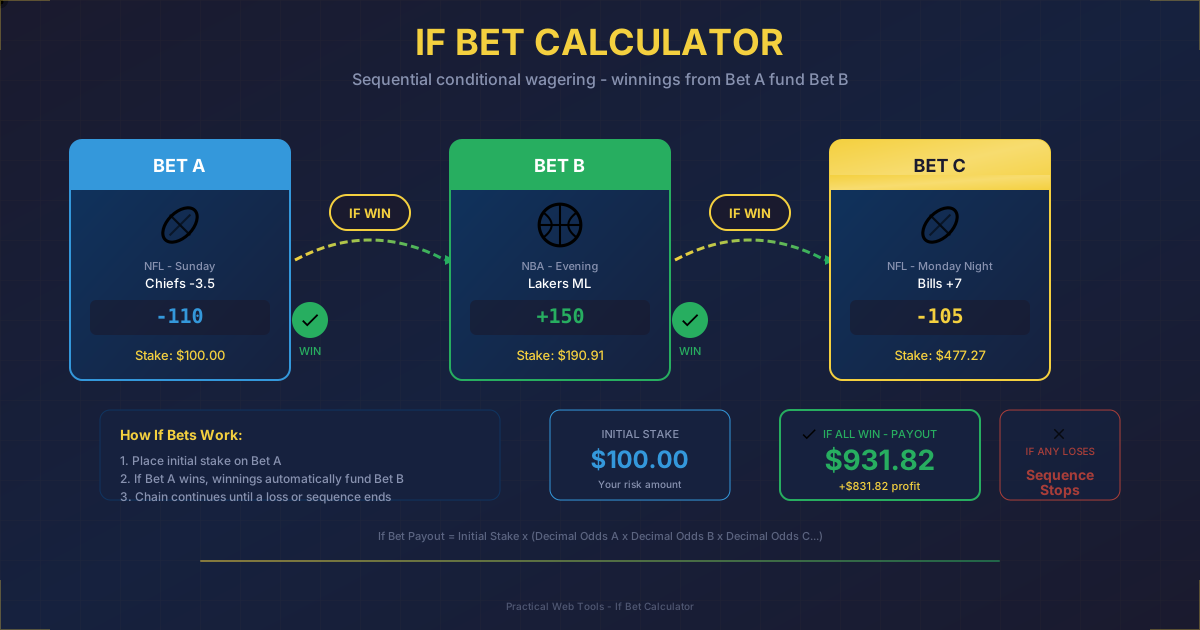
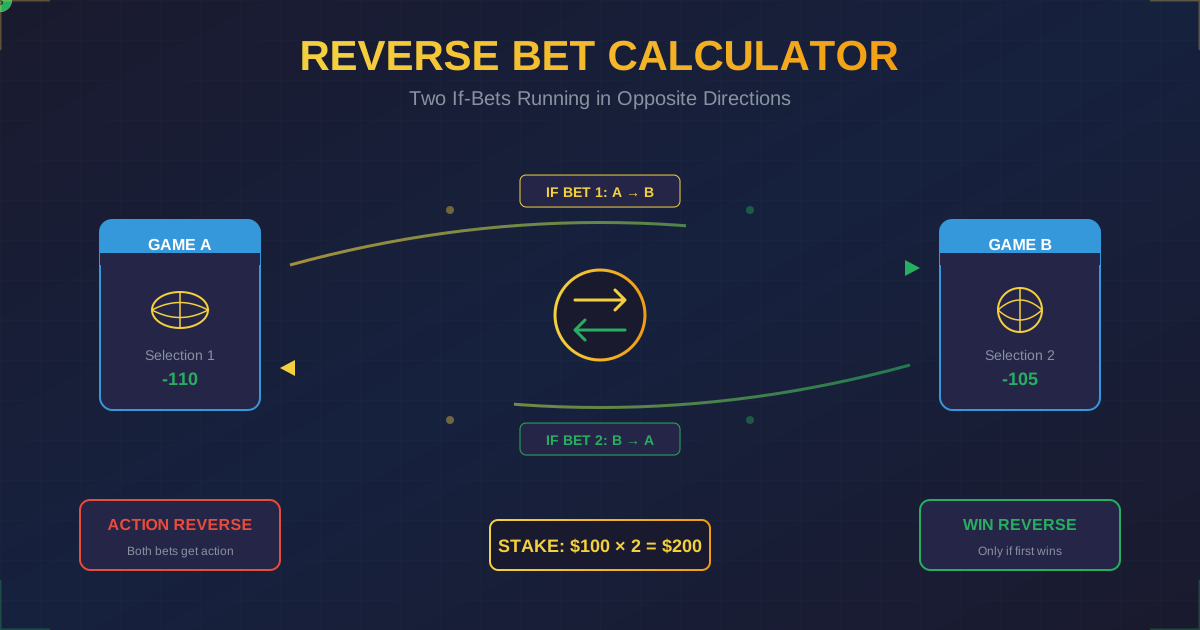
If-bets are particularly useful for draft betting because draft picks occur sequentially. An if-bet places a second wager only if the first one wins. For example, you might place an if-bet that triggers a "total QBs over 3.5" bet only if "first QB goes in top 5" wins.
Calculate your if-bet payouts with our If Bet Calculator.
Frequently Asked Questions
When should I place my NFL Draft bets? The optimal timing depends on the bet type. For first overall pick, bet early (September-January) when you have a strong conviction and odds are longest. For draft position over/unders, wait until after the NFL Combine (late February/March) when physical testing data narrows the range. For draft night props, bet as close to the draft as possible when insider information is most actionable.
Are NFL Draft props profitable? Draft props can be profitable for informed bettors who specialize in draft analysis, but the higher vig (8-18% on most props vs. 4-5% on game bets) means you need a larger edge to overcome the house advantage. The most profitable markets are first overall pick, draft position over/unders, and head-to-head position bets, which have the lowest vig.
How accurate are mock drafts for betting? Individual mock drafts are only moderately accurate (55-65% within 3 spots for the top 10), but a consensus of 15-20 mock drafts is significantly more accurate (70-75% within 3 spots). The betting market consensus is the most accurate predictor at 71% within 3 spots for the top 10.
Should I bet on exotic draft props like suit color? Exotic props (suit color, handshake duration, commissioner booing) carry extremely high vig (25-40%) and should be treated as entertainment, not serious wagering. The expected value on these bets is deeply negative. If you bet them, use minimal stakes (0.1-0.25 units) for fun.
How do trades affect draft betting? Trades create both risk and opportunity. A trade into the top 5 can invalidate pre-draft analysis but also creates value on subsequent picks as teams scramble. Historically, 82% of drafts include at least one trade in the top 5, so always account for trade scenarios in your analysis. Draft-night trade activity is one of the best live-betting opportunities.
What is the best first overall pick betting strategy? The optimal strategy is to identify 2-3 realistic first overall pick candidates early in the process, bet each at their longest available odds (typically September-January), and hedge as the draft approaches if one candidate becomes the consensus choice. This portfolio approach captures maximum CLV while managing risk.
How many draft bets should I place? Most professional draft bettors place 8-15 total bets across the draft, with 5-8 core positions and 3-7 lower-confidence supplemental bets. Total draft night exposure should not exceed 5-10% of your sports betting bankroll.
Do Combine results really matter for draft betting? Yes, significantly. Players who test 0.1+ seconds faster than expected in the 40-yard dash move up an average of 7.2 spots in subsequent mock drafts. Conversely, poor Combine performances or medical issues can cause 5-10 spot drops. The 48-hour window after the Combine is one of the most actionable periods for draft position bets.
Related Tools
Maximize your NFL Draft betting edge with these free tools:
- Odds Converter - Convert draft prop odds between American, decimal, and fractional formats
- Expected Value Calculator - Calculate the EV of any draft prop or position bet
- Kelly Criterion Calculator - Size your draft bets optimally based on edge and bankroll
- Parlay Calculator - Calculate multi-prop draft parlays and correlated payouts
- Hedge Calculator - Lock in profits on draft futures as the event approaches
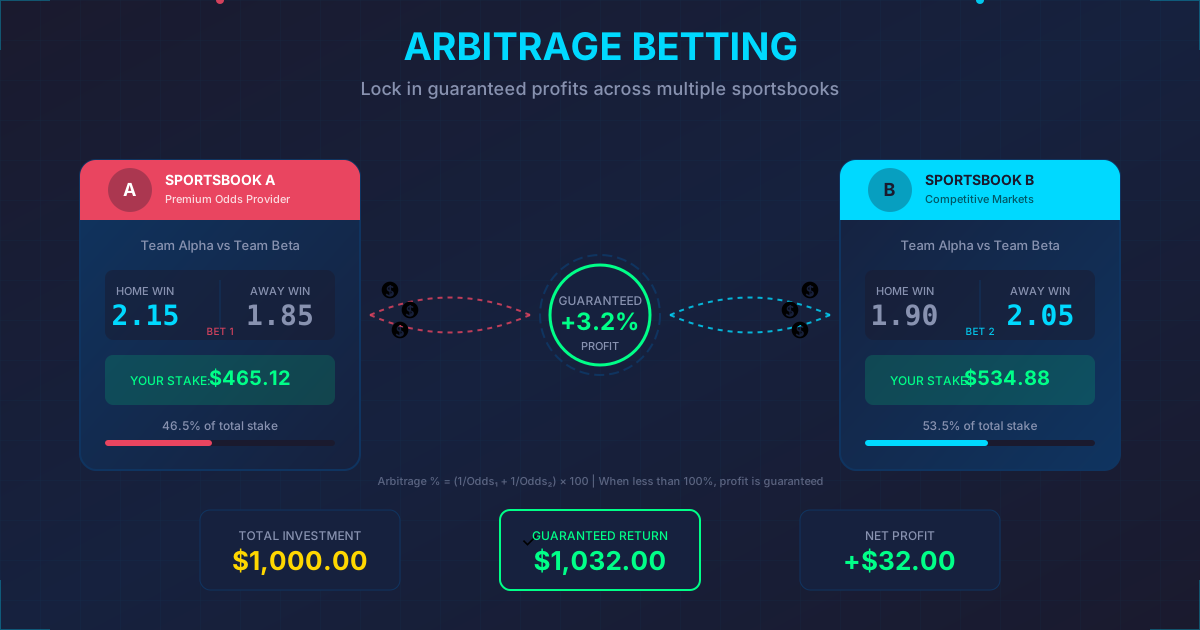
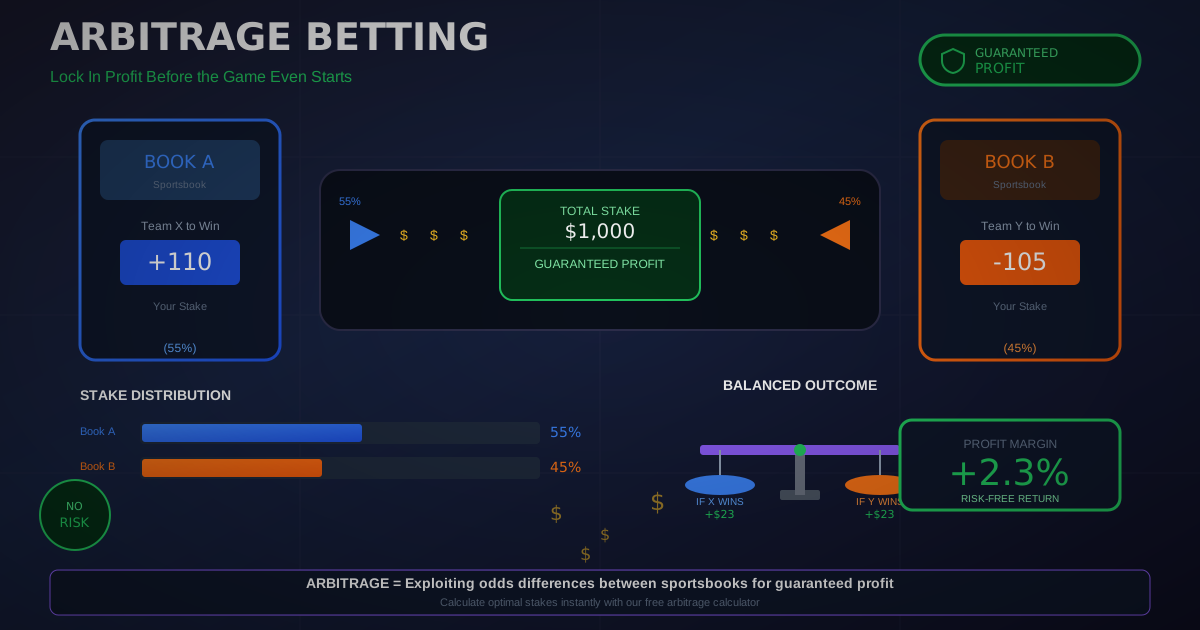
- Arbitrage Calculator - Find cross-book arbitrage on draft props
- Bankroll Volatility Tracker - Monitor your draft night bankroll swings in real-time
- Implied Probability Calculator - Convert draft odds to implied probabilities for value assessment
- CLV Tracker - Measure your closing line value on draft positions and props
- Hold/Vig Calculator - Calculate the vig on any draft prop market
- Round Robin Calculator - Build round-robin combinations from your draft prop portfolio
- If Bet Calculator - Calculate sequential if-bet payouts for draft night sequences
How Do Conference and School Trends Affect Draft Betting?
The college conference and school a prospect comes from has a measurable impact on draft position. SEC dominance has been the defining trend of the past decade, and understanding conference-level patterns helps you price draft position props more accurately.
Conference Draft Capital (2020-2025)
| Conference | Total Picks (Rounds 1-3) | First Round Picks/Year | Top 5 Picks/Year | Avg Highest Pick |
|---|---|---|---|---|
| SEC | 142 | 8.2 | 3.4 | #2.1 |
| Big Ten | 98 | 5.8 | 2.1 | #5.4 |
| ACC | 62 | 3.4 | 1.2 | #7.8 |
| Big 12 | 48 | 2.8 | 0.8 | #11.2 |
| Pac-12/Big 12 expanded | 55 | 3.1 | 1.1 | #8.5 |
| Group of 5 + Independents | 44 | 2.5 | 0.6 | #14.3 |
School-Specific Draft Production
Certain schools consistently produce first-round talent, and oddsmakers sometimes undervalue prospects from these programs because they assume "factory" programs inflate individual talent. In reality, top programs develop talent effectively, and their prospects translate at a slightly higher rate.
| School | First Round Picks (2018-2025) | Top 10 Rate | Bust Rate (out of league in 3 years) |
|---|---|---|---|
| Alabama | 18 | 56% | 11% |
| Ohio State | 16 | 50% | 13% |
| LSU | 14 | 43% | 15% |
| Georgia | 13 | 46% | 12% |
| Clemson | 11 | 45% | 18% |
| Michigan | 9 | 33% | 14% |
| USC | 8 | 38% | 20% |
| Oregon | 7 | 29% | 16% |
Group of 5 Draft Sleepers
Group of 5 (non-Power conference) prospects who test well at the Combine are among the most undervalued draft prospects. Their pre-Combine draft position line tends to be set too high (lower draft pick), and they disproportionately go "under" their line after strong physical testing.
| Group of 5 Combine Trend | Frequency | Position O/U Impact |
|---|---|---|
| G5 player runs sub-4.40 40-yard | 15-20 per Combine | Under hits at 72% |
| G5 QB invited to Combine | 3-5 per year | Under hits at 58% |
| G5 edge rusher with 30+ bench reps | 5-8 per Combine | Under hits at 65% |
Calculate the EV of betting Group of 5 draft sleepers with our Expected Value Calculator.
What Role Do Pre-Draft Visits Play in Betting?
NFL teams are limited to 30 official pre-draft visits, making each visit a strong signal of genuine interest. Tracking visit reports provides actionable intelligence for draft position betting that most recreational bettors overlook entirely.
Pre-Draft Visit Analysis
| Visit Indicator | What It Means | Draft Position Implication |
|---|---|---|
| Top-10 team visits prospect | Strong interest from early picker | Under their position O/U line |
| Multiple teams in same range visit prospect | Position run likely for that player type | Competition pushes them under |
| No reported visits from teams in drafting range | Either flying under the radar or team has concerns | Over their position O/U line |
| Private workout after Combine | Team wants deeper evaluation | Significant interest, lean under |
| Medical recheck visit | Team concerned about injury history | Could go either way, volatility increases |
| 3+ teams from picks 20-32 visit same player | Late first-round target confirmed | Position O/U should be 24-30 range |
Visit Tracking Tools and Sources
| Source | Reliability | Timing | How to Use |
|---|---|---|---|
| Team beat reporters | High for their specific team | March-April | Track visits for your target team's picks |
| NFL Network insider reports | Moderate-High | April (final 2 weeks) | Cross-reference with other sources |
| Prospect social media | Variable | Real-time | Sometimes reveals visit locations |
| Agent leaks | High but rare | Final week | Most actionable intel |
| Top 30 visit databases (community-built) | Moderate (aggregated) | Updated weekly | Best for comprehensive view |
Build if-bets based on pre-draft visit intelligence with our If Bet Calculator.
NFL Draft betting is one of the most intellectually rewarding forms of sports wagering. Unlike game outcomes determined by athletic performance, the draft rewards research, information gathering, and strategic timing. The key is combining mock draft analysis, insider reporting, historical trends, and disciplined bankroll management into a coherent approach. Start with a small portfolio of well-researched bets, track your results, and refine your process each year.
Ready to analyze your first draft prop? Try our Expected Value Calculator to find positive EV draft bets.
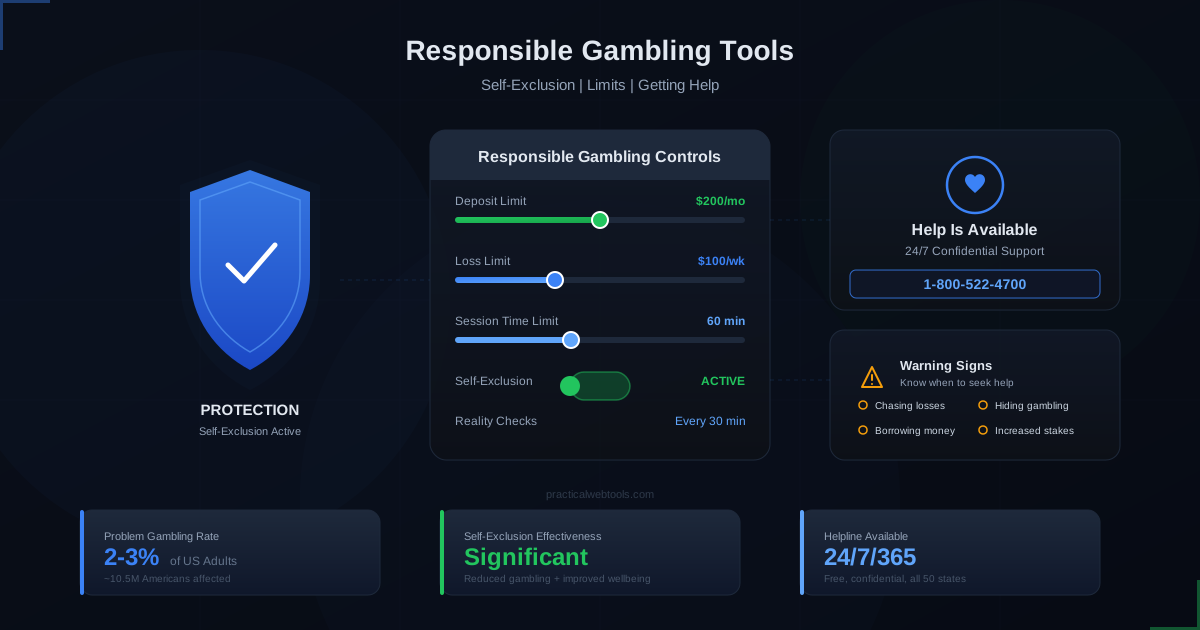
Gambling involves risk and should be approached as entertainment, not as a source of income. Always bet within your means, set strict bankroll limits, and never chase losses. If you or someone you know has a gambling problem, contact the National Council on Problem Gambling at 1-800-522-4700 or visit ncpgambling.org. Must be 21+ to gamble in most US jurisdictions. Please play responsibly.