Correlated Parlays: How to Find Bets That Move Together for Better Payouts (2026)
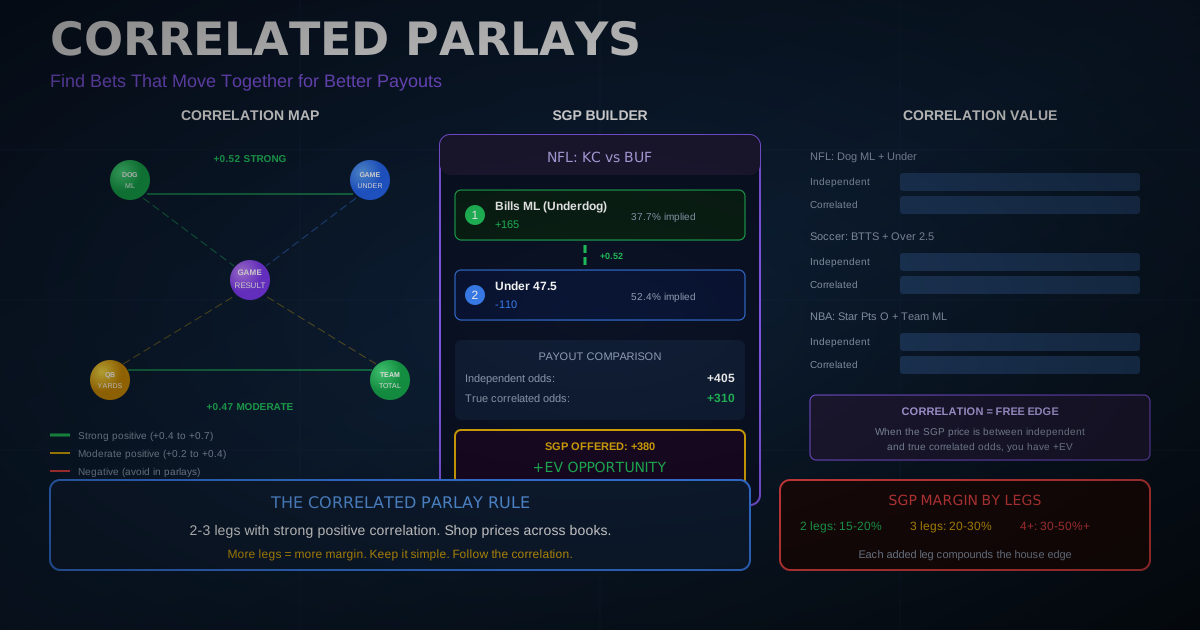
A standard two-leg parlay pays roughly +260, but a two-leg correlated parlay involving an underdog moneyline and the game going under should pay significantly more -- because those outcomes are statistically linked. When a heavy underdog wins an NFL game outright, the final score is almost always low. Sportsbooks know this, and the way they price same-game parlays (SGPs) is the most important -- and most misunderstood -- area of modern sports betting.
Correlated parlays combine bets whose outcomes are not independent. In a standard parlay, the sportsbook assumes each leg has no bearing on the other: the result of an NBA game in Miami has no relationship with an NHL game in Toronto. But within a single game, outcomes are deeply connected. If a quarterback throws for 350+ yards, his team is more likely to win. If the total goes over, the favorite is more likely to cover. These relationships create correlation, and when you combine correlated legs into a parlay, the true odds are better than the sportsbook's calculated payout suggests.
The same-game parlay market has exploded since 2020, with SGP handle growing over 400% at major US sportsbooks between 2021 and 2025. DraftKings reported that SGPs accounted for nearly 25% of all sports betting handle in 2025. This massive growth has been a windfall for sportsbooks -- because the margins on SGPs are significantly higher than on straight bets.
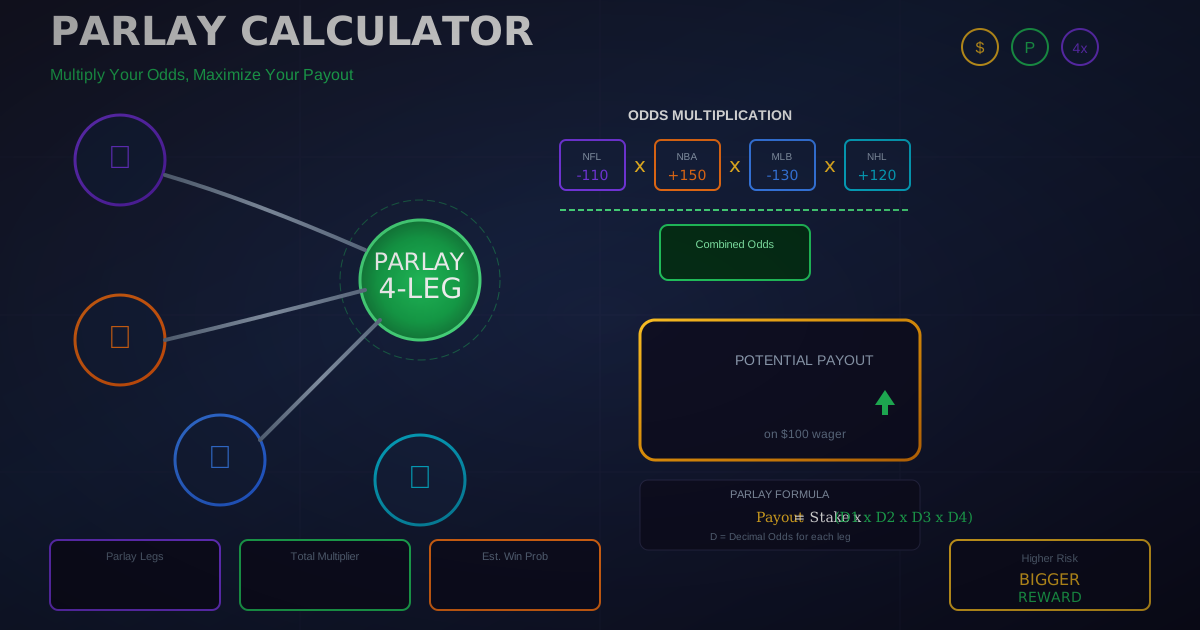
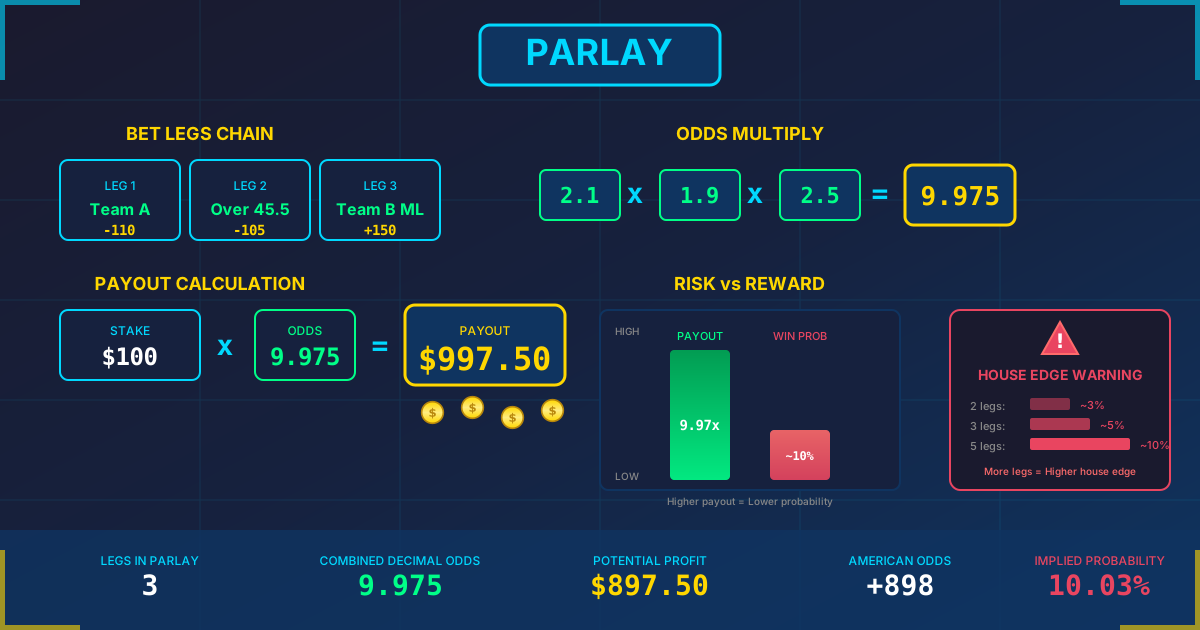
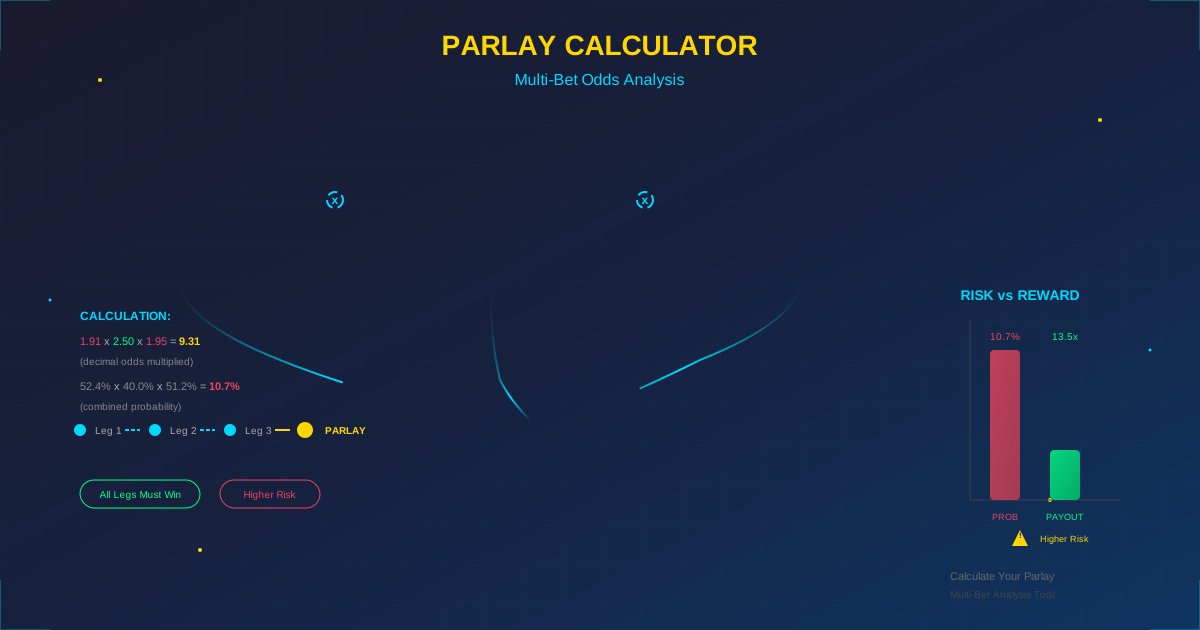
Calculate the true payout for any parlay combination with our free Parlay Calculator.
What Is Correlation in Sports Betting?
Correlation in sports betting measures how strongly two betting outcomes are linked. When two outcomes tend to happen together more often than chance would predict, they are positively correlated. When one outcome makes the other less likely, they are negatively correlated.
Positive correlation: Both outcomes tend to occur together. Example: A team winning by 14+ points AND the game going over the total.
Negative correlation: One outcome makes the other less likely. Example: A team winning by 14+ points AND the game going under the total. (Blowouts often involve late garbage-time scoring that pushes totals over, but very defensive blowouts exist too -- the correlation is context-dependent.)
Zero correlation (independence): The outcomes have no relationship. Example: The result of a Monday Night Football game and the result of a Tuesday Champions League match.
Measuring Correlation: The Basics
| Correlation Coefficient | Interpretation | Example |
|---|---|---|
| +0.8 to +1.0 | Very strong positive | QB rushing yards + team rushing TDs in designed QB-run offense |
| +0.4 to +0.7 | Moderate positive | Underdog ML + Under total in NFL |
| +0.1 to +0.3 | Weak positive | Star WR receiving yards + team total points |
| -0.1 to +0.1 | No meaningful correlation | Two unrelated events |
| -0.1 to -0.3 | Weak negative | Favorite spread -7 + Under 38.5 in some contexts |
| -0.4 to -0.7 | Moderate negative | Team total over + opponent total over (one team dominating) |
| -0.8 to -1.0 | Very strong negative | Team A moneyline + Team B moneyline (same game) |
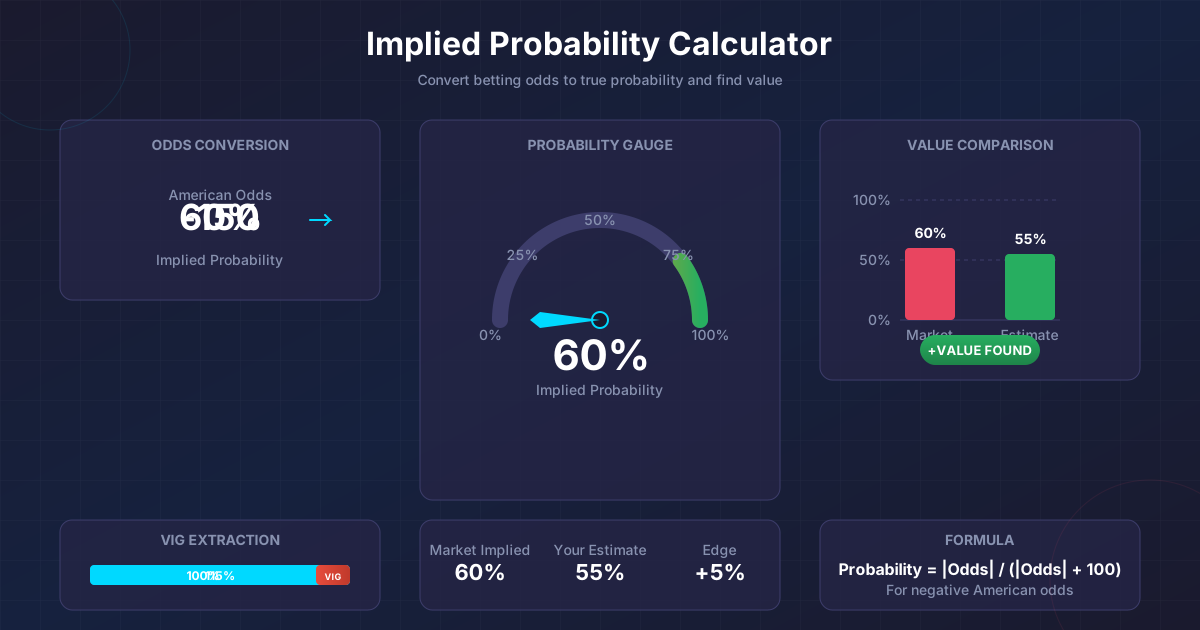
Calculate the implied probability of any individual leg with our Implied Probability Calculator.
How Do Same-Game Parlays (SGPs) Work?
Same-game parlays allow you to combine multiple bets from the same game into a single parlay. Before SGPs, sportsbooks did not allow this because they recognized that outcomes within a single game are correlated, making standard parlay math inaccurate.
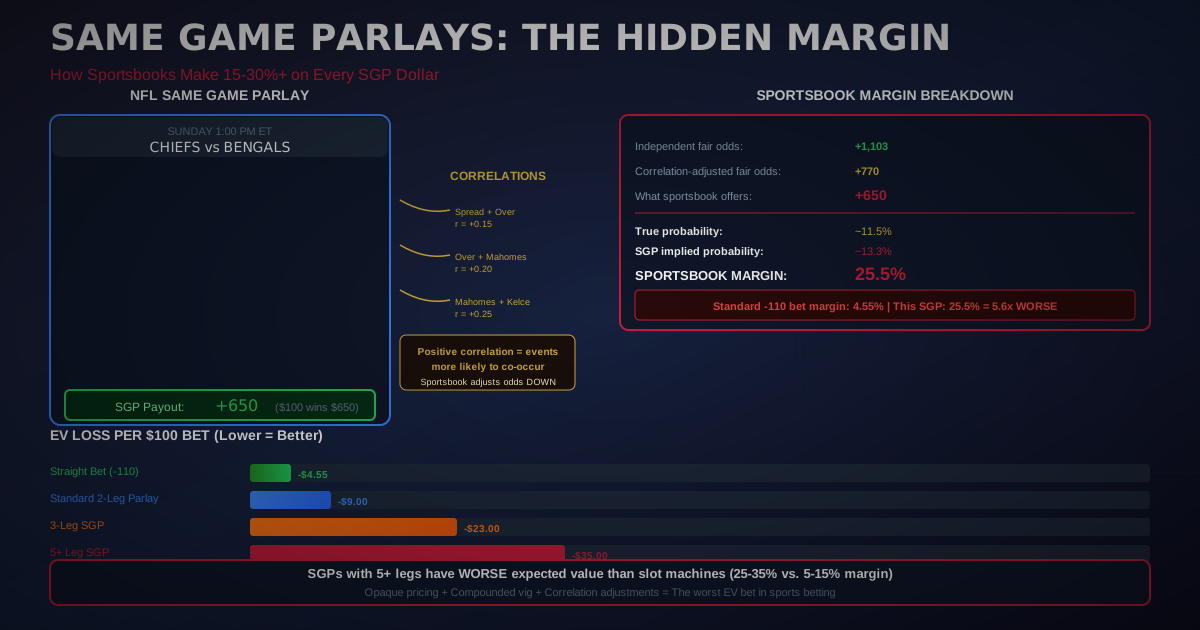
Now, sportsbooks offer SGPs with adjusted pricing that accounts for correlation. The catch: they overadjust. The margins on SGPs are significantly higher than on straight bets, meaning you need to find strong positive correlation that the book's pricing model underestimates.
How Sportsbooks Price SGPs
| Step | Process | Impact on Bettor |
|---|---|---|
| 1 | Calculate independent parlay odds | Standard parlay math (multiply probabilities) |
| 2 | Apply correlation model | Adjust for known statistical relationships |
| 3 | Add SGP-specific margin | Additional vig beyond standard (often 15-30%) |
| 4 | Present final SGP odds | Significantly worse than true correlated odds |
SGP Margin Comparison
| Bet Type | Typical Sportsbook Margin | Example |
|---|---|---|
| Straight side bet (-110/-110) | 4.5% | Standard point spread |
| Two-team traditional parlay | 8-10% | Two games combined |
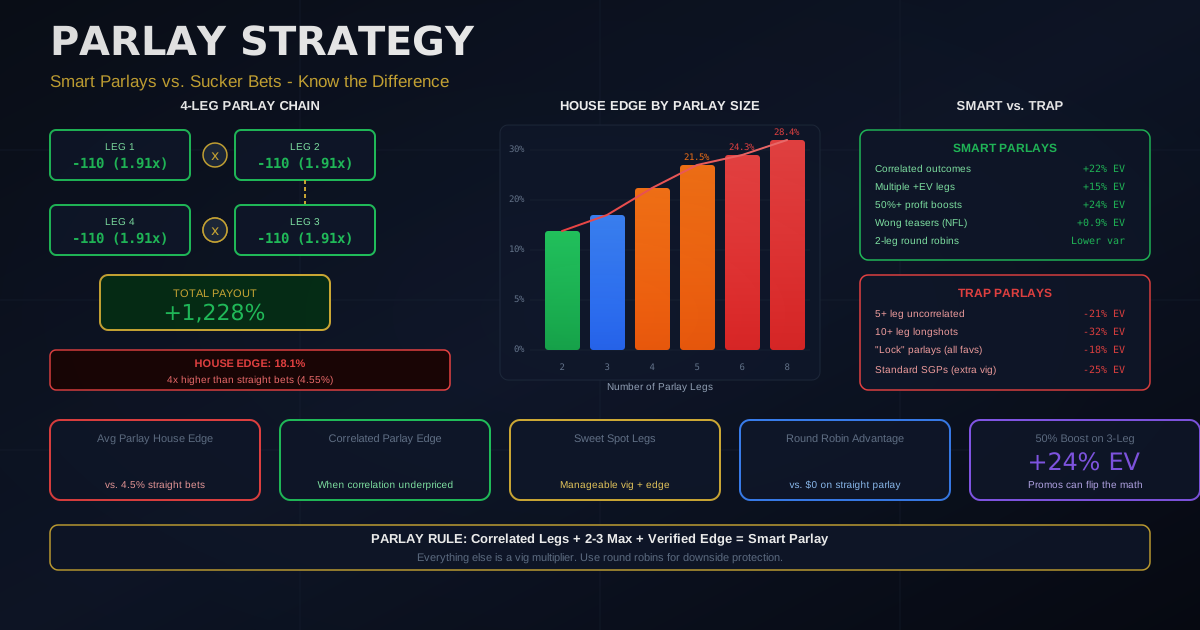
| Two-leg SGP | 15-25% | Two outcomes, same game |
| Three-leg SGP | 20-35% | Three outcomes, same game |
| Four-leg SGP | 30-50% | Four outcomes, same game |
| Five+ leg SGP | 40-60%+ | Five+ outcomes, same game |
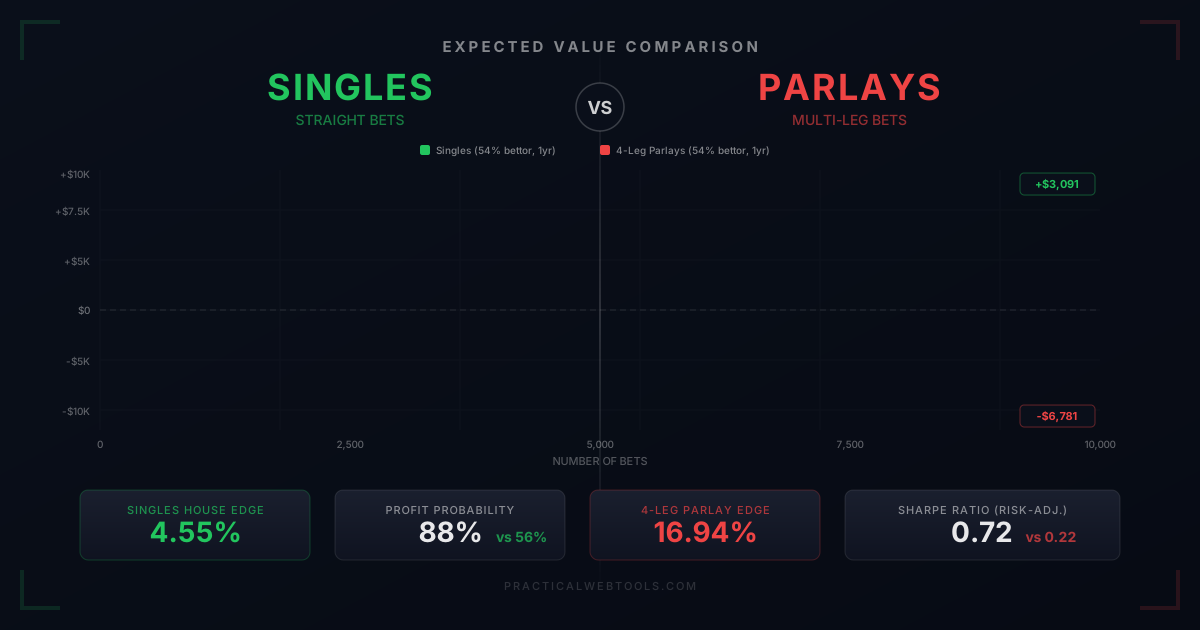
The margin increases dramatically with each additional leg. This is why sportsbooks aggressively promote SGPs, especially those with 4+ legs -- the expected house edge is massive.
Calculate the true parlay odds for any combination with our Parlay Calculator.
The SGP Tax: How Much Are You Really Paying?
To illustrate the "SGP tax," consider a two-leg same-game parlay at a typical sportsbook:
| Leg | Individual Odds | Implied Probability |
|---|---|---|
| Chiefs -3.5 | -110 | 52.4% |
| Patrick Mahomes Over 275.5 passing yards | -115 | 53.5% |
Standard parlay calculation (assuming independence):
- Combined probability: 52.4% x 53.5% = 28.0%
- Fair odds at 28.0%: +257
What the sportsbook offers:
- SGP odds: +200 to +220 (implying 31.3% to 33.3%)
The difference between +257 (fair independent odds) and +200 (SGP price) is the SGP tax -- approximately 10-15% in this example. But these two legs are positively correlated (Mahomes throwing for 275+ yards is more likely when the Chiefs are winning), meaning the true fair odds should be even better than +257. The real SGP tax could be 20-30% once you account for the positive correlation the book is keeping for itself.
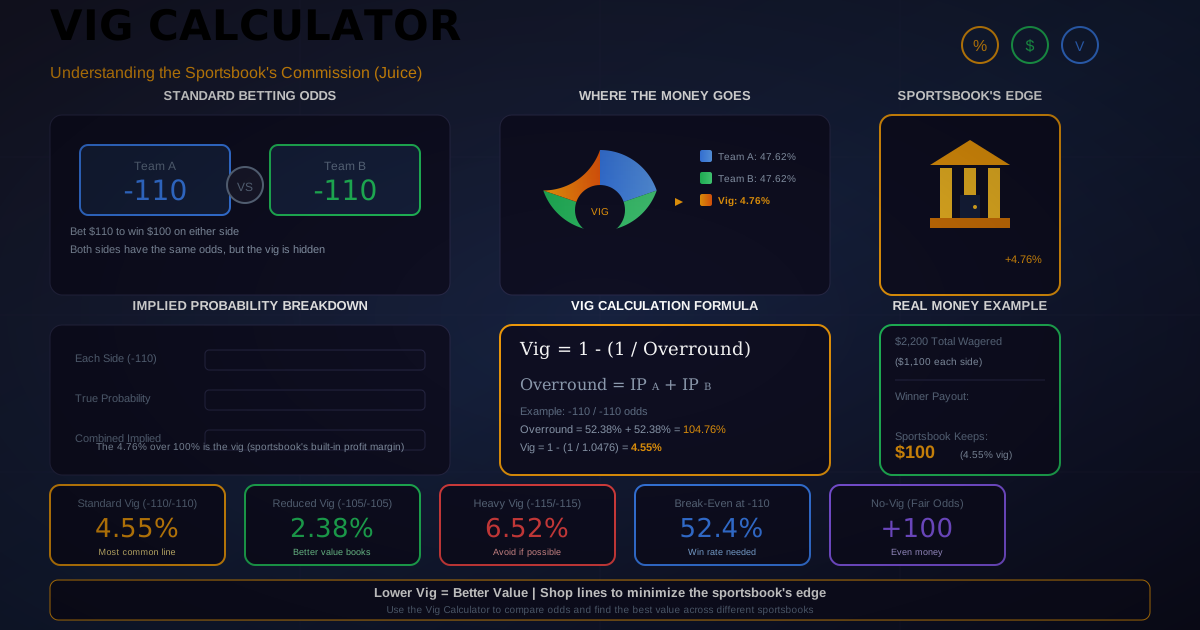
Calculate the sportsbook's hold on any SGP combination with our Hold/Vig Calculator.
What Are the Best Correlated Parlay Structures by Sport?
Different sports offer different correlation opportunities based on the nature of the game and the available betting markets. Here are the strongest known correlations by sport.
NFL Correlated Parlays
The NFL offers some of the most exploitable correlation opportunities because of the wide range of available markets and the game's structural dynamics.
| Correlation Pair | Direction | Strength | Why It Works |
|---|---|---|---|
| Underdog ML + Under | Positive | Strong (+0.4 to +0.6) | Underdogs win low-scoring games (ball control, defense) |
| Favorite spread + Over | Positive | Moderate (+0.3 to +0.5) | Favorites covering means scoring, which pushes totals up |
| QB passing yards over + Team total over | Positive | Moderate (+0.3 to +0.5) | More passing yards = more scoring opportunities |
| RB rushing yards over + Team spread cover | Positive | Moderate (+0.2 to +0.4) | Teams that run effectively usually win and control clock |
| First TD scorer (skill player) + Team to score first | Positive | Strong (+0.5 to +0.7) | If your player scores first TD, your team scores first |
| Team total over + Opponent total over | Negative | Moderate (-0.3 to -0.4) | High-scoring games often mean one team dominates |
| Underdog +7 + Under 41.5 | Positive | Moderate (+0.3 to +0.4) | Low-scoring games stay close |
Key NFL SGP strategy: The underdog moneyline + game under combination is one of the most reliably correlated pairs in all of sports betting. When NFL underdogs win, the average total score is 38.7 points. When favorites win, it is 46.2 points. This difference creates genuine positive correlation that SGP pricing models sometimes undervalue.
NBA Correlated Parlays
| Correlation Pair | Direction | Strength | Why It Works |
|---|---|---|---|
| Star player points over + Team ML | Positive | Moderate (+0.3 to +0.4) | Star plays more minutes in close/winning games |
| Underdog ML + Under | Positive | Moderate (+0.2 to +0.4) | Upsets in NBA often involve slowed pace |
| Player rebounds over + Game goes to OT | Positive | Moderate (+0.3) | More minutes = more rebound opportunities |
| Team 1Q lead + Team ML | Positive | Strong (+0.5 to +0.6) | Teams that lead after Q1 win ~72% of the time |
| Player assists over + Team total over | Positive | Moderate (+0.3 to +0.4) | More scoring = more assist opportunities |
| High total + Favorite ML | Positive | Weak-moderate (+0.2 to +0.3) | High-scoring games slightly favor better team |
MLB Correlated Parlays
| Correlation Pair | Direction | Strength | Why It Works |
|---|---|---|---|
| Favorite ML + Over | Positive | Moderate (+0.3 to +0.5) | Winning team needs to score; scoring pushes total up |
| Underdog ML + Under | Positive | Moderate (+0.2 to +0.4) | Upsets often involve strong pitching / low scoring |
| First 5 innings over + Full game over | Positive | Strong (+0.6 to +0.7) | Early scoring correlates with game total |
| Starting pitcher strikeouts over + Team ML | Positive | Moderate (+0.2 to +0.4) | Dominant pitching performance = likely win |
| Home run hitter + Game over | Positive | Moderate (+0.3 to +0.4) | Home runs contribute to total runs |
Soccer Correlated Parlays
| Correlation Pair | Direction | Strength | Why It Works |
|---|---|---|---|
| Favorite ML + Over 2.5 goals | Positive | Moderate (+0.3 to +0.5) | Favorites winning usually means goals |
| Draw + Under 2.5 goals | Positive | Strong (+0.4 to +0.6) | Most draws are low-scoring |
| Underdog ML + Over 2.5 goals | Positive | Weak (+0.1 to +0.2) | Upsets can be high-scoring (underdog attacks) |
| Both teams to score (Yes) + Over 2.5 | Positive | Very strong (+0.7+) | BTTS yes almost requires 2+ goals minimum |
| Player anytime goalscorer + Team ML | Positive | Strong (+0.4 to +0.6) | Player scoring means team is winning |
Evaluate the expected value of any correlated parlay leg with our Expected Value Calculator.
How Do You Calculate True Correlation Between Betting Outcomes?
Calculating the true statistical correlation between betting outcomes requires historical data and basic probability math. This section walks through the process.
Step 1: Collect Historical Outcome Data
For each game in your sample, record whether each outcome occurred:
| Game | Underdog Win? | Under Hit? | Both Hit? |
|---|---|---|---|
| Game 1 | Yes (1) | Yes (1) | Yes (1) |
| Game 2 | No (0) | Yes (1) | No (0) |
| Game 3 | No (0) | No (0) | No (0) |
| Game 4 | Yes (1) | Yes (1) | Yes (1) |
| Game 5 | No (0) | No (0) | No (0) |
| ... | ... | ... | ... |
| Game 500 | Yes (1) | No (0) | No (0) |
Step 2: Calculate Joint and Marginal Probabilities
From your dataset:
| Probability | Formula | Example Value |
|---|---|---|
| P(Underdog Win) | Count of dog wins / Total games | 32% (160/500) |
| P(Under Hits) | Count of unders / Total games | 48% (240/500) |
| P(Both Hit) | Count of both / Total games | 22% (110/500) |
| P(Both Hit) if independent | P(Dog Win) x P(Under) | 15.4% (32% x 48%) |
Step 3: Measure the Correlation
If outcomes were independent: P(Both) = 32% x 48% = 15.4% Actual P(Both): 22.0% Excess correlation: 22.0% - 15.4% = +6.6 percentage points
This means the underdog moneyline and the under hit together 43% more often than independence would predict (22.0% / 15.4% = 1.43). That excess frequency represents correlation value that a standard parlay does not capture but a properly priced correlated parlay should.
Step 4: Convert to Parlay Value
| Scenario | True Probability | Fair Odds | SGP Offered | Value? |
|---|---|---|---|---|
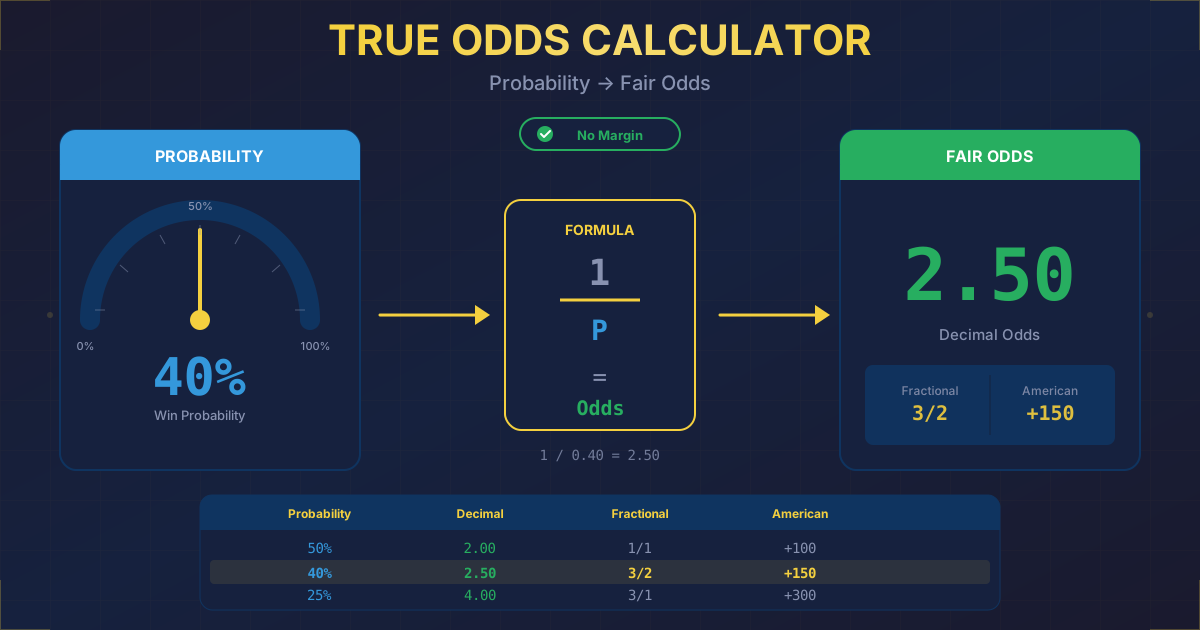
| Independent assumption | 15.4% | +549 | +480 | No (overpriced) |
| With true correlation | 22.0% | +355 | +480 | Yes (+125 edge!) |
If the sportsbook prices the SGP at +480 (assuming near-independence), but the true probability is 22% (fair odds +355), the bettor has significant positive expected value. However, most sportsbooks now partially adjust for known correlations, so the actual SGP price might be +380 to +420 rather than +480.
Calculate whether any SGP offers positive expected value with our Expected Value Calculator.
Why Do Sportsbooks Still Offer Correlated SGPs?
If sportsbooks know that SGP legs are correlated and that offering them can give bettors an edge, why do they continue to offer same-game parlays? The answer lies in the economics of the product.
The SGP Revenue Model
| Factor | Impact | Why It Favors the Book |
|---|---|---|
| Higher margin per bet | SGPs carry 20-50% margins vs 4-5% for straight bets | Each SGP is far more profitable than a straight bet |
| Recreational appeal | Casual bettors love SGPs (fun, big payouts) | High-volume, low-skill customer base |
| Marketing tool | "Build your own bet" drives engagement | SGPs keep bettors on the app longer |
| Behavioral edge | 3+ leg SGPs are almost always -EV for bettors | The more legs, the more the house wins |
| Correlation overpricing | Books charge more than the correlation is worth | They "tax" the correlation beyond its actual value |
| Loss-leader strategy | Occasional 2-leg correlated edge keeps sharp bettors engaged | Sharps' 2-leg wins are offset by recreational 5+ leg losses |
The Break-Even Point
For most sportsbooks, the break-even point is around 2-3 legs. Two-leg SGPs sometimes offer genuine value to skilled bettors who understand correlation. Three-leg SGPs are borderline. Four+ leg SGPs are almost always significantly -EV because the compounding margin overwhelms any correlation advantage.
| Number of SGP Legs | Typical Book Margin | Chance of Bettor Edge | Recommendation |
|---|---|---|---|
| 2 legs | 15-20% | Moderate (if strongly correlated) | Worth analyzing |
| 3 legs | 20-30% | Low | Only with extreme correlation |
| 4 legs | 30-45% | Very low | Generally -EV |
| 5 legs | 40-55% | Extremely low | Almost always -EV |
| 6+ legs | 50%+ | Near zero | Entertainment only |
Calculate the exact hold percentage on any SGP with our Hold/Vig Calculator.
What Are Specific Profitable SGP Structures?
While most SGPs are -EV, certain structures have historically offered better value than others. These structures exploit strong positive correlations that some sportsbook pricing models undervalue.
NFL Profitable SGP Structures
Structure 1: Underdog ML + Under
| Component | Typical Odds | Correlation | Why It Works |
|---|---|---|---|
| Underdog ML (+150 to +250) | Varies | Strong (+0.4 to +0.6) | Underdogs win via defense and ball control |
| Game Under (total) | -110 | Low-scoring games favor underdogs | |
| Combined (independent price) | +400 to +650 | Standard parlay calc | |
| Combined (correlated true price) | +280 to +450 | Accounting for correlation | |
| Typical SGP offered | +350 to +550 | Sometimes between independent and true |
When the SGP price is closer to the independent calculation than the true correlated value, you have positive EV.
Structure 2: QB Passing Yards Over + Team Total Over
When a specific quarterback exceeds his passing yards prop, his team's scoring output is directly affected. This is one of the cleanest correlations in football.
| QB Passing Yards Over Hit | Team Scores 24+ | Team Scores 28+ | Team Scores 31+ |
|---|---|---|---|
| Yes | 68% | 47% | 32% |
| No | 41% | 24% | 14% |
| Correlation strength | +0.27 | +0.23 | +0.18 |
Structure 3: First TD Scorer + Team Score First
If you pick a player to score the first touchdown, there is an automatic strong correlation with his team scoring first. This is almost a logical necessity: if your player scores the first TD, his team must have scored first (unless the other team scored a field goal first, which reduces but does not eliminate the correlation).
NBA Profitable SGP Structures
Structure 1: Star Player Points Over + Team Moneyline
| Star Player Hits Points Over | Team Win Rate | Baseline Team Win Rate | Lift |
|---|---|---|---|
| Giannis scores 30+ | 71% | 62% | +9% |
| Luka scores 30+ | 65% | 57% | +8% |
| Jokic scores 25+ | 73% | 65% | +8% |
This correlation exists because star players play more minutes in competitive/winning games and because their scoring directly contributes to the win.
Structure 2: Team 1st Quarter Winner + Team Full Game Winner
| 1Q Leader | Full Game Win Rate |
|---|---|
| Home team leads after Q1 | 74% |
| Away team leads after Q1 | 68% |
| Tied after Q1 | ~50% (slight home edge) |
Teams that lead after the first quarter win the full game approximately 70-74% of the time. This is a well-documented correlation that can create value in SGPs if the pricing does not fully account for it.
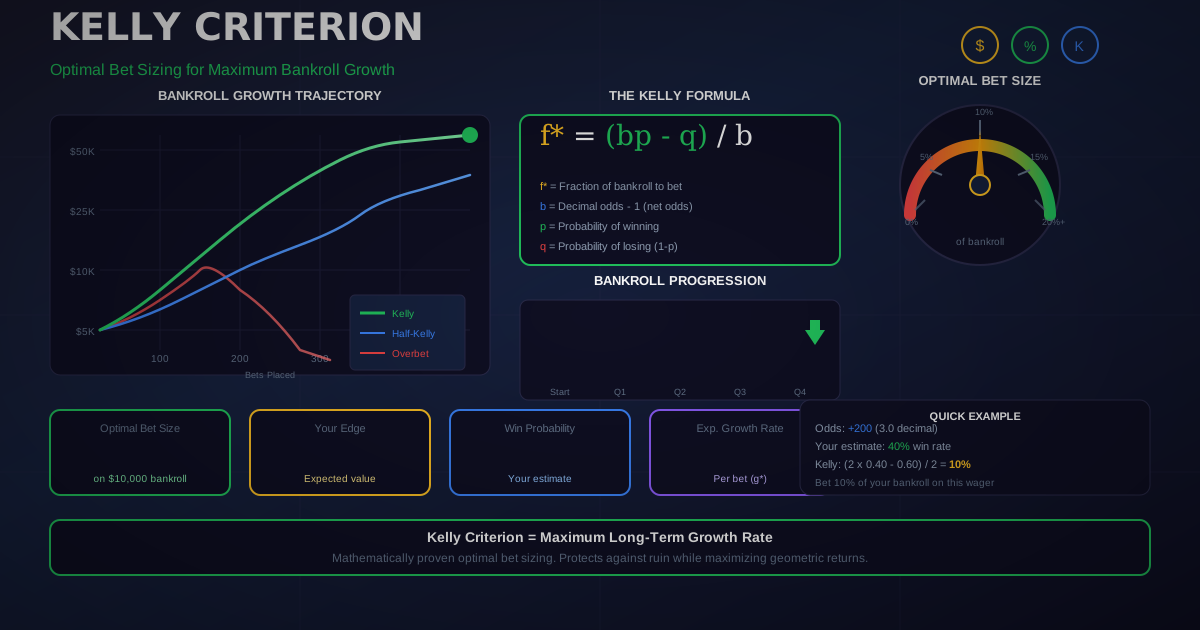
Size your SGP bets appropriately with our Kelly Criterion Calculator.
Soccer Profitable SGP Structures
Structure 1: Both Teams to Score (Yes) + Over 2.5 Goals
This is one of the strongest correlations in all of sports betting. If both teams score, the minimum possible total is 2 goals (1-1), and most BTTS-Yes results finish with 3 or more goals.
| BTTS Result | Over 2.5 Goals Rate | Over 3.5 Goals Rate |
|---|---|---|
| Both teams score (Yes) | 78% | 42% |
| Only one team scores | 18% | 8% |
| Correlation coefficient | +0.72 | +0.45 |
Structure 2: Favorite to Win + Favorite Player Anytime Goalscorer
When a team wins, their attacking players are more likely to have scored. This creates positive correlation between team results and individual scoring markets.
How Do You Compare SGP Pricing Across Sportsbooks?
Different sportsbooks use different correlation models, which means the same SGP can be priced very differently across platforms. Comparing SGP pricing is one of the most effective ways to find value.
SGP Pricing Comparison (Example: NFL Same-Game Parlay)
| SGP: Chiefs ML + Mahomes O275.5 Yards | Book A | Book B | Book C | Book D |
|---|---|---|---|---|
| Offered odds | +195 | +215 | +180 | +225 |
| Implied probability | 33.9% | 31.7% | 35.7% | 30.8% |
| Margin over true (est. 30%) | +3.9% | +1.7% | +5.7% | +0.8% |
| Value ranking | 3rd | 2nd | 4th | 1st |
By shopping across four books, the difference between the best and worst price is 45 odds points (+225 vs +180). Over hundreds of SGPs, this line shopping advantage compounds into significant additional profit.
Which Sportsbooks Offer the Best SGP Pricing?
| Sportsbook | SGP Margin (Typical) | Best For | Notes |
|---|---|---|---|
| DraftKings | 20-30% | Wide market selection | Aggressive SGP promotions (profit boosts) |
| FanDuel | 18-28% | Competitive pricing | Often slightly better base odds |
| BetMGM | 22-32% | Variety of legs | Higher margin but more available markets |
| Caesars | 20-30% | Promotions | SGP insurance offers can offset margin |
| Bet365 | 15-25% | Base pricing | Generally tighter margins globally |
| PointsBet | 18-28% | Competitive | Fewer available markets |
Using SGP Profit Boosts Strategically
Many sportsbooks offer SGP profit boosts (e.g., "50% profit boost on any 3+ leg SGP"). These boosts can turn marginally -EV SGPs into +EV opportunities.
| Original SGP Odds | With 50% Profit Boost | Original EV (at -5% edge) | Boosted EV |
|---|---|---|---|
| +300 | +450 | -5.0% | +12.5% |
| +500 | +750 | -5.0% | +16.7% |
| +800 | +1200 | -5.0% | +21.3% |
| +1500 | +2250 | -5.0% | +26.7% |
Calculate the expected value of any boosted SGP with our Expected Value Calculator.
How Do You Build a Mathematical Framework for Evaluating Correlation?
For serious bettors who want to systematically find correlated parlay value, a structured mathematical framework is essential.
The Correlation Value Formula
Correlation Value = True Joint Probability - (Leg 1 Probability x Leg 2 Probability)
If Correlation Value > 0: Positive correlation exists If Correlation Value = 0: Legs are independent If Correlation Value < 0: Negative correlation exists
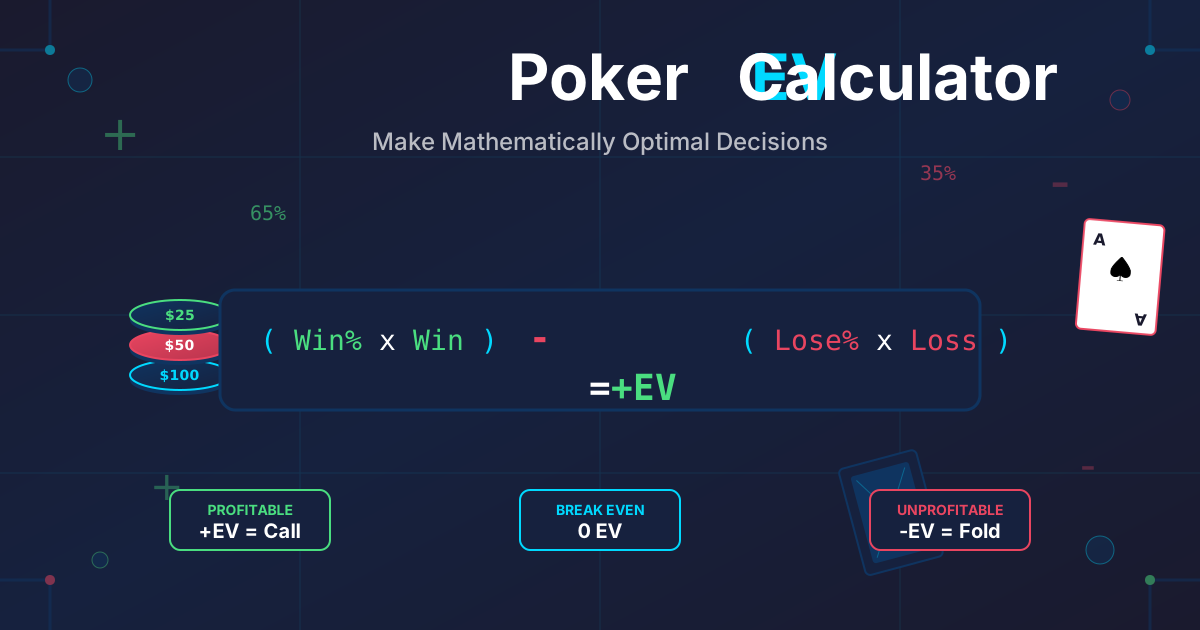
SGP Expected Value = (True Joint Probability x Payout) - (1 - True Joint Probability) x Stake
Building a Correlation Database
To systematically find correlated parlays, build a database of historical correlations:
| Market Pair | Sport | Sample Size | Joint Probability | Independent Probability | Correlation Value | Reliable? |
|---|---|---|---|---|---|---|
| Dog ML + Under | NFL | 2,500 games | 18.2% | 14.8% | +3.4% | Yes |
| Fav ML + Over | NFL | 2,500 games | 38.5% | 35.2% | +3.3% | Yes |
| QB Pass Over + Team Total Over | NFL | 1,800 games | 32.1% | 27.4% | +4.7% | Yes |
| Star Points Over + Team ML | NBA | 3,200 games | 35.6% | 31.8% | +3.8% | Yes |
| BTTS Yes + Over 2.5 | Soccer | 5,000 matches | 41.2% | 26.3% | +14.9% | Yes |
| 1Q Leader + Full Game Winner | NBA | 3,500 games | 52.8% | 46.5% | +6.3% | Yes |
| RB Rush Over + Team Cover | NFL | 1,500 games | 28.4% | 26.0% | +2.4% | Moderate |
| Pitcher K's Over + Team ML | MLB | 2,800 games | 31.7% | 28.9% | +2.8% | Yes |
Comparing Your Correlation Data to SGP Pricing
Once you have your correlation database, the process becomes systematic:
- Identify an SGP you want to evaluate
- Look up the historical correlation for that market pair
- Calculate the true joint probability using your correlation data
- Compare the true probability to the SGP implied probability
- If the true probability exceeds the implied probability, you have +EV
Calculate the hold on any SGP pricing with our Hold/Vig Calculator.
What Are Cross-Sport and Cross-Game Correlations?
While same-game correlations are the most commonly discussed, correlations can also exist between different games and even different sports -- though these are rare and often weaker.
Cross-Game Correlations
| Correlation Type | Example | Strength | Exploitable? |
|---|---|---|---|
| Weather system affecting multiple games | Two NFL stadiums in same weather system | Weak (+0.05 to +0.15) | Rarely |
| Scheduling advantage | Two teams from same division on short rest | Very weak | No |
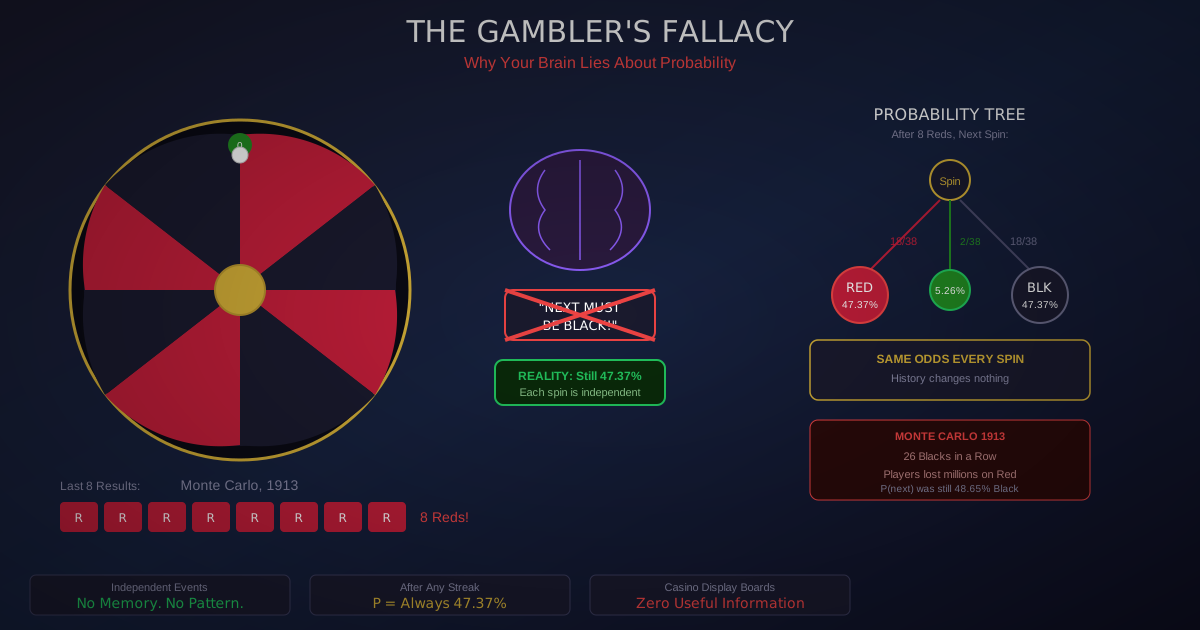
| Market momentum | If the "over" is hitting all day, bettors pile on | Zero (gambler's fallacy) | No |
| Referee/umpire assignment | Same crew officiates multiple games | Very weak | No |
| Shared player (rare) | Two-sport athlete or double-header effects | Moderate in theory | Too rare |
The honest assessment is that cross-game correlations are almost never strong enough to exploit in parlays. The sportsbook already assumes independence between different games, and that assumption is nearly correct.
Cross-Market Correlations Within a Game
These are more exploitable because they exist within the same game:
| Markets | Correlation | Notes |
|---|---|---|
| Side (spread) and Total (over/under) | Moderate | Favorites covering correlates with higher totals |
| Moneyline and First Half ML | Strong (+0.5 to +0.7) | Teams leading at half usually win |
| Player props and Team props | Moderate to strong | Individual performance drives team results |
| Game total and Team total | Very strong (+0.7+) | By definition, team totals sum to game total |
| First half total and Full game total | Strong (+0.5 to +0.7) | Early scoring pace correlates with final total |
| Alternative spread and Moneyline | Very strong | Directly related markets |
Calculate the true parlay payout for any multi-leg bet with our Parlay Calculator.
How Do Seasonal and Situational Factors Affect Correlation Strength?
Correlation between betting outcomes is not static -- it varies based on the time of season, specific game situations, and even weather conditions. Understanding when correlations are strongest and weakest helps you identify the best opportunities.
Seasonal Correlation Patterns
| Season Phase | Correlation Change | Why | Best Opportunities |
|---|---|---|---|
| Early season (Weeks 1-4 NFL) | Weaker and less reliable | Small sample, teams still finding identity | Avoid relying heavily on correlation data |
| Mid-season (Weeks 5-12 NFL) | Stabilizing, increasingly reliable | Patterns emerge, data builds | Begin applying correlation strategies |
| Late season (Weeks 13-18 NFL) | Strongest and most reliable | Large sample, clear team tendencies | Peak opportunity for correlated SGPs |
| Playoffs | Potentially different from regular season | Higher stakes, coaching adjustments | Use regular-season data cautiously |
| NBA regular season (Nov-Jan) | Moderate, building reliability | Early sample, roster flux | Selective application |
| NBA late season (Feb-Apr) | Strong and reliable | Large sample, trade deadline past | Strong correlation opportunities |
| MLB early season (Apr-May) | Weaker | Pitching form not established, cold weather | Limited correlation plays |
| MLB summer (Jun-Sep) | Strongest | Large sample, weather consistent | Peak baseball correlation window |
Weather-Based Correlation Shifts
Weather significantly affects football correlations, creating opportunities when books do not fully adjust their SGP pricing:
| Weather Condition | Correlation Shift | SGP Strategy |
|---|---|---|
| High wind (20+ mph) | Under becomes more strongly correlated with defensive play, low team totals | Underdog + Under correlation strengthens by +0.10 to +0.15 |
| Heavy rain/snow | Rushing game becomes dominant, passing props unreliable | RB rushing yards over + team cover correlation strengthens |
| Extreme cold (below 20F) | Favors teams comfortable in cold, reduces passing game | Home team ML + Under becomes more strongly correlated |
| Dome games | Normal correlations apply, passing game normalized | Standard correlation data applies |
Game Script Correlation
Understanding how game scripts develop is critical for correlated parlays. The way a game unfolds creates predictable statistical outcomes:
| Game Script | Statistical Consequences | Correlation Opportunity |
|---|---|---|
| Close game throughout | Balanced play calling, starters play full game | Star player props over + game total over |
| Early blowout (favorite up big) | Garbage time scoring, backups enter, clock runs | Favorite covers but total may go over with garbage time points |
| Comeback game | Trailing team passes heavily, leading team runs | Trailing QB passing yards over + game total over |
| Defensive battle | Low scoring, conservative play calling | Both team totals under + game total under (very strong correlation) |
| Shootout | Both teams scoring, fast pace | Game over + both team totals over (natural mathematical link) |
Analyze the expected value of situational SGPs with our Expected Value Calculator.
Injury-Driven Correlation Opportunities
When a star player is ruled out, the correlations around that game shift in predictable ways that SGP pricing may not fully capture:
| Injury Situation | Correlation Impact | Opportunity |
|---|---|---|
| Star QB out (team is underdog) | Underdog + Under strengthens significantly | Backup QBs produce lower totals; team becomes more run-heavy |
| Star RB out (team is favorite) | Favorite spread cover weakens, passing yards increase | QB passing yards over + slightly reduced spread cover |
| Star WR out | Other WR targets increase, team total may decrease | Secondary WR receiving yards over becomes correlated with team adjusting |
| Starting pitcher scratched (MLB) | Entire line shifts, totals change | Fresh correlations based on replacement pitcher's tendencies |
These situations create windows where SGP pricing models may lag behind the correlation reality because the models are calibrated on standard roster configurations.
Compare SGP pricing across books when injuries create correlation shifts with our Odds Converter.
What Are the Most Common SGP Mistakes?
Understanding what not to do is just as important as knowing what to look for. These are the most common mistakes bettors make with correlated parlays and SGPs.
Mistake 1: Adding Uncorrelated or Negatively Correlated Legs
Many bettors build SGPs by simply adding legs they "like" without considering whether those legs move together or against each other.
| Bad SGP Example | Problem |
|---|---|
| Favorite -7 + Under 42.5 + Star player receiving yards over | The spread cover and receiving yards over are positively correlated, but both are negatively correlated with the under (more scoring helps both but hurts the under) |
| Underdog ML + QB passing yards over (for favorite's QB) | If the underdog wins, the favorite's QB likely did not have a great day -- negative correlation |
| Player rushing yards over + Team to lose | If the player has a great rushing game, his team probably did not lose -- negative correlation |
Mistake 2: Too Many Legs
Each additional leg compounds the sportsbook's margin and reduces your chance of finding genuine correlation value.
| Legs | Your Correlation Edge | Sportsbook Margin | Net Edge |
|---|---|---|---|
| 2 | +5% | -18% | -13% (tough but possible) |
| 3 | +8% | -28% | -20% (very difficult) |
| 4 | +10% | -40% | -30% (nearly impossible) |
| 5 | +12% | -50% | -38% (mathematically hopeless) |
Mistake 3: Ignoring the Juice on Individual Legs
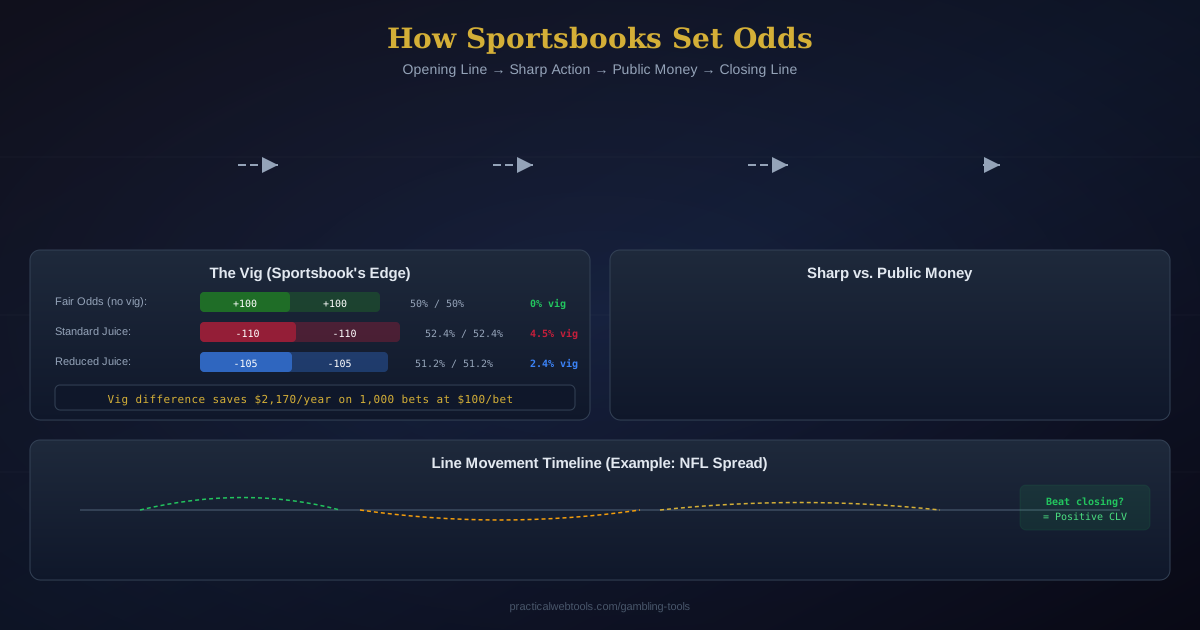
SGP pricing starts with the individual odds of each leg, which already include vig. The correlation adjustment is applied on top of already-juiced individual prices.
Mistake 4: Confusing Narrative Correlation With Statistical Correlation
"Patrick Mahomes will throw for 300 yards because the Chiefs offense is explosive" is a narrative, not a statistical correlation. True correlation requires historical data showing that two specific outcomes co-occur more frequently than independence predicts.
Mistake 5: Not Shopping SGP Prices
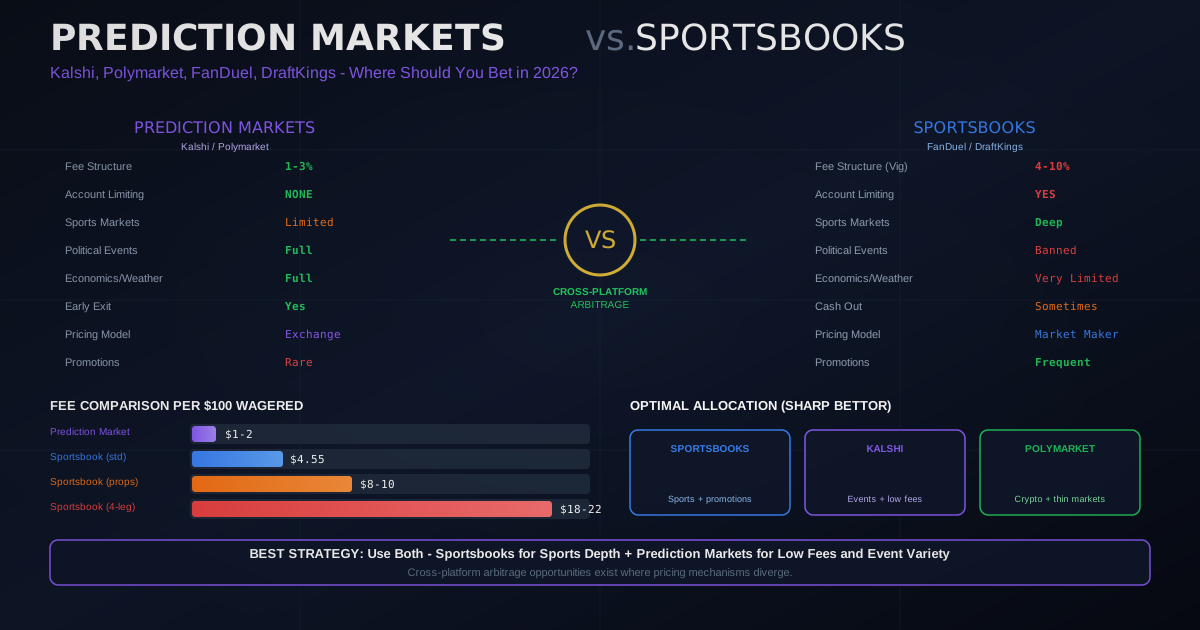
The same SGP can vary by 50+ odds points across different sportsbooks. Not shopping SGP prices is leaving significant money on the table.
Calculate the EV impact of different SGP prices with our Expected Value Calculator.
How Do You Build an SGP Evaluation Checklist?
Use this checklist to evaluate any SGP before placing it:
The SGP Evaluation Framework
| Checkpoint | Question | Pass/Fail Criteria |
|---|---|---|
| 1. Leg count | How many legs? | 2-3 legs max for serious bettors |
| 2. Correlation direction | Are all legs positively correlated? | All legs must move in the same direction |
| 3. Correlation strength | How strong is the historical correlation? | Minimum +0.2 coefficient (moderate or better) |
| 4. Individual leg value | Are the individual legs fairly priced? | No more than -5% EV per individual leg |
| 5. SGP pricing | How does the SGP price compare to true correlated odds? | Must be within 15% of true odds |
| 6. Book comparison | Have you checked at least 3 books? | Best available price selected |
| 7. Sample size | Is the correlation based on sufficient data? | Minimum 500 historical data points |
| 8. Promotion available? | Is there a profit boost or insurance offer? | Boosts can flip -EV to +EV |
| 9. Bet sizing | Is the bet sized appropriately? | 0.5-2% of bankroll maximum |
| 10. Record keeping | Are you logging this SGP for future analysis? | Track every SGP systematically |
Size your SGP bets properly with our Kelly Criterion Calculator.
Frequently Asked Questions About Correlated Parlays
What is the most correlated two-leg parlay in sports?
In soccer, "Both Teams to Score (Yes) + Over 2.5 Goals" has a correlation coefficient of approximately +0.70 to +0.75, making it one of the strongest two-leg correlations available. In the NFL, "Underdog ML + Under" typically shows a correlation of +0.40 to +0.60. In the NBA, "Team Leads After Q1 + Team Wins Game" shows approximately +0.50 to +0.60 correlation.
Can I build a profitable long-term strategy using only SGPs?
It is extremely difficult to build a profitable long-term strategy exclusively from SGPs because of the high built-in margins. However, combining selective 2-leg correlated SGPs with disciplined line shopping and strategic use of profit boosts can create positive expected value. The key is selectivity -- only bet SGPs where you have identified genuine correlation that the book's pricing model undervalues.
How do sportsbooks calculate their SGP correlation adjustments?
Sportsbooks use proprietary correlation models that analyze historical data to estimate the joint probability of multiple outcomes. These models are generally accurate but tend to be conservative (from the book's perspective), meaning they often overcharge for correlation. The specific algorithms are trade secrets, but they typically use copula functions or Monte Carlo simulations to estimate joint probabilities.
Are player prop correlations stronger than game-level correlations?
Player prop correlations are often stronger in absolute terms (the correlation coefficient is higher) because individual player performance directly drives game outcomes. However, sportsbooks are generally better at pricing player prop correlations because the relationship is more obvious and easier to model. The best opportunities tend to be in less obvious correlations that the book's model may not fully capture.
Is it better to parlay correlated bets from different games or use SGPs?
If the correlated bets are from different games, a standard parlay is preferable because the margins are lower. SGPs are only necessary when you want to combine outcomes from the same game. A two-game parlay with 8-10% margin is almost always better than a two-leg SGP with 15-25% margin, even if the SGP has stronger correlation.
How do I track whether my SGP strategy is profitable over time?
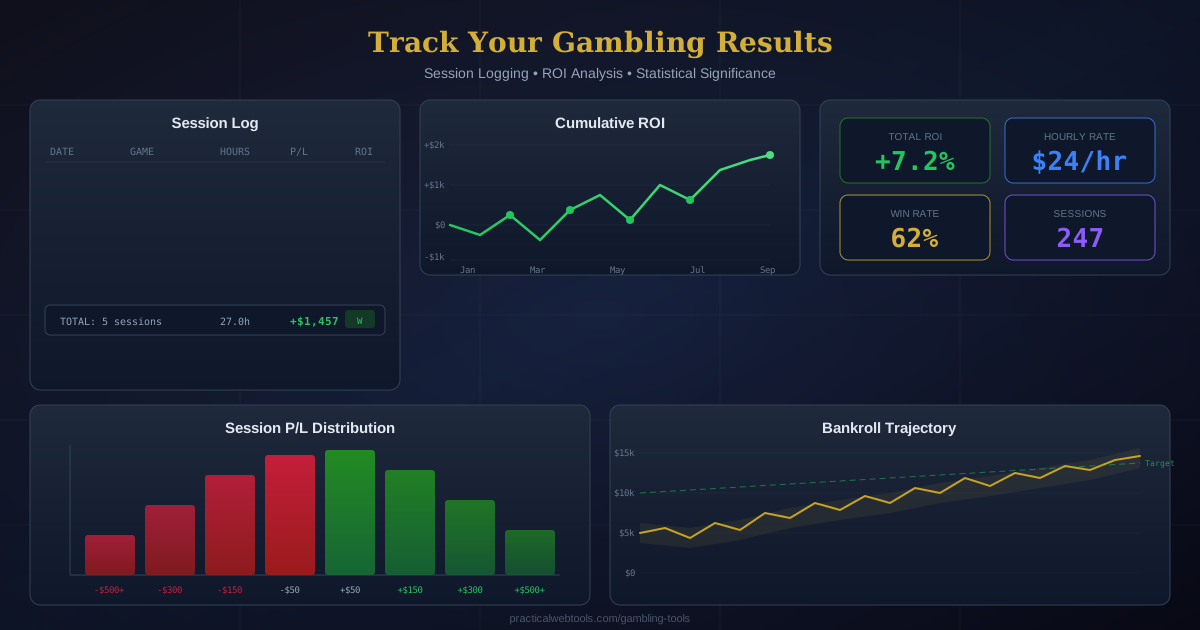
Track every SGP with the following data: date, sport, legs (with individual and combined odds), book used, SGP price obtained, result, and profit/loss. Over 200+ SGPs, calculate your ROI and compare it to the theoretical hold. If your ROI is less negative than the average SGP margin, your correlation edge is real but may not be large enough to overcome the vig. If your ROI is positive, your strategy is working.
Do SGP profit boosts change the math significantly?
Yes. A 50% profit boost on an SGP that is normally -15% EV can push it to approximately +10% EV. Profit boosts are one of the most reliable ways to create +EV SGP opportunities because they effectively reduce the sportsbook's margin by a fixed percentage. Always prioritize SGPs with available boosts.
What happens to correlation in the playoffs vs. regular season?
Playoff correlations can differ from regular season because of changes in game intensity, coaching adjustments, and betting public behavior. For example, the underdog ML + under correlation tends to be even stronger in the NFL playoffs because underdogs that win playoff games typically do so through defense and ball control. However, the sample sizes for playoff-specific correlations are much smaller, making the estimates less reliable.
Related Tools for Correlated Parlay Bettors
Parlay and Combination Tools
- Parlay Calculator: Calculate true parlay odds for any combination of legs
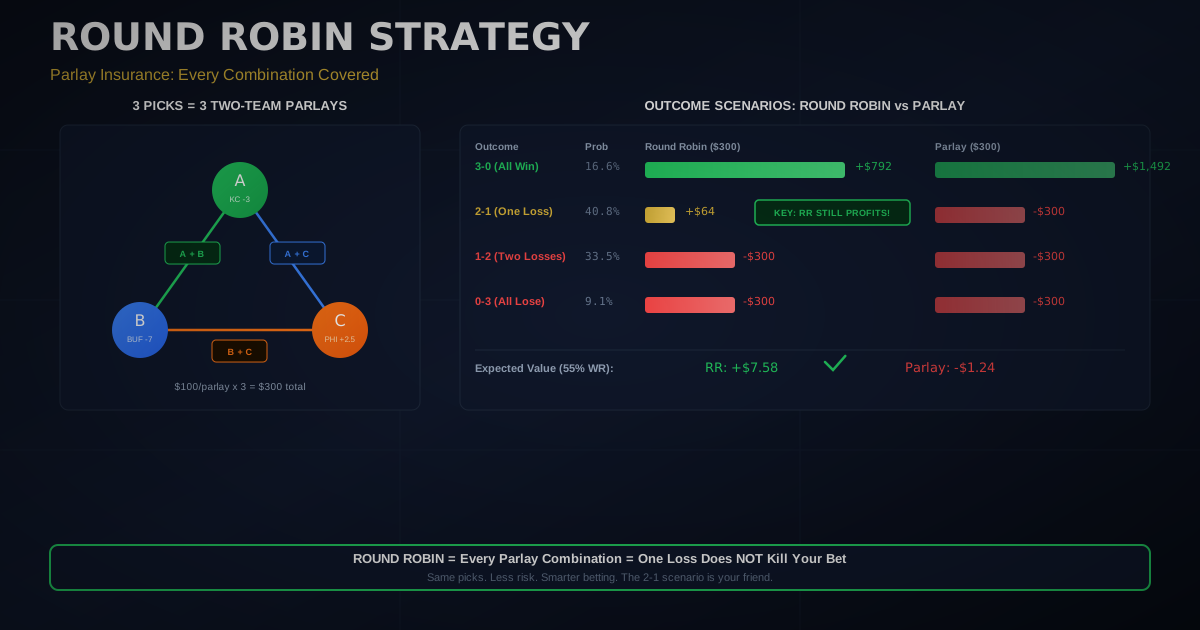
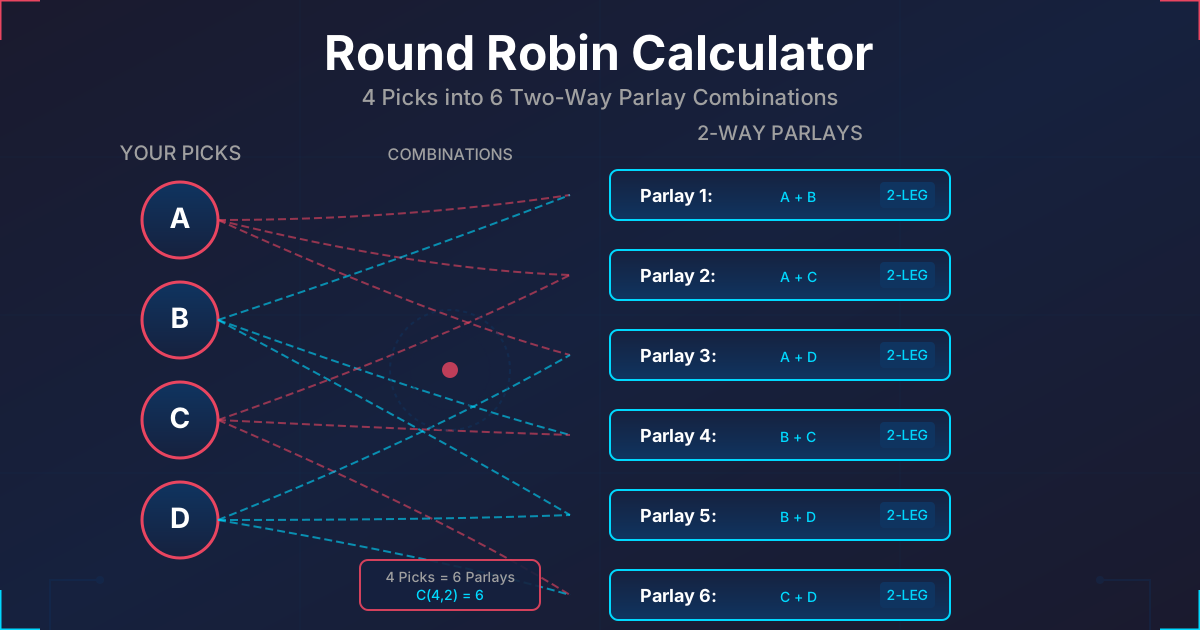
- Round Robin Calculator: Build round robin combinations from correlated picks
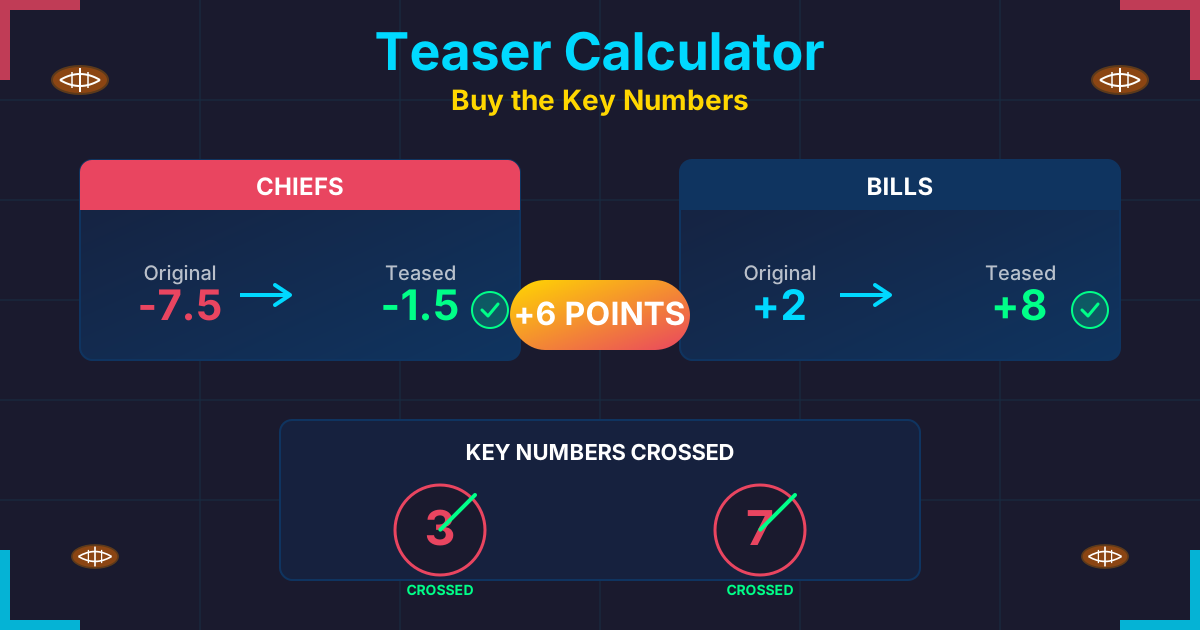
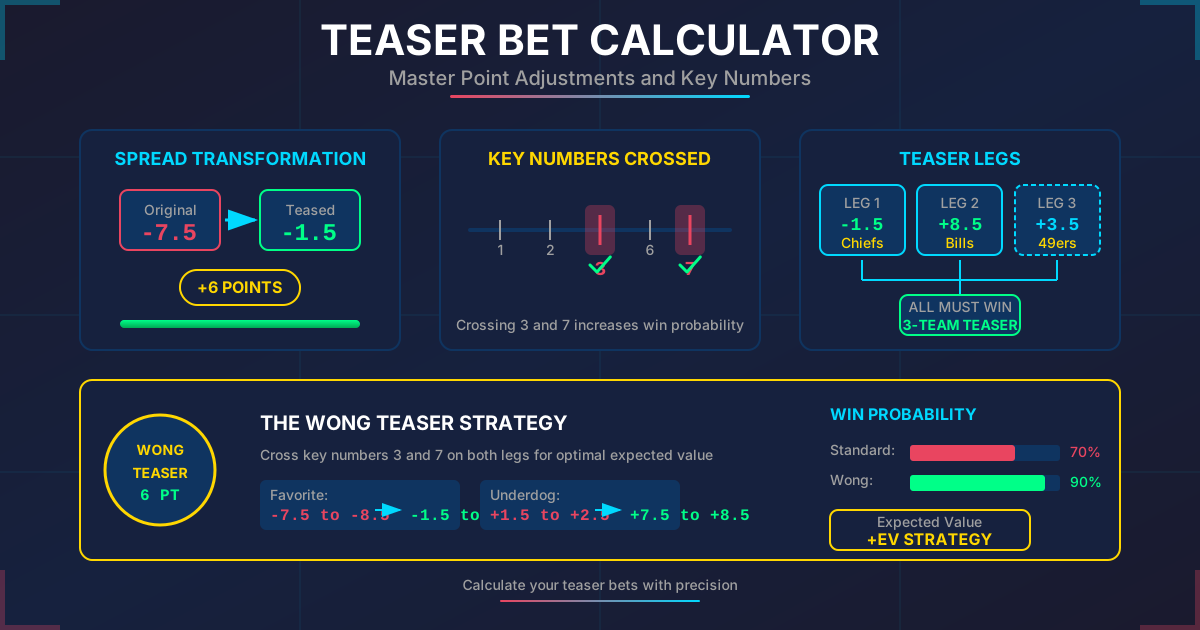
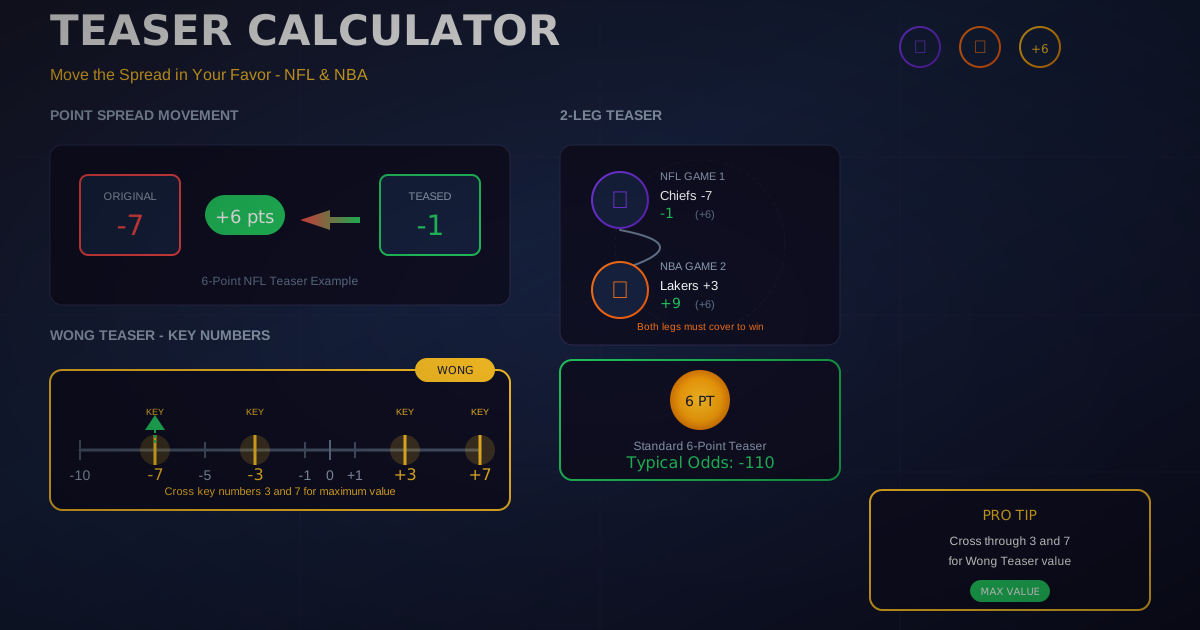
- Teaser Calculator: Evaluate teaser value as an alternative to SGPs
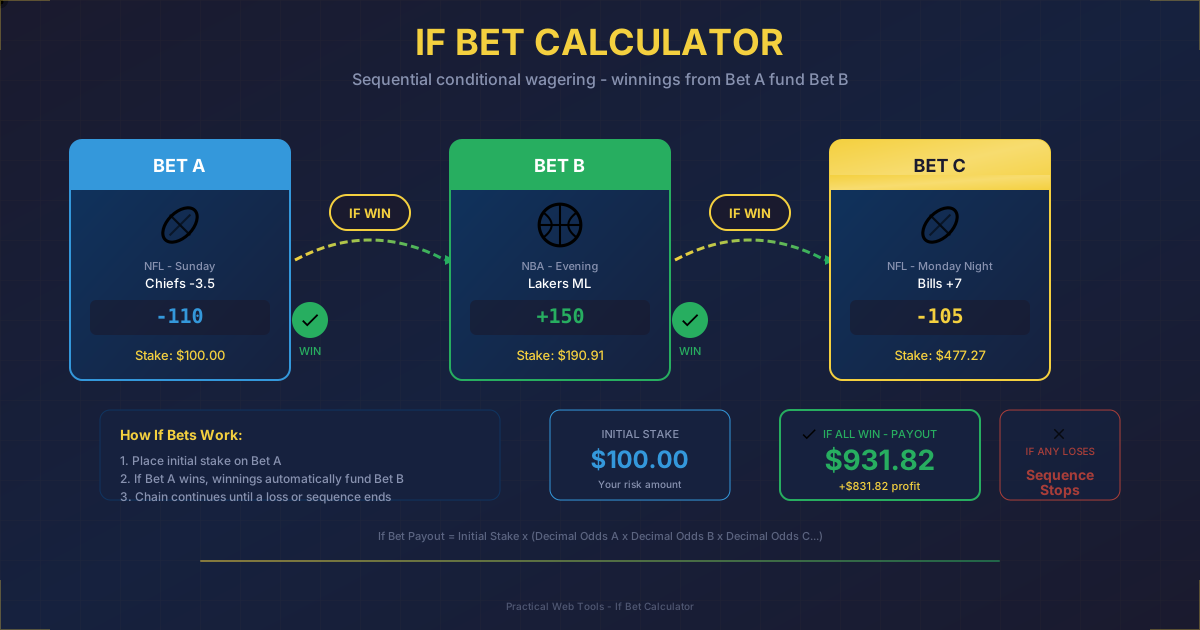
- If Bet Calculator: Calculate if-bet structures for correlated plays
Value Analysis Tools
- Expected Value Calculator: Determine the EV of any SGP based on true probability
- Implied Probability Calculator: Convert SGP odds to implied probability
- Hold/Vig Calculator: Calculate the sportsbook's margin on any SGP
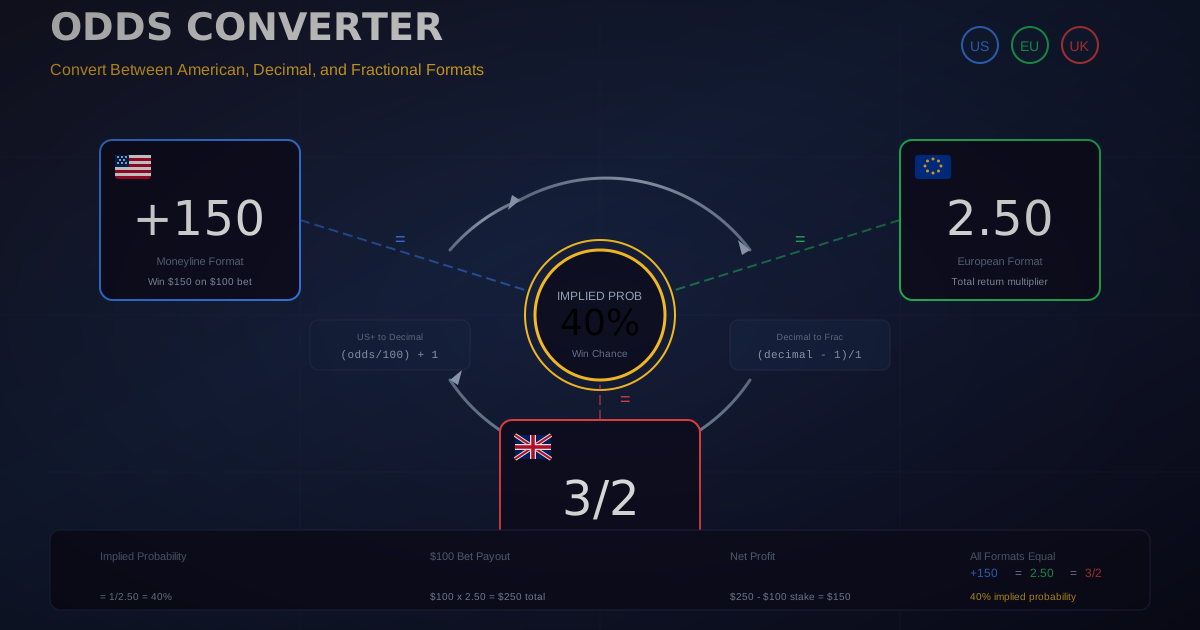
- Odds Converter: Compare SGP pricing across odds formats
Bankroll Management Tools
- Kelly Criterion Calculator: Optimal sizing for SGP bets
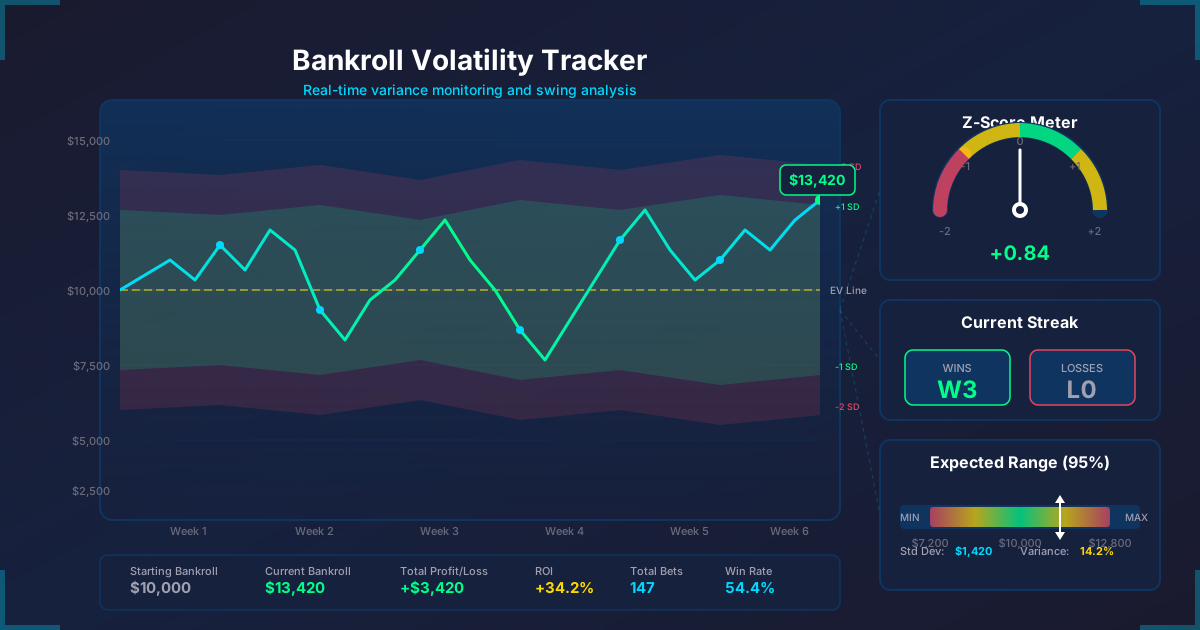
- Bankroll Volatility Tracker: Model the higher variance of parlay betting
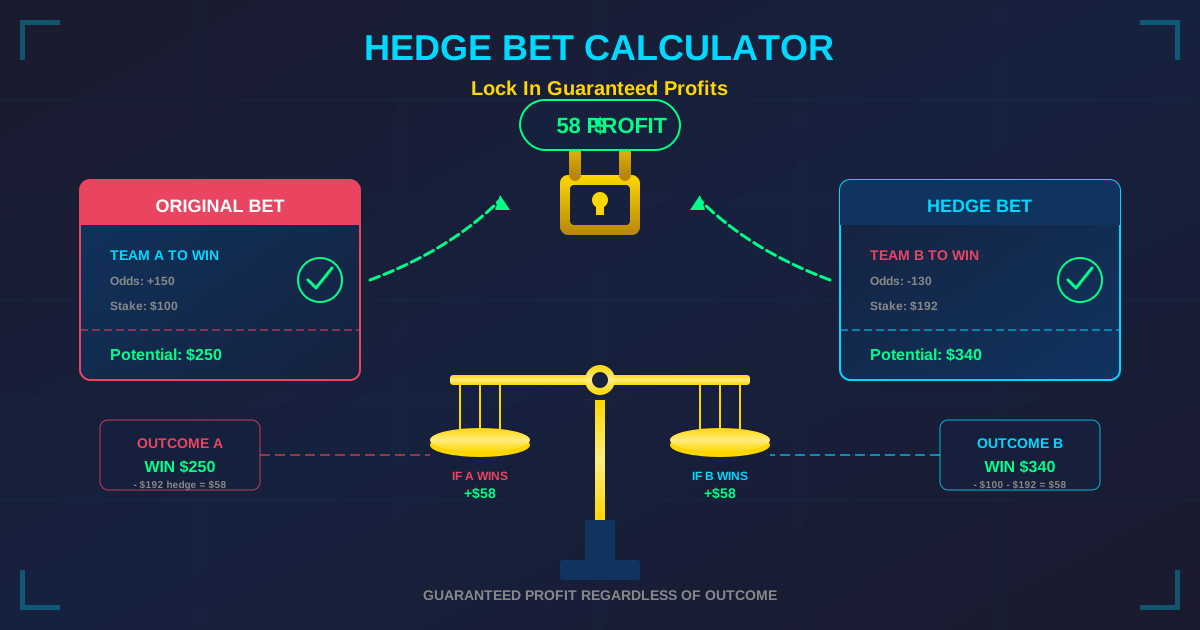
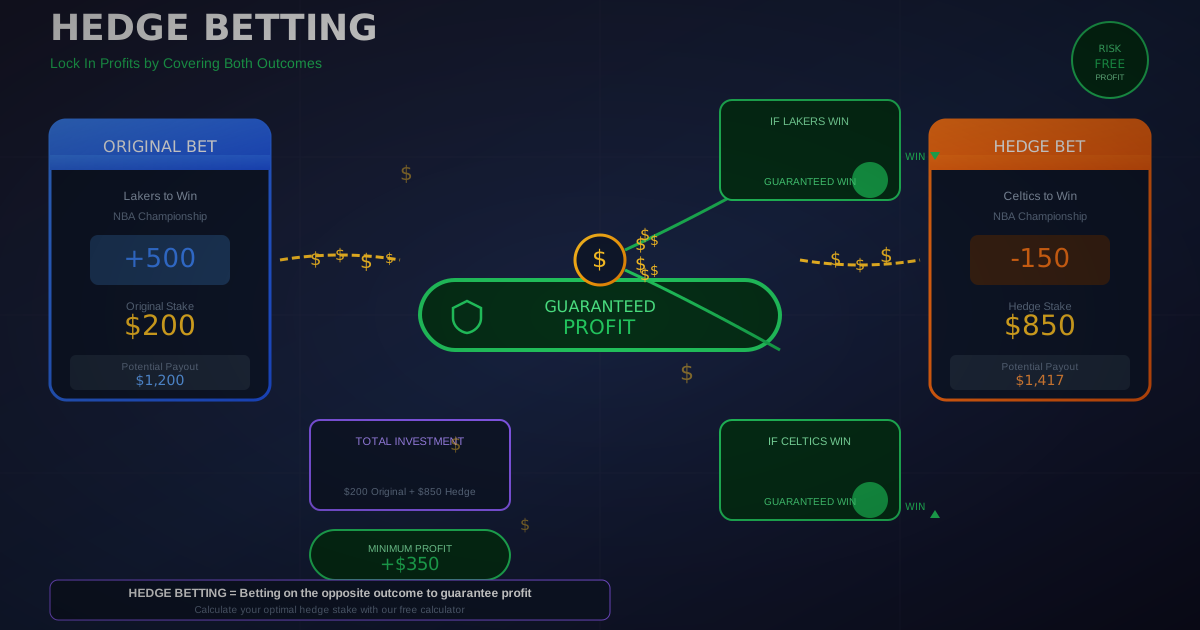
- Hedge Calculator: Hedge a winning SGP leg mid-game
- Arbitrage Calculator: Find arbitrage across different books' SGP prices
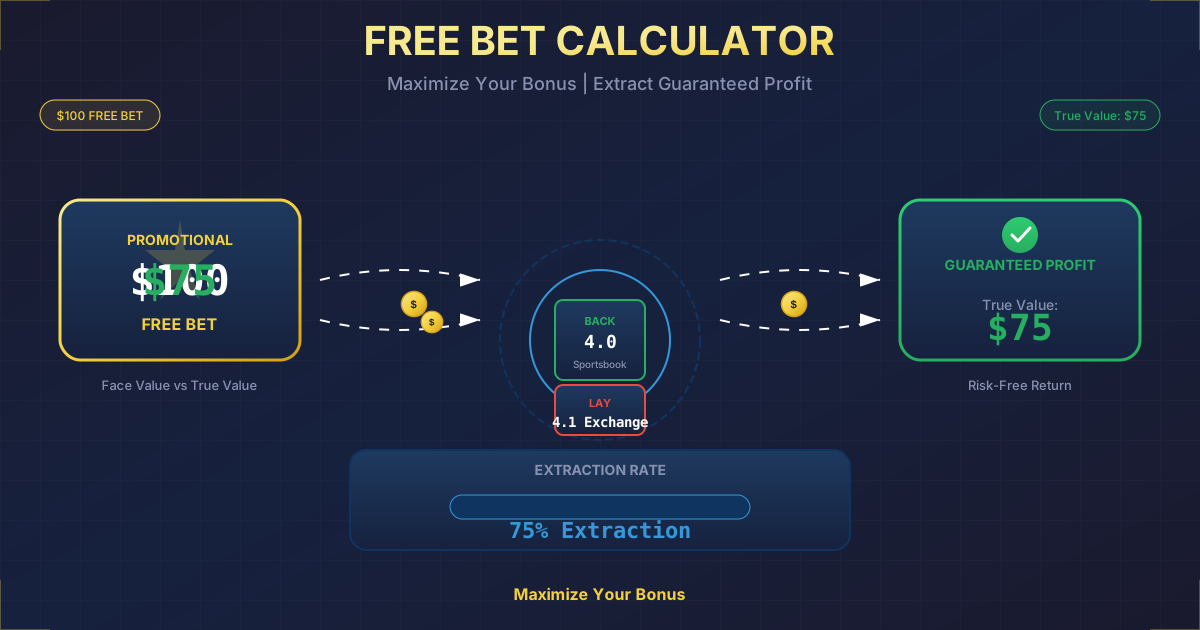
- Matched Betting Calculator: Extract maximum value from SGP promotions
The Bottom Line on Correlated Parlays
Correlated parlays represent one of the few areas in sports betting where recreational bettors and sharps alike can find genuine mathematical edges. The key insight is simple: when two outcomes are more likely to happen together than the sportsbook's pricing suggests, the parlay offers positive expected value.
But this edge is fragile. It exists primarily in 2-leg SGPs with strong positive correlation, and it is eroded by the sportsbook's margin with every additional leg. The most disciplined approach is to focus on the strongest known correlations, limit yourself to 2-3 legs, shop prices across multiple books, and leverage profit boosts whenever available.
The sportsbooks want you to build 6-leg, 8-leg, 10-leg SGPs for a chance at a massive payout. The math wants you to keep it simple and find genuine correlation.
Start calculating your correlated parlays with our free Parlay Calculator. Evaluate the expected value with our Expected Value Calculator. And shop for the best SGP prices using our Odds Converter.
Follow the math, not the marketing.
Gambling involves risk and should be approached as entertainment, not as a source of income. Always bet within your means, set strict bankroll limits, and never chase losses. If you or someone you know has a gambling problem, contact the National Council on Problem Gambling at 1-800-522-4700 or visit ncpgambling.org. Must be 21+ to gamble in most US jurisdictions. Please play responsibly.