High RTP Slots: The Best Payout Slot Machines and How to Find Them (2026)
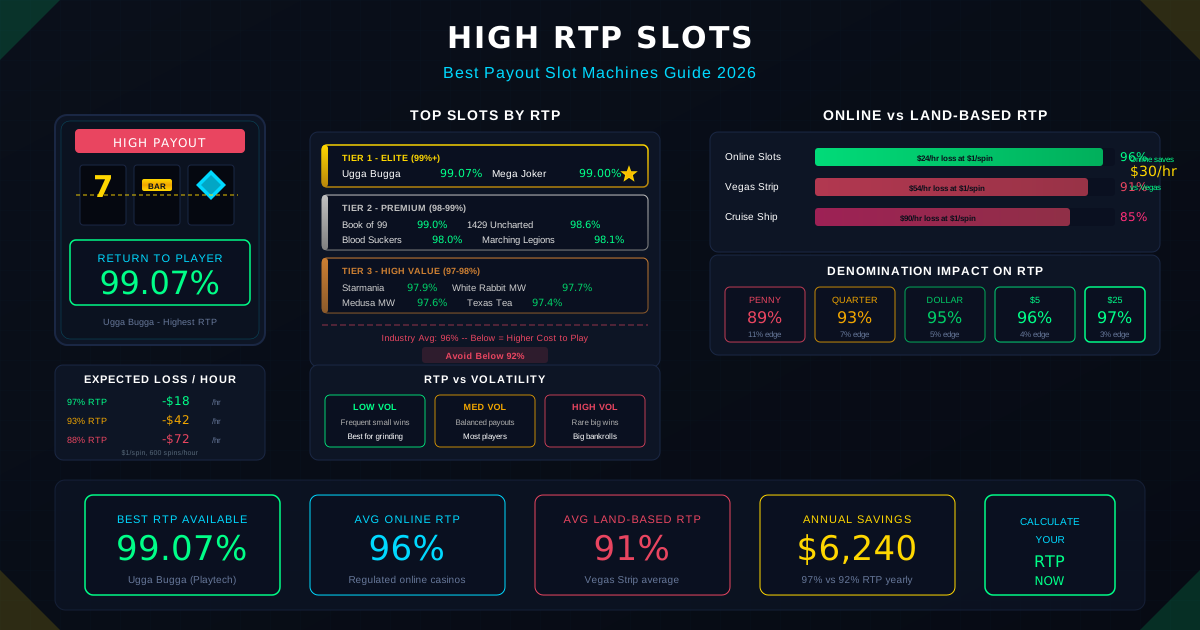
RTP is the single most important number in slot machine gambling, and most players never check it. Two machines sitting side by side on a casino floor can have wildly different return rates -- one paying back 97 cents of every dollar wagered, the other paying back only 85 cents. Over a four-hour session at $1 per spin and 600 spins per hour, that 12-point RTP gap means the difference between an expected loss of $72 and an expected loss of $360. Same casino, same bet size, same time spent -- but one machine costs you five times more than the other.
The problem is that most slot players pick machines based on theme, bonus features, or which seat is open. They are choosing entertainment while ignoring the price tag. RTP tells you exactly what a machine costs to play, and once you understand it, you will never look at a slot floor the same way again.
This guide covers the highest RTP slot machines available in 2026, explains exactly how RTP works, and gives you practical methods for finding and verifying RTP before you sit down and play.
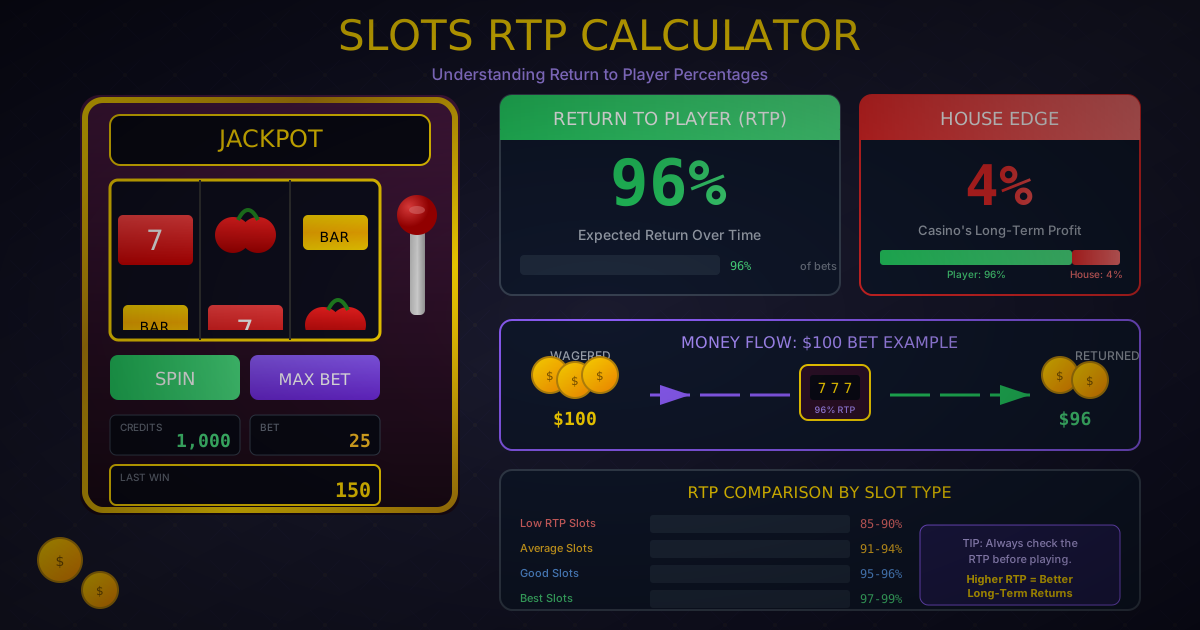
Calculate the expected cost of any slot session with our free Slot Machine RTP Calculator.
What Is RTP and How Does It Actually Work?
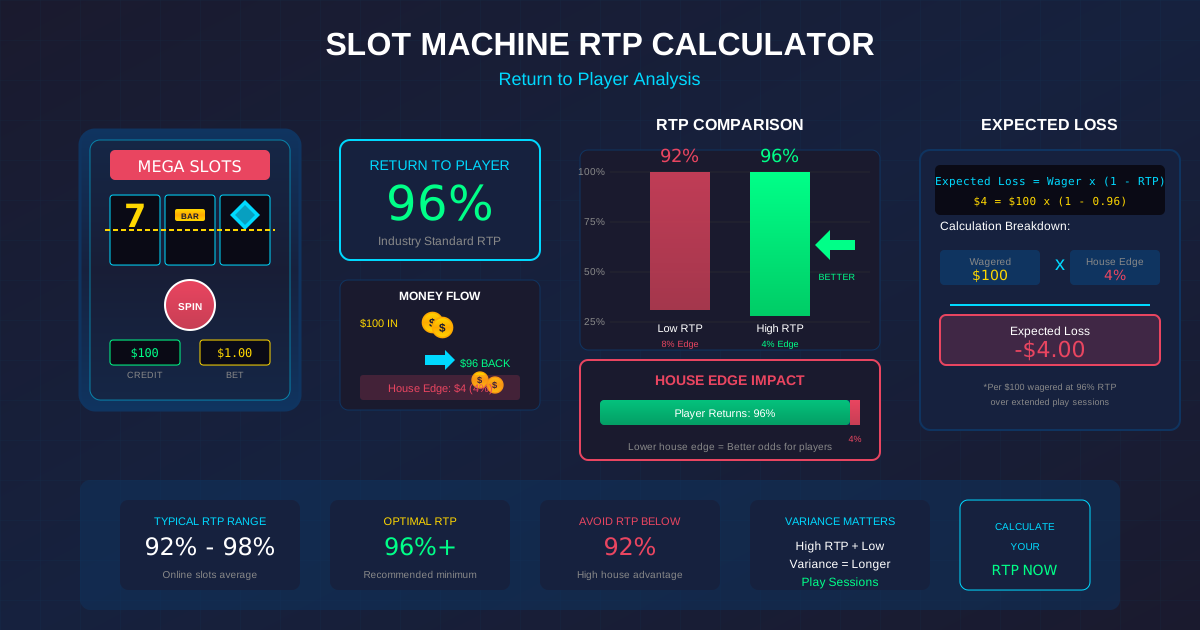
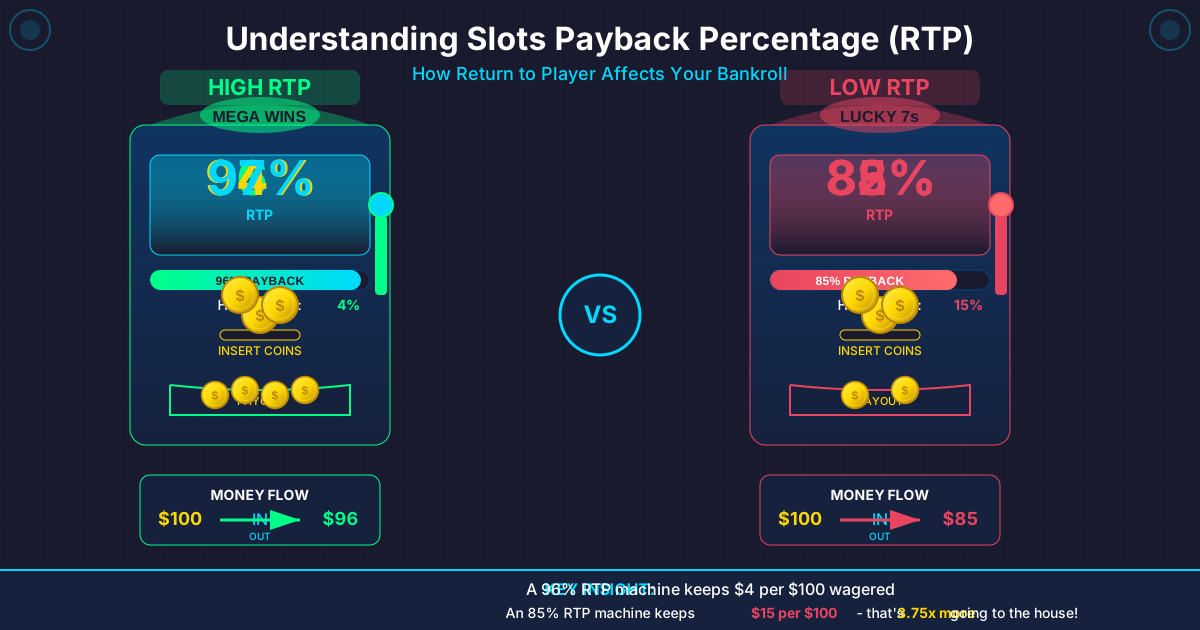
RTP stands for Return to Player. It is the theoretical percentage of all wagered money that a slot machine pays back to players over its lifetime. A slot with 96% RTP returns $96 for every $100 wagered -- on average, across millions of spins.
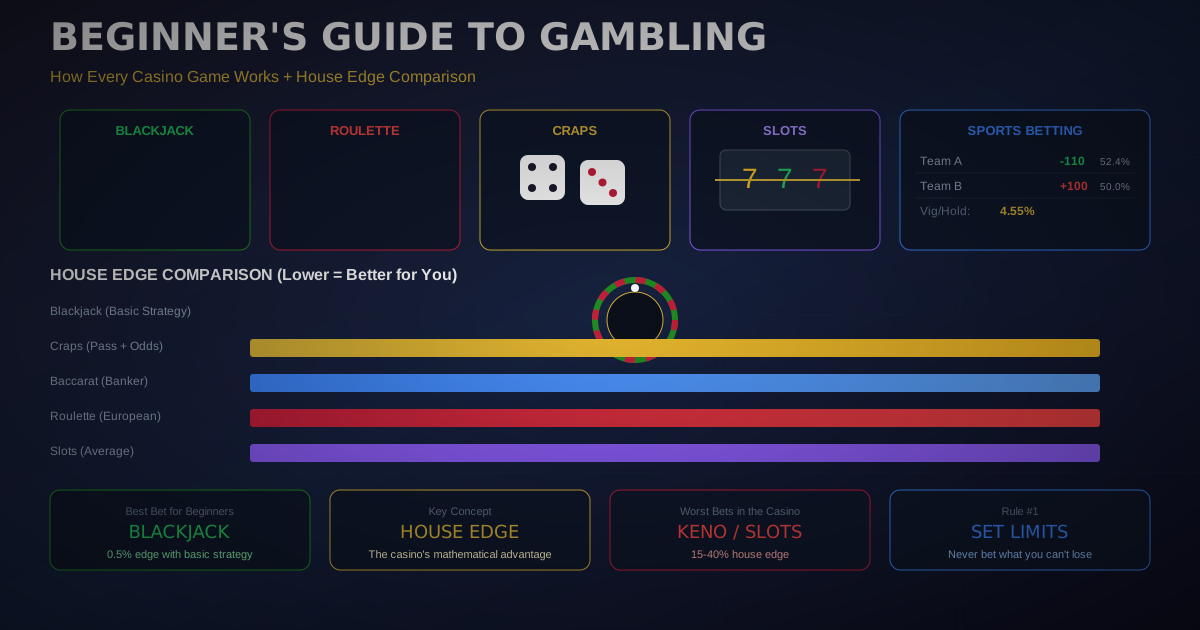
The remaining percentage is the house edge. A 96% RTP slot has a 4% house edge, which is the casino's mathematical profit margin built into the game.
The RTP Formula
RTP = (Total Amount Returned to Players / Total Amount Wagered) x 100

Example:
A slot processes $10,000,000 in total wagers
It pays out $9,600,000 in total winnings
RTP = ($9,600,000 / $10,000,000) x 100 = 96%
How RTP Is Calculated by Game Developers
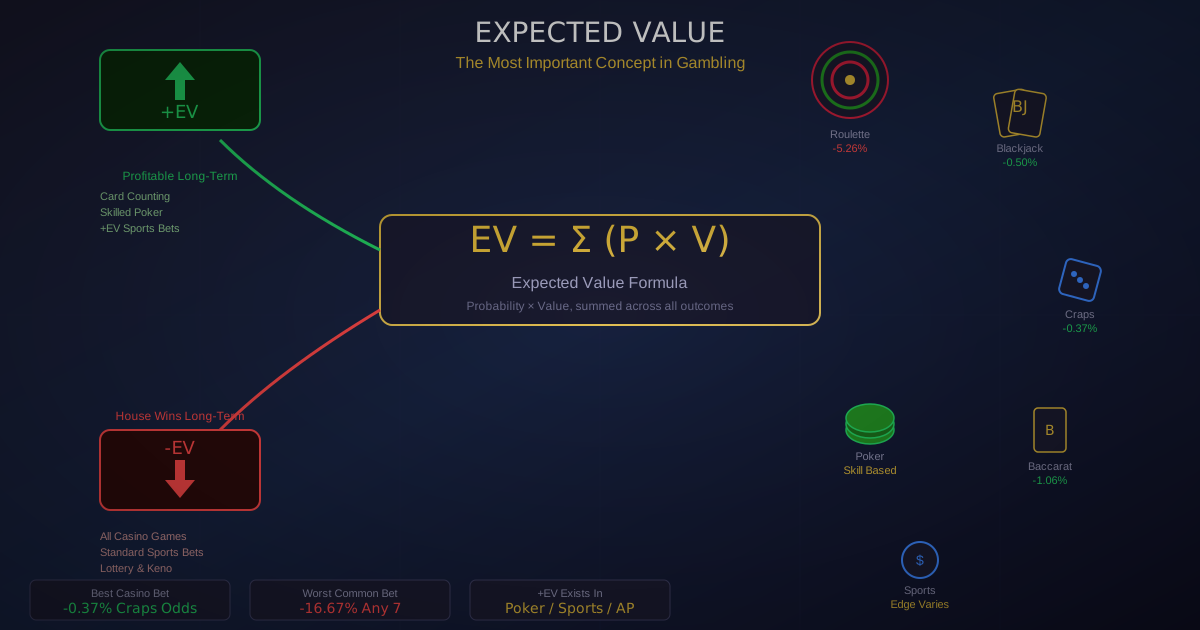
Game developers do not simply pick an RTP number. They calculate it mathematically by computing the expected value of every possible outcome across all paylines, bonus features, and symbol combinations. Every symbol combination's payout is multiplied by its probability, and all these values are summed to determine the total expected return.
For example, if a jackpot pays $10,000 with odds of 1-in-50,000, its contribution to the RTP is $10,000 / 50,000 = $0.20 per $1.00 wagered. Every winning combination contributes similarly. The sum of all contributions equals the overall RTP.
How RTP Is Verified and Regulated
Before a slot game reaches players, it undergoes testing by independent laboratories and regulatory bodies:
- Independent testing labs such as eCOGRA, GLI (Gaming Laboratories International), and iTech Labs audit the game's random number generator (RNG) and mathematical model
- Gaming commissions in jurisdictions like the UK, Malta, and US states require developers to submit games for certification
- Ongoing audits verify that the actual payout percentages match the theoretical RTP over time
This means the RTP figures published for regulated games are not marketing claims -- they are independently verified mathematical properties of the game.
What RTP Does NOT Tell You
RTP is a long-term statistical average. It does not predict your individual session. Critical limitations include:
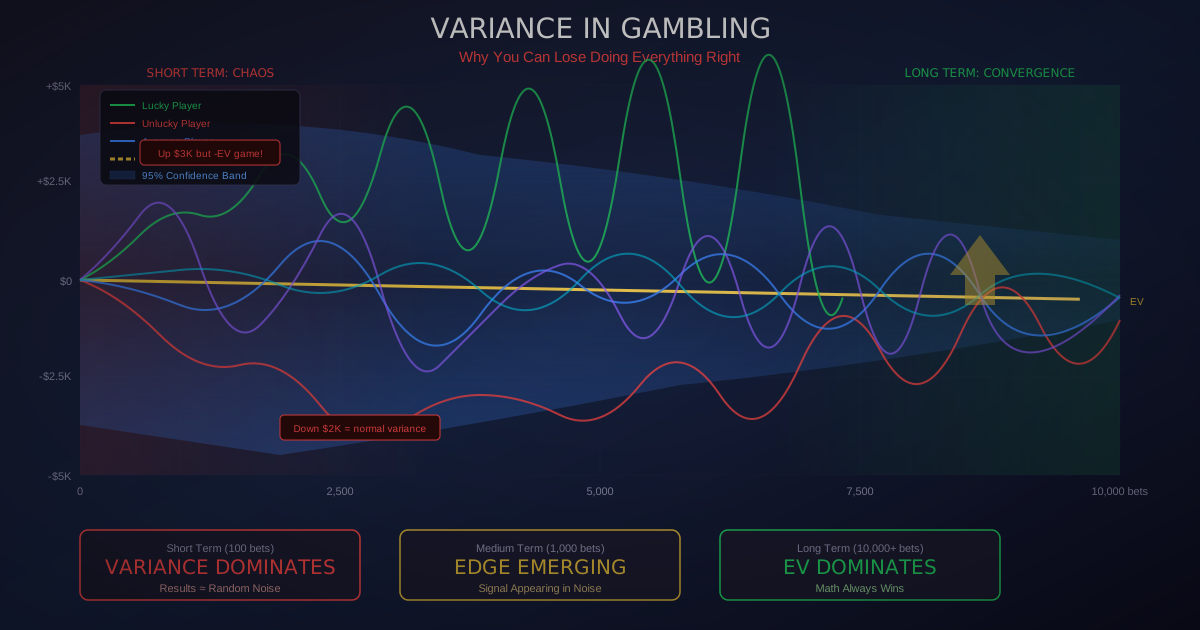
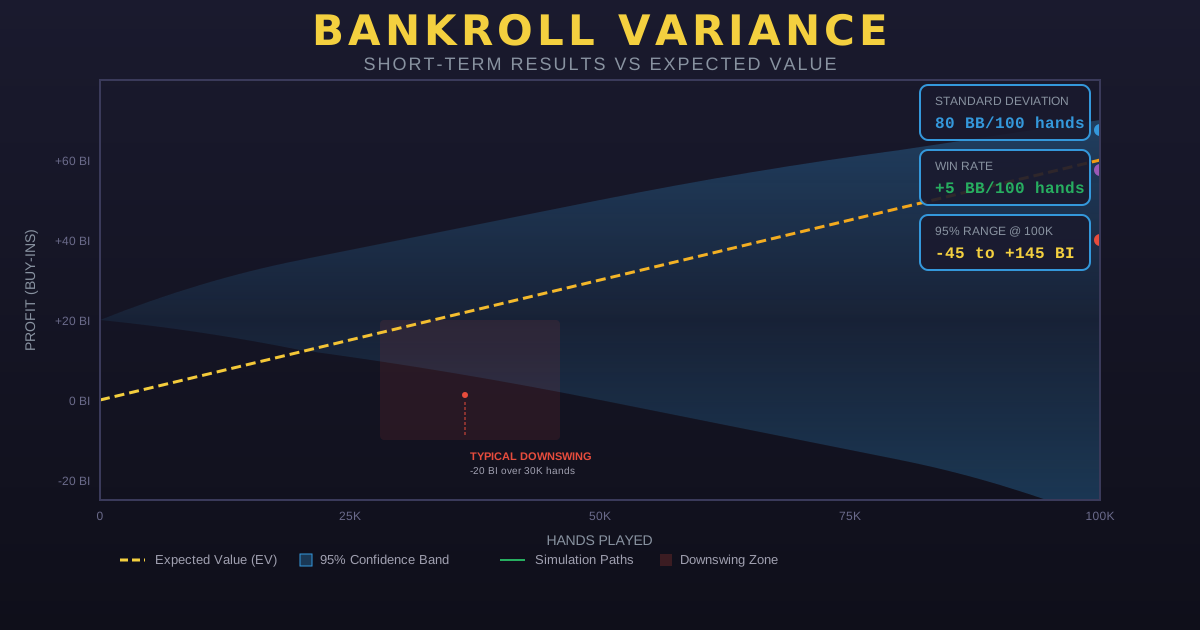
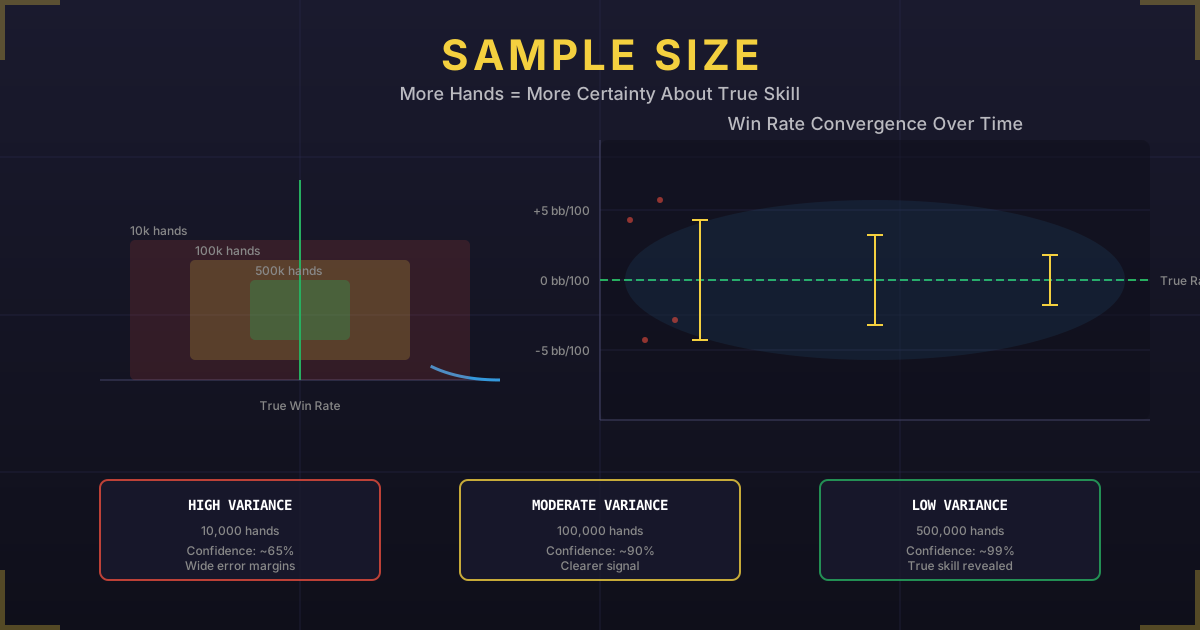
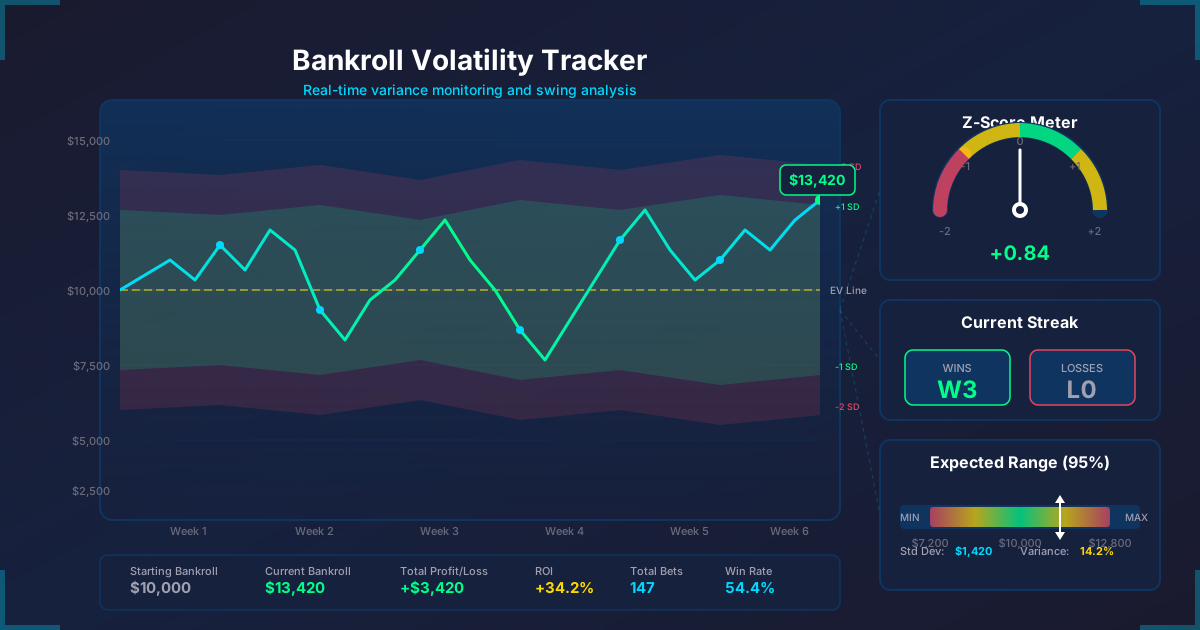
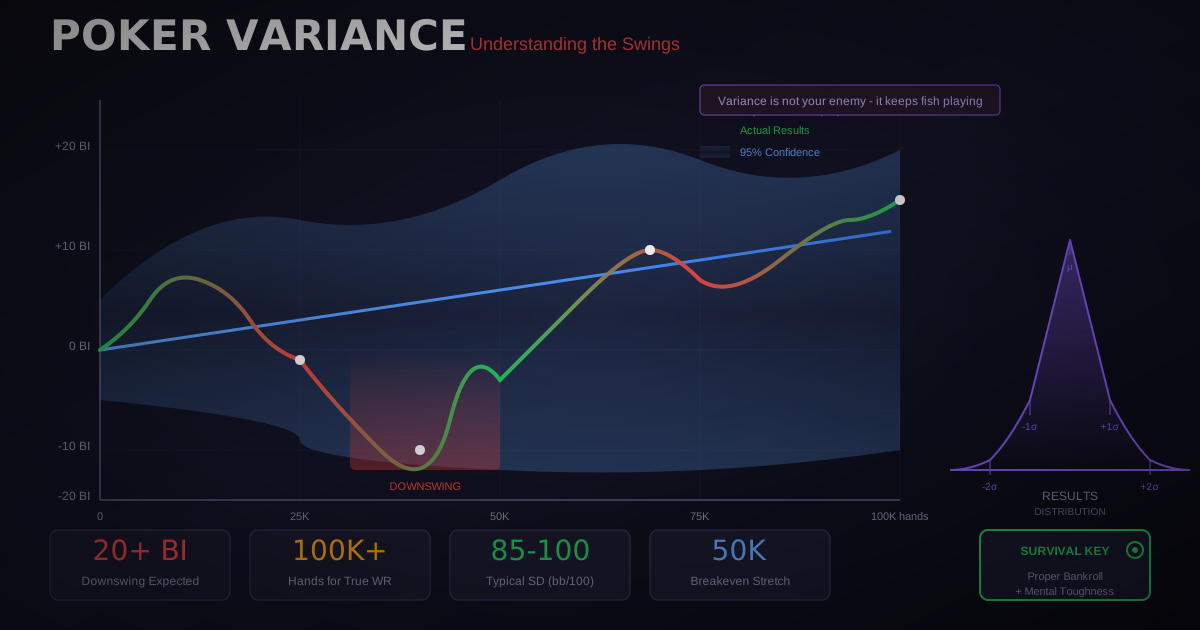
- RTP requires millions of spins to converge. In a single session of 500-1,000 spins, your actual return can vary enormously from the stated RTP
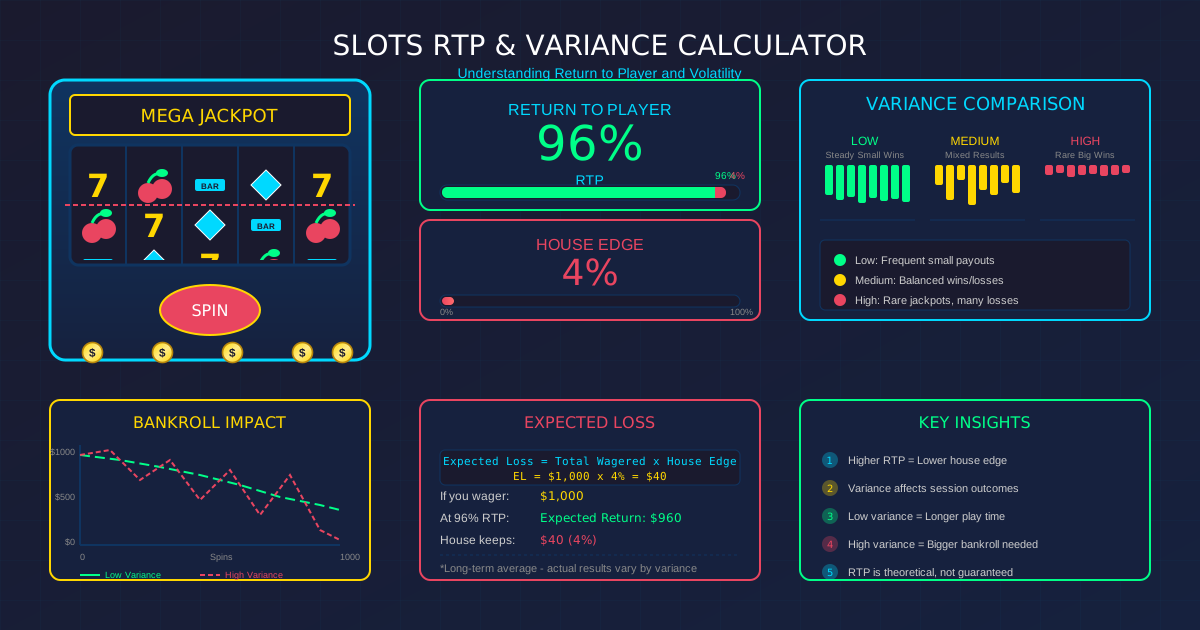
- RTP does not describe payout distribution. Two 96% RTP slots can have completely different player experiences depending on volatility
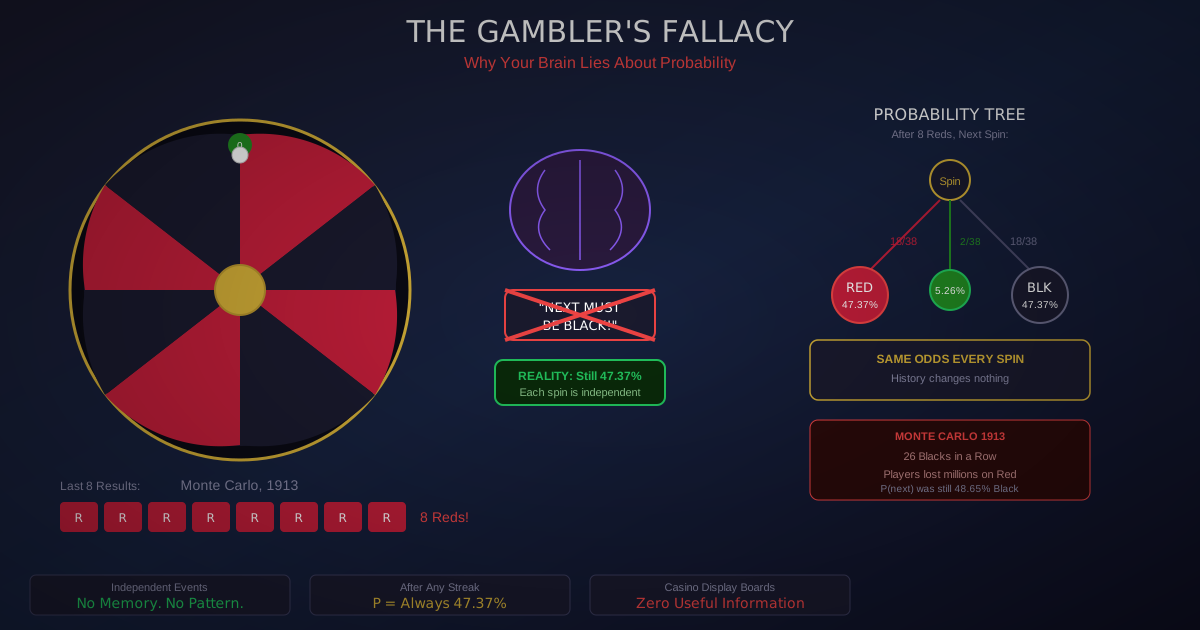
- RTP does not guarantee anything about your next spin. Each spin is independent and random
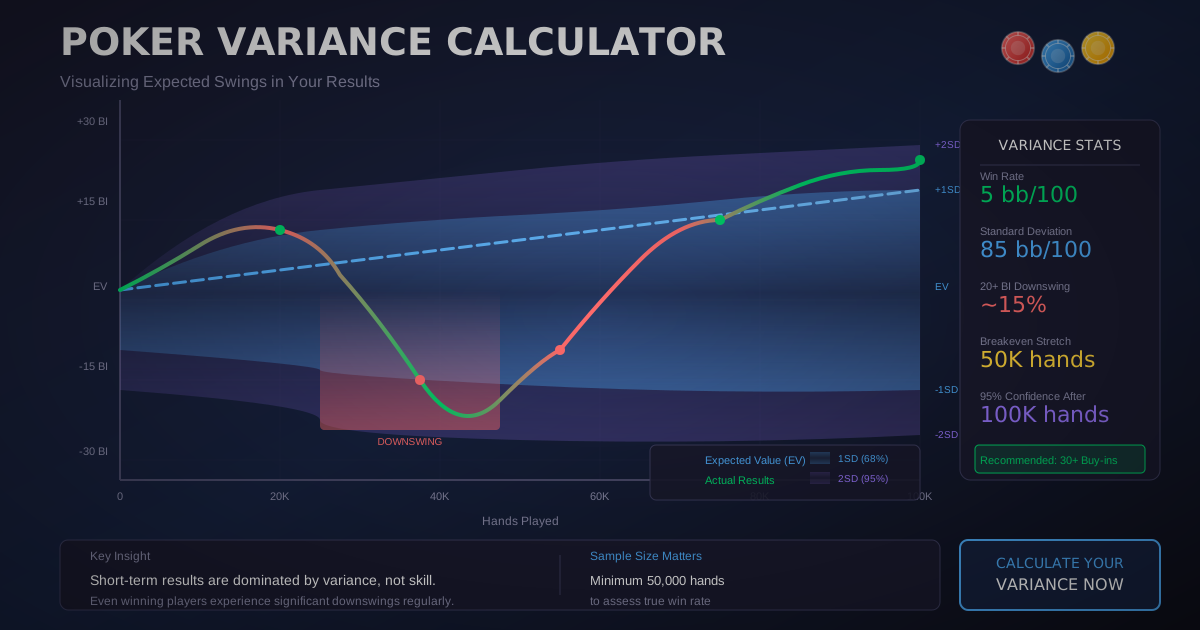
Compare expected losses across different RTP levels with our Slots RTP Variance Calculator.
The Top 20 Highest RTP Slot Machines (2026)
The following table lists the highest RTP slot games available at regulated online casinos. These are the games that give back the most to players over time.
| Rank | Slot Name | Developer | RTP | Volatility | Theme |
|---|---|---|---|---|---|
| 1 | Ugga Bugga | Playtech | 99.07% | Low | Tribal/Jungle |
| 2 | Mega Joker (Supermeter) | NetEnt | 99.00% | Medium | Classic Joker |
| 3 | Book of 99 | Relax Gaming | 99.00% | Medium-High | Ancient Greek |
| 4 | 1429 Uncharted Seas | Thunderkick | 98.60% | Low | Exploration/Maps |
| 5 | Joker Strike | Quickspin | 98.11% | Medium | Classic Fruit |
| 6 | Blood Suckers | NetEnt | 98.00% | Low | Vampires |
| 7 | Kings of Chicago | NetEnt | 97.80% | Medium | 1920s Poker |
| 8 | Starmania | NextGen Gaming | 97.87% | Low-Medium | Space/Stars |
| 9 | White Rabbit Megaways | Big Time Gaming | 97.72% | High | Alice in Wonderland |
| 10 | Devil's Delight | NetEnt | 97.60% | Medium | Horror/Devil |
| 11 | Simsalabim | NetEnt | 97.50% | Medium | Magic Show |
| 12 | Jackpot 6000 | NetEnt | 98.86% | Medium | Classic Jackpot |
| 13 | Steam Tower | NetEnt | 97.04% | Medium | Steampunk |
| 14 | Secrets of Atlantis | NetEnt | 97.07% | Low | Underwater |
| 15 | Halloween Fortune | Playtech | 97.06% | Medium | Halloween |
| 16 | Texas Tea | IGT | 97.35% | Medium | Oil/Western |
| 17 | Medusa Megaways | NextGen Gaming | 97.63% | High | Greek Mythology |
| 18 | Marching Legions | Relax Gaming | 98.12% | Medium | Roman Soldiers |
| 19 | Dr Jekyll Goes Wild | Barcrest | 98.00% | Medium | Classic Horror |
| 20 | Wild Cupid | Spin Games | 98.00% | Low | Romance |
Important caveat: Some online casinos offer reduced-RTP versions of these games. A slot listed at 98% RTP from the developer may be configured at 94% or 95% at certain casinos. Always verify the in-game RTP before playing.
Breakdown of the Top 5
Ugga Bugga (99.07% RTP) -- Playtech's multi-hand slot remains the highest RTP slot machine in the industry. Its unusual gameplay involves holding symbols across multiple sets of reels, which introduces a mild element of strategy. The low volatility means frequent small wins, making it excellent for extending playtime. The house edge is just 0.93%, which is comparable to many table games.
Mega Joker (99.00% RTP) -- NetEnt's classic slot achieves 99% RTP only when played in Supermeter mode with maximum coins. This is critical: playing at minimum stakes drops the RTP significantly, potentially into the low 90s. The game rewards players who understand and use the Supermeter feature correctly.
Book of 99 (99.00% RTP) -- Relax Gaming's entry features expanding symbols during free spins and a visual RTP tracker that fills as you play. The medium-high volatility means wins are less frequent but larger when they hit. It is one of the few modern high-RTP slots with engaging bonus mechanics.
1429 Uncharted Seas (98.60% RTP) -- Thunderkick's beautifully designed exploration-themed slot combines a top-tier RTP with low volatility and expanding wilds. The peaceful aesthetic belies excellent mathematics underneath.
Joker Strike (98.11% RTP) -- Quickspin's classic-styled fruit machine features the Hi Roller mode, which offers enhanced features at a higher bet cost but maintains the high overall return.
Use our Slot Machine RTP Calculator to see how these RTP differences translate to actual dollar savings per hour.
RTP vs. Volatility: Both Numbers Matter
RTP tells you how much comes back. Volatility tells you how that money comes back. Understanding both is essential to choosing the right slot for your bankroll and playing style.
What Is Volatility?
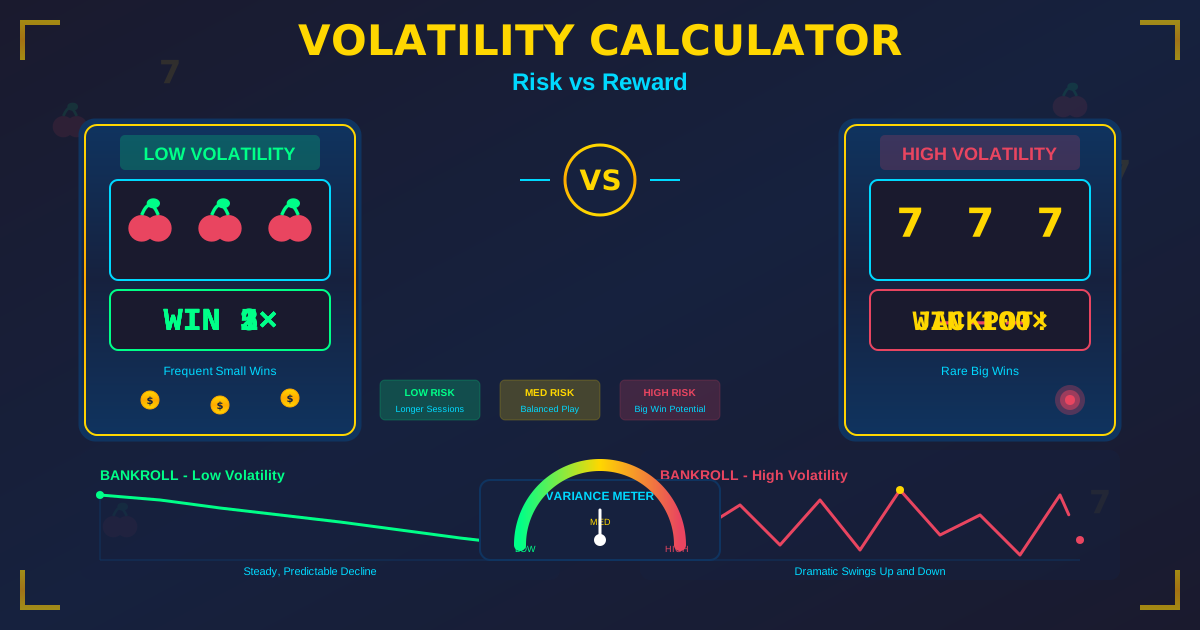
Volatility (also called variance) measures the risk profile of a slot machine -- how often it pays and how large those payments tend to be.
| Volatility Level | Win Frequency | Win Size | Session Experience | Best For |
|---|---|---|---|---|
| Low | Frequent (every 3-5 spins) | Small | Steady, gradual | Small bankrolls, long sessions |
| Medium | Moderate (every 5-15 spins) | Mixed | Balanced | Most players |
| High | Rare (every 15-50+ spins) | Large | Streaky, dramatic | Large bankrolls, big win hunters |
Same RTP, Different Experience
Consider two slots, both with 96% RTP:
Slot A (Low Volatility, 96% RTP):
- Wins every 4 spins on average
- Typical win: 1-5x your bet
- Your bankroll fluctuates gently
- After 500 spins at $1/spin, you might be anywhere from -$40 to +$20
Slot B (High Volatility, 96% RTP):
- Wins every 30 spins on average
- Typical win: 10-500x your bet
- Your bankroll drops sharply between wins, then spikes
- After 500 spins at $1/spin, you might be anywhere from -$200 to +$500
Both return 96% over millions of spins. But your session experience and bankroll requirements are completely different.
The RTP-Volatility Matrix
| Low Volatility | Medium Volatility | High Volatility | |
|---|---|---|---|
| High RTP (97%+) | Best for grinding. Lowest expected loss with smooth play. Example: Blood Suckers (98%, Low) | Balanced. Good returns with some excitement. Example: Mega Joker (99%, Medium) | Big win potential with good math. Example: White Rabbit Megaways (97.72%, High) |
| Medium RTP (94-97%) | Safe but slow. Example: Starburst (96.09%, Low) | The industry average. Most slots live here. | Standard high-risk option. Longer losing streaks. |
| Low RTP (Below 94%) | Slow bleed. Frequent small wins masking high cost. | Avoid. Worst of both worlds. | Extremely risky. Long droughts with poor base math. |
The sweet spot for most players is high RTP combined with low-to-medium volatility. You get the mathematical advantage of losing less over time AND the practical advantage of a more stable bankroll during any given session.
Analyze volatility impact on your expected results with our Slots Volatility Calculator.
How to Find RTP Information Before You Play
Knowing which slots have high RTP is useless if you cannot verify the RTP of the specific machine or game in front of you. Here are the practical methods for finding RTP information.
Method 1: Check the Game's Paytable or Help Menu
Most regulated online slots display their RTP somewhere in the game:
- In-game info/help menu -- Look for "?" or "i" icons, then navigate to rules or game information
- Paytable screen -- Some developers include RTP at the bottom of the paytable
- Settings or gear icon -- Check advanced options or game settings
The exact location varies by developer. NetEnt games typically show RTP in the help/rules section. Playtech and IGT games often display it in the paytable.
Method 2: Check the Casino Lobby
Some regulated online casinos display the RTP directly in the game lobby next to each slot. This is increasingly common in UK-regulated casinos, where operators are encouraged to display this information prominently.
Method 3: Developer Websites and Documentation
Game developers publish RTP specifications for their games. Check the developer's official game page or product sheet. This is the most reliable source, but remember that casinos can sometimes select from multiple RTP configurations for the same game.
Method 4: State Gaming Commission Reports
In the United States, state gaming commissions publish monthly or quarterly reports showing average slot payback percentages by denomination and casino:
| Source | What It Shows | Granularity |
|---|---|---|
| Nevada Gaming Control Board | Monthly averages by area and denomination | By region (Strip, Downtown, Boulder, etc.) |
| New Jersey Division of Gaming Enforcement | Monthly casino win reports | By casino |
| Pennsylvania Gaming Control Board | Revenue reports with payout data | By casino |
| Michigan Gaming Control Board | Slot revenue and payback | By casino |
These reports show averages, not individual machine RTPs. But they tell you whether a particular casino is setting its machines tighter or looser than the market average.
Method 5: Third-Party Review Sites
Reputable slot review sites test and publish RTP information. Cross-reference multiple sources to verify, as casinos can offer different RTP versions of the same game.
Red Flags: When RTP Is Hidden
Be cautious in these situations:
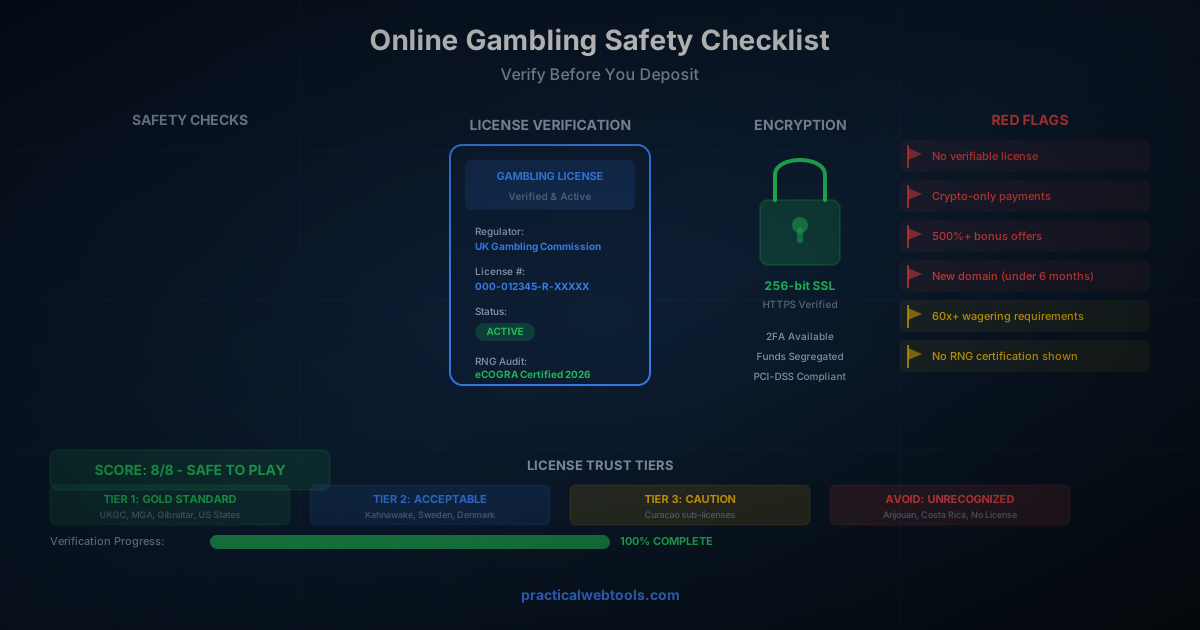
- The game has no accessible RTP information -- Regulated games must disclose RTP; if you cannot find it, the casino may be operating in a gray area
- The RTP shown is significantly lower than the developer's published rate -- The casino may be using a reduced-RTP version
- Social or sweepstakes casino games -- These are often not regulated to the same standards and may not disclose accurate RTP
Track your actual session results against expected RTP with our Slots Payback Percentage Calculator.
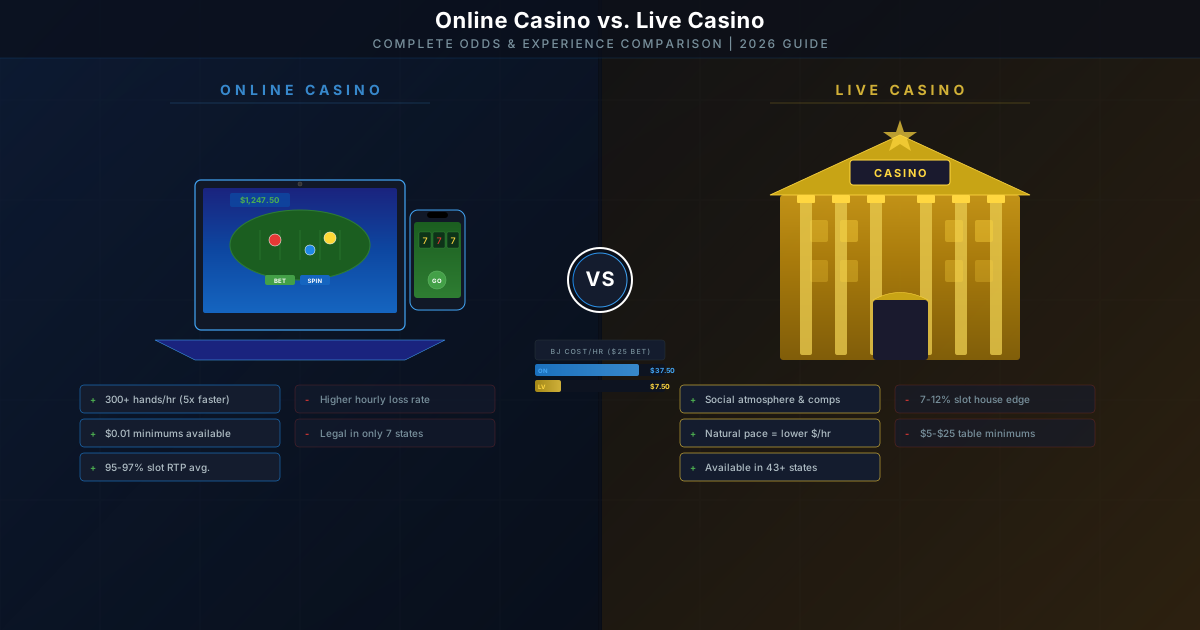
Online Slots vs. Land-Based Casino RTP: The Gap Is Enormous
One of the most impactful choices a slot player makes is not which game to play, but where to play it. The RTP difference between online and land-based slots is significant enough to fundamentally change the cost of playing.
Average RTP by Venue Type
| Venue Type | Typical RTP Range | Average RTP | House Edge |
|---|---|---|---|
| Online casinos (regulated) | 94-99% | 96-97% | 3-4% |
| Las Vegas Strip casinos | 88-93% | 91% | 9% |
| Las Vegas local casinos | 92-95% | 93% | 7% |
| Atlantic City casinos | 89-93% | 91% | 9% |
| Native American casinos | 75-92% | Varies widely | 8-25% |
| Cruise ship casinos | 80-90% | 85% | 15% |
| Airport slot machines | 75-85% | 80% | 20% |
Why Online Slots Pay More
The economics are straightforward:
-
No physical overhead. An online casino does not pay rent on 100,000 square feet of casino floor, electricity for thousands of machines, or salaries for floor staff. Lower costs allow higher payouts.
-
Unlimited game selection. A physical casino has space for maybe 2,000-3,000 machines. An online casino can offer thousands of games simultaneously. They do not need to extract maximum revenue from each physical slot position.
-
Competition. A player at the Bellagio has limited alternatives without driving across town. An online player can switch to a competing casino in 30 seconds. This competitive pressure pushes online RTPs higher.
-
Regulatory requirements. Some online gambling jurisdictions mandate minimum RTPs. The UK Gambling Commission and Malta Gaming Authority both enforce transparency standards that tend to push RTPs upward.
The Dollar Impact of the Online vs. Land-Based Gap
Here is what the RTP gap costs you in real dollars, assuming 600 spins per hour at $1 per spin ($600 per hour wagered):
| Venue | RTP | House Edge | Expected Loss/Hour | 4-Hour Session Loss | Annual Loss (weekly play) |
|---|---|---|---|---|---|
| Online (high RTP) | 97% | 3% | $18 | $72 | $3,744 |
| Online (average) | 96% | 4% | $24 | $96 | $4,992 |
| Vegas Strip | 91% | 9% | $54 | $216 | $11,232 |
| Local casino | 93% | 7% | $42 | $168 | $8,736 |
| Cruise ship | 85% | 15% | $90 | $360 | $18,720 |
| Airport | 80% | 20% | $120 | $480 | $24,960 |
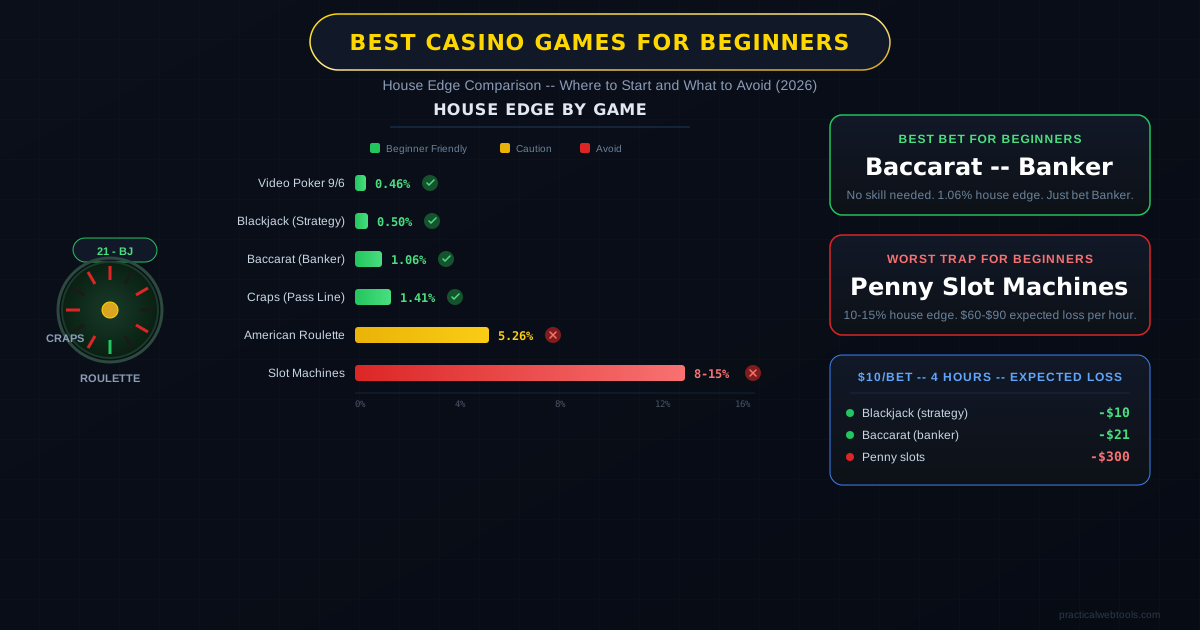
Playing the same bet size for the same amount of time, a cruise ship slot player loses five times more than a high-RTP online slot player. An airport slot player loses 6.7 times more.
If you play slots regularly, choosing where you play is arguably more important than choosing which specific game to play.
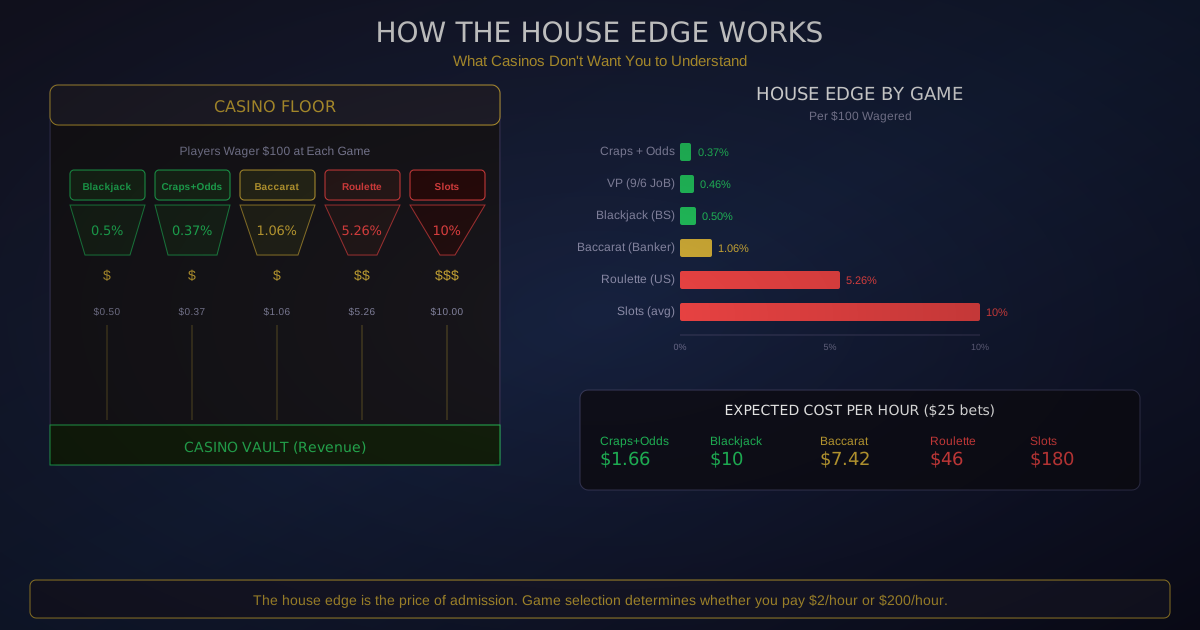
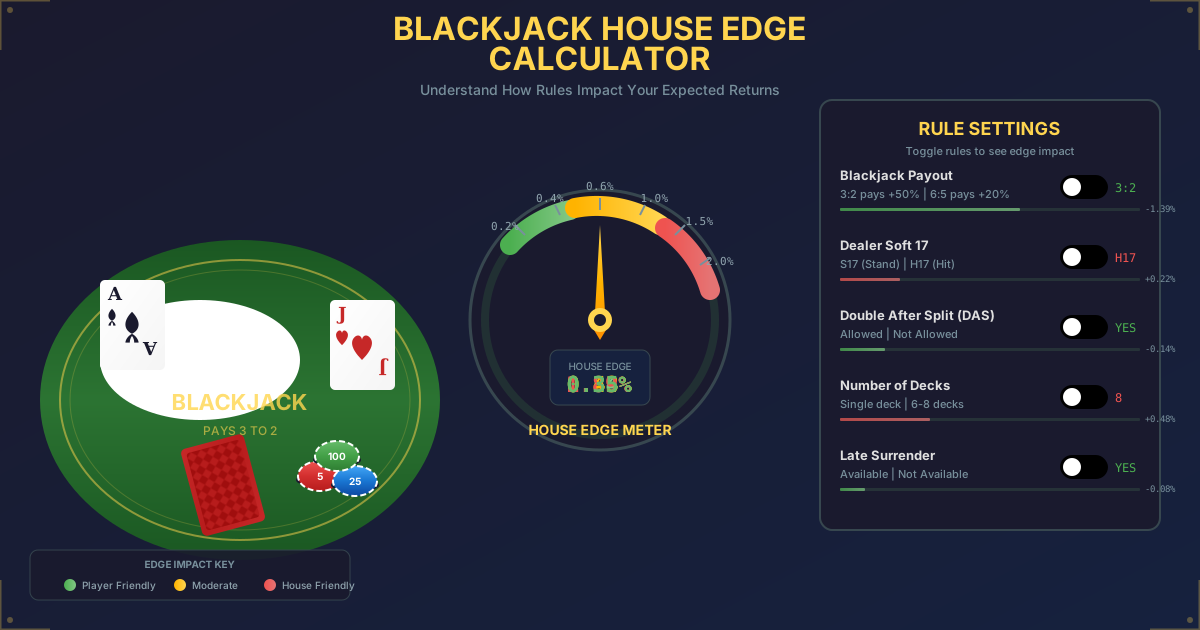
Compare the house edge of slots to table games with our Blackjack House Edge Calculator and Roulette House Edge Calculator.
How Denomination Affects RTP
At land-based casinos, the denomination of a slot machine correlates strongly with its RTP. Higher-denomination machines generally offer better returns.
Denomination-RTP Relationship
| Denomination | Typical RTP Range | Average RTP | House Edge |
|---|---|---|---|
| Penny ($0.01) | 86-92% | 89% | 11% |
| Nickel ($0.05) | 89-94% | 92% | 8% |
| Quarter ($0.25) | 91-95% | 93% | 7% |
| Dollar ($1.00) | 93-97% | 95% | 5% |
| Five-Dollar ($5.00) | 94-98% | 96% | 4% |
| Twenty-Five Dollar ($25.00) | 95-99% | 97% | 3% |
Why Higher Denominations Pay Better
Casinos set lower RTPs on penny slots because the profit per spin is tiny. A penny slot generating $0.01 per spin needs a higher percentage take to be profitable. A $5 slot generating $5.00 per spin can afford to return a higher percentage and still generate substantial revenue for the casino.
The Trap of Penny Slots
Penny slots are misleading. While they cost a penny per line, modern penny slots have 20-50+ paylines, and many require betting multiple credits per line to activate bonus features. The actual cost per spin is often $0.50 to $5.00 -- the same as a dollar or five-dollar slot -- but with the RTP of a penny slot.
Real-world example: A "penny" slot with 40 paylines at 2 credits per line at $0.01 costs $0.80 per spin. At 600 spins per hour, that is $480 wagered per hour. With a typical penny slot RTP of 89%, your expected loss is $52.80 per hour. A $1 denomination slot at 95% RTP costs $600/hour wagered but only $30/hour in expected losses.
| Machine | Cost/Spin | Spins/Hour | Total Wagered/Hour | RTP | Expected Loss/Hour |
|---|---|---|---|---|---|
| Penny (40 lines) | $0.80 | 600 | $480 | 89% | $52.80 |
| Dollar (single line) | $1.00 | 600 | $600 | 95% | $30.00 |
| Dollar (3 lines) | $3.00 | 600 | $1,800 | 95% | $90.00 |
The penny slot player wagers less but loses MORE per hour because of the RTP difference.
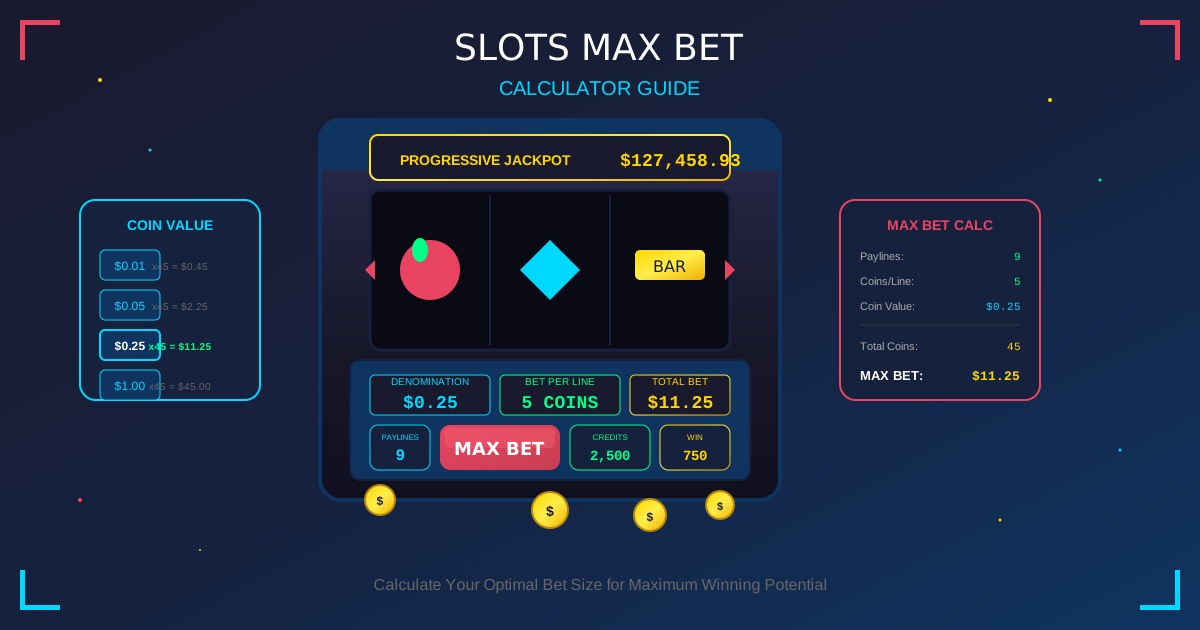
Calculate your exact cost per hour at any denomination with our Slots Max Bet Calculator.
Progressive Jackpot Slots: The RTP Trade-Off
Progressive jackpot slots -- where a portion of each bet feeds a growing prize pool -- present a unique RTP consideration that every slot player should understand.
How Progressives Reduce Base Game RTP
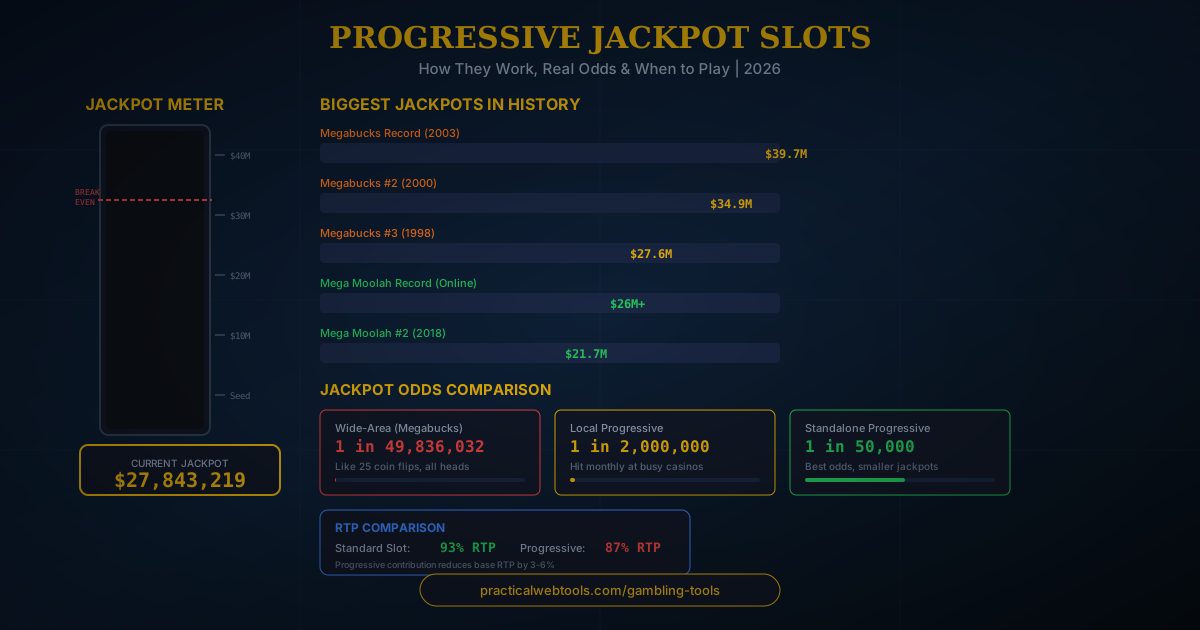
Progressive jackpot slots typically have lower RTPs than their non-progressive equivalents because a percentage of each bet is diverted to the jackpot fund rather than being returned through regular gameplay.
| Slot Type | Typical Base Game RTP | Jackpot Contribution | Total Theoretical RTP |
|---|---|---|---|
| Non-progressive (high RTP) | 96-99% | 0% | 96-99% |
| Local progressive | 90-94% | 1-3% | 91-97% |
| Wide-area progressive | 85-91% | 3-8% | 88-99% |
| Mega progressive (e.g., Mega Moolah) | 88-92% | 6-10% | 88-96% |
The Jackpot Inclusion Problem
Here is the critical nuance: the published RTP of a progressive slot typically includes the jackpot's contribution. But the jackpot is won extremely rarely -- often with odds of 1-in-10-million or worse.
Example: Mega Moolah
- Published RTP: ~88.12% (base game)
- Including jackpot contribution: ~96%+
- Odds of hitting the mega jackpot: approximately 1-in-10,000,000
If you never hit the jackpot -- and statistically, you almost certainly will not -- your actual experienced RTP is the base game rate of approximately 88%, not the published total that includes the jackpot. You are effectively playing a much worse game than the headline RTP suggests.
When Progressives Can Be Worth Playing
There is a mathematical concept called the "break-even point" for progressive jackpots. When a jackpot grows large enough, the expected value of each spin can theoretically exceed the cost, making it a positive-expectation bet.
However, this is impractical for most players because:
- The jackpot must reach an enormous amount (often tens of millions) to tip the math
- Even at positive EV, the variance is extreme -- you need a virtually unlimited bankroll to realize the mathematical advantage
- You are competing with thousands of other players chasing the same jackpot
For most slot players, non-progressive high-RTP slots are the better mathematical choice. The lower house edge compounds into significantly smaller losses over time.
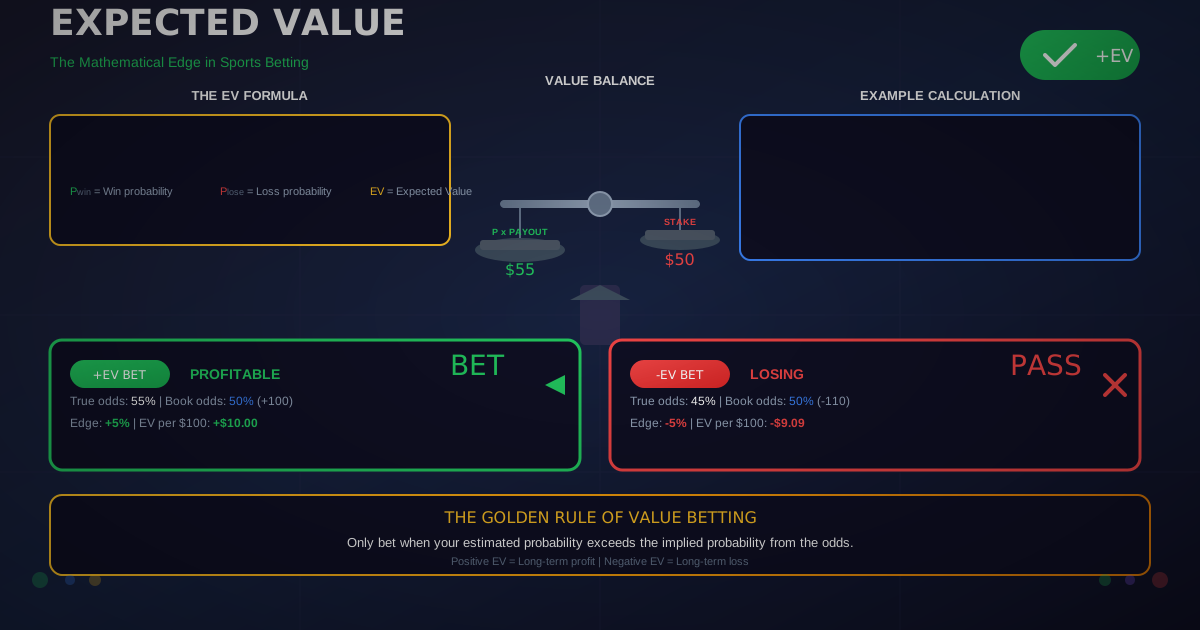
Analyze the expected value of any bet with our Expected Value Calculator.
Best Strategies for Slot Players Who Care About RTP
Slot machines are random and no strategy changes the underlying mathematics. However, you can make smarter choices about which games to play and how to manage your money.
Strategy 1: Always Check RTP Before Playing
This is the single most impactful action you can take. Before you commit money to any slot:
- Open the game's help/info menu and find the RTP
- If the RTP is below 95%, consider choosing a different game
- If you cannot find the RTP, be suspicious
A player who consistently chooses 97% RTP slots over 92% RTP slots saves approximately $30 per hour at $1/spin. Over a year of weekly four-hour sessions, that is $6,240 in reduced losses.
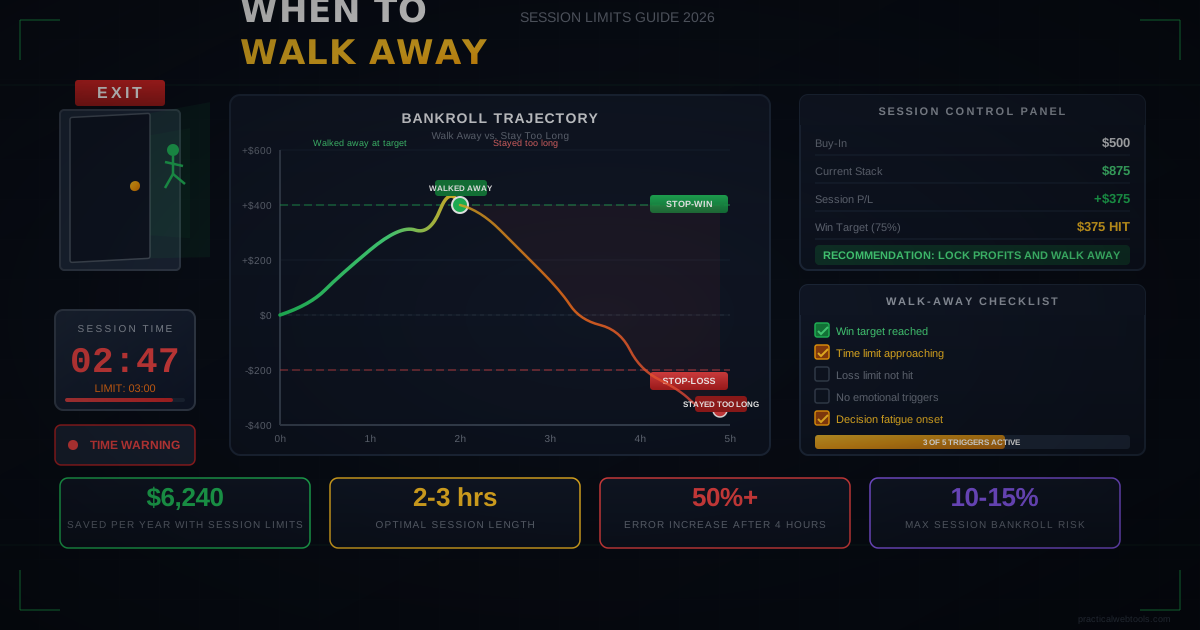
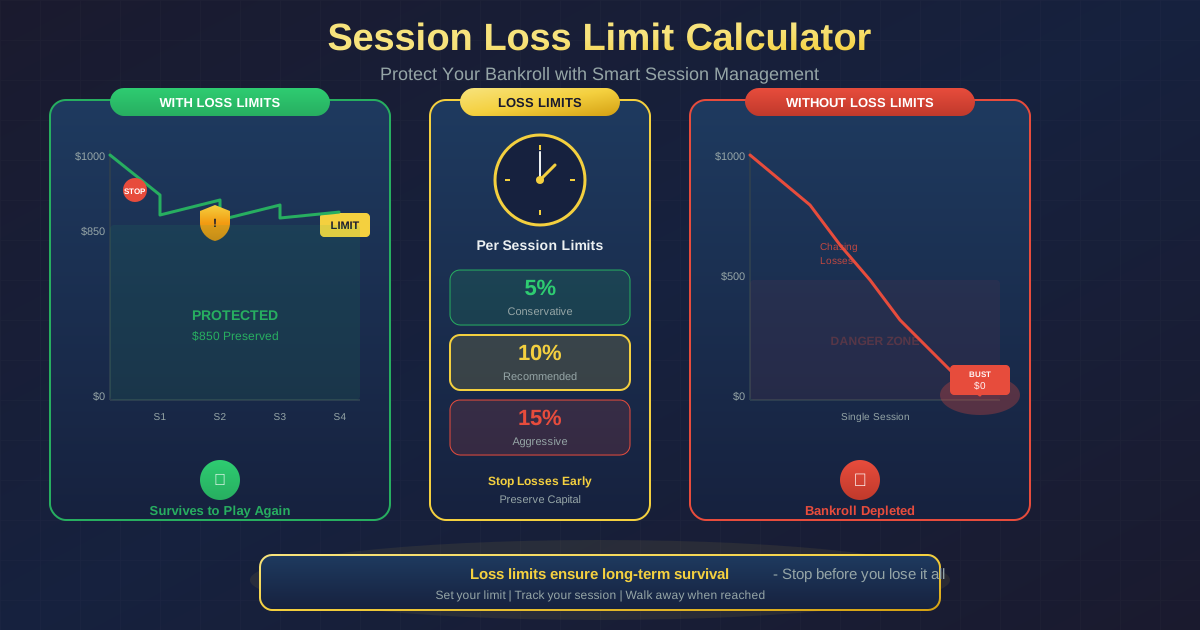
Strategy 2: Set a Loss Limit Based on Expected Loss
Calculate your expected loss before you play, and use it as your session budget:
Session Budget = (Bet Size x Spins per Hour x Hours) x House Edge x 1.5

Example for a 97% RTP slot:
$1/spin x 600 spins/hour x 4 hours = $2,400 total wagered
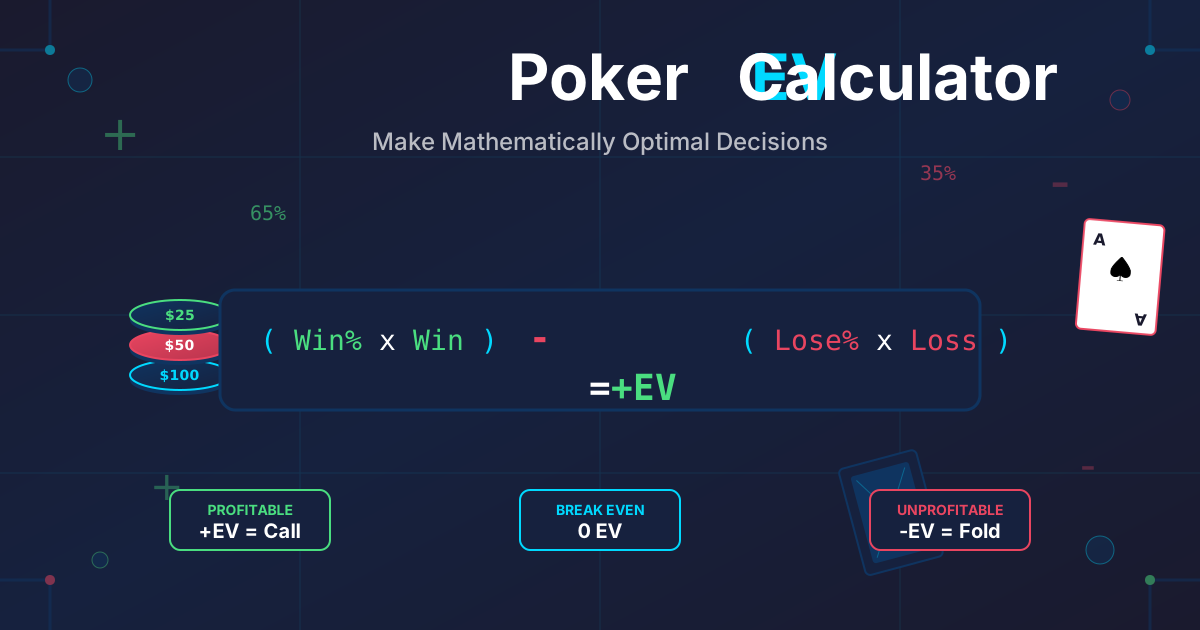
$2,400 x 0.03 house edge = $72 expected loss
Session budget: $72 x 1.5 = $108 (buffer for variance)
The 1.5x multiplier accounts for negative variance. If you lose your budget, stop. You have had a below-average session, and continuing will not change the math.
Strategy 3: Play Maximum Coins When It Matters
Some slots -- particularly classic three-reel games and progressives -- offer significantly higher RTPs when playing maximum coins. Mega Joker's 99% RTP, for example, only applies to Supermeter mode with max bet. At minimum stakes, the RTP can drop below 92%.
If a game has a better paytable or bonus activation at max bet, either play max bet or choose a lower denomination. Playing partial coins on these games is the worst of both worlds: you get the lower RTP without the reduced risk of a smaller bet.
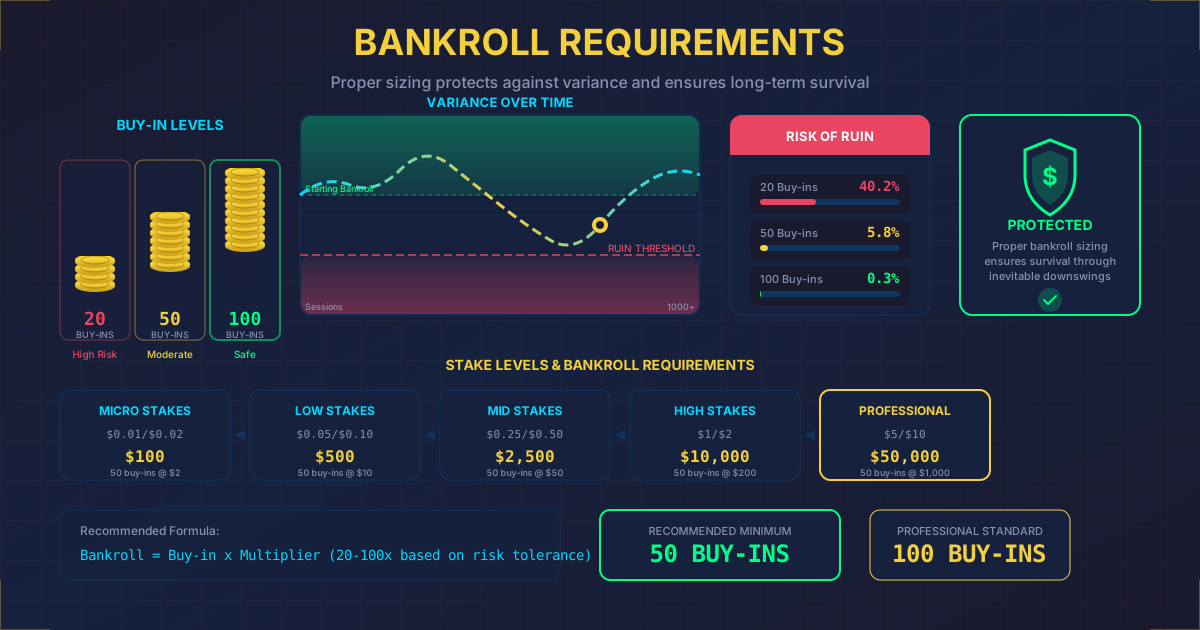
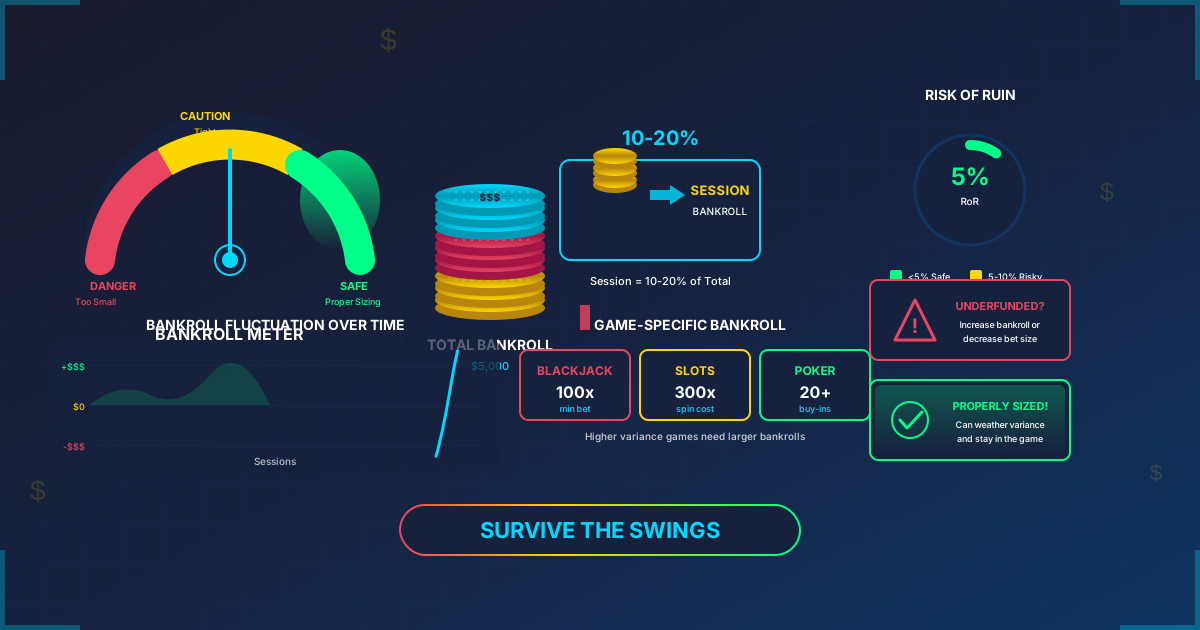
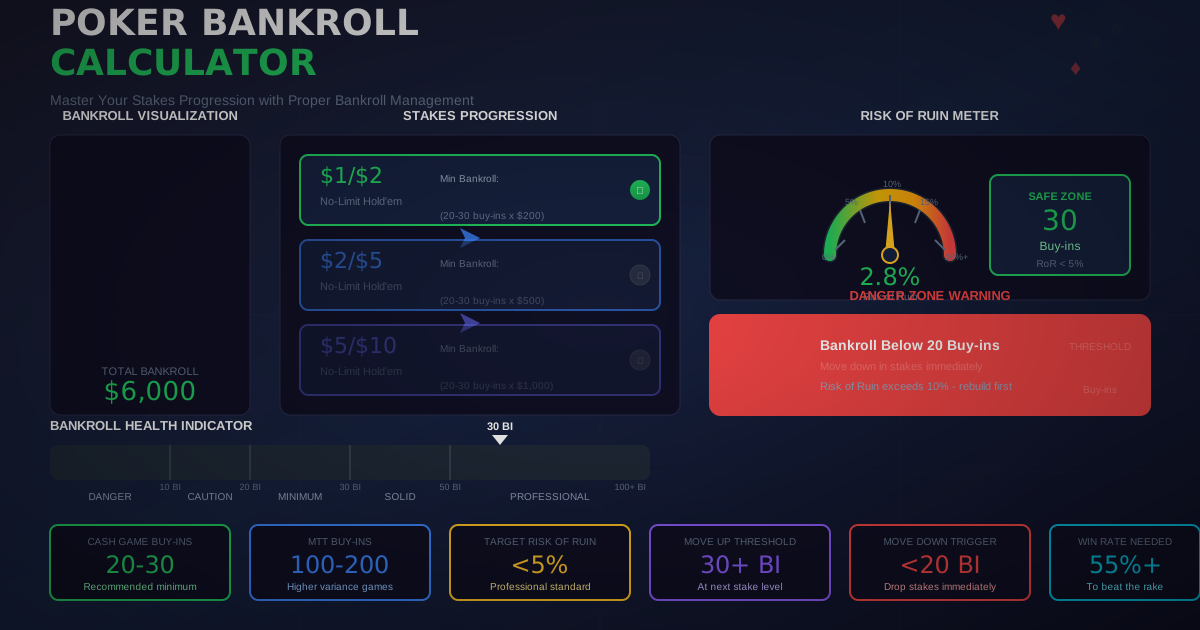
Strategy 4: Understand Your Bankroll Relative to Volatility
Match your bankroll to the slot's volatility:
| Volatility | Recommended Bankroll | Reasoning |
|---|---|---|
| Low | 100-200x your bet size | Wins come frequently; you need less cushion |
| Medium | 200-400x your bet size | Standard buffer for dry spells |
| High | 400-800x your bet size | Long losing streaks are common; you need staying power |
A $1/spin player on a high-volatility slot should have $400-$800 in session bankroll. With less, you risk busting out during a normal losing streak before the big wins have a chance to hit.
Strategy 5: Consider Video Poker as an Alternative
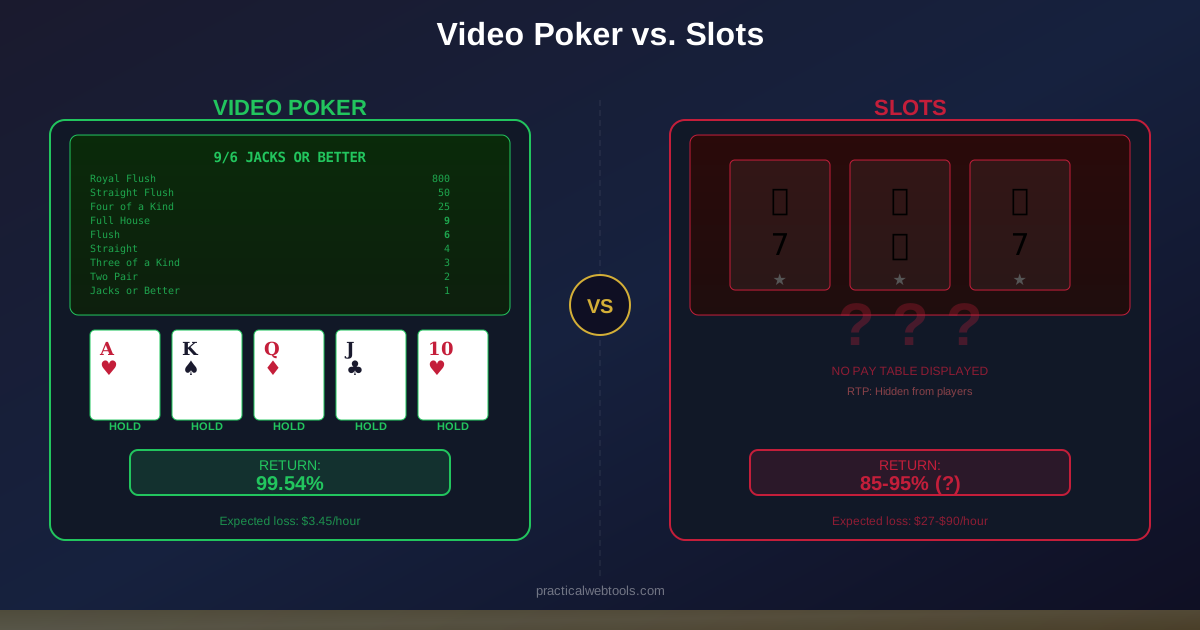
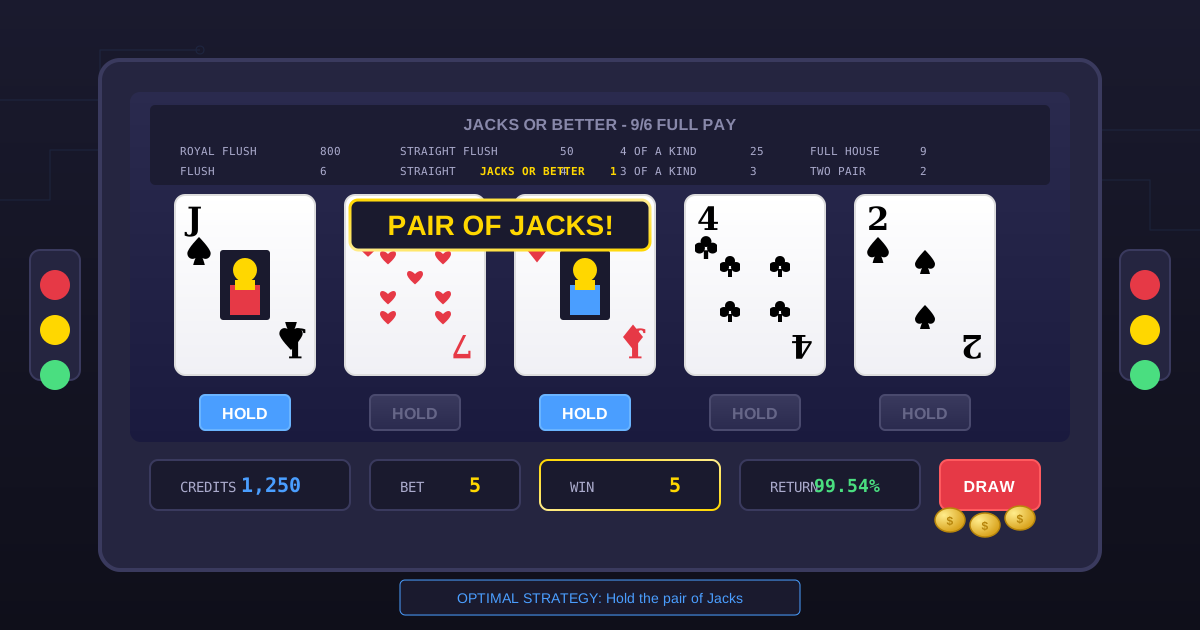
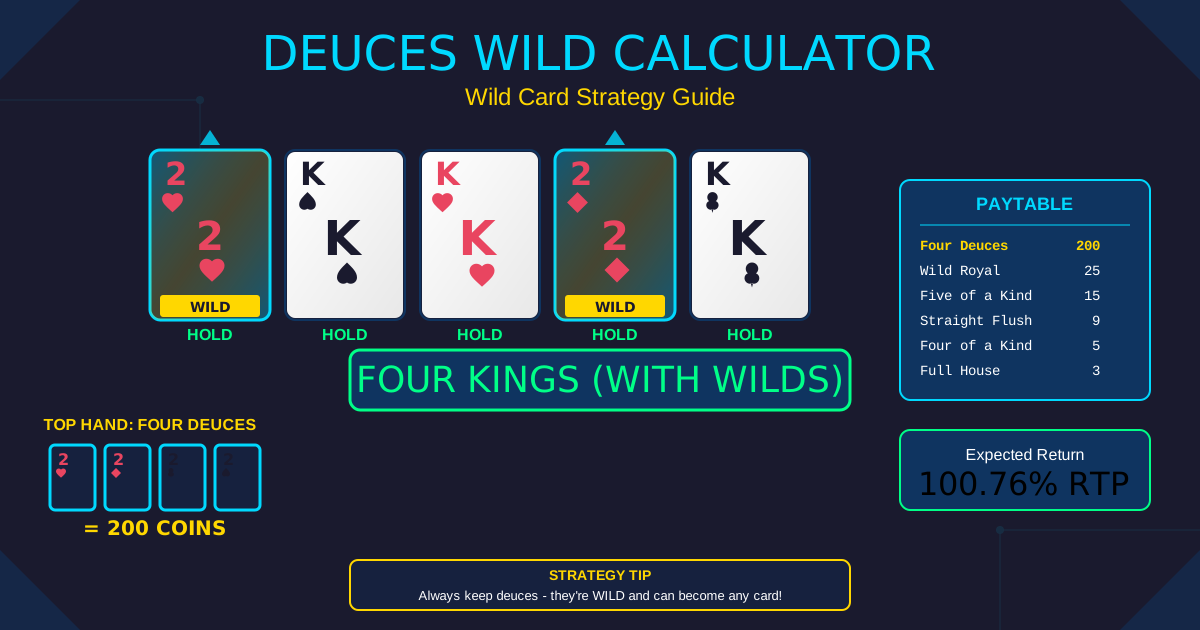
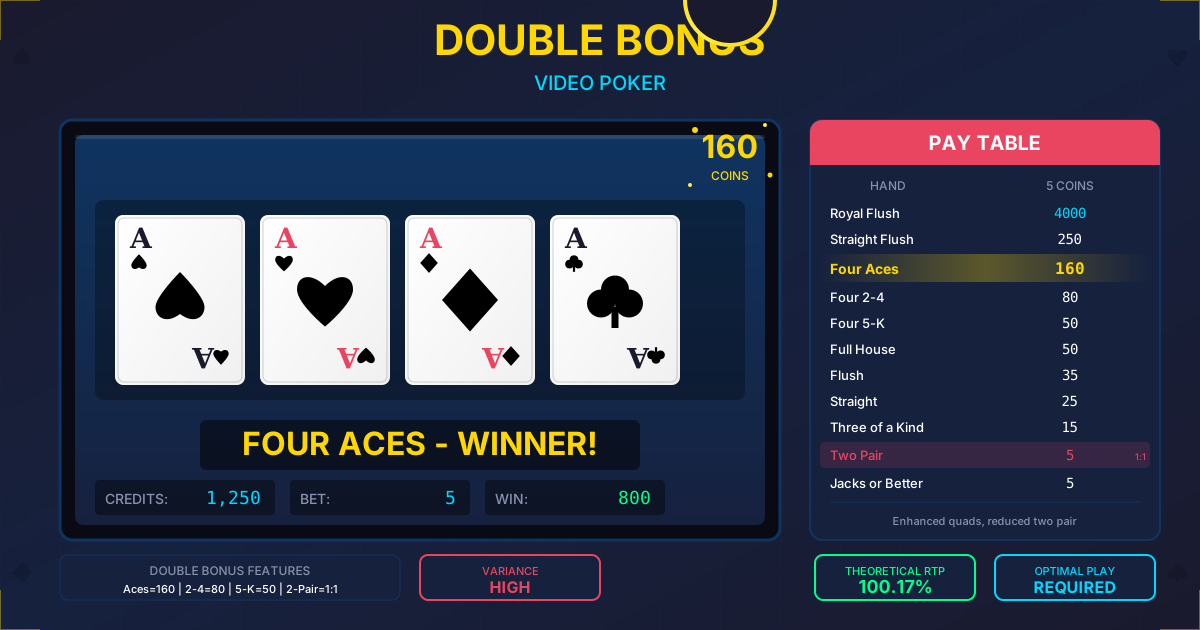
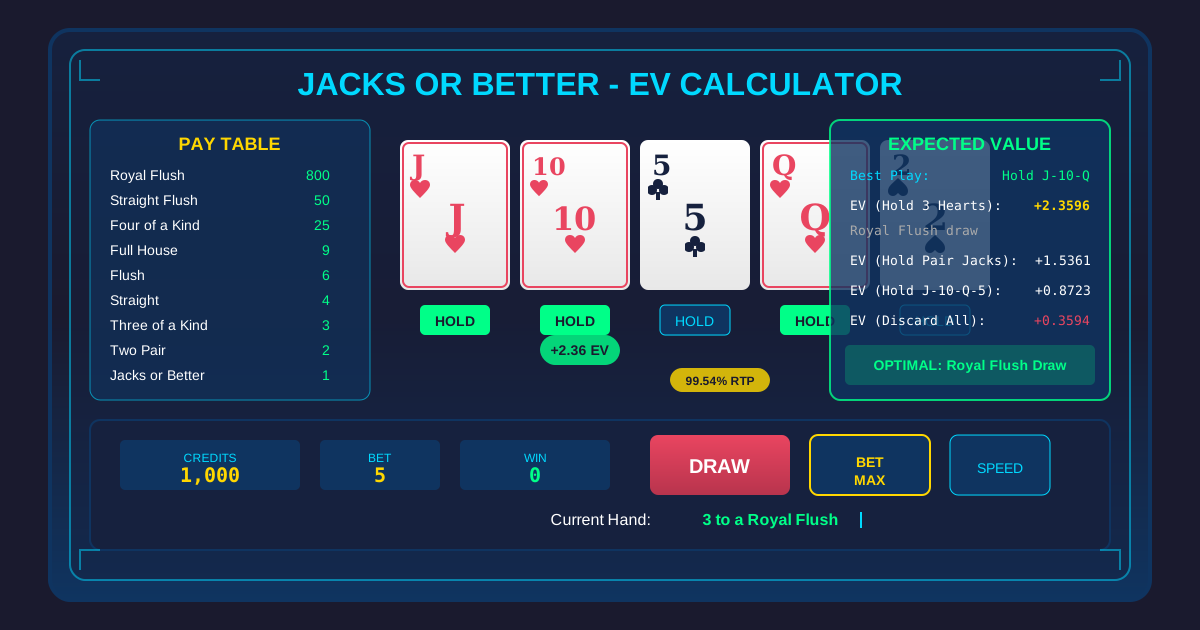
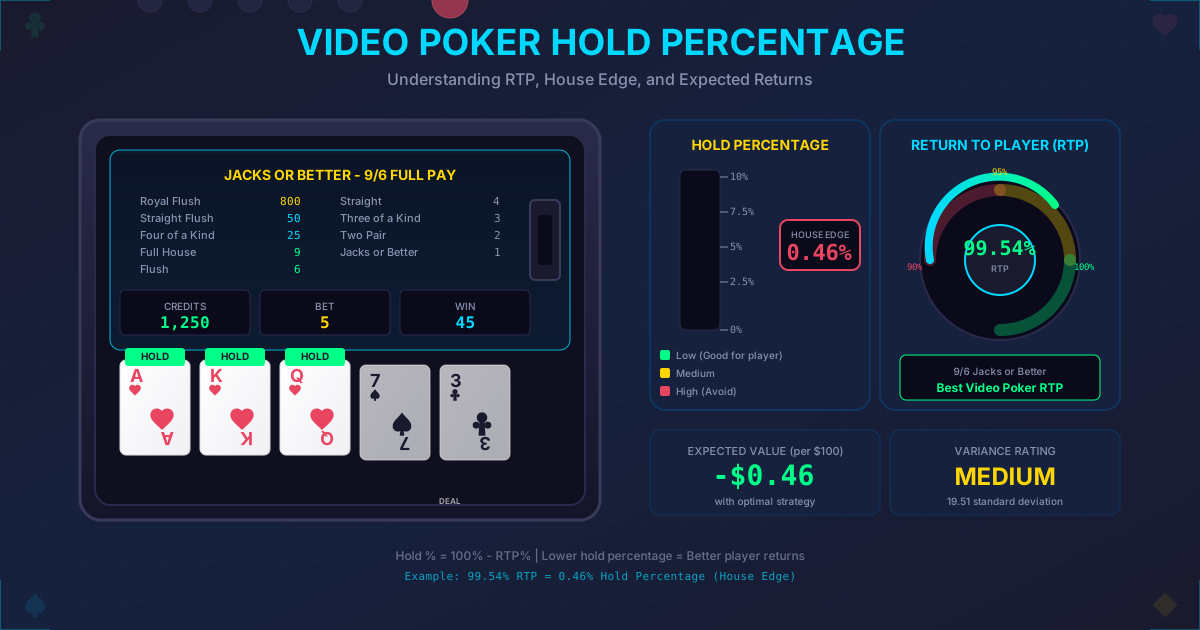
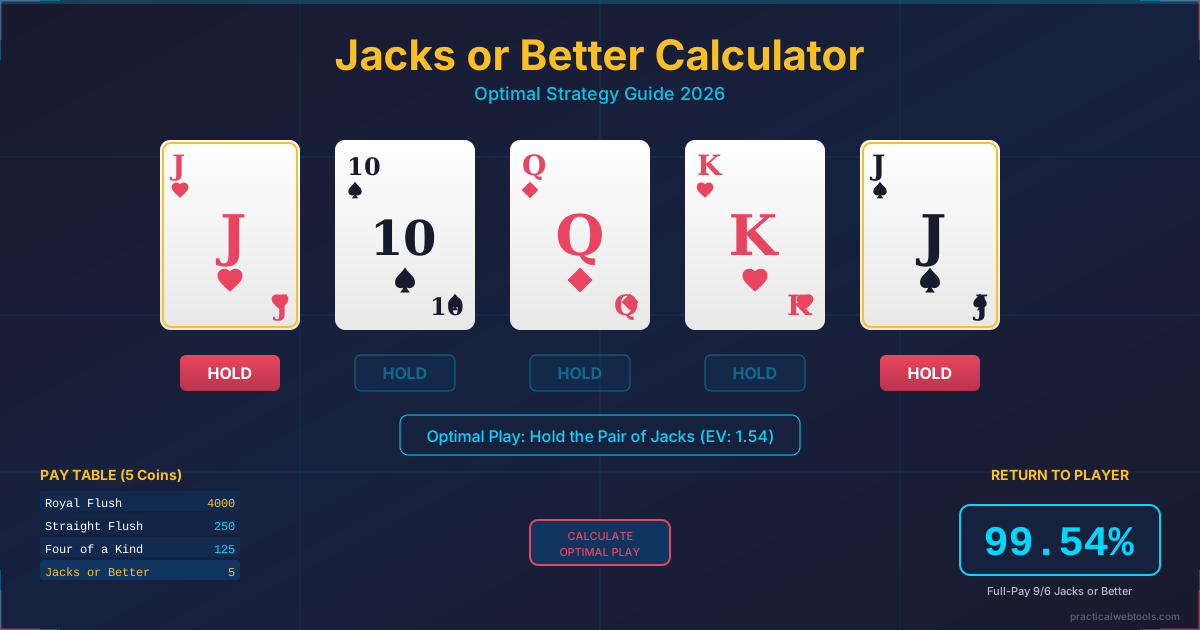
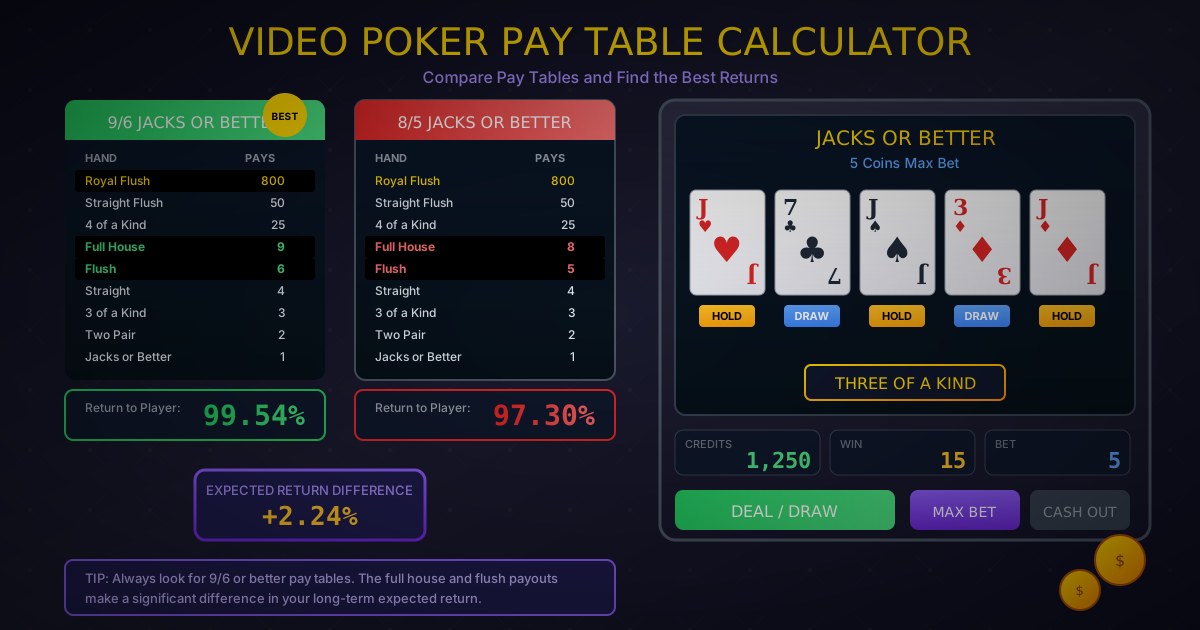
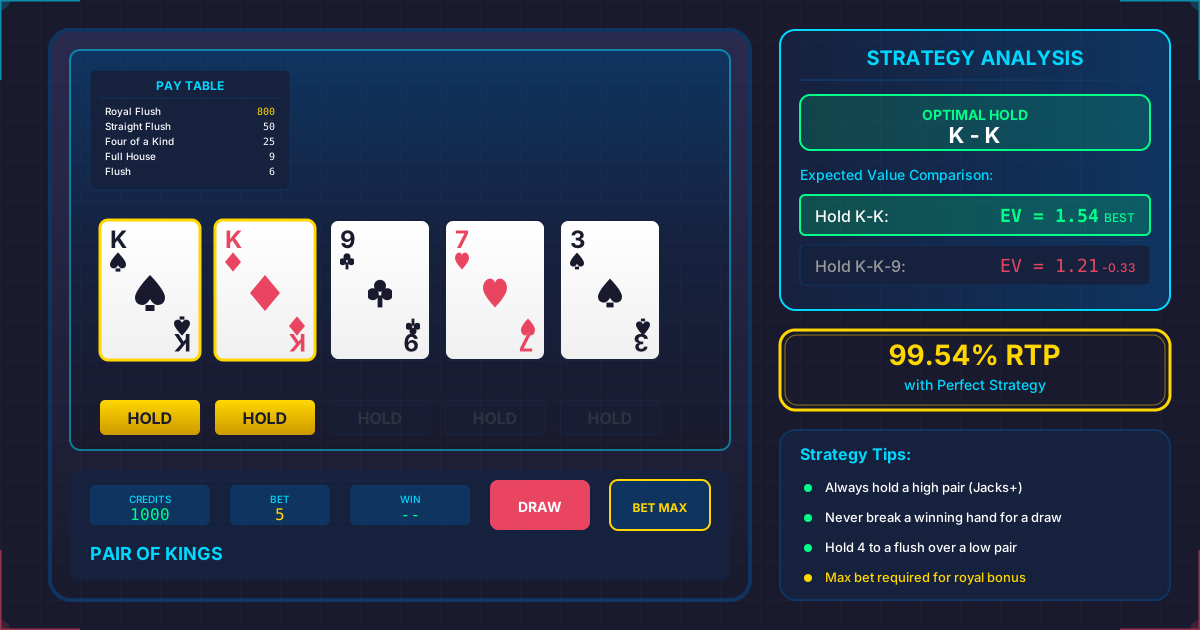
If RTP is your primary concern, video poker offers superior mathematics with an additional advantage: skill-based play. Full-pay Jacks or Better returns 99.54% with optimal strategy. Deuces Wild in certain pay table configurations returns over 100%, making it one of the only positive-expectation machine games in the casino.
Unlike slots, video poker's pay table is always visible, the math is fully calculable, and your decisions directly affect the outcome.
Compare your options with our Video Poker Odds Calculator and Video Poker EV Calculator.
Common RTP Misconceptions
Several persistent myths about RTP lead players to make poor decisions. Here are the most common ones.
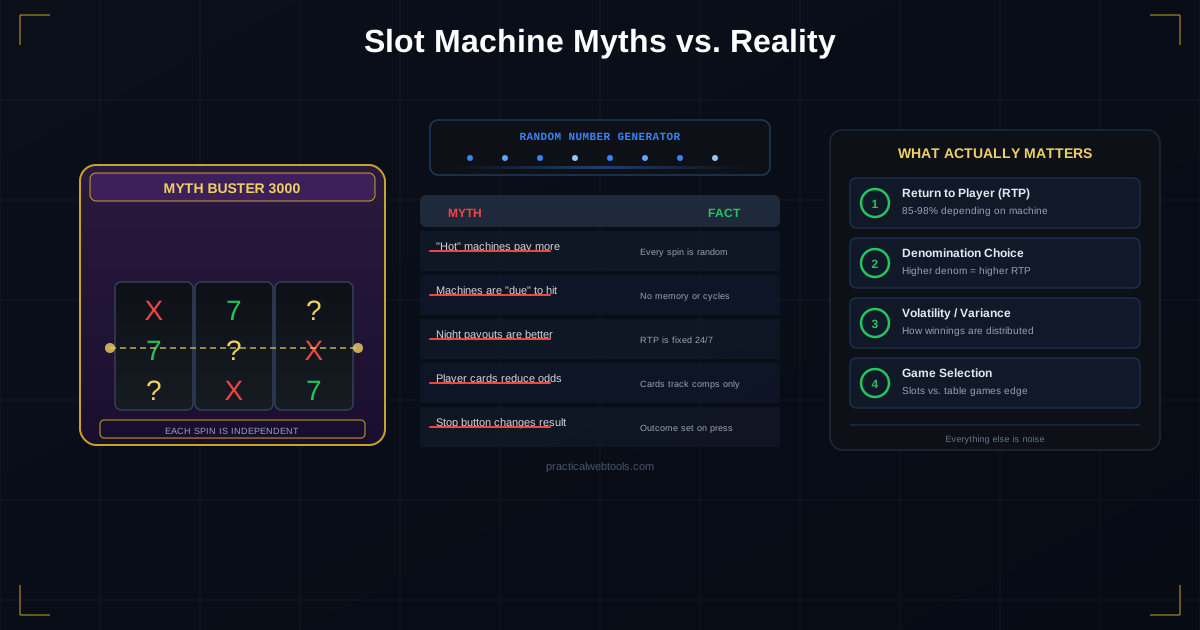
Misconception 1: "This Machine Is Due to Pay"
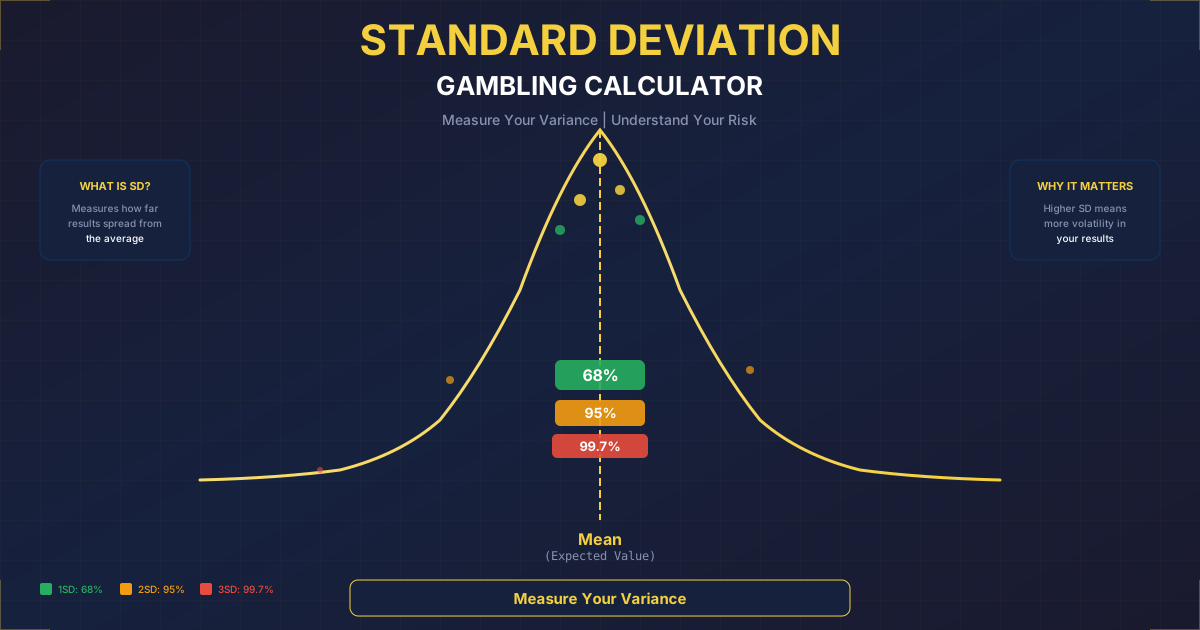
Reality: Every spin is independent. A slot that has paid poorly for the last 1,000 spins is not "due" for a win. The RNG generates a new, completely random result for each spin. The machine has no memory of past results and no mechanism to "balance out" past losses.
RTP is a statistical property that emerges over millions of spins. It is not a target that the machine actively pursues during your session.
Misconception 2: "Hot and Cold Machines Exist"
Reality: Streaks happen because of randomness, not because machines run hot or cold. In a truly random system, clusters of wins and losses are mathematically expected. Humans are wired to see patterns in randomness, and casinos exploit this tendency.
A machine that just paid a jackpot has exactly the same probability of paying another jackpot on the next spin as a machine that has not paid a jackpot in weeks.
Misconception 3: "The Casino Can Change RTP at the Push of a Button"
Reality: In most regulated jurisdictions, changing a slot machine's RTP requires physically replacing or reprogramming the EPROM chip or server-based game file, filing paperwork with the gaming commission, and sometimes keeping the machine idle for a mandatory waiting period. Casinos cannot flip a switch mid-session to tighten a machine that is paying too much.
Some modern server-based systems allow remote RTP changes, but these are still regulated, logged, and cannot occur during active play.
Misconception 4: "Time of Day Affects Payouts"
Reality: RTP does not change based on when you play. The machine runs the same RNG and the same math at 3 AM Tuesday as at 9 PM Saturday. There is no mechanism for the machine to detect whether the casino is busy and adjust its payouts accordingly.
Misconception 5: "Playing Max Bet Always Increases RTP"
Reality: This is true for some classic slots and progressive jackpot games but not for most modern video slots. The majority of modern online slots have the same RTP regardless of bet size. The exception is games with specific max-bet bonuses or progressive jackpot eligibility tied to bet amount. Always check the game's rules to determine whether bet size affects RTP.
Misconception 6: "Higher RTP Means You Will Win"
Reality: Higher RTP means you will lose less, not that you will win. A 99% RTP slot still has a 1% house edge. Over sufficient play volume, you will lose money. The advantage of high RTP is that you lose less money for the same amount of play, extending your entertainment value and giving variance a better chance to produce winning sessions.
RTP Ranges by Slot Type
Different categories of slot machines tend to cluster around different RTP ranges. Knowing these ranges helps you set expectations and identify outliers.
| Slot Category | Typical RTP Range | Notes |
|---|---|---|
| Classic 3-reel slots | 93-99% | Often require max bet for best RTP |
| Modern 5-reel video slots | 94-97% | Industry average around 96% |
| Megaways slots | 95-97.8% | Higher variance, competitive RTPs |
| Progressive jackpot slots | 85-94% (base) | Published RTP includes jackpot that rarely hits |
| Branded/licensed slots | 92-95% | Licensing fees lead to lower player returns |
| Cluster-pay slots | 95-97% | Newer mechanic, generally fair returns |
| Bonus-buy slots | 94-97% | RTP may differ between base game and bonus buy |
| Penny slots (land-based) | 86-92% | Lowest returns on the casino floor |
| High-denomination (land-based) | 93-98% | Best returns for physical machines |
Notice the pattern: Branded slots (games featuring movies, TV shows, or celebrities) consistently have lower RTPs because the developer pays licensing fees that are offset by reducing player returns. That flashy Game of Thrones or Jurassic Park slot machine costs you more to play than a generic high-RTP title.
Frequently Asked Questions
What RTP should I look for when choosing a slot machine?
For online slots, aim for 96% RTP or higher. Games above 97% are excellent, and anything above 98% puts you in the top tier of available slots. For land-based casinos, 93-95% is good, and anything above 95% is exceptional. Avoid any slot with an RTP below 92% -- the house edge is simply too high for reasonable entertainment value.
Can a casino change the RTP on a specific slot machine?
In regulated markets, casinos can request different RTP configurations from game developers. Many modern online slots come in multiple versions (for example, 96.5%, 94.5%, and 92.5% variants). The casino selects which version to deploy. This is why you should always verify the in-game RTP rather than trusting the developer's headline number. In land-based casinos, RTP changes require regulatory notification and often physical hardware changes.
Is RTP the same as payout percentage?
Yes. "RTP," "payout percentage," "payback percentage," and "return rate" all refer to the same number -- the percentage of wagered money that a slot machine returns to players over its lifetime. A 96% RTP equals a 96% payout percentage equals a 4% house edge.
Why do online slots have higher RTP than land-based slots?
Online casinos have dramatically lower operating costs. They do not pay for physical floor space, slot machine hardware, maintenance staff, electricity for machines, or the dozens of other costs associated with running a physical casino. These savings allow them to offer higher RTPs while maintaining healthy profit margins. Competition also plays a role -- online players can switch casinos instantly, forcing operators to compete on payout rates.
Does betting more per spin change the RTP?
On most modern online video slots, no. The RTP is identical regardless of bet size. However, certain classic slots, games with Supermeter or Big Bet modes (like Mega Joker), and progressive jackpot games may offer higher RTPs at maximum bet levels. Read the game's rules carefully. If max bet offers better RTP and you cannot afford max bet at the current denomination, switch to a lower denomination and play max bet there.
How many spins does it take for RTP to be accurate?
RTP converges toward its stated value over very large sample sizes -- typically hundreds of thousands to millions of spins. Over a session of 500-1,000 spins, your actual return can vary significantly from the stated RTP. This is why RTP is a tool for choosing games wisely, not for predicting any individual session's outcome. Over a year of regular play, your results should trend closer to the theoretical RTP.
Are high RTP slots less fun than low RTP slots?
Not inherently. Many high-RTP slots have engaging themes, bonus features, and visual design. Games like Book of 99 (99% RTP), White Rabbit Megaways (97.72% RTP), and Blood Suckers (98% RTP) are widely regarded as enjoyable titles. The misconception that better math means worse gameplay comes from the fact that some branded, visually spectacular slots happen to have lower RTPs due to licensing costs -- not because good math and good design are incompatible.
What is the difference between theoretical RTP and actual RTP?
Theoretical RTP is the mathematically calculated return based on the game's design. Actual RTP is the measured return over a specific period. Over small samples, actual RTP can deviate significantly from theoretical. Over millions of spins, they converge. Casinos and regulators monitor actual RTP to ensure machines are performing within expected statistical bounds.
Gambling Tools for Slot Players
RTP and Slot Analysis
- Slot Machine RTP Calculator: Calculate expected losses at any RTP level
- Slots RTP Variance Calculator: Model how variance affects your actual returns
- Slots Volatility Calculator: Understand volatility impact on session experience
- Slots Payback Percentage Calculator: Track and verify actual payback rates
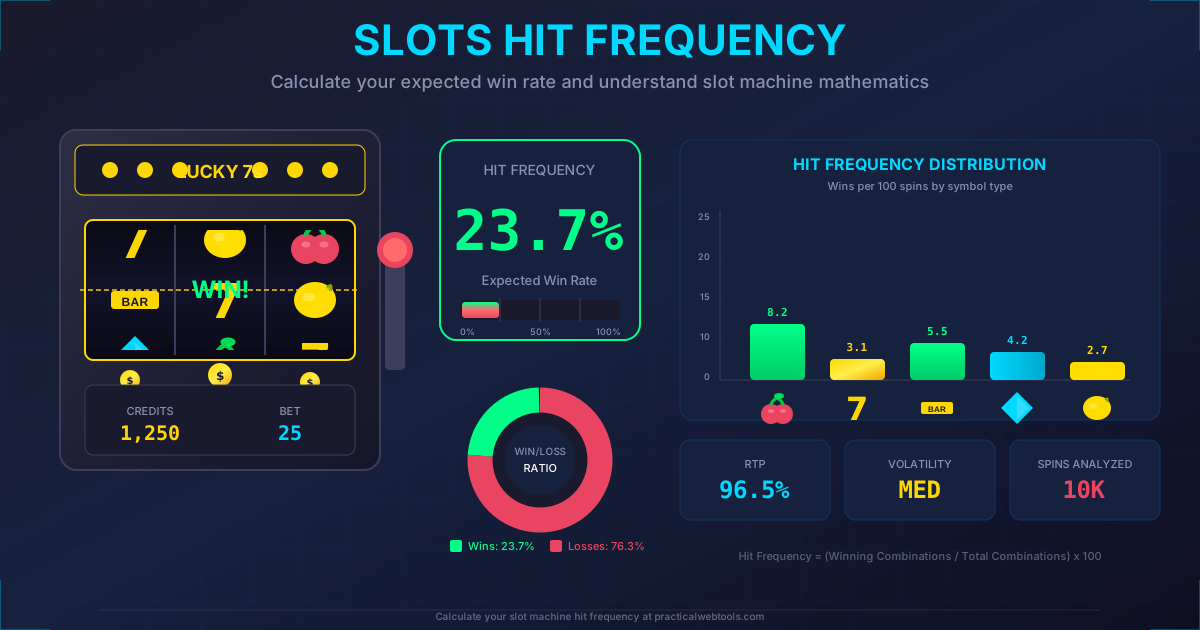
- Slots Hit Frequency Calculator: Calculate how often you will see wins
Bankroll and Session Management
- Slots Max Bet Calculator: Determine optimal bet sizing for your bankroll
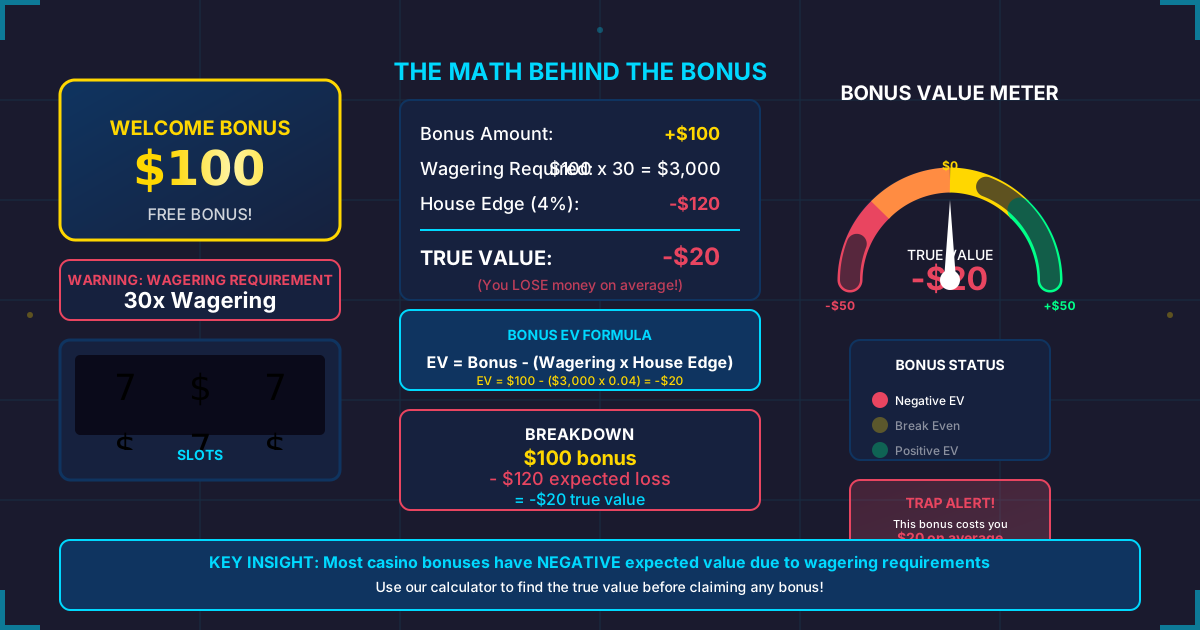
- Slots Bonus Calculator: Evaluate the real value of slot bonuses and wagering requirements
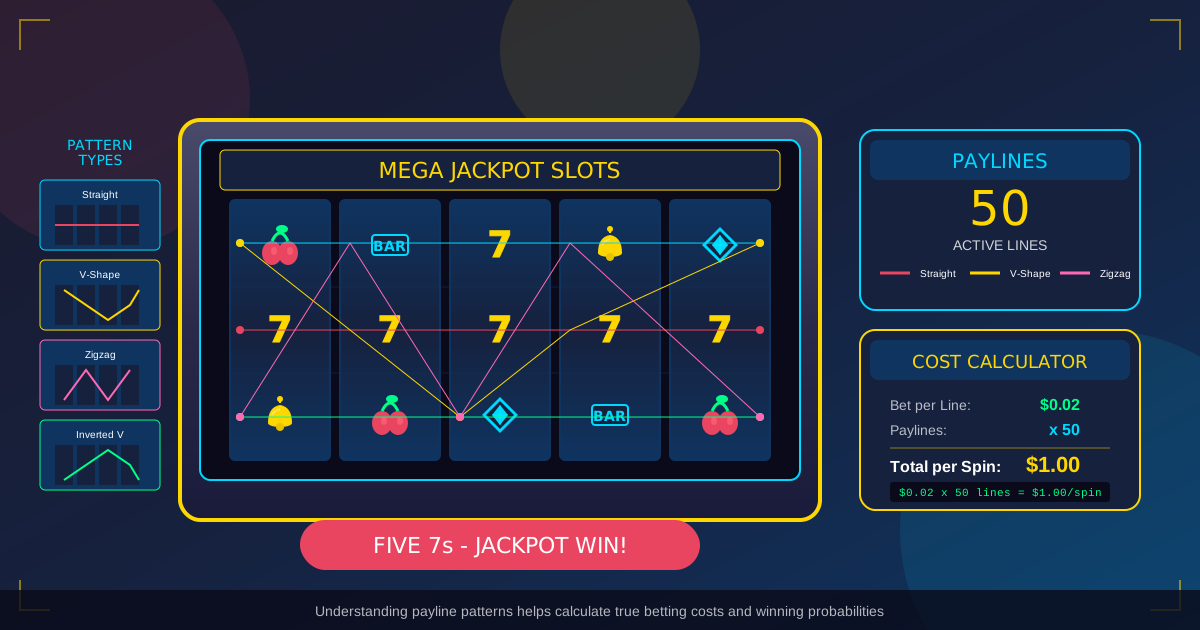
- Slots Payline Calculator: Understand payline configurations and costs
Comparison Tools
- Expected Value Calculator: Calculate EV for any gambling scenario
- Blackjack House Edge Calculator: Compare slot house edges to blackjack
- Roulette House Edge Calculator: Compare slot house edges to roulette
- Video Poker Odds Calculator: See why video poker often beats slots
- Video Poker EV Calculator: Calculate video poker expected returns
Conclusion
RTP is not a complicated concept, but it is a powerful one. The difference between consistently playing 97% RTP slots and 90% RTP slots is the difference between a manageable entertainment expense and a serious financial drain. Over a year of regular play, that gap translates to thousands of dollars.
The highest RTP slots in 2026 -- games like Ugga Bugga (99.07%), Mega Joker (99%), Book of 99 (99%), and Blood Suckers (98%) -- give players the best mathematical deal available on any slot machine. Combined with low-to-medium volatility, these games extend your playtime and give you the best chance of walking away from any given session with a profit.
But RTP is only one piece of the puzzle. Where you play matters enormously (online beats land-based by 4-7 percentage points on average). Denomination matters at land-based casinos. Volatility determines your session experience. And progressive jackpots often look better on paper than they perform in practice.
The smartest slot players check RTP before every session, play at venues with the best payout rates, match their volatility preference to their bankroll, and set loss limits based on expected loss calculations rather than arbitrary numbers.
Start by calculating your expected session cost with our Slot Machine RTP Calculator. Compare alternatives with our Video Poker EV Calculator. And always know what you are paying before you play.
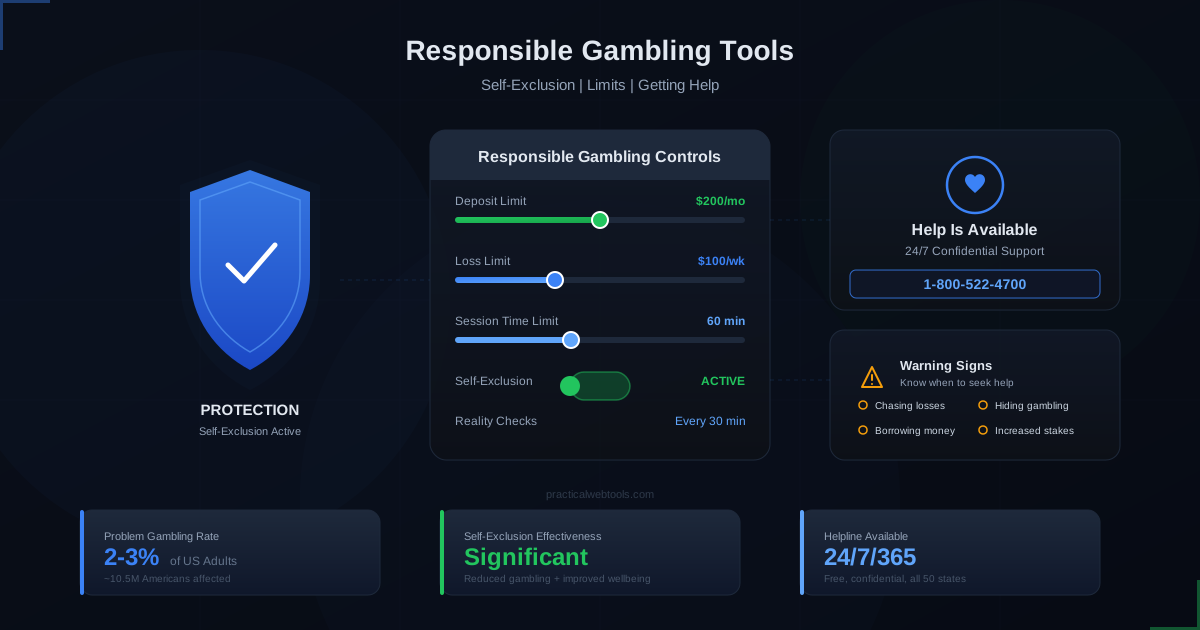
Gambling involves risk. This content is for educational and informational purposes only. Always gamble responsibly, set limits you can afford, and seek help if gambling becomes a problem. Visit the National Council on Problem Gambling or call 1-800-522-4700 for support.