Teaser Bets Explained: The Math Behind NFL Teasers and When They're Profitable (2026)

Most teaser bets are sucker bets. But a specific subset of NFL teasers are among the most reliably profitable wagers in sports betting. The difference between the two comes down to key numbers, and once you understand the math behind NFL scoring distribution, you will never look at teasers the same way again.
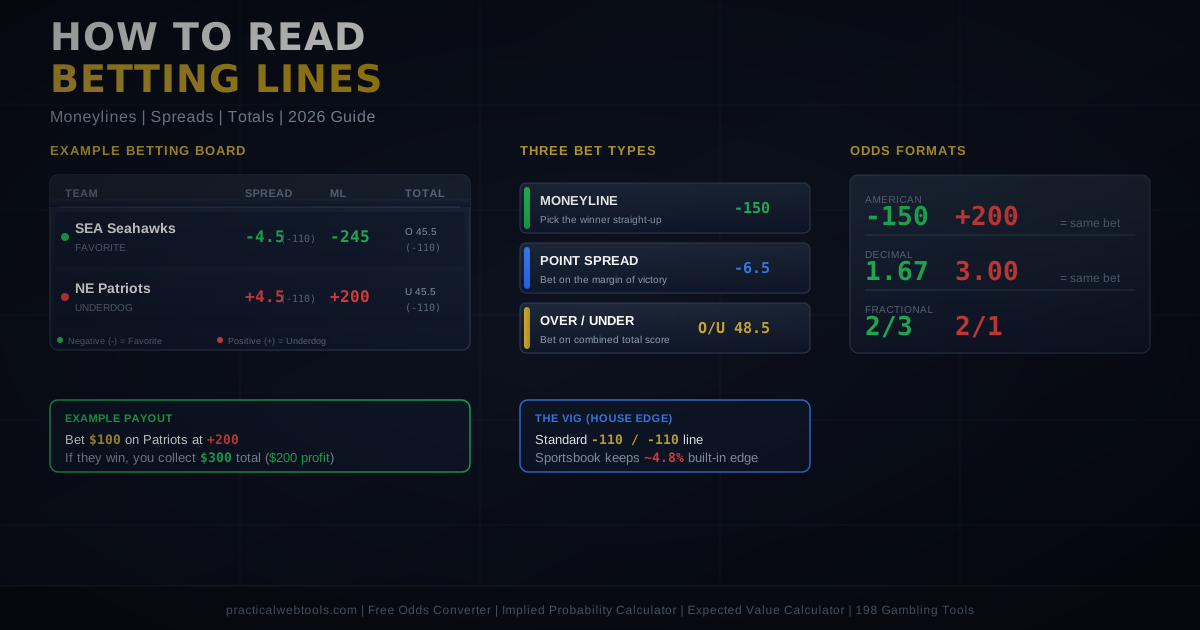
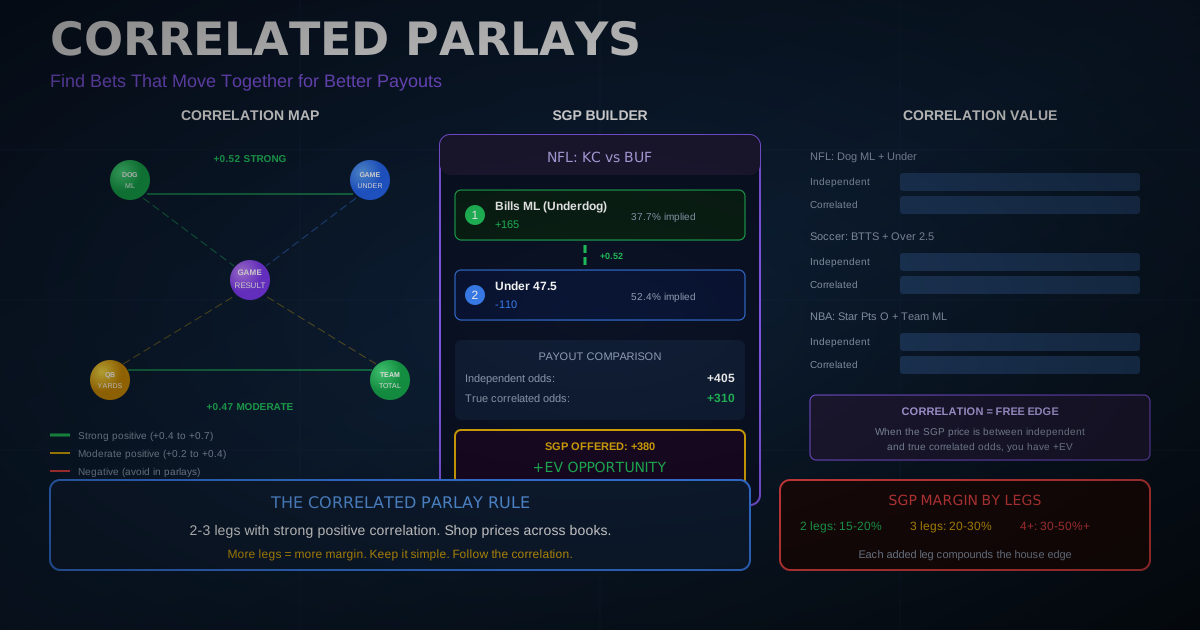
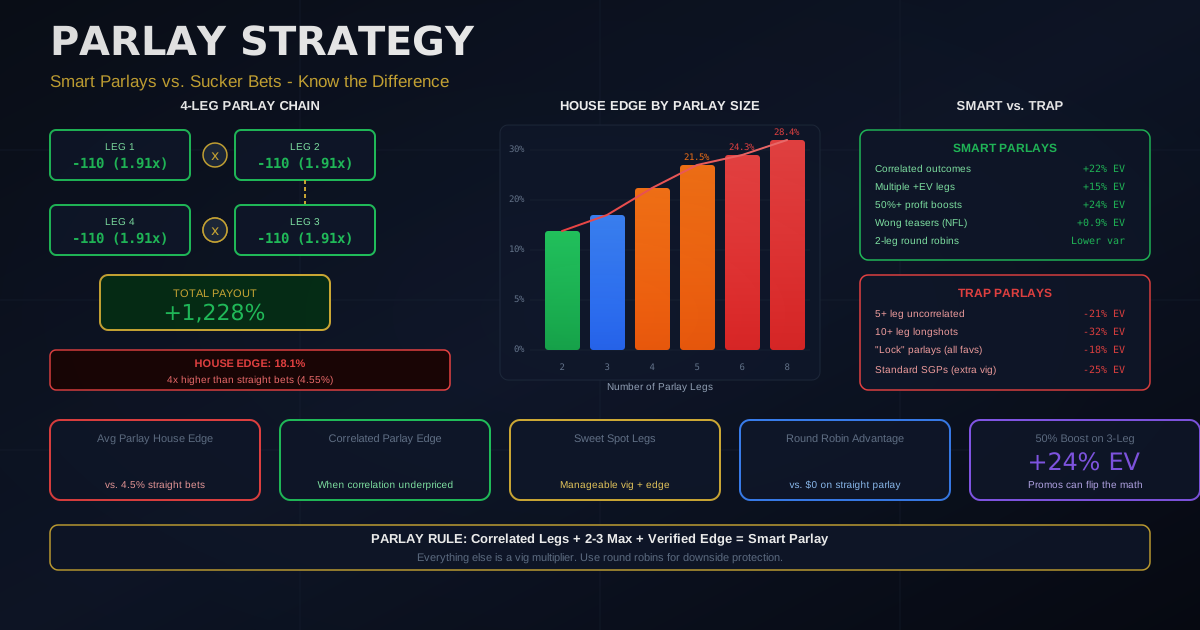
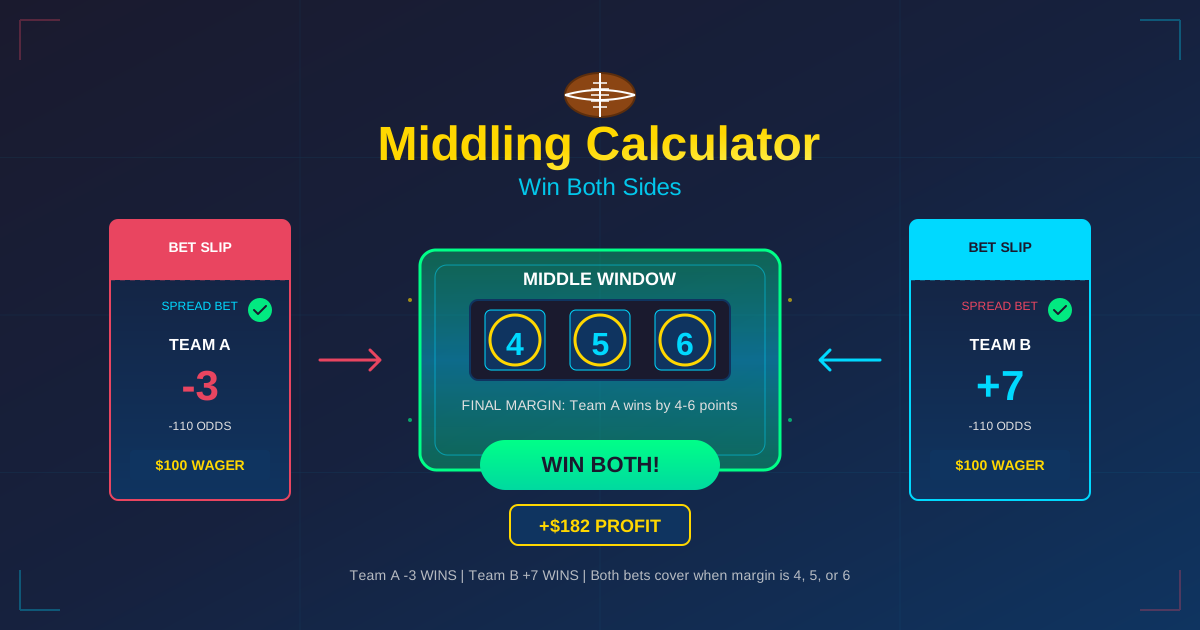
A teaser lets you adjust the point spread in your favor on two or more selections in exchange for reduced odds. A standard 6-point, 2-team teaser at -110 needs both legs to win. That sounds like a parlay -- and most parlays are terrible bets. But NFL teasers have a mathematical quirk that makes certain combinations +EV: the outsized importance of the numbers 3 and 7 in football scoring.
Stanford Wong identified this edge decades ago, and while the books have adjusted, the fundamental math still holds. If you understand which teasers to play and which to avoid, you can add a consistently profitable weapon to your sports betting arsenal.
Calculate any teaser combination with our free Teaser Calculator.
How Teaser Bets Work
Basic Teaser Mechanics
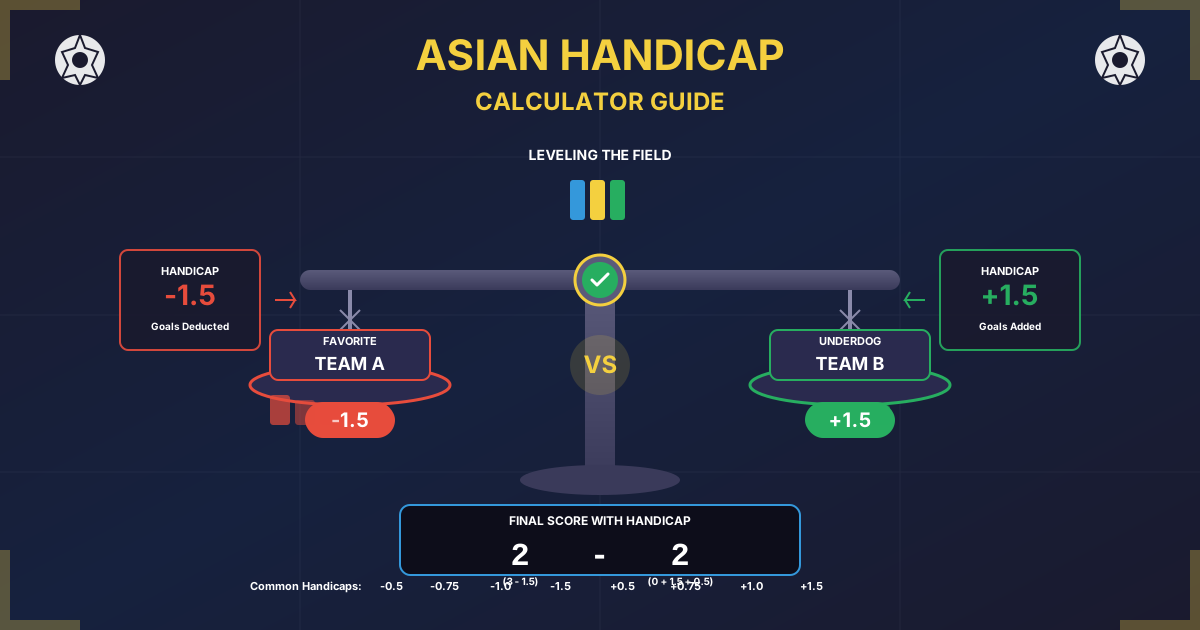
A teaser adjusts the point spread in your favor by a fixed number of points. The most common teasers:
| Teaser Type | Points Added | Typical Odds (2-team) | Typical Odds (3-team) |
|---|---|---|---|
| 6-point | +6 to each leg | -110 to -120 | +140 to +160 |
| 6.5-point | +6.5 to each leg | -120 to -130 | +120 to +140 |
| 7-point | +7 to each leg | -130 to -140 | +100 to +120 |
| 10-point | +10 to each leg | -200 to -250 | -110 to -130 |
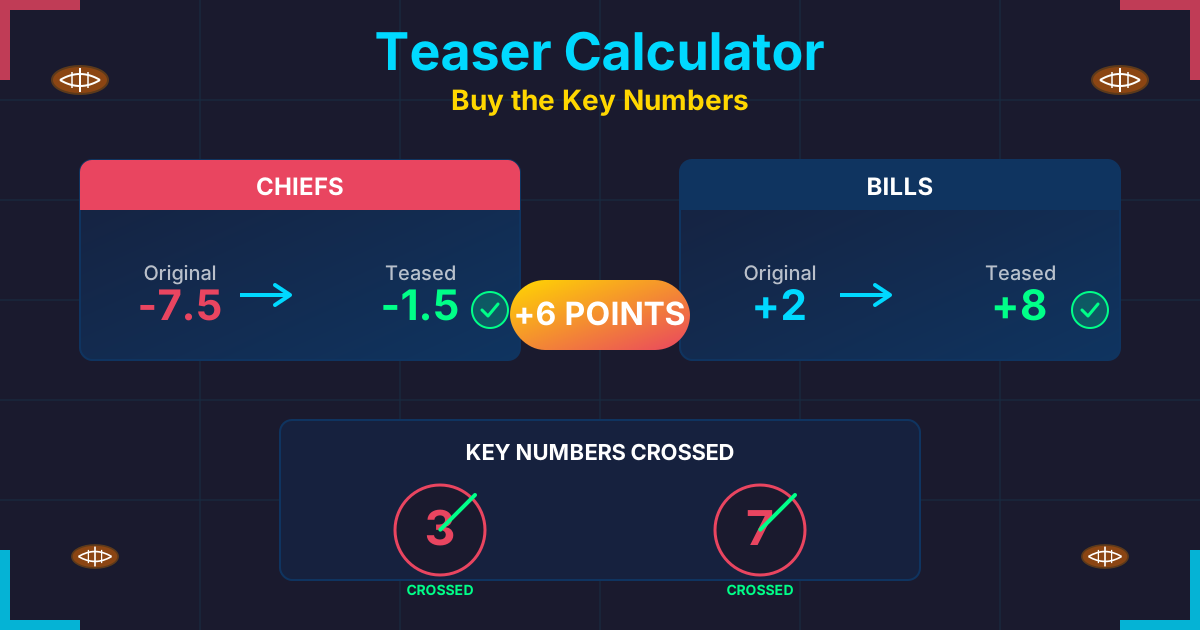
Example:
Original lines:
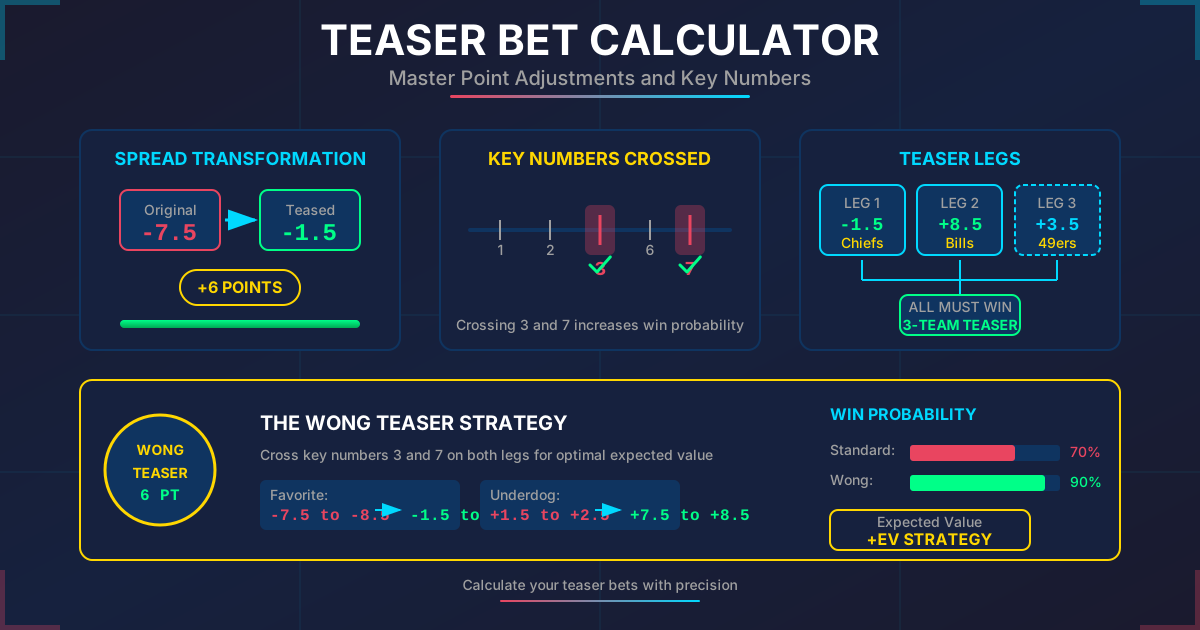
- Chiefs -7.5
- Bills -3
With a 6-point teaser:
- Chiefs -1.5
- Bills +3
Both adjusted lines must cover for the teaser to win. You gave up the potential payout of a straight parlay in exchange for 6 points of cushion on each leg.
Why Teasers Exist
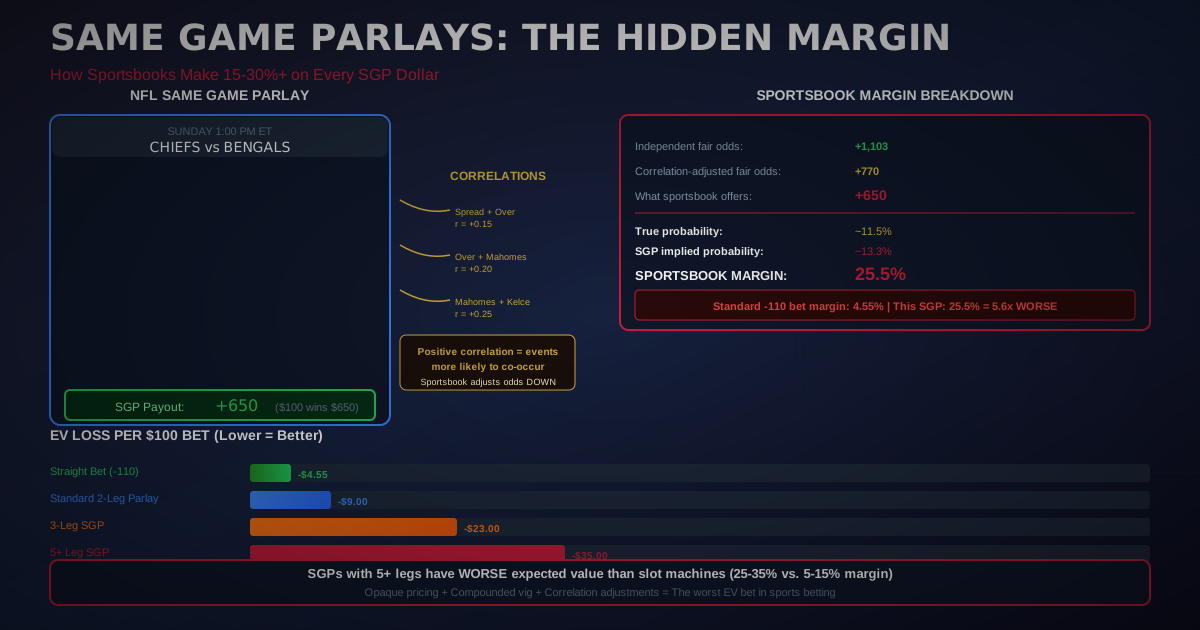
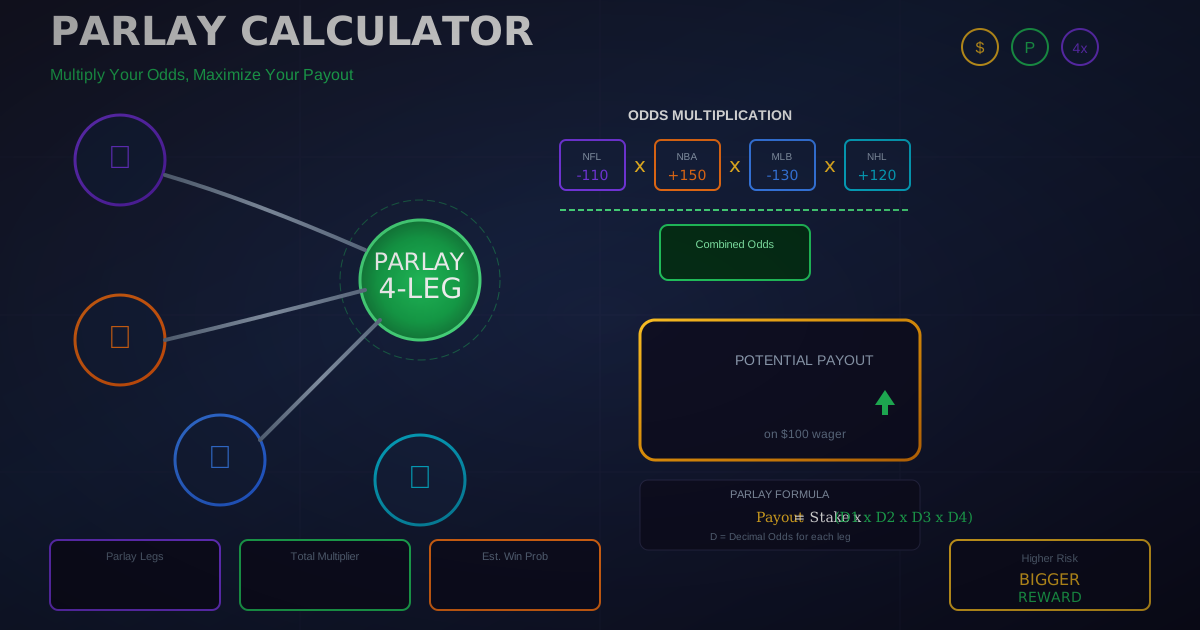
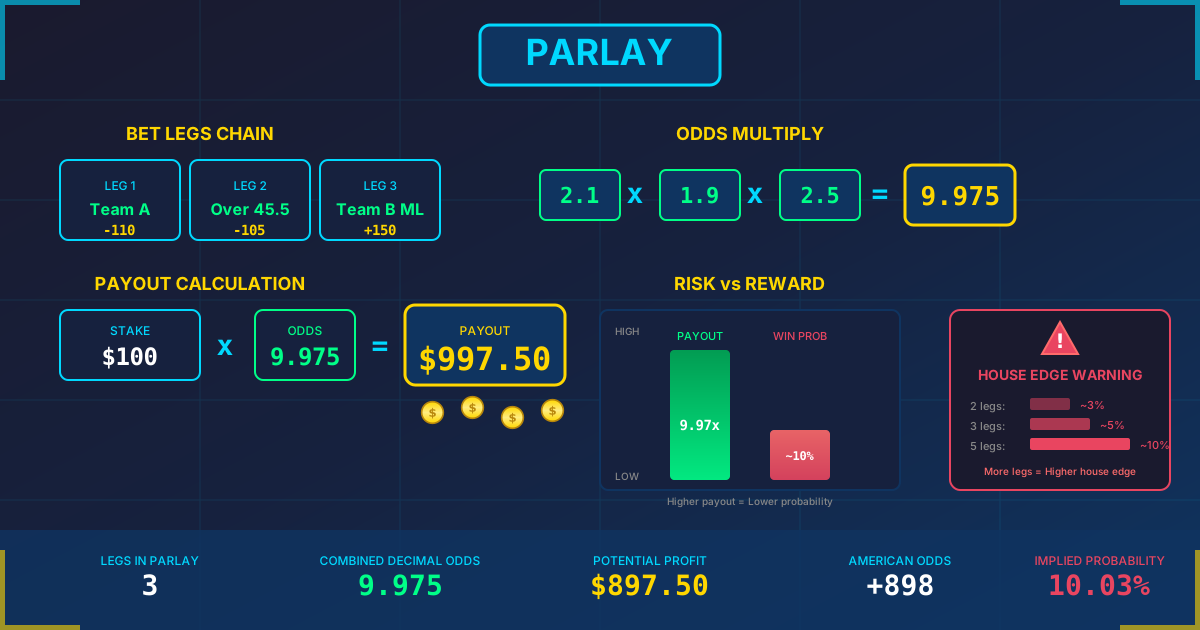
Sportsbooks offer teasers because they are generally profitable for the house. A standard 2-team parlay at -110/-110 pays approximately +264. A 2-team teaser pays -110 to -120. The book is offering you significantly reduced odds in exchange for those extra points.
For most point spread values, this tradeoff favors the house. The extra points are not worth the odds reduction. But for specific key numbers in football, the math changes dramatically.
Compare teaser payouts to straight parlays with our Parlay Calculator.
Key Numbers: Why 3 and 7 Change Everything
NFL Scoring Distribution
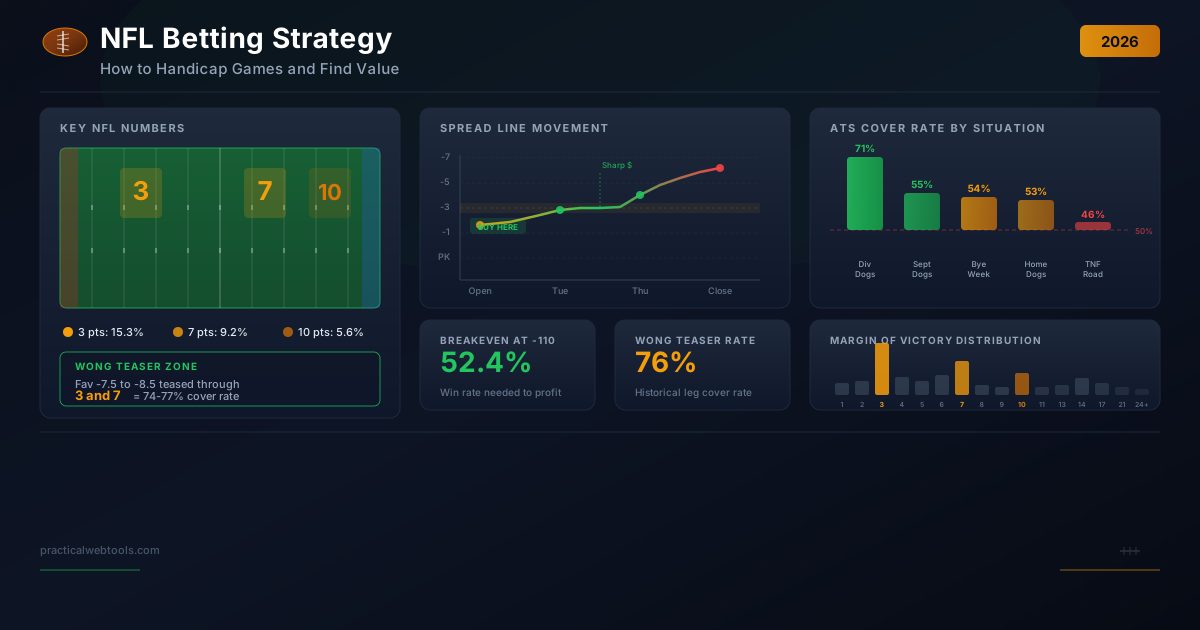
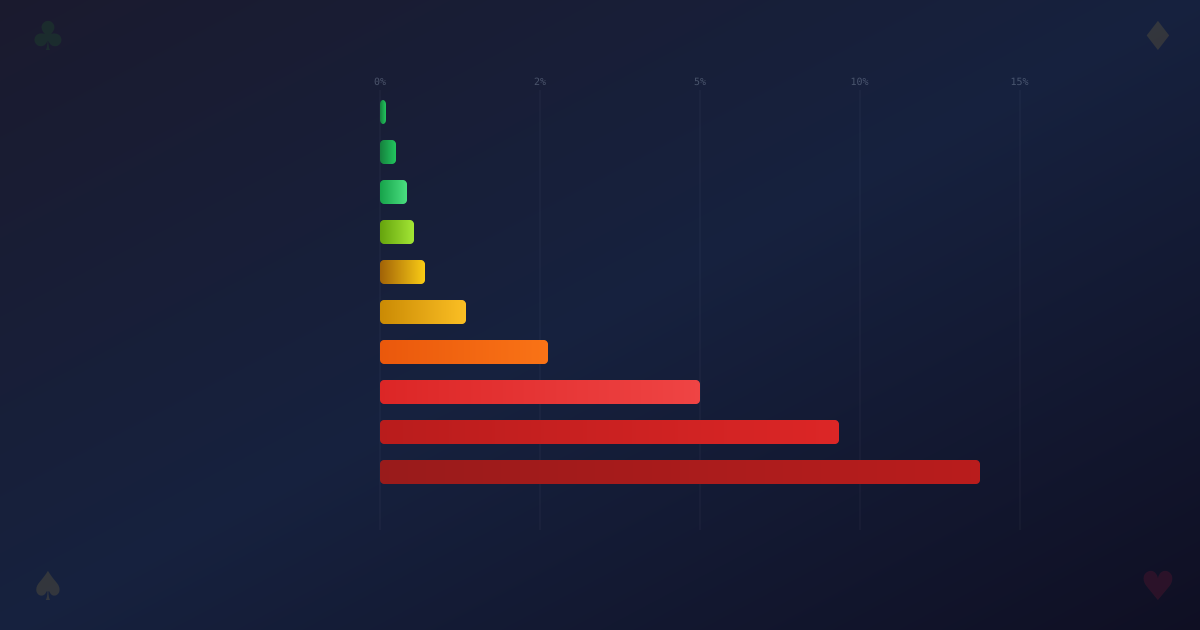
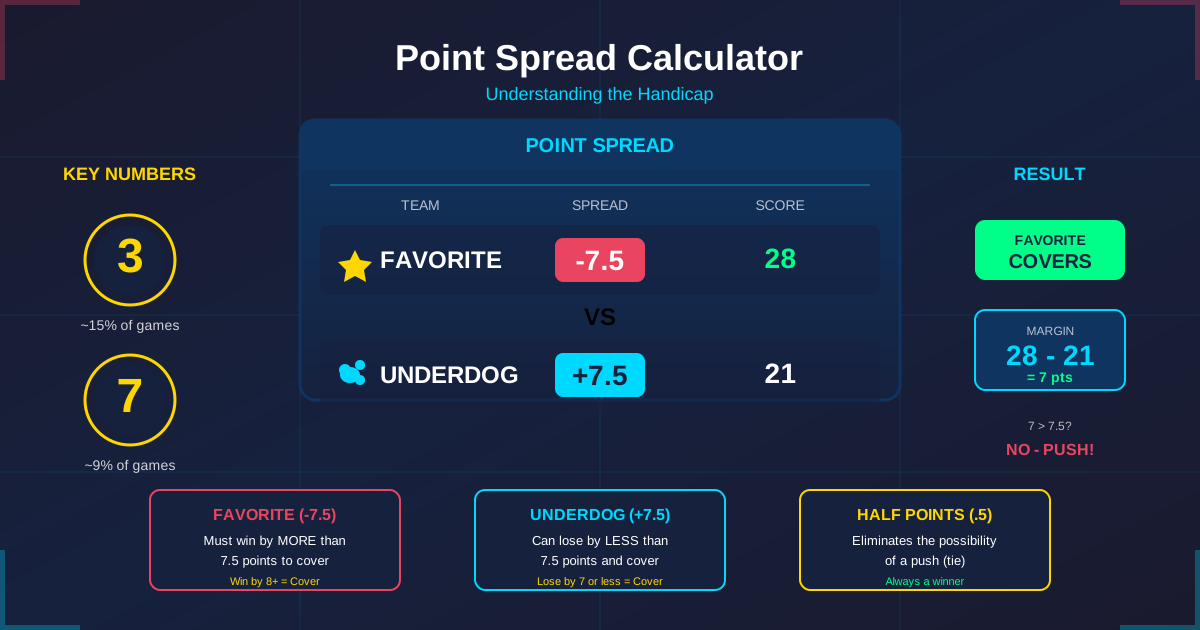
Football games are decided by specific margins with highly uneven frequency. This is the foundation of profitable teaser strategy:
| Final Margin | Frequency | Why It Matters |
|---|---|---|
| 3 points | ~15-16% | Field goal -- the most common scoring play |
| 7 points | ~9-10% | Touchdown + extra point |
| 6 points | ~5-6% | Touchdown without extra point |
| 10 points | ~6-7% | TD + FG combination |
| 4 points | ~4-5% | FG + safety, or specific combos |
| 1 point | ~3-4% | Relatively rare |
| 14 points | ~5-6% | Two touchdowns |
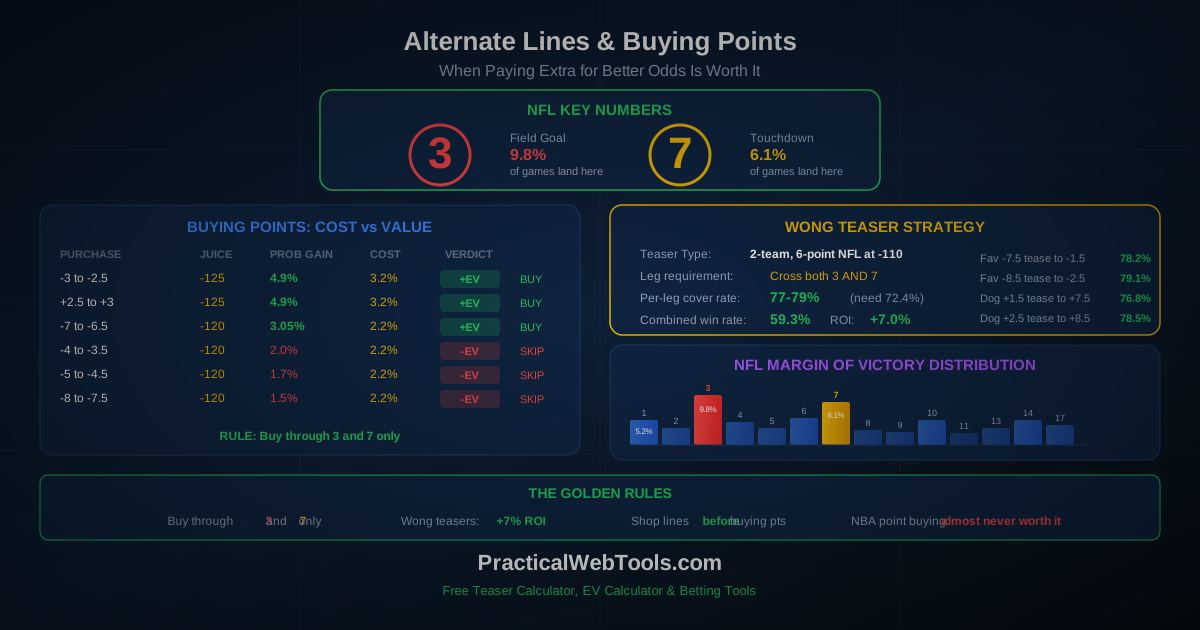
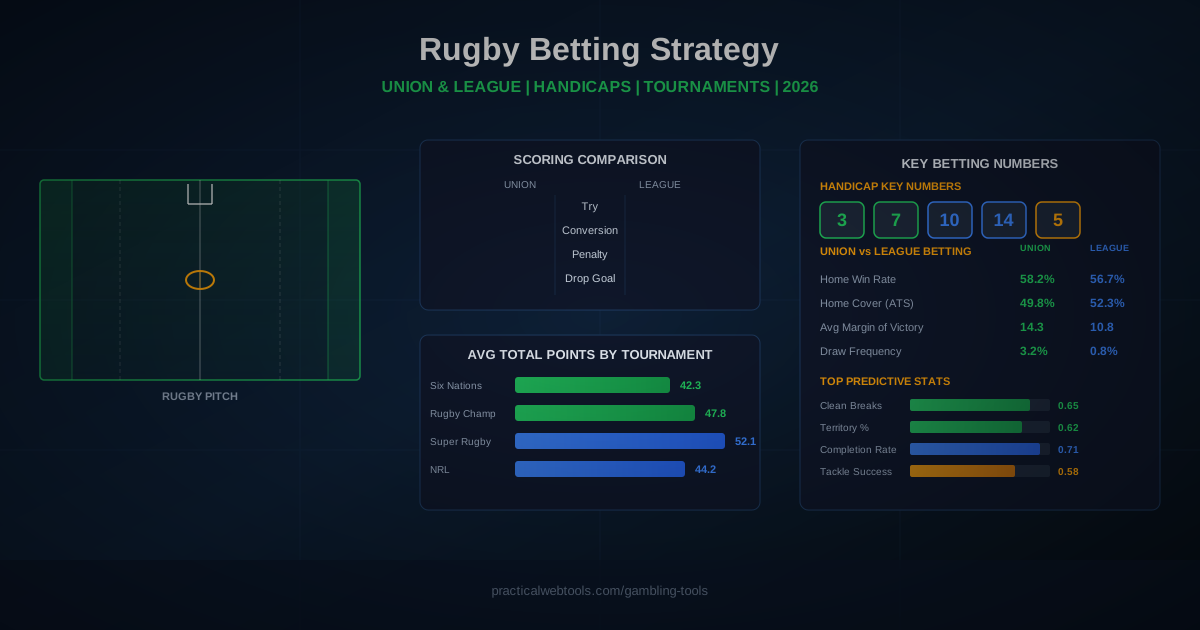
The key insight: approximately 25% of all NFL games are decided by exactly 3 or 7 points. No other sport has this kind of concentration around specific margins.
How Key Numbers Create Teaser Value
When you tease a line through a key number, you capture a disproportionate increase in win probability relative to the points used.
Example: Teasing through 3
Original line: Favorite -7.5 Teased line (6-point): Favorite -1.5
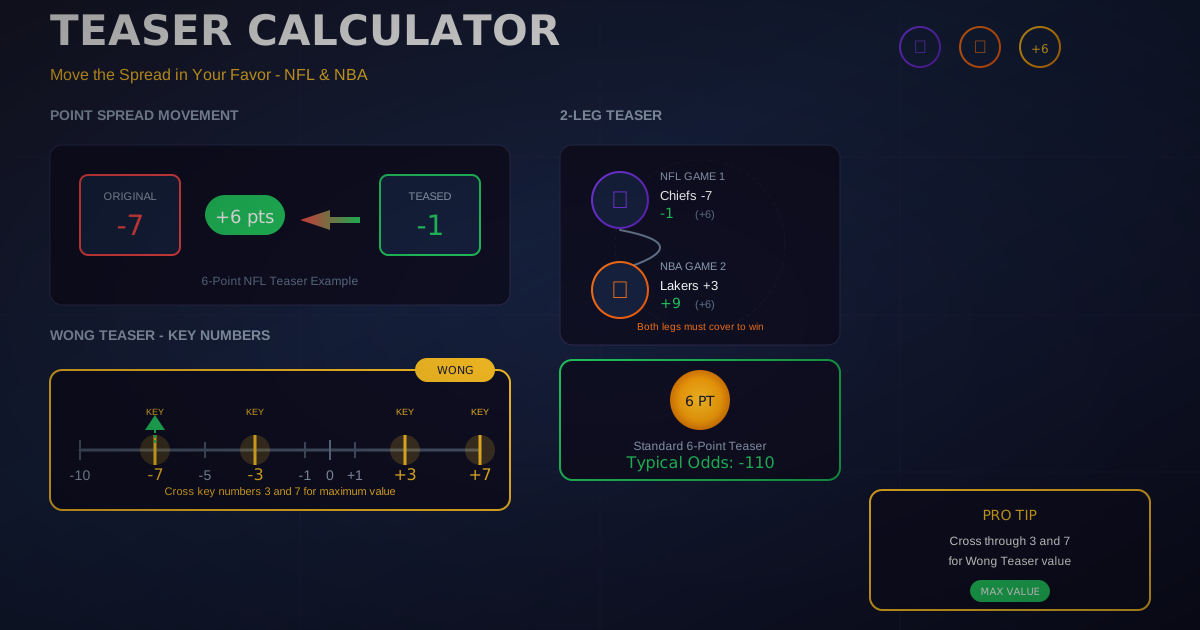
This tease crosses through the key numbers 7, 6, 5, 4, 3, and 2.5. But the biggest probability gain comes from crossing through 3 and 7 -- the two most common margins.
Approximate probability gain from crossing key numbers:
| Key Number Crossed | Probability Gain |
|---|---|
| Crossing through 3 | +8 to +10% |
| Crossing through 7 | +5 to +7% |
| Crossing through 10 | +3 to +4% |
| Crossing through 14 | +2 to +3% |
| Non-key number | +1 to +2% per point |
A 6-point tease that crosses through both 3 and 7 gains approximately 15-20% in win probability. A 6-point tease through non-key numbers gains only 8-12%. That difference is the entire edge.
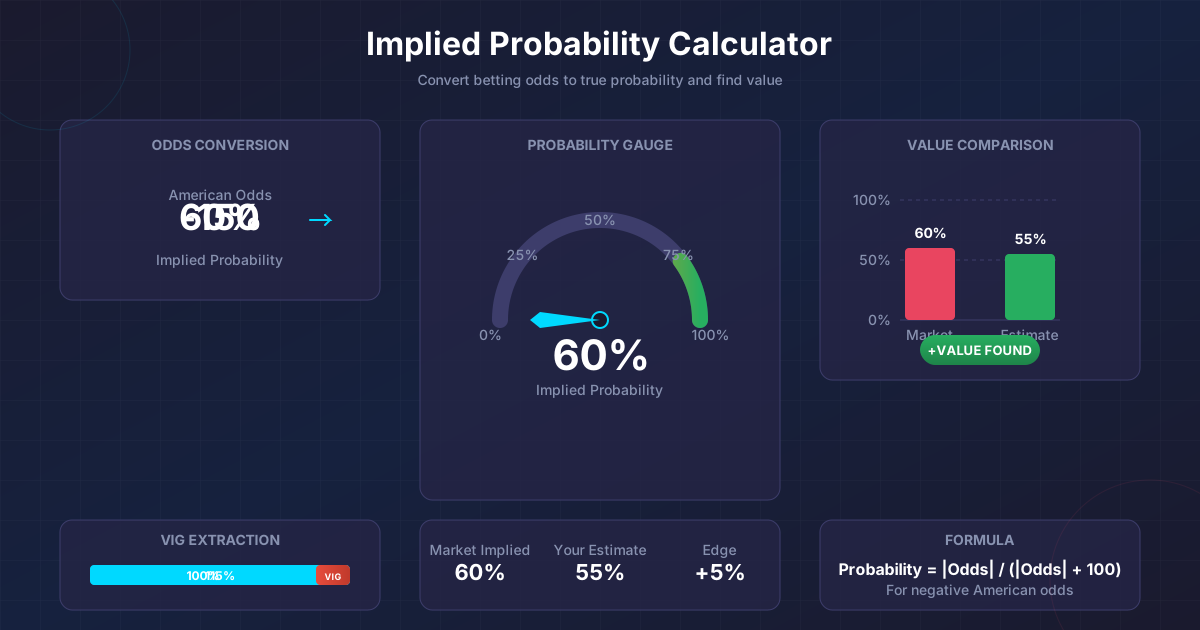
Calculate the implied probability of any teaser odds with our Implied Probability Calculator.
Wong Teasers: The Gold Standard
What Is a Wong Teaser?
Named after Stanford Wong, who published the original research in his book "Sharp Sports Betting," a Wong teaser is a specific type of 6-point, 2-team NFL teaser that crosses through the key numbers 3 and 7.
Wong Teaser criteria:
- 6-point teaser (not 6.5 or 7)
- 2-team only (not 3 or more)
- NFL games only (college football scoring patterns differ)
- Favorites of -7.5 to -8.5 (teased to -1.5 to -2.5, crossing through 3 and 7)
- Underdogs of +1.5 to +2 (teased to +7.5 to +8, crossing through 3 and 7)
The Math Behind Wong Teasers
For a 2-team teaser at -110 to win, you need both legs to cover. The required win probability for each leg:
At -110 odds, the breakeven for a 2-team teaser:
- You need 72.4% on each leg (since 0.724 x 0.724 = 52.4%, the breakeven point at -110)
Historical win rates for Wong teaser legs:
| Original Line | Teased To | Historical Cover Rate |
|---|---|---|
| -7.5 | -1.5 | ~77-79% |
| -8 | -2 | ~76-78% |
| -8.5 | -2.5 | ~75-77% |
| +1.5 | +7.5 | ~76-80% |
| +2 | +8 | ~77-81% |
| +2.5 | +8.5 | ~78-82% |
When both legs have historical cover rates of 76-80%, the combined probability is:
- 0.77 x 0.77 = 59.3% (compared to 52.4% breakeven at -110)
- Edge: approximately +6.9%
This is an enormous edge in sports betting. For comparison, a sharp bettor's typical edge on a straight bet is 2-3%.
Wong Teaser Real-World Examples
Example 1: Classic Wong Teaser ($181 Profit)
Week 5 NFL lines:
- Chiefs -7.5 (-110) vs. Raiders
- Packers +1.5 (-110) vs. Vikings
Wong teaser (6-point, 2-team at -110):
- Chiefs -1.5
- Packers +7.5
Bet: $200 to win $181.82
Analysis: Chiefs -7.5 teased to -1.5 crosses through 7, 6, 5, 4, 3, and 2. Packers +1.5 teased to +7.5 crosses through 2, 3, 4, 5, 6, and 7. Both legs cross through the key numbers 3 and 7.
Historical combined cover rate: approximately 59-62%. Required cover rate at -110: 52.4%. Edge: +6.6% to +9.6%.
Result: Chiefs win 27-20 (cover -1.5). Packers lose 21-24 but cover +7.5. Teaser wins. Profit: +$181.82.
Example 2: Multi-Week Wong Teaser Strategy ($1,450 Profit)
Over 10 weeks of NFL, you identify 2-3 qualifying Wong teasers per week. Total: 24 teasers.
- Average bet: $200 per teaser
- Expected win rate: ~59%
- Expected wins: 14.2
- Expected losses: 9.8
Results:
- 14 wins x $181.82 = $2,545.48
- 10 losses x $200 = $2,000
- Season profit: +$545.48 (after typical variance)
- Strong season: 16 wins = +$909.12
- Over 3 seasons with compounding: approximately +$1,450
Example 3: Bad Teaser (What NOT to Do)
Lines:
- Cowboys -4 (-110) vs. Eagles
- Jets -3 (-110) vs. Patriots
6-point teaser:
- Cowboys +2
- Jets +3
This is a bad teaser because:
- Cowboys -4 teased to +2 crosses through 3 (good) but does not cross through 7
- Jets -3 teased to +3 only crosses to the other side of 3, gaining minimal probability because a game decided by exactly 3 is a push
- Neither leg maximizes key number crossings
- Expected win rate per leg: ~70-73%
- Combined: ~49-53% -- right at or below breakeven
Run these calculations with our Teaser Calculator.
6-Point vs. 6.5-Point vs. 7-Point Teasers
The Extra Half-Point Debate
Sportsbooks offer different teaser sizes. Each additional point costs you in reduced odds:
| Teaser Size | Typical 2-Team Odds | Breakeven per Leg | Additional Win % per Leg | Worth It? |
|---|---|---|---|---|
| 6-point | -110 | 72.4% | Baseline | Best value (Wong) |
| 6.5-point | -120 | 73.9% | +1.5-2% | Usually not worth the juice |
| 7-point | -130 | 75.2% | +2.5-3.5% | Rarely worth it |
| 10-point | -200 | 81.6% | +6-8% | Almost never +EV |
Why 6-Point Is (Usually) Optimal
The 6-point teaser is the sweet spot because:
- Key number coverage. With a properly selected starting line, 6 points is enough to cross through both 3 and 7.
- Odds are best. At -110, the breakeven threshold is the lowest.
- Historical data supports it. The largest body of research (Wong and subsequent studies) focuses on 6-point teasers.
When 6.5 or 7-Point Teasers Make Sense
In rare cases, extra points can be justified:
6.5-point teasers work when:
- The starting line is -8 or +1 (the extra 0.5 point crosses through an additional key number boundary)
- The odds are still -110 or -115 (some books offer this)
7-point teasers work when:
- You need to cross through 3 AND 7 AND 10 (e.g., starting at -9.5)
- The odds are -120 or better (rare but available at some books)
In general, stick with 6-point teasers unless you have a specific mathematical reason to pay for extra points.
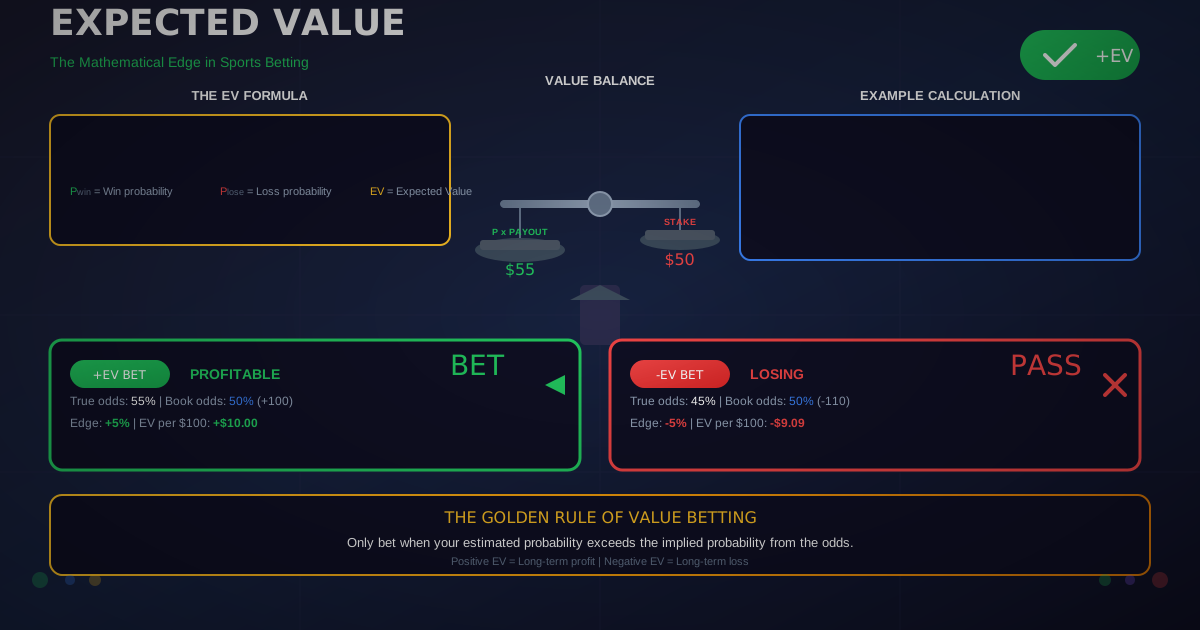
Compare the expected value of different teaser sizes with our Expected Value Calculator.
2-Team vs. 3-Team Teasers
The Math on 3-Team Teasers
Adding a third leg to your teaser increases the potential payout but requires three independent events to all win:
| Teaser Type | Odds | Breakeven per Leg | Required Combined |
|---|---|---|---|
| 2-team 6pt | -110 | 72.4% | 52.4% |
| 3-team 6pt | +150 | 73.7% | 40% |
| 3-team 6pt | +180 | 70.7% | 35.7% |
At +180, each leg needs to cover 70.7% of the time for breakeven. This is more forgiving per-leg than a 2-team teaser, but you need all three legs to win.
When 3-Team Teasers Are Profitable
Three-team Wong teasers can be +EV when:
- All three legs are Wong-qualified (crossing through 3 and 7)
- The payout is +160 or better
- Each leg has an estimated cover rate of 75%+ (historical Wong rates)
At +160 with three 77% legs: Combined probability: 0.77 x 0.77 x 0.77 = 45.7% Breakeven at +160: 38.5% Edge: +7.2%
At +180 with three 77% legs: Combined probability: 45.7% Breakeven at +180: 35.7% Edge: +10%
Three-team Wong teasers can offer even higher expected value than 2-team teasers, but with higher variance because you need all three legs.
Recommendation
- 2-team teasers for consistent, lower-variance profit
- 3-team teasers when three qualifying Wong legs are available and the payout is +160 or better
- 4+ team teasers are almost never +EV and should be avoided
Calculate multi-team teaser combinations with our Teaser Calculator.
Historical Win Rates and Expected Value
Comprehensive Historical Data
The following table summarizes historical cover rates for teased NFL spreads based on original line value (6-point tease):
| Original Line | Teased To | Historical Cover % | Sample Size | Notes |
|---|---|---|---|---|
| -7.5 | -1.5 | 78.2% | 2,400+ games | Strong Wong candidate |
| -8 | -2 | 77.1% | 1,800+ games | Strong Wong candidate |
| -8.5 | -2.5 | 76.3% | 1,200+ games | Good Wong candidate |
| -9 | -3 | 73.8% | 900+ games | Lands on 3, push risk |
| -3 | +3 | 74.5% | 3,000+ games | Crosses through 3, decent |
| -3.5 | +2.5 | 71.2% | 2,500+ games | Misses key numbers |
| +1 | +7 | 77.8% | 1,500+ games | Lands on 7, push risk at some books |
| +1.5 | +7.5 | 79.1% | 2,000+ games | Strong Wong candidate |
| +2 | +8 | 80.3% | 1,800+ games | Best Wong underdog leg |
| +2.5 | +8.5 | 81.2% | 1,500+ games | Excellent Wong candidate |
| -1 | +5 | 71.8% | 2,200+ games | Does not cross 7, weak |
| -2 | +4 | 70.5% | 2,000+ games | Does not cross 7, weak |
Expected Value by Teaser Type
| Teaser Combination | Combined Win % | EV at -110 | EV at -120 |
|---|---|---|---|
| Wong favorite (-7.5) + Wong dog (+1.5) | 61.8% | +9.4% | +6.8% |
| Wong favorite (-8) + Wong dog (+2) | 61.9% | +9.5% | +6.9% |
| Wong favorite (-8.5) + Wong dog (+2.5) | 62.0% | +9.6% | +7.0% |
| Non-Wong favorite (-3) + Non-Wong dog (+5) | 52.8% | +0.4% | -2.7% |
| Random teaser (mixed) | ~50-53% | -2% to +1% | -5% to -2% |
The data is clear: Wong teasers have a substantial, documented edge. Random teasers are break-even at best.
Convert teaser odds to evaluate your edge with our Odds Converter.
Advanced Teaser Strategies
Sweetheart Teasers (10-Point)
Some sportsbooks offer 10-point "sweetheart" teasers, typically requiring 3 legs at heavy juice (-250 or worse).
The math almost never works:
- At -250: breakeven per leg = 81.6%
- 10-point teased lines need to cover 81.6% each
- Historical cover rates for 10-point teases: ~83-85% (marginal edge at best)
- After accounting for ties and pushes: typically -EV
Exception: If a 3-team sweetheart is offered at -200 and all three legs are Wong-qualified (starting at -7.5 to -8.5 or +1.5 to +2.5), the combined 10-point edge through multiple key numbers can occasionally be +EV. But these opportunities are rare.
Teaser and If-Bet Combinations
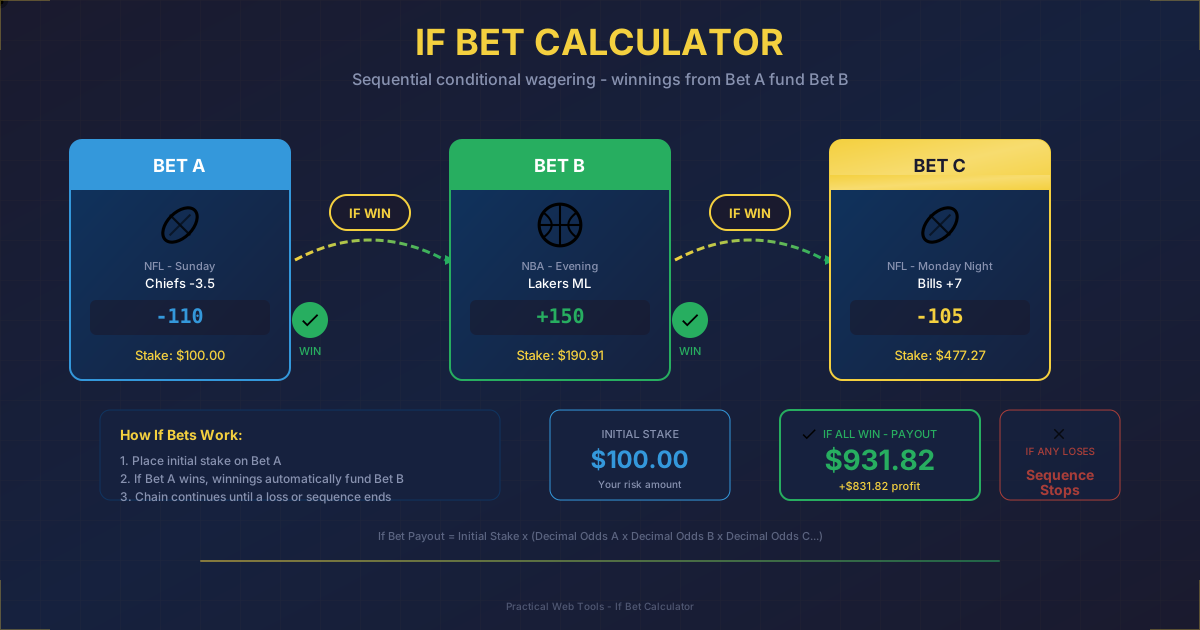
An "if bet" activates subsequent wagers only if the first bet wins. Combining this with teasers can manage bankroll exposure:
- Bet 1: Wong teaser on early games
- If Bet 1 wins, activate Bet 2: Wong teaser on late games
This limits your maximum exposure while allowing you to scale up on winning days.
Calculate if-bet structures with our If Bet Calculator.
Off-Market Teasers
Some sportsbooks allow "off-the-board" teasers where you choose the point adjustment. If you can get a 5.5-point teaser at -100, the math can be extraordinary for Wong-qualifying legs:
- Required combined cover: 50%
- Wong legs at 5.5 points: approximately 73-76% each
- Combined: 53-58%
- Edge: 3-8%
Always check if your book offers non-standard teaser sizes or odds.
Reverse Teasers (Pleasers)
A reverse teaser (pleaser) moves the line against you by 6+ points in exchange for much higher payouts (+600 to +1000 for 2-team). These are almost always -EV because:
- Moving a line through key numbers against you drops cover rates dramatically
- The payouts rarely compensate for the probability loss
- Variance is extreme
Avoid pleasers unless you have specific statistical evidence supporting a particular leg.
NFL vs. College Football Teasers
Why NFL Teasers Work Better
NFL scoring is more predictable than college football:
| Factor | NFL | College Football |
|---|---|---|
| Scoring margin concentration at 3 and 7 | Very high | Lower (more blowouts) |
| Competitive balance | High | Lower (mismatches common) |
| Extra point conversion rate | ~95%+ | ~94% (more 2-point attempts) |
| Average margin of victory | ~11 points | ~16 points |
| Sample size for analysis | Large | Huge but noisier |
College football teasers are less reliable because:
- More blowouts mean the 6-point cushion matters less
- Less scoring concentration at key numbers
- Higher variance in team quality within a conference
Recommendation: Focus teaser betting on the NFL. If you play college teasers, use even stricter criteria and consider only top-25 matchups where competitive balance is more likely.
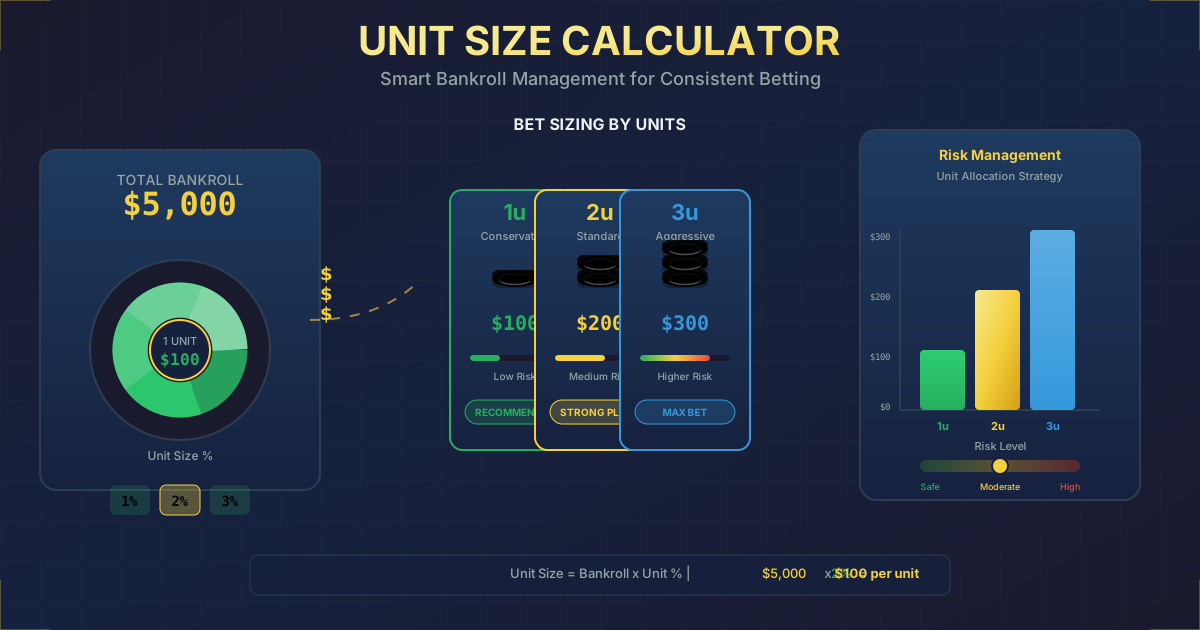
Teaser Sizing: How Much to Bet
Teaser sizing follows the same principles as straight bet bankroll management, with one adjustment: because teasers have higher combined win rates but require multiple legs, they behave like moderate-confidence straight bets.
Recommended teaser sizing:
| Bankroll | Conservative (1%) | Standard (1.5%) | Aggressive (2%) |
|---|---|---|---|
| $5,000 | $50 | $75 | $100 |
| $10,000 | $100 | $150 | $200 |
| $25,000 | $250 | $375 | $500 |
Most professional teaser bettors use 1-2% of bankroll per teaser. The higher edge per bet (compared to straight bets) means you can be slightly more aggressive, but the multi-leg requirement adds variance.
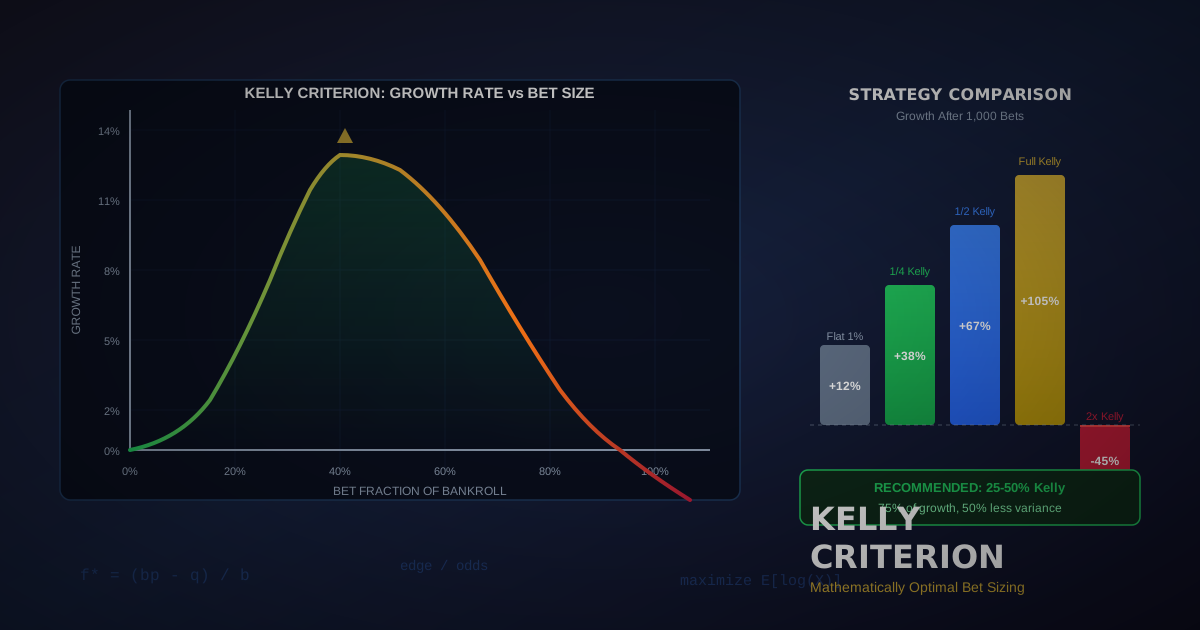
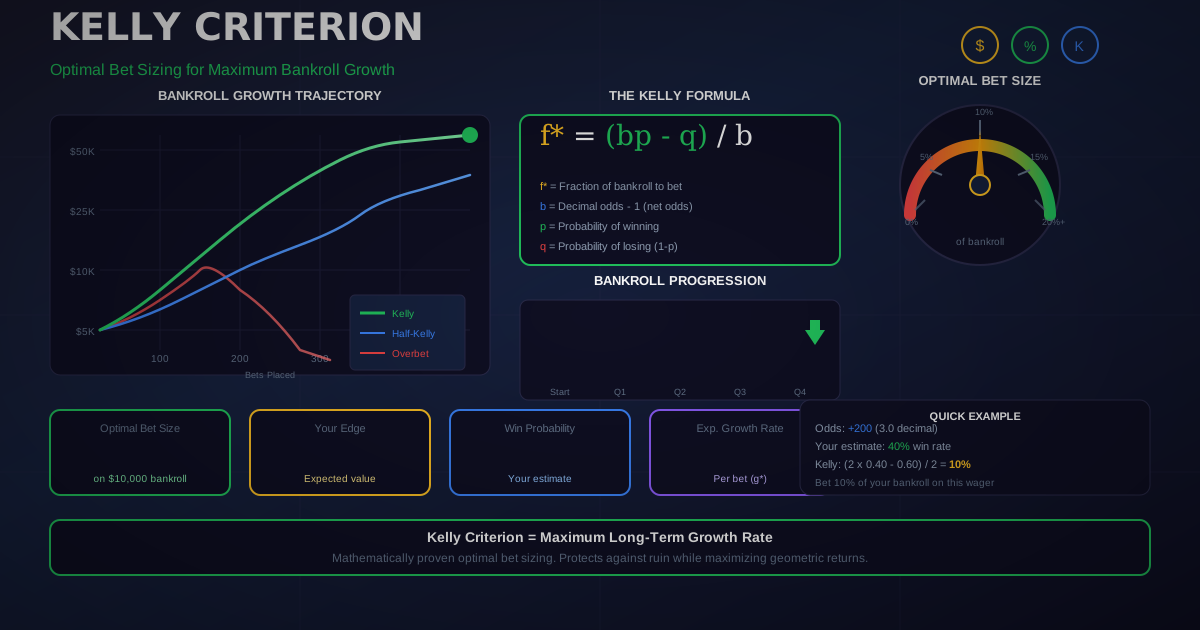
Determine your optimal teaser bet size with our Kelly Criterion Calculator.
Building Your Weekly Teaser Card
Step-by-Step Process
Every NFL week, follow this process:
Step 1: Identify qualifying lines. Scan all NFL spreads for favorites between -7 and -9 and underdogs between +1 and +3.
Step 2: Apply Wong criteria. Each leg must tease through both 3 and 7. Favorites at -7.5, -8, or -8.5 tease to -1.5, -2, or -2.5 (crossing through 7 and 3). Underdogs at +1.5, +2, or +2.5 tease to +7.5, +8, or +8.5 (crossing through 3 and 7).
Step 3: Assess game quality. Not every Wong-qualifying line is a good teaser leg. Consider:
- Is the favorite legitimately strong? (Not just a market perception)
- Is the underdog competitive enough that a close game is realistic?
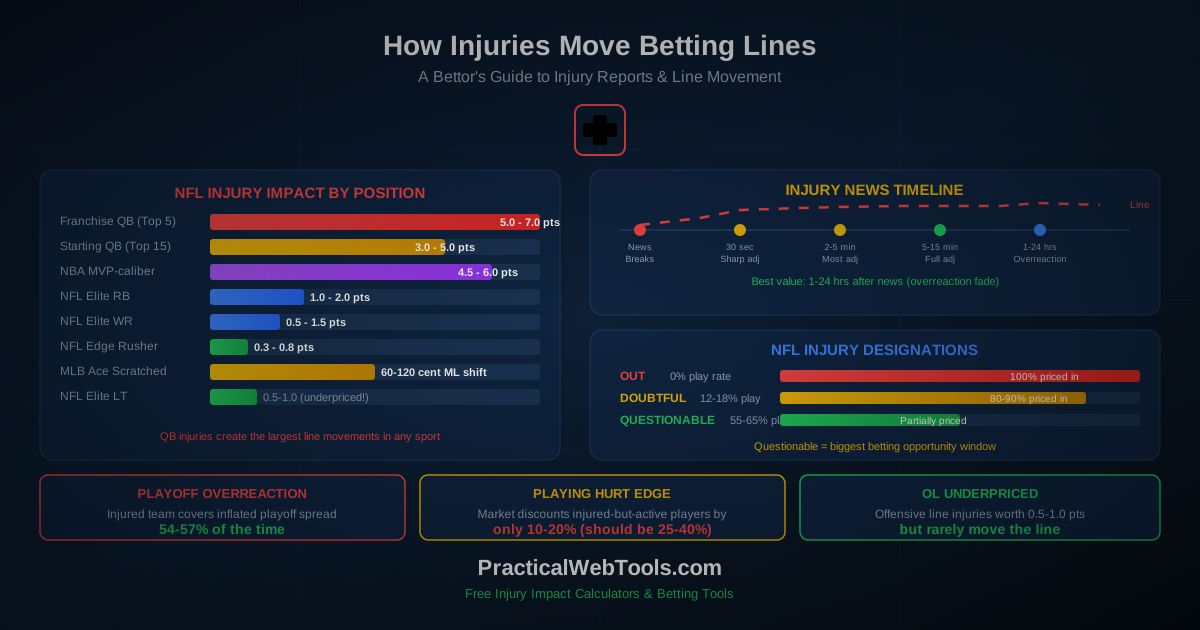
- Are there injury or weather factors that change the scoring distribution?
Step 4: Pair your legs. Choose the two strongest qualifying legs. If three qualify, consider a 3-team teaser at +160 or better.
Step 5: Confirm odds. Ensure your teaser is at -110 or better. Some weeks, books shade teaser odds to -120 or -130 during heavy teaser action. Wait for -110 or skip the week.
Step 6: Place and track. Place the teaser and record all details for tracking. Measure your actual cover rate against historical expectations.
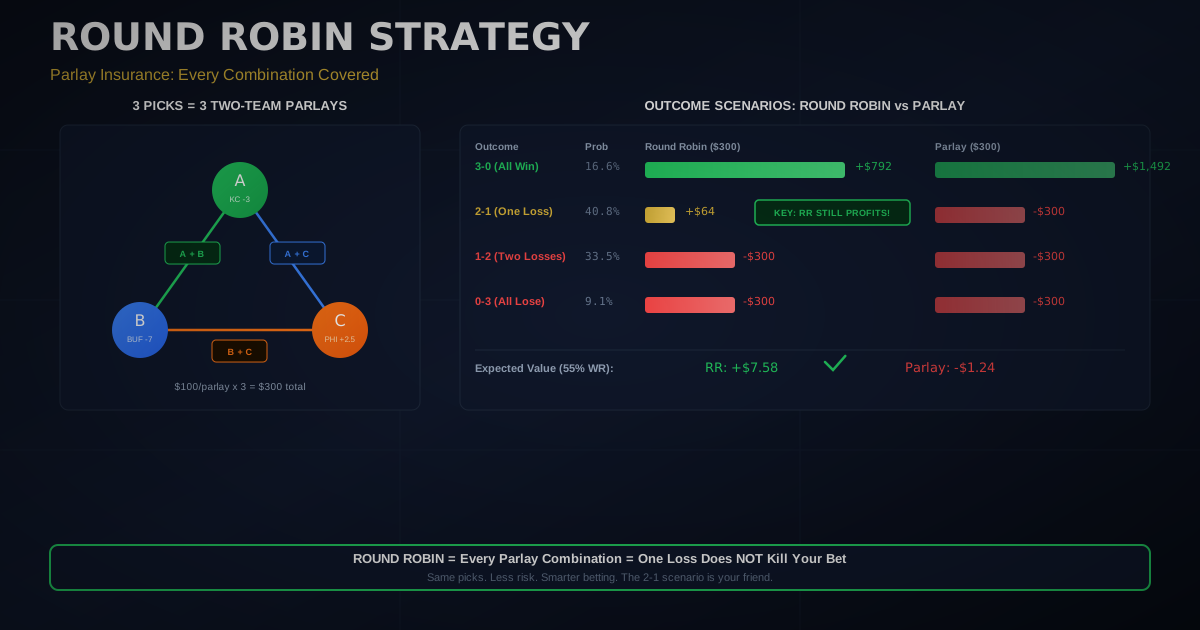
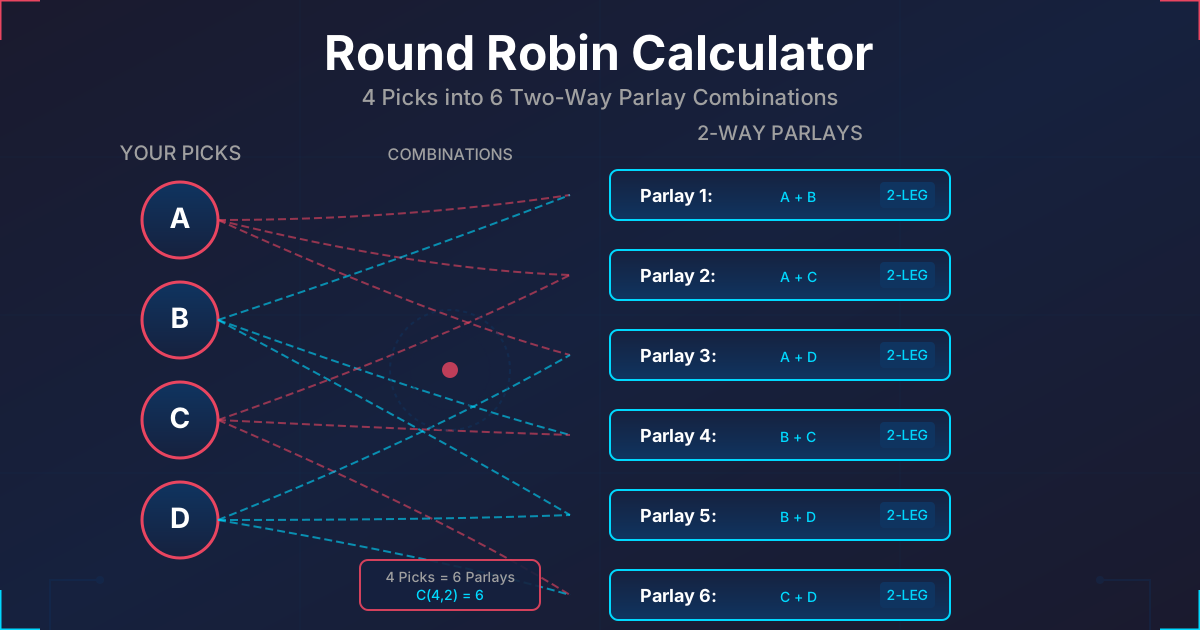
Use our Round Robin Calculator if you want to combine multiple Wong teaser opportunities into round-robin teaser structures.
Common Teaser Mistakes
Mistake 1: Teasing Through Non-Key Numbers
A teaser that moves a line from -5 to +1 crosses through 4, 3, 2, and 1. It crosses 3 (good) but misses 7 entirely. This teaser gains less probability than a Wong teaser but costs the same in odds reduction.
Mistake 2: Playing 3+ Team Teasers at Bad Odds
Three-team teasers at +140 or worse are almost never +EV, even with Wong legs. You need +160 minimum, and +180 is where the math becomes compelling.
Mistake 3: Teasing Totals
Some books allow teasing totals. Do not do this. Totals in the NFL do not have the same key-number structure as spreads. The scoring margin distribution that makes spread teasers profitable does not apply to game totals.
Mistake 4: College Football Teasers Without Adjustment
Applying NFL teaser rules directly to college football ignores the different scoring distribution. College games have wider margins and less concentration at 3 and 7.
Mistake 5: Ignoring Line Movement After Teaser Placement
If you place a teaser on Monday and the line moves from -7.5 to -9.5 by Sunday, you captured extra value. But if it moves from -7.5 to -6.5, your teaser leg is now less valuable than when you placed it. Track line movement on teaser legs just as you would on straight bets.
Mistake 6: Over-Teasering
Not every week has qualifying Wong teasers. Some weeks, zero games meet the criteria. That is fine. Forcing teasers on non-qualifying lines destroys the edge. Discipline means accepting zero-teaser weeks.
Check the vig impact on your teaser odds with our Hold/Vig Calculator.
Frequently Asked Questions
What is a teaser bet in sports betting? A teaser bet lets you adjust the point spread in your favor by a fixed number of points (typically 6, 6.5, or 7) on two or more selections, in exchange for reduced odds. All legs must cover the adjusted spread for the teaser to win. Calculate your teaser combinations with our Teaser Calculator.
What is a Wong teaser? A Wong teaser, named after Stanford Wong, is a specific 6-point, 2-team NFL teaser where both legs cross through the key numbers 3 and 7. This means favorites at -7.5 to -8.5 (teased to -1.5 to -2.5) and underdogs at +1.5 to +2.5 (teased to +7.5 to +8.5). These teasers have documented historical win rates of approximately 59-62%, creating a significant edge at -110 odds.
Why are the numbers 3 and 7 so important in NFL teasers? Approximately 25% of all NFL games are decided by exactly 3 points (field goal) or 7 points (touchdown + PAT). When a teaser crosses through these key numbers, the win probability increases disproportionately because you are capturing a large cluster of game outcomes that would otherwise be losses. Use our Implied Probability Calculator to convert any teaser odds to probabilities.
Are 6.5 or 7-point teasers better than 6-point teasers? Usually not. The extra 0.5 or 1 point costs you in juice (-120 to -140 instead of -110), and the additional probability gained rarely compensates for the higher breakeven threshold. Stick with 6-point teasers at -110 unless you have specific mathematical justification. Compare teaser values with our Expected Value Calculator.
Should I play 3-team teasers? Only if all three legs meet Wong criteria and the payout is +160 or better. At +180, a 3-team Wong teaser has a higher expected value per bet than a 2-team Wong teaser, but with more variance. If fewer than three Wong-qualifying legs exist in a given week, stick with 2-team teasers.
Can I tease college football games profitably? College football teasers are less reliable than NFL teasers because scoring margins are wider and less concentrated at key numbers. The Wong teaser math was developed for the NFL specifically. If you play college teasers, apply stricter criteria and expect lower edge.
How many teasers should I bet per week? Most weeks offer 1-3 qualifying Wong teasers. Some weeks offer zero. Never force a teaser on non-qualifying lines. Quality over quantity. Size each teaser at 1-2% of your bankroll using our Kelly Criterion Calculator.
What happens if one leg of my teaser pushes? Most sportsbooks reduce the teaser by one leg on a push. A 2-team teaser with one push becomes a straight bet at the reduced odds. A 3-team teaser with one push becomes a 2-team teaser. Check your book's specific push rules before placing any teaser.
Essential Teaser Betting Tools
Teaser Analysis
- Teaser Calculator: Calculate teaser adjustments, payouts, and expected value for any combination of legs
- Parlay Calculator: Compare teaser payouts against equivalent straight parlays
- Expected Value Calculator: Determine the expected value of any teaser at given odds and win probabilities
Odds and Probability
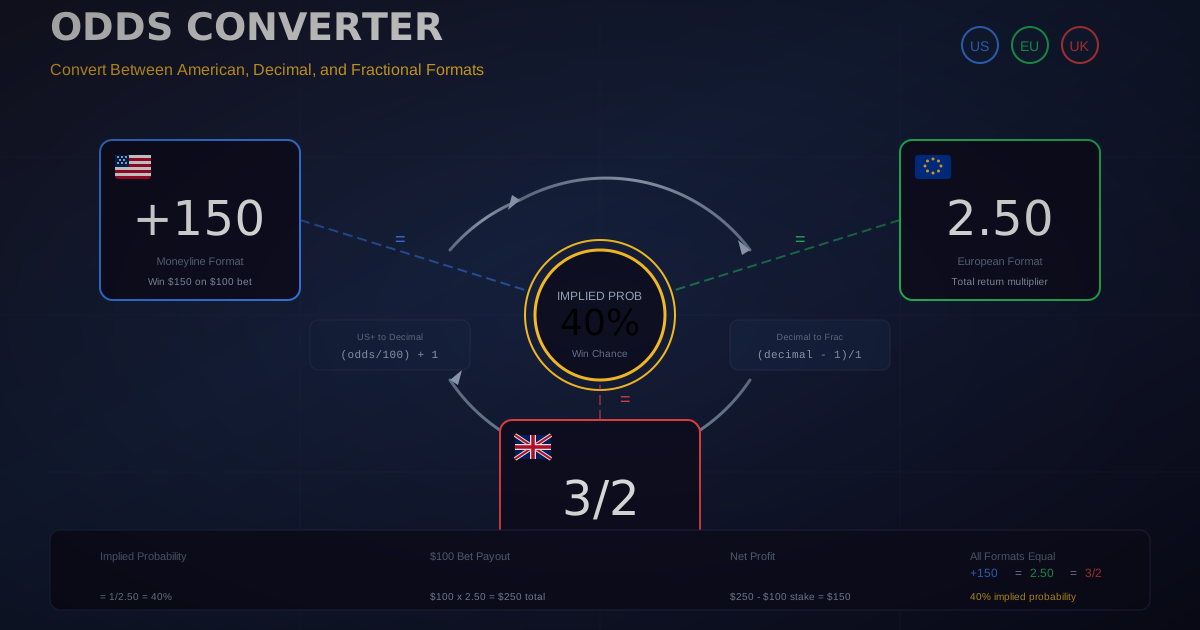
- Odds Converter: Convert teaser odds between American, decimal, and fractional formats
- Implied Probability Calculator: Calculate the implied win probability needed for teasers at any odds
- Hold/Vig Calculator: Measure the vig premium on teaser odds versus straight bets
Bankroll and Bet Structuring
- Kelly Criterion Calculator: Size your teaser bets based on your estimated edge
- If Bet Calculator: Structure conditional teaser sequences across game windows
- Round Robin Calculator: Create round robin combinations from multiple qualifying teaser legs
- Hedge Calculator: Calculate hedge amounts if one teaser leg is in danger
Conclusion: Teasers Are a Tool, Not a Toy
Most bettors use teasers as entertainment -- grabbing random favorites and adding points for fun. That is exactly what the sportsbook wants. Those teasers are -EV, and the house profits.
But Wong teasers are a mathematical edge hiding in plain sight. The numbers 3 and 7 dominate NFL scoring, and teasers that cross through these key numbers have documented win rates that exceed the breakeven threshold at standard odds. When you apply strict criteria, track your results, and maintain discipline on weeks when no qualifying teasers exist, this strategy adds reliable profit to your sports betting portfolio.
Start building your teaser card with our Teaser Calculator. Verify the math with our Expected Value Calculator. And size your teasers properly with our Kelly Criterion Calculator.
The edge is in the key numbers. Know them, exploit them, and let the math work for you.
Gambling involves risk. This content is for educational and informational purposes only. Always gamble responsibly, set limits you can afford, and seek help if gambling becomes a problem. Visit the National Council on Problem Gambling or call 1-800-522-4700 for support.