Tournament Poker vs. Cash Games: Which Is More Profitable? (2026)
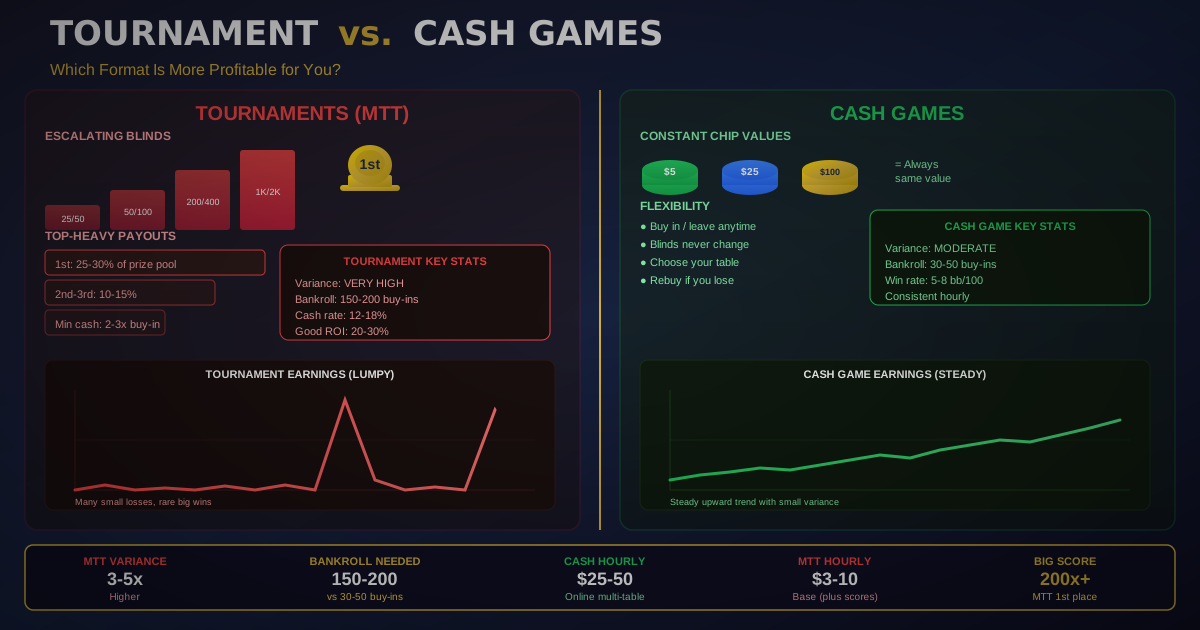
The question of whether tournaments or cash games are more profitable has no universal answer—it depends entirely on your skill set, bankroll, time availability, and tolerance for variance. A player who thrives in tournaments might struggle in cash games, and vice versa. What we can do is break down the math, the variance, and the strategic differences so you can make an informed decision.
Here are the raw numbers: a strong cash game player at $2/$5 No-Limit Hold'em earning 8bb/100 hands makes approximately $40/hour playing 100 hands per hour. A strong tournament player with a 30% ROI playing $100 buy-in events averaging 6 hours per tournament makes approximately $5/hour from tournament winnings alone—but their peak sessions can net $10,000+ from a single first-place finish. The variance profiles could not be more different.
Understanding these differences is crucial for your poker career. Choosing the wrong format can cost you thousands of dollars in lost opportunity, unnecessary bankroll risk, and frustration. This guide provides the complete breakdown you need.
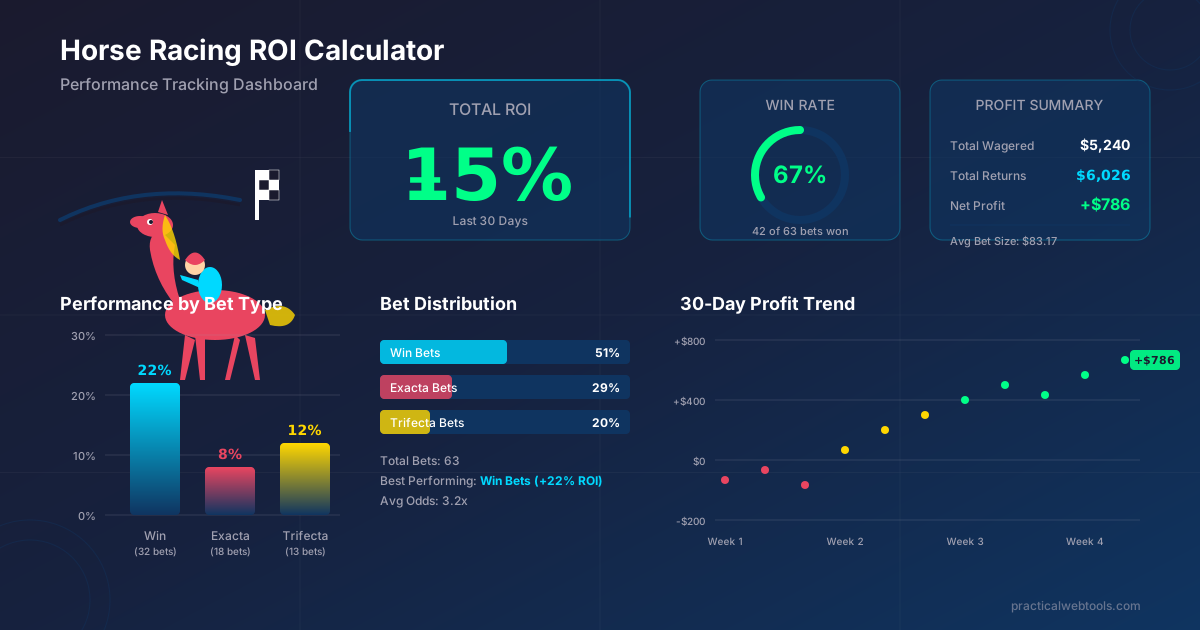
Calculate your tournament ROI and compare formats with our free Poker ROI Calculator.
Structural Differences: How the Games Work
Cash Games
In cash games (also called ring games):
- Chips equal money. Every chip has a fixed dollar value. A $5 chip is always worth $5.
- You can buy in and leave at any time. Sessions can last 30 minutes or 30 hours.
- Blinds never change. The $1/$2 game stays $1/$2 forever.
- You can rebuy. If you lose your stack, you can buy more chips immediately.
- Skill edges compound linearly. Your win rate is measured in bb/100 hands, and earnings scale predictably over volume.
Tournaments (MTTs)
In multi-table tournaments:
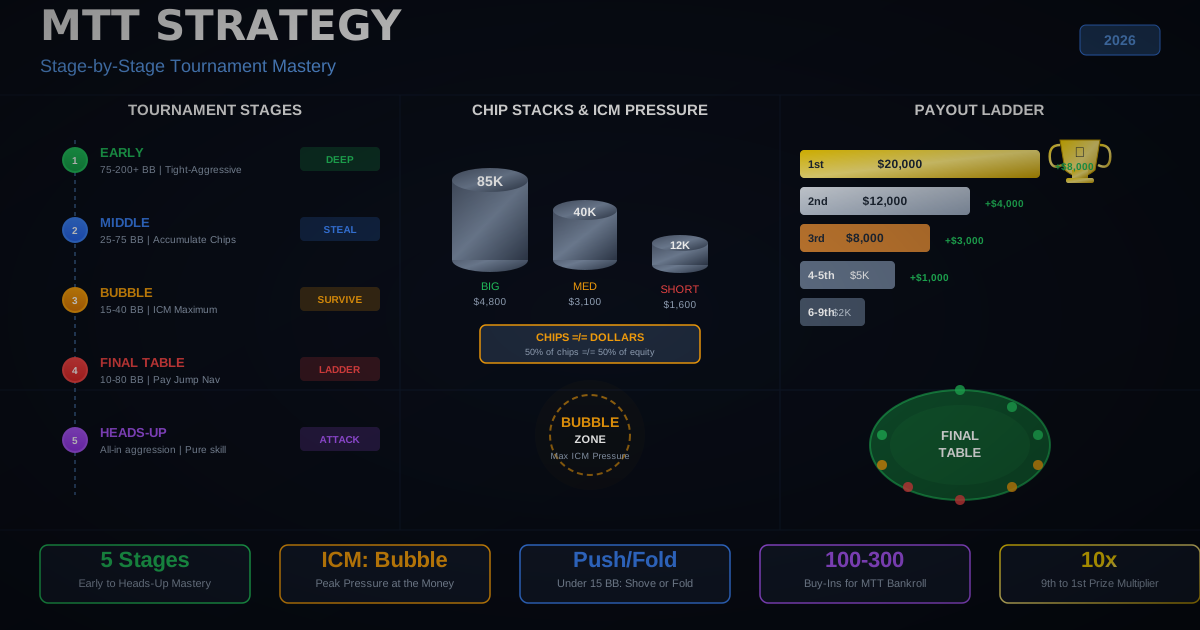
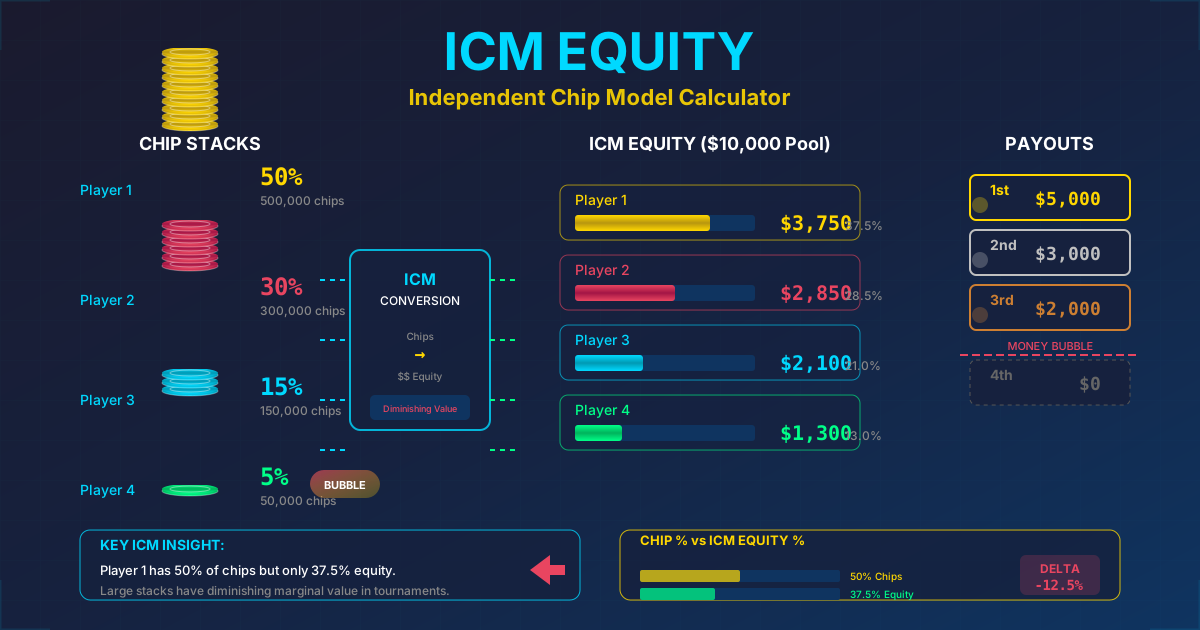
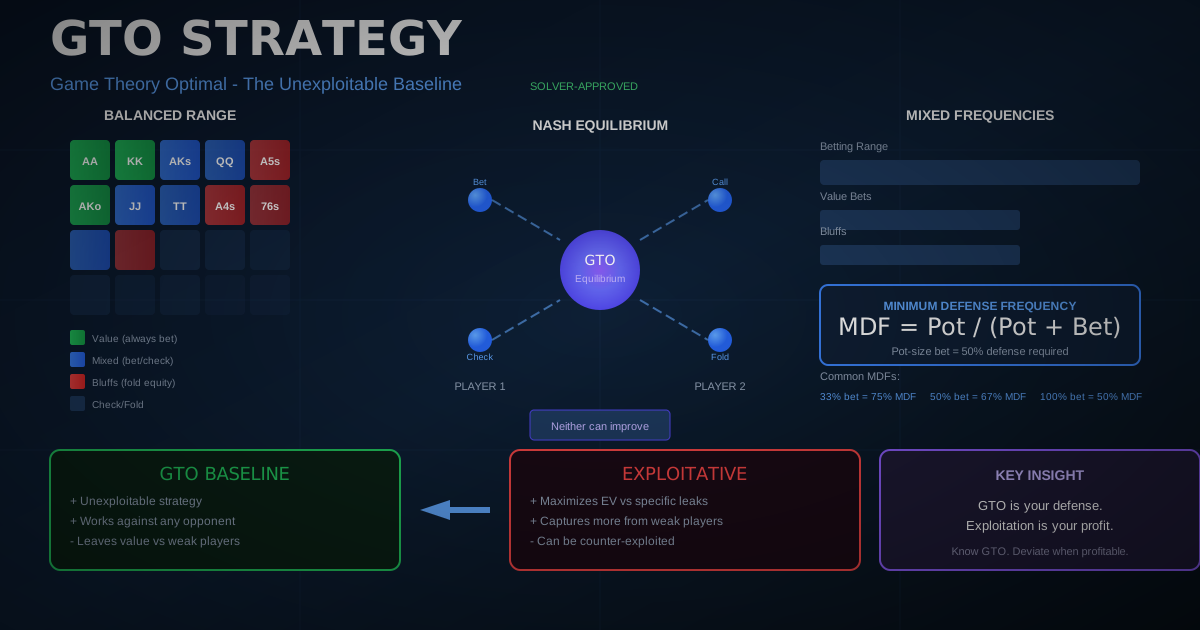
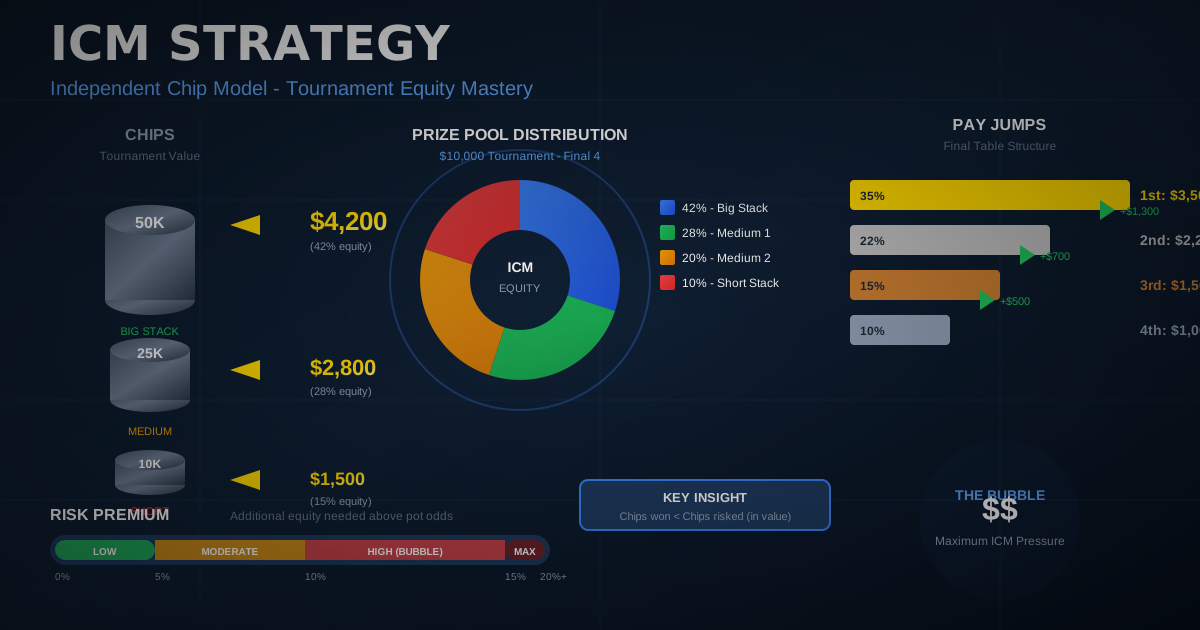
- Chips do not equal money. A chip's real-money value changes based on the tournament situation (ICM).
- You play until you bust or win. No leaving early (except by losing).
- Blinds increase regularly. Escalating blind levels create urgency and force action.
- You cannot rebuy (in freezeout format; some events allow rebuys/re-entries).
- Payouts are top-heavy. Typically, 10-15% of the field gets paid, with 25-40% of the prize pool going to the final table.
How These Differences Affect Strategy
| Factor | Cash Games | Tournaments |
|---|---|---|
| Chip Value | Constant | Changes (ICM) |
| Decision Speed | Unlimited | Time pressure increases |
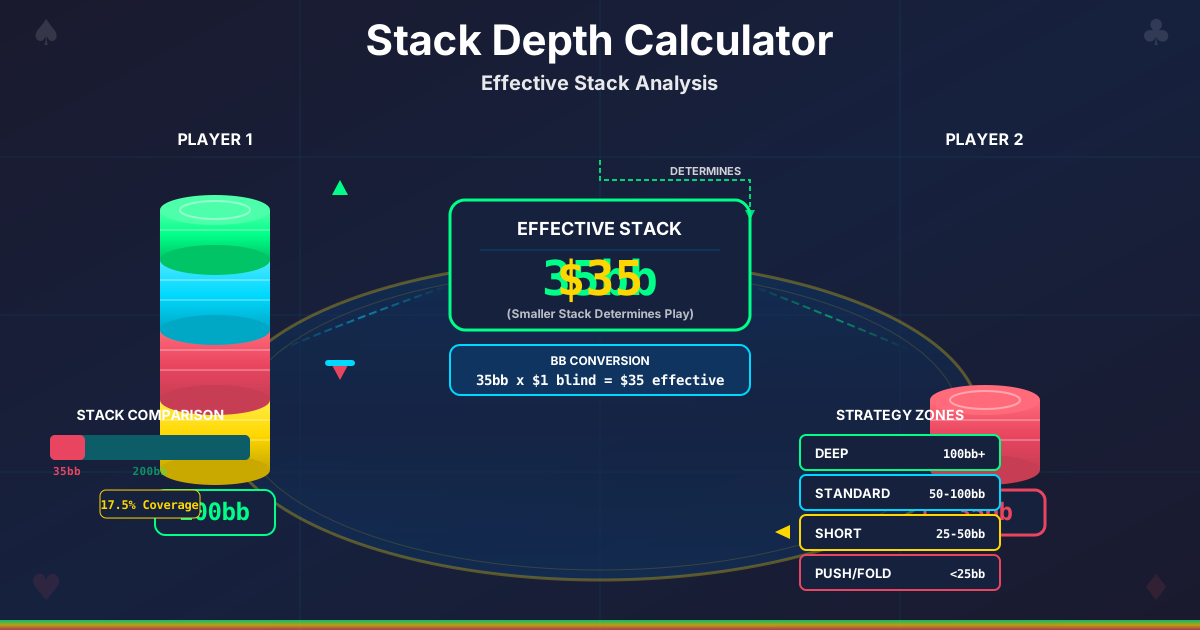
| Stack Depth | Usually 100-200bb | Varies: 200bb to <10bb |
| Risk/Reward per Hand | Low (relative to bankroll) | Entire tournament on the line |
| Opponent Quality | Relatively consistent | Changes as tables break |
| Game Selection | You choose your table | Random seating |
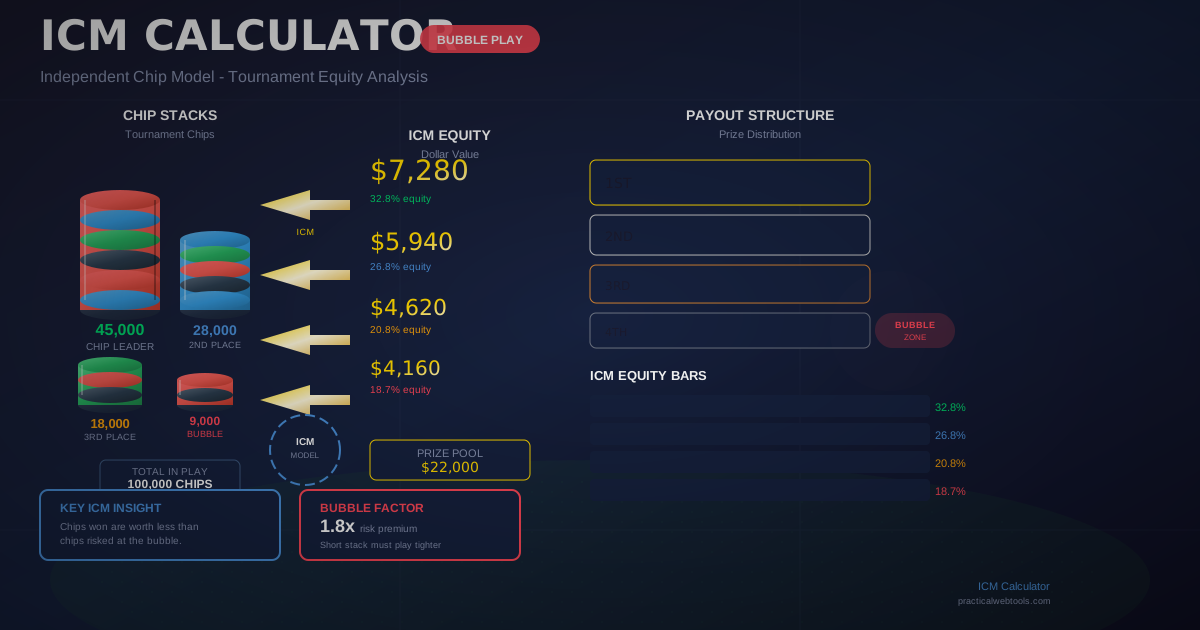
Understand how ICM affects chip value in tournaments with our ICM Calculator.
Variance Comparison: The Swings
Cash Game Variance
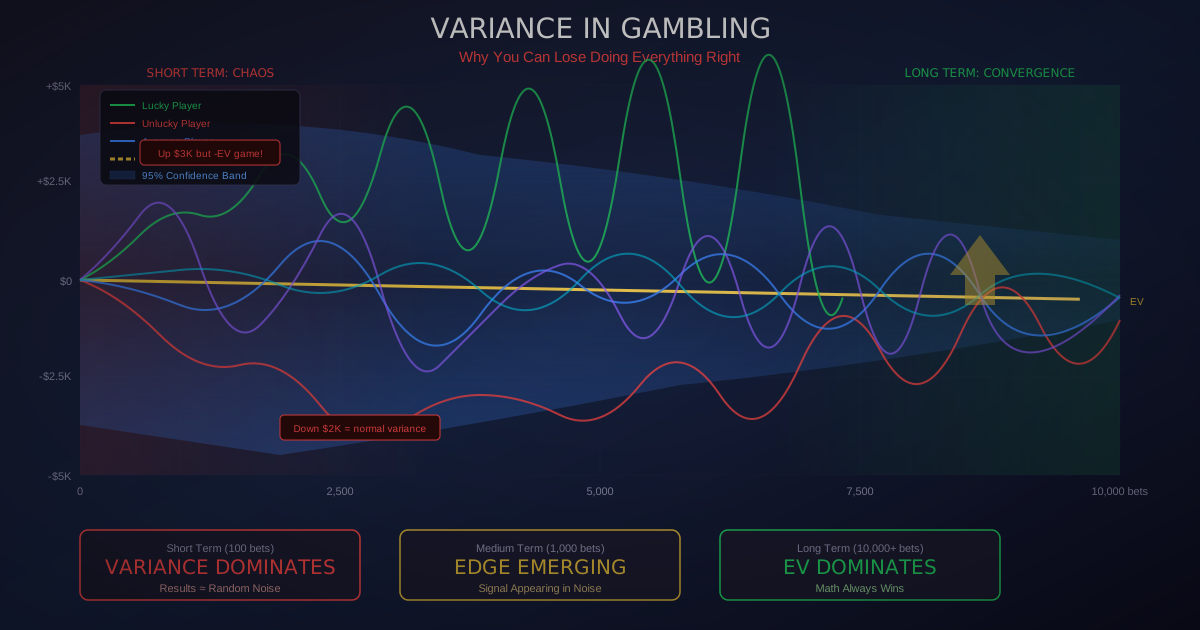
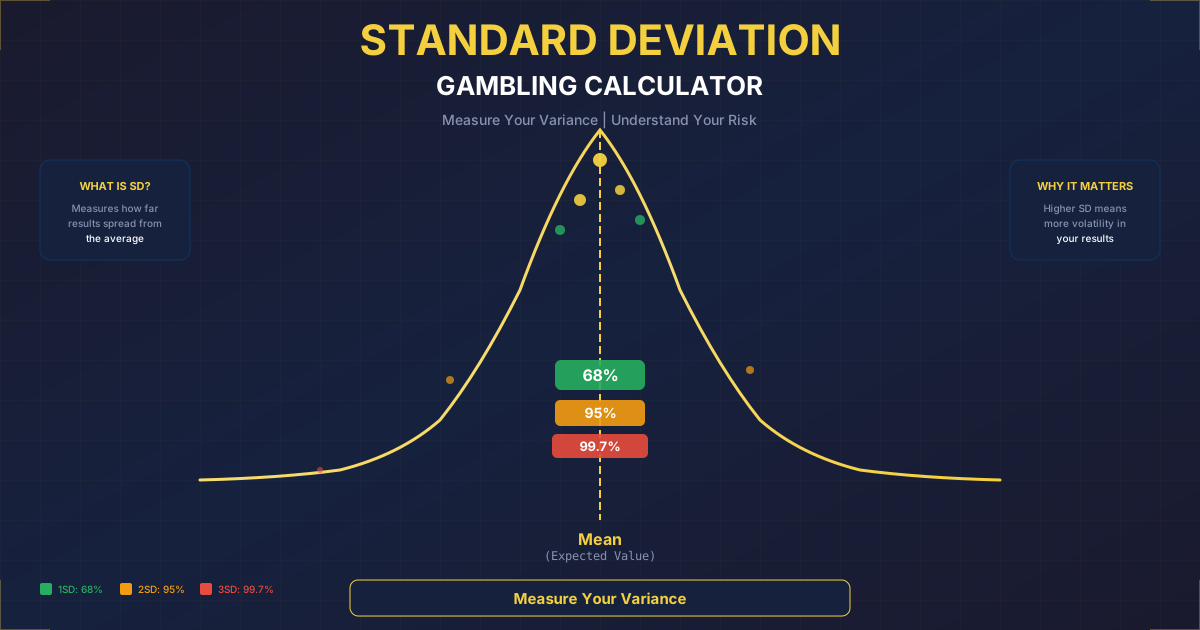
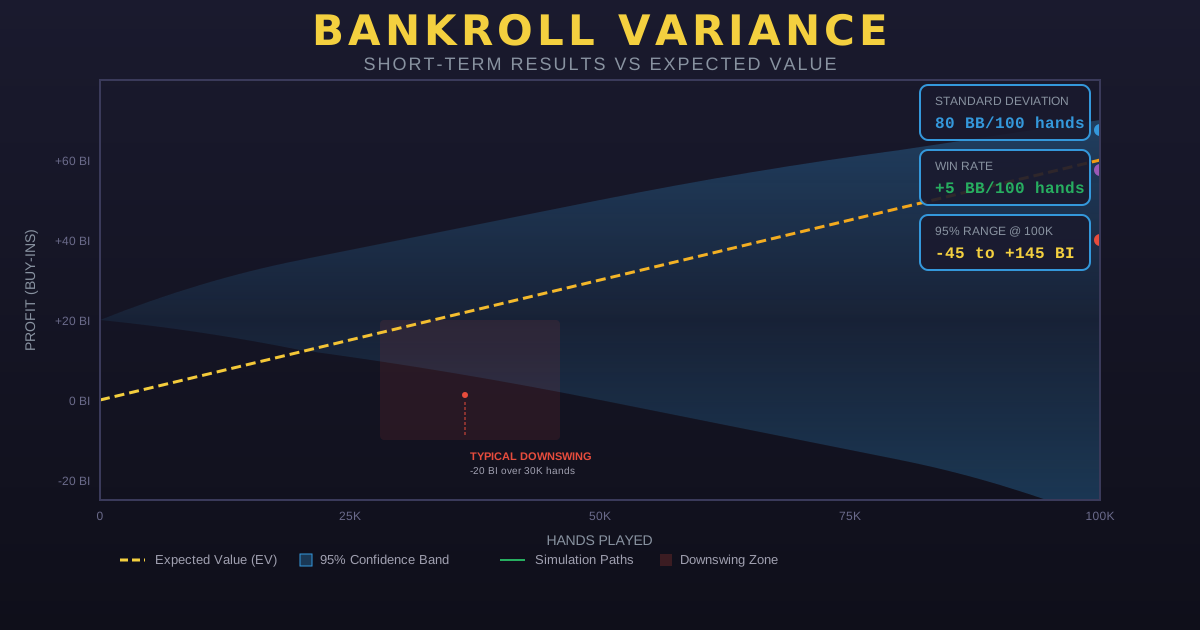
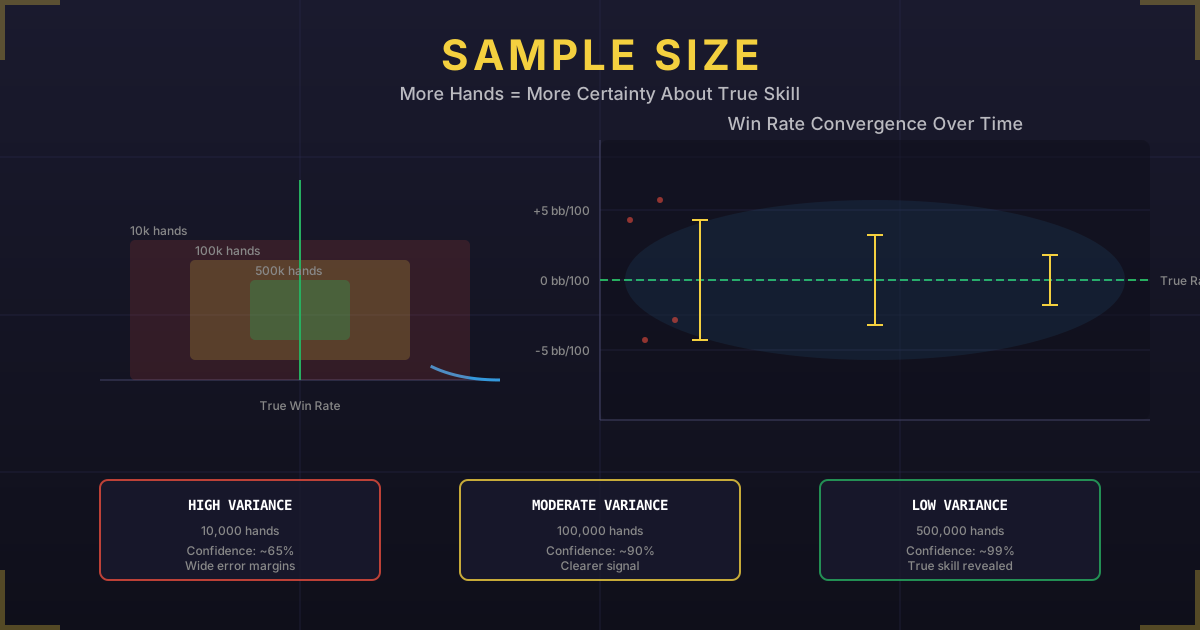
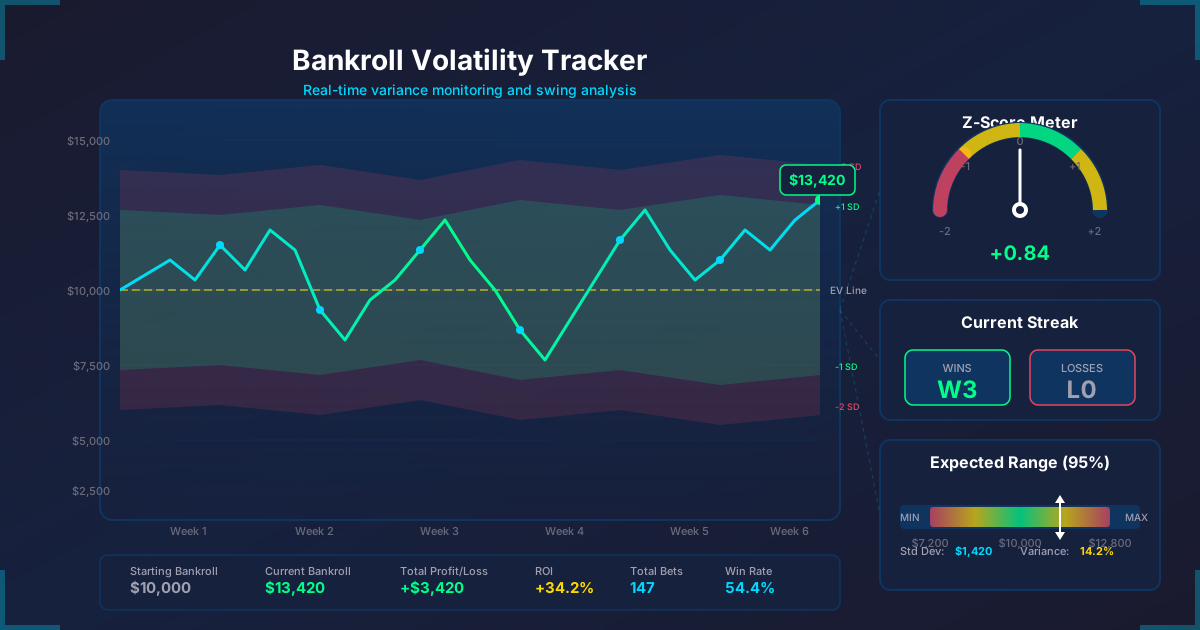
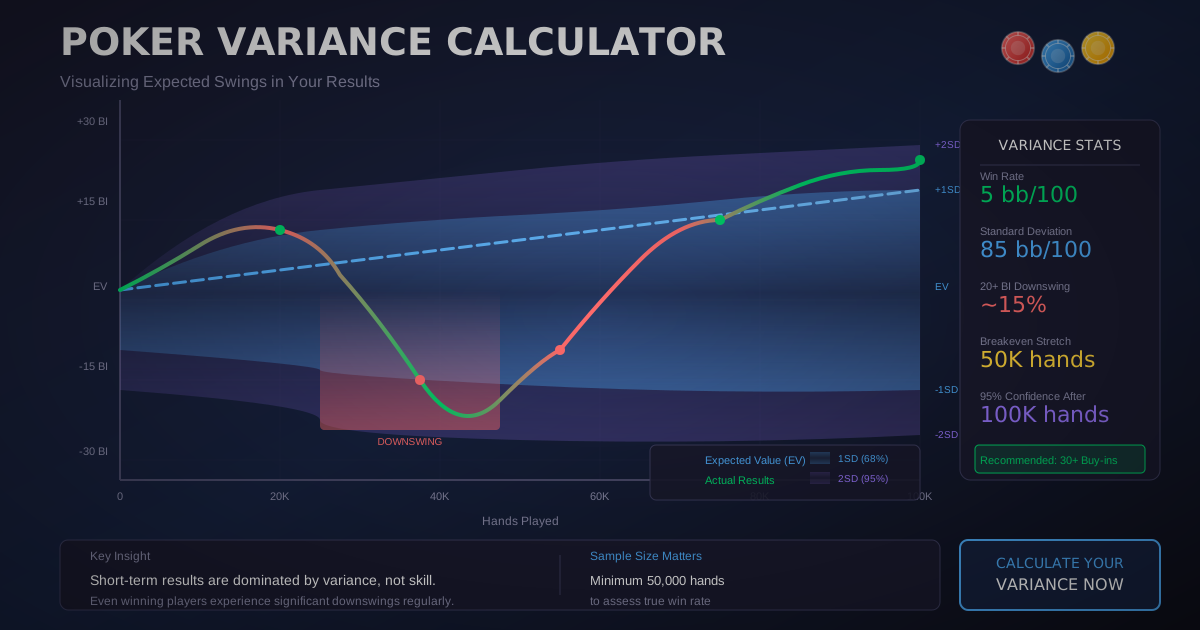
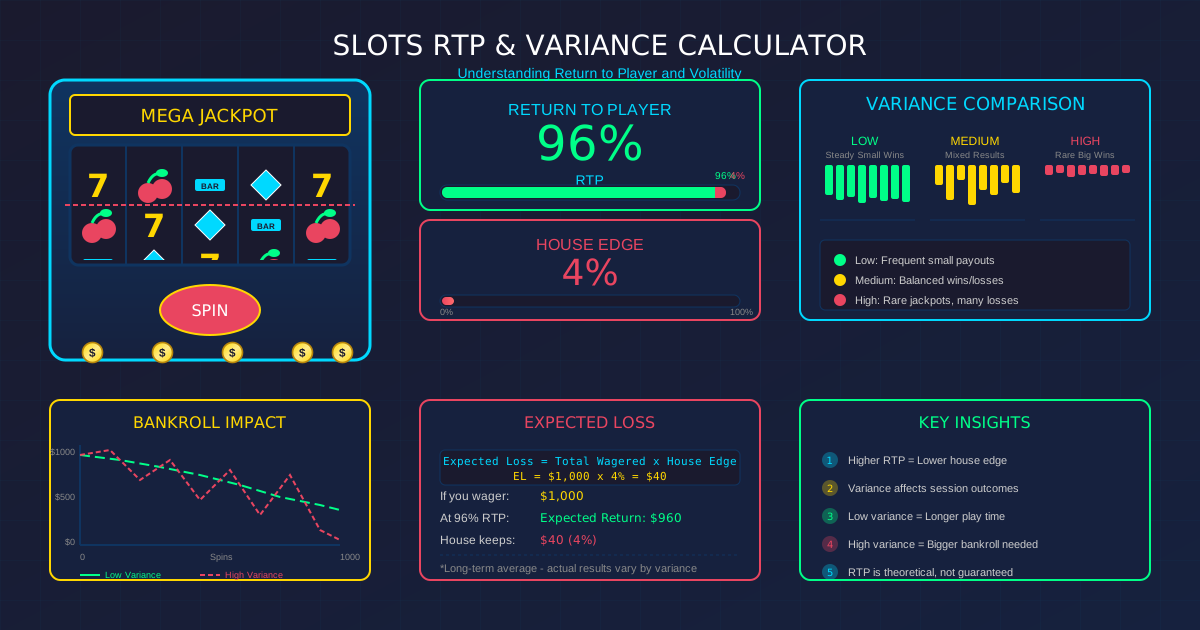
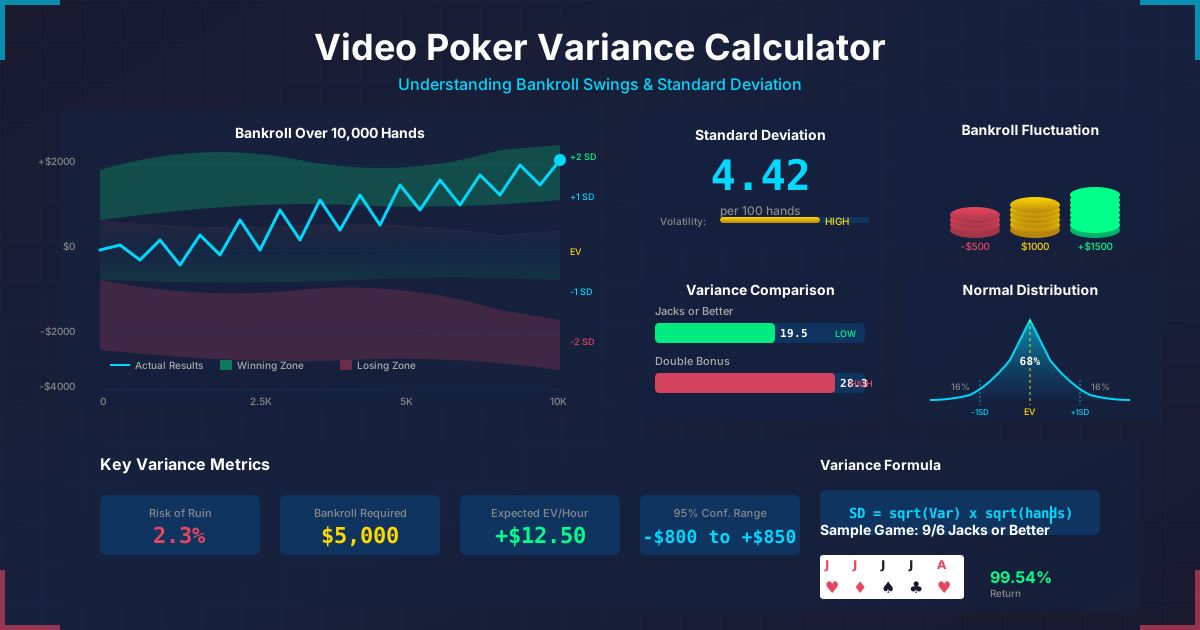
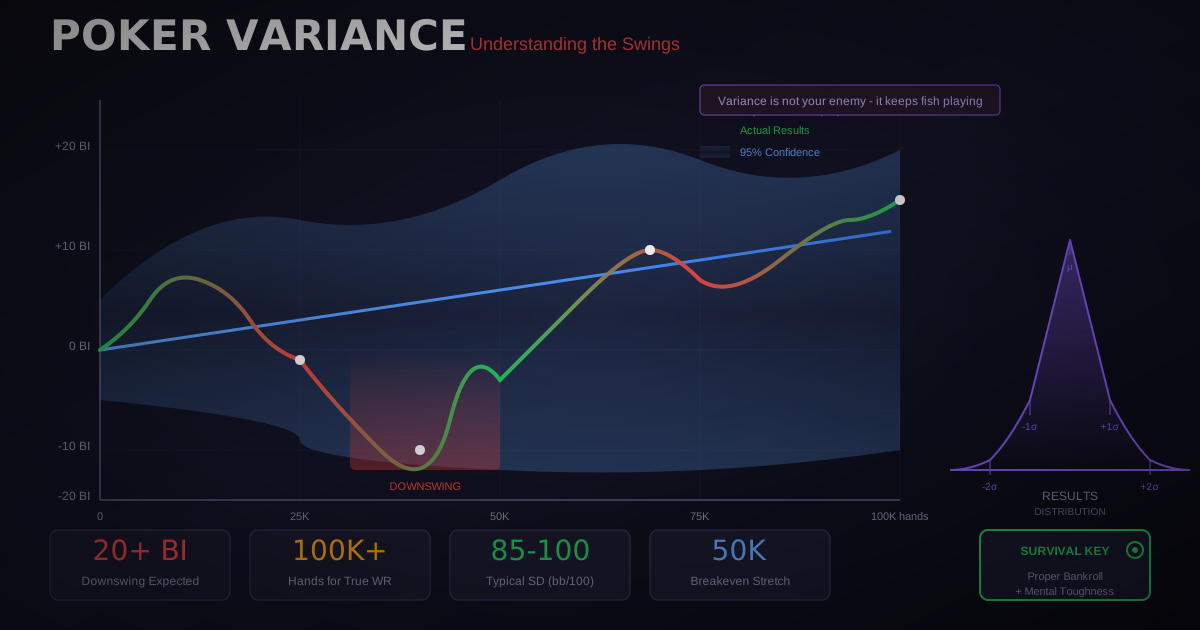
Cash game variance is moderate and predictable. With a known win rate and standard deviation, you can simulate your expected results over any number of hands.
Typical Cash Game Statistics (Per 100 Hands):
| Player Level | Win Rate (bb/100) | Standard Deviation (bb/100) |
|---|---|---|
| Break-even | 0 | 80-90 |
| Small Winner | 2-4 | 80-90 |
| Solid Winner | 5-8 | 85-95 |
| Crusher | 8-12 | 90-100 |
A solid winner at 5bb/100 with a 90bb/100 standard deviation will experience:
- 10 buy-in downswings: Happen roughly once per 50,000 hands
- 20 buy-in downswings: Happen roughly once per 200,000 hands
- 30 buy-in downswings: Rare, but possible over 500,000+ hands
- Breakeven stretches of 50,000 hands: Expected periodically
Simulate your cash game variance with our Poker Variance Calculator.
Tournament Variance
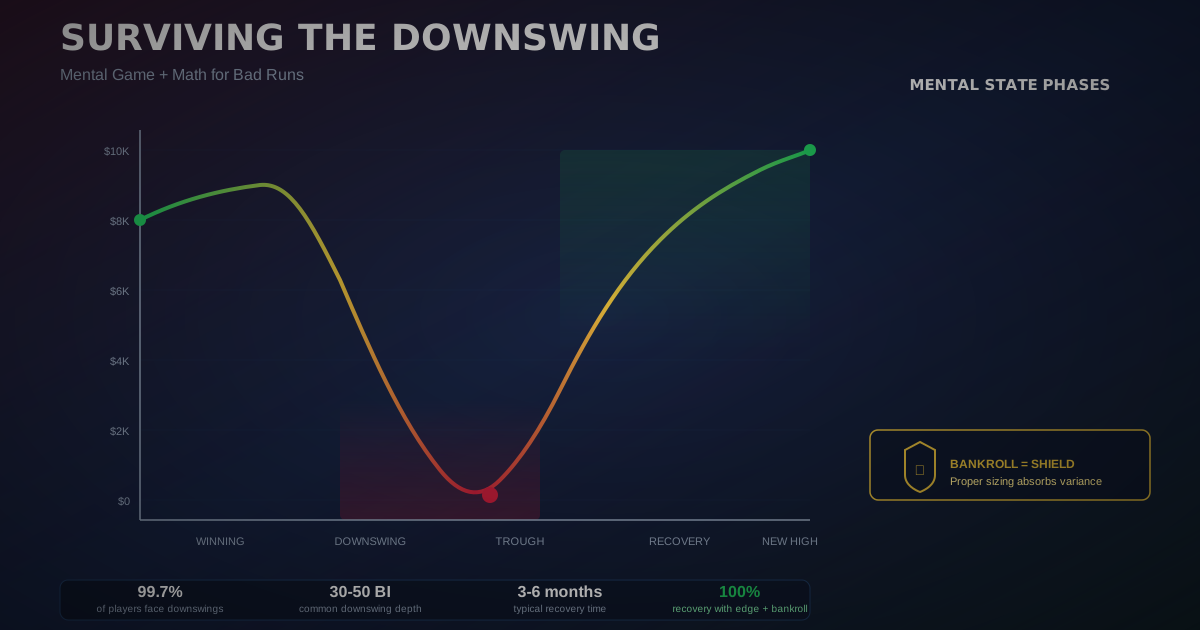
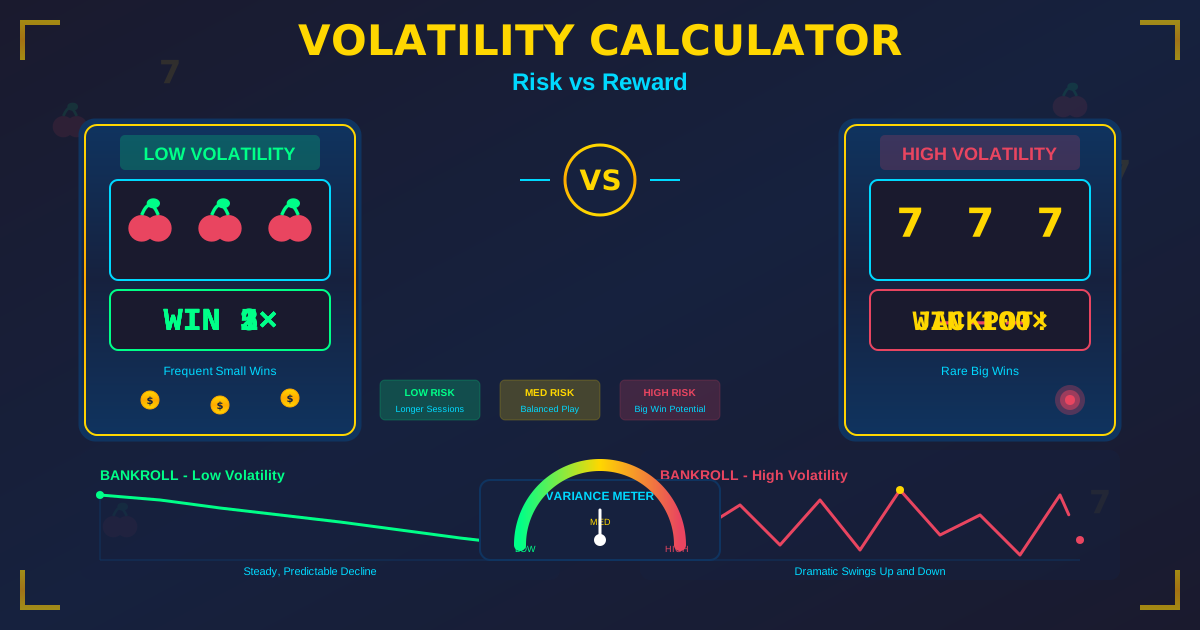
Tournament variance is dramatically higher than cash game variance. Even elite tournament players experience:
- Losing months 35-45% of the time
- 100+ buy-in downswings as a normal occurrence
- Hundreds of tournaments without a significant score
- 90%+ of their profits coming from rare, large scores
Why Tournament Variance Is So Extreme:
- Top-heavy payouts. First place in a 1,000-player tournament might pay 200x the buy-in, but you only reach it 0.1% of the time.
- Low cash frequency. Even strong players only cash 12-18% of events.
- Final table or bust. A min-cash pays 2-3x the buy-in, but the real money is at the final table—which you reach perhaps 1-2% of the time.
- Field size amplifies variance. A 10,000-player event has far more variance than a 100-player sit-and-go.
Tournament Variance Examples:
| ROI | Event Size | Expected Downswing (buy-ins) | Months Without Significant Score |
|---|---|---|---|
| 20% | 200 players | 80-120 | 2-3 |
| 20% | 1,000 players | 150-250 | 4-8 |
| 30% | 200 players | 60-100 | 1-2 |
| 30% | 1,000 players | 120-200 | 3-6 |
Calculate your probability of downswings with our Poker Downswing Probability Calculator.
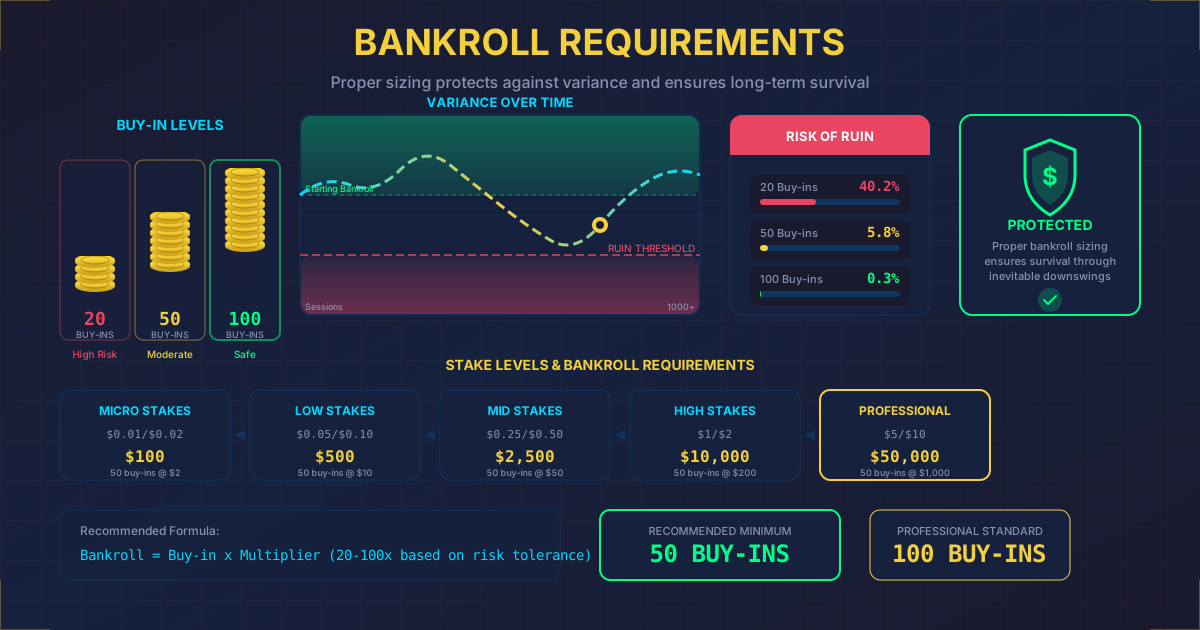
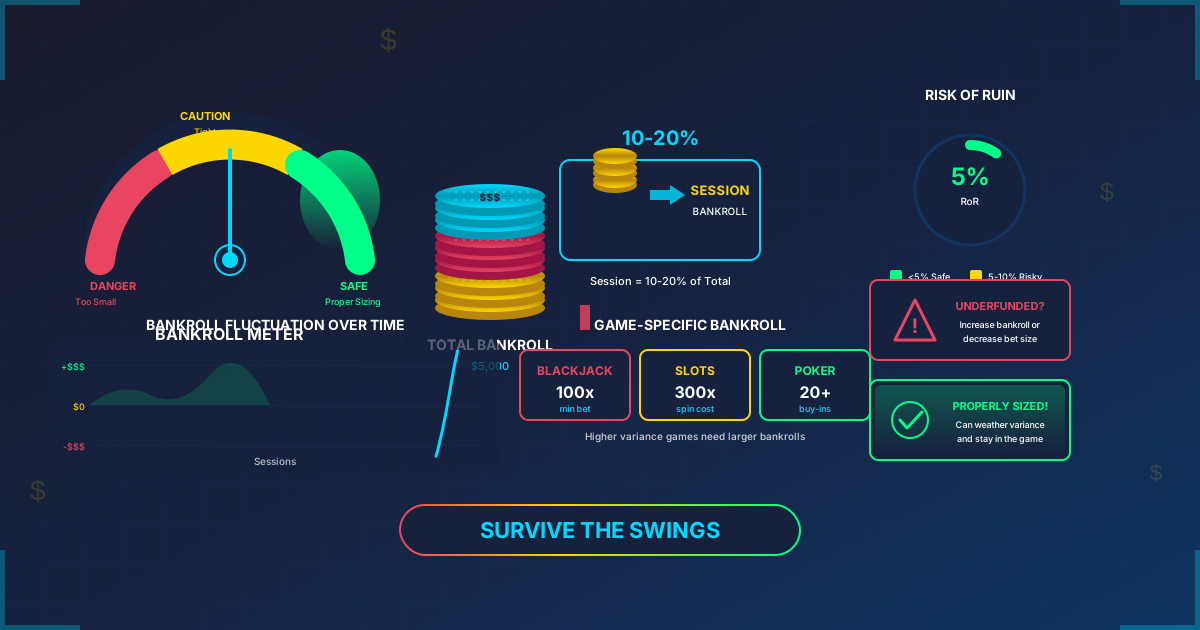
Bankroll Requirements
Cash Game Bankroll
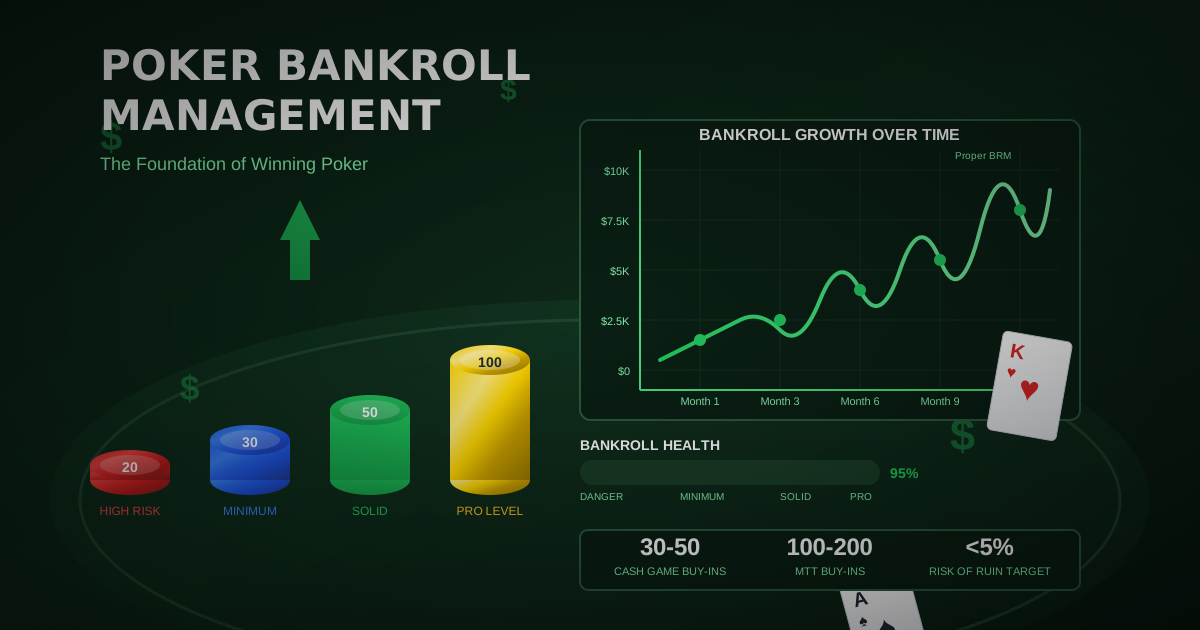
Cash game bankroll requirements are well-established and relatively modest:
| Risk Tolerance | Buy-Ins Required | Example ($1/$2, $200 buy-in) |
|---|---|---|
| Aggressive | 20-25 | $4,000-$5,000 |
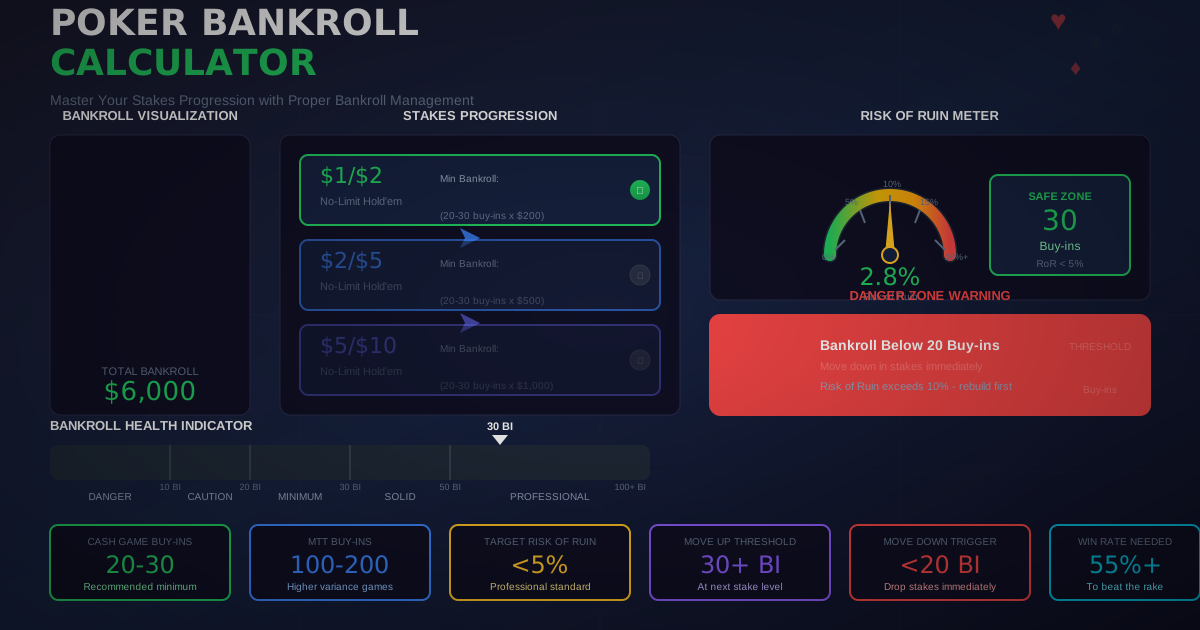
| Standard | 30-40 | $6,000-$8,000 |
| Conservative | 50-100 | $10,000-$20,000 |
| Professional | 100+ | $20,000+ |
A $10,000 bankroll can comfortably support $1/$2 play for a winning player with standard risk tolerance. Moving up to $2/$5 requires $15,000-$25,000.
Tournament Bankroll
Tournament bankroll requirements are significantly higher due to variance:
| Risk Tolerance | Buy-Ins Required | Example ($100 buy-in) |
|---|---|---|
| Aggressive | 100-150 | $10,000-$15,000 |
| Standard | 150-200 | $15,000-$20,000 |
| Conservative | 200-300 | $20,000-$30,000 |
| Professional | 300+ | $30,000+ |
A tournament player needs 2-3x as many buy-ins as a cash game player because the variance is 2-3x higher. A $10,000 bankroll can only support $50-$67 average buy-in tournaments with proper bankroll management.
Calculate your exact bankroll requirements for either format with our Poker Bankroll Requirements Calculator.
The Dollar Comparison
Consider two players each with a $20,000 bankroll:
Cash Game Player:
- Can play $2/$5 ($500 buy-in) with 40 buy-ins
- Earns 5bb/100 = $25/hour at 100 hands/hour
- Monthly earnings (120 hours): $3,000
- Risk of ruin: <5%
Tournament Player:
- Can play $100 average buy-in with 200 buy-ins
- 30% ROI = $30 per tournament
- Plays 20 tournaments/month (6 hours each) = 120 hours
- Monthly earnings: $600 base + occasional large scores
- Risk of ruin: ~5-10%
The cash game player has a more consistent, predictable income. The tournament player has a lower base income but occasional windfall scores that can dwarf the cash game earnings in a single event.
Hourly Rate Analysis
Cash Game Hourly Rate
Cash game hourly rates are straightforward to calculate:
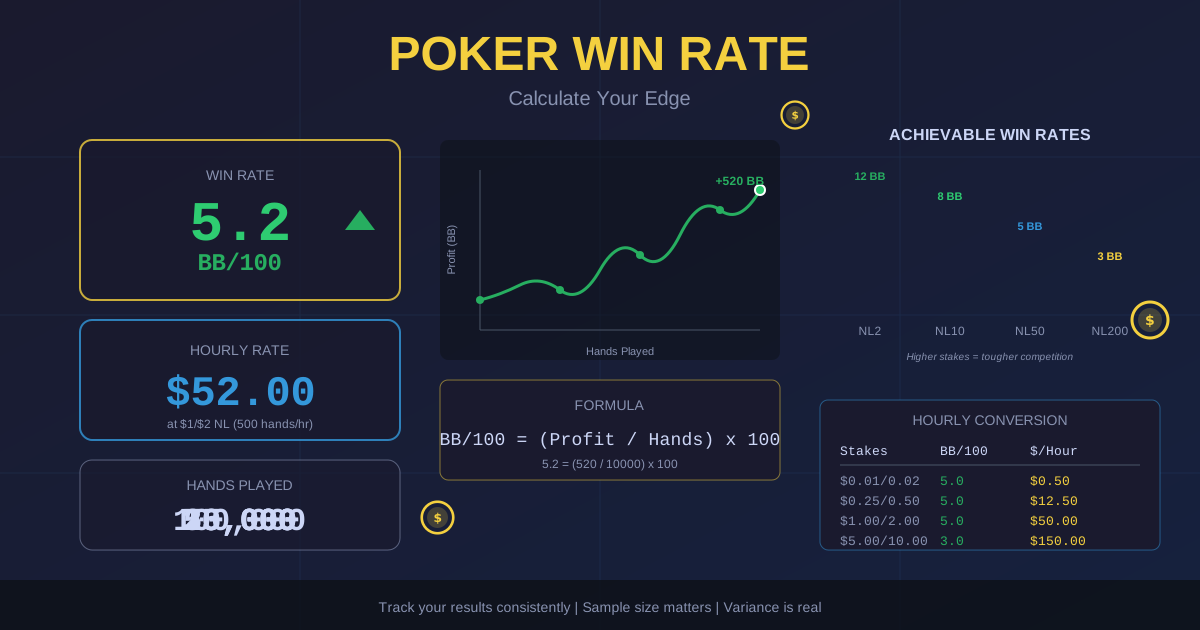
Hourly Rate = (Win Rate in bb/100) x (Big Blind) x (Hands per Hour) / 100
Example Calculations:
| Stakes | Win Rate | Hands/Hour | Hourly Rate |
|---|---|---|---|
| $1/$2 (online) | 5bb/100 | 250 (multi-table) | $25/hour |
| $1/$2 (live) | 8bb/100 | 30 | $4.80/hour |
| $2/$5 (live) | 6bb/100 | 30 | $9/hour |
| $5/$10 (live) | 5bb/100 | 30 | $15/hour |
| $2/$5 (online) | 4bb/100 | 250 | $50/hour |
Note: Online players can multi-table, dramatically increasing their hourly rate despite lower per-table win rates.
Calculate your exact hourly rate with our Poker Hourly Rate Calculator.
Tournament Hourly Rate
Tournament hourly rates are harder to calculate because earnings are lumpy:
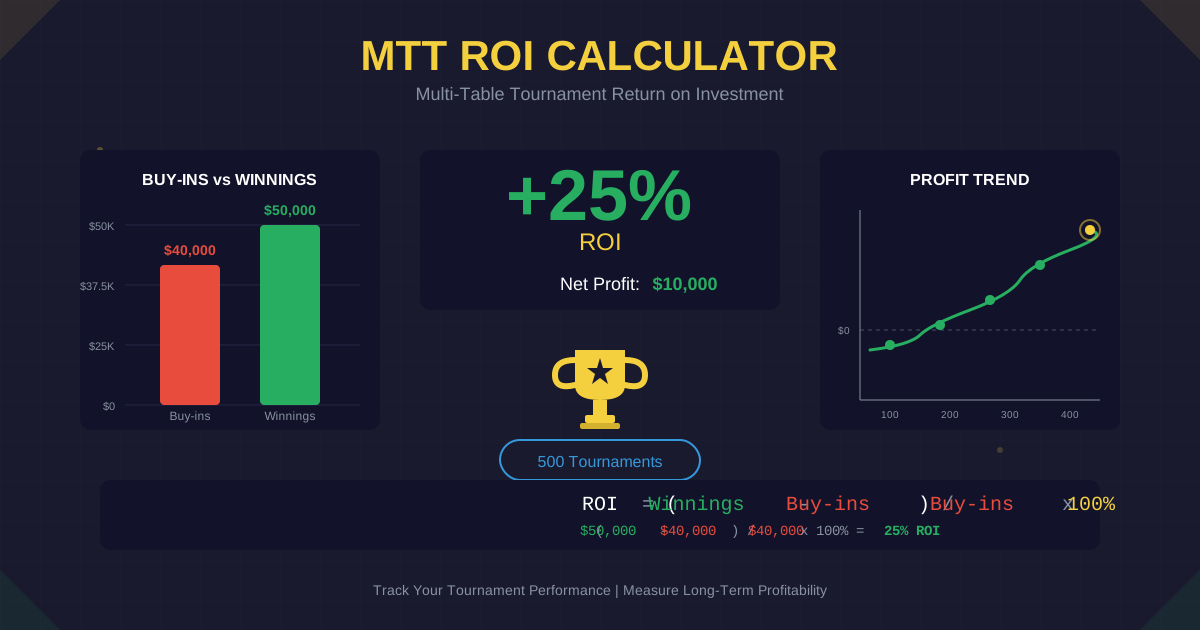
Tournament Hourly Rate = (Average Buy-in x ROI%) / Average Tournament Duration
Example Calculations:
| Buy-in | ROI | Avg Duration | Hourly Rate | Reality Check |
|---|---|---|---|---|
| $50 | 30% | 5 hours | $3/hour | Plus occasional large score |
| $100 | 25% | 6 hours | $4.17/hour | Plus occasional large score |
| $200 | 20% | 6 hours | $6.67/hour | Plus occasional large score |
| $500 | 15% | 7 hours | $10.71/hour | Plus occasional large score |
The asterisk with tournaments: These hourly rates reflect the average over thousands of events. In reality, most individual tournaments end in a loss. The large scores that bring up the average happen infrequently but significantly.
A $100 buy-in tournament player with 30% ROI:
- Plays 200 tournaments per year
- Expected profit: $6,000 ($100 x 0.30 x 200)
- Time invested: ~1,200 hours
- Base hourly rate: $5/hour
- But one first-place finish ($15,000) would bring yearly earnings to $21,000 and hourly rate to $17.50
Track and calculate your tournament ROI over time with our Poker ROI Calculator.
ICM Pressure: The Hidden Cost of Tournaments
What ICM Changes
In cash games, every chip has equal value. A $5 chip is always worth $5, regardless of how many you have.
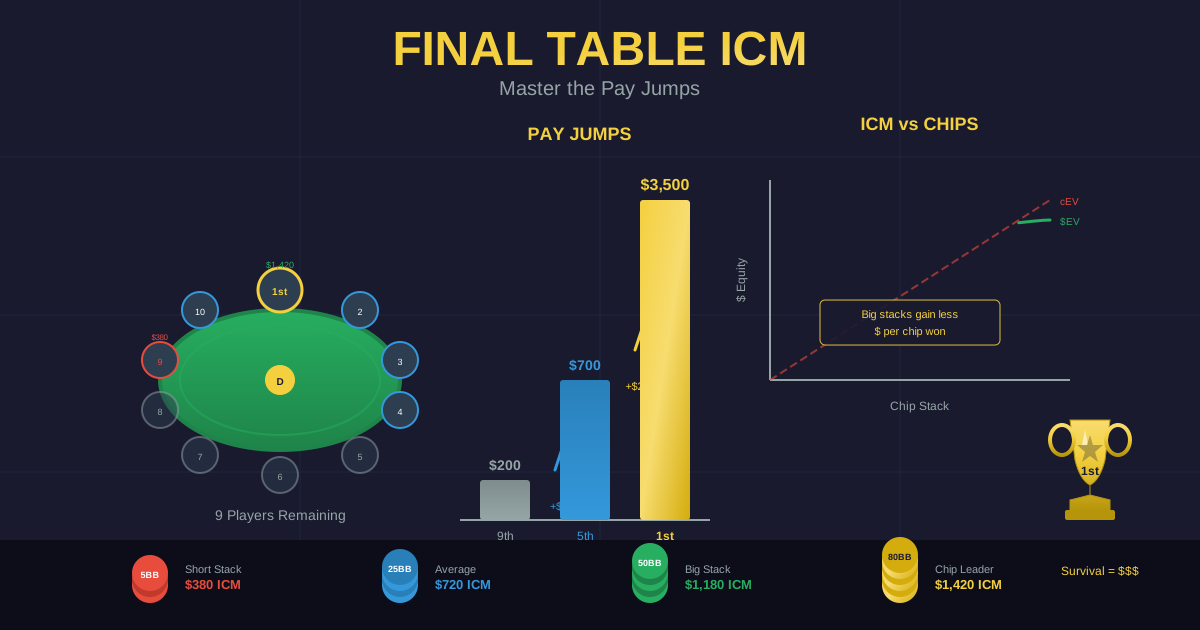
In tournaments, the Independent Chip Model (ICM) means chips have diminishing marginal value:
- Your first 1,000 chips are worth more per chip than your next 1,000
- Doubling your stack does NOT double your tournament equity
- Losing all your chips costs you 100% of your remaining equity, but winning an all-in doubles your stack (not your equity)
How ICM Affects Strategy
ICM pressure causes tournament strategy to diverge from cash game strategy in critical ways:
Bubble Situations:
- Near the money, chip preservation becomes paramount
- Big stacks can bully without strong hands
- Medium stacks should tighten significantly
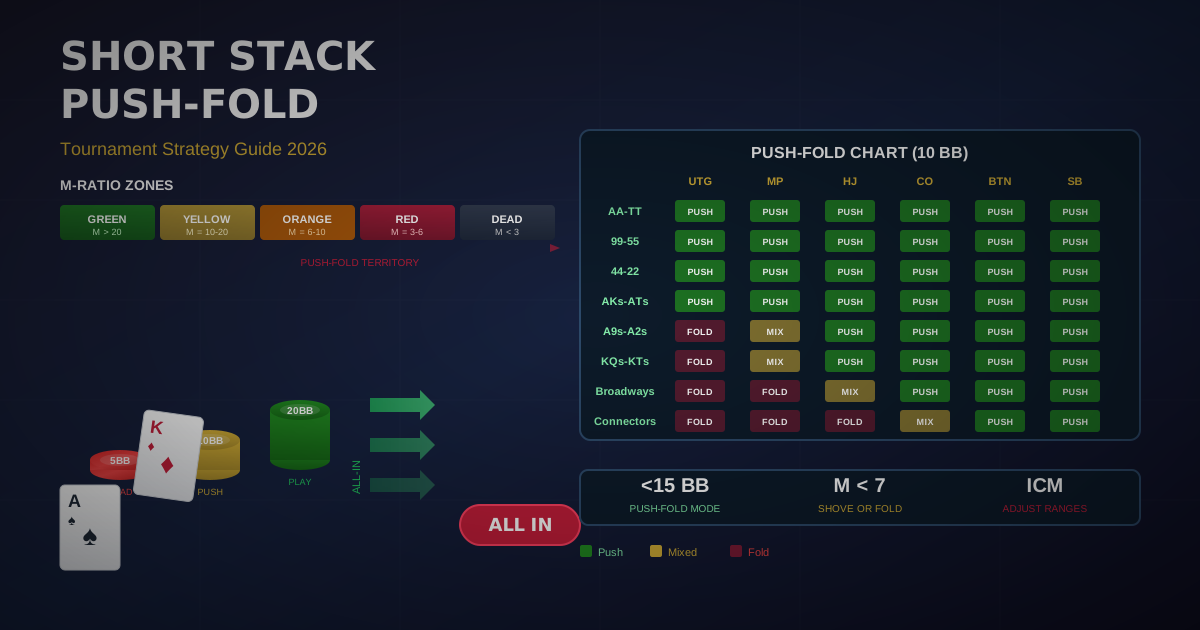
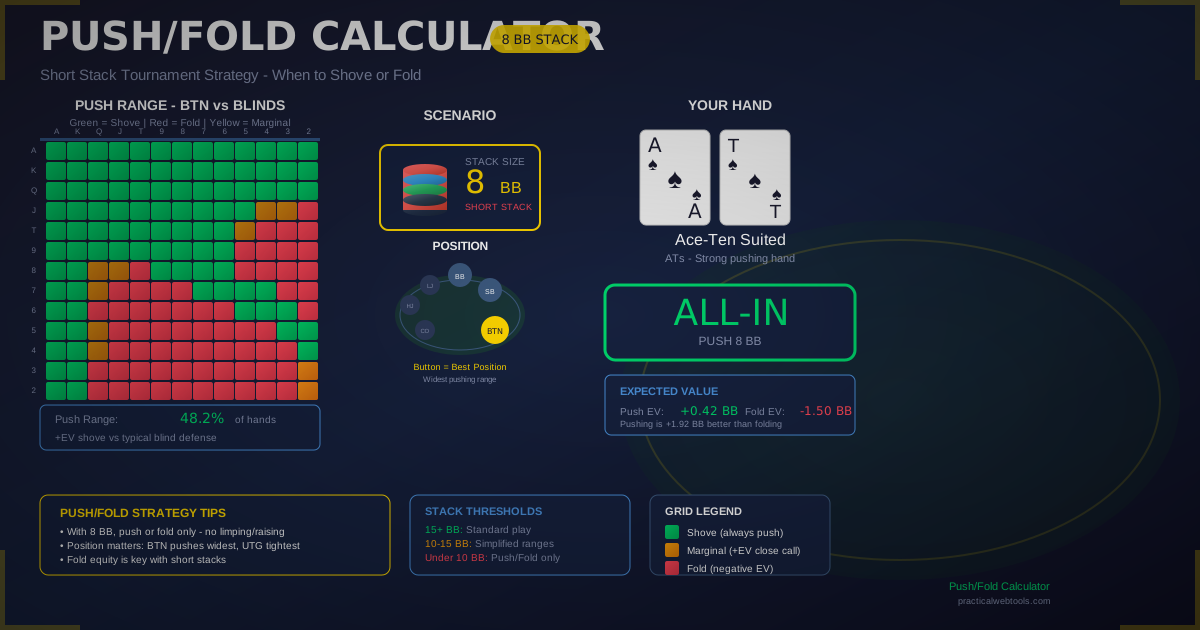
- Short stacks must push or fold
Final Table Pay Jumps:
- Each elimination means a pay increase for everyone
- Calling all-ins requires a higher threshold than in cash games
- Risk premium increases with larger pay jumps
Example: In a $100 tournament with 100 players, 15 spots pay. At the bubble (16 players left), your tournament equity might be $500. Calling an all-in for your entire stack requires not just positive chip EV, but enough positive EV to overcome the risk of busting (losing $500 in equity) versus the incremental gain of doubling up (perhaps gaining $200 in equity).
Calculate ICM equity and pay jump implications with our ICM Calculator and Tournament Payout Calculator.
Skill Differences Between Formats
Skills That Matter More in Cash Games
- Postflop play. With deep stacks and many streets, postflop skill is paramount.
- Hand reading. Long sessions against the same opponents require accurate reads.
- Pot control. Managing pot size with medium-strength hands is critical.
- Game selection. Choosing profitable tables is a major edge.
- Discipline and consistency. Grinding day after day at the same stakes requires mental stamina.
- Tilt control over long sessions. One bad hand should not affect the next 200 hands.
Skills That Matter More in Tournaments
- Push/fold mastery. Short-stack play dominates late-tournament strategy.
- ICM understanding. Knowing when to tighten, loosen, or exploit ICM-unaware opponents.
- Stack size awareness. Adjusting to varying stack depths throughout the tournament.
- Blind stealing. Winning uncontested pots to maintain stack size.
- Final table play. Pay jumps create unique strategic considerations.
- Mental endurance. Playing 8-12 hour sessions with increasing pressure.
Which Skills Do You Have?
| Skill | Cash Game Relevance | Tournament Relevance |
|---|---|---|
| Deep-stack postflop | Critical | Moderate (early stages) |
| Short-stack play | Rarely applicable | Critical (late stages) |
| Hand reading | Critical | Critical |
| ICM strategy | Not applicable | Critical |
| Bankroll management | Important | Critical |
| Tilt control | Important | Critical |
| Game selection | Very Important | Not applicable |
| Multi-tabling | Very Important (online) | Moderate |
| Endurance | Moderate | Very Important |
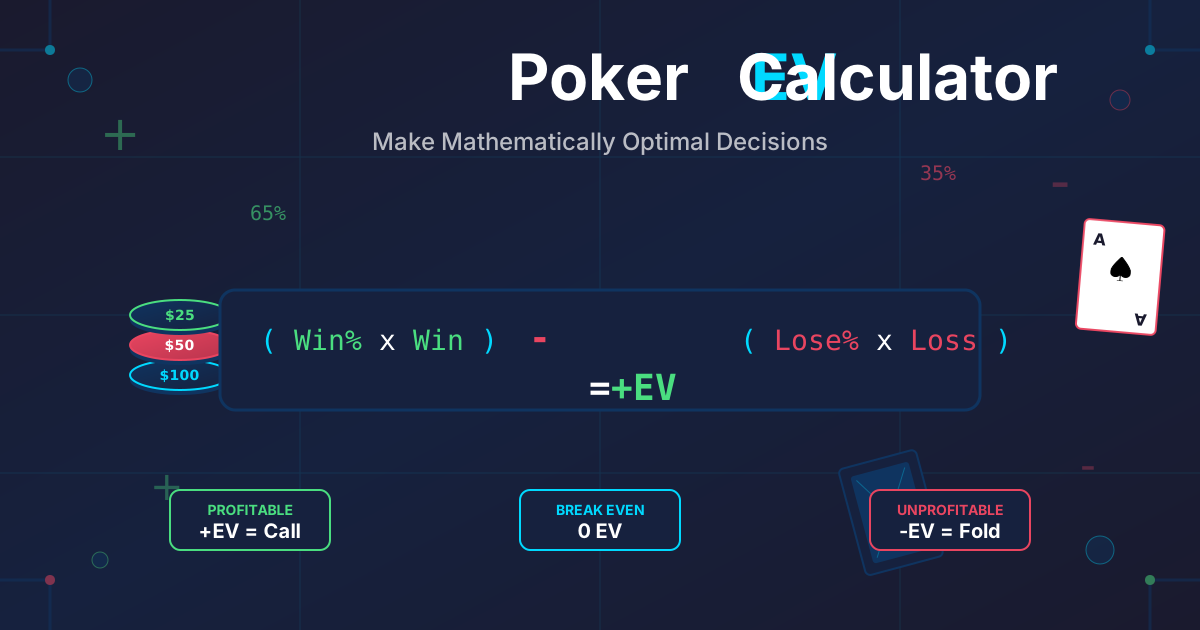
Evaluate your EV in different scenarios with our Poker EV Calculator.
Lifestyle Considerations
Cash Game Lifestyle
Advantages:
- Play whenever you want, for as long as you want
- Consistent income (monthly earnings are relatively predictable)
- Can take days off without losing opportunities
- No scheduling requirements
- Can multi-table online for higher hourly rates
Disadvantages:
- Can feel like grinding (repetitive)
- Less excitement and fewer "big moments"
- Easy to play too many hours (burnout)
- Hard to separate work and personal life (always "one more orbit")
Tournament Lifestyle
Advantages:
- Exciting and varied experiences
- Big score potential (life-changing money from a single event)
- Natural session boundaries (tournament ends, you stop)
- Travel opportunities (live tournament circuits)
- Community and social aspects
Disadvantages:
- Unpredictable schedule (deep runs can last 12+ hours)
- Inconsistent income (losing months are common)
- Must be available for scheduled start times
- Cannot leave when running bad (must play until elimination)
- Travel expenses can be significant
The Hybrid Approach
Many professional players combine both formats:
- Primary income from cash games (consistent monthly earnings)
- Tournament play for upside (shot at large scores)
- Balanced lifestyle (cash game grinding + occasional tournament excitement)
This approach provides income stability while preserving the potential for breakout tournament wins.
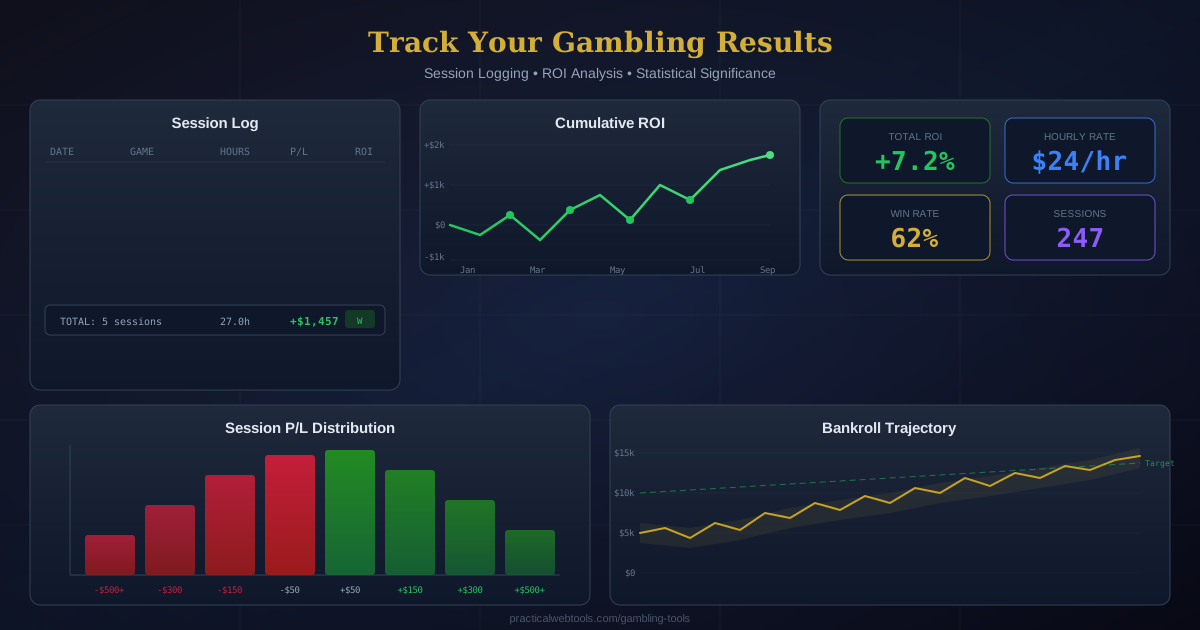
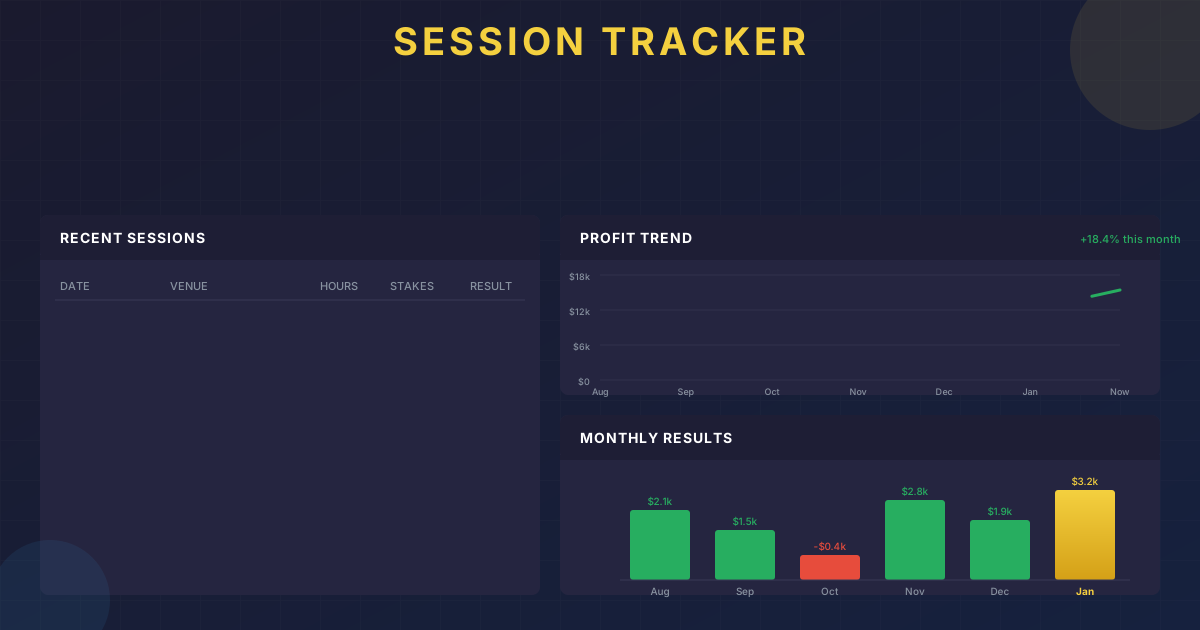
Track your results across both formats with our Poker Session Tracker.
Real-World Profitability Examples
Example 1: The Online Grinder
Player Profile: Plays $1/$2 NL online, 8-tables for 6 hours/day, 5 days/week.
Cash Game Results:
- Hands per hour per table: 70
- Total hands per hour: 560
- Win rate: 3bb/100 (lower due to multi-tabling)
- Hourly rate: 3 x $2 x 560 / 100 = $33.60/hour
- Weekly: $33.60 x 30 hours = $1,008
- Monthly: $4,032
- Annual: $48,384
If they switched to tournaments ($50 average buy-in, 6 tables simultaneously):
- Tournaments per month: ~120
- ROI: 20% (good for online MTTs)
- Monthly profit: 120 x $50 x 0.20 = $1,200 base
- Annual: $14,400 base (plus large scores)
Verdict for this player: Cash games are significantly more profitable due to the volume advantage of multi-tabling. The consistent $48K+ per year from cash games dwarfs the $14K base from tournaments.
Example 2: The Live Tournament Pro
Player Profile: Plays live $500-$1,000 buy-in tournaments, 15 events/month.
Tournament Results:
- Average buy-in: $750
- ROI: 25%
- Monthly profit: 15 x $750 x 0.25 = $2,812 average
- Annual: $33,750 average
- Travel/expenses: ~$12,000/year
- Net annual: ~$21,750
If they switched to live $5/$10 cash:
- Hours per month: 120
- Win rate: 4bb/100 at 30 hands/hour
- Hourly rate: 4 x $10 x 30 / 100 = $12/hour
- Monthly: $1,440
- Annual: $17,280 (no travel expenses)
Verdict for this player: Tournaments are slightly more profitable when accounting for large scores, but the variance is much higher. Cash games provide more stability but lower upside.
Example 3: The Weekend Warrior
Player Profile: Plays 10-15 hours/week, recreationally.
Cash Game (Live $1/$3):
- Win rate: 6bb/100 (exploits recreational weekend players)
- Hours per month: 50
- Hourly rate: 6 x $3 x 25 / 100 = $4.50/hour
- Monthly: $225
Tournaments ($50-$100 local events, 4/month):
- Average buy-in: $75
- ROI: 40% (recreational fields are softer)
- Monthly profit: 4 x $75 x 0.40 = $120 base + occasional scores
- Hourly rate: ~$5/hour (including occasional scores)
Verdict for this player: Both formats are similar in profitability. Cash games provide more consistent small wins; tournaments offer occasional excitement with a bigger upside.
Calculate your specific hourly rate and ROI with our Poker Hourly Rate Calculator and Poker ROI Calculator.
Risk of Ruin Comparison
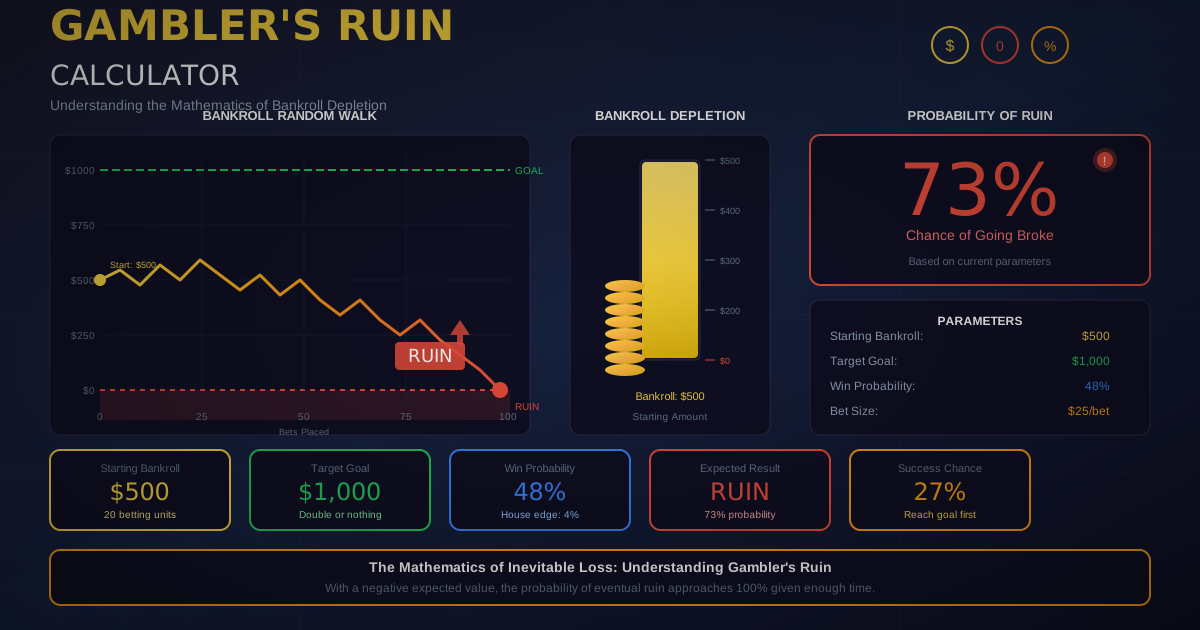
Risk of ruin—the probability of losing your entire bankroll—differs substantially between formats.
Cash Game Risk of Ruin
| Bankroll (Buy-ins) | Win Rate 3bb/100 | Win Rate 5bb/100 | Win Rate 8bb/100 |
|---|---|---|---|
| 20 | 35% | 20% | 8% |
| 30 | 18% | 8% | 2% |
| 50 | 5% | 1.5% | <0.5% |
| 100 | <1% | <0.1% | ~0% |
Tournament Risk of Ruin
| Bankroll (Buy-ins) | ROI 15% | ROI 25% | ROI 40% |
|---|---|---|---|
| 100 | 40% | 25% | 12% |
| 150 | 25% | 12% | 5% |
| 200 | 12% | 5% | 2% |
| 300 | 3% | 1% | <0.5% |
Notice that a tournament player with 100 buy-ins has similar risk of ruin to a cash game player with only 20-30 buy-ins. The variance multiplier is roughly 3-5x.
Calculate your exact risk of ruin with our Poker Risk of Ruin Calculator.
Making Your Decision: A Framework
Choose Cash Games If:
- You value income consistency. You need predictable monthly earnings.
- You have limited play time. You can only play 2-3 hour sessions.
- You are strong postflop. Your edge comes from deep-stack play.
- You prefer game selection. You want to choose your opponents.
- You have a moderate bankroll. $5,000-$15,000 is enough for low-mid stakes.
- You enjoy grinding and optimization. You find satisfaction in marginal EV gains.
Choose Tournaments If:
- You want big score potential. You are motivated by the possibility of life-changing wins.
- You handle variance well. Losing for weeks or months does not tilt you.
- You have a large bankroll relative to buy-ins. 200+ buy-ins provides adequate cushion.
- You enjoy short-stack dynamics. Push/fold and ICM are your strengths.
- You want a varied schedule. You prefer varied session lengths and formats.
- You enjoy the competitive atmosphere. You thrive under tournament pressure.
Choose Both If:
- You want stability with upside. Cash game grind + tournament shots.
- You have a large enough bankroll for both. Separate bankrolls for each format.
- You enjoy variety. Different skills engaged on different days.
- You are still determining your strengths. Playing both helps you discover your optimal format.
Frequently Asked Questions
Are cash games or tournaments more profitable? It depends on your skill set, stakes, and volume. On a per-hour basis, multi-tabling online cash games typically generates higher and more consistent income. On an upside basis, tournaments offer the potential for life-changing scores. For most recreational players, cash games are more profitable because they require less bankroll and offer more predictable returns. Use our Poker Hourly Rate Calculator to compare your specific numbers.
How much bankroll do I need for each format? Cash games require 30-50 buy-ins for standard risk tolerance (e.g., $6,000-$10,000 for $1/$2). Tournaments require 150-200 buy-ins (e.g., $15,000-$20,000 for $100 buy-in events). Calculate your exact requirements with our Poker Bankroll Requirements Calculator.
What is a good tournament ROI? A 15-20% ROI is considered good for online MTTs. A 25-40% ROI is strong. Anything above 40% is elite and typically only sustainable in small field sizes or soft live events. Track your ROI with our Poker ROI Calculator.
What is a good cash game win rate? For live poker, 5-10bb/100 is a good win rate. For online, 3-6bb/100 is solid at low-mid stakes. Higher stakes typically have lower win rates due to tougher competition. Calculate your hourly earnings with our Poker Hourly Rate Calculator.
Can I play both cash games and tournaments? Yes, many successful players combine both. Maintain separate bankrolls and track results independently. Cash games provide stable income while tournaments offer upside potential. Use our Poker Session Tracker to track both.
How does variance differ between the two formats? Tournament variance is approximately 3-5x higher than cash game variance. A cash game player might experience 20 buy-in downswings; a tournament player regularly experiences 100+ buy-in downswings. Model your expected variance with our Poker Variance Calculator.
What is ICM and why does it only matter in tournaments? ICM (Independent Chip Model) calculates the real-money value of tournament chips. In cash games, chips always equal money, so ICM is irrelevant. In tournaments, chips have diminishing value—doubling your stack does not double your equity. Use our ICM Calculator to understand these dynamics.
Which format has softer competition? Live low-stakes cash games and live small-field tournaments typically have the softest competition. Online fields have become increasingly tough at all levels. Recreational weekend poker events (both formats) tend to offer the weakest opponents.
Related Tools for Poker Format Analysis
- Poker ROI Calculator — Calculate tournament return on investment
- Poker Hourly Rate Calculator — Determine your cash game hourly earnings
- Poker Bankroll Requirements Calculator — Find the right bankroll for either format
- ICM Calculator — Understand tournament chip equity
- Poker Variance Calculator — Simulate expected swings
- Tournament Payout Calculator — Analyze tournament payout structures
- Poker Session Tracker — Track results across formats
- Poker Downswing Probability Calculator — Model downswing likelihood
- Poker Risk of Ruin Calculator — Calculate bankroll survival probability
- Poker EV Calculator — Evaluate expected value in any situation
Conclusion: Choose the Format That Fits Your Life
There is no objectively "better" format. Cash games offer consistency, flexibility, and lower variance. Tournaments offer excitement, big scores, and a competitive atmosphere. The most profitable format is the one that aligns with your skills, bankroll, schedule, and mental game.
Your action plan:
- Assess your bankroll honestly. If you have $5,000, cash games at $0.50/$1 are realistic. Tournaments are limited to $25-$33 buy-ins.
- Track your results in both formats. Play at least 50,000 hands of cash games and 100 tournaments before deciding.
- Compare your hourly rates. Use hard data, not feelings, to determine which format pays better.
- Factor in lifestyle. Income consistency versus excitement and upside potential.
- Consider the hybrid approach. Use cash games for income and tournaments for upside.
Start your analysis today. Calculate your tournament ROI with our Poker ROI Calculator, determine your cash game hourly rate with our Poker Hourly Rate Calculator, and ensure your bankroll can handle the variance with our Poker Bankroll Requirements Calculator.
The best format is the one you can beat consistently while enjoying the process.
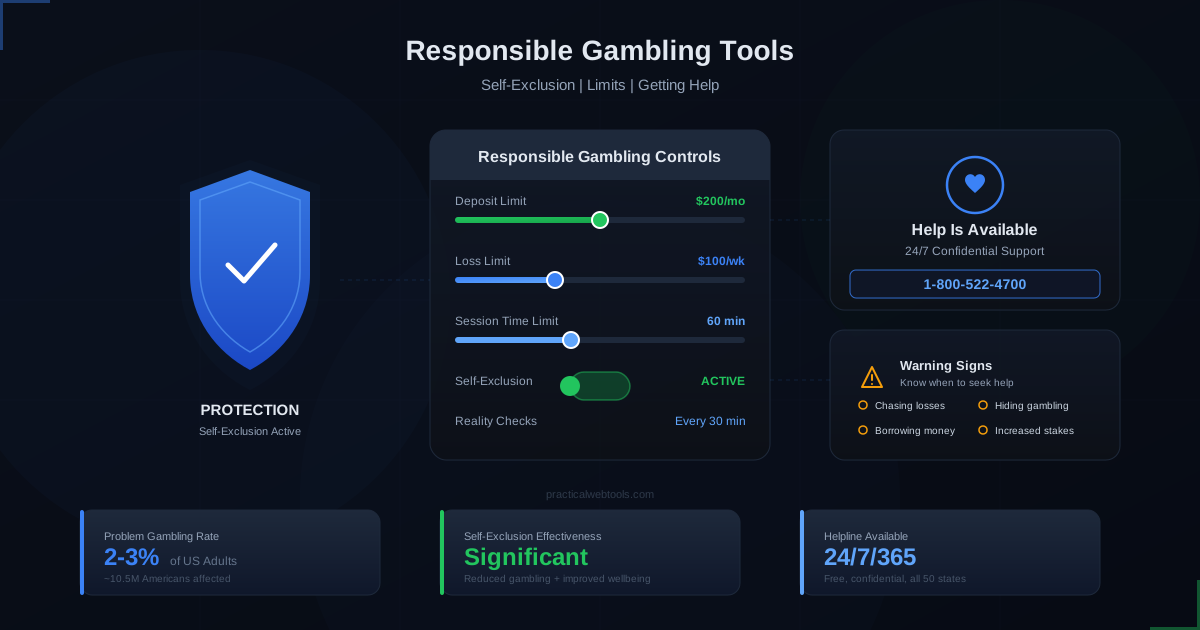
Gambling involves risk. This content is for educational and informational purposes only. Always gamble responsibly, set limits you can afford, and seek help if gambling becomes a problem. Visit the National Council on Problem Gambling or call 1-800-522-4700 for support.