Round Robin Bets Explained: How to Use Round Robins to Reduce Parlay Risk (2026)
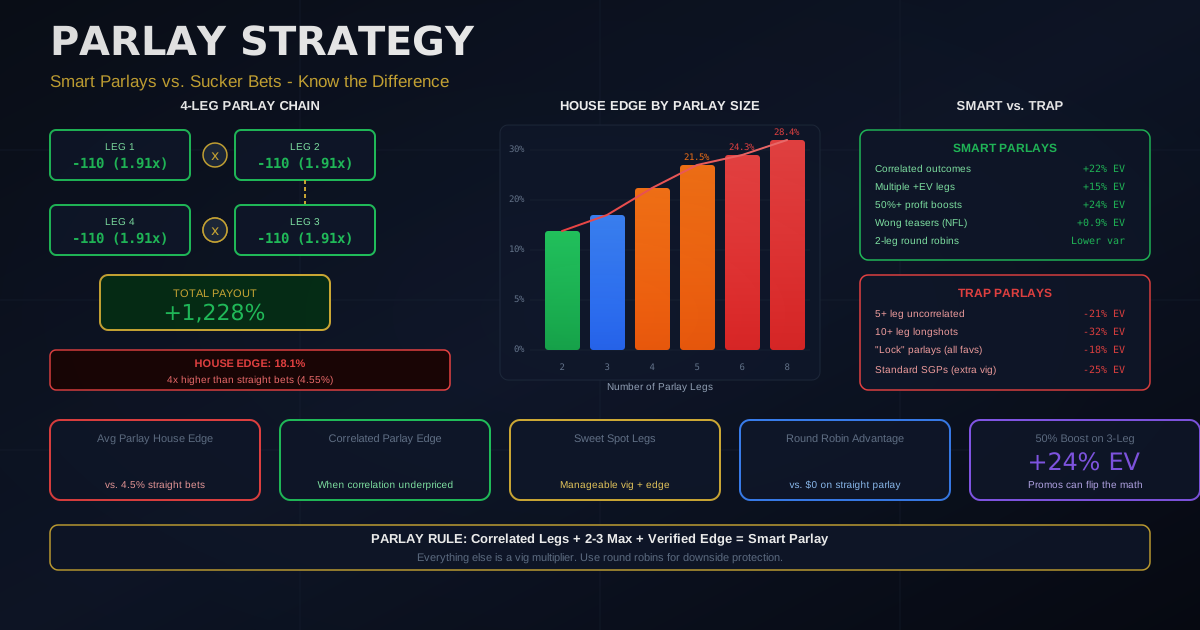
A round robin bet is the smartest way to get parlay-like payouts without the all-or-nothing risk. Instead of combining three, four, or five selections into a single parlay that dies if one leg loses, a round robin breaks your selections into every possible 2-team (or 3-team) parlay combination. One loss does not kill your entire bet -- it only kills the combinations that included that losing leg.
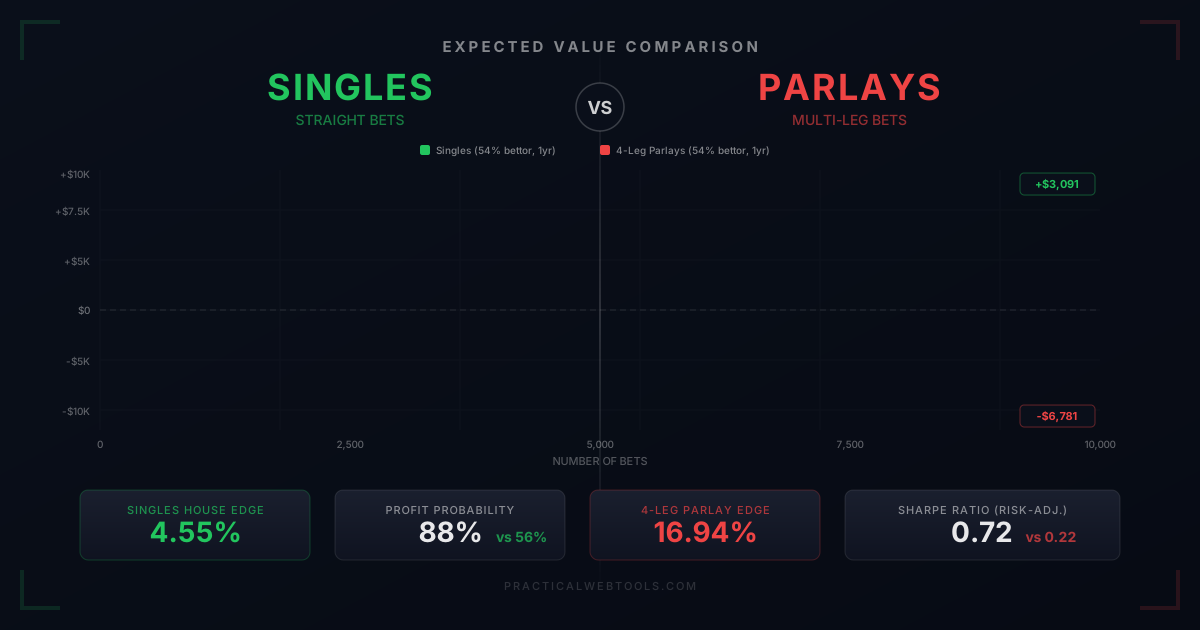
Most bettors who use parlays would be better served by round robins. The math is straightforward: a 3-team round robin at the same total stake as a 3-team parlay will produce a smaller maximum payout but dramatically increases your probability of positive return. Over hundreds of bets, this reduced variance translates directly into a more sustainable betting strategy.
Yet round robins are one of the most misunderstood bet types in sports betting. Many bettors either avoid them because they seem complicated, or use them incorrectly by treating them as "parlays with insurance" without understanding the cost of that insurance. This guide breaks down the math, shows you exactly when round robins add value, and gives you the framework to use them profitably.
Calculate every round robin combination instantly with our free Round Robin Calculator.
How Round Robin Bets Work
The Basic Concept
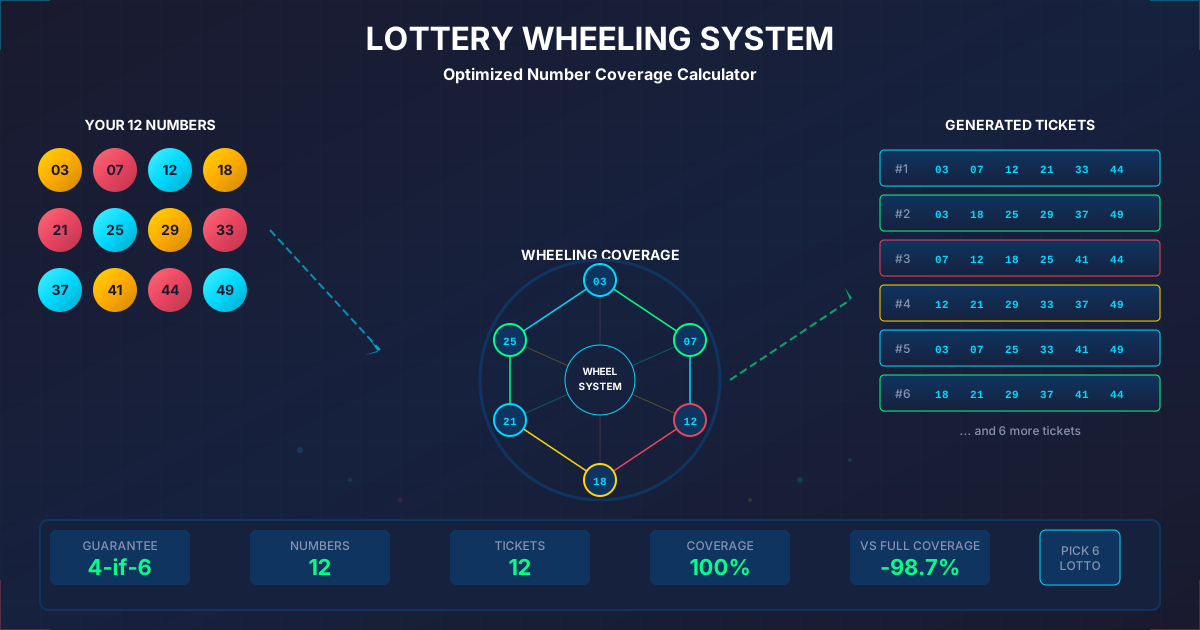
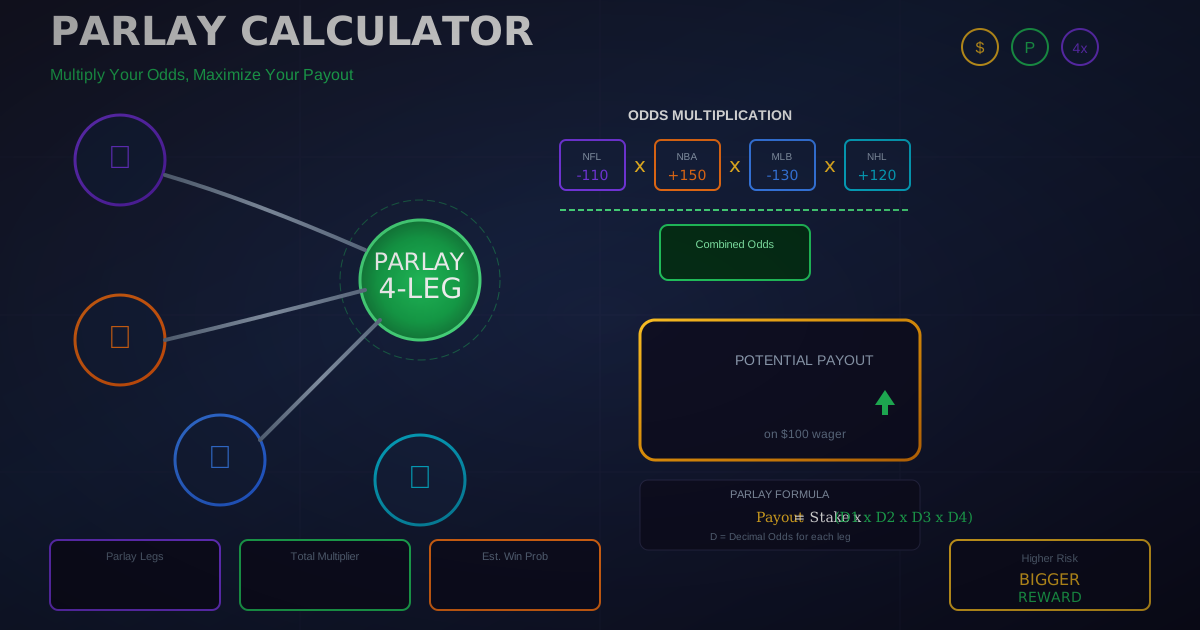
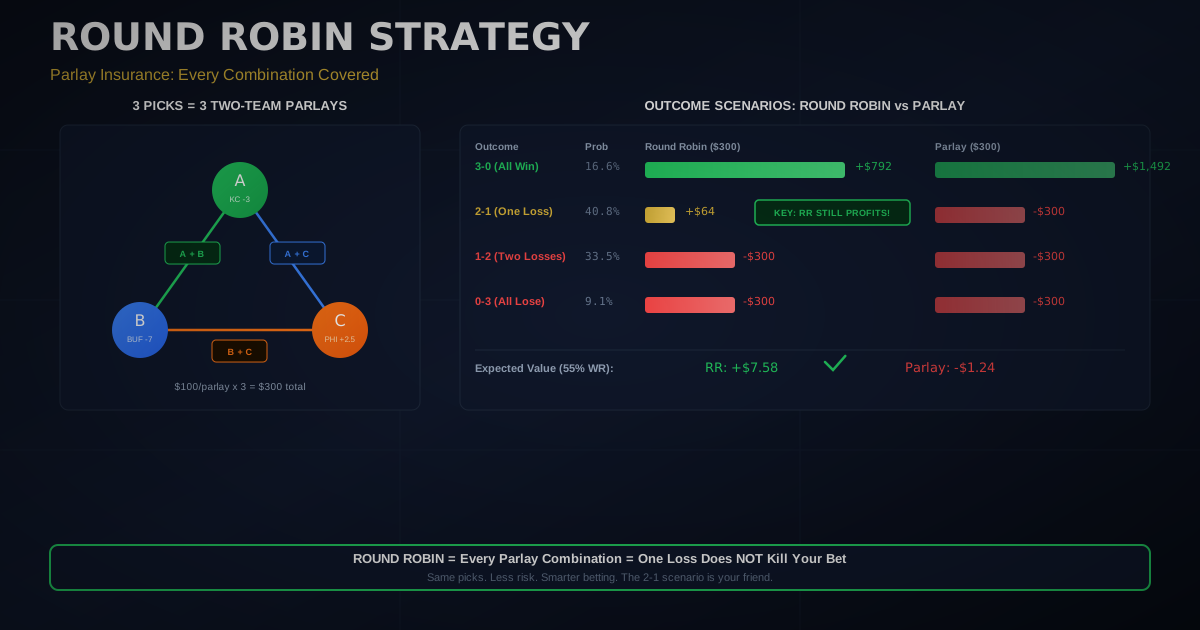
A round robin takes your selections and creates every possible parlay combination of a specified size. You are not placing one bet -- you are placing multiple parlays simultaneously.
Example: 3 selections in 2-team parlay round robin
Your picks:
- Selection A: Chiefs -3 (-110)
- Selection B: Bills -7 (-110)
- Selection C: Eagles +2.5 (-110)
The round robin creates three 2-team parlays:
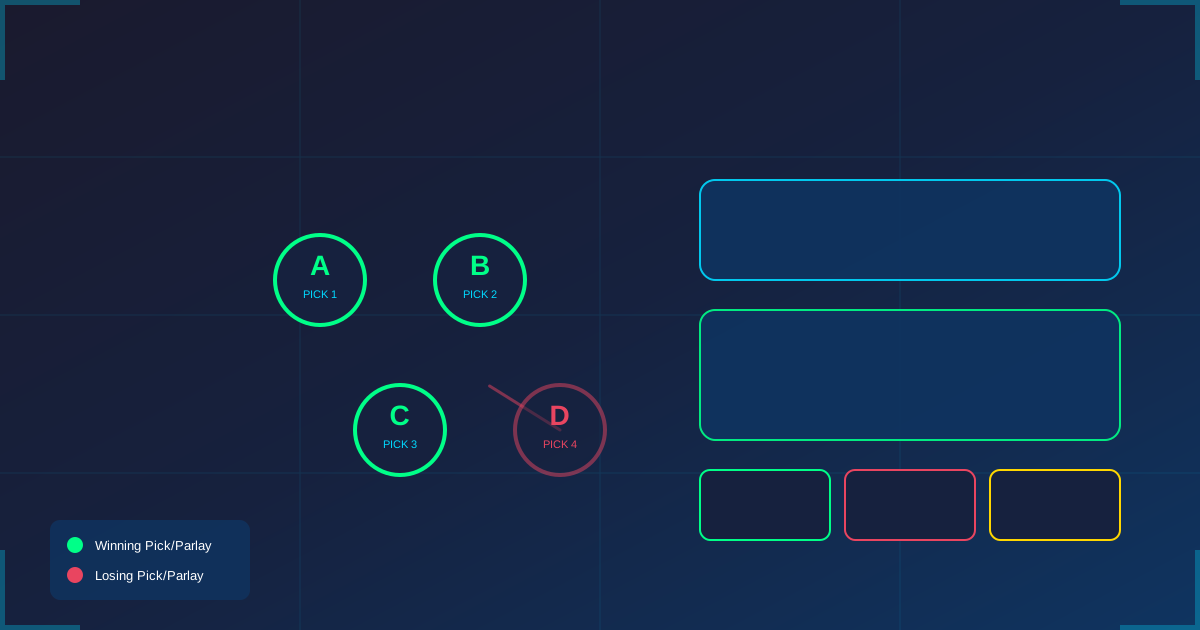
- Parlay 1: A + B (Chiefs + Bills)
- Parlay 2: A + C (Chiefs + Eagles)
- Parlay 3: B + C (Bills + Eagles)
If you wager $100 per parlay, your total stake is $300.
Round Robin Combination Math
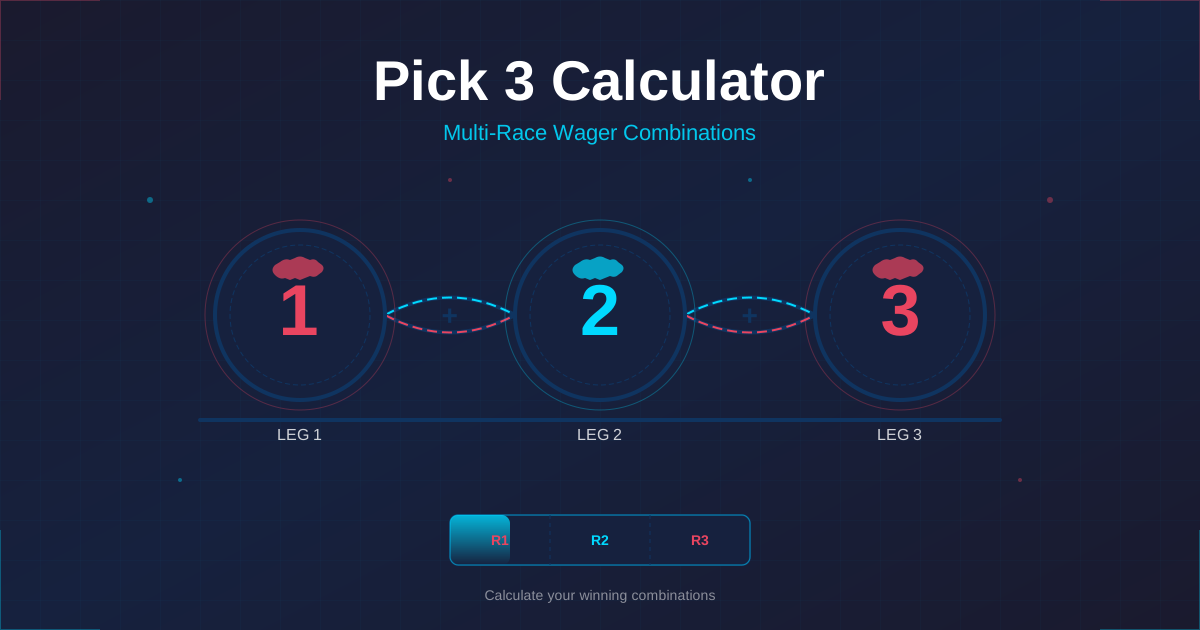
The number of combinations in a round robin is calculated using the combination formula:
C(n, k) = n! / (k! x (n-k)!)
Where n = total selections and k = parlay size.
| Selections | Parlay Size | Number of Parlays | Formula |
|---|---|---|---|
| 3 | 2-team | 3 | C(3,2) = 3 |
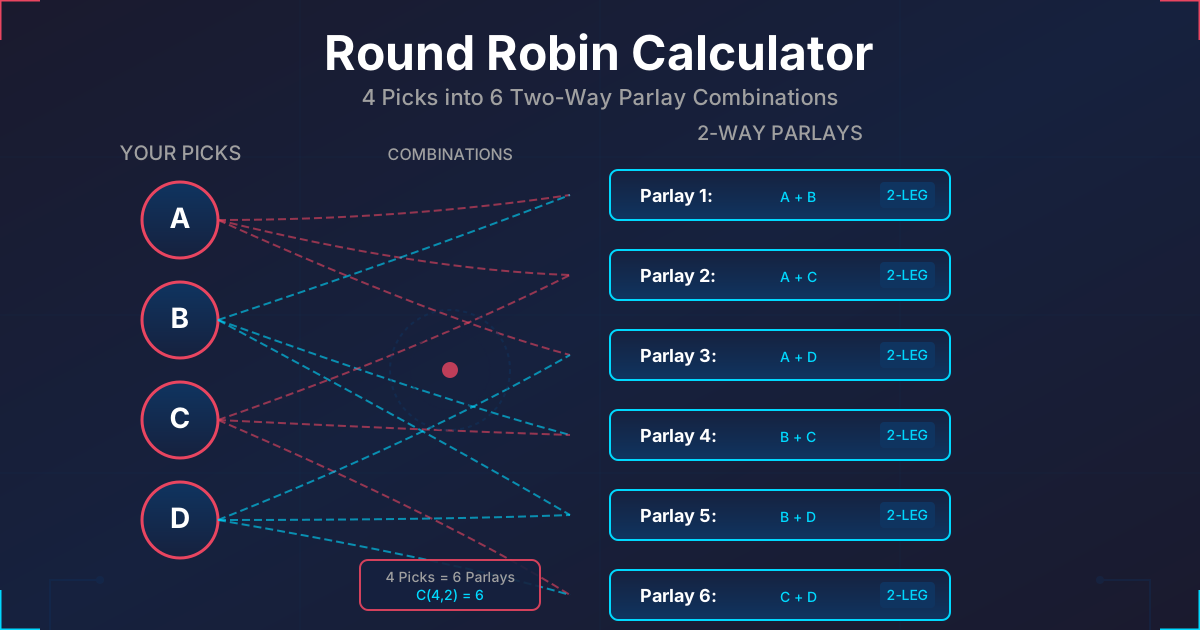
| 4 | 2-team | 6 | C(4,2) = 6 |
| 4 | 3-team | 4 | C(4,3) = 4 |
| 5 | 2-team | 10 | C(5,2) = 10 |
| 5 | 3-team | 10 | C(5,3) = 10 |
| 6 | 2-team | 15 | C(6,2) = 15 |
| 6 | 3-team | 20 | C(6,3) = 20 |
Important: your total stake is the per-parlay wager multiplied by the number of combinations. A 5-selection, 2-team round robin at $50 per parlay costs $500 total (10 parlays x $50).
Calculate all combination possibilities with our Round Robin Calculator.
What Happens When Legs Win or Lose
The power of round robins becomes clear when you see the outcome scenarios.
3-selection, 2-team round robin at $100 per parlay ($300 total): All picks at -110 (each 2-team parlay pays +264, or $264 profit per $100)
| Scenario | Wins/Losses | Winning Parlays | Payout | Net Profit/Loss |
|---|---|---|---|---|
| All 3 win | 3-0 | 3 of 3 | $1,092 | +$792 |
| 2 win, 1 lose | 2-1 | 1 of 3 | $364 | +$64 |
| 1 win, 2 lose | 1-2 | 0 of 3 | $0 | -$300 |
| All 3 lose | 0-3 | 0 of 3 | $0 | -$300 |
Compare this to a 3-team parlay at $300:
| Scenario | Parlay Payout | Net Profit/Loss |
|---|---|---|
| All 3 win | $1,792 | +$1,492 |
| 2 win, 1 lose | $0 | -$300 |
| 1 win, 2 lose | $0 | -$300 |
| All 3 lose | $0 | -$300 |
The critical difference: going 2-1 on a round robin still returns a profit (+$64). Going 2-1 on a parlay loses your entire $300. The tradeoff: when all three win, the parlay pays +$1,492 versus the round robin's +$792.
Compare round robin payouts to straight parlays with our Parlay Calculator.
Round Robin vs. Parlay: The Complete Comparison
Expected Value Analysis
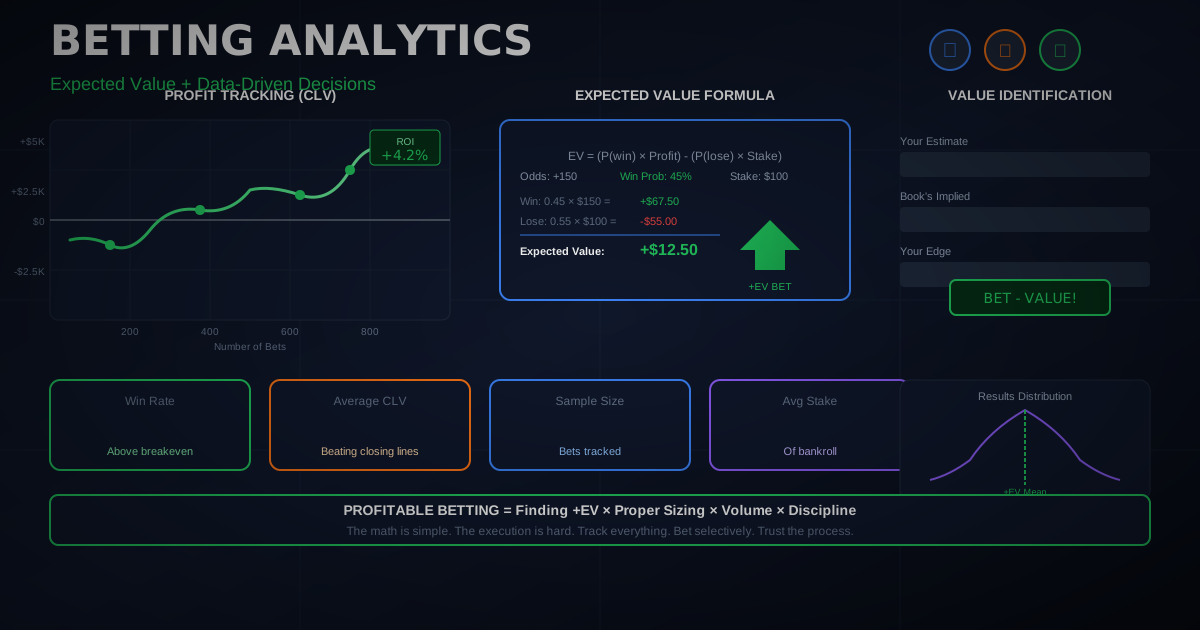
The expected value of a round robin versus a parlay depends entirely on your win rate. Here is the math for 3 selections at -110 with varying true win probabilities:
At 52% win rate per leg (break-even for straight bets):
| Bet Type | Total Stake | Expected Return | Expected Profit | EV% |
|---|---|---|---|---|
| 3-team parlay | $300 | $250.51 | -$49.49 | -16.5% |
| 3x 2-team RR | $300 | $284.85 | -$15.15 | -5.1% |
| 3 straight bets | $300 | $286.36 | -$13.64 | -4.5% |
At 55% win rate per leg (strong edge):
| Bet Type | Total Stake | Expected Return | Expected Profit | EV% |
|---|---|---|---|---|
| 3-team parlay | $300 | $298.76 | -$1.24 | -0.4% |
| 3x 2-team RR | $300 | $307.58 | +$7.58 | +2.5% |
| 3 straight bets | $300 | $309.09 | +$9.09 | +3.0% |
At 57% win rate per leg (excellent edge):
| Bet Type | Total Stake | Expected Return | Expected Profit | EV% |
|---|---|---|---|---|
| 3-team parlay | $300 | $332.24 | +$32.24 | +10.7% |
| 3x 2-team RR | $300 | $322.52 | +$22.52 | +7.5% |
| 3 straight bets | $300 | $323.18 | +$23.18 | +7.7% |
Key Takeaways
- Straight bets are always the highest EV play (least vig compounding)
- Round robins are significantly better than parlays at typical win rates
- Parlays only outperform round robins when all legs hit -- which is the least likely scenario
- The vig compounds on every parlay leg -- round robins reduce (but do not eliminate) this compounding
When Round Robins Beat Straight Bets
Round robins never beat straight bets on pure expected value. They do offer one practical advantage: higher maximum payout per dollar staked. If your bankroll is limited and you want exposure to potential multi-leg payouts, a round robin provides that upside with better risk management than a straight parlay.
Calculate the expected value of each individual leg with our Expected Value Calculator.
Real-World Round Robin Examples
Example 1: 3-Team Round Robin -- Going 2-1 (+$64 Profit)
Your selections:
- A: Chiefs -3 (-110) -- WINS
- B: Rams +7 (-110) -- WINS
- C: 49ers -6.5 (-110) -- LOSES
Round robin (2-team parlays, $100 each, $300 total):
| Parlay | Selections | Result | Payout |
|---|---|---|---|
| 1 | A + B | Both win | $364 |
| 2 | A + C | A wins, C loses | $0 |
| 3 | B + C | B wins, C loses | $0 |
Total returned: $364 Total staked: $300 Net profit: +$64
If you had bet a 3-team parlay at $300, you would have lost $300 because of the 49ers loss. The round robin returned your money and then some.
Example 2: 4-Team Round Robin -- Going 3-1 (+$592 Profit)
Your selections:
- A: Chiefs -3 (-110) -- WINS
- B: Bills -7 (-110) -- WINS
- C: Eagles +2.5 (-110) -- WINS
- D: Packers -1 (-110) -- LOSES
Round robin (2-team parlays, $100 each, 6 parlays, $600 total):
| Parlay | Selections | Result | Payout |
|---|---|---|---|
| 1 | A + B | Both win | $364 |
| 2 | A + C | Both win | $364 |
| 3 | A + D | A wins, D loses | $0 |
| 4 | B + C | Both win | $364 |
| 5 | B + D | B wins, D loses | $0 |
| 6 | C + D | C wins, D loses | $0 |
Total returned: $1,092 Total staked: $600 Net profit: +$492
If you had bet a 4-team parlay at $600, the Packers loss kills the entire bet: -$600. The round robin turned a near-miss into a strong profit.
If you had gone 2-2: Only 1 of 6 parlays would win: +$364 - $600 = -$236. Still a loss, but a smaller one than the -$600 parlay loss.
Example 3: 5-Team Round Robin -- Going 4-1 (+$1,260 Profit)
Your selections at -110 each, $50 per parlay:
- A: Chiefs -3 -- WINS
- B: Bills -7 -- WINS
- C: Eagles +2.5 -- WINS
- D: Packers -1 -- WINS
- E: Cowboys +4 -- LOSES
Round robin (2-team parlays, $50 each, 10 parlays, $500 total):
Winning parlays (both legs hit): A+B, A+C, A+D, B+C, B+D, C+D = 6 winners Losing parlays (include E): A+E, B+E, C+E, D+E = 4 losers
6 winning parlays x $182 payout = $1,092 4 losing parlays x $0 = $0
Total returned: $1,092 + (6 x $50 stakes back) = effectively $1,092 total payouts Actually: each winning 2-team parlay at -110/-110 returns $264 profit + $50 stake = let me recalculate properly.
Each winning 2-team parlay at -110 on both legs:
- Stake: $50
- Parlay odds: approximately +264
- Return on a winning $50 parlay: $50 x 2.6446 = $182.23 total return ($132.23 profit)
6 winning parlays: 6 x $182.23 = $1,093.38 Total staked: $500 Net profit: +$593.38
A 5-team parlay at $500 going 4-1 returns $0 (total loss of $500). The round robin turns the same picks into a $593 profit.
Example 4: Round Robin with Mixed Odds (+$847 Profit)
Selections with different odds:
- A: Chiefs -3 (-110) -- WINS
- B: Patriots +350 (underdog ML) -- WINS
- C: Bills -7 (-110) -- WINS
- D: Bengals +175 -- LOSES
Round robin (2-team parlays, $75 each, 6 parlays, $450 total):
The underdog inclusion dramatically changes the parlay payouts:
| Parlay | Result | Approx Return |
|---|---|---|
| A + B | Both win | $75 x (1.909 x 4.50) = $644.33 |
| A + C | Both win | $75 x (1.909 x 1.909) = $273.61 |
| A + D | A wins, D loses | $0 |
| B + C | Both win | $75 x (4.50 x 1.909) = $644.33 |
| B + D | B wins, D loses | $0 |
| C + D | C wins, D loses | $0 |
Total returned: $644.33 + $273.61 + $644.33 = $1,562.27 Total staked: $450 Net profit: +$1,112.27
The Patriots underdog win at +350 created two very high-paying parlays. This is where round robins shine with mixed odds -- the upside of hitting an underdog multiplies across multiple combinations without the parlay's all-or-nothing risk.
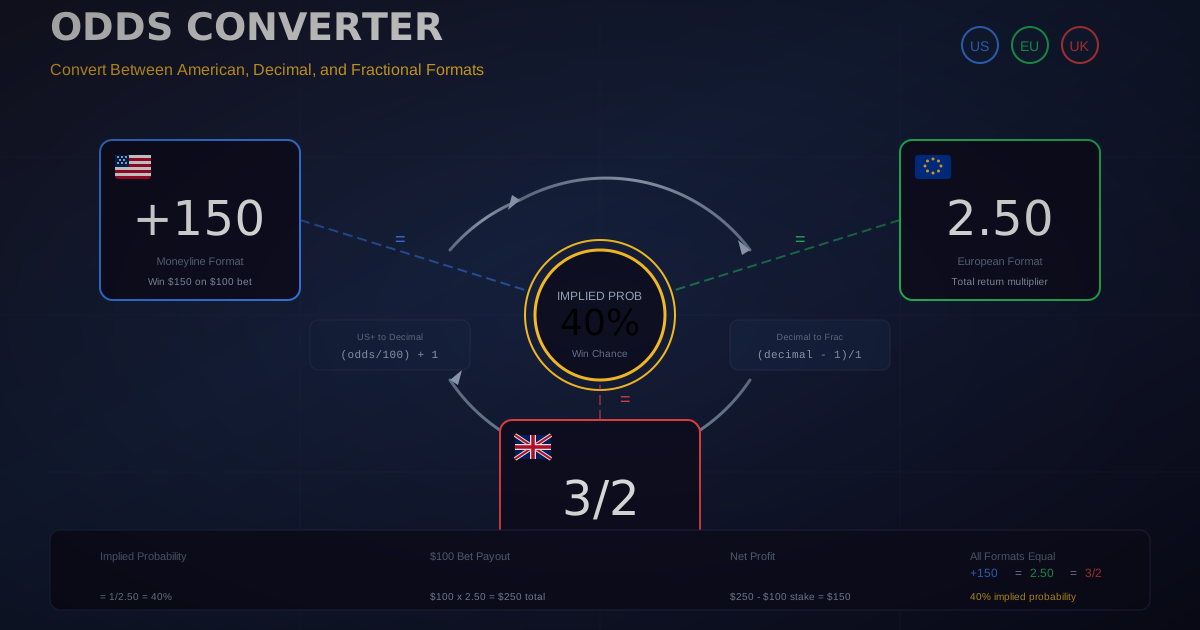
Convert any odds format for your round robin calculations with our Odds Converter.
When Round Robins Add Value (and When They Do Not)
Round Robins Are Worth It When:
1. You have 3-5 strong selections and want parlay upside with insurance. Going 2-1 on three picks returns money on a round robin but nothing on a parlay. If your handicapping produces 55-60% hit rates, the 2-1 scenario is the most common outcome (approximately 45% of the time with 3 picks at 55%).
2. You are including underdogs or long shots. Underdog wins multiply returns across every combination that includes them. A single +300 underdog hit can make a round robin profitable even if other legs lose.
3. You want to manage variance while maintaining parlay exposure. Round robins smooth out the extreme variance of parlays. Over a season, a disciplined round robin approach produces more consistent results.
4. You are using bankroll allocated for parlays. If you are going to play parlays anyway, round robins are almost always a better use of that same money.
Round Robins Are Not Worth It When:
1. You would be better served by straight bets. If maximizing expected value is your only goal, straight bets at the same total stake will always produce higher EV. Round robins compound vig across parlay legs.
2. You have more than 5-6 selections. The number of combinations explodes with more selections. A 6-team, 2-team round robin is 15 parlays. At $50 per parlay, that is $750 total stake for moderate upside. The variance reduction is not worth the vig multiplication at that scale.
3. All selections are heavy favorites. Round robins with all -200 or -300 favorites produce small parlay payouts that barely cover the cost of the multiple parlays. The insurance premium is too expensive relative to the payout.
4. You cannot afford the total stake. A $100 per parlay round robin with 5 selections creates 10 parlays = $1,000 total exposure. Make sure you can afford the total, not just the per-parlay amount.
Assess the vig on your selections with our Hold/Vig Calculator.
Sizing Your Round Robin Bets
Determining Per-Parlay Stake
Your total round robin stake should follow the same bankroll management principles as any bet:
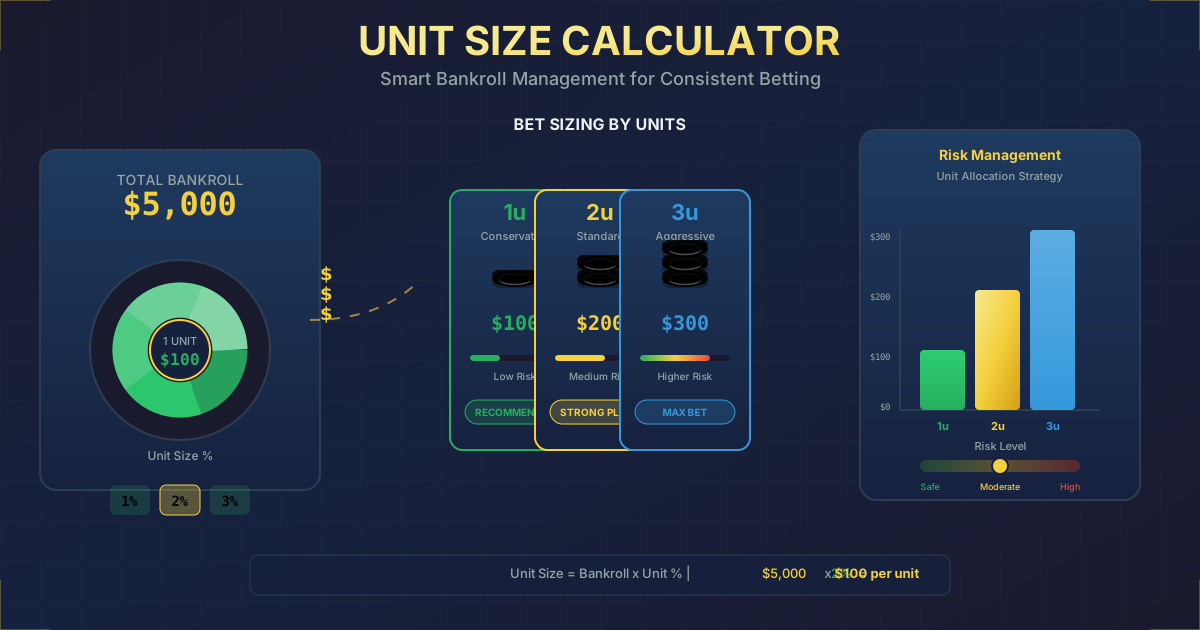
Step 1: Determine your total desired exposure (1-3% of bankroll for a round robin "package") Step 2: Divide by the number of combinations to get per-parlay stake
| Bankroll | Max RR Exposure (2%) | 3-pick (3 parlays) | 4-pick (6 parlays) | 5-pick (10 parlays) |
|---|---|---|---|---|
| $5,000 | $100 | $33/parlay | $17/parlay | $10/parlay |
| $10,000 | $200 | $67/parlay | $33/parlay | $20/parlay |
| $25,000 | $500 | $167/parlay | $83/parlay | $50/parlay |
| $50,000 | $1,000 | $333/parlay | $167/parlay | $100/parlay |
The Mistake: Betting Per-Parlay as If It Were Total Stake
Many bettors set their "bet size" at $100 and place a 4-team round robin at $100 per parlay, creating $600 total exposure. If their bankroll is $5,000, that is 12% of bankroll on one set of bets -- dangerously high.
Always calculate total exposure first, then divide by combinations.
Optimize your round robin sizing with our Kelly Criterion Calculator.
Advanced Round Robin Strategies
Mixed Parlay Sizes
Most bettors use round robins with a single parlay size (all 2-team or all 3-team). But you can combine sizes:
4 selections with 2-team AND 3-team round robin:
- 6 two-team parlays
- 4 three-team parlays
- Total: 10 parlays
This gives you both the lower-variance 2-team coverage and the higher-payout 3-team upside.
The "Round Robin + Single Parlay" Approach
Some bettors combine a round robin with a single full parlay:
3 selections:
- 3 two-team parlays (round robin): $75 each = $225
- 1 three-team parlay: $75
Total stake: $300
If all three hit: $792 (round robin) + $597 (parlay) = $1,389 returned, +$1,089 profit If 2-1: $264 (round robin) - $75 (parlay loss) = $189 returned, -$111 loss If 1-2 or 0-3: -$300
This approach adds upside for the all-win scenario while still providing 2-1 protection from the round robin.
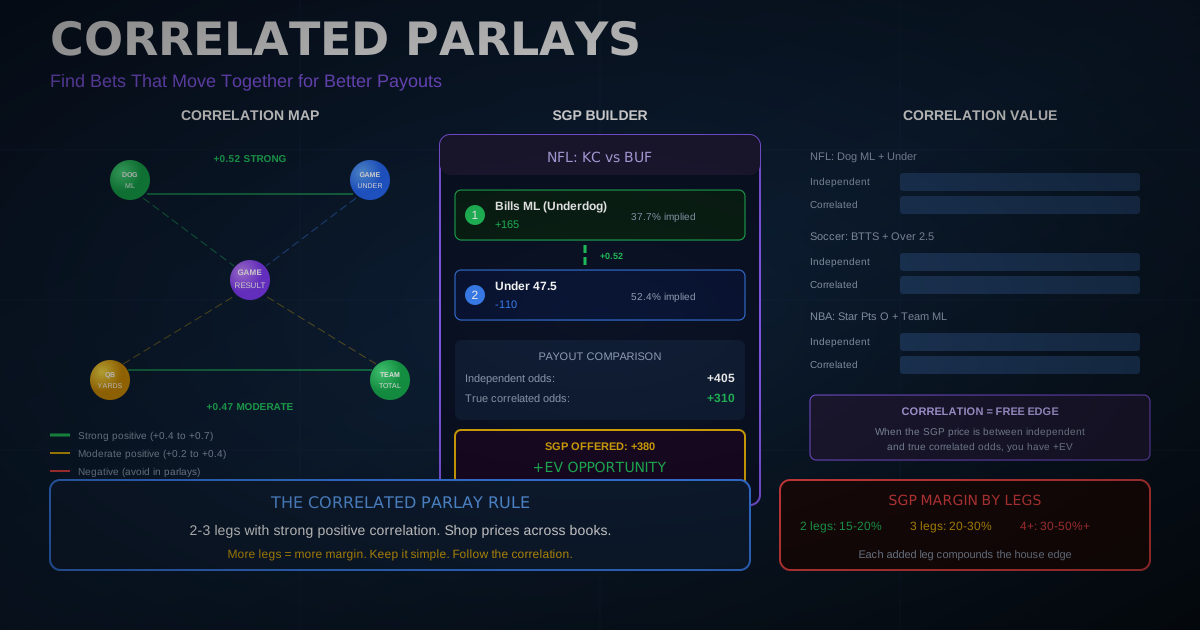
Correlated Round Robins
Selecting correlated legs can increase your round robin's win rate. Correlation means the legs are more likely to win or lose together.
Positive correlation example:
- Team A to win AND Team A game over (if Team A wins, high-scoring game is more likely)
Negative correlation example (avoid in same round robin):
- Team A -7 AND Team B +7 (if one covers, the other is less likely to)
When your legs are positively correlated, the 2-1 and 3-0 scenarios become more frequent relative to the 0-3 scenario, improving the round robin's overall expected return.
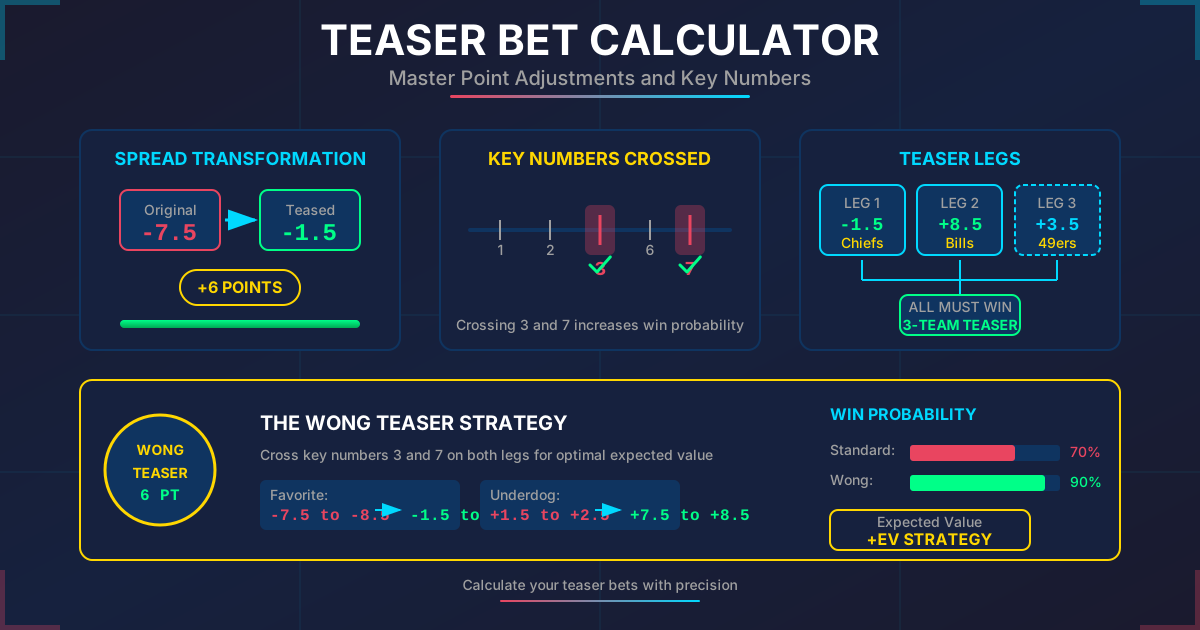
Using Round Robins with Teasers
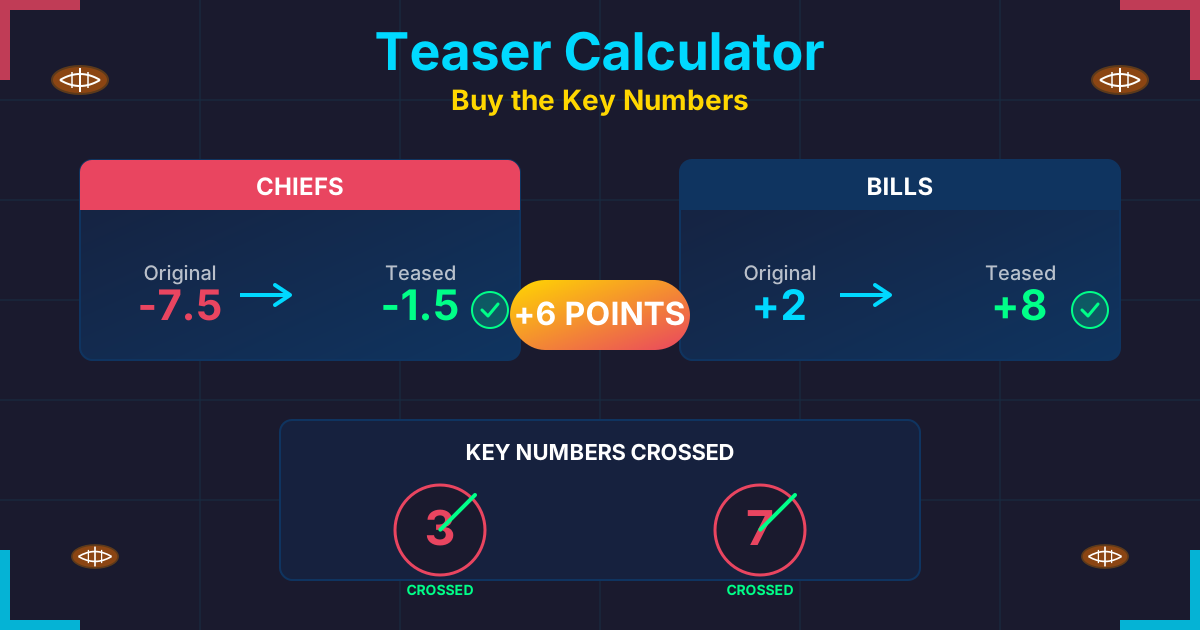
You can create a "teaser round robin" by first making your teaser selections, then combining them into round robin teaser packages.
3 Wong teaser selections, 2-team teaser round robin:
- 3 separate 2-team teasers
- Each teaser has Wong-qualified legs
- If 2 of 3 selections hit, at least one teaser wins
Calculate teaser combinations alongside round robins with our Teaser Calculator.
If-Bet Alternatives
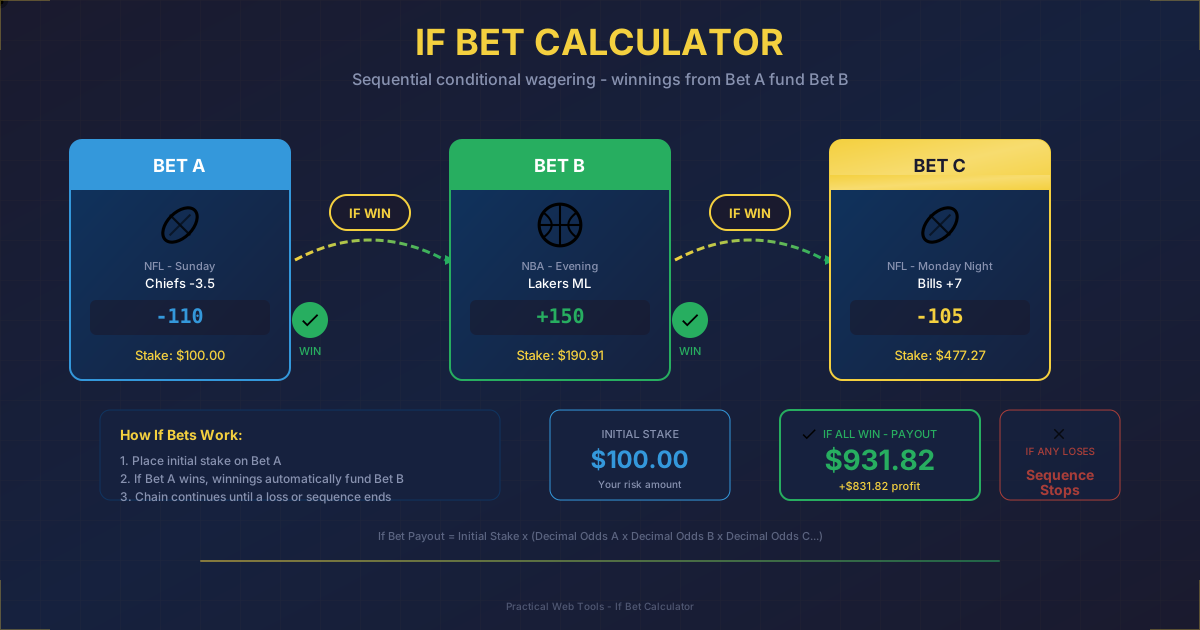
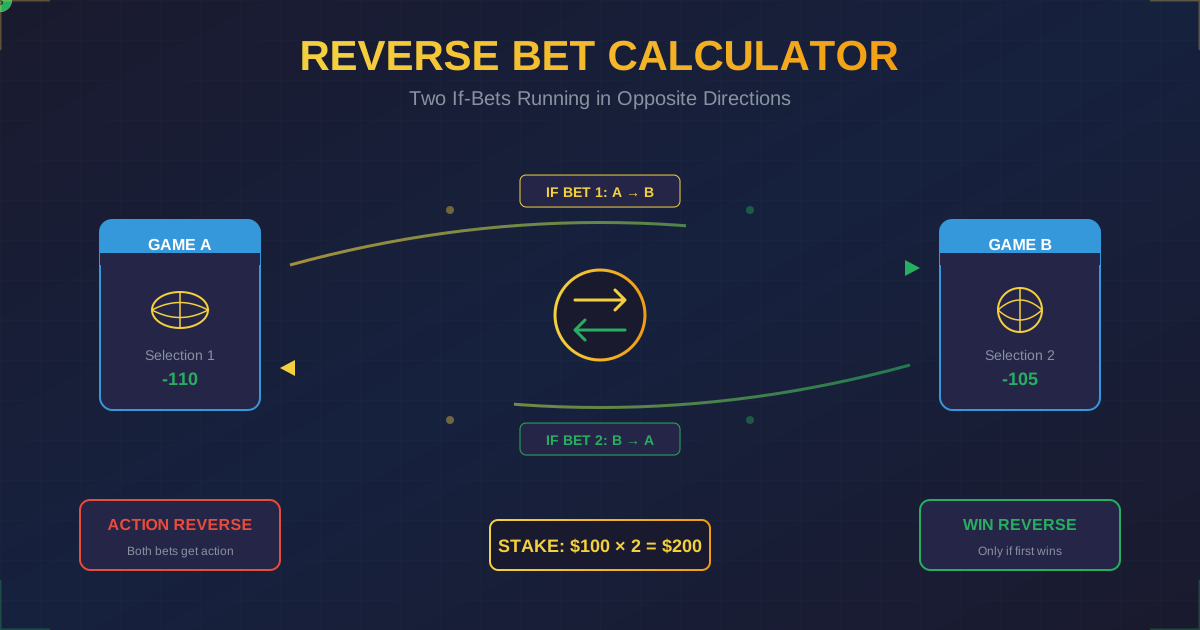
An if-bet is a sequential wager: Bet 1 activates Bet 2 only if Bet 1 wins. This provides a different type of risk management than a round robin.
Round robin advantage over if-bets:
- All combinations are placed simultaneously
- No "order" dependency (in an if-bet, the sequence matters)
- More transparent exposure calculation
If-bet advantage over round robin:
- Lower total stake for similar coverage
- Can be structured to limit maximum loss more tightly
- Better for 2-selection scenarios
Explore if-bet structures with our If Bet Calculator.
Round Robin by the Numbers: Probability Tables
3-Selection, 2-Team Round Robin Probability Matrix
At 55% win rate per leg:
| Outcome | Probability | Winning RR Parlays | RR Net at $100/parlay | Parlay Net at $300 |
|---|---|---|---|---|
| 3-0 | 16.6% | 3/3 | +$792 | +$1,492 |
| 2-1 | 40.8% | 1/3 | +$64 | -$300 |
| 1-2 | 33.5% | 0/3 | -$300 | -$300 |
| 0-3 | 9.1% | 0/3 | -$300 | -$300 |
Expected value (RR): 16.6% x $792 + 40.8% x $64 + 33.5% x (-$300) + 9.1% x (-$300) = +$7.58 Expected value (parlay): 16.6% x $1,492 + 83.4% x (-$300) = -$1.24
The round robin has higher expected value at 55% win rate.
4-Selection, 2-Team Round Robin Probability Matrix
At 55% win rate per leg:
| Outcome | Probability | Winning RR Parlays | RR Net at $50/parlay | Parlay Net at $300 |
|---|---|---|---|---|
| 4-0 | 9.2% | 6/6 | +$792 | +$2,790 |
| 3-1 | 29.9% | 3/6 | +$246 | -$300 |
| 2-2 | 36.8% | 1/6 | -$118 | -$300 |
| 1-3 | 20.0% | 0/6 | -$300 | -$300 |
| 0-4 | 4.1% | 0/6 | -$300 | -$300 |
The 3-1 outcome (the most common non-sweep) is profitable for the round robin (+$246) but a total loss for the parlay (-$300). This is the core value proposition.
5-Selection, 2-Team Round Robin at $30/parlay ($300 total)
At 55% win rate per leg:
| Outcome | Probability | Winning RR Parlays | Approximate Net |
|---|---|---|---|
| 5-0 | 5.0% | 10/10 | +$592 |
| 4-1 | 20.6% | 6/10 | +$246 |
| 3-2 | 33.7% | 3/10 | +$0 (approximately breakeven) |
| 2-3 | 27.6% | 1/10 | -$220 |
| 1-4 | 11.3% | 0/10 | -$300 |
| 0-5 | 1.8% | 0/10 | -$300 |
The 5-selection round robin needs 4-1 or better to show meaningful profit, and 3-2 roughly breaks even. This demonstrates diminishing returns as you add more selections.
Calculate any combination with our Round Robin Calculator.
Common Round Robin Mistakes
Mistake 1: Not Calculating Total Exposure
The per-parlay amount looks small, but total exposure can be massive. A $100 per-parlay, 5-selection round robin is $1,000 total. Many bettors realize this only after their bet is placed.
Mistake 2: Using Round Robins on Negative EV Picks
A round robin does not fix bad picks. If your selections are -EV, the round robin will lose money over time, just slightly less than a parlay would. The vig still compounds.
Verify each pick is +EV before including it with our Expected Value Calculator.
Mistake 3: Too Many Selections
The sweet spot for round robins is 3-4 selections. Beyond 5, the number of combinations becomes unwieldy, total exposure grows, and the vig compounding across so many parlays erodes value.
Mistake 4: Comparing Wrong Metrics
When comparing round robins to parlays, compare them at the same total stake, not the same per-bet stake. A $300 parlay versus a $300 round robin (split across 3 parlays at $100 each) is the fair comparison.
Mistake 5: Ignoring Correlation
If your selections are negatively correlated (e.g., two teams playing each other on opposite sides), your round robin will underperform expectations. The 2-1 and 1-2 outcomes become less likely, while 3-0 and 0-3 become more likely -- which reduces the variance-smoothing benefit.
Mistake 6: Neglecting Line Shopping
Every leg in a round robin should be at the best available odds. A half-point difference on one leg compounds across every parlay that includes it. Line shop each selection individually before building your round robin.
Calculate the implied probability of each leg with our Implied Probability Calculator.
Frequently Asked Questions
What is a round robin bet? A round robin bet takes your selections and creates every possible parlay combination of a specified size. For example, 3 selections in a 2-team round robin creates 3 separate 2-team parlays. Each parlay is an independent bet, so one losing selection only kills the parlays that included it, not all of them. Calculate all combinations with our Round Robin Calculator.
How is a round robin different from a parlay? A parlay combines all selections into one bet that requires every leg to win. A round robin splits selections into multiple smaller parlays. The round robin costs more total (multiple parlays) but provides insurance: going 2-1 on a 3-pick round robin still returns profit, while going 2-1 on a 3-team parlay returns nothing. Compare payouts with our Parlay Calculator.
How many bets are in a round robin? The number depends on your total selections and parlay size. With 3 picks in 2-team parlays: 3 bets. With 4 picks in 2-team parlays: 6 bets. With 5 picks in 2-team parlays: 10 bets. The formula is C(n,k) = n! / (k! x (n-k)!). Use our Round Robin Calculator to calculate any combination.
Are round robins profitable? Round robins are only profitable if your underlying selections are +EV. They do not create value; they redistribute risk from parlays. At a 55% win rate per leg, a 3-selection round robin has higher expected value than a 3-team parlay at the same total stake. Verify your picks with our Expected Value Calculator.
How much does a round robin cost? Total cost = per-parlay wager x number of combinations. A $50 per-parlay round robin with 4 selections in 2-team parlays costs $50 x 6 = $300 total. Always calculate total exposure before placing, and size based on your bankroll using our Kelly Criterion Calculator.
What is the best number of selections for a round robin? Three to four selections is the sweet spot. Three selections create only 3 parlays (manageable), while four create 6 parlays with good 3-1 protection. Five or more selections create too many combinations, increasing total cost and vig compounding.
Can I do a round robin with teasers? Yes, many sportsbooks allow teaser round robins. Instead of standard parlays, each combination is a teaser. This combines the key-number advantages of teasers with the risk reduction of round robins. Use our Teaser Calculator to build these combinations.
Should I include underdogs in round robins? Including one or two underdog selections at plus-money odds can dramatically increase round robin payouts because the underdog odds multiply across every combination they appear in. A +300 underdog that hits makes every parlay containing it much more profitable. Convert underdog odds with our Odds Converter.
Essential Round Robin Betting Tools
Combination and Payout Calculation
- Round Robin Calculator: Calculate every combination, payout scenario, and total exposure for any round robin structure
- Parlay Calculator: Compare round robin payouts to equivalent straight parlays
- Expected Value Calculator: Verify each selection is +EV before including it in your round robin
Odds and Probability Analysis
- Odds Converter: Convert odds between American, decimal, and fractional for cross-book comparison on each leg
- Implied Probability Calculator: Calculate the implied win probability of each selection to estimate outcome scenarios
- Hold/Vig Calculator: Measure the vig on each leg and understand how it compounds across your round robin
Bankroll and Risk Management
- Kelly Criterion Calculator: Determine your optimal total round robin exposure based on your bankroll and estimated edge
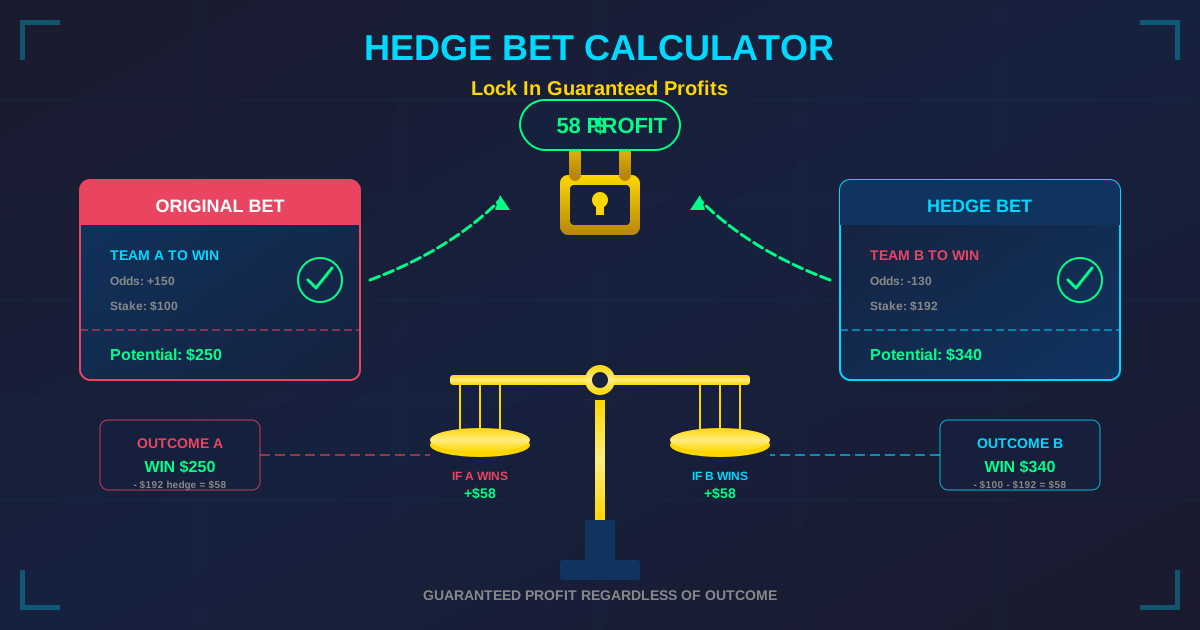
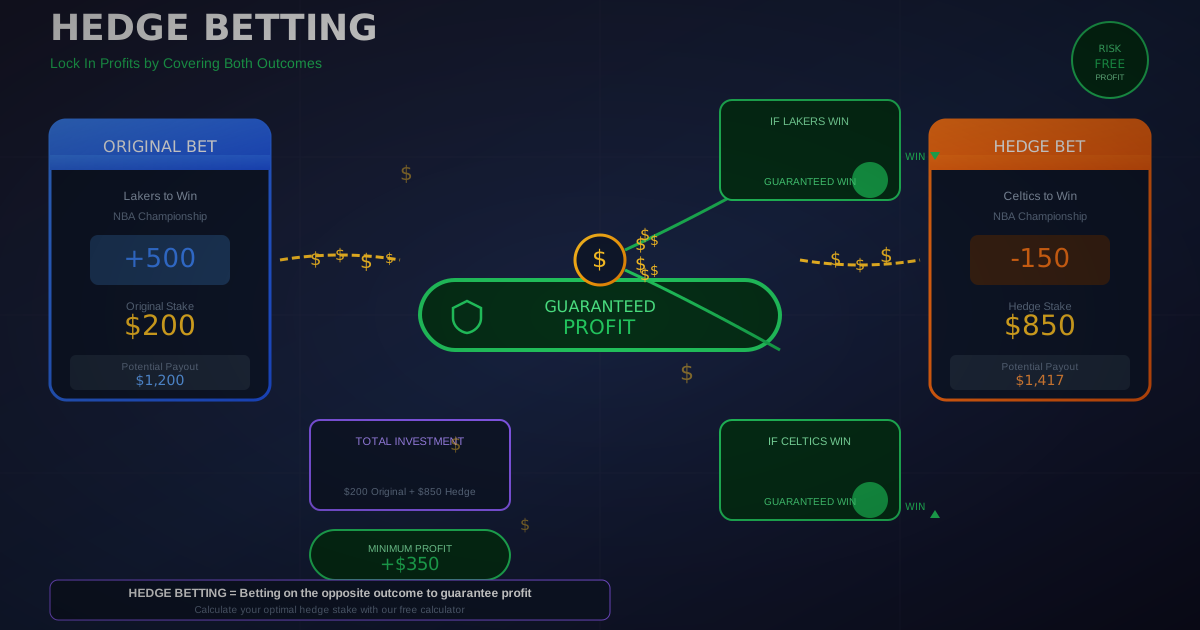
- Hedge Calculator: Calculate hedge amounts if your round robin is partially winning and you want to lock in profit
- If Bet Calculator: Compare if-bet structures as an alternative to round robins for 2-selection scenarios
- Teaser Calculator: Build teaser round robin combinations for NFL betting
Conclusion: Round Robins Are Parlays for Smart Bettors
The round robin is the answer to a simple question: "What if I love my parlay picks but one of them loses?" Instead of accepting the all-or-nothing gamble of a straight parlay, the round robin splits your selections into every possible smaller combination, ensuring that a single losing leg does not destroy your entire bet.
The math is clear. Over a season of 3-selection round robins at 55% per-leg win rate, you will go 2-1 approximately 41% of the time. On a straight parlay, that 41% of outcomes returns nothing. On a round robin, it returns profit. That difference, compounded over dozens of round robins, is significant.
The caveats are equally clear: round robins are not a substitute for straight bets when pure EV is the goal, they should not include more than 4-5 selections, and each individual leg must be +EV for the round robin to have positive expected value.
Build your round robin strategy with our Round Robin Calculator. Compare against straight parlays with our Parlay Calculator. And verify every leg is +EV with our Expected Value Calculator.
Same picks. Less risk. Smarter betting.
Gambling involves risk. This content is for educational and informational purposes only. Always gamble responsibly, set limits you can afford, and seek help if gambling becomes a problem. Visit the National Council on Problem Gambling or call 1-800-522-4700 for support.