Build Your Own Sports Betting Model: A Step-by-Step Data Guide (2026)
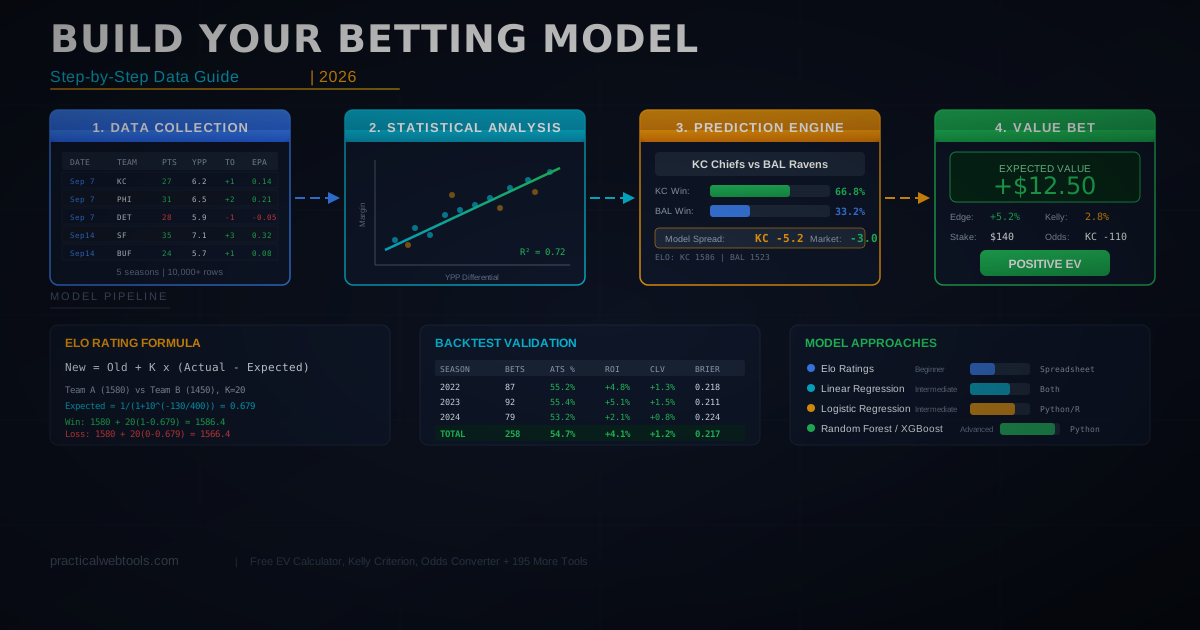
The best sports bettors in the world do not rely on gut feelings, hot streaks, or "lock" picks from social media personalities. They build models. Whether it is a simple Elo rating system maintained in a spreadsheet or a multi-variable regression running in Python, a quantitative model is what separates the profitable 3-5% of bettors from everyone else. The model does not guarantee wins on any single bet. What it does is systematically identify mispriced lines--situations where the sportsbook's implied probability diverges from the true probability your data suggests--and exploit those edges over hundreds or thousands of wagers.
Building your own model is not reserved for data scientists or professional gamblers. If you can follow a recipe and operate a spreadsheet, you can build a functional betting model. This guide walks you through every step, from choosing a sport and collecting data all the way through backtesting your model and integrating it with disciplined bankroll management. By the end, you will have a framework you can apply to any sport and any market.
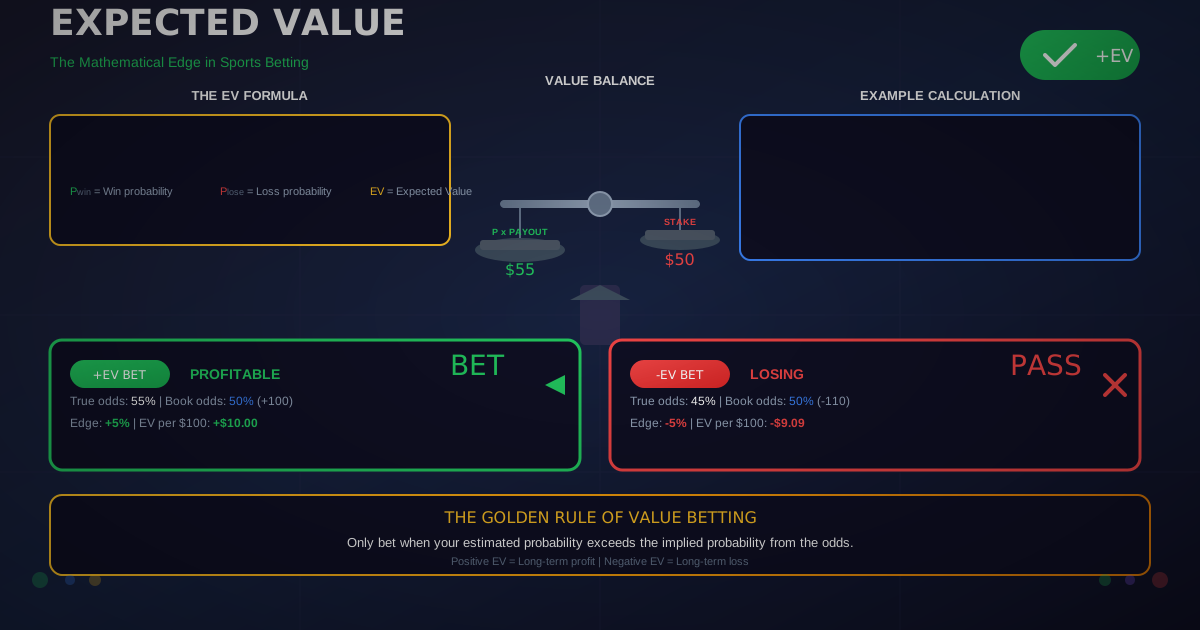
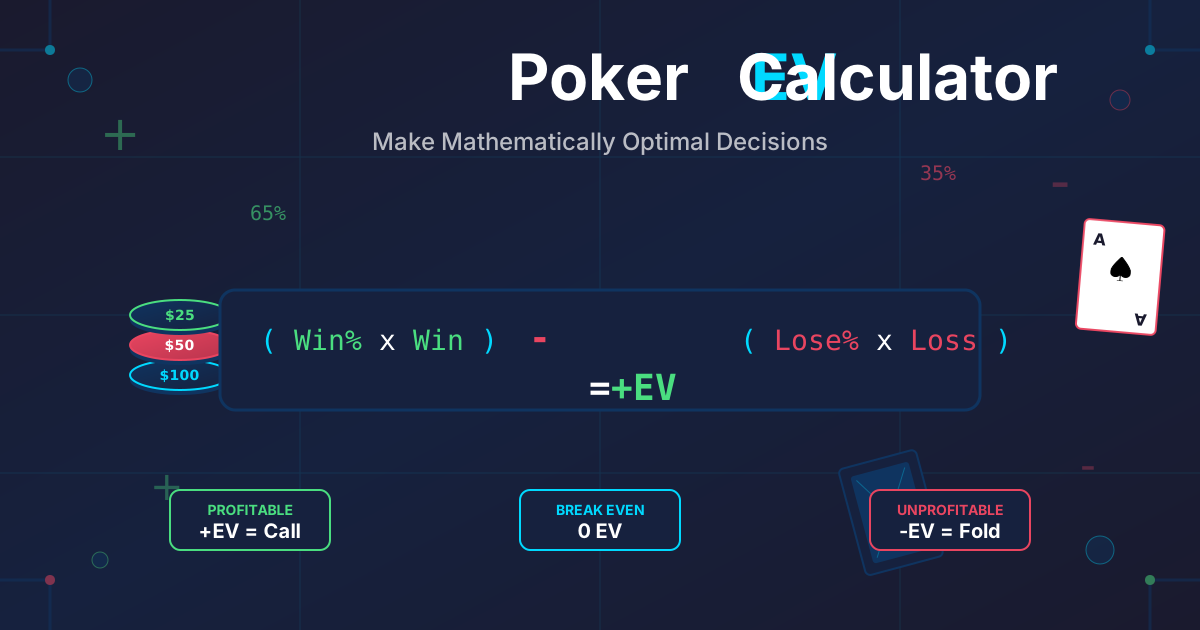
Calculate whether any bet has positive expected value with our free Expected Value Calculator.
Why You Need a Betting Model
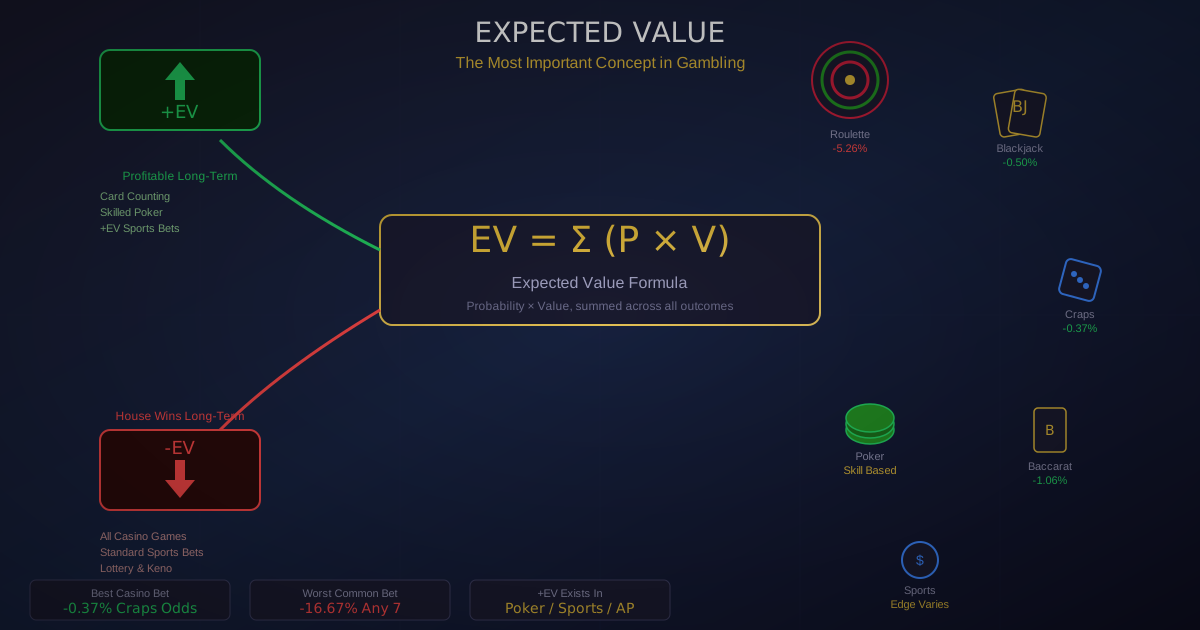
A betting model is any systematic framework that converts raw data into probability estimates for sporting events. Instead of asking "Who will win this game?", you ask "What is the true probability that Team A wins, and is the sportsbook offering odds that imply a lower probability than my estimate?"
That distinction is everything. Here is why:
The Sportsbook's Built-In Edge
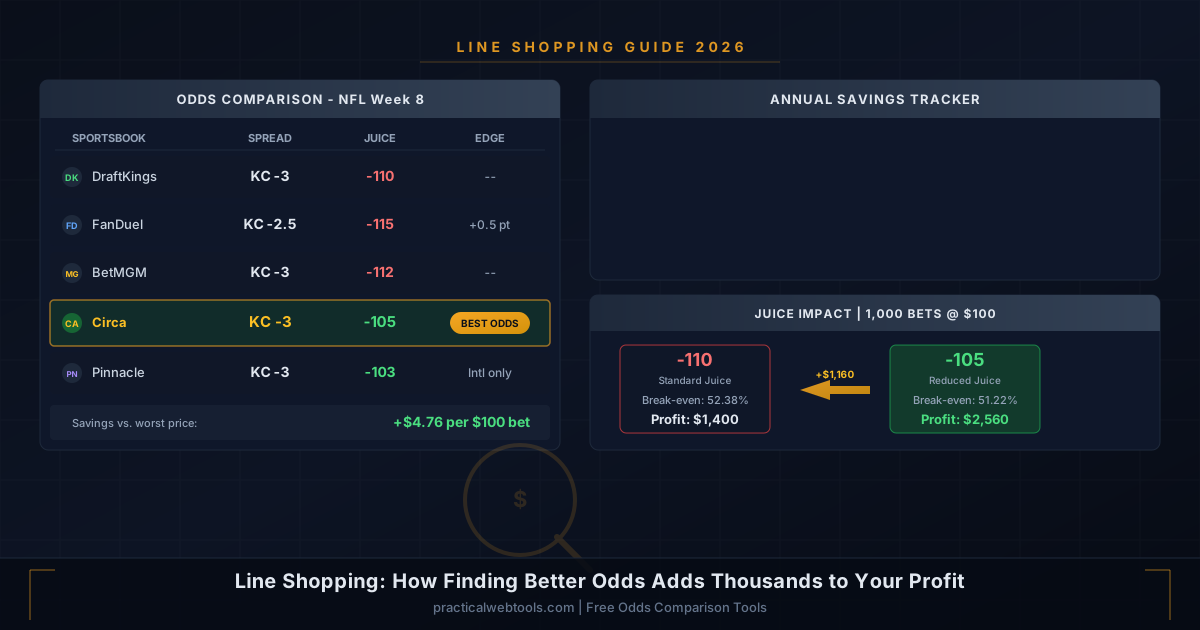
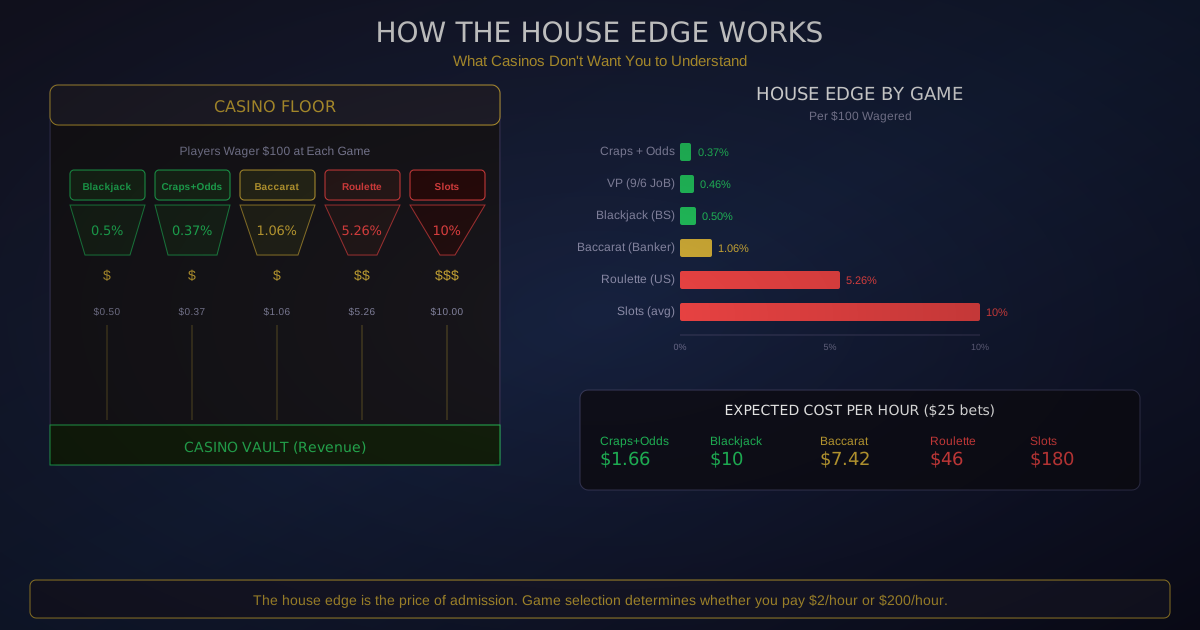
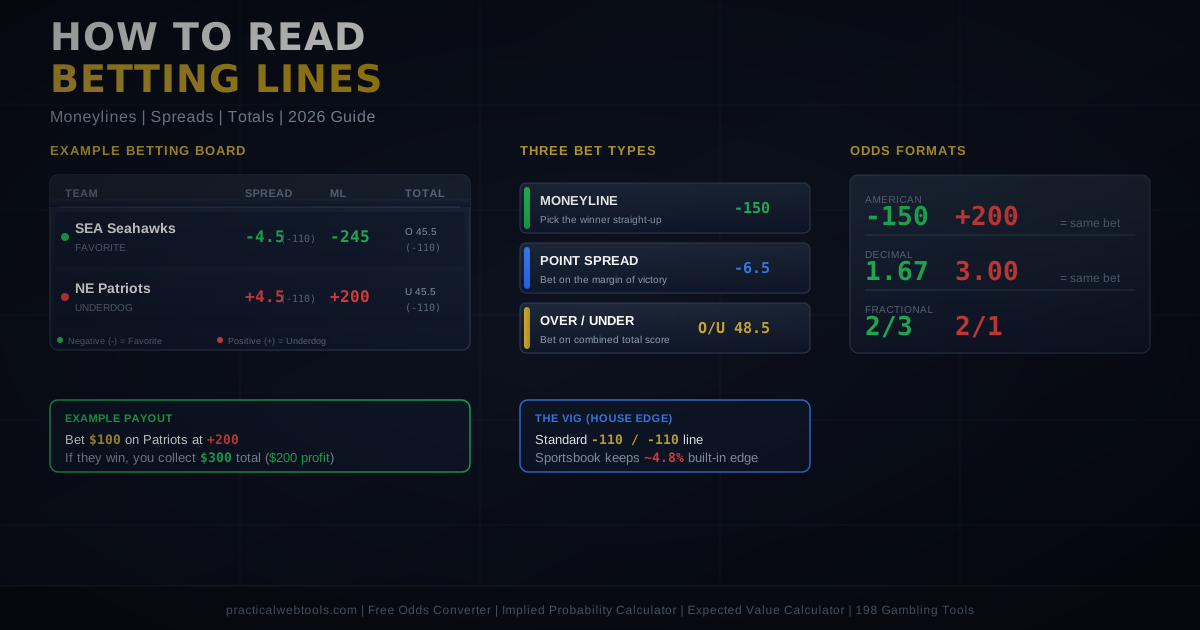
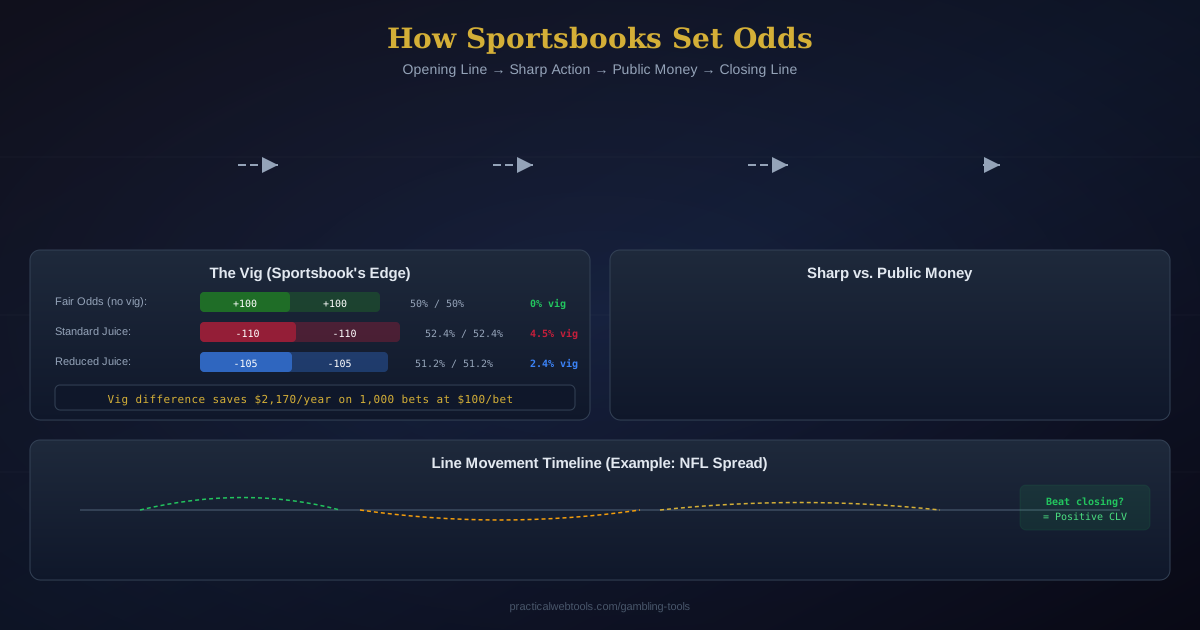
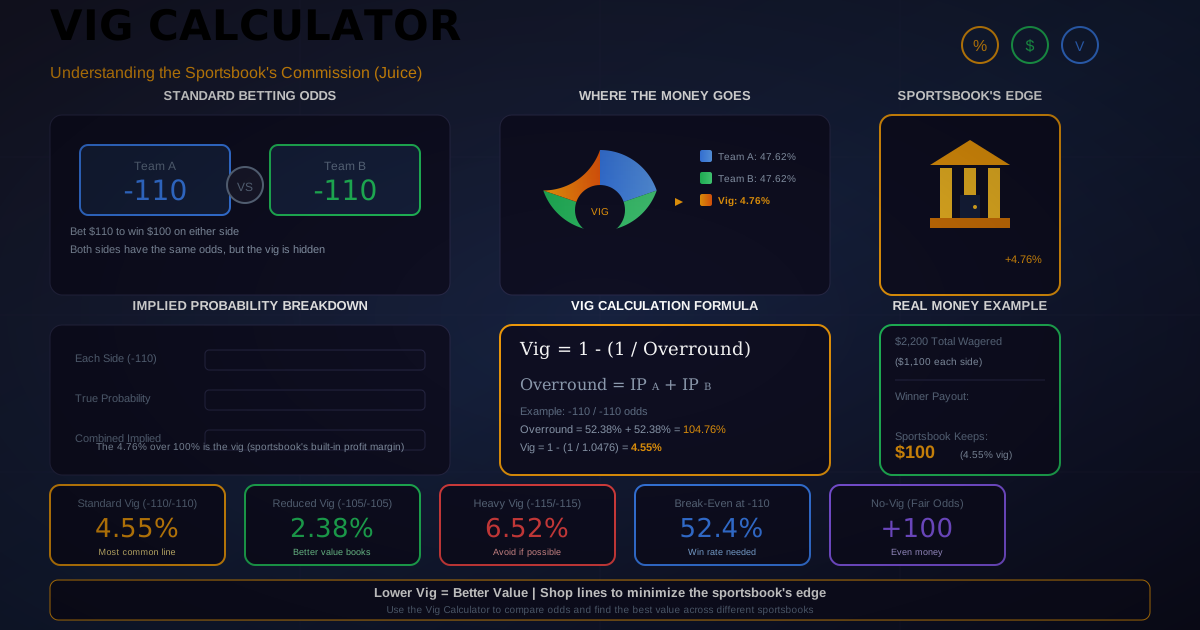
Every sportsbook builds a margin (the vig or juice) into their odds. A standard -110/-110 line on a 50/50 proposition means you need to win 52.4% of the time just to break even. Without a model, you are simply guessing which side to take while paying a 4.5% tax on every wager.
Instantly calculate the vig built into any line with our Hold/Vig Calculator.
Models Remove Cognitive Bias
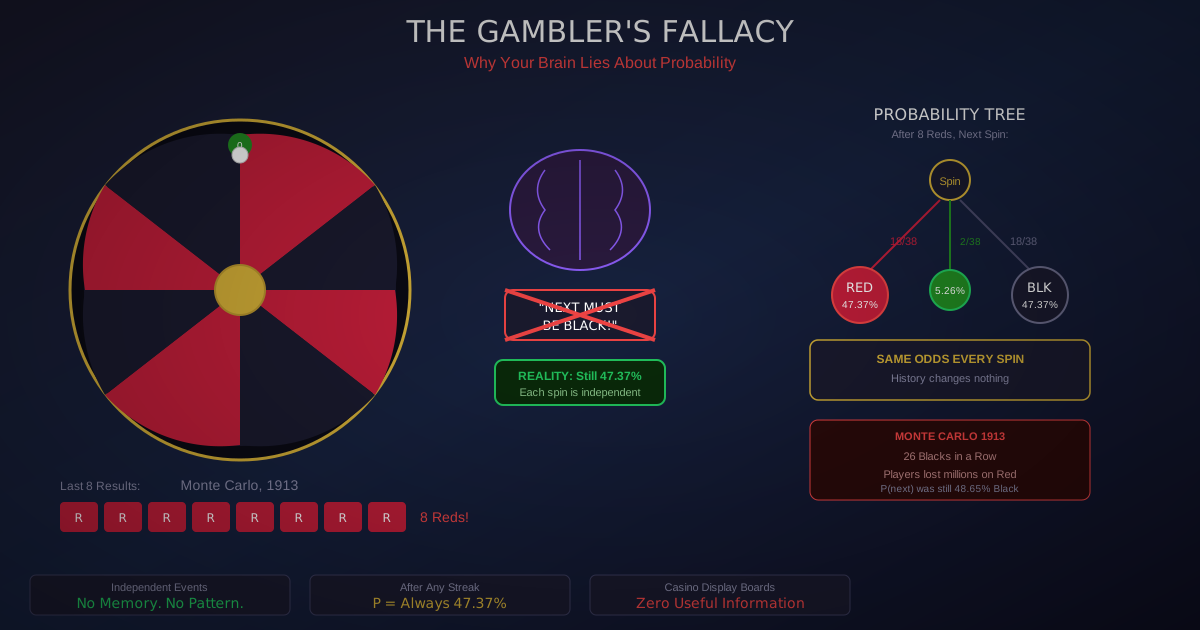
Human bettors consistently fall prey to recency bias, anchoring, availability heuristic, and the gambler's fallacy. A model does not care that a team "looked bad" last week or that a quarterback is "due" for a big game. It cares about yards per play, turnover margin, and scoring efficiency--measurable, predictive factors.
Repeatable Process Over Time
A model gives you a repeatable decision-making framework. You can track every prediction, measure accuracy over time, identify weaknesses, and improve. Without a model, you have no process to evaluate and no way to systematically improve.
What Professional Bettors Actually Do
Professional sports bettors typically generate power ratings or probability estimates for every game in their target sport. They then compare their estimates against the market, betting only when they find a meaningful discrepancy. This process, applied at scale with disciplined bankroll management, is how they generate positive ROI year after year.
Choosing Your Sport and Data Sources
The first decision is which sport to model. Each sport has different characteristics that affect model complexity, data availability, and the sharpness of the betting market.
Sport Selection Factors
| Factor | NFL | NBA | MLB | NHL | Soccer |
|---|---|---|---|---|---|
| Sample Size (games/season) | 272 regular season | 1,230 regular season | 2,430 regular season | 1,312 regular season | 380 (top league) |
| Data Availability | Excellent (free) | Excellent (free) | Excellent (free) | Good (free) | Good (free/paid) |
| Market Efficiency | Very high | High | Moderate-High | Moderate | Varies by league |
| Luck vs. Skill Ratio | Higher luck (small sample) | Lower luck (more possessions) | Higher luck (any single game) | Moderate | Moderate |
| Key Advantage for Modelers | Injuries, weather, situational | Pace/efficiency, rest days | Pitching matchups, park factors | Goaltending variance | xG data, league depth |
| Beginner Friendliness | High | High | Moderate | Moderate | Moderate |
Recommendation for beginners: Start with the NBA or NFL. Both have outstanding free data, large communities of modelers sharing approaches, and enough games per season to validate your model within a single year. MLB has the most games (best for statistical significance) but requires specialized pitching analysis.
Free Data Sources by Sport
| Data Source | Sports Covered | What It Provides | Cost |
|---|---|---|---|
| Pro Football Reference | NFL | Box scores, advanced stats, play-by-play | Free |
| Basketball Reference | NBA | Per-game, per-possession, advanced stats | Free |
| Baseball Reference | MLB | Traditional and advanced stats, splits | Free |
| FBref | Soccer | Match results, xG, passing networks | Free |
| Hockey Reference | NHL | Box scores, advanced stats | Free |
| Odds API | Multiple | Historical and live odds from 30+ books | Free tier |
| Killer Sports | Multiple | Historical ATS data, trends | Free |
| ESPN / NFL.com / NBA.com | Multiple | Official stats, play-by-play | Free |
| BigDataBall | NBA, NFL, MLB | Game logs, player tracking | Paid |
| Kaggle Datasets | Multiple | Historical datasets for modeling | Free |
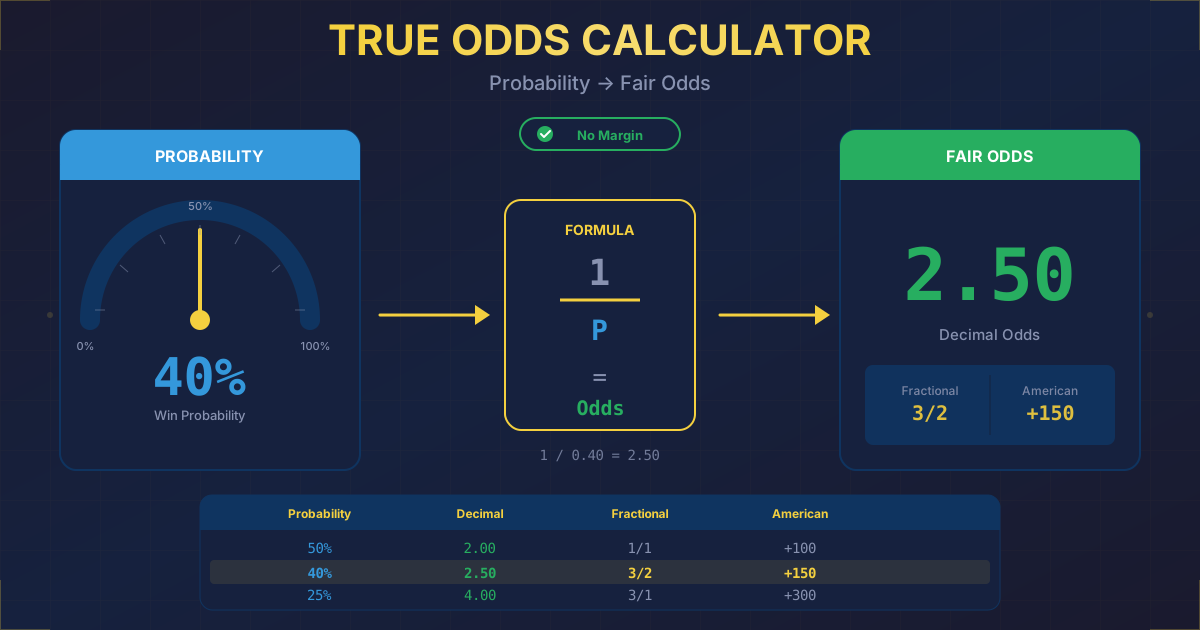
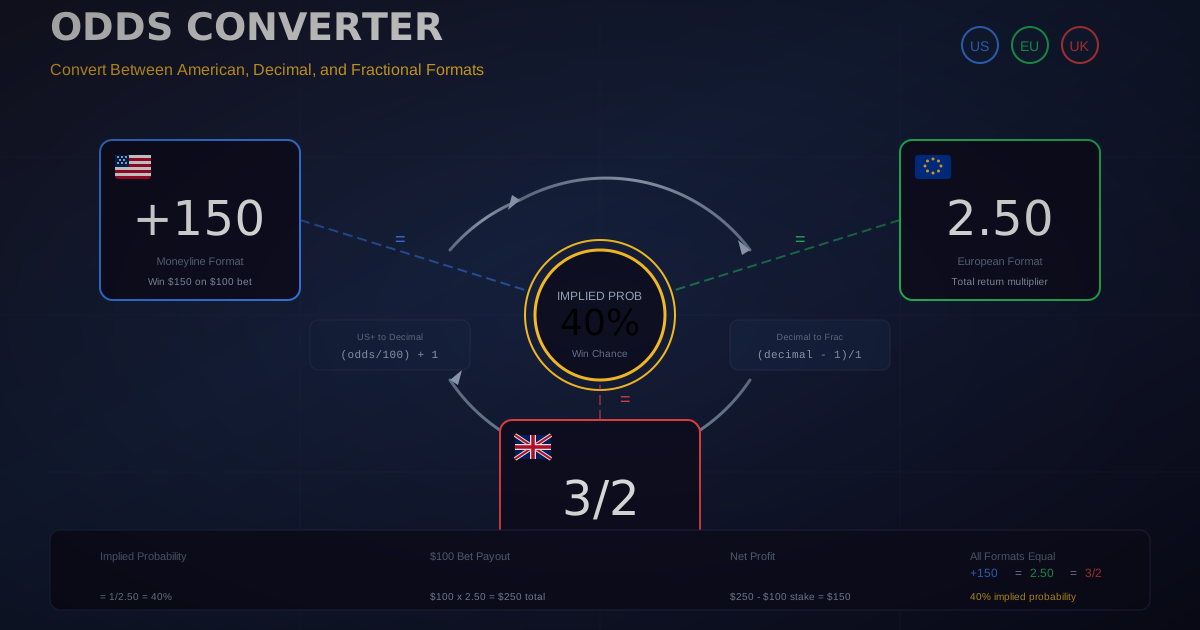
Convert between American, decimal, and fractional odds with our Odds Converter.
Step 1: Collecting and Organizing Your Data
Before you build anything, you need clean, organized data. The quality of your model is directly proportional to the quality of your data.
What Data to Collect
At minimum, you need:
- Game results: Date, home team, away team, home score, away score
- Team statistics: Key performance metrics for each team, updated weekly or daily
- Contextual variables: Home/away, rest days, injuries, weather (outdoor sports)
- Betting market data: Opening and closing lines, odds, totals
Organizing Your Dataset
Structure your data in a spreadsheet or database with one row per game. Here is a simplified example for NFL:
| Date | Home Team | Away Team | Home Score | Away Score | Home Yards/Play | Away Yards/Play | Home TO Margin | Spread | Over/Under |
|---|---|---|---|---|---|---|---|---|---|
| 2025-09-07 | KC Chiefs | BAL Ravens | 27 | 24 | 6.2 | 5.8 | +1 | -3.0 | 47.5 |
| 2025-09-07 | PHI Eagles | GB Packers | 31 | 21 | 6.5 | 5.1 | +2 | -2.5 | 49.0 |
| 2025-09-07 | DET Lions | MIN Vikings | 28 | 30 | 5.9 | 6.3 | -1 | -1.5 | 52.5 |
| 2025-09-14 | DAL Cowboys | CLE Browns | 17 | 20 | 4.8 | 5.4 | -2 | -6.0 | 42.0 |
| 2025-09-14 | SF 49ers | SEA Seahawks | 35 | 14 | 7.1 | 4.6 | +3 | -7.0 | 46.5 |
Data Hygiene Checklist
- Consistent formatting: Team names, date formats, and statistical categories should be uniform throughout your dataset.
- No future data leakage: When building your model, never include information that would not have been available before the game. Using final scores to predict those same final scores is a common beginner mistake.
- Minimum sample sizes: You generally need at least 3-5 seasons of data to build a model and an additional 1-2 seasons held out for testing.
- Handle missing data: Decide in advance how to treat missing values--drop them, use averages, or interpolate.
Step 2: Identifying Predictive Variables
Not all statistics are created equal. Some are highly predictive of future outcomes; others are mostly noise. One of the most important steps in model building is distinguishing between the two.
High-Predictive vs. Low-Predictive Statistics
| Sport | High Predictive Value | Low Predictive Value |
|---|---|---|
| NFL | Yards per play differential, EPA/play, turnover-adjusted scoring, DVOA, net points per drive | Win-loss record (small sample), total yardage, time of possession |
| NBA | Net rating (ORtg - DRtg), eFG%, turnover %, free throw rate, pace-adjusted metrics | Points per game (pace dependent), raw rebounds, "clutch" stats |
| MLB | FIP/xFIP (pitching), wRC+ (hitting), BABIP regression, park-adjusted stats, exit velocity | Win-loss record for pitchers, RBI, batting average |
| NHL | xG (expected goals), shot quality, Corsi/Fenwick, save percentage regression | Raw shots on goal, faceoff percentage, hits |
| Soccer | xG, xGA, PPDA (passes allowed per defensive action), shot quality, xPts | Possession %, corners, total shots |
The Signal vs. Noise Problem
In sports, many statistics are heavily influenced by randomness, especially in small samples. A key principle:
Metrics that are "sticky" (consistent from game to game and season to season) tend to be more predictive than metrics that are "noisy" (highly variable).
For example, in the NFL:
- Yards per play has a season-to-season correlation of roughly 0.50-0.60, making it a reliable indicator of team quality.
- Turnover margin has a season-to-season correlation of roughly 0.15-0.25, meaning a significant portion of turnover results is luck-driven.
- Win percentage has a moderate correlation (~0.35-0.45), partly because it bundles both skill and variance.
This does not mean you ignore turnovers entirely. It means you should weight yards per play more heavily and regress turnover performance toward the mean.
Practical Example: Building an NFL Variable Set
Suppose you decide your NFL model will focus on these five core variables:
- Offensive yards per play (team's season average)
- Defensive yards per play allowed (team's season average)
- Turnover margin per game (regressed toward 0 by 50%)
- Home field advantage (a constant, approximately +2.5 to +3.0 points historically)
- Rest advantage (extra rest = +1.0 to +1.5 points, short rest = -1.0 to -1.5 points)
These five inputs will form the foundation of a surprisingly effective NFL prediction model.
Step 3: Building Power Ratings
Power ratings are numerical scores that represent a team's overall strength. They form the backbone of most sports betting models. There are several approaches, each with different levels of complexity.
Approach 1: Simple Rating System (SRS)
The Simple Rating System, popularized by Pro Football Reference, calculates a team's rating as the sum of its average margin of victory and its strength of schedule.
SRS = Average Point Differential + Strength of Schedule Adjustment
Example:
- The Kansas City Chiefs average +8.5 points per game
- Their opponents' collective SRS is +1.2 (they have played slightly above-average competition)
- Adjusted SRS: 8.5 + 1.2 = +9.7
SRS is iterative--you calculate each team's SRS, then use those values to recalculate strength of schedule, and repeat until the values converge. In a spreadsheet, 10-15 iterations is usually sufficient.
Approach 2: Elo Ratings
Elo ratings, originally developed for chess, assign each team a rating that updates after every game. The key features:
- Every team starts at a baseline (typically 1500)
- After each game, the winner gains points and the loser loses points
- The magnitude of the update depends on the expected outcome vs. the actual outcome
- An upset produces a larger rating change than a "chalk" result
The Elo update formula:
New Rating = Old Rating + K x (Actual Result - Expected Result)
Where:
- K is the update factor (commonly 20-32 for NFL, 15-25 for NBA)
- Actual Result is 1 for a win, 0 for a loss, 0.5 for a draw
- Expected Result = 1 / (1 + 10^((Opponent Rating - Your Rating) / 400))
Worked Example -- NFL Week 5:
Team A (Elo 1580) vs. Team B (Elo 1450), K=20
Expected Result for Team A = 1 / (1 + 10^((1450 - 1580) / 400)) = 1 / (1 + 10^(-0.325)) = 1 / (1 + 0.473) = 1 / 1.473 = 0.679 (Team A expected to win 67.9% of the time)
If Team A wins: New Rating A = 1580 + 20 x (1 - 0.679) = 1580 + 6.42 = 1586.42 New Rating B = 1450 + 20 x (0 - 0.321) = 1450 - 6.42 = 1443.58
If Team B pulls the upset: New Rating A = 1580 + 20 x (0 - 0.679) = 1580 - 13.58 = 1566.42 New Rating B = 1450 + 20 x (1 - 0.321) = 1450 + 13.58 = 1463.58
Notice the upset causes a bigger swing. This is by design--unexpected results carry more information.
Advantages of Elo:
- Easy to implement in a spreadsheet
- Self-correcting over time
- No need for complex regression analysis
- Can incorporate margin of victory with modifications
Limitations:
- Does not account for specific matchup factors (pitching, injuries)
- Slow to react to major roster changes
- A single K-factor may not be optimal for all situations
Approach 3: Regression Models
Regression models use statistical techniques to determine the relationship between input variables and game outcomes. The most common types:
| Model Type | Best For | Complexity | Output |
|---|---|---|---|
| Linear Regression | Predicting point spreads / margins | Low-Medium | Predicted margin of victory |
| Logistic Regression | Predicting win/loss probability | Medium | Win probability (0-1) |
| Poisson Regression | Predicting total scores (soccer, hockey) | Medium | Expected goals/points per team |
| Random Forest / XGBoost | Complex multi-variable models | High | Win probability or spread |
| Neural Networks | Large datasets with non-linear relationships | Very High | Various |
For beginners, linear regression for spread prediction or logistic regression for moneyline probability is the recommended starting point. These methods are well-understood, easy to implement, and provide transparent results you can interpret.
Practical Example: NFL Linear Regression Model
Using our five NFL variables, a linear regression might produce:
Predicted Margin = 2.8 + (3.1 x Off YPP Diff) + (1.4 x Regressed TO Margin) + (2.7 x Home) + (1.2 x Rest Advantage)
Where:
- Off YPP Diff = your offensive yards per play minus their defensive yards per play allowed (and vice versa for their offense vs. your defense)
- Regressed TO Margin = season turnover margin per game, regressed 50% toward zero
- Home = 1 for home team, 0 for away
- Rest Advantage = 1 for extra rest, -1 for short rest, 0 for normal
Sample Prediction -- Week 10:
- Chiefs (6.5 off YPP, 5.2 def YPP allowed) vs. Broncos (5.4 off YPP, 5.8 def YPP allowed)
- Chiefs at home, both on normal rest
- Chiefs season TO margin: +0.6/game, Broncos: -0.3/game
Off YPP Diff for Chiefs = (6.5 - 5.8) - (5.4 - 5.2) = 0.7 - 0.2 = +0.5 Regressed TO Margin Diff = (0.3) - (-0.15) = +0.45
Predicted Margin = 2.8 + (3.1 x 0.5) + (1.4 x 0.45) + (2.7 x 1) + (1.2 x 0) = 2.8 + 1.55 + 0.63 + 2.7 + 0 = +7.68 points (Chiefs favored)
If the market has Chiefs -6.0, your model sees additional value on the Chiefs side. If the market has Chiefs -9.5, your model suggests the line is inflated.
Step 4: Converting Ratings to Win Probabilities
Once you have power ratings or predicted margins, you need to convert them into win probabilities so you can compare directly against market odds.
From Point Spread to Win Probability
For the NFL, the historical relationship between spread and win probability is approximately:
| Predicted Margin | Win Probability | Moneyline Equivalent |
|---|---|---|
| +1.0 | 52.5% | -110 |
| +3.0 | 58.5% | -141 |
| +5.0 | 64.0% | -178 |
| +7.0 | 69.5% | -228 |
| +10.0 | 76.0% | -317 |
| +14.0 | 83.0% | -488 |
| -1.0 | 47.5% | +110 |
| -3.0 | 41.5% | +141 |
| -7.0 | 30.5% | +228 |
The general formula (NFL-specific, approximately):
Win Probability = 1 / (1 + 10^(-Predicted Margin / 8.3))
The constant (8.3 for NFL) varies by sport. For the NBA, it is approximately 5.5-6.0 due to lower variance in outcomes. For MLB, it is approximately 4.0-4.5.
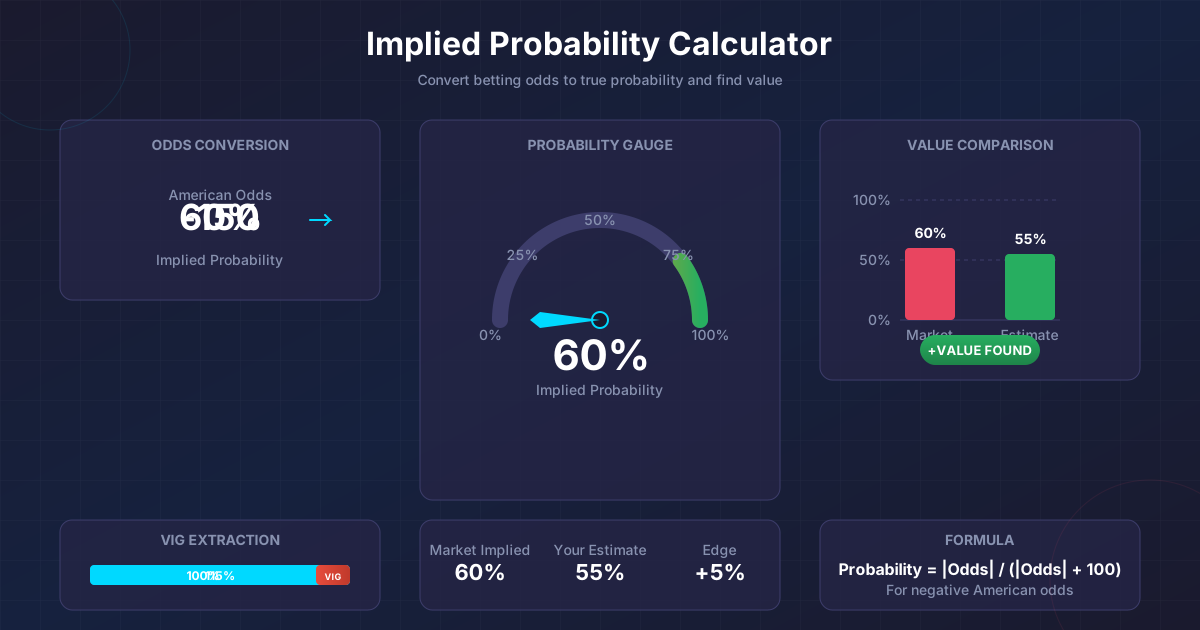
Calculate the implied probability of any odds with our Implied Probability Calculator.
Worked Example: Converting to Betting Decisions
From our Chiefs vs. Broncos example:
- Model predicted margin: +7.68 points
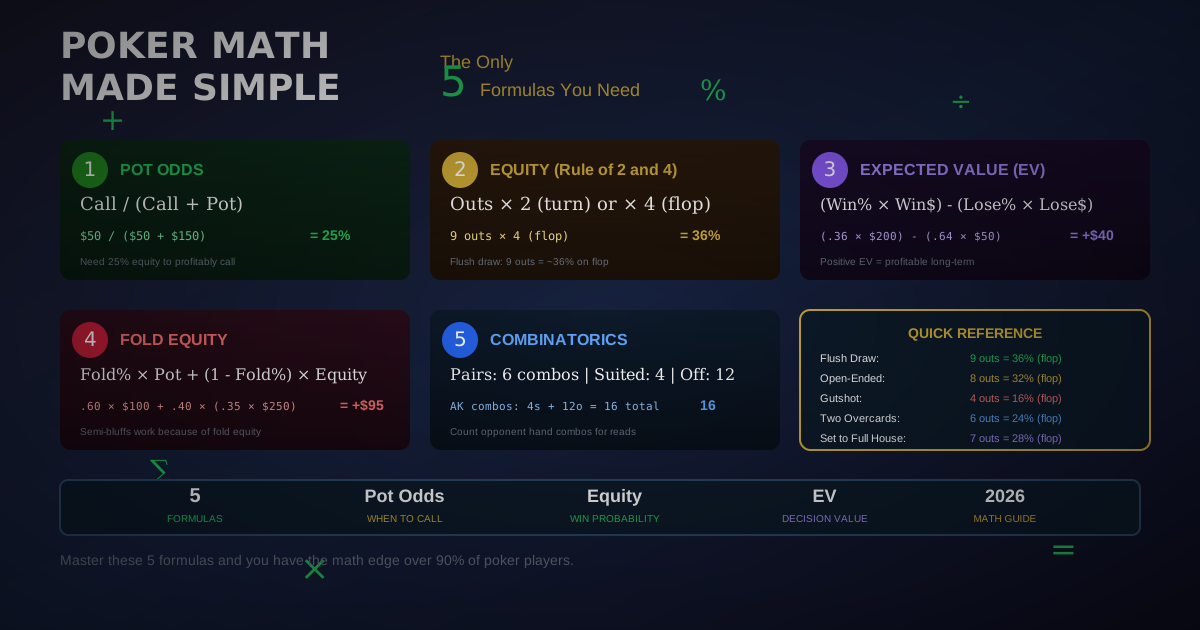
- Win probability: 1 / (1 + 10^(-7.68/8.3)) = 1 / (1 + 10^(-0.925)) = 1 / (1 + 0.119) = 0.894 or 89.4%
Converting 89.4% to fair moneyline: -843
If a sportsbook offers Chiefs -650, our model implies the true fair price is -843, so there is positive expected value on the Chiefs moneyline.
For spread betting at -6.0:
- Your model says the true spread should be -7.68
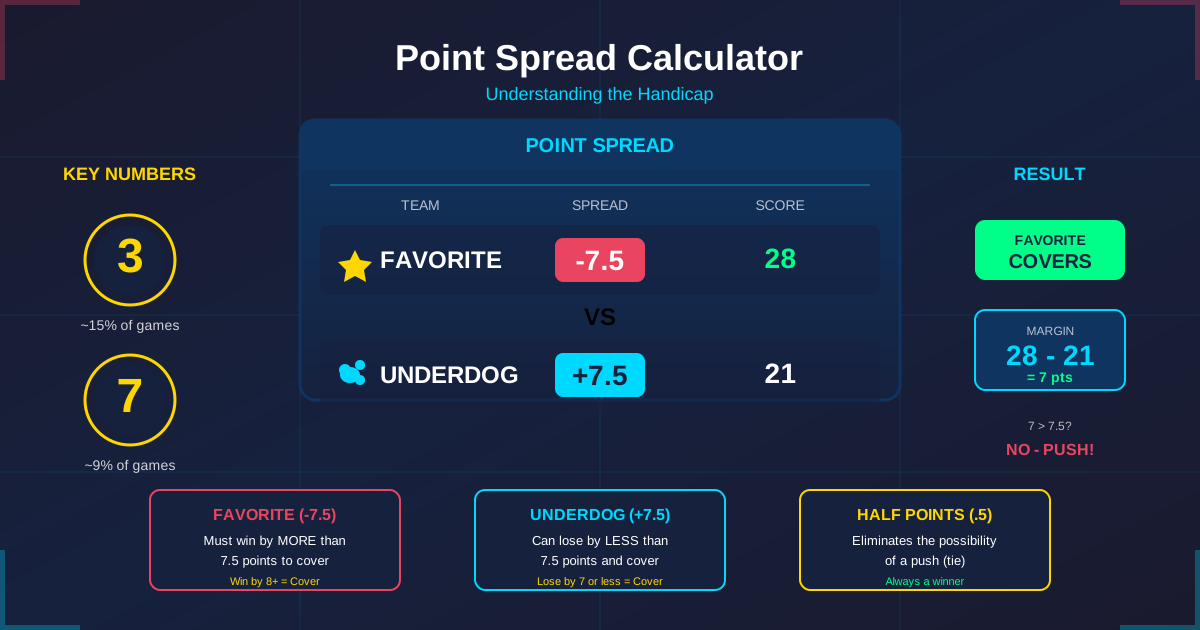
- The Chiefs cover -6.0 if they win by 7+ points
- With the model projecting +7.68, you have roughly 1.68 points of "cushion"--a potential value bet on Chiefs -6.0
Step 5: Comparing to Market Odds and Finding Value
This is where your model translates into actionable bets. The process is straightforward: compare your model's probability estimate against the market's implied probability. When your model assigns a meaningfully higher probability than the market, you have found a potential positive expected value bet.
The Value Formula
Edge = Your Probability - Market Implied Probability
A positive edge means the bet is potentially +EV. But how much edge do you need to justify a bet?
Minimum edge thresholds (general guidelines):
- Moneylines: At least 3-5% edge to overcome vig and variance
- Spreads at -110: At least 2-3% edge (the vig costs you ~2.4%)
- Totals at -110: At least 2-3% edge
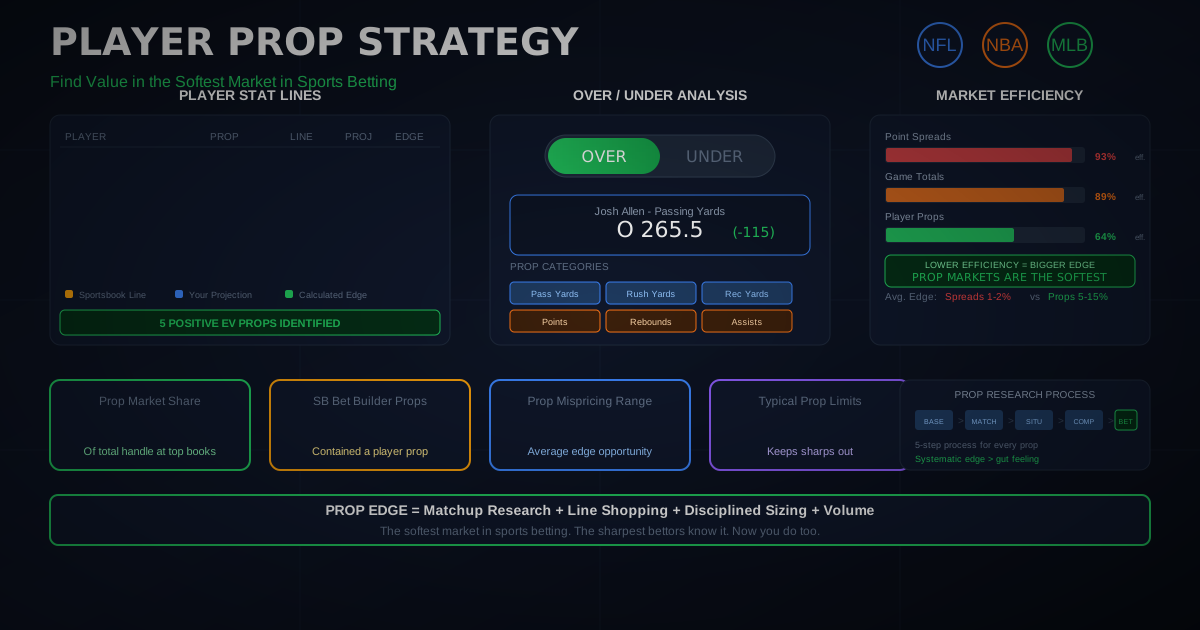
- Player props: At least 5-8% edge (less efficient markets, but higher vig)
Example: Full Model-to-Bet Workflow
Game: Lakers vs. Celtics, January 15
Your NBA model outputs:
- Lakers win probability: 42%
- Celtics win probability: 58%
Sportsbook line:
- Lakers +5.5 (-110)
- Celtics -5.5 (-110)
- Lakers ML +175
- Celtics ML -210
Market implied probabilities (after removing vig):
- Celtics ML -210 implies ~65.6% (raw) -- devigged to approximately 63%
- Lakers ML +175 implies ~36.4% (raw) -- devigged to approximately 37%
Your model says Celtics 58% vs. market 63%. No edge on the Celtics. In fact, your model suggests the Lakers might be undervalued.
Your model says Lakers 42% vs. market 37%. That is a +5% edge on the Lakers moneyline.
At +175 odds with 42% win probability:
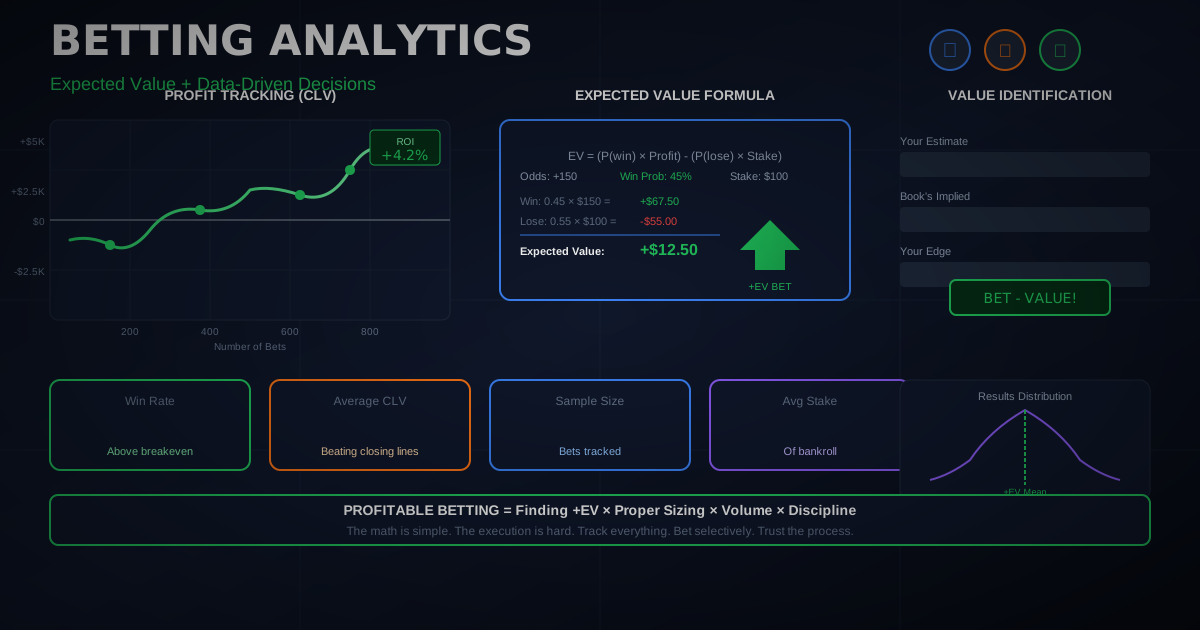
- EV = (0.42 x $175) - (0.58 x $100) = $73.50 - $58.00 = +$15.50 per $100 wagered
This is a strong +EV bet according to your model.
Use our Expected Value Calculator to run this calculation instantly for any bet.
Step 6: Backtesting and Validation
Building a model is not enough. You must rigorously test it against historical data to determine whether your model actually identifies value, or whether your results are a product of overfitting or luck.
Training vs. Testing Data
Never test your model on the same data you used to build it. This is the single most important rule in model building.
Split your data into:
- Training set (70-80%): Use this data to build and calibrate your model
- Testing set (20-30%): Use this data to evaluate performance on unseen games
Example: If you have 5 seasons of NFL data (2020-2024), use 2020-2023 for training and 2024 as your holdout test set.
Key Validation Metrics
| Metric | What It Measures | Good Benchmark | How to Calculate |
|---|---|---|---|
| Accuracy | % of correct predictions (ATS or ML) | >52.4% ATS, >55% ML | Correct picks / Total picks |
| Brier Score | Calibration of probability estimates | < 0.22 (NFL), < 0.20 (NBA) | Average of (predicted prob - actual outcome)^2 |
| Log Loss | Penalty for confident wrong predictions | Lower is better | -Average of [Y*log(P) + (1-Y)*log(1-P)] |
| ROI (%) | Return on investment if bet at model's edges | > +2% over 500+ bets | (Total profit / Total wagered) x 100 |
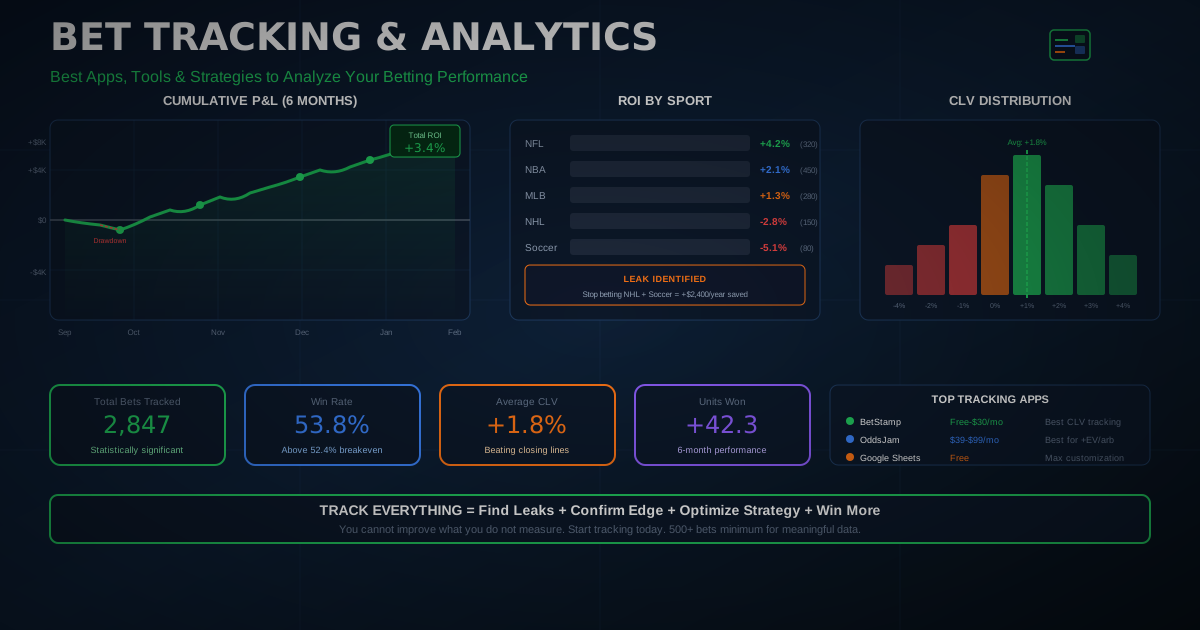
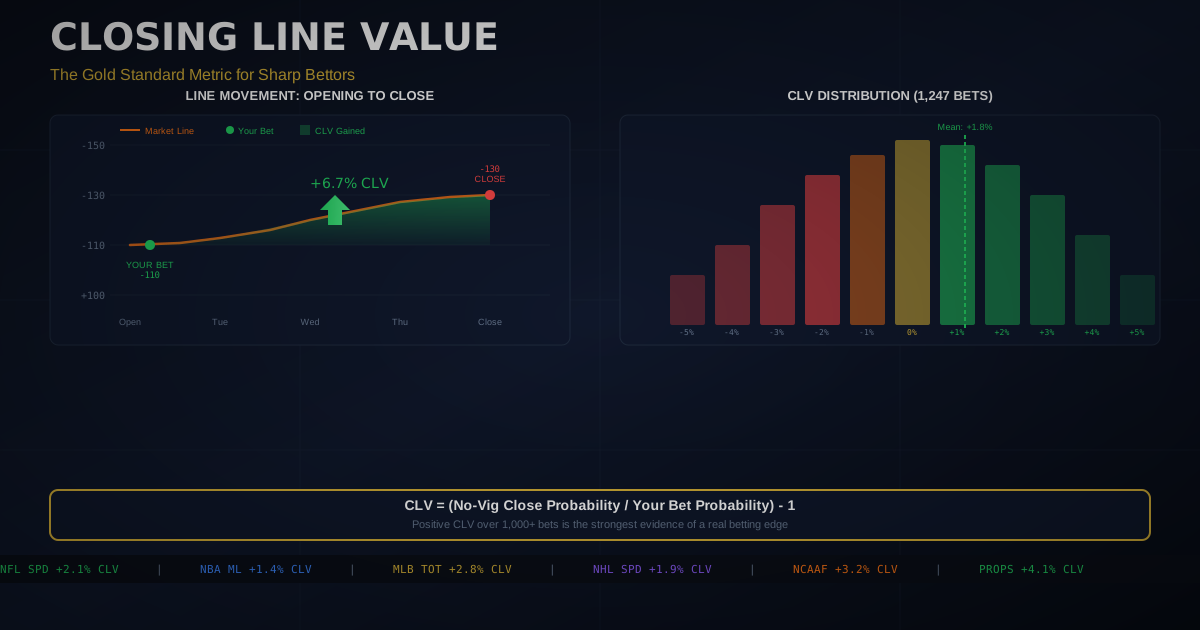
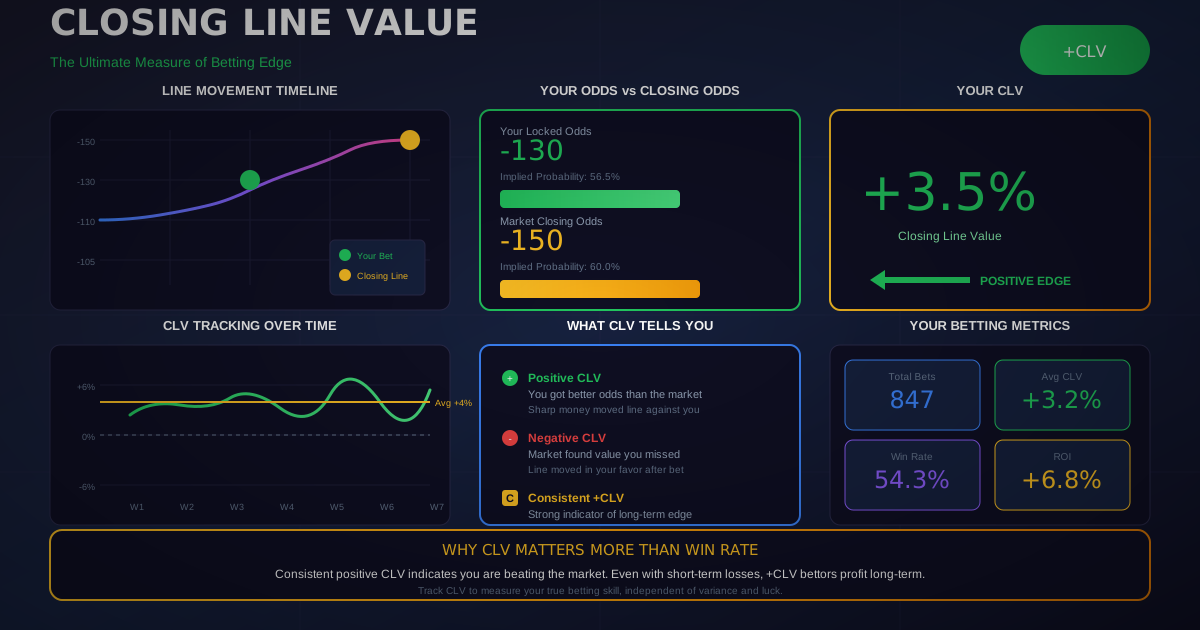
| CLV (Closing Line Value) | Did you beat the closing line? | Consistently positive | Your odds vs. closing odds |
| Max Drawdown | Worst peak-to-trough bankroll decline | < 30% of bankroll | Largest % decline from a peak |
Walk-Forward Testing
The gold standard for sports model validation is walk-forward testing, which simulates how your model would perform in real time:
- Train your model on Seasons 1-3
- Test on Season 4, recording all predictions and outcomes
- Retrain on Seasons 1-4
- Test on Season 5
- Continue for each season
This approach prevents look-ahead bias and gives you the most realistic estimate of model performance.
Example: Backtesting Results Analysis
Suppose your NFL model produces the following results over 3 test seasons (2022-2024), betting games where your model projects at least 3% edge against the spread:
| Season | Bets Placed | ATS Record | Win % | ROI | Avg CLV |
|---|---|---|---|---|---|
| 2022 | 87 | 48-39 | 55.2% | +4.8% | +1.3% |
| 2023 | 92 | 51-41 | 55.4% | +5.1% | +1.5% |
| 2024 | 79 | 42-37 | 53.2% | +2.1% | +0.8% |
| Total | 258 | 141-117 | 54.7% | +4.1% | +1.2% |
This would be an excellent result: consistent profitability across multiple seasons with positive CLV confirming your model identifies real value.
Track your closing line value performance with our CLV Tracker.
Red Flags in Backtesting
Watch for these warning signs:
- Wild swings in ROI between seasons: Suggests your model may be overfitting to certain conditions
- High accuracy but negative CLV: You might be getting lucky rather than finding genuine value
- Extremely high ROI (>15%): Almost certainly overfitting or data leakage--real-world edges are typically 2-8%
- Model works only on one sport/market: May indicate your model is capturing a quirk in the data rather than a true signal
Step 7: Bankroll Management Integration
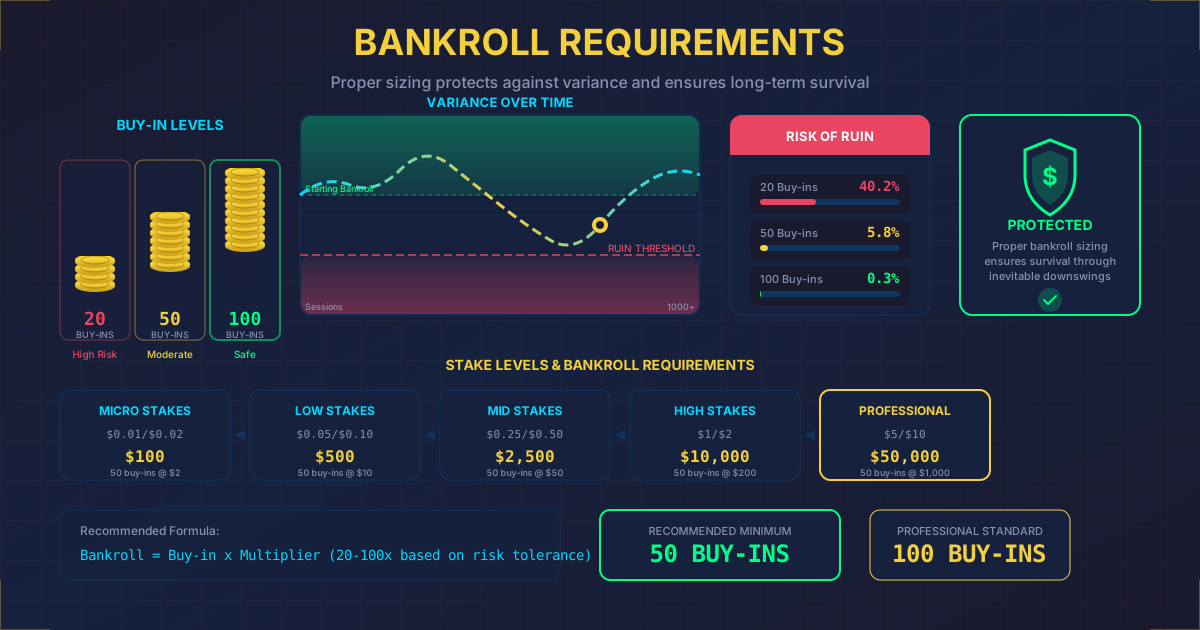
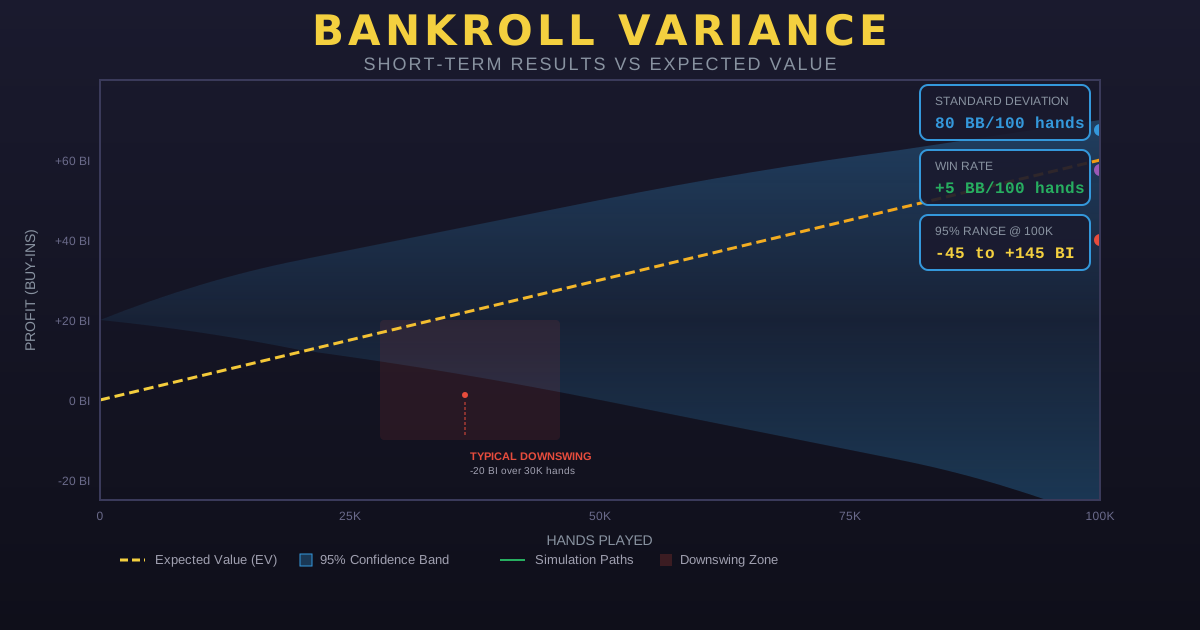
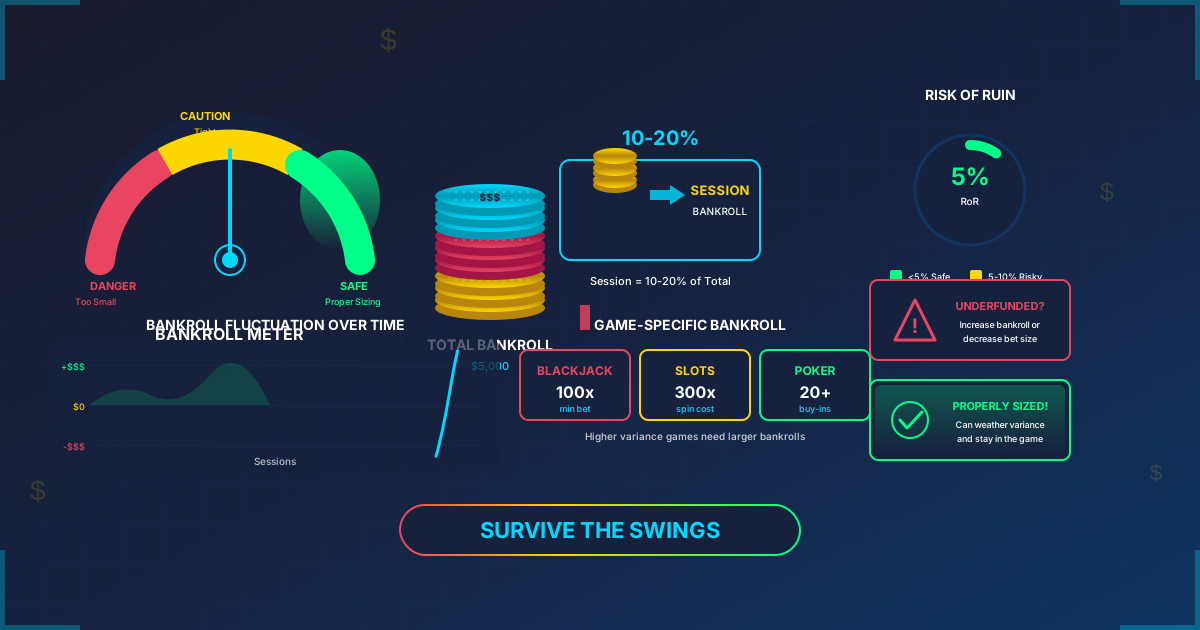
A profitable model is worthless without proper bankroll management. Even a model with a genuine 5% edge will produce losing streaks that can wipe you out if you bet too aggressively.
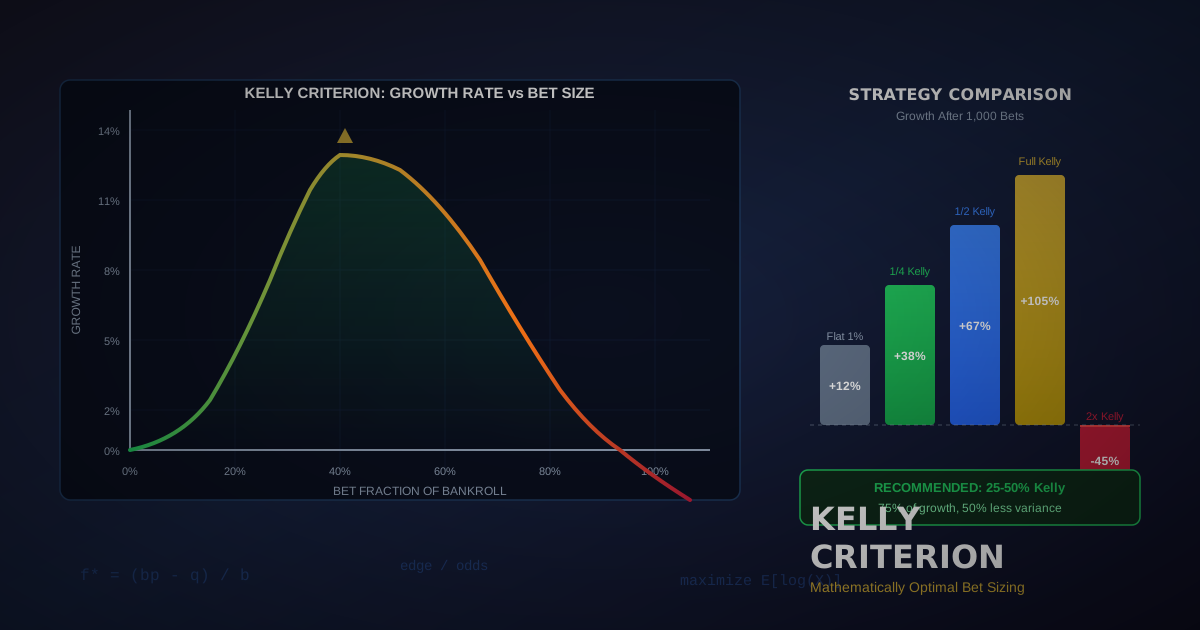
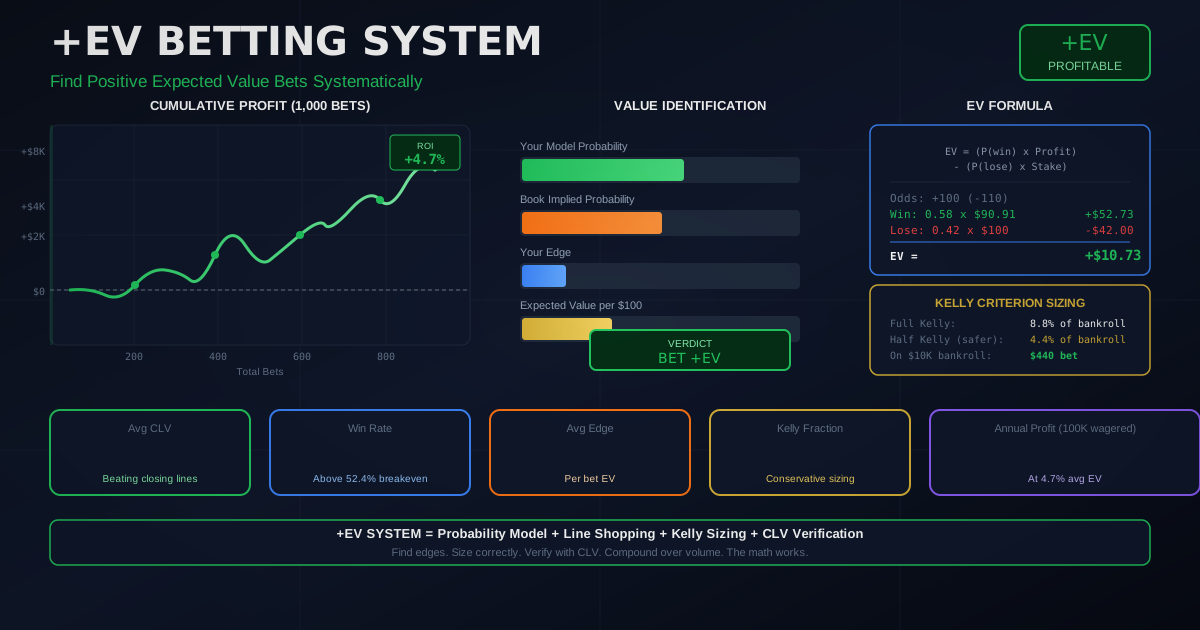
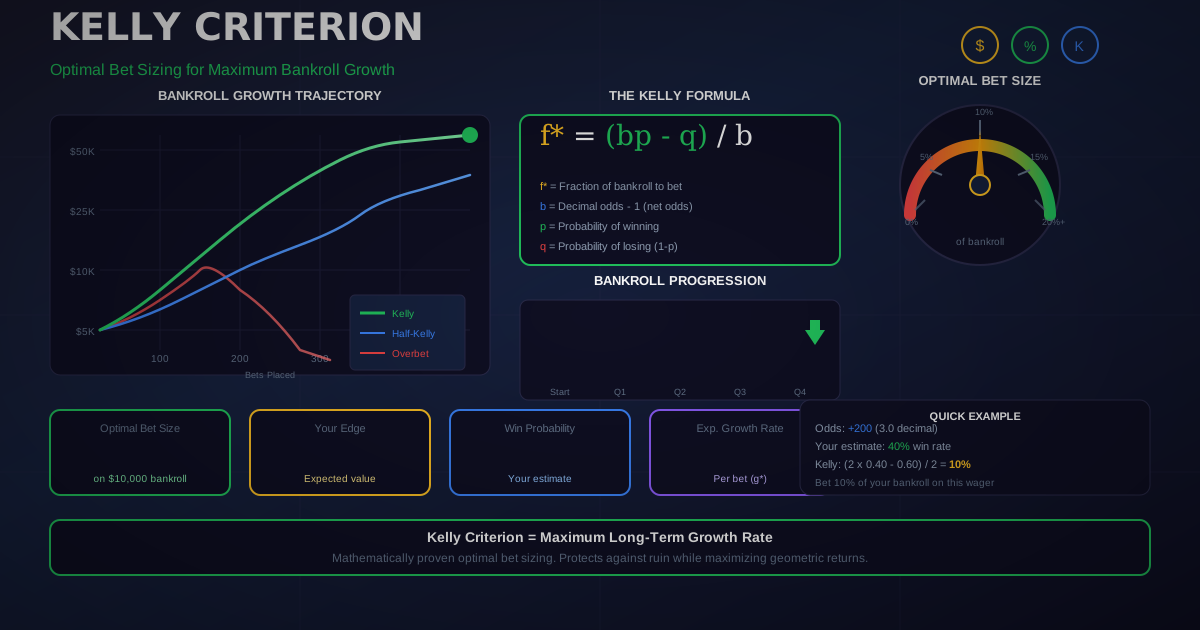
The Kelly Criterion
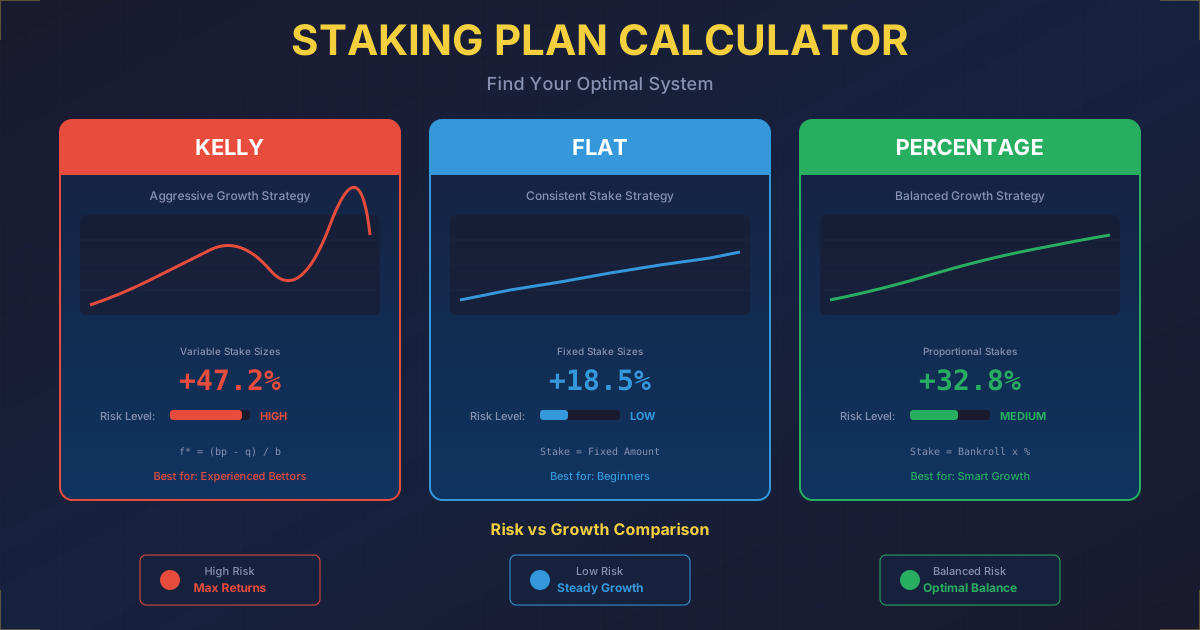
The Kelly Criterion calculates the mathematically optimal bet size based on your edge and the odds offered:
Kelly % = (bp - q) / b
Where:
- b = decimal odds - 1
- p = your estimated probability of winning
- q = 1 - p
Example:
- Your model says 55% probability on a -110 line
- b = 1.909 - 1 = 0.909
- p = 0.55, q = 0.45
- Kelly % = (0.909 x 0.55 - 0.45) / 0.909 = (0.500 - 0.45) / 0.909 = 5.5% of bankroll
Calculate your optimal bet size with our Kelly Criterion Calculator.
Fractional Kelly: The Professional's Approach
Full Kelly is mathematically optimal but extremely volatile. Most professional bettors use fractional Kelly--typically 1/4 to 1/2 of the full Kelly amount.
| Approach | Bet Size (example) | Pros | Cons |
|---|---|---|---|
| Full Kelly | 5.5% | Maximum long-term growth | Extremely volatile, large drawdowns |
| Half Kelly | 2.75% | Good growth with manageable variance | Slower bankroll growth |
| Quarter Kelly | 1.375% | Smooth equity curve, small drawdowns | Very slow growth |
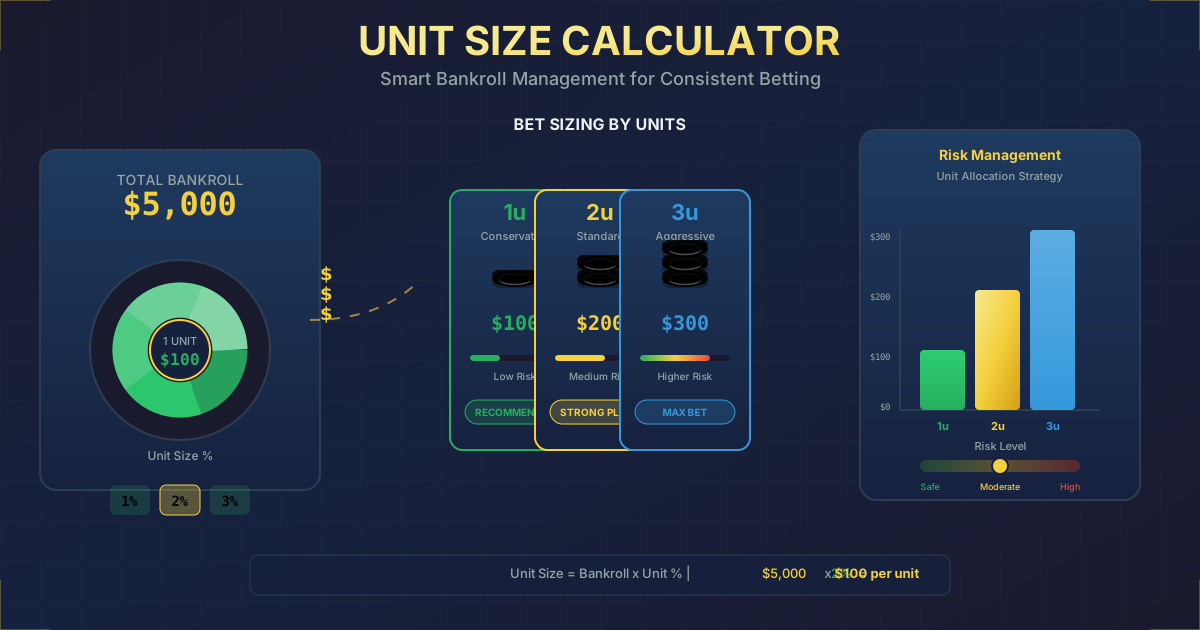
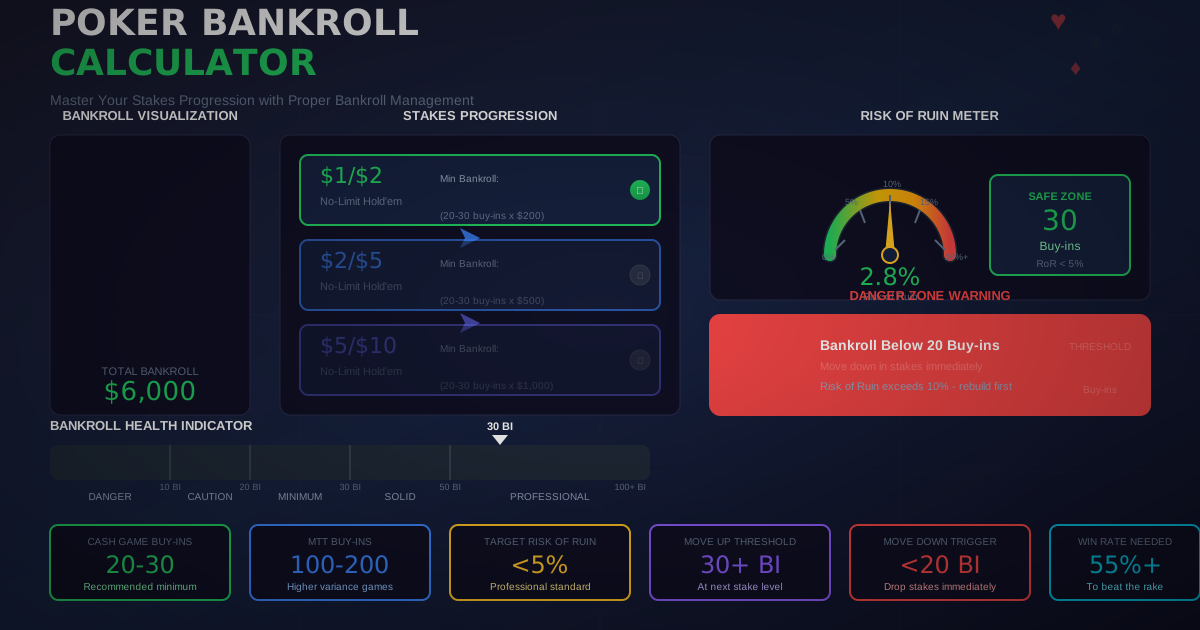
| Flat Betting (1-3%) | 1-3% per bet | Simple, consistent | Does not scale with edge size |
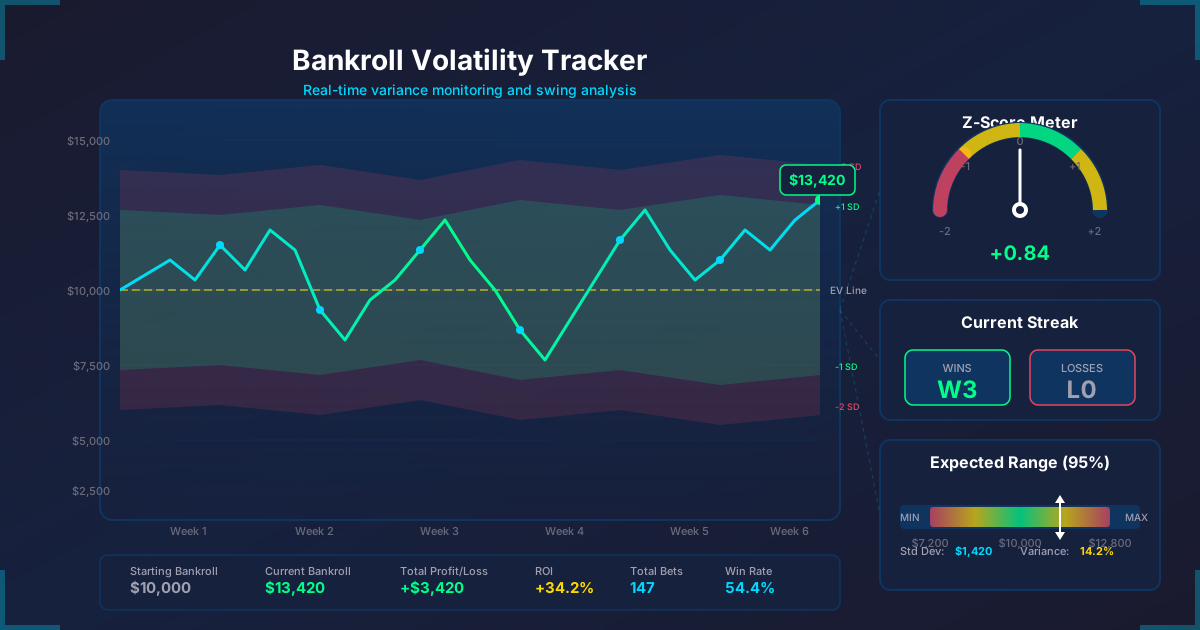
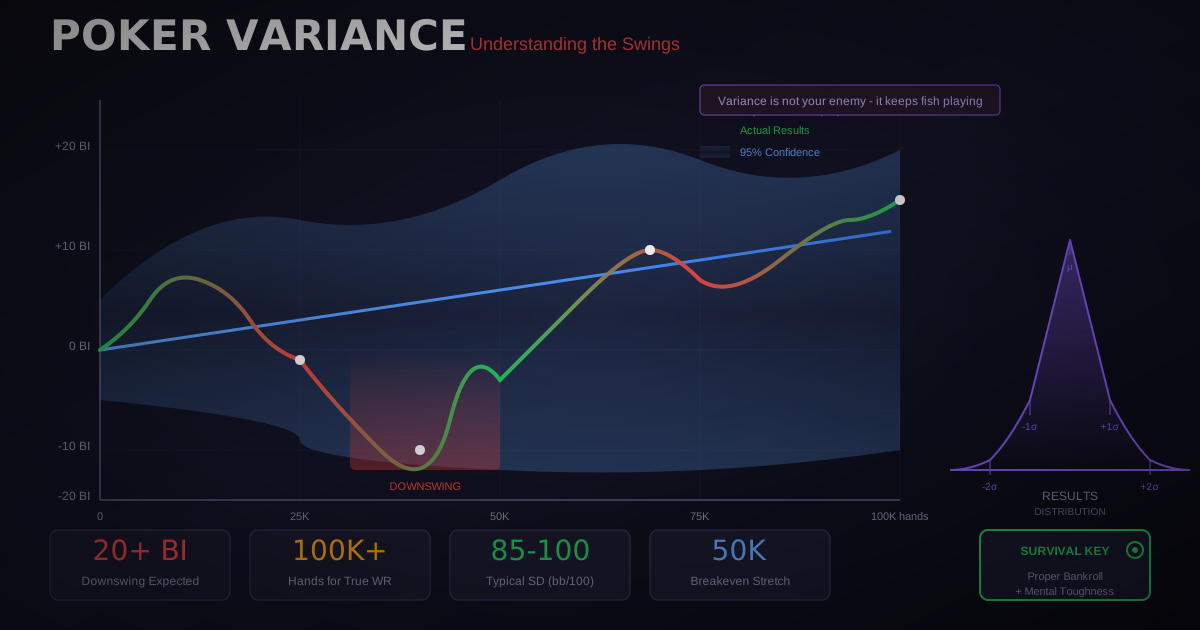
For most model-based bettors, quarter to half Kelly--or flat betting 1-3% of bankroll per wager--is the appropriate level of risk. Even with a real 3-5% edge, you will experience losing streaks of 10-15 bets. Your bankroll strategy must survive those drawdowns.
Bankroll Tracking
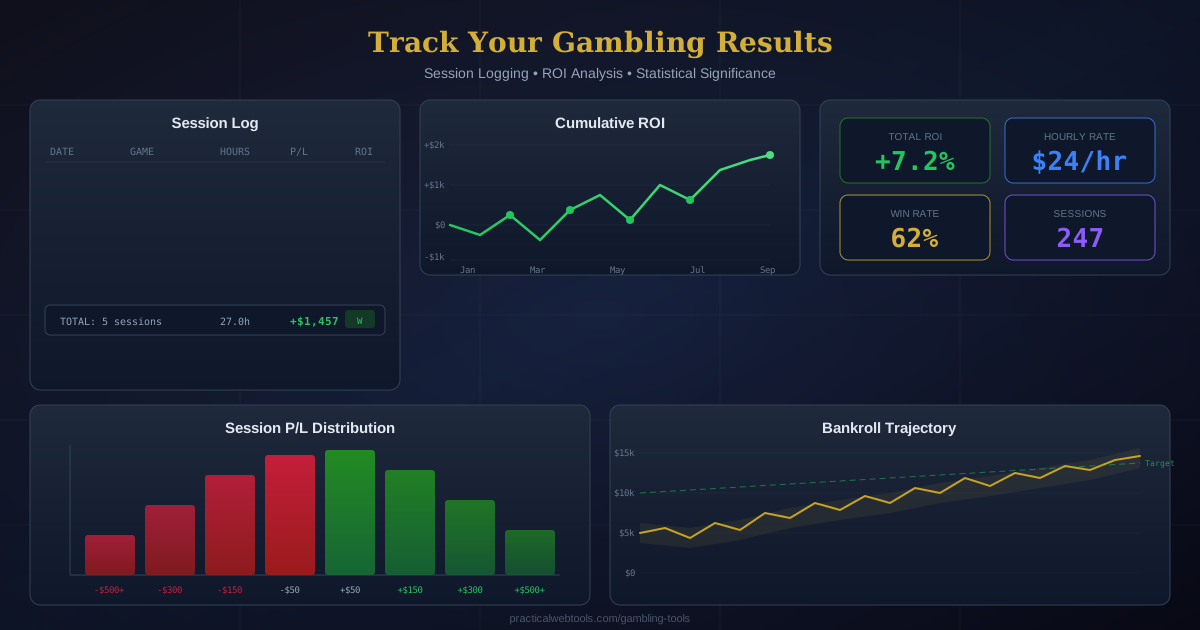
Maintain a separate tracking spreadsheet or database that logs every bet:
- Date, game, bet type, odds
- Stake amount, result, profit/loss
- Running bankroll total
- Model's predicted probability vs. market probability
- Closing line for CLV calculation
Common Model Building Mistakes
Even intelligent, analytically-minded bettors fall into predictable traps when building their first model. Recognizing these mistakes in advance will save you months of frustration and potentially significant money.
Mistake 1: Overfitting
Overfitting is the most dangerous and most common mistake. It occurs when your model is so perfectly tuned to historical data that it captures random noise rather than genuine patterns.
Signs of overfitting:
- Your model has 15+ input variables
- Backtest results are suspiciously good (>60% ATS, >10% ROI)
- Performance degrades dramatically on new data
- You keep adding variables until the backtest "works"
Prevention: Start simple. A model with 3-5 well-chosen variables will almost always outperform a model with 20+ variables on out-of-sample data. Add variables only if they improve out-of-sample performance, not just training performance.
Mistake 2: Data Leakage
Data leakage means accidentally including information in your model that would not have been available at the time of prediction.
Common examples:
- Using final game statistics (total yards, score) to predict the outcome of that same game
- Including closing odds as a feature when you would have bet at opening odds
- Using full-season averages to predict early-season games (you would not have had that data yet)
Mistake 3: Ignoring Market Efficiency
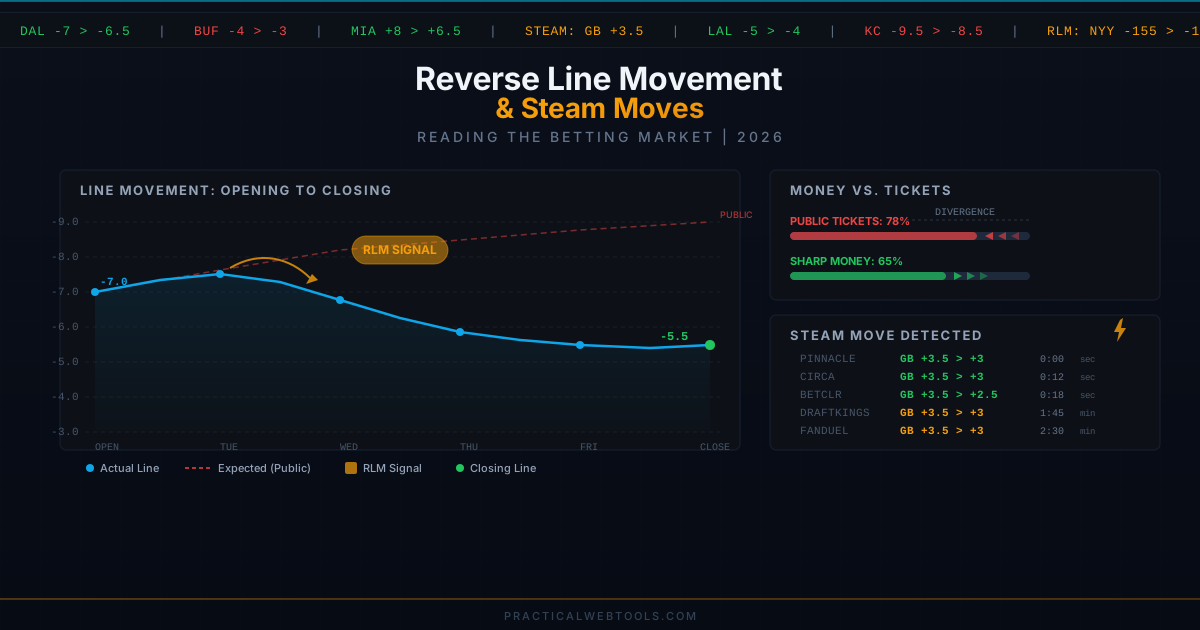
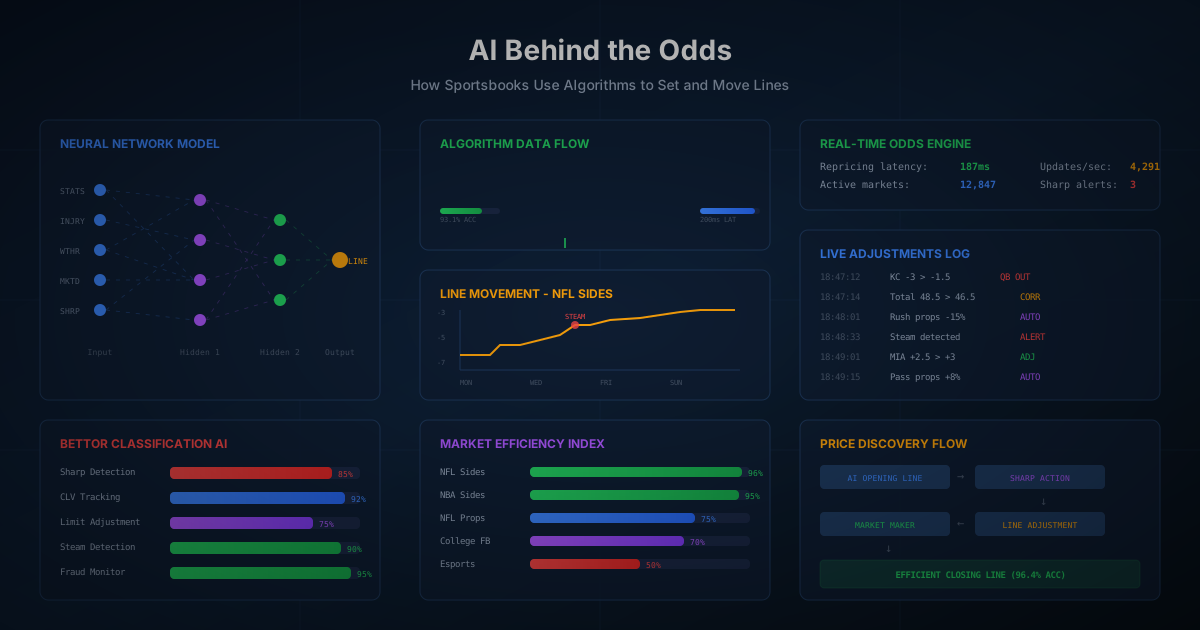
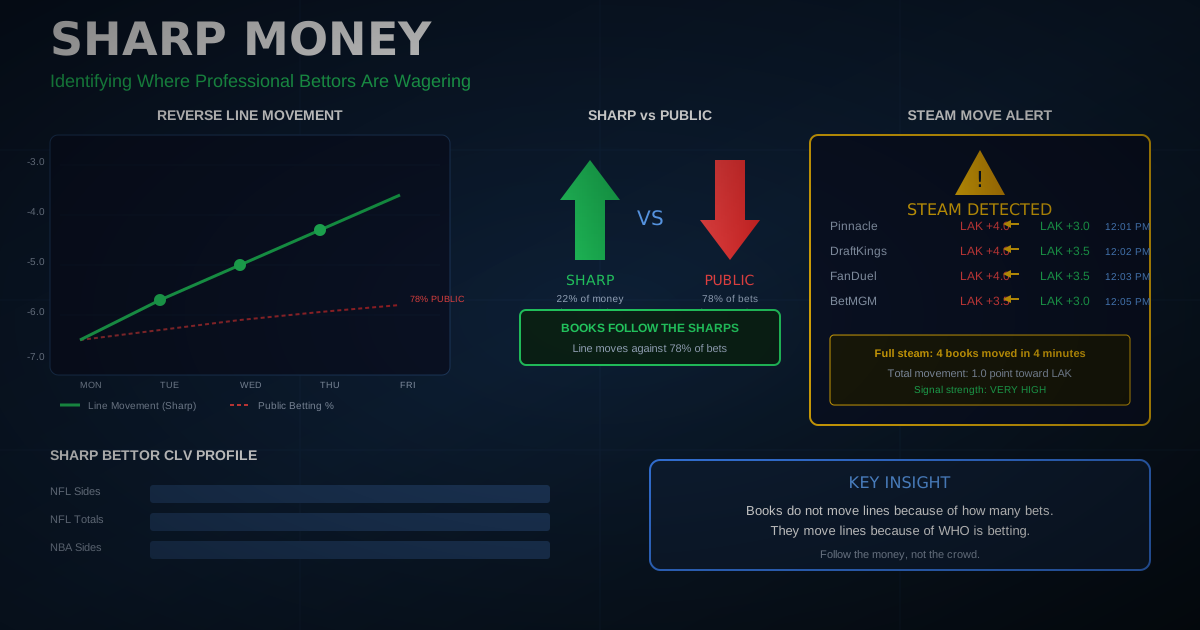
The betting market is efficient--not perfectly so, but highly efficient. Major lines (NFL spreads, NBA totals) are set by sharp bookmakers using sophisticated models and moved by millions of dollars in sharp money.
If your model consistently disagrees with the market by 5+ points on mainstream games, the problem is almost certainly your model, not the market.
Mistake 4: Survivorship Bias
You read about someone who built a model that returned 20% ROI over 2 years. What you do not hear about are the thousands of modelers whose work returned -5% or worse. Do not assume your model will replicate another person's stated results.
Mistake 5: Not Accounting for the Vig
A model that picks 52% winners against the spread sounds profitable, but at standard -110 juice, you need 52.4% to break even. Always account for the vig when calculating expected returns.
Mistake 6: Chasing Complexity
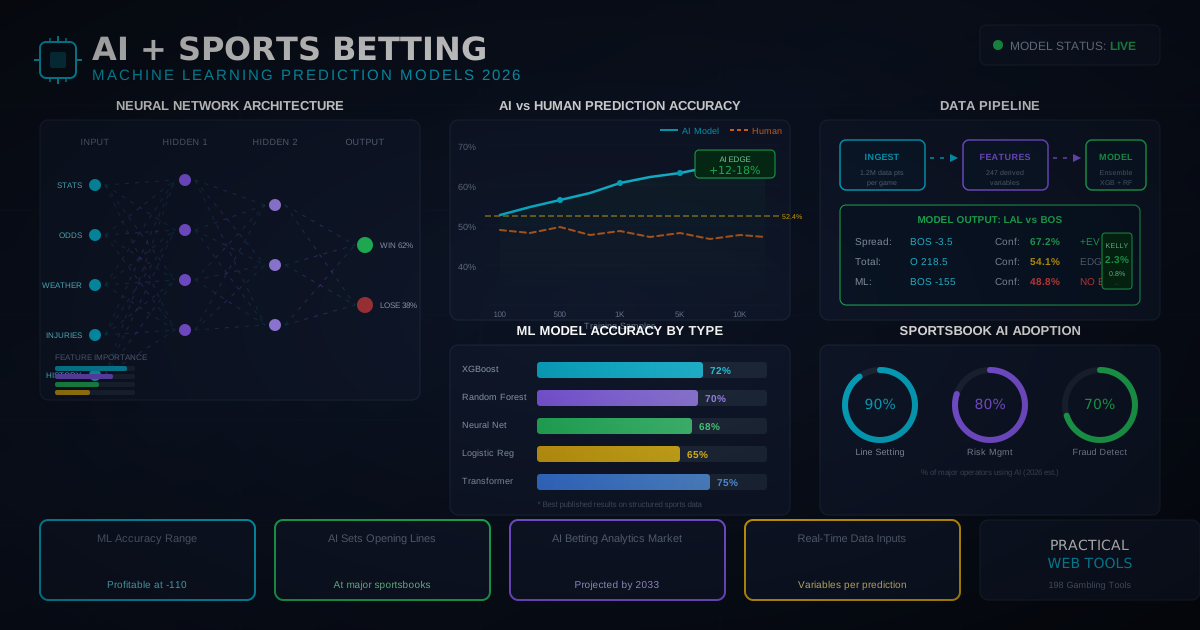
Machine learning, neural networks, and advanced ensemble methods are powerful tools. They are also easy to misuse and extremely prone to overfitting, especially on the relatively small datasets available in sports. A well-specified logistic regression will outperform a poorly-specified neural network every time.
Start simple. Add complexity only when you have proven the simple model works and you understand exactly why more complexity would help.
Spreadsheet vs. Python Approaches
You do not need to be a programmer to build an effective sports betting model. Here is how the two main approaches compare:
Spreadsheet Approach (Excel / Google Sheets)
Best for: Beginners, simple Elo models, SRS-style power ratings, single-sport models
What you can build:
- Elo rating trackers updated weekly
- Simple linear regression models (using LINEST or regression add-ins)
- Power rating comparison dashboards
- Automated expected value calculations
- Basic backtesting with conditional formulas
Advantages:
- No coding required
- Visual and intuitive
- Easy to share and collaborate
- Fast to prototype
Limitations:
- Slow with large datasets (10,000+ rows)
- Limited statistical functions
- Manual data entry for most sources
- Difficult to scale across multiple sports
Python / R Approach
Best for: Intermediate to advanced modelers, multi-sport models, automated data pipelines
What you can build:
- Automated data scrapers for real-time stats
- Multi-variable regression and machine learning models
- Automated backtesting frameworks
- Daily projection systems with scheduled runs
- Visualization dashboards
Advantages:
- Handles millions of rows effortlessly
- Access to scikit-learn, statsmodels, TensorFlow
- Automate everything (scraping, modeling, alerts)
- Version control with Git
Limitations:
- Learning curve for non-programmers
- Initial setup time
- Debugging can be time-consuming
Recommended Progression
| Stage | Tool | What to Build |
|---|---|---|
| Month 1-2 | Google Sheets | Elo ratings for one sport, manual data entry |
| Month 3-4 | Google Sheets + basic formulas | Add regression, EV calculations |
| Month 5-6 | Python (pandas, basic) | Automate data collection, simple linear model |
| Month 7-12 | Python (sklearn, statsmodels) | Multi-variable regression, automated backtest |
| Year 2+ | Python (advanced) | Machine learning, multi-sport, live odds scraping |
Keeping Your Model Updated
A model is not a one-time build. It requires ongoing maintenance and refinement.
Weekly Update Checklist
- Update team statistics: Enter the latest game results and update rolling averages
- Recalculate power ratings: Run your Elo updates or re-run regression with new data
- Generate predictions: Produce probability estimates for the upcoming week's games
- Compare to market: Identify where your model disagrees with the market by a meaningful margin
- Log results: Track previous predictions against actual outcomes
Seasonal Adjustments
- Start-of-season regression: Regress all ratings toward the mean by 25-40% at the start of each new season (accounts for roster changes)
- Weighting recent games: More recent games should carry more weight. A common approach is exponential weighting with a half-life of 10-15 games for NFL, 25-30 for NBA
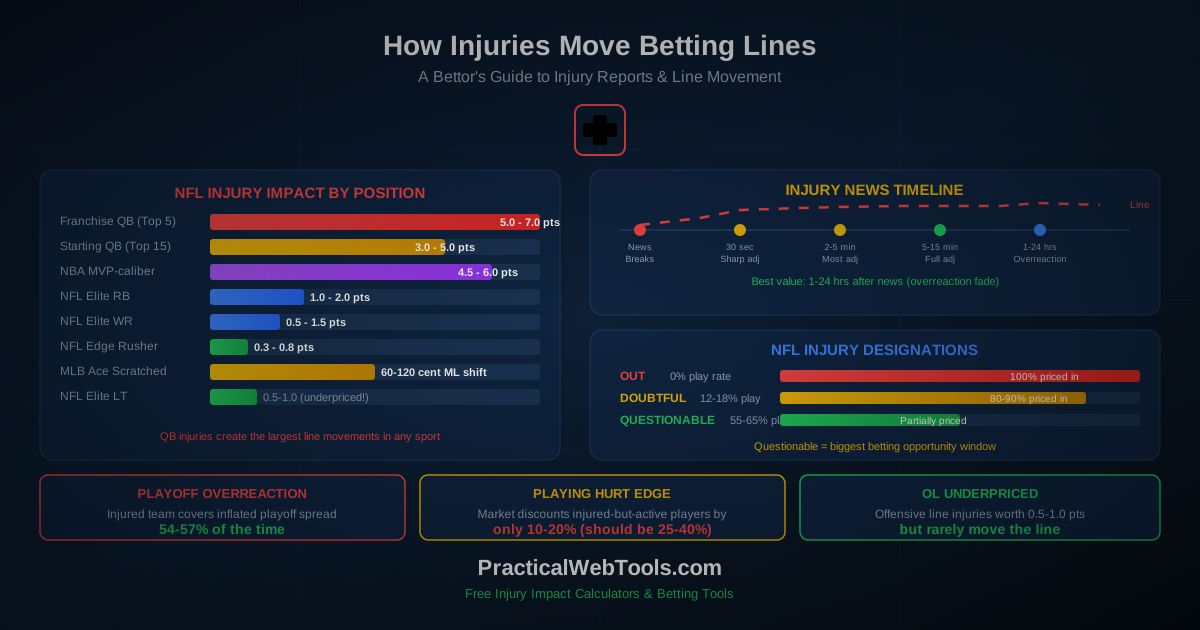
- Injury adjustments: Major injuries (starting QB in NFL, star player in NBA) require manual adjustments of 2-5 points to your power ratings
- New variable evaluation: At the end of each season, evaluate whether adding or removing variables improves out-of-sample performance
When to Overhaul Your Model
Consider a major rebuild when:
- The sport undergoes a rule change that affects scoring (e.g., NFL pass interference review rules)
- Your model has 2+ consecutive unprofitable seasons
- New data sources become available that were not previously accessible
- Your backtest shows a structural break in variable relationships
Frequently Asked Questions
How much money do I need to start betting with a model? You need enough that a 1-3% bet size is meaningful to you but not financially devastating. Most serious model-based bettors start with a bankroll of $1,000 to $5,000. At 2% per bet, that translates to $20-$100 per wager. The bankroll amount matters less than the discipline to follow your staking plan consistently.
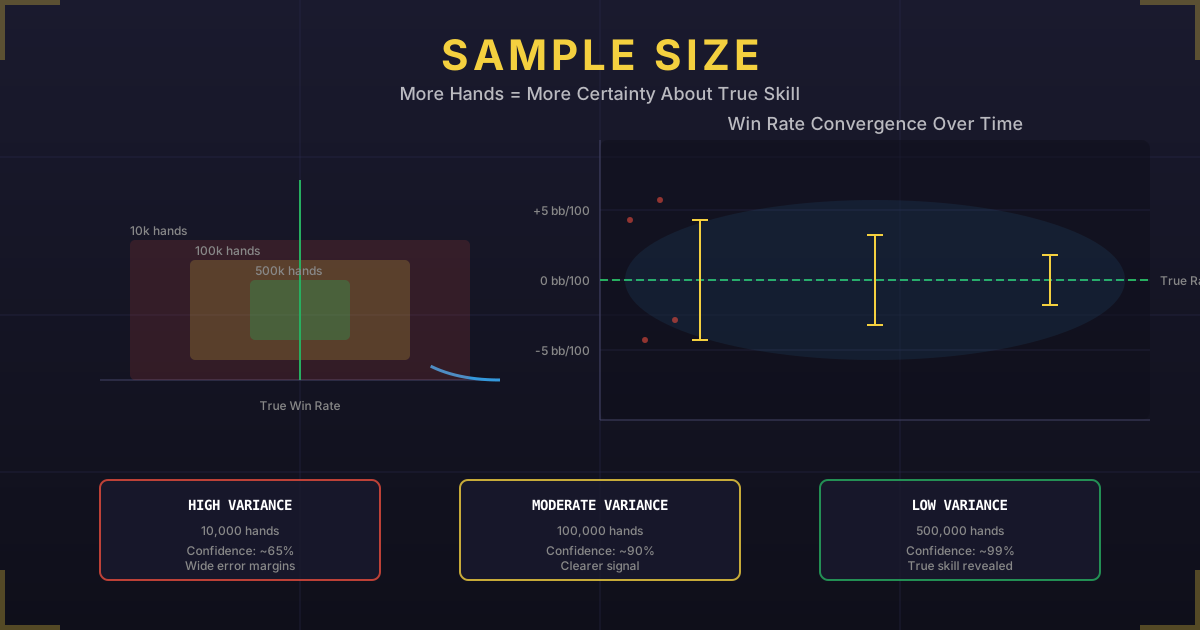
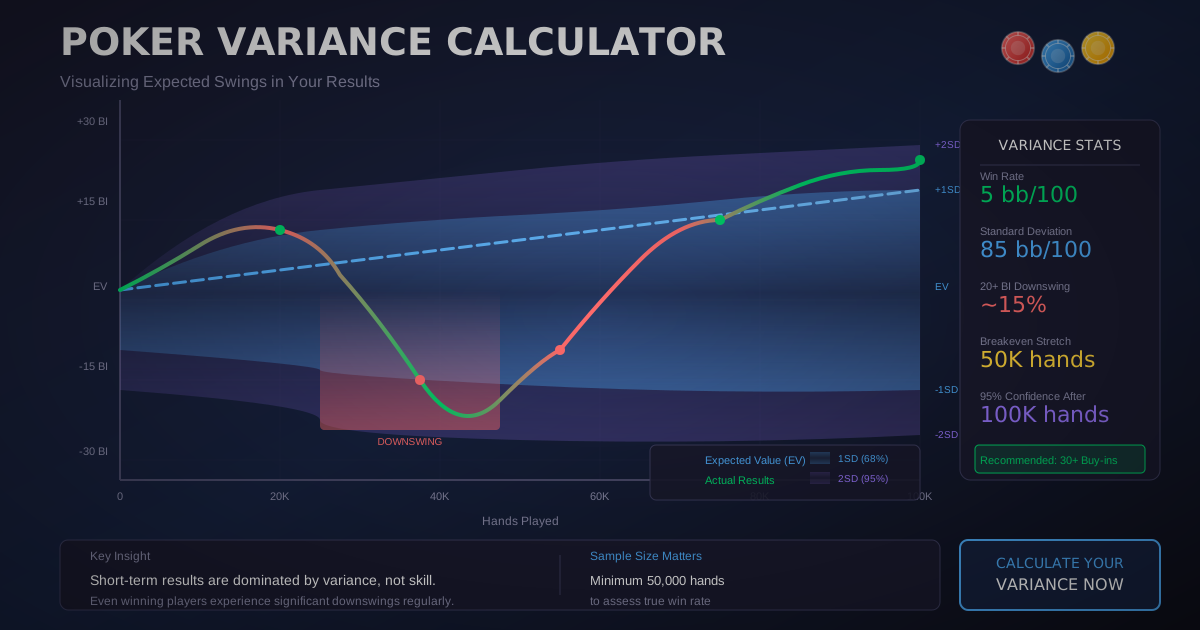
How long before I know if my model works? You need a minimum of 200-500 bets to draw statistically meaningful conclusions about your model's profitability. For NFL-only bettors placing 3-5 bets per week during the season, this represents roughly 2-3 full seasons. For NBA or MLB bettors with daily action, you can reach 500 bets within a single season. Evaluate based on CLV and Brier score before focusing on profit, since short-term profits can be driven by variance.
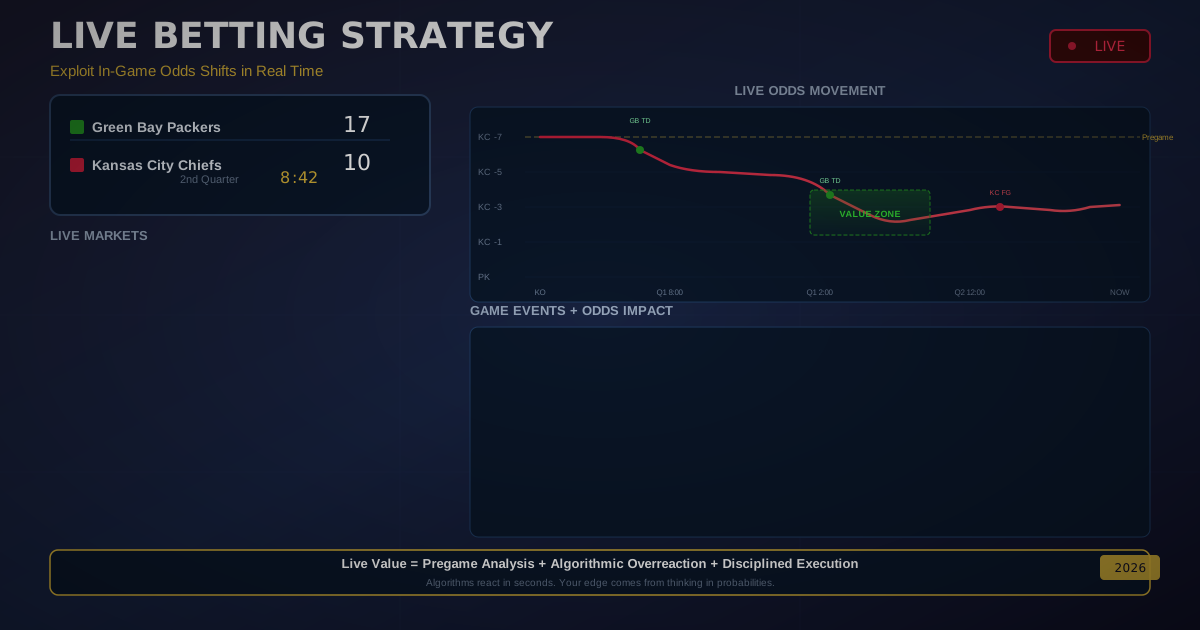
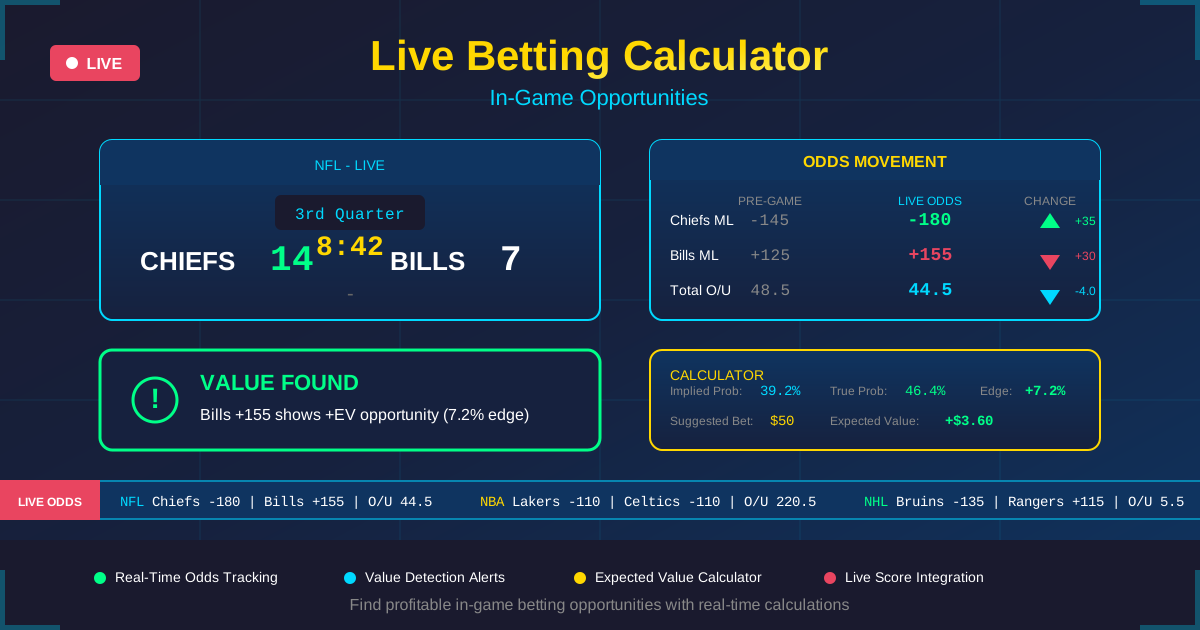
Can I use a betting model for live/in-game betting? Yes, but live betting models are significantly more complex. They must update in real time based on score changes, time remaining, possession, and momentum shifts. Pre-game models are the recommended starting point. Once you have a profitable pre-game model, you can explore live adaptations.
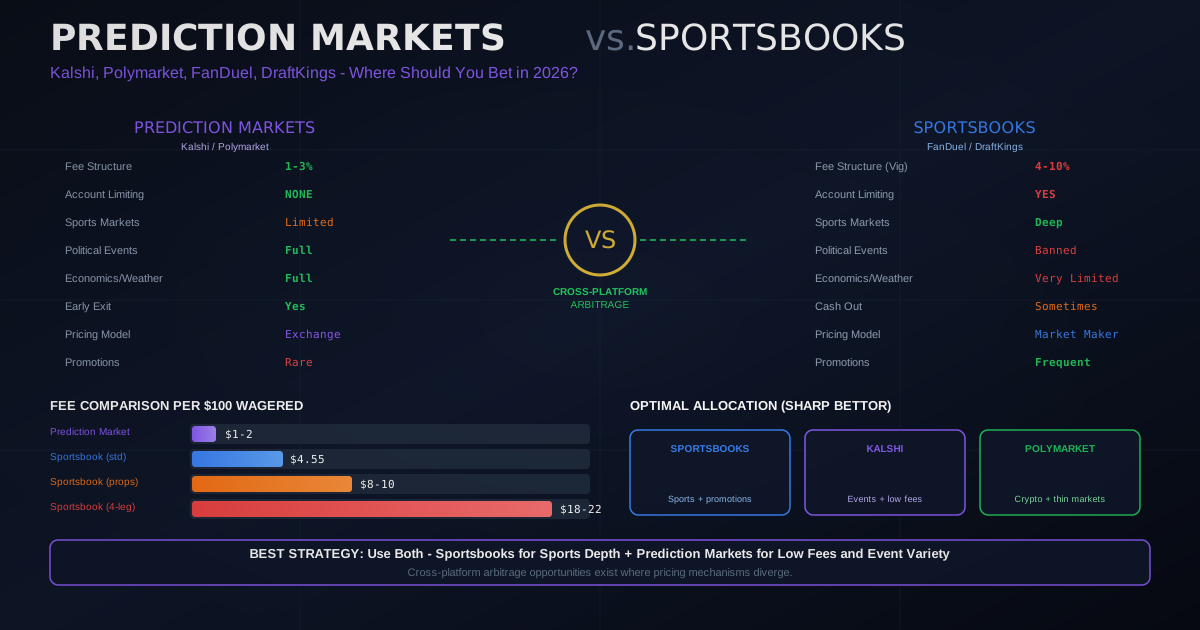
Do sportsbooks ban or limit winning bettors? Yes. Sportsbooks, particularly those that offer promotions and competitive lines, will reduce bet limits or close accounts for consistently profitable bettors. This is why many model-based bettors spread their action across multiple books and avoid patterns that flag them as sharps (e.g., always taking the opening line, consistently betting only +EV spots).
What is the difference between a model and a system? A "system" in betting typically refers to a rigid set of rules (e.g., "always bet the home underdog on Monday Night Football after a loss"). A model is more flexible--it evaluates multiple variables and produces a probability estimate for each specific game. Models adapt to changing conditions; systems do not. Models are generally superior because they account for context.
Is it possible to build a profitable model without programming skills? Absolutely. Many profitable sports bettors use nothing more than Excel or Google Sheets. The key is the quality of your thinking--identifying truly predictive variables, properly handling small samples, and maintaining discipline--not the sophistication of your tools. Programming becomes valuable when you want to automate data collection, run complex statistical methods, or scale across multiple sports.
How do I handle sports with high variance like the NFL? Accept that small sample sizes mean more variance. The NFL's 17-game regular season makes it difficult to separate skill from luck within a single season. Strategies include: focus on game-level statistics rather than win-loss records, weight recent performance but do not overweight, use longer lookback windows (2-3 seasons), and bet smaller percentages of your bankroll since individual game variance is higher.
Should I share my model publicly? This is a personal decision with real trade-offs. Sharing attracts feedback that can improve your model and builds community credibility. However, if many people exploit the same edge, the market adjusts and the edge disappears. Most professional bettors keep their exact models private but share general methodological approaches.
Essential Tools for Model-Based Bettors
Building and using a betting model is easier with the right tools. These free calculators handle the math so you can focus on the analysis:
- Expected Value Calculator: Calculate the EV of any bet given your estimated probability and the odds offered
- Kelly Criterion Calculator: Determine optimal bet sizing based on your edge
- Implied Probability Calculator: Convert sportsbook odds into implied probabilities for direct comparison against your model
- Odds Converter: Convert between American, decimal, and fractional odds formats
- Hold/Vig Calculator: Calculate the sportsbook's margin on any market to understand the true cost of each bet
- CLV Tracker: Track your closing line value over time to validate whether your model is genuinely finding value
Conclusion
Building a sports betting model is a challenging, iterative process that rewards patience, intellectual honesty, and disciplined execution. The best models are not the most complex--they are the most thoughtfully constructed. Start with a single sport, a handful of truly predictive variables, and a simple methodology like Elo ratings or linear regression. Test rigorously on out-of-sample data. Scale only after you have evidence that your approach works.
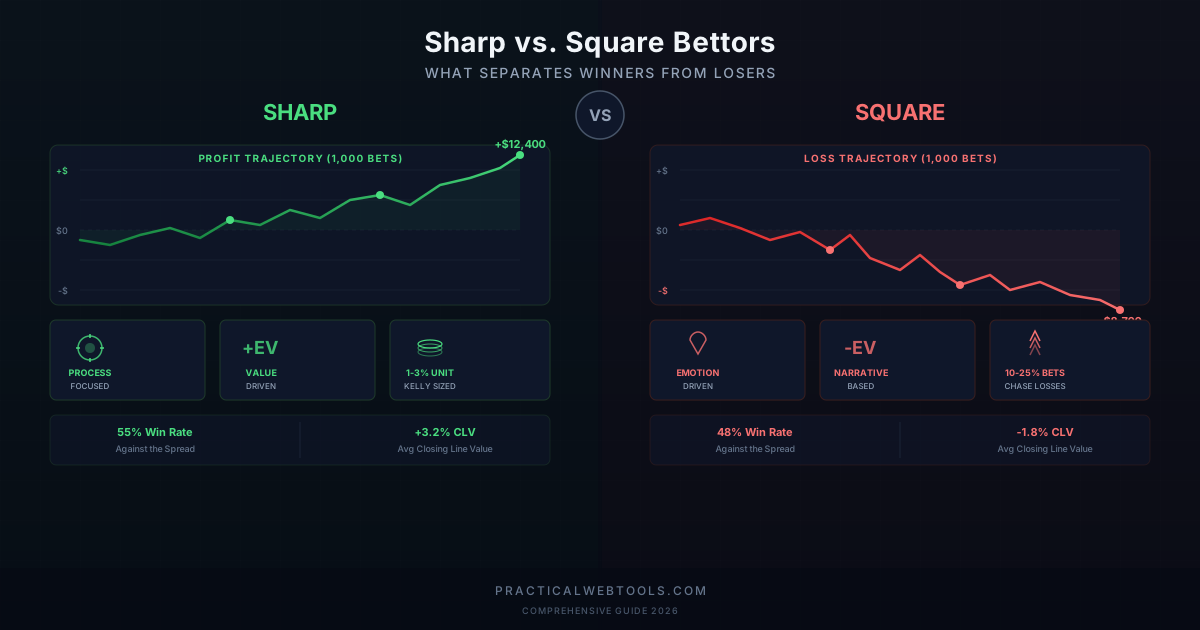
The modeler's edge is not about predicting outcomes perfectly. It is about being slightly more accurate than the market, often enough, with proper bankroll management to survive the inevitable variance. A 55% ATS win rate sustained over 1,000+ bets, combined with quarter-Kelly or flat-bet staking, compounds into meaningful profit.
The tools and data have never been more accessible. Free data sources cover every major sport. Spreadsheets can handle a functional Elo or regression model. The barrier to entry is not technology--it is the discipline to follow the process.
Build your model. Test it honestly. Bet with discipline. Let the math work.
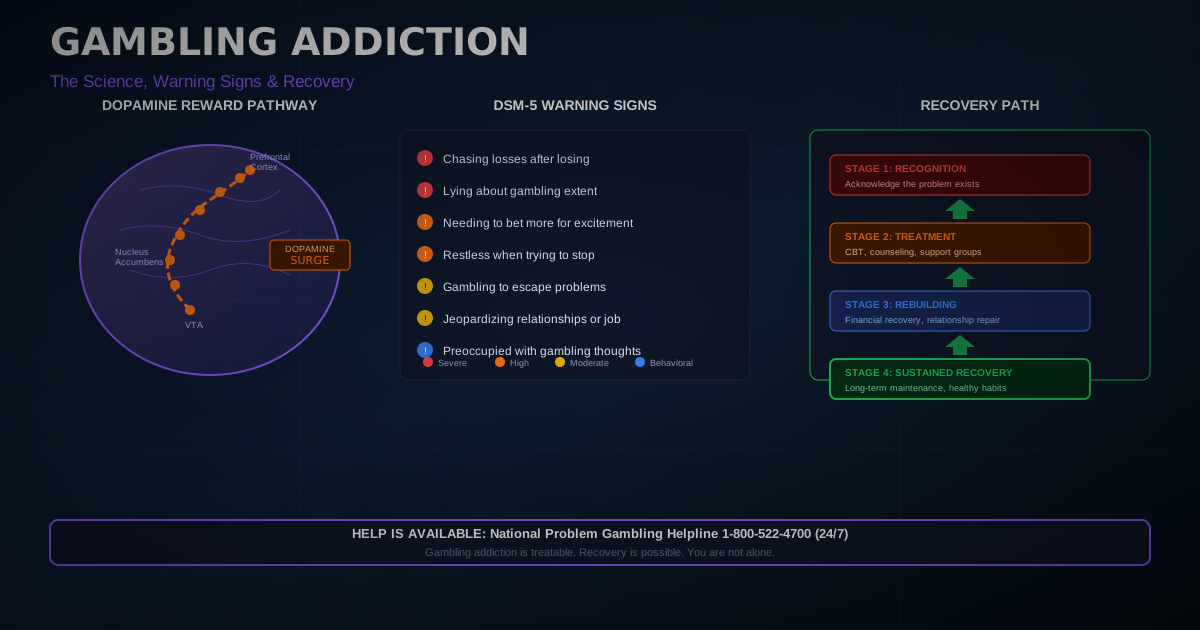
Gambling involves risk. This content is for educational and informational purposes only. Always gamble responsibly, set limits you can afford, and seek help if gambling becomes a problem. Visit the National Council on Problem Gambling or call 1-800-522-4700 for support.