Line Shopping: How Finding Better Odds Adds Thousands to Your Profit (2026)
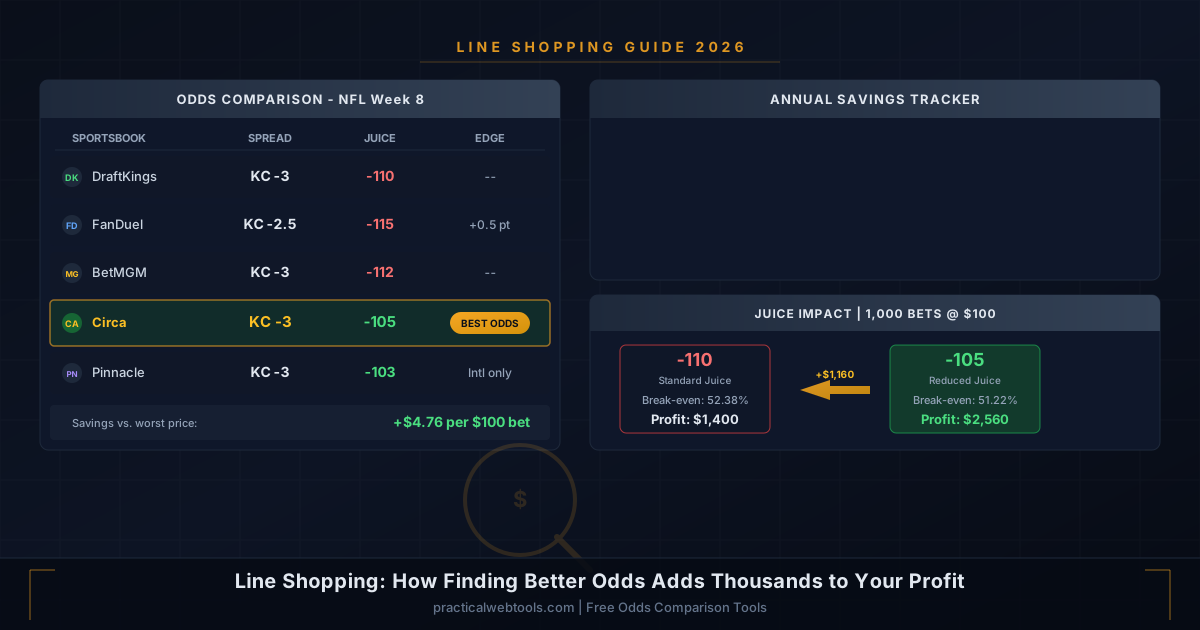
A half-point on a spread. Ten cents of juice. These tiny differences look meaningless on a single bet, but they are the dividing line between bettors who bleed money and bettors who build wealth. The difference between placing a bet at -110 and placing the same bet at -105 is $1,160 over 1,000 wagers. Move from +2.5 to +3 on an NFL spread and you flip the result on roughly 15% of games that land on exactly three points. None of this requires a sharper model, a better read on injury reports, or a secret edge. It requires nothing more than checking a second screen before you click "Place Bet."
Line shopping is the single most accessible profit lever in sports betting, and in 2026, with 39 states offering legal online sportsbooks and most markets hosting 7 to 14 competing operators, there has never been more opportunity to exploit it. Every professional bettor does it. Every recreational bettor who ignores it is voluntarily paying a tax they do not owe.
This guide breaks down the math, the mechanics, and the strategy of line shopping so you can stop leaving money on the table today.
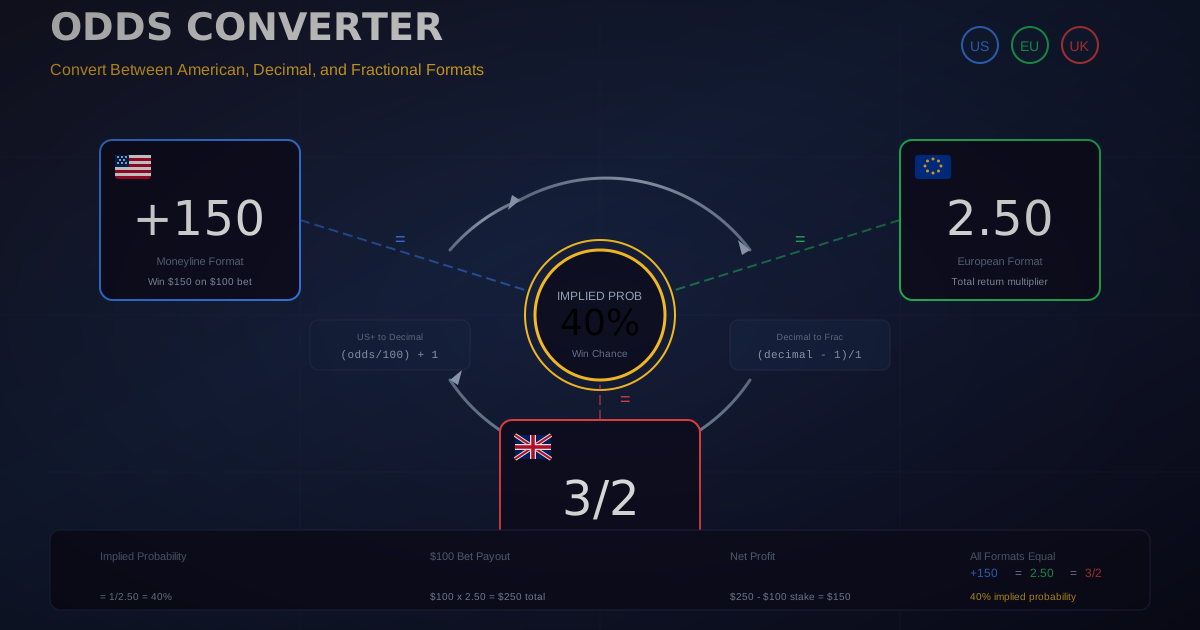
Compare odds instantly and find your edge with our free Odds Converter.
What Is Line Shopping and Why Does It Matter?
Line shopping is the practice of comparing odds on the same event across multiple sportsbooks and placing your bet where the price is most favorable. It is the sports betting equivalent of checking three gas stations before filling up, except the savings compound over hundreds of bets into thousands of dollars.
Sportsbooks do not all post identical lines. Market-making books like Circa and Pinnacle set efficient opening numbers. Retail books like DraftKings, FanDuel, and BetMGM then shade those numbers based on their own liability, customer action, and promotional strategies. The result is a landscape where the same bet can carry meaningfully different prices at different books at the same time.
Why Prices Differ Across Sportsbooks
Several structural forces create price discrepancies:
- Liability management: When a book takes heavy one-sided action, it moves its line to attract bets on the other side. Other books with balanced action may not move at all.
- Customer base composition: Books with more recreational bettors (DraftKings, FanDuel) shade lines toward public favorites more aggressively than sharp-friendly books (Circa, Pinnacle).
- Promotional strategies: Some operators intentionally post aggressive odds on marquee games to drive sign-ups and engagement.
- Speed of adjustment: Books update lines at different speeds. A sharp book may move within seconds of news breaking; a recreational book may lag by minutes or even hours.
- Vig philosophy: Some books charge standard -110 juice on spreads and totals. Others, like Circa, operate on a reduced-juice model at -107 or lower as a permanent competitive advantage.
These differences are not bugs in the system. They are the natural result of a competitive market, and they create a persistent, exploitable edge for anyone willing to look.
Calculate the true cost of vig on any bet with our Hold/Vig Calculator.
The Math of Half-Points and Reduced Juice
Understanding why line shopping works requires understanding two distinct sources of value: better numbers (spreads and totals) and better prices (juice/vig).
The Value of a Half-Point by Sport
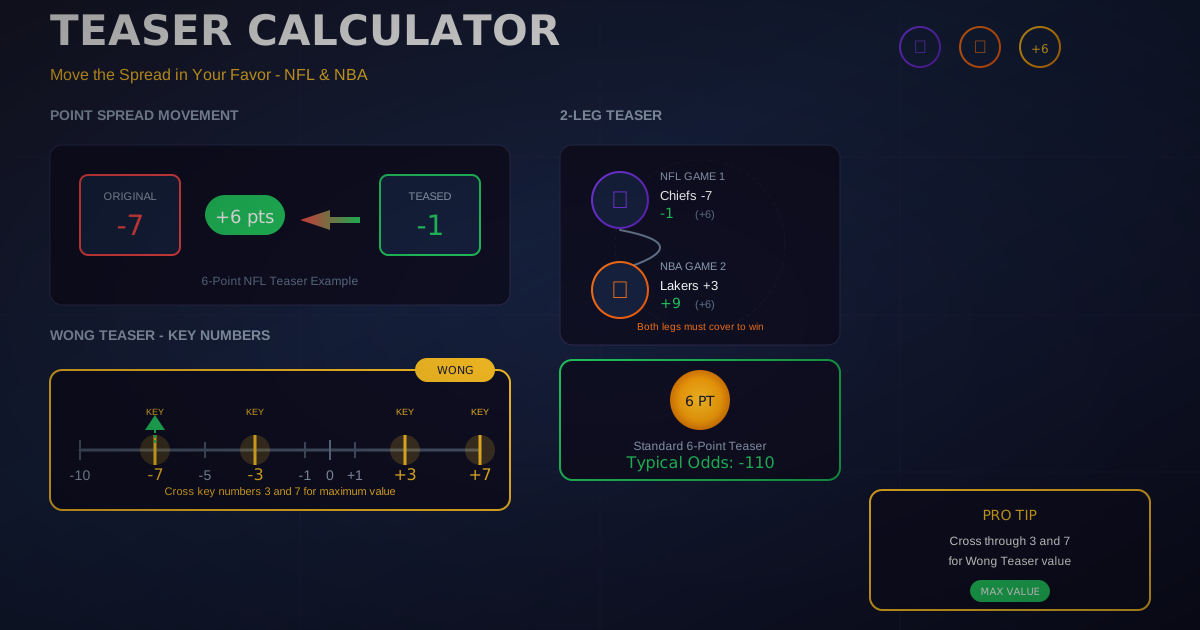
Not all half-points are created equal. The value of moving a spread by half a point depends entirely on how often games land on specific margins. In the NFL, scoring is clustered around key numbers (3, 7, 10), making half-points around those numbers enormously valuable. In the NBA, scoring is more evenly distributed, so half-points carry less individual weight but still compound over volume.
| Sport | Key Margins | Value of Half-Point on Key Number | Value of Half-Point off Key Number |
|---|---|---|---|
| NFL | 3, 7, 10, 6, 14 | 2.5-3.5% win probability swing | 0.5-1.0% win probability swing |
| NBA | 5-8 (distributed) | 0.8-1.5% win probability swing | 0.5-0.8% win probability swing |
| MLB (run line) | 1, 2 | 2.0-3.0% win probability swing | 0.5-1.0% win probability swing |
| NHL (puck line) | 1, 2 | 2.5-3.5% win probability swing | 0.5-1.0% win probability swing |
| NCAAF | 3, 7, 10, 14 | 2.0-3.0% win probability swing | 0.5-1.0% win probability swing |
A 2.5-3.5% swing in win probability on a standard -110 bet translates to roughly $25-$35 in expected value per $1,000 wagered. Over a full NFL season of betting, that single half-point advantage on key-number games alone can be worth hundreds of dollars.
The Cost of Juice: -110 vs. -105
The second dimension of line shopping is finding the same number at a lower price. Here is how juice affects your break-even win rate and long-term profitability:
| Juice Level | Break-Even Win % | House Edge | Profit per 1,000 Bets at 55% Win Rate ($100/bet) |
|---|---|---|---|
| -115 | 53.49% | 6.98% | +$674 |
| -110 | 52.38% | 4.76% | +$1,400 |
| -108 | 51.92% | 3.85% | +$1,706 |
| -105 | 51.22% | 2.44% | +$2,560 |
| -102 | 50.49% | 0.99% | +$3,460 |
| Even (100) | 50.00% | 0.00% | +$5,000 |
The difference between -110 and -105 juice is $1,160 per 1,000 bets at $100 per wager. That is not a rounding error. That is a car payment, a vacation, or a meaningful addition to your bankroll, and it comes from doing nothing differently except placing your bet at a better price.
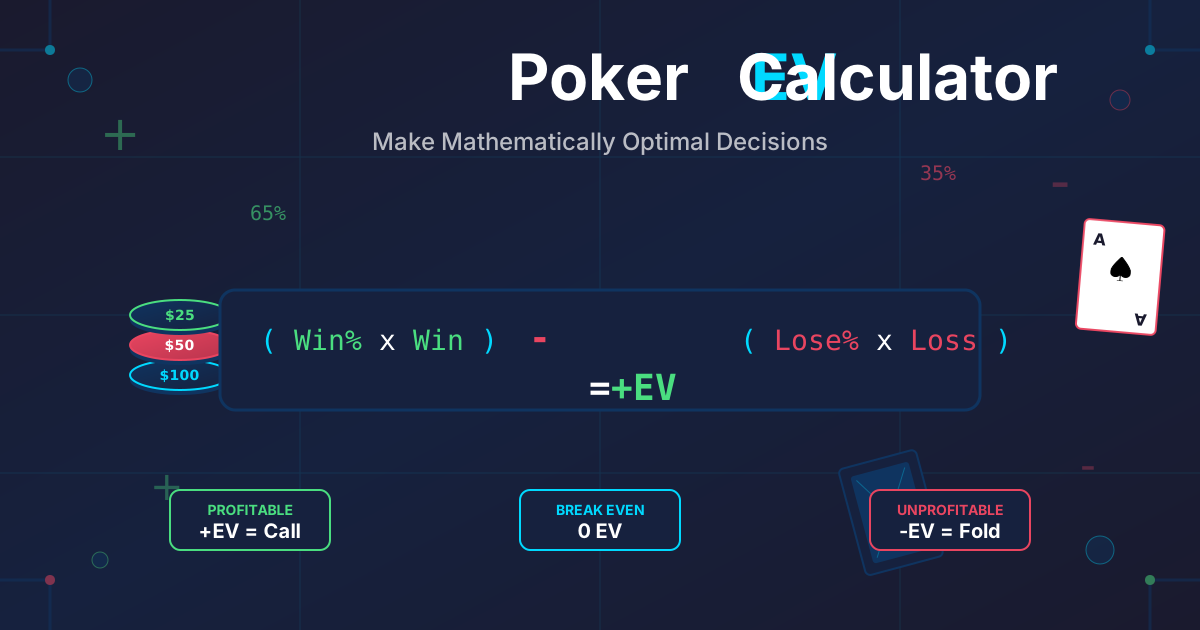
Run the numbers on any odds format with our Expected Value Calculator.
Example: How 10 Cents of Juice Changes Everything
Consider a bettor who places 20 bets per week at $110 to win $100 (standard -110 juice), hitting at a solid 54% rate over a full year (1,040 bets):
At -110 across the board:
- Wins: 562 bets x $100 = $56,200
- Losses: 478 bets x $110 = $52,580
- Net profit: +$3,620
At -105 across the board (reduced juice):
- Wins: 562 bets x $100 = $56,200
- Losses: 478 bets x $105 = $50,190
- Net profit: +$6,010
Annual difference: $2,390 -- simply from betting at a better price.
That $2,390 is pure, effortless profit. The bettor did not need to be smarter, pick more winners, or increase volume. They just needed to walk to a different window.
How to Set Up Your Line Shopping Operation
Line shopping is not complicated, but it does require preparation. Here is how to build the infrastructure.
Step 1: Open Accounts at Multiple Sportsbooks
The more accounts you have, the more price options you see. At minimum, serious bettors should maintain active, funded accounts at five to seven sportsbooks. In states with 10+ operators, there is no reason not to have accounts at all of them.
Recommended account tiers:
| Tier | Sportsbooks | Why They Matter |
|---|---|---|
| Must-Have Sharp Books | Circa, Pinnacle (where legal) | Sharpest lines, reduced juice, benchmark pricing |
| Must-Have Retail Books | DraftKings, FanDuel, BetMGM | Highest liquidity, frequent line discrepancies, best promos |
| Strong Secondary | Caesars, PointsBet, bet365 | Additional price options, unique market offerings |
| Niche/Regional | Hard Rock, Fanatics, ESPN BET | Occasionally post outlier prices, valuable for arb opportunities |
Step 2: Fund Each Account Strategically
You do not need to keep your entire bankroll at every book. A practical approach:
- Keep 40-50% of your bankroll at your two or three most-used books
- Keep 15-20% at secondary books
- Keep a minimum working balance (enough for your standard bet size) at remaining accounts
- Transfer funds between books as needed based on where value appears
Step 3: Build a Comparison Workflow
The fastest way to shop lines is to use odds comparison screens. Open multiple sportsbook apps or tabs simultaneously, or use a dedicated odds comparison tool. Before every bet:
- Identify the bet you want to make
- Check the price at every book where you have an account
- Place the bet at the book offering the best number
- Log the price differential so you can track your savings over time
This process adds 30-60 seconds per bet. Over a year, those seconds translate into thousands of dollars.
Find arbitrage opportunities across books with our Arbitrage Calculator.
Sport-by-Sport Line Shopping Strategy
Different sports present different line shopping opportunities. Here is how to approach each major market.
NFL: The Key Number Goldmine
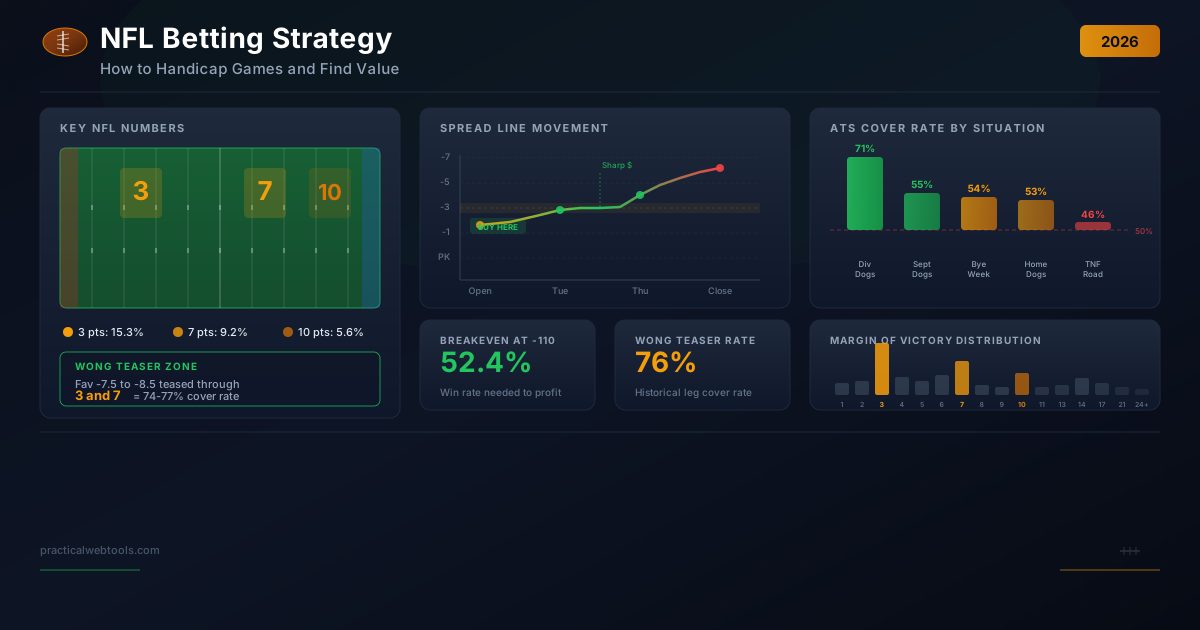
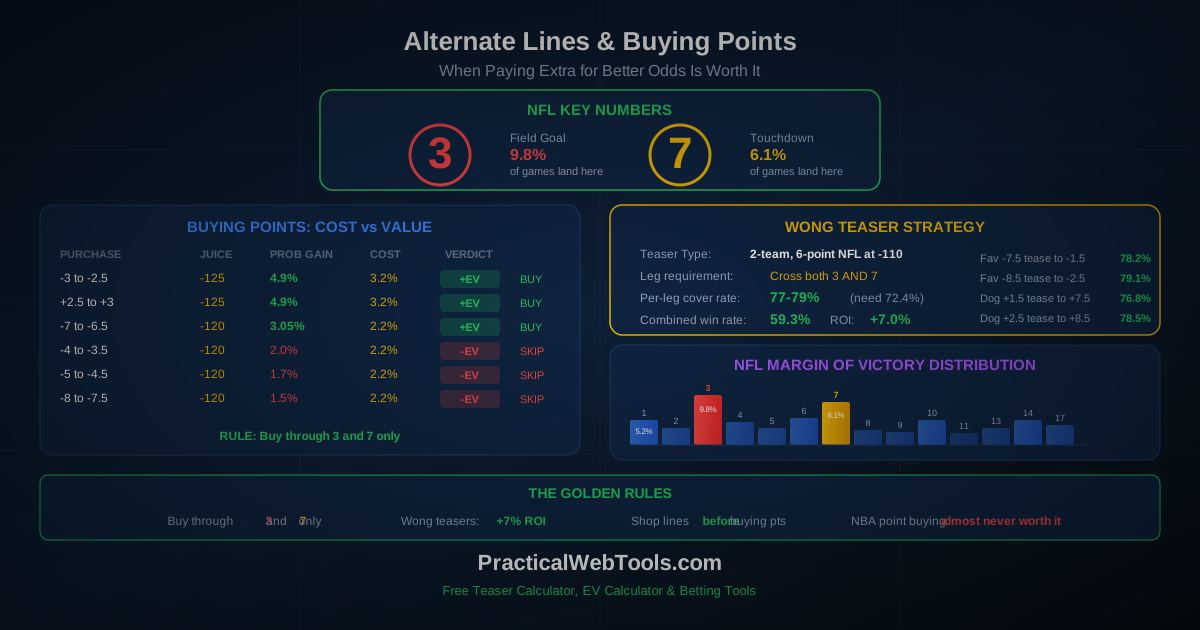
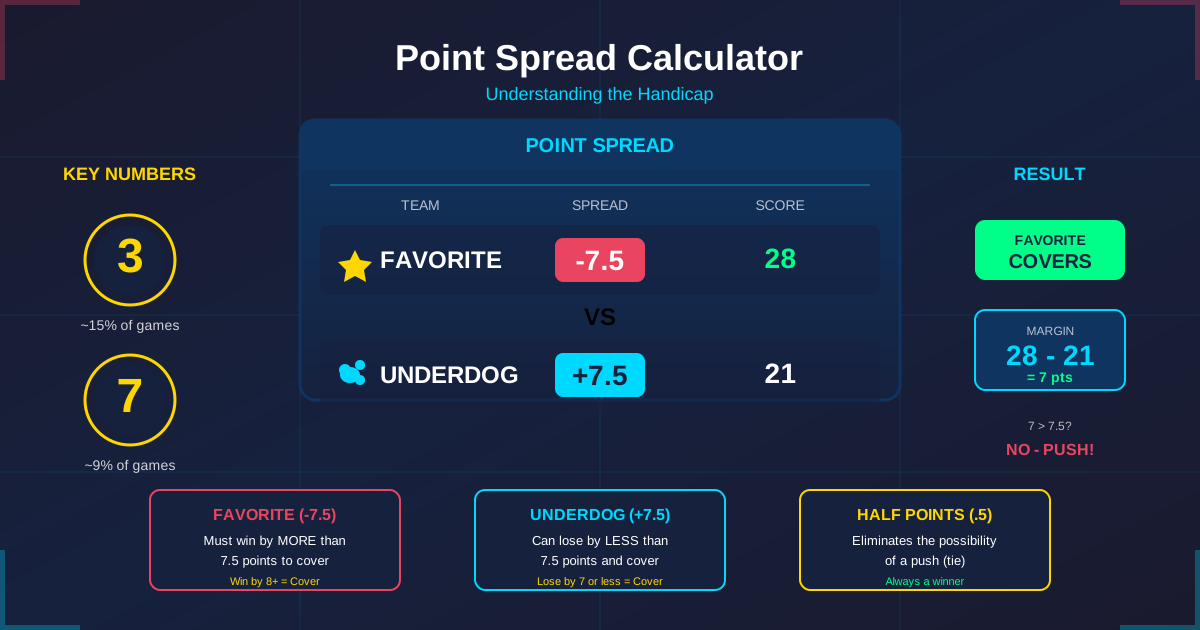
The NFL is the most valuable sport for line shopping because of key numbers. Approximately 15% of NFL games are decided by exactly three points, and another 9% land on exactly seven points. This clustering means that half-point differences around 3 and 7 are worth significantly more than half-points elsewhere.
Priority shopping situations in NFL:
- Spreads of 2.5/3/3.5: Always shop. The difference between +2.5 and +3 or -3 and -3.5 is the single most valuable half-point in sports betting.
- Spreads of 6.5/7/7.5: Second-highest priority. A 9% landing rate on 7 makes this half-point extremely valuable.
- Spreads of 9.5/10/10.5: Third tier. The 10-point margin (field goal + touchdown) is the third most common exact margin.
- Totals around 41, 43, 44, 47, 51: These are the most common NFL final total ranges where a half-point matters most.
Real-World Example: Week 8, 2025. Chiefs vs. Broncos. DraftKings posts Chiefs -3 (-110). FanDuel has Chiefs -2.5 (-115). Circa has Chiefs -3 (-105).
If you are betting the Chiefs, the best play is Circa at -3 (-105): same number as DraftKings but at reduced juice, saving you $5 per $105 wagered. If you are betting the Broncos, FanDuel at +2.5 (-115) is interesting, but the real question is whether paying 5 cents of extra juice for the half-point is worth it. Given that 15% of NFL games land on exactly 3, the answer is almost always yes: that half-point is worth roughly 7.5% of your stake, far exceeding the 2.2% cost of the extra juice.
NBA: Volume Over Key Numbers
NBA line shopping is less about key numbers and more about sheer volume. NBA bettors typically place more bets per week than NFL bettors, and the extra frequency magnifies even small per-bet savings.
- Focus on juice differences: With less key-number clustering, the primary value in NBA line shopping is finding the same spread or total at a lower price.
- Shop totals aggressively: NBA totals move more than spreads and show wider discrepancies across books.
- Watch for stale lines: Books are slower to adjust NBA lines for injury news than NFL lines, creating windows where one book has already moved and others have not.
- Player props: The widest price discrepancies in basketball exist in the player prop market. It is common to find 20-30 cent differences on player props across books.
MLB: Moneyline Is Everything
Baseball betting is dominated by the moneyline, making juice comparison the primary line shopping lever.
- Moneyline differences of 5-10 cents are routine. One book might have a team at -135 while another has them at -125. On a $100 bet, that is a $10 difference in risk for the same potential payout.
- Run line shopping matters around 1.5. The run line equivalent of key numbers centers on the +1.5/-1.5 standard run line, where juice differences are the main variable.
- First-five-inning lines often show wider discrepancies than full-game lines because fewer books offer them and they receive less sharp action.
NHL: Puck Line and Totals
Hockey mirrors baseball in many ways:
- Puck line at 1.5 is the primary spread market, and juice shopping is the main lever.
- NHL totals (typically 5.5 or 6) are where the biggest line discrepancies appear. Because hockey is low-scoring, a half-goal on a total is extremely valuable.
- Moneyline juice differences of 10-15 cents across books are common in NHL markets.
Convert between American, decimal, and fractional odds with our Odds Converter.
Key Numbers to Always Shop Around
Here is a quick reference for the specific numbers where line shopping delivers the highest return on your time:
NFL Key Numbers
| Spread | % of Games Landing Exactly | Shopping Priority |
|---|---|---|
| 3 | ~15.3% | CRITICAL -- always shop |
| 7 | ~9.1% | CRITICAL -- always shop |
| 10 | ~5.8% | HIGH -- shop when available |
| 6 | ~5.5% | HIGH -- shop when available |
| 14 | ~4.2% | MODERATE -- worth checking |
| 4 | ~3.8% | MODERATE -- worth checking |
| 1 | ~3.5% | MODERATE -- worth checking |
| 17 | ~3.2% | STANDARD -- check if convenient |
NFL Totals Key Numbers
| Total | Shopping Priority |
|---|---|
| 41 | HIGH |
| 43-44 | HIGH |
| 47 | HIGH |
| 37-38 | MODERATE |
| 51 | MODERATE |
NBA Totals Key Numbers
| Total Range | Shopping Priority |
|---|---|
| 210-215 | HIGH (most common range) |
| 220-225 | HIGH |
| 230-235 | MODERATE |
The lesson is clear: not all line shopping moments are equal. Prioritize your comparison time on key-number situations where a half-point or a few cents of juice carries the most mathematical weight.
Reduced Juice Sportsbooks: Your Secret Weapon
Reduced juice sportsbooks are the most powerful structural advantage available to line shoppers. Instead of charging the standard -110 on each side of a spread or total, these books operate at -105, -107, or even lower. The difference in long-term profitability is staggering.
How Reduced Juice Works
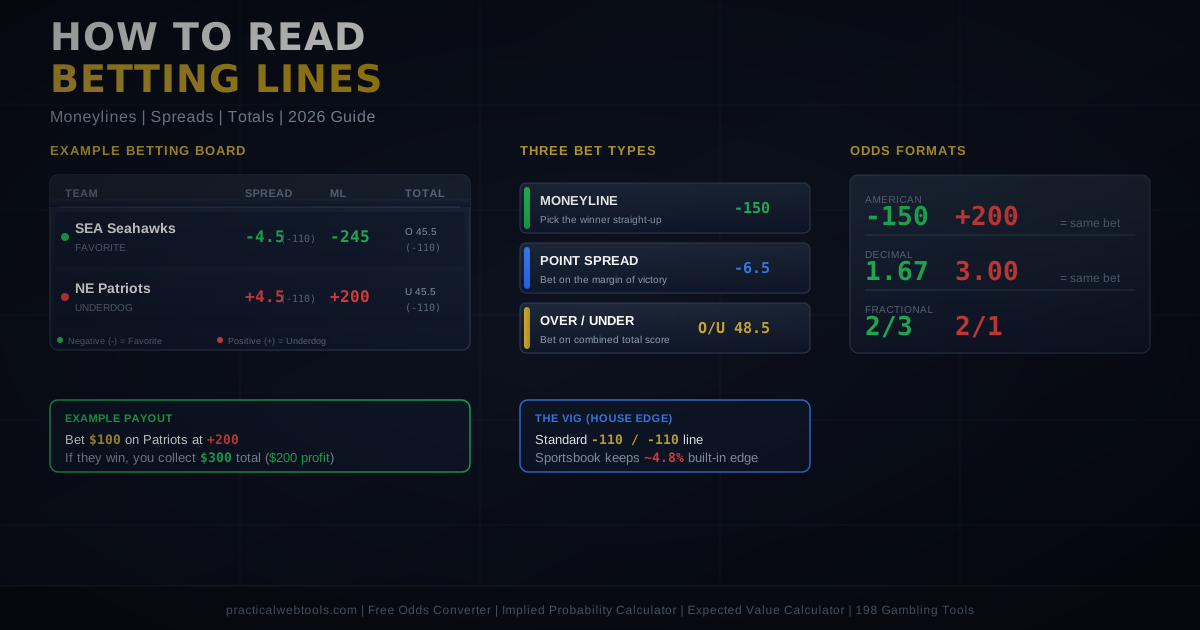
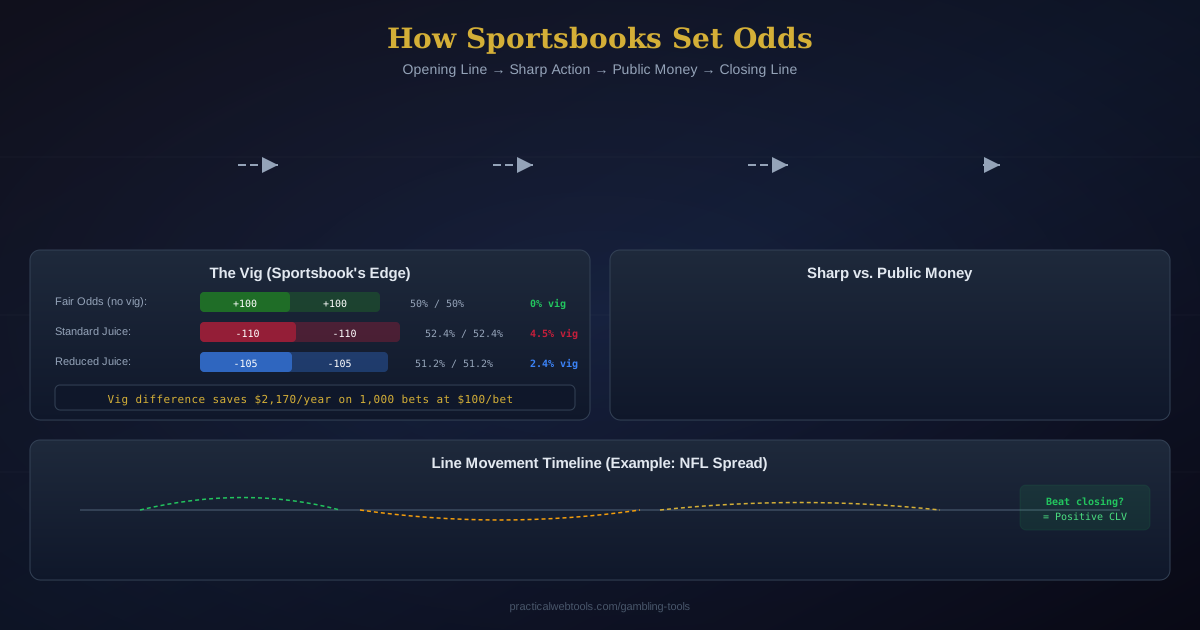
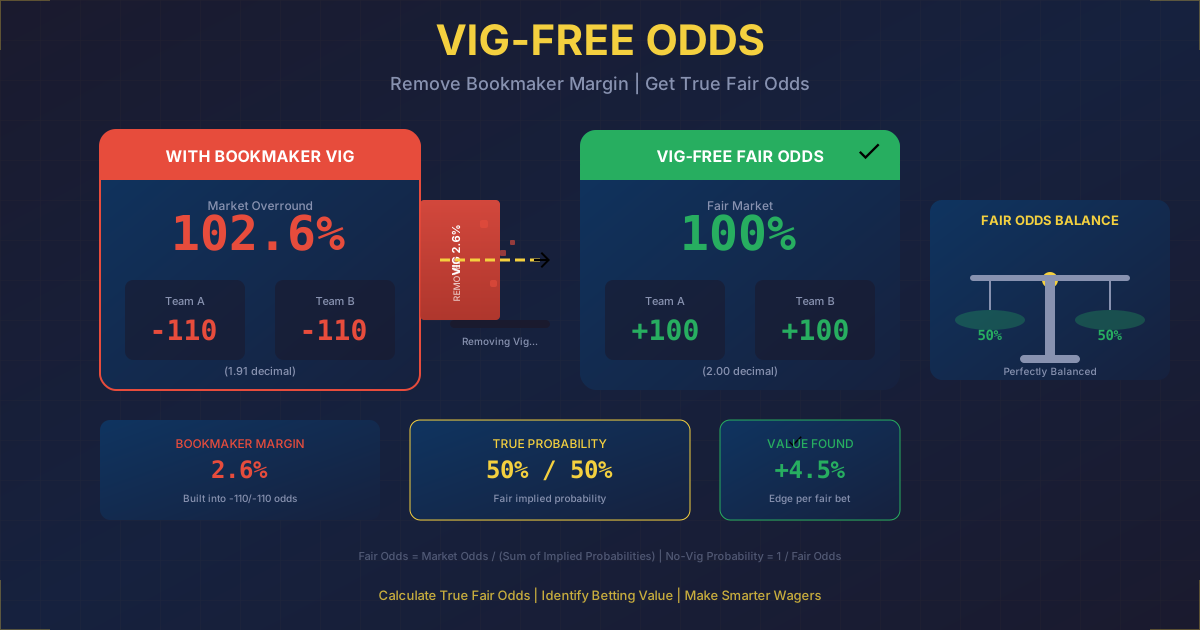
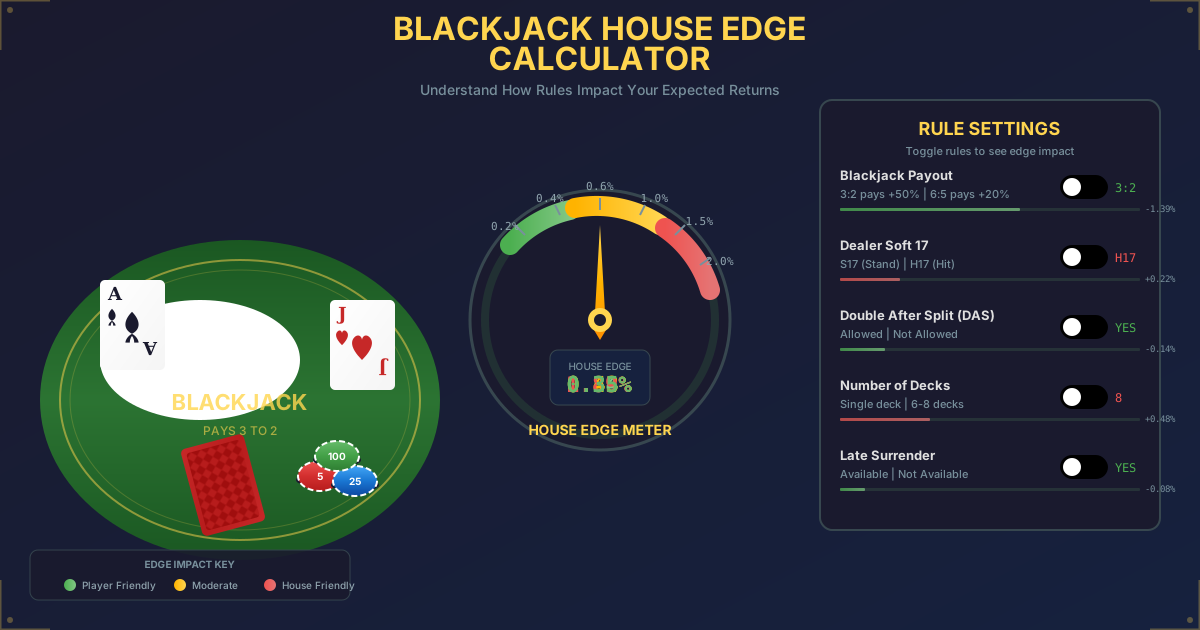
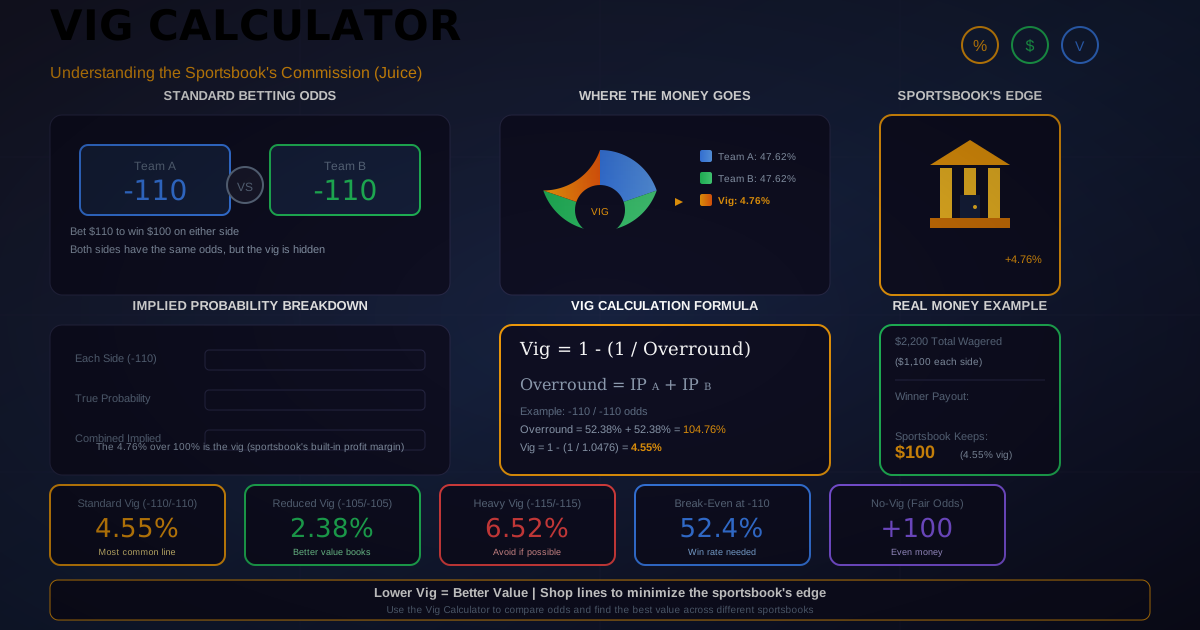
At a standard -110/-110 book, the total implied probability across both sides is 104.76%. The extra 4.76% is the vig, and it is the house edge. At a -105/-105 book, the total implied probability drops to 102.44%. The house edge is cut nearly in half.
| Juice Model | Both-Side Odds | Total Implied Probability | House Edge | Break-Even Win Rate |
|---|---|---|---|---|
| Standard | -110 / -110 | 104.76% | 4.76% | 52.38% |
| Reduced | -107 / -107 | 103.40% | 3.40% | 51.70% |
| Heavily Reduced | -105 / -105 | 102.44% | 2.44% | 51.22% |
| Sharp Market | -102 / -102 | 100.99% | 0.99% | 50.49% |
Leading Reduced Juice Sportsbooks in 2026
Circa Sports operates with reduced juice as its standard business model, not a temporary promotion. Their typical NFL sides and totals are posted at -107 or better, and they frequently offer -105 or even -103 on select markets. Circa does not bombard you with deposit bonuses or free bet promos. Instead, they give you permanently better odds on every single bet. Over 1,000 bets, this saves a bettor roughly $600-$1,200 compared to standard juice, depending on the specific lines.
Pinnacle is the benchmark for sharp bettors worldwide. Operating primarily in international and Canadian markets, Pinnacle offers the lowest juice in the industry, frequently posting lines at -102 to -104 on both sides of major markets. Their model is high volume and low margin: they welcome sharp action, rarely limit winning bettors, and rely on market efficiency rather than vig for profitability.
bet365 offers competitive juice in most US markets where it operates, often matching or beating DraftKings and FanDuel on standard sides and totals.
The Compound Effect of Reduced Juice Over Time
Here is how reduced juice savings accumulate for a bettor placing 20 bets per week at $100 per bet:
| Timeframe | Bets Placed | Savings at -107 vs. -110 | Savings at -105 vs. -110 |
|---|---|---|---|
| 1 Month | 80 | ~$96 | ~$160 |
| 3 Months | 240 | ~$288 | ~$480 |
| 6 Months | 480 | ~$576 | ~$960 |
| 1 Year | 1,040 | ~$1,248 | ~$2,080 |
| 3 Years | 3,120 | ~$3,744 | ~$6,240 |
| 5 Years | 5,200 | ~$6,240 | ~$10,400 |
Over five years, the difference between betting at -110 and betting at -105 is more than $10,000 for a modest-volume bettor. For higher-volume bettors wagering $200-$500 per bet, the savings scale proportionally into the tens of thousands.
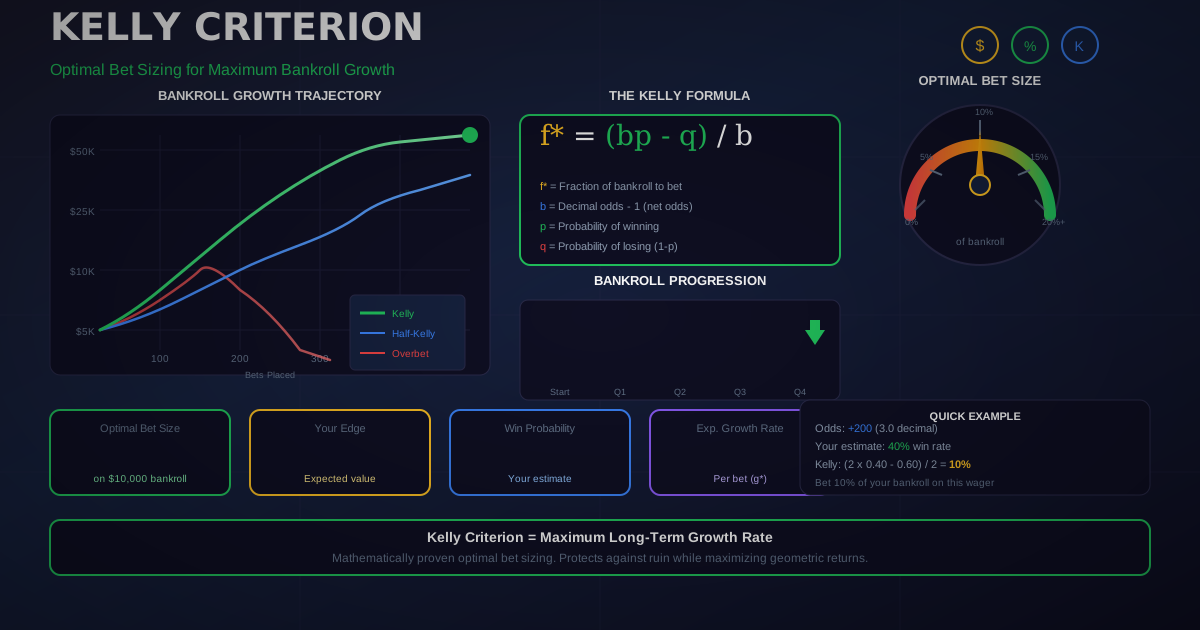
Determine the optimal bet size based on your edge with our Kelly Criterion Calculator.
Closing Line Value (CLV): Why It Validates Your Line Shopping Process
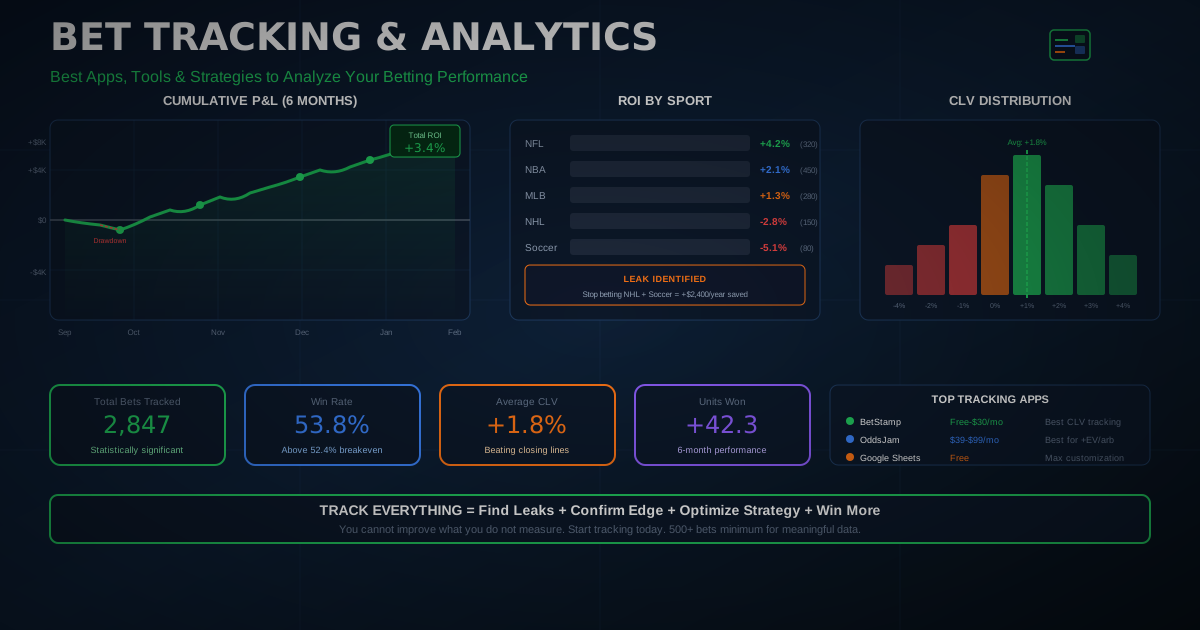
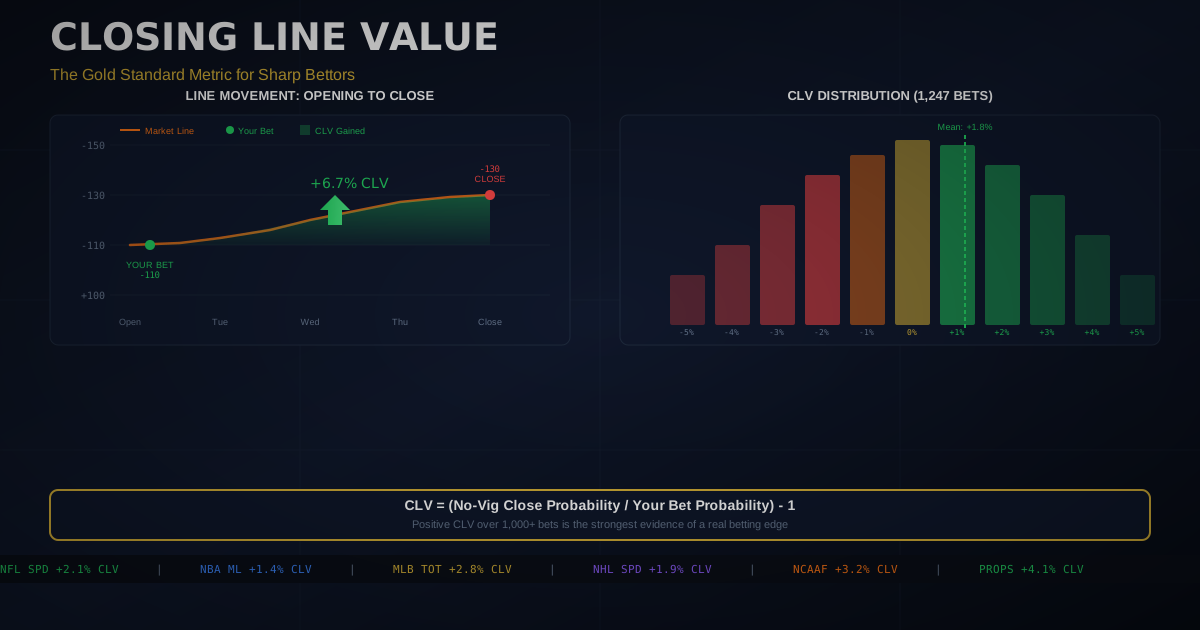
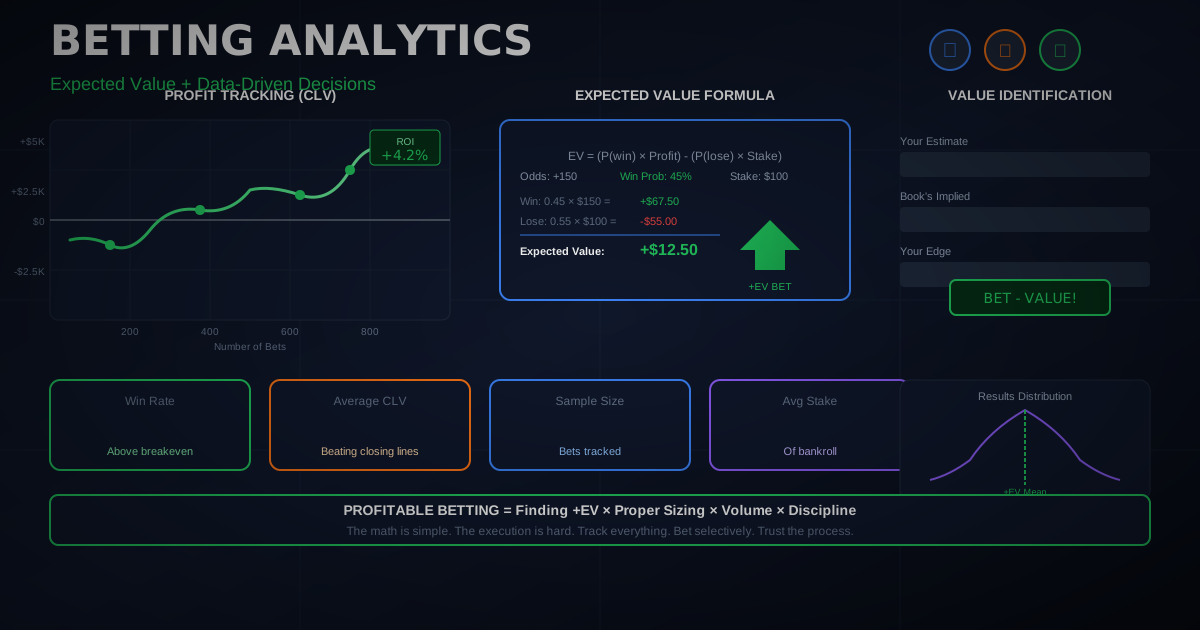
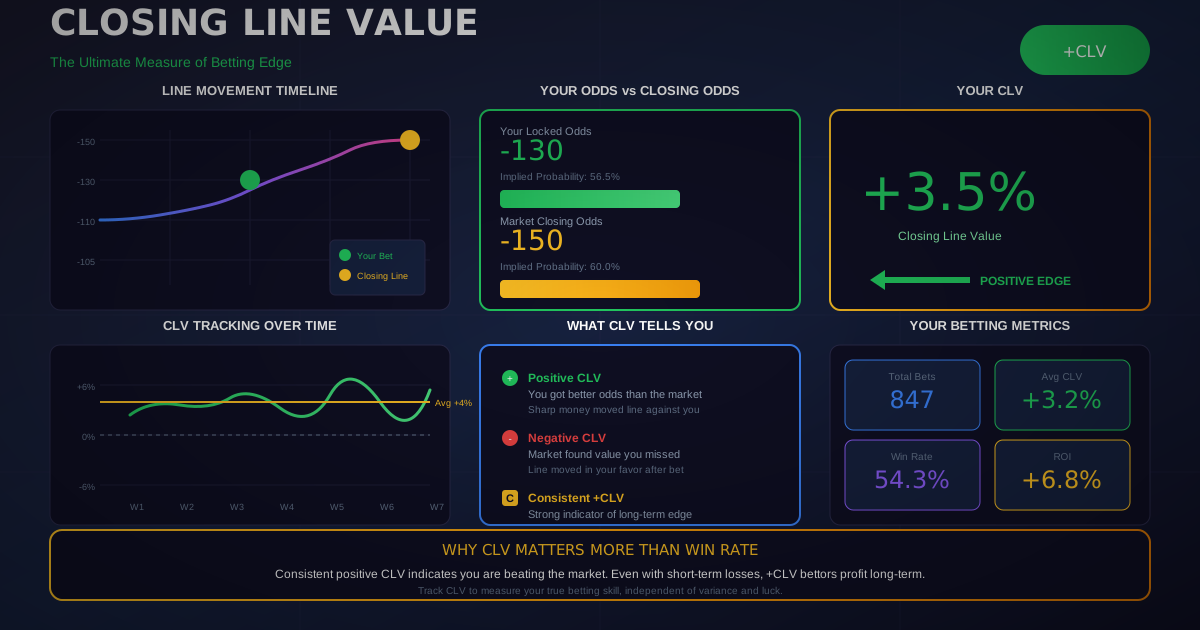
Closing Line Value is the difference between the odds at which you place your bet and the odds at which the market closes (the final line before the event starts). Consistently beating the closing line, meaning you placed your bets at better prices than where the market eventually settled, is the single best predictor of long-term betting profitability.
Why CLV Matters More Than Win Rate
Win rate is a noisy metric. A bettor can run hot or cold over hundreds of bets purely due to variance. CLV, by contrast, moves in small, continuous increments and reveals whether your betting process has a genuine edge far faster than profit-and-loss tracking.
Research across large sample sizes shows that bettors who sustain positive CLV over 500+ bets are almost universally profitable. Bettors who consistently achieve positive CLV see ROI that is two to three times higher than bettors who only track win rates.
How Line Shopping Generates CLV
Line shopping is one of the most reliable ways to generate positive CLV. When you take +3 at one book while the rest of the market is at +2.5, and the line closes at +2.5 or even moves to +2, you have captured CLV. You got a better price than the market eventually offered.
Example: You shop the NFL Sunday card and find the following on an early Sunday morning:
- DraftKings: Bills +3 (-110)
- FanDuel: Bills +2.5 (-108)
- Circa: Bills +3 (-105)
- BetMGM: Bills +2.5 (-110)
You take Circa at Bills +3 (-105). By kickoff, the line has moved to Bills +2 (-110) at most books. You captured a full point of CLV on the spread AND paid reduced juice. That is a massive value capture on a single bet.
Over a full season, consistently capturing 0.5-1.0 points of CLV per bet through disciplined line shopping translates directly into long-term profit, even if your individual game predictions are only marginally better than chance.
How to Track Your CLV
- Record the odds at which you place every bet (the "open" for your bet)
- Record the closing line at the sharpest available book (Pinnacle or Circa) for the same market
- Calculate the implied probability difference between your bet price and the closing price
- Track your average CLV across all bets over rolling 100-bet and 500-bet windows
A positive average CLV across 500+ bets is strong evidence of a sustainable edge.
Check the implied probability behind any odds with our Implied Probability Calculator.
Line Shopping Tools and Technology
While you can line shop manually by opening multiple sportsbook apps, technology has made the process faster and more systematic.
Odds Comparison Platforms
Several platforms aggregate real-time odds across sportsbooks:
- OddsJam, OddsShopper, betstamp: These tools pull live odds from 20+ sportsbooks and highlight the best available price on every market. Some offer alerts when a line at one book diverges significantly from the market consensus.
- Action Network: Provides odds comparison alongside proprietary models and public/sharp money splits.
- SBR Odds: One of the oldest odds comparison platforms, offering real-time lines across major US books.
What to Look for in a Comparison Tool
- Speed of updates: Lines can move within seconds. A tool that updates every 5 minutes is less useful than one that refreshes in real time.
- Book coverage: Make sure the tool includes all the books where you have accounts.
- Historical data: The ability to see line movement history helps you identify optimal timing for placing bets.
- Alerts: Notifications when a specific market hits a price threshold you have set.
Building Your Own Tracking System
Many serious bettors maintain a spreadsheet or database tracking:
- Event and market
- Odds at each book at time of comparison
- Book where bet was placed and odds received
- Closing line at the sharpest book
- CLV captured (in cents of juice or implied probability points)
- Cumulative savings versus always betting at the worst available price
This data becomes invaluable for understanding which books consistently offer the best prices for your preferred bet types and sports.
Analyze hold percentage and vig across different odds with our Hold/Vig Calculator.
How Much Line Shopping Saves Annually: Real Numbers
Let us build a concrete savings model for three different bettor profiles.
Bettor Profile Comparison
| Profile | Bets/Week | Avg Bet Size | Annual Volume | Primary Edge from Shopping |
|---|---|---|---|---|
| Casual Sharp | 10 | $50 | 520 bets, $26,000 wagered | Better juice, occasional half-points |
| Serious Bettor | 25 | $100 | 1,300 bets, $130,000 wagered | Systematic juice + spread shopping |
| High-Volume Pro | 50+ | $200 | 2,600+ bets, $520,000+ wagered | Full optimization across all markets |
Annual Savings Estimates
| Savings Source | Casual Sharp | Serious Bettor | High-Volume Pro |
|---|---|---|---|
| Juice savings (-110 to -107 avg) | $234 | $1,170 | $4,680 |
| Key-number half-points (NFL) | $195 | $780 | $2,340 |
| Total/moneyline price improvement | $130 | $650 | $2,600 |
| Player prop discrepancies | $65 | $390 | $1,560 |
| Total Annual Savings | $624 | $2,990 | $11,180 |
These are conservative estimates based on average per-bet improvements of 1.5-2.5% in expected value from line shopping. The actual savings for disciplined shoppers who always take the best available price can be significantly higher.
The Opportunity Cost of NOT Shopping
Consider the flip side: a bettor who places all 1,300 annual bets at a single book, at whatever price that book happens to offer, is voluntarily accepting an inferior price on roughly 60-70% of those bets (since any single book is rarely the best price on every market). At an average disadvantage of 2-3 cents of juice per bet, that bettor is giving away approximately $2,600-$3,900 per year in expected value.
That is money extracted from your pocket by laziness, not by the market.
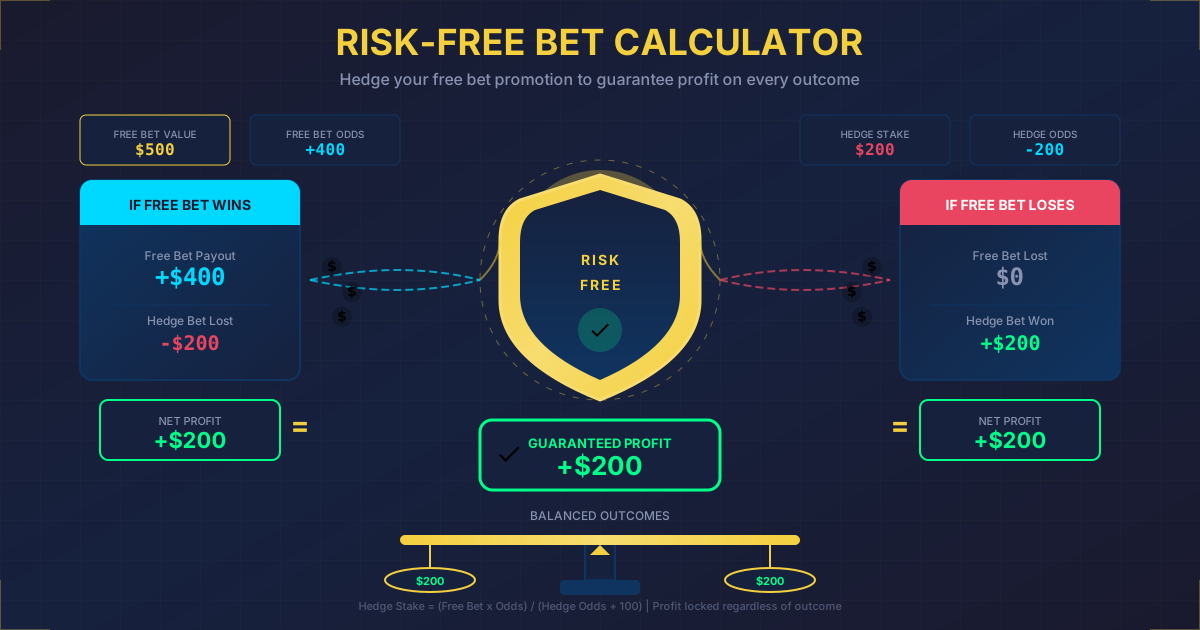
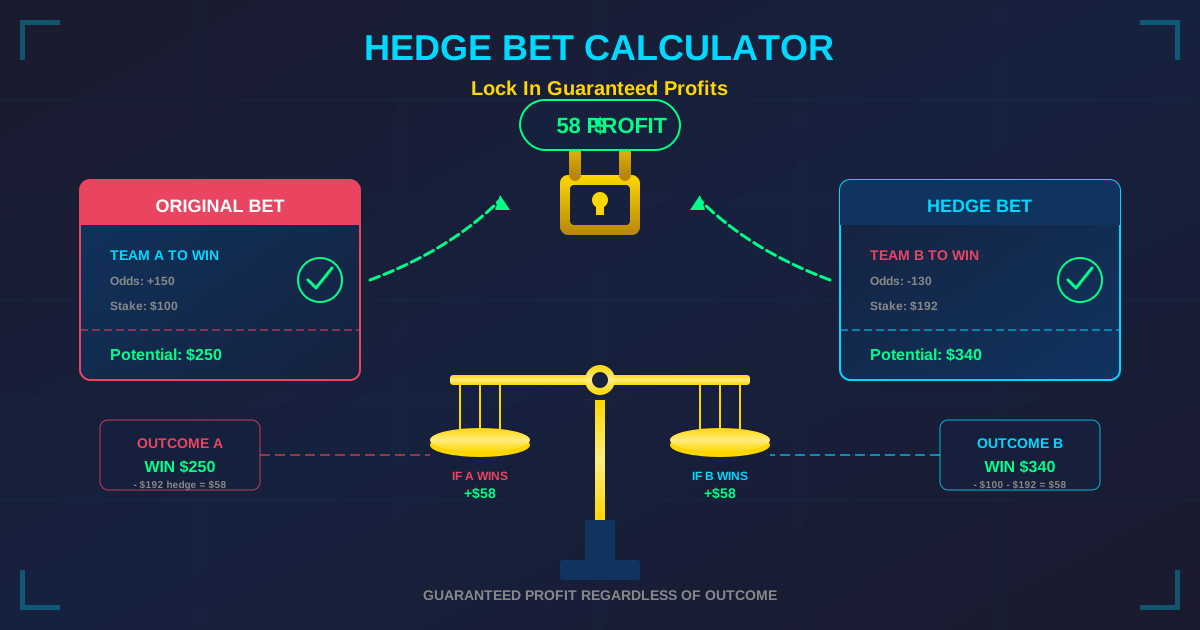
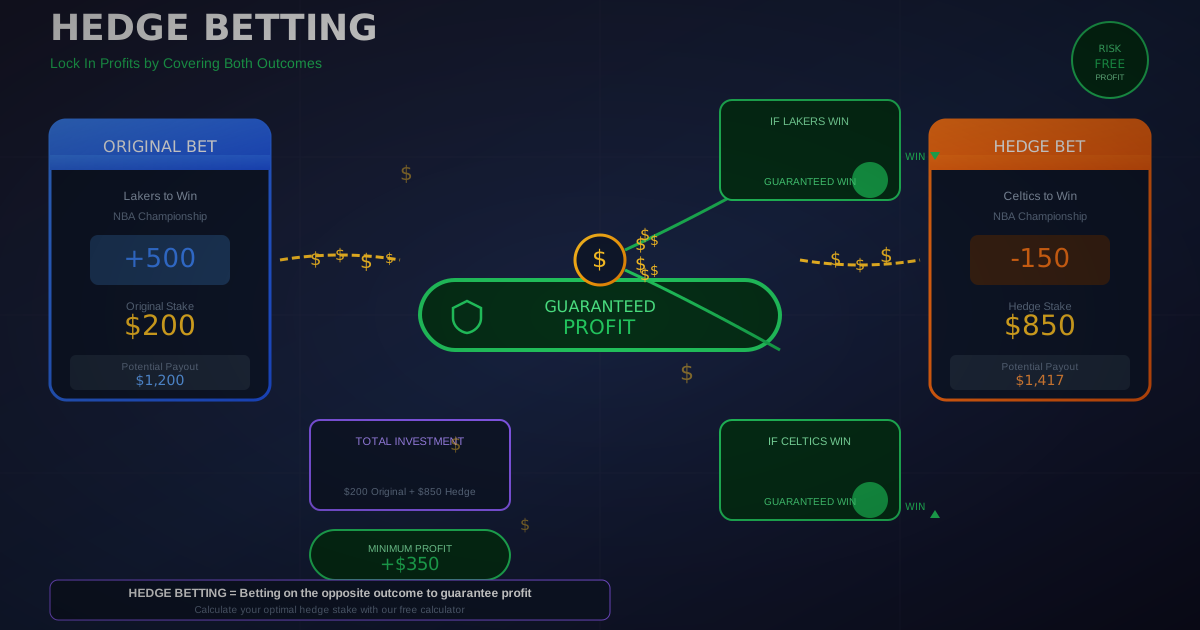
Calculate potential hedge positions when you have locked in value with our Hedge Calculator.
Advanced Line Shopping Strategies
Once you have the fundamentals in place, these advanced techniques can further maximize your edge.
Steam Move Exploitation
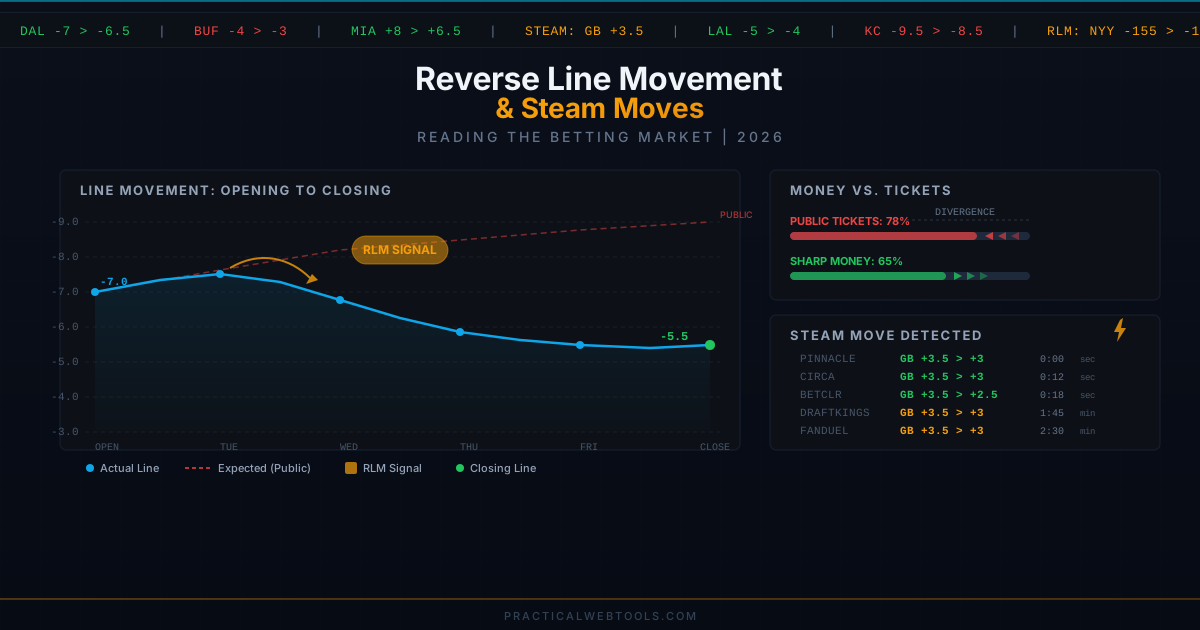
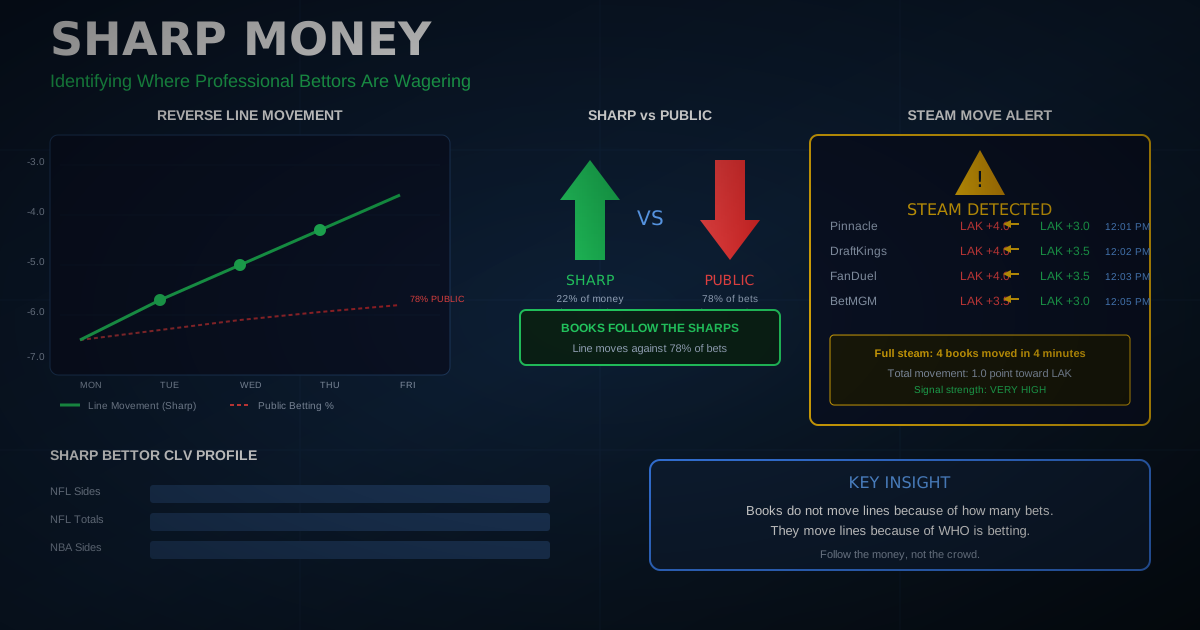
A "steam move" occurs when sharp money hits a line at one book, causing it to move, while other books have not yet adjusted. If you can identify steam moves quickly and bet the stale line at a slower book, you capture significant CLV.
- Watch for sudden, sharp line movements at Circa or Pinnacle
- Immediately check whether DraftKings, FanDuel, or BetMGM have moved yet
- If they have not, place your bet at the stale price before they adjust
- This window typically lasts 30 seconds to 5 minutes depending on the sport and time of day
Reverse Line Movement Plays
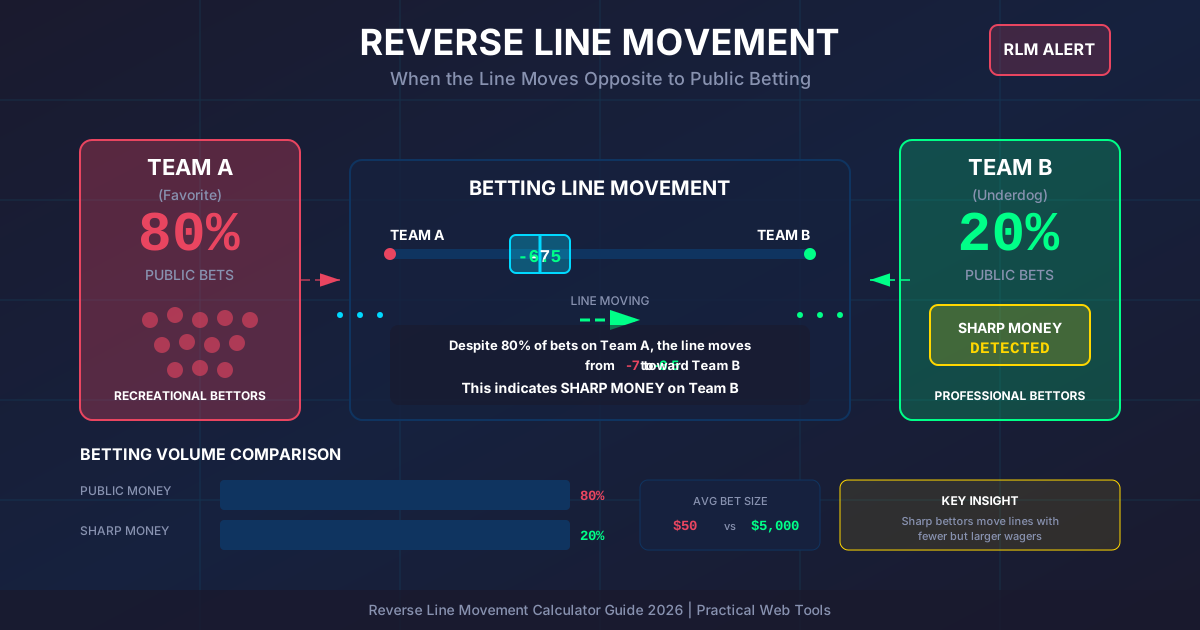
When the line moves against public action (the public is betting one side, but the line moves the other way), it signals sharp money on the opposite side. Line shopping during reverse line movement situations can magnify your edge because:
- The sharp side is often available at a better price at books that move slowly
- Public-heavy books may still be offering inflated value on the sharp side
- The eventual correction will generate CLV for early bettors
Timing Your Bets
Not all times are equal for line shopping value:
- NFL openers (Sunday/Monday evening): The widest discrepancies often exist when lines first open, before the market reaches consensus
- Game day morning (NFL): Last-minute injury and weather news creates temporary discrepancies
- NBA afternoon (for evening games): Injury reports and lineup confirmations cause rapid line shifts that create stale-line opportunities
- Overnight (all sports): Lines posted during low-liquidity hours may not reflect true market value
Correlated Shopping
When you bet multiple legs that share correlation (same game, related markets), shopping each leg individually and placing them at different books can capture more value than taking a parlay at a single book. For example:
- Bet the spread at Book A where they offer the best number
- Bet the total at Book B where they offer better juice
- Bet a player prop at Book C where their line diverges from the market
You capture the best price on each component rather than accepting a bundled price from a single book.
Find true arbitrage opportunities across sportsbooks with our Arbitrage Betting Calculator.
Common Line Shopping Mistakes
Even experienced bettors make these errors. Avoid them to maximize your savings.
Mistake 1: Shopping Lines but Ignoring Juice
Finding a half-point better spread is great, but if that half-point comes at -125 while another book has the standard number at -105, you need to do the math. The juice cost may outweigh the spread improvement.
Rule of thumb: A half-point on a non-key number is worth roughly 1-1.5% in implied probability. Moving from -110 to -125 costs roughly 5.5% in implied probability. In that scenario, you are paying far more in juice than you are gaining in spread value.
Mistake 2: Having Too Few Accounts
Every additional sportsbook account gives you one more potential best price. Bettors with only two or three accounts are leaving significant value on the table compared to those with six or more.
Mistake 3: Not Tracking Savings
If you do not track how much line shopping saves you, you will not have the data to justify the (minimal) extra effort. Track your per-bet and cumulative savings. The concrete numbers reinforce the habit.
Mistake 4: Letting Small Balances Go Dormant
Many bettors open accounts at several books but let the balances dwindle and never reload. When the best price appears at a book where you have $12 left, you cannot take advantage. Keep minimum working balances active.
Mistake 5: Ignoring Player Prop Markets
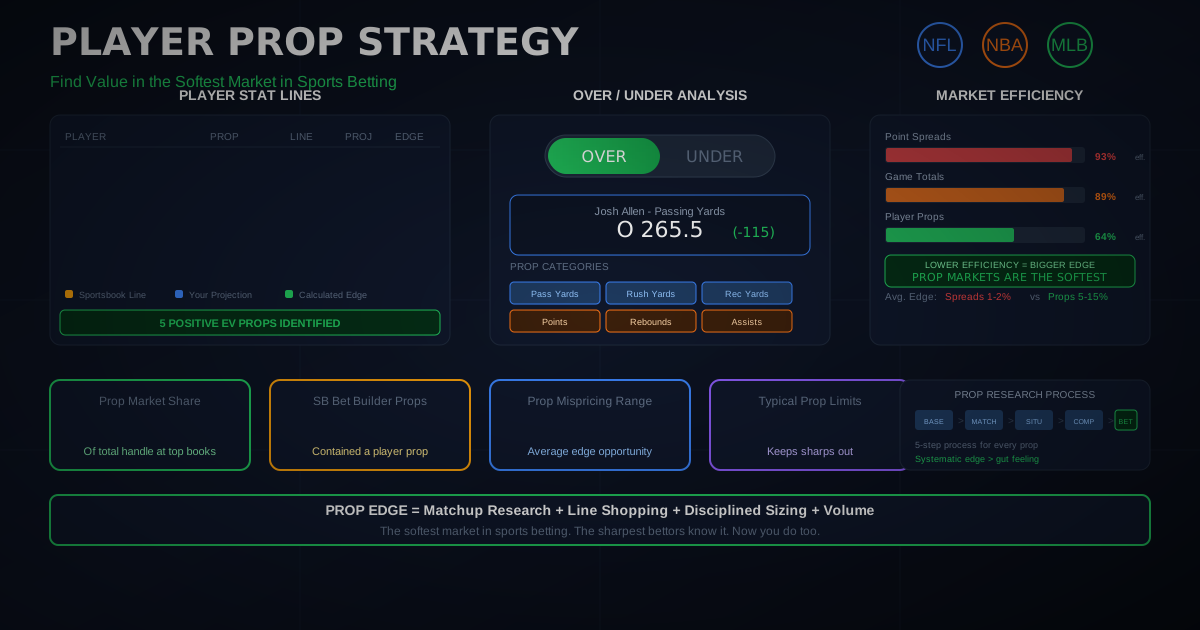
Player prop markets consistently show the widest price discrepancies across books. They receive less sharp action, are priced less efficiently, and can diverge by 20-30 cents or more between sportsbooks. If you bet props and do not shop them, you are leaving the biggest per-bet savings opportunity on the table.
Frequently Asked Questions
How many sportsbook accounts do I need for effective line shopping? A minimum of five to seven accounts provides meaningful price comparison across most markets. In states with 10+ legal operators, having accounts at all of them maximizes your coverage. Each additional account increases the probability that you find the best available price on any given bet. Studies show that bettors using four or more books see measurably higher long-term profitability than single-book bettors.
How much time does line shopping add to each bet? Once your accounts are set up and funded, comparing odds across five to seven books takes 30 to 90 seconds per bet. Over a year of 1,000+ bets, that amounts to roughly 8-25 hours of total comparison time. Given that the annual savings typically exceed $2,000 for serious bettors, the effective hourly rate of line shopping time exceeds $80-$250 per hour. There is almost no activity in sports betting with a better return on time invested.
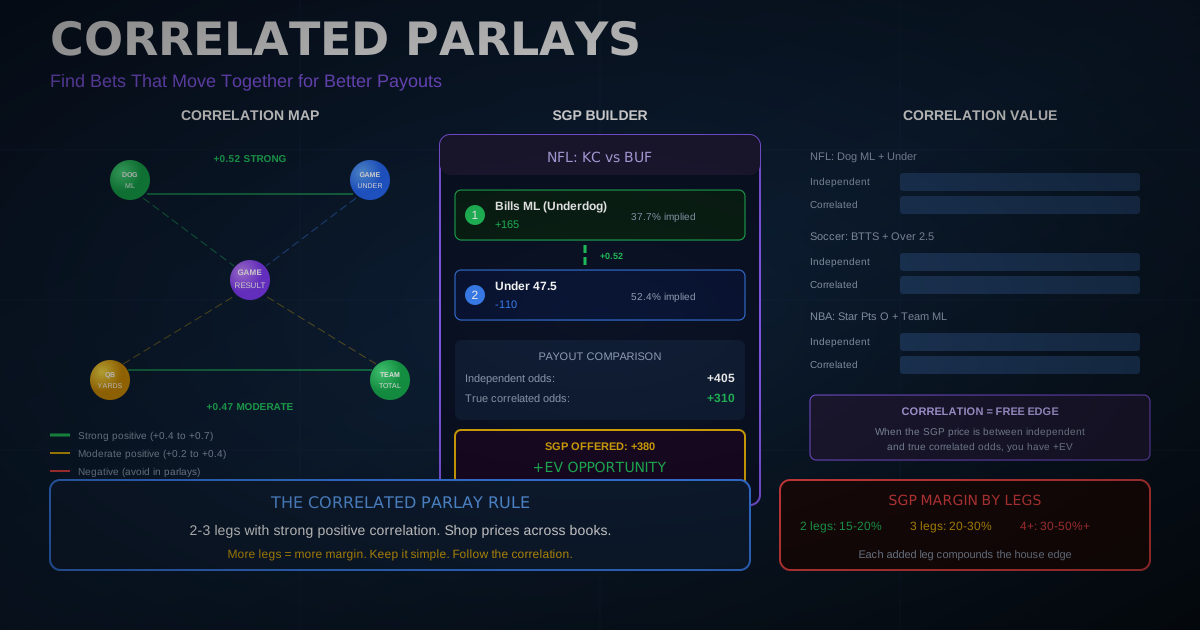
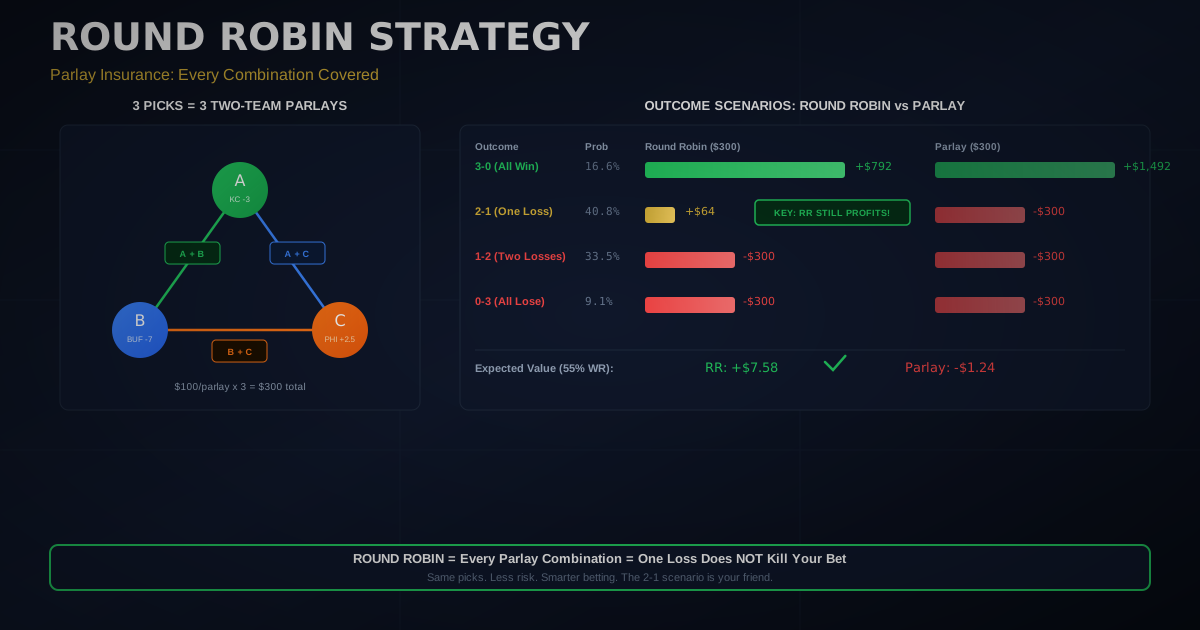
Does line shopping work for parlays? Partially. You can shop the odds on individual legs and place straight bets at the best book for each leg, which is more profitable than bundling everything into a parlay at one book. For correlated parlays (same-game parlays), you are generally limited to the prices at whichever book offers the SGP market, but you can still compare SGP pricing across the books that offer them.
Will sportsbooks limit me for line shopping? Line shopping itself does not trigger account limitations. Sportsbooks limit bettors who consistently win, not bettors who hold accounts at multiple books. That said, consistently beating the closing line (which line shopping helps you do) can eventually lead to reduced limits at retail sportsbooks like DraftKings and BetMGM. Sharp-friendly books like Circa and Pinnacle are far less likely to limit you.
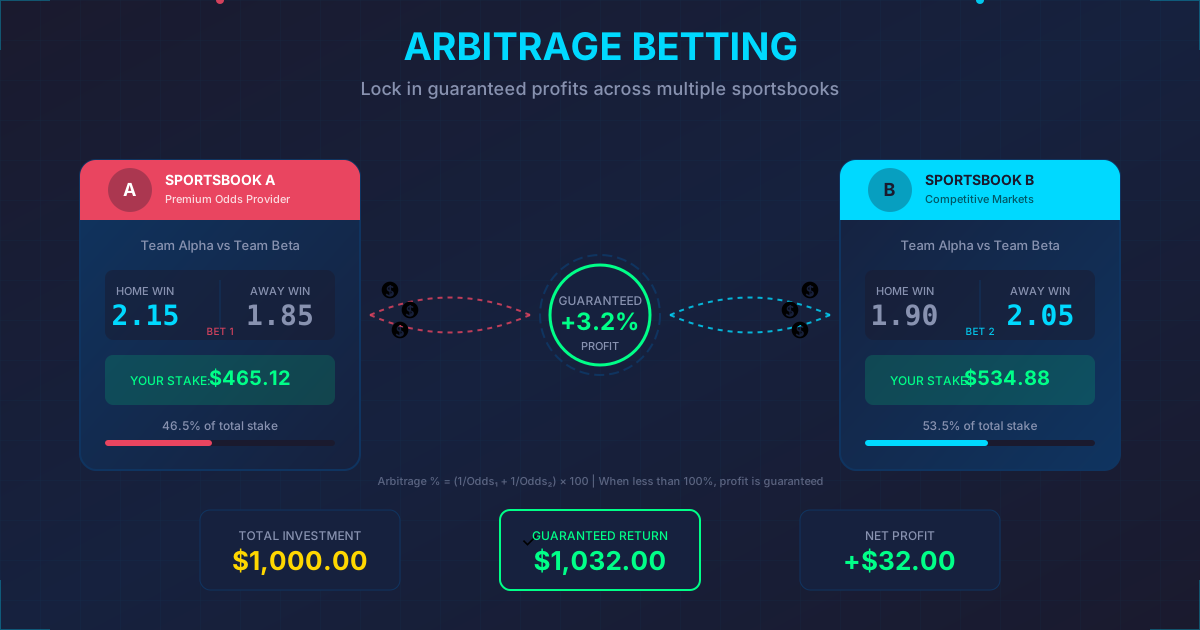
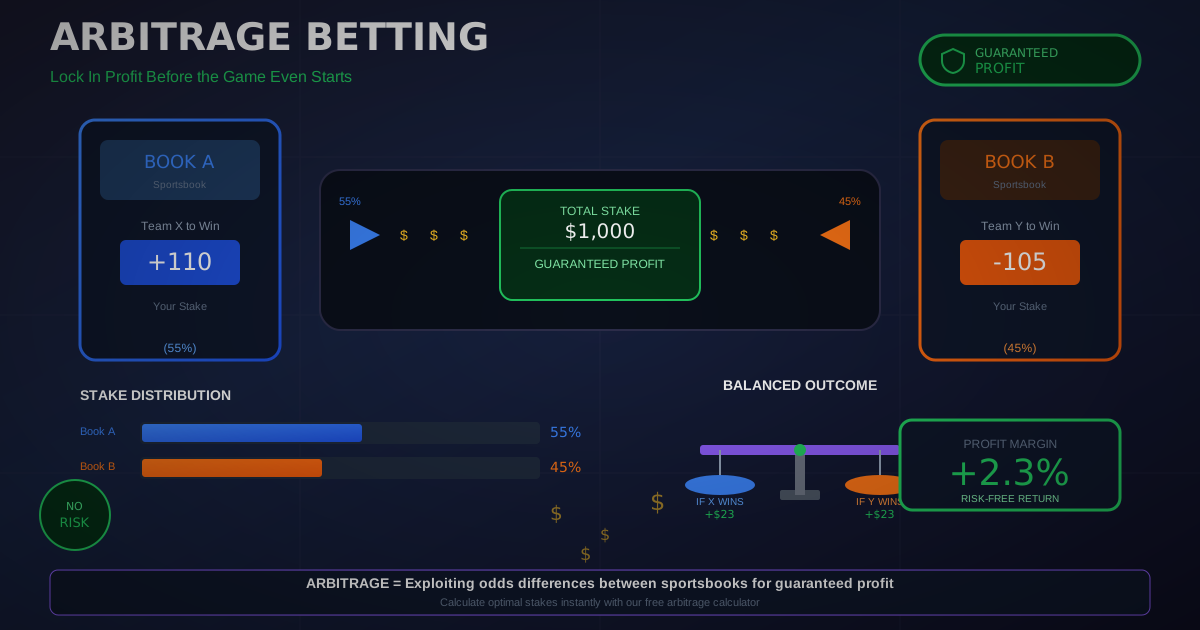
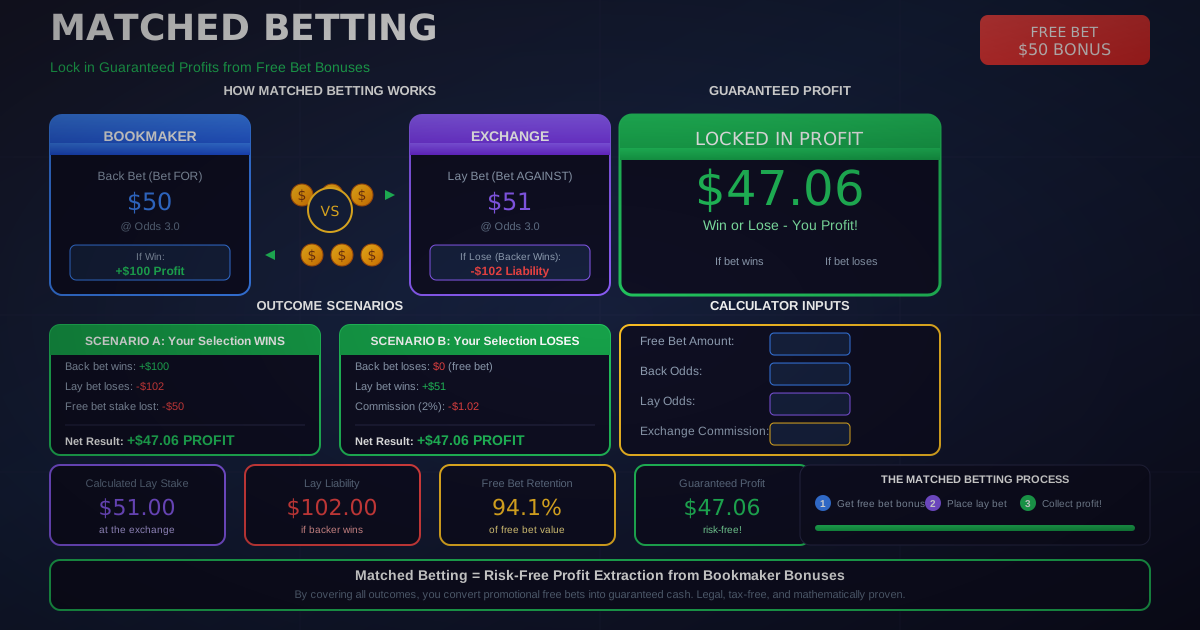
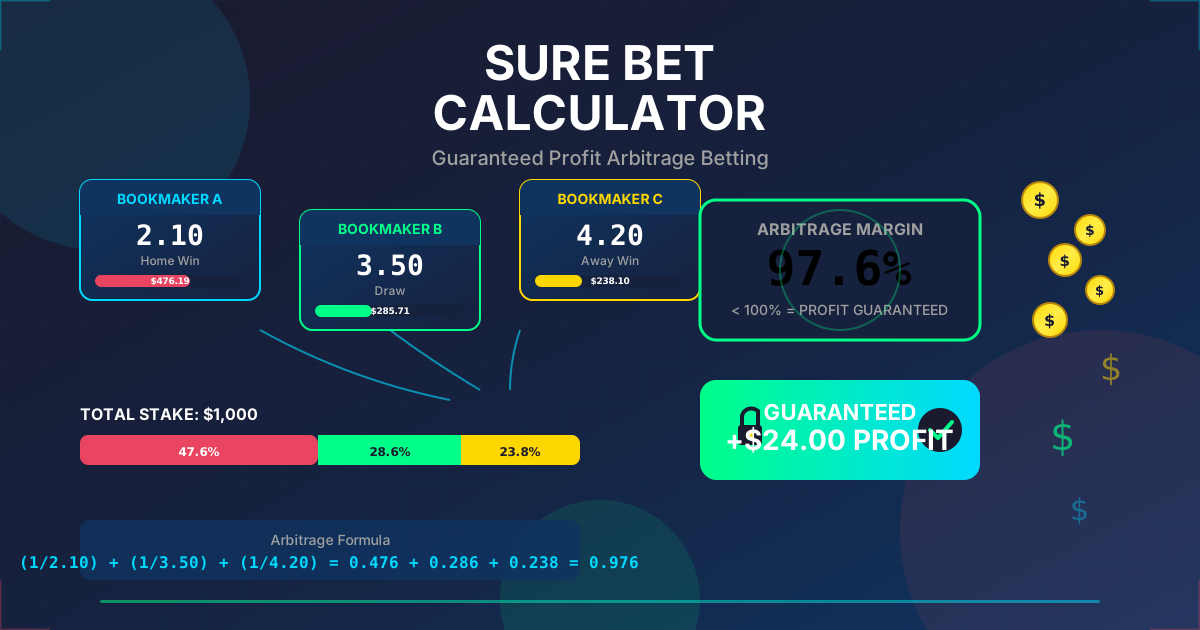
What is the difference between line shopping and arbitrage betting? Line shopping means finding the best price on a single bet. Arbitrage betting means finding prices across books that guarantee profit regardless of outcome (betting both sides). Line shopping is a broader, everyday practice applicable to every bet. Arbitrage is a specific, rarer opportunity that requires extreme price discrepancies. Line shopping is sustainable and always available; arbitrage windows are brief and close quickly. Both strategies benefit from having multiple sportsbook accounts. Use our Arbitrage Calculator to check for arb opportunities.
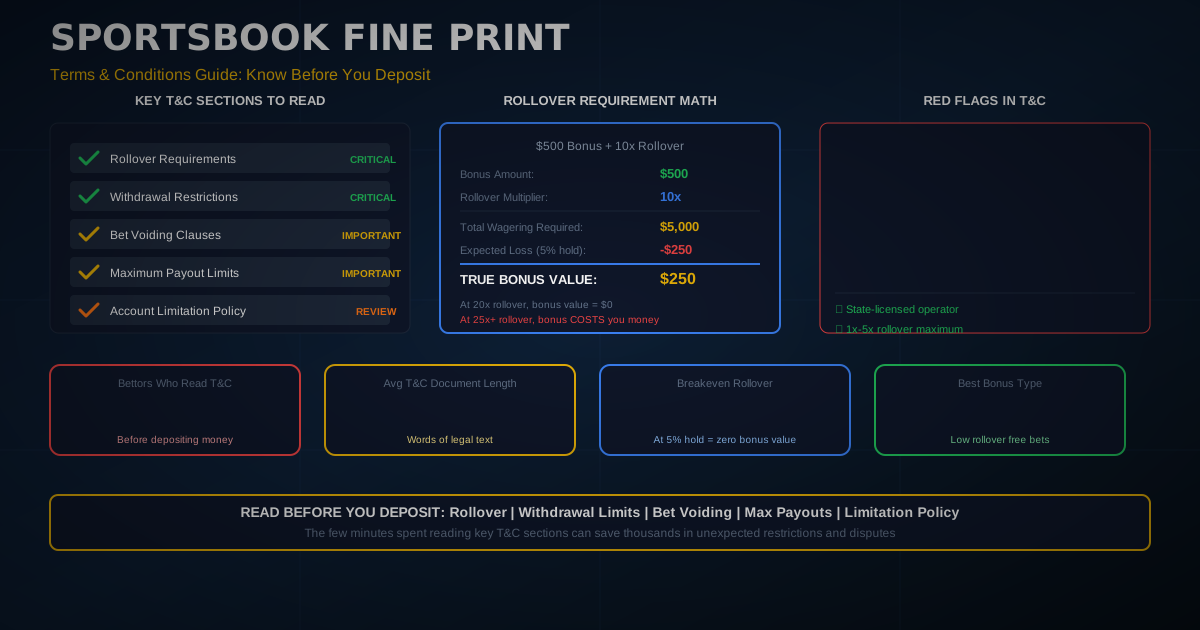
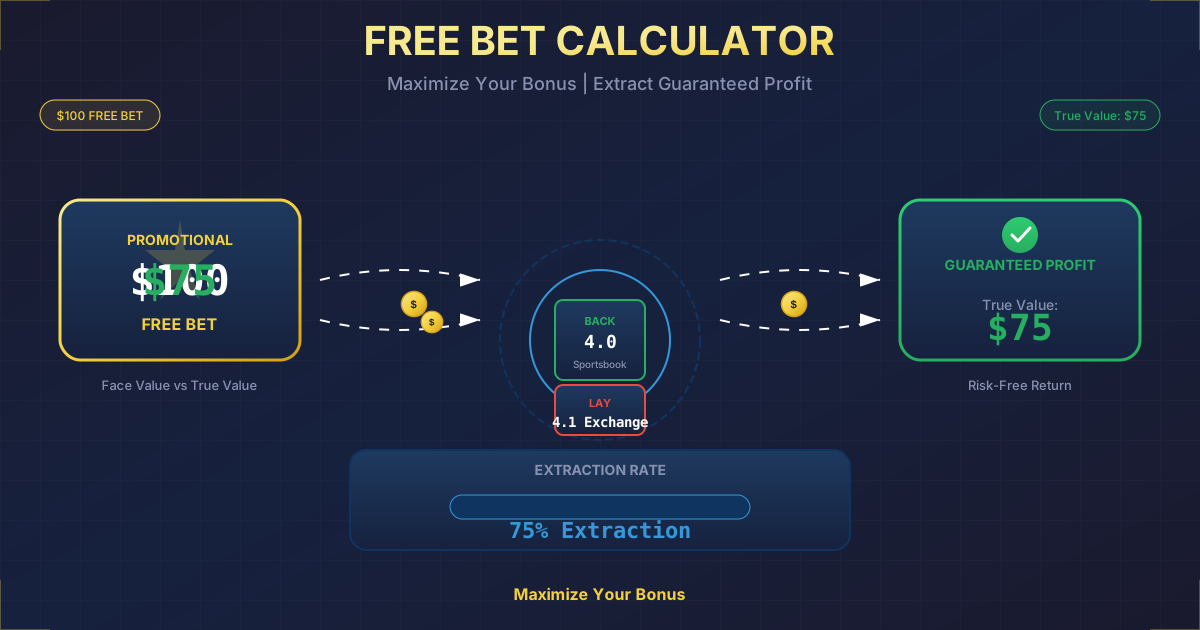
Is reduced juice always better than a promotional free bet? It depends on the math. A $500 free bet at a book with -110 juice has a cash value of roughly $225-$250 (since free bets are use-it-or-lose-it and only return the profit, not the stake). Compare that to the savings from reduced juice: 1,000 bets at -105 instead of -110 saves $1,160. If you bet regularly, reduced juice almost always provides more cumulative value than periodic promotional free bets. The ideal strategy is to claim the free bets AND bet your regular action at reduced juice books.
How do I know which book has the sharpest (most accurate) closing line? Pinnacle is widely considered the sharpest closing line in global markets. In the US legal market, Circa is the sharpest book. Their closing lines serve as the benchmark against which you should measure your CLV. If you consistently place bets at prices better than Circa's closing line, you have a sustainable edge.
Can I automate line shopping? Several platforms (OddsJam, betstamp, OddsShopper) offer real-time odds comparison and alerts. You can set notifications for when a specific market reaches a target price or when the discrepancy between books exceeds a threshold. Full automation of bet placement is not legal or practical in most US jurisdictions, but automated price monitoring dramatically speeds up the comparison process.
Essential Tools for Line Shoppers
Maximize your line shopping edge with these free calculators:
- Odds Converter: Instantly convert between American, decimal, and fractional odds to compare prices across different formats
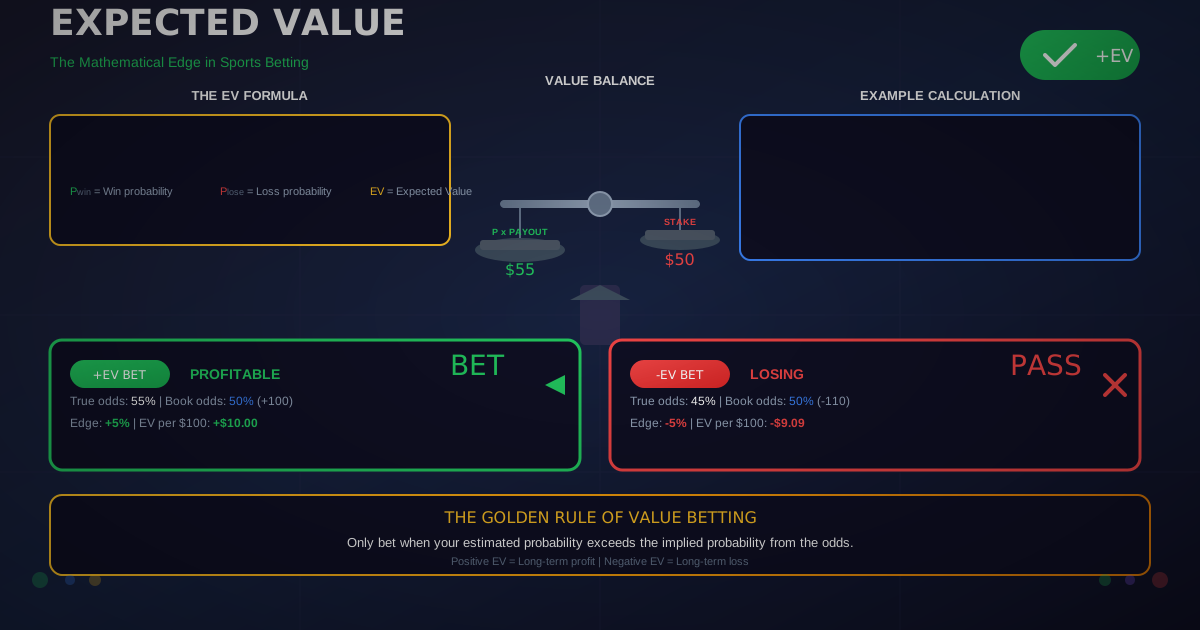
- Expected Value Calculator: Determine whether a bet is +EV after accounting for the true probability and the price offered
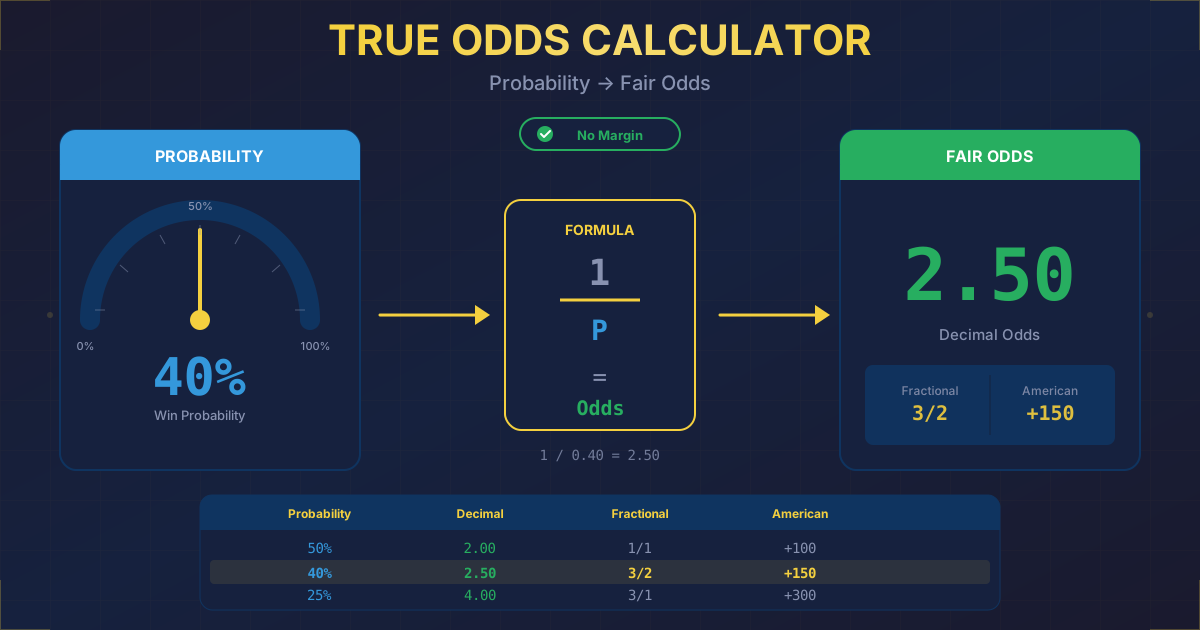
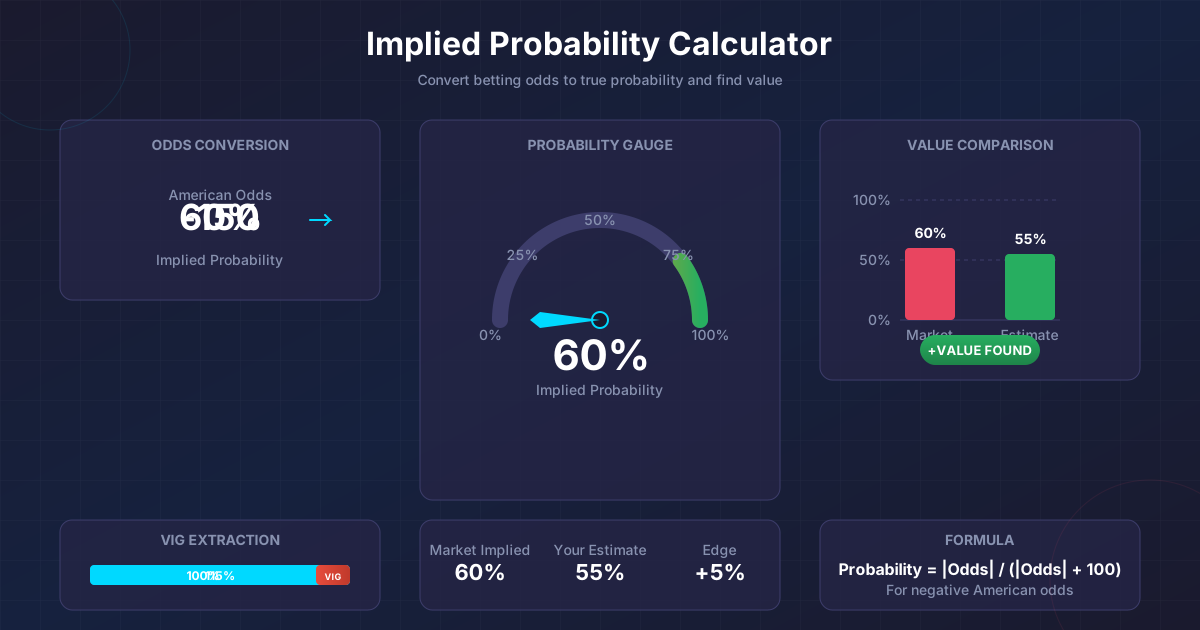
- Implied Probability Calculator: Convert any odds into implied probability to compare the "real" price across sportsbooks
- Hold/Vig Calculator: Calculate the total vig/hold on any market to identify which books are charging the most juice
- Kelly Criterion Calculator: Determine optimal bet sizing based on your edge and bankroll
- Arbitrage Calculator: Identify guaranteed-profit arb opportunities when line discrepancies are large enough
- Hedge Calculator: Calculate hedge positions when you want to lock in profit on a bet where line movement has created value
- Arbitrage Betting Calculator: Advanced arbitrage detection and stake distribution across multiple outcomes
Conclusion: The Simplest Edge You Will Ever Find
Line shopping is not glamorous. It does not require a PhD in statistics, a proprietary model, or insider information. It requires opening accounts, checking prices, and placing your bet at the best number. That is it.
But the results are anything but ordinary. A disciplined line shopper wagering $100 per bet at moderate volume saves $2,000-$3,000 per year compared to a single-book bettor. A high-volume bettor saves $10,000 or more. Over a five-year betting career, line shopping can be the difference between being a losing bettor and a profitable one, all without changing a single pick.
In a market where the sportsbook edge is 4-5% and the best bettors in the world win at 55-56%, every fraction of a percentage point matters. Line shopping shaves points off the house edge, puts money back in your pocket, and validates your process through consistent positive CLV.
Start today. Open the accounts. Fund them. Compare the prices. The money you save is money you earn.
Start optimizing your bets now with our free Odds Converter and Expected Value Calculator.
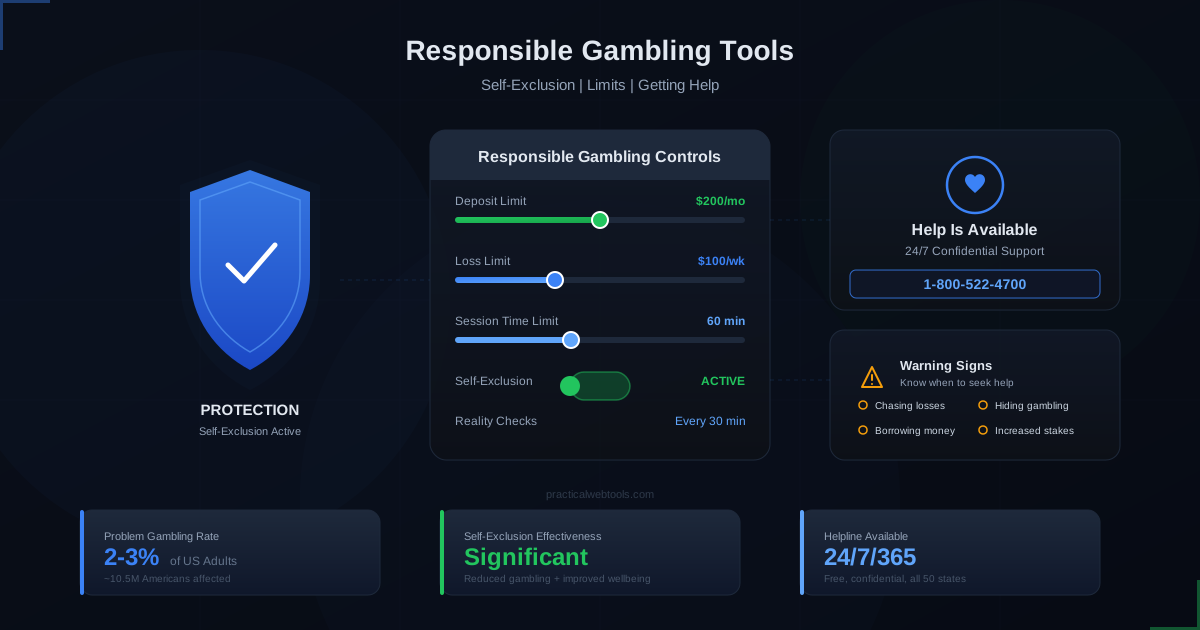
Gambling involves risk. This content is for educational and informational purposes only. Always gamble responsibly, set limits you can afford, and seek help if gambling becomes a problem. Visit the National Council on Problem Gambling or call 1-800-522-4700 for support.