Poker Reverse Implied Odds Calculator: Hidden Costs Analysis (2026)
Poker Reverse Implied Odds Calculator: When Hitting Costs You
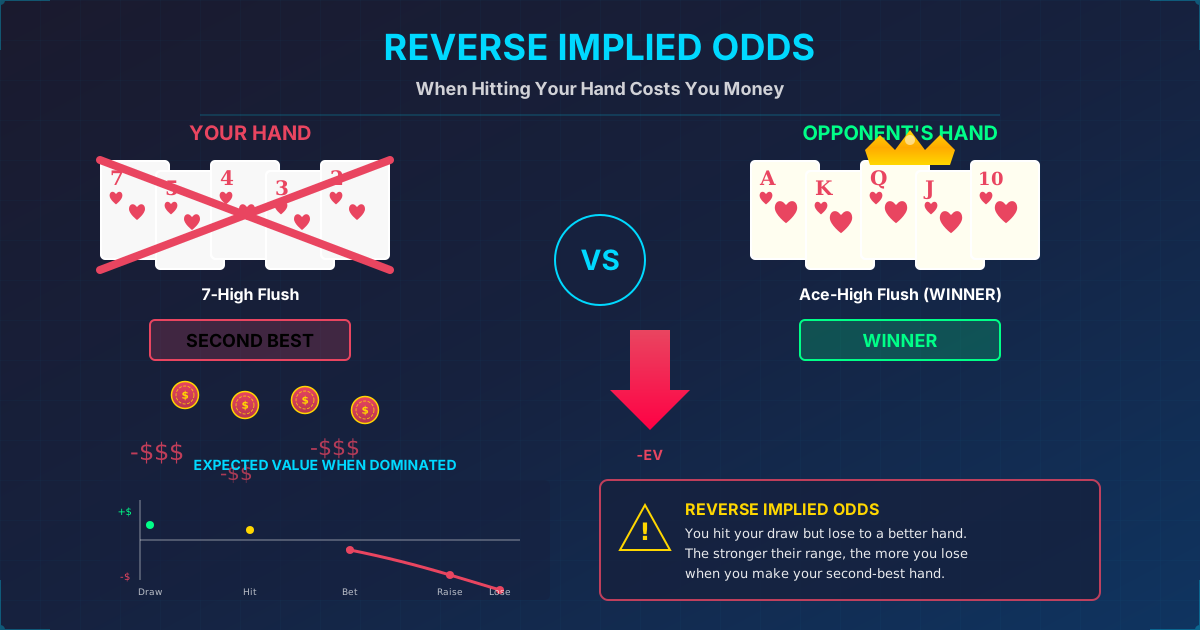
Reverse implied odds measure what you lose when you hit your draw but are still beaten. Our calculator shows the hidden costs of dominated draws and second-best hands—where making your hand loses you money.
What Are Reverse Implied Odds?
Reverse implied odds (RIO) represent the additional money you lose when you improve but remain second-best. While implied odds add value for draws, RIO subtracts value—you hit your hand and lose a bigger pot. Understanding RIO prevents expensive second-best situations.
Quick Answer: Reverse implied odds = money lost hitting second-best hands. Example: Your flush completes, opponent has higher flush → lose more. High RIO situations: non-nut flush draws, low straight draws, underpairs. Signs of trouble: drawing to the board, dominated kickers, easily counterfeited hands. RIO turns profitable draws into losers.
How to Use Our Calculator
Use the Reverse Implied Odds Calculator →
Analyze draws for reverse implied odds risk.
Step-by-Step Instructions
-
Enter Your Draw: What you're chasing
-
Input Pot Size: Current pot
-
Estimate Domination Risk: % worse when hit
-
Set Future Bets: What you'll pay when behind
-
View Adjusted EV: After RIO costs
Input Fields Explained
| Field | Description | Example |
|---|---|---|
| Draw Type | What you're chasing | Flush draw |
| Raw Equity | Basic win chance | 35% |
| Domination Rate | % behind when hit | 15% |
| Future Loss | $ lost when dominated | $150 |
| Pot Size | Current pot | $100 |
| Adjusted EV | After RIO | -$12 |
Understanding Domination
Flush Draw RIO
You hold: 8♠7♠
Board: A♠K♠3♦2♣

Flush completes on river:
9 spades make your flush

But opponent ranges include:
A♠x♠ (higher flush)
K♠x♠ (higher flush)
Q♠x♠ (higher flush)

If opponent has higher spade:
Your flush loses to their flush
You pay off thinking you won
Straight Draw RIO
You hold: 4♠5♠
Board: 6♥7♦8♣

You complete with: 4 or 9

Problem with 4:
Makes low end of straight
6-7-8-9-T beats you
Any 9-T hand dominates

Problem with 9:
Opponent could have T-J
Same issue, higher straight

Low straights = high RIO
Pair Draw RIO
You hold: A♠T♣
Board: K♥Q♦7♣

Pair draws:
Ace hits: A good, but AK/AQ possible
Ten hits: Likely second-best

Hitting the ten:
KK, QQ, AK, AQ all beat you
You improve, they're ahead
Pay more, lose more
RIO Calculation Framework
Basic Formula
True EV = Standard EV - RIO Costs

RIO Costs = (Hit Rate) × (Dom Rate) × (Future Loss)

Example:
Hit rate: 35%
Dom rate when hit: 20%
Future loss if dominated: $200

RIO cost = 0.35 × 0.20 × $200 = $14

Subtracts $14 from draw value
Comparative Example
Non-nut flush draw:
Raw EV: +$25
Hit rate: 35%
Dominated when hit: 15%
Future loss: $150

RIO = 0.35 × 0.15 × $150 = $7.88
Adjusted EV = $25 - $7.88 = +$17.12

Still positive, but reduced
Higher domination = possible negative
Severe RIO
Low straight draw:
Raw EV: +$15
Hit rate: 30%
Dominated when hit: 30%
Future loss: $200

RIO = 0.30 × 0.30 × $200 = $18
Adjusted EV = $15 - $18 = -$3

Draw becomes unprofitable!
RIO turns winner to loser
High RIO Situations
Non-Nut Flush Draws
Danger signs:
- Low suited cards (7♠5♠ vs A♠x♠)
- Board with high cards of flush suit
- Opponents who only continue with strength

Better:
- Nut flush draws (A♠x)
- Draws with other outs (pair + flush)
- Short-handed (fewer combos of higher flush)
Bottom End Straight Draws
Board: 7-8-9

Danger: Holding 5-6
You make T-high straight
J-T beats you (higher straight)
Anyone with T has you dominated

Safer: Holding T-J
You make nut straight
No reverse implied odds
Underpairs
Board: A-K-7

Holding: 8-8

If 8 hits:
You have set
But:
- A-K now has two pair
- A-8, K-8 have same set
- Straight and flush possible

Set but not necessarily winner
Proceed carefully
Dominated Kickers
Board: K-7-3

You: K-8
Opponent: K-Q

King already out there
Both have kings
Your 8 kicker is crushed

If 8 hits:
You have two pair K-8
Still lose to K-Q
And pay more thinking you're good
Real-World Examples
Example 1: Non-Nut Flush
You: T♠9♠, Board: A♠K♣7♠2♦
Flush draw on turn

Your flush outs: 9 spades
Nuts: A♠ (opponent might have)

If flush completes:
You bet $100
Opponent with A♠x raises $250
You call (can't fold flush)
Lose $350 total

RIO calculation:
Hit: 19.6%
Opp has higher spade: ~15%
Future loss: $350

RIO = 0.196 × 0.15 × $350 = $10.29
Significant reduction in draw value
Example 2: Low Straight
You: 4♠5♥, Board: 6♥7♦8♣
Open-ended with nut low

Problem hands that beat you:
9-T (flopped nut straight)
T-J (needs 9 only)

If 9 rolls off:
You: 5-6-7-8-9 straight
Opp: 6-7-8-9-T straight

You bet, they raise, you pay off
Classic RIO situation

Better: Wait for 4 (still RIO vs 5)
Best: Fold preflop with suited connectors like 4-5
Example 3: Flush Over Flush
You: 6♠4♠, Board: K♠Q♠T♦3♣
Made flush on turn!

Problem:
A♠x, J♠x, 9♠x, 8♠x, 7♠x, 5♠x
All beat you

Opponent bets $80 into $100
You raise to $250
They jam $600 total

They have higher flush often here
Your raise with low flush = RIO disaster
Call, don't raise weak flushes
Example 4: Kicker RIO
You: A♠J♣, Board: A♥K♦7♣
Top pair, jack kicker

Opponent bets turn, you call
River: 2♠ (blank)
Opponent bets again

Your kicker:
AK, AQ beat you
You can't improve
Calling = paying off when dominated

RIO on paired boards:
Already dominated or not
No draw to save you
Pure guessing game
Minimizing RIO
Play Nut Draws
When possible:
- Nut flush draws (A-suited)
- High straight draws (nut end)
- Top set possibilities

No RIO with nuts
You beat all similar hands
Recognize RIO Situations
Warning signs:
- Low suited connectors
- Bottom end straight
- Weak pair + draw combos
- Opponents with tight ranges

Ask: "What beats me if I hit?"
Many answers = high RIO
Adjust for Stack Depths
Deep stacks = worse RIO:
More money to lose when dominated
Pay off bigger bets

Short stacks = less RIO:
Limited loss when wrong
All-in pre-commit
Fold Earlier
High RIO hands:
Consider folding preflop
Don't put yourself in tough spots

6♠5♠ vs tight raiser:
High reverse implied odds
Often dominated when hit
Better to fold
Common Mistakes
1. Ignoring Domination
Mistake: Only calculate hit probability Problem: Miss RIO costs Fix: Ask what beats you when hit
2. Overvaluing Non-Nut Flushes
Mistake: "I have a flush!" Problem: Higher flushes exist Fix: Low flushes = proceed carefully
3. Fast-Playing Vulnerable Hands
Mistake: Bet-raise with non-nuts Problem: Only get action from better Fix: Control pot size
4. Drawing to the Board
Mistake: Chase straights with board cards Problem: Anyone can have it Fix: Prefer draws opponents can't share
Frequently Asked Questions
What's the difference between implied odds and reverse implied odds?
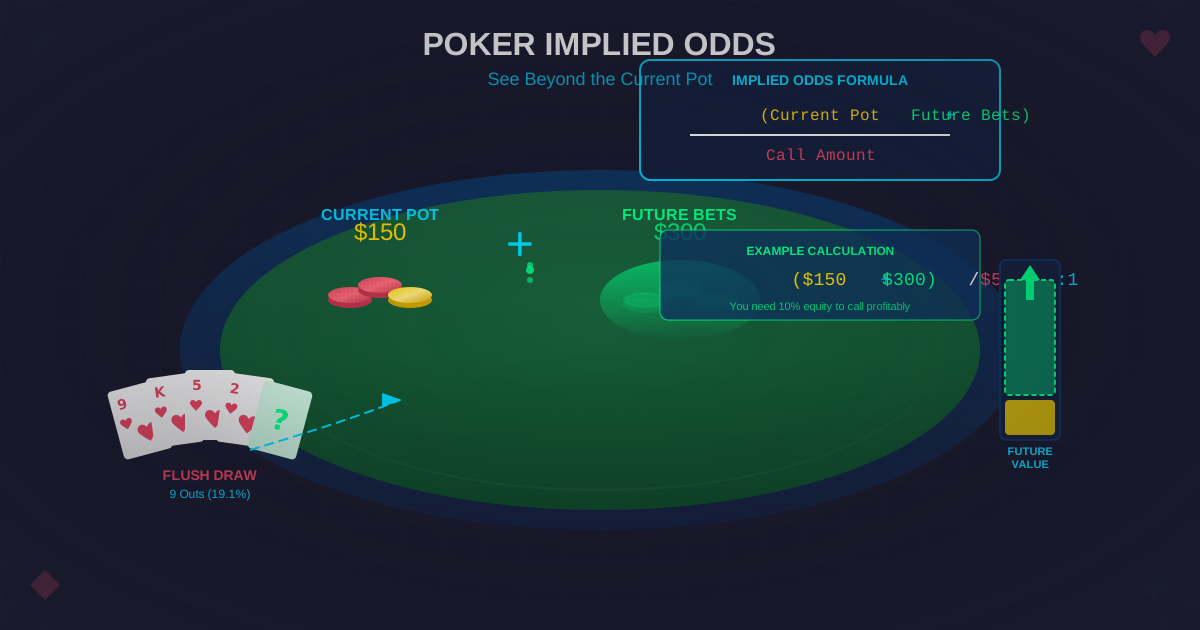
Implied odds add value (win more when you hit). Reverse implied odds subtract value (lose more hitting second-best).
How do I know if I have high RIO?
Ask: "What hands beat me if I complete my draw?" If many, you have high RIO.
Should I never play non-nut draws?
No, but discount their value. A 35% chance might effectively be 25% after RIO adjustment.
Does stack depth affect RIO?
Yes. Deeper stacks mean more money to lose when dominated. RIO increases with effective stacks.
When is RIO worst?
Against tight players (more likely to have strong hands), with low draws, and when deep stacked.
Can RIO make a profitable draw unprofitable?
Yes. A mathematically correct call can become a fold after RIO adjustment.
Pro Tips
-
Nut draws preferred: Zero RIO
-
Ask the question: What beats me when I hit?
-
Discount non-nut draws: Subtract 10-30% value
-
Control pot size: Don't build big pots with vulnerable hands
-
Fold more preflop: Avoid RIO situations entirely
Related Calculators
- Poker Implied Odds Calculator - The opposite concept
- Poker Pot Odds Calculator - Basic draw math
- Poker Equity Calculator - Hand equity
- Poker Expected Value Calculator - EV analysis
- Poker Outs Calculator - Draw counting
Conclusion
Reverse implied odds measure the hidden costs of hitting second-best hands. Our calculator shows how dominated draws subtract value, turning apparent winners into expensive losers when you improve but remain beaten.
Calculate Reverse Implied Odds Now →
That flush draw looks great until you realize your 7-high flush loses to the half-dozen higher flushes possible. Our calculator reveals the RIO costs that turn profitable draws into money-losing situations.