2026 FIFA World Cup Betting Guide: Odds, Futures, and Group Stage Strategy
The 2026 FIFA World Cup will be the largest sporting event in human history. Forty-eight nations. Three host countries. Sixteen cities. One hundred and four matches played over 39 days, from June 11 through July 19, across the United States, Mexico, and Canada. The expanded format, the first change since 1998, transforms everything bettors thought they knew about World Cup wagering.
The global betting handle for this tournament is projected to exceed $35 billion, shattering the record set during Qatar 2022. In the United States alone, where legal sports betting has expanded to 38+ states since the last World Cup, the handle could surpass $4 billion on World Cup markets. With matches kicking off in American-friendly time zones (no more 5 AM alarm clocks for knockout rounds), casual and sharp bettors alike will be glued to every group stage permutation, every moneyline shift, and every in-play opportunity.
This is not a standard preview. This is a strategic framework for navigating the most complex World Cup betting landscape ever constructed. The expanded field introduces new layers of variance, new value pockets in obscure groups, and new knockout round dynamics that did not exist in any previous 32-team tournament.
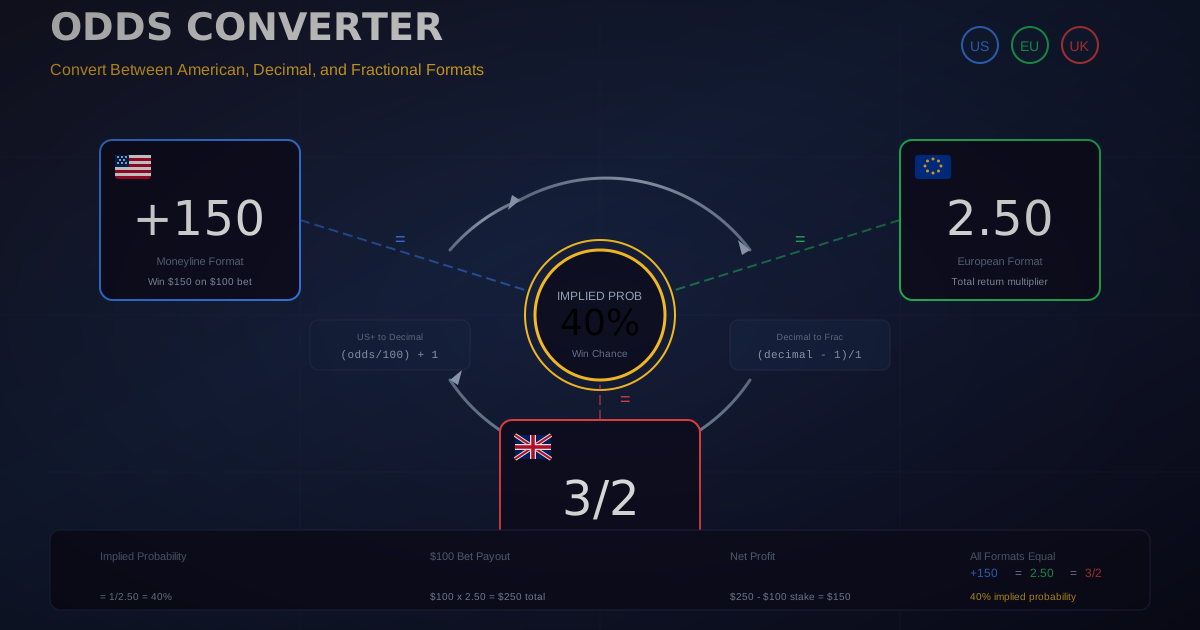
Convert any World Cup odds format instantly with our free Odds Converter -- American, decimal, fractional, and implied probability all in one tool.
The 2026 World Cup Format: What Bettors Must Understand
Before placing a single wager, you need to internalize how this expanded tournament actually works. The format change is not cosmetic. It fundamentally reshapes betting strategy from the group stage through the final.
48 Teams, 12 Groups, New Knockout Path
| Feature | 2022 Format (Qatar) | 2026 Format (USA/CAN/MEX) |
|---|---|---|
| Total Teams | 32 | 48 |
| Groups | 8 groups of 4 | 12 groups of 4 |
| Group Stage Matches | 48 | 72 |
| Total Matches | 64 | 104 |
| Teams Advancing | 16 (top 2 per group) | 32 (top 2 + 8 best 3rd-place) |
| Knockout Rounds | Round of 16, QF, SF, Final | Round of 32, R16, QF, SF, Final |
| Matches to Win Title | 7 | 8 |
| Tournament Duration | 29 days | 39 days |
Why This Format Changes Everything for Bettors
More variance in the group stage. With 12 groups instead of 8, the group draw becomes a massively larger factor. A top-four team drawn into a group with three beatable opponents sails through. That same team drawn alongside a dangerous pot-2 side and a well-organized pot-3 team faces genuine peril. The 2022 format already produced shocks (Saudi Arabia over Argentina, Japan over Germany and Spain). Multiply those opportunities by 1.5x.
Third-place advancement changes incentive structures. The eight best third-placed teams advance to the round of 32. This creates complex Game Theory dynamics in the final group stage matchday. A team sitting on 3 points with a decent goal difference might play conservatively to secure a third-place spot rather than pushing for a win. Sharp bettors who track these scenarios will find edges in totals and match result markets on Matchday 3.
An extra knockout round means more fatigue-driven upsets. Winners must survive four knockout rounds rather than three. That eighth match, the final itself, will be played by squads who have endured the deepest tournament run in World Cup history. Depth of squad becomes a betting factor in ways it never was before. Heavily favored teams with thin benches face compounding fatigue risk.
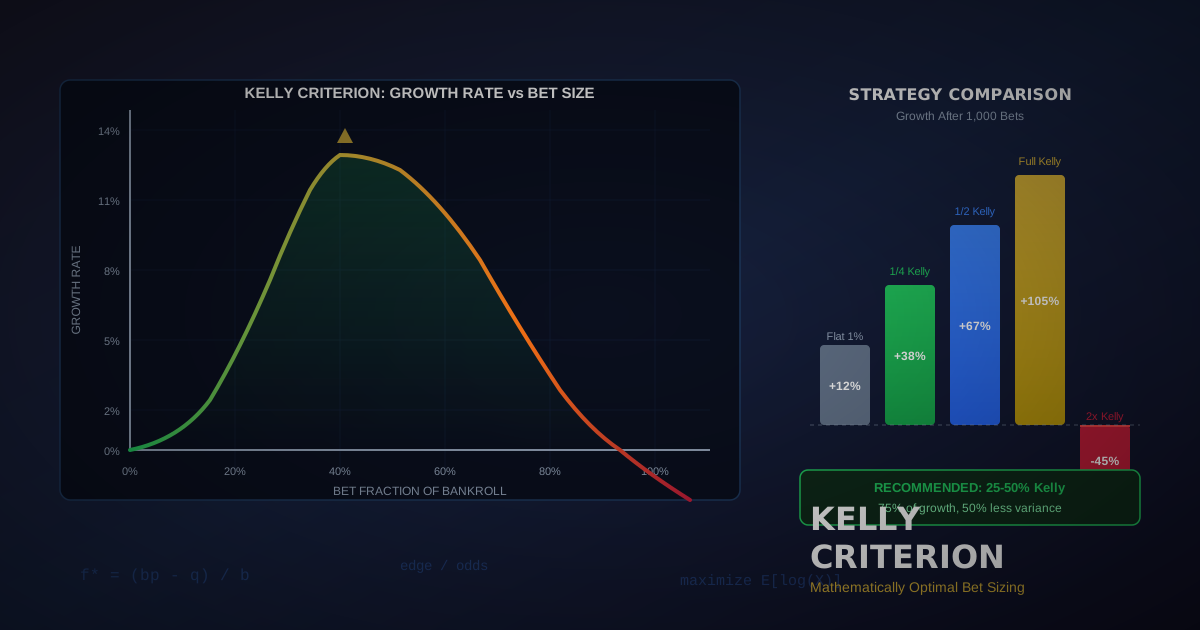
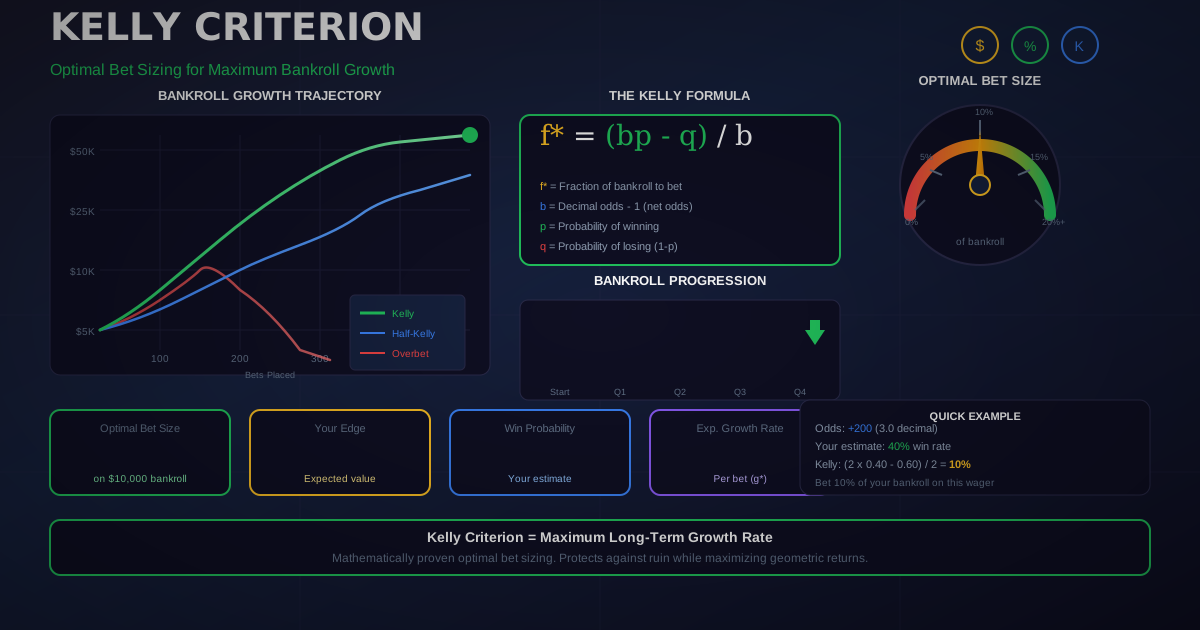
Use our Kelly Criterion Calculator to determine optimal bet sizing for World Cup futures based on your assessed edge.
2026 World Cup Futures Betting: Timing, Value, and Strategy
Futures markets, the outright winner bets placed weeks or months before the tournament, represent the single largest opportunity for World Cup bettors. The key is understanding when to bet and how to identify mispriced odds.
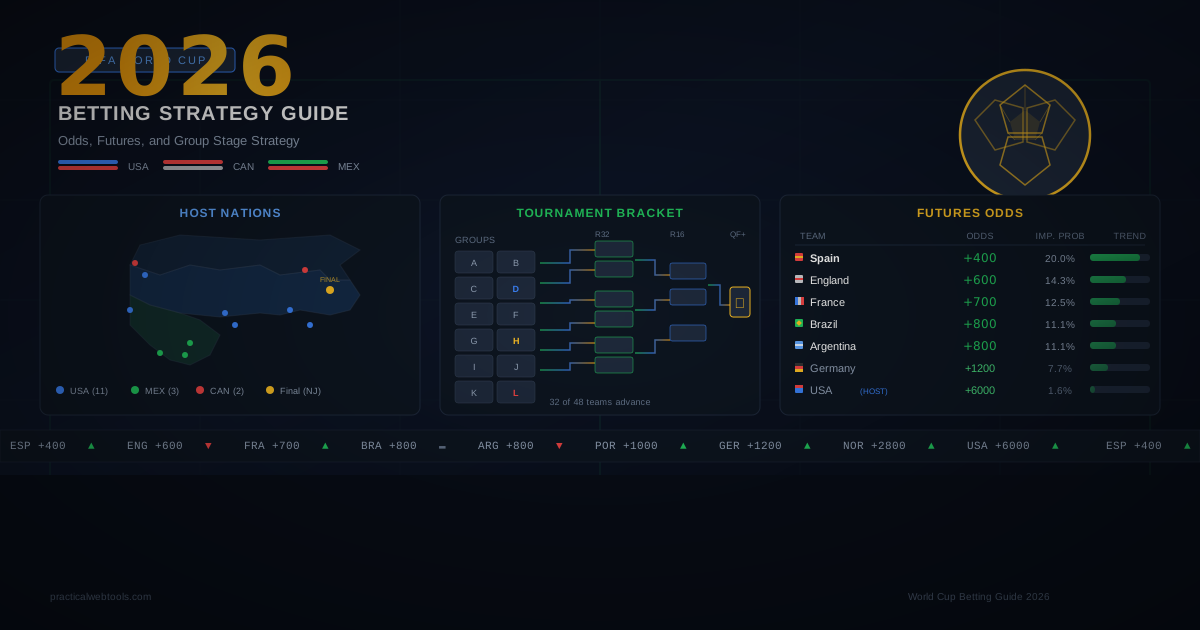
Current Futures Odds for Top Contenders
The following odds reflect sportsbook consensus as of early 2026. These will shift as the tournament approaches, as friendlies are played, and as squad announcements are made.
| Team | Futures Odds | Implied Probability | FIFA Ranking | 2022 Result |
|---|---|---|---|---|
| Spain | +400 | 20.0% | 1st | R16 |
| England | +600 | 14.3% | 4th | QF |
| France | +700 | 12.5% | 2nd | Runner-Up |
| Brazil | +800 | 11.1% | 3rd | QF |
| Argentina | +800 | 11.1% | 5th | Winner |
| Portugal | +1000 | 9.1% | 6th | QF |
| Germany | +1200 | 7.7% | 12th | Group Stage |
| Netherlands | +2000 | 4.8% | 7th | QF |
| Norway | +2800 | 3.4% | 18th | Did Not Qualify |
| USA | +6000 | 1.6% | 14th | R16 |
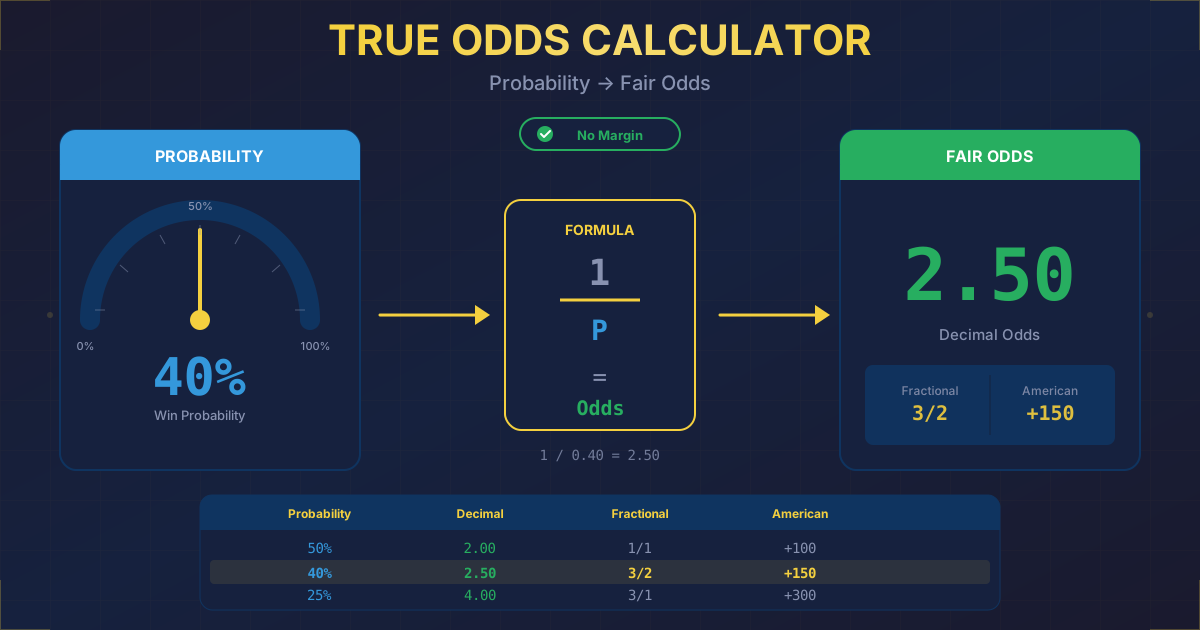
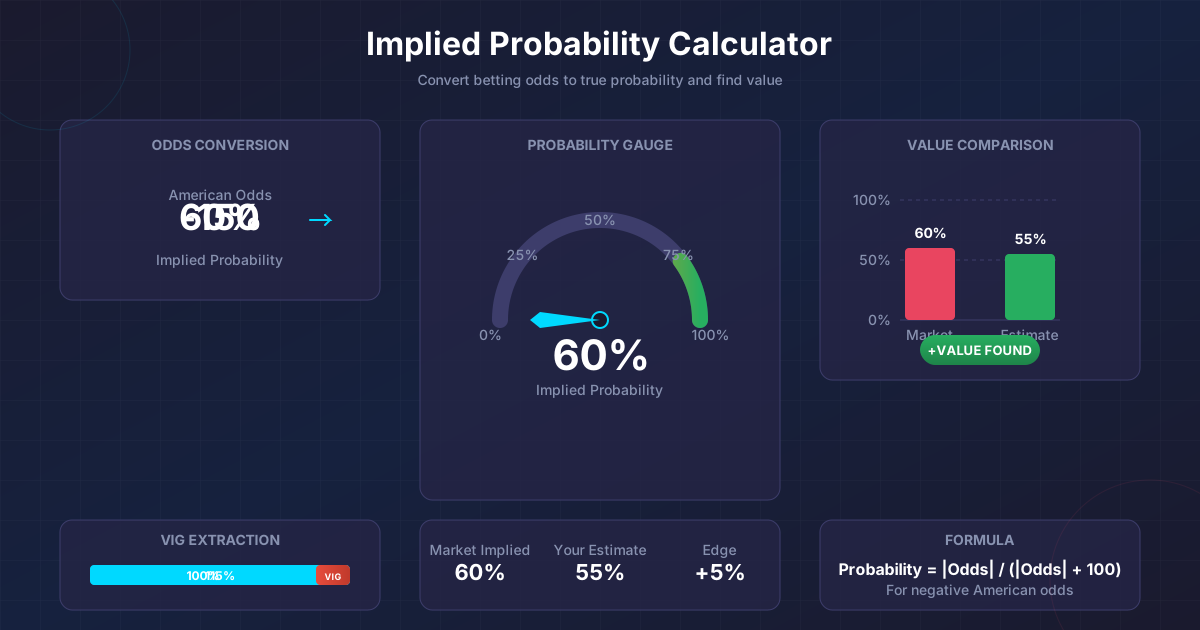
Convert odds to implied probability instantly with our Implied Probability Calculator.
The Value Window: When to Place Futures Bets
Futures odds are not static. They move in predictable cycles, and understanding that cycle is the difference between getting Spain at +500 and getting Spain at +350.
Best value timing for World Cup futures:
-
6-12 months out (now through March 2026): The widest spread of odds. Books are less sharp on soccer futures compared to NFL or NBA. This is when you lock in value on teams you believe are underpriced. Spain at +400 was available at +500 just weeks ago, and that window has closed.
-
Post-draw adjustment (December 2025 - January 2026): The draw happened in December 2025. Teams with favorable draws saw their odds shorten. Teams in "groups of death" drifted. If a team's true probability did not change but the draw merely shuffled their path, this is a value opportunity.
-
Pre-tournament squad announcements (May - June 2026): Injury news moves lines fast. If a star player is ruled out, the team's odds lengthen immediately. If you already hold a futures ticket at pre-injury odds, you can hedge. If you do not, you can potentially buy at a discount if the market overreacts.
-
During the tournament (June - July 2026): Odds shift dramatically after each group match. A pre-tournament +800 team that wins its first group match might shorten to +500. A +400 favorite that draws its opener might drift to +600. In-tournament futures are the fastest-moving and most exploitable market.
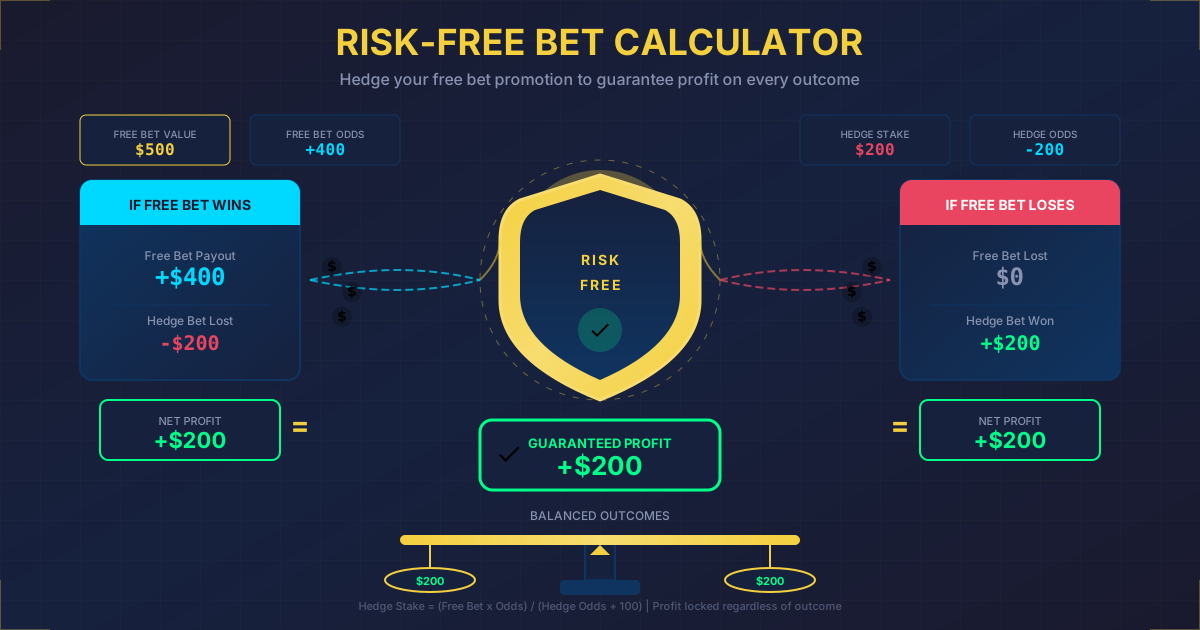
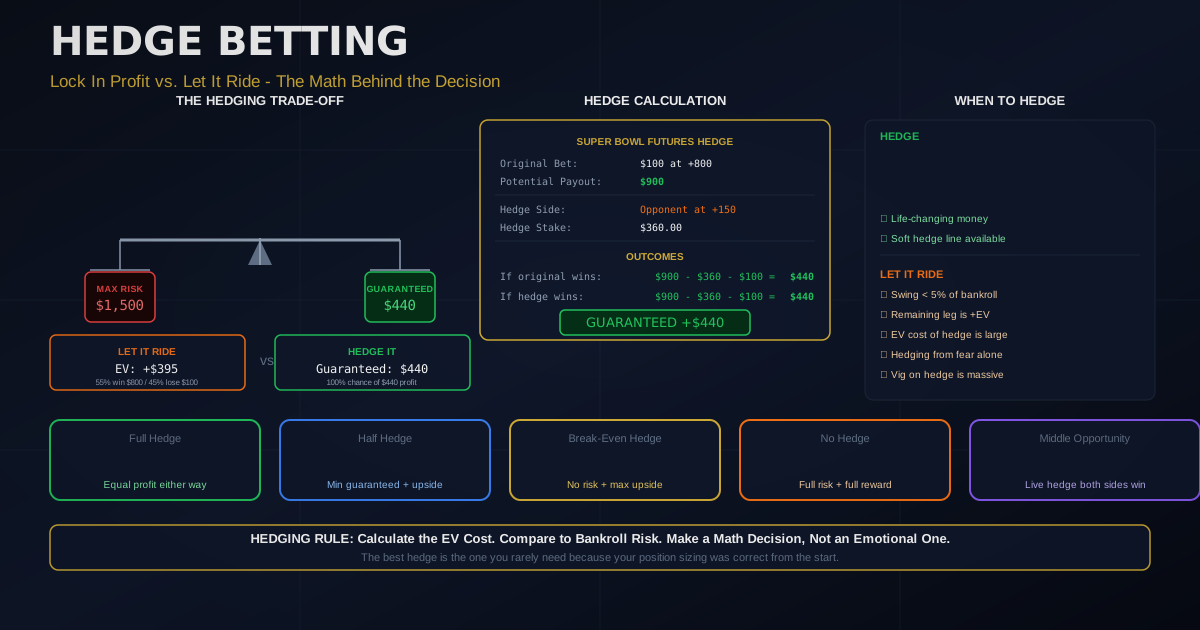
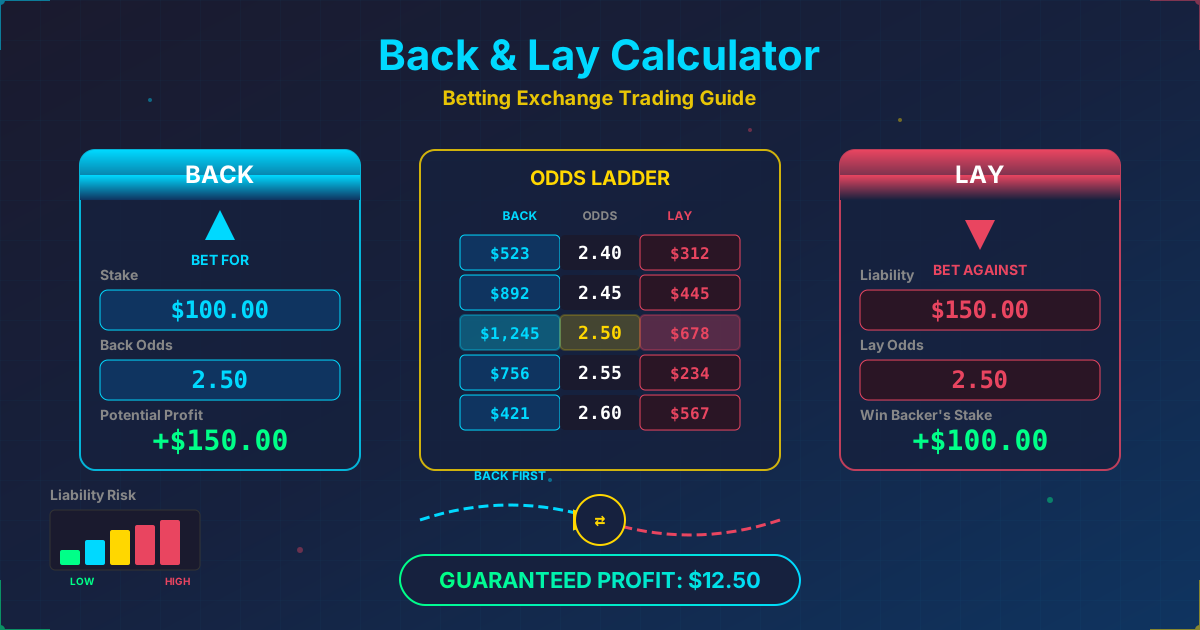
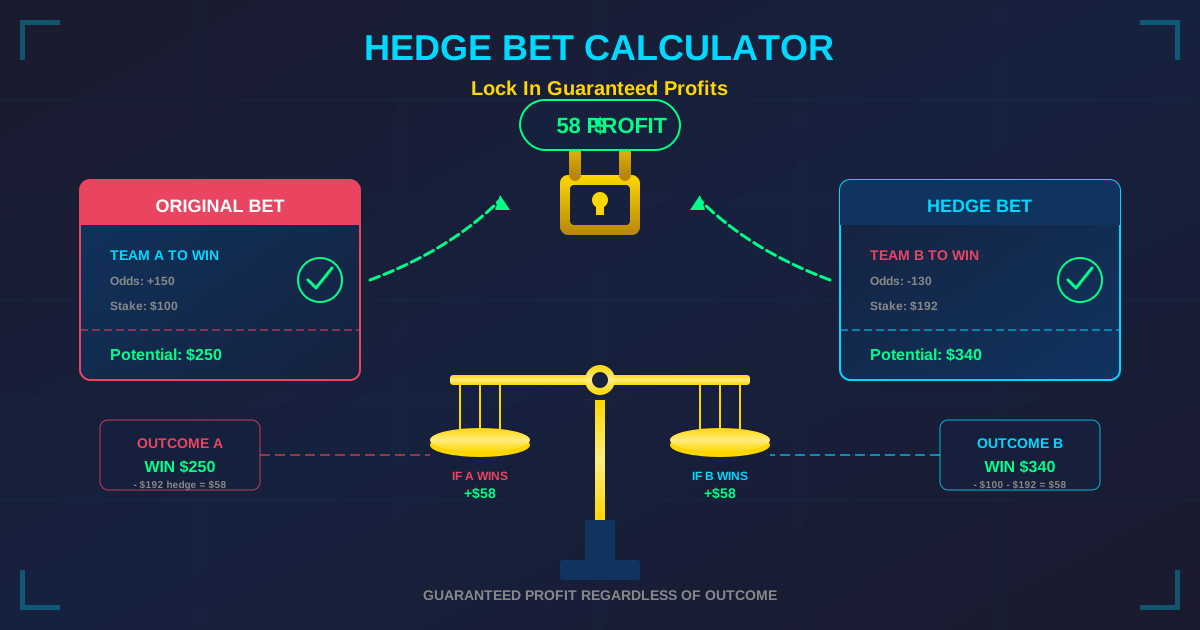
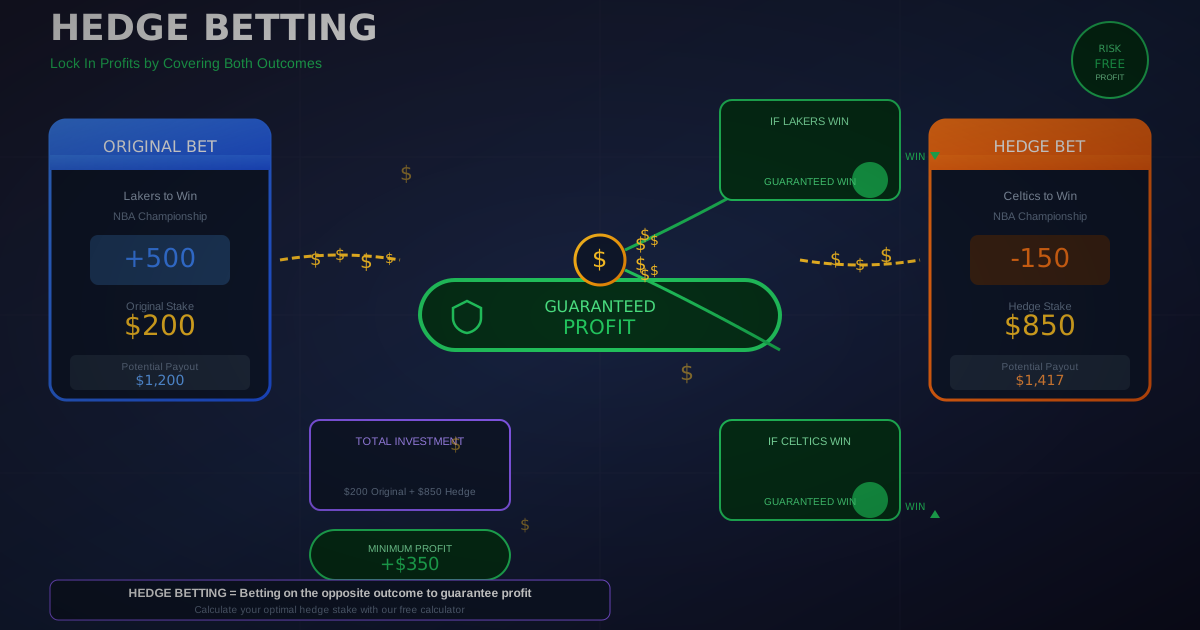
Example: Suppose you place $100 on Argentina at +800 in March. Argentina wins their group comfortably and their odds shorten to +300 heading into the knockout rounds. Your $100 bet now has a potential payout of $900 (original $800 profit + $100 stake). You could hedge by betting against Argentina in the Round of 32, locking in guaranteed profit regardless of the outcome. Use our Hedge Calculator to find the exact hedge amount.
Diversified Futures Strategy: The Portfolio Approach
Professional bettors do not put all their futures money on a single team. They build a portfolio of 3-5 futures bets that collectively offer positive expected value.
Example Portfolio ($500 total futures budget):
| Bet | Stake | Odds | Potential Payout | Rationale |
|---|---|---|---|---|
| France to Win | $150 | +700 | $1,200 | Elite squad depth, extra-time experience |
| Argentina to Win | $100 | +800 | $900 | Defending champions, Messi farewell narrative |
| Germany to Win | $100 | +1200 | $1,300 | Historically peaks in expanded formats |
| Norway to Win | $75 | +2800 | $2,175 | Haaland factor, favorable group draw |
| USA to Win | $75 | +6000 | $4,575 | Host nation, crowd energy, home advantage |
Total risk: $500. Any one of these five teams winning returns a profit. The key is that you believe the combined probability of at least one hitting exceeds the combined implied probability priced by the market.
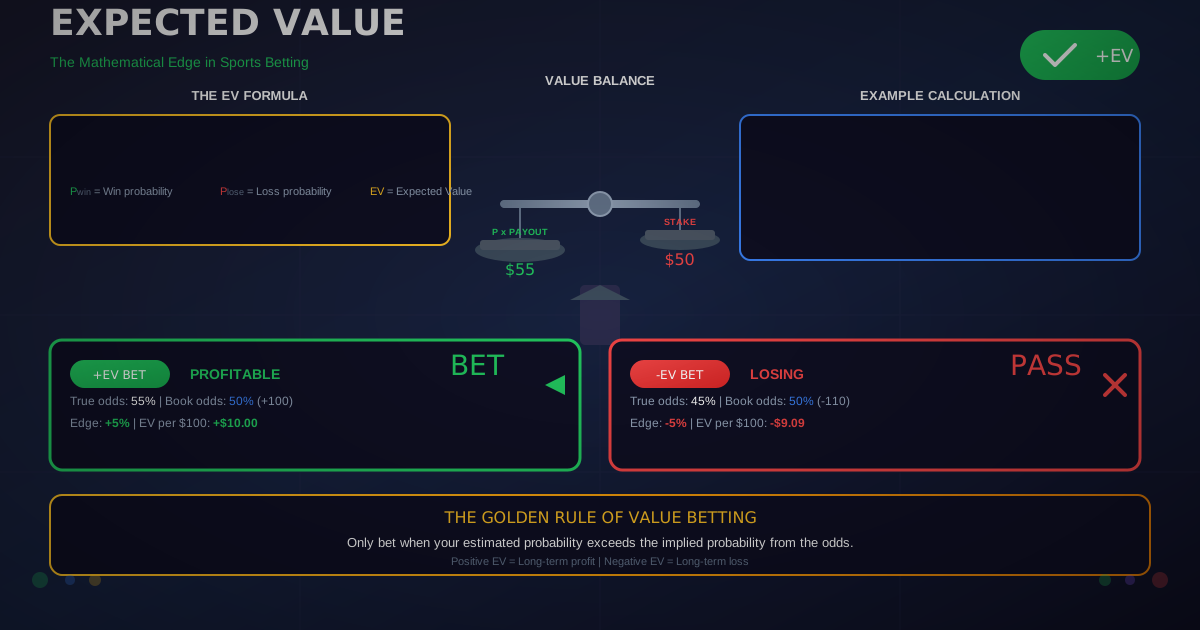
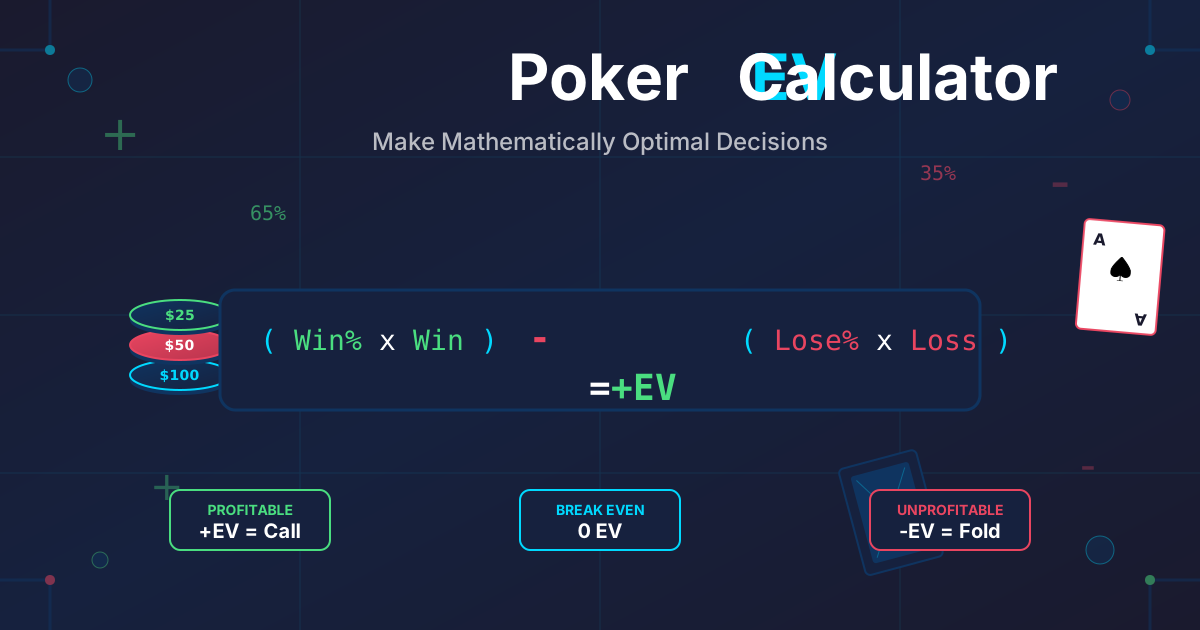
Calculate the expected value of each futures bet with our Expected Value Calculator.
Group Stage Betting: The Bread and Butter of World Cup Wagering
The group stage spans June 11 through June 27, delivering 72 matches in 17 days. This is the highest-volume, highest-opportunity phase of the entire tournament. Here is how to approach it systematically.
All 12 Groups at a Glance
| Group | Team 1 | Team 2 | Team 3 | Team 4 |
|---|---|---|---|---|
| A | Mexico | South Korea | South Africa | Euro PO D |
| B | Canada | Switzerland | Qatar | Euro PO A |
| C | Portugal | Colombia | Uzbekistan | IC PO 1 |
| D | USA | Paraguay | Australia | Euro PO C |
| E | Germany | Ecuador | Ivory Coast | Curacao |
| F | Netherlands | Japan | Tunisia | Euro PO B |
| G | Belgium | Egypt | Iran | New Zealand |
| H | Spain | Uruguay | Saudi Arabia | Cape Verde |
| I | France | Senegal | Norway | IC PO 2 |
| J | Argentina | Algeria | Austria | Jordan |
| K | Brazil | Morocco | Scotland | Haiti |
| L | England | Croatia | Ghana | Panama |
Note: Euro PO = European Playoff winner. IC PO = Intercontinental Playoff winner. Six berths still TBD via March 2026 playoffs.
Group Stage Betting Markets
You are not limited to picking outright group winners. Sportsbooks offer a deep menu of group stage markets.
Available Group Stage Bet Types:
- Group Winner: Which team finishes first in the group
- To Qualify from Group: Any team to advance (top 2 or best 3rd place)
- Exact Group Finish: Predict the exact 1st-2nd-3rd-4th order
- Match Result (1X2): Win/Draw/Win for each individual match
- Match Totals (Over/Under): Goals scored in a match (typically O/U 2.5)
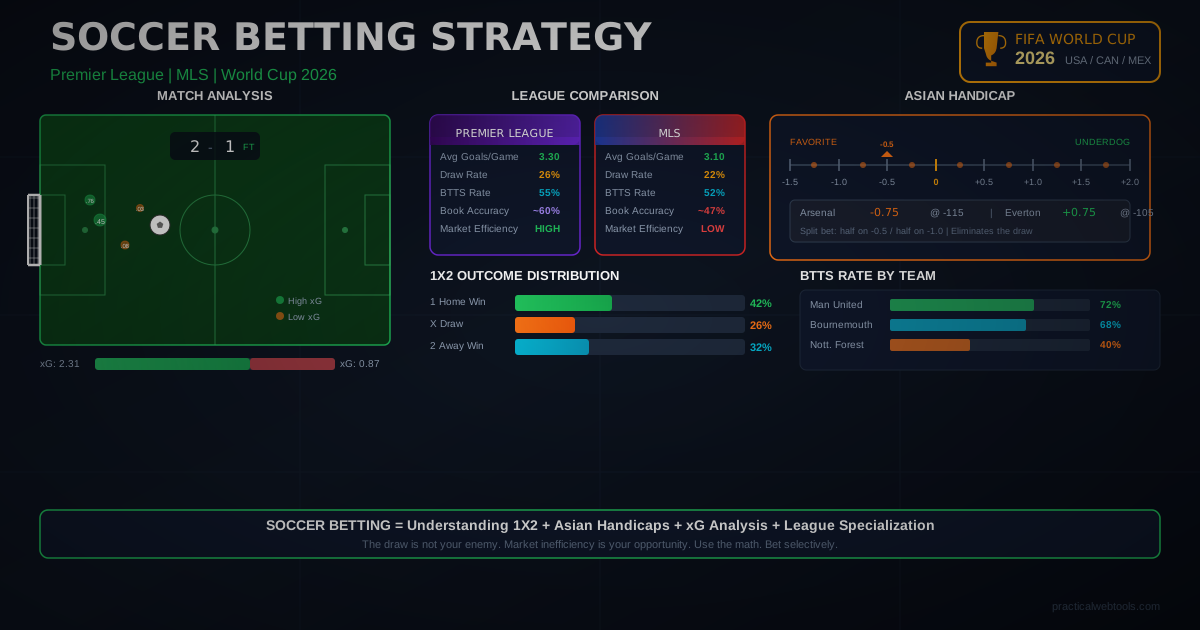
- Both Teams to Score (BTTS): Yes or No
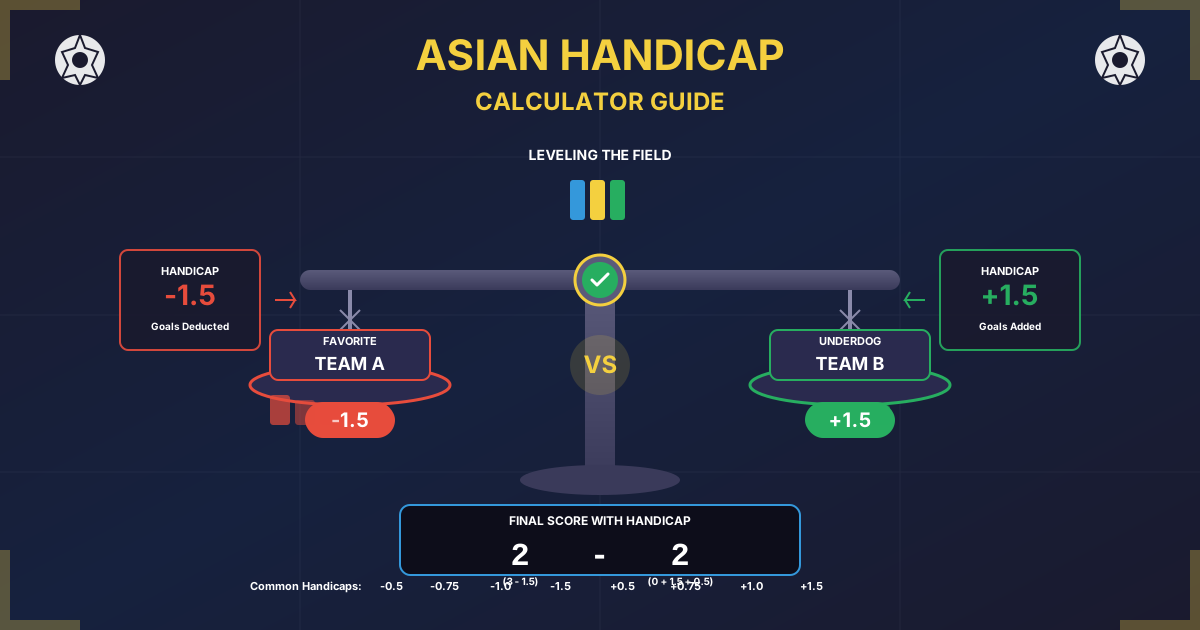
- Asian Handicap: Spread betting on individual matches
- Correct Score: Exact final score prediction
- First Goalscorer / Anytime Goalscorer: Player prop markets
Group Stage Trends That Inform Betting
Historical World Cup data reveals patterns that most casual bettors ignore.
| Trend | Historical Data | Betting Implication |
|---|---|---|
| Favorites in openers | Top-8 ranked teams win opening match ~68% of the time | Back favorites at short odds in Match 1; avoid draws |
| Draws in Match 2 | Group stage Match 2 draws occur at ~28% rate (vs. ~24% overall) | Value on draw in mid-group matches when both teams have 3 points |
| Low scoring openers | Average goals in opening group matches: 2.1 | Lean Under 2.5 in cautious openers between pot 1 and pot 2 teams |
| Matchday 3 chaos | 35%+ of Matchday 3 games feature a goal after the 80th minute | Live betting opportunities on late goals; back Over 0.5 second half goals |
| Upsets per tournament | Average of 5-7 "major upsets" (based on pre-match odds) per group stage | Allocate 10-15% of group stage bankroll to underdog moneylines |
Strategy: Targeting Underdogs in the Right Spots
Not all underdogs are created equal. World Cup group stage upsets follow identifiable patterns.
When to back the underdog:
-
Matchday 1 for motivated underdogs vs. complacent favorites. Saudi Arabia over Argentina (+1800) in 2022. Japan over Germany (+700) in 2022. Both came in Matchday 1 when the underdog was at peak emotional intensity and the favorite was still finding rhythm.
-
Matchday 3 dead rubbers. When a favorite has already qualified with 6 points and rests starters, the underdog fighting for survival is the better bet. This happened repeatedly in 2018 and 2022.
-
African and Asian teams in home-continent-adjacent time zones. Mexico, the USA, and Canada hosting means CONCACAF and CONMEBOL teams benefit from proximity and fan support. Teams from Africa and Asia may face more challenging logistical adjustments, but well-organized teams like Japan, South Korea, and Senegal have repeatedly outperformed their odds in recent World Cups.
Example: In Group H, Saudi Arabia faces Spain. In Qatar 2022, Saudi Arabia stunned Argentina at +1800 on the moneyline. If Saudi Arabia opens at +1200 or longer against Spain in 2026, that is a sprinkle bet worth taking based on Saudi Arabia's track record of delivering at least one seismic upset per World Cup cycle. A $25 bet at +1200 pays $325.
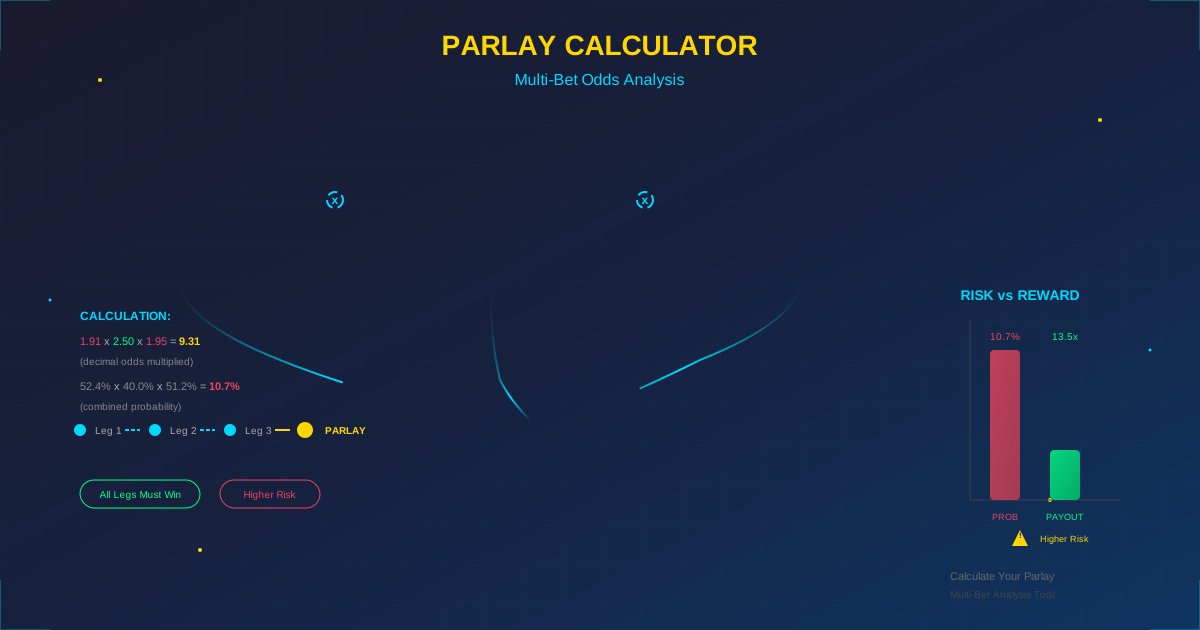
Calculate parlay payouts across multiple group stage bets with our Parlay Calculator.
Knockout Round Betting: Adjusting Strategy After the Group Stage
The knockout rounds begin June 28 with the new Round of 32 and conclude July 19 with the final at MetLife Stadium in New Jersey. The betting landscape shifts dramatically once elimination begins.
Key Knockout Round Differences from Group Stage
No draws in regulation (sort of). Knockout matches that are level after 90 minutes go to extra time, and then penalties if needed. But the 1X2 market in 90-minute terms still includes draws. Historically, roughly 25% of World Cup knockout matches end level after 90 minutes. That draw price at +250 to +300 is often underpriced.
Fatigue compounds. Teams that finished second in their groups or scraped through as a best third-place side often face top seeds in the Round of 32. But by the quarterfinals and semifinals, the survivors are running on fumes. Brazil, for example, has been eliminated in 5 of the last 6 World Cup quarterfinals -- a point at which fatigue and pressure peak.
Tactical conservatism increases. Expect more 1-0 and 0-0 results in the knockout rounds. The Under 2.5 goals line hits at approximately 55-60% in World Cup knockout matches. Adjusted for extra time, totals shift, but the core 90-minute market leans defensive.
Round of 32: The New Battleground
This round is entirely new. No one has historical data on how a 48-team World Cup Round of 32 will play out. But we can make informed projections.
What to expect:
- Several mismatches. The best third-place teams (likely sitting on 3-4 points with mediocre goal difference) will face group winners who cruised through. Expect 2-3 matches with lines of -300 or wider. These are not great value to back outright but may present opportunities in totals and prop markets.
- 2-3 genuine coin-flip matches. When a strong second-place finisher meets a slightly weaker group winner from the other side of the bracket, you get competitive odds. These are the matches to focus on.
- Home advantage for USA, Mexico, and Canada if they make it. Playing a knockout match in front of 80,000 home fans in a hostile atmosphere is worth at least half a goal on the spread.
Hedging Futures in the Knockout Rounds
If you hold a futures bet on a team that reaches the quarterfinals, your ticket has significant value. You do not need to let it ride.
Example: You bet $100 on France at +700 before the tournament. France reaches the quarterfinals. Their odds to win the tournament have shortened to +250. Your original $100 bet pays $800 if France wins it all. You can now place a hedge bet on France's quarterfinal opponent.
If France's quarterfinal opponent is, say, Netherlands, and the Netherlands moneyline is +180, you could bet $200 on Netherlands. If Netherlands wins, you collect $560, offsetting much of your original $100 futures loss. If France wins, your futures ticket remains alive worth $800 and you are only down the $200 hedge. Net expected profit is positive either way.
Run exact hedge calculations with our Hedge Calculator.
Host Nation Betting Angles: USA, Canada, and Mexico
Three host nations means three teams with built-in advantages that the betting market may not fully price in.
Historical Host Nation Performance
| Year | Host(s) | Best Result | Pre-Tournament Odds | Profitable to Back? |
|---|---|---|---|---|
| 2022 | Qatar | Group Stage Exit | +15000 | No |
| 2018 | Russia | Quarterfinals | +5000 | Yes (to advance) |
| 2014 | Brazil | Semifinals | +300 | Push (expected) |
| 2010 | South Africa | Group Stage Exit | +8000 | No |
| 2006 | Germany | Semifinals | +800 | Yes (to advance) |
| 2002 | Japan / South Korea | Semifinals (KOR) | +10000 | Massively Yes |
| 1998 | France | Winner | +450 | Yes |
Key insight: Six host nations have won the World Cup in history (Uruguay 1930, Italy 1934, England 1966, West Germany 1974, Argentina 1978, France 1998). Host nations enjoy an average +0.64 goal advantage per match compared to their typical away/neutral performances. Since 1998, betting on the host nation to win every match has produced a 5.9% return on investment.
USA (Group D: USA, Paraguay, Australia, Euro Playoff C Winner)
The USMNT is a -575 favorite to advance from Group D and +125 to win the group outright. These are some of the shortest group-stage odds for any team in the tournament.
Betting angle: The value is not in backing the USA to win Group D (the market has priced that correctly). The value is in USA-related prop markets: USA total group stage goals Over 5.5, USA to keep at least one clean sheet in the group stage, and USA to reach the quarterfinals at +250 or longer. The home crowd advantage in American stadiums is a genuine factor that historically moves results. Consider also player props for Christian Pulisic and other USMNT stars in matches played in front of 70,000+ American fans.
Mexico (Group A: Mexico, South Korea, South Africa, Euro Playoff D Winner)
Mexico has reached the Round of 16 in seven consecutive World Cups (1994-2022) but has never advanced past it in the modern era. The "Quinto Partido" (fifth match) curse is a real narrative that books lean into.
Betting angle: Mexico to advance from the group is heavily juiced. The more interesting bet is Mexico to reach the quarterfinals at +300 to +400, breaking the Round of 16 curse in front of a home crowd. If Mexico gets a favorable Round of 32 draw (as a group winner), the quarterfinal path opens up.
Canada (Group B: Canada, Switzerland, Qatar, Euro Playoff A Winner)
Canada's first World Cup was 2022, where they lost all three group matches but competed admirably. Swiss efficiency and potentially Italy (via playoff) make this the most challenging group of the three host nations.
Betting angle: Canada to advance from Group B at plus odds (+150 to +200) could offer value. Home advantage is real, and Canada's squad has improved significantly since 2022. The match against Qatar, another recent World Cup debutant who struggled in 2022, is a near must-win, and Canada will have 40,000+ home fans behind them.
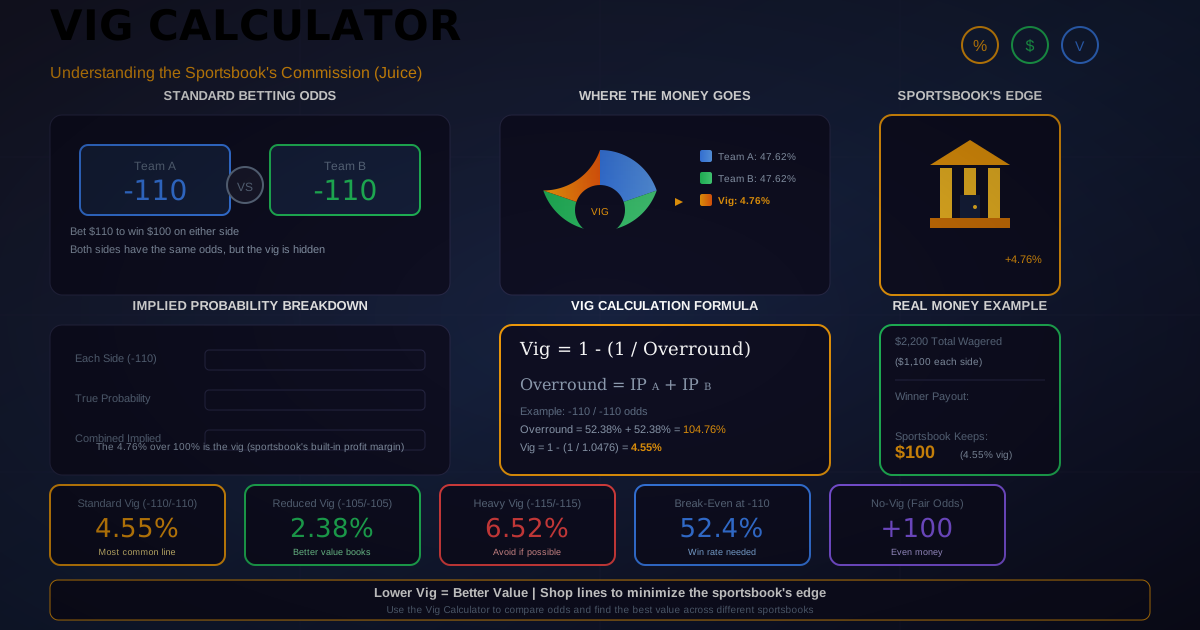
Analyze the vig on host nation markets with our Hold/Vig Calculator to find the book offering the lowest margin.
Dark Horse Identification: Where the Value Hides
In every World Cup, at least one team dramatically outperforms its pre-tournament odds. Identifying these dark horses before the tournament starts is the most profitable skill a World Cup bettor can develop.
What Makes a World Cup Dark Horse?
Historical analysis of surprise World Cup performers reveals common characteristics.
-
Strong recent form that the market underweights. South Korea in 2002 (+10000), Croatia in 2018 (+3300), and Morocco in 2022 (+15000) all entered with recent momentum that the market dismissed as unsustainable.
-
A favorable group draw. Dark horses need a kind group to build confidence and momentum. A team that squeaks through as a third-place side is rarely the one that makes a deep run. Group winners with clean sheets and goals flowing carry psychological advantages.
-
A generational talent. Every dark horse run has at least one transcendent individual. Hakan Sukur for Turkey 2002, Luka Modric for Croatia 2018, Hakim Ziyech and Achraf Hakimi for Morocco 2022.
-
Tactical discipline. Dark horses do not outplay favorites in open, end-to-end matches. They win by being organized, compact, and ruthless on the counter.
2026 Dark Horse Candidates
| Team | Odds | Group | Key Player | Why They Could Surprise |
|---|---|---|---|---|
| Norway | +2800 | I (France, Senegal, IC PO 2) | Erling Haaland | Haaland is a generational striker; Norway's squad is their best in decades; favorable matchups against Senegal and the playoff winner |
| Japan | +4000 | F (Netherlands, Tunisia, Euro PO B) | Takefusa Kubo | Beat Germany and Spain in 2022 group stage; elite pressing system; cohesive squad with European club experience |
| Morocco | +5000 | J (Brazil, Scotland, Haiti) | Achraf Hakimi | 2022 semifinalists; the core squad returns; defensively elite |
| Colombia | +5000 | K (Portugal, Uzbekistan, IC PO 1) | Luis Diaz | Recent Copa America form; deep squad; passionate traveling fan base |
| Croatia | +6000 | L (England, Ghana, Panama) | Luka Modric | Perennial overperformers; 2018 finalists, 2022 semifinalists; never count them out |
Example: A $50 bet on Morocco at +5000 pays $2,550 if they reach the final (as they nearly did in 2022). Even a hedge-friendly path to the semifinals could return significant value if their odds shorten during the tournament.
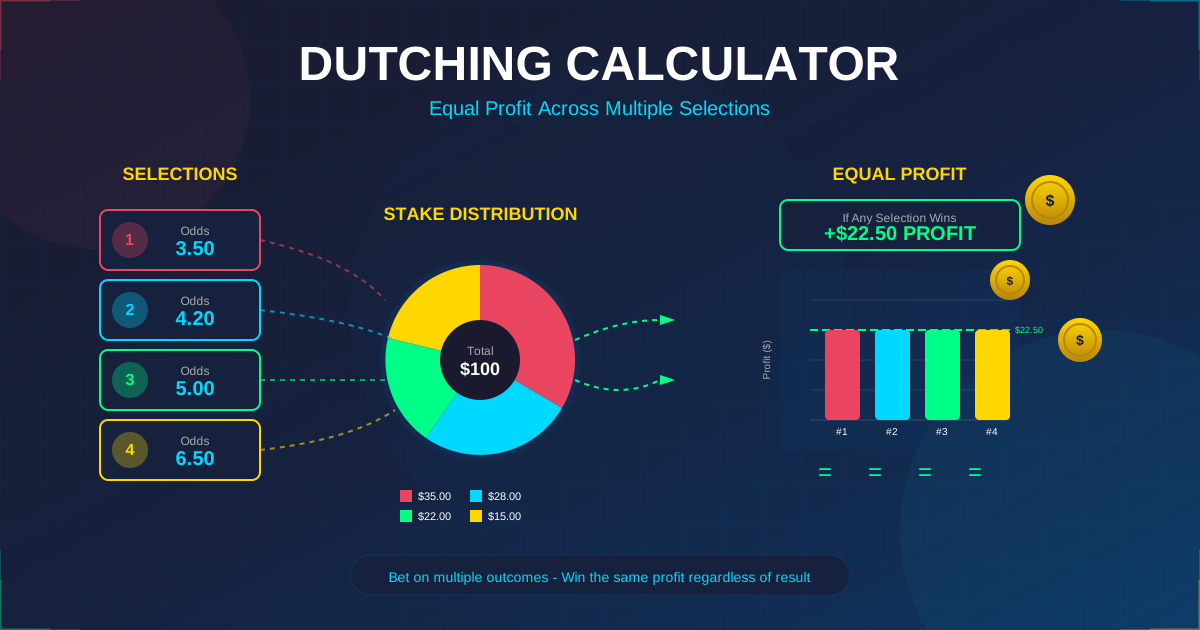
Use our Dutching Calculator to spread your dark horse budget across multiple longshots for maximum coverage.
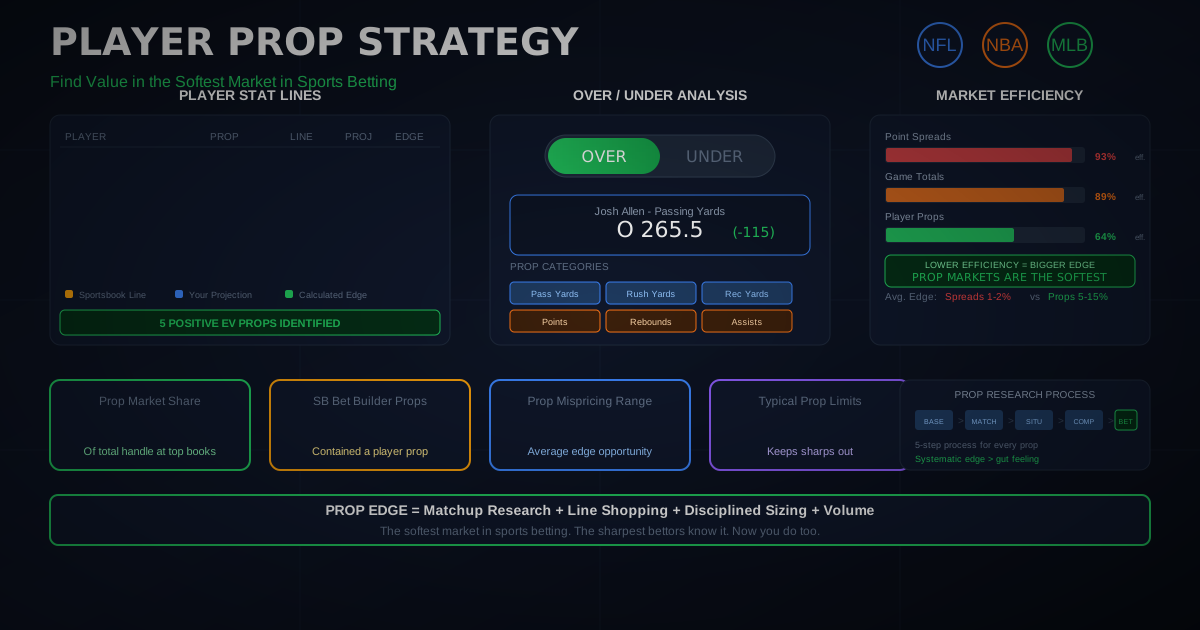
Match Props and Player Props: Expanding Your World Cup Card
Beyond match results and futures, the 2026 World Cup will offer the deepest prop market in soccer betting history. American sportsbooks, hosting this tournament on home soil, will list hundreds of props per match.
Match Props Worth Targeting
Total Goals Over/Under: The 2022 World Cup averaged 2.7 goals per game. With 48 teams, expect more lopsided group stage matches (Germany vs. Curacao, Brazil vs. Haiti) where the total should be set at 3.5 or higher. Back the Over in clear mismatches, especially in the first two matchdays when weaker teams are still playing with ambition.
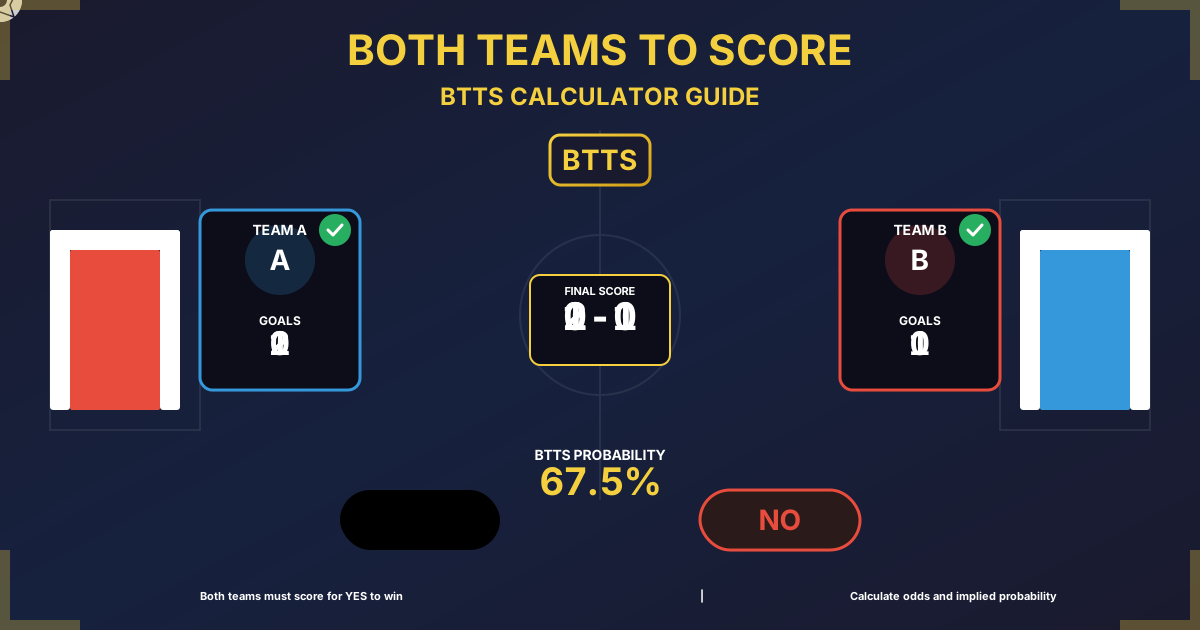
Both Teams to Score (BTTS): In the 2022 group stage, BTTS hit in 58% of matches. But in mismatches, it hit only 35%. In competitive group matches (pot 1 vs. pot 2), BTTS hit at 72%. Target BTTS Yes in competitive fixtures and BTTS No in mismatches.
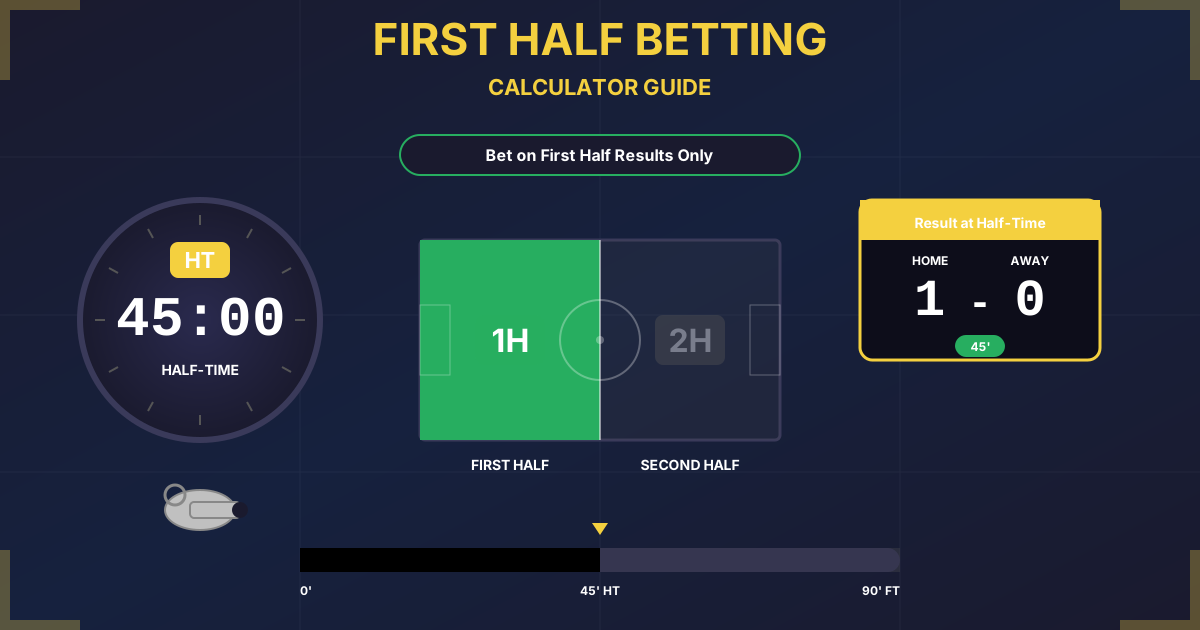
First Half / Second Half Goals: World Cup matches traditionally see more goals in the second half (58% of goals scored after halftime in 2022). Back "More Goals in 2nd Half" at even money or better.
Correct Score: The most common World Cup score is 1-0 (appeared in 22% of matches in 2022). In the knockout rounds, 1-0 correct score at +500 to +600 is a recurring value bet.
Player Props
Golden Boot (Top Scorer): Historically, the Golden Boot winner scores 5-8 goals. Kylian Mbappe (France, +600), Erling Haaland (Norway, +800), and Harry Kane (England, +1000) are market favorites. But consider that the expanded format means more matches and more opportunities for strikers on strong teams to pad stats against weaker opposition.
Anytime Goalscorer by Match: Player props in individual matches offer some of the softest lines in soccer betting. If a striker like Haaland is priced at -120 to score anytime against a weaker Group I opponent, and you assess his true probability at 65%+, that is a positive EV bet.
Live Betting the World Cup: The Sharpest Edge
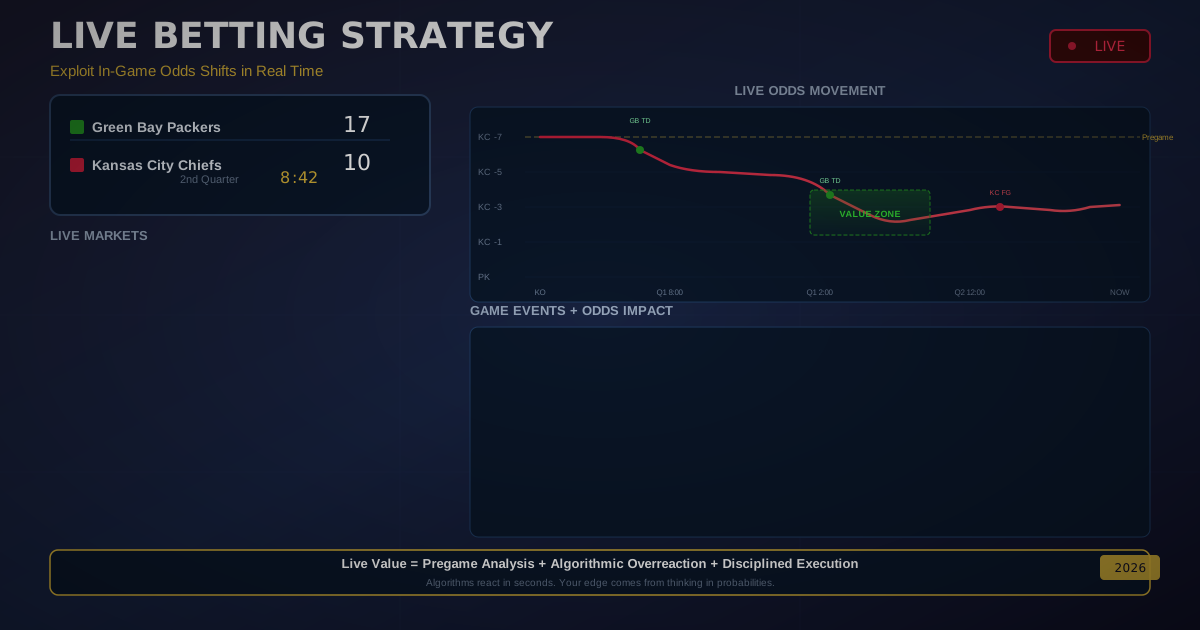
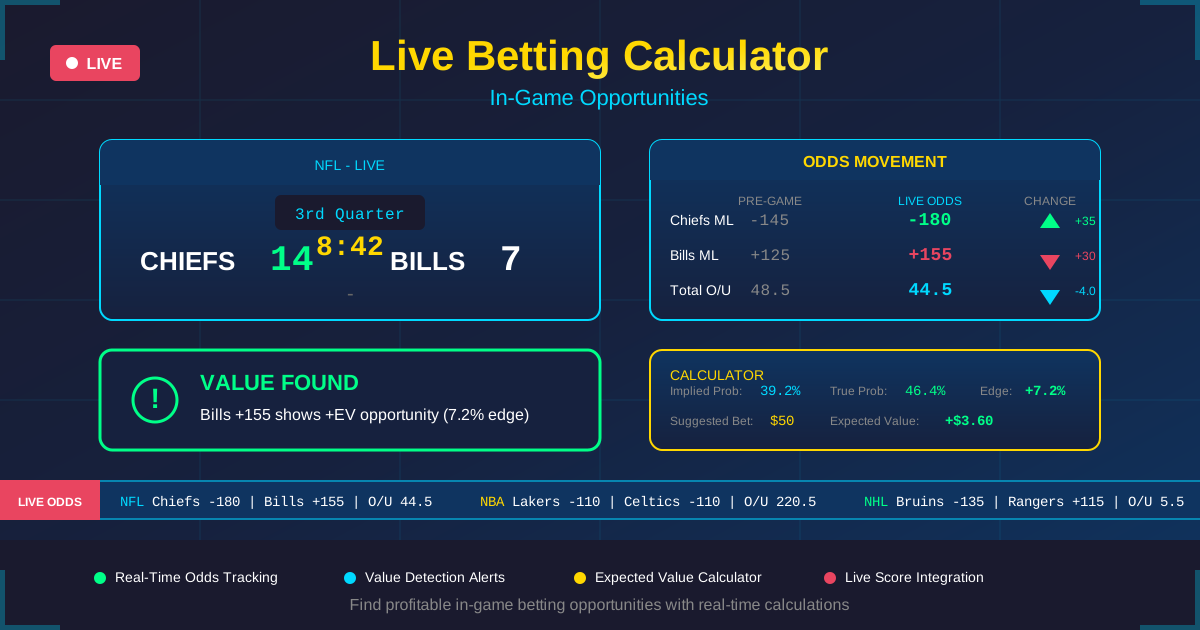
Live (in-play) betting during the World Cup is where the biggest edges exist. The market is thinner, casual money floods in on emotional reactions, and disciplined bettors who have done pre-match preparation can find mispriced lines in real time.
Why World Cup Live Betting Is Different
Massive casual handle distorts lines. The World Cup attracts bettors who wager on nothing else all year. These casual bettors tend to overreact to early goals, overvalue favorites after conceding, and chase parlays. When $35+ billion is flowing through the market and a significant percentage is uninformed money, the live odds adjust to accommodate that flow -- creating opportunities for sharps.
Example: Spain is leading Saudi Arabia 1-0 at halftime. Casual bettors pile onto Spain live at -500 to close it out. But Saudi Arabia famously came back from 1-0 down to beat Argentina 2-1 in 2022. If the live line offers Saudi Arabia at +1200 to win or +350 for Draw at full time, and you assess a non-zero comeback probability based on game flow, there is potential value.
Live Betting Strategies for the World Cup
-
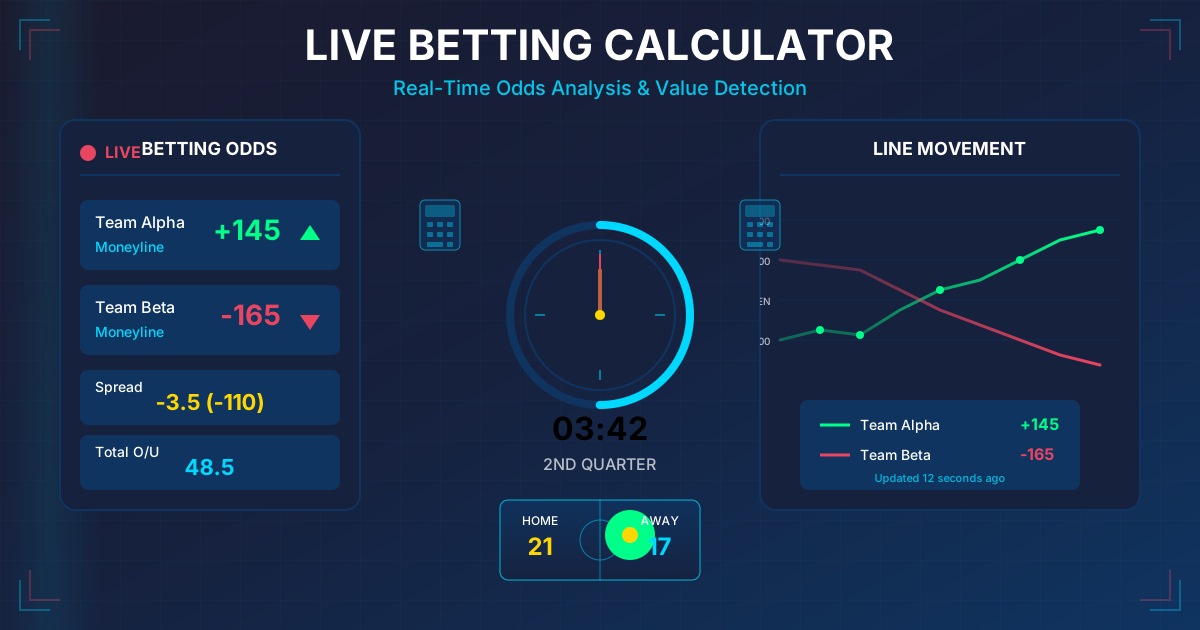
Back the favorite after they concede first. When a strong team goes down 1-0, their live odds lengthen significantly. If your pre-match analysis says France is 70% to beat Senegal, and Senegal scores in the 15th minute, France's live moneyline might shift from -200 pre-match to +110. If you still believe France is 65%+ to win, the +110 is a value bet.
-
Target the Over in the 55th-65th minute window. If a game is 0-0 at the hour mark, the Over 1.5 line often drops to -130 or shorter. But historically, 70%+ of 0-0 World Cup matches at the 60th minute produce at least one goal. Look for games where teams need results and tactical adjustments post-60 minutes open up space.
-
Watch for red card overreactions. A red card changes the game dramatically, and live markets adjust aggressively. But the team down to 10 men often consolidates defensively and the game slows. The Under often becomes the smart play after a red card, especially in knockout matches where the shorthanded team is protecting a draw.
Common World Cup Betting Mistakes (and How to Avoid Them)
Even experienced bettors fall into traps during the World Cup. The tournament's unique structure, emotional intensity, and long duration create pitfalls that do not exist in regular-season betting.
Mistake 1: Overvaluing Recent Domestic League Form
A player dominating the Premier League in April does not automatically translate to World Cup performance in June. International tournaments demand different tactical systems, chemistry with less-familiar teammates, and mental resilience under national pressure. Germany in 2018 and 2022 had world-class Bundesliga performers and exited in the group stage both times.
Mistake 2: Ignoring the Squad Depth Factor
With 8 matches required to win the title (up from 7), rotation and bench quality matter more than ever. Spain and France, with absurdly deep squads, can rotate without significant quality drop-off. A team like Norway, while exciting, has Haaland and then a significant talent gap. This matters in the quarterfinals and beyond.
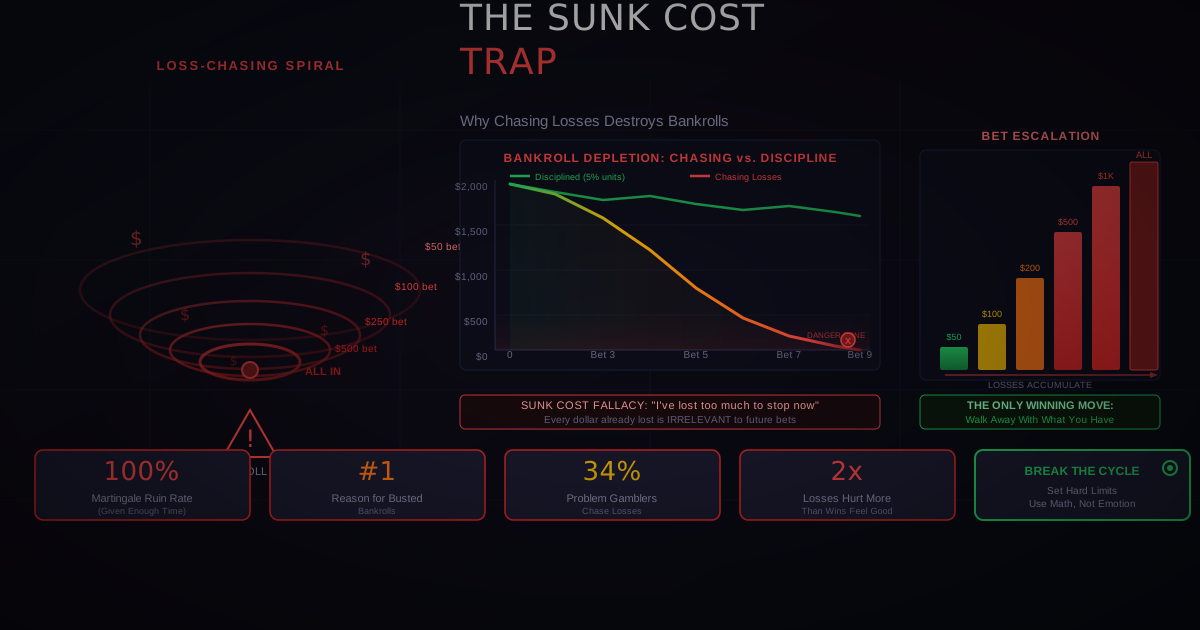
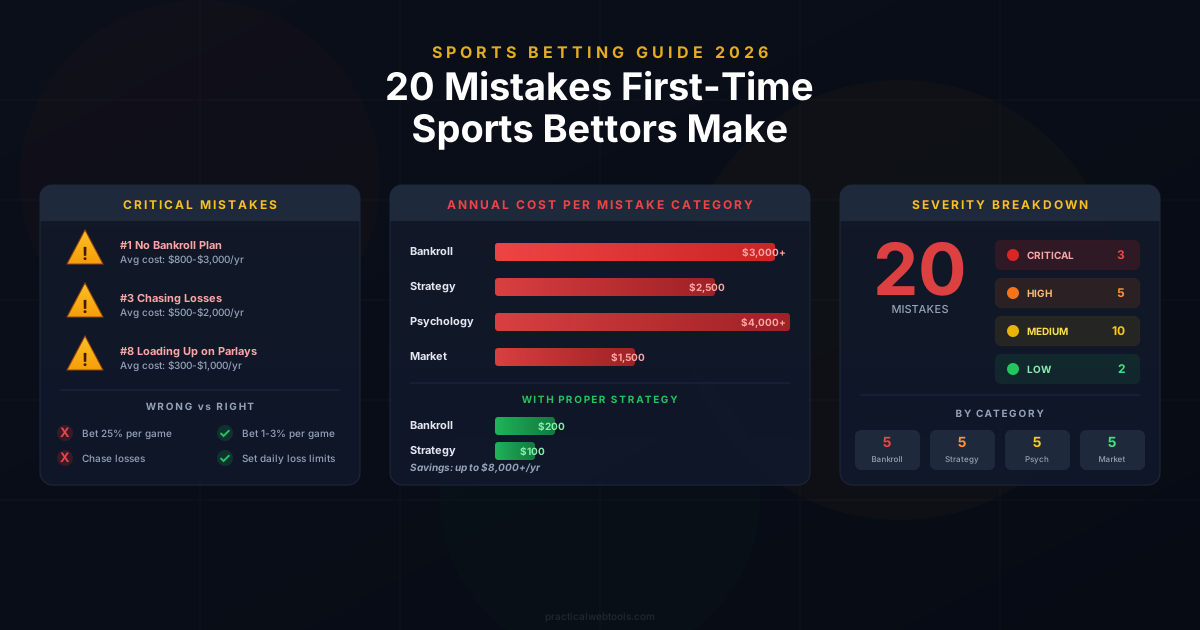
Mistake 3: Chasing Group Stage Losses Into the Knockout Rounds
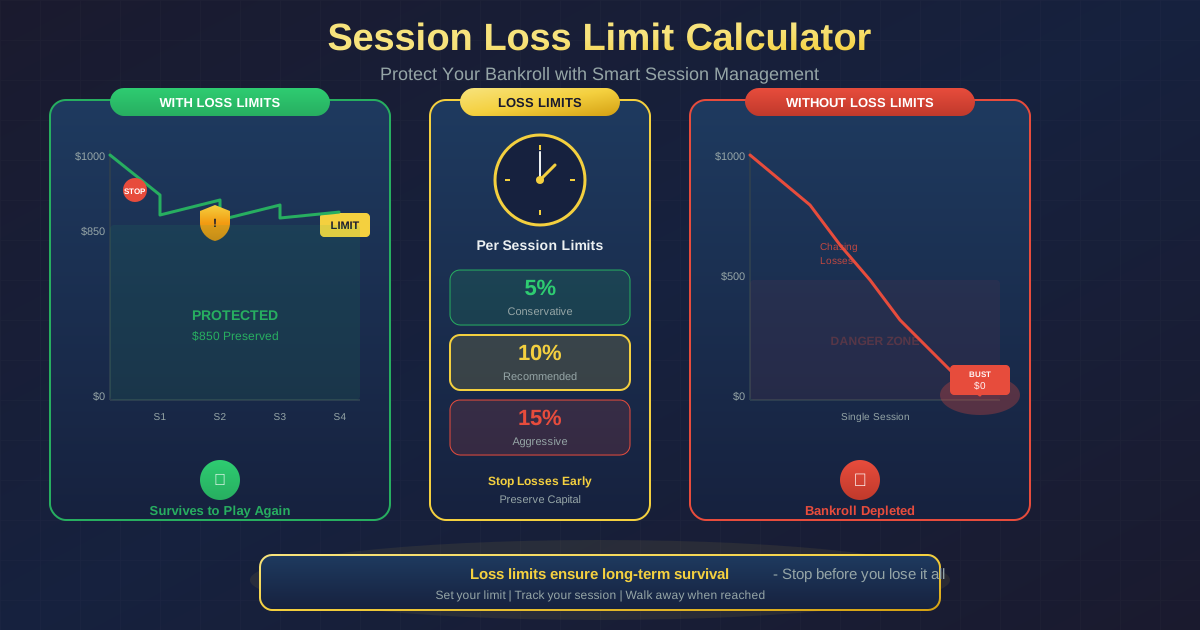
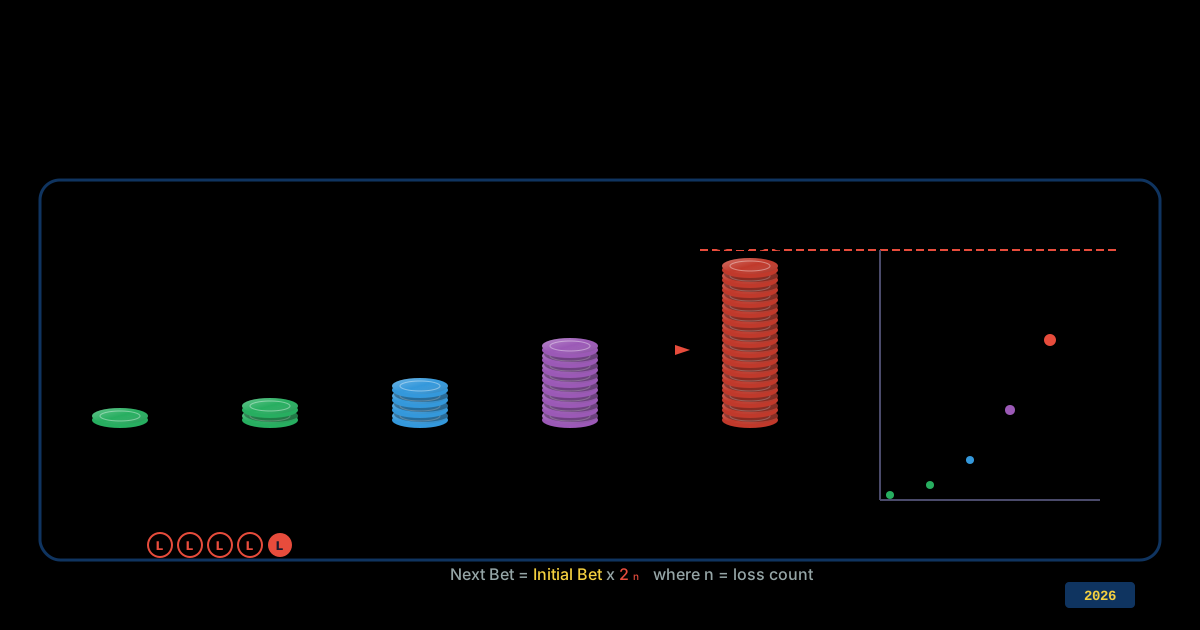
The group stage is 72 matches over 17 days. If you have a losing group stage, the worst response is to increase bet sizes in the knockout rounds to "make it back." The knockout rounds are lower-volume (32 matches from the Round of 32 to the final) and each individual result carries more variance. Stick to your bankroll management plan.
Determine your optimal bet size for every wager with our Kelly Criterion Calculator.
Mistake 4: Betting Every Match
With 104 total matches, the temptation to bet every game is real. Resist it. Professional bettors are selective. They might find value in 20-30 of the 72 group stage matches and 8-10 of the 32 knockout matches. Forcing bets on games where you have no edge is the fastest way to drain a World Cup bankroll.
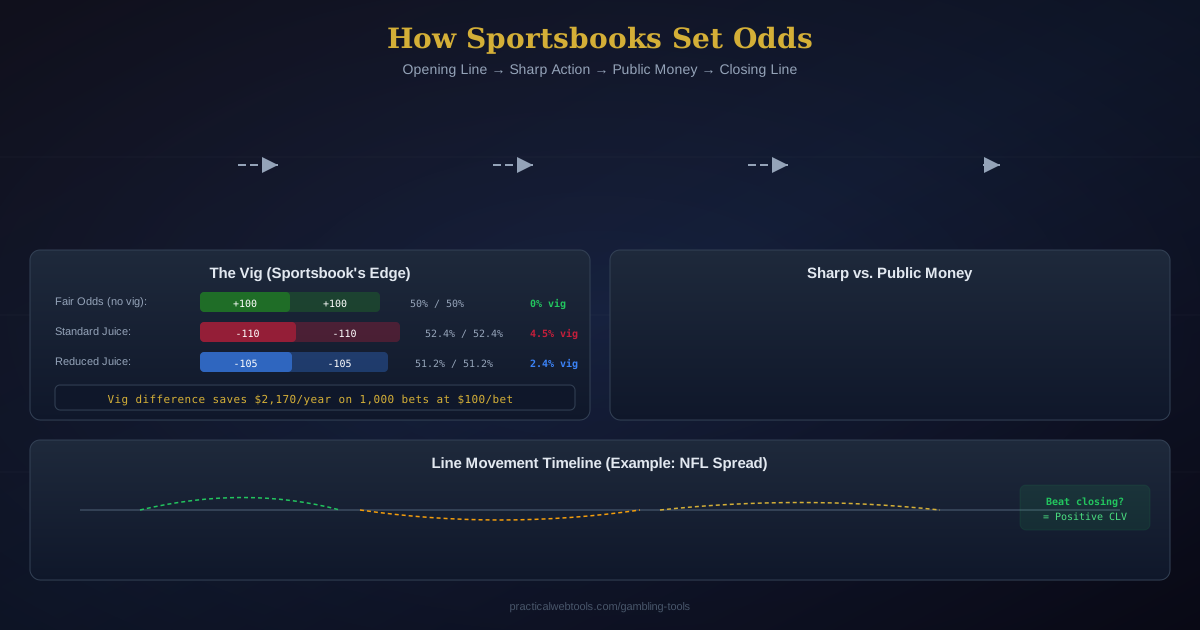
Mistake 5: Neglecting the Vig Across Multiple Books
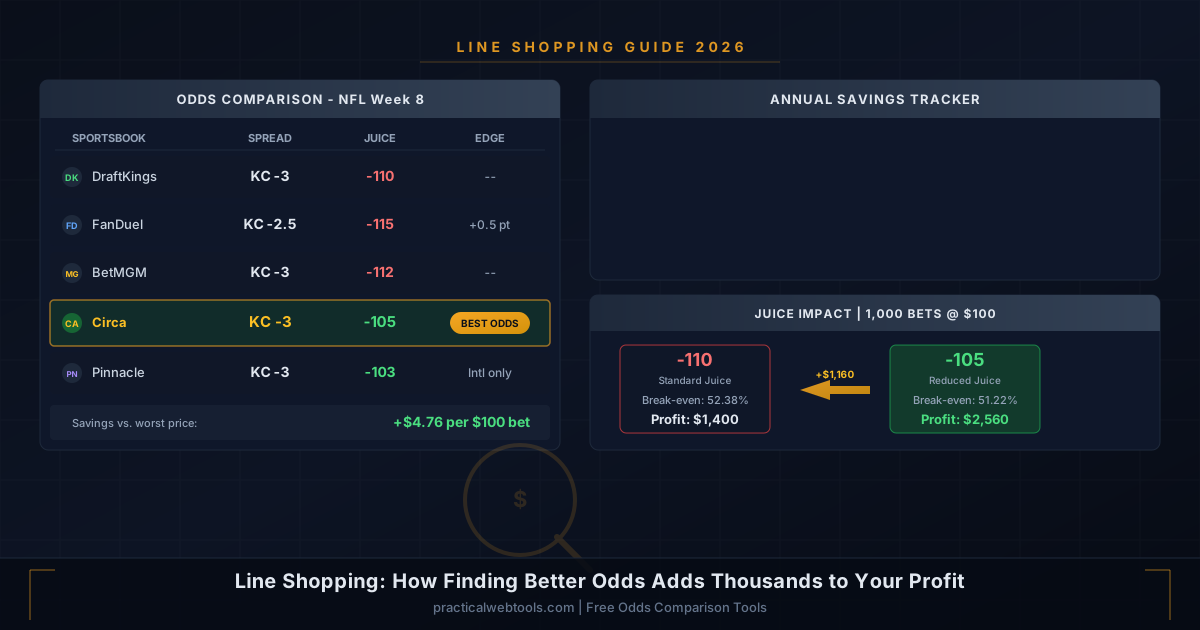
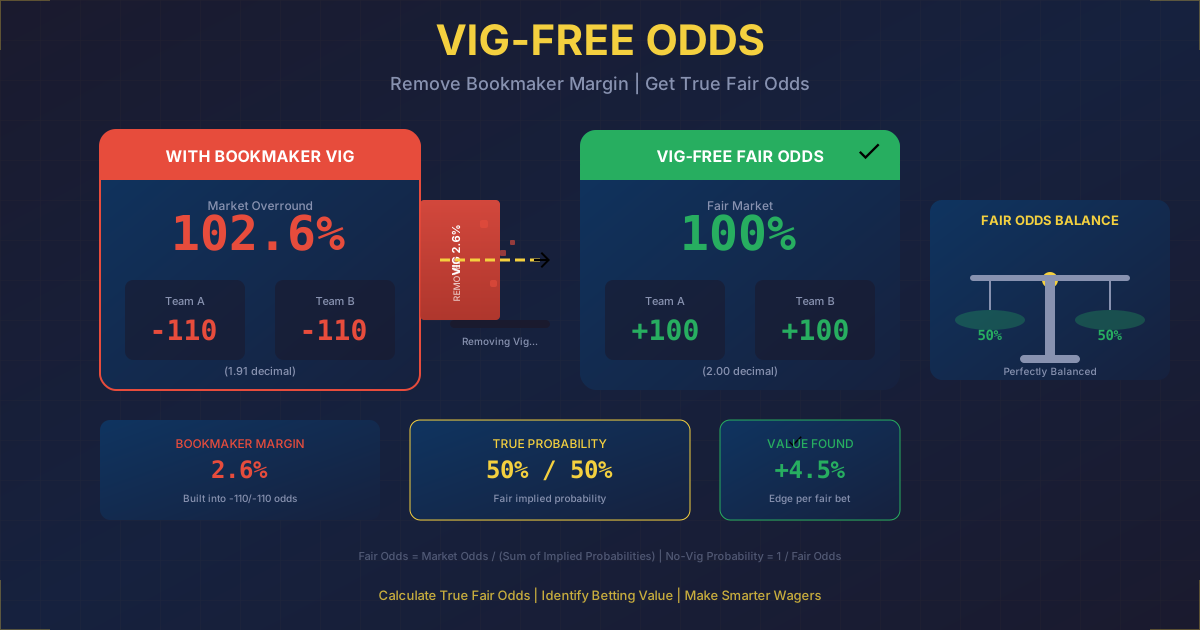
The sportsbook offering Spain at +400 might have France at +800, while a different book has France at +700 but Spain at +450. Line shopping across 3-4 books is essential, especially for futures and group winner markets where the vig can vary 3-5% between operators.
Compare the hold percentage across different sportsbooks with our Hold/Vig Calculator.
Mistake 6: Parlaying Everything
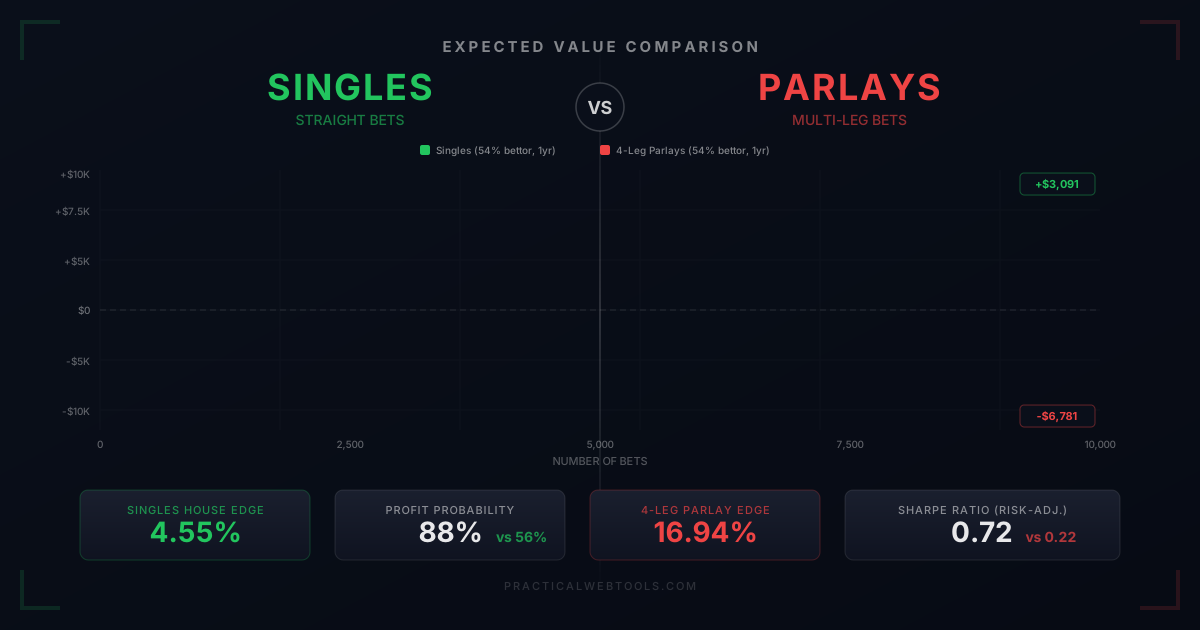
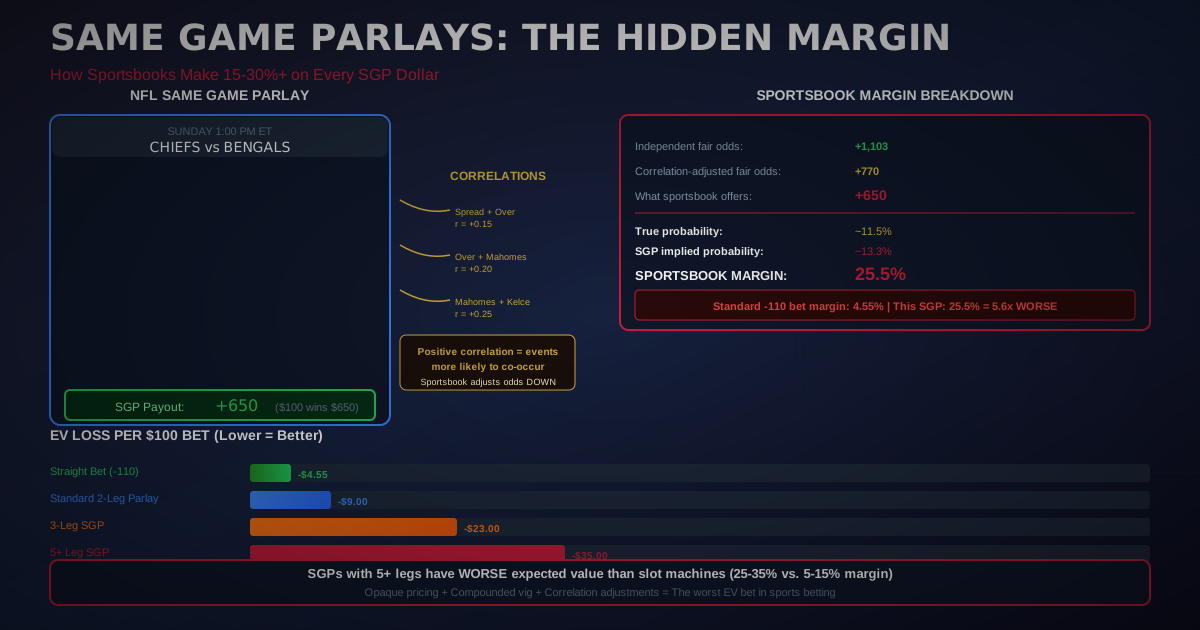
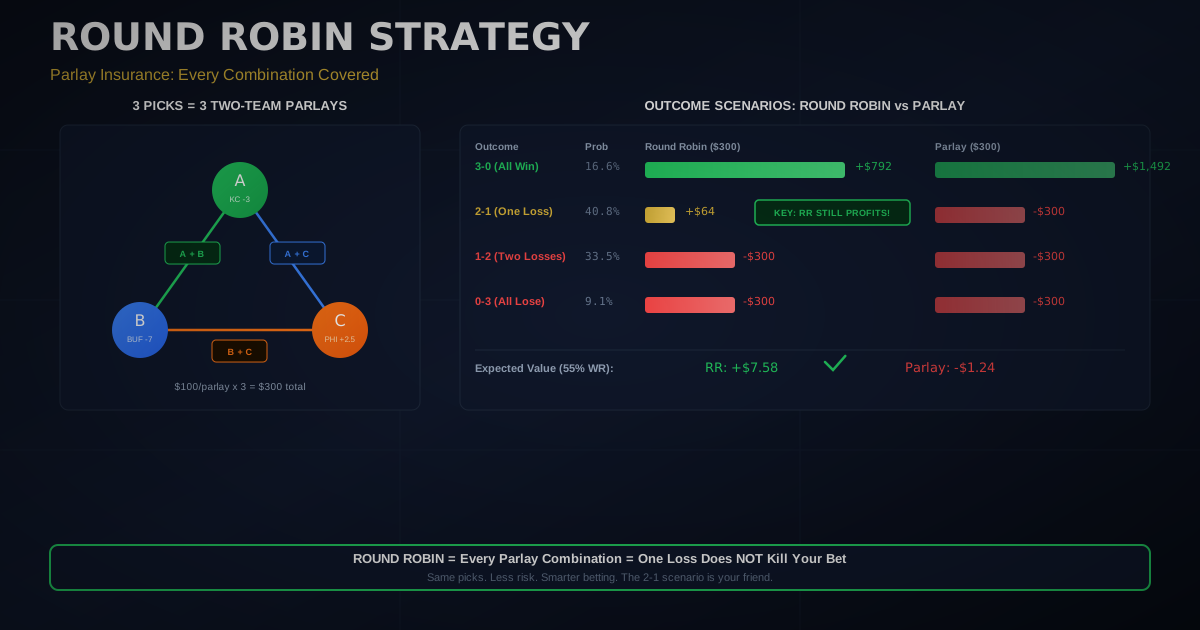
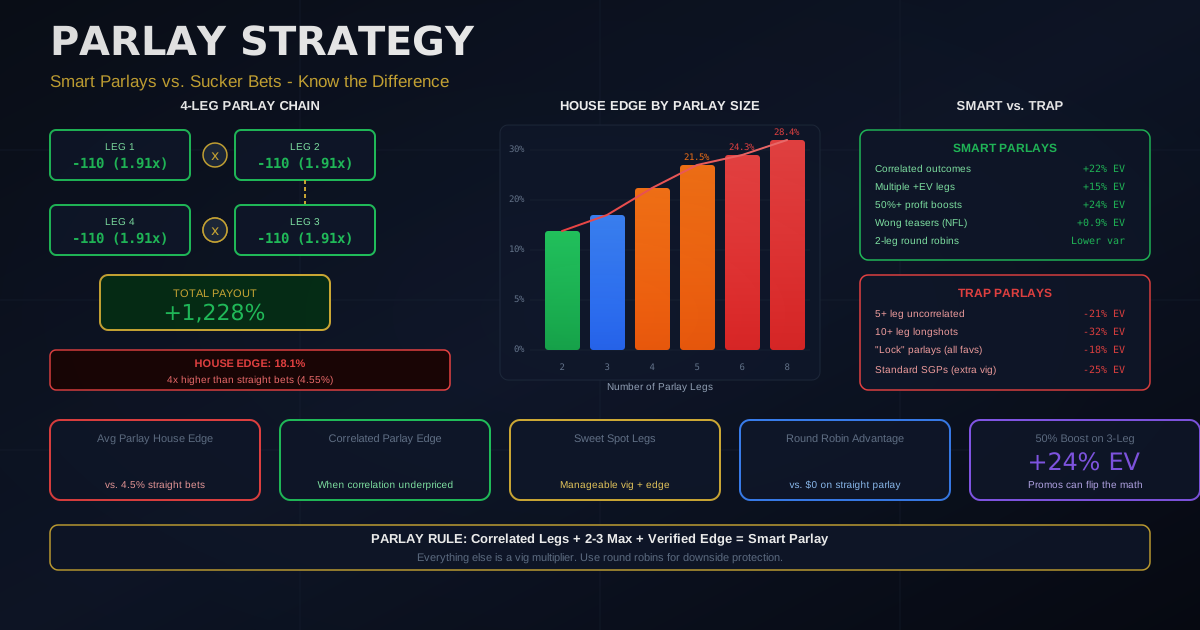
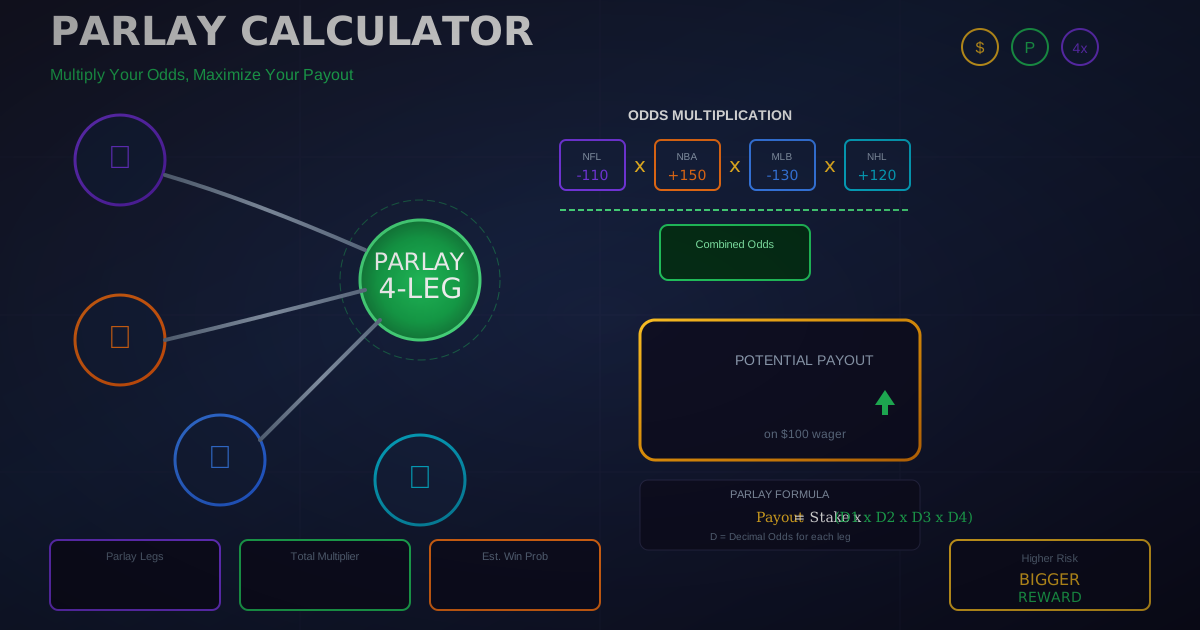
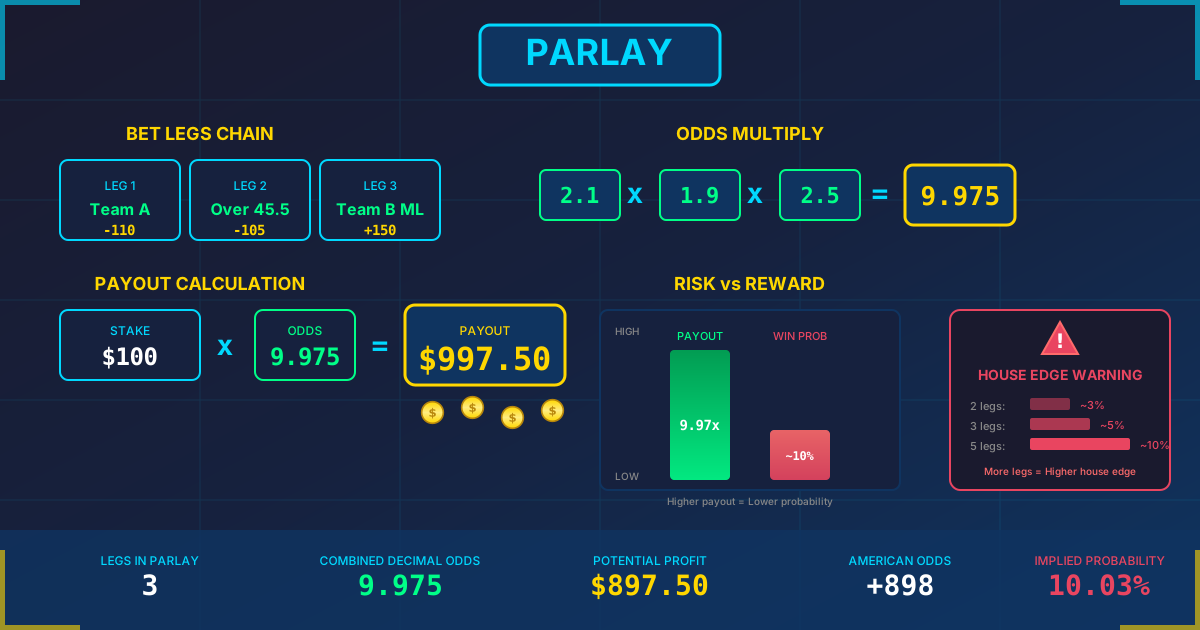
World Cup parlays are fun. They are also the sportsbook's best friend. A four-leg group stage parlay (four match results) at average -110 odds per leg has a house edge of approximately 35%. If you must parlay, keep it to two legs maximum and ensure each leg has standalone positive expected value.
Build and price your World Cup parlays with our Parlay Calculator.
Arbitrage and Cross-Market Opportunities
The sheer volume of World Cup betting markets across dozens of sportsbooks creates arbitrage windows that do not exist for regular club soccer.
What Creates World Cup Arbitrage?
Speed of line movement. When a starting lineup is announced one hour before kickoff and a key player is rested, some books adjust their lines within seconds. Others take minutes. That gap is an arb window.
Futures vs. match odds discrepancy. A team's futures odds imply a certain probability of winning the tournament. If that same team's match-by-match odds, when compounded, imply a different probability, there is a discrepancy worth exploring.
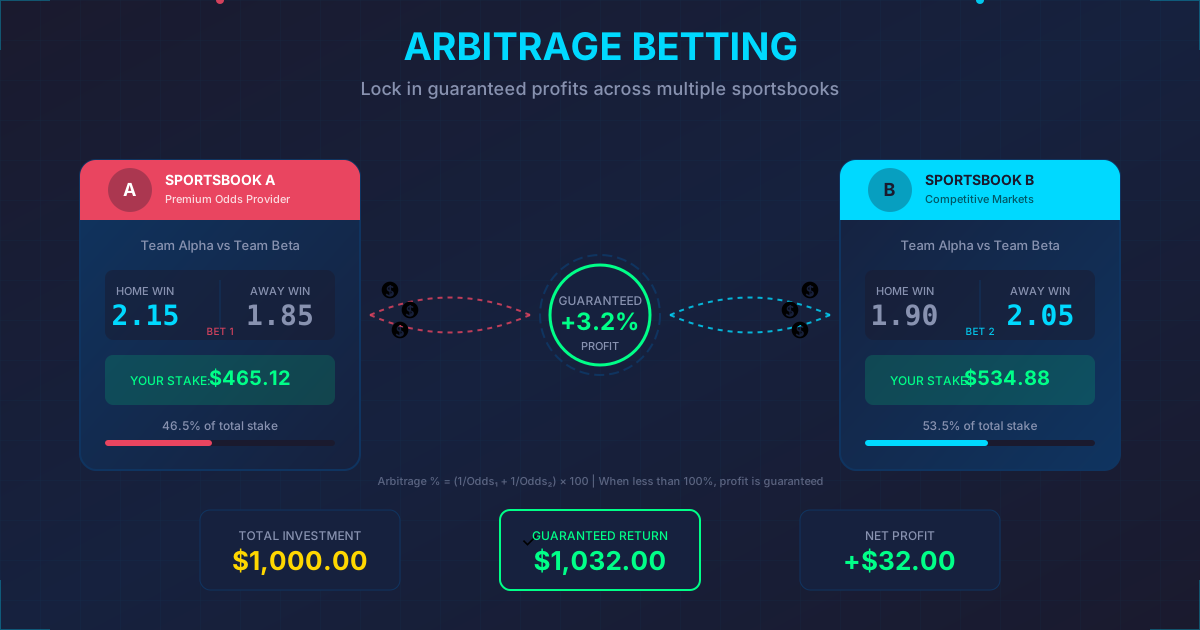
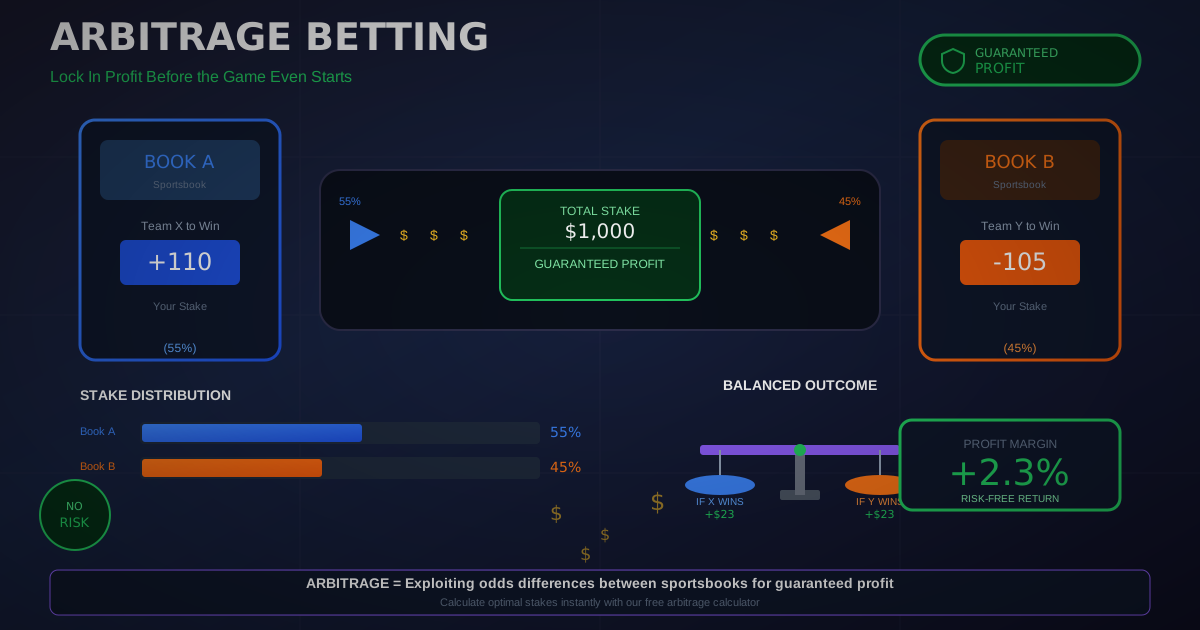
Cross-book line differences. With 20+ legal U.S. sportsbooks all pricing the same 104 matches, line discrepancies are inevitable. A team might be +180 on DraftKings and +200 on FanDuel. The spread between those prices, combined with the opposing side at another book, can yield a guaranteed profit.
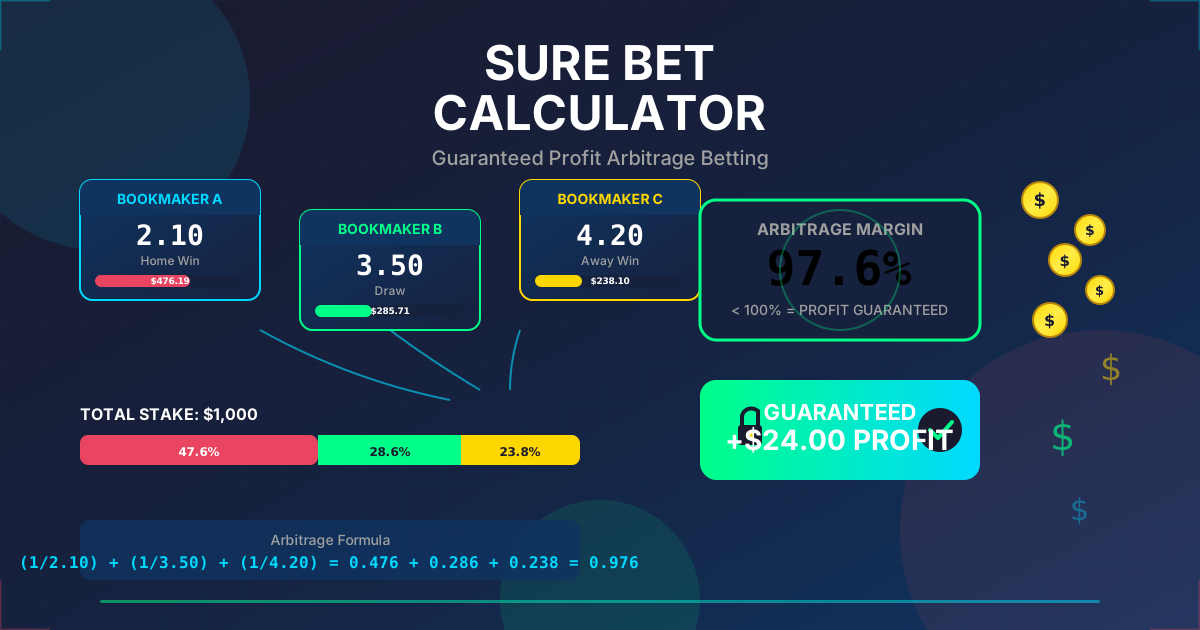
Example: In a Group E match, Germany is -200 at Book A, and the Draw is +380 at Book B, and Ecuador is +550 at Book C. If the combined implied probability of all three outcomes across these different books drops below 100%, you have an arbitrage opportunity. Bet the correct proportional amount on all three outcomes and you profit regardless of the result.
Find three-way arbitrage opportunities instantly with our Arbitrage Calculator.
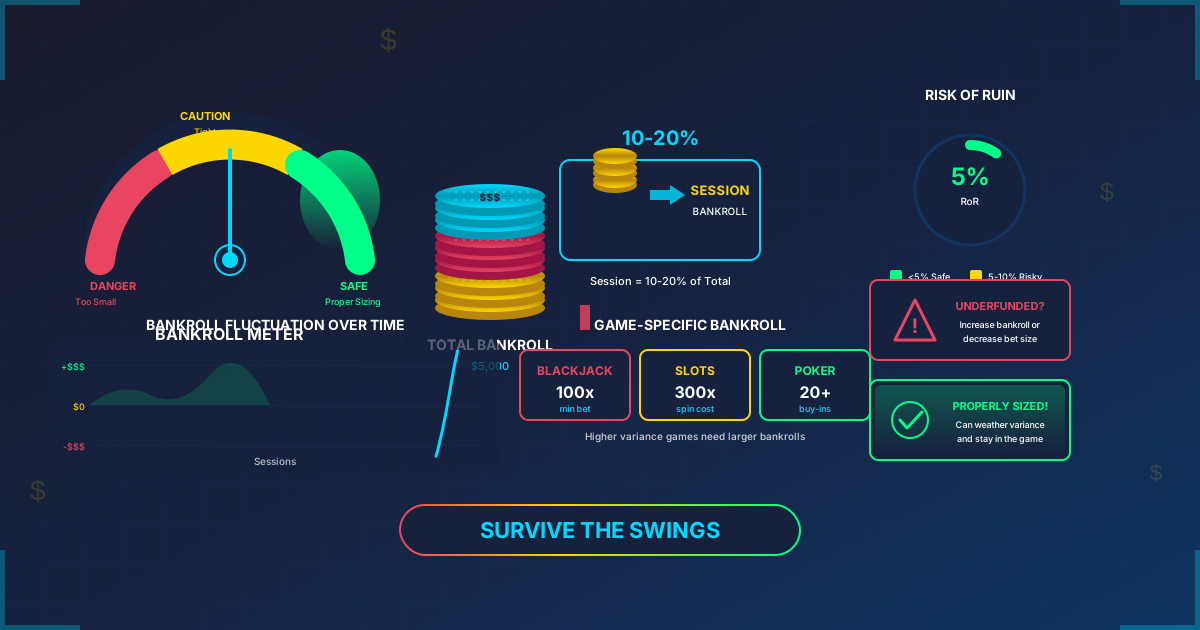
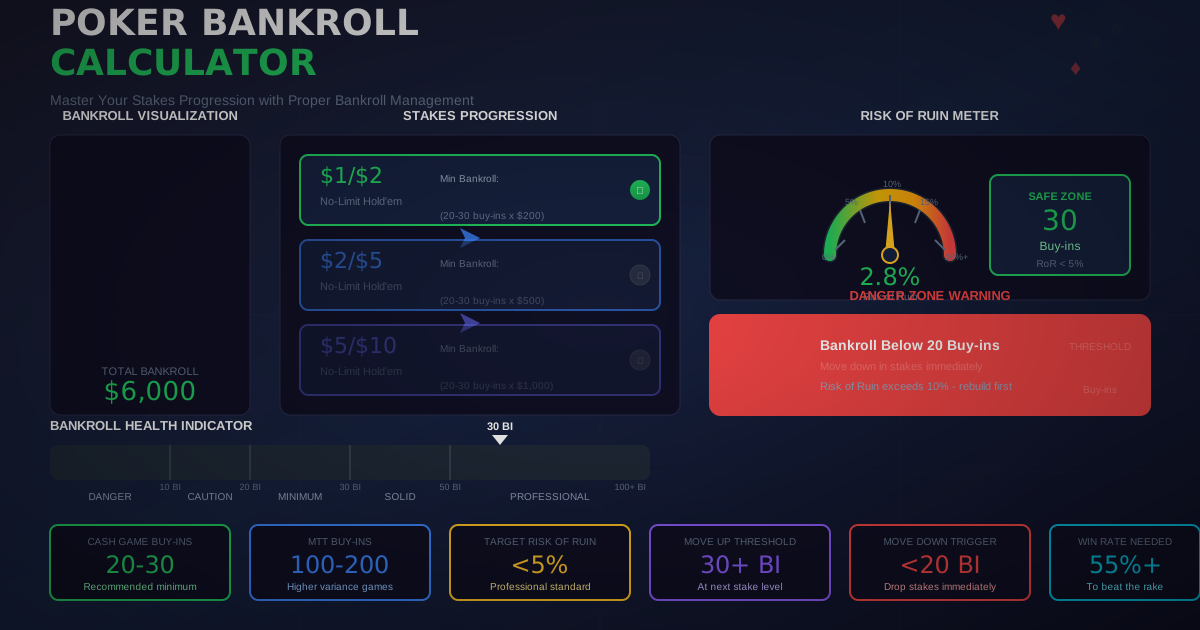
Building Your World Cup Bankroll Plan
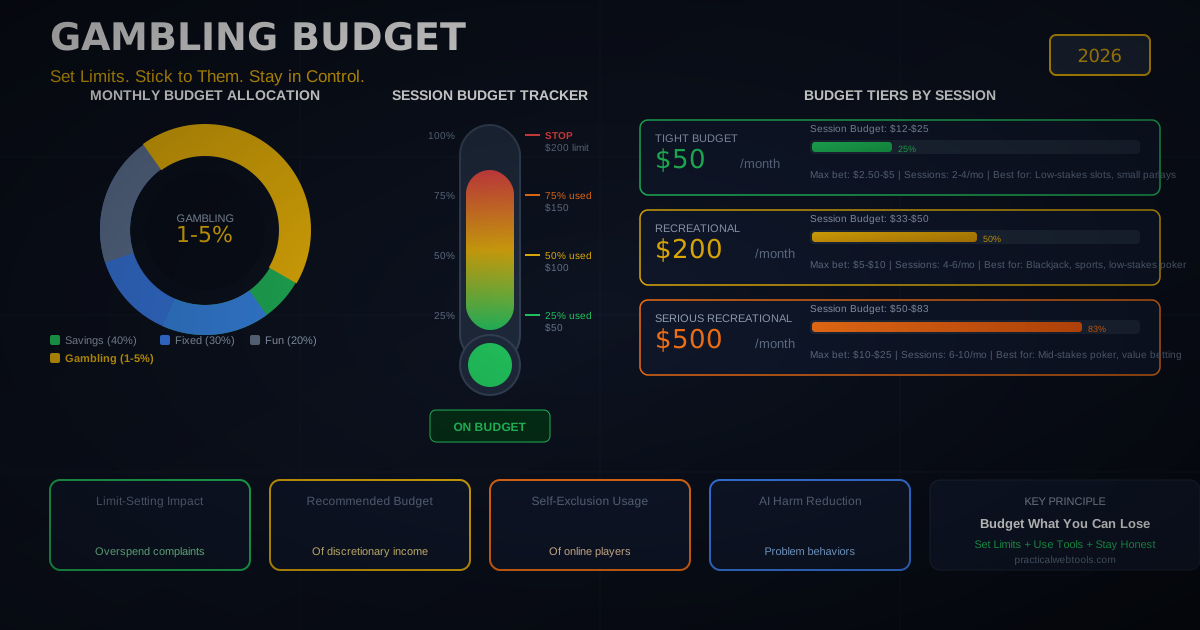
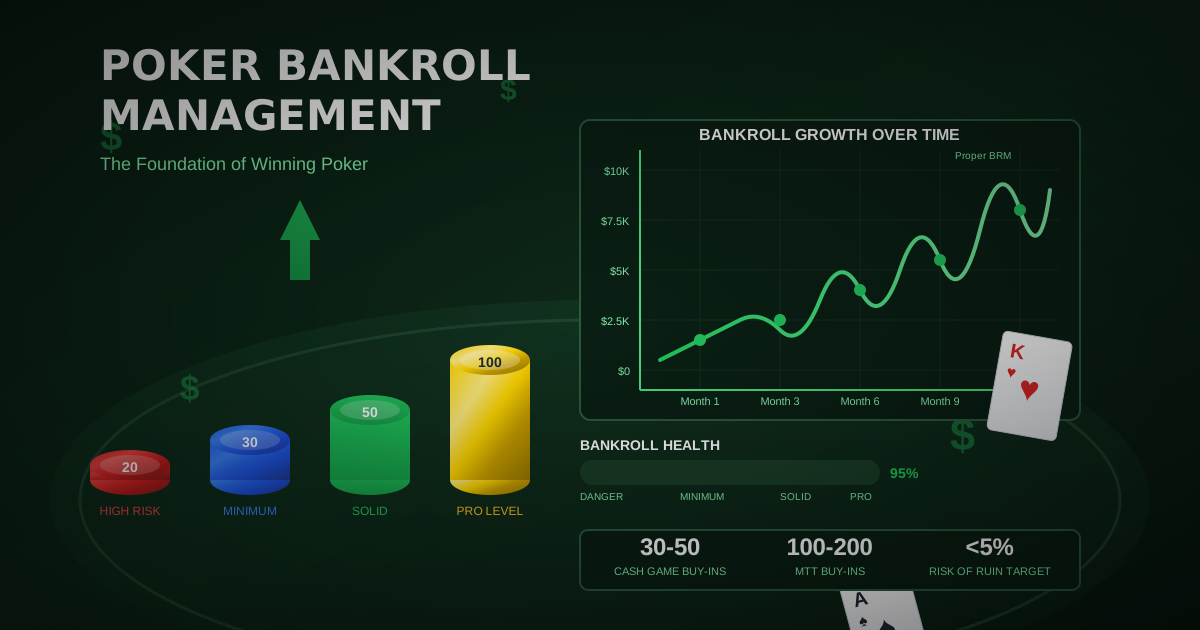
A 39-day, 104-match tournament demands a structured bankroll plan. Here is a framework that professional bettors use for major tournaments.
The 5-3-2 World Cup Allocation
Divide your total World Cup bankroll into three tiers.
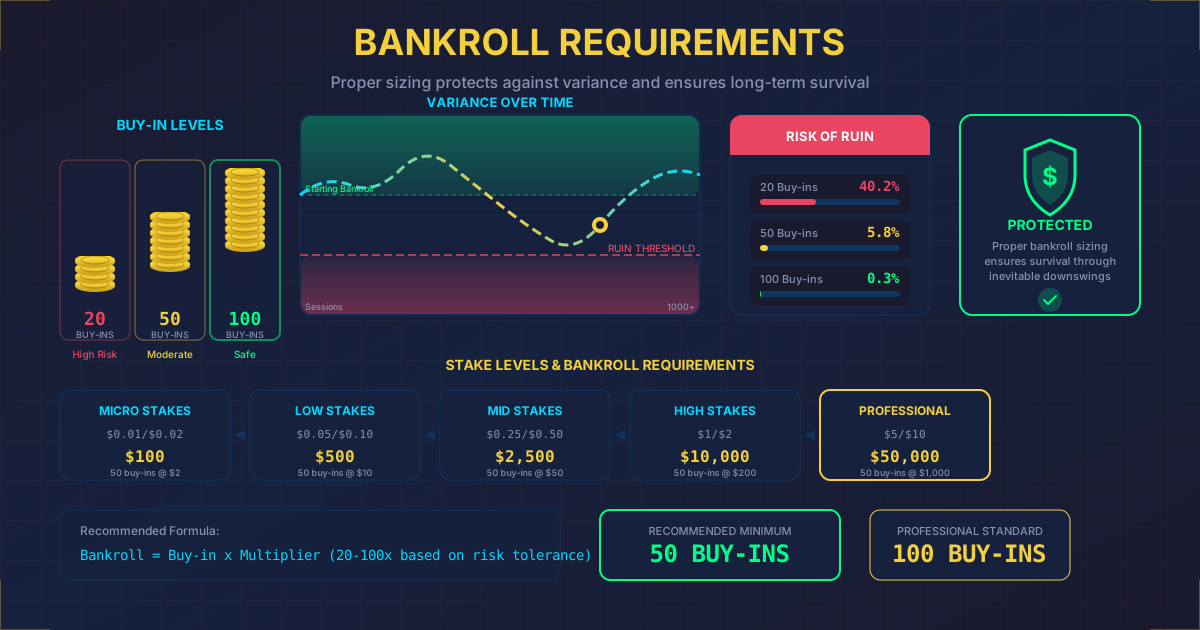
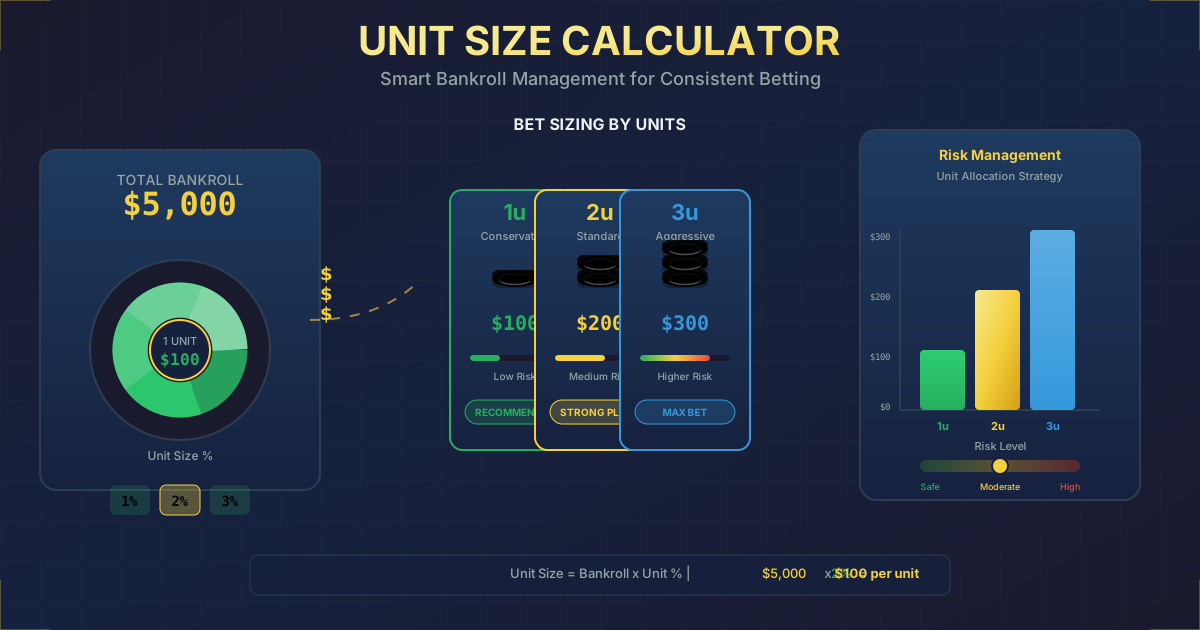
50% -- Group Stage Match Bets: The highest-volume, highest-edge phase. Spread across 15-25 selective bets over 17 days. Standard bet size: 1-3% of total bankroll per wager.
30% -- Futures and Outright Markets: Placed before and during the tournament. This includes outright winner, top scorer, group winner, and stage-of-elimination bets. Diversify across 4-6 futures positions.
20% -- Knockout Round and Live Betting: Reserved for the final 12 days. These are your highest-conviction, highest-information bets placed when you have seen how teams actually perform in the tournament (not just how you expected them to perform).
Example on a $2,000 total World Cup bankroll:
| Tier | Allocation | Bet Count | Avg Bet Size |
|---|---|---|---|
| Group Stage Match Bets | $1,000 | 20-25 bets | $40-50 |
| Futures / Outrights | $600 | 4-6 bets | $100-150 |
| Knockout / Live | $400 | 10-15 bets | $25-40 |
This structure ensures you never go broke in the group stage, you have meaningful futures exposure, and you have dry powder for the knockout rounds when information quality is highest.
Frequently Asked Questions
When does the 2026 FIFA World Cup start and end? The 2026 FIFA World Cup runs from June 11 to July 19, 2026. The group stage spans June 11-27. The Round of 32 begins June 28. The final takes place at MetLife Stadium in New Jersey on July 19.
How many teams are in the 2026 World Cup? The 2026 World Cup features 48 teams, expanded from 32. They are divided into 12 groups of 4. The top 2 teams from each group, plus the 8 best third-place finishers, advance to the Round of 32, making 32 teams in the knockout bracket.
Who is the favorite to win the 2026 World Cup? Spain is the current betting favorite at +400 (implying roughly a 20% probability). England (+600), France (+700), Brazil (+800), and Argentina (+800) round out the top five. No single team is a dominant favorite, which makes futures betting particularly interesting.
What are the best types of bets for the World Cup? Group stage moneylines, Over/Under totals in mismatch games, futures on dark horses at long odds, and live betting during matches offer the best combination of edge and opportunity. Avoid heavy parlay action and highly juiced favorites in the group stage.
Is it profitable to bet on the host nation? Historically, yes. Since 1998, a flat bet on host nations to win every match has produced a 5.9% ROI. Host nations enjoy a +0.64 goals-per-match advantage on average. For 2026, the USA in Group D represents the strongest home advantage play. Mexico and Canada also benefit but face tougher group draws.
How does the new format change betting strategy? The expansion to 48 teams creates more mismatches in the group stage, an entirely new Round of 32, and an extra knockout match for the eventual winner (8 total vs. 7 previously). Bettors should focus on squad depth for futures, exploit mismatches in group stage totals, and prepare for third-place advancement dynamics that create complex Matchday 3 scenarios.
What is the expected betting handle for the 2026 World Cup? Global projections exceed $35 billion in total wagering, shattering the 2022 record. The U.S. handle alone is projected to at least double the $1.8 billion wagered during Qatar 2022, driven by expanded legal betting markets and American-friendly kickoff times.
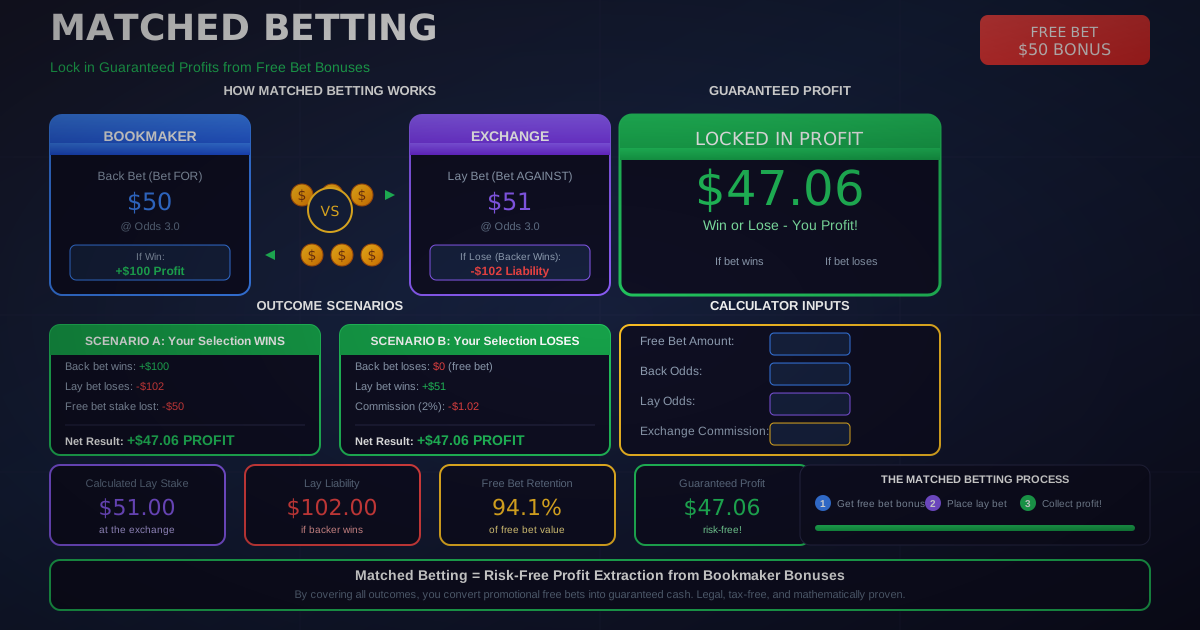
How do I hedge a World Cup futures bet? If your futures pick reaches the knockout rounds and their odds have shortened, place a bet on their opponent in the next match. This guarantees profit regardless of that match's outcome. Use our Hedge Calculator to calculate the exact hedge amount needed for any desired guaranteed profit level.
Essential Tools for World Cup Bettors
Maximize your edge throughout the tournament with these free calculators.
- Odds Converter -- Convert between American, Decimal, Fractional, and Implied Probability formats instantly. Essential when comparing odds across books that use different formats.
- Expected Value Calculator -- Determine whether any World Cup bet offers positive expected value based on your probability assessment.
- Kelly Criterion Calculator -- Calculate mathematically optimal bet sizing for every wager based on your edge and bankroll.
- Parlay Calculator -- Build and price multi-leg World Cup parlays across different odds formats.
- Implied Probability Calculator -- Convert any odds to implied probability to compare against your own probability estimates.
- Hold/Vig Calculator -- Analyze the sportsbook's margin on any World Cup market to find the best-value book.
- Hedge Calculator -- Calculate exact hedge amounts for in-tournament futures and prop bets.
- Arbitrage Calculator -- Identify and calculate guaranteed-profit arbitrage opportunities across multiple sportsbooks.
- Dutching Calculator -- Spread your stake across multiple selections to guarantee equal profit from any winning outcome.
Conclusion: Preparing for the Biggest Betting Event in History
The 2026 FIFA World Cup is not just the biggest soccer tournament ever staged. It is the biggest single-event betting opportunity most of us will experience in our lifetimes. The expanded 48-team format, three host nations, 104 matches, and American-friendly time zones combine to create an unprecedented 39-day window of action.
The bettors who will profit are not the ones who bet the most. They are the ones who prepare the most. They will have locked in futures value months before kickoff. They will have mapped the group stage bracket and identified value in mismatches. They will have bankroll plans that survive a bad first week. They will have hedging strategies ready when their futures tickets gain value. And they will have live betting systems in place for the knockout rounds, when the stakes are highest and the market is most emotional.
Start with the tools. Build your framework. And when June 11 arrives, you will not be scrambling to figure out what to bet. You will already know.
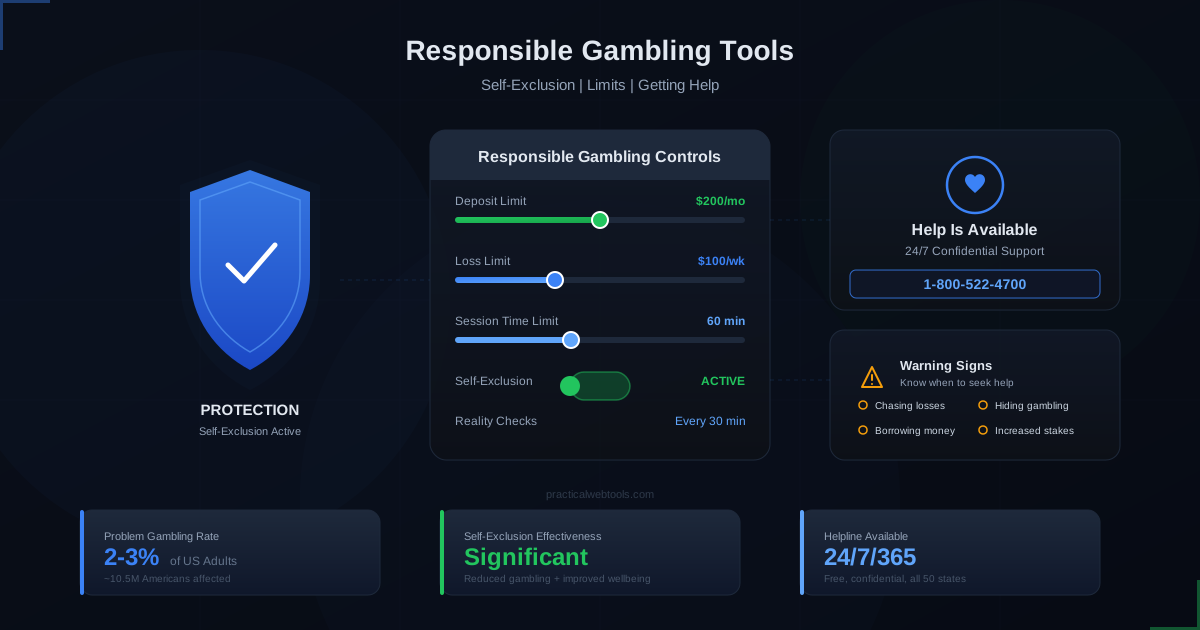
Gambling involves risk. This content is for educational and informational purposes only. Always gamble responsibly, set limits you can afford, and seek help if gambling becomes a problem. Visit the National Council on Problem Gambling or call 1-800-522-4700 for support.