Equity Realization Calculator: Turning Equity Into Chips (2026)
Equity Realization Calculator: From Theory to Chips
Equity realization is the gap between theoretical equity and actual chips won. Having 30% equity doesn't mean you'll win 30% of pots—position, skill, and hand type determine how much equity you actually "realize." Our calculator reveals which hands convert equity into profit.
What Is Equity Realization?
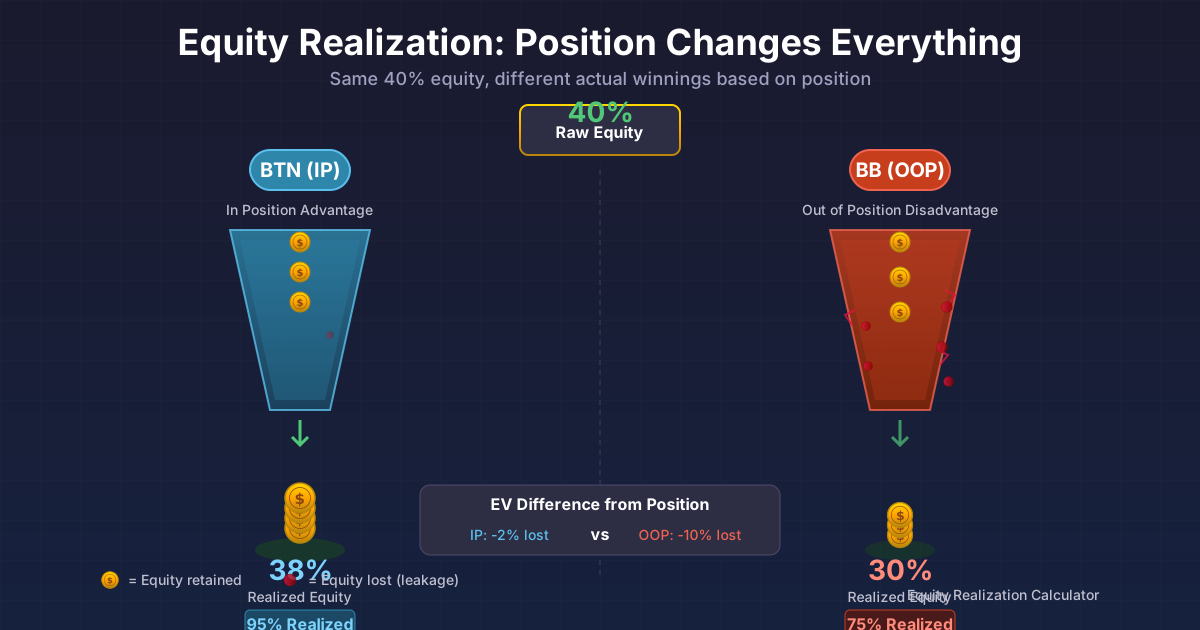
Equity realization is the percentage of your theoretical equity you actually convert into chips. If you have 40% equity but typically only win 30% of pots, your equity realization is 75% (30/40). Position, playability, and skill affect how much of your equity you actually realize.
Quick Answer: Equity realization = % of theoretical equity you actually win. In position: Realize 100%+ (pressure others). Out of position: Realize 70-90%. Suited connectors: High realization (playable). Offsuit trash: Low realization (hard to play). Key factors: Position, skill, hand playability. EQR affects preflop decisions.
How to Use Our Calculator
Use the Equity Realization Calculator →
Calculate realized equity by hand and position.
Step-by-Step Instructions
-
Enter Your Hand: What you're holding
-
Select Position: Where you're sitting
-
Input Scenario: Facing open, 3-bet, etc.
-
View Raw Equity: Theoretical equity
-
See Realized Equity: What you'll actually win
Input Fields Explained
| Field | Description | Example |
|---|---|---|
| Hand | Your holding | 7♠6♠ |
| Position | Your seat | Button |
| Scenario | Situation | Facing CO open |
| Raw Equity | Theory | 42% |
| EQR | Realization factor | 95% |
| Realized Equity | Actual | 40% |
Equity Realization Factors
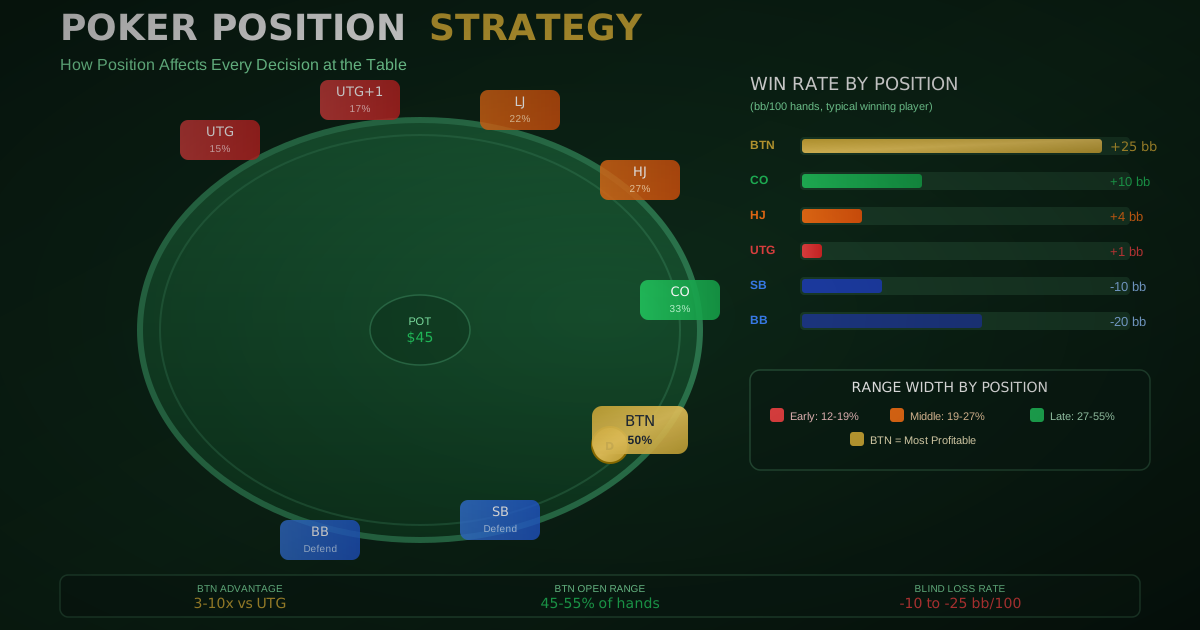
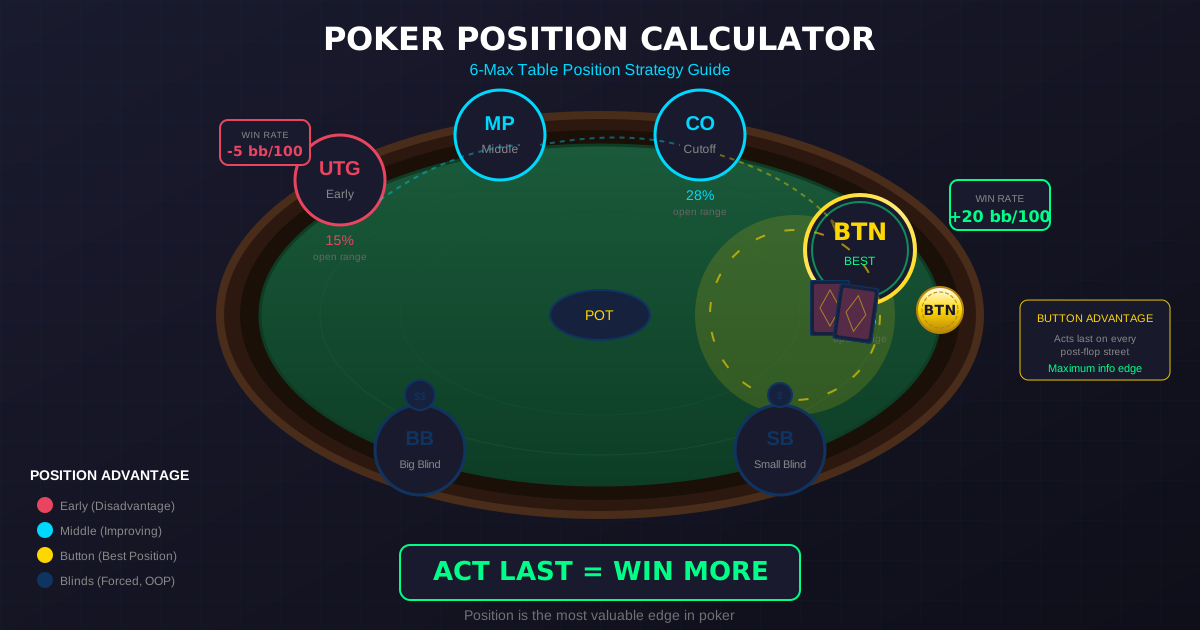
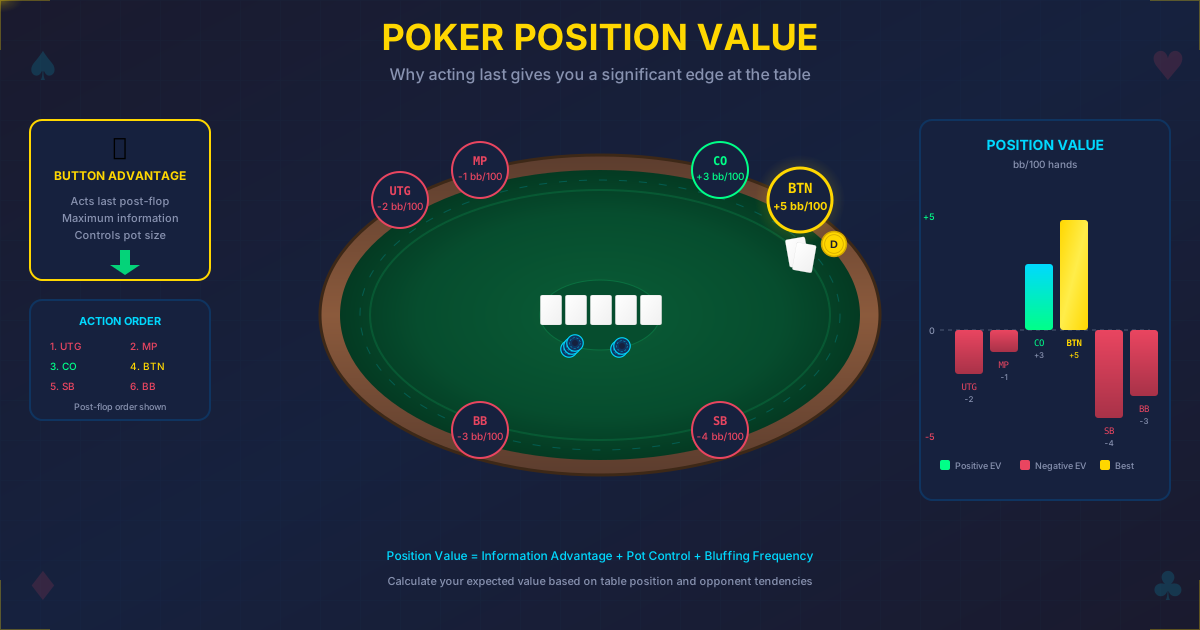
Position Effect
Position and realization:

In position (IP):
Realize 100-120% of equity
Can bluff effectively
Win when ahead, minimize when behind
Control pot sizes

Out of position (OOP):
Realize 70-90% of equity
Can't bluff as effectively
Face more pressure
Harder to maximize value
Hand Playability
Playable hands realize more:

High realization:
Suited connectors (draws, pairs)
Pocket pairs (set potential)
Suited Aces (nut flush potential)

Low realization:
Offsuit garbage (unplayable flops)
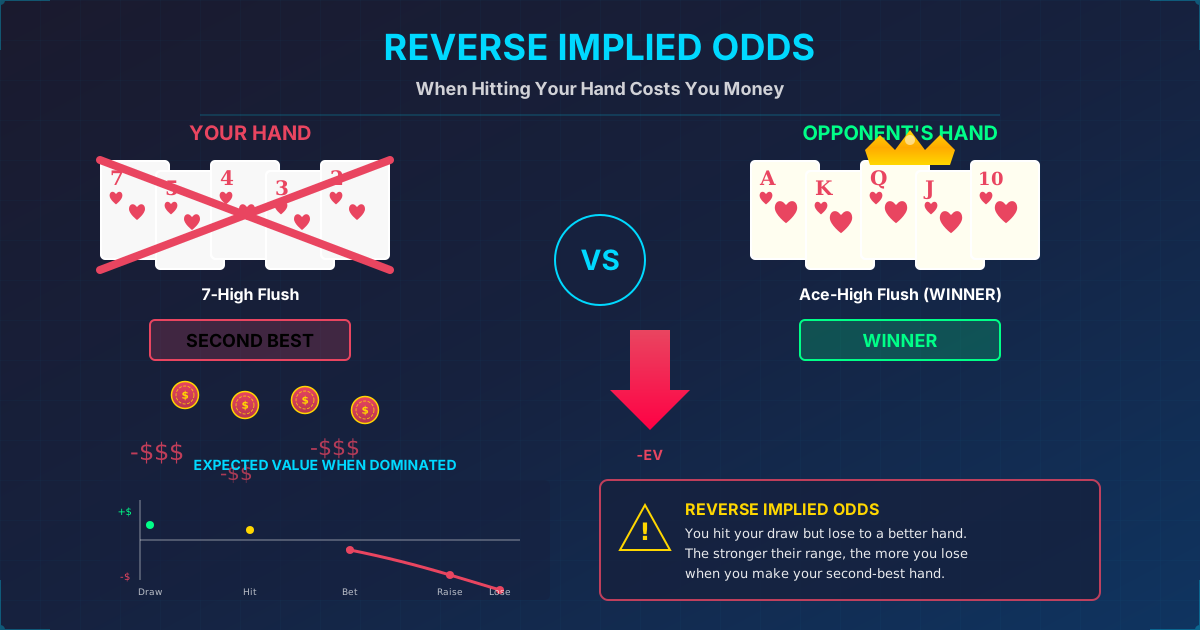
Dominated hands (second best often)
Weak kickers (costly mistakes)
Skill Differential
Skill affects realization:

Skilled player IP:
Realizes 110-130% of equity
Makes opponents' lives hard
Extracts max value

Weak player OOP:
Realizes 50-70% of equity
Makes mistakes post-flop
Leaves money on table
EQR by Hand Type
Suited Connectors
Suited connectors EQR:

7♠6♠ in position: 95-105%
- Many playable flops
- Strong draws
- Can bluff credibly

7♠6♠ out of position: 70-85%
- Hard to realize flush draws
- Can't bet folds effectively
- Still decent draws

Position difference: 15-25%
Pocket Pairs
Pocket pair EQR:

Small pairs (22-66) IP: 85-95%
- Set or fold often
- Clear decisions

Small pairs OOP: 65-80%
- Miss more often
- Harder to extract set value

Medium/Big pairs: Higher EQR
- More frequently ahead
- Easier to play
Offsuit Hands
Offsuit hand EQR:

K♣7♦ in position: 75-85%
- Top pair issues
- Kicker problems
- Marginal post-flop

K♣7♦ out of position: 55-70%
- Very hard to play
- Dominated often
- Low realization

Weak offsuit = low EQR
Suited Broadways
Suited broadway EQR:

K♠Q♠ in position: 100-110%
- Strong top pairs
- Nut flush potential
- Straight possibilities

K♠Q♠ out of position: 85-95%
- Still very playable
- Makes strong hands
- Good equity when hits
How EQR Affects Decisions
Preflop Calling Decisions
Calling with EQR in mind:

Hand: 9♠8♦ (offsuit)
Raw equity vs opener: 38%
OOP EQR: 70%
Realized equity: 27%

Not profitable to call
Even with "decent" raw equity
Realization kills it

Compare to 9♠8♠:
Raw equity: 40%
OOP EQR: 85%
Realized equity: 34%

Suited makes huge difference
Position Premium
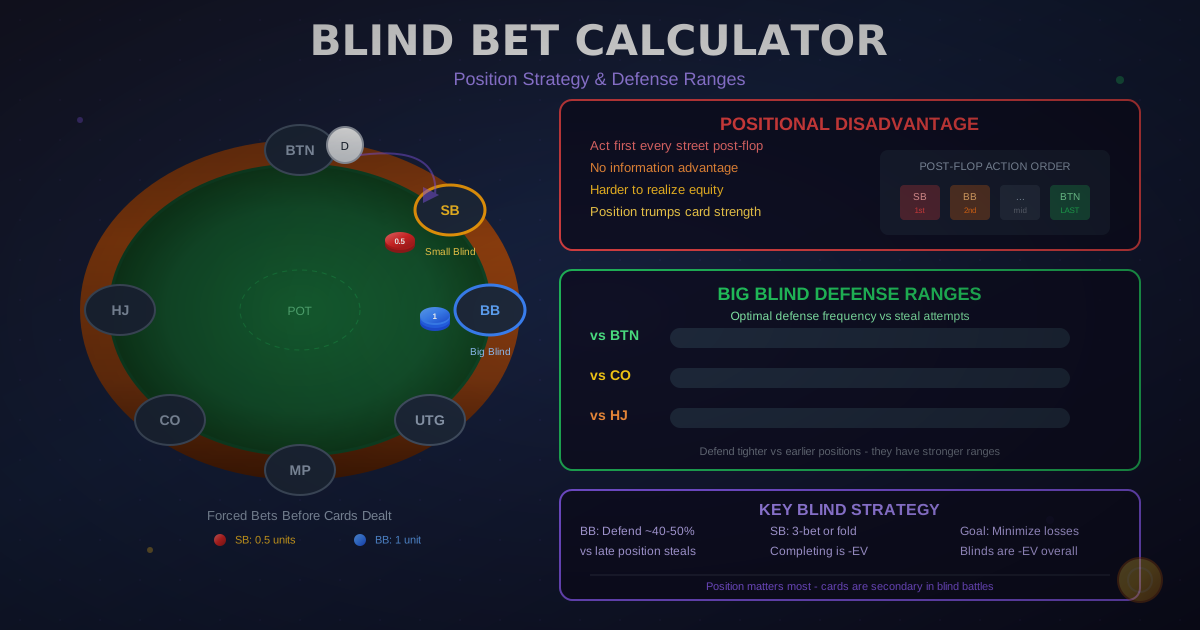
Why position is worth equity:

In position you realize more:
If IP gets 105% and OOP gets 80%
That's 25% relative equity gained

Example:
You have 40% raw equity IP: Realize 42%
You have 40% raw equity OOP: Realize 32%

10% realized equity difference!
Position is worth calling wider
Hand Selection OOP
Tighten up OOP:

Since realization is lower:
Need stronger raw equity
OR very playable hands

OOP calling range:
Pairs (set potential)
Suited aces (nut draws)
Suited connectors (draws)

Avoid:
Weak offsuit hands
Dominated holdings
Unplayable flops hands
Real-World Examples
Example 1: Suited Connector IP
High realization:
You have 7♠6♠ on BTN
CO opens, you call
Flop: K♦9♣5♠

Your raw equity: ~35%
But you have:
- Backdoor flush
- Gutshot potential
- Position to bluff

Float and take pots
Realize 100%+ of equity
Position + draws = high EQR
Example 2: Offsuit Hand OOP
Low realization:
You have K♣6♦ in BB
BTN opens, you consider calling

Your raw equity: ~38%
But OOP with weak kicker
EQR: ~65%
Realized equity: ~25%

Not profitable call
Raw equity looks OK
But realization kills it
Fold
Example 3: Pocket Pair EQR
Set-mining math:
You have 4♠4♣ IP
Open to 3bb, you call
100bb effective

Flop set: ~11% of time
When you hit: Win big pot
EQR high because:
- Clear decisions
- Strong made hand
- Position to value bet

Pocket pairs = good EQR
Especially IP
Example 4: Skill Differential
Better players realize more:
Same hand, different players:

Skilled player with A♠5♠ IP:
Realizes 110%+ of equity
Bluffs effectively
Maximizes thin value
Folds out better hands

Weak player with A♠5♠ IP:
Realizes 85% of equity
Misses bluff opportunities
Pays off too often
Leaves value on table

Skill gap: 25%+ realization
Common Mistakes
1. Ignoring Position in Equity
Mistake: "I have 35% equity, I should call" Problem: OOP you realize maybe 75% Fix: Adjust for realization
2. Overvaluing Raw Equity
Mistake: Calling with any equity edge Problem: Realization matters as much Fix: Consider realized equity
3. Playing Offsuit Trash
Mistake: K7o is "playable" Problem: Very low realization Fix: Suit matters enormously
4. Same Strategy IP and OOP
Mistake: Playing identical ranges Problem: OOP realizes less Fix: Tighten OOP, widen IP
Frequently Asked Questions
Why doesn't raw equity equal chips won?
Because post-flop play matters. Position, skill, and hand playability determine how much of theoretical equity becomes actual profit.
How much does position affect realization?
Significantly. IP typically realizes 95-110%, while OOP realizes 70-90%. That's a 15-25% difference.
Which hands have highest realization?
Suited connected hands (draws + position). Pocket pairs (clear decisions). Strong suited hands (nut potential).
Why do suited hands realize more?
Flush draws give nut potential, more playable flops, and more bluffing opportunities. The suit adds 8-15% realization.
Can I realize more than 100%?
Yes, IP with skill advantage. You pressure opponents into folding equity, realizing more than your fair share.
How do I improve my realization?
Play more IP, improve post-flop skill, choose playable hands, and avoid dominated situations.
Pro Tips
-
Position = realization: Always factor this in
-
Suited >> offsuit: 15-20% more realization
-
Skill matters: Better play = more chips
-
Playable hands: Draws and pairs realize well
-
Tighten OOP: Lower realization means fewer calls
Related Calculators
- Poker Equity Calculator - Raw equity
- Pot Odds Calculator - Calling math
- Poker Range Calculator - Hand selection
- Implied Odds Calculator - Future value
- Poker EV Calculator - Expected value
Conclusion
Equity realization bridges theory and practice—your 40% raw equity might only net you 30% of pots OOP with an unplayable hand. Our calculator reveals how position, playability, and skill affect what you actually win.
Calculate Equity Realization Now →
You have K♦7♣ in the big blind with 38% raw equity. Our calculator shows why you only realize 25% of that—and why folding is better than calling.