Second Half and Quarter Betting Strategy: Finding Edge in Period Markets (2026)
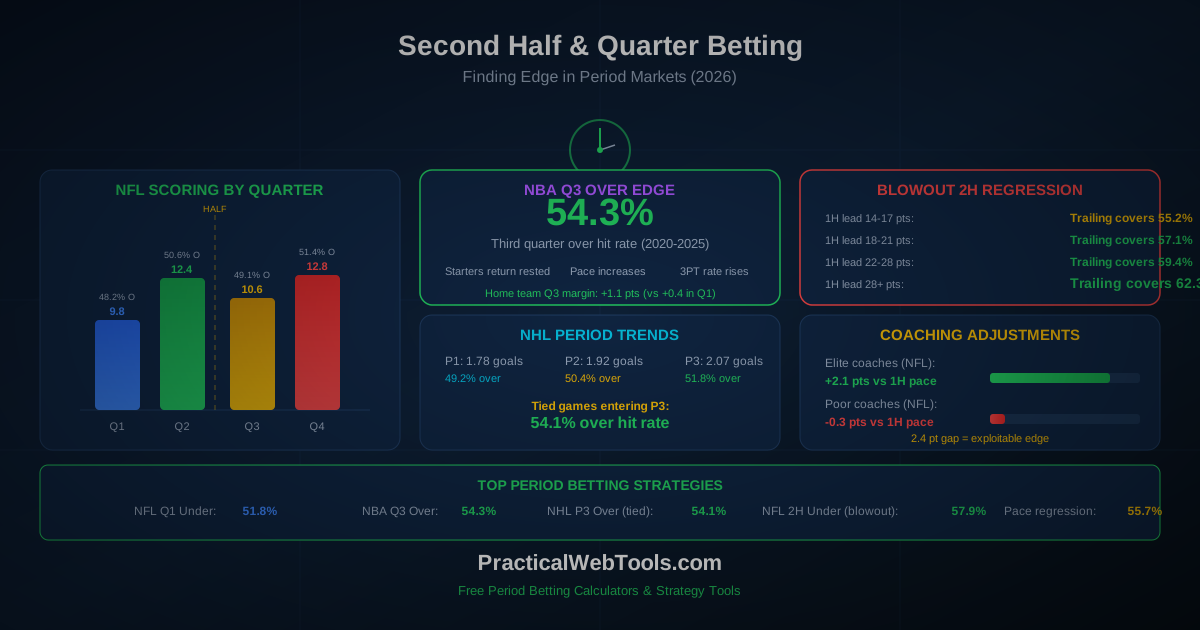
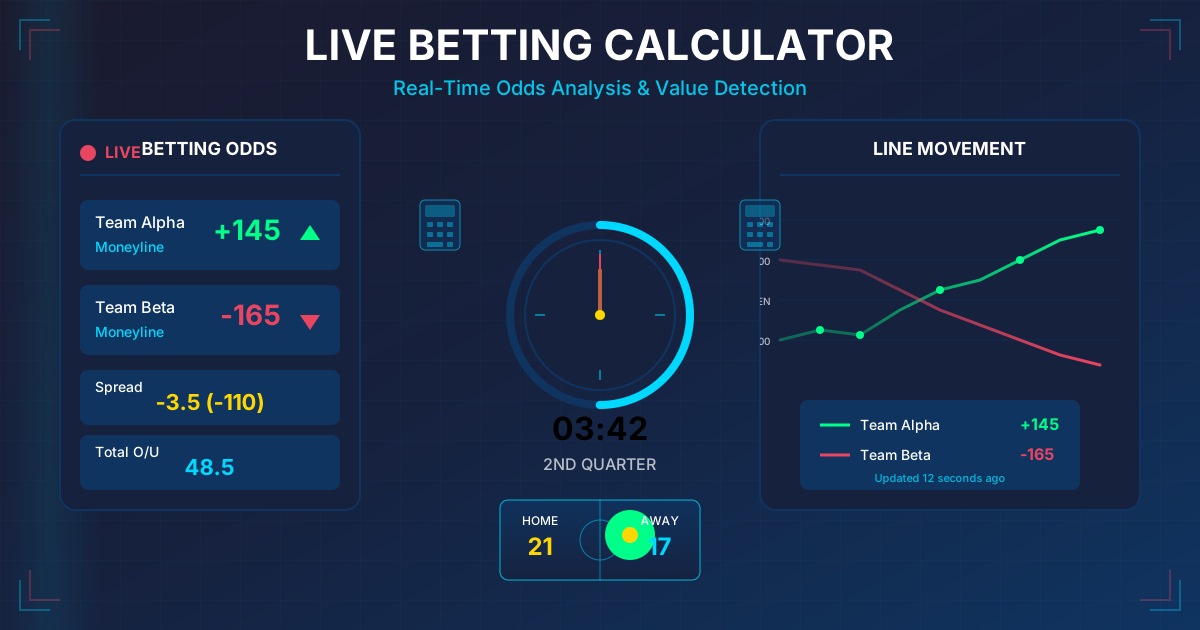
NBA third quarters have gone over the posted total in 54.3% of games over the past five seasons -- a consistent edge hidden in plain sight inside a market that most bettors completely ignore. Period betting -- wagering on second halves, individual quarters, and specific periods -- is one of the fastest-growing and least efficient segments of the sports betting market. While pregame spreads and totals attract billions in handle and are priced by sophisticated algorithms, period markets receive less sharp money, less modeling attention, and therefore more pricing errors.
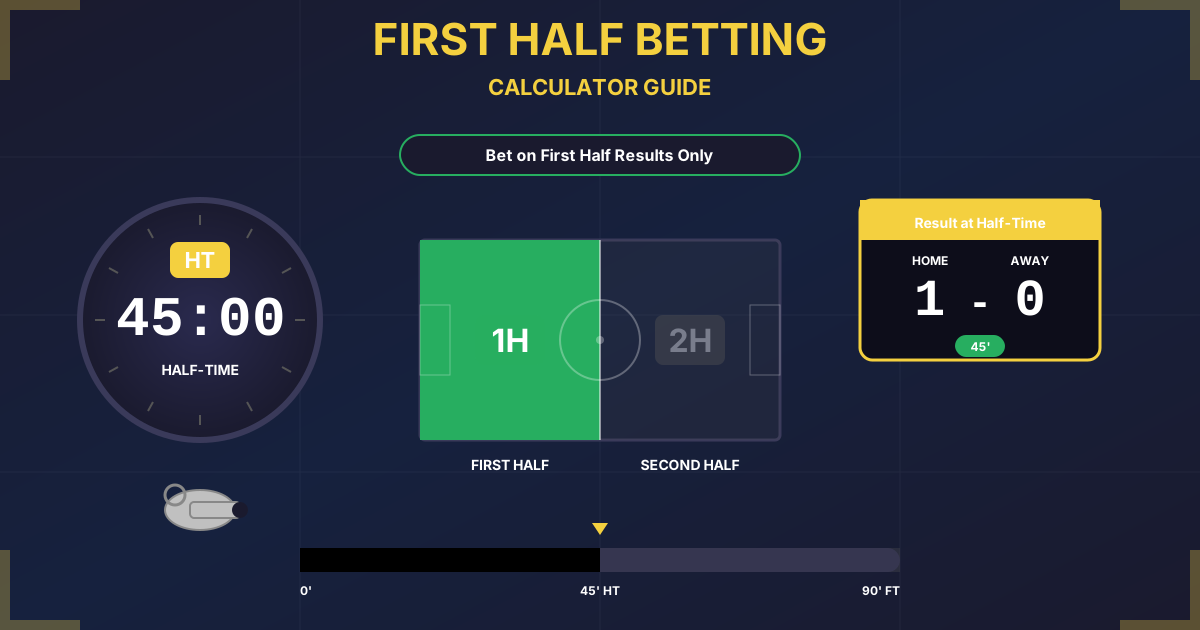
This guide is a complete strategy manual for period-specific betting in 2026. You will learn how sportsbooks set halftime lines, why second-half scoring patterns differ from the first half, which quarter and period trends are genuinely profitable, and how to use coaching adjustments and game flow analysis to find edge in these underexplored markets.
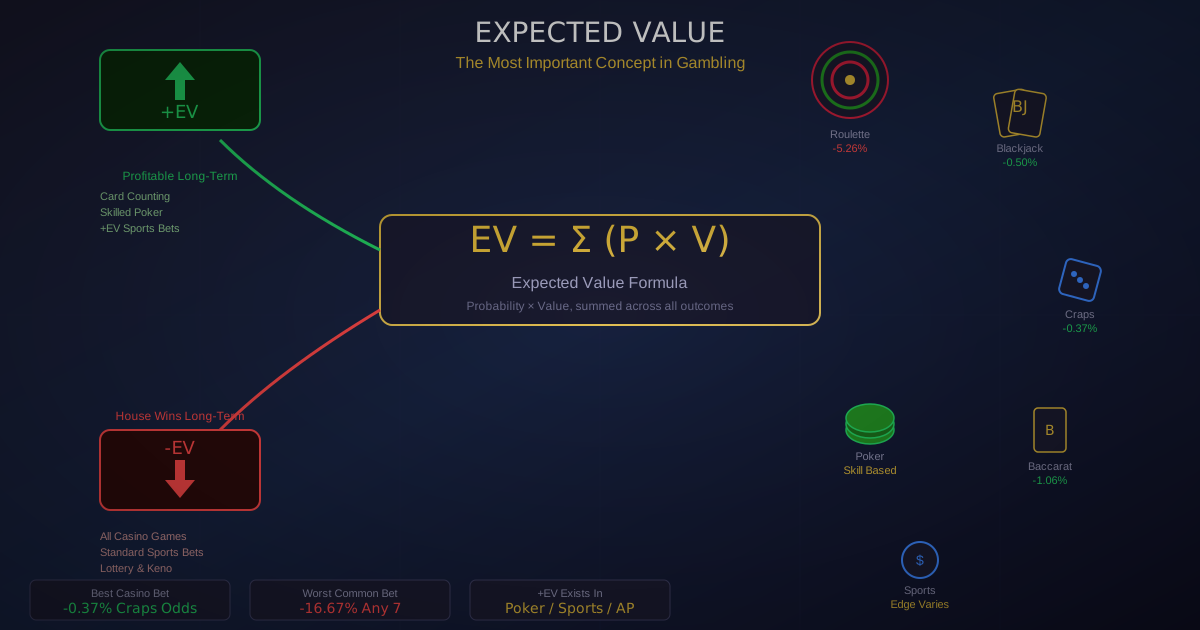
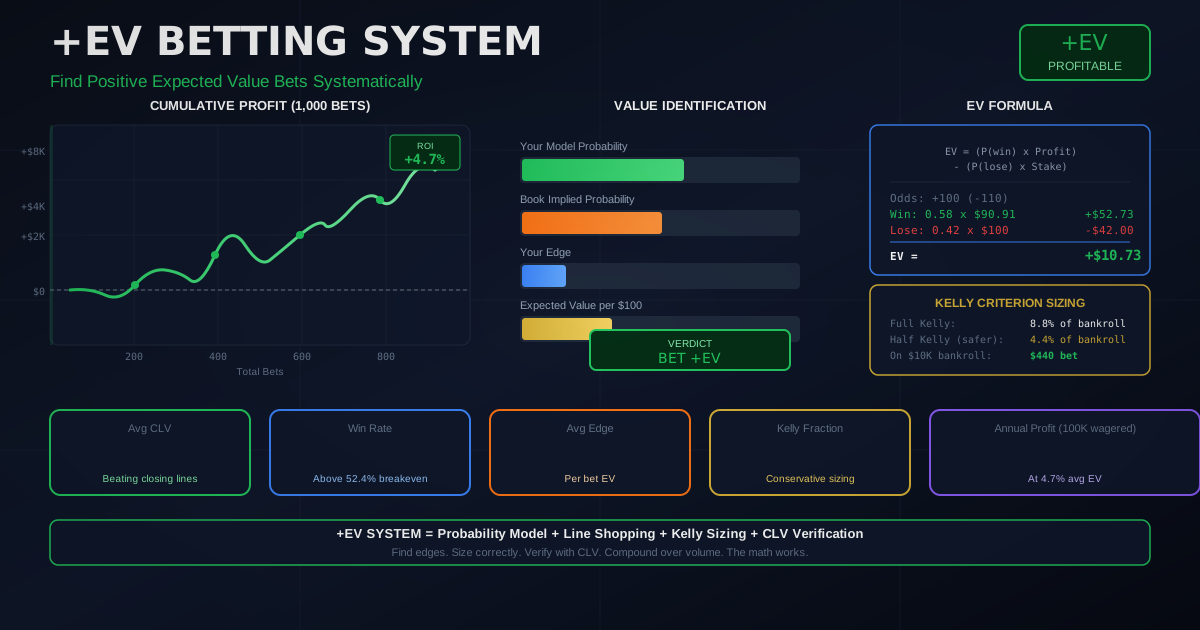
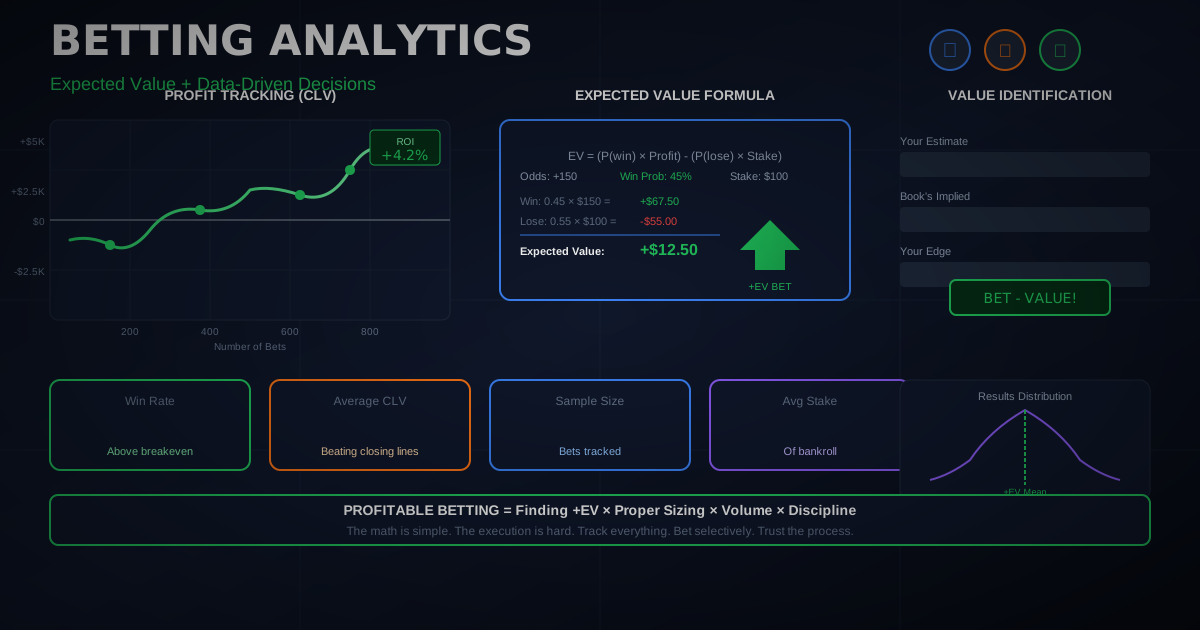
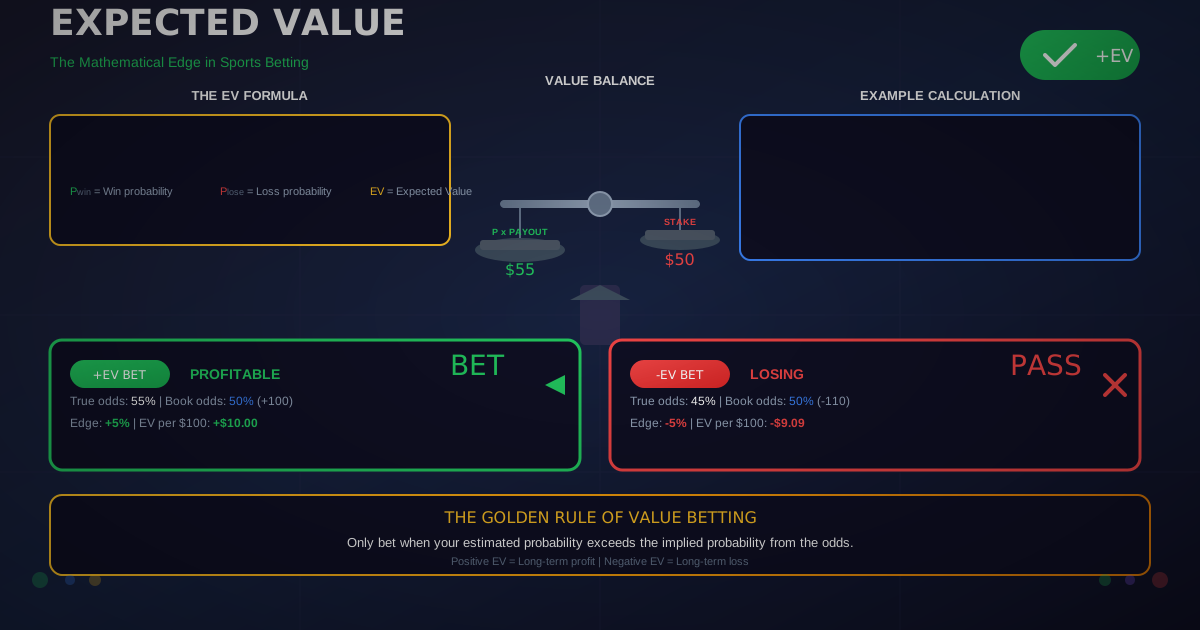
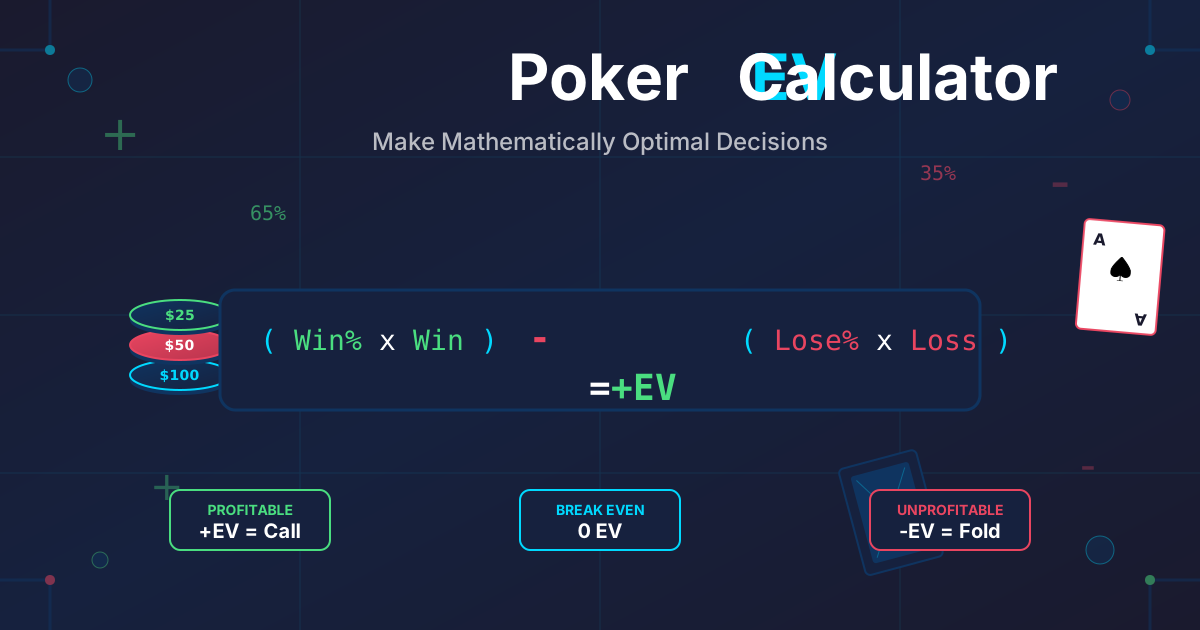
Calculate the expected value of any period bet with our free Expected Value Calculator -- the starting point for every data-driven wagering decision.
How Are Second Half Betting Lines Set?
Second half lines are set using a combination of the pregame model, first-half results, and in-game adjustments. At halftime, the sportsbook recalculates the expected second-half spread and total based on game flow, injuries, and coaching tendencies. The second-half line is not simply "the pregame line minus the first-half result" -- it incorporates additional information.
The Halftime Line Formula
Sportsbooks use a sophisticated process to set halftime lines, but the conceptual formula is:
Second Half Line = Pregame Full-Game Projection - First Half Actual Result + Adjustments
The adjustments include:
- Coaching adjustments. Teams that trail at halftime often change strategy in the second half. The book prices this expected correction.
- Pace and game flow. If the first half was unusually fast or slow, the second-half projection adjusts for expected regression to normal pace.
- Fatigue and bench depth. Teams with deeper benches tend to perform better in the second half, particularly in the NBA.
- Wind and weather changes (outdoor sports). If conditions are expected to change in the second half, the total adjusts accordingly.
| Component | Impact on 2H Line | Example |
|---|---|---|
| Pregame full-game spread | Primary driver | Team A -6 pregame, 2H line starts around A -3 |
| First half score | Adjusts projection | If A leads by 10, 2H line moves toward B |
| Coaching adjustment factor | 0.5-1.5 pts | Trailing team expected to adjust |
| Pace regression | Variable | If 1H was unusually fast, 2H total may be lower |
| Injury during 1H | Direct adjustment | Star player hurt = full impact on 2H line |
| Foul trouble (NBA) | Moderate adjustment | Key player in foul trouble = team disadvantage |
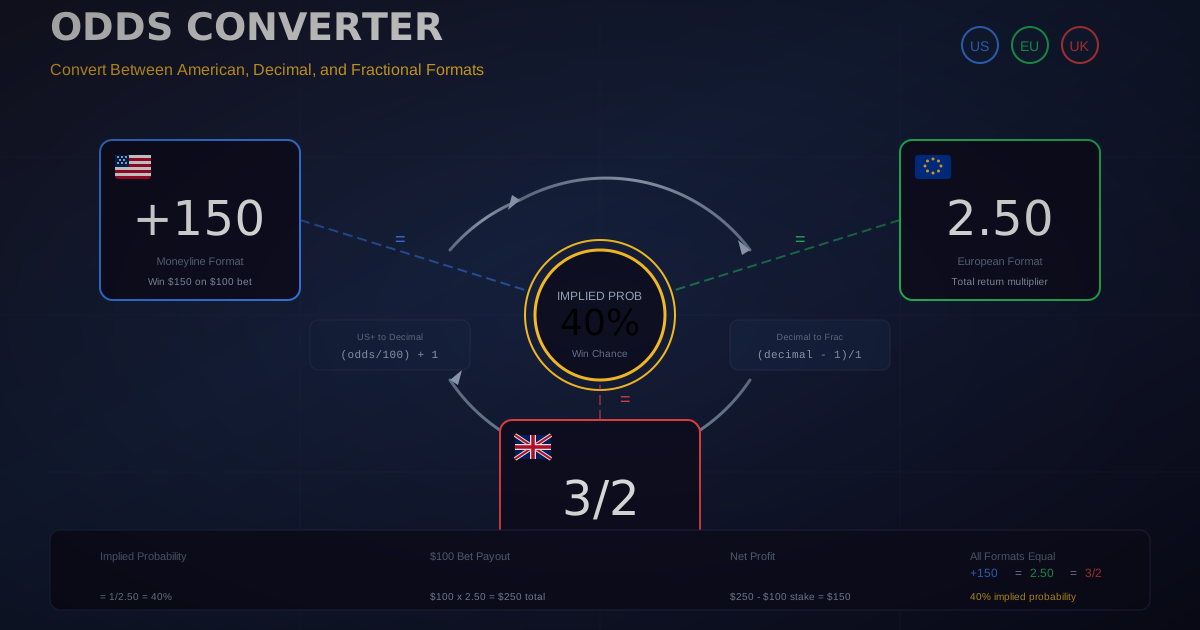
Compare halftime odds across sportsbooks to find the best price with our Odds Converter.
Why Second Half Lines Differ From What You'd Expect
Many bettors make the mistake of assuming the second half should mirror the first half. In reality, several structural factors create predictable differences:
- NFL: Second halves average approximately 0.8 fewer points than first halves because offenses become more conservative with leads, the running game takes over in favorable game scripts, and fourth-quarter clock management reduces possessions.
- NBA: Second halves average approximately 1.2 more points than first halves because pace increases in the fourth quarter, fouling extends possessions, and comeback attempts create higher-scoring sequences.
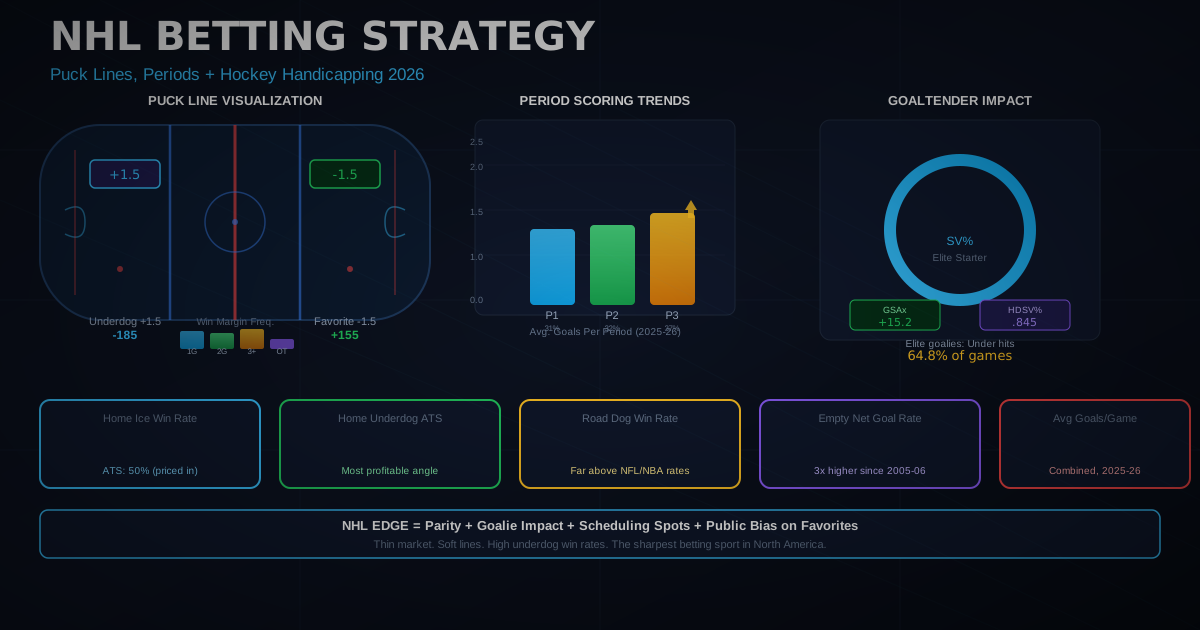
- NHL: Third periods tend to see slightly fewer goals than first or second periods because teams protecting leads play more defensively and goaltenders are in rhythm.
Pregame Second Half vs. Live Halftime Lines
Sportsbooks offer two distinct products for second-half wagering:
- Pregame second-half lines: Available before the game starts. These are priced based on expected second-half performance without knowing the first-half result.
- Live halftime lines: Posted during the halftime break. These incorporate all first-half information.
The pregame second-half line is generally less efficient because the book must price it without game-flow context. The halftime live line is sharper because it incorporates additional information. However, the halftime line can sometimes overreact to first-half trends, creating contrarian value.
What Are the Most Profitable NFL Quarter Betting Trends?
The most profitable NFL quarter betting trends center on first-quarter unders, third-quarter scoring differences between home and road teams, and fourth-quarter over tendencies in competitive games. Each quarter has distinct characteristics that create exploitable patterns.
NFL Scoring by Quarter (2019-2025 Average)
| Quarter | Avg Points Scored | % of Total Game Points | Over Hit Rate | Under Hit Rate | Key Trend |
|---|---|---|---|---|---|
| 1st Quarter | 9.8 | 21.5% | 48.2% | 51.8% | Slightly under-biased |
| 2nd Quarter | 12.4 | 27.2% | 50.6% | 49.4% | Most balanced |
| 3rd Quarter | 10.6 | 23.3% | 49.1% | 50.9% | Coaching adjustments reduce scoring |
| 4th Quarter | 12.8 | 28.0% | 51.4% | 48.6% | Comeback attempts boost scoring |
First Quarter Under Tendencies
NFL first quarters consistently produce fewer points than the market expects. The primary drivers:
- Scripted opening drives tend to be conservative. Most offensive coordinators open with their safest plays to feel out the defense before unleashing their full playbook.
- Defensive preparation is freshest. The game plan has been practiced all week specifically for the opening sequences.
- Slower pace. First-quarter possessions tend to be longer (more running plays, more huddle time) because urgency has not yet entered the equation.
- Field position uncertainty. The opening kickoff and first few possessions often start from less favorable field positions than later in the game.
For bettors, first-quarter unders have been a low-key profitable angle, particularly in division rivalry games where defensive familiarity further suppresses early scoring. First-quarter unders in divisional matchups have hit at approximately 54% over the past six seasons.
Evaluate the EV of your first-quarter under bet with our Expected Value Calculator.
Third Quarter Coaching Adjustments
The third quarter is where coaching adjustments take effect, and this creates predictable patterns. The team that led at halftime typically comes out with a plan to protect the lead (more conservative play-calling, heavier running game), while the trailing team adjusts to be more aggressive. The net result:
- Home teams leading at halftime outscore opponents in the third quarter by an average of 1.2 points more than their first-half margin would suggest.
- Road teams trailing at halftime show a slight improvement in third-quarter scoring relative to their first-half performance but typically do not fully close the gap.
- Third-quarter totals tend to be the lowest-scoring quarter, creating value on unders if the market sets the third-quarter total too close to the second-quarter average.
Fourth Quarter Over Patterns
Fourth quarters produce the most points on average because:
- Trailing teams abandon the run and pass aggressively
- Prevent defenses surrender yards more readily
- Two-minute offense situations are high-scoring
- Garbage-time scoring inflates the numbers
This creates a systematic lean toward fourth-quarter overs, particularly in games where one team is expected to trail significantly. When the pregame spread is 7+ points, the fourth quarter goes over at approximately 53.5%.
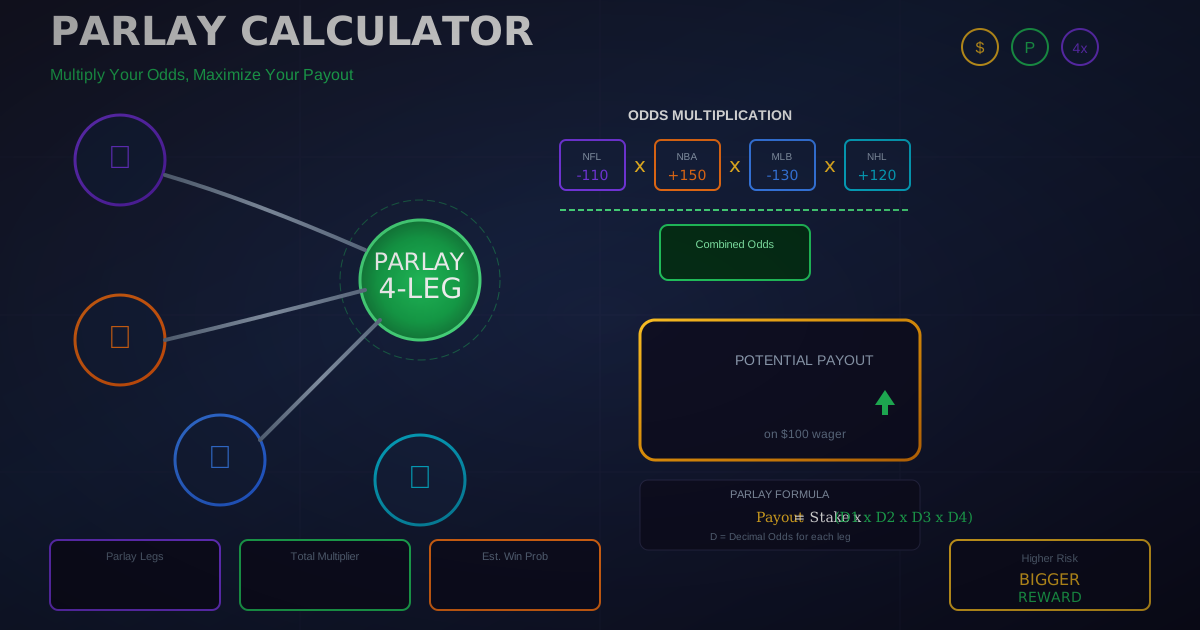
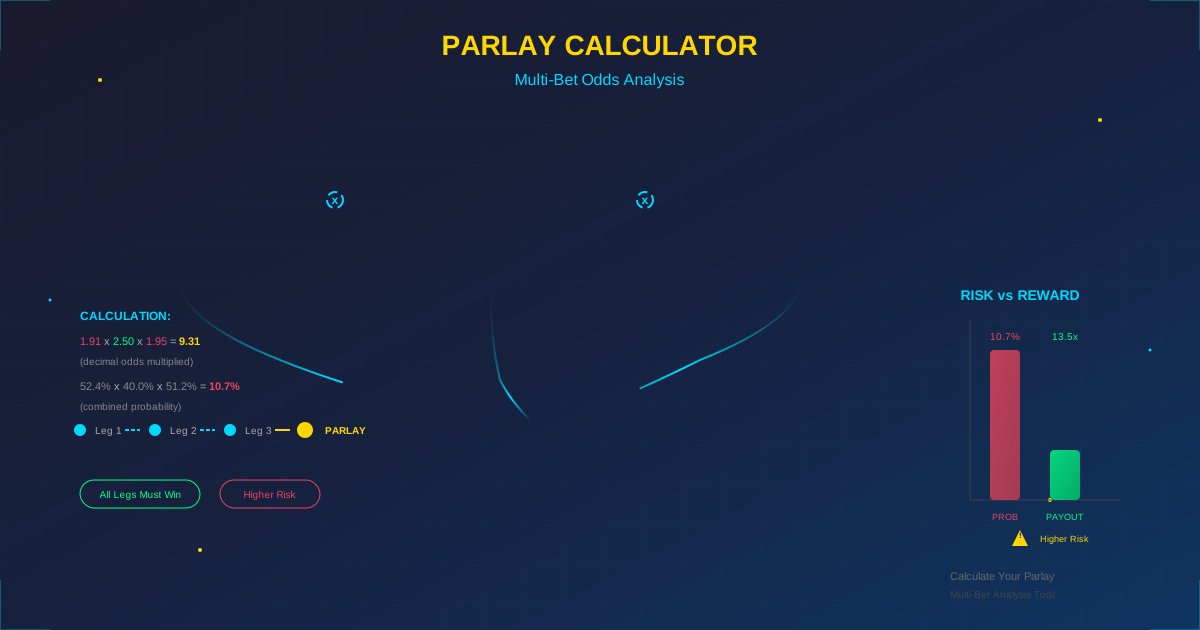
Build a multi-quarter parlay across games using our Parlay Calculator.
How Does the NBA Third Quarter Create Betting Value?
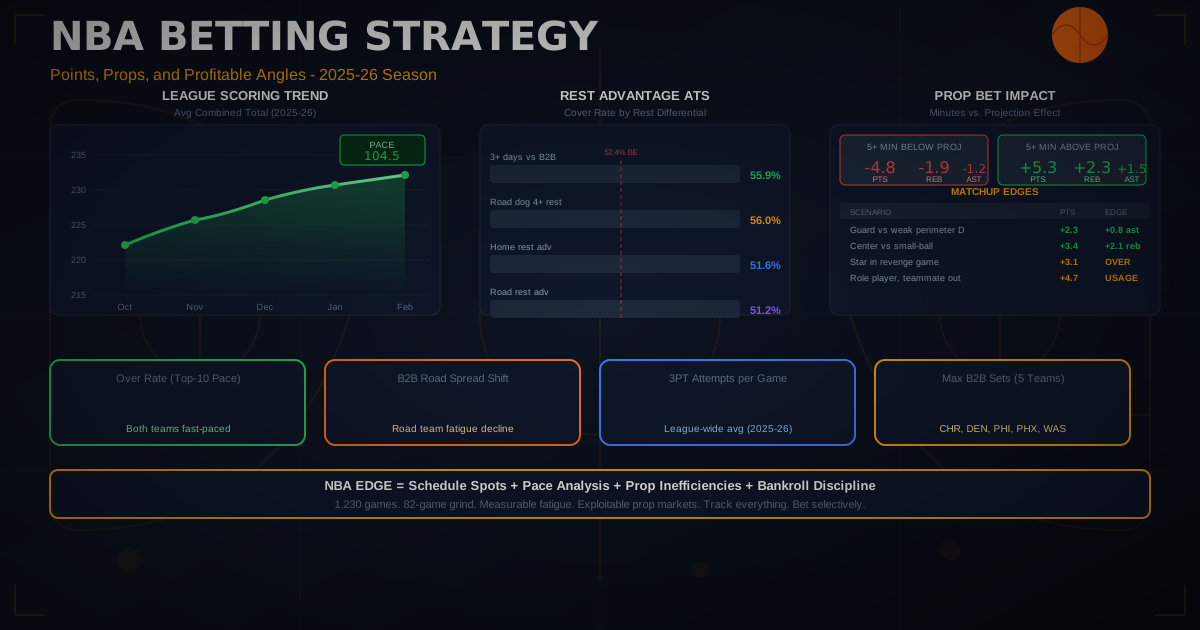
The NBA third quarter is the most statistically distinctive period in professional basketball and one of the most exploitable for bettors. Third quarters feature higher scoring variance, more runs by the home team, and a well-documented tendency for the over to hit more frequently than any other quarter.
NBA Third Quarter Scoring Data
| Metric | 1st Quarter | 2nd Quarter | 3rd Quarter | 4th Quarter |
|---|---|---|---|---|
| Avg Combined Points | 55.8 | 56.2 | 57.4 | 58.1 |
| Over Hit Rate | 49.8% | 50.1% | 54.3% | 51.2% |
| Home Team Margin | +0.4 | +0.6 | +1.1 | +0.8 |
| Pace (possessions) | 24.1 | 24.3 | 24.8 | 25.5 |
| Three-Point Attempt Rate | 37.2% | 38.1% | 39.8% | 40.5% |
Why the Third Quarter Is Different
Several factors explain the third quarter's unique scoring profile:
- Halftime adjustments increase pace. Coaches identify what worked in the first half and double down, creating more aggressive play early in the third quarter.
- Starters return rested. Both teams' best players start the third quarter after a 15-20 minute rest, often playing more aggressively than they did at the end of the first half.
- Comeback urgency sets in early. Teams trailing by 8-15 points at halftime often come out with heightened urgency in the third quarter, pushing pace higher.
- The three-point rate climbs. Teams take more threes in the second half, and the three-point attempt rate in the third quarter is approximately 2-3% higher than the first quarter. More threes = more variance = more points.
- Defensive intensity fluctuates. There is a well-documented "third-quarter lull" in defensive effort that manifests as more open looks and higher field goal percentages.
Home Team Third Quarter Advantage
The home team's advantage in the third quarter is notably larger than in other quarters. Home teams outscore visitors by an average of 1.1 points in the third quarter, compared to +0.4 in the first quarter. This is believed to result from:
- Home coaches making more effective halftime adjustments (familiarity with their own facility, film room, etc.)
- Home crowd energy peaking at the start of the second half
- Visiting team fatigue from travel becoming more pronounced as the game progresses
For bettors, NBA third-quarter home team spreads have been consistently underpriced. The home team has covered the third-quarter spread at approximately 52.5% over the past five seasons, a small but meaningful edge.
Calculate whether a third-quarter home team bet offers positive EV with our Expected Value Calculator.
What NHL Period Betting Trends Should You Know?
NHL period betting offers value through predictable scoring patterns by period, home team first-period advantages, and third-period scoring tendencies that vary based on score and situation. The three-period structure of hockey creates more opportunities than the two-half structure of most other sports.
NHL Scoring by Period (2019-2025)
| Period | Avg Goals Per Period | % of Total Goals | Over Hit Rate | Home Team Edge |
|---|---|---|---|---|
| 1st Period | 1.78 | 30.8% | 49.2% | +0.08 goals |
| 2nd Period | 1.92 | 33.3% | 50.4% | +0.05 goals |
| 3rd Period | 2.07 | 35.9% | 51.8% | +0.12 goals |
First Period Home Advantage
Home teams in the NHL have a measurable first-period advantage that stems from the last change rule. In the first period, the home team gets the final line change, allowing coaches to exploit favorable matchups from the opening faceoff. This advantage is most pronounced in the first 5-7 minutes when the structured lines the home coach set up are still intact.
The betting angle: home team first-period moneylines have historically returned a small positive ROI. Home teams score first in approximately 52.5% of games, and the first-period moneyline for the home team is typically priced at -105 to -115, occasionally offering positive expected value.
Third Period Scoring Trends
Third-period scoring is the highest of any period because:
- Trailing teams pull the goalie. Empty-net situations in the final 1-3 minutes create 2-3 additional goals per 100 games.
- Desperate offensive pushes. Teams trailing by 1-2 goals play aggressively, creating more quality chances but also more odd-man rushes the other way.
- Power play accumulation. Penalties called earlier in the game sometimes result in carryover power plays or accumulated frustration penalties in the third.
- Fatigue affects defenders. Third-period defensive breakdowns increase as ice time accumulates, particularly for teams with short benches.
The third-period over has been a modestly profitable bet over the past six seasons, hitting at approximately 51.8%. The edge is small but consistent and tends to be largest when the score is close (within 1 goal) entering the third period.
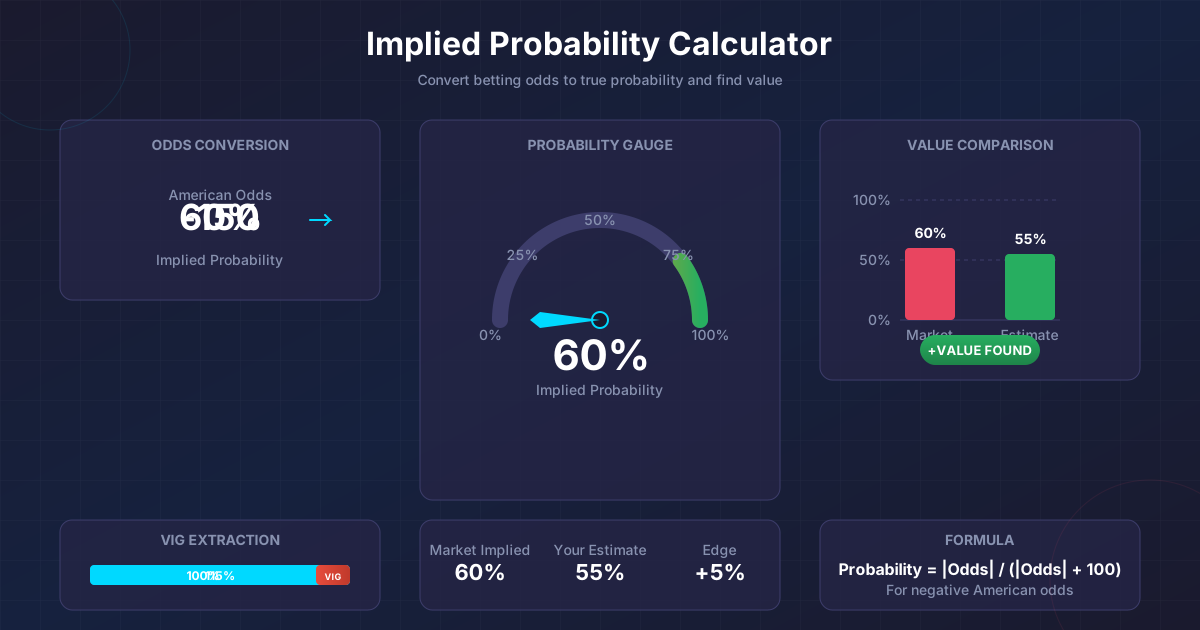
Check the implied probability of period-specific bets with our Implied Probability Calculator.
NHL Period Betting Strategy by Game State
The game state entering a period dramatically affects scoring expectations:
| Score Entering 3rd Period | Avg 3rd Period Goals | Over Hit Rate | Strategy |
|---|---|---|---|
| Tied | 2.34 | 54.1% | Lean over -- both teams pushing for regulation win |
| 1-goal lead | 2.21 | 52.3% | Moderate over lean -- trailing team pushes |
| 2-goal lead | 2.08 | 50.8% | Neutral -- balanced aggression |
| 3+ goal lead | 1.72 | 45.3% | Lean under -- both teams coast |
When the game is tied entering the third period, both teams push for the regulation win to avoid overtime, resulting in the highest third-period scoring average. This is the most actionable NHL period trend.
How Do Coaching Adjustments Create Second Half Betting Value?
Coaching adjustments are the primary mechanism through which second-half results diverge from first-half results. Teams with superior coaching staffs consistently make more effective halftime adjustments, and the data shows that coaching quality has a measurable impact on second-half performance differentials.
Coaching Adjustment Impact by Sport
| Sport | Avg 2H Performance Change (Good Coaching) | Avg 2H Performance Change (Poor Coaching) | Gap |
|---|---|---|---|
| NFL | +2.1 pts better than 1H pace | -0.3 pts worse than 1H pace | 2.4 pts |
| NBA | +1.5 pts better in 2H | -0.8 pts worse in 2H | 2.3 pts |
| NHL | +0.15 goals better in 2H/3rd | -0.08 goals worse | 0.23 goals |
| College Football | +2.8 pts better in 2H | -1.2 pts worse in 2H | 4.0 pts |
NFL Coaching Adjustment Profiles
In the NFL, coaching adjustment quality varies enormously. Some coaches are renowned for their halftime adjustments:
- Elite adjusters (historically: Andy Reid, Bill Belichick, Sean McVay) consistently outperform their first-half margins in the second half. Their teams trailing at halftime cover the second-half spread at approximately 55%.
- Poor adjusters show minimal improvement or even decline in the second half. Their teams leading at halftime sometimes see leads shrink disproportionately.
The betting angle is to identify coaches with strong adjustment track records and bet their second-half lines when they trail at halftime. If a team led by an elite adjusting coach is down 10 points at halftime, the second-half spread may not fully account for the expected coaching correction.
NBA Halftime Adjustment Patterns
In the NBA, coaching adjustments are most visible in:
- Defensive scheme changes. Switching from man-to-man to zone (or vice versa) after halftime creates confusion for the opposing offense in the early third quarter.
- Rotation changes. Adjusting minutes for players who were particularly effective or ineffective in the first half.
- Pick-and-roll coverage. Changing how the team defends the primary pick-and-roll action after studying first-half film.
Teams that make significant scheme changes at halftime tend to see a 3-5 minute stretch in the early third quarter where the adjustment provides a noticeable advantage before the opponent adapts. This creates value on the third-quarter spread for the adjusting team.
Determine the optimal bet size on a coaching-adjustment play with our Kelly Criterion Calculator.
When Should You Bet Pregame Second Half vs. Live Halftime Lines?
You should bet pregame second-half lines when you have a structural opinion about how the game will unfold in the second half independent of the first-half result. You should bet live halftime lines when the first half has provided specific information that the halftime line does not fully incorporate.
Pregame Second Half Betting Advantages
| Situation | Why Pregame 2H Is Better | Example |
|---|---|---|
| Team with strong 2H track record | Structural edge independent of 1H result | NFL team that scores 60% of its points in 2H |
| Coaching adjustment advantage | Edge exists before seeing 1H | Elite adjuster vs poor adjuster |
| Weather changes expected | Wind dying down in evening = more scoring in 2H | Sunday night outdoor game |
| Rest and depth advantage | Deeper team wears down opponent | NBA team with deep bench vs thin roster |
| Pace/tempo asymmetry | Fast-start vs slow-start teams | Team A scores more in Q1-Q2, Team B scores more in Q3-Q4 |
Live Halftime Betting Advantages
| Situation | Why Live Halftime Is Better | Example |
|---|---|---|
| Unexpected first-half blowout | 2H regression to mean | Team up 21-0 at halftime, 2H line overcorrects |
| In-game injury | Halftime line reflects the injury | Star player hurt in Q2, 2H line adjusts |
| Foul trouble (NBA) | Key player limited by fouls | Center with 3 fouls at half, 2H line adjusts |
| Pace deviation from norm | First half was unusually fast/slow | If 1H was much faster than expected, 2H will likely slow down |
| Weather shift | Conditions changed during 1H | Wind picked up, rain started |
The Halftime Overreaction
One of the most consistent edges in second-half betting is fading the halftime overreaction. When a team blows out its opponent in the first half, the halftime line often overcorrects, expecting the blowout to continue at the same rate. In reality, second halves tend to regress toward the pregame expectation. The team that was blown out in the first half covers the second-half spread at approximately 53-55% in NFL and NBA games where the first-half margin exceeds 14 points (NFL) or 15 points (NBA).
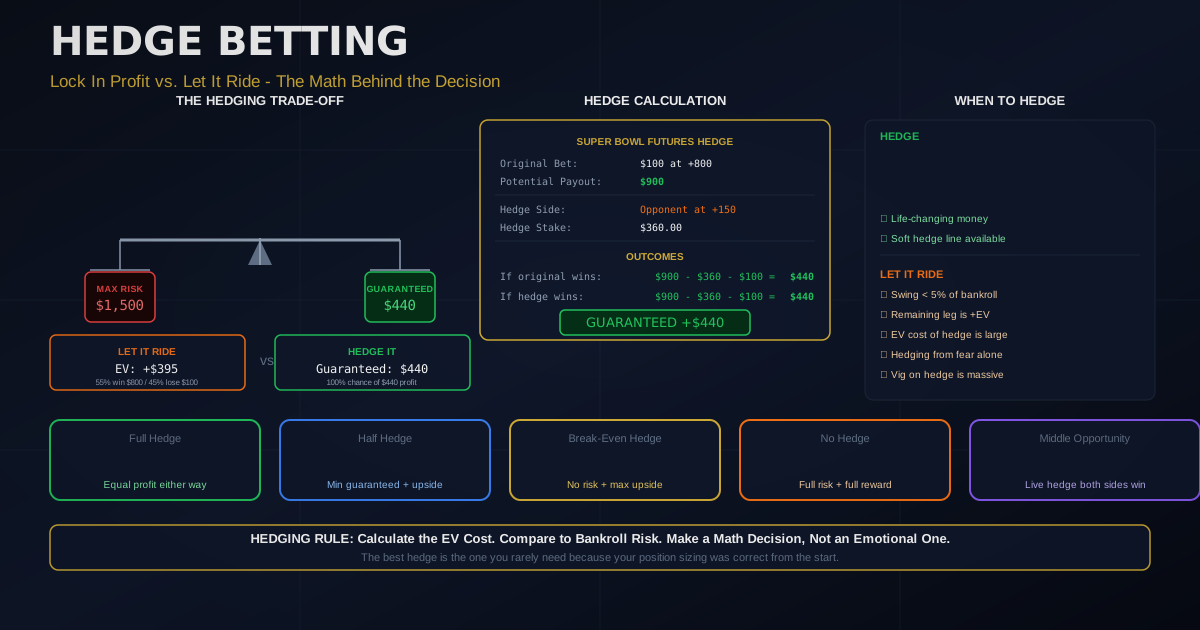
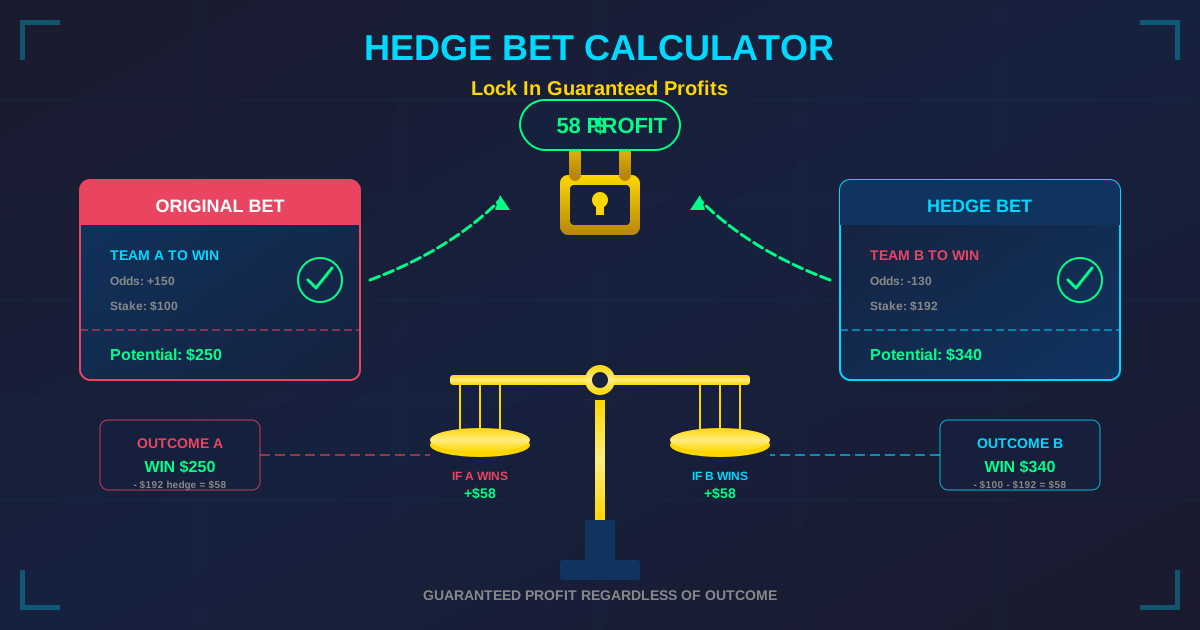
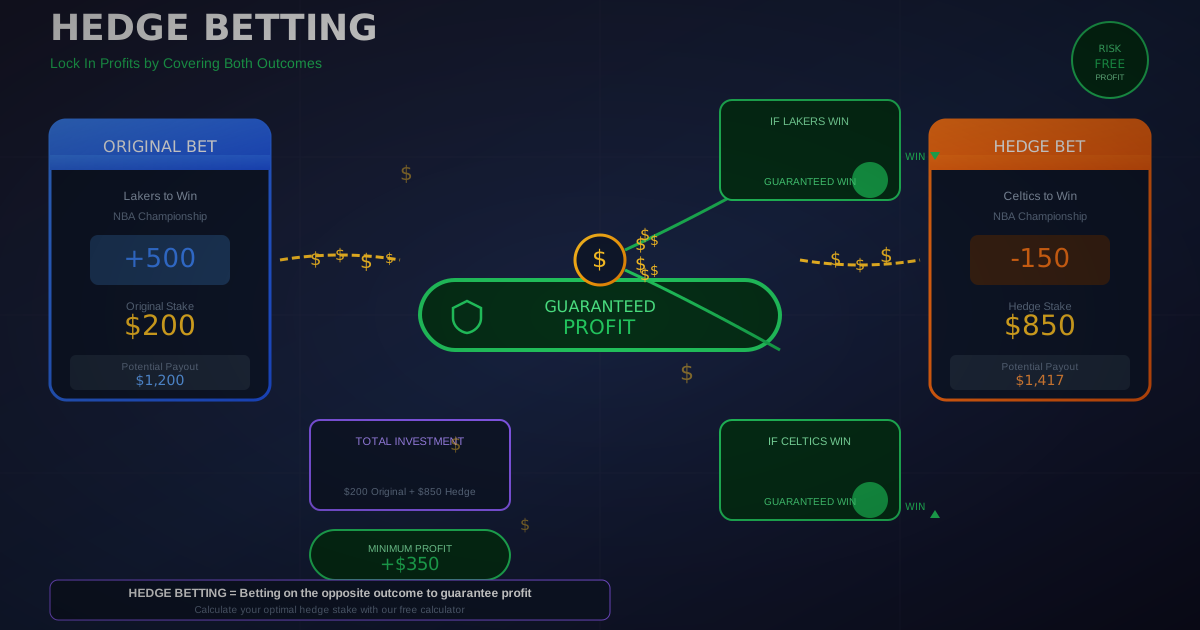
Hedge your first-half bet by taking the other side at halftime using our Hedge Calculator.
What Second Half Over/Under Trends Are Most Reliable?
The most reliable second-half over/under trends focus on game state, pace regression, and sport-specific scoring patterns. NFL second-half unders in blowouts, NBA second-half overs in competitive games, and NHL third-period overs in tied games are among the most consistent.
NFL Second Half Total Trends
| First Half Scenario | Avg 2H Total | Over Hit Rate | Under Hit Rate | Strategy |
|---|---|---|---|---|
| 1H total > game total/2 + 5 | 19.2 | 44.3% | 55.7% | Under -- pace regression |
| 1H total within 3 of game total/2 | 22.1 | 50.8% | 49.2% | No edge |
| 1H total < game total/2 - 5 | 24.8 | 55.2% | 44.8% | Over -- scoring catch-up |
| Blowout (20+ pt lead at half) | 18.4 | 42.1% | 57.9% | Under -- starters pulled, clock runs |
| Close game (within 3 pts at half) | 23.5 | 52.4% | 47.6% | Slight over lean |
NBA Second Half Total Trends
| First Half Scenario | Avg 2H Combined Points | Over Hit Rate | Strategy |
|---|---|---|---|
| 1H pace above season average | 112.8 | 48.6% | Slight under -- pace regression |
| 1H pace below season average | 116.2 | 53.4% | Over -- pace increase likely |
| Close game at halftime (< 5 pts) | 115.8 | 52.8% | Slight over -- competitive 4Q |
| Blowout at halftime (> 20 pts) | 109.4 | 45.2% | Under -- garbage time, starters rest |
| Both teams above .600 | 117.1 | 53.1% | Over -- talent produces scoring |
The Pace Regression Principle
The single most important concept for second-half total betting is pace regression. If the first half was significantly faster or slower than expected, the second half will typically revert toward the normal pace. This is not a guarantee but a strong tendency:
- If a game that was projected at 45 total points saw 28 points in the first half (unusually fast), the second half is more likely to produce fewer than 17 points -- lean under on the second-half total.
- If the same game saw only 14 points in the first half (unusually slow), the second half is more likely to produce more than 17 points -- lean over.
This concept applies across all sports but is most exploitable in the NFL and NBA because the second-half totals are large enough to have meaningful market pricing.
Run the EV calculation on your second-half total bet with our Expected Value Calculator.
How Do You Bet Quarter Totals Strategically?
Quarter total betting requires understanding the scoring distribution within each sport, identifying quarters where the market consistently misprices the total, and using game context to anticipate pace changes within specific quarters.
NBA Quarter Total Strategy
The NBA offers the richest quarter total markets. Here is how to approach them:
| Quarter | Market Tendency | Strategy | Win Rate (Historical) |
|---|---|---|---|
| 1st Quarter | Slightly overpriced totals | Lean under when both teams start slowly historically | 51.2% under |
| 2nd Quarter | Fairly priced | No consistent edge | ~50/50 |
| 3rd Quarter | Slightly underpriced totals | Lean over based on pace increase | 54.3% over |
| 4th Quarter | Overpriced totals in blowouts | Under in games with large 3Q leads | 52.8% under (blowouts) |
NFL Quarter Total Strategy
NFL quarter totals are smaller numbers (typically 4.5-7.5 points), which makes them inherently more volatile. The smaller market also means less sharp money and potentially more pricing errors.
- First-quarter under (5.5 or lower): Profitable in division games and defensive matchups. Hit rate approximately 53%.
- Second-quarter over: The second quarter is typically the highest-scoring quarter in the NFL because both offenses have found their rhythm. The over has a slight edge at 51.5%.
- Fourth-quarter over in close games: When the spread is less than 7 points, the fourth quarter tends to produce more points due to two-minute drills and aggressive play. Over hit rate approximately 52.5%.
Quarter Spread Strategy
Quarter spreads are set as approximately one-quarter of the full-game spread, adjusted for quarter-specific tendencies. The key edge is knowing which teams are front-runners versus closers:
- First-quarter specialists: Some NFL teams consistently score early but fade late. These teams offer value on first-quarter spreads.
- Fourth-quarter closers: Teams that consistently outscore opponents in the fourth quarter (often teams with elite quarterbacks and good coaching) are valuable fourth-quarter spread plays.
Calculate the EV of quarter-specific bets across a multi-game card using our Expected Value Calculator.
What Live Betting Strategies Work Best for Period Markets?
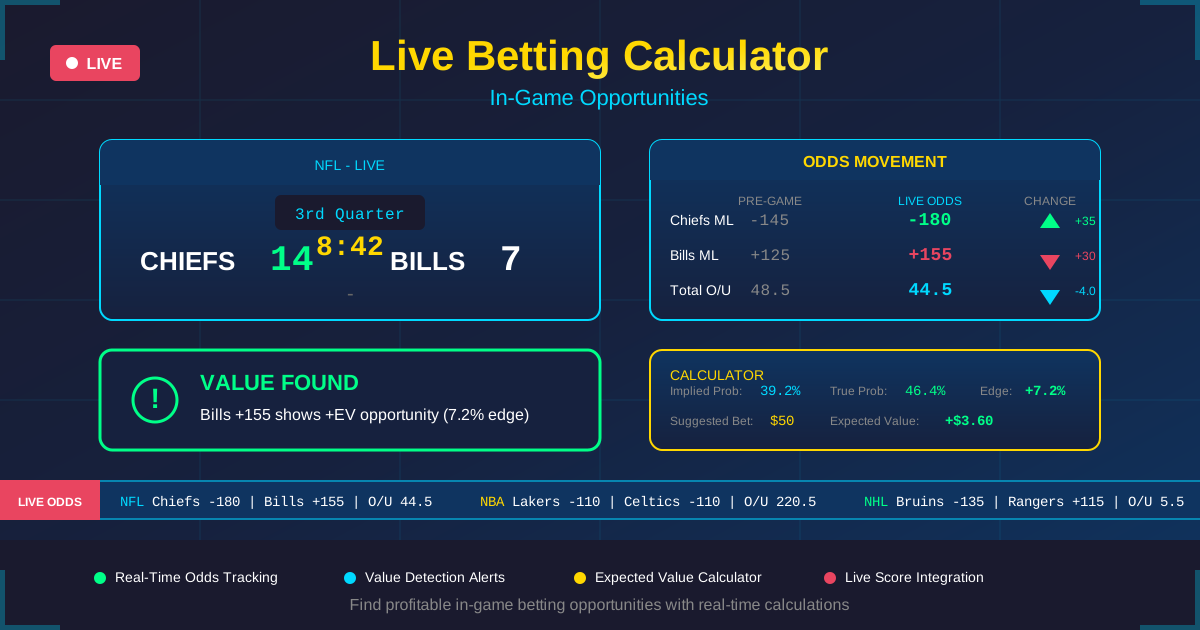
Live period betting combines real-time game observation with statistical tendencies to find edge in markets that update every few seconds. The best live period strategies focus on identifying momentum shifts, personnel changes, and game-state transitions that the live model does not immediately price.
Live First-Half Betting
The most actionable live first-half betting opportunities:
| Situation | Live Bet | Rationale | Historical Edge |
|---|---|---|---|
| NFL: Early turnover, no score change | 1H under | Turnovers disrupt drives but don't always lead to points | 52.8% |
| NBA: Home team down 8-12 early | 1H home team spread | Early road leads often regress | 53.1% |
| NHL: Scoreless after 10 min | 1H under 1.5 | Goaltenders in rhythm, pace established | 54.2% |
| NFL: Score 14-0 after Q1 | 1H over | High-scoring pace tends to continue | 52.5% |
Live Second-Half Entry Points
The optimal time to enter a second-half live bet varies by sport:
- NFL: The best live entry is in the first 3-5 minutes of the third quarter, before the coaching adjustments are fully visible but after you can read the halftime mood (team body language, crowd energy). If a trailing team comes out with noticeably more energy, the live second-half spread may not have adjusted yet.
- NBA: The first 2-3 minutes of the third quarter are the most volatile. Wait until the 8-9 minute mark of the third quarter to bet the second half if you want a more reliable read on the pace and strategy.
- NHL: The first 5 minutes of the third period often set the tone. If a team tied or trailing comes out with sustained offensive zone pressure, the live period moneyline may still be at the opening price.
Avoiding Live Betting Traps
Common mistakes in live period betting:
- Chasing the trend. If a team scored 35 first-half points, the instinct is to bet the over on the second half. But pace regression works against this.
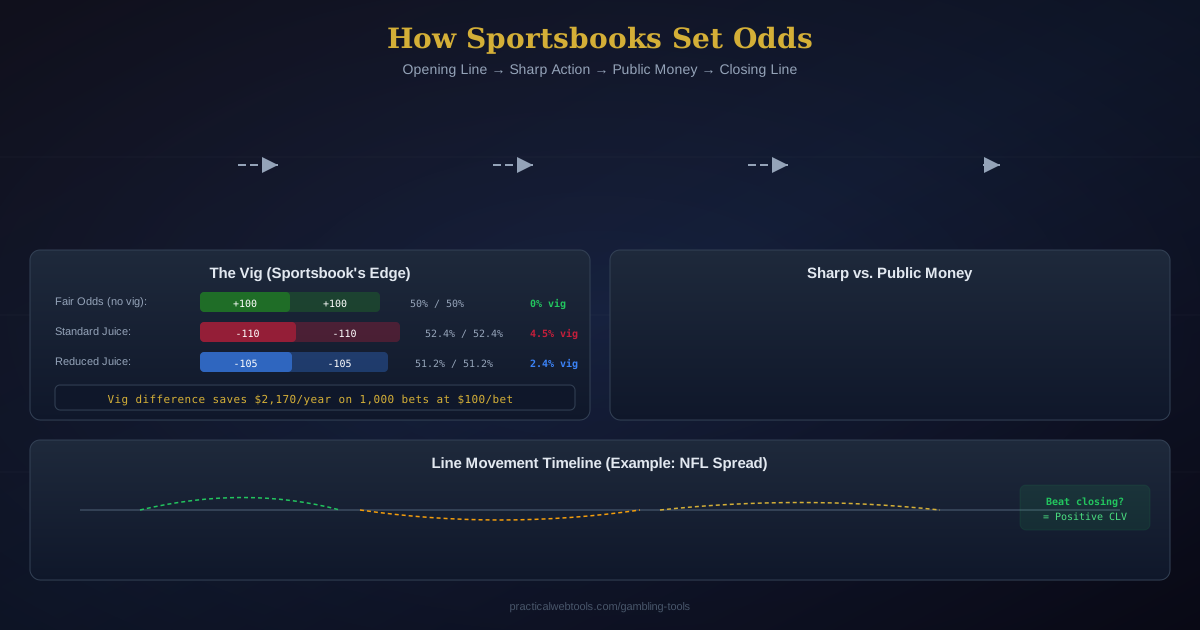
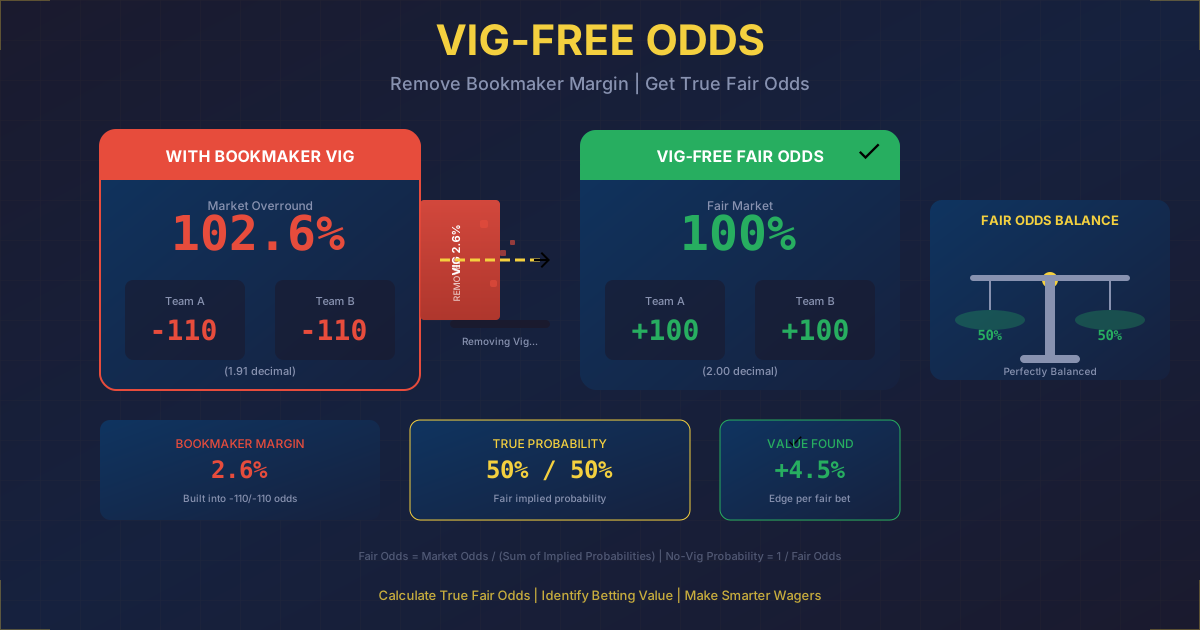
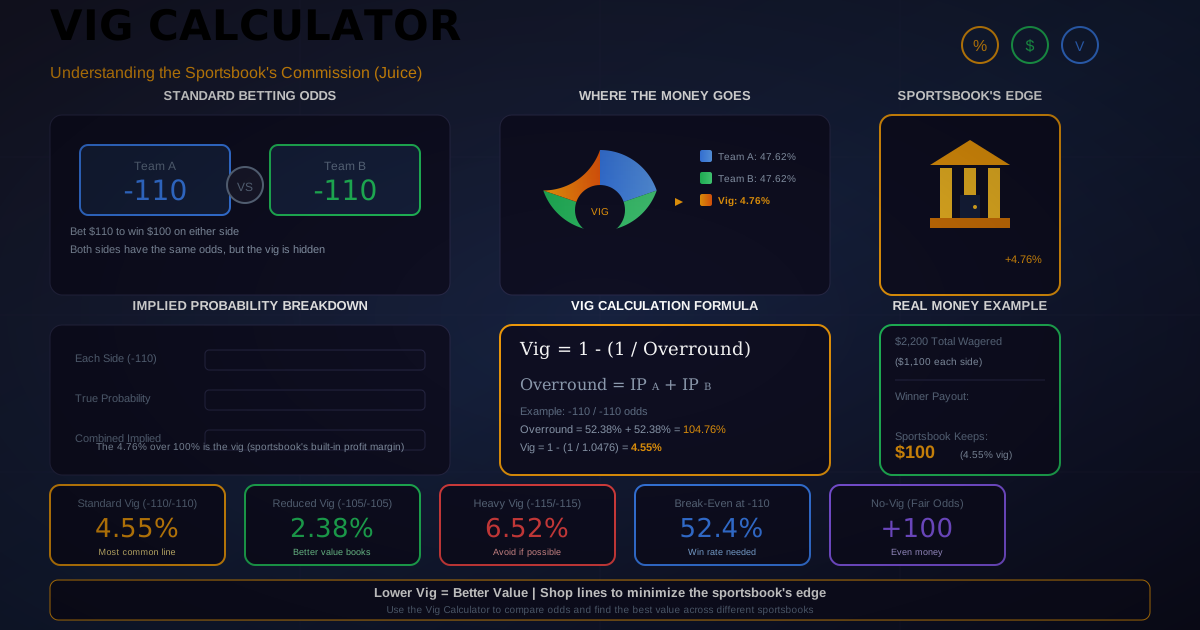
- Ignoring the juice. Live betting lines often carry higher vig than pregame lines. A 52% edge means nothing if you are laying -120 instead of -110.
- Betting emotionally after a bad first half. If you lost your pregame bet, the temptation to "double down" on the second half is strong. Treat the second half as a completely separate decision.
Compare the vig on live period bets to ensure you're getting fair value with our Hold/Vig Calculator.
How Do Specific Team Tendencies Affect Period Betting?
Team-specific tendencies are among the most valuable inputs for period betting because they are based on coaching philosophy, roster construction, and playing style rather than game-specific randomness. Teams with consistent first-half or second-half scoring tendencies provide reliable edges.
NFL First Half vs. Second Half Scoring Splits
Some NFL teams consistently score a disproportionate amount in the first or second half. Here is an example breakdown:
| Team Profile | 1H Scoring % | 2H Scoring % | Betting Implication |
|---|---|---|---|
| Fast starters (scripted openers) | 58-62% | 38-42% | 1H over, 2H under |
| Slow starters (adjustment teams) | 40-44% | 56-60% | 1H under, 2H over |
| Balanced teams | 48-52% | 48-52% | No period edge |
| Run-heavy closers | 45-48% | 52-55% | 2H spread, 2H under (grind games) |
| Pass-heavy openers | 55-60% | 40-45% | 1H over/cover |
NBA Quarter-by-Quarter Team Profiles
In the NBA, some teams consistently perform better in specific quarters:
- Third-quarter dominators: The best teams historically (Golden State Warriors in the 2015-2019 dynasty, Denver Nuggets 2022-2024) consistently outscore opponents in the third quarter. This pattern reflects elite coaching adjustments and stars who perform best when rested.
- Fourth-quarter closers: Teams with elite crunch-time players (Jayson Tatum, Luka Doncic) tend to outscore opponents in the fourth quarter of close games, but this is harder to exploit because the market knows about these players.
- First-quarter teams: Young, energetic teams sometimes come out with maximum intensity in the first quarter but fade as the game progresses and experience/depth become factors.
Building a Period Tendency Database
For serious period bettors, maintaining a database of team-level period tendencies is essential. Track:
- Points scored per quarter/period for each team (home and away separately)
- Points allowed per quarter/period
- Net scoring margin per quarter/period
- Over/under results per quarter/period
- Performance when leading vs. trailing at each break point
This data should be updated weekly during the season and analyzed for trends that persist year over year (coaching-driven) versus those that fluctuate (roster-driven).
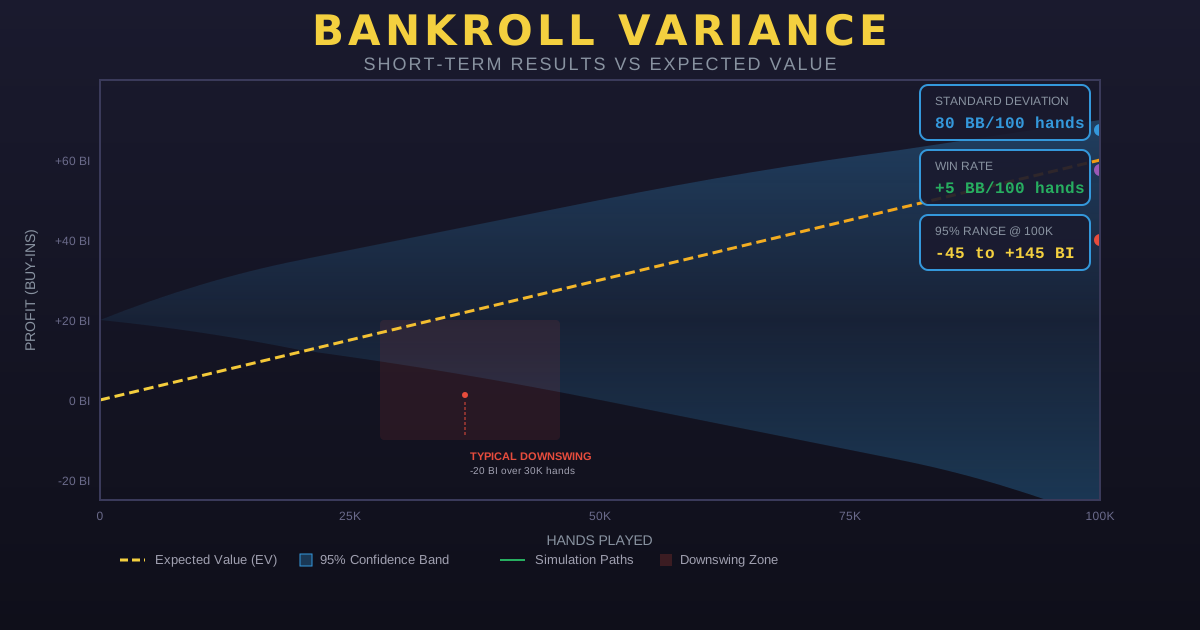
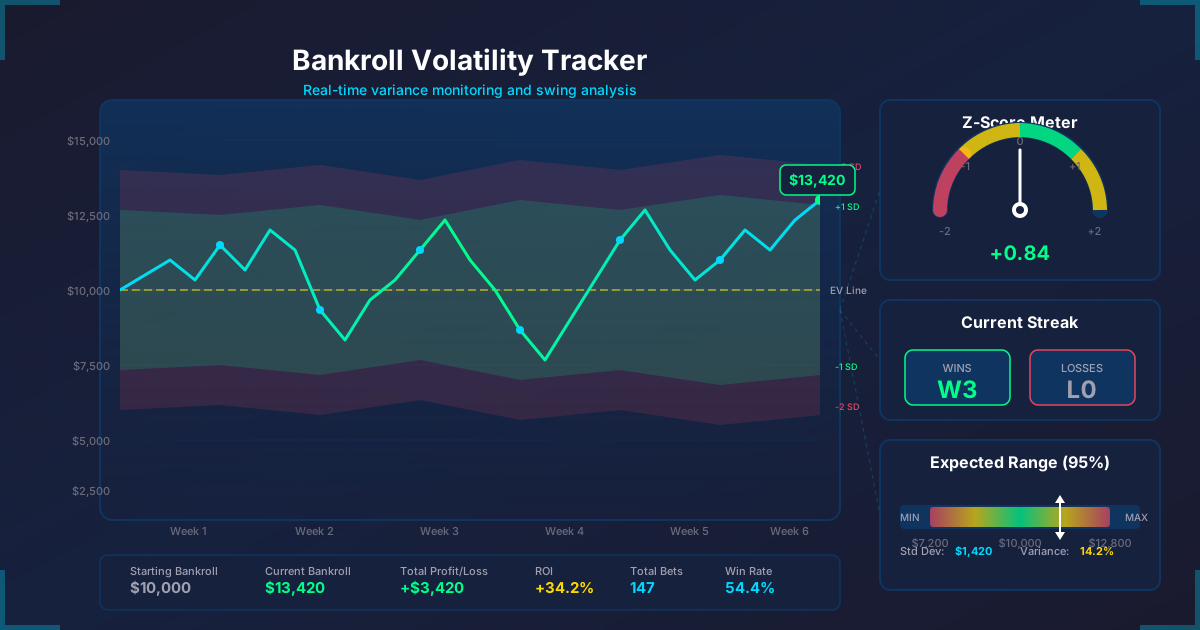
Track the volatility and performance of your period betting strategy with our Bankroll Volatility Tracker.
How Do Period Bets Fit Into Parlays and Teasers?
Period bets can be powerful components in parlay and teaser strategies, but they require careful management of correlation risk. The most profitable approach combines period bets from different games to create genuinely diversified multi-leg wagers.
Period Bet Parlay Strategy
| Parlay Combination | Correlation Level | Expected Value Impact | Recommendation |
|---|---|---|---|
| Q3 over Game A + Q3 over Game B | None | Standard parlay math applies | Excellent if both legs have edge |
| 2H under Game A + 2H under Game B | None | Standard parlay math applies | Good diversification |
| Q1 under + Q4 over (same game) | Low-Moderate | Slightly reduced true odds | Acceptable with caution |
| 1H over + full-game over (same game) | High | Significantly correlated | Avoid -- hidden risk |
| 2H Team A + full-game Team A (same game) | Very High | Nearly identical outcome | Avoid -- almost same bet |
| NFL 2H under + NBA Q3 over (different sports) | Zero | True diversification | Best parlay structure |
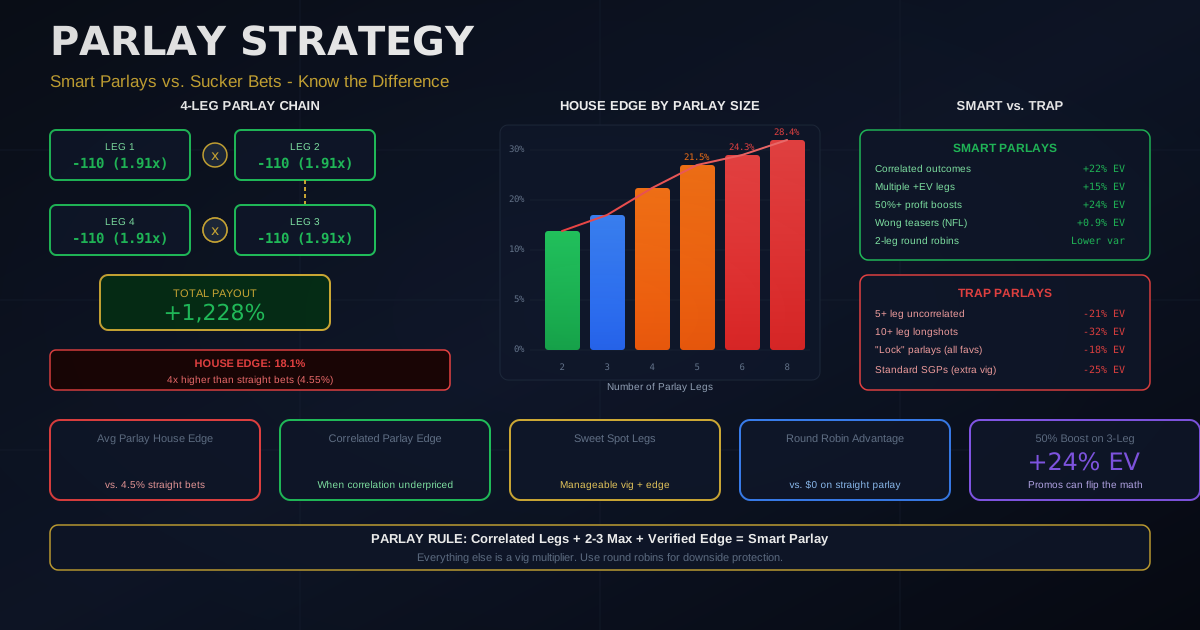
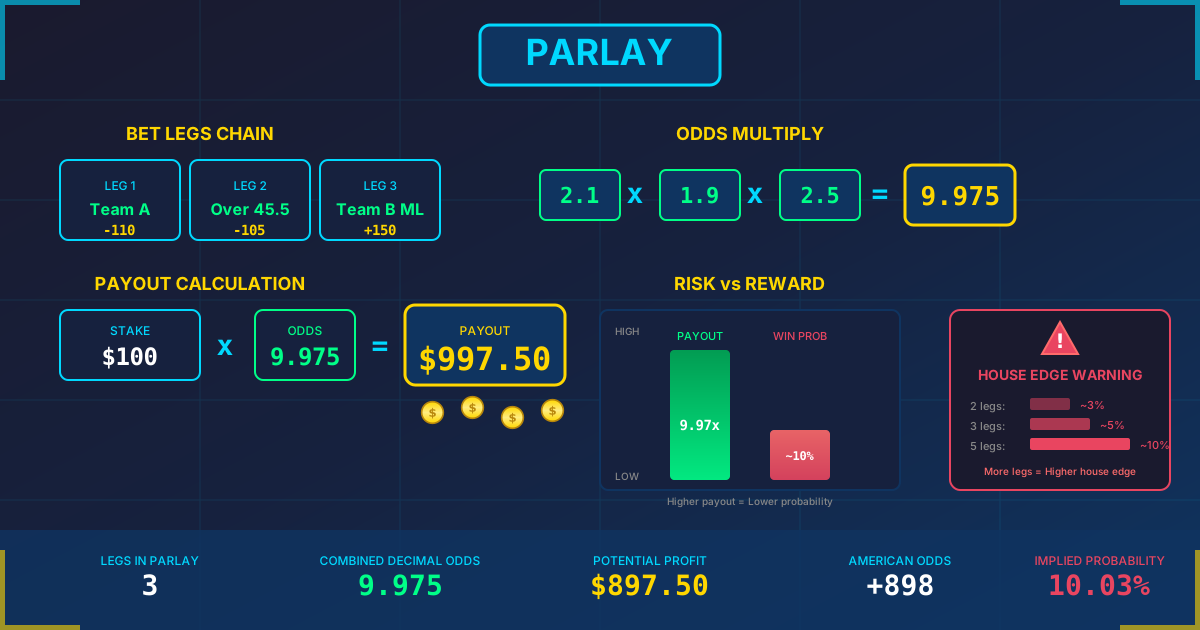
The golden rule for period-bet parlays is to combine legs from different games and ideally different sports. A two-leg parlay of an NFL second-half under and an NBA third-quarter over provides zero correlation, meaning the true payout reflects genuine independent risk.
Same-Game Period Parlays
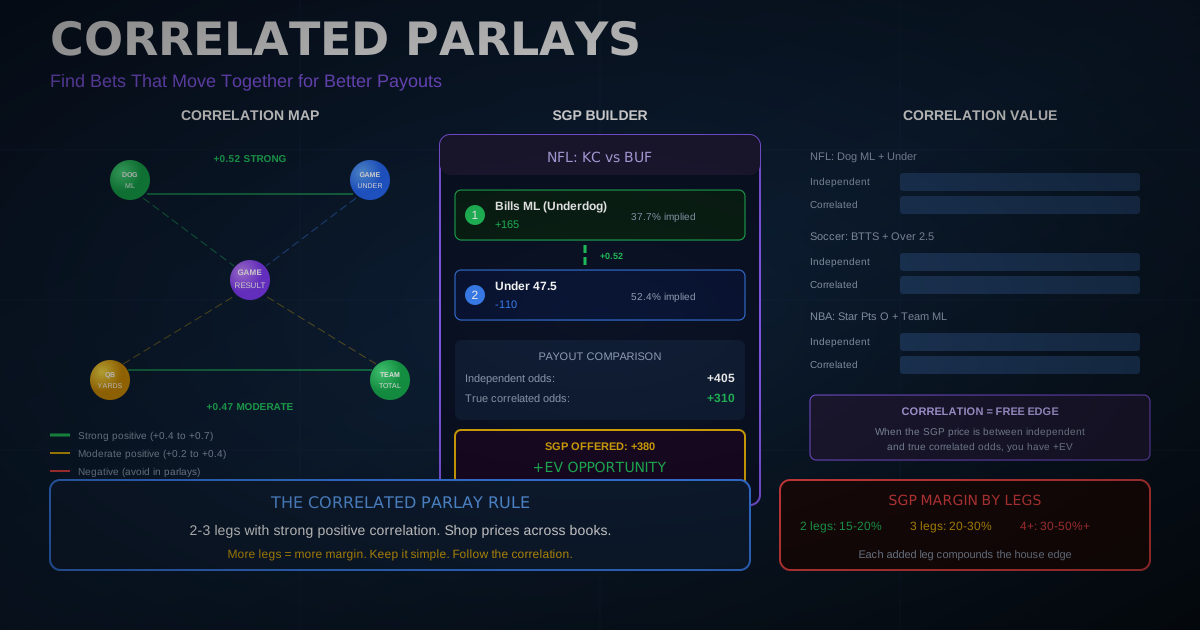
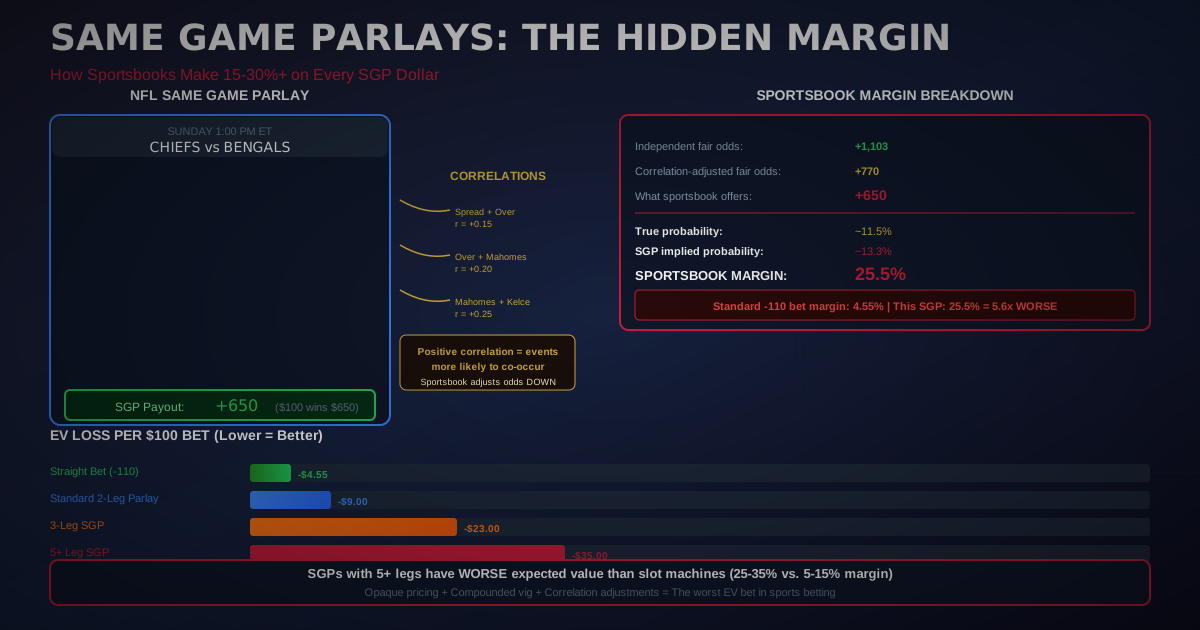
Many sportsbooks now offer same-game parlays (SGPs) that include period bets. While these are heavily promoted, bettors must understand the hidden correlation. When you parlay a first-half over with a full-game over from the same game, you are essentially double-counting the first-half scoring. If the first half goes under, both legs are in jeopardy.
Sportsbooks typically adjust SGP odds for correlation, but the adjustment is often insufficient -- meaning they sometimes give you too much credit (positive for bettors on correlated overs) or too little credit (negative for bettors on uncorrelated combinations). Identifying which SGP combinations the book misprices is an edge in itself.
Teasing Period Lines
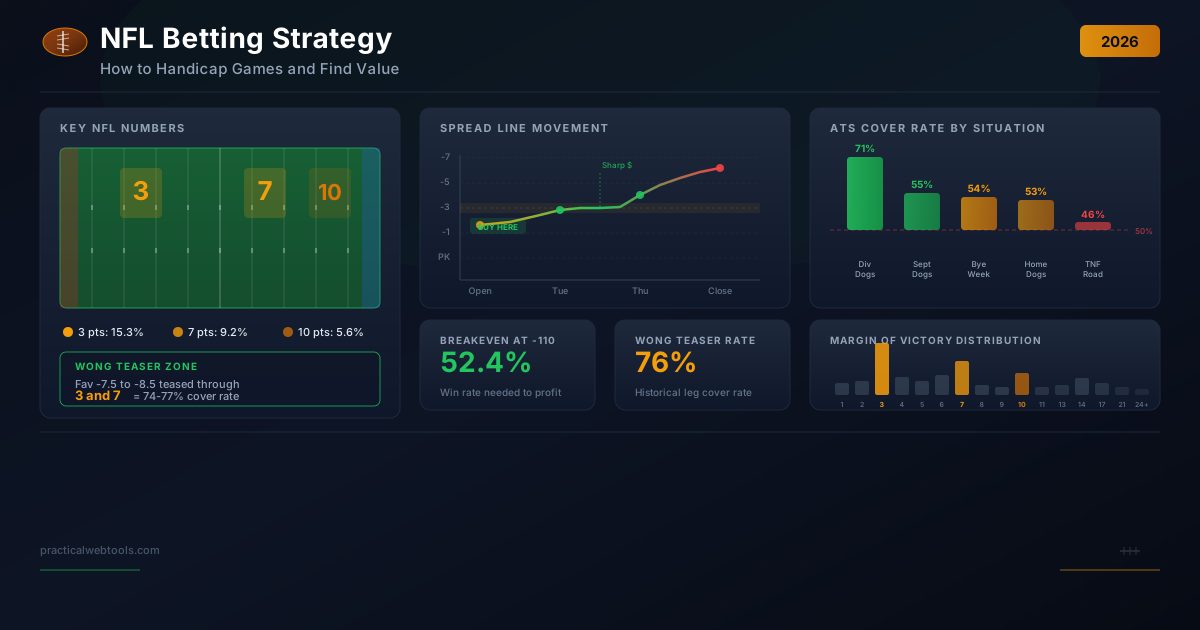
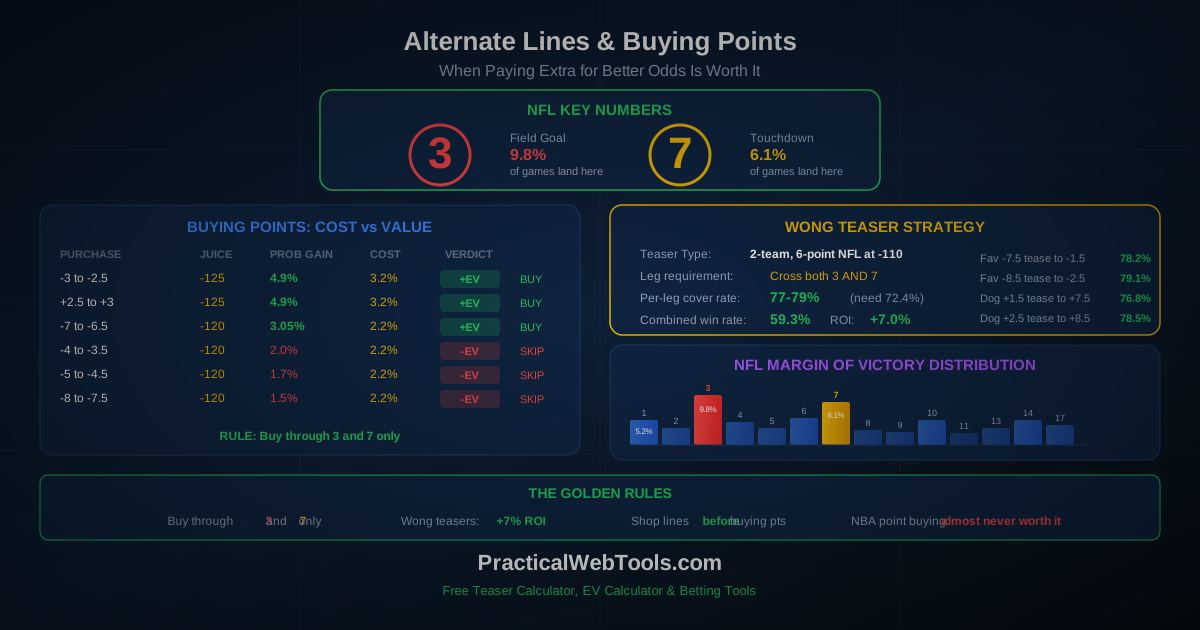
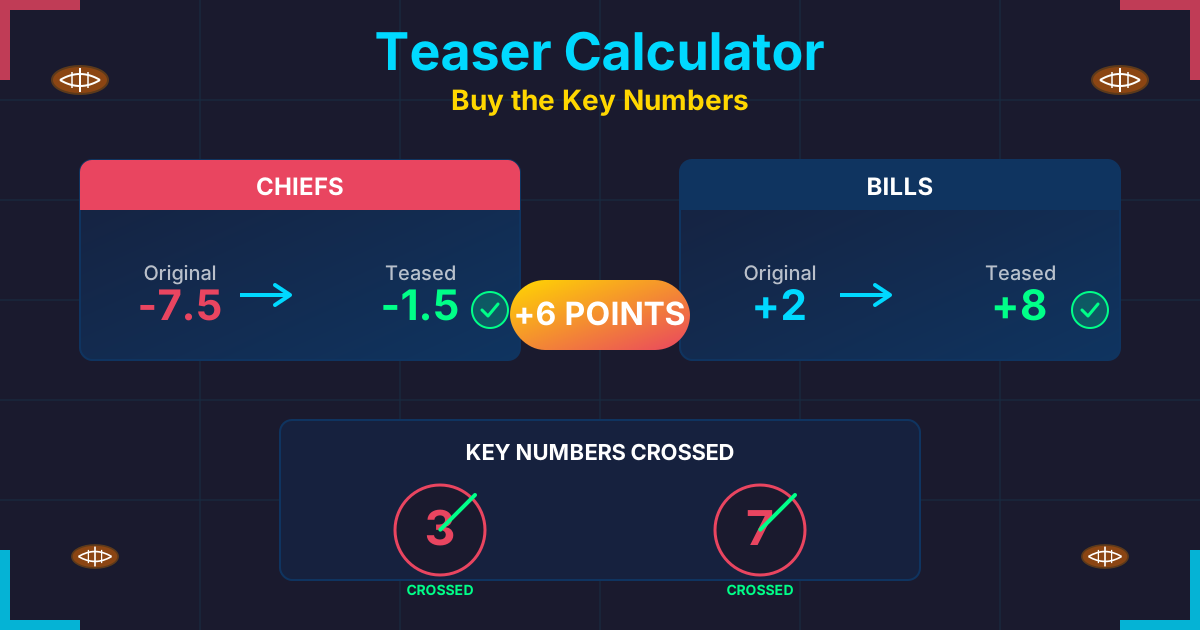
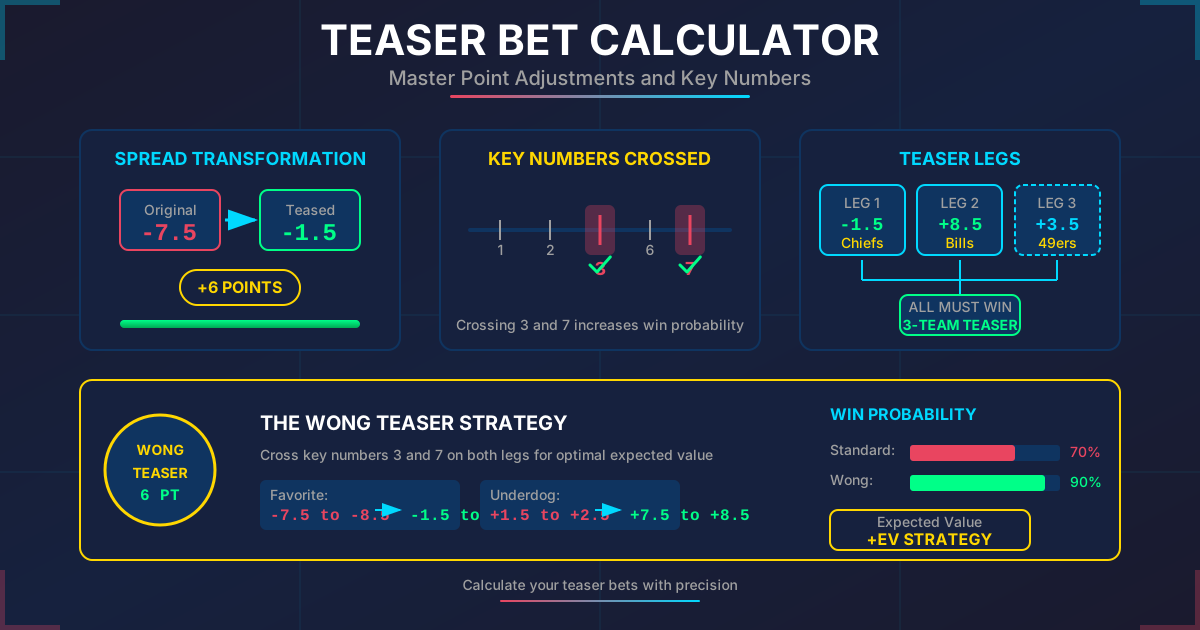
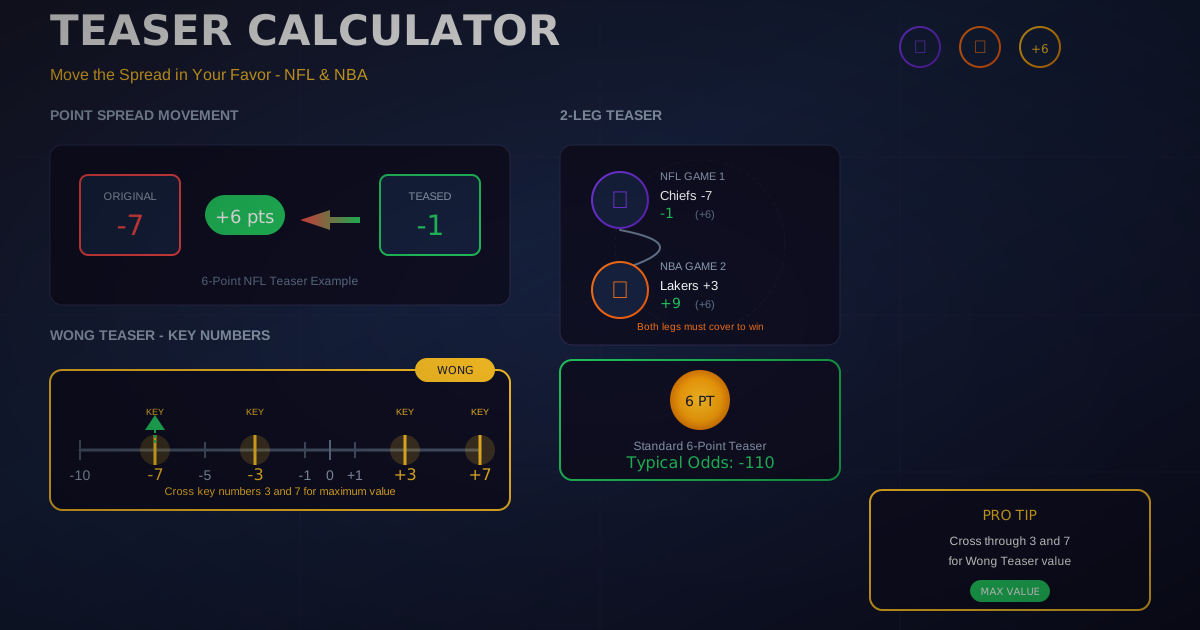
Some sportsbooks allow teasers on second-half lines. The same key number principles apply: teasing an NFL second-half spread through 3 and 7 is valuable, while teasing through non-key numbers is not. A 6-point second-half teaser that moves a -7.5 second-half spread to -1.5, crossing both 7 and 3, follows the same Wong teaser logic that has been profitable on full-game lines for decades.
The limited availability of period teasers at most sportsbooks means less sharp money has attacked these markets, potentially preserving more edge than exists in full-game teasers.
Evaluate teaser combinations including period bets with our Teaser Calculator.
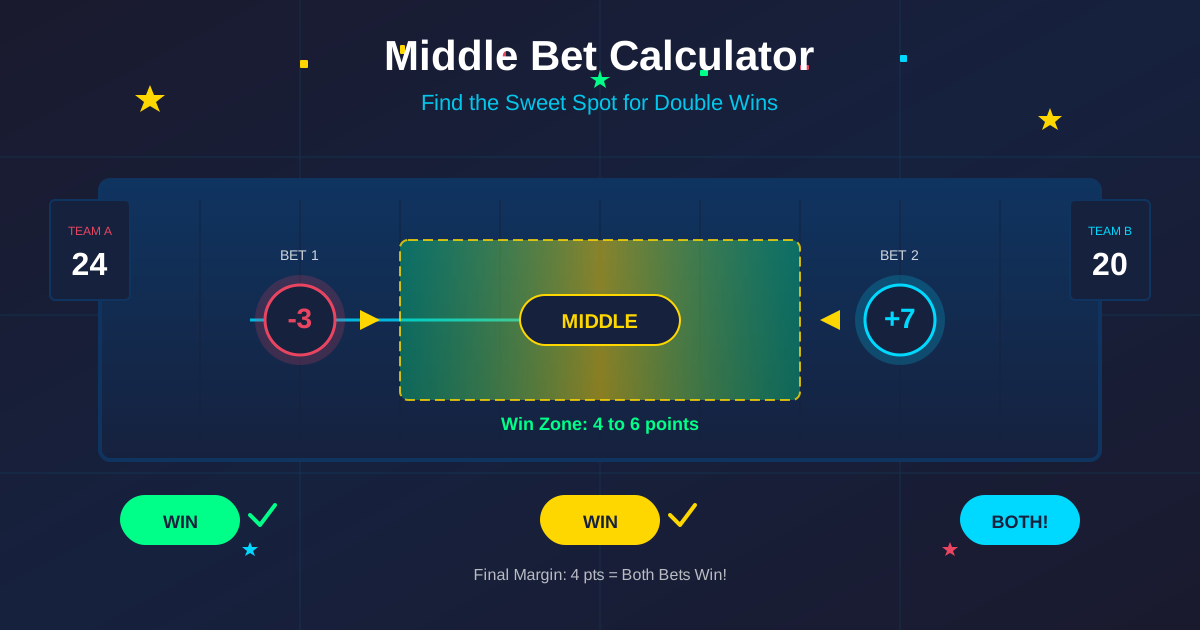
The Halftime Middle Play
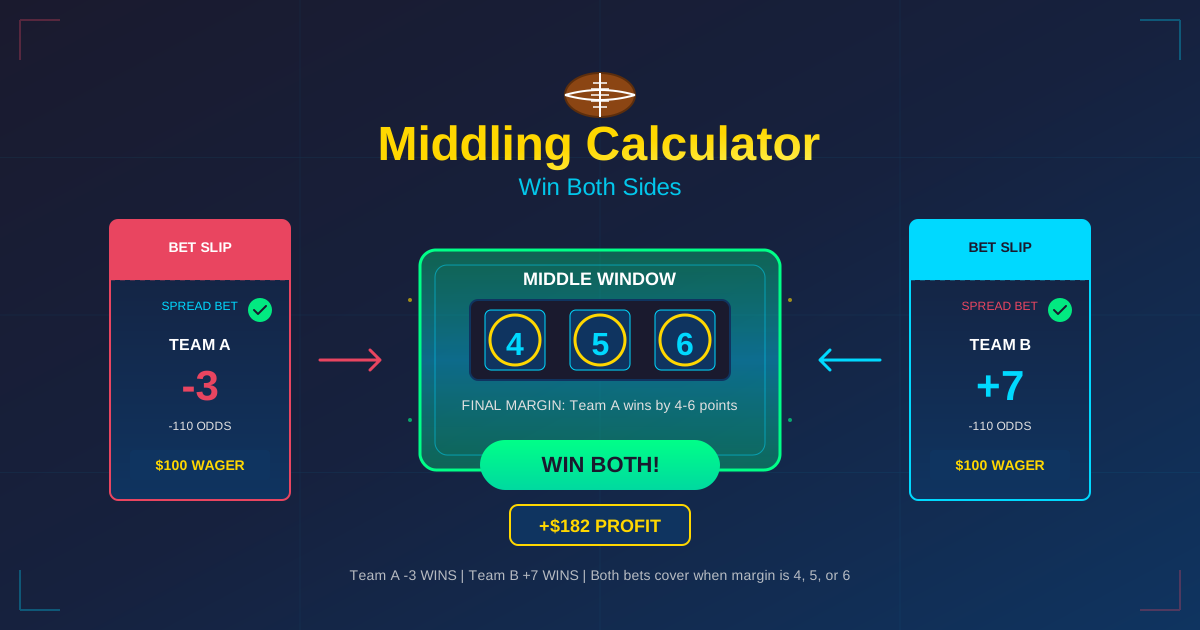
One of the most elegant period-betting strategies is the halftime middle. If you bet a pregame full-game over and the first half is extremely high-scoring, the live halftime total for the second half may be set lower than the remaining points needed for the full-game over to hit. You can then bet the second-half under, creating a middle where both bets win if the total lands in a specific range.
Example:
- Pregame: Over 44.5 at -110
- First half result: 31 total points
- Halftime: Second-half Under 22.5 at -110
- If second half produces 14-22 points, both bets win (total = 45-53, over hits; 2H = 14-22, under hits)
- If second half produces 23+, over wins but under loses (small net loss)
- If second half produces 13 or less, under wins but over loses (total = 44 or less)
The middle range of 14-22 points in the NFL second half is the most common outcome window, giving you a legitimate shot at winning both bets while having limited downside on either side.
Calculate the exact middle range and expected value of halftime middles with our Middle Bet Calculator.
What Are the Key Mistakes in Period Betting?
The most common period betting mistakes are assuming the second half will mirror the first, ignoring the higher vig on period markets, and overreacting to single-game results rather than following sustained tendencies.
Top Period Betting Mistakes
| Mistake | Why It's Wrong | How to Fix It |
|---|---|---|
| "First half was high-scoring, bet 2H over" | Pace regression makes 2H scoring mean-revert | Check pace relative to season average |
| Using full-game models for period bets | Period dynamics differ from full-game | Build period-specific models |
| Ignoring the extra vig | Period lines often have -115 or -120 juice | Compare vig across books |
| Chasing losses with 2H bets | Emotional, not analytical | Treat 2H as independent decision |
| Betting every quarter | Overexposure, correlated risk | Select only highest-edge quarters |
| Ignoring garbage time | Blowout 4Q scoring is meaningless | Discount 4Q trends in blowout contexts |
| Not tracking team tendencies | Missing the most reliable edge | Build a period tendency database |
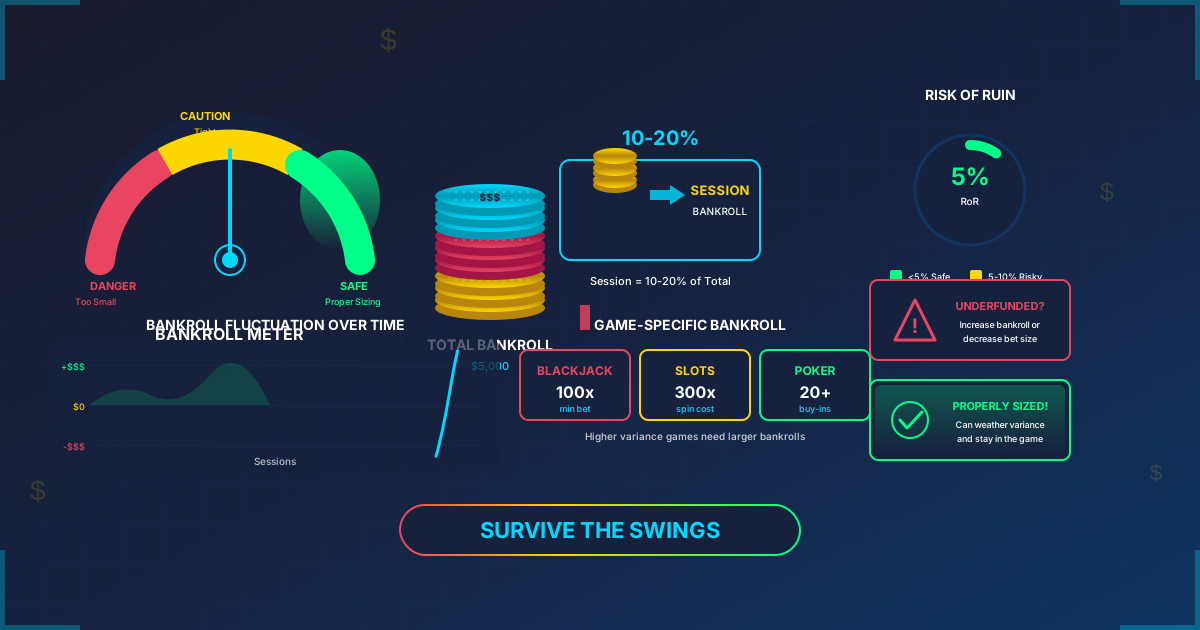
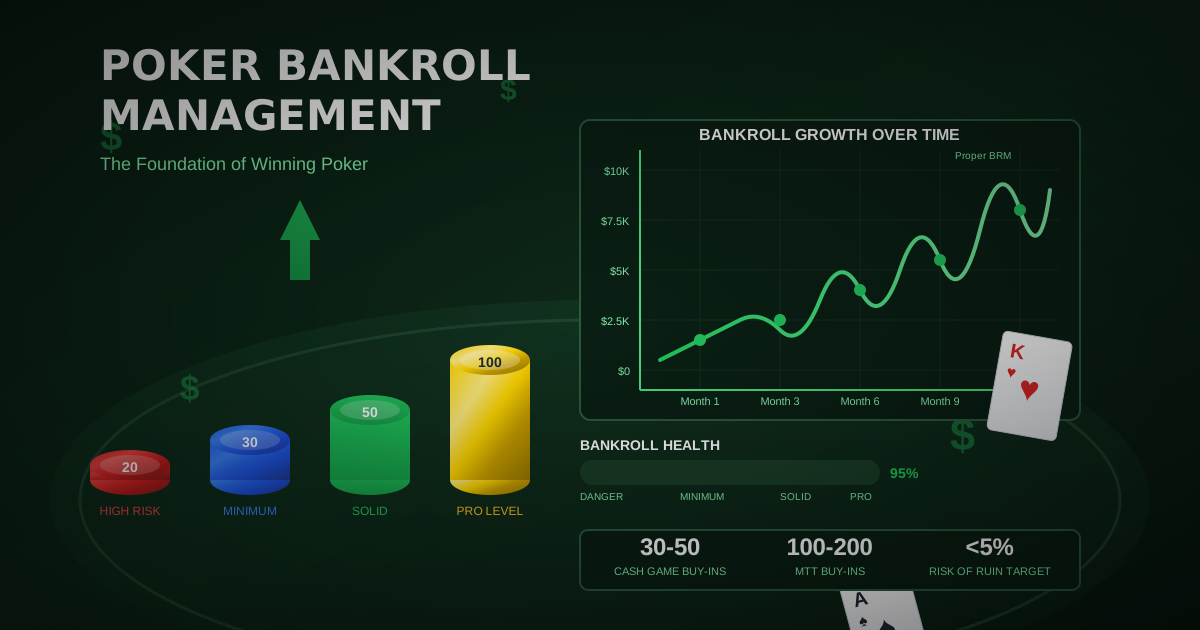
Bankroll Management for Period Bets
Period bets should be sized smaller than full-game bets for several reasons:
- Higher variance. A quarter total in the NFL might be 6.5 points. A single play can determine the outcome. This variance requires smaller sizing.
- Higher vig. The sportsbook's margin on period bets is typically 5-8% higher than on full-game markets, reducing your edge.
- Correlated risk. If you bet the first-half under and the second-half under in the same game, you effectively have two bets on the full-game under with correlated risk.
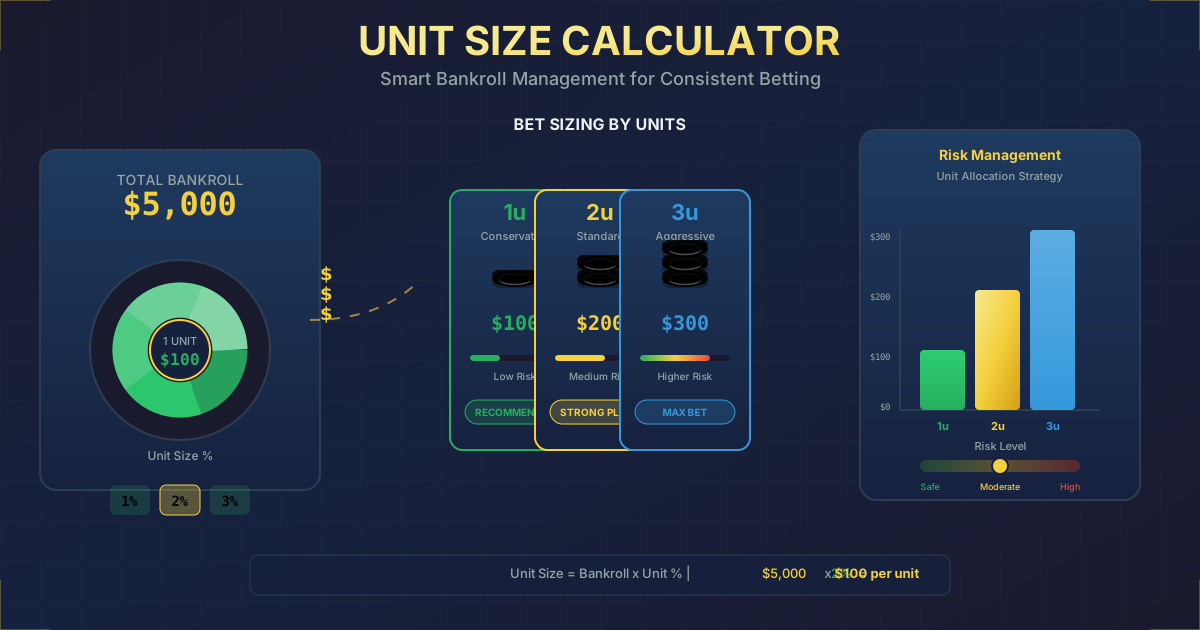
A practical guideline: size period bets at 50-75% of your standard full-game bet size to account for the additional variance and vig.
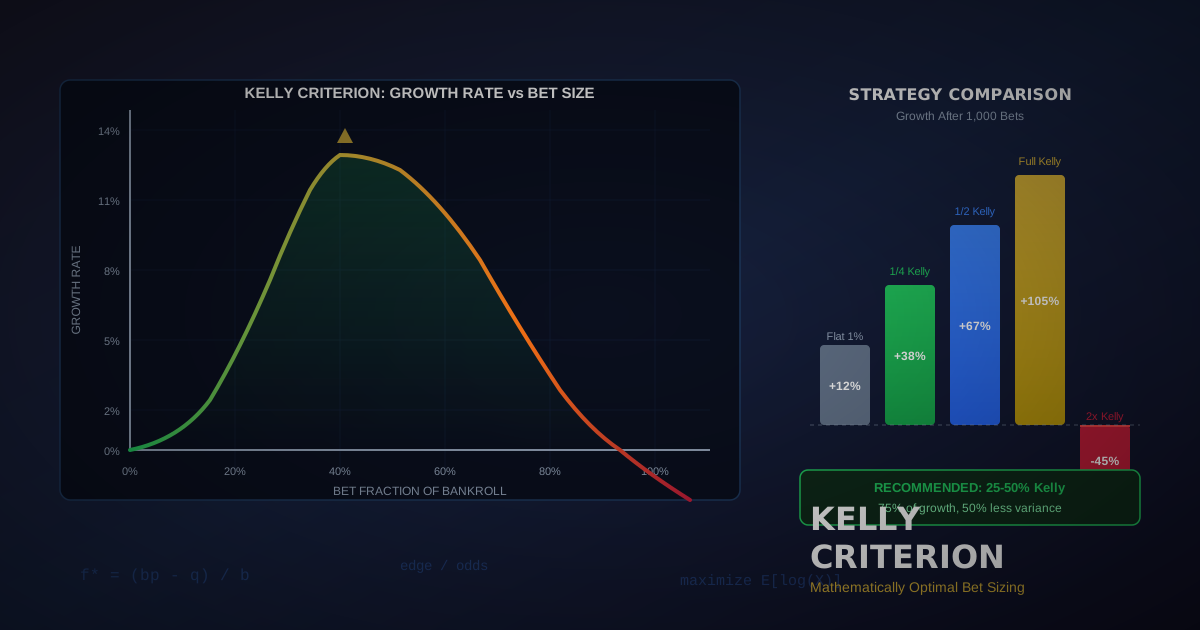
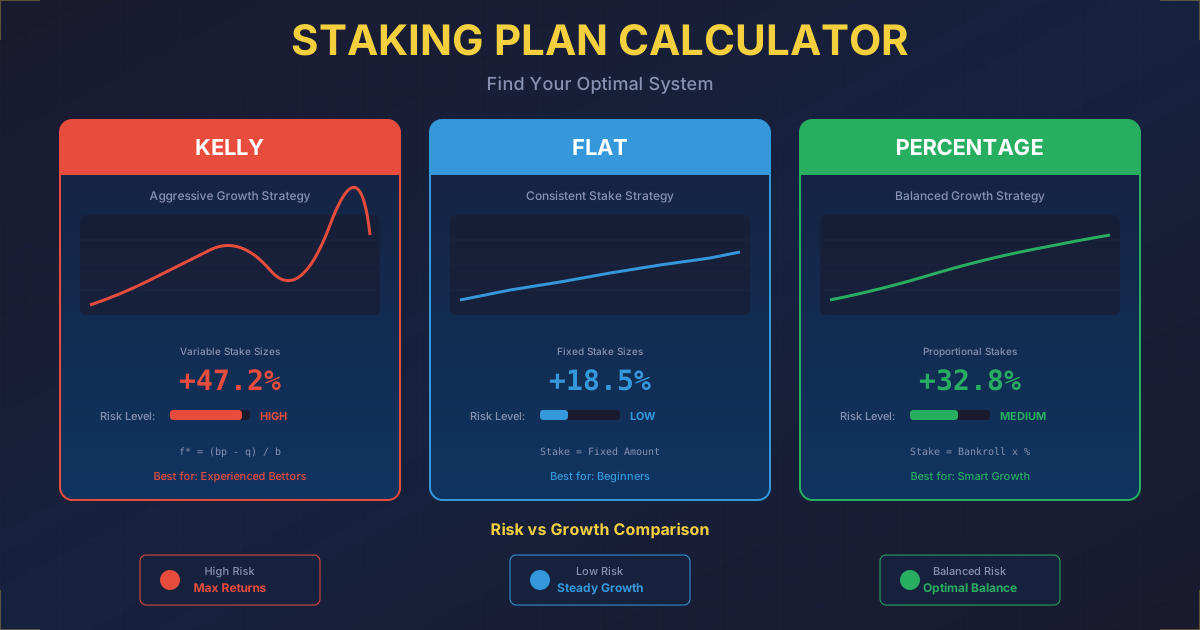
Determine the right bet size for your period plays with our Kelly Criterion Calculator.
Frequently Asked Questions
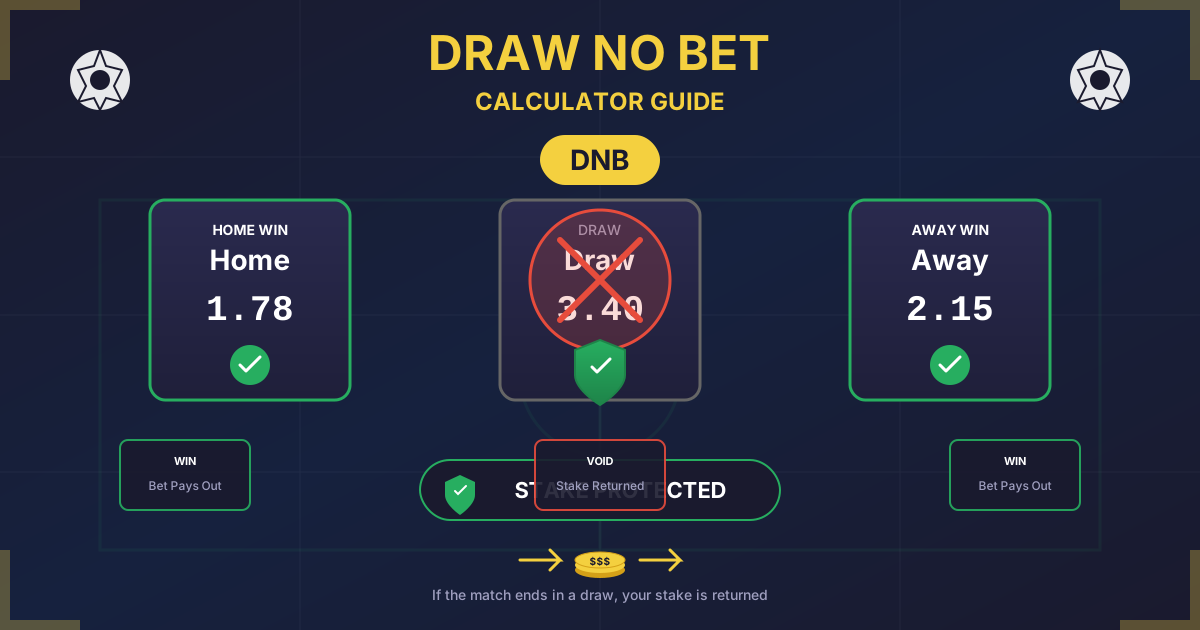
What is second half betting? Second half betting is wagering on the outcome of only the second half of a game, excluding any first-half scoring. Sportsbooks offer second-half spreads, totals, and moneylines. The second-half line is set either before the game (pregame second half) or during halftime (live halftime line). It reflects expected scoring, coaching adjustments, and pace regression for the remaining portion of the game.
Why does the NBA third quarter go over so often? The NBA third quarter goes over at approximately 54.3% historically because of several structural factors: both teams' starters return rested after the halftime break and play aggressively, coaches implement halftime adjustments that often increase pace, three-point attempt rates climb, and trailing teams push harder early in the second half rather than waiting until the fourth quarter. The defensive intensity also tends to dip in the early third quarter.
Should I bet pregame second half or live halftime lines? It depends on your edge. Bet pregame second-half lines when you have a structural opinion about how the second half will play out independent of the first half (e.g., one team has a consistently strong second-half coaching adjustment pattern). Bet live halftime lines when the first half has revealed specific information that the halftime line may not fully incorporate, such as an in-game injury, foul trouble, or an extreme pace deviation.
Are fourth-quarter overs profitable in the NFL? Fourth-quarter overs have a slight positive expectation in competitive games (spread less than 7 points) because trailing teams pass more aggressively, two-minute offenses create additional scoring opportunities, and the overall pace increases. The over has hit at approximately 52.5% in these situations. However, in blowouts (20+ point leads), fourth-quarter unders are profitable because starters are pulled and the clock runs.
How do coaching adjustments affect second-half betting? Coaching adjustments are the primary driver of second-half scoring differences. Elite adjusting coaches consistently improve their team's second-half performance relative to the first half. Teams coached by strong halftime adjusters who trail at halftime cover the second-half spread at approximately 55%. Tracking which coaches are the best and worst adjusters is one of the most reliable edges in period betting.
What is pace regression and why does it matter for period bets? Pace regression is the tendency for the scoring pace in the second half to revert toward the expected game pace if the first half was significantly faster or slower than normal. If a game projected at 45 total points saw 28 points in the first half (unusually fast), the second half is likely to produce fewer than the proportional amount. This is the single most important concept for second-half total betting.
Can I parlay quarter bets? Yes, but be cautious about correlation. Parlaying first-quarter under and third-quarter under in the same game creates correlated risk -- if the game is generally low-scoring, both legs benefit from the same underlying factor. Sportsbooks may restrict certain same-game quarter parlays for this reason. Cross-game quarter parlays carry less correlation risk.
How do you track team period tendencies? Build a spreadsheet or database tracking each team's scoring by quarter/period, both home and away, on a rolling basis (ideally three or more seasons of data). Focus on metrics that persist year over year (coaching-driven tendencies) rather than those that fluctuate season to season (roster-driven). Update weekly during the season and look for teams where the period tendency diverges from the market's pricing.
Related Tools
- Expected Value Calculator: Calculate whether any period bet offers positive expected value at the current odds.
- Odds Converter: Convert between odds formats to compare period bet pricing across sportsbooks.
- Kelly Criterion Calculator: Determine the optimal bet size for your period-specific edge.
- Parlay Calculator: Build multi-period and cross-game parlays with accurate payout calculations.
- Hedge Calculator: Lock in profits by hedging your first-half bet with a second-half position.
- Implied Probability Calculator: Understand the win probability implied by period-specific odds.
- Bankroll Volatility Tracker: Monitor the variance from your period betting strategy over time.
- Hold/Vig Calculator: Compare the vig on period bets across sportsbooks to minimize cost.
- CLV Tracker: Track whether your period bets consistently beat the closing line.
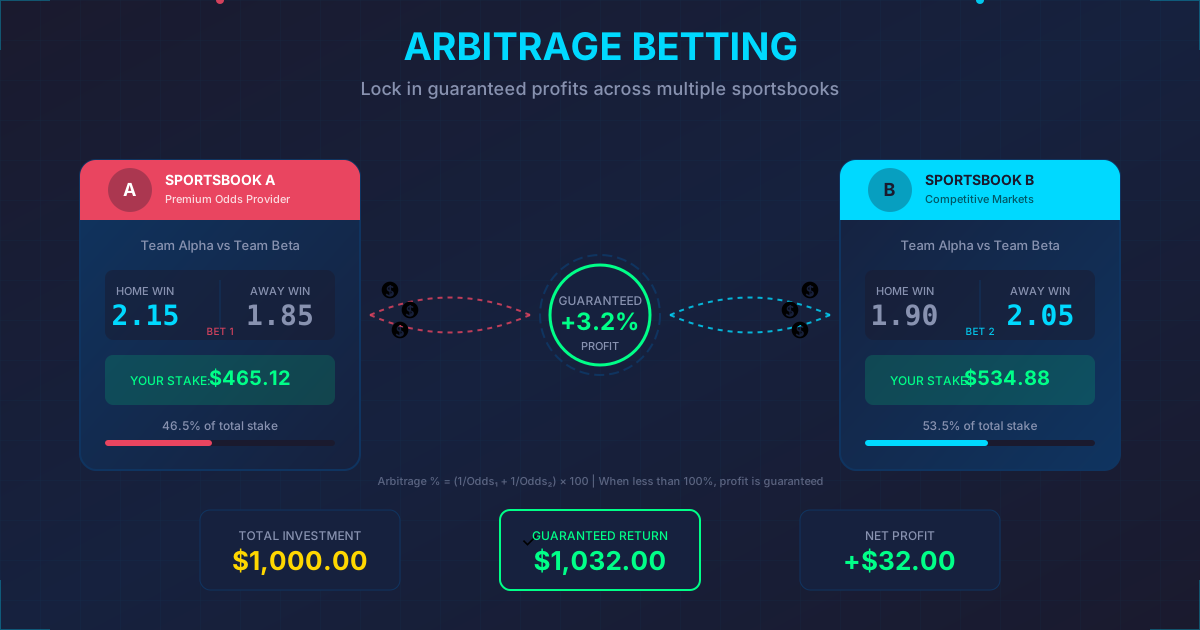
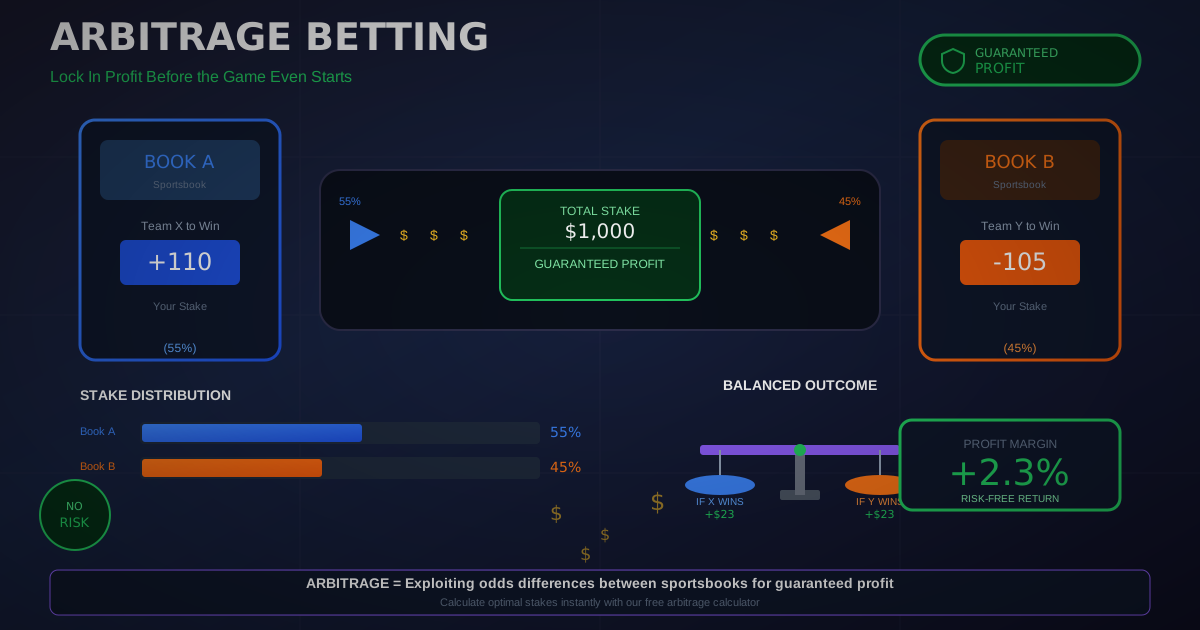
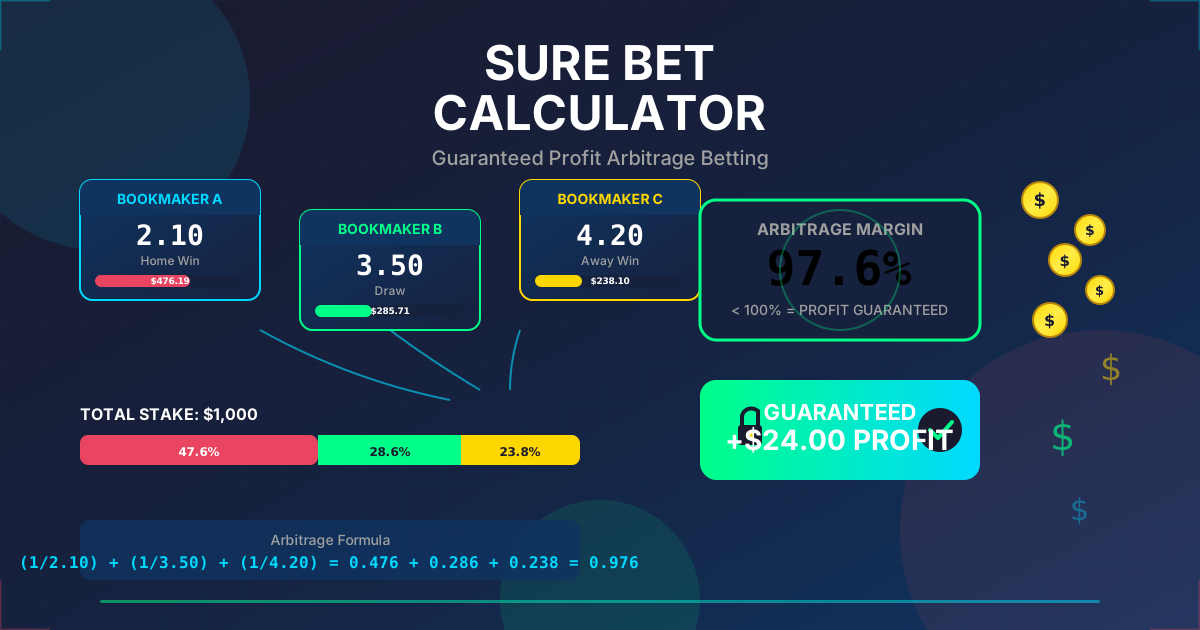
- Arbitrage Calculator: Find risk-free opportunities when period markets are priced differently across books.
- Teaser Calculator: Evaluate teaser value when combining period bets with full-game bets.
- Middle Bet Calculator: Find middling opportunities between pregame second-half lines and live halftime lines.
- Round Robin Calculator: Diversify your period bets across round robin combinations.
Period betting is the closest thing to an untapped market in modern sports wagering. While full-game spreads and totals attract the sharpest money and the most sophisticated pricing, quarter and half markets still contain systematic inefficiencies rooted in predictable coaching tendencies, scoring patterns, and game-state dynamics. The edge is not enormous, but for disciplined bettors willing to specialize, it is one of the few areas where retail bettors can compete with the market on something close to equal terms.
Start finding your period betting edge with our free Expected Value Calculator -- analyze any quarter or half bet instantly.
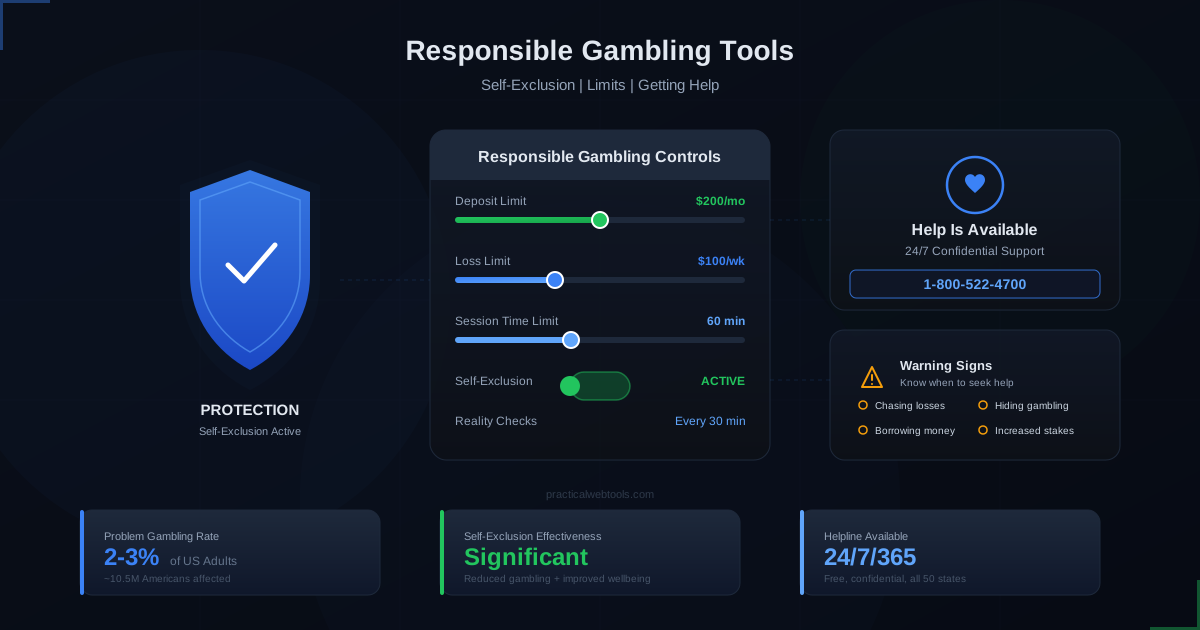
Gambling involves risk and should be approached as entertainment, not as a source of income. Always bet within your means, set strict bankroll limits, and never chase losses. If you or someone you know has a gambling problem, contact the National Council on Problem Gambling at 1-800-522-4700 or visit ncpgambling.org. Must be 21+ to gamble in most US jurisdictions. Please play responsibly.