Poker Math Made Simple: The Only 5 Formulas You Need to Win (2026)
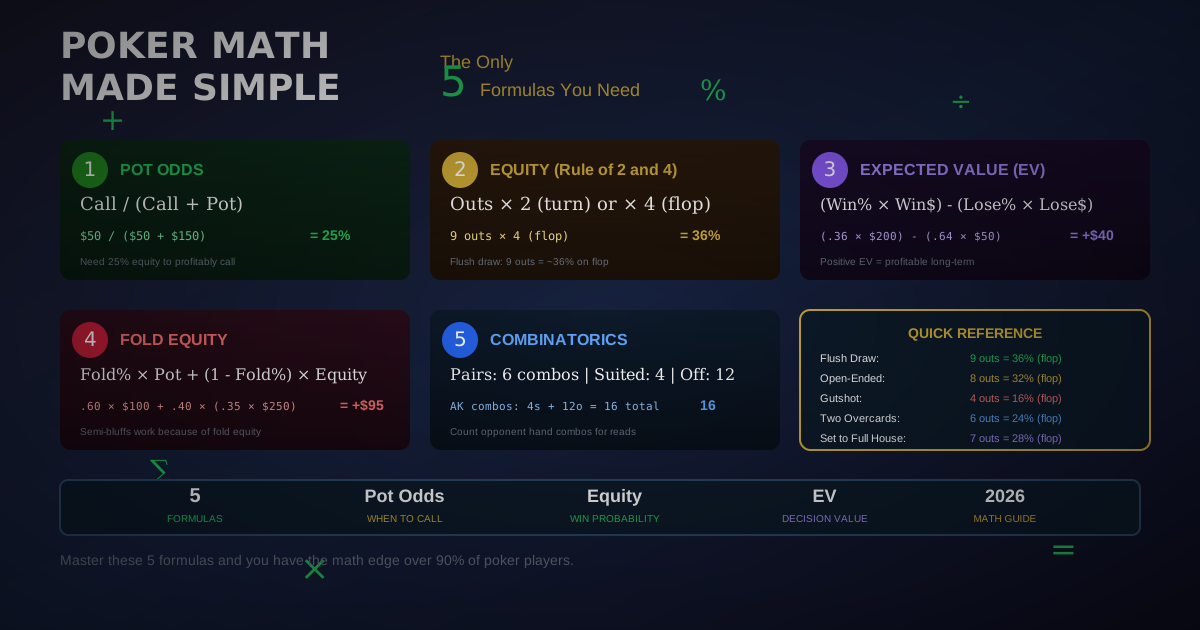
Every profitable poker decision you will ever make boils down to five mathematical formulas. Not fifty. Not five hundred. Five. Pot odds, equity, expected value, fold equity, and the Rule of 4 and 2. Master these five concepts and you will make better decisions than 90% of the players at your table -- without a math degree, without solver software, and without memorizing charts.
The poker industry has overcomplicated poker math. Training sites sell courses on GTO frequencies, solver outputs, and range construction that intimidate recreational players into believing poker math is inaccessible. The truth is simpler: the math that matters most at the table is arithmetic. Can you compare two percentages? Can you multiply two numbers? Then you can master poker math.
This guide breaks down each formula with multiple real-world examples, dollar amounts, and mental shortcuts you can use while cards are in the air. By the end, you will never again wonder whether to call, fold, raise, or shove. The math will tell you.
Calculate any of these formulas instantly with our free Pot Odds Calculator.
Formula #1: Pot Odds
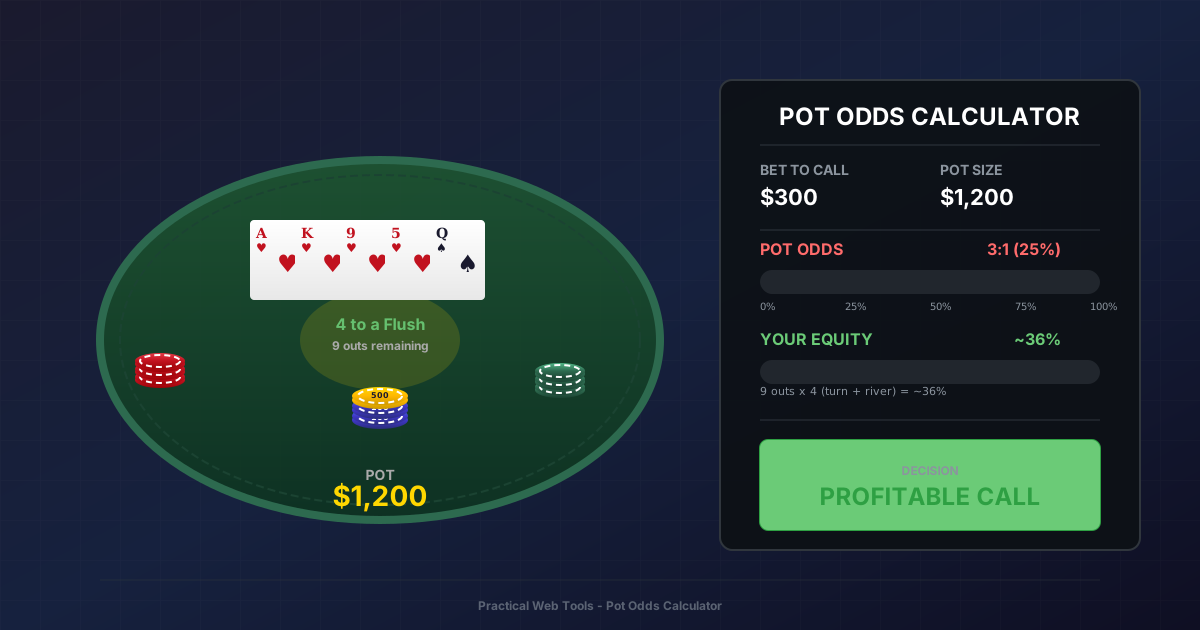
Pot odds tell you the price the pot is offering you to make a call. This is the most fundamental calculation in poker and the one you will use on every single hand.
The Formula
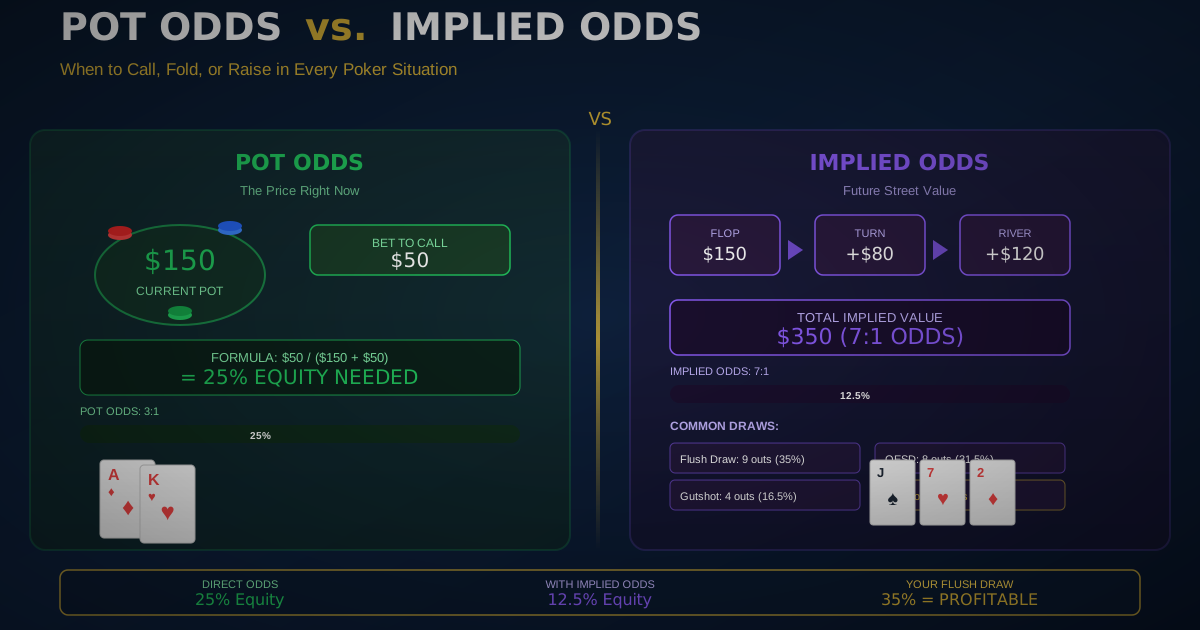
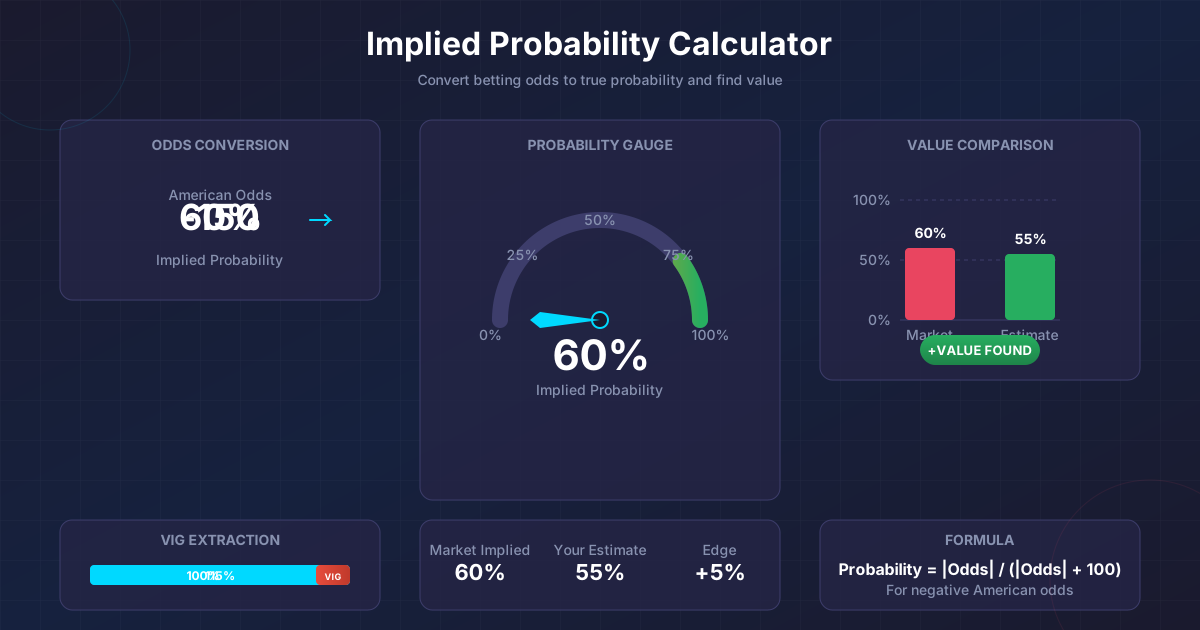
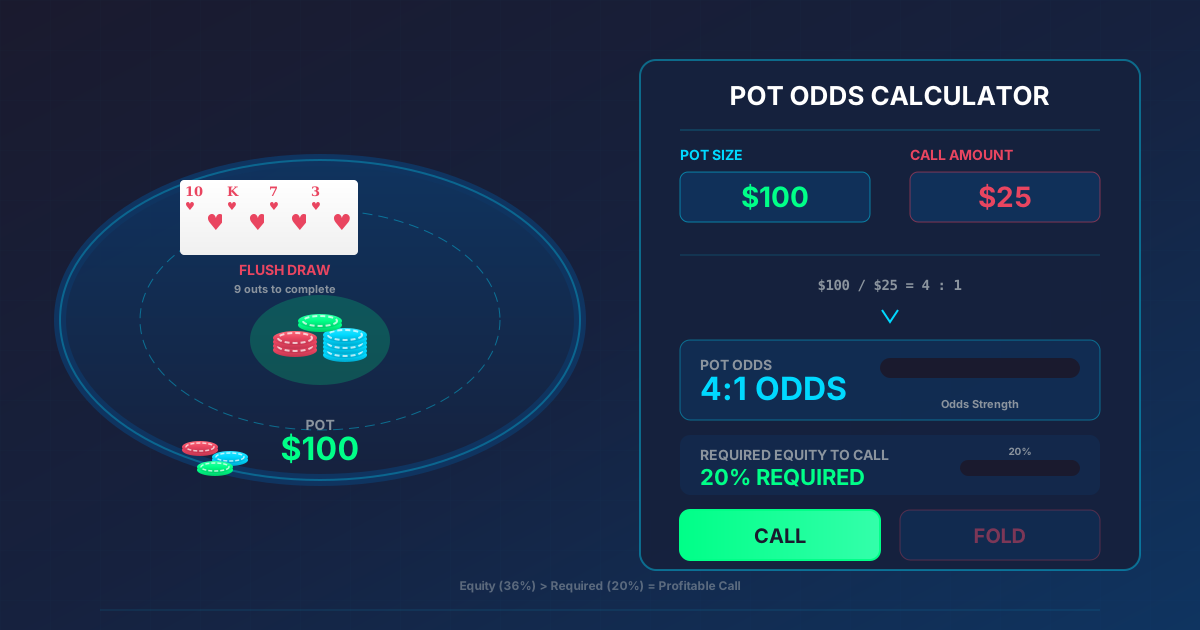
Pot Odds = Amount to Call / (Pot + Amount to Call)
Or equivalently: Pot Odds = Amount to Call / Total Pot After Your Call
The result is a percentage. This percentage tells you the minimum equity (chance of winning) you need to make a profitable call.
Example 1: Simple Flop Call
Situation: The pot is $80. Your opponent bets $40. Should you call with a flush draw?
Step 1: Calculate pot odds.
- Amount to call: $40
- Pot after your call: $80 + $40 + $40 = $160
- Pot odds: $40 / $160 = 25%
Step 2: Compare to your equity.
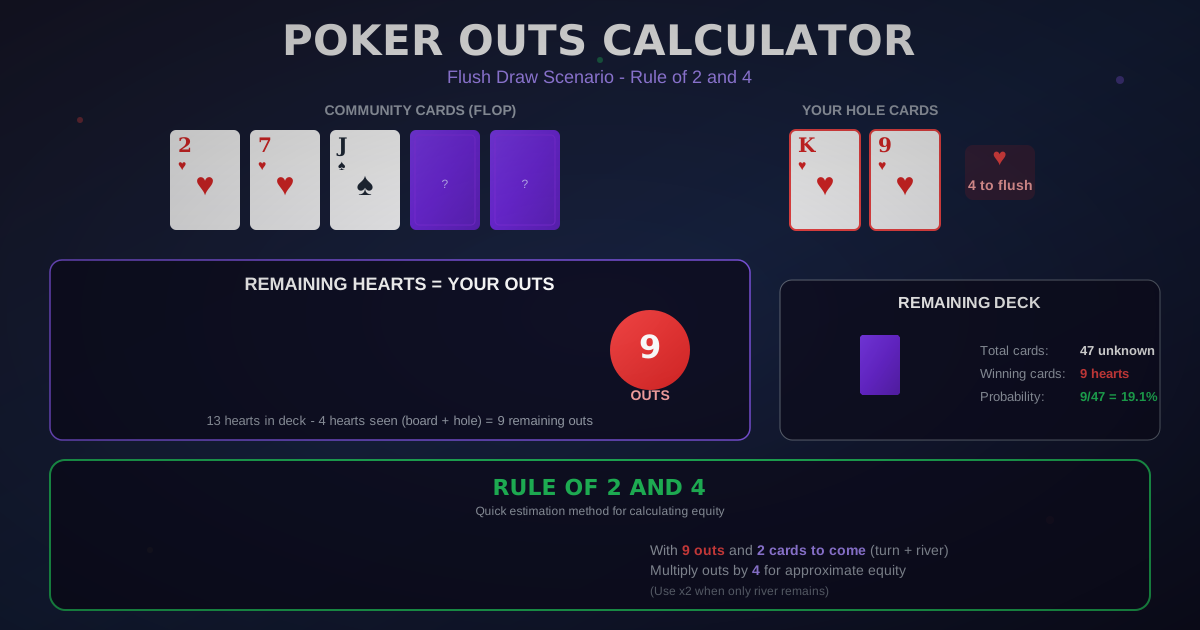
- A flush draw has 9 outs, giving you approximately 19% equity on the next card (turn) or approximately 35% equity with two cards to come (turn and river).
- On a single street basis (turn only): 19% < 25%, so calling is not profitable if you plan to fold the turn when you miss.
- With two cards to come (if you can see the river cheaply): 35% > 25%, so the call is profitable if implied odds are favorable.
Practical decision: Call if you expect to see both remaining cards. Fold if you expect a large turn bet that you cannot call.
Run this calculation instantly with our Pot Odds Calculator.
Example 2: River Call Decision
Situation: The pot is $200. Your opponent bets $100 on the river. You have top pair, good kicker. Should you call?
Step 1: Calculate pot odds.
- Amount to call: $100
- Pot after your call: $200 + $100 + $100 = $400
- Pot odds: $100 / $400 = 25%
Step 2: Estimate your equity.
- You need to win this hand at least 25% of the time for calling to be profitable.
- Question: does your opponent have a better hand more than 75% of the time?
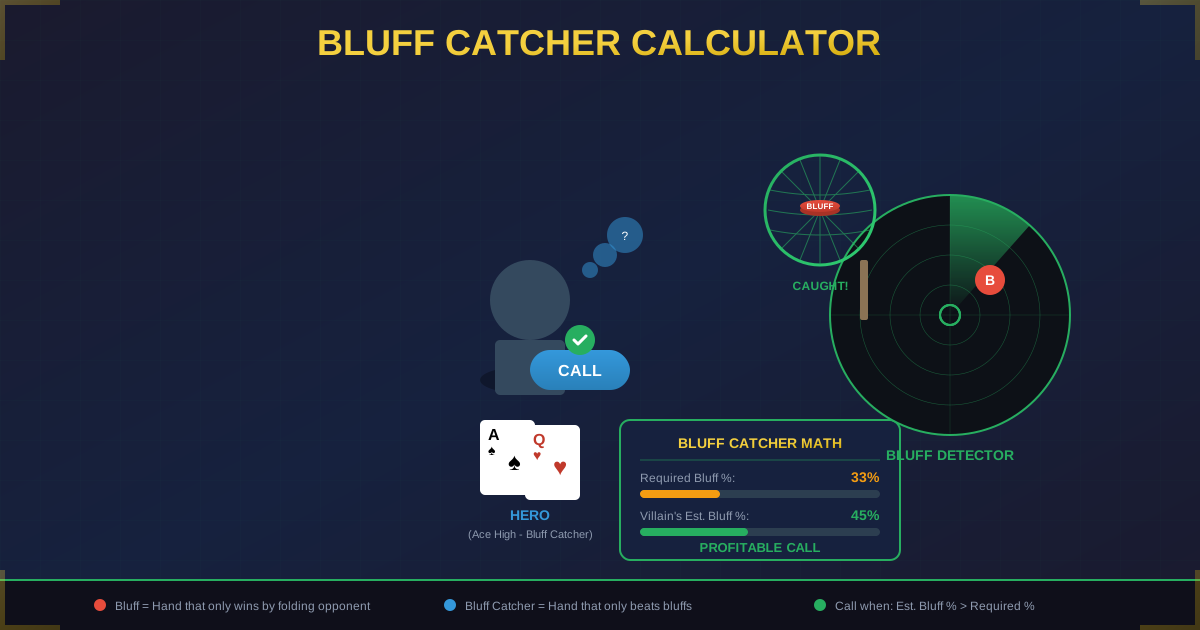
- If your opponent could be bluffing even 30% of the time, your call is profitable.
Practical decision: Against aggressive opponents who bluff rivers frequently, call. Against tight opponents who rarely bluff, fold. The math gives you the threshold; your read determines whether you are above or below it.
Example 3: Facing an All-In
Situation: Tournament play. The pot is $5,000. An opponent shoves all-in for $3,000. You have AK and believe your opponent has a medium pair (77-JJ).
Step 1: Calculate pot odds.
- Amount to call: $3,000
- Pot after your call: $5,000 + $3,000 + $3,000 = $11,000
- Pot odds: $3,000 / $11,000 = 27.3%
Step 2: Determine your equity.
- AK vs. 77-JJ: approximately 43-45% equity
- 43% > 27.3%
Decision: Call. You need 27.3% equity and you have 43%. This is a clearly profitable call.
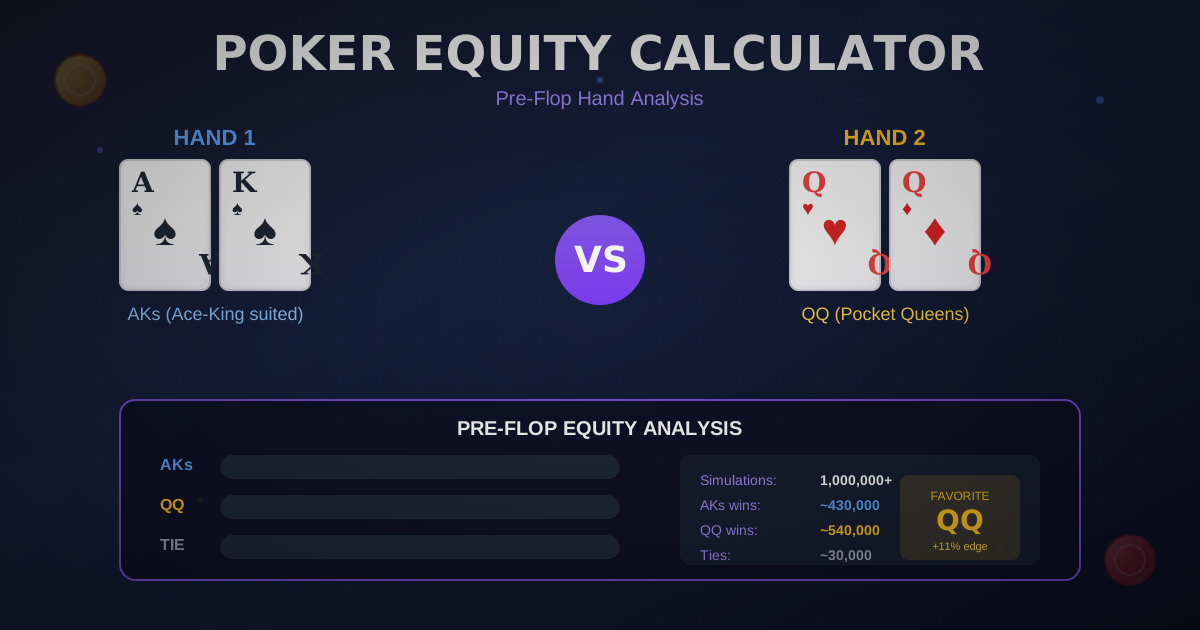
Calculate hand equity against any range with our Poker Equity Calculator.
Mental Math Shortcut for Pot Odds
At the table, you rarely have time for precise division. Use this shortcut:
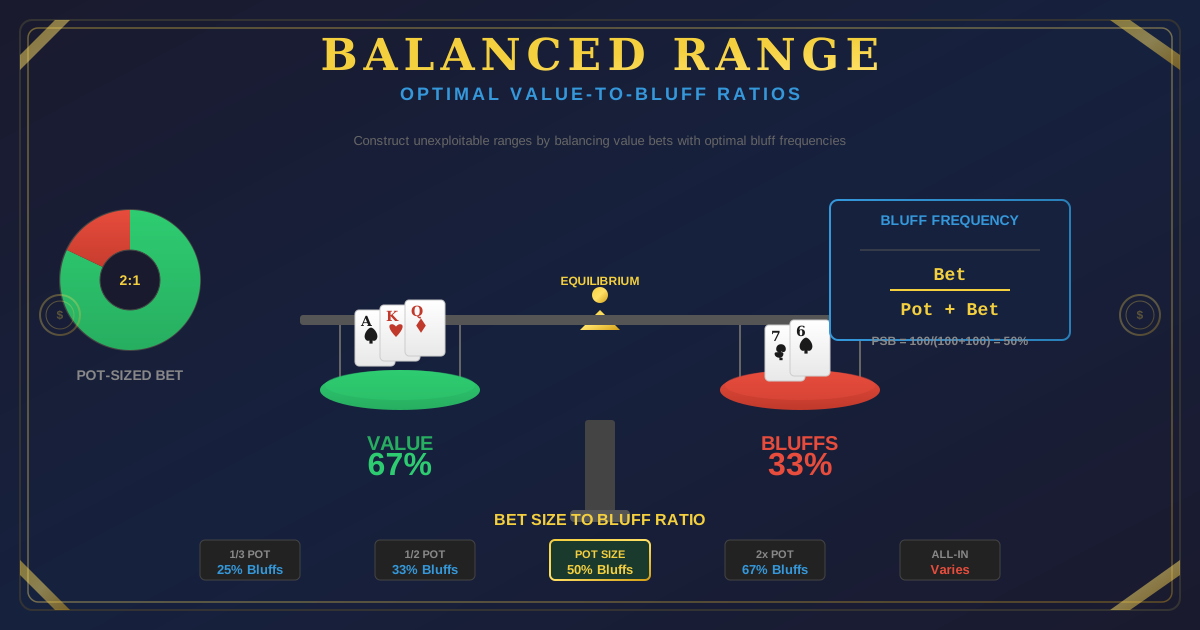
Compare the bet to the pot. If the bet is:
- 1/4 pot: You need 20% equity (1 in 5)
- 1/3 pot: You need 25% equity (1 in 4)
- 1/2 pot: You need 33% equity (1 in 3)
- 2/3 pot: You need 40% equity (2 in 5)
- Full pot: You need 50% equity (1 in 2)
- 2x pot: You need 67% equity (2 in 3)
Memorize these six numbers and you can calculate pot odds in under two seconds.
Formula #2: Equity (Outs and the Rule of 4 and 2)
Equity is your percentage chance of winning the hand. The quickest way to estimate equity at the table is through counting outs and applying the Rule of 4 and 2.
The Rule of 4 and 2
With two cards to come (flop to river): Multiply your outs by 4.
With one card to come (turn to river): Multiply your outs by 2.
That is it. This approximation is remarkably accurate and eliminates the need for complex probability calculations.
Count your outs accurately with our Poker Outs Calculator.
Common Outs and Their Equity
| Draw | Outs | Equity (2 Cards) | Equity (1 Card) |
|---|---|---|---|
| Gutshot straight draw | 4 | 16% (4 x 4) | 8% (4 x 2) |
| Two overcards | 6 | 24% (6 x 4) | 12% (6 x 2) |
| Open-ended straight draw | 8 | 32% (8 x 4) | 16% (8 x 2) |
| Flush draw | 9 | 36% (9 x 4) | 18% (9 x 2) |
| Flush draw + gutshot | 12 | 48% (12 x 4) | 24% (12 x 2) |
| Flush draw + open-ended straight | 15 | 60% (15 x 4) | 30% (15 x 2) |
| Flush draw + pair | 14 | 56% (14 x 4) | 28% (14 x 2) |
How to Count Outs
Outs are the cards remaining in the deck that will improve your hand to a likely winner. The key is counting only clean outs -- cards that give you the winning hand, not just any improvement.
Example: You have A-heart, 5-heart on a board of K-heart, 8-heart, 3-spade, 2-club.
Counting outs:
- Any heart gives you the nut flush: 13 hearts - 2 in your hand - 2 on board = 9 outs
- Any 4 gives you a straight: 4 outs (but check if any fours are hearts, which you already counted)
- 4 of hearts is already counted in flush outs, so: 3 additional outs for the straight
- Total: 9 + 3 = 12 outs
With 12 outs and two cards to come: 12 x 4 = 48% equity
This is almost a coin flip. If the pot is offering you better than 50/50 odds, this is a profitable call.
When the Rule of 4 and 2 Fails
The Rule of 4 is slightly inaccurate for high out counts (overestimates equity) and very low out counts (underestimates equity). Here are the corrections:
| Outs | Rule of 4 | Actual Equity | Difference |
|---|---|---|---|
| 4 | 16% | 16.5% | -0.5% |
| 8 | 32% | 31.5% | +0.5% |
| 9 | 36% | 35.0% | +1.0% |
| 12 | 48% | 45.0% | +3.0% |
| 15 | 60% | 54.1% | +5.9% |
| 20 | 80% | 67.5% | +12.5% |
For 12+ outs, a more accurate formula is: (Outs x 4) - (Outs - 8) = Equity
Example: 15 outs = (15 x 4) - (15 - 8) = 60 - 7 = 53% (actual: 54.1%, much closer)
Example: Using Equity in a Real Hand
Situation: $1/$2 cash game. You have 9-heart, 8-heart. The board is 7-heart, 6-club, 2-heart. Pot is $50. Opponent bets $35.
Step 1: Count outs.
- Flush draw: 9 outs
- Open-ended straight draw (any 5 or T): 6 additional outs (since one 5-heart and one T-heart are already counted in flush outs)
- Total: 9 + 6 = 15 outs
Step 2: Calculate equity.
- Two cards to come: 15 x 4 = 60% (adjusted: approximately 54%)
- One card to come: 15 x 2 = 30%
Step 3: Calculate pot odds.
- Amount to call: $35
- Pot after call: $50 + $35 + $35 = $120
- Pot odds: $35 / $120 = 29%
Step 4: Compare.
- Even using single-card equity (30%), you have more equity (30%) than pot odds require (29%)
- With two cards to come, you have 54% equity against 29% pot odds requirement
Decision: Call. Your equity significantly exceeds the pot odds requirement. This is a very profitable call.
Verify these calculations with our Poker Equity Calculator.
Formula #3: Expected Value (EV)
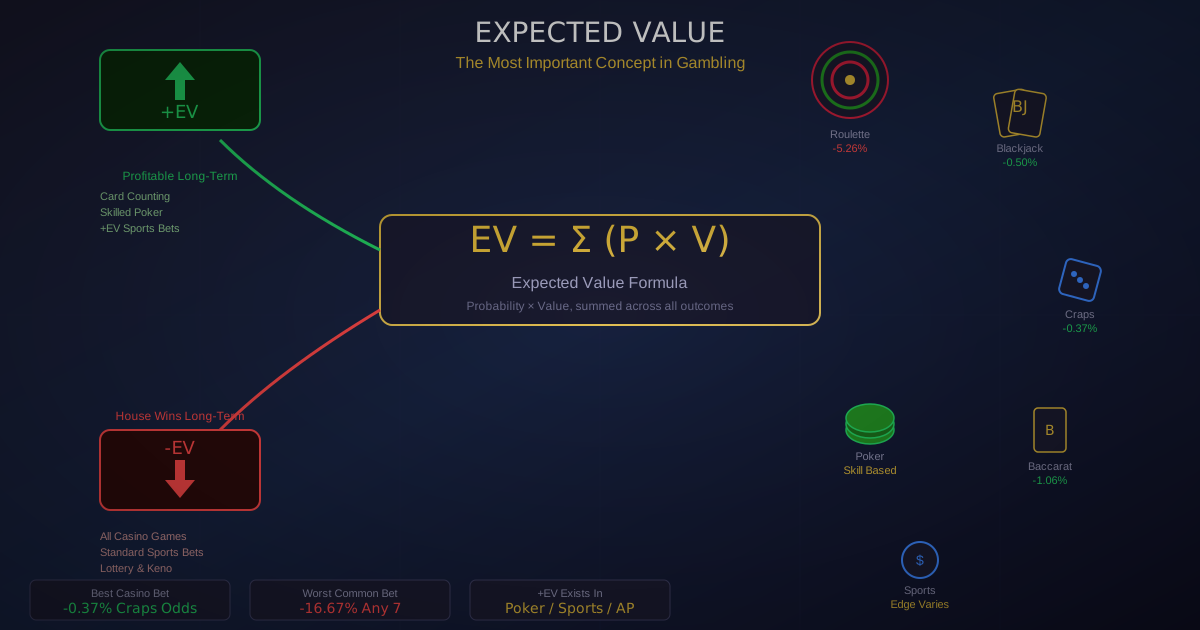
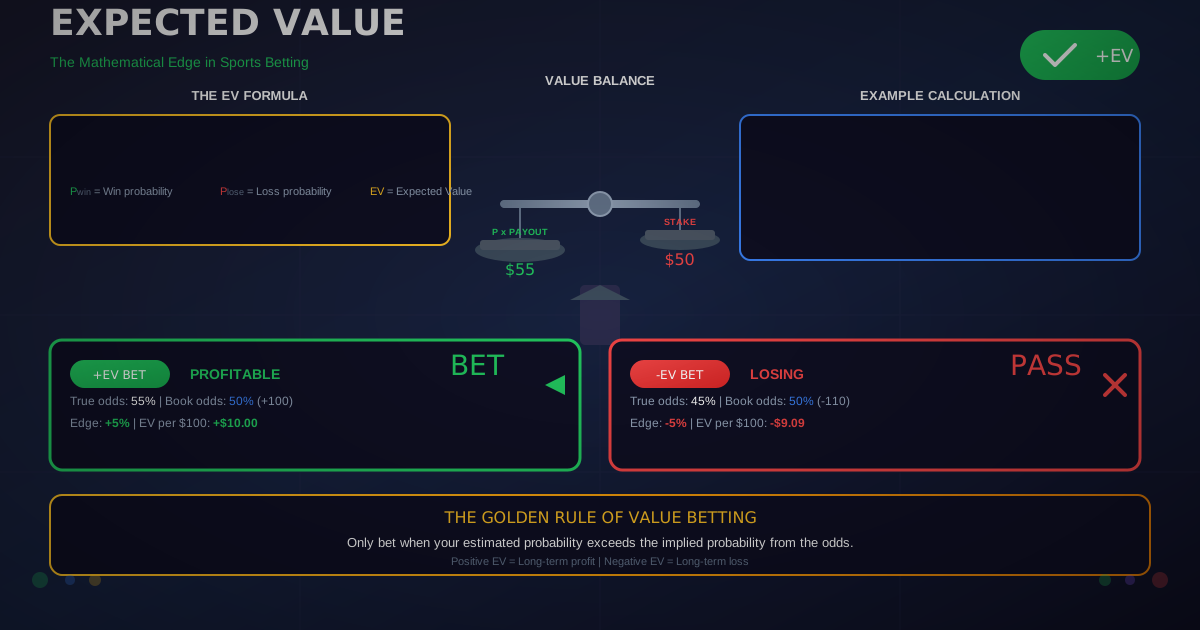
Expected value is the most important concept in poker. It tells you the average amount of money you expect to win or lose from a specific decision over the long run. Every decision you make should aim to maximize EV.
The Formula
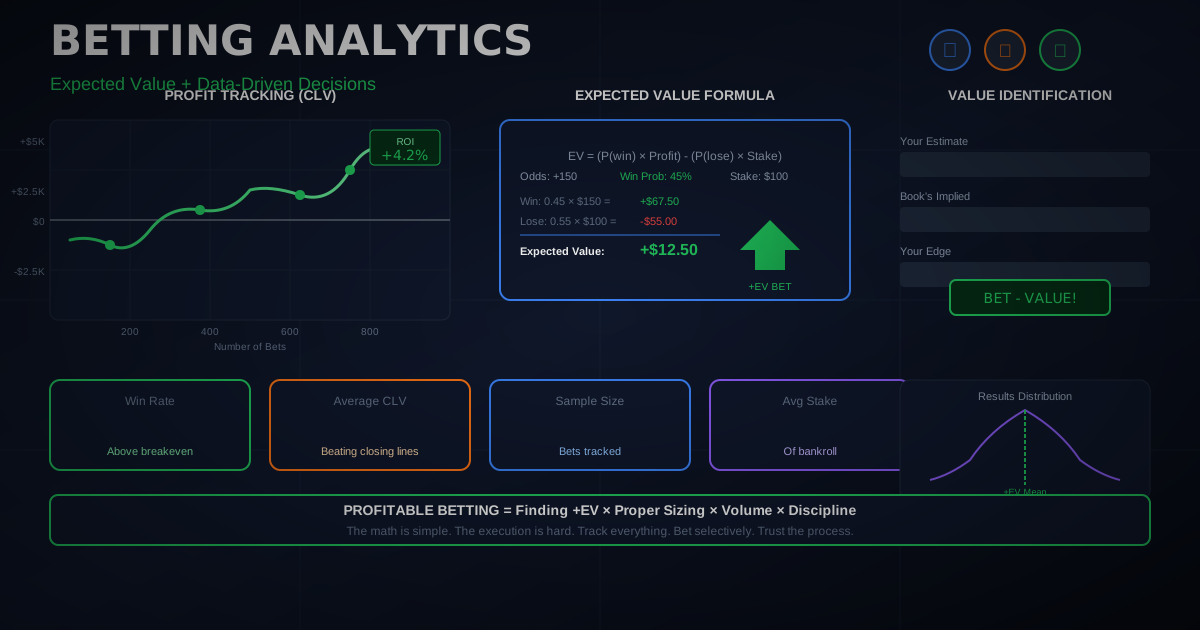
EV = (Probability of Winning x Amount Won) - (Probability of Losing x Amount Lost)
Or more precisely for a call decision:
EV = (Equity x Total Pot) - (Amount to Call)
Wait, that is not quite right either. The full formula:
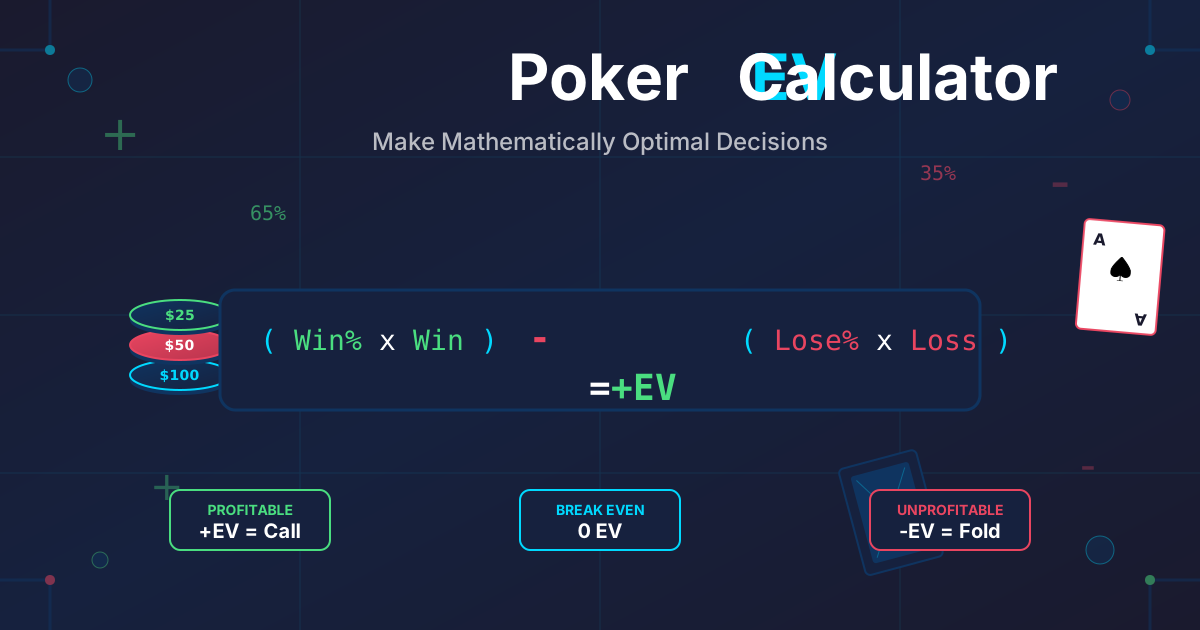
EV = (Win% x Net Gain When You Win) - (Lose% x Net Loss When You Lose)
Where:
- Win% = your equity
- Net Gain = what you win minus what you invested
- Lose% = 1 - equity
- Net Loss = what you lose (your call amount)
Run EV calculations for any scenario with our Poker EV Calculator.
Example 1: Calling an All-In
Situation: Pot is $200. Opponent shoves for $150. You have a flush draw (9 outs, 35% equity with two cards to come).
EV of calling:
- If you win: you gain $200 (existing pot) + $150 (opponent's shove) = $350 profit
- If you lose: you lose $150 (your call)
- EV = (0.35 x $350) - (0.65 x $150)
- EV = $122.50 - $97.50
- EV = +$25.00
Decision: Call. The expected value is +$25. Over time, making this call earns you an average of $25 per occurrence.
Example 2: Bluffing on the River
Situation: Pot is $180. You have nothing (missed draw). You are considering a $120 bluff.
EV of bluffing:
- If opponent folds (you win): you gain $180 (the pot)
- If opponent calls (you lose): you lose $120 (your bluff)
- How often does opponent need to fold for this to be profitable?
Break-even fold frequency:
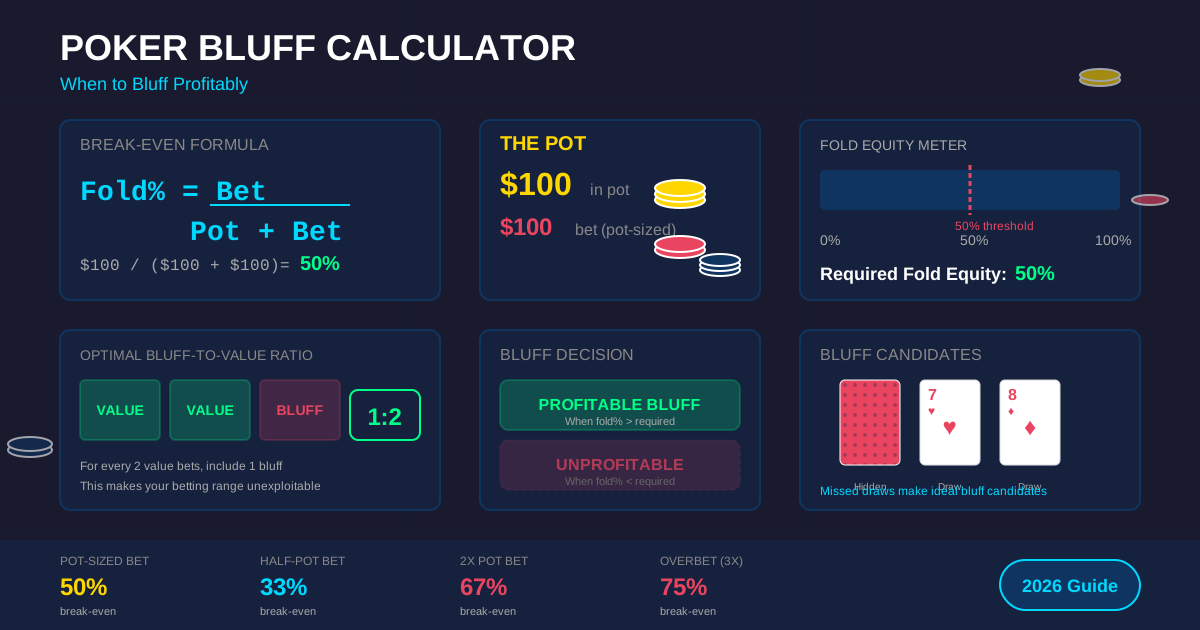
- EV = (Fold% x $180) - (Call% x $120) = 0
- Fold% x $180 = (1 - Fold%) x $120
- 180F = 120 - 120F
- 300F = 120
- F = 40%
If opponent folds more than 40% of the time, this bluff is profitable.
Let us say you estimate a 55% fold rate:
- EV = (0.55 x $180) - (0.45 x $120)
- EV = $99 - $54
- EV = +$45
Decision: Bluff. With a 55% estimated fold rate, this bluff earns an average of $45.
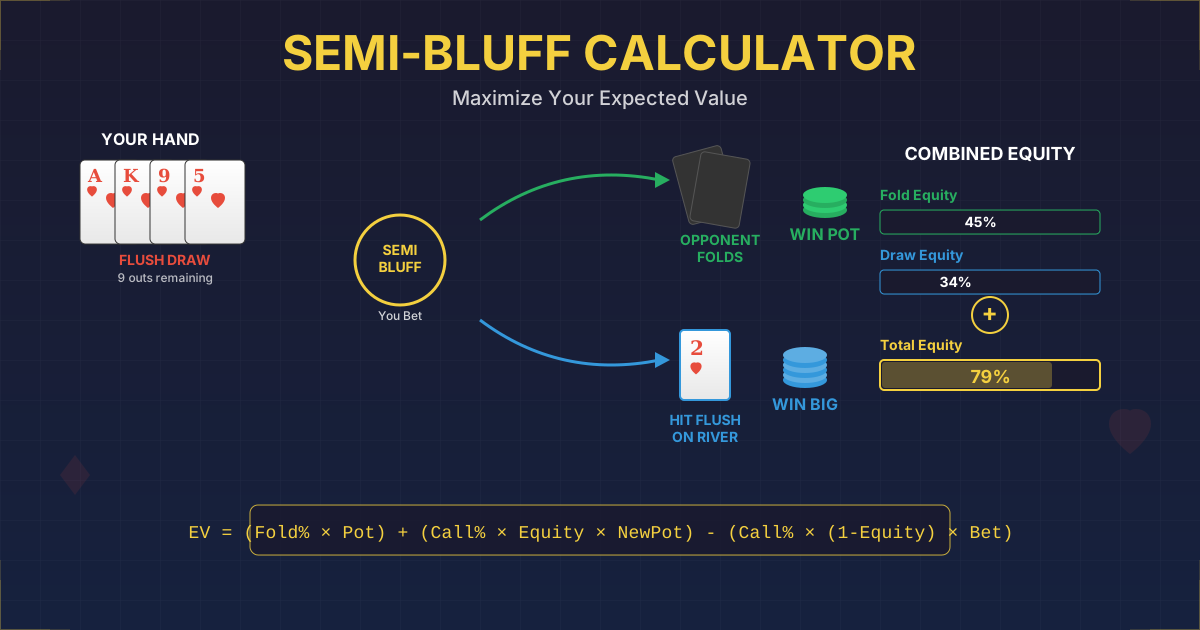
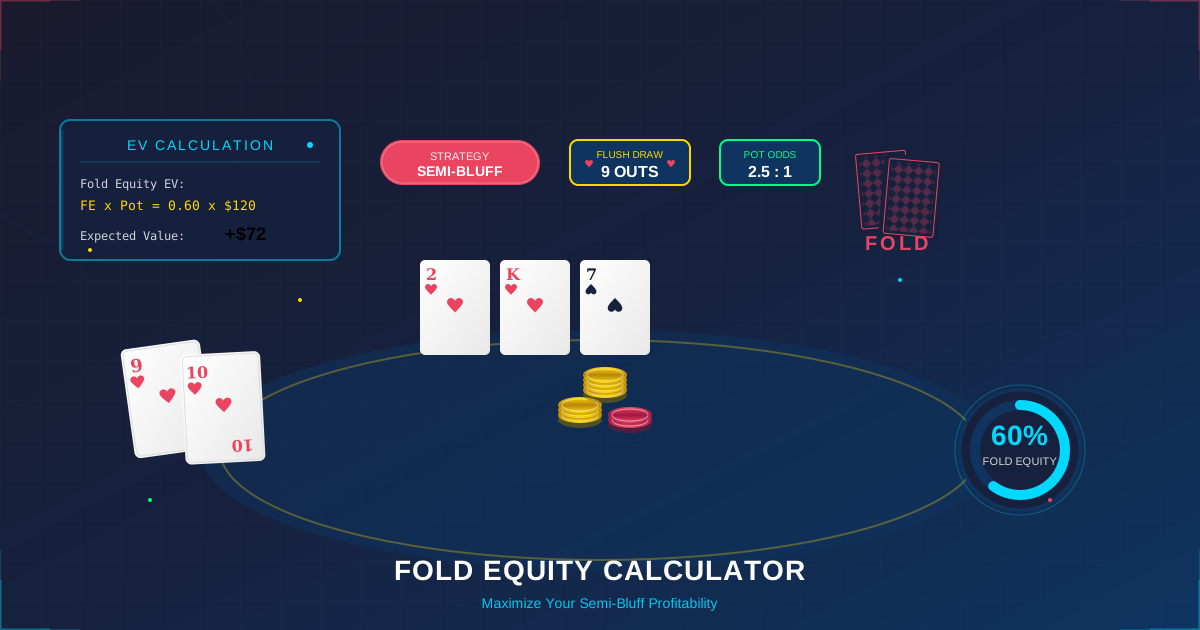
Example 3: Semi-Bluff Raise
Situation: Opponent bets $50 into a $100 pot on the flop. You have an open-ended straight draw (8 outs, 32% equity). You are considering raising to $150.
EV of raising (semi-bluff):
Scenario A: Opponent folds (estimated 50% of the time)
- You win the $150 pot (opponent's bet + original pot)
Scenario B: Opponent calls (50%), and you hit your draw (32%)
- You win the full pot: $100 + $50 + $150 + $100 (opponent's call) = $400
Scenario C: Opponent calls (50%), and you miss (68%)
- You lose $150 (your raise)
EV = (0.50 x $150) + (0.50 x 0.32 x $250) - (0.50 x 0.68 x $150)
Note: $250 is your net gain when called and you win ($400 pot - $150 you invested)
EV = $75 + $40 - $51 = +$64
Decision: Raise. The semi-bluff has a significantly positive expected value because it combines fold equity with draw equity.
Calculate the EV of any semi-bluff with our Poker EV Calculator.
Mental EV Shortcuts
For calling decisions: If your equity is higher than your pot odds percentage, the call is +EV.
For bluff decisions: Calculate the breakeven fold percentage:
- Breakeven Fold% = Bet Size / (Pot + Bet Size)
- Same formula as pot odds, applied to your own bet
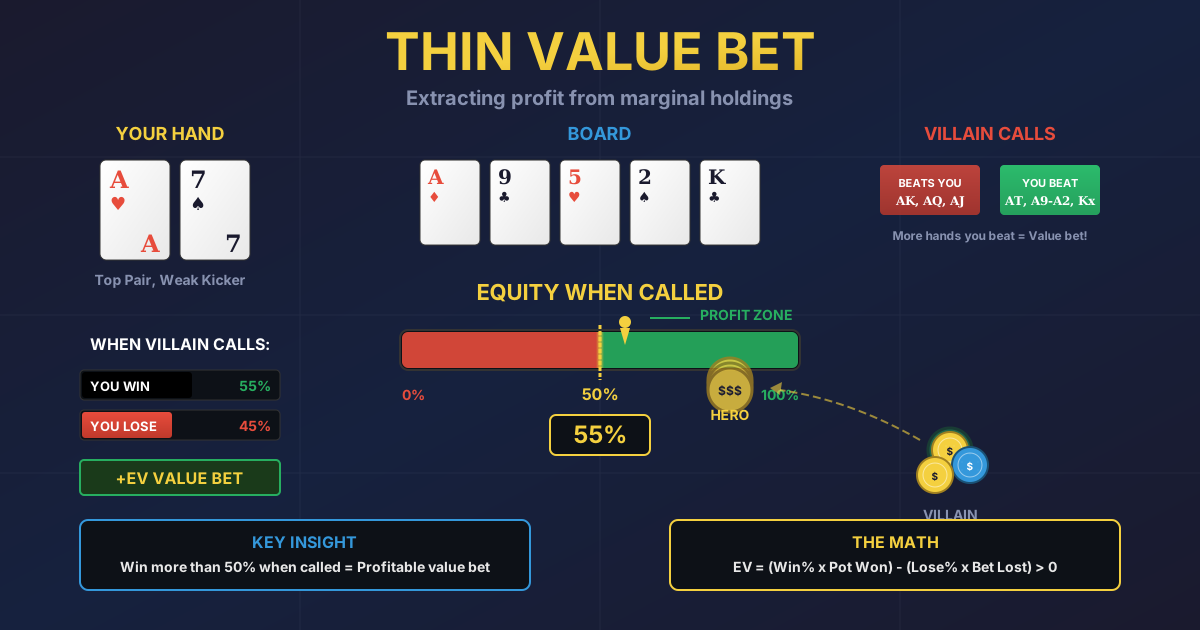
For value bet decisions: Bet when you believe your hand wins more than 50% of the time against your opponent's calling range. The larger your equity advantage, the more you should bet.
Formula #4: Fold Equity
Fold equity measures how much of your expected value comes from your opponent folding. It is the driving force behind bluffs, semi-bluffs, and aggressive play.
The Formula
Fold Equity = Probability Opponent Folds x Pot When They Fold
Or for all-in situations:
Total EV = Fold Equity + Showdown Equity
Where:
- Fold Equity = Fold% x Current Pot
- Showdown Equity = Call% x (Your Equity x Total Pot - Your Investment)
Analyze fold equity in any situation with our Poker Fold Equity Calculator.
Example 1: Tournament All-In Shove
Situation: You have 12bb on the button in a tournament. Blinds are 500/1,000 with 100 ante (9-handed). You have K-T suited. Everyone folds to you.
Variables:
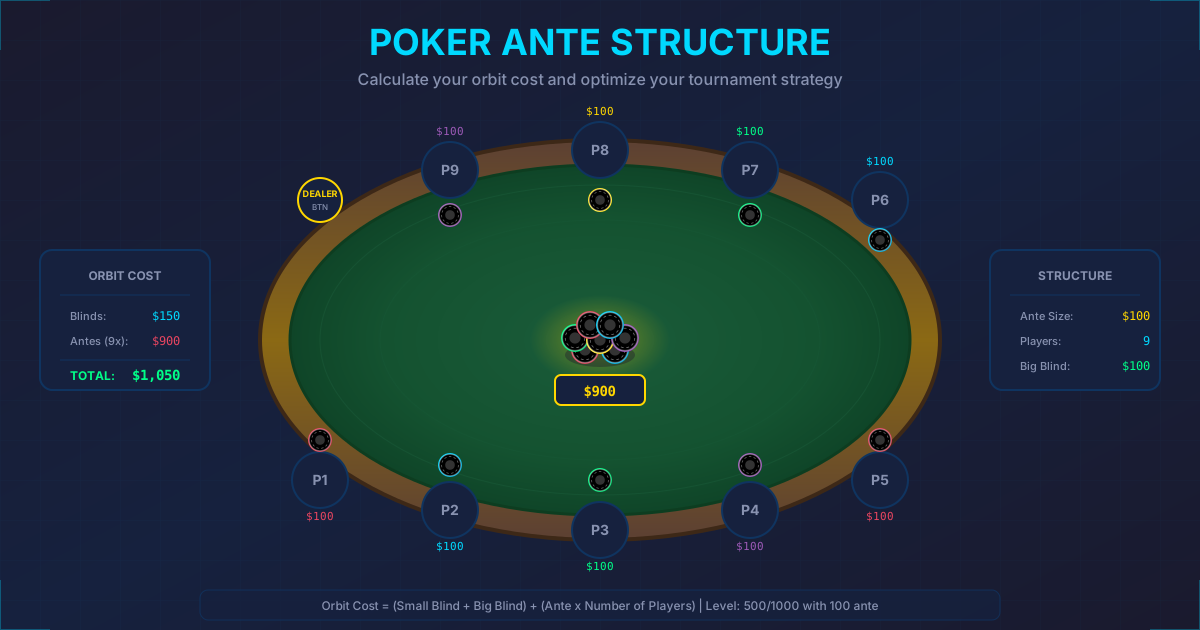
- Pot before your shove: 500 + 1,000 + 900 (antes) = 2,400
- Your shove: 12,000
- Estimated fold probability from blinds: 65%
- Your equity when called (vs. typical blind calling range): 42%
Fold Equity = 0.65 x 2,400 = 1,560
Showdown EV = 0.35 x [(0.42 x 26,400) - 12,000]
Let us calculate the showdown component:
- When called, total pot = 2,400 + 12,000 + 12,000 = 26,400
- Your expected winnings when called = 0.42 x 26,400 = 11,088
- Your investment = 12,000
- Net when called = 11,088 - 12,000 = -912
- Showdown EV = 0.35 x (-912) = -319
Total EV = 1,560 + (-319) = +1,241 chips
Decision: Shove. Despite being an underdog when called, the fold equity of 1,560 chips more than compensates for the negative showdown equity of -319 chips.
Example 2: When Fold Equity Disappears
Situation: Same scenario but your stack is only 3bb (3,000 chips).
Variables:
- Pot: 2,400
- Your shove: 3,000
- Estimated fold probability: only 25% (opponents get great odds to call)
- Your equity when called: 42%
Fold Equity = 0.25 x 2,400 = 600
Showdown EV = 0.75 x [(0.42 x 8,400) - 3,000]
- 0.42 x 8,400 = 3,528
- 3,528 - 3,000 = 528
- Showdown EV = 0.75 x 528 = 396
Total EV = 600 + 396 = +996 chips
Even at 3bb, KTs is still a profitable shove because your showdown equity is positive (you actually have decent equity even when called). But notice that fold equity dropped from 1,560 to 600. This illustrates why shoving with 12bb is so much more powerful than shoving with 3bb -- fold equity.
Why Fold Equity Matters for Your Strategy
Fold equity is the reason aggressive poker is more profitable than passive poker:
-
Passive play (calling): You only win when you have the best hand at showdown. Your profit depends entirely on your cards.
-
Aggressive play (betting/raising): You win when you have the best hand at showdown AND when your opponent folds. Your profit depends on your cards AND on your opponent's tendencies.
Adding the fold equity component to every decision gives aggressive players an additional source of profit that passive players never access.
Key Fold Equity Thresholds
| Opponent Fold Rate | Your Required Showdown Equity (Pot-Sized Bet) |
|---|---|
| 70% (very fold-happy) | 0% (pure bluffs are profitable) |
| 60% | 17% |
| 50% | 33% |
| 40% | 50% |
| 30% | 67% |
| 20% | 83% |
| 10% | Near-impossible to bluff profitably |
Against opponents who fold more than 50% of the time to your bet, you can profitably bet with almost any holding. Against opponents who rarely fold, you need strong hands to bet.
Calculate exact fold equity requirements with our Poker Fold Equity Calculator.
Formula #5: Combinatorics (Hand Combos)
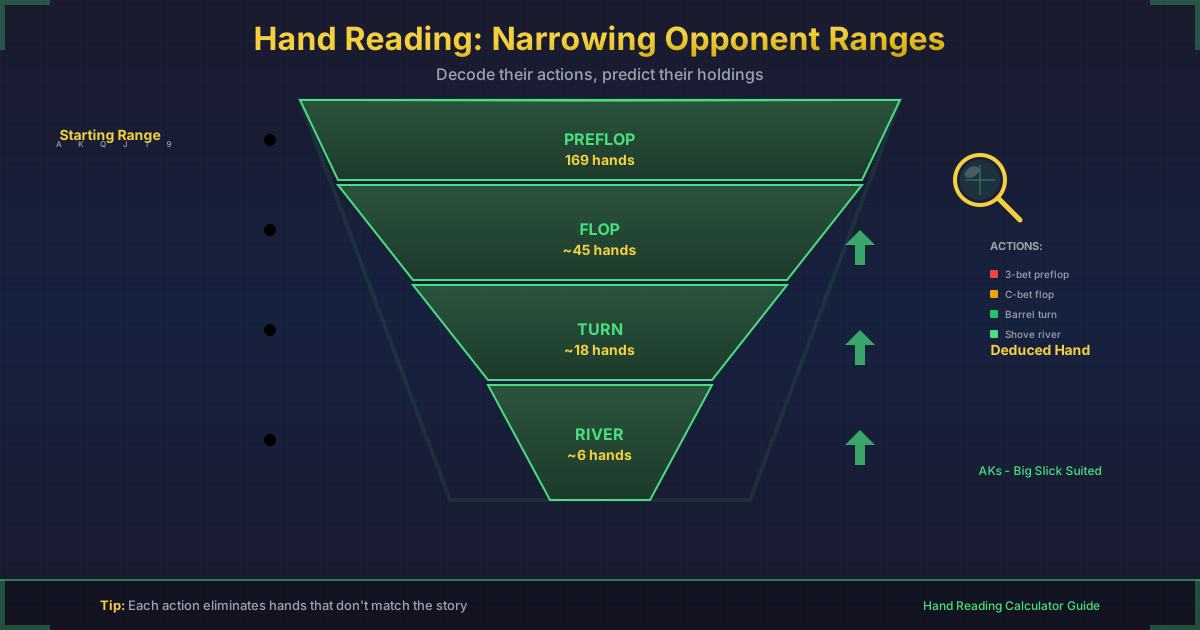
Combinatorics -- counting the number of ways specific hands can be dealt -- is the fifth essential poker math skill. It turns vague guesses about opponent ranges into precise counts.
The Basics
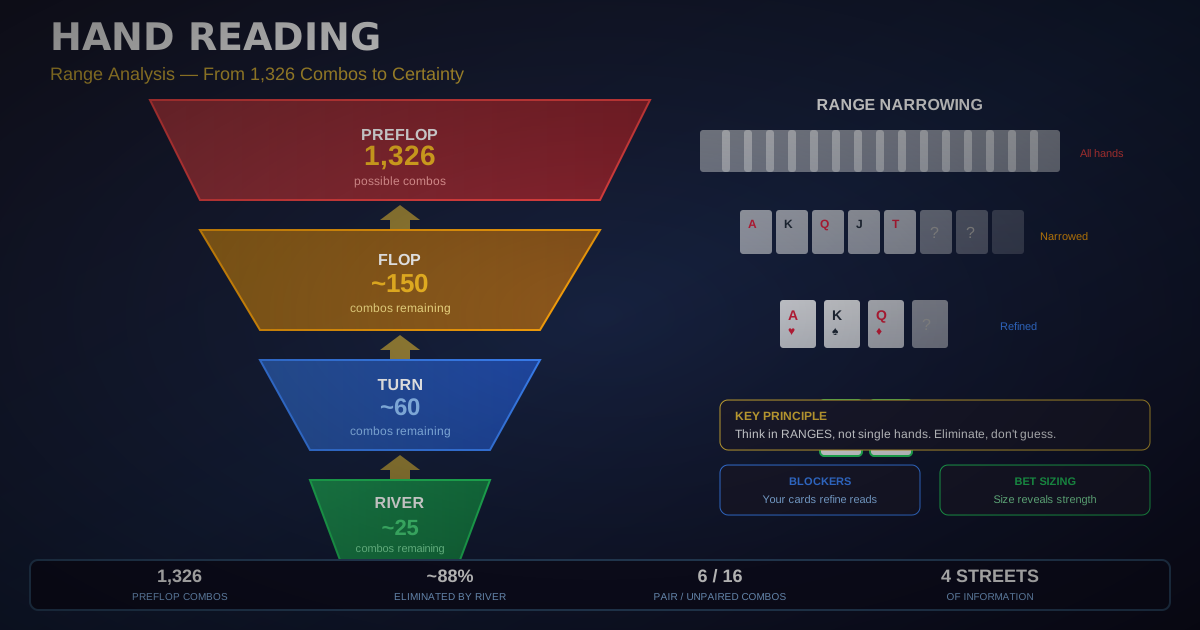
Unpaired hands: 16 possible combinations
- Suited: 4 combinations (one per suit)
- Offsuit: 12 combinations
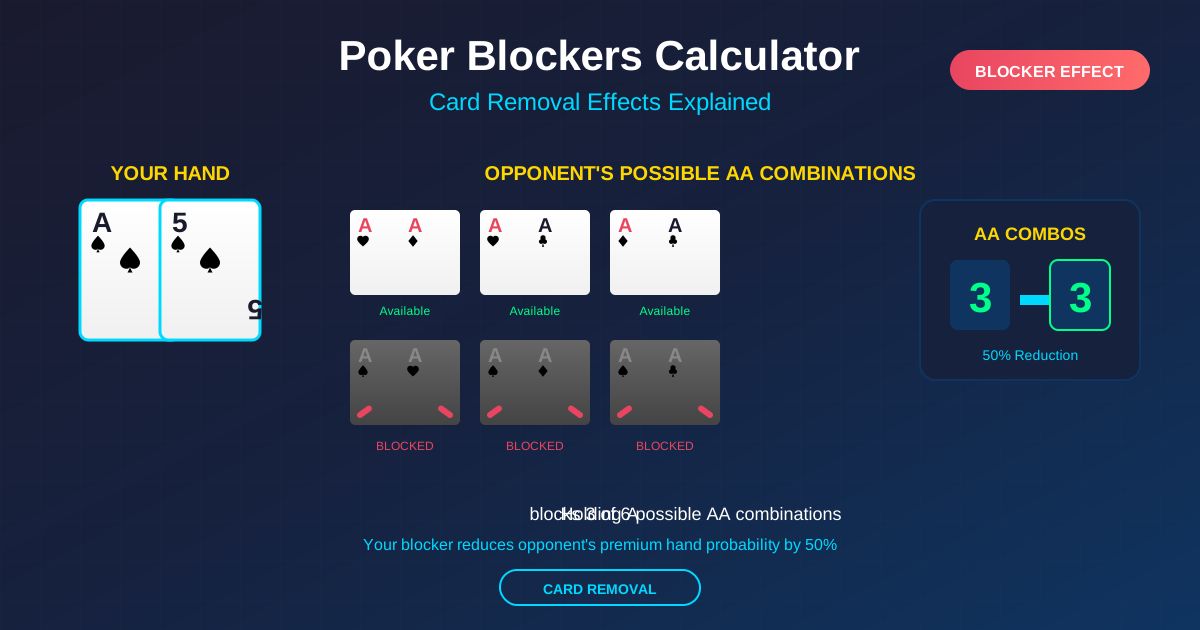
Paired hands: 6 possible combinations
- AA: AsAh, AsAd, AsAc, AhAd, AhAc, AdAc = 6 combos
When you hold cards that block combinations:
- If you hold the Ace of spades, you eliminate 3 combos of AA (from 6 to 3)
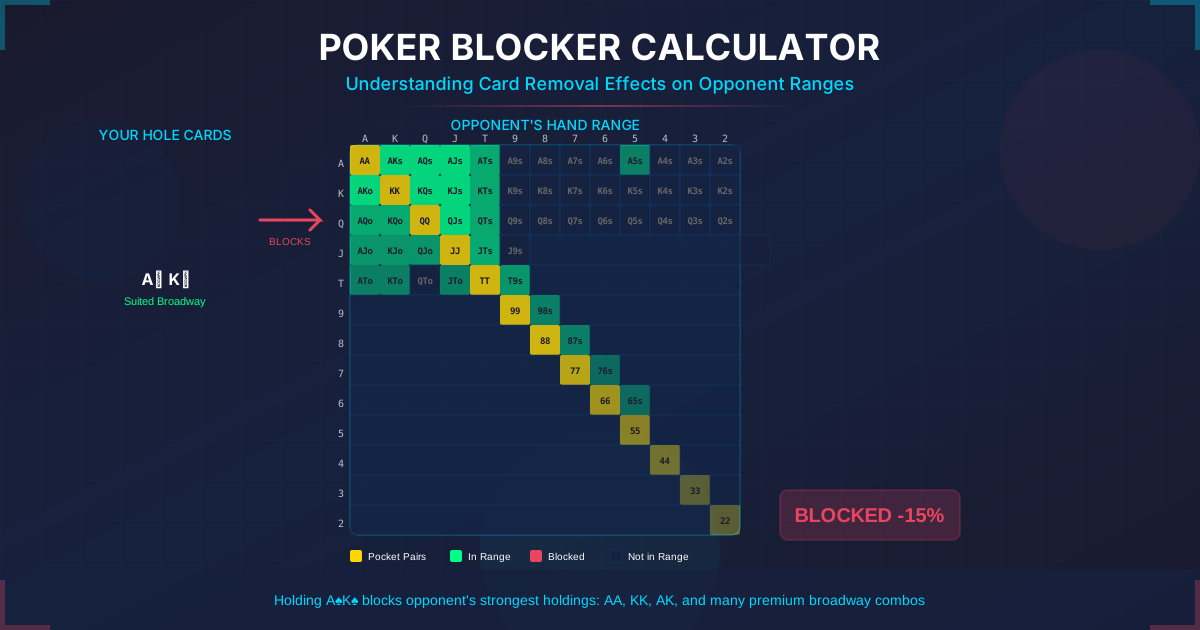
- If you hold Ace of spades, King of hearts, you eliminate 4 combos of AK (from 16 to 12)
Count hand combinations precisely with our Poker Combos Calculator.
How Combinatorics Improves Your Decisions
Example 1: Is my opponent more likely to have a set or a flush draw?
Board: K-heart, 8-heart, 3-diamond
Possible sets:
- KK: 3 combos (you hold a King, reducing from 6 to 3)
- 88: 6 combos
- 33: 6 combos
- Total sets: 15 combos
Possible flush draws (hearts):
- Any two hearts from the remaining hearts: approximately 55 combinations of two heart cards
- Realistic flush draws that opponents would play: AhXh, KhXh, QhXh, JhXh = approximately 30-40 combos in their actual range
Result: Flush draws are roughly twice as likely as sets. This means when facing a large raise on a two-tone board, draws are a bigger part of your opponent's range than many players assume.
Example 2: Board Texture Affects Combos
Board: A-spade, K-club, Q-diamond
How many combinations of two pair does your opponent have?
- AK: 16 combos (minus any blockers you hold)
- AQ: 16 combos
- KQ: 16 combos
- Total: 48 combos of two pair
How many combinations of a set?
- AA: 3 combos (one Ace is on the board)
- KK: 3 combos
- QQ: 3 combos
- Total: 9 combos of sets
Two pair is over 5x more likely than a set on this board. This is important when deciding how to play your own set -- you are far more likely to be called by two pair than by a better set.
Example 3: Using Blockers for Bluff Decisions
Situation: The river is A-heart, K-spade, T-club, 4-heart, 2-heart. You hold Q-heart, J-diamond (missed straight draw).
Analysis with combinatorics:
- You block QJ (a straight) because you hold those cards
- You hold the Q-heart, blocking some flush combinations
- You do NOT block AK, AX, or KX (the hands that call)
- Your opponent's value range: flushes (you block some), AK, sets, two pairs
- Your opponent's potential fold range: KQ, KJ, QJ (you block this!), QT, JT
Since you block several of the hands that made straights (QJ) and hold a heart that blocks some flushes, a bluff is actually reasonable. Your blocker cards reduce the number of combinations your opponent could have that beat you.
Analyze blocker effects with our Poker Blocker Calculator.
Mental Combo Shortcuts
Memorize these for quick reference at the table:
- Pocket pairs: 6 combos (always)
- Unpaired hands (AK, QJ, etc.): 16 combos (4 suited + 12 offsuit)
- When one card is on the board: Pairs drop to 3 combos; unpaired hands drop to 12
- When two cards are on the board: Pairs drop to 1 combo; unpaired hands drop to 9
Putting All Five Formulas Together
The real power of poker math comes from combining these formulas. Here is a complete example that uses all five.
Complete Hand Analysis
Situation: $2/$5 cash game. Effective stacks: $500 (100bb).
Preflop: You have A-diamond, T-diamond in the cutoff. The hijack raises to $15. You call. Both blinds fold.
Flop: K-diamond, 8-diamond, 3-club. Pot: $37. Opponent bets $25.
Step 1: Count outs (Formula #2)
- Flush draw: 9 outs (any diamond)
- Backdoor straight: negligible
- Ace overcard: 3 outs (might be good, might not; discount to 1.5 effective outs)
- Total: approximately 10-11 outs
- Equity with two cards to come: 10 x 4 = 40% (adjusted: approximately 38%)
Step 2: Calculate pot odds (Formula #1)
- Amount to call: $25
- Pot after call: $37 + $25 + $25 = $87
- Pot odds: $25 / $87 = 28.7%
- You need 28.7% equity. You have approximately 38%. Call is profitable on direct odds alone.
Step 3: Consider a raise using fold equity (Formula #4)
- If you raise to $75, opponent might fold 45% of the time
- Fold equity = 0.45 x $62 (pot before your raise) = $27.90
- When called, you still have approximately 38% equity in a large pot
- EV of raising: (0.45 x $62) + (0.55 x [(0.38 x $212) - $75])
- = $27.90 + (0.55 x [$80.56 - $75])
- = $27.90 + (0.55 x $5.56)
- = $27.90 + $3.06 = +$30.96
Step 4: Compare EV of options (Formula #3)
- EV of folding: $0
- EV of calling: (0.38 x $62) - (0.62 x $25) = $23.56 - $15.50 = +$8.06
- EV of raising to $75: +$30.96
Step 5: Use combinatorics to validate assumptions (Formula #5)
- Opponent's range after a hijack open and flop bet: AK (12 combos), KQ (16 combos), KJ (16 combos), 88 (3 combos), 33 (3 combos), QQ-JJ (12 combos), random bluffs (8-10 combos)
- Total range: approximately 70-72 combos
- Hands that fold to a raise: QQ-JJ (12 combos), KJ (some, approximately 8 combos), bluffs (10 combos) = 30 combos
- Fold percentage: 30/72 = 41.7%
This validates our 45% fold estimate. The raise is the highest-EV play.
Decision: Raise to $75. This is a semi-bluff raise with the best expected value of all three options.
Run this complete analysis with our Poker EV Calculator.
Quick Reference: The 5 Formulas on One Page
Formula 1: Pot Odds
Pot Odds = Call Amount / (Pot + Call Amount) Call when your equity exceeds this percentage.
Formula 2: Equity (Rule of 4 and 2)
Two cards to come: Outs x 4 = Equity% One card to come: Outs x 2 = Equity%
Formula 3: Expected Value
EV = (Win% x Amount Won) - (Lose% x Amount Lost) Always choose the option with the highest EV.
Formula 4: Fold Equity
Fold Equity = Fold% x Pot Total EV = Fold Equity + Showdown Equity
Formula 5: Combinatorics
Pairs: 6 combos. Unpaired: 16 combos (4 suited + 12 offsuit) Use combos to weight opponent ranges accurately.
Common Mistakes in Poker Math
Mistake #1: Counting Dirty Outs
A "dirty out" is a card that improves your hand but also improves your opponent's hand more. For example, if you have a flush draw and your opponent has a set, any card that pairs the board gives your opponent a full house, making your flush irrelevant even if it comes in.
The fix: Discount outs that might not be clean. If you have 9 flush outs but 2 of them pair the board, reduce your effective outs to 7.
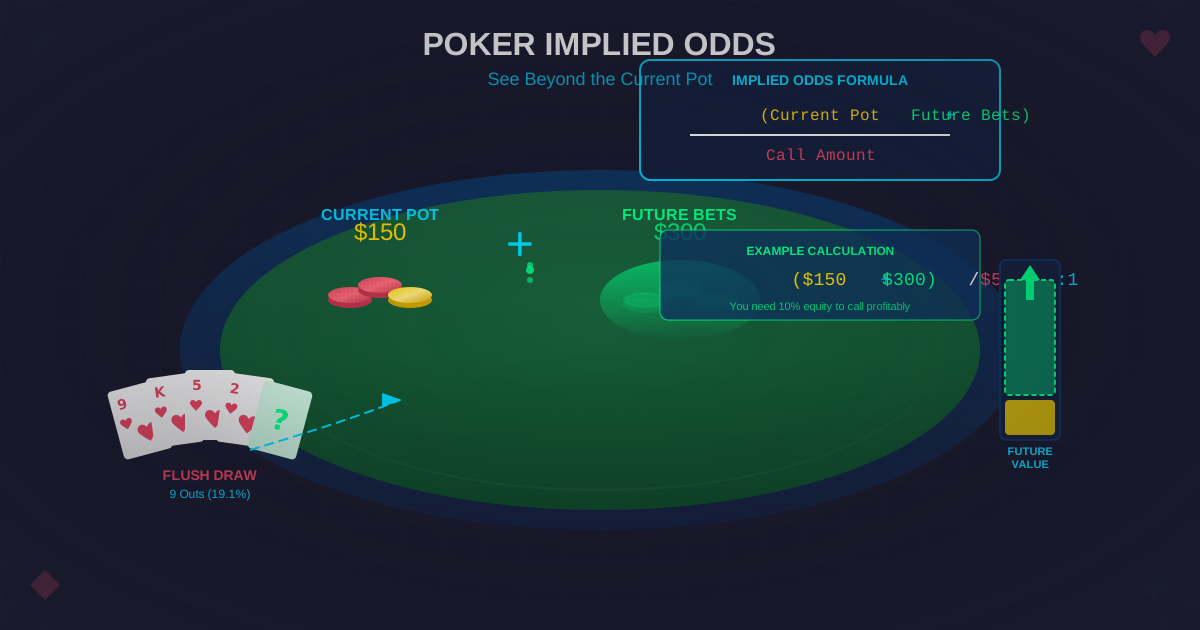
Mistake #2: Ignoring Implied Odds
Pot odds tell you the immediate price. Implied odds account for additional money you will win on future streets when you hit your draw.
When implied odds are high:
- Opponent has a strong hand they cannot fold (overpair, top pair)
- Deep stacks remain
- Your draw is hidden (gutshot that completes to a straight)
When implied odds are low:
- Opponent is short-stacked (little more to win)
- Your draw is obvious (four to a flush on board)
- Opponent is capable of folding when the draw completes
Calculate implied odds with our Implied Odds Calculator.
Mistake #3: Not Considering Reverse Implied Odds
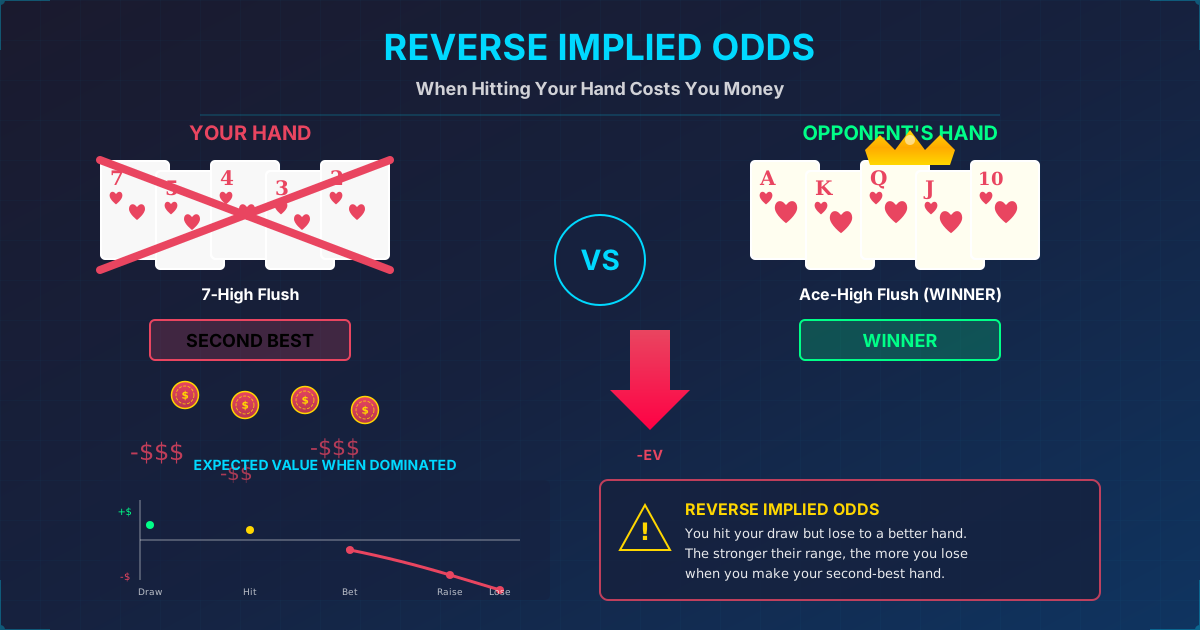
Reverse implied odds are the additional money you might LOSE on future streets when you hit your draw but your opponent has a better hand.
Example: You have a flush draw with the 7-high flush. You hit your flush, but your opponent has the nut flush. The money you lose by paying off the nut flush on the river is a reverse implied odds cost that reduces your effective equity.
The fix: Value nut draws more highly and discount non-nut draws for reverse implied odds. Evaluate these scenarios with our Reverse Implied Odds Calculator.
Mistake #4: Applying Pot Odds Incorrectly to Multi-Street Situations
When you calculate pot odds on the flop, you are calculating the price for ONE card (the turn). But the Rule of 4 gives you equity for TWO cards. This discrepancy creates a common error.
The correction: On the flop, use Rule of 2 (outs x 2) to compare against pot odds for calling one street. Only use Rule of 4 when you know you will see both remaining cards (e.g., you are all-in on the flop).
Mistake #5: Treating Poker Math as Optional
Some players claim they play by "feel" and do not need math. These players are unknowingly making calculated decisions -- they are just calculating badly. Intuition in poker is pattern recognition built on experience, but without mathematical validation, intuition leads to systematic errors that compound over thousands of hands.
The fix: Learn the five formulas. Practice them until they are automatic. Then combine your mathematical foundation with your reads and intuition for maximum effectiveness.
Practice Problems
Problem 1: River Calling Decision
Pot: $300. Opponent bets $150. You have second pair. How often must you be right to call profitably?
Answer: Pot odds = $150 / ($300 + $150 + $150) = $150 / $600 = 25%. You need to win at least 25% of the time. If you believe your opponent is bluffing more than 25% of the time in this spot, call.
Problem 2: Semi-Bluff Decision
You have a flush draw (9 outs) on the flop. Pot is $100. You can bet $75 and your opponent will fold 40% of the time. Should you bet or check?
EV of betting: (0.40 x $100) + (0.60 x [(0.35 x $250) - $75]) = $40 + (0.60 x [$87.50 - $75]) = $40 + $7.50 = +$47.50
EV of checking (assuming free card): 0.35 x $100 = $35 (approximate, simplified)
Bet. The semi-bluff earns $47.50 in EV versus $35 for checking.
Problem 3: Blocker Analysis
Board: A-K-Q-7-2 with three clubs. You hold the Ace of clubs (no flush). Your opponent bets big. How does your blocker affect your decision?
Holding the Ace of clubs blocks the nut flush (your opponent cannot have it). This means their big bet is either a bluff or a non-nut flush/straight/two-pair. You reduce the number of value combinations in their range, making a call more attractive because the proportion of bluffs increases.
Analyze blocker effects with our Poker Blocker Calculator.
Frequently Asked Questions
Do I really only need five formulas to win at poker? Yes. These five formulas cover 95% of the mathematical decisions you will face at a poker table. Advanced concepts like GTO frequencies and solver outputs are refinements built on top of these fundamentals. Master the five formulas first, and advanced concepts will make much more sense. Use our Pot Odds Calculator and Poker EV Calculator to practice.
How do I calculate pot odds quickly at the table? Memorize the common bet-size-to-pot-odds ratios: quarter pot = 20%, half pot = 33%, two-thirds pot = 40%, full pot = 50%. These cover 80% of situations. For exact calculations when needed, use mental math: divide the call amount by the total pot after your call. Our Pot Odds Calculator is available for off-table study.
What is the most important formula for beginners? Pot odds. Every decision starts with knowing the price the pot is offering you. Once pot odds are automatic, add equity calculations (Rule of 4 and 2). Together, these two formulas cover most in-game decisions. Start with our Pot Odds Calculator and Poker Outs Calculator.
How accurate is the Rule of 4 and 2? Very accurate for up to 10 outs (within 1-2%). For 12+ outs, it overestimates slightly. The corrected formula for high out counts is (Outs x 4) - (Outs - 8). For practical purposes at the table, the standard rule is close enough for good decision-making.
How do I use poker math against recreational players? Against recreational players, focus on pot odds and equity. They call too much (so value bet more, bluff less). They fold too little on one street but too much on another (so identify their street-specific tendencies). And they ignore position (so play more pots in position against them). Math tells you where the edge is; exploiting it is the profitable part.
Should I memorize all combo counts? Memorize the basics: pairs = 6 combos, unpaired hands = 16 combos (4 suited + 12 offsuit). Beyond that, learn the common blockers: holding one card of a pair reduces combos from 6 to 3; holding one card of an unpaired hand reduces combos from 16 to 12. Use our Poker Combos Calculator for practice.
How does expected value differ from pot odds? Pot odds tell you the minimum equity needed to call. EV tells you the actual dollar amount you expect to win or lose. Pot odds is a threshold (call if equity > pot odds percentage). EV is a calculation (this play is worth +$X or -$X). EV is more comprehensive because it incorporates fold equity, implied odds, and multi-street considerations. Calculate both with our Poker EV Calculator.
What is the relationship between fold equity and bluffing? Fold equity is the mathematical justification for every bluff. When you bet as a bluff, your entire profit comes from fold equity (opponent folding). The formula tells you exactly how often your opponent needs to fold for the bluff to be profitable: Breakeven Fold% = Bet / (Pot + Bet). Calculate this with our Poker Fold Equity Calculator.
Essential Poker Math Tools
Build your poker math toolkit:
- Pot Odds Calculator: Instantly calculate pot odds for any bet size
- Poker Equity Calculator: Compare hand equity against ranges
- Poker EV Calculator: Calculate expected value for any decision
- Poker Fold Equity Calculator: Analyze bluffing and semi-bluffing profitability
- Poker Outs Calculator: Count outs and calculate draw equity
- Implied Odds Calculator: Factor future bets into drawing decisions
- Poker Combos Calculator: Count hand combinations for range analysis
- Poker Hand Range Calculator: Build and analyze opponent ranges
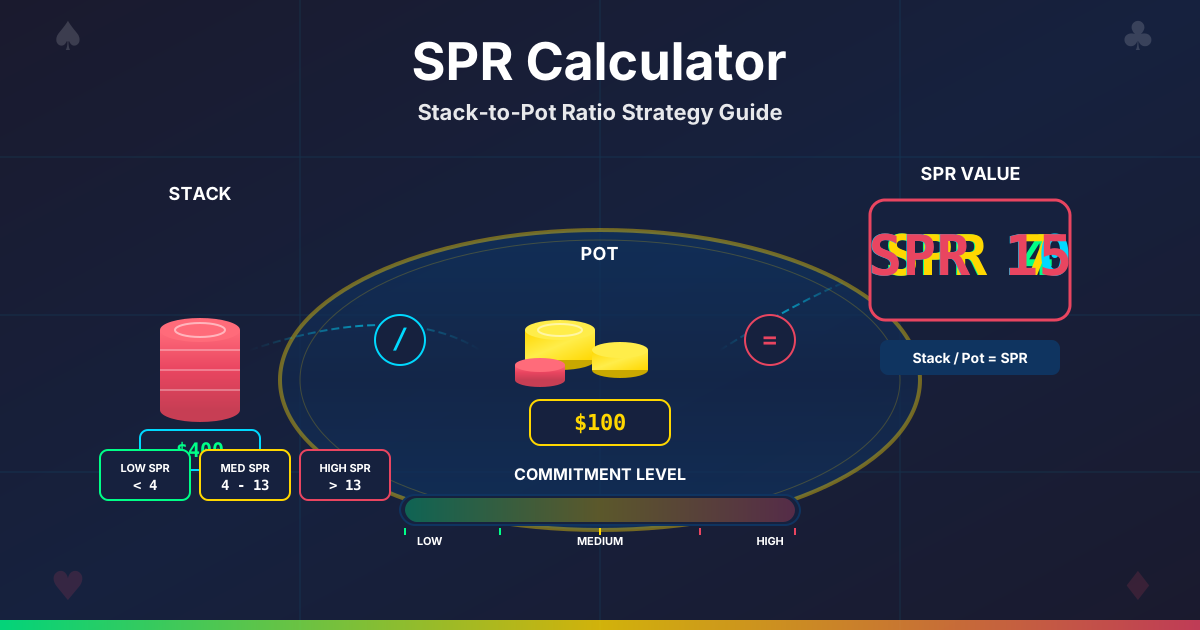
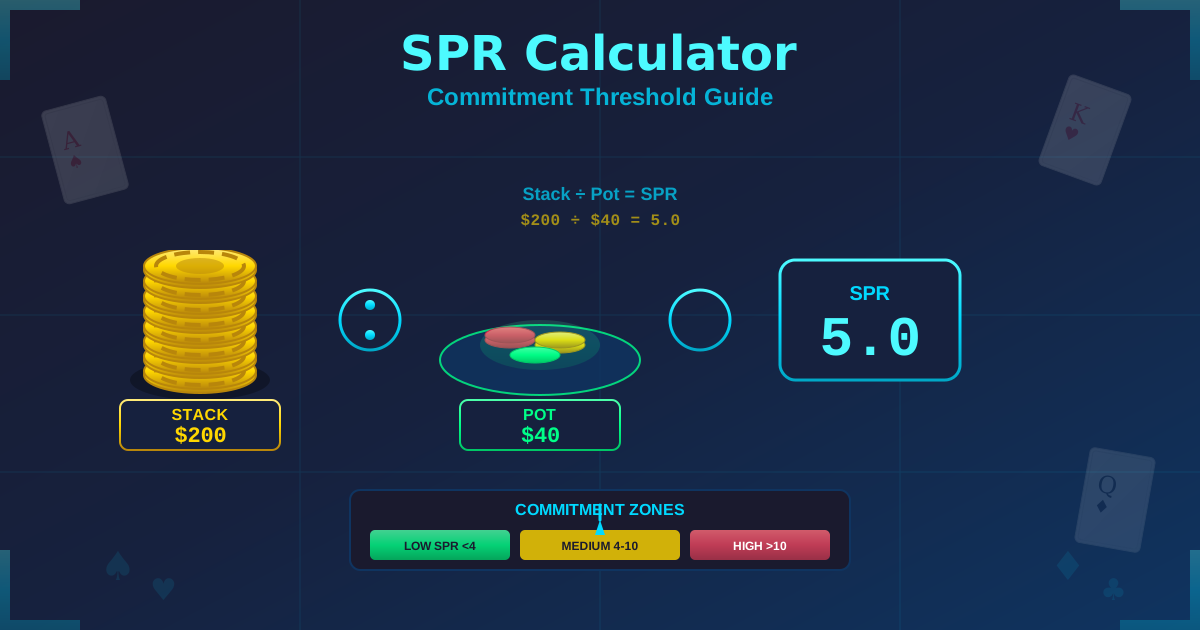
- Poker SPR Calculator: Determine stack-to-pot ratio for commitment decisions
- Poker All-In EV Calculator: Evaluate all-in decisions with precise equity
Conclusion: Math Is Your Edge
The five formulas in this guide are not theoretical concepts for textbooks. They are practical tools that winning players use at the table, every session, on every hand. Pot odds tell you when to call. Equity tells you your chances of winning. EV tells you the dollar value of your decisions. Fold equity tells you when to be aggressive. And combinatorics tell you what your opponents are likely holding.
You do not need to calculate these with scientific precision. The mental shortcuts work well enough for live-speed decisions. What matters is that you are making decisions based on mathematical reasoning rather than emotion, hope, or guesswork.
The player who knows they need 33% equity to call a half-pot bet and has 36% equity from their flush draw will call. The player who does not know the math will either call with 20% equity (losing money) or fold with 36% equity (leaving money on the table). Over thousands of hands, this difference compounds into hundreds or thousands of dollars.
Start practicing poker math with our free Pot Odds Calculator. Calculate your hand equity with our Poker Equity Calculator. And run full EV analysis with our Poker EV Calculator.
Five formulas. Unlimited edge. The math is on your side.
Gambling involves risk. This content is for educational and informational purposes only. Always gamble responsibly, set limits you can afford, and seek help if gambling becomes a problem. Visit the National Council on Problem Gambling or call 1-800-522-4700 for support.