The Martingale System Exposed: Why Doubling Your Bets Always Fails (2026)
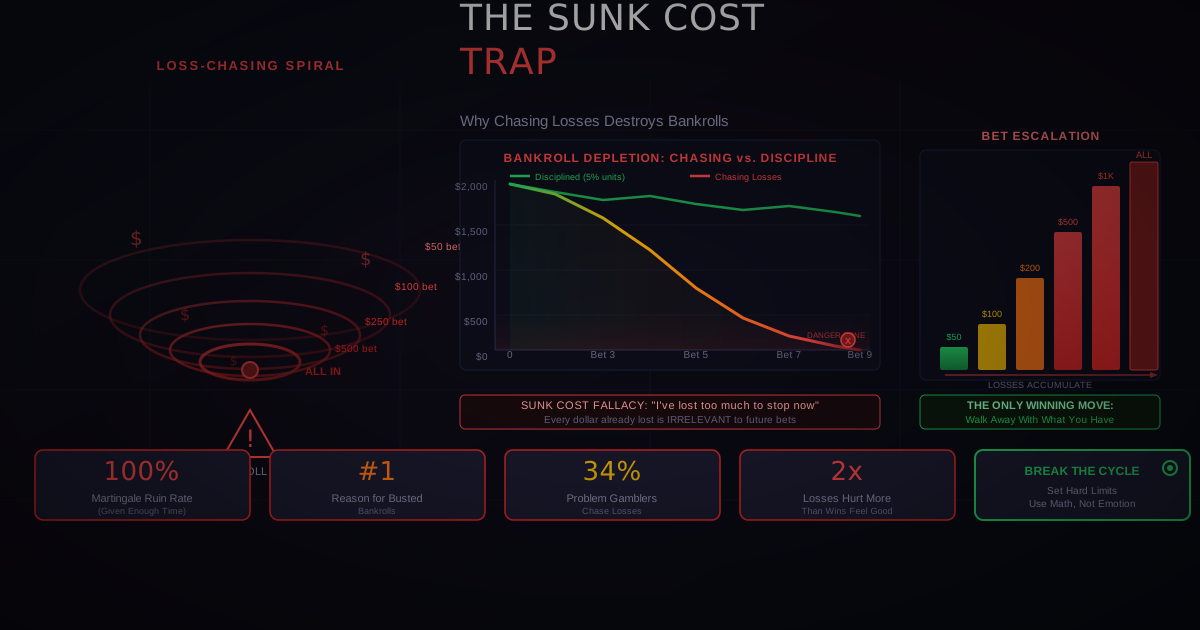
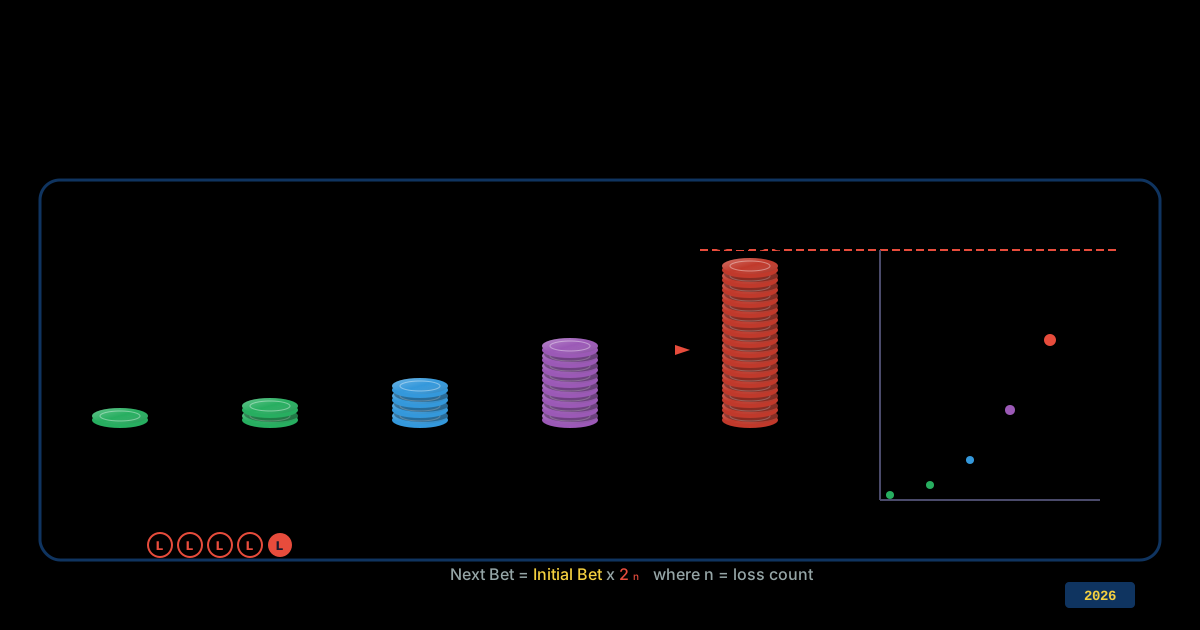
The Martingale system is the most famous betting strategy in gambling history, and it has a fatal mathematical flaw that guarantees long-term losses. The concept is seductively simple: double your bet after every loss, and when you finally win, you recover all losses plus one unit of profit. It feels like a guaranteed winning system. It is not. The math proves it fails, table limits enforce it, and bankroll reality kills it. Every single time, given enough play.
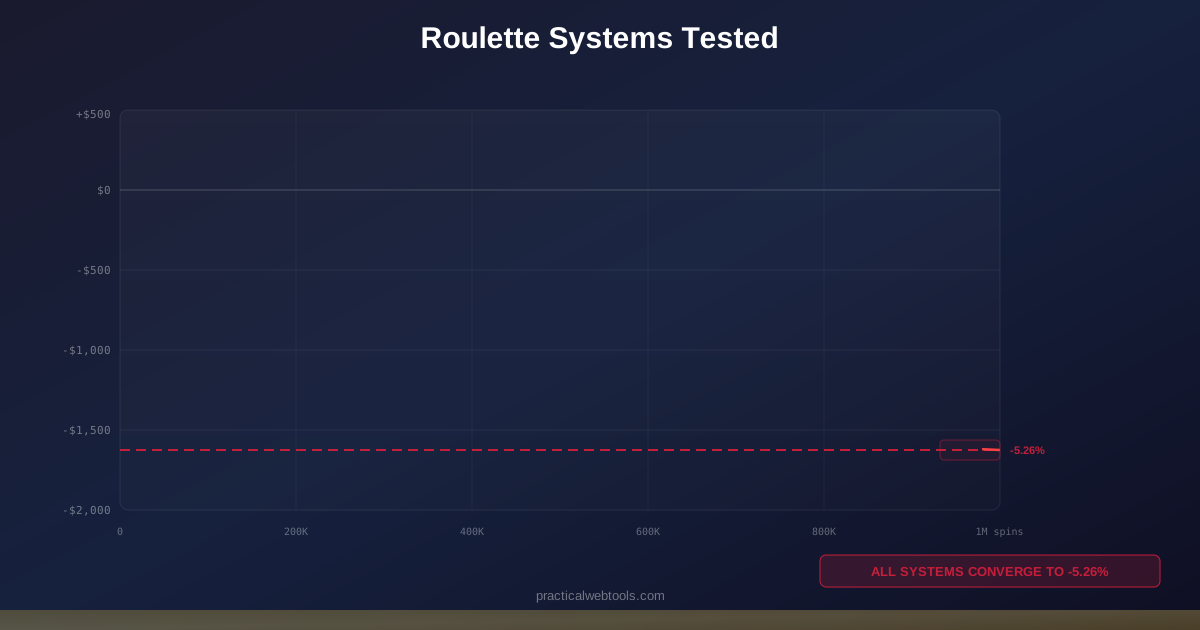
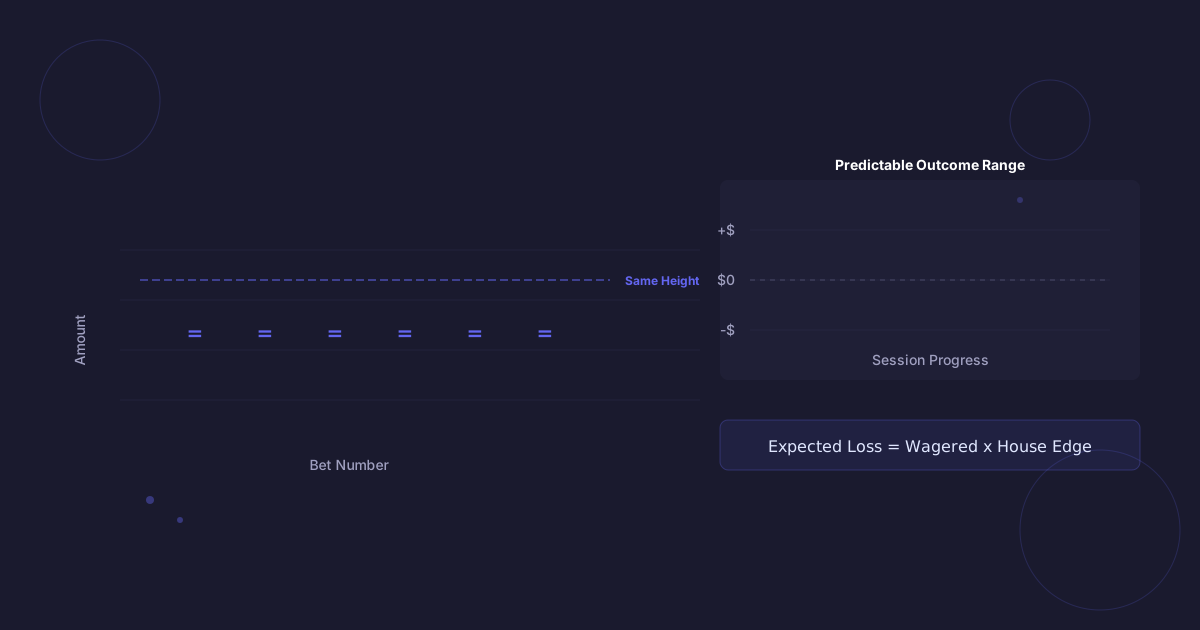
This is not an opinion or a gambling philosophy. It is arithmetic. The Martingale system produces the exact same expected loss as flat betting---the only difference is how that loss is distributed across your sessions. Instead of steady, predictable losses, the Martingale gives you many small wins punctuated by catastrophic wipeouts. The total always converges to the same number: House Edge multiplied by Total Amount Wagered.
Simulate the Martingale yourself and watch it fail with the Roulette Betting Simulator.
How the Martingale System Works
The Martingale is a negative progression betting system. After every loss, you double your bet. After every win, you return to your original bet size.
The Basic Sequence
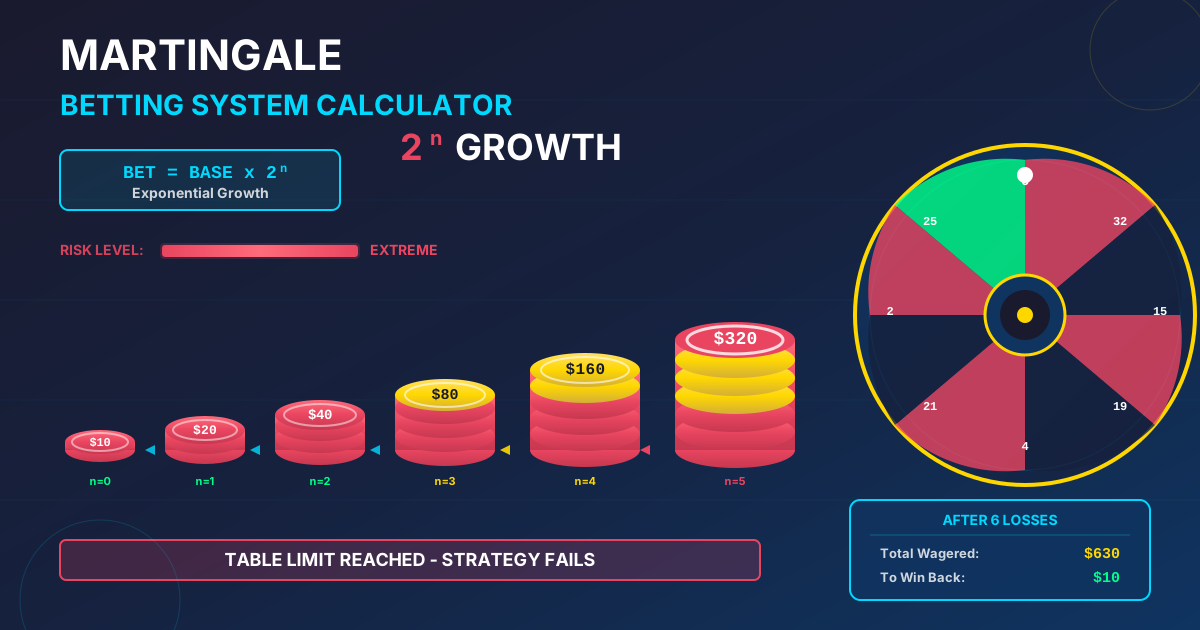
Starting with a $10 bet on an even-money proposition (red/black in roulette, Player in baccarat):
| Round | Bet Size | If You LOSE (Cumulative Loss) | If You WIN (Net Profit) |
|---|---|---|---|
| 1 | $10 | -$10 | +$10 |
| 2 | $20 | -$30 | +$10 |
| 3 | $40 | -$70 | +$10 |
| 4 | $80 | -$150 | +$10 |
| 5 | $160 | -$310 | +$10 |
| 6 | $320 | -$630 | +$10 |
| 7 | $640 | -$1,270 | +$10 |
| 8 | $1,280 | -$2,550 | +$10 |
| 9 | $2,560 | -$5,110 | +$10 |
| 10 | $5,120 | -$10,230 | +$10 |
The appeal is obvious: no matter how many times you lose, one win recovers everything plus your original bet. On paper, it seems impossible to lose.
Why It Seems to Work
In short-term testing, the Martingale does "work" most of the time. Here is why:
The probability of losing 10 consecutive even-money bets on American roulette:
P(10 losses) = (20/38)^10 = 0.00162 = 0.162%
That means 99.838% of the time, you will win within 10 rounds and collect your $10 profit. Over the course of an evening, you might "win" 20 or 30 times, pocketing $200-$300 of seemingly risk-free profit.
This is the trap. The system works until it does not, and when it fails, it fails catastrophically.
The Mathematical Proof: Why Martingale Always Fails
Proof 1: Expected Value Is Unchanged
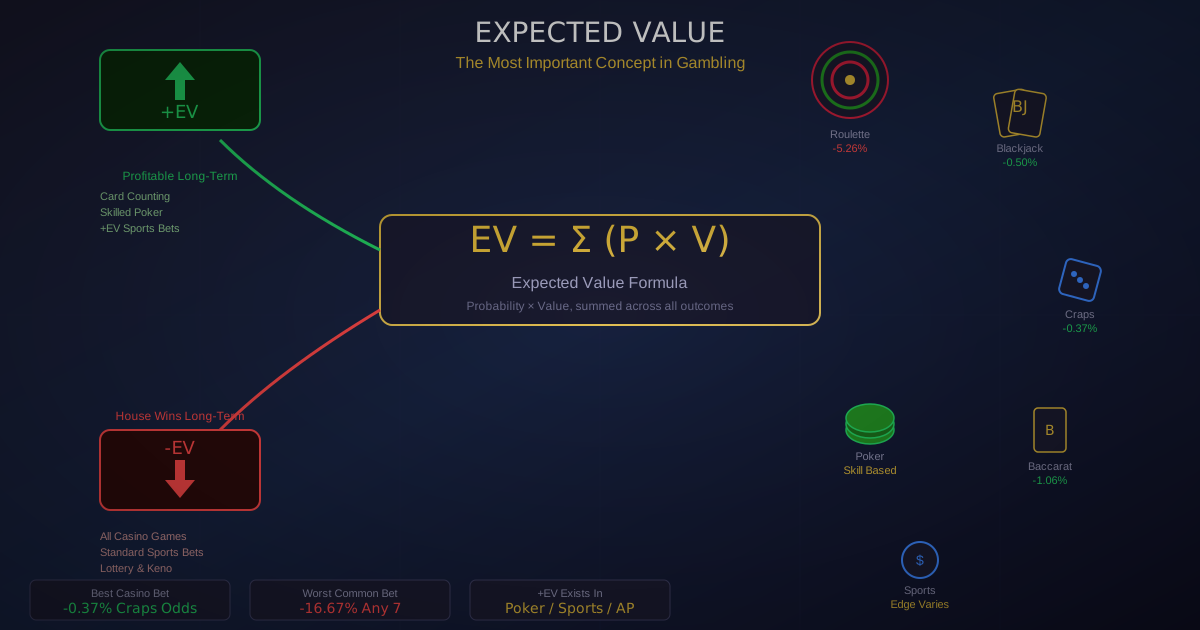
The expected value of a bet on red in American roulette:
EV per $1 bet = (18/38 x $1) - (20/38 x $1) = -$0.0526
This is -5.26% of each dollar wagered. The Martingale does not change this number. It cannot, because expected value is additive across independent events.
For any sequence of Martingale bets:
EV(total) = EV(bet 1) + EV(bet 2) + ... + EV(bet N)
Each EV(bet K) = -0.0526 x (bet size K)
Total EV = -0.0526 x (total amount wagered)
Whether you bet $10 flat for 100 rounds or use a Martingale progression that totals the same action, the expected loss is identical: 5.26% of total money wagered.
The formal statement: No rearrangement of bet sizes can turn a negative-expectation game into a positive-expectation game. The sum of negative numbers is always negative.
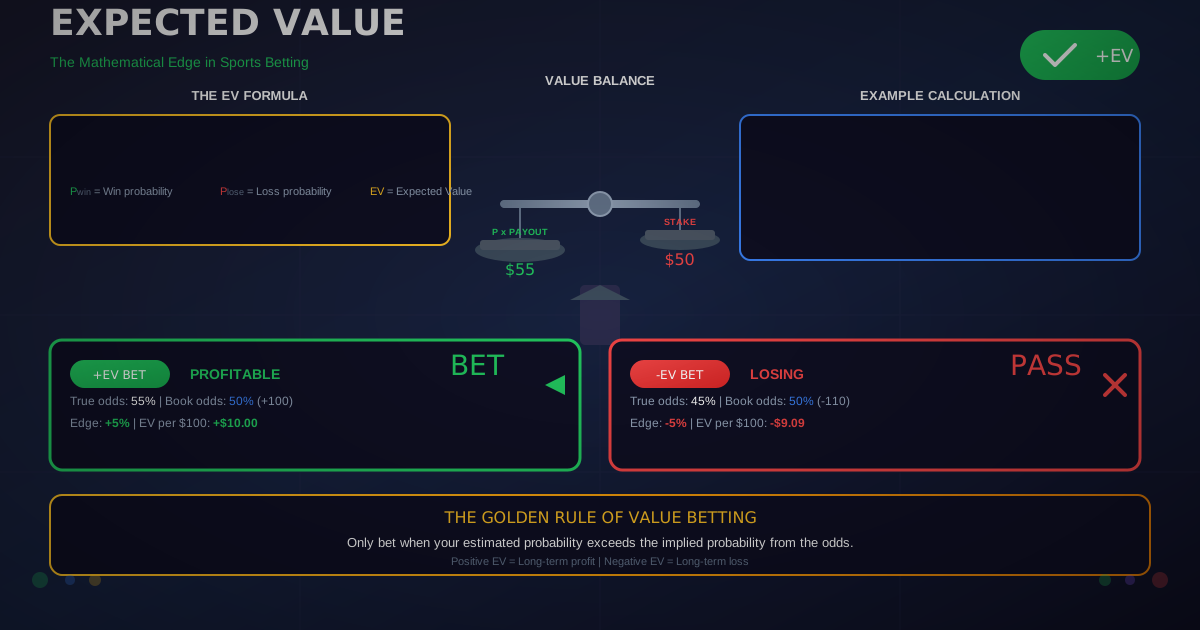
Calculate this for any bet scenario with the Expected Value Calculator.
Proof 2: The Risk-Reward Asymmetry
Let us compute the exact expected value of a complete Martingale sequence with a $10 base bet on American roulette red, with a 10-round limit (approximating a $5,000 table limit):
Win probability (win within 10 rounds): P(win) = 1 - (20/38)^10 = 1 - 0.00162 = 0.99838
Loss probability (lose all 10 rounds): P(lose) = (20/38)^10 = 0.00162
Win payout: +$10 (always, regardless of which round you win)
Loss payout: -$10,230 (sum of all bets: $10 + $20 + $40 + ... + $5,120)
Expected value per sequence: EV = (0.99838 x $10) - (0.00162 x $10,230) EV = $9.9838 - $16.57 EV = -$6.59 per sequence
This is negative. The Martingale system has a negative expected value. It must, because it is played on a negative EV game.
Now compute the expected value of flat betting the equivalent action:
Average total wagered per Martingale sequence: approximately $125.23 (weighted by probability of each round)
Expected loss on $125.23 wagered at 5.26%: $125.23 x 0.0526 = $6.59
The numbers match exactly. The Martingale produces the same expected loss as flat betting the equivalent total action.
Verify this with the Roulette EV Calculator.
Proof 3: The Infinite Bankroll Fallacy
Martingale proponents sometimes argue: "With an infinite bankroll and no table limits, the system guarantees a win." This is technically true but practically meaningless for three reasons:
-
No one has an infinite bankroll. The wealthiest person on earth would be wiped out by a sufficiently long losing streak. With a $200 billion bankroll and $10 starting bet, you can survive 34 consecutive losses ($10 x 2^33 = $85.9 billion). The 35th loss requires $171.8 billion. The probability of 35 consecutive losses on American roulette is (20/38)^35 = approximately 1 in 30 billion. Extremely unlikely? Yes. Impossible? No. And over infinite play, it happens.
-
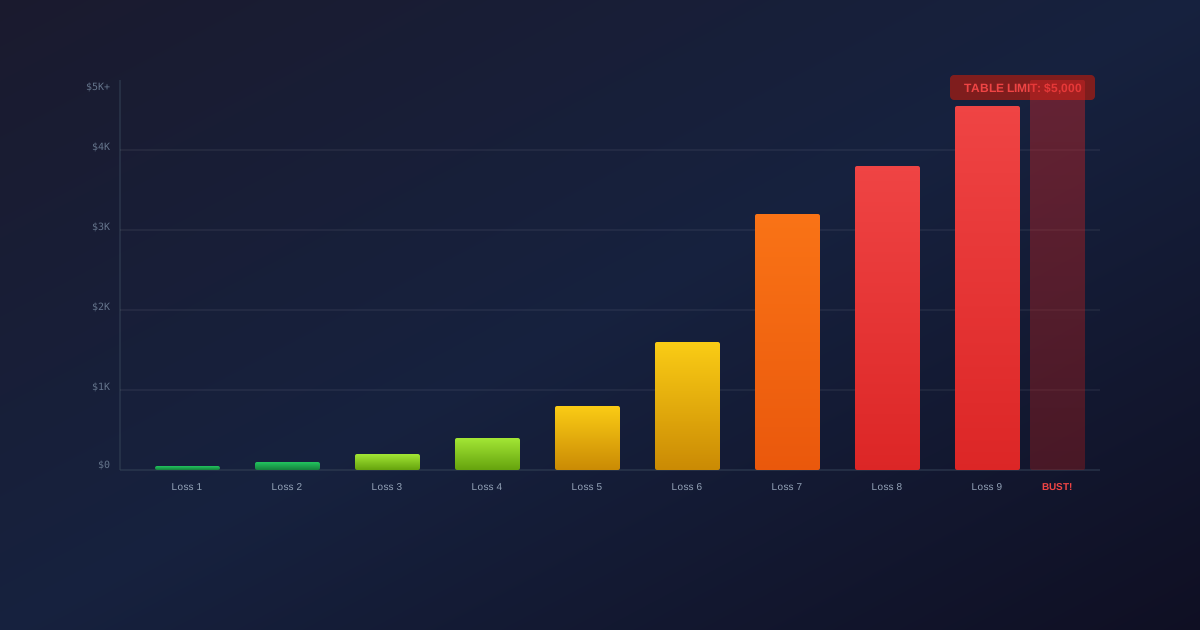
No casino has no table limits. Every casino in the world has a maximum bet. Typical limits for roulette are $500 to $10,000. A $10 Martingale system hits a $5,000 table limit in just 9 doublings.
-
Even with infinite resources, expected value per bet is still negative. An infinite bankroll does not change the expected value of each wager. You would win $10 profit per sequence with certainty, but each sequence takes, on average, longer and requires more total action than flat betting for the same profit.
Table Limits: The Physical Constraint That Kills Martingale
Every casino table has a minimum and maximum bet. These limits create a hard ceiling on how many times you can double.
Maximum Doublings by Table Limit
| Starting Bet | Table Maximum | Max Doublings | Loss at Max | Cumulative Loss |
|---|---|---|---|---|
| $5 | $500 | 6 | $320 | $635 |
| $5 | $1,000 | 7 | $640 | $1,275 |
| $5 | $5,000 | 9 | $2,560 | $5,115 |
| $10 | $500 | 5 | $320 | $630 |
| $10 | $1,000 | 6 | $640 | $1,270 |
| $10 | $5,000 | 8 | $2,560 | $5,110 |
| $10 | $10,000 | 9 | $5,120 | $10,230 |
| $25 | $500 | 4 | $400 | $775 |
| $25 | $1,000 | 5 | $800 | $1,575 |
| $25 | $5,000 | 7 | $3,200 | $6,375 |
At a typical $10 minimum/$5,000 maximum table, you can only double 8 times. The probability of 9 consecutive losses on American roulette:
P(9 losses) = (20/38)^9 = 0.00307 = 0.307% = approximately 1 in 326
This means roughly once every 326 Martingale sequences, you will hit the table limit and lose everything. Your maximum profit per successful sequence is $10. Your maximum loss is $5,110.
Expected outcome over 326 sequences:
- Wins: 325 x $10 = +$3,250
- Losses: 1 x $5,110 = -$5,110
- Net: -$1,860
The one catastrophic loss more than wipes out all 325 successful wins.
Run hundreds of Martingale simulations with the Roulette Betting Simulator to see this pattern emerge.
Simulation Results: 10,000 Martingale Sessions
To prove the theory matches reality, here are the results of simulating 10,000 complete Martingale sessions on American roulette. Each session consists of 100 resolved sequences (win-or-bust-out cycles) with a $10 base bet and a $5,000 table limit.
Aggregate Results
| Metric | Result |
|---|---|
| Total sessions simulated | 10,000 |
| Sessions ending positive | 6,214 (62.1%) |
| Sessions ending negative | 3,786 (37.9%) |
| Average session profit (winners) | +$147.32 |
| Average session loss (losers) | -$1,847.56 |
| Overall average session result | -$608.42 |
| Total wagered across all sessions | ~$115,600,000 |
| Total lost across all sessions | ~$6,084,200 |
| Effective house edge | 5.26% |
The effective house edge matches the theoretical 5.26% exactly. The Martingale changed nothing except the distribution: 62% of sessions were profitable (but modestly so), while 38% were devastating.
Distribution of Outcomes
| Session Result Range | Frequency |
|---|---|
| +$500 or more | 3.2% |
| +$200 to +$499 | 18.7% |
| +$1 to +$199 | 40.2% |
| $0 to -$499 | 7.4% |
| -$500 to -$1,999 | 8.1% |
| -$2,000 to -$4,999 | 12.8% |
| -$5,000 or worse | 9.6% |
The classic Martingale signature: a tall spike of small wins and a long tail of catastrophic losses. The small wins feel great but do not compensate for the massive losses.
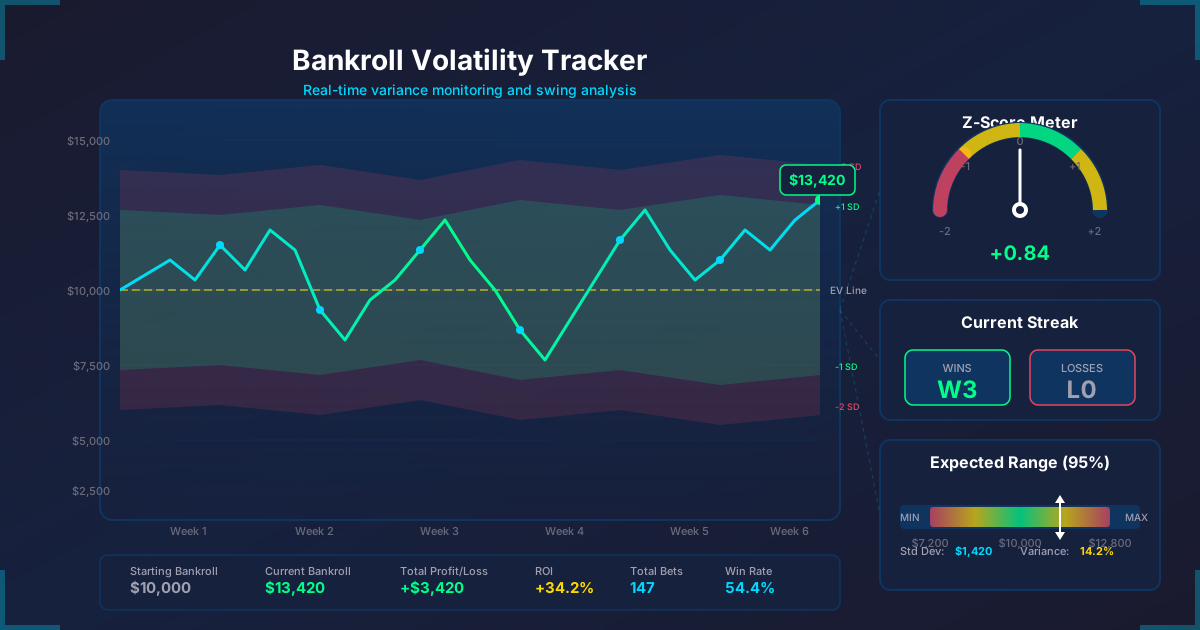
Track your own sessions against these expectations with the Bankroll Volatility Tracker.
Real-World Martingale Scenarios
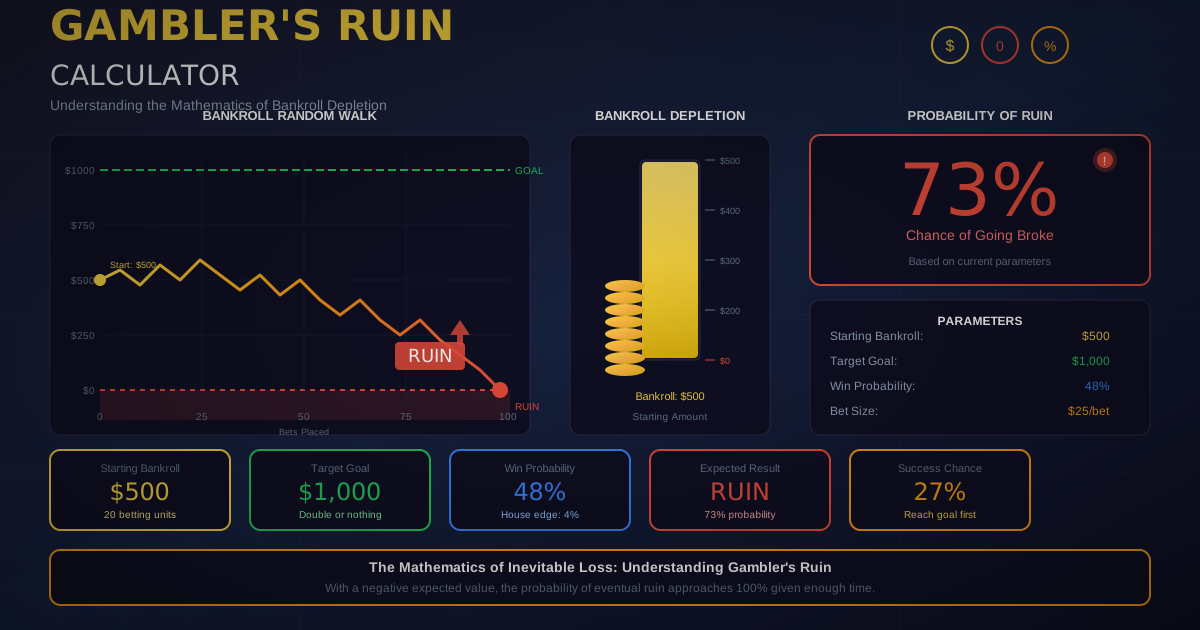
Scenario 1: The "It Works" Believer ($500 Bankroll)
Sarah uses a $10 Martingale on American roulette red/black. She starts with $500 and plays until she either doubles her money or goes bust.
The math:
- Maximum consecutive losses before bust: 5 ($10 + $20 + $40 + $80 + $160 = $310, leaving insufficient for the 6th bet of $320)
- Probability of 6 consecutive losses: (20/38)^6 = 1.84%
- Per-sequence profit on success: $10
- Number of sequences to double $500: 50
- Probability of surviving 50 sequences: (1 - 0.0184)^50 = 39.8%
Sarah has a 39.8% chance of doubling her money and a 60.2% chance of losing most or all of it. The expected value of her session:
EV = (0.398 x $500) + (0.602 x -$375) = $199 - $225.75 = -$26.75
She expects to lose $26.75 on average. This is exactly what flat betting $10 for the expected number of rounds would produce.
Scenario 2: The Weekend Warrior ($2,000 Bankroll)
Mike uses a $25 Martingale at a $5,000 limit table. He plays for 4 hours, roughly 40 spins per hour, 160 total spins.
The math:
- Maximum doublings: 7 ($25 + $50 + $100 + $200 + $400 + $800 + $1,600 + $3,200, sum = $6,375; but $3,200 exceeds $2,000 remaining after 6 losses)
- Realistic max doublings with $2,000: 6 ($25 + $50 + $100 + $200 + $400 + $800 = $1,575)
- Probability of 7 consecutive losses: (20/38)^7 = 0.97%
- Expected sequences in 160 spins: approximately 80 (average 2 spins per sequence)
- Probability of at least one bust-out: 1 - (1 - 0.0097)^80 = 54.1%
Mike has a 54.1% chance of a catastrophic loss during a four-hour session. More than half the time, his weekend trip ends with a single devastating losing streak.
Expected total wagered: approximately $4,200 Expected loss: $4,200 x 0.0526 = $220.92
This is identical to what Mike would expect to lose flat betting $25 for 160 spins.
Scenario 3: The High Roller ($50,000 Bankroll)
James uses a $100 Martingale at a $10,000 limit table. He plays regularly, 20 sessions per year.
- Maximum consecutive losses before table limit: 6 ($100 + $200 + $400 + $800 + $1,600 + $3,200 + $6,400 = table limit exceeded at bet 7)
- Probability of hitting the wall per sequence: (20/38)^7 = 0.97%
- Expected sequences per session: approximately 100
- Probability of bust per session: 1 - (1 - 0.0097)^100 = 62.3%
- Probability of bust in at least 1 of 20 sessions: 1 - (1 - 0.623)^20 = 99.9999%
It is a virtual certainty that James will experience a catastrophic Martingale failure within one year of regular play. The expected loss per bust: $6,300. The $100 profit per successful sequence cannot compensate.
Calculate your own risk of ruin with the Roulette Probability Calculator.
Why No Betting System Can Beat the House Edge
The Martingale is the most famous progressive system, but the mathematical proof applies to all betting systems. Here is why:
The Fundamental Theorem
If each individual bet has a negative expected value, then any combination, sequence, or pattern of those bets also has a negative expected value.
This is because expected value is linear and additive:
E[X1 + X2 + ... + Xn] = E[X1] + E[X2] + ... + E[Xn]
If every E[Xi] < 0, then the sum must be < 0. There is no arrangement of negative numbers that produces a positive sum.
Application to Common Systems
| System | How It Works | Why It Fails |
|---|---|---|
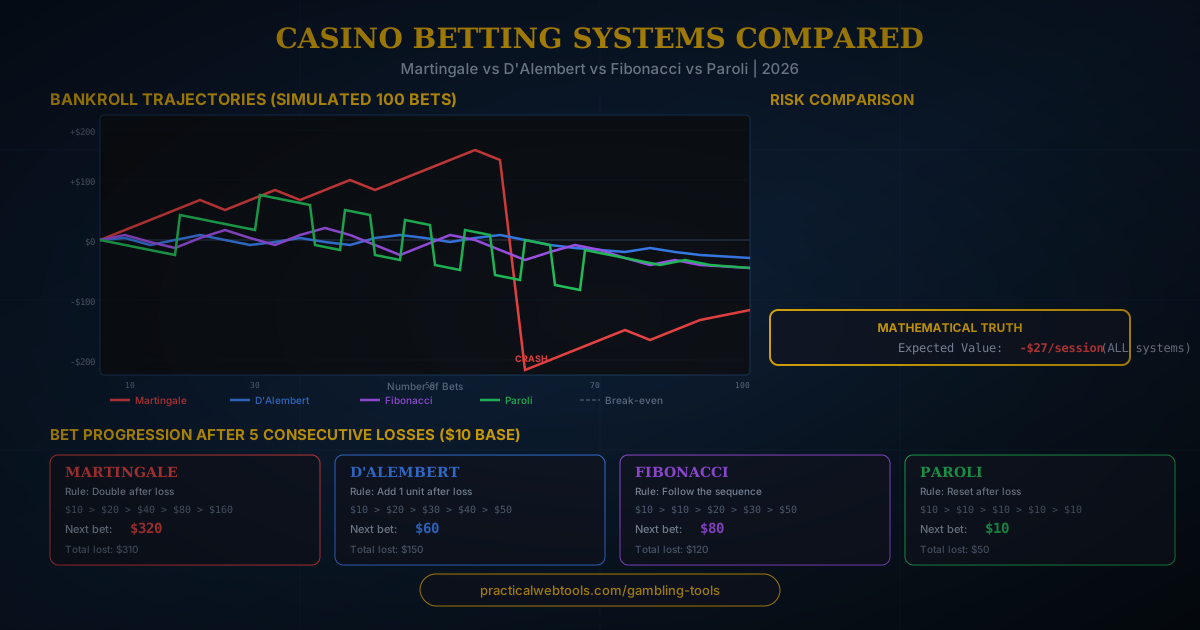
| Martingale | Double after loss | Same EV, catastrophic loss risk |
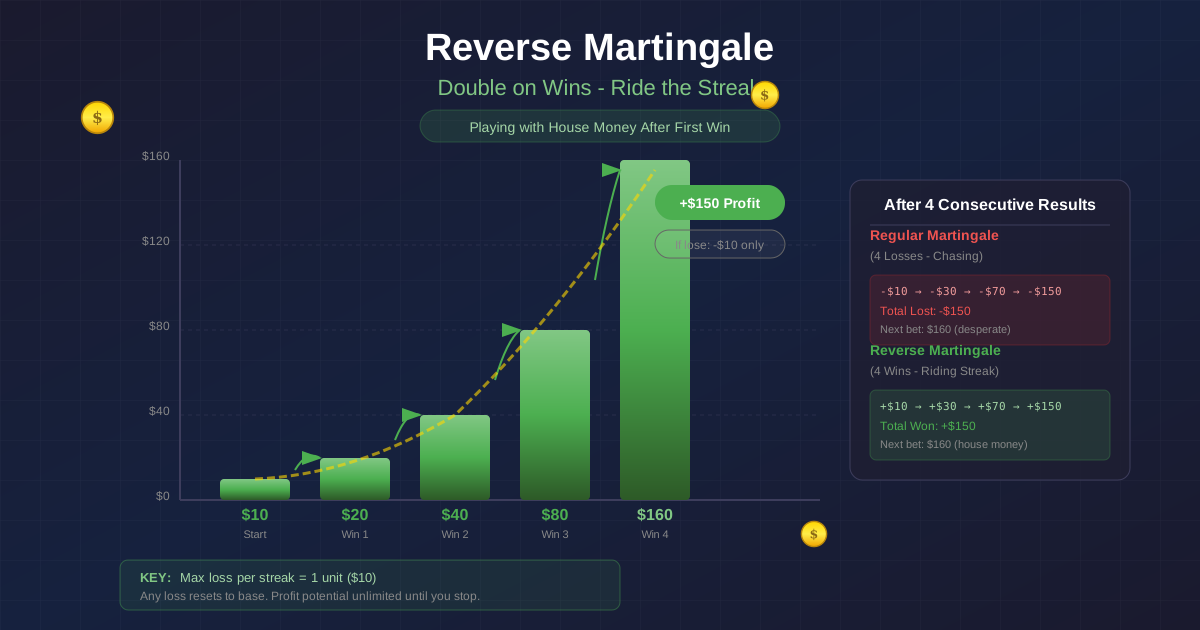
| Reverse Martingale | Double after win | Same EV, gives back big wins |
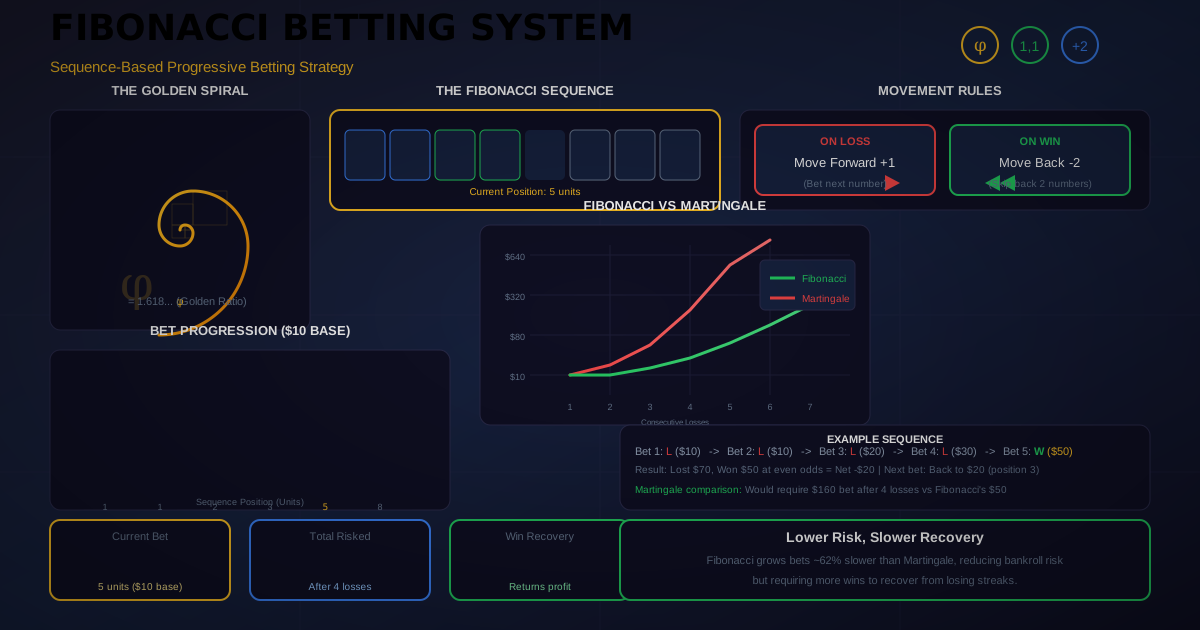
| Fibonacci | Bet Fibonacci sequence after loss | Same EV, slower but still catastrophic |
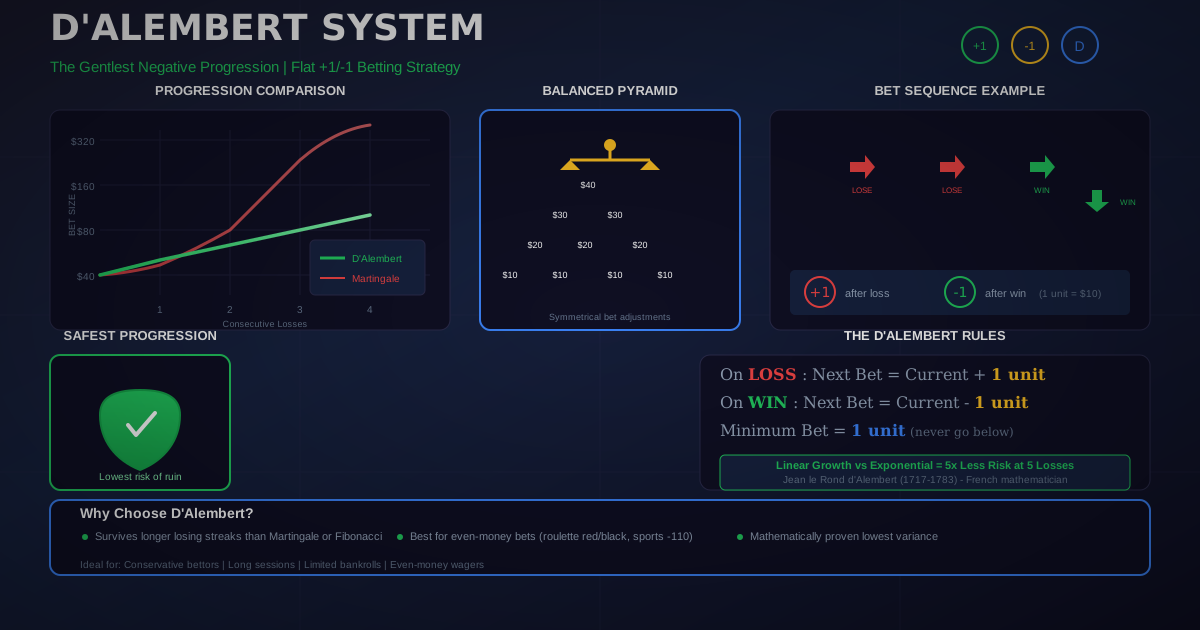
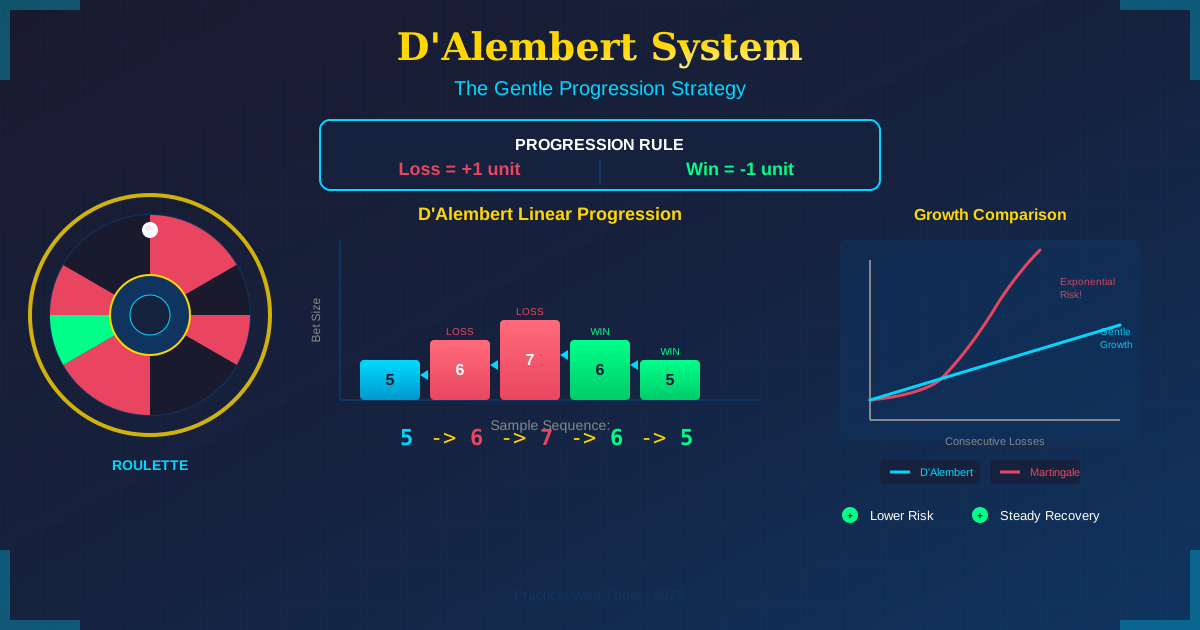
| D'Alembert | Increase by 1 unit after loss | Same EV, slower progression, still loses |
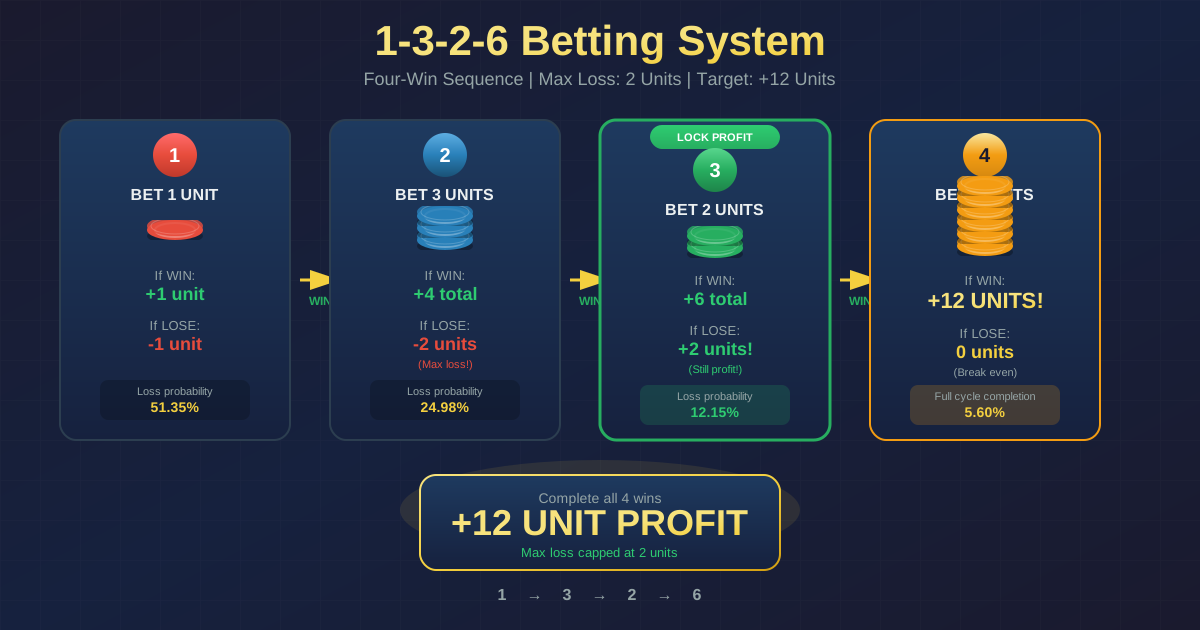
| 1-3-2-6 | Fixed 4-bet progression | Same EV, structured loss distribution |
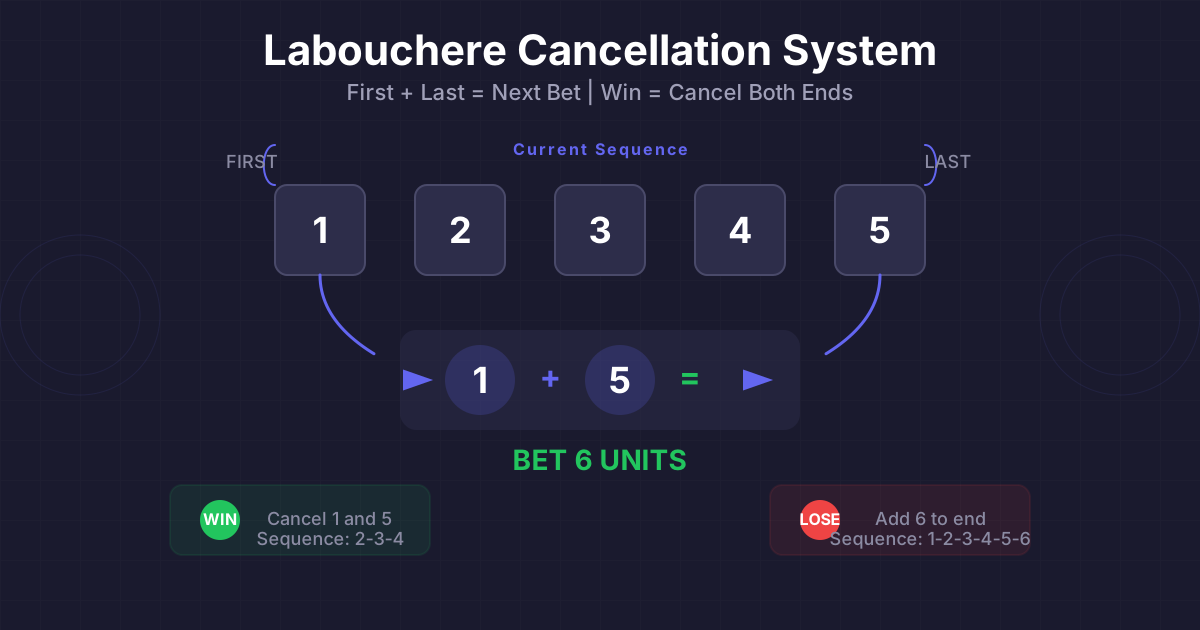
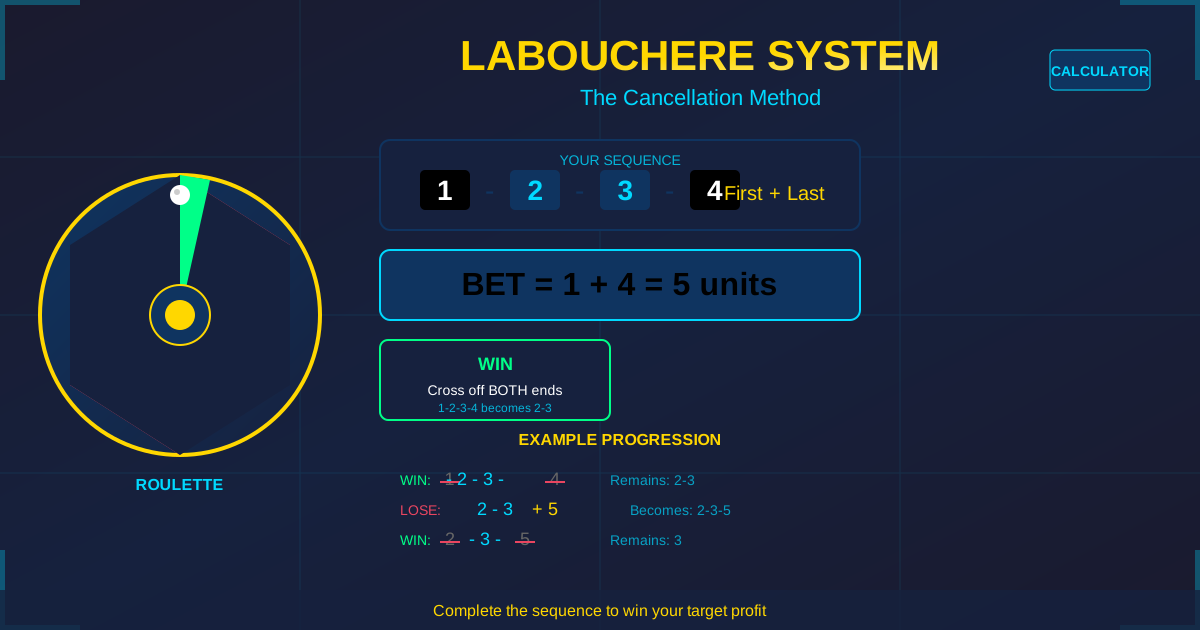
| Labouchere | Cross off numbers from a list | Same EV, complex but mathematically identical |
| Oscar's Grind | Increase by 1 after win (if losing) | Same EV, very slow, still negative |
Every system changes the variance profile (how wins and losses are distributed) but not the expected value (total amount you expect to lose). They are mathematically equivalent to flat betting over the long run.
Simulate any of these systems with the Roulette Betting Simulator.
Martingale on Different Games
Roulette (American)
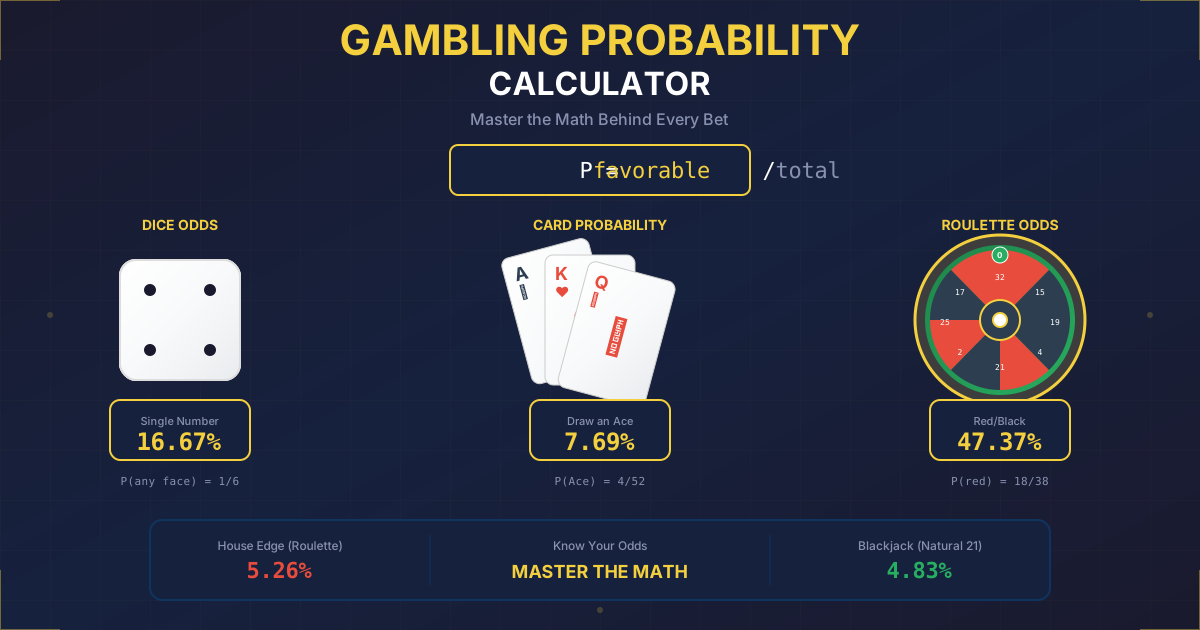
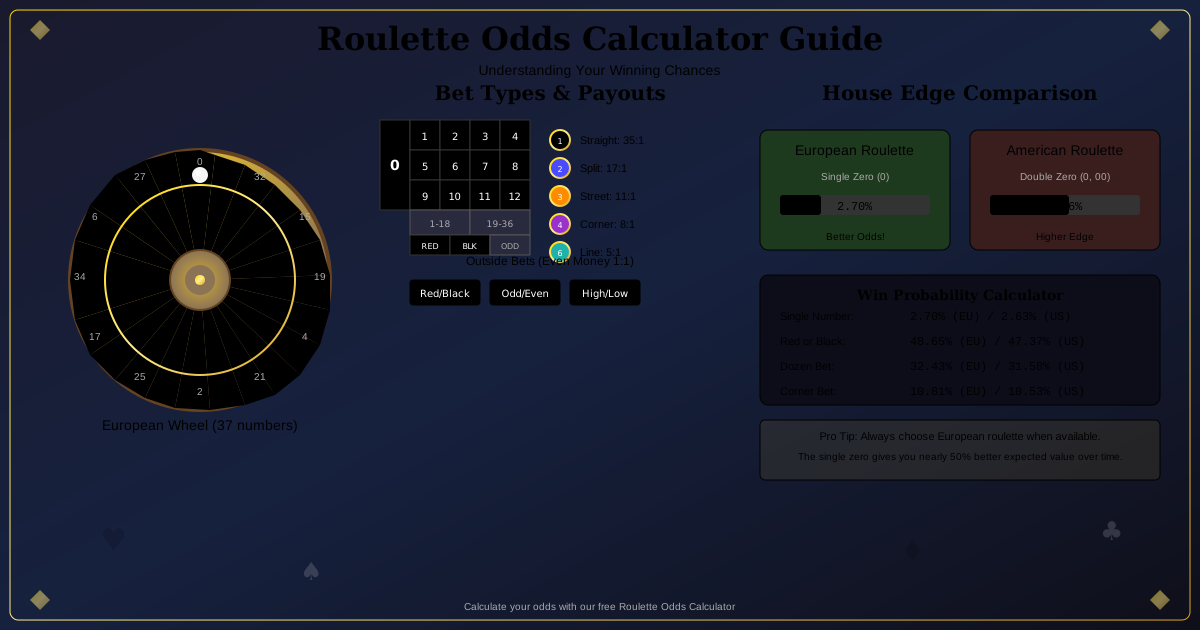
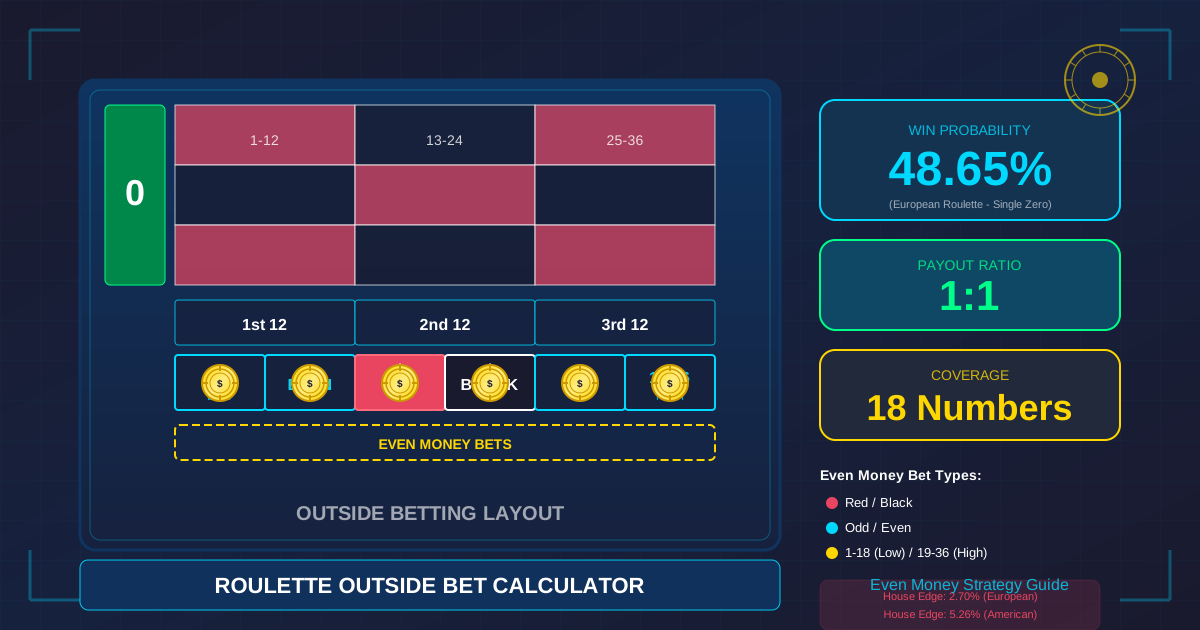
- Even-money bets: 47.37% win rate, 5.26% house edge
- Martingale EV: -5.26% of total wagered
- A $10 Martingale loses approximately $6.59 per resolved sequence (as calculated above)
Roulette (European)
- Even-money bets: 48.65% win rate, 2.70% house edge
- Martingale EV: -2.70% of total wagered
- Better than American, but still negative
- With La Partage rule: 1.35% edge, Martingale still negative
Compare roulette variants with the Roulette House Edge Calculator.
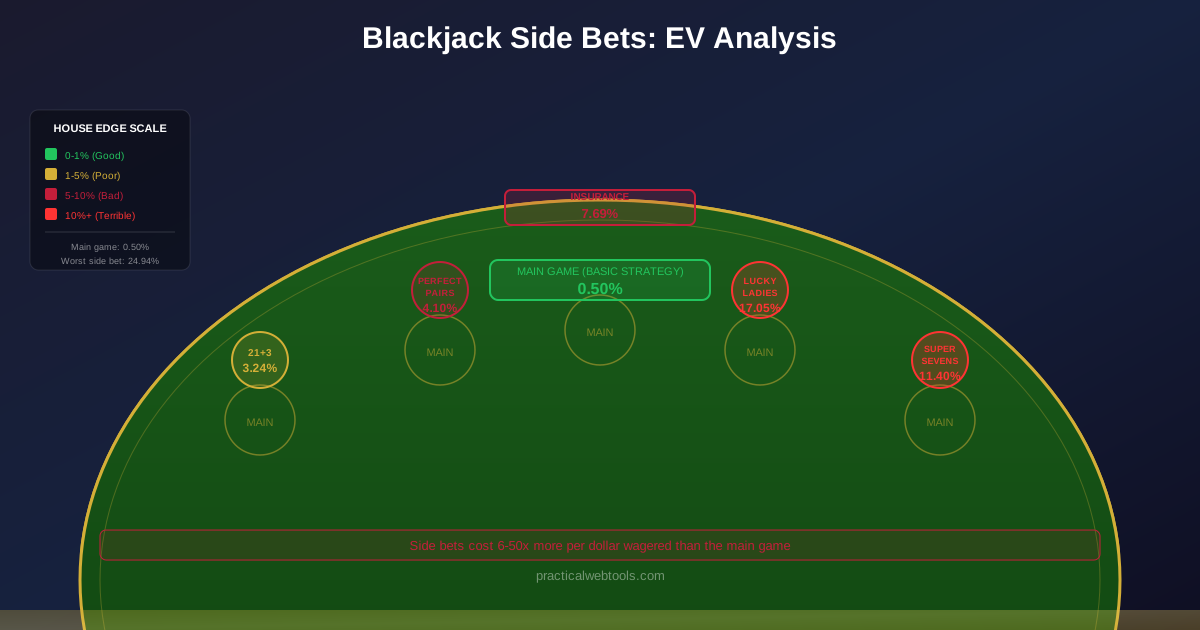
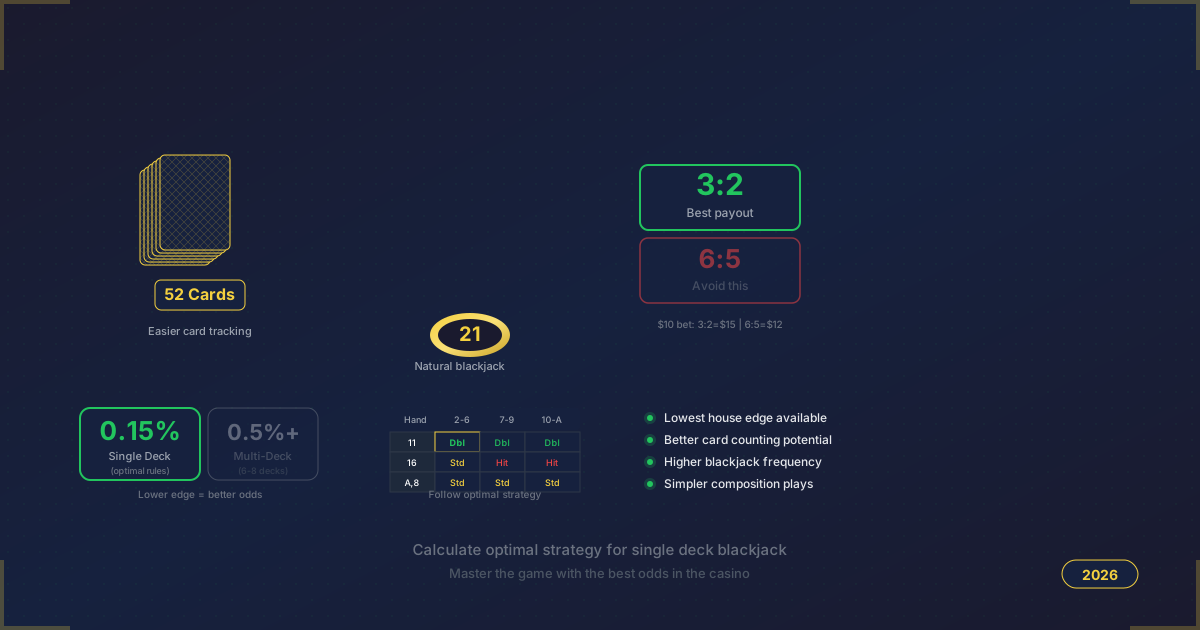
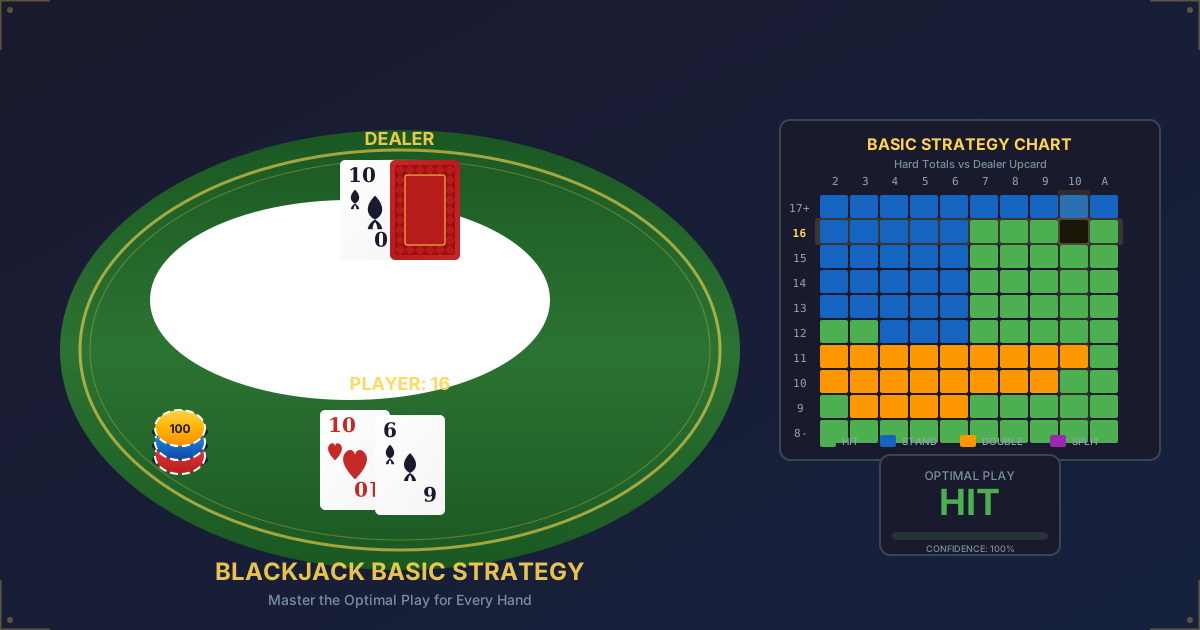
Blackjack
- Even-money base structure, but with doubles, splits, and 3:2 blackjack payouts
- Martingale on blackjack is more complex because bet sizes change mid-hand
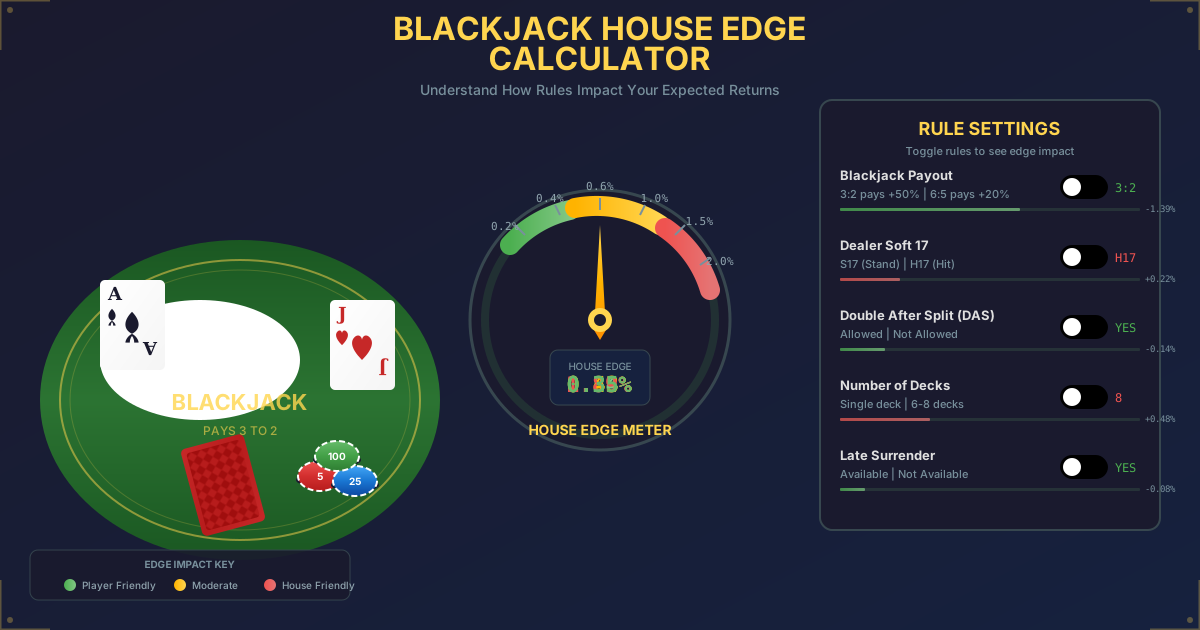
- House edge with basic strategy: 0.50%
- Martingale does not reduce this to zero---it remains -0.50% of total wagered
- Doubling and splitting create additional variance already; adding Martingale amplifies risk
Calculate blackjack expected values with the Blackjack EV Calculator.
Baccarat
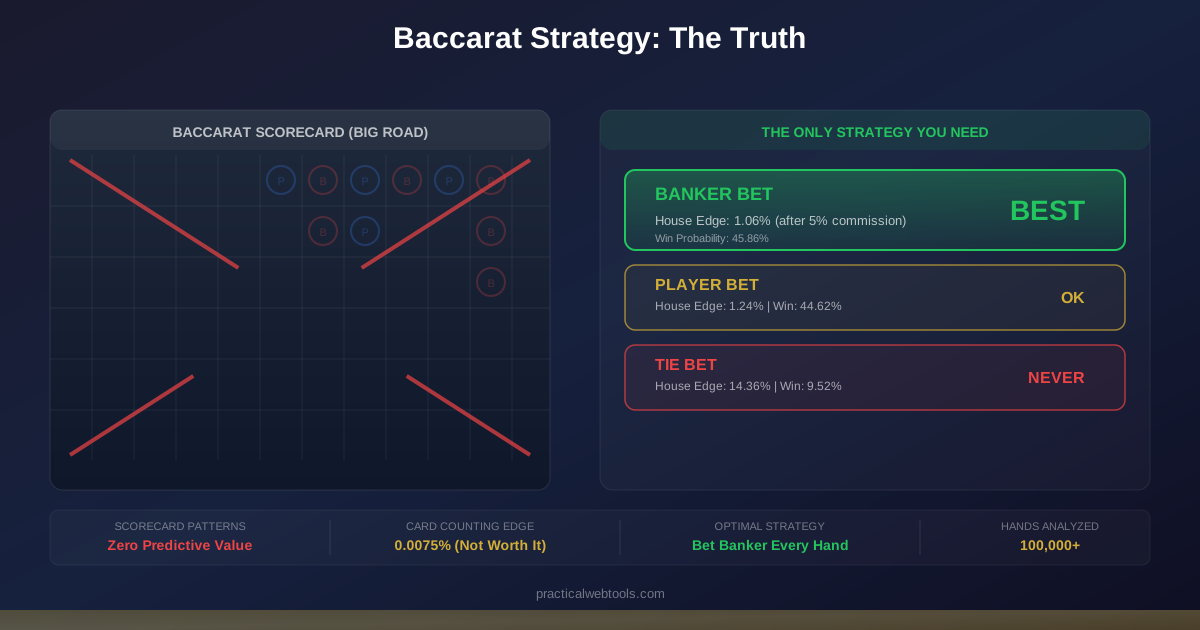
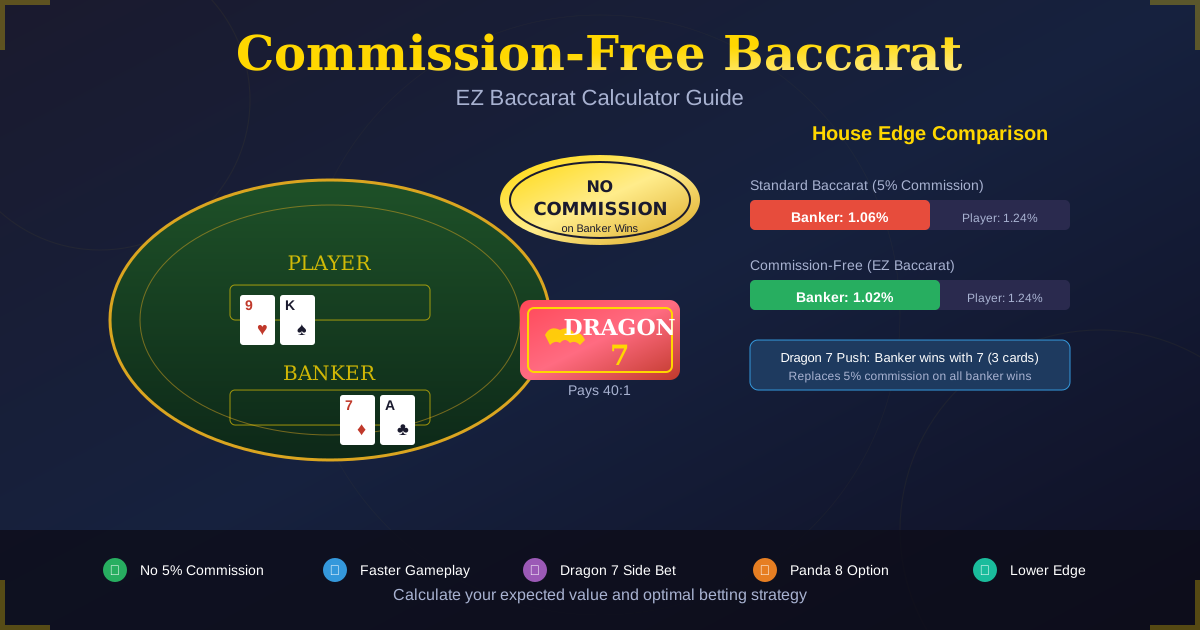
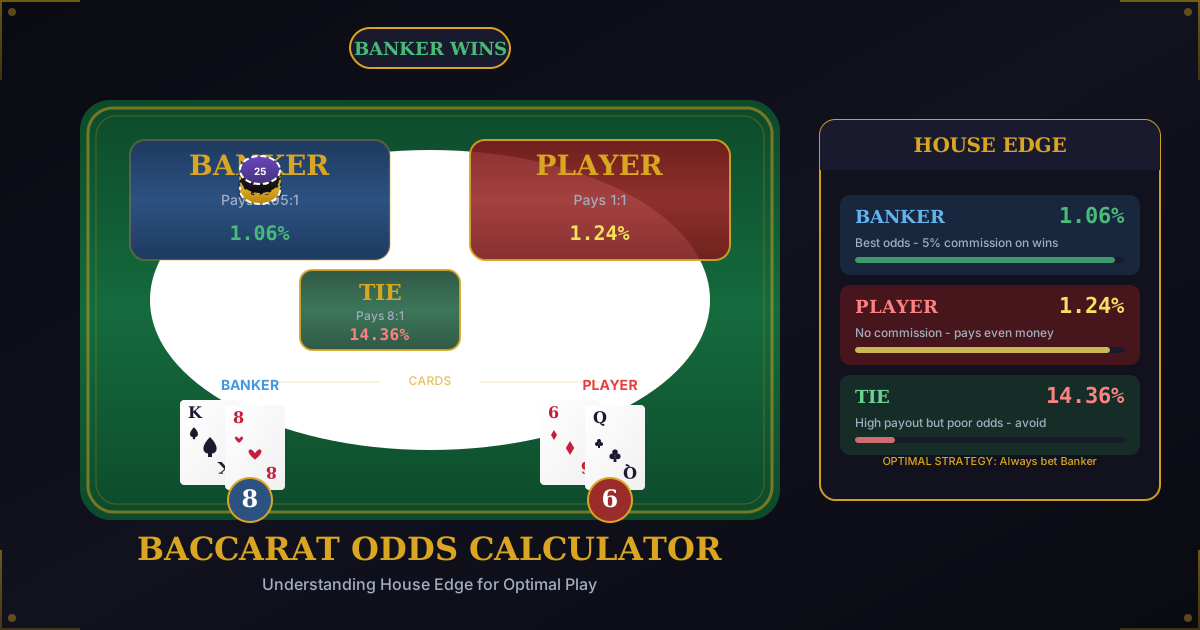
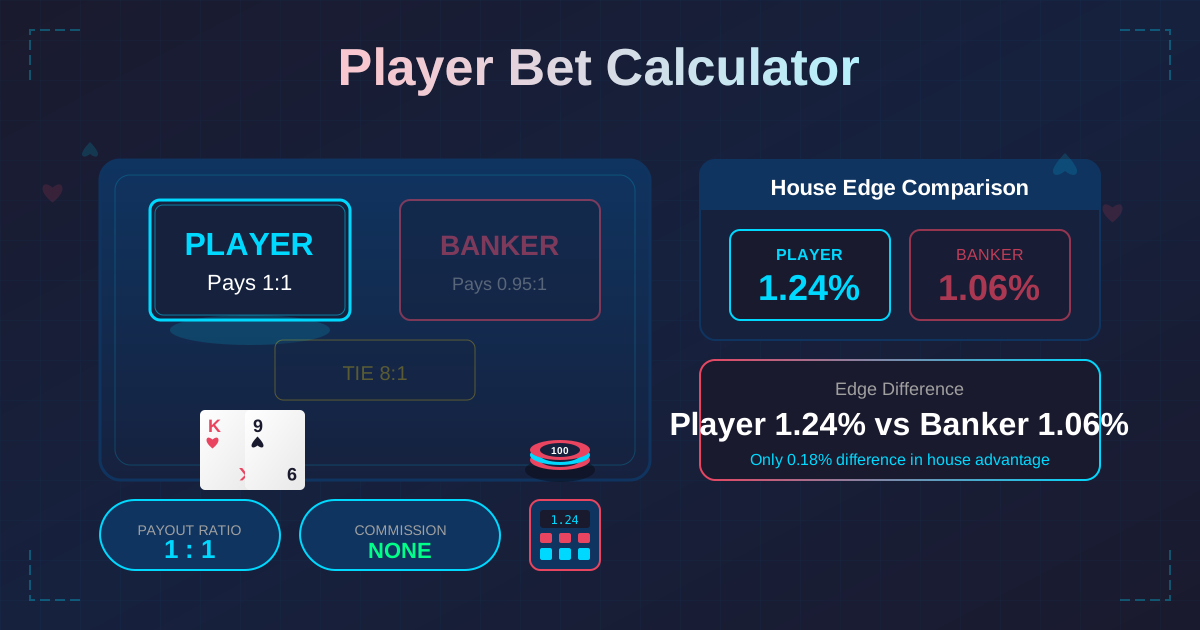
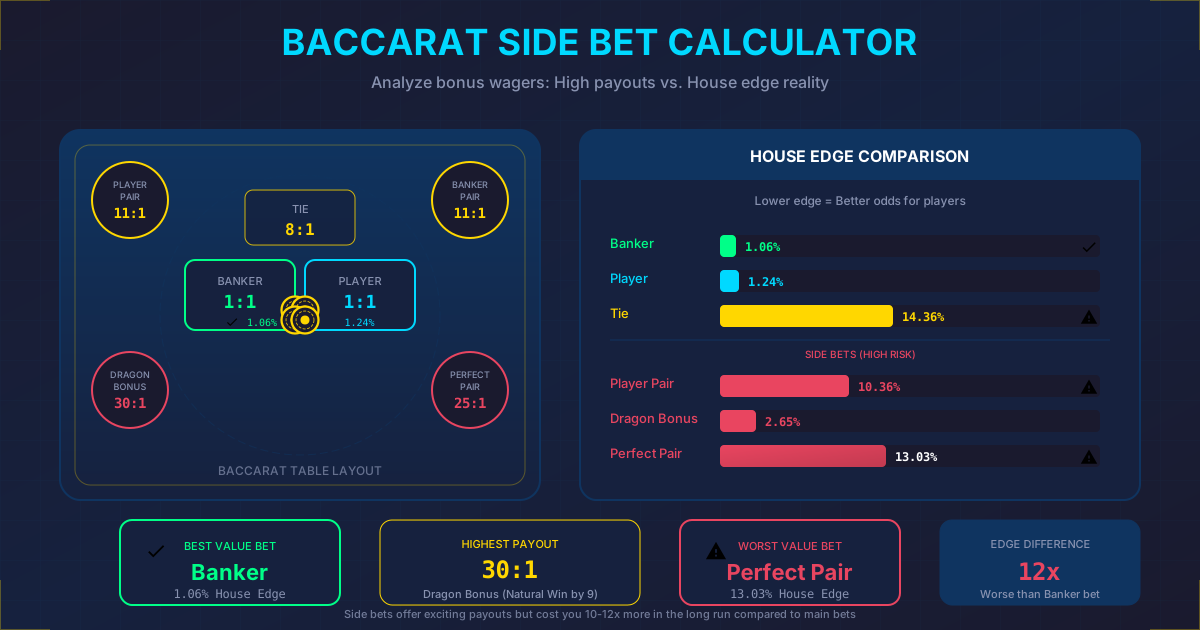
- Banker bet: 49.32% win rate (excluding ties), 1.06% house edge
- Player bet: 50.68% loss rate (excluding ties), 1.24% house edge
- Martingale on Banker is slightly "better" than on roulette because of the lower edge, but still negative
- Ties create complications: do you re-bet or count it as a non-event?
Craps
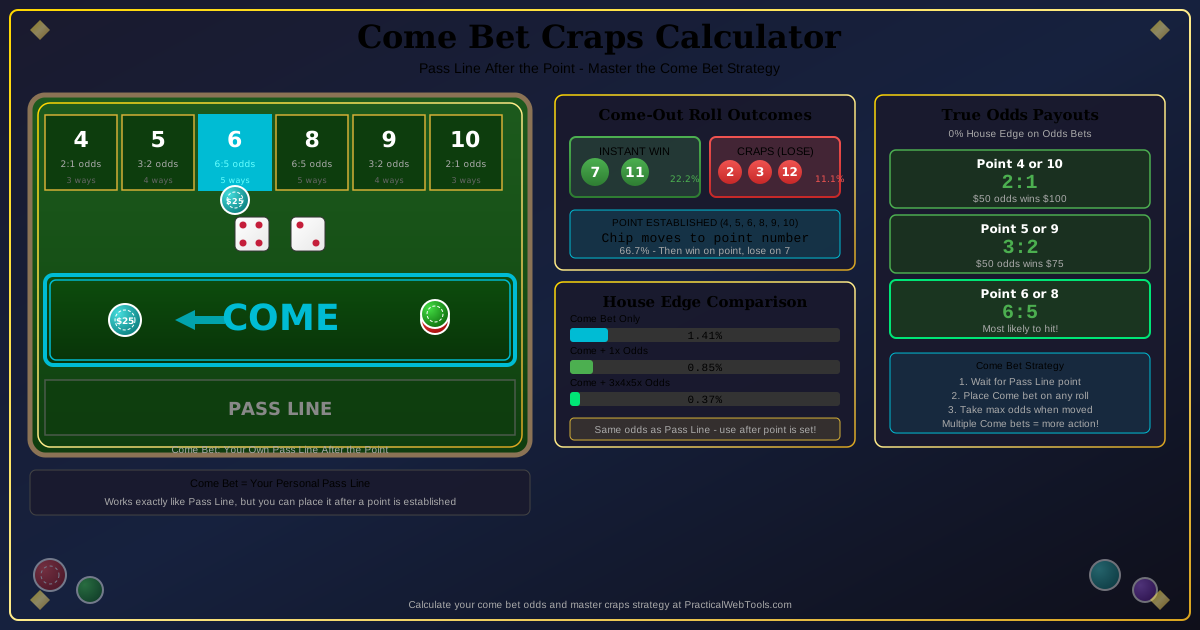
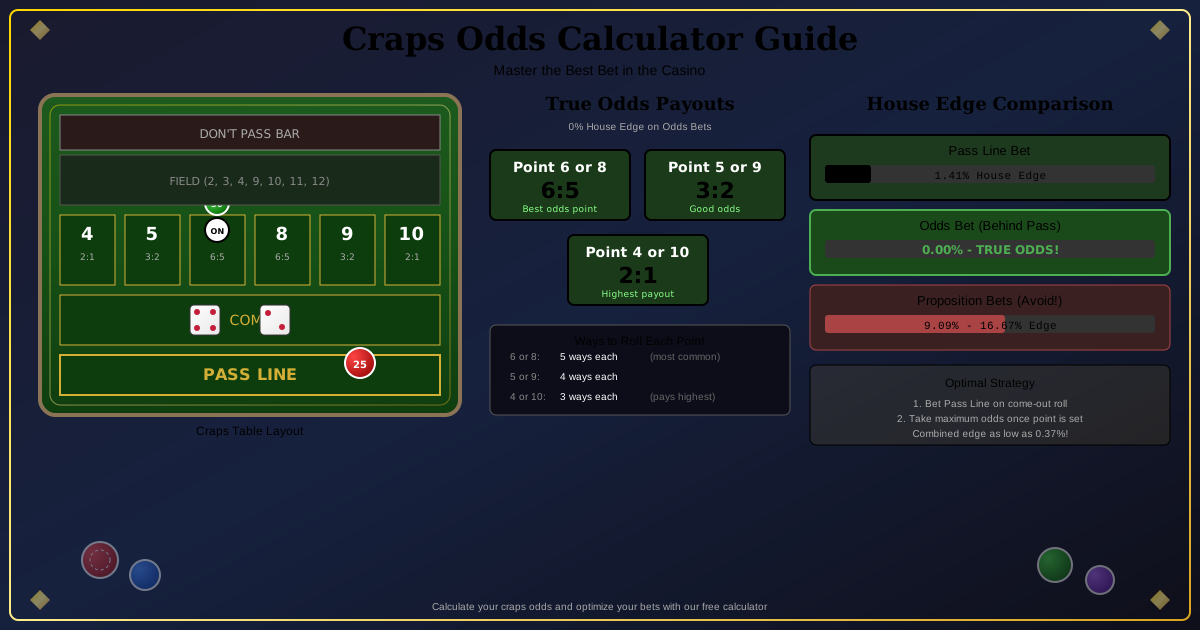
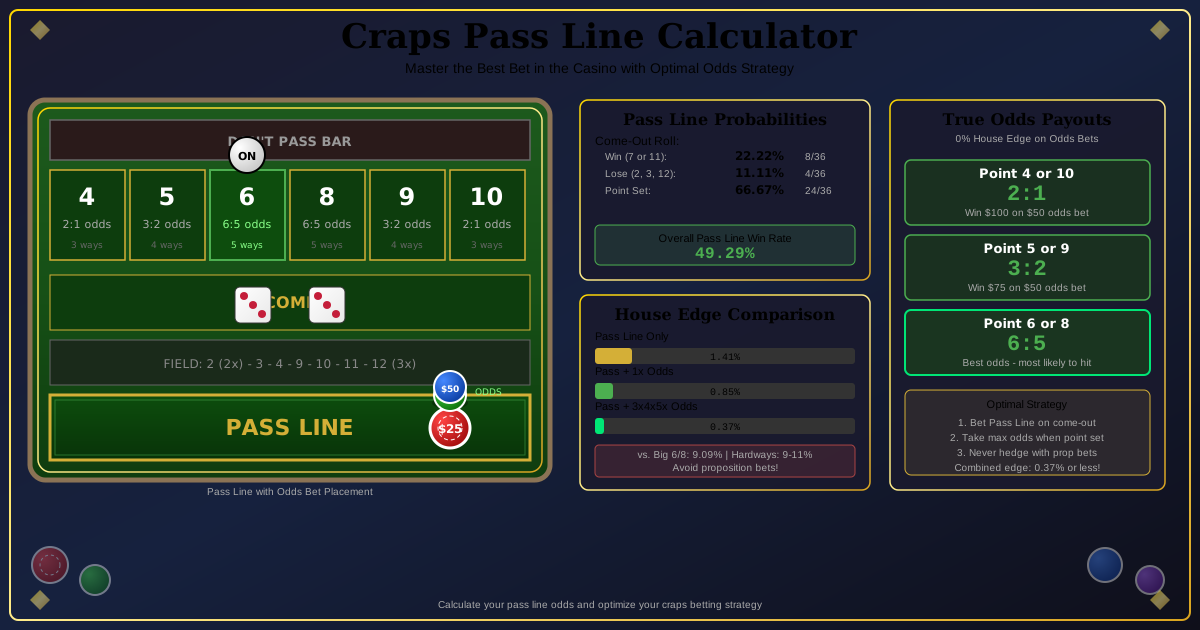
- Pass line: 49.29% win rate, 1.41% house edge
- Martingale on pass line loses -1.41% of total wagered
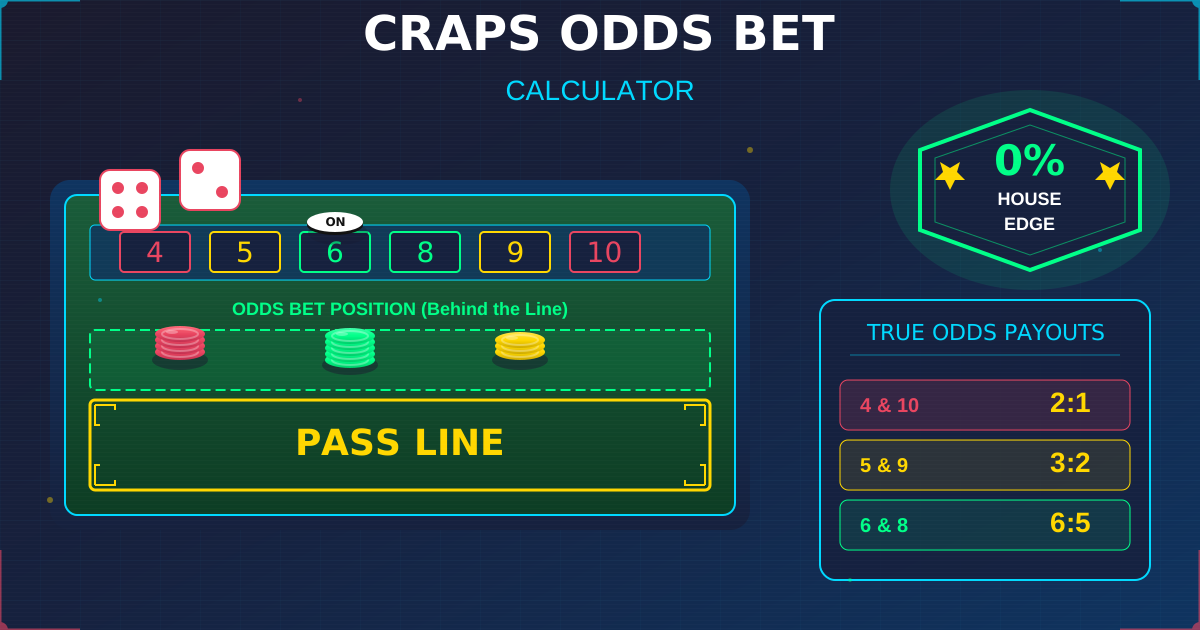
- Odds bet complications: the free odds bet behind the pass line pays at true odds (0% edge), but you cannot Martingale the odds portion independently
The Psychology of Martingale: Why It Keeps Fooling People
Confirmation Bias
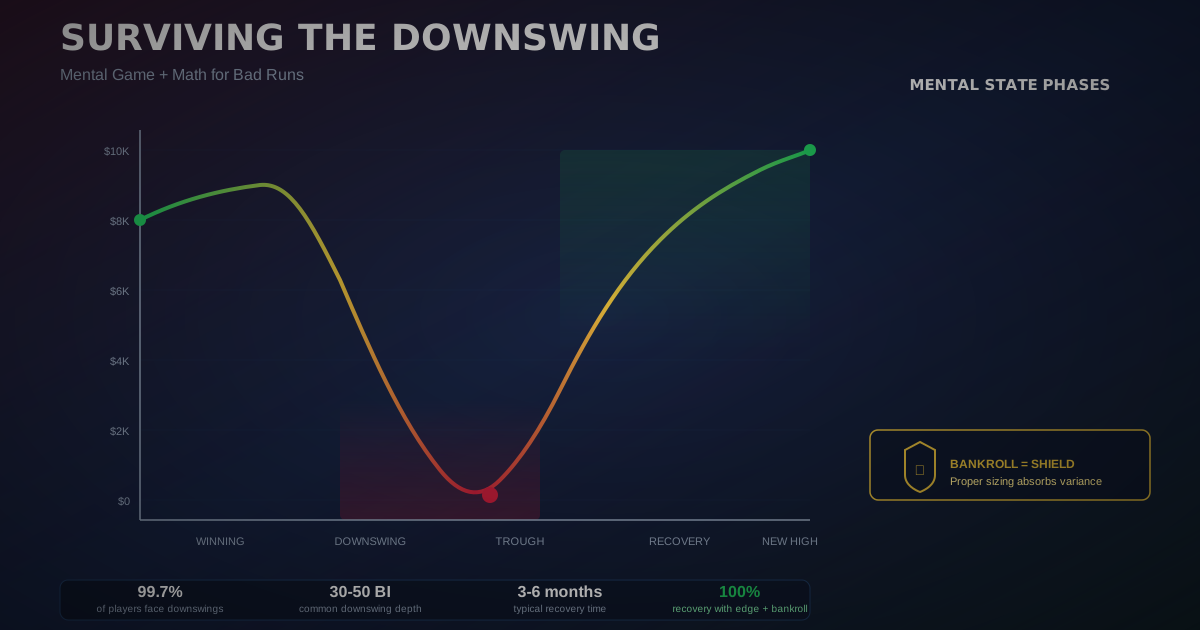
Players remember the sessions where the Martingale "worked" (most sessions, since small wins are frequent) and minimize or forget the sessions where it failed catastrophically. Over 100 sessions, you might win 62 and lose 38. But those 38 losses total more money than the 62 wins. The brain focuses on the 62 wins.
The Illusion of Control
Doubling your bet feels like "doing something" to fight back against losses. It creates a sense of control and strategy in a game of pure chance. This feeling is psychologically satisfying but mathematically meaningless.
Small Sample Deception
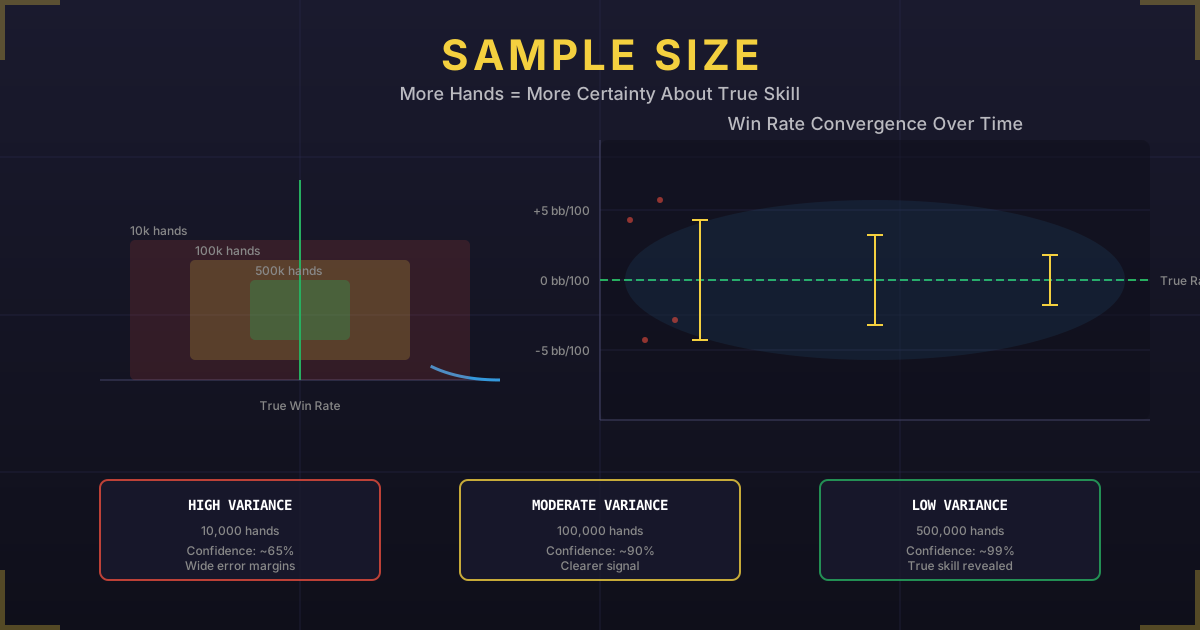
Most people who try the Martingale do not play 10,000 sessions. They play 10 or 20. In small samples, the system frequently shows a profit because the probability of hitting a catastrophic streak is low per session. The flaw only becomes undeniable over hundreds of sessions.
The "It Almost Worked" Trap
When a Martingale player hits 6 consecutive losses and then wins on the 7th round, they feel validated: "See, the system worked! I recovered everything!" They do not consider that this near-miss scenario was a warning, not a success. Next time, the win might not come on round 7.
What Should You Do Instead?
If the Martingale does not work, what does? The honest answer: nothing overcomes a house edge through bet sizing alone. But these strategies minimize losses:
1. Flat Betting at Minimum
The lowest-cost approach is flat betting the table minimum on the lowest house edge game available. This minimizes total action and therefore minimizes expected losses.
Calculate flat betting costs with the Expected Value Calculator.
2. Choose Low House Edge Games
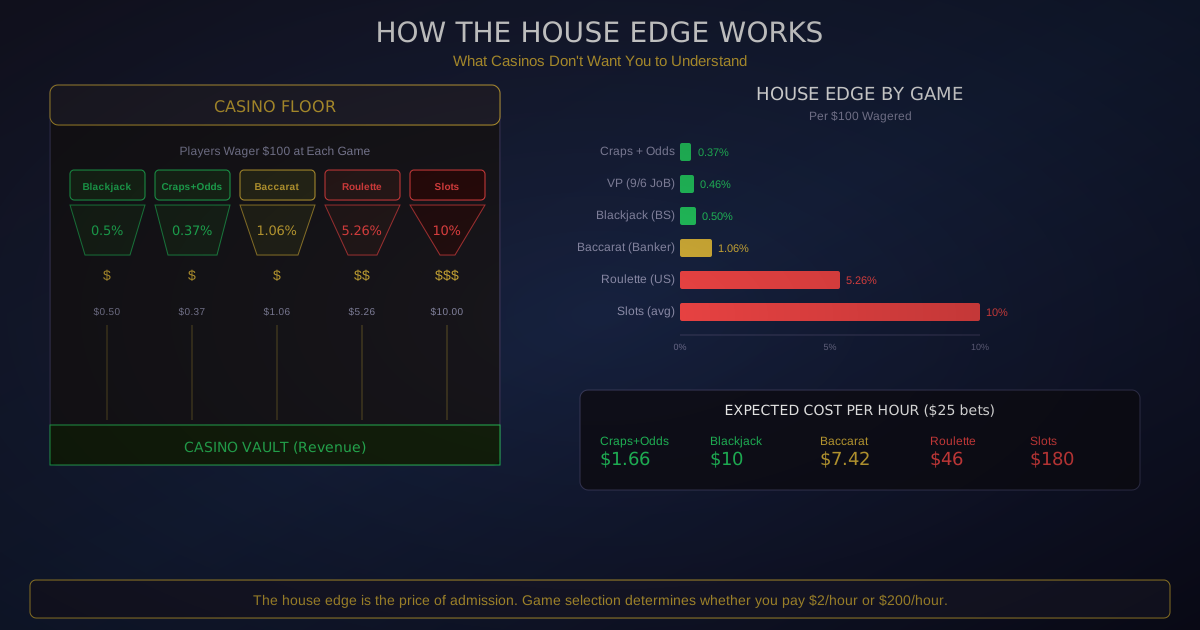
Game selection matters far more than bet sizing:
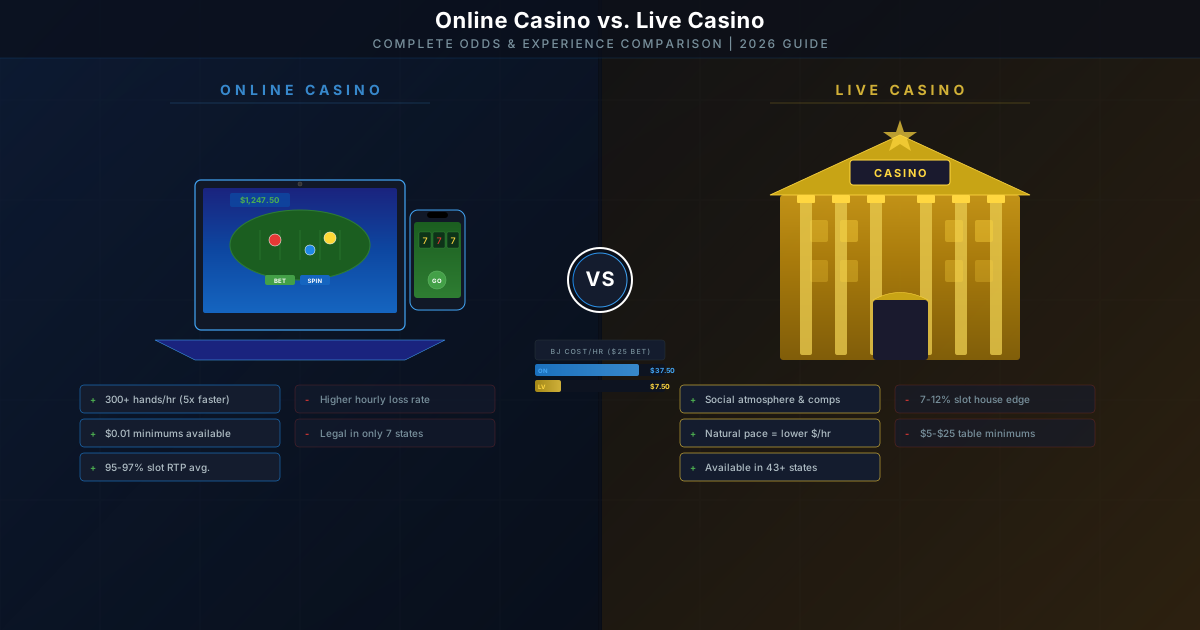
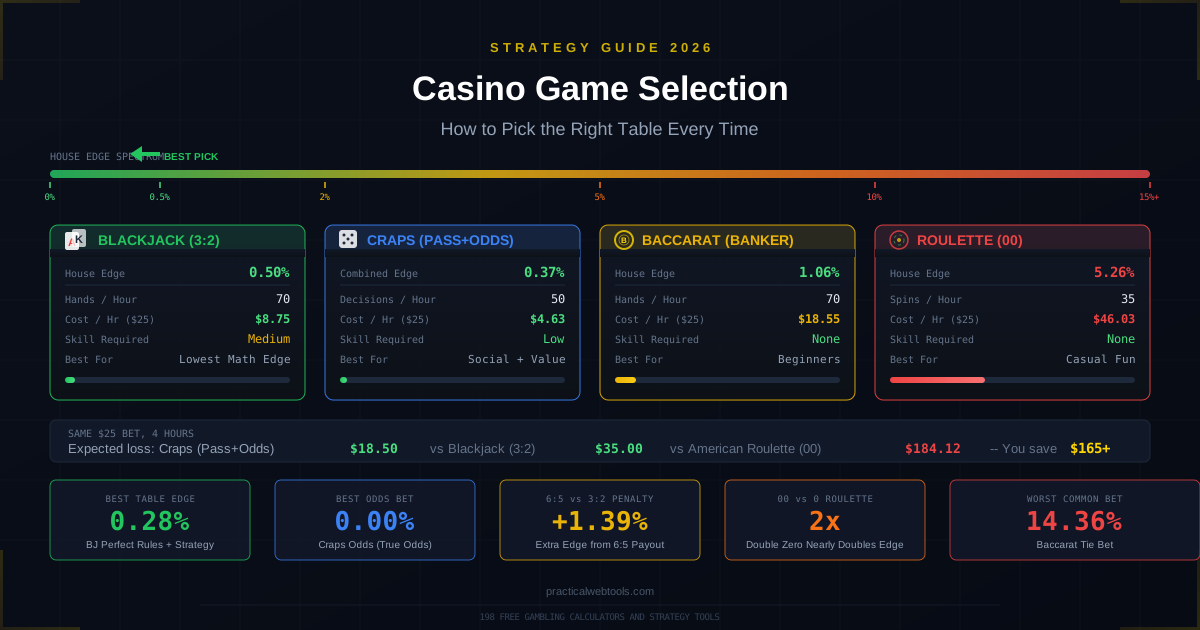
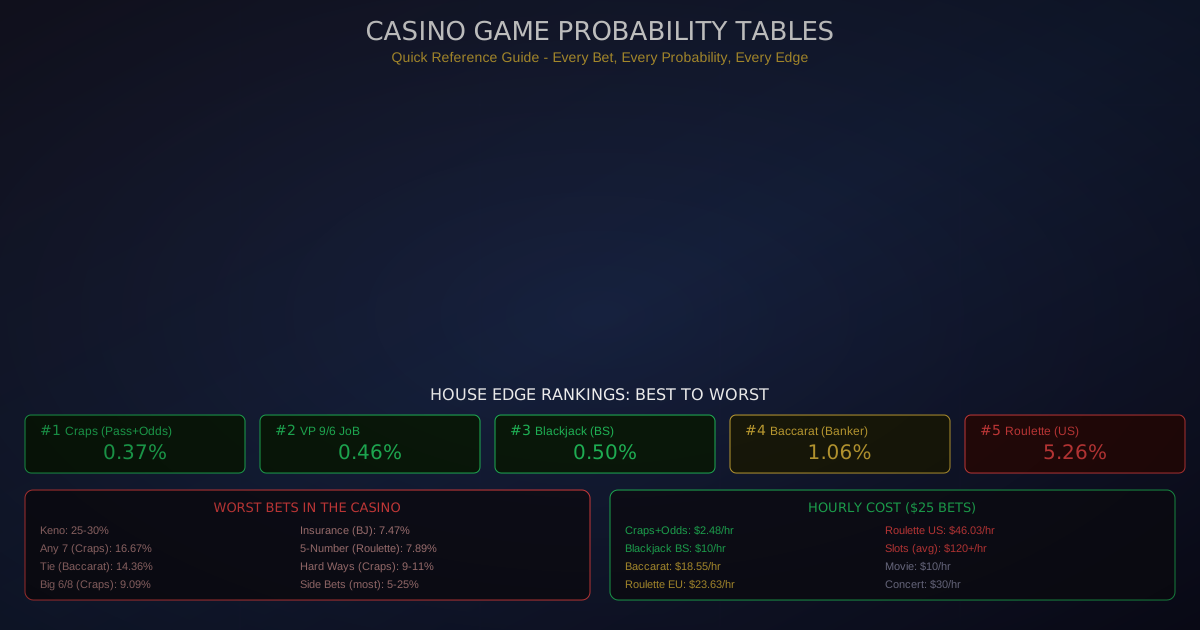
| Game | House Edge | Hourly Cost ($25 flat, 60 hands/hr) |
|---|---|---|
| Blackjack (basic strategy) | 0.50% | $7.50 |
| Baccarat (Banker) | 1.06% | $15.90 |
| Craps (Pass + 3-4-5x odds) | 0.37% | $5.55 |
| European Roulette | 2.70% | $40.50 |
| American Roulette | 5.26% | $78.90 |
A $25 flat bettor at blackjack with basic strategy loses $7.50/hour. A $10 Martingale player on American roulette loses approximately $52.60 in total wagered per hour x 5.26% = $2.77/hr but risks catastrophic losses. The flat bettor has lower variance, lower emotional stress, and the same long-term expectations.
3. Use the Kelly Criterion for Positive EV Situations
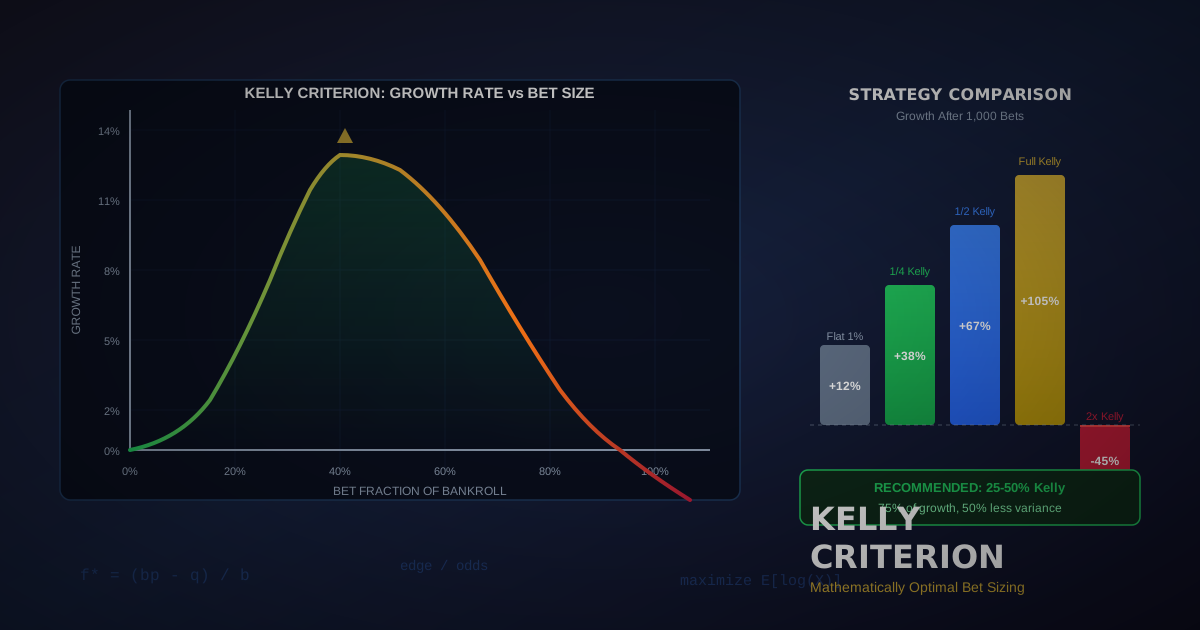
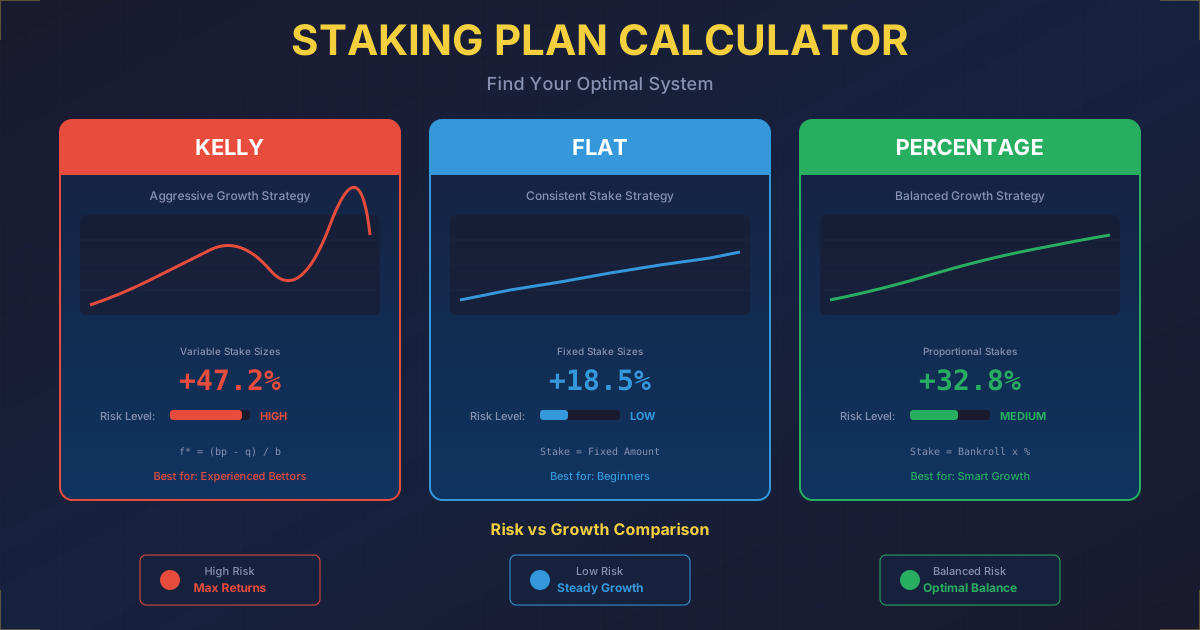
If you find a genuine positive-expectation opportunity (card counting, certain video poker, sports betting with an edge), the Kelly Criterion determines optimal bet sizing:
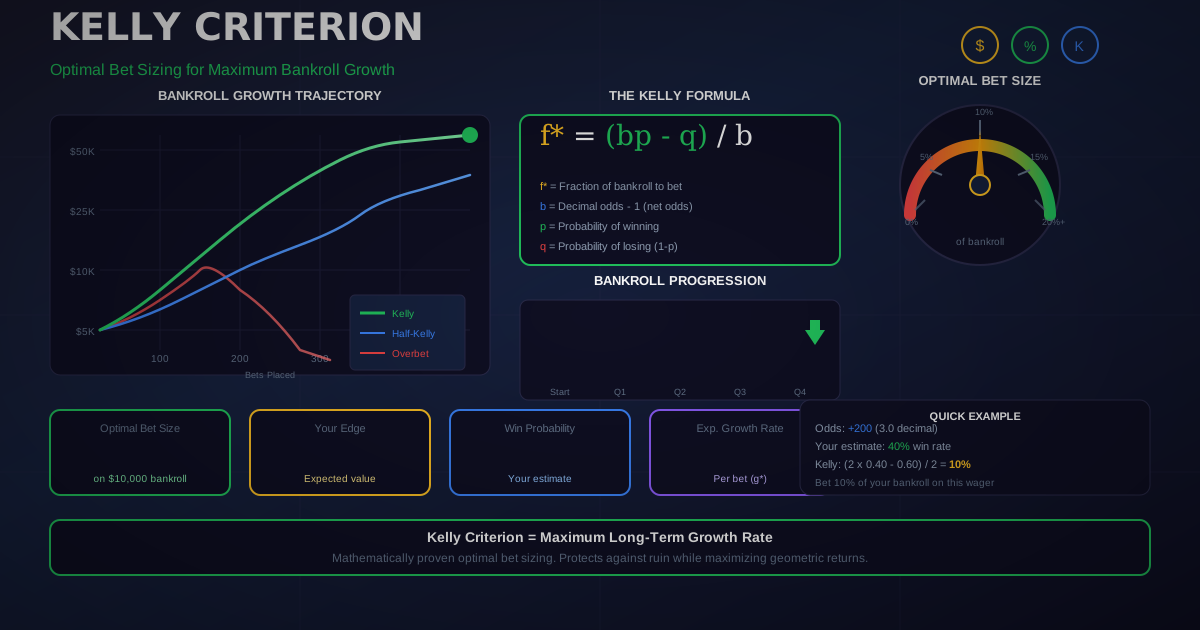
Kelly Bet = (bp - q) / b
Where b = net odds, p = probability of winning, q = probability of losing.
The Kelly Criterion maximizes logarithmic growth rate and is mathematically optimal for positive EV situations. It is irrelevant for negative EV games because it recommends a bet size of zero.
Calculate Kelly bets with the Kelly Criterion Calculator.
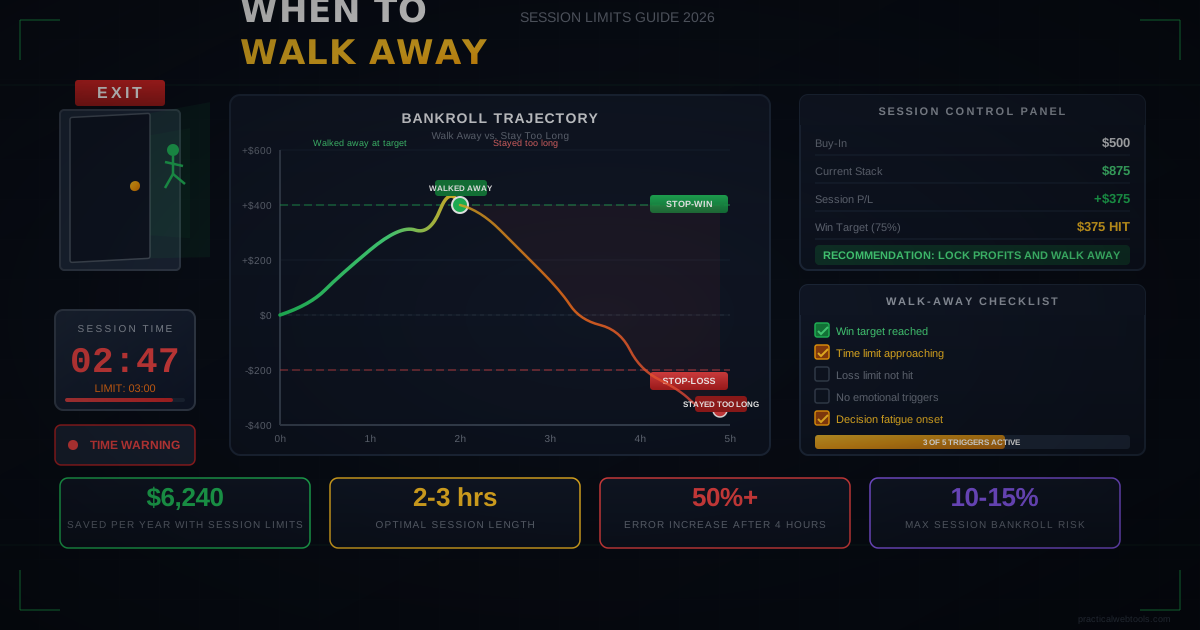
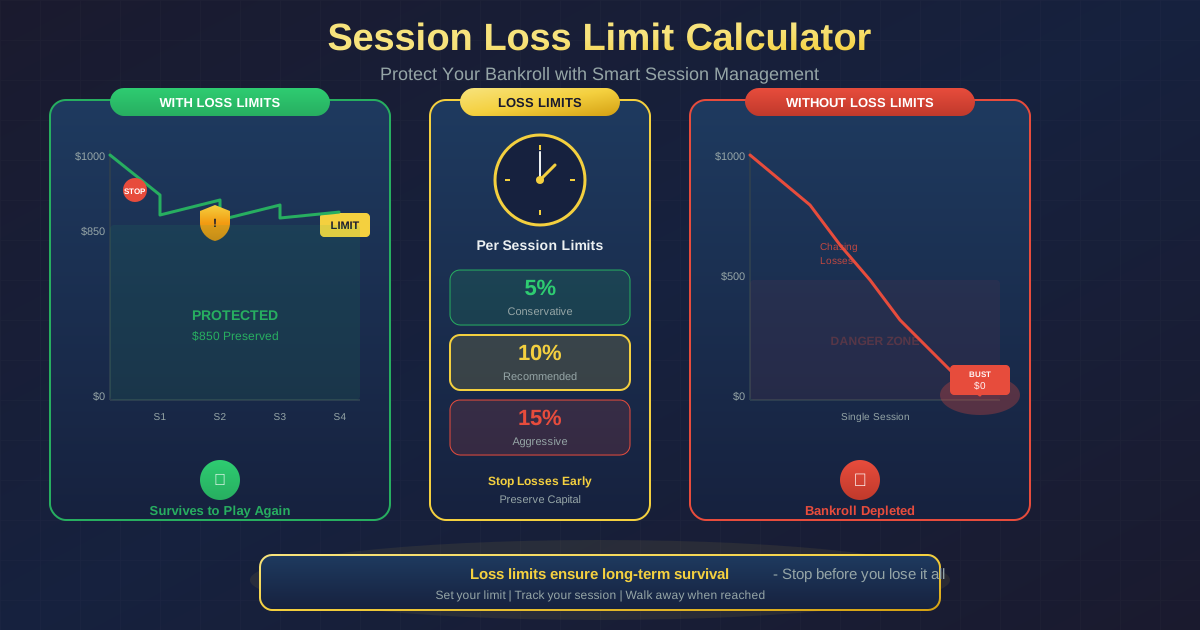
4. Set Hard Stop-Loss and Time Limits
Since no betting system changes expected value, the best approach is bankroll management:
- Decide how much you are willing to lose before you start
- Set a firm time limit
- Flat bet or use small bet variations for entertainment
- Walk away when either limit is reached
Plan your sessions with the Bankroll Volatility Tracker.
Frequently Asked Questions
Does the Martingale ever work? In the short term, it frequently produces small profits. The probability of a winning session is around 60-65%. But the 35-40% of losing sessions produce losses large enough to exceed all winnings. Over hundreds of sessions, the total converges to the house edge times total wagered. Use the Roulette Betting Simulator to simulate this yourself.
What if I only use the Martingale for a few rounds and stop? This does not change the math. Whether you plan to stop after 10 sequences or 1,000, the expected value of each sequence is negative. Stopping while ahead is not a flaw in the system---it is ordinary luck. You could achieve the same result by flat betting and stopping when you are ahead. The expected value is the same.
Is the Martingale legal? Yes. Casinos welcome Martingale players because the system does not change the house edge. In fact, Martingale players often wager more total money than flat bettors (because progressive bets increase total action), which means the casino expects to keep more from them.
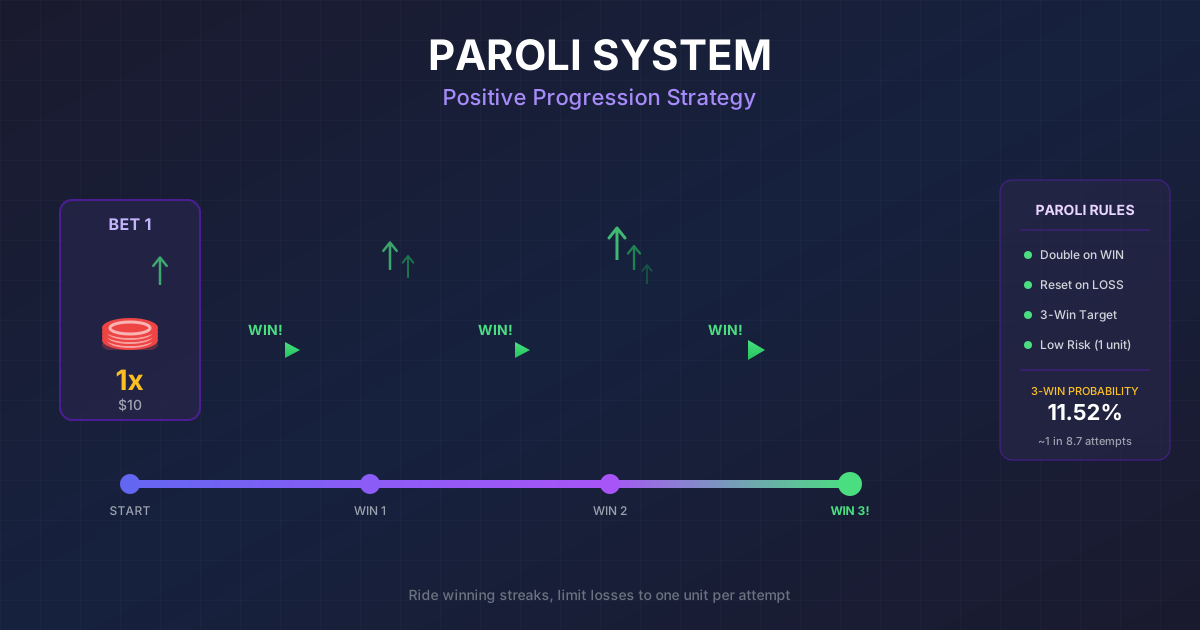
What about the Anti-Martingale (Paroli)? The Anti-Martingale doubles bets after wins instead of losses. It has the same expected value as Martingale and flat betting. The difference is the risk profile: Anti-Martingale produces many small losses with occasional large wins, the mirror image of Martingale's many small wins with occasional catastrophic losses. Neither changes the math. Verify with the Roulette EV Calculator.
Why do casinos have table maximums if systems do not work? Table maximums exist primarily for the casino's variance management, not because systems threaten them. A single high roller on a lucky streak could cause significant short-term losses for the casino. Table limits cap the casino's per-hand risk. They also happen to kill the Martingale, which is a side benefit for the casino. Use the Roulette Probability Calculator to see how limits affect outcomes.
Can the Martingale work on games with a player edge? If you have a genuine mathematical edge (card counting, certain video poker, etc.), the Martingale is still not the optimal strategy. The Kelly Criterion is. The Martingale over-bets relative to Kelly and increases the risk of ruin. Even with a positive edge, the Martingale's exponential bet growth creates unnecessary bankroll risk. Calculate optimal sizing with the Kelly Criterion Calculator.
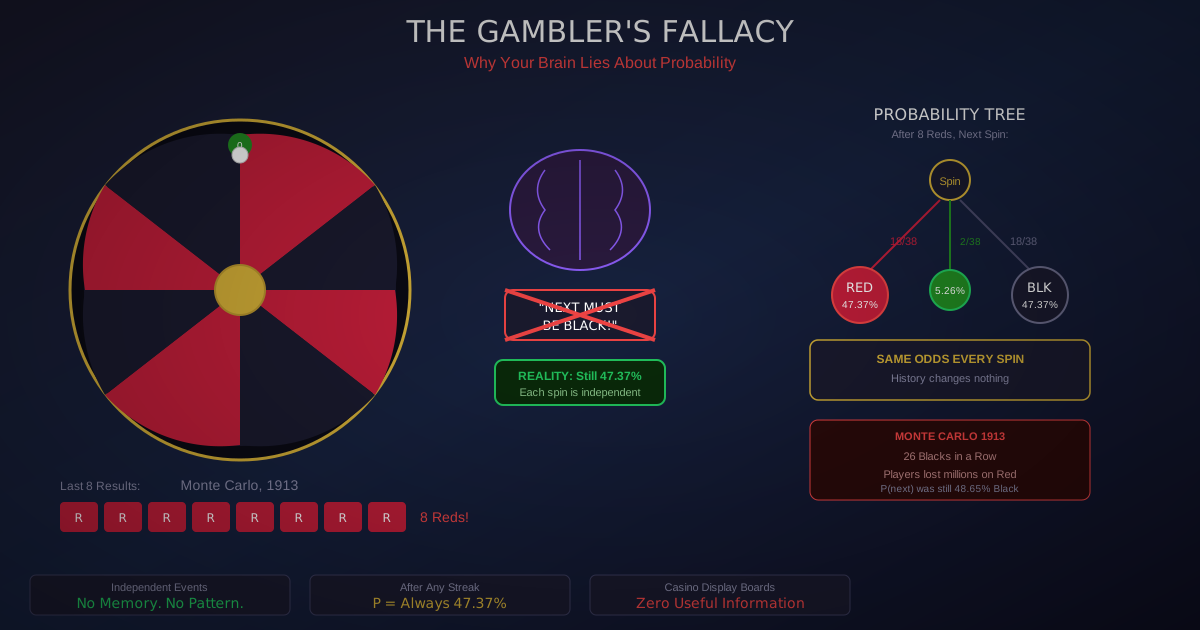
What is the longest recorded losing streak in roulette? The longest recorded streak of a single color at a roulette table is widely reported as 32 consecutive reds at a Monte Carlo casino. A $10 Martingale that survived to round 32 would require a bet of $21.5 billion. The probability of 32 consecutive losses is approximately 1 in 4.3 billion---rare but not impossible over the millions of spins that occur in casinos worldwide every day.
My friend uses a modified Martingale and is consistently profitable. How? They are either (a) in a short-term winning streak that has not yet encountered the catastrophic loss, (b) selectively reporting results, or (c) gambling with a genuine mathematical edge unrelated to the system. Ask them to track every session for 6 months with the Bankroll Volatility Tracker. The results will converge to the house edge.
If I have a large enough bankroll, is the Martingale safe for short sessions? A large bankroll relative to your starting bet reduces the probability of a wipeout per session. But it does not eliminate it, and it does not change the expected value. A $100,000 bankroll with a $10 Martingale can survive 13 consecutive losses ($81,910 required for bet 14). The probability of 14 losses on American roulette is 1 in 40,278. If you play 100 sequences per session and 52 sessions per year, you expect to hit 14 consecutive losses approximately once every 7.7 years. When you do, the loss will exceed your cumulative profits.
Related Tools
- Roulette Betting Simulator: Simulate Martingale and other betting systems over thousands of spins to see actual results versus expectations.
- Roulette EV Calculator: Calculate the expected value of any roulette betting strategy on any bet type.
- Roulette House Edge Calculator: Compare house edges across European, American, and French Roulette variants.
- Roulette Probability Calculator: Calculate streak probabilities and outcome distributions for any roulette scenario.
- Bankroll Volatility Tracker: Track your actual results over time and compare them to expected values.
- Expected Value Calculator: General-purpose EV calculator for any gambling scenario with custom probabilities.
- Roulette Odds Calculator: Calculate odds and payouts for every roulette bet type.
- Roulette Payout Calculator: Determine exact payouts for any roulette bet and bet size.
- Kelly Criterion Calculator: Calculate mathematically optimal bet sizing for positive-expectation situations.
- Blackjack EV Calculator: Compare Martingale results against flat betting in blackjack scenarios.
- Blackjack House Edge Calculator: Verify the house edge that no system can overcome.
- Roulette House Edge Calculator: See exactly why the edge persists regardless of bet sizing.
Conclusion
The Martingale system is a mathematical trap disguised as a foolproof strategy. Its apparent success in small samples is a statistical illusion created by the asymmetry between frequent small wins and rare catastrophic losses. Over any meaningful sample size, the Martingale produces the exact same expected loss as flat betting: house edge multiplied by total amount wagered.
The proofs are multiple and independent:
- Expected value of each bet is negative, and no arrangement of negative values sums to positive
- The risk-reward asymmetry (small wins vs. enormous losses) balances out exactly to the house edge
- Table limits create a hard ceiling that guarantees the possibility of total sequence failure
- Simulations of thousands of sessions confirm the theoretical predictions with precision
No modification---slower progression, different base bet, switching games, setting stop points---changes these fundamental truths. The Martingale does not "almost" work. It does not work with "better bankroll management." It does not work on different games. It does not work.
The rational approach to gambling is to accept the house edge, choose the lowest-edge games, flat bet at a comfortable level, set firm limits, and treat the cost as entertainment spending. No betting system, no matter how elegant, changes the fundamental mathematics of a game designed for the house to profit.
See the math in action with the Roulette Betting Simulator, then plan a mathematically informed session with the Bankroll Volatility Tracker.
Gambling involves risk. This content is for educational and informational purposes only. Always gamble responsibly, set limits you can afford, and seek help if gambling becomes a problem. Visit the National Council on Problem Gambling or call 1-800-522-4700 for support.