Sportsbook Bonuses Explained: Rollover Requirements and Fine Print (2026)

Every sportsbook bonus is designed to look more generous than it actually is. A "$1,000 deposit match" sounds like free money until you read the fine print: a 10x rollover requirement means you need to wager $10,000 before you can withdraw a single dollar. A "risk-free bet" returns your stake as bonus credits if you lose, but those credits come with their own restrictions. And that "$200 in free bets" offer? The stake is not returned on winning wagers, making each free bet worth roughly 70 cents on the dollar before you even factor in the vig.
This is not a guide telling you which sportsbook has the "best" bonus. This is a guide about understanding the mathematics behind every promotional offer so you can calculate exactly what a bonus is worth, decide whether it is worth your time and bankroll, and avoid the traps that cost recreational bettors real money every day.
The U.S. legal sports betting market now operates in 38+ states, and the competition for new customers is intense. Sportsbooks spend billions on promotions and customer acquisition. That money does not come from nowhere. It comes from the expectation that most bettors will lose more through ongoing play than the bonus ever cost the sportsbook to offer.
Understanding the hidden math is how you avoid being that customer.
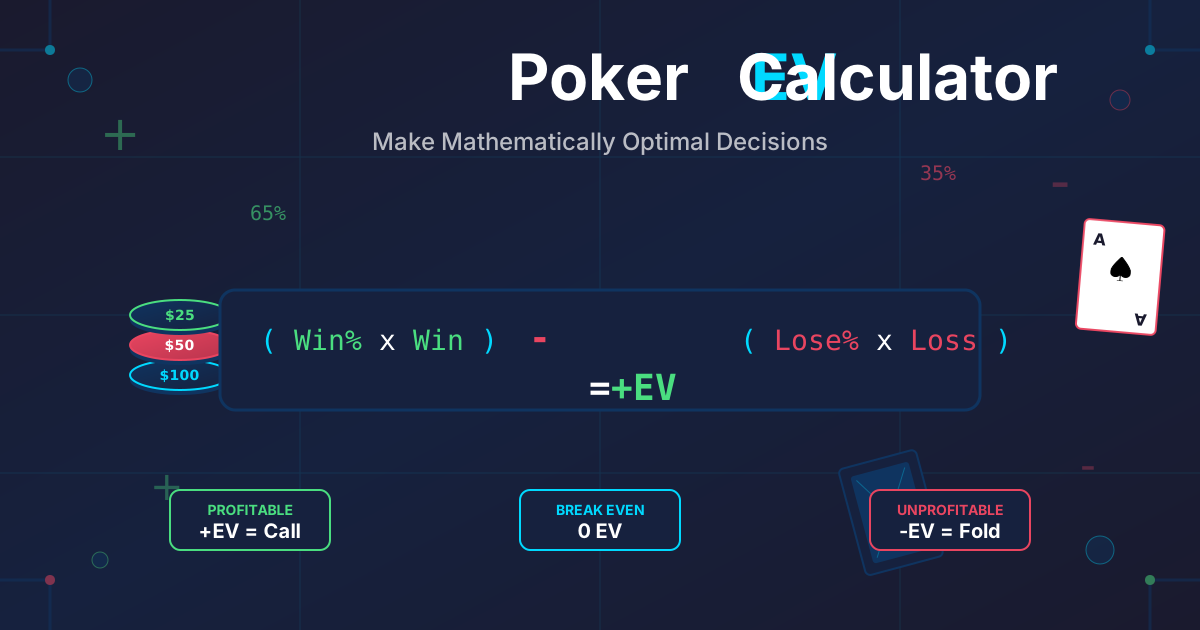
Calculate the expected value of any bonus wager with our free Expected Value Calculator.
Types of Sportsbook Bonuses in 2026
Sportsbook promotions fall into several categories, each with its own mechanics and true value. Here is a breakdown of every major bonus type you will encounter.
Bonus Type Comparison
| Bonus Type | How It Works | Typical Value | Rollover | Stake Returned? | Expiration |
|---|---|---|---|---|---|
| Deposit Match | Sportsbook matches a % of your deposit in bonus funds | $100-$1,000 | 1x-25x | Varies | 7-30 days |
| First Bet Insurance | Lose your first bet, get the stake back as bonus bets | $100-$1,500 | 1x on bonus bets | No (on bonus bets) | 7-14 days |
| Bonus Bets (Bet & Get) | Deposit and place a qualifying bet, receive bonus bets | $100-$300 | 1x | No | 7 days |
| No-Deposit Bonus | Sign up and receive a small bonus with no deposit | $5-$25 | 1x-5x | No | 7 days |
| Odds Boost | Enhanced odds on specific markets | Varies | None | Yes (cash bet) | Event-specific |
| Profit Boost | Percentage boost applied to winnings | 10%-100% boost | None | Yes (cash bet) | Event-specific |
| Refer-a-Friend | Both parties receive bonus bets after referral signs up and bets | $25-$100 each | 1x | No | 14-30 days |
Deposit Match Bonuses
A deposit match bonus gives you additional funds equal to a percentage of your deposit. A "100% match up to $500" means if you deposit $500, you receive an additional $500 in bonus funds. The critical detail is the rollover requirement attached to those bonus funds.
Example: DraftKings has offered a 20% deposit match up to $1,000, meaning a $5,000 deposit yields $1,000 in bonus funds. However, the playthrough requirement on that $1,000 can require $25,000 in total wagers before withdrawal.
First Bet Insurance (Risk-Free Bets)
First bet insurance is the most common welcome offer in 2026. If your first bet loses, you receive the stake back as bonus bets. BetMGM offers up to $1,500, Caesars up to $250, and multiple books offer amounts in the $200-$1,000 range.
The catch: You only receive bonus bets if you lose. Those bonus bets do not return the stake on winning wagers. So if you bet $1,000 and lose, you get $1,000 in bonus bets, but each of those bonus bets is worth approximately $700 in real money because the stake is not included in the payout.
Bonus Bets (Bet and Get)
Bet-and-get offers require you to place a qualifying wager to receive bonus bets. FanDuel's "Bet $5, Get $200 in Bonus Bets" is a classic example. You must place the qualifying bet, and regardless of whether it wins or loses, you receive the bonus bets.
No-Deposit Bonuses
True no-deposit bonuses have become rare in regulated U.S. markets. When they exist, they typically offer $5-$25 in bonus bets and come with minimum odds restrictions and expiration windows. They are essentially free lottery tickets, not meaningful bankroll builders.
Odds Boosts and Profit Boosts
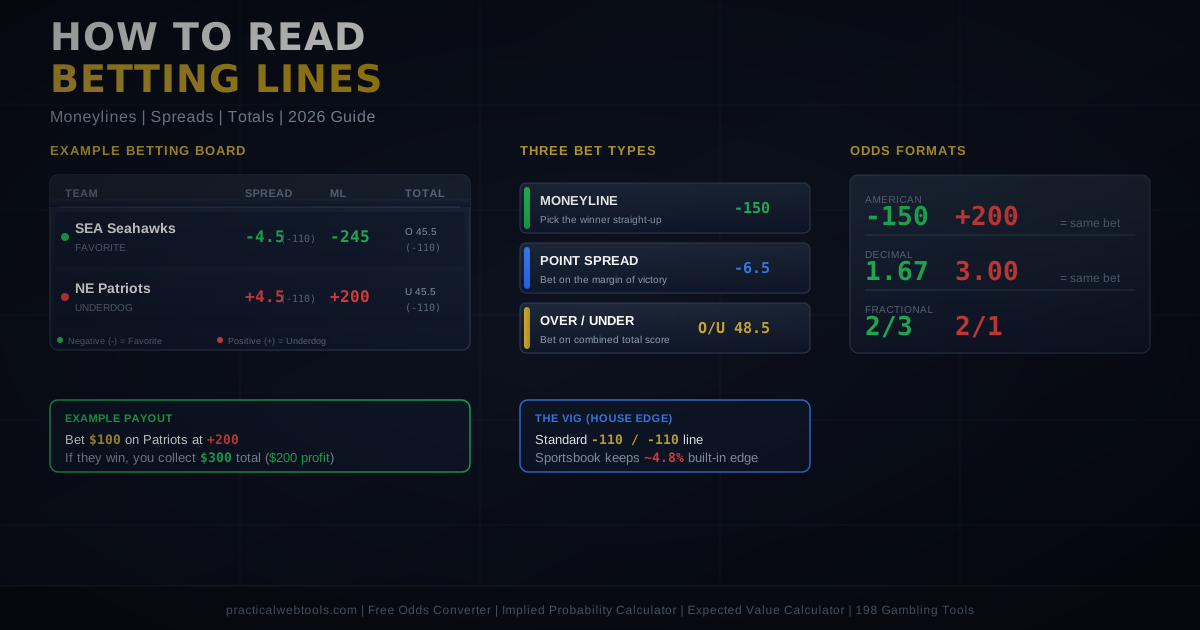
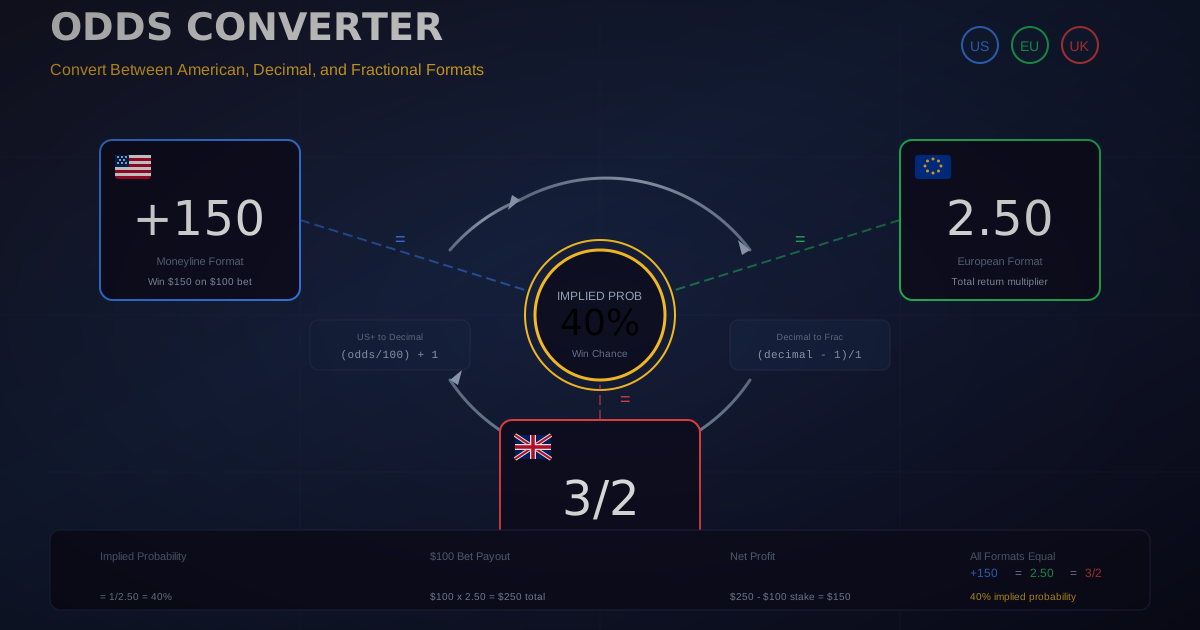
These are ongoing promotions rather than welcome bonuses. An odds boost enhances the price on a specific market (e.g., a team's moneyline boosted from +150 to +200). A profit boost increases winnings by a percentage if your bet wins. These are generally the most transparent promotions because you can calculate the exact EV improvement.
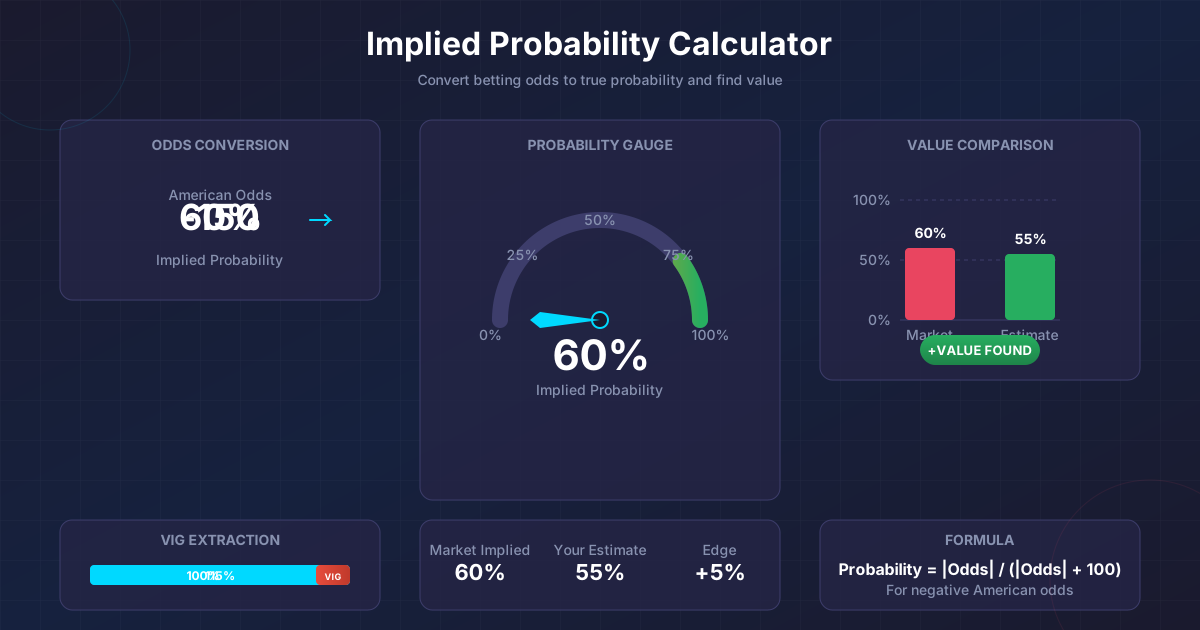
Check the implied probability of any boosted line with our Implied Probability Calculator.
Rollover Requirements Decoded
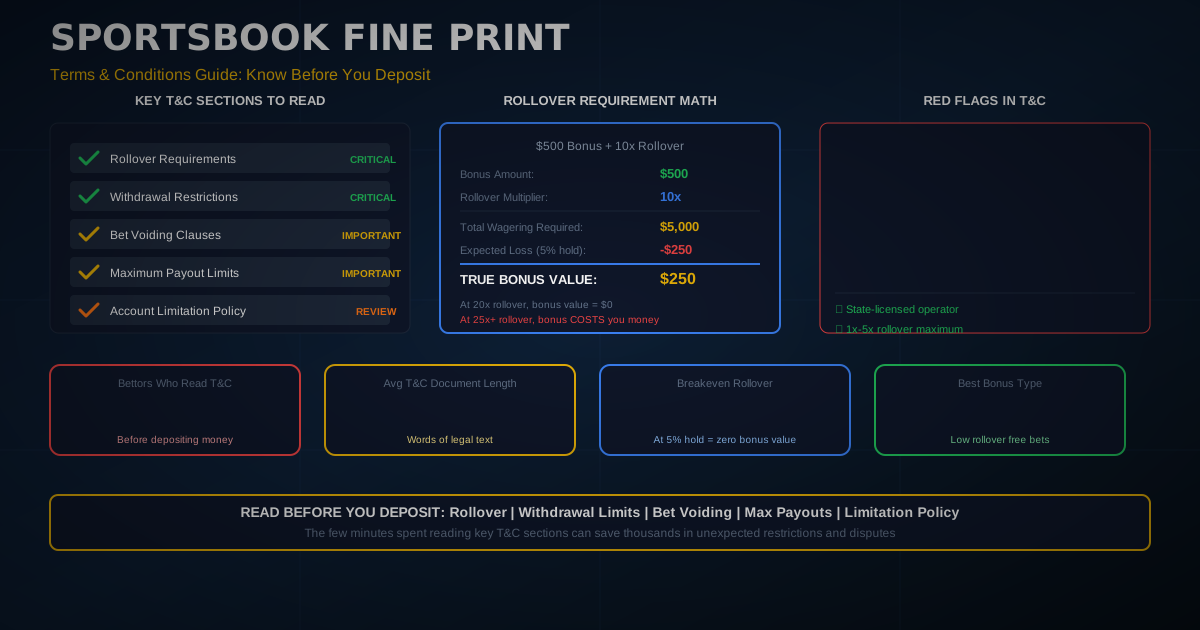
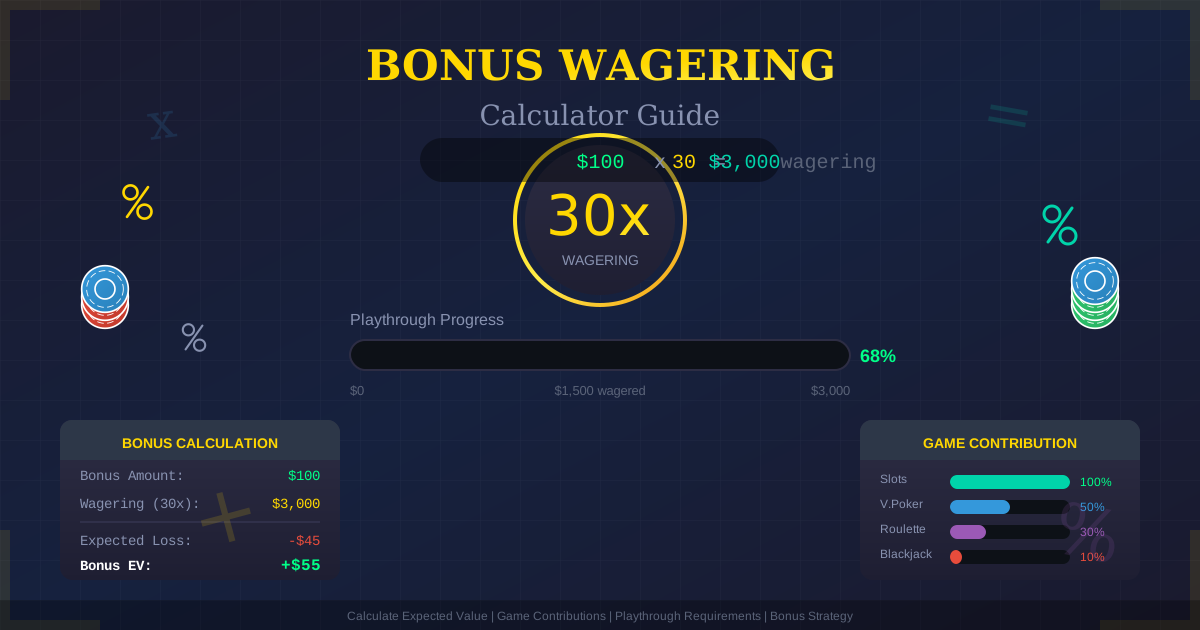
A rollover requirement (also called a playthrough requirement or wagering requirement) is the total amount you must wager before bonus funds or winnings from bonus bets become withdrawable cash. This is the single most important number in any bonus offer.
How Rollover Is Calculated
Rollover is expressed as a multiplier applied to the bonus amount, the deposit amount, or the combined total. The formula is:
Total Wagering Required = (Bonus Amount OR Deposit + Bonus) x Rollover Multiplier
The difference between bonus-only and deposit-plus-bonus rollover is enormous.
Rollover Calculation Examples
| Deposit | Bonus (100% Match) | Rollover Type | Multiplier | Total Wagering Required |
|---|---|---|---|---|
| $500 | $500 | Bonus only | 5x | $2,500 |
| $500 | $500 | Bonus only | 10x | $5,000 |
| $500 | $500 | Bonus only | 25x | $12,500 |
| $500 | $500 | Deposit + Bonus | 5x | $5,000 |
| $500 | $500 | Deposit + Bonus | 10x | $10,000 |
| $500 | $500 | Deposit + Bonus | 25x | $25,000 |
A 5x bonus-only rollover requires $2,500 in wagers to clear a $500 bonus. A 25x deposit-plus-bonus rollover on the same deal requires $25,000. That is a tenfold difference for the same headline offer.
Rollover Ranges by Sportsbook Type
| Sportsbook Category | Typical Rollover | Notes |
|---|---|---|
| Major U.S. regulated (FanDuel, DraftKings) | 1x on bonus bets | Most consumer-friendly |
| Mid-tier U.S. regulated (BetMGM, Caesars) | 1x on bonus bets, higher on deposit matches | Read specific terms carefully |
| Offshore / unregulated | 5x-25x on deposit + bonus | Significantly harder to clear |
| Casino-sportsbook crossover | 10x-50x on casino bonuses | Casino bonuses are not sportsbook bonuses |
Important distinction: Most major U.S. sportsbooks now use a 1x rollover on bonus bets, meaning you only need to wager the bonus amount once. This is dramatically better than the 5x-25x rollovers common at offshore books and casino bonuses. Always verify which type of rollover applies.
Additional Rollover Conditions
Rollover is not the only restriction. Watch for these additional conditions that affect how quickly and effectively you can clear a bonus:
- Minimum odds requirement: Many books require bets at -200 or longer (higher odds) to count toward rollover. Betting heavy favorites does not count.
- Market restrictions: Some bonuses exclude certain bet types like parlays, teasers, or live bets from rollover contribution.
- Maximum bet size: Some offers cap the amount you can wager per bet while clearing the bonus.
- Time limits: Most bonuses expire in 7-30 days. If you do not meet the rollover in time, the bonus and any associated winnings are forfeited.
- Contribution percentages: Not all bet types contribute equally. A $100 bet on a spread might count as $100 toward rollover, but a $100 parlay might only count as $50 (50% contribution).
How to Calculate the True Value of a Sportsbook Bonus
The headline value of a bonus is never its true value. Every restriction chips away at what the bonus is actually worth to you in real money. Here is the framework for calculating true value.
The True Value Formula
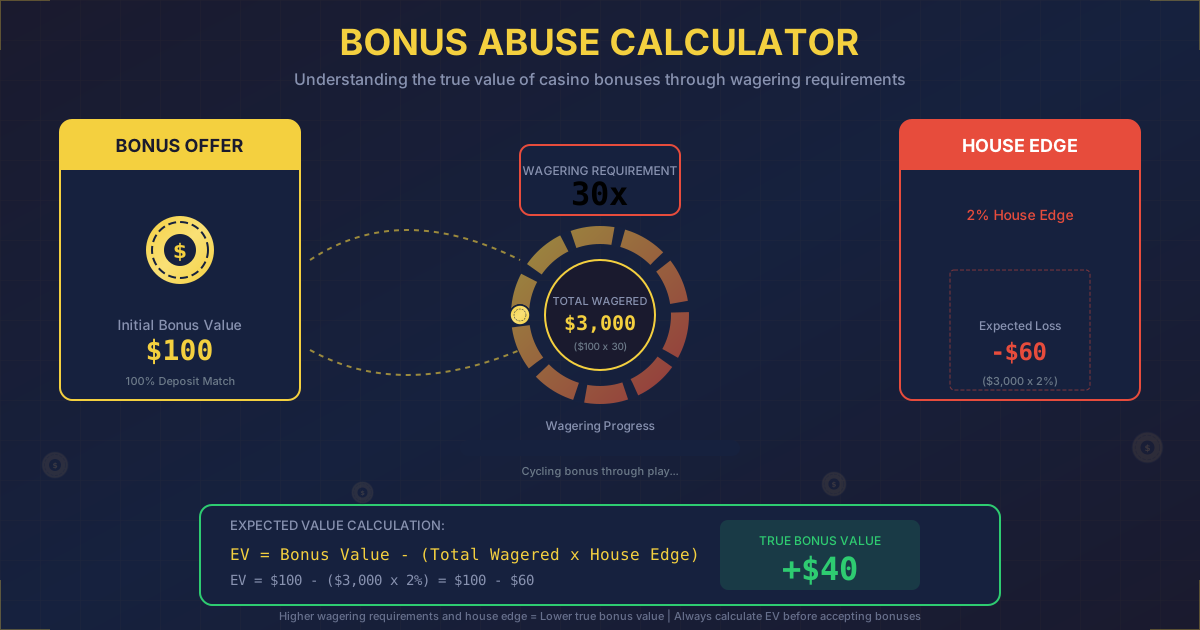
True Bonus Value = Bonus Amount x Conversion Rate - Expected Loss During Rollover
Where:
- Conversion Rate accounts for stake-not-returned on bonus bets (approximately 70% for a standard free bet)
- Expected Loss During Rollover = Total Wagering Required x House Edge
True Value of Different Bonus Types
| Bonus Type | Headline Value | Conversion Rate | Expected House Edge Loss | Approximate True Value | True Value as % of Headline |
|---|---|---|---|---|---|
| $500 Deposit Match (1x rollover) | $500 | 100% (cash funds) | $500 x 4.5% = $22.50 | ~$477.50 | 95.5% |
| $500 Deposit Match (10x rollover) | $500 | 100% | $5,000 x 4.5% = $225 | ~$275 | 55% |
| $500 Deposit Match (25x rollover) | $500 | 100% | $12,500 x 4.5% = $562.50 | -$62.50 (negative) | -12.5% |
| $200 Bonus Bets (1x rollover, stake not returned) | $200 | ~70% | Minimal | ~$140 | 70% |
| $1,000 First Bet Insurance (if lost) | $1,000 | ~70% (received as bonus bets) | Minimal | ~$700 | 70% |
| $1,000 First Bet Insurance (expected value) | $1,000 | ~50% probability of triggering x 70% | Minimal | ~$350 | 35% |
| $25 No-Deposit Bonus (5x rollover) | $25 | ~70% | $125 x 4.5% = $5.63 | ~$11.87 | 47.5% |
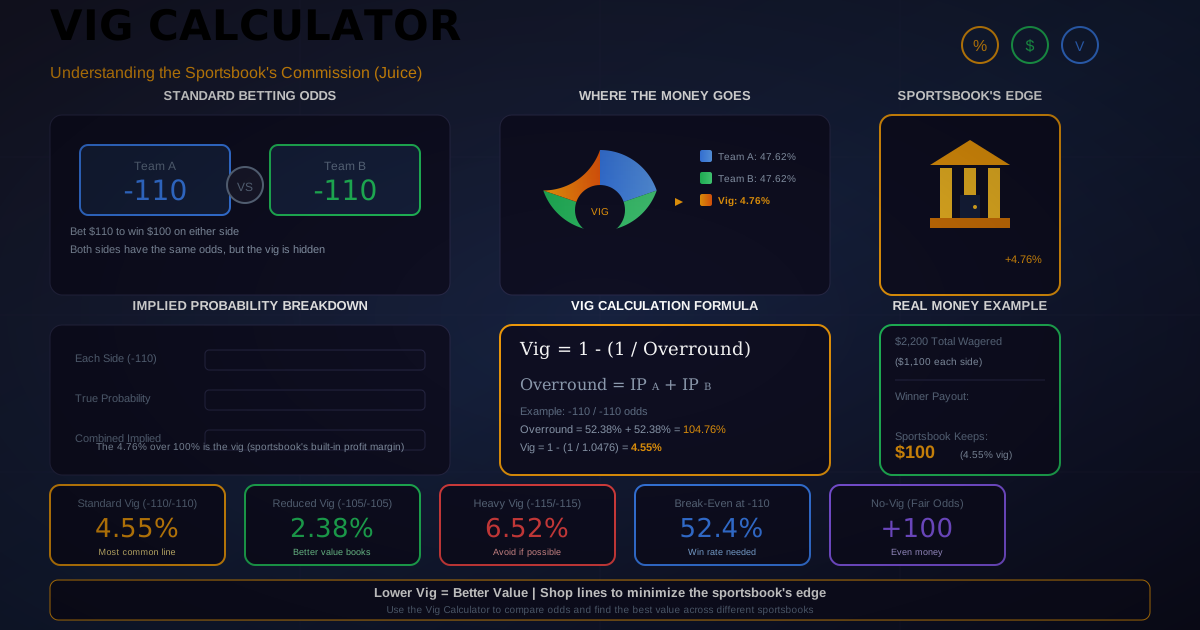
The 4.5% house edge estimate assumes standard -110/-110 spread betting (4.55% vig). Your actual house edge varies by bet type.
Analyze the vig on any market with our Hold/Vig Calculator.
Key Takeaway: High Rollover Destroys Value
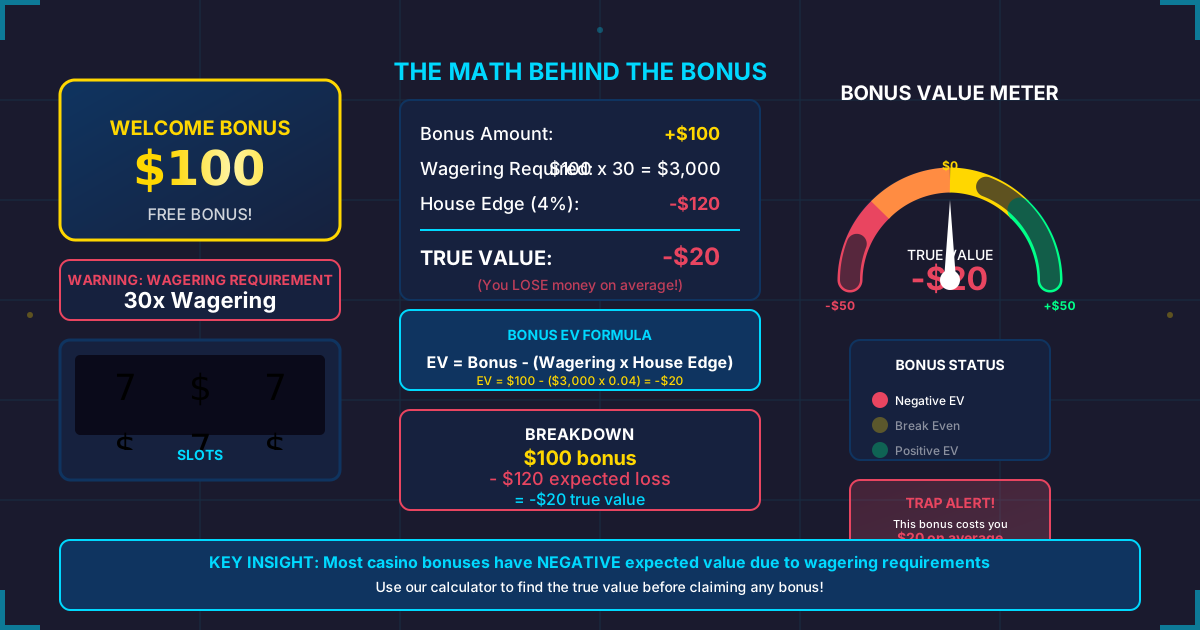
At a 25x rollover, a $500 deposit match bonus actually has negative expected value. You are expected to lose more money churning through the rollover requirement than the bonus is worth. This is why rollover multiplier is the most important number in any bonus offer.
General rules:
- 1x rollover on bonus bets: Almost always worth taking
- 1x-5x rollover on cash funds: Usually worth taking for skilled bettors
- 10x rollover: Marginal value, requires careful analysis
- 15x+ rollover: Rarely worth it unless you are an advantage player with a specific clearing strategy
- 25x+ rollover: Almost certainly negative EV for recreational bettors
Deposit Match Bonuses: Full Math Breakdown
Deposit match bonuses are the most mathematically complex promotion to evaluate because the rollover requirement creates a cost that must be subtracted from the bonus value.
Example 1: Good Deposit Match
Offer: 100% deposit match up to $500, 1x rollover on bonus funds, 30-day expiration, minimum odds -300
- Deposit: $500
- Bonus received: $500 (cash bonus funds)
- Wagering required: $500 x 1 = $500
- Expected loss during rollover: $500 x 4.5% = $22.50
- True value: $500 - $22.50 = $477.50
- Return on deposit: 95.5%
This is an excellent bonus. You essentially receive $477.50 in expected free value for depositing $500.
Example 2: Mediocre Deposit Match
Offer: 50% deposit match up to $500, 10x rollover on deposit + bonus, 30-day expiration, minimum odds -200
- Deposit: $1,000
- Bonus received: $500
- Wagering required: ($1,000 + $500) x 10 = $15,000
- Expected loss during rollover: $15,000 x 4.5% = $675
- True value: $500 - $675 = -$175
- Return on deposit: -17.5%
This bonus has negative expected value. You are expected to lose $175 more than the bonus is worth just from churning through the rollover. Skip this offer.
Example 3: Offshore Deposit Match Trap
Offer: 200% deposit match up to $3,000, 15x rollover on deposit + bonus, 14-day expiration, minimum odds -150
- Deposit: $1,500
- Bonus received: $3,000 (200% match)
- Wagering required: ($1,500 + $3,000) x 15 = $67,500
- Expected loss during rollover: $67,500 x 4.5% = $3,037.50
- True value: $3,000 - $3,037.50 = -$37.50
- Return on deposit: -2.5%
Despite the eye-catching 200% match, this bonus is slightly negative EV. The short expiration window makes it even worse because you must make more bets per day, potentially forcing lower-quality wagers.
The Break-Even Rollover Formula
You can calculate the maximum rollover multiplier at which a bonus remains positive EV:
Break-Even Rollover = Bonus Amount / (Rollover Base x House Edge)
For a $500 bonus on a $500 deposit with bonus-only rollover:
- Break-even = $500 / ($500 x 0.045) = 22.2x
For the same bonus with deposit-plus-bonus rollover:
- Break-even = $500 / ($1,000 x 0.045) = 11.1x
Anything above the break-even rollover is negative expected value.
Run the numbers on any bonus scenario with our Expected Value Calculator.
Free Bet Strategy: Conversion Techniques That Work
Free bets (bonus bets) are the most common form of sportsbook bonus in 2026. Understanding how to maximize their value is essential for any serious bettor.
Why Free Bets Are Not Worth Face Value
When you wager with a free bet, the stake is not returned with a winning bet. Only the profit is credited.
Cash bet example:
- You bet $100 at +200 odds and win
- You receive: $100 (stake) + $200 (profit) = $300 total
- Net gain: $200
Free bet example:
- You bet a $100 free bet at +200 odds and win
- You receive: $200 (profit only, no stake returned)
- Net gain: $200 (but the free bet is consumed)
The key difference: if you lose a cash bet, you lose $100. If you lose a free bet, you lose nothing (the free bet just disappears). This makes the expected value calculation different from cash.
Free Bet Expected Value by Odds
The expected value of a free bet depends on what odds you place it at. Longer odds yield higher conversion rates because the stake-not-returned penalty matters less when the profit-to-stake ratio is higher.
| Free Bet Odds | Implied Win Prob. | Win Amount (per $100 FB) | Expected Value | Conversion Rate |
|---|---|---|---|---|
| -200 | 66.7% | $50 | $33.33 | 33.3% |
| -110 | 52.4% | $90.91 | $47.62 | 47.6% |
| +100 | 50.0% | $100 | $50.00 | 50.0% |
| +150 | 40.0% | $150 | $60.00 | 60.0% |
| +200 | 33.3% | $200 | $66.67 | 66.7% |
| +300 | 25.0% | $300 | $75.00 | 75.0% |
| +400 | 20.0% | $400 | $80.00 | 80.0% |
| +500 | 16.7% | $500 | $83.33 | 83.3% |
The pattern is clear: longer odds produce higher conversion rates. A $100 free bet used on a -200 favorite is worth roughly $33. The same free bet on a +300 underdog is worth $75. This is a 127% improvement in value just from choosing better odds.
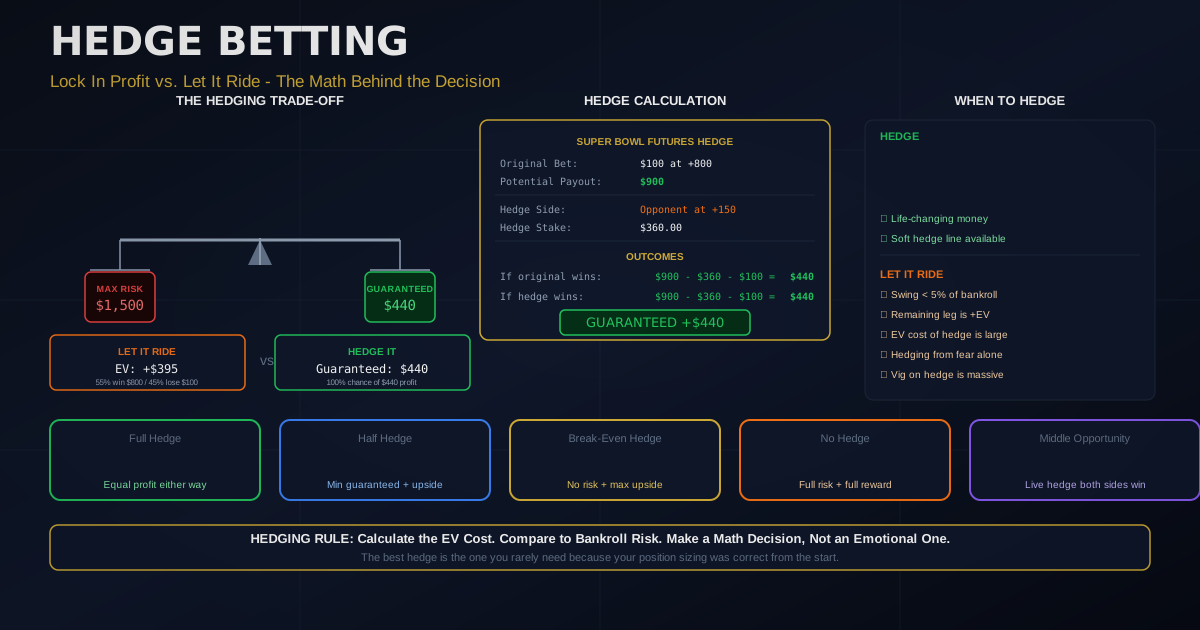
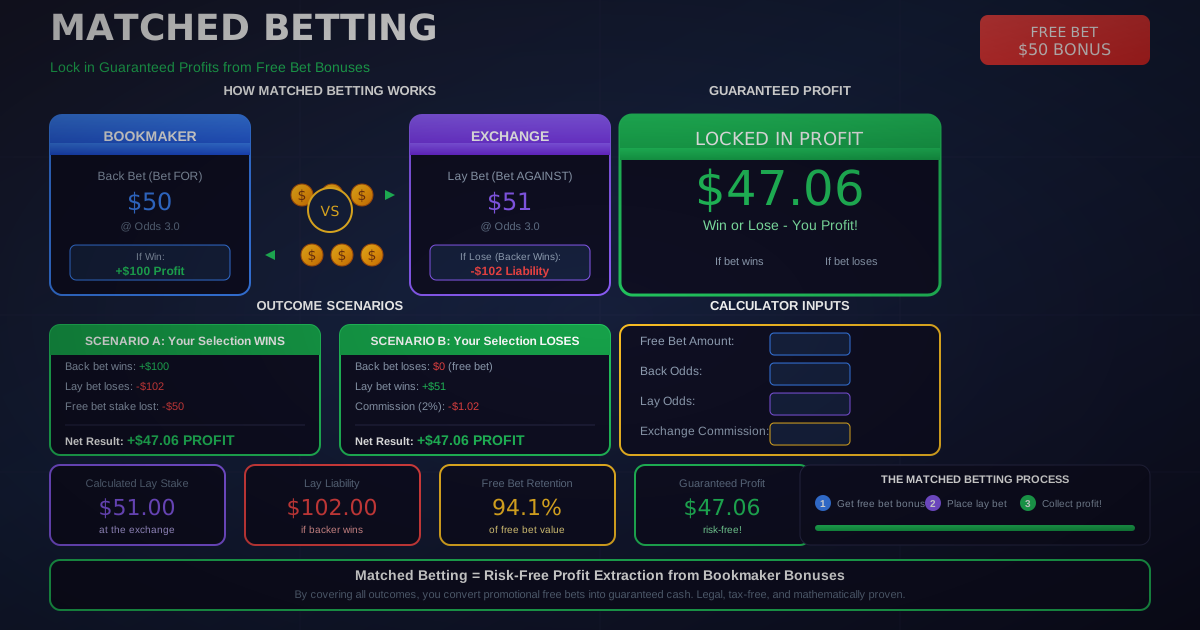
Free Bet Conversion via Hedging
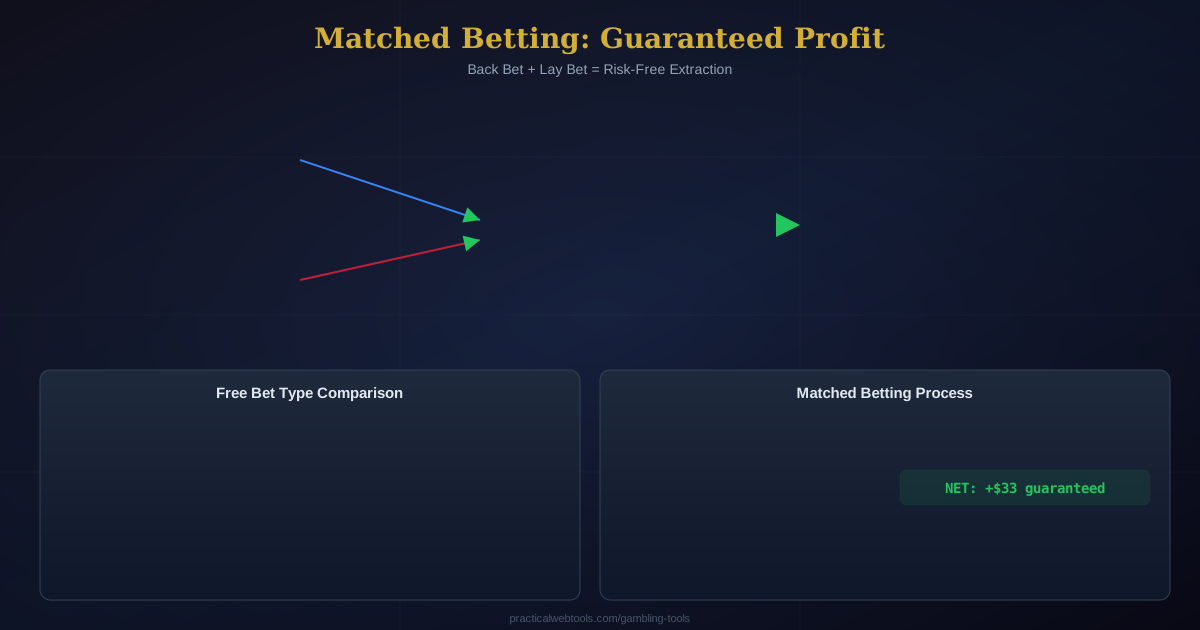
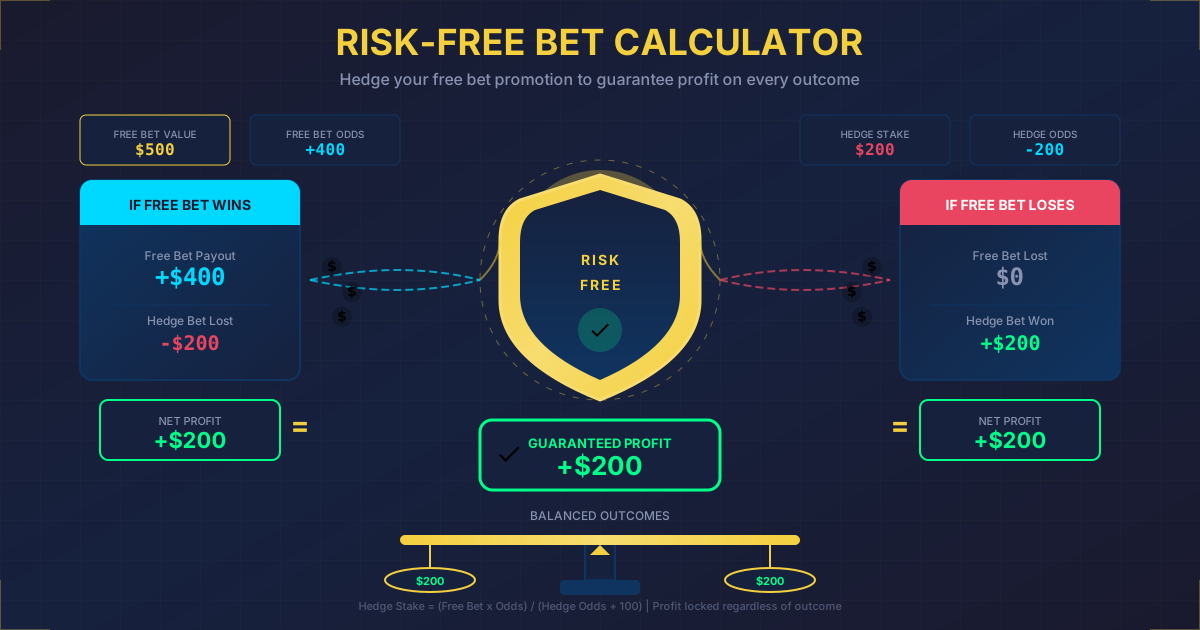
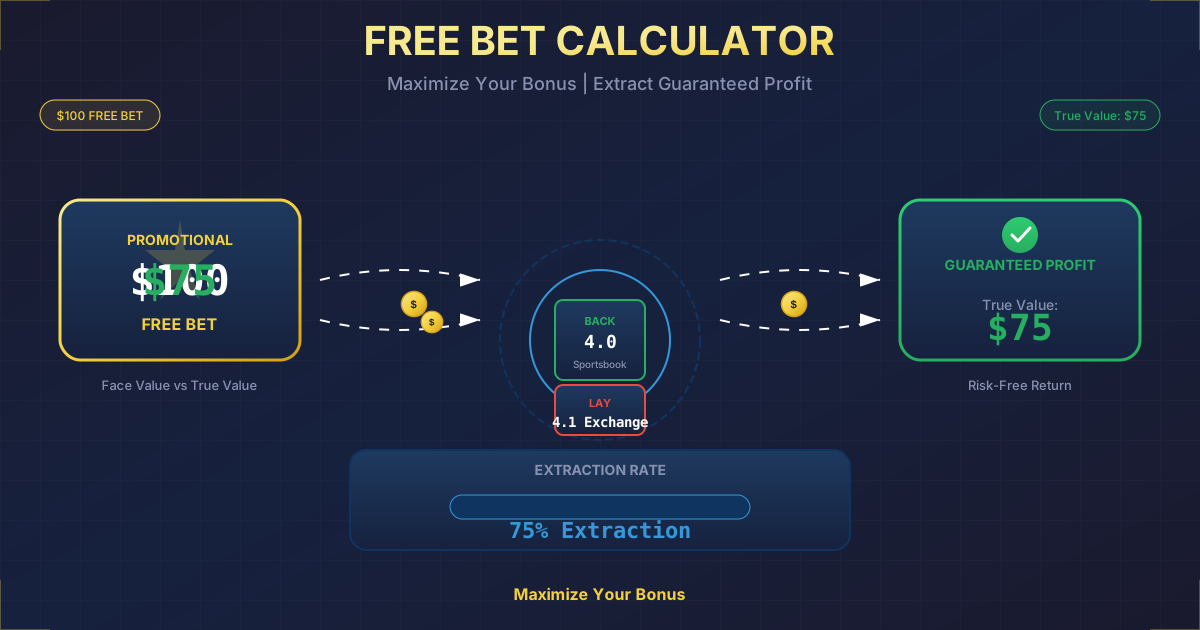
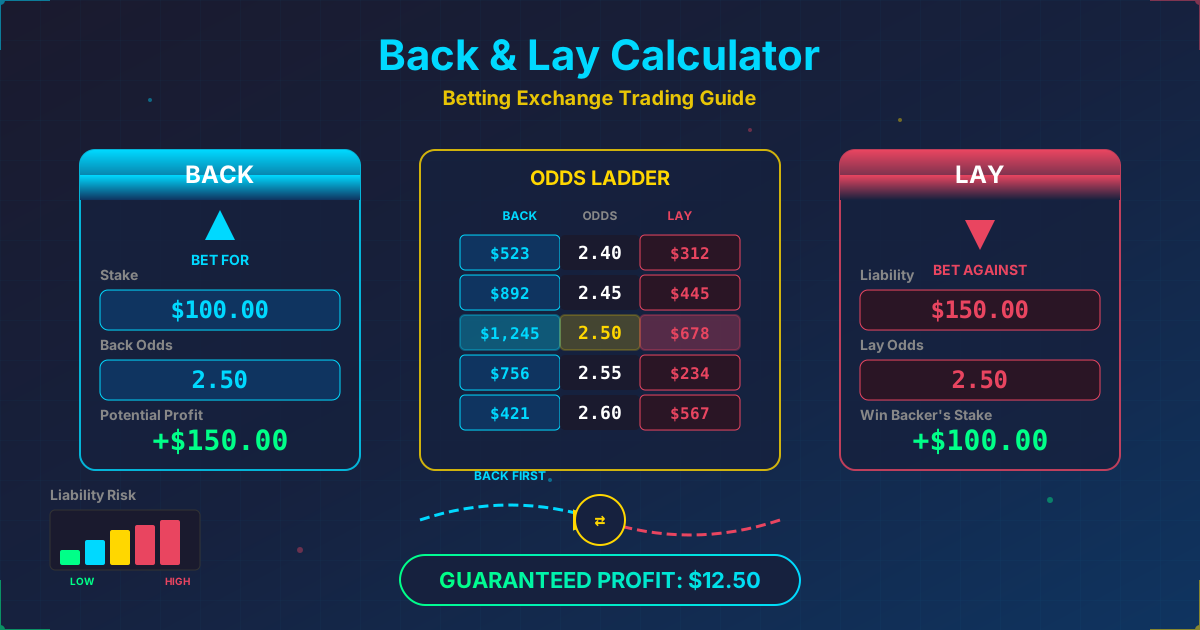
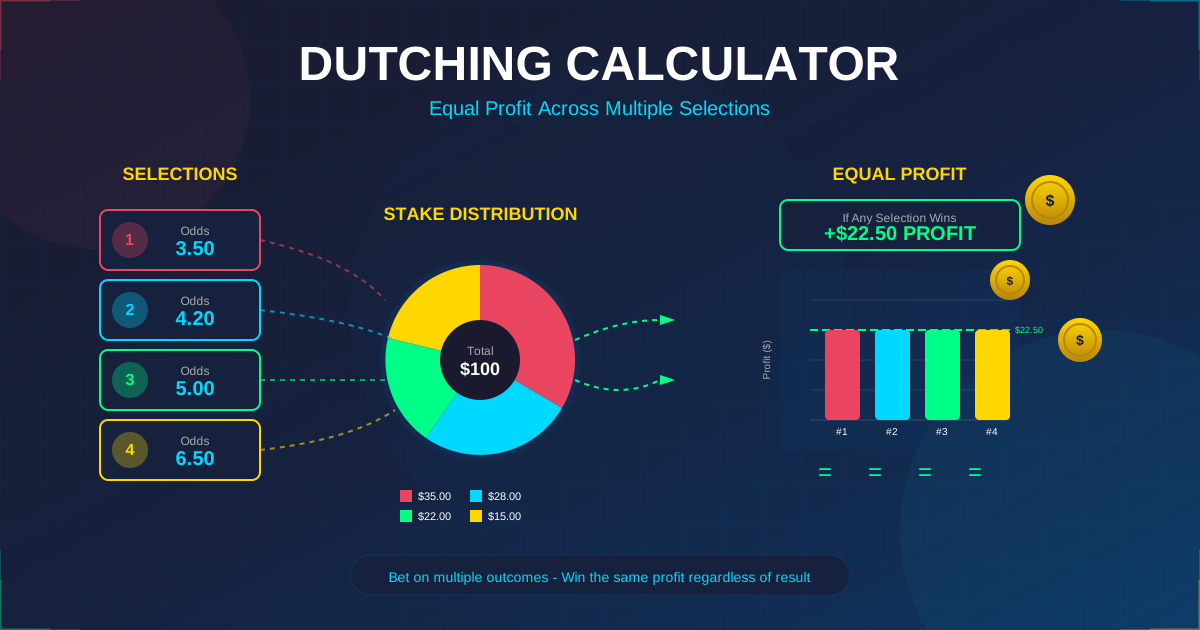
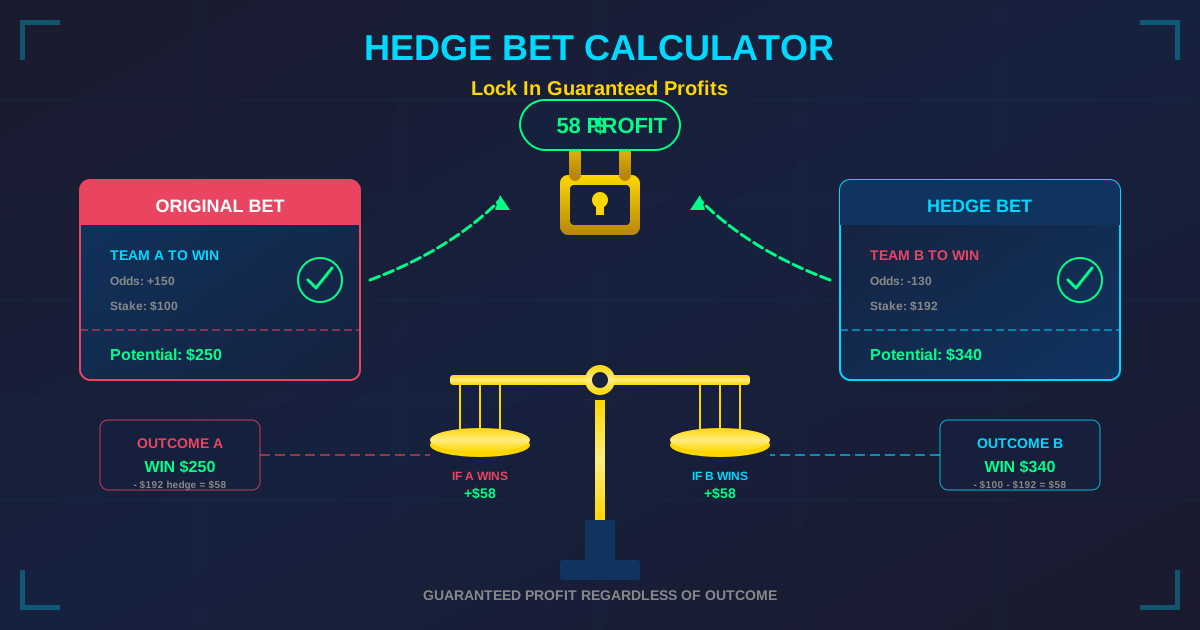
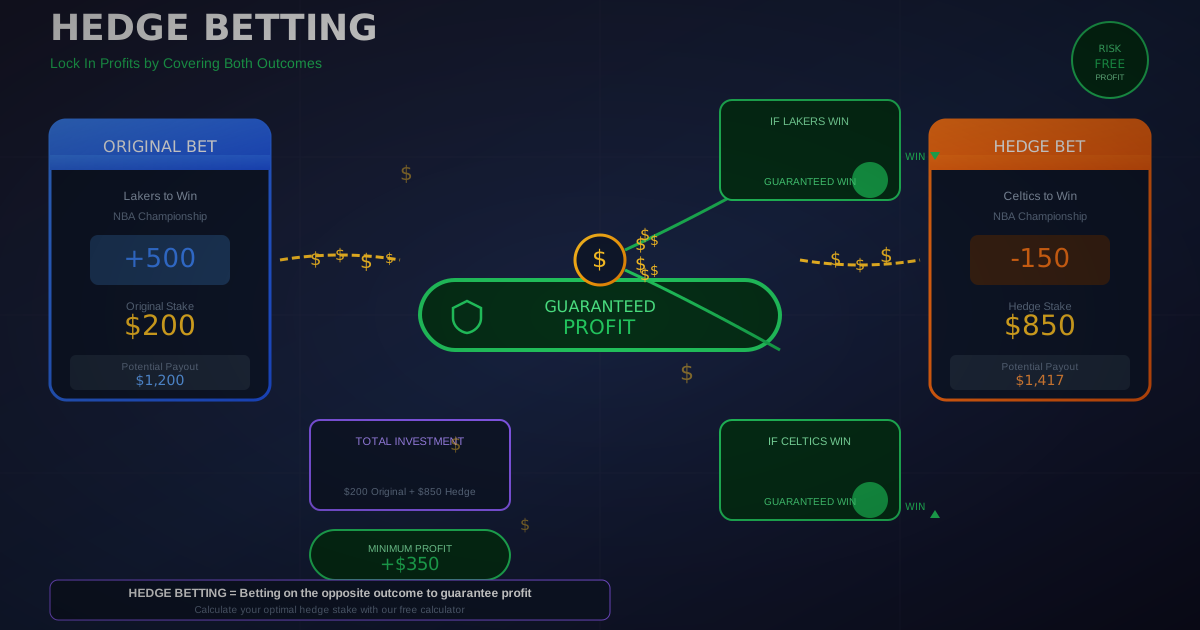
The most reliable way to convert a free bet into guaranteed cash is by hedging. You place your free bet on one side of a market at one sportsbook and bet cash on the opposing side at another sportsbook.
Step-by-step example:
- You have a $500 free bet at Sportsbook A
- Find a market where Sportsbook A offers +300 on Team X
- Sportsbook B offers -280 on Team Y (the opposing outcome)
Free bet at Sportsbook A: $500 on Team X at +300
- If Team X wins: you receive $1,500 profit (no stake return)
Cash hedge at Sportsbook B: $1,071.43 on Team Y at -280
- If Team Y wins: you receive $382.65 profit
Outcomes:
- Team X wins: +$1,500 (free bet win) - $1,071.43 (hedge loss) = +$428.57
- Team Y wins: +$382.65 (hedge win) - $0 (free bet loss, no cost) = +$382.65
Guaranteed profit: $382.65 to $428.57 (depending on outcome) Conversion rate: 76.5% to 85.7%
This is a significantly higher return than simply betting the free bet on a random underdog and hoping for the best.
Find the optimal hedge amounts with our Hedge Calculator.
Advanced Conversion: Using Arbitrage Opportunities
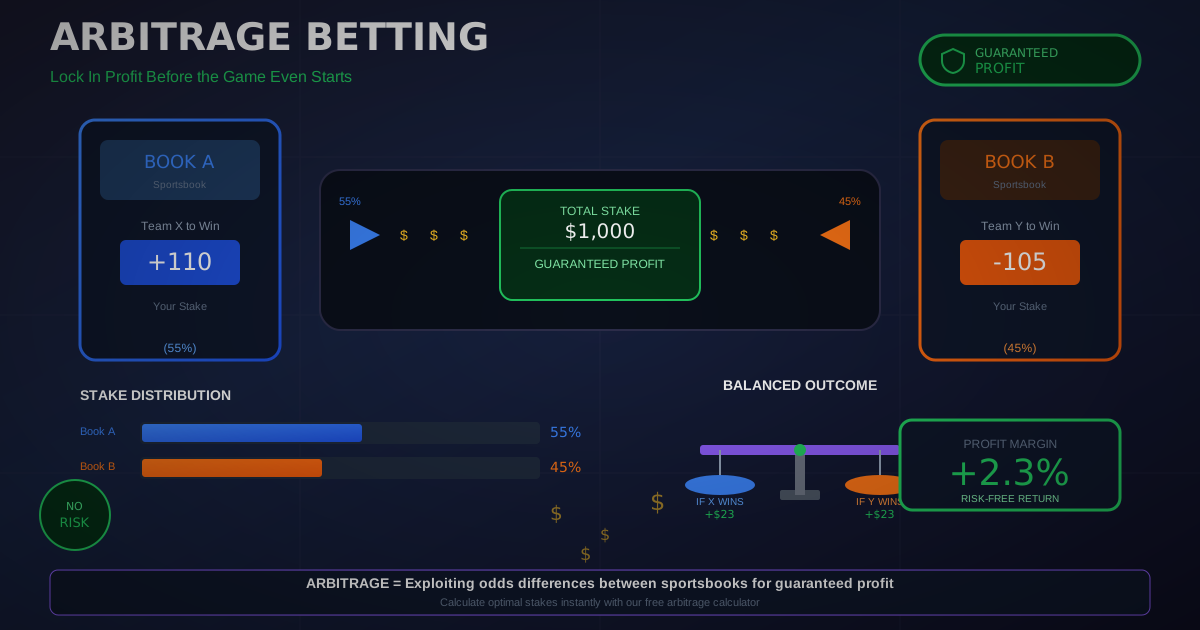
The ideal free bet conversion pairs the free bet with an arbitrage opportunity. If you find a market where the combined odds across books already produce a low margin, adding a free bet to one side can yield conversion rates above 80%.
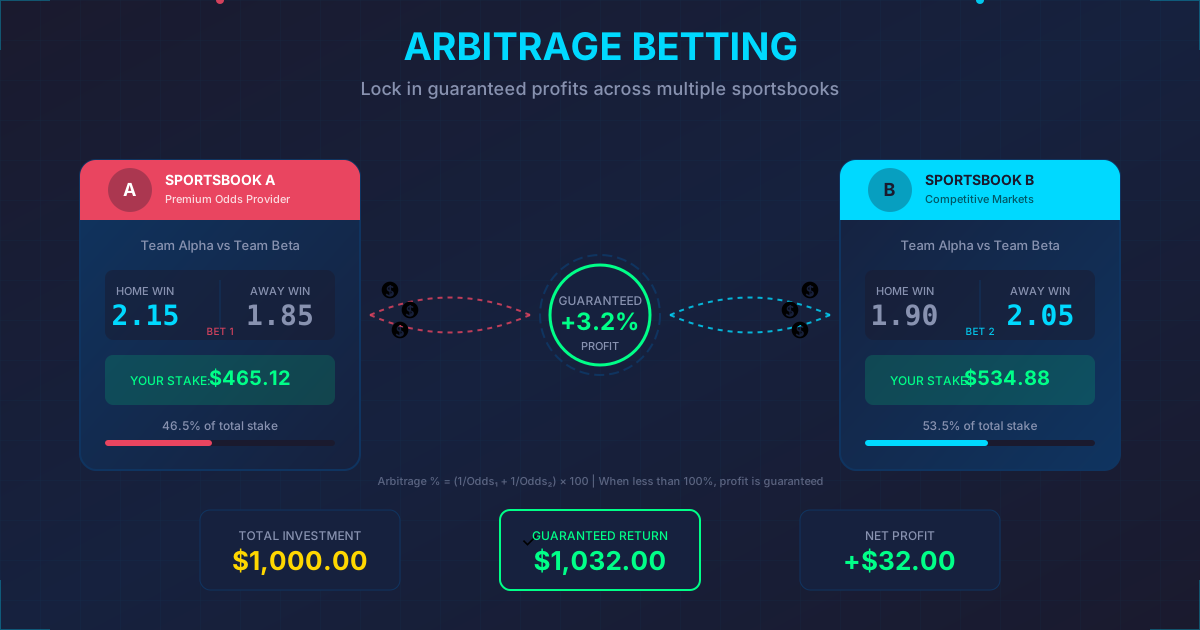
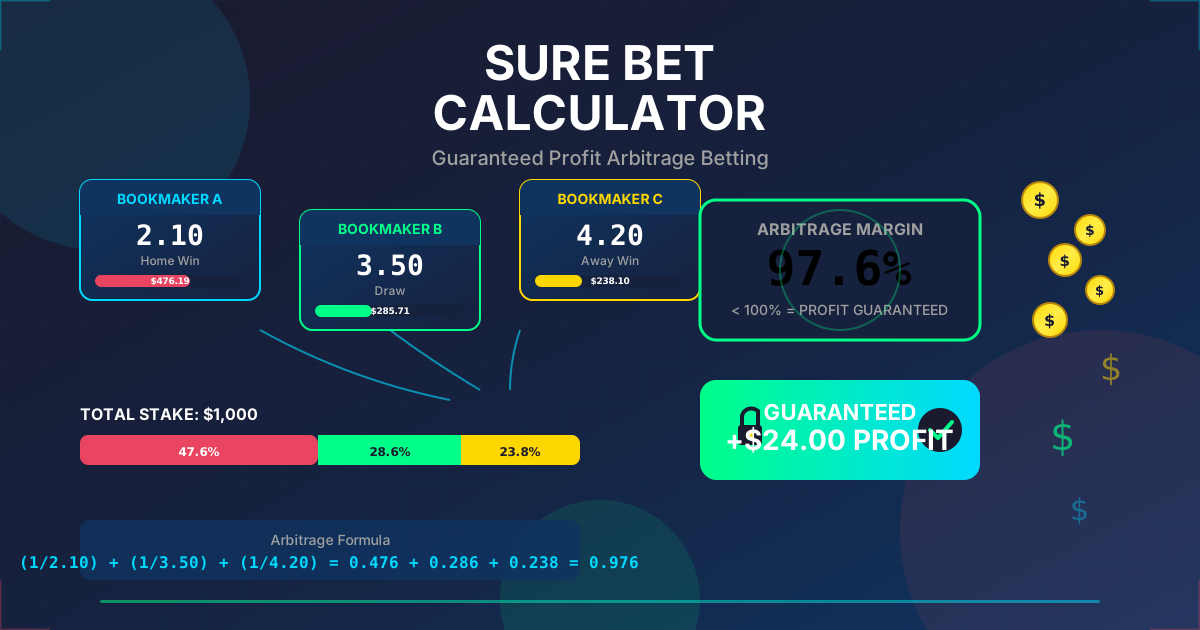
Identify arbitrage opportunities with our Arbitrage Calculator.
Free Bet Conversion Comparison
| Conversion Method | Typical Conversion Rate | Risk Level | Complexity | Capital Required |
|---|---|---|---|---|
| Bet on heavy favorite (-200 or worse) | 33-48% | Medium (can lose) | Low | None |
| Bet on random underdog (+200 to +500) | 50-83% (expected, not guaranteed) | High variance | Low | None |
| Hedge with opposing bet at second book | 70-85% (guaranteed) | Zero (guaranteed) | Medium | Significant |
| Combine with arb opportunity | 80-90% (guaranteed) | Zero (guaranteed) | High | Significant |
| Let it expire unused | 0% | N/A | N/A | None |
Never let a free bet expire. Even a poorly placed free bet on a heavy favorite is worth more than $0.
Risk-Free Bets: They Are Not Really Risk-Free
"Risk-free" bets (now commonly marketed as "first bet insurance" or "first bet safety net") are the most popular welcome offer in 2026. Despite the name, they carry real costs that most bettors overlook.
How First Bet Insurance Actually Works
- You place your first bet, up to the maximum amount (often $500-$1,500)
- If your bet wins, you keep the winnings as normal cash. The promotion does not activate.
- If your bet loses, you receive the stake back as bonus bets (not cash)
- Those bonus bets have their own restrictions (stake not returned, 7-day expiration, minimum odds)
The Real Math on a $1,000 First Bet Insurance Offer
Scenario A: Your first bet wins (let us say 50% probability at -110 odds)
- You win $909.09 in profit
- The insurance offer was unnecessary
- Net result: +$909.09
Scenario B: Your first bet loses (50% probability)
- You lose $1,000 in cash
- You receive $1,000 in bonus bets
- Those bonus bets are worth approximately $700 (70% conversion rate)
- Net result: -$1,000 + $700 = -$300
Expected Value of the insurance offer:
- EV = (0.50 x $909.09) + (0.50 x -$300) = $454.55 - $150 = +$304.55
Wait, that is not right. Let us isolate just the value of the insurance promotion itself, not the first bet.
Value of the insurance feature alone:
- 50% of the time (when you win), the insurance adds $0 in value
- 50% of the time (when you lose), the insurance saves you $700 (the true value of the bonus bets received)
- EV of insurance = 0.50 x $0 + 0.50 x $700 = $350
A "$1,000 risk-free bet" is actually worth approximately $350 in expected value. That is still a good deal, but it is 35% of the advertised amount, not 100%.
Maximizing First Bet Insurance
Since the insurance only pays off when you lose, and the payout is in bonus bets, the optimal strategy depends on your goals:
Strategy 1: Bet on a heavy underdog
- Place your $1,000 first bet on a +300 underdog
- If it wins (25% chance): you win $3,000 in cash
- If it loses (75% chance): you get $1,000 in bonus bets worth ~$700
- EV = (0.25 x $3,000) - (0.75 x $1,000) + (0.75 x $700) = $750 - $750 + $525 = +$525
Strategy 2: Bet on a standard line (-110)
- EV of insurance portion = ~$350 (as calculated above)
Strategy 3: Hedge the first bet
- Place $1,000 first bet on Team A at +100
- Hedge with $500 cash on Team B at +100 at a different sportsbook
- If Team A wins: +$1,000 - $500 = +$500
- If Team A loses: -$1,000 + $500 + $700 (bonus bets) = +$200
- Guaranteed $200-$500 depending on outcome
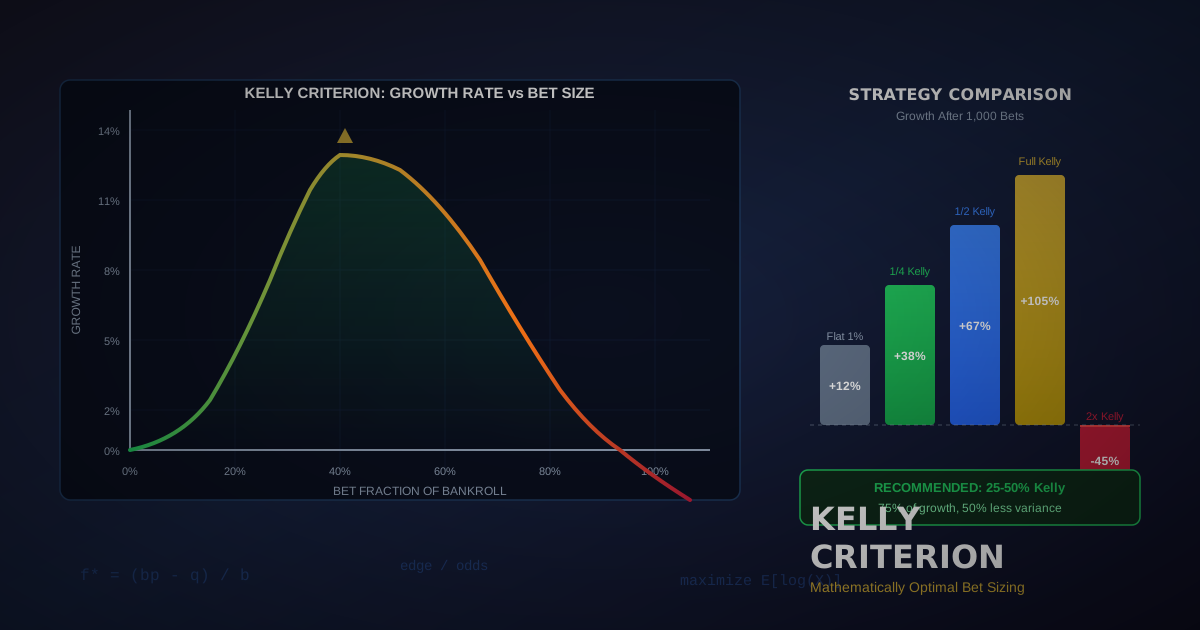
Optimize your Kelly-sized first bet with our Kelly Criterion Calculator.
Ongoing Promotions and Boosts: Where the Real Value Lives
Welcome bonuses get the headlines, but ongoing promotions often provide better long-term value for regular bettors who know what to look for.
Types of Ongoing Promotions
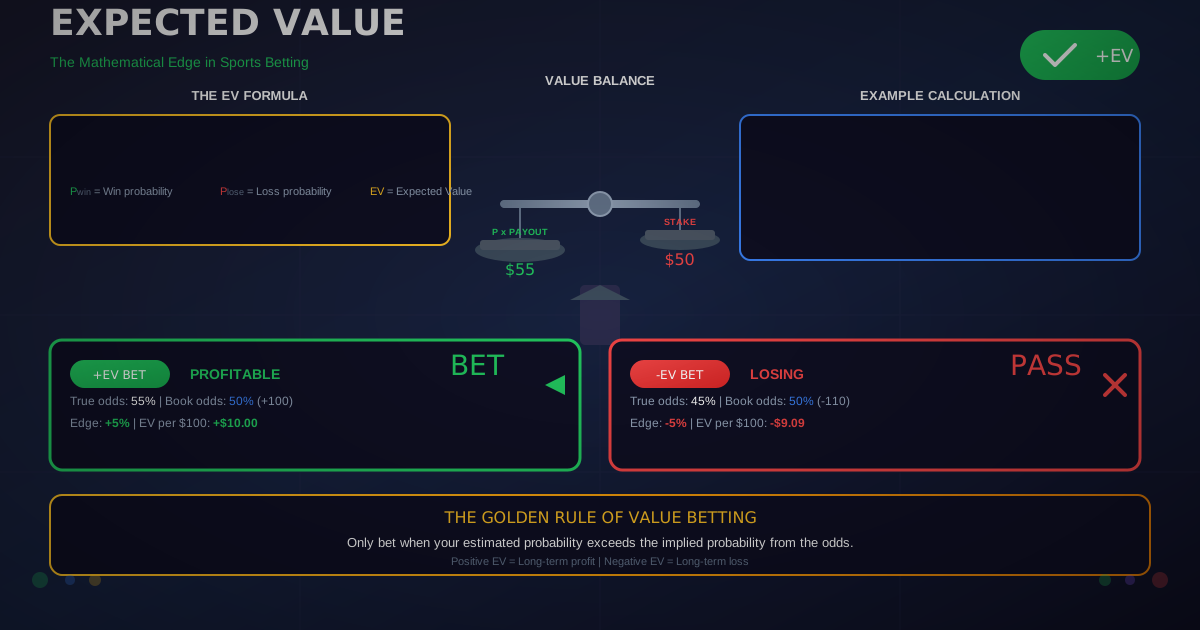
Odds Boosts: Sportsbooks enhance odds on specific markets, often on popular events. A team's moneyline might move from +150 to +200 as a boost. The value is straightforward: calculate the expected value at the boosted odds versus the true probability.
Profit Boosts: Your winnings on a qualifying bet are increased by a percentage (e.g., 25% profit boost). A $100 bet at +200 normally pays $200 profit; with a 25% boost, it pays $250.
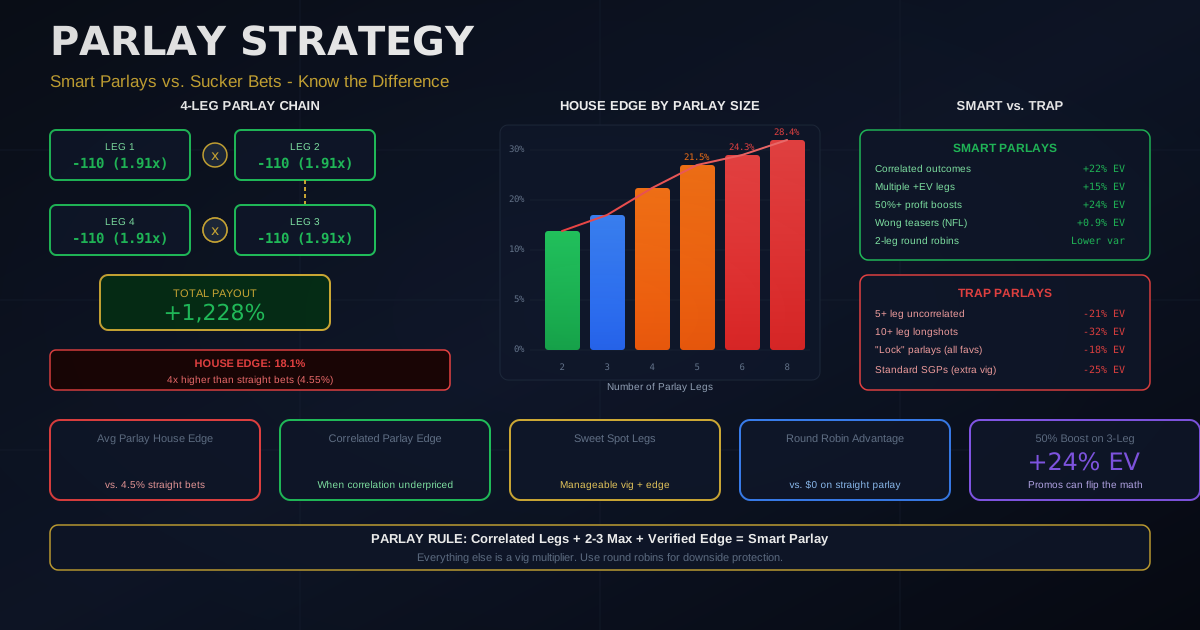
Parlay Insurance: If one leg of a qualifying parlay loses, you receive the stake back as a bonus bet. This is valuable for parlay bettors but remember that parlays already carry higher vig.
Loyalty/Tier Rewards: Ongoing betting volume earns points redeemable for bonus bets or merchandise. Fanatics' FanCash program is a prominent example, offering ongoing rewards tied to betting activity.
How to Evaluate an Odds Boost
Not every odds boost is positive EV. Sportsbooks sometimes boost lines that are already bad value to make them look appealing.
Evaluation process:
- Find the true probability of the outcome (use multiple sportsbooks' lines or your own model)
- Calculate the EV at the boosted odds
- If the boosted odds exceed the true probability, the boost is +EV
Example:
- Boosted line: Chiefs moneyline at +200 (implied probability: 33.3%)
- Sharp consensus line: Chiefs at +175 (implied probability: 36.4%)
- True probability estimate: ~36%
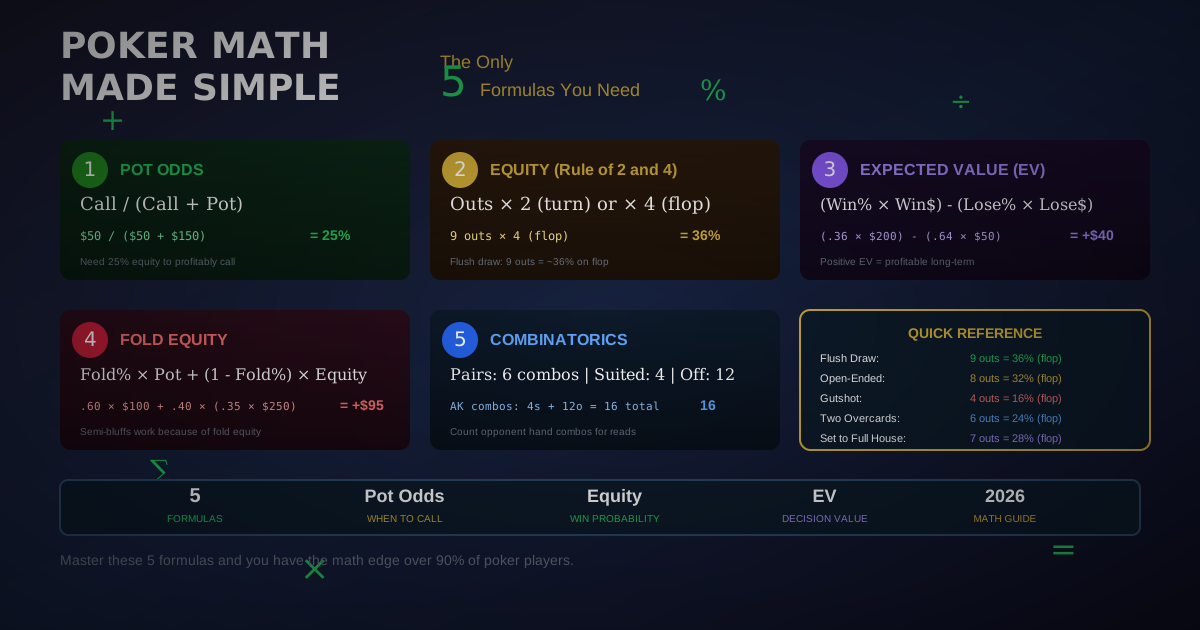
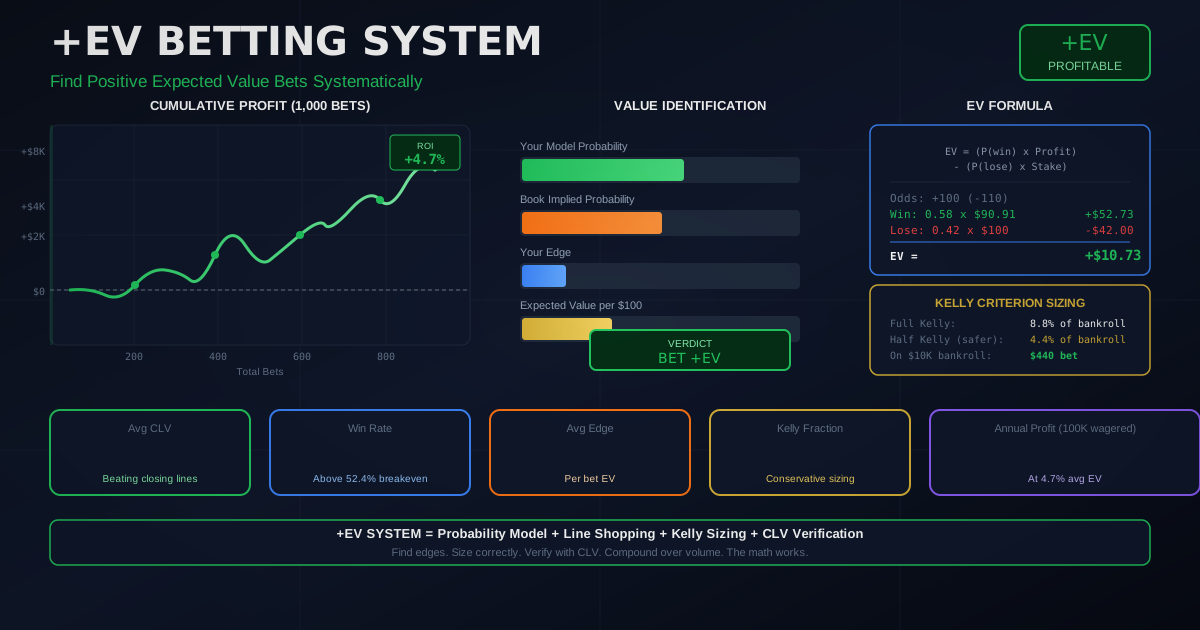
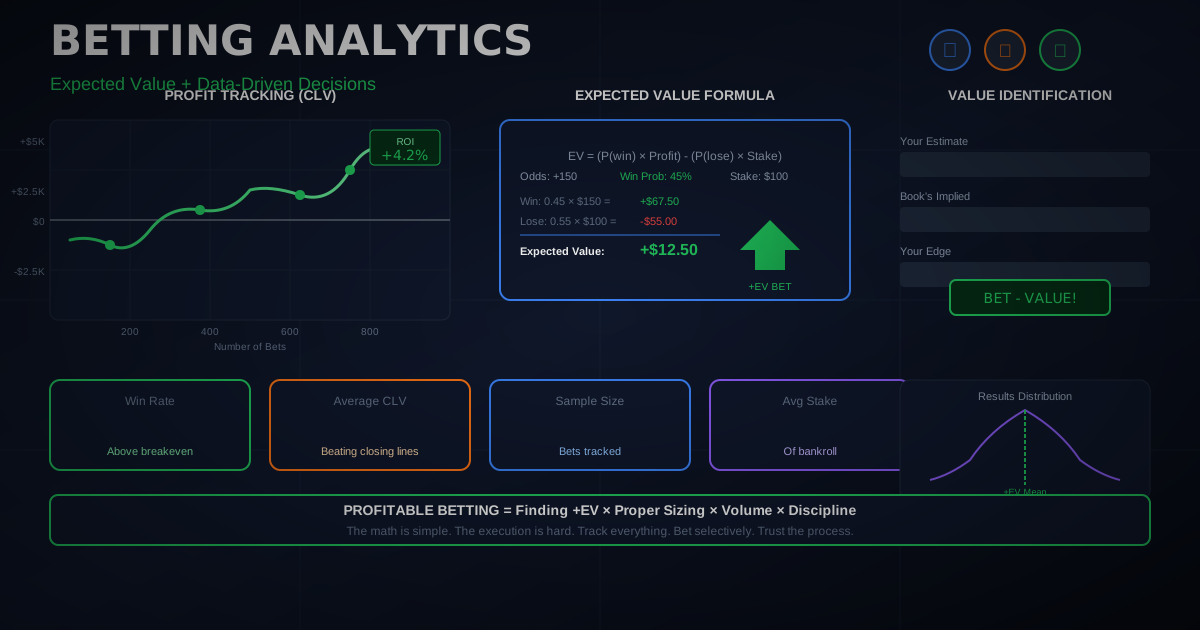
- EV at +200 = (0.36 x $200) - (0.64 x $100) = $72 - $64 = +$8 per $100 wagered
This boost is worth approximately +8% EV, making it a good bet.
Convert between odds formats to evaluate any boost with our Odds Converter.
Bonus Stacking Across Multiple Sportsbooks
One of the most effective legal strategies for sports bettors in 2026 is signing up for multiple sportsbooks to claim every available welcome bonus. This is not "bonus abuse." It is smart bankroll management.
The Multi-Book Strategy
With 20+ legal sportsbooks operating in major states, a bettor in a state like New Jersey or Colorado can claim $3,000-$8,000 in combined welcome offer value across all available books.
Estimated Welcome Bonus Value by Sportsbook (2026)
| Sportsbook | Welcome Offer (2026) | Estimated True Value | Min. Deposit |
|---|---|---|---|
| BetMGM | Up to $1,500 First Bet Insurance | ~$525 | $10 |
| DraftKings | 20% Match up to $1,000 + $300 Bonus Bets | ~$350-$500 | $5 |
| FanDuel | Bet $5, Get $200 in Bonus Bets | ~$140 | $5 |
| Caesars | Up to $250 Bet Match | ~$175 | $10 |
| ESPN BET | Up to $1,000 Bet Reset | ~$350 | $10 |
| bet365 | Bet $5, Get $200 OR $1,000 Safety Net | ~$140-$350 | $10 |
| Fanatics | Up to $1,000 in FanCash Matches | ~$300-$500 | $5 |
| Total (all books) | ~$1,980-$2,640 |
These are approximate values based on typical terms. Offers change frequently. Always verify current terms before signing up.
Why Multi-Book Stacking Works
- Diversification: Your risk is spread across many sportsbooks rather than concentrated at one
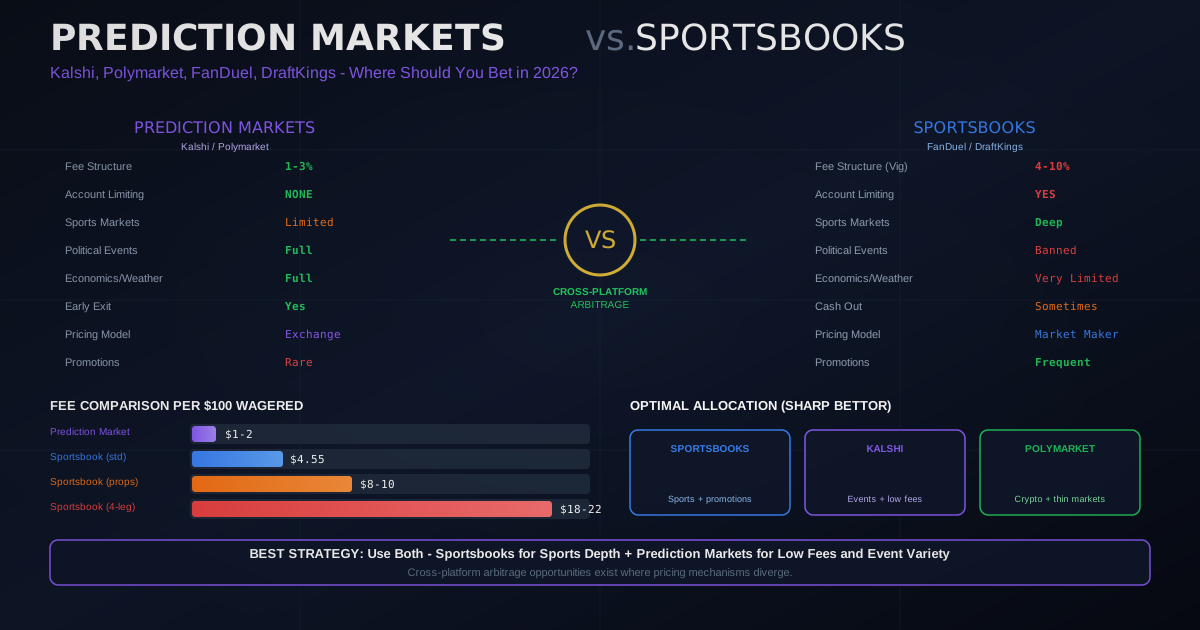
- Line shopping: Having accounts at multiple books lets you always find the best odds, which is the single most important thing a bettor can do
- Ongoing promotion access: Each book offers daily and weekly promotions. More accounts means more opportunities.
- Free bet hedging: You can hedge free bets from one book using cash at another
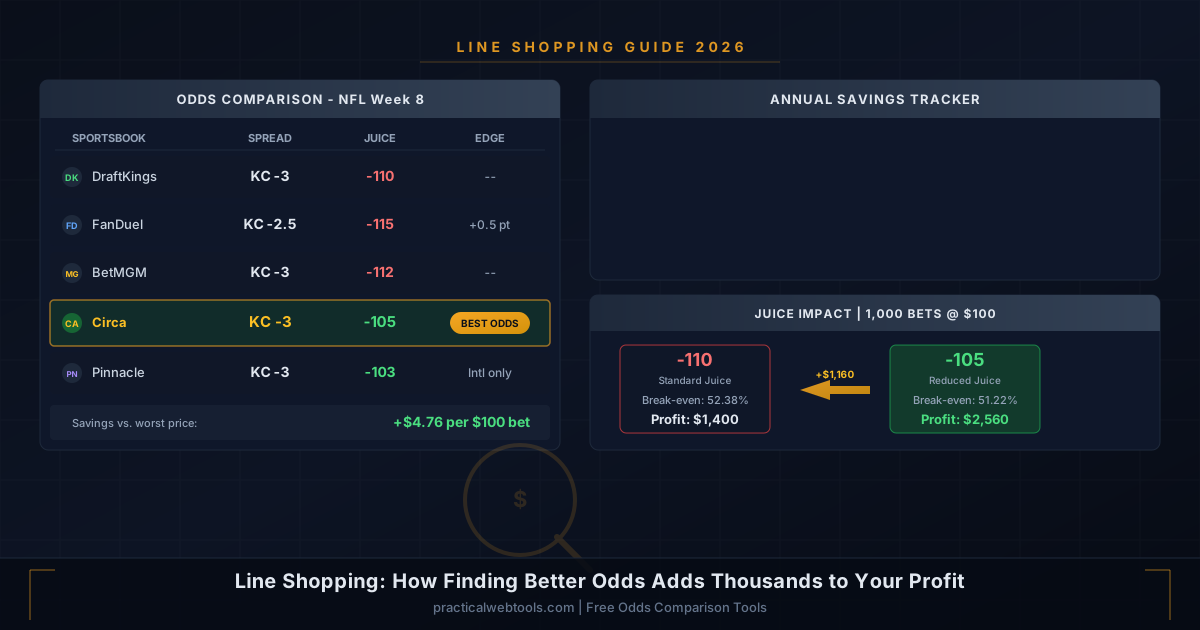
Line Shopping Value
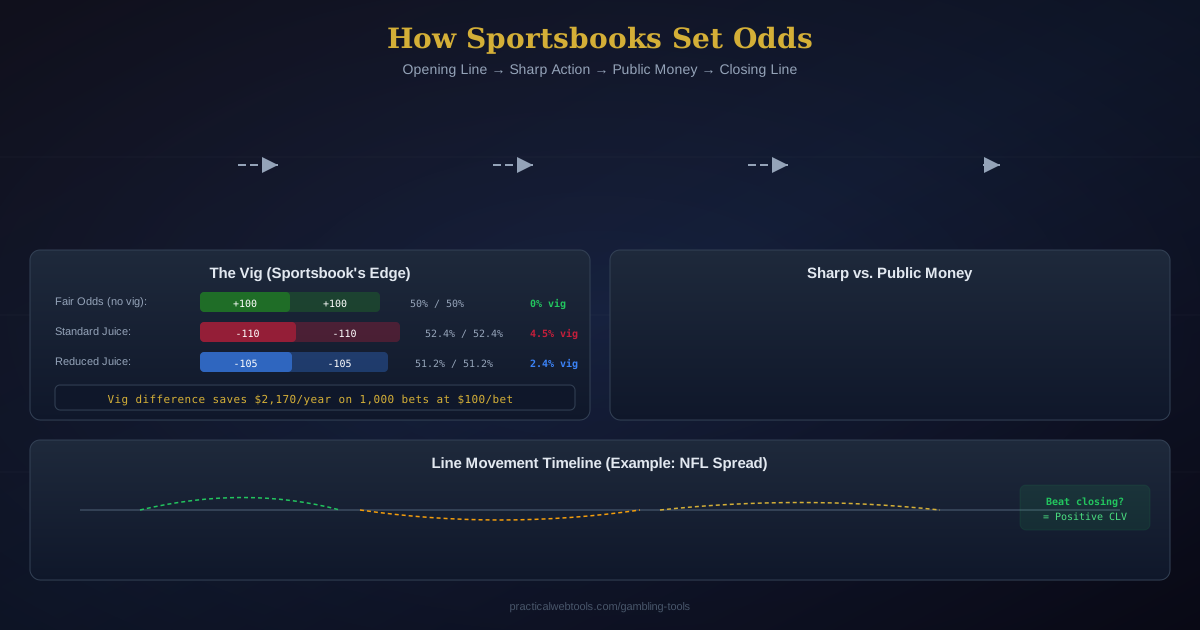
The value of having multiple accounts extends far beyond welcome bonuses. Line shopping, the practice of comparing odds across sportsbooks before placing any bet, can reduce the effective house edge from 4.5% to under 2%.
Example: You want to bet on the Bills -3.5. Three sportsbooks offer:
- Book A: -115
- Book B: -110
- Book C: -105
Betting at Book C instead of Book A saves you $10 per $100 wagered. Over 500 bets per year, that is $5,000 in savings.
Calculate the true cost of vig at any odds with our Hold/Vig Calculator.
Red Flags in Bonus Terms and Conditions
Not all bonuses are created equal, and some are designed to trap you. Here are the warning signs that a bonus offer is worse than it appears.
Red Flag #1: Rollover on Deposit + Bonus (Not Just Bonus)
If the rollover applies to your deposit plus the bonus rather than just the bonus, the wagering requirement is effectively doubled. A 10x rollover on deposit + bonus with a 100% match is equivalent to a 20x rollover on the bonus alone.
Red Flag #2: Rollover Above 10x
Any rollover above 10x should trigger careful analysis. As demonstrated in the math above, high rollovers can make a bonus negative EV. Offshore sportsbooks are notorious for 15x-25x rollovers disguised behind large headline match percentages.
Red Flag #3: Short Expiration Windows
A 7-day expiration on a high-rollover bonus forces you to wager aggressively, which often means making lower-quality bets. A $500 bonus with 10x rollover and a 7-day window requires $714 in wagers per day. That pace leaves little room for finding +EV spots.
Red Flag #4: Minimum Odds Restrictions That Are Too Tight
Minimum odds of -200 or longer is standard and reasonable. Minimum odds of +100 or longer (even money or above) eliminates most of the betting market and makes it significantly harder to clear the rollover efficiently.
Red Flag #5: Game and Market Restrictions
If the bonus excludes popular markets (spreads, moneylines) or popular sports (NFL, NBA), the available betting options may have higher vig, making the rollover more expensive to clear.
Red Flag #6: No State Regulatory License
If the sportsbook is not licensed in your state, the bonus terms are unenforceable, and the book has no obligation to honor payouts. This is the biggest red flag of all. Only use regulated, licensed sportsbooks.
Red Flag #7: "Maximum Cashout" Limits
Some bonuses, especially at offshore books, cap the amount you can withdraw from bonus-funded winnings. A $500 bonus with a $1,000 max cashout means even if you run the bonus up to $5,000, you only get $1,000. This effectively adds a hidden cost to the bonus.
Red Flag Summary
| Red Flag | Risk Level | Common At |
|---|---|---|
| Deposit + bonus rollover | Medium | Offshore books, some casino bonuses |
| Rollover above 10x | High | Offshore books, casino crossover |
| Expiration under 14 days on high rollover | High | Offshore books |
| Minimum odds +100 or above | Medium | Some promotions |
| Market/sport restrictions | Medium | Specific promotions |
| No state license | Critical | All offshore books |
| Maximum cashout limits | High | Offshore books, some casino bonuses |
When to Skip a Bonus Entirely
Not every bonus is worth claiming. Here are the situations where the mathematically correct decision is to walk away.
Skip If: The Rollover Creates Negative EV
Use the break-even formula from earlier in this guide. If the rollover multiplier exceeds the break-even point, the bonus costs you money in expectation. No amount of luck changes the long-term math.
Skip If: The Time Constraint Forces Bad Bets
If you cannot realistically clear the rollover within the expiration window while maintaining your normal betting quality, the bonus will degrade your overall results. Forcing bets to meet a deadline is the opposite of disciplined betting.
Skip If: The Bonus Locks Up Your Bankroll
Some deposit match bonuses restrict withdrawals of your entire balance (not just the bonus) until the rollover is met. If tying up $1,000 of your bankroll for 30 days harms your ability to bet elsewhere, the opportunity cost may exceed the bonus value.
Skip If: You Are Chasing the Bonus Instead of Value
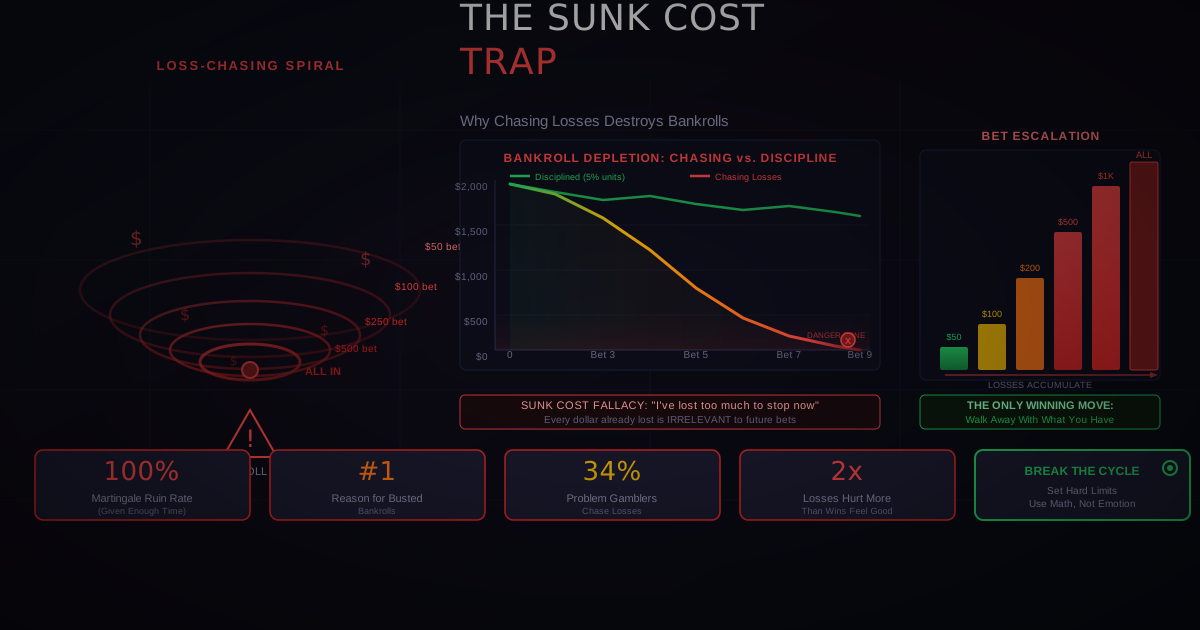
If you find yourself depositing more than you planned, betting on markets you do not understand, or placing larger wagers than your bankroll management allows, the bonus is controlling your behavior instead of the other way around. This is exactly what sportsbooks hope will happen.
Skip If: The Book Is Unlicensed
No bonus is worth risking your deposit at an unregulated sportsbook. If the book has no state license, you have no recourse if they refuse to pay.
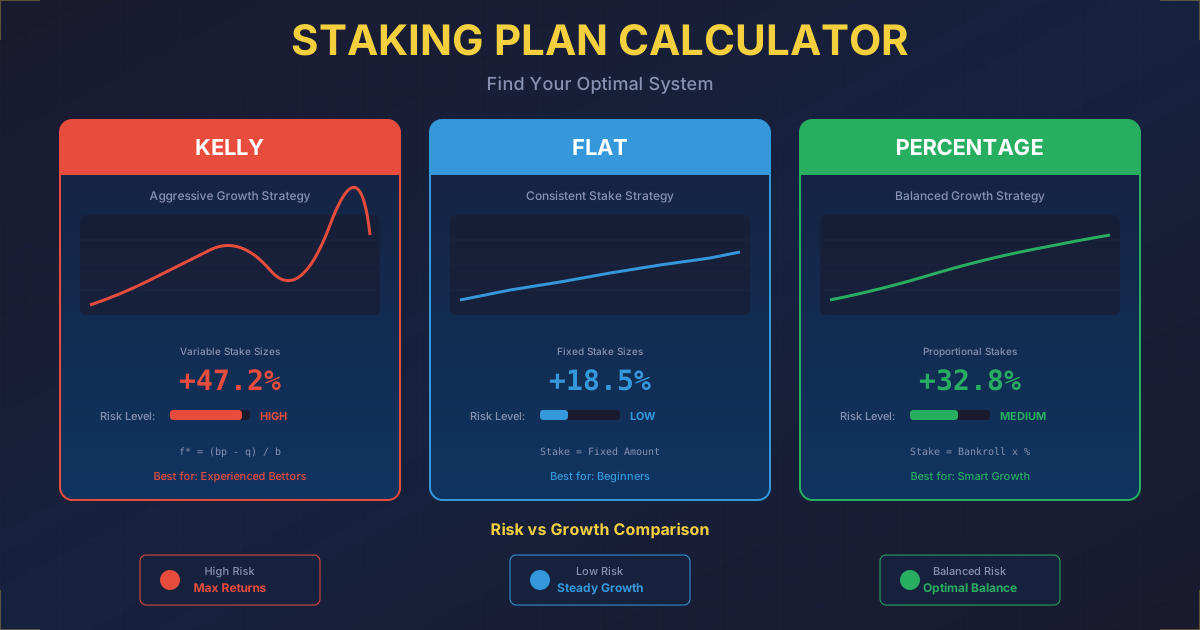
Size your bets correctly regardless of bonus status with our Kelly Criterion Calculator.
Evaluating Parlay Bonuses and Boosts
Parlay-specific promotions are among the most common ongoing offers, and they deserve their own analysis because parlays carry significantly higher vig than straight bets.
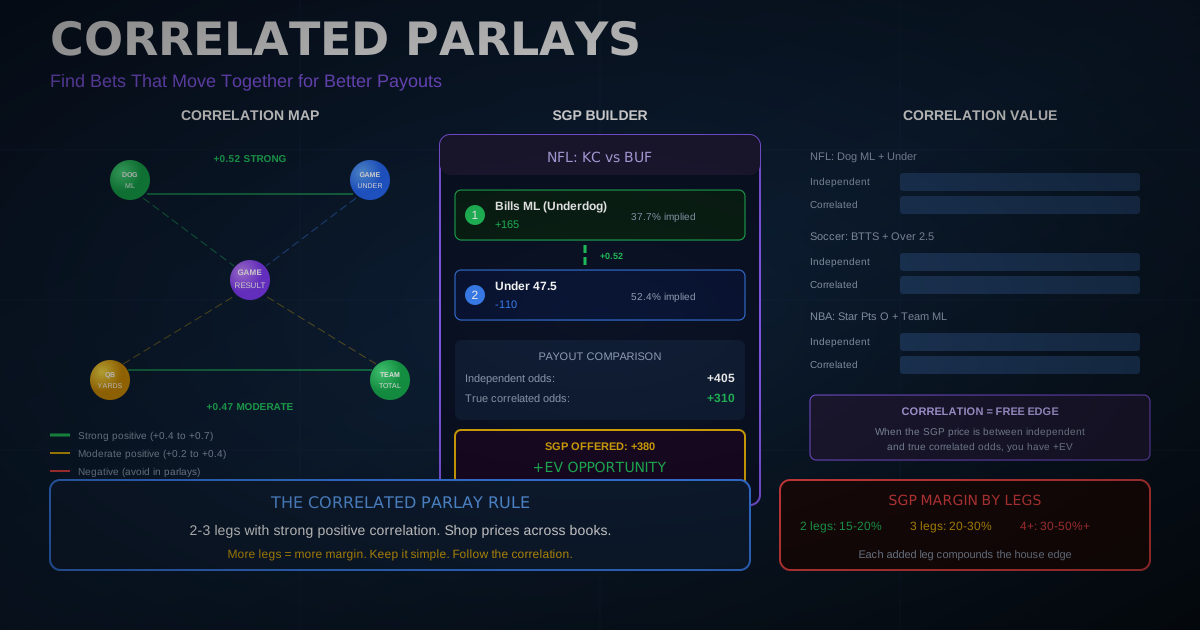
Parlay Insurance Math
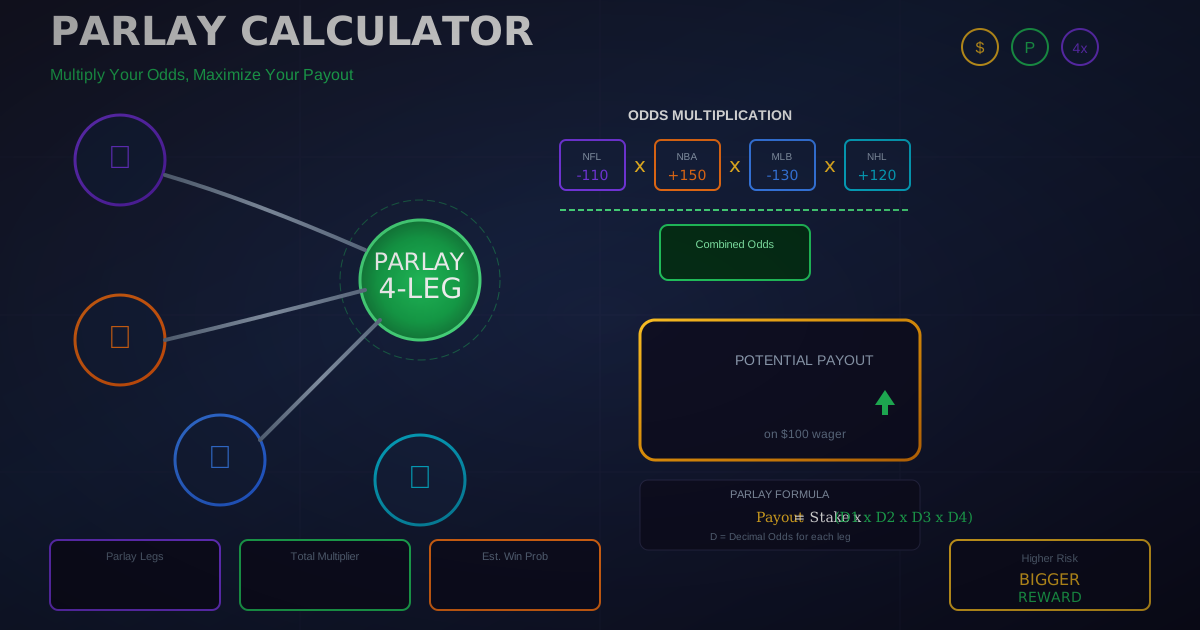
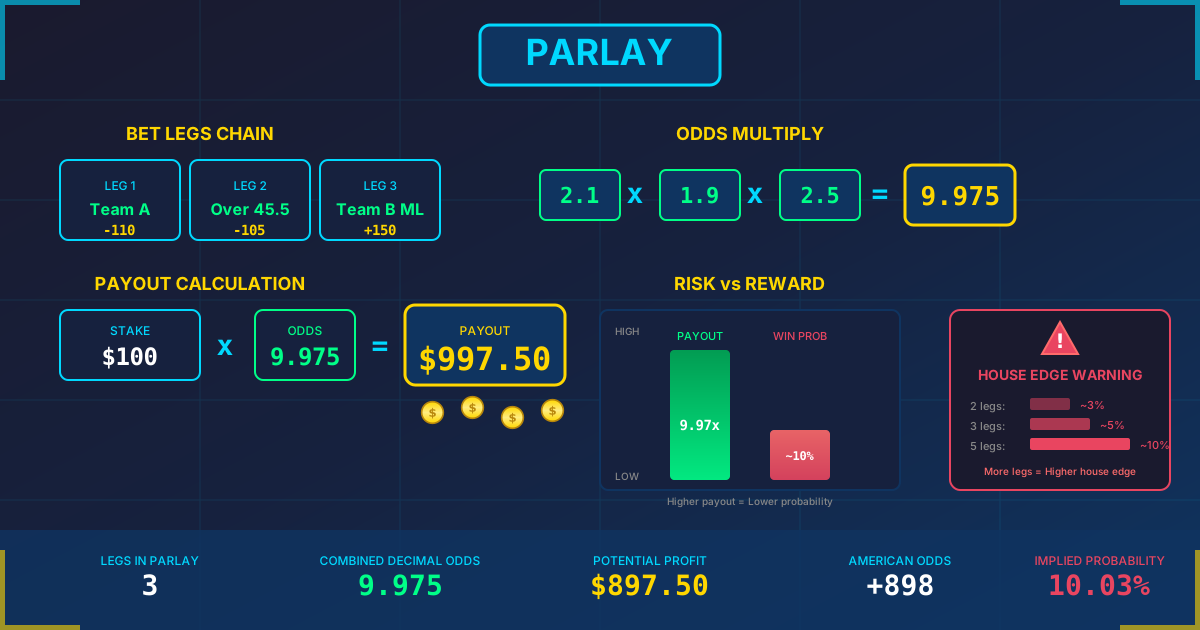
Many sportsbooks offer parlay insurance: if one leg of a 4+ leg parlay loses, you receive your stake back as a bonus bet.
Example: You place a $100, 5-leg parlay at combined odds of +2500 with parlay insurance.
- If all 5 legs win: $2,500 profit
- If 4 of 5 legs win (insurance triggers): $100 back as bonus bet worth ~$70
- If 2+ legs lose: $100 loss (no insurance)
The question is: how often does exactly one leg lose in a 5-leg parlay?
Assuming each leg has a 50% chance, the probability of exactly 4 of 5 winning is:
- C(5,4) x (0.50)^4 x (0.50)^1 = 5 x 0.0625 x 0.50 = 15.625%
So 15.625% of the time, you recoup ~$70 in value. The insurance adds approximately $70 x 0.15625 = $10.94 in expected value per $100 parlay.
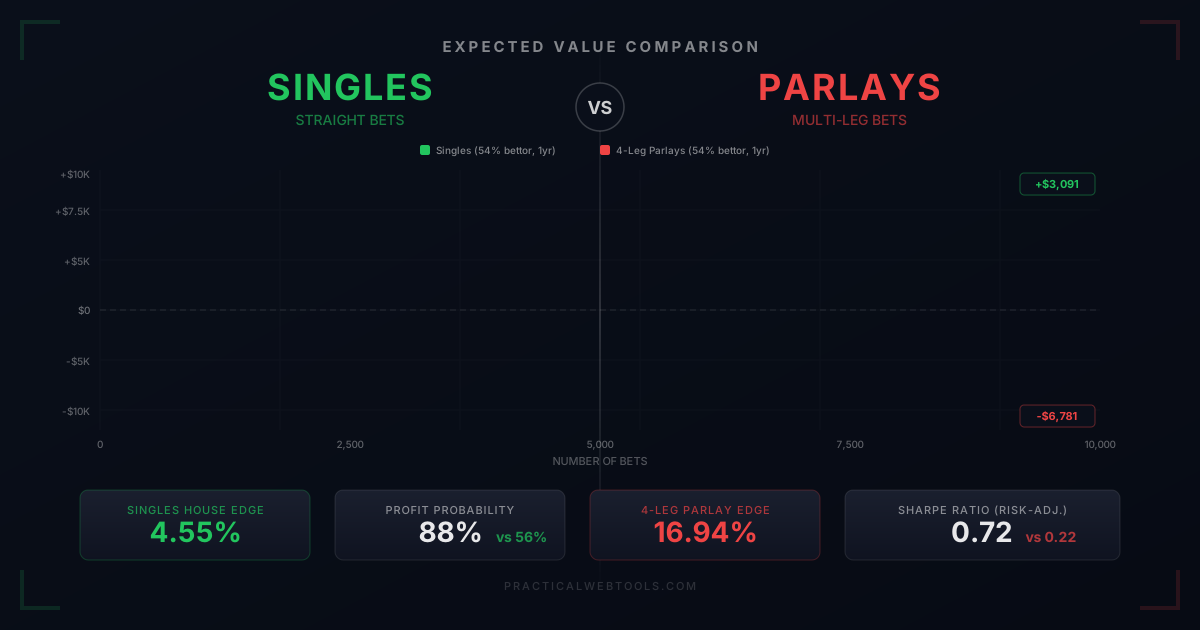
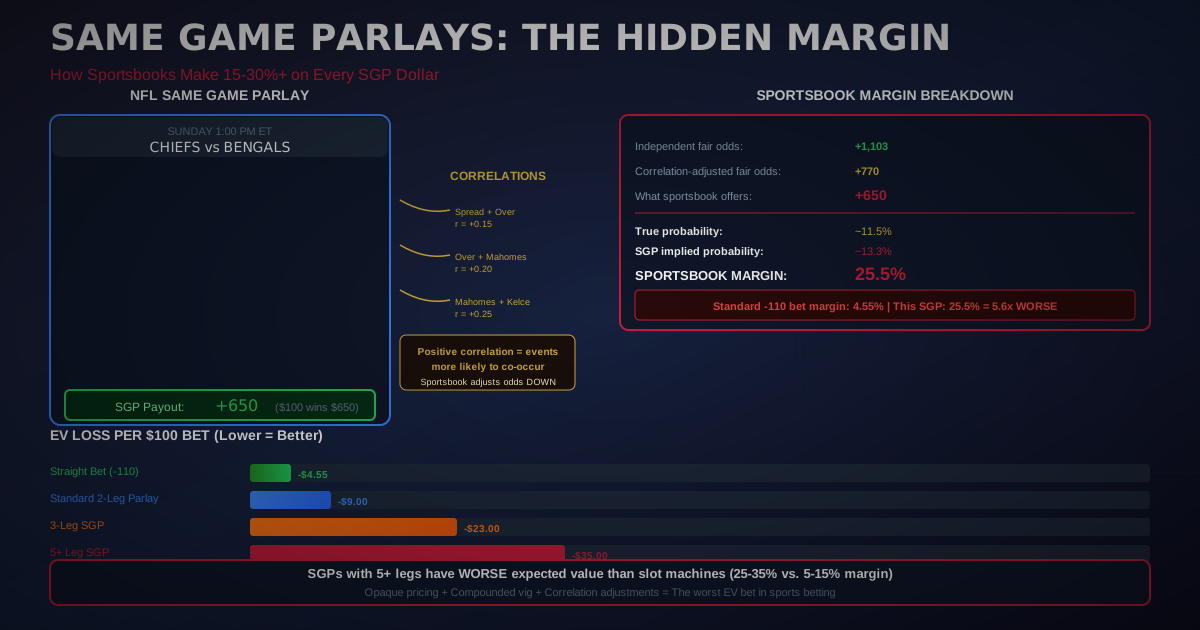
That is meaningful but does not come close to offsetting the higher vig embedded in parlays. A 5-leg parlay at -110 odds per leg carries an effective vig of approximately 20-25%, compared to 4.5% on a straight bet.
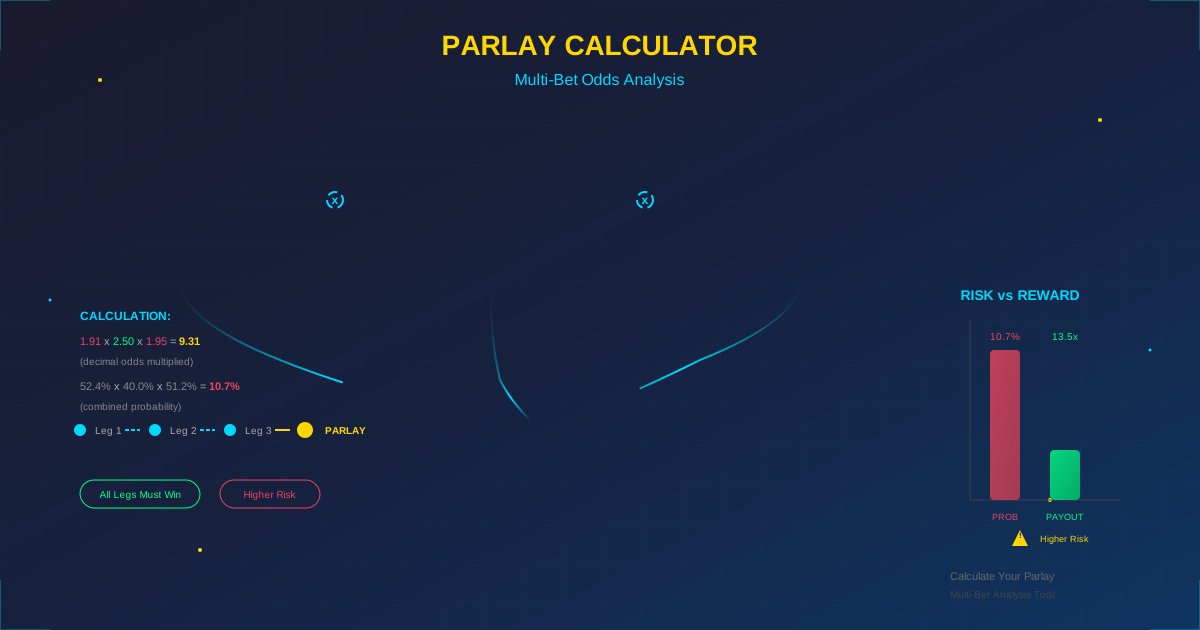
Calculate the true odds of any parlay with our Parlay Calculator.
Building a Bonus Clearing Strategy
For bettors who want to systematically clear bonuses across multiple sportsbooks, here is a structured approach.
Step 1: Inventory All Available Offers
List every sportsbook available in your state. Document the welcome offer, rollover requirement, minimum odds, expiration, and calculate the true value using the formulas in this guide.
Step 2: Prioritize by True Value Per Dollar
Rank offers not by headline value but by true value as a percentage of required deposit. A $200 bonus that is worth $140 on a $5 deposit is far better than a $1,000 bonus worth $275 on a $5,000 deposit.
Step 3: Clear Low-Rollover Bonuses First
Start with 1x rollover bonus bets because they require the least capital commitment and carry the lowest risk. Convert them using the hedging strategies described above.
Step 4: Use Bonus Clearing Bets for Line Shopping
When you need to place bets to clear rollover, use those bets as opportunities to take the best available line across your sportsbook portfolio. This way, your rollover-clearing bets are also your +EV bets.
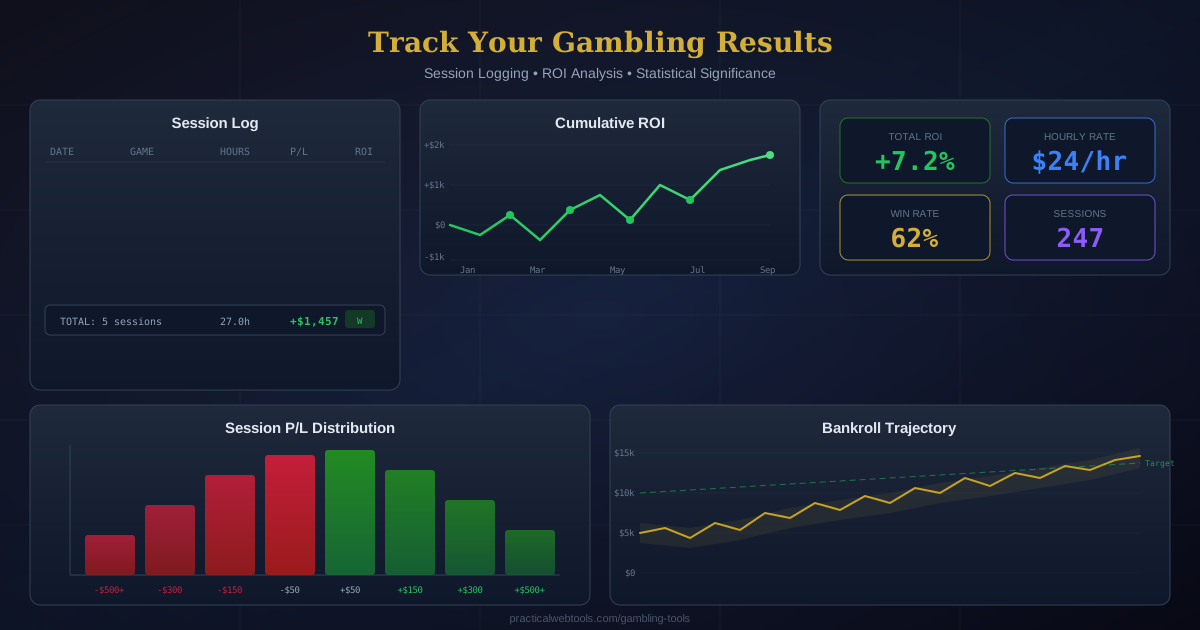
Step 5: Track Everything
Maintain a spreadsheet tracking:
- Which bonuses you have claimed
- Remaining rollover at each book
- Bonus expiration dates
- Total true value captured
- Any account limitations or restrictions
Frequently Asked Questions About Sportsbook Bonuses
What is a rollover requirement in sports betting? A rollover requirement (also called playthrough or wagering requirement) is the total amount you must wager before you can withdraw bonus funds or winnings from bonus bets. For example, a $200 bonus with a 5x rollover means you need to place $1,000 in total wagers before the bonus funds become withdrawable cash. Most major U.S. sportsbooks use a simple 1x rollover on bonus bets, meaning you only need to bet the amount once.
Are sportsbook bonuses actually worth it? It depends entirely on the terms. Bonuses with 1x rollover on bonus bets (standard at FanDuel, DraftKings, and most major U.S. books) are almost always worth claiming. The true value of a $200 bonus bet is approximately $140 (70% conversion rate). However, bonuses with high rollover requirements (10x+) can have negative expected value, meaning you will lose more money clearing the bonus than the bonus is worth. Always calculate the true value before committing your deposit.
What is the best strategy for using free bets? The optimal strategy depends on your goals. For guaranteed value, use the hedging approach: place your free bet on a moderate underdog (+200 to +300) at one sportsbook and hedge with a cash bet on the opposite outcome at another book. This guarantees a 70-85% conversion rate. If you prefer simplicity and are willing to accept variance, place free bets on underdogs in the +200 to +500 range for the highest expected conversion rate. Never place free bets on heavy favorites, and never let them expire unused.
Can sportsbooks limit or ban you for using bonuses? Yes. Sportsbooks reserve the right to limit or close accounts for any reason, and bonus-focused behavior is a common trigger. Signs that attract attention include only betting when bonuses are available, rapidly maxing out every promotion, making hedge bets that appear coordinated across books, and withdrawing immediately after clearing a bonus. While claiming welcome bonuses is perfectly legal and expected, exclusively bonus-focused activity across many books may lead to account limitations on future promotions or reduced betting limits.
What is the difference between a bonus bet and bonus cash? Bonus cash functions like your real deposited money. When you win a bet with bonus cash, you receive the stake plus the profit, and both are withdrawable (after meeting any rollover). Bonus bets do not return the stake. When you win with a bonus bet, you only receive the profit portion. This makes bonus cash worth approximately 100% of face value (minus rollover costs) while bonus bets are worth approximately 70% of face value. Always check which type your bonus uses.
How long do sportsbook bonuses last before they expire? Most bonus bets at major U.S. sportsbooks expire within 7 days of being credited. Welcome offer qualification windows typically last 30 days from account creation, meaning you must make your qualifying deposit and bet within that period. Deposit match bonus funds may have 30-day playthrough windows. Always check the specific terms because expired bonuses and their associated winnings are forfeited with no recourse.
Are there any truly risk-free sportsbook bonuses? No bonus is completely risk-free. "Risk-free" or "first bet insurance" offers refund your stake as bonus bets (not cash) if your first bet loses, but those bonus bets are worth approximately 70% of face value and come with their own restrictions. No-deposit bonuses are the closest to risk-free since they require no financial commitment, but they are rare in regulated markets and offer small amounts ($5-$25). The safest approach is to treat every bonus as having a calculable expected value rather than thinking of any as truly "free money."
Should I sign up at multiple sportsbooks just for the bonuses? Yes, but not just for the bonuses. Signing up at multiple sportsbooks gives you access to welcome bonuses worth $2,000+ in combined true value, but the ongoing benefit is even more valuable: line shopping. Having accounts at 5-10 sportsbooks lets you compare odds on every bet and always take the best available price. This alone can reduce the effective house edge from 4.5% to under 2%, saving thousands of dollars over a year of regular betting.
Recommended Tools for Evaluating Sportsbook Bonuses
The following free tools on Practical Web Tools will help you analyze any sportsbook bonus mathematically before committing your deposit:
- Expected Value Calculator -- Calculate the true EV of any bet, including bonus-funded wagers, to determine if a bonus-clearing bet is worth placing
- Odds Converter -- Convert between American, decimal, and fractional odds to compare offers across sportsbooks that display odds differently
- Implied Probability Calculator -- Determine the true probability embedded in any odds line, essential for evaluating whether boosted odds are actually +EV
- Hold/Vig Calculator -- Calculate the vig/juice on any market to understand the true house edge you face during bonus rollover clearing
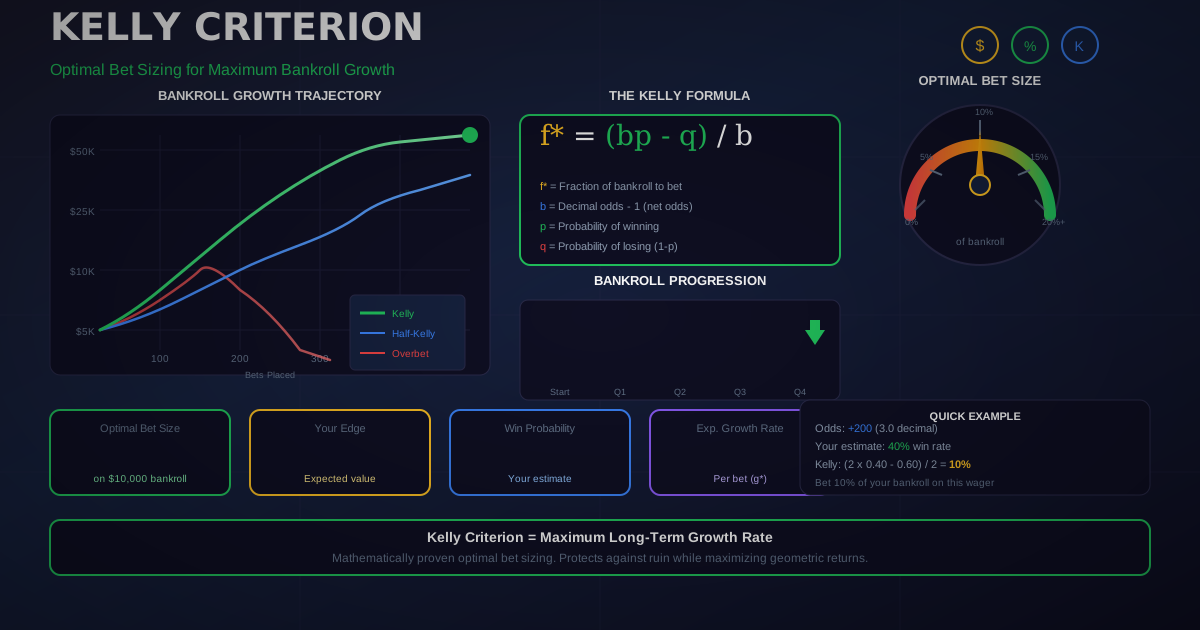
- Kelly Criterion Calculator -- Determine optimal bet sizing for bonus-clearing wagers to avoid over-betting your bankroll
- Parlay Calculator -- Calculate true parlay odds and payouts to evaluate parlay-specific bonuses and insurance offers
- Hedge Calculator -- Calculate exact hedge amounts for free bet conversion to guarantee a specific profit regardless of outcome
- Arbitrage Calculator -- Identify sure-bet opportunities that can be paired with free bets for maximum conversion rates
Conclusion: The Informed Bettor's Advantage
Sportsbook bonuses are marketing tools designed to acquire customers. That does not make them bad. It makes them products that need to be evaluated with the same rigor you would apply to any financial decision.
The bettors who profit most from bonuses are the ones who:
- Calculate true value before committing any deposit
- Understand rollover math and can identify when a bonus is negative EV
- Use free bet conversion strategies to guarantee 70-85% of face value
- Sign up at multiple regulated books to stack welcome offers and enable line shopping
- Never let bonuses dictate their betting behavior, size, or market selection
- Track everything and treat bonus clearing as a measurable, systematic process
The sportsbook is betting that you will not do the math. Prove them wrong.
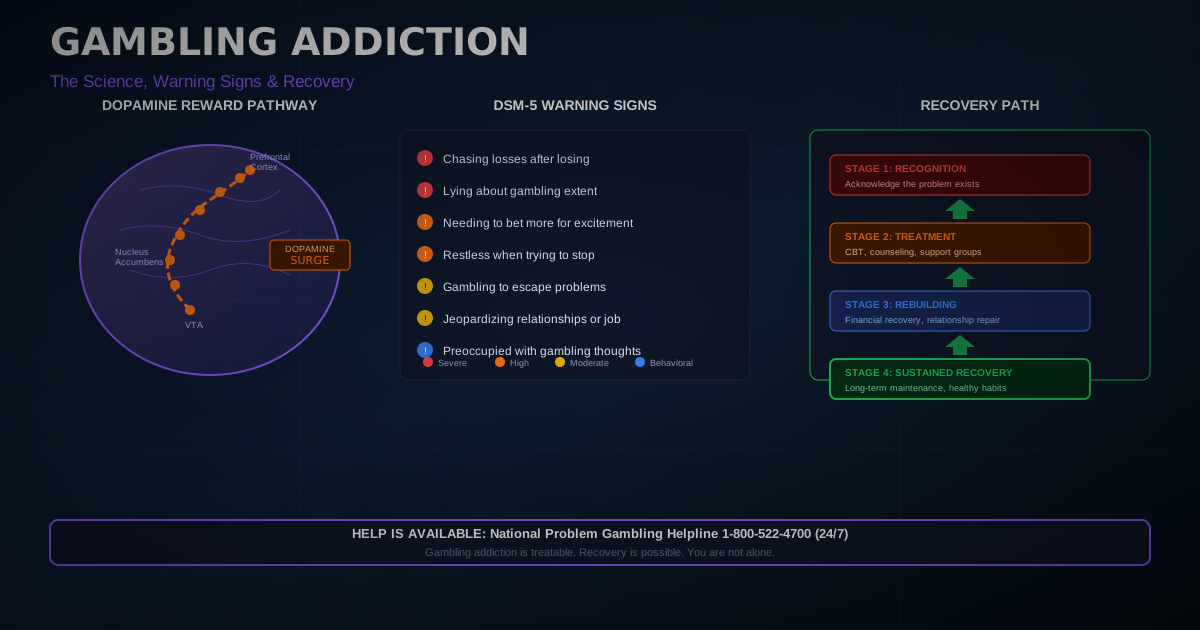
Gambling involves risk. This content is for educational and informational purposes only. Always gamble responsibly, set limits you can afford, and seek help if gambling becomes a problem. Visit the National Council on Problem Gambling or call 1-800-522-4700 for support.