The Neuroscience of Gambling: How Dopamine Hijacks Your Brain at the Casino (2026)

Your brain releases more dopamine when you almost win than when you actually win. This single neuroscientific fact explains more about gambling behavior than any economic theory, moral argument, or self-help book ever could. The near-miss -- that slot reel stopping one symbol away from the jackpot, that last-second field goal that bounces off the upright, that river card that nearly completed your flush -- activates the same reward circuitry as a genuine win, keeping you playing long after rational calculation says you should stop.
The neuroscience of gambling is not about willpower. It is about brain architecture. Every human brain contains a reward system that evolved over millions of years to motivate survival behaviors: finding food, forming social bonds, reproducing. Gambling exploits this system with surgical precision. The intermittent, unpredictable nature of gambling rewards triggers dopamine responses that your brain literally cannot distinguish from the signals produced by survival-critical activities.
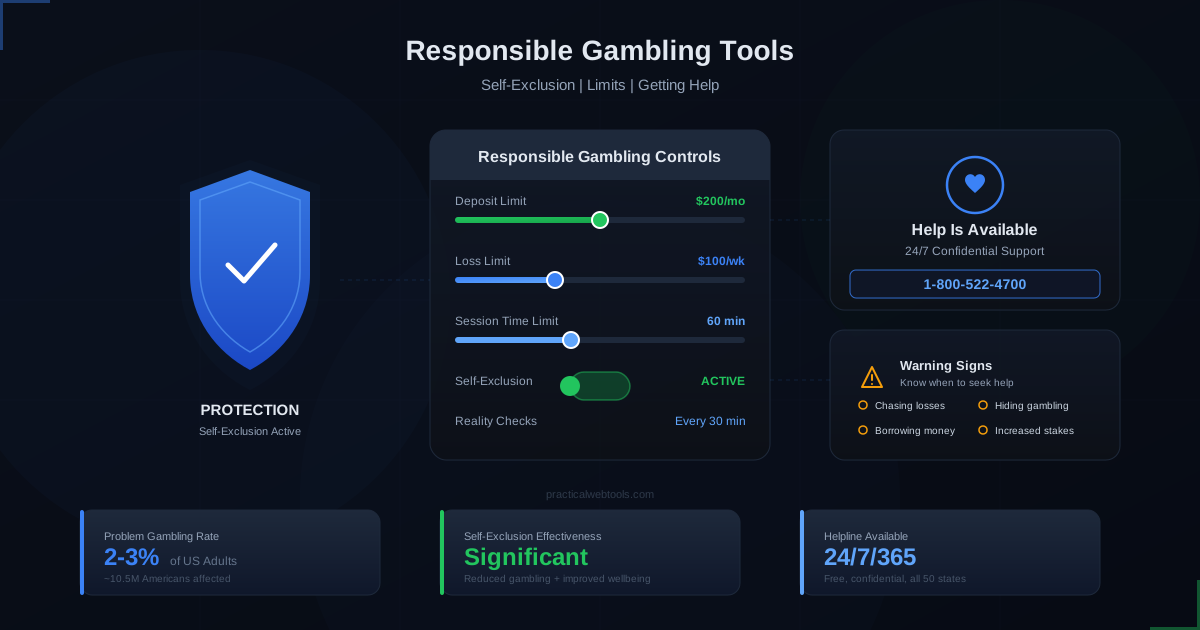
According to the American Psychiatric Association, approximately 1-3% of the US adult population meets the criteria for gambling disorder. But the neurological effects of gambling are not limited to those with diagnosable conditions. Every person who has ever felt the rush of a winning bet, the sting of a bad beat, or the irresistible urge to place "just one more" bet has experienced the neurochemistry described in this article.
Understanding how your brain responds to gambling is the most powerful tool you have for maintaining control. You cannot fight an enemy you do not understand.
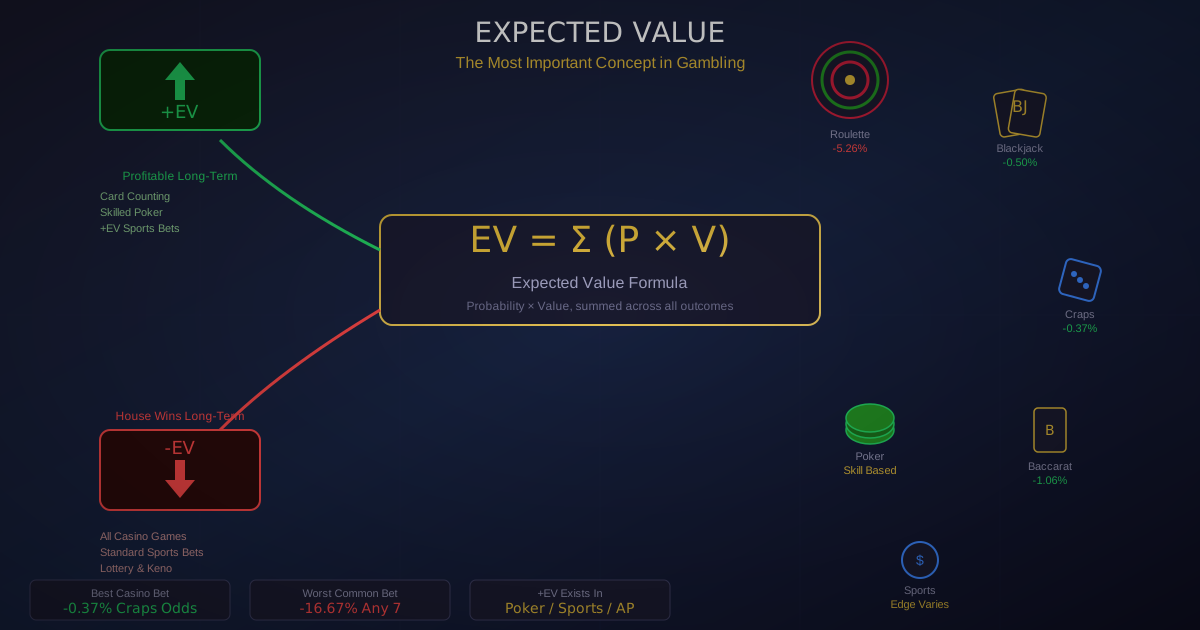
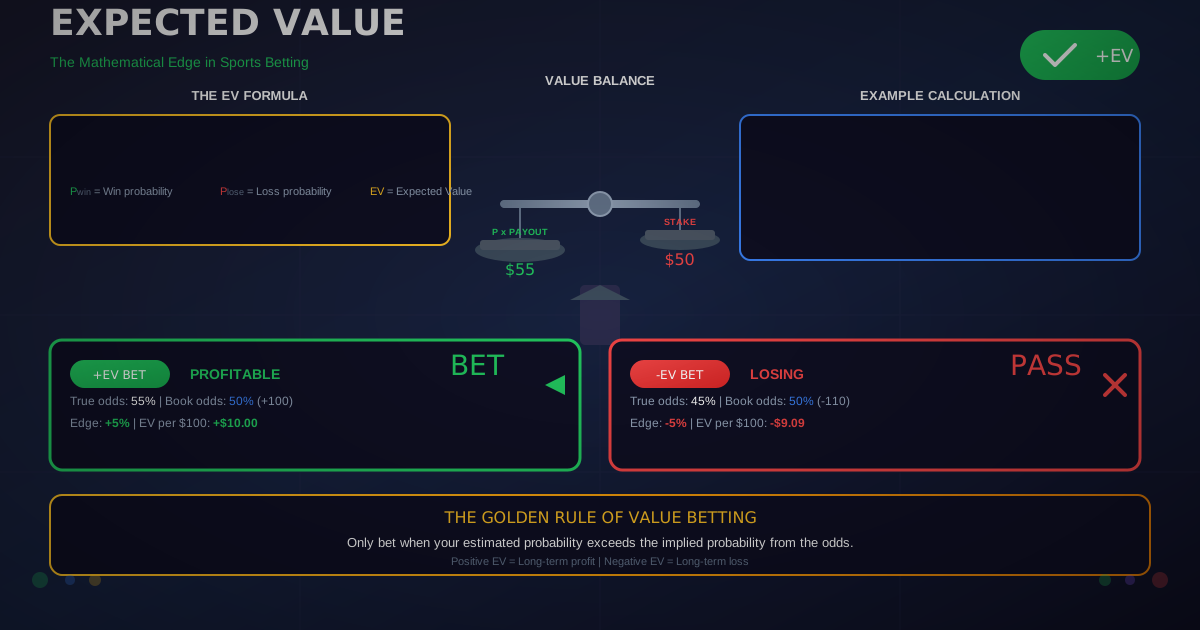
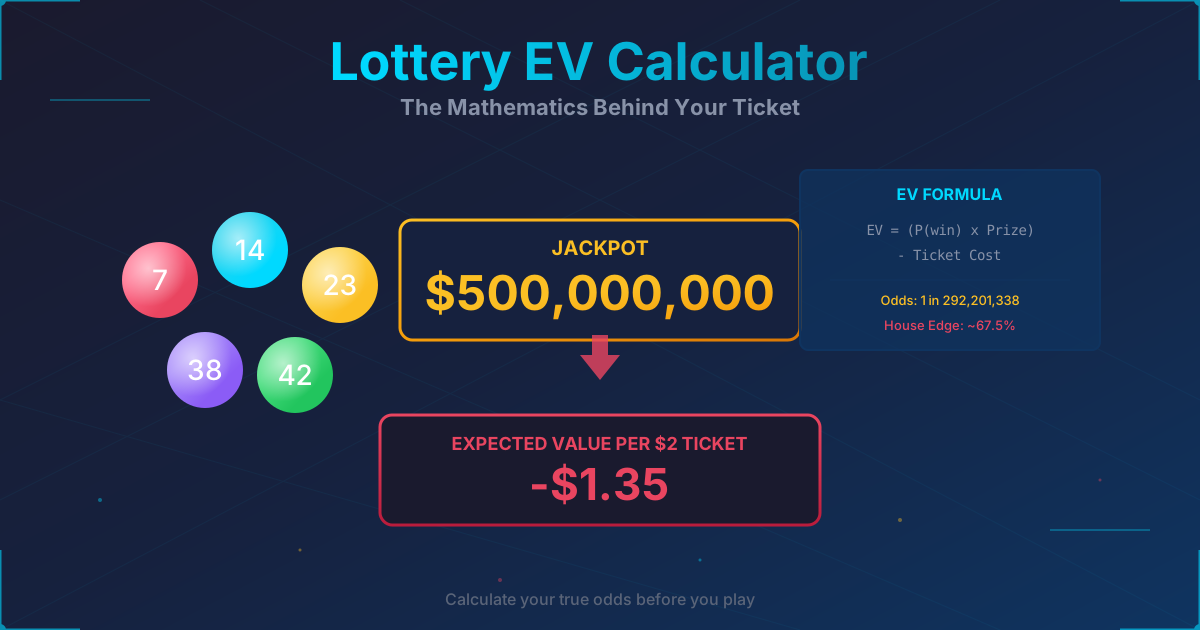
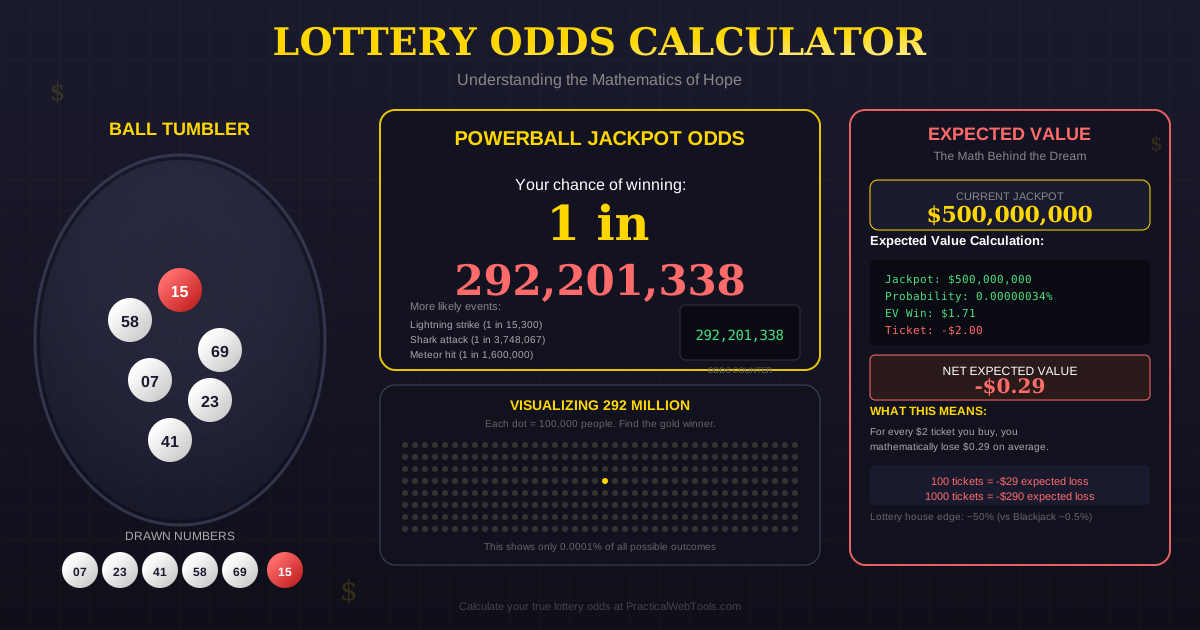
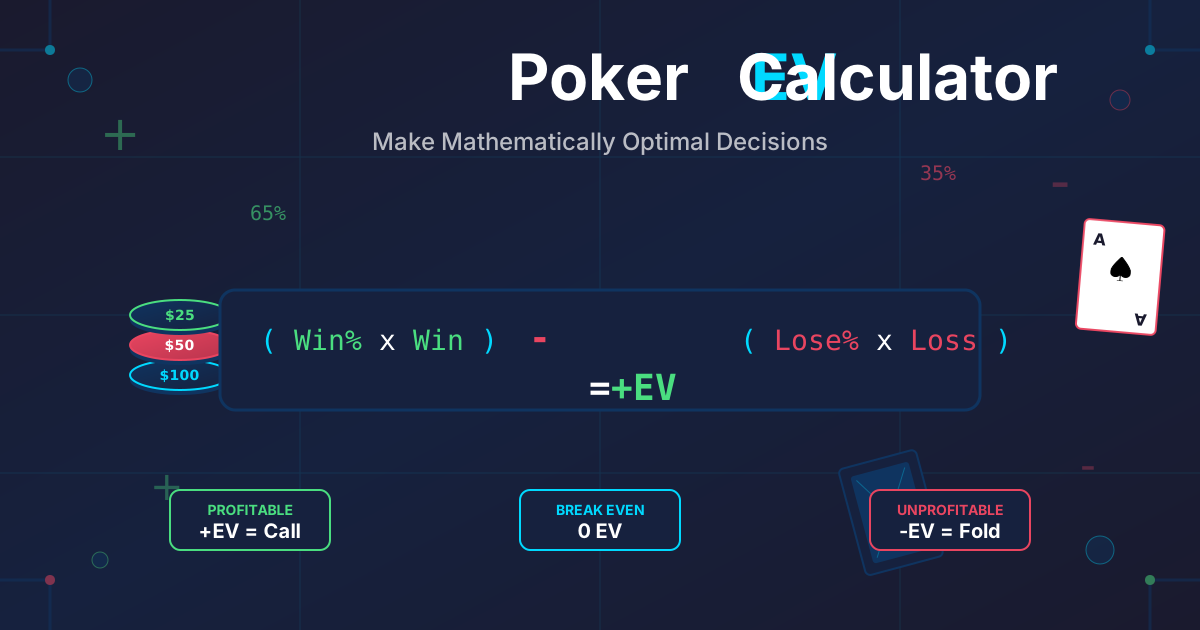
Calculate the true mathematical expectation of any bet with our free Expected Value Calculator -- because your brain's "feeling" about a bet is not the same as its actual value.
How Does the Dopamine System Respond to Gambling?
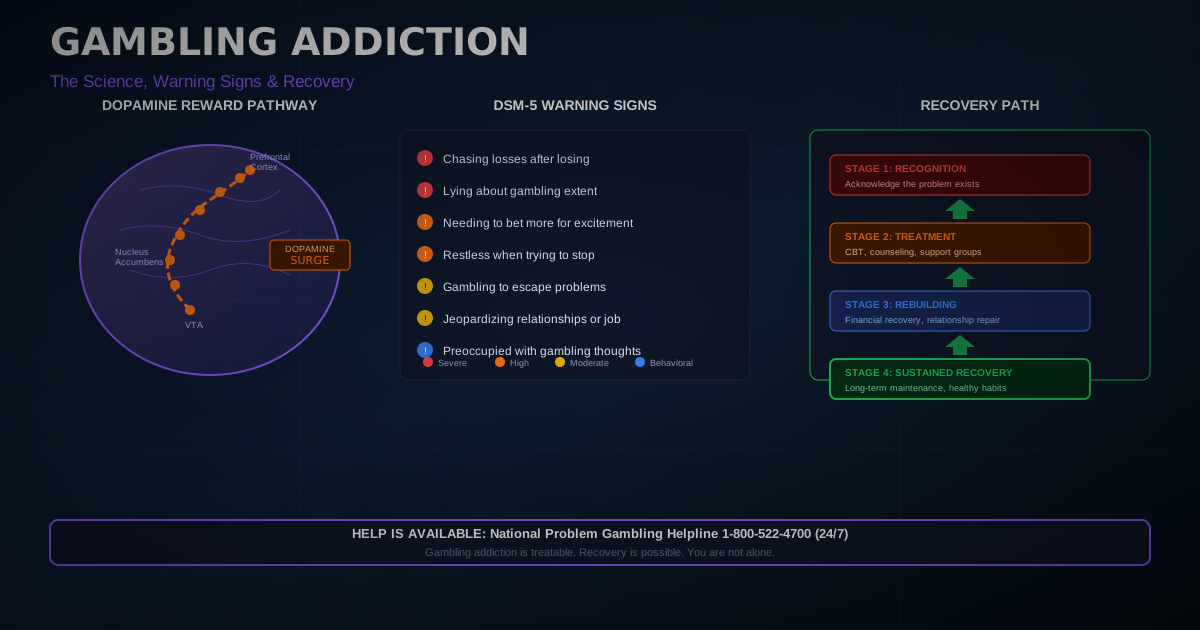
Dopamine is a neurotransmitter -- a chemical messenger that transmits signals between nerve cells in the brain. It plays a central role in the brain's reward system, which is primarily located in the mesolimbic pathway connecting the ventral tegmental area (VTA) to the nucleus accumbens.
The critical insight about dopamine and gambling: dopamine is not released in response to rewards themselves. Dopamine is released in response to the anticipation and prediction of rewards. This distinction is the key to understanding why gambling is so neurologically compelling.
The Dopamine Prediction Error Model
Wolfram Schultz's Nobel Prize-nominated research on dopamine neurons revealed that dopamine operates on a prediction error model:
| Scenario | Dopamine Response | Subjective Experience |
|---|---|---|
| Unexpected reward | Large dopamine spike | Excitement, pleasure, desire to repeat |
| Expected reward received | Small or no dopamine spike | Mild satisfaction |
| Expected reward NOT received | Dopamine dip below baseline | Disappointment, frustration |
| Near-miss (almost a reward) | Moderate dopamine spike | "Almost had it" -- motivation to continue |
| Uncertain/unpredictable reward | Sustained elevated dopamine | Anticipation, excitement, heightened attention |
This model explains several puzzling gambling behaviors:
- Why the first big win is the most memorable. It was unexpected, producing the largest dopamine spike.
- Why consistent small wins become boring. Expected rewards produce less dopamine over time.
- Why near-misses feel motivating rather than discouraging. They produce moderate dopamine spikes, similar to actual wins.
- Why the anticipation of a bet is often more exciting than the outcome. Dopamine peaks during uncertainty, not at resolution.
Dopamine Release During Different Gambling Activities
| Activity | Dopamine Trigger Point | Intensity | Duration |
|---|---|---|---|
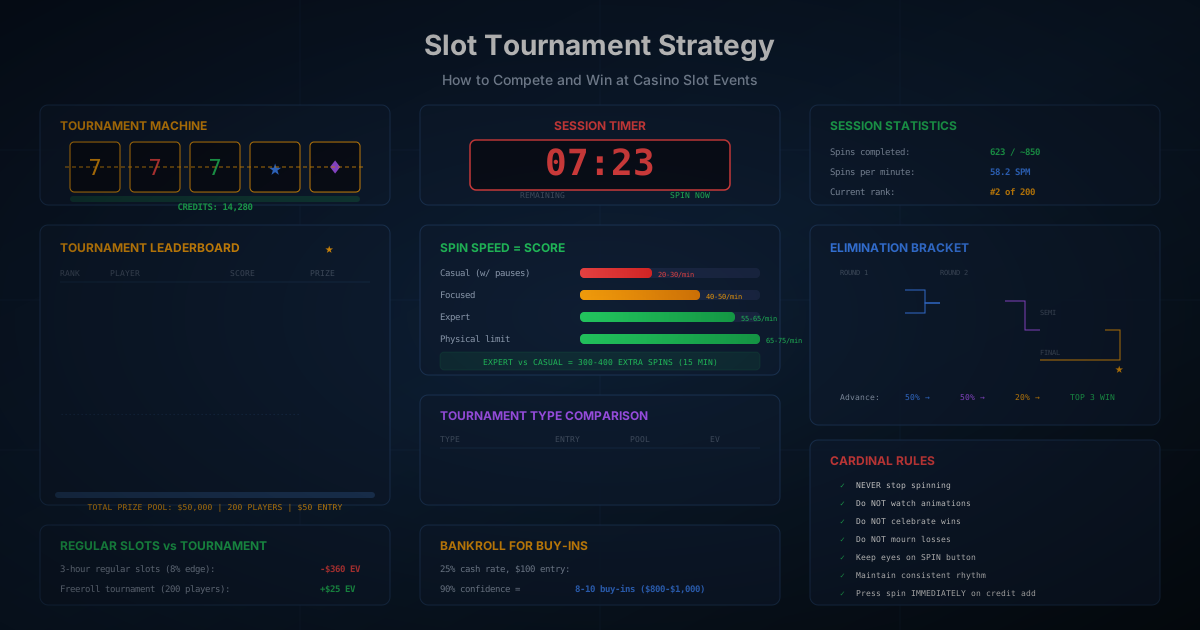
| Slot machine spin | During the spin (anticipation) | High | Brief (seconds) |
| Sports bet (live game) | Throughout the game | Moderate-high | Extended (hours) |
| Poker hand | During each decision point | Moderate | Hand duration (minutes) |
| Roulette wheel spin | Ball spinning on wheel | High | Brief (30 seconds) |
| Lottery ticket | Scratching / checking numbers | Moderate | Brief (seconds-minutes) |
| Blackjack hand | Card reveal | Moderate | Brief (seconds) |
The extended duration of dopamine elevation during sports betting is particularly noteworthy. A three-hour NFL game with money on the line provides a sustained dopamine drip that no other form of gambling matches. Every play, every drive, every score triggers micro-predictions and micro-rewards, keeping the dopamine system engaged for hours.
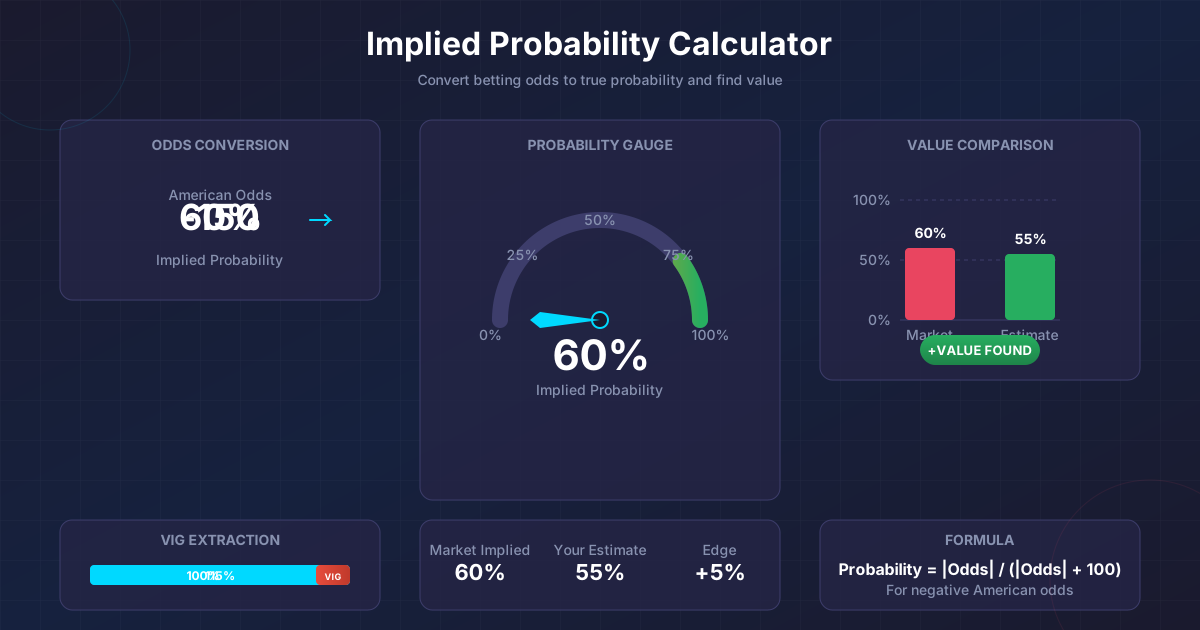
Understand the actual probability behind every bet with our Implied Probability Calculator.
What Is the Near-Miss Effect and Why Is It So Powerful?
The near-miss effect is one of the most studied and most exploited phenomena in gambling neuroscience. A near-miss occurs when the outcome is close to a win but falls just short -- and the brain processes it almost identically to an actual win.
fMRI Evidence
Functional magnetic resonance imaging (fMRI) studies have consistently demonstrated that near-misses activate the same brain regions as wins:
| Brain Region | Response to Win | Response to Near-Miss | Response to Clear Loss |
|---|---|---|---|
| Ventral striatum (reward center) | Strong activation | Moderate-strong activation | Minimal activation |
| Anterior insula (motivation) | Strong activation | Strong activation | Moderate activation |
| Prefrontal cortex (decision-making) | Moderate activation | Moderate activation | Moderate activation |
| Amygdala (emotional processing) | Moderate activation | Moderate activation | Strong activation |
| Dopamine release | Large spike | Moderate spike | Dip below baseline |
The key finding: the ventral striatum -- the brain's primary reward center -- responds to near-misses almost as strongly as to actual wins. This means your reward system is being activated even though you lost money.
How Near-Misses Affect Behavior
| Behavioral Effect | What Happens | Example |
|---|---|---|
| Increased persistence | Players continue gambling longer after near-misses | Slot player who "almost hit" the jackpot plays 30 more minutes |
| Elevated arousal | Heart rate and skin conductance increase | Galvanic skin response spikes similar to actual wins |
| Cognitive distortion | Players interpret near-misses as evidence they are "close" | "I almost had it, so I must be due for a win" |
| Reinforced play | Near-misses act as partial reinforcement | The slot spin that shows two jackpot symbols feels like progress |
| Emotional engagement | Near-misses produce excitement, not disappointment | Players describe feeling "so close" rather than "I lost" |
Near-Misses in Different Gambling Contexts
| Context | Near-Miss Example | Neurological Impact |
|---|---|---|
| Slot machines | Two of three matching symbols | Highest impact (visually designed for this) |
| Sports betting | Your team loses by 1 point (bad beat) | High impact, extended emotional processing |
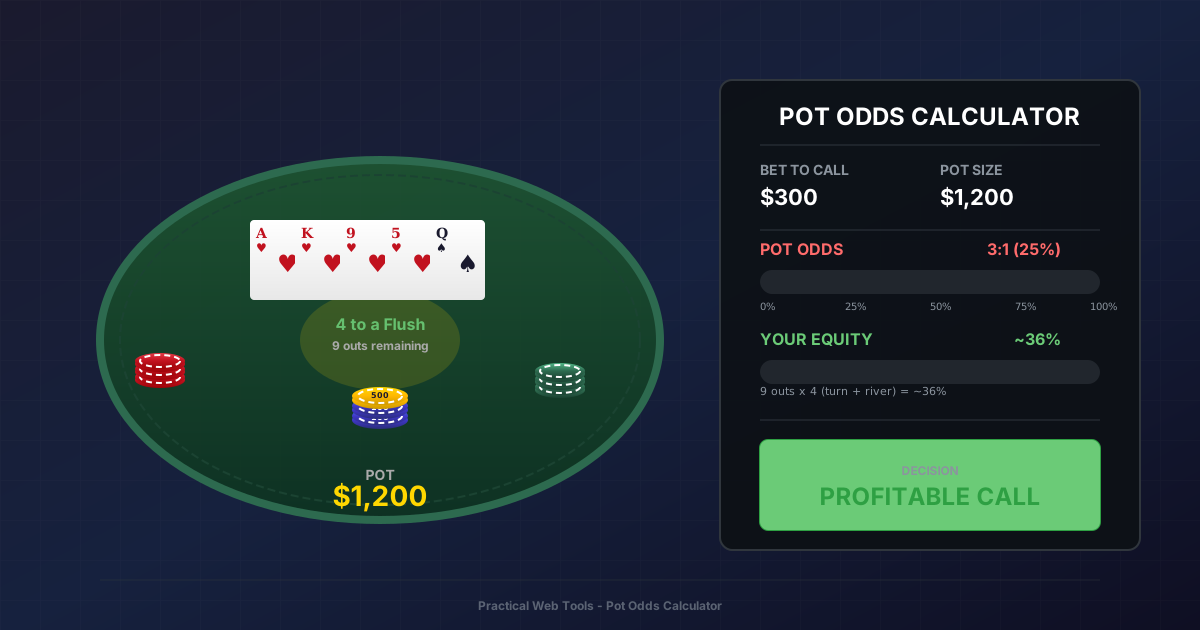
| Poker | Missing a flush or straight on the river | High impact, perceived "bad luck" |
| Roulette | Ball landing on adjacent number | Moderate impact |
| Blackjack | Busting on 22 after hitting | Moderate impact |
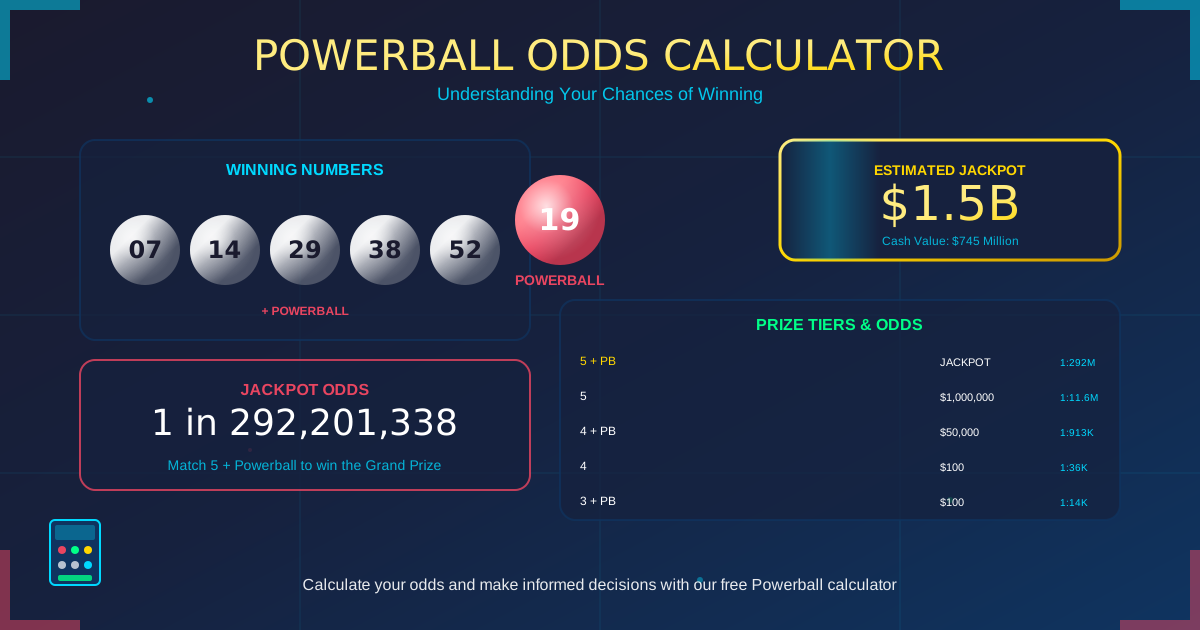
| Lottery | Matching 4 of 5 numbers | High impact (drives continued play) |
Slot machines are engineered to maximize near-misses. Modern slot algorithms deliberately produce near-miss outcomes more frequently than random chance would predict, creating the illusion of being "close to winning" when the actual probability of winning has not changed.
Calculate the actual expected value of any gambling activity with our Expected Value Calculator.
What Is Variable Ratio Reinforcement and Why Does It Drive Gambling?
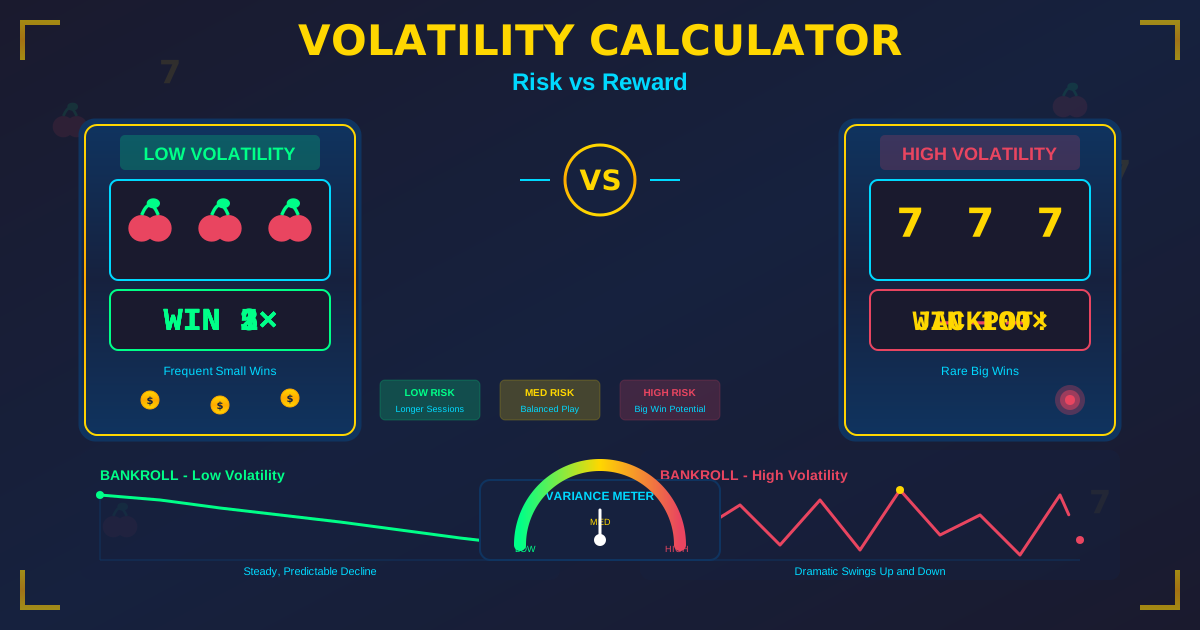
Variable ratio reinforcement is the psychological schedule that makes gambling the most addictive form of reward delivery known to behavioral science. It is the same mechanism that makes social media, video game loot boxes, and fishing psychologically compelling -- but gambling is the purest expression of it.
Understanding Reinforcement Schedules
B.F. Skinner's research on reinforcement schedules demonstrated that the pattern of reward delivery is more important than the reward itself in driving behavior. There are four primary schedules:
| Schedule | Description | Behavior Pattern | Example |
|---|---|---|---|
| Fixed ratio | Reward after every N responses | Moderate, pauses after reward | Factory piece work (get paid every 10 units) |
| Fixed interval | Reward after a fixed time period | Low effort, spikes near reward time | Paycheck every two weeks |
| Variable interval | Reward after random time intervals | Steady, moderate response rate | Checking email (messages arrive unpredictably) |
| Variable ratio | Reward after a random number of responses | Highest, most persistent response rate | Slot machines, gambling |
Variable ratio reinforcement produces the highest response rate and the greatest resistance to extinction (stopping the behavior) of any reinforcement schedule. This is not an opinion -- it is one of the most replicated findings in behavioral psychology.
Why Variable Ratio Is So Effective
| Factor | Mechanism | Gambling Application |
|---|---|---|
| Unpredictability | Brain cannot predict when reward comes, so it stays alert | Every spin / bet could be the winner |
| Optimistic bias | "The next one could be the big one" | Drives continued play through losses |
| No natural stopping point | Unlike fixed schedules, there is no clear "done" signal | Slot players do not stop after a specific number of spins |
| Rapid reinforcement cycle | Quick response-reward loops | Slot machines: 10-12 spins per minute |
| Partial reinforcement effect | Intermittent rewards create stronger habits than consistent rewards | Occasional wins amid losses create deeper behavioral patterns |
| Resistance to extinction | Behavior persists long after rewards stop | Losing streaks do not extinguish the urge to play |
Variable Ratio in Specific Gambling Contexts
| Gambling Type | Reinforcement Speed | Variable Ratio Intensity | Addiction Potential |
|---|---|---|---|
| Slot machines | Very fast (6-10 sec/spin) | Maximum | Highest |
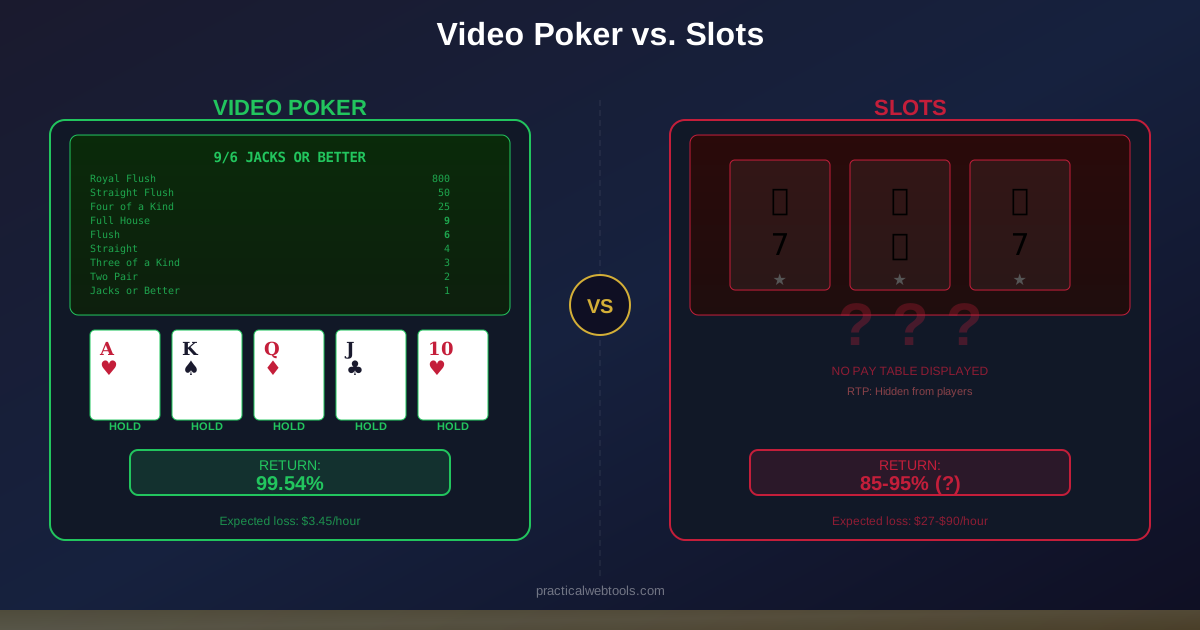
| Video poker | Fast (15-30 sec/hand) | Very high | Very high |
| Online casino games | Very fast (seconds) | Maximum | Very high |
| Live sports betting | Moderate (minutes-hours) | High | High |
| In-play sports betting | Fast (seconds-minutes) | Very high | Very high |
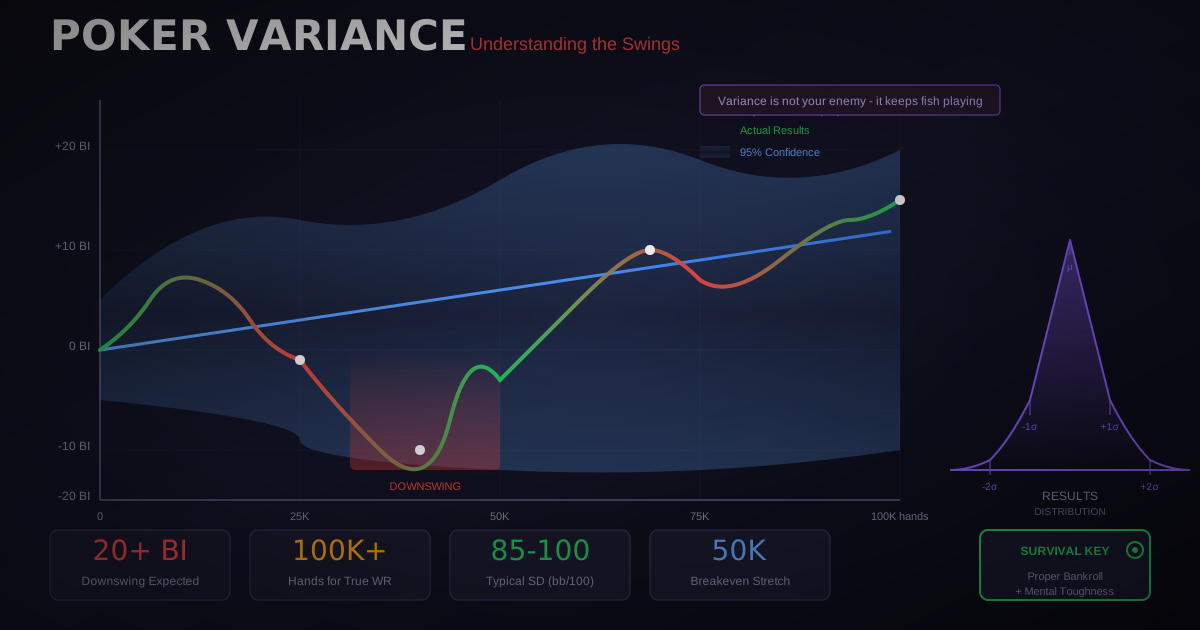
| Poker (cash games) | Moderate (2-5 min/hand) | Moderate-high | Moderate-high |
| Lottery | Very slow (days-weeks) | Low | Low-moderate |
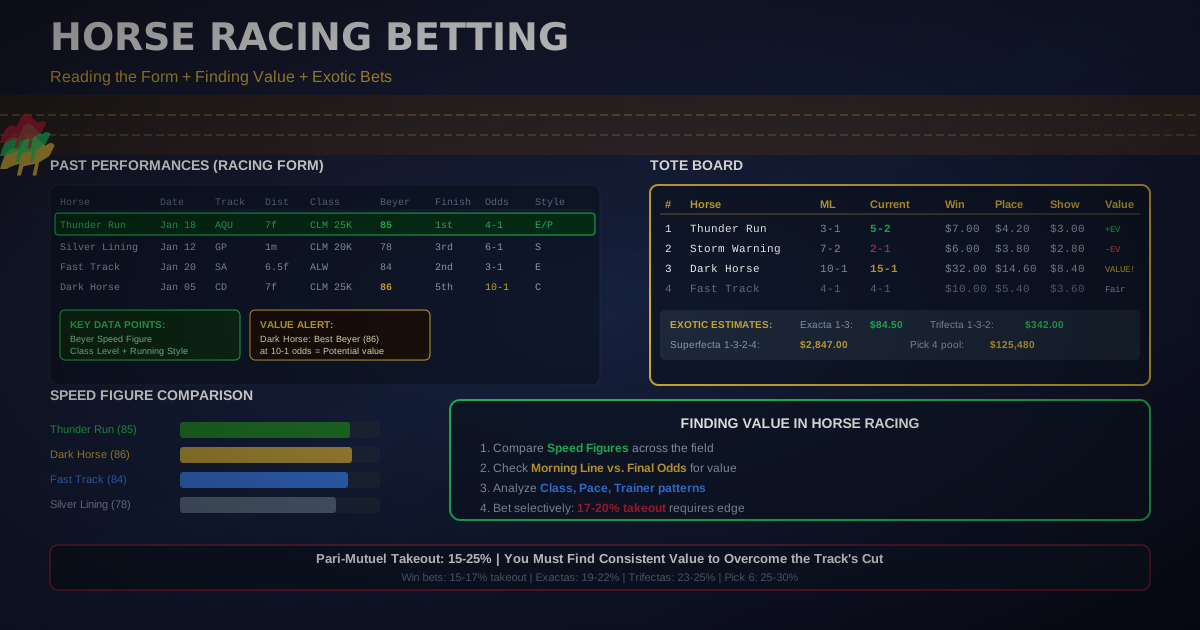
| Horse racing | Slow (20-30 min/race) | Moderate | Moderate |
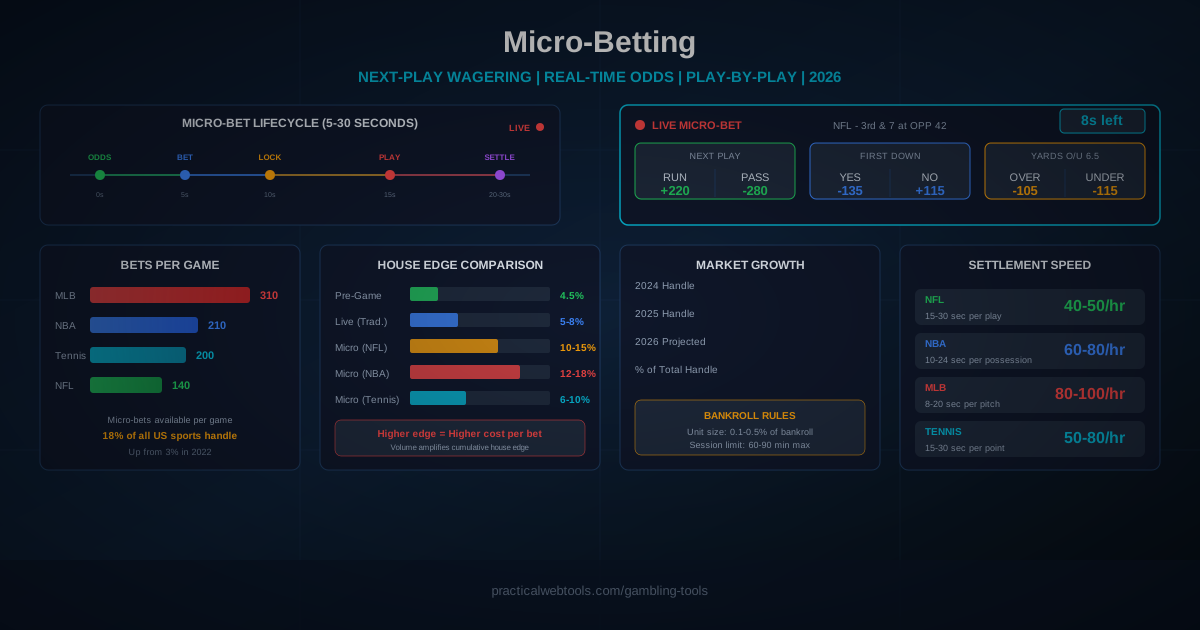
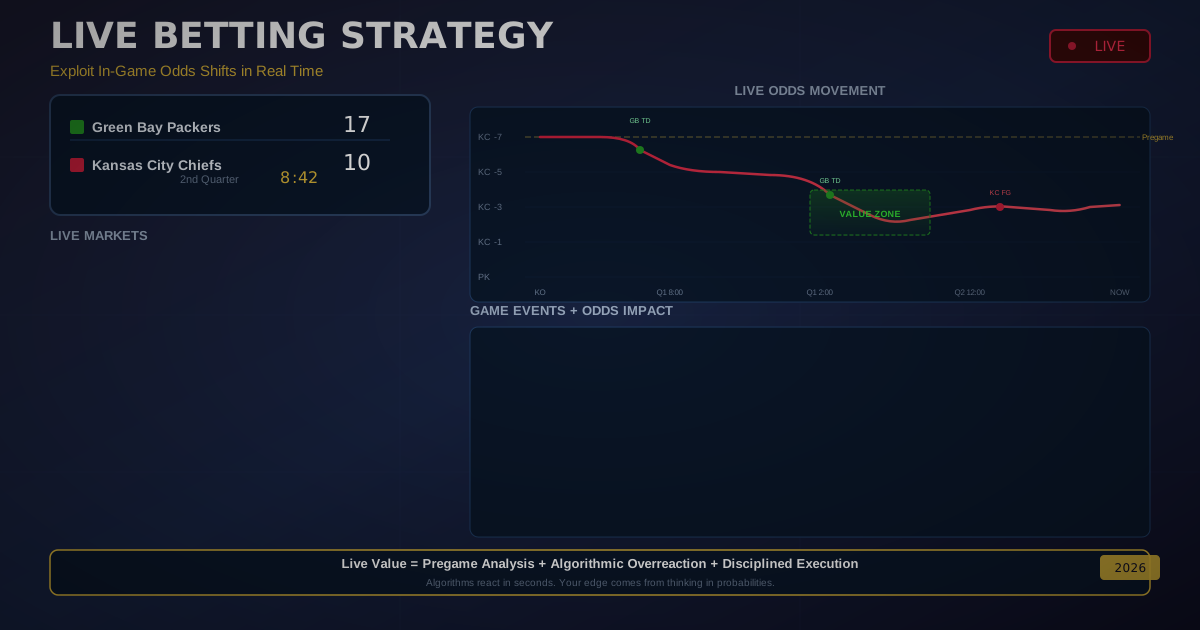
In-play (live) sports betting deserves special attention because it combines the extended engagement of sports watching with the rapid reinforcement cycle of casino gambling. Every play of a football game offers a micro-betting opportunity, turning a three-hour game into hundreds of variable-ratio reinforcement cycles.
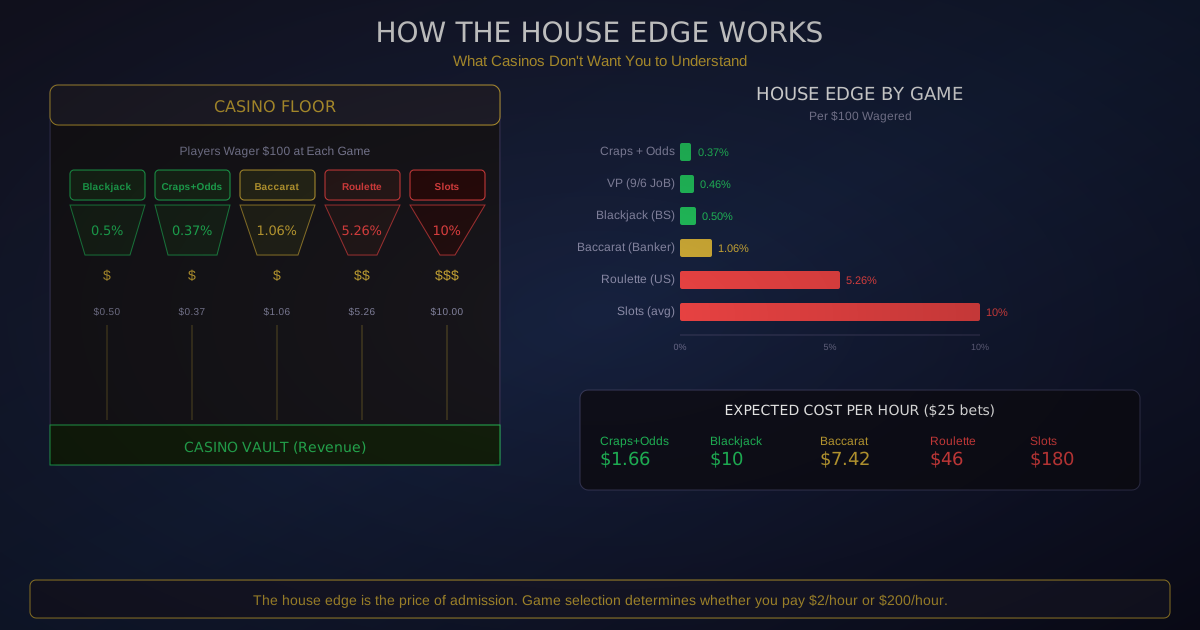
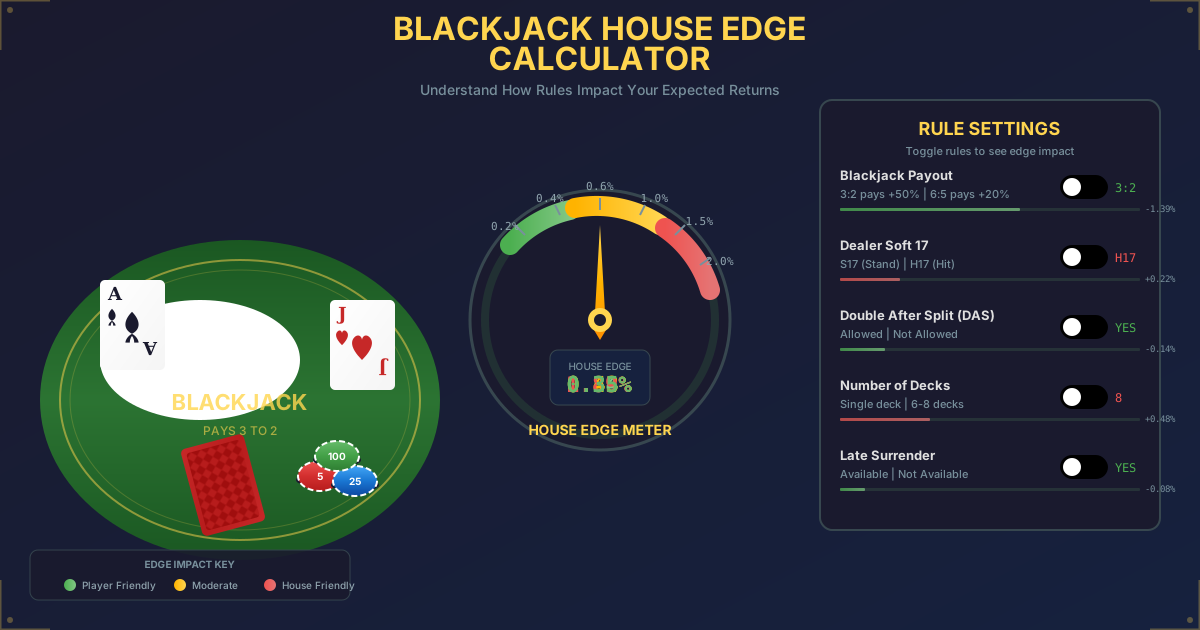
Understand the true house edge of any casino game with our Roulette House Edge Calculator or Blackjack House Edge Calculator.
How Does Loss Aversion Drive Chasing Behavior?
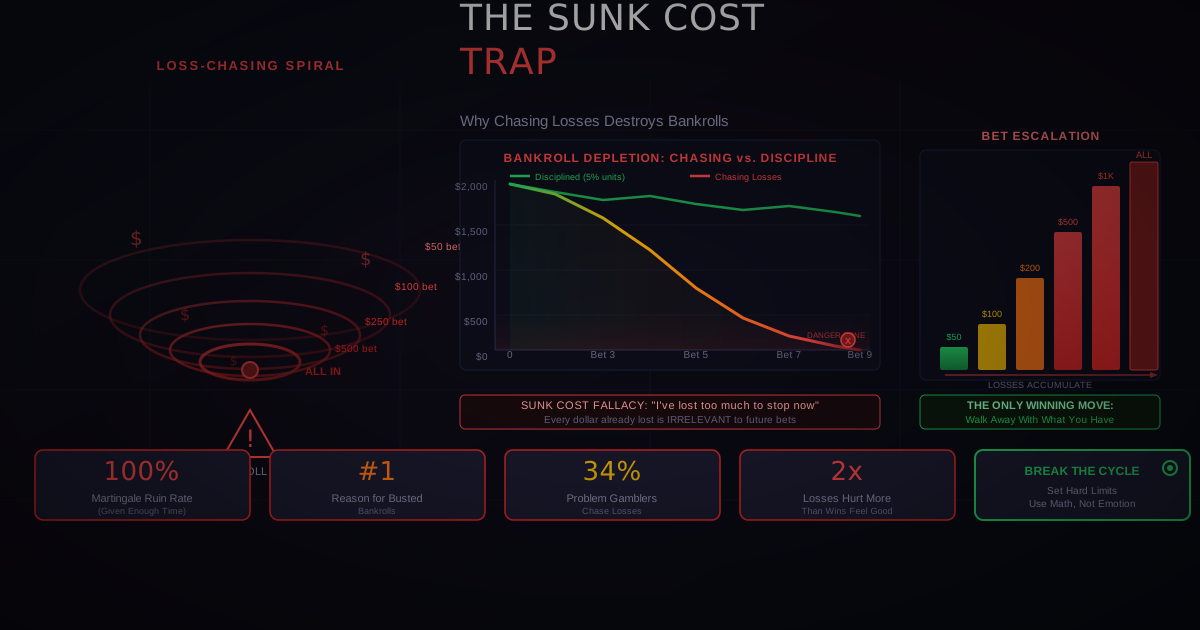
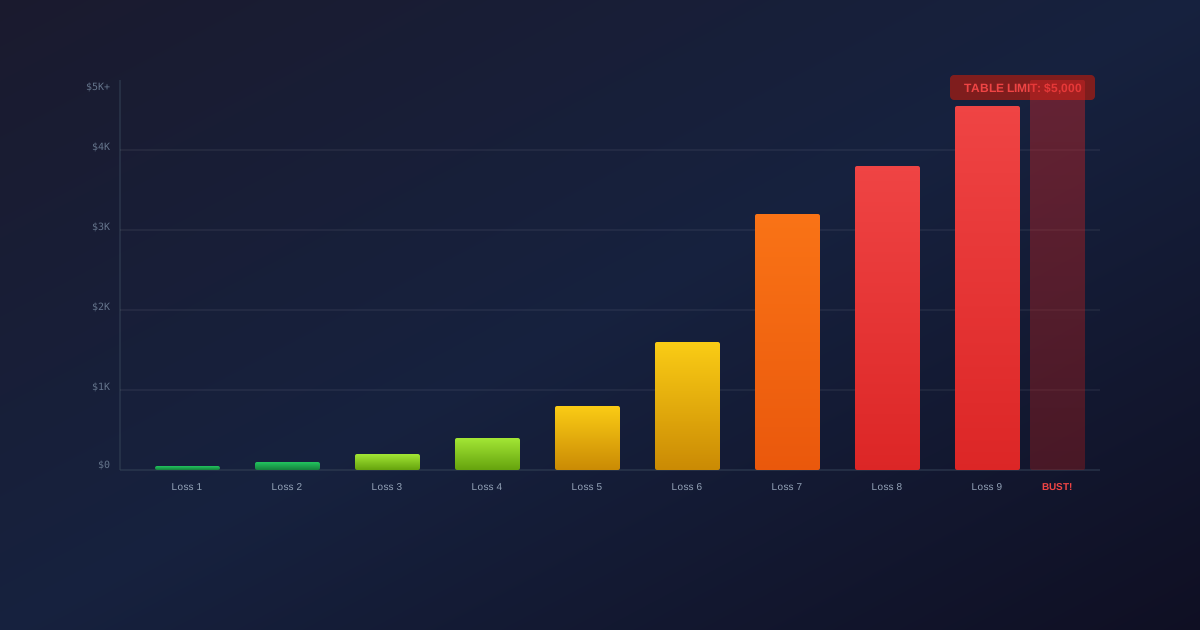
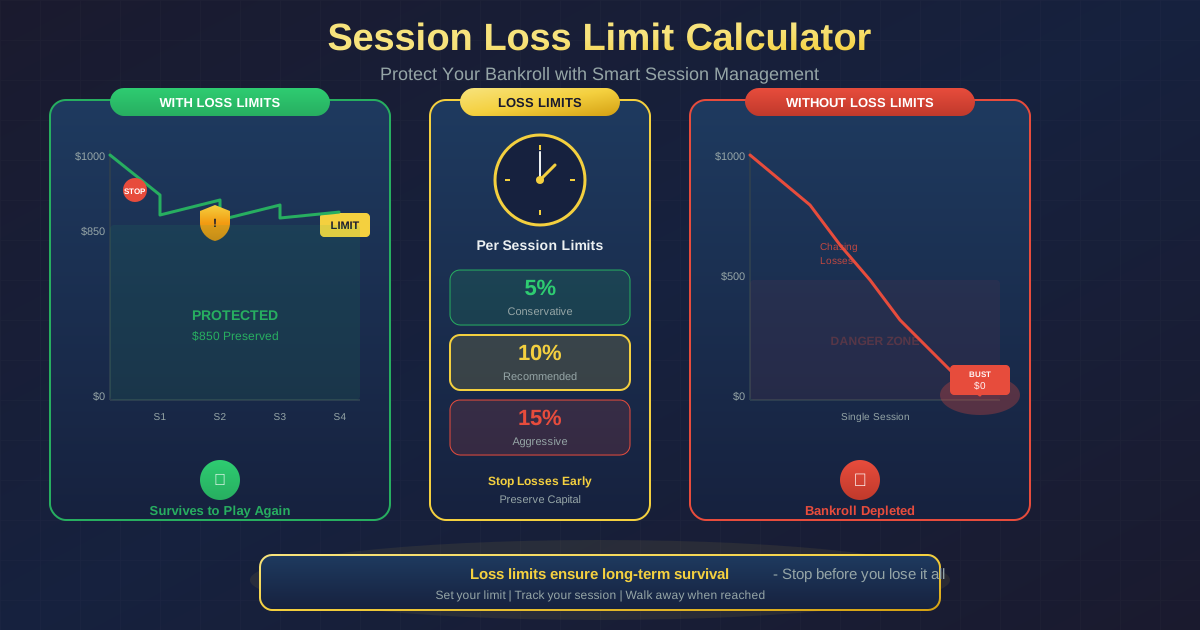
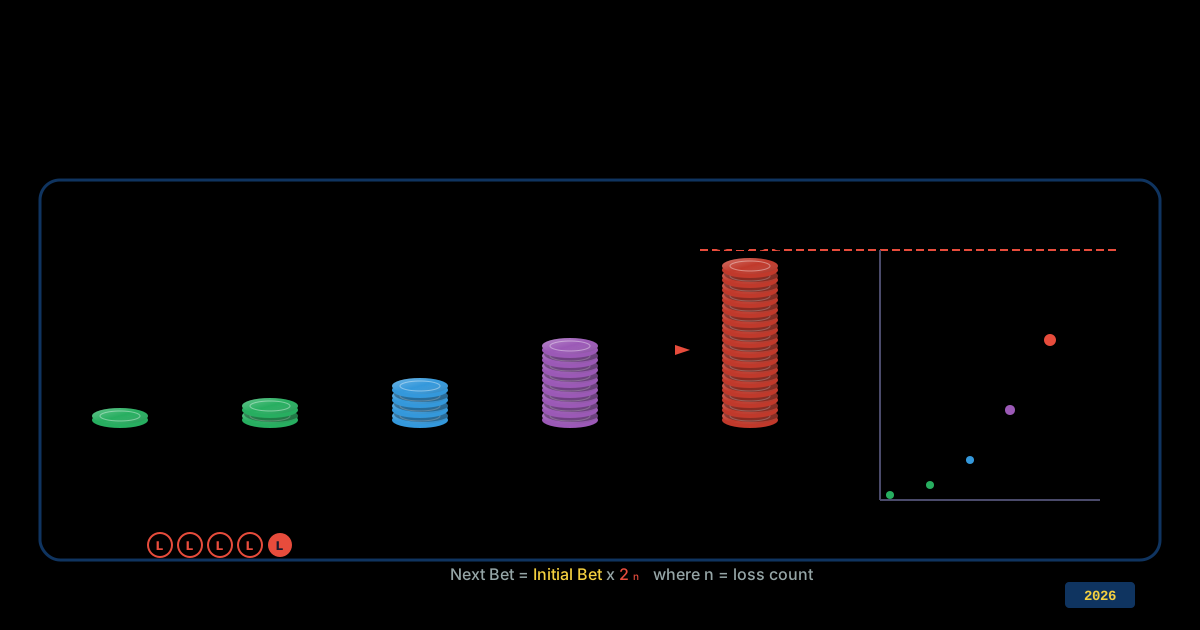
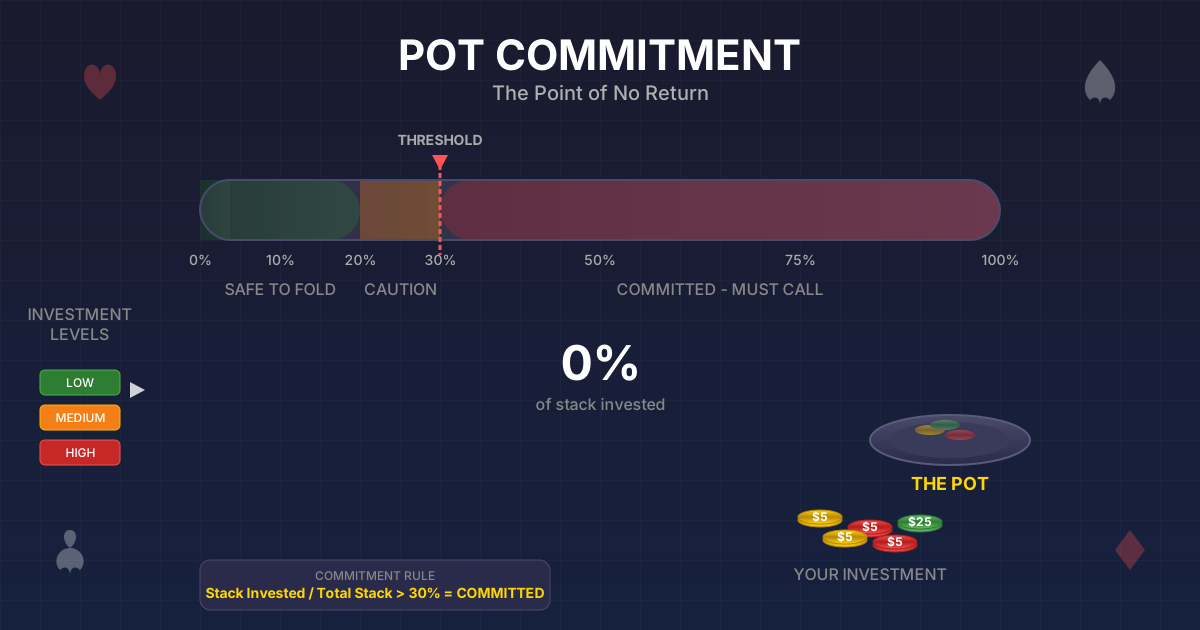
Loss aversion -- the psychological principle that losses feel approximately twice as painful as equivalent gains feel pleasurable -- is one of the primary drivers of the most destructive gambling behavior: chasing losses.
The Neuroscience of Loss Aversion
When you lose money gambling, the brain's pain circuitry (anterior insula, anterior cingulate cortex) activates more strongly than the reward circuitry activates for an equivalent win. This asymmetry creates a powerful motivation to "erase" the loss.
| Loss Size | Emotional Intensity (Relative to Equivalent Win) | Behavioral Urge |
|---|---|---|
| Small ($20-50) | 1.5-2x | Mild desire to "win it back" |
| Moderate ($100-500) | 2-2.5x | Strong urge to continue playing |
| Large ($500-2,000) | 2.5-3x | Intense compulsion to chase |
| Severe ($2,000+) | 3x+ (may trigger desperation) | Irrational escalation of stakes |
The Chasing Cycle
Chasing losses follows a predictable neurological pattern:
| Stage | Brain State | Behavior | Outcome |
|---|---|---|---|
| 1. Initial loss | Loss aversion activation (pain) | Desire to continue and recover | More bets placed |
| 2. Continued play | Elevated cortisol (stress) + dopamine (anticipation) | Increased stake sizes to recover faster | Larger potential losses |
| 3. Further losses | Amygdala activation (fear) + depleted prefrontal function | Desperate, irrational bets | Decision-making impaired |
| 4. Large loss | Full stress response (fight-or-flight) | Either stop (if PFC functional) or escalate to crisis | Financial and emotional damage |
| 5. Post-session | Cortisol crash, regret, shame | Promise to stop / begin planning next session | Cycle resets |
The most dangerous aspect of the chasing cycle is Stage 3, where the prefrontal cortex (responsible for rational decision-making) becomes impaired by the stress response. In this state, the emotional brain overrides the rational brain, and bettors make decisions they would never make in a calm state.
Breaking the Chasing Cycle
| Strategy | Mechanism | Implementation |
|---|---|---|
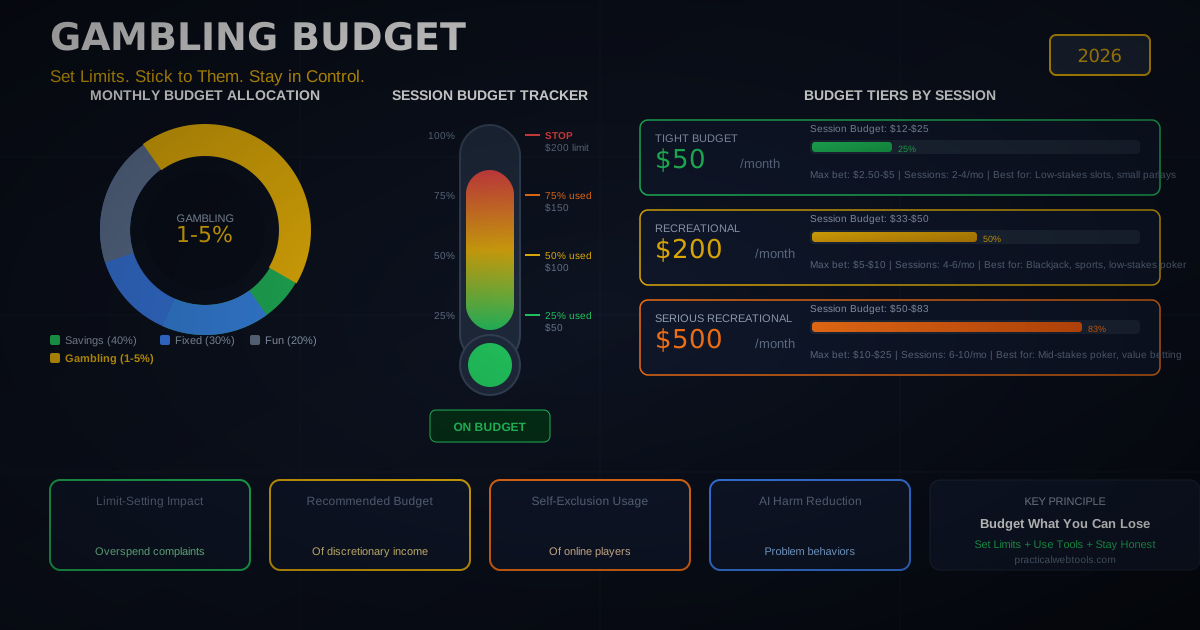
| Pre-set loss limits | Remove decision-making from the emotional state | Set deposit limits before playing |
| 24-hour cooling-off period | Allow prefrontal cortex to regain control | Never make a gambling decision while upset |
| Physical separation | Break the stimulus-response connection | Leave the casino or close the app |
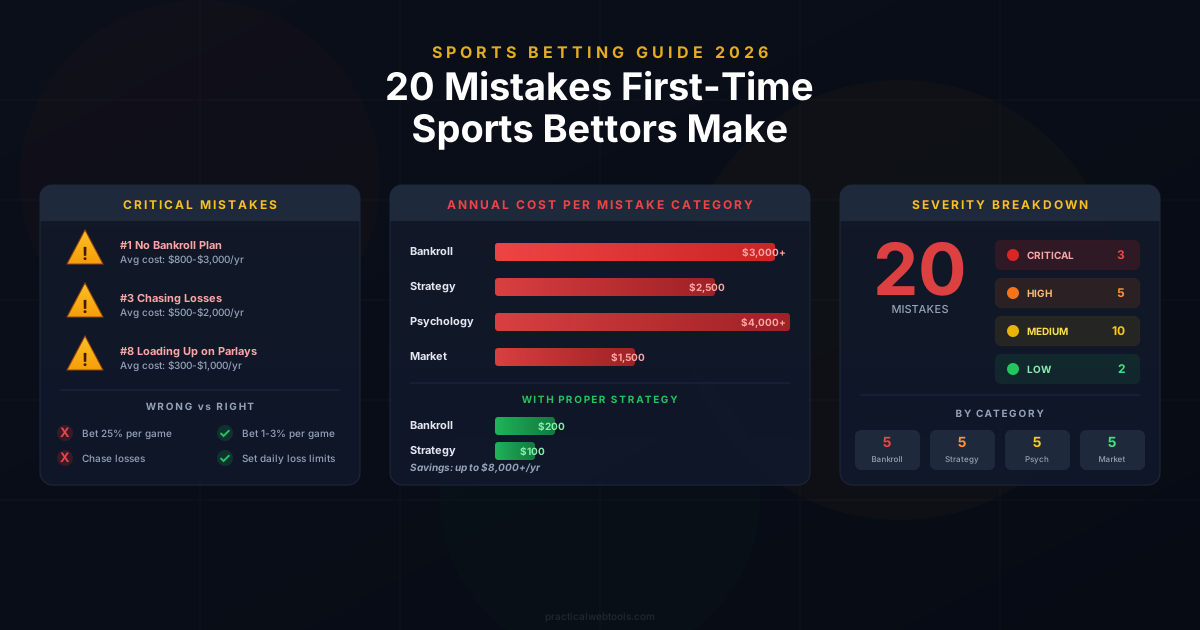
| Cognitive reframing | Counter the "I can win it back" thought | "My expected outcome is to lose more, not recover" |
| Social accountability | External check on impaired decision-making | Text a friend or partner before making additional deposits |
Calculate the mathematical reality of chasing -- the expected value of your next bet is negative regardless of your previous results -- with our Expected Value Calculator.
What Is the Gambler's Fallacy and What Is Its Neurological Basis?
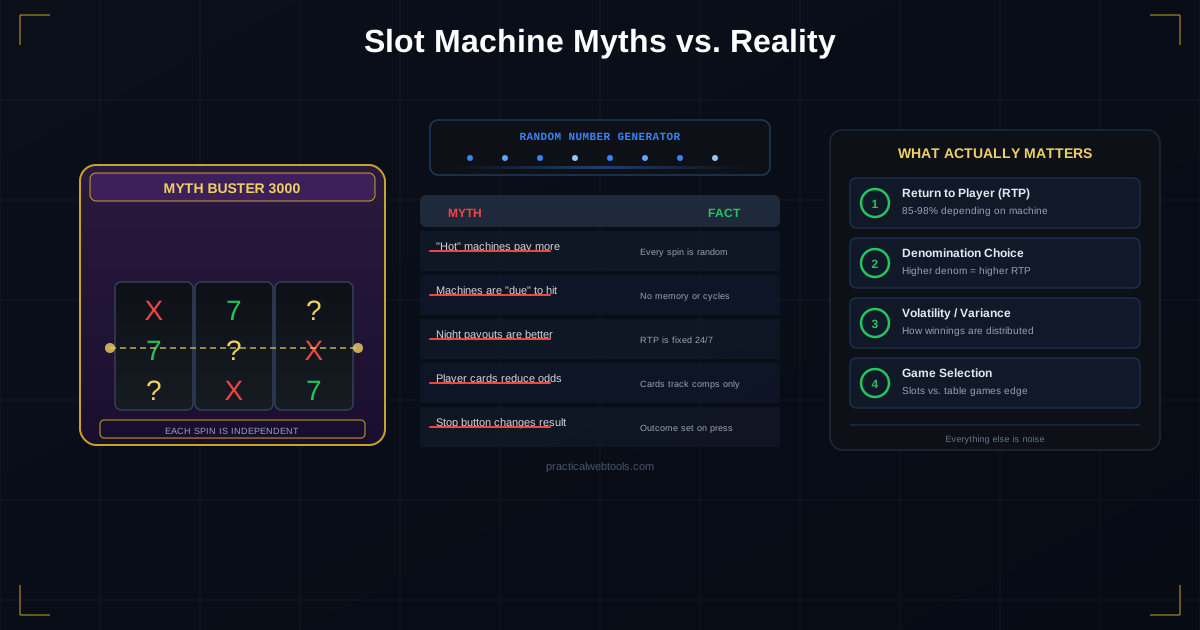
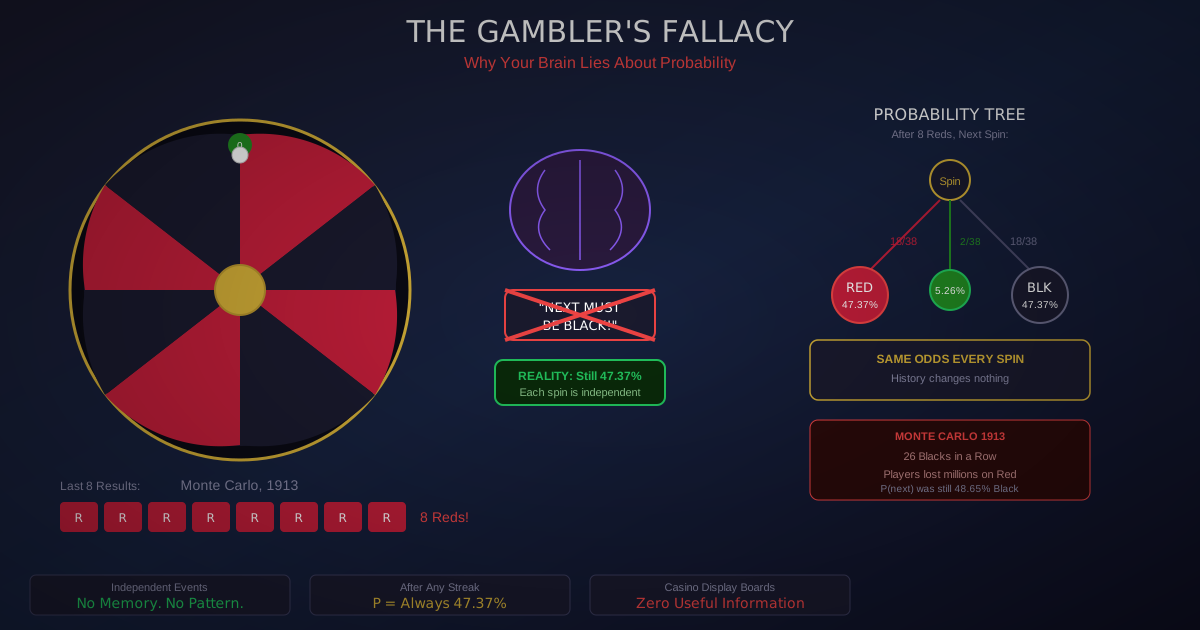
The gambler's fallacy is the belief that past random events affect future random events -- that a roulette wheel that has landed on red six times in a row is "due" to land on black. This fallacy has a specific neurological basis that explains why it is so persistent despite being logically incorrect.
Why the Brain Creates the Fallacy
The human brain evolved to detect patterns because pattern detection was survival-critical. A rustling in the bushes that preceded predator attacks needed to be recognized. This pattern-detection system, primarily located in the basal ganglia and temporal cortex, operates automatically and below conscious awareness.
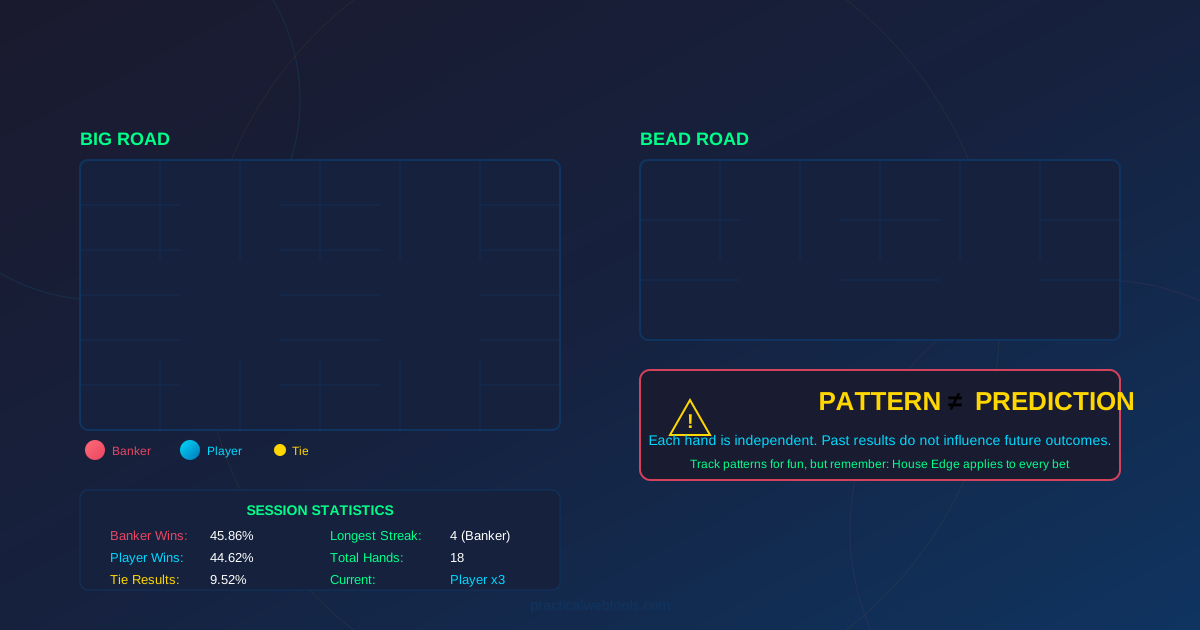
The problem: this pattern-detection system does not distinguish between genuine patterns (predator sounds) and random sequences (coin flips, roulette spins). When it detects a "streak" in random data, it automatically generates an expectation that the pattern will continue or correct -- even when the data is genuinely random.
The Gambler's Fallacy in Practice
| Scenario | Fallacious Belief | Reality |
|---|---|---|
| Roulette: 6 reds in a row | "Black is due" | Each spin is independent: 48.6% for black (always) |
| Craps: Shooter has rolled 10 straight passes | "Cold streak coming" | Each roll is independent |
| Sports betting: Team has covered last 5 games | "Regression is coming" | May or may not be true, but unrelated to sequence |
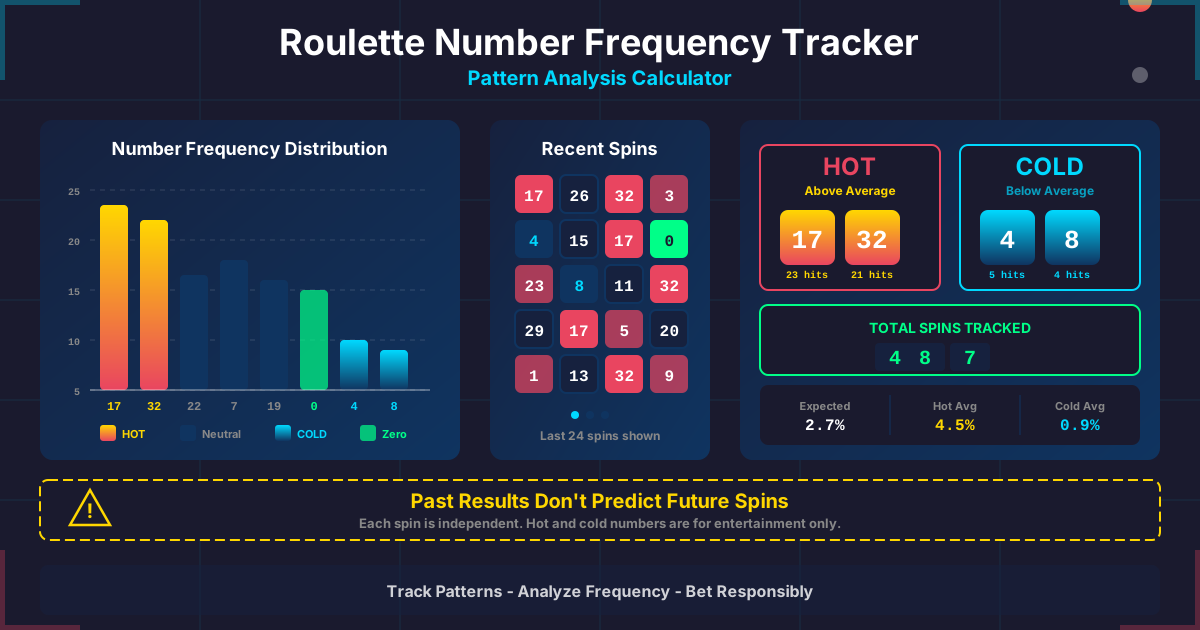
| Slot machine: No wins in 50 spins | "It must be ready to pay out" | Each spin is independent with the same probability |
| Coin flip: 8 heads in a row | "Tails must be next" | 50/50 on every flip, regardless of history |
The Hot Hand Illusion
The opposite of the gambler's fallacy is the hot hand illusion -- the belief that a winning streak will continue. Interestingly, both fallacies are produced by the same underlying pattern-detection mechanism. Whether the brain predicts continuation (hot hand) or reversal (gambler's fallacy) depends on context:
| Context | Brain's Prediction | Fallacy Name |
|---|---|---|
| Random outcomes (roulette, slots) | Reversal ("it is due") | Gambler's fallacy |
| Skill-based outcomes (basketball shooting) | Continuation ("hot hand") | Hot hand illusion |
| Sports betting streaks | Either continuation or reversal | Depends on individual's schema |
In reality, both beliefs are overconfident. Random outcomes do not have "memory," and while skill-based outcomes can have genuine streaks (a basketball player in rhythm), our brains dramatically overestimate both the length and predictability of such streaks.
Calculate the actual probability of any outcome with our Implied Probability Calculator -- probabilities do not change based on past results.
How Do Casino Environments Amplify These Brain Effects?
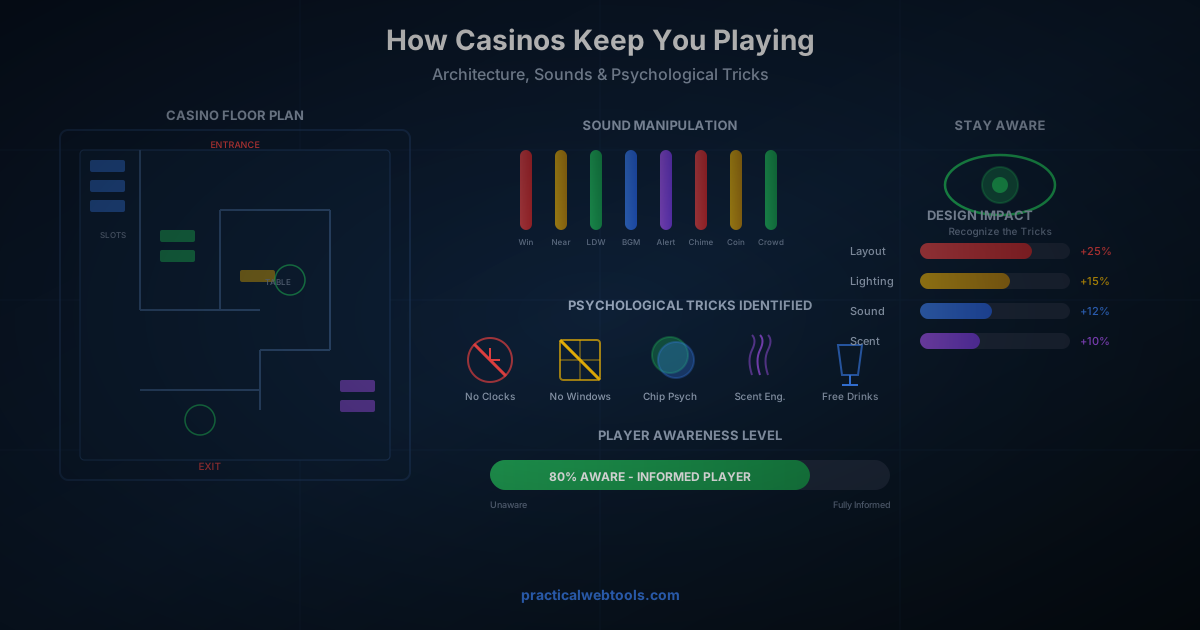
Casinos are engineered to maximize the neurological vulnerabilities described above. Every element of casino design -- from the carpet pattern to the oxygen level to the absence of clocks -- serves a specific psychological function.
The Casino Design Playbook
| Design Element | Neurological Target | Effect |
|---|---|---|
| No windows or clocks | Temporal disorientation | Eliminates natural stopping cues (time of day) |
| Constant ambient sound | Arousal maintenance | Keeps the brain in an alert, stimulated state |
| Win sounds/music | Dopamine reinforcement | Associates gambling with positive emotional responses |
| Near-miss sound effects | Near-miss amplification | Turns visual near-misses into multi-sensory experiences |
| Maze-like layouts | Exploration drive | Makes leaving physically and psychologically harder |
| Free drinks (alcohol) | Prefrontal cortex impairment | Reduces rational decision-making, increases risk-taking |
| Comfortable seating | Extended session length | Physical comfort removes a reason to stop |
| Carpet patterns | Anxiety and alertness | Busy patterns keep eyes directed upward (toward machines) |
| Low, warm lighting | Relaxation + disinhibition | Reduces self-consciousness and conscious monitoring |
| Oxygen supplementation | Alertness maintenance | Prevents fatigue that would normally end a session |
| Frequent small wins | Variable ratio reinforcement | Maintains play through scheduled "wins" (slot machines) |
The Sound Design of Gambling
Casino sound design is particularly sophisticated:
| Sound Type | When Used | Brain Effect |
|---|---|---|
| Win jingles | After any win, no matter how small | Dopamine association (Pavlovian conditioning) |
| Coin-dropping sounds | During payouts (even virtual) | Activates reward circuitry associated with money |
| Upbeat background music | Constant ambient | Maintains positive arousal state |
| Silence | Notably absent | No quiet periods to allow reflection or self-assessment |
| Neighbor's win sounds | When nearby machines pay out | Social proof + "that could be me" anticipation |
| Almost-win sounds | During near-misses | Amplifies the near-miss dopamine response |
The net effect of casino design is to create an environment where every neurological vulnerability is simultaneously exploited. The combination of temporal disorientation (no clocks), impaired decision-making (alcohol), maximized dopamine response (near-misses, variable ratio reinforcement), and eliminated stopping cues creates a state that behavioral scientists call a "gambling trance" or "flow state."
Online Gambling Design Equivalents
Online casinos and sportsbook apps have adapted physical casino design principles to digital environments:
| Physical Casino | Online Equivalent | Brain Effect |
|---|---|---|
| No clocks | No session timer (default) | Time blindness |
| Win sounds | Push notifications for wins | Dopamine triggers outside the app |
| Free drinks | Welcome bonuses, free bets | Reciprocity bias + reduced perceived risk |
| Maze layout | Infinite scroll of betting markets | Exploration drive, no natural end point |
| Nearby winners | Social features showing other bets | Social proof, competitive arousal |
| Quick play | One-tap betting | Reduces time for rational deliberation |
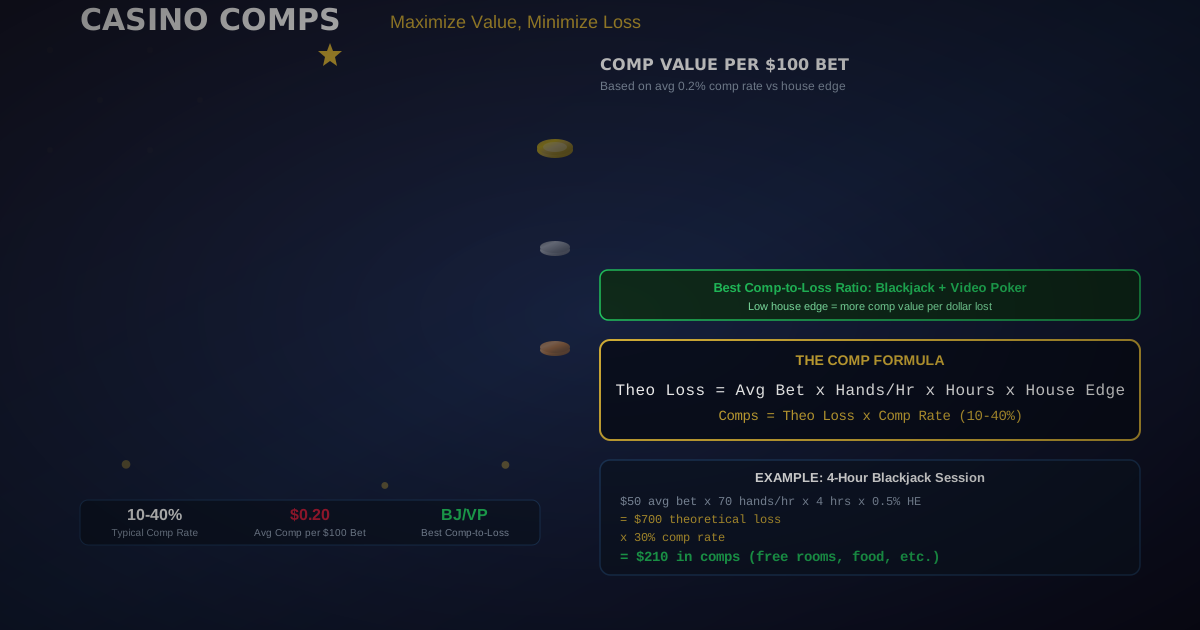
| Loyalty programs | VIP tiers, cashback, points | Sunk cost fallacy + commitment escalation |
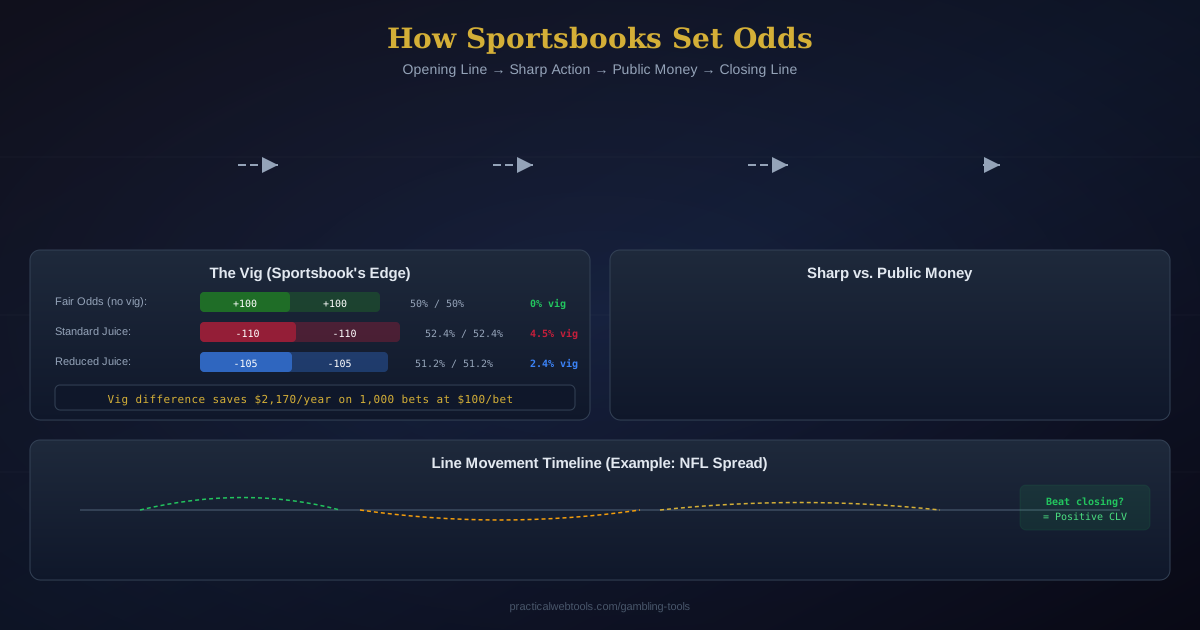
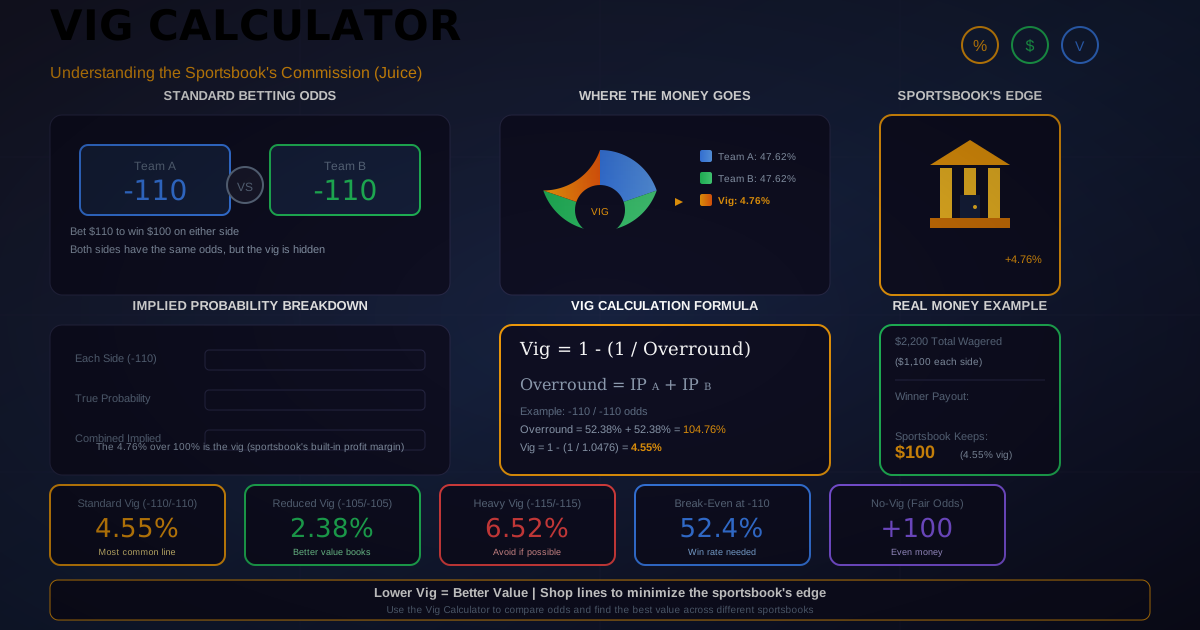
Understand the house edge that is working against you, regardless of the environment, with our Hold/Vig Calculator.
How Does Gambling Compare to Substance Addiction Neurochemistry?
The reclassification of gambling disorder from "impulse control disorder" to "addiction" in the DSM-5 (2013) was based on extensive neuroimaging evidence showing that gambling and substance addiction share remarkably similar neurochemical profiles.
Neurochemical Overlap
| Brain System | Substance Addiction | Gambling Disorder | Similarity |
|---|---|---|---|
| Dopamine (reward) | Artificially elevated by drug | Elevated by anticipation and wins | High |
| Tolerance | Need more drug for same high | Need larger bets for same excitement | High |
| Withdrawal | Physical and psychological symptoms | Restlessness, irritability without gambling | Moderate-high |
| Prefrontal cortex | Impaired executive function | Impaired decision-making and impulse control | High |
| Serotonin | Often depleted | Often depleted | Moderate |
| Norepinephrine | Elevated during use | Elevated during gambling | High |
| Opioid system | Activated by euphoria | Activated by wins and anticipation | Moderate |
| GABA | Altered by many substances | Altered in pathological gamblers | Moderate |
Key fMRI Findings
| Study Finding | What It Shows | Citation |
|---|---|---|
| Reduced ventral striatum activation in pathological gamblers during wins | Tolerance: need bigger rewards for same brain response | Reuter et al., 2005 |
| Prefrontal cortex hypoactivation | Impaired impulse control in active gambling disorder | Potenza et al., 2003 |
| Increased dopamine during anticipation, not outcome | Addiction is to the anticipation, not the result | Linnet et al., 2011 |
| Similar white matter changes as substance addiction | Structural brain changes from chronic gambling | Joutsa et al., 2011 |
| Amygdala hyperactivation during risk-taking | Elevated emotional responses to uncertainty | Clark et al., 2009 |
The Tolerance Cycle
Just as substance users develop tolerance (needing more of a drug for the same effect), gamblers develop behavioral tolerance:
| Stage | Behavior | Brain State |
|---|---|---|
| Early gambling | $5-10 bets produce excitement | Strong dopamine response to small stakes |
| Developing tolerance | $5-10 bets feel boring | Reduced dopamine response; brain has adapted |
| Escalation | Increase to $50-100 bets | Temporary return of strong dopamine response |
| Advanced tolerance | $50-100 bets feel boring | Further reduced dopamine response |
| Crisis escalation | $500-1,000+ bets | Chasing the original neurochemical "high" |
This tolerance cycle explains why problem gamblers often describe their early gambling as the most exciting and their current gambling as a compulsion they cannot enjoy. The brain has adapted to the stimulus, requiring ever-larger doses (stakes) to produce the same neurochemical response.
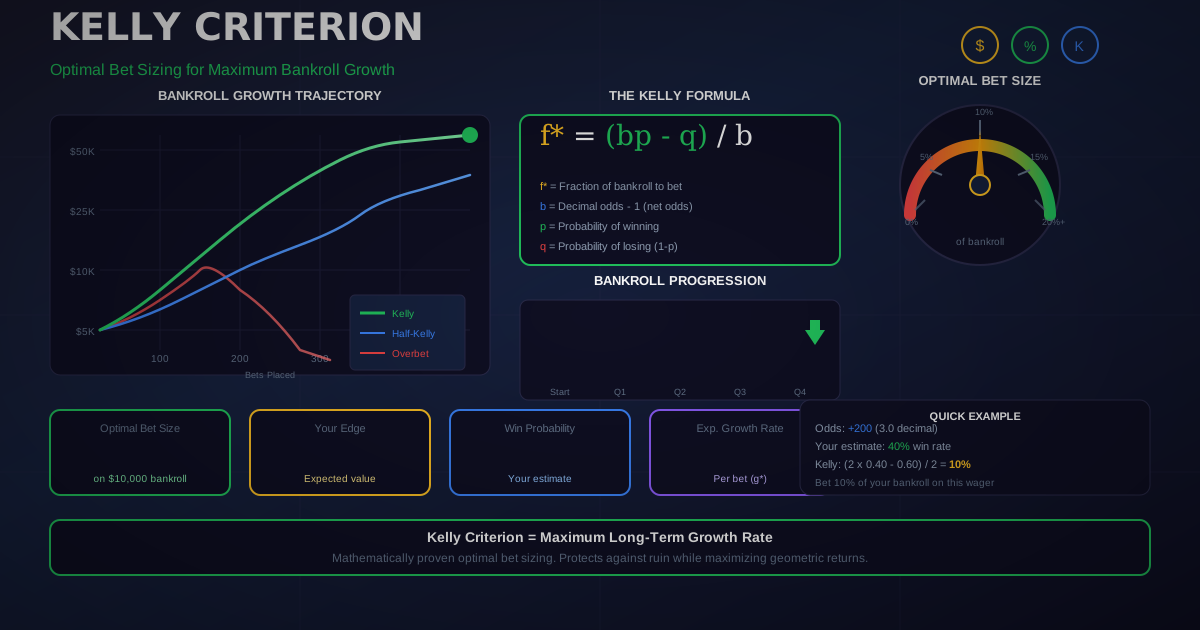
Use our Kelly Criterion Calculator to size bets based on math, not on chasing the neurochemical high of larger stakes.
What Makes Some People More Susceptible to Gambling Problems?
Not everyone who gambles develops a problem. Individual differences in brain chemistry, genetics, personality, and life circumstances create a spectrum of vulnerability.
Risk Factors for Gambling Disorder
| Risk Factor | Mechanism | Relative Risk Increase |
|---|---|---|
| Family history of addiction | Genetic predisposition to dopamine system differences | 3-8x higher risk |
| Male sex | Higher baseline risk-taking, higher dopamine reactivity | 2-3x higher risk |
| Age of first gambling (younger = higher risk) | Neural pathways form more readily during adolescence | 2-4x higher risk if started before age 18 |
| Co-occurring mental health conditions | Depression, anxiety, ADHD alter reward system function | 3-5x higher risk |
| History of trauma | Altered stress response and reward-seeking behavior | 2-3x higher risk |
| Substance use history | Pre-existing alterations in reward circuitry | 3-5x higher risk |
| Impulsivity trait | Reduced prefrontal cortex inhibitory control | 2-4x higher risk |
| Sensation-seeking trait | Higher baseline need for stimulation | 2-3x higher risk |
| Social isolation | Fewer natural reward sources, gambling fills the gap | 1.5-2x higher risk |
| Early big win | Establishes strong dopamine-gambling association | 1.5-3x higher risk |
Genetic Factors
Research has identified several genetic variants associated with increased gambling disorder risk:
| Genetic Factor | Brain System Affected | Impact |
|---|---|---|
| DRD2 Taq1A allele | Dopamine D2 receptor density | Reduced D2 receptors = need more stimulation for same reward |
| DAT1 gene variants | Dopamine transporter efficiency | Altered dopamine clearance affects reward sensitivity |
| 5-HTTLPR serotonin gene | Serotonin transport | Affects mood regulation and impulsivity |
| COMT gene variants | Dopamine metabolism in prefrontal cortex | Affects executive function and decision-making |
| MAO-A gene variants | Monoamine metabolism | Affects multiple neurotransmitter systems |
Having a genetic predisposition does not mean gambling disorder is inevitable. It means the neurological "soil" is more fertile for the "seed" of problem gambling to take root. Environmental factors (access, early exposure, stress) interact with genetics to determine actual outcomes.
The Adolescent Brain and Gambling
The adolescent brain (ages 13-25) is particularly vulnerable to gambling because:
- The reward system (nucleus accumbens) is fully developed -- adolescents experience the full dopamine rush of gambling
- The prefrontal cortex is not fully developed until approximately age 25 -- the brain region responsible for impulse control, risk assessment, and long-term planning is literally under construction
- The gap between reward sensitivity and impulse control creates a window of maximum vulnerability
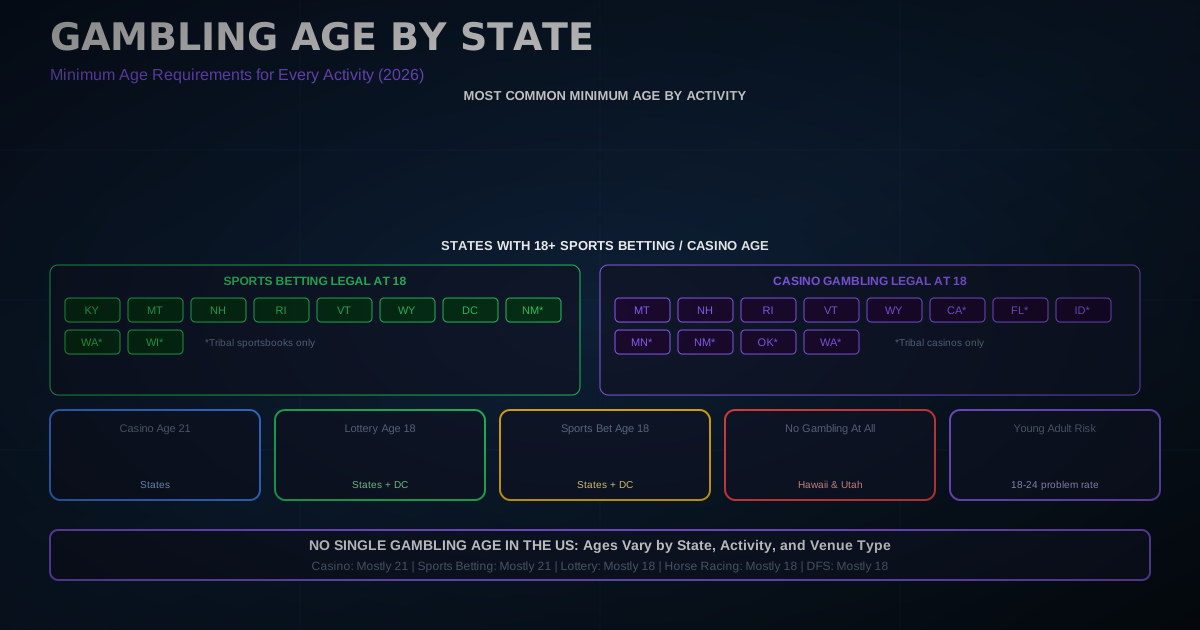
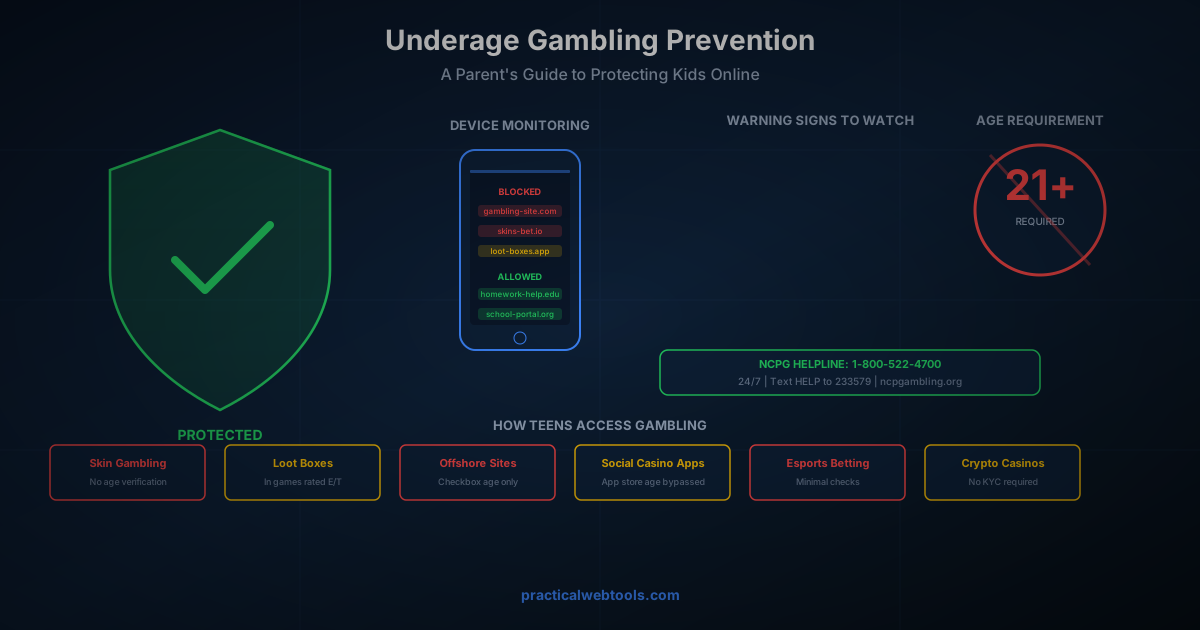
This is why the legal gambling age exists and why exposure to gambling-like mechanics (loot boxes, social casinos, fantasy sports) during adolescence is a significant public health concern.
How Can Understanding Neuroscience Protect You?
Knowledge of gambling neuroscience is not just academic -- it provides actionable strategies for maintaining control over your gambling behavior.
Neuroscience-Based Protection Strategies
| Strategy | Neurological Basis | Implementation |
|---|---|---|
| Pre-commit to limits | Prefrontal decisions made in calm state override emotional impulses | Set deposit and time limits before gambling |
| Take breaks every 30 minutes | Breaks interrupt the dopamine-reinforcement cycle | Set a timer; step away physically |
| Track results in real-time | Activates prefrontal cortex (analytical thinking) over limbic system (emotional response) | Log every bet, including amount and result |
| Avoid alcohol while gambling | Alcohol impairs prefrontal function, reducing inhibitory control | Zero tolerance for drinking during gambling sessions |
| Recognize near-misses as losses | Consciously reframe the near-miss dopamine spike | Tell yourself: "That was a loss, not almost a win" |
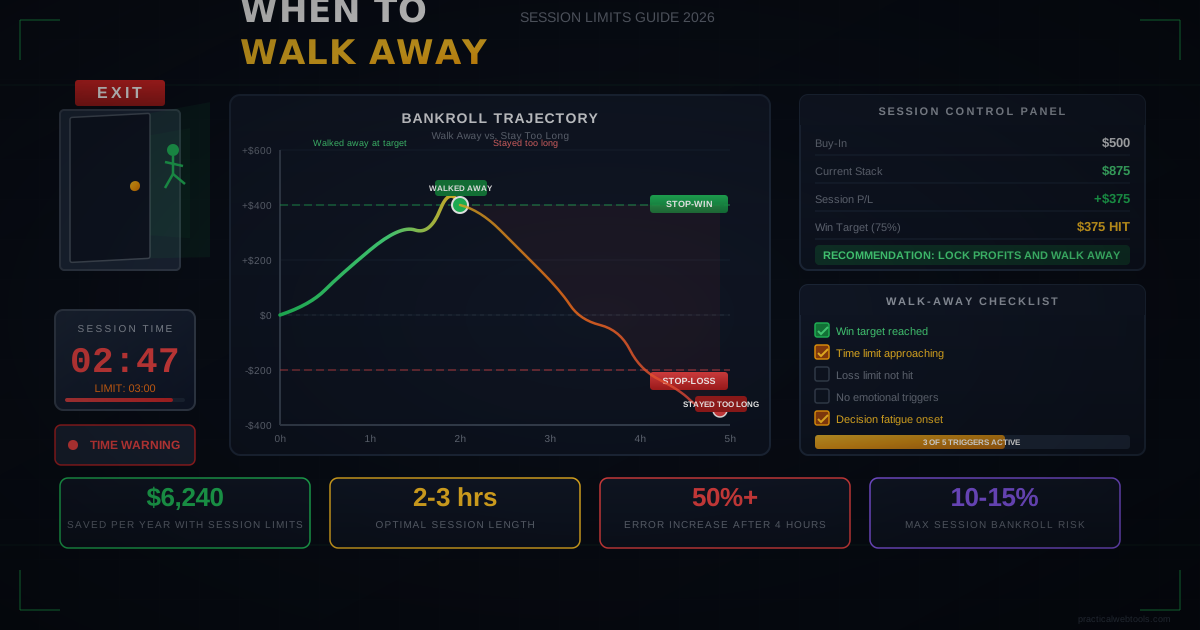
| Set a time limit, not just a money limit | Time blindness is a primary mechanism of excessive gambling | Use a phone alarm |
| Gamble with a friend, not alone | Social presence activates self-monitoring circuits | Accountability partner reduces risk behavior |
| Never gamble while emotional | Emotional states impair prefrontal function, similar to alcohol | Cooling-off rule: no gambling if angry, sad, stressed, or excited |
The Pre-Commitment Advantage
Pre-commitment -- making decisions about limits before you start gambling -- is the single most effective neuroscience-based strategy. The reason is physiological:
| Decision State | Prefrontal Cortex Status | Quality of Decision |
|---|---|---|
| Before gambling (calm) | Fully functional | Rational, considers consequences |
| During gambling (aroused) | Partially impaired by dopamine and arousal | Compromised, biased toward risk |
| After a loss (stressed) | Significantly impaired by cortisol and loss aversion | Poor, likely to chase |
| After a big win (euphoric) | Partially impaired by dopamine surge | Overconfident, may increase stakes |
This is why every responsible gambling recommendation starts with setting limits before you play. It is not a moral prescription -- it is a neurological strategy that works with your brain architecture rather than against it.
Set your pre-committed bankroll limits based on math with our Kelly Criterion Calculator.
What Practical Strategies Does Brain Science Suggest?
Beyond the broad strategies above, neuroscience research points to specific, evidence-based practices that can help maintain healthy gambling behavior.
Strategy 1: The 10-Minute Rule
When you feel the urge to place a bet you did not plan, wait 10 minutes. Neuroimaging studies show that impulsive urges peak and then decline within 10-15 minutes as the prefrontal cortex reasserts control over the limbic system. Most unplanned bets are driven by momentary dopamine spikes that dissipate quickly.
Strategy 2: Cash, Not Digital
Research shows that people gamble more with digital money than with physical cash because physical cash activates the brain's pain circuitry (the "pain of paying") more strongly than digital transactions. If you gamble at physical casinos, use cash and leave cards at home. For online gambling, the equivalent is pre-loading a specific amount and disabling one-click deposit features.
Strategy 3: Cognitive Reappraisal
Cognitive reappraisal is the practice of consciously reinterpreting an emotional stimulus. In gambling:
| Automatic Thought | Reappraisal | Brain Region Activated |
|---|---|---|
| "I almost won -- I am getting close" | "That was a loss. Near-misses are losses." | Prefrontal cortex (rational override) |
| "I am on a hot streak" | "Previous wins do not affect future probabilities" | Prefrontal cortex |
| "I need to win my money back" | "My expected outcome of continued play is to lose more" | Prefrontal cortex |
| "One more bet could change everything" | "The math does not change with one more bet" | Prefrontal cortex |
| "I deserve a win after this bad run" | "Randomness does not owe me anything" | Prefrontal cortex |
Strategy 4: Replace Gambling Dopamine With Healthy Dopamine
The brain's dopamine system is not specific to gambling. The same circuitry responds to exercise, social connection, creative achievement, and novelty. Ensuring you have healthy sources of dopamine reduces the brain's dependence on gambling for neurochemical rewards.
| Healthy Dopamine Source | Type | Approximate Dopamine Increase |
|---|---|---|
| Vigorous exercise (30+ minutes) | Natural | 200% above baseline |
| Achieving a meaningful goal | Natural | 150-200% above baseline |
| Social bonding / laughter | Natural | 100-150% above baseline |
| Learning something new | Natural | 100-150% above baseline |
| Listening to favorite music | Natural | 100-150% above baseline |
| Gambling (during anticipation) | Artificial stimulus | 150-350% above baseline |
| Cocaine | Drug | 300-800% above baseline |
| Methamphetamine | Drug | 1,000%+ above baseline |
The comparison is instructive: gambling produces dopamine increases comparable to some recreational drugs, though not as extreme as hard drugs. However, unlike exercise or social bonding, gambling dopamine comes with financial risk and addiction potential.
Strategy 5: Environmental Modification
Changing your environment can interrupt the cue-routine-reward cycle that drives habitual gambling:
| Environmental Change | Mechanism | Implementation |
|---|---|---|
| Delete sportsbook apps | Removes cue (app icon on phone) | Re-download only for planned betting sessions |
| Unsubscribe from promotions | Removes trigger (bonus offers in email/text) | Opt out of all marketing communications |
| Block gambling sites on computer | Adds friction between urge and action | Use website blockers or self-exclusion tools |
| Change your route | Avoid passing the casino on your commute | Removes visual cue that triggers gambling thoughts |
| Mute sports bet social media | Removes social cue (friends' gambling posts) | Curate your feed to exclude gambling content |
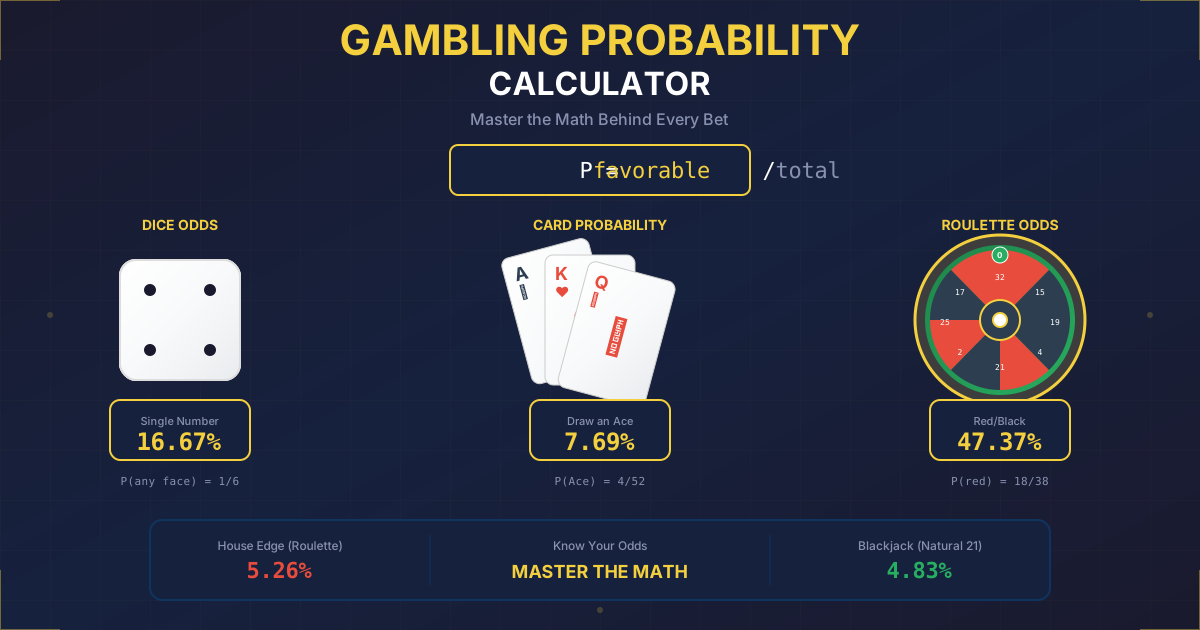
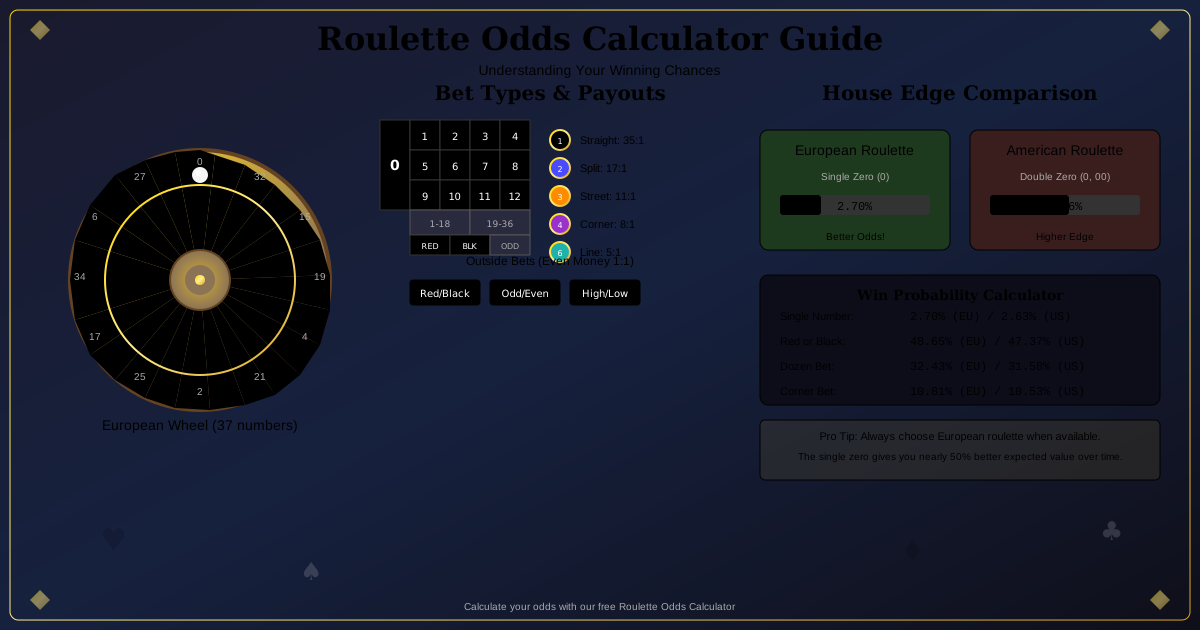
Use our Roulette Odds Calculator to understand the true mathematical probabilities behind any casino game -- replacing "feeling" with math is a cognitive reappraisal strategy.
Frequently Asked Questions About the Neuroscience of Gambling
Is gambling addiction a real addiction or just a lack of willpower?
Gambling addiction (gambling disorder) is a clinically recognized addiction with measurable neurological signatures. fMRI studies show that pathological gamblers have structural and functional brain changes similar to those seen in substance addictions, including reduced dopamine receptor density, impaired prefrontal cortex function, and altered white matter connectivity. The American Psychiatric Association reclassified gambling disorder as an addiction (not an impulse control disorder) in 2013 based on this evidence. Willpower is a prefrontal cortex function, and that region is directly impaired by the addiction process.
Why do I feel more excited about almost winning than actually winning?
This is the dopamine prediction error model in action. Your brain's dopamine system responds most strongly to unexpected or uncertain outcomes, not to expected ones. A near-miss is maximally uncertain -- your brain was predicting a win, and the outcome was almost a win, creating a large prediction error that produces a dopamine spike. Actual wins, especially expected ones, produce smaller dopamine responses because the brain already anticipated the outcome.
Can understanding neuroscience actually help me gamble more responsibly?
Yes. Research shows that psychoeducation about gambling neuroscience reduces cognitive distortions (irrational beliefs about gambling) and increases use of responsible gambling tools. When you understand that a near-miss is a loss, not a sign of progress, you are less likely to increase your play after one. When you know that chasing losses is driven by loss aversion and impaired prefrontal function, you can pre-commit to stopping. Knowledge is not a guarantee against addiction, but it is a meaningful protective factor.
Are some types of gambling more neurologically dangerous than others?
Yes. Continuous forms of gambling (slot machines, online casino games, live/in-play sports betting) are more neurologically stimulating and addictive than discontinuous forms (weekly lottery, occasional horse racing). The key factors are speed of play (faster = more dopamine cycles), availability (24/7 = more opportunities), and immersiveness (sensory stimulation amplifies neurological effects). Slot machines and continuous online gambling are considered the most addictive forms.
Do professional gamblers have different brain chemistry?
There is limited research on professional gamblers' neurology, but what exists suggests that successful professional gamblers may have stronger prefrontal cortex function (better impulse control and analytical thinking) and different emotional responses to wins and losses. They tend to approach gambling more analytically, activating prefrontal circuits rather than limbic (emotional) circuits. This does not mean they are immune to addiction -- many professional gamblers have struggled with control -- but their cognitive approach differs from recreational gamblers.
At what point should I be concerned about my gambling brain chemistry?
Key neurological warning signs include: needing to bet larger amounts for the same excitement (tolerance), feeling restless or irritable when trying to cut back (withdrawal), thinking about gambling constantly when not gambling (preoccupation), using gambling to escape negative emotions (self-medication), and continuing to gamble despite significant negative consequences (compulsive behavior). If you experience three or more of these symptoms, consult a mental health professional.
Can the brain recover from gambling addiction?
Yes. Neuroplasticity -- the brain's ability to rewire itself -- allows recovery from gambling addiction. Research shows that dopamine receptor density normalizes after sustained abstinence (typically 12-18 months), prefrontal cortex function improves, and the cue-reactivity (urge triggered by gambling cues) diminishes over time. However, the neural pathways associated with gambling do not fully disappear, which is why relapse risk remains elevated even after years of recovery.
How does age affect gambling neuroscience?
Younger brains (under 25) are more vulnerable because the prefrontal cortex is still developing while the reward system is fully active, creating a gap between risk-seeking behavior and risk-assessment ability. Older adults may also face increased vulnerability because age-related prefrontal decline can reduce impulse control, and social isolation in older adults may increase reliance on gambling for dopamine.
Related Tools for Brain-Smart Gambling
Understanding the Math (Overriding the Dopamine)
- Expected Value Calculator: Know the true mathematical expectation of every bet
- Implied Probability Calculator: Convert odds to real probabilities
- Hold/Vig Calculator: See exactly how much the house takes
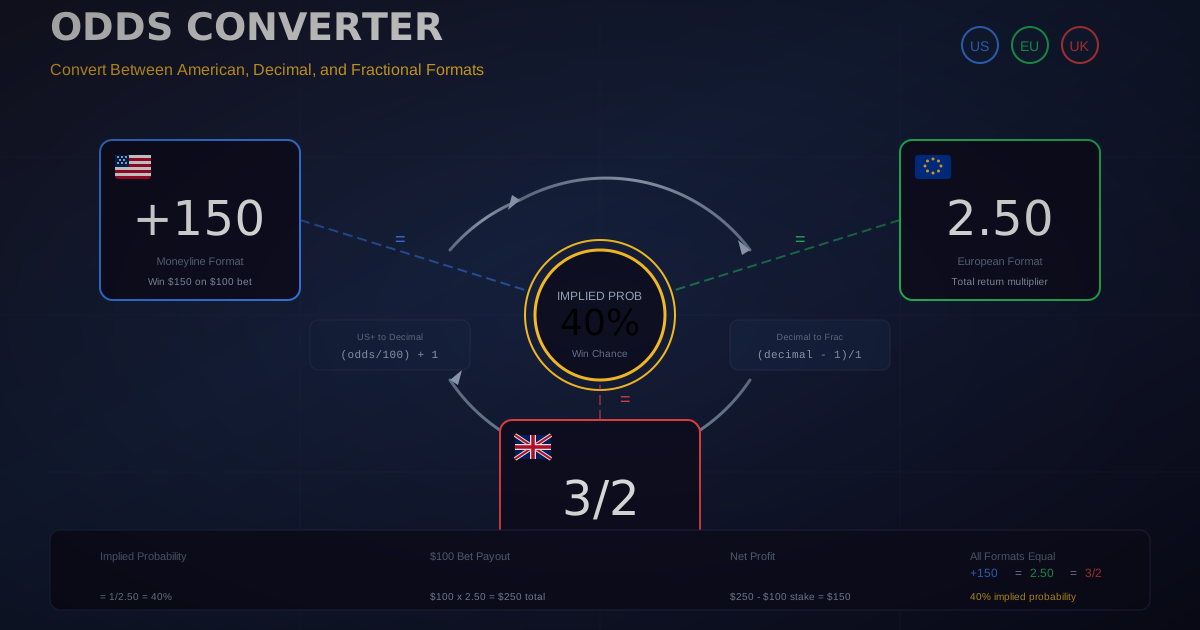
- Odds Converter: Compare odds across formats
House Edge Awareness (What Your Brain Does Not Want You to Know)
- Roulette House Edge Calculator: Calculate the mathematical house advantage
- Roulette Odds Calculator: Understand true probabilities for every bet
- Blackjack House Edge Calculator: See how rules affect the house edge
Bankroll Protection (Pre-Commitment Tools)
- Kelly Criterion Calculator: Math-based bet sizing
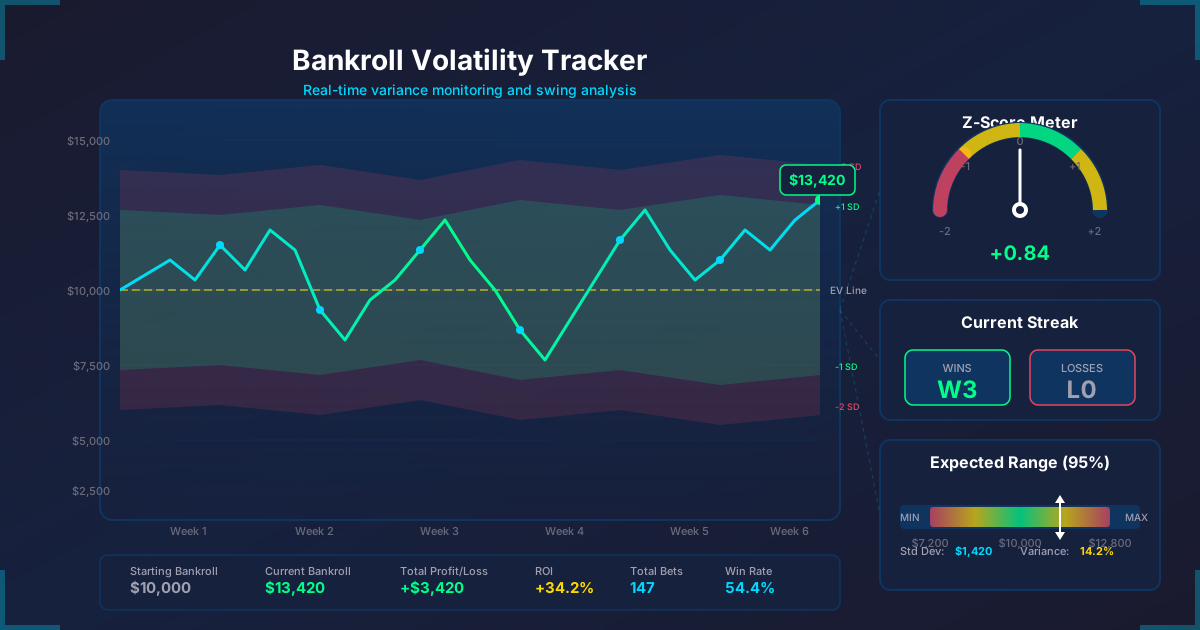
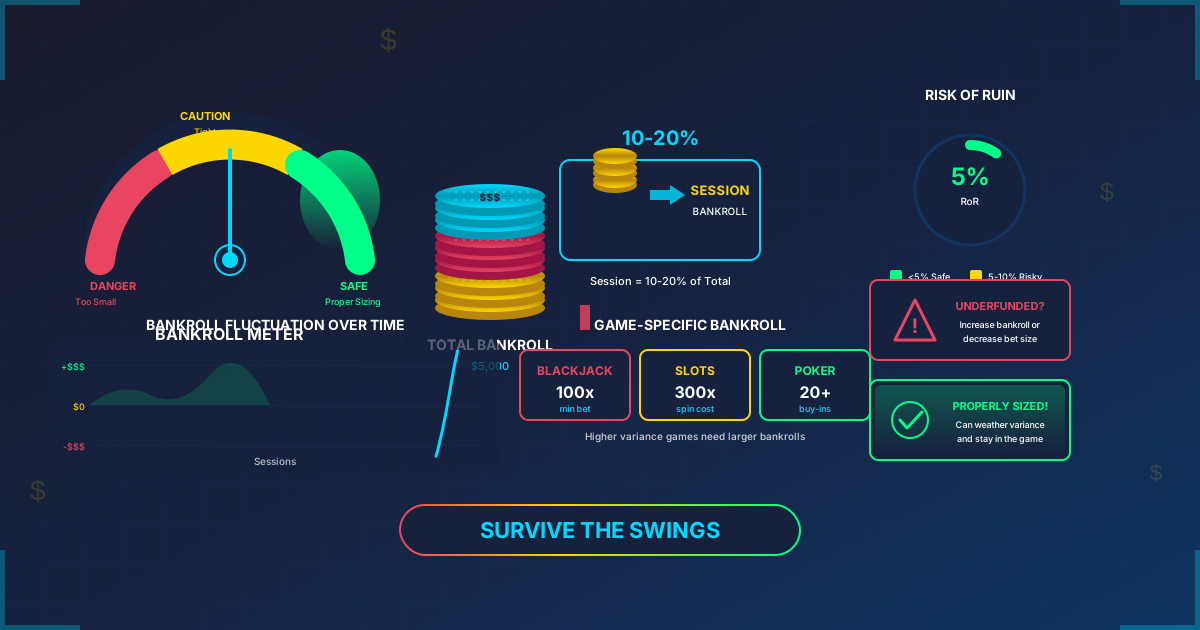
- Bankroll Volatility Tracker: Track and limit your exposure
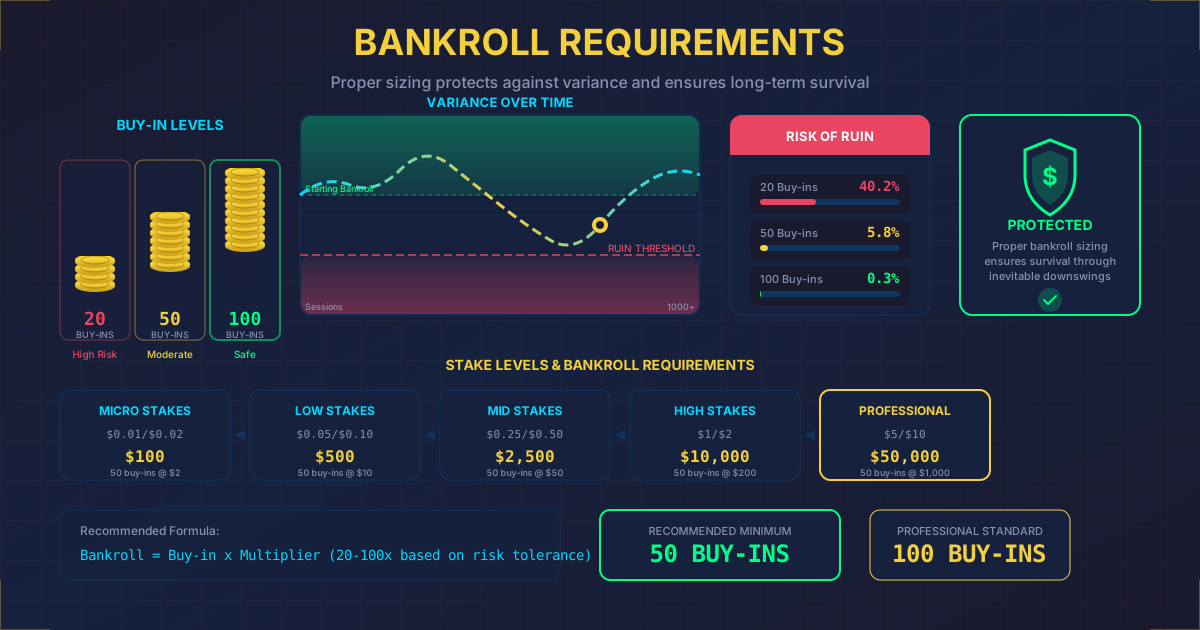
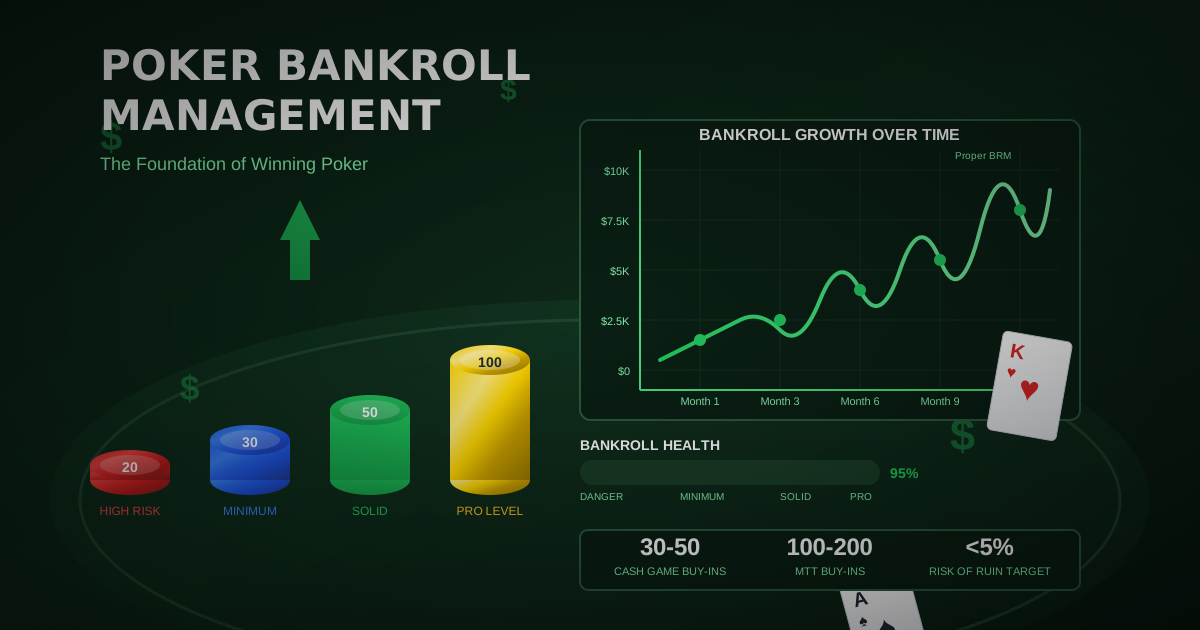
- Poker Bankroll Requirements: Know the minimum bankroll for your stakes
- Poker Risk of Ruin Calculator: Understand your risk of going broke
Tracking and Accountability
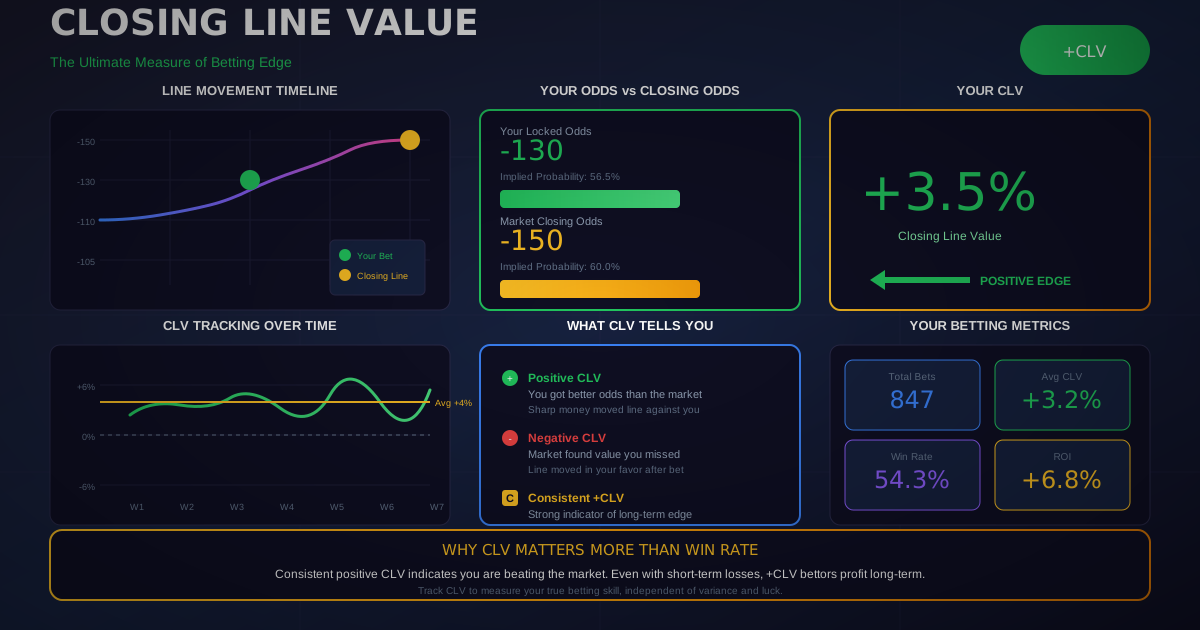
- CLV Tracker: Objective performance tracking
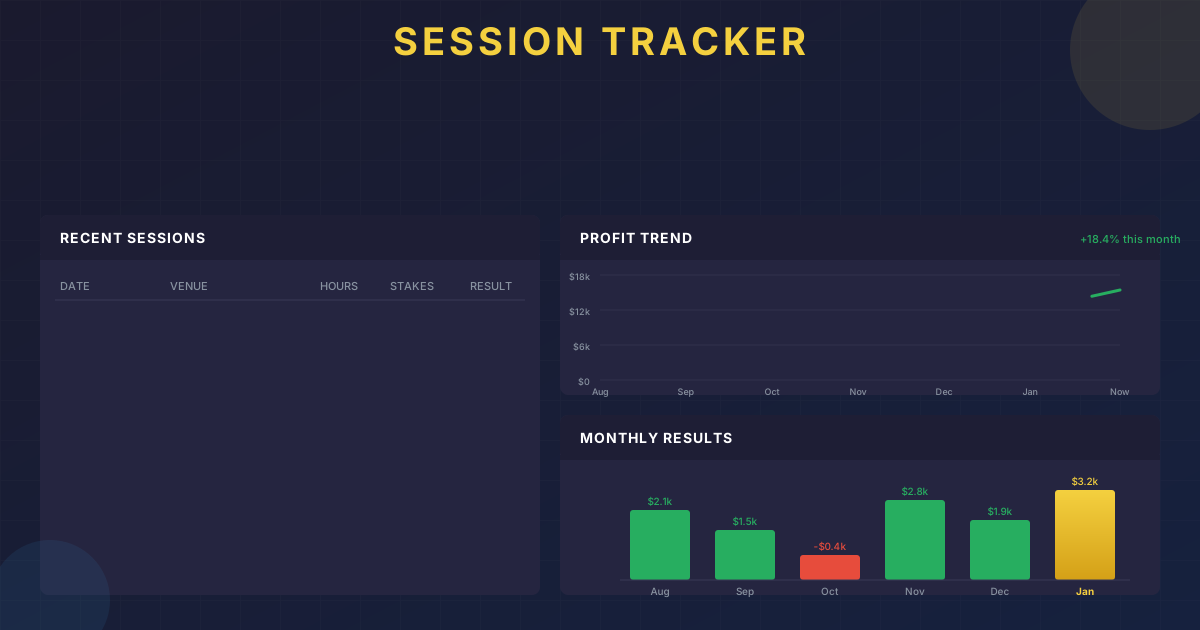
- Poker Session Tracker: Log every session transparently
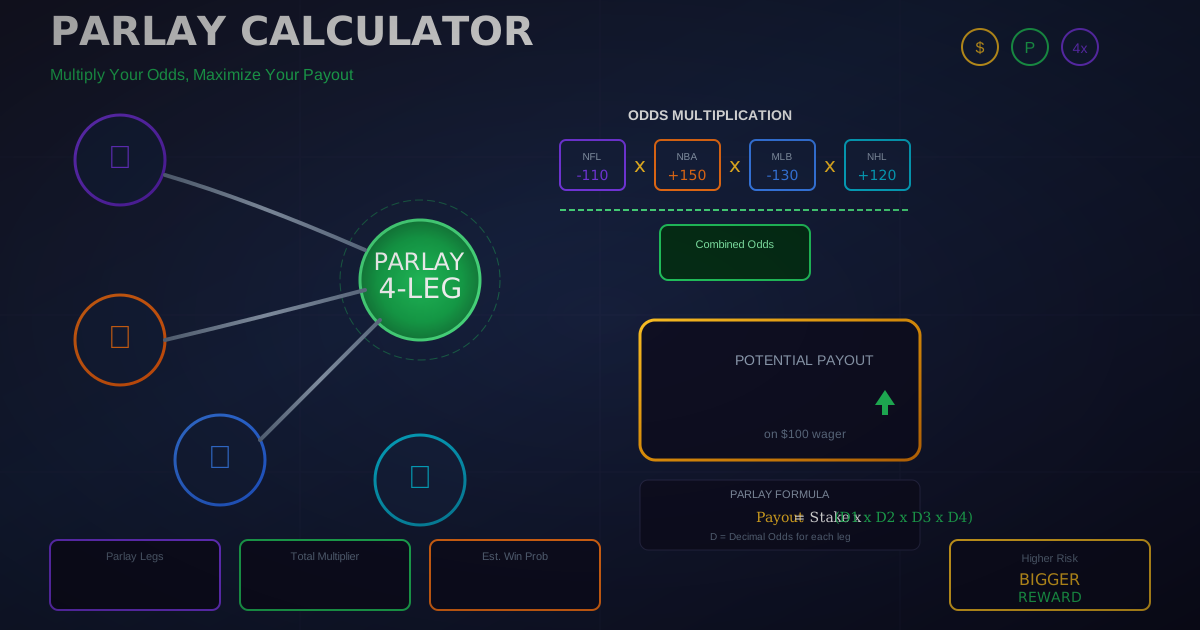
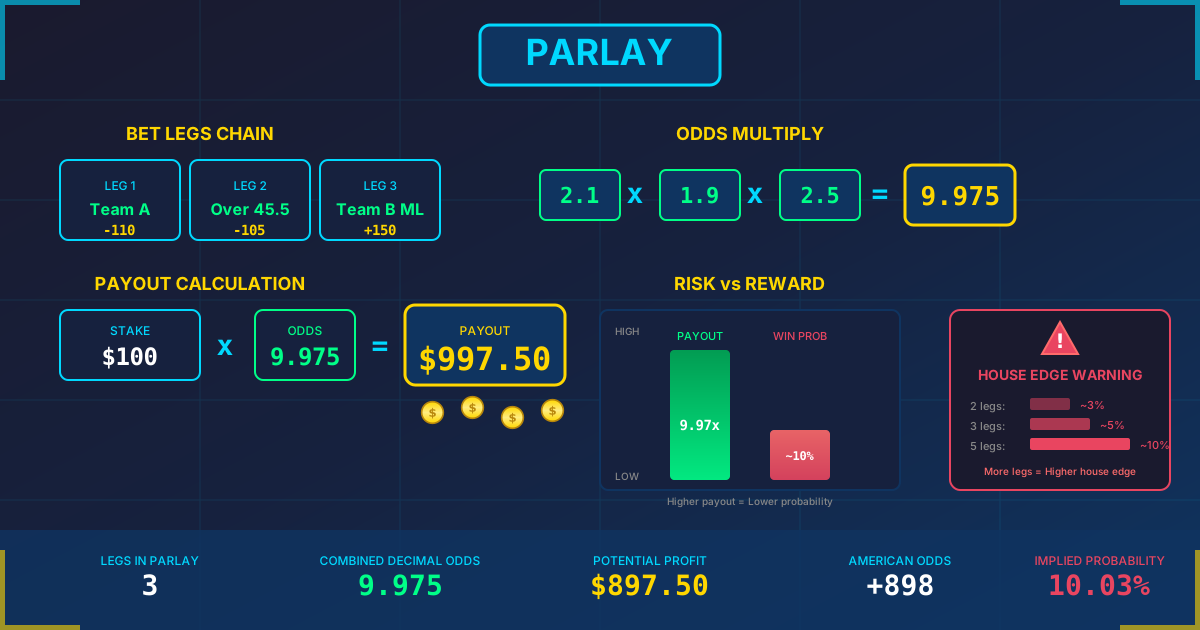
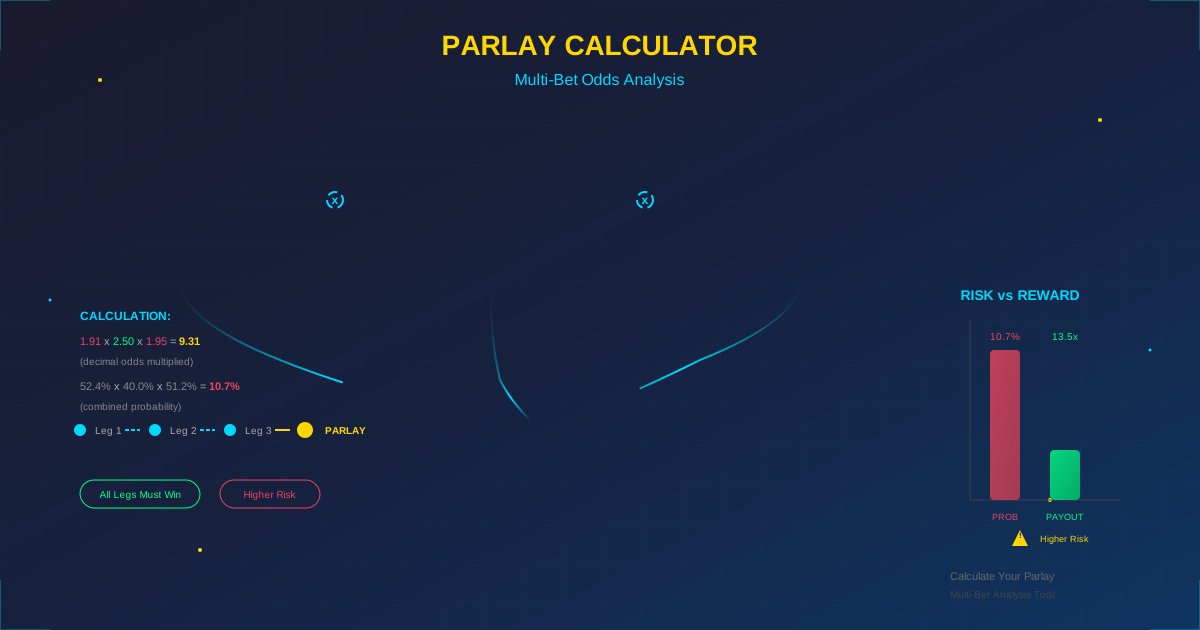
- Parlay Calculator: Calculate true parlay odds before betting
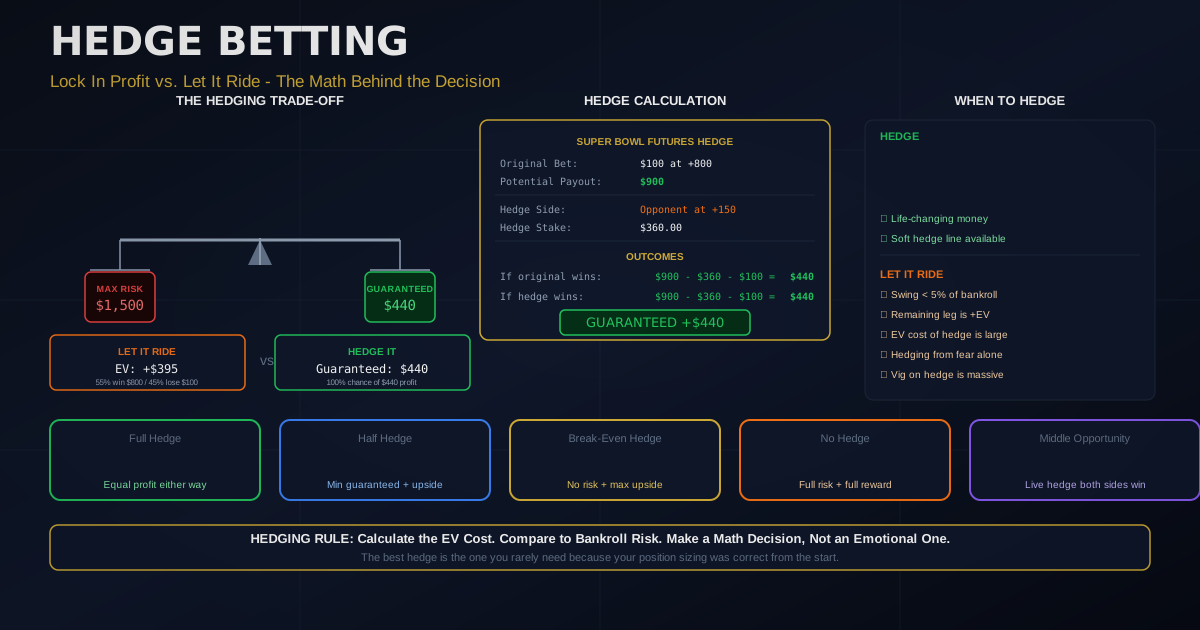
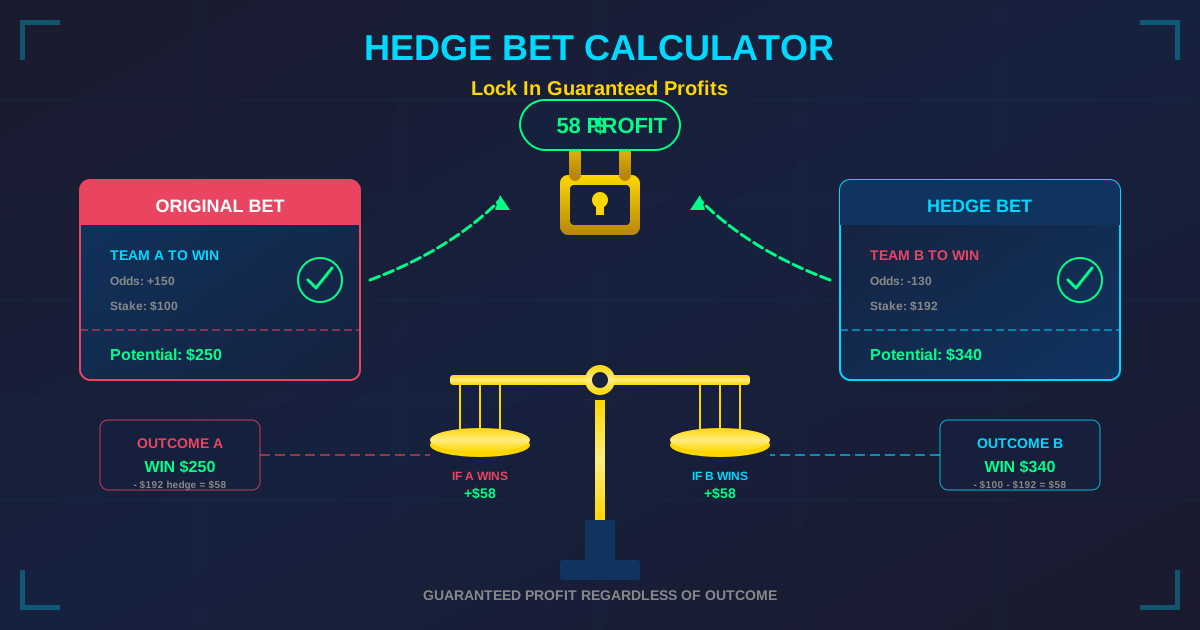
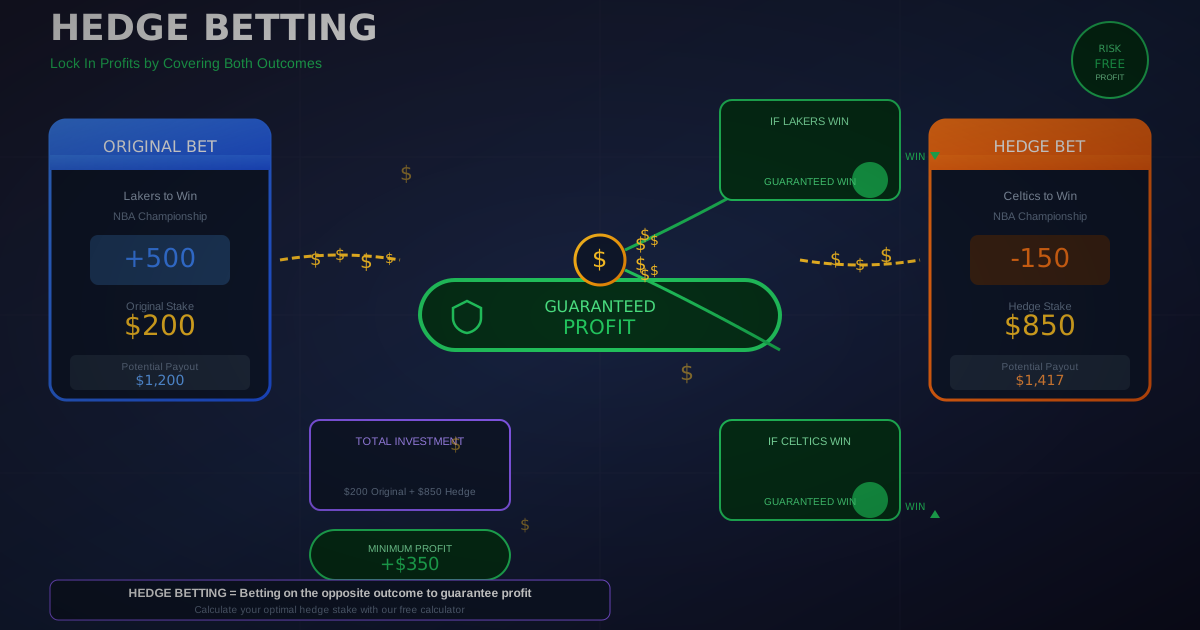
- Hedge Calculator: Calculate hedges to manage risk
Your Brain Is Not Your Enemy -- But It Is Not Your Ally Either
The neuroscience of gambling reveals an uncomfortable truth: your brain is not designed to gamble rationally. It is designed to seek rewards, detect patterns (even in randomness), avoid losses (even by chasing them), and persist in the face of uncertainty (even when persistence is irrational). These are features, not bugs -- they kept your ancestors alive. But in a casino or a sportsbook app, they work against you.
The good news is that the same brain that can be exploited by gambling can also understand and counteract its own vulnerabilities. The prefrontal cortex -- the seat of rational thought, planning, and impulse control -- is powerful enough to override the dopamine system, but only if it is activated. Pre-commitment, education, cognitive reappraisal, and environmental modification are all strategies that engage the prefrontal cortex before the emotional brain takes over.
Gamble if you choose to. But gamble with your eyes open, your limits set, and your brain's operating manual in hand.
Start making math-based decisions with our free Expected Value Calculator. Understand the true odds with our Implied Probability Calculator. And protect your bankroll with our Kelly Criterion Calculator.
Your best defense against your own brain is understanding how it works.
Gambling involves risk and should be approached as entertainment, not as a source of income. Always bet within your means, set strict bankroll limits, and never chase losses. If you or someone you know has a gambling problem, contact the National Council on Problem Gambling at 1-800-522-4700 or visit ncpgambling.org. Must be 21+ to gamble in most US jurisdictions. Please play responsibly.