Understanding Gambling Addiction: The Science, Warning Signs, and Path to Recovery (2026)
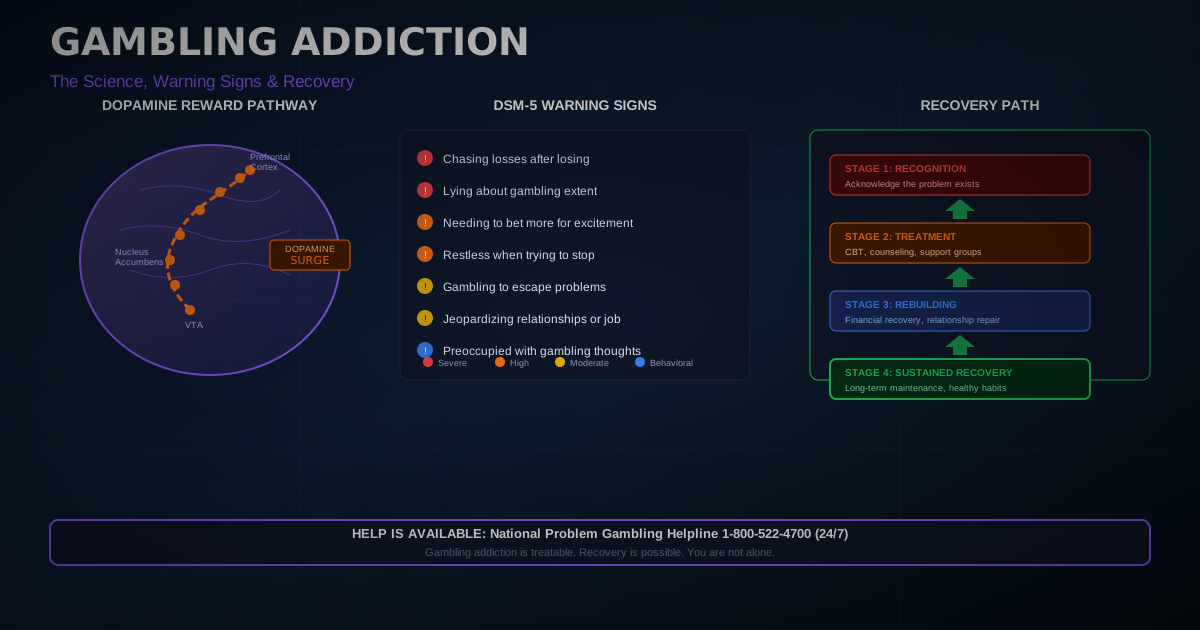
Gambling disorder affects an estimated 1-3% of the adult population -- between 2 and 6 million Americans -- yet fewer than 10% of those affected ever seek treatment. The science behind gambling addiction reveals a neurological process remarkably similar to substance addiction, hijacking the brain's reward system through dopamine dysregulation and variable ratio reinforcement. Understanding this science is the first step toward prevention, early detection, and recovery.
This guide covers the neuroscience of gambling addiction, clinical diagnostic criteria, evidence-based warning signs, risk factors, treatment options, and practical recovery strategies. Whether you gamble recreationally and want to stay safe, or you are concerned about yourself or a loved one, this information is critical.
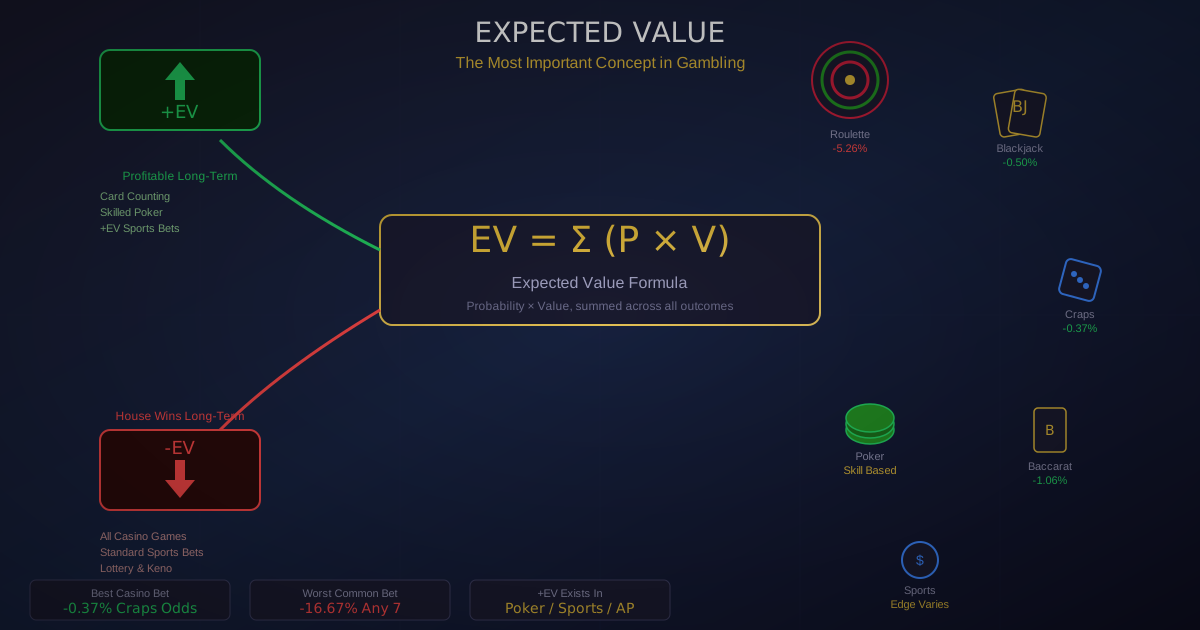
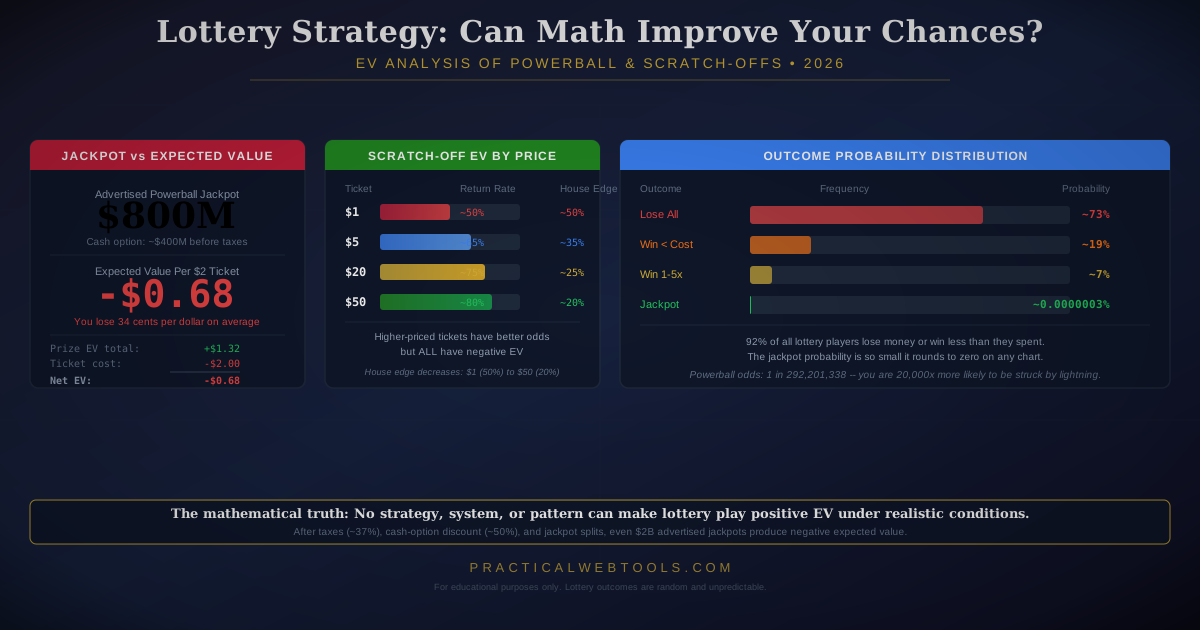
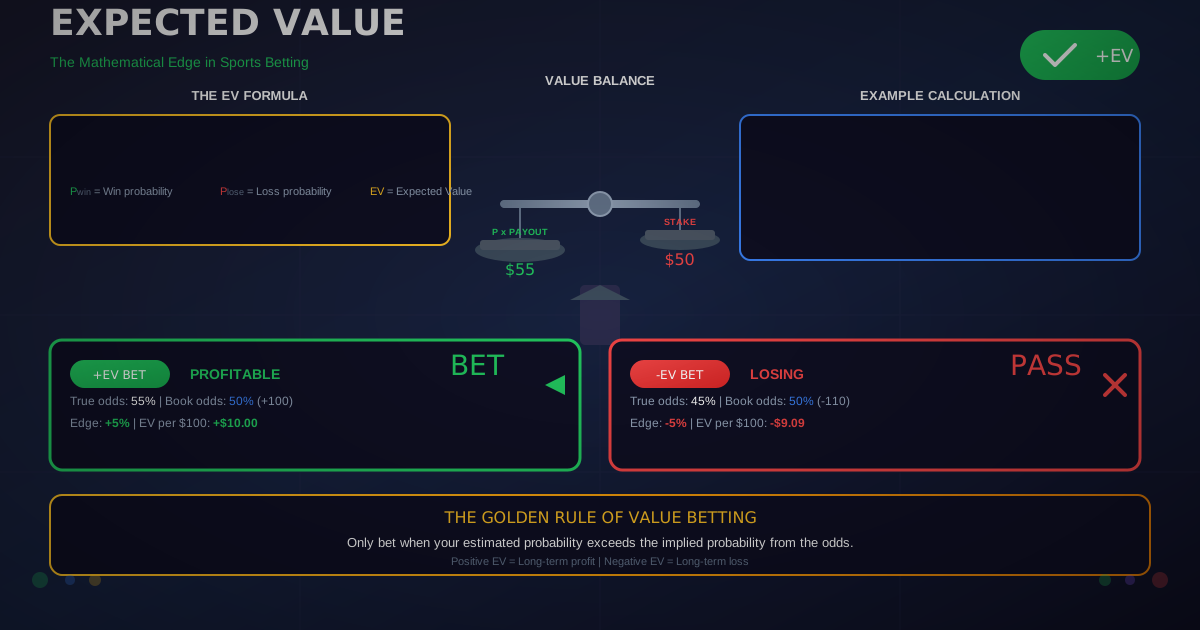
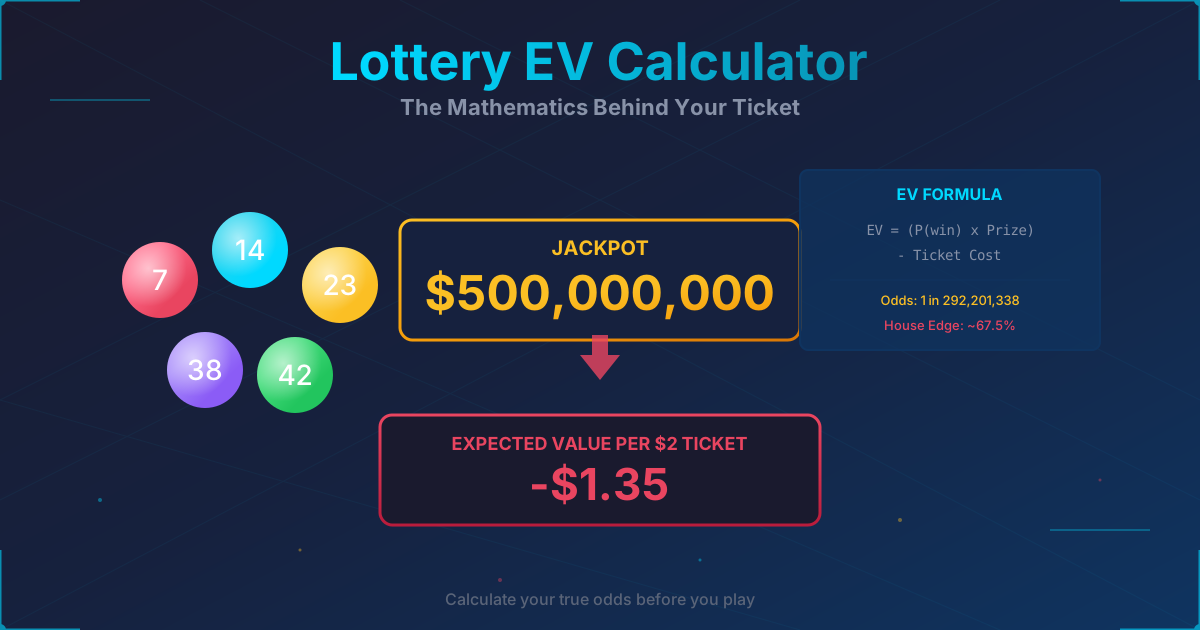
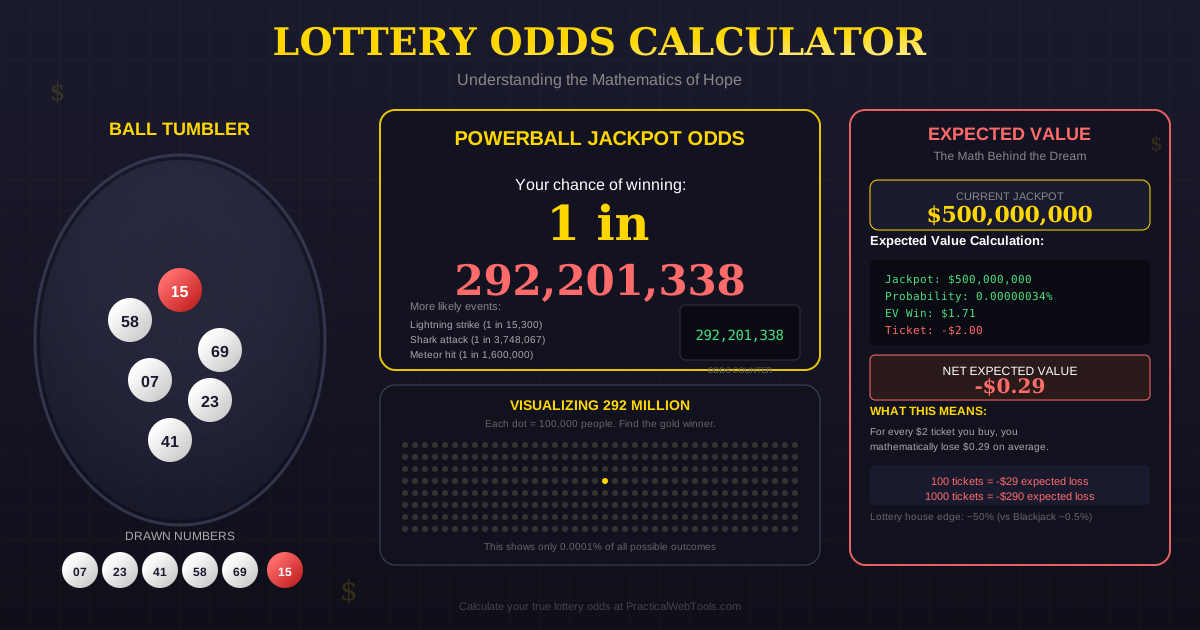
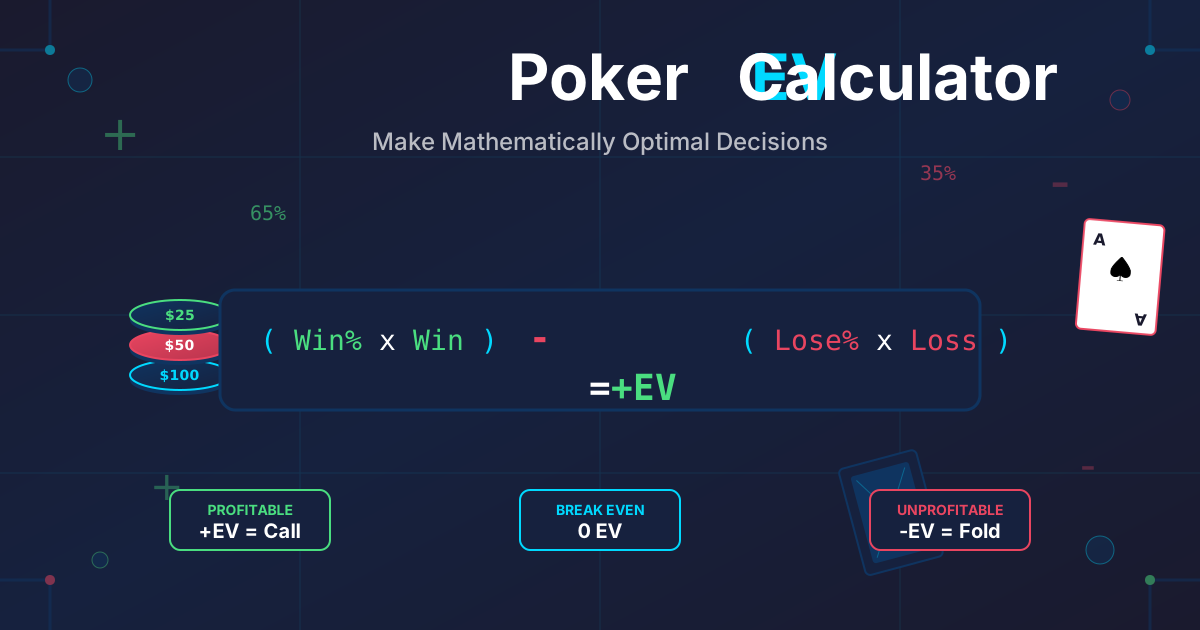
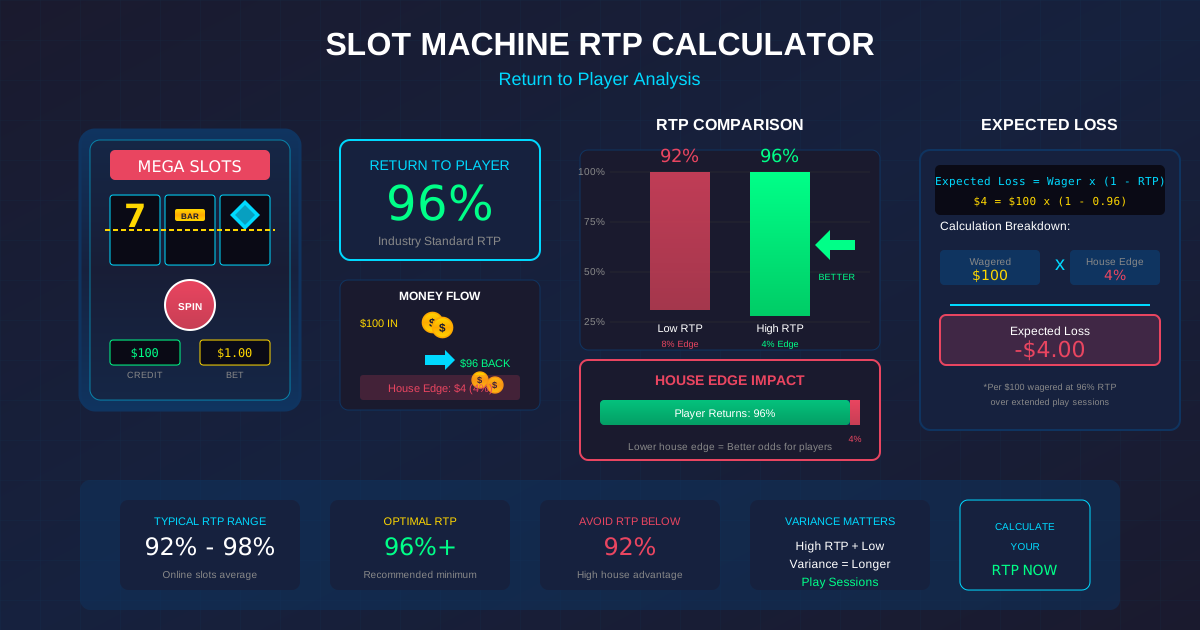
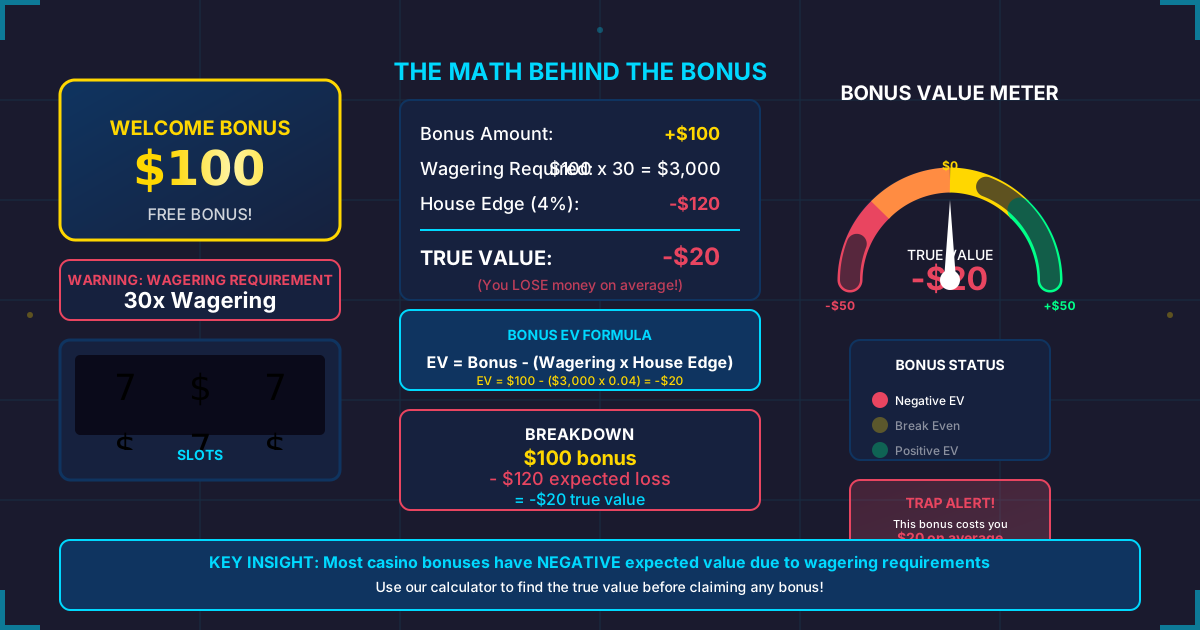
If you gamble, always start with the math. Use our free Expected Value Calculator to understand the true cost of every bet you place.
What Happens in the Brain During Gambling?
Gambling activates the brain's mesolimbic dopamine pathway -- the same neural circuit involved in substance addiction. When a person places a bet and anticipates the outcome, the brain releases dopamine in a pattern that can, over time, rewire neural pathways and create compulsive behavior.
The Dopamine Pathway
Dopamine is a neurotransmitter associated with reward, motivation, and pleasure. During gambling:
- Anticipation phase: The brain releases dopamine when placing a bet, even before the outcome is known. Brain imaging studies show that the ventral striatum (a key reward center) activates during this anticipation.
- Outcome phase: Winning produces a dopamine surge. But critically, near-misses also activate dopamine pathways -- sometimes even more strongly than small wins.
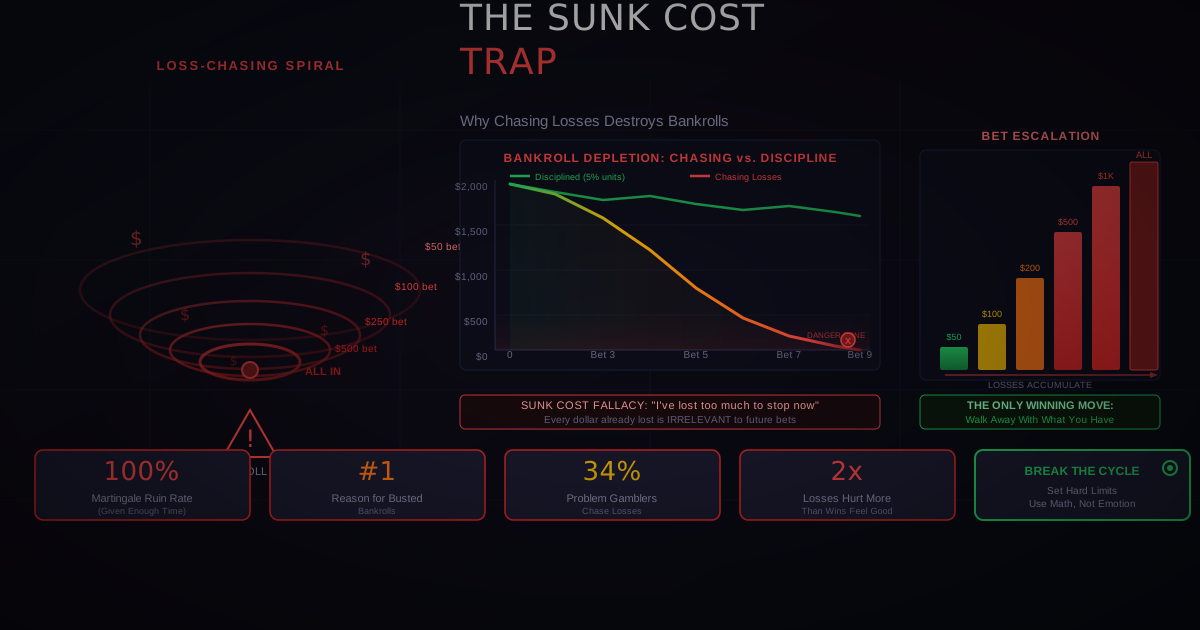
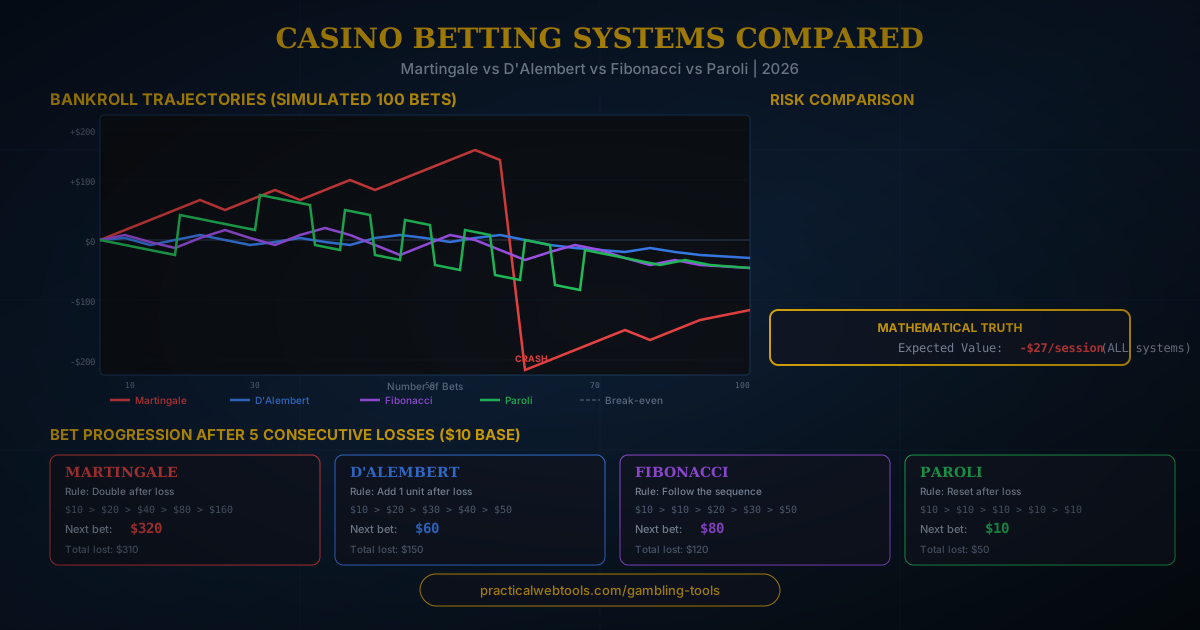
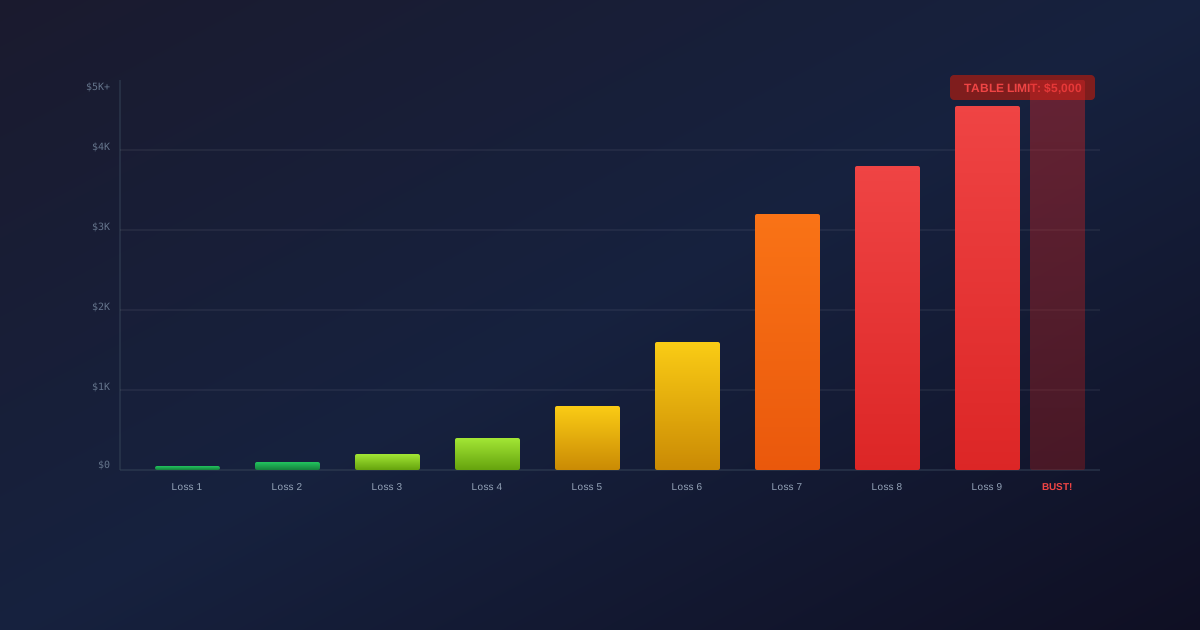
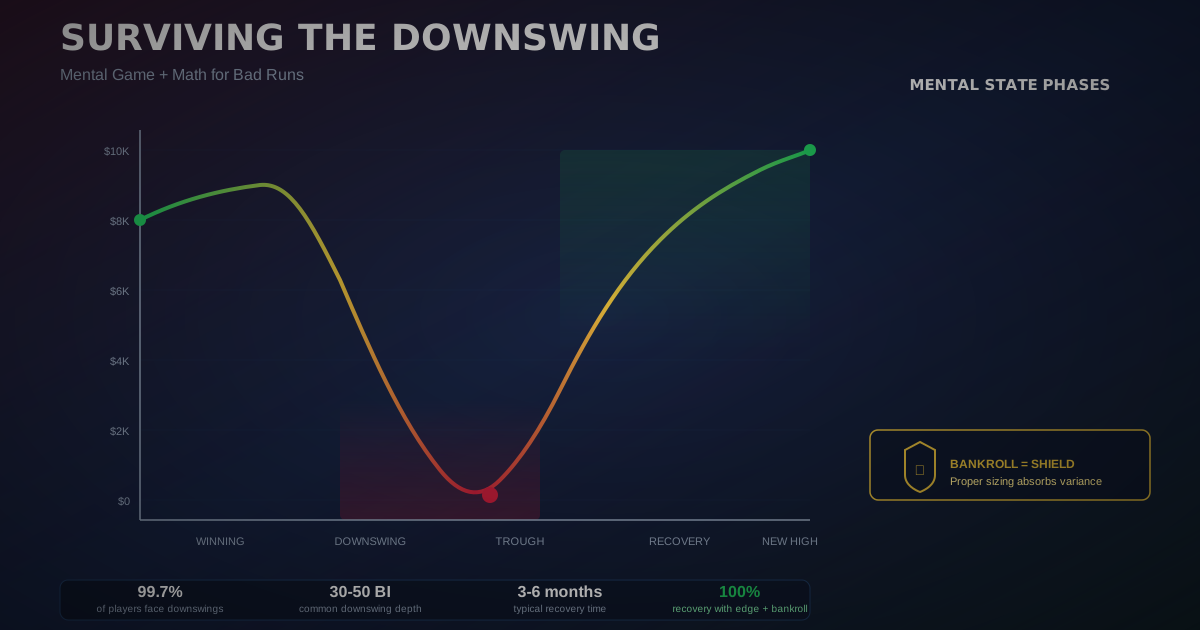
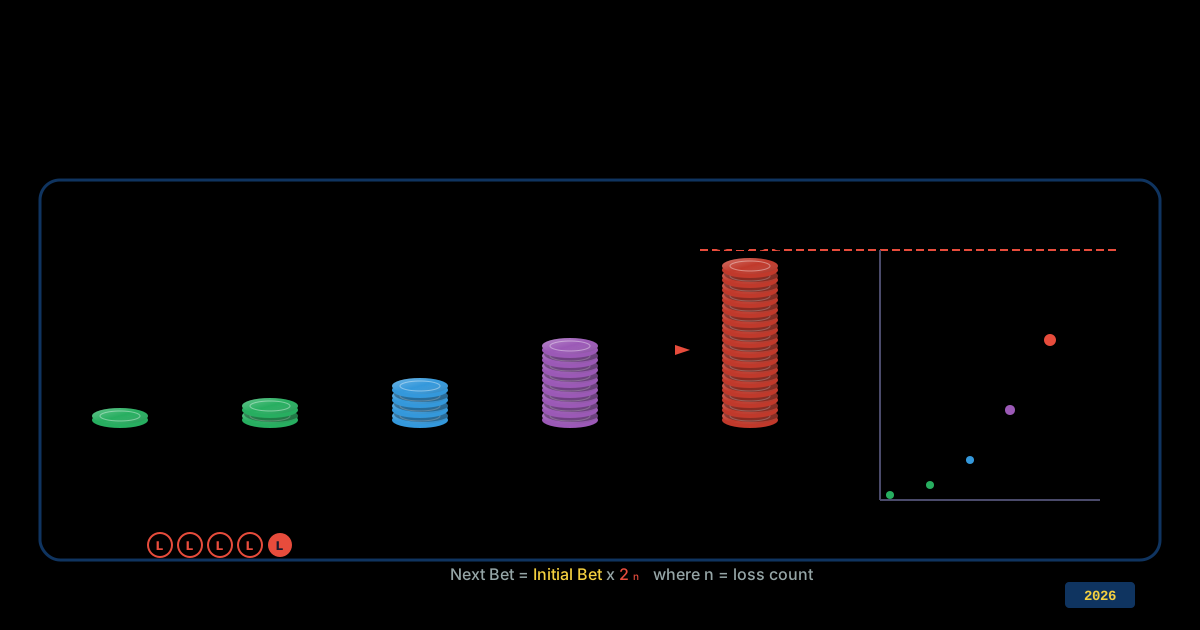
- Chasing phase: After losses, dopamine depletion creates a desire to gamble again to restore baseline levels. This is the neurological basis of "chasing losses."
| Brain Region | Role in Gambling | Effect of Chronic Gambling |
|---|---|---|
| Ventral Striatum | Processes reward and anticipation | Reduced sensitivity -- requires larger bets for same effect |
| Prefrontal Cortex | Impulse control and decision-making | Weakened -- impaired ability to stop |
| Amygdala | Emotional processing, risk assessment | Altered risk perception -- underestimates losses |
| Insula | Interoception, gut feelings | Hyperactive -- amplifies near-miss responses |
| Anterior Cingulate Cortex | Conflict monitoring, error detection | Reduced activity -- less awareness of negative patterns |
Variable Ratio Reinforcement
The most psychologically compelling element of gambling is variable ratio reinforcement -- the delivery of rewards at unpredictable intervals. This is the same mechanism that makes slot machines, social media, and video game loot boxes so engaging.
In a variable ratio schedule:
- Rewards come after an unpredictable number of responses
- The player cannot predict when the next win will occur
- This creates the highest, most sustained rates of behavior
- Extinction (stopping) takes longer than any other reinforcement schedule
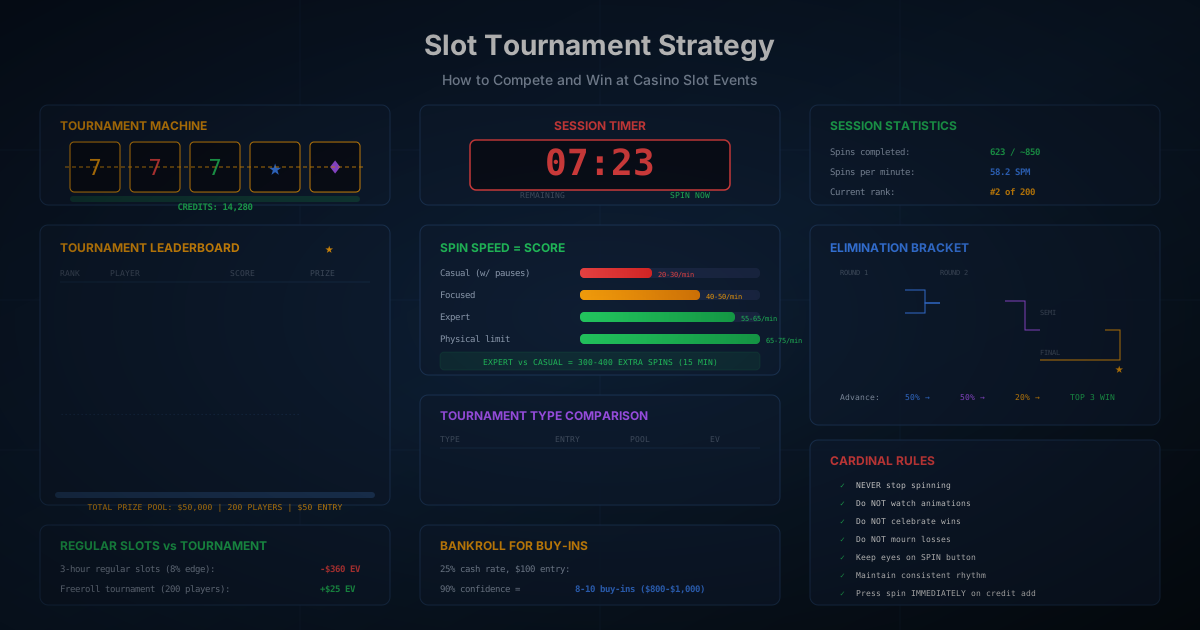
This is why slot machines are the most addictive form of gambling. The variable ratio schedule combined with rapid play speed, near-miss feedback, and sensory stimulation creates an extremely powerful behavioral loop.
| Reinforcement Schedule | Example | Gambling Application | Addictive Potential |
|---|---|---|---|
| Fixed Ratio | Win every 10th bet | Not used (too predictable) | Low |
| Variable Ratio | Win after random number of bets | Slot machines, all casino games | Very High |
| Fixed Interval | Win every 5 minutes | Timed bonus features | Moderate |
| Variable Interval | Win at random time intervals | Progressive jackpots | High |
Understand the mathematical edge on any bet with our Implied Probability Calculator.
The Near-Miss Effect
Near-misses are outcomes that are close to a win but are actually losses. In brain imaging studies, near-misses activate reward pathways similarly to actual wins, despite producing zero financial gain.
Examples:
- A slot machine showing two matching symbols with the third just above or below the payline
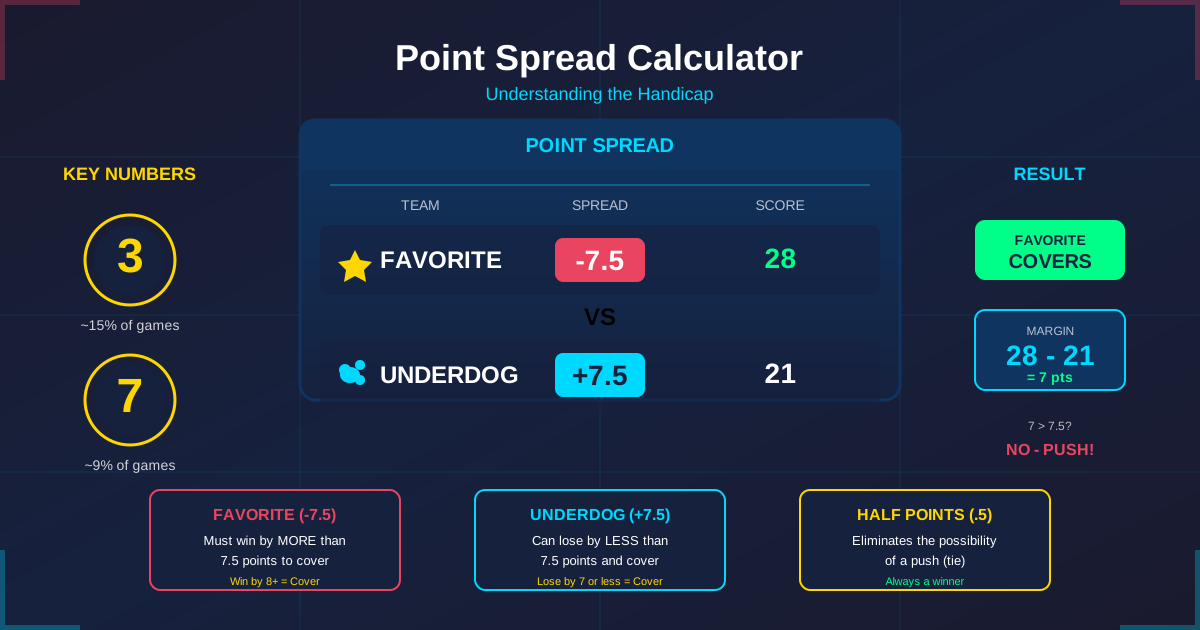
- A sports bet that loses by half a point
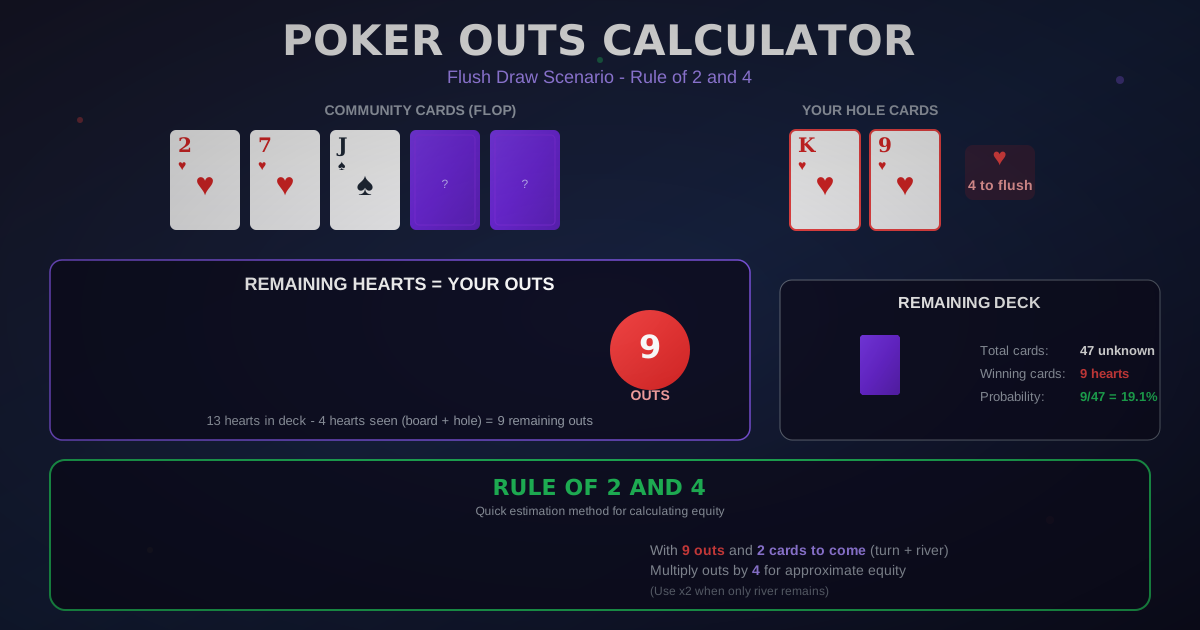
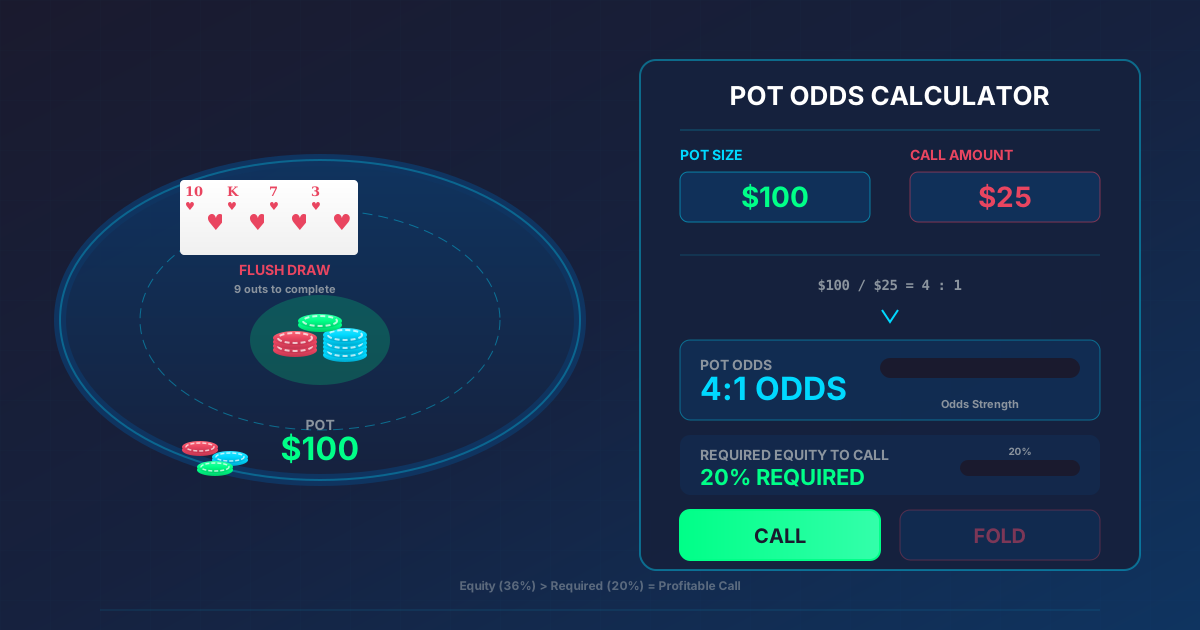
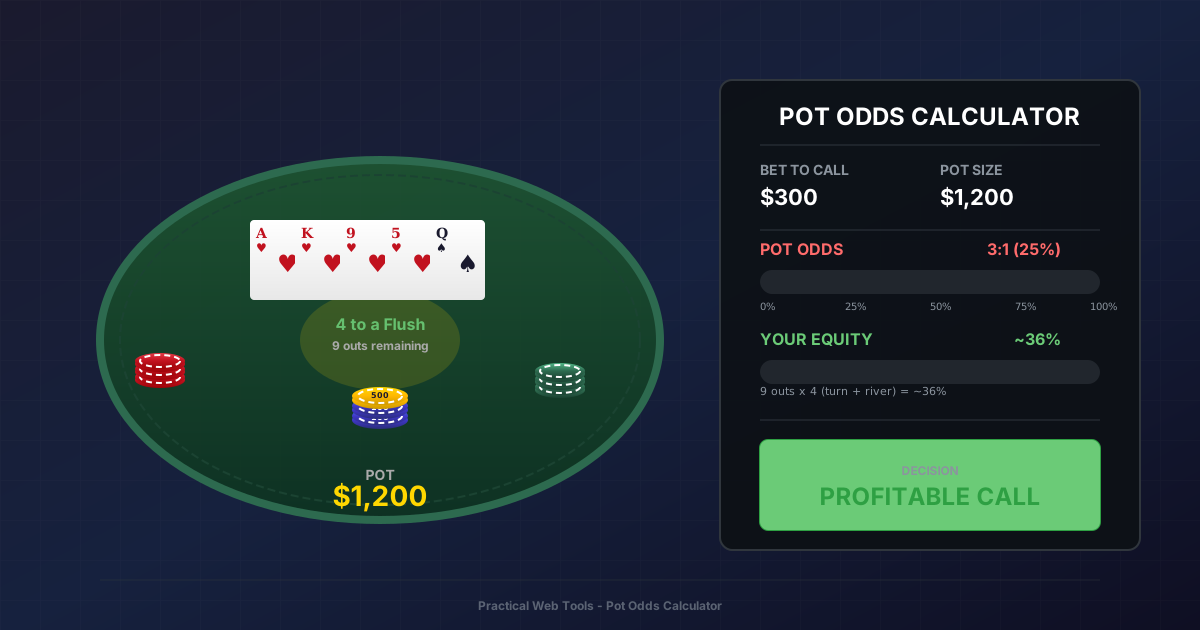
- A poker hand that needed one more card to complete a flush
Research by Clark et al. (2009) demonstrated that near-misses in gambling activate the ventral striatum and insula in ways that are neurologically indistinguishable from small wins. This tricks the brain into interpreting losses as "almost winning" rather than "losing," motivating continued play.
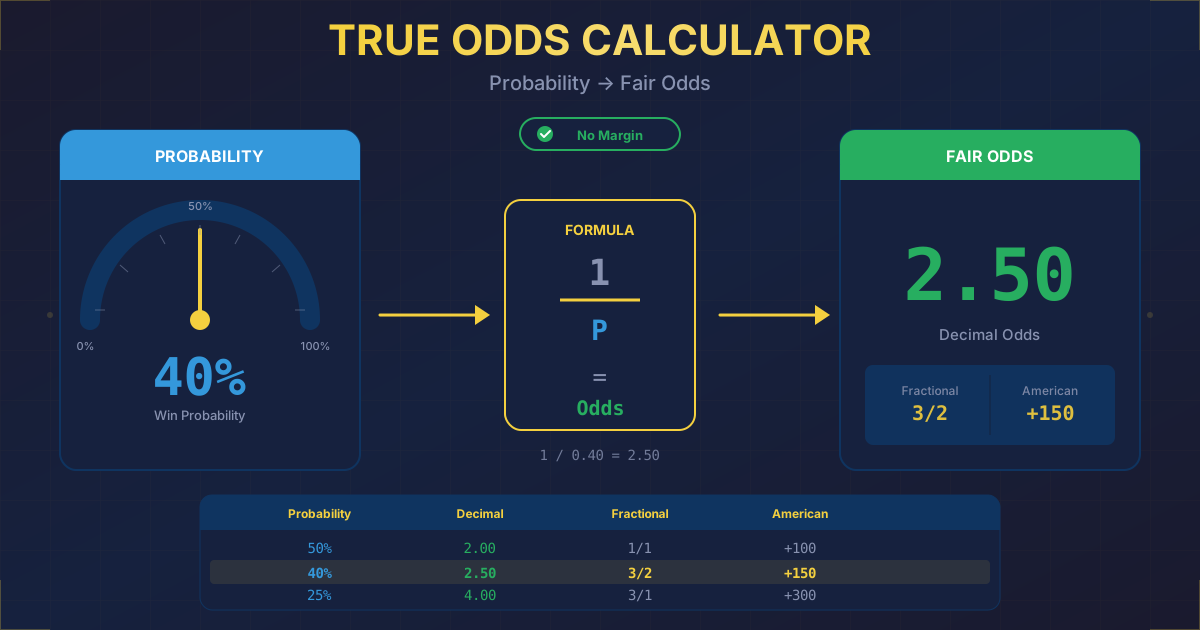
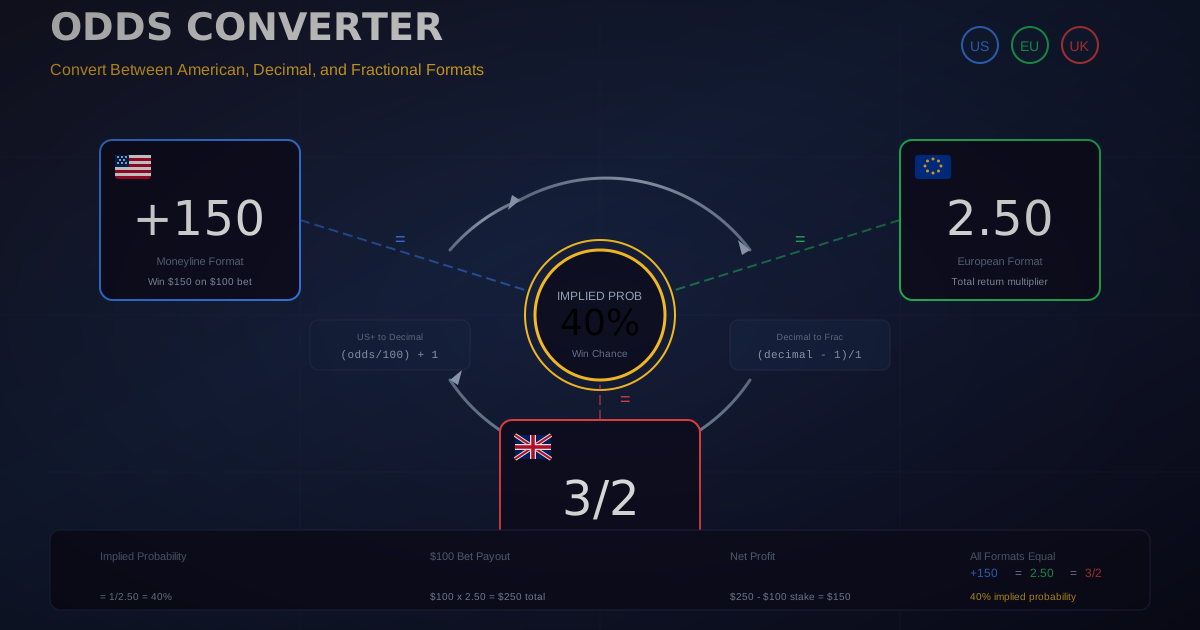
Calculate the actual probability of any outcome with our Odds Converter -- the math does not care about near-misses.
What Are the DSM-5 Diagnostic Criteria for Gambling Disorder?
Gambling disorder is recognized as a behavioral addiction in the Diagnostic and Statistical Manual of Mental Disorders, Fifth Edition (DSM-5). It was reclassified from an impulse control disorder to a substance-related and addictive disorder in 2013, reflecting the scientific understanding that it shares neurological mechanisms with substance addiction.
Diagnostic Criteria
A diagnosis of gambling disorder requires four or more of the following nine criteria within a 12-month period:
| Criterion | Description | Example |
|---|---|---|
| 1. Preoccupation | Persistent thoughts about gambling (reliving past experiences, planning next sessions, thinking of ways to get money) | Constantly checking odds, unable to focus on work due to thinking about bets |
| 2. Tolerance | Need to gamble with increasing amounts to achieve excitement | $10 bets no longer exciting; now betting $100-$500 to feel the same rush |
| 3. Withdrawal | Restlessness or irritability when attempting to cut down or stop | Anxiety, mood swings, inability to relax without gambling |
| 4. Loss of control | Repeated unsuccessful efforts to control, cut back, or stop | Setting a "last bet" then making more, promising to quit then relapsing |
| 5. Escape | Gambling to escape problems or relieve dysphoric mood | Betting when stressed, depressed, anxious, or bored |
| 6. Chasing | After losing, returning to try to get even ("chasing losses") | Doubling bet sizes after losses, making impulsive bets to recover |
| 7. Lying | Concealing the extent of gambling from family, therapist, or others | Hiding bank statements, lying about where money went |
| 8. Jeopardizing relationships | Risking or losing significant relationships, job, or educational opportunity | Spending rent money on bets, missing work for gambling |
| 9. Financial bailout | Relying on others to provide money to relieve desperate financial situations | Borrowing from family, taking loans, selling possessions |
Severity Levels
| Severity | Criteria Met | Typical Presentation |
|---|---|---|
| Mild | 4-5 of 9 | Beginning to lose control; financial impact starting |
| Moderate | 6-7 of 9 | Significant life disruption; relationships strained |
| Severe | 8-9 of 9 | Devastating impact on all life areas; potential suicidality |
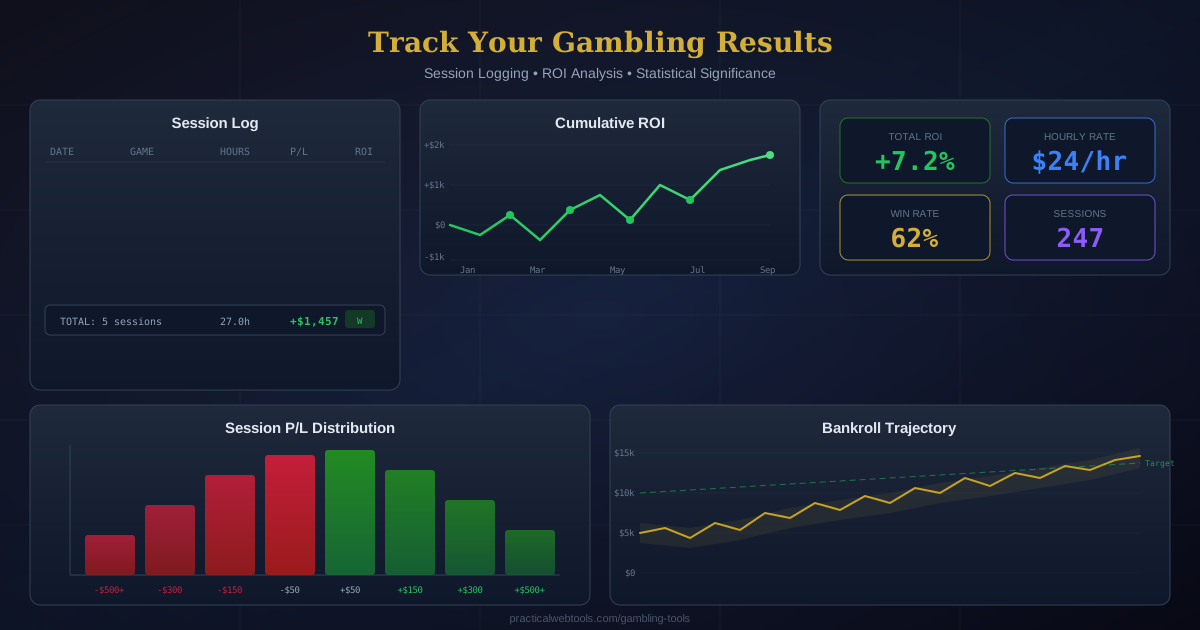
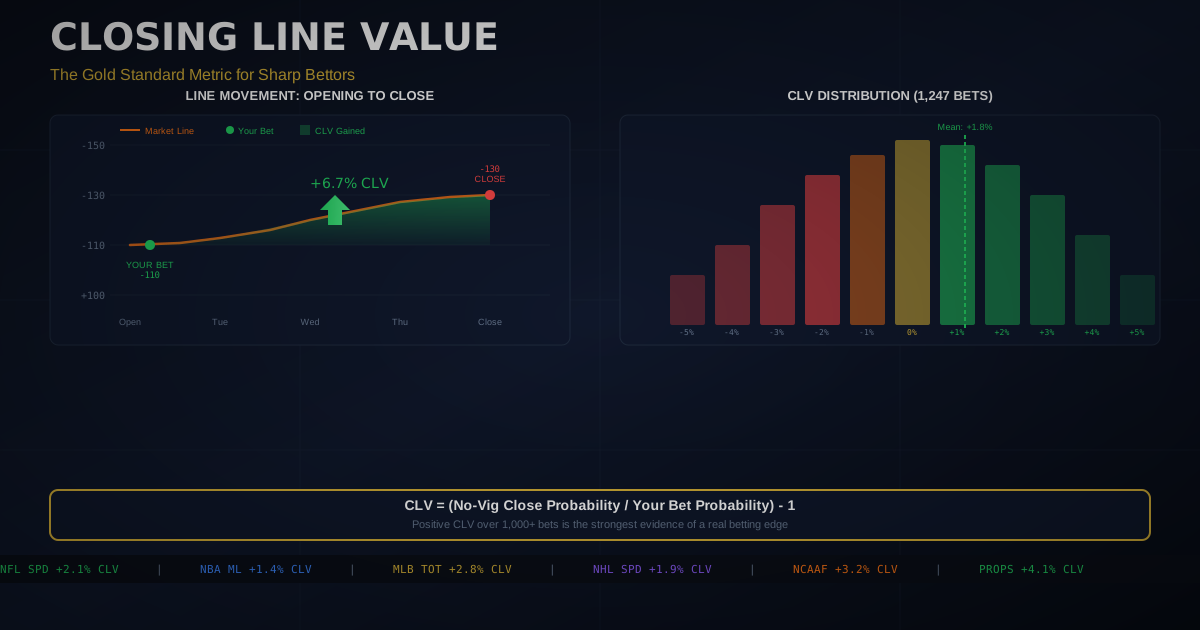
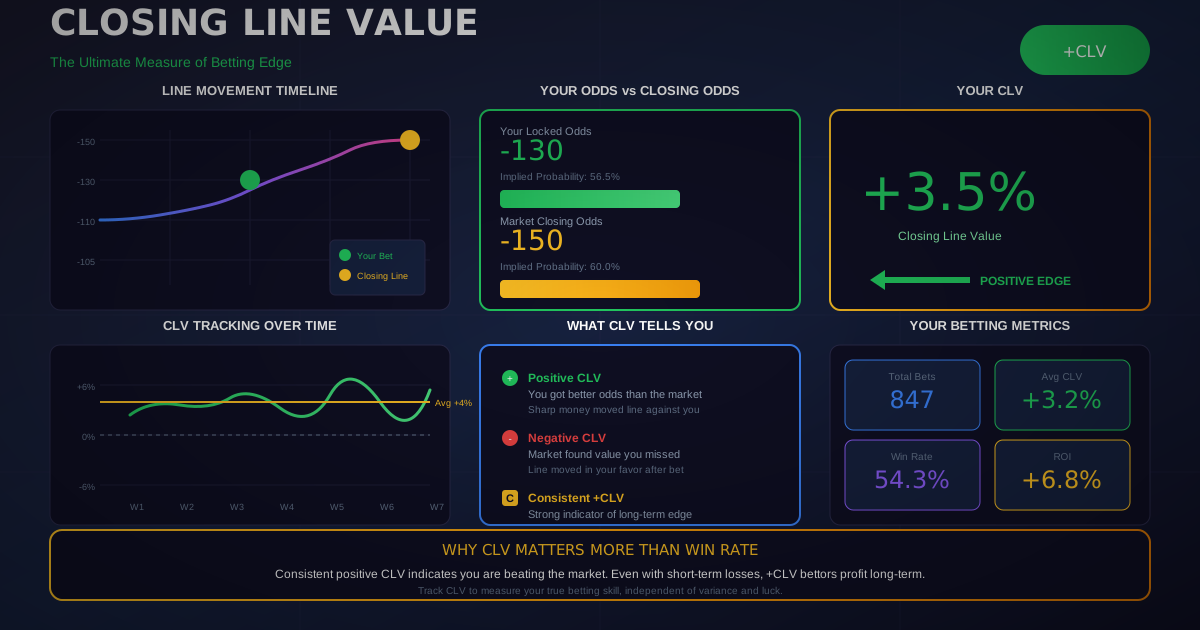
Track your gambling performance objectively with our CLV Tracker -- honest record keeping is a critical safeguard.
What Are the Warning Signs of Problem Gambling?
Warning signs of problem gambling fall into behavioral, financial, emotional, and relational categories. Early detection dramatically improves treatment outcomes.
Behavioral Warning Signs
- Spending more time gambling than intended, consistently
- Increasing bet sizes over time (tolerance)
- Gambling alone or in secret
- Neglecting responsibilities (work, family, hygiene) to gamble
- Failed attempts to cut back or quit
- Returning to gambling after promising to stop
- Gambling when stressed, anxious, or depressed (using gambling as emotional regulation)
- Lying about gambling activity to friends, family, or partner
Financial Warning Signs
| Warning Sign | Why It Matters |
|---|---|
| Unexplained financial shortfalls | Gambling losses being hidden |
| Borrowing money frequently | Losses exceeding disposable income |
| Selling possessions | Desperate need for gambling funds |
| Multiple payday loans | Financial crisis from gambling losses |
| Unpaid bills despite adequate income | Money being diverted to gambling |
| Maxed-out credit cards | Using credit to fund gambling |
| Raiding savings or retirement accounts | Long-term financial destruction |
| Asking family for money with vague reasons | Concealing the true purpose |
Emotional Warning Signs
- Mood swings correlated with gambling wins and losses
- Anxiety about gambling debts or upcoming bills
- Depression following heavy losses
- Irritability when not gambling or when gambling is discussed
- Guilt and shame after gambling sessions
- Suicidal thoughts -- problem gamblers are 15 times more likely to attempt suicide than the general population
Self-Assessment: The PGSI (Problem Gambling Severity Index)
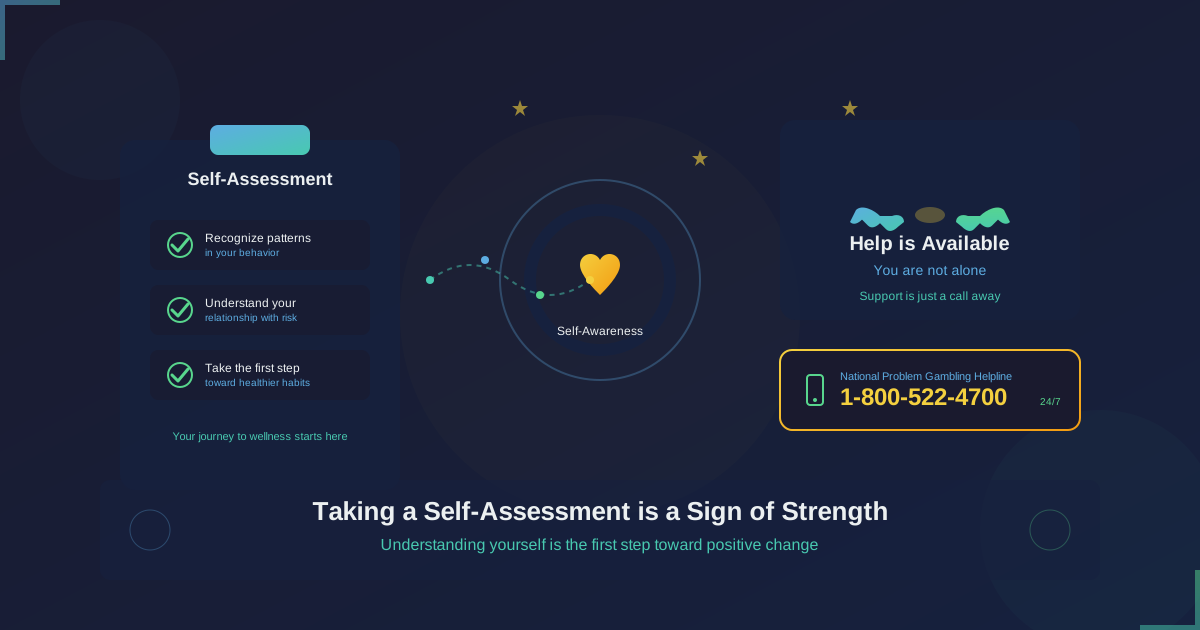
The PGSI is a validated nine-question screening tool. Rate each question for the past 12 months: 0 = Never, 1 = Sometimes, 2 = Most of the time, 3 = Almost always.
| Question | Score |
|---|---|
| Have you bet more than you could afford to lose? | 0-3 |
| Have you needed to gamble with larger amounts to get the same excitement? | 0-3 |
| Have you gone back to try to win back money you lost? | 0-3 |
| Have you borrowed money or sold anything to gamble? | 0-3 |
| Have you felt you might have a problem with gambling? | 0-3 |
| Has gambling caused you health problems, including stress or anxiety? | 0-3 |
| Have people criticized your betting or told you that you have a problem? | 0-3 |
| Has your gambling caused financial problems for you or your household? | 0-3 |
| Have you felt guilty about the way you gamble or what happens when you gamble? | 0-3 |
Scoring: 0 = Non-problem gambling; 1-2 = Low risk; 3-7 = Moderate risk; 8+ = Problem gambling.
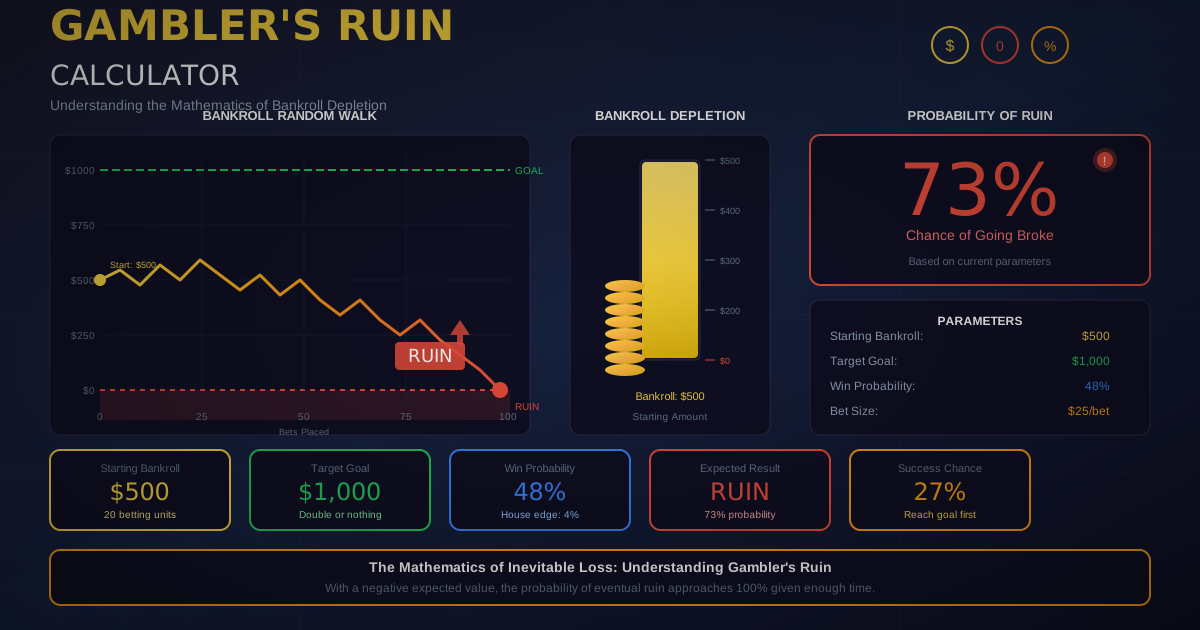
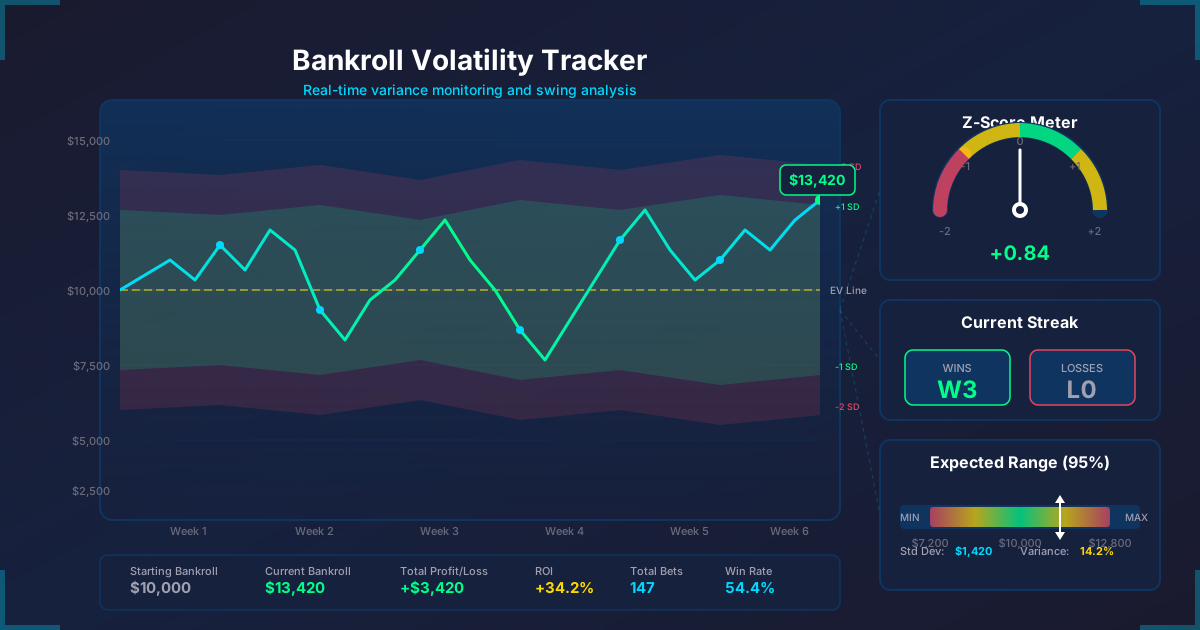
Use our Bankroll Volatility Tracker to objectively monitor your financial performance over time.
Who Is Most at Risk for Gambling Addiction?
Gambling addiction does not discriminate by income, education, or social status, but certain risk factors significantly increase vulnerability. Understanding these risk factors enables better prevention.
Demographic and Genetic Risk Factors
| Risk Factor | Increased Risk | Evidence |
|---|---|---|
| Male sex | 2-3x higher prevalence | Consistent across all major prevalence studies |
| Age 18-34 | Highest risk demographic | Peak onset period for gambling disorder |
| Family history of addiction | 3-8x increased risk | Twin studies show 50-60% heritability |
| Low socioeconomic status | 2x higher prevalence | Financial stress increases vulnerability |
| Military veterans | 2-4x higher prevalence | PTSD, trauma, and transition stress |
| Prior substance use disorder | 3-5x increased risk | Shared neurological vulnerability |
Psychological Risk Factors
- Impulsivity: High trait impulsivity is the strongest psychological predictor of gambling disorder.
- Sensation seeking: Need for novelty and excitement drives gambling engagement.
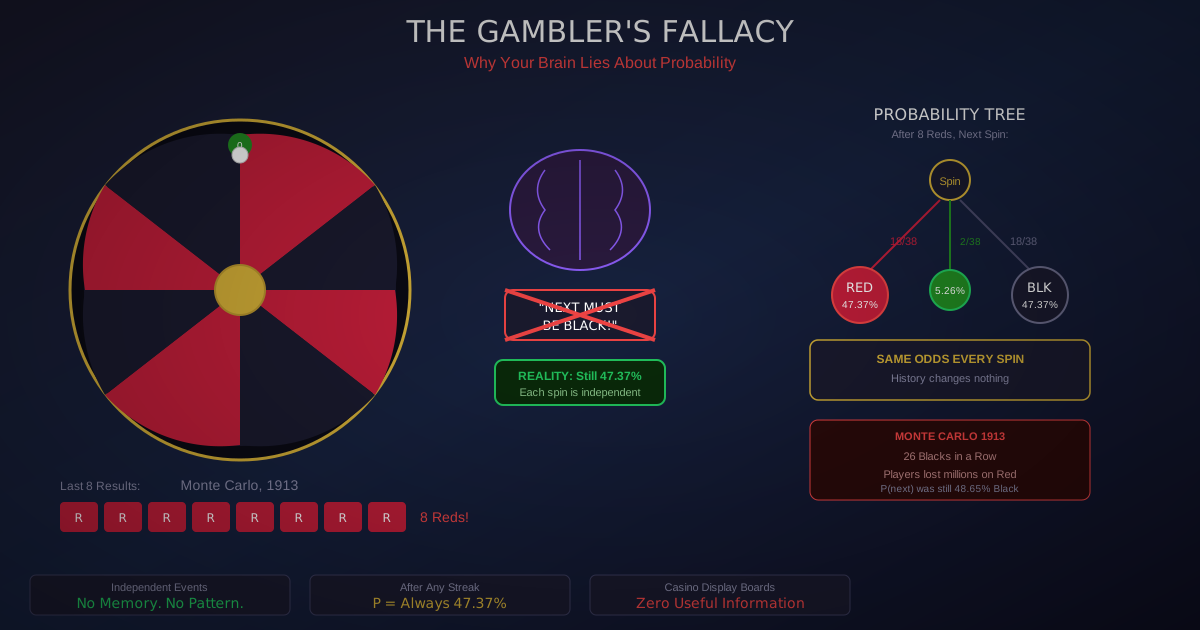
- Cognitive distortions: Belief in luck, gambler's fallacy, illusion of control, and superstitious thinking.
- Mental health comorbidities: Depression, anxiety, ADHD, and PTSD all significantly increase gambling disorder risk.
- Early big win: One of the most documented risk factors -- an early significant win creates a distorted perception of gambling as profitable.
The "Early Big Win" Effect
Research consistently identifies the "early big win" as a critical gateway to problem gambling. The mechanism:
- A new gambler wins a significant amount early in their experience
- The brain encodes this as evidence that gambling is profitable
- Subsequent losses are framed as temporary setbacks rather than expected outcomes
- The gambler chases the feeling of that first big win, often for years
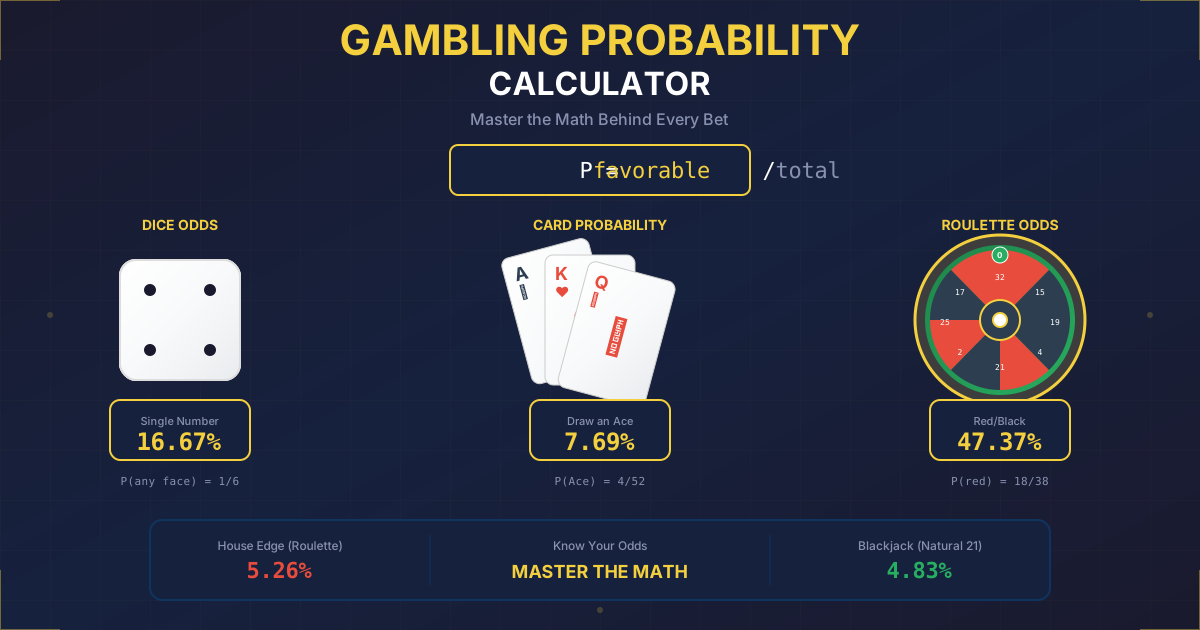
- The mathematical reality -- that the house always has an edge -- is overridden by the emotional memory of winning
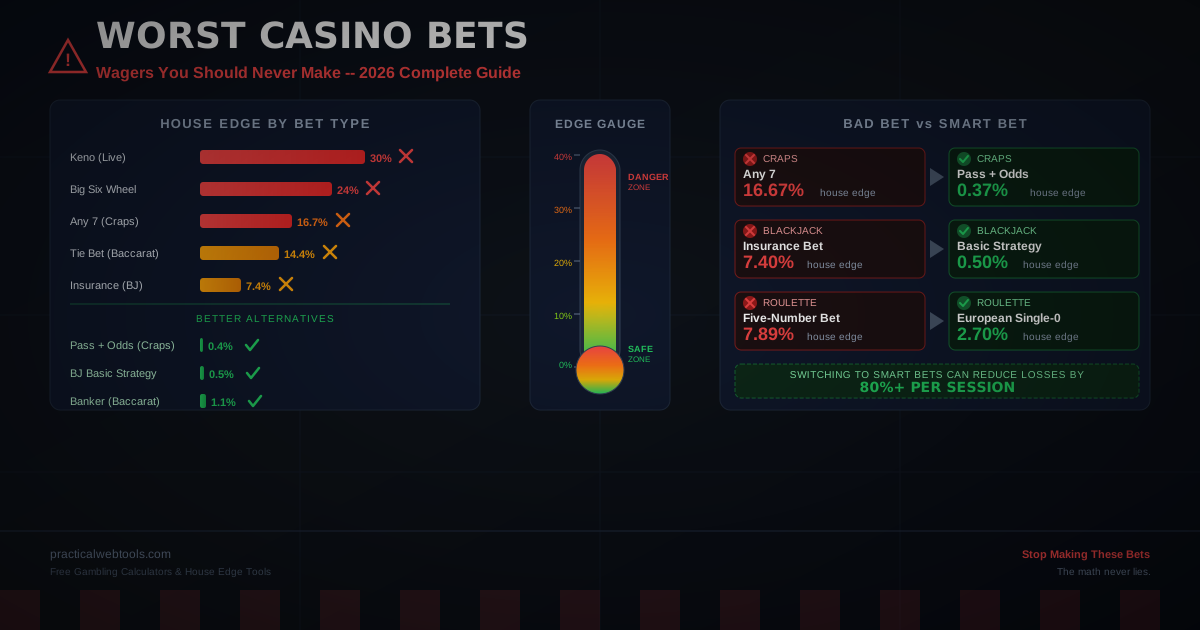
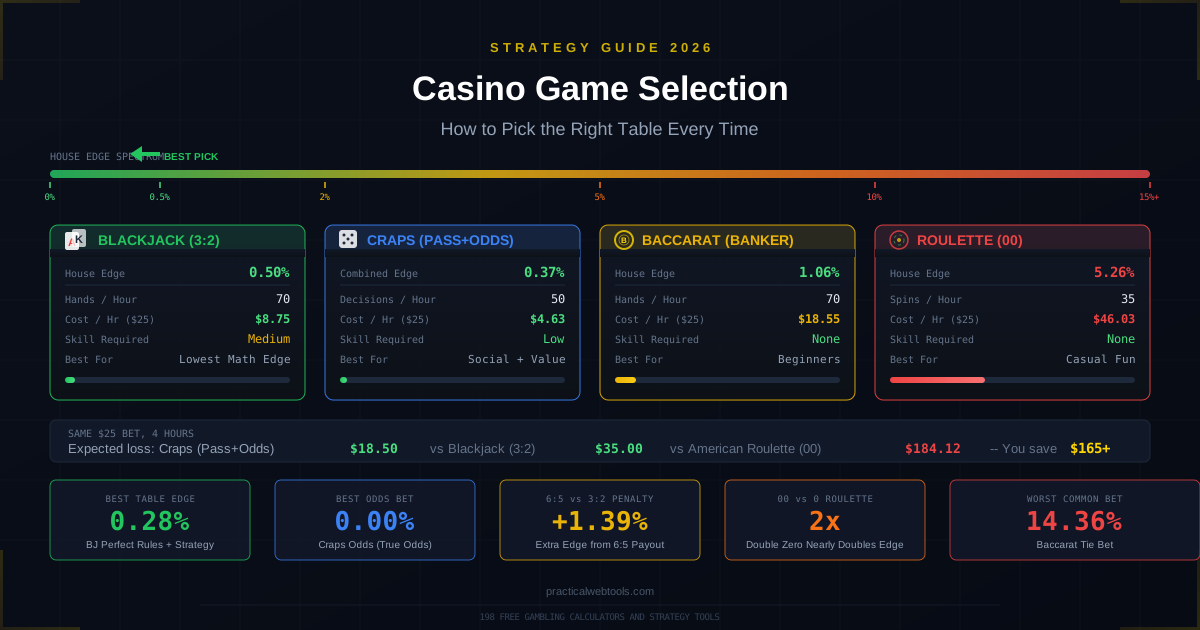
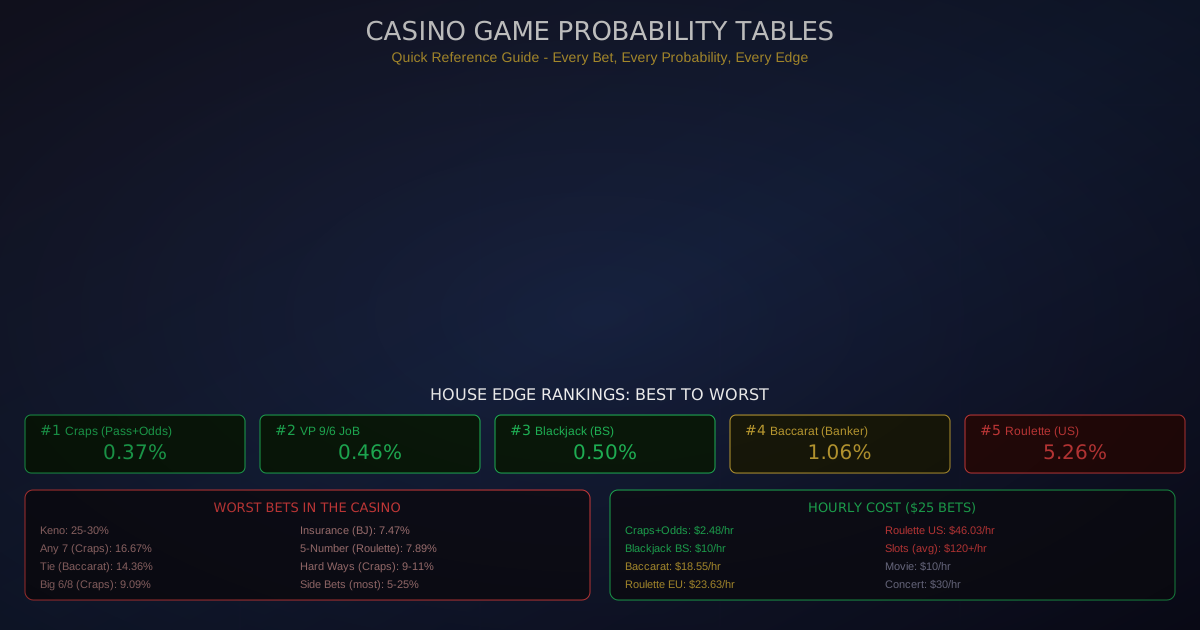
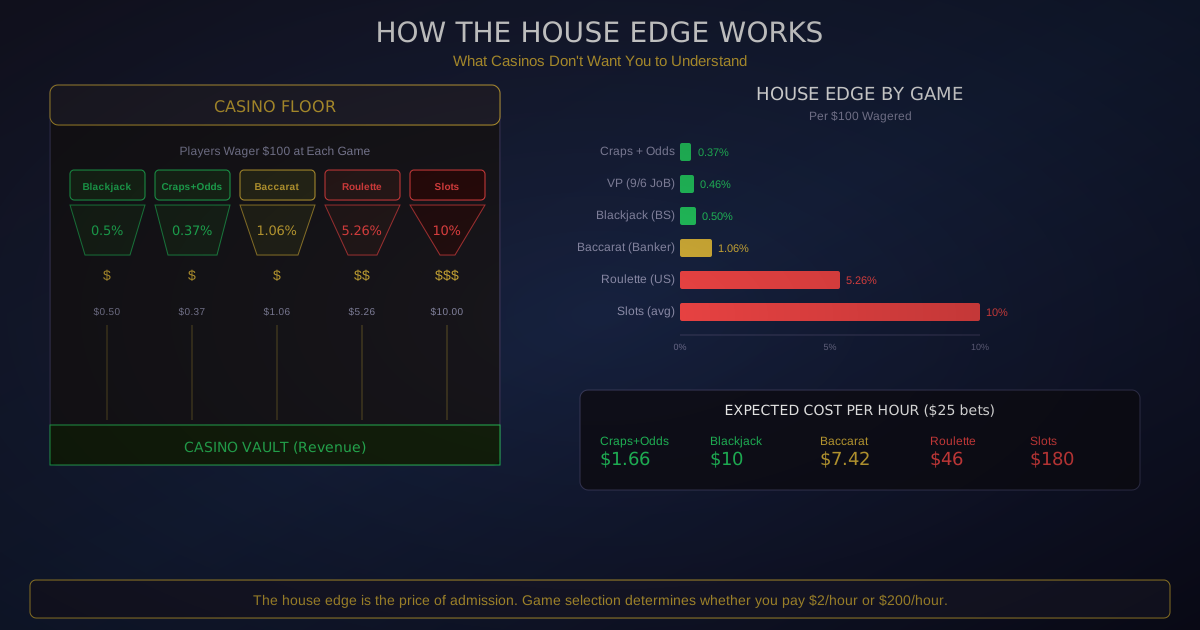
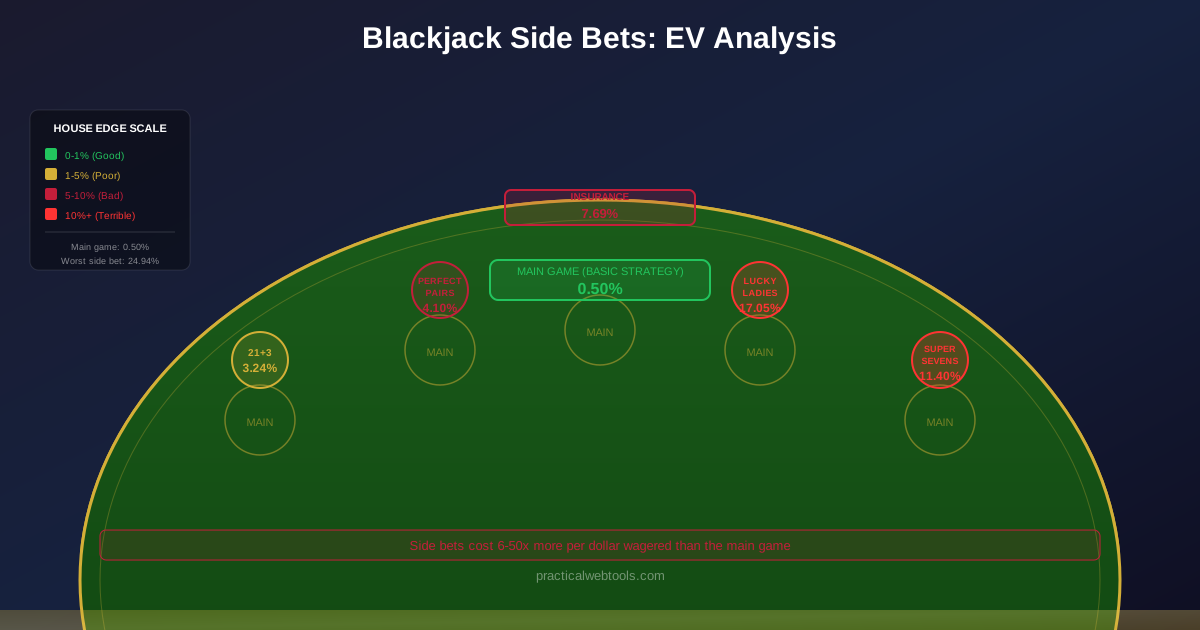
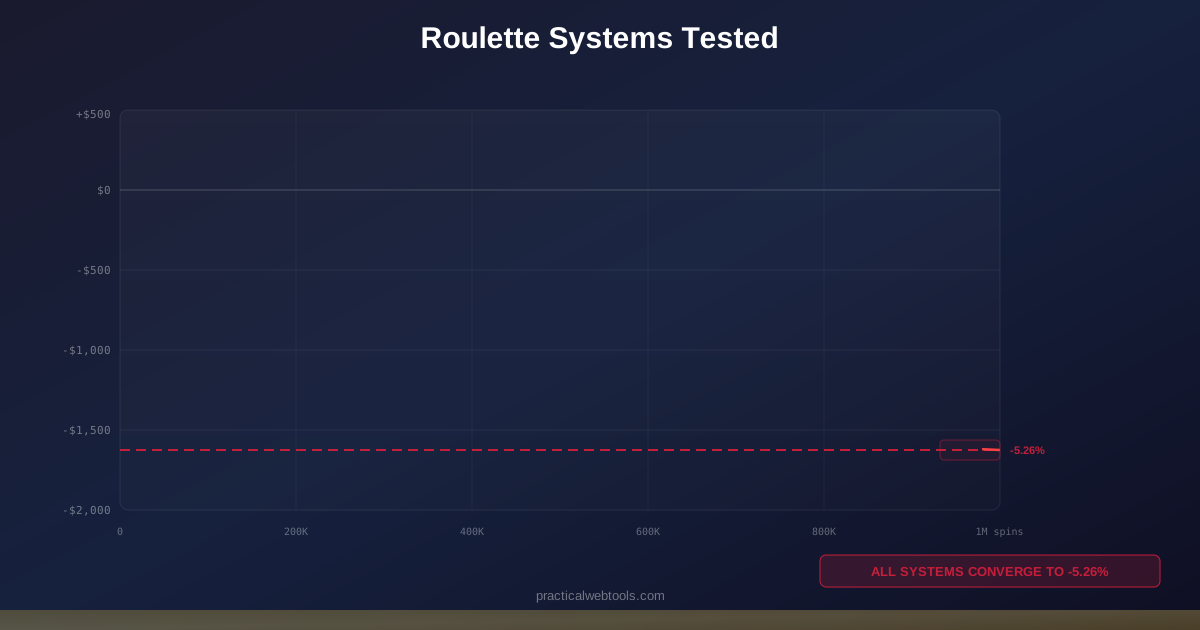
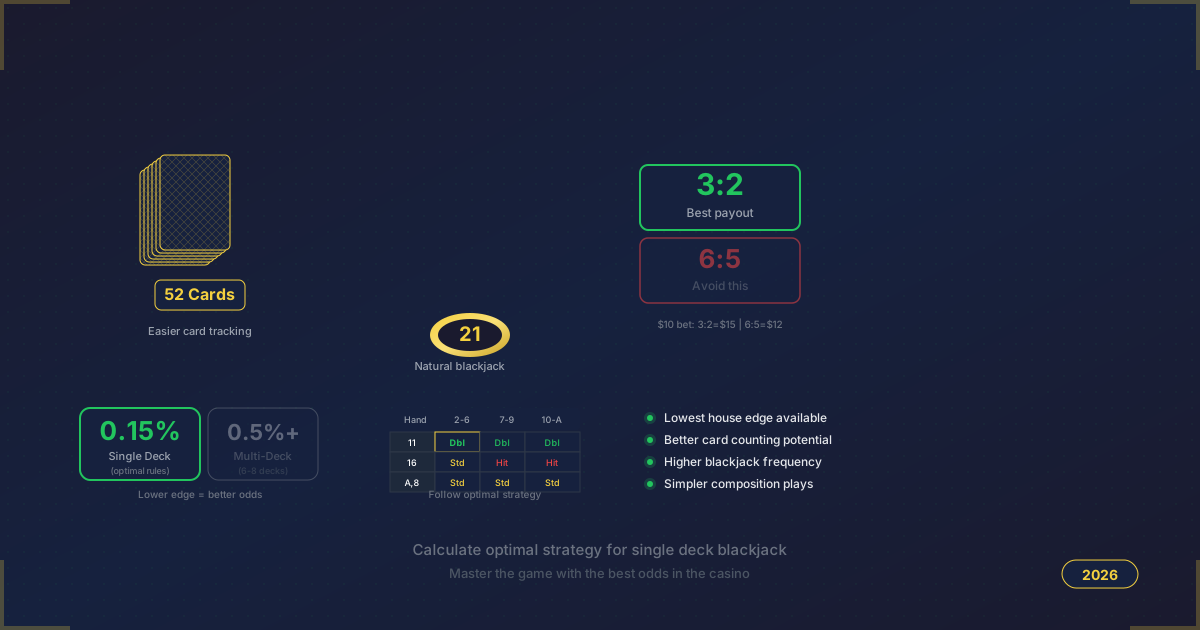
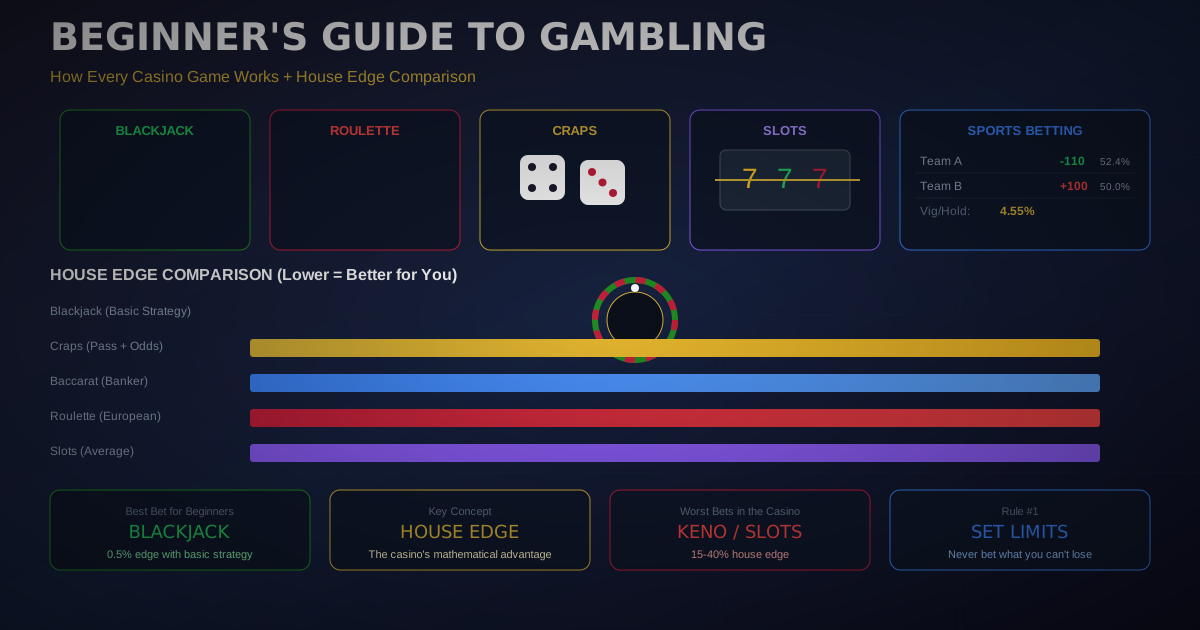
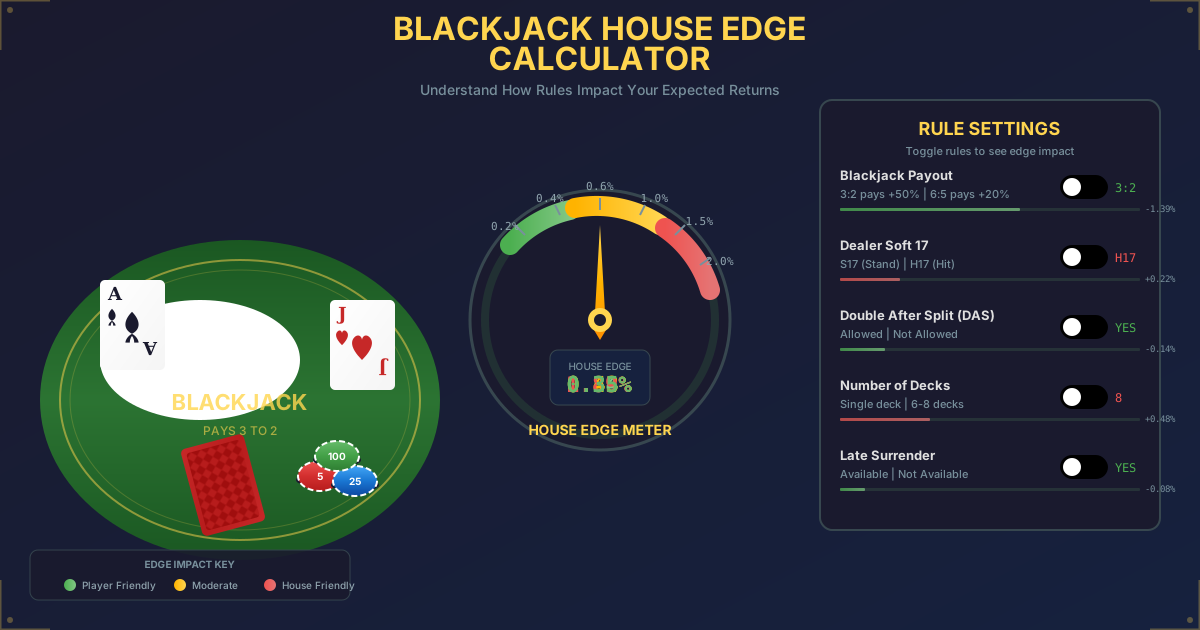
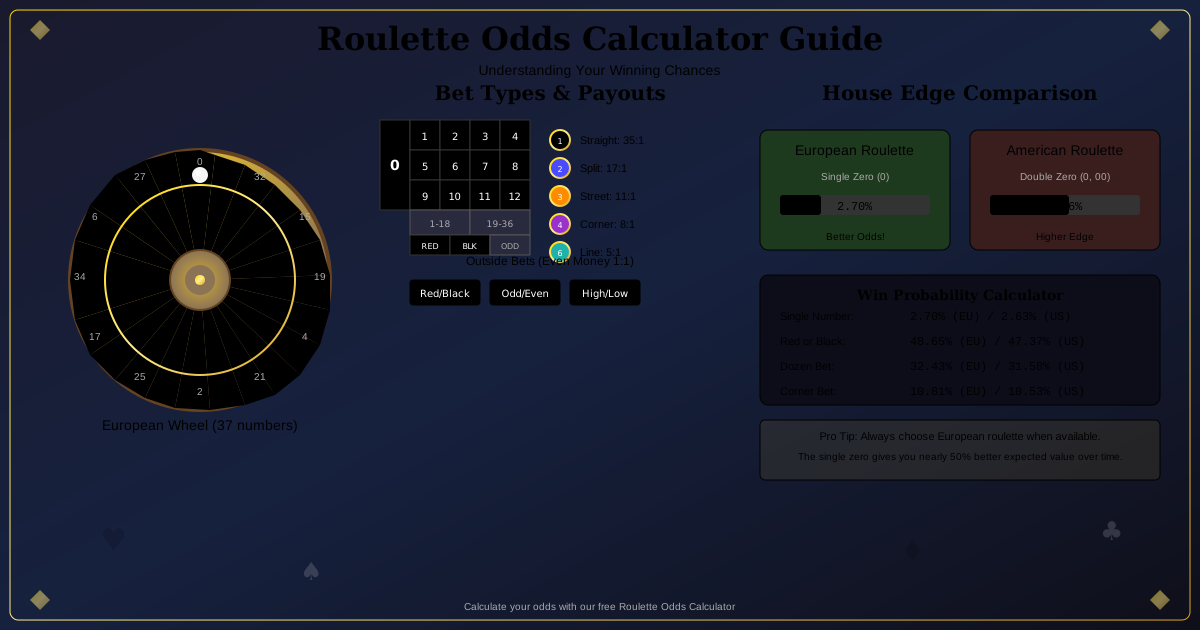
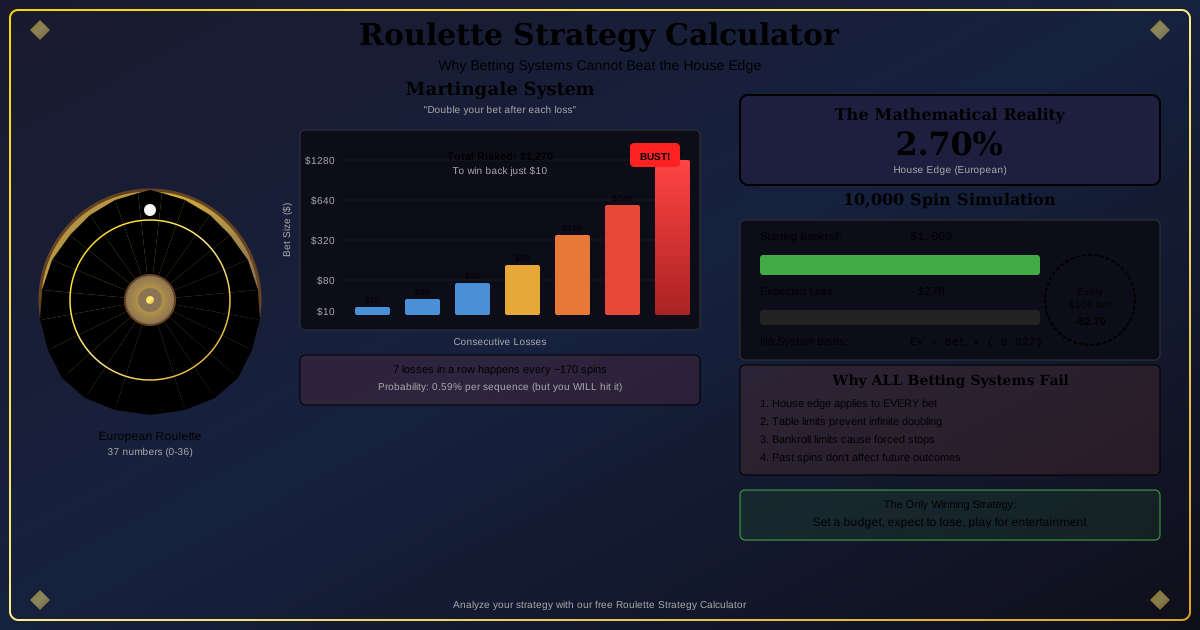
Know the true house edge before you play. Use our Blackjack House Edge Calculator and Roulette House Edge Calculator to understand what you are actually facing.
Online Gambling-Specific Risk Factors
Online gambling presents unique addiction risks that do not exist with traditional gambling:
| Online Risk Factor | Why It Increases Addiction Risk |
|---|---|
| 24/7 availability | No closing time, no commute -- gambling is always accessible |
| Privacy/anonymity | No social shame barrier to excessive play |
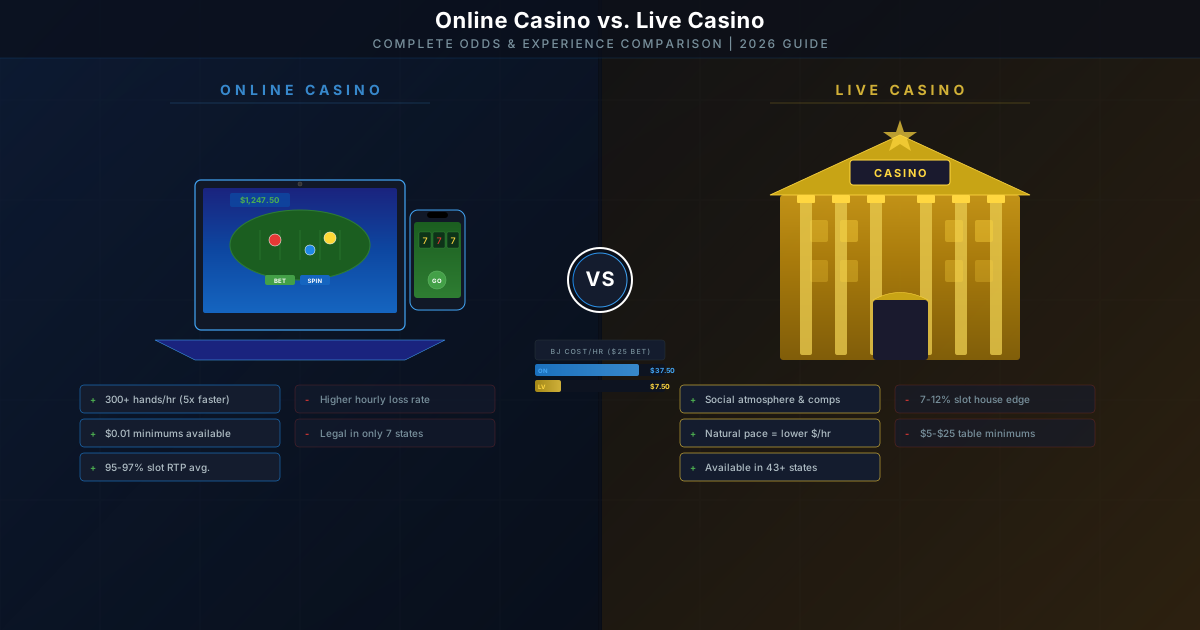
| Speed of play | Online slots can spin every 2-3 seconds vs. 5-10 seconds on physical machines |
| Cashless betting | Digital money feels less "real" than physical cash |
| Multiple simultaneous games | Can play blackjack, poker, and bet sports all at once |
| Aggressive promotions | Constant bonus offers, free bets, and reload promotions |
| Auto-features | Autoplay, quick bet, and one-click deposit reduce friction |
What Are the Prevalence Rates of Problem Gambling?
Understanding how common gambling disorder is provides context for the scale of this public health issue.
Global Prevalence Data
| Country/Region | Past-Year Problem Gambling Rate | Measurement Tool | Year |
|---|---|---|---|
| United States | 1.0-2.0% | DSM-5 criteria | 2024 |
| United Kingdom | 0.5-1.0% | PGSI 8+ | 2024 |
| Canada | 0.8-1.5% | CPGI | 2023 |
| Australia | 1.5-2.5% | PGSI 8+ | 2024 |
| Norway | 0.3-0.8% | PGSI 8+ | 2023 |
| Singapore | 0.5-1.0% | DSM criteria | 2023 |
These numbers represent diagnosed or screened problem gambling. The "at-risk" population (PGSI scores 3-7) is typically 2-4x larger, meaning 5-10% of the adult population may experience some level of gambling-related harm.
Impact Statistics
| Metric | Value |
|---|---|
| Average debt at treatment entry | $40,000-$70,000 |
| Divorce rate among problem gamblers | 3-5x general population |
| Suicide attempt rate | 15-20% of problem gamblers |
| Co-occurring substance abuse | 40-60% |
| Co-occurring depression | 50-75% |
| Employment problems | 40-50% |
| Criminal activity (to fund gambling) | 20-30% |
These statistics underscore why responsible gambling practices are essential. Always calculate the expected value of bets with our Expected Value Calculator and never bet more than you can afford to lose.
What Treatment Options Are Available for Gambling Addiction?
Multiple evidence-based treatments are available for gambling disorder. The most effective approach is typically a combination of behavioral therapy, support groups, and sometimes medication.
Cognitive Behavioral Therapy (CBT)
CBT is the most extensively researched and effective treatment for gambling disorder. It addresses both the cognitive distortions (irrational beliefs about gambling) and the behavioral patterns (triggers, routines, and responses) that maintain the addiction.
Key CBT components for gambling:
| CBT Component | Focus | Example |
|---|---|---|
| Cognitive restructuring | Identifying and correcting irrational gambling beliefs | Challenging the belief that you are "due for a win" after losses |
| Trigger identification | Recognizing situations, emotions, and thoughts that precede gambling urges | Identifying that stress at work triggers the urge to bet |
| Behavioral alternatives | Developing replacement activities for gambling | Exercise, social activities, hobbies that provide excitement |
| Relapse prevention | Building skills to handle urges and high-risk situations | Creating a plan for when driving past a casino or seeing gambling ads |
| Financial management | Restoring financial control and accountability | Working with a financial counselor, limiting access to funds |
Research shows CBT reduces gambling behavior in 60-80% of participants, with effects maintained at 12-month follow-up.
Motivational Interviewing (MI)
Motivational Interviewing is particularly effective for people who are ambivalent about changing their gambling behavior. It is non-confrontational and works by:
- Exploring the person's own motivations for change
- Highlighting the discrepancy between current behavior and personal values
- Supporting self-efficacy and confidence in ability to change
- Rolling with resistance rather than confronting it
MI is often used as a first step before CBT, particularly when the person has not yet committed to quitting gambling entirely.
Medication Options
No medications are specifically FDA-approved for gambling disorder, but several have shown promise in clinical trials:
| Medication | Class | Evidence | Mechanism |
|---|---|---|---|
| Naltrexone | Opioid antagonist | Strongest evidence | Blocks dopamine release associated with gambling rewards |
| Nalmefene | Opioid antagonist | Good evidence (approved in EU for alcohol) | Similar mechanism to naltrexone |
| SSRIs (Fluvoxamine, Paroxetine) | Antidepressant | Mixed evidence | May help when co-occurring depression/anxiety present |
| Lithium | Mood stabilizer | Limited evidence | May help with co-occurring bipolar features |
| N-Acetyl Cysteine | Amino acid supplement | Preliminary evidence | May modulate glutamate system and reduce cravings |
Medication is most effective when combined with behavioral therapy, not as a standalone treatment.
Gamblers Anonymous (GA)
Gamblers Anonymous follows a 12-step program adapted from Alcoholics Anonymous. It provides:
- Peer support from others in recovery
- Accountability through attendance and sponsorship
- A structured recovery framework
- Free and widely available meetings (in-person and online)
Limitations of GA:
- Abstinence-only approach may not suit everyone
- Limited empirical research compared to CBT
- Attrition rates are high (many people leave within the first few months)
- Not a substitute for professional treatment in moderate-to-severe cases
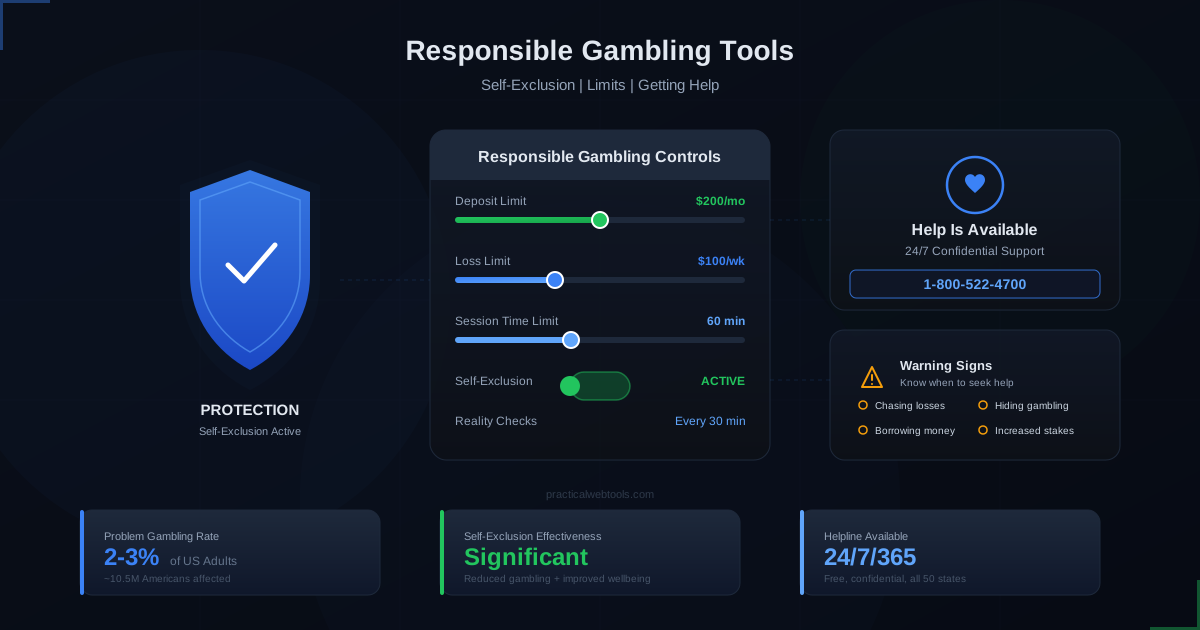
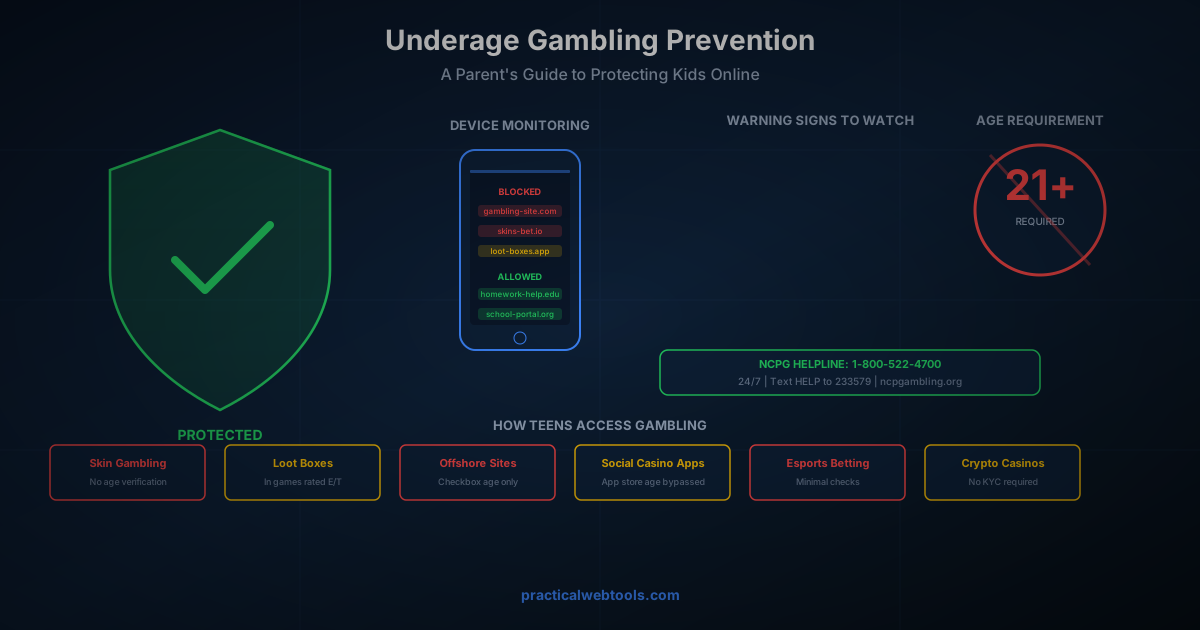
Find GA meetings at gamblersanonymous.org or call the National Problem Gambling Helpline at 1-800-522-4700.
Self-Exclusion Programs
Self-exclusion is a formal process where you voluntarily ban yourself from gambling venues and online platforms:
| Program | Jurisdiction | Duration | Coverage |
|---|---|---|---|
| GamStop | United Kingdom | 6 months, 1 year, or 5 years | All UKGC-licensed online operators |
| State self-exclusion | US (varies by state) | 1-5 years (varies) | All casinos and sportsbooks in that state |
| BetBlocker | International | Customizable | App that blocks gambling websites/apps |
| Gamban | International | 1-5 years | Software blocking 46,000+ gambling sites |
Self-exclusion is a powerful tool but not foolproof. Online self-exclusion can be circumvented by using different sites or platforms not covered by the program. It works best as part of a comprehensive recovery plan.
How Can You Help a Loved One with Gambling Addiction?
Helping someone with a gambling problem requires empathy, boundaries, and informed action. The approach matters -- confrontation and ultimatums often backfire.
Effective Approaches
| Do | Do Not |
|---|---|
| Express concern with specific examples | Attack, blame, or shame |
| Listen without judgment | Lecture or moralize |
| Offer to help find treatment | Try to control their gambling behavior |
| Set boundaries around finances | Pay off their gambling debts without conditions |
| Take care of your own mental health | Neglect your own needs |
| Learn about gambling addiction | Assume it is a matter of willpower |
| Encourage professional help | Try to be their therapist |
Having the Conversation
- Choose the right time: Not during or immediately after a gambling episode. Choose a calm, private moment.
- Use "I" statements: "I'm worried about our finances" rather than "You're destroying our family."
- Be specific: "I noticed $3,000 missing from our savings" rather than "You always gamble too much."
- Express empathy: "I understand this is hard" rather than "Just stop doing it."
- Offer support: "I'll go with you to a counseling appointment" rather than "Go fix yourself."
Protecting Family Finances
If a family member has a gambling problem:
- Separate finances where possible
- Remove joint access to savings and investment accounts
- Monitor credit reports for unauthorized accounts
- Do not co-sign loans or lend money
- Consider a financial counselor who specializes in gambling-related debt
- Contact the National Foundation for Credit Counseling (nfcc.org)
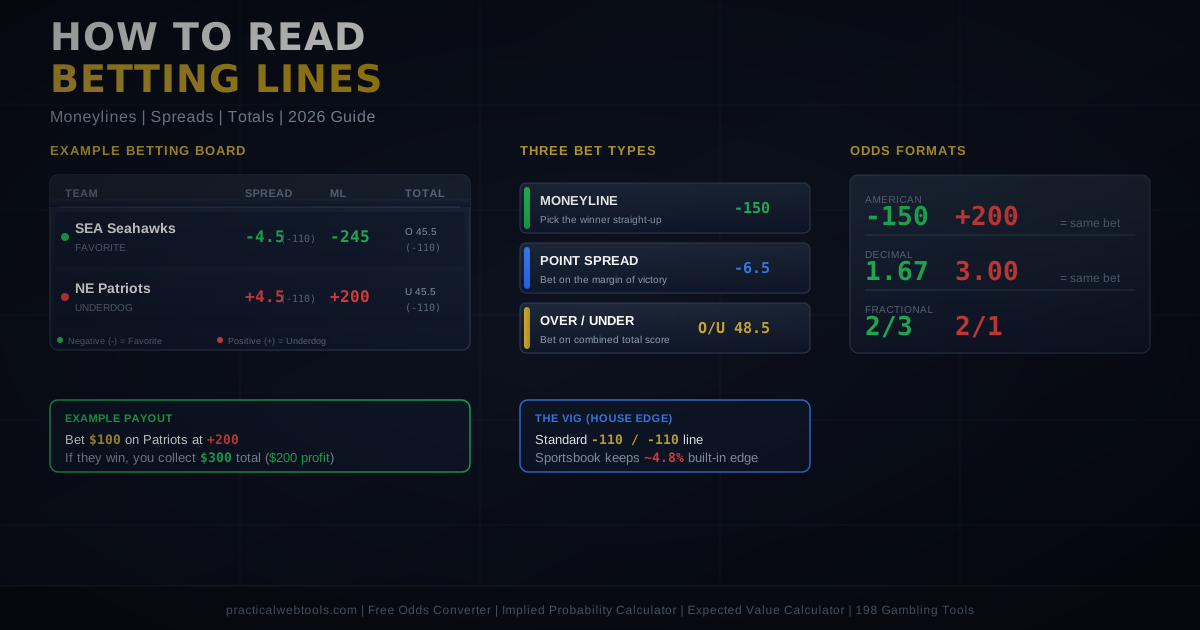
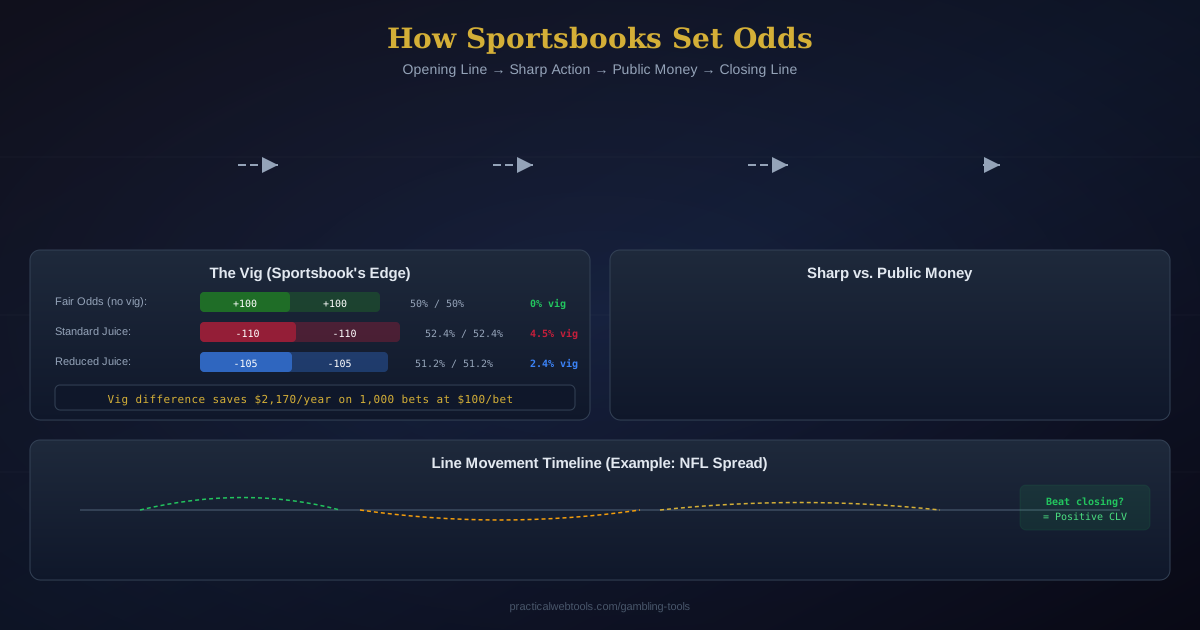
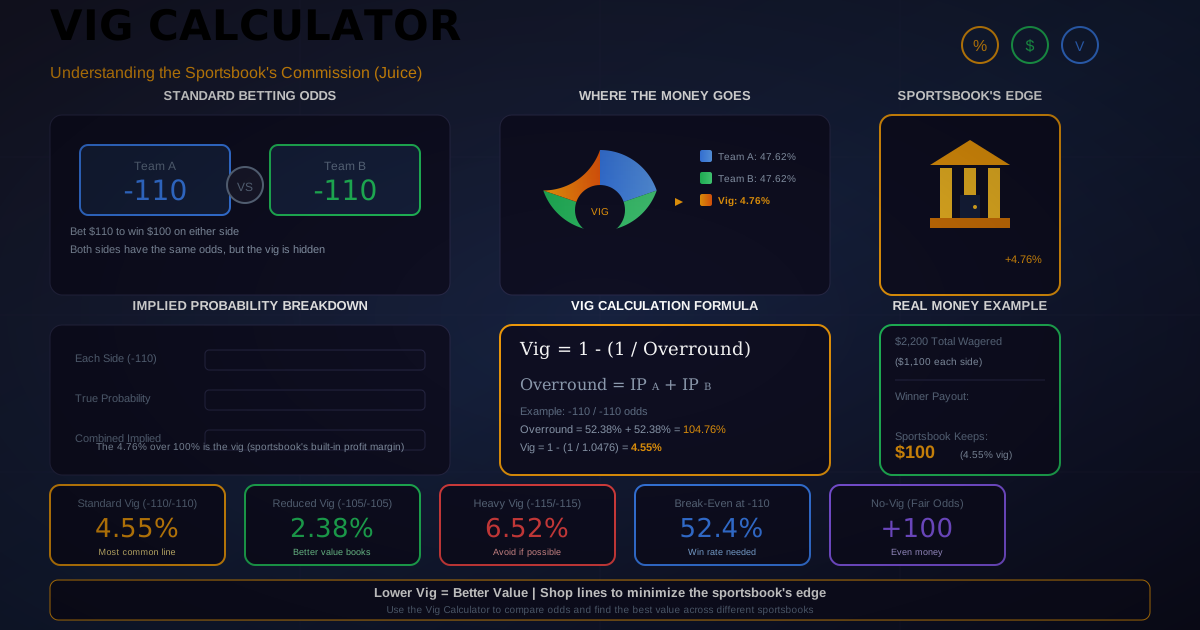
Understanding the mathematical reality of gambling helps frame the conversation. Use our Hold/Vig Calculator to demonstrate that the house always has an edge.
What Does Financial Recovery from Gambling Addiction Look Like?
Financial recovery is often the most concrete and measurable aspect of gambling addiction recovery. It requires honest accounting, structured repayment, and safeguards against relapse.
Step 1: Full Financial Inventory
| Category | Action |
|---|---|
| Total debt | List every debt: credit cards, loans, money owed to family/friends |
| Monthly income | Document all income sources |
| Essential expenses | Housing, food, utilities, transportation, insurance |
| Discretionary spending | Identify what can be cut |
| Net position | Calculate total debt minus assets |
Step 2: Debt Prioritization
| Priority | Debt Type | Strategy |
|---|---|---|
| 1 (Critical) | Rent/mortgage arrears | Negotiate payment plan immediately |
| 2 (High) | Tax debts | Contact IRS/HMRC for installment agreement |
| 3 (High) | Utility arrears | Set up payment plans before disconnection |
| 4 (Medium) | Credit card debt | Consider balance transfer or debt consolidation |
| 5 (Medium) | Personal loans | Negotiate reduced interest or extended terms |
| 6 (Lower) | Money owed to family/friends | Agree on realistic repayment schedule |
Step 3: Safeguards
- Remove access to gambling funds: No credit cards in your name, limited debit card access, have a trusted person manage large accounts.
- Block gambling sites: Use Gamban or BetBlocker on all devices.
- Deposit cash: For daily expenses, withdraw a fixed weekly amount. When it is gone, it is gone.
- Automate bill payments: Remove the temptation to divert bill money to gambling.
- Regular accountability check-ins: Weekly meetings with a sponsor, therapist, or trusted friend to review finances.
Recovery Timeline
| Phase | Timeline | Typical Progress |
|---|---|---|
| Crisis stabilization | Months 1-3 | Stop the bleeding -- no new gambling debt, essential bills current |
| Foundation | Months 3-12 | Consistent non-gambling, begin systematic debt repayment |
| Rebuilding | Years 1-3 | Significant debt reduction, credit score improvement, emergency fund started |
| Long-term recovery | Years 3-5+ | Debt-free or near debt-free, financial stability, healthy relationship with money |
Never gamble to recover financial losses. The math does not work. Use our Expected Value Calculator to understand why: every bet against the house has a negative expected value.
What Are the Recovery Statistics?
Recovery from gambling disorder is achievable, and understanding realistic outcomes helps set expectations.
Treatment Outcome Data
| Treatment Type | Gambling Reduction at 12 Months | Full Abstinence at 12 Months |
|---|---|---|
| CBT (individual) | 60-80% | 30-50% |
| CBT + Medication | 65-85% | 35-55% |
| Gamblers Anonymous only | 30-50% | 15-25% |
| Self-help (no treatment) | 20-35% | 10-20% |
| Residential treatment | 50-70% | 25-40% |
Key Recovery Factors
| Factor | Impact on Recovery |
|---|---|
| Treatment engagement | Most critical -- people who complete treatment have 2-3x better outcomes |
| Social support | Strong support network doubles likelihood of sustained recovery |
| Co-occurring disorders | Untreated depression/anxiety significantly reduces recovery rates |
| Financial stability | Resolving debt reduces relapse triggers |
| Self-exclusion use | Those who self-exclude have lower relapse rates |
| Length of disorder | Shorter duration before treatment = better outcomes |
Frequently Asked Questions About Gambling Addiction
Is gambling addiction a real addiction? Yes. The DSM-5 classifies gambling disorder as a behavioral addiction in the same category as substance use disorders. Brain imaging studies confirm that gambling addiction activates the same reward pathways (mesolimbic dopamine system) as drug and alcohol addiction. It produces tolerance, withdrawal, and compulsive behavior identical to substance addictions.
Can someone be addicted to sports betting specifically? Yes. Sports betting addiction follows the same neurological patterns as other gambling addiction. The combination of variable outcomes, constant availability (especially mobile betting), and the illusion of skill makes sports betting particularly addictive. The legalization of mobile sports betting in 30+ US states has correlated with increased problem gambling rates among young adults.
Is problem gambling caused by lack of willpower? No. Gambling disorder is a neurological condition involving altered dopamine regulation, weakened prefrontal cortex function, and reinforced behavioral patterns. Framing it as a willpower issue is scientifically inaccurate and harmful because it discourages people from seeking professional treatment.
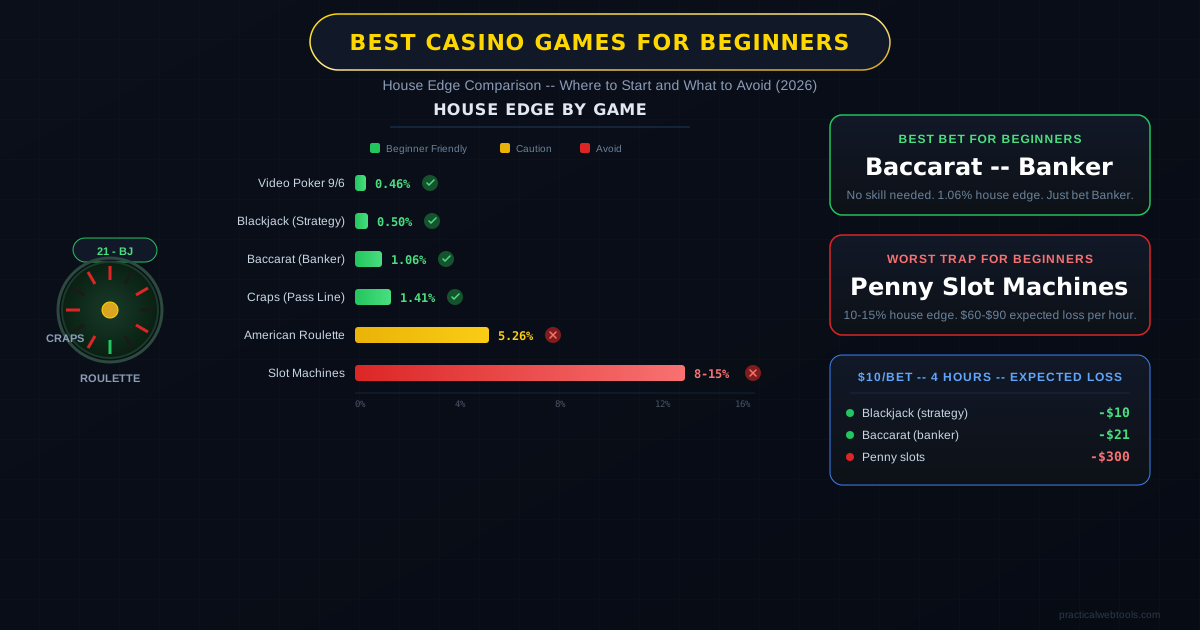
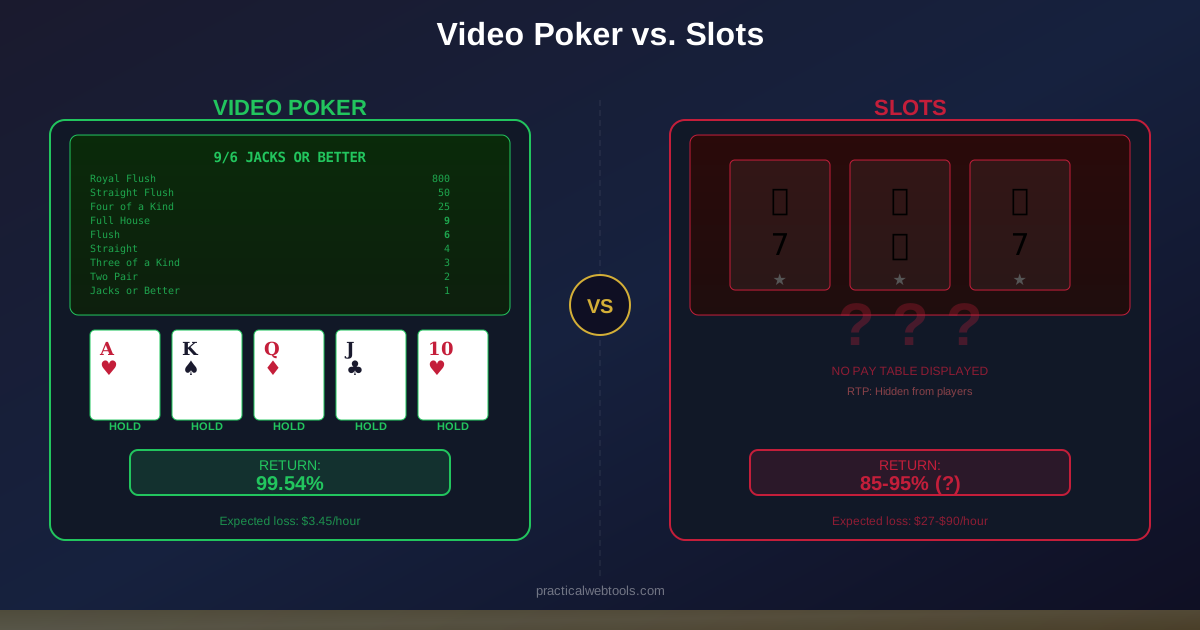
What is the most addictive form of gambling? Electronic gaming machines (slot machines, video poker) are consistently identified as the most addictive form of gambling. Their combination of rapid play speed, variable ratio reinforcement, near-miss feedback, and sensory stimulation creates the most potent behavioral conditioning. Online slots add 24/7 availability and cashless play, increasing the risk further.
How long does gambling addiction recovery take? Recovery is a long-term process. Most people see significant improvement within 3-6 months of treatment, but sustained recovery typically requires 1-2 years of active effort. Relapse rates are 40-60% in the first year, which is comparable to other addictions. Long-term recovery (5+ years of controlled/no gambling) is achieved by approximately 50-60% of those who engage in treatment.
Can you gamble responsibly after having a gambling addiction? This is debated among clinicians. Most treatment programs recommend complete abstinence from gambling. Some moderate-risk gamblers may be able to return to controlled gambling with strict limits, but for those diagnosed with gambling disorder (especially moderate-to-severe), abstinence is generally recommended.
Does online gambling cause more addiction than in-person gambling? Research suggests online gambling has higher addiction potential due to 24/7 availability, speed of play, cashless transactions, privacy (no social barriers), and aggressive promotional targeting. However, some studies note that the relationship is complex -- people predisposed to addiction may gravitate to online gambling because of its accessibility.
Where can I get help right now? National Council on Problem Gambling Helpline: 1-800-522-4700 (24/7, confidential). Text "HELP" to 233-6789. Chat at ncpgambling.org. Gamblers Anonymous: gamblersanonymous.org. Crisis Text Line: Text HOME to 741741.
Related Tools for Responsible Gambling
Understanding the Math
- Expected Value Calculator: See the true expected profit or loss on any bet
- Implied Probability Calculator: Convert odds to real probabilities
- Hold/Vig Calculator: Understand the sportsbook's built-in edge
- Odds Converter: Compare odds across formats
Bankroll Management
- Kelly Criterion Calculator: Mathematical bet sizing to prevent overexposure
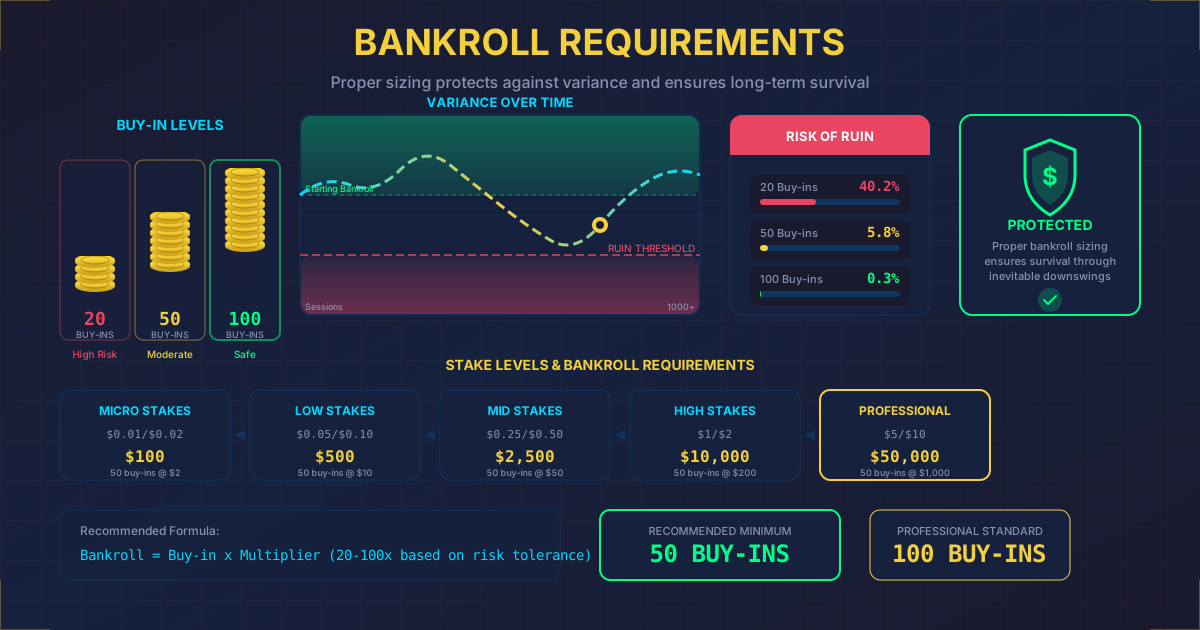
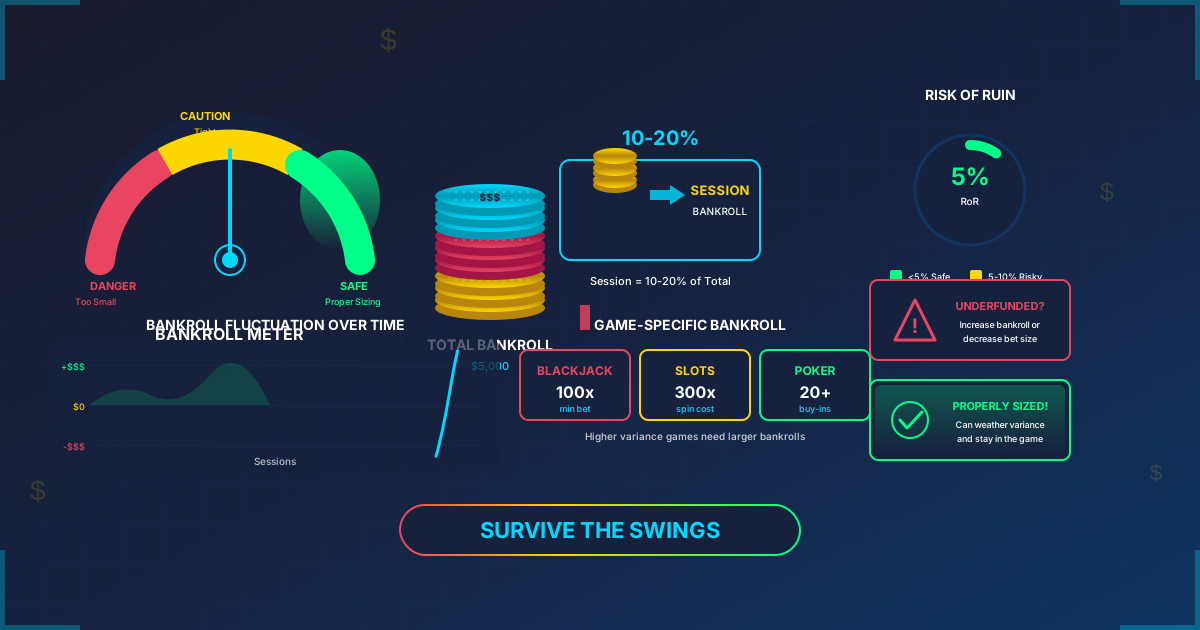
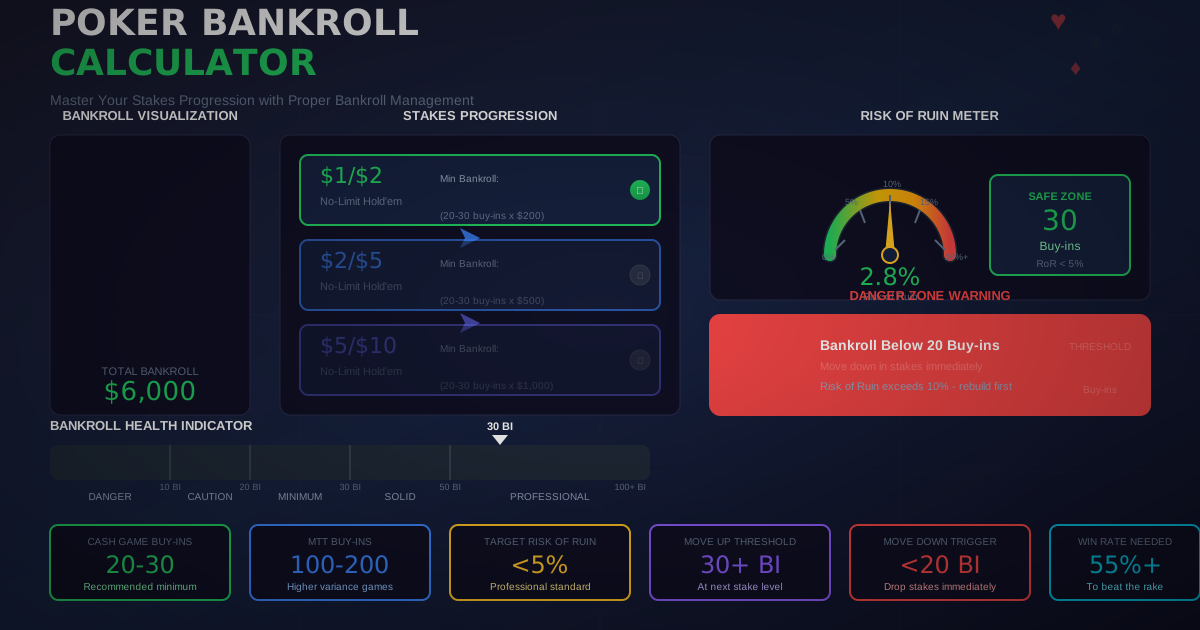
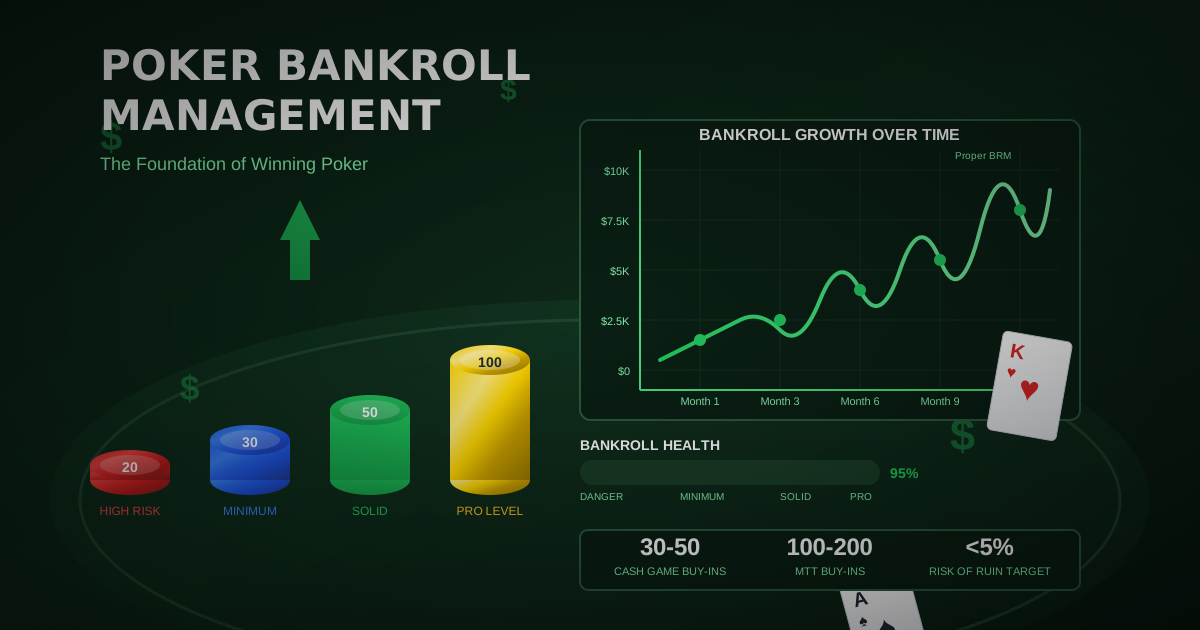
- Bankroll Volatility Tracker: Monitor bankroll health and risk of ruin
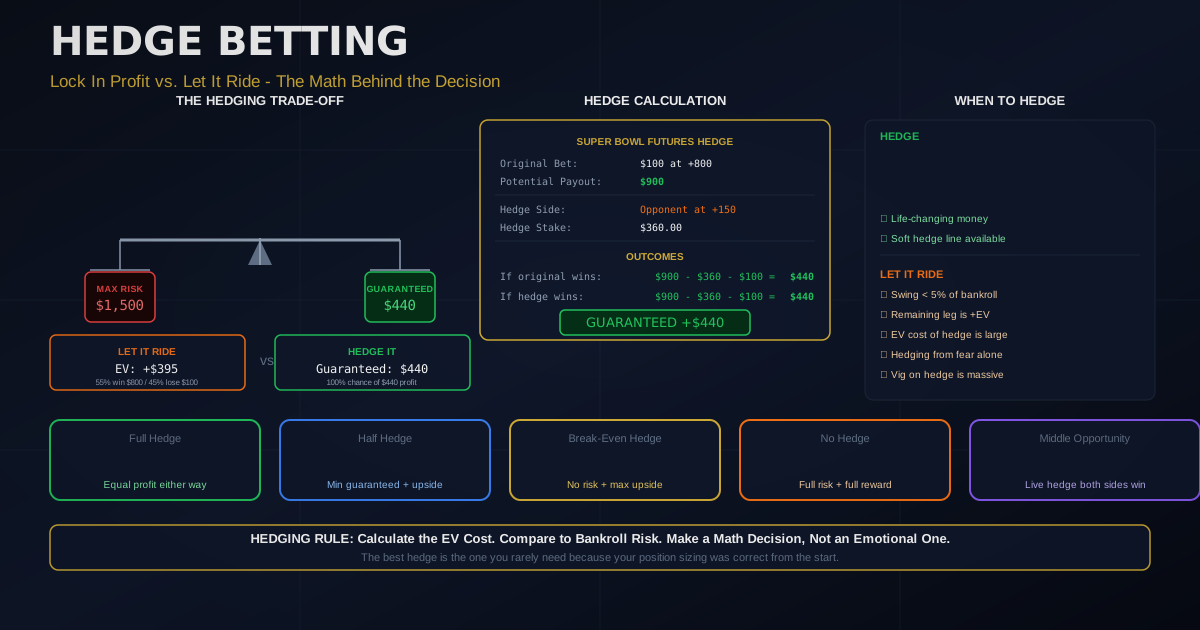
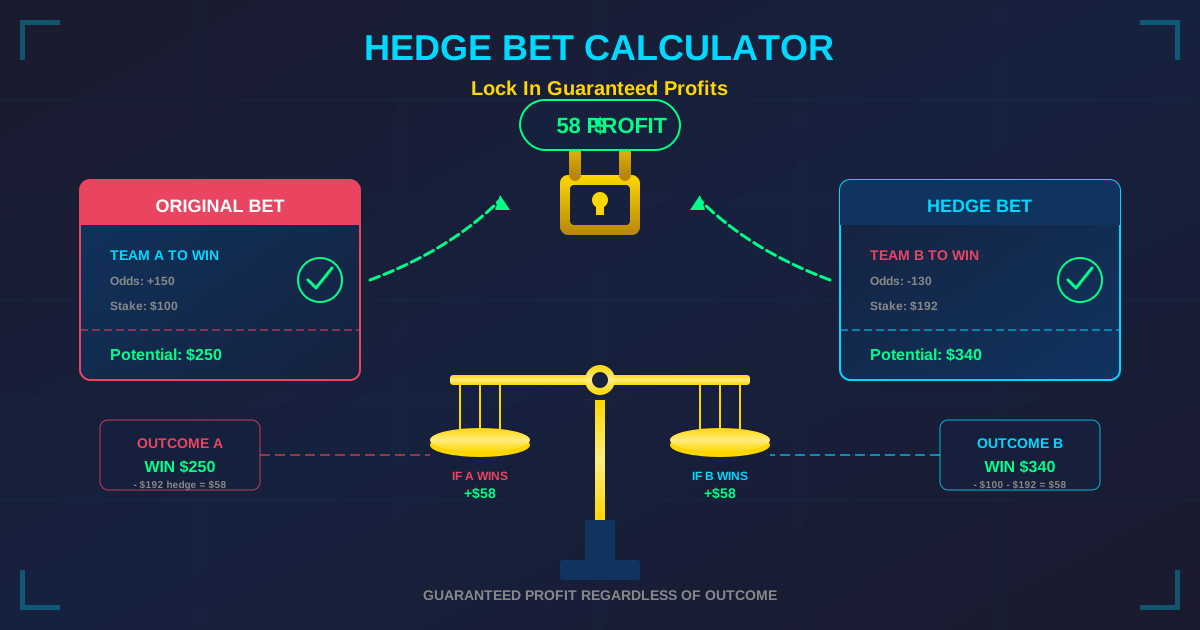
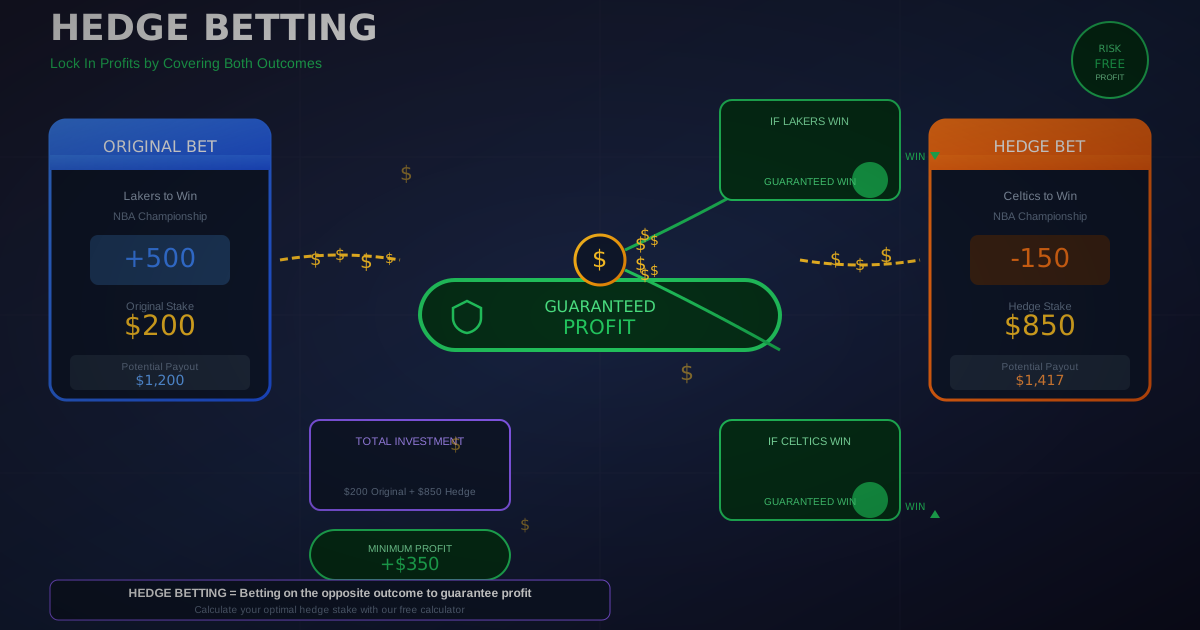
- Hedge Calculator: Lock in profits and limit losses
House Edge Awareness
- Blackjack House Edge Calculator: Know the true house advantage by rules
- Roulette House Edge Calculator: Compare house edges across roulette variants
Performance Tracking
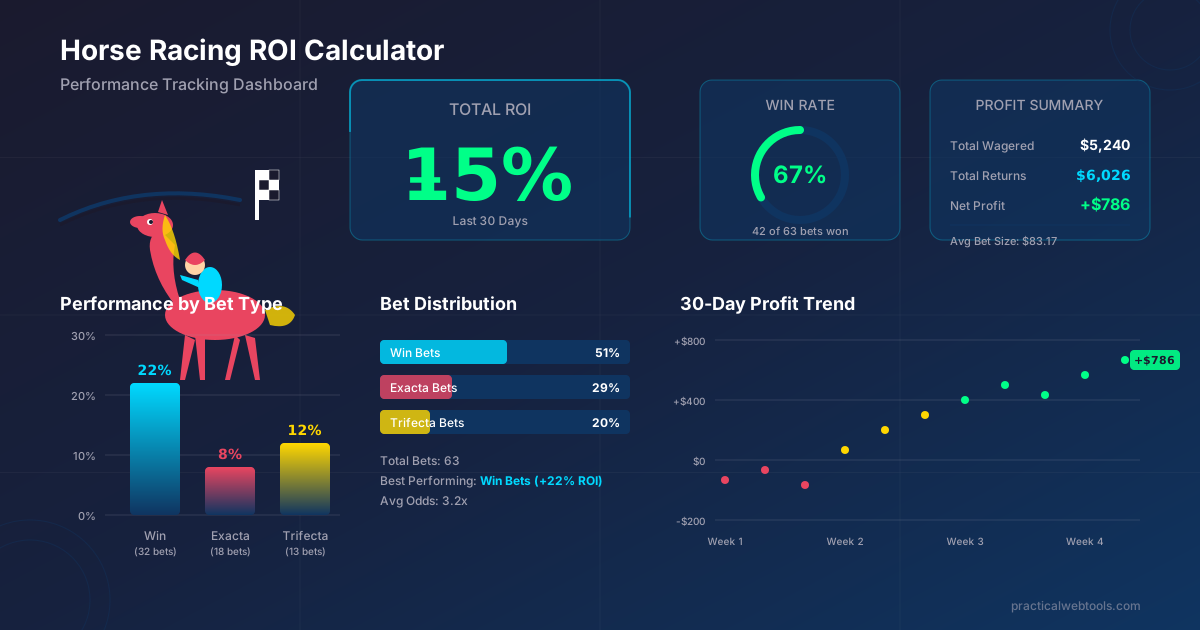
- CLV Tracker: Track closing line value as an objective performance metric
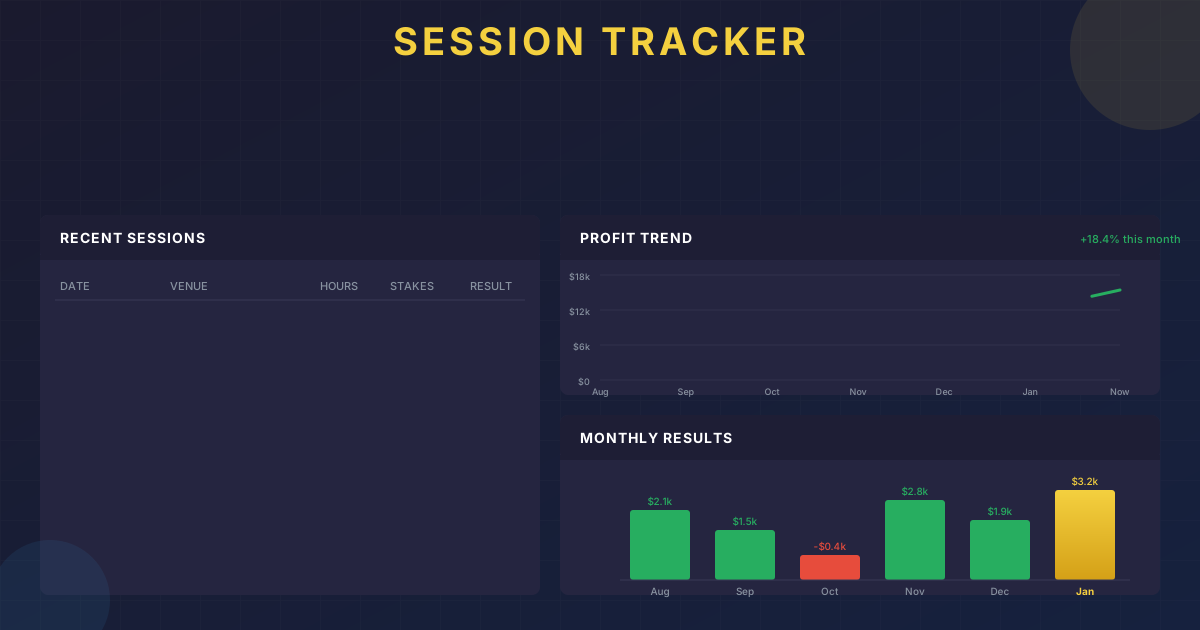
- Poker Session Tracker: Log poker results honestly
The Math Is Not on Your Side -- And That Is OK
The fundamental truth of gambling is that the house has a mathematical edge on virtually every wager. Understanding this is not discouraging -- it is liberating. When you know the math, you can make informed decisions about entertainment spending rather than chasing the illusion of guaranteed profit.
For recreational gamblers, the goal should be entertainment at a known cost, with strict limits that never exceed what you can comfortably afford to lose. For those who believe they may have a problem, the goal is getting help as early as possible -- the earlier treatment begins, the better the outcomes.
If gambling has stopped being fun, it is time to reassess. The National Council on Problem Gambling helpline is available 24/7 at 1-800-522-4700. You are not alone, and help works.
Gambling involves risk and should be approached as entertainment, not as a source of income. Always bet within your means, set strict bankroll limits, and never chase losses. If you or someone you know has a gambling problem, contact the National Council on Problem Gambling at 1-800-522-4700 or visit ncpgambling.org. Must be 21+ to gamble in most US jurisdictions. Please play responsibly.