Poker Position Strategy: How Position Affects Every Decision at the Table (2026)
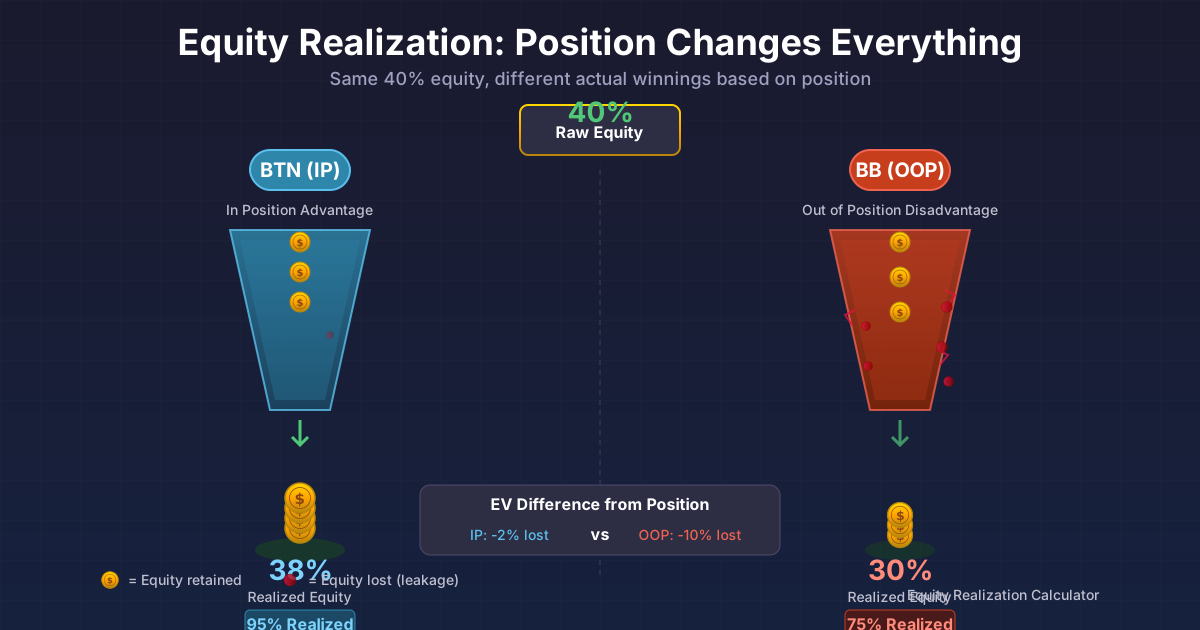
Position is the most undervalued edge in poker. A competent player on the button will earn 2-3 times more per hand than the same player in under-the-gun position, purely because of the information advantage that comes from acting last. If you are not adjusting your strategy dramatically based on your seat at the table, you are leaving money on the table every single session.
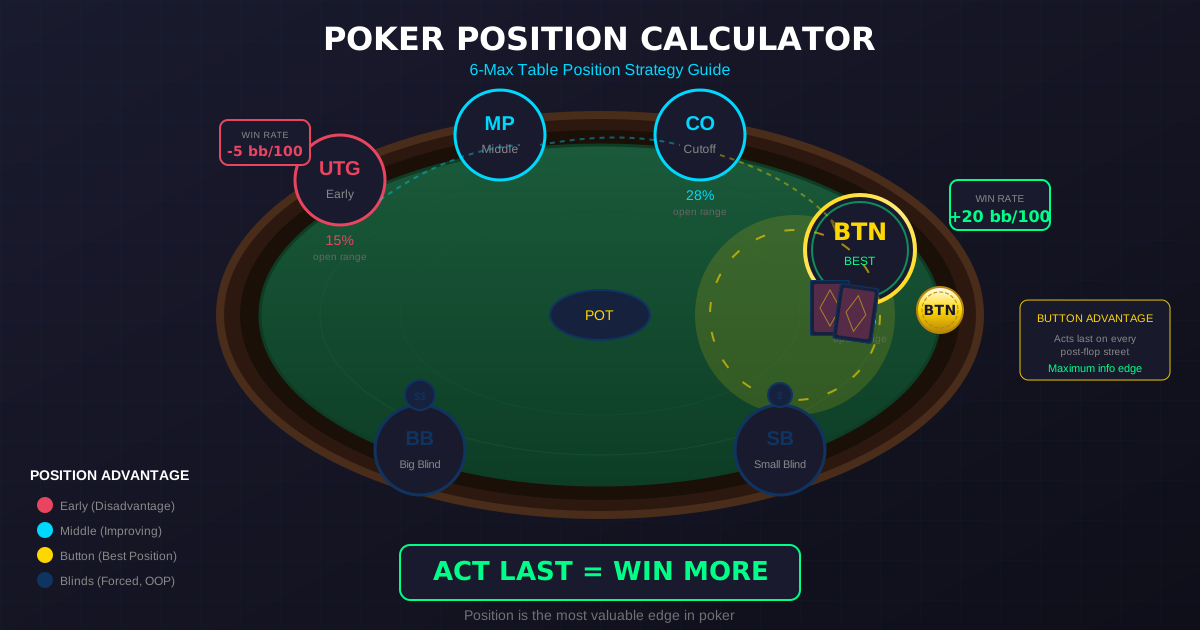
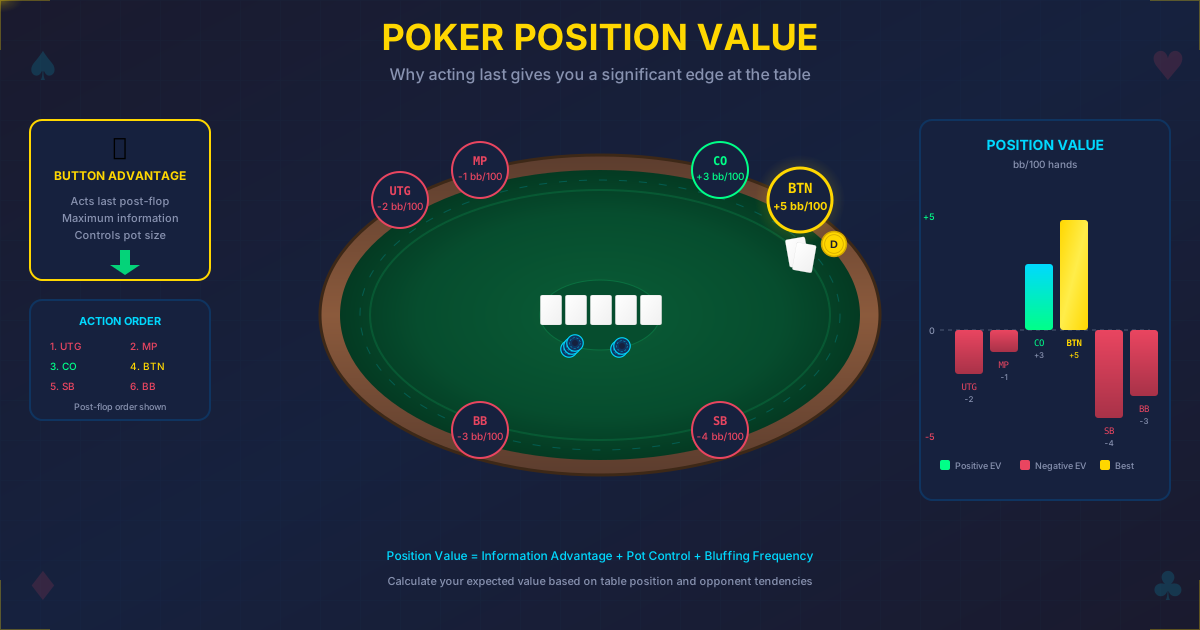
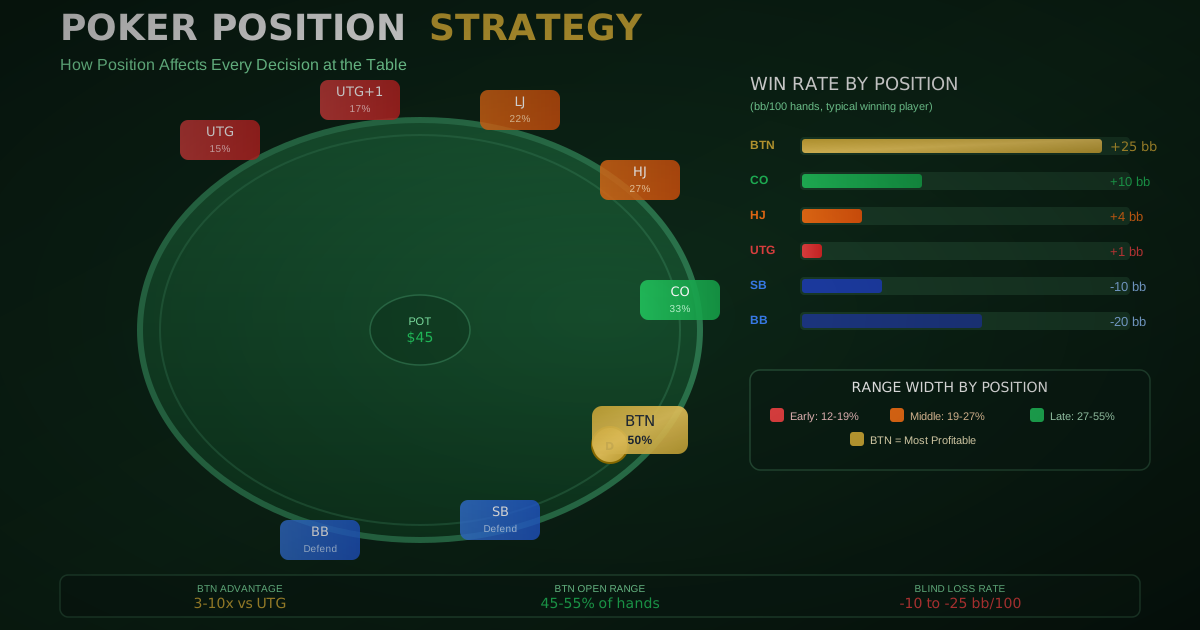
Tracking data from millions of online hands confirms this consistently: the button is the most profitable position at the table, followed by the cutoff, then the hijack. Early positions and the blinds are net losers for the overwhelming majority of players. The reason is simple -- acting last gives you more information, and in poker, information is money.
This guide breaks down exactly how to leverage position across every phase of a hand, from preflop range construction to river decision-making, with specific hand examples and the math that proves why position matters so much.
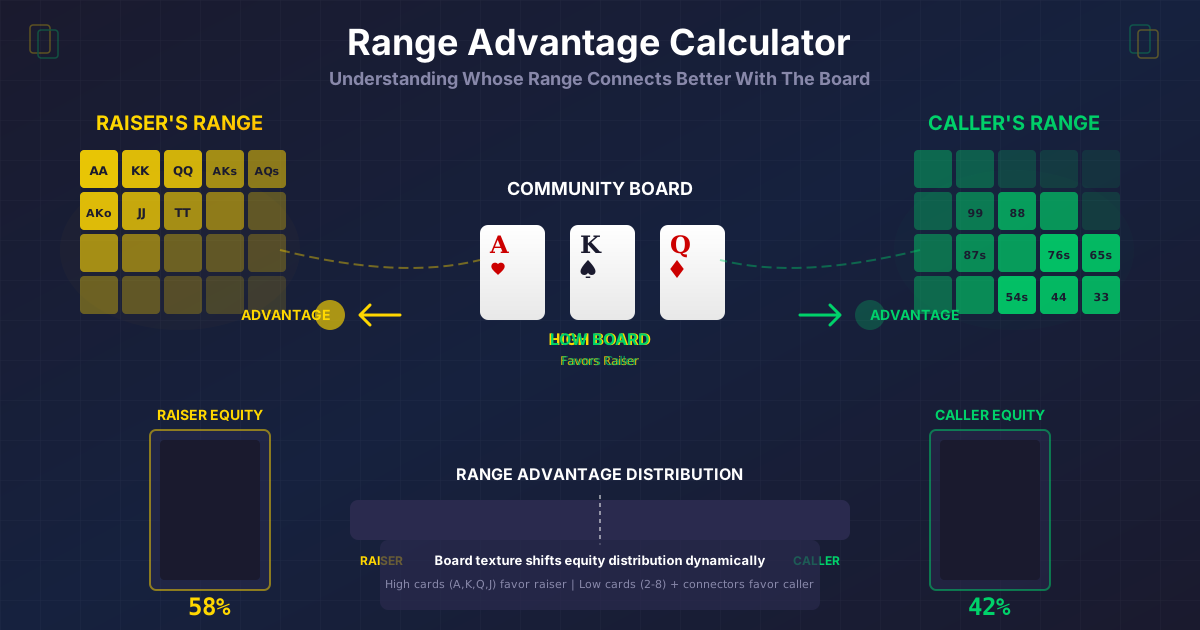
Build position-adjusted ranges for every seat with our free Poker Hand Range Calculator.
Why Position Matters in Poker
Position in poker refers to where you sit relative to the dealer button and, more importantly, the order in which you act on each betting round. After the flop, the player closest to the left of the button acts first, and the button acts last.
The Information Advantage
The core benefit of position is information. When you act last, you see what every opponent does before you make your decision. This matters because:
- You know the pot size before deciding. If three players check to you, you know the pot is small and a bet will face less resistance.
- You can gauge hand strength. A check from your opponent usually signals weakness. A bet signals strength or a bluff. Either way, you have data before committing chips.
- You control the price. In position, you decide whether to check behind for a free card, bet small to build a pot, or bet large to pressure opponents.
- You see bluff opportunities clearly. When opponents show weakness, you can take the pot with a bet regardless of your own hand strength.
The Pot Control Advantage
In position, you can control the size of the pot to match your hand strength:
- Strong hand: Bet and build the pot
- Medium hand: Check behind for pot control
- Draw: Take free cards when available, bet when the draw completes
- Nothing: Bluff when opponents check, or check and give up cheaply
Out of position, every decision is a guess about what your opponent will do next. You bet for value and face a raise -- now what? You check a medium hand and your opponent bets -- do you call or fold? These guessing situations cost money over time.
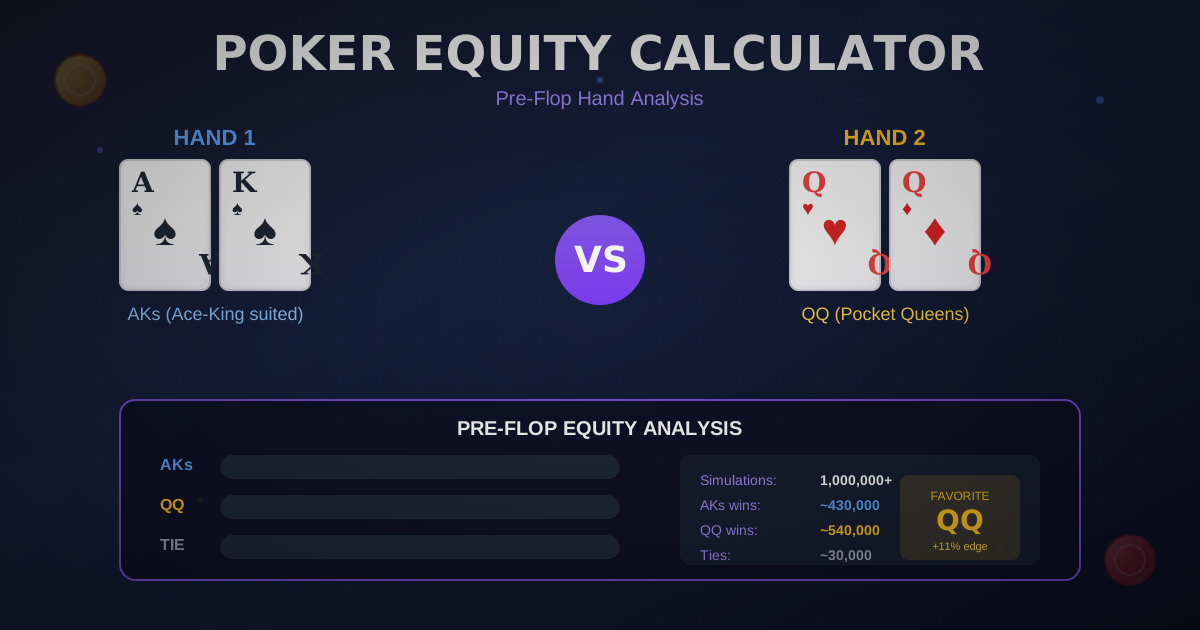
Analyze your equity advantage in position vs out of position with our Poker Equity Calculator.
Poker Table Positions Explained
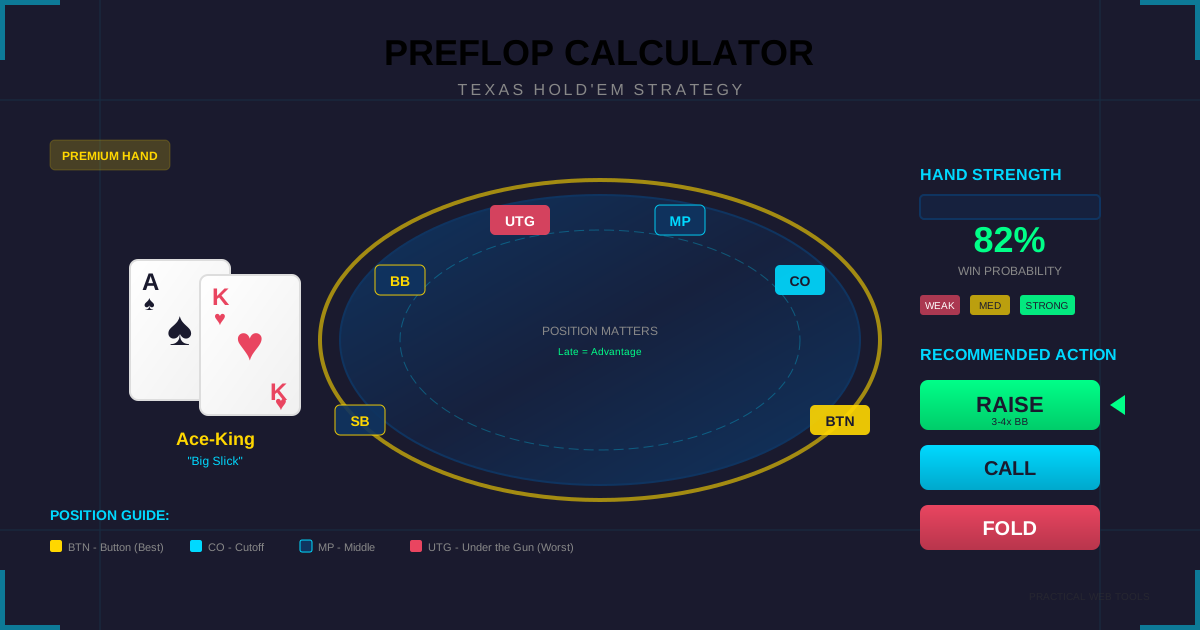
In a standard 9-handed game, positions are labeled as follows (from earliest to latest):
Early Position (EP)
| Position | Abbreviation | Seats from BTN | Range Width |
|---|---|---|---|
| Under the Gun | UTG | 6 seats | 12-15% |
| UTG+1 | UTG+1 | 5 seats | 14-17% |
| UTG+2 | UTG+2 | 4 seats | 16-19% |
Early position is the worst position at the table because you act first on every postflop street and still have 6-8 players left to act preflop. You must play tight because:
- Any hand you open must survive action from many players behind you
- You will be out of position against anyone who calls from later seats
- Your range is perceived as strong, limiting your bluffing opportunities
Middle Position (MP)
| Position | Abbreviation | Seats from BTN | Range Width |
|---|---|---|---|
| Lojack | LJ (MP) | 3 seats | 19-23% |
| Hijack | HJ | 2 seats | 22-27% |
Middle position offers a modest improvement. Fewer players remain to act behind you, so your opening range can expand. The hijack in particular is a transition position where you start incorporating more speculative hands.
Late Position (LP)
| Position | Abbreviation | Seats from BTN | Range Width |
|---|---|---|---|
| Cutoff | CO | 1 seat | 27-33% |
| Button | BTN | 0 seats | 40-55% |
Late position is where the money is made. The cutoff opens wide because only the button and blinds remain. The button is the most profitable seat because you are guaranteed to act last on every postflop street (assuming the blinds fold).
The Blinds
| Position | Abbreviation | Notes | Range Width (vs Open) |
|---|---|---|---|
| Small Blind | SB | Acts first postflop, forced half bet | Defend 30-45% |
| Big Blind | BB | Gets discount, acts last preflop | Defend 40-60% |
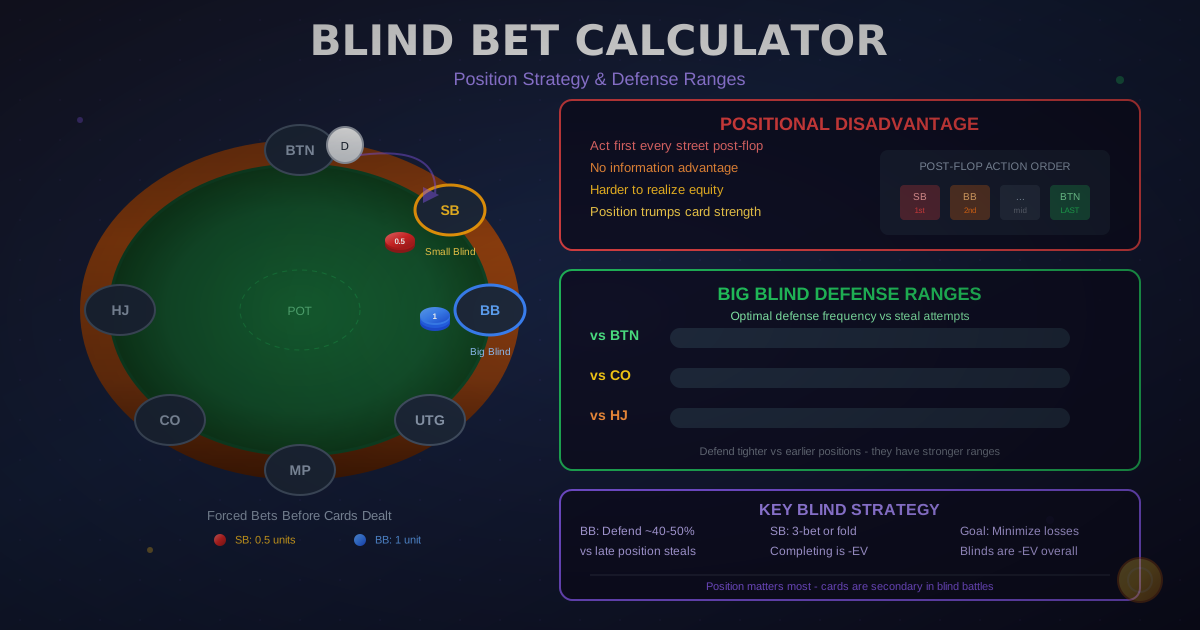
The blinds are structurally losing positions. You post money before seeing your cards, and you act first (or nearly first) on every postflop street. The big blind defends the widest range because of the discount (already invested 1bb), but playing these hands out of position is inherently difficult.
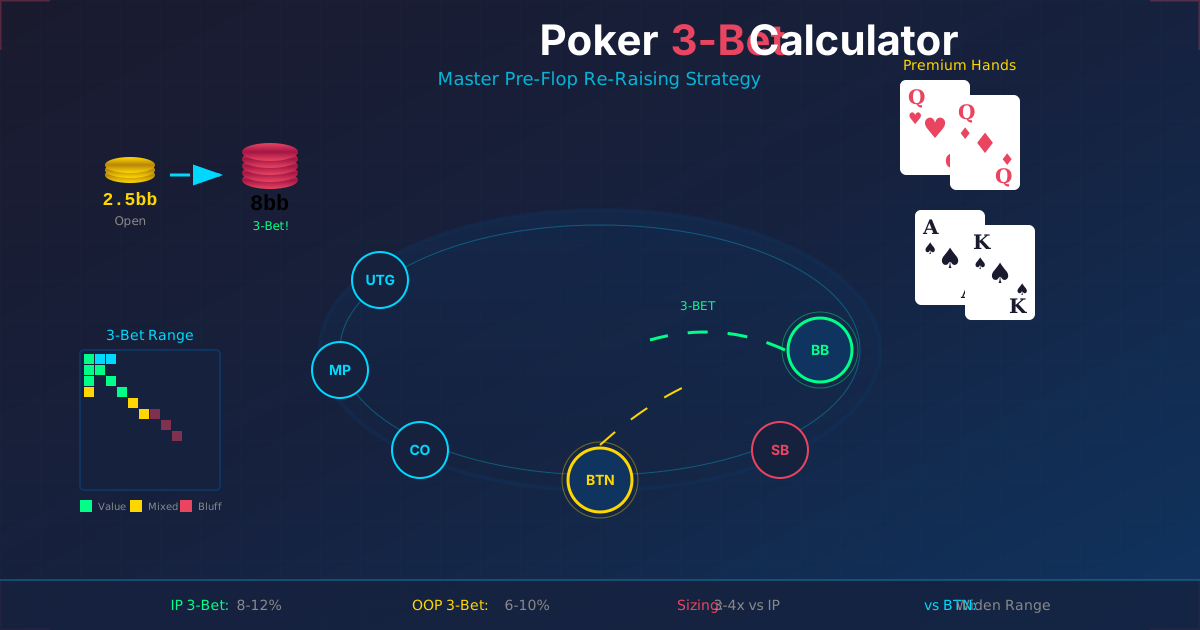
Calculate your 3-bet defense ranges from the blinds with our Poker 3-Bet Calculator.
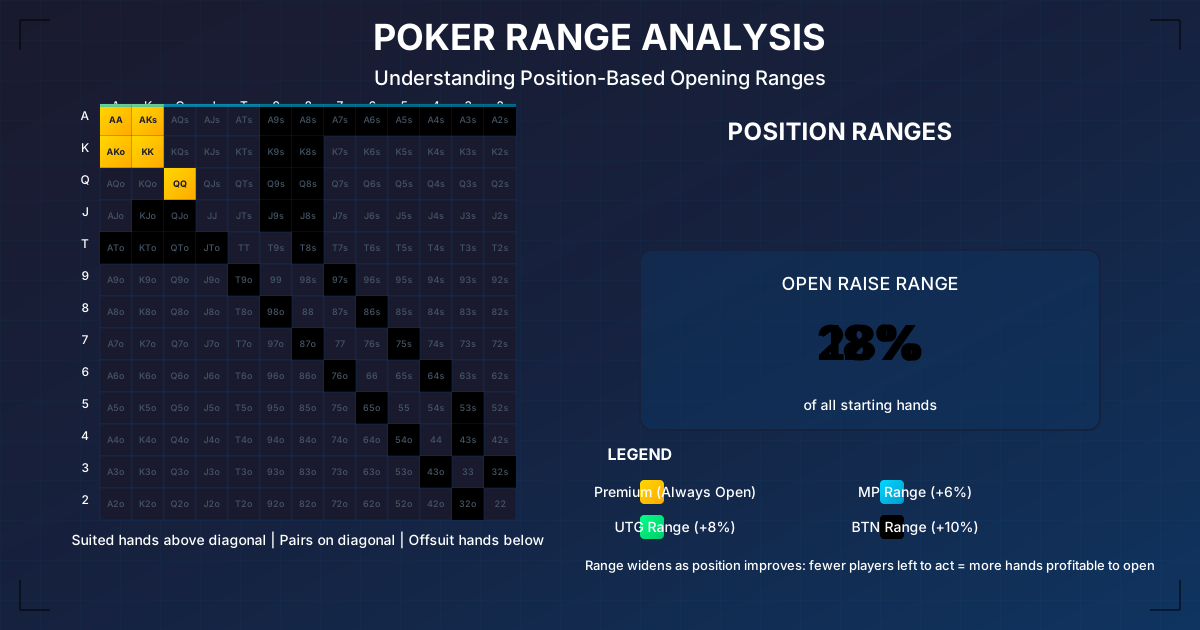
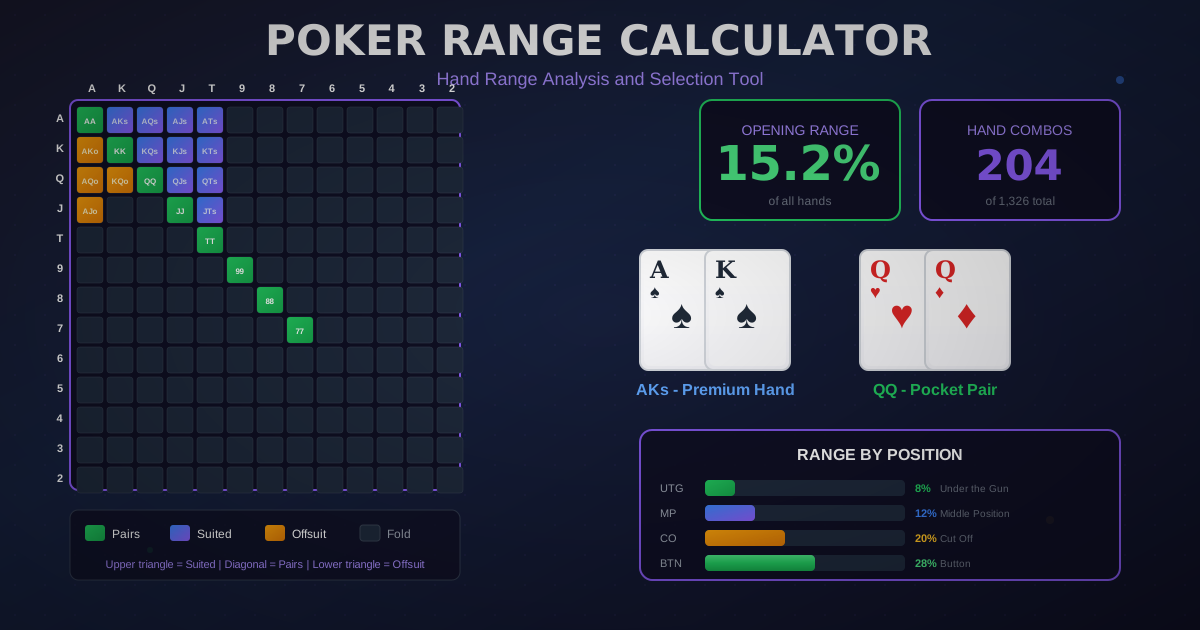
Opening Ranges by Position
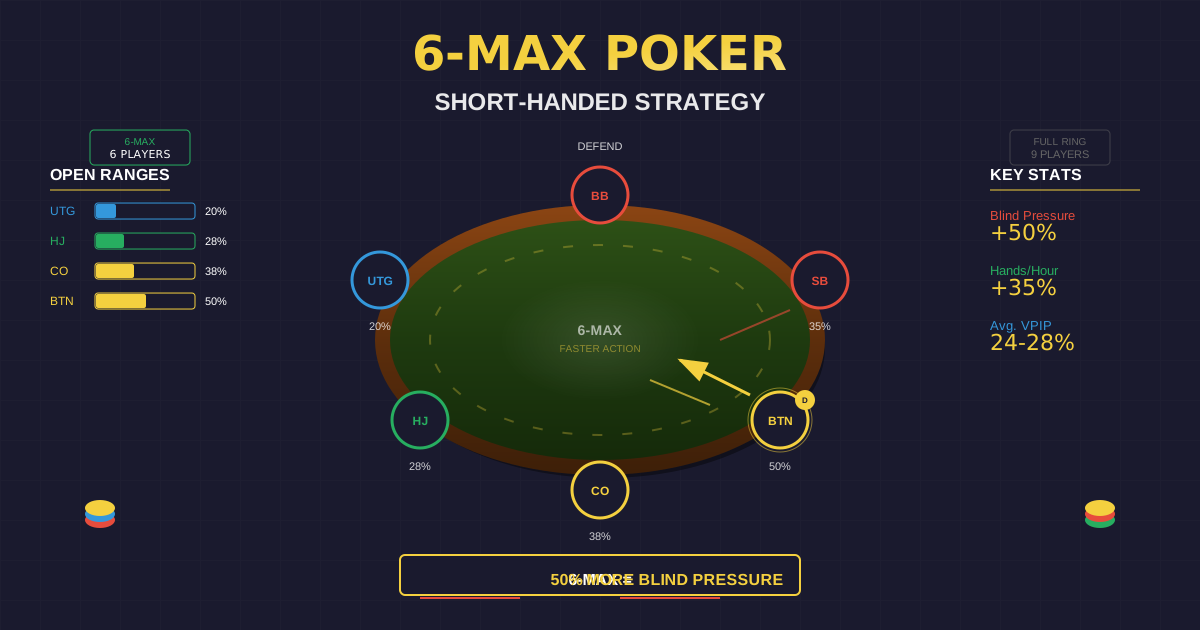
Your preflop opening range should expand as your position improves. Here are approximate RFI (Raise First In) ranges for a standard 100bb deep 6-max game:
UTG Opening Range (~15% of hands)
Pocket pairs: 22+ Suited aces: A2s+ Suited broadways: KQs, KJs, QJs, JTs Offsuit broadways: AKo, AQo, KQo Suited connectors: 98s, 87s (sometimes)
Hijack Opening Range (~24% of hands)
Everything from UTG plus: Suited aces: all More suited broadways: KTs, QTs, J9s More suited connectors: 76s, 65s, T9s Offsuit broadways: AJo, KJo, QJo
Cutoff Opening Range (~30% of hands)
Everything from HJ plus: More offsuit aces: ATo, A9o More suited connectors and gappers: 54s, 86s, 97s Offsuit connectors: JTo, T9o
Button Opening Range (~45-50% of hands)
Everything from CO plus: Nearly all suited hands with some connectivity Most offsuit aces: A8o-A2o More offsuit broadways: KTo, QTo Any pair of cards with reasonable potential
The button should open extremely wide because you only need to get through two players (the blinds), and you will have position for the entire hand if called.
Use our Poker Hand Range Calculator to visualize and build custom ranges for each position.
How Position Affects Postflop Play
In Position (IP): The Advantages
Playing in position gives you several concrete strategic advantages on every street:
Value Betting Efficiency
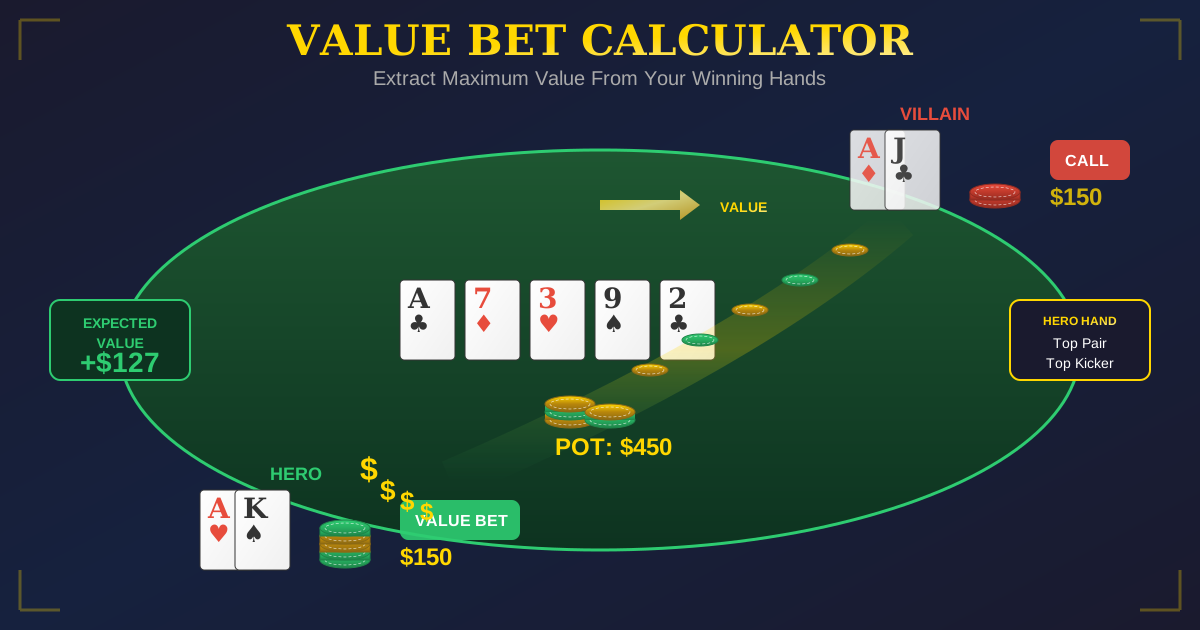
When you have a strong hand in position, you can extract maximum value because:
- You can bet after opponents check (they cannot check-raise after you)
- You see their action before deciding your bet size
- You can choose to check back the turn and bet the river for a thinner value bet
Example: You hold A-Q on an A-8-3 rainbow board in a $50 pot. In position, your opponent checks. You bet $30. On the turn (a 6), opponent checks again. You can choose to bet $55 for value or check to induce a river bluff. You have complete control.
Out of position with the same hand, you bet $30, opponent calls. On the turn, do you bet again? If you check, opponent might check behind (denying you value) or bet (putting you in a tough spot). Every OOP decision tree is worse.
Bluffing Efficiency
Position makes bluffing dramatically more effective:
- When opponents check, they signal weakness -- perfect for bluffs
- You can bluff multiple streets with a credible line
- You see if your bluff needs to go through one opponent or many
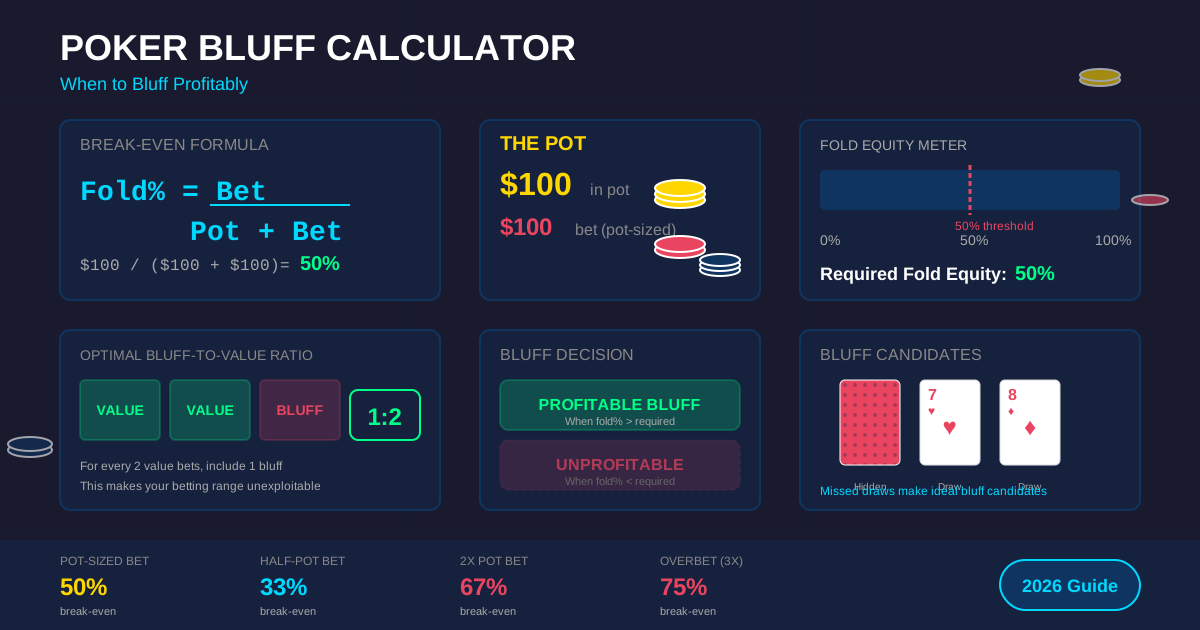
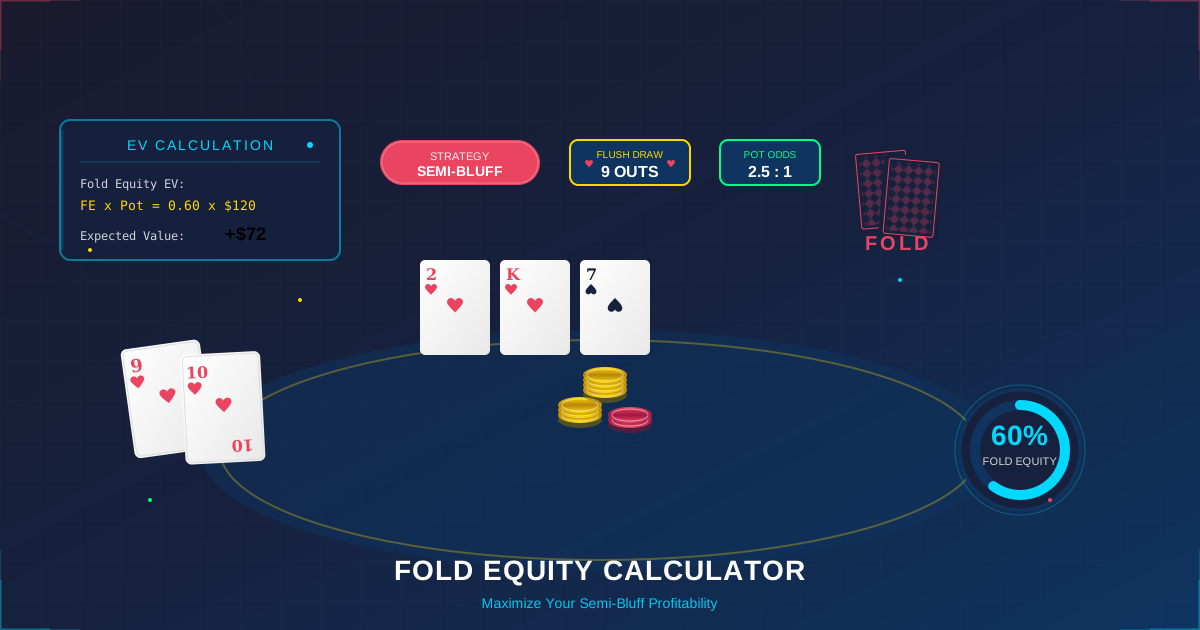
Calculate your bluff profitability from each position with our Poker Fold Equity Calculator.
Pot Control
In position, you can check behind on any street to keep the pot small. This is invaluable with medium-strength hands that want to see a showdown but cannot withstand heavy betting.
Example: You hold K-Q on a K-7-4-J board. The pot is $80. Out of position, you are forced to choose: bet (and face a raise from a set or two pair?) or check (and give a free card to draws?). In position, if villain checks, you can check behind -- perfect pot control. If villain bets, you can call or raise based on their sizing and your read.
Out of Position (OOP): The Disadvantages
Playing out of position is fundamentally disadvantaged. The math confirms it:
Win Rate by Position (Typical 6-Max Online NL100)
| Position | Average Win Rate (bb/100) |
|---|---|
| UTG | -2 to +3 |
| HJ | +1 to +5 |
| CO | +5 to +12 |
| BTN | +15 to +30 |
| SB | -15 to -5 |
| BB | -25 to -10 |
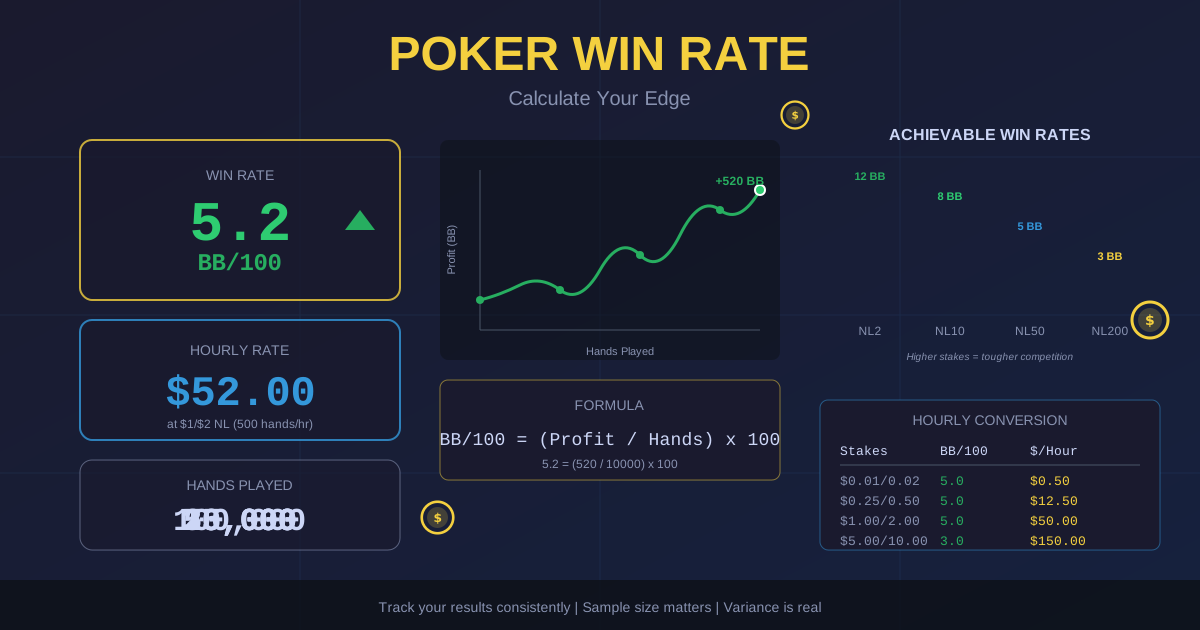
Even winning players lose money from the blinds. The positional disadvantage is that severe. The button earns roughly 4-10 times more per hand than UTG for a winning player.
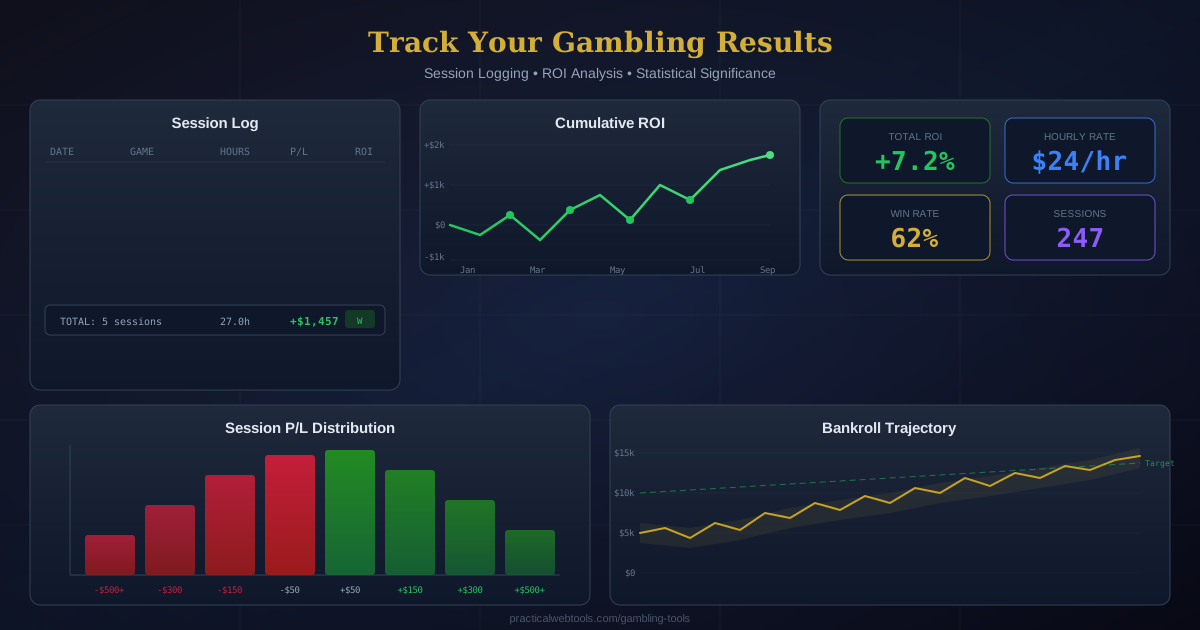
Track your positional win rates with our Poker Session Tracker and Poker Hourly Rate Calculator.
Steal and Resteal Dynamics
The Button Steal
Stealing the blinds from the button is one of the highest-frequency profitable plays in poker. When it folds to you on the button, you should raise with a very wide range (45-55% of hands in most games).
Why stealing works:
- You only need to get through two players
- Those two players are in the worst positions (blinds)
- Even if called, you have position for the rest of the hand
- Blind players know your range is wide and often prefer folding marginal hands
Example: Button Steal Math
You open to 2.5bb from the button. The pot is 4bb (your raise + SB 0.5bb + BB 1bb). If both blinds fold 60% of the time, your steal wins 1.5bb x 0.6 = 0.9bb. When called (40% of the time), you still have position and a reasonable chance of winning. Even if you lose an average of 1bb when called, your net EV is: 0.9 - (0.4 x 1) = +0.5bb per attempt.
Over 100 button opportunities, that is +50bb -- a massive contribution to your win rate.
Defending from the Blinds
When facing a steal attempt, you need to defend enough to prevent opponents from profiting with any two cards, but not so much that you play unprofitable hands OOP.
Big Blind Defense Range vs Button Open
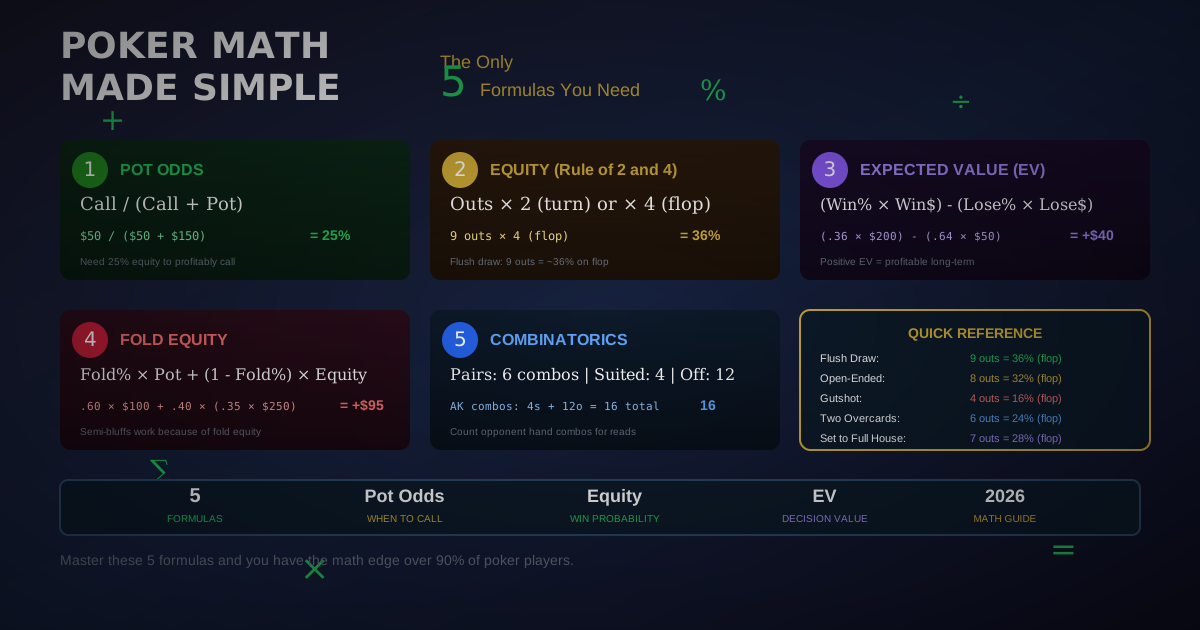
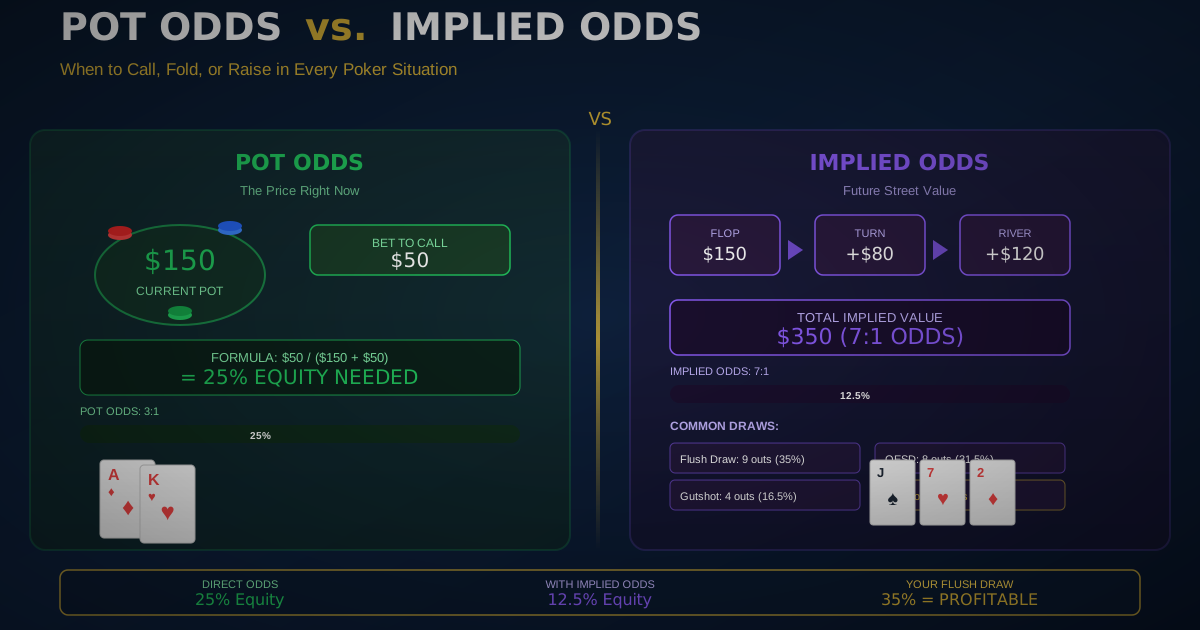
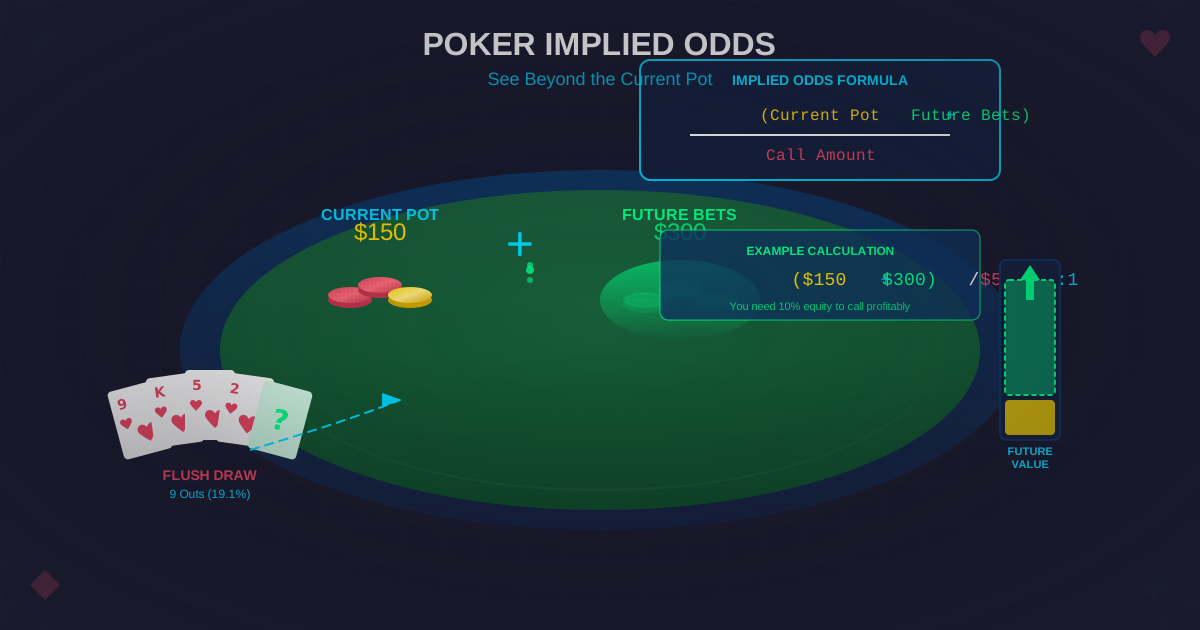
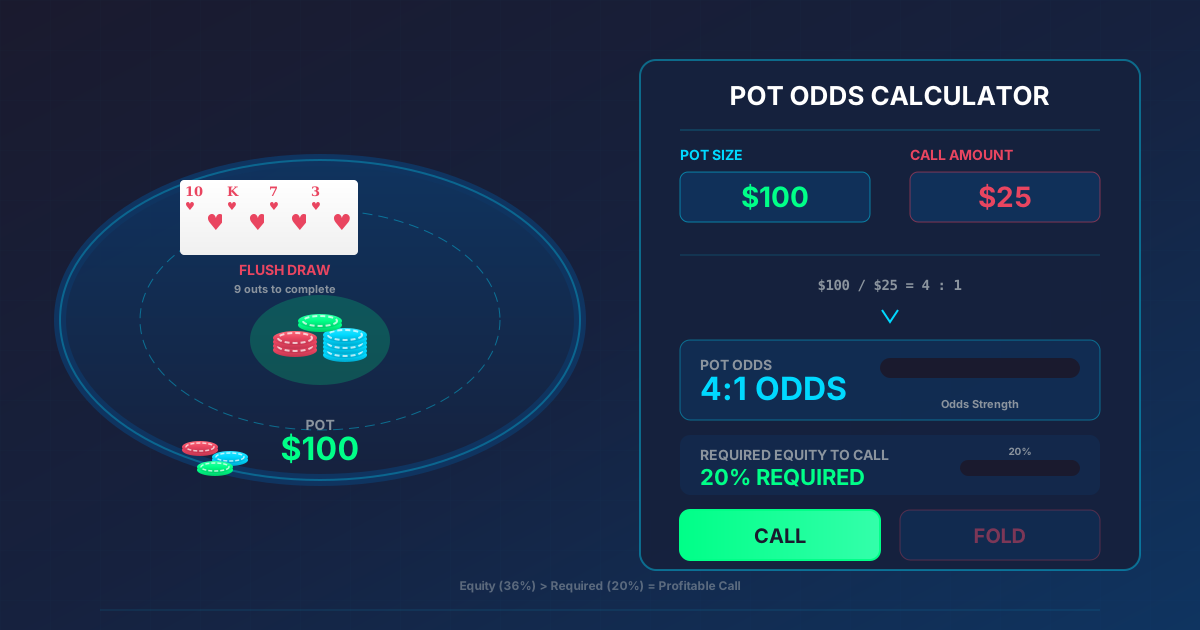
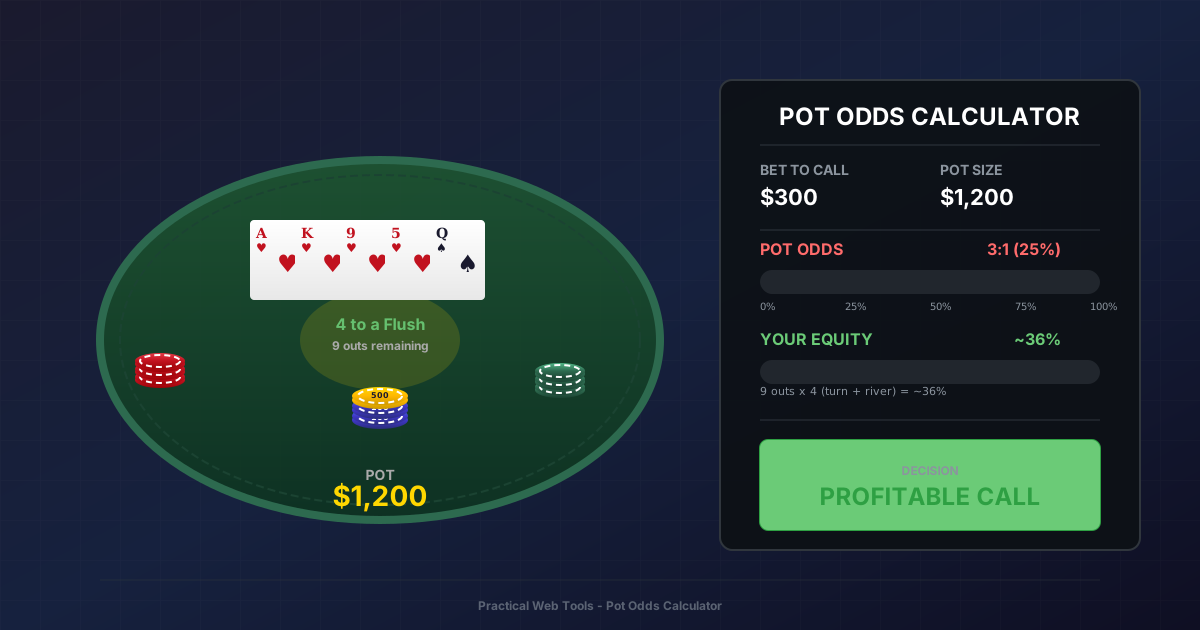
Against a 2.5bb button open, you are getting 3.5:1 on a call (invest 1.5bb to win a pot of 5.5bb). You need roughly 27% equity to call, which means you should defend with approximately 40-55% of hands depending on the opener's tendencies.
Your defense should include:
- All pocket pairs (set mining value)
- Suited connectors (implied odds)
- Suited aces (nut potential)
- Most broadways (domination potential)
- Some offsuit connectors (board coverage)
Calculate your optimal 3-bet frequencies from the blinds with our Poker 3-Bet Calculator.
The Cutoff Resteal
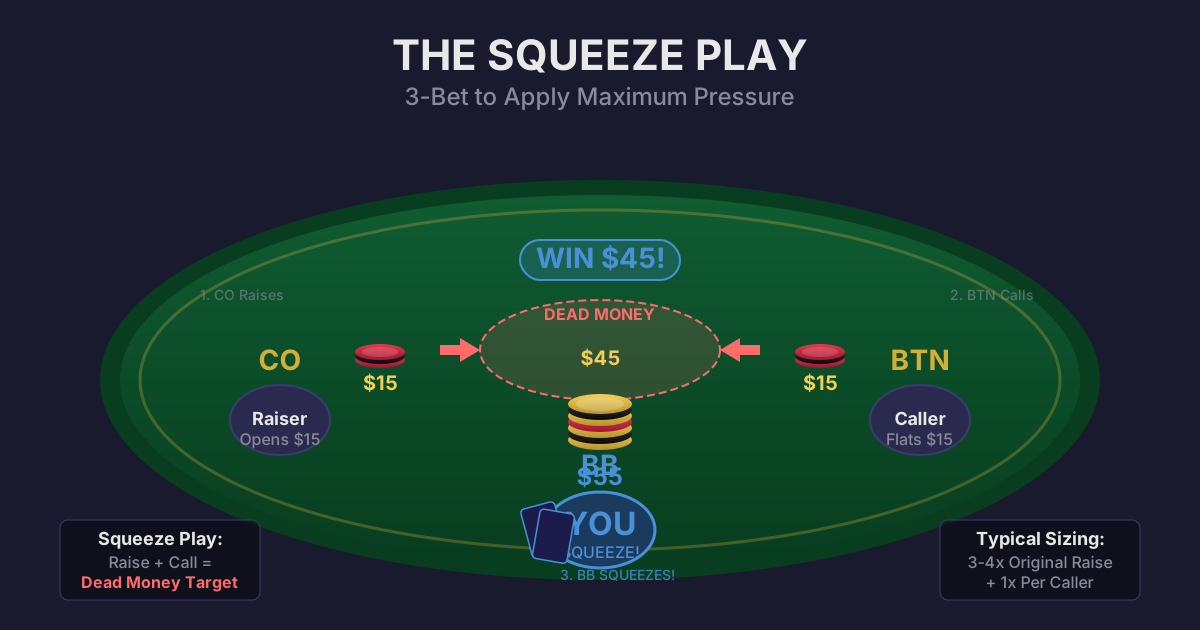
The cutoff is a prime restealing position against hijack and lojack opens. When MP players open, a 3-bet from the CO applies maximum pressure because:
- The MP opener's range is not as strong as an EP range
- The CO still has position if called
- The button, SB, and BB usually fold to a 3-bet
Effective resteal 3-bet range from CO vs HJ open: 8-12% (including value hands and bluffs)
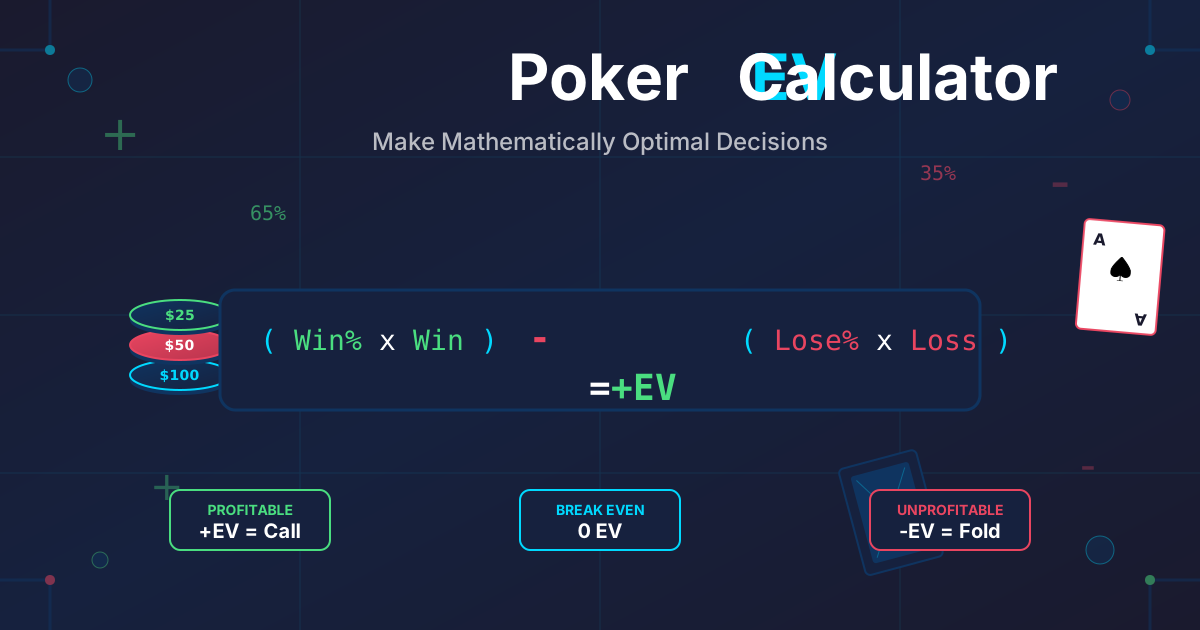
Analyze your 3-bet bluffing frequency with our Poker EV Calculator.
Real-World Position Examples with Dollar Amounts
Example 1: Button vs BB -- The Value of Acting Last ($1/$2 Live)
You hold 8-7 suited on the button with $300 effective stacks. You raise to $6, BB calls. Pot: $13.
Flop: T-6-3 with a backdoor flush draw. BB checks. You bet $8 (taking the pot most of the time with a c-bet that does not need to work often). BB calls. Pot: $29.
Turn: 9, giving you an open-ended straight draw. BB checks. You bet $20 with a draw and fold equity. BB calls. Pot: $69.
River: 5, completing your straight. BB checks. You bet $45 for value and get called by a pair of tens.
Total won: $114 pot. None of this is possible without position. The BB could not bet to deny you equity, could not control the pot size, and could not avoid paying off your completed draw.
Example 2: UTG vs BTN -- The Pain of Playing OOP ($2/$5 Online)
You hold A-J offsuit in UTG and open to $12. Button calls. Pot: $27.
Flop: A-8-4 rainbow. You bet $18. Button calls. Pot: $63.
Turn: K. Now what? If you bet, you are bloating the pot out of position with a hand that cannot comfortably face a raise. If you check, the button might bet (bluff or value?) and you are guessing.
You check. Button bets $40. You call with top pair, decent kicker. Pot: $143.
River: 7. You check again. Button bets $90. Do you call? You have been out of position the entire hand, unable to control the pot. The button could easily have AK, two pair, or a set -- but could also be bluffing with a missed draw.
The positional disadvantage cost you approximately $20-$30 in EV compared to how the hand would play if positions were reversed.
Example 3: SB vs BTN -- The Worst Position ($1/$3 Live)
You hold K-J suited in the small blind with $400 stacks. Button raises to $9. You call (3-betting is also an option). Pot: $21.
Flop: K-9-4 with two clubs (you have no club). You check, button bets $14. You call with top pair. Pot: $49.
Turn: 6 of clubs. Three clubs on board now. You check, button bets $35. Do you have the best hand? The button could have a flush, a set, two pair, top pair, or nothing. You are completely in the dark because you have acted first every street.
You call. Pot: $119. River: 2 of hearts. You check. Button bets $75. Your hand is good about 55% of the time but you are never sure.
This hand illustrates the SB problem: You have a decent hand but zero control over the pot. Every street is a guessing game. In position, you could have checked back turns and rivers to control your losses when behind.
Example 4: CO vs BB Defense ($2/$5 Live)
You open to $15 from the cutoff with Q-T suited holding $600 effective. Only the BB calls. Pot: $32.
Flop: Q-7-2 rainbow. BB checks. You bet $20 with top pair. BB calls. Pot: $72.
Turn: 5. BB checks. You have position and a medium-strength hand. Instead of bloating the pot, you check behind for pot control. This is only possible because you are in position.
River: J. BB leads for $45. Now you have top pair with a decent kicker and the BB is betting into you. This is interesting -- the BB might be value-betting a worse queen, bluffing a missed draw, or value-betting two pair. Your pot odds are $45 / ($162) = 27.8%. You need to be right about 28% of the time.
You call and BB shows Q-8 offsuit. You win with a better kicker.
Position allowed you to: (1) check back the turn to control the pot, (2) induce a thinner value bet from the BB on the river, and (3) make an informed river decision based on the full line of play.
Positional Awareness in Multi-Way Pots
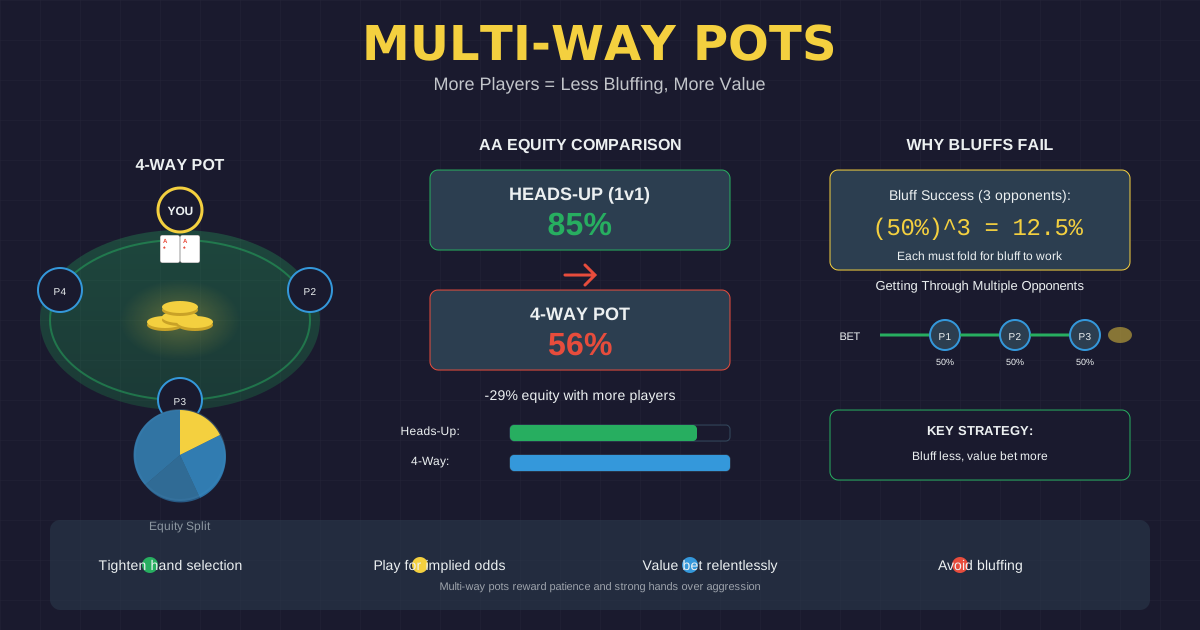
Multi-way pots amplify positional advantages and disadvantages.
Acting Last in Multi-Way Pots
When three or four players see a flop, acting last is even more valuable because:
- You see all opponents' actions before deciding
- More checking from multiple players signals weakness more strongly
- Your bluffs need to fold out more players, so position helps you identify the right spots
- You can size your bets based on how many opponents remain
Sandwich Position Problems
Being in the middle of multiple opponents (one in front, one behind) is the worst scenario. You cannot comfortably bet because the player behind might raise, and you cannot comfortably check because the player in front might bet small to price you in awkwardly.
Avoid sandwich positions whenever possible. This means tightening your preflop calling ranges when there are aggressive players still to act behind you.
Evaluate your equity in multi-way pots with our Poker Equity Calculator and Poker Combos Calculator.
Position-Based Bet Sizing
Your bet sizing should adjust based on position:
In Position (IP) Sizing
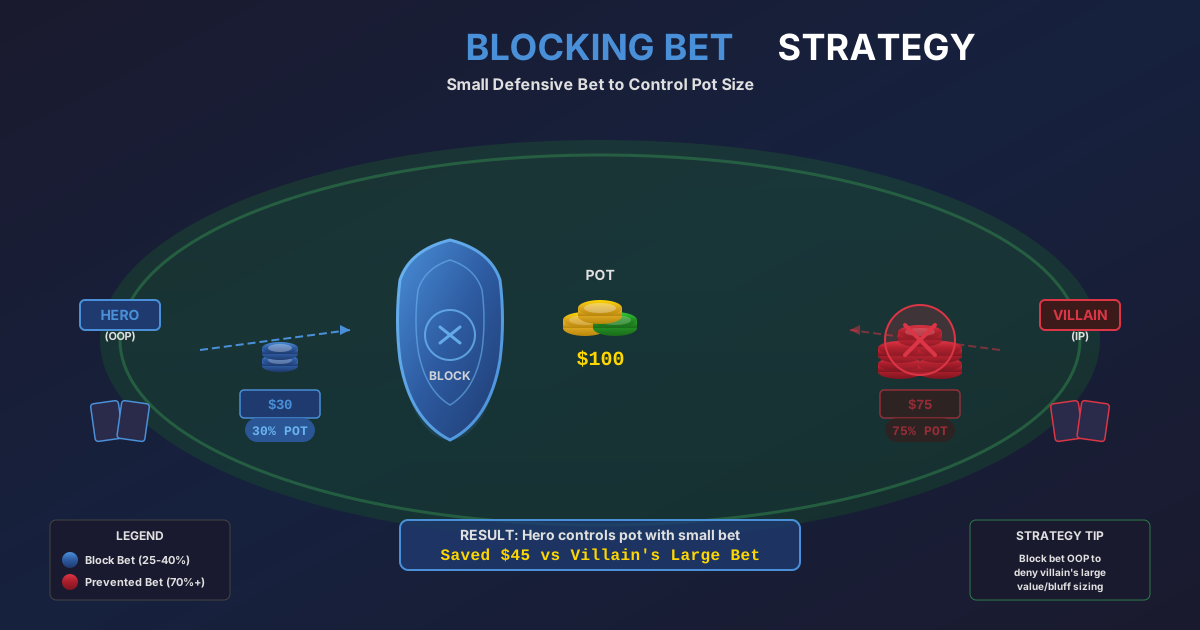
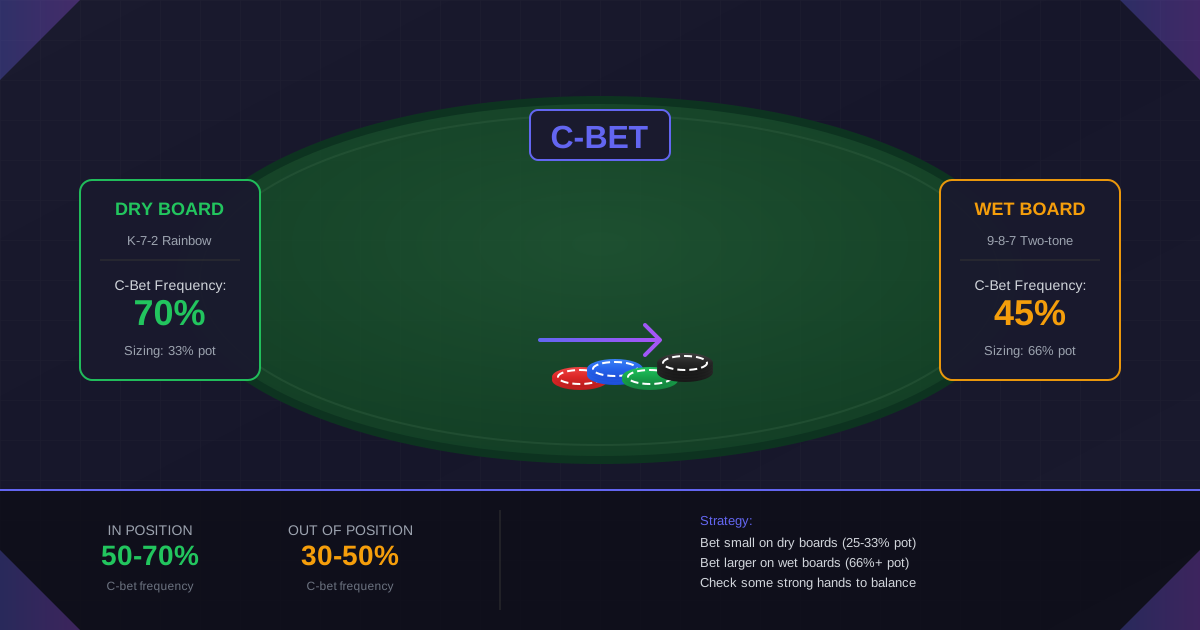
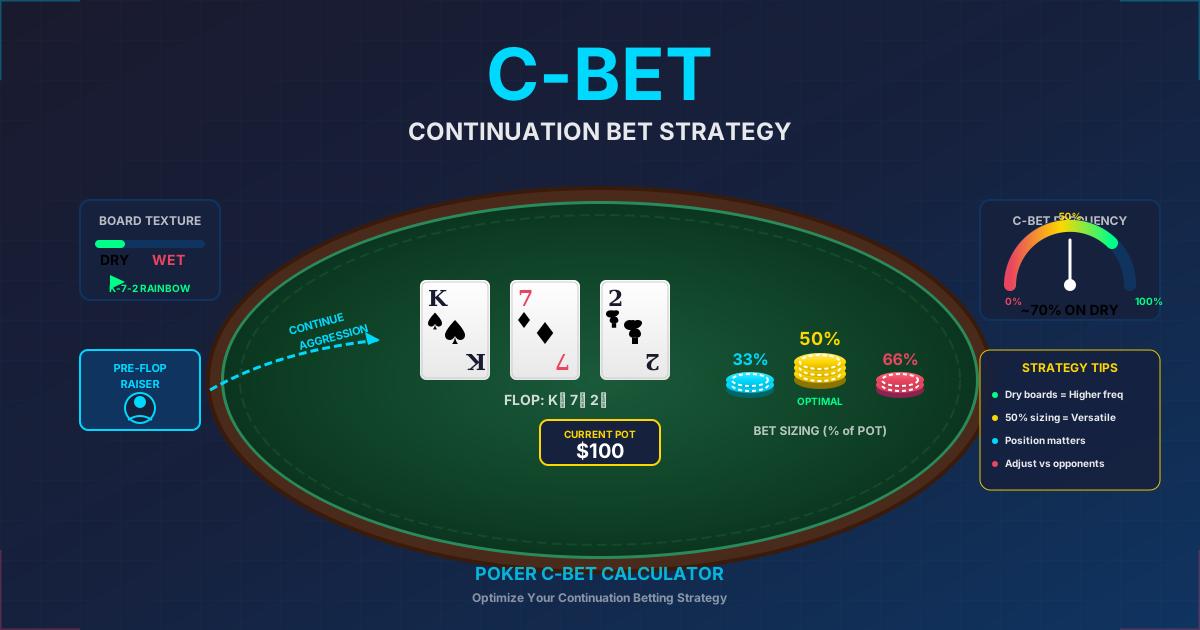
- C-bets: 25-40% pot on most flops (you can bet small because your positional advantage does the rest)
- Turn bets: 50-75% pot for value, 40-50% for bluffs
- River bets: 60-100% pot for value, sizing designed to give opponents bad pot odds
Out of Position (OOP) Sizing
- C-bets: 50-75% pot (larger because you need to charge draws and protect your hand more)
- Turn bets: 60-80% pot (you want to build the pot while you still have equity edge)
- River bets: 66-100% pot for value (maximize extraction from calling ranges)
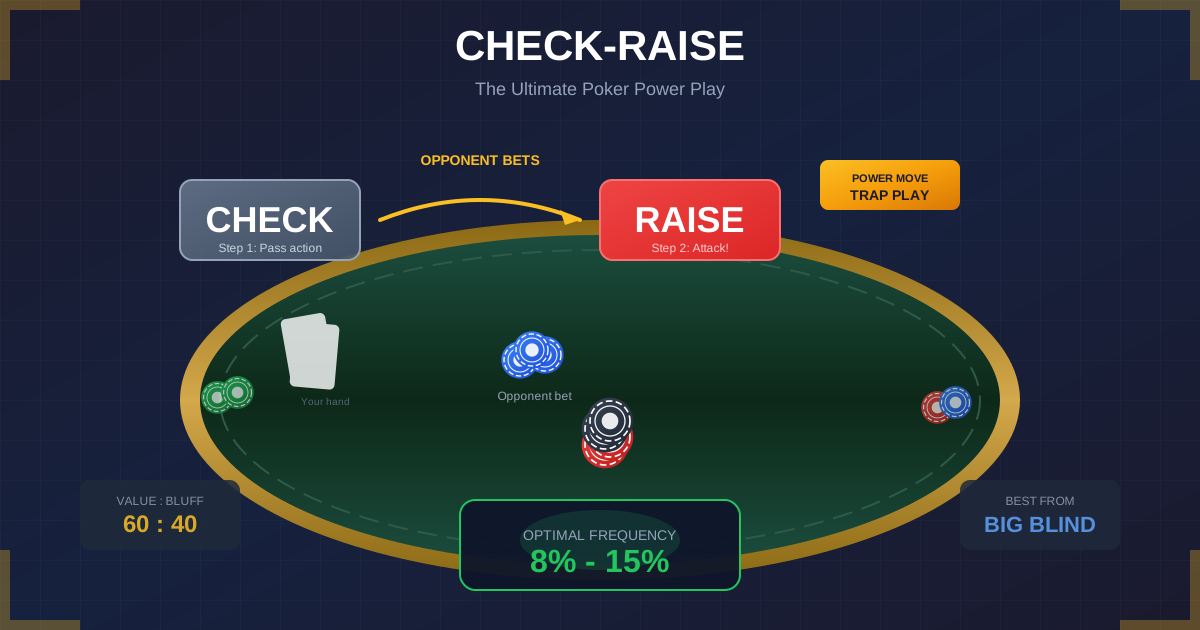
- Check-raises: 2.5-3.5x the bet (forcing opponents to pay a premium for their positional advantage)
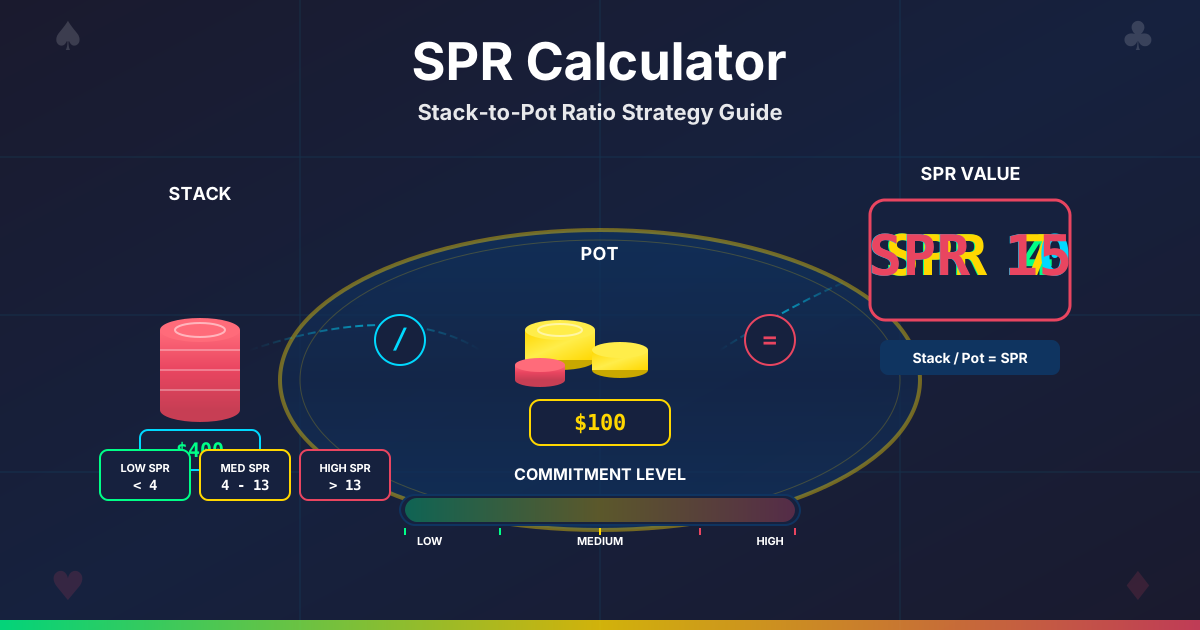
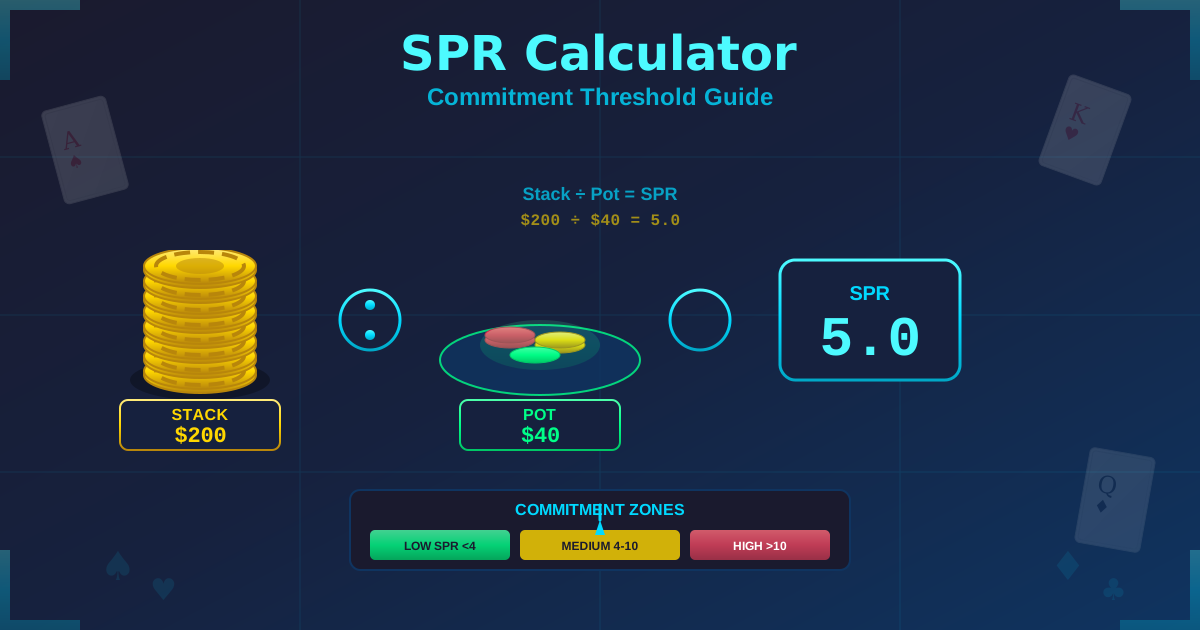
Analyze whether your bet sizing creates profitable spots with our Poker EV Calculator and Poker SPR Calculator.
Adjusting to Opponent Tendencies by Position
Against Tight Players in the Blinds
When blind players are tight, increase your steal frequency from LP to 60%+ of hands. They are forfeiting too much equity by folding, and your steals print money.
Against Aggressive Blind Defenders
When blind players 3-bet frequently, tighten your opening range but continue to open. Adjust by:
- Opening slightly tighter (remove the weakest hands)
- Calling 3-bets more often with position
- 4-betting as a bluff with blockers (Ax suited, Kx suited)
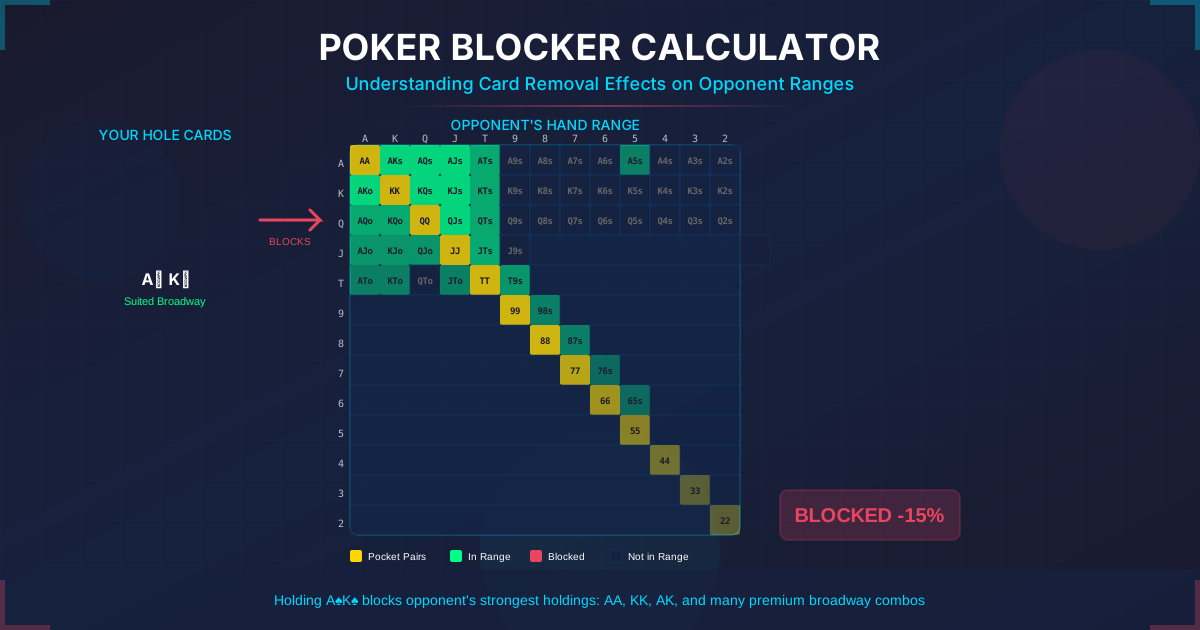
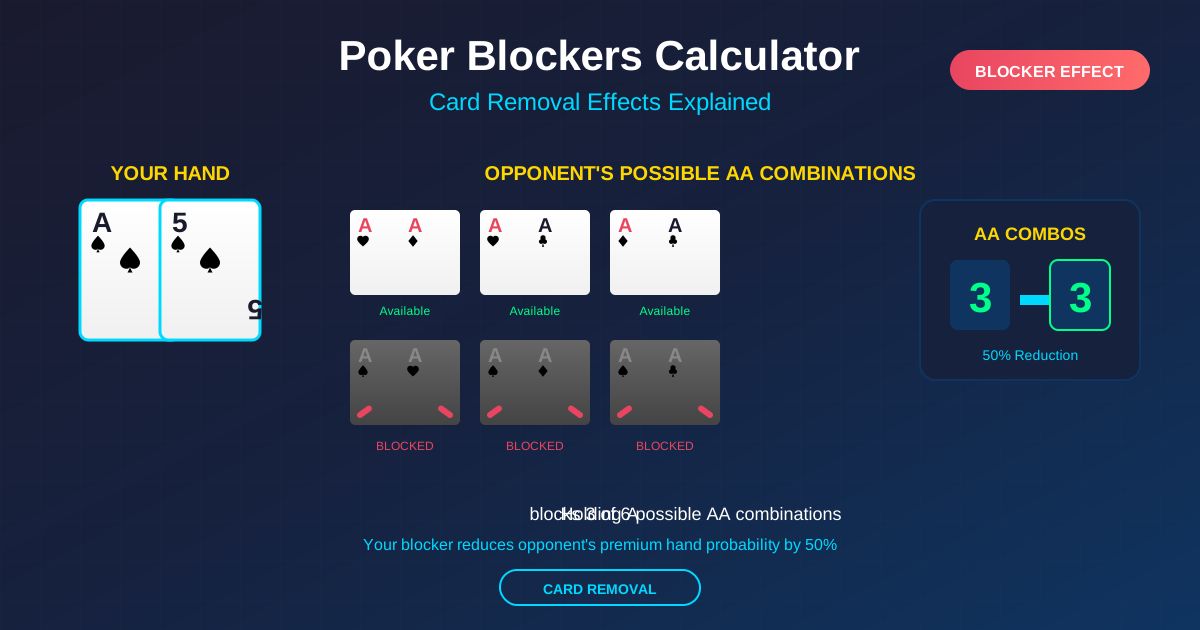
Calculate blocker effects on your 3-bet defense with our Poker Blocker Calculator.
Against Passive Players in the Blinds
Passive blind defenders who call but rarely raise are ideal targets. Open wide, c-bet frequently, and value-bet thinly because they call too much and rarely put you in tough spots.
Frequently Asked Questions
Which is the best position in poker? The button is the most profitable position by a significant margin. You act last on every postflop street, giving you maximum information before every decision. Data from millions of hands shows the button earns 3-10 times more per hand than early positions. Use our Poker Hand Range Calculator to build optimal button ranges.
How much wider should my range be on the button vs UTG? Approximately 3-4 times wider. A standard UTG range is 12-15% of hands, while the button opens 45-55%. The difference comes entirely from the positional advantage and having fewer players to act behind you.
Why do I lose money from the blinds even when I play well? The blinds are structurally unprofitable because you post money involuntarily and play OOP postflop. Even the best players lose 10-25 bb/100 from the blinds. Your goal from the blinds is to minimize losses, not generate profit. Our Poker EV Calculator can help you evaluate whether your blind defense is costing too much or too little.
Should I ever call preflop from the small blind? Calling (or "completing") from the SB is generally a mistake because you will be OOP against the BB for the entire hand and you did not close the action. Most SB strategies prefer 3-betting or folding to avoid the positional disadvantage of flatting. Use our Poker 3-Bet Calculator to find your optimal SB 3-bet range.
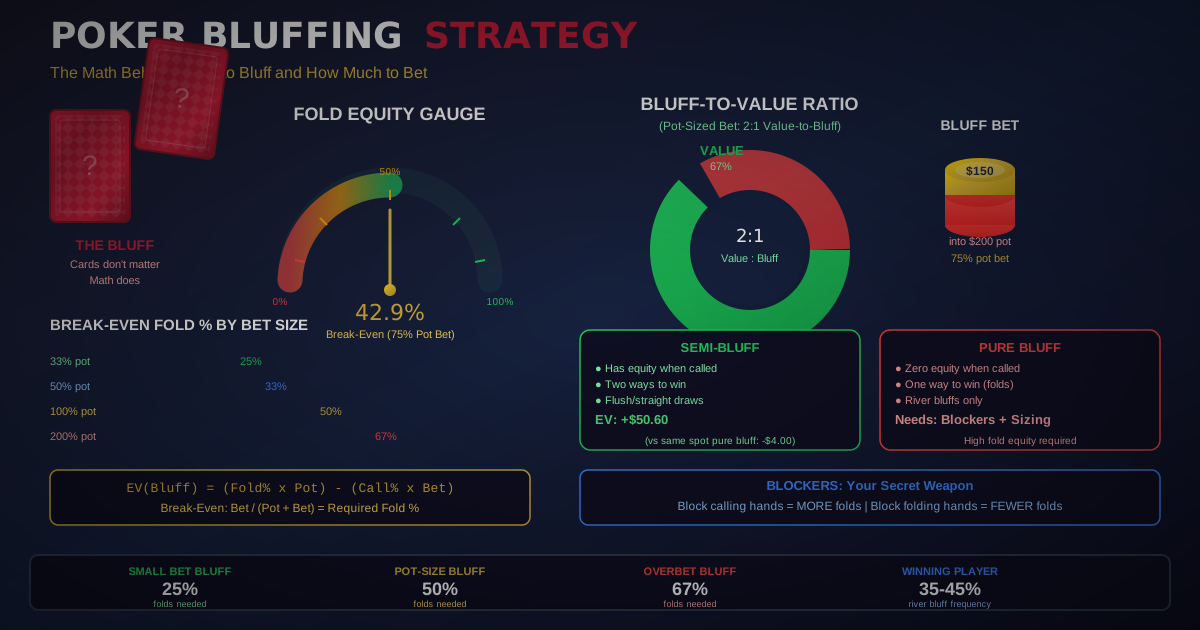
How does position affect bluffing frequency? Position dramatically increases your bluffing opportunities. In position, you can bluff after opponents show weakness (check). Out of position, your bluffs are "leading into" opponents who might have strong hands. A good IP bluffing frequency on the river is 25-35% of your betting range; OOP it drops to 15-25%. Our Poker Fold Equity Calculator helps quantify bluff profitability from each position.
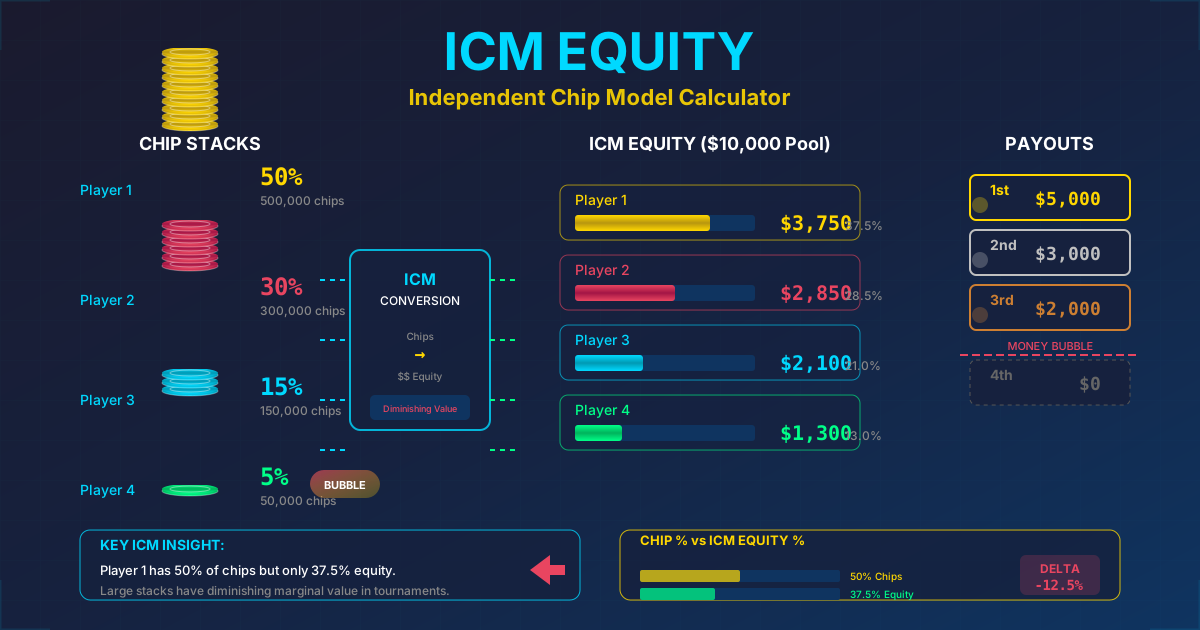
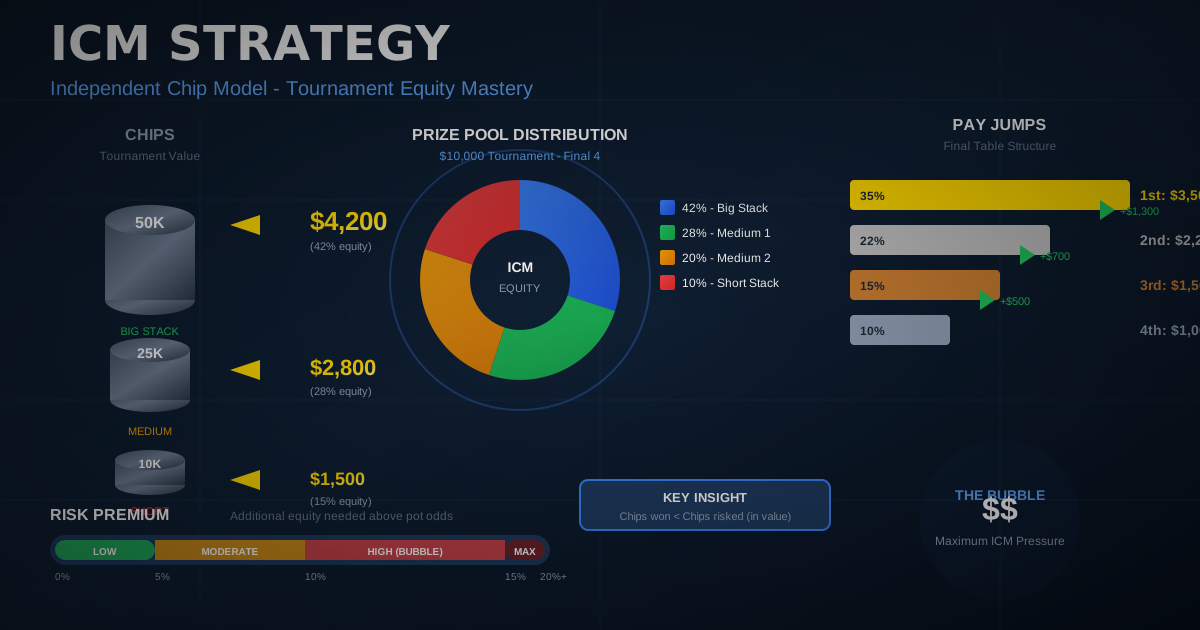
What about position in tournaments vs cash games? Position matters equally in both formats, but tournament dynamics add ICM pressure. In tournaments, losing chips has a non-linear impact on your equity, making positional awareness even more critical. You cannot rebuy, so playing OOP with marginal hands becomes even more costly. Use our ICM Calculator to see how position and stack size interact in tournament contexts.
How do I exploit players who do not respect position? Players who open too wide from early positions can be attacked with 3-bets from later positions. Players who defend too loosely from the blinds can be exploited with thin value bets postflop. The key is identifying their positional mistakes and adjusting your frequencies. Our Poker Combos Calculator helps you analyze how wide their range actually is.
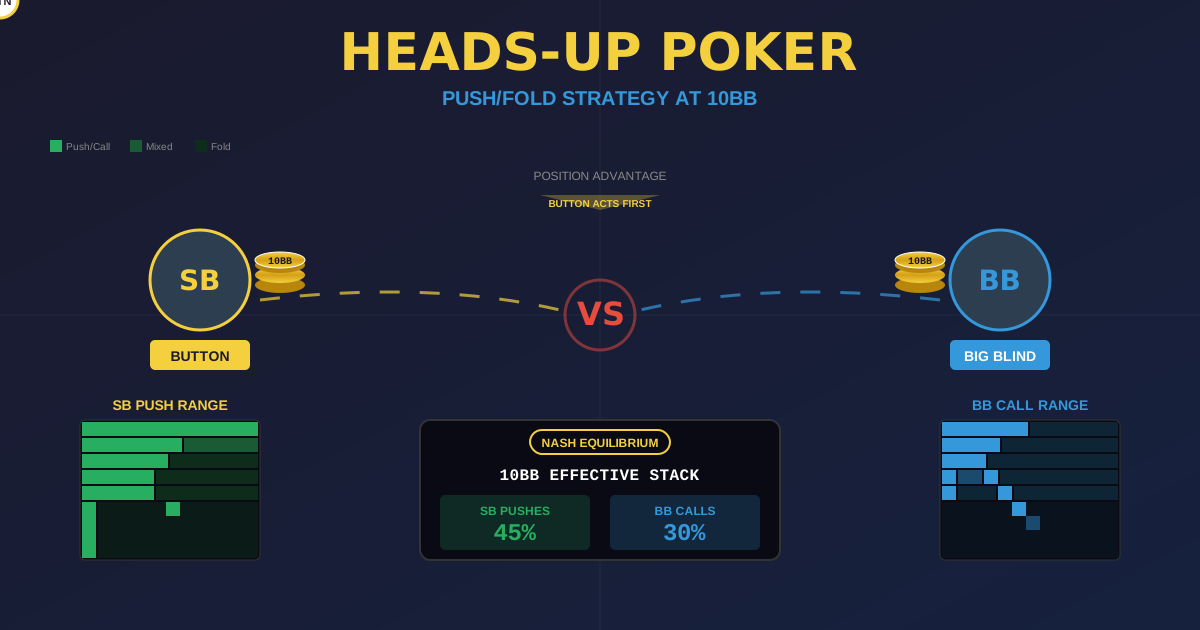
Does position matter less in short-handed games? Position matters in every format, but the relative advantage shifts. In 6-max, the blinds come around faster, so you cannot wait for premium hands. In heads-up, position is even more valuable because you always have it or do not -- there is no multi-way pot complexity. Use our Pot Odds Calculator to evaluate positional calls in short-handed pots.
Essential Tools for Position-Based Strategy
- Poker Hand Range Calculator: Build and visualize opening ranges for every table position
- Poker Equity Calculator: Compare your equity IP vs OOP against opponent ranges
- Poker 3-Bet Calculator: Calculate optimal 3-bet and defense frequencies by position
- Poker EV Calculator: Analyze the EV of positional plays and steals
- Poker Fold Equity Calculator: Determine bluff profitability from each seat
- Poker Blocker Calculator: Evaluate how blockers affect your positional plays
- Poker SPR Calculator: Assess how stack-to-pot ratio changes positional dynamics
- Implied Odds Calculator: Calculate the value of speculative hands based on positional advantage
Conclusion: Make Position Your Biggest Edge
Position is free money. Every time you open a hand from the button that you would fold from UTG, you are capturing value that your opponents leave on the table. Every time you check behind with a medium hand for pot control, you are saving money that an OOP player would lose to a bluff.
The best players in the world do not just play their cards -- they play their position. Start paying attention to where you sit, not just what you hold.
Ready to build position-optimized ranges? Start with our Poker Hand Range Calculator to construct ranges for every seat. Then use our Poker Equity Calculator to see the equity difference between playing IP and OOP. Track your positional results over time with our Poker Session Tracker to quantify how much position is worth to your win rate.
Position wins pots. Play more hands in position, fewer hands out of position, and watch your results improve.
Gambling involves risk. This content is for educational and informational purposes only. Always gamble responsibly, set limits you can afford, and seek help if gambling becomes a problem. Visit the National Council on Problem Gambling or call 1-800-522-4700 for support.