Boxing Betting Strategy: How to Read Fight Odds and Pick Winners (2026)
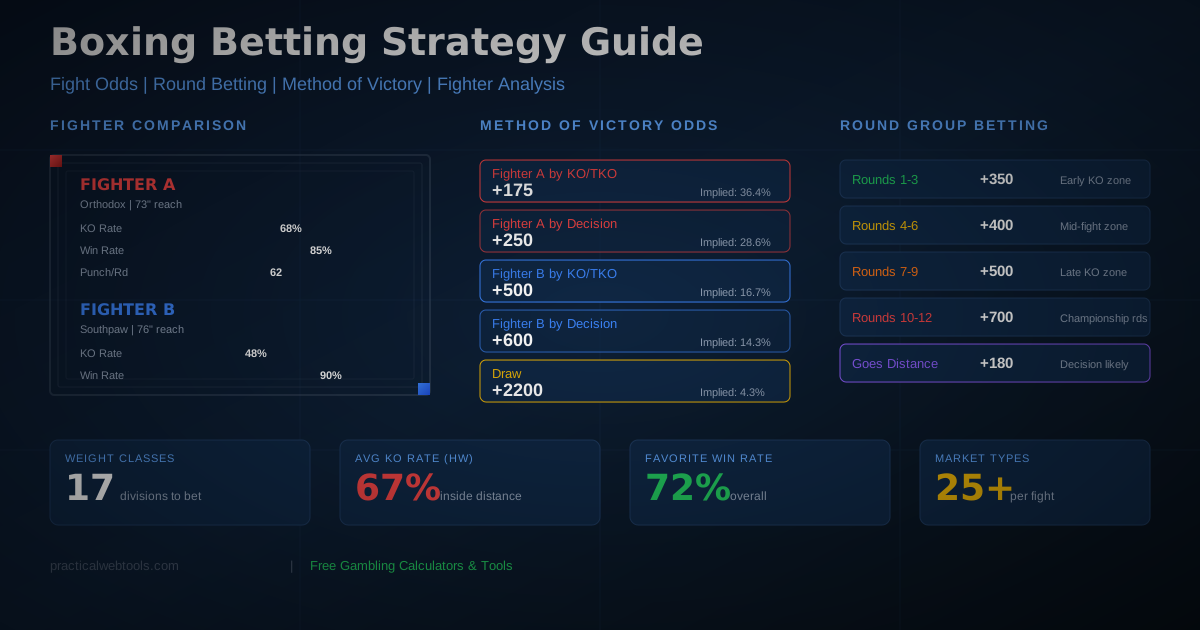
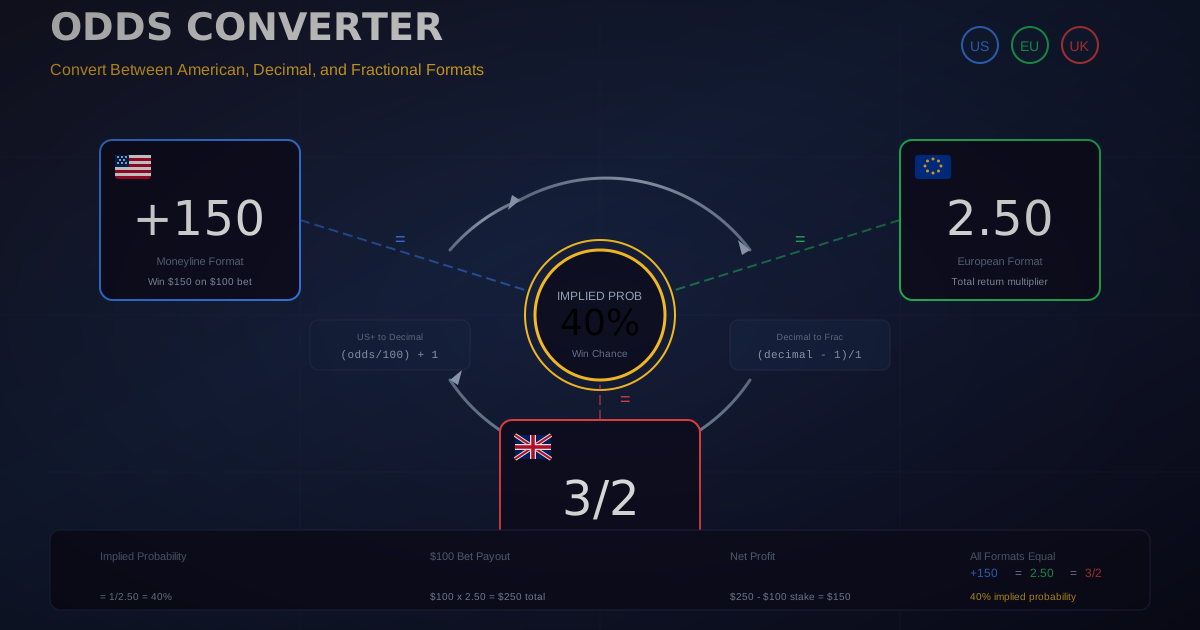
Boxing generates an estimated $700 million in annual US betting handle, and major championship fights routinely produce some of the most lopsided public betting action in all of sports, creating enormous value opportunities for sharp bettors who understand fight analysis beyond the moneyline. The sport's unique characteristics -- individual combat, round-by-round scoring, multiple methods of victory, and dramatic style matchups -- make boxing one of the most nuanced and rewarding sports to handicap. This guide covers every bet type, every analytical framework, and every strategic consideration you need to wager on boxing profitably. Convert boxing odds between American, decimal, and fractional formats with our Odds Converter
What Are the Main Types of Boxing Bets?
The main types of boxing bets are moneyline (picking the outright winner), method of victory (KO/TKO, decision, or draw), round betting (picking the exact round or round group of a stoppage), over/under total rounds, and various prop bets including knockdown props and fight-to-go-the-distance. Moneyline bets account for roughly 60% of boxing wagering volume, but the highest-value opportunities typically exist in round betting and method of victory markets.
Moneyline Bets
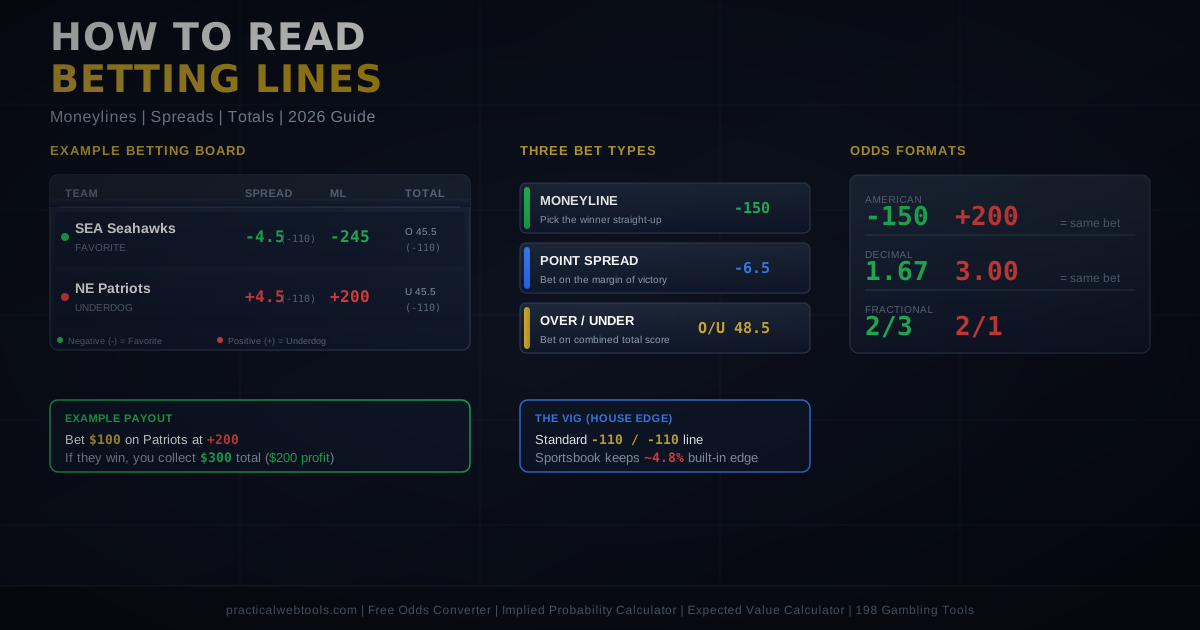
The moneyline is the simplest boxing bet: pick which fighter wins. Boxing moneylines are displayed in American odds format at US sportsbooks, with the favorite carrying a negative number (e.g., -300) and the underdog carrying a positive number (e.g., +250). The three-way moneyline includes the draw as a separate outcome, which is important because draws occur in approximately 3-5% of professional boxing matches.
| Bet Type | Description | Typical Odds Range | Complexity | Value Potential |
|---|---|---|---|---|
| Two-Way Moneyline | Pick the winner (draw = push) | -1000 to +800 | Low | Medium |
| Three-Way Moneyline | Pick winner or draw (no push) | -500 to +2500 | Low | Medium-High |
| Method of Victory | How the winner wins | +100 to +800 | Medium | High |
| Round Betting (Exact) | Exact round of stoppage | +700 to +8000 | High | Very High |
| Round Group Betting | Group of rounds (1-3, 4-6, etc.) | +200 to +1500 | Medium | High |
| Over/Under Rounds | Total rounds fought | -150 to +130 | Medium | Medium-High |
| Fight to Go Distance | Yes or No on full 12 rounds | -200 to +200 | Low | Medium |
| Knockdown Props | Will there be a knockdown? | -200 to +200 | Low | Medium |
Method of Victory Bets
Method of victory bets require you to predict both who wins and how they win. The standard categories are: Fighter A by KO/TKO/DQ, Fighter A by Decision (unanimous, split, or majority), Fighter B by KO/TKO/DQ, Fighter B by Decision, and Draw. This market is where informed bettors find the most consistent value because the general public overestimates knockout probability for popular punchers and underestimates decision probability in technical matchups.
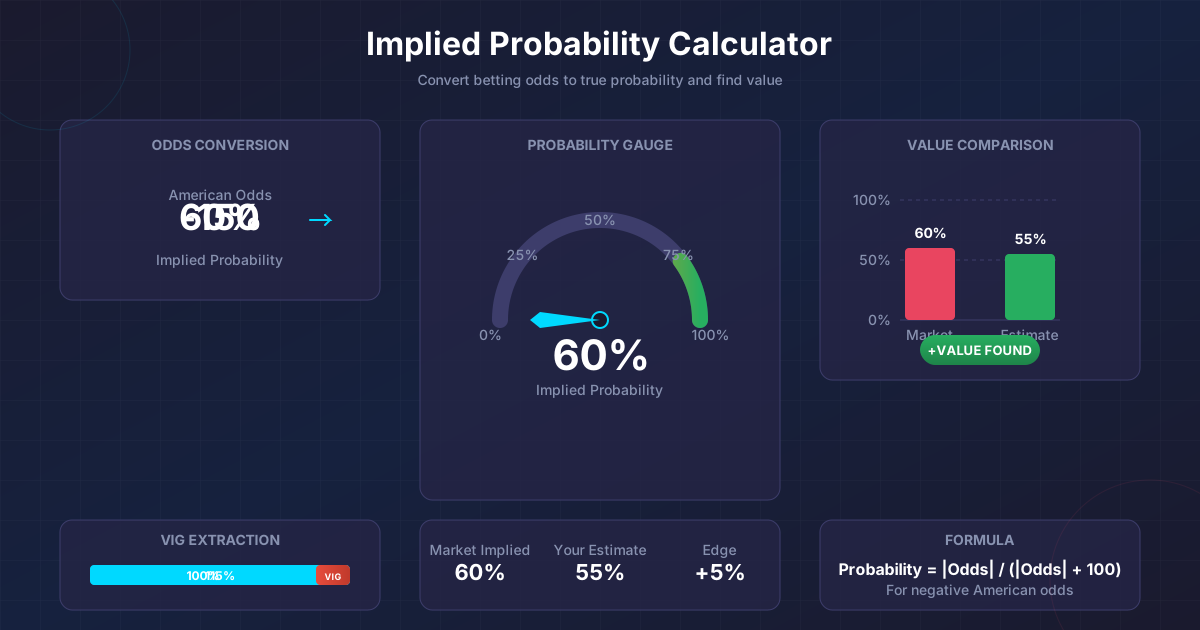
Use our Implied Probability Calculator to convert method of victory odds into probabilities and check whether they sum to a reasonable total (accounting for vig).
Round Betting
Round betting is the highest-variance, highest-reward boxing bet. You pick the exact round in which the fight ends. For a 12-round championship fight, that means choosing from 24+ outcomes (each fighter winning in each of 12 rounds, plus decision for each fighter, plus draw). Individual round bets typically carry odds of +1000 to +5000, while round group bets (rounds 1-3, 4-6, 7-9, 10-12) offer odds of +250 to +800.
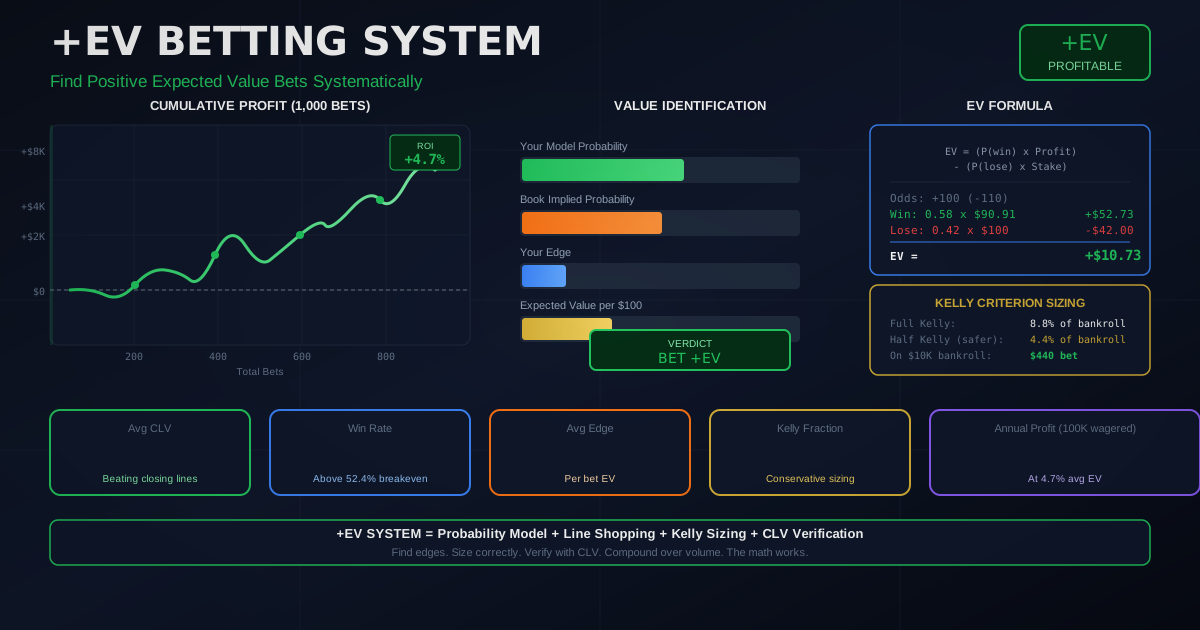
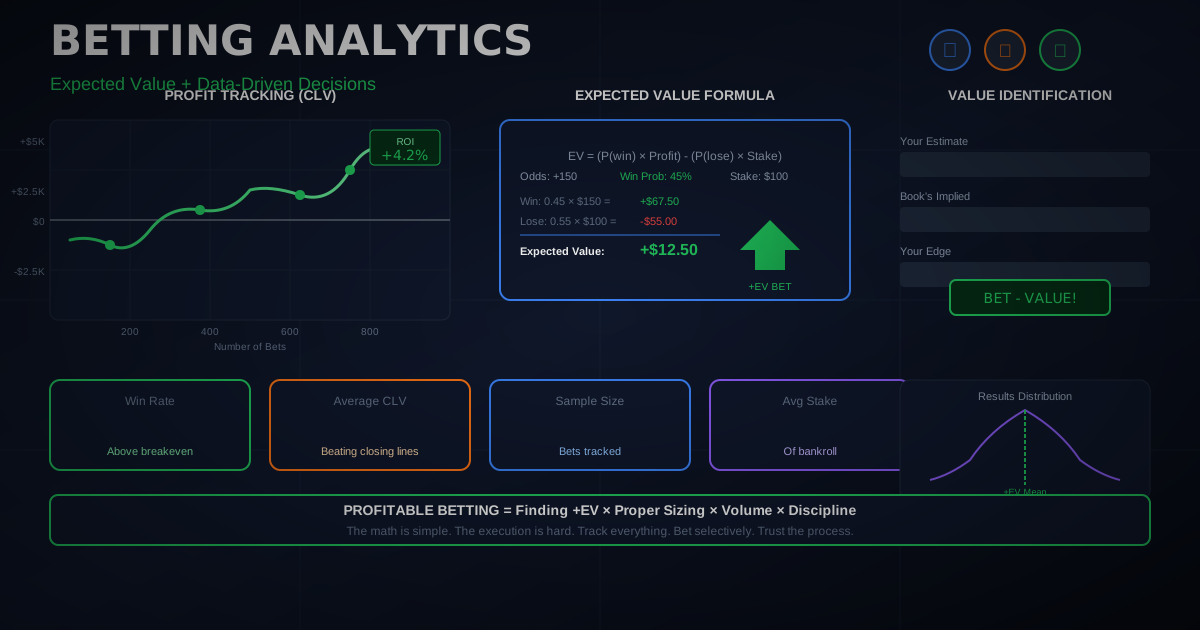
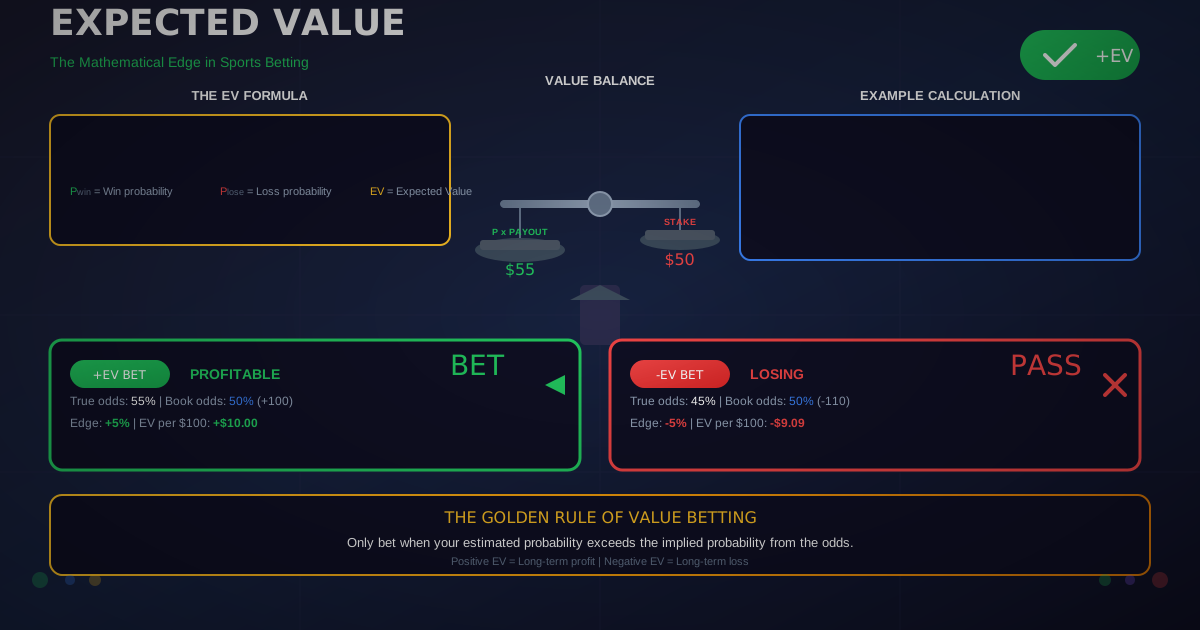
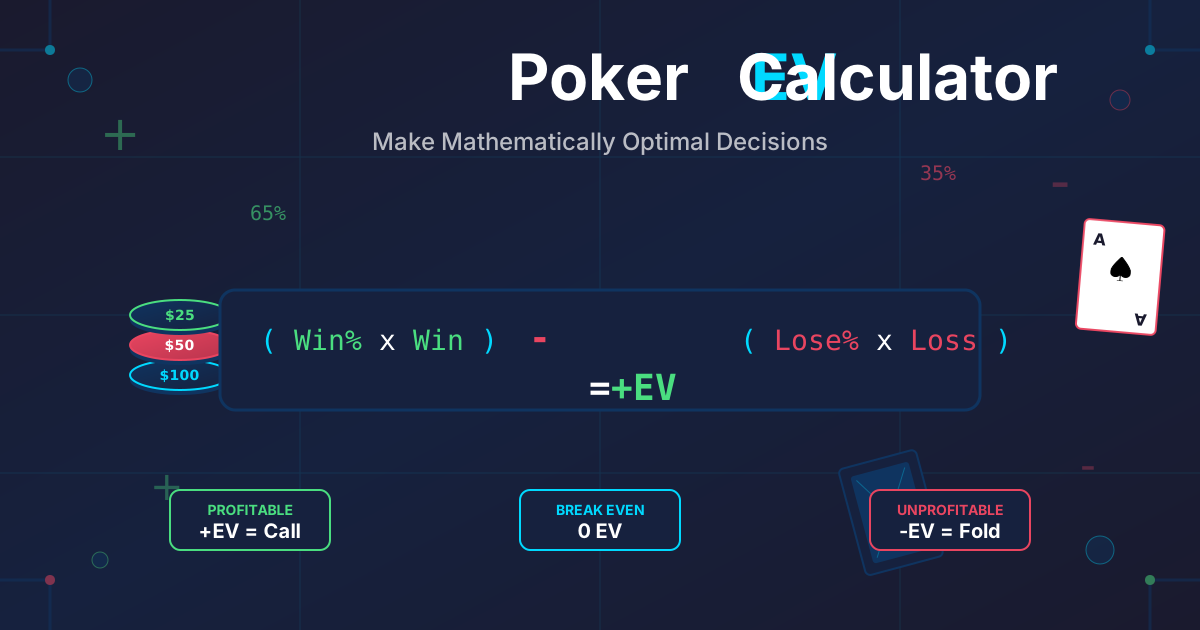
Use our Expected Value Calculator to determine whether a specific round bet offers positive expected value based on historical stoppage data.
Over/Under Total Rounds
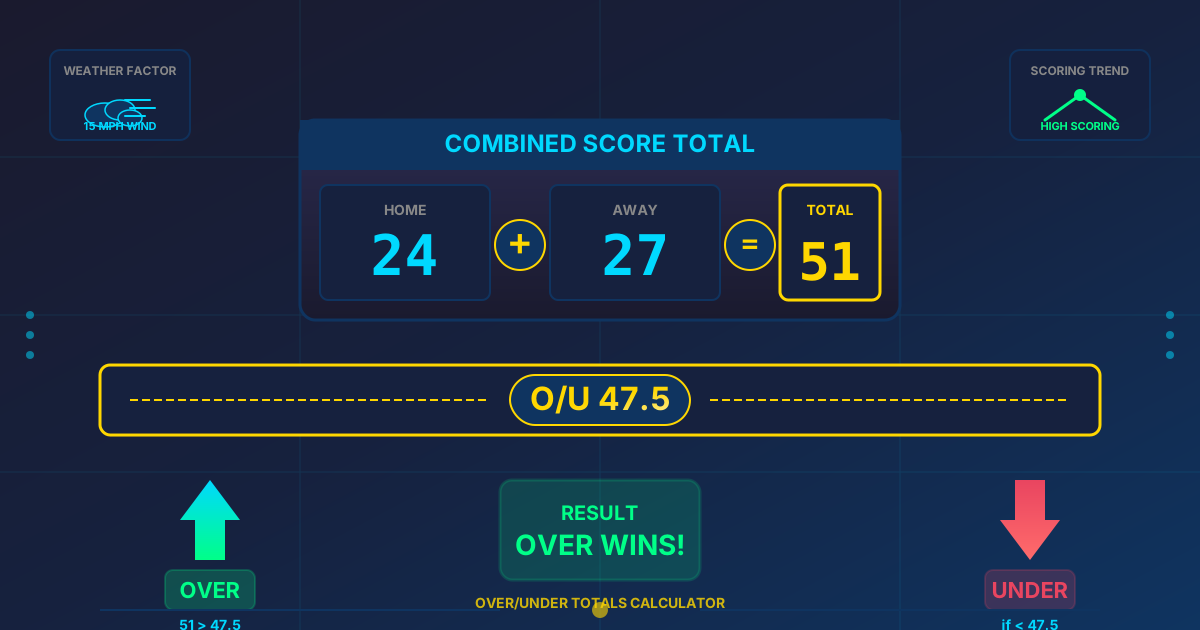
The over/under rounds bet is set at a specific round (e.g., 9.5 rounds), and you bet whether the fight will last longer (over) or shorter (under) than that threshold. This bet is heavily influenced by the fighting styles of both participants. Two aggressive punchers produce more unders, while two defensive technicians produce more overs.
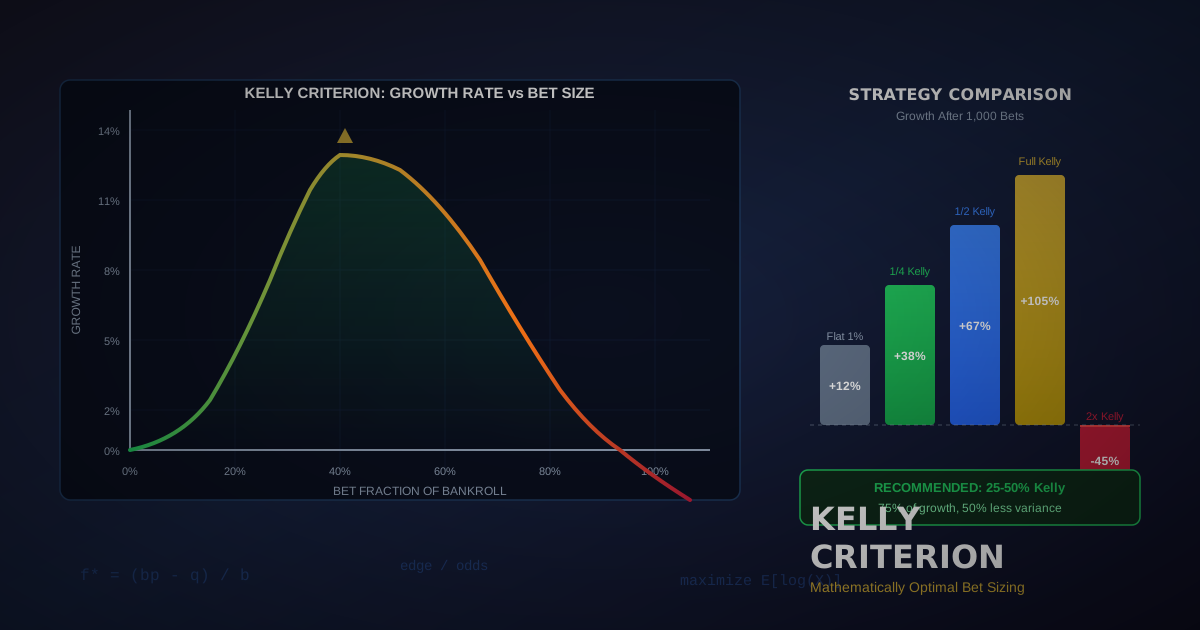
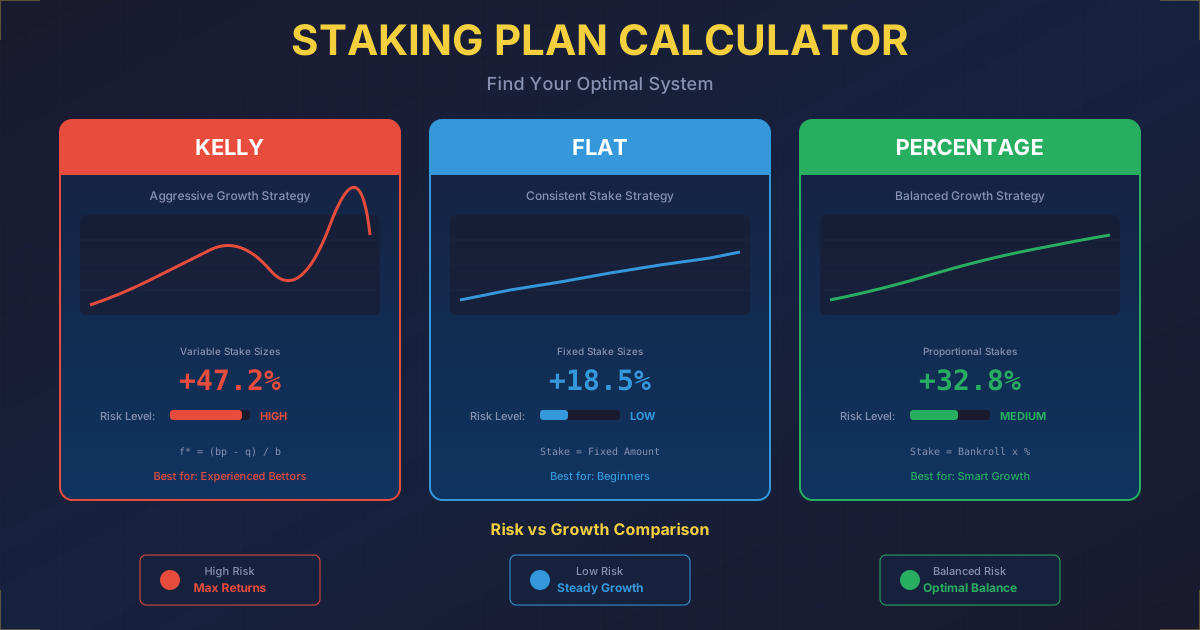
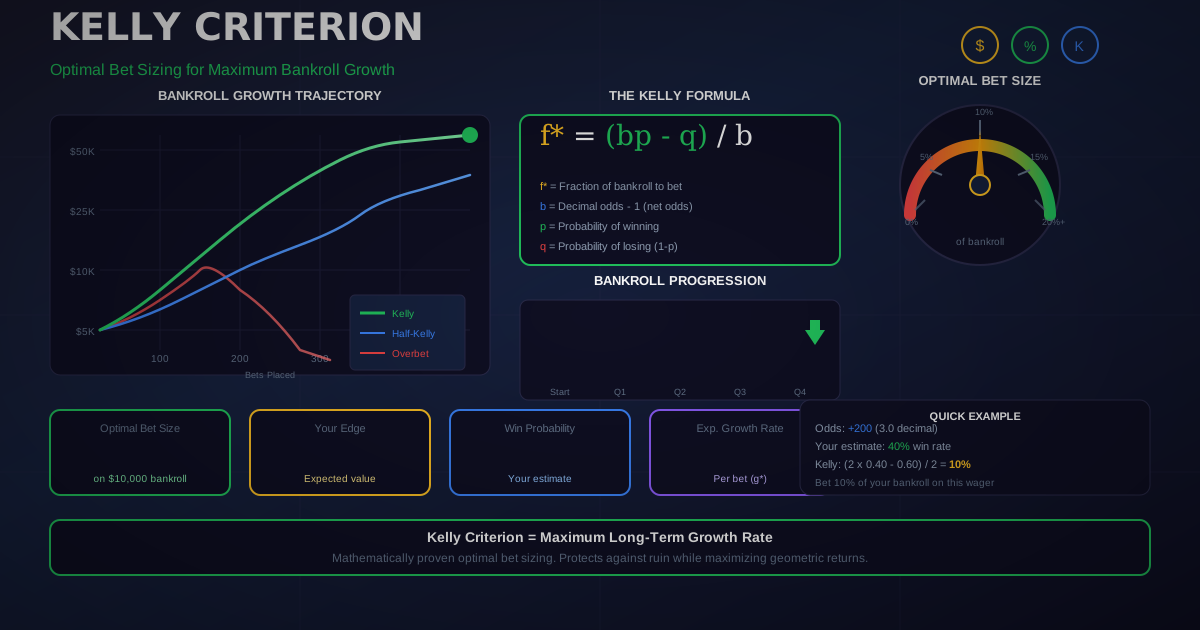
Use our Kelly Criterion Calculator to optimize your stake size on round totals based on your confidence in the fight duration analysis.
How Do You Read and Analyze Boxing Odds?
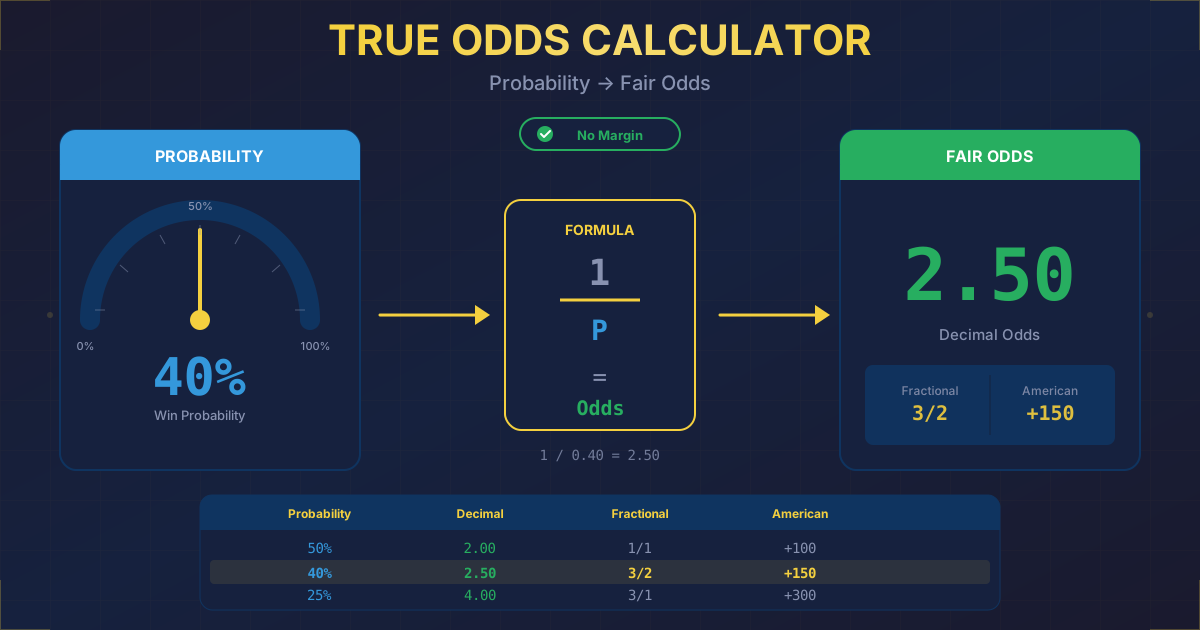
Reading boxing odds requires understanding that the moneyline reflects the sportsbook's assessment of each fighter's win probability after accounting for a margin (vig), and analyzing boxing odds means comparing those implied probabilities against your own assessment built from fighter statistics, style matchup analysis, and contextual factors. A -300 favorite has an implied probability of 75%, meaning the sportsbook believes that fighter wins three out of every four times.
Converting Odds to Implied Probability
| American Odds | Decimal Odds | Fractional Odds | Implied Probability |
|---|---|---|---|
| -500 | 1.20 | 1/5 | 83.3% |
| -300 | 1.33 | 1/3 | 75.0% |
| -200 | 1.50 | 1/2 | 66.7% |
| -150 | 1.67 | 2/3 | 60.0% |
| +100 | 2.00 | 1/1 | 50.0% |
| +150 | 2.50 | 3/2 | 40.0% |
| +250 | 3.50 | 5/2 | 28.6% |
| +500 | 6.00 | 5/1 | 16.7% |
| +1000 | 11.00 | 10/1 | 9.1% |
Understanding the Vig in Boxing Markets
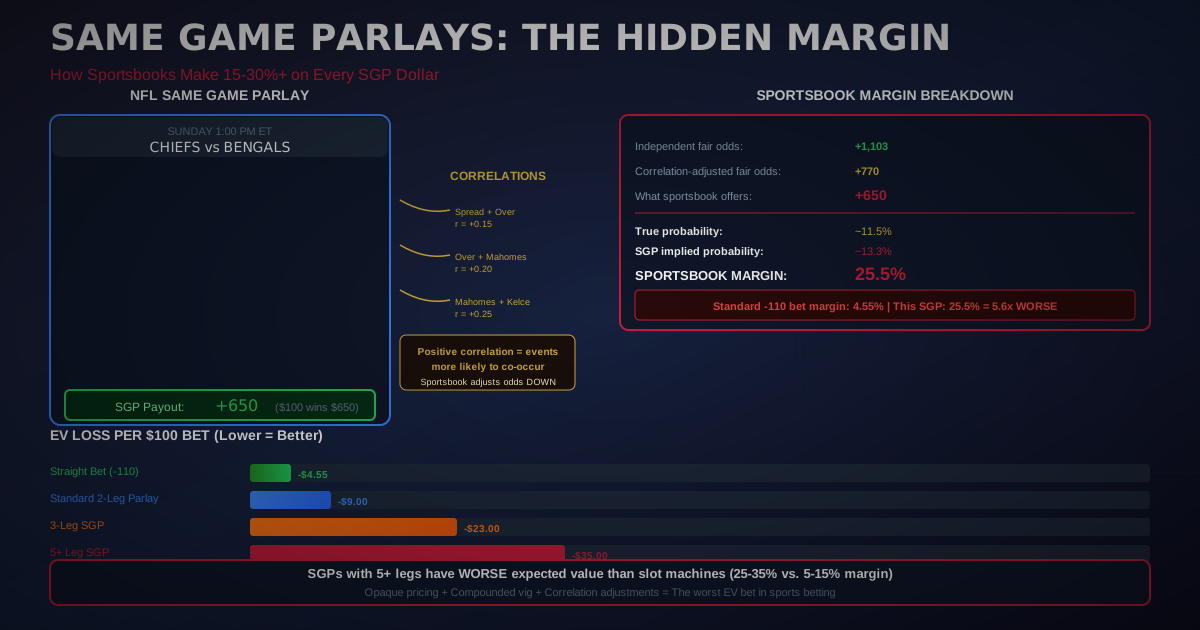
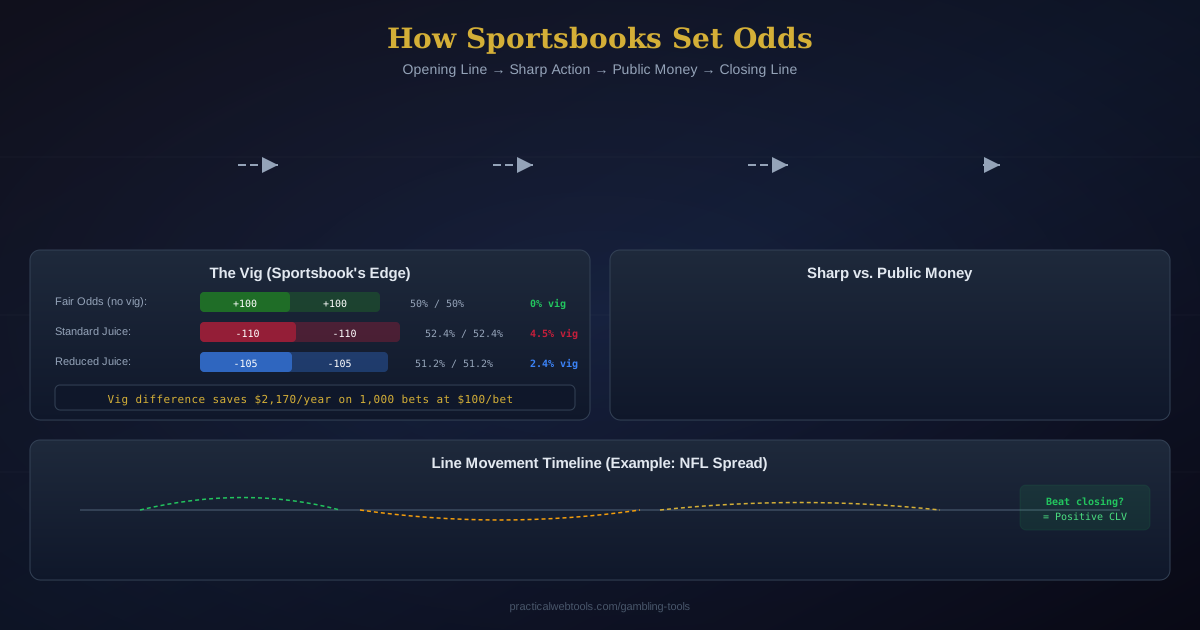
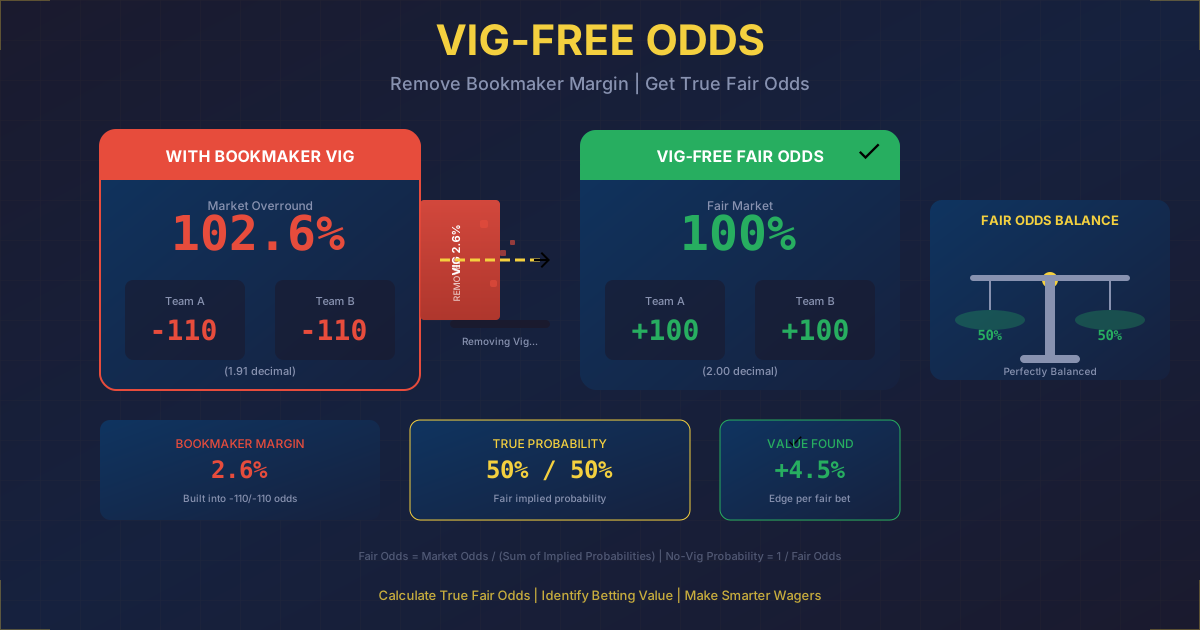
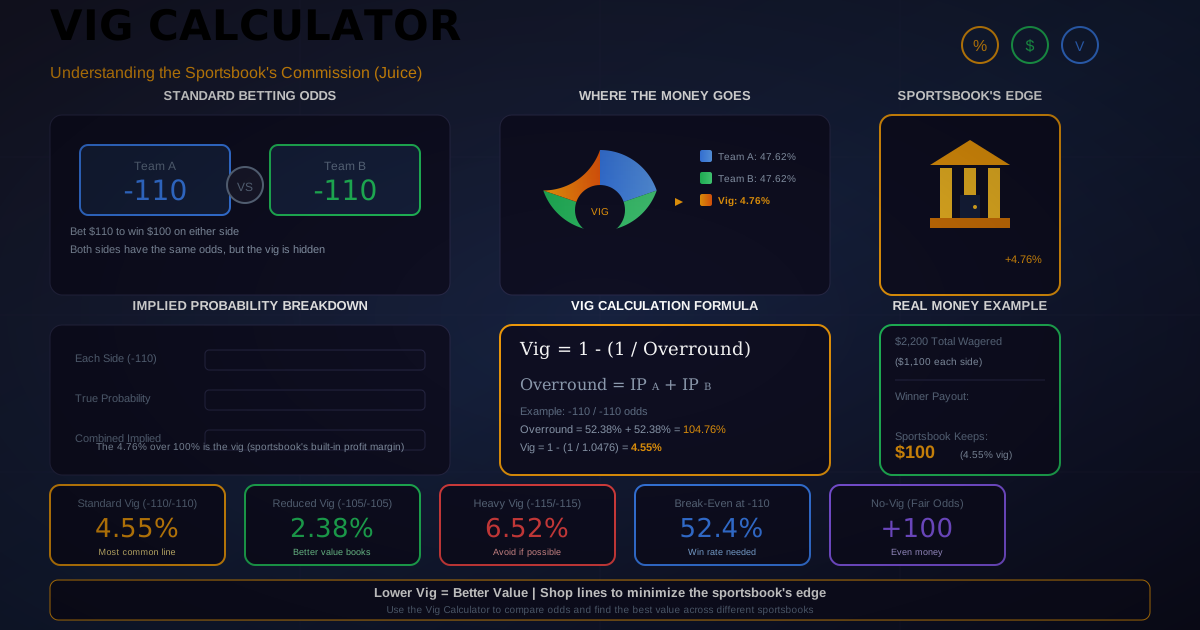
Boxing markets typically carry a higher vig (sportsbook margin) than mainstream sports like football or basketball. While NFL spreads might carry 4.5% vig, boxing moneylines can carry 8-15% vig, especially on main event fights where public interest drives heavy one-sided action. Understanding vig is essential because it determines the minimum edge you need to overcome.
Use our Hold/Vig Calculator to calculate the exact vig on any boxing market and identify which sportsbook offers the best price.
Line Movement and Sharp Action
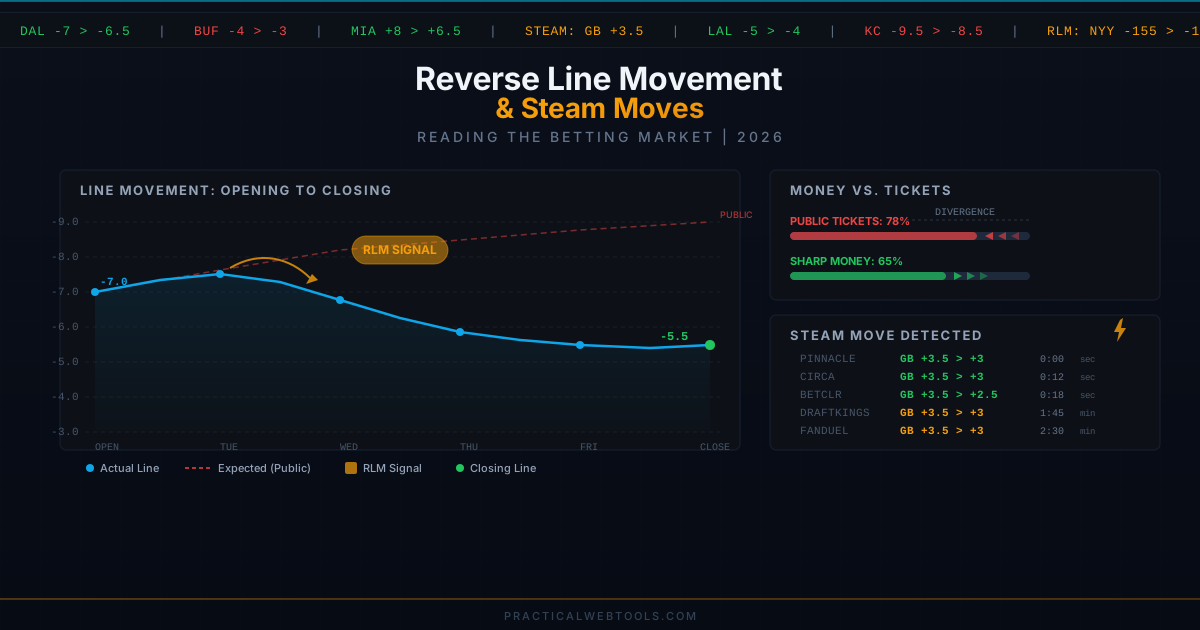
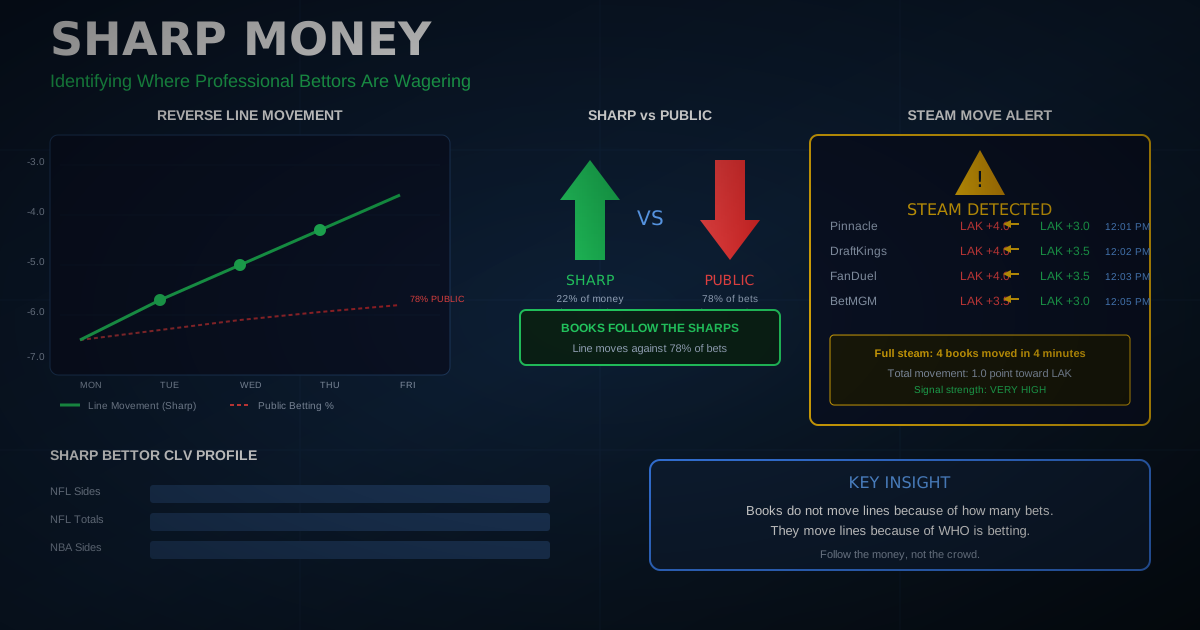
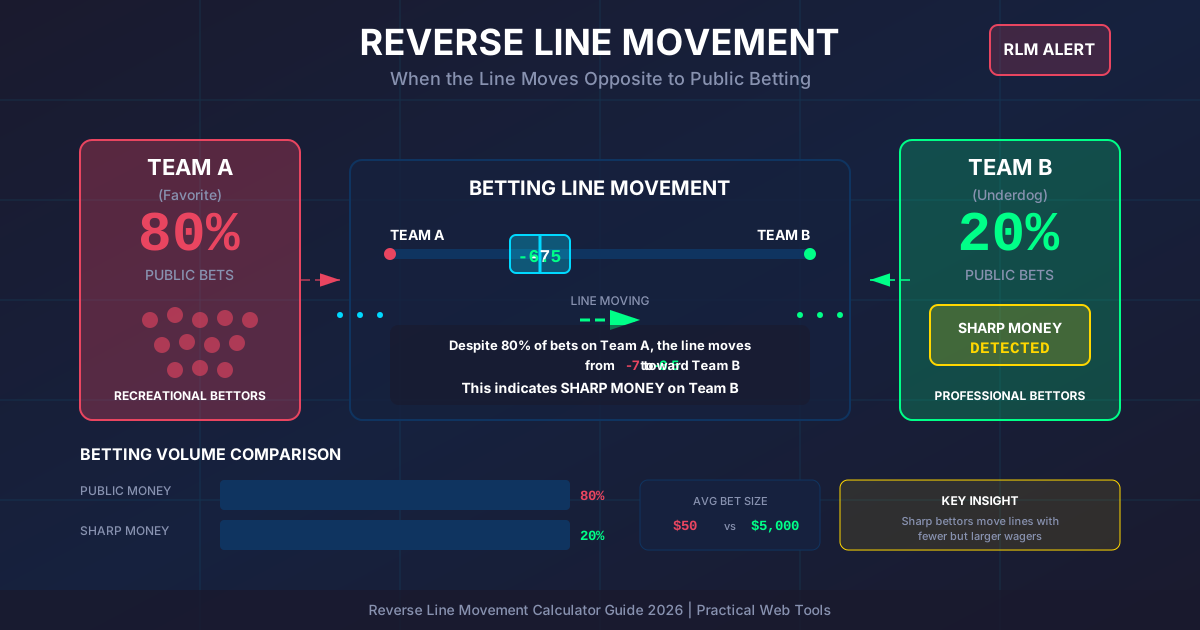
Boxing lines move based on both public money and sharp (professional) money. Public money typically flows heavily toward the favorite, especially if the fighter is a household name. Sharp money often comes in closer to fight time, sometimes moving the line in the opposite direction. Monitoring line movement from the opening odds to fight night provides insight into where informed money is landing.
Shopping for the Best Odds
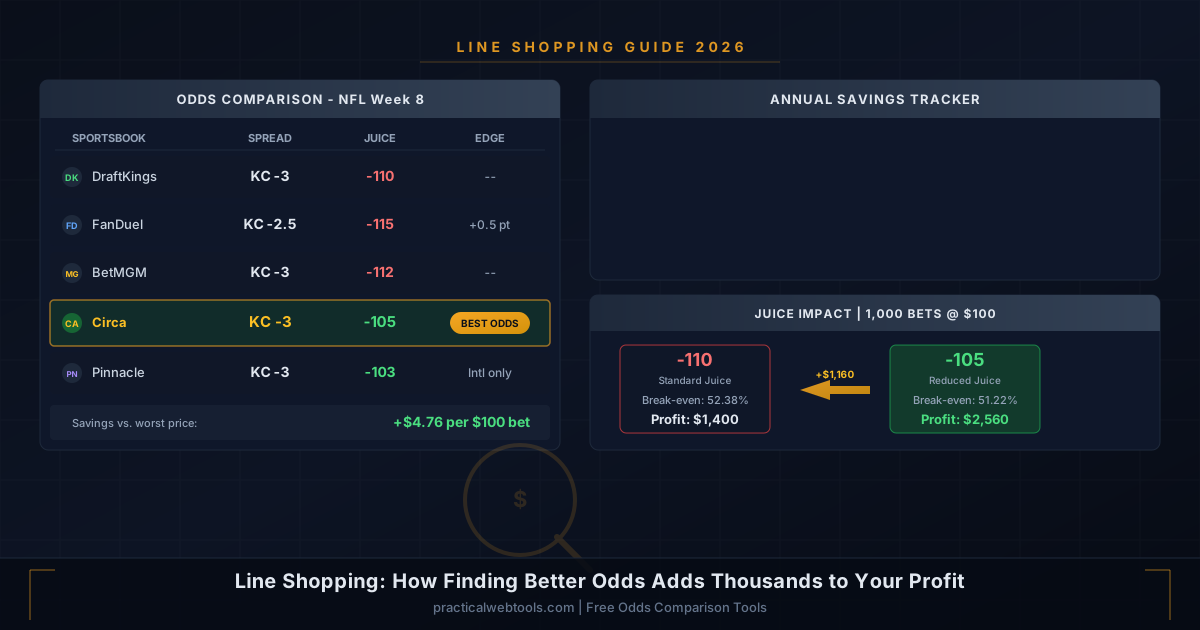
Because boxing vig is high, line shopping across multiple sportsbooks is even more important than in mainstream sports. A fighter priced at -280 at one sportsbook and -320 at another represents a meaningful difference in implied probability and potential return on investment.
Use our Odds Converter to compare boxing odds across sportsbooks that display odds in different formats.
How Do You Analyze Fighter Styles for Betting Purposes?
Analyzing fighter styles for betting purposes involves categorizing each boxer's approach (pressure fighter, counter-puncher, boxer-puncher, pure boxer, or swarmer), understanding how those styles interact, and then assessing which style matchup favors which outcome type (knockout, decision, or upset). The classic boxing axiom that "styles make fights" is the foundation of profitable boxing handicapping.
The Five Major Fighting Styles
| Style | Description | Strengths | Weaknesses | Typical Outcome |
|---|---|---|---|---|
| Pressure Fighter | Constant forward motion, high output | Overwhelms opponents, creates KOs | Vulnerable to counters, can gas out | KO/TKO (either fighter) |
| Counter-Puncher | Waits for opponent's attacks, then strikes | Efficient, hard to hit | Can lose rounds being inactive | Decision or late KO |
| Boxer-Puncher | Mix of technical skill and power | Versatile, adapts mid-fight | Master of none | Either KO or Decision |
| Pure Boxer | Movement, jab, range control | Hard to hit, wins rounds cleanly | Can struggle with pressure | Decision |
| Swarmer | Nonstop volume, close range | Exhausts opponents, accumulates damage | Takes punishment getting inside | Mid-to-late KO |
Style Matchup Analysis
Certain style matchups produce predictable patterns. Pressure fighters tend to beat pure boxers (they cut off the ring and force exchanges). Counter-punchers tend to beat pressure fighters (they capitalize on the aggressor's predictable forward motion). Pure boxers tend to beat counter-punchers (their jab and movement force the counter-puncher to lead). This rock-paper-scissors dynamic is not absolute, but it holds true frequently enough to inform betting decisions.
Use our Expected Value Calculator to model how different style matchup outcomes affect the expected value of method of victory bets.
Southpaw vs. Orthodox Dynamics
When a southpaw (left-handed stance) fights an orthodox (right-handed stance) fighter, both combatants face an unfamiliar angle of attack. The lead foot positioning battle becomes critical, and fighters with limited southpaw experience often struggle. Historical data shows that southpaws win at a higher rate than their odds suggest when facing orthodox opponents who have fewer than 3 career southpaw fights.
Physical Attributes That Matter
Beyond style, specific physical attributes create advantages that bettors should account for:
- Reach advantage of 3+ inches strongly favors the longer fighter in decision outcomes
- Height advantage helps jab-and-move fighters maintain range
- Hand speed advantage favors counter-punchers who need quick reactions
- Chin durability history determines susceptibility to KO loss
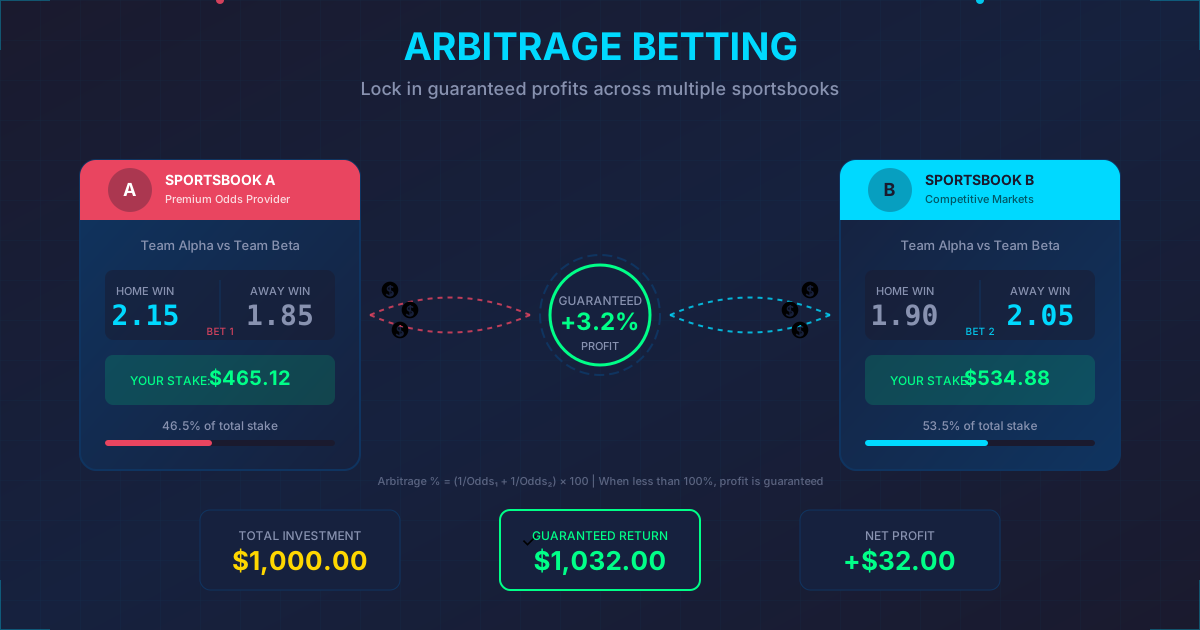
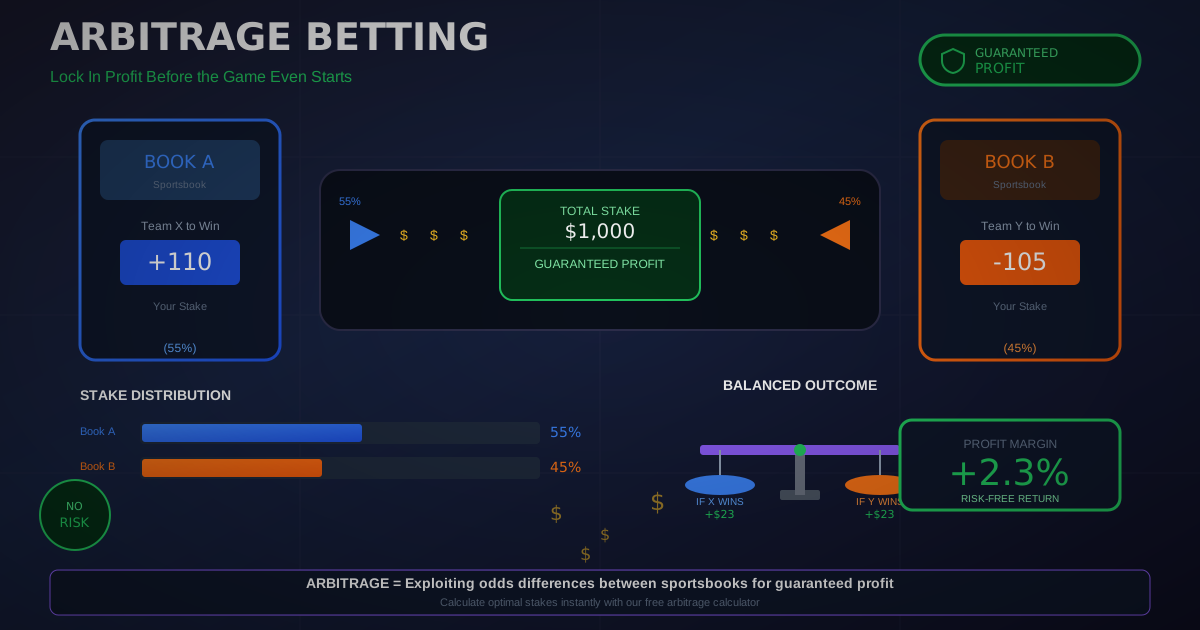
Use our Arbitrage Calculator to find pricing discrepancies between sportsbooks on boxing method of victory markets.
What Statistics Should You Use to Handicap Boxing Matches?
The most valuable statistics for handicapping boxing matches are CompuBox punch statistics (punches thrown per round, accuracy percentage, power punch percentage), historical KO rate by round range, opponent quality adjusted win rate, activity rate (fights per year), and age/decline indicators. Casual bettors overweight a fighter's record (wins and losses) without considering the quality of opposition faced.
CompuBox Statistics Explained
CompuBox tracks every punch thrown and landed in televised boxing matches, categorizing them as jabs or power punches. These statistics provide objective data on a fighter's offensive output, accuracy, and defensive skill.
| Statistic | What It Measures | Elite Benchmark | Average Benchmark | Betting Relevance |
|---|---|---|---|---|
| Punches Thrown/Rd | Offensive activity | 70+ | 50-60 | Indicates aggression, stamina |
| Total Accuracy % | Overall landing rate | 40%+ | 30-35% | Indicates skill level |
| Jab Accuracy % | Jab landing rate | 30%+ | 20-25% | Key for range fighters |
| Power Punch Acc. % | Power landing rate | 45%+ | 35-40% | KO probability indicator |
| Punches Received/Rd | Defensive ability | <25 | 30-40 | Chin test frequency |
KO Rate Analysis by Weight Class
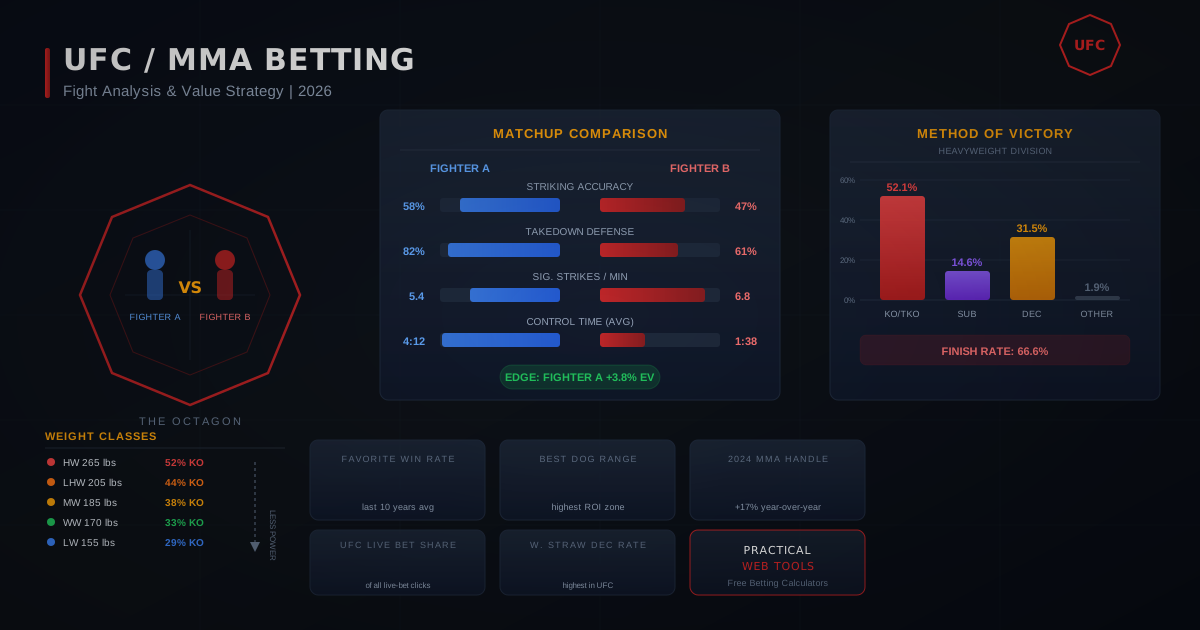
Knockout rates vary dramatically by weight class. Heavyweight fights end by KO/TKO approximately 65-70% of the time, while lower weight classes (flyweight, bantamweight) see KO rates of only 35-45%. This difference is critical for round betting and over/under totals.
| Weight Class | Avg KO Rate | Avg Fight Duration | Best Bet Type Focus |
|---|---|---|---|
| Heavyweight (200+ lbs) | 65-70% | 7.2 rounds | Under rounds, KO method |
| Cruiserweight (200 lbs) | 58-63% | 8.0 rounds | Under/over rounds |
| Light Heavy (175 lbs) | 55-60% | 8.3 rounds | Method of victory |
| Middleweight (160 lbs) | 50-55% | 8.8 rounds | Method of victory |
| Welterweight (147 lbs) | 45-50% | 9.2 rounds | Over rounds, decision |
| Lightweight (135 lbs) | 40-45% | 9.5 rounds | Over rounds, decision |
| Featherweight (126 lbs) | 38-42% | 9.8 rounds | Over rounds, decision |
| Bantamweight (118 lbs) | 35-40% | 10.0 rounds | Decision, over rounds |
Use our Implied Probability Calculator to convert over/under round odds into probabilities and compare them against weight-class-specific KO rate data.
Opponent Quality Adjustment
A fighter's record must be evaluated in context. A 25-0 record against carefully selected opponents (known as "padding" a record) is far less impressive than a 22-3 record against top-10 ranked opponents. When analyzing a fighter's résumé, look at the quality of opponents defeated, the level of competition (regional vs. world-class), and performance against common opponents.
Use our Closing Line Value Tracker to measure whether your fight-analysis-based bets consistently beat the closing line over time.
How Does the Scorecards and Judging System Affect Boxing Bets?
The 10-point must scoring system used in professional boxing, where the round winner receives 10 points and the loser typically receives 9 (or fewer for knockdowns), directly affects betting because close fights frequently produce controversial split decisions, and understanding how judges score rounds allows bettors to better predict which fighter wins and whether the fight goes the distance. Approximately 15-20% of decision results in boxing are split decisions, indicating significant disagreement among the three judges.
Understanding the 10-Point Must System
Each round is scored independently by three ringside judges. The round winner gets 10 points, and the loser gets 9 (10-9 round). A round with a knockdown is typically scored 10-8. A round with two knockdowns is scored 10-7. If the fight goes the full 12 rounds, the judges' scorecards are totaled, and the fighter with more points on at least two of the three cards wins.
| Scorecard Scenario | Occurrence Rate | Betting Implication |
|---|---|---|
| Unanimous Decision (3-0) | 55-60% of decisions | Clean winner, skill advantage clear |
| Split Decision (2-1) | 15-20% of decisions | Close fight, judging variance |
| Majority Decision (2-0-1) | 5-8% of decisions | One judge saw it very close |
| Draw (1-1-1 or 0-0-3) | 3-5% of all fights | Extremely close or controversial |
| Technical Decision | 2-3% | Accidental headbutt or cut stoppage |
Hometown Judging Bias
One of boxing's most persistent factors is the perceived (and sometimes very real) hometown judging advantage. Fighters competing in their home country or city statistically receive more favorable scorecards in close rounds. Historical analysis of split decisions shows that the hometown fighter wins approximately 60-65% of split decisions, compared to the 50% you would expect if judging were perfectly neutral.
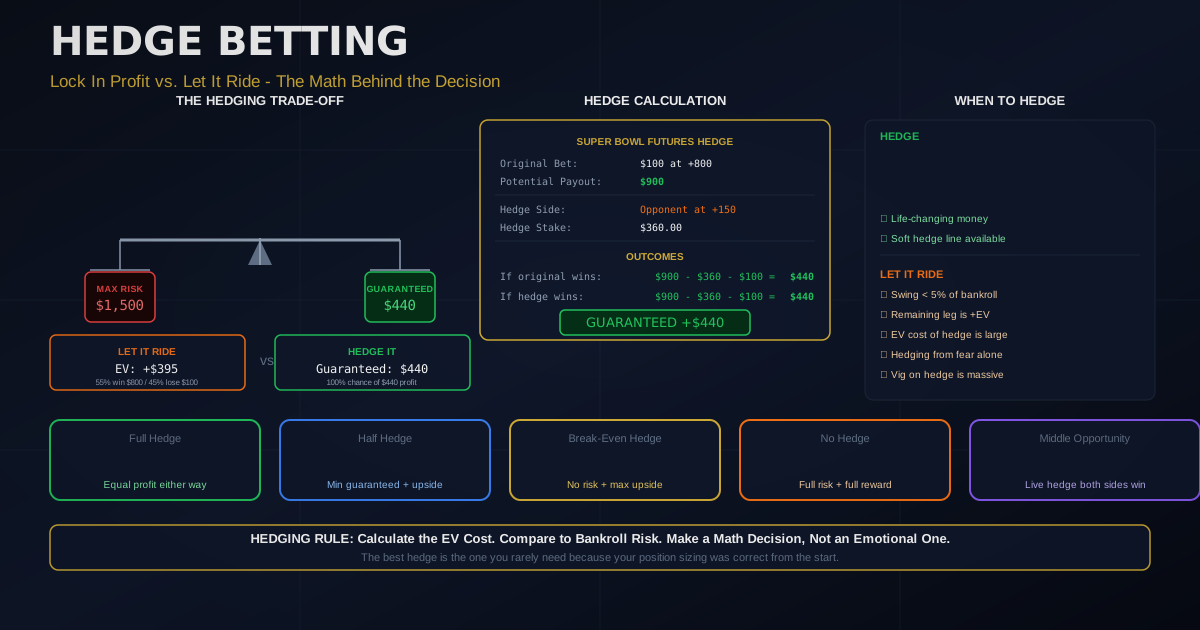
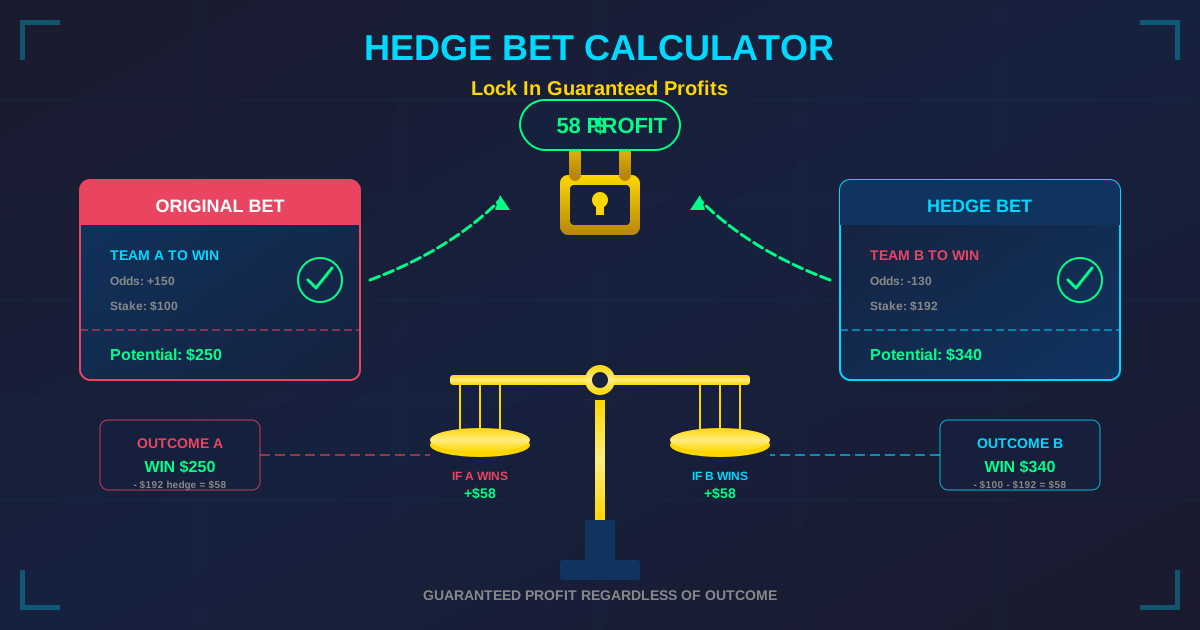
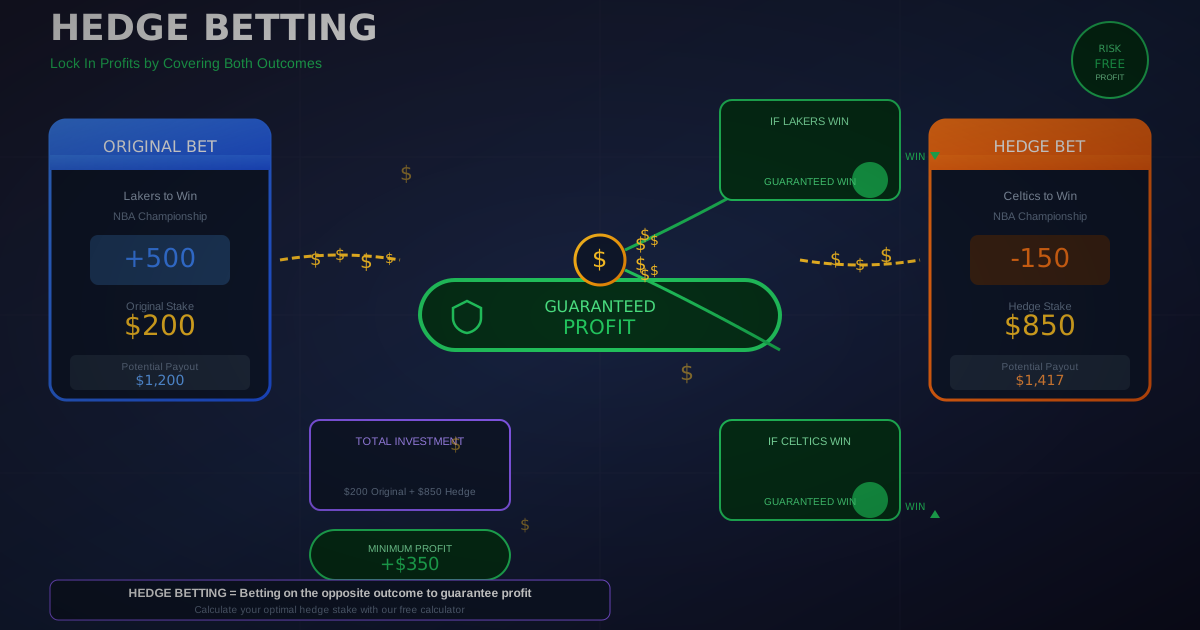
Use our Hedge Calculator to protect a moneyline bet on a visiting fighter by hedging with a small draw bet if you anticipate hometown bias.
How to Predict Decisions
Predicting whether a fight goes to decision requires analyzing both fighters' stoppage rates (both wins and losses by stoppage), the stylistic matchup, and the weight class. Two defensive-minded fighters with low KO percentages in a lower weight class are overwhelmingly likely to go the distance. Two power punchers at heavyweight are more likely to produce a stoppage.
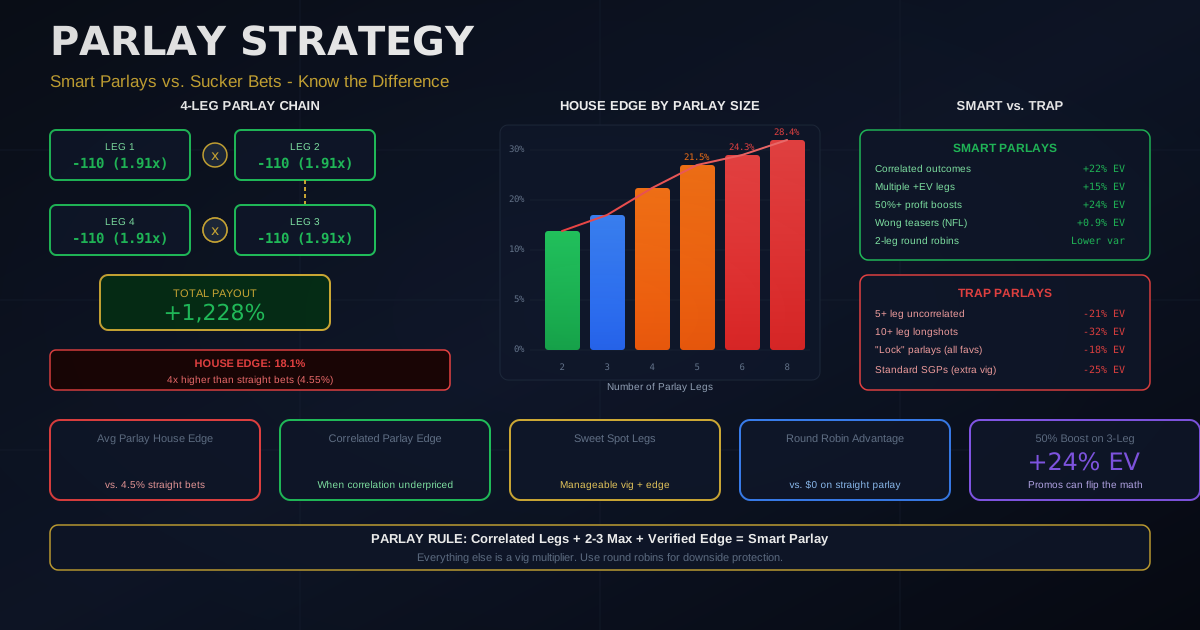
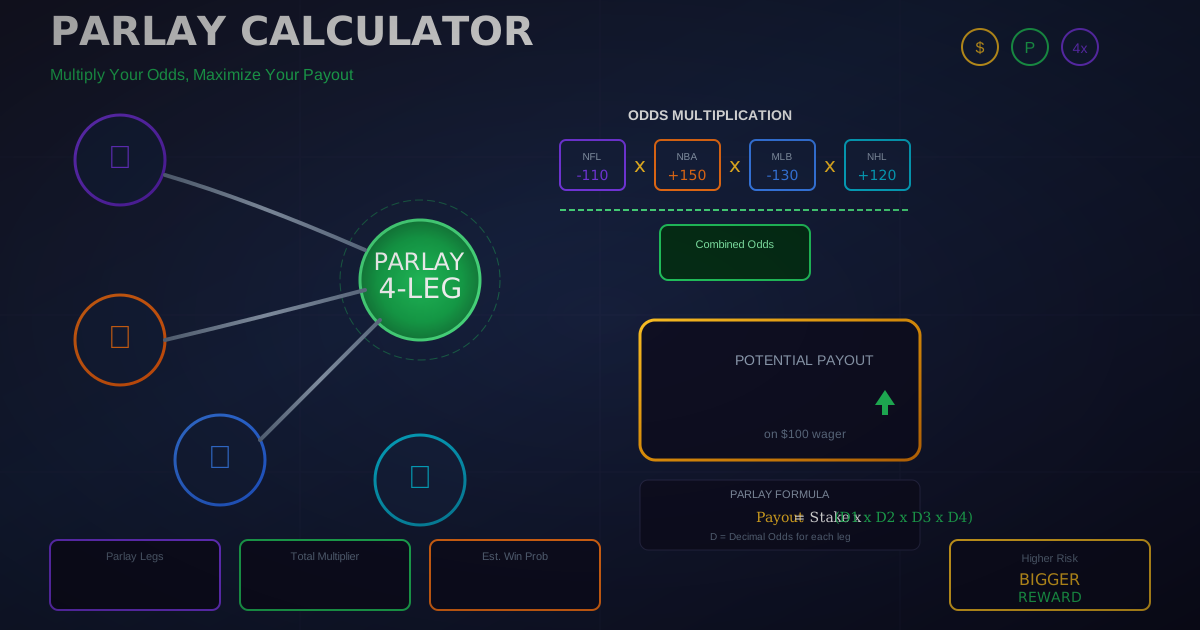
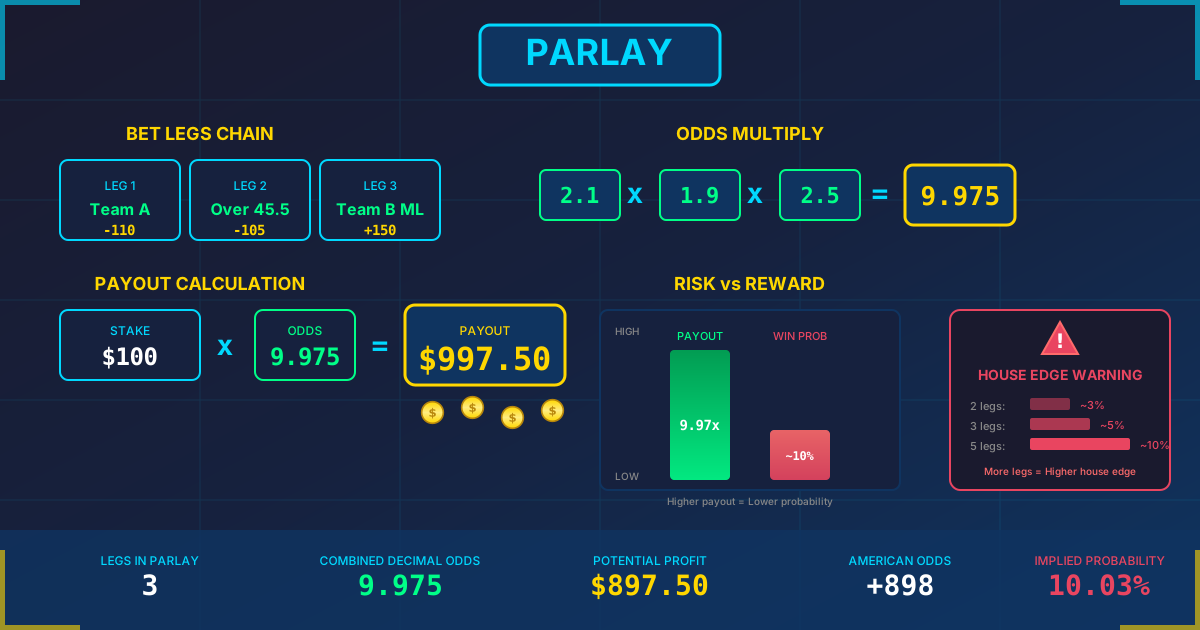
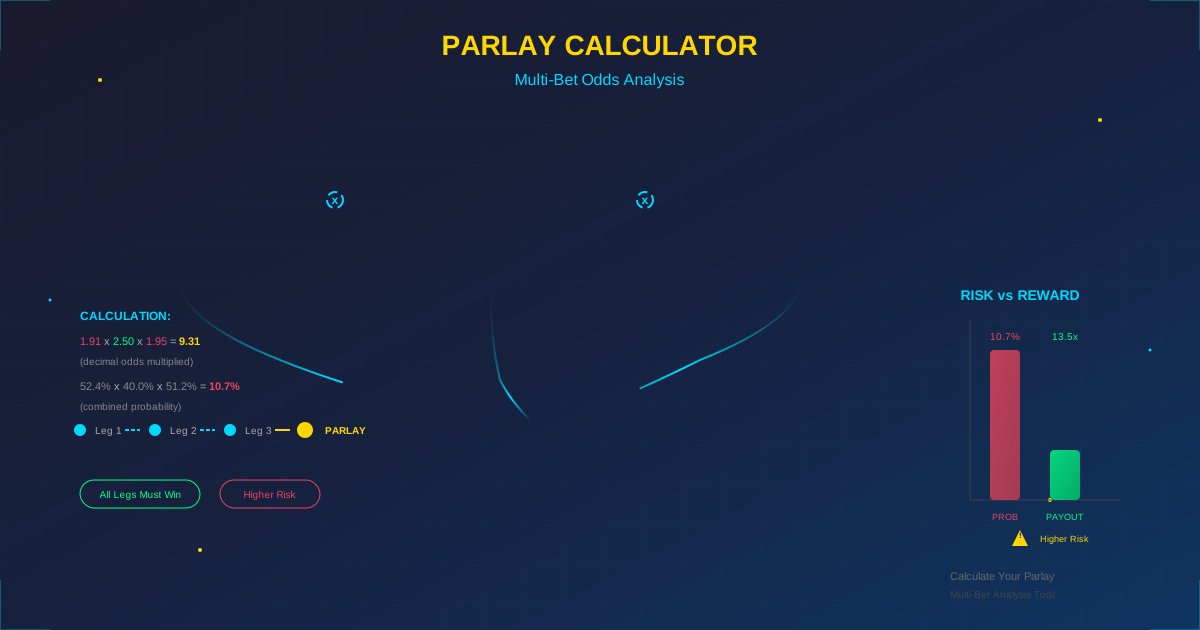
Use our Parlay Calculator to combine multiple fight predictions (moneyline, method of victory, round total) into a single high-payout parlay.
When Is Round Betting the Best Boxing Bet?
Round betting is the best boxing bet when you have a strong conviction about both the winner and the approximate timing of a stoppage, particularly in heavyweight fights where the KO rate exceeds 65% and individual round bets carry odds of +1000 to +5000, creating enormous payouts relative to a small stake. Round group bets (1-3, 4-6, 7-9, 10-12) offer a more forgiving version of exact round betting with still-attractive odds.
When to Target Early Rounds
Early-round stoppages (rounds 1-4) are most common when:
- A massive power disparity exists between fighters
- One fighter has a known chin vulnerability
- The fight features a pressure fighter against a limited defensive fighter
- The weight class is heavyweight or cruiserweight
- One fighter is coming off a long layoff and may be rusty
| Round Group | Typical Odds (Favorite KO) | Best Scenario | Historical KO Distribution |
|---|---|---|---|
| Rounds 1-3 | +300 to +500 | Massive power edge, chin issues | 25-30% of all KOs |
| Rounds 4-6 | +350 to +600 | Accumulative damage, body work | 25-30% of all KOs |
| Rounds 7-9 | +500 to +800 | Fatigue factor, late pressure | 20-25% of all KOs |
| Rounds 10-12 | +600 to +1200 | Championship rounds, desperation | 15-20% of all KOs |
Building a Round Betting Portfolio
Rather than picking a single exact round, savvy bettors build a portfolio of round bets that cover a range. For example, if you believe Fighter A will stop Fighter B in the middle rounds, you might place smaller bets on rounds 4, 5, 6, and 7. If any of those rounds produce the stoppage, you profit, and the combined cost of the four bets is still modest relative to the potential payout.
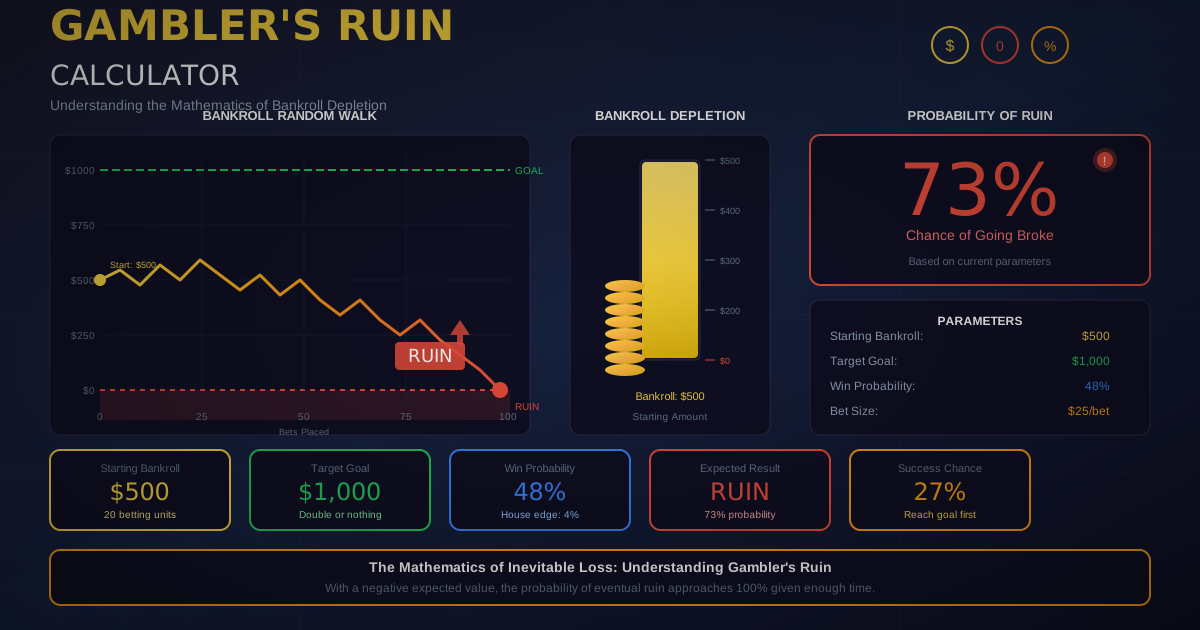
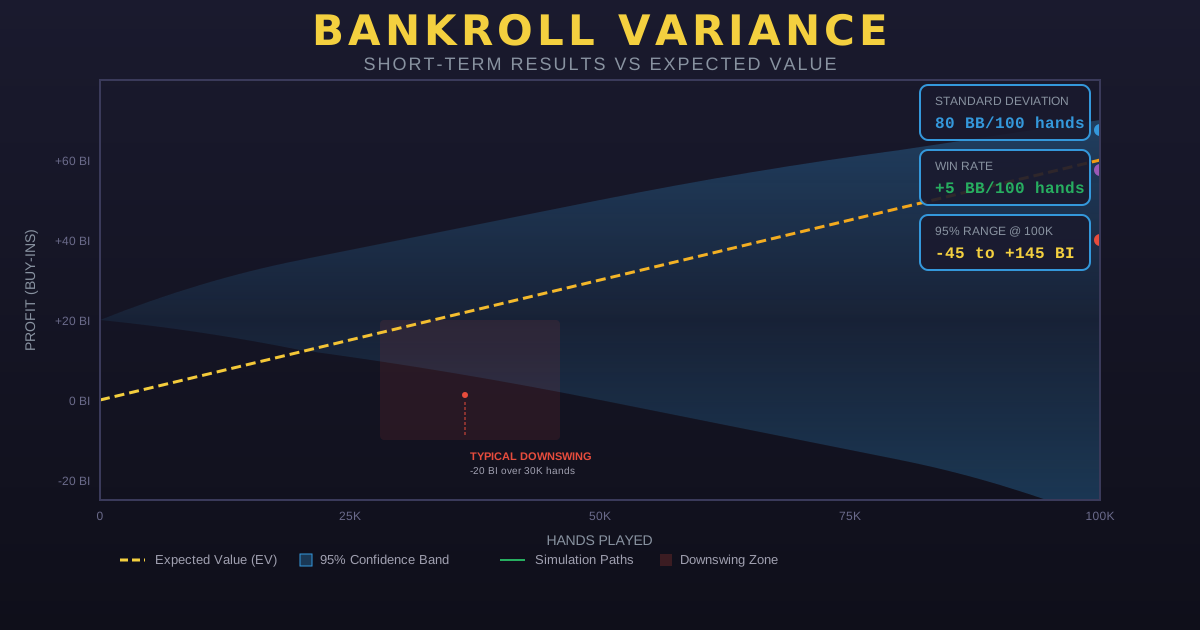
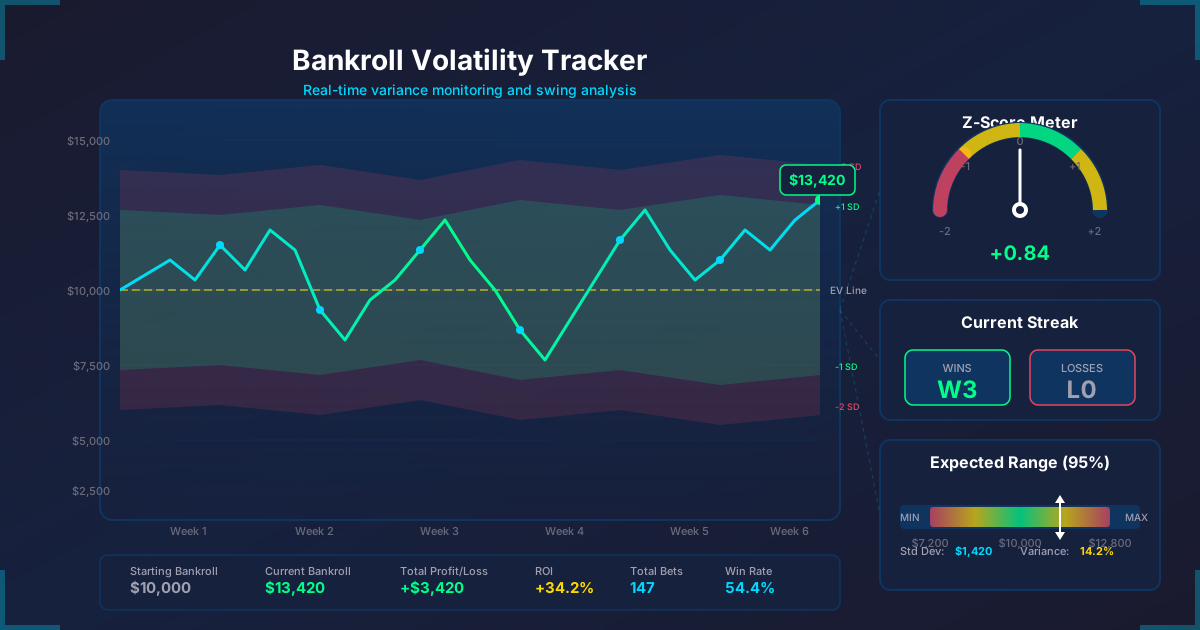
Use our Bankroll Volatility Tracker to manage the high variance inherent in round betting across multiple fight cards.
Round Betting vs. Method of Victory
Round betting and method of victory bets can complement each other. A method of victory bet on "Fighter A by KO/TKO" at +175 provides a broader safety net than a specific round bet, but at lower odds. Combining a method of victory bet with specific round bets in your expected stoppage range creates a portfolio with both base-case coverage and upside potential.
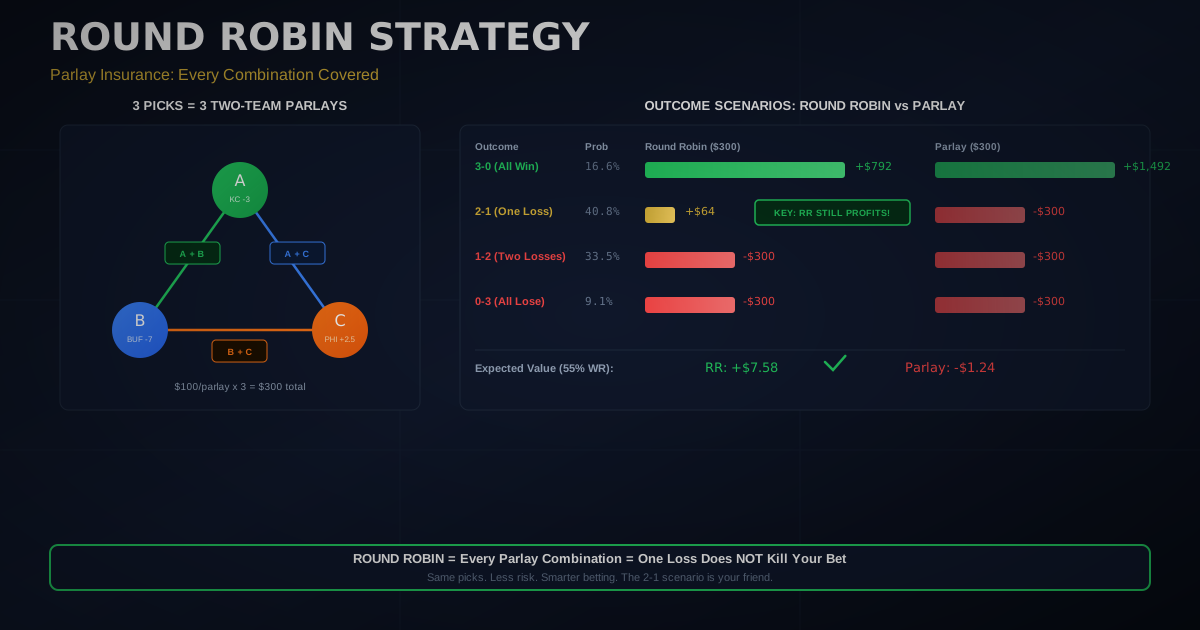
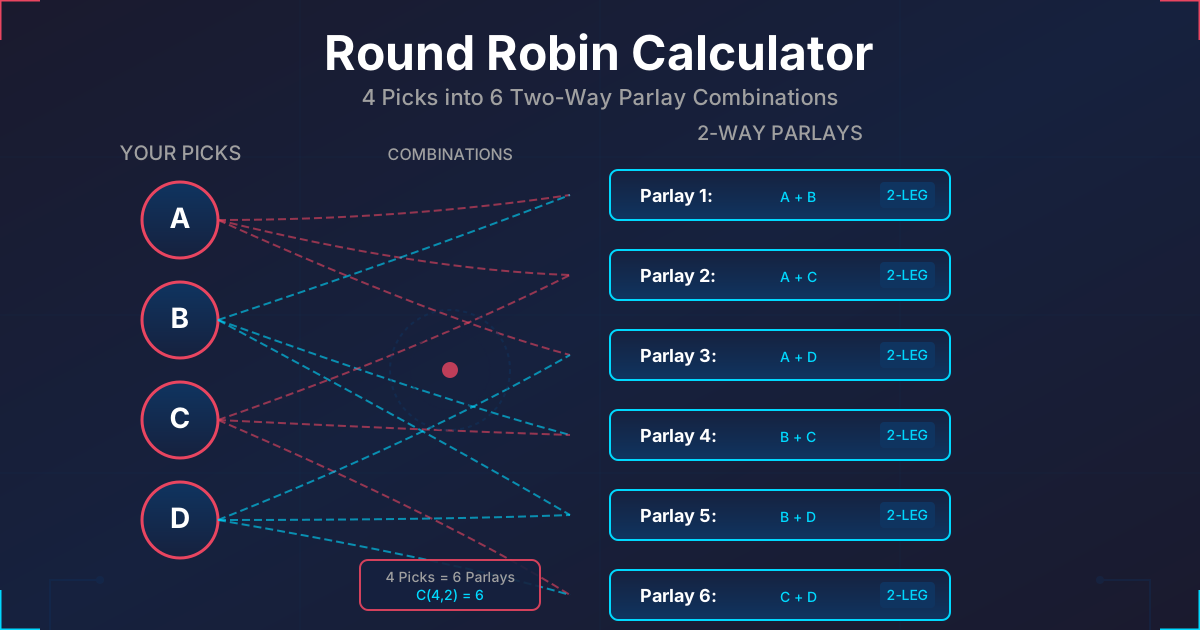
Use our Round Robin Calculator to build round robin combinations across round betting and method of victory markets.
How Should You Approach Undercard Betting for Value?
Undercard fights (the fights preceding the main event on a boxing card) consistently offer better value than main events because sportsbooks devote fewer resources to setting accurate lines, less public money creates less market efficiency, and the fighters are less well-known, meaning oddsmakers rely more heavily on basic record analysis rather than in-depth style matchup evaluation. Sharp boxing bettors often derive the majority of their annual profit from undercard bets.
Why Undercards Are Softer
| Factor | Main Event | Undercard | Value Implication |
|---|---|---|---|
| Sportsbook Line Attention | Very High | Low-Medium | More pricing errors on undercards |
| Public Betting Volume | Very High | Low | Less market self-correction |
| Available Information | Extensive | Limited | Edge for those who research |
| Vig (Margin) | 8-12% | 10-15% | Slightly higher cost |
| Line Movement | Significant | Minimal | Easier to grab value early |
| Sharp Bettor Presence | High | Lower | Less competition for edges |
Prospect vs. Gatekeeper Analysis
Many undercard fights feature undefeated prospects (fighters being developed by a promotional company) against gatekeepers (experienced fighters who test prospects but are not expected to win). The key question is whether the gatekeeper is a genuine step-up in class or a carefully selected opponent designed to look competitive while losing. Watching tape of both fighters provides insight that most recreational bettors skip.
Use our Expected Value Calculator to calculate whether undercard moneyline prices accurately reflect the true probability based on your tape study.
International Fight Cards
Boxing cards from outside the United States (particularly from the UK, Mexico, Japan, and Australia) often feature softer betting lines because US-focused sportsbooks have less expertise in international boxing scenes. Bettors who follow international boxing can exploit knowledge gaps in these markets.
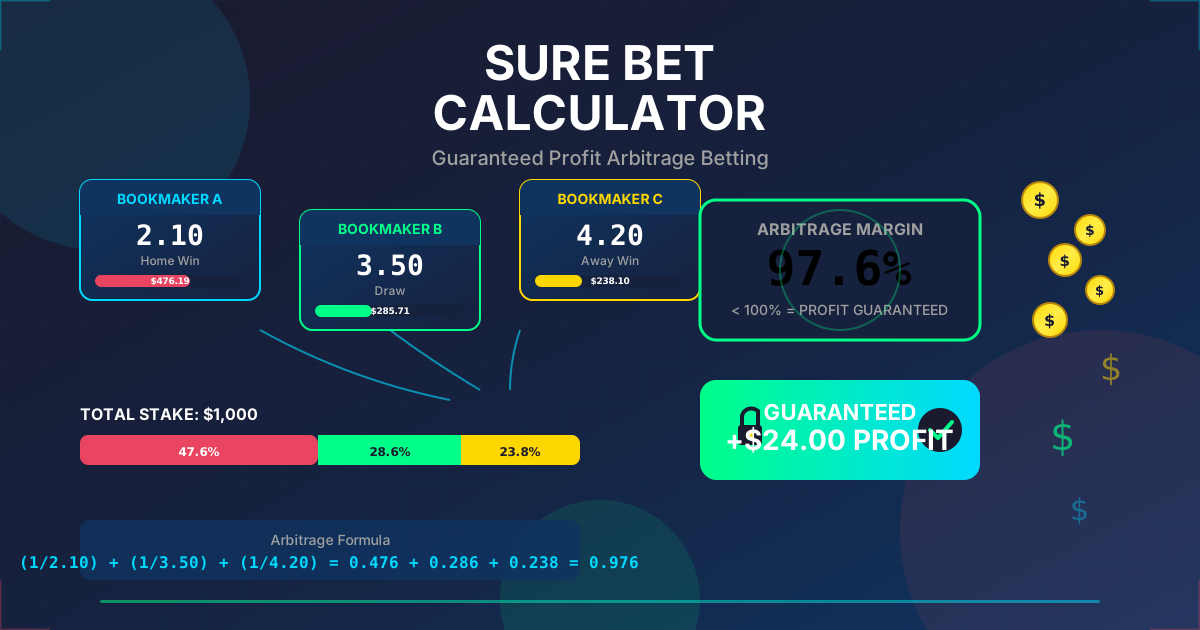
Use our Sure Bet Calculator to identify arbitrage opportunities on international boxing undercards across multiple sportsbooks.
What Role Does Fighter Conditioning and Activity Level Play?
Fighter conditioning and activity level are among the most underrated factors in boxing handicapping, with inactivity (12+ months between fights) reducing a fighter's win probability by an estimated 8-12% compared to their active baseline, and conditioning deficits becoming particularly apparent in the later rounds of championship fights. A fighter who has been inactive for 18 months is essentially a different competitor than the version of themselves who last fought.
Inactivity Impact Analysis
| Layoff Duration | Win Rate Impact | Where It Shows | Betting Adjustment |
|---|---|---|---|
| 3-6 months | Negligible (<1%) | No significant effect | None needed |
| 6-9 months | Slight (2-4%) | Round 1 timing/rust | Minor odds adjustment |
| 9-12 months | Moderate (5-8%) | Mid-rounds conditioning | Meaningful adjustment |
| 12-18 months | Significant (8-12%) | Late-round fatigue, timing | Major adjustment |
| 18+ months | Severe (12-20%) | All phases of the fight | Consider backing opponent |
Training Camp Reports
While training camp reports should be taken with skepticism (camps rarely reveal negative information), certain signals are meaningful: reported weight issues, sparring partner changes, trainer changes, and relocation to different training facilities can all indicate disruption in preparation.
Use our Kelly Criterion Calculator to adjust your bet sizing downward when there is uncertainty about a fighter's conditioning.
Age and Decline Curves
Boxing fighters typically peak between ages 27-32, with decline accelerating after 35. However, decline is not linear -- it often manifests suddenly when a fighter who previously had a great chin gets stopped for the first time, or when a fast fighter's reflexes visibly slow. Identifying fighters on the downslope of their career who are still being priced based on their peak is a consistent value play.
Use our Implied Probability Calculator to check whether aging fighters' odds reflect their declining performance trajectory.
How Does Weight Class Movement Affect Boxing Betting?
Weight class movement significantly affects boxing betting because fighters moving up in weight face larger, more powerful opponents and may sacrifice speed advantages they held at lower weights, while fighters moving down face dehydration risks and potential energy depletion that compromises their performance beyond the first few rounds. Historical data shows that fighters moving up in weight win approximately 40-45% of their fights at the new weight, compared to 55-60% when fighting at their established class.
Moving Up in Weight
When a fighter moves up a weight class (e.g., welterweight to middleweight), they face opponents who are naturally bigger and often carry more power. The moving-up fighter may retain speed advantages early but can fade in later rounds as the natural size difference takes its toll. The betting market tends to overvalue a dominant lower-weight fighter's chances when moving up.
| Weight Move Direction | Win Rate | KO Rate Change | Best Bet Approach |
|---|---|---|---|
| Moving Up 1 Division | 42-48% | KO rate decreases 10-15% | Lean toward opponent, over rounds |
| Moving Up 2 Divisions | 30-38% | KO rate decreases 20-30% | Strong lean toward opponent |
| Moving Down 1 Division | 55-60% | KO rate stable or increases | Lean toward mover, evaluate cut risk |
| Moving Down 2 Divisions | 50-55% | KO rate may increase | Evaluate weight-cutting impact |
| Catchweight (Between) | Varies | Depends on who concedes | Evaluate who benefits more |
Weight Cutting and Rehydration
Modern boxing features aggressive weight cutting where fighters dehydrate to make weight and then rehydrate before fight night. The rehydration clause (or lack thereof) in a fight contract can be a significant factor. A fighter who naturally walks around at 165 lbs cutting to 147 lbs (welterweight) will be significantly larger on fight night than a natural 152 lb fighter making the same weight.
Use our Hedge Calculator to hedge a bet on a weight-class mover if weigh-in footage suggests a difficult weight cut.
Super Fight and Crossover Bout Pricing
When elite fighters from different weight classes meet in "super fights," the public tends to overvalue the bigger fighter's size advantage without fully accounting for the smaller fighter's speed, skill, and experience advantages. These high-profile matchups often present value on the smaller fighter, particularly in decision and late-round markets.
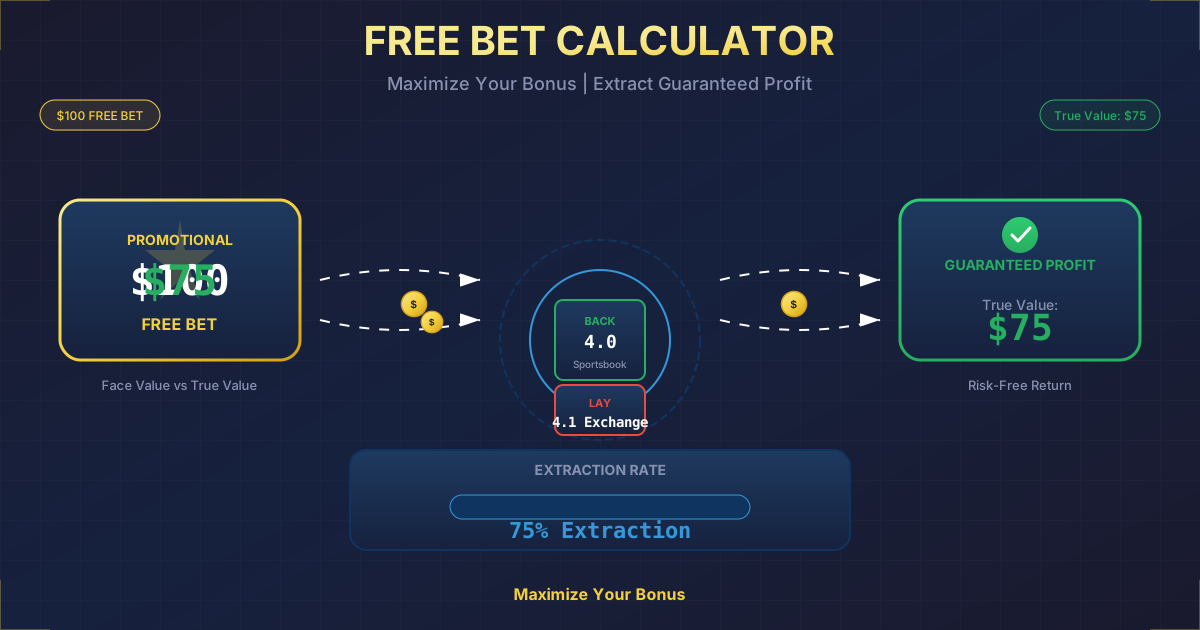
Use our Free Bet Calculator (Stake Not Returned) to maximize the value of promotional free bets on major boxing events.
What Are the Best Live Betting Strategies for Boxing?
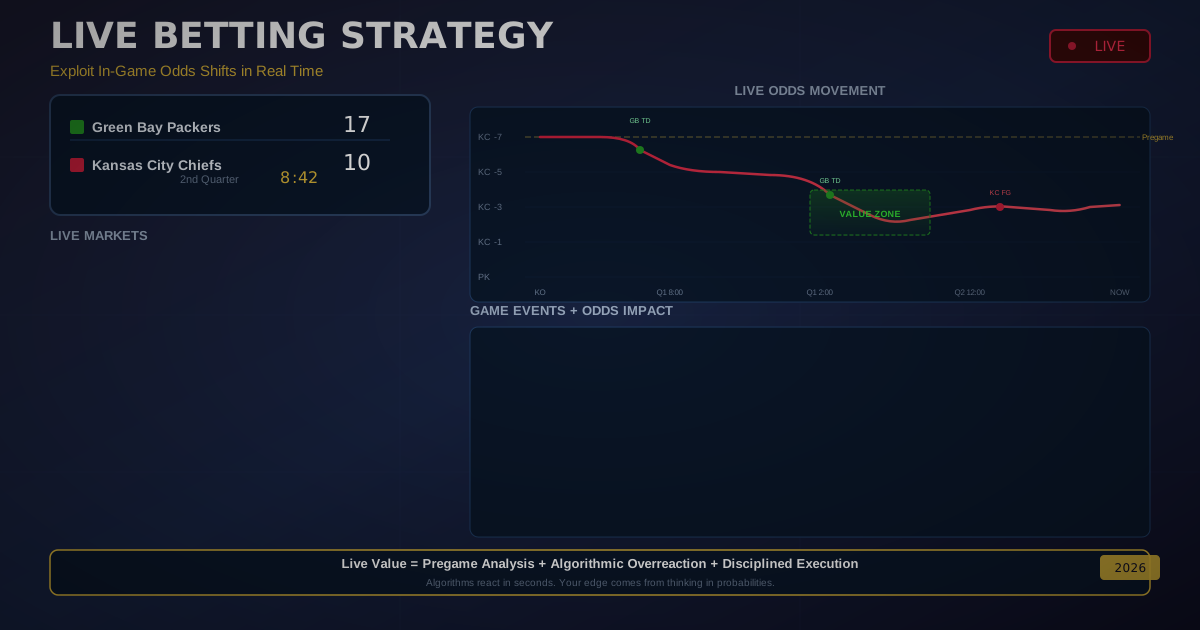
The best live betting strategies for boxing involve watching the first 2-3 rounds to assess which fighter's style is being imposed, monitoring for visible signs of fatigue, swelling, or cut development, and then betting on the outcome you believe the remainder of the fight will produce at odds that reflect the adjusted probability. Live boxing betting is uniquely advantageous because the sport's round-by-round structure creates natural betting windows, and visual information (cuts, swelling, body language) provides edges that pure statistics cannot capture.
Reading the Fight in Real Time
| Observable Signal | What It Means | Betting Action |
|---|---|---|
| Fighter breathing heavily after round 4 | Conditioning issues | Bet opponent, under remaining rounds |
| Eye swelling or cut developing | Potential doctor stoppage risk | Consider round group bets, method of victory |
| Fighter switching stances | Adapting strategy, could go either way | Wait for clearer signal |
| Corner giving desperate instructions | Fighter is behind on cards | Bet on opponent by decision |
| Body shots accumulating | Potential late stoppage | Mid-to-late round group bets |
| One fighter consistently landing the jab | Control and scoring advantage | Bet that fighter by decision |
When to Bet Mid-Fight
The optimal time to place live boxing bets is after rounds 3-4, when you have enough data to assess the stylistic matchup and each fighter's condition. By this point, you can see who is imposing their style, who is more comfortable, and whether the pace is sustainable. Betting too early (round 1-2) leaves too much uncertainty, while betting too late (round 8+) provides less value because the odds have already adjusted.
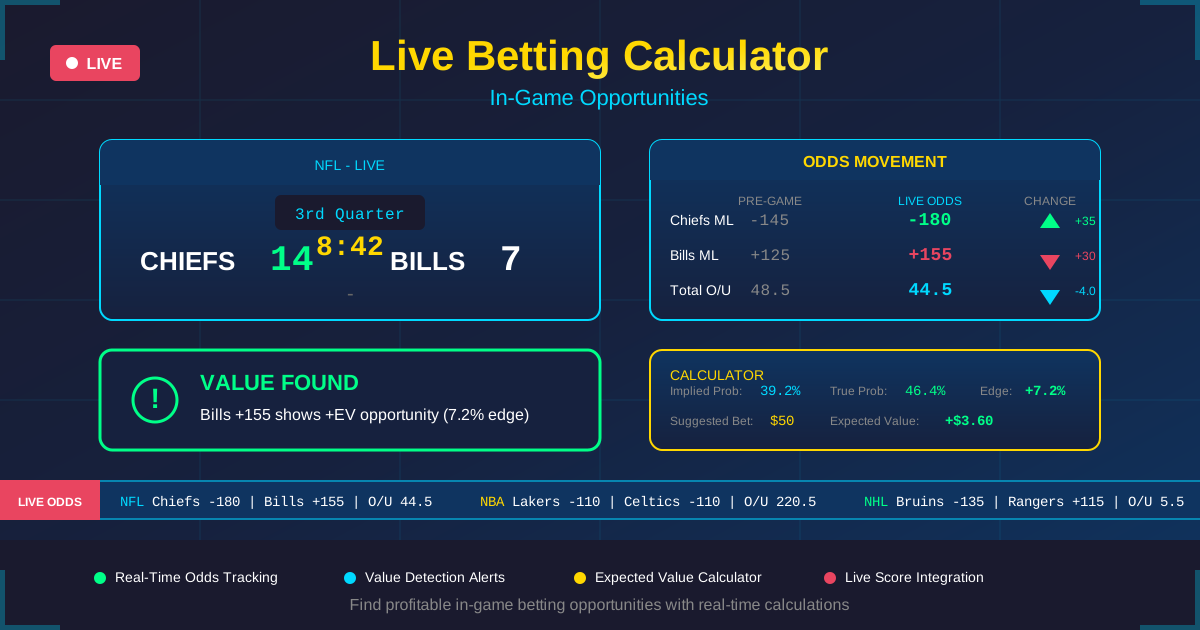
Use our Arbitrage Calculator to find pricing discrepancies across sportsbooks during live boxing betting when odds move at different speeds.
Scoring Along with the Judges
Keeping your own unofficial scorecard while watching a fight gives you an enormous advantage in live betting. If your scorecard shows a fighter ahead 4-2 after six rounds, and the live moneyline does not reflect that lead, you may have found value. Casual live bettors often react to the most recent round rather than the cumulative picture.
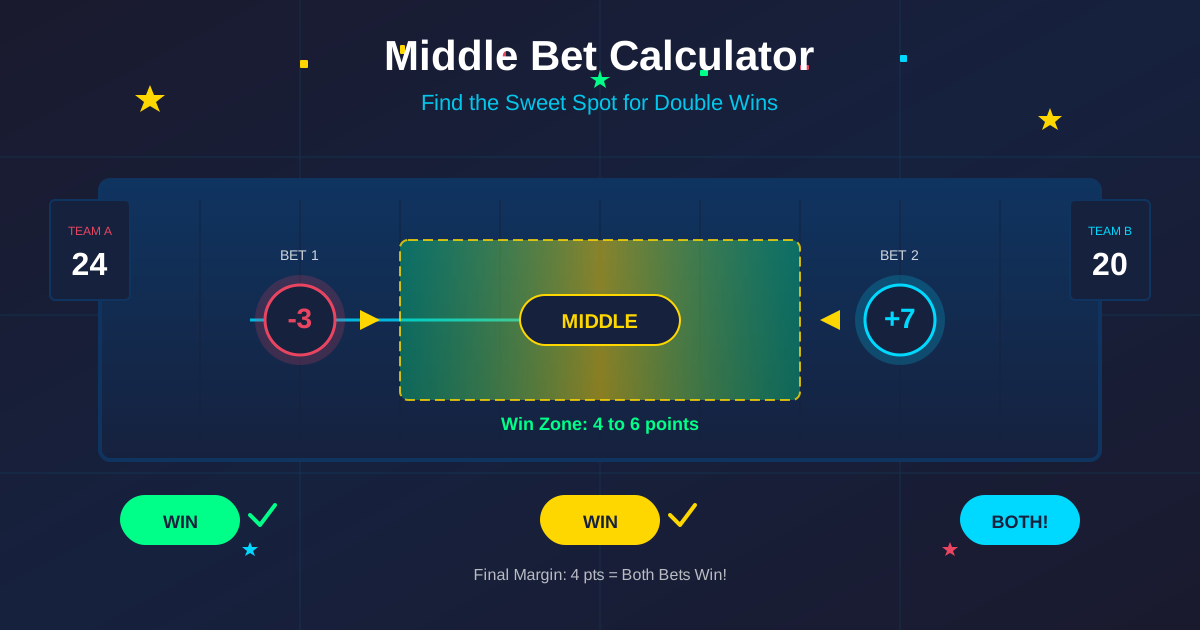
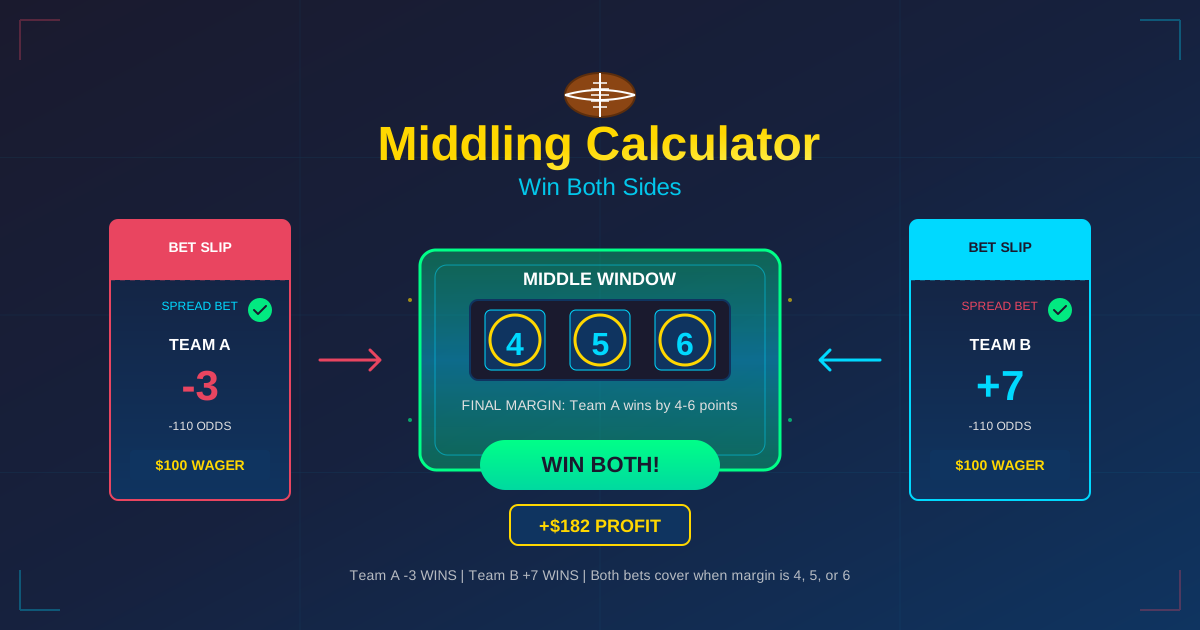
Use our Middle Bet Calculator to identify middling opportunities when a fighter's live odds swing significantly from their pre-fight price.
How Do You Build a Profitable Boxing Betting System?
Building a profitable boxing betting system requires specializing in a specific weight class or fighting style matchup type, developing a systematic method for converting fight analysis into probability estimates, comparing those estimates against sportsbook odds to identify positive expected value bets, and maintaining meticulous records to refine your approach over time. The most successful boxing bettors are specialists, not generalists.
Step-by-Step System Development
- Choose a specialization: Focus on 1-2 weight classes or a specific type of matchup you understand deeply
- Build a fighter database: Track punch stats, KO rates, decision rates, opponent quality, activity level, and age
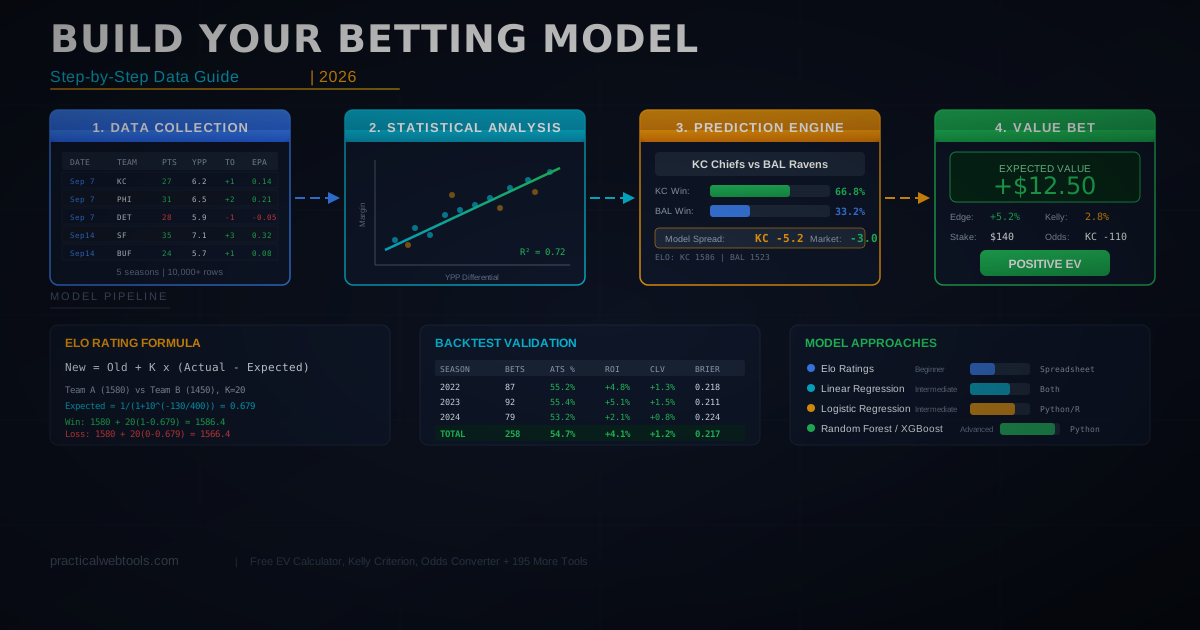
- Develop a probability model: Convert your analysis into win probability estimates for each fighter
- Compare against the market: Only bet when your estimated probability exceeds the implied probability by a sufficient margin (typically 5%+ after vig)
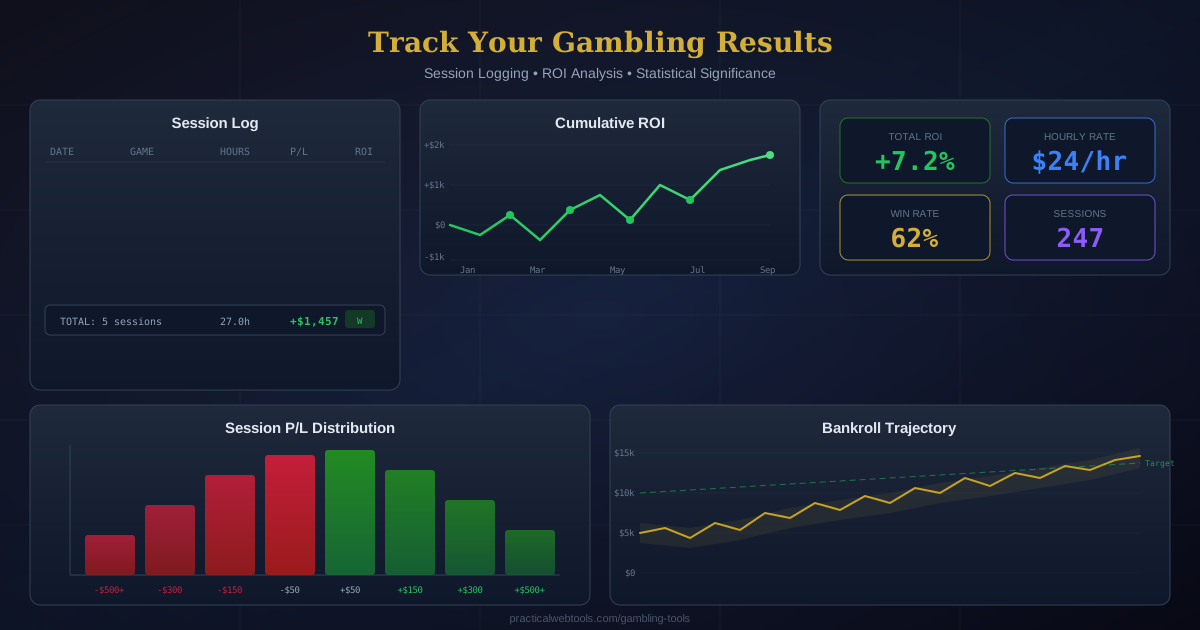
- Track and refine: Record every bet and review your model's accuracy quarterly
| System Component | Time Investment | Impact on Profitability |
|---|---|---|
| Fight tape study | 2-4 hours per card | Very High |
| Statistics analysis | 1-2 hours per card | High |
| Odds comparison shopping | 30-60 min per fight | Medium-High |
| Record keeping | 15-30 min per card | Medium (long-term High) |
| Model refinement | 2-3 hours monthly | High |
Bankroll Management for Boxing
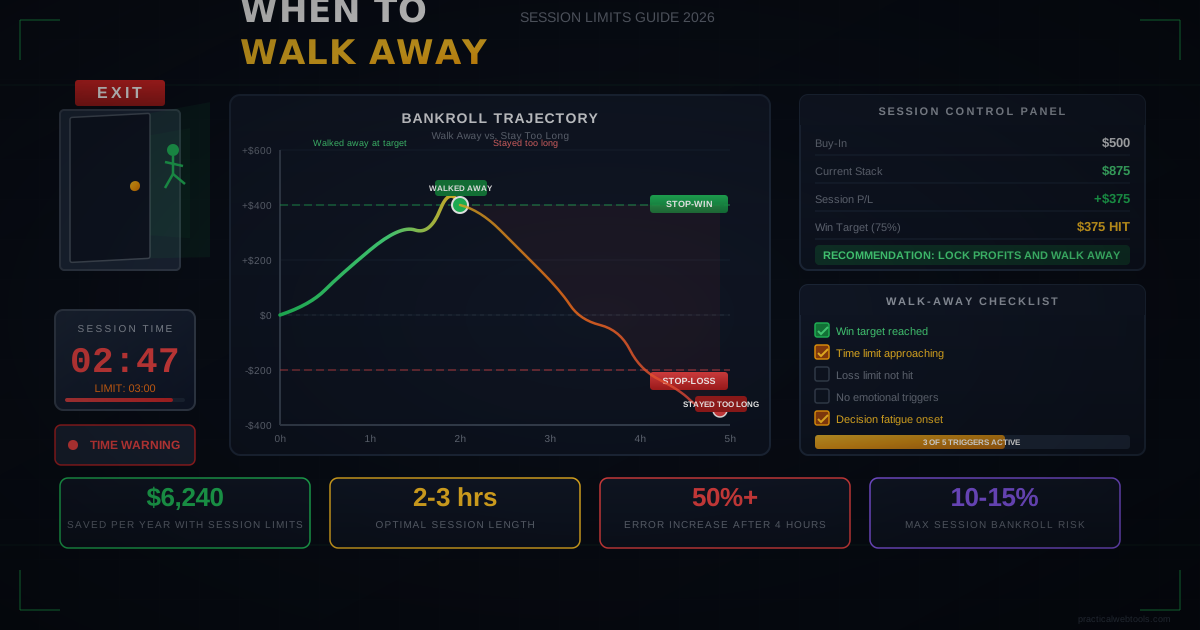
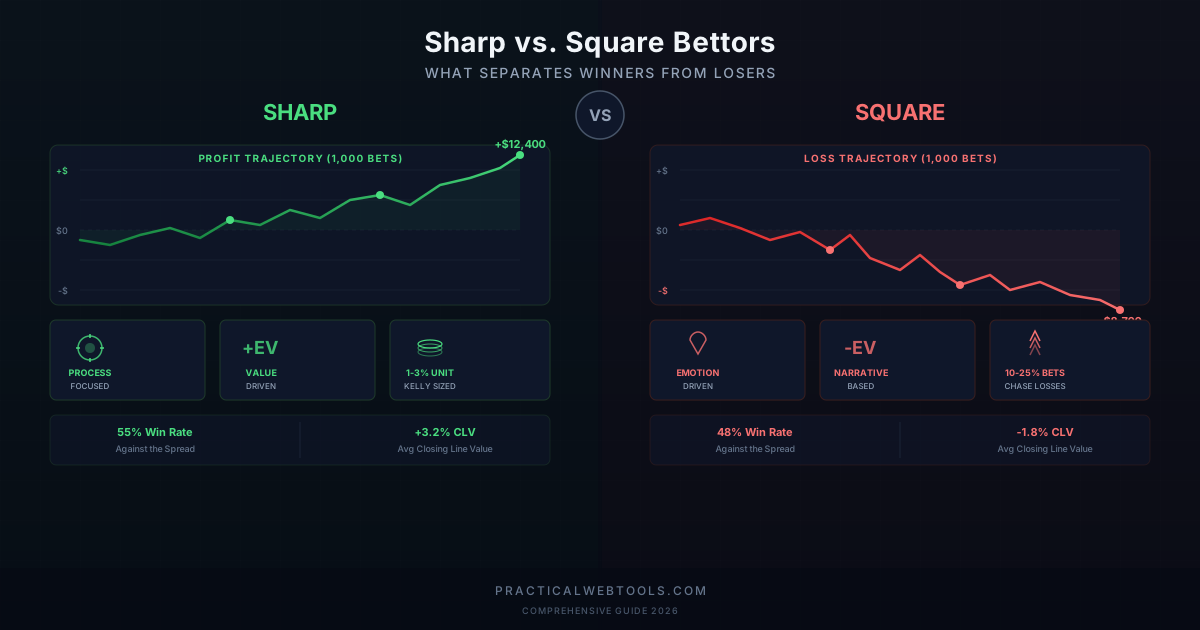
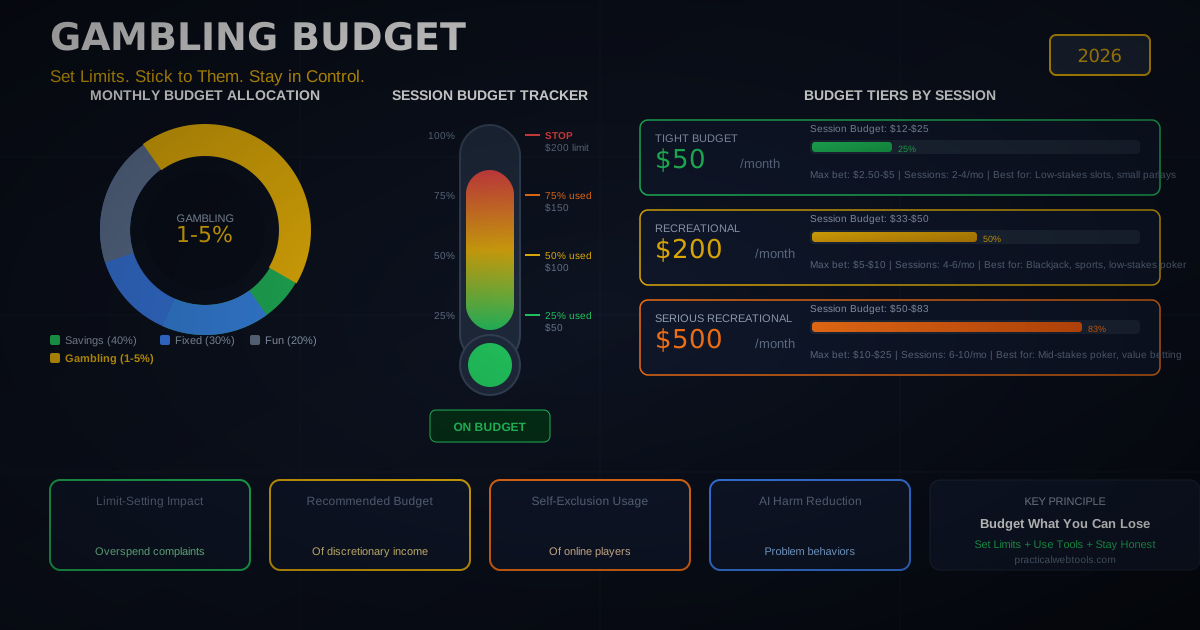
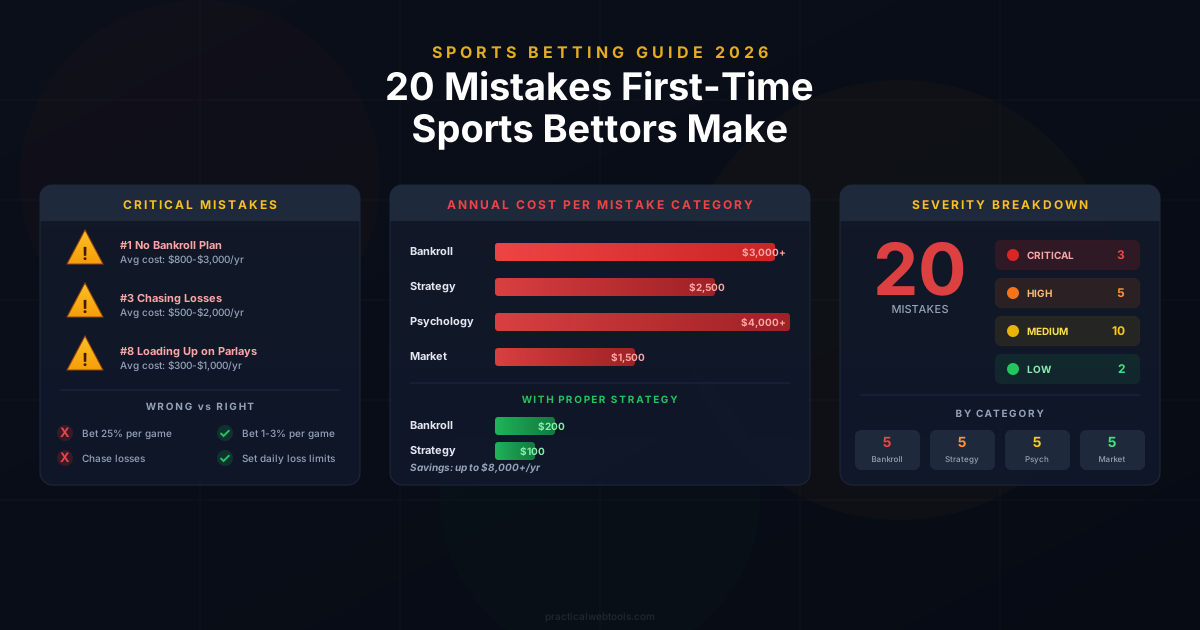
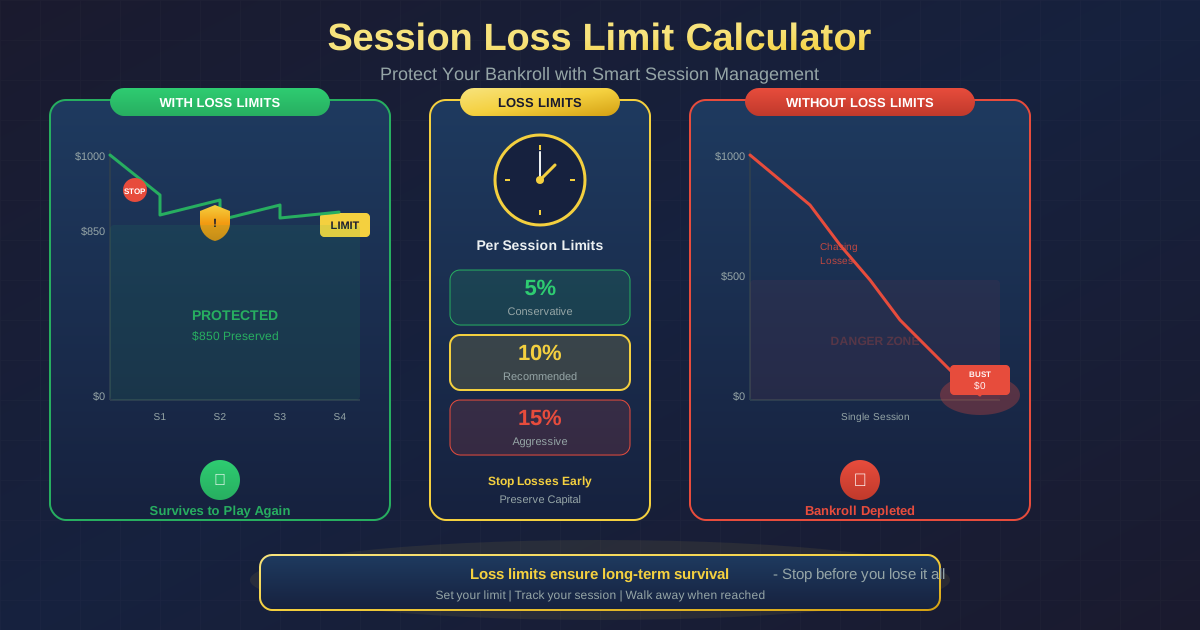
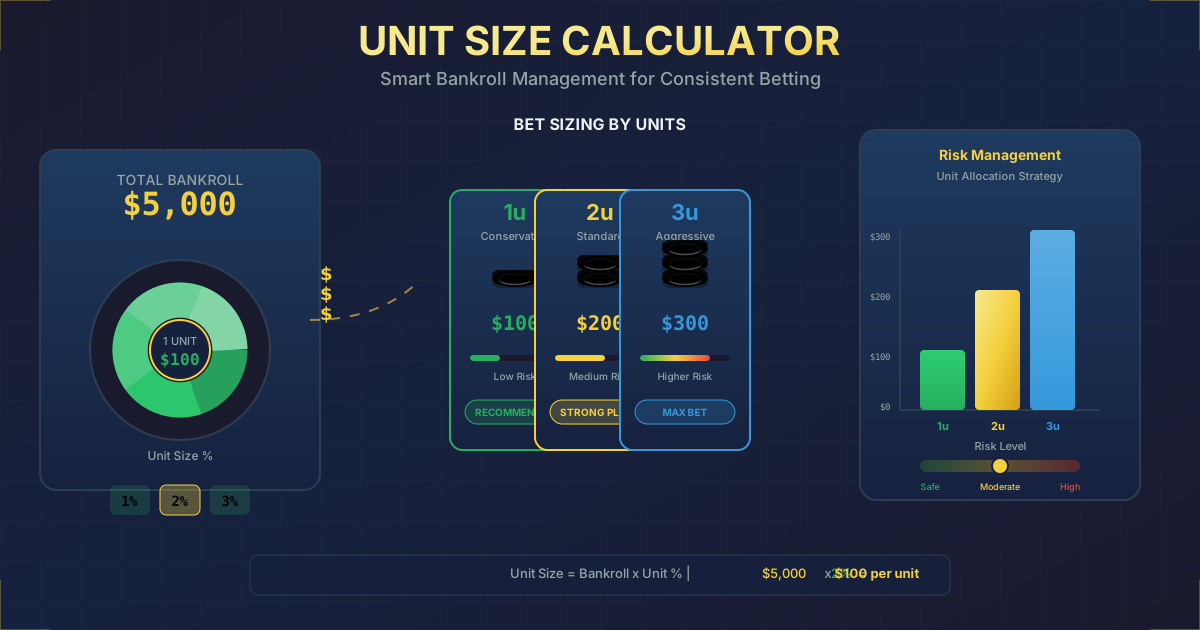
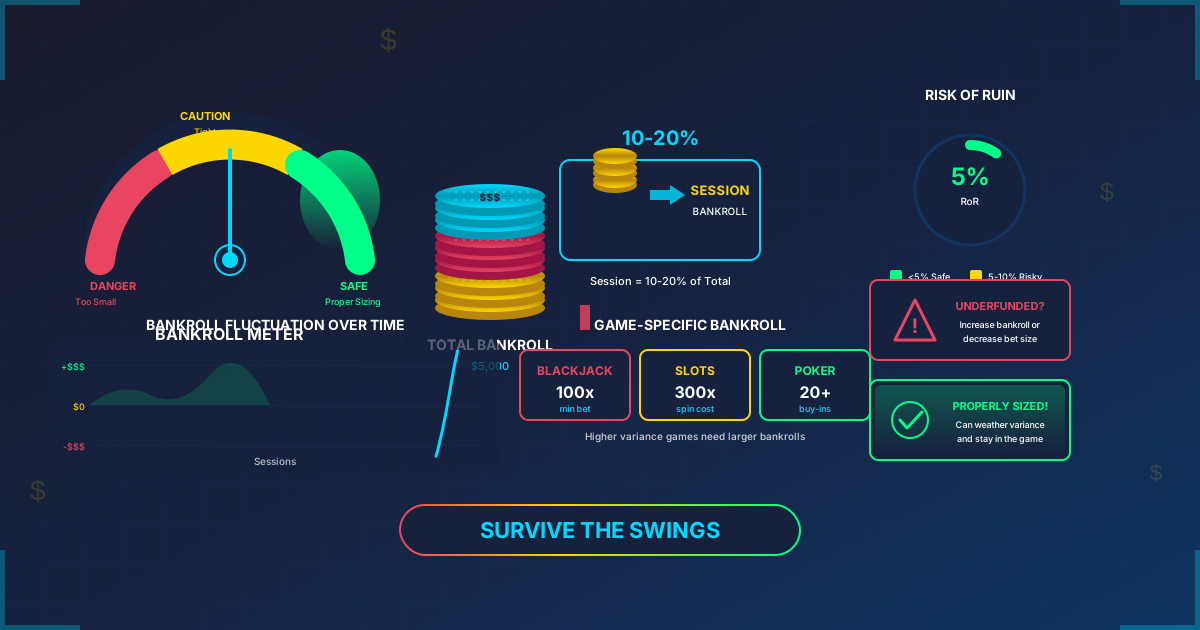
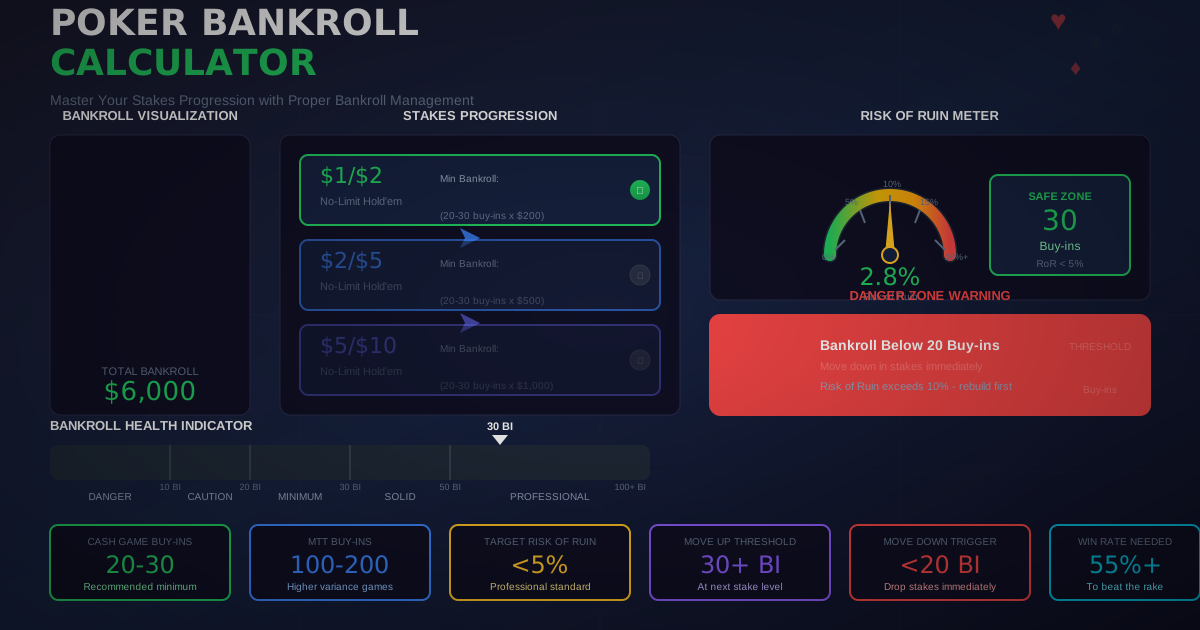
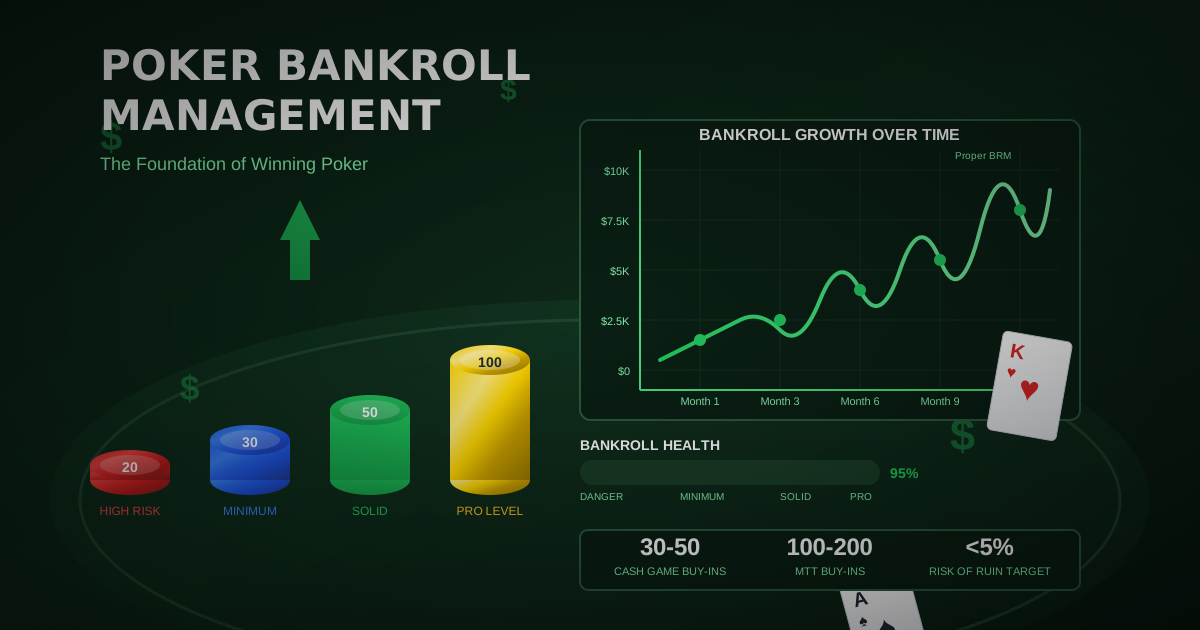
Boxing events are sporadic compared to team sports -- major cards happen 1-3 times per month rather than daily. This creates a temptation to overbet when a card finally arrives. Discipline requires maintaining consistent unit sizes (1-3% of bankroll per bet) regardless of how long you have waited for a betting opportunity.
Use our Bankroll Volatility Tracker to monitor your boxing bankroll across the irregular schedule of fight cards.
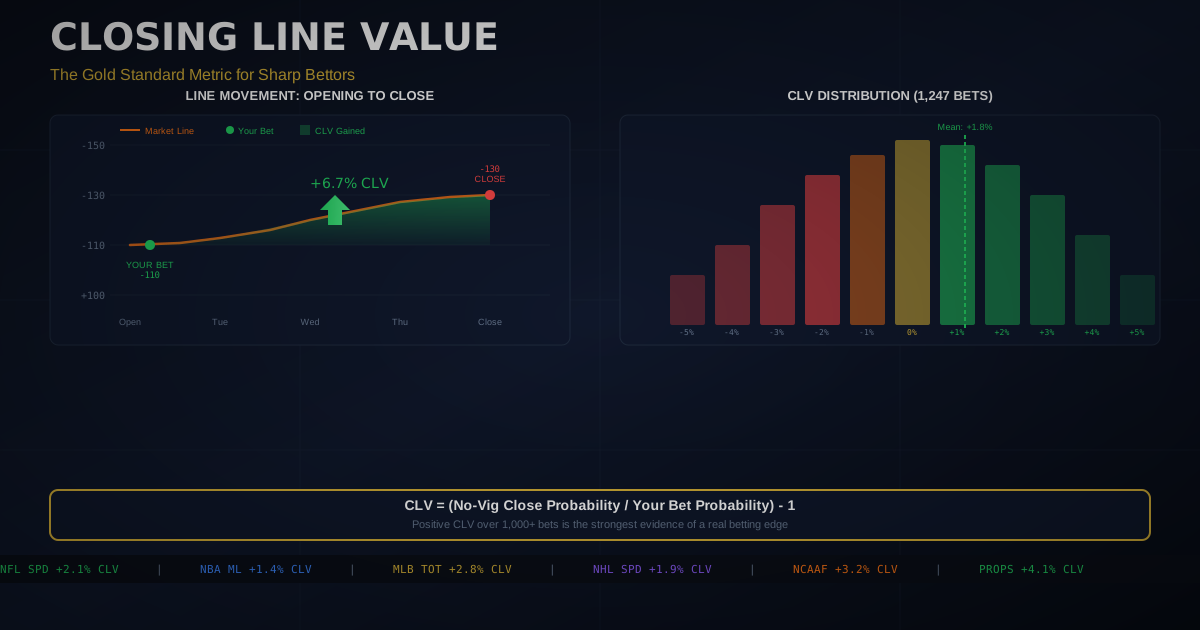
Tracking Closing Line Value
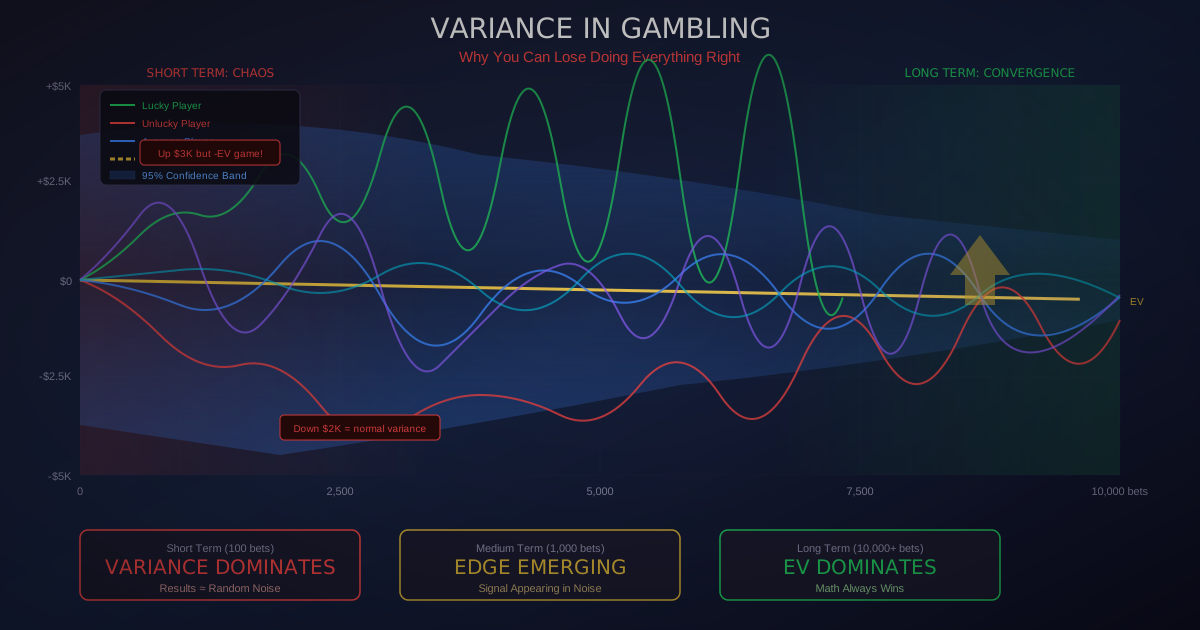
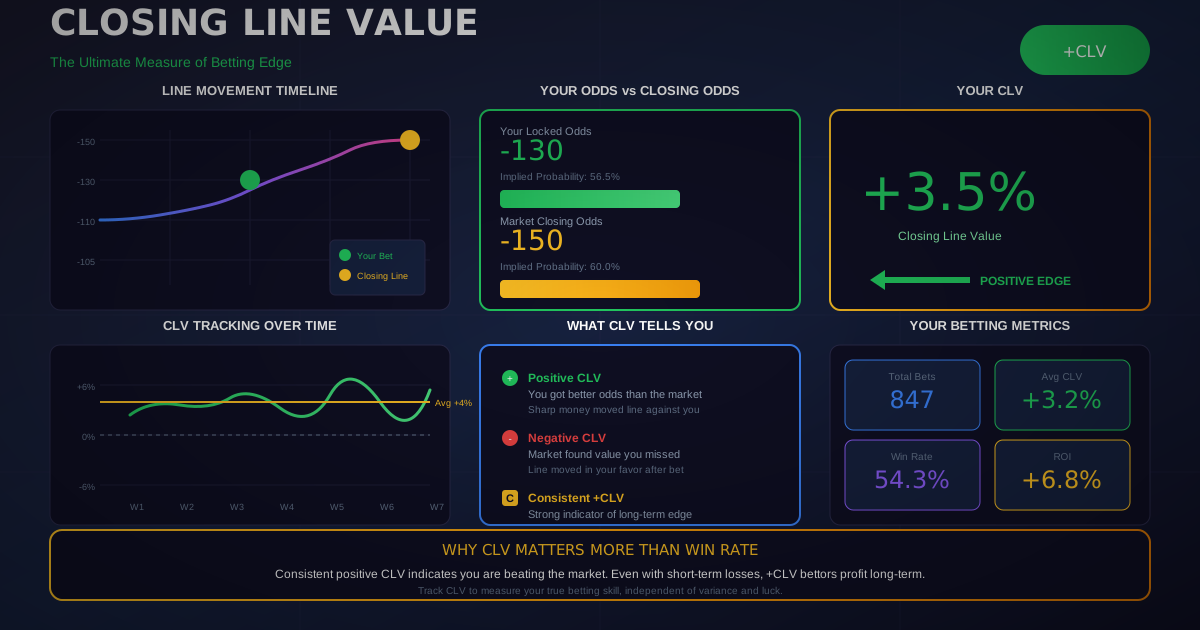
The single best indicator of long-term boxing betting profitability is closing line value (CLV) -- whether the odds at which you placed your bet were better than the closing odds. Consistently beating the closing line means you are extracting value from the market, even if short-term results are volatile.
Use our Closing Line Value Tracker to measure your boxing betting skill over time by tracking CLV across every wager.
Using Calculators to Refine Your Edge
The difference between a break-even boxing bettor and a profitable one often comes down to mathematical precision. Converting odds accurately, calculating expected value rigorously, and sizing bets optimally using the Kelly Criterion compound into significant returns over hundreds of fights.
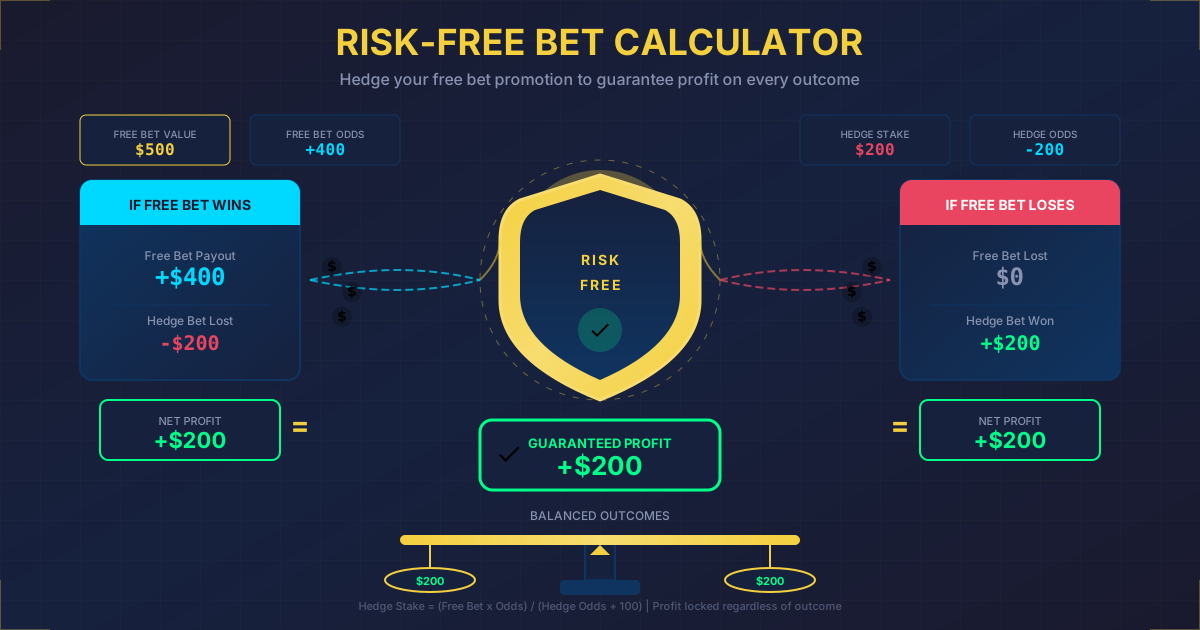
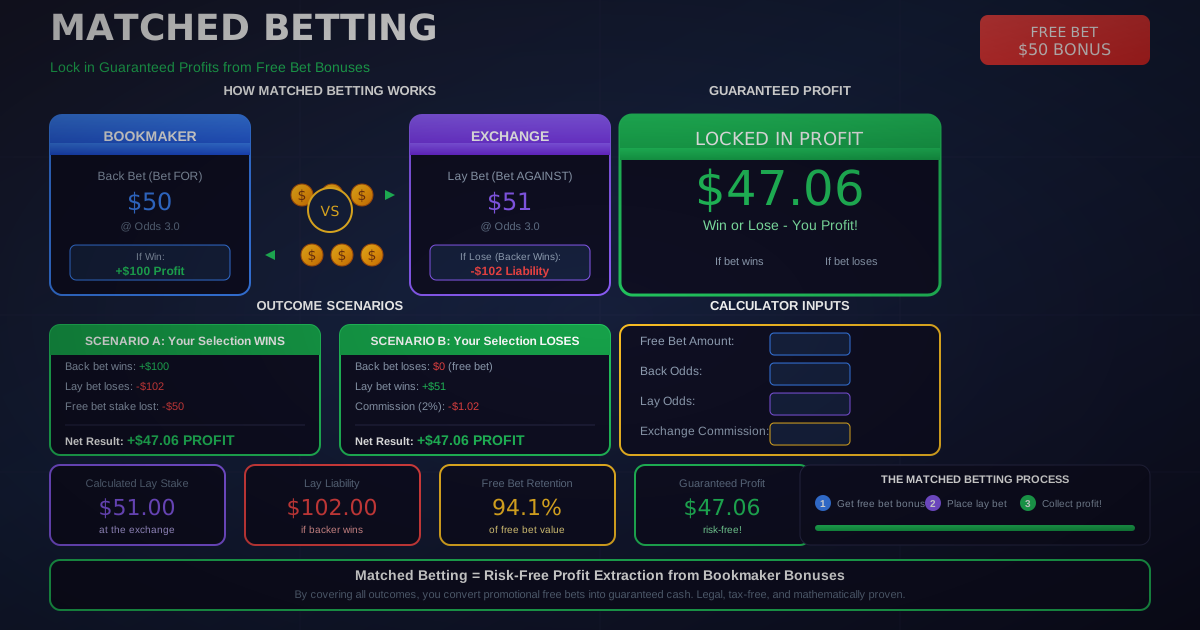
Use our Matched Betting Calculator to extract risk-free profit from sportsbook sign-up bonuses during major boxing events.
Frequently Asked Questions
How do you bet on boxing for beginners? Start with two-way moneyline bets on fights where you have watched tape of both fighters. Focus on one or two weight classes to build expertise, and begin with small unit sizes (1% of your bankroll). Before placing any bet, convert the odds to implied probability using our Odds Converter and ask yourself whether you genuinely believe the fighter's win probability is higher than the implied number. If the answer is yes and you can articulate why, you have a bet.
What is the most profitable boxing bet type? Method of victory and round group betting historically offer the highest edge potential for informed bettors because these markets are less efficiently priced than simple moneylines. Sportsbooks are very good at pricing who will win, but they are less precise at pricing how and when the winner will win. This is where deep fight analysis and style matchup understanding translate into consistent profits.
How accurate are boxing odds? Boxing odds are reasonably accurate for two-way moneyline markets, with favorites winning approximately 70-75% of fights where they are priced at -200 or shorter. However, accuracy decreases in secondary markets (method of victory, round betting) and for undercard fights where less analytical effort goes into line setting. The most exploitable inaccuracies tend to be in the method of victory market, where casual bettors overvalue knockouts for popular punchers.
Should you bet on the draw in boxing? Draws are rare in boxing (3-5% of fights) but are almost always underpriced by the market, making them a mathematically interesting bet. The three-way moneyline draw option typically carries odds of +1800 to +2500, implying a 4-5% probability. If you identify a fight where both fighters are extremely evenly matched and defensive in style, the true draw probability may be 6-8%, creating positive expected value. However, the variance is enormous, so draw bets should be small stakes.
What does the over/under mean in boxing betting? The over/under in boxing refers to the total number of rounds the fight will last. The sportsbook sets a line (e.g., 9.5 rounds), and you bet whether the fight will last more than 9.5 rounds (over, meaning it reaches round 10 or goes to decision) or fewer (under, meaning a stoppage occurs in round 9 or earlier). This bet is driven by both fighters' KO/TKO rates, weight class, and stylistic matchup.
How do knockdowns affect boxing bets? A knockdown scores a 10-8 round for the fighter who scored it, which impacts the final scorecard if the fight goes to decision. For live bettors, a knockdown dramatically shifts the odds. For pre-fight bettors, knockdown props (will there be a knockdown, how many knockdowns) are standalone markets. A knockdown does not automatically end the fight -- the downed fighter has until the count of 10 to rise and continue.
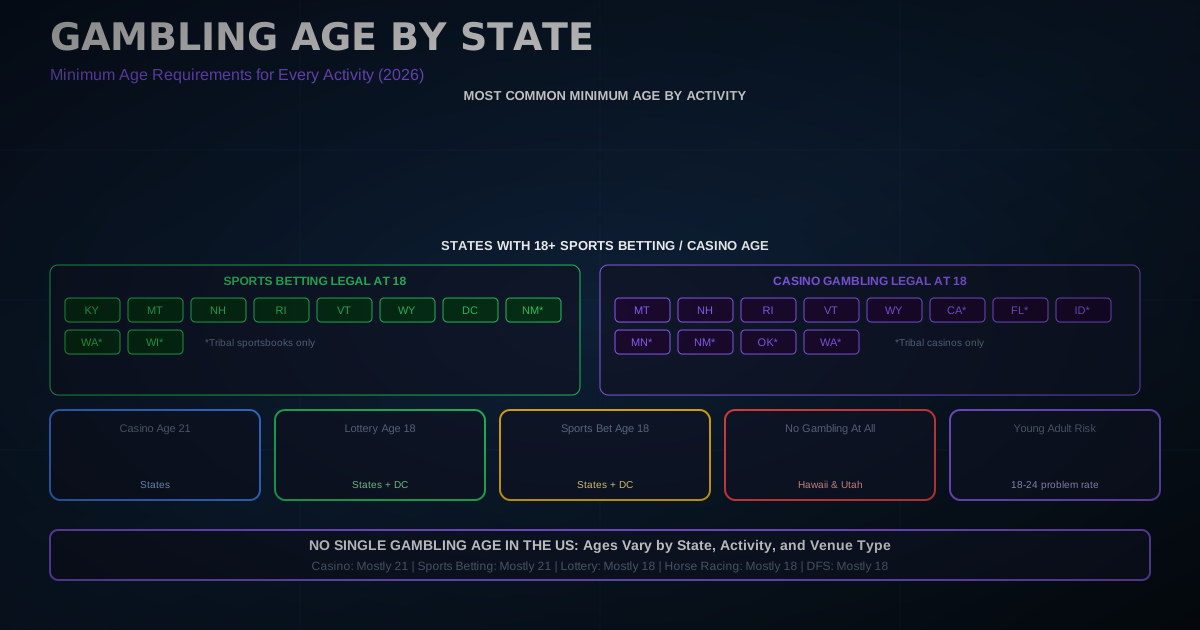
Is boxing betting legal in the United States? Boxing betting is legal in all US states that have legalized sports betting, which now includes more than 30 states. You must be physically located within a legal state to place a wager, and you must be 21+ in most jurisdictions. All major US sportsbooks offer boxing markets for major fight cards, with props and round betting typically available for championship-level fights.
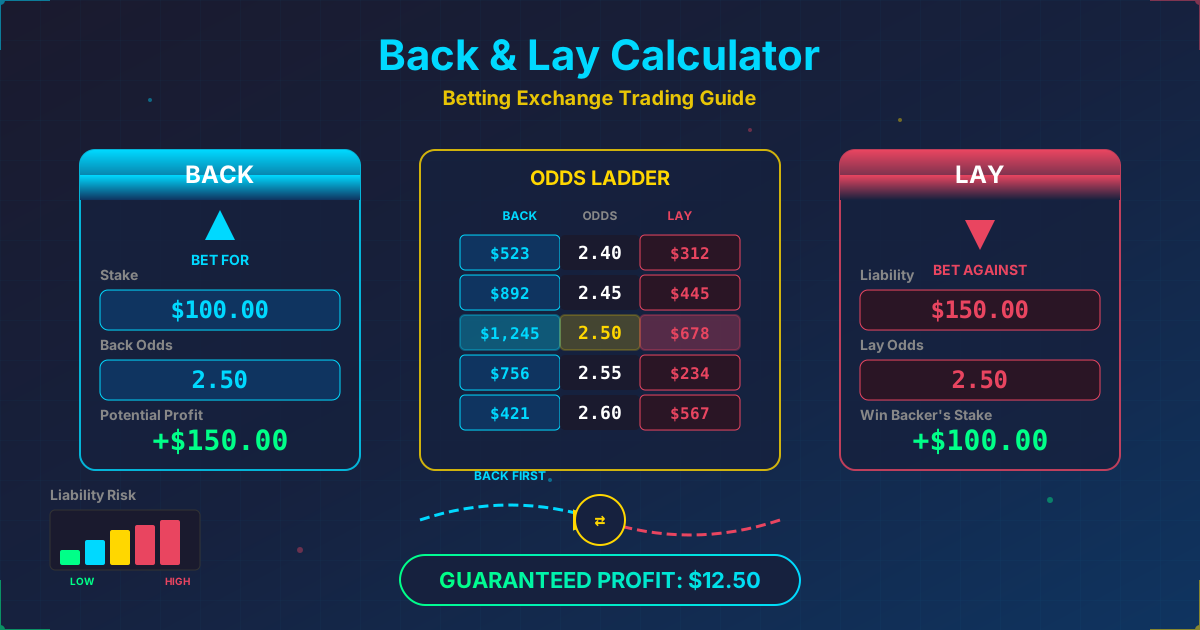
Related Gambling Tools
- Odds Converter: Convert boxing odds between American, decimal, and fractional formats used by different sportsbooks.
- Expected Value Calculator: Calculate whether a boxing bet offers positive expected value based on your fight analysis.
- Kelly Criterion Calculator: Determine the optimal bet size for each boxing wager based on your assessed edge.
- Implied Probability Calculator: Convert boxing odds into implied win probabilities for comparison against your fight analysis.
- Parlay Calculator: Compute payouts for multi-fight boxing parlays combining bets from across a fight card.
- Hedge Calculator: Calculate hedge bet amounts to lock in profits when live odds shift during a fight.
- Arbitrage Calculator: Find risk-free opportunities across sportsbooks on boxing markets.
- Bankroll Volatility Tracker: Monitor your boxing bankroll across the irregular schedule of fight cards.
- Hold/Vig Calculator: Identify which sportsbook offers the lowest margin on boxing moneyline and prop markets.
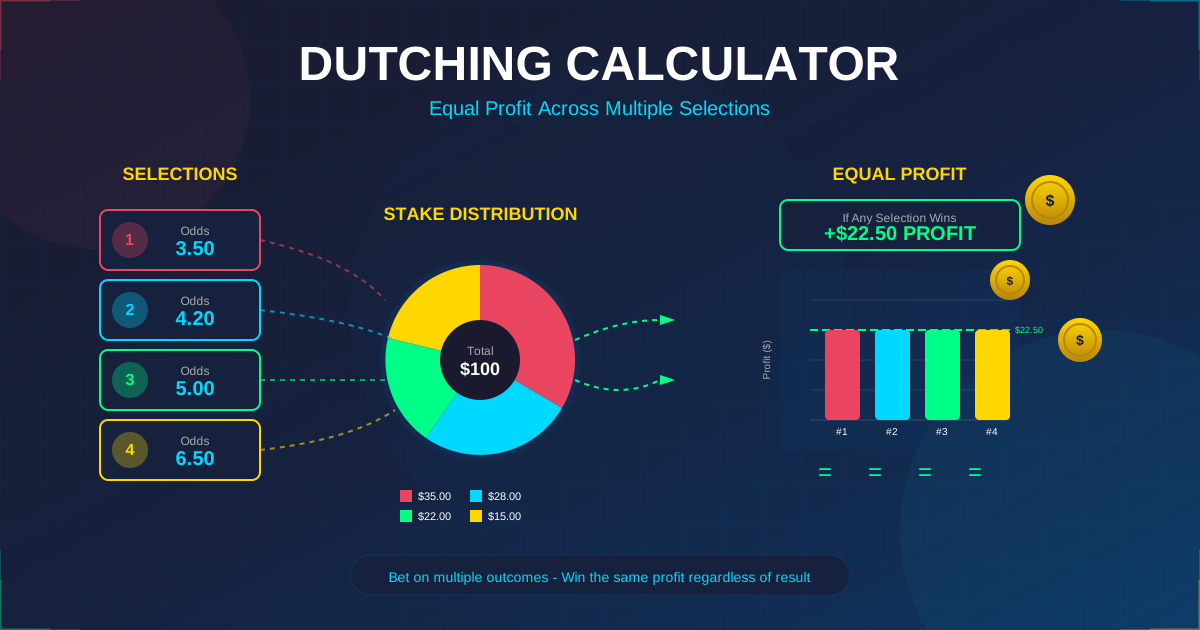
- Sure Bet Calculator: Find guaranteed profit opportunities on boxing by comparing odds across sportsbooks.
- Closing Line Value Tracker: Track your long-term boxing betting skill by measuring closing line value.
- Round Robin Calculator: Build round robin combinations across multiple fights on a card.
- Middle Bet Calculator: Identify middling opportunities when boxing lines move significantly.
- Matched Betting Calculator: Extract guaranteed value from sportsbook promotions during major fight nights.
Boxing betting is a craft that rewards patience, specialization, and disciplined analysis. The fighters who step into the ring have spent months preparing for a single night, and the bettors who profit consistently have done the same level of homework. Focus on understanding styles, trust your tape study over public perception, and let the math confirm what your eyes are telling you. Start sharpening your boxing betting edge with our free calculator suite
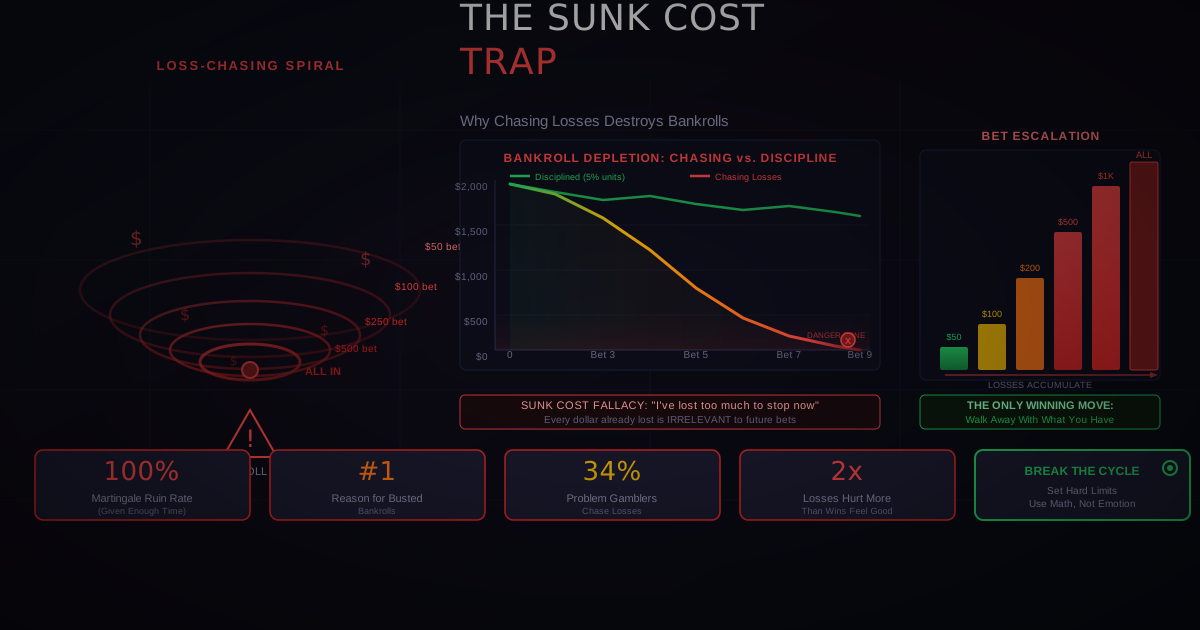
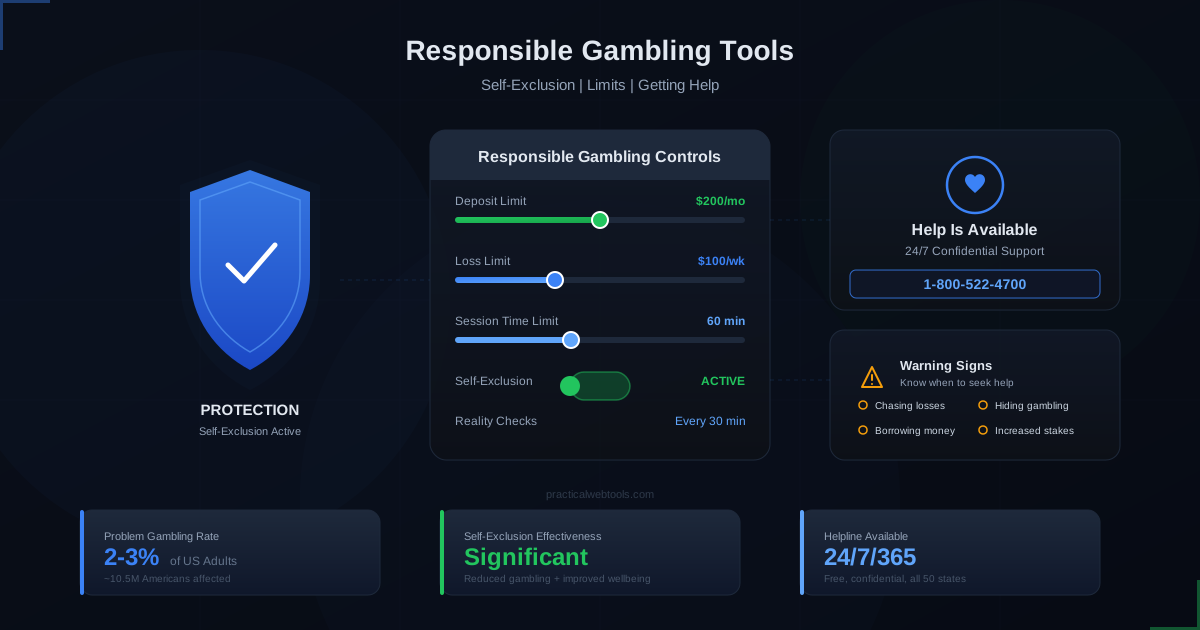
Gambling involves risk and should be approached as entertainment, not as a source of income. Always bet within your means, set strict bankroll limits, and never chase losses. If you or someone you know has a gambling problem, contact the National Council on Problem Gambling at 1-800-522-4700 or visit ncpgambling.org. Must be 21+ to gamble in most US jurisdictions. Please play responsibly.