NFL Betting Strategy: How to Handicap Games and Find Value (2026)
The NFL is the undisputed king of sports betting in North America. Americans legally wagered an estimated $30 billion on the 2025 NFL season alone, an 8.5% increase over the prior year. When you factor in offshore and informal markets, the true handle likely surpasses $100 billion annually. More money changes hands on a single NFL Sunday than most sports see in an entire month.
Yet the vast majority of that $30 billion flows from recreational bettors to sportsbooks. The house edge, built into every line through vigorish, ensures that casual bettors lose over time. Only a disciplined minority, armed with data, discipline, and a systematic approach to handicapping, manage to extract consistent profits from the most efficient betting market in sports.
This guide is built for that minority, or for anyone who wants to join it. We will break down the mathematics behind NFL key numbers, walk through a complete handicapping framework from power ratings to situational analysis, and cover every major bet type: spreads, totals, teasers, props, and live wagers. Every concept is backed by historical data and real-world examples.
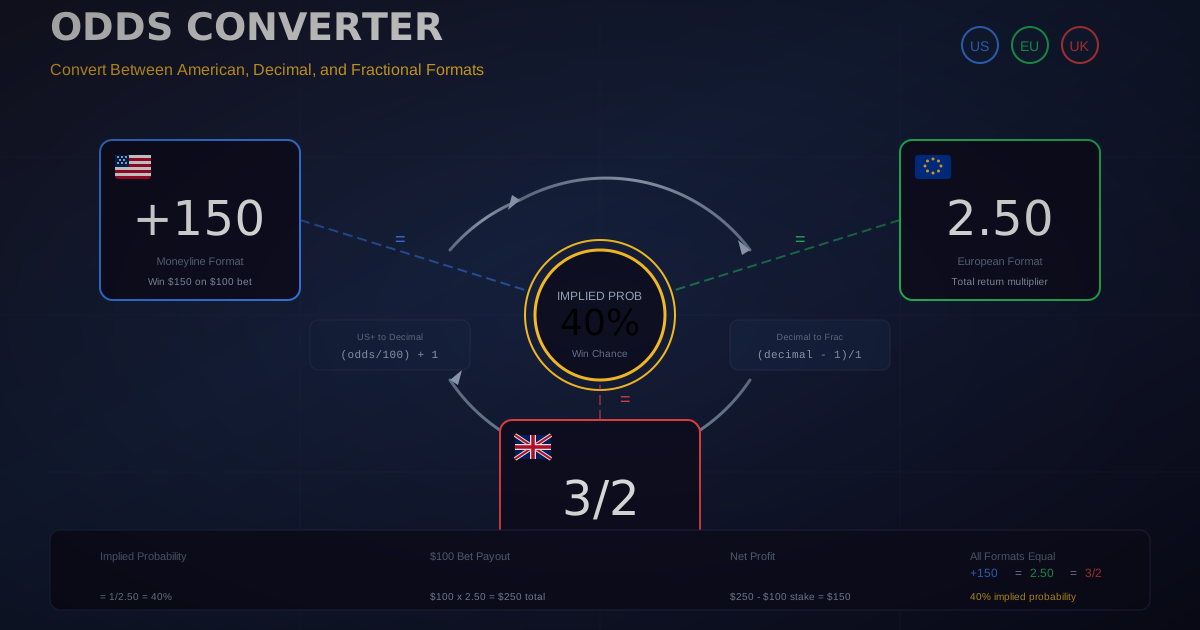
Convert any odds format and find implied probabilities instantly with our free Odds Converter.
Understanding NFL Key Numbers: The Foundation of Sharp Betting
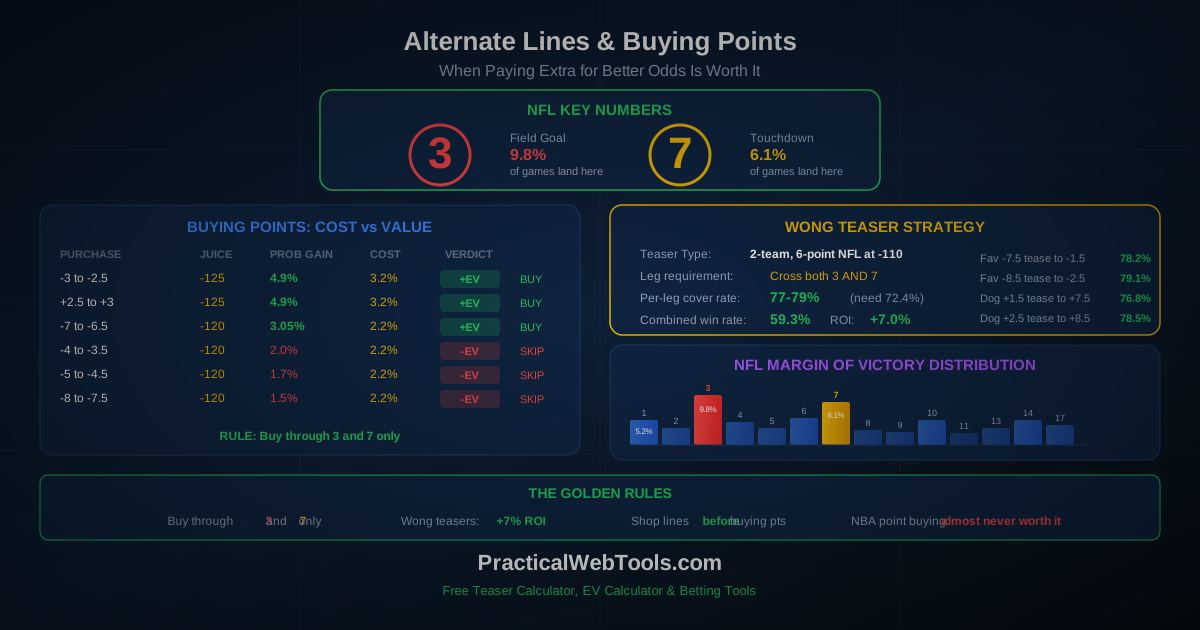
Before you place a single NFL bet, you need to understand key numbers. These are the most frequent margins of victory in professional football, and they dictate where the real value lies in spread betting.
NFL scoring is structured around increments of three (field goals) and seven (touchdowns with extra points). This creates a predictable distribution of final margins that sharp bettors exploit every week.
The NFL Margin of Victory Distribution
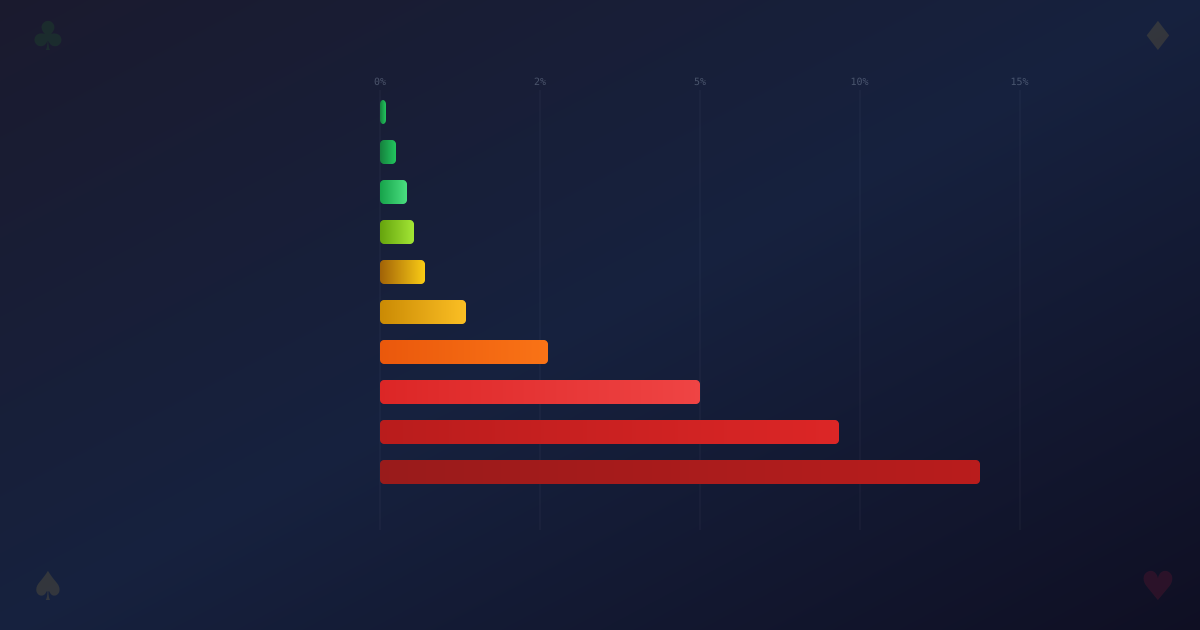
| Margin | Frequency | Cumulative | Why It Matters |
|---|---|---|---|
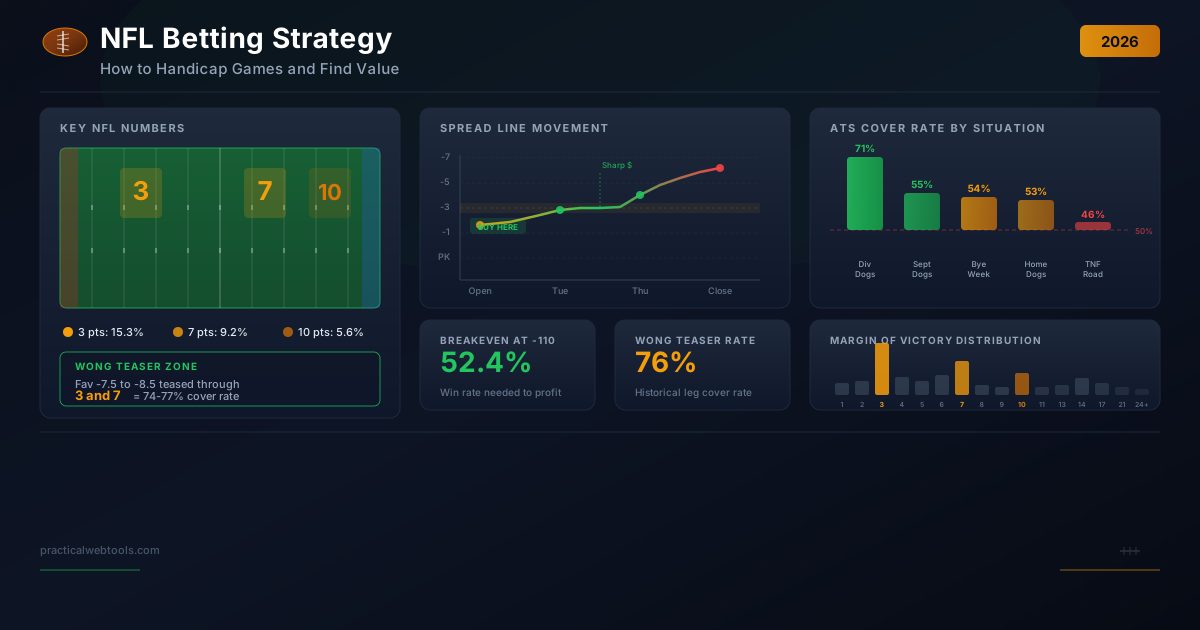
| 3 points | 15.3% | 15.3% | Field goal margin. The single most common outcome in NFL history. |
| 7 points | 9.2% | 24.5% | One-touchdown margin. Second most common final margin. |
| 6 points | 5.8% | 30.3% | TD without extra point, or two field goals. Gaining importance post-2015 XP rule change. |
| 10 points | 5.6% | 35.9% | TD + FG margin. Third key number in NFL betting. |
| 4 points | 4.9% | 40.8% | FG + safety or late garbage-time scoring. |
| 14 points | 4.7% | 45.5% | Two-touchdown margin. Common in blowout-but-not-really games. |
| 1 point | 3.2% | 48.7% | Rare and unpredictable. Think last-second two-point conversion failures. |
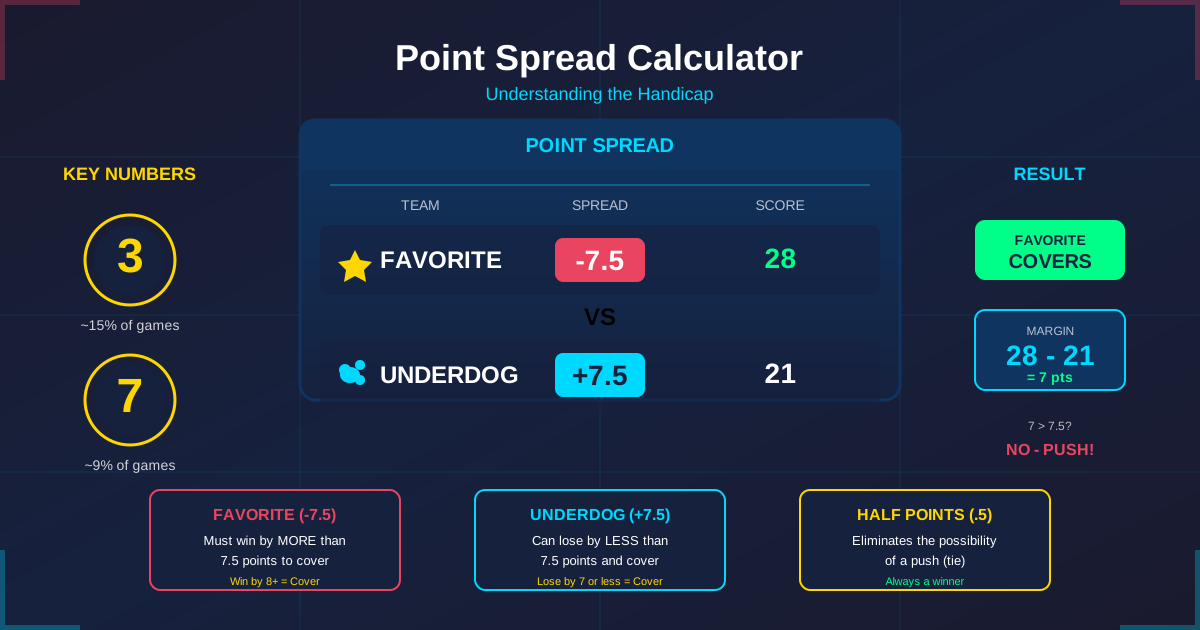
The numbers 3 and 7 together account for nearly 25% of all NFL games. That means roughly one in four NFL contests lands on one of these two margins. When a sportsbook posts a spread of -3 or -7, the likelihood of a push or a half-point swing deciding the bet is dramatically higher than at any other number.
What This Means for Your Betting
If you are betting a -2.5 favorite, you gain 15.3% of outcomes (the entire margin-of-3 bucket) compared to laying -3.5. That single point of line movement around the number 3 is the most valuable half-point in all of sports betting.
Similarly, moving from -6.5 to -7.5 crosses the second most important key number. A bettor who consistently gets the best of 3 and 7 will outperform one who ignores line shopping by a wide margin over a full season.
Example: In Week 12 of the 2024 season, the Buffalo Bills were listed at -3 (-110) against the San Francisco 49ers at most sportsbooks. One book posted -2.5 (-120). The Bills won 35-32. Bettors who laid -2.5 at the juiced price cashed their tickets, while those at -3 received a push. Over a 17-week season, finding these edges on key numbers adds up to significant profits.
Calculate the true cost of buying points with our Odds Converter and Implied Probability Calculator.
How to Handicap NFL Games: A Complete Framework
Handicapping is the process of analyzing every relevant factor to determine a game's "true" point spread, then comparing that number to the line posted by sportsbooks. When your number differs meaningfully from the market, you have found potential value.
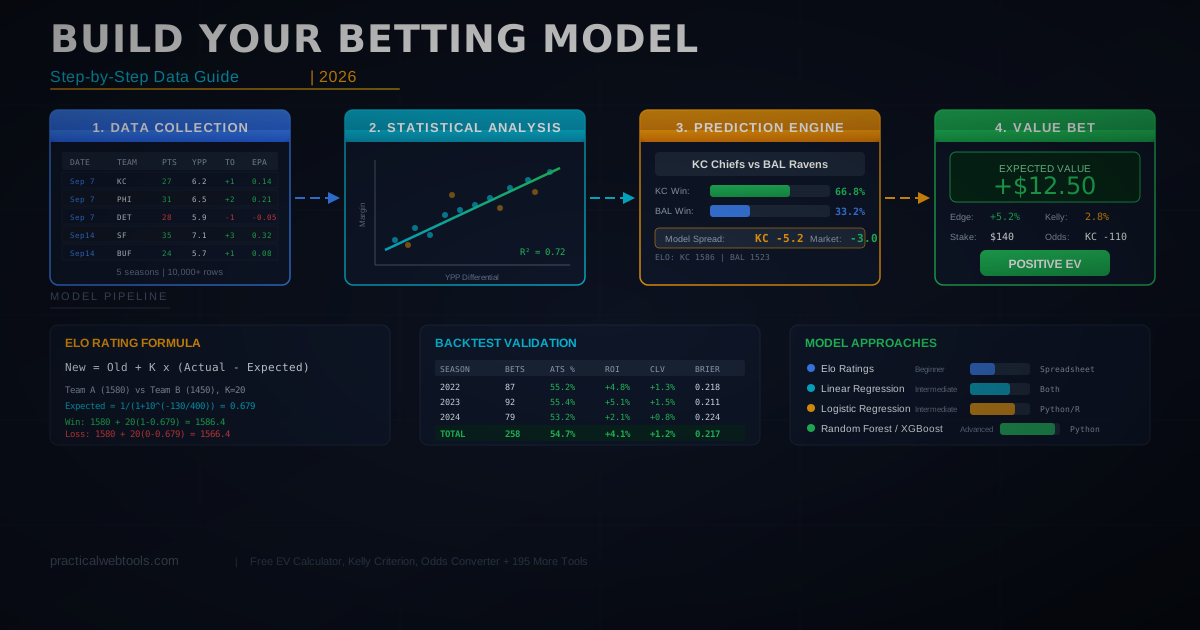
Step 1: Build Your Power Ratings
Power ratings assign a numerical value to each team that reflects their overall strength on a neutral field. The gap between two teams' ratings produces your projected spread, which you then adjust for home-field advantage and situational factors.
How to create basic NFL power ratings:
- Start with preseason projections. Use a combination of prior-year performance, roster changes, coaching hires, and draft capital.
- Update weekly. After each game, adjust ratings based on performance relative to expectations, not just wins and losses.
- Weight recent data. A rolling 6-10 game window typically performs better than full-season data because it captures team trajectory.
- Separate offense and defense. Rate each unit on a points-per-drive or EPA-per-play basis rather than raw points, which are distorted by pace and field position.
Example power rating system:
| Team | Overall Rating | Off Rating | Def Rating | Net |
|---|---|---|---|---|
| Kansas City Chiefs | +5.8 | +3.1 | +2.7 | +5.8 |
| Detroit Lions | +4.2 | +4.8 | -0.6 | +4.2 |
| Baltimore Ravens | +3.9 | +4.5 | -0.6 | +3.9 |
| Philadelphia Eagles | +3.5 | +1.8 | +1.7 | +3.5 |
| Buffalo Bills | +3.3 | +3.9 | -0.6 | +3.3 |
| League Average | 0.0 | 0.0 | 0.0 | 0.0 |
If the Chiefs (+5.8) host the Ravens (+3.9) with a 2.5-point home-field advantage, your projected spread would be: 5.8 - 3.9 + 2.5 = Chiefs -4.4. If the market posts Chiefs -3, you have identified 1.4 points of perceived value on Kansas City.
Step 2: Adjust for Situational Spots
Situational handicapping accounts for factors that power ratings miss. These are the edges that separate good handicappers from great ones.
Key situational factors:
- Short rest / long rest. Teams on Thursday Night Football after playing the previous Sunday are at a measurable disadvantage. Teams coming off a bye week hold an ATS edge historically.
- Lookahead spots. A team playing a weak opponent this week with a marquee divisional rivalry the following week may underperform relative to their talent.
- Letdown spots. After a huge emotional win (playoff-clinching game, revenge game, Monday Night Football upset), teams frequently lay flat the following week.
- Revenge games. Teams that lost by 14+ points earlier in the season tend to perform better in the rematch, particularly in divisional games.
- Travel and time zones. West Coast teams traveling east for 1:00 PM ET kickoffs have historically underperformed, particularly in September and October.
Step 3: Factor in Weather
Weather is one of the most under-priced variables in NFL betting, particularly for totals. Sportsbooks adjust for extreme weather, but recreational bettors often fail to account for moderate conditions that still impact scoring.
Weather impact guidelines:
| Condition | Scoring Impact | Betting Angle |
|---|---|---|
| Wind 10-15 mph | Slight reduction | Under hits ~55.9% historically |
| Wind 15-20 mph | Moderate reduction (3-5 pts) | Strong lean to Under |
| Wind 20+ mph | Severe reduction (7+ pts) | Under is highly profitable; rushing props Over |
| Temperature below 20F | Minimal direct impact | Slightly favors Under in NFC/AFC North games |
| Rain/snow | Variable; heavier = more impact | Favors rushing teams; Under on passing-dependent matchups |
| Temperature above 85F | Slight reduction | Under hits ~56% historically |
Example: In December 2024, the Chicago Bears hosted the Green Bay Packers at Soldier Field with sustained winds of 22 mph and gusts to 35 mph. The total opened at 41 and closed at 37.5 as sharp money pounded the Under. The game finished 20-13 (total: 33). Bettors who identified the wind impact early captured 3.5 points of value before the line adjusted.
Step 4: Evaluate Injuries
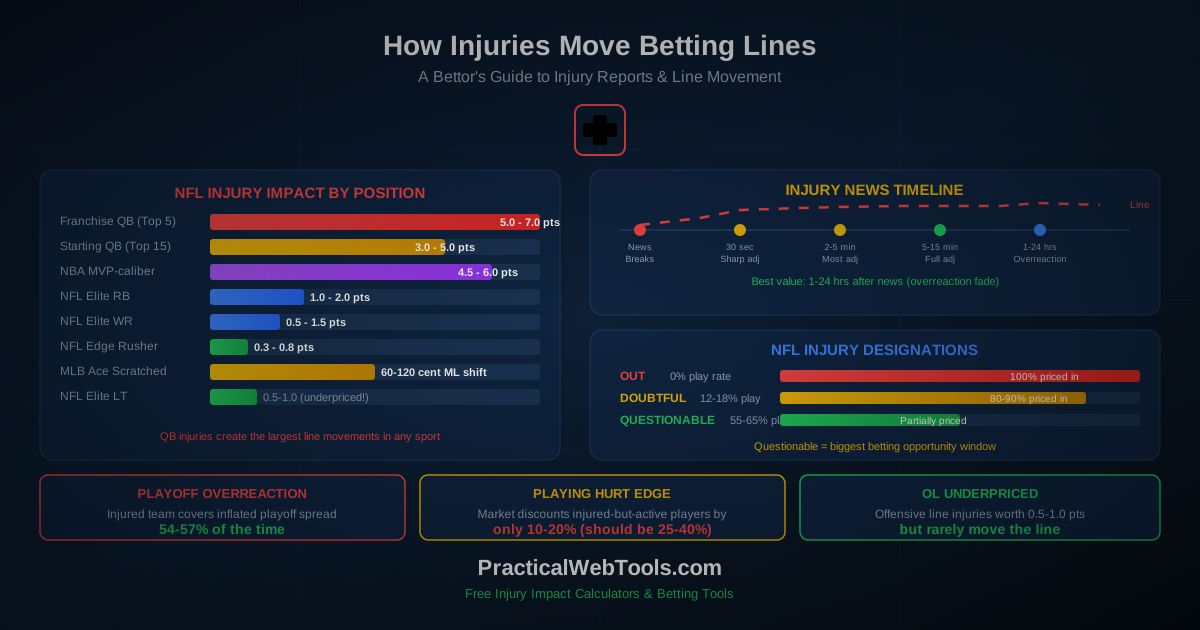
Not all injuries are equal. The market efficiently prices quarterback injuries but consistently under-adjusts for:
- Offensive line injuries. A starting left tackle being out against an elite pass rusher can swing a game by 2-3 points, but the line often moves only 0.5-1 point.
- Secondary injuries. When a team is missing its CB1, opposing passing offenses see a measurable efficiency boost that totals often fail to fully reflect.
- Defensive coordinator absences. Less publicized, but a defense being run by a position coach rather than the coordinator creates communication breakdowns.
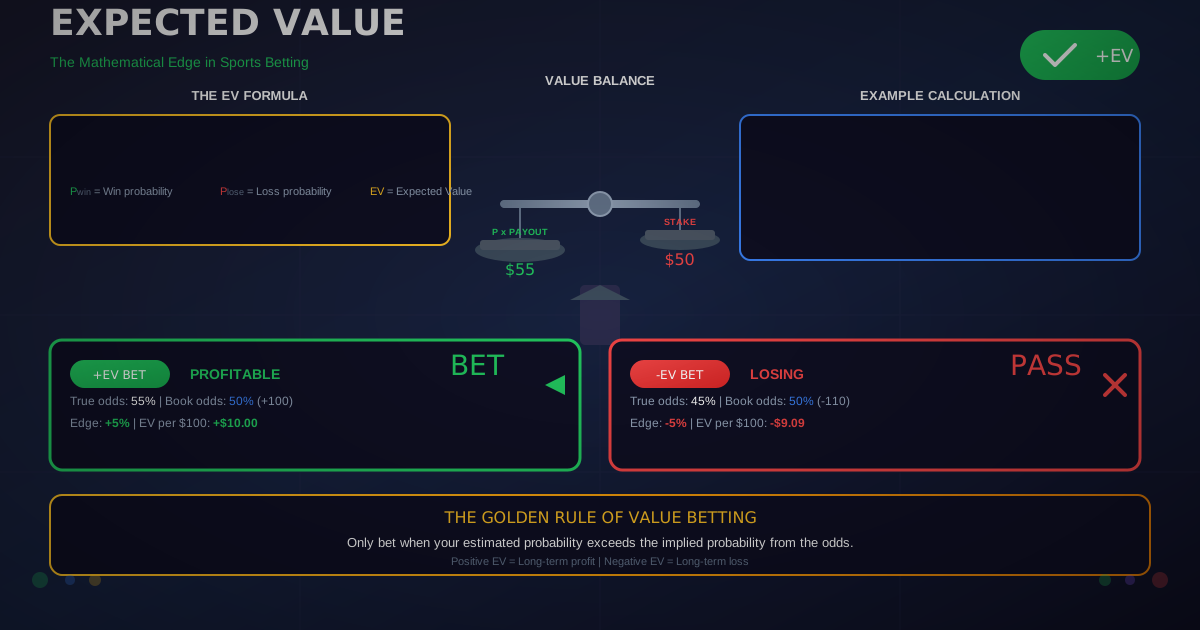
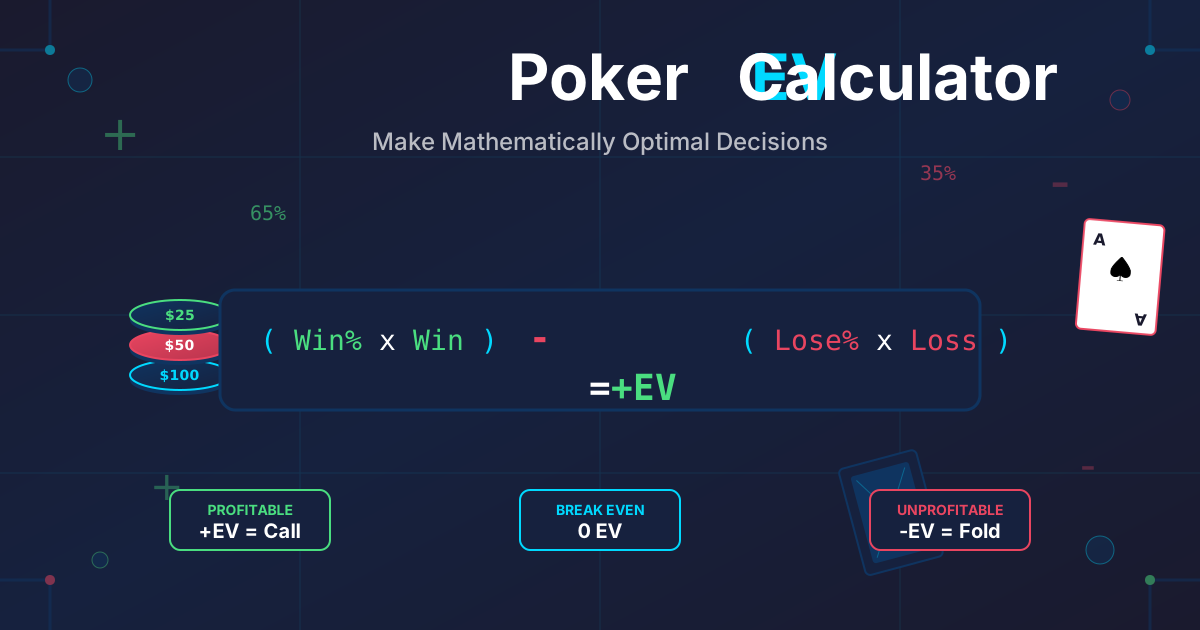
Calculate the expected value of your handicapping edge with our Expected Value Calculator.
NFL Point Spread Betting Strategy
Spread betting is the bread and butter of NFL wagering. The sportsbook assigns a point spread to equalize the perceived difference between two teams, and you bet on whether the favorite wins by more than the spread or the underdog keeps it within (or wins outright).
The Mathematics of Spread Betting
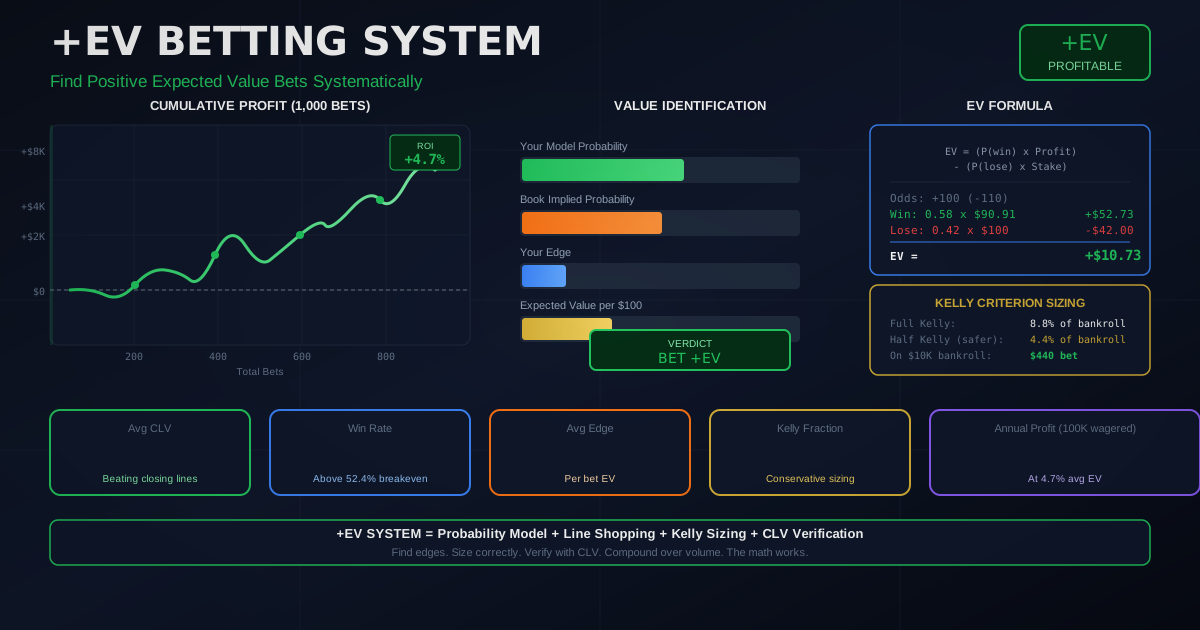
At standard -110 juice, you must win 52.38% of your spread bets to break even. Every percentage point above that threshold represents profit.
| Win Rate | Profit per $110 Bet | Season Profit (200 bets) |
|---|---|---|
| 50.0% | -$5.00 (loss) | -$1,000 |
| 52.4% | $0.00 (breakeven) | $0 |
| 54.0% | +$3.52 | +$704 |
| 55.0% | +$5.50 | +$1,100 |
| 56.0% | +$7.48 | +$1,496 |
| 57.0% | +$9.46 | +$1,892 |
| 60.0% | +$15.40 | +$3,080 |
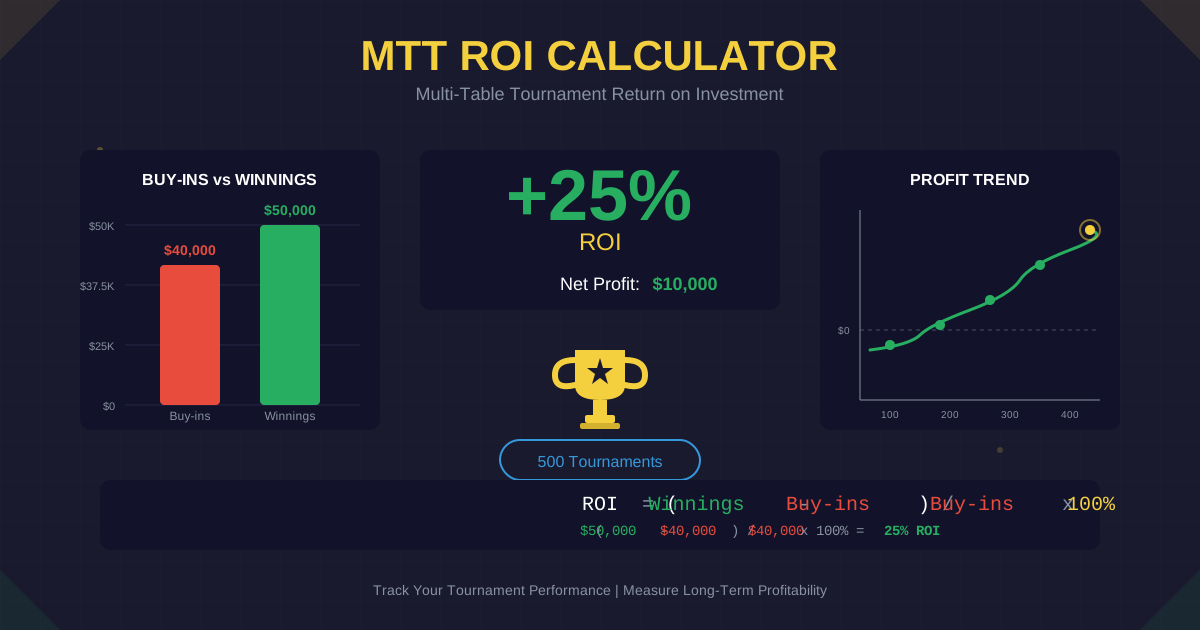
A 55% win rate, which many professional bettors target, generates $1,100 in profit on 200 bets at $110 each. That is a 5% ROI, which is considered strong in professional sports betting circles.
Proven Spread Betting Angles
1. Home Underdogs in Divisional Games
Since 2014, divisional underdogs have covered the spread at approximately 71% (37-15-1 ATS). This is one of the most robust trends in NFL betting. Division rivals know each other's tendencies, which compresses talent gaps and favors the underdog. When the underdog also has home-field advantage, the effect is amplified.
Example: In Week 15 of the 2024 season, the Cincinnati Bengals hosted the Cleveland Browns as 7-point home underdogs in an AFC North divisional game. Despite their losing record, the Bengals covered easily, winning outright 24-14. The $110 bettor who took Cincinnati +7 cashed a $100 profit.
2. Home Dogs of 3-6 Points
Home underdogs receiving 3 to 6 points have historically been profitable. The public loves road favorites, especially high-profile teams, which inflates the spread. Meanwhile, the home crowd and familiar environment provide an edge the market tends to undervalue.
3. Bye-Week Teams Against Non-Bye Opponents
Teams coming off their bye week enjoy an extra week of preparation, rest, and game-planning. The ATS edge is most pronounced when the bye-week team faces an opponent on normal rest, particularly if that opponent played on the prior Monday or Thursday.
4. Fading the Public
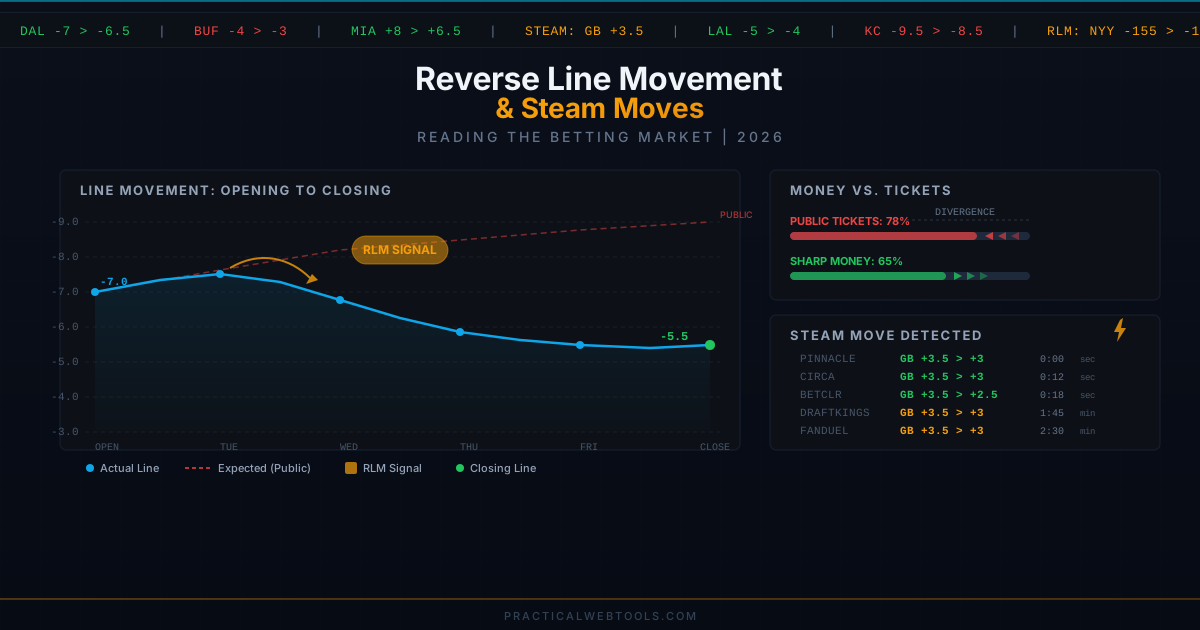
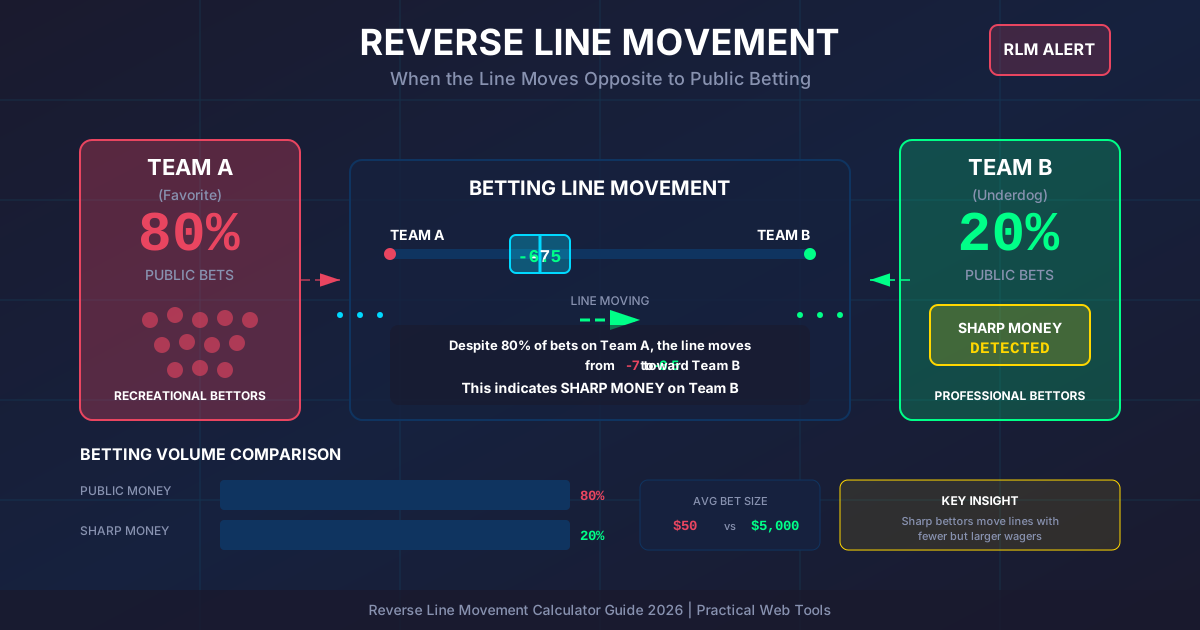
When 75%+ of public bets are on one side, the contrarian play (betting the other side) has shown a modest but consistent edge. Sportsbooks shade their lines toward public money, creating value on the less popular side.
Track your spread betting results and measure your CLV with our CLV Tracker.
NFL Totals (Over/Under) Strategy
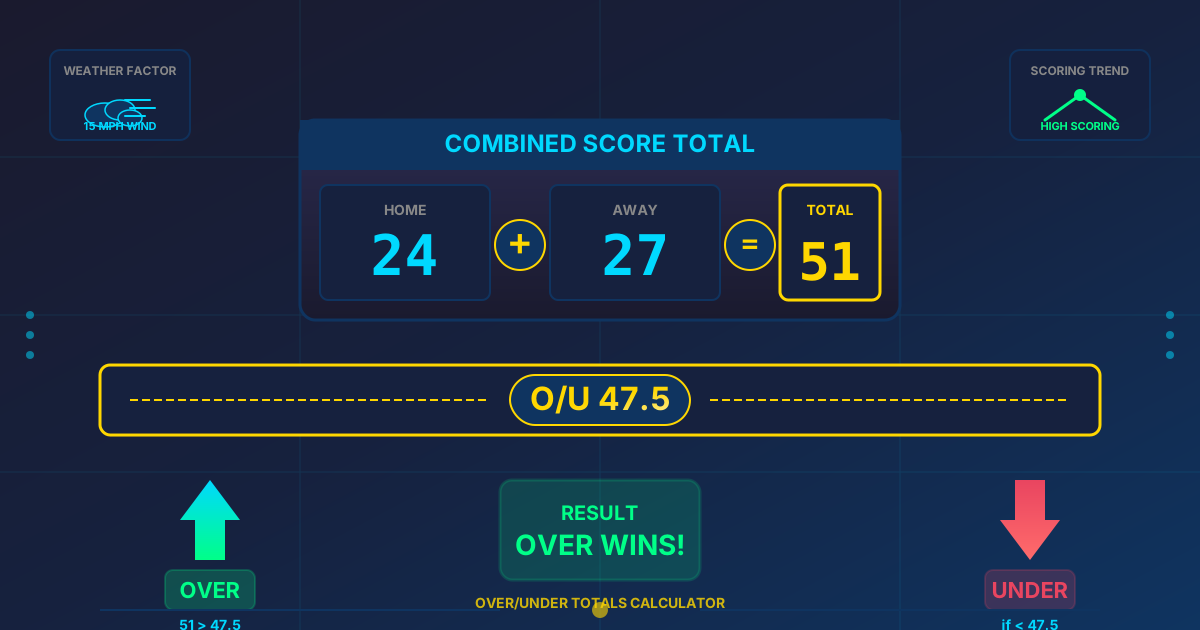
Totals betting asks whether the combined score of both teams will be over or under the sportsbook's posted number. NFL totals offer unique value because the public overwhelmingly bets Overs, which creates a systematic bias toward Under value.
Why the Under Is Your Friend
Recreational bettors want action, excitement, and high-scoring games. This psychological bias means Overs are consistently over-bet, pushing totals slightly higher than they should be. Historically, the Under has covered at roughly 51-52% in the NFL across large sample sizes, enough to generate a small but steady edge.
Totals Angles That Work
1. Low Totals (Under 40 Points)
When sportsbooks post a total below 40, it signals that both teams are expected to struggle offensively, or that conditions favor defensive play. These games tend to go Under at an elevated rate because the scoring floor (zero points) creates a natural compression. A team cannot score fewer than zero, but a team expected to score 17 can easily score 24. However, in games already projected as low-scoring, the variance skews toward even lower outputs.
2. Weather-Impacted Overs
The most profitable totals angle in the NFL is betting the Under in games with sustained winds above 15 mph. Wind disrupts the passing game, reduces field goal accuracy at distance, and compresses scoring ranges. The Under hits at roughly 56-60% in high-wind games, depending on the threshold.
3. Divisional Unders Late in the Season
When division rivals meet in November and December, particularly in outdoor cold-weather stadiums (Lambeau Field, Soldier Field, Highmark Stadium), scoring tends to drop. Familiarity breeds conservative game plans, and weather amplifies the effect.
Calculate your implied probability on any total with our Implied Probability Calculator.
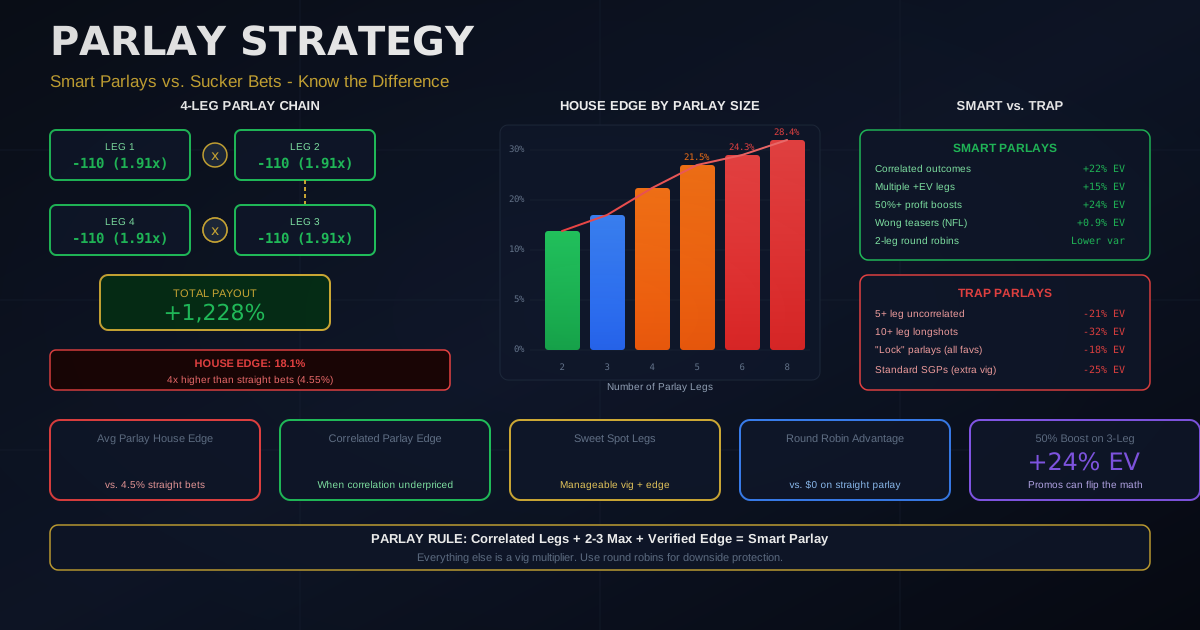
Wong Teasers: The Sharp Bettor's NFL Weapon
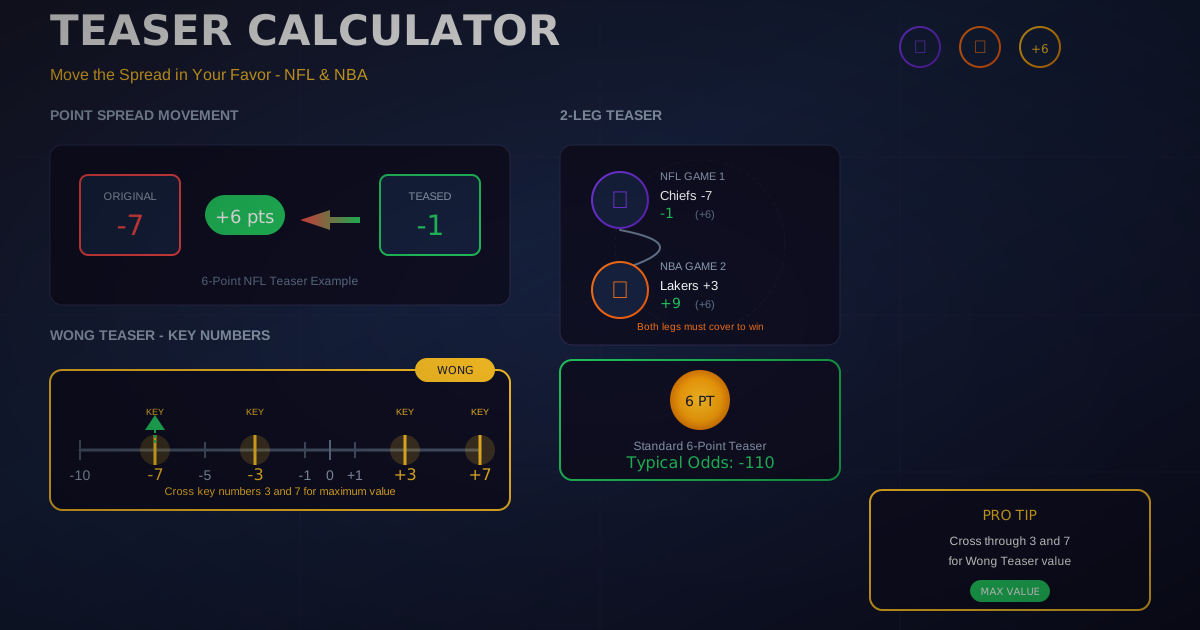
Teasers allow you to adjust the point spread by a set number of points (typically 6, 6.5, or 7) in exchange for combining multiple selections at reduced odds. In the NFL, where key numbers dominate outcomes, teasers can transform negative expected value into positive expected value when used correctly.
What Is a Wong Teaser?
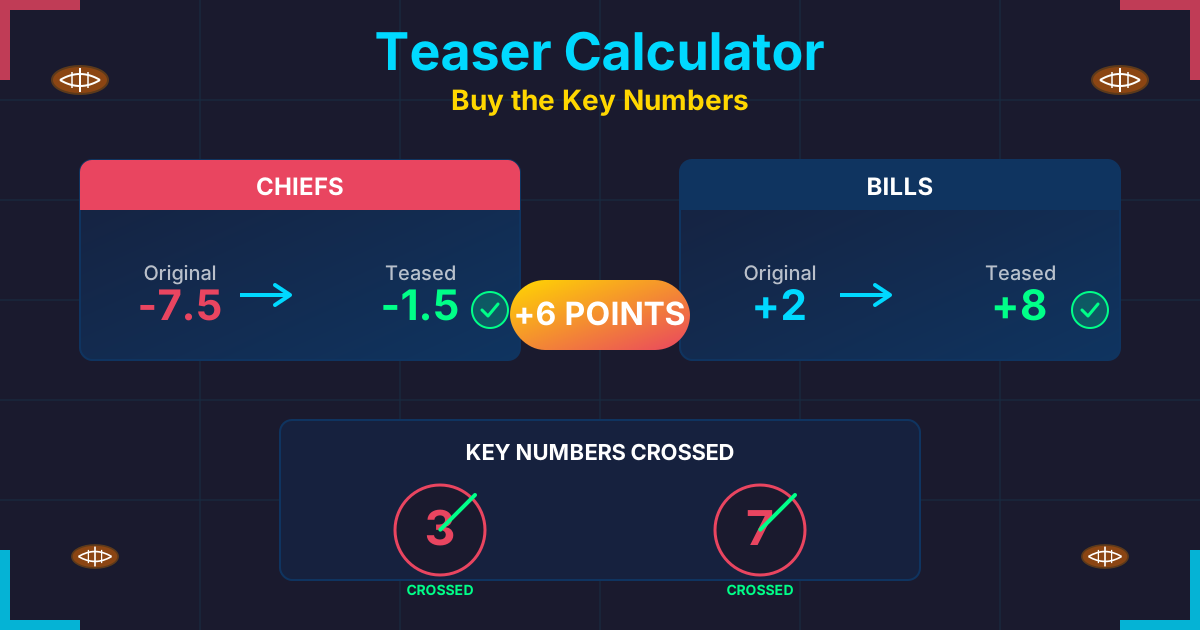
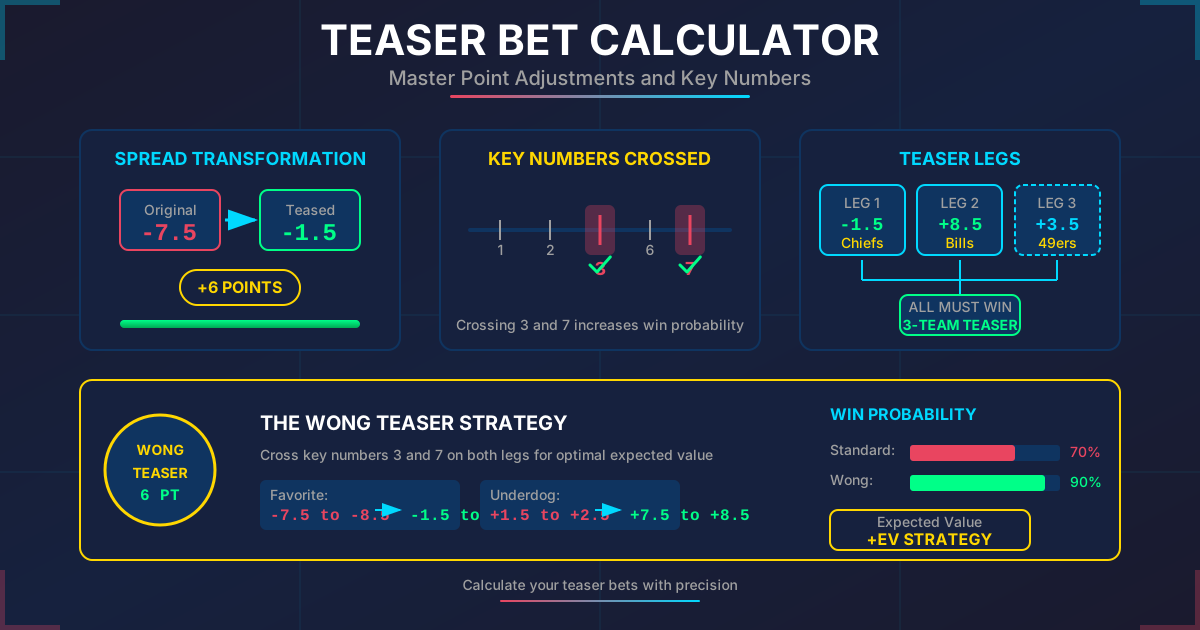
Named after gambling author Stanford Wong, a Wong teaser targets NFL spreads that cross both key numbers of 3 and 7 with a standard 6-point tease. The two qualifying windows are:
- Favorites of -7.5 to -8.5: Teased down to -1.5 to -2.5 (crossing through 7 and 3)
- Underdogs of +1.5 to +2.5: Teased up to +7.5 to +8.5 (crossing through 3 and 7)
By crossing both of the two most common margins of victory, you capture a disproportionate share of outcomes that would otherwise be losses or pushes.
Wong Teaser Performance Data
| Teaser Leg Type | Historical Cover Rate | Breakeven (2-team at -110) | Edge |
|---|---|---|---|
| Favorite -7.5 to -8.5 (teased to -1.5 to -2.5) | ~74-76% | 72.4% | +1.6 to +3.6% |
| Underdog +1.5 to +2.5 (teased to +7.5 to +8.5) | ~74-77% | 72.4% | +1.6 to +4.6% |
| Non-Wong teaser legs (random spreads) | ~68-70% | 72.4% | Negative EV |
A two-team, 6-point Wong teaser at -110 requires each leg to cover at approximately 72.4% to break even (since both must hit: 0.724 x 0.724 = 52.4%). Historical Wong teaser legs have covered at 74-77%, creating a genuine mathematical edge.
Important Wong Teaser Caveats for 2026
Many sportsbooks have wised up. The standard two-team, 6-point NFL teaser is now priced at -120 to -135 at several major books, rather than the classic -110. At -120, your breakeven per leg rises to approximately 73.7%, and at -130, it reaches 74.8%. This compresses or eliminates the edge depending on which legs you select.
To maintain profitability with Wong teasers:
- Shop for -110 pricing. Some books still offer standard pricing; prioritize them for teasers.
- Stick strictly to qualifying windows. Do not add non-Wong legs to "make it interesting."
- Avoid three-team teasers. Each additional leg multiplies variance and reduces your edge.
- Never tease through zero. A +1 teased to +7 crosses 3 and 7 but also crosses zero (the win/loss line), which adds a uniquely valuable outcome.
Example: In Week 8 of the 2024 season, the Minnesota Vikings were -7.5 at home against the Arizona Cardinals, and the Jacksonville Jaguars were +2.5 visiting the Green Bay Packers. A Wong teaser moved the Vikings to -1.5 and the Jaguars to +8.5. The Vikings won 34-26 (covering -1.5 by 6.5 points), and the Packers won 30-27 (Jaguars covered +8.5 by 5.5 points). A $110 Wong teaser at -110 returned $100 profit.
Build and calculate your NFL teasers with our Teaser Calculator.
NFL Prop Betting Strategy
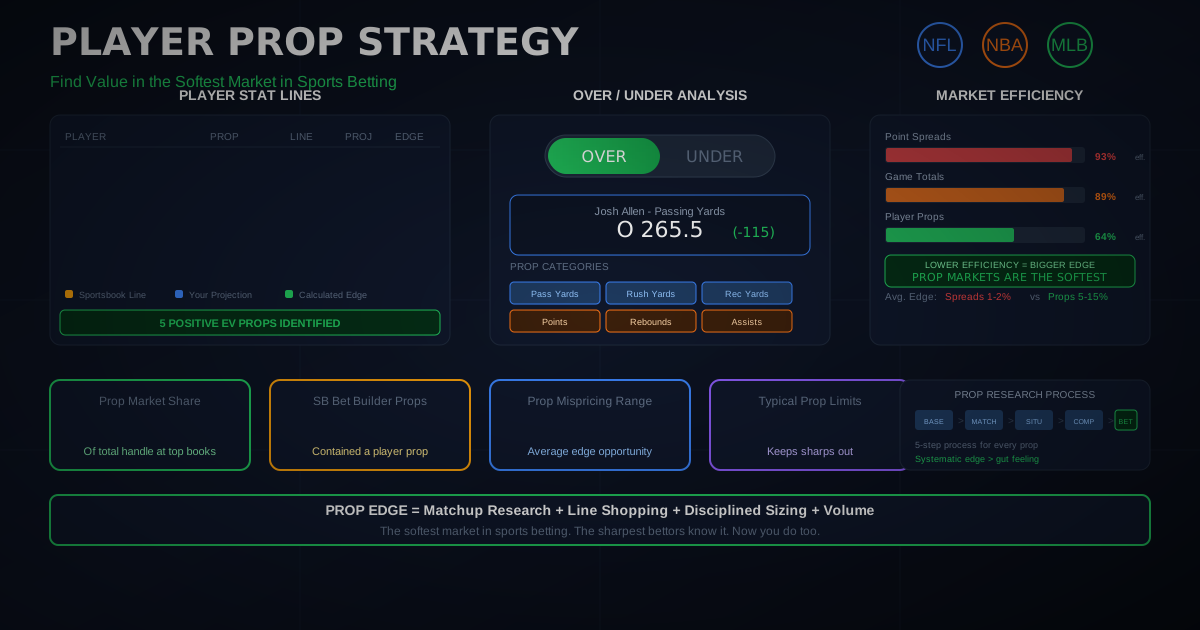
Player and game props have exploded in popularity, and they represent one of the last frontiers where sharp bettors can consistently find soft lines. Because sportsbooks must price hundreds of prop markets per game, their models are spread thin, creating more frequent and larger mispricings than in the main spread and total markets.
Where to Find Prop Value
1. Rushing Props in Weather Games
When wind or precipitation is expected, game scripts shift toward the run. Running back rushing yard props and attempt props are frequently under-adjusted. If a team's passing game is expected to be neutralized, their featured back's workload increases.
2. Quarterback Passing Yards in Blowout Projections
When a team is a heavy favorite (-10 or more), their quarterback's passing yard prop may not fully account for the likelihood of a second-half run-heavy script. If the team leads by 21 at halftime, the starter may play limited snaps in the second half. Fading the favorite QB's passing yards Over in projected blowout spots is a steady angle.
3. Touchdown Scorer Props (Plus-Money Underdogs)
Touchdown scorer props are among the highest-vig markets in sports betting, with books holding 15-30% on each side. However, the plus-money options (players priced at +200 or higher to score) are occasionally mispriced because the books overweight recent touchdown history rather than red-zone usage and target share.
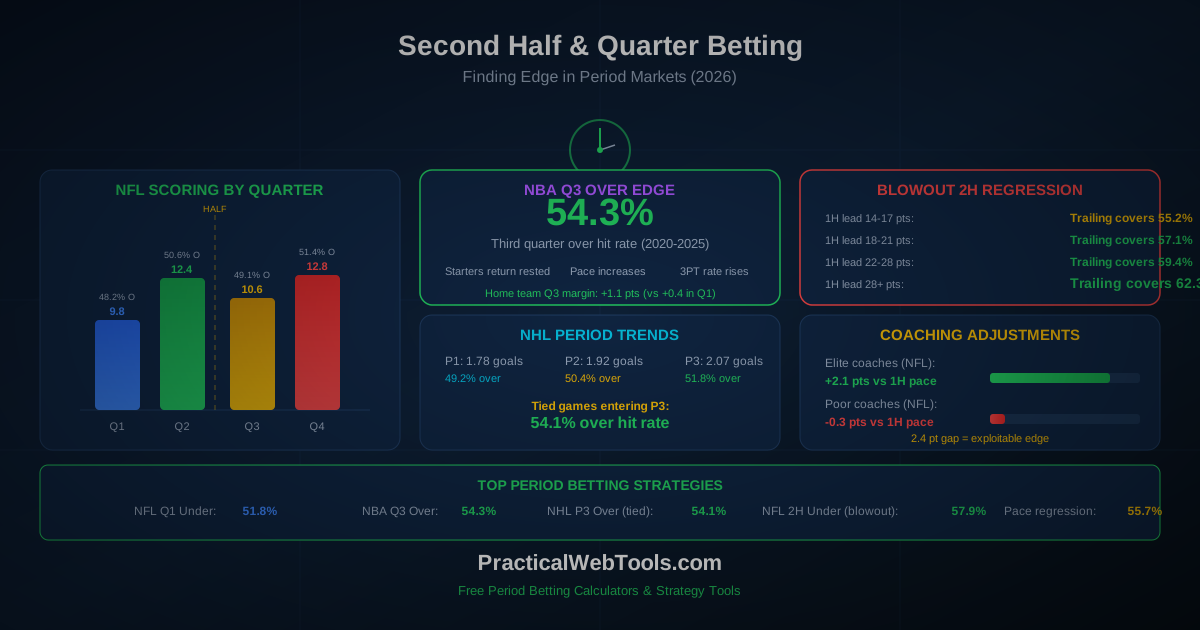
4. First-Half and First-Quarter Props
Game-level props like first-half spreads and first-quarter totals are less efficiently priced than full-game markets. Sharp bettors who have a strong read on scripted opening drives (coaches often plan their first 15-20 plays) can find value in first-quarter props.
Prop Market Correlation Strategy
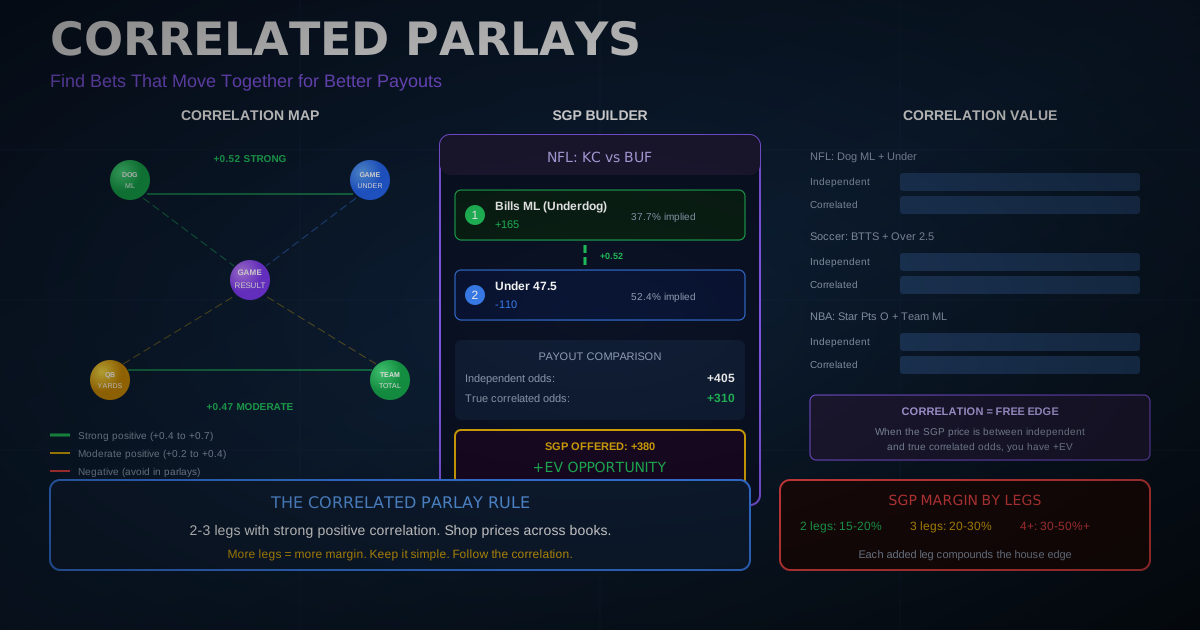
One powerful approach is identifying correlated props within the same game. If you believe a running back will dominate, you might combine:
- Running back rushing yards Over
- Team total Over
- Opponent passing yards Under (because the team is running clock)
These bets move in the same direction, amplifying your edge on a single correct read.
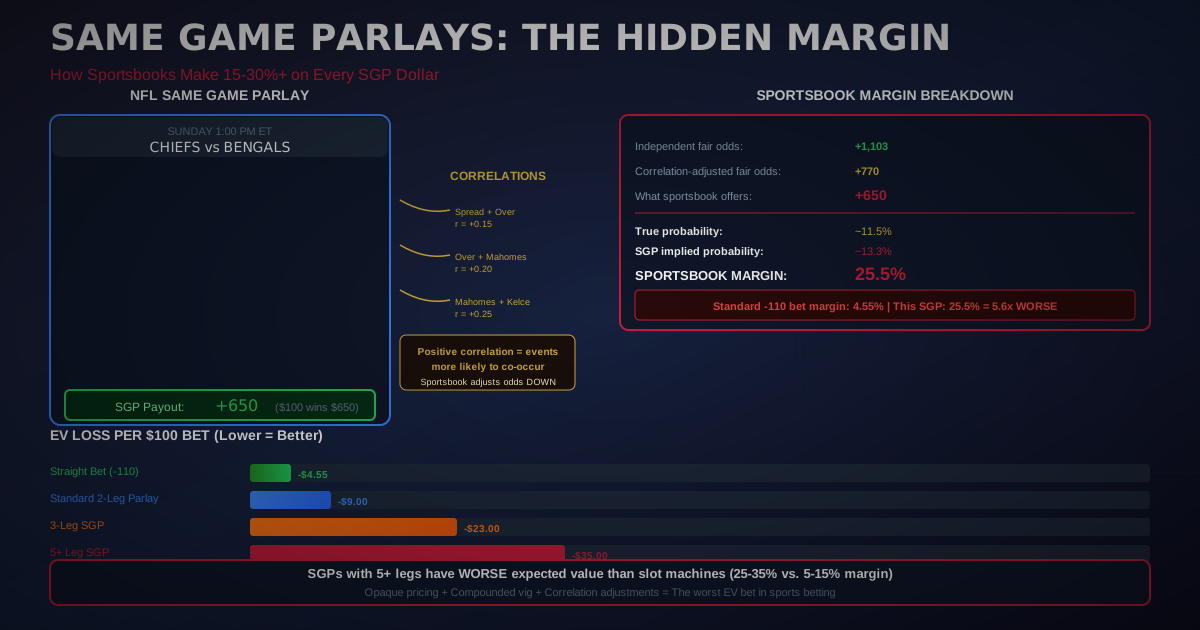
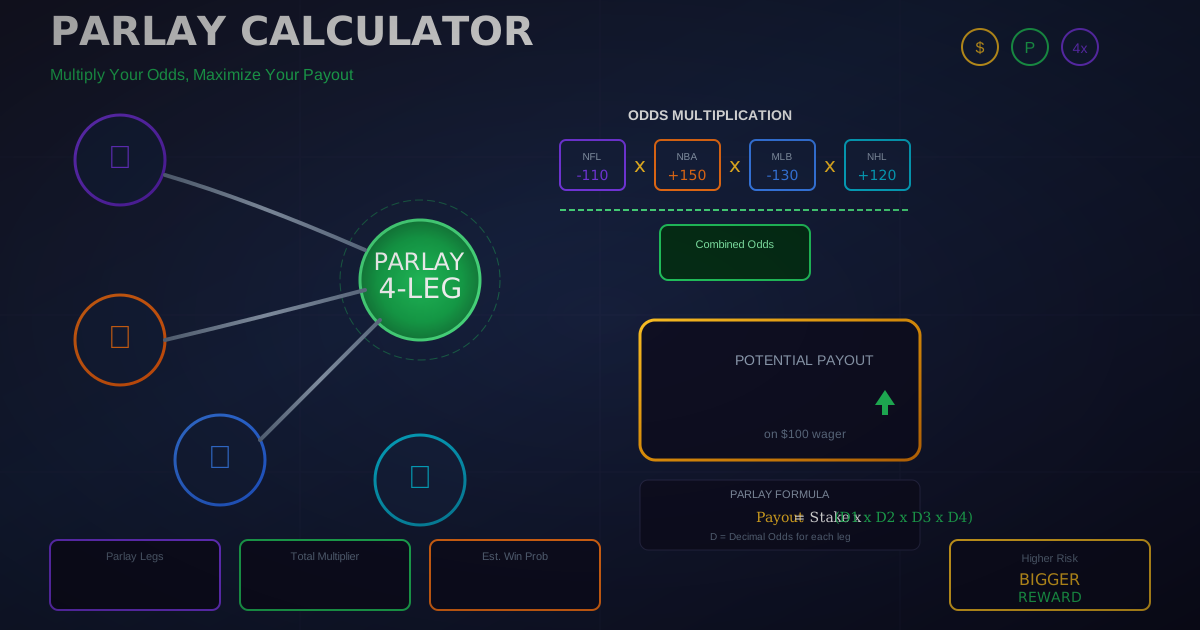
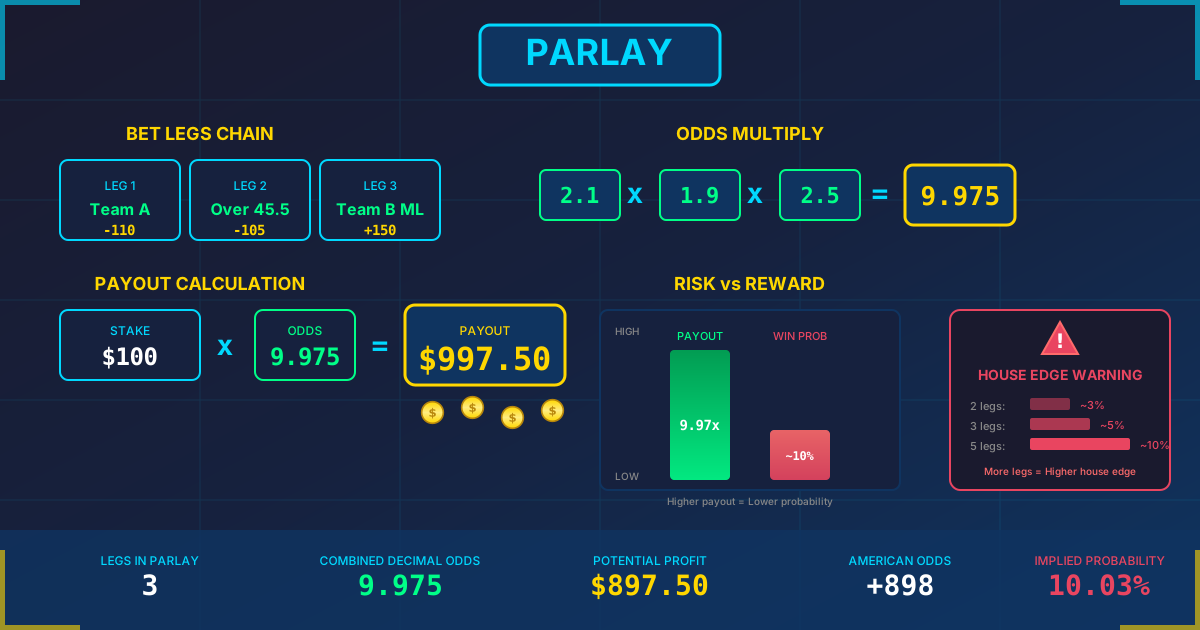
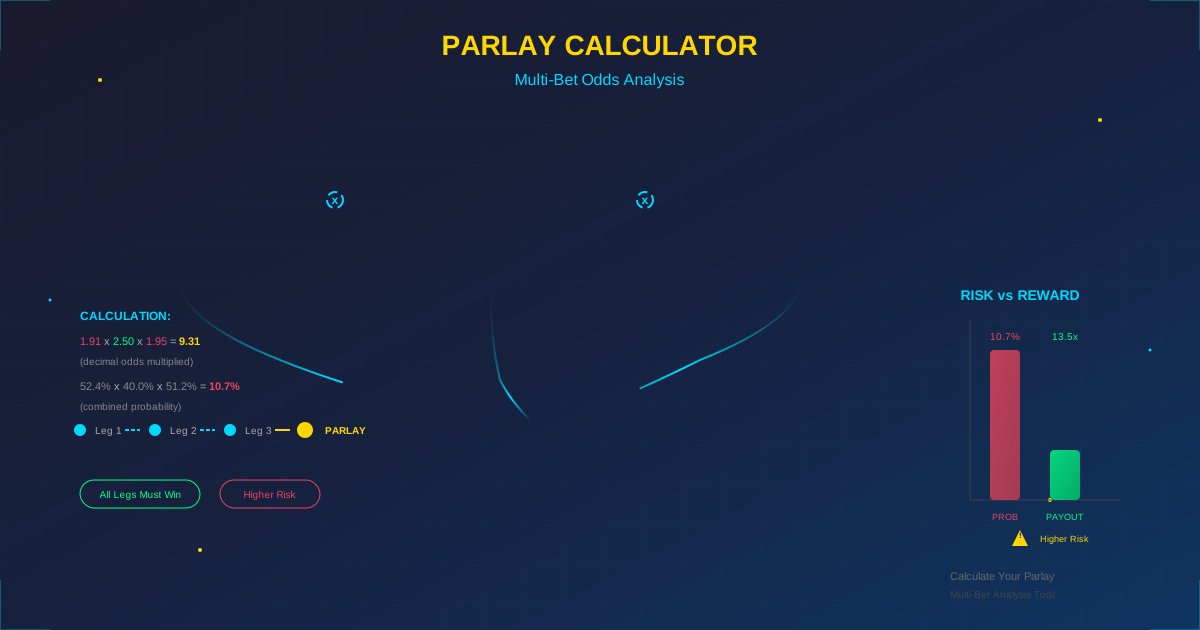
Calculate complex parlay payouts from correlated props with our Parlay Calculator.
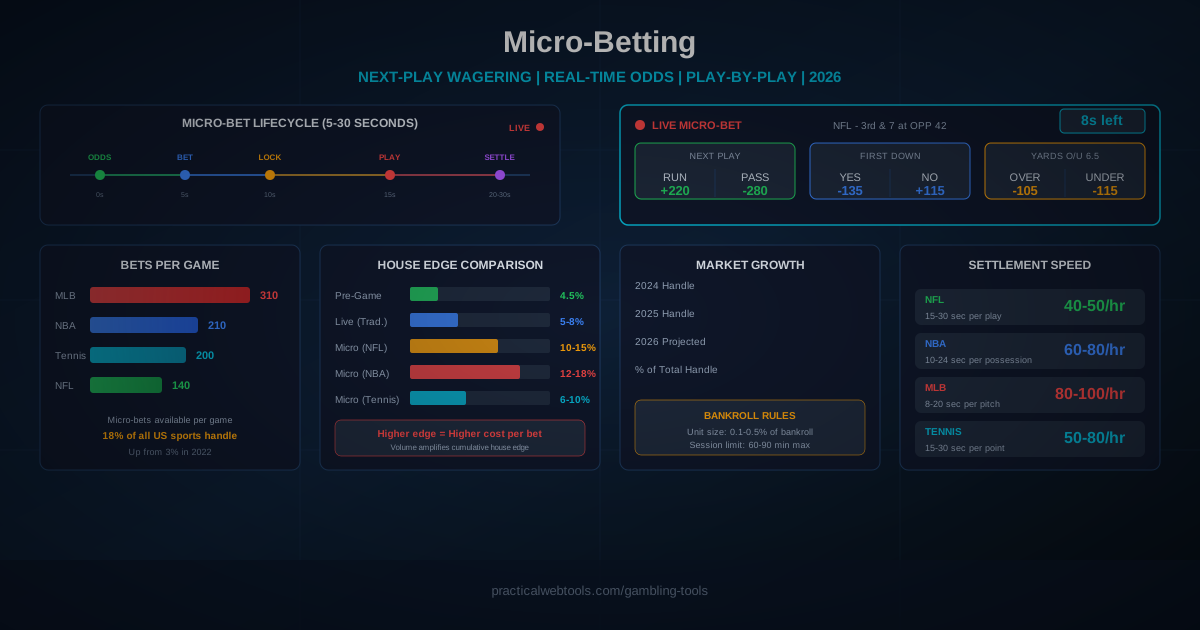
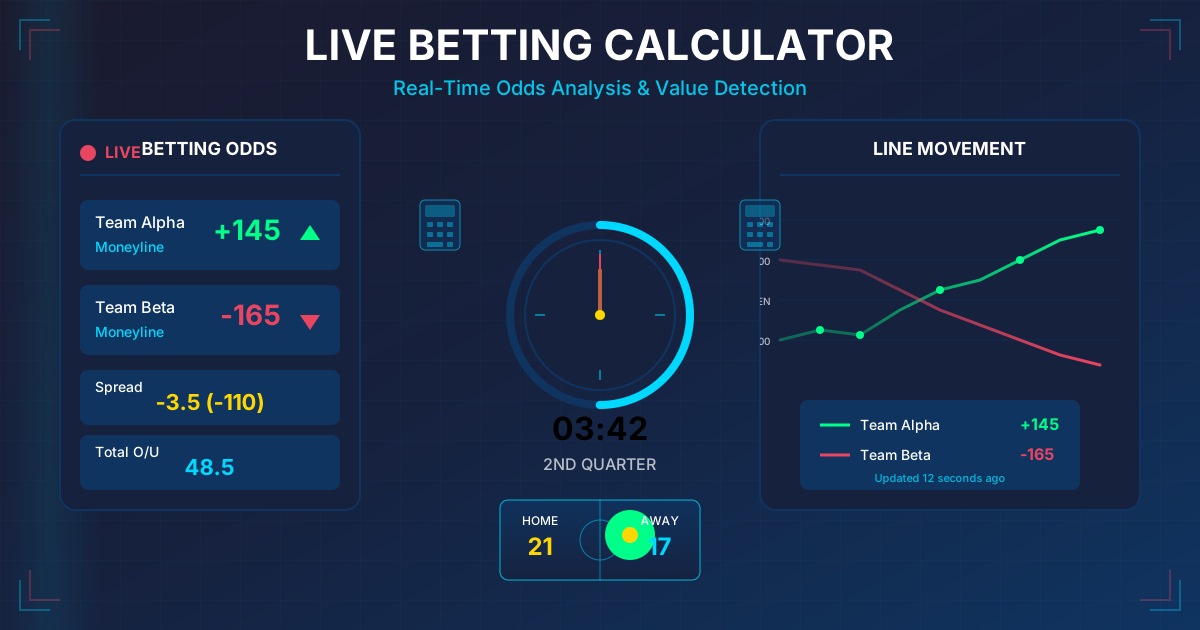
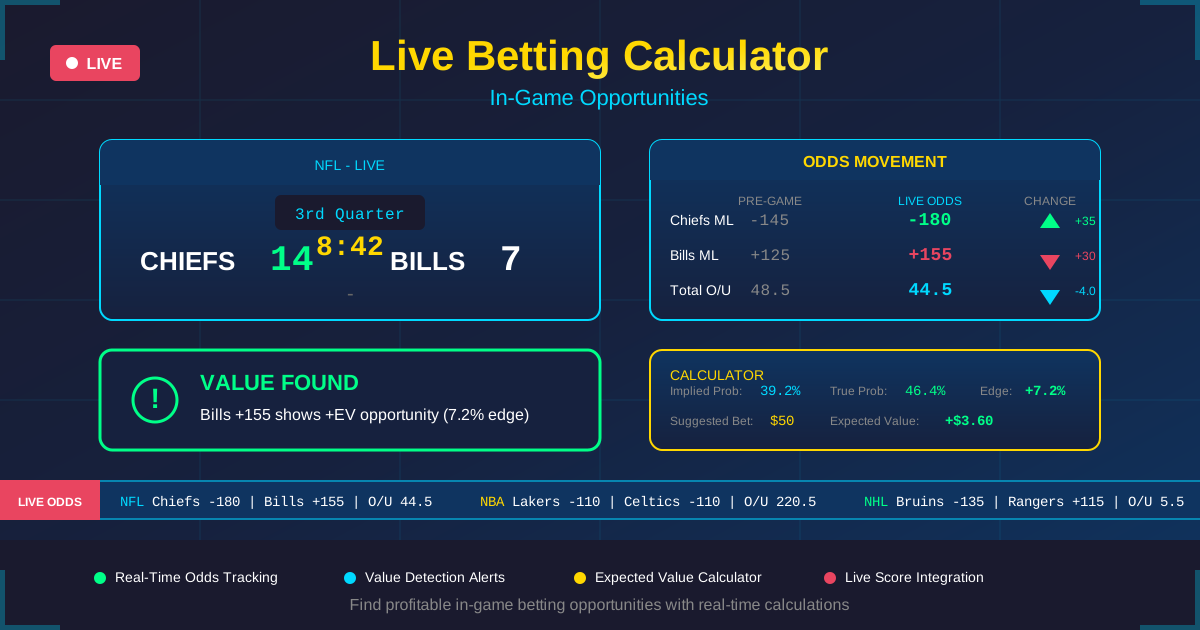
NFL Live Betting Strategy
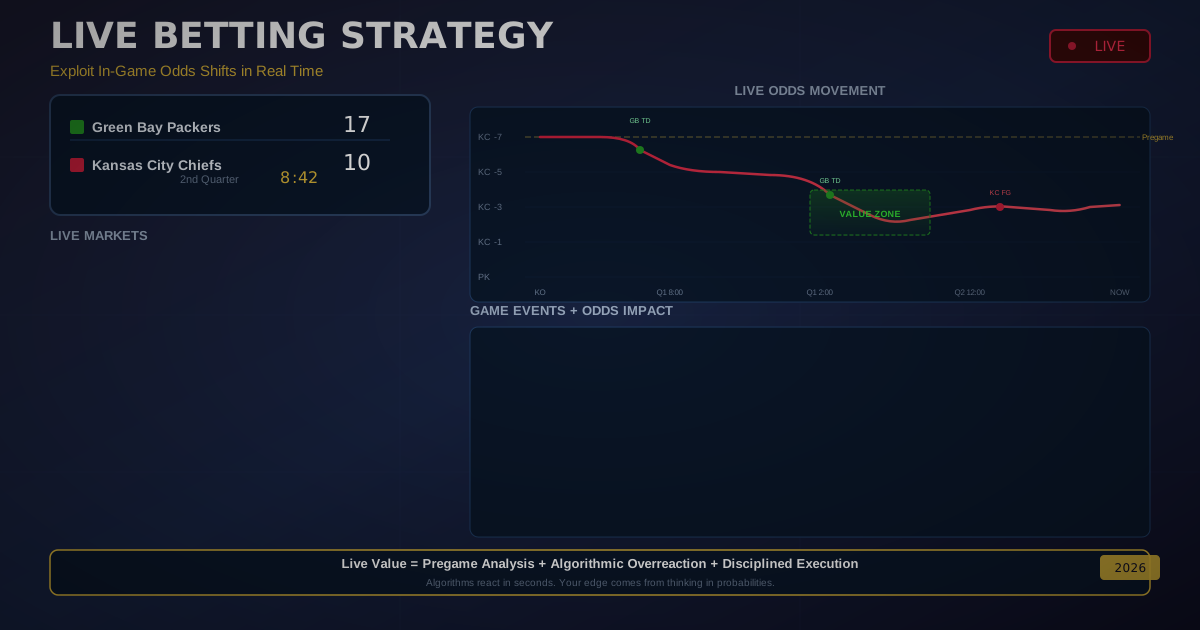
Live (in-game) betting is the fastest-growing segment of NFL wagering, and it is also where recreational bettors make their most expensive mistakes. The live market reprices constantly based on game flow, and the sportsbooks' algorithms are highly efficient at adjusting to new information.
When Live Betting Offers Value
1. Overreaction to Early Scoring
When a team scores a quick touchdown in the first quarter, the live spread often overreacts. If the Chiefs go up 7-0 in the first five minutes against the Ravens, the live spread might shift from -3 to -6.5 or more. The first quarter of an NFL game is often unrepresentative of the full 60 minutes. Fading early overreactions, particularly by taking quality teams that fall behind early, is a viable live strategy.
2. Weather Events Mid-Game
If heavy rain or wind begins mid-game, live totals adjust, but there is often a window where you can grab the Under before the book fully accounts for the conditions.
3. Injury-Driven Line Moves
When a starting quarterback goes down mid-game, the live spread adjusts dramatically, sometimes too dramatically for backup QBs who are competent. The market often prices in maximum panic before a single snap is taken by the replacement.
Live Betting Discipline
Live betting is designed to encourage impulsive wagering. The rapid pace, flashing odds, and emotional swings of watching the game create a perfect storm for reckless decisions.
Rules for disciplined live betting:
- Pre-identify your live bet triggers before kickoff
- Set a maximum number of live bets per game (two or fewer)
- Never live bet while emotional about a pre-game bet on the same game
- Use a separate, smaller bankroll allocation for live bets
Evaluate your live bet opportunities with our Live Betting Calculator and Expected Value Calculator.
Season-Long NFL Betting Angles
Some of the most reliable value in NFL betting comes from structural angles that repeat year after year due to the psychological and scheduling biases baked into a 17-game season.
ATS Performance by Situation
| Situation | Historical ATS Record | Win % | Notes |
|---|---|---|---|
| Home underdogs (all) | Slightly profitable | ~52-53% | Public overvalues road favorites |
| Home dogs in divisional games | 37-15-1 (since 2014) | ~71% | Strongest trend in NFL betting |
| Teams off bye week | Modest edge | ~53-54% | Extra prep time undervalued |
| Thursday night road teams | Below .500 ATS | ~46% | Short rest + travel = disadvantage |
| September home underdogs | Profitable | ~55% | Early-season parity; public overreacts to preseason narratives |
| Post-blowout-loss teams | Slightly above .500 ATS | ~53% | Market overreacts to bad losses |
The September Effect
Early-season NFL games are the most profitable window for sharp bettors. Power ratings are based on projections rather than current-year data, and the public over-anchors on the previous season's narrative. Teams that improved through the draft and free agency are undervalued; teams that lost key players are overvalued.
Example: The Houston Texans entered the 2023 season as 8.5-win underdogs after the prior year's 3-13-1 campaign. But with rookie QB C.J. Stroud, a revamped coaching staff, and key additions, they opened as significant underdogs in September. They covered their first four spreads as the market slowly caught up to their true quality, finishing 10-7 and winning a playoff game.
The Lookahead Line Strategy
Major sportsbooks post "lookahead" lines for the following week on Tuesday or Wednesday. These lines are set with lower limits and less precision. If you identify a team in a prime situational spot the following week (home dog in a divisional revenge game after a bye), you can often get a better number on the lookahead than you will on the main line by Sunday.
Fading Prime-Time Favorites
Monday Night Football and Sunday Night Football attract disproportionate public money, particularly on popular franchises. The Cowboys, Chiefs, and Packers in prime time draw massive recreational handle, pushing the spread away from true value. Historically, taking the less popular side in prime-time games has shown a modest ATS edge.
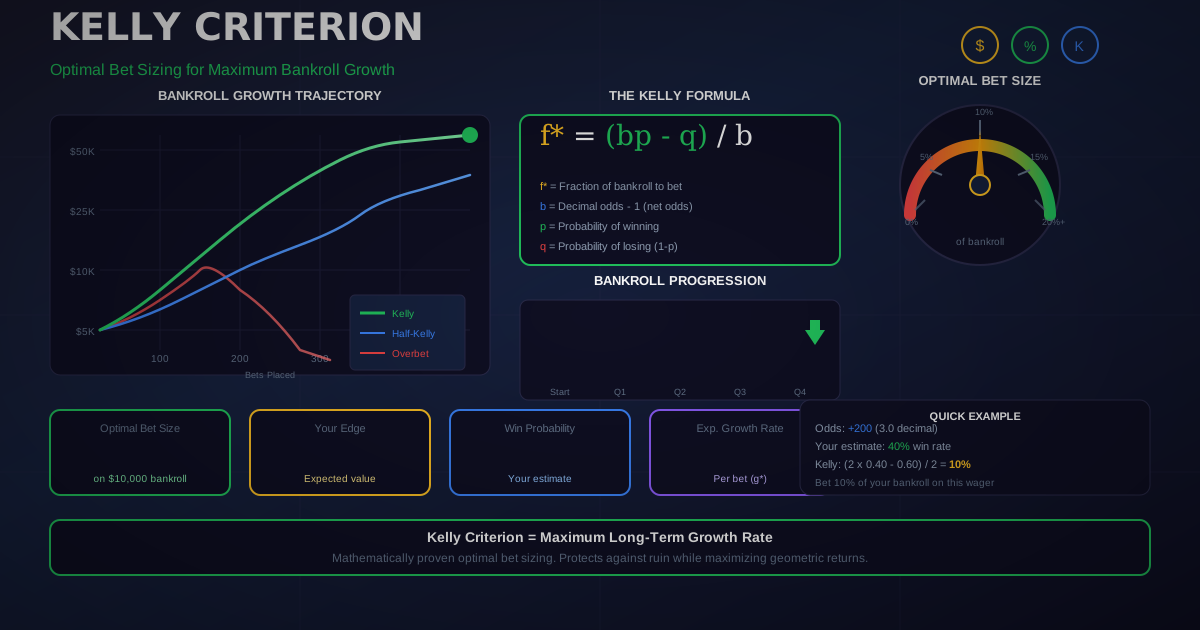
Optimize your bankroll allocation across a full NFL season with our Kelly Criterion Calculator.
NFL Bankroll Management: Protecting Your Edge
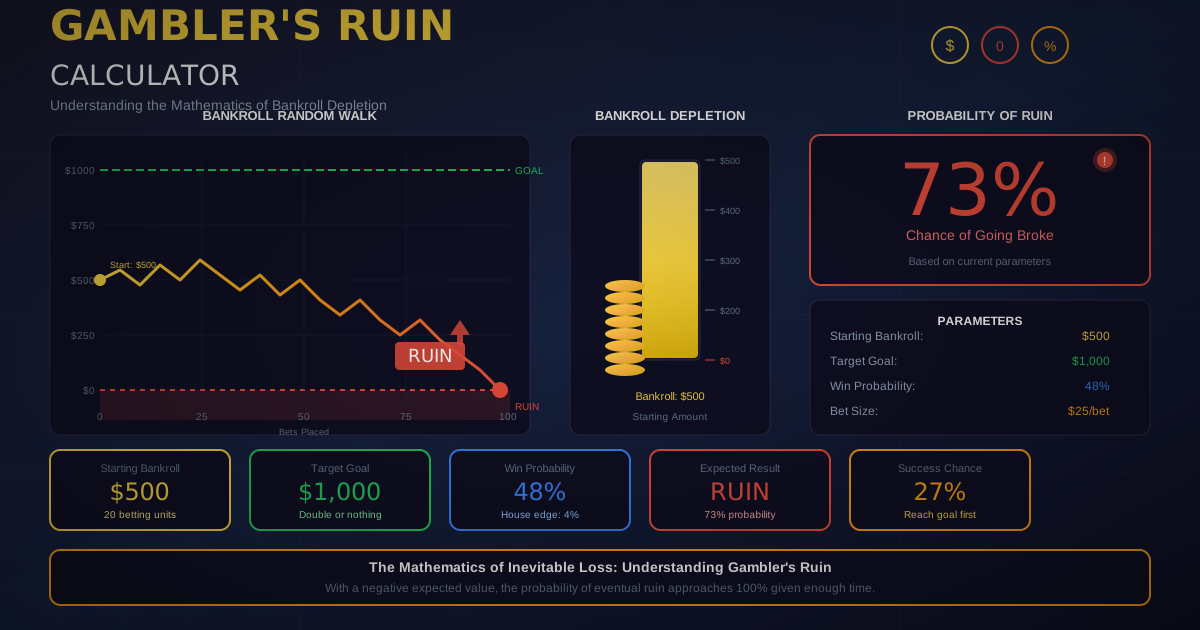
Finding +EV bets is only half the equation. Without disciplined bankroll management, even a skilled handicapper can go broke through variance, overleveraging, or emotional tilt.
Recommended Bankroll Structure
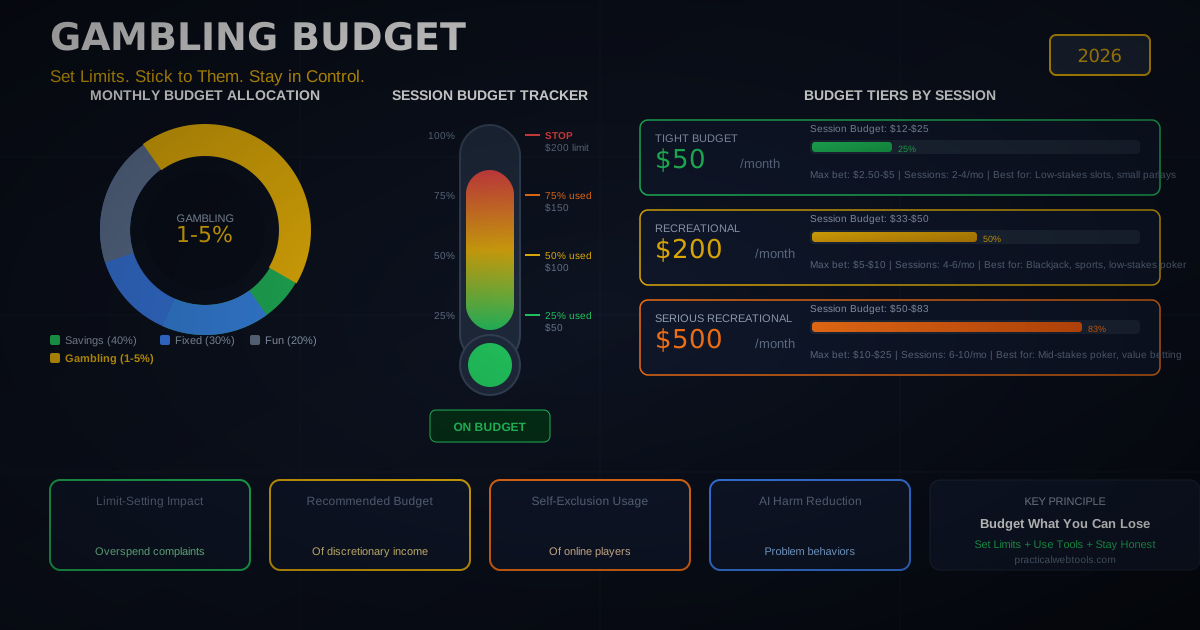
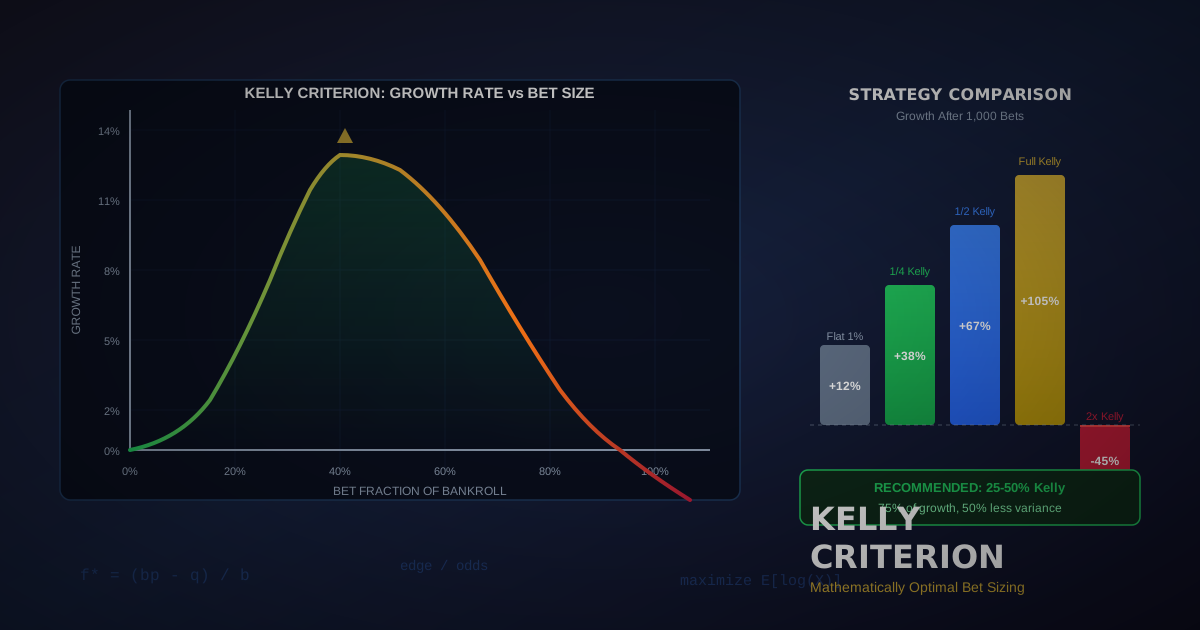
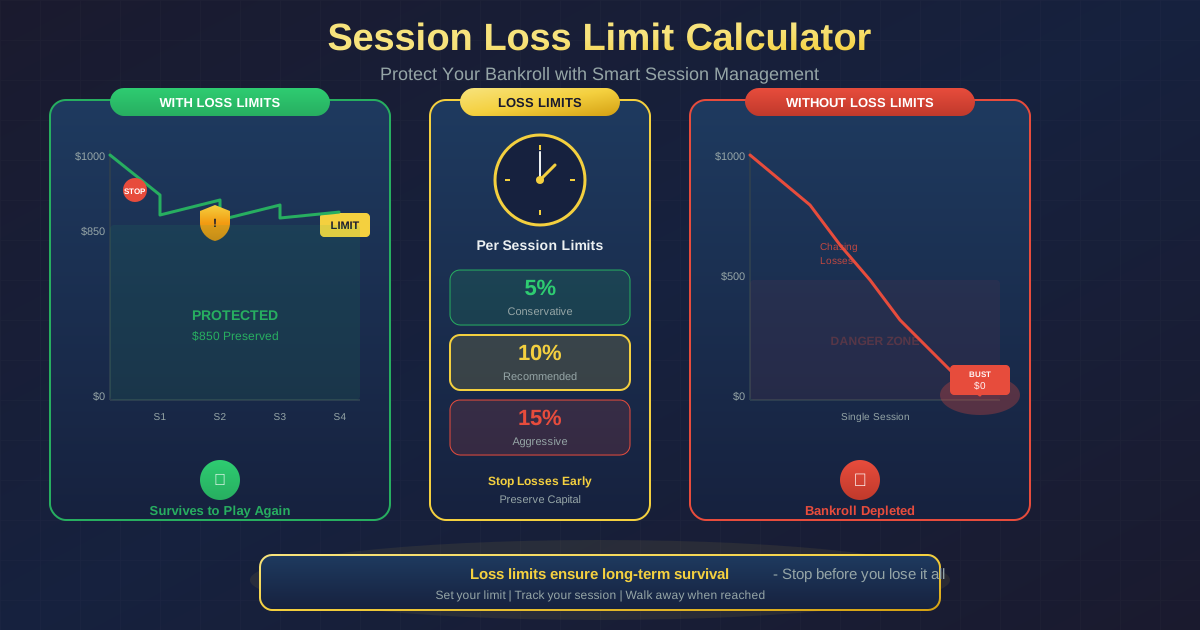
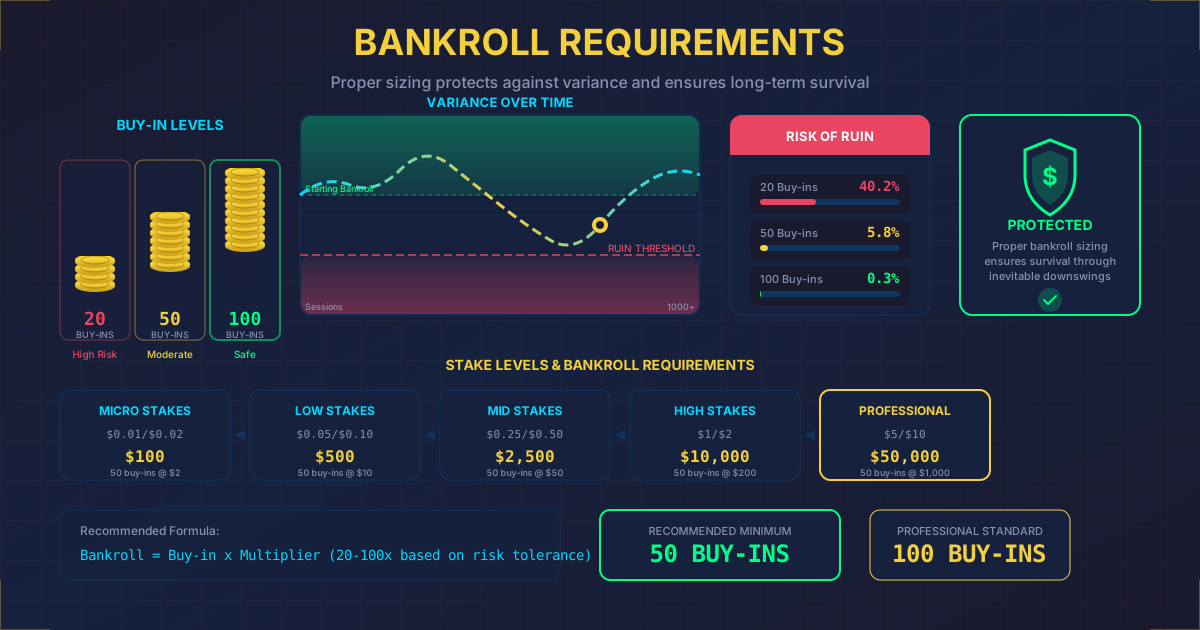
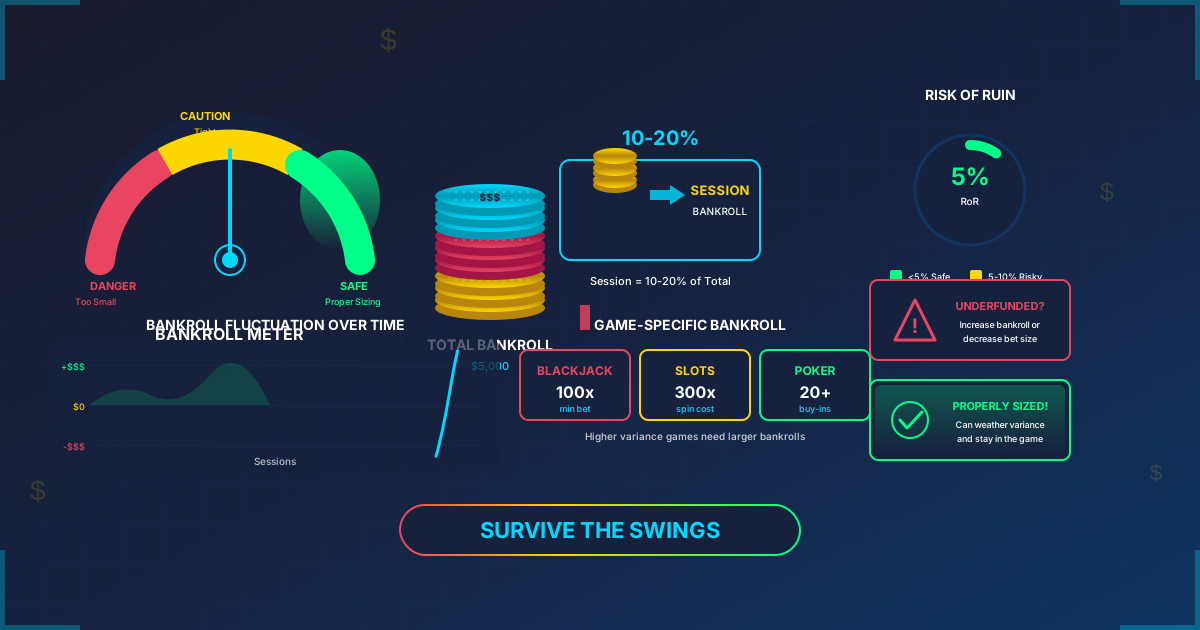
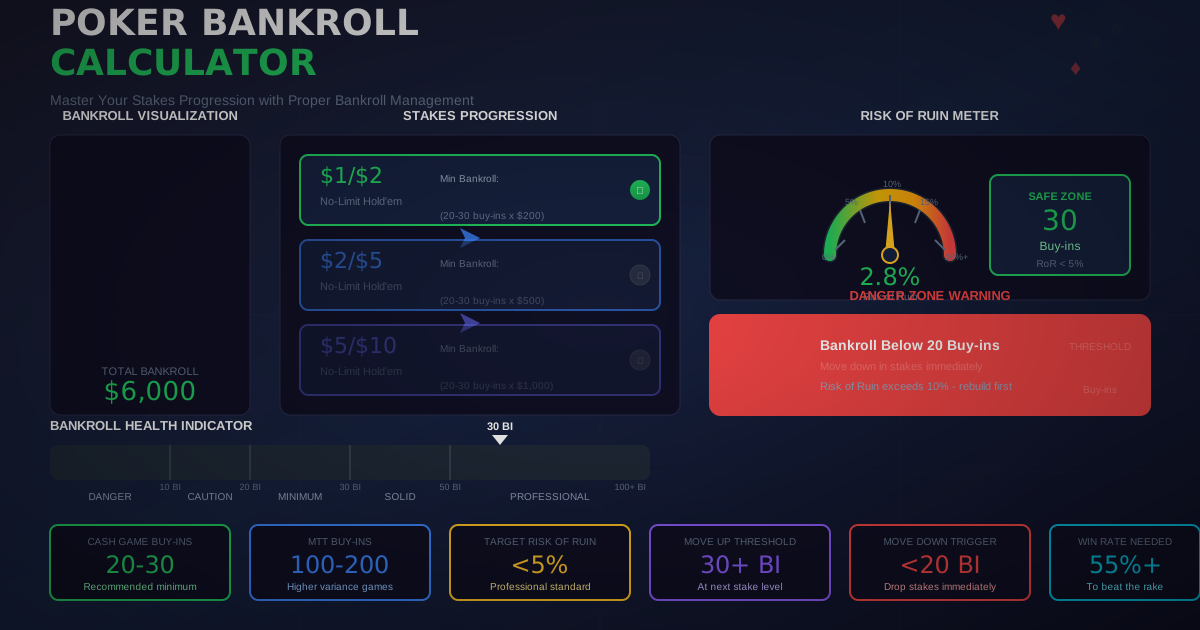
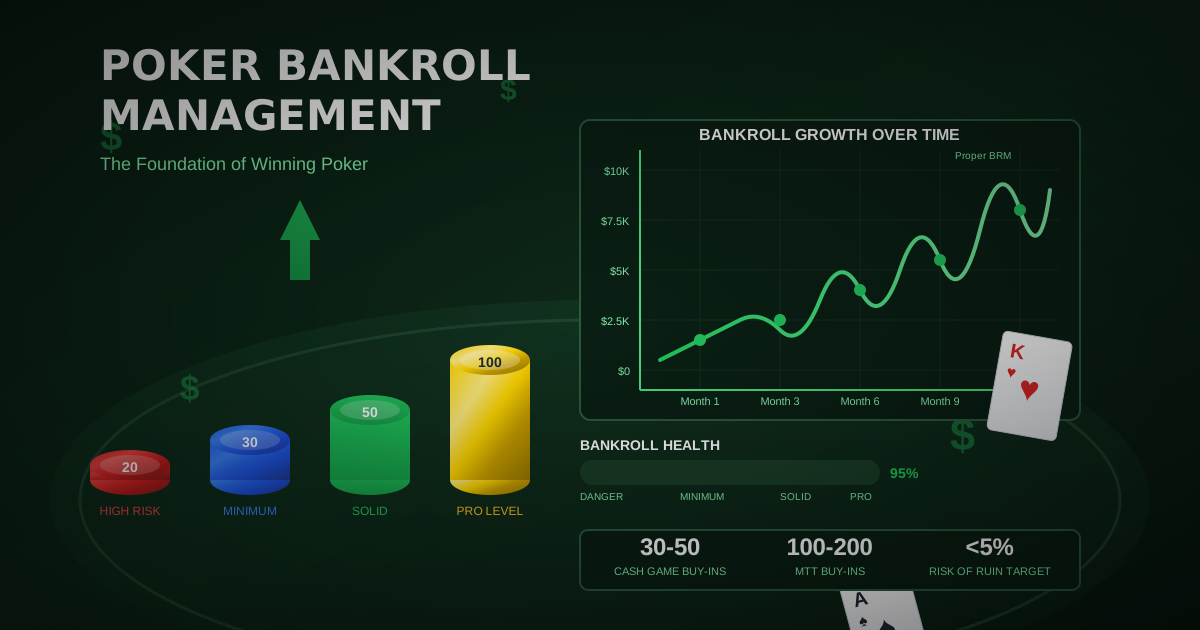
- Total bankroll: Set aside a specific dollar amount you can afford to lose entirely without impacting your financial well-being.
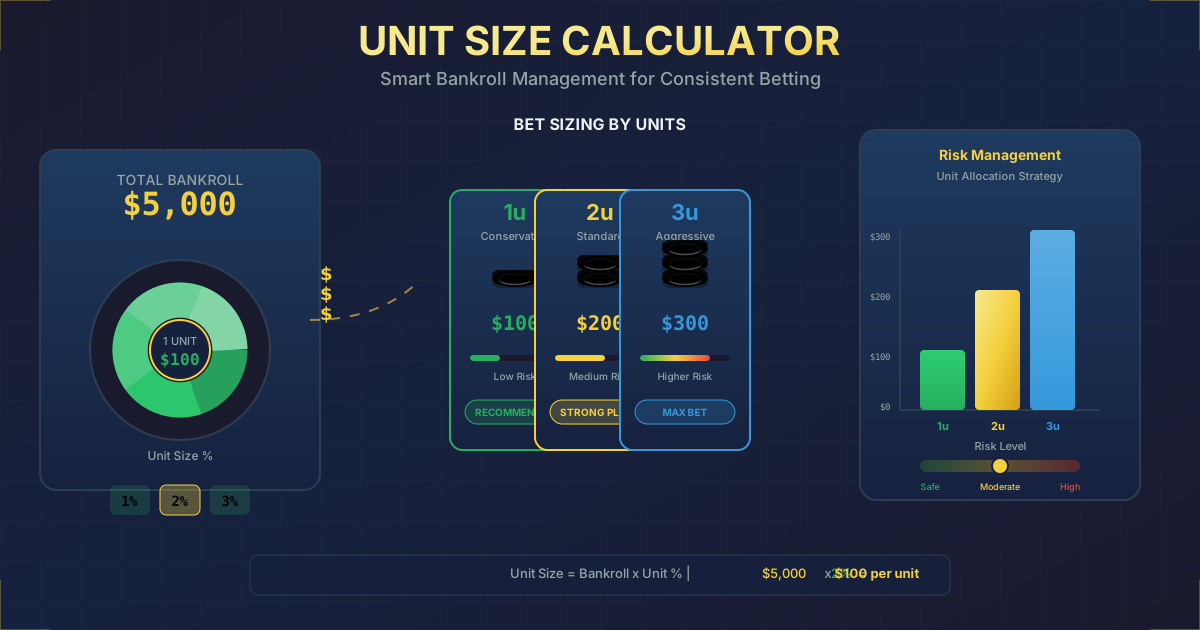
- Standard unit size: 1-3% of your total bankroll per bet. A $5,000 bankroll should use $50-$150 units.
- Maximum exposure: Never have more than 10-15% of your bankroll at risk on a single day's games.
- Teaser/parlay allocation: Limit teasers and parlays to no more than 15-20% of your total wagering volume.
Bet Sizing by Confidence Level
| Confidence Level | Unit Size | When to Use |
|---|---|---|
| Standard play | 1 unit (1-2% of bankroll) | Your analysis identifies moderate value |
| Strong play | 2 units (2-4% of bankroll) | Multiple angles align; significant line discrepancy |
| Max play | 3 units (3-5% of bankroll) | Rare; strong situational + statistical alignment |
Never bet more than 5% of your bankroll on a single wager, no matter how confident you are. A 10-bet losing streak at 5% per bet wipes out 40% of your bankroll, and losing streaks of that length are common even for 55% bettors.
Example: A bettor with a $3,000 bankroll identifies a strong Wong teaser opportunity (2 units = $60 at risk to win $54.55 at -110). They also see a solid spread play on a home divisional underdog (1 unit = $33 to win $30). Their total exposure for the day is $93, or 3.1% of bankroll. This is disciplined, sustainable betting.
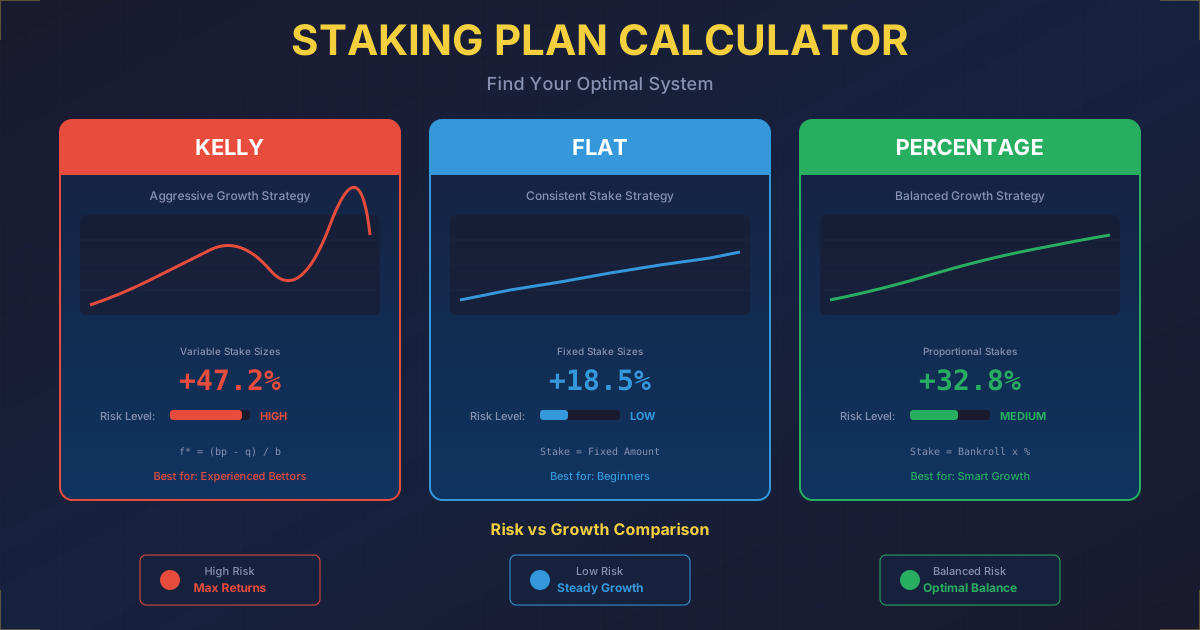
Calculate optimal bet sizing for every wager with our Kelly Criterion Calculator and track your bankroll health over the season.
Advanced NFL Betting Concepts
Market Efficiency by Bet Type
Not all NFL betting markets are created equal. Understanding where the market is sharpest helps you focus your handicapping effort where it matters most.
| Market | Efficiency Level | Opportunity | Notes |
|---|---|---|---|
| Sides (spread) | Very High | Small | Sharpest market; requires precision to beat |
| Totals (O/U) | High | Moderate | Under bias from public creates consistent small edges |
| First-half spreads | Moderate-High | Moderate | Less sharp money; scripted opening drives create value |
| Teasers (Wong) | Moderate | Moderate-High | Key number crossing still provides edge at right price |
| Player props | Moderate | High | Books spread thin across hundreds of markets |
| Game props (1Q, 1H) | Moderate | Moderate-High | Less efficiently priced than full-game markets |
| Futures | Low-Moderate | Variable | Longshot value exists early; overvalued close to playoffs |
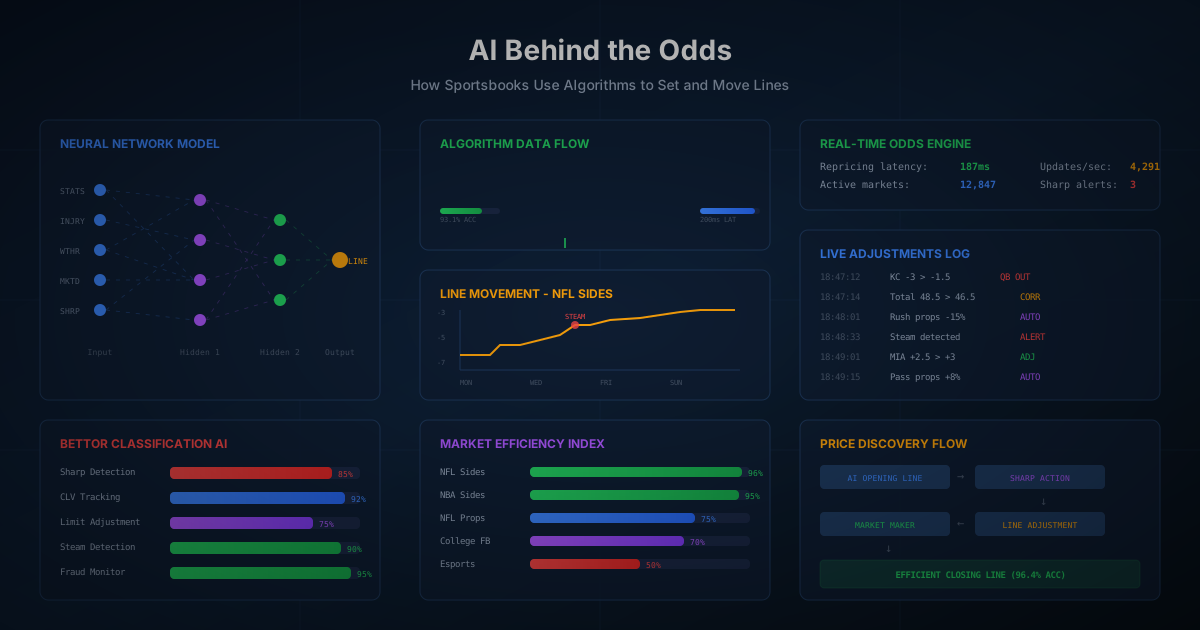
| Live betting | High (algorithmic) | Narrow windows | Algorithms are efficient, but overreact to volatile moments |
Closing Line Value (CLV) as Your Performance Metric
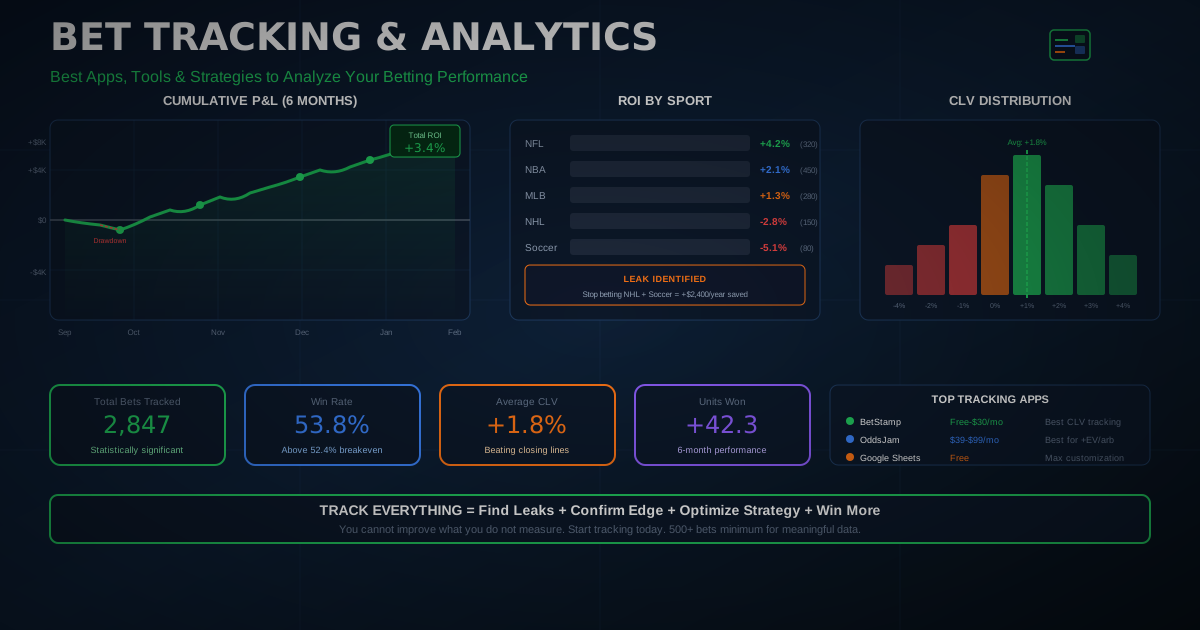
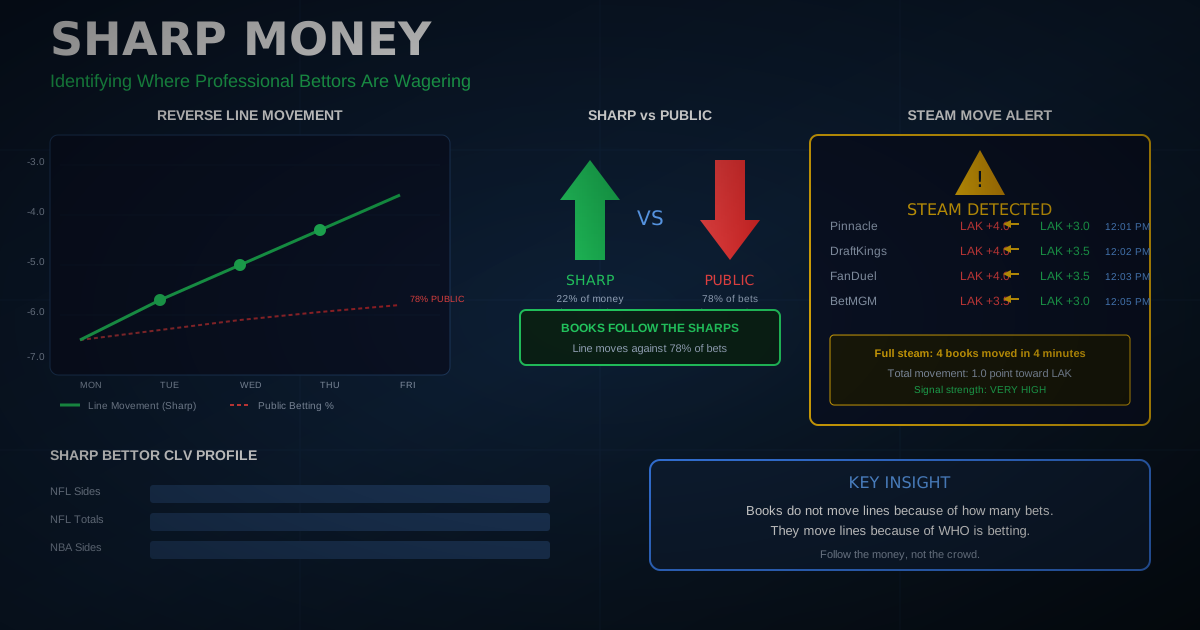
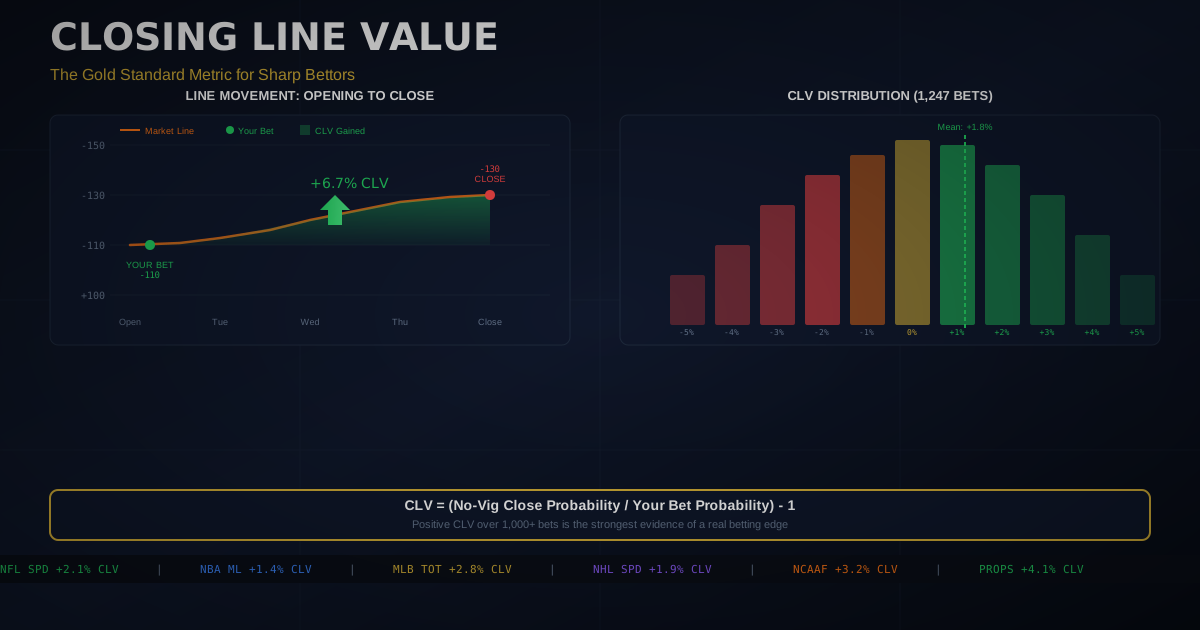
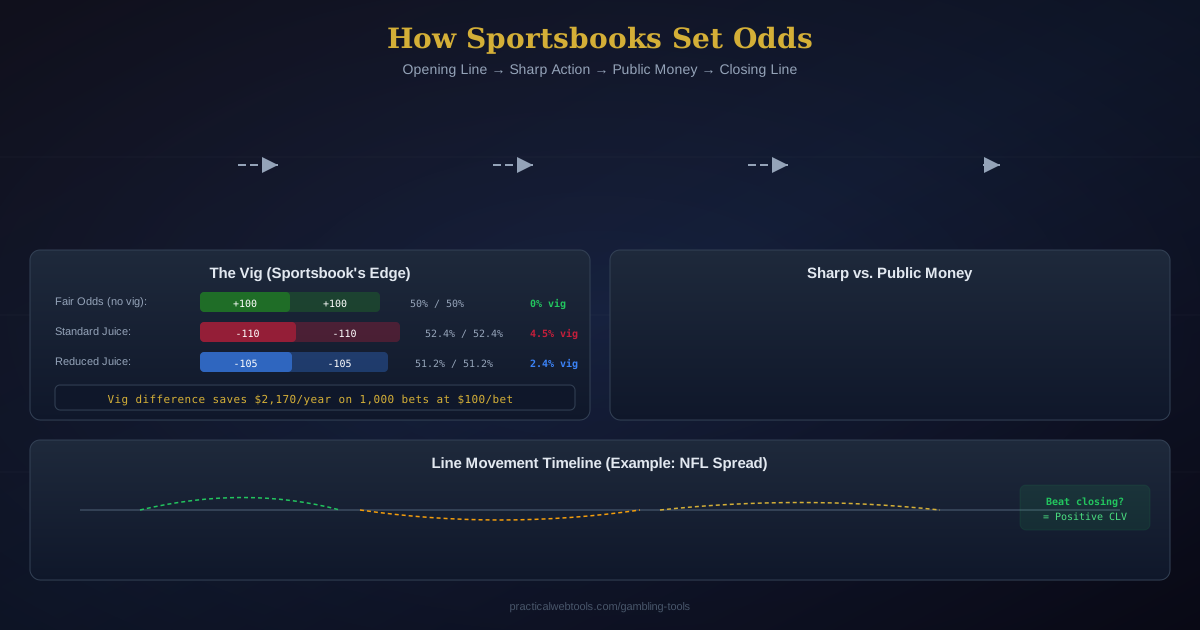
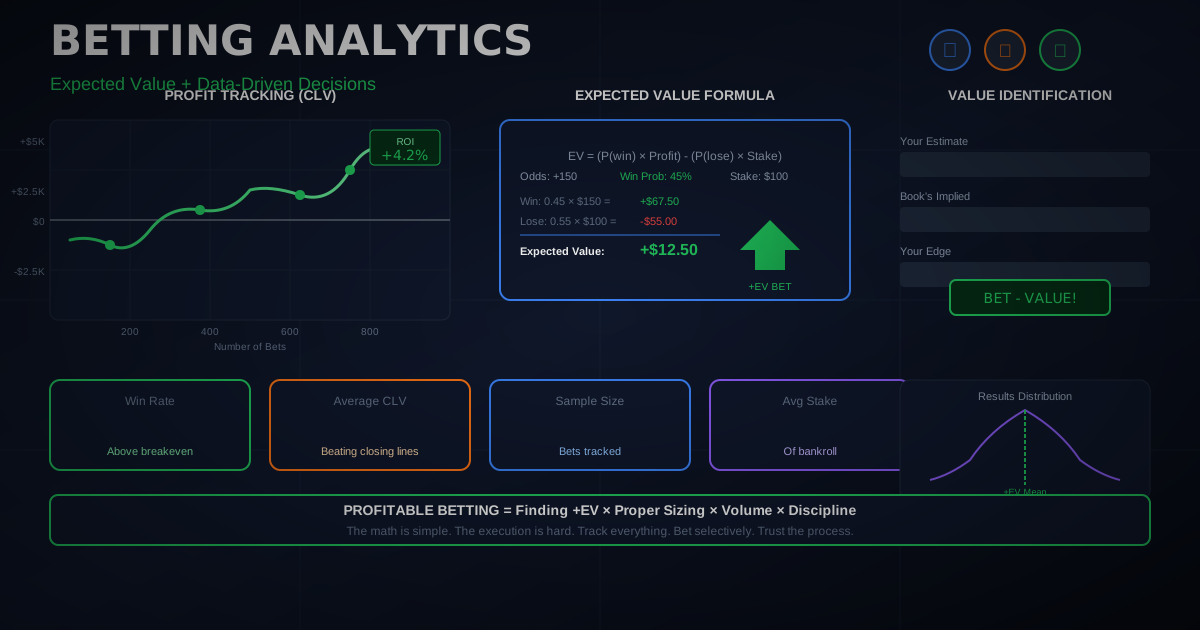
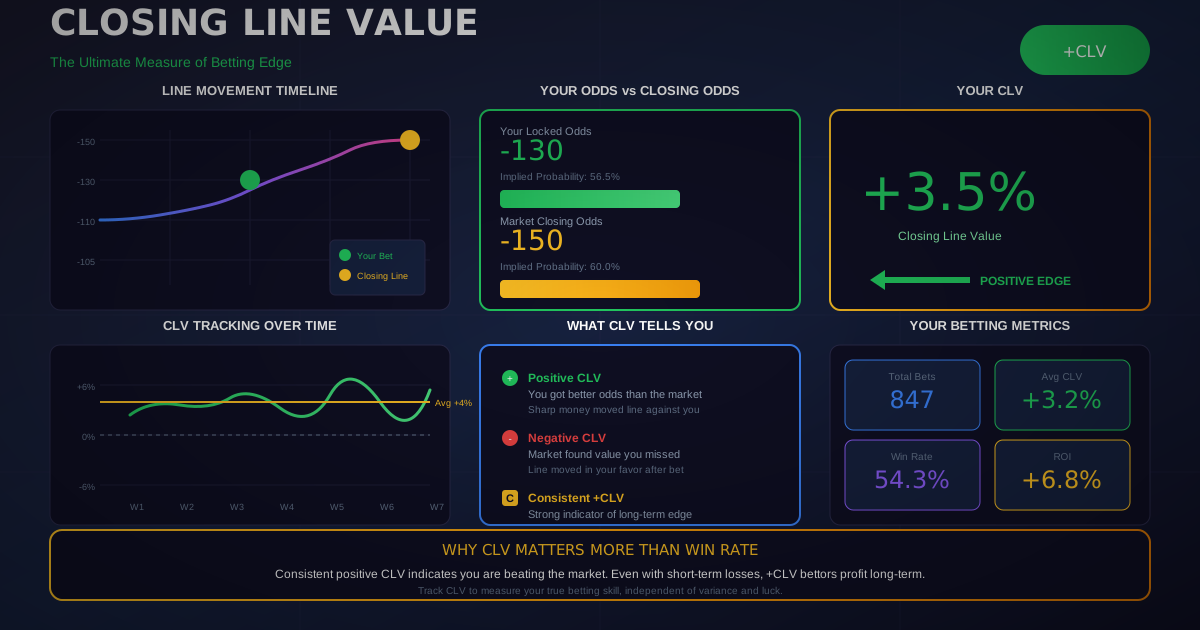
The single best measure of a bettor's skill is whether they consistently beat the closing line. The closing line, the final spread posted before kickoff after all sharp money has been factored in, represents the market's best estimate of true probability.
If you bet the Bills -3 on Tuesday and the line closes at Bills -4 on Sunday, you achieved +1 point of CLV. Over hundreds of bets, consistent positive CLV is the strongest indicator of long-term profitability.
Track your CLV systematically with our CLV Tracker.
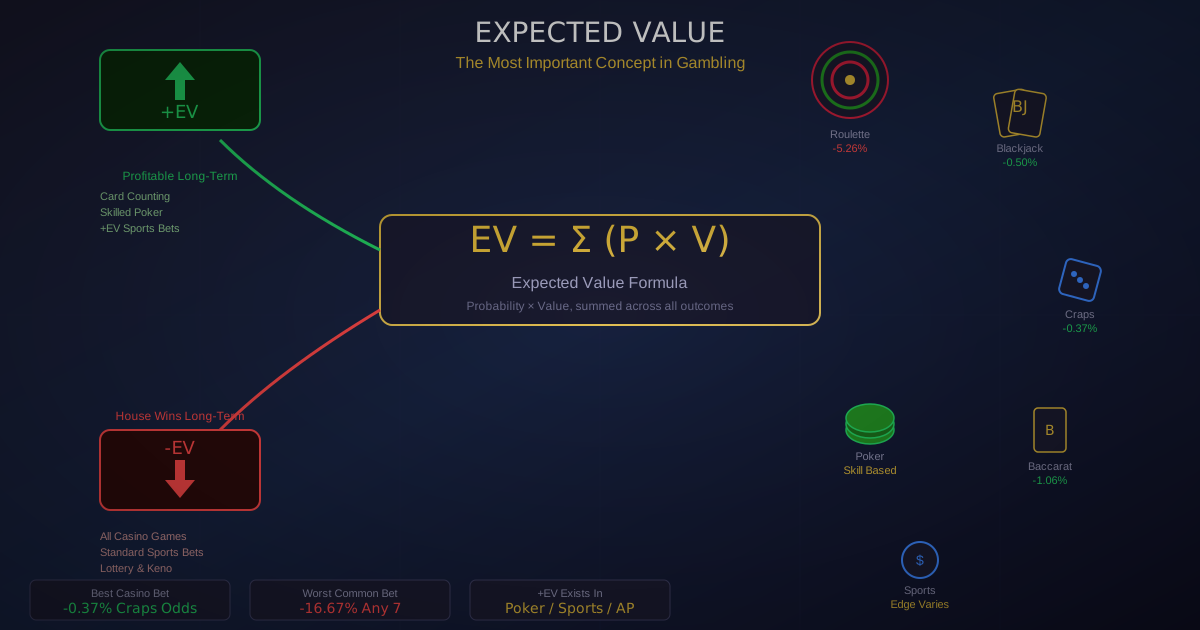
Expected Value and the Long Game
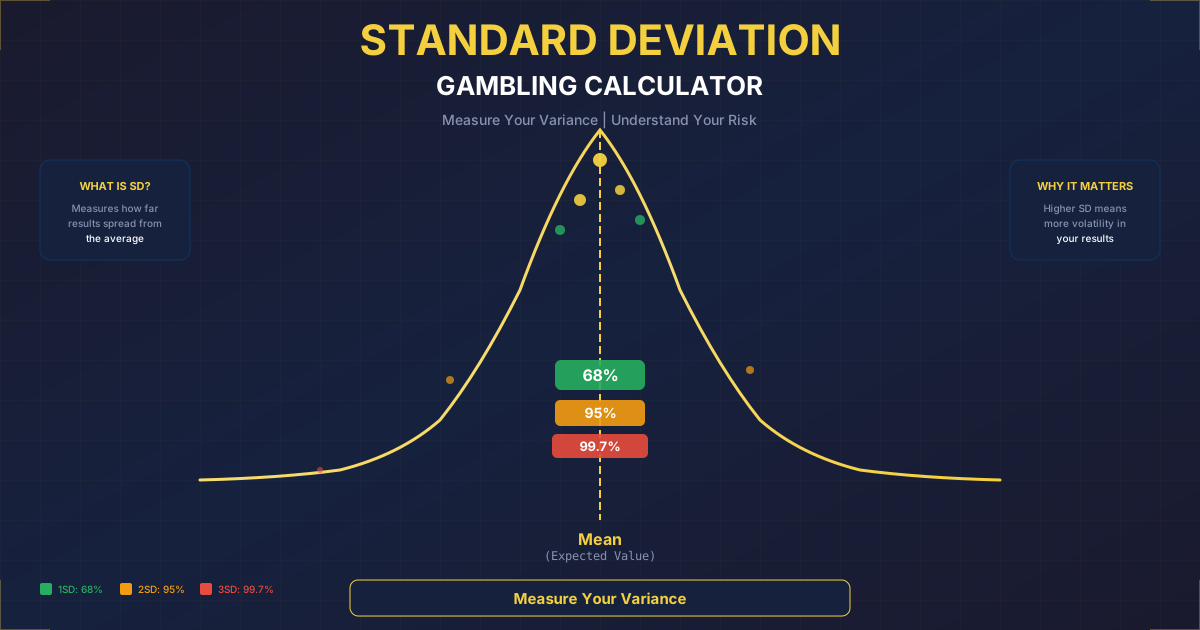
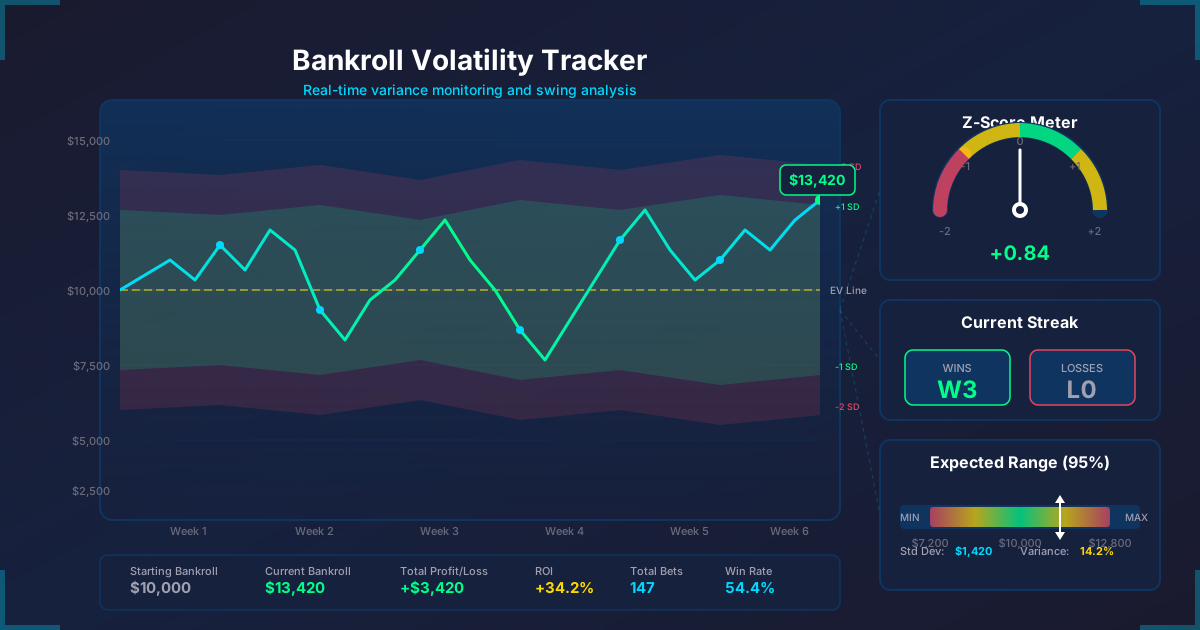
A single NFL bet is a coin flip with noise. Over 200+ bets in a season, skill separates from luck. The key mental framework is to evaluate your process, not your results on any given Sunday.
Your real-world workflow should be:
- Generate your projected spread using power ratings and situational adjustments
- Compare your number to the market line
- If the discrepancy exceeds your minimum threshold (typically 1.5-2 points), bet
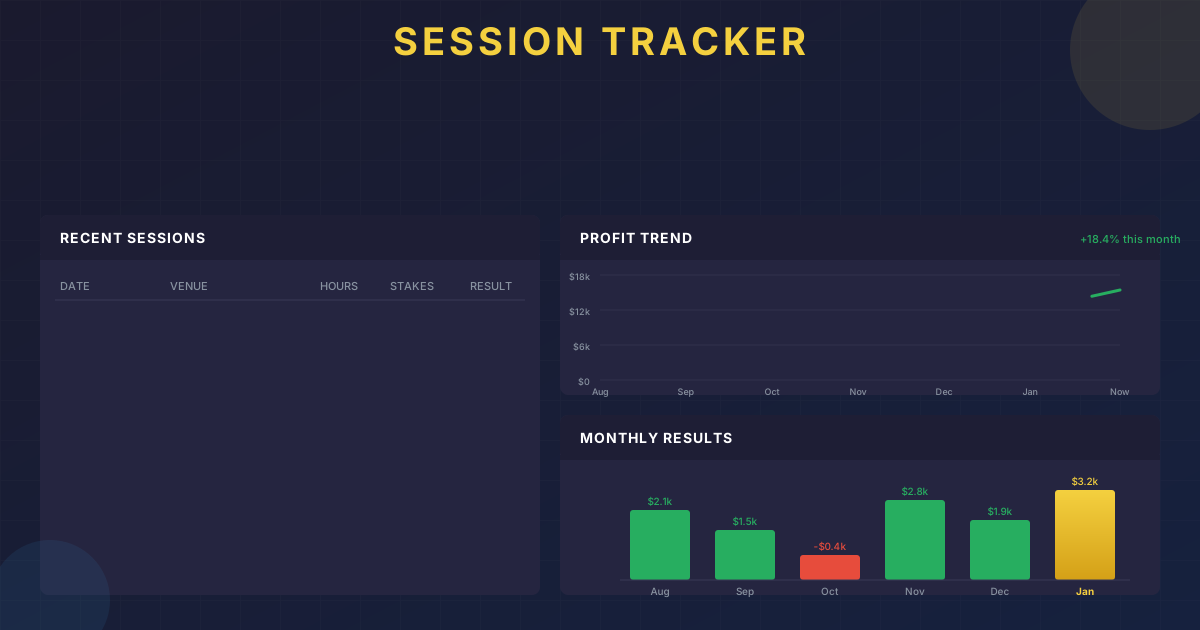
- Record the opening line, your line, the closing line, and the result
- Review monthly for CLV trends and calibration
Quantify the expected value of every bet before you place it with our Expected Value Calculator.
NFL Hedging and Round Robin Strategies
When to Hedge Your NFL Bets
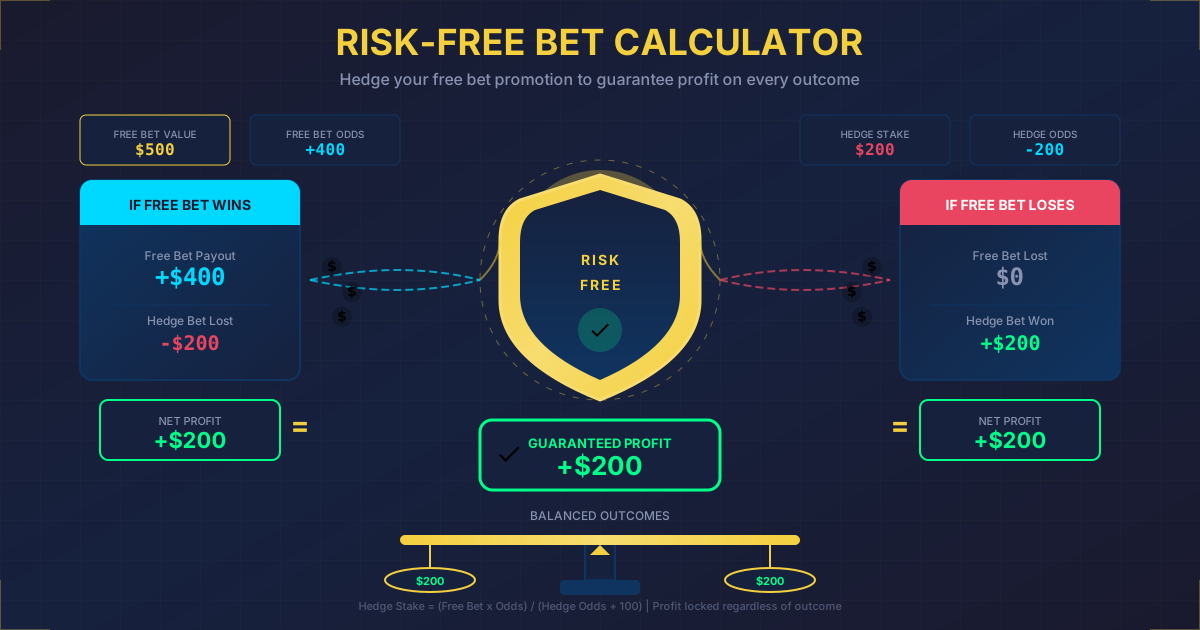
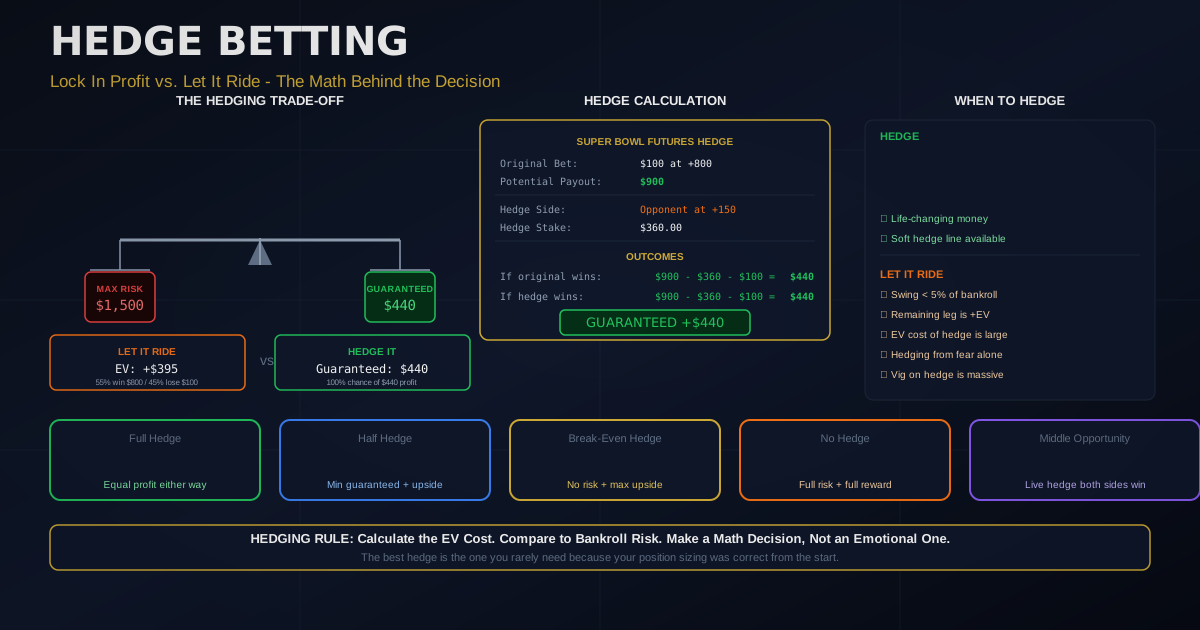
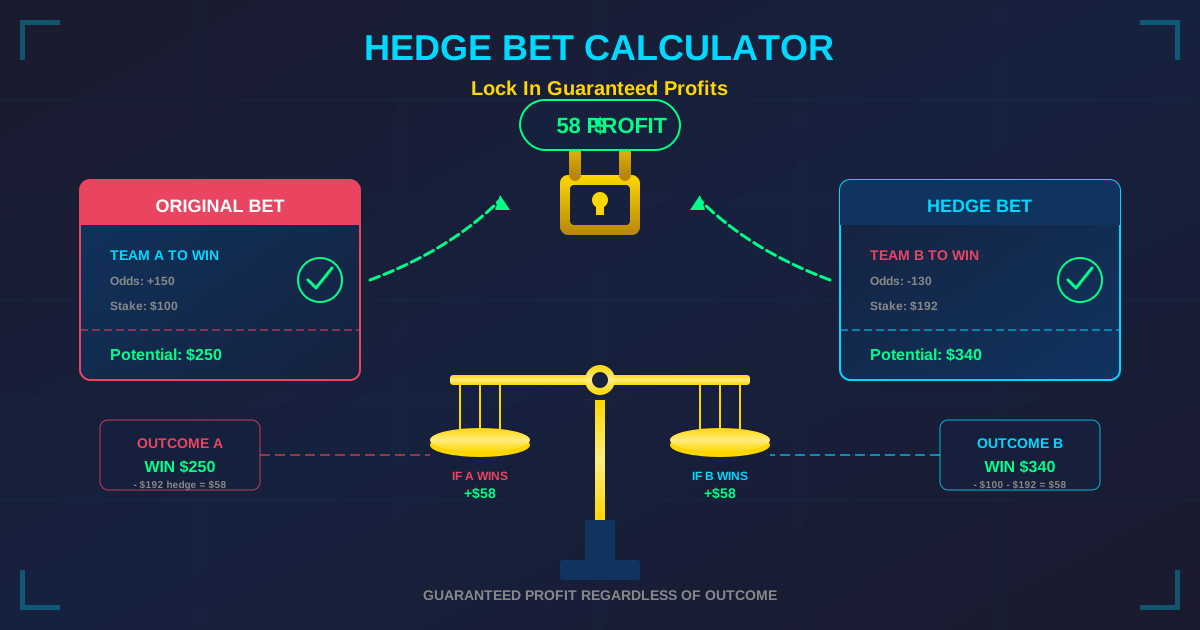
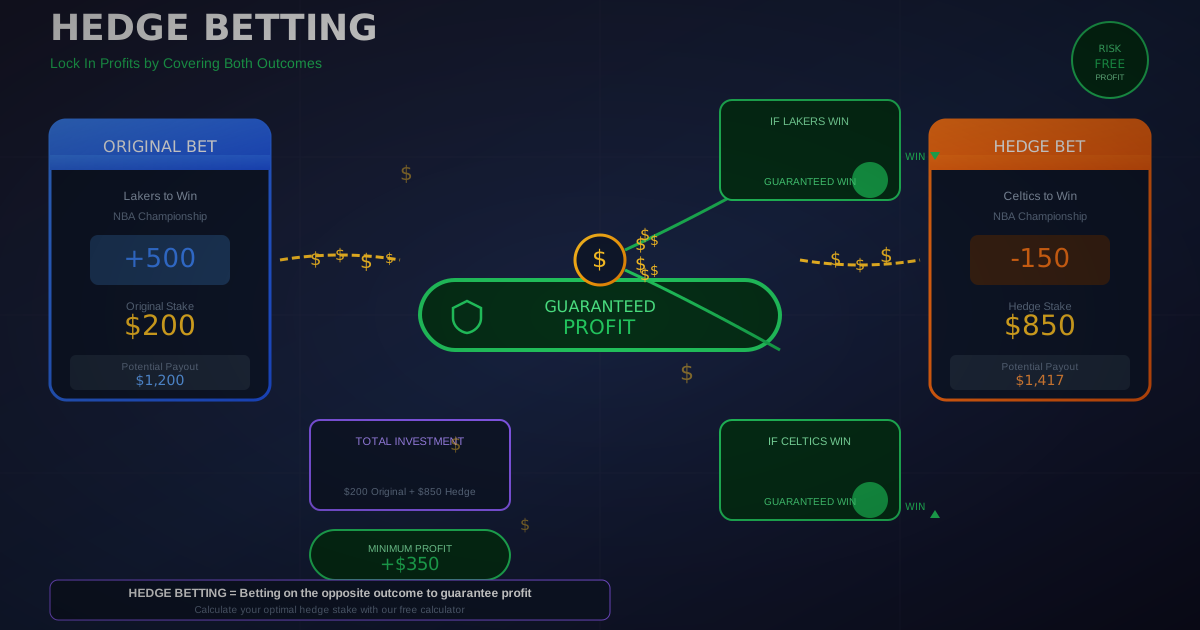
Hedging, placing a bet on the opposite side of an existing wager to guarantee profit or minimize loss, makes mathematical sense in specific NFL scenarios:
- Futures nearing completion. If you bet the Lions at +2500 to win the Super Bowl preseason and they reach the championship game, hedging locks in guaranteed profit regardless of outcome.
- Large parlay legs. If you hit a 5-leg parlay and the final leg is pending, hedging on the other side secures a guaranteed payout.
- Changed circumstances. If a key player suffers a late injury that dramatically changes your assessment, hedging can protect your position.
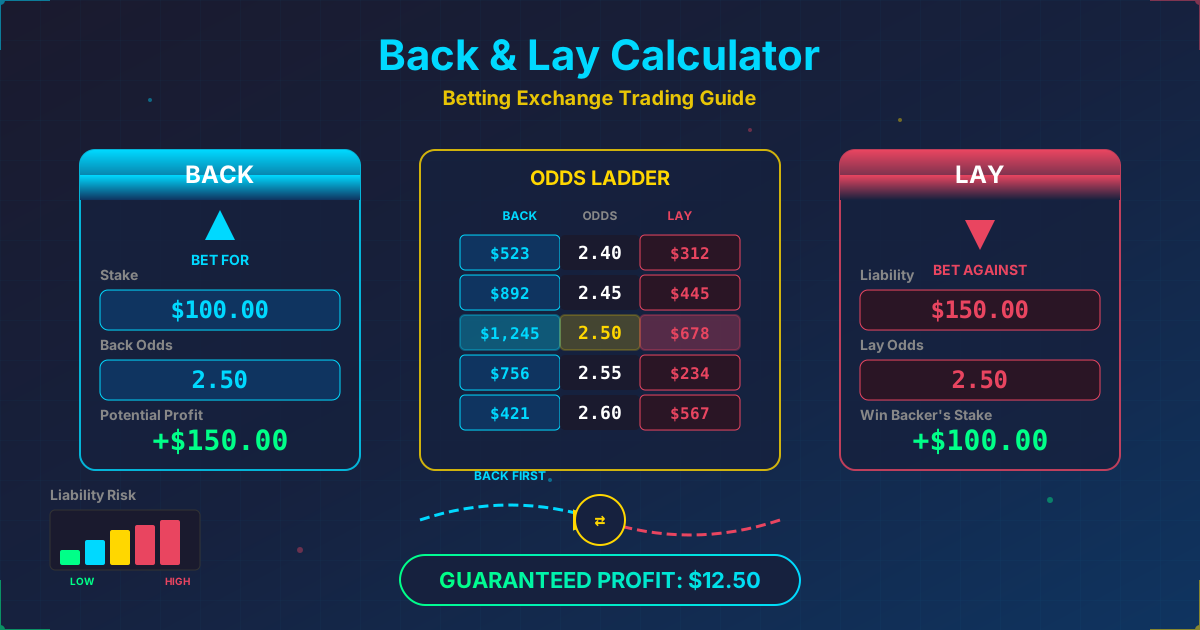
Example: You placed a $50 futures bet on the Detroit Lions at +2500 to win the Super Bowl, a potential $1,300 payout. They reach the Super Bowl as 2-point underdogs against the Chiefs. You can hedge by betting $600 on the Chiefs -2 (-110). If the Chiefs cover, you win $545.45 on the hedge minus your $50 futures loss = $495.45 profit. If the Lions win, you collect $1,300 from the future minus $600 hedge = $700 profit. Either way, you lock in $495-$700 guaranteed.
Calculate the optimal hedge amount for any scenario with our Hedge Calculator.
Round Robin Betting for NFL Sundays
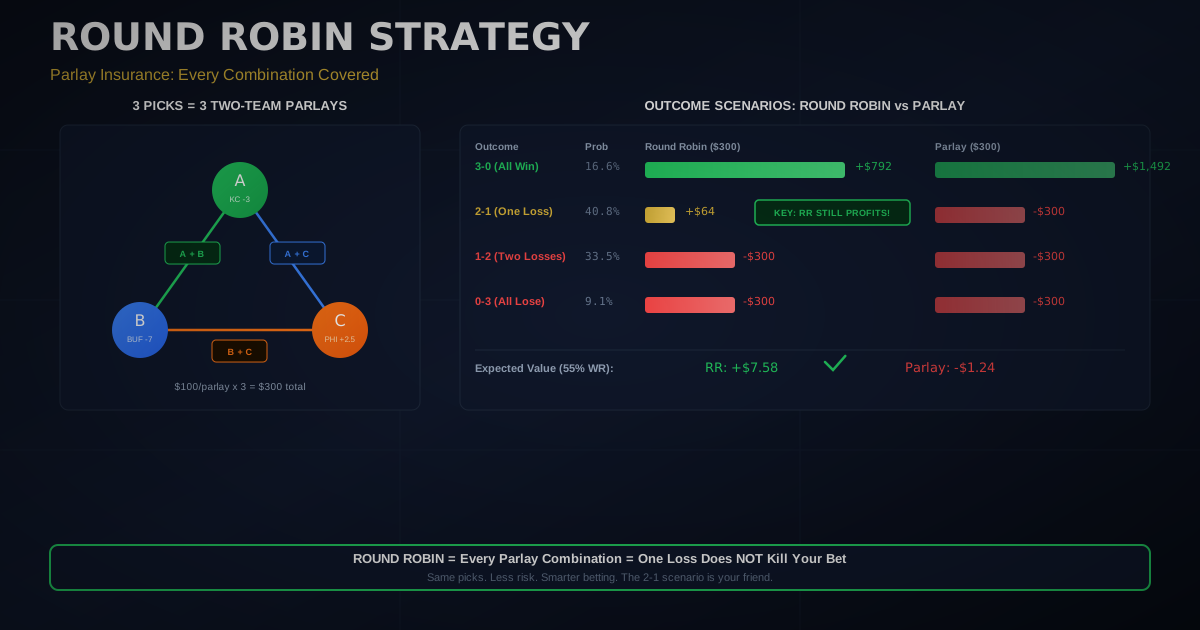
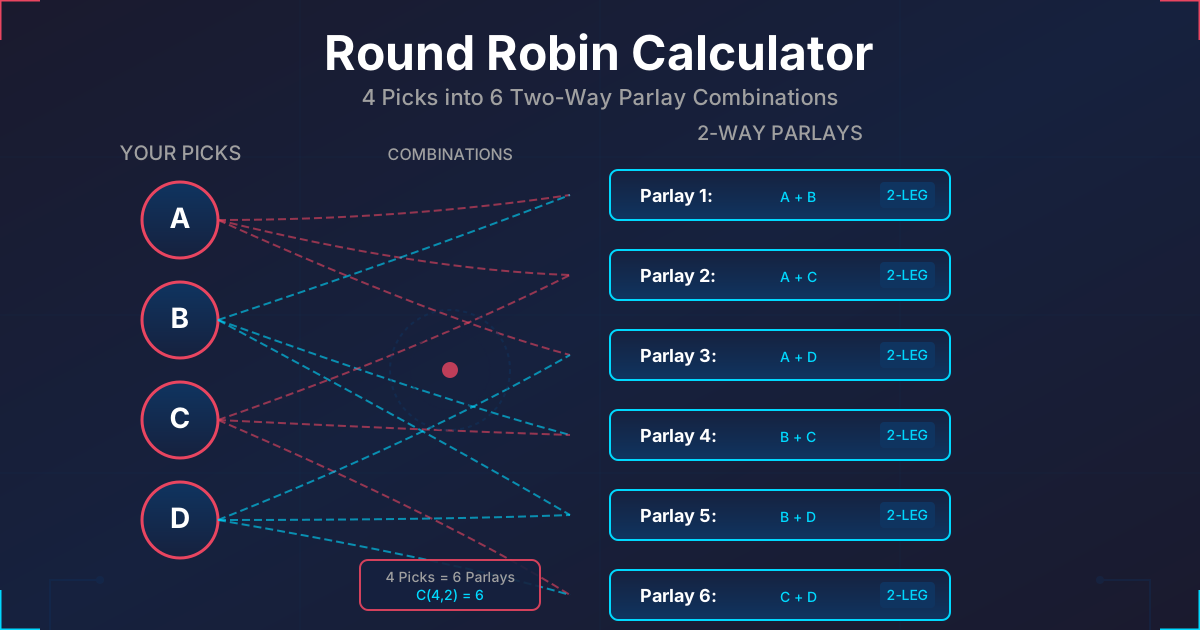
A round robin creates every possible parlay combination from a selection of bets. If you like three NFL games on Sunday, a round robin generates three two-team parlays. This approach reduces variance compared to a single three-team parlay while maintaining higher upside than flat betting each game individually.
Compute your exact round robin payouts with our Round Robin Calculator.
Checking for Arbitrage Opportunities
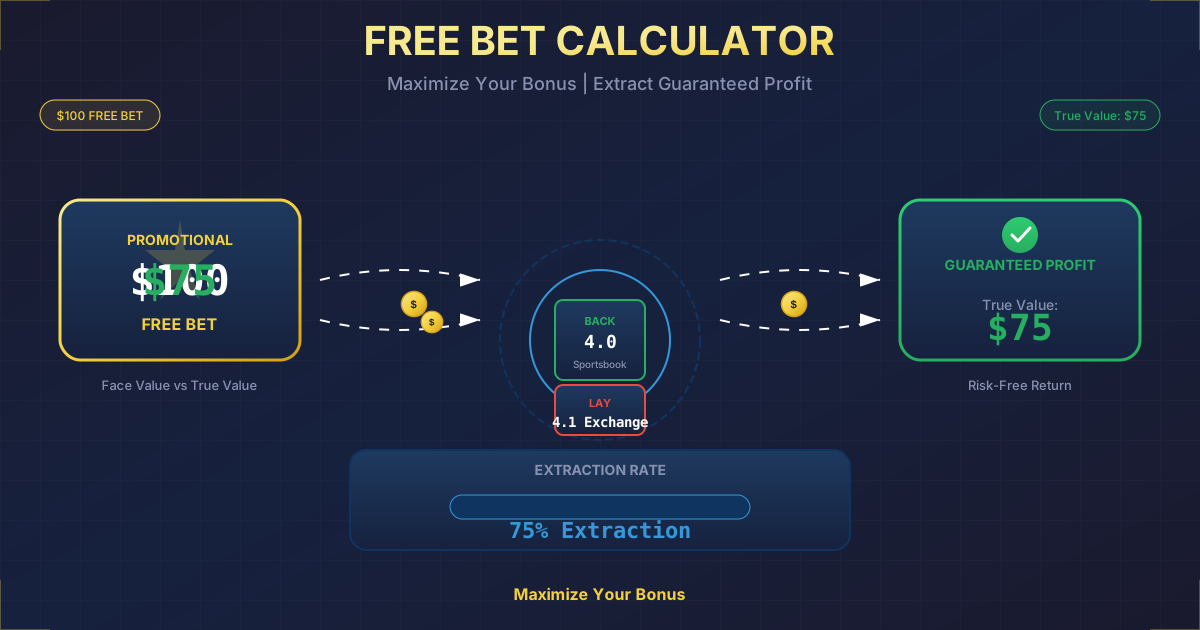
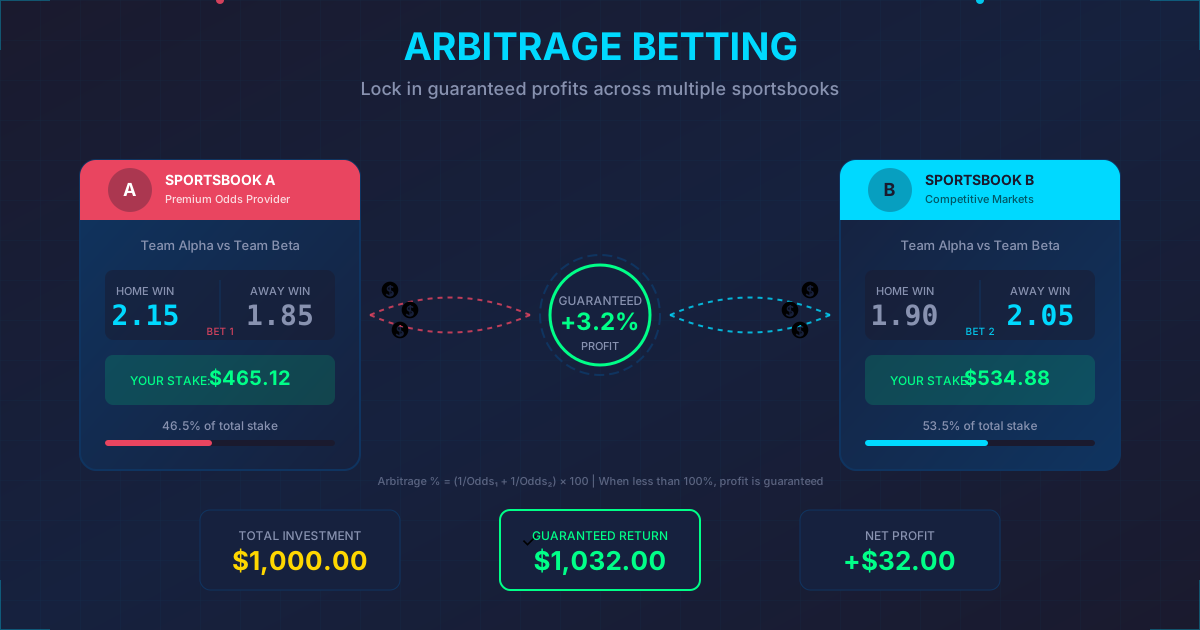
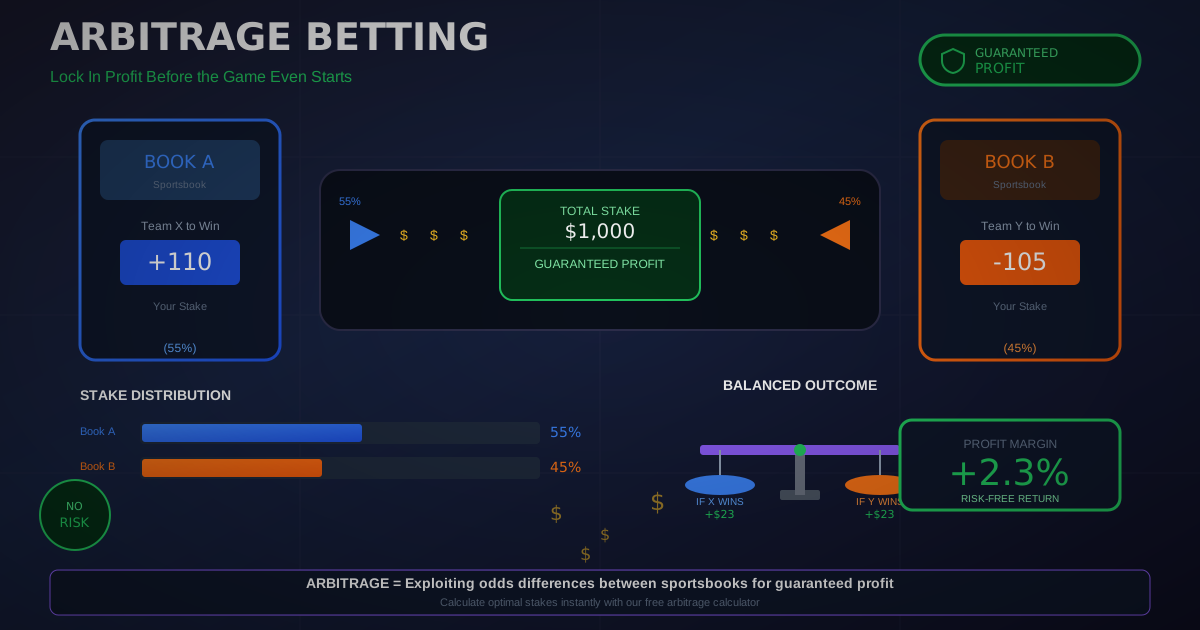
Arbitrage betting exploits price discrepancies between sportsbooks. In NFL markets, true arbitrage (guaranteed profit regardless of outcome) is rare on main spreads but occurs more frequently on:
- Player props (different books model player performance differently)
- Alternate spreads (wider variance in pricing)
- First-half/first-quarter lines (less liquid markets)
When you find two books offering lines that create a guaranteed profit window, you bet both sides proportionally and lock in risk-free returns.
Scan for arbitrage opportunities with our Arbitrage Calculator.
Understanding and Exploiting the Vig
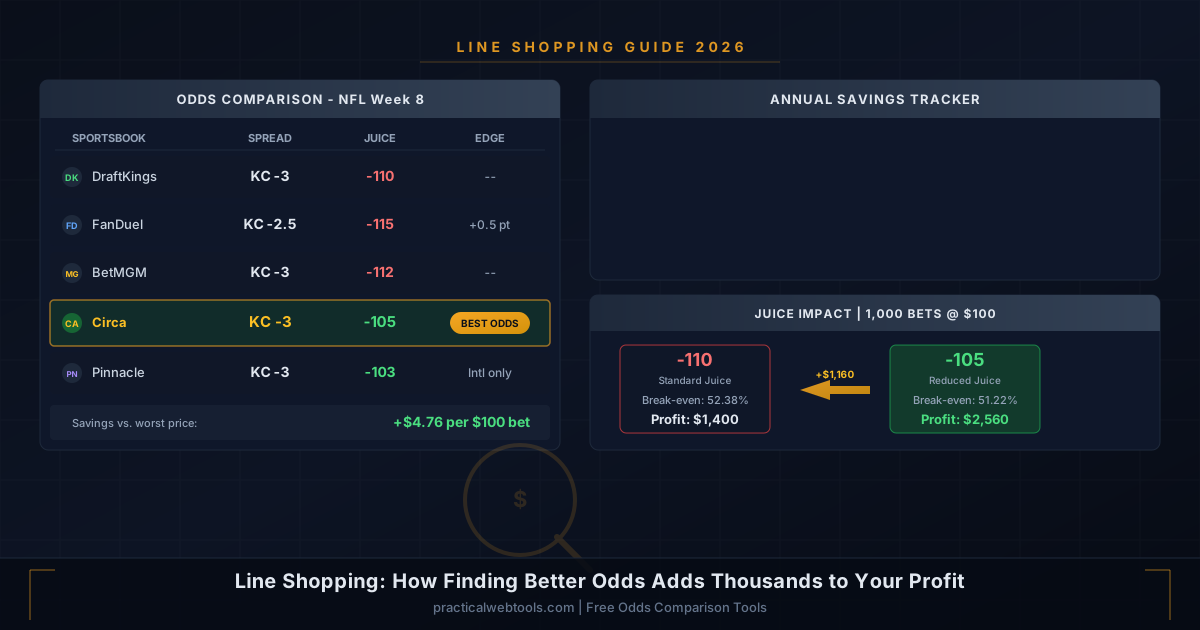
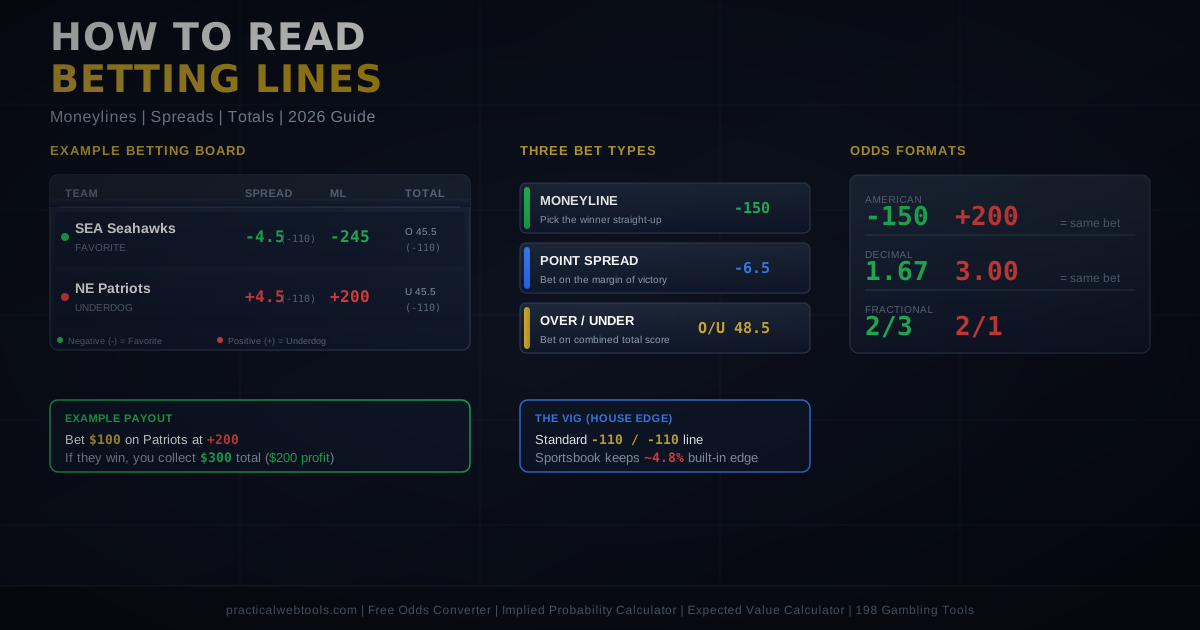
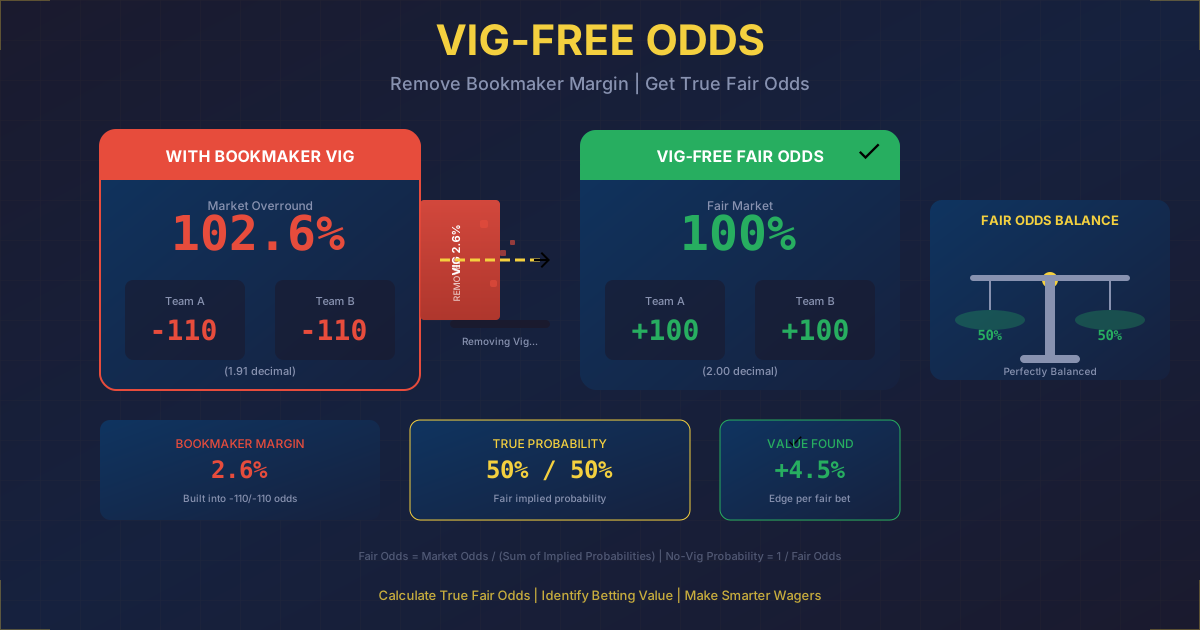
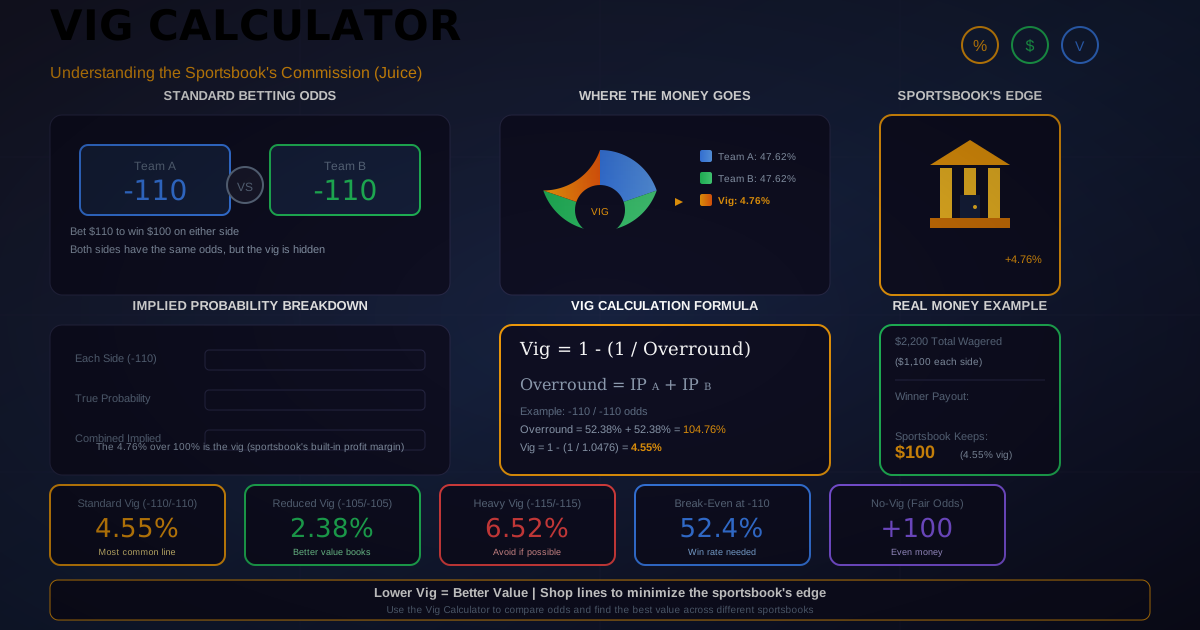
The vigorish (vig or juice) is the sportsbook's built-in commission. Standard NFL spreads are priced at -110 on both sides, giving the book a 4.5% hold. But not all books charge the same vig.
If Book A offers -108 on the Bills and Book B offers -108 on the Dolphins, your combined hold drops to approximately 3.8%. At -105 on both sides (available at some reduced-juice books), the hold falls to 2.4%. Over hundreds of bets, the difference between paying -110 and -105 is substantial.
A bettor placing 300 bets per season at $100 each:
- At -110: Needs 52.38% win rate to break even. 55% wins = $1,500 profit.
- At -105: Needs 51.22% win rate to break even. 55% wins = $2,250 profit.
The reduced-juice bettor earns 50% more profit at the same win rate, simply by paying less vig.
Calculate the hold on any two-sided market with our Hold/Vig Calculator.
Frequently Asked Questions
What is the most important key number in NFL betting?
Three is the single most important key number in NFL betting. Approximately 15.3% of all NFL games are decided by exactly 3 points, making it the most common margin of victory by a wide margin. When evaluating spreads, always consider whether a half-point move crosses the number 3. Getting +3.5 instead of +3, or -2.5 instead of -3, provides more value than any other single half-point in the sport.
How do Wong teasers work, and are they still profitable in 2026?
Wong teasers are 6-point, two-team NFL teasers that move favorites from -7.5 to -8.5 down through both key numbers (7 and 3) to -1.5 to -2.5, or underdogs from +1.5 to +2.5 up through 3 and 7 to +7.5 to +8.5. Historically, qualifying Wong teaser legs cover at 74-77%, exceeding the 72.4% breakeven needed at -110 odds. However, many books in 2026 price teasers at -120 to -135, which reduces or eliminates the edge. Wong teasers remain profitable only at -110 or better pricing.
What win percentage do I need to be profitable betting NFL spreads?
At standard -110 odds, you need to win 52.38% of your bets to break even. A 55% win rate generates meaningful profit over a full season, and 57%+ is considered elite. At reduced juice (-105), the breakeven drops to 51.22%, making profitable betting significantly more accessible. Most professional NFL bettors sustain win rates between 53% and 57% over multi-year periods.
Should I bet NFL totals or spreads?
Both markets offer value, but they require different skill sets. Spread betting demands accurate team-strength assessment, while totals betting relies more on pace, game environment, and weather analysis. Many sharp bettors find totals slightly easier to beat because the public's Over bias creates a persistent Under edge. A balanced approach that incorporates both spreads and totals is optimal.
What is Closing Line Value and why does it matter?
Closing Line Value (CLV) measures the difference between the odds at which you placed your bet and the final odds at game time. Positive CLV means you got a better number than the market closing line. CLV is widely considered the best predictor of long-term betting success because the closing line reflects the most accurate market-consensus probability. Bettors who consistently achieve positive CLV are finding genuine value, even during short-term losing streaks.
How much of my bankroll should I bet on each NFL game?
Most professional bettors risk 1-3% of their total bankroll per bet, with a maximum of 5% on their highest-conviction plays. A $5,000 bankroll should use $50-$150 standard units. Never have more than 10-15% of your total bankroll at risk on a single day's slate. This approach withstands inevitable losing streaks while allowing your bankroll to grow during profitable stretches.
Are NFL player props a good betting market?
NFL player props represent one of the best opportunities for finding mispriced lines. Sportsbooks must set hundreds of prop lines per game, and their models cannot be as precise as their main spread and total models. Props related to rushing yards in weather games, passing yards in blowout projections, and touchdown scorers at plus-money odds are areas where sharp bettors consistently find soft lines.
What is the best time of the NFL season to bet?
September is widely considered the most profitable month for sharp bettors. The market relies on preseason projections and prior-year narratives, which means improved teams are undervalued and declining teams are overvalued. As the season progresses and more data becomes available, the market becomes more efficient. Late-season divisional games and weather-impacted outdoor contests also offer above-average value.
Essential NFL Betting Tools
Put your strategy into practice with these free calculators:
- Odds Converter: Convert between American, decimal, and fractional odds instantly
- Parlay Calculator: Calculate multi-leg parlay payouts and implied probability
- Expected Value Calculator: Quantify your edge on any bet
- Kelly Criterion Calculator: Determine optimal bet sizing based on your edge
- Implied Probability Calculator: Convert odds to true probability
- Hold/Vig Calculator: Measure the sportsbook's margin on any market
- Hedge Calculator: Calculate optimal hedge bets to lock in profit
- Teaser Calculator: Build and evaluate NFL teaser combinations
- Round Robin Calculator: Compute every parlay combination from your selections
- CLV Tracker: Track your closing line value over time
- Arbitrage Calculator: Identify and calculate risk-free arbitrage opportunities
Conclusion
Profitable NFL betting is not about picking winners. It is about finding value, situations where the sportsbook's line does not accurately reflect the true probability of an outcome. The framework presented in this guide, from power ratings and situational handicapping to key number exploitation and Wong teasers, gives you the analytical tools to identify those situations systematically.
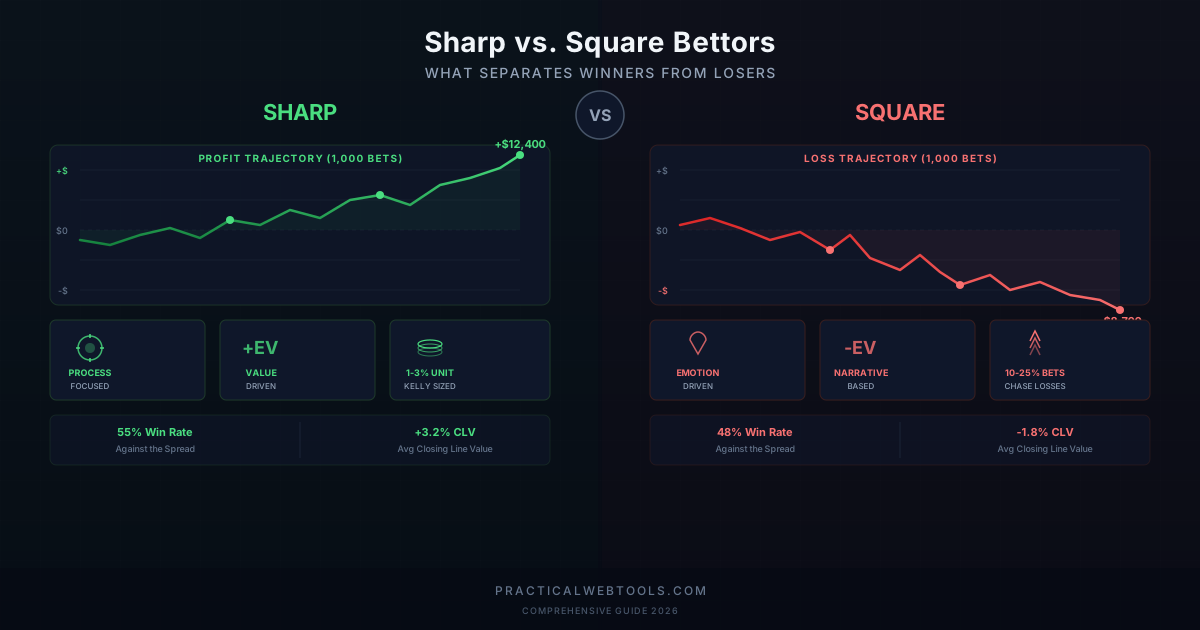
The sharps who beat the NFL market year after year share common traits: they build and maintain power ratings, they understand key numbers deeply, they shop for the best lines religiously, they manage their bankroll conservatively, and they track their CLV obsessively. None of these require insider information or a genius-level football IQ. They require discipline, consistency, and a commitment to treating sports betting as a serious analytical pursuit rather than entertainment.
Start with one or two areas of this guide. Master the key numbers. Build a simple power rating model. Track every bet and measure your CLV. Over time, expand into teasers, props, and live betting as your understanding deepens. The NFL betting market will always offer opportunities to the prepared mind.
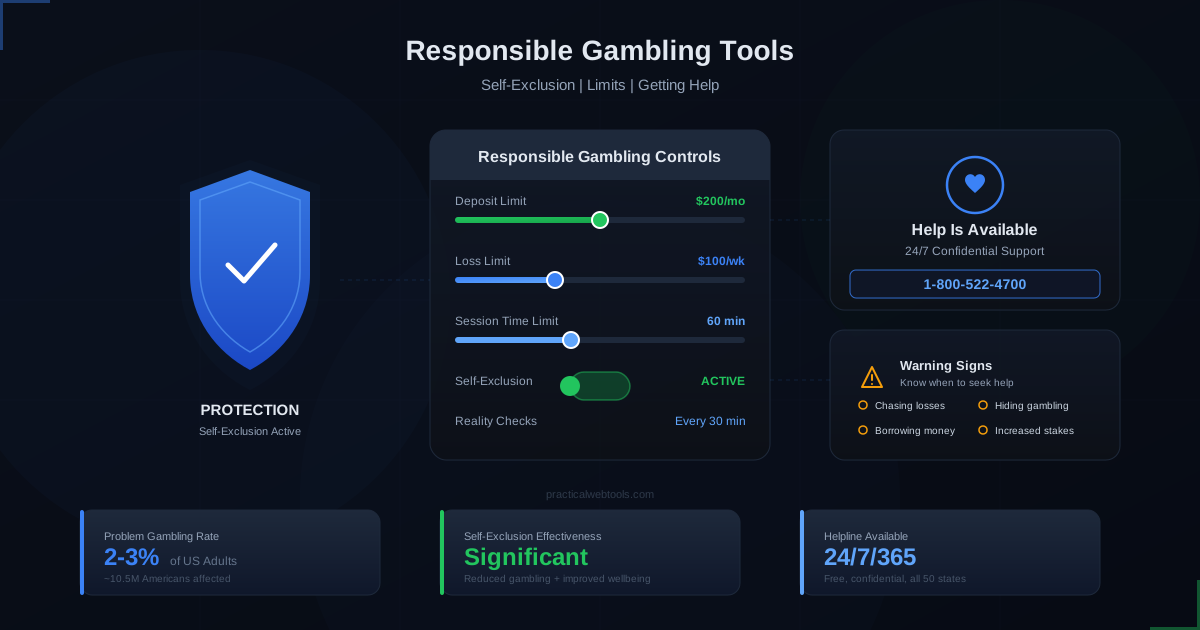
Gambling involves risk. This content is for educational and informational purposes only. Always gamble responsibly, set limits you can afford, and seek help if gambling becomes a problem. Visit the National Council on Problem Gambling or call 1-800-522-4700 for support.