Video Poker Hold Percentage Calculator: Casino Advantage Analysis (2026)
Video Poker Hold Percentage Calculator: Understanding Casino Advantage
Hold percentage measures what the casino keeps from video poker play. Our calculator shows how theoretical hold differs from actual hold, how player skill creates the gap, and what hold percentages mean for your expected losses.
What Is Hold Percentage?
Hold percentage represents the portion of money wagered that the casino retains. Unlike house edge (which measures expected loss per bet), hold measures actual money kept from total action—affected by player decisions, play duration, and game selection.
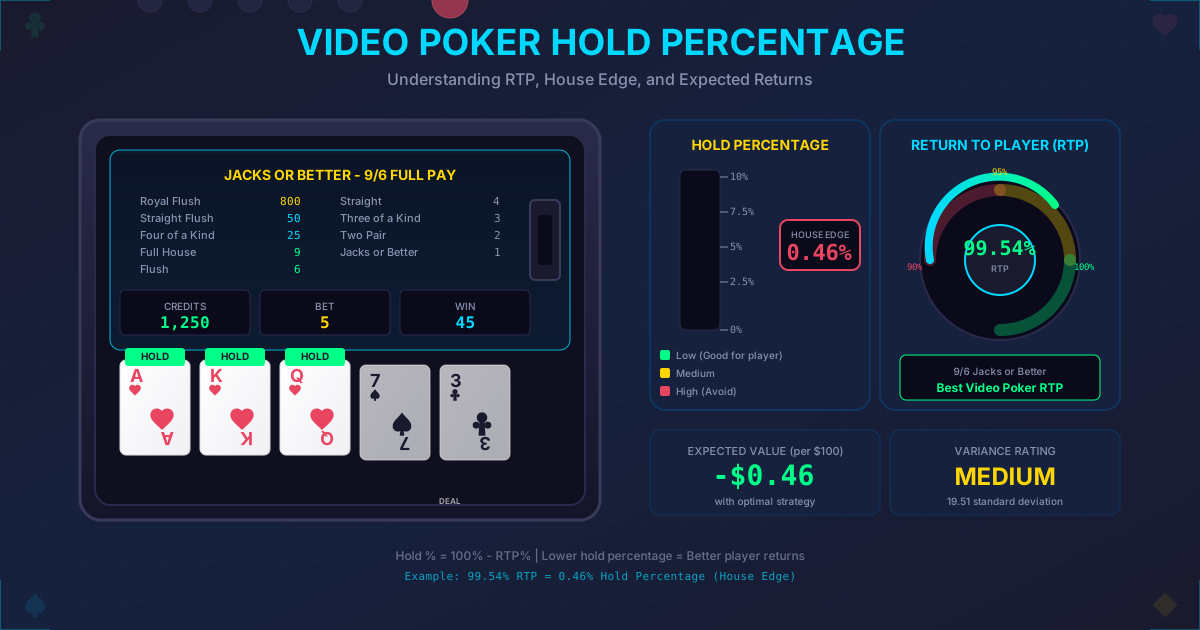
Quick Answer: Hold percentage = casino's actual retention from total wagers. Theoretical hold = 100% - return percentage. Actual hold often higher due to player errors. Example: 99.54% return = 0.46% theoretical hold. Poor play might create 2-5% actual hold. Casinos track hold to evaluate game performance. Lower hold = better for players.
How to Use Our Calculator
Use the Hold Percentage Calculator →
Calculate expected hold based on game and skill level.
Step-by-Step Instructions
-
Select Video Poker Game: Jacks or Better, etc.
-
Enter Pay Table: Specific payouts
-
Estimate Skill Level: Perfect to average
-
View Theoretical Hold: With optimal play
-
Calculate Actual Hold: With skill adjustment
Input Fields Explained
| Field | Description | Example |
|---|---|---|
| Game Type | VP variant | Jacks or Better |
| Pay Table | Full/short pay | 9/6 |
| Return % | Theoretical | 99.54% |
| Theoretical Hold | Optimal play | 0.46% |
| Skill Level | Your play | 95% of optimal |
| Actual Hold | Estimated | 2.96% |
Hold vs House Edge
The Distinction
House edge:
Per-bet expected loss
Theoretical, assumes perfect play
Single decision measure

Hold percentage:
Casino's actual retention
Real-world measurement
Includes all player actions
Mathematical Relationship
Theoretical hold = House edge

But actual hold can differ:

Perfect player on 9/6 JoB:
House edge: 0.46%
Theoretical hold: 0.46%

Average player on 9/6 JoB:
Actual hold: 2-4%
(Errors add to casino retention)
Why They Differ
Actual hold exceeds theoretical because:

1. Player strategy errors
2. Playing too fast without thinking
3. Chasing losses with bad holds
4. Not using strategy cards
5. Playing wrong pay tables

Each error gives casino more
Theoretical Hold by Game
Popular Pay Tables
Game/Pay Table         | Return  | Hold
-----------------------|---------|-------
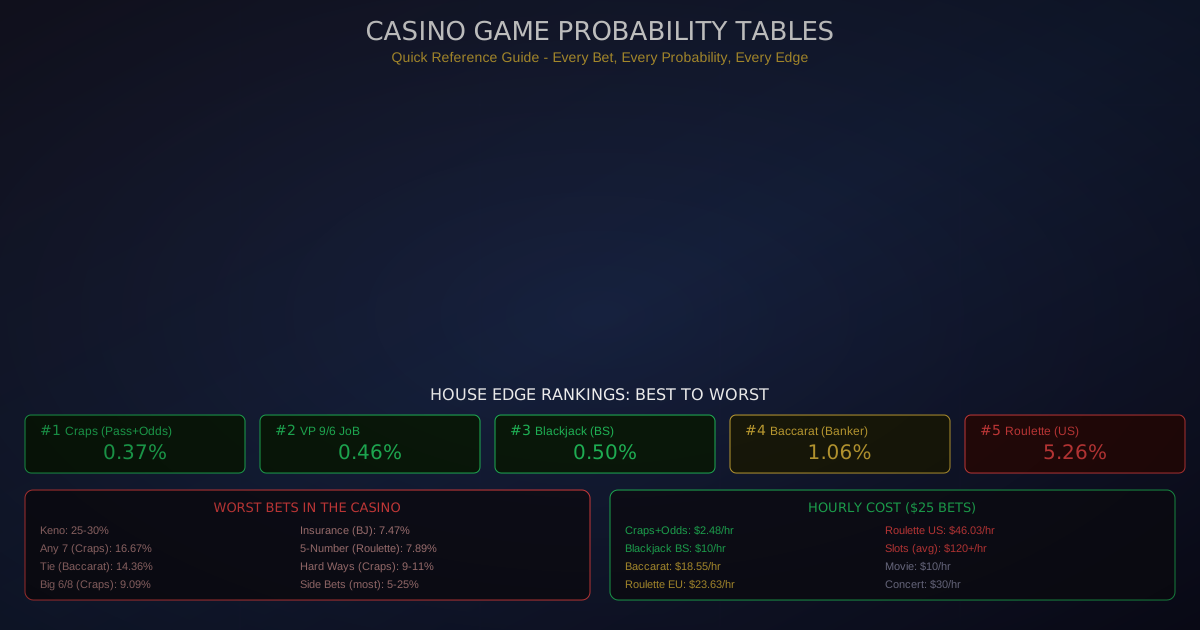
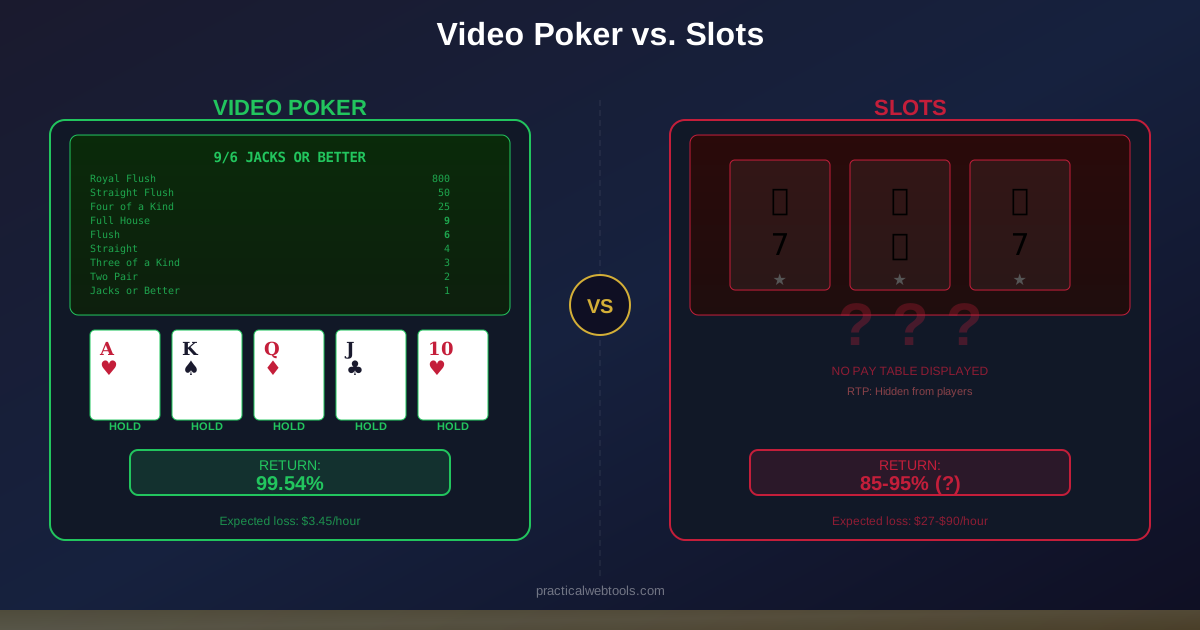
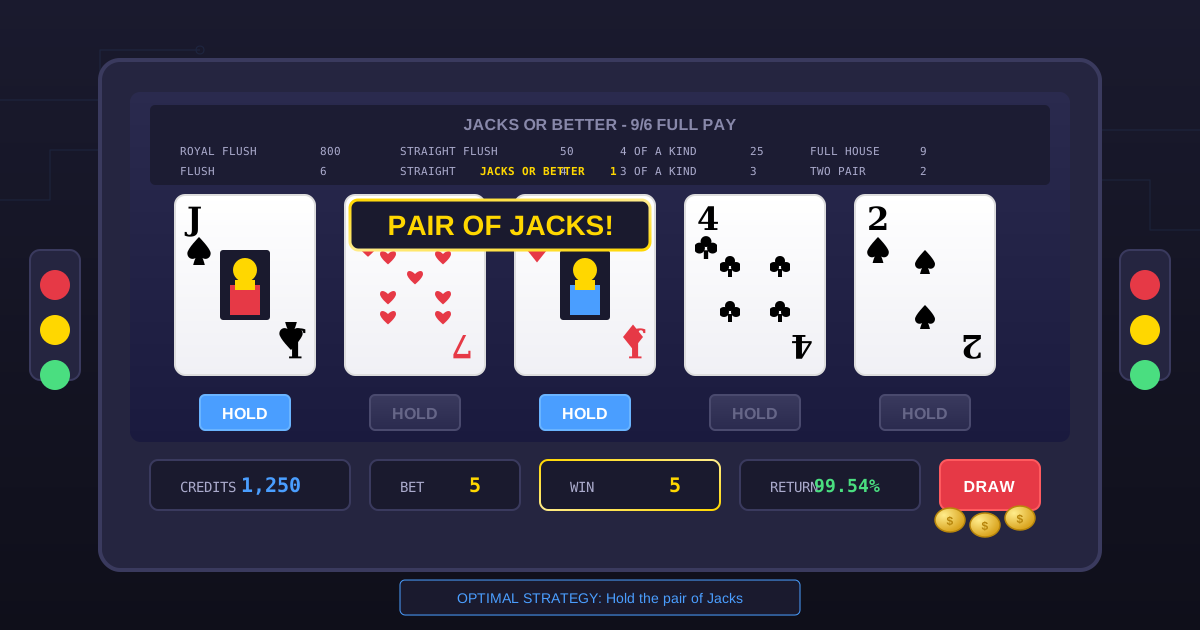
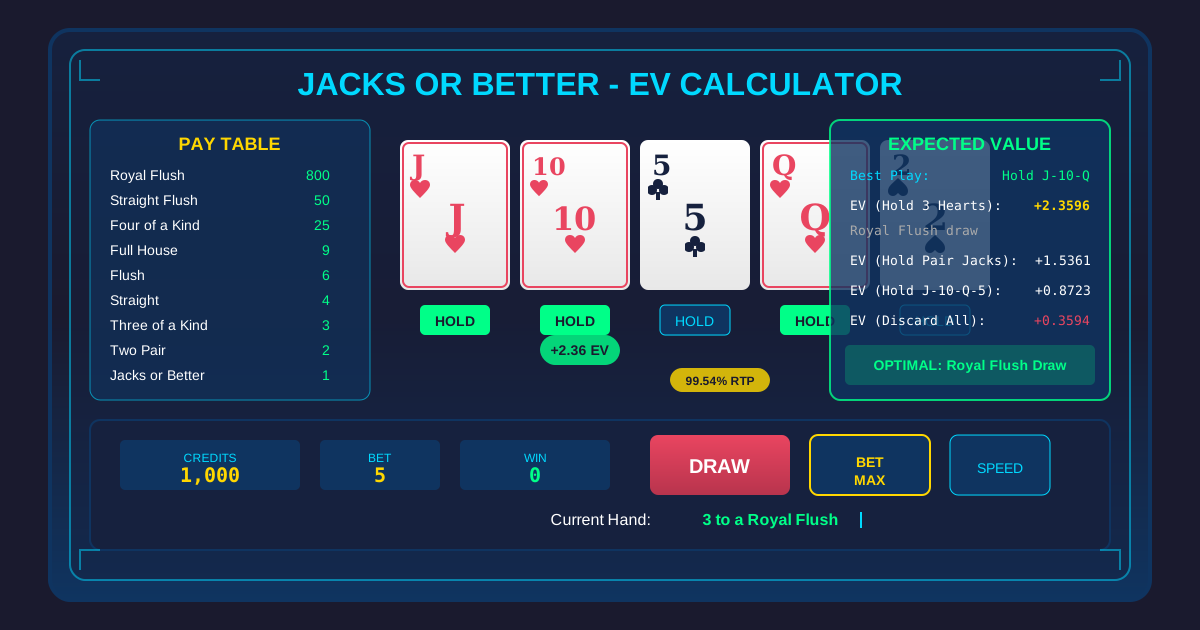
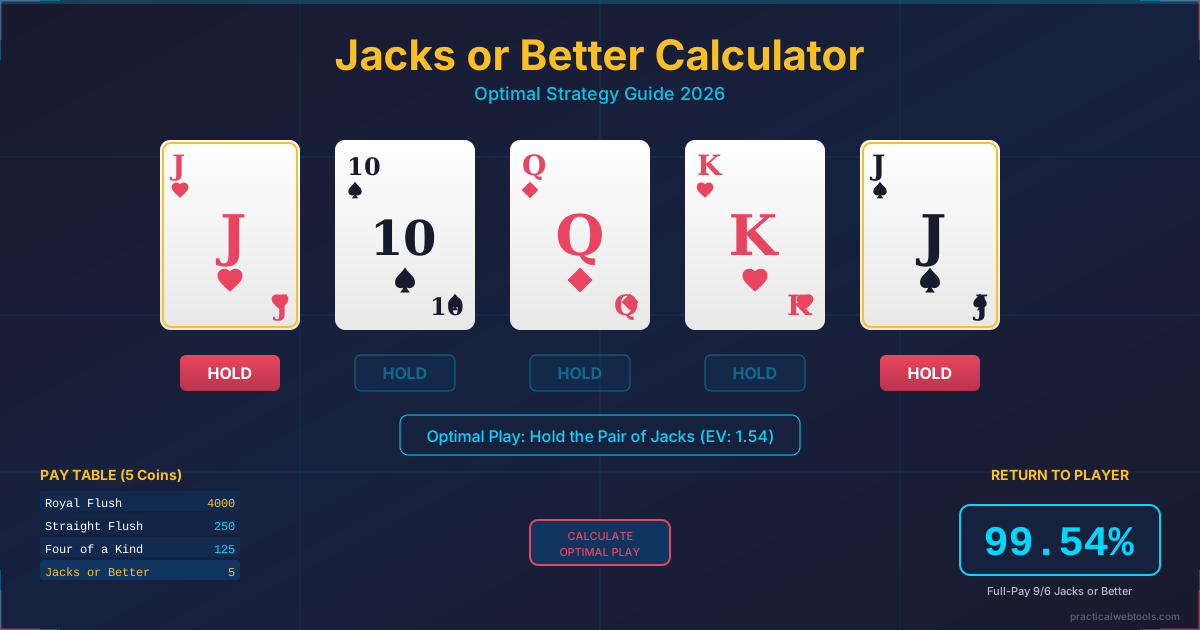
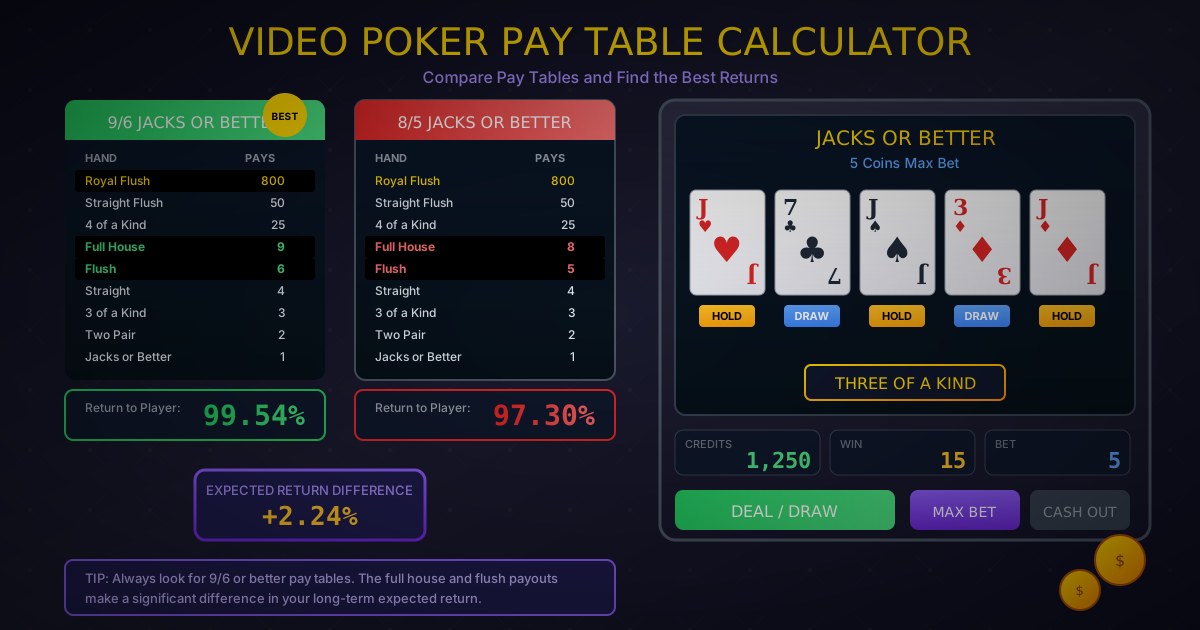
9/6 Jacks or Better    | 99.54%  | 0.46%
8/5 Jacks or Better    | 97.30%  | 2.70%
9/6 Double Double Bonus| 98.98%  | 1.02%
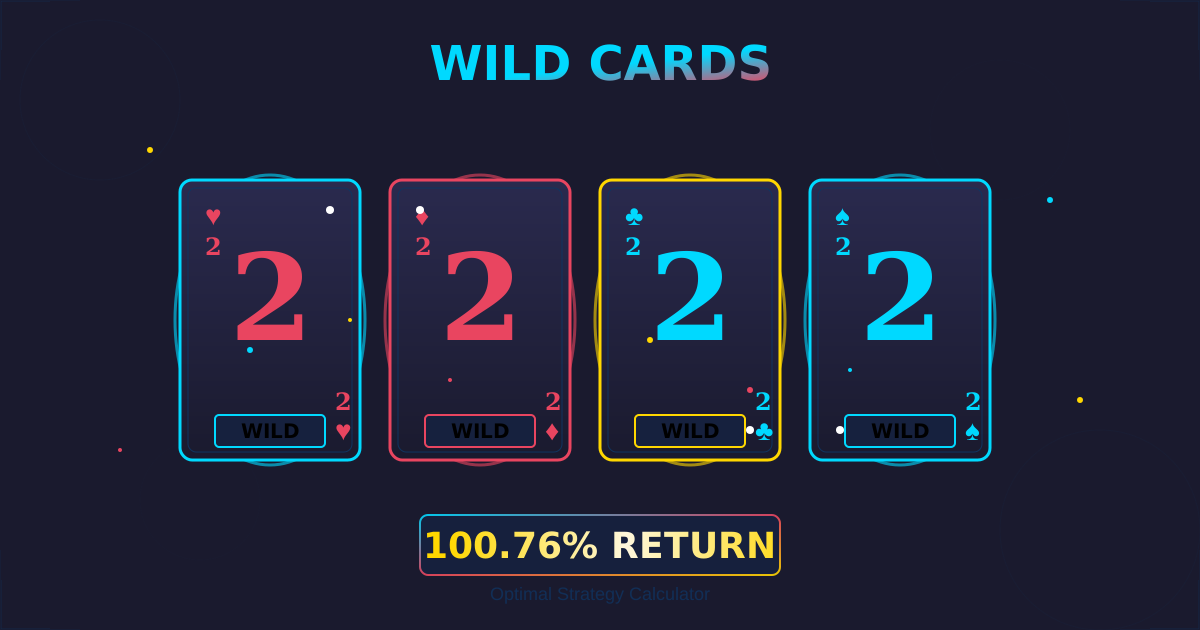
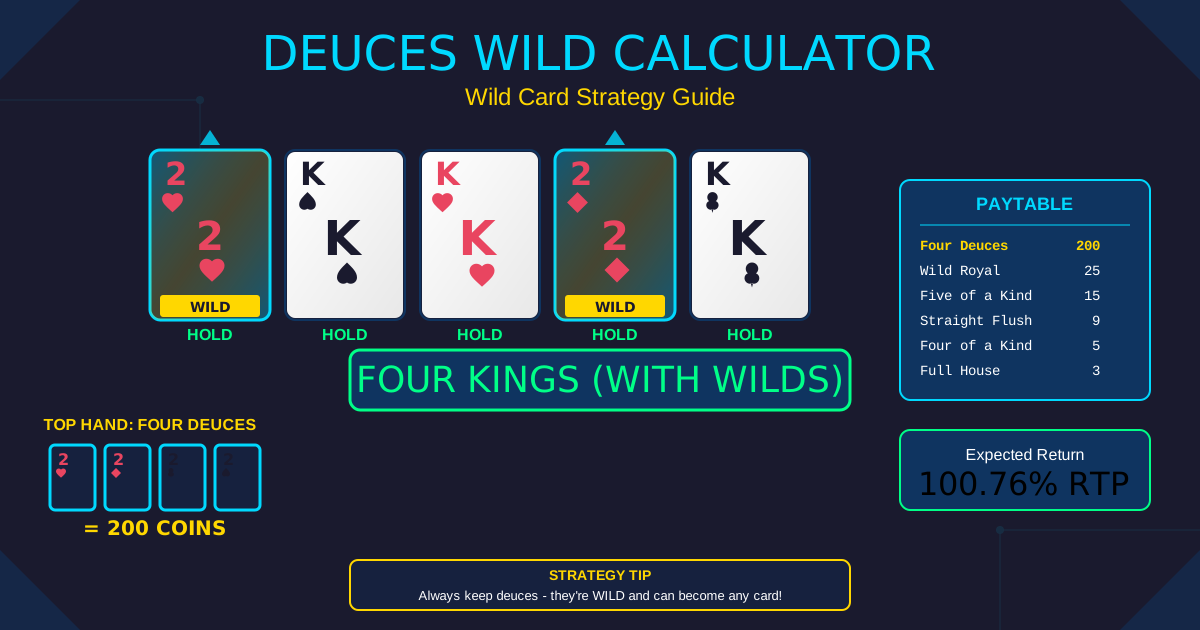
Full Pay Deuces Wild   | 100.76% | -0.76%*
8/5 Bonus Poker        | 99.17%  | 0.83%
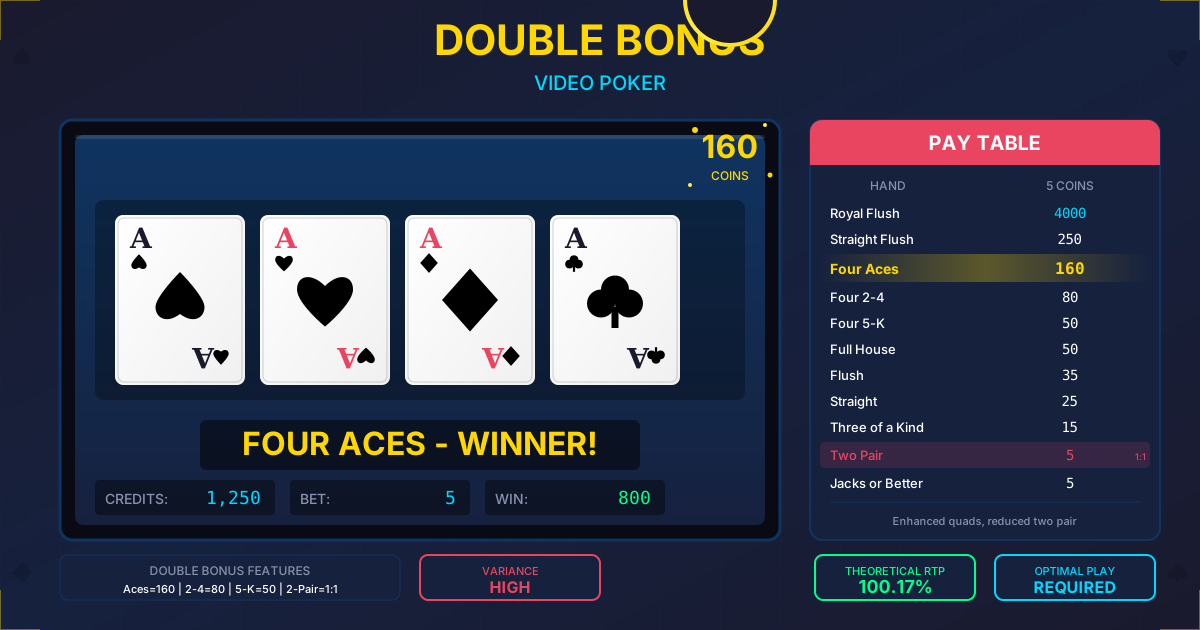
9/6 Double Bonus       | 99.11%  | 0.89%

*Negative hold = player advantage
Pay Table Impact
Jacks or Better variations:

9/6 (Full Pay): 0.46% hold
8/6: 1.39% hold
8/5: 2.70% hold
7/5: 3.83% hold
6/5: 5.00% hold

One pay level = ~1% more hold
Always check pay table
Variance Consideration
High variance games:
Same hold percentage
But bigger swings

9/6 Double Double Bonus:
Hold: 1.02%
But quad aces matter more

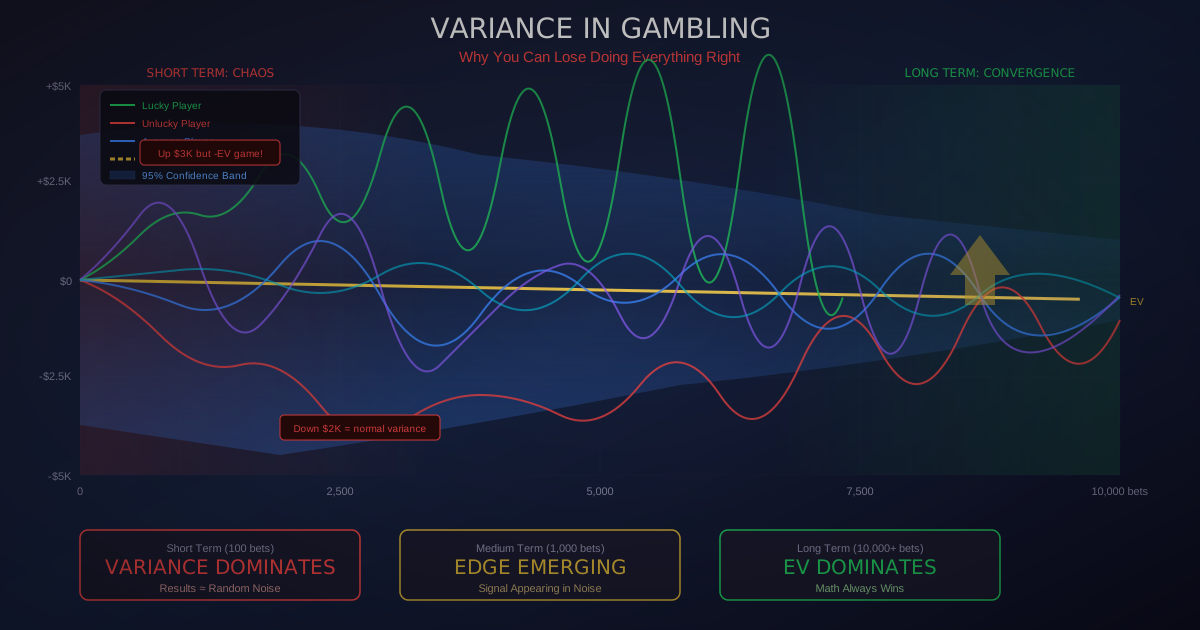
Short sessions may deviate wildly
Long run approaches theoretical
Skill Level Impact
Perfect Strategy (100%)
Expert player on 9/6 JoB:

Every decision optimal
Uses strategy charts
Never deviates
Takes time to decide

Actual hold ≈ Theoretical hold
0.46% casino advantage
Advanced Player (98%)
Strong player:
Knows most optimal plays
Occasional small errors
Plays quickly but accurately

Error cost: ~0.5-1%
Actual hold: ~1-1.5%
Average Player (90%)
Recreational player:
Basic strategy knowledge
Common error patterns
Plays by feel sometimes

Error cost: ~2-4%
Actual hold: ~2.5-4.5%
Novice Player (75%)
Beginning player:
Many suboptimal holds
Keeps wrong cards often
Doesn't use charts

Error cost: ~5-8%
Actual hold: ~5.5-8.5%
Calculating Your Hold
Step-by-Step Process
1. Find game's theoretical return
   (9/6 JoB = 99.54%)

2. Calculate theoretical hold
   (100% - 99.54% = 0.46%)

3. Estimate your skill level
   (Say 95% of optimal)

4. Calculate error cost
   (5% × ~20% penalty = ~1% extra)

5. Add to get actual hold
   (0.46% + 1% = ~1.46%)
Error Cost Formula
Approximate error cost:

Skill Level | Extra Hold
------------|----------
99%         | +0.2%
95%         | +1.0%
90%         | +2.0%
85%         | +3.0%
75%         | +5.0%

These are approximations
Actual depends on specific errors
Example Calculation
You play 8/5 Jacks or Better
Skill level: 90%

Theoretical return: 97.30%
Theoretical hold: 2.70%
Error cost (~90% skill): +2.0%
Actual hold: ~4.70%

On $1,000 coin-in:
Expected loss: $47
Real-World Examples
Example 1: Expert Player Session
1,000 hands on 9/6 JoB, $1.25 max bet:
Total coin-in: 1,000 × $1.25 × 5 = $6,250

Theoretical hold: 0.46%
Expected loss: $28.75

Expert play achieves near-theoretical
Actual results vary by luck
Example 2: Average Player Session
Same session, average skill:
Total coin-in: $6,250

Theoretical hold: 0.46%
Skill-adjusted hold: ~3%
Expected loss: $187.50

Strategy errors cost $158.75 extra
That's the cost of not learning
Example 3: Bad Pay Table Choice
Expert on 7/5 Jacks or Better:
Coin-in: $6,250

Theoretical hold: 3.83%
Even with perfect play
Expected loss: $239.38

Pay table choice > strategy mastery
Always find best pay tables
Example 4: Positive EV Game
Expert on Full Pay Deuces Wild:
Coin-in: $6,250

Theoretical return: 100.76%
Theoretical hold: -0.76%
Expected WIN: $47.50

Player advantage game
But must play perfectly
One of few +EV casino games
What Casinos See
Casino Hold Reporting
Casinos track actual hold:

Monthly report might show:
"VP machines held 4.2%"

This includes all players:
- Experts
- Novices
- Everyone in between

Higher than theoretical = player errors
Why Hold Exceeds Theory
Typical casino VP hold: 3-6%

Theoretical on good machines: 0.5-2%

Gap explained by:
- Bad pay table selection
- Strategy mistakes
- Fast, careless play
- Bonus hunting errors
Casino Perspective
Casino wants higher hold:
- More profit per machine
- Better return on floor space

But too high = lose players
Balance between hold and traffic
Reducing Your Hold
Game Selection
Always verify pay table:
Full pay 9/6 vs short pay 8/5
Difference: 2.24% more hold

Five minutes of searching
Saves thousands over time
Strategy Improvement
Use strategy cards:
$5-10 investment
Reduces errors dramatically

Each 1% improvement:
$10 saved per $1,000 play
Slow Down
Rushing increases errors:
400 vs 800 hands/hour

Same hourly exposure
Fewer mistakes when slower
Better decisions = lower hold
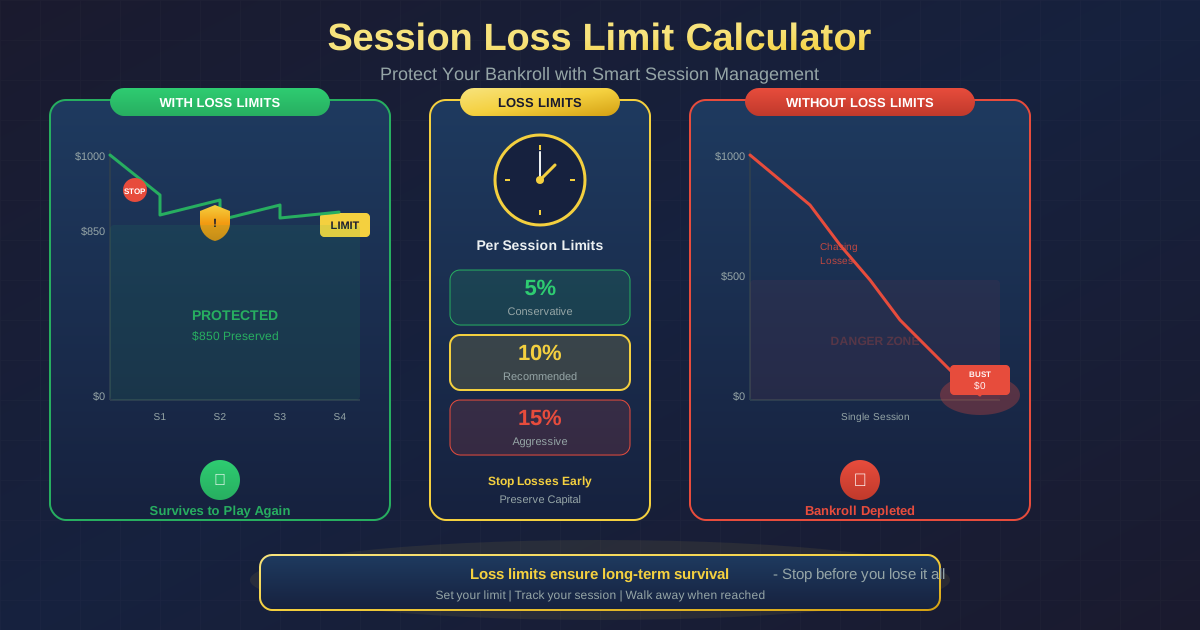
Session Discipline
Set win/loss limits
Avoid tilt plays
Stay focused

Emotional play = more errors
More errors = higher hold
Common Mistakes
1. Ignoring Pay Tables
Mistake: Play any Jacks or Better Problem: 8/5 vs 9/6 = 2.24% more hold Fix: Always verify payouts
2. Playing Without Charts
Mistake: Trust your instincts Problem: Intuition makes errors Fix: Use strategy cards
3. Equating Hold to Luck
Mistake: "I'm unlucky today" Problem: Hold is structural Fix: Understand it's mathematical
4. Ignoring Skill Factor
Mistake: "All VP the same" Problem: Your play affects hold Fix: Study optimal strategy
Frequently Asked Questions
What's a good hold percentage to look for?
Under 1% theoretical hold with optimal play. Full-pay 9/6 Jacks or Better (0.46%) or Full Pay Deuces Wild (player advantage) are excellent.
How do I know the hold percentage of a machine?
Check the pay table. Look up that pay table's theoretical return online. Hold = 100% minus return.
Can I consistently beat video poker?
A few full-pay games with perfect strategy offer player advantage. But most games have casino edge—you can minimize it, not eliminate it.
Why do casinos still offer low-hold games?
Low-hold games attract skilled players who still make some errors. Volume and player errors often create acceptable profit.
Does betting max affect hold percentage?
Not the percentage, but max bet often qualifies for royal flush bonus, improving your return and lowering hold.
How much does perfect strategy reduce hold?
Depends on the game and your starting skill. Going from average to expert might save 2-3% of your action.
Pro Tips
-
Pay table first: Verify before playing
-
Use strategy cards: Eliminate most errors
-
Slow and accurate: Speed kills bankroll
-
Track your play: Know your actual results
-
Seek low hold: Under 1% theoretical
Related Calculators
- Video Poker Return Calculator - Return percentage
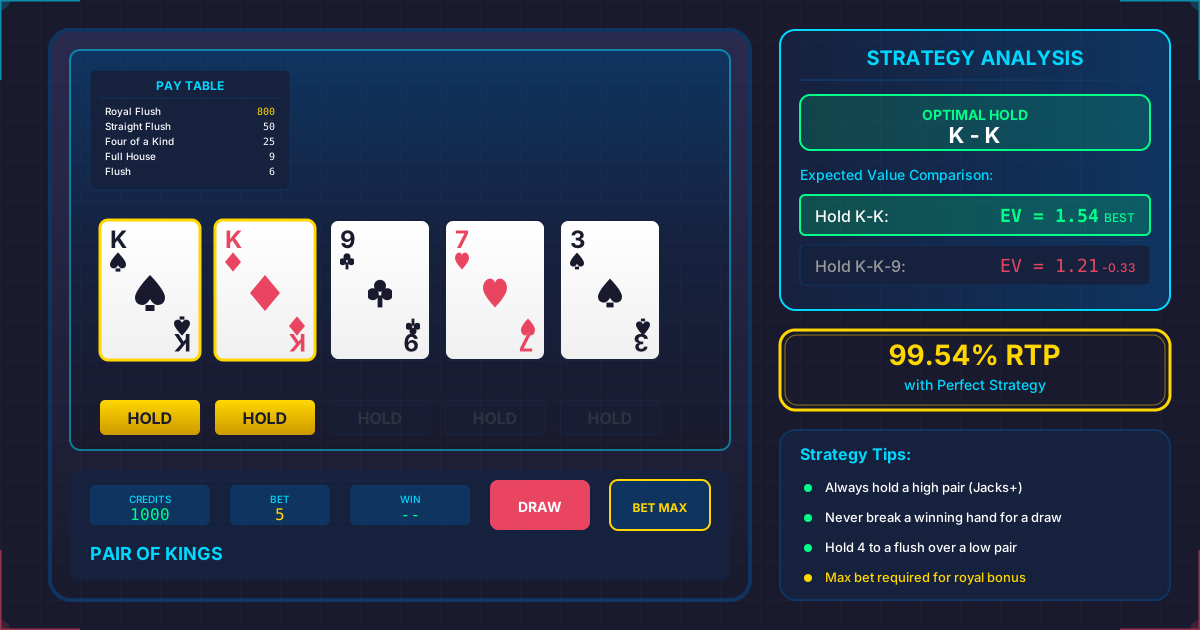
- Video Poker Strategy Calculator - Optimal holds
- Video Poker Variance Calculator - Bankroll needs
- Video Poker Expected Value Calculator - EV analysis
- House Edge Calculator - Compare games
Conclusion
Hold percentage measures what the casino keeps from your video poker action. Our calculator shows how game selection and player skill combine to determine actual hold—and how reducing errors puts more money back in your pocket.
Calculate Video Poker Hold Now →
That 9/6 Jacks or Better machine has 0.46% theoretical hold, but your actual hold depends on your play. Strategy errors can add 2-4% to the casino's take. Our calculator reveals the true cost of playing without optimal strategy.