The Worst Bets in Every Casino Game: Wagers You Should Never Make (2026)
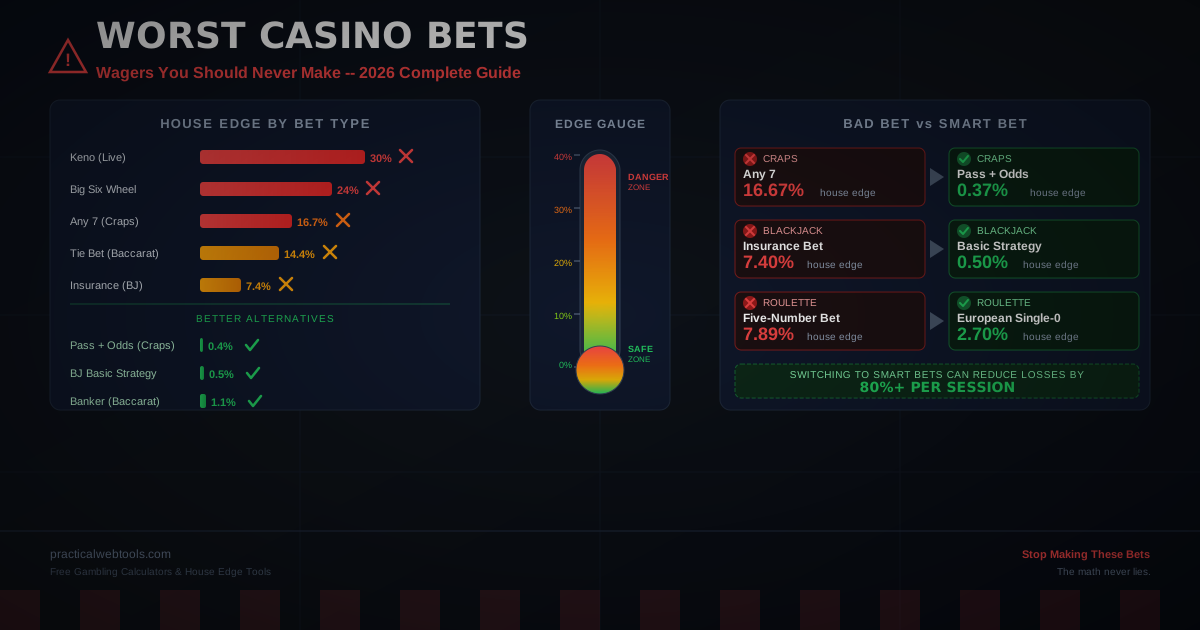
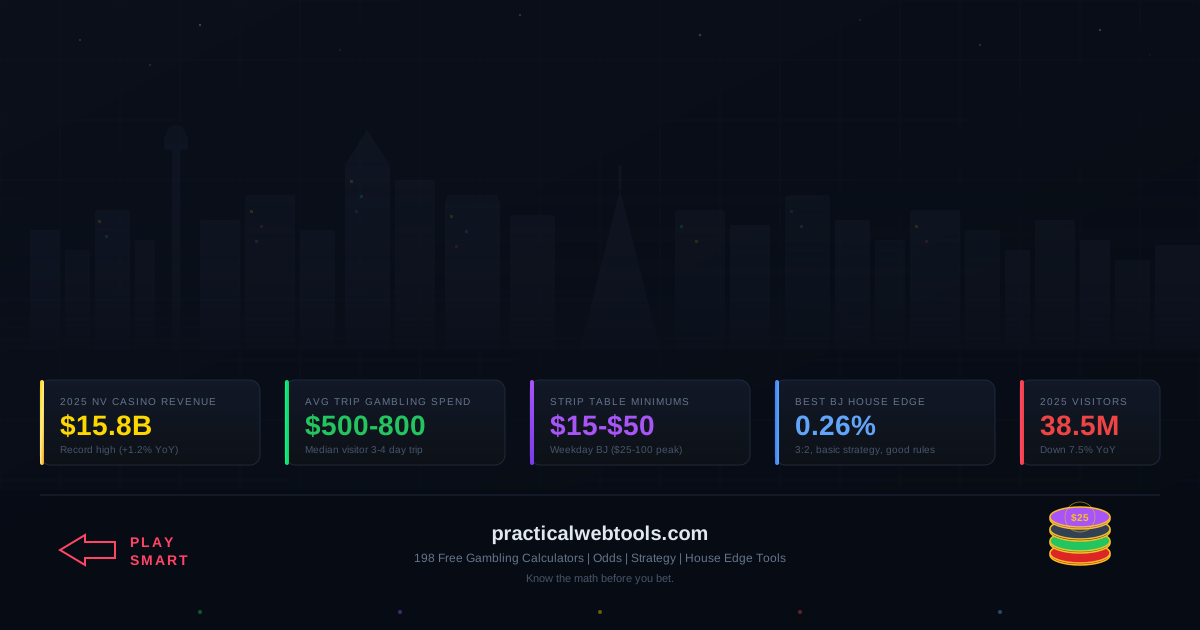
American casinos generated over $71.49 billion in revenue through the first eleven months of 2025 alone. A staggering portion of that money came not from skilled players making close-to-optimal decisions, but from recreational gamblers placing bets they never should have touched. The average casino visitor loses $125 per trip. At-risk gamblers lose roughly $3,000 per year. And the single biggest driver of those losses is not bad luck. It is bad bet selection.
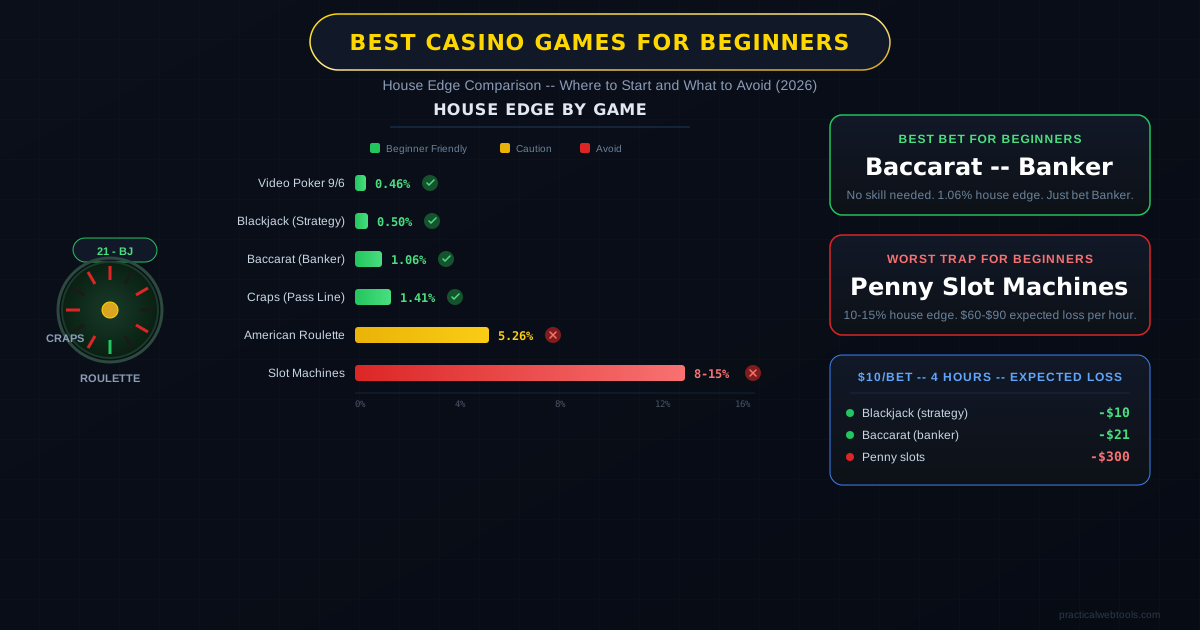
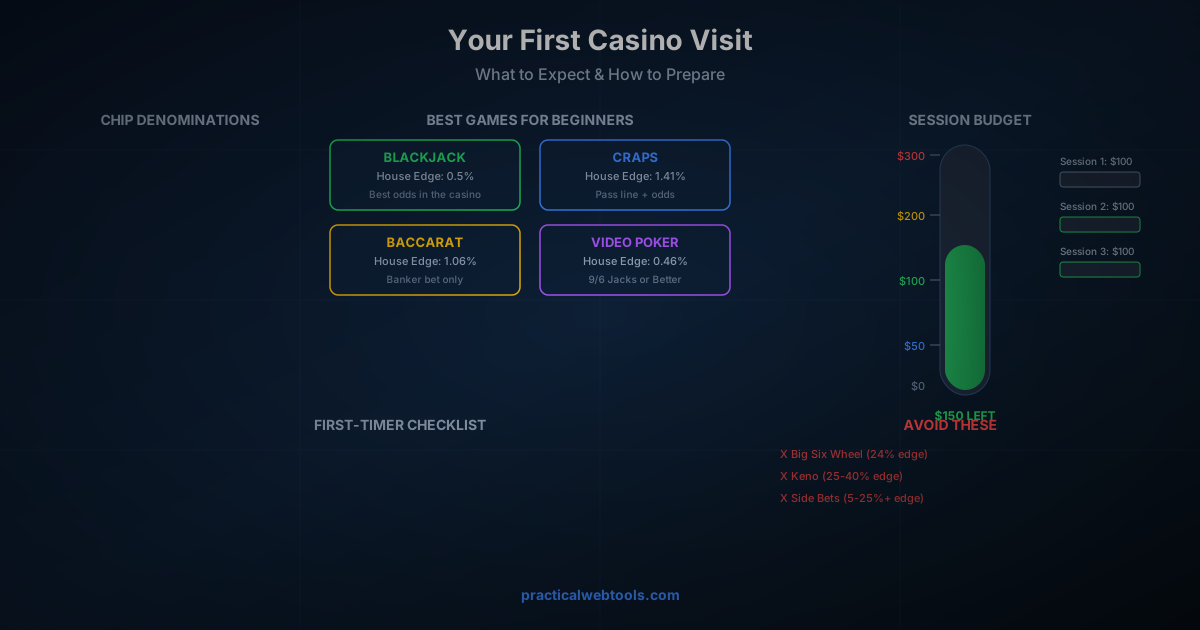
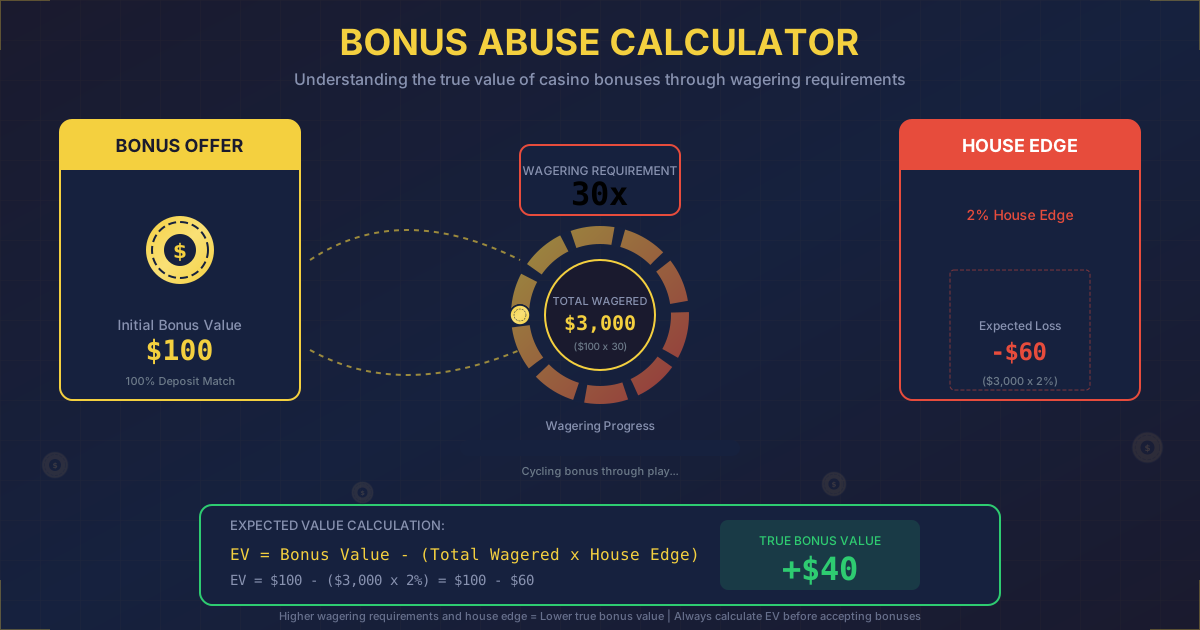
Every casino game contains bets designed to look appealing but mathematically designed to drain your bankroll at two, five, or even ten times the rate of better alternatives sitting right next to them on the same table. The Big 6/Big 8 in craps pays even money when the place bet on 6 or 8 pays 7:6. The insurance bet in blackjack carries a 7.4% house edge while the base game sits at 0.5%. Keno holds a 25-40% edge, meaning for every $100 you wager, you can expect to lose $25 to $40 on average.
This guide identifies the absolute worst bets in every major casino game, shows you the exact math behind each one, calculates what they cost per hour of play, and points you to the better alternative every single time. If you only change one thing about how you gamble after reading this, stop making the bets on this list.
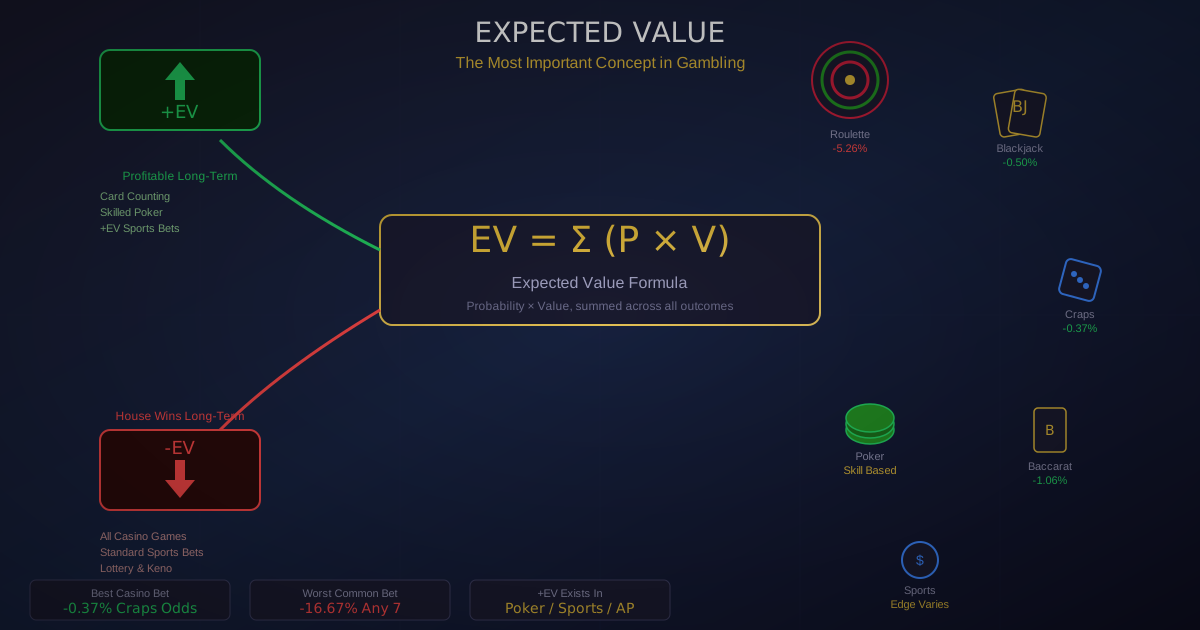
Before you place another bet, run the numbers yourself. Use our Expected Value Calculator to see exactly how much any wager costs you over time, or check the house edge for your favorite game with our dedicated calculators for blackjack, roulette, craps, and baccarat.
The Master List: Worst Casino Bets Ranked by House Edge
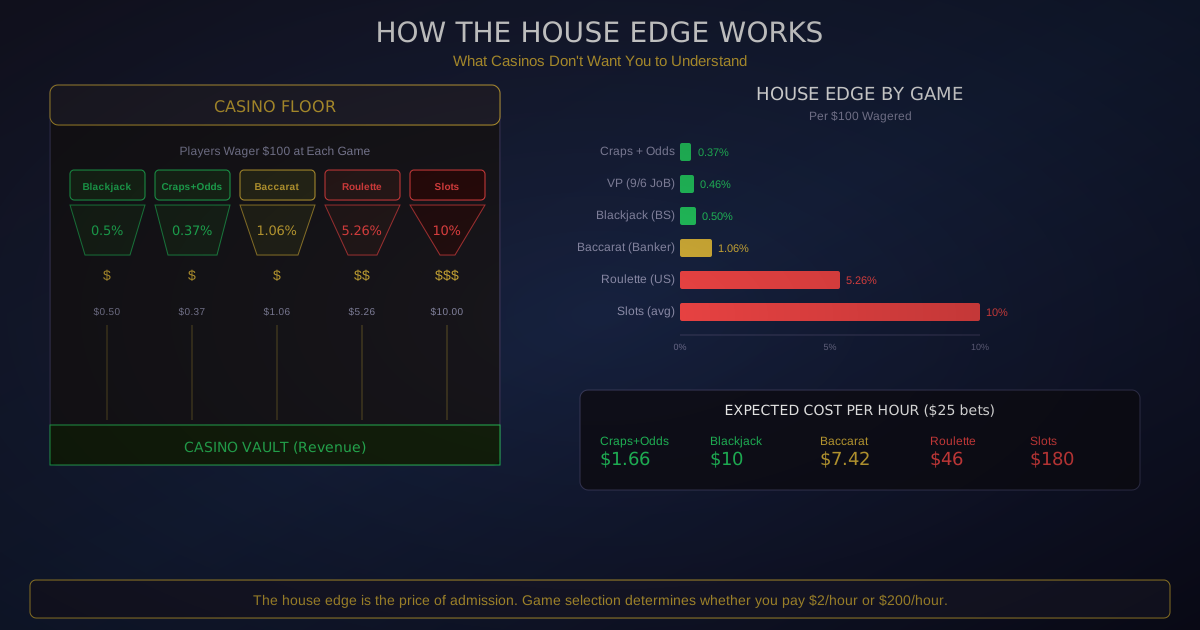
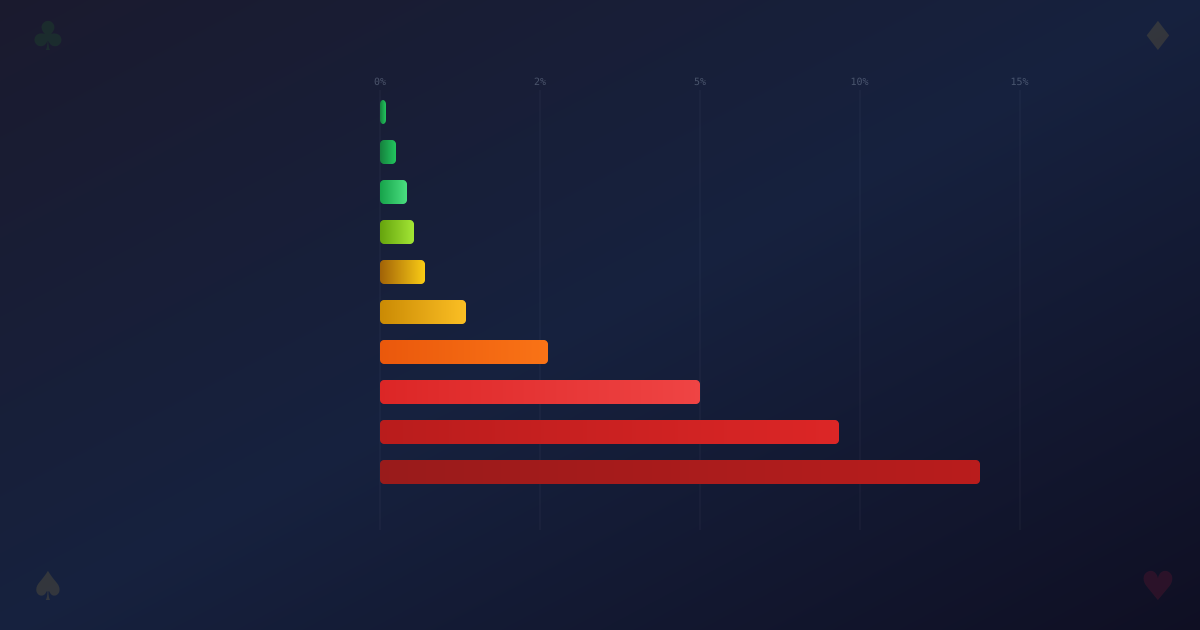
Before we break down each game individually, here is the definitive ranking of the worst bets you will encounter on a typical casino floor. Every bet on this list has a clearly superior alternative in the same game.
| Rank | Bet | Game | House Edge | Better Alternative | Alt. House Edge |
|---|---|---|---|---|---|
| 1 | Keno (live, typical) | Keno | 25-40% | Video poker (full-pay) | 0.46% |
| 2 | Big Six Wheel (Joker/Logo) | Big Six Wheel | 24.07% | Baccarat banker | 1.06% |
| 3 | Caribbean Stud progressive side bet | Caribbean Stud | 26.46% | Base game optimal | 5.22% |
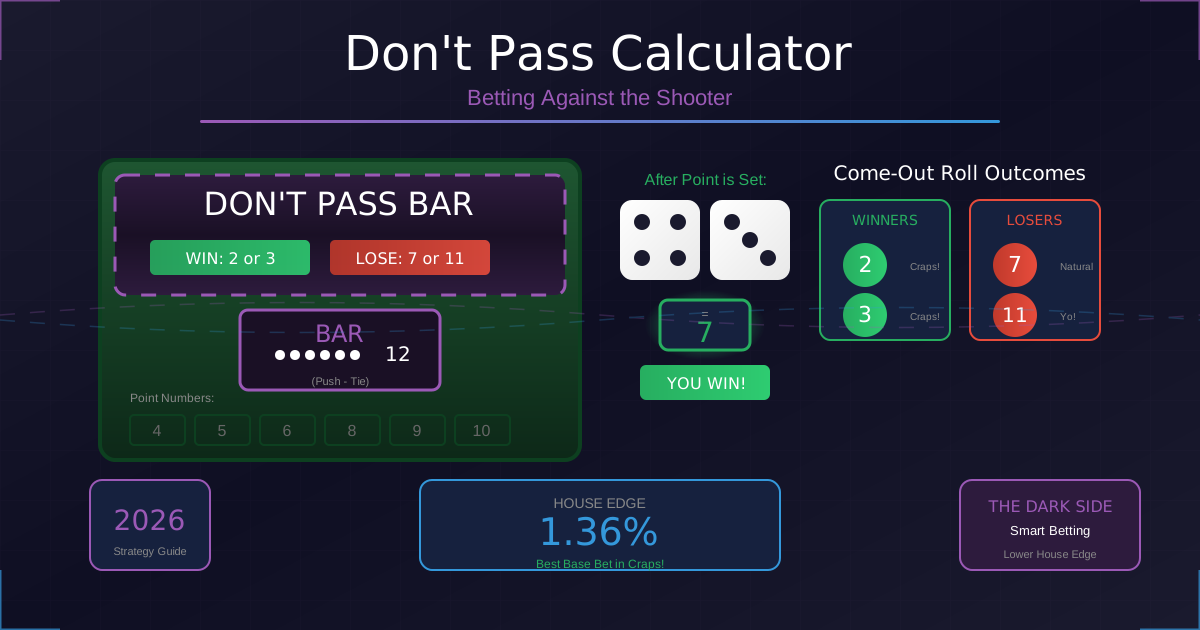
| 4 | Any 7 (craps) | Craps | 16.67% | Pass line + odds | 1.41% / 0% |
| 5 | Baccarat tie bet | Baccarat | 14.36% | Banker bet | 1.06% |
| 6 | 2 or 12 proposition (craps) | Craps | 13.89% | Place 6 or 8 | 1.52% |
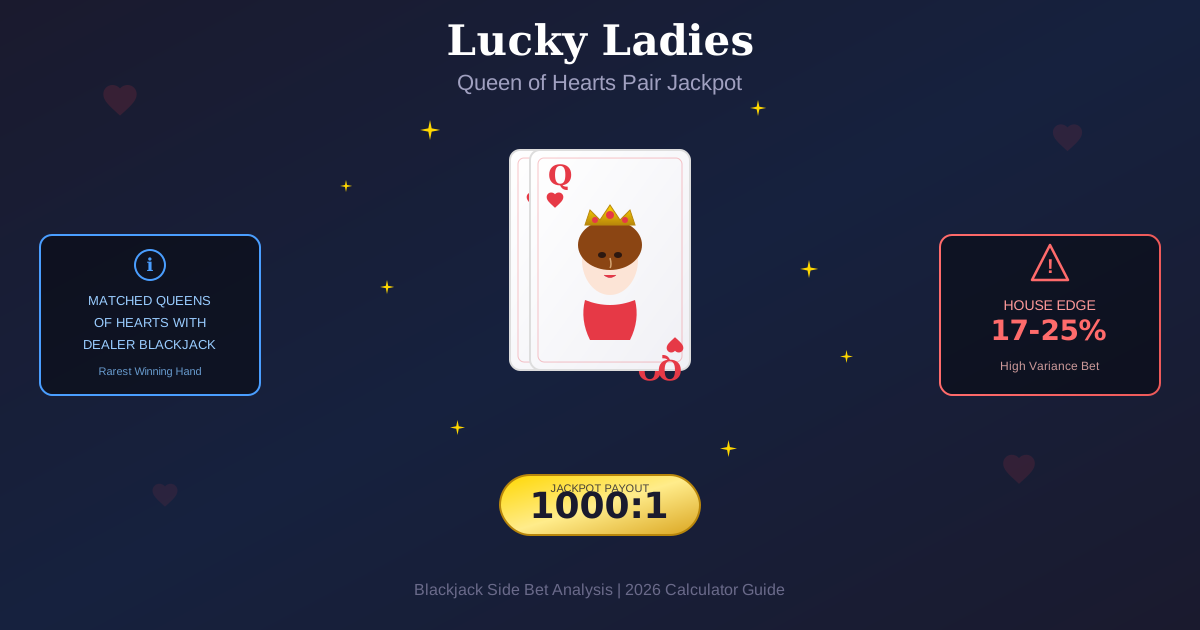
| 7 | Lucky Ladies side bet | Blackjack | 25.0%+ | Base game basic strategy | 0.5% |
| 8 | Hard 4/Hard 10 | Craps | 11.11% | Pass/Come with odds | 1.41% / 0% |
| 9 | Big 6/Big 8 | Craps | 9.09% | Place 6 or 8 | 1.52% |
| 10 | Five-number bet (0-00-1-2-3) | Roulette | 7.89% | European single-zero | 2.70% |
| 11 | Insurance | Blackjack | 7.40% | Decline insurance always | 0.50% |
| 12 | 6:5 blackjack (vs 3:2) | Blackjack | ~1.9% | 3:2 blackjack tables | 0.50% |
This table alone could save you thousands of dollars per year. Now let us break down exactly why each of these bets is so destructive, game by game.
Worst Blackjack Bets
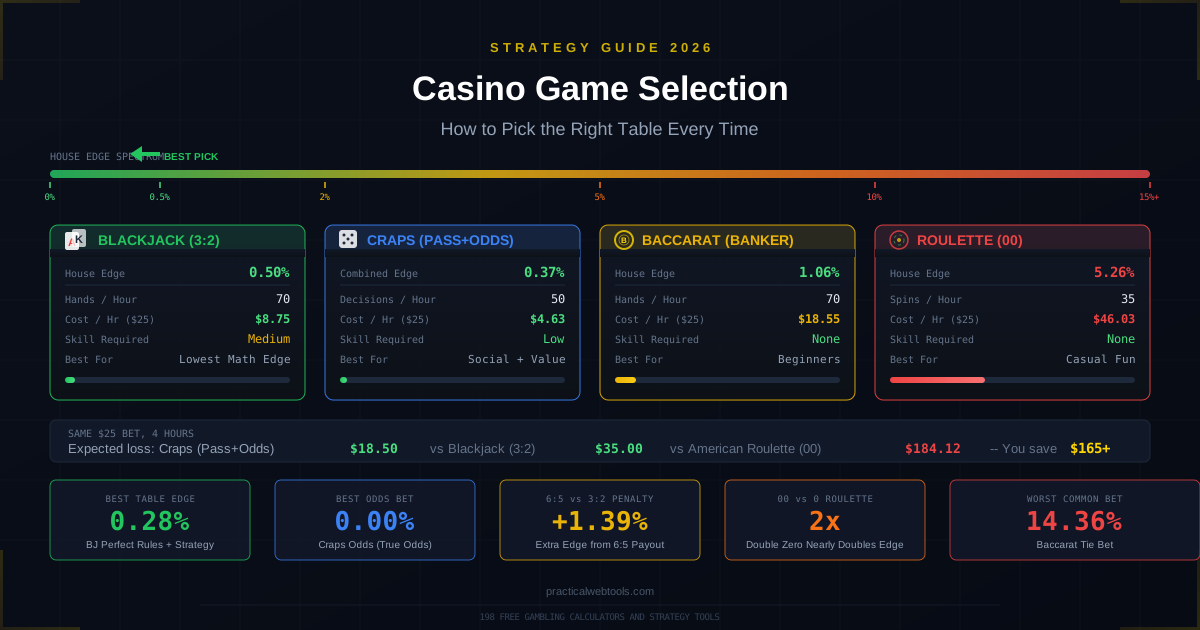
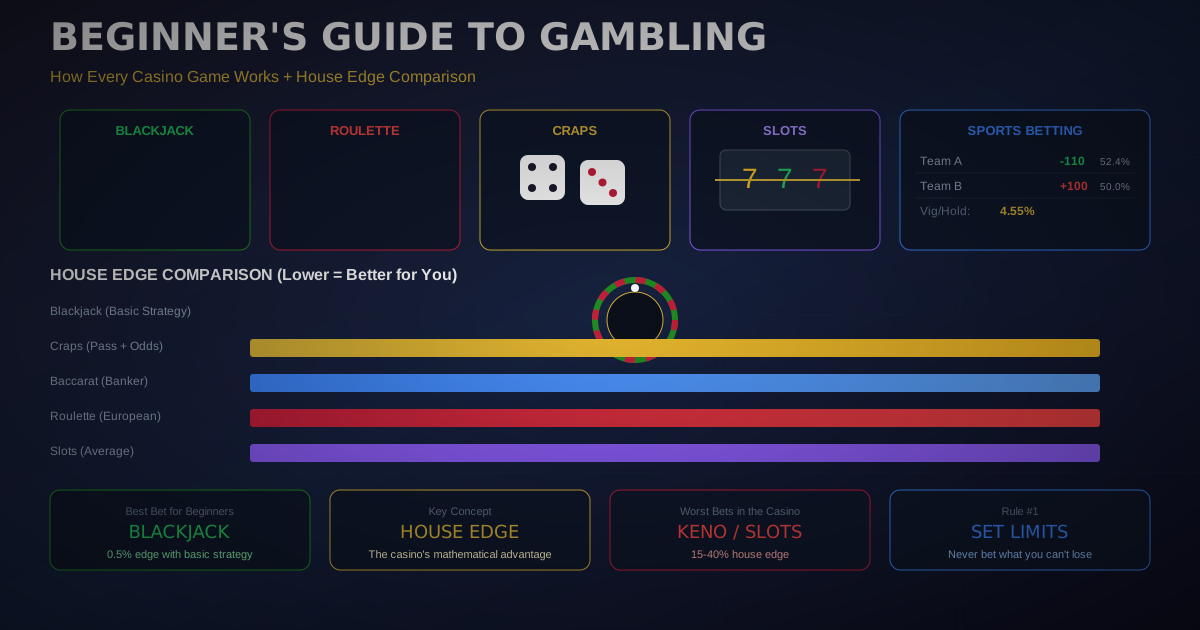
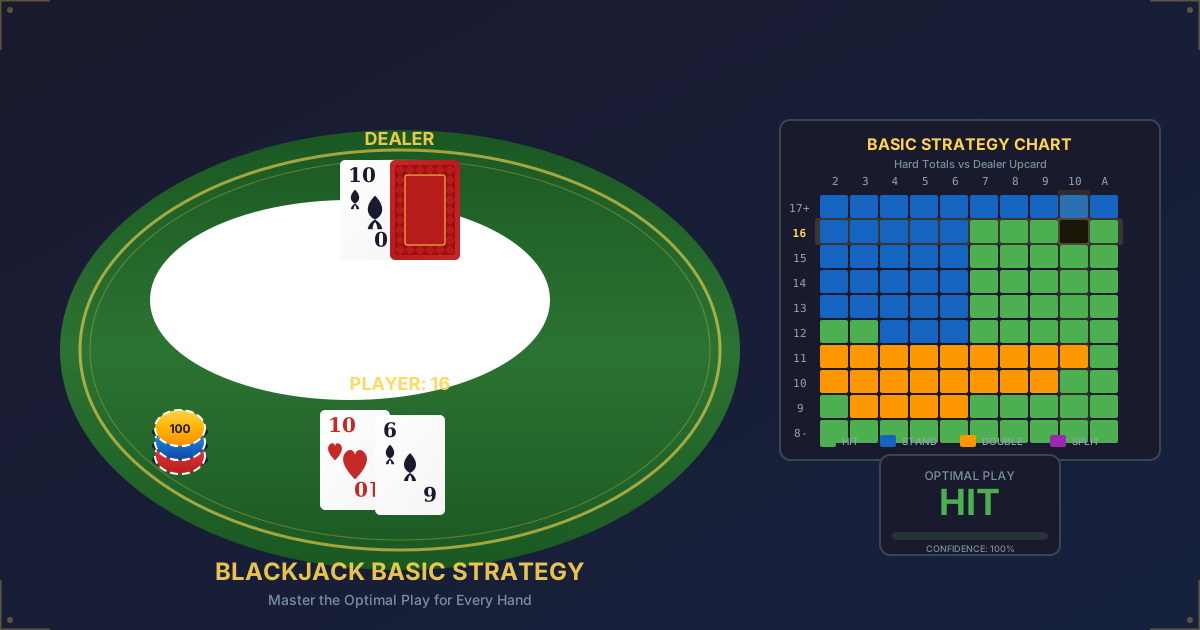
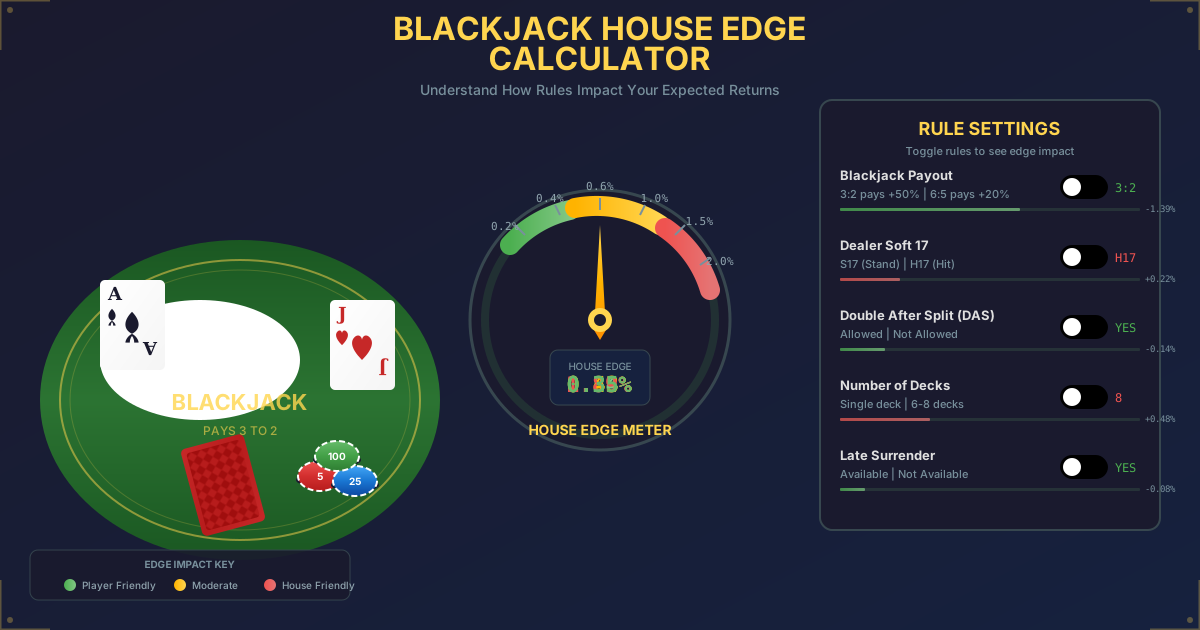
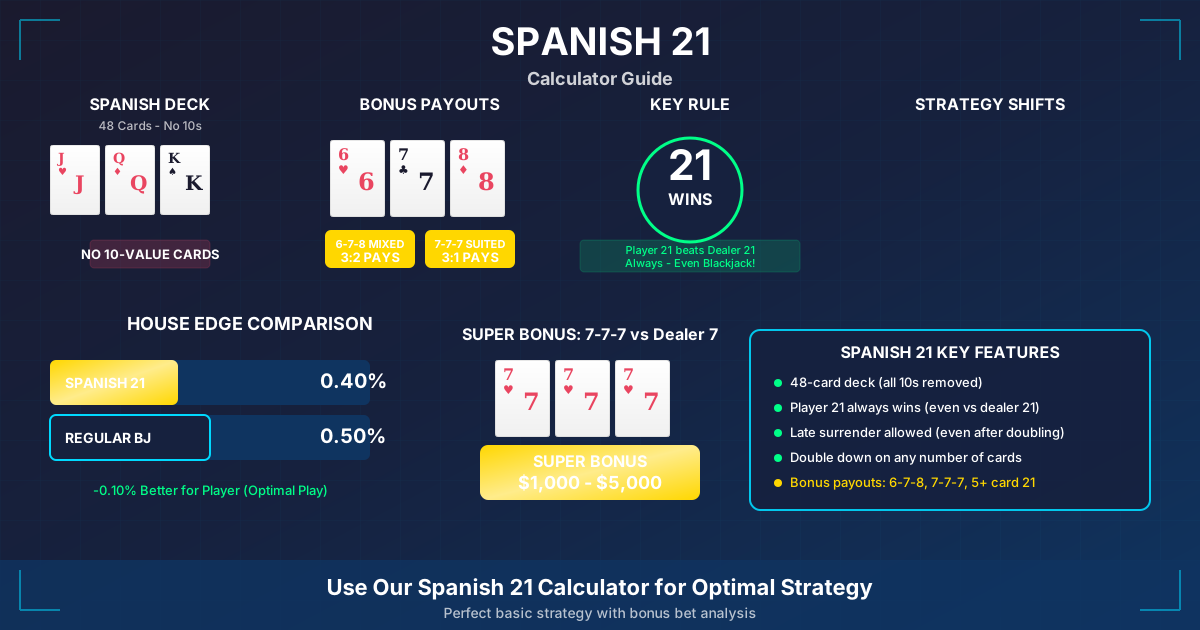
Blackjack is the best game on the casino floor for informed players. With perfect basic strategy and favorable rules, the house edge drops to around 0.5%. But casinos have layered blackjack with traps that can push your effective house edge to 2%, 5%, or even 25% if you take the bait. Use our Blackjack Basic Strategy tool to make sure you are playing optimally before you even think about which bets to avoid.
The Insurance Bet: The Most Overrated Bet in Casino History
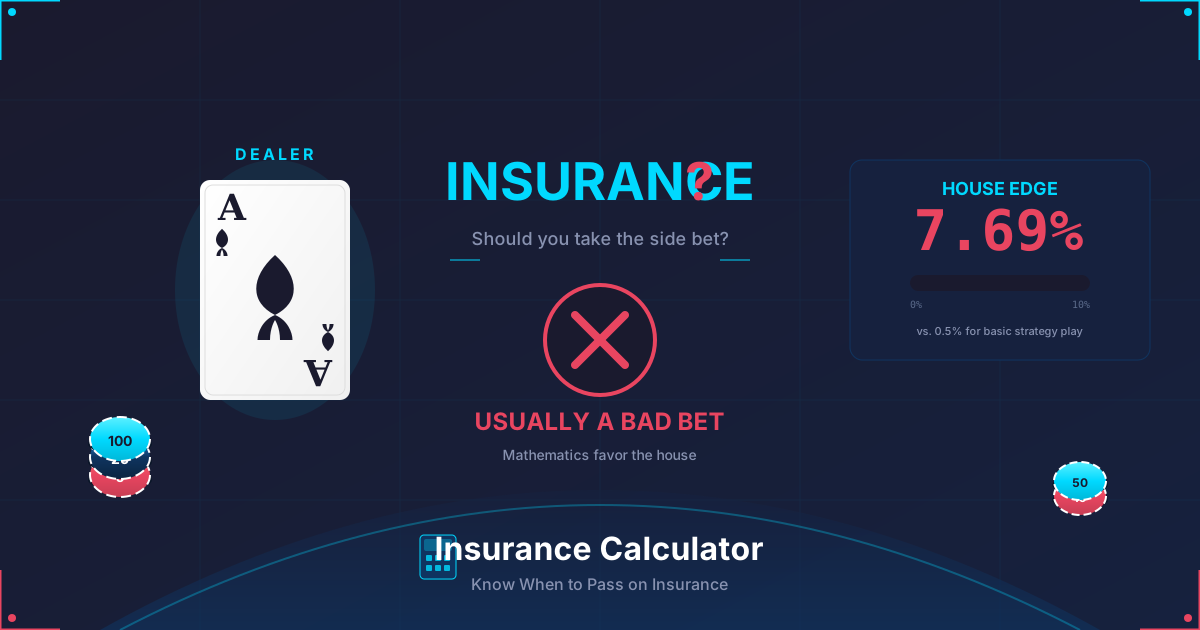
House edge: 7.40%
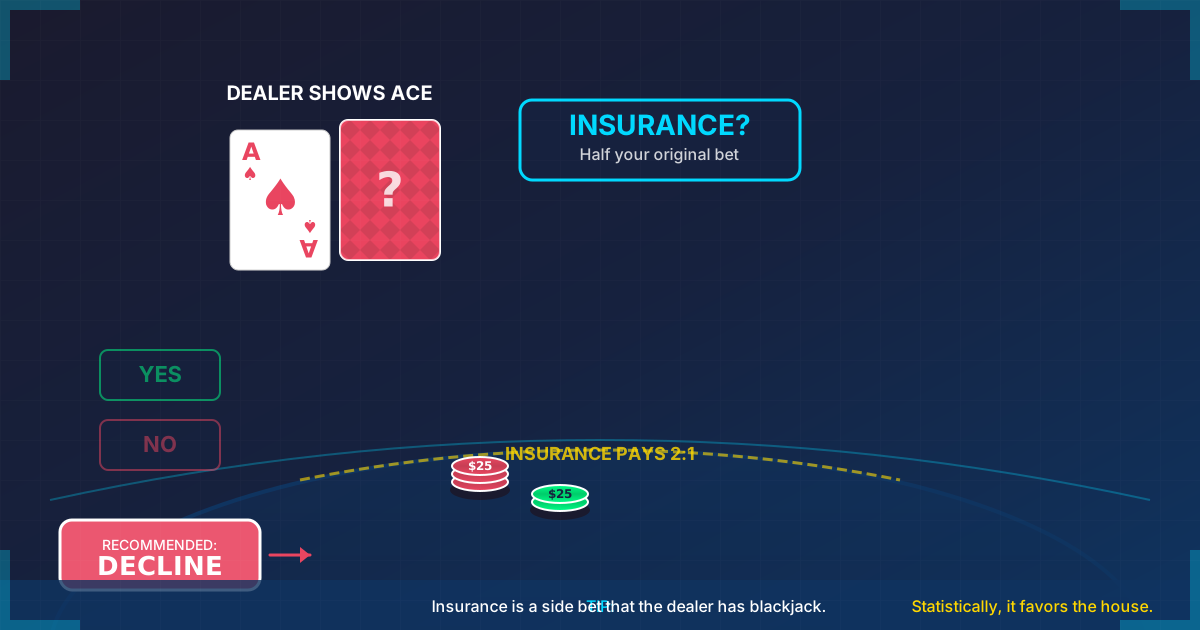
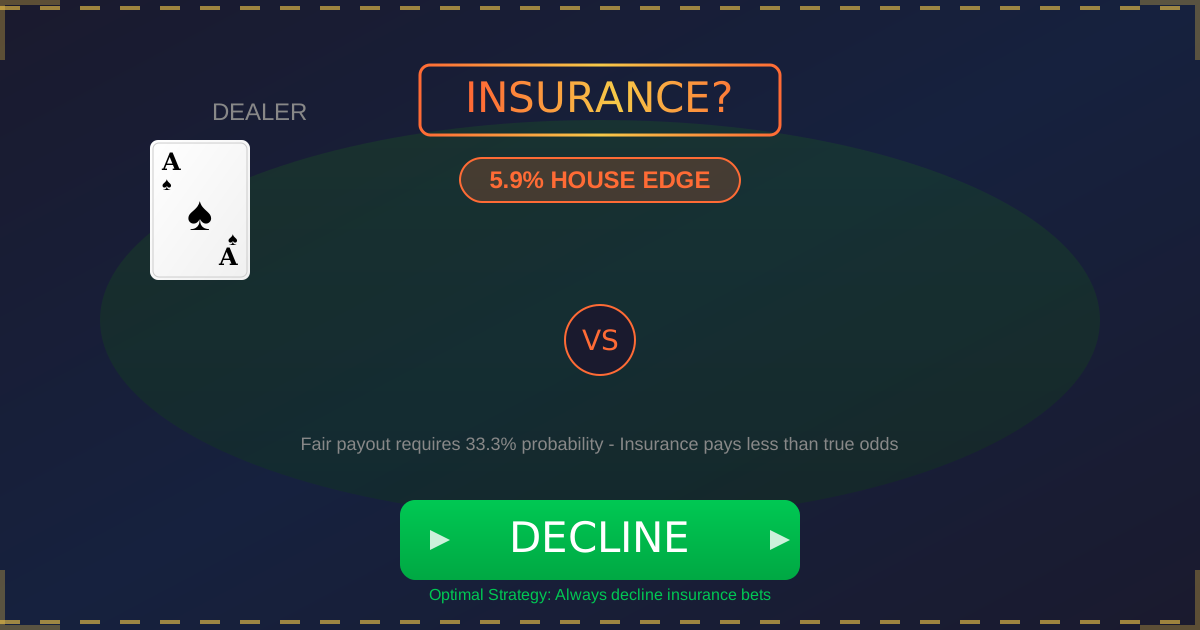
When the dealer shows an ace, the table lights up and the dealer asks, "Insurance?" It sounds protective. It sounds smart. It is neither.
Insurance is a completely separate side bet that pays 2:1 if the dealer has a ten-value card in the hole. You are betting half your original wager that the dealer has blackjack. Here is the math that casinos hope you never learn:
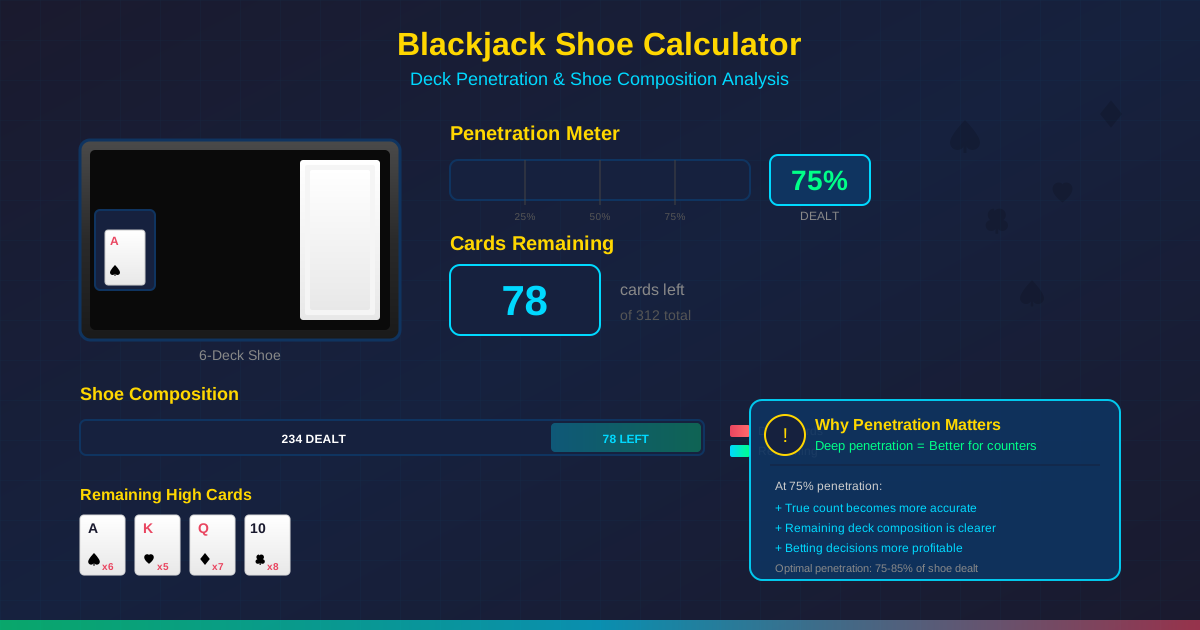
In a standard six-deck shoe, there are 312 cards. When the dealer shows an ace, 311 cards remain. Of those, 96 are ten-value cards (10, J, Q, K across four suits and six decks). That means:
- Probability dealer has blackjack: 96/311 = 30.87%
- Probability dealer does not have blackjack: 215/311 = 69.13%
- True odds against you: roughly 2.24:1
- Insurance pays: 2:1
The payout is less than the true odds. Every single time. That gap is where the 7.4% house edge lives.
Real-world cost: If you bet $25 per hand and take insurance every time the dealer shows an ace (roughly 7.7% of hands), you will place about 23 insurance bets per 300 hands. At $12.50 each (half your bet), that is $287.50 wagered on insurance. The expected loss on those insurance bets alone: $21.28 per session. That is money you are handing to the casino on top of whatever you lose on your regular hands.
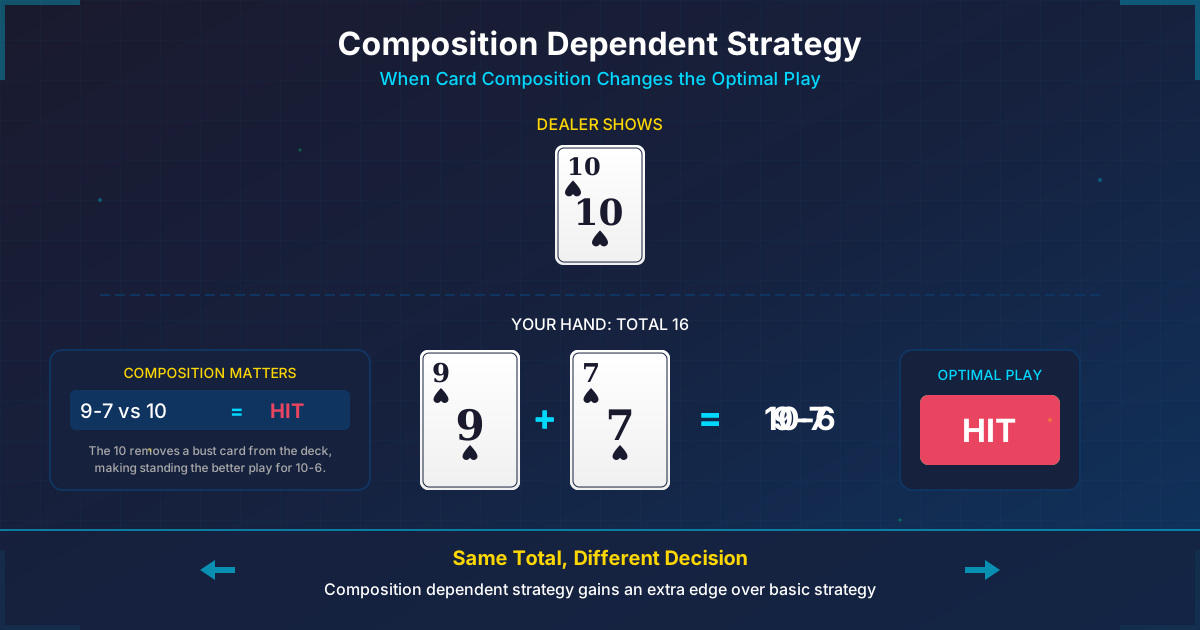
The better play: Never take insurance. Not ever. Not when you have 20. Not when you have blackjack. The math does not change based on your hand. Decline it every single time and your expected loss drops to the base house edge of roughly 0.5%. Verify it yourself with our Blackjack House Edge Calculator.
6:5 Blackjack Tables: The Quiet Bankroll Killer
Effective house edge: ~1.9% (vs 0.5% at 3:2 tables)
This is not a side bet. It is a rule change that casinos have been quietly rolling out across their floors for over a decade, and it is one of the most damaging things that has happened to recreational blackjack players.
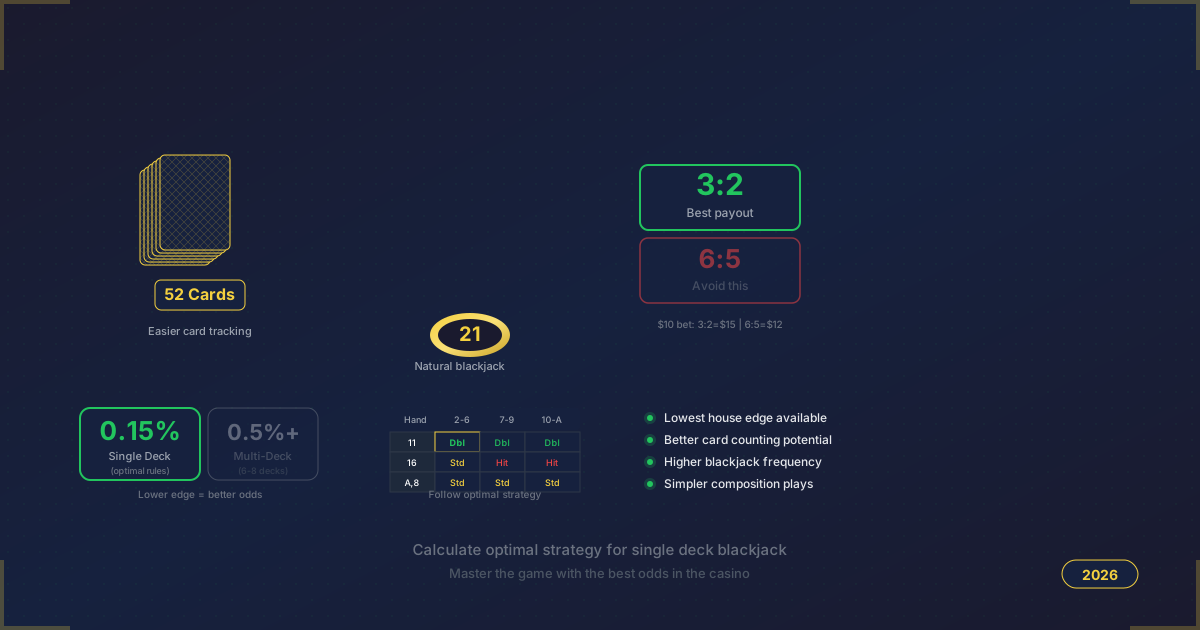
At a traditional 3:2 table, a natural blackjack on a $10 bet pays $15. At a 6:5 table, that same blackjack pays only $12. That $3 difference per blackjack adds up brutally:
| Metric | 3:2 Table | 6:5 Table | Difference |
|---|---|---|---|
| Blackjack payout ($25 bet) | $37.50 | $30.00 | -$7.50 per BJ |
| House edge (standard rules) | 0.50% | 1.90% | +1.40% |
| Expected loss per 500 hands ($25 avg) | $62.50 | $237.50 | -$175.00 |
| Expected loss per 1,000 hands ($25 avg) | $125.00 | $475.00 | -$350.00 |
Real-world cost: If you play $25 per hand for four hours at roughly 80 hands per hour (320 hands), a 6:5 table costs you approximately $152 in expected losses versus $40 at a 3:2 table. That is $112 extra per session, and it compounds every single time you sit down.
The better play: Walk away from any table that pays 6:5 on blackjack. Period. Look for the payout rules printed on the felt. If it says "Blackjack pays 6 to 5," leave. It does not matter if the table minimum is lower, if your friends are sitting there, or if it is the only blackjack table in the casino. You are better off playing a different game entirely than sitting at a 6:5 blackjack table.
Blackjack Side Bets: Where the House Edge Explodes
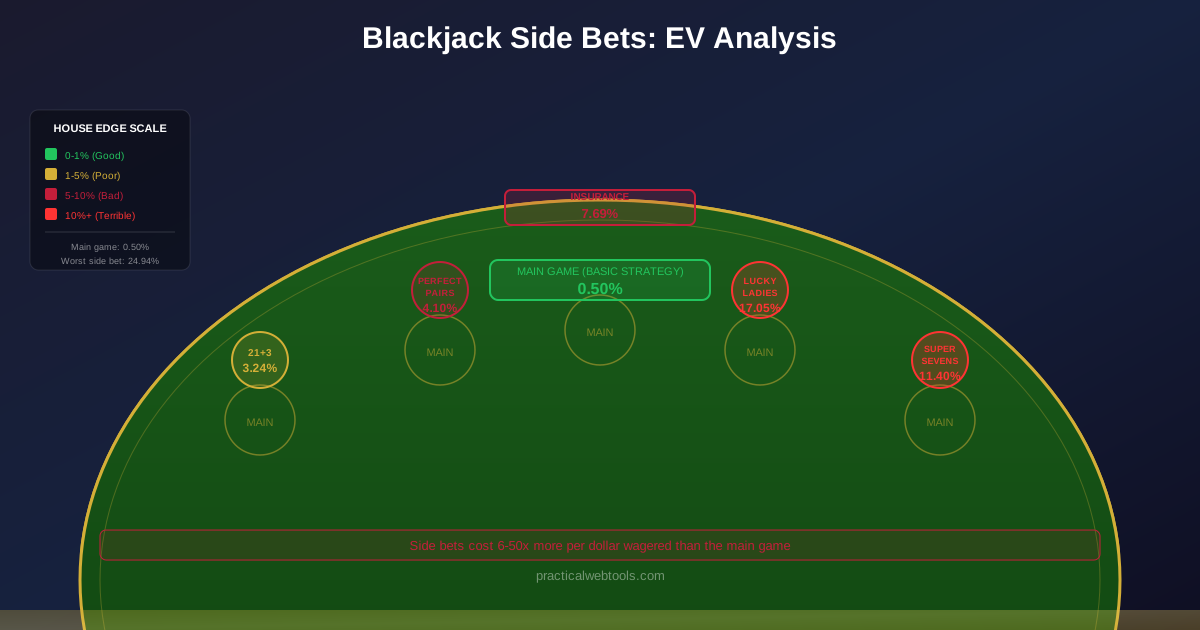
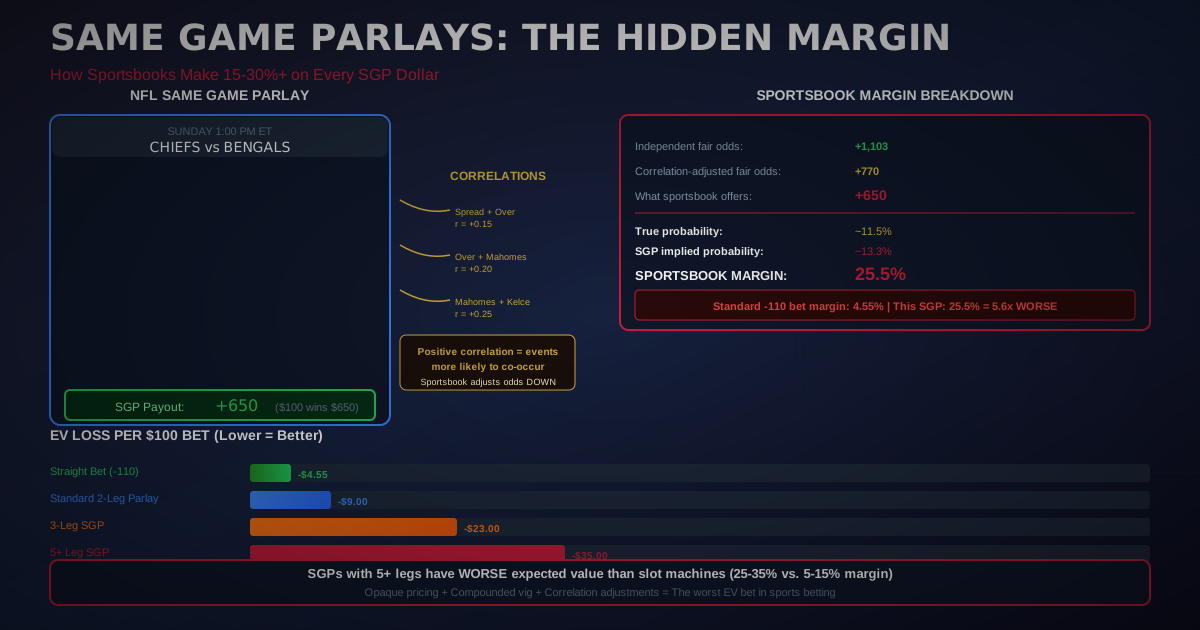
Casinos have added an ever-growing menu of side bets to blackjack tables. They have exciting names, flashy payouts, and house edges that would make a craps proposition bet blush.
| Side Bet | Typical House Edge | What It Pays | Why It Is Terrible |
|---|---|---|---|
| Lucky Ladies | 17-25% | Up to 1000:1 for matched queens | You will almost never hit the top payout |
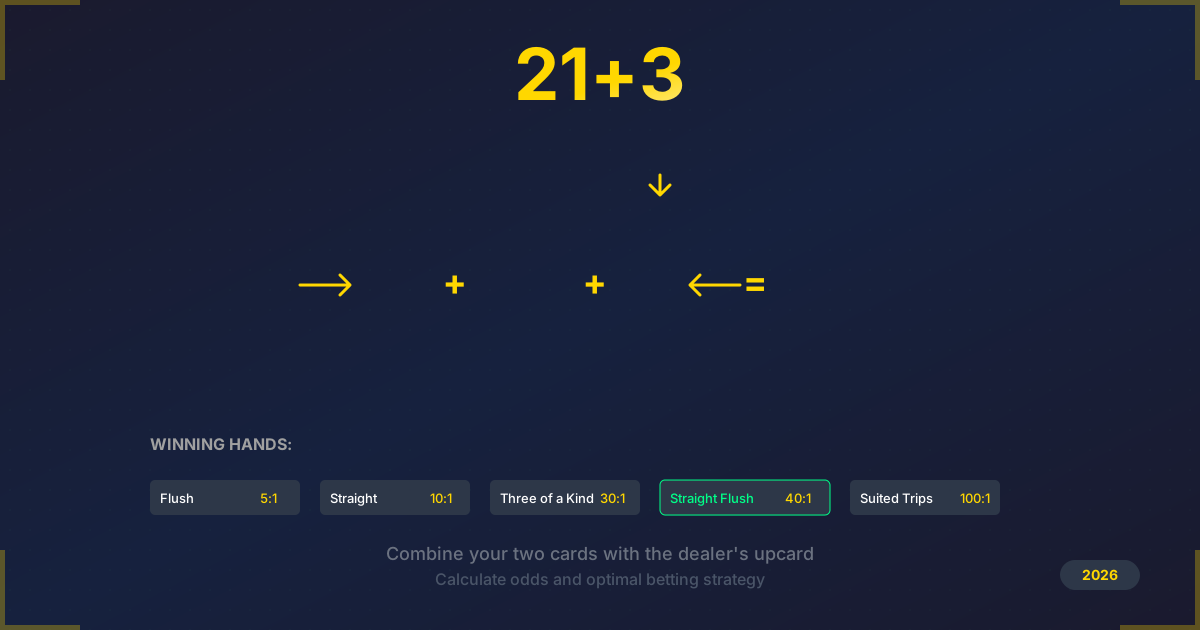
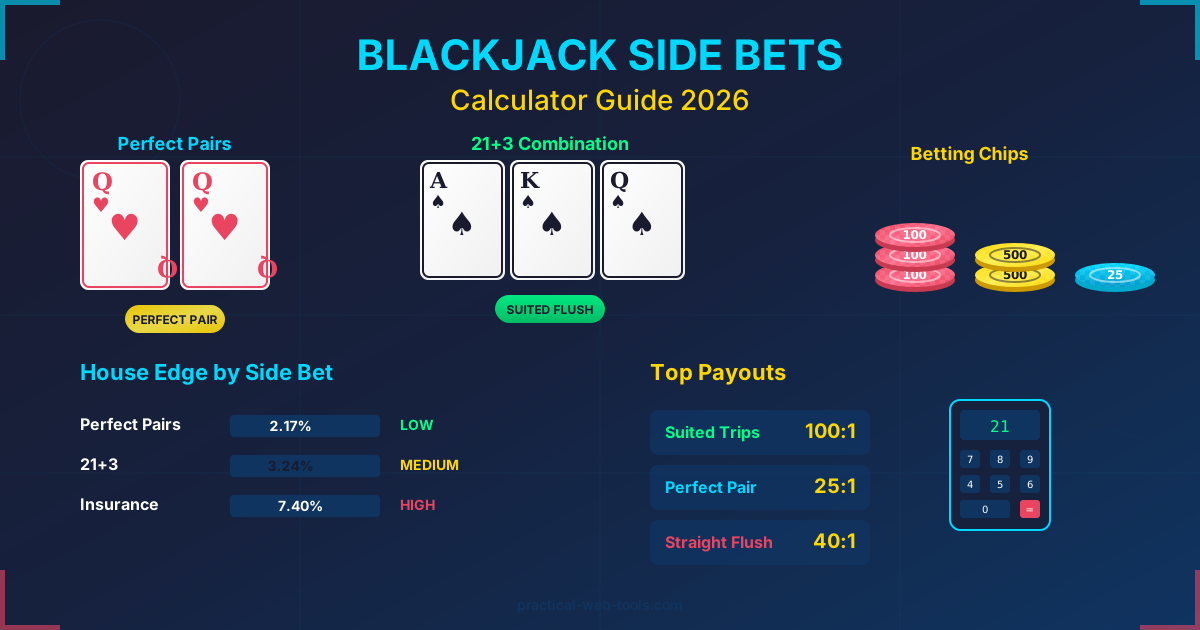
| 21+3 | 3.2-13.4% | Poker hands from your cards + dealer upcard | Wide variance depending on paytable |
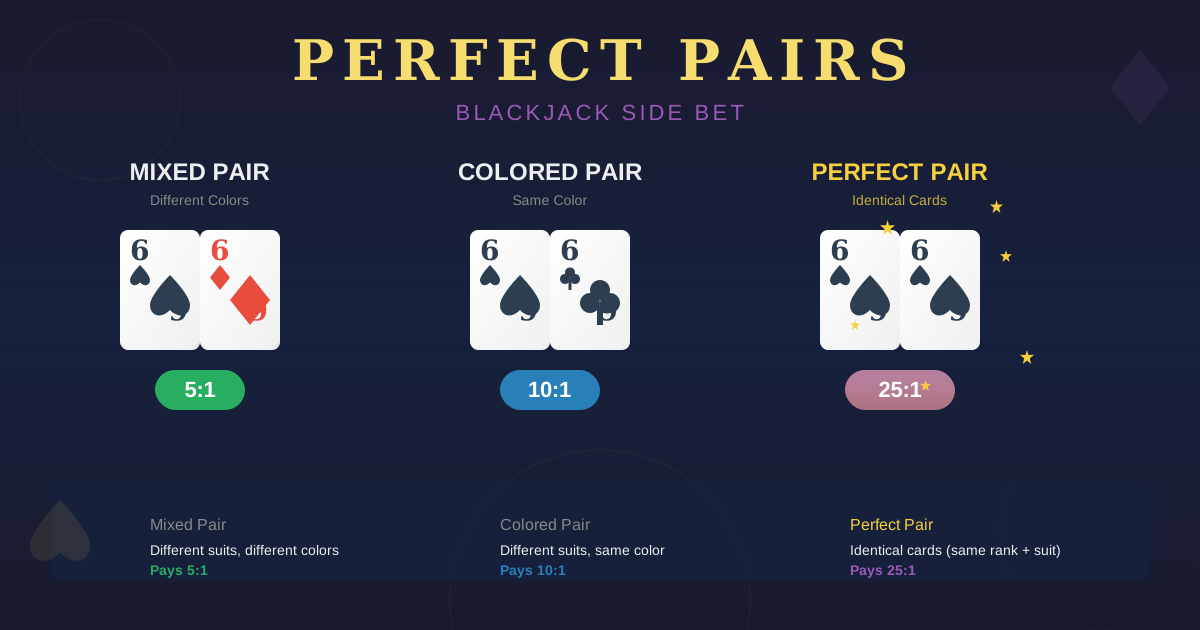
| Perfect Pairs | 2-11% | Pairs of various types | Lower edge but still far worse than base game |
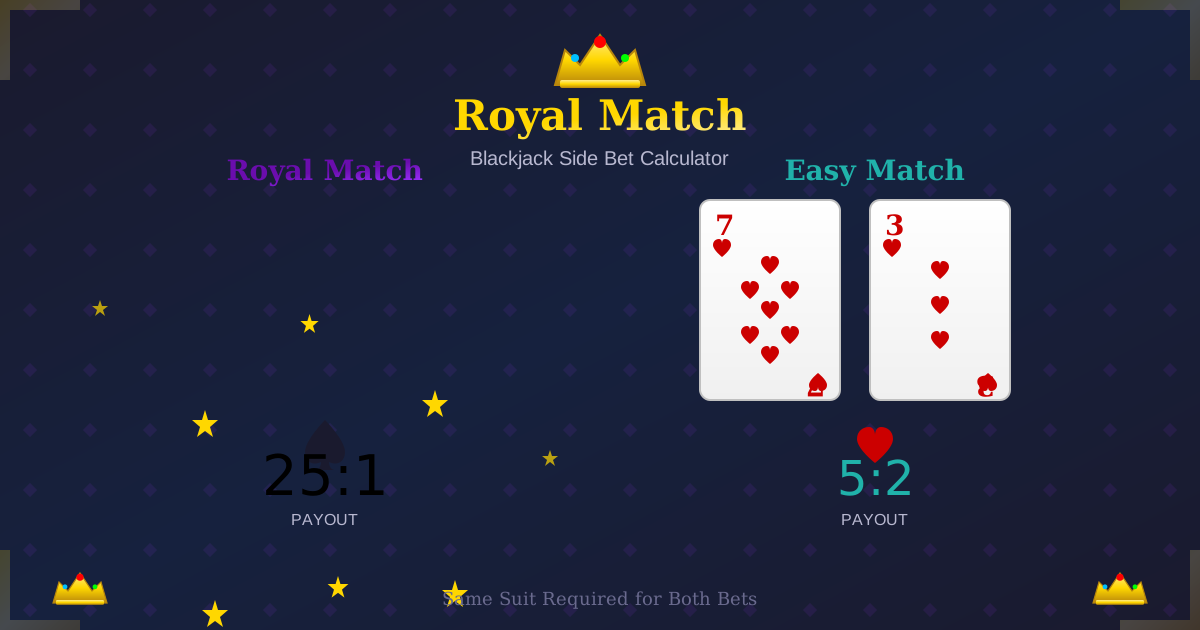
| Royal Match | 5.6-10.9% | Suited cards, royal match | Highly variable, most versions are bad |
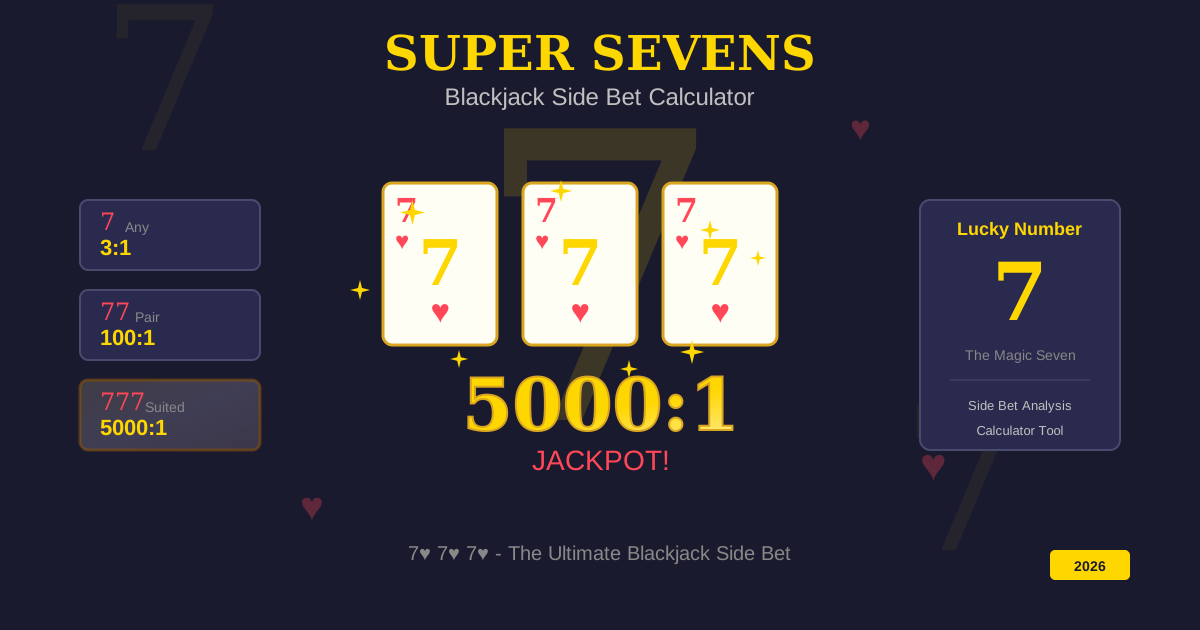
| Super Sevens | 11.4% | Sequential sevens | Tiny probability events drive the payout |
| Insurance | 7.4% | 2:1 on dealer blackjack | Already covered above, always decline |
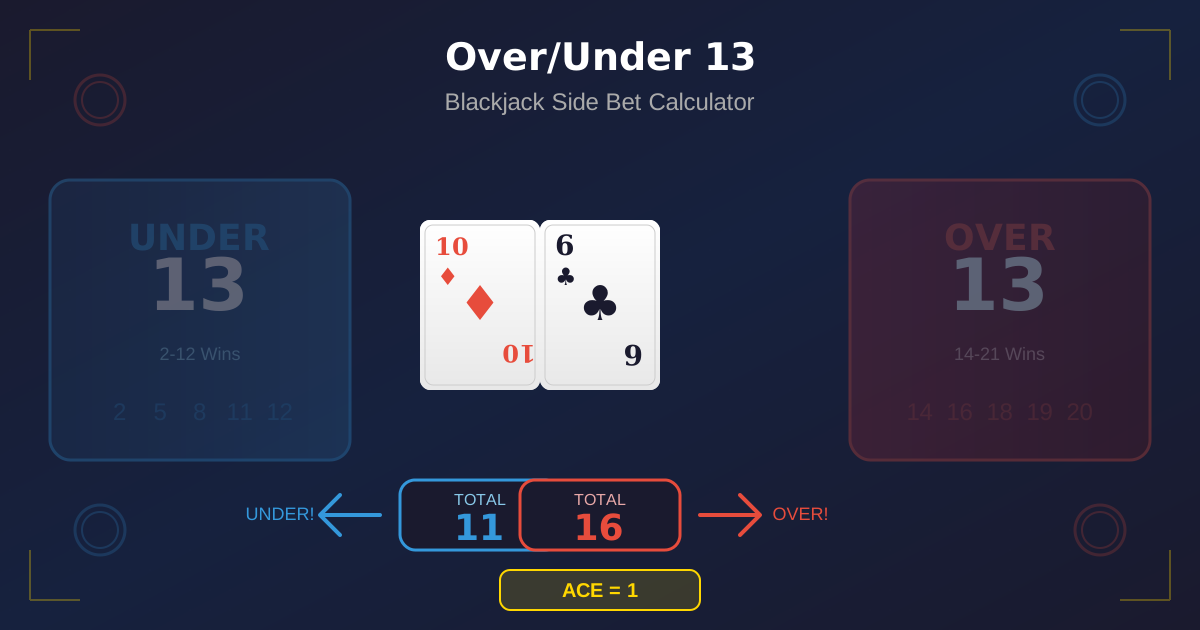
| Over/Under 13 | 6.5-10% | Your hand total over or under 13 | Under 13 version is especially bad at 10% |
Real-world cost: If you bet $5 on the Lucky Ladies side bet every hand for 300 hands, you are wagering $1,500 on a bet with a 20%+ house edge. Expected loss: $300 or more. That is on top of whatever happens on your main blackjack hand.
The better play: Ignore every side bet. They exist because they are enormously profitable for the casino. Your blackjack edge is lowest when you play only the base game with perfect basic strategy. Every side bet you add increases the effective house edge you face.
Worst Roulette Bets
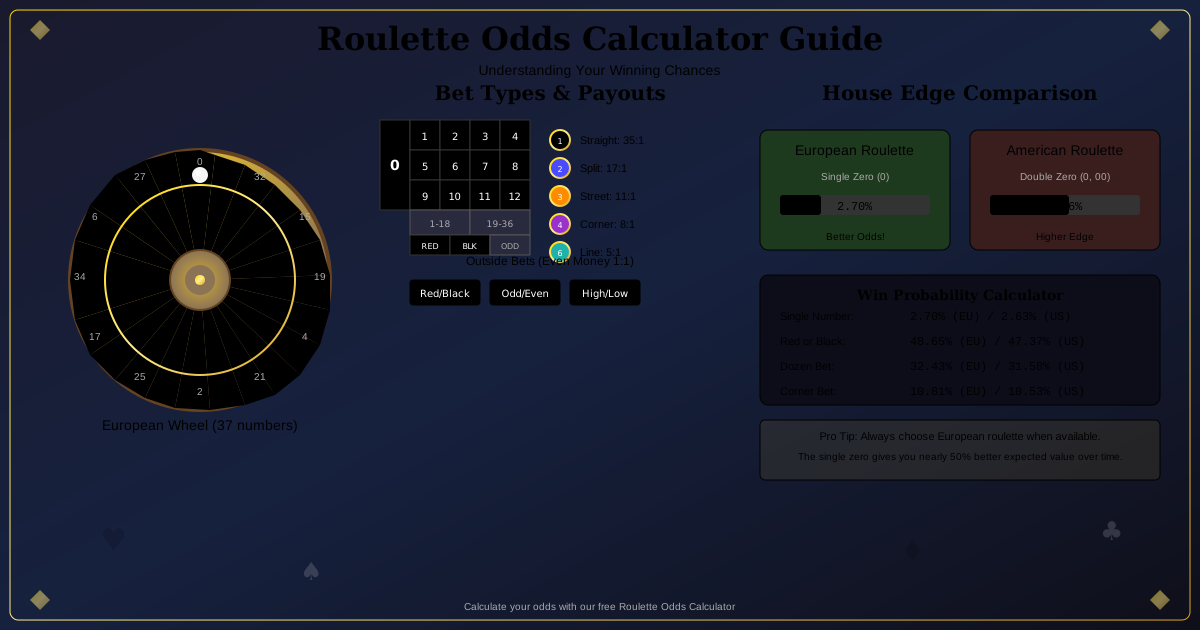
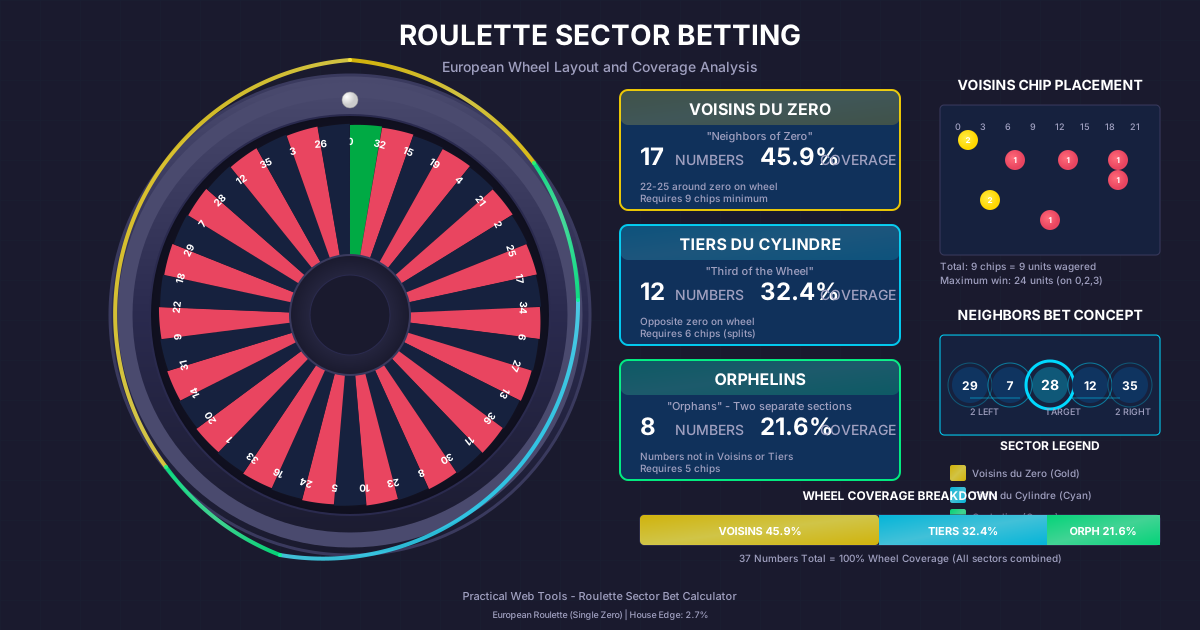
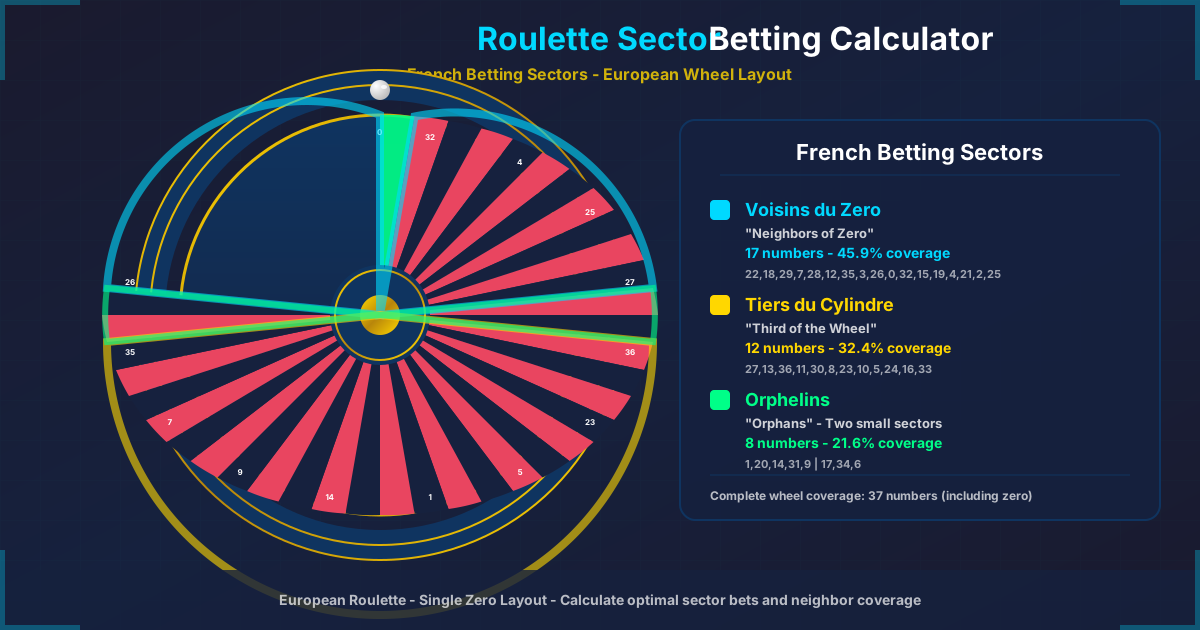
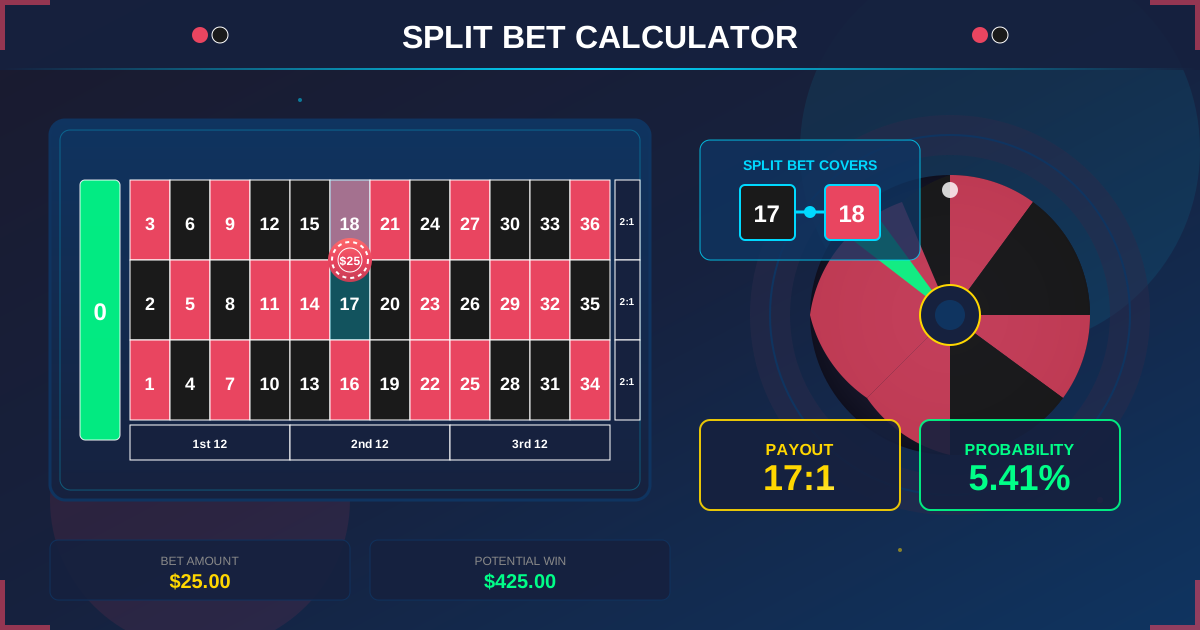
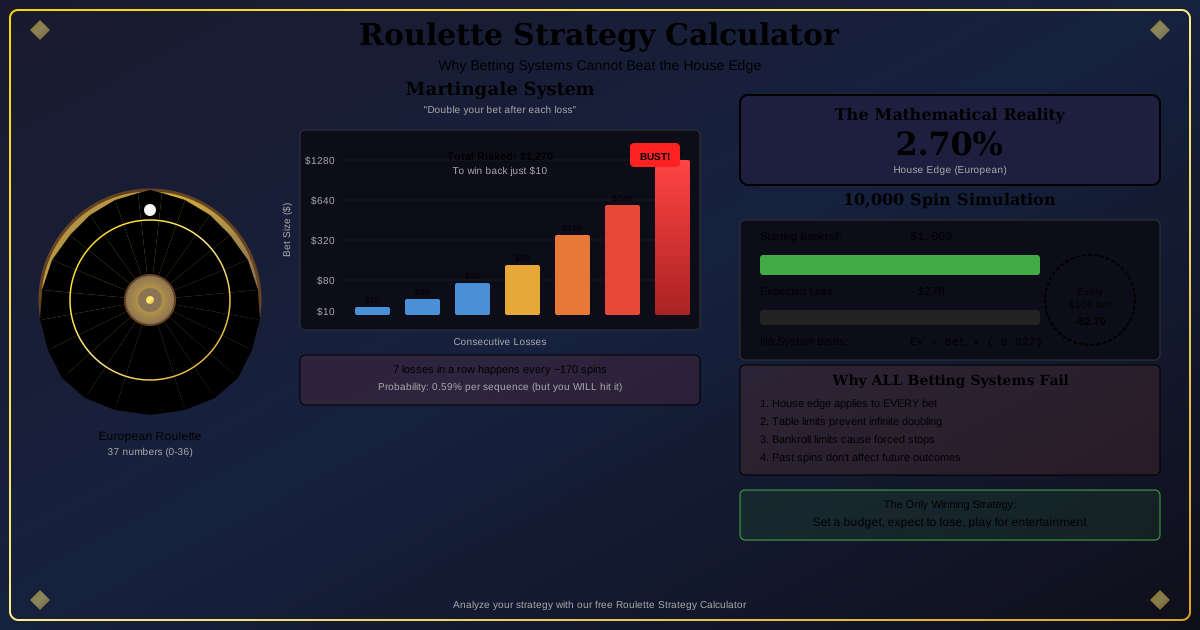
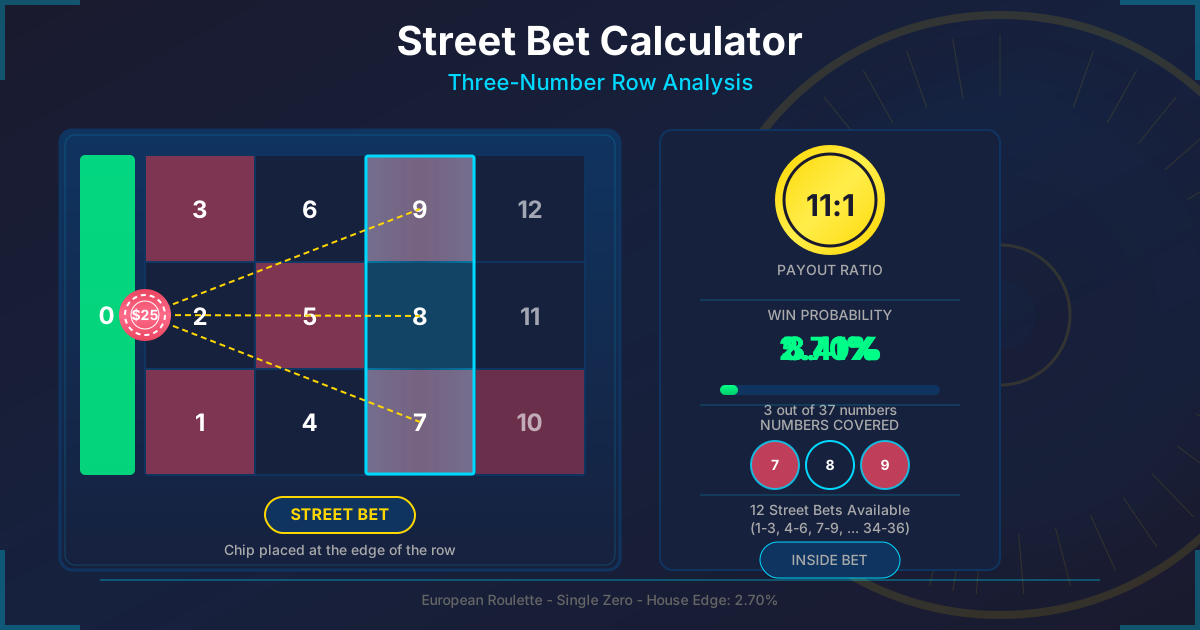
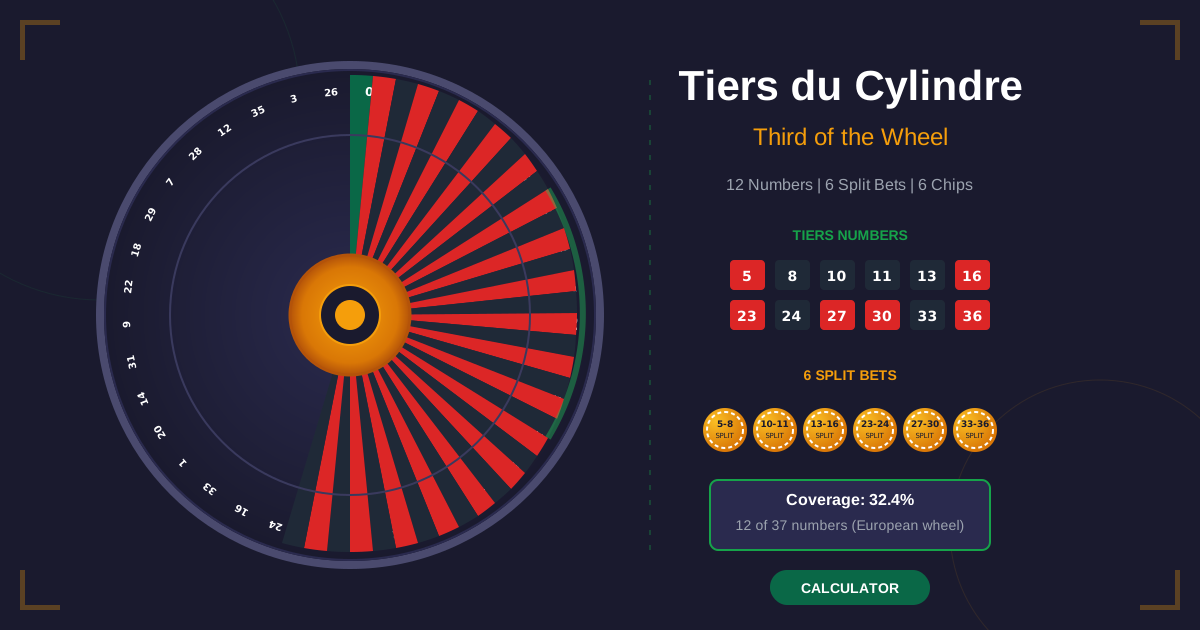
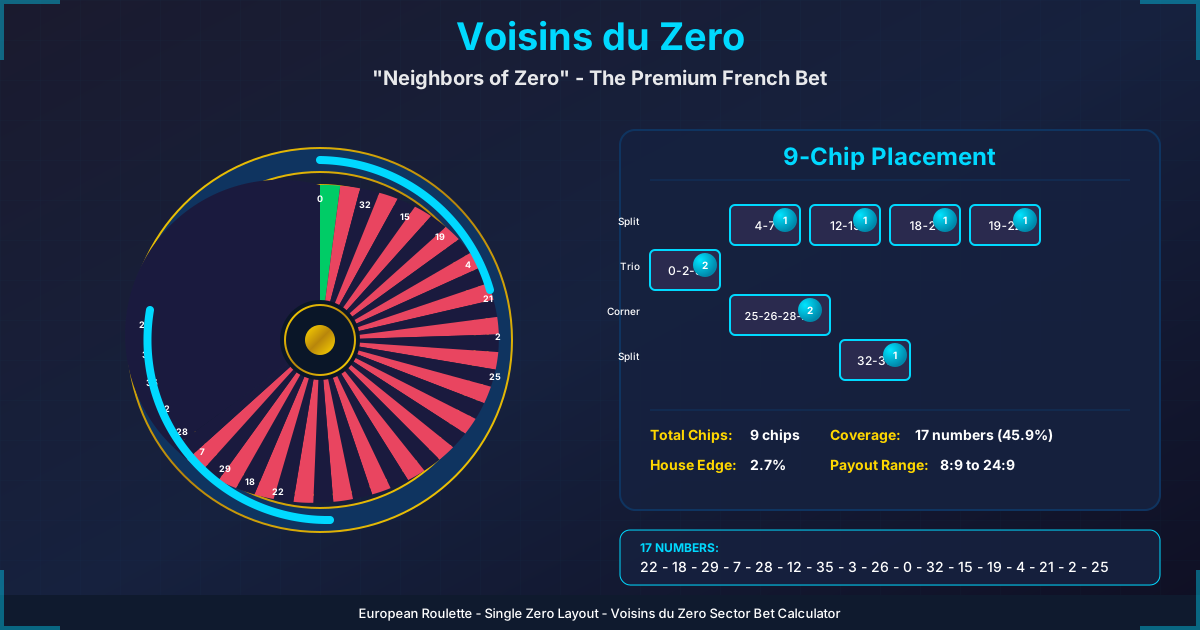
Roulette is a game of fixed edges, but not all roulette bets are created equal. And the single worst bet in the entire game is one that most players do not even know exists. Calculate the exact odds for any roulette bet type using our Roulette Odds Calculator.
The Five-Number Bet (0, 00, 1, 2, 3): The Worst Bet on the Roulette Table
House edge: 7.89%
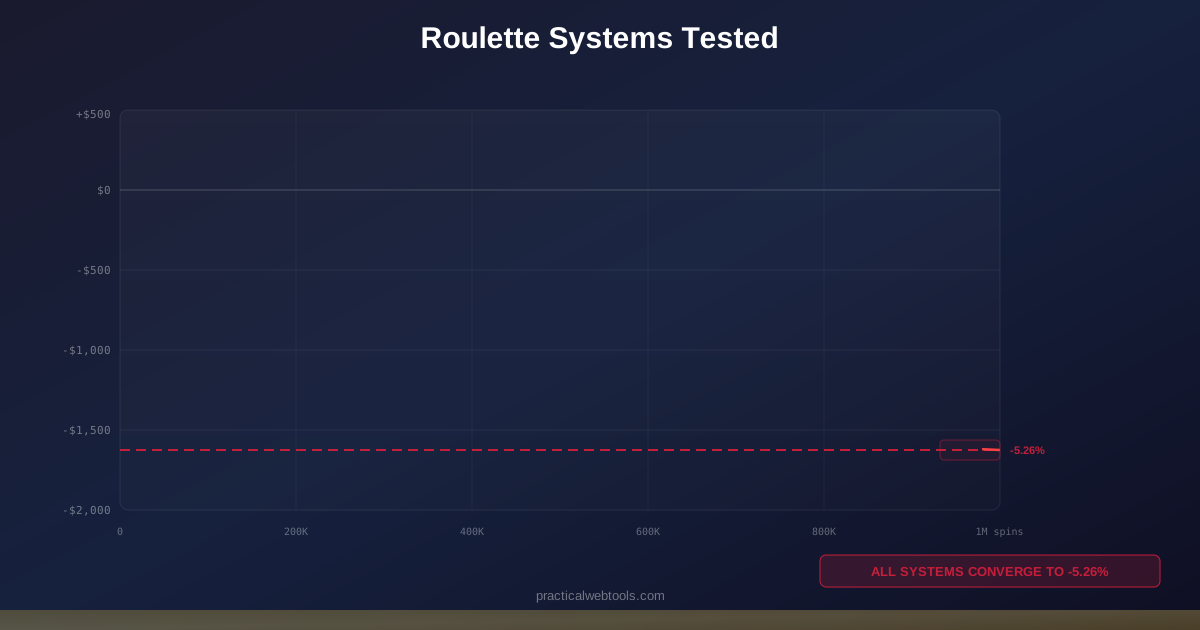
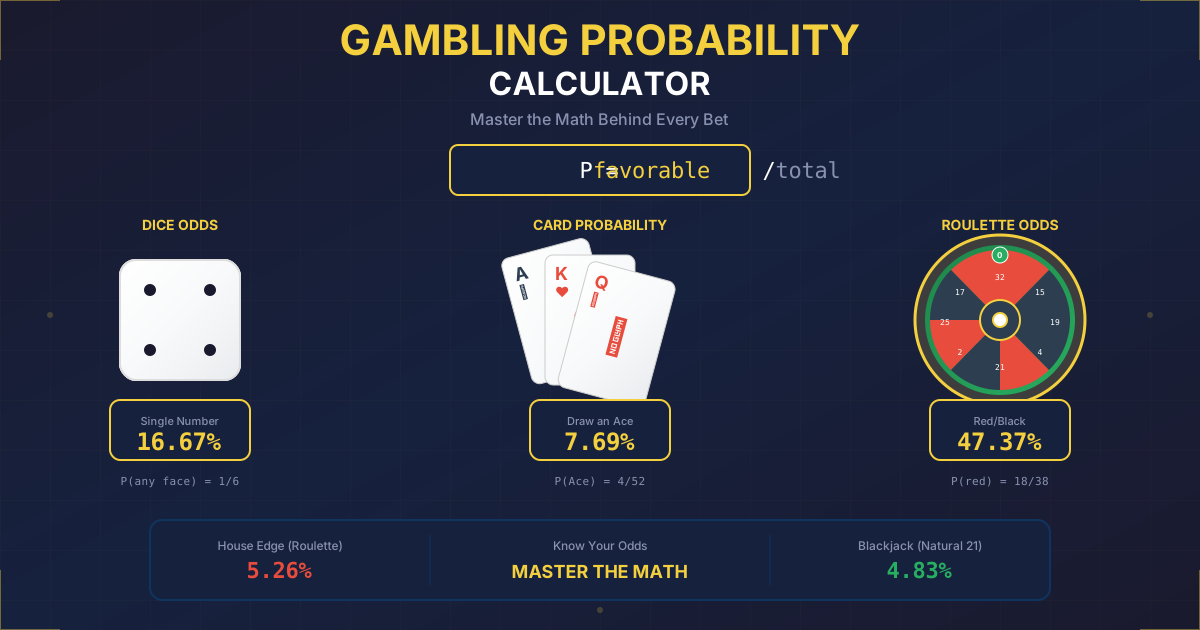
On an American double-zero roulette wheel, every single bet carries a house edge of 5.26%. Every bet except one. The five-number bet, also called the "basket bet," covers 0, 00, 1, 2, and 3. It pays 6:1. And it has a house edge of 7.89%, making it approximately 50% worse than every other bet on the same table.
Here is why. The number 5 does not divide evenly into 36 (the non-zero numbers on the wheel). The mathematically fair payout for a five-number bet would be 6.6:1. The casino rounds that down to 6:1, and that rounding creates an additional 2.63% edge on top of the standard 5.26%.
Real-world cost: If you bet $10 on the five-number bet every spin for two hours at 35 spins per hour (70 spins), you wager $700. At a 7.89% house edge, your expected loss is $55.23, versus $36.82 if you had placed any other bet on the same table.
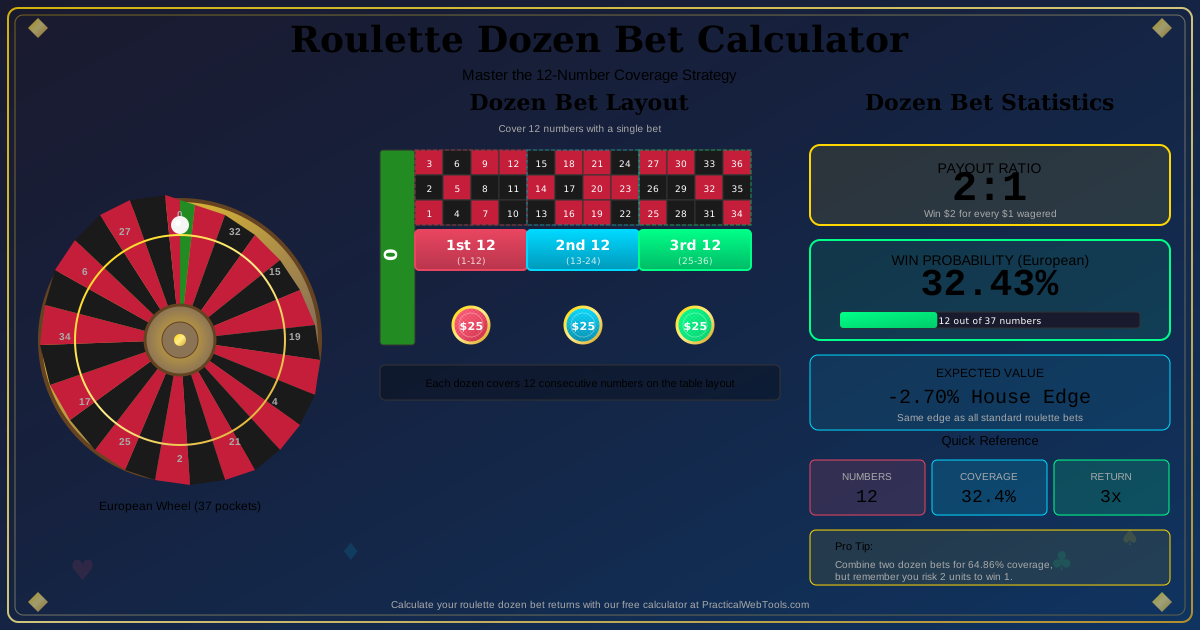
The better play: If you insist on covering those specific numbers, place individual straight-up bets on each number. You will face the standard 5.26% house edge instead of 7.89%. Better yet, play European single-zero roulette if available, which cuts the house edge to 2.70% on all bets. Check the difference yourself with our Roulette House Edge Calculator.
Playing American Double-Zero Roulette at All
House edge: 5.26% (vs 2.70% European)
This is not one specific bet. It is an entire wheel. Every time you sit down at an American roulette table with both a 0 and 00, you are accepting nearly double the house edge compared to a European single-zero wheel.
| Wheel Type | House Edge | Expected Loss per $1,000 Wagered |
|---|---|---|
| American (0, 00) | 5.26% | $52.60 |
| European (0 only) | 2.70% | $27.00 |
| French (La Partage) | 1.35% | $13.50 |
Real-world cost: Over four hours of play at $10 per spin, 35 spins per hour, you wager $1,400. On an American wheel, expected loss: $73.64. On a European wheel: $37.80. That is a $35.84 difference per session, and it adds up to hundreds of dollars over a year of play.
The better play: Always choose a European single-zero wheel when available. If your casino offers French roulette with the La Partage rule (which returns half your even-money bet when the ball lands on zero), the house edge drops to just 1.35%, making it one of the best bets on the casino floor.
Worst Craps Bets
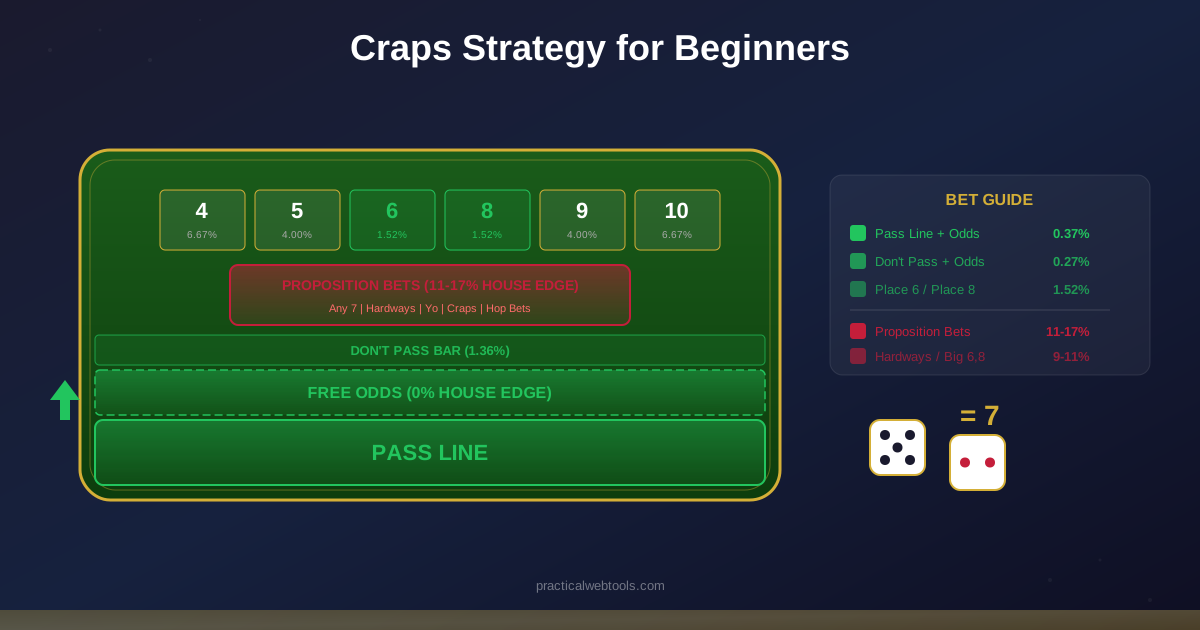
Craps is a game of extremes. It contains some of the best bets in the entire casino (the pass line with full odds has a combined edge under 0.5%) and some of the absolute worst. The problem is that the worst bets are the most visible, the most exciting, and the most heavily promoted by dealers. Analyze every craps bet with our Craps Odds Calculator and Craps House Edge Calculator.
Any 7: The Worst One-Roll Bet in Craps
House edge: 16.67%
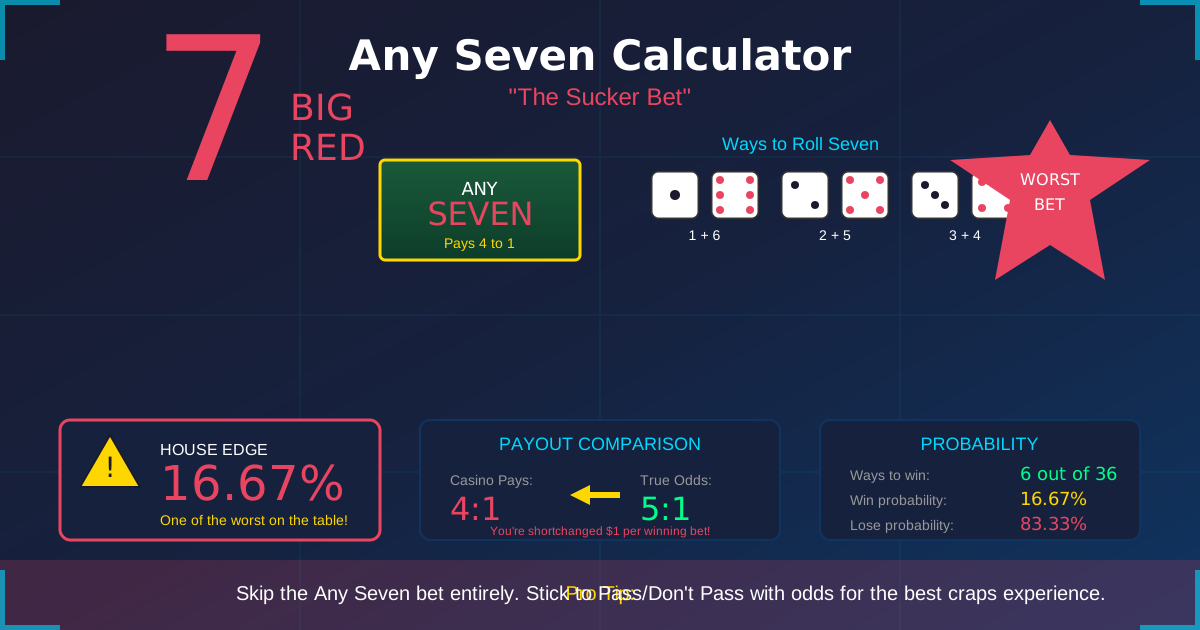
The Any 7 bet pays 4:1 if the next roll is a 7. Sounds reasonable. Seven is the most common number on two dice, right?
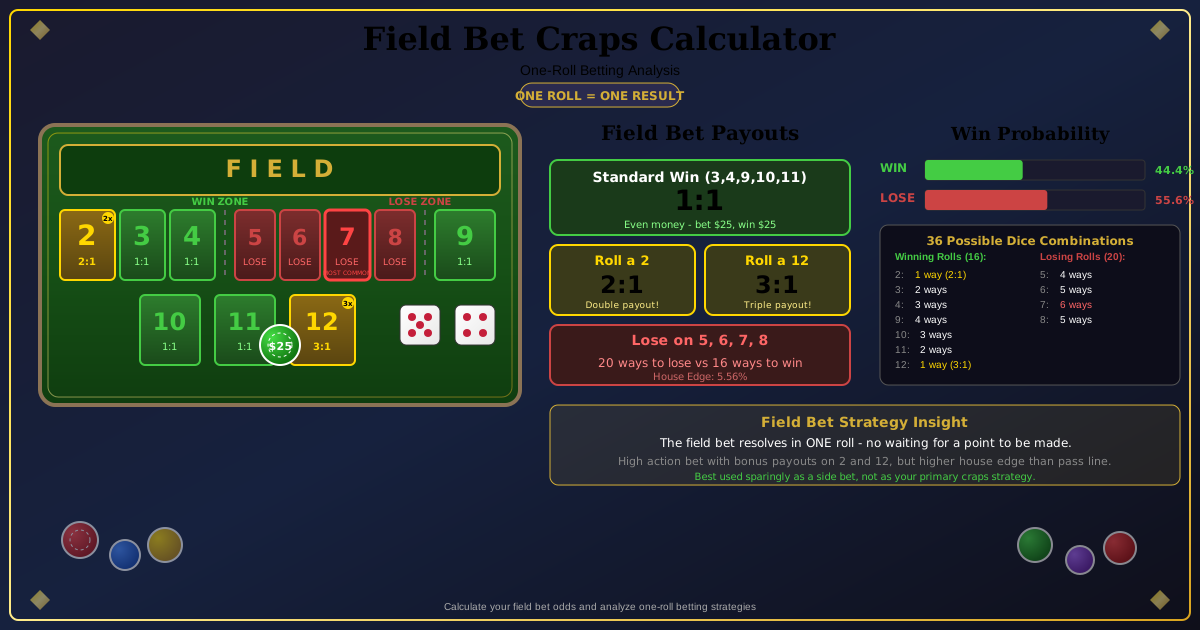
It is. There are 6 ways to roll a 7 out of 36 possible dice combinations. But the true odds are 5:1 against you, not 4:1. That gap between true odds and the payout is where the casino makes its money.
- True odds: 30:6 = 5:1 against
- Casino payout: 4:1
- House edge: 16.67%
Real-world cost: If you bet $5 on Any 7 on every roll for an hour (roughly 100 rolls at a busy table), you wager $500. Expected loss: $83.35. In one hour. On a $5 bet.
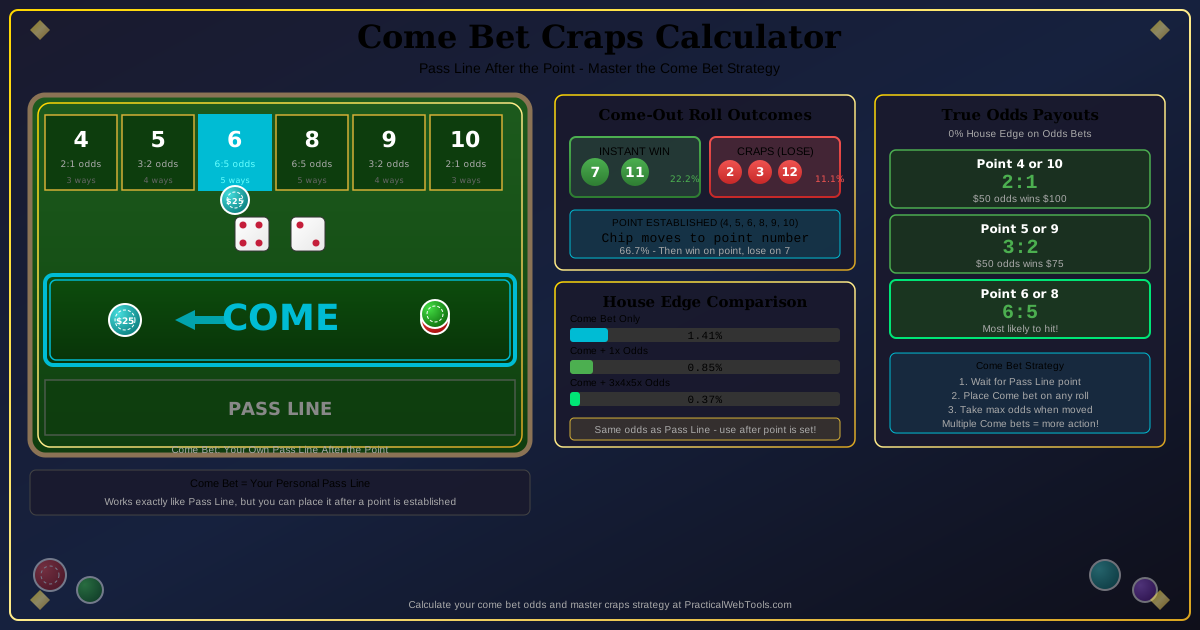
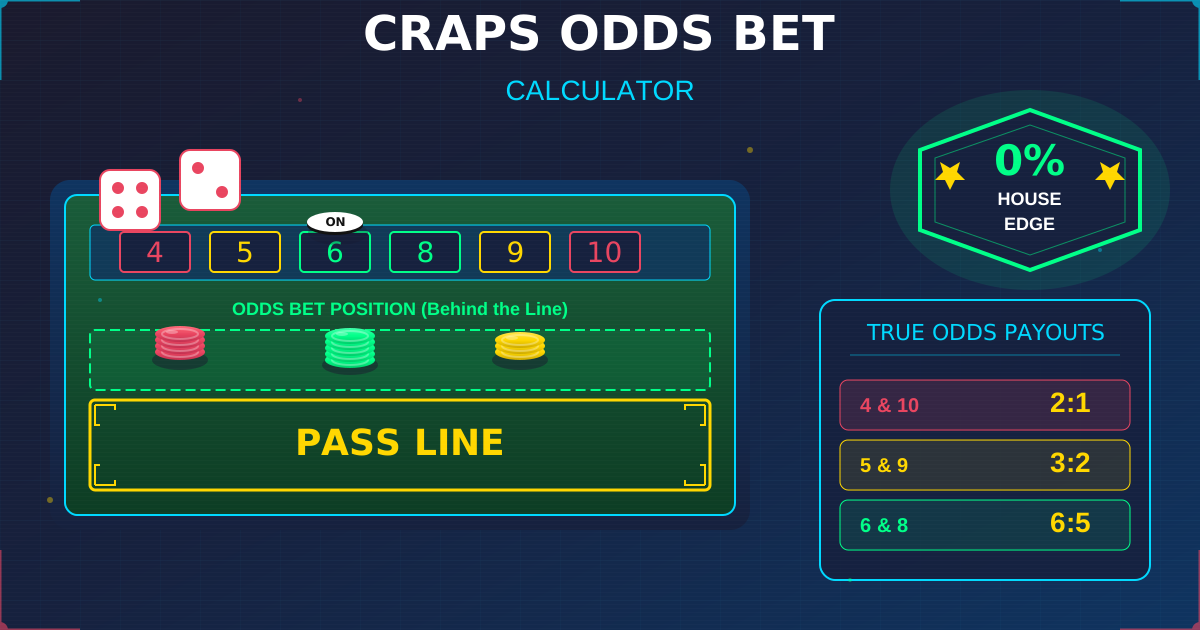
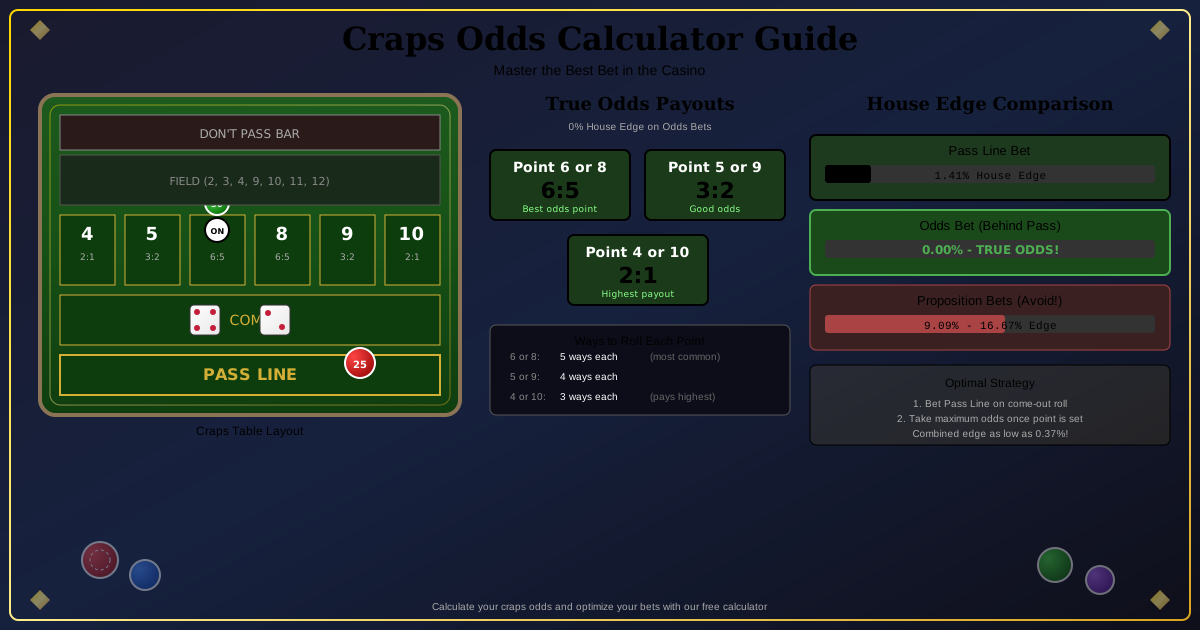
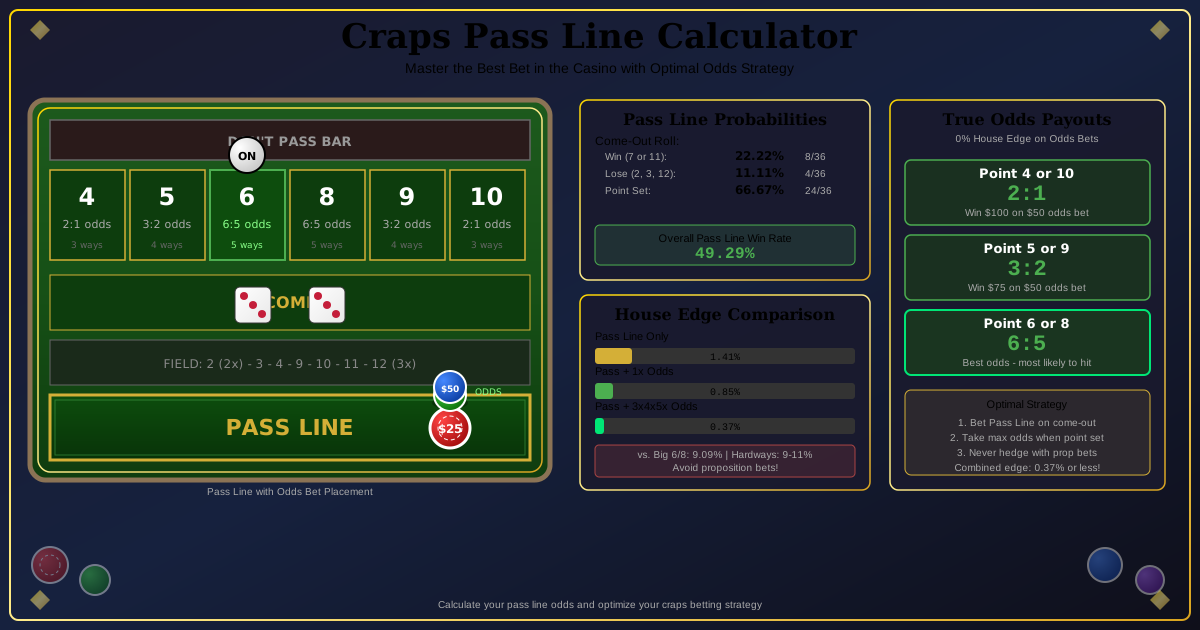
The better play: The pass line bet has a house edge of just 1.41%. Back it with odds bets (which have zero house edge) and your effective edge drops well below 1%. You are playing the same game, at the same table, with the same dice. Just stop betting the center of the layout.
Proposition Bets: The Center of the Layout Is a Trap
House edge: 9.09% to 16.67%
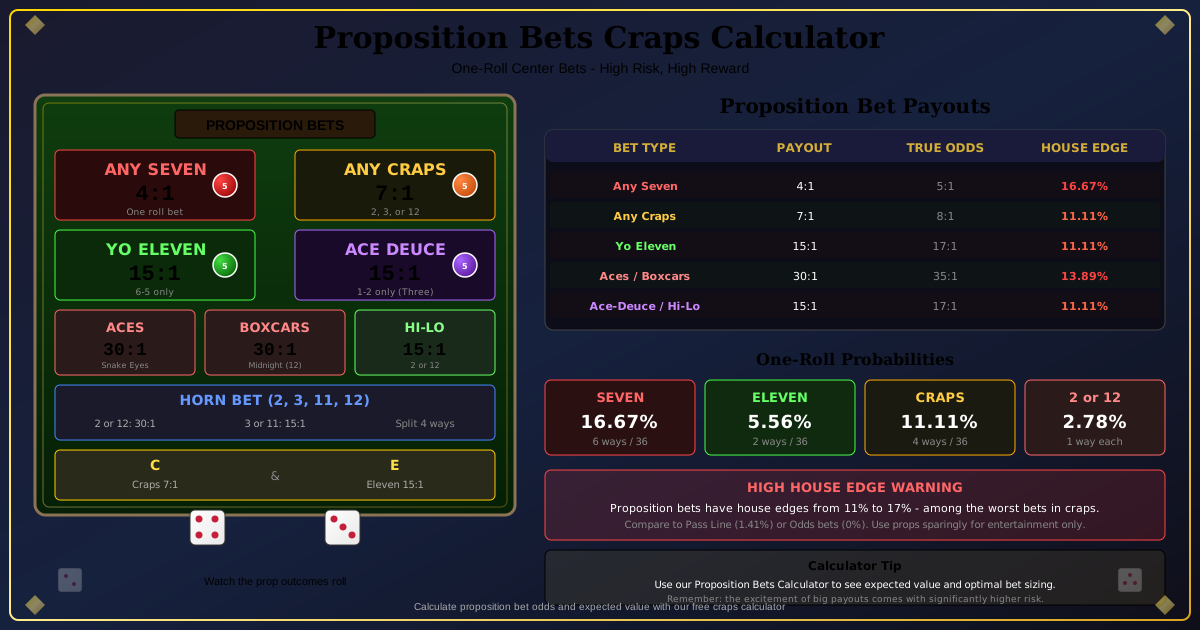
The center of the craps layout is filled with colorful, high-payout proposition bets. They are there because they make the casino the most money per dollar wagered. Here is the full breakdown:
| Proposition Bet | Payout | True Odds | House Edge |
|---|---|---|---|
| Any 7 | 4:1 | 5:1 | 16.67% |
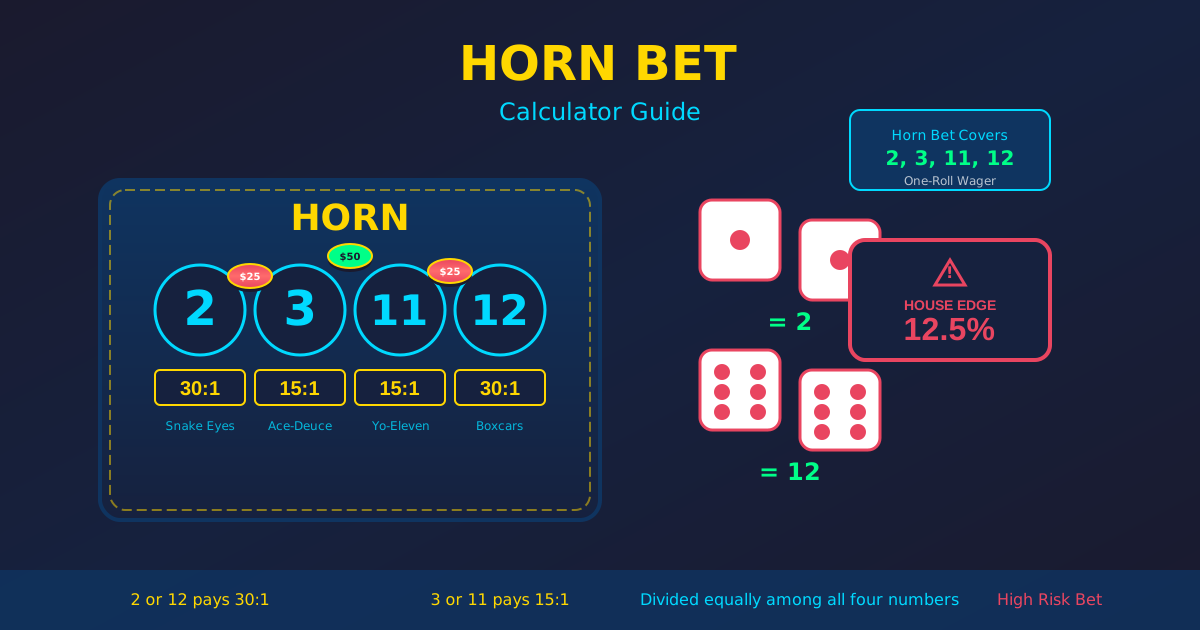
| 2 (Snake Eyes) | 30:1 | 35:1 | 13.89% |
| 12 (Boxcars) | 30:1 | 35:1 | 13.89% |
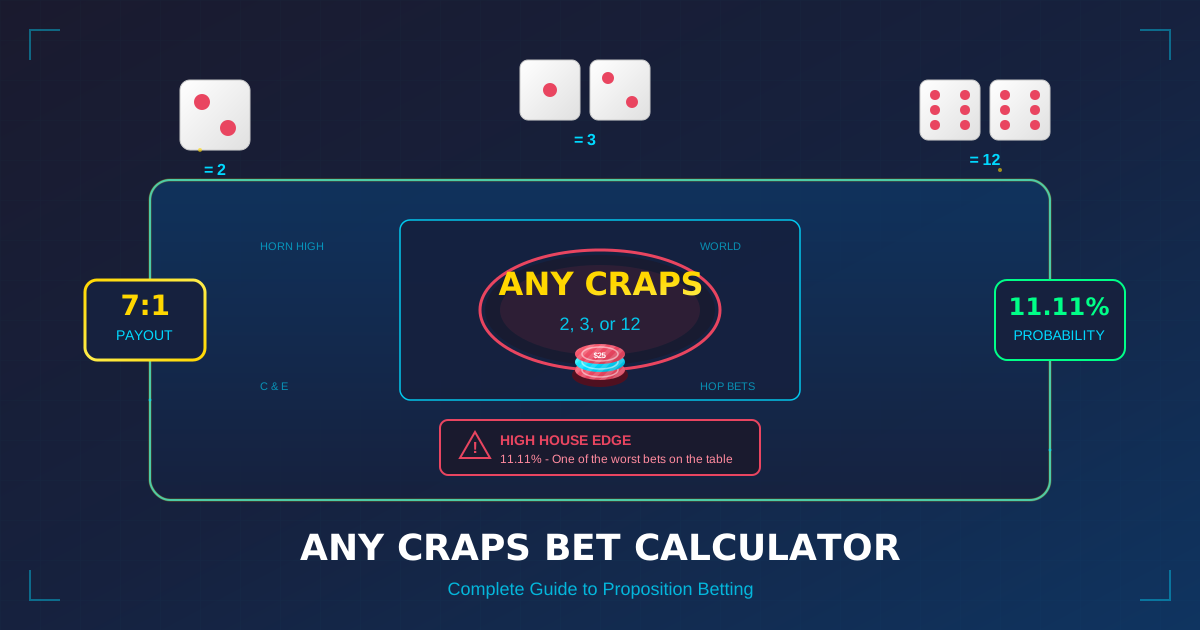
| Any Craps (2, 3, or 12) | 7:1 | 8:1 | 11.11% |
| 3 (Ace-Deuce) | 15:1 | 17:1 | 11.11% |
| 11 (Yo) | 15:1 | 17:1 | 11.11% |
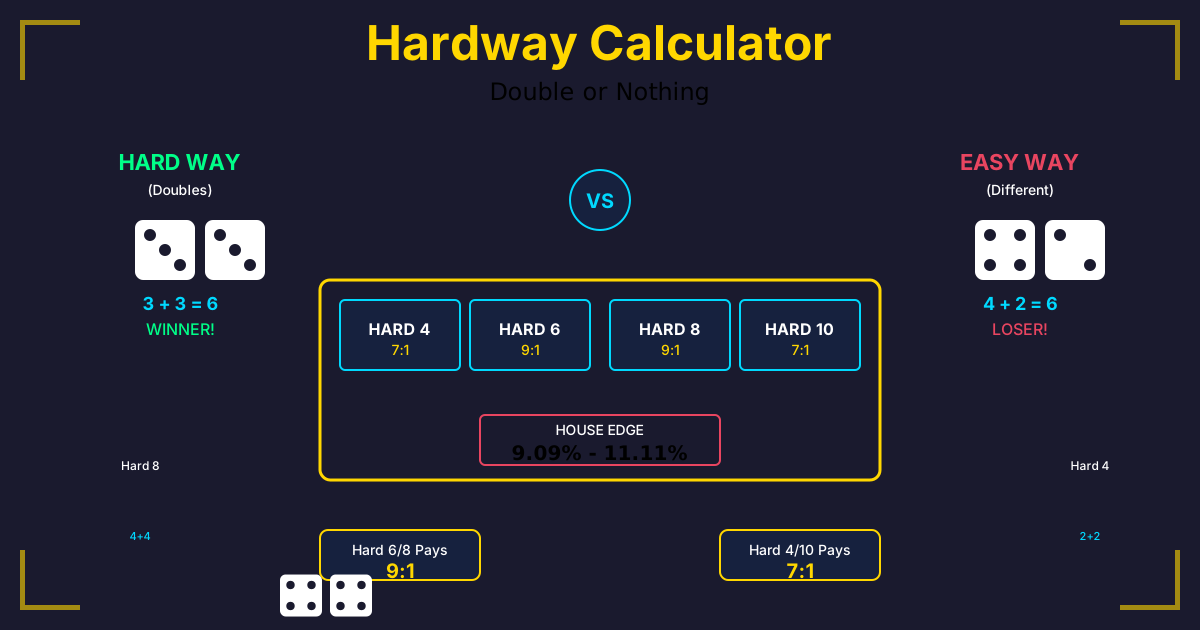
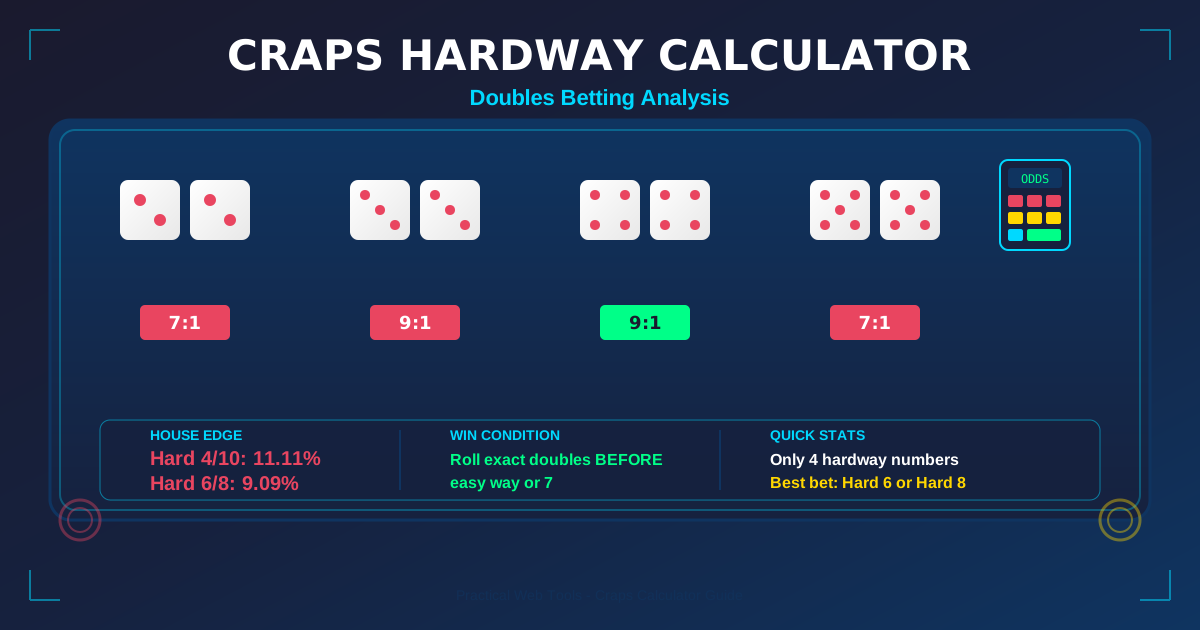
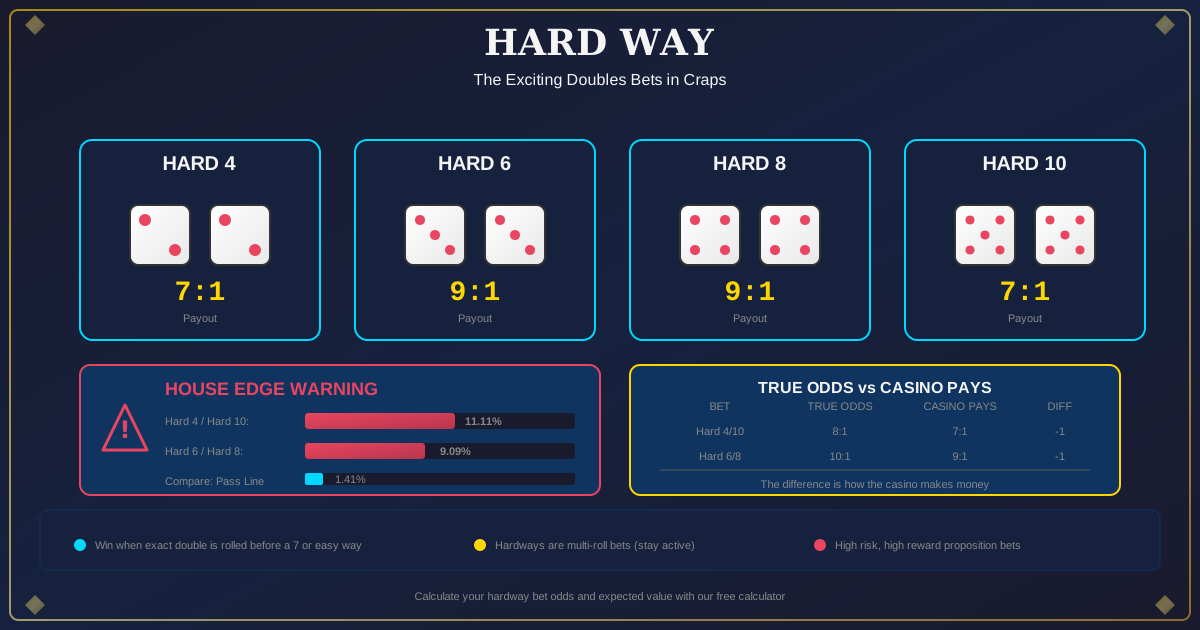
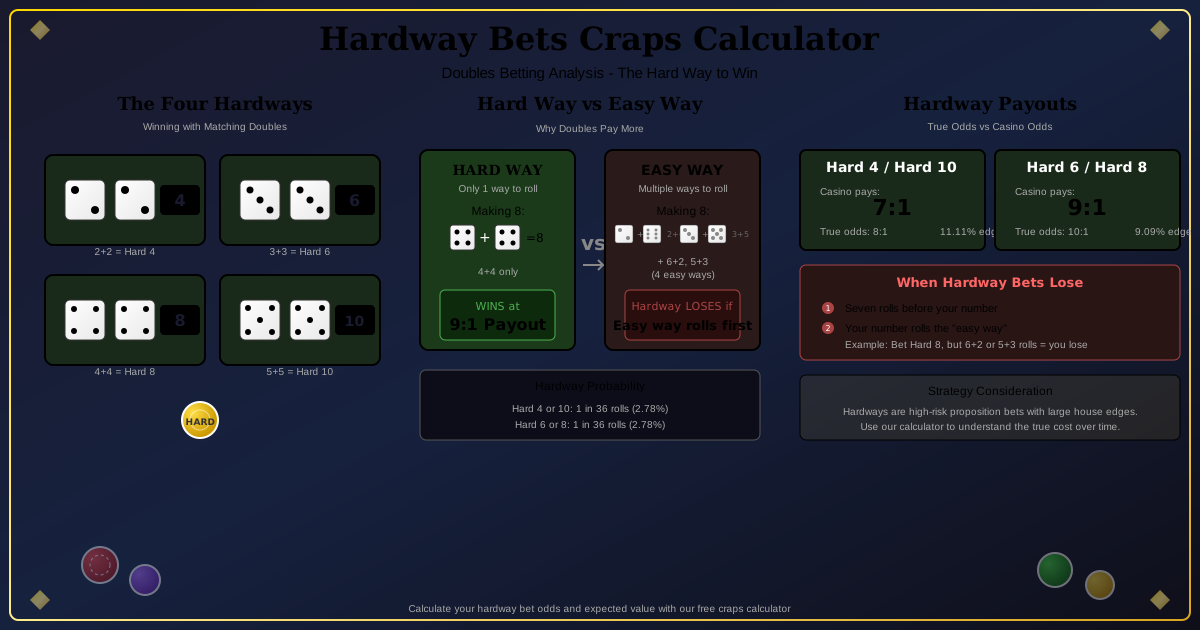
| Hard 4 (2+2) | 7:1 | 8:1 | 11.11% |
| Hard 10 (5+5) | 7:1 | 8:1 | 11.11% |
| Hard 6 (3+3) | 9:1 | 10:1 | 9.09% |
| Hard 8 (4+4) | 9:1 | 10:1 | 9.09% |
Every single bet on this list has a house edge above 9%. Compare that to the pass line (1.41%), the come bet (1.41%), or place bets on 6 and 8 (1.52%).
Real-world cost: A player who throws $5 on the hardways and $1 on the proposition bets throughout a four-hour session can easily wager $2,000+ in the center. At an average house edge of 11%, that is $220 in expected losses from center bets alone, on top of whatever they lose on their line bets.
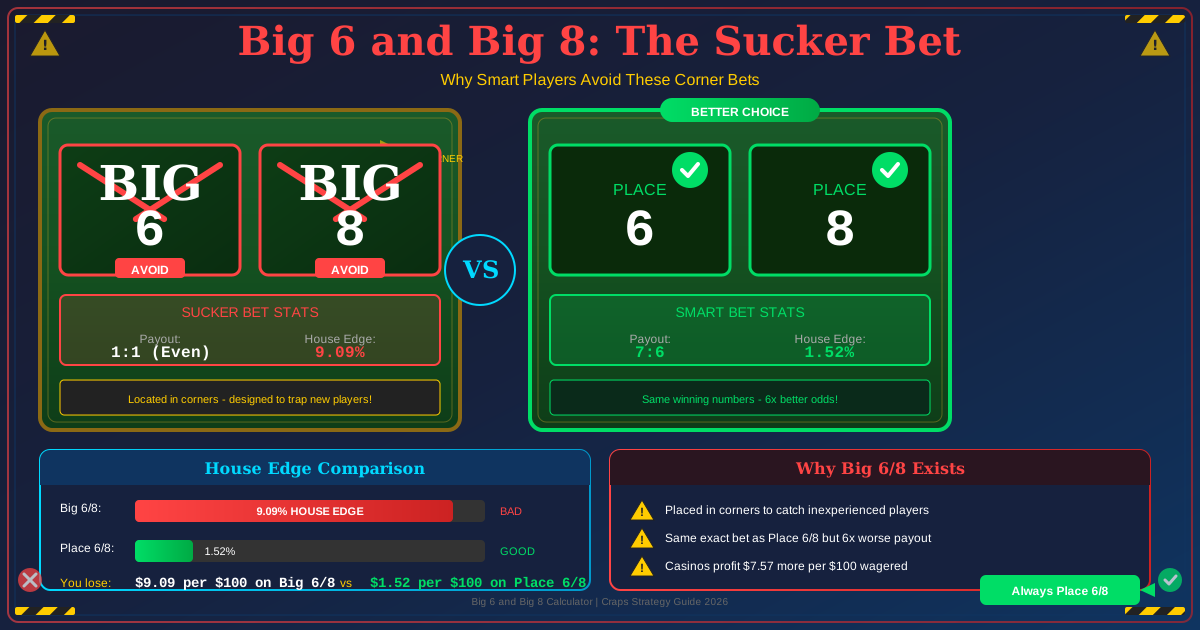
Big 6 and Big 8: The Laziest Trap on the Table
House edge: 9.09%
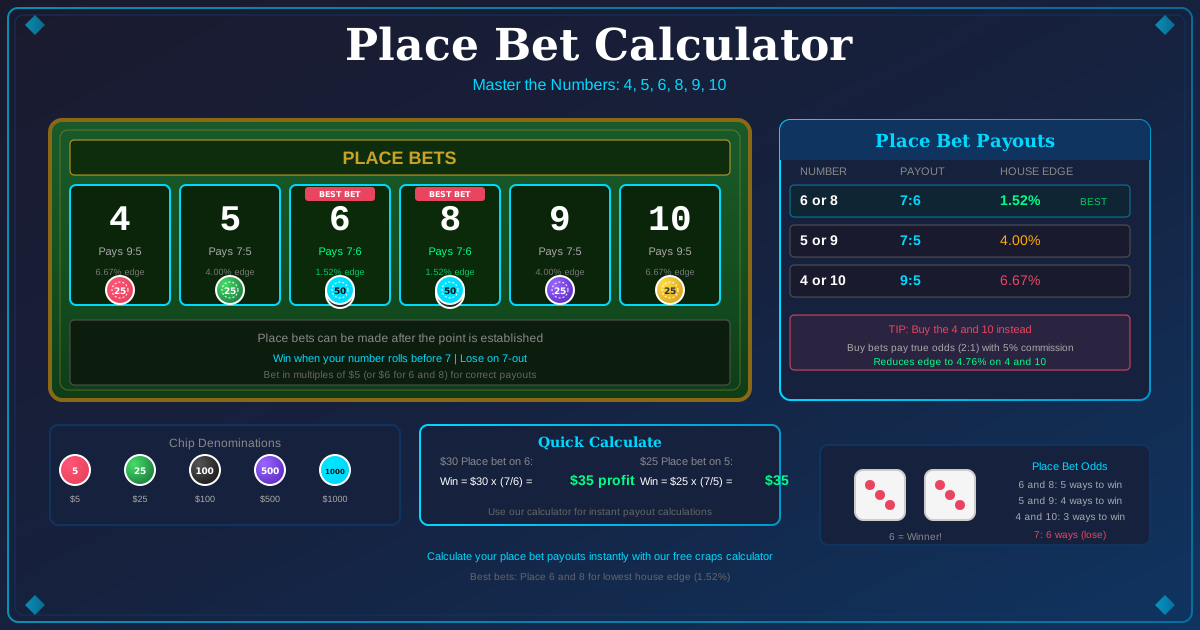
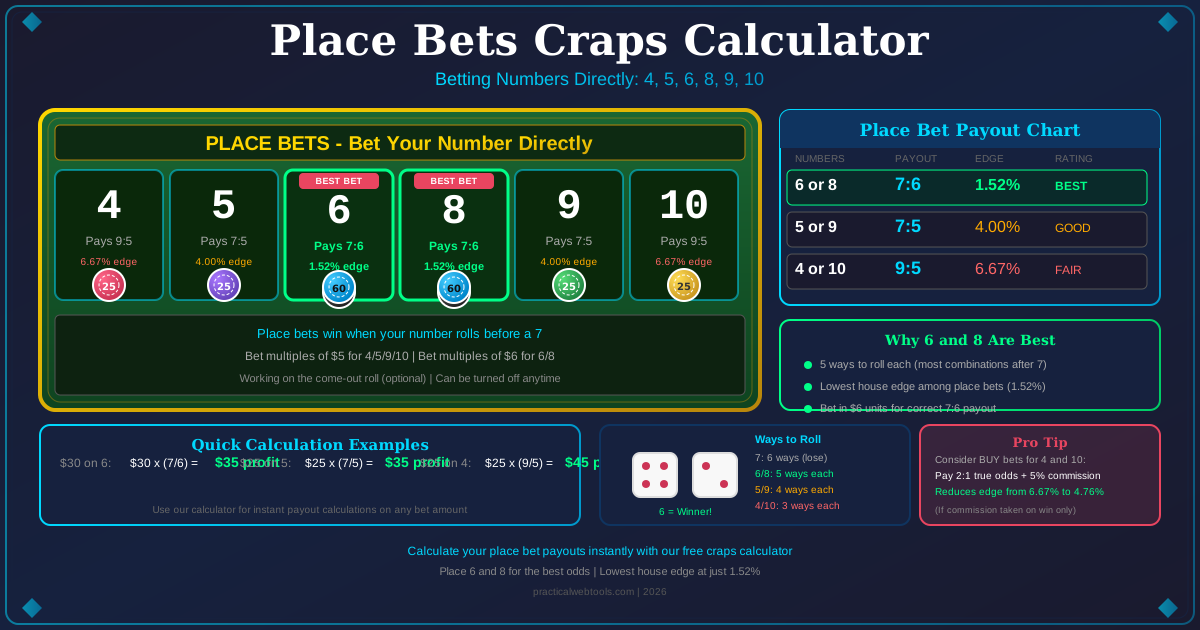
The Big 6 and Big 8 bets pay even money (1:1) when a 6 or 8 is rolled before a 7. The place bet on 6 or 8, available at the same table, pays 7:6. For the exact same outcome.
| Bet | Payout | House Edge |
|---|---|---|
| Big 6 / Big 8 | 1:1 (even money) | 9.09% |
| Place 6 / Place 8 | 7:6 | 1.52% |
Same number. Same dice. Same table. The Big 6/Big 8 has a house edge six times higher than the place bet. The only reason it exists is to catch uninformed players who wander to the edges of the craps layout.
Real-world cost: If you bet $6 on Big 6 instead of placing the 6, you get paid $6 on a win instead of $7. Over 100 resolved bets, that $1 difference per win costs you roughly $54 in expected value compared to the place bet.
The better play: Never bet Big 6 or Big 8. Walk to the dealer and say "Place the 6" or "Place the 8" in $6 increments. It is the same bet with a dramatically lower house edge. Some casinos have actually removed Big 6/Big 8 from their layouts because it was embarrassingly bad for players. If your casino still has it, treat it as a warning sign.
Worst Slot Machine Bets
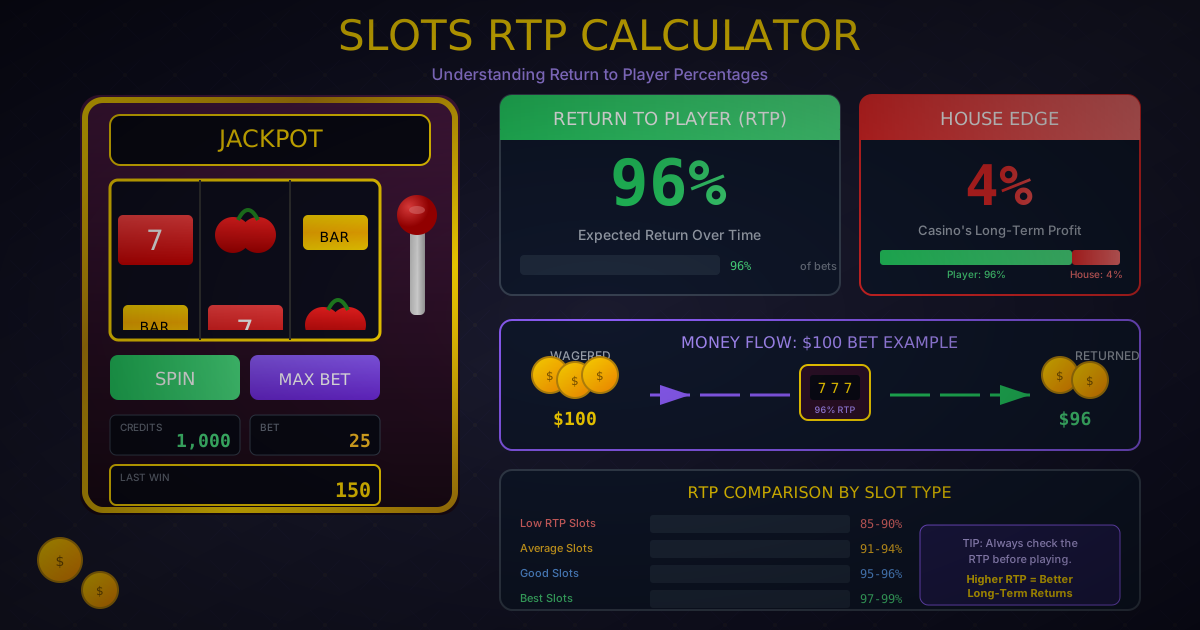
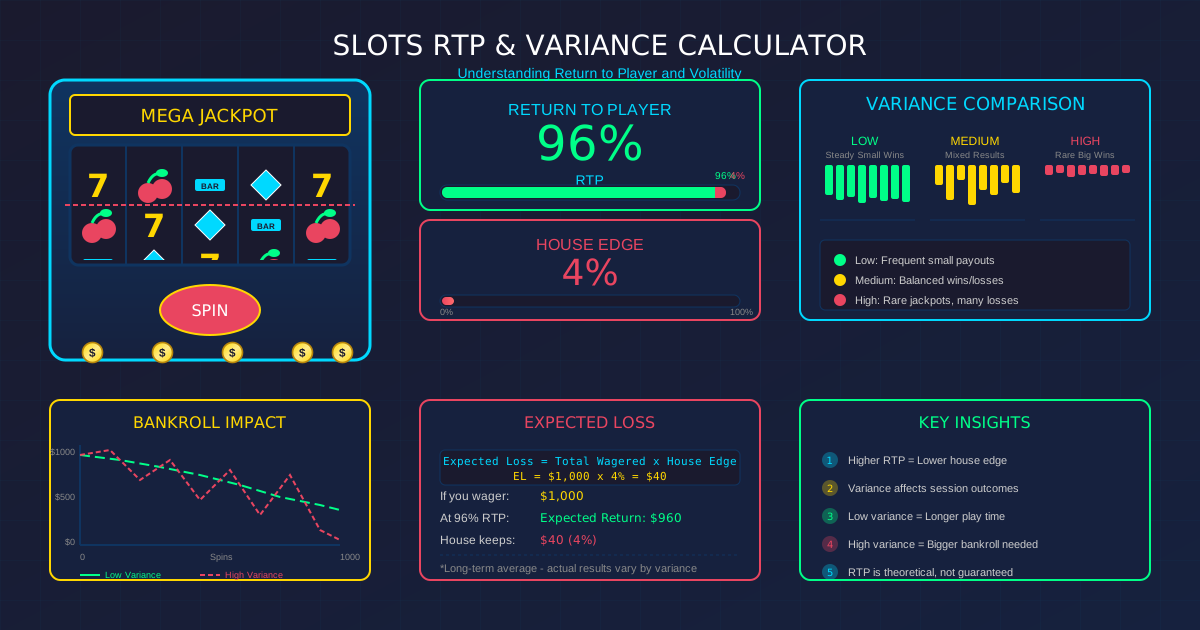
Slots are the casino's biggest revenue generator, accounting for roughly 60-70% of total floor revenue. That alone should tell you something about the odds. While slots are entertainment-first games, certain playing patterns are dramatically worse than others.
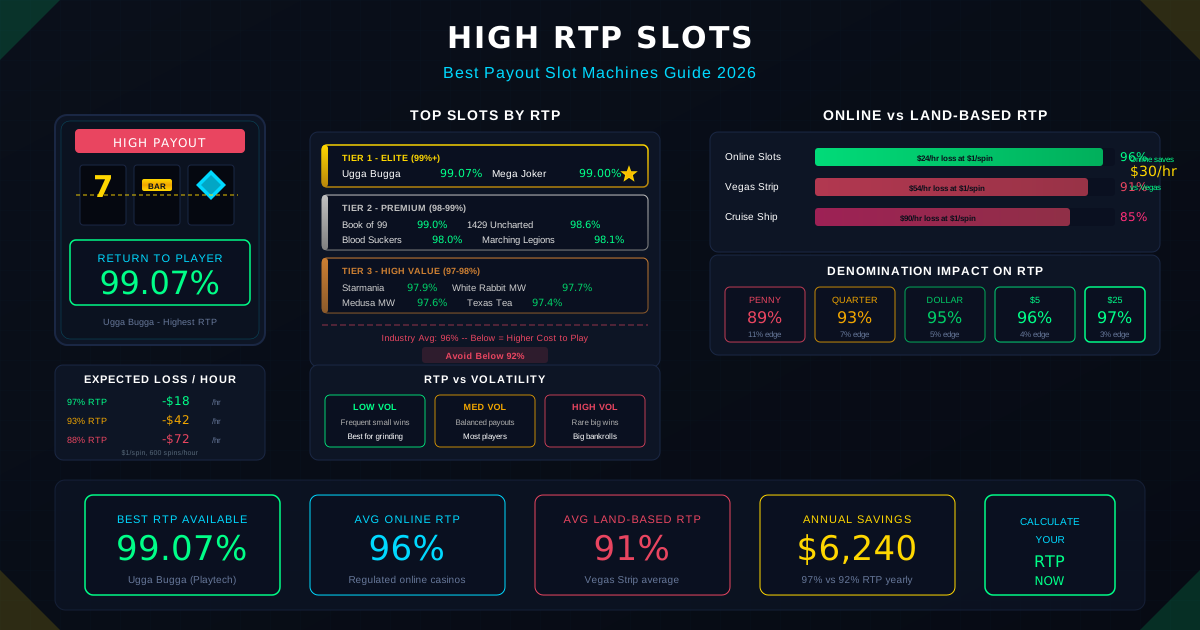
Penny Slots: The Denomination Deception
House edge: 8-15% (vs 3-6% for dollar slots)
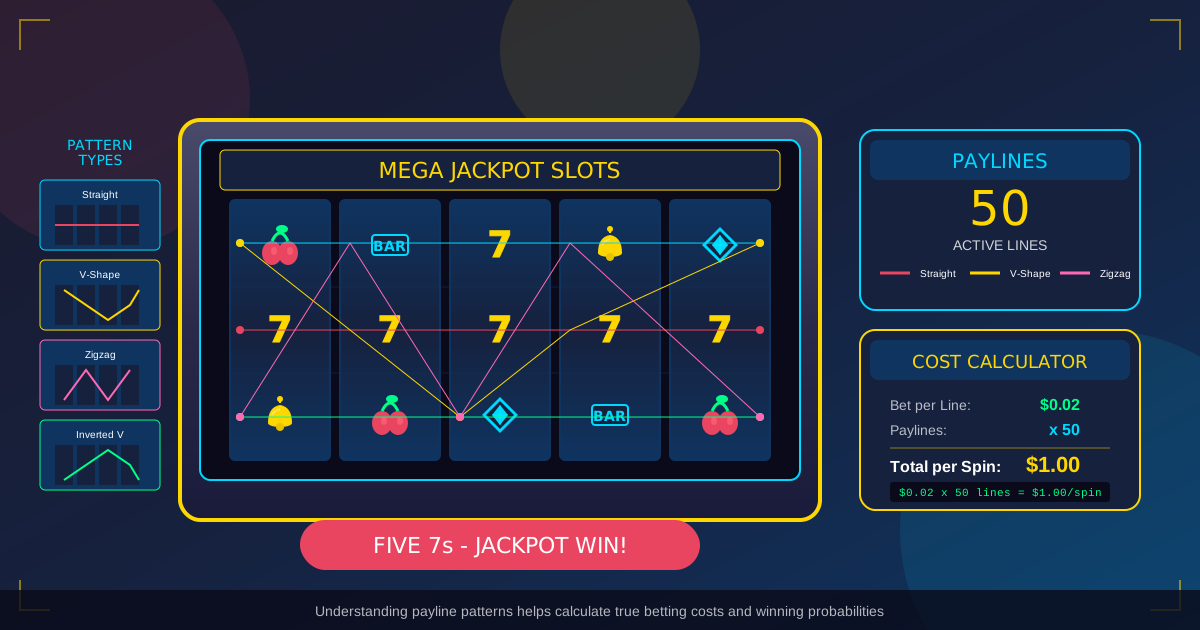
Penny slots sound cheap. They are not. Most penny slot machines have 20-50 paylines, and the minimum bet per spin is typically $0.40 to $1.00 or more when all lines are active. But the real problem is not the bet size. It is the return percentage.
Nevada Gaming Control Board data consistently shows that lower-denomination machines have worse payback percentages:
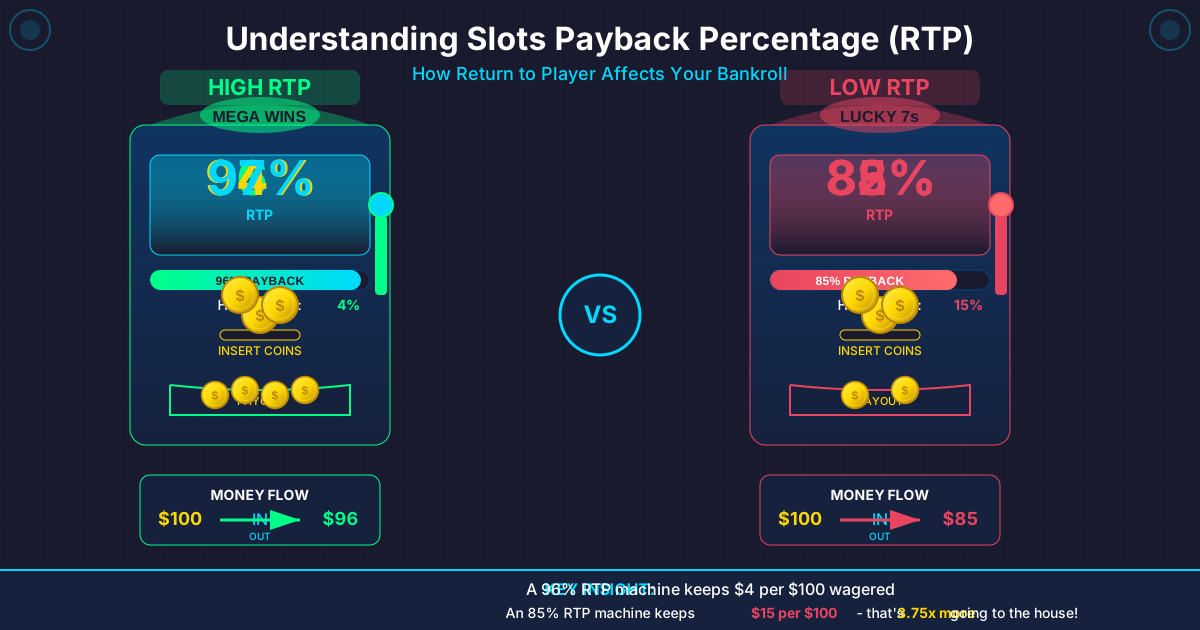
| Denomination | Typical RTP | House Edge | Expected Loss per $1,000 Wagered |
|---|---|---|---|
| Penny slots | 86-90% | 10-14% | $100-$140 |
| Nickel slots | 91-93% | 7-9% | $70-$90 |
| Quarter slots | 92-95% | 5-8% | $50-$80 |
| Dollar slots | 94-96% | 4-6% | $40-$60 |
| Five-dollar slots | 95-98% | 2-5% | $20-$50 |
The cheaper the denomination, the worse the payback. Casinos can afford to give back more on higher-denomination machines because the raw dollar volume is higher per player.
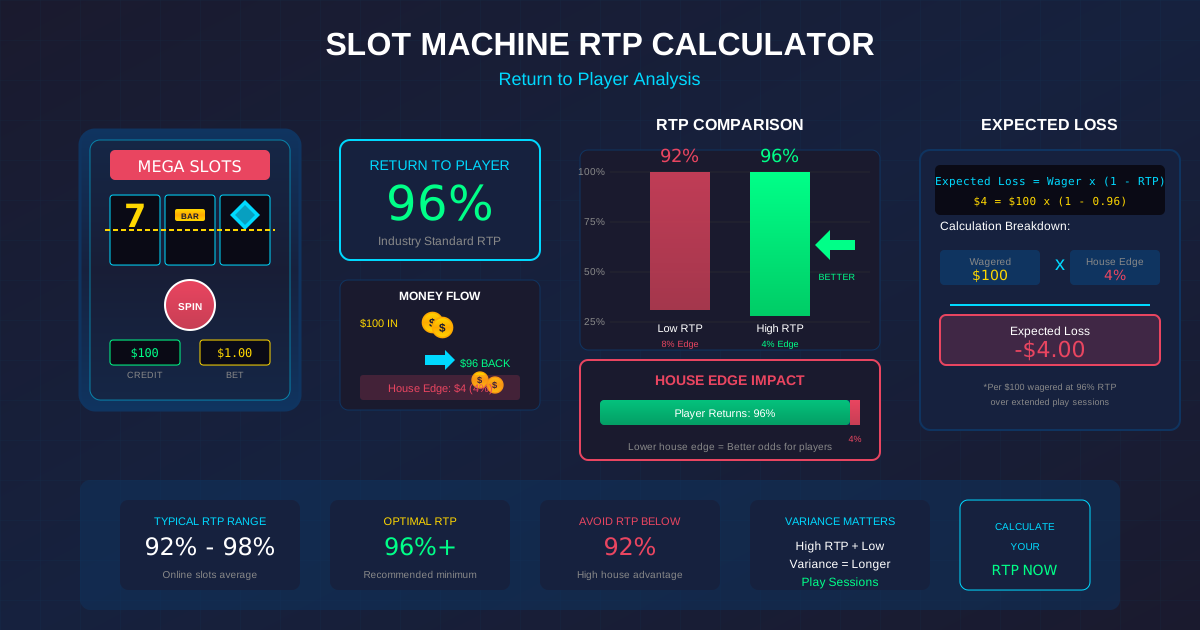
Real-world cost: If you play penny slots at $1 per spin, 600 spins per hour (slots are fast), you cycle through $600 per hour. At a 12% house edge, your expected loss is $72 per hour. On a dollar slot at 5% edge with the same $1 spin rate, expected loss: $30 per hour. The penny slot costs you $42 more per hour.
The better play: If you are going to play slots, play higher-denomination machines at lower spin rates. A single $1 bet on a dollar machine with 95% RTP is mathematically superior to the same $1 spread across 100 penny lines at 88% RTP. Or better yet, move to a table game where you can influence the edge.
Progressive Jackpot Max Bets: Paying for Someone Else's Payday
House edge: Often 8-15% on base game
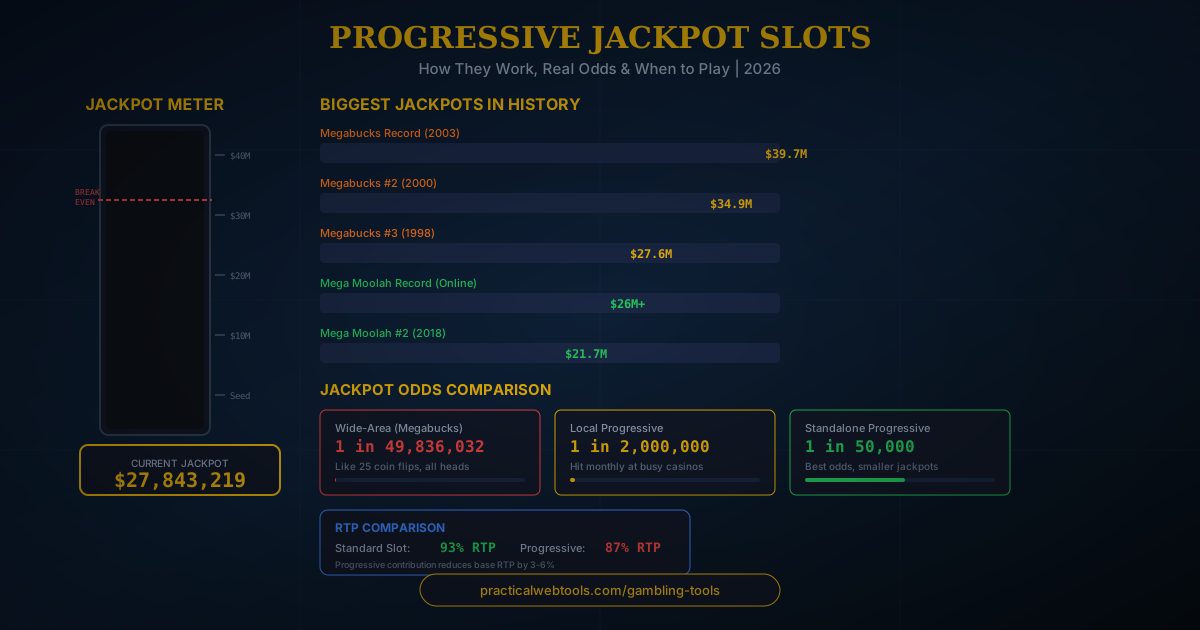
Progressive slot machines fund their growing jackpots by taking a percentage of every bet and adding it to the prize pool. That money comes directly out of the base game's payback percentage. A non-progressive slot with a 95% RTP might have its progressive version set at 88% RTP because 7% of each bet goes toward the jackpot.
The result: you are paying a significant premium on every single spin for an astronomically unlikely event. The odds of hitting a major progressive jackpot are often in the range of 1 in 10 million to 1 in 50 million spins.
Real-world cost: If you bet $3 per spin on a progressive (the typical max-bet requirement to qualify for the jackpot) at 600 spins per hour, you are wagering $1,800 per hour. At a 12% effective house edge, your expected loss is $216 per hour. You would need to play for hundreds of thousands of hours to have a realistic shot at the jackpot.
The better play: If you want to play slots, choose non-progressive machines with published high RTPs. If you want a shot at a life-changing payout, understand that you are paying a massive premium for that possibility. Budget accordingly and treat it as pure entertainment spending.
Worst Baccarat Bets
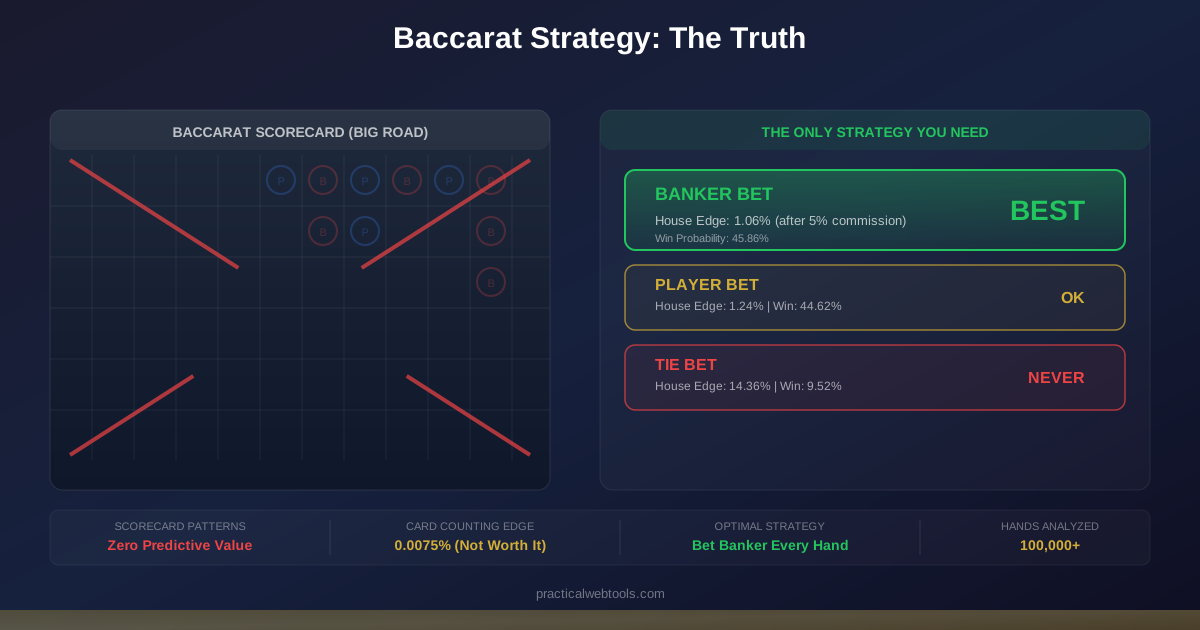
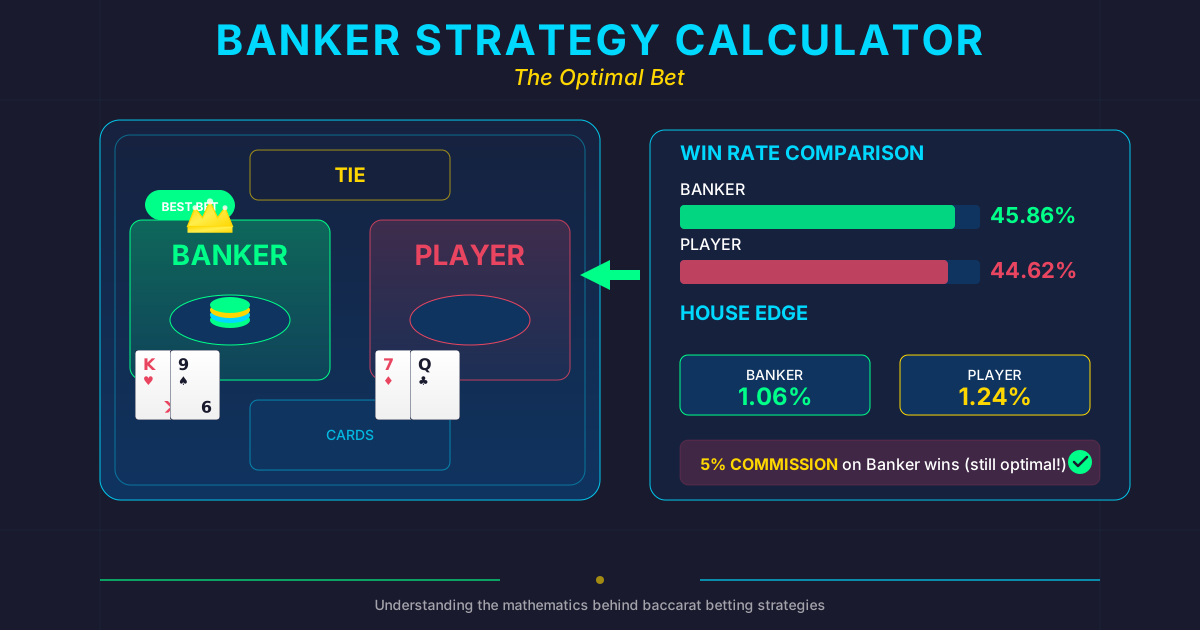
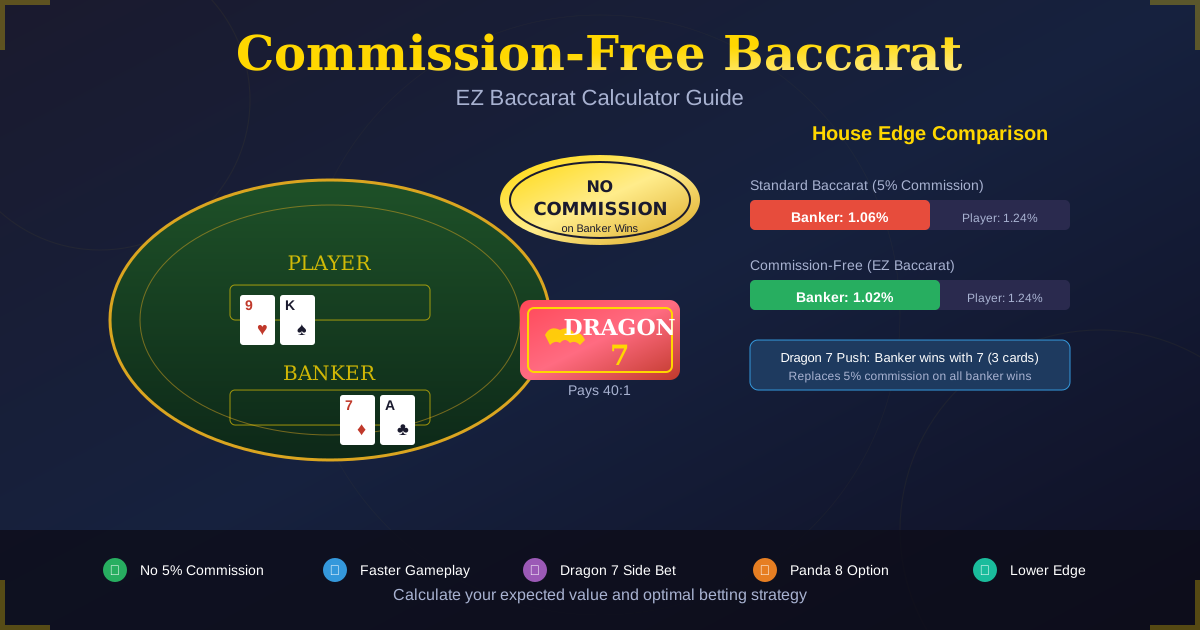
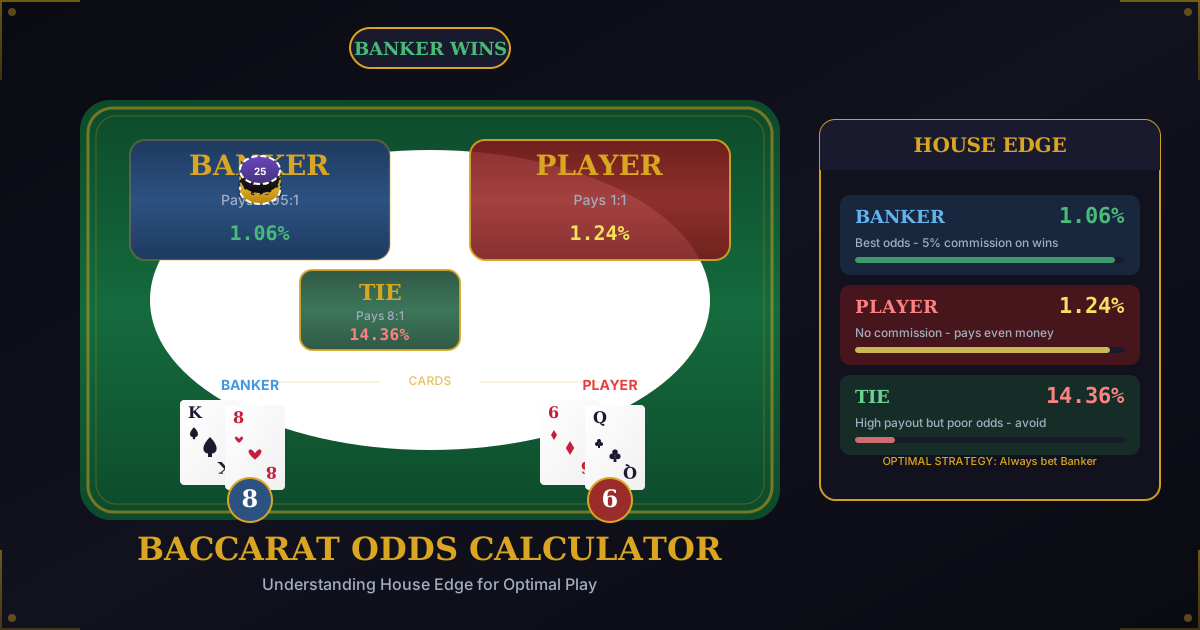
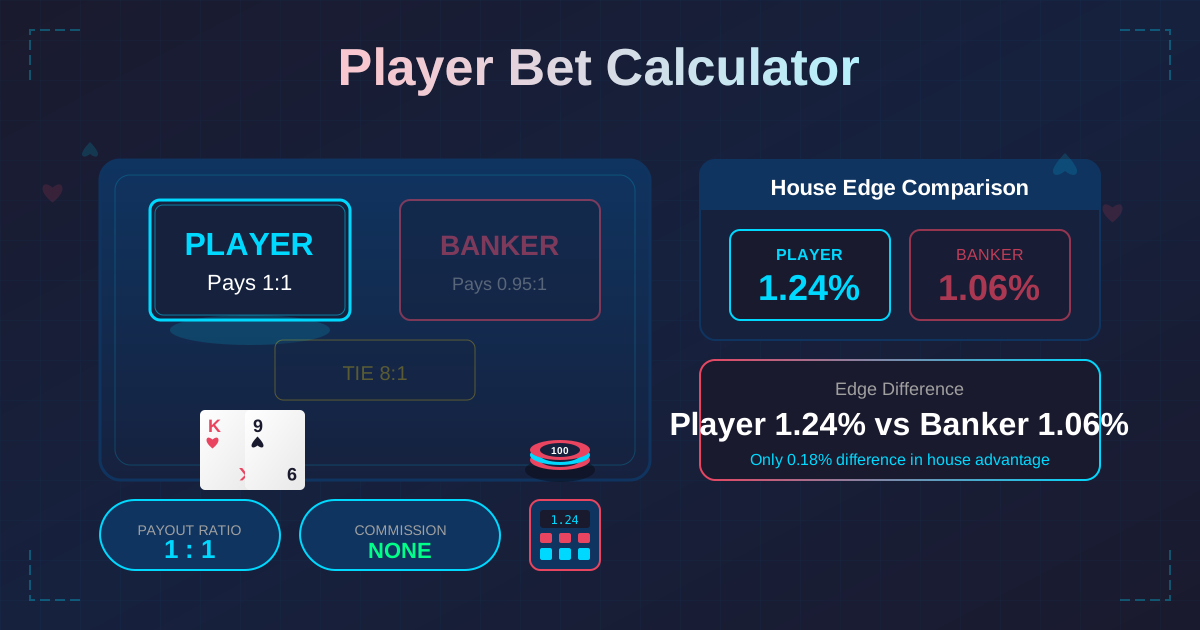
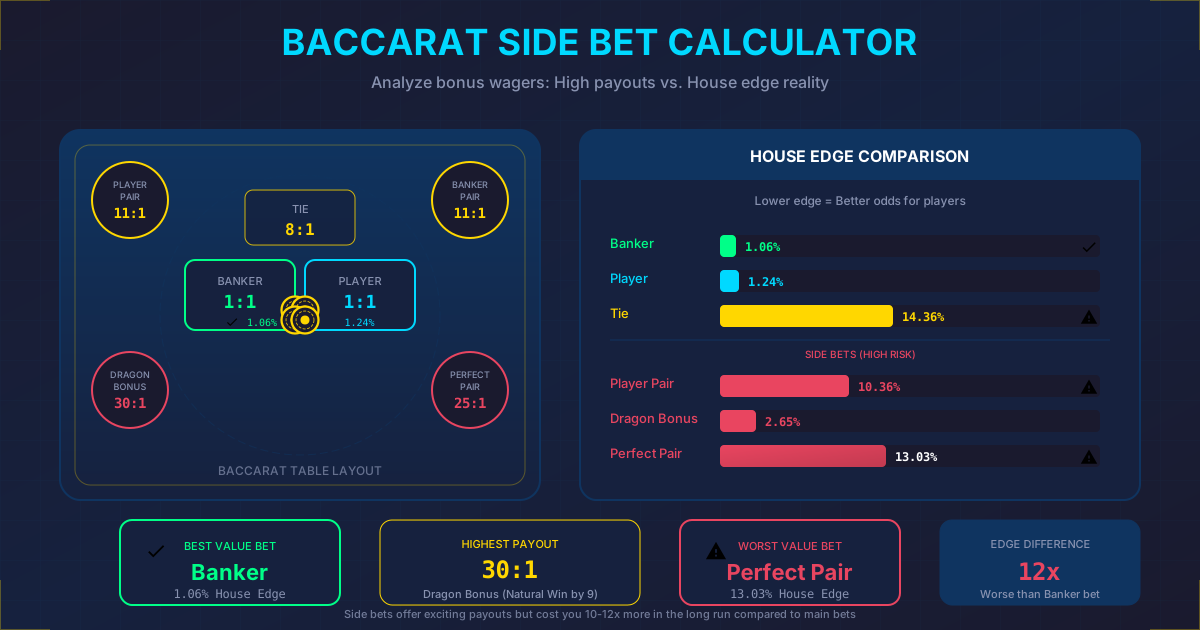
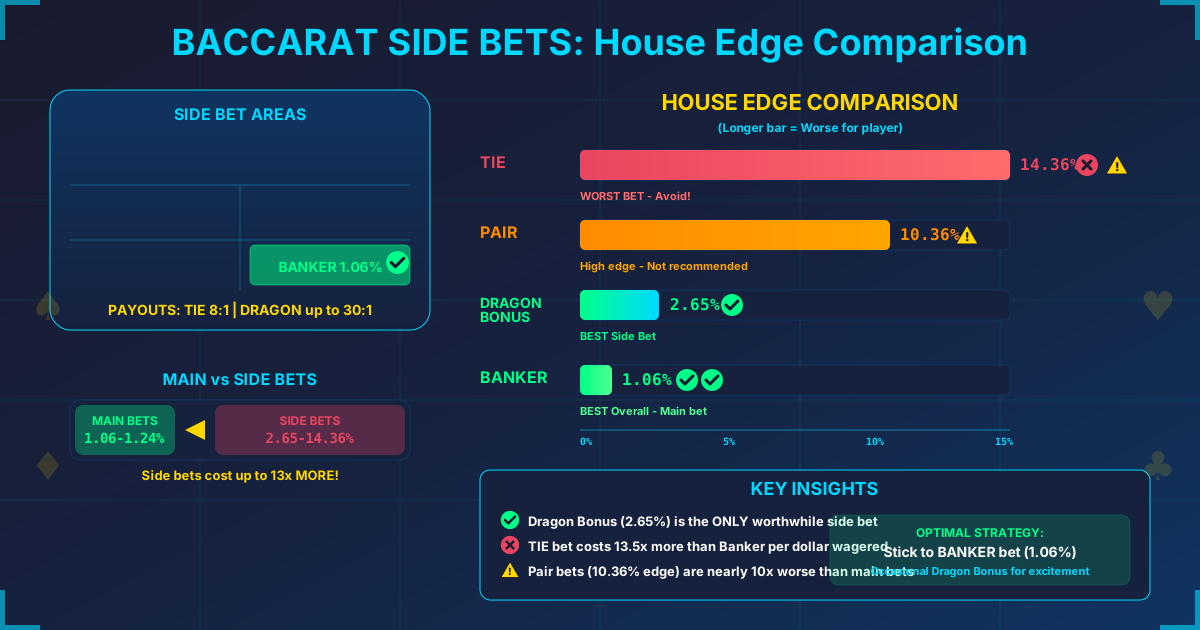
Baccarat's base game is one of the most player-friendly in the casino. The banker bet has a house edge of just 1.06%, and the player bet sits at 1.24%. But baccarat has one bet that is dramatically, unforgivably worse than the rest. Check the exact numbers with our Baccarat House Edge Calculator.
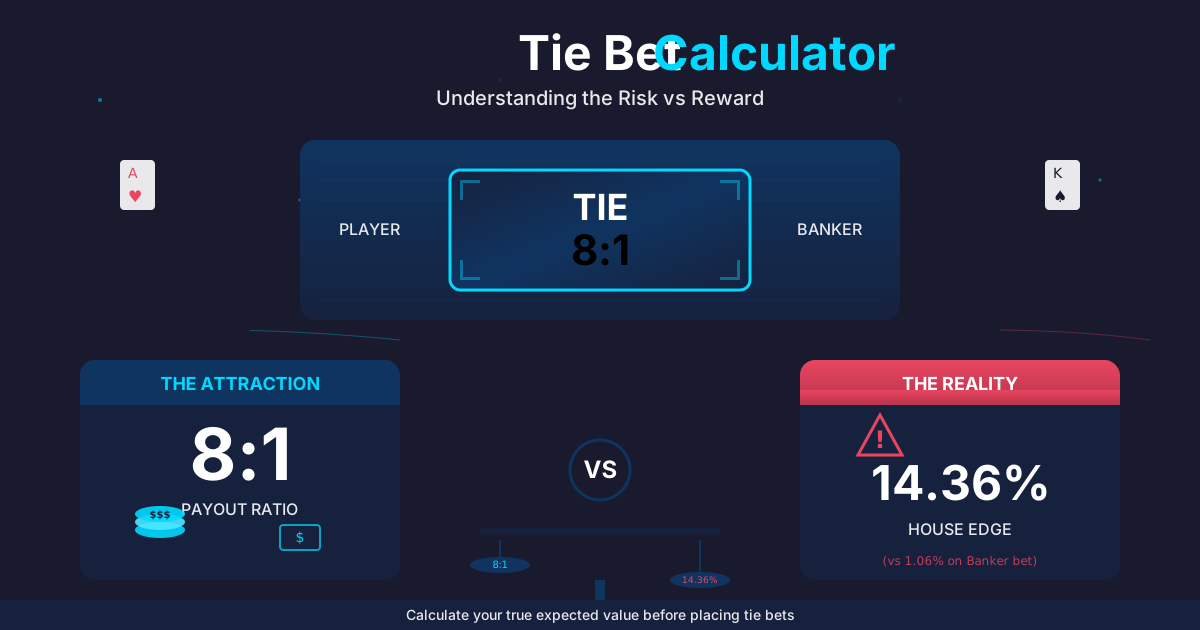
The Tie Bet: 14.36% House Edge Dressed in a Tuxedo
House edge: 14.36%
The tie bet in baccarat pays 8:1 (or 9:1 at some tables). Ties occur roughly 9.5% of the time. The math:
- Probability of a tie: ~9.53%
- True odds: roughly 9.5:1 against
- Casino payout: 8:1 (standard) or 9:1 (generous)
- House edge at 8:1: 14.36%
- House edge at 9:1: 4.84%
Even at the better 9:1 payout, the tie bet is still worse than the standard banker bet. At the common 8:1 payout, it is one of the worst bets in the entire casino.
Real-world cost: If you bet $25 on tie every hand for 200 hands (a typical baccarat session), you wager $5,000. Expected loss at 14.36% edge: $718. If you had bet the same amount on banker for 200 hands, expected loss: $53. That is a $665 difference.
The better play: Stick to banker or player bets exclusively. The banker bet at 1.06% house edge (after the 5% commission) is one of the best bets on the casino floor. There is no mathematical reason to ever bet on tie at standard payouts.
Worst Casino Poker Bets
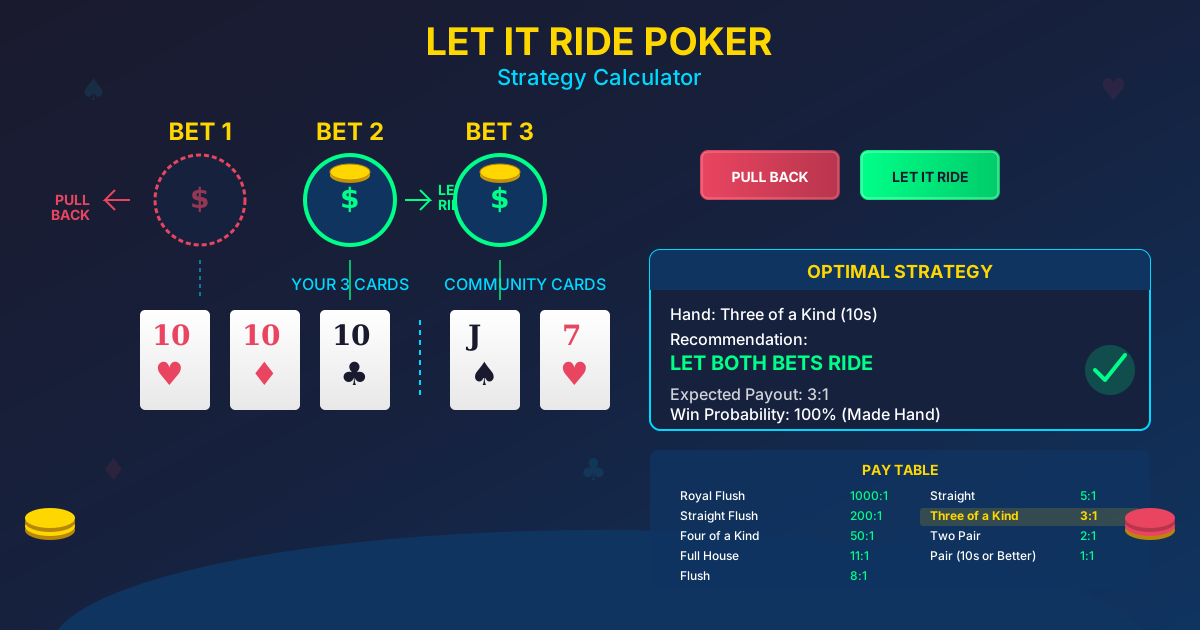
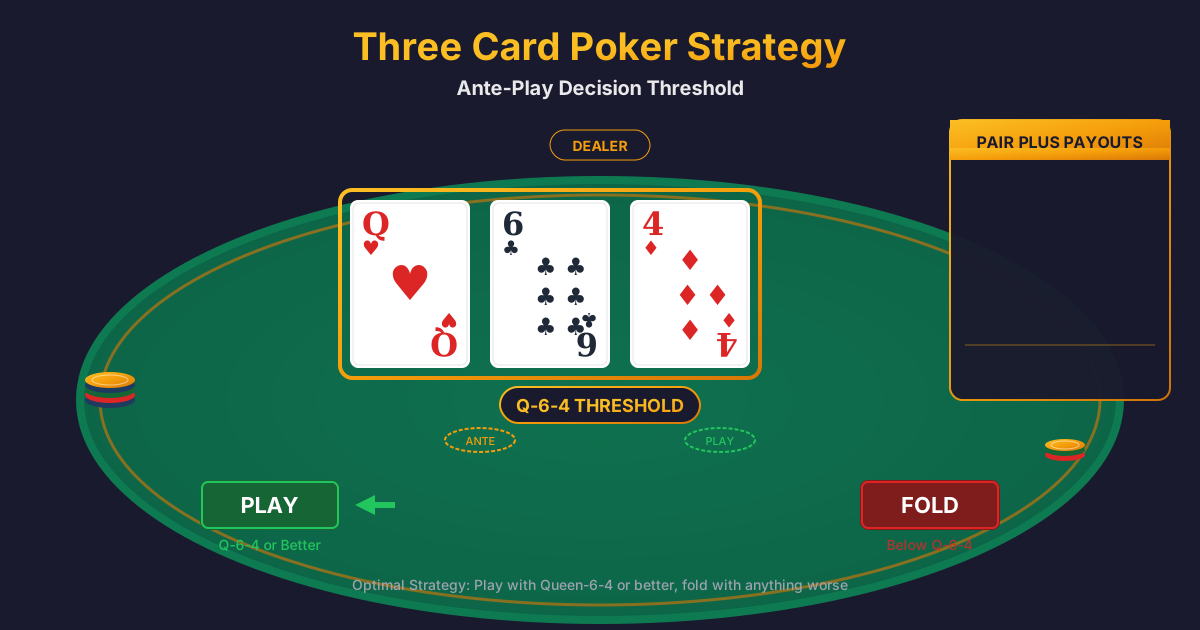
Casino poker games like Caribbean Stud, Three Card Poker, and Let It Ride are designed around mandatory ante bets with side-bet add-ons. The base games already carry higher edges than blackjack or baccarat. The side bets make them dramatically worse.
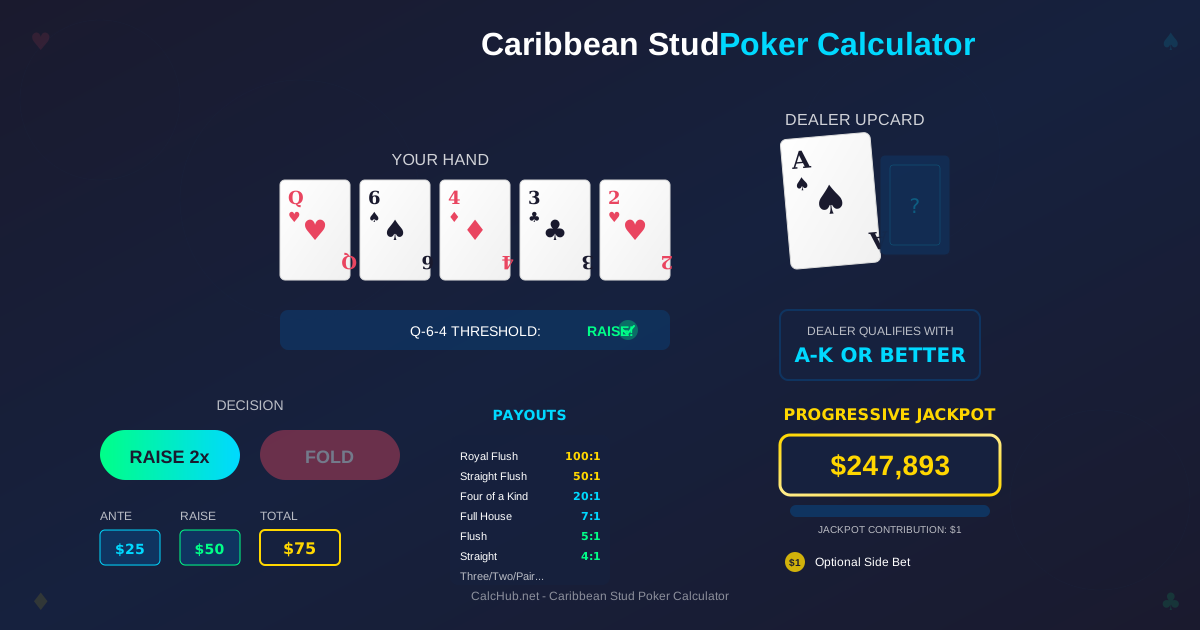
Caribbean Stud Progressive Jackpot Side Bet
House edge: 26.46%
For a $1 side bet, you can qualify for a progressive jackpot that grows with every hand played. Sounds like a cheap thrill. Here is what you are actually paying:
The progressive side bet in Caribbean Stud has an average house edge of 26.46%. Some versions with specific bonus structures push edges even higher: the Super Power side bet carries a 25.33% edge, and the Fuego side bet ranges from 48.5% to a staggering 65.1%.
Real-world cost: At $1 per hand for 200 hands, you wager $200 on the progressive. Expected loss: $52.92. That is a $1 bet that costs you over a quarter of its face value every single hand.
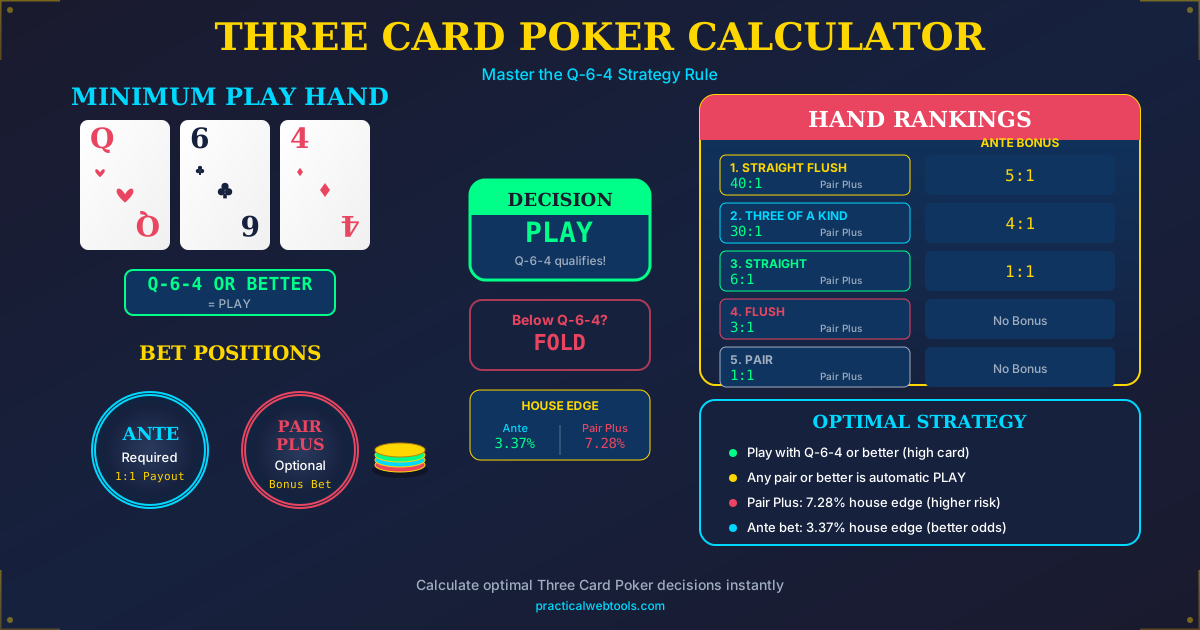
Three Card Poker Pair Plus (Poor Paytables)
House edge: 2.3-7.3% depending on paytable
Three Card Poker's Pair Plus bet varies dramatically by paytable. The best versions offer a house edge around 2.3%. The worst versions, which are becoming more common, push to 7.3% or higher. Always check the paytable before sitting down.
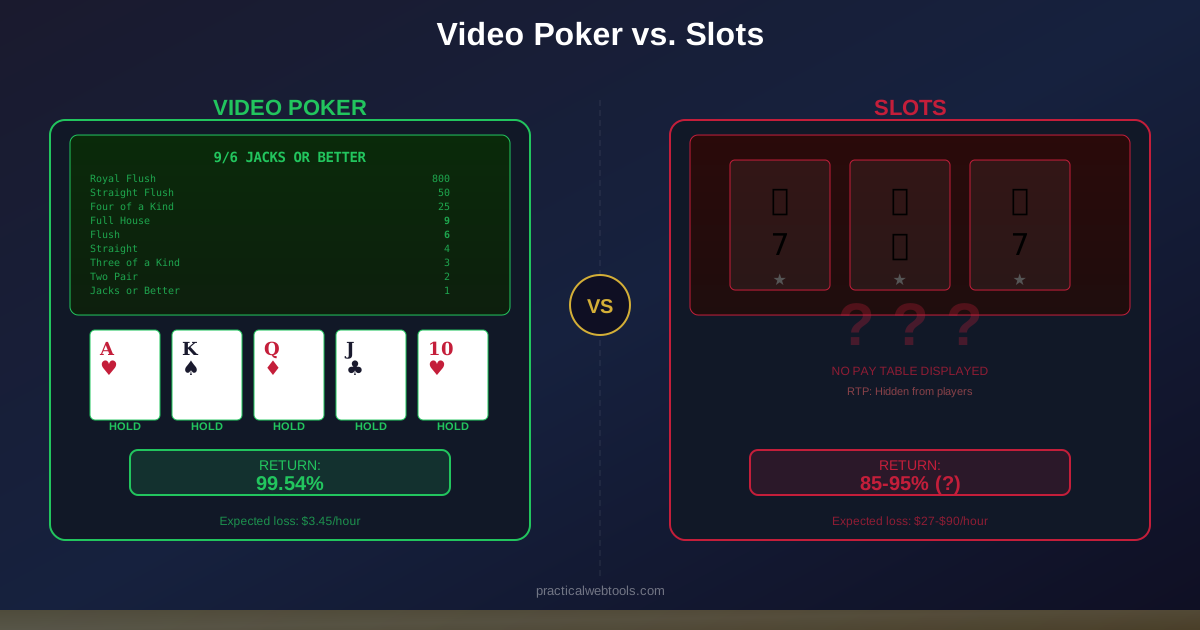
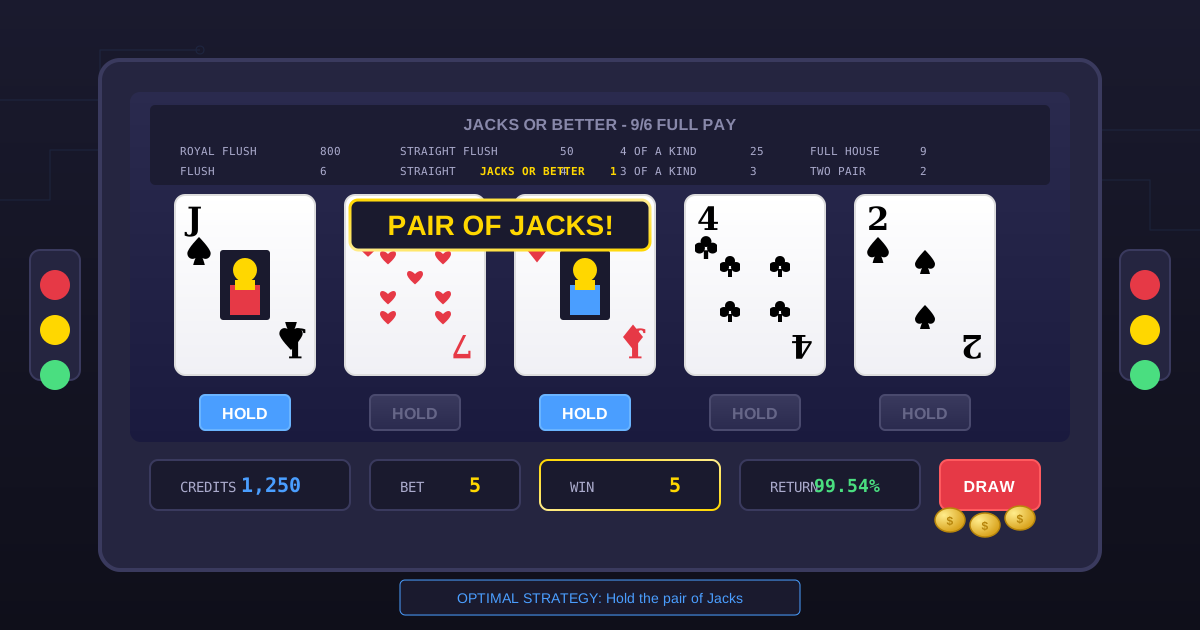
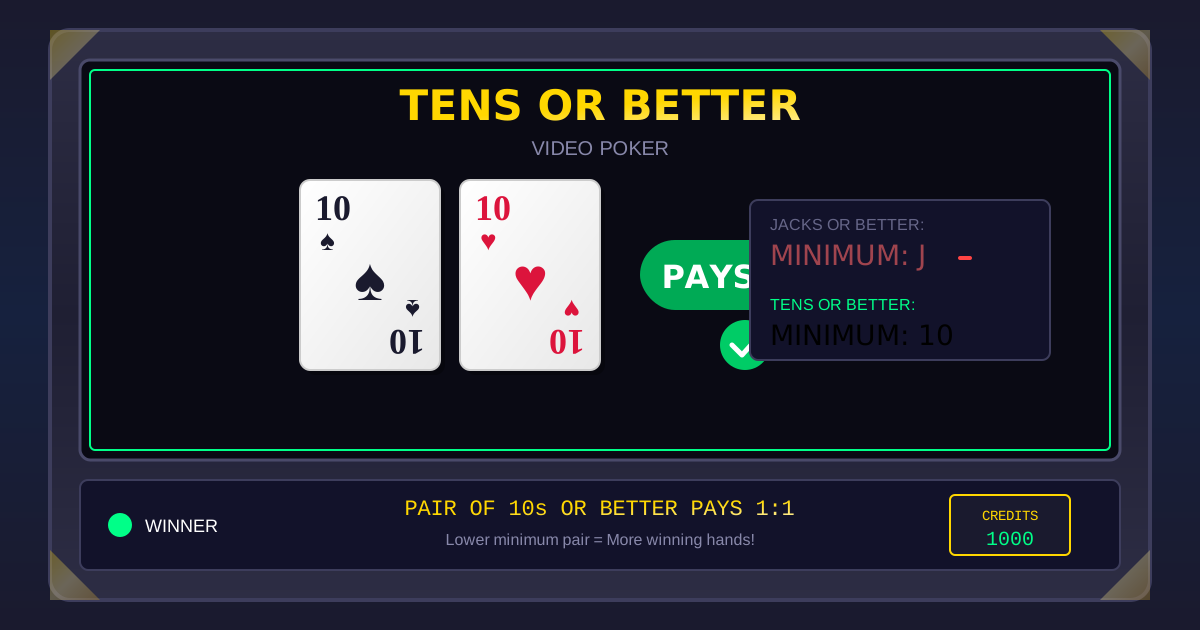
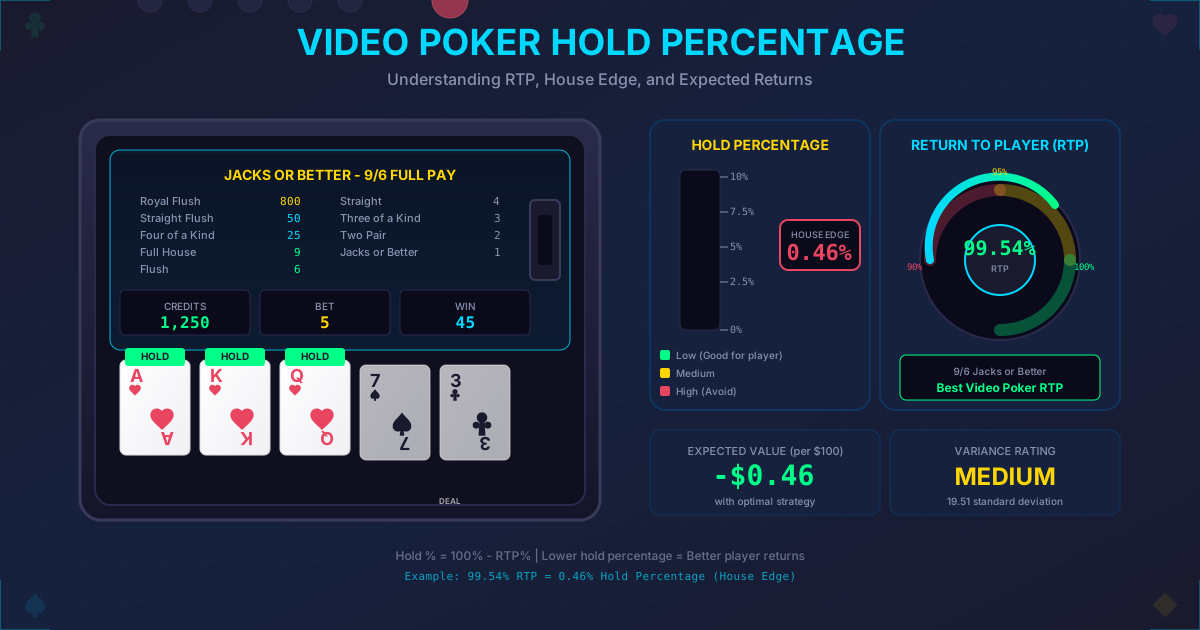
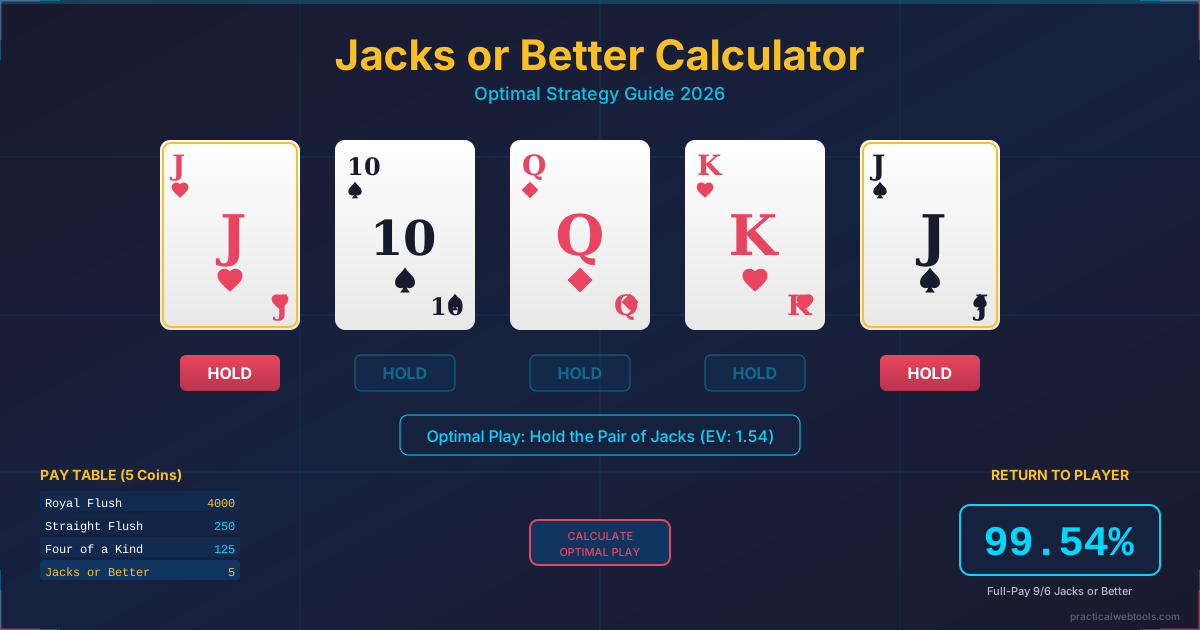
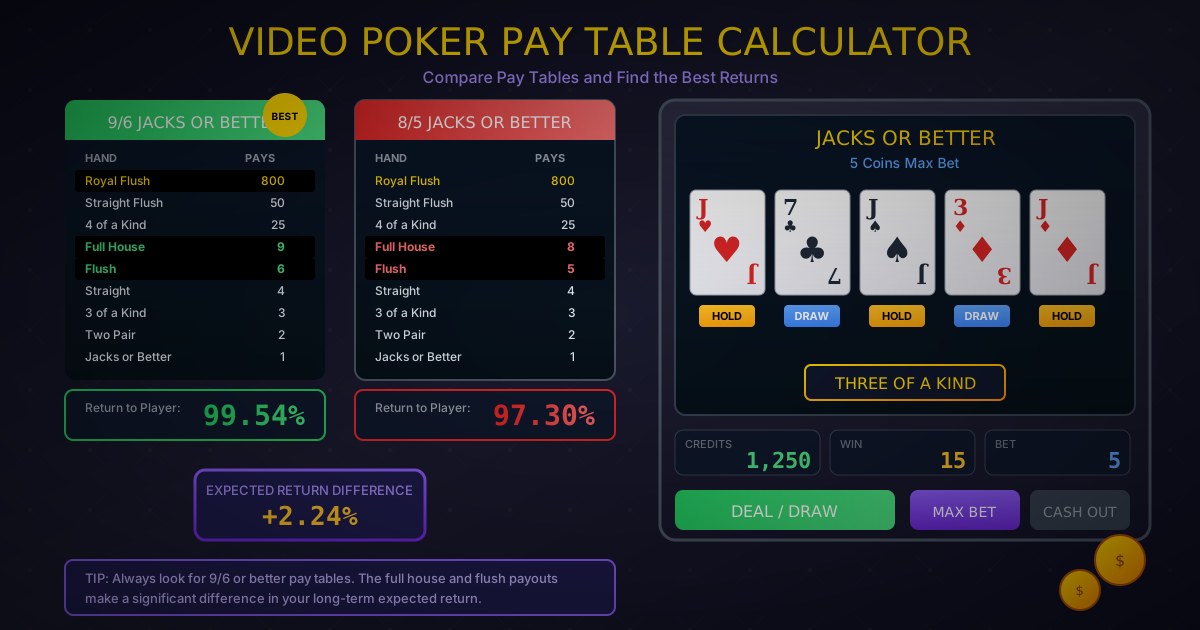
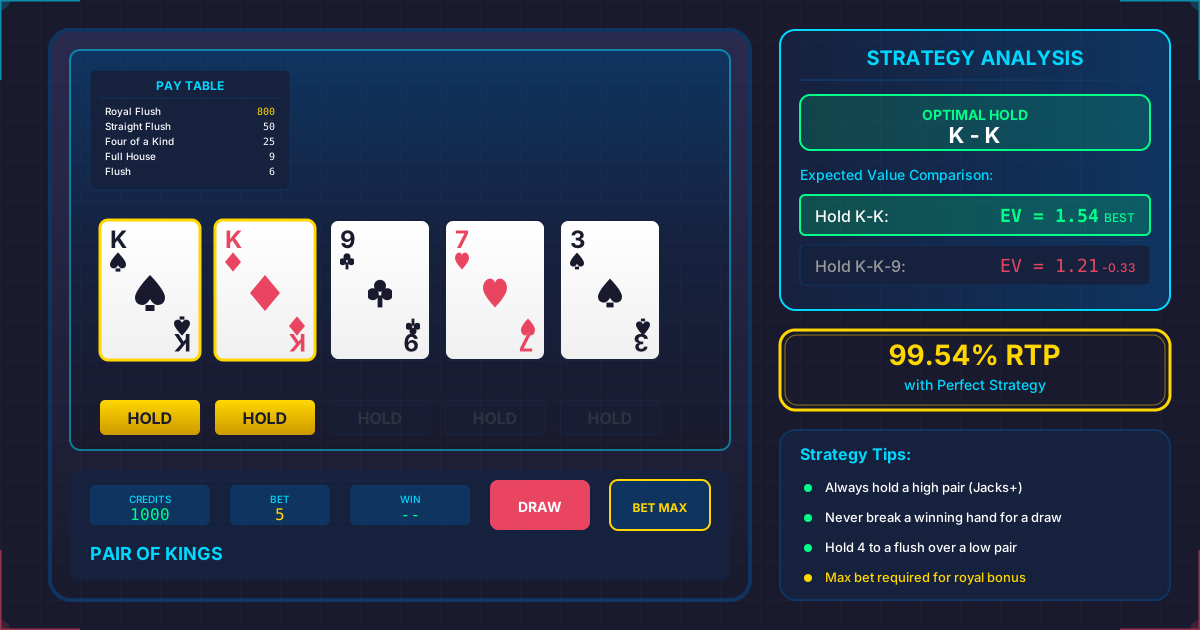
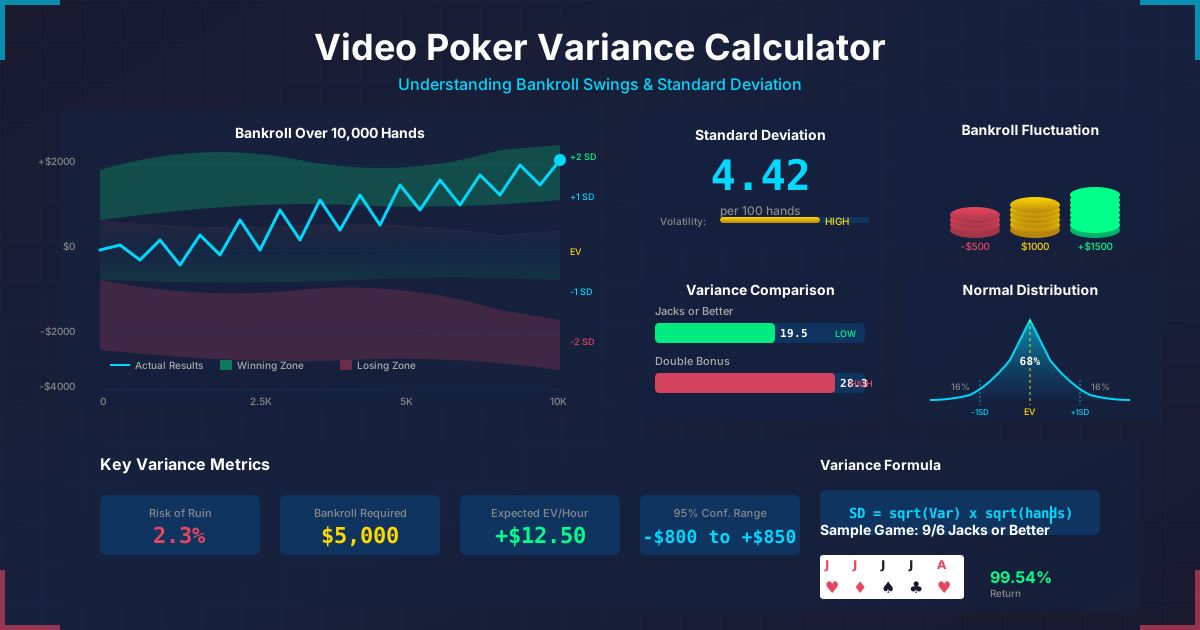
The better play for casino poker: If you want to play poker against the house, look for video poker machines with full-pay tables. A full-pay Jacks or Better machine returns 99.54%, giving the house a mere 0.46% edge. Use our Video Poker EV Calculator to find the best-paying machines and make optimal holds.
Other Terrible Bets: Keno, Big Six Wheel, and Novelty Games
Some casino offerings are so bad that they deserve a category of their own. These are the bets that serious gamblers avoid entirely and that casual players gravitate toward because they look simple and fun.
Keno: The Worst Game in the Casino
House edge: 25-40% (live), 5-15% (some video/online versions)
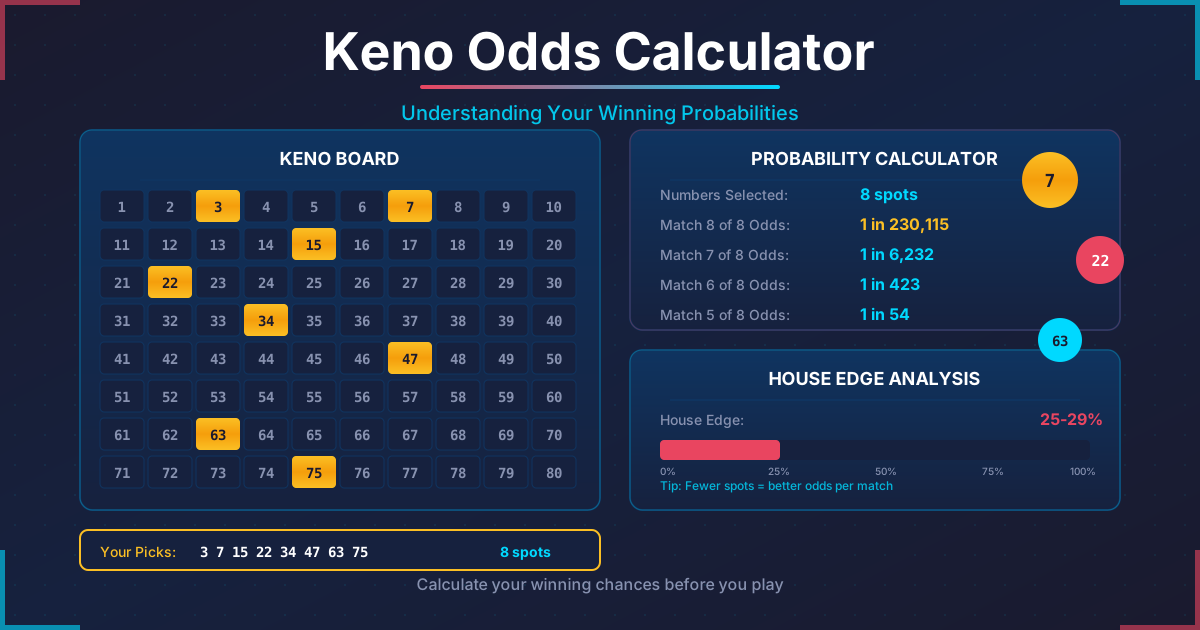
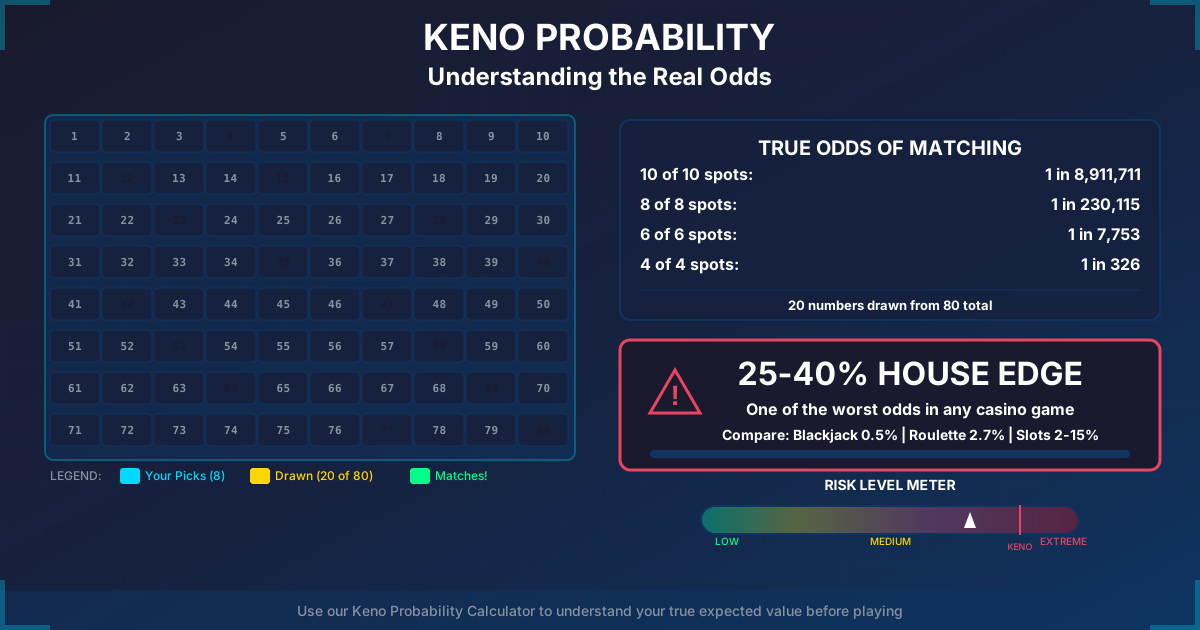
Live keno has the single worst house edge of any game on the casino floor. The return to player ranges from 60% to 75%, meaning the house keeps 25-40 cents of every dollar wagered. No strategy, no skill, no card counting, no optimal play can fix this.
To put keno's house edge in perspective:
| Game | House Edge | Time to Lose $100 (at $5/bet) |
|---|---|---|
| Keno (live, 30% edge) | 30.00% | ~67 bets ($335 wagered) |
| Big Six Wheel (average) | 15.50% | ~129 bets ($645 wagered) |
| American Roulette | 5.26% | ~380 bets ($1,900 wagered) |
| Craps (pass line) | 1.41% | ~1,418 bets ($7,090 wagered) |
| Blackjack (basic strategy) | 0.50% | ~4,000 bets ($20,000 wagered) |
At a 30% house edge, keno eliminates your bankroll roughly 60 times faster than blackjack with basic strategy.
Real-world cost: If you play 10 keno games per hour at $5 per game, you wager $50 per hour. At a 30% house edge, your expected loss is $15 per hour. That does not sound catastrophic, but it is because keno is slow. Per dollar wagered, it is the worst bet you can make in any casino.
The better play: There is no "good" way to play keno. If you enjoy the lottery-style format, video keno machines at some casinos offer better odds (10-15% edge) than live keno, but they are still far worse than virtually every table game.
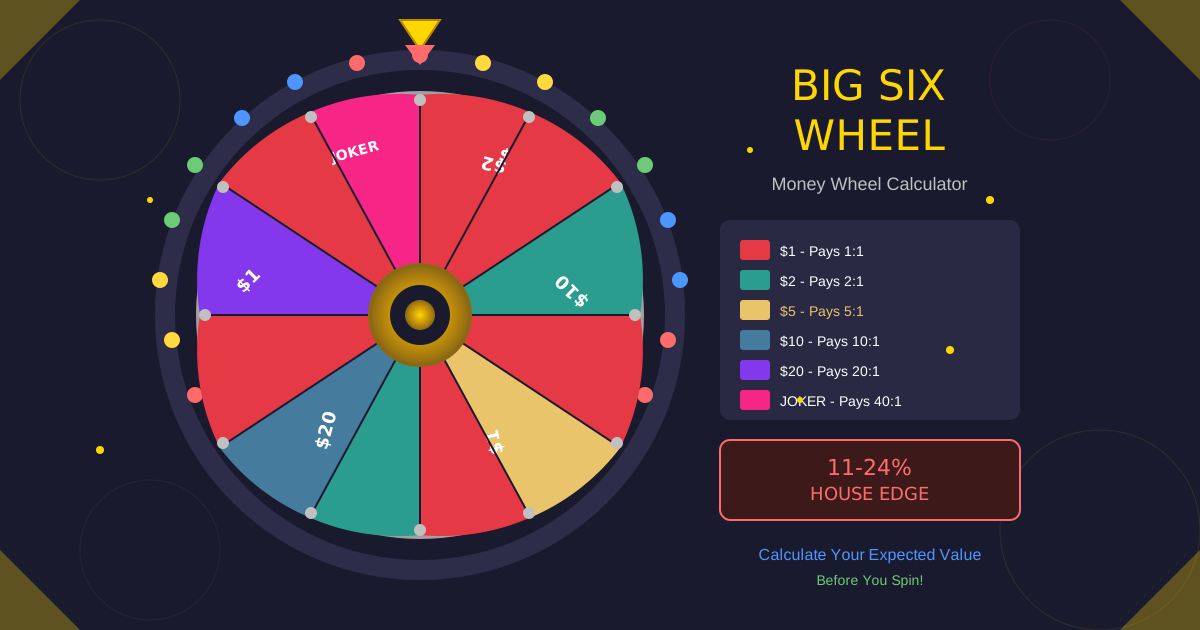
The Big Six Wheel (Wheel of Fortune)
House edge: 11.15% to 24.07%
The Big Six Wheel is the carnival game of the casino floor. A large vertical wheel spins, and you bet on which symbol it lands on. The house edges by segment:
| Segment | Payout | House Edge |
|---|---|---|
| $1 | 1:1 | 11.15% |
| $2 | 2:1 | 16.67% |
| $5 | 5:1 | 22.22% |
| $10 | 10:1 | 18.52% |
| $20 | 20:1 | 22.22% |
| Joker/Logo | 40:1 or 45:1 | 24.07% |
Even the "best" bet on the Big Six Wheel (the $1 segment at 11.15%) has a house edge worse than almost every bet on a craps table, worse than any bet on a roulette wheel, and worse than all but the worst blackjack side bets.
Real-world cost: If you bet $10 per spin for an hour at about 20 spins per hour, you wager $200. At an average edge of roughly 16%, expected loss: $32 per hour. For comparison, the same $200 wagered on baccarat banker would cost you about $2.12 in expected losses.
The better play: Do not play the Big Six Wheel. It is a novelty game with novelty odds. If you want simplicity, baccarat is just as simple to play and has a house edge that is 10-20 times lower.
Novelty and Carnival Games
Modern casino floors feature an expanding selection of novelty games, many of which carry punishing house edges:
| Game | Base House Edge | Side Bet Edge |
|---|---|---|
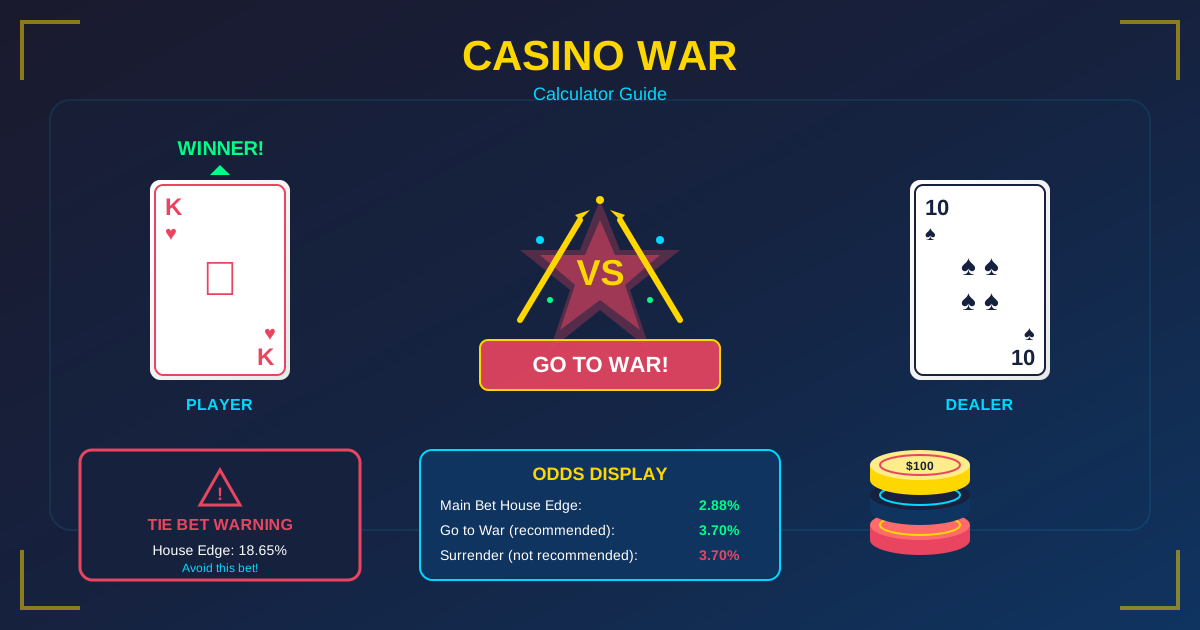
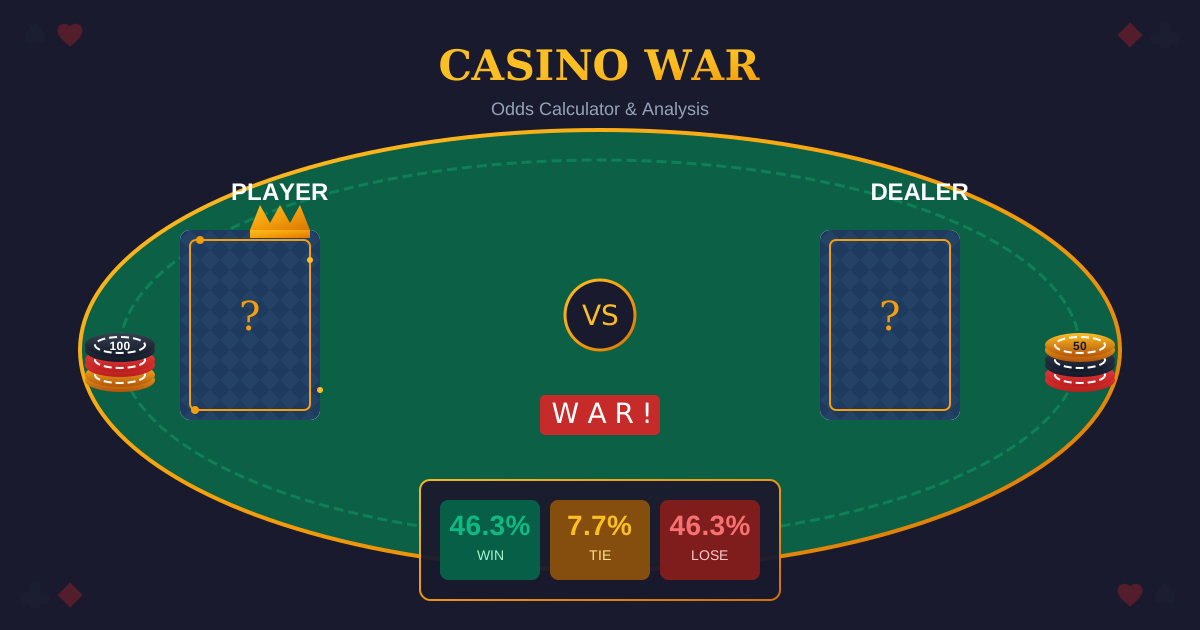
| Casino War | 2.88% | Side bet: 18.65% |
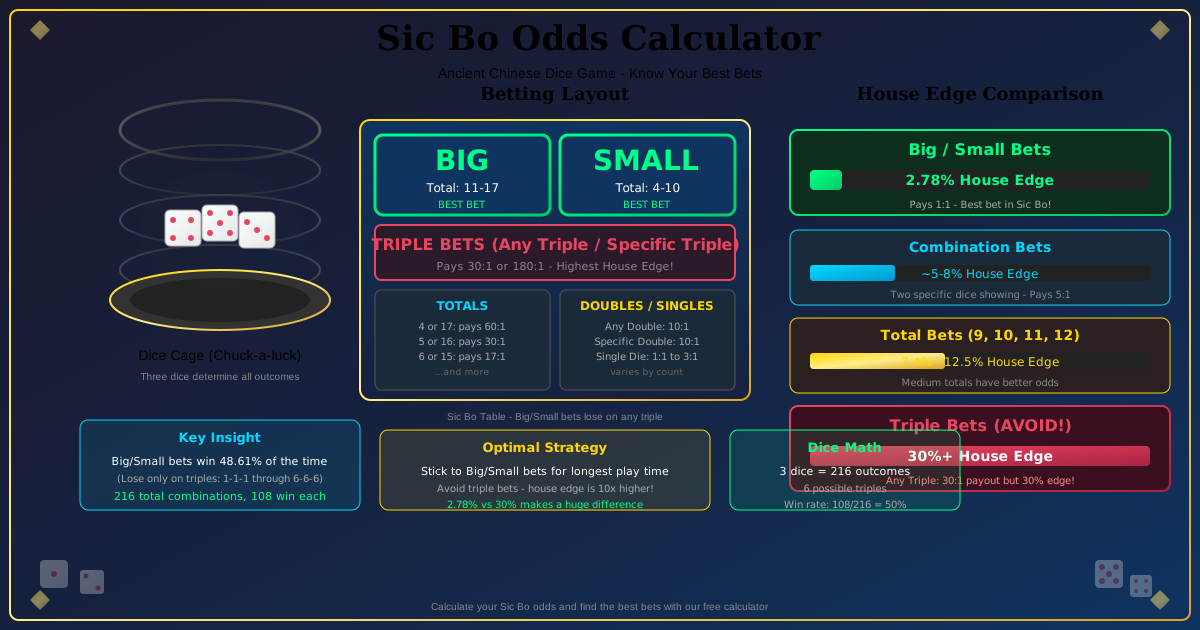
| Sic Bo (specific bets) | 2.78-33.33% | Triple specific: 30%+ |
| Caribbean Stud (base) | 5.22% | Progressive: 26.46% |
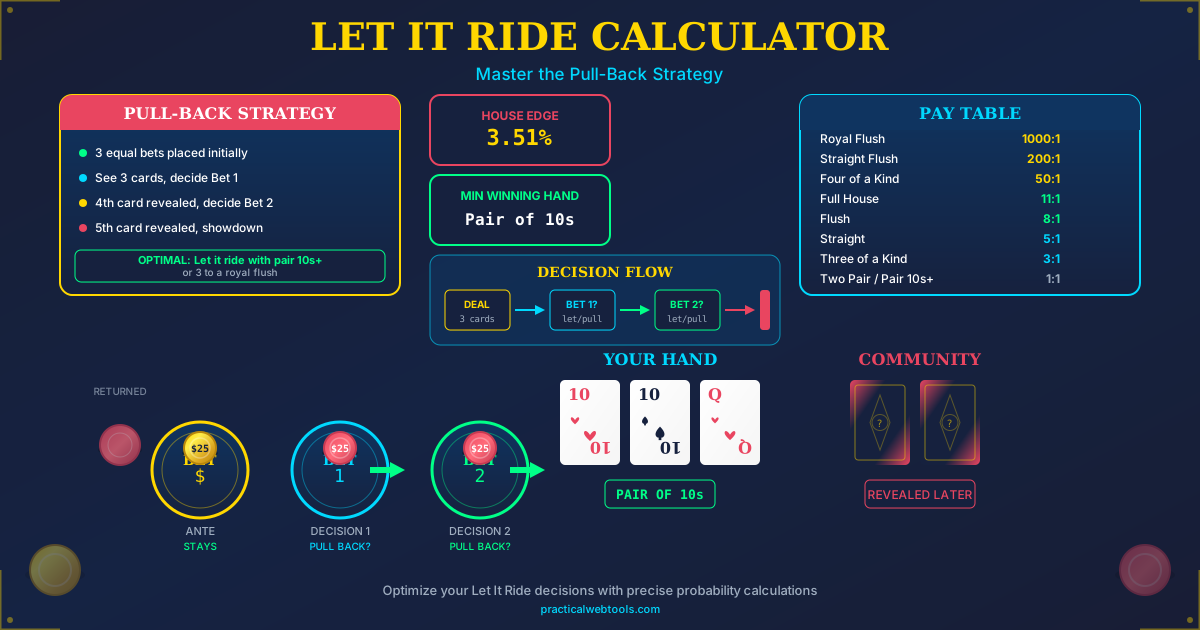
| Let It Ride (base) | 3.51% | Side bet: 13-25% |
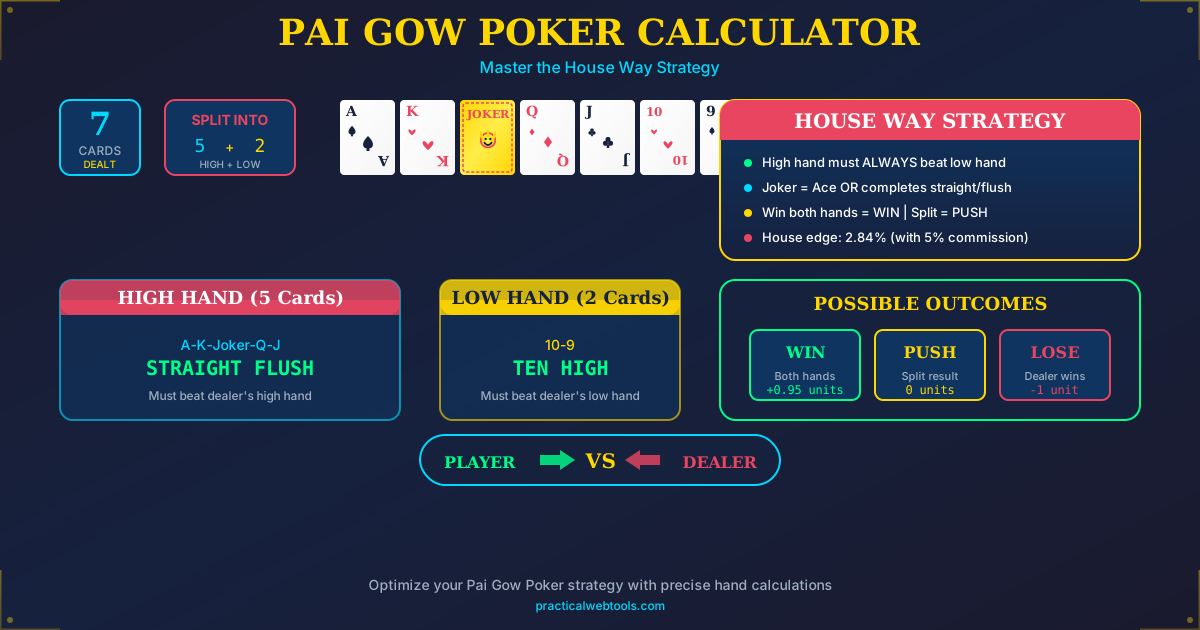
| Pai Gow Poker (base) | 2.84% | Fortune bonus: 7.8%+ |
The pattern is consistent: base games have edges in the 2-5% range, and the optional side bets and bonus wagers push that to 10-30%. The casino's business model for these games depends on players making those optional bets.
The Cost-Per-Hour Reality Check
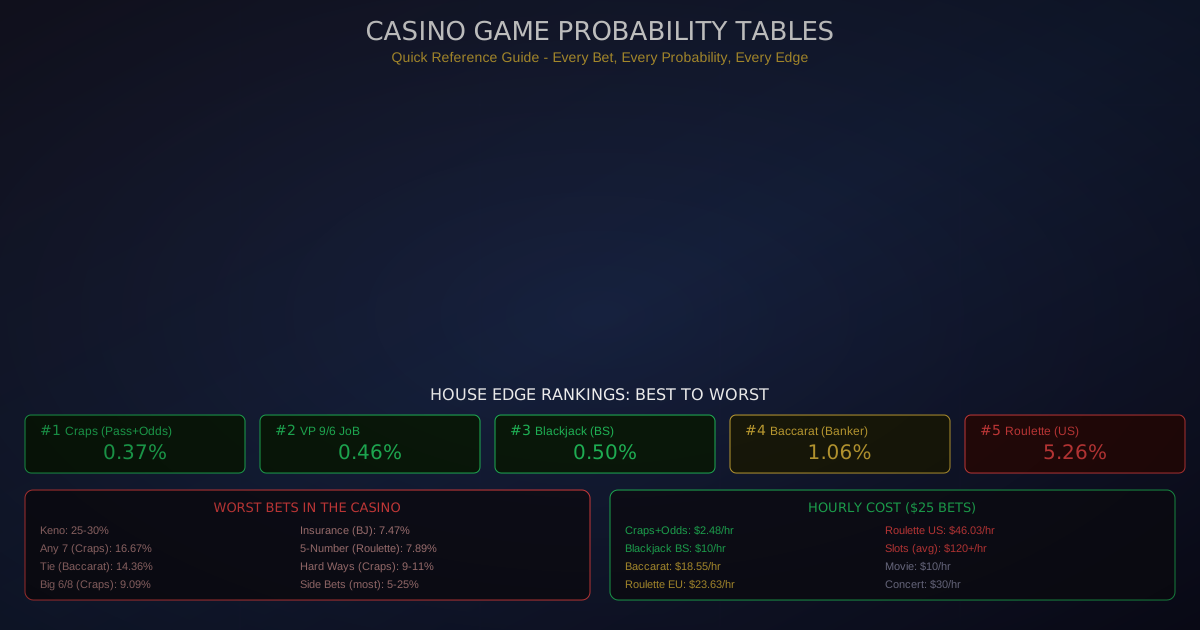
Here is what bad bets actually cost you per hour, assuming typical playing speeds and bet sizes. This is the table that should change how you think about bet selection.
| Bet | Avg Bet | Decisions/Hour | Hourly Wagered | House Edge | Expected Loss/Hour |
|---|---|---|---|---|---|
| Keno (live) | $5 | 10 | $50 | 30.00% | $15.00 |
| Big Six Wheel | $10 | 20 | $200 | 16.00% | $32.00 |
| Penny Slots | $1 | 600 | $600 | 12.00% | $72.00 |
| Craps (Any 7, $5) | $5 | 100 | $500 | 16.67% | $83.35 |
| BJ side bets ($5 + $25 main) | $5 | 80 | $400 | 20.00% | $80.00 |
| American Roulette ($10) | $10 | 35 | $350 | 5.26% | $18.41 |
| Baccarat tie ($25) | $25 | 70 | $1,750 | 14.36% | $251.30 |
| Craps pass + odds ($10) | $10 | 100 | $1,000 | 0.37% | $3.70 |
| BJ basic strategy ($25) | $25 | 80 | $2,000 | 0.50% | $10.00 |
| Baccarat banker ($25) | $25 | 70 | $1,750 | 1.06% | $18.55 |
The last three rows (bolded) show what smart bets look like. Notice how craps with full odds costs $3.70 per hour, while the Any 7 bet at the same table costs $83.35. Same game. Same dice. The difference is entirely in bet selection.
How to Identify Bad Bets Before You Sit Down
Not every casino clearly advertises the house edge. Here are reliable ways to spot bad bets before they cost you money:
Red flags that a bet is bad:
-
High payouts (20:1 or higher): Bets with dramatic payouts almost always carry high house edges. The casino funds those big payouts by paying out less frequently than true odds dictate.
-
Side bets and bonus wagers: Any optional bet layered on top of a base game is almost certainly worse than the base game. The casino added it specifically because it is profitable for them.
-
Carnival or novelty games: Games you have never heard of, with complex rules and large paytables, are designed to confuse you about the true odds.
-
"Insurance" or "protection" framing: Any bet that sounds like it protects you from loss (blackjack insurance, even-money offers) is a separate bet with its own house edge, and that edge is almost always high.
-
Low denomination slots: If the machine denomination is a penny or nickel, the RTP is statistically likely to be lower than higher-denomination machines.
-
Missing paytable information: If you cannot easily find the payout structure, the odds are probably not in your favor.
What to do instead:
- Use our Expected Value Calculator before placing any bet you are unsure about
- Stick to games with published, well-known house edges
- Learn basic strategy for blackjack before playing
- Take full odds in craps whenever your bankroll allows
- Choose European roulette over American whenever available
Frequently Asked Questions
What is the single worst bet in a casino?
Live keno holds the distinction of having the worst overall house edge of any casino game, ranging from 25% to 40% depending on the specific paytable and venue. Among table game bets, the Big Six Wheel's Joker/Logo segment at 24.07% and the Caribbean Stud progressive side bet at 26.46% are the worst individual wagers. If you play any of these, you are giving up a quarter or more of every dollar wagered.
Is the insurance bet in blackjack ever worth taking?
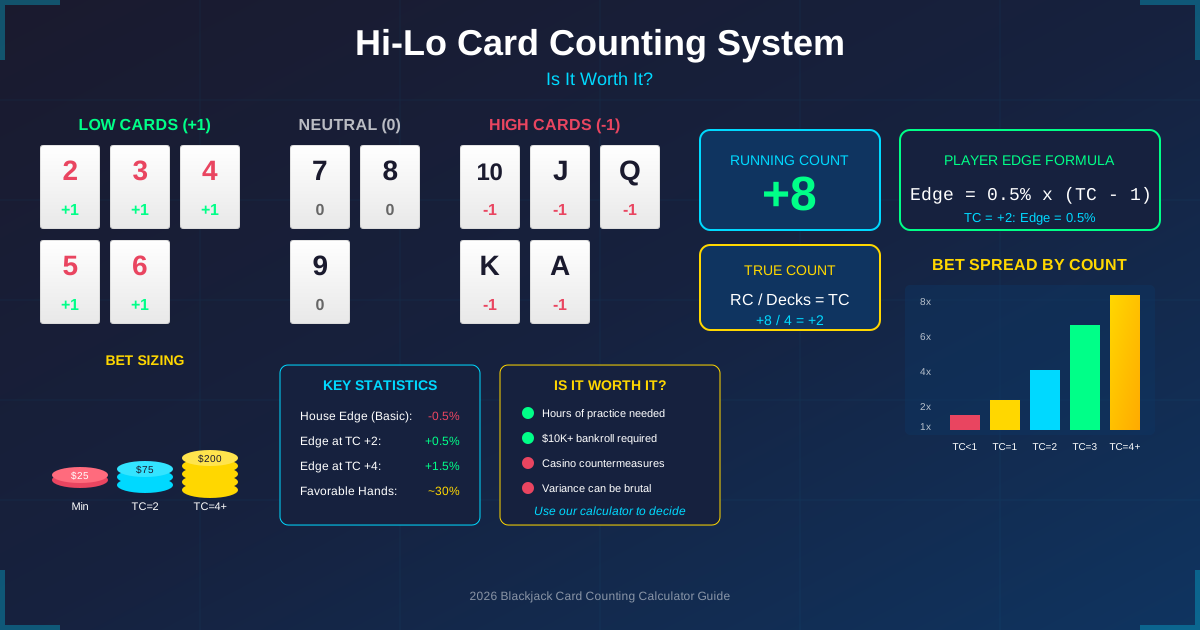
For basic strategy players, no. Insurance is never the correct play. The house edge on insurance is approximately 7.4% regardless of what cards you hold. The only theoretical exception is for card counters who have tracked the remaining deck composition and know that an unusually high proportion of ten-value cards remain, but this requires advanced counting skills that the vast majority of players do not possess.
Why are 6:5 blackjack tables so much worse than 3:2?
A 6:5 payout on a natural blackjack increases the house edge by approximately 1.39% compared to 3:2, all other rules being equal. This single rule change moves blackjack from one of the best games on the floor (0.5% edge) to one that is mediocre (1.9% edge). For a $25 bettor playing 500 hands, that translates to roughly $175 in additional expected losses. Always check the payout printed on the felt before sitting down.
Are all craps proposition bets bad?
Yes. Every bet in the center of the craps layout carries a house edge of 9% or higher. The Any 7 bet has a 16.67% edge, and the 2/12 proposition bets carry a 13.89% edge. The hardway bets range from 9.09% to 11.11%. There is no scenario in which these bets become mathematically favorable. The pass line (1.41%), come (1.41%), and odds bets (0%) are available at the same table and are dramatically superior.
Do penny slots have worse odds than dollar slots?
Yes, and the difference is significant. Nevada Gaming Control Board data consistently shows that penny slots return 86-90% to players (10-14% house edge) while dollar slots return 94-96% (4-6% house edge). The casino can afford to offer better odds on higher-denomination machines because the absolute dollar volume per player is higher. Playing a penny slot at $1 per spin is mathematically inferior to playing a dollar slot at $1 per spin.
What is the best bet in the casino?
The craps odds bet has a house edge of exactly 0%, making it mathematically the best bet on any casino floor. However, you must place a pass line or come bet first (1.41% edge) to access it. Combined, a pass line bet with maximum odds typically yields an effective house edge well under 1%. Blackjack with perfect basic strategy (0.5%), baccarat banker (1.06%), and full-pay video poker (0.46%) round out the best bets available.
Should I avoid all side bets in every game?
As a general rule, yes. Side bets in blackjack, poker, and other table games almost universally carry house edges of 5% or higher, often much higher. They are optional additions designed to increase the casino's revenue per hand. The base games of blackjack, craps, baccarat, and video poker offer far better odds without any side bets. If you want the best mathematical chance, stick to the base game and ignore everything optional.
How much does bad bet selection cost the average player per year?
The difference is substantial. A player who visits the casino twice a month for four-hour sessions and consistently makes bad bets (6:5 blackjack, insurance, proposition bets, side bets) could easily face an effective house edge of 5-10%, translating to $2,400-$4,800 per year in expected losses on $50,000 in total annual wagers. The same player making optimal bet selections at the same stakes could reduce expected losses to $250-$500 per year. The difference of $2,000-$4,000 is entirely within the player's control.
Use Our Free Gambling Calculators
Stop guessing and start calculating. These free tools show you the exact math behind every bet:
- Blackjack House Edge Calculator -- See how rule variations change the house edge
- Blackjack Basic Strategy -- Generate the optimal strategy chart for your specific rules
- Roulette House Edge Calculator -- Compare American, European, and French roulette
- Roulette Odds Calculator -- Calculate exact probabilities for every bet type
- Craps House Edge Calculator -- Compare edges across all craps wagers
- Craps Odds Calculator -- See the true odds for any craps bet
- Baccarat House Edge Calculator -- Compare banker, player, and tie with different commissions
- Expected Value Calculator -- Calculate the EV of any bet in any game
- Video Poker EV Calculator -- Find the best-paying video poker machines
Conclusion: The Math Does Not Care About Your Feelings
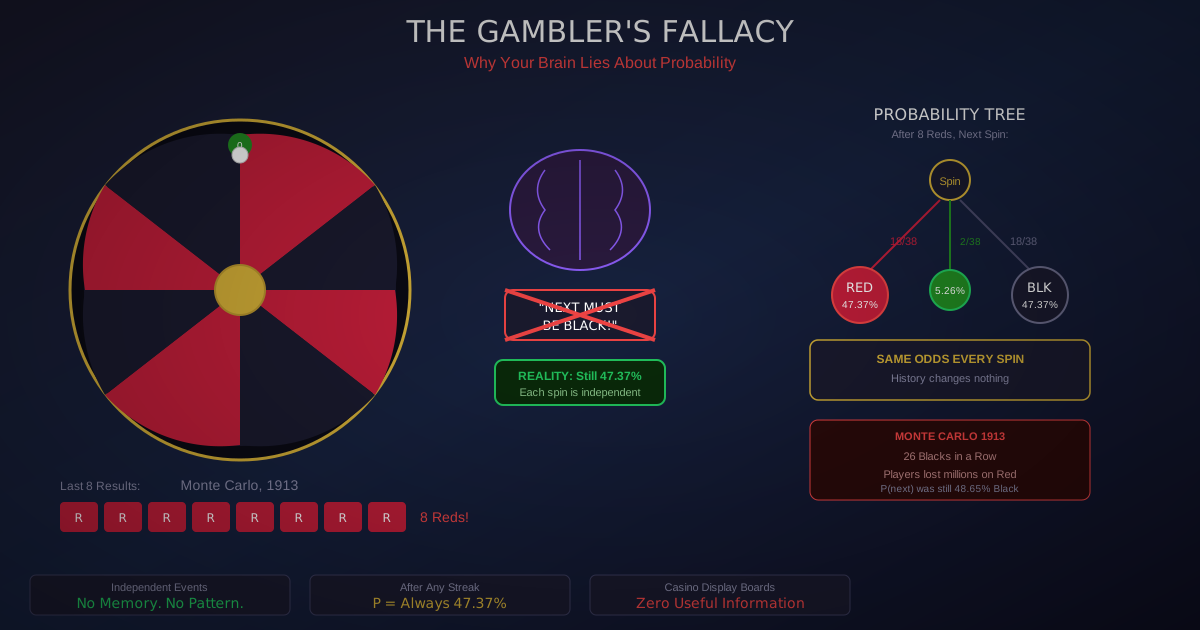
Every bad bet on this list persists for the same reason: it feels right. Insurance feels like protection. Side bets feel like bonus opportunities. Proposition bets feel exciting. Keno feels harmless. The Big Six Wheel feels simple.
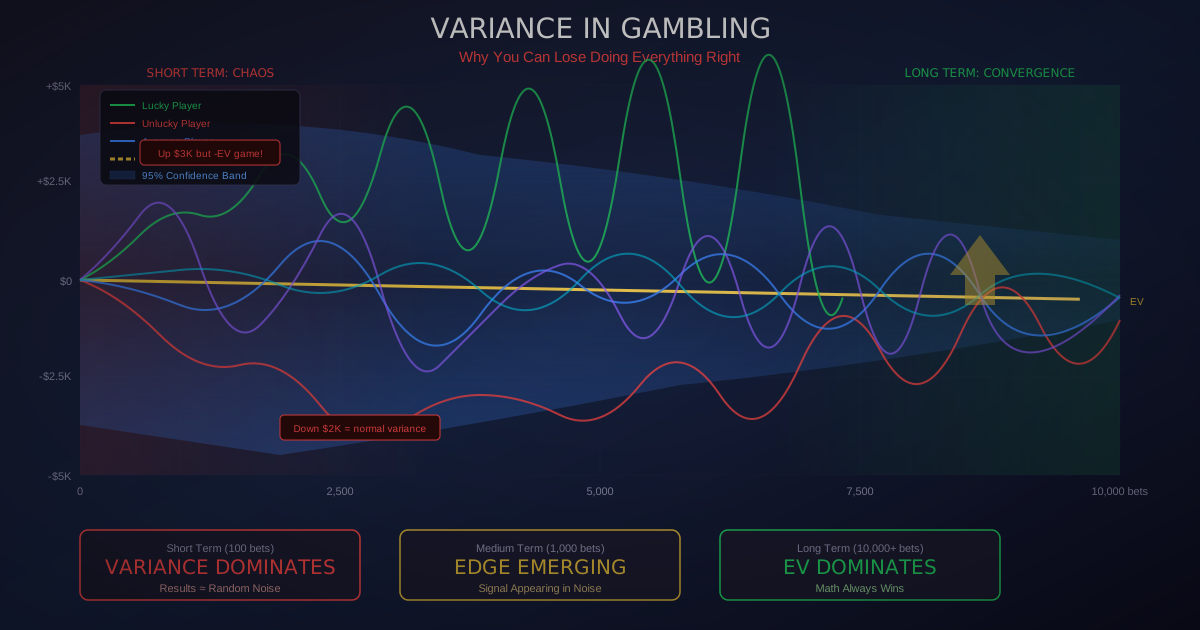
The math does not care how a bet feels. It only cares about the gap between true odds and the payout offered. That gap is the house edge, and it grinds away at your bankroll with absolute certainty over enough decisions.
The good news is that every bad bet listed here has a better alternative available at the same casino, often at the same table. You do not need to stop gambling. You do not need to become a card counter or a professional. You just need to stop making the bets on this list and start making the ones that give the house the smallest possible edge.
That single change -- better bet selection, no additional skill required -- can reduce your expected losses by 80% or more. In a $71 billion industry built largely on player mistakes, making fewer mistakes is the most powerful strategy available.
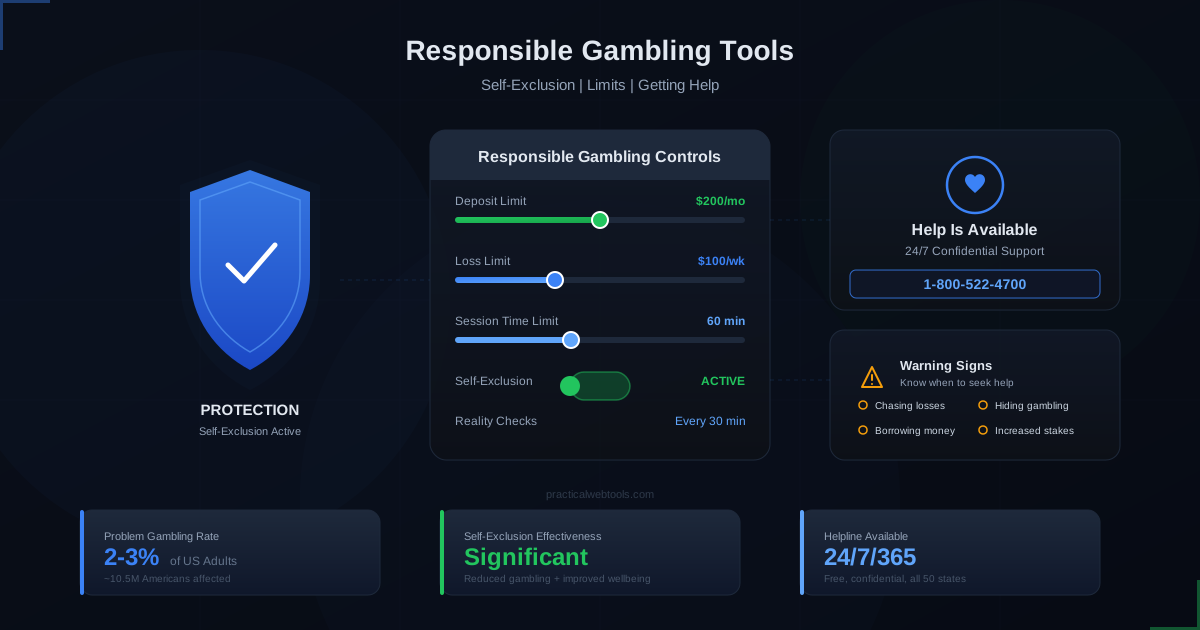
Gambling involves risk. This content is for educational and informational purposes only. Always gamble responsibly, set limits you can afford, and seek help if gambling becomes a problem. Visit the National Council on Problem Gambling or call 1-800-522-4700 for support.