Betting Exchange Strategy: How to Trade on Betfair Like a Pro (2026)

Betting exchanges let you bet against other people instead of against a bookmaker, eliminating the traditional house edge and opening up trading strategies that are impossible at conventional sportsbooks. On Betfair, the world's largest betting exchange, over $500 million in bets are matched every week across thousands of markets. Traders who master the mechanics of back and lay betting can lock in guaranteed profits, trade sports events like financial markets, and access consistently better odds than any bookmaker offers.
The exchange model is fundamentally different from traditional sports betting. Instead of the bookmaker setting odds and taking the opposite side of your bet, an exchange is a marketplace where bettors set their own prices and are matched with other bettors who disagree. Betfair takes a commission on winning bets (typically 2-5%) rather than building a margin into the odds. This structural difference is why exchange odds are almost always better than bookmaker odds.
For US bettors, exchange betting remains limited, but globally it represents one of the most profitable approaches to sports betting. Whether you are a matched bettor extracting bookmaker bonuses, a trader scalping small price movements, or a value bettor seeking the best available odds, understanding exchange mechanics is essential.
Calculate your back and lay bets with our free Back/Lay Calculator.
What Is a Betting Exchange and How Does It Work?
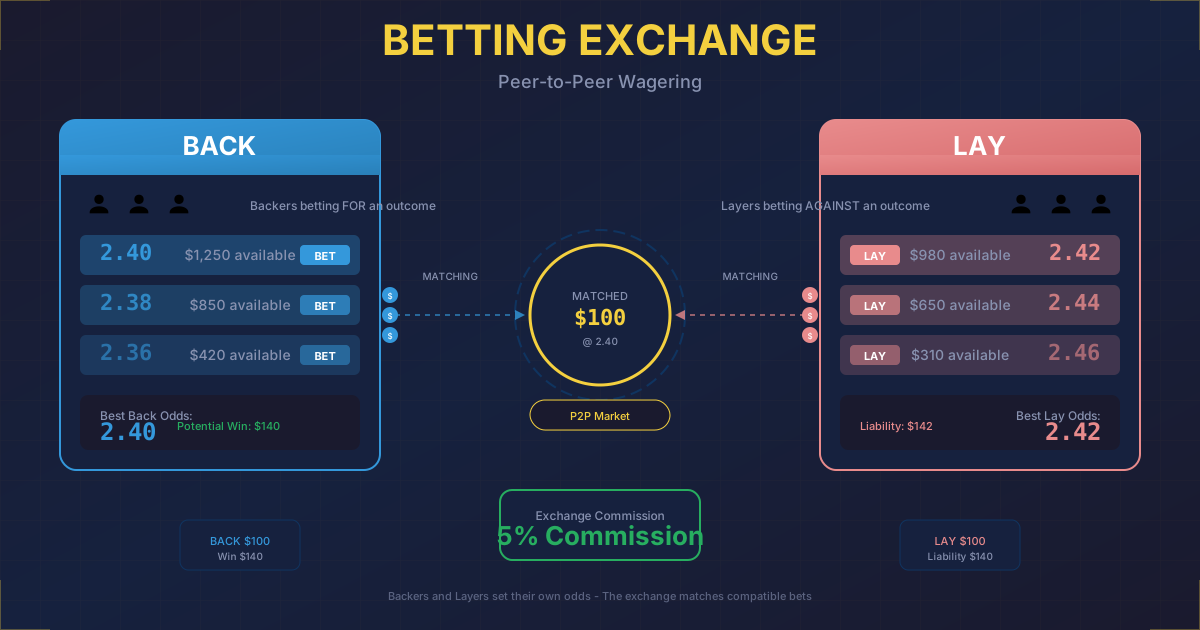
A betting exchange is a platform where bettors place bets against each other rather than against a bookmaker. The exchange acts as an intermediary, matching opposing bets and charging a commission on net winnings.
The Two Sides of an Exchange Bet
Every exchange market has two sides:
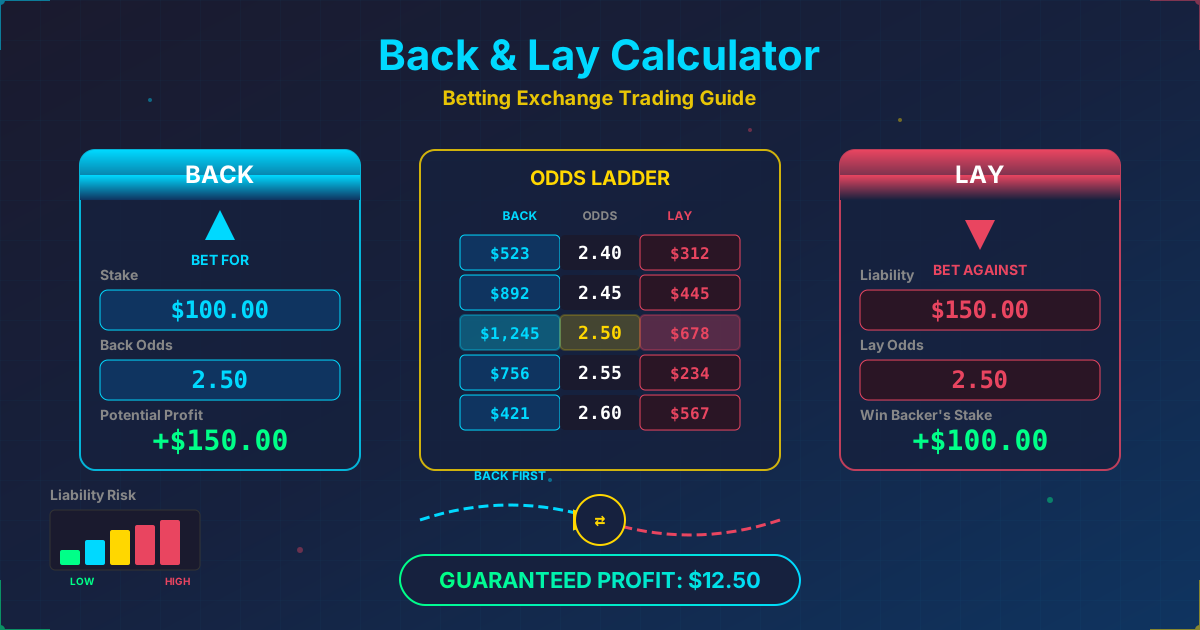
Back Bet: Betting that an outcome WILL happen (same as a traditional bet)
- "I back Manchester United to win at odds of 2.50"
- If Man United wins, you profit (stake x odds - stake)
- If Man United does not win, you lose your stake
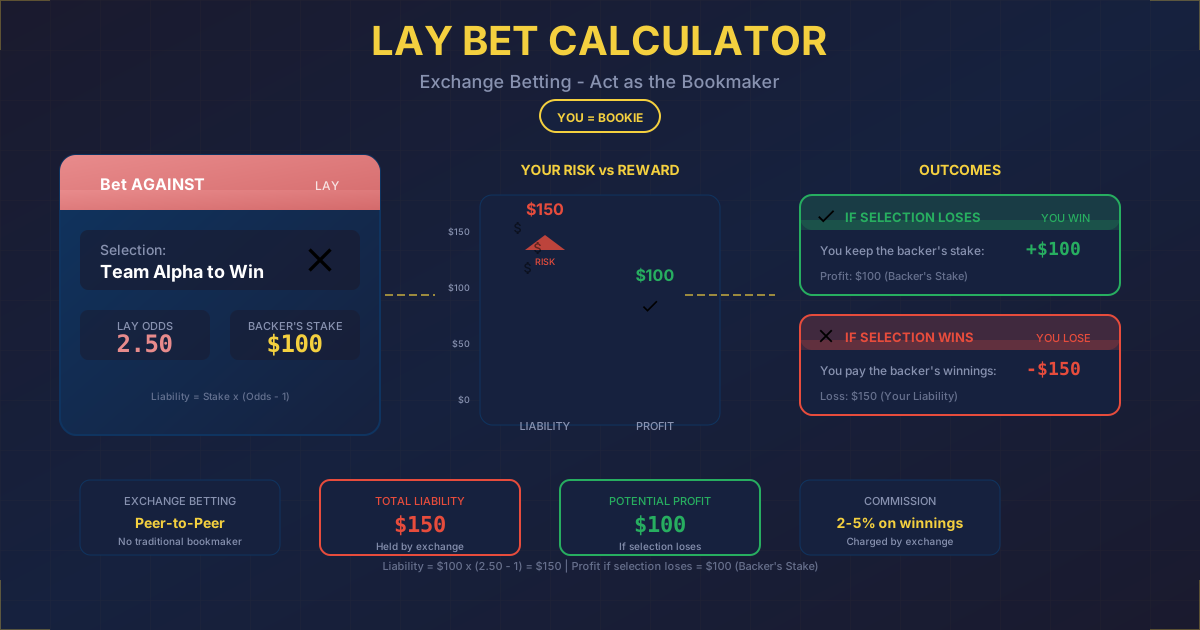
Lay Bet: Betting that an outcome will NOT happen (acting as the bookmaker)
- "I lay Manchester United to win at odds of 2.50"
- If Man United does not win, you profit (the backer's stake)
- If Man United wins, you pay out (backer's profit)
| Aspect | Back Bet | Lay Bet |
|---|---|---|
| You are betting | FOR an outcome | AGAINST an outcome |
| Role | Punter/Bettor | Bookmaker |
| If outcome happens | You WIN (profit = stake x (odds-1)) | You LOSE (liability = stake x (odds-1)) |
| If outcome does not happen | You LOSE (stake) | You WIN (backer's stake) |
| Risk | Limited to stake | Liability can exceed stake |
| When useful | When you think odds are too high | When you think odds are too low |
How Matching Works
When you place a back bet at odds of 2.50, the exchange looks for someone willing to lay at 2.50. If the match is found, the bet is live. If not, your bet sits in the order book until someone matches it or you cancel.
Example:
- You back Team A at 2.50 for $100
- Another user lays Team A at 2.50 for $100
- If Team A wins: you receive $250 ($150 profit), the layer pays $150
- If Team A loses: the layer receives your $100 stake
- Betfair takes commission (e.g., 5%) from the winner's profit
Calculate your lay liability for any bet with our Back/Lay Calculator.
Exchange vs. Bookmaker Comparison
| Feature | Betting Exchange | Traditional Bookmaker |
|---|---|---|
| Who sets odds | Bettors (the market) | The bookmaker |
| Odds quality | Usually better (lower margin) | Worse (higher margin/vig) |
| Lay betting | Yes | No |
| In-play trading | Yes, full trading capability | Limited cash out |
| Account limits | No limits on winners | Winners get limited/banned |
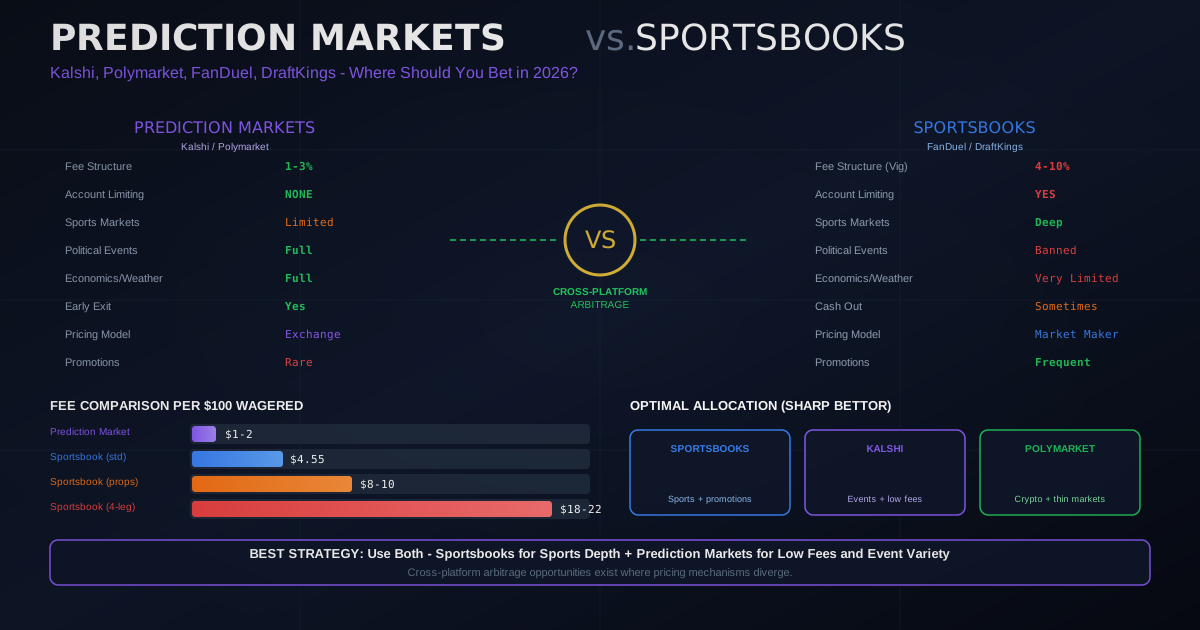
| Commission | 2-5% on net winnings | Built into the odds (5-15%) |
| Liquidity | Varies by market | Always available |
| Cashout | You trade out at market price | Fixed cashout offer |
| Margin | Typically 1-3% | Typically 5-15% |
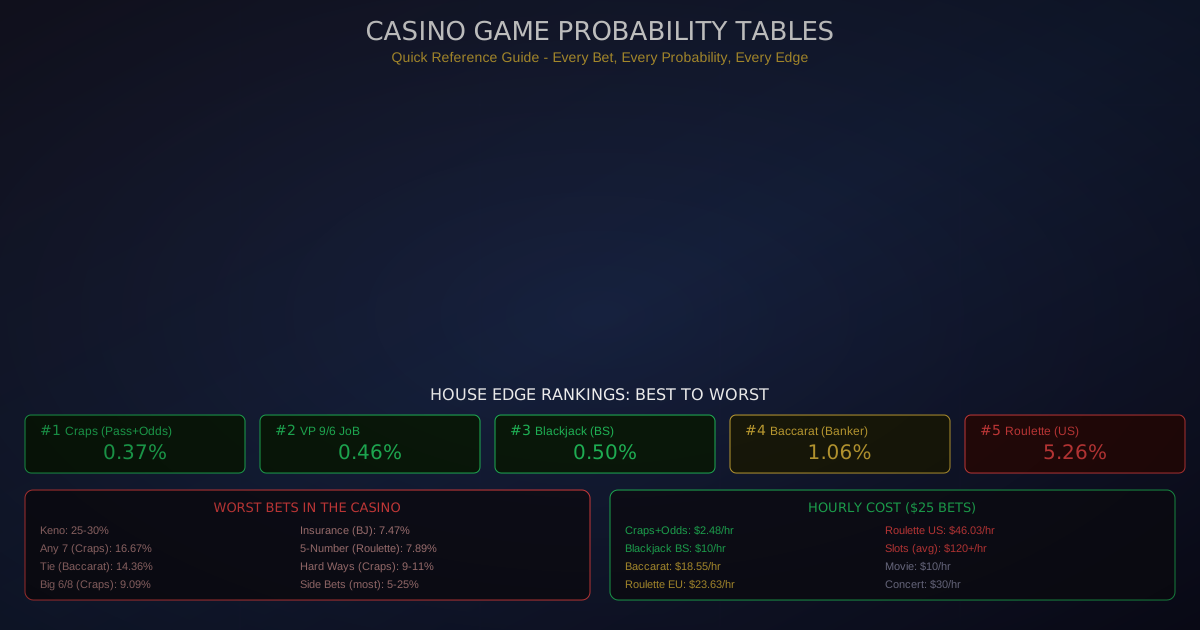
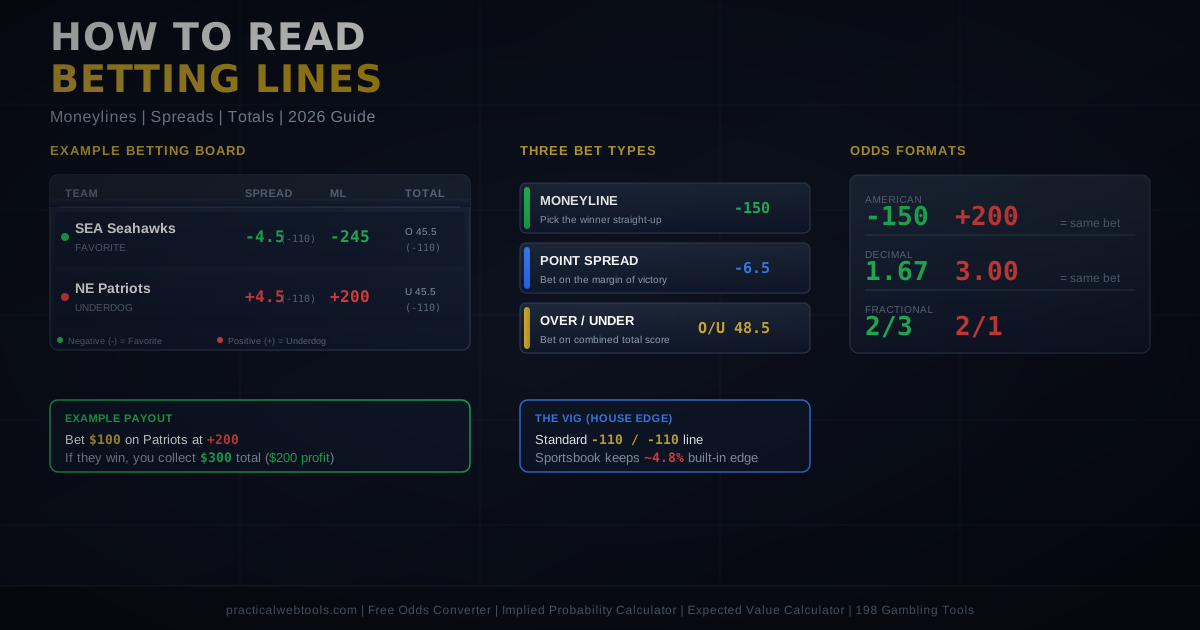
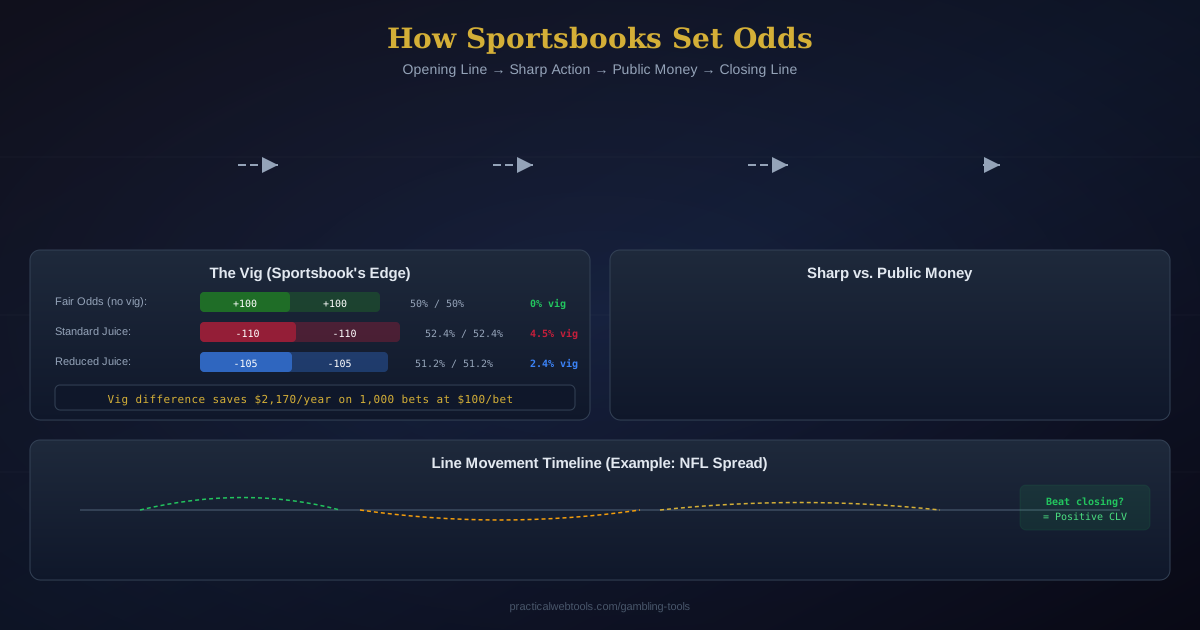
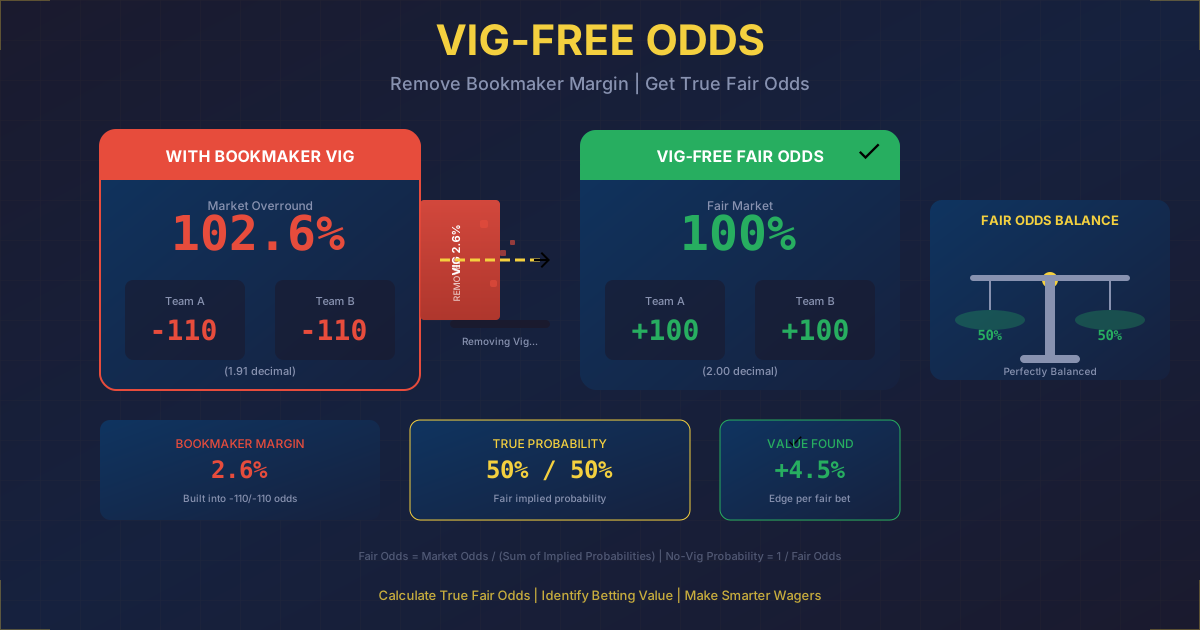
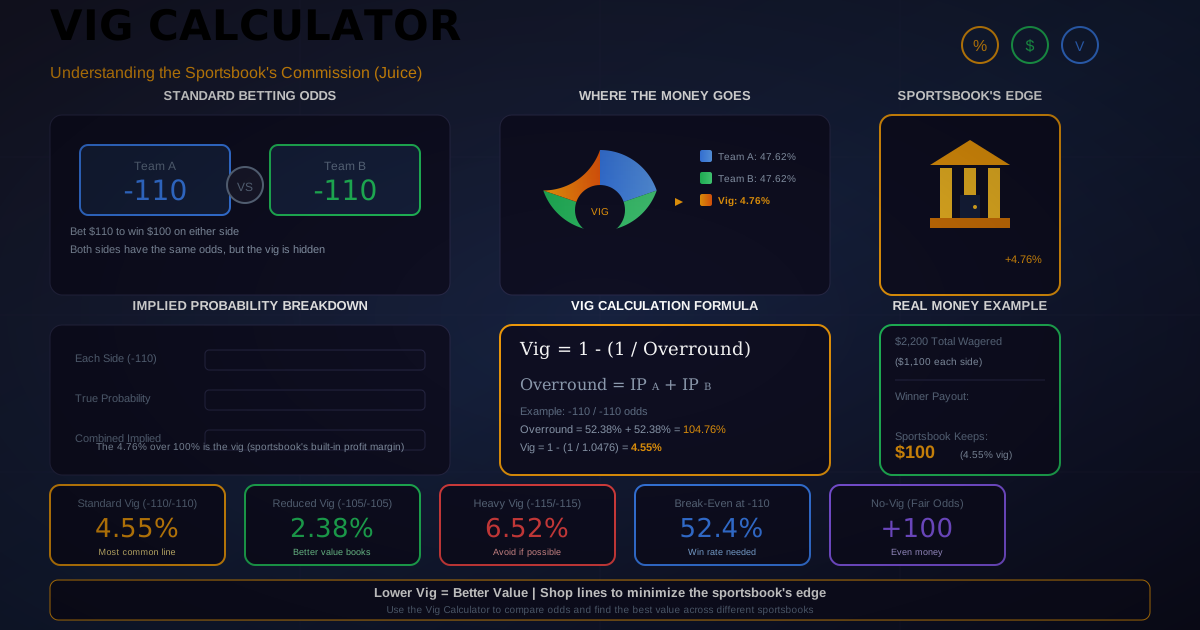
The lower margin on exchanges means better odds. A bet that is -110 (-110) at a bookmaker (4.76% margin) might be available at 2.02/2.04 on Betfair (0.99% margin). Over thousands of bets, this difference is enormous.
Compare the vig between bookmakers and exchanges with our Hold/Vig Calculator.
How Do You Calculate Lay Liability?
Lay liability is the amount you stand to lose if the outcome you laid actually happens. Understanding lay liability is essential because it determines how much money the exchange holds in your account to cover potential losses.
The Lay Liability Formula
Lay Liability = (Lay Odds - 1) x Lay Stake
| Lay Odds | Lay Stake | Lay Liability | Potential Profit (if outcome does NOT happen) |
|---|---|---|---|
| 1.50 | $100 | $50 | $100 |
| 2.00 | $100 | $100 | $100 |
| 2.50 | $100 | $150 | $100 |
| 3.00 | $100 | $200 | $100 |
| 5.00 | $100 | $400 | $100 |
| 10.00 | $100 | $900 | $100 |
As odds increase, lay liability increases dramatically. Laying at odds of 10.00 means you are risking $900 to win $100. This is equivalent to being the bookmaker on a long-shot bet, and it illustrates why bookmakers make money: most of their bets have high lay odds (short-priced favorites are rare as a percentage of all bets).
When Laying Makes Sense
Laying is not just the opposite of backing. It has specific strategic applications:
- Matched betting: Lay the free bet at the exchange to guarantee profit regardless of outcome
- Trading: Back at higher odds, then lay at lower odds to lock in profit
- Market making: Offer both back and lay prices to earn the spread
- Opposing a specific outcome: When you believe something WON'T happen more strongly than you believe something WILL happen
- Hedging: Lay a bet you already backed elsewhere to reduce risk
Calculate exact lay stakes for matched betting with our Matched Betting Calculator.
What Are the Best Betfair Trading Strategies?
Betfair trading involves backing and laying the same selection at different prices to guarantee a profit regardless of the outcome. These strategies treat sports events like financial markets, where price movements create opportunities.
Strategy 1: Scalping
Scalping involves making small, frequent profits by exploiting tiny price movements in liquid markets.
How it works:
- Back a selection at 2.50
- Wait for the price to drop to 2.48
- Lay at 2.48
- The 2-tick difference creates a small guaranteed profit
| Market | Typical Scalp Size | Trades Per Day | Expected Daily Profit |
|---|---|---|---|
| Premier League pre-match | 1-3 ticks | 20-50 | $50-$200 |
| Horse racing pre-race | 2-5 ticks | 30-100 | $100-$500 |
| Tennis in-play | 1-5 ticks | 50-200 | $100-$1,000 |
| NFL pre-game | 2-5 ticks | 10-30 | $30-$150 |
Pros: Low risk per trade, consistent small profits, works in stable markets Cons: Requires fast execution, small profits per trade, needs high volume, commission eats into margins
Strategy 2: Swing Trading
Swing trading involves catching larger price movements based on expected market trends or events.
How it works:
- Identify a selection likely to see significant price movement
- Back before the price drops (or lay before it rises)
- Close the trade when the price has moved sufficiently
Example: Horse Racing
- Horse opens at 5.00 (20% implied probability)
- Market money comes in, price drops to 4.00
- You backed at 5.00, now lay at 4.00
- Guaranteed profit locked in regardless of result
| Trigger | Expected Movement | Timeframe | Risk Level |
|---|---|---|---|
| Team news/lineups | 5-20% odds change | 1-4 hours pre-game | Medium |
| Weather change | 3-10% odds change | 30 min-2 hours pre-game | Low-Medium |
| Early market money | 2-8% odds change | Opening to close | Medium |
| In-play events (goal, red card) | 20-80% odds change | Seconds | High |
| Injury announcement | 5-30% odds change | Minutes | Medium-High |
Strategy 3: The Green Book Technique
"Greening up" means distributing your profit evenly across all outcomes so you win the same amount regardless of what happens. This is the exchange equivalent of "cashing out."
Step-by-step example:
- You back Team A at 3.00 for $100
- Team A scores and the price drops to 1.80
- You now lay Team A at 1.80
To green up evenly:
- Your back bet profit if Team A wins: $200
- Calculate the lay stake to distribute this profit across all outcomes
- Lay stake = (Back Stake x Back Odds) / Lay Odds = ($100 x 3.00) / 1.80 = $166.67
Result:
- If Team A wins: Back profit $200 - Lay loss ($166.67 x 0.80) = $200 - $133.33 = +$66.67
- If Team A loses: Lay profit $166.67 - Back loss $100 = +$66.67
You lock in $66.67 profit regardless of the result (before commission).
Calculate your green book positions with our Back/Lay Calculator.
Strategy 4: Dutching
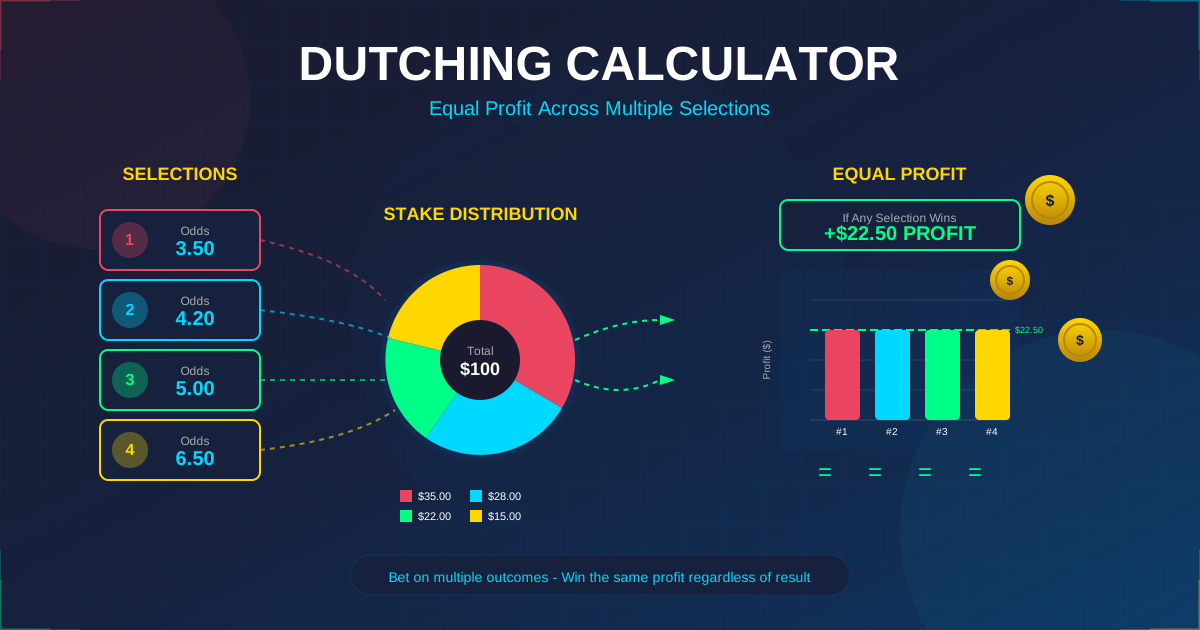
Dutching involves backing multiple selections in the same market to achieve the same profit regardless of which one wins.
When to use Dutching:
- A horse race where you think 3 out of 8 horses have value
- You want equal profit from any of the 3 winning
- Dutching calculates the optimal stake for each selection
| Selection | Odds | Probability | Dutch Stake | Profit if Wins |
|---|---|---|---|---|
| Horse A | 4.00 | 25% | $50 | $150 |
| Horse B | 5.00 | 20% | $40 | $160 |
| Horse C | 8.00 | 12.5% | $25 | $175 |
| Total Staked | $115 | ~$150-$175 |
The uneven profit is because Dutch betting with different odds does not perfectly equalize. Advanced dutching calculators optimize this.
Calculate optimal stake distribution with our Arbitrage Calculator.
Strategy 5: In-Play Trading
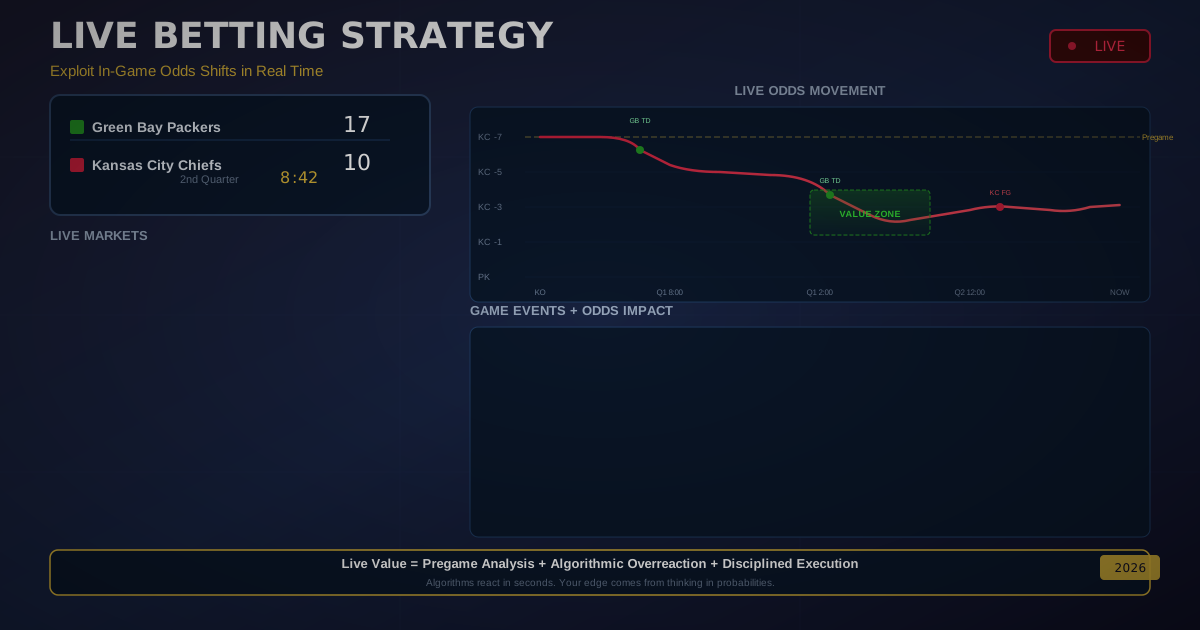
In-play (live) trading is the most exciting and potentially profitable exchange strategy. Odds change rapidly during live events based on what happens on the field.
Common in-play triggers:
| Event | Typical Odds Movement | Speed | Risk |
|---|---|---|---|
| Goal in soccer | 30-60% shift | Instant | Very High |
| Break of serve in tennis | 10-25% shift | Fast | High |
| Touchdown in NFL | 15-35% shift | Fast | High |
| Fall in horse racing | 100% (to max) | Instant | Extreme |
| Rain delay in cricket | 5-15% shift | Moderate | Medium |
| Red card in soccer | 15-30% shift | Fast | High |
In-play strategy: Soccer 0-0 Lay the Draw
- Back the draw at 3.50 before kick-off
- If a goal is scored, the draw odds jump to 5.00+
- Lay the draw at 5.00 for a guaranteed profit
- If the match remains 0-0, losses are limited to your back stake
This strategy profits when there IS a goal (most matches have at least one goal, roughly 74% of soccer matches have a goal before half-time).
What Is Matched Betting and How Do Exchanges Make It Possible?
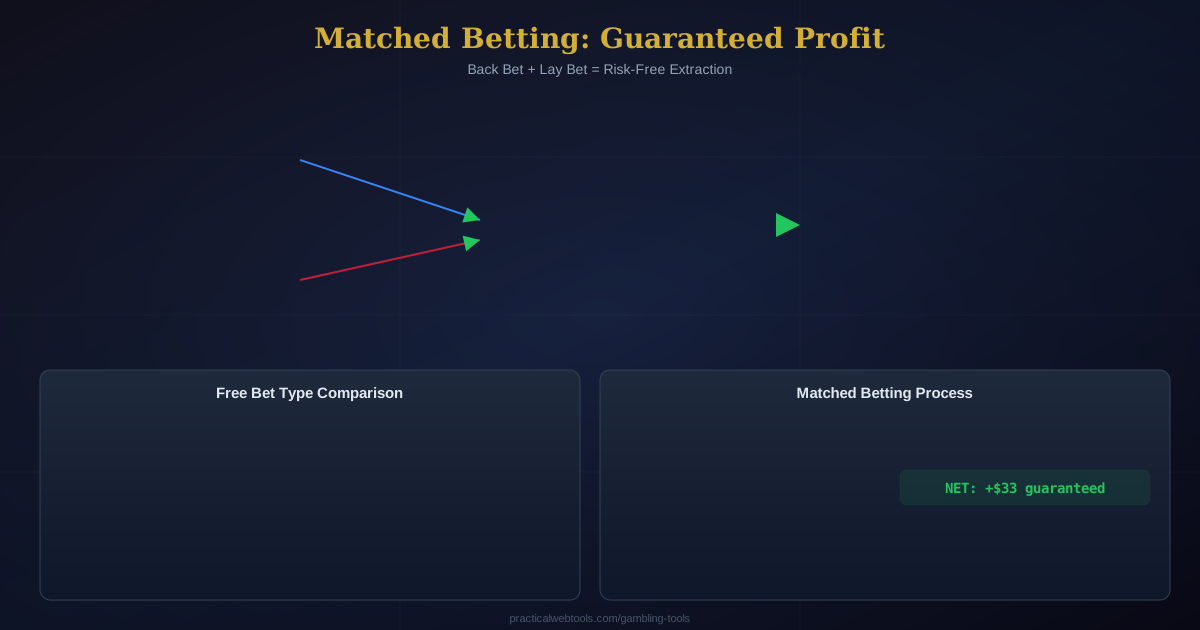
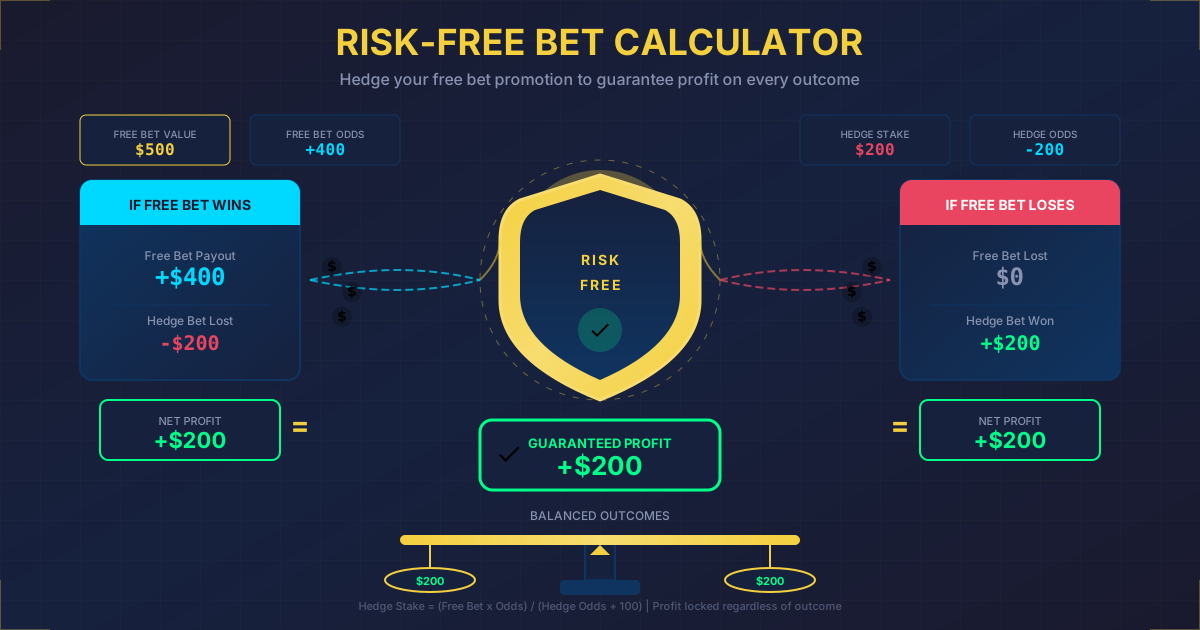
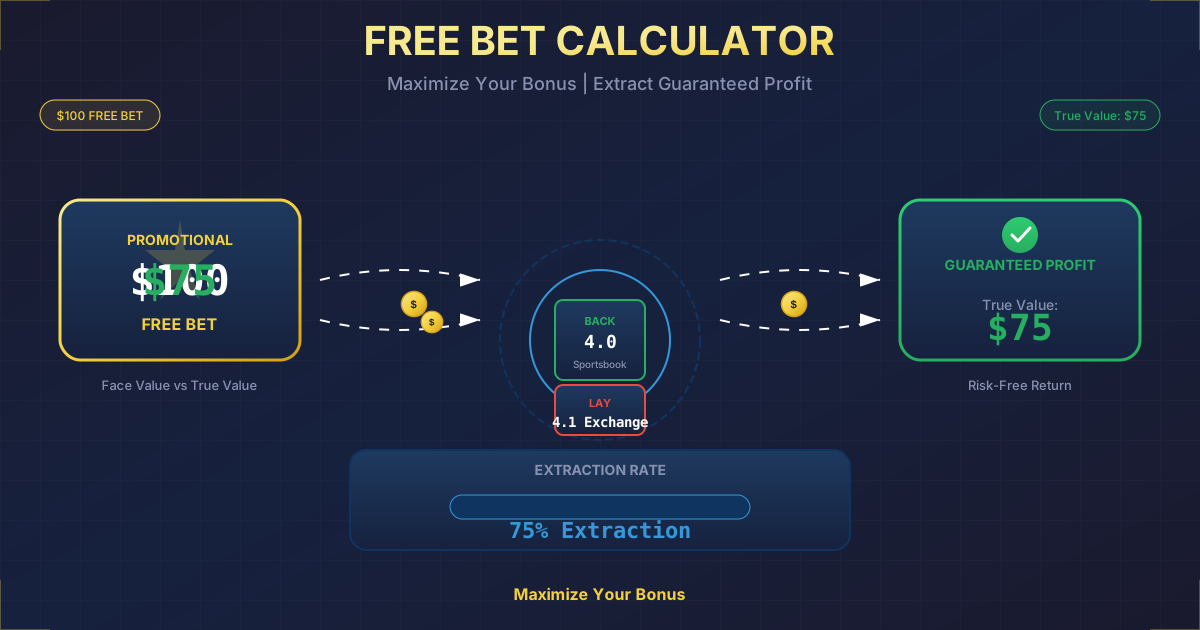
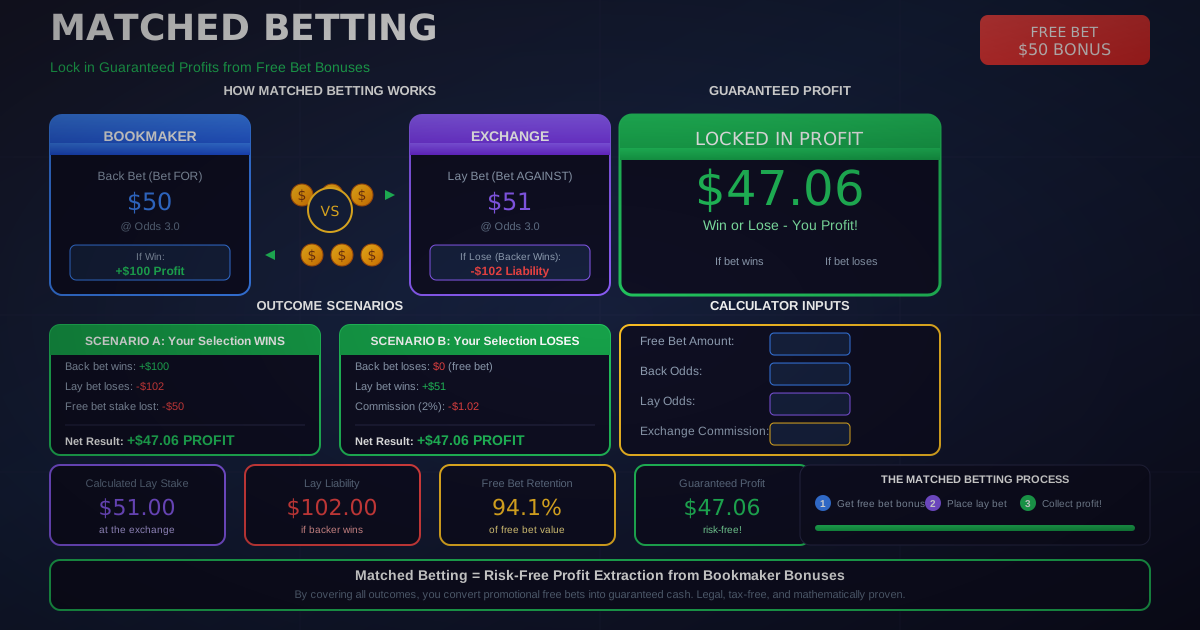
Matched betting is a technique that uses free bets and promotions from bookmakers combined with lay bets on exchanges to extract guaranteed profit from promotional offers. It is the lowest-risk way to profit from gambling and requires a betting exchange.
How Matched Betting Works
Step 1: Qualifying Bet
- Back a selection at the bookmaker (e.g., Team A at 2.00 for $50)
- Lay the same selection at the exchange (Team A at 2.02 for ~$50)
- Small qualifying loss (~$1-2) regardless of result
Step 2: Free Bet
- Bookmaker awards a $50 free bet
- Back a selection at the bookmaker with the free bet (e.g., Team B at 4.00)
- Lay the same selection at the exchange (Team B at 4.10 for ~$12.20)
Result:
- If Team B wins: Free bet profit at bookmaker ($150), lay loss at exchange (~$37.80). Net: ~$112.20
- If Team B loses: Lay profit at exchange (~$12.20), free bet lost ($0 cost). Net: ~$12.20
Wait, those don't equalize? That's because with a "stake not returned" free bet, you take a different approach. Let me show the correct math:
| Scenario | Bookmaker | Exchange | Net Profit |
|---|---|---|---|
| Team B wins | +$150 (free bet profit, stake not returned) | -$37.80 (lay liability) | +$112.20 |
| Team B loses | $0 (free bet lost, no cost) | +$12.20 (lay profit) | +$12.20 |
To equalize profit, calculate the optimal lay stake: Lay Stake = (Free Bet x Back Odds) / (Lay Odds) Lay Stake = ($50 x 4.00) / 4.10 = $48.78
| Scenario | Bookmaker | Exchange | Net Profit |
|---|---|---|---|
| Team B wins | +$150 | -$48.78 x (4.10-1) = -$151.22 | -$1.22 |
| Team B loses | $0 | +$48.78 | +$48.78 |
For SNR (stake not returned) free bets, the correct formula is: Lay Stake = (Free Bet Stake x (Back Odds - 1)) / (Lay Odds - Commission Rate)
This guarantees approximately $35-$45 profit from a $50 free bet, depending on odds and commission.
Calculate your exact matched betting stakes with our Matched Betting Calculator.
Monthly Income from Matched Betting
| Experience Level | Monthly Free Bet Value | Expected Extraction | Monthly Profit |
|---|---|---|---|
| Beginner (first month) | $500-$1,000 | 70-80% | $350-$800 |
| Intermediate (3-6 months) | $1,000-$2,000 | 80-90% | $800-$1,800 |
| Advanced (6+ months) | $2,000-$5,000 | 85-95% | $1,700-$4,750 |
| Full-time (multi-country) | $5,000-$15,000 | 90-95% | $4,500-$14,250 |
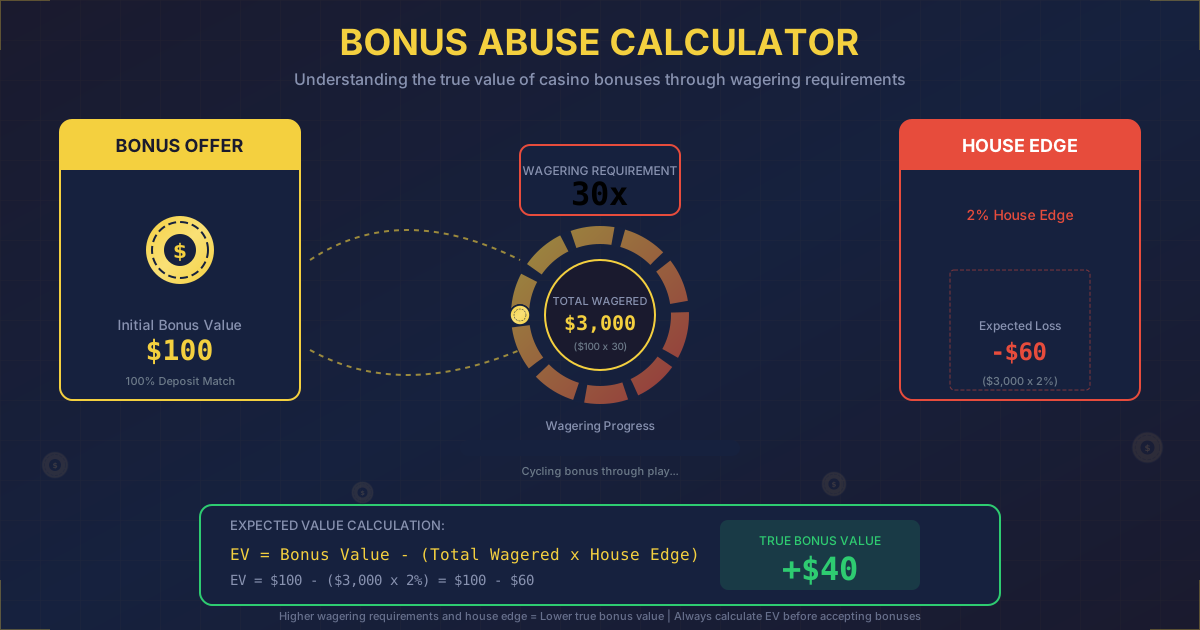
Matched betting profits decline over time as you exhaust sign-up offers and reload promotions become less frequent. Long-term matched bettors rely on ongoing promotions, casino bonuses, and arbitrage opportunities.
How Do Exchange Commission Structures Work?
Betfair and other exchanges charge commission on your net winnings in each market. Understanding commission is crucial because it directly reduces your profits.
Commission Rates by Exchange
| Exchange | Base Commission | Loyalty Discount | Minimum Commission | Market |
|---|---|---|---|---|
| Betfair | 5% | Down to 2% (high volume) | None | Global |
| Smarkets | 2% | Down to 1% | None | Global |
| Betdaq | 2% | Negotiable for high volume | None | UK/Ireland |
| Matchbook | 1.5-2% | Negotiable | None | UK/Europe |
| Betfair US (NJ) | 5% | Limited discounts | None | New Jersey |
How Commission Affects Your Profits
Commission is charged on net market winnings, not on each individual trade. If you back and lay in the same market:
| Scenario | Gross Profit | Commission (5%) | Net Profit | Commission (2%) | Net Profit |
|---|---|---|---|---|---|
| $100 winning trade | $100 | $5.00 | $95.00 | $2.00 | $98.00 |
| $50 winning trade | $50 | $2.50 | $47.50 | $1.00 | $49.00 |
| $20 winning trade | $20 | $1.00 | $19.00 | $0.40 | $19.60 |
| $10 scalp | $10 | $0.50 | $9.50 | $0.20 | $9.80 |
For scalpers making many small trades, the difference between 5% and 2% commission is enormous over time. A scalper making $10,000/month in gross profit keeps $9,500 at 5% commission but $9,800 at 2% commission, a $300/month difference, or $3,600/year.
Calculate your Betfair commission on any trade with our Betfair Commission Calculator.
Reducing Your Commission
Betfair Discount Rate: Betfair offers a points-based discount system. The more you trade, the more points you earn, reducing your commission rate. High-volume traders can get their rate below 3%.
Alternative Exchanges: Smarkets offers a flat 2% commission, making it a popular choice for traders. The trade-off is lower liquidity compared to Betfair, particularly in non-UK markets.
Premium Charges: Betfair applies a Premium Charge to long-term winning customers, which can increase the effective commission rate to 20-60% of net profits. This is controversial and affects the most successful exchange traders.
When Do Exchanges Offer Better Value Than Bookmakers?
Exchanges almost always offer better odds than bookmakers on popular markets, but the advantage varies by sport, market, and timing.
Odds Comparison by Market Type
| Market | Bookmaker Odds | Exchange Back Odds | Exchange Advantage | Liquidity |
|---|---|---|---|---|
| Premier League match odds | 3-5% margin | 1-2% margin | +2-3% | Excellent |
| NFL spreads | 4.76% margin | 1.5-3% margin | +2-3% | Good |
| Horse racing win | 10-20% margin | 2-5% margin | +8-15% | Excellent (UK) |
| NBA moneyline | 4-6% margin | 1.5-3% margin | +2-4% | Moderate |
| Tennis match winner | 4-7% margin | 1.5-3% margin | +3-5% | Good |
| Niche markets (esports, etc.) | 8-15% margin | 3-8% margin | +5-10% | Poor |
When Bookmakers Are Better
Exchanges are not always the best option:
- Enhanced odds promotions: Bookmakers offer boosted odds for marketing that exchanges cannot match.
- Small/illiquid markets: If the exchange market has no liquidity, you cannot get matched.
- Accumulators/Parlays: Some bookmakers offer parlay insurance or boosted accumulator odds.
- Best odds guaranteed: Bookmaker promotions like BOG on horse racing provide free value.
- Small stakes: The commission on exchanges can make small-stake bets less attractive.
Compare bookmaker vig to exchange commissions with our Hold/Vig Calculator.
What Is Market Liquidity and Why Does It Matter?
Liquidity refers to the amount of money available to be matched at the current price. High liquidity means you can place large bets quickly at the displayed price. Low liquidity means your bet may not be matched, or you may need to accept worse odds.
Liquidity by Market Type on Betfair
| Market | Typical Liquidity | Can You Bet $1,000+? | Best Timing |
|---|---|---|---|
| English Premier League | $5M-$20M per match | Easily | Matchday |
| Champions League | $3M-$15M per match | Yes | Matchday |
| Horse Racing (UK/IRE) | $1M-$10M per race | Yes | 30 min pre-race |
| NFL | $500K-$3M per game | Yes | Game day |
| Tennis Grand Slams | $1M-$5M per match | Yes | During match |
| NBA | $300K-$1.5M per game | Usually | Game day |
| Cricket (international) | $2M-$10M per match | Yes | During match |
| MLB | $200K-$800K per game | Sometimes | Game day |
| Niche markets | $10K-$100K | Rarely for large bets | Varies |
How to Deal with Low Liquidity
- Place orders early. Your unmatched back/lay offer becomes part of the order book and may get matched as other traders enter.
- Accept slightly worse odds. Taking the current best price guarantees a match.
- Break up large bets. Instead of one $5,000 bet, place five $1,000 bets at slight intervals.
- Use multiple exchanges. Check Smarkets, Betdaq, and Matchbook for additional liquidity.
- Trade in-play. Liquidity often increases dramatically once an event is in-play.
Calculate arbitrage opportunities when exchanges offer better odds than books with our Arbitrage Calculator.
How Do You Get Started with Exchange Betting?
Getting started on a betting exchange requires opening an account, understanding the interface, and starting with simple bets before moving to advanced trading strategies.
Step-by-Step Getting Started Guide
Step 1: Choose an Exchange
| If You Are In... | Best Exchange | Why |
|---|---|---|
| United Kingdom | Betfair Exchange | Best liquidity, most markets |
| Europe | Betfair or Smarkets | Both good, Smarkets has lower commission |
| Australia | Betfair Australia | Only licensed exchange in AU |
| United States (NJ) | Betfair US / Prophet Exchange | Limited US options |
| Rest of World | Betfair | Largest global platform |
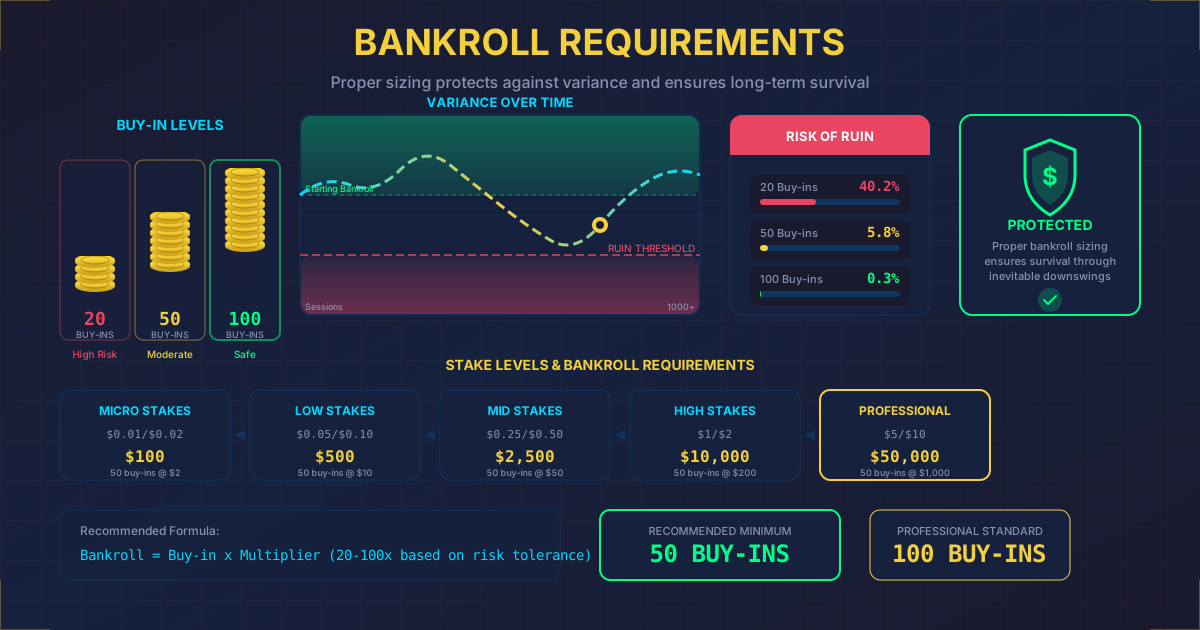
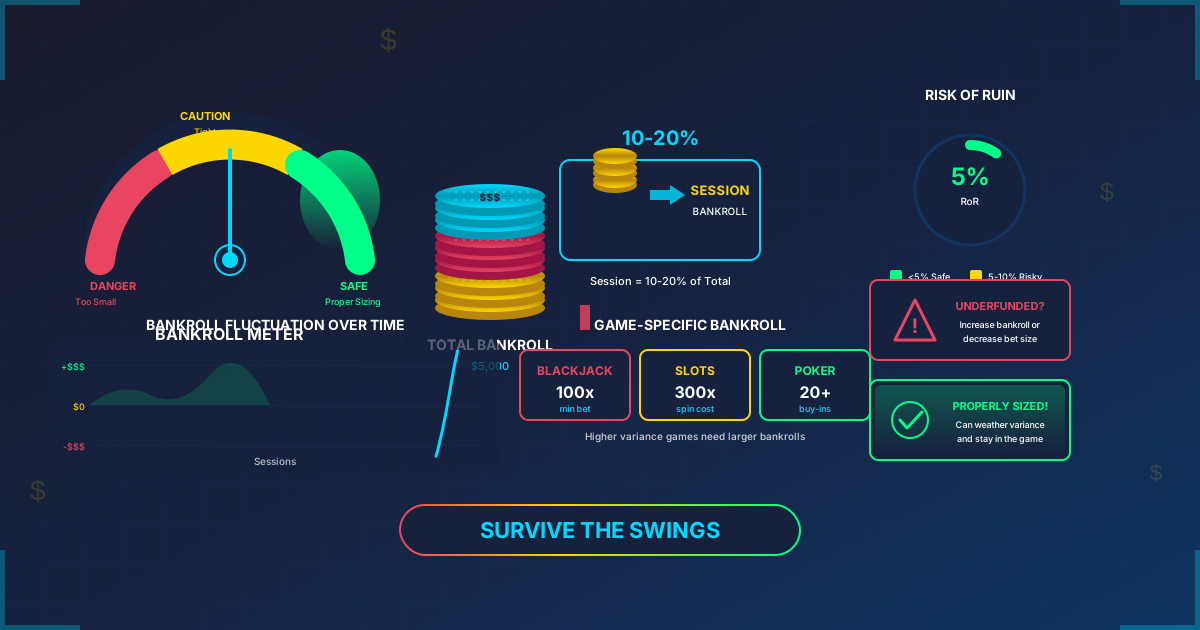
Step 2: Fund Your Account Start with a bankroll appropriate for your strategy:
- Matched betting: $200-$500
- Basic back/lay betting: $500-$2,000
- Trading (scalping/swing): $2,000-$10,000
- Professional trading: $10,000+
Step 3: Start Simple
- Place a few back bets at the exchange to understand the interface
- Place a lay bet at minimum stakes to understand liability
- Practice greening up on a small position
Step 4: Progress to Trading
- Use Betfair's practice mode or trade with minimum stakes
- Learn to read the depth chart (order book)
- Practice scalping in liquid markets
- Graduate to swing trading and in-play once comfortable
Essential Trading Software
| Software | Price | Platform | Key Feature |
|---|---|---|---|
| Bet Angel | $6-$30/month | Betfair | Most comprehensive trading tools |
| Geeks Toy | $30 one-time | Betfair | Fast one-click trading |
| Gruss | $15/month | Betfair | Custom automation |
| Fairbot | $20 one-time | Betfair | Simple, fast interface |
| BF Bot Manager | $10/month | Betfair | Full automation |
Beginner Mistakes to Avoid
| Mistake | Consequence | How to Avoid |
|---|---|---|
| Not understanding lay liability | Accidentally risking more than intended | Always calculate liability before placing lay bets |
| Trading illiquid markets | Getting stuck in positions you cannot exit | Start with Premier League, horse racing, or tennis |
| Overtrading | Commission costs exceed profits | Set daily trade limits and profit targets |
| Ignoring commission in calculations | Thinking you profit when you do not | Factor commission into every trade calculation |
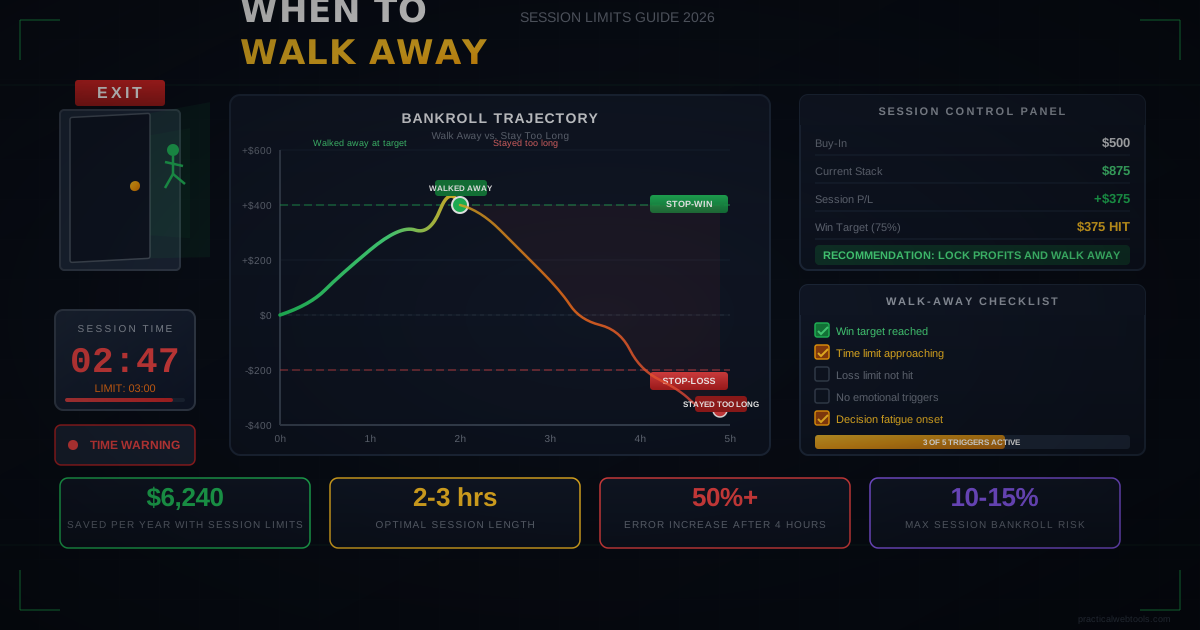
| Trading emotionally after losses | Chasing losses with bigger positions | Use stop-losses and walk away after hitting daily loss limit |
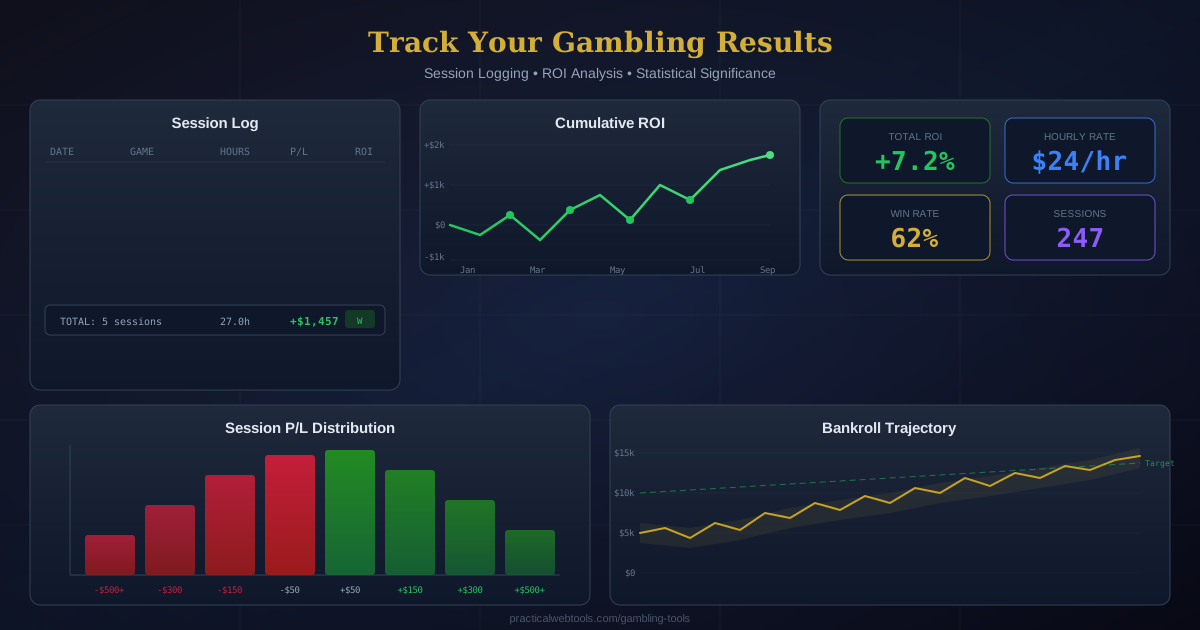
| Not recording trades | Cannot identify what works and what does not | Log every trade in a spreadsheet |
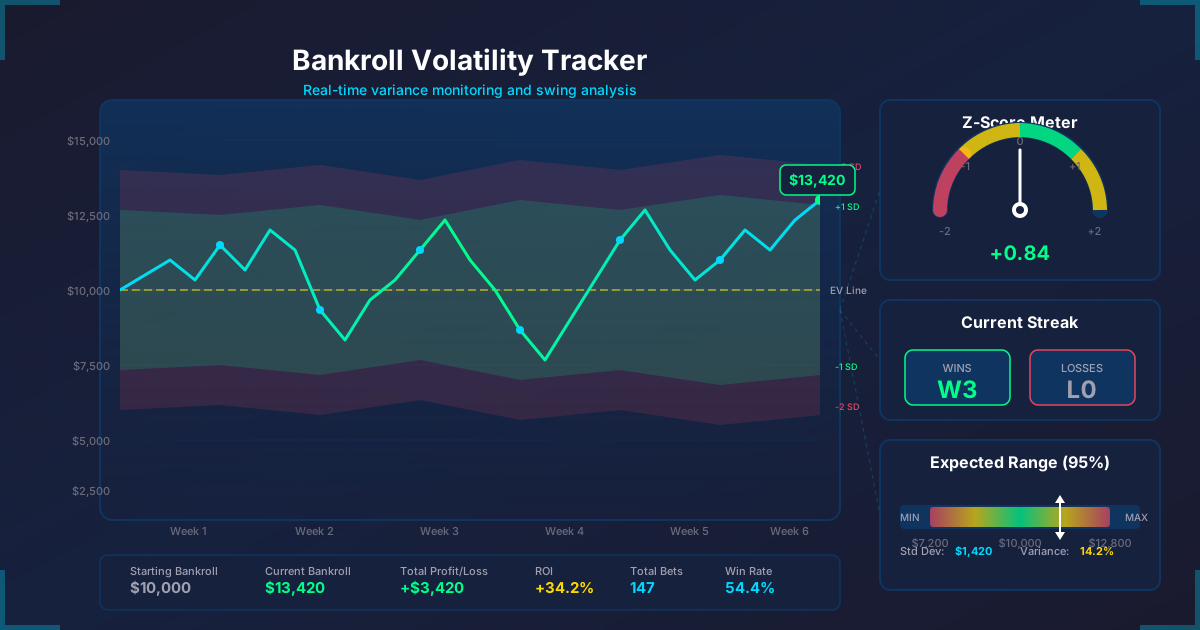
Track all your exchange trading activity with our Bankroll Volatility Tracker.
How Do You Build an Exchange Trading Plan?
A trading plan is a written document that defines your strategy, rules, risk management parameters, and performance benchmarks. Every professional Betfair trader operates from a plan. Without one, you are gambling, not trading.
Key Components of a Trading Plan
| Component | What to Define | Example |
|---|---|---|
| Strategy | Specific approach (scalping, swing, etc.) | Pre-race horse racing scalping |
| Markets | Which sports/events you trade | UK horse racing, EPL, Champions League |
| Stake sizing | How much per trade | 2% of trading bankroll per position |
| Max daily loss | Stop-loss for the day | $200 or 5% of bankroll |
| Profit target | Daily/weekly target (optional) | $150/day, $600/week |
| Trading hours | When you trade | 30 min before UK race times, EPL matchdays |
| Entry criteria | When you enter a position | Price movement >3 ticks in 2 minutes on liquid race |
| Exit criteria | When you close a position | Target hit, stop-loss hit, or 5 min before race |
| Review schedule | When you analyze performance | Weekly P&L review, monthly strategy review |
| Commission budget | Expected commission costs | 3% on net winnings = $X/month |
Risk Management Rules for Exchange Trading
Professional exchange traders follow strict risk rules:
- Never risk more than 5% of your trading bankroll on a single position. A $5,000 trading bank means a maximum position liability of $250.
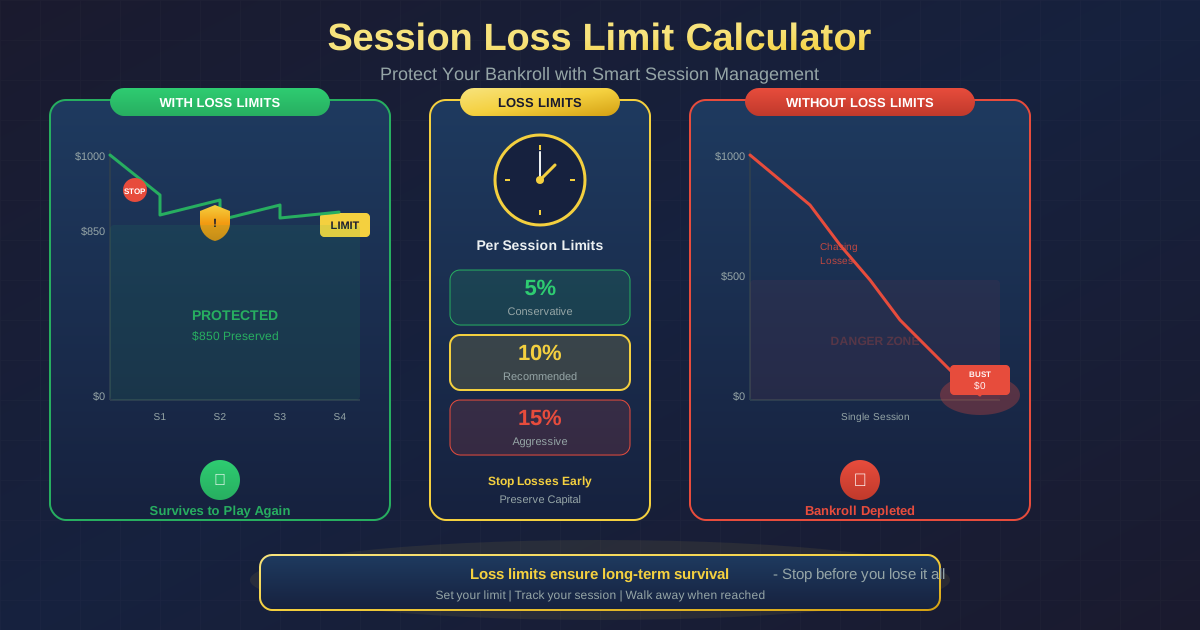
- Set a daily stop-loss and honor it. If you lose $200 in a day, stop trading. No exceptions. Chasing losses in live markets is the fastest way to destroy a bankroll.
- Always know your worst-case scenario before entering a trade. Calculate your maximum liability before placing any lay bet or trade.
- Track your commission as a percentage of gross profit. If commission exceeds 40% of your gross profit, you are overtrading relative to your edge.
- Keep a separate trading journal. For every trade, record your reasoning, entry/exit prices, and what happened. Review weekly.
Expected Income from Exchange Trading
| Trader Level | Monthly Gross Profit | Commission (3%) | Net Monthly Profit | Bankroll Required |
|---|---|---|---|---|
| Beginner (learning) | -$500 to +$200 | $0-$6 | -$500 to +$194 | $1,000-$2,000 |
| Intermediate (6-12 months) | +$200 to +$1,000 | $6-$30 | +$194 to +$970 | $2,000-$5,000 |
| Advanced (1-2 years) | +$1,000 to +$5,000 | $30-$150 | +$970 to +$4,850 | $5,000-$15,000 |
| Professional (3+ years) | +$5,000 to +$20,000 | $150-$600 | +$4,850 to +$19,400 | $15,000-$50,000 |
| Elite/Full-time | +$20,000+ | $600+ | +$19,400+ | $50,000+ |
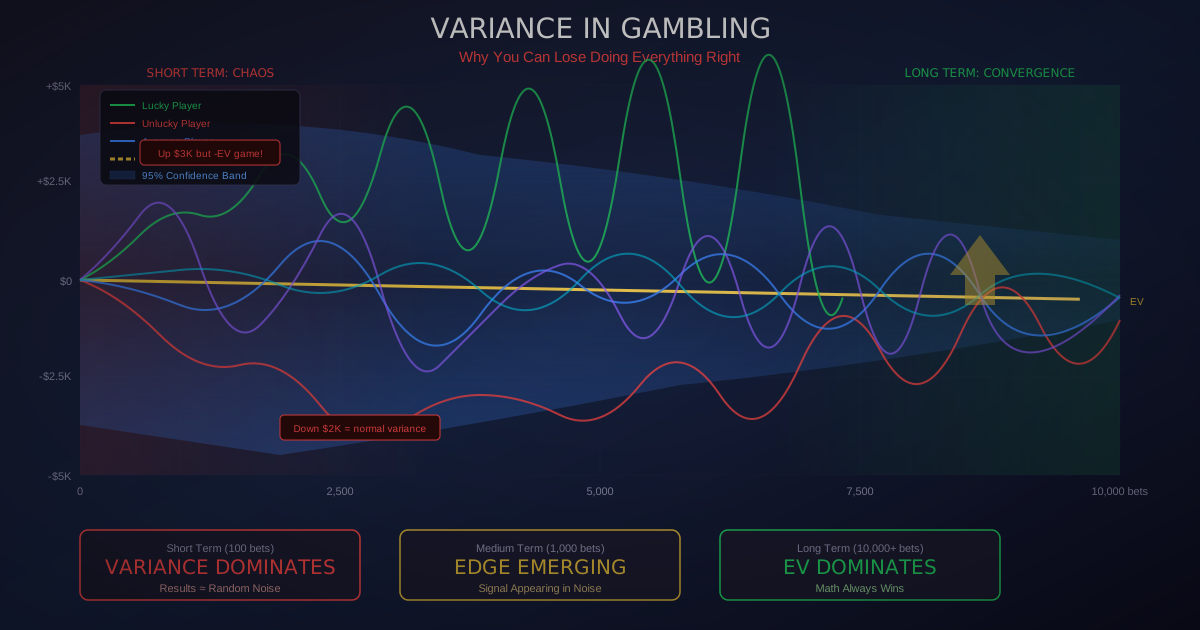
Most beginners lose money for 3-6 months before becoming profitable. This is normal. The skills of reading market depth, managing positions under pressure, and executing quickly take time to develop.
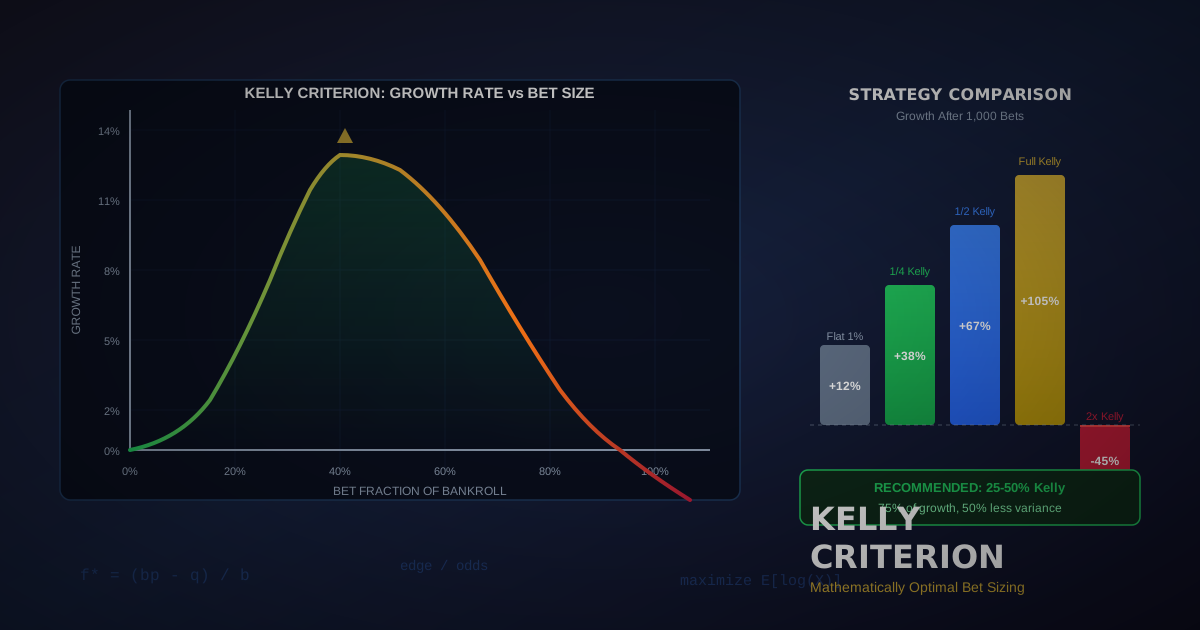
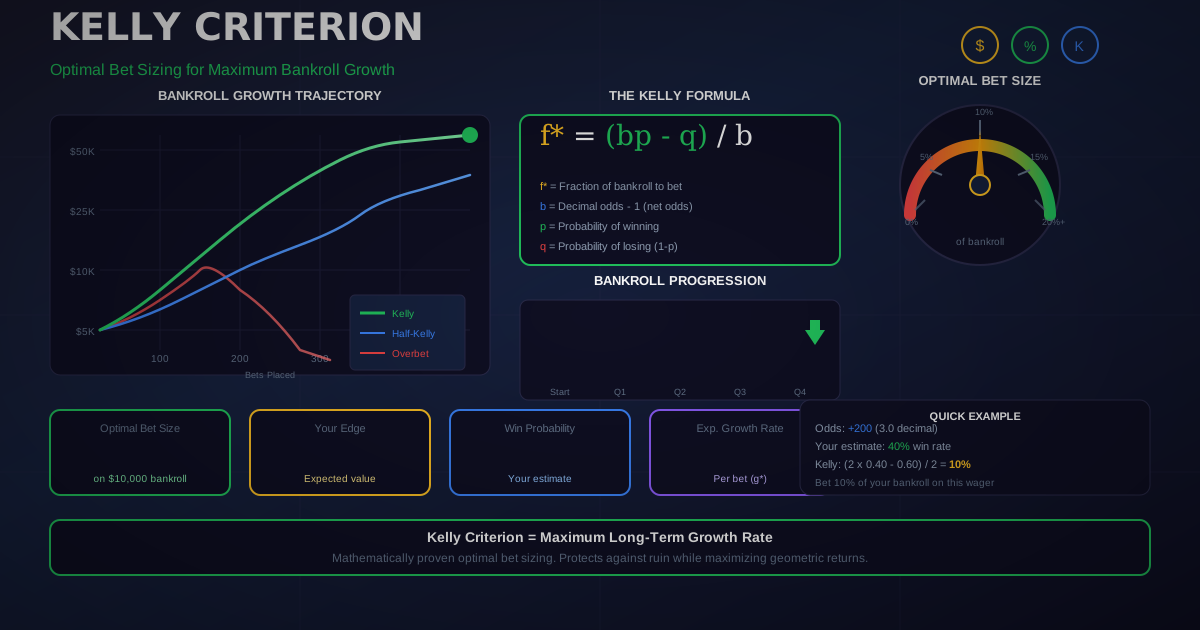
Calculate your optimal position sizes with our Kelly Criterion Calculator.
What Are Common Exchange Trading Mistakes and How Do You Avoid Them?
Even experienced exchange traders make preventable mistakes. Understanding these common errors and their solutions can save you thousands of dollars in unnecessary losses.
The 8 Most Expensive Exchange Trading Mistakes
1. Laying at High Odds Without Understanding Liability New exchange users sometimes lay at odds of 8.00 or 10.00 without realizing the liability. Laying $100 at 10.00 means your liability is $900. If the outcome occurs, you owe $900.
Fix: Always calculate liability before confirming a lay bet. Use our Back/Lay Calculator for instant liability calculations.
2. Trading Illiquid Markets and Getting Stuck You back a selection at 3.50, intending to lay at 3.40 for a quick scalp. But there is no liquidity at 3.40, nobody to match your lay, and the price moves against you to 4.00. You are now stuck in a losing position with no exit.
Fix: Only trade markets with substantial liquidity. Check the amount available at each price before entering a position.
3. Ignoring Commission in Profit Calculations A trader makes $500 in gross profit across 200 trades in a month. At 5% commission, they owe $25 in commission. But if their average profit per trade is only $2.50, commission takes a significant chunk. For scalpers making hundreds of small-profit trades, even 2% commission significantly impacts profitability.
Fix: Factor commission into every trade calculation before placing it. Your target profit per trade must exceed the commission cost.
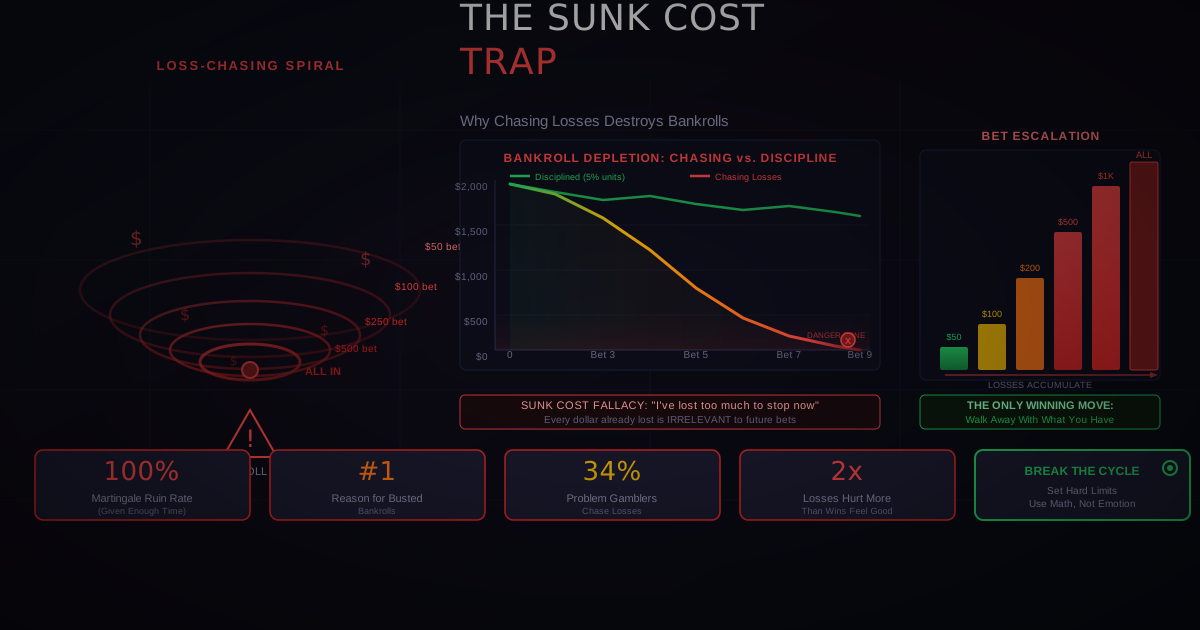
4. Chasing Losses After a Bad Day After losing $300 in the morning, you increase your stake sizes to "win it back quickly." This emotional response almost always makes the situation worse. Larger stakes combined with impaired judgment from frustration leads to compounding losses.
Fix: Set a daily stop-loss. When you hit it, close your laptop and walk away. No exceptions.
5. Overcomplicating Strategies Some traders try to run three different strategies simultaneously across five sports. The result is scattered attention, poor execution, and conflicting positions.
Fix: Master one strategy in one market before expanding. Depth beats breadth in exchange trading.
6. Not Backtesting Before Live Trading Deploying a new strategy with real money without testing it against historical data first. This leads to unexpected losses when market behavior does not match assumptions.
Fix: Use historical Betfair data (available through APIs and third-party providers) to backtest any strategy before committing real capital.
7. Failing to Adapt to Market Changes A strategy that worked well for six months may stop working as markets evolve. New participants, algorithm changes, or structural market shifts can erode an edge.
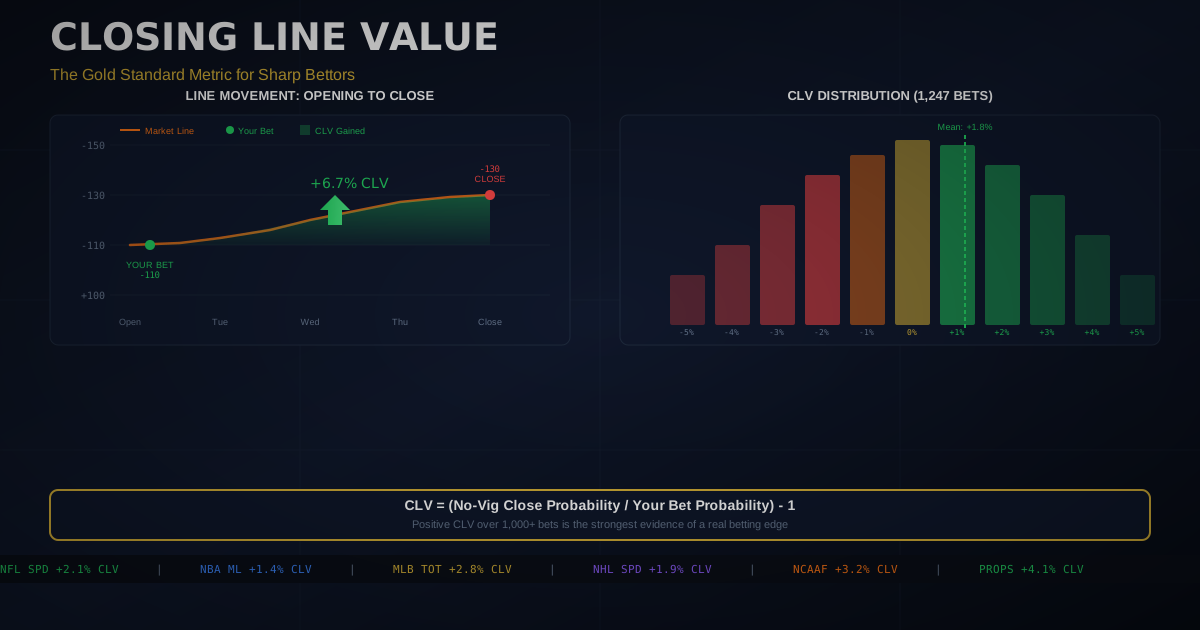
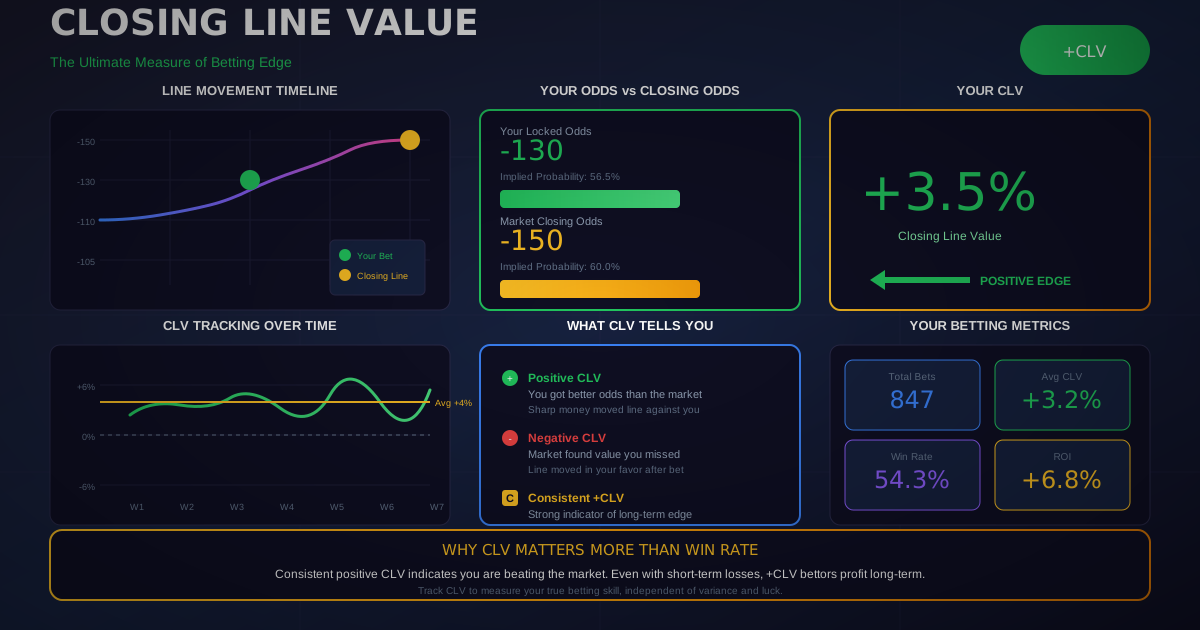
Fix: Monitor your strategy's performance metrics monthly. If CLV or ROI trends downward over 200+ trades, investigate and adapt.
8. Neglecting Record-Keeping Trading without recording results makes it impossible to evaluate performance or identify patterns. You cannot know if your strategy is working without data.
Fix: Log every trade with entry price, exit price, stake, P&L, and notes. Review weekly. Use a spreadsheet or dedicated trading journal.
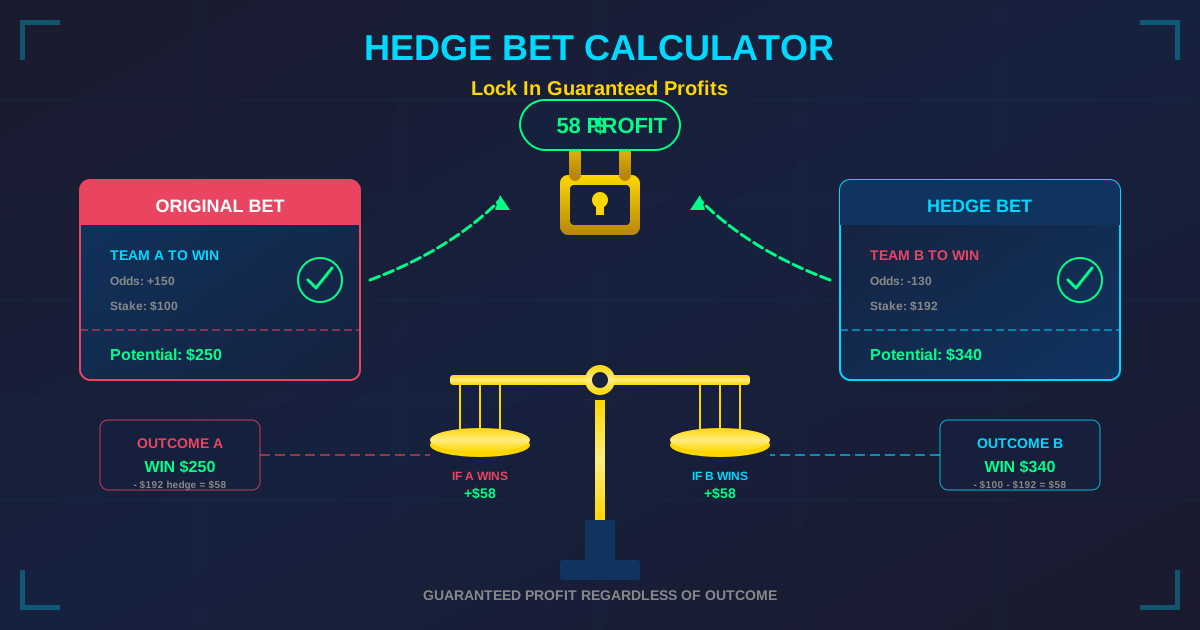
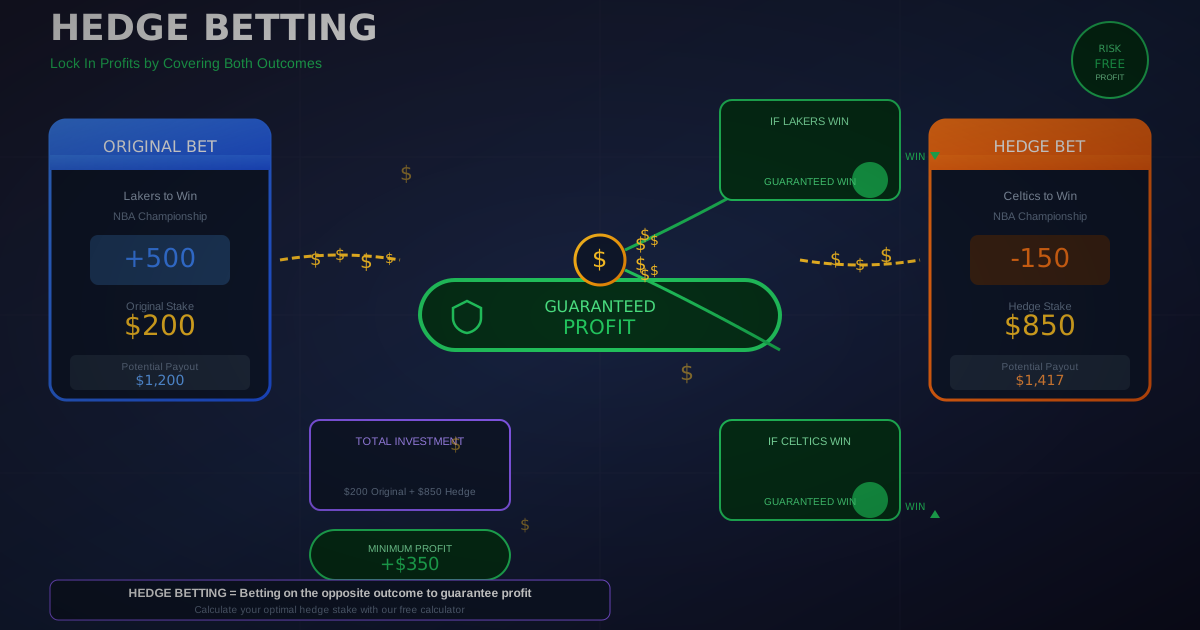
Hedge your exchange positions when needed with our Hedge Calculator.
Frequently Asked Questions
What is the difference between a betting exchange and a sportsbook?
A sportsbook sets odds and takes the opposite side of your bet, profiting from the margin (vig) built into the odds. A betting exchange is a marketplace where you bet against other users. The exchange does not take a position; it simply matches bettors and charges commission on winnings. Exchanges offer better odds because their margin (1-3%) is much lower than bookmakers (5-15%), but you need another user to match your bet.
Can you make a living trading on Betfair?
Yes, but it requires significant skill, discipline, and starting capital. Professional Betfair traders typically earn $30,000-$150,000+ per year, depending on their strategy, markets, and volume. The learning curve is steep, most beginners lose money for 3-6 months before becoming consistently profitable. Start part-time with small stakes and scale up only after proving profitability over thousands of trades.
Is lay betting risky?
Lay betting carries more risk than backing because your liability can exceed your potential profit. At odds of 10.00, you risk $900 to win $100. However, at shorter odds (1.50-2.00), lay liability is manageable. The key is understanding and respecting lay liability before placing any lay bet. Always calculate your liability and ensure it fits within your bankroll management plan.
What is the Betfair Premium Charge?
The Premium Charge is an additional commission Betfair applies to long-term winning customers. If your lifetime net profits exceed a certain threshold relative to your total market charges, Betfair applies an extra charge (up to 60% of net profits) on top of the standard commission. This controversial policy effectively caps the earnings of the most successful exchange traders.
Can I use betting exchanges in the United States?
Betting exchange access in the US is very limited as of 2026. Betfair US operates in New Jersey, and Prophet Exchange is available in New Jersey and other select states. Most US bettors do not have access to a full exchange. This is a significant limitation for US-based matched bettors and traders. The regulatory landscape is evolving, and more states may permit exchanges in the future.
How much money do I need to start matched betting?
You can start matched betting with as little as $100-$200, but $500-$1,000 provides more flexibility to handle multiple offers simultaneously. The initial bankroll is used to place qualifying bets and maintain exchange balances. Profits from matched betting are relatively quick to realize, so you can recycle your bankroll through multiple offers.
What is the best sport for exchange trading?
Horse racing (UK/Ireland) offers the most liquid pre-race markets and the most predictable price movements, making it ideal for scalping and swing trading. Soccer (Premier League, Champions League) provides excellent in-play trading opportunities. Tennis offers fast-moving in-play markets that reward quick decisions. The "best" sport depends on your trading style and the markets available in your region.
Is matched betting tax-free?
In the UK, gambling winnings are tax-free, including matched betting profits. In the US, all gambling winnings are taxable income. In Australia, recreational gambling winnings are generally tax-free, but if gambling is your profession, profits may be taxable. Consult a tax professional in your jurisdiction to understand your obligations.
Related Tools for Exchange Bettors and Traders
Optimize your exchange trading with these free calculators:
- Back/Lay Calculator - Calculate lay stakes, liability, and profit for any back/lay scenario
- Matched Betting Calculator - Calculate optimal stakes for free bet extraction
- Betfair Commission Calculator - Calculate your net profit after commission
- Arbitrage Calculator - Find and calculate arbitrage opportunities
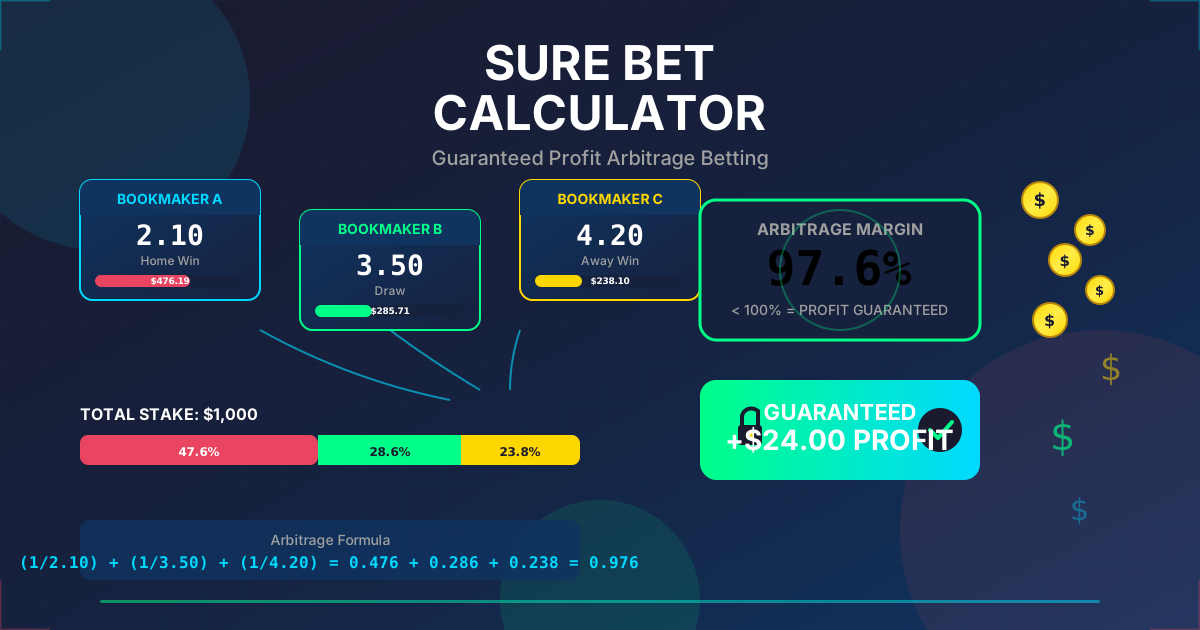
- Sure Bet Calculator - Identify guaranteed profit scenarios across markets
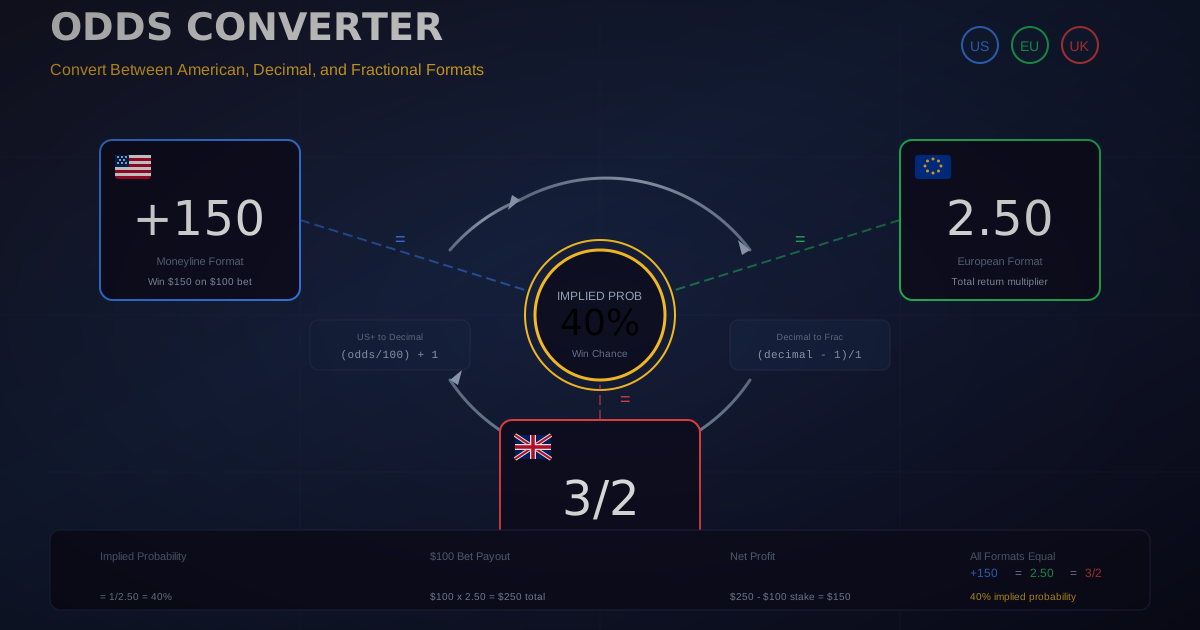
- Odds Converter - Convert between decimal, fractional, and American odds
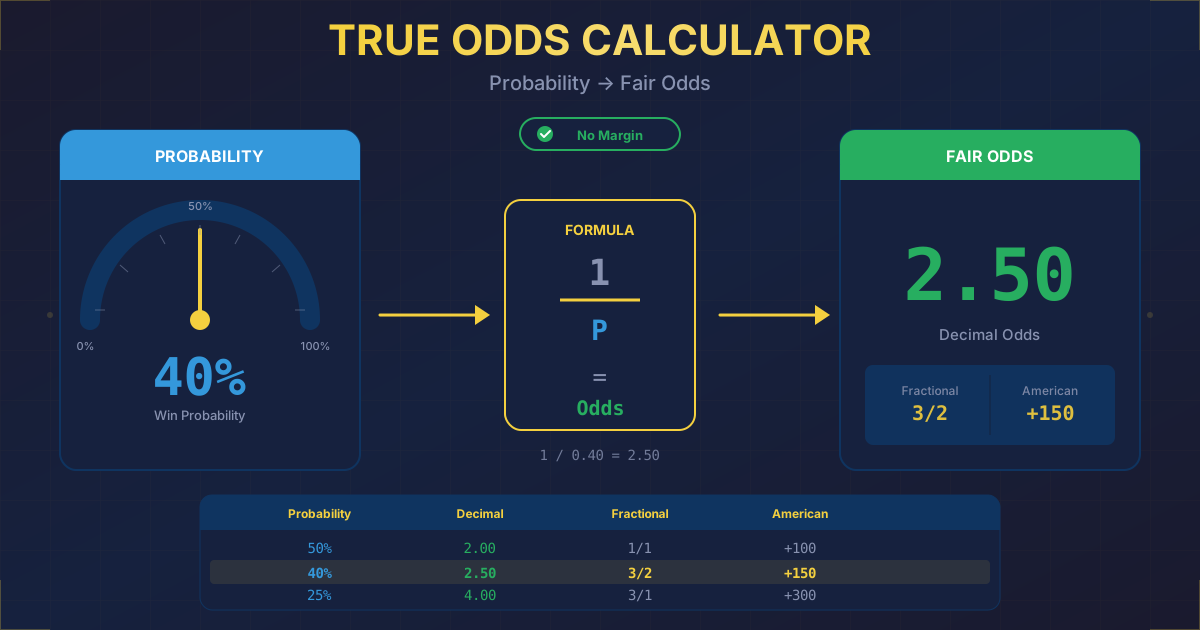
- Implied Probability Calculator - Calculate true probabilities from exchange prices
- Hold/Vig Calculator - Compare exchange margins to bookmaker margins
- Expected Value Calculator - Determine expected profit on any exchange bet
- Kelly Criterion Calculator - Calculate optimal position sizing for trading
- Hedge Calculator - Calculate hedging positions for risk management
- Bankroll Volatility Tracker - Track your trading bankroll and performance over time
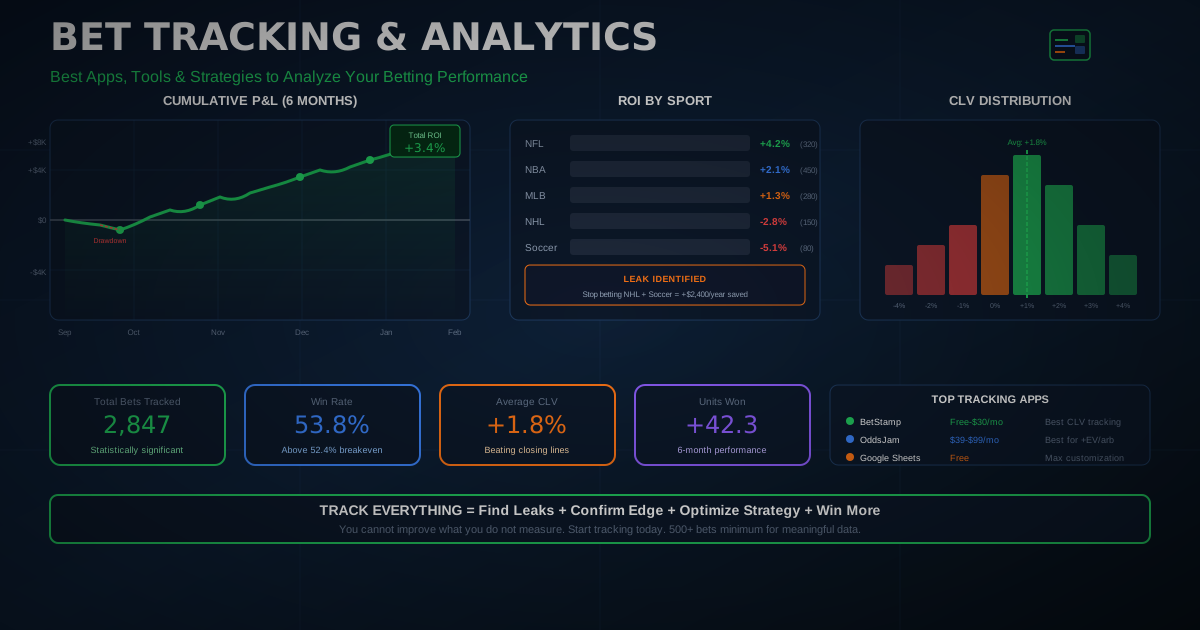
How Do You Track and Analyze Exchange Trading Performance?
Tracking exchange trading performance differs from tracking traditional betting because you have multiple positions, partial fills, and commission to account for. Here is how professional exchange traders measure and improve their performance.
Key Metrics for Exchange Traders
| Metric | Formula | Good Benchmark | What It Tells You |
|---|---|---|---|
| Net P&L | Gross profit - Commission | Positive | Are you making money after costs? |
| Win rate | Winning trades / Total trades | 55-65% | How often your trades are correct |
| Average win size | Sum of wins / Number of wins | > Average loss | Are winners bigger than losers? |
| Average loss size | Sum of losses / Number of losses | < Average win | Are losses contained? |
| Profit factor | Gross wins / Gross losses | > 1.5 | Ratio of money won to money lost |
| Max drawdown | Largest peak-to-trough decline | < 20% of bankroll | Worst case scenario realized |
| Commission ratio | Commission / Gross profit | < 30% | How much commission eats into profit |
| Trades per day | Total trades / Trading days | 5-50 (strategy dependent) | Volume and activity level |
| Sharpe ratio | Avg return / Std dev returns | > 1.0 | Risk-adjusted performance |
Building an Exchange Trading Journal
Every trade should be recorded with:
- Date and time of entry and exit
- Market (sport, event, selection)
- Strategy used (scalp, swing, green book, etc.)
- Entry price (back or lay odds)
- Exit price (lay or back odds)
- Stake/position size
- Gross P&L before commission
- Net P&L after commission
- Market conditions (liquidity, volatility, any notable events)
- Notes on what went well or poorly
Reviewing this journal weekly reveals patterns: which strategies work, which markets are most profitable, what time of day produces the best results, and where mistakes are costing money.
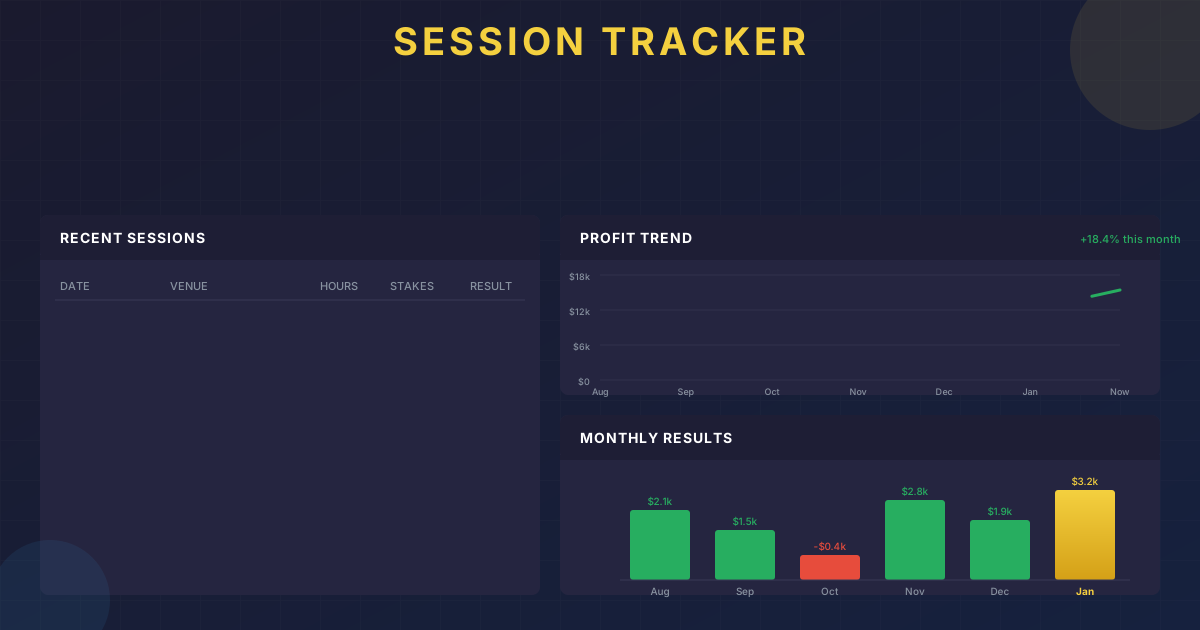
Track your complete exchange trading history with our Poker Session Tracker, adaptable for exchange trading.
Betting exchanges represent the most mathematically favorable way to bet on sports. Lower margins, the ability to lay, and full trading capabilities give exchange users advantages that are simply unavailable at traditional bookmakers. The learning curve is steeper, but the potential rewards, especially through matched betting and systematic trading, make exchange mastery one of the most valuable skills in the sports betting world.
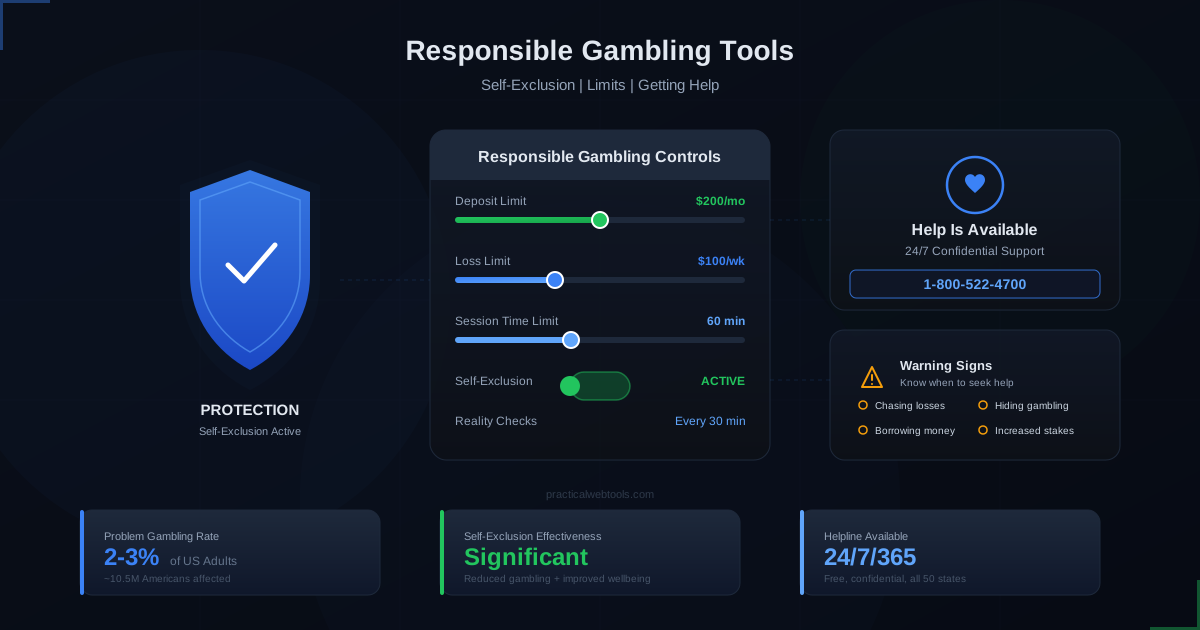
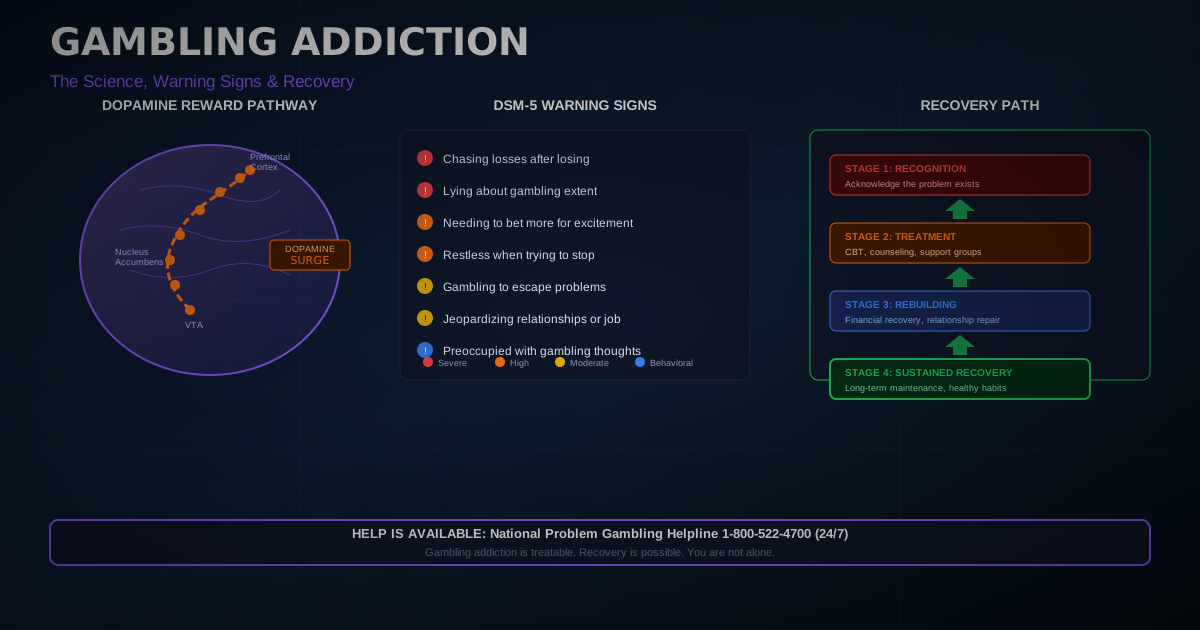
Gambling involves risk and should be approached as entertainment, not as a source of income. Always bet within your means, set strict bankroll limits, and never chase losses. If you or someone you know has a gambling problem, contact the National Council on Problem Gambling at 1-800-522-4700 or visit ncpgambling.org. Must be 21+ to gamble in most US jurisdictions. Please play responsibly.