BTTS Calculator: Both Teams to Score Betting Analysis and Odds (2026)
BTTS Calculator: Master the Both Teams to Score Market
Both Teams to Score (BTTS) has become one of soccer betting's most popular markets. You don't need to pick a winner - just predict whether both teams will find the net. Our BTTS calculator analyzes team scoring and conceding patterns to help you find value in this straightforward yet nuanced market.
What Is Both Teams to Score (BTTS)?
Both Teams to Score is a yes/no betting market where you wager on whether both teams will score at least one goal during the match. The final score and match winner don't matter - only whether each team gets on the scoresheet. BTTS Yes wins if both teams score; BTTS No wins if one or both teams fail to score.
Quick Answer: BTTS probability is calculated using each team's scoring and conceding rates. The formula is: BTTS Yes % = (Team A Scoring % × Team A Conceding %) + (Team B Scoring % × Team B Conceding %) - (Both factors combined). For quick estimation: if Team A scores in 75% of games and Team B scores in 70% of games, BTTS Yes probability is approximately 52.5% (0.75 × 0.70). Fair odds at 52.5% = 1.90.
How to Use Our Calculator
Step-by-Step Instructions
- Enter Team A Statistics: Input scoring rate and conceding rate
- Enter Team B Statistics: Input scoring rate and conceding rate
- View BTTS Probability: See calculated yes/no probabilities
- Compare to Odds: Check if bookmaker odds offer value
- Analyze Historical Data: Review head-to-head BTTS trends
Input Fields
| Field | Description | Example |
|---|---|---|
| Team A Scoring Rate | % of matches Team A scores in | 78% |
| Team A Conceding Rate | % of matches Team A concedes in | 65% |
| Team B Scoring Rate | % of matches Team B scores in | 72% |
| Team B Conceding Rate | % of matches Team B concedes in | 70% |
| BTTS Yes Odds | Bookmaker's BTTS Yes price | 1.75 |
| BTTS No Odds | Bookmaker's BTTS No price | 2.00 |
Understanding BTTS Probability
The Core Calculation
BTTS Yes Probability:

P(BTTS Yes) = P(Team A scores) × P(Team B scores)

Where:
- P(Team A scores) = Team A scoring rate vs Team B conceding rate
- P(Team B scores) = Team B scoring rate vs Team A conceding rate

Simplified Version:
BTTS Yes = (A scores %) × (B scores %)

Example:
Team A scores in 75% of games
Team B scores in 70% of games

BTTS Yes = 0.75 × 0.70 = 0.525 (52.5%)
BTTS No = 1 - 0.525 = 0.475 (47.5%)

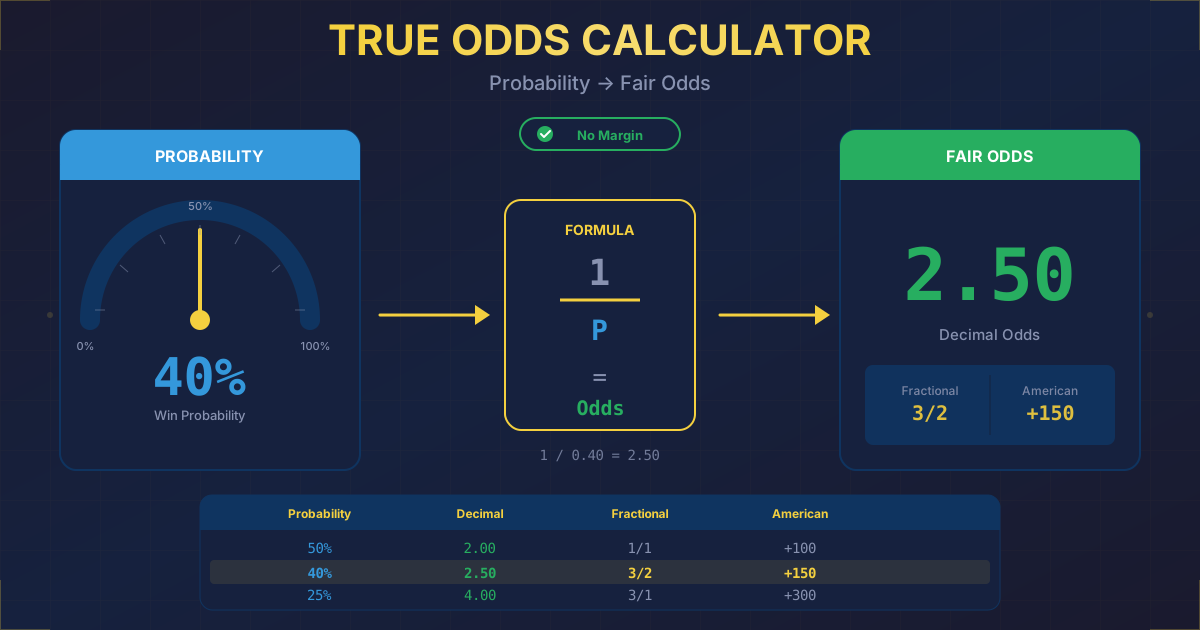
Fair Odds:
BTTS Yes: 1/0.525 = 1.90
BTTS No: 1/0.475 = 2.10
Advanced Calculation Method
More Accurate BTTS Model:

Factor in both teams' attacking AND defensive stats:

P(A scores vs B) = (A attack + B defense) / 2
P(B scores vs A) = (B attack + A defense) / 2

Example:
Team A: 80% scoring rate, 60% clean sheet against
Team B: 65% scoring rate, 45% clean sheet against

P(A scores vs B) = (0.80 + 0.55) / 2 = 0.675
P(B scores vs A) = (0.65 + 0.40) / 2 = 0.525

BTTS Yes = 0.675 × 0.525 = 0.354 (35.4%)

This accounts for defensive strength
more accurately than basic multiplication
Home vs Away Adjustments
Teams perform differently home and away:

League Average Adjustments:
Home teams score: +12% above overall rate
Away teams score: -8% below overall rate
Home teams concede: -10% below overall rate
Away teams concede: +15% above overall rate

Example Application:
Team A (Home): 75% scoring → 84% at home
Team B (Away): 70% scoring → 64% away

Adjusted BTTS = 0.84 × 0.64 = 0.538 (53.8%)

Always use home/away specific stats when available
League-Specific BTTS Rates
Top European Leagues
Historical BTTS Rates (5-year average):

Bundesliga: 53.2% BTTS Yes
Premier League: 51.8% BTTS Yes
La Liga: 48.5% BTTS Yes
Serie A: 47.3% BTTS Yes
Ligue 1: 50.1% BTTS Yes
Eredivisie: 58.4% BTTS Yes

High-scoring leagues favor BTTS Yes
Defensive leagues favor BTTS No
Understanding League Characteristics
High BTTS Leagues:
- Bundesliga: Open, attacking style
- Eredivisie: High goals, weak defenses
- Austrian Bundesliga: Offensive football

Low BTTS Leagues:
- Greek Super League: Defensive tactics
- Turkish Super Lig: Low-scoring matches
- Portuguese Primeira Liga: Tactical games

Always research league-specific trends
before applying general BTTS calculations
Real-World Examples
Example 1: High-Scoring Match Prediction
Situation:
Match: Borussia Dortmund vs RB Leipzig (Bundesliga)
Dortmund Home: Scores 88%, Concedes 71%
Leipzig Away: Scores 76%, Concedes 65%
BTTS Yes Odds: 1.55
Analysis:
BTTS Probability Calculation:

P(Dortmund scores) = Adjusted for Leipzig defense
= (0.88 + 0.35) / 2 = 0.615 (using clean sheet inverse)

Wait, let's use simpler method:
P(Dortmund scores vs Leipzig) ≈ 0.88 × 0.65 = 0.87
P(Leipzig scores vs Dortmund) ≈ 0.76 × 0.71 = 0.85

But these account for both factors, so:
Simple BTTS = 0.88 × 0.76 = 0.669 (66.9%)

Fair odds: 1/0.669 = 1.49

Offered odds: 1.55
Edge: 1.55/1.49 - 1 = +4.0% value
Result:
BTTS Yes at 1.55 offers value
66.9% probability vs 64.5% implied (1/1.55)
Recommend: Bet BTTS Yes

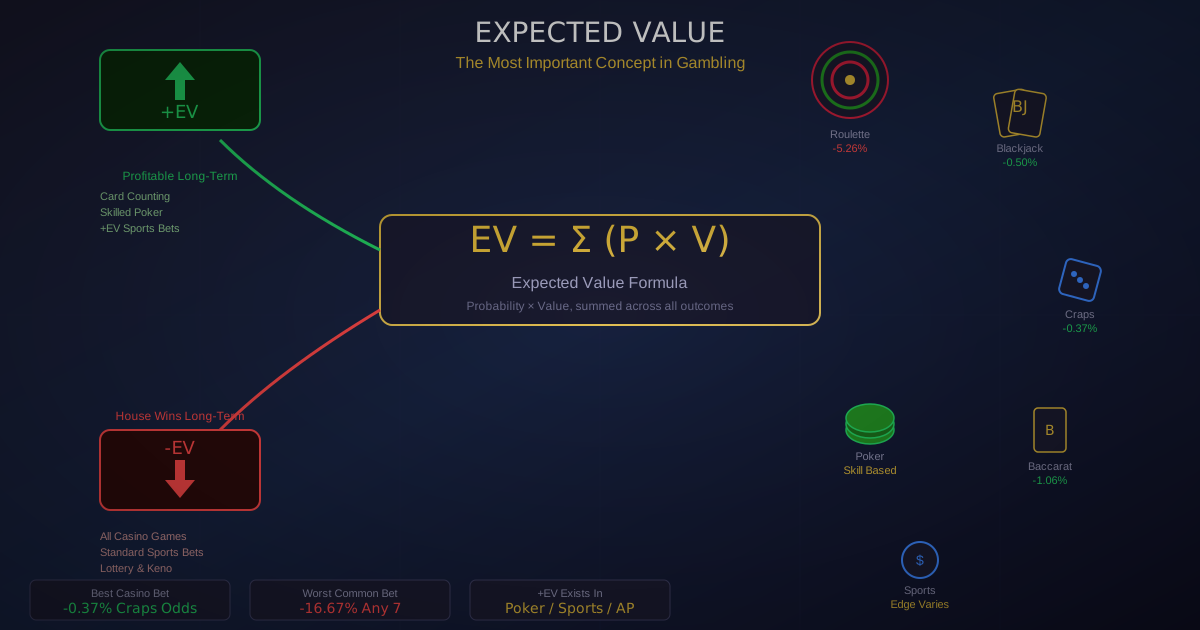
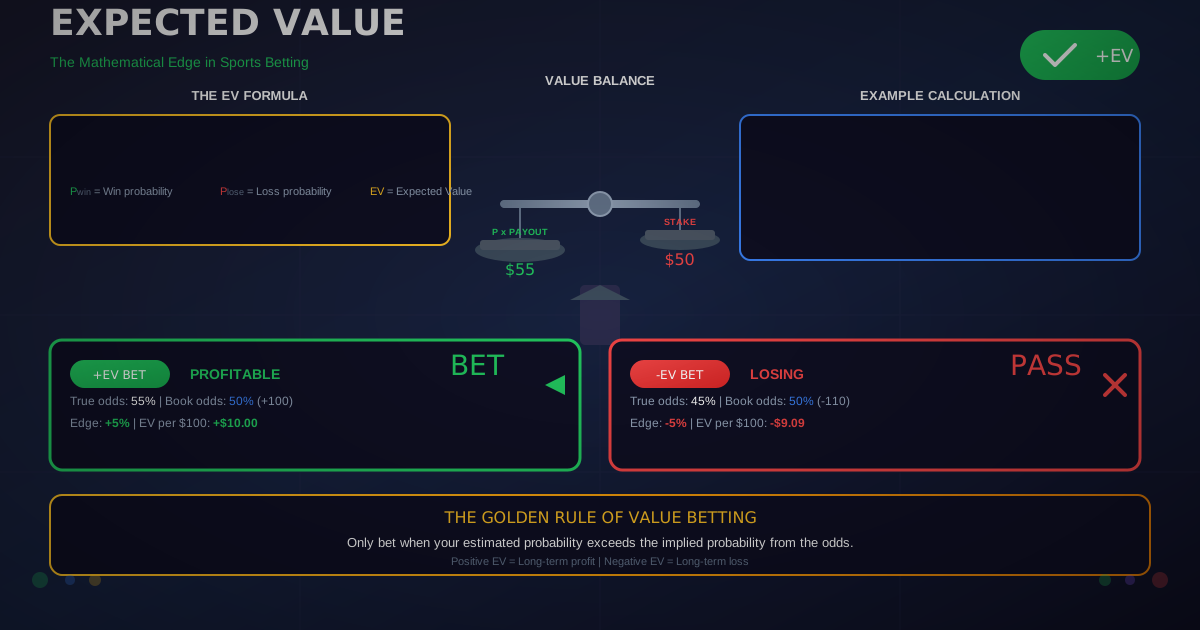
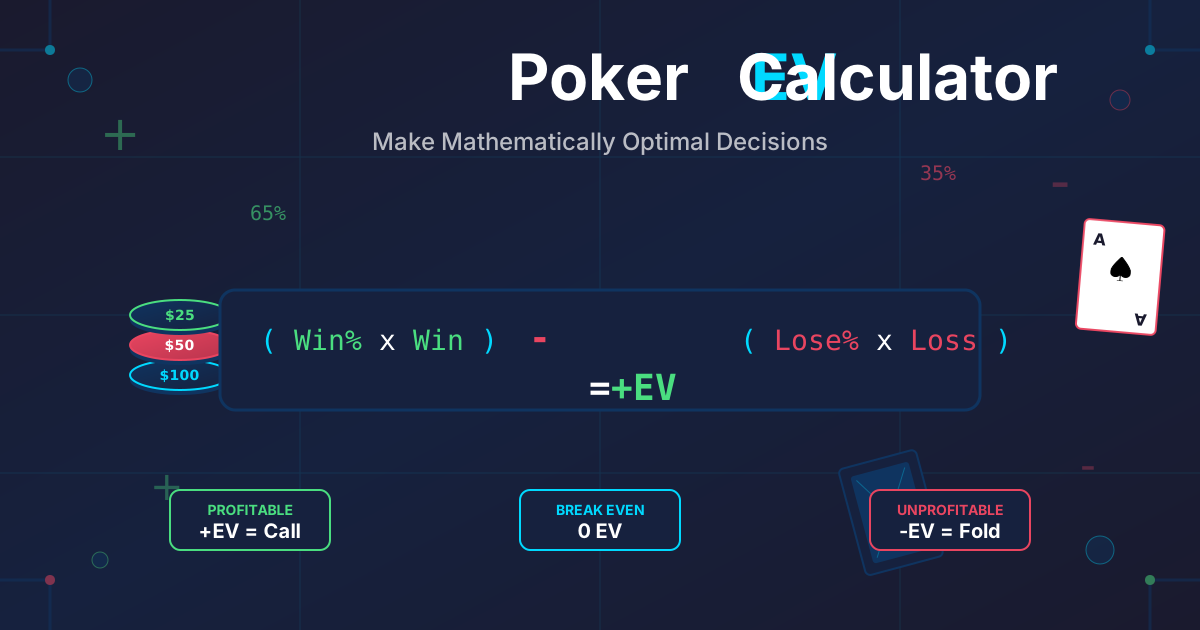
Expected Value:
EV = (0.669 × 0.55) - (0.331 × 1)
EV = 0.368 - 0.331 = +3.7%
Example 2: Defensive Match Analysis
Situation:
Match: Atletico Madrid vs Getafe (La Liga)
Atletico Home: Scores 65%, Concedes 35%
Getafe Away: Scores 42%, Concedes 58%
BTTS No Odds: 1.70
Analysis:
This match has defensive characteristics:

BTTS Calculation:
P(Atletico scores) ≈ 0.65
P(Getafe scores vs Atletico) ≈ 0.42 × 0.35 = 0.147
                          or = (0.42 + 0.35) / 2 = 0.385

Using team scoring rates directly:
BTTS Yes = 0.65 × 0.42 = 0.273 (27.3%)
BTTS No = 72.7%

Fair BTTS No odds: 1/0.727 = 1.38

Offered odds: 1.70
This is MASSIVE value!

Edge: 1.70/1.38 - 1 = +23.2%
Result:
BTTS No at 1.70 is strong value
Atletico's defense + Getafe's poor away scoring
creates ideal BTTS No conditions

Expected Value:
EV = (0.727 × 0.70) - (0.273 × 1)
EV = 0.509 - 0.273 = +23.6%
Example 3: Cup Match Variance
Situation:
Match: FA Cup 4th Round
League Two team vs Premier League team
Lower League Team: Scores 55%, Concedes 60%
Premier League Team: Scores 72%, Concedes 50%
BTTS Yes Odds: 2.10
Analysis:
Cup matches have unique dynamics:

Adjustments for cup football:
- Lower league teams often "park the bus"
- Premier League rotates squad
- Giant-killing mentality affects scoring

Standard calculation:
BTTS Yes = 0.55 × 0.72 = 0.396 (39.6%)

Cup adjustment (lower league defensive):
Lower team scoring reduced by 15%
BTTS Yes adjusted = 0.47 × 0.72 = 0.338 (33.8%)

Fair odds: 1/0.338 = 2.96

Offered: 2.10
BTTS Yes is OVERPRICED by bookmaker
Result:
BTTS No offers value in this cup tie
Lower league team likely to defend deep
One-goal Premier League win common result

Strategy: Consider BTTS No or Under 2.5 Goals
Example 4: Derby Match Analysis
Situation:
Match: Liverpool vs Everton (Merseyside Derby)
Liverpool Home: Scores 82%, Concedes 48%
Everton Away: Scores 52%, Concedes 75%
Historical H2H: BTTS in 6 of last 10 meetings
BTTS Yes Odds: 1.80
Analysis:
Derby matches often defy statistics:

Standard BTTS Calculation:
BTTS Yes = 0.82 × 0.52 = 0.426 (42.6%)

Historical H2H Factor:
BTTS hit rate: 60% in recent meetings

Weighted Average:
(0.426 × 0.6) + (0.60 × 0.4) = 0.496 (49.6%)

Fair odds: 1/0.496 = 2.02

Offered: 1.80
No value in BTTS Yes
Implied probability: 55.6% vs our 49.6%
Result:
BTTS Yes at 1.80 is slightly overpriced
H2H shows 60%, calculation shows 43%
Market seems to overweight derby emotions

Pass on BTTS Yes or small BTTS No consideration
BTTS Combined Markets
BTTS and Result
Popular Combination Bets:

BTTS Yes + Home Win
BTTS Yes + Draw
BTTS Yes + Away Win
BTTS No + Home Win
BTTS No + Draw
BTTS No + Away Win

Calculation Example:
Home Win Probability: 55%
BTTS Yes Probability: 60%
Correlation adjustment: 0.95 (BTTS + home wins often overlap)

Combined Probability: 0.55 × 0.60 × 0.95 = 0.314 (31.4%)
Fair odds: 3.19
BTTS and Over/Under
BTTS Yes typically correlates with:
- Over 2.5 Goals: 75-80% correlation
- Over 1.5 Goals: 95%+ correlation

BTTS No typically correlates with:
- Under 2.5 Goals: 60-70% correlation
- Under 1.5 Goals: Higher correlation

Use correlation to spot value in combined markets
Statistical Factors Affecting BTTS
Team Form Indicators
Key Statistics to Track:

1. Scoring Consistency
   - Goals per game average
   - Games without scoring
   - Scoring streaks

2. Defensive Vulnerability
   - Clean sheet percentage
   - Goals conceded per game
   - Clean sheet streaks

3. First Goal Statistics
   - Team scoring first percentage
   - Recovery rate when conceding first
   - First half goal involvement

4. Playing Style Metrics
   - Expected Goals (xG) for/against
   - Shots on target per game
   - Possession vs direct play
External Factors
Consider These Variables:

Weather Conditions:
- Rain/wet pitch: Fewer goals typically
- Cold weather: Can reduce BTTS likelihood

Team News:
- Key striker missing: Major scoring impact
- Defensive injuries: Increases BTTS chances

Motivation Factors:
- Nothing to play for: Often higher scoring
- Must-win games: Can go either way
- Derby intensity: Unpredictable

Scheduling:
- Midweek fatigue: More defensive errors
- Fixture congestion: Squad rotation effects
Building a BTTS Betting System
Data Collection
Essential Statistics to Track:

Per Team (Home and Away Separately):
- Goals scored per game
- Goals conceded per game
- BTTS hit rate
- Clean sheets
- Failed to score games
- First half goals scored/conceded
- Second half goals scored/conceded

Per League:
- Overall BTTS rate
- Home team BTTS contribution
- Average goals per game
- Clean sheet frequency
Sample Selection Criteria
BTTS Yes Criteria:
✓ Both teams score in 65%+ of games
✓ Both teams concede in 60%+ of games
✓ League BTTS rate above 50%
✓ No major attacking injuries
✓ Fair odds 1.80+ (implied 55% or less)

BTTS No Criteria:
✓ One team fails to score in 40%+ of games
✓ One team keeps clean sheets 35%+ of games
✓ League BTTS rate below 48%
✓ Defensive motivation present
✓ Fair odds 1.80+ (implied 55% or less)
Common Mistakes to Avoid
-
Ignoring Home/Away Splits: Teams perform differently at home versus away. Using overall stats without location adjustment leads to inaccurate probabilities.
-
Overweighting Recent Form: A team's last 3 games don't override 30-game sample sizes. Use sufficient data while noting recent trends.
-
Neglecting Head-to-Head History: Some matchups consistently produce BTTS or clean sheets regardless of current form. Always check H2H records.
-
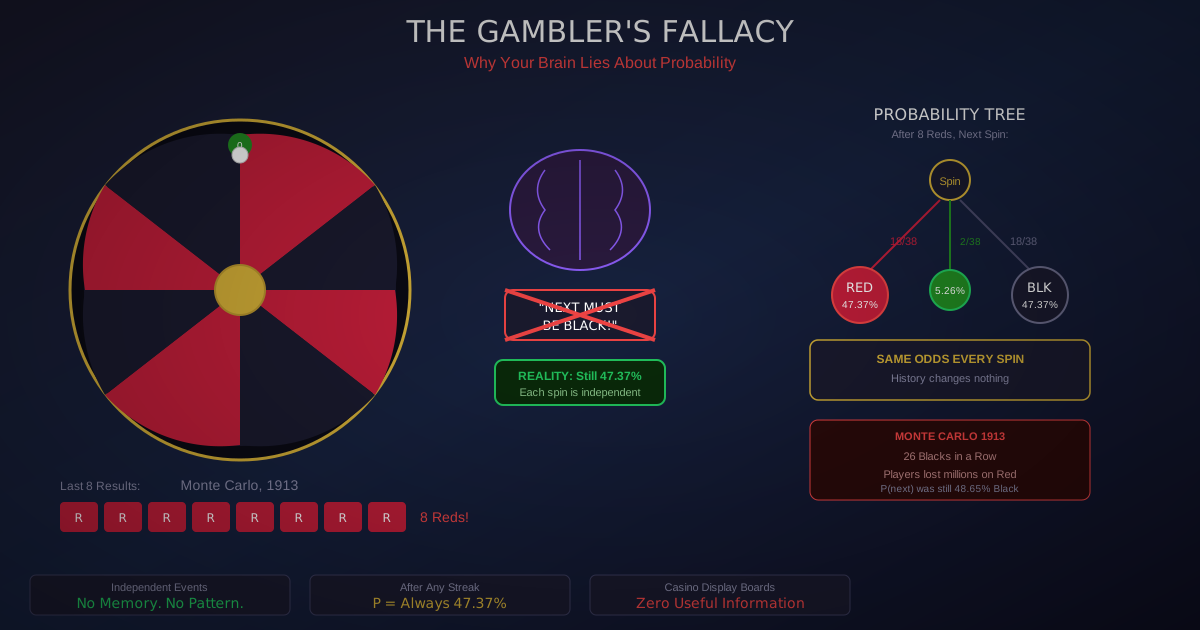
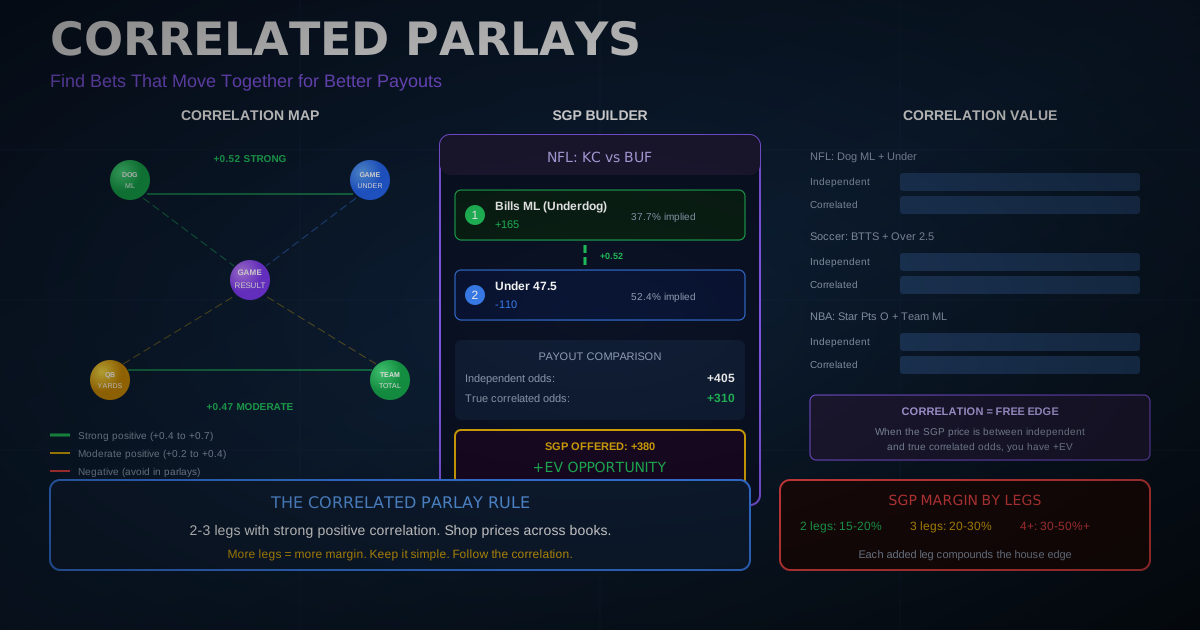
Assuming Independence: Team A scoring and Team B scoring aren't fully independent events. Game state affects both teams' behavior.
-
Chasing Short Odds: BTTS Yes at 1.40 requires 71% hit rate to break even. These short prices rarely offer long-term value.
-
Ignoring Line Movement: Significant odds movement often signals team news or sharp action. Investigate before betting.
Frequently Asked Questions
Does extra time count for BTTS bets?
No, BTTS bets settle on 90-minute results only (plus injury time). Goals scored in extra time of cup matches do not count for standard BTTS wagers.
What happens if a match is abandoned?
Most bookmakers void BTTS bets if a match is abandoned before 90 minutes, unless both teams have already scored, in which case BTTS Yes may stand.
Is BTTS better than match result betting?
BTTS removes the draw as a separate outcome and doesn't require picking a winner. This can be easier to predict but offers different value propositions. Neither is universally "better."
How do I find value in BTTS markets?
Calculate your own BTTS probability using team statistics, convert to fair odds, and compare against bookmaker prices. Bet when your calculated odds are significantly higher than offered.
Should I bet BTTS in-play?
In-play BTTS can offer value, especially BTTS Yes after one team scores early. The odds adjust quickly, so you need to act fast when opportunities arise.
What sample size is needed for reliable BTTS predictions?
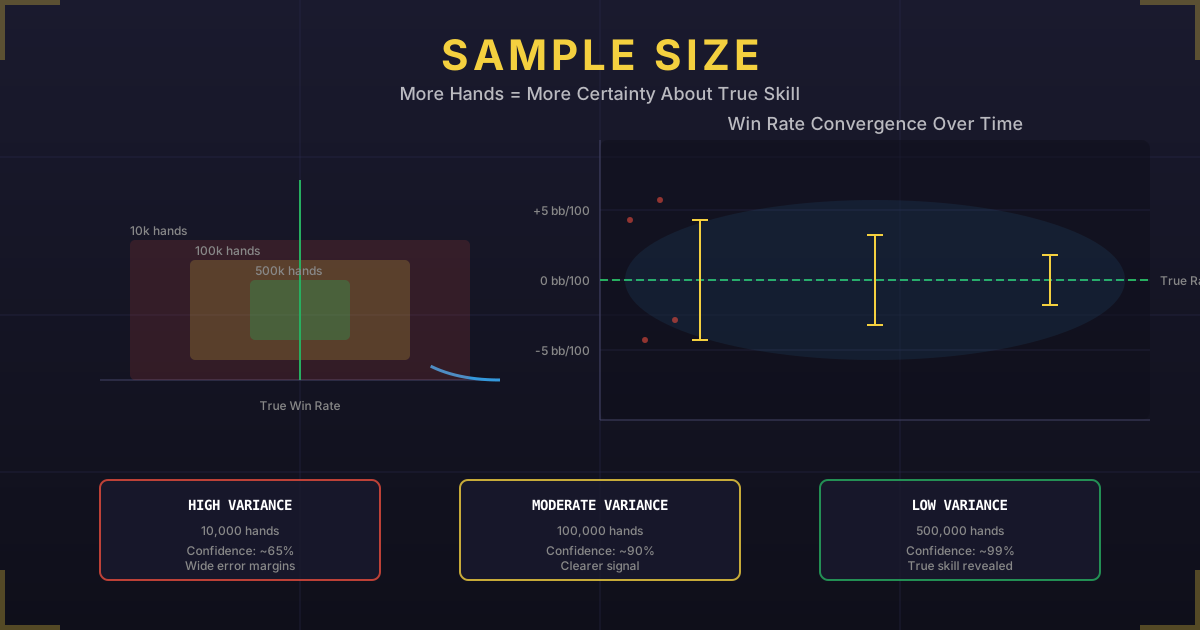
Minimum 15-20 games per team for reasonable confidence. League-wide trends should use full season data minimum. More data generally improves accuracy.
Pro Tips
- Focus on leagues you know well - understanding playing styles helps predict BTTS outcomes beyond raw statistics
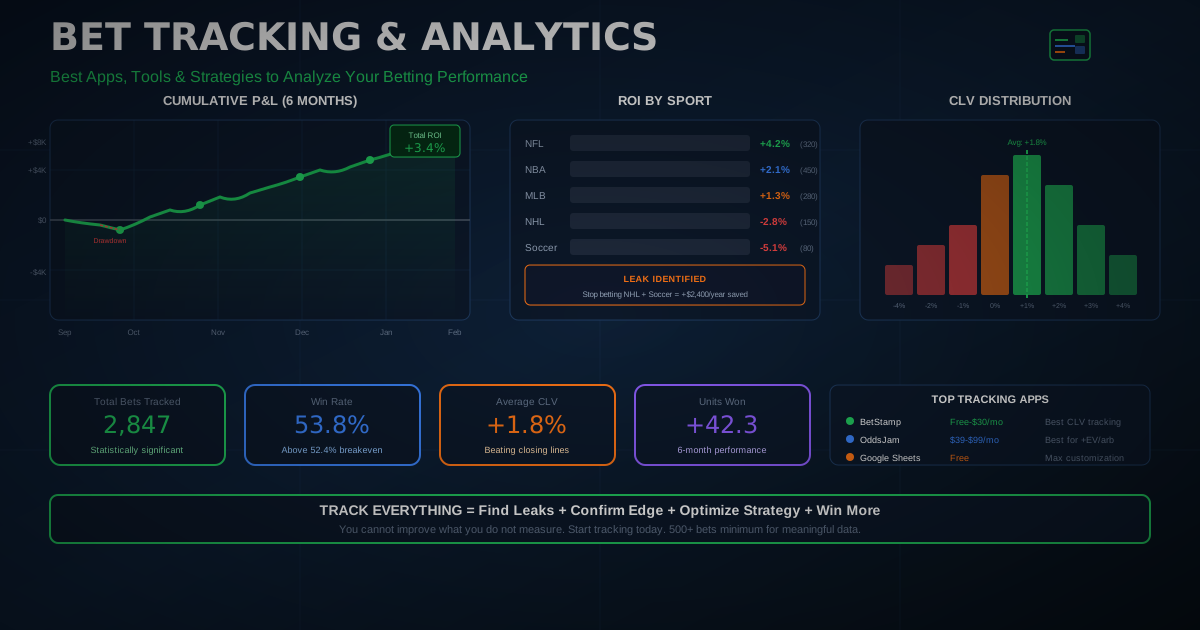
- Track your BTTS bets separately from other markets to identify if it's profitable for your approach
- Consider BTTS No in matches with clear quality gaps where the better team controls possession
- Use expected goals (xG) data as a complement to actual goals - it reveals underlying scoring potential
- Build a database of team-specific BTTS rates and update weekly for the most accurate predictions
Related Calculators
- Over/Under Goals Calculator - Related market analysis
- Soccer Betting Calculator - General soccer tools
- Expected Value Calculator - Find profitable bets
- Correct Score Calculator - Predict exact results
- Accumulator Calculator - Combine BTTS selections
Conclusion
Both Teams to Score betting offers a unique way to engage with soccer matches without picking winners. Success in this market comes from understanding team-specific scoring and defensive patterns, adjusting for home/away factors, and finding odds that exceed your calculated probabilities.
Our BTTS calculator simplifies the mathematical analysis, letting you focus on the research that identifies genuine value. Remember that sustainable BTTS betting requires discipline, proper bankroll management, and patience to let your edge play out over hundreds of bets.