NASCAR Betting Strategy: How to Handicap Races and Find Value (2026)
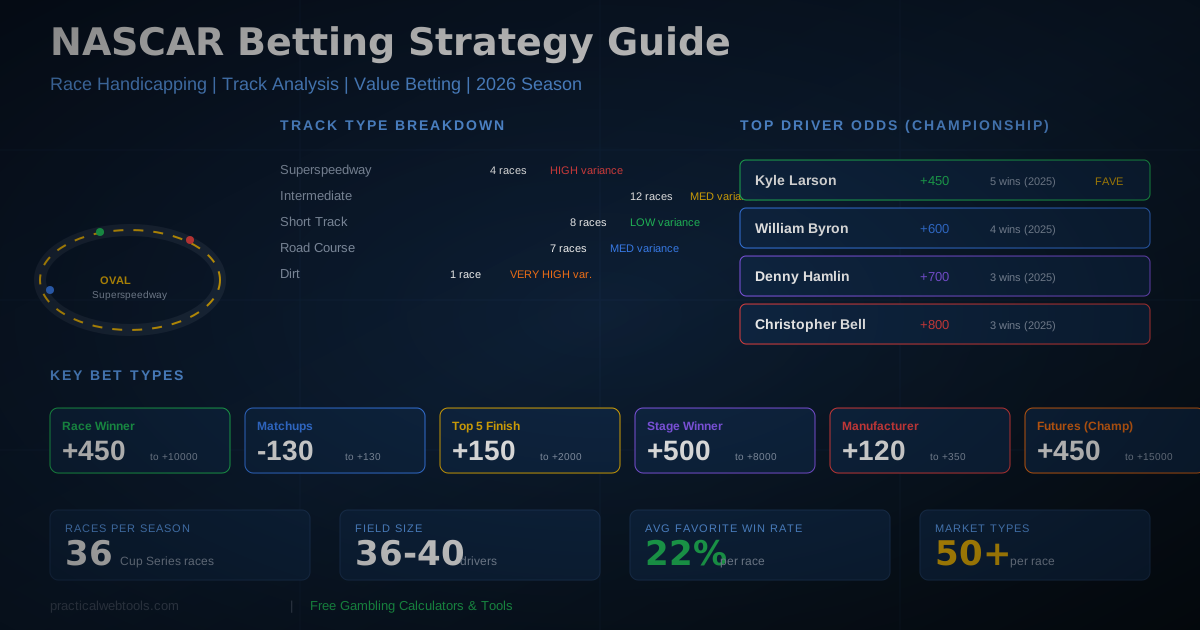
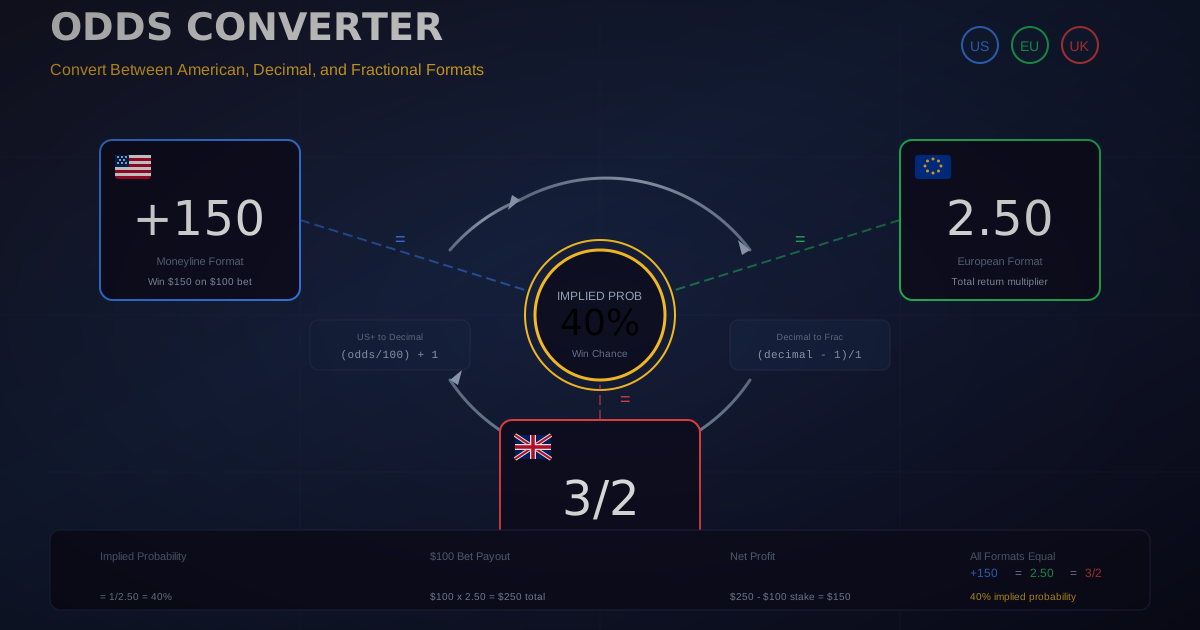
NASCAR generates over $1.5 billion in annual betting handle across US sportsbooks, yet it remains one of the most inefficient major sports betting markets because casual bettors consistently overvalue name recognition and undervalue track-specific performance data. The 2026 NASCAR Cup Series features 36 races across superspeedways, intermediate tracks, short tracks, road courses, and even a dirt race, each presenting distinct handicapping challenges and value opportunities. This guide walks you through every bet type, every track category, and every statistical metric you need to handicap NASCAR races profitably. Convert NASCAR odds between formats instantly with our Odds Converter
What Are the Main Types of NASCAR Bets?
The main types of NASCAR bets include race winner (outright), head-to-head driver matchups, top-5 and top-10 finish props, stage winners, manufacturer winner, qualifying position props, and season-long championship futures. Race winner bets offer the highest payouts due to the large field size (36-40 drivers), while matchup bets are the most popular among sharp bettors because they simplify the handicapping problem to a two-driver comparison.
Race Winner (Outright) Bets
Race winner bets require you to pick which driver will win the race. With 36-40 cars in the field, even the favorite typically has odds of +400 to +800, and favorites win only about 20-25% of the time. This makes outright winner bets inherently high-variance but also high-reward. The key is identifying drivers whose probability of winning exceeds the implied probability of their posted odds.
| Bet Type | Typical Odds Range | Win Frequency (Favorite) | Skill Factor | Recommended For |
|---|---|---|---|---|
| Race Winner | +400 to +10000 | 20-25% | High | All bettors |
| Head-to-Head Matchup | -150 to +150 | ~50% per side | Very High | Sharp bettors |
| Top 5 Finish | +100 to +2000 | 35-40% (favorite) | High | Conservative bettors |
| Top 10 Finish | -200 to +500 | 55-65% (favorite) | Medium-High | Conservative bettors |
| Stage Winner | +400 to +8000 | 15-20% (favorite) | High | Value seekers |
| Championship Futures | +450 to +15000 | Varies by driver | Medium | Long-term bettors |
Head-to-Head Matchup Bets
Matchup bets pit two drivers against each other, and you simply pick which one finishes higher in the race. If both drivers fail to finish (DNF), the tiebreaker is typically determined by which driver completed more laps. Matchup bets are the bread-and-butter of professional NASCAR bettors because they eliminate the noise of predicting an outright winner from a massive field.
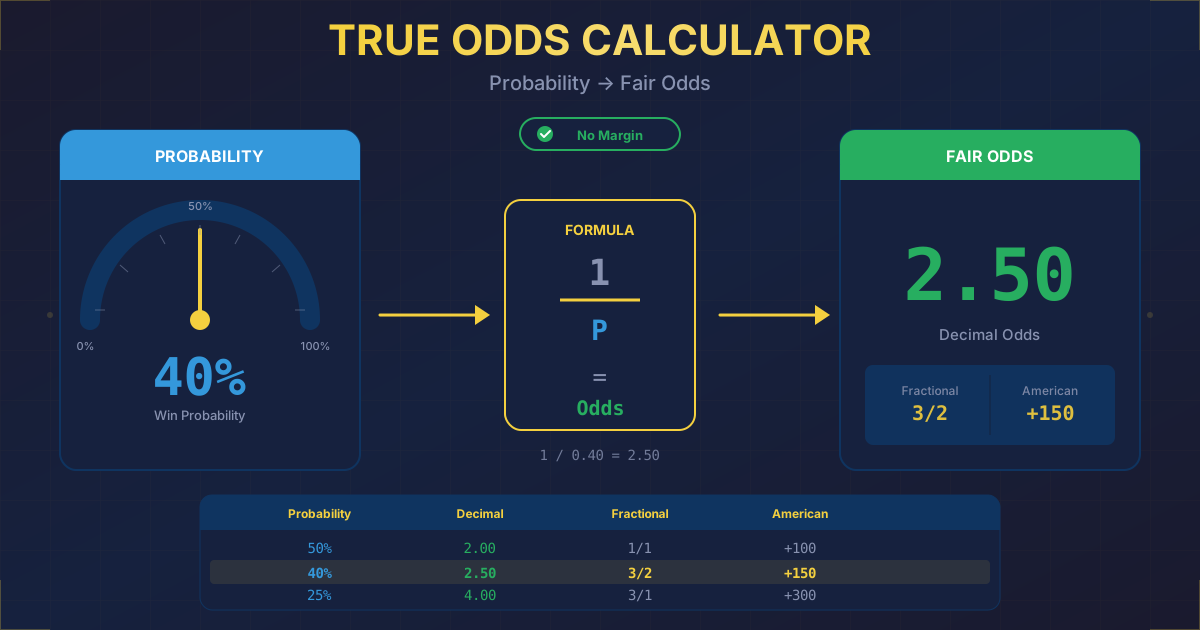
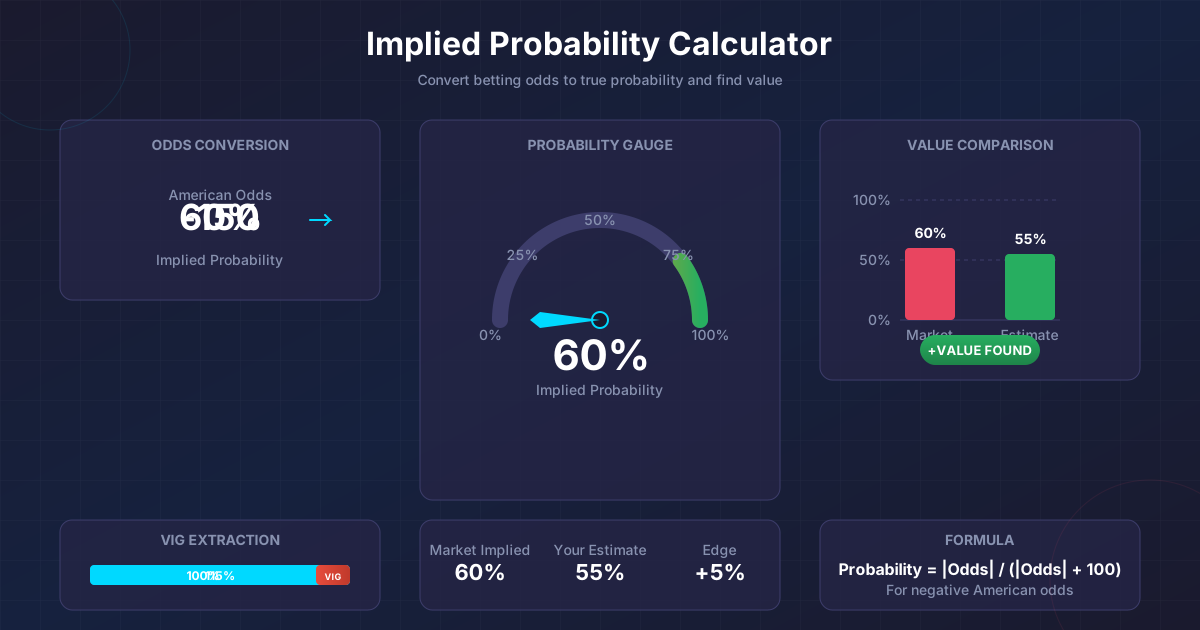
Use our Implied Probability Calculator to convert matchup odds into win probabilities and compare them against your handicapping models.
Top-5 and Top-10 Finish Props
Top-5 and top-10 finish props are excellent for bettors who believe a driver will run well but are not confident enough to pick them as the outright winner. These markets are particularly useful at superspeedways where almost any driver in the field can contend for a top finish due to the drafting-dependent nature of the racing.
Stage Winner Bets
NASCAR races are divided into three stages, with the first two stages awarding points and the final stage determining the race winner. Stage winner bets allow you to wager on which driver will lead at the end of each stage. Qualifying position and early-race speed are more predictive for Stage 1 winners, while pit strategy and long-run speed become more important for Stage 2 and Stage 3.
Use our Expected Value Calculator to determine whether a stage winner bet offers positive expected value based on practice and qualifying data.
How Does Track Type Affect NASCAR Betting?
Track type is the single most important variable in NASCAR handicapping because a driver's performance varies dramatically between superspeedways, intermediate tracks, short tracks, and road courses, and any winning betting strategy must account for these differences. A driver who dominates 1.5-mile intermediate tracks may struggle on short tracks and be average on road courses.
Superspeedway Strategy (Daytona and Talladega)
Superspeedway races at Daytona International Speedway and Talladega Superspeedway are the most unpredictable events on the schedule. Drafting packs keep the entire field bunched together, and multi-car crashes (the "Big One") can eliminate top contenders at any point. The favorite's win rate at superspeedways is only about 8-12%, making these races extremely volatile for outright bets.
| Track Type | Tracks | Favorite Win Rate | Field Parity | Best Bet Type | Value Rating |
|---|---|---|---|---|---|
| Superspeedway | Daytona, Talladega | 8-12% | Very High | Top 10 / Matchups | Underdog Focused |
| Intermediate (1.5 mi) | Charlotte, Atlanta, Kansas, etc. | 25-30% | Medium | Race Winner / Matchups | Favorite Focused |
| Short Track (< 1 mi) | Bristol, Martinsville, Richmond | 22-28% | Medium-Low | Race Winner / Matchups | Balanced |
| Road Course | COTA, Watkins Glen, Sonoma, etc. | 20-25% | Medium | Race Winner / Matchups | Specialist Focused |
| Dirt | Bristol Dirt | 5-10% | Very High | Top 10 / Props | Underdog Focused |
Intermediate Track Handicapping
Intermediate tracks (1.5 miles) make up the largest portion of the NASCAR schedule and are where the best teams and drivers most consistently demonstrate their superiority. Car setup, aerodynamic balance, and long-run speed are the primary differentiators. Drivers with strong intermediate track records, particularly at Hendrick Motorsports and Joe Gibbs Racing, deserve respect in these races.
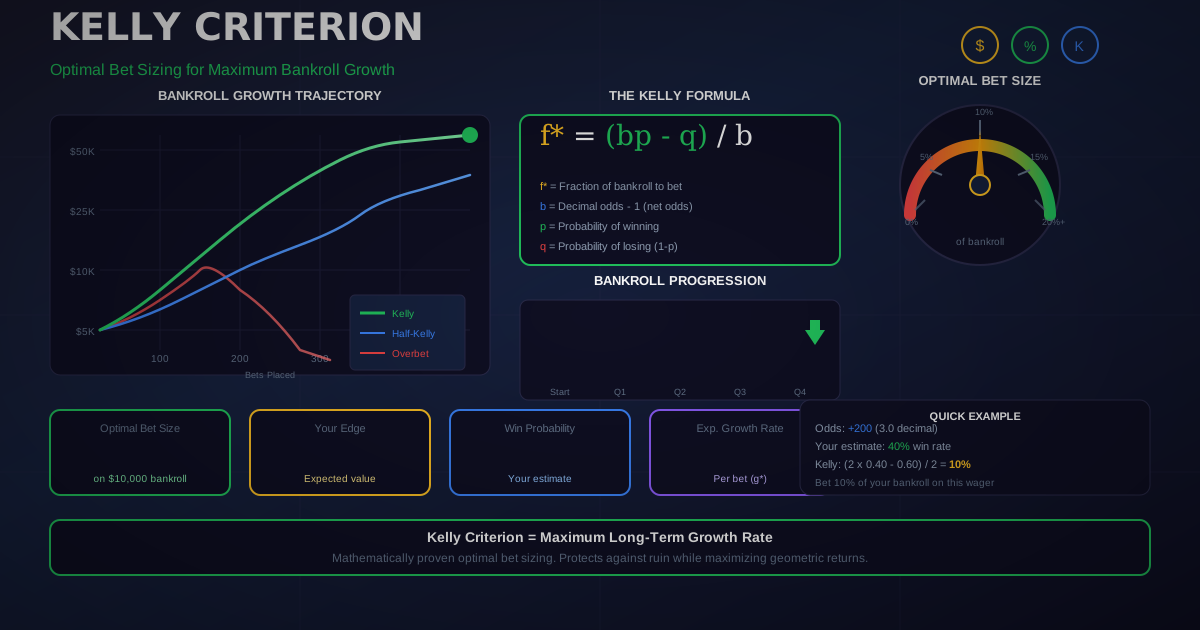
Use our Kelly Criterion Calculator to size your intermediate track bets optimally based on your assessed edge.
Short Track Value
Short tracks (under 1 mile) reward driver skill more than car speed, making them fertile ground for veteran drivers who excel at managing tire wear, reading traffic, and executing late-race restarts. Bristol Motor Speedway, Martinsville Speedway, and Richmond Raceway each have unique characteristics that favor specific driving styles.
Road Course Specialists
Road course racing has expanded significantly in the NASCAR Cup Series schedule. Drivers with sports car or open-wheel backgrounds (such as road course ringers or full-time drivers who dabble in IMSA) tend to outperform their oval-track results on road courses. Identifying road course specialists whose odds do not fully reflect their right-turn advantage is a consistent value play.
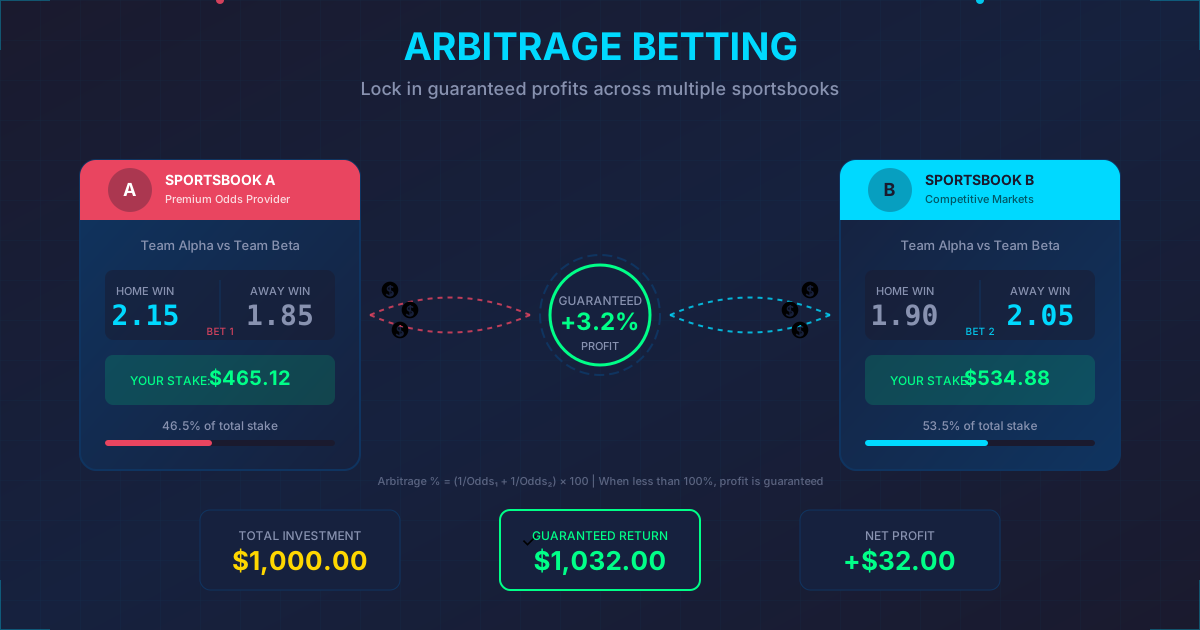
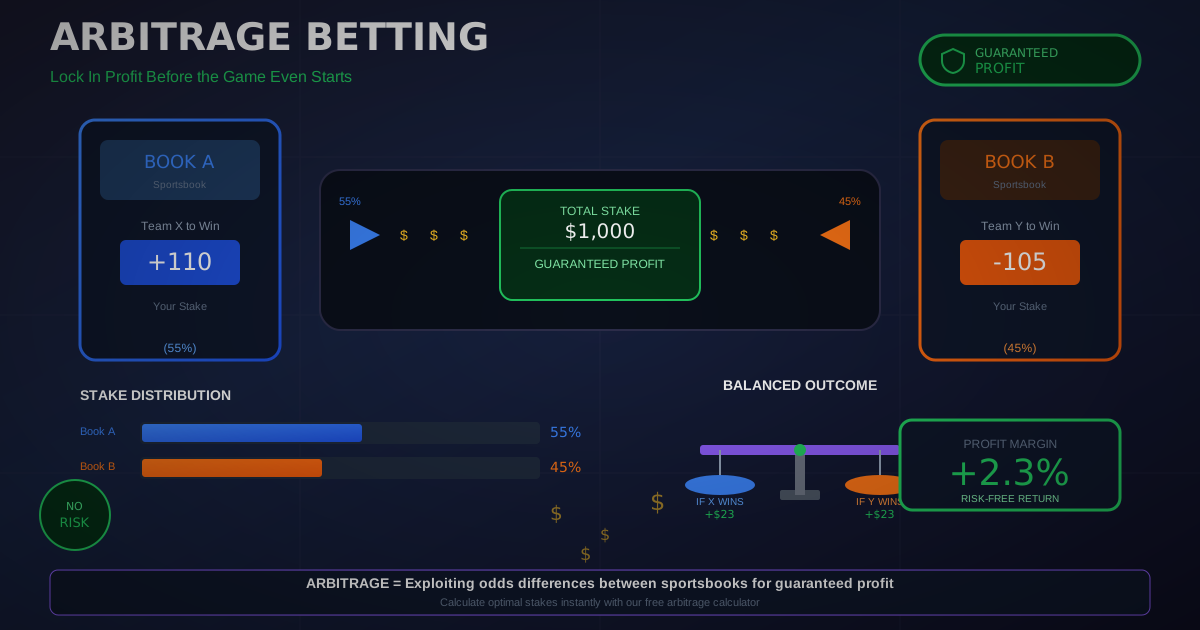
Use our Arbitrage Calculator to find pricing discrepancies between sportsbooks on road course specialist drivers.
What Statistics Matter Most for NASCAR Handicapping?
The most predictive statistics for NASCAR handicapping are average running position, driver rating, green flag speed (practice and race), laps led percentage, and track-specific finishing average. Casual bettors overweight wins and underweight consistency metrics, creating value opportunities for bettors who dig deeper into the data.
Average Running Position (ARP)
Average running position measures where a driver typically runs throughout a race, not just where they finish. A driver with an ARP of 5.2 at a specific track consistently runs near the front, even if they have not won there recently. ARP is one of the most predictive metrics for matchup bets and top-5/top-10 finish props.
| Metric | What It Measures | Predictive Value | Best Used For | Data Source |
|---|---|---|---|---|
| Average Running Position | Typical position throughout race | Very High | Matchups, Top 5/10 | Loop data |
| Driver Rating | Composite of performance factors | High | Race winner, Matchups | NASCAR stats |
| Green Flag Speed | Raw speed in clean-air conditions | High | Stage winners, Outrights | Practice data |
| Laps Led % | Percentage of race spent in front | Medium-High | Race winner, Stage winner | Historical |
| Track-Specific Avg Finish | Average finish at a particular track | High | All bet types | Historical |
| Qualifying Position | Starting grid position | Medium | Stage 1 winner, Top 10 | Qualifying |
Practice Speed Analysis
Practice sessions provide valuable data for handicapping, though their predictive power varies by track type. At intermediate tracks, long-run practice speed (the speed a car maintains after 10-15 laps on a tire set) is more predictive than single-lap speed. At short tracks, traffic navigation and restart speed matter more than raw pace.
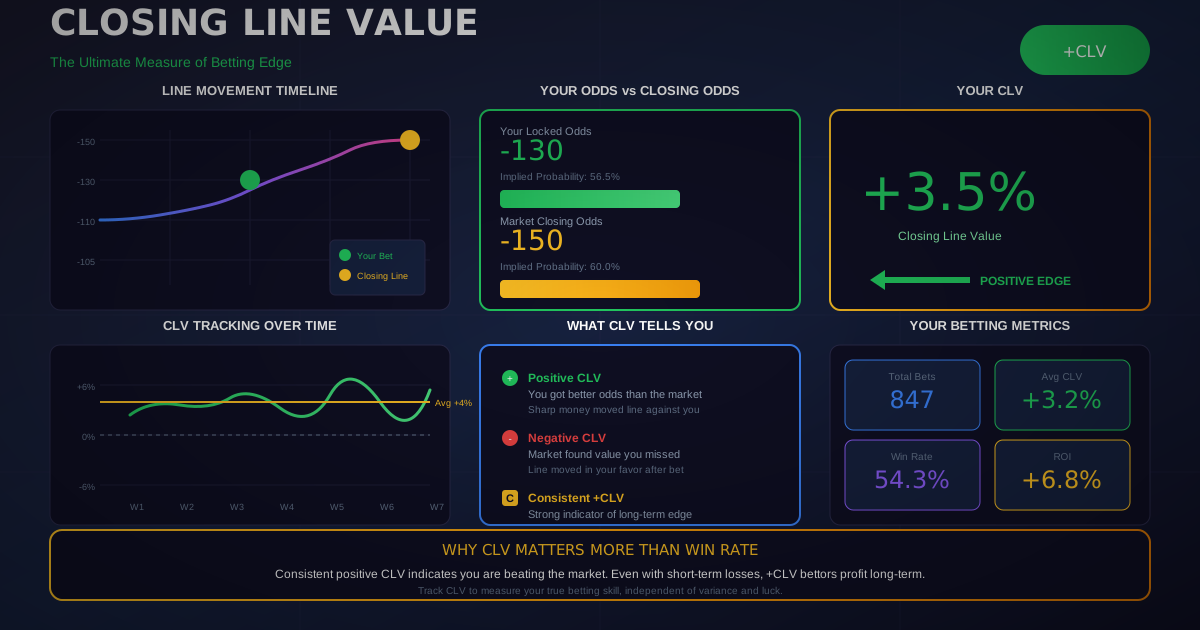
Use our Closing Line Value Tracker to measure whether your practice-speed-based bets consistently beat closing lines.
Pit Crew Performance
Pit stops win and lose NASCAR races. The difference between a top pit crew (11.5-second stops) and a mediocre crew (13.0+ seconds) is 1.5 seconds per stop, compounding over 4-8 pit stops in a race. Teams like Hendrick Motorsports and Joe Gibbs Racing consistently invest in pit crew development and tend to gain positions during pit sequences.
Recent Form vs. Track History
A common debate in NASCAR handicapping is whether to weight recent form (how a driver has performed in the last 3-5 races) or track history (how a driver has performed at a specific track over the past 3-5 years) more heavily. The answer depends on the track type. At unique tracks like Martinsville or Bristol, track-specific history is king. At cookie-cutter intermediate tracks, recent form across the intermediate schedule is more predictive.
Use our Expected Value Calculator to model different weighting schemes and see which produces higher expected value on historical results.
How Do Weather and Race Conditions Affect NASCAR Odds?
Weather and race conditions have an outsized impact on NASCAR outcomes compared to most sports, with rain, temperature, wind, and even time of day affecting tire wear, engine temperatures, aerodynamic grip, and overall car behavior in ways that create sharp betting edges for prepared handicappers. A 15-degree temperature swing between practice and race day can render practice data nearly useless for certain track types.
Temperature Impact on Tire Performance
Ambient and track surface temperatures directly affect tire grip and degradation rates. Higher temperatures cause tires to wear faster, increasing the advantage for drivers and teams that excel at managing tire wear over long runs. Lower temperatures produce more grip but can make cars overly tight (understeering), favoring drivers who prefer a loose (oversteering) setup.
| Condition | Impact on Racing | Betting Adjustment | Most Affected Track Types |
|---|---|---|---|
| High Temp (>90 F) | Faster tire wear, spread-out field | Favor tire-management drivers | Intermediate, Short Track |
| Low Temp (<60 F) | More grip, tighter cars | Favor aggressive drivers | Intermediate, Short Track |
| Rain (Road Course) | Slick conditions, rain tires | Favor road course specialists | Road Course only |
| Rain (Oval) | Race postponed or red-flagged | Monitor for schedule changes | Ovals (no rain racing) |
| High Wind | Affects aerodynamic balance | Favor drivers strong in dirty air | Superspeedway, Intermediate |
| Night Race | Cooler track, different grip | Changes long-run dynamics | Charlotte, Bristol, Daytona |
Rain and Its Impact
Rain handles differently on ovals versus road courses. Oval races are stopped during rain because the high speeds and banked turns make wet racing too dangerous. Road course races, however, continue in rain with wet-weather tires. Rain at a road course dramatically reshuffles the odds because wet-weather driving is a distinct skill. Drivers with road racing backgrounds often excel in the rain.
Use our Odds Converter to quickly compare rain-adjusted odds across different sportsbooks.
Night Race Dynamics
Several marquee NASCAR races take place under the lights, including the Coca-Cola 600 at Charlotte, the Bristol Night Race, and the Daytona summer race. Night races see cooler track temperatures in the second half, which changes the tire degradation curve. Teams that build their setups for late-race conditions rather than early-race conditions tend to perform better as night falls.
Caution Flags and Restarts
The frequency of caution flags (yellow flags) affects race outcomes dramatically. Races with more cautions bunch the field together, giving faster cars on short runs an advantage. Races with fewer cautions reward long-run speed and fuel strategy. The average Cup Series race has 6-10 caution periods, but this varies widely by track type (superspeedways average 8-12, road courses average 4-7).
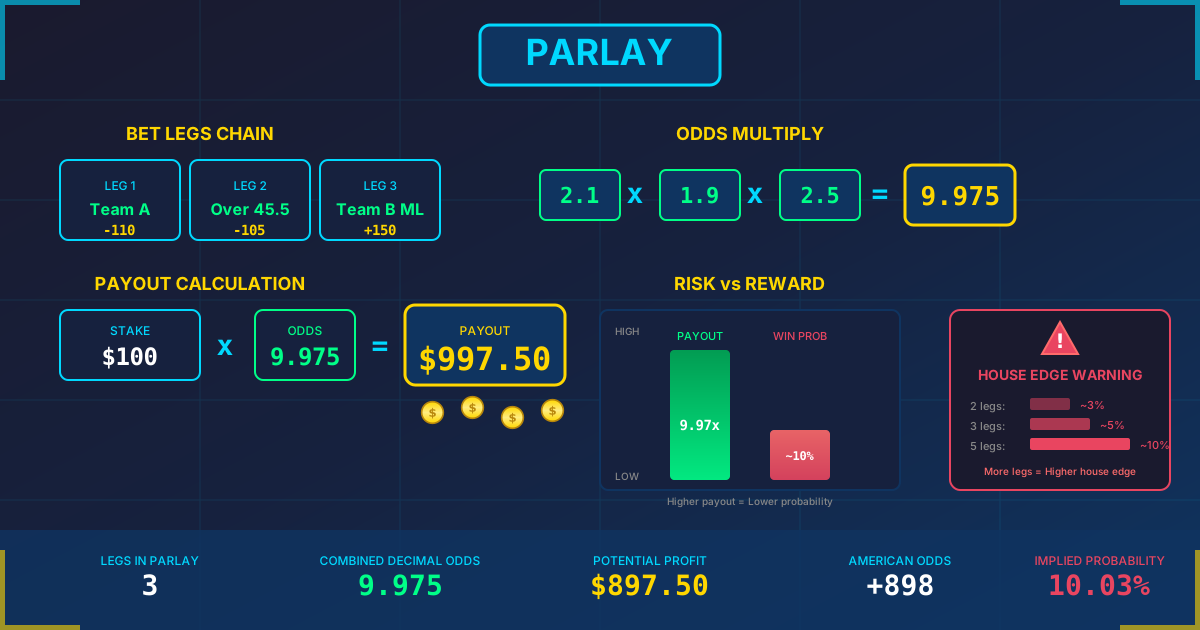
Use our Parlay Calculator to build multi-race parlays across a NASCAR weekend (Xfinity Saturday + Cup Sunday).
What Is the Best Way to Bet on the Daytona 500?
The best way to bet on the Daytona 500 is to spread your action across multiple bet types rather than concentrating on a single outright pick, because the race's superspeedway format produces the highest variance of any NASCAR event, with favorites winning only about 10% of the time and 20+ different drivers having a legitimate shot at victory. Matchup bets, top-10 finish props, and manufacturer bets offer better expected value than outright winner bets at Daytona.
Historical Daytona 500 Odds Analysis
The Daytona 500 is NASCAR's most-bet race, which means sportsbook margins tend to be tighter than for regular-season events. However, public money disproportionately backs popular drivers, creating value on lesser-known competitors who have demonstrated superspeedway prowess.
| Year | Winner | Pre-Race Odds | Finishing Margin | Caution Laps | Big One? |
|---|---|---|---|---|---|
| 2025 | (Recent winner) | +1200 | 0.1 sec | 32 laps | Yes |
| 2024 | William Byron | +1400 | Photo finish | 28 laps | Yes |
| 2023 | Ricky Stenhouse Jr. | +4000 | Overtime | 35 laps | Yes |
| 2022 | Austin Cindric | +5000 | 0.036 sec | 30 laps | Yes |
| 2021 | Michael McDowell | +10000 | Last-lap crash | 36 laps | Yes |
Superspeedway-Specific Skills
Success at Daytona requires specific skills that differ from the rest of the schedule: drafting ability (positioning your car in the aerodynamic wake of other cars), bump-drafting skill (pushing the car ahead to gain speed), and patience to avoid the multi-car pileups that claim half the field. Teams that invest in superspeedway-specific aerodynamic development (particularly Ford teams in recent years) tend to perform above expectations.
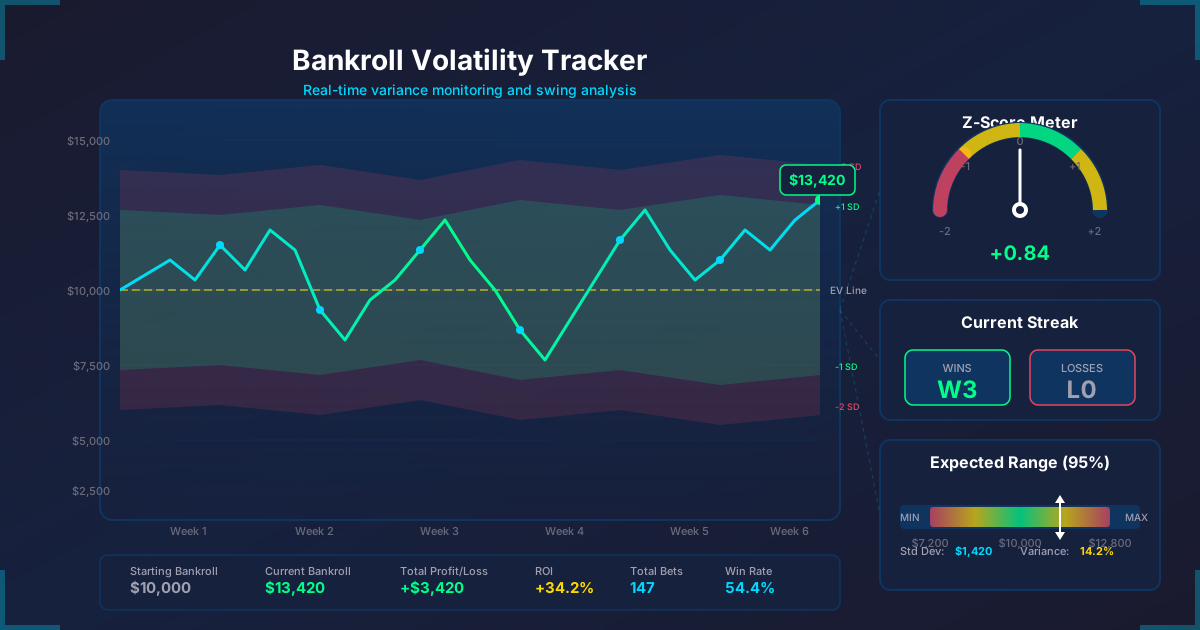
Use our Bankroll Volatility Tracker to set appropriate stake sizes for high-variance superspeedway bets.
Manufacturer Betting at Daytona
Manufacturer bets (Chevrolet vs. Ford vs. Toyota) are underutilized at superspeedways. When one manufacturer develops a significant aerodynamic advantage, their cars tend to cluster together in the draft, amplifying the advantage. Recent seasons have seen Ford and Toyota take turns dominating the superspeedway aerodynamic battle.
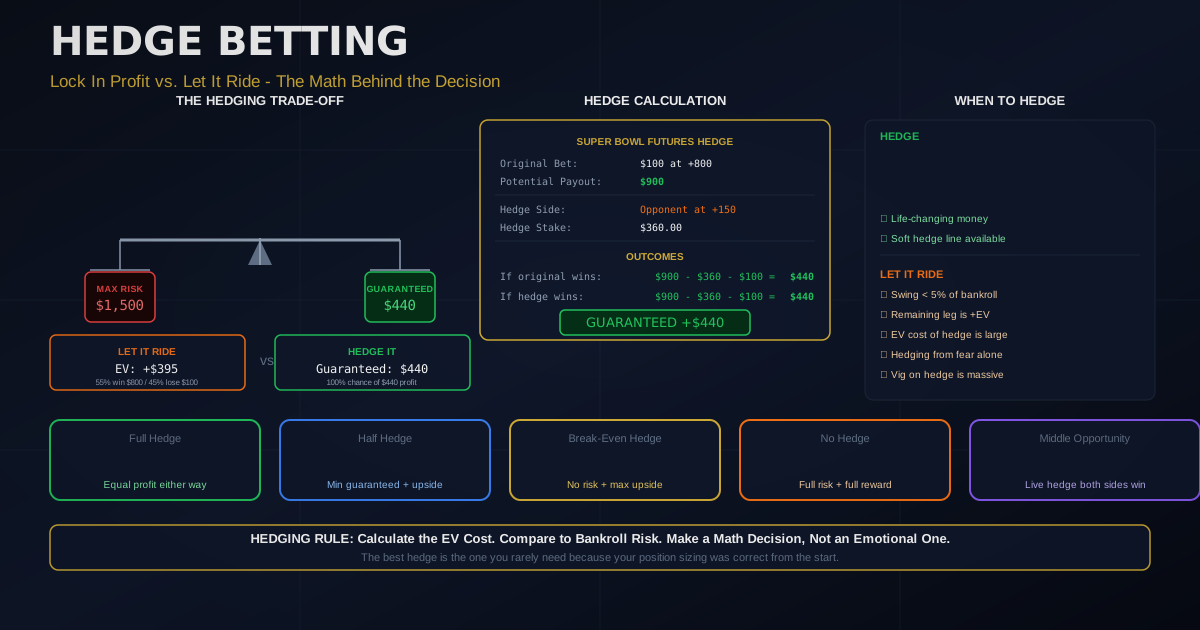
Use our Hedge Calculator to protect a Daytona 500 futures bet if your driver is leading with 50 laps to go.
How Do NASCAR Playoff Bets Work?
NASCAR's playoff system consists of a 10-race elimination tournament that culminates in a four-driver Championship Race at Phoenix Raceway, creating unique betting opportunities at each elimination stage because the stakes escalate dramatically and drivers' strategies shift from points racing to win-or-go-home aggressiveness. Championship futures odds fluctuate wildly throughout the playoffs, offering sharp bettors numerous entry and exit points.
Playoff Structure and Betting Implications
The NASCAR playoffs begin with 16 drivers and eliminate four after every three-race round. By the Championship Race, only four drivers compete for the title, with the highest finisher among the four crowned champion. This structure means that a driver can dominate the regular season but lose the championship due to a single bad race in the playoffs.
| Playoff Round | Races | Drivers Remaining | Elimination Count | Betting Dynamic |
|---|---|---|---|---|
| Round of 16 | 3 races | 16 | 4 eliminated | Points accumulation matters |
| Round of 12 | 3 races | 12 | 4 eliminated | Must-win desperation begins |
| Round of 8 | 3 races | 8 | 4 eliminated | Aggressive strategy increases |
| Championship 4 | 1 race (Phoenix) | 4 | 3 eliminated | Winner-take-all |
When to Buy and Sell Futures
The optimal time to buy NASCAR championship futures is during the regular season when a driver hits a rough patch of 2-3 poor finishes. Their odds lengthen disproportionately because public bettors overreact to small-sample results. Conversely, the optimal time to sell (hedge) is after your driver clinches a playoff spot on points and momentum is high.
Use our Hedge Calculator to calculate exact hedge amounts at each playoff elimination stage.
Championship Race Handicapping
The Championship Race at Phoenix Raceway is a standalone event where only the finishing order among the four championship drivers matters for the title. However, all 36+ drivers are racing, which means traffic management and pit strategy against non-championship drivers play a role. Historical Championship Race data shows that the driver who leads the most laps among the four finalists wins the title approximately 60% of the time.
Use our Kelly Criterion Calculator to optimize your Championship Race bet sizing when you have strong conviction on one of the four finalists.
What Are the Best NASCAR Prop Bets?
The best NASCAR prop bets include qualifying position over/under, number of lead changes, caution flag count, margin of victory, driver to lead the most laps, and whether a specific driver will finish on the lead lap. Props are where sportsbooks are most vulnerable because they cannot devote the same modeling resources to dozens of prop lines as they do to the main race winner market.
Qualifying Props
Qualifying position props (e.g., Kyle Larson to qualify Top 5 at -150, or Top 10 at -300) are among the most beatable NASCAR markets because qualifying performance is highly predictable. Single-car qualifying on intermediate tracks is almost entirely dependent on raw car speed, and practice speeds correlate strongly with qualifying results.
| Prop Bet Type | Typical Odds | Edge Potential | Key Data Inputs | Frequency Available |
|---|---|---|---|---|
| Qualifying Position O/U | -200 to +200 | High | Practice speed, track history | Every race |
| Lead Changes O/U | -110 to +110 | Medium | Track type, recent trends | Every race |
| Caution Flag Count O/U | -110 to +110 | Medium-Low | Track type, weather | Every race |
| Margin of Victory O/U | -110 to +110 | Medium | Track type, field strength | Every race |
| Driver to Lead Most Laps | +200 to +2000 | High | Practice speed, track history | Most races |
| Finish on Lead Lap | -300 to +250 | Medium | Recent form, team strength | Every race |
Caution Flag Over/Under
Caution flag count over/unders are influenced by track type, weather conditions, and recent caution trends. Short tracks tend to produce more cautions due to close-quarters racing, while road courses produce fewer. A sharp bettor monitors caution trends across the season and identifies when sportsbooks set their lines based on averages rather than current conditions.
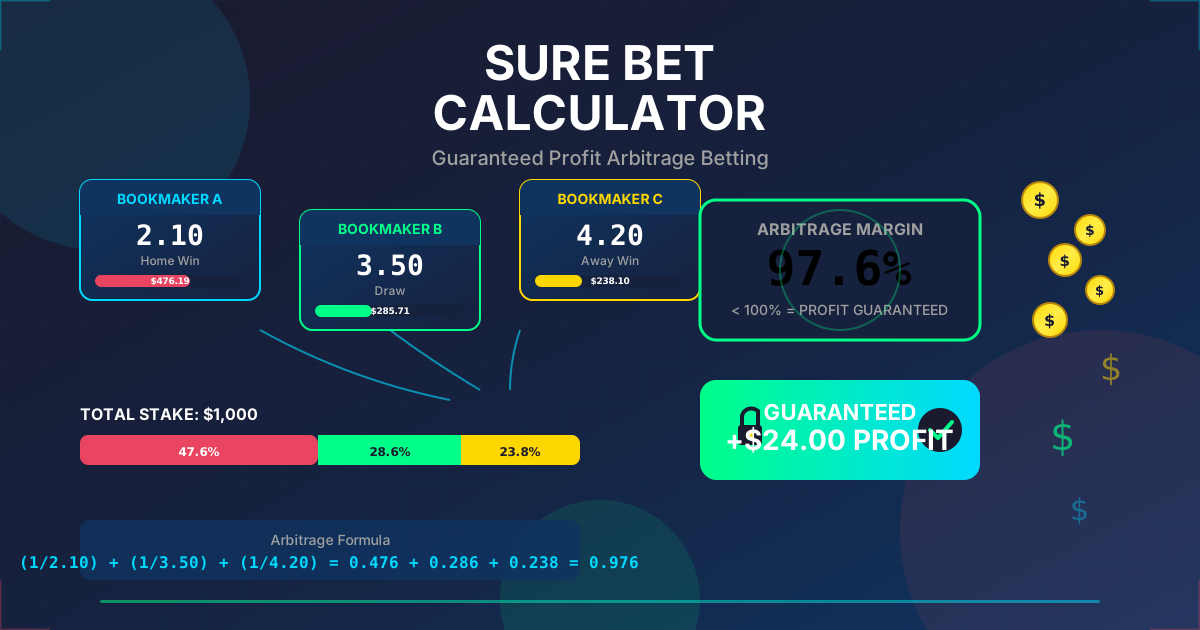
Use our Sure Bet Calculator to check for arbitrage opportunities on NASCAR prop markets across sportsbooks.
Manufacturer and Team Props
Manufacturer props (which manufacturer's driver wins the race) and team props (which team's driver finishes highest) add another dimension to NASCAR betting. These props are particularly useful when one organization has a clear setup advantage at a specific track type.
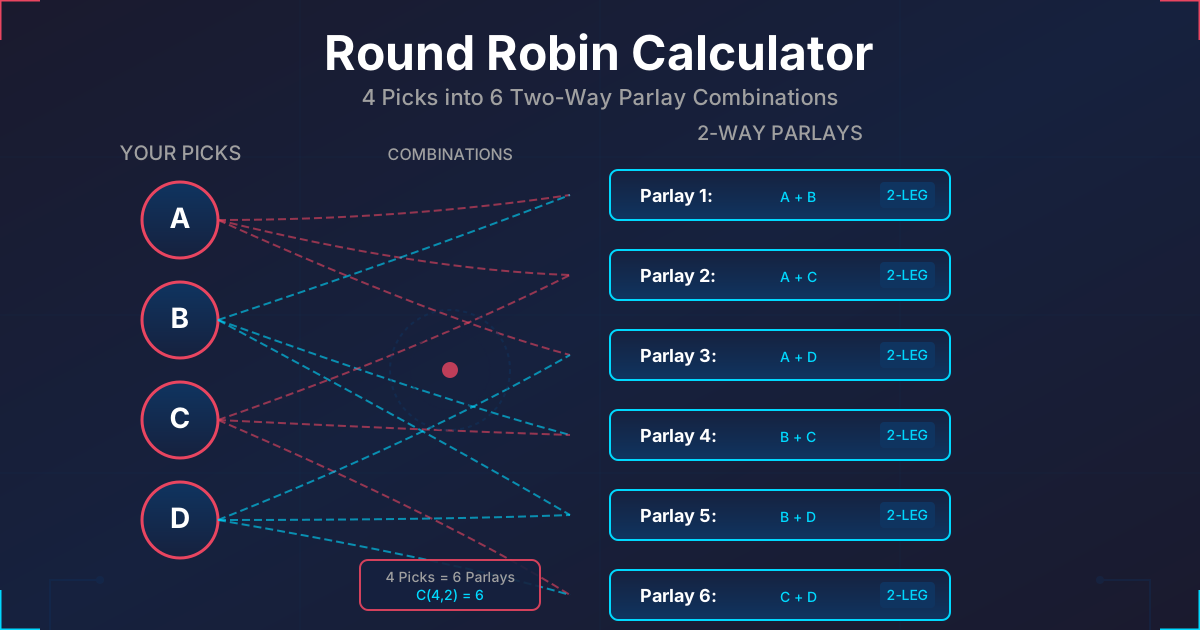
Use our Round Robin Calculator to build round robin bets across multiple NASCAR prop markets.
How Should You Approach NASCAR Matchup Betting?
NASCAR matchup betting should be approached as a data-driven exercise where you compare two drivers' track-specific performance metrics, recent form, qualifying speed, and team strength, then determine whether the sportsbook's line accurately reflects the true probability of each driver finishing ahead of the other. Matchup bets are the highest-skill, lowest-variance NASCAR bet type and the preferred market for professional bettors.
Building a Matchup Model
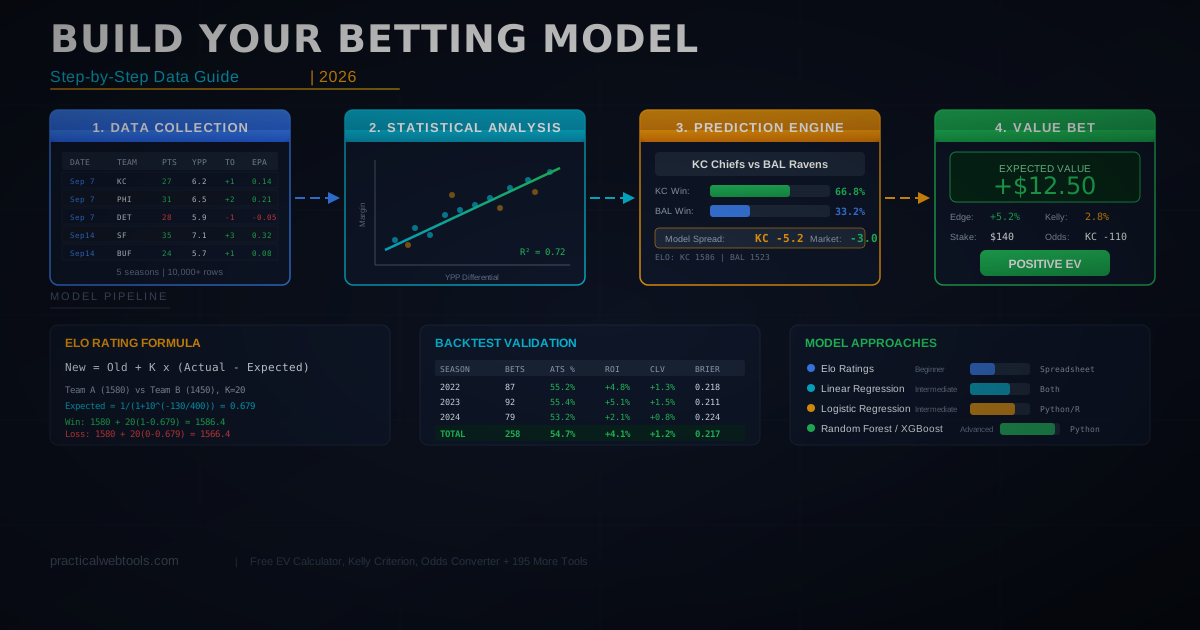
A basic NASCAR matchup model should incorporate the following inputs:
- Track-specific average finish (last 3-5 races at that track): Weight 30%
- Recent form (last 5 races overall): Weight 20%
- Practice/qualifying speed (current weekend data): Weight 25%
- Team/equipment quality (season-long metrics): Weight 15%
- Driver track-type specialty (overall performance on that track type): Weight 10%
| Factor | Weight | Data Source | Update Frequency |
|---|---|---|---|
| Track-Specific History | 30% | NASCAR reference sites | Pre-race |
| Recent Form (5-race) | 20% | Current season results | Weekly |
| Practice/Qualifying Speed | 25% | Practice sessions | Race weekend |
| Team Equipment Quality | 15% | Season-long metrics | Monthly |
| Track-Type Specialty | 10% | Multi-year data | Pre-season |
Identifying Soft Lines
Soft lines in matchup markets typically occur when the sportsbook prices a matchup based on overall season performance without adequately adjusting for track-specific factors. For example, if Driver A has a better overall season record but Driver B has significantly better history at the specific track that weekend, the line may not fully reflect Driver B's track advantage.
Use our Hold/Vig Calculator to identify which sportsbook charges the lowest vig on NASCAR matchup markets.
Same-Team Matchups
Matchups between teammates are some of the trickiest to handicap because teammates share technical information, engineering resources, and sometimes even setup data. However, individual driving style differences still create edges. One teammate may excel at qualifying while the other is stronger in race trim, and certain tracks favor one teammate's driving style over the other.
Use our Implied Probability Calculator to convert teammate matchup odds into probabilities and assess whether the line reflects reality.
How Does Pit Strategy Influence NASCAR Betting?
Pit strategy is one of NASCAR's most underappreciated betting factors, with crew chief decisions on tire compounds, fuel windows, pit timing during cautions, and the choice between track position and fresh tires frequently determining race outcomes in ways that public bettors fail to account for. Understanding which teams employ aggressive versus conservative pit strategies can shift your assessment of a matchup or outright bet by 5-10 percentage points.
Two-Tire vs. Four-Tire Stops
During caution periods, teams must decide between taking two tires (faster pit stop, better track position) or four tires (slower stop, but better grip and long-run speed). This decision depends on how many laps remain, the track type, tire degradation rate, and whether the driver is better at racing in traffic or in clean air. Teams that consistently make the right call gain a significant cumulative advantage over a 36-race season.
| Strategy Decision | When It Works Best | Risk Level | Typical Outcome |
|---|---|---|---|
| 4-Tire Stop (Standard) | Long runs remaining, high degradation | Low | Best long-run speed |
| 2-Tire Stop (Track Position) | Short runs remaining, low degradation | Medium | Gains 4-8 positions on pit road |
| Stay Out (No Pit) | Very short run remaining, good tires | High | Leads restart but old tires |
| Fuel Only | Tire deg is minimal, need track position | Medium | Fastest stop, best position |
| Wave Around | Lapped car strategy to get back on lead lap | Situational | Regains lead-lap status |
Fuel Strategy and Mileage Races
Some races are won or lost on fuel strategy. When a race nears its end with no caution flags, teams face a choice: pit for fuel and give up positions, or stretch the fuel and risk running out. Fuel mileage races are more common at tracks with long green-flag runs (road courses, Pocono, Kentucky). Drivers and teams known for fuel-saving skill have a distinct advantage in these situations.
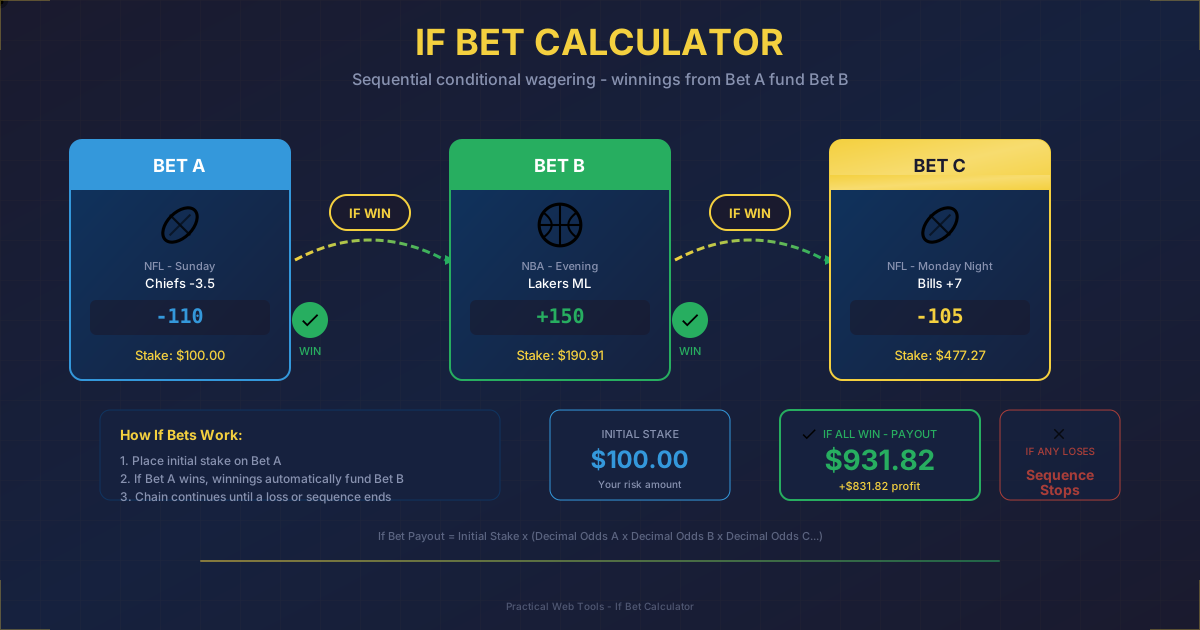
Use our If Bet Calculator to structure conditional bets that pay off if specific pit strategy scenarios unfold.
Crew Chief Impact
The crew chief is arguably the second-most important person (after the driver) in determining a team's race result. Elite crew chiefs like Cliff Daniels (Hendrick), Alan Gustafson (Hendrick), and Adam Stevens (Joe Gibbs Racing) consistently make adjustments that elevate their driver's performance from mid-pack to contending. When evaluating a driver, always consider who is calling the shots from pit road.
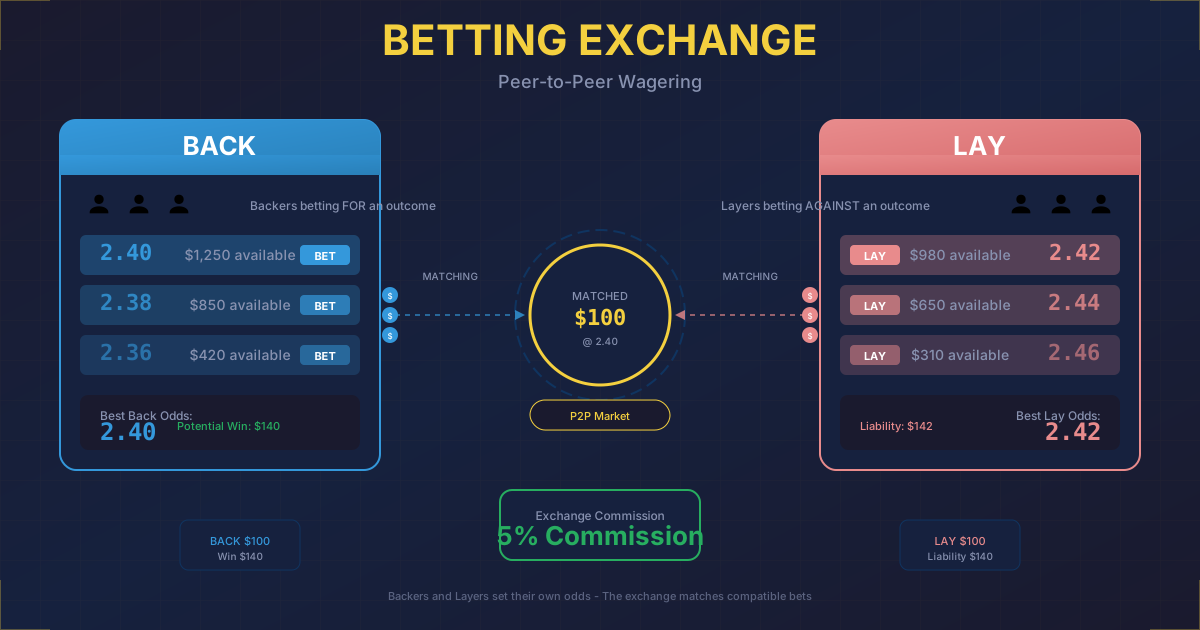
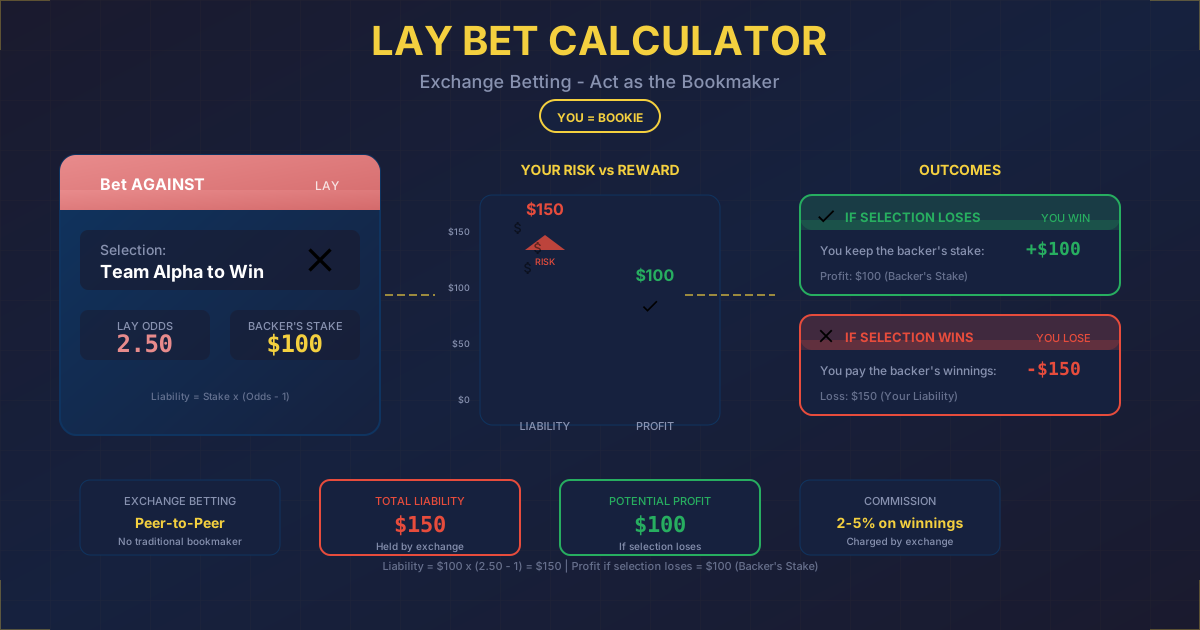
Use our Back/Lay Calculator to calculate exchange betting liability when laying a heavily favored team in NASCAR.
How Do You Bet on NASCAR Futures and Championship Odds?
NASCAR championship futures are season-long bets on which driver will win the Cup Series title, and the optimal strategy involves buying low on quality drivers during mid-season slumps and hedging progressively as the playoffs approach, rather than placing a single pre-season bet and hoping for the best. Championship futures prices fluctuate dramatically throughout the 36-race season, creating multiple entry points.
Pre-Season Championship Value
Pre-season championship odds represent the sportsbook's assessment before a single lap has been turned. History shows that pre-season favorites win the title only about 15-20% of the time, meaning that the field offers substantial collective value. Looking for drivers in the +1500 to +3000 range who have demonstrated playoff capability is often more profitable than backing the +450 favorite.
| Driver (Hypothetical 2026) | Pre-Season Odds | Playoff Probability | Championship Win Probability | Value Assessment |
|---|---|---|---|---|
| Kyle Larson | +450 | 95% | 18% | Fair price |
| William Byron | +600 | 92% | 14% | Slight value |
| Denny Hamlin | +700 | 90% | 12% | Fair price |
| Christopher Bell | +800 | 88% | 11% | Good value |
| Tyler Reddick | +1200 | 82% | 7% | Good value |
| Chase Elliott | +1000 | 85% | 9% | Fair price |
| Ross Chastain | +2000 | 75% | 4% | Moderate value |
| Bubba Wallace | +4000 | 50% | 2% | Speculative |
Mid-Season Buying Opportunities
The best championship futures value often appears during the middle third of the regular season. A driver who opened at +600 but has had three consecutive poor finishes might drift to +1500. If the underlying speed metrics (practice times, average running position) remain strong, this is likely an overreaction by the market and a buying opportunity.
Use our Expected Value Calculator to model whether a mid-season championship futures price offers positive expected value based on remaining schedule analysis.
Progressive Hedging Strategy
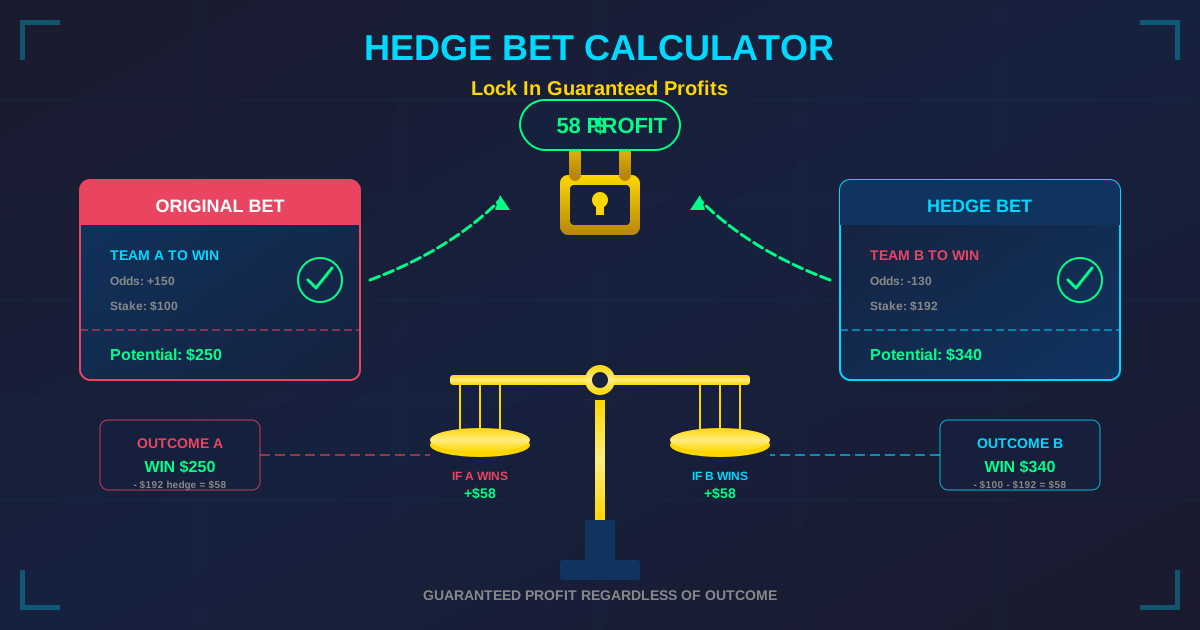
As the playoffs progress and your futures driver advances through each elimination round, their championship odds shorten. You can lock in guaranteed profit by placing hedge bets against your driver at each stage. The math is straightforward: if your original bet was $100 at +2000 for a potential $2,100 payout, and your driver makes the Championship 4, you can hedge across the other three finalists to guarantee a profit regardless of the outcome.
Use our Hedge Calculator to calculate exact hedge amounts at every stage of the NASCAR playoffs.
What Mistakes Do NASCAR Bettors Commonly Make?
The most common NASCAR betting mistakes include betting too many races at the outright winner price, ignoring track-type specialization, overvaluing qualifying position at superspeedways, underestimating the importance of pit crew performance, and failing to adjust for weather-driven setup changes. Avoiding these errors can be the difference between a losing and winning season.
Overvaluing Name Recognition
Casual NASCAR bettors gravitate toward well-known names regardless of track-specific performance. A driver who is a household name but has a poor record at a specific track will attract disproportionate public money, shortening their odds and creating value on their opponents. Always prioritize track-specific data over general reputation.
| Common Mistake | Why It Happens | How to Avoid It |
|---|---|---|
| Betting favorite to win every race | Simplicity bias | Use matchups and props instead |
| Ignoring track-type specialization | Lack of research | Build track-type performance database |
| Overvaluing qualifying at plate tracks | Misunderstanding drafting | Focus on superspeedway-specific skills |
| Ignoring pit crew strength | Data not easily visible | Track pit stop times by team |
| Betting every race on the schedule | Action bias | Focus on races where you have an edge |
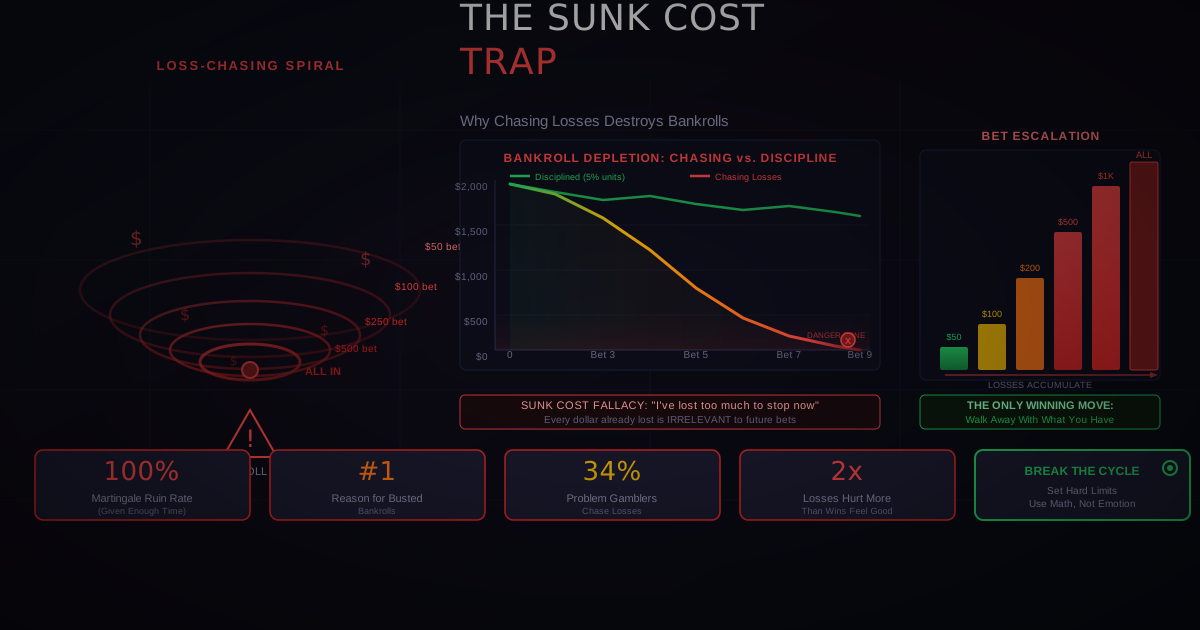
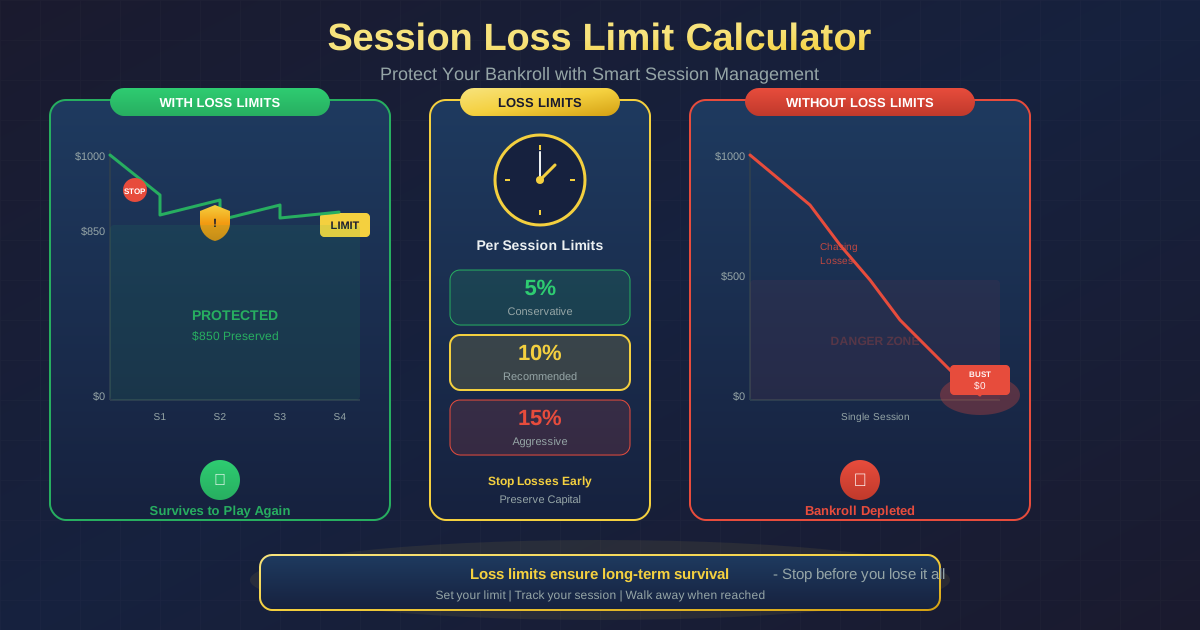
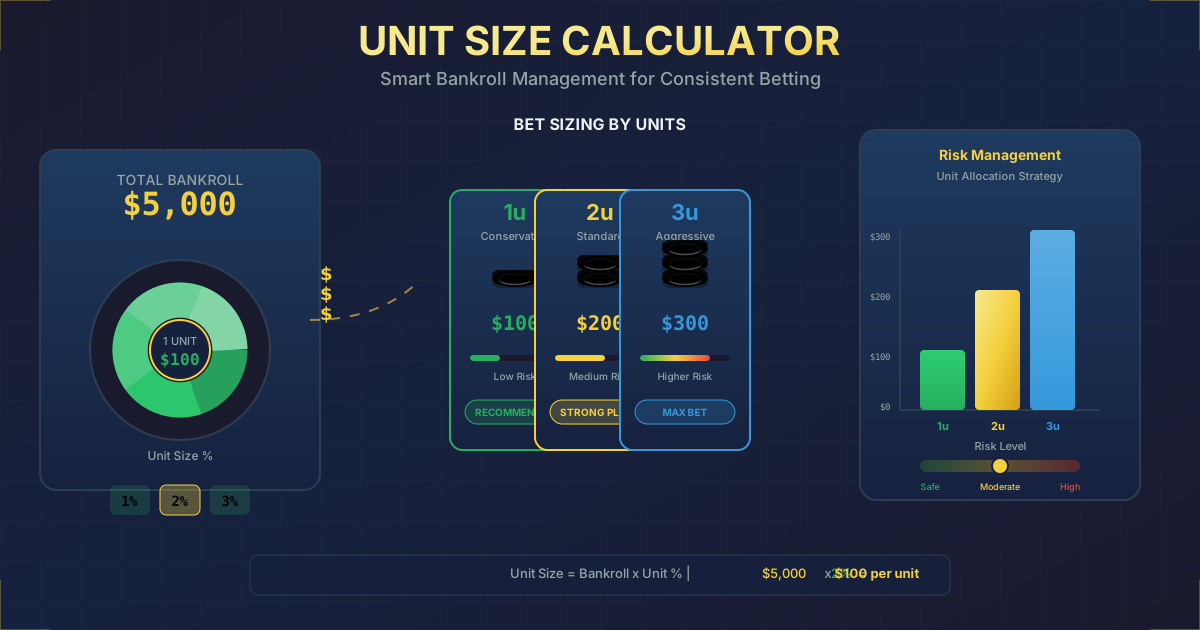
| Chasing losses with bigger bets | Emotional tilt | Pre-set unit sizes and daily limits |
Betting Too Many Races
With 36 races per season plus Xfinity and Truck Series events, it is tempting to bet every weekend. However, not every race offers value. Some races have efficient markets where the odds accurately reflect probabilities, while others have exploitable inefficiencies. Discipline means sitting out races where you do not have a clear edge.
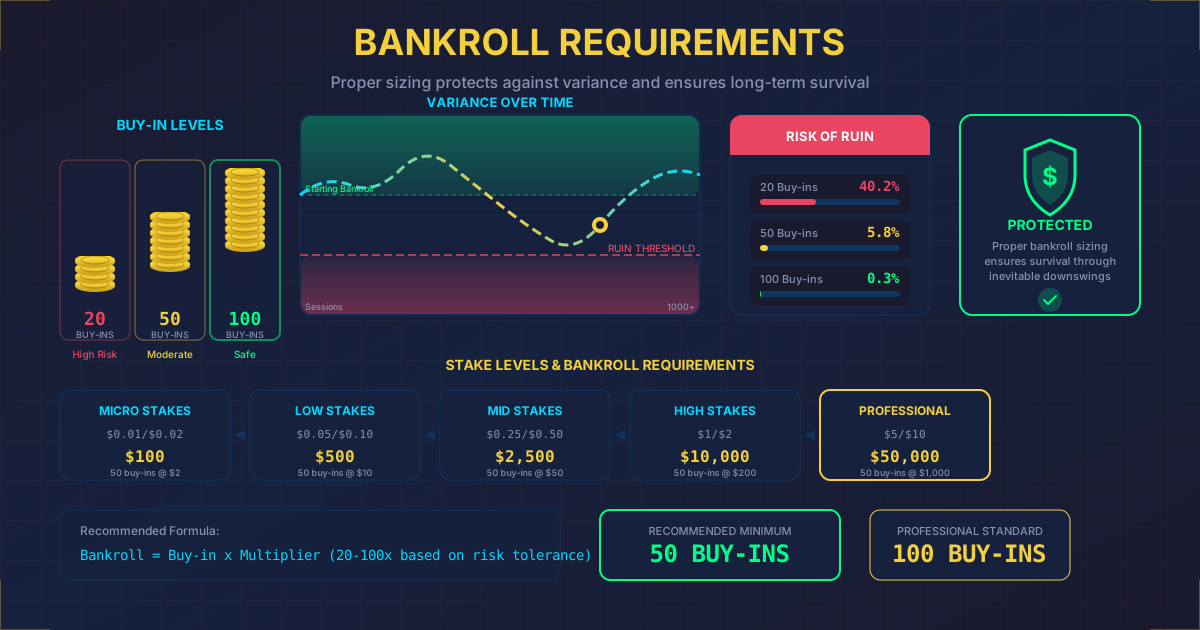
Use our Bankroll Volatility Tracker to monitor your NASCAR bankroll health across the 36-race season.
Ignoring Practice Data
Many recreational bettors place their NASCAR bets before practice sessions occur, relying solely on pre-race projections. Practice speeds, particularly long-run speed on intermediate tracks, provide crucial same-weekend data that can identify mispriced drivers. Bettors who wait until after Friday or Saturday practice to place their bets have a significant informational advantage.
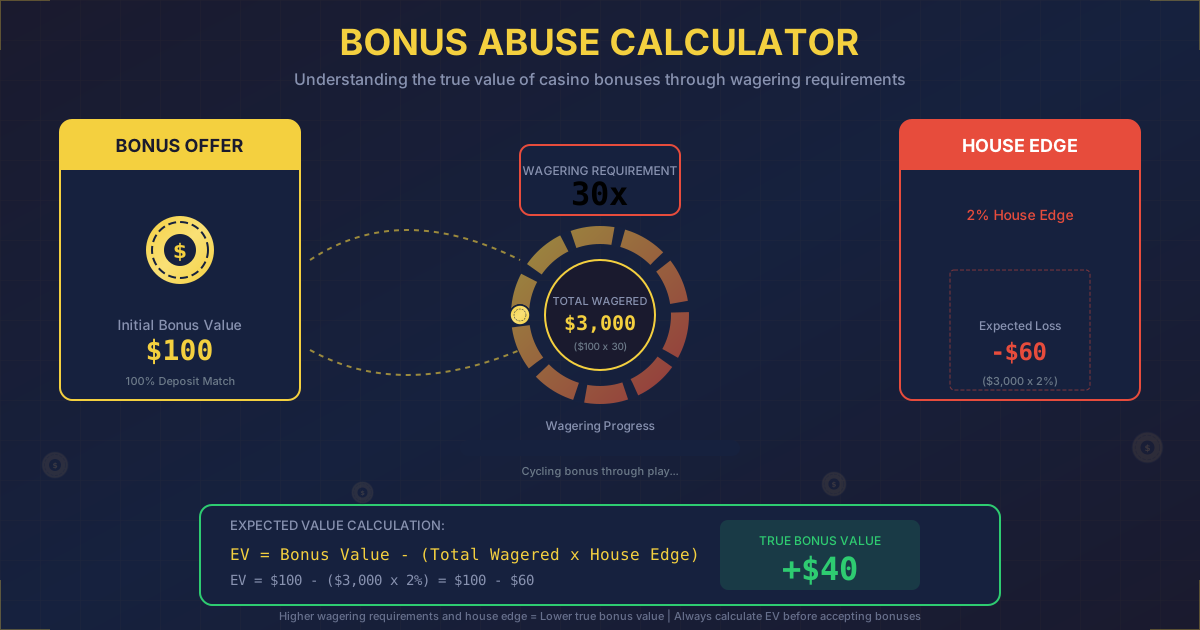
Use our Free Bet Calculator (Stake Returned) to maximize the value of sportsbook promotions when testing new NASCAR handicapping approaches.
How Can You Use Data Tools to Improve NASCAR Betting?
Data tools can improve NASCAR betting by automating the conversion of raw performance metrics into betting-relevant probabilities, calculating whether posted odds represent positive expected value, determining optimal bet sizes, and tracking your results over time to identify which aspects of your handicapping are strongest. The combination of good data and good tools transforms NASCAR from a guessing game into an analytical discipline.
Essential Calculations for NASCAR Bettors
Every NASCAR bettor should understand and regularly calculate the following:
- Implied probability of posted odds to compare against your model
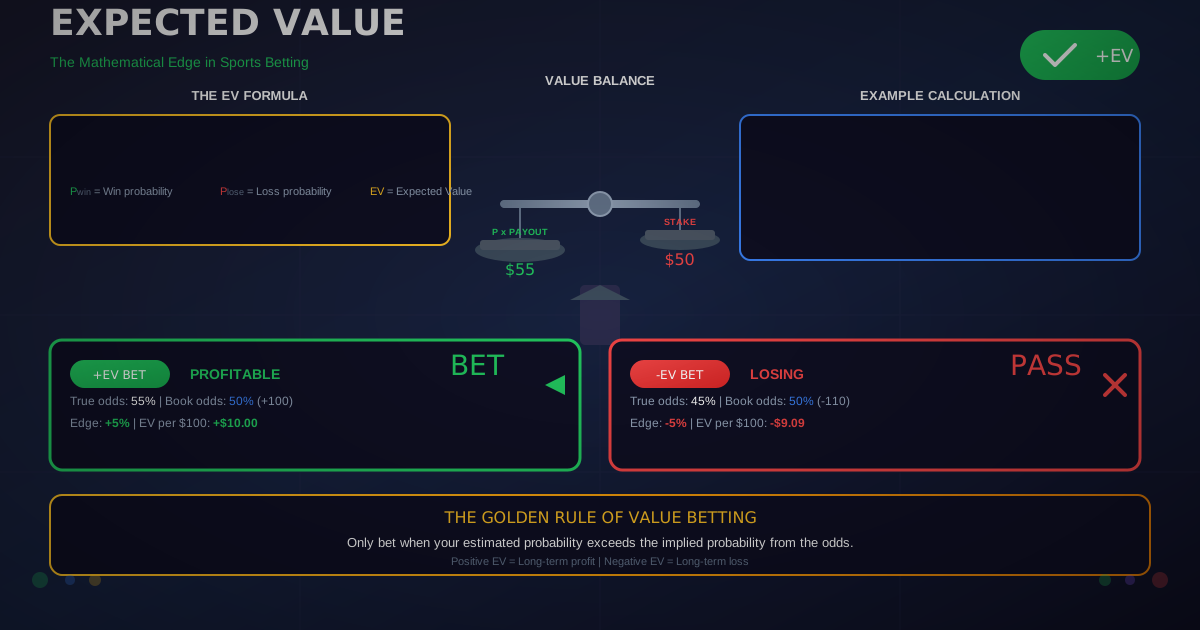
- Expected value of each bet to determine if it is worth placing
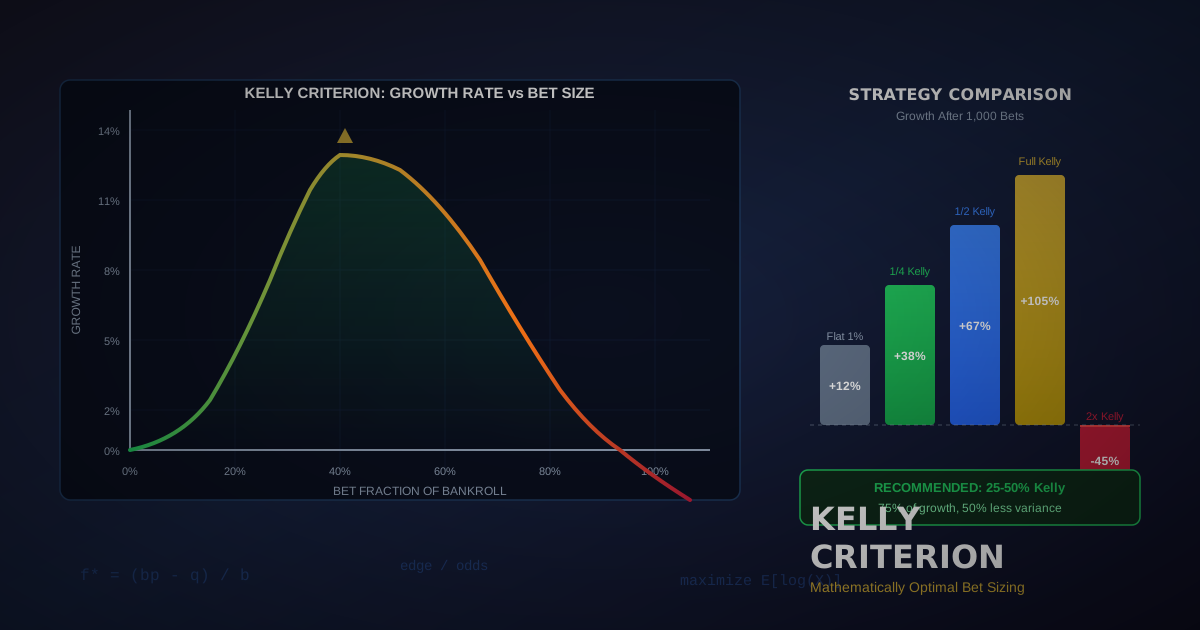
- Kelly Criterion stake size to optimize bankroll growth
- Closing line value to measure your long-term betting skill
Use our Implied Probability Calculator to instantly convert any NASCAR odds into a win probability.
Tracking Your NASCAR Betting Results
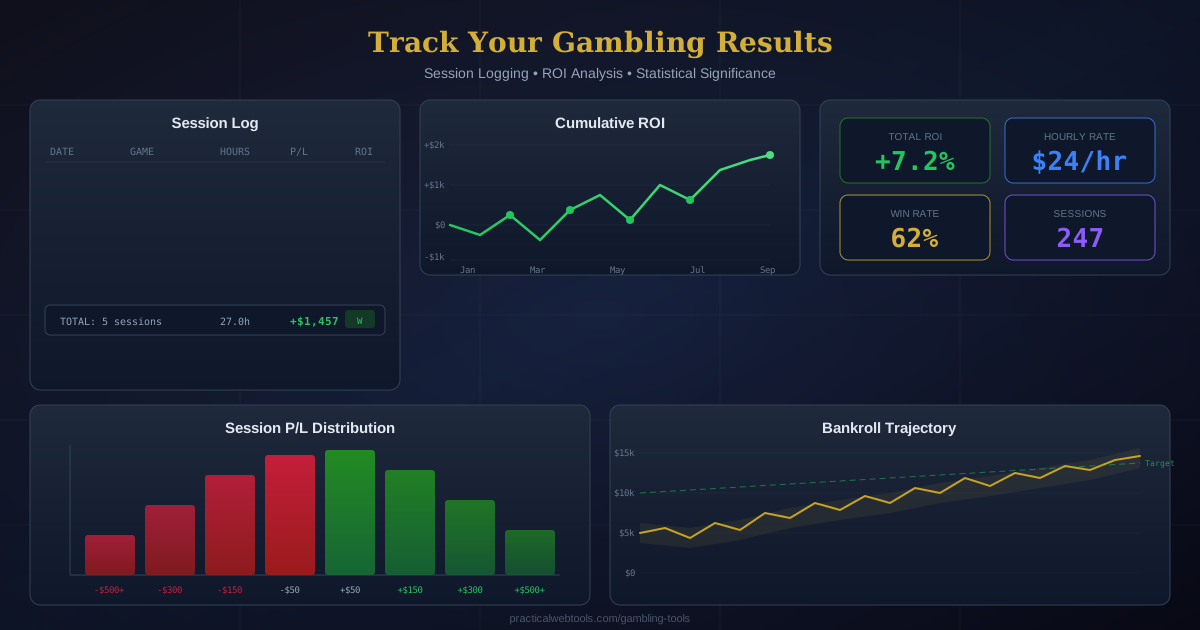
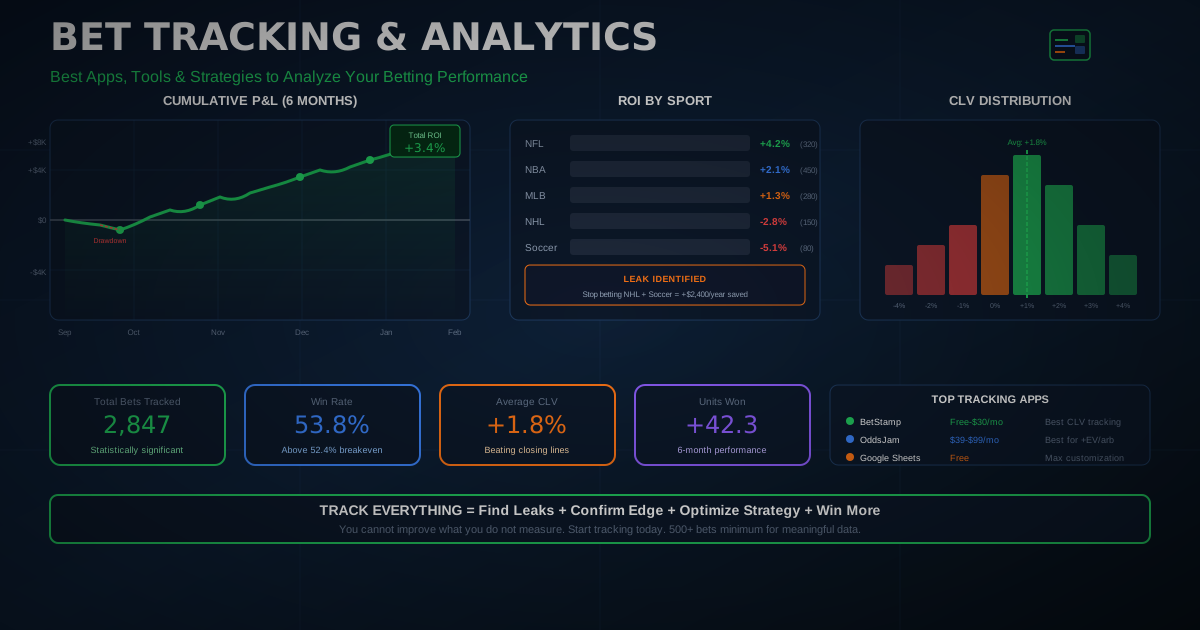
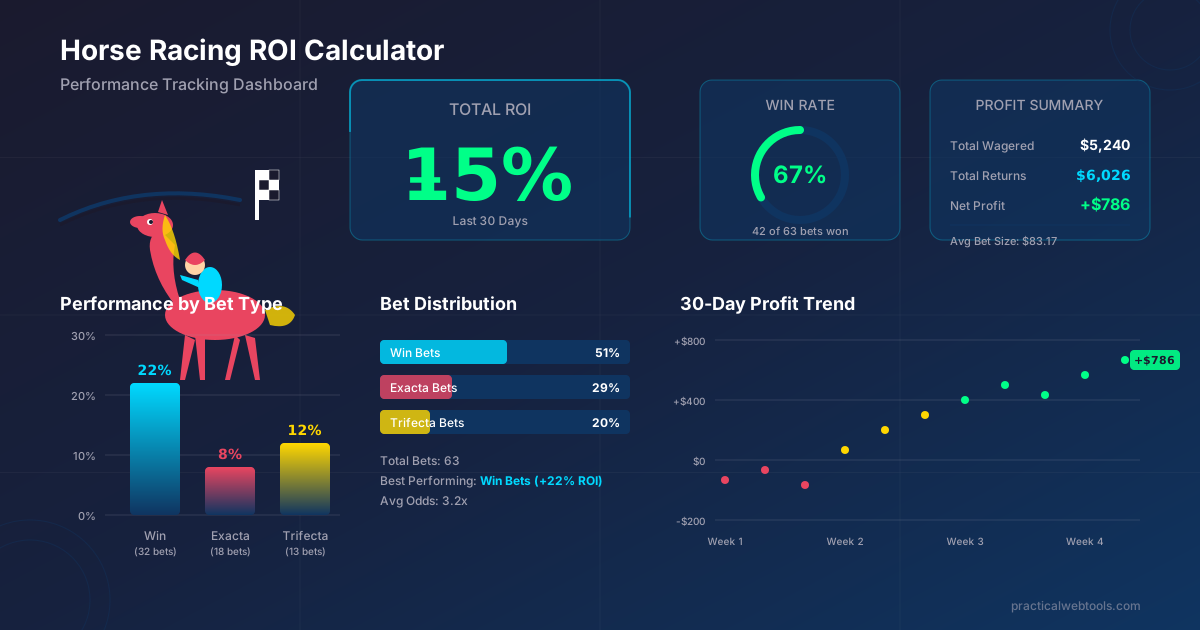
Keeping detailed records is non-negotiable for serious NASCAR bettors. Track every bet with the following fields: date, race, track type, bet type, driver(s), odds, stake, result, and profit/loss. After 50+ bets, patterns emerge: you may find that your matchup bets are profitable but your outright winner bets are losing money, guiding you to adjust your strategy.
| Tracking Metric | What It Tells You | Target Value |
|---|---|---|
| Overall ROI | Profitability | > 5% over 100+ bets |
| CLV (Closing Line Value) | Betting skill indicator | Consistently positive |
| Win Rate by Bet Type | Which markets you beat | Varies by type |
| Win Rate by Track Type | Where your edge lies | Above market average |
| Average Odds of Winners | Your risk profile | Varies by strategy |
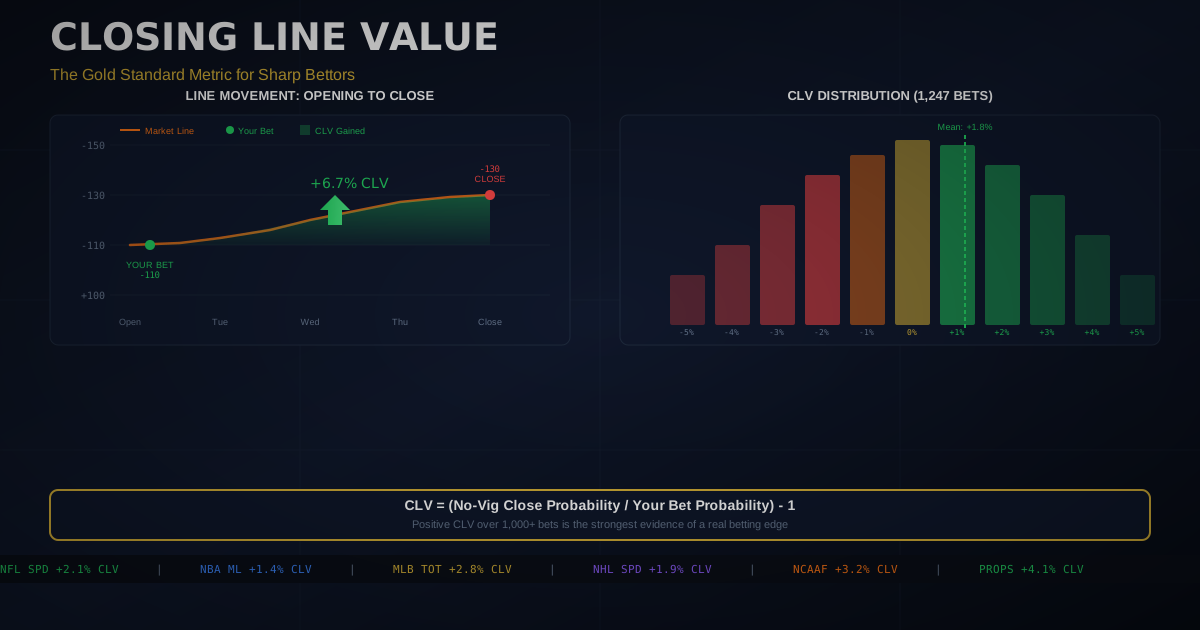
Use our Closing Line Value Tracker to automatically track whether your NASCAR bets consistently beat the closing line, the single best predictor of long-term profitability.
Combining Tools for Maximum Edge
The most effective NASCAR betting workflow combines multiple tools: start by converting odds and calculating implied probabilities, then run expected value calculations on your top picks, use the Kelly Criterion to determine bet sizes, and track results over time to continuously refine your approach.
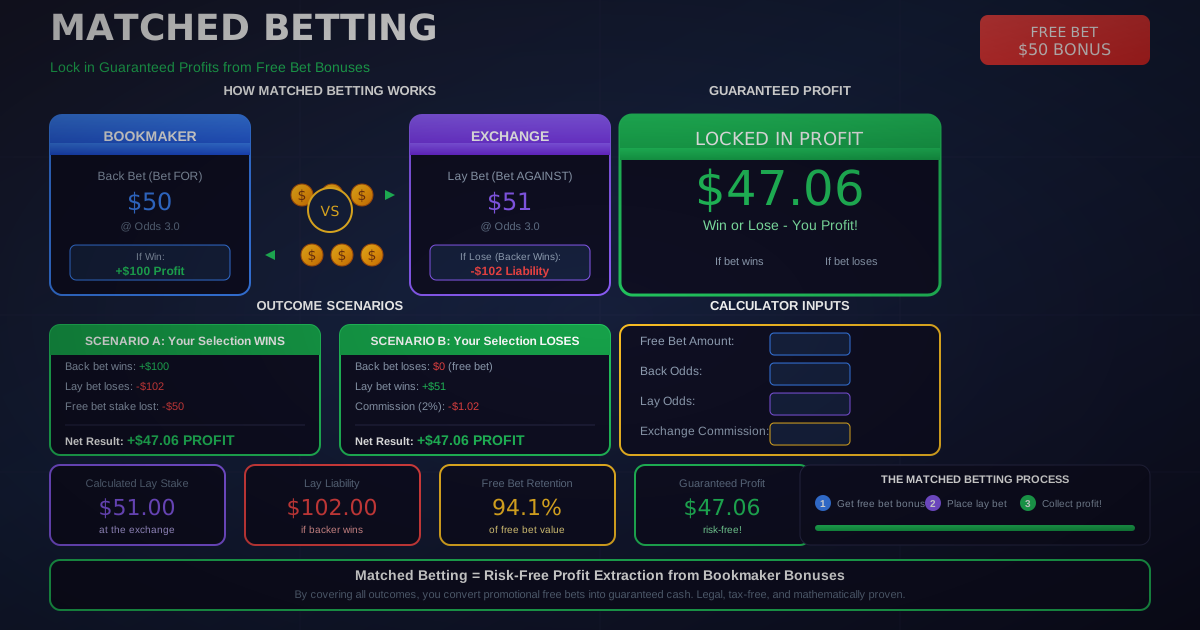
Use our Matched Betting Calculator to extract guaranteed value from sportsbook sign-up promotions and reload bonuses throughout the NASCAR season.
Frequently Asked Questions
How do you bet on NASCAR for beginners? Start with head-to-head matchup bets rather than outright race winners. Matchups simplify the decision to choosing between two drivers, reducing the complexity of a 36-car field. Focus on one track type (such as intermediate tracks) to build expertise, and use practice session data to inform your picks. Set a modest bankroll and bet 1-3% per race as you learn. Use our Odds Converter to understand the odds format at your sportsbook.
What is the best NASCAR bet type for making money? Head-to-head driver matchups offer the best combination of skill edge and manageable variance for long-term profitability. Professional NASCAR bettors overwhelmingly focus on matchups because the market is less efficient than outright winner lines, the variance is lower (essentially a coin-flip format), and track-specific data provides actionable edges. Top-5 finish props at superspeedways are also consistently profitable for informed bettors.
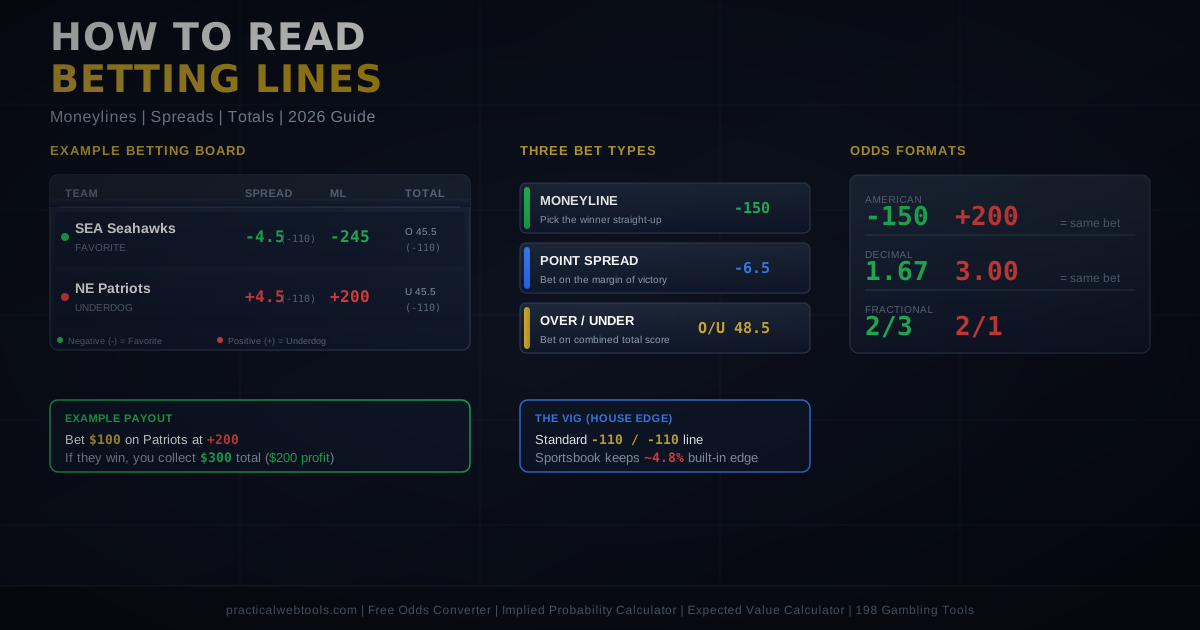
How do NASCAR odds work? NASCAR odds work like any sports betting odds. For outright race winners, odds are typically in the +400 to +10000 range because the large field makes winning difficult. Matchup odds are tighter, usually between -150 and +150. American odds of +600 mean a $100 bet wins $600 profit, while -150 means you must bet $150 to win $100. Use our Odds Converter to switch between American, decimal, and fractional formats.
When should you bet on NASCAR races? The optimal timing depends on your strategy. If you rely on practice data, wait until after Saturday practice or qualifying (for Sunday races). If you are betting futures or matchups based on historical track data, you can bet earlier in the week to capture the best odds before the market moves. Line shopping across multiple sportsbooks is critical regardless of timing.
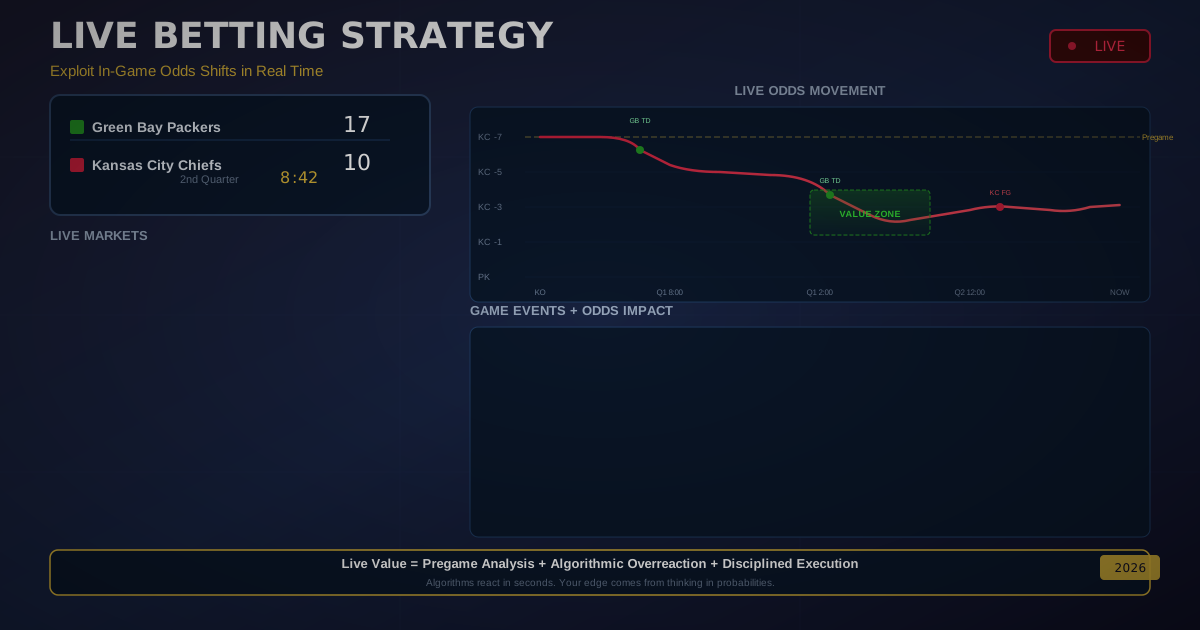
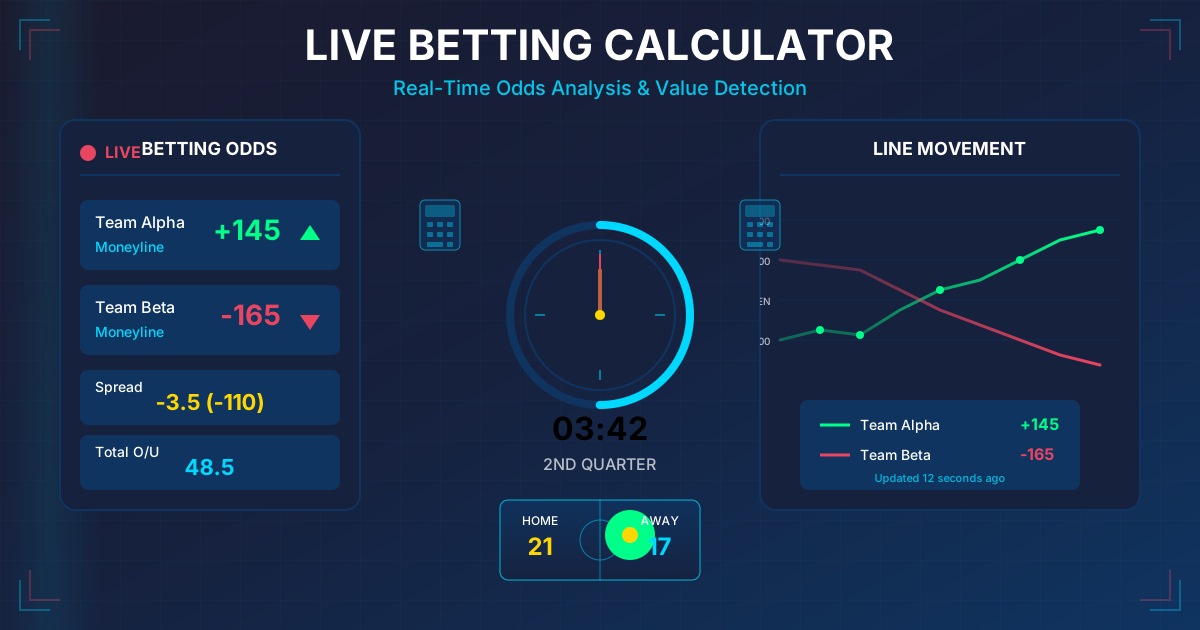
Can you live bet during NASCAR races? Yes, most major sportsbooks offer live betting during NASCAR races. In-race odds update based on running position, pit strategy, cautions, and remaining laps. Live betting is particularly valuable after early cautions that reshuffle the field or after pit strategy decisions that give certain drivers an unexpected advantage. The key is having a pre-race framework so you can quickly assess whether live odds represent value.
What NASCAR statistics are most important for betting? The five most important NASCAR statistics for betting are: (1) track-specific average finish, (2) average running position, (3) practice and qualifying speeds for the current weekend, (4) laps led percentage, and (5) pit crew stop times. These metrics capture both raw speed and race execution, giving you a complete picture of a driver's likely performance.
Is NASCAR betting profitable long-term? NASCAR betting can be profitable long-term for bettors who specialize in specific bet types (especially matchups), develop track-type-specific handicapping models, practice disciplined bankroll management, and consistently track their results. The key metric for long-term profitability is closing line value (CLV), meaning that your bets consistently beat the final line the sportsbook posts before the race starts. Use our Closing Line Value Tracker to measure your betting skill over time.
Related Gambling Tools
- Odds Converter: Convert NASCAR odds between American, decimal, and fractional formats to compare lines across sportsbooks.
- Expected Value Calculator: Calculate whether a NASCAR bet offers positive expected value based on your probability assessment versus the posted odds.
- Kelly Criterion Calculator: Determine the mathematically optimal bet size for each NASCAR wager based on your edge and bankroll.
- Parlay Calculator: Compute payouts for multi-leg NASCAR parlays combining race winners, matchups, and props.
- Hedge Calculator: Calculate exact hedge bet amounts to lock in profits on NASCAR championship futures during the playoffs.
- Arbitrage Calculator: Find guaranteed profit opportunities by comparing NASCAR odds across multiple sportsbooks.
- Bankroll Volatility Tracker: Monitor your NASCAR betting bankroll across the 36-race season and manage risk.
- Implied Probability Calculator: Convert any NASCAR odds into implied win probabilities for model comparison.
- Sure Bet Calculator: Identify risk-free betting opportunities across sportsbooks on NASCAR markets.
- Hold/Vig Calculator: Compare the margin (vig) charged by different sportsbooks on NASCAR matchup and prop markets.
- Closing Line Value Tracker: Track your betting skill over time by measuring how often your NASCAR bets beat the closing line.
- Matched Betting Calculator: Extract maximum value from sportsbook promotions and bonuses during the NASCAR season.
NASCAR betting rewards the prepared and punishes the casual. The sport's 36-race schedule, diverse track types, and deep statistical ecosystem provide ample opportunity for analytical bettors to find value that the general market misses. Start with matchup bets on track types you understand best, build your handicapping model incrementally, track every bet religiously, and let the math guide your decisions rather than your gut or your fandom. Begin building your NASCAR handicapping edge with our free calculator suite
Gambling involves risk and should be approached as entertainment, not as a source of income. Always bet within your means, set strict bankroll limits, and never chase losses. If you or someone you know has a gambling problem, contact the National Council on Problem Gambling at 1-800-522-4700 or visit ncpgambling.org. Must be 21+ to gamble in most US jurisdictions. Please play responsibly.