Kentucky Derby Betting: How to Bet the Run for the Roses (2026)

The Kentucky Derby is the single most bet horse race on the planet. On the first Saturday in May, roughly 150,000 fans pack Churchill Downs in Louisville, Kentucky, while millions more tune in from home -- many of them placing a bet on a horse race for the first and only time all year. In 2025, the 151st Kentucky Derby generated a record $234.4 million in wagering on the race alone, with total Derby Day handle reaching $349 million. That is more money bet in two minutes than most sporting events see in an entire season.
Whether you are watching from a rooftop bar in a big floppy hat, hosting a Derby party at home, or sitting in Millionaires Row at Churchill Downs itself, there is a good chance you want to put a few dollars on a horse. And if you have never bet on a horse race before, the tote board can look like a foreign language. Win, place, show, exacta, trifecta, superfecta, daily double, morning line, post position -- it all sounds complicated, but the fundamentals are surprisingly straightforward once someone walks you through them.
That is exactly what this guide does. By the time you finish reading, you will know every major bet type, how to read a racing form, which post positions have historically produced winners, how to evaluate trainers and jockeys, and how to build a Derby betting strategy that fits your budget -- whether that is $20 or $200.
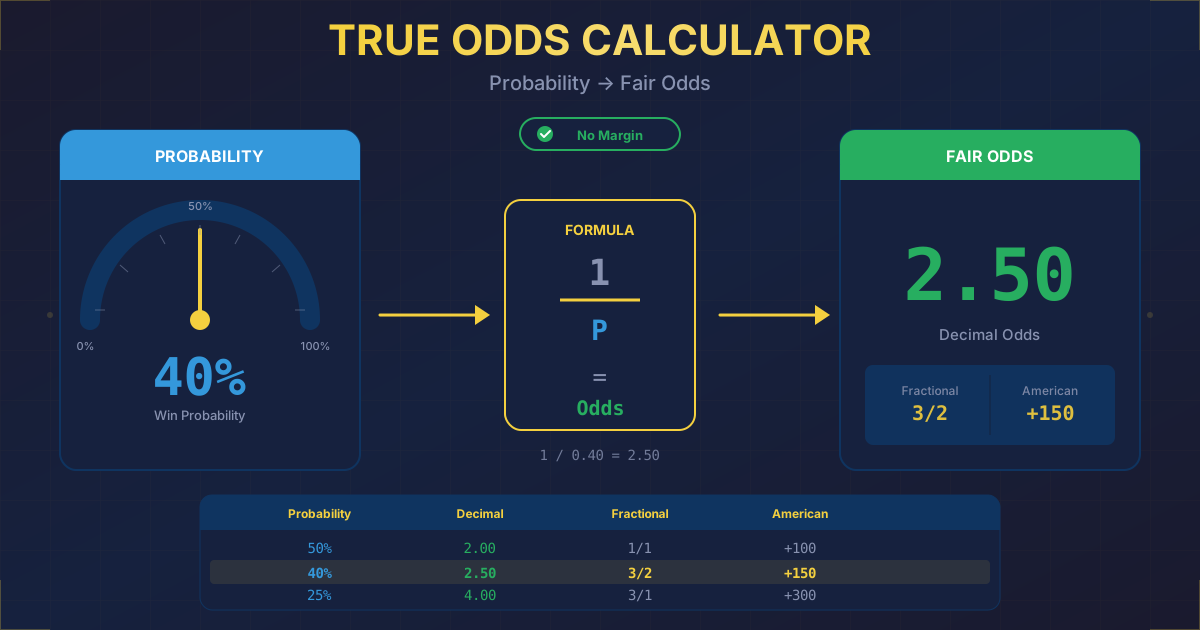
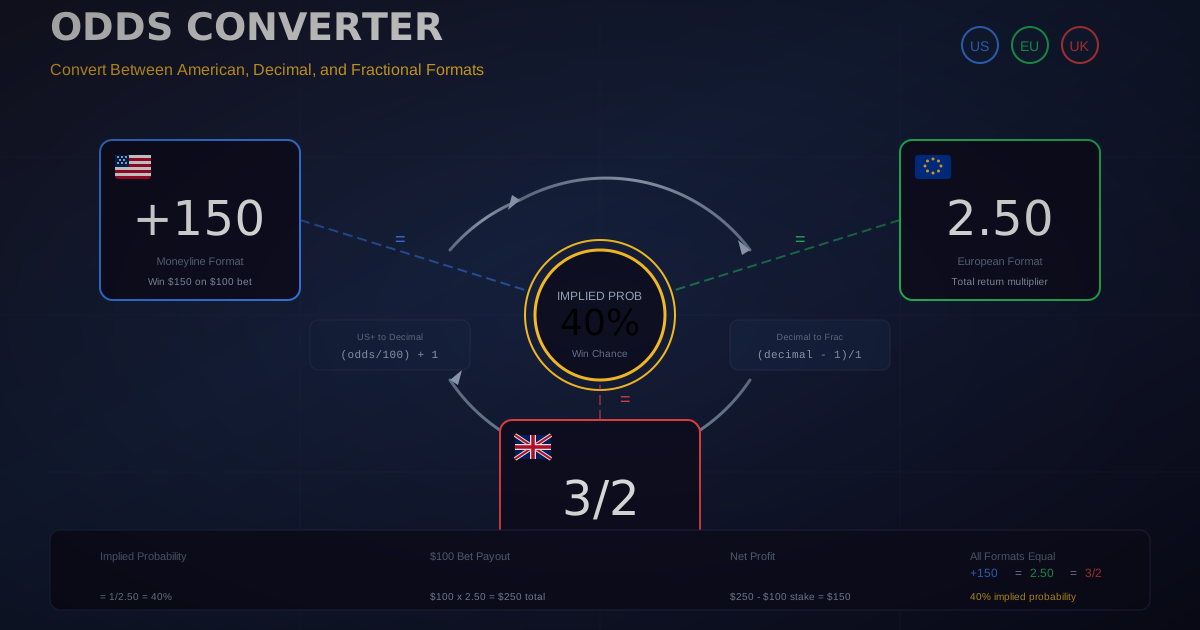
Convert between American, decimal, and fractional odds instantly with our free Odds Converter.
How Horse Racing Betting Works: Pari-Mutuel Explained
Before we talk about specific bets, you need to understand one fundamental difference between horse racing and sports betting: horse racing uses a pari-mutuel system, not fixed odds.
What Is Pari-Mutuel Betting?
In sports betting, the sportsbook sets a fixed line and you lock in your odds when you place your bet. Horse racing works differently. The word "pari-mutuel" comes from the French for "betting among ourselves," and that is literally what happens:
- All bets go into a pool. Every dollar wagered on Win bets, for example, goes into the Win pool.
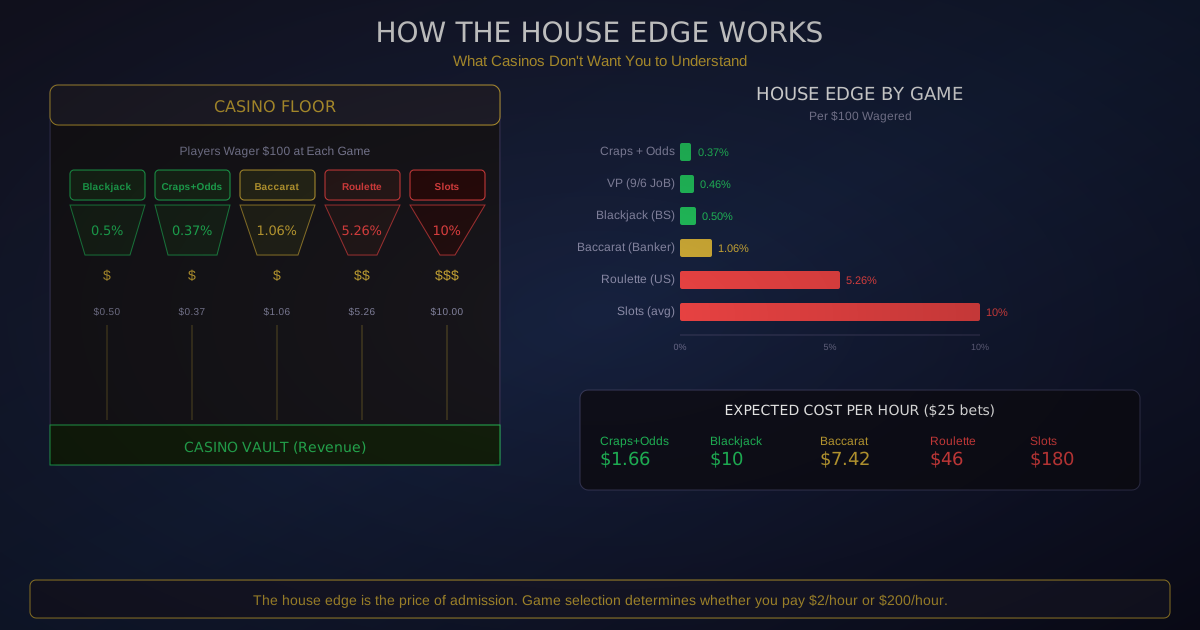
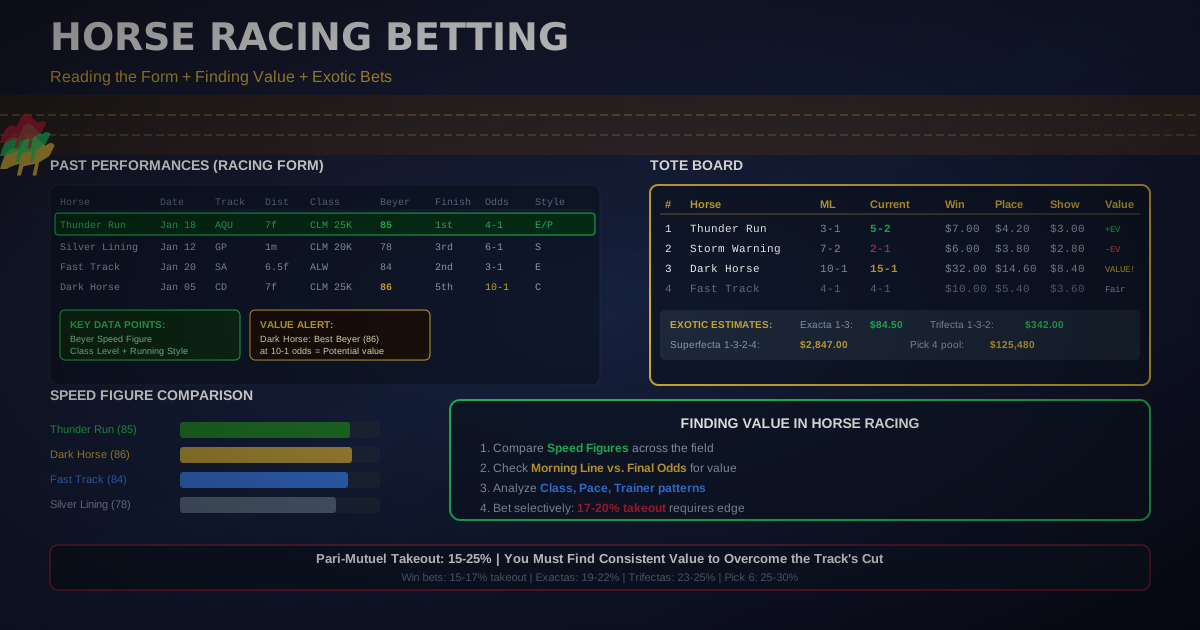
- The track takes its cut. Churchill Downs deducts a percentage called the "takeout" -- typically 16-22% depending on the bet type.
- The remaining money is split among winners. Everyone who bet on the winning horse shares the remaining pool, proportional to how much they wagered.
This means your odds are not set until the race starts. The numbers you see on the tote board are live estimates that change every 60 seconds as more money comes in. A horse showing 5-1 with ten minutes to post could drift to 8-1 or tighten to 3-1 by the time the gate opens.
The Takeout Rate
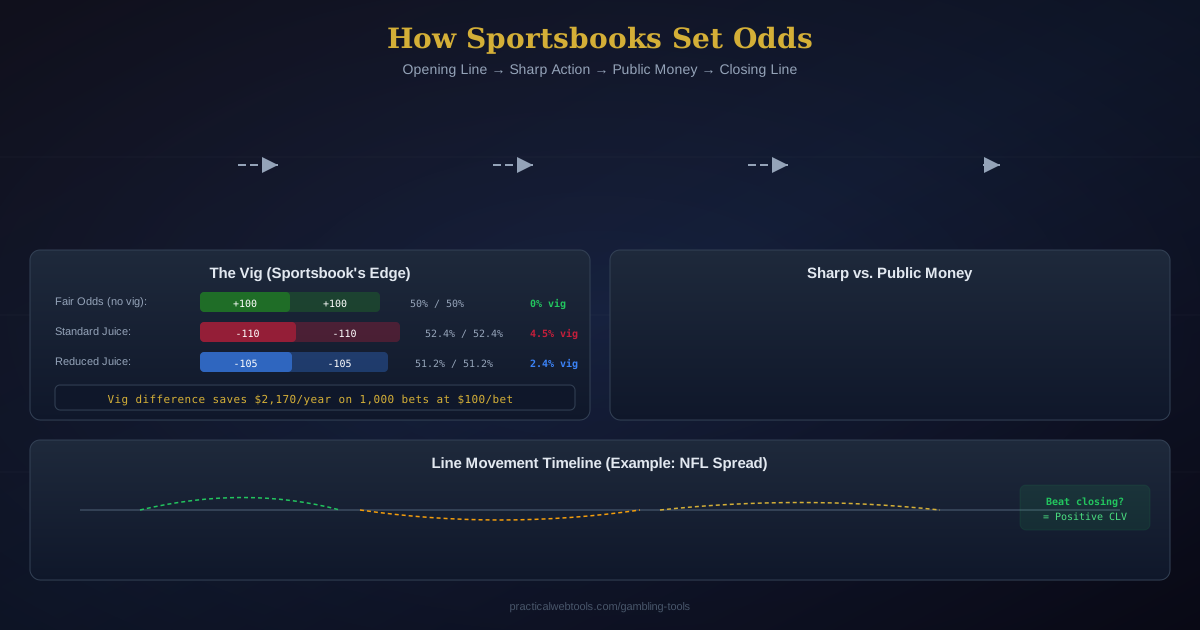
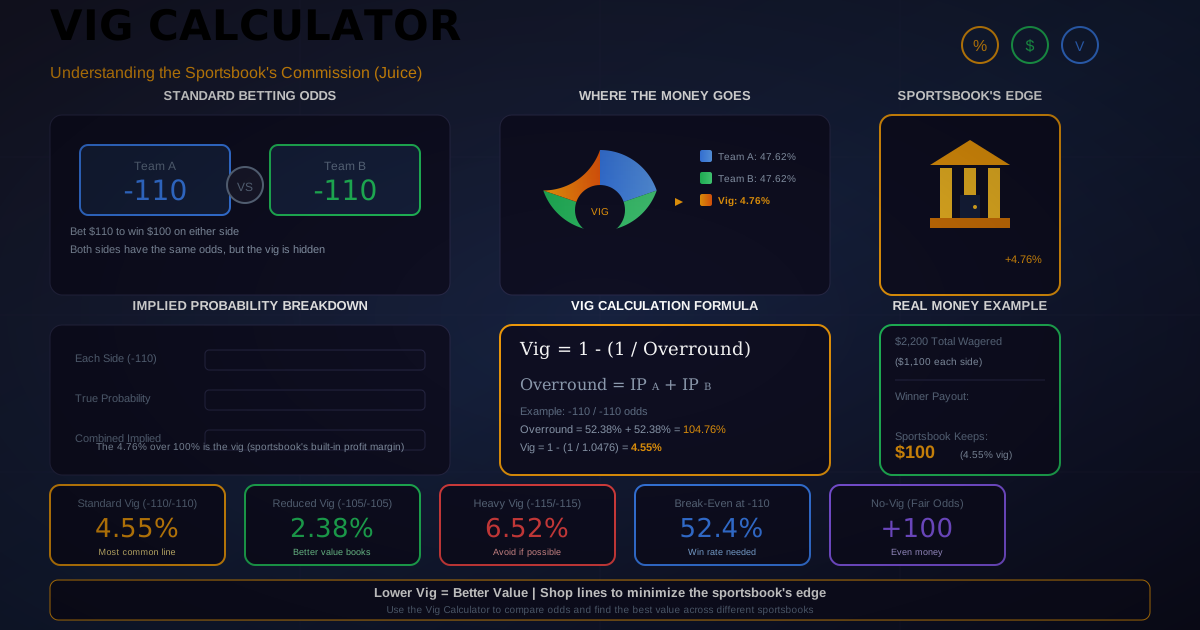
The takeout is the track's built-in edge -- similar to the vig in sports betting, but typically larger. Here is what Churchill Downs charges:
| Bet Type | Typical Takeout | What This Means |
|---|---|---|
| Win, Place, Show | 16-17% | For every $100 wagered, ~$83-84 goes back to bettors |
| Exacta, Daily Double | 19-22% | Higher takeout on exotic bets |
| Trifecta, Superfecta | 22-25% | The highest takeout rates |
| Pick 4, Pick 5, Pick 6 | 15-25% | Varies by track and pool size |
This is important context: the track takes a bigger bite from exotic bets, which means you need to be more selective with those wagers to overcome the built-in disadvantage.
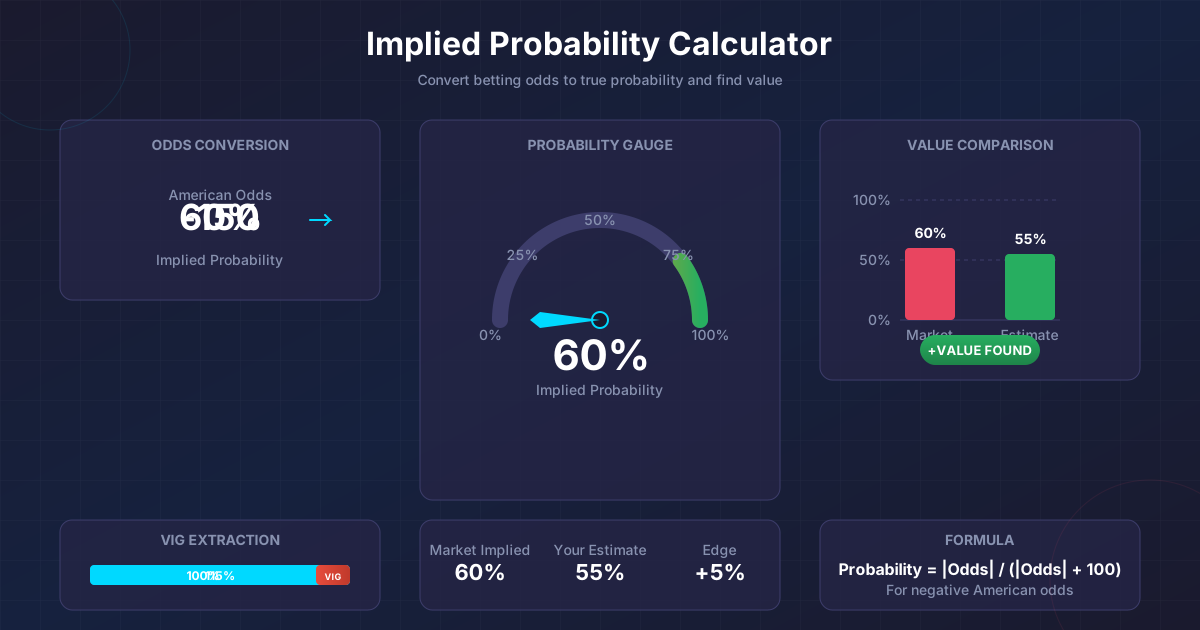
Calculate the true implied probability behind any set of odds with our Implied Probability Calculator.
Morning Line Odds vs. Post Time Odds
You will see two sets of odds for the Derby:
- Morning Line Odds: Set by the track handicapper (at Churchill Downs, this has traditionally been Mike Battaglia's job since 1974) days before the race. These are one person's estimate of where the betting public will send the odds -- they are a prediction of betting patterns, not a prediction of who will win.
- Post Time Odds: The actual odds when the gate opens, determined by real money from hundreds of thousands of bettors. These are the odds that determine your payout.
Morning line favorites have correctly predicted the actual Derby favorite roughly 76% of the time. But since 2000, morning line favorites have won just 30% of the actual races. Horses who were NOT the morning line favorite but closed as the betting favorite at post time have performed better -- winning 60% of the time in that scenario.
The takeaway: Morning line odds are a starting point, not gospel. Watch how the odds move in the final 30 minutes before post time -- that is where the "smart money" reveals itself.
Win, Place, and Show: The Straight Bets
These are the simplest bets in horse racing and the perfect starting point for beginners. The minimum bet is typically $2.
Win
You are betting that your horse finishes first. Period. If your horse wins, you collect. If it finishes second or third, you lose.
Example: In the 2025 Kentucky Derby, Sovereignty won at 7-1 odds. A $2 Win bet returned $17.96 (your $2 stake plus $15.96 in profit).
Place
You are betting that your horse finishes first OR second. You collect the same amount regardless of whether your horse wins or finishes second.
Example: If you bet $2 to Place on a horse that finishes second, you might collect $6.40. The payout is lower than a Win bet because you have two chances to cash instead of one.
Show
You are betting that your horse finishes first, second, OR third. This is the safest straight bet because you have three ways to win.
Example: A $2 Show bet on a mid-odds horse that finishes third might return $4.20. Show payouts are typically modest because so many bettors cash.
Win/Place/Show Comparison
| Bet Type | Minimum | Horse Must Finish | Risk Level | Typical Payout Range (on $2) |
|---|---|---|---|---|
| Win | $2 | 1st | Highest | $4.00 - $180.00+ |
| Place | $2 | 1st or 2nd | Medium | $3.00 - $40.00 |
| Show | $2 | 1st, 2nd, or 3rd | Lowest | $2.40 - $15.00 |
Across the Board
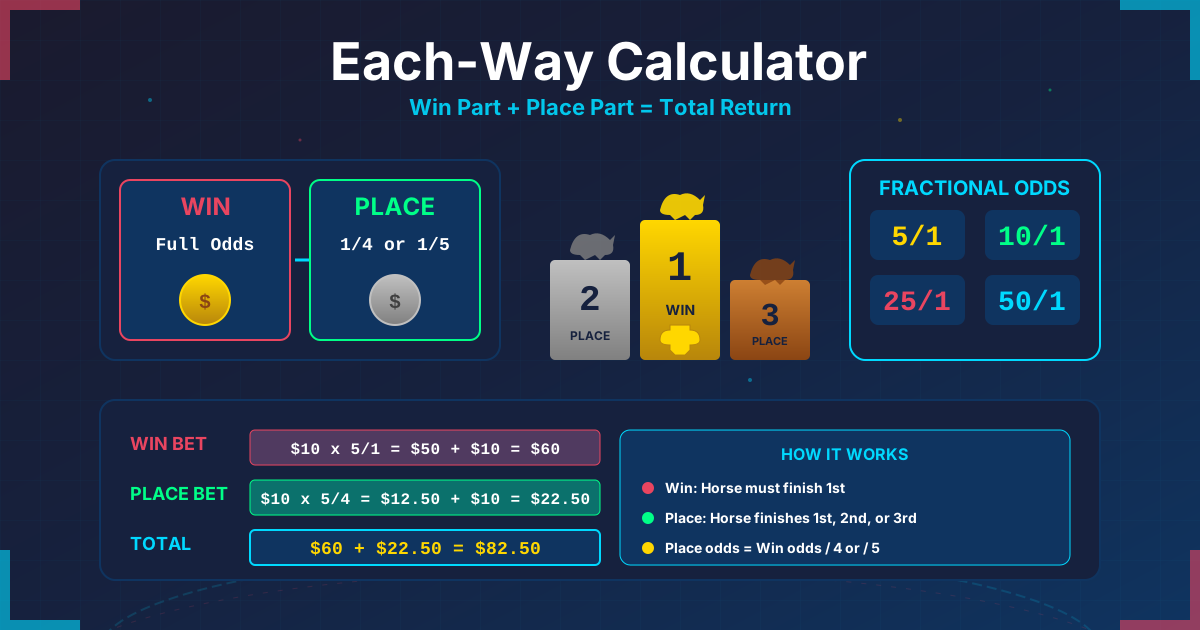
You will hear the phrase "across the board" at the betting window. This means you are placing three separate bets on the same horse: Win, Place, and Show. It costs $6 total (three $2 bets). If your horse wins, you collect on all three. If it finishes second, you collect Place and Show. If it finishes third, you only collect Show.
Example: You bet $2 across the board on a horse at 10-1. The horse wins.
- Win pays: $22.00
- Place pays: $9.40
- Show pays: $5.60
- Total return: $37.00 on a $6 investment
If that same horse finishes third instead:
- Win: $0 (loss)
- Place: $0 (loss)
- Show pays: $5.60
- Total return: $5.60 on a $6 investment (net loss of $0.40)
Exotic Bets: Where the Big Payouts Live
Exotic bets involve picking multiple horses in specific finishing positions. They are harder to hit but offer much larger payouts. The Kentucky Derby, with its 20-horse field, produces some of the largest exotic payouts in all of horse racing.
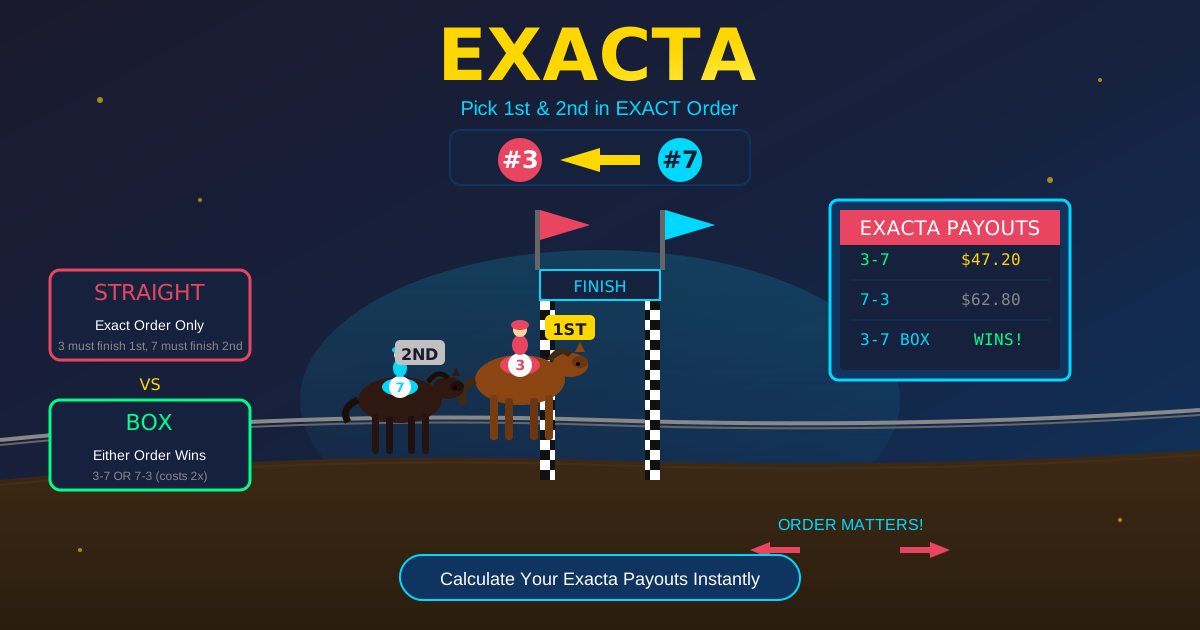
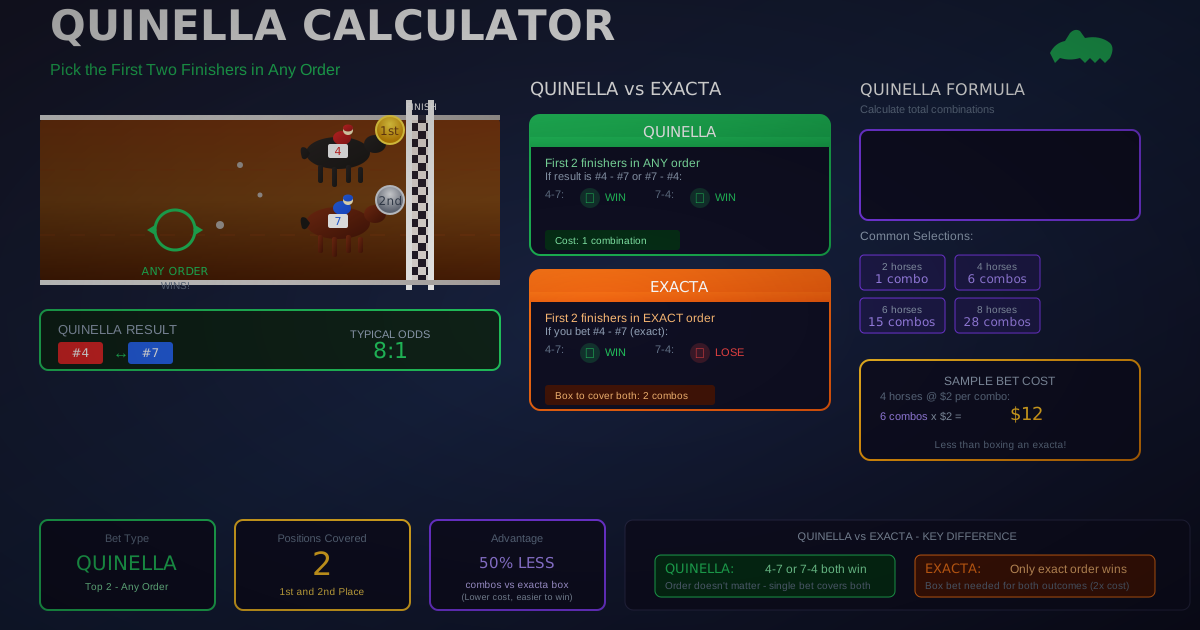
Exacta
Pick the horses that finish first and second, in exact order.
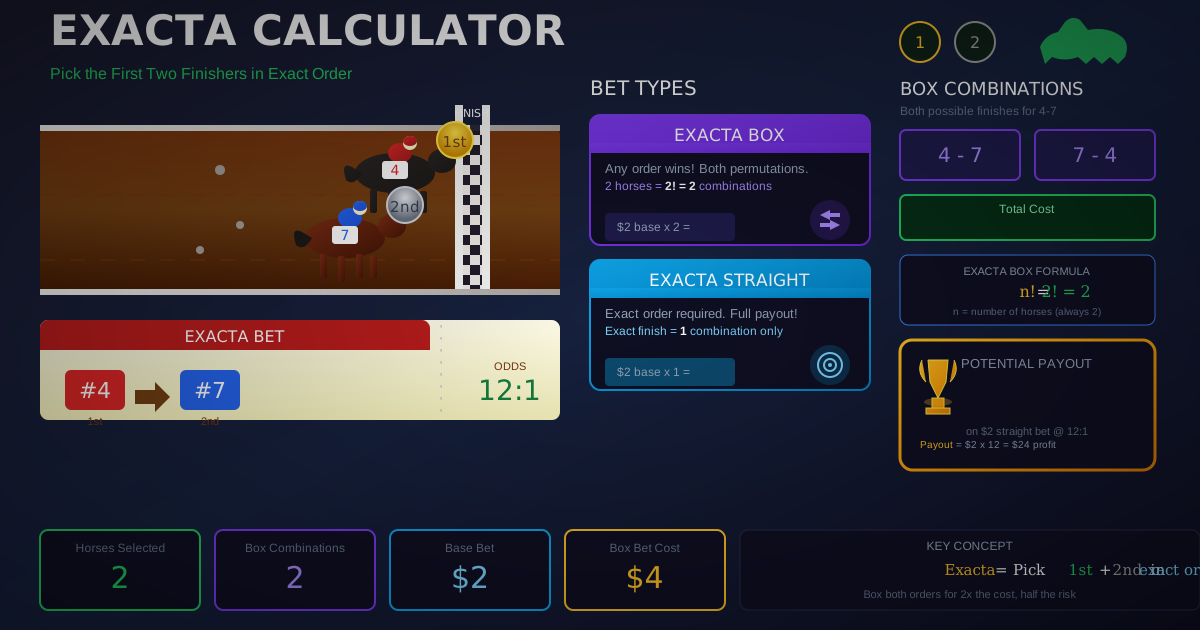
- Minimum bet: $2 (straight), $1 (box)
- Box option: An Exacta Box means your two horses can finish in either order (1st-2nd or 2nd-1st). Boxing costs double because you are making two combinations.
Example: In the 2025 Derby, the $1 Exacta (Sovereignty over Journalism) paid $48.32. If you had boxed that Exacta for $2, you would have collected regardless of which horse won and which finished second.
Trifecta
Pick the horses that finish first, second, and third, in exact order.
- Minimum bet: $1 (straight), varies when boxed
- Box option: A Trifecta Box with three horses covers all six possible finishing combinations and costs 6x your base bet. A $1 Trifecta Box with three horses costs $6.
Example: The 2025 Derby $1 Trifecta paid $231.12 -- not a huge payout by Derby standards, reflecting that the top three finishers were not extreme longshots. In contrast, the 2022 Derby Trifecta (Rich Strike at 80-1 winning) paid over $14,000 for a $1 bet.
Superfecta
Pick the horses that finish first, second, third, and fourth, in exact order. This is the bet that creates life-changing payouts.
- Minimum bet: $0.10 (many tracks allow dime supers)
- Box option: A Superfecta Box with four horses covers all 24 possible combinations and costs 24x your base bet. A $0.10 Superfecta Box with four horses costs just $2.40.
Example: The 2025 Derby $1 Superfecta paid $1,682.27. In years with bigger upsets, Superfecta payouts can exceed $100,000+.
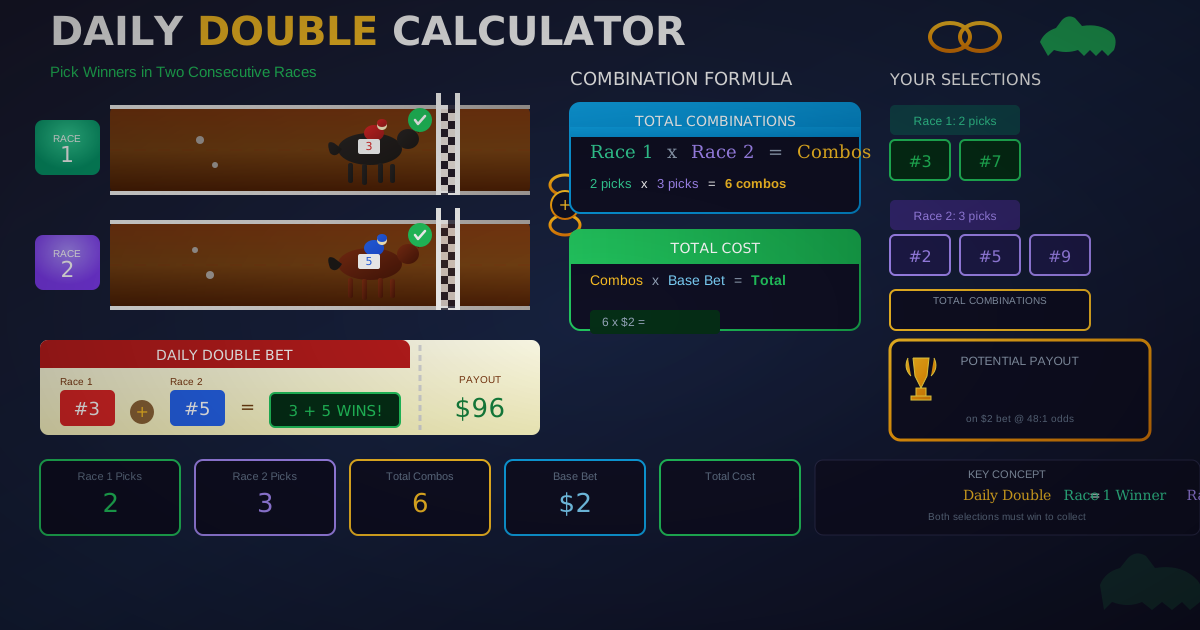
Daily Double
Pick the winners of two consecutive races. At the Kentucky Derby, the most popular Daily Double pairs the Kentucky Oaks (the major race for fillies, run the day before) or one of the earlier Derby Day undercard races with the Derby itself.
- Minimum bet: $1
- Strategy tip: Daily Doubles often offer better value than parlaying two Win bets because the takeout applies once to the combined pool rather than twice to separate pools.
Exotic Bet Cost Calculator
Understanding how much exotic bets cost when you box or key multiple horses is critical for budget management:
| Bet Type | Horses Selected | Straight Cost ($1 base) | Boxed Cost ($1 base) | Boxed Cost ($0.10 base) |
|---|---|---|---|---|
| Exacta | 2 | $1 | $2 | N/A (min $1) |
| Exacta | 3 | $1 | $6 | N/A |
| Trifecta | 3 | $1 | $6 | $0.60 |
| Trifecta | 4 | $1 | $24 | $2.40 |
| Trifecta | 5 | $1 | $60 | $6.00 |
| Superfecta | 4 | $1 | $24 | $2.40 |
| Superfecta | 5 | $1 | $120 | $12.00 |
| Superfecta | 6 | $1 | $360 | $36.00 |
The costs escalate quickly when you add horses. A $0.10 Superfecta Box with 8 horses costs $168.00 (8 x 7 x 6 x 5 = 1,680 combinations x $0.10). This is why serious bettors use keying instead of boxing.
Use our Parlay Calculator to compare multi-race wager payouts against parlayed individual bets.
Keying: The Smarter Way to Play Exotics
Instead of boxing (which gives every horse an equal chance in every position), keying lets you structure your bet around your strongest opinion.
Key on top: You pick one horse to win, then multiple horses to fill the remaining positions.
Example -- Trifecta Key:
- Key horse: #5 to WIN
- Other horses: #3, #8, #12 for 2nd and 3rd
- This creates 6 combinations: 5-3-8, 5-3-12, 5-8-3, 5-8-12, 5-12-3, 5-12-8
- Cost: $6 at $1 per combination (vs. $24 to box all four horses)
You save money because you are not paying for combinations where #3, #8, or #12 win the race -- only where #5 does.
Key in multiple positions:
- Key horse: #5 to WIN or PLACE
- Other horses: #3, #8, #12 for remaining spots
- This costs more but still less than a full box
Keying is the secret weapon of experienced Derby bettors. It lets you invest more in your strongest opinions while still covering multiple scenarios.
How to Read a Racing Form (The Basics)
The Daily Racing Form and track programs contain a dense block of information about each horse. Here is what matters most for Derby bettors:
The Essential Information
Speed Figures (Beyer Numbers): Created by Andrew Beyer, these are the most widely used performance metric in horse racing. A Beyer Speed Figure adjusts a horse's final time for track surface, distance, and daily track conditions, producing a single number that can be compared across different tracks and distances.
- What they mean: A 100 Beyer is an outstanding race. An 80 is solid. A 90+ in a Derby prep race is impressive.
- How to use them: Look for horses whose best Beyer figures are competitive with recent Derby winners. The winning Beyer for the Derby typically falls in the 95-110 range. Compare each horse's last three races, not just the peak.
- Limitations: Speed figures do not account for trouble in running, pace scenarios, or distance questions. A horse with a 95 Beyer at 1 1/8 miles might not replicate that at the Derby's 1 1/4 miles.
Running Line: This shows where the horse was positioned at each point of call during its previous races. Look for:
- Closers: Horses that run near the back early and make a big move in the stretch. In the Derby's large 20-horse field, closers face significant traffic challenges.
- Pace pressers: Horses that sit just behind the leaders and pounce in the stretch. This running style historically performs well in the Derby.
- Front runners: Horses that lead from start to finish. They can win the Derby but are vulnerable to a fast early pace with 20 horses chasing.
Class level: Not all prep races are created equal. A horse winning a Grade 1 stakes at a major track is accomplishing more than one winning an allowance race at a minor track. Look for Grade 1 experience.
Key Racing Form Abbreviations
| Abbreviation | Meaning | Why It Matters |
|---|---|---|
| 1st, 2nd, 3rd | Finish position | Track record and consistency |
| Bkr/Beyer | Beyer Speed Figure | Primary performance comparison |
| PP | Post Position | Starting gate number |
| Dist | Distance of race | Derby is 1 1/4 miles -- has the horse run that far? |
| Trk | Track surface (D/T/Sy) | Dirt, Turf, Synthetic -- Derby is dirt |
| Wt | Weight carried | All Derby horses carry 126 lbs |
| Jky | Jockey | Rider assignment |
| Trn | Trainer | Trainer statistics |
| Odds | Morning line odds | Starting point for wagering interest |
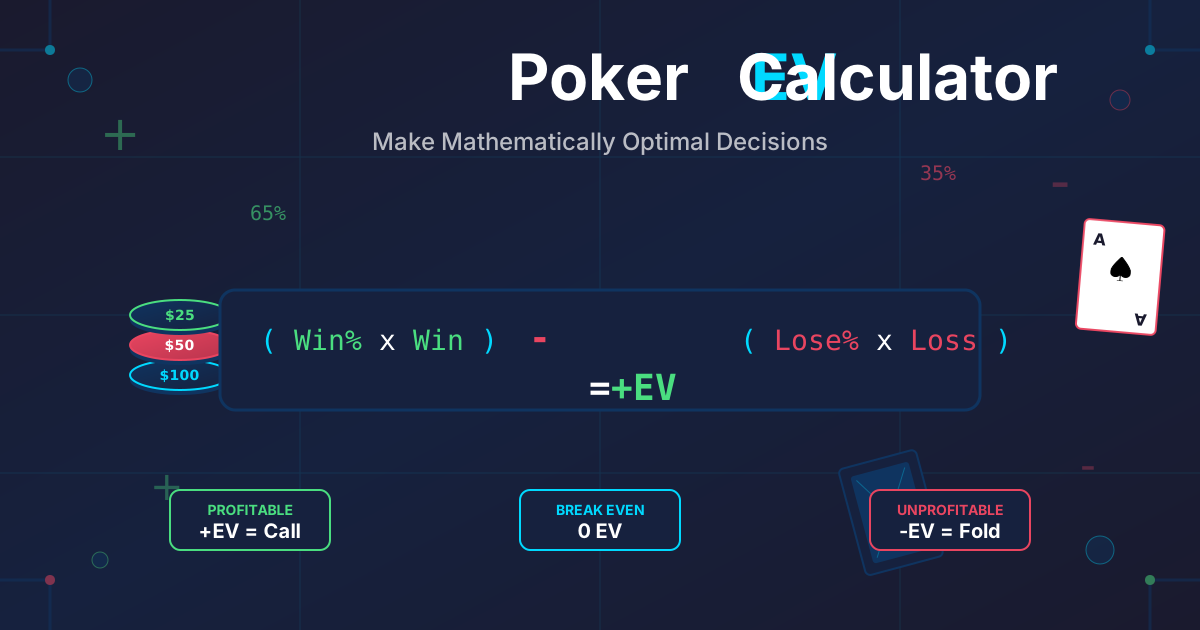
Calculate the true value of any odds with our Expected Value Calculator.
Post Position Analysis: Where You Start Matters
In a 20-horse field crammed into a starting gate, where your horse begins the race can significantly impact its chances. The Derby starts on the far side of the Churchill Downs homestretch, with horses running past the grandstand, around the clubhouse turn, down the backstretch, around the far turn, and home -- a total of 1 1/4 miles.
Historical Post Position Win Rates
| Post Position | Wins (Since 1900) | Win Rate | Notable Winners |
|---|---|---|---|
| 1 | 7 | ~5.8% | Ferdinand (1986) |
| 2 | 7 | ~5.8% | Monarchos (2001) |
| 3 | 6 | ~5.0% | Mystik Dan (2024) |
| 4 | 6 | ~5.0% | Funny Cide (2003) |
| 5 | 10 | ~10.5% | Always Dreaming (2017), California Chrome (2014) |
| 6 | 5 | ~4.2% | Nyquist (2016) |
| 7 | 8 | ~6.7% | Mine That Bird (2009) |
| 8 | 9 | ~7.5% | Barbaro (2006) |
| 9 | 4 | ~3.3% | Orb (2013) |
| 10 | 9 | ~7.5% | Justify (2018) |
| 11-16 | ~30 combined | ~5% avg each | Various |
| 17 | 0 | 0% | Never produced a winner |
| 18-20 | 4 combined | ~3% avg each | Big Brown (2008, post 20) |
Key Post Position Takeaways
- Post 5 is the all-time leader with 10 victories and a 10.5% win rate -- roughly double what random chance would predict.
- Middle posts (5-16) dominate. Horses breaking from posts 5 through 16 have won 62% of Derbies since 1999.
- Inside posts (1-3) struggle. Since 1987, the combined win rate for posts 1, 2, and 3 was just 2.6% -- though Mystik Dan broke through from post 3 in 2024.
- Post 17 is cursed. In 45 attempts, no horse has ever won the Derby from post 17.
- Far outside is difficult. Posts 18-20 face a long run to the first turn and typically must use more energy early to establish position.
Why inside posts struggle in the Derby: With 20 horses, inside posts risk getting boxed in behind a wall of horses. The horse either gets stuck in traffic or has to swing extremely wide around the turns, covering extra ground.
Why middle posts are ideal: They offer the best combination of a clear run to the first turn without being forced too wide or too far inside.
Speed Figures and Beyer Numbers: A Deeper Look
Speed figures are the closest thing horse racing has to a universal performance metric. Understanding them gives you a significant edge over casual bettors who only look at win-loss records or morning line odds.
How Beyer Speed Figures Work
Andrew Beyer developed the system to solve a fundamental problem: raw finish times are meaningless without context. A horse running 1:49 flat at Keeneland on a fast day might be performing at a lower level than one running 1:50.2 at Saratoga on a slow surface.
The Beyer figure adjusts for:
- Track surface speed: How fast the racing surface played that day
- Distance: Normalized across different race lengths
- Track-to-track variation: A figure of 90 at Gulfstream equals 90 at Santa Anita
What Beyer Figures Tell You About Derby Contenders
| Beyer Range | What It Means | Derby Prospects |
|---|---|---|
| 100+ | Elite performance | Strong contender; this is Derby-winning territory |
| 95-99 | Very strong | Competitive; within striking distance of most winners |
| 90-94 | Solid | Needs improvement but not out of it; watch for upward trend |
| 85-89 | Average stakes level | Needs a significant step forward to contend |
| Below 85 | Below stakes caliber | Unlikely to be competitive against top Derby fields |
Recent Derby-winning Beyer figures:
- Justify (2018): 107 (one of the highest in modern Derby history)
- Nyquist (2016): 101
- American Pharoah (2015): 105
- California Chrome (2014): 97
Pro tip: Look for the trend, not just the peak. A horse whose last three Beyers are 88-92-97 is moving in the right direction, suggesting continued improvement. A horse whose figures read 101-90-88 may be going the wrong way.
Beyond Beyer: Other Speed Figure Providers
- TimeformUS: Offers pace figures in addition to speed figures, helping identify how a race unfolded
- Thoro-Graph: Uses a different methodology; lower numbers are better (opposite of Beyer)
- Equibase Speed Figures: Free with past performance data
Cross-referencing multiple figure services can identify horses whose abilities are being underestimated by the public.
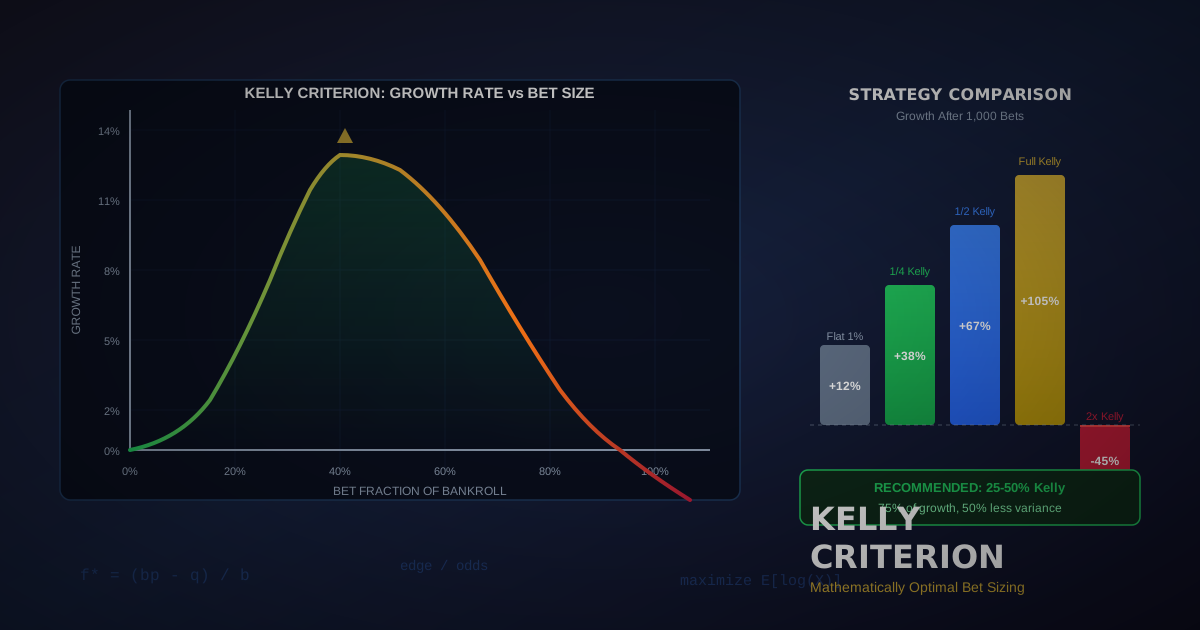
Run the numbers on any edge you identify with our Kelly Criterion Calculator to determine optimal bet sizing.
Trainer and Jockey Analysis
In the Kentucky Derby, the human element matters enormously. A 3-year-old horse has limited racing experience, making the trainer's preparation and the jockey's tactical decisions critical factors.
Trainer Statistics That Matter
Bob Baffert (suspended from Churchill Downs through 2024, eligible for the 2026 Derby): Has trained seven Derby winners -- more than any trainer in the modern era. His horses include American Pharoah (2015), Justify (2018), and Authentic (2020).
Todd Pletcher: The all-time leader in career purse earnings has won the Derby twice (Super Saver in 2010, Always Dreaming in 2017). Pletcher often enters multiple horses, diluting his per-horse win rate but increasing his chances of landing at least one horse in the money.
Key trainer statistics to evaluate:
- Win rate at 1 1/4 miles: The Derby distance is longer than most prep races. Does this trainer's horse run well going long?
- Derby starts vs. wins: Some top trainers have low Derby win rates despite overall excellence
- Debut at distance: How do this trainer's horses perform when running 1 1/4 miles for the first time?
- Prep race pattern: The traditional Derby prep pattern runs through the Florida, New York, California, or Oaklawn/Fair Grounds trails. Some paths produce winners more consistently.
Jockey Impact
In a 20-horse field around two turns at Churchill Downs, jockey decisions in the first quarter-mile can determine the outcome.
Key jockey factors:
- Churchill Downs experience: Jockeys who know the track's turns, the timing of their moves, and how the surface plays have a significant advantage
- Big-race composure: The Derby is unlike any other race in terms of field size, crowd noise, and intensity. Some jockeys elevate in the moment; others tighten up.
- Style match: A front-running jockey on a natural closer (or vice versa) can lead to poor results
All-time leading Derby jockeys:
- Eddie Arcaro: 5 wins
- Bill Hartack: 5 wins
- Bill Shoemaker: 4 wins
- More recently, Calvin Borel won 3 Derbies in a 4-year span (2007, 2009, 2010) with his rail-riding style
Derby-Specific Betting Angles
The Kentucky Derby is not a normal horse race. Understanding what makes it unique gives you an edge over bettors who treat it like any other stakes race.
The Favorite's Track Record
| Metric | Value | Time Period |
|---|---|---|
| Favorites winning the Derby | ~37% | All-time (150 editions) |
| Favorites finishing in the top 3 | ~68% | All-time |
| Morning line favorites winning | ~30% | Since 2000 |
| Closing favorites winning | ~42% | Since 2000 |
| Favorites at 2-1 or less winning | ~50% | Since 1990 |
| Favorites at 5-1 or higher winning | ~20% | Since 1990 |
The takeaway: Favorites win often enough that you cannot ignore them, but they lose nearly two-thirds of the time. This is a race where longshots are live every year.
The Longshot Factor
The Derby's 20-horse field creates more chaos, more traffic trouble, and more opportunity for upsets than any other race:
- Rich Strike (2022): 80-1, paid $163.60 on a $2 Win bet
- Mine That Bird (2009): 50-1, paid $103.20
- Giacomo (2005): 50-1, paid $102.60
- Country House (2019): 65-1, paid $132.40 (via disqualification of Maximum Security)
- Donerail (1913): 91-1, the longest-priced winner in Derby history, paying $184.90
Since 2019, four out of seven Derby winners went off at 7-1 or higher. The days of short-priced favorites dominating are largely over.
Pace Scenario Analysis
The Derby's large field almost always produces a contested early pace. When multiple speed horses try to lead, they burn each other out, setting up closers to rally past tired leaders in the stretch.
Things to look for:
- How many front-runners are in the field? Three or more speed horses usually means a fast pace that favors closers.
- Is there a lone speed horse? A single front-runner with no pace pressure can control the race at a comfortable tempo and may wire the field.
- Where will your horse be positioned? In a 20-horse field, horses starting from outside posts who want to be near the lead must use more energy to establish position.
The Distance Question
The Kentucky Derby at 1 1/4 miles (10 furlongs) is longer than most prep races, which are typically run at 1 1/16 miles (8.5 furlongs) or 1 1/8 miles (9 furlongs). Every year, horses who dominated at shorter distances fade in the Derby stretch because they have never run this far.
What to look for:
- Has the horse won or run competitively at 1 1/8 miles or longer?
- Does the horse's running style suggest stamina (closing late, strong finishes)?
- What is the horse's pedigree? Sires known for producing stamina influences (like Tapit, Curlin, and Into Mischief's longer-running offspring) are a positive sign.
Key Derby Prep Races Worth Watching
The Road to the Kentucky Derby awards qualifying points through a series of prep races. Bettors should pay close attention to these races to evaluate contenders.
Major Prep Races and Points Structure
| Race | Track | Distance | Points (1st-5th) | Timing |
|---|---|---|---|---|
| Breeders' Cup Juvenile | Various | 1 1/16 mi | 10-5-3-2-1 | November (year prior) |
| Lecomte Stakes | Fair Grounds | 1 1/16 mi | 20-10-6-4-2 | January |
| Holy Bull Stakes | Gulfstream Park | 1 1/16 mi | 20-10-6-4-2 | January/February |
| Sam F. Davis Stakes | Tampa Bay Downs | 1 1/16 mi | 20-10-6-4-2 | February |
| Risen Star Stakes | Fair Grounds | 1 1/8 mi | 50-25-15-10-5 | February |
| Fountain of Youth | Gulfstream Park | 1 1/16 mi | 50-25-15-10-5 | March |
| Louisiana Derby | Fair Grounds | 1 3/16 mi | 100-50-25-15-10 | March |
| Florida Derby | Gulfstream Park | 1 1/8 mi | 100-50-25-15-10 | March/April |
| Santa Anita Derby | Santa Anita Park | 1 1/8 mi | 100-50-25-15-10 | April |
| Wood Memorial | Aqueduct | 1 1/8 mi | 100-50-25-15-10 | April |
| Blue Grass Stakes | Keeneland | 1 1/8 mi | 100-50-25-15-10 | April |
| Arkansas Derby | Oaklawn Park | 1 1/8 mi | 100-50-25-15-10 | April |
What to Look for in Prep Races
- Visual impression: Did the horse win easily, or was it a grinding effort? A horse that wins going away (pulling clear at the finish) is more impressive than one that barely held on.
- Final time and Beyer figure: Compare against the same race in prior years. A horse running a 95 Beyer in the Florida Derby is doing something significant.
- How did the horse handle adversity? Bumped at the start? Wide on the turns? Blocked in the stretch? Horses that overcome trouble and still finish well are showing heart and talent.
- Is the horse improving? The best Derby horses get better as they move through the prep schedule. A horse that peaks in February and regresses in April is a red flag.
Spread your risk across multiple Derby contenders with our Dutching Calculator.
Multi-Race Wagers: Pick 3, Pick 4, Pick 5, and Pick 6
Multi-race wagers involve picking the winners of consecutive races. They offer massive payouts and are a core part of the Derby Day experience because Churchill Downs runs a full card of stakes races leading into the Derby.
How Multi-Race Bets Work
- Pick 3: Pick the winner of three consecutive races. Minimum $0.50.
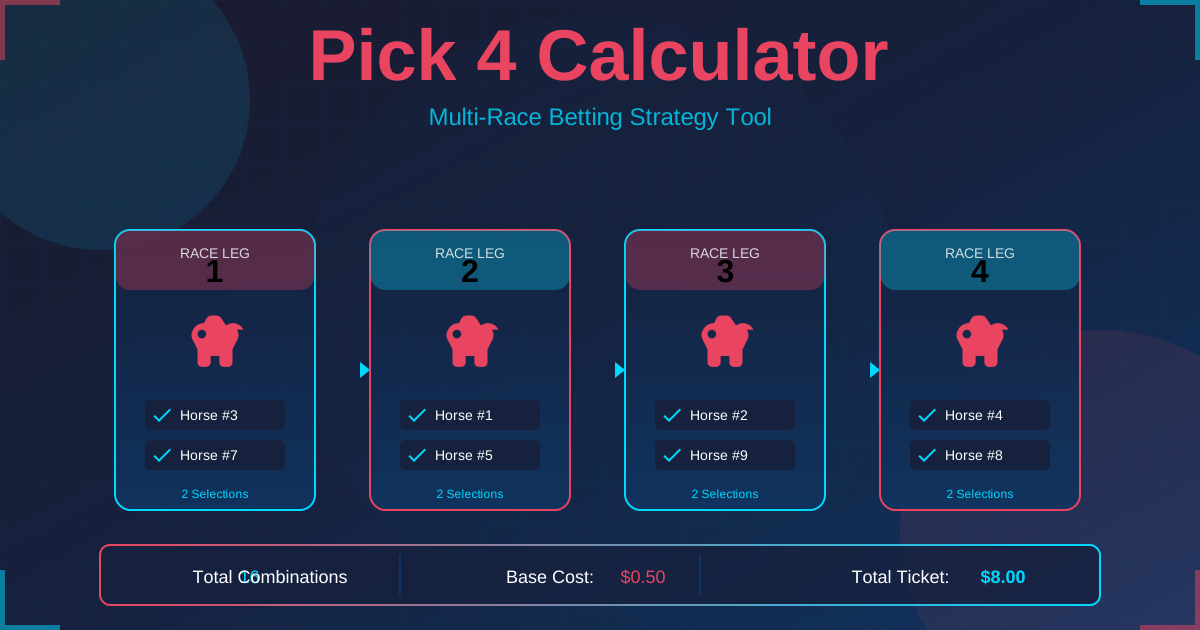
- Pick 4: Pick the winner of four consecutive races. Minimum $0.50.
- Pick 5: Pick the winner of five consecutive races. Minimum $0.50.
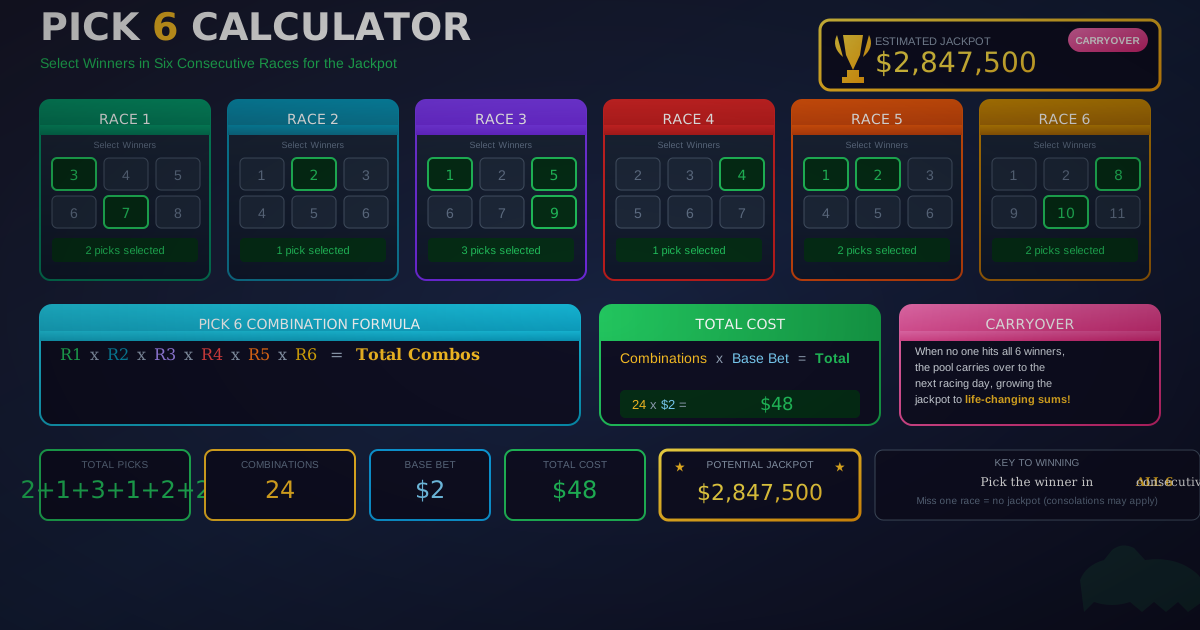
- Pick 6 (Jackpot): Pick the winner of six consecutive races. Minimum $0.20. Often features a carryover pool that can reach hundreds of thousands of dollars.
Strategy for Multi-Race Wagers
The key concept is singling vs. spreading:
- Single: A horse you are confident will win. Using one horse in a leg dramatically reduces the cost of your ticket.
- Spread: Using multiple horses in a leg where you are less confident. Each additional horse multiplies the total ticket cost.
Example -- Pick 4 ticket:
- Race 9: Horse #3 (single) -- 1 horse
- Race 10: Horses #2, #7, #11 -- 3 horses
- Race 11: Horses #1, #5 -- 2 horses
- Race 12 (Derby): Horses #4, #8, #14 -- 3 horses
- Total combinations: 1 x 3 x 2 x 3 = 18 combinations
- Cost at $0.50 base: $9.00
If you tried to spread four horses in every leg, that same ticket would cost $0.50 x 256 = $128. Singling in legs where you have strong opinions keeps costs manageable.
Pro tip: Many experienced bettors target the Pick 5 or Pick 4 ending with the Kentucky Derby. They single strong favorites in the undercard stakes and spread multiple horses in the Derby itself, where the 20-horse field creates the most uncertainty.
Budget-Friendly Derby Betting Strategies
You do not need to spend a fortune to have a great time betting the Derby. Here are strategies for every budget level.
The $20 Derby Budget
With $20, keep it simple and fun:
| Bet | Cost | Strategy |
|---|---|---|
| $2 Win on your top pick | $2 | Your best horse to win it all |
| $2 Win on a longshot (15-1 or higher) | $2 | Your "fun" horse -- the name you like, the jockey's colors, the underdog story |
| $2 Exacta Box (2 horses) | $4 | Your top two picks in either order |
| $0.10 Superfecta Box (4 horses) | $2.40 | Your top four picks in any order for a dime super |
| $2 Show bet on a second choice | $2 | A safe bet on a horse likely to hit the board |
| Remaining: $2 Win or additional Exacta | $7.60 | Dealer's choice |
The $50 Derby Budget
| Bet | Cost | Strategy |
|---|---|---|
| $5 Win on top pick | $5 | Your strongest conviction |
| $2 Win bets on 3 longshots | $6 | Cast a wider net for upset potential |
| $1 Exacta Box (3 horses) | $6 | Three contenders in any top-2 order |
| $1 Trifecta Key (1 over 4) | $12 | Key your top pick over 4 others |
| $0.10 Superfecta Box (5 horses) | $12 | 120 combinations at a dime each |
| $2 Show bet on a safe horse | $2 | Protect capital with a likely casher |
| Remaining for Daily Double or Pick 3 | $7 | Multi-race value play |
The $200 Derby Budget
| Bet | Cost | Strategy |
|---|---|---|
| $20 Win on top pick | $20 | Core conviction bet |
| $10 Win on second pick | $10 | Secondary conviction |
| $5 Win on 3 longshots | $15 | Multiple upset candidates |
| $2 Exacta Box (4 horses) | $24 | Wide exacta coverage |
| $1 Trifecta Key (2 over 5) | $30 | Two key horses over 5 others for top 3 |
| $0.50 Superfecta Key (1 over 6) | $60 | Key your top pick in first, spread 6 others for 2nd-3rd-4th |
| Pick 4 ending with Derby ($0.50 base) | $20-30 | Multi-race wager for maximum value |
| Reserve | ~$11-21 | Last-minute value or additional Win bets |
Universal Budget Tips
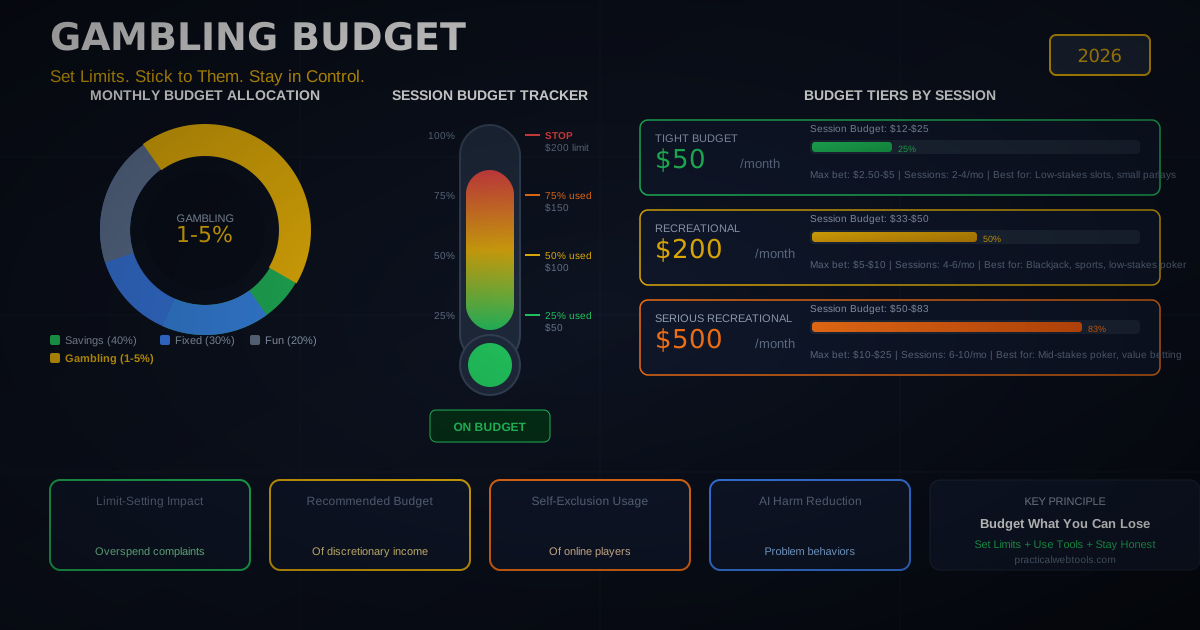
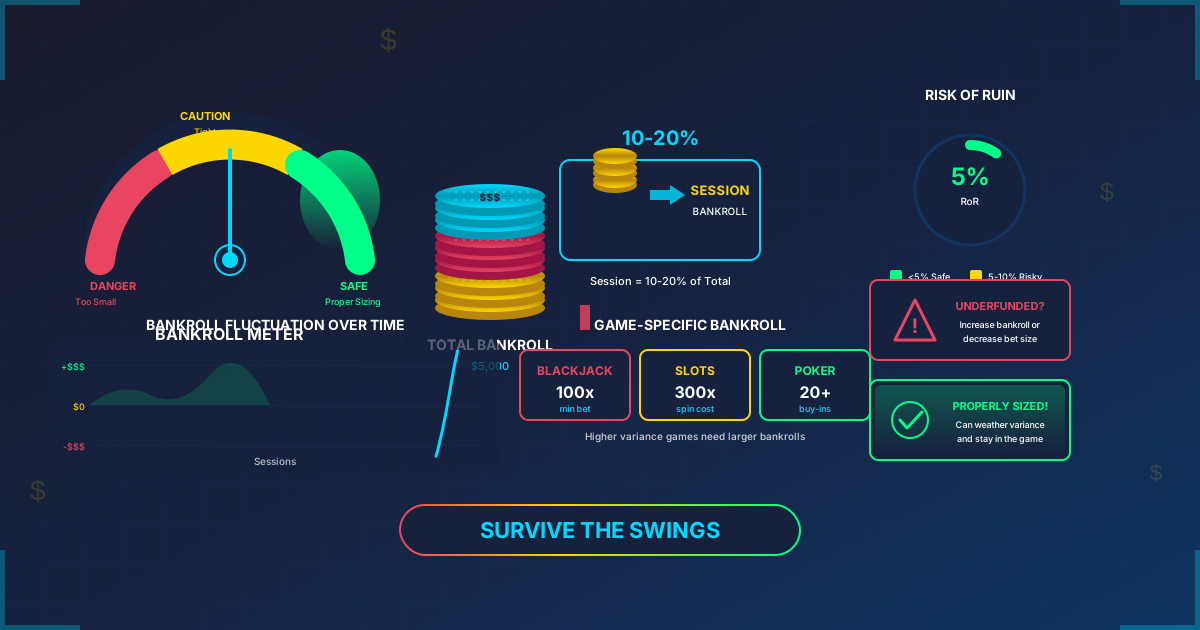
- Never bet more than you are prepared to lose. Derby Day is entertainment. Set your budget before you start and stick to it.
- The $0.10 Superfecta is your best friend. For the cost of a coffee, you can have 24 combinations of four horses. In a 20-horse field where chaos reigns, dime supers are the most fun-per-dollar bet available.
- Do not bet every race. Churchill Downs runs 14 races on Derby Day. You do not need action on all of them. Save your firepower for the races you have studied.
- Small Win bets on longshots have huge upside. A $2 Win bet on an 80-1 shot returns $162. You do not need to risk a lot to have a massive score.
- Use your tools. Convert odds, calculate implied probabilities, and size your bets mathematically rather than emotionally.
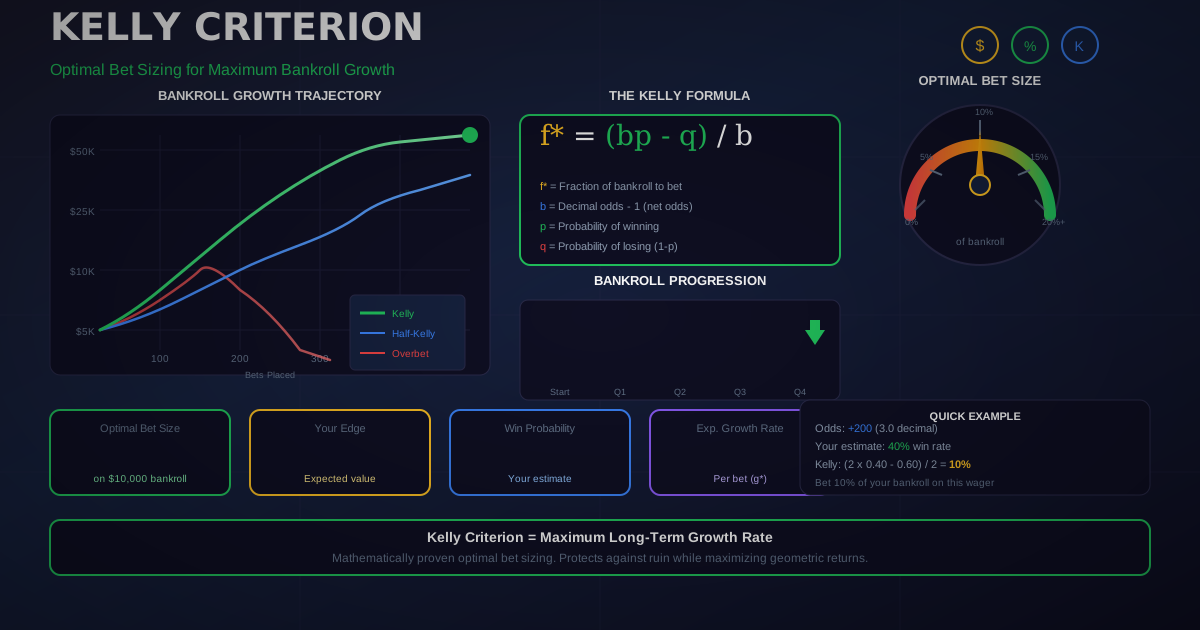
Determine optimal bet sizing for any edge you identify using the Kelly Criterion Calculator.
Where and How to Place Your Derby Bets
At Churchill Downs
If you are at the track, you can bet at:
- Betting windows: Staffed by tellers who process your bet. Tell them the race number, the amount, the bet type, and the horse number(s).
- Self-service terminals: Touchscreen machines where you build your own tickets.
- TwinSpires on-site: The track's official online platform works on your phone while at Churchill Downs.
Tip: Lines at the windows get extremely long in the 30 minutes before the Derby. Place your bets early or use your phone.
Online and Off-Track
Legal online wagering platforms include:
- TwinSpires: Churchill Downs' official platform (handled $108 million on 2025 Derby Day alone)
- FanDuel Racing (formerly TVG): Major advance deposit wagering platform
- DraftKings Horse Racing: Integrated with their sportsbook
- Xpressbet, NYRABets, AmWager: Other licensed ADW platforms
All of these platforms use the same pari-mutuel pools, so odds and payouts are identical regardless of where you place the bet.
Check the legal status of pari-mutuel wagering in your state before placing any bets.
Frequently Asked Questions
What is the minimum bet at the Kentucky Derby? The minimum bet for Win, Place, or Show is $2. For exotic bets like the Trifecta, the minimum is typically $1 for a straight bet and $0.50 boxed. Superfectas can be wagered for as little as $0.10 per combination, making the dime Superfecta the most accessible exotic bet for beginners.
How are Derby payouts calculated? Payouts are based on the pari-mutuel system. All money wagered in a pool is combined, the track takes its takeout percentage (16-25% depending on bet type), and the remaining money is divided among winning ticket holders. The less money bet on the winning horse relative to the total pool, the higher the payout. This is why longshots pay so much -- fewer people bet on them.
Can I bet on the Kentucky Derby online? Yes, pari-mutuel wagering on horse racing is legal in most US states through licensed Advance Deposit Wagering (ADW) platforms like TwinSpires, FanDuel Racing, and DraftKings Horse Racing. You must create an account, verify your identity, and deposit funds before race day. Some states also allow fixed-odds betting on horse racing through licensed sportsbooks.
What does "across the board" mean? Across the board is three separate bets on the same horse: Win, Place, and Show. A $2 across-the-board bet costs $6 total. If your horse wins, you collect on all three bets. If it finishes second, you collect Place and Show. If it finishes third, you collect only Show. If it finishes fourth or worse, you lose all three bets.
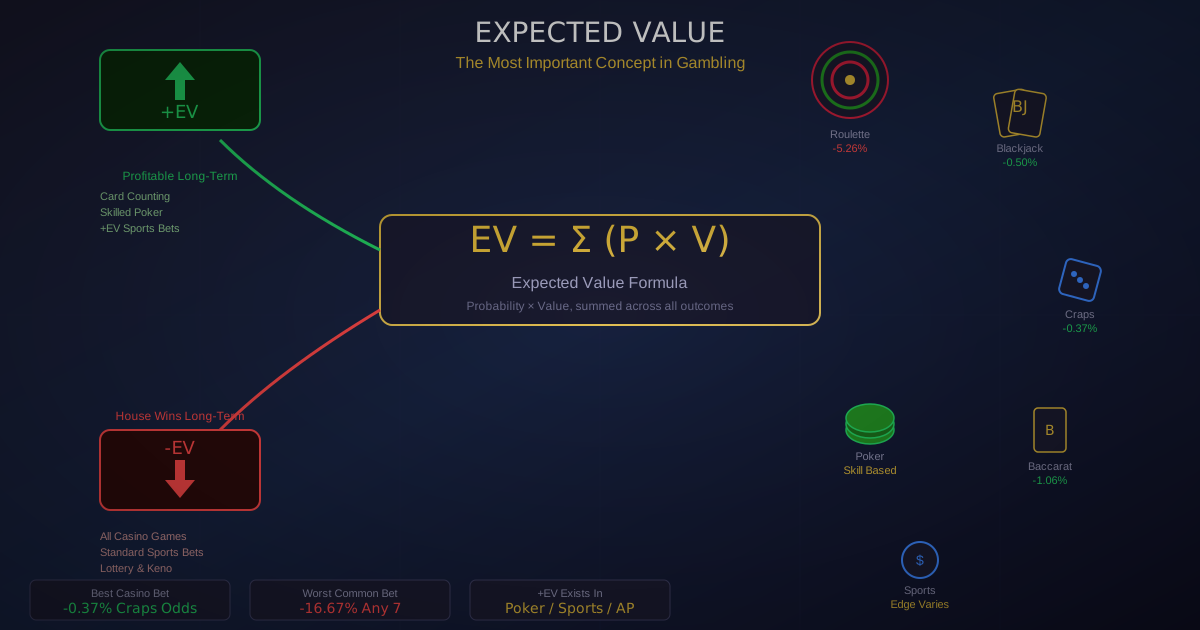
Should I bet the favorite or a longshot? There is no single correct answer. Favorites win about 37% of the time overall in the Derby, meaning they lose nearly two out of three times. Meanwhile, horses at 10-1 or higher have won 5 of the last 7 Derbies heading into 2026. The best strategy depends on your analysis: bet the horse you believe offers the best VALUE relative to its odds, not simply the one most likely to win. A 3-1 favorite with a 25% chance of winning is a worse bet than a 15-1 longshot with a 10% chance of winning, because the longshot offers better expected value relative to its price.
What is a "key" bet in horse racing? A key bet is an exotic wager (Exacta, Trifecta, or Superfecta) where you designate one or more horses for specific finishing positions while letting other horses fill the remaining spots. For example, in a Trifecta Key, you might key Horse #5 on top (to win) and use Horses #3, #8, and #12 underneath (for 2nd and 3rd). This costs less than a full box because you are only paying for combinations where #5 wins. Keying is more cost-efficient when you have strong opinions about which horse will win.
How do I watch the Kentucky Derby? The Kentucky Derby airs on NBC, typically with coverage beginning in the early afternoon and the race going off around 6:50 PM Eastern. The 2026 Kentucky Derby is scheduled for Saturday, May 2, 2026. NBC's streaming service also carries the broadcast. Churchill Downs' website and TwinSpires offer live video as well.
What is the best Kentucky Derby bet for beginners? Start with a $2 Win bet on a horse you like, paired with a $0.10 Superfecta Box of your four favorite horses ($2.40). This gives you a rooting interest in the race (the Win bet) plus a chance at a large exotic payout (the Superfecta) for a total investment of just $4.40. Add a $2 Show bet on a solid contender for a safer side bet, and your entire Derby experience costs under $7.
Essential Betting Tools for Derby Day
Having the right tools at your fingertips on Derby Day can be the difference between smart wagers and gut bets. Here are the free calculators that every Derby bettor should bookmark:
Odds and Probability Tools
- Odds Converter: Instantly convert between American (+350), decimal (4.50), and fractional (7/2) odds formats -- essential for comparing odds across different platforms and international racing
- Implied Probability Calculator: Convert any odds into a true win percentage so you can compare the market's view against your own handicapping opinion
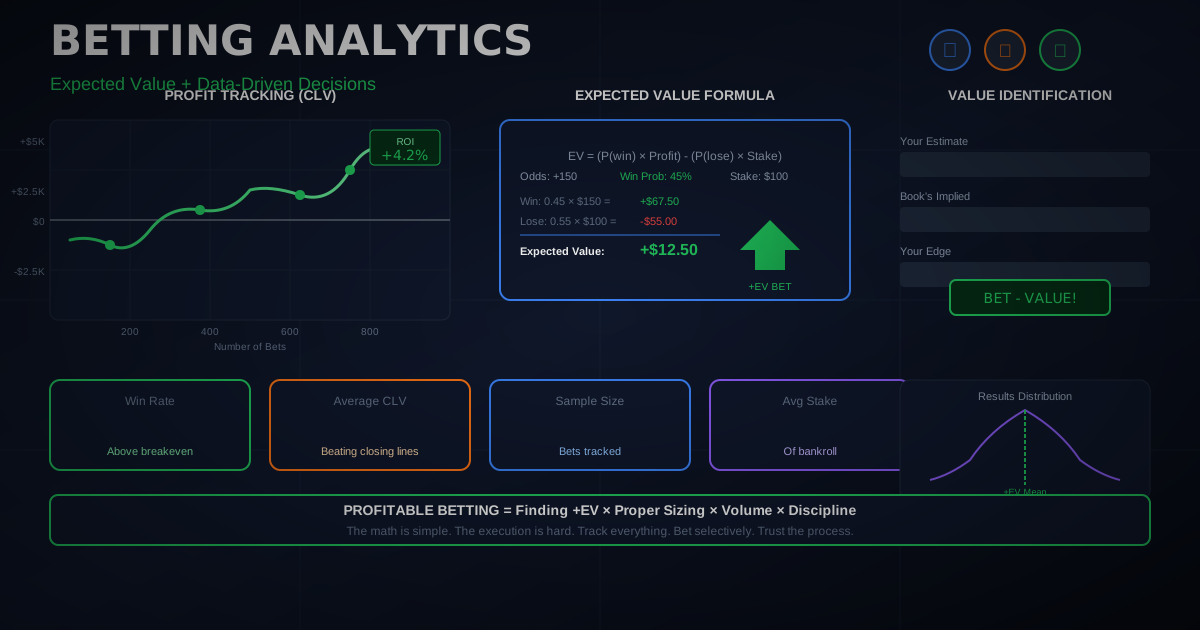
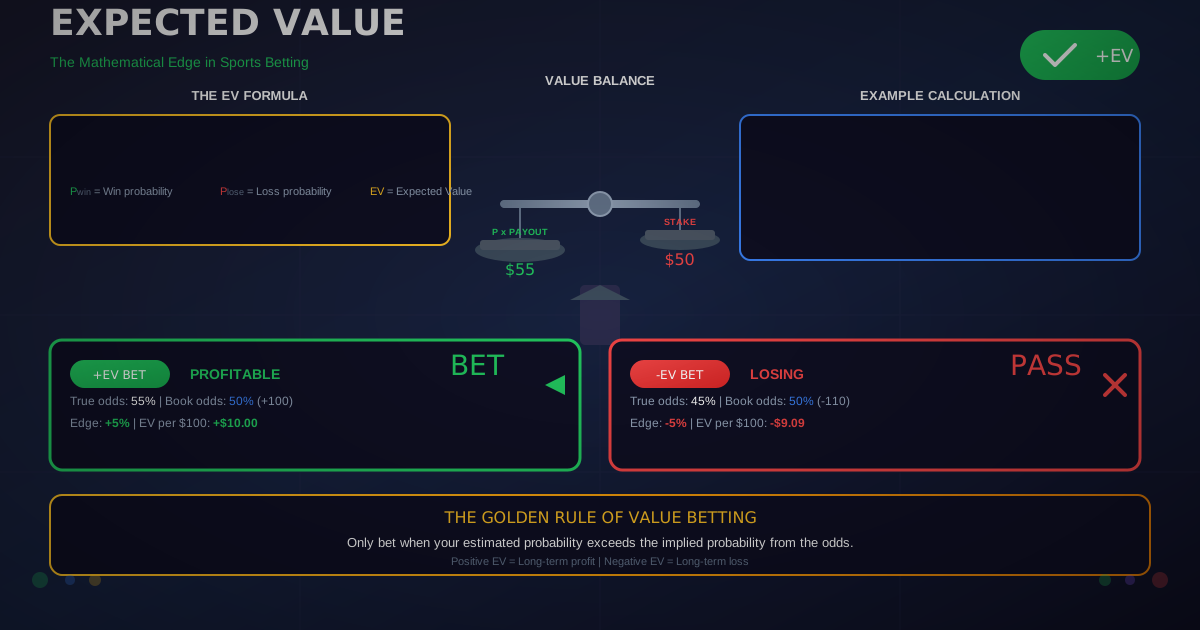
- Expected Value Calculator: Determine whether a bet offers positive or negative expected value based on your estimated probability versus the odds offered
Bankroll and Sizing Tools
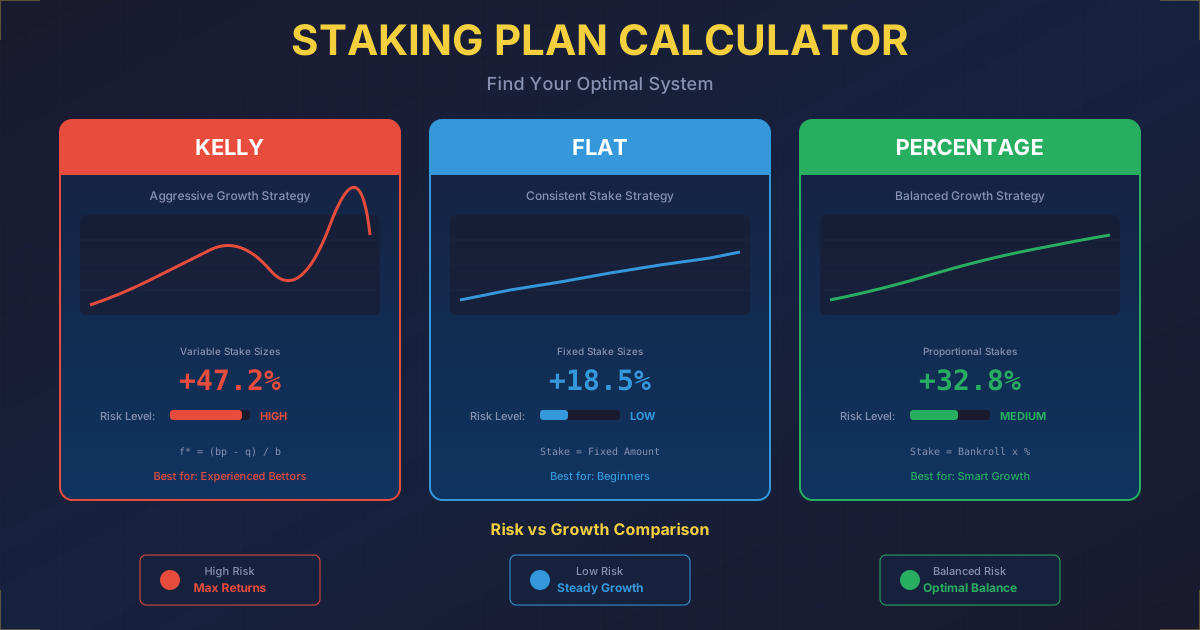
- Kelly Criterion Calculator: Calculate the mathematically optimal bet size based on your edge and bankroll -- then use fractional Kelly (25-50%) for safety in a single high-variance race like the Derby
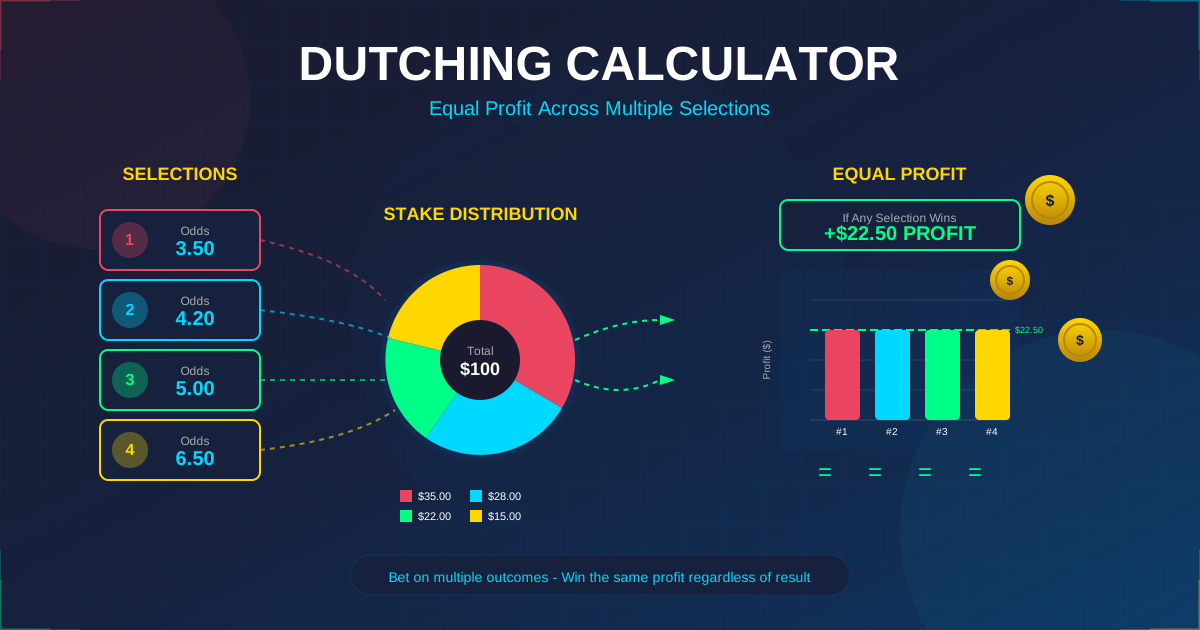
- Dutching Calculator: Spread your stake across multiple horses to guarantee equal profit regardless of which one wins -- perfect for bettors who like three or four Derby contenders equally
Multi-Bet and Comparison Tools
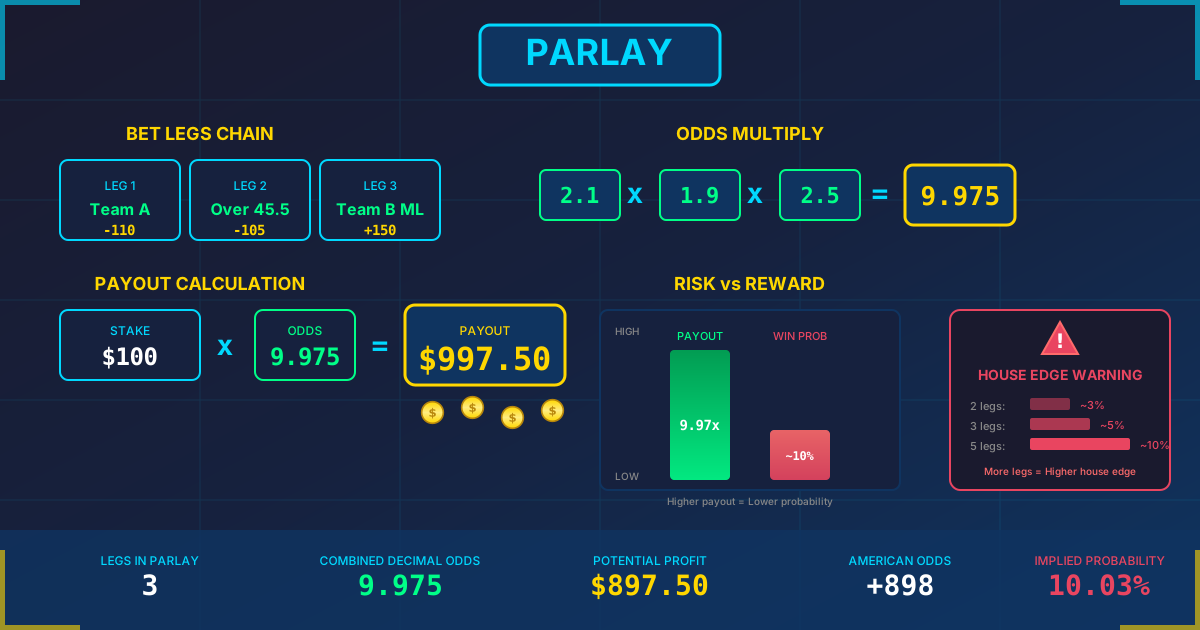
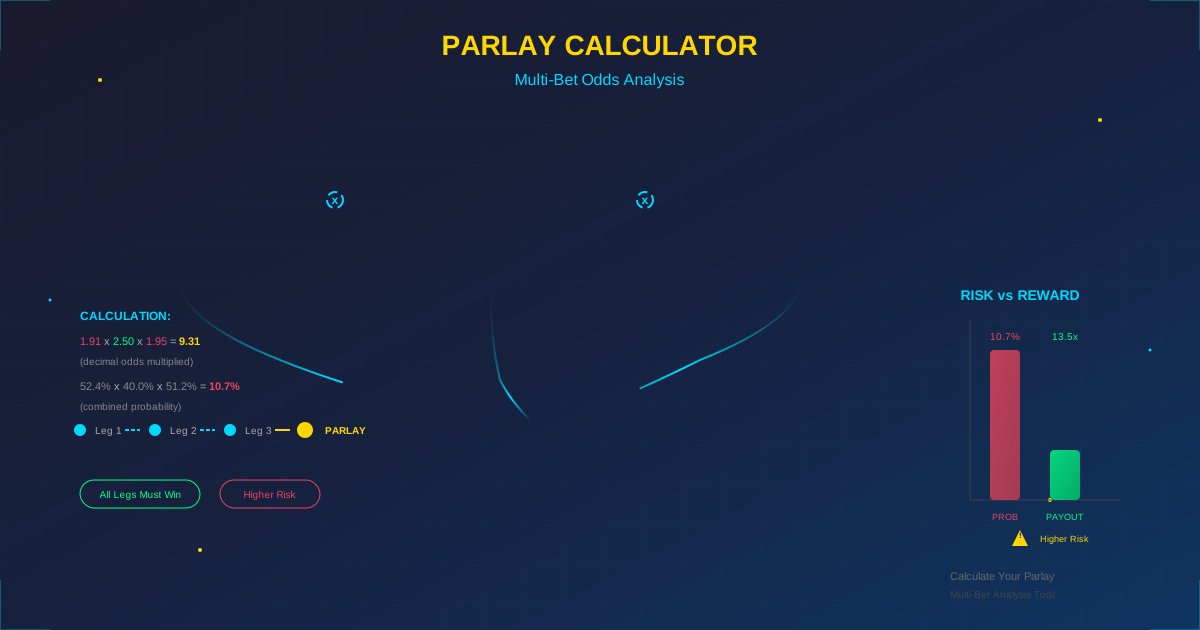
- Parlay Calculator: Calculate multi-race payouts and compare whether a Pick 3 or parlayed Win bets offer better value
- Odds Calculator: General-purpose odds mathematics for any wagering scenario
Conclusion: Your Derby Day Game Plan
The Kentucky Derby is the most thrilling two minutes in sports, and having a few dollars riding on the outcome makes it even better. Here is your pre-race checklist:
- Set your budget before Derby Day and do not exceed it
- Study the past performances -- speed figures, running style, trainer and jockey stats
- Check the post positions and factor in historical biases toward middle gates
- Analyze the pace scenario -- how many speed horses are in the field?
- Watch the tote board in the final 30 minutes for money moves
- Mix your bet types -- straight bets for safety, exotics for upside
- Use the $0.10 Superfecta for maximum fun-per-dollar
- Do not chase losses on the undercard -- save your powder for the main event
- Use the tools above to convert odds, calculate probabilities, and size bets properly
- Enjoy the day. Win or lose, the Kentucky Derby is a once-a-year spectacle
The 2026 Kentucky Derby is scheduled for Saturday, May 2, 2026 at Churchill Downs in Louisville, Kentucky. Post time is typically around 6:50 PM Eastern. Whether this is your first Derby bet or your fiftieth, the Run for the Roses never gets old.
Start crunching numbers now with our free Odds Converter and Expected Value Calculator. And when you find your edge, size it right with the Kelly Criterion Calculator.
May the best horse -- and the best bettor -- win.
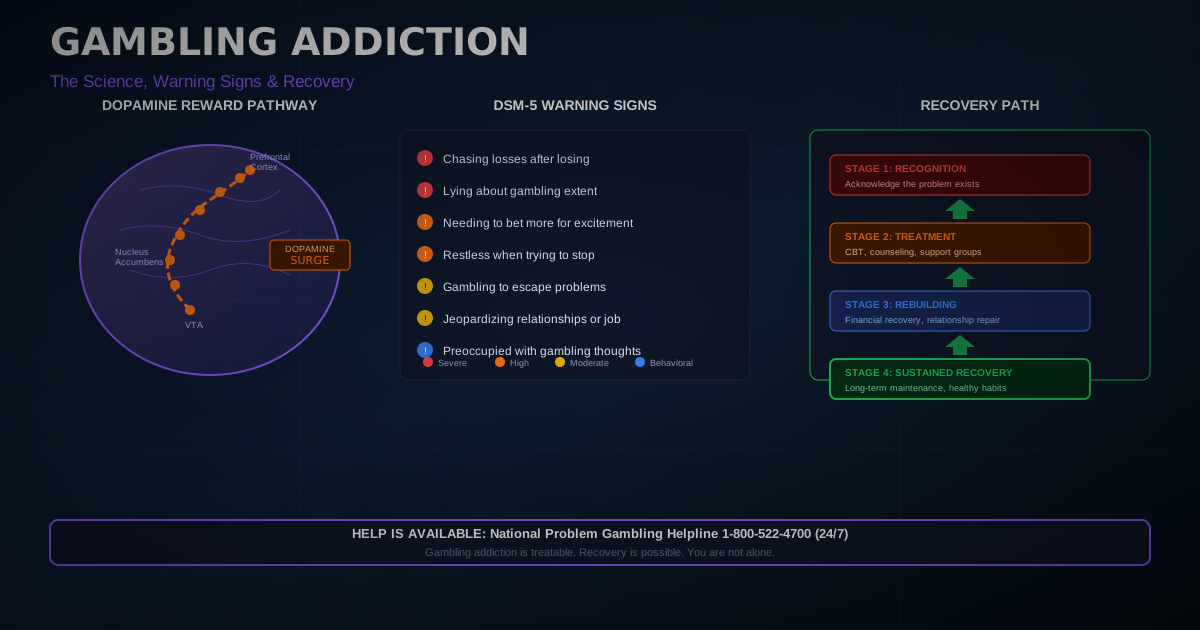
Gambling involves risk. This content is for educational and informational purposes only. Always gamble responsibly, set limits you can afford, and seek help if gambling becomes a problem. Visit the National Council on Problem Gambling or call 1-800-522-4700 for support.