Poker Tells: How to Read Your Opponents in Live and Online Games (2026)

Information is the most valuable currency at the poker table, and tells are the richest source of information most players completely ignore. A $2/$5 regular who can reliably detect one extra bluff per session adds $500+ per month to their bottom line. A tournament player who spots weakness at one critical final table moment can turn a min-cash into a six-figure score. Tells do not replace solid fundamentals, but they amplify your existing edge in ways no solver or training video can replicate.
Mike Caro, the godfather of poker tell analysis, built his career on a single observation: players who act strong are usually weak, and players who act weak are usually strong. That principle, first published decades ago, remains the foundation of live read accuracy in 2026. But modern poker has evolved far beyond Caro's original catalog. Online poker has introduced entirely new categories of behavioral leaks, bet sizing analysis has become its own discipline, and the best players now weaponize reverse tells to exploit opponents who think they can read them.
This guide is a comprehensive field manual for reading opponents across every format. You will learn which live tells are genuinely reliable and which are overrated myths, how to decode timing and sizing patterns online, how to integrate reads with mathematical decision-making, and how to protect yourself from being read in return. Whether you grind $1/$2 at your local card room or battle regulars at high-stakes online tables, the ability to extract information from your opponents' behavior is a skill that directly translates to profit.
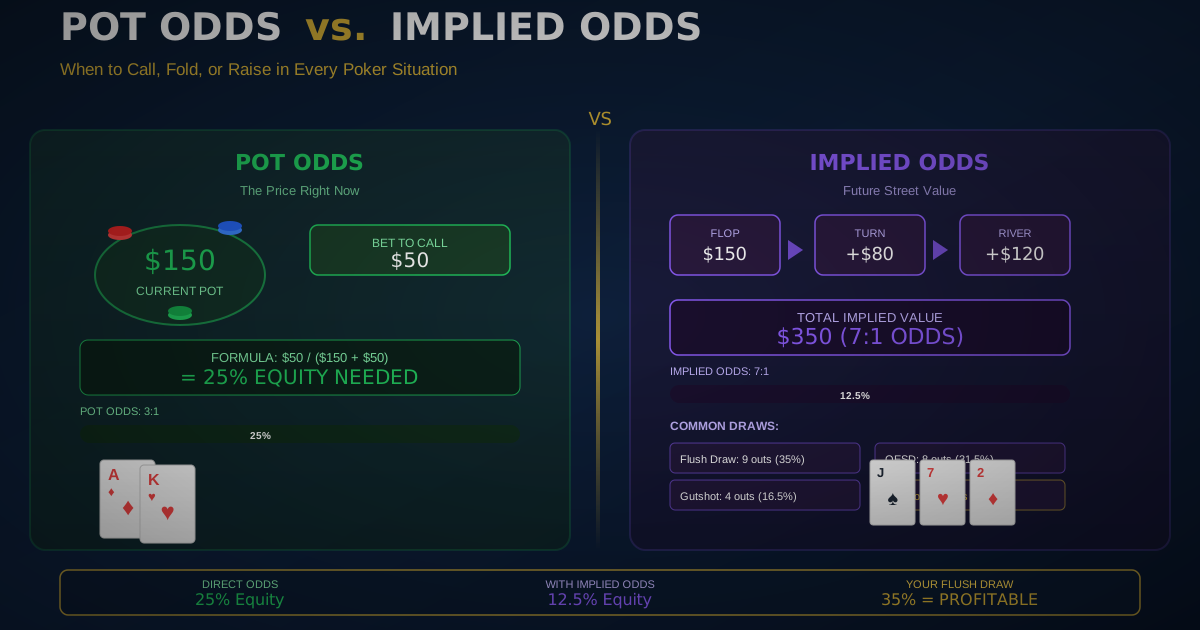
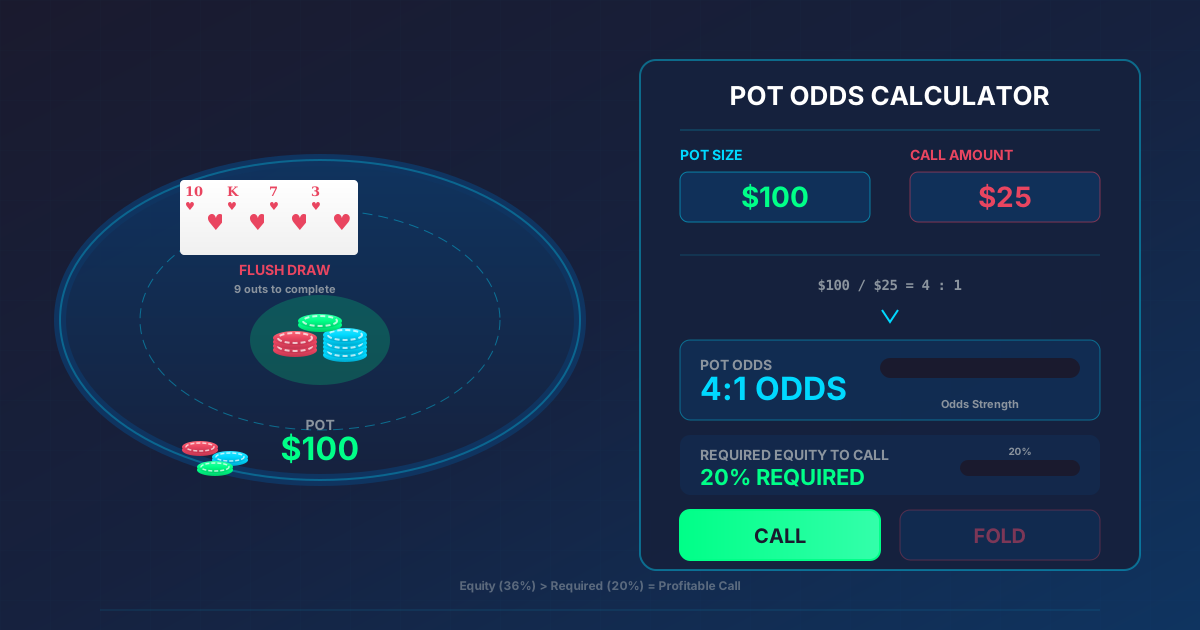
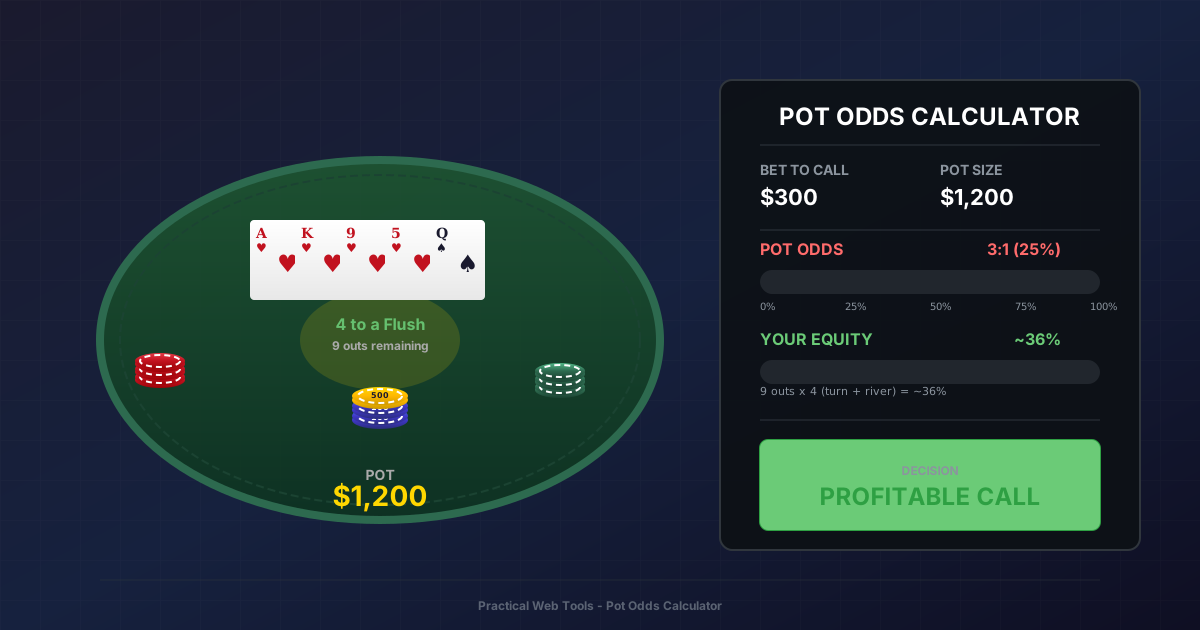
Run the numbers on your toughest decisions with our free Pot Odds Calculator to see if your reads align with the math.
Why Tells Matter More Than Most Players Think
Poker strategy content in 2026 overwhelmingly focuses on GTO solutions, solver outputs, and range-based thinking. That emphasis is justified because mathematical fundamentals form the backbone of winning play. But there is a gap in most players' education: the ability to gather and use behavioral information that exists outside the mathematical model.
A solver assumes your opponent plays optimally or follows a defined strategy. Reality is different. Your opponents are human beings with emotions, physical habits, timing patterns, and sizing tendencies that leak information about their holdings. When you detect a reliable tell, you are no longer guessing between calling and folding with a marginal hand. You have additional data that shifts the decision.
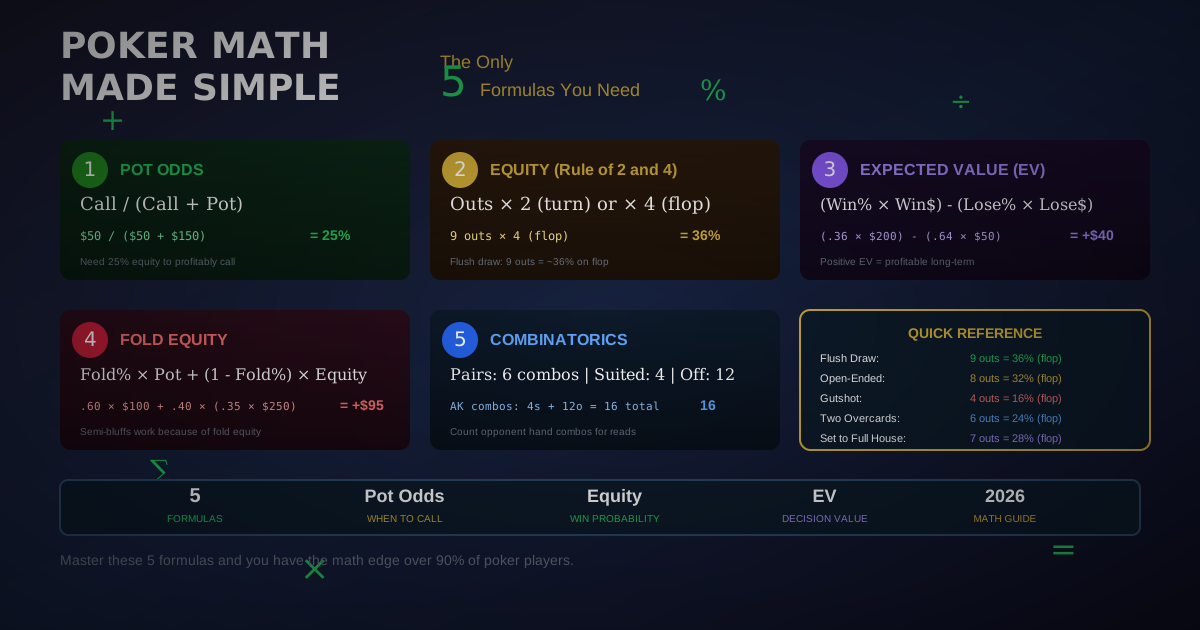
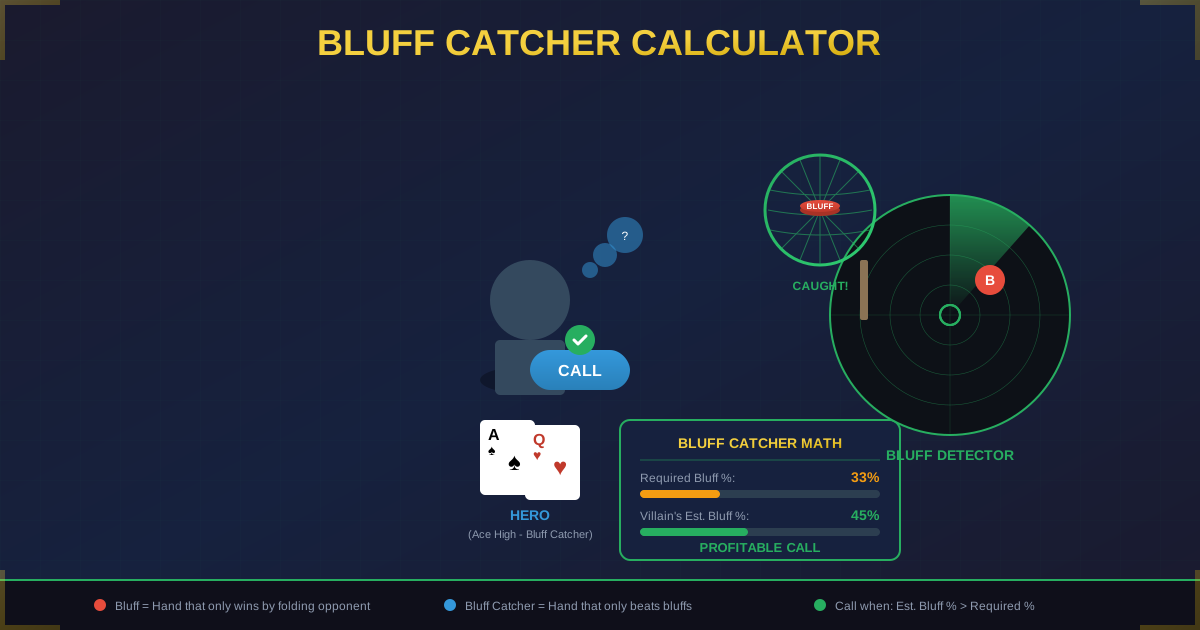
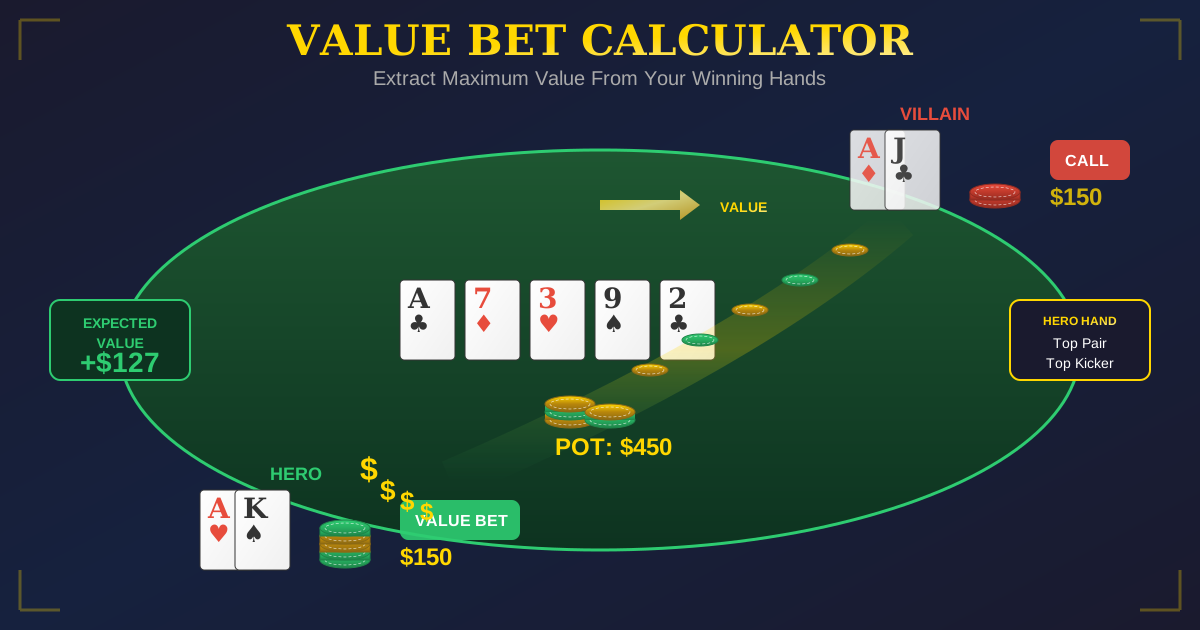
Consider this scenario: you hold A-Q on a board of A-9-4-7-2 with no flush possible. Your opponent bets $150 into a $200 pot on the river. Mathematically, you need to be good roughly 30% of the time to call profitably. That is a close decision against a balanced range. But if you noticed your opponent's hand trembled when reaching for chips (a classic adrenaline response indicating genuine strength), folding becomes straightforward. If instead you saw them deliberately splash chips into the pot with theatrical force (an act designed to intimidate, indicating weakness), calling becomes automatic.
Confirm your pot odds math instantly with our Pot Odds Calculator so you can focus your mental energy on reading opponents instead of counting percentages in your head.
That single read, applied correctly, can be worth the entire session's profit. And the best part: most of your opponents at low and mid-stakes are not even trying to control their behavior. They are broadcasting information to anyone willing to pay attention.
The Complete Catalog of Live Poker Tells
Live poker offers the richest environment for reading opponents. Physical presence means body language, speech patterns, chip handling, posture changes, eye movement, and dozens of other signals are available for observation. The challenge is knowing which tells are reliable and which are noise.
Hand and Arm Tells
The hands are one of the most reliable sources of live tells because they are difficult to consciously control under stress.
| Tell | What It Usually Means | Reliability | Notes |
|---|---|---|---|
| Shaking hands when betting | Genuine strength (adrenaline response) | High | One of the most reliable tells in poker. Nearly impossible to fake convincingly. |
| Deliberate, forceful chip placement | Attempting to project strength (usually weak) | Medium-High | Theatrical aggression is almost always an act. |
| Soft, careful chip placement | Genuine confidence (strong hand) | Medium | Players with real hands often bet quietly. |
| Covering mouth or face after betting | Subconscious protection (often bluffing) | Medium | Defensive posturing indicates vulnerability. |
| Fumbling chips before betting | Nervousness about a big decision | Medium | Can indicate either a big bluff or a monster debating sizing. |
| Hands flat on the table, motionless | Attempting to minimize tells (aware player) | Low | Indicates awareness more than hand strength. |
Real-world example: In a $2/$5 cash game, you open-raise to $20 with K-K. A recreational player in the big blind three-bets to $80. You four-bet to $200, and he moves all-in for $600. As he pushes his chips forward, his hands visibly shake. He has pocket aces. The trembling hand tell is so reliable at low stakes that many experienced players treat it as near-certainty. You fold your kings and save $400.
Eye Contact and Gaze Tells
Eye behavior is one of the most discussed categories of poker tells, but it requires careful interpretation because it varies significantly between player types.
| Tell | What It Usually Means | Reliability | Notes |
|---|---|---|---|
| Direct, sustained eye contact after betting | Usually bluffing (trying to intimidate) | Medium-High | Weak players stare you down when they want a fold. |
| Breaking eye contact after betting | Usually strong (comfortable, does not need to intimidate) | Medium | Genuine strength breeds relaxation. |
| Glancing at chips after seeing a community card | Strong hand (subconscious anticipation of betting) | High | The chip glance is fast and involuntary. Hard to fake. |
| Staring at the board | Usually weak (still processing, hoping to improve) | Medium | Players with big hands already know where they stand. |
| Pupils dilating | Excitement or genuine interest | Low | Extremely difficult to observe in most card room lighting. |
| Rapid blinking | Stress or excitement | Low-Medium | Contextual. Can indicate either strength or anxiety. |
Real-world example: A $1/$3 pot has built to $180 on the turn. The board reads J-10-8-3 with two hearts. Your opponent bets $120. You have Q-9 for the nut straight. As you contemplate raising, you notice your opponent staring directly at you, unblinking, jaw set. This is textbook "strong when weak" behavior. He is trying to project strength because he does not want a call. You raise to $350. He folds. You take down $300 with what could have been a difficult river if a heart had come.
Posture and Body Language Tells
Whole-body tells provide broader context than isolated signals and are often the most honest because players rarely think about controlling their overall posture.
| Tell | What It Usually Means | Reliability | Notes |
|---|---|---|---|
| Suddenly sitting upright or leaning forward | Interest or strength | Medium-High | Postural shifts correlate with genuine engagement. |
| Slumping or leaning back after seeing cards | Weak hand, disengaged | Medium | Relaxation without a hand often looks like deflation. |
| Frozen posture (statue-like stillness) | Usually a big hand or a big bluff | Medium | Players freeze when the stakes feel highest. |
| Reaching for chips before action reaches them | Usually strong (eager to bet or raise) | Medium-High | Premature chip handling suggests genuine excitement. |
| Putting on sunglasses or pulling up hood mid-hand | Defensive behavior, feels vulnerable | Medium | Indicates awareness that they might be giving off information. |
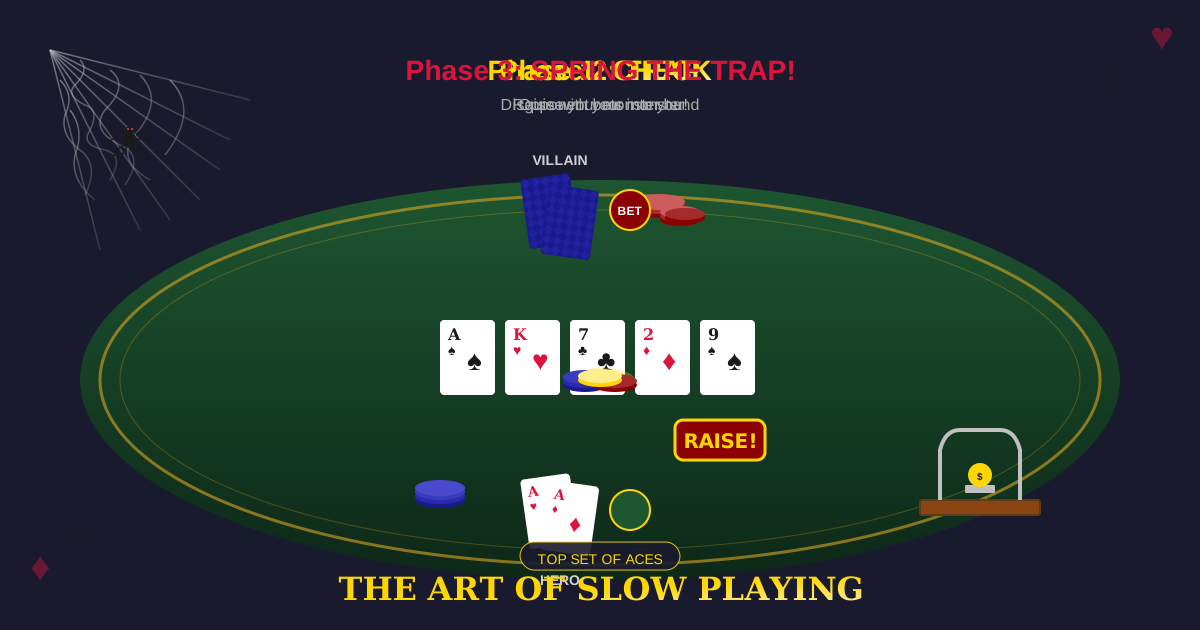
Real-world example: You are in a $5/$10 game with $2,500 effective stacks. You raised pre-flop with A-K, and the flop comes A-7-2 rainbow. You bet $60 into $85. A tight regular in the cutoff, who was slouching for the last twenty minutes, suddenly straightens up in his seat and smooth-calls. On the turn (a 5), you bet $140. He sits even more upright and calls again. The postural shift, combined with his tight image, suggests he has a strong hand he is slowplaying, likely a set. You check the river (a J), he bets $400, and you find a fold that saves you a significant portion of your stack. He later reveals pocket sevens for a flopped set.
Speech and Verbal Tells
Verbal tells are among the most exploitable at low and mid-stakes because recreational players rarely monitor what they say. The principle is the same: players talking about their hand are almost always misrepresenting it.
| Tell | What It Usually Means | Reliability | Notes |
|---|---|---|---|
| "I guess I'll call" or sighing before calling | Usually strong (acting reluctant) | High | The reluctant call is one of the most reliable tells. |
| Unsolicited comments about hand strength ("I have a big hand") | Usually bluffing or weak | Medium-High | Players with genuine monsters stay quiet. |
| Asking "How much do you have behind?" | Usually strong (calculating raise sizes) | Medium-High | Information gathering suggests they plan to continue. |
| Talking freely and comfortably during a hand | Usually strong (relaxed because the hand plays itself) | Medium | Nervousness suppresses conversation; confidence enables it. |
| Suddenly going quiet after being talkative | Something changed (usually a strong draw or made hand) | Medium | Behavioral baseline shifts are always meaningful. |
| "If I fold, will you show?" followed by opponent saying "Yes" | Opponent is strong (eager to show the goods) | High | Players almost never volunteer to show bluffs. |
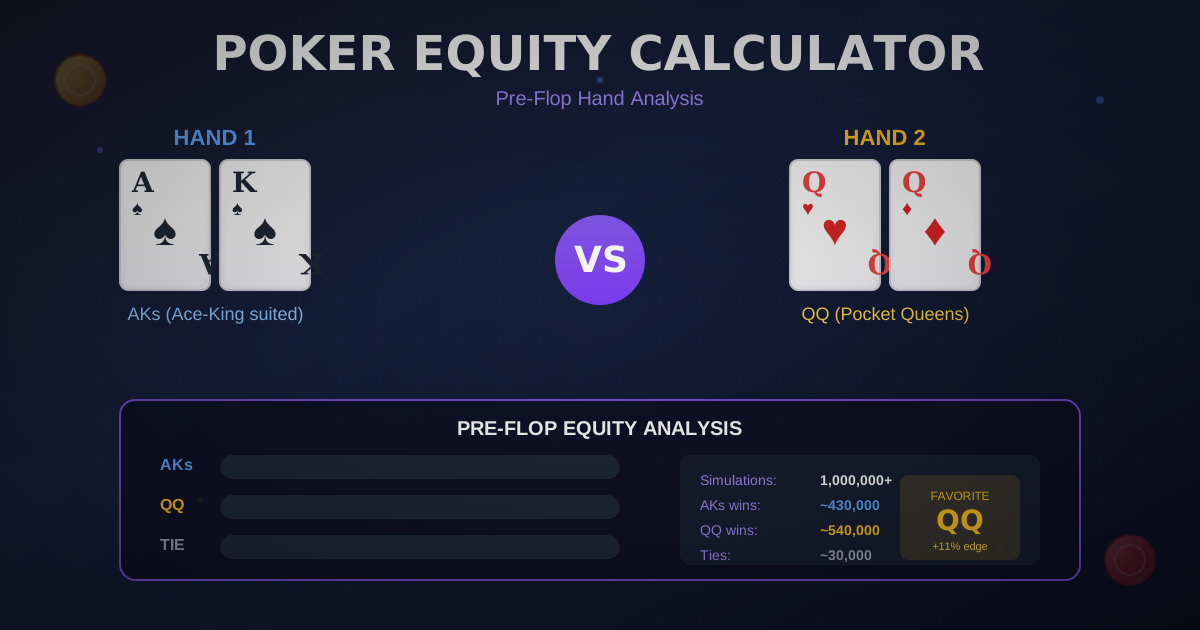
Real-world example: In a $2/$5 game, a recreational player limps in, you raise to $25 with Q-Q, and he calls. The flop is Q-8-3 with two clubs. He checks, you bet $35, and he says, "Wow, really? I guess I have to call," sighing heavily as he puts in the chips. The turn is the 6 of spades. He checks again, you bet $80, and he says, "You're killing me," before calling. His theatrical reluctance is classic Caro: acting weak means strong. He almost certainly has a set or a strong two pair. The river brings the 2 of clubs. He suddenly goes quiet and leads out for $250. The behavioral shift from talkative to silent, combined with the flush completing, tells you he likely just made his flush. Despite holding top set, you need to seriously consider whether calling is profitable here. Use the Poker Equity Calculator to run this kind of scenario against his likely range.
Chip Handling Tells
How a player handles their chips reveals information about their comfort level, experience, and current hand strength.
- Counting out a bet carefully before placing it: Usually indicates strength. The player is calculating optimal sizing, which suggests they want a call.
- Grabbing a single stack and shoving it in: Often a bluff. The theatrical all-in or overbet with a single motion is designed to look scary.
- Playing with chips nervously (riffling, stacking, restacking): Baseline behavior for many players, not a tell in isolation. But a change from their normal chip handling is meaningful.
- Placing chips in a neat, precise stack when betting: Often indicates confidence and a genuine hand.
- Tossing chips casually into the pot: Can indicate either supreme confidence or indifference. Context matters.
Timing Tells in Live Poker
How long a player takes to act in a live game provides context for their decision:
- Instant call on a large bet: Almost always a draw or a medium-strength hand. Strong hands consider raising. Weak hands consider folding. Only medium hands call without thinking.
- Long pause followed by a bet or raise: Often strength. The Hollywood act of pretending to think before bombing suggests the decision was already made. They are performing for the audience.
- Quick check on a coordinated board: Usually weakness. Players with strong hands on dangerous boards take time to consider how to extract maximum value.
- Tank-calling (long pause before calling): Can indicate a tough decision with a marginal hand, but some players use the tank-call with strong hands to appear conflicted.
The Complete Catalog of Online Poker Tells
Online poker eliminates physical reads but introduces an entirely different set of behavioral patterns. Without body language, you must rely on timing, sizing, auto-action usage, chat behavior, and statistical tendencies. These tells are often more reliable than live tells because they are produced by larger sample sizes and are less susceptible to deliberate manipulation.
Timing Tells Online
Timing is the single most information-rich tell in online poker. Every decision has a measurable time component, and deviations from a player's baseline timing pattern are significant.
| Timing Pattern | What It Usually Means | Reliability | Context |
|---|---|---|---|
| Instant check | Weakness (likely used auto-check) | High | Auto-check means they decided to give up before the action reached them. |
| Instant call | Medium-strength hand or draw | Medium-High | Strong hands pause to consider raising. Weak hands pause to consider folding. |
| Instant bet or raise | Pre-planned action, often strength or auto-continuation bet | Medium | Some players have preloaded bet buttons. |
| Long pause (15+ seconds) followed by a check | Weakness (considered betting/bluffing, decided against it) | High | The "almost bluffed" timing tell is extremely reliable at low stakes. |
| Long pause followed by a bet | Usually strength (trying to appear uncertain) | Medium-High | Hollywood works online too. They want you to think they are conflicted. |
| Long pause followed by a raise | Very strong hand | High | The delayed raise is almost always a monster. Players agonize over the "correct" raise size with their best hands. |
| Quick bet on the river after slow play on earlier streets | Polarized (either a bluff that finally pulled the trigger, or the nuts) | Medium | Requires additional context from sizing and history. |
Real-world example: You are playing $0.50/$1 online with $100 stacks. You open to $2.50 with A-J suited in the cutoff. The big blind calls. The flop comes A-8-3 rainbow. The big blind uses the full time bank (25 seconds) and then checks. You bet $3.50 into $5.50. He instantly calls. The turn is a 6. He pauses for 15 seconds and checks again. You bet $9 into $12.50. He uses the full time bank again before calling. The river is a 2. He instantly shoves all-in for $85 into $30.50.
The timing tells here are contradictory in a revealing way: he slow-timed the check on the flop (considering a lead or check-raise), instantly called (snap-call with a draw or medium hand), slow-timed the turn check (again considering aggression), then instantly shoved the river. The instant shove after extended deliberation on earlier streets suggests a decision that became clear. He likely had a set or two pair and finally pulled the trigger. Against most opponents at this stake, folding A-J here is correct despite the pot odds.
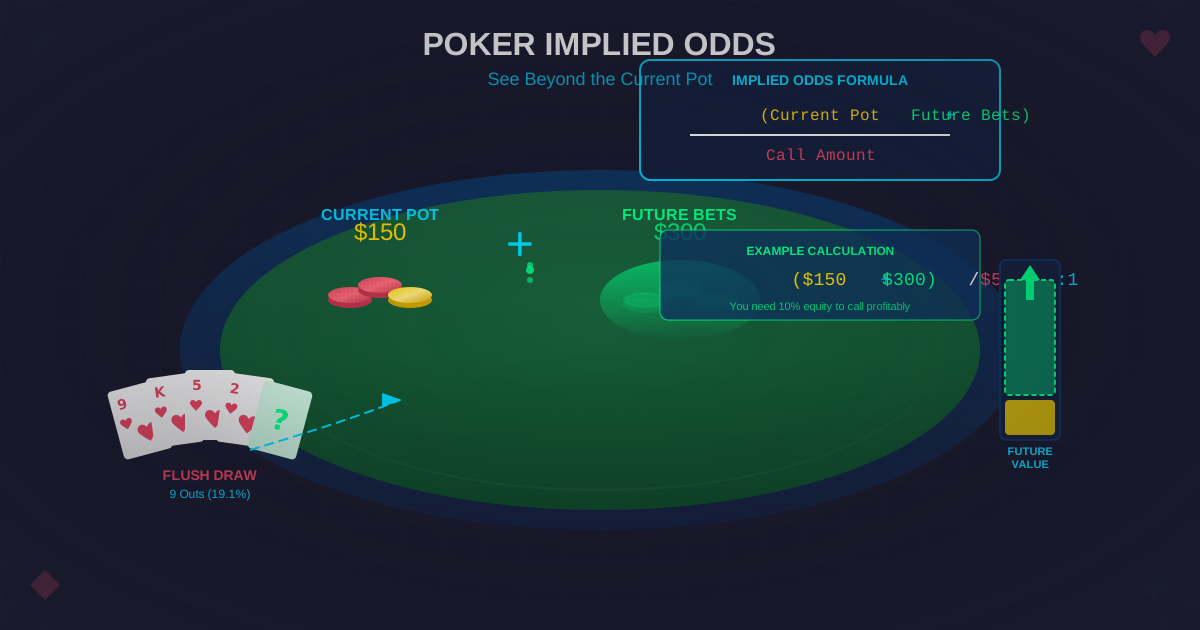
Calculate whether calling is mathematically correct with the Implied Odds Calculator.
Bet Sizing Tells Online
Bet sizing is the single most reliable tell in online poker. Because players choose their exact sizing from a text box or slider, their choices reveal patterns that correlate with hand strength.
| Sizing Pattern | What It Usually Means | Reliability | Typical Stake Level |
|---|---|---|---|
| Min-bet or min-raise | Weak hand, draw, or blocking bet | High | All stakes. Rarely a monster. |
| Exactly pot-sized bet | Polarized (very strong or bluff) | Medium-High | Low to mid stakes. Often copying solver outputs. |
| Odd or unusual bet size ($13.37 into $20) | Recreational player, usually value betting | Medium | Low stakes. Regulars use clean fractions. |
| Small bet (25-33% pot) | Wide range, often a thin value bet or cheap bluff | Medium | All stakes. Modern solver-influenced sizing. |
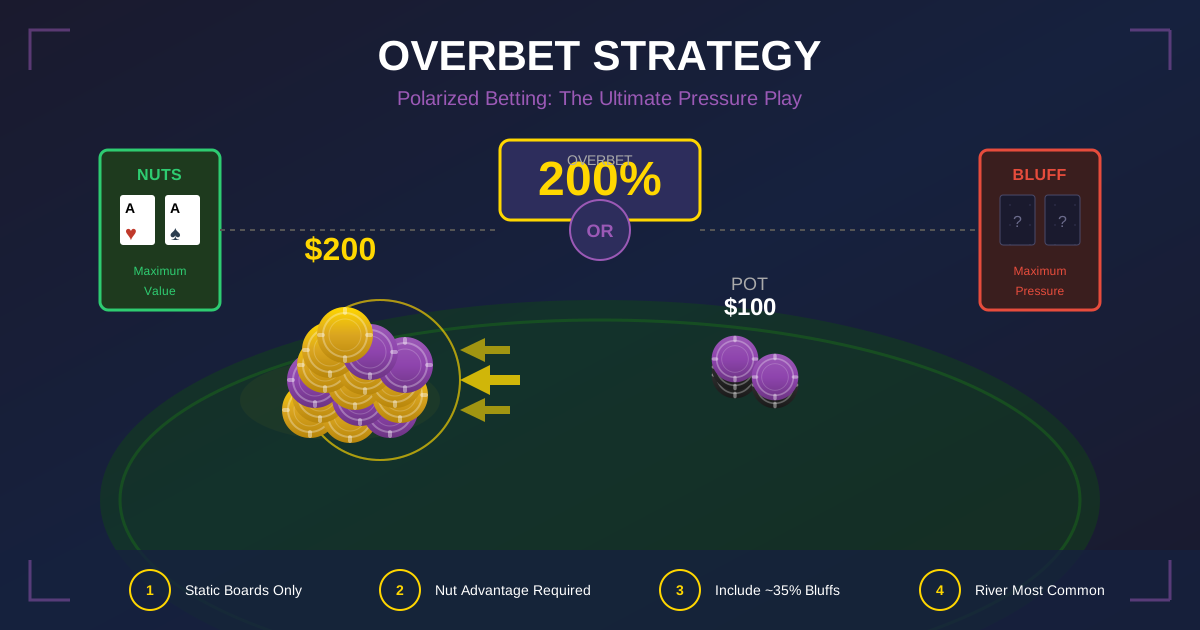
| Large overbet (1.5x pot+) | Polarized: either the nuts or air | Medium-High | Mid to high stakes. Requires balanced range to use correctly. |
| Bet that leaves exactly one big blind behind | Almost always wants to go all-in. Accidental pot commitment. | High | Low stakes. Classic recreational mistake. |
| Consistently same size with all hands | Balanced player, tells minimized | N/A | Regulars who have studied sizing theory. |
Real-world example: You are playing $1/$2 online, six-handed. A player in the hijack opens to $5, you call on the button with 9-8 suited, and the flop comes 10-7-2 with two spades. He bets $4.50 into $13 (about 35% pot). You call with your open-ended straight draw. The turn is the 6 of diamonds, completing your straight. He bets $22 into $22 (exactly pot). You raise to $60. He shoves all-in for $188 total.
Notice the sizing shift: 35% pot on the flop (a standard, balanced continuation bet size), then exactly pot on the turn. The jump from one-third pot to full pot is a significant sizing tell. At low stakes, this escalation pattern almost always indicates a hand that improved on the turn. He likely turned a set, two pair, or a big combo draw. Against your made straight, calling is correct, but understanding the sizing pattern helps you anticipate his range for future decisions. Verify the equity with the Poker Equity Calculator.
Auto-Action Tells
Online poker platforms offer pre-action buttons that players can click before the action reaches them. These buttons create instant actions that produce timing tells.
- Auto-check/fold enabled: The player checked or folded the instant the action reached them. They have given up on the hand. If they suddenly stop auto-folding and take time, they have a real hand.
- Auto-call enabled: They planned to call regardless. This usually indicates a draw or a medium-strength hand that they already evaluated.
- No auto-action used (they waited for their turn, then acted quickly): They were paying attention and made a real-time decision. This is baseline behavior and less informative.
The transition between auto-action and manual action is the tell. If a player auto-checks two streets in a row and then pauses before checking the river, they are likely considering a bluff. If they auto-check the flop, pause on the turn, then auto-check the river, the turn pause was the decision point where they decided not to bluff.
Chat Behavior Tells
Online chat is the digital equivalent of table talk. Most serious players disable chat entirely, which means anyone using chat is providing additional information.
- Complaining about bad beats: Likely tilting. Target them with increased aggression and wider value ranges.
- Berating opponents for bad play: Definitely tilting. Also likely a losing player overall.
- Silence throughout, then suddenly chatting: A behavioral baseline shift. Something triggered a response. Often frustration.
- "nh" or "nice hand" after losing a pot: Usually genuine. Player is maintaining composure. Less likely to tilt.
- Trash talking before a hand: Ego-driven player. Exploit by playing tight and letting them hang themselves with aggressive lines.
The Most Reliable Tells: What Actually Works
Not all tells are created equal. After decades of poker tell analysis and thousands of hours of live and online observation, the poker community has identified a tier list of tell reliability.
Tier 1: Highly Reliable (Act on These With Confidence)
-
Shaking hands when betting (live): Adrenaline is nearly impossible to suppress. Shaking hands mean a real hand, period. This is the single most reliable physical tell in live poker.
-
Instant check online: Auto-check means pre-decided weakness. This is backed by millions of hands of data.
-
The reluctant call ("I guess I call"): When a player acts like calling pains them, they almost always have a strong hand. Caro's principle at its most consistent.
-
Bet sizing escalation from small to large across streets: When a player shifts from a small bet on the flop to a large bet on the turn or river, they have improved or are committing to a bluff. Either way, their range is polarized.
-
Long pause followed by a raise (online): The delayed raise is a monster at all stakes. Players agonize over sizing with their biggest hands.
Tier 2: Generally Reliable (Use as Supporting Evidence)
-
Chip glance after a community card: The involuntary glance toward your stack means they are planning to bet. Reliable but requires close observation.
-
Staring you down after betting (live): Intimidation behavior correlates with weakness across the majority of recreational players.
-
Posture shift (sitting up suddenly): Engagement tells correlate with hand strength. Less reliable with experienced players who control posture.
-
Timing tell consistency (online): A player who always acts in 3-5 seconds but suddenly takes 20 seconds is making a non-standard decision. The deviation is meaningful even if the direction is uncertain.
Tier 3: Contextual (Reliable Only With Baseline Established)
-
Speech pattern changes: Meaningful only if you have established what "normal" sounds like for that player.
-
Breathing rate changes: Real but extremely difficult to detect without close proximity.
-
Chat behavior shifts (online): Useful for identifying tilt but not for hand-reading in a specific pot.
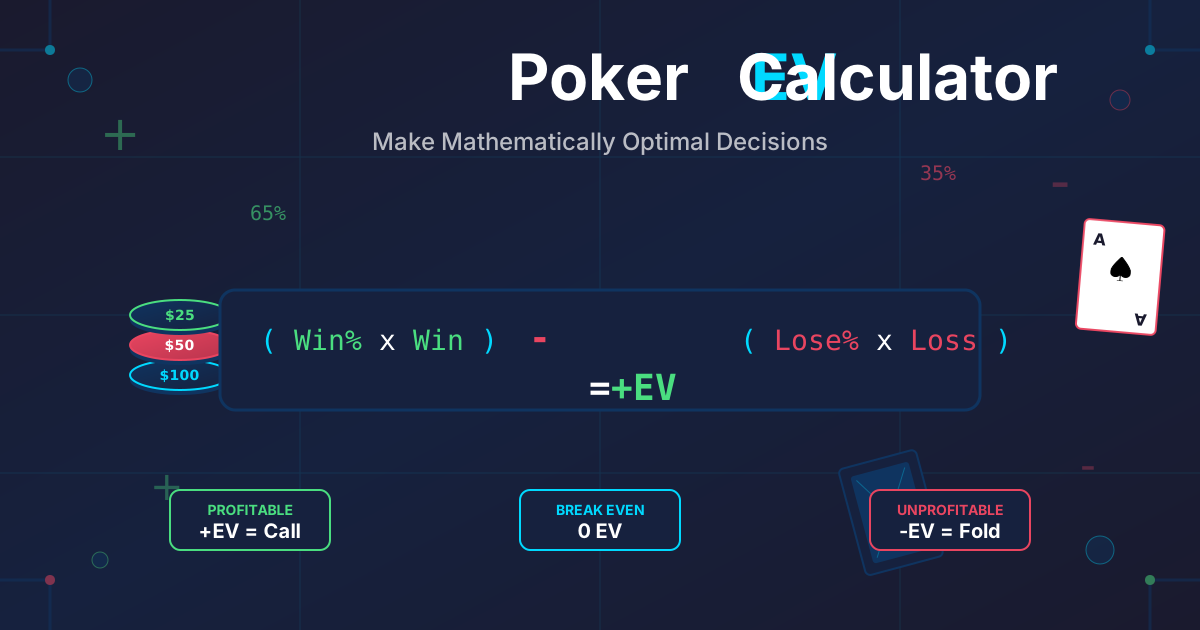
Analyze how these reads affect your expected value with the Poker EV Calculator.
The Most Overrated Tells: What Does Not Work
Several commonly cited tells have low reliability or are actively misleading. Stop relying on these.
Pupil Dilation
Poker books love discussing pupil dilation as a tell, but in practice, card room lighting makes it nearly impossible to observe. You would need to be inches from your opponent's face, which is neither practical nor socially acceptable. Even if you could see it, dilation responds to general arousal, not specifically to hand strength.
Card Protectors and Object Placement
The theory says: a player puts a chip on their cards when they plan to play the hand. In reality, most players use card protectors habitually regardless of hand strength. This tell has been analyzed extensively and shows almost no correlation with holdings.
Splashing the Pot
Sometimes referenced as a sign of recklessness or a bluff, splashing the pot is more often a personality trait than a tell. Some players always splash. Some always stack. The tell would require establishing that a player varies their chip placement based on hand strength, which is rare.
Clothing and Appearance
The idea that someone wearing a poker-themed hoodie or sunglasses plays a certain way is pure stereotyping. Player profiling based on appearance can set expectations for initial hands, but it should never drive specific decisions. Let the cards and behavior do the talking.
Table Talk Content at Face Value
When a player says "I have aces," they almost never have aces. But the reverse is not reliable either. Some players truthfully announce their hand to mess with you. Do not take verbal content literally in either direction. Focus on how they say it, not what they say.
Reverse Tells and Deception: The Meta-Game
Once you understand standard tells, you must account for reverse tells: deliberate actions designed to mimic involuntary behavior. The best players use reverse tells to exploit opponents who rely heavily on reads.
How Reverse Tells Work
A reverse tell is the intentional production of a signal that would normally be involuntary. Examples:
- Fake shaking hands: A player deliberately makes their hands tremble when bluffing to mimic the adrenaline response associated with strong hands. Detectable because genuine trembling is uneven and involuntary, while fake trembling tends to be rhythmic and sustained.
- Fake reluctance: Saying "I guess I have to call" with a marginal hand to appear strong. Works once but becomes transparent if overused.
- Deliberate posture shift: Sitting up to signal strength with a weak hand. Experienced observers note that genuine engagement involves micro-movements (eyebrow raises, nostril flares) that are hard to fake alongside posture.
- Timed Hollywood online: Deliberately using the time bank before betting with a medium hand to mimic the "long pause = strength" pattern. Common at higher stakes.
Defending Against Reverse Tells
The defense against reverse tells involves layered thinking:
-
Establish a baseline first. You cannot detect a deviation if you do not know what normal looks like for that player. Spend the first 30-60 minutes cataloging each opponent's default behaviors before attempting reads.
-
Consider the player's sophistication level. A $1/$2 recreational player almost never uses reverse tells. They do not know what tells are. A $5/$10 regular might occasionally deploy them. A $25/$50 professional uses them regularly. Adjust your read confidence based on the population.
-
Look for clusters, not single signals. A genuine tell typically involves multiple simultaneous signals (posture shift AND breathing change AND chip handling change). A reverse tell usually involves only one conspicuous signal because it is hard to fake multiple physiological responses at once.
-
Weight betting patterns over physical tells against strong players. The stronger your opponent, the more you should rely on mathematical analysis (bet sizing, frequencies, range construction) rather than physical reads. Physical tells become unreliable against elite competition, but betting patterns remain honest because they are constrained by game theory.
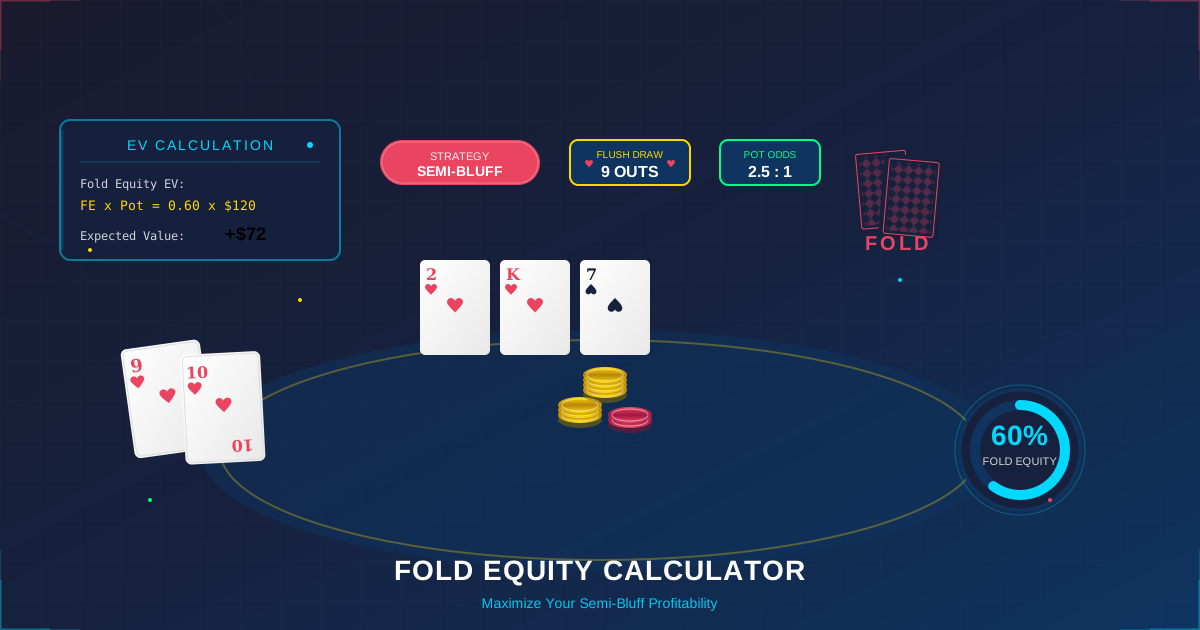
Evaluate your fold equity against deceptive opponents with the Poker Fold Equity Calculator.
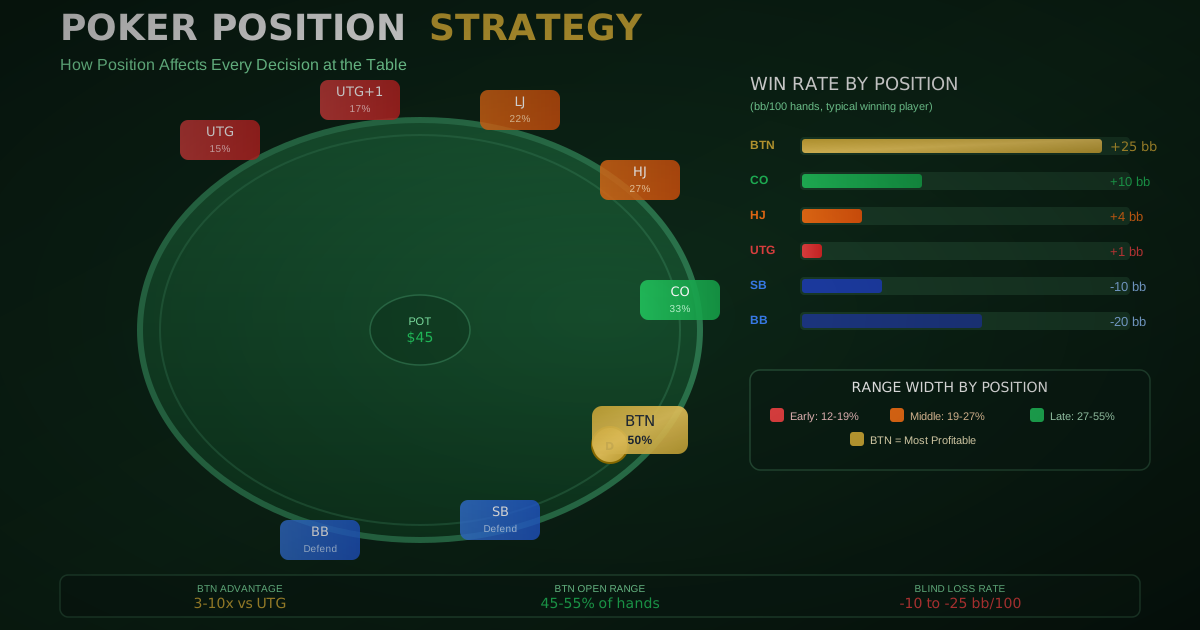
Position-Based Tells: How Seat Position Affects Reads
Where you sit relative to your opponents determines what information you can gather and how to weight it.
Reading From Late Position
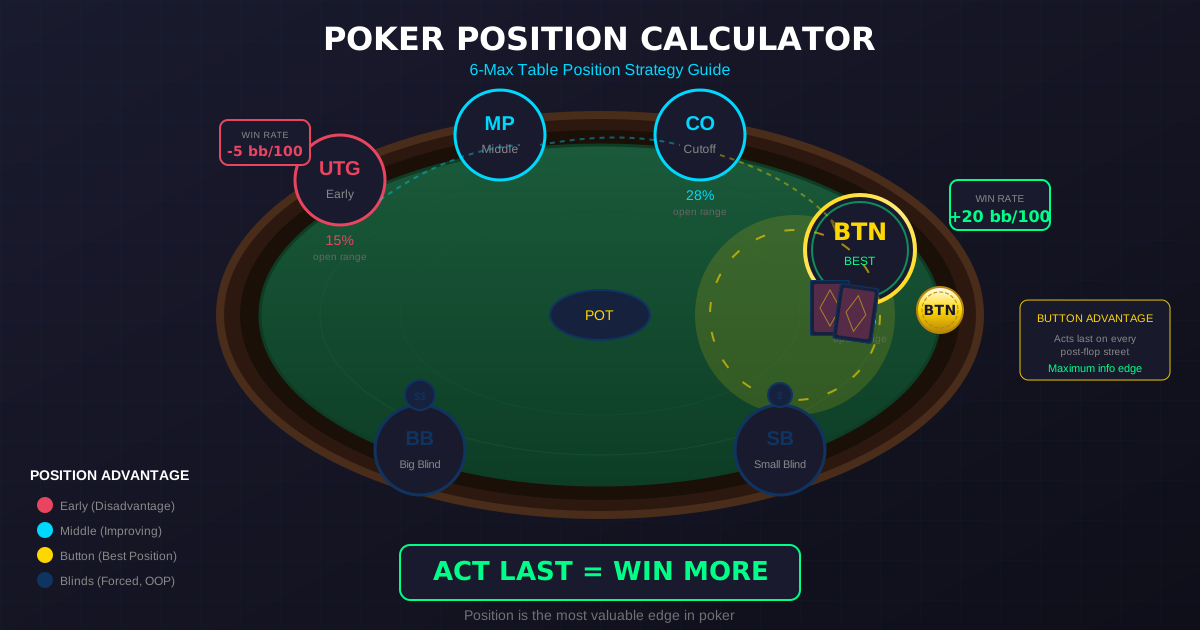
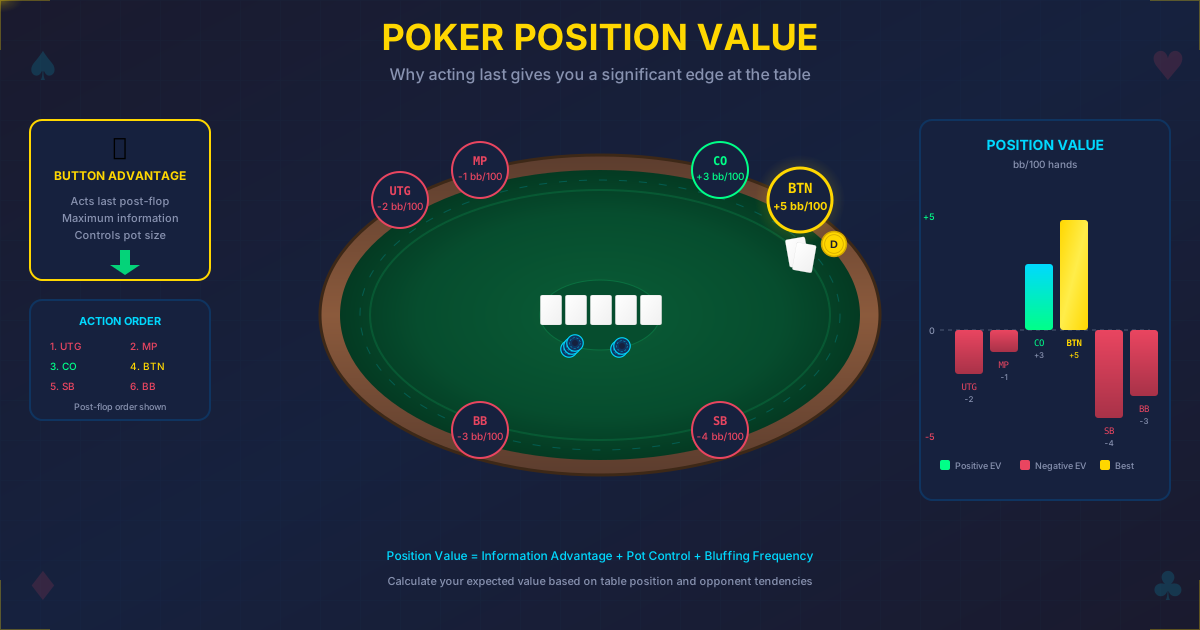
Sitting in late position (cutoff or button) gives you the maximum advantage for tell reading:
- You act after most opponents, so you can observe their body language during their decision.
- You can see how earlier players react to each community card before you need to act.
- You have time to process timing tells because the action flows toward you.
Reading From Early Position
Early position limits your ability to read tells in the current hand, but it offers a different advantage: you can observe how opponents react to your bets without needing to make decisions simultaneously.
- When you bet from early position, watch each subsequent player as they see the bet amount. Physical reactions to your bet sizing often reveal hand strength.
- Use early position to build opponent profiles that you exploit from later positions.
Reading the Blinds
The blinds are the most tell-rich positions because players in the blinds must react to open-raises and three-bets. Watch for:
- The blind defender who immediately grabs chips after seeing a raise: they plan to call or three-bet.
- The blind who looks at their cards, then looks at the raiser's stack: they are considering a three-bet and sizing it.
- The blind who checks their cards quickly and does not look up: likely folding.
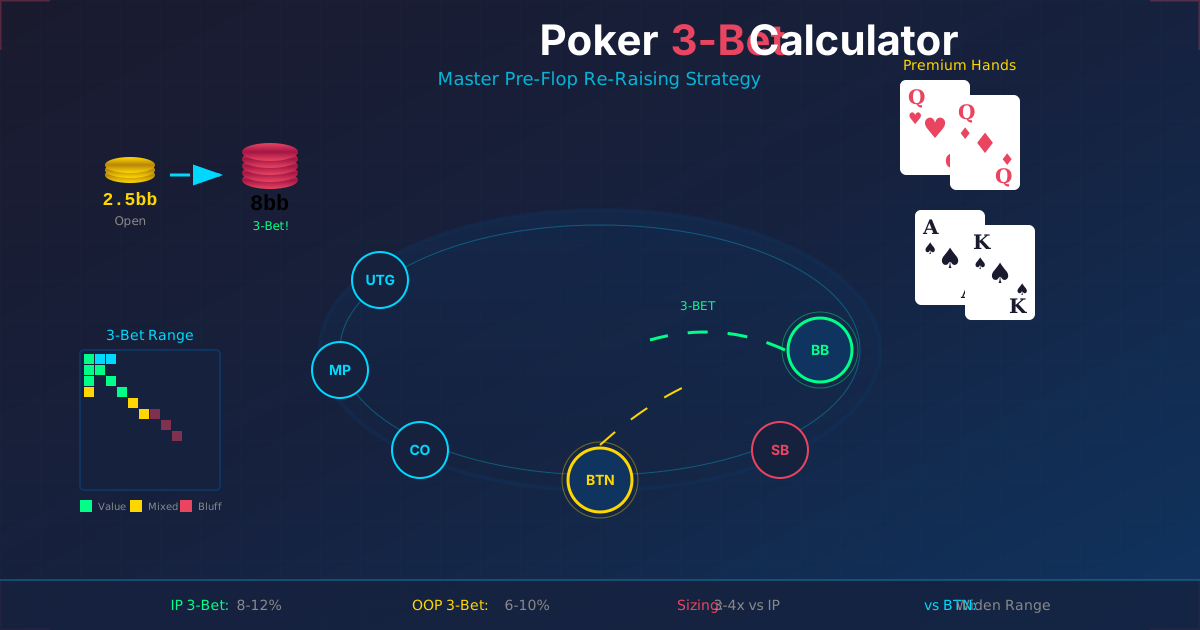
Factor position-based advantages into your three-bet and steal calculations with the Poker 3-Bet Calculator.
Bet Sizing as a Tell: The Modern Approach
In 2026 poker, bet sizing analysis has become the most sophisticated and profitable form of tell-reading, particularly online where physical tells are absent. The fundamental principle: most players at low and mid-stakes do not size their bets consistently. Their sizing varies based on hand strength, and these patterns are exploitable.
The Common Sizing Leaks
Leak 1: Big bets with big hands, small bets with weak hands. This is the most common and most exploitable sizing tell in poker. Recreational players instinctively bet large when they have a strong hand (wanting to "protect" it or "get paid") and bet small with marginal hands (wanting to "see where they're at" cheaply). Against these opponents, folding to large bets with marginal hands and calling or raising small bets aggressively is a printing press for profit.
Leak 2: Pot-sized bets only with nutted hands. Some players reserve the full pot bet for their absolute best hands. When they use any other size, they have a weaker range. Tracking this pattern over even 20-30 hands can identify it.
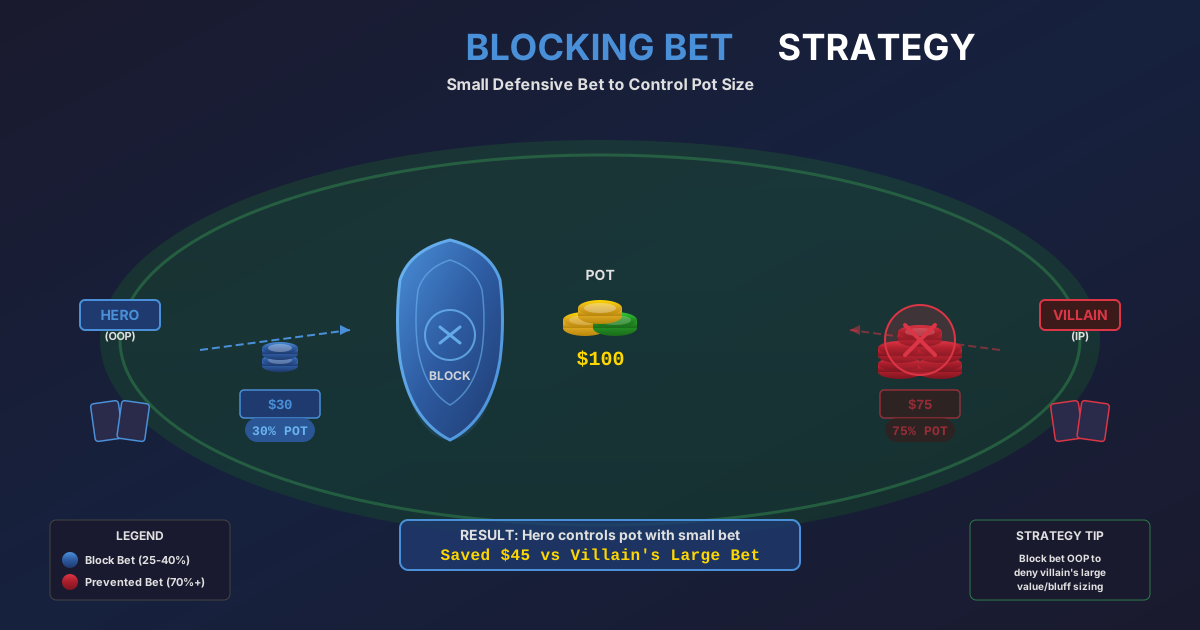
Leak 3: Min-raises as a blocking bet. Players who min-raise on the river are almost always trying to "block" a larger bet by cheaply getting to showdown. They have a medium-strength hand and are terrified of both folding and facing a large bet. Against these players, three-betting the river with your entire value range is hugely profitable.
Leak 4: Unusual sizing with draws. Many players bet a specific size when they are on a draw. They might bet half-pot with draws and two-thirds pot with made hands. Once you identify this pattern, you can dramatically improve your calling and raising accuracy on the flop and turn.
How to Track Sizing Patterns
Build a mental (or physical) database for each opponent:
- Record their flop bet size as a percentage of pot for hands that go to showdown.
- Record their turn and river sizing and compare it to the flop.
- Note any sizing that correlates with revealed hand strength at showdown.
- After 5-10 showdown observations, you will often have a reliable sizing profile.
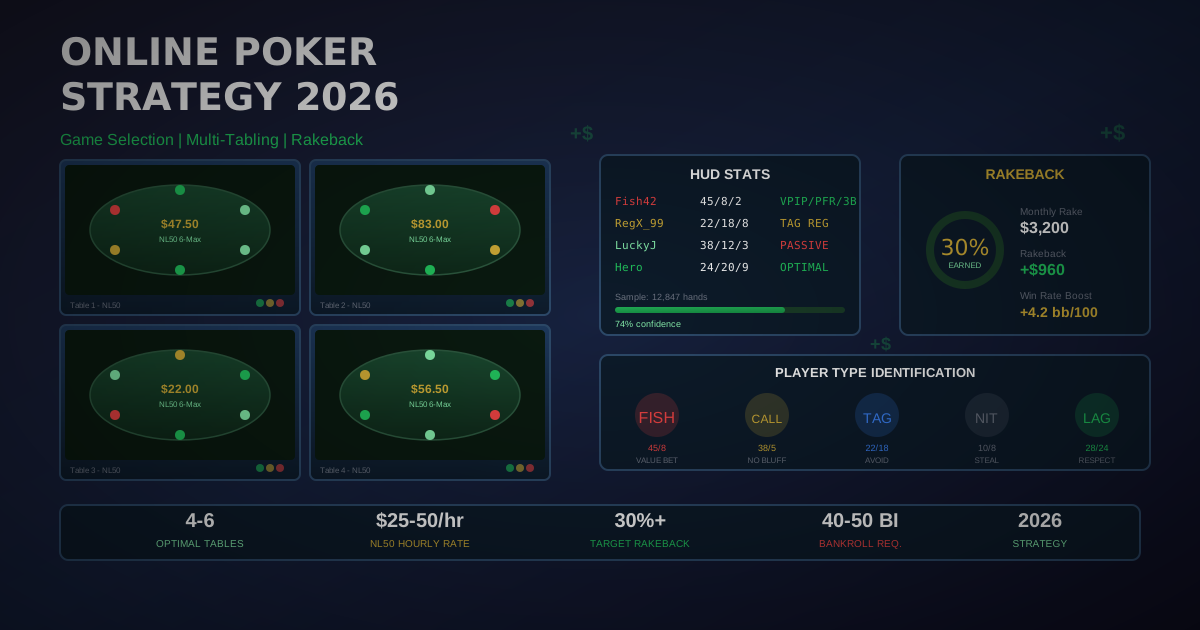
Online players can use HUD stats to automate this process, but even at live tables, paying attention to showdown sizing produces actionable intelligence within a single session.
Solver-Influenced Sizing vs. Exploitable Sizing
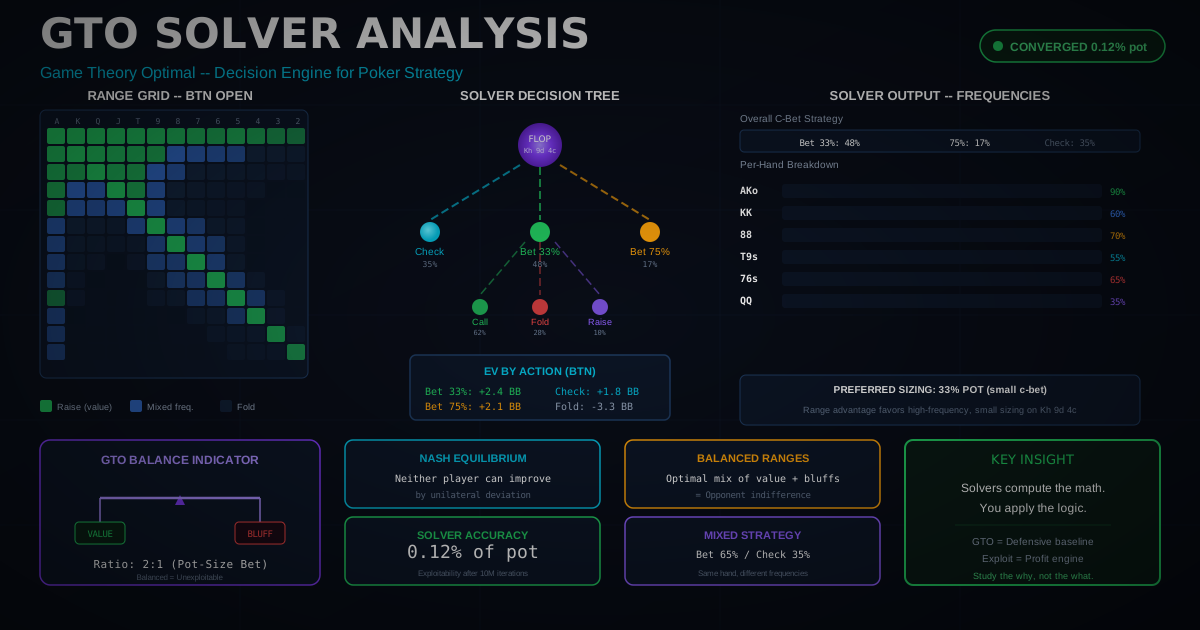
A growing segment of the player pool uses solver-recommended bet sizes (typically 25-33% pot as a default, with occasional overbets). These players are harder to read because their sizing is deliberately balanced. Identifying solver-influenced opponents early saves you from making incorrect reads based on sizing.
Signs of a solver-influenced opponent:
- Uses small, consistent bet sizes across different hand strengths
- Occasionally uses overbets in spots where solvers recommend them
- Rarely min-bets or uses odd fractional sizes
- Their sizing does not correlate with hand strength at showdown
Against these players, shift your focus from sizing tells to frequency analysis and positional tendencies. Their sizing may be balanced, but their frequencies (how often they bet certain boards) often are not.
Check your hand's equity against various opponent ranges with the Poker Hand Range Calculator.
Creating Your Own Tell Notes System
The most successful tell-readers have a systematic approach to recording and organizing the information they gather. Without a system, valuable observations are lost between sessions.
The Live Tell Notebook
Keep a small notebook or phone note with the following fields for each opponent:
Player Description: Physical description, seat position, approximate buy-in amount.
Baseline Behaviors: How they normally handle chips, typical posture, conversation style, default timing.
Observed Tells:
- Situation (hand details, board, street)
- Observed behavior (what you saw)
- Revealed hand strength (what they showed or what you deduced)
- Confidence level (how certain are you this is a real pattern?)
Pattern Confirmed: After 3+ observations of the same tell with consistent results, mark it as confirmed.
The Online Tell Tracking System
Online, your note-taking should focus on:
- Timing patterns: Note whether specific opponents consistently use timing tells (long pause = strength, etc.)
- Sizing patterns: Record sizing as a percentage of pot for showdown hands.
- Auto-action patterns: Note when opponents use auto-check/fold versus manual actions.
- Tilt indicators: Flag opponents who show signs of tilt (chat behavior, unusual aggression, overbet shoves).
Most online poker platforms include a player notes feature. Use color-coding to categorize opponents:
| Color | Player Type | Key Exploit |
|---|---|---|
| Green | Recreational (loose-passive) | Value bet widely, bluff less |
| Yellow | Recreational (loose-aggressive) | Call down lighter, let them bluff |
| Orange | Competent regular | Play fundamentally, limited tells |
| Red | Strong regular / professional | Avoid marginal spots, play position |
| Blue | Timing tell confirmed | Use timing pattern for decisions |
| Purple | Sizing tell confirmed | Use sizing pattern for decisions |
Integrating Tells With Math-Based Decisions
Tells should never replace mathematical analysis. They should supplement it. The best approach treats tells as information that adjusts your assessment of an opponent's range, which then feeds back into standard pot odds, equity, and expected value calculations.
The Integration Framework
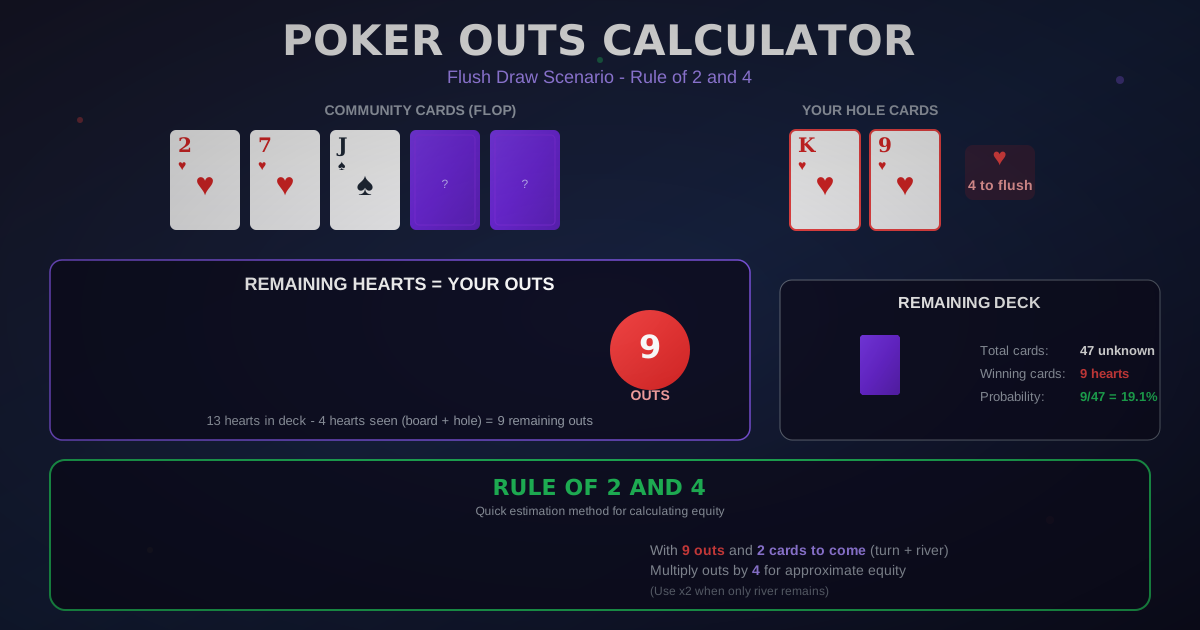
Step 1: Determine the base mathematical decision. Before considering any tell, calculate your pot odds and equity against your opponent's estimated range. Use the Pot Odds Calculator and the Poker Outs Calculator to establish the baseline.
Step 2: Identify any available behavioral information. Did you observe a timing tell, sizing tell, physical tell, or behavioral pattern?
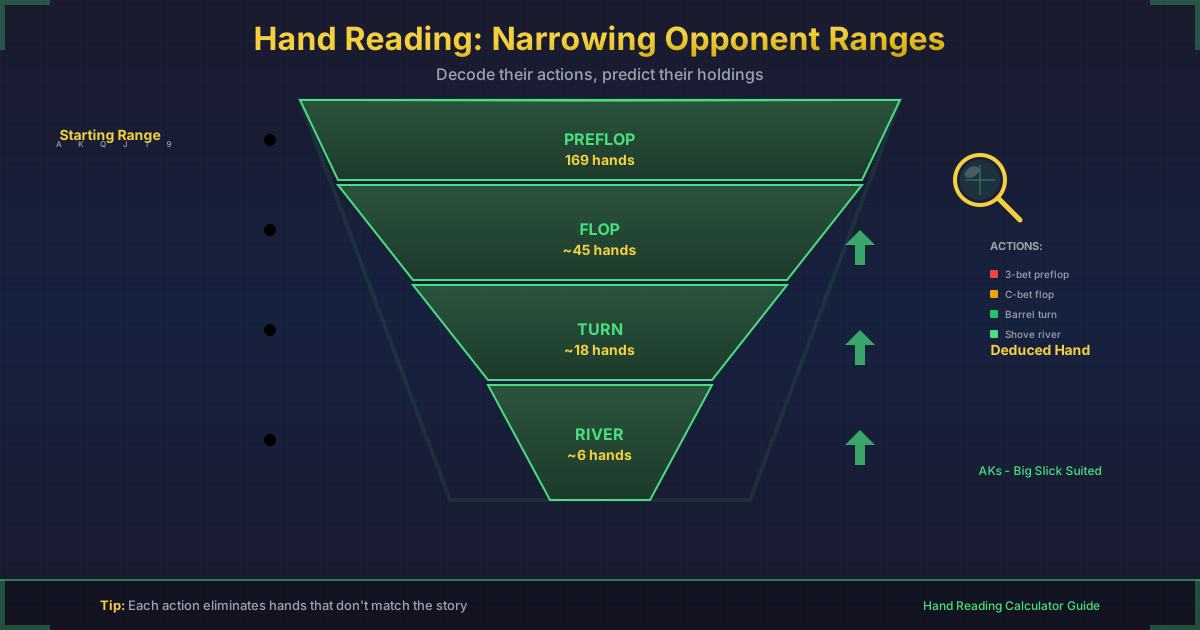
Step 3: Adjust the opponent's range based on the tell. If you observed a reliable tell suggesting strength, narrow their range toward value hands. If you observed a tell suggesting weakness, widen their range to include bluffs.
Step 4: Recalculate EV with the adjusted range. With the narrowed or widened range, run the numbers again. The decision may shift.
Step 5: Make the decision. Act on the math with the tell-adjusted range.
Example: Full Integration
You hold J-10 of hearts on a board of A-K-9-2-Q (rainbow). The river just completed your straight. Your opponent bets $300 into $400.
Step 1 (Math): You need 30% equity to call. You have the nut straight. Against a reasonable range, calling is automatic. But wait, can you raise?
Step 2 (Tell): Your opponent bet quickly and placed chips firmly in a single motion. In your notes, this opponent consistently bets quickly and forcefully when bluffing (2 confirmed observations).
Step 3 (Range Adjustment): The forceful bet timing shifts his range toward bluffs and marginal hands. He is less likely to have two pair or a set.
Step 4 (Recalculate): If his range is bluff-heavy, he will not call a raise. If he has a value hand, he may call or re-raise. The tell suggests he is more likely to fold to a raise. A thin raise for value is less profitable than you initially thought. However, since his range is weighted toward bluffs, he is unlikely to re-raise (which means a flat call captures the most value from his bluffs while avoiding him folding his bluffs if you raise).
Step 5 (Decision): Flat call the $300. You win $700 from a bluff that would have folded to a raise.
Run the full expected value calculation with the Poker EV Calculator.
Advanced Tell Concepts for Experienced Players
Tell Clusters and Convergence
Single tells are unreliable. Tell clusters, where multiple signals point in the same direction, are powerful. When you observe convergence across categories (physical + timing + sizing all suggesting the same hand strength), your confidence should be high.
Example of convergence: An opponent on the river is considering a bet. He sits forward (posture = strength), pauses for 10 seconds (timing = planning a value bet), then bets 80% pot (sizing = standard for value at this player's profile). Three independent signals all indicate strength. Fold your bluff-catcher.
Example of contradiction: An opponent bets the river. His hands shake (physical = strength), but his bet is a min-bet (sizing = weakness at this stake level). The signals contradict. Default to the more reliable tell (shaking hands at low stakes is Tier 1; min-bet sizing is Tier 2). Lean toward folding, but with less confidence.
Table Image and Self-Awareness
While reading others, remember that you are being read too. Managing your own tells is equally important.
Key principles for concealing tells:
- Maintain consistent timing for all decisions. Use a 5-7 second standard delay before every action.
- Use consistent bet sizing. Choose 2-3 sizes and use them regardless of hand strength.
- Control your posture. Sit the same way whether you have aces or 7-2 offsuit.
- Minimize conversation during hands. Silence is the most effective tell suppression.
- If you must use physical chips, develop a consistent motion for placing bets.
Exploiting Specific Player Types With Tells
| Player Type | Tells to Watch For | How to Exploit |
|---|---|---|
| Tight-passive ("rock") | Sudden aggression, posture shifts when they enter a pot | Fold to their raises. Their tells are reliable because they play few hands. |
| Loose-aggressive ("maniac") | Timing tells, inconsistent sizing patterns | Look for slowdowns (checks, min-bets) that indicate genuine strength. |
| Calling station | Reluctant calls vs. enthusiastic calls | Size your value bets based on which sizing they call most. Their tells help calibrate. |
| TAG regular | Minimal physical tells, focus on sizing and frequency patterns | Identify positional tendencies and three-bet frequencies. |
| Online grinder playing live | Discomfort with chip handling, unfamiliar with live pacing | Exploit their timing discomfort; they often act too quickly in live play. |
Frequently Asked Questions About Poker Tells
What is the most reliable poker tell? Shaking hands when betting is widely considered the single most reliable physical tell in live poker. It is caused by an involuntary adrenaline response and is nearly impossible to fake convincingly. In online poker, the most reliable tell is the instant check (auto-check), which indicates that a player pre-decided to give up on the hand before the action reached them. Both tells have high accuracy rates across all skill levels because they are produced by unconscious processes rather than deliberate behavior.
Are poker tells actually useful, or are they overrated? Poker tells are genuinely useful but should not be overemphasized relative to fundamental strategy. At low stakes ($1/$2 to $2/$5 live, micro-stakes online), tells are highly valuable because opponents rarely control their behavior. At mid-stakes ($5/$10 to $10/$25), tells provide a meaningful supplementary edge. At high stakes ($25/$50+), physical tells become less reliable because opponents actively manage their behavior, and mathematical analysis takes priority. The key is treating tells as one input among many, not as the primary basis for decisions.
How do you read poker tells online without seeing your opponent? Online poker tells center on four categories: timing (how long opponents take to act), bet sizing (patterns in their chosen amounts), auto-action usage (when they use pre-action buttons), and chat behavior (emotional state indicators). Timing tells are the most reliable online equivalent of physical tells. A player who consistently pauses 15+ seconds before raising almost always has a very strong hand. Sizing patterns that correlate with hand strength at showdown provide the most exploitable leaks. Track these patterns using the note-taking features on your poker platform and review them regularly.
Can experienced players fake poker tells? Yes, experienced players use reverse tells, which are deliberate actions designed to mimic involuntary behavior and mislead opponents. Common reverse tells include fake hand trembling, theatrical reluctance, and deliberate timing patterns. However, reverse tells are uncommon at low and mid-stakes because most players at those levels are not sophisticated enough to deploy them. You can detect reverse tells by looking for tell clusters (genuine tells produce multiple simultaneous signals, while reverse tells usually involve only one conspicuous signal) and by considering the player's skill level and whether they are capable of multi-level thinking.
What is the "weak means strong, strong means weak" principle? This is the foundational principle of poker tell analysis, popularized by Mike Caro. It states that players instinctively act opposite to their actual hand strength. A player who sighs, shrugs, and says "I guess I'll raise" while putting in a large bet is acting weak, which means they are almost certainly strong. A player who aggressively stares you down, slams chips into the pot, and puffs up their chest after betting is acting strong, which means they are usually bluffing. This principle is most reliable against recreational and low-stakes players who have not learned to control their behavior.
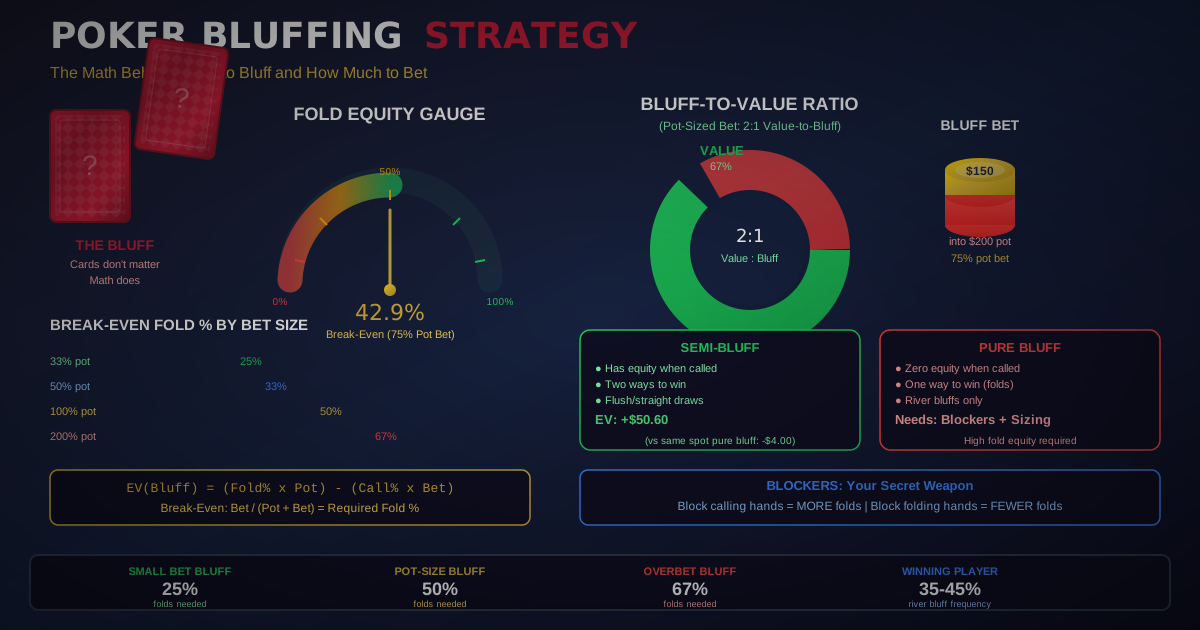
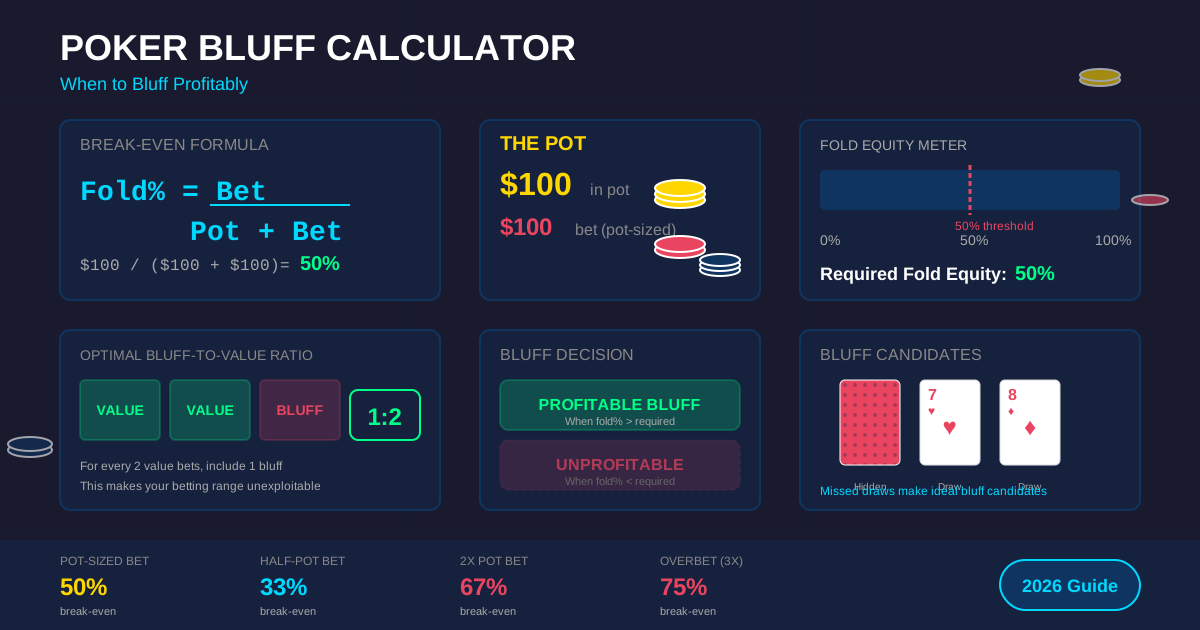
How do you spot a bluff in poker? Bluff detection combines mathematical analysis with behavioral observation. Mathematically, you assess whether your opponent's betting line makes sense as a value bet by considering the board texture, their likely range, and their sizing. Behaviorally, you look for signs of stress (forced stillness, throat clearing, lip compression), theatrical strength (staring, forceful chip placement, verbal intimidation), and timing inconsistencies (acting too quickly or too slowly relative to their baseline). The most effective bluff detection uses convergence: when the math suggests your opponent's story does not add up AND their behavior suggests discomfort, the call becomes much more confident. Use the Poker Fold Equity Calculator to understand how often bluffs need to work to be profitable.
Should I wear sunglasses at the poker table to hide my tells? Sunglasses can reduce the information your opponents gather from your eye movements, but they come with tradeoffs. They signal to experienced opponents that you are concerned about tells, which may cause them to focus more on your other behaviors (hands, posture, timing). They also make it harder for you to read your opponents' eyes. Many professional players have moved away from sunglasses in favor of a consistent, neutral demeanor that provides no readable signals in any category. If you do wear sunglasses, combine them with consistent timing, sizing, and physical behavior to maximize their effectiveness.
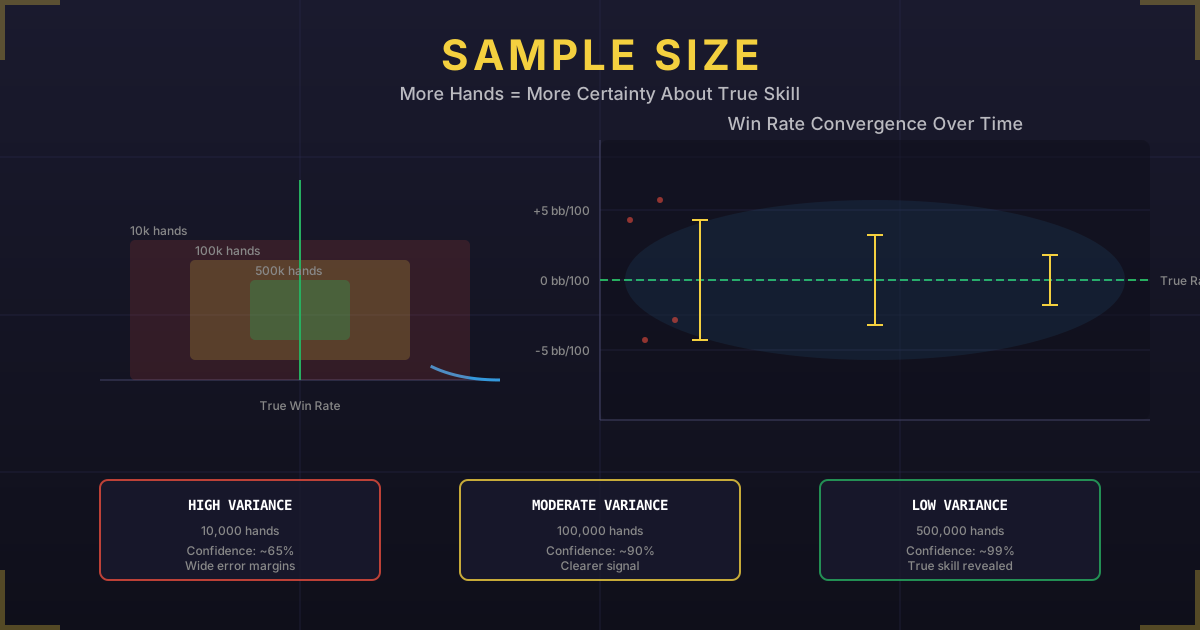
How many hands do you need to identify a reliable tell? For physical tells in live poker, 3-5 confirmed observations of the same behavior correlated with the same hand strength category is the minimum for confidence. For online timing and sizing tells, 10-20 showdown observations provide a solid foundation. The key is that you need to see the tell AND the hand it was associated with (either through showdown or reliable deduction). A tell you observed without knowing the outcome is just a hypothesis. Only confirmed, repeated observations should drive significant decisions. Calculate whether a marginal call becomes profitable based on your observed patterns with the Poker Outs Calculator.
Essential Tools for Tell-Based Decision Making
Combining reads with rigorous mathematical analysis produces the strongest results. These free tools help you run the numbers so your tell-based adjustments are grounded in solid math:
- Pot Odds Calculator: Instantly calculate whether a call is mathematically profitable before factoring in tells.
- Poker Equity Calculator: Compare your hand equity against adjusted opponent ranges based on your reads.
- Implied Odds Calculator: Factor in future street value when your tell suggests an opponent will pay off.
- Poker Outs Calculator: Count your drawing outs and hit percentages for informed decisions.
- Poker EV Calculator: Run full expected value analysis on tough spots where tells shift the math.
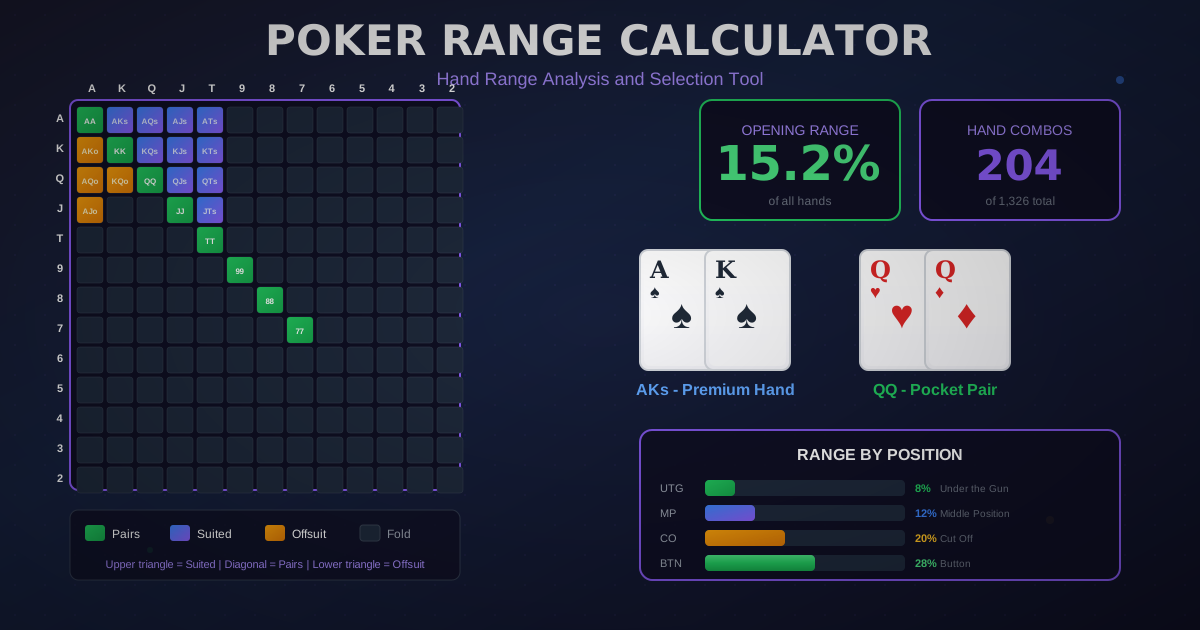
- Poker Hand Range Calculator: Visualize opponent ranges and narrow them based on behavioral reads.
- Poker 3-Bet Calculator: Calculate optimal three-bet frequencies factoring in positional tells.
- Poker Fold Equity Calculator: Determine how often bluffs need to work based on opponent tendencies.
Conclusion: The Edge That Compounds
Poker tells are not magic. They do not let you see your opponent's cards. But across thousands of hands, they provide a consistent informational advantage that compounds into significant profit. A player who correctly identifies one extra bluff per session, makes one extra fold against a strong hand, or sizes one extra value bet based on an opponent's calling patterns earns substantially more than an otherwise identical player who ignores behavioral information entirely.
The path to becoming a skilled tell reader follows a clear progression. Start by learning the fundamentals: Caro's "weak means strong" principle, the most reliable physical tells, and basic timing patterns. Practice observation for its own sake, watching hands you are not involved in to build baseline profiles. Gradually incorporate tells into your decision-making process, always anchoring to mathematical analysis first. And never stop learning, because your opponents evolve, new patterns emerge, and the best players in the world are always refining their ability to read and be unreadable.
The information is there at every table, in every session, waiting for someone to notice. Make sure that someone is you.
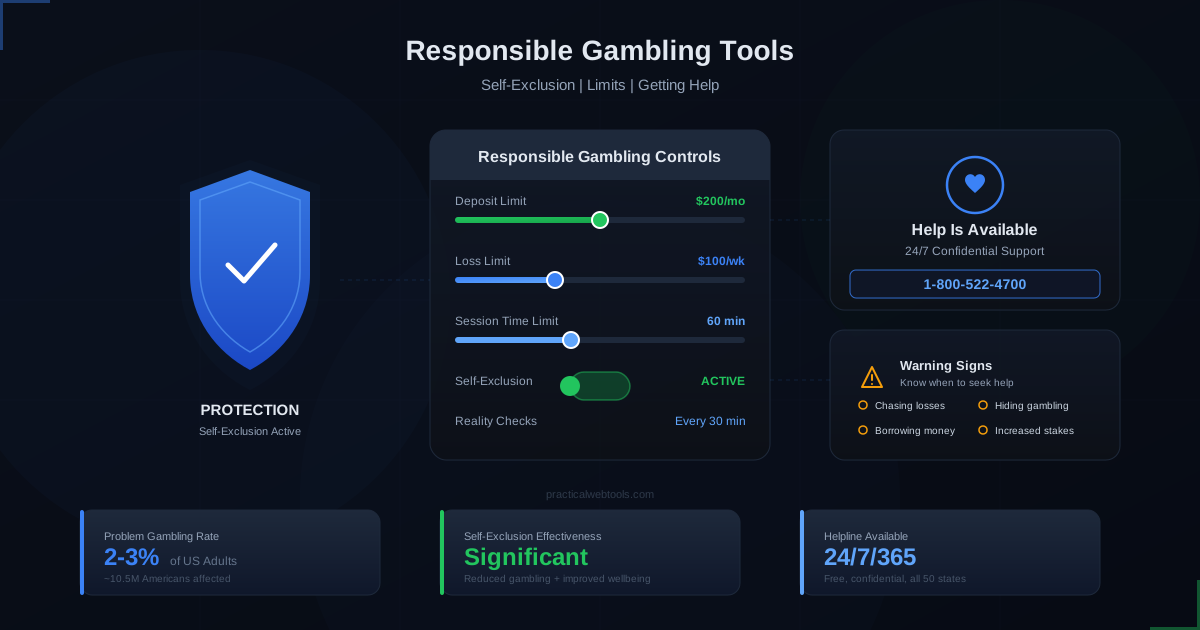
Gambling involves risk. This content is for educational and informational purposes only. Always gamble responsibly, set limits you can afford, and seek help if gambling becomes a problem. Visit the National Council on Problem Gambling or call 1-800-522-4700 for support.