How to Dispute a Sportsbook Payout or Frozen Account: Step-by-Step Guide (2026)

An estimated 15-20% of sports bettors will experience a significant account dispute at some point---a frozen account, a voided bet, a delayed withdrawal, or an unexplained account limitation. For most bettors, the experience is frustrating and confusing because they do not know their rights, do not understand the resolution process, and do not know that powerful regulatory bodies exist specifically to help them.
The good news: if you bet with a regulated, state-licensed sportsbook, you have real recourse. State gaming commissions have enforcement authority over every licensed operator, and complaints from bettors can result in fines, sanctions, and mandatory resolution. The bad news: if you bet offshore, your options are severely limited because those operators exist outside US jurisdiction.
This guide walks you through every type of sportsbook dispute, the exact steps to resolve each one, the regulatory complaint process for every legal US state, when to escalate to legal action, and how to prevent disputes from happening in the first place.
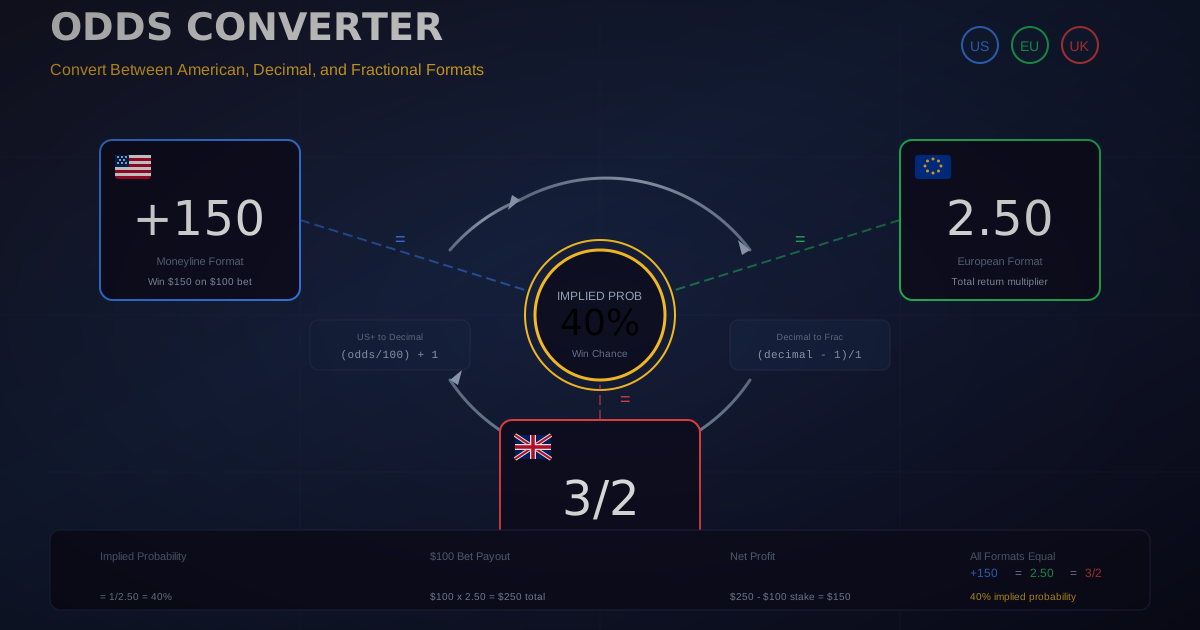
Document every bet you place. Use our free Odds Converter to verify the odds you received, and screenshot every wager immediately after placing it.
What Are the Most Common Sportsbook Disputes?
Sportsbook disputes fall into several distinct categories, each with different causes, resolution paths, and success rates. Understanding which type of dispute you are facing determines how to resolve it most effectively.
Common Dispute Types and Frequency
| Dispute Type | Frequency | Typical Resolution | Success Rate (Regulated Books) |
|---|---|---|---|
| Delayed withdrawal | Very common | 1-5 days after contact | 90%+ (usually processing delay) |
| KYC verification delay | Very common | 1-7 days with proper documents | 95%+ (documentation resolves it) |
| Account limitation (stake reduction) | Common | Rarely reversed | 10-15% (operator discretion) |
| Voided bet (palpable error) | Common | 5-30 days (may require regulator) | 30-50% (depends on evidence) |
| Frozen account (security hold) | Moderately common | 3-14 days | 70-80% (if no actual violation) |
| Bonus dispute (rollover terms) | Common | 5-15 days | 40-60% (depends on T&C clarity) |
| Promotional terms dispute | Common | 3-10 days | 50-70% |
| Account closure with balance | Uncommon | 5-30 days (may require regulator) | 80%+ (regulated books must return funds) |
| Settlement error (wrong payout) | Uncommon | 1-7 days | 90%+ (usually corrected quickly) |
| Multi-account detection | Uncommon | 5-30 days | 20-30% (usually justified closure) |
Understanding Why Disputes Happen
Most sportsbook disputes fall into three root causes:
1. Operational Issues: Processing delays, system errors, understaffed support teams. These are the easiest to resolve because the sportsbook typically wants to fix them.
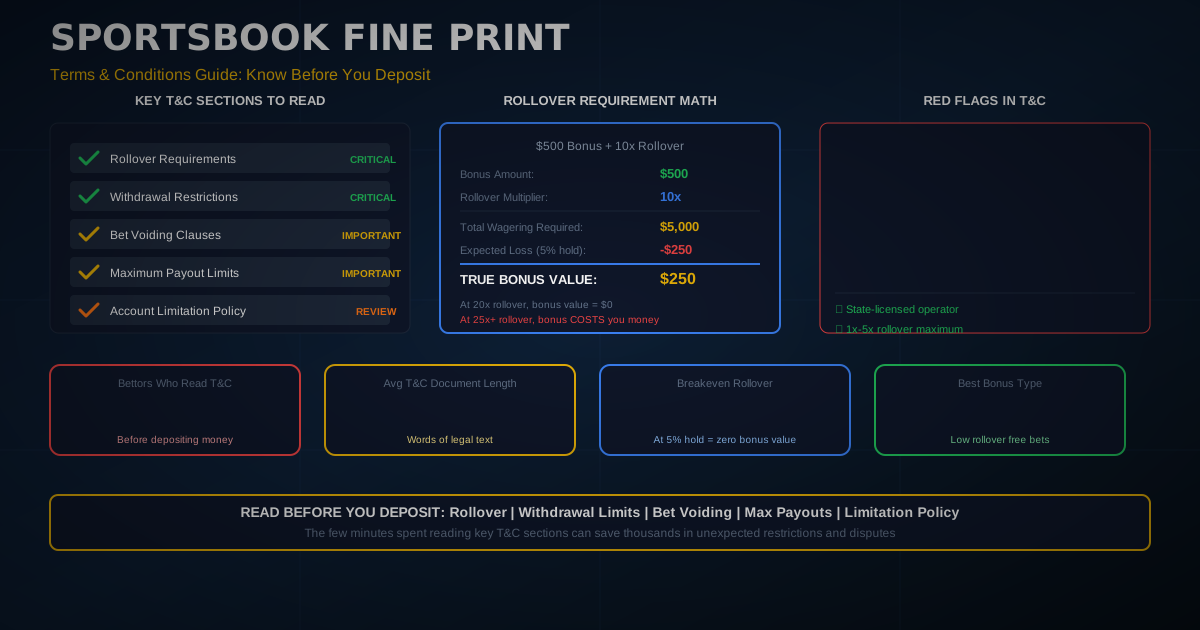
2. Terms and Conditions Conflicts: Bettors who did not read or did not understand the T&C find themselves in situations where the sportsbook is technically within its rights. These require careful review of the specific terms.
3. Deliberate Operator Actions: Account limitations for winning bettors, broad application of palpable error clauses, or aggressive enforcement of minor T&C violations. These are the hardest to resolve because the sportsbook is acting intentionally.
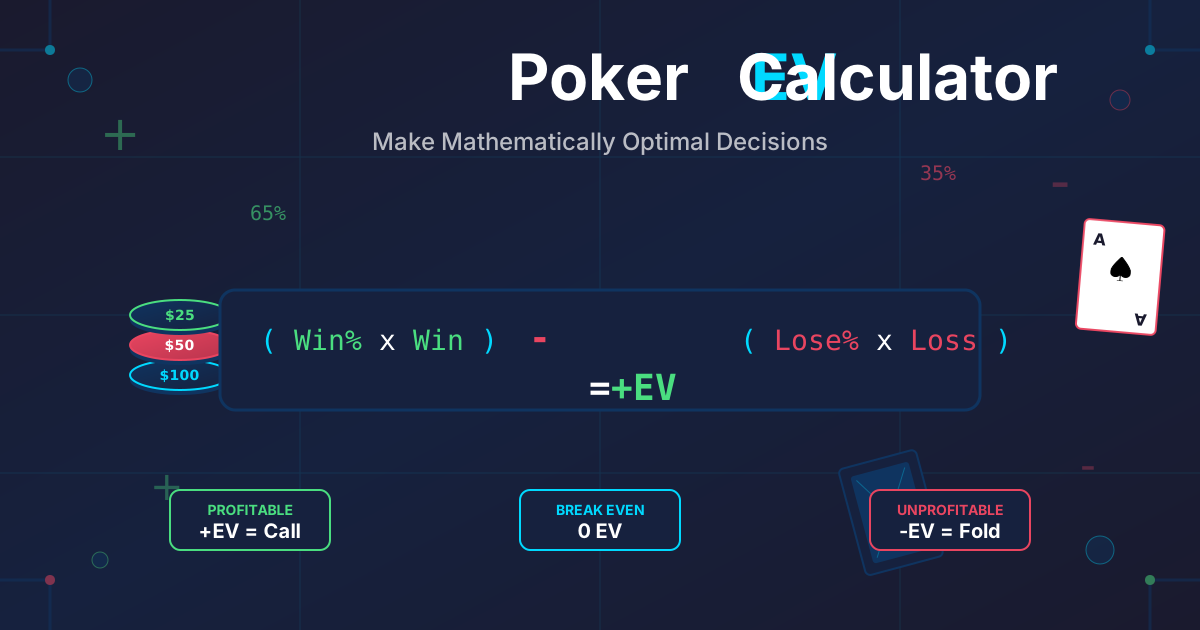
Calculate the expected value of any bet to determine if a voided bet was actually in your favor with our Expected Value Calculator.
What Should You Do First When a Dispute Arises?
The first 24 hours of a sportsbook dispute are critical. The actions you take immediately after discovering a problem determine whether you have the evidence needed to win your case.
Step 1: Document Everything Immediately
Before contacting anyone, secure your evidence:
| What to Document | How to Document | Why It Matters |
|---|---|---|
| Your account status | Screenshot the account page showing any holds or restrictions | Proves the current state of your account |
| Bet history | Screenshot all relevant bets, including settled and pending | Proves what you wagered and the odds received |
| Transaction history | Screenshot deposits, withdrawals, and pending transactions | Proves financial activity and any withheld funds |
| Promotional offers | Screenshot any active bonuses, their terms, and your rollover progress | Proves promotional claims |
| Chat transcripts | Screenshot any previous customer service conversations | Establishes timeline of issue |
| Email correspondence | Save all emails from the sportsbook | Provides written record |
| Account terms | Screenshot the current terms and conditions | Captures the terms in effect at the time |
Step 2: Review the Terms and Conditions
Before contacting support, re-read the relevant sections of the sportsbook's T&C:
- For voided bets: Read the palpable error and bet voiding clauses
- For frozen accounts: Read the security, verification, and account suspension clauses
- For delayed withdrawals: Read the withdrawal processing timeframes and KYC requirements
- For bonus disputes: Read the promotional terms, rollover requirements, and bonus forfeiture conditions
- For account limitations: Read the account management and restriction clauses
Understanding whether the sportsbook is acting within their stated terms changes your strategy significantly. If they are within their rights, you need to argue fairness or regulatory interpretation. If they are violating their own terms, you have a much stronger case.
Step 3: Calculate Your Financial Exposure
Know exactly how much money is at stake:
| Amount Component | How to Calculate |
|---|---|
| Cash balance | Current withdrawable balance |
| Pending bets | Total stakes on unsettled wagers |
| Bonus balance | Bonus funds that may be forfeited |
| Pending withdrawals | Any withdrawal requests not yet processed |
| Disputed winnings | Amount of any specific payout in dispute |
| Total exposure | Sum of all components |
This total helps you decide how aggressively to pursue the dispute and whether legal action is worth the cost.
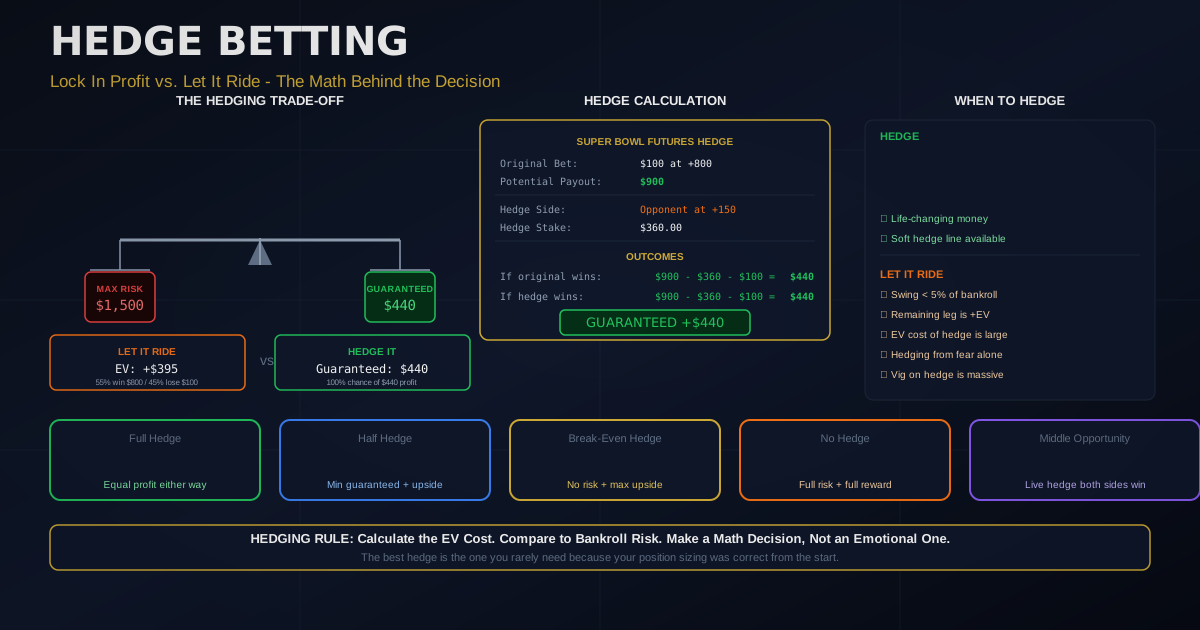
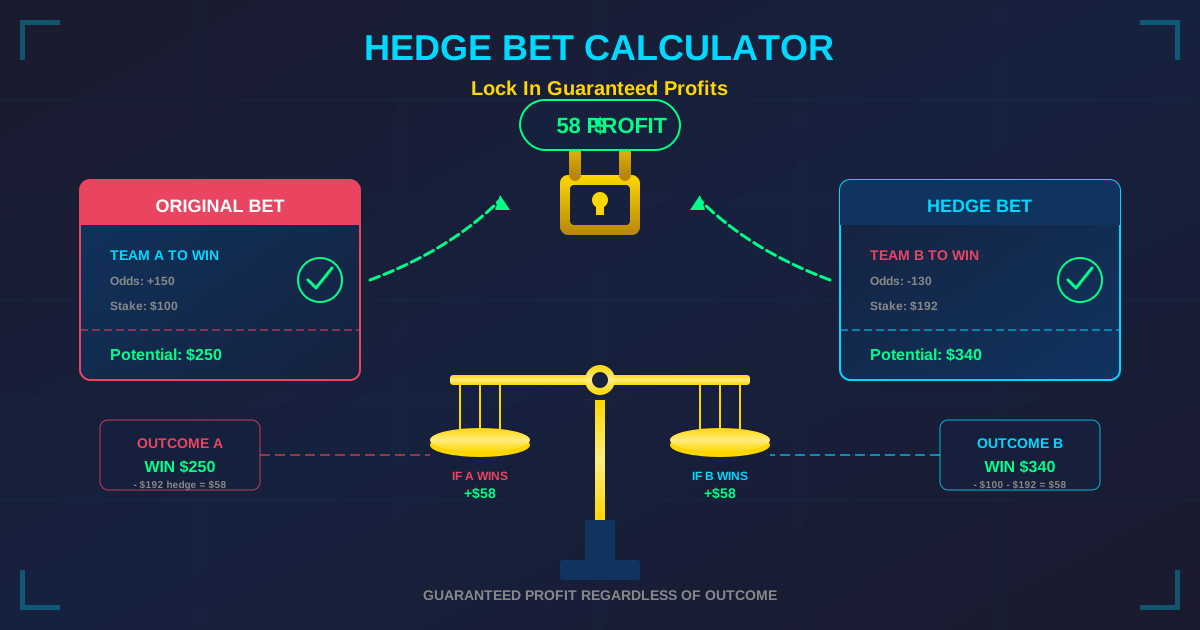
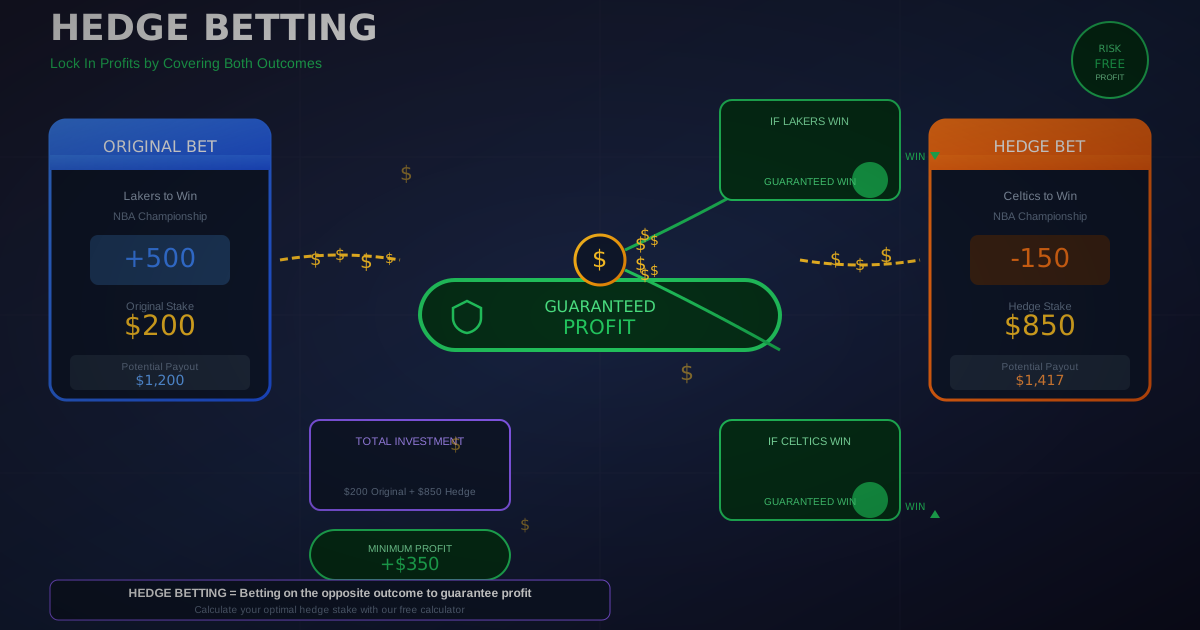
Use our Hedge Calculator to calculate whether hedging a disputed pending bet at another sportsbook is worthwhile.
How Do You Escalate Through Sportsbook Support?
The internal resolution process at most regulated sportsbooks follows a structured hierarchy. Understanding this hierarchy helps you reach the right people faster.
Escalation Tier 1: Customer Support (Live Chat/Email)
When to use: First contact for any dispute.
What to do:
- Open live chat (fastest) or send an email (creates paper trail; ideally do both)
- State your issue clearly and concisely in one paragraph
- Include relevant account details, bet IDs, and transaction IDs
- State what resolution you are seeking
- Ask for a reference number or ticket number
What to expect:
- First-line support agents handle 80% of issues but have limited authority
- Response time: Live chat (5-15 minutes), email (24-48 hours)
- Many agents follow scripts and may not understand complex disputes
- They can: process standard withdrawals, correct obvious errors, apply basic credits
- They cannot: reverse account limitations, override voided bets, or make policy exceptions
Escalation Tier 2: Supervisor/Team Lead
When to use: When Tier 1 cannot resolve your issue or provides an unsatisfactory response.
What to do:
- Ask specifically to speak with a supervisor or escalate to a senior team member
- Reference your previous ticket number
- Explain that you have already contacted support and the issue was not resolved
- Be firm but professional; aggression reduces cooperation
What to expect:
- Supervisors have more authority but still work within policy guidelines
- Response time: 24-72 hours
- They can: make limited exceptions, expedite processes, approve moderate credits
- They cannot: change company policy, override automated risk decisions
Escalation Tier 3: Compliance/Legal Team
When to use: When supervisors cannot resolve the issue, especially for disputes involving significant money or potential regulatory violations.
What to do:
- Request that your complaint be forwarded to the compliance or legal department
- Put your complaint in writing (email) with all documentation attached
- Reference specific terms and conditions sections that support your position
- Mention (do not threaten) that you are aware of the regulatory complaint process
What to expect:
- Compliance teams review disputes from a legal and regulatory perspective
- Response time: 5-15 business days
- They can: override policy decisions, authorize exception payouts, interpret ambiguous T&C in your favor
- They take regulatory complaints seriously because they affect the operator's license
Escalation Tier 4: Formal Written Complaint
When to use: Before filing a regulatory complaint, as a final attempt at internal resolution.
What to do:
- Send a formal written complaint via email (and certified mail if the operator has a physical address in your state)
- Include a complete timeline of events
- Attach all documentation
- State a specific, reasonable resolution request
- Set a deadline for response (typically 10-14 business days)
- State that you will file a regulatory complaint if the issue is not resolved
Template for formal complaint:
Subject: Formal Complaint - Account [number] - [Brief description of issue]
Dear [Sportsbook] Compliance Team,
I am writing to formally dispute [specific issue]. My account number is [number]. This issue began on [date] and involves [amount] in [disputed funds/voided bets/withheld winnings].
Timeline: [chronological summary]
I have contacted your customer support team on [dates] with reference numbers [ticket numbers]. The issue remains unresolved.
I believe [sportsbook] is in violation of [specific T&C section or state regulation] because [explanation].
I am requesting [specific resolution] by [date, typically 14 days].
If this matter is not resolved by that date, I will file a formal complaint with [state gaming commission].
Attached: [list of documentation]
Sincerely, [Your name]
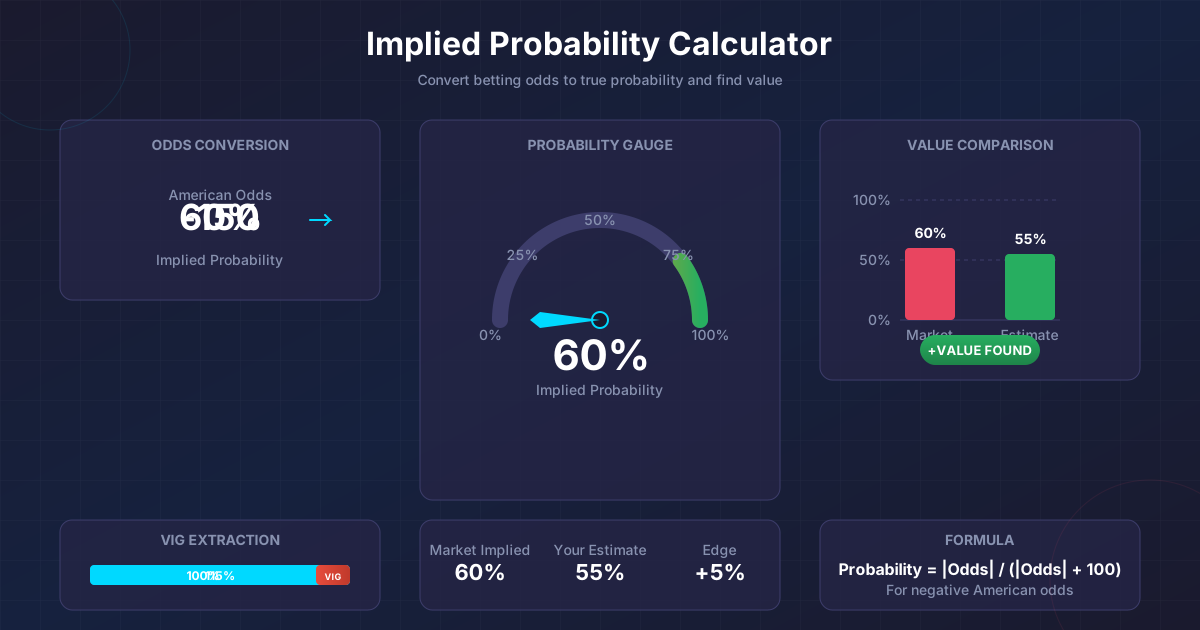
Calculate the odds-implied probability of any disputed bet to support your claim with our Implied Probability Calculator.
How Do You File a Regulatory Complaint With Your State Gaming Commission?
When internal resolution fails, your most powerful tool is a formal complaint with the state gaming commission that licenses the sportsbook. These regulators have real enforcement authority and take consumer complaints seriously.
State Gaming Commission Contact Information (2026)
| State | Regulatory Body | Complaint URL | Phone |
|---|---|---|---|
| Arizona | AZ Dept. of Gaming | gaming.az.gov | (602) 771-4263 |
| Arkansas | AR Racing Commission | dfa.arkansas.gov/racing-commission | (501) 682-1132 |
| Colorado | CO Division of Gaming | sbg.colorado.gov | (303) 205-1355 |
| Connecticut | CT Dept. of Consumer Protection | portal.ct.gov/dcp | (860) 713-6100 |
| Delaware | DE Lottery | delottery.com | (302) 739-5291 |
| Florida | FL Division of Pari-Mutuel Wagering | myfloridalicense.com | (850) 488-9130 |
| Illinois | IL Gaming Board | igb.illinois.gov | (312) 814-4700 |
| Indiana | IN Gaming Commission | in.gov/igc | (317) 233-0046 |
| Iowa | IA Racing and Gaming Commission | irgc.iowa.gov | (515) 281-7352 |
| Kansas | KS Racing and Gaming Commission | krgc.ks.gov | (785) 296-5800 |
| Kentucky | KY Horse Racing Commission | khrc.ky.gov | (502) 564-7300 |
| Louisiana | LA Gaming Control Board | lgcb.dps.louisiana.gov | (225) 295-8450 |
| Maine | ME Gambling Control Unit | maine.gov/dps/gamb-control | (207) 626-3900 |
| Maryland | MD Lottery and Gaming Control | mdgaming.com | (410) 230-8100 |
| Massachusetts | MA Gaming Commission | massgaming.com | (617) 979-8400 |
| Michigan | MI Gaming Control Board | michigan.gov/mgcb | (313) 456-4100 |
| Mississippi | MS Gaming Commission | msgamingcommission.com | (601) 576-3800 |
| Missouri | MO Gaming Commission | mgc.dps.mo.gov | (573) 526-4080 |
| Montana | MT Gambling Control Division | dojmt.gov/gaming | (406) 444-1971 |
| Nebraska | NE Racing and Gaming Commission | racing.nebraska.gov | (402) 471-4155 |
| Nevada | NV Gaming Control Board | gaming.nv.gov | (702) 486-2000 |
| New Hampshire | NH Lottery Commission | nhlottery.com | (603) 271-3391 |
| New Jersey | NJ Division of Gaming Enforcement | nj.gov/oag/ge | (609) 292-9394 |
| New York | NY Gaming Commission | gaming.ny.gov | (518) 388-3300 |
| North Carolina | NC Lottery Commission | nclottery.com | (919) 301-3300 |
| Ohio | OH Casino Control Commission | casinocontrol.ohio.gov | (614) 387-5688 |
| Oregon | OR Lottery Commission | oregonlottery.org | (503) 540-1000 |
| Pennsylvania | PA Gaming Control Board | gamingcontrolboard.pa.gov | (717) 346-8300 |
| Rhode Island | RI Division of Gaming and Athletics Licensing | dbr.ri.gov | (401) 462-9503 |
| South Dakota | SD Commission on Gaming | dor.sd.gov/gaming | (605) 773-6050 |
| Tennessee | TN Education Lottery / Sports Wagering | tn.gov/swac | (615) 324-6500 |
| Vermont | VT Lottery Commission | vtlottery.com | (802) 479-5686 |
| Virginia | VA Lottery | valottery.com | (804) 692-7000 |
| Washington | WA Gambling Commission | wsgc.wa.gov | (360) 486-3440 |
| West Virginia | WV Lottery Commission | wvlottery.com | (304) 558-0500 |
| Wyoming | WY Pari-Mutuel Commission | gaming.wyo.gov | (307) 777-5887 |
How to File an Effective Regulatory Complaint
Step 1: Gather Your Documentation
- Complete timeline of events
- All screenshots and correspondence
- Copy of relevant T&C sections
- Your internal complaint reference numbers
- Evidence that you attempted internal resolution first
Step 2: Submit the Complaint Most states accept complaints through:
- Online complaint forms (preferred)
- Email to the gaming commission
- Written letter (some states require notarization)
- Phone complaints (for immediate issues)
Step 3: What to Include
| Element | Details |
|---|---|
| Your contact information | Full name, address, phone, email |
| Sportsbook information | Operator name, your account number |
| Issue description | Clear, chronological summary of the dispute |
| Amount in dispute | Exact dollar amount(s) |
| Internal resolution attempts | Dates, reference numbers, responses received |
| Your requested resolution | Specific outcome you are seeking |
| Documentation | All evidence as attachments |
Step 4: Follow Up
- Gaming commissions typically acknowledge complaints within 5-10 business days
- Investigation timelines range from 30 to 90 days
- The commission will contact the sportsbook for a response
- You may be contacted for additional information
- Final resolution is typically communicated in writing
What Gaming Commissions Can Do
| Power | Description |
|---|---|
| Order payout | Require the sportsbook to pay disputed winnings |
| Fine operators | Impose monetary penalties ($10,000-$1,000,000+) |
| Mandate policy changes | Require the operator to modify unfair practices |
| Suspend licenses | Temporarily suspend an operator's ability to take bets |
| Revoke licenses | Permanently remove an operator from the market |
| Refer for prosecution | Forward cases involving fraud to law enforcement |
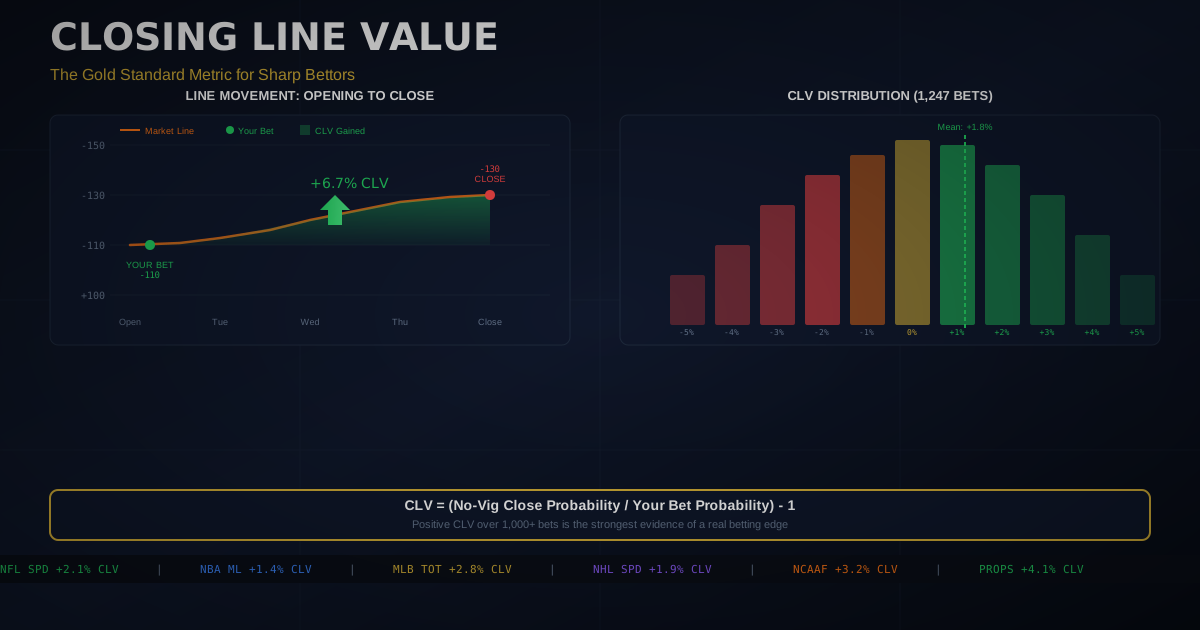
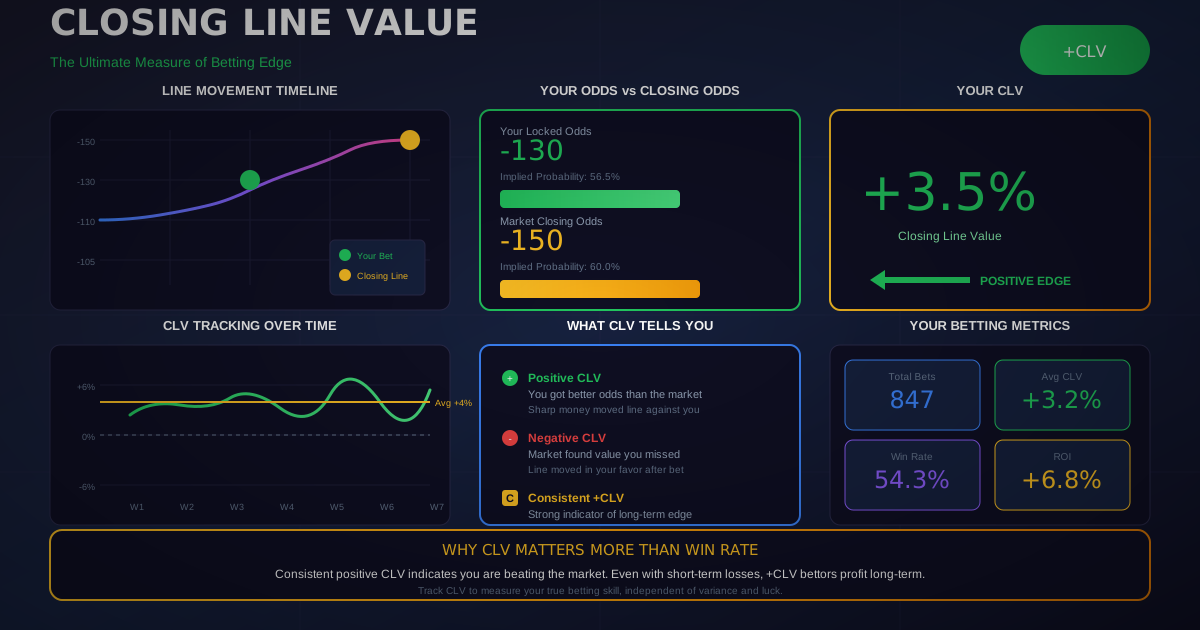
Track your betting performance metrics to support any dispute with our CLV Tracker.
How Do You Handle a Frozen or Suspended Account?
Account freezes are among the most stressful sportsbook experiences because you lose access to your funds, often without clear explanation.
Common Reasons for Account Freezes
| Reason | Likelihood | Resolution Path |
|---|---|---|
| KYC verification pending | Very common | Submit requested documents |
| Unusual betting patterns detected | Common | Answer security questions; provide bet rationale |
| Multiple account suspicion | Common | Prove identity; explain if family member has an account |
| Geolocation concerns | Common | Verify location; explain travel patterns |
| Source of funds inquiry | Moderately common | Provide bank statements, pay stubs |
| Suspected match manipulation | Rare | Cooperate fully; seek legal advice |
| Regulatory hold (external) | Rare | Contact gaming commission directly |
| Legal hold (self-exclusion violation) | Rare | Minimal options; funds typically returned |
Step-by-Step Frozen Account Resolution
Day 1: Immediate Actions
- Screenshot your account status, balance, pending bets, and any error messages
- Check your email for any communication from the sportsbook
- Contact customer support via live chat to learn the reason for the freeze
- Document the reason given (or the refusal to give a reason)
Days 2-3: Document and Respond
- Submit any requested verification documents promptly
- Follow up with customer support if no clear reason was given
- Review the T&C sections on account suspension
Days 4-7: Escalate
- If no progress, request escalation to a supervisor
- Send a formal written complaint
- Set a 7-day deadline for resolution
Days 8-14: Regulatory Involvement
- If the sportsbook has not resolved the issue, file a regulatory complaint
- Include all documentation and timeline
- Note the total amount of funds being held
Days 15+: Legal Consideration
- If the amount is significant and the regulatory process is slow, consult an attorney
- Consider small claims court for amounts within the jurisdictional limit
- Document all ongoing communications
Your Rights During an Account Freeze
| Right | Legal Basis |
|---|---|
| Know the reason | Most state regulations require operators to provide a reason for suspension |
| Access your funds | Operators must return deposits and legitimate winnings after resolving any valid concerns |
| Timely resolution | Regulators expect disputes to be resolved within reasonable timeframes |
| Pending bet settlement | Pending bets should be settled per normal terms, even if the account is frozen |
| Regulatory complaint | You can file a complaint at any time during the freeze |
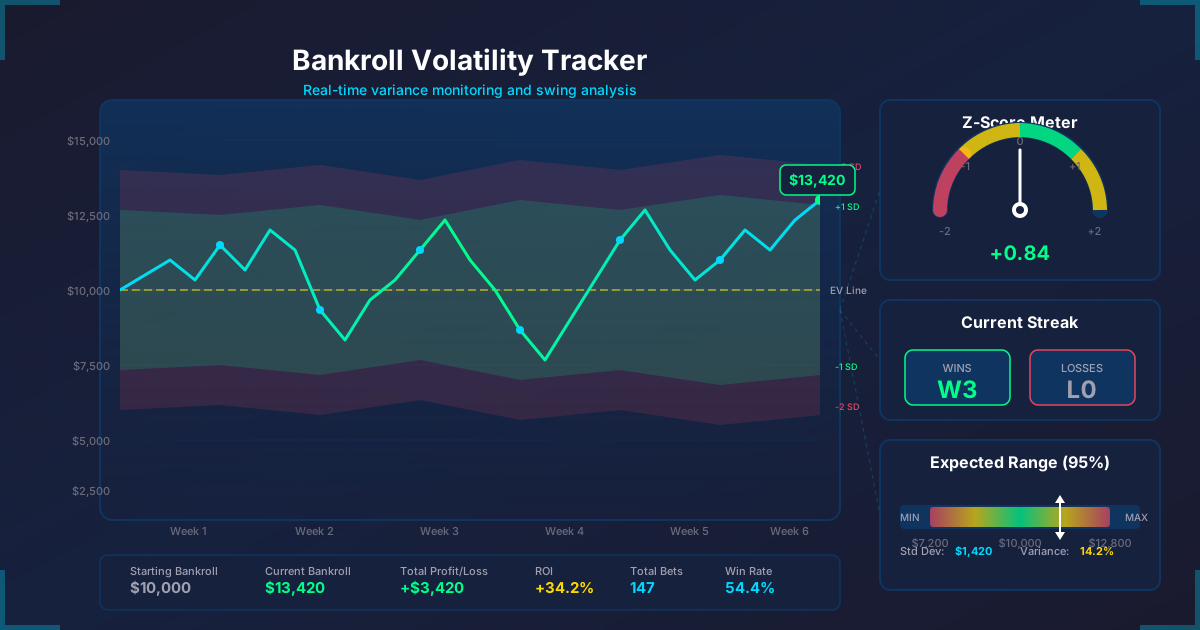
Use our Bankroll Volatility Tracker to understand how an account freeze affects your overall bankroll health.
How Do You Dispute a Voided Bet?
Voided bets are among the most contentious sportsbook disputes because you are being told that a bet you won (or expect to win) does not count.
Building Your Case for a Voided Bet Dispute
| Evidence Type | What to Show | Impact |
|---|---|---|
| Bet screenshot | Original odds, stake, and confirmation | Proves the bet was accepted and the terms |
| Odds comparison | What other sportsbooks offered on the same market | Shows whether the odds were truly erroneous |
| Line movement | How the odds moved before and after your bet | Establishes whether the odds were within market range |
| Timing evidence | When you placed the bet relative to news/events | Shows you did not exploit delayed updates |
| T&C language | Specific palpable error definition | Shows whether the sportsbook's voiding is within their stated criteria |
| Previous precedents | Similar situations that were handled differently | Shows inconsistent application of rules |
How Other Sportsbooks' Odds Help Your Case
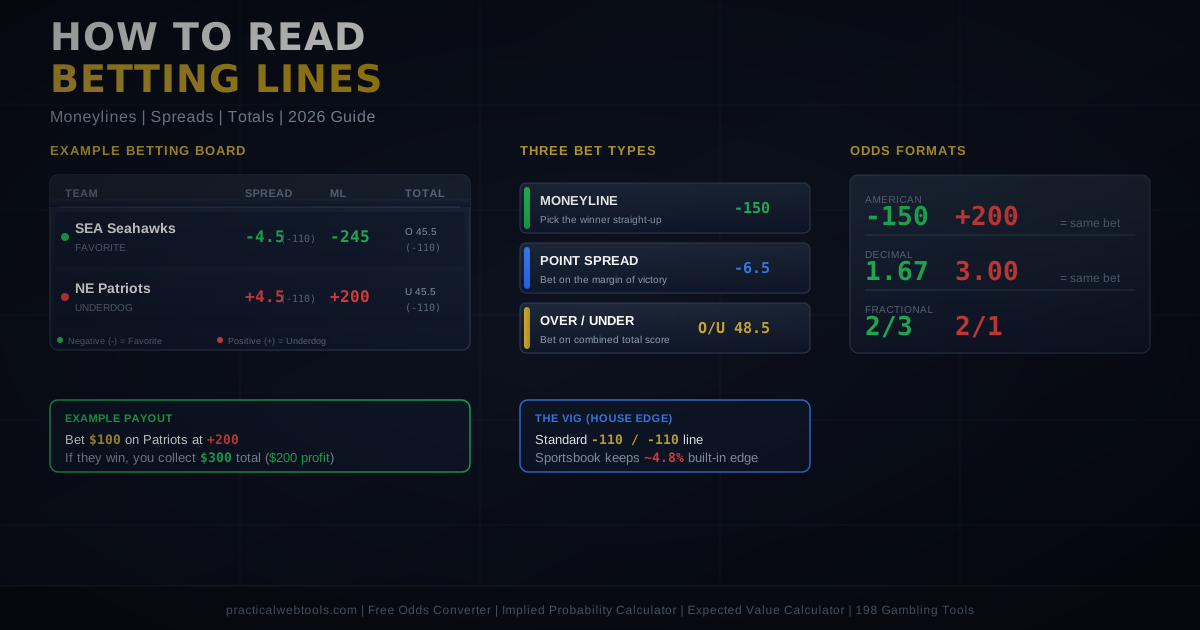
If you placed a bet at +200 and the sportsbook voided it as a palpable error, but three other sportsbooks had the same event listed between +180 and +220, that strongly suggests the odds were within normal market range and not an error.
| Your Odds | Other Books' Odds | Palpable Error? | Your Case Strength |
|---|---|---|---|
| +200 | +180 to +220 | Very unlikely | Strong case for you |
| +200 | -110 to +110 | Likely | Weak case for you |
| +1000 | +200 to +300 | Almost certainly | Very weak case |
| +200 | +195 to +210 | No | Very strong case for you |
Verify the true implied probability of any disputed line with our Implied Probability Calculator.
How Do You Handle Account Limitations?
Account limitations (reduced maximum bet sizes) are the most frustrating dispute for skilled bettors because they are usually legal, difficult to reverse, and can effectively end your ability to profit at a sportsbook.
What Account Limitation Looks Like in Practice
| Before Limitation | After Limitation |
|---|---|
| Maximum bet: $5,000 NFL side | Maximum bet: $25 NFL side |
| Maximum bet: $2,000 NBA total | Maximum bet: $10 NBA total |
| All markets available | Only main lines available |
| All promotions available | Excluded from all promotions |
| Instant bet acceptance | Bets require manual approval |
Can You Reverse an Account Limitation?
Honest answer: rarely. Sportsbooks limit accounts for business reasons (you are costing them money), and most T&C give them broad discretion to do so. However, some approaches have occasional success:
| Approach | Success Rate | How to Execute |
|---|---|---|
| Contact compliance team | 10-15% | Formal written request explaining your betting patterns |
| File regulatory complaint | 15-25% | Some states have rules requiring fair treatment |
| Threaten to close account | 5-10% | Only works if you have significant deposited funds |
| Modify betting behavior | 20-30% (over time) | Bet less selectively; include recreational bets |
| Wait 6-12 months | 15-25% | Some books periodically review limitations |
| Accept and move on | N/A | Use other sportsbooks; focus on books with better policies |
States With Account Limitation Protections
Some states have enacted or proposed rules limiting sportsbooks' ability to restrict winning accounts:
| State | Protection | Details |
|---|---|---|
| Tennessee | Minimum bet requirements | Operators cannot limit bets below $25 (proposed) |
| Colorado | Notice requirements | Operators must provide written notice of limitations |
| New Jersey | Complaint process | DGE reviews limitation complaints |
| Illinois | Proposed legislation | Bills filed to restrict operator limiting power |
Track your long-term performance to understand if limitation is likely with our CLV Tracker.
When Should You Involve a Lawyer?
Legal action should be a last resort, but for significant disputes, an attorney can be the difference between recovering your funds and losing them permanently.
When Legal Action Makes Sense
| Dispute Amount | Recommended Action |
|---|---|
| Under $500 | Self-represent; regulatory complaint only |
| $500-$5,000 | Small claims court (no attorney needed) |
| $5,000-$25,000 | Consult consumer protection attorney; demand letter |
| $25,000-$100,000 | Retain attorney; formal legal demand |
| Over $100,000 | Retain attorney immediately; consider litigation |
Small Claims Court
For disputes within your state's small claims court jurisdiction (typically $5,000-$10,000, up to $25,000 in some states), small claims court is an effective and affordable option:
| Factor | Details |
|---|---|
| Filing fee | $30-$75 in most states |
| Attorney needed | No (many states prohibit attorneys in small claims) |
| Timeline | 30-60 days from filing to hearing |
| Jurisdiction | File where the operator is licensed or where you placed bets |
| Evidence needed | All documentation previously gathered |
| Typical outcome | Judgment for plaintiff if evidence supports claim |
Attorney Demand Letters
A formal demand letter from an attorney often resolves disputes without litigation:
- Cost: $200-$500 for a demand letter
- Success rate: 40-60% for clearly supported claims
- Timeline: Sportsbooks typically respond within 10-30 days of receiving a demand letter
Consumer Protection Attorneys
Many consumer protection attorneys work on contingency (you pay nothing unless they win):
- Look for attorneys specializing in gaming law, consumer protection, or financial disputes
- State bar associations maintain referral lists
- The National Association of Consumer Advocates (naca.net) has a member directory
Determine if any disputed bet had positive expected value with our Expected Value Calculator.
How Do You Handle a Bonus or Promotional Terms Dispute?
Bonus disputes are among the most common sportsbook complaints, typically arising from misunderstood rollover requirements, expired promotions, or ambiguous promotional language.
Common Bonus Dispute Scenarios
| Scenario | What Happened | Your Position | Sportsbook's Likely Position |
|---|---|---|---|
| Rollover not met before withdrawal | You withdrew before completing rollover | You did not understand the requirement | T&C clearly stated the rollover terms |
| Promotional terms changed | Offer was different than what you saw advertised | You have screenshots of the original offer | T&C allows changes; current terms apply |
| Bonus expired before use | Free bets expired before you could place them | Expiration period was unclear | T&C specifies expiration; user responsibility |
| Opt-in not completed | You did not click an opt-in button | The requirement was not prominently displayed | T&C and promotional page stated opt-in required |
| Qualifying bet rejected | Your bet did not qualify for the promotion | The qualifying criteria were unclear | T&C specifies minimum odds, markets, etc. |
| Bonus forfeited on withdrawal | Withdrawing voided remaining bonus | This was not clearly communicated | Standard bonus T&C provision |
Building a Strong Bonus Dispute Case
To win a bonus dispute, you need to demonstrate one of the following:
-
The terms were unclear or misleading: If the promotional advertising created a reasonable expectation that the sportsbook's T&C contradicted, you have a case. Screenshots of the advertisement are critical.
-
The sportsbook failed to honor its stated terms: If you met all the requirements as written but the bonus was not credited, the sportsbook is clearly in the wrong.
-
The terms changed after you opted in: If you accepted an offer and the sportsbook subsequently changed the terms to your detriment, you have grounds for complaint.
-
Technical failure prevented completion: If a platform error prevented you from meeting the requirements (e.g., the site was down during the last hours of a time-limited promotion), the sportsbook should make an accommodation.
What Regulators Look For in Bonus Disputes
State gaming commissions evaluate bonus disputes by examining:
| Factor | How It Affects Your Case |
|---|---|
| Clarity of promotional language | Vague terms favor the bettor |
| Prominence of restrictions | Buried restrictions favor the bettor |
| Consistency of enforcement | If other bettors received the bonus under similar circumstances, you should too |
| Good faith compliance | If you made a genuine effort to meet the terms, regulators are more sympathetic |
| Operator's history | Operators with patterns of bonus complaints face greater scrutiny |
Calculate the true expected value of any bonus with our Expected Value Calculator before accepting it.
What Are Your Options for Offshore Sportsbook Disputes?
If your dispute involves an offshore (unlicensed) sportsbook, your options are severely limited. This section honestly outlines what you can and cannot do.
The Reality of Offshore Disputes
| Option | Effectiveness | Why |
|---|---|---|
| Customer support | Low | No regulatory pressure to resolve |
| Social media pressure | Low-Moderate | Reputation matters somewhat for attracting new customers |
| Online complaint forums (SBR, Reddit) | Low-Moderate | Public pressure has occasionally worked |
| Licensing jurisdiction complaint | Very Low | Curacao, Costa Rica, etc. rarely enforce against operators |
| US legal action | Very Low | Difficult to serve process on foreign entities |
| Chargeback (credit card) | Moderate | Your bank may reverse the charge, but this may result in future blacklisting |
| FBI/IC3 complaint | Very Low (for individual cases) | Only effective for patterns of fraud affecting many people |
| Accept the loss | Often the realistic outcome | Offshore betting carries inherent risk of non-payment |
Why Offshore Disputes Are Nearly Impossible
- No US jurisdiction: US courts generally cannot enforce judgments against foreign entities that have no US presence
- No regulatory oversight: Licensing authorities in Curacao, Costa Rica, and similar jurisdictions rarely act on individual complaints
- No player fund protection: Offshore books are not required to segregate player funds; your money may not exist in a separate account
- Shifting identities: Offshore operators frequently change names, domains, and ownership structures
- Terms of service: Offshore T&C typically give the operator sole discretion on all disputes
Lesson: Use Regulated Sportsbooks
The single most effective way to protect yourself from unresolvable disputes is to use only regulated, state-licensed sportsbooks. The slight differences in odds or bonuses between regulated and offshore operators are insignificant compared to the risk of losing your entire balance to an unregulated entity.
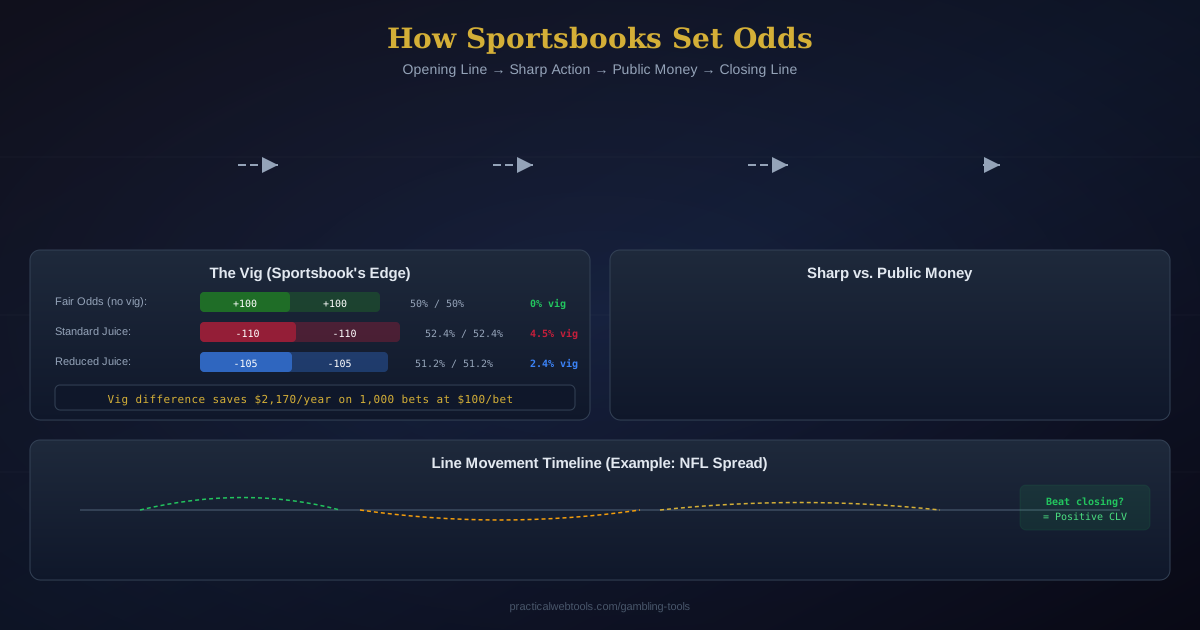
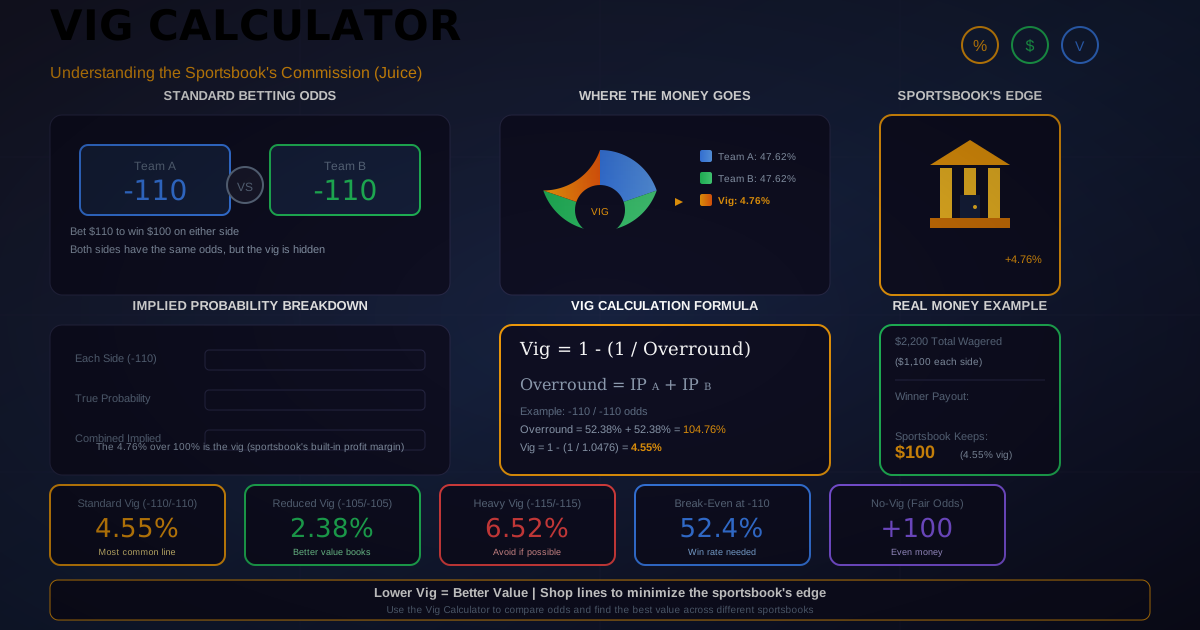
Compare the vig across regulated sportsbooks to find the best odds with our Hold/Vig Calculator.
How Do You Prevent Sportsbook Disputes?
Prevention is always better than resolution. Following these practices dramatically reduces your risk of disputes.
Pre-Deposit Checklist
| Step | Action | Why |
|---|---|---|
| 1 | Verify the sportsbook is licensed in your state | Regulatory protection |
| 2 | Read the key T&C sections (rollover, withdrawal, voiding) | Know the rules before you play |
| 3 | Complete KYC verification proactively | Avoid withdrawal delays |
| 4 | Use a verified withdrawal method from the start | Prevent deposit-method matching issues |
| 5 | Set a deposit limit | Self-imposed responsible gambling |
| 6 | Screenshot the current promotional terms | Document what was offered |
Ongoing Best Practices
| Practice | How to Implement | Benefit |
|---|---|---|
| Screenshot every bet | Take a screenshot immediately after placing each wager | Evidence for any voided bet dispute |
| Save all emails | Create a folder for each sportsbook | Communication trail |
| Download monthly statements | Most books offer downloadable history | Backup in case of account issues |
| Keep a betting diary | Log date, book, amount, odds, result | Independent record |
| Use one account per person | Never share or allow others to use your account | Avoid multi-account violations |
| Follow T&C to the letter | Especially regarding geolocation, one account, wagering rules | Prevent legitimate violations |
| Withdraw regularly | Do not leave large balances unnecessarily | Reduce exposure if account is frozen |
Dispute Timeline Expectations
If you follow the proper escalation process, here is what a typical dispute timeline looks like:
| Week | Stage | Expected Progress |
|---|---|---|
| Week 1 | Internal support contact | Issue identified; first response received |
| Week 2 | Supervisor escalation | More detailed review; potential resolution |
| Week 3 | Compliance team review | Written response from compliance |
| Week 4 | Formal written complaint | Final internal resolution attempt |
| Week 5-6 | Regulatory complaint filed | Commission acknowledges receipt |
| Week 7-10 | Regulatory investigation | Commission contacts sportsbook |
| Week 11-14 | Regulatory resolution | Commission issues finding or recommendation |
Total timeline: 6-14 weeks for a dispute that requires regulatory involvement. Simple issues are often resolved in 1-2 weeks through internal channels.
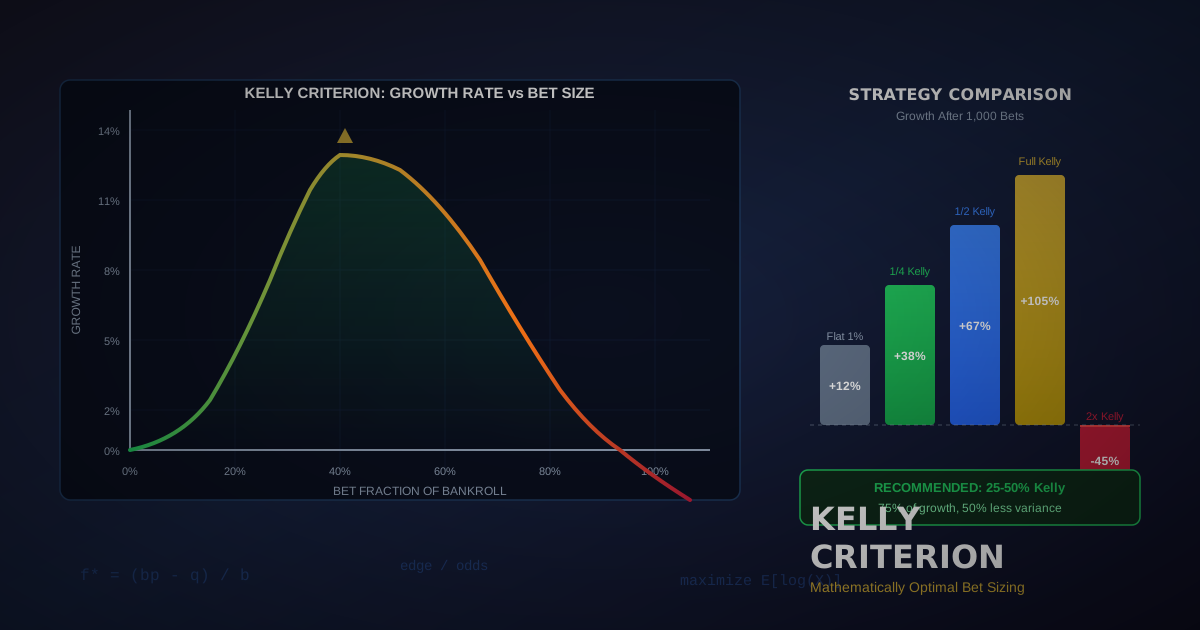
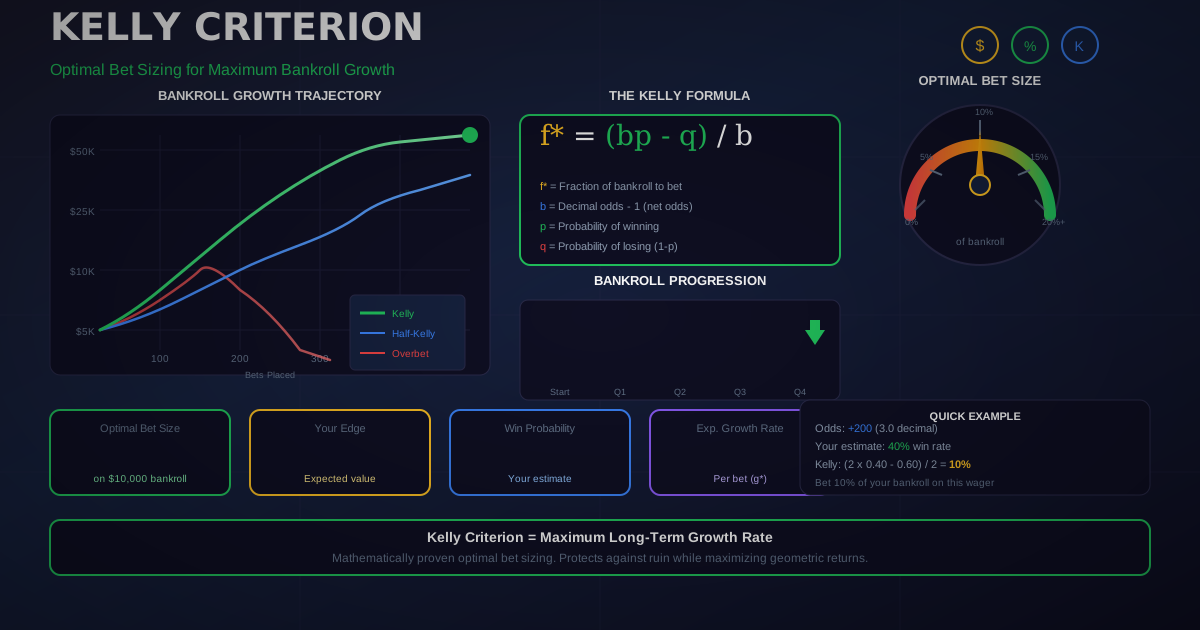
Protect your bankroll by understanding risk and position sizing with our Kelly Criterion Calculator.
Frequently Asked Questions
What should I do if my sportsbook account is frozen? First, screenshot everything: your account status, balance, pending bets, and any error messages. Then contact customer support via live chat to learn the reason. Most freezes are related to KYC verification and resolve within 3-7 days once you provide the requested documents. If the freeze extends beyond 14 days without explanation, file a complaint with your state gaming commission. Use our Bankroll Volatility Tracker to assess the impact on your overall bankroll.
Can a sportsbook refuse to pay my winnings? A regulated, state-licensed sportsbook can refuse to pay under limited circumstances defined in their T&C: palpable errors (obviously wrong odds), T&C violations (multiple accounts, geolocation fraud), or pending investigation (match manipulation suspicion). If you believe the refusal is unjustified, escalate through internal support, then file a regulatory complaint. Your state gaming commission can order the sportsbook to pay.
How long should a withdrawal take? Most regulated sportsbooks process withdrawals within 1-5 business days. E-wallets (PayPal, Venmo) are typically 1-24 hours; bank transfers are 2-5 days; checks are 7-14 days. If your withdrawal exceeds the sportsbook's stated processing time, contact support immediately. Delays beyond 14 days warrant a regulatory complaint.
What is a palpable error and can I fight it? A palpable error is odds that are clearly wrong, such as a line posted at +5000 instead of -500. Sportsbooks can void bets placed on palpable errors. To fight a palp claim, show that the odds were within the normal market range by comparing to other sportsbooks. If three other books had similar odds, the line was not a palpable error. Use our Odds Converter to verify odds across different formats.
Can I dispute an account limitation? You can dispute it, but success rates are low (10-25%). Most sportsbooks have broad legal authority to limit accounts. File a written complaint with the sportsbook's compliance team, then contact your state gaming commission if unsatisfied. Some states (Tennessee, Colorado) have or are developing rules that limit operators' ability to restrict winning accounts.
Should I bet with offshore sportsbooks? No. Offshore sportsbooks operate outside US jurisdiction, meaning you have no meaningful recourse if they refuse to pay, freeze your account, or change their terms. Use only regulated, state-licensed operators. The slight difference in odds or bonuses is not worth the risk of losing your entire balance with no recourse.
How do I file a complaint with a state gaming commission? Visit your state gaming commission's website (listed in this guide) and look for a consumer complaint form. Include: your name and contact information, the sportsbook name and your account number, a chronological description of the issue, the amount in dispute, evidence that you attempted internal resolution, and all supporting documentation.
When should I hire a lawyer for a sportsbook dispute? Consider legal consultation for disputes exceeding $5,000 that have not been resolved through the regulatory complaint process. For amounts under $5,000, small claims court is more cost-effective. Many consumer protection attorneys offer free consultations and work on contingency (you only pay if they win).
Related Gambling Tools
Use these free tools to document bets, verify odds, and protect your bankroll:
Odds Verification Tools
- Odds Converter: Verify odds across different formats
- Implied Probability Calculator: Calculate the true probability behind any odds
- Hold/Vig Calculator: Determine the sportsbook's built-in edge
Expected Value and Analysis
- Expected Value Calculator: Determine if a disputed bet had positive EV
- CLV Tracker: Track your closing line value performance over time
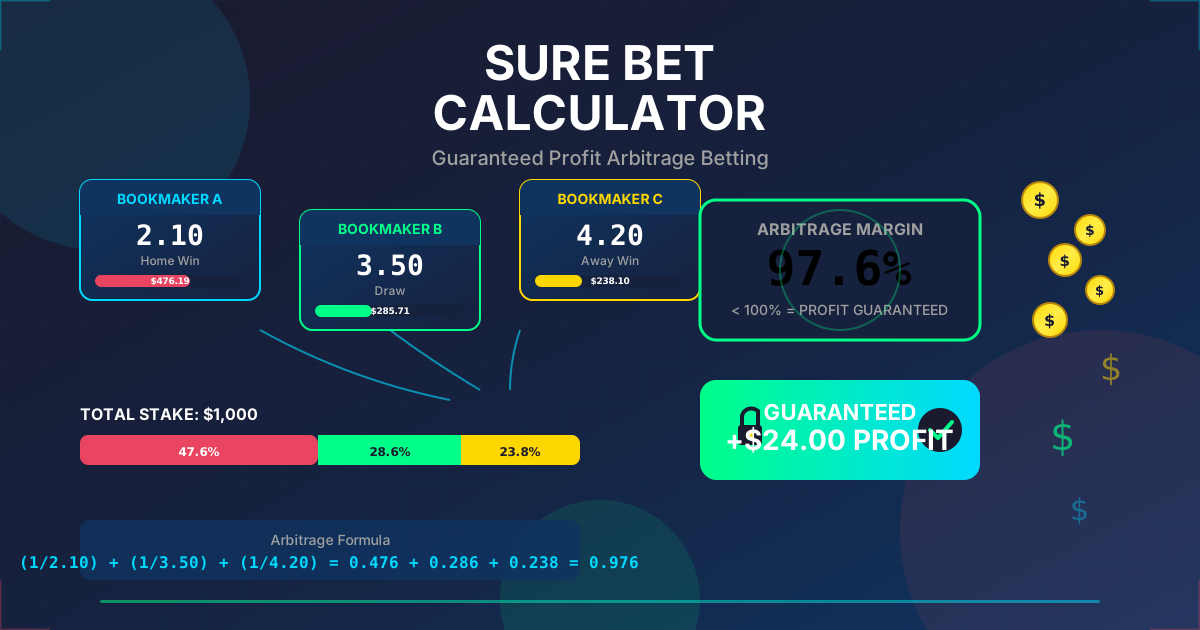
- Sure Bet Calculator: Identify guaranteed profit opportunities
Bankroll Protection Tools
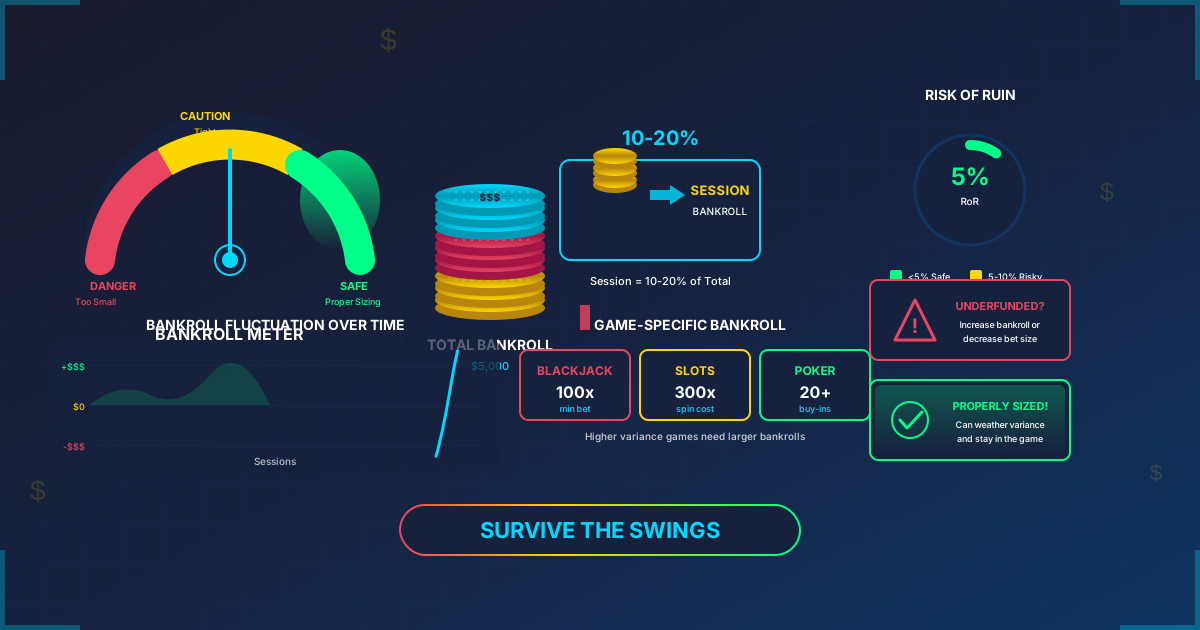
- Kelly Criterion Calculator: Optimal bet sizing to protect your bankroll
- Bankroll Volatility Tracker: Model risk and potential drawdowns
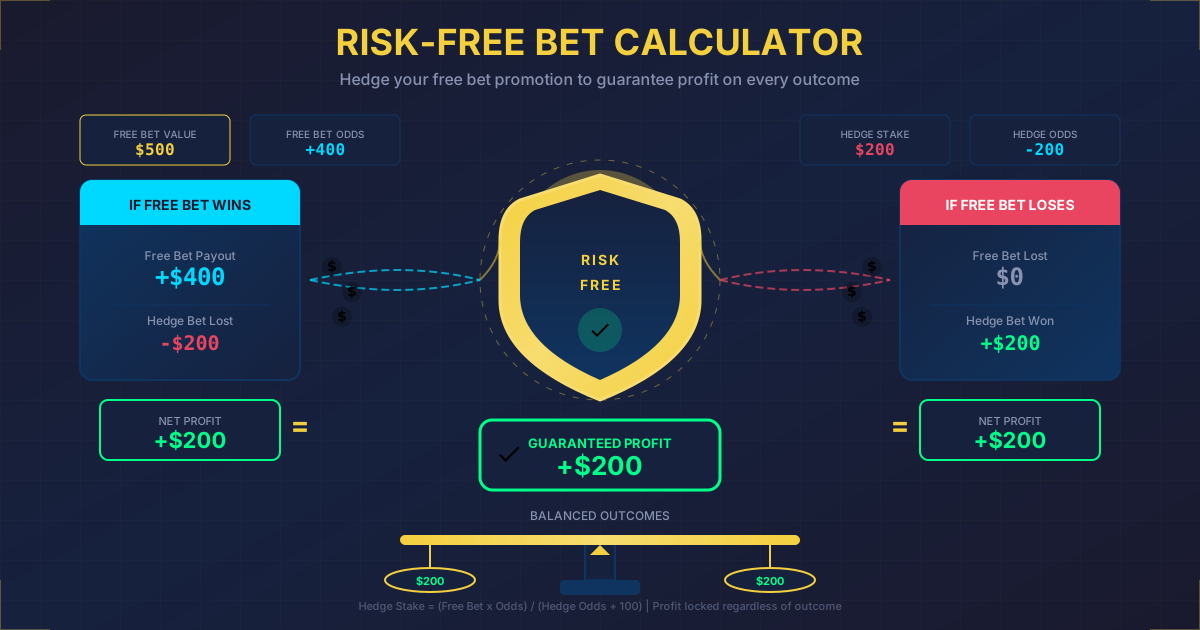
- Hedge Calculator: Calculate hedge amounts for disputed pending bets
Promotion and Free Bet Tools
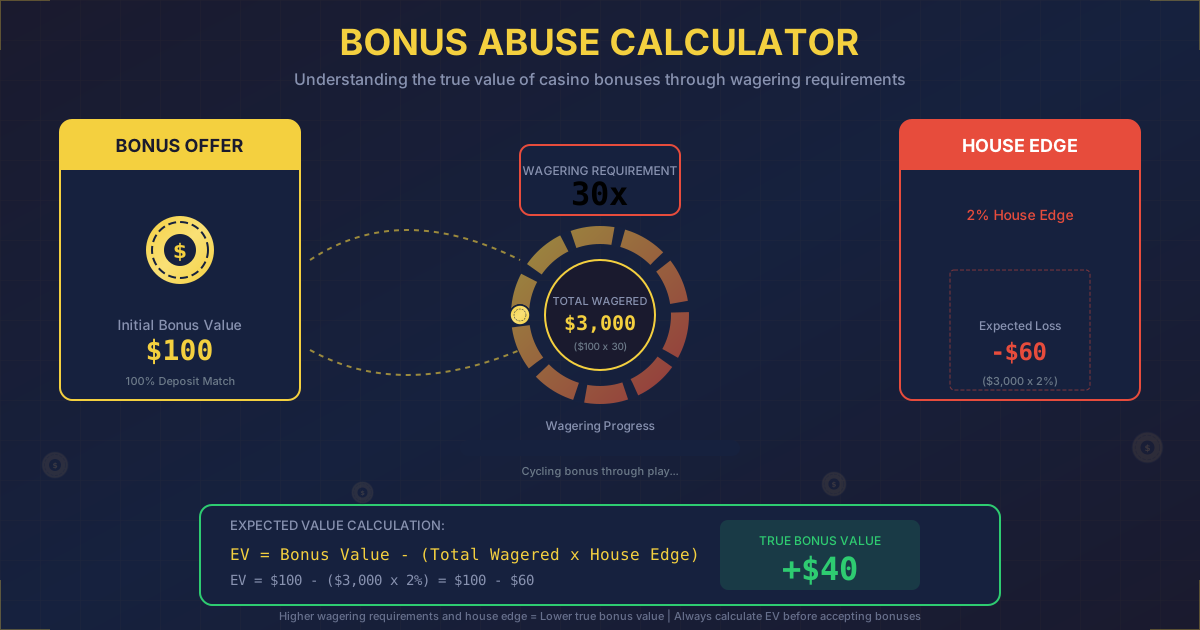
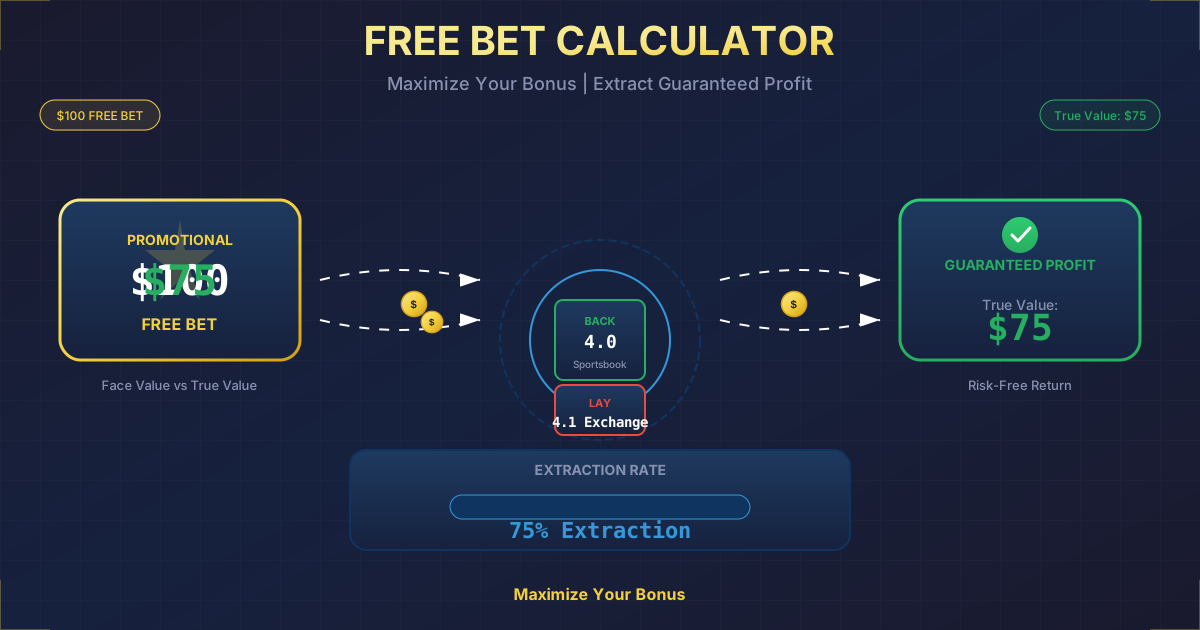
- Free Bet Calculator (SNR): Value free bets in promotional disputes
- Free Bet Calculator (SR): Value stake-returned free bets
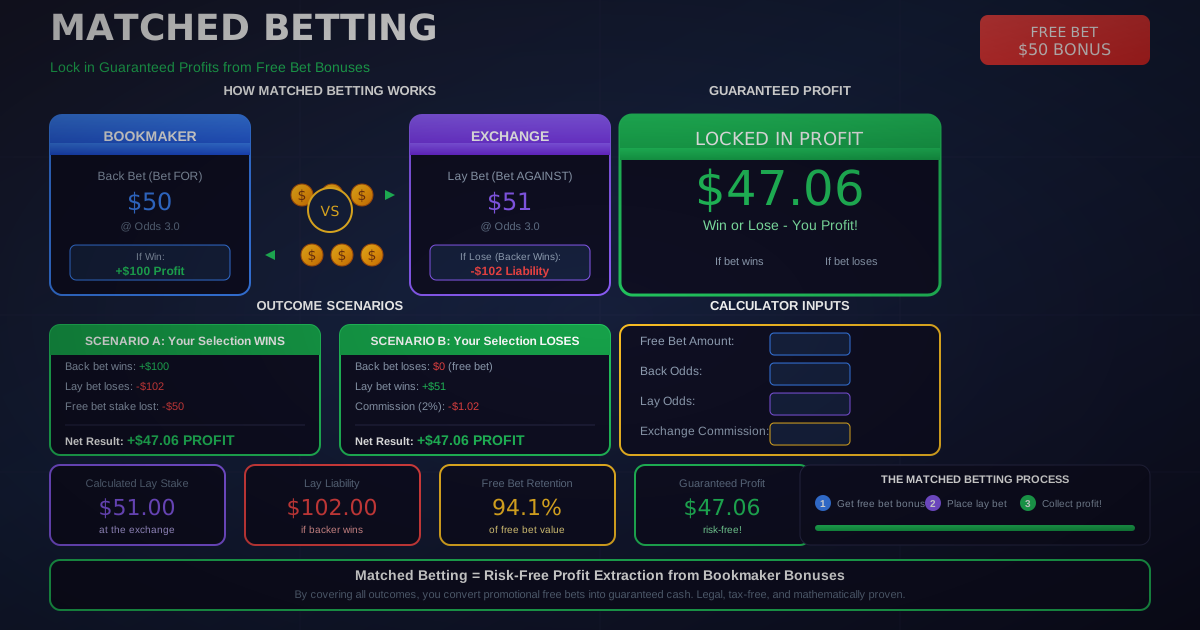
- Matched Betting Calculator: Calculate promotional value
Parlay and Multi-Bet Tools
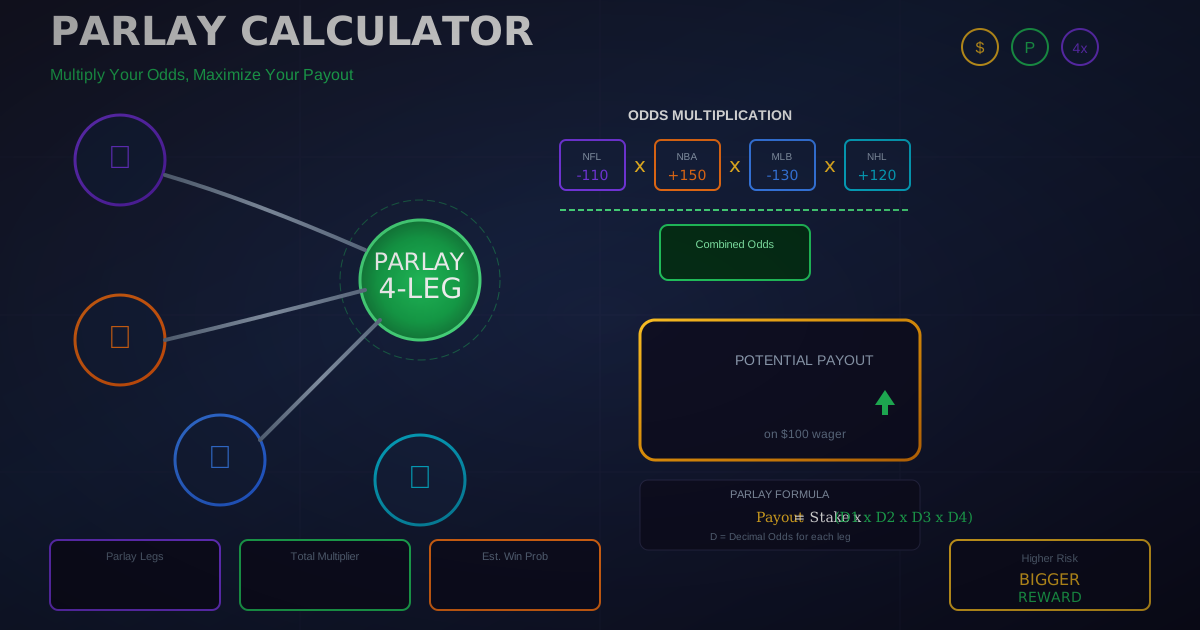
- Parlay Calculator: Verify parlay payout calculations
- Arbitrage Calculator: Calculate arbitrage opportunities across books
Protect Your Money, Know Your Rights
Sportsbook disputes are stressful, but the regulatory framework in the United States provides real protection for bettors who use licensed operators. The key is knowing the process, documenting everything, and following the escalation path methodically.
The best dispute is one that never happens. Use regulated sportsbooks. Read the key T&C sections before depositing. Complete KYC verification proactively. Screenshot every bet. Withdraw regularly. And if a dispute does arise, stay calm, document everything, and use the regulatory tools available to you.
Start by understanding every bet you place with our Expected Value Calculator. Verify the odds with our Odds Converter. And manage your bankroll wisely with our Kelly Criterion Calculator.
Your money is your money. Know how to protect it.
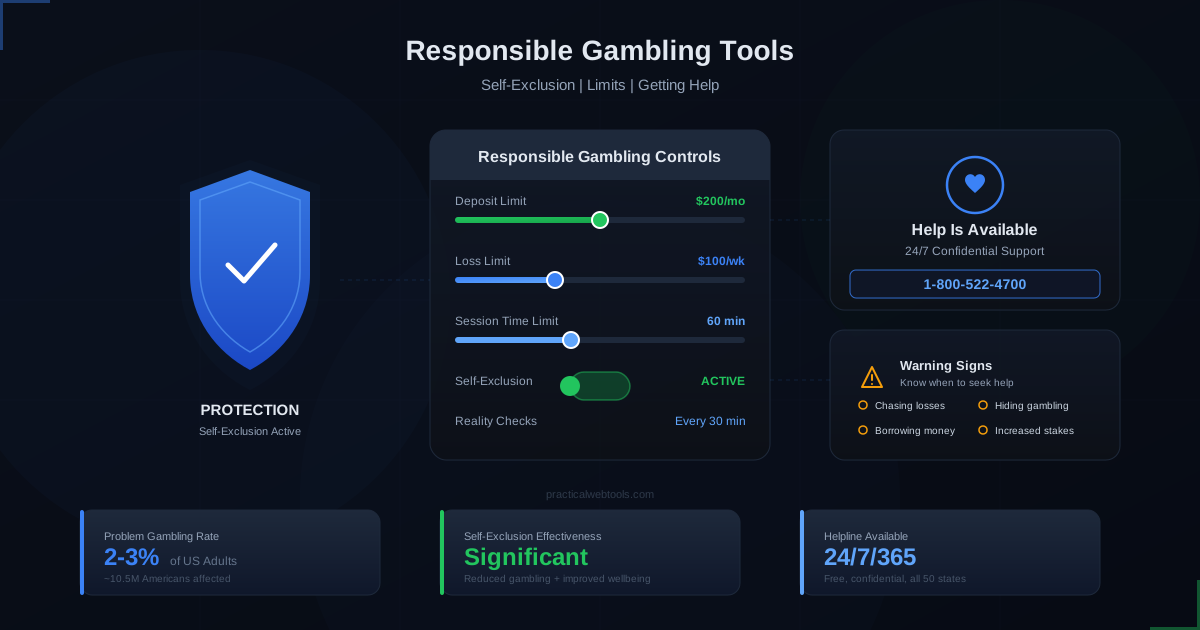
Gambling involves risk and should be approached as entertainment, not as a source of income. Always bet within your means, set strict bankroll limits, and never chase losses. If you or someone you know has a gambling problem, contact the National Council on Problem Gambling at 1-800-522-4700 or visit ncpgambling.org. Must be 21+ to gamble in most US jurisdictions. Please play responsibly.