Sharp Money Indicators: How to Follow Where Professional Bettors Are Wagering (2026)
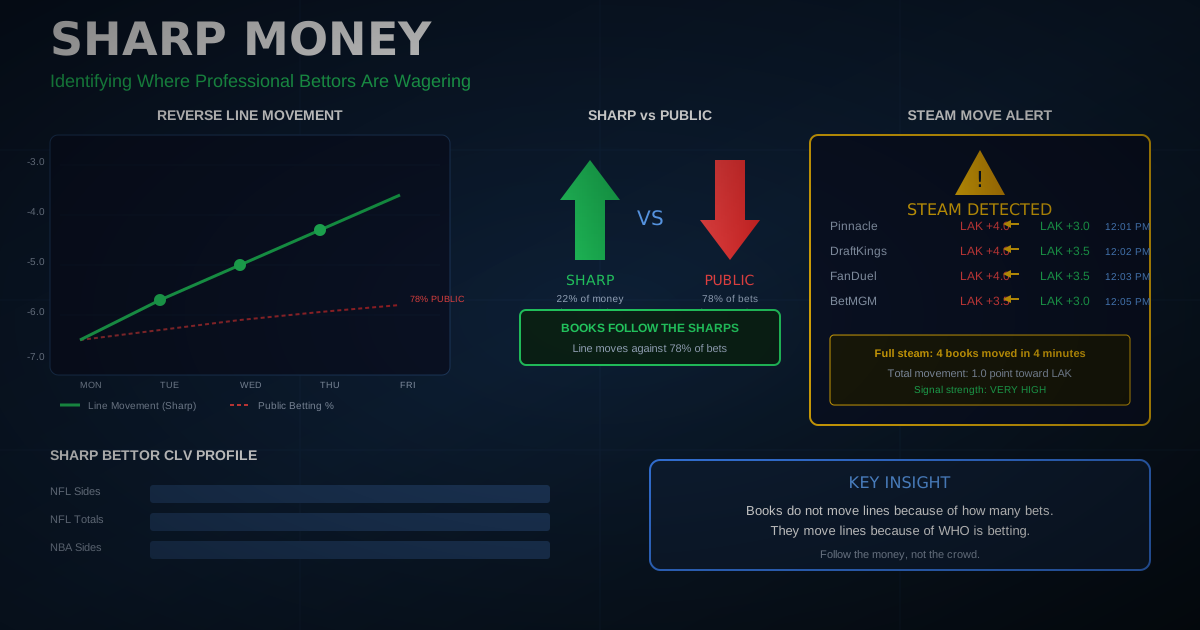
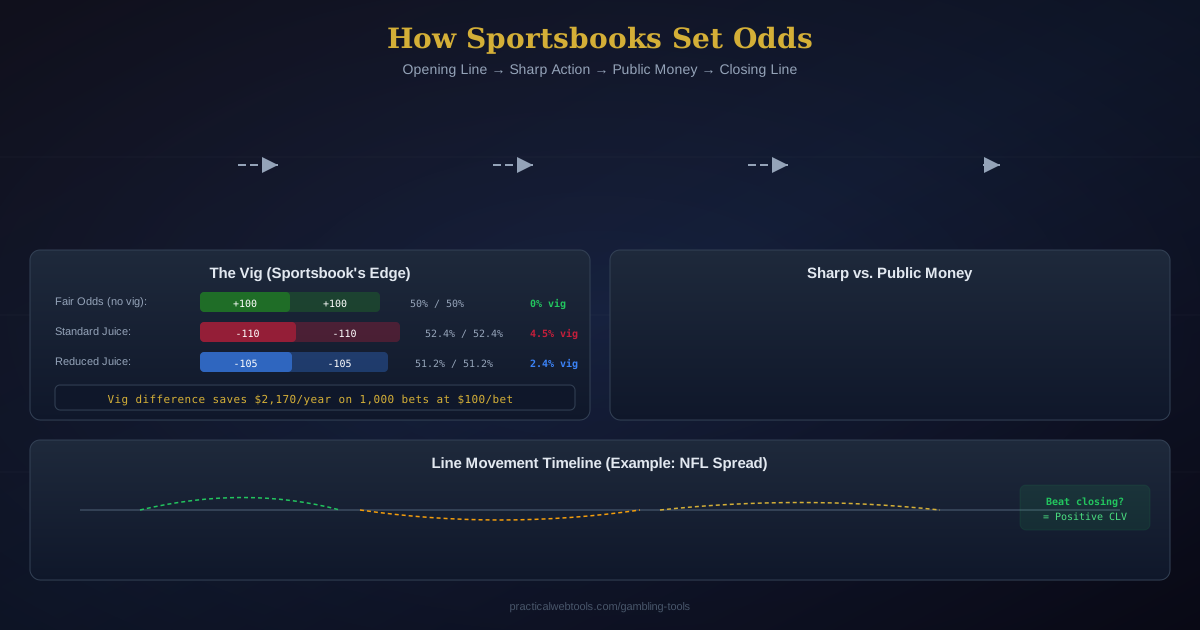
In any given NFL Sunday, roughly 85% of the money wagered on a game may come from the public, yet sportsbooks frequently move their lines in the opposite direction. When 78% of bets land on the Kansas City Chiefs at -7, but the line drops to -6.5, something significant is happening beneath the surface. That something is sharp money -- professional, CLV-positive bettors whose wagers command respect from oddsmakers.
Sharp money indicators are the fingerprints that professional bettors leave on the market. Understanding these signals does not guarantee profits, but it does give you access to the same information that sportsbooks use to adjust their lines. Books do not move lines because of the volume of bets; they move lines because of who is betting.
According to industry estimates, fewer than 3% of sports bettors are consistently profitable over a five-year span. Those who are profitable share one trait: they consistently beat the closing line. If you can learn to identify when and where these bettors are placing their money, you gain a meaningful edge in your own handicapping process.
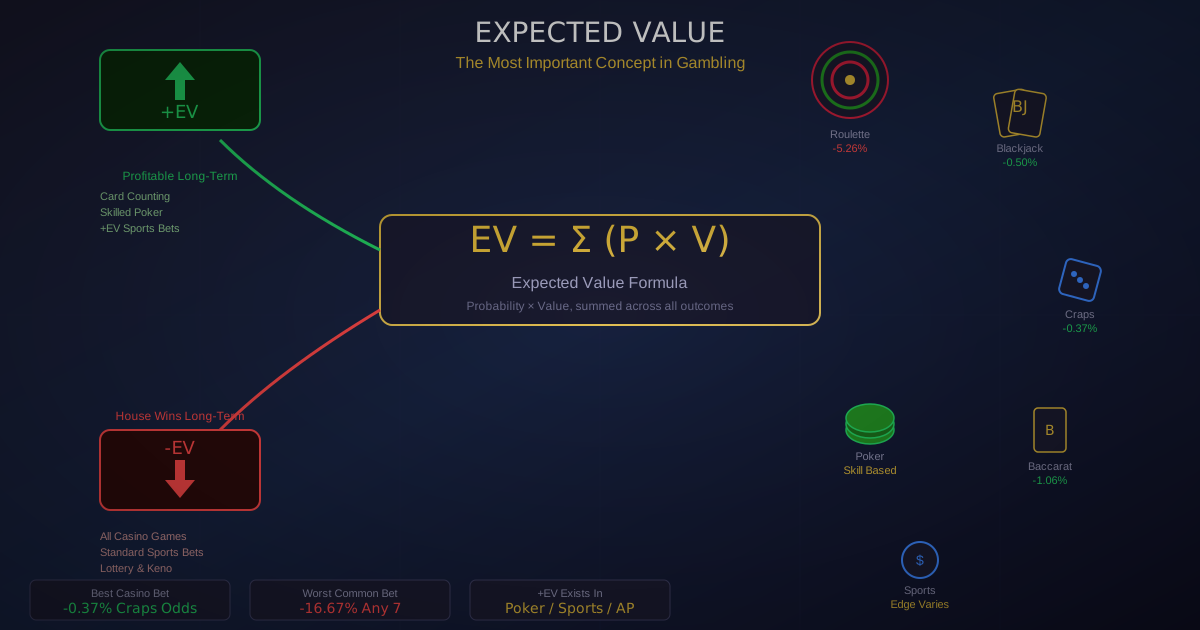
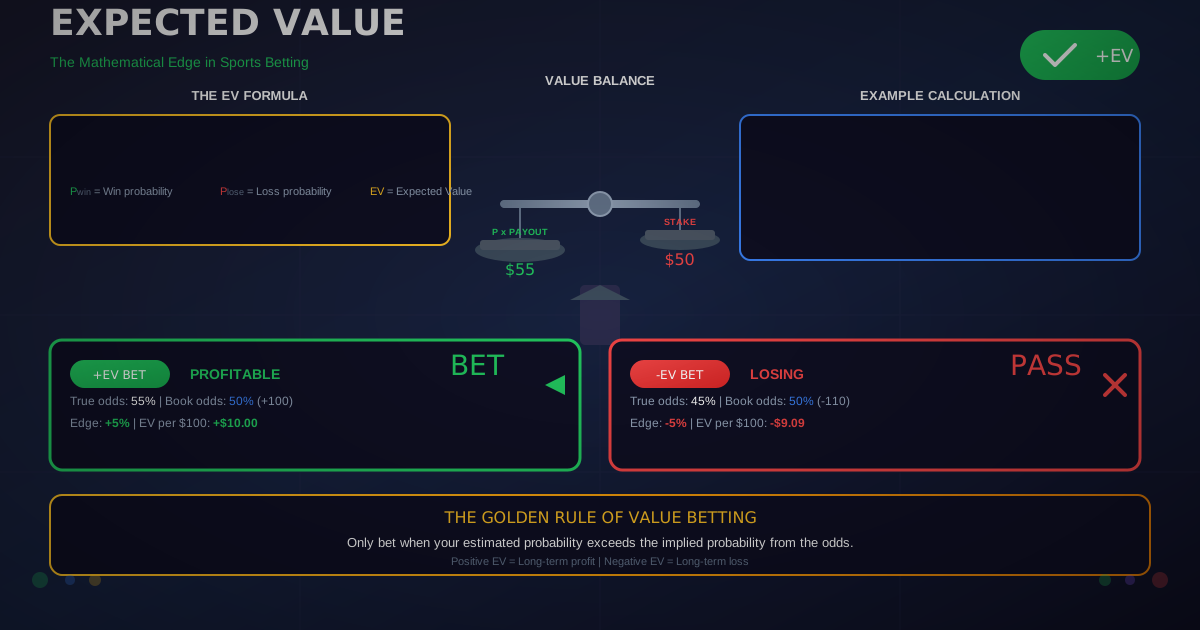
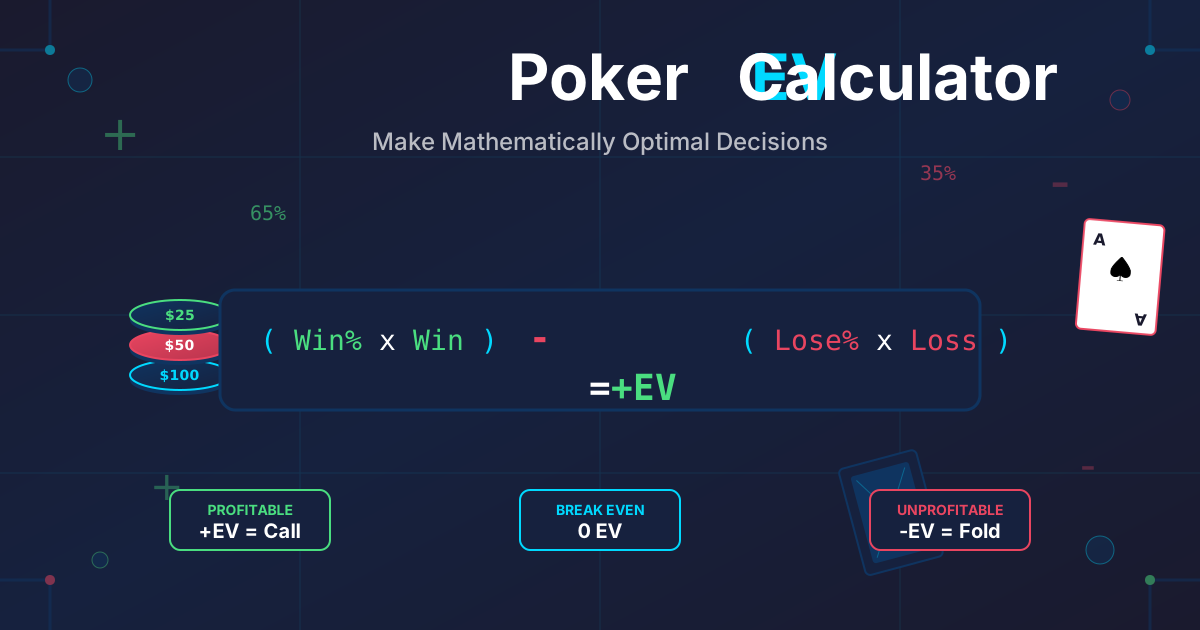
Analyze the expected value of any line movement with our free Expected Value Calculator.
What Is Sharp Money in Sports Betting?
Sharp money refers to wagers placed by professional, sophisticated bettors who have a demonstrated track record of beating the closing line. These bettors are tracked by sportsbooks through their account history, and their action is weighted far more heavily than recreational ("square") money when books adjust their lines.
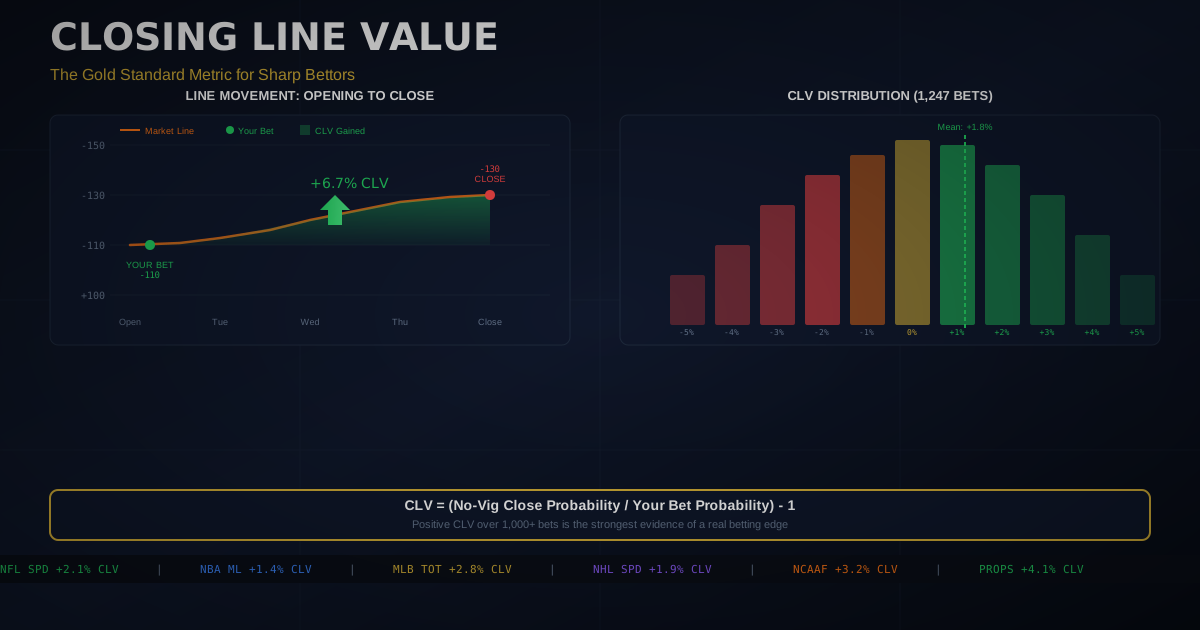
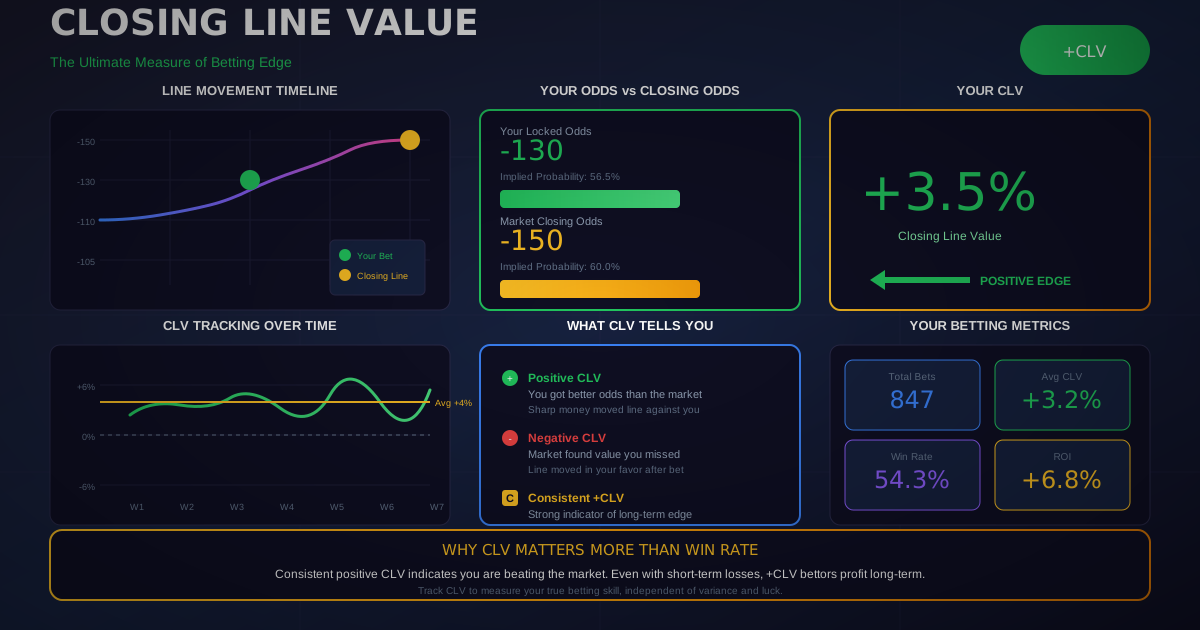
A sharp bettor is not simply someone who wins a lot. The defining characteristic is Closing Line Value (CLV) -- the ability to consistently place bets at prices better than the final line before a game starts. A bettor who regularly gets +3 on a line that closes at +2.5 is demonstrating genuine skill, regardless of short-term results.
How Sportsbooks Define Sharp Bettors
Sportsbooks categorize every account based on their betting history. The key metrics include:
| Metric | Sharp Threshold | Square Indicator |
|---|---|---|
| Closing Line Value | Consistently positive | Negative or neutral |
| Bet Timing | Early week / off-peak | Close to game time |
| Wager Size | Large, consistent units | Varies wildly |
| Market Selection | Sides, totals, alt lines | Parlays, teasers, props |
| Account Longevity | Years of tracked data | New or sporadic |
| Win Rate (Against Spread) | 53%+ over 1,000+ bets | Below 52% |
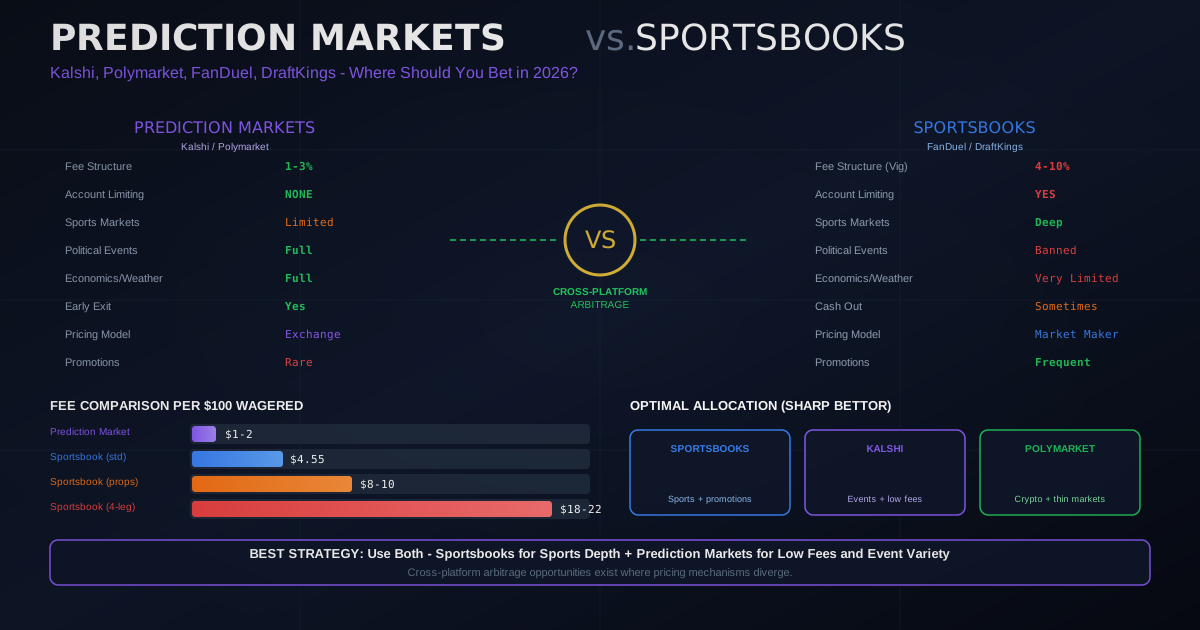
Sportsbooks like Pinnacle (CRIS), Circa, and BetCRIS are known as "sharp" books because they welcome professional action and use it to sharpen their lines. Retail books like DraftKings, FanDuel, and BetMGM typically limit or restrict accounts that display sharp characteristics.
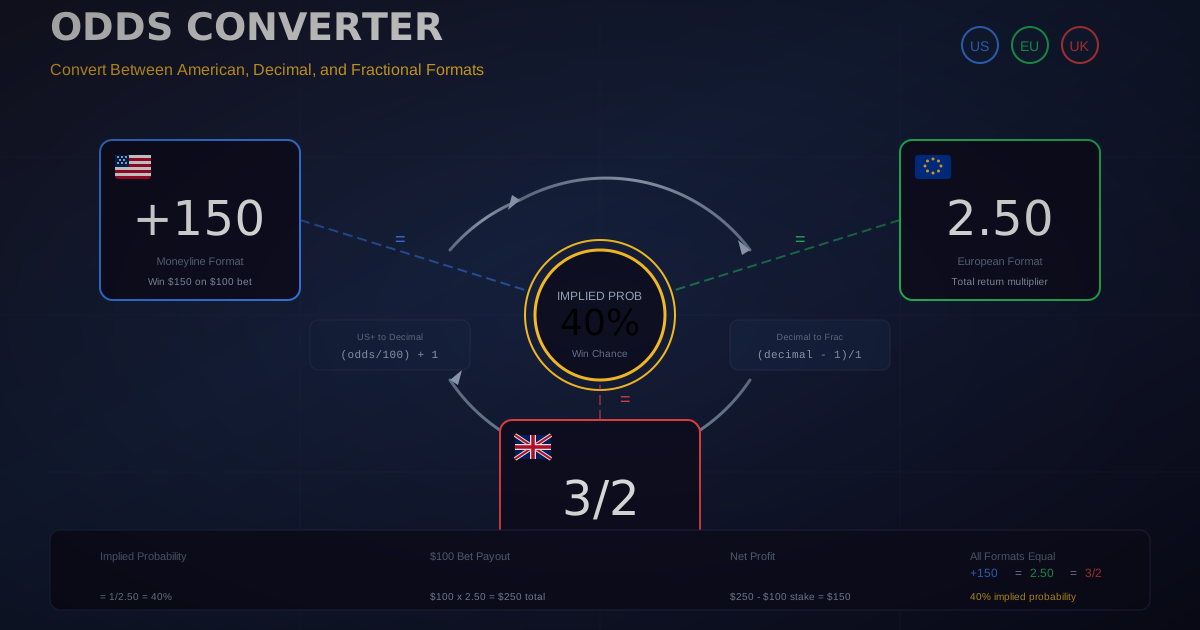
Convert between odds formats to compare lines across books with our Odds Converter.
Sharp Money vs. Square Money
The distinction between sharp and square money is not about the amount wagered -- it is about the quality of the bettor.
| Characteristic | Sharp Money | Square Money |
|---|---|---|
| Bet Size | $5,000-$100,000+ | $10-$500 |
| Information Edge | Model-based, data-driven | Gut feeling, narratives |
| Timing | Early week, opening lines | Game day, prime time |
| Preferred Markets | Sides, totals | Parlays, same-game parlays |
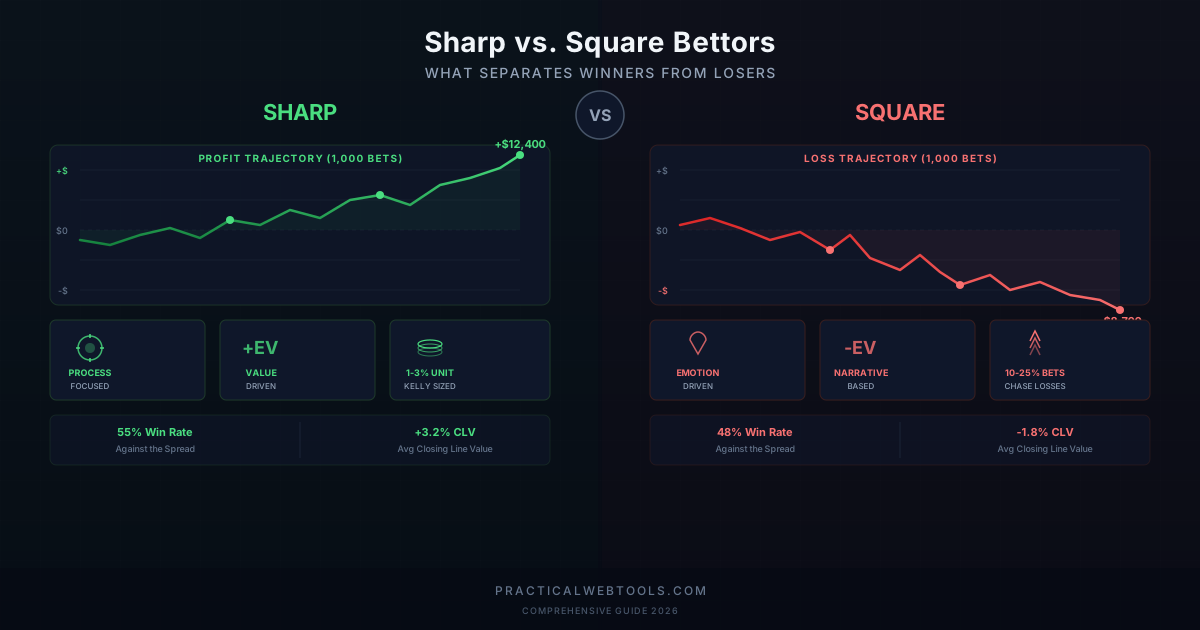
| Response to Losses | Consistent process | Chase losses, increase size |
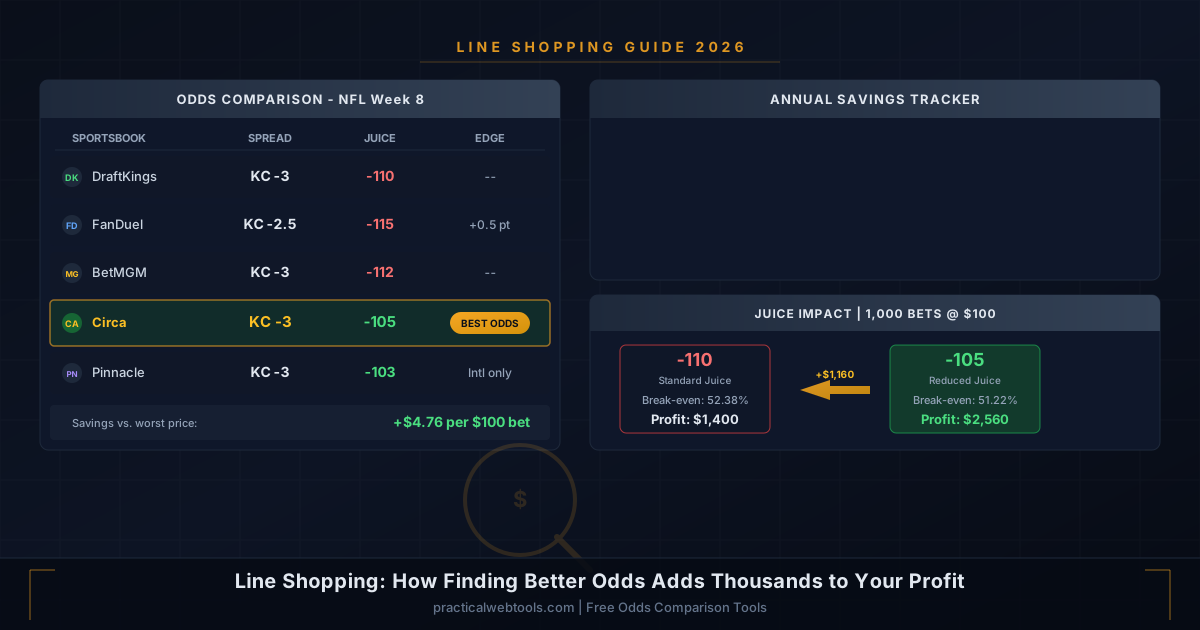
| Line Shopping | Aggressive, multiple books | Single book convenience |
| Closing Line Value | Positive (+1% to +5%) | Negative (-2% to -5%) |
| Bet Volume | 500-2,000+ bets/year | 50-200 bets/year |
When a sportsbook sees a $50,000 wager from an account with three years of positive CLV history, they adjust the line immediately. When they see 500 individual $100 bets from recreational accounts on the same side, the line may not move at all. This asymmetry is the foundation of sharp money tracking.
Track your own closing line value over time with our CLV Tracker.
What Is Reverse Line Movement and Why Does It Matter?
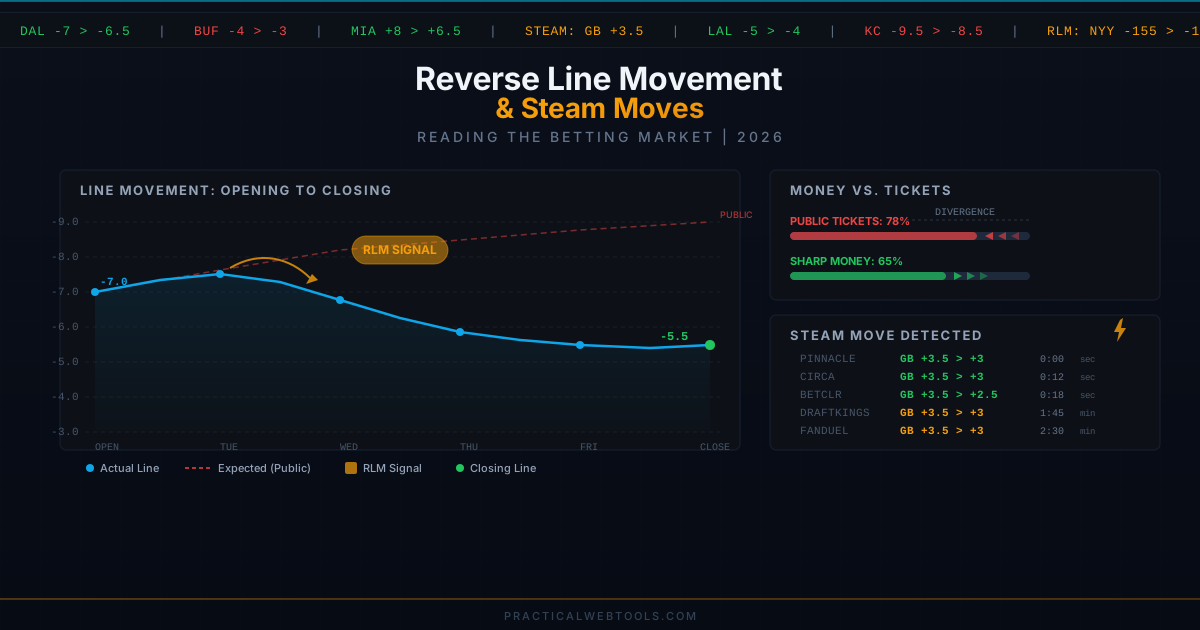
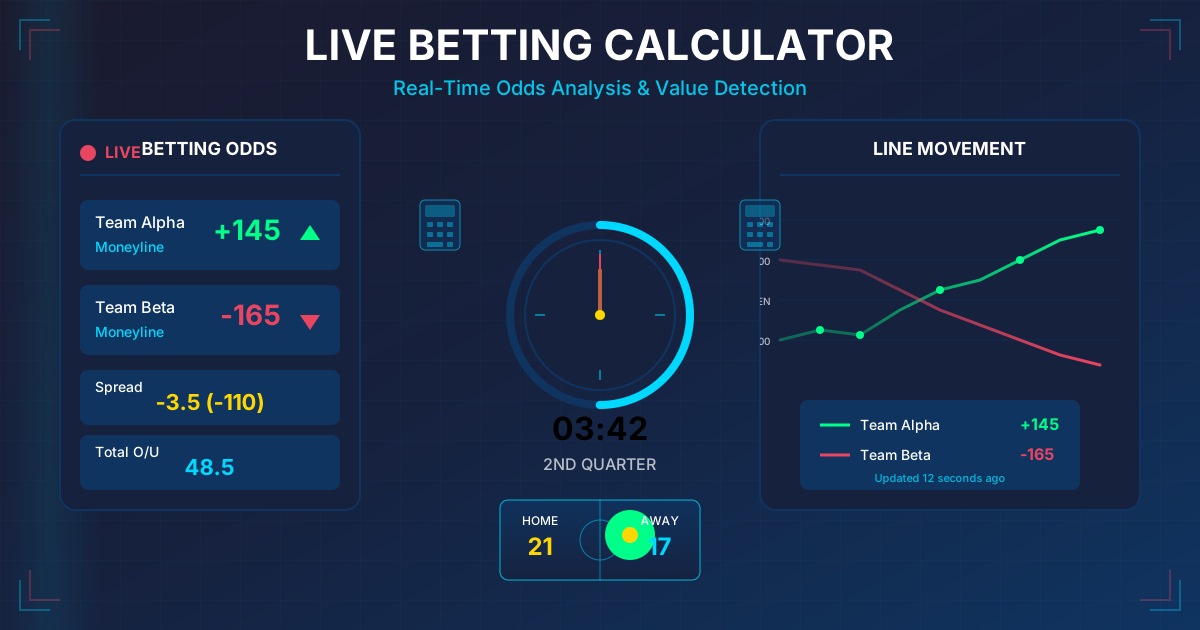
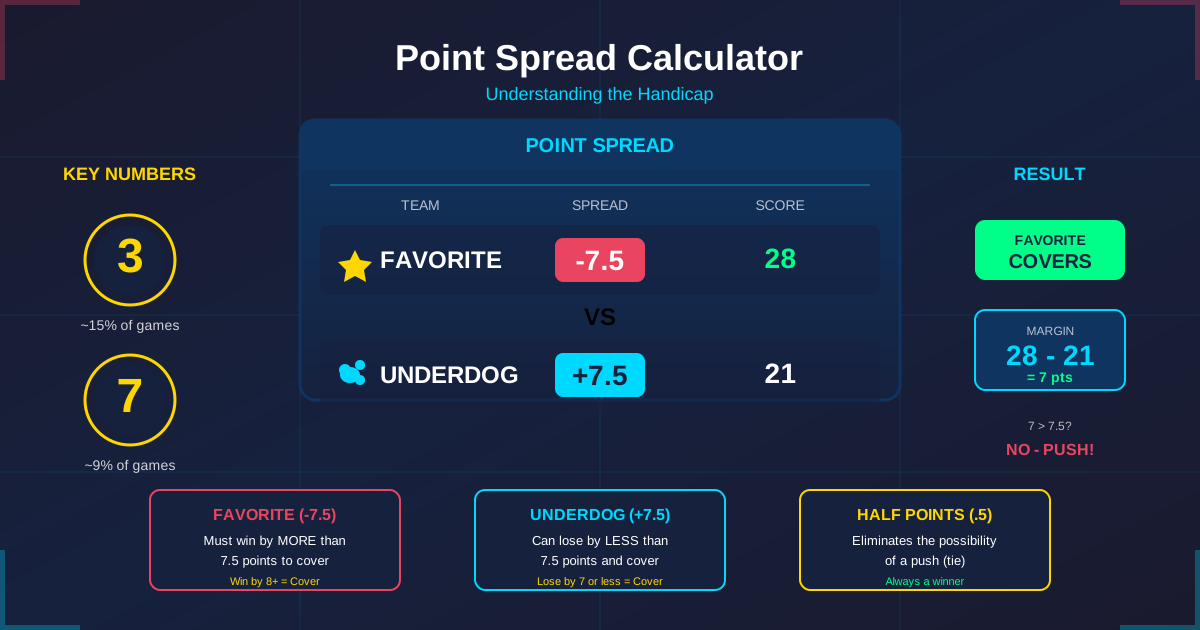
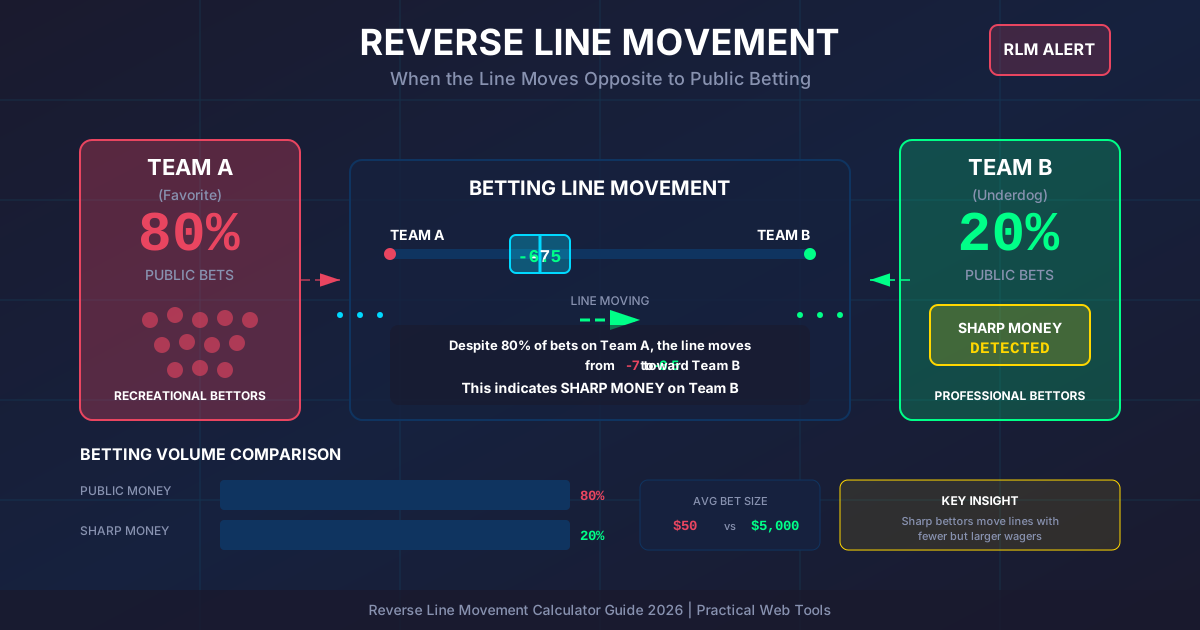
Reverse line movement (RLM) occurs when a betting line moves in the opposite direction of the public betting percentages. It is one of the most reliable indicators that sharp money has entered the market on a specific side.
If 75% of the public bets are on Team A at -3, you would expect the line to move to -3.5 as sportsbooks balance their exposure. But if the line instead drops to -2.5, the opposite direction, that movement signals that the smaller percentage of money on Team B carries far more weight than the volume on Team A. That weight comes from sharp accounts.
How to Identify Reverse Line Movement
To spot RLM, you need two pieces of data:
- Public betting percentages -- the percentage of bets or money on each side
- Line movement history -- how the line has changed since opening
When these two data points contradict each other, you have a potential RLM signal.
RLM Identification Framework:
| Scenario | Public % on Team A | Line Movement | Signal |
|---|---|---|---|
| Normal movement | 70% on Team A -3 | Moves to -3.5 | No signal (expected) |
| Reverse line movement | 70% on Team A -3 | Moves to -2.5 | Sharp money on Team B |
| Strong RLM | 80%+ on Team A -7 | Moves to -6 | Heavy sharp action on Team B |
| Weak RLM | 55% on Team A -3 | Moves to -2.5 | Possible sharp action, less certain |
| No movement | 65% on Team A -3 | Stays at -3 | Mixed signals or balanced sharp/square |
RLM Strength Indicators
Not all reverse line movement is created equal. The strength of the signal depends on several factors:
- Magnitude of the move: A half-point move against 60% public action is less meaningful than a full-point move against 80% public action
- Speed of the move: Sudden, sharp moves carry more weight than gradual drifts
- Market consensus: If the line moves at Pinnacle and other sharp books simultaneously, the signal is stronger
- Time of the move: Early-week RLM (Monday through Wednesday for NFL) tends to reflect sharper action than late-week moves
- Percentage disparity: The greater the gap between public percentage and line direction, the stronger the signal
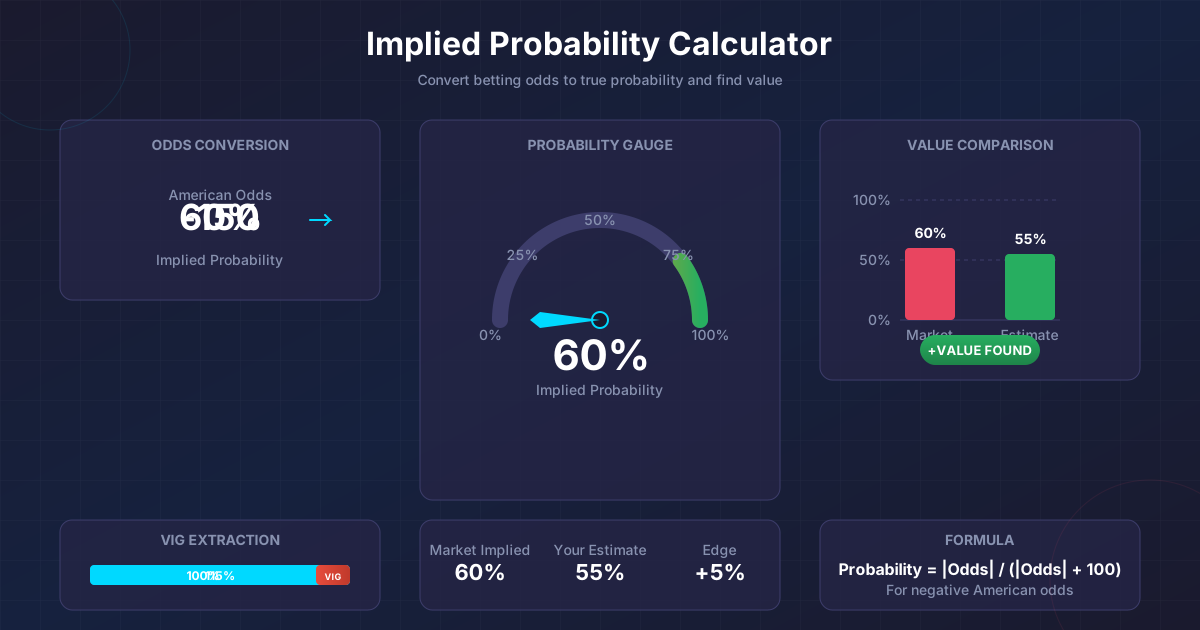
Calculate the implied probability shift of any line movement with our Implied Probability Calculator.
Practical RLM Example
Consider an NFL Sunday game:
- Opening line: Dallas Cowboys -6.5 (-110)
- Monday through Wednesday: Public betting at 72% on Dallas
- Thursday morning: Line moves to Dallas -6 (-110)
- Friday: Public percentage climbs to 76% on Dallas
- Saturday: Line moves to Dallas -5.5 (-110)
Despite more than three-quarters of the betting public backing Dallas, the line has moved 1 full point away from the public side. This classic reverse line movement pattern suggests significant sharp money on the opponent. The sportsbook is effectively saying: "We are more afraid of the professional money on the other side than we are of the public volume on Dallas."
This does not mean the opponent will necessarily cover. Sharp bettors have a win rate around 55-58% against the spread, not 100%. But it does mean the market is telling you something that the public consensus is missing.
What Are Steam Moves in Sports Betting?
A steam move is a sudden, dramatic line movement that occurs simultaneously across multiple sportsbooks within a very short timeframe, typically seconds to minutes. Steam moves represent the most aggressive form of sharp action and are the clearest signal of professional money entering the market.
When a syndicate or group of connected sharp bettors decides to attack a line, they place large wagers at multiple sportsbooks simultaneously. This coordinated action causes every book to move its line at nearly the same time, creating a "steam" effect that is impossible to miss if you are watching the market.
Anatomy of a Steam Move
| Phase | Timeframe | What Happens | Example |
|---|---|---|---|
| Pre-steam | Minutes before | Line sits stable at opening | Lakers +4 (-110) at all books |
| Initial trigger | 0-30 seconds | First sharp book moves | Pinnacle moves to Lakers +3.5 |
| Cascade | 30 seconds - 2 minutes | Other books follow | DraftKings, FanDuel move to +3.5 |
| Full steam | 2-5 minutes | All major books adjusted | Industry-wide at +3 to +3.5 |
| Post-steam | 5-30 minutes | Minor adjustments settle | Market settles at Lakers +3.5 |
How to React to Steam Moves
The challenge with steam moves is speed. By the time most bettors notice a steam move, the value has already been captured by the sharps who initiated it. However, there are still opportunities:
- Lagging books: Not all sportsbooks adjust at the same speed. Some retail books may take 5-15 minutes to catch up, giving you a window to bet the moved side at a stale price
- Partial moves: If the steam move takes a line from +4 to +3, and one book is still showing +3.5, that half-point of residual value may still be worth capturing
- Future reference: Even if you cannot capture the initial move, knowing which side the sharps steamed gives you directional information for your own handicapping
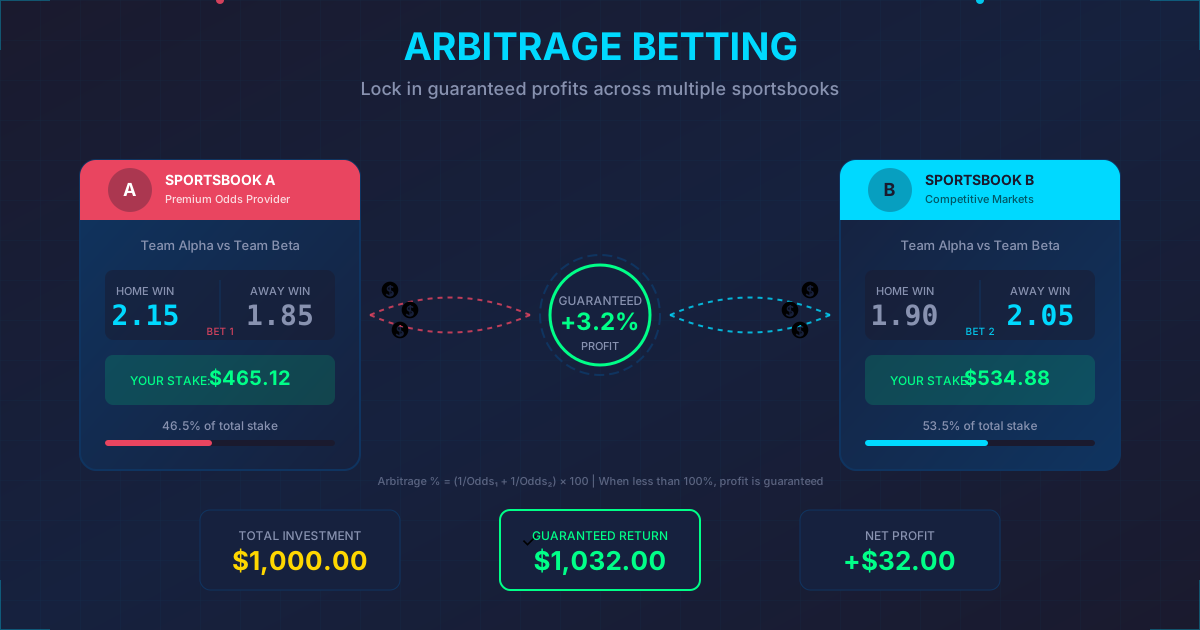
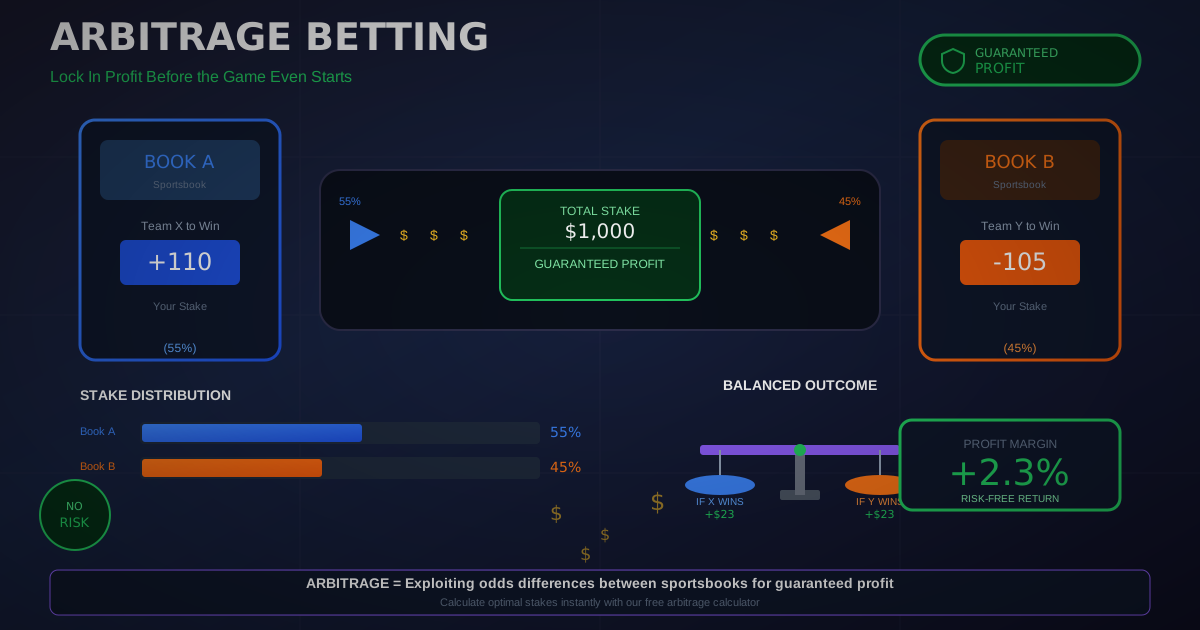
Find the best line available across sportsbooks with our Arbitrage Calculator.
Types of Steam Moves
| Type | Description | Reliability | Example |
|---|---|---|---|
| Full steam | All books move 0.5-1+ points in minutes | Very high | Line drops from -7 to -5.5 everywhere |
| Partial steam | Sharp books move, retail lags | High | Pinnacle moves, DraftKings delays |
| Reverse steam | Steam in opposite direction of public | Very high | 80% on favorite, line steams toward dog |
| False steam | Coordinated move that reverses | Low | Line moves 1 point, then returns within hours |
| Late steam | Occurs in final 30 min before game | Variable | Could be sharp or could be public panic |
How Do You Track Line Movements in Real-Time?
Tracking line movements requires access to real-time odds data from multiple sportsbooks simultaneously. This used to be the exclusive domain of professional syndicates, but modern tools have democratized access to this information.
Essential Tools for Line Tracking
| Tool Category | What It Provides | Free Options | Paid Options |
|---|---|---|---|
| Odds comparison sites | Real-time odds across 10+ books | OddsJam (limited), BestFightOdds | OddsJam Pro, Unabated |
| Line movement trackers | Historical and real-time line graphs | Action Network (basic), ESPN | ActionLabs Pro, DonBest |
| Public betting % | Bet percentage and money percentage | Covers.com, Action Network | Pregame.com, Sports Insights |
| Steam move alerts | Real-time notifications of sharp action | None (lag too much) | Unabated, DonBest alerts |
| Closing line value trackers | Track your CLV over time | Manual spreadsheet | SharpRank, PlusEV Club |
Setting Up a Line Monitoring System
To effectively track sharp money, you need a systematic approach:
- Record opening lines at sharp books (Pinnacle, Circa) every Monday morning for NFL or early morning for other sports
- Monitor public betting percentages through Action Network or similar services throughout the week
- Track line movements at 3-4 key intervals: opening, mid-week, game day morning, and 30 minutes before kickoff
- Compare movement direction against public percentages to identify RLM
- Note steam moves when multiple books move simultaneously
A simple tracking spreadsheet should include these columns:
| Column | Data Point | Purpose |
|---|---|---|
| Game | Teams and date | Identification |
| Opening Line (Pinnacle) | First posted line at sharp book | Benchmark |
| Opening Line (Retail) | First posted at DraftKings/FanDuel | Compare to sharp |
| Current Line | Latest available line | Track movement |
| Public Bet % | Percentage of bets on each side | Identify public side |
| Public Money % | Percentage of money on each side | Distinguish from bet % |
| Line Direction | Did line move toward or against public? | RLM identification |
| Steam Alert? | Was there a coordinated sharp move? | Flag steam moves |
| CLV Result | Compare entry vs closing line | Track your accuracy |
Calculate the expected value at any point in the line's movement with our Expected Value Calculator.
What Is Opening Line Value and Why Do Sharps Target It?
Opening Line Value (OLV) refers to the practice of betting into the first lines posted by sportsbooks, before the market has been "sharpened" by professional action. Opening lines represent the sportsbook's initial assessment, and they are often the least efficient prices available because the market has not yet corrected them.
Professional bettors disproportionately target opening lines because this is where the most value exists. Once sharps begin betting into a line, the market corrects rapidly. A line that opens at +7 and closes at +5 has 2 full points of value for anyone who bet the opening number.
Why Opening Lines Offer More Value
| Factor | Opening Line | Closing Line |
|---|---|---|
| Market efficiency | Lower (less information priced in) | Higher (fully adjusted) |
| Sharp action | Not yet incorporated | Fully reflected |
| Injury/news impact | May not be fully factored | Fully factored |
| Value opportunity | Highest | Lowest |
| Risk | Higher (less information) | Lower (more confirmed) |
| Typical window | First 1-4 hours | Final 30 minutes |
| Available at | Pinnacle, Circa, CRIS | All books |
How Books Set Opening Lines
Sportsbooks do not set opening lines based on what they think will happen. They set lines designed to attract balanced action and generate vig revenue. However, the process involves:
- Power ratings -- internal team strength assessments
- Market models -- algorithms that account for venue, rest, injuries, weather
- Historical data -- how similar matchups have been priced previously
- Anticipation of sharp action -- where they expect professionals to bet
The opening line at Pinnacle is considered the "true" market-setting line because Pinnacle accepts the largest limits from professional bettors. When Pinnacle opens a line, every other book in the world adjusts their prices accordingly.
Build your own power ratings to compare against opening lines with our Expected Value Calculator.
Timing of Sharp Action by Sport
| Sport | Sharp Window | Peak Sharp Activity | Public Peak |
|---|---|---|---|
| NFL | Sunday night opening through Tuesday | Monday-Wednesday | Sunday morning 9-11 AM |
| NBA | Morning of game day (10 AM - 1 PM ET) | Noon-3 PM ET | 6-7 PM ET (near tip) |
| MLB | 10 AM - 2 PM ET day of game | Morning, as lineups confirmed | 30 min before first pitch |
| NHL | Morning of game day | 11 AM - 2 PM ET | Near puck drop |
| College Football | Sunday night through Wednesday | Monday-Tuesday | Saturday morning |
| College Basketball | Day before through morning | Late morning day of | 30 min before tip |
| Soccer | 24-48 hours before match | Morning in originating market | Near kickoff |
This timing pattern exists because sharp bettors want to bet into the least efficient lines before the market corrects. By the time the public is placing bets close to game time, the line has already been shaped by professional action.
How Does Pinnacle Serve as the Sharp Betting Market?
Pinnacle Sports (operating as Pinnacle in most global markets and historically as CRIS in the Caribbean) is widely regarded as the sharpest sportsbook in the world. Understanding Pinnacle's role in the betting ecosystem is essential for anyone tracking sharp money.
Why Pinnacle Is the Sharp Benchmark
| Feature | Pinnacle | Typical Retail Book |
|---|---|---|
| Maximum bet limits | $20,000-$100,000+ on major markets | $500-$5,000 (lower for sharps) |
| Account restrictions | None (winners welcome) | Limit or ban winning accounts |
| Vig/margin | 2-3% on major markets | 5-10% on major markets |
| Line accuracy | Industry benchmark | Derived from sharp market |
| Sharp acceptance | Full action accepted | Reduced limits for sharps |
| Market-setting role | Sets the global market | Follows Pinnacle's lead |
Pinnacle's model is fundamentally different from retail sportsbooks. While DraftKings and FanDuel profit by restricting winners and charging higher vig to recreational bettors, Pinnacle profits by offering the lowest margins and welcoming all action. This means Pinnacle's closing lines are considered the most efficient in the world.
Using Pinnacle as a Reference
Sharp bettors and line trackers use Pinnacle in several ways:
- Opening line benchmark: Compare any book's opening line to Pinnacle's to identify discrepancies
- Closing line reference: Your CLV should be measured against Pinnacle's closing line, as it is the most accurate reflection of true probability
- Movement leader: When Pinnacle moves a line, the rest of the market follows. Tracking Pinnacle's movements gives you early warning of sharp action
- Fair value indicator: If a retail book is offering +3.5 and Pinnacle has +3, the market consensus is closer to +3
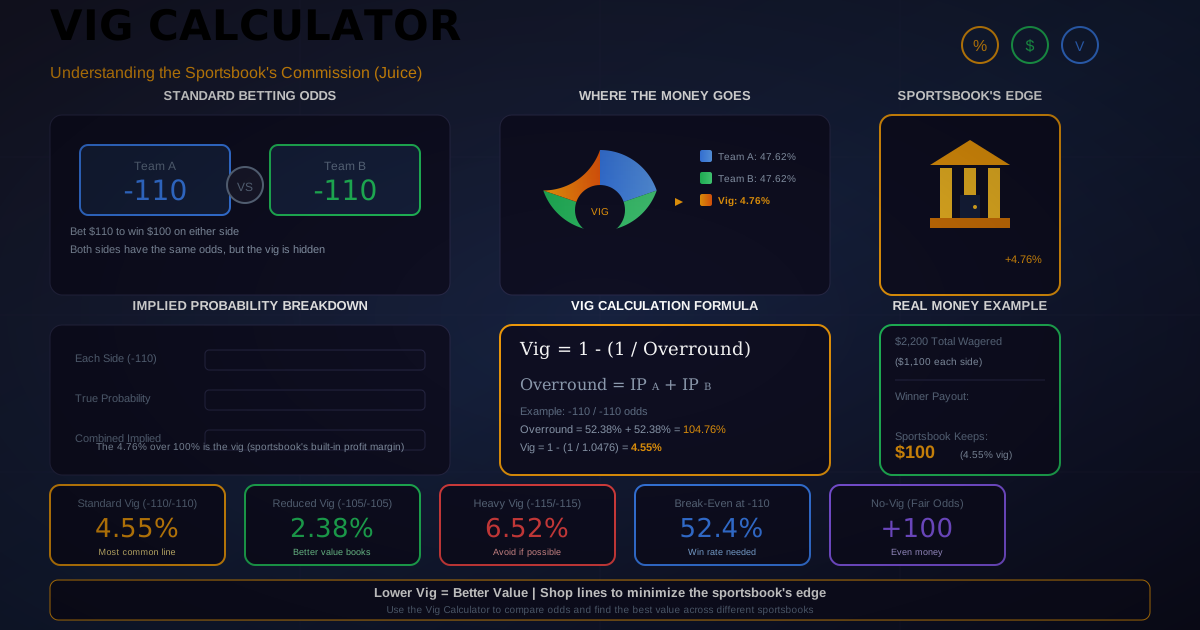
Calculate the vig difference between sharp and retail books with our Hold/Vig Calculator.
What Are Sport-by-Sport Sharp Betting Patterns?
Sharp action manifests differently across sports due to differences in market efficiency, information availability, and public betting tendencies. Understanding these patterns helps you identify where the most exploitable opportunities exist.
NFL Sharp Patterns
The NFL is the most heavily bet sport in North America, and sharp action follows a predictable weekly cycle:
| Day | Activity | Significance |
|---|---|---|
| Sunday night | Lines open at Pinnacle/Circa | Sharpest bettors get first crack |
| Monday | Early sharp action shapes lines | Biggest opening-to-close moves begin |
| Tuesday-Wednesday | Continued sharp adjustment | Lines move 1-3 points on some games |
| Thursday | Lines stabilize somewhat | Mid-week injuries factored in |
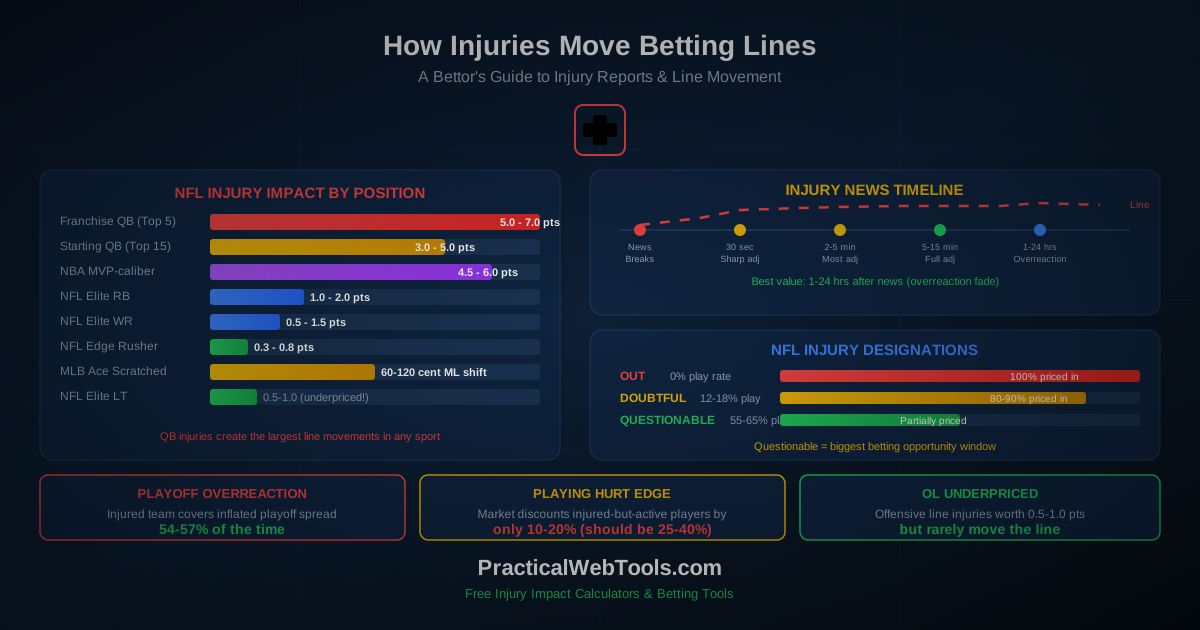
| Friday-Saturday | Injury reports drive late moves | Sharps react to confirmed news |
| Sunday 9 AM - 12 PM | Public money floods in | Lines may move on volume, not quality |
| Sunday 12:55 PM | Closing line is set | Market at maximum efficiency |
Key NFL sharp indicators:
- Underdogs receiving less than 30% of bets but the line moves in their favor
- Opening line value of 1+ points between Monday and closing
- Totals that move against public tendency (public bets overs, line goes down)
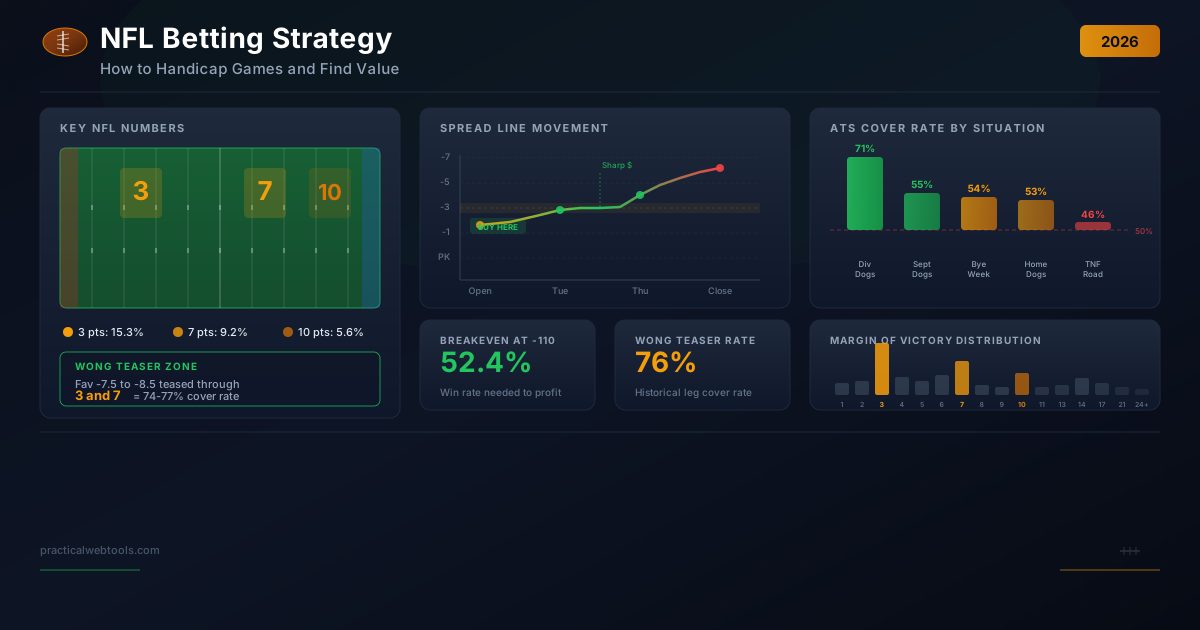
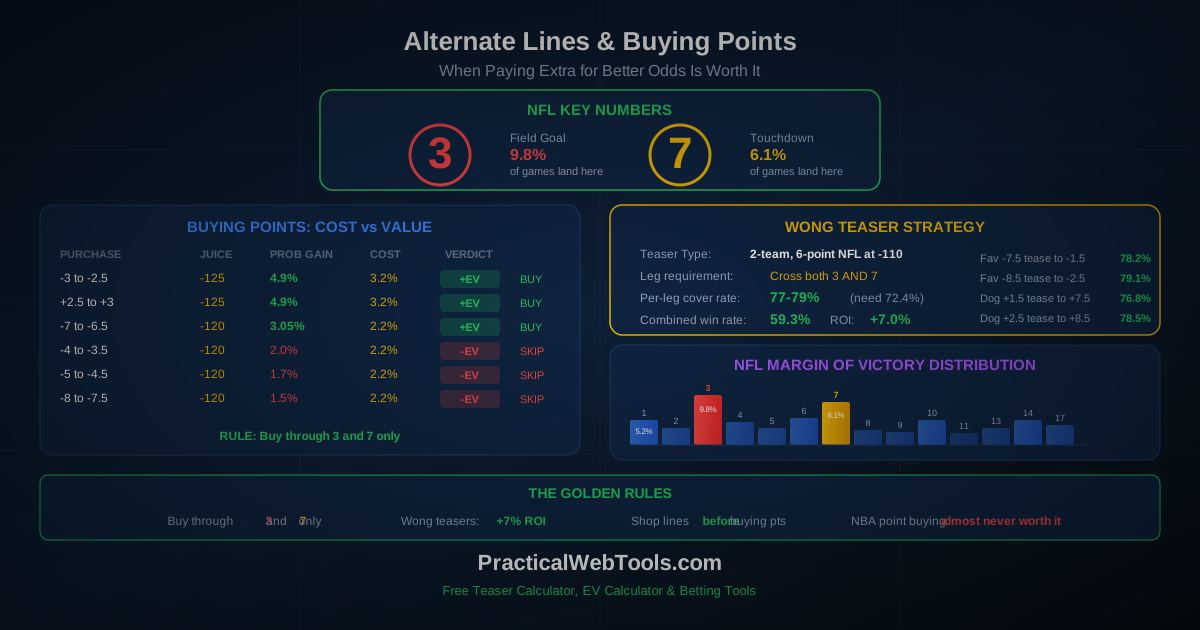
- Lines that open at a key number (3, 7) and move off it against public action
NBA Sharp Patterns
NBA markets are generally more efficient than NFL due to daily games and rapid information flow. Sharp action focuses on:
- Rest advantages: Sharps heavily target back-to-back situations where one team is rested and the other is not
- Injury news: Late scratches of star players create brief windows of inefficiency
- Totals market: NBA totals are often softer than sides, and sharp action frequently targets over/under lines
- Line shopping across books: With daily games, there is more variation between books on any given line
| NBA Sharp Focus Area | Why It Matters | Typical Edge |
|---|---|---|
| Back-to-back rest disadvantage | Travel + fatigue quantifiable | 1-3 points of value |
| Late injury scratches | Market slow to adjust | 2-5 points briefly |
| Totals in high-pace matchups | Public overbets totals generally | 1-2 points |
| Early season lines (Oct-Nov) | Models not yet calibrated | Wider market inefficiency |
| Playoff series games 5-7 | Emotional public overreaction | 1-2 points |
MLB Sharp Patterns
Baseball is historically one of the sharpest markets because of the quantitative nature of the sport. Sharp action in MLB is characterized by:
- Moneyline focus: Most sharp MLB action is on the moneyline, not the run line
- Starting pitcher analysis: Lines move dramatically when probable pitchers are confirmed or changed
- Umpire data: Some sharps incorporate umpire tendencies into their models
- Weather impact: Wind, humidity, and temperature affect totals significantly
College Sports Sharp Patterns
College football and basketball offer more exploitable inefficiencies than professional sports for several reasons:
- More games, less coverage: Sportsbooks cannot handicap 60+ college basketball games per day with the same precision as 10 NBA games
- Information asymmetry: Local reporters and insiders often have better information about college teams than books
- Public bias toward brand names: Alabama, Ohio State, Duke, and Kentucky are consistently over-bet by the public, creating value on their opponents
Compare your own handicapping against the market's implied probabilities with our Implied Probability Calculator.
How Do Sportsbooks Identify and Limit Sharp Bettors?
Understanding how sportsbooks track and restrict professional bettors is crucial context for anyone attempting to follow sharp money. If you become too successful at your book, you will face the same restrictions.
The Account Flagging Process
| Stage | Trigger | Book's Action |
|---|---|---|
| Stage 1: Monitoring | Account shows positive CLV over 200+ bets | Enhanced surveillance, no restrictions yet |
| Stage 2: Soft limits | Consistent 55%+ ATS win rate | Maximum bet reduced by 50% |
| Stage 3: Hard limits | Confirmed sharp characteristics | Maximum bet reduced to $25-$100 |
| Stage 4: Restricted | Account clearly profitable long-term | Limited to minimum bets or account closed |
| Stage 5: Banned | Attempting to circumvent limits | Account permanently closed, funds returned |
Common Restriction Methods
Sportsbooks use several methods to limit sharp action:
- Reduced maximum bets: Your maximum wager drops from $5,000 to $50 on certain markets
- Delayed bet acceptance: Your bets are held for review rather than accepted instantly
- Odds personalization: You see different (worse) odds than recreational bettors
- Market restrictions: You can bet parlays and props but not straight sides and totals
- Account closure: The most extreme measure, where your account is shut down entirely
Why This Matters for Sharp Money Tracking
The cat-and-mouse game between sharps and books creates a key dynamic: because sharp bettors are limited at most retail books, they concentrate their action at sharp-friendly books like Pinnacle and Circa. This concentration makes sharp money easier to track because it moves markets at these key venues first.
When you see a line move at Pinnacle but not yet at FanDuel, you have a brief window where the retail book has not yet absorbed the information that the sharp market has priced in.
Calculate whether a stale line still offers value with our Expected Value Calculator.
What Are the Dangers of Blindly Following Sharp Money?
While sharp money indicators provide valuable information, blindly tailing sharp action without understanding the context is a losing strategy for most bettors. Here is why.
Why Blind Sharp Following Fails
| Problem | Explanation | Impact |
|---|---|---|
| Timing lag | By the time you see the move, the value is gone | You bet at the moved line, not the original |
| Incomplete information | You see the move but not the sharp's reasoning | Cannot evaluate whether their edge still exists |
| Vig erosion | Sharps get better lines; you pay retail vig | Their +EV bet may be -EV at your price |
| Sample size confusion | One RLM signal does not guarantee a winner | Sharps win ~55%, not 70-80% |
| Multiple sharp opinions | Different sharp groups sometimes disagree | Following one may mean fading another |
| Selection bias | You notice the successful sharp moves, not the failures | Overestimates sharp accuracy |
The Value Decay Problem
The single biggest issue with following sharp money is timing. Consider this scenario:
- 12:00 PM: Sharp bettor places $50,000 on Underdog +7 at -110
- 12:01 PM: Book moves line to +6.5
- 12:15 PM: You see the RLM signal and bet Underdog +6.5 at -110
- Closing line: Underdog +6
The sharp bettor got +7 and has 1 full point of closing line value. You got +6.5 and have only 0.5 points of CLV. The sharp's bet may be solidly +EV while yours is marginal or even -EV after accounting for the vig.
How to Use Sharp Money Indicators Properly
Instead of blindly following, use sharp money as one input in your decision-making:
- Confirm your own analysis: If your handicapping also favors the sharp side, the RLM signal adds confidence to your position
- Identify games to research: Sharp action on a game you have not analyzed should prompt deeper investigation, not an automatic bet
- Improve your timing: If sharps consistently target opening lines, adjust your betting schedule to bet earlier in the week
- Track which signals work for you: Not all RLM signals are equal. Track your results when following different types of sharp indicators
- Focus on markets, not individual games: Sharp money patterns (like "sharps bet NFL underdogs at key numbers") are more useful than individual game signals
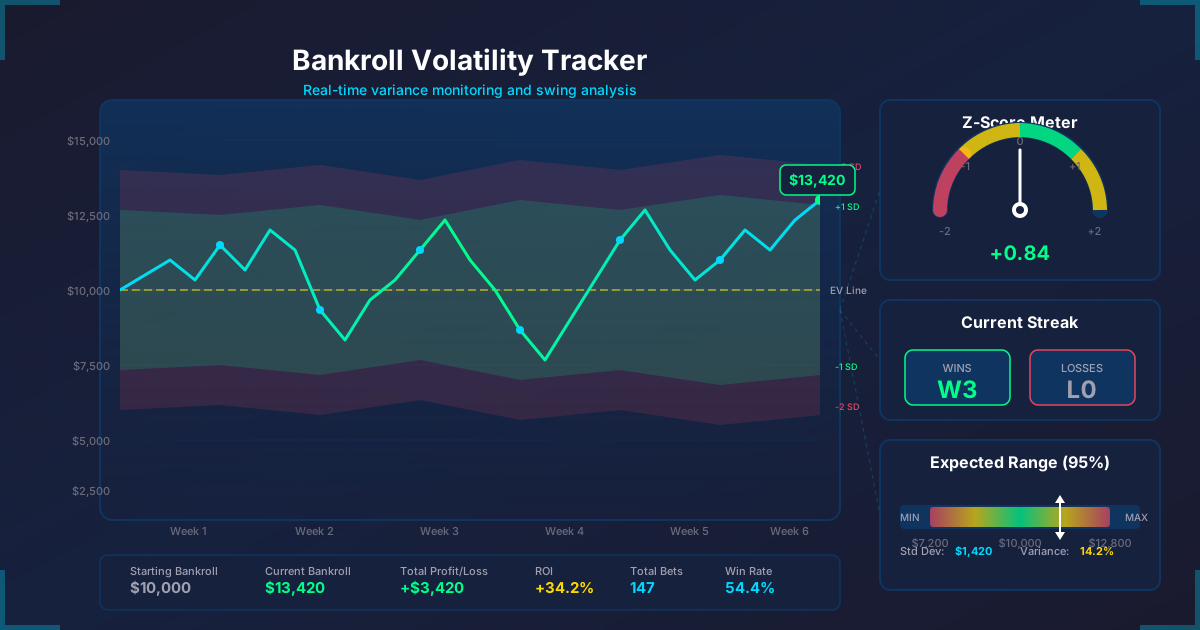
Track your results following different sharp indicators with our Bankroll Volatility Tracker.
How Do You Build a Sharp Money Detection System?
For serious bettors who want to systematically track sharp money, building a structured detection system is essential. This goes beyond casually checking line movements and involves a disciplined, data-driven approach.
Step 1: Establish Your Data Sources
You need reliable data for three categories:
| Data Type | Free Sources | Paid Sources | Reliability |
|---|---|---|---|
| Opening lines | Pinnacle (via offshore), DonBest (delayed) | DonBest real-time, Unabated | High for paid, moderate for free |
| Public betting % | Action Network, Covers.com | Sports Insights, Pregame.com | Moderate (estimates, not exact) |
| Line movement history | ESPN, VegasInsider | OddsJam Pro, ActionLabs | High for paid |
| Closing lines | Manual tracking at game time | Automated via API | Depends on method |
Step 2: Define Your Sharp Indicators
Create a scoring system for each game based on sharp money signals:
| Indicator | Points | Criteria |
|---|---|---|
| Reverse line movement | +3 | Line moves against 65%+ public side |
| Strong RLM | +5 | Line moves against 75%+ public side by 1+ points |
| Steam move detected | +4 | Multiple books move simultaneously |
| Pinnacle-led movement | +3 | Pinnacle moves first, retail follows |
| Opening line value | +2 | Current line is 1+ points from opener toward sharp side |
| Sharp timing (early week) | +2 | Movement occurs Monday-Wednesday (NFL) |
| Contrarian total | +2 | Over/under moves against public tendency |
| Key number departure | +1 | Line moves off 3, 7, 10, 14 against public |
Step 3: Set Action Thresholds
| Score | Action | Confidence Level |
|---|---|---|
| 1-4 | Monitor only, no bet | Low |
| 5-8 | Research the game deeply | Moderate |
| 9-12 | Bet if your handicapping agrees | High |
| 13+ | Strong sharp signal, bet with confidence | Very high |
Step 4: Track and Adjust
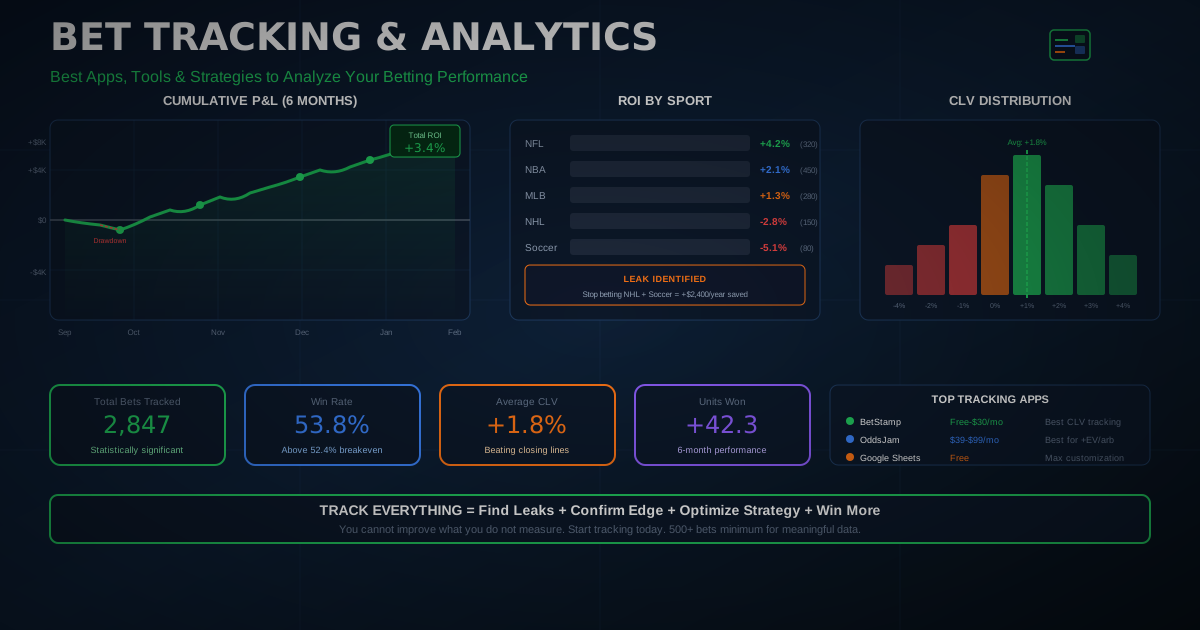
The most important part of any sharp money system is tracking results against closing lines, not game outcomes. A bet that shows positive CLV is a good bet regardless of whether the game covers.
Track these metrics for every bet influenced by sharp money indicators:
- Entry line vs. closing line (your CLV)
- Sharp indicator score at time of bet
- Actual game result (win/loss against your line)
- ROI per unit by indicator type
- ROI per unit by indicator score threshold
Over time, this data will reveal which sharp money indicators are most predictive for your specific betting approach and which sports/markets respond most reliably to sharp action.
Calculate the optimal bet size for any sharp money play with our Kelly Criterion Calculator.
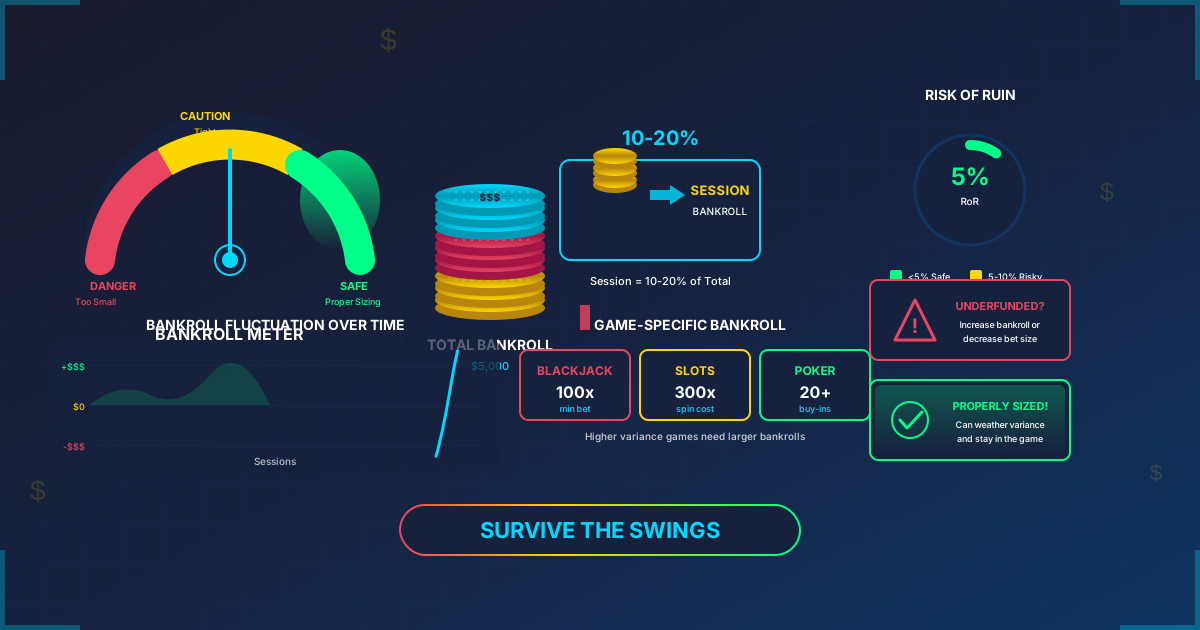
How Should You Size Bets Based on Sharp Money Confidence?
Even when you identify a strong sharp money signal, bet sizing remains critical. Overbetting on sharp money plays can destroy your bankroll during the inevitable losing streaks, while underbetting fails to capitalize on genuine edges.
Bet Sizing Framework for Sharp Money Plays
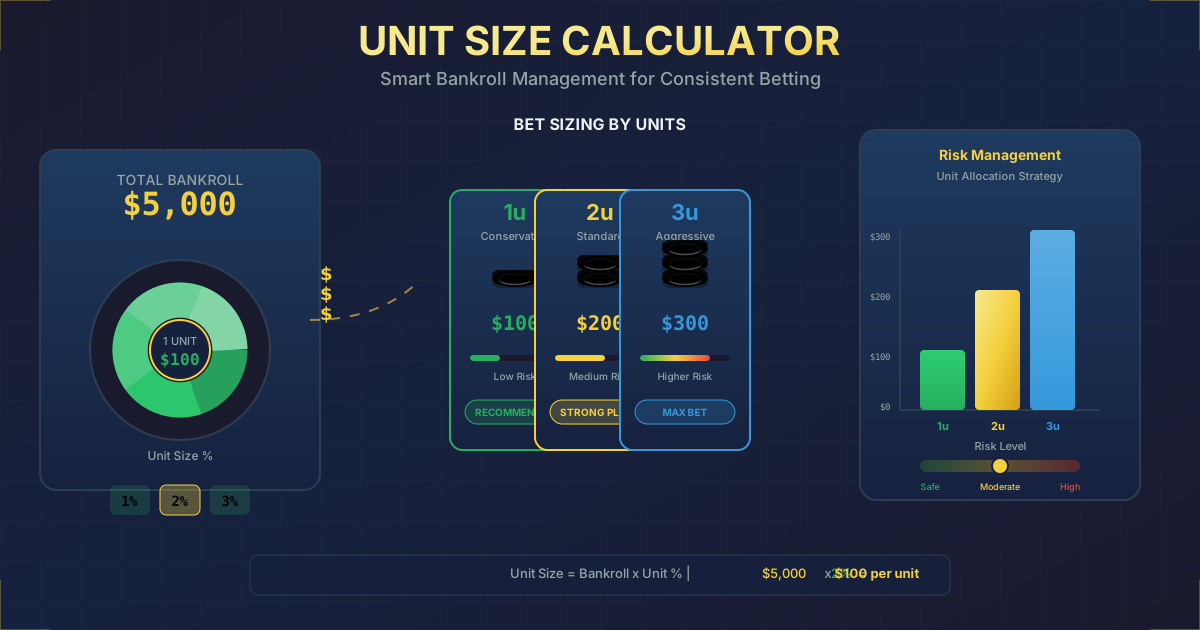
| Confidence Level | Signal Strength | Recommended Size | Example ($10K Bankroll) |
|---|---|---|---|
| Low | Single RLM indicator | 0.5-1 unit | $50-$100 |
| Moderate | RLM + early week timing | 1-1.5 units | $100-$150 |
| High | Strong RLM + steam + Pinnacle-led | 1.5-2 units | $150-$200 |
| Very high | All indicators aligned + your model agrees | 2-3 units | $200-$300 |
| Maximum | Perfect storm: every signal, confirmed edge | 3-5 units (rare) | $300-$500 |
The Kelly Criterion Approach
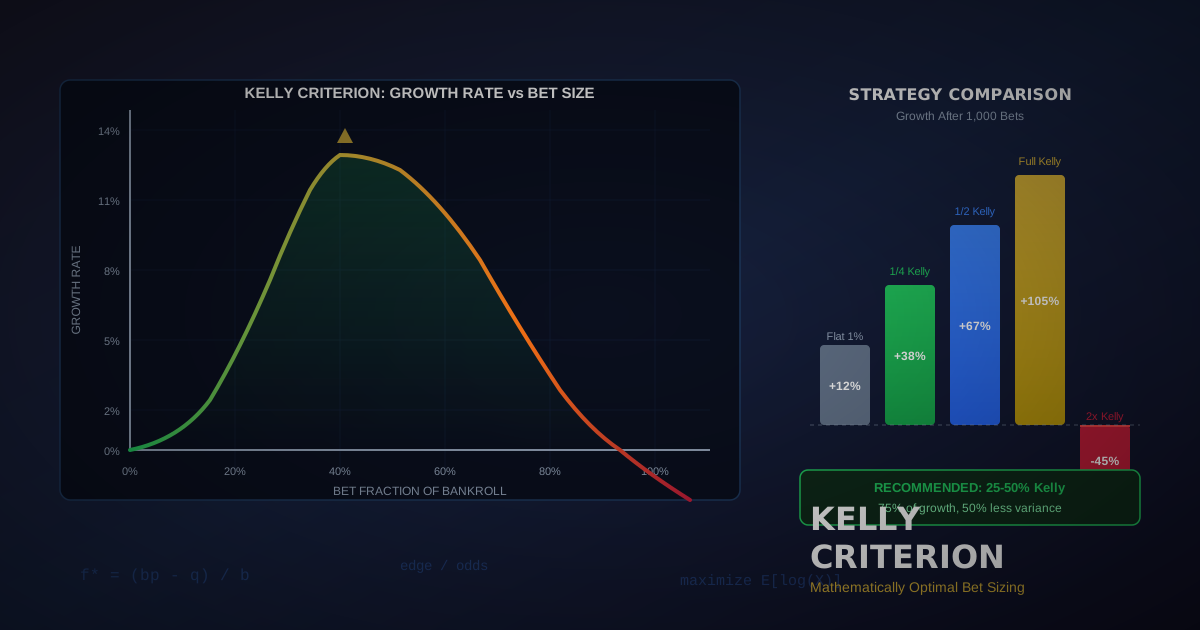
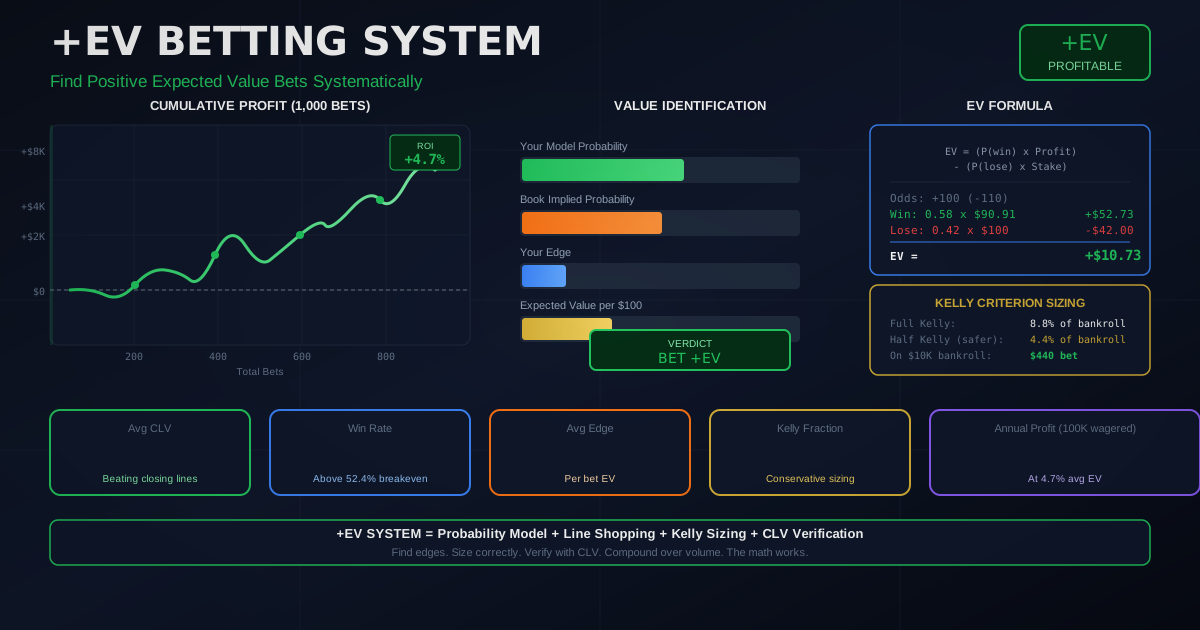
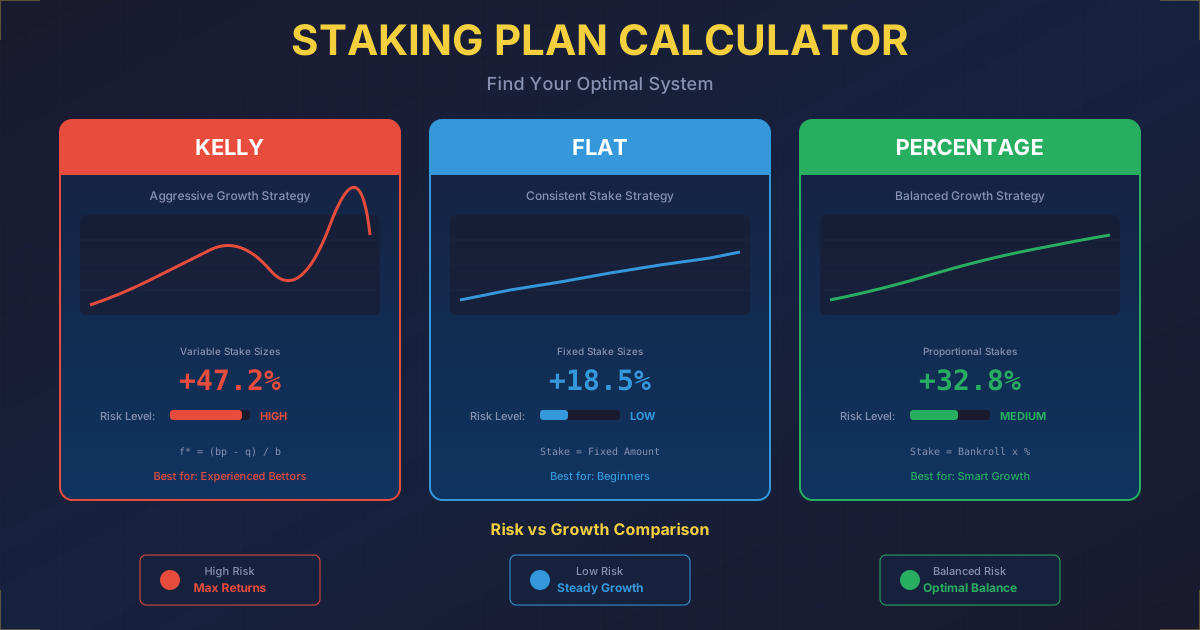
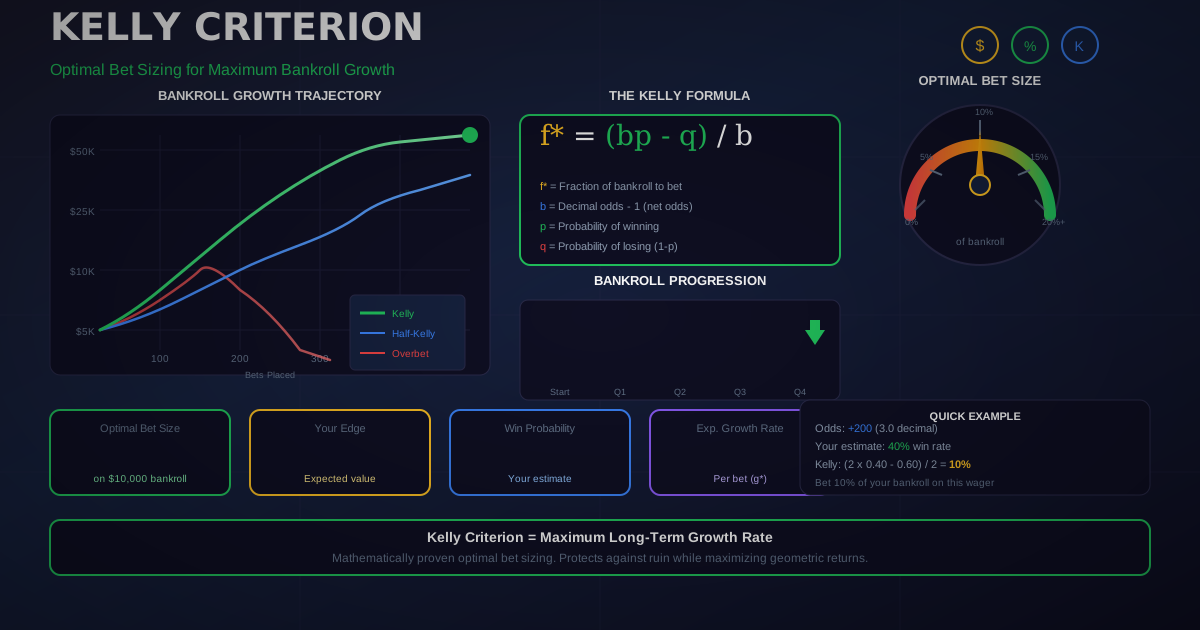
The Kelly Criterion provides a mathematically optimal bet sizing formula based on your edge and the odds available:
Kelly % = (bp - q) / b
Where:
- b = decimal odds - 1
- p = your estimated probability of winning
- q = 1 - p (probability of losing)
For sharp money plays, you might estimate your probability based on a combination of your model and the sharp indicator strength. If sharp action suggests a team's true probability is 55% but the line implies 50%, your estimated edge is 5%.
Most professional bettors use fractional Kelly (25-50% of full Kelly) to reduce variance while still capitalizing on edges.
Calculate the exact Kelly bet size for any sharp money play with our Kelly Criterion Calculator.
Bankroll Allocation for Sharp Money Bettors
| Bankroll Size | Games per Week (NFL) | Average Bet Size | Monthly Volatility Range |
|---|---|---|---|
| $5,000 | 3-5 sharp plays | $50-$150 (1-3%) | +$500 to -$300 |
| $10,000 | 3-5 sharp plays | $100-$300 (1-3%) | +$1,000 to -$600 |
| $25,000 | 5-8 sharp plays | $250-$750 (1-3%) | +$2,500 to -$1,500 |
| $50,000 | 5-8 sharp plays | $500-$1,500 (1-3%) | +$5,000 to -$3,000 |
Model your expected bankroll fluctuations with our Bankroll Volatility Tracker.
What Tools and Resources Help Track Sharp Money?
The landscape of sharp money tracking tools has expanded significantly, giving bettors of all levels access to information that was once exclusive to professional syndicates. Here is a comprehensive overview.
Free Resources
| Resource | What It Provides | Best For |
|---|---|---|
| Action Network (free tier) | Public betting %, basic line movement | Casual sharp money tracking |
| Covers.com | Public betting consensus | NFL and NBA public betting data |
| VegasInsider | Line movement charts | Historical line tracking |
| OddsPortal | Odds comparison across books | Identifying line discrepancies |
| Our Expected Value Calculator | EV calculation for any line | Evaluating sharp money plays |
| Our CLV Tracker | Track your closing line value | Measuring your sharp money results |
Paid Professional Tools
| Tool | Monthly Cost (approx.) | Key Feature |
|---|---|---|
| Unabated | $99-$249/month | Real-time sharp alerts, line analysis |
| OddsJam Pro | $99-$199/month | Arbitrage and +EV finder |
| ActionLabs Pro | $50-$100/month | Advanced line movement analytics |
| Sports Insights | $49-$99/month | Historical CLV data, sharp action reports |
| DonBest Real-Time | $200+/month | Professional-grade real-time odds feed |
| Pregame.com | $50-$100/month | Public money data, sharp reports |
Building Your Own Tools
For the technically inclined, building custom sharp money tracking tools offers several advantages:
- Custom indicator weighting based on your empirical results
- Automated alerts when your specific criteria are met
- Historical backtesting of different sharp money strategies
- Integration with your bankroll tracker for seamless bet tracking
The data you need is available through several odds data APIs (The Odds API, OddsJam API, BetData.io) that provide real-time and historical odds across major sportsbooks.
Compare the vigorish across different sportsbooks with our Hold/Vig Calculator.
How Do You Combine Sharp Money With Your Own Handicapping?
The most effective approach to using sharp money indicators is to combine them with your own independent handicapping. This creates a two-factor confirmation system that is more reliable than either approach alone.
The Two-Factor Confirmation Model
| Your Handicapping | Sharp Money Signal | Action | Expected Win Rate |
|---|---|---|---|
| Strong lean to Side A | Strong sharp action on Side A | Maximum confidence bet | 58-62% |
| Slight lean to Side A | Strong sharp action on Side A | Standard bet | 55-58% |
| No lean / toss-up | Strong sharp action on Side A | Small bet or research further | 53-55% |
| Slight lean to Side B | Strong sharp action on Side A | No bet (conflicting) | Unknown |
| Strong lean to Side B | Strong sharp action on Side A | No bet (trust process, investigate why) | Unknown |
Building a Complementary System
- Do your own work first. Before checking any sharp money data, complete your own handicapping analysis. This prevents anchoring bias.
- Record your lean and confidence. Write down which side you favor and how strongly before looking at line movement or public percentages.
- Check sharp indicators. Only after you have committed your own analysis should you review RLM, steam moves, and public percentages.
- Make your decision. If your analysis and sharp money agree, bet with higher confidence. If they disagree, investigate why.
- Track both signals independently. Over time, measure the accuracy of your handicapping alone versus sharp money alone versus the combination.
This approach prevents the common trap of becoming a pure "line follower" who has no independent edge. If you only bet when sharp money tells you to, you are always late and always paying a worse price than the sharps got.
Size your confirmed sharp money bets with our Kelly Criterion Calculator.
The Value of Disagreement
Sometimes the most valuable information comes when your analysis and sharp money disagree. These situations force you to re-examine your assumptions:
- If you like the public side and sharps are on the other side, what are you missing?
- If you handicapped a game as a pick 'em but sharps are heavily on one side, is there information you have not accounted for?
- If your model shows value on the total but sharp action is on the side, are you looking at the right market?
Disagreements are learning opportunities. Track them and review them post-game to improve your handicapping over time.
How Accurate Is Sharp Money Over Large Sample Sizes?
One of the most common misconceptions about sharp money is that following the sharps guarantees wins. In reality, sharp bettors are only marginally better than the market -- but that margin is enough to be profitable after accounting for the vig.
Sharp Money Win Rates by Sport
| Sport | Sharp ATS Win Rate (Est.) | Break-Even at -110 | Edge Over Break-Even |
|---|---|---|---|
| NFL Sides | 54-57% | 52.4% | +1.6% to +4.6% |
| NFL Totals | 53-56% | 52.4% | +0.6% to +3.6% |
| NBA Sides | 53-55% | 52.4% | +0.6% to +2.6% |
| NBA Totals | 53-56% | 52.4% | +0.6% to +3.6% |
| MLB Moneyline | 52-55% (units, not %) | Varies by price | +1-3% ROI |
| College Football | 55-58% | 52.4% | +2.6% to +5.6% |
| College Basketball | 54-57% | 52.4% | +1.6% to +4.6% |
Long-Term Profitability Model
Assuming a sharp money bettor achieves 55% ATS at standard -110 odds over a season:
| Season Bets | Expected Win Rate | Expected Profit (per $100/bet) | 95% Confidence Range |
|---|---|---|---|
| 100 bets | 55% | +$500 | -$500 to +$1,500 |
| 250 bets | 55% | +$1,250 | -$250 to +$2,750 |
| 500 bets | 55% | +$2,500 | +$500 to +$4,500 |
| 1,000 bets | 55% | +$5,000 | +$2,000 to +$8,000 |
| 2,500 bets | 55% | +$12,500 | +$8,000 to +$17,000 |
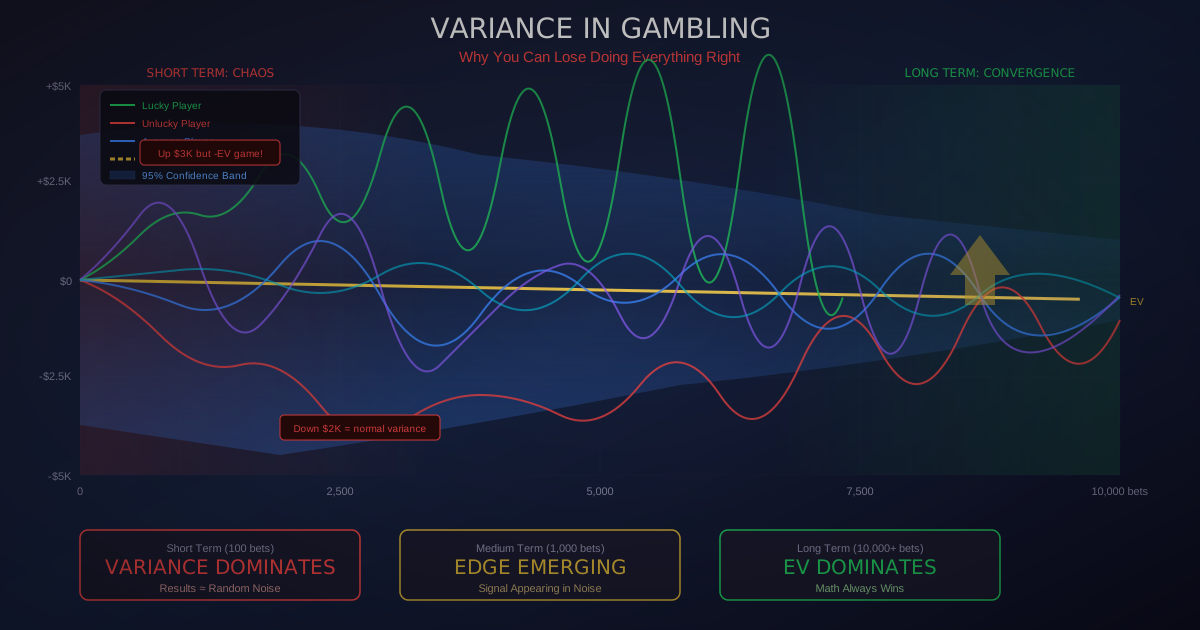
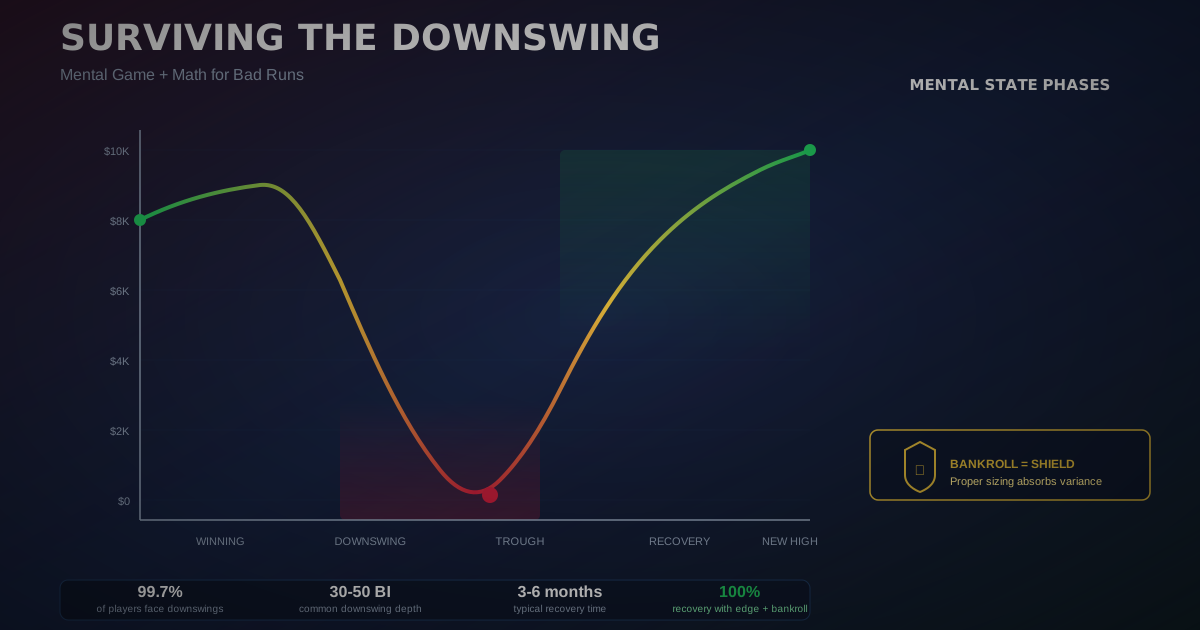
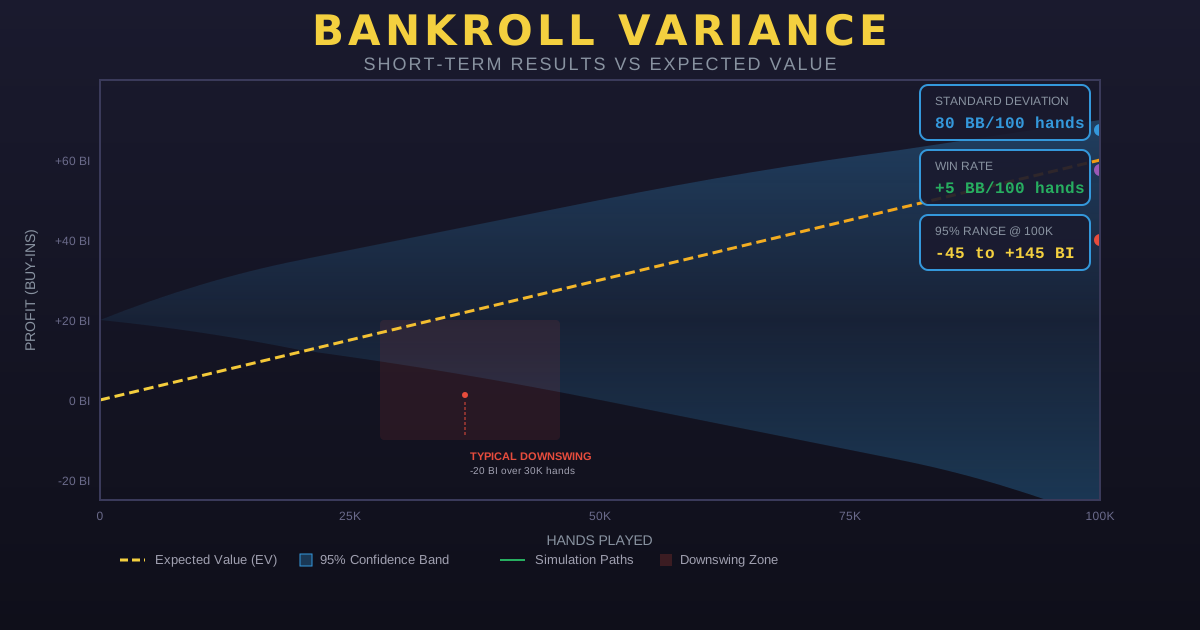
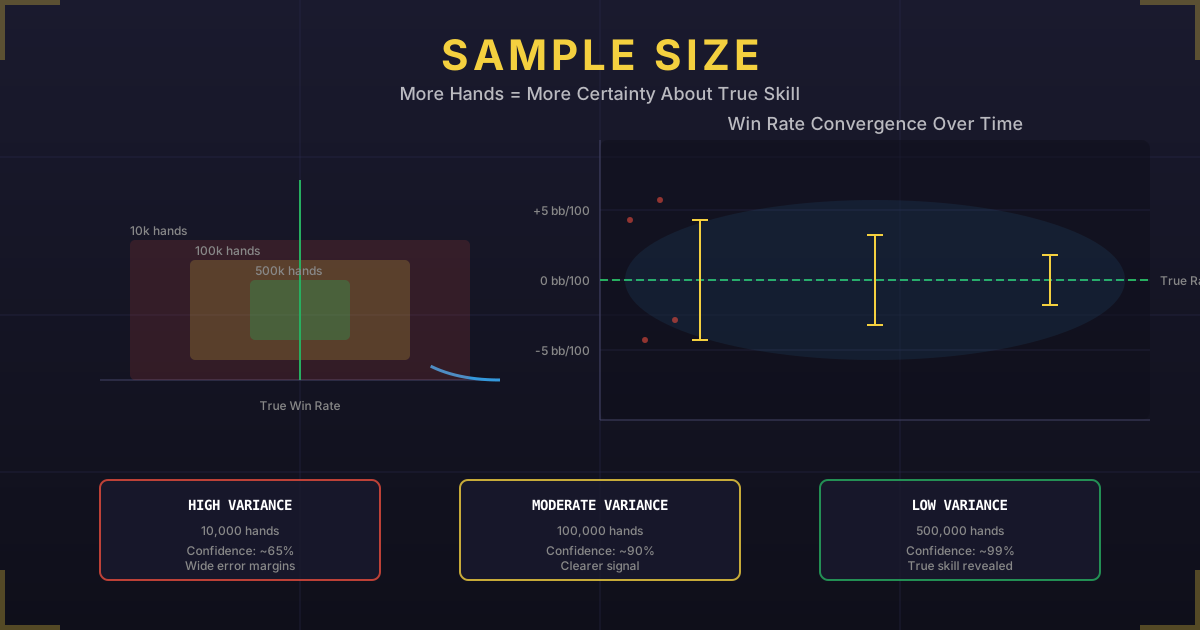
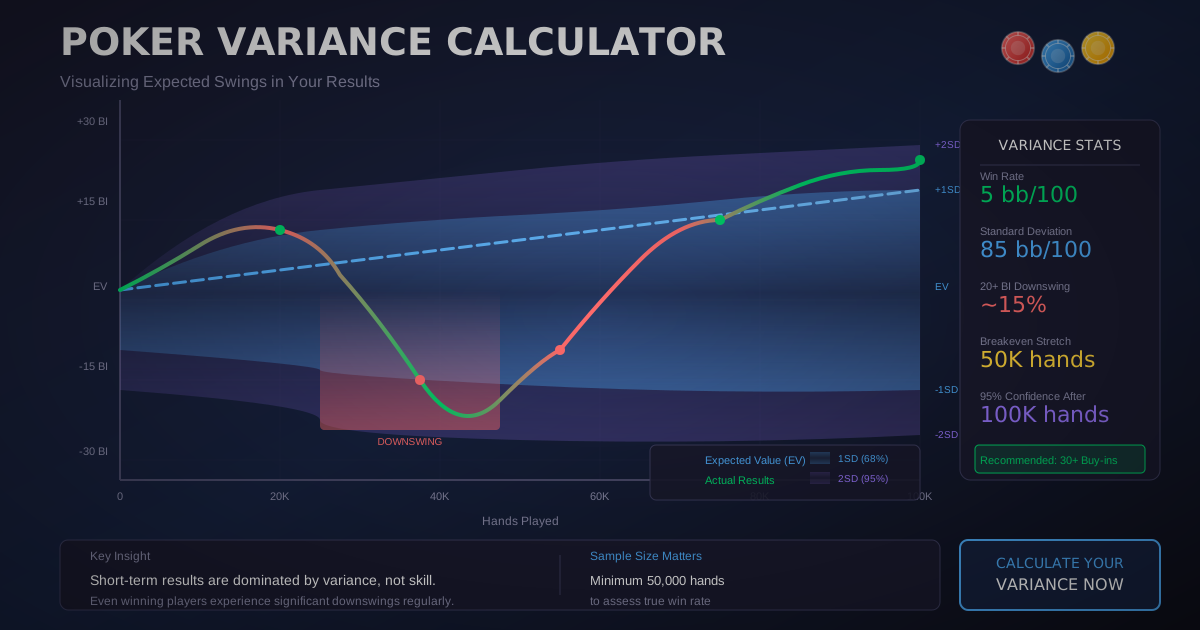
The key insight is that even with a genuine edge, short-term results are dominated by variance. A 55% bettor can easily have a losing month, or even a losing quarter. Only over hundreds or thousands of bets does the edge manifest reliably.
Model your expected variance and drawdowns with our Bankroll Volatility Tracker.
CLV as the True Performance Metric
Professional bettors and sharp money trackers agree: Closing Line Value is a better predictor of long-term profitability than actual win/loss records over short periods.
| CLV Average | Long-Term Implication | Sample Needed for Confidence |
|---|---|---|
| +3% or higher | Strongly profitable | 200+ bets |
| +1% to +3% | Profitable after vig | 500+ bets |
| 0% to +1% | Break-even to marginally profitable | 1,000+ bets |
| -1% to 0% | Marginally losing | 500+ bets |
| Below -1% | Clearly losing | 200+ bets |
If you are consistently getting better prices than the closing line, you are on the right track regardless of short-term results. The market is the ultimate judge of betting skill, and CLV captures that judgment.
Track your closing line value over your full betting history with our CLV Tracker.
Frequently Asked Questions About Sharp Money Indicators
What is the single most reliable sharp money indicator?
Reverse line movement at sharp books (particularly Pinnacle) is considered the most reliable individual indicator. When Pinnacle moves a line against the public betting percentage, it almost always reflects significant sharp action. However, no single indicator should be used in isolation -- the strongest signals come when multiple indicators align.
Can I make money just by following sharp money?
Following sharp money alone is unlikely to be profitable for most bettors because of timing lag and vig erosion. By the time you identify a sharp move and place your bet, the line has already adjusted, and you are paying a worse price than the sharps received. Use sharp money as one tool in your handicapping arsenal, not your entire strategy.
How fast do I need to act on a steam move?
Steam moves are captured in seconds to minutes. If you are manually monitoring lines, you will almost always be too late for the initial move. However, there can be residual value at slower-moving retail books for 5-15 minutes after a steam event. Automated alerts from services like Unabated can reduce your reaction time.
Do sharp bettors always bet underdogs?
No. The perception that sharps always bet underdogs is a myth rooted in the NFL, where public bias toward favorites creates more frequent value on the dog side. In reality, sharps bet whatever side offers positive expected value, whether that is a -14 favorite or a +14 underdog.
What percentage of bets should be on the sharp side?
There is no fixed rule. Some successful bettors find themselves on the sharp side 60-70% of the time, while others are contrarian to both the public and sharp money. The goal is to find positive expected value, which sometimes aligns with sharp action and sometimes does not.
How do I know if a line movement is sharp money or injury news?
Injury-driven line moves typically happen suddenly at a specific time (when news breaks) and are accompanied by corresponding public betting shifts. Sharp money moves tend to be more gradual during non-peak hours and occur without any obvious news catalyst. If a line moves 2 points at 11 AM on a Tuesday with no injury news, that is almost certainly sharp money.
Is it better to track bet percentage or money percentage?
Money percentage is more informative than bet percentage because it captures the size of wagers. A game with 70% of bets but only 50% of money on one side suggests that the 30% of bets on the other side are significantly larger -- a classic sharp money signal.
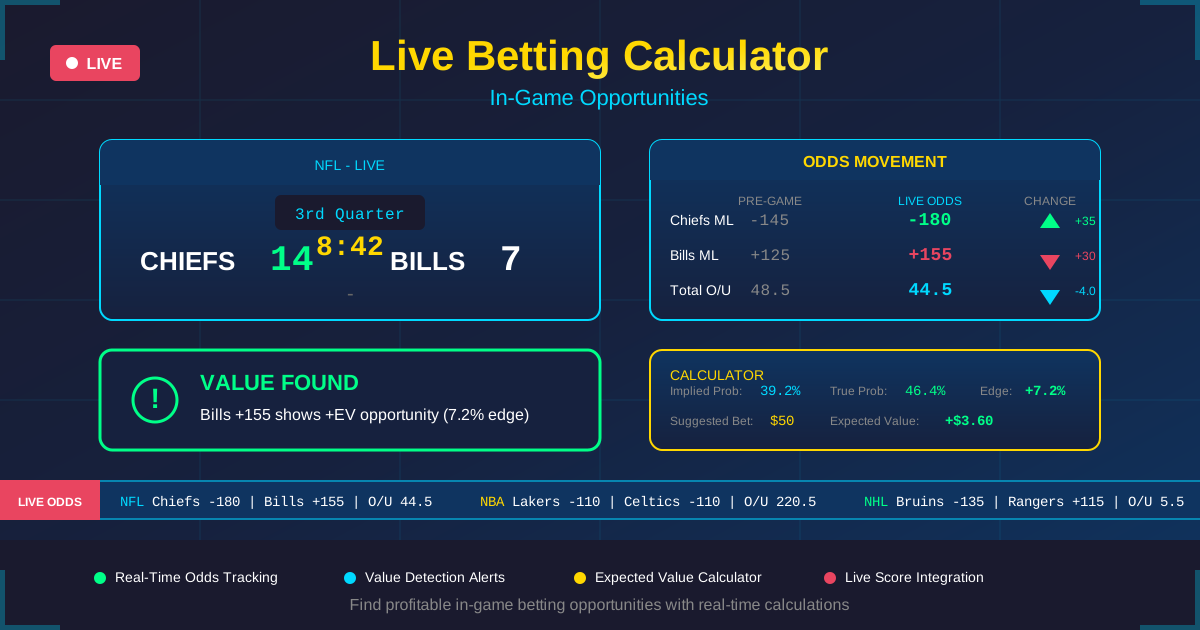
Are sharp money indicators useful for live betting?
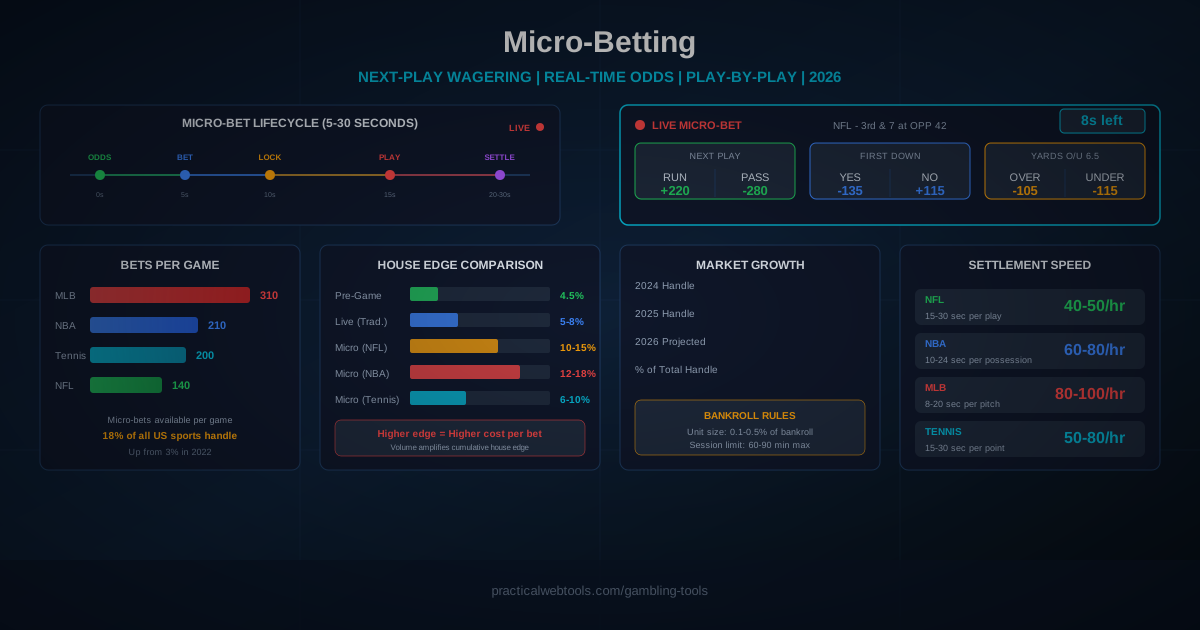
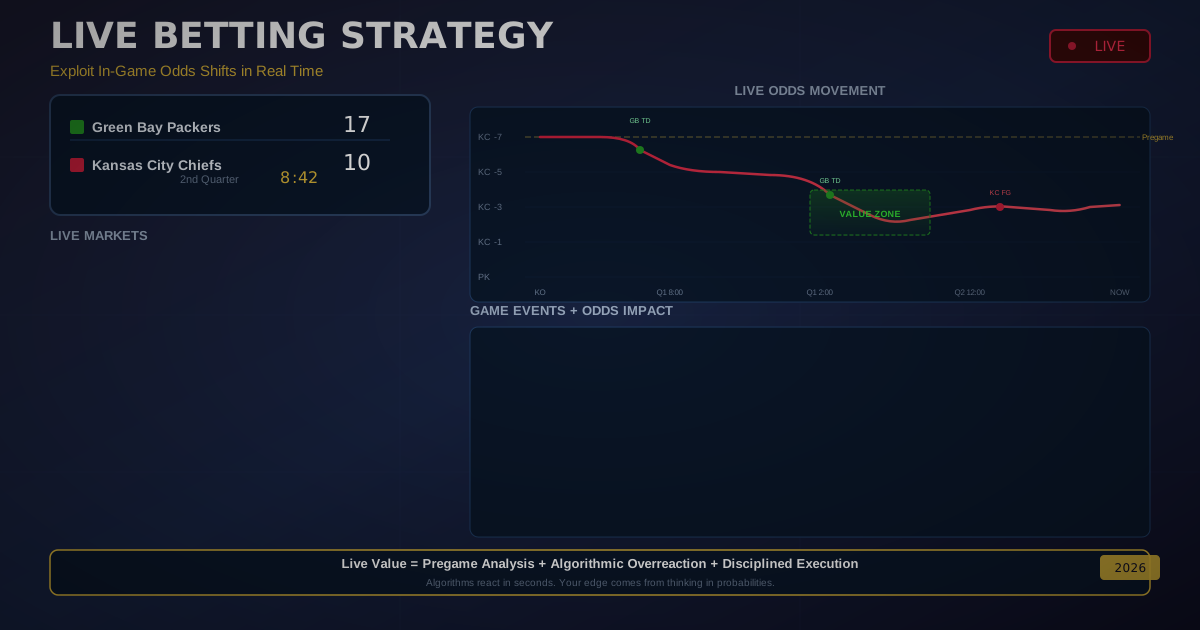
Sharp money tracking is less useful for live (in-play) betting because the market moves too quickly and public betting data is not available in real-time during games. Live betting is primarily a market of algorithms trading against each other, and traditional sharp money signals do not apply in the same way.
Related Tools for Sharp Money Tracking
Core Analysis Tools
- Expected Value Calculator: Calculate the EV of any bet based on your probability estimate
- Implied Probability Calculator: Convert any odds format to implied probability
- Odds Converter: Convert between American, decimal, and fractional odds
- Hold/Vig Calculator: Calculate the sportsbook edge on any market
Bankroll and Sizing Tools
- Kelly Criterion Calculator: Optimal bet sizing based on edge and odds
- Bankroll Volatility Tracker: Model expected variance and drawdowns
- CLV Tracker: Track your closing line value over time
Advanced Betting Tools
- Arbitrage Calculator: Identify guaranteed-profit opportunities across books
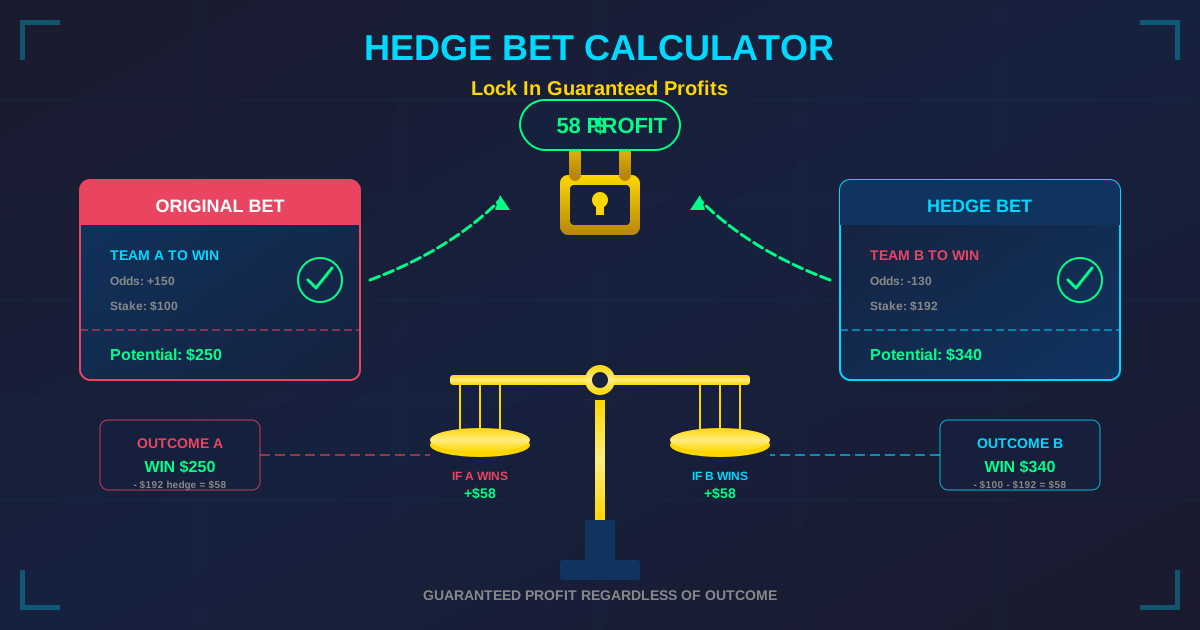
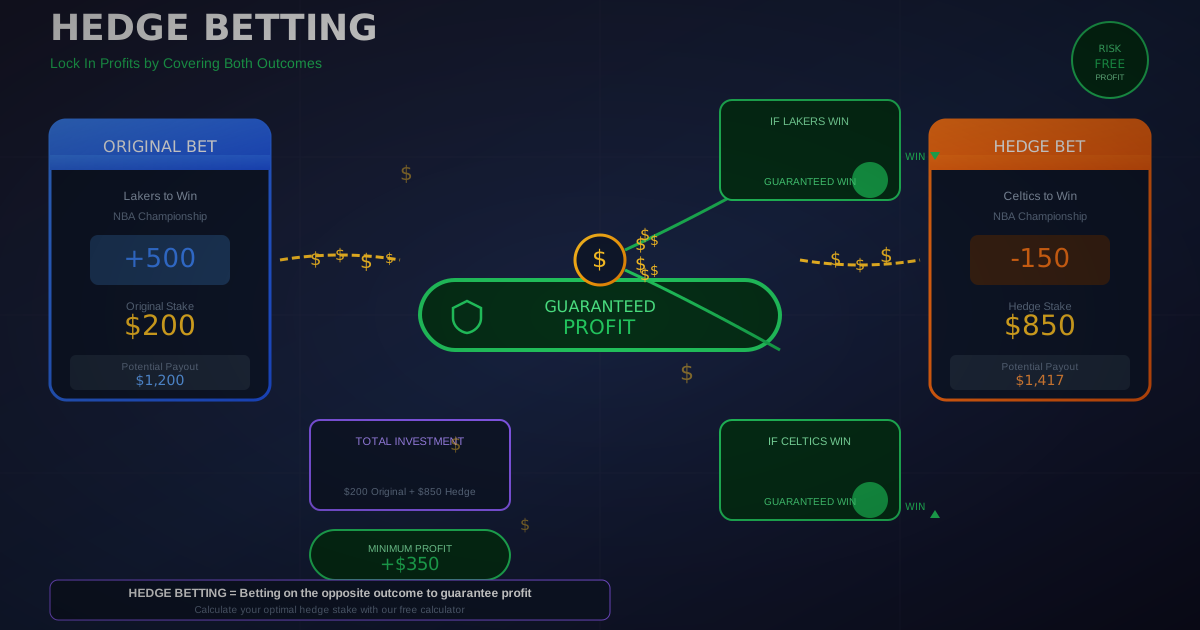
- Hedge Calculator: Calculate hedge amounts to lock in profit
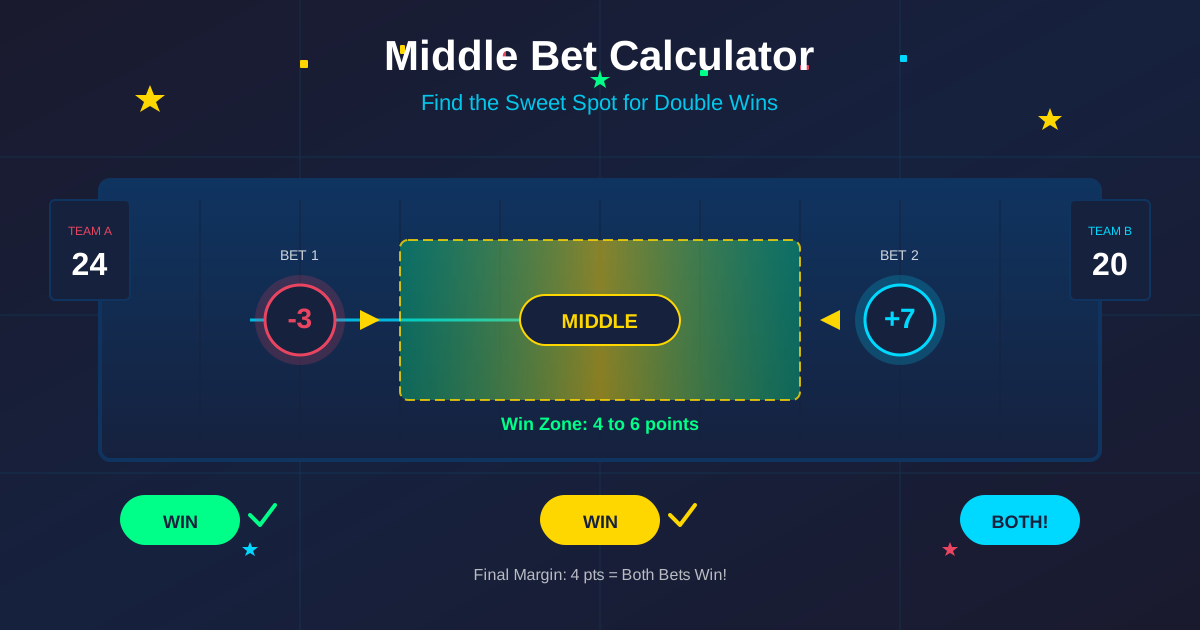
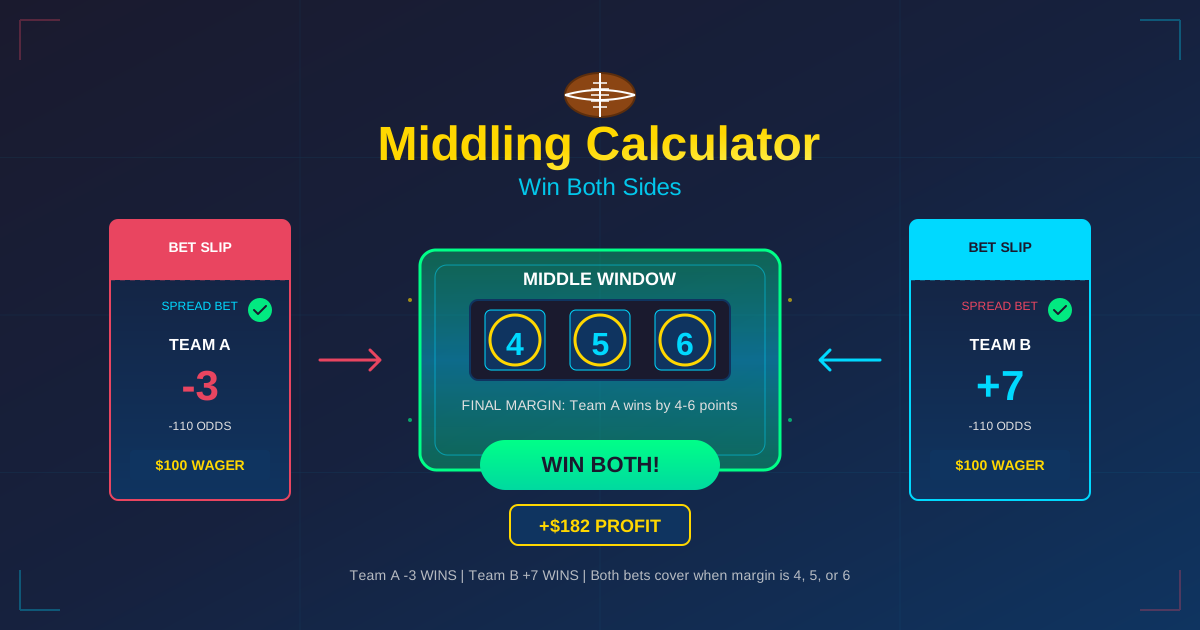
- Middle Bet Calculator: Find middle opportunities from line movements
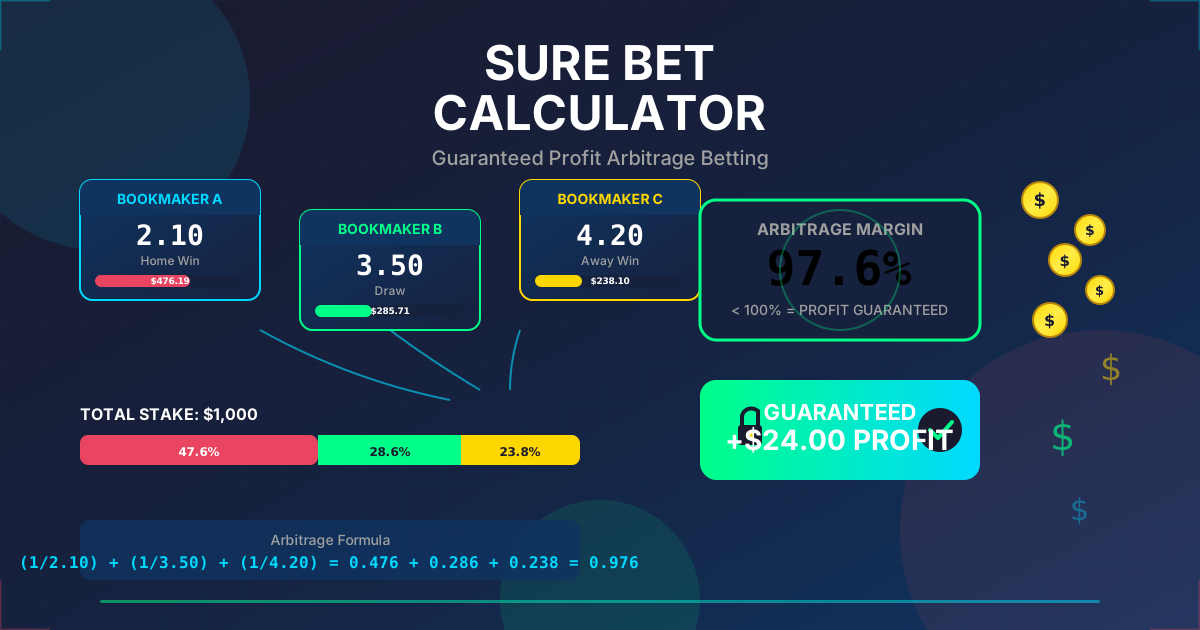
- Sure Bet Calculator: Identify risk-free betting opportunities
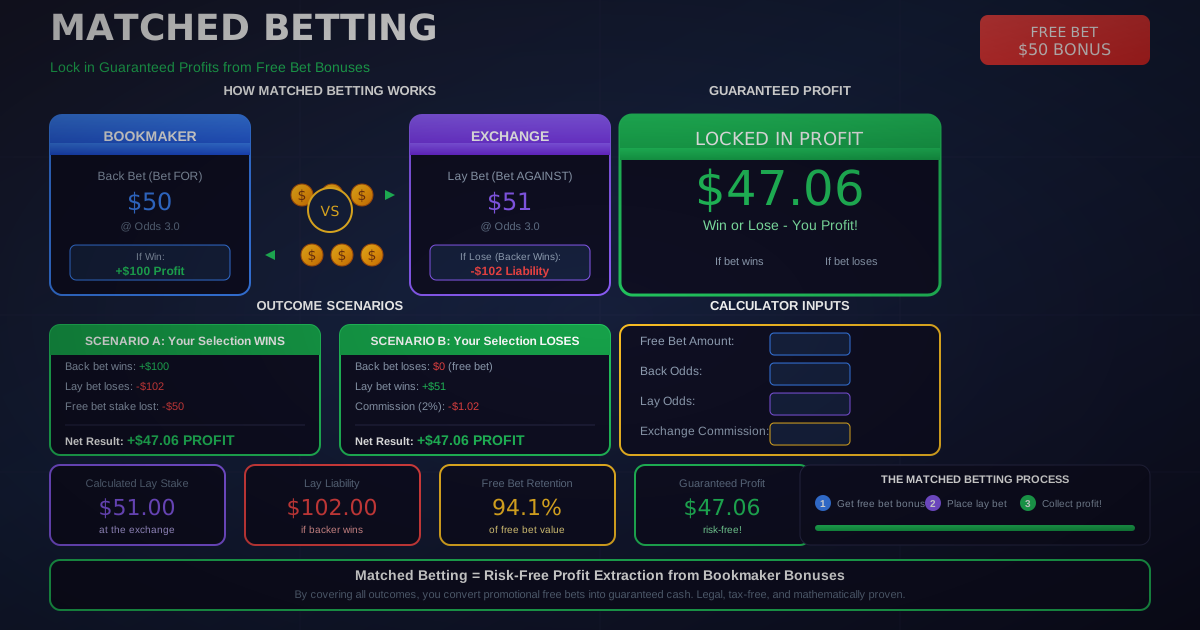
- Matched Betting Calculator: Extract value from sportsbook promotions
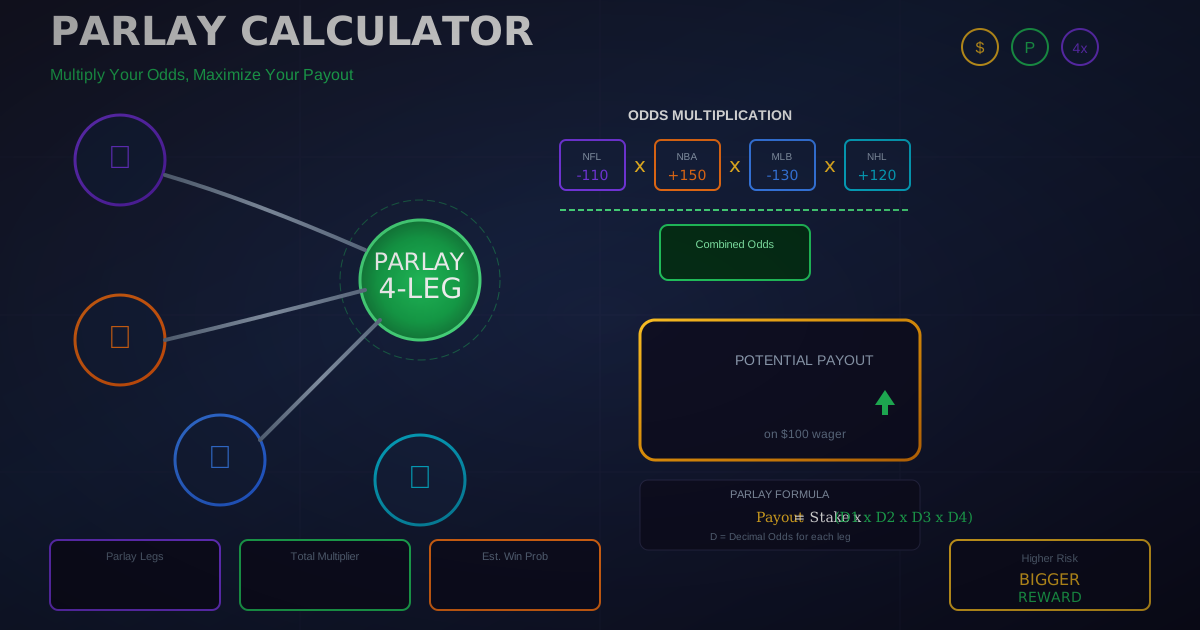
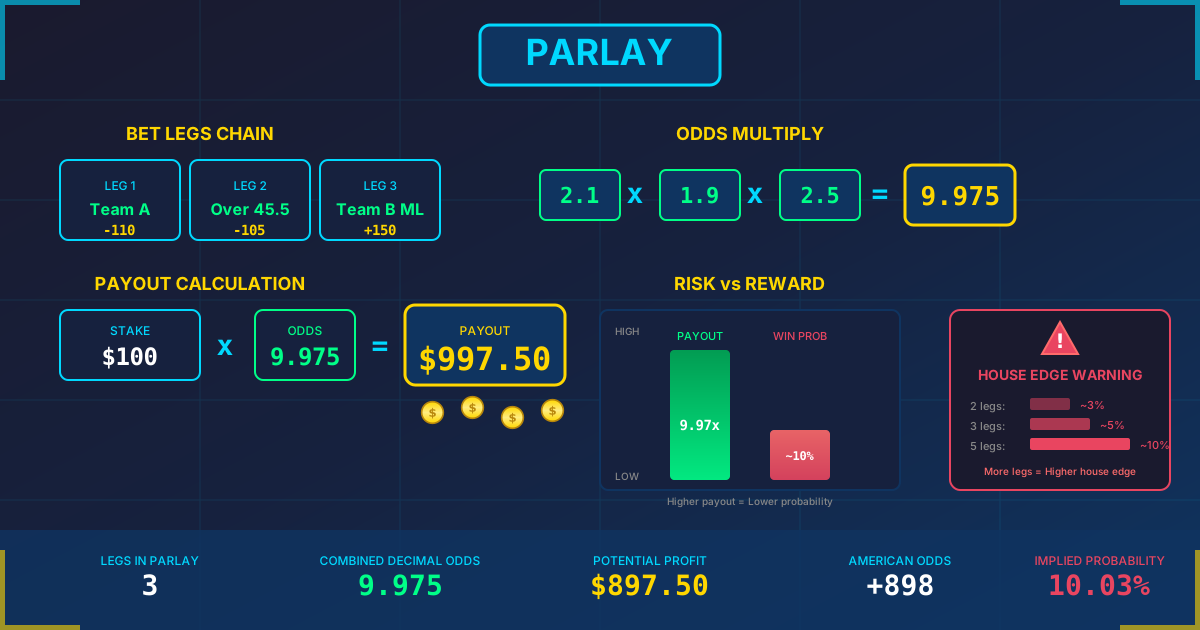
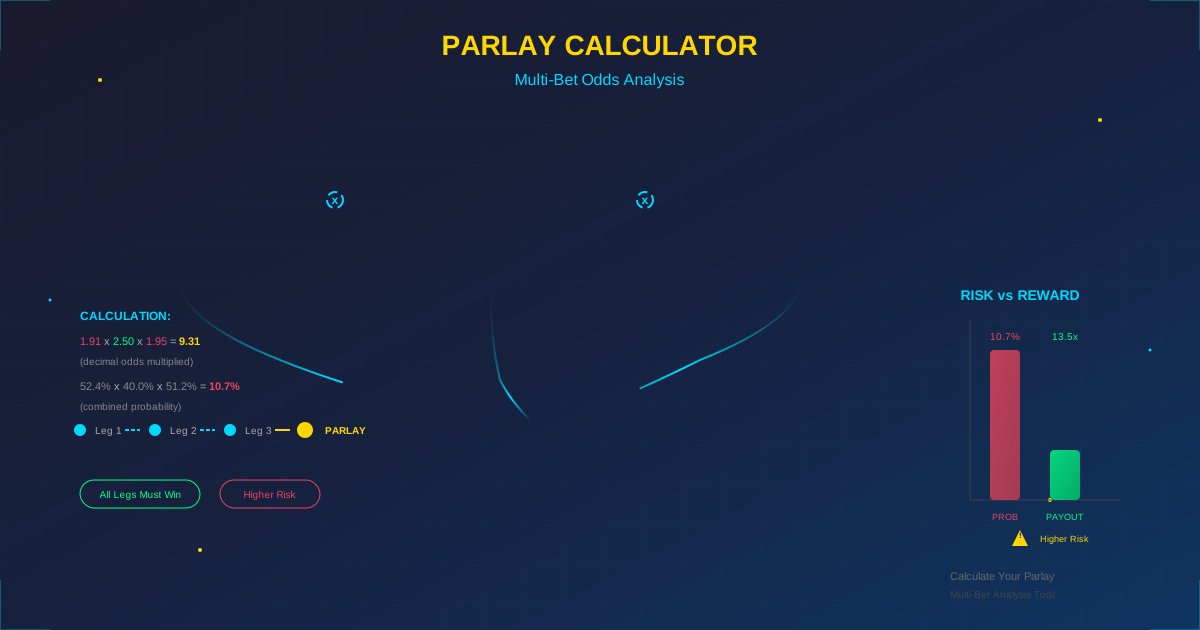
- Parlay Calculator: Calculate parlay odds and payouts
The Bottom Line on Sharp Money
Sharp money indicators are among the most valuable tools available to sports bettors, but they are not a shortcut to guaranteed profits. The professionals who move lines are operating with sophisticated models, massive bankrolls, and decades of experience. You are seeing their footprints, not their strategy.
The most effective approach is to develop your own handicapping ability, use sharp money indicators as a confirmation tool, and track your results rigorously over time. When your analysis and the sharp money agree, bet with confidence. When they disagree, investigate and learn.
Sharp bettors succeed not because they have secret information, but because they are more disciplined, more analytical, and more patient than the market. You can develop those same qualities.
Start analyzing your bets with our free Expected Value Calculator. Track your performance against the closing line with our CLV Tracker. And size your bets optimally with our Kelly Criterion Calculator.
The market tells you everything you need to know. Learn to listen.
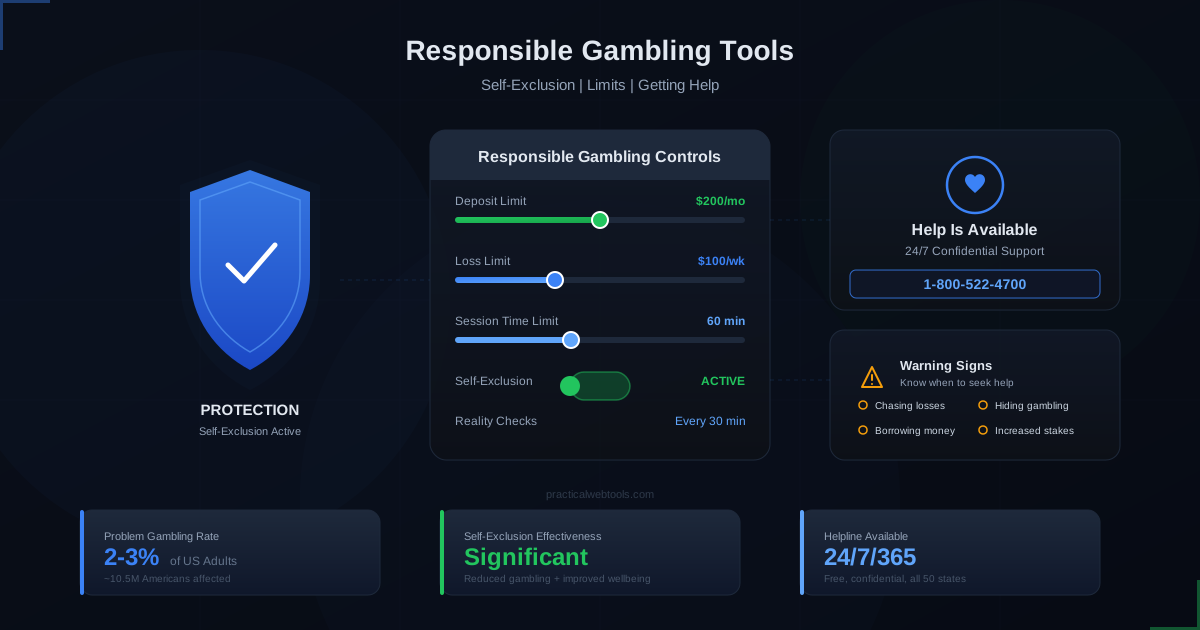
Gambling involves risk and should be approached as entertainment, not as a source of income. Always bet within your means, set strict bankroll limits, and never chase losses. If you or someone you know has a gambling problem, contact the National Council on Problem Gambling at 1-800-522-4700 or visit ncpgambling.org. Must be 21+ to gamble in most US jurisdictions. Please play responsibly.