Blackjack vs. Baccarat: Which Table Game Gives You Better Odds? (2026)
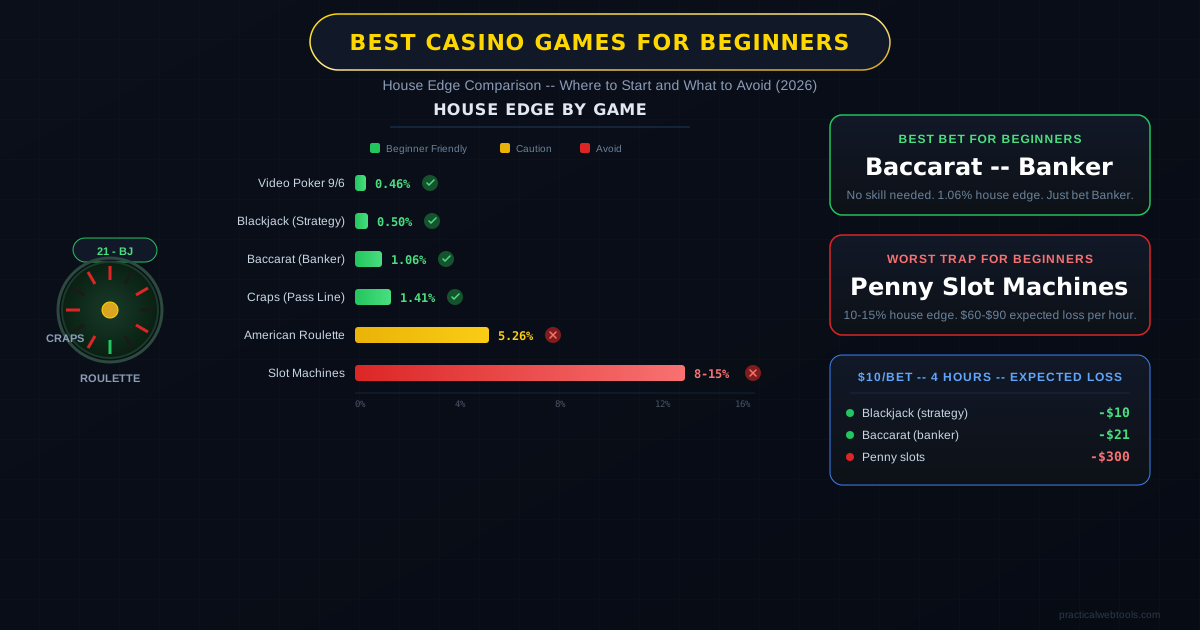
Blackjack has a lower house edge than baccarat---but only if you play perfect basic strategy. The average recreational blackjack player faces a 2-4% effective house edge due to strategy errors, which is significantly worse than baccarat's fixed 1.06% Banker bet that requires zero skill. This single fact flips the conventional wisdom on its head: for most casino visitors, baccarat is actually the better mathematical choice.
This is not an opinion. It is arithmetic. The "best" table game depends entirely on your skill level, bankroll, risk tolerance, and how you define "best." A card counter and a casual weekend gambler have fundamentally different optimal games. This guide compares blackjack and baccarat across every dimension that matters---house edge, variance, speed, hourly cost, comp value, side bets, and strategy complexity---so you can make the right choice for your situation.
Compare both games side by side with the Blackjack House Edge Calculator and the Baccarat House Edge Calculator.
Head-to-Head Comparison: The Numbers
Here is the definitive side-by-side breakdown:
| Factor | Blackjack (Basic Strategy) | Baccarat (Banker Bet) |
|---|---|---|
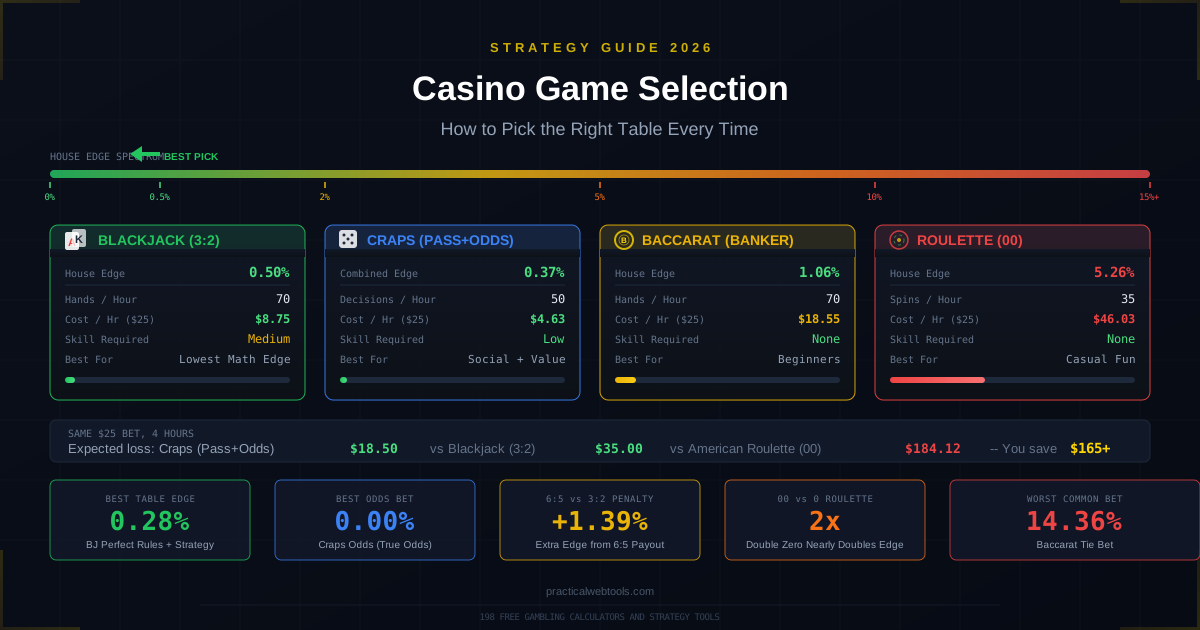
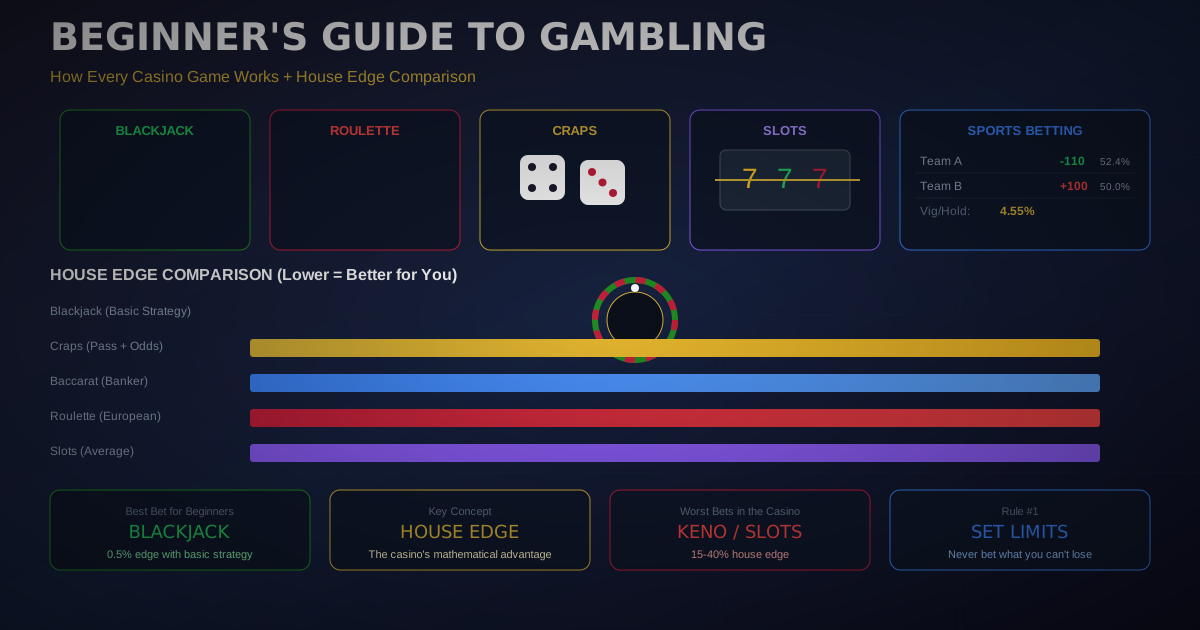
| House Edge (optimal) | 0.28%-0.50% | 1.06% |
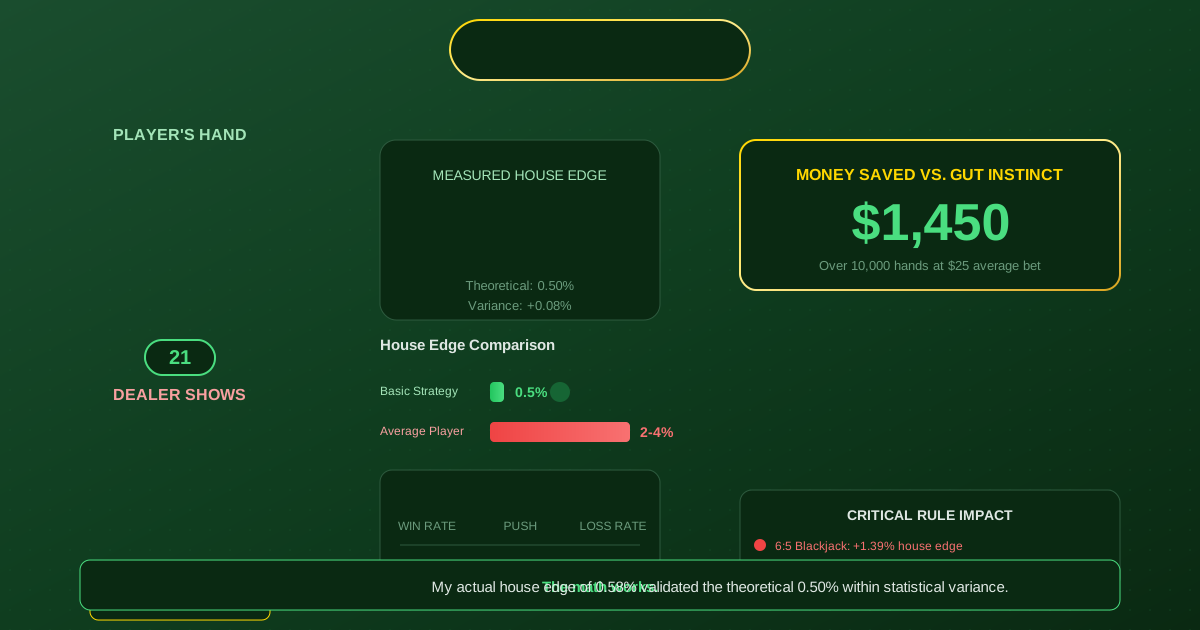
| House Edge (average player) | 2.0%-4.0% | 1.06% |
| Strategy Required | Yes (memorize chart) | None |
| Hands Per Hour | 50-70 (full table) | 60-80 (mini baccarat) |
| Typical Bet Size | $15-$100 | $25-$10,000+ |
| Variance Per Hand | Moderate | Low |
| Comp Rate (typical) | $2-$5/hr at $25 avg | $3-$8/hr at $100 avg |
| Side Bet Availability | Extensive (mostly bad) | Limited (all bad) |
| Decision Count Per Hand | 1-4 decisions | 0 decisions |
| Skill Ceiling | High (card counting) | Very low |
| Social Atmosphere | Interactive, table talk | Quiet, individual |
| Minimum Table Limits | $10-$25 (common) | $25-$100 (common) |
This table alone tells an important story: blackjack is better if you are disciplined enough for perfect strategy. Baccarat is better if you want low-edge gambling with zero mental effort.
Run the exact numbers for your playing style with the Expected Value Calculator.
House Edge Deep Dive: The Real Comparison
Blackjack House Edge
Blackjack's house edge is not a single number. It is a range determined by two factors: table rules and player skill.
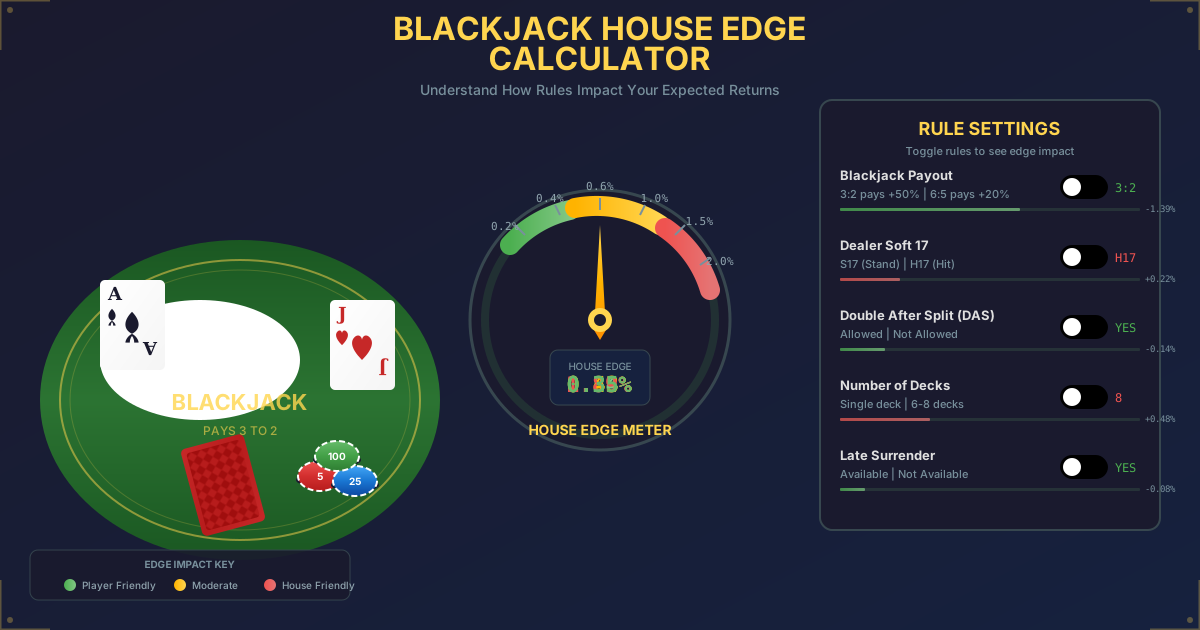
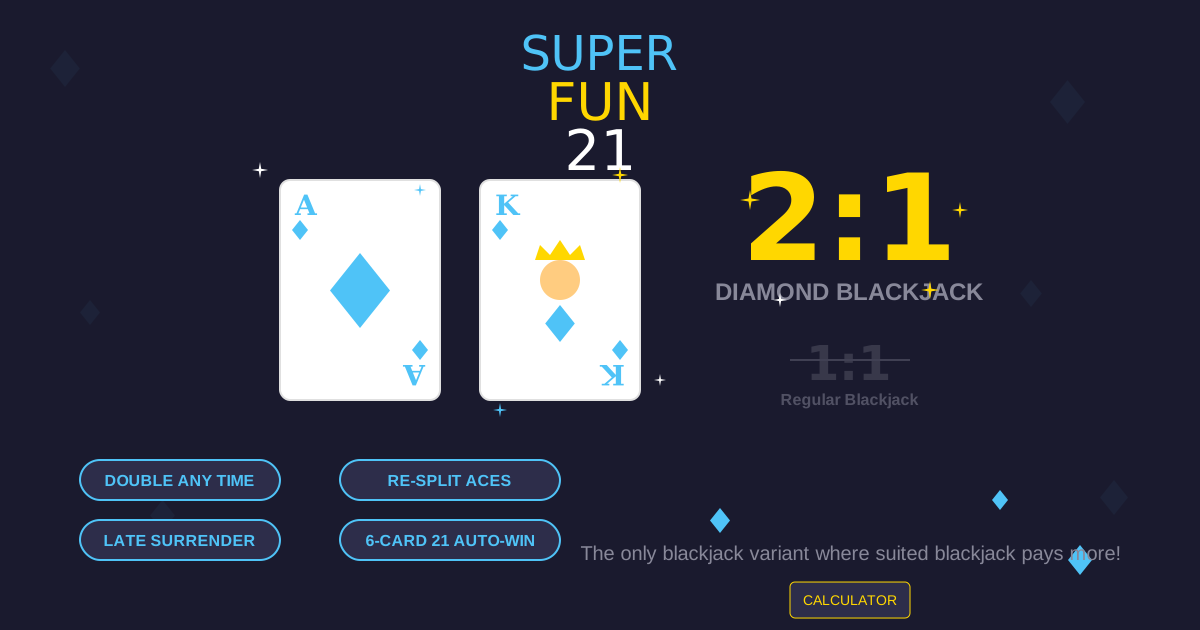
Impact of table rules on house edge (with perfect basic strategy):
| Rule Variation | Effect on House Edge |
|---|---|
| 3:2 blackjack payout (standard) | Baseline |
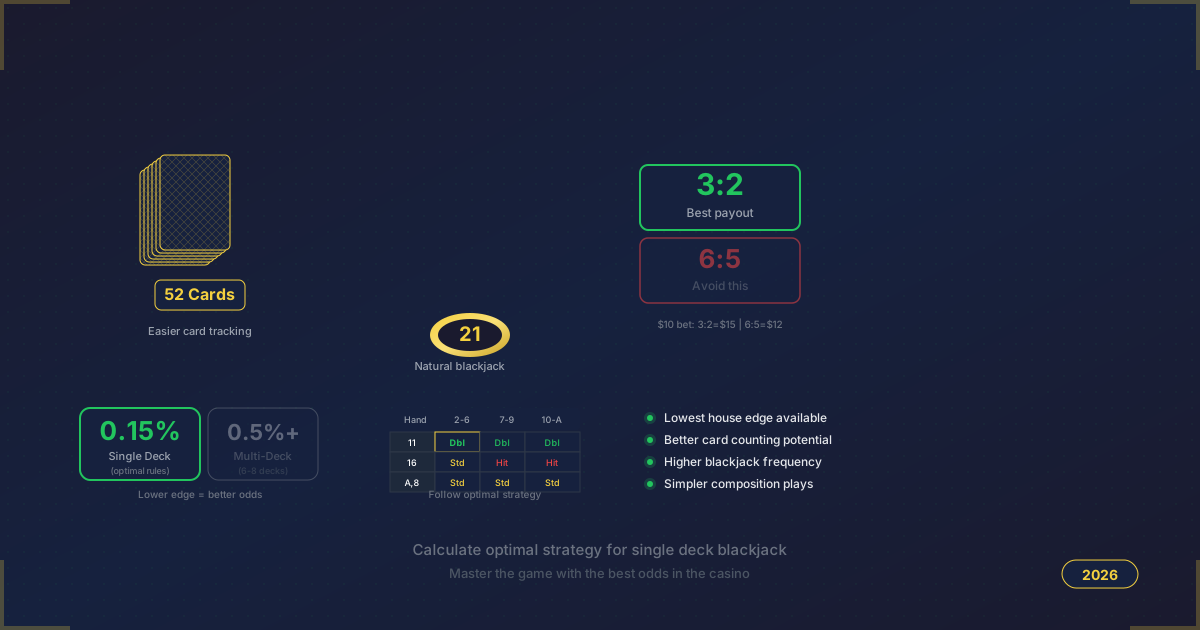
| 6:5 blackjack payout | +1.39% |
| Dealer stands on soft 17 (S17) | Baseline |
| Dealer hits soft 17 (H17) | +0.22% |
| Double after split allowed (DAS) | -0.14% |
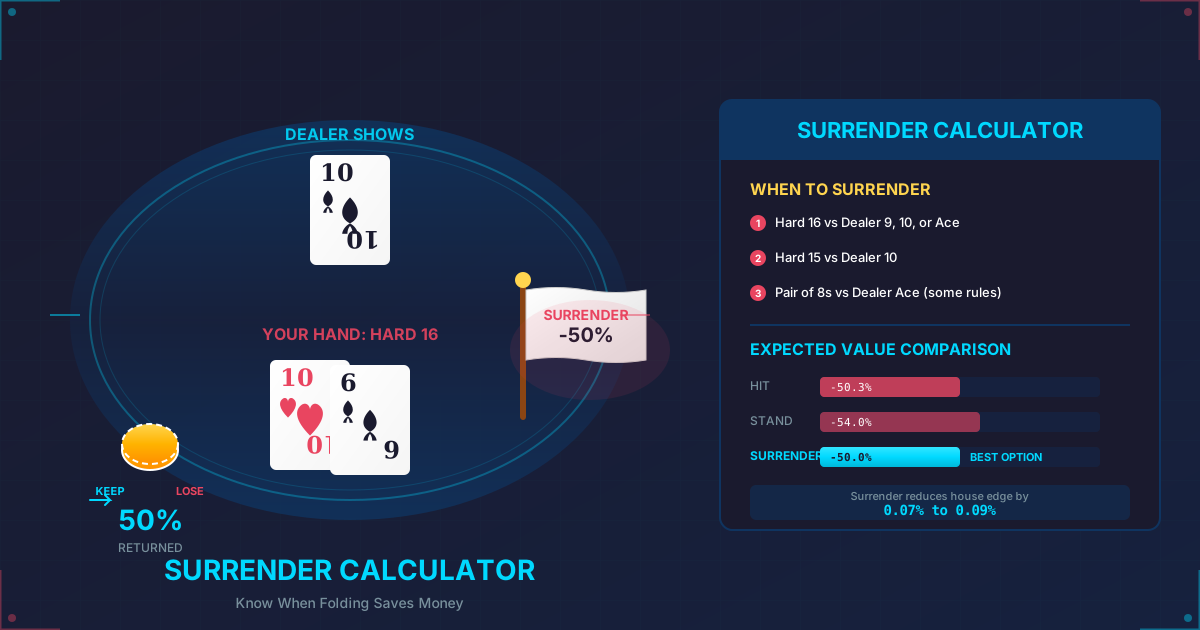
| Late surrender allowed | -0.08% |
| Re-split aces allowed | -0.08% |
| 1 deck vs. 6 decks | +0.46% for 6-deck |
| 8 decks vs. 6 decks | +0.02% for 8-deck |
Under the most favorable rules commonly found in 2026 (single deck, 3:2, S17, DAS, surrender), perfect basic strategy yields a house edge of approximately 0.28%. Under typical Strip rules (6-deck, S17, DAS, 3:2), the edge is approximately 0.50%.
Impact of player skill on effective house edge:
| Player Category | Effective House Edge | Annual Cost ($25 bet, 4hrs/wk) |
|---|---|---|
| Perfect basic strategy | 0.50% | $1,560 |
| Near-perfect (1-2 errors/hr) | 0.80% | $2,496 |
| Good recreational | 1.50% | $4,680 |
| Average recreational | 2.50% | $7,800 |
| Poor (guesses frequently) | 4.00% | $12,480 |
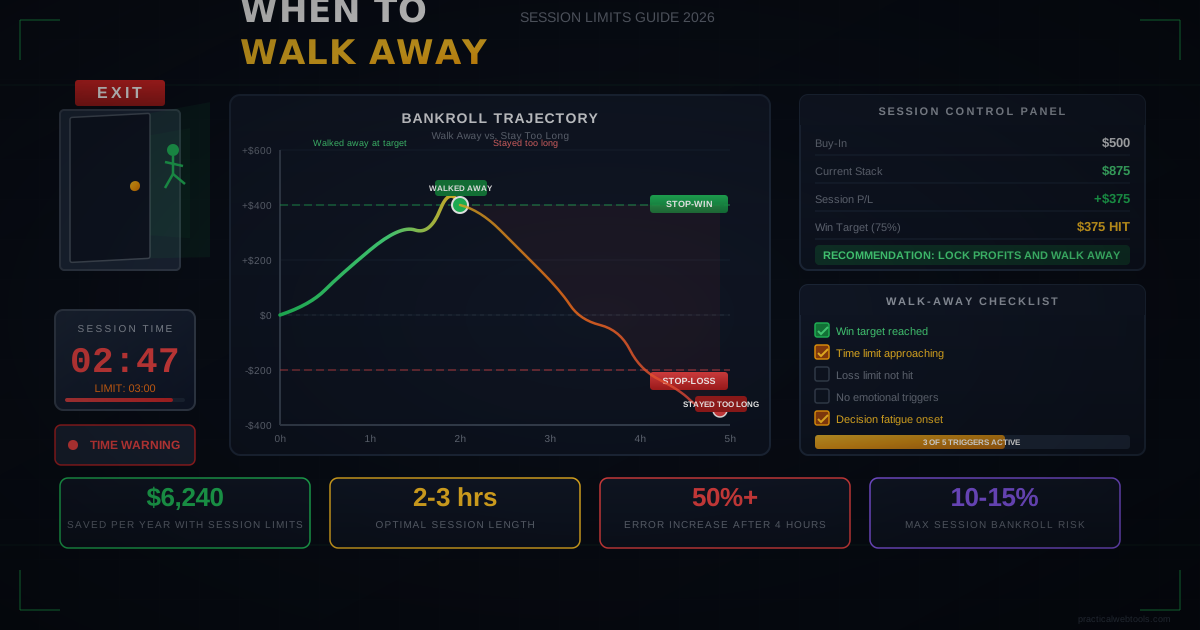
The gap between perfect play and average play is not small. It is $6,240 per year at modest $25 bet levels.
Calculate your exact blackjack edge with the Blackjack House Edge Calculator and verify correct plays with the Blackjack Basic Strategy Chart.
Baccarat House Edge
Baccarat's house edge is fixed and requires no skill whatsoever.
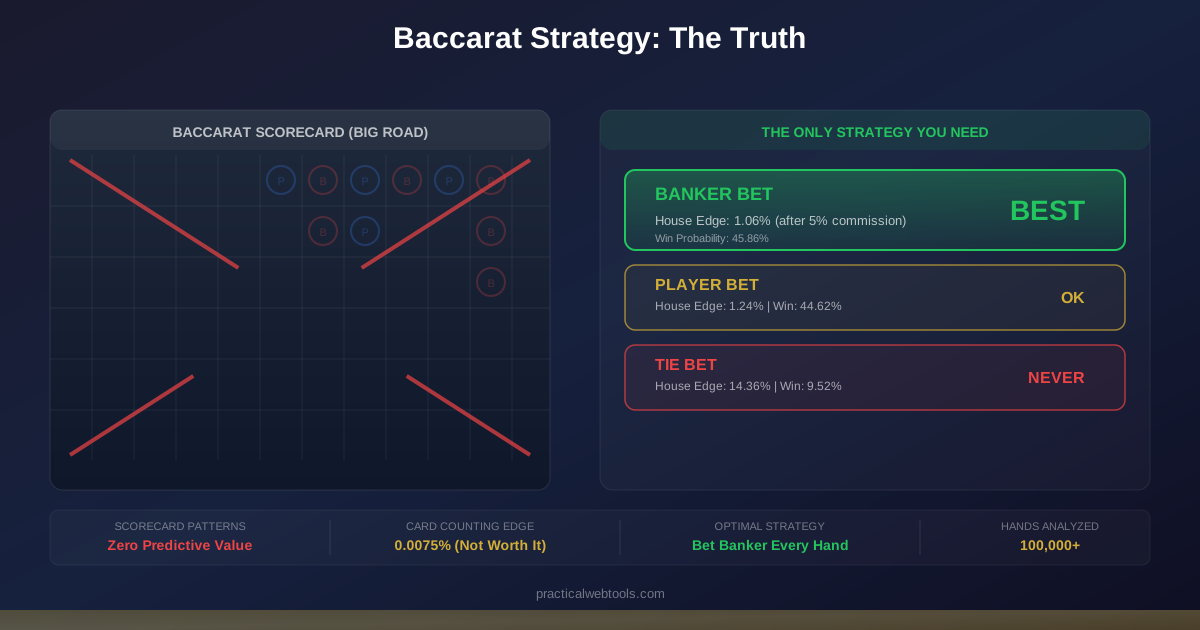
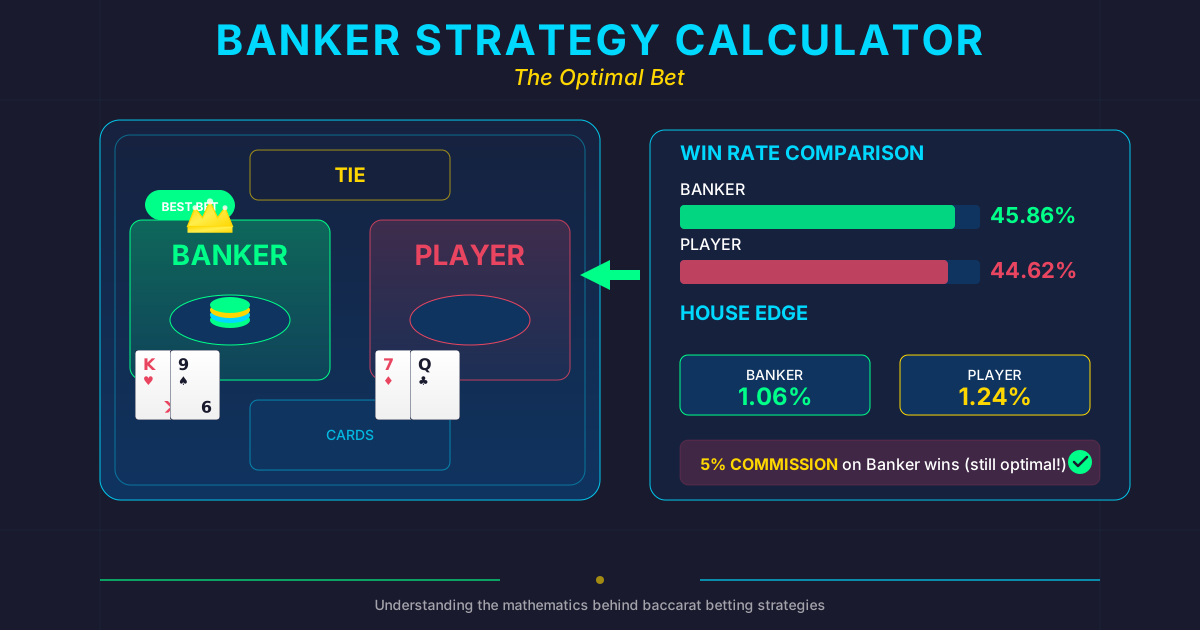
| Bet | House Edge | Win Probability | Payout |
|---|---|---|---|
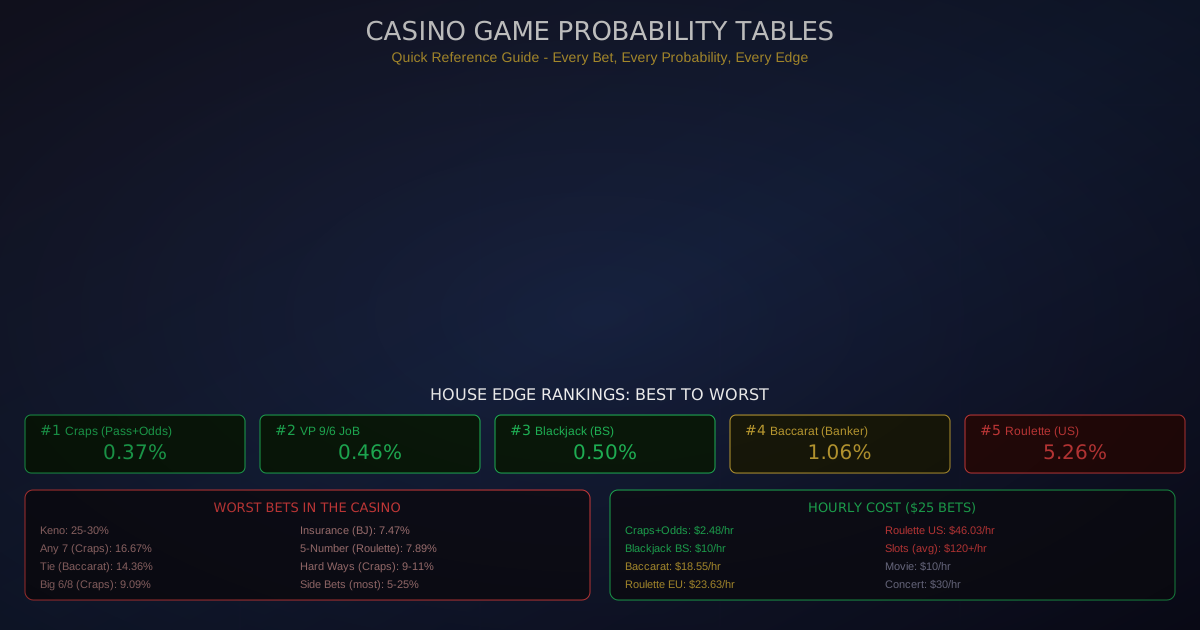
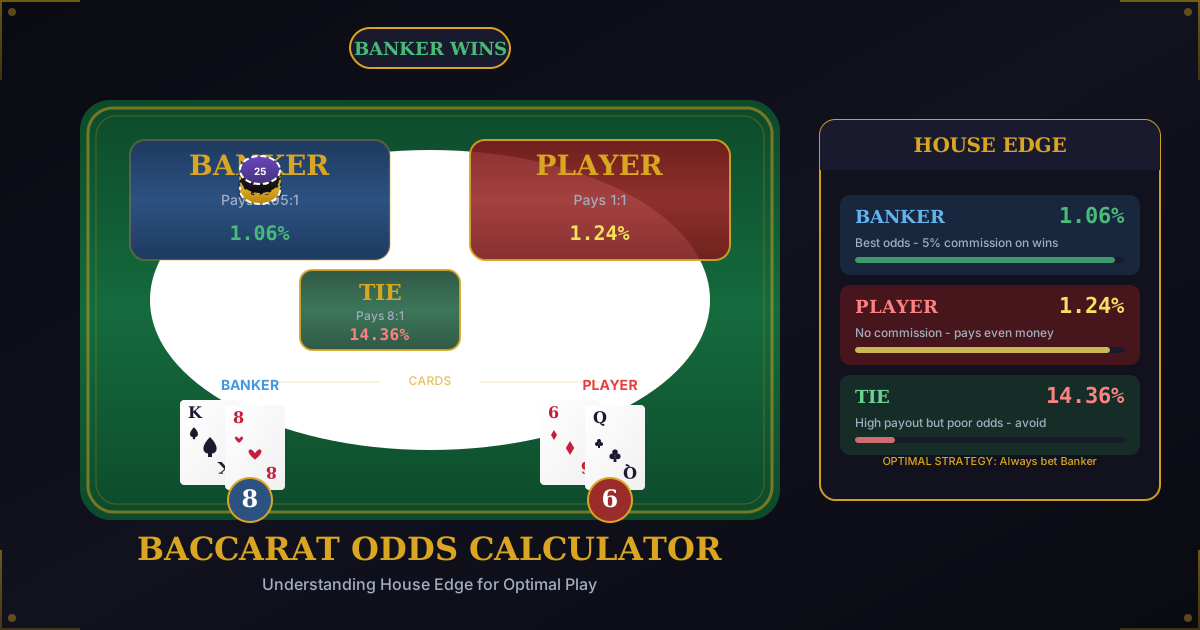
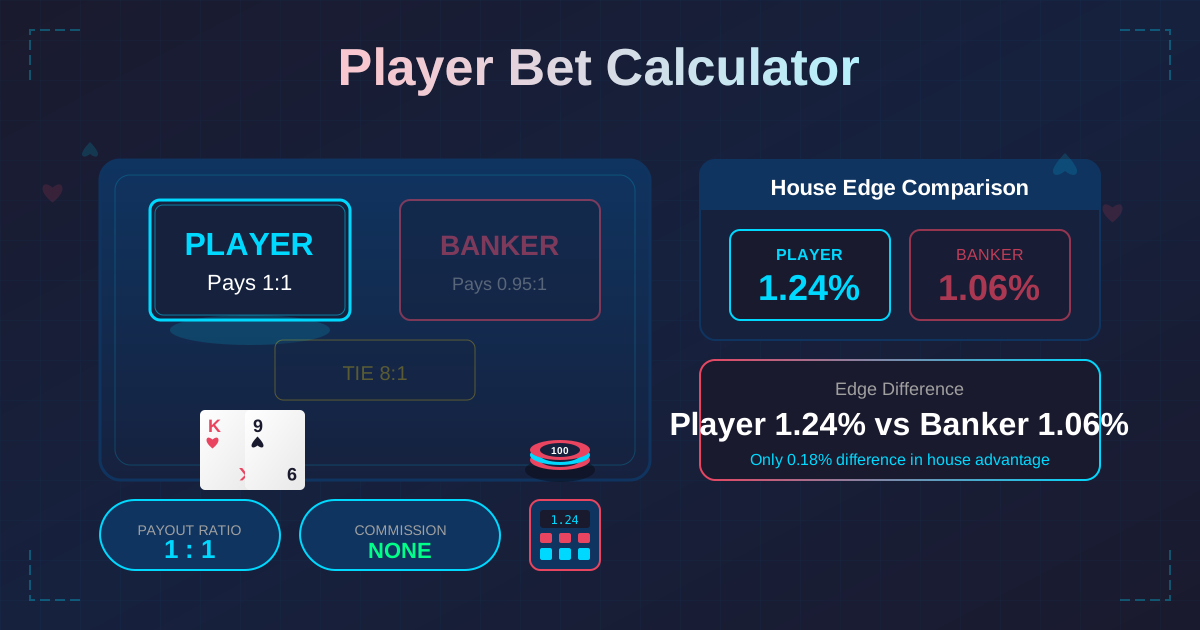
| Banker | 1.06% | 45.86% | 0.95:1 (5% commission) |
| Player | 1.24% | 44.62% | 1:1 |
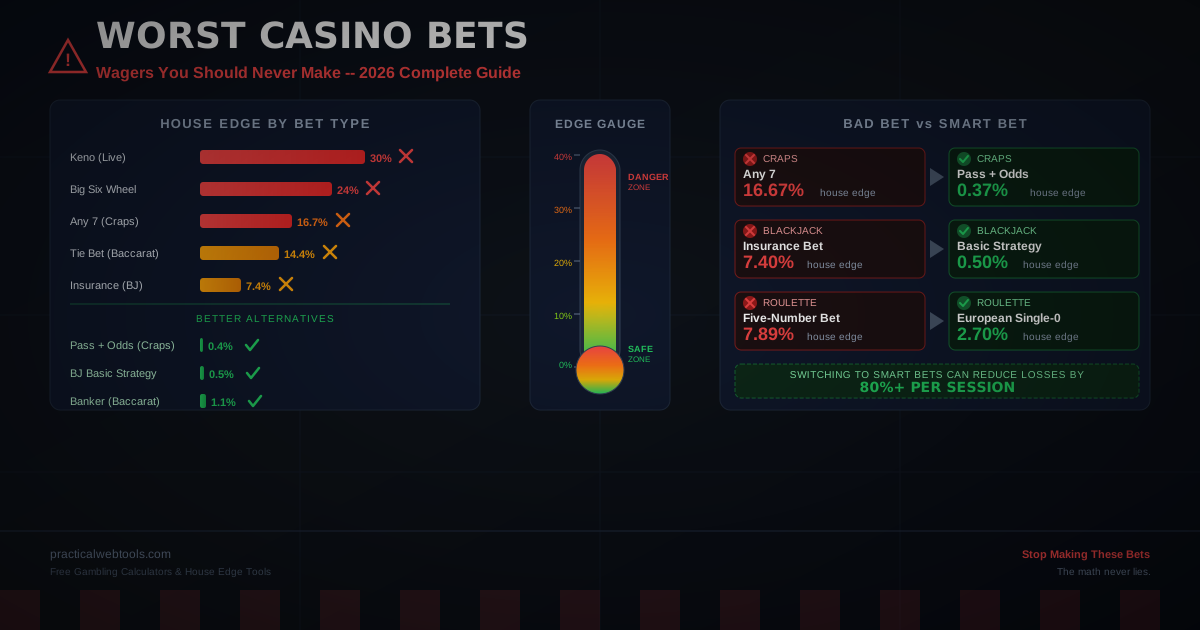
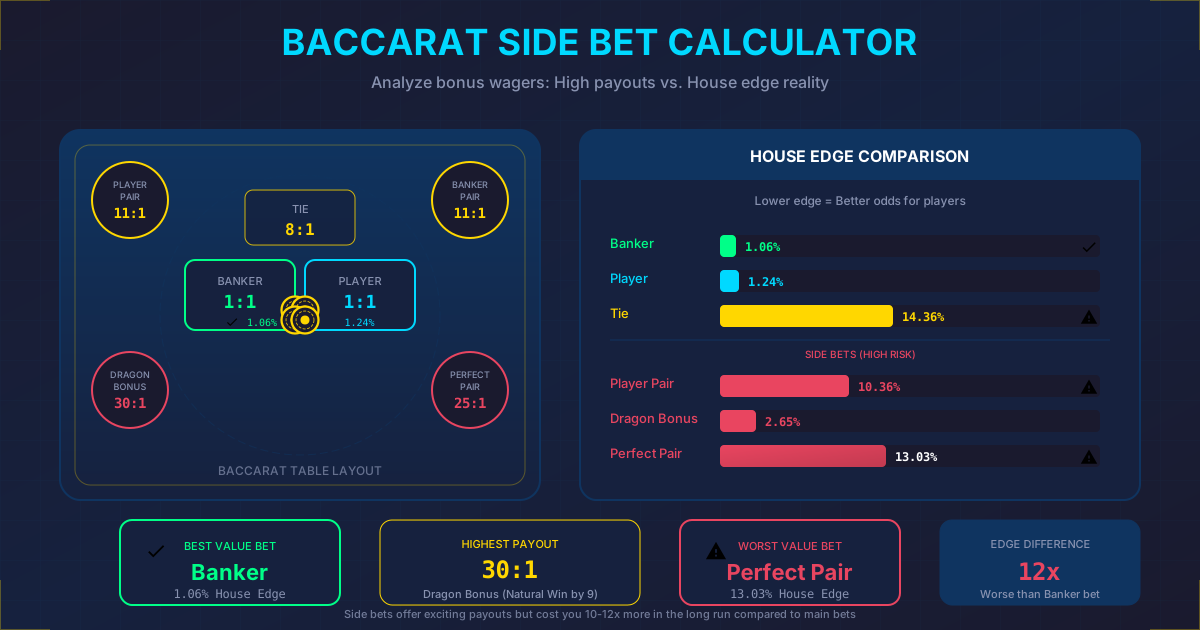
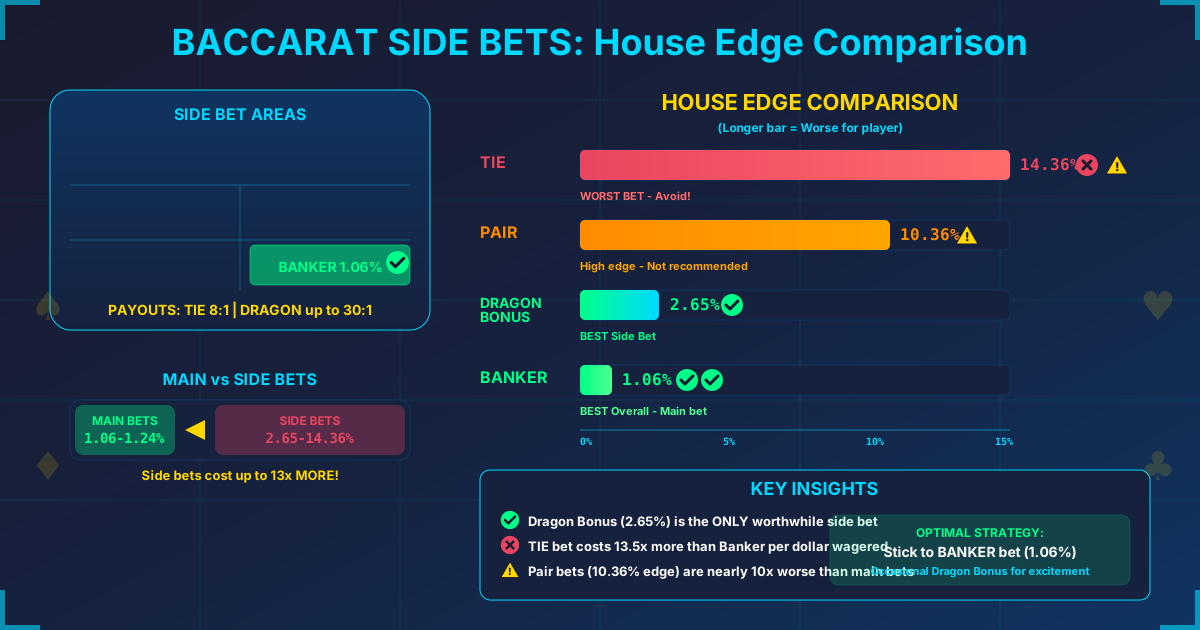
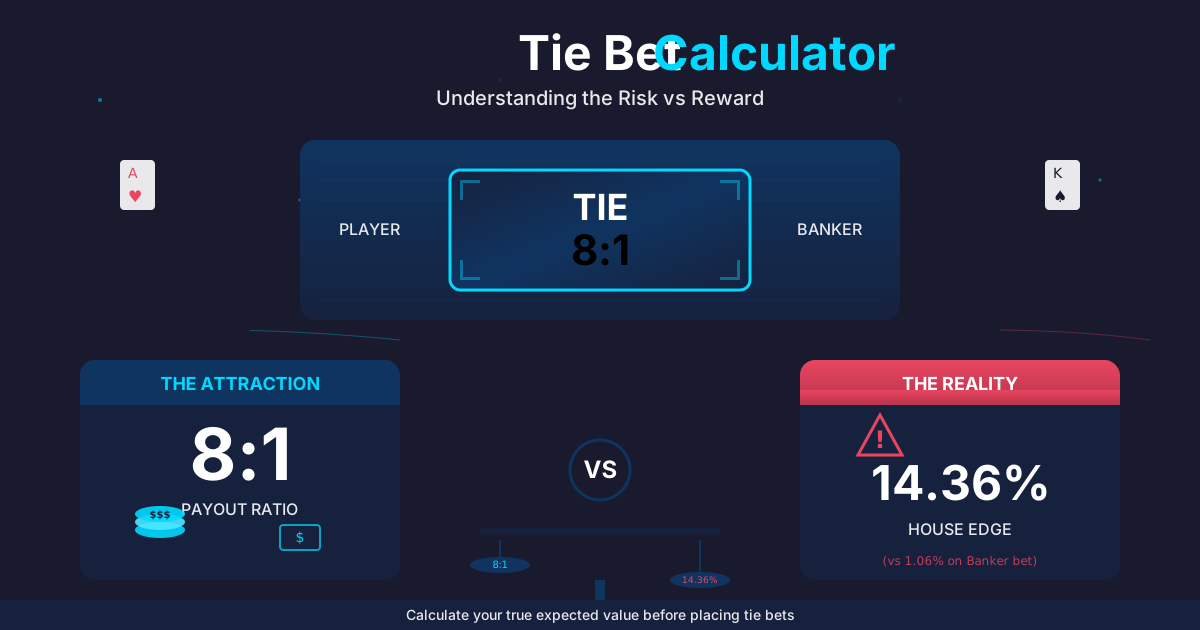
| Tie | 14.36% | 9.52% | 8:1 or 9:1 |
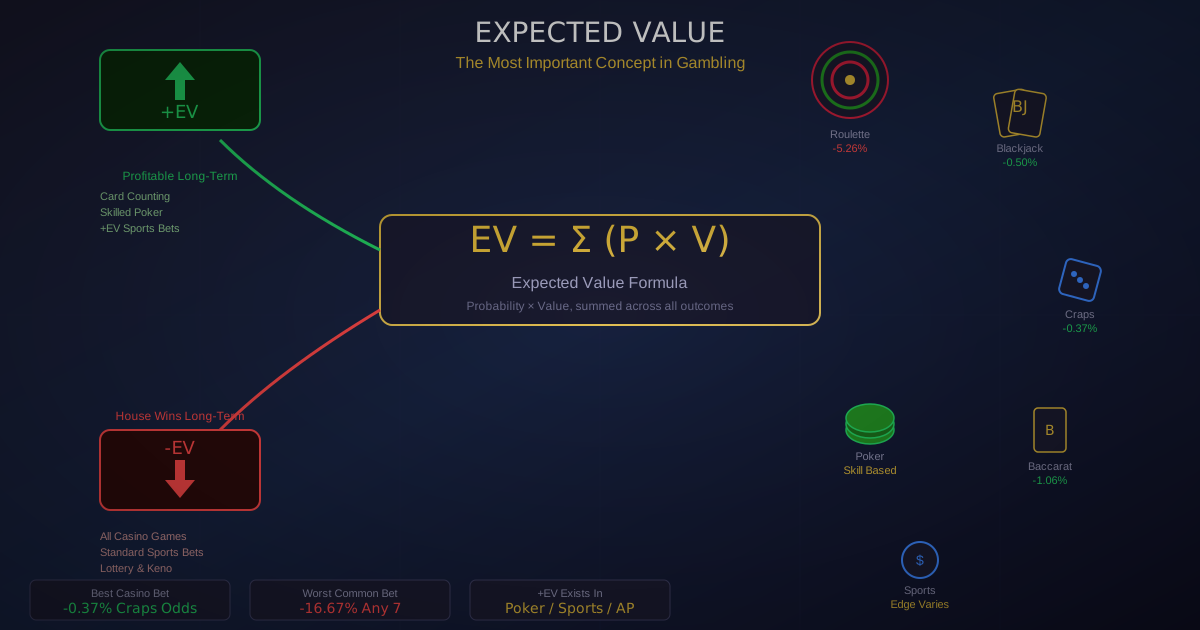
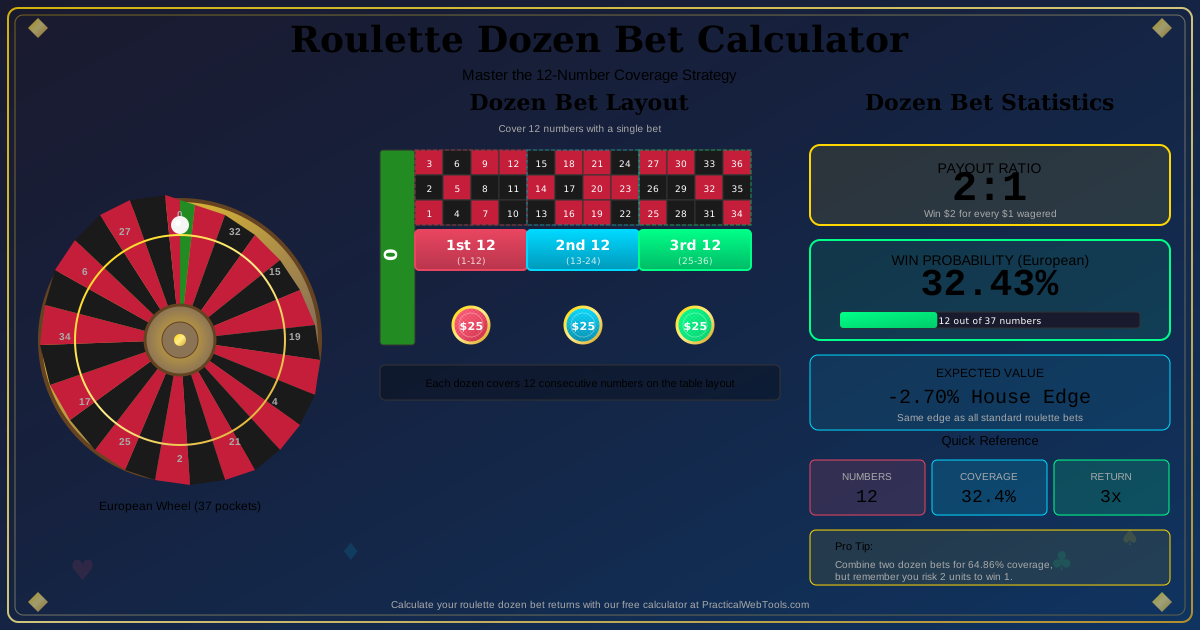
The Banker bet at 1.06% is the best bet in baccarat and one of the best no-strategy bets in the entire casino. The 5% commission on wins is already factored into that 1.06% figure. Some players avoid Banker because they do not want to "pay" the commission, but this is mathematically irrational---the Player bet costs you 0.18% more per wager.
The Tie bet at 14.36% is among the worst bets on the casino floor. Never place it regardless of scorecard patterns, "instincts," or any other non-mathematical reasoning.
Verify these numbers with the Baccarat House Edge Calculator and the Baccarat Odds Calculator.
The Critical Question: Skill-Adjusted House Edge
This is where the comparison gets interesting. When we adjust for realistic skill levels:
| Scenario | Blackjack Edge | Baccarat (Banker) Edge | Winner |
|---|---|---|---|
| Perfect basic strategy player | 0.50% | 1.06% | Blackjack |
| Near-perfect player | 0.80% | 1.06% | Blackjack |
| Good recreational player | 1.50% | 1.06% | Baccarat |
| Average recreational player | 2.50% | 1.06% | Baccarat |
| Poor player | 4.00% | 1.06% | Baccarat |
| Card counter | -0.50% to -1.50% | 1.06% | Blackjack |
The crossover point is approximately 1.06% effective house edge in blackjack, which corresponds to near-perfect basic strategy play with maybe 1-2 minor errors per hour. If you play worse than that---and most people do---baccarat is the better game for you.
This is a genuinely important insight that most gambling guides ignore. They compare optimal blackjack to baccarat and declare blackjack the winner. But optimal blackjack requires memorizing and perfectly executing a 270-cell decision matrix under the pressure and distraction of a live casino environment. Baccarat requires sitting down and saying "Banker."
Expected Hourly Loss Comparison
The hourly cost of each game depends on house edge, bet size, and speed of play.
Standard Scenario: $25 Average Bet
| Game | House Edge | Hands/Hr | Hourly Loss |
|---|---|---|---|
| Blackjack (perfect) | 0.50% | 60 | $7.50 |
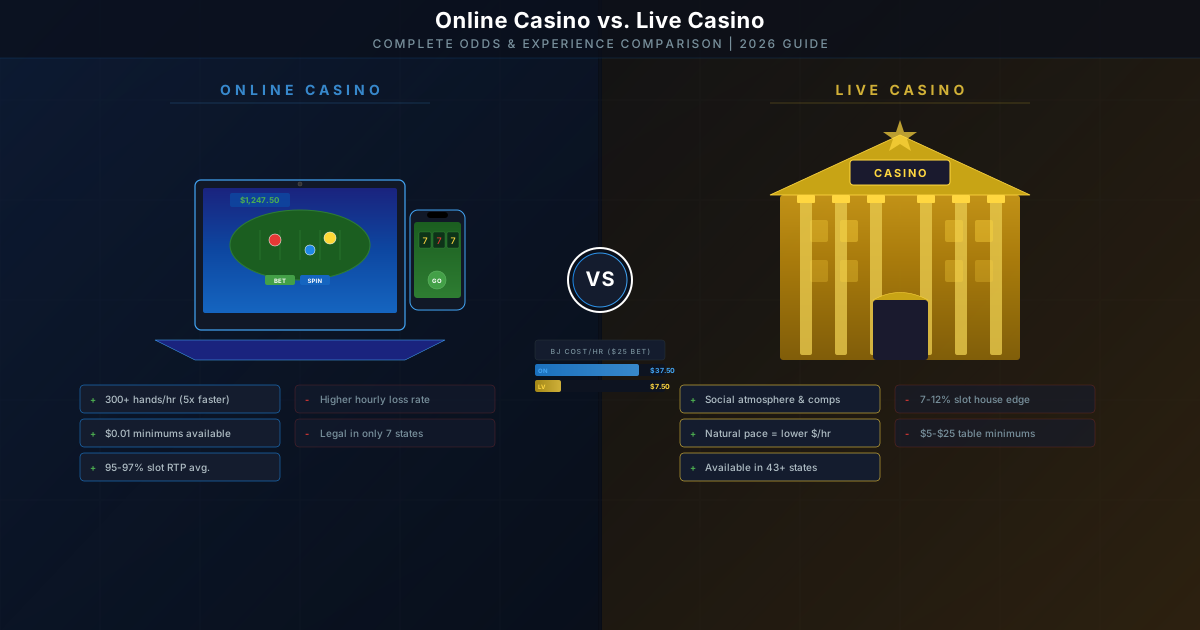
| Blackjack (average player) | 2.50% | 60 | $37.50 |
| Baccarat (Banker) | 1.06% | 72 | $19.08 |
| Baccarat (Player) | 1.24% | 72 | $22.32 |
For the perfect basic strategy player, blackjack costs $7.50/hour versus baccarat's $19.08/hour. That is a clear blackjack advantage. But for the average player, blackjack costs $37.50/hour---nearly double baccarat's cost.
High-Roller Scenario: $200 Average Bet
| Game | House Edge | Hands/Hr | Hourly Loss |
|---|---|---|---|
| Blackjack (perfect) | 0.50% | 60 | $60 |
| Blackjack (average player) | 2.50% | 60 | $300 |
| Baccarat (Banker) | 1.06% | 72 | $152.64 |
| Baccarat (Player) | 1.24% | 72 | $178.56 |
At higher stakes, the differences become enormous. An average blackjack player betting $200 per hand loses $300/hour. The same person playing baccarat Banker loses $152.64/hour. That is a savings of $147.36 per hour, or nearly $600 in a four-hour session.
Weekend Trip Comparison (12 Hours of Play)
| Player Type | Blackjack Loss (12 hrs) | Baccarat Loss (12 hrs) | Savings with Better Choice |
|---|---|---|---|
| Perfect strategy, $50 bet | $360 | $457 | $97 (play BJ) |
| Average player, $50 bet | $900 | $457 | $443 (play Baccarat) |
| Perfect strategy, $100 bet | $720 | $915 | $195 (play BJ) |
| Average player, $100 bet | $1,800 | $915 | $885 (play Baccarat) |
Model your own scenarios with the Blackjack EV Calculator and the Baccarat EV Calculator.
Variance and Session Volatility
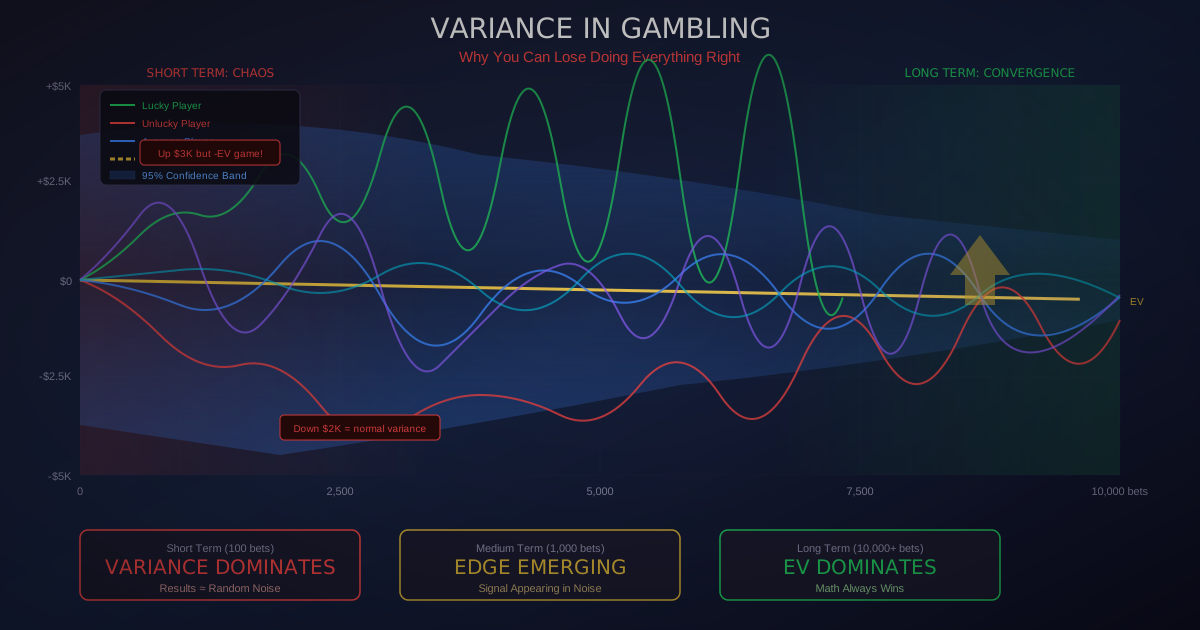
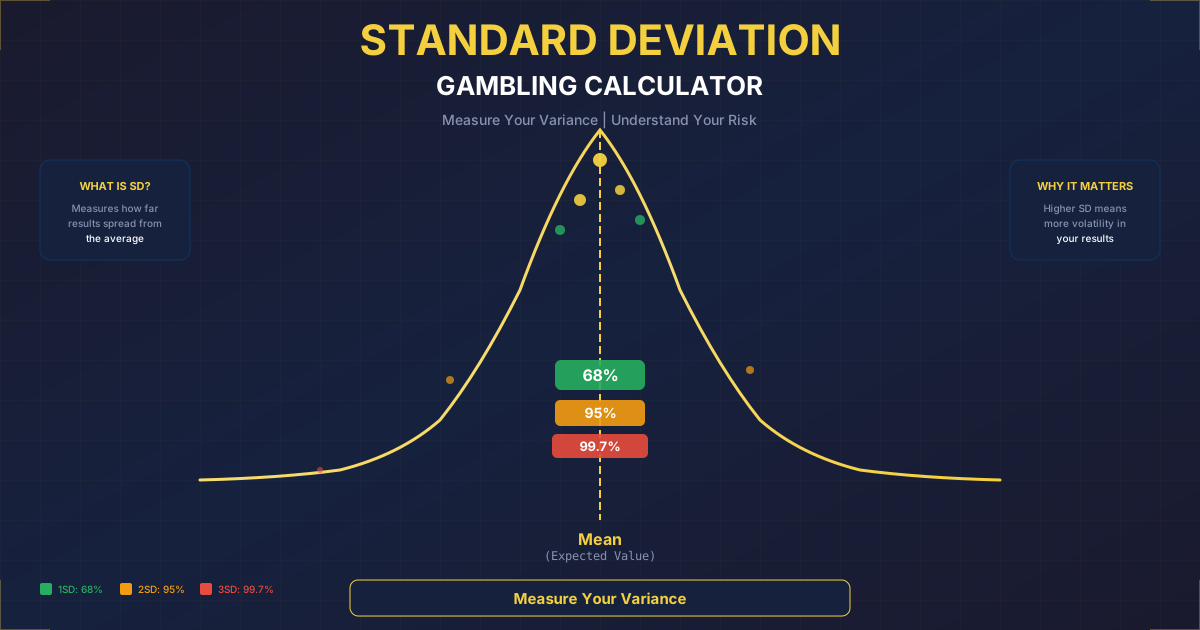
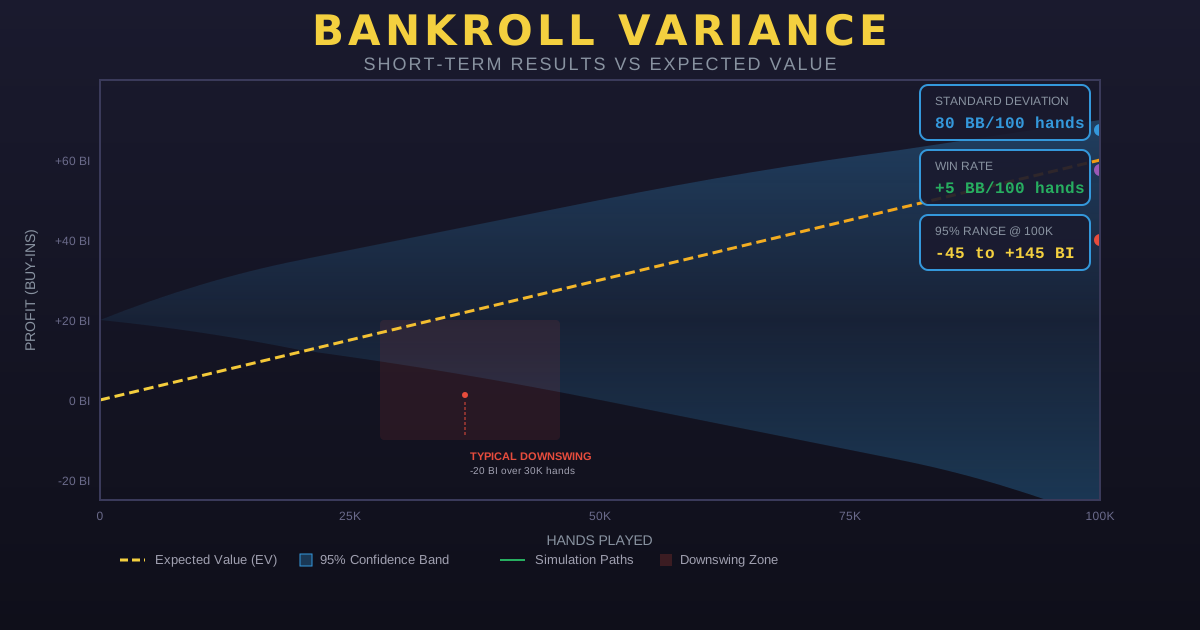
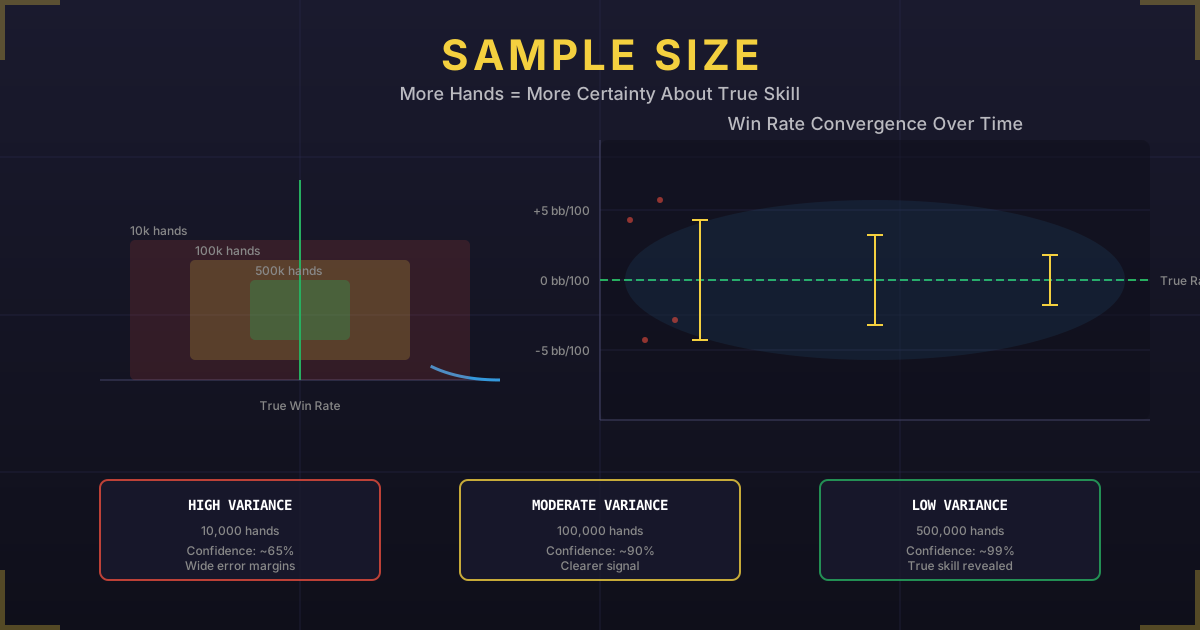
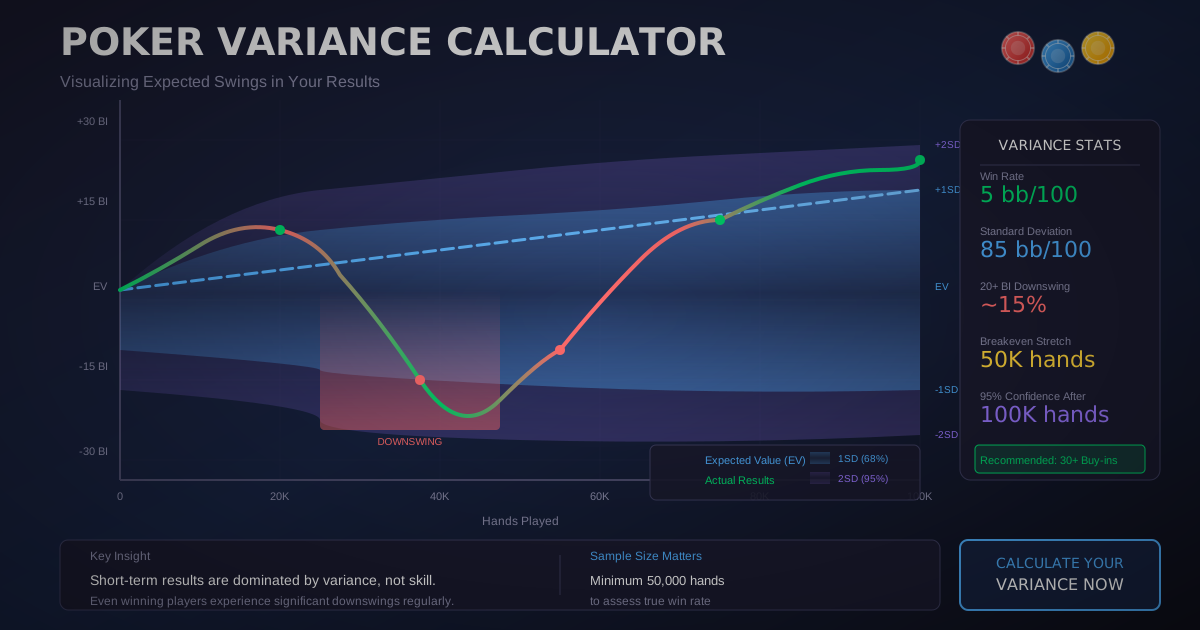
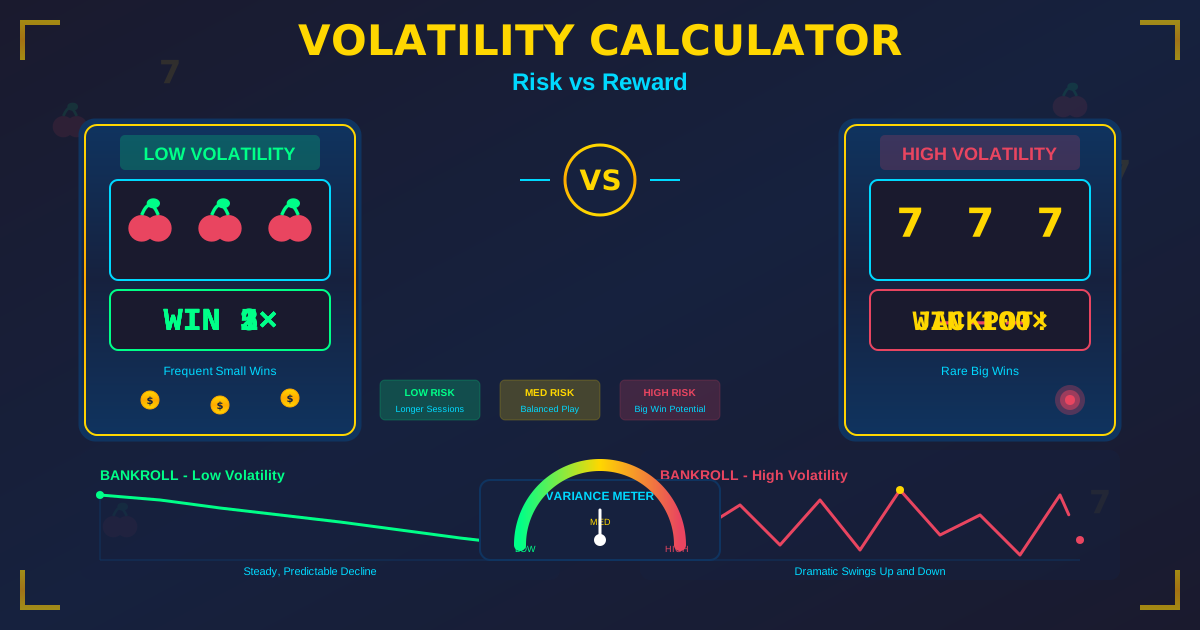
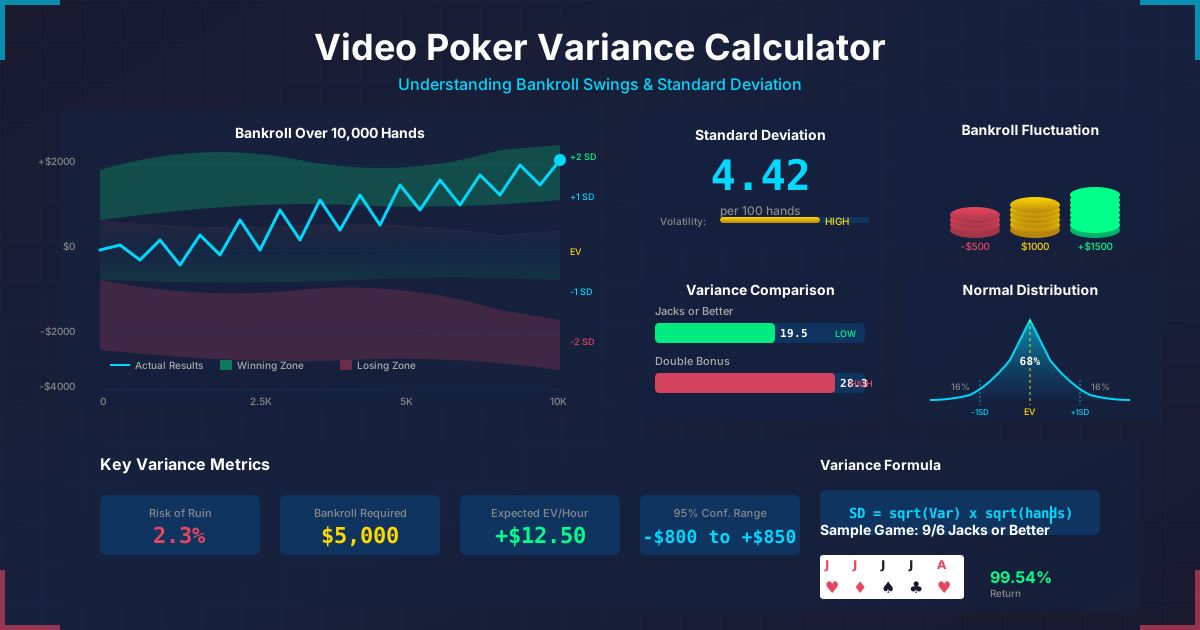
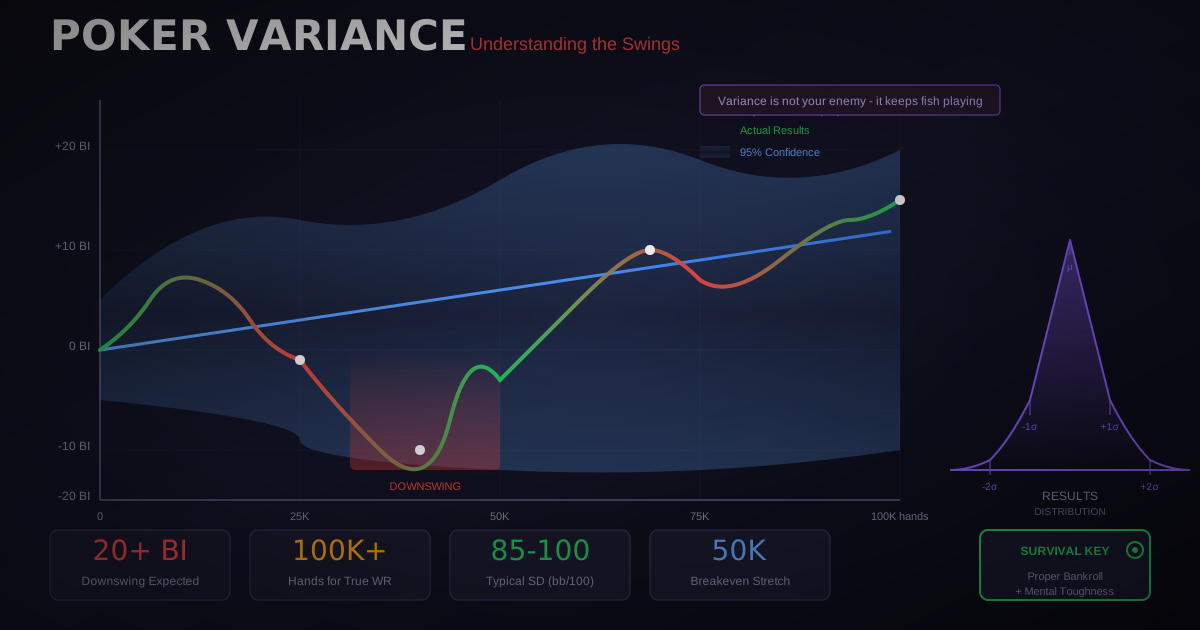
Variance measures how much your actual results deviate from the expected value. Higher variance means wilder swings---bigger wins and bigger losses in any given session.
Blackjack Variance
Blackjack has moderate variance. The standard deviation per hand is approximately 1.15 units (where a unit is your base bet). This means:
- Per-hand swing: Typically between -2x and +2.5x your bet (accounting for doubles, splits, and blackjack payouts)
- Per-session swing (200 hands): Roughly +/- 16 units from expectation
- Probability of a winning 4-hour session: Approximately 45% with perfect basic strategy
The variance sources in blackjack include:
- Doubling down (bet doubles, result amplified)
- Splitting pairs (multiple hands, multiple outcomes)
- Blackjack bonus (3:2 payout on naturals)
- Surrender (recovering half your bet on bad hands)
Baccarat Variance
Baccarat has lower variance than blackjack because every hand is essentially a near-even-money bet. The standard deviation per hand is approximately 0.94 units.
- Per-hand swing: -1x to +0.95x your bet (Banker) or -1x to +1x (Player)
- Per-session swing (200 hands): Roughly +/- 13 units from expectation
- Probability of a winning 4-hour session (Banker): Approximately 43%
Baccarat's lower variance means more predictable sessions. You are less likely to experience dramatic swings in either direction.
What Variance Means for Your Bankroll
| Metric | Blackjack | Baccarat |
|---|---|---|
| SD per hand (units) | 1.15 | 0.94 |
| SD per 100 hands ($25 bet) | $287.50 | $235.00 |
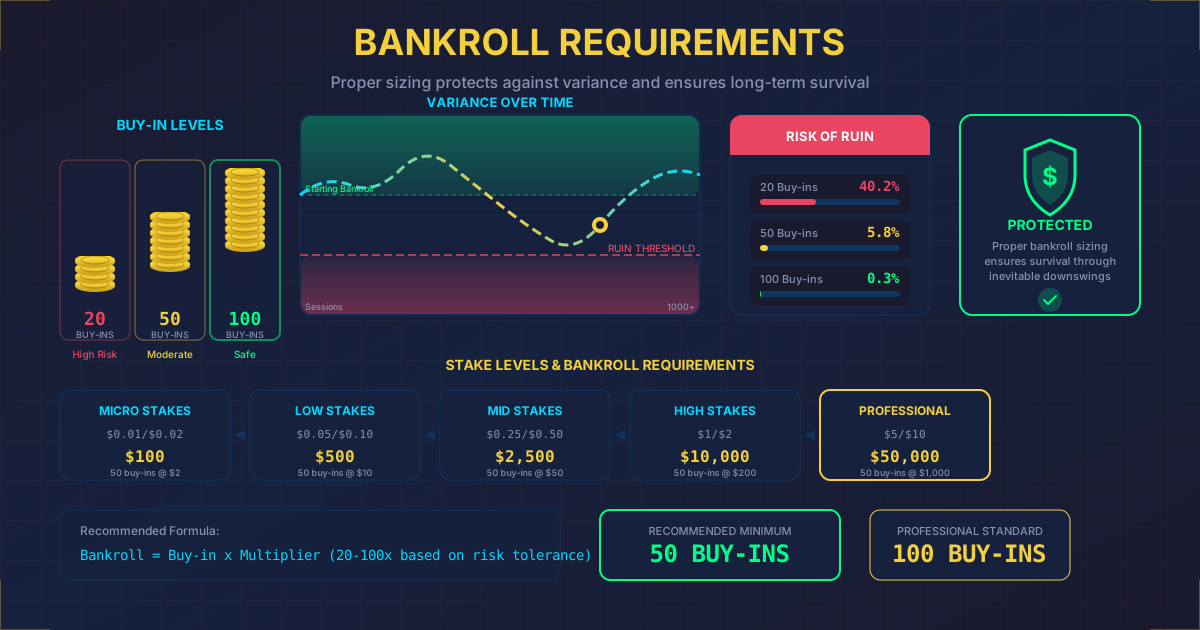
| Risk of ruin (40-unit bankroll, 4hrs) | ~8% | ~5% |
| Chance of doubling bankroll (4hrs) | ~12% | ~9% |
| Typical session range ($25, 4hrs) | -$350 to +$250 | -$280 to +$200 |
Blackjack has higher upside potential but also higher downside risk. Baccarat is the steadier ride.
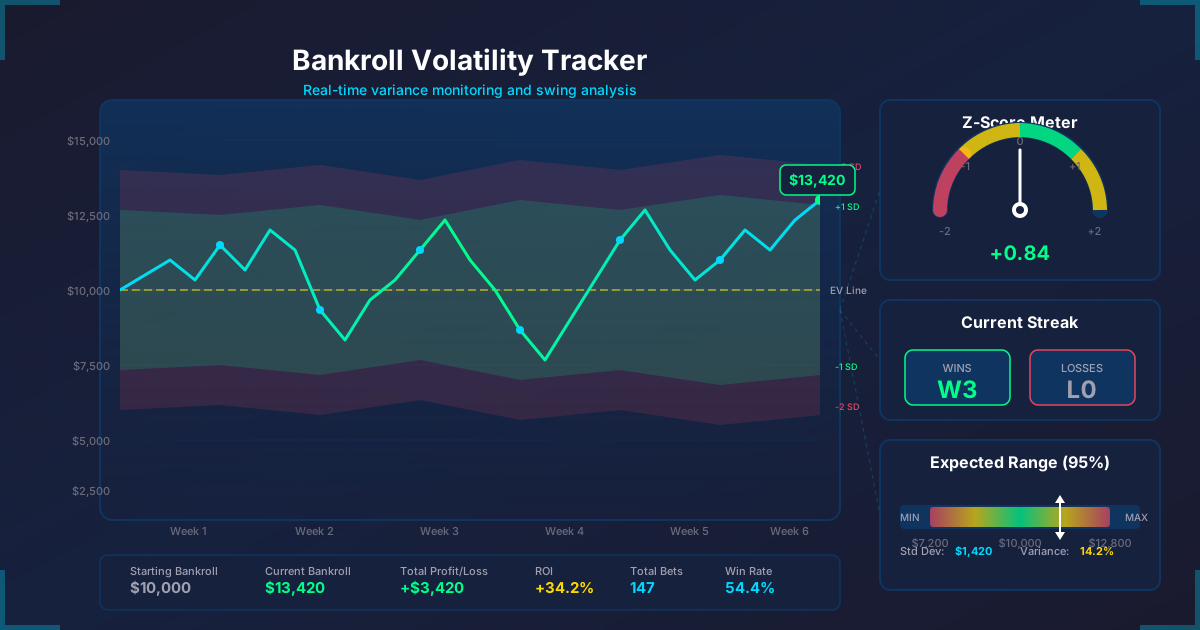
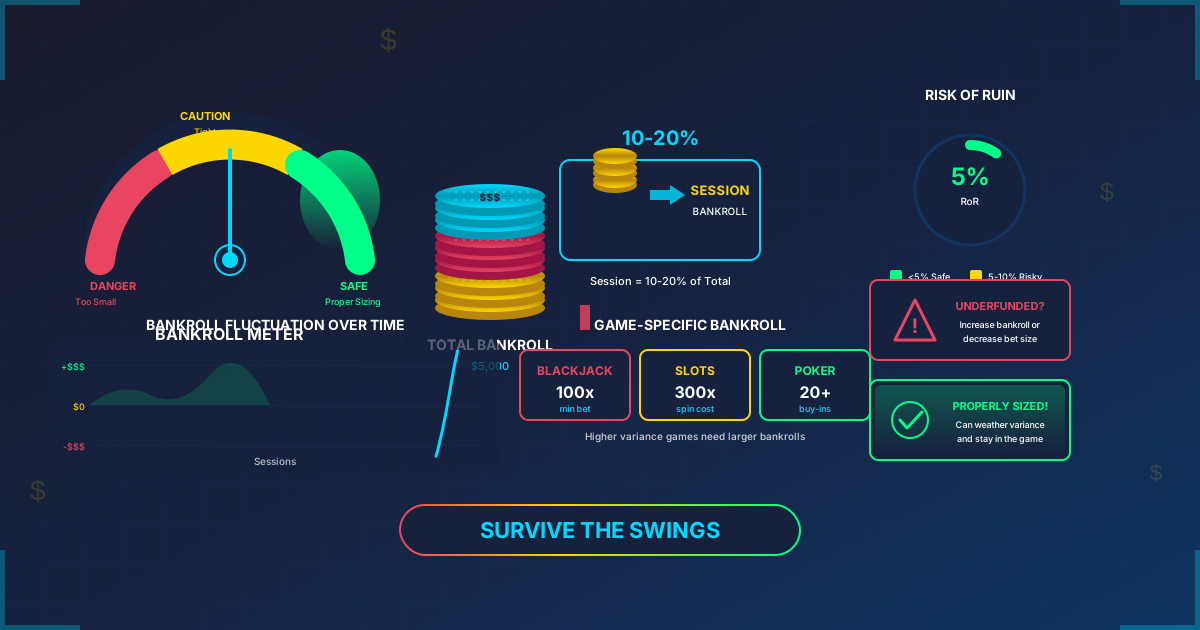
Track your session variance with the Bankroll Volatility Tracker and calculate your risk of ruin with the Blackjack Risk of Ruin Calculator.
Strategy Complexity: The Effort Factor
Blackjack Strategy Requirements
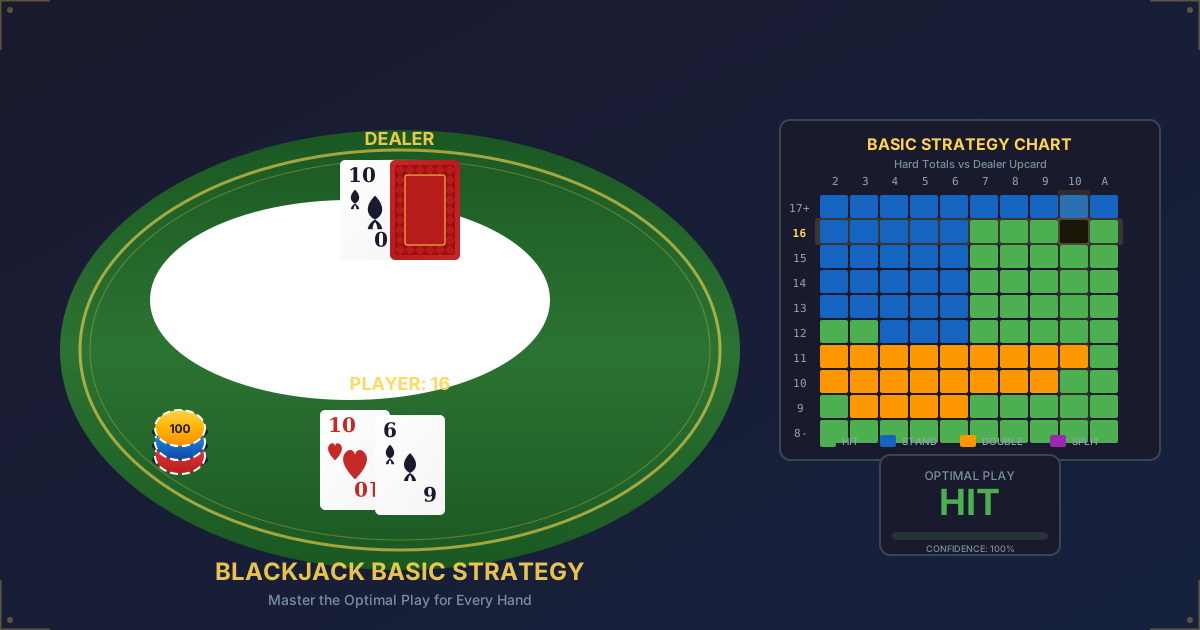
To play blackjack at optimal house edge, you must memorize and execute the basic strategy chart, which contains approximately 270 distinct decisions based on:
- Your hand total (hard totals, soft totals, pairs)
- The dealer's upcard (2 through Ace)
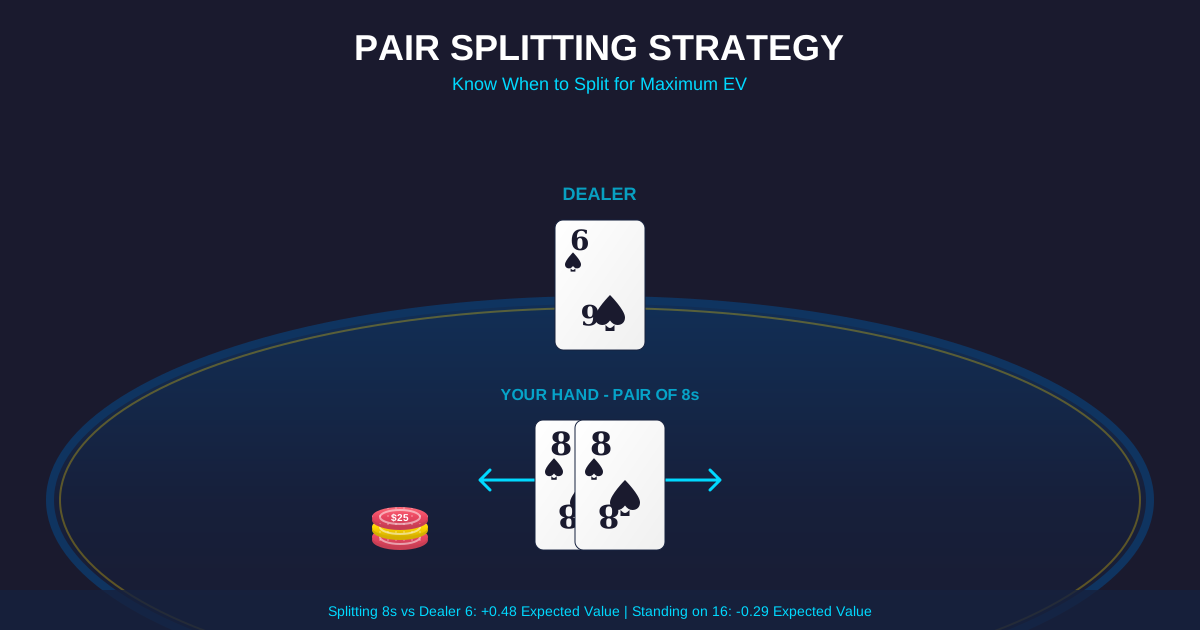
- Available options (hit, stand, double, split, surrender)
Common basic strategy decisions most players get wrong:
| Situation | Wrong Play | Correct Play | Cost of Error |
|---|---|---|---|
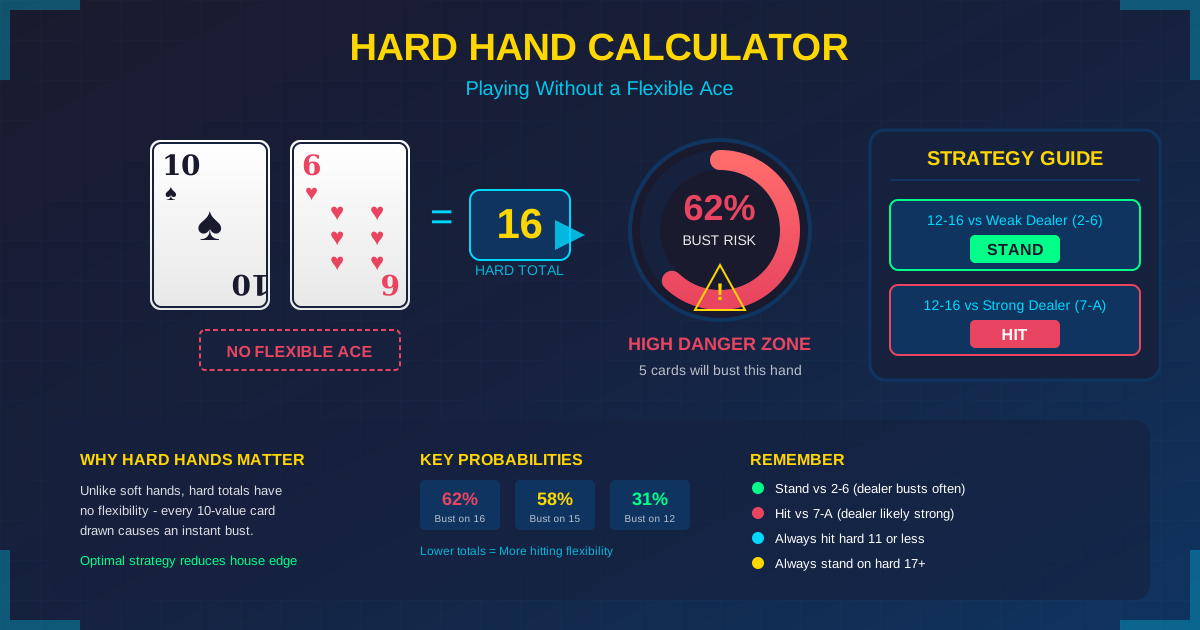
| 16 vs. dealer 10 | Stand | Hit (or surrender) | +$12/$100 wagered |
| 12 vs. dealer 2 | Stand | Hit | +$3/$100 wagered |
| A,7 (soft 18) vs. 9 | Stand | Hit | +$8/$100 wagered |
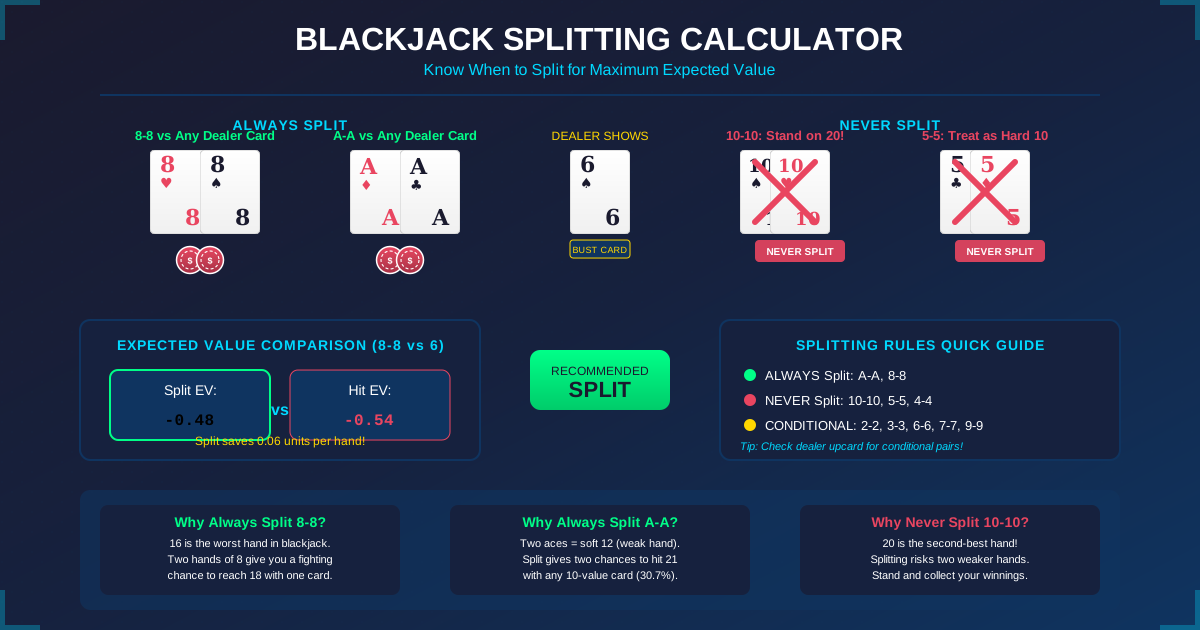
| 9,9 vs. 9 | Stand | Split | +$7/$100 wagered |
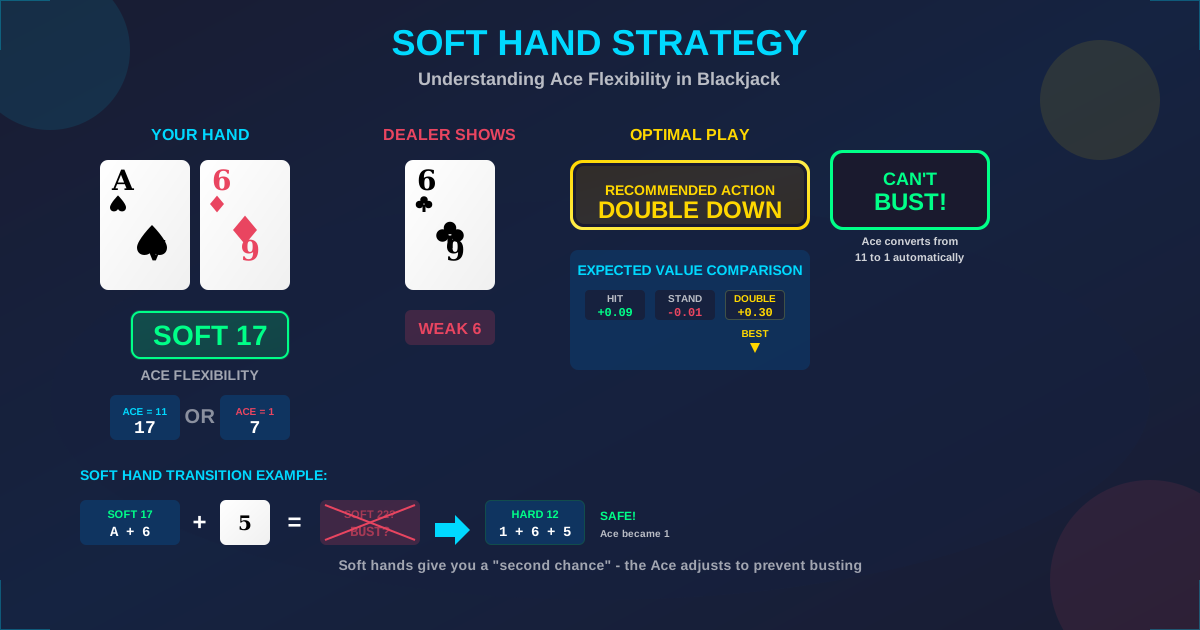
| A,6 (soft 17) vs. 6 | Hit | Double | -$5/$100 wagered |
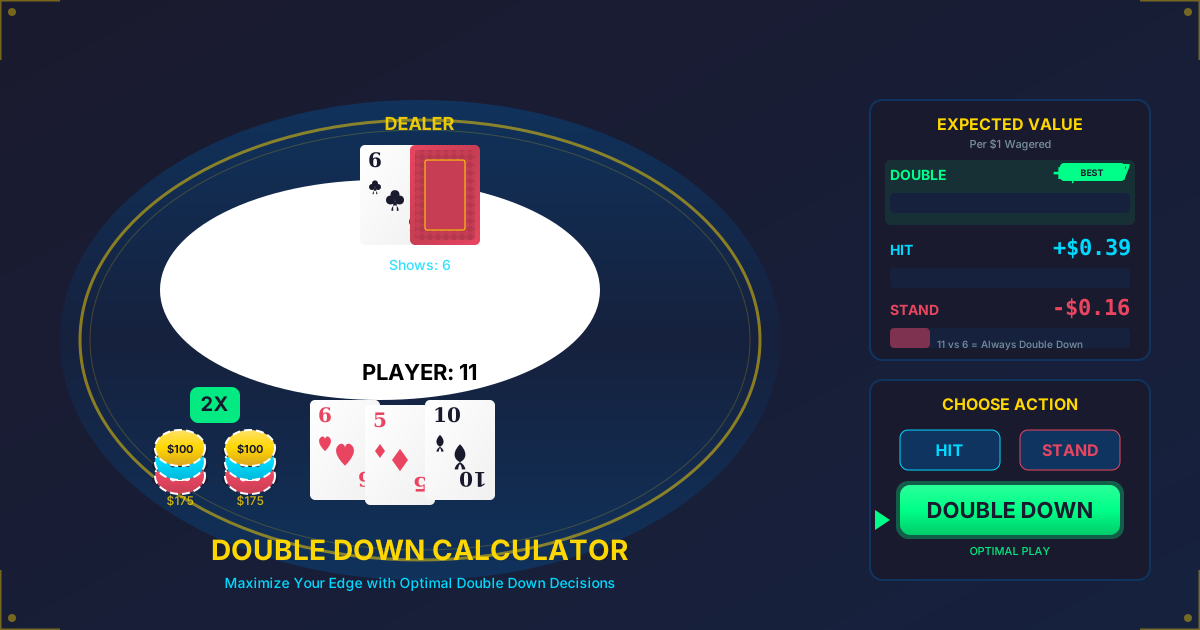
| 11 vs. 10 | Hit | Double | -$14/$100 wagered |
These errors add up. A player who makes just 5 strategy mistakes per hour on $25 bets can easily add 0.5-1.0% to their effective house edge.
Beyond basic strategy, advanced plays include:
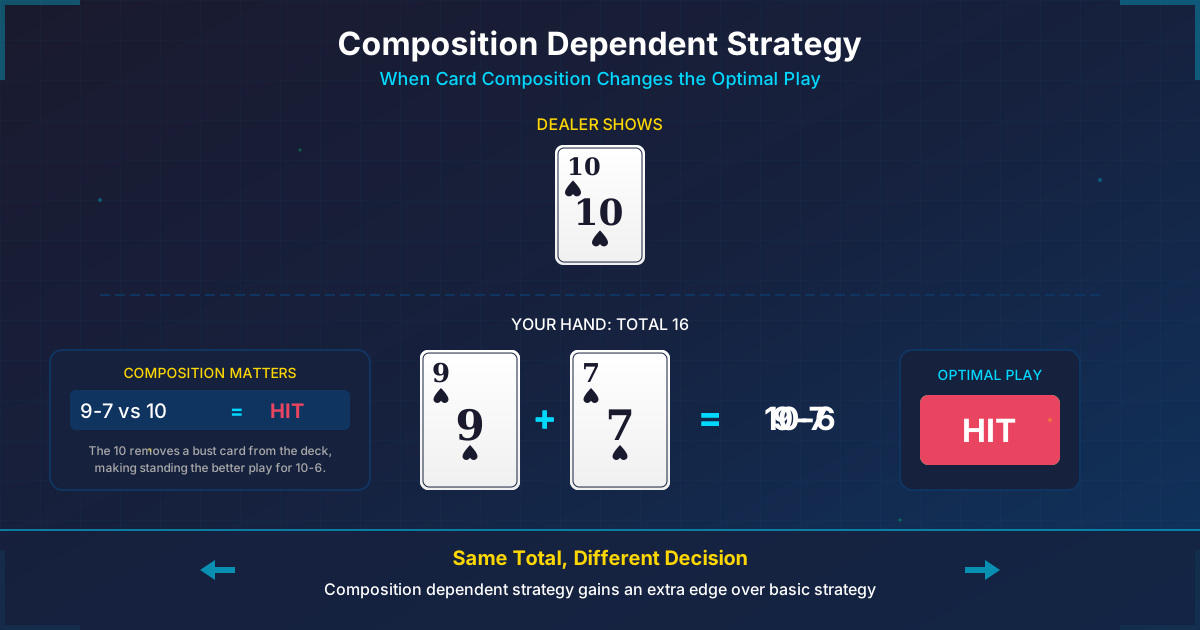
- Composition-dependent strategy (adjusting plays based on specific cards, not just totals)
- Deck-dependent strategy (adjusting for single vs. multi-deck)
- Index plays for card counters
Learn perfect basic strategy with the Blackjack Basic Strategy Chart.
Baccarat Strategy Requirements
Baccarat strategy is exactly three words: bet the Banker. There are no decisions to make, no charts to memorize, and no errors possible (as long as you avoid the Tie bet and side bets). The dealer handles all card drawing according to fixed third-card rules.
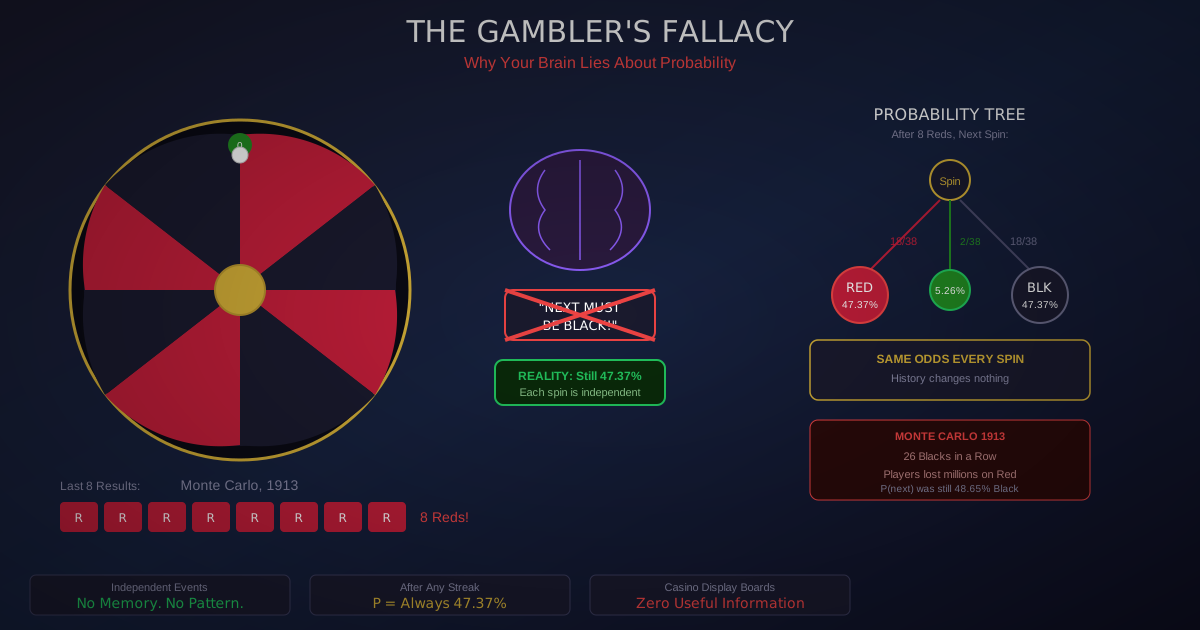
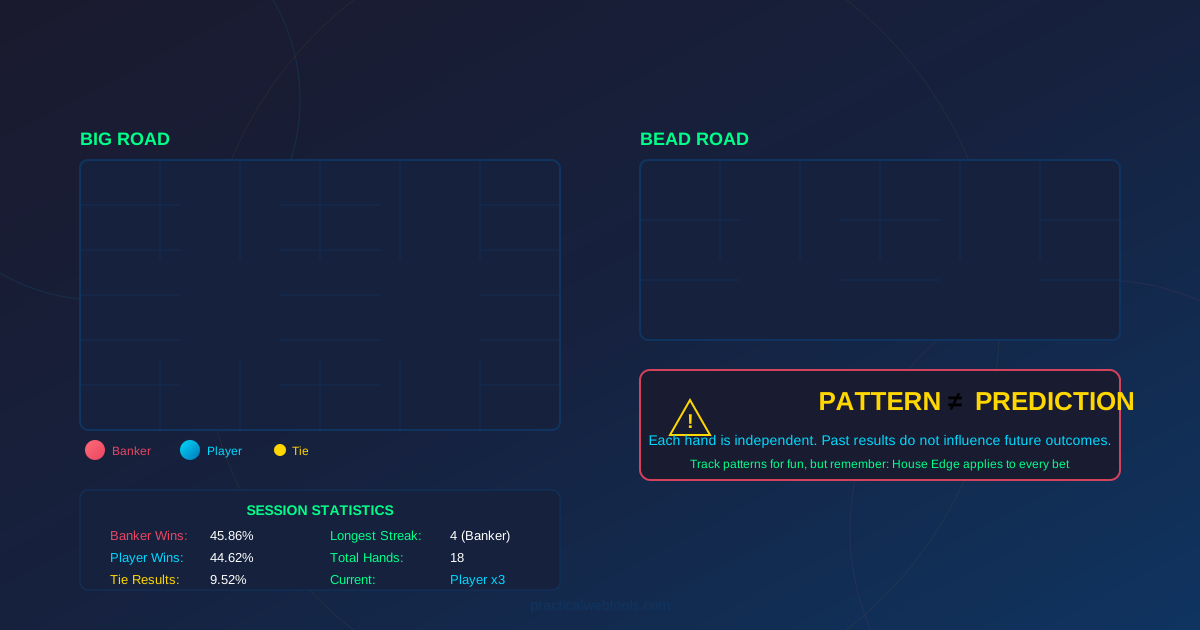
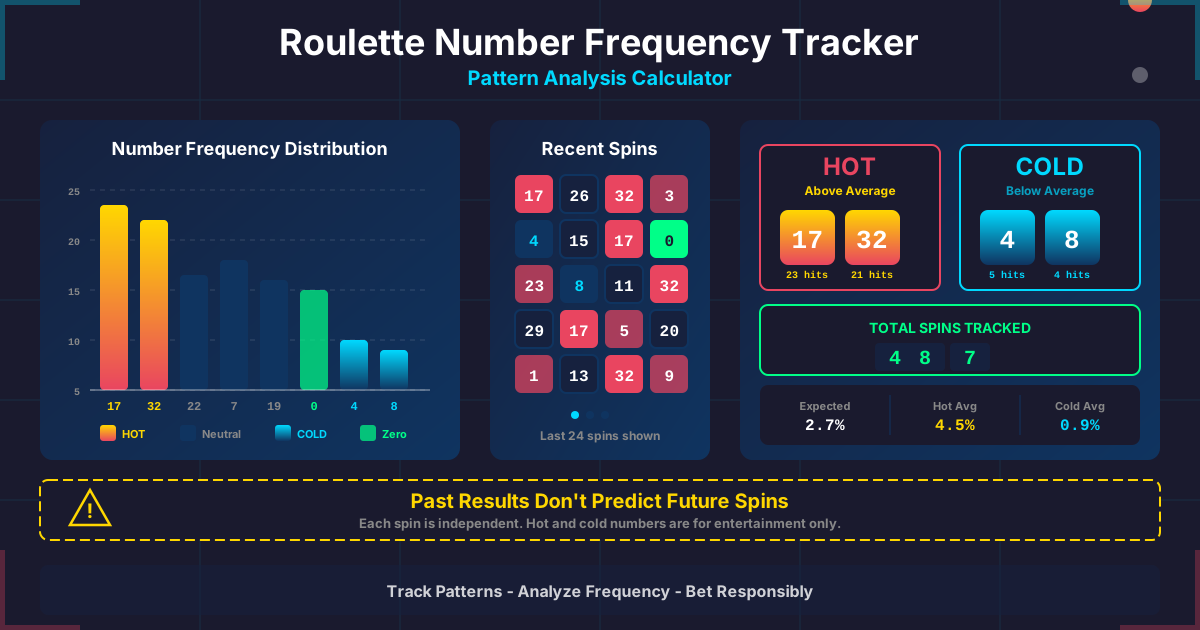
Some players use scorecards to track outcomes, looking for "patterns" in Banker/Player results. This is mathematically useless---each hand is independent, and past results have no bearing on future outcomes. But if tracking patterns keeps you entertained and betting Banker, it is harmless.
Verify that Banker is always optimal with the Baccarat Odds Calculator.
Side Bets: The Hidden Danger in Both Games
Blackjack Side Bets
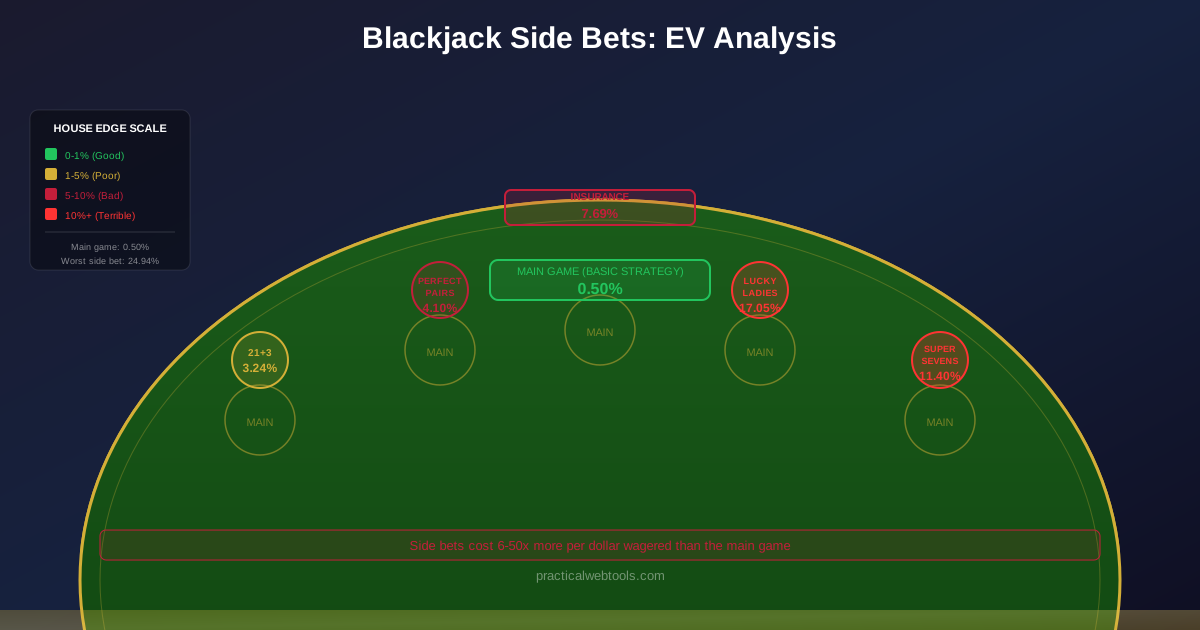
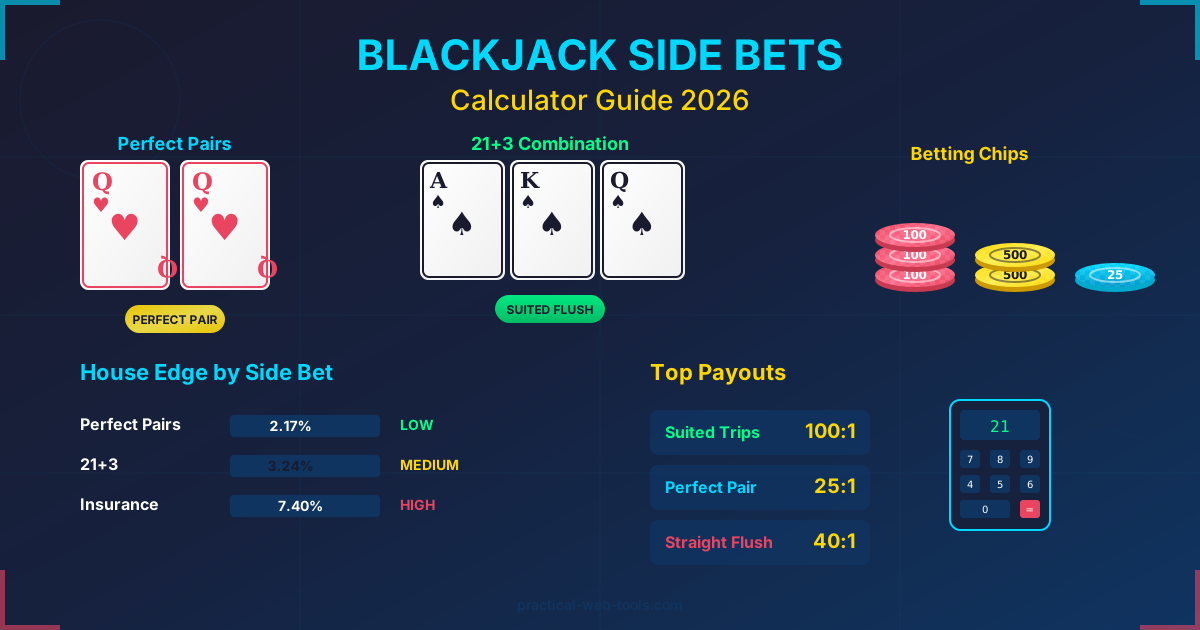
Modern blackjack tables are loaded with side bets, nearly all of which carry house edges far worse than the main game:
| Side Bet | Typical House Edge |
|---|---|
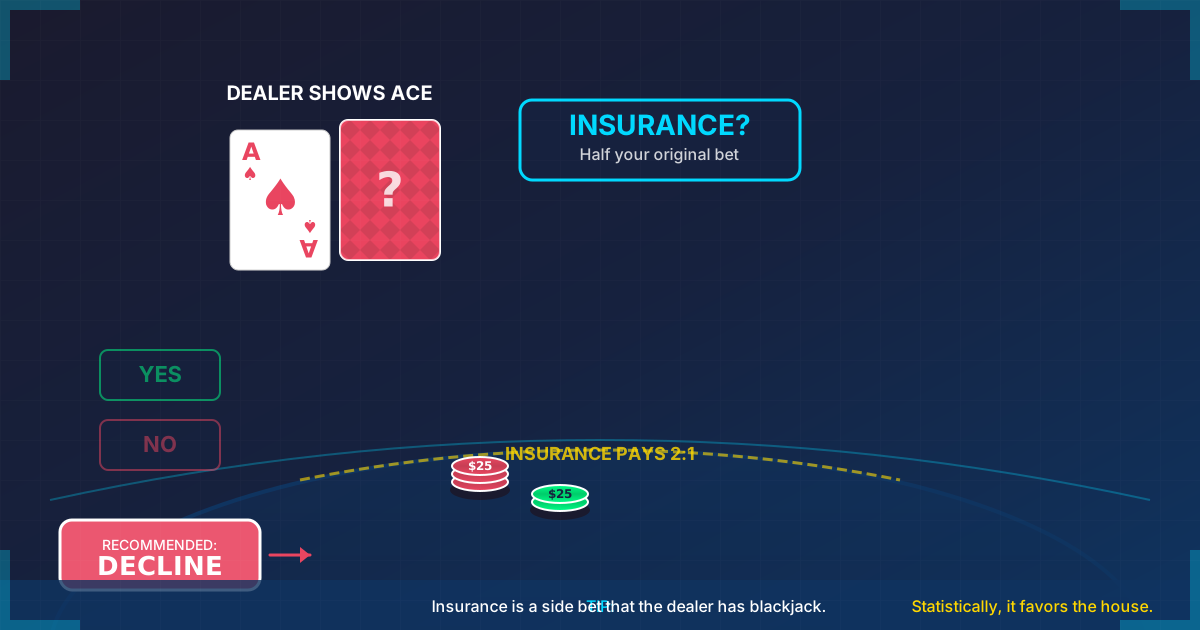
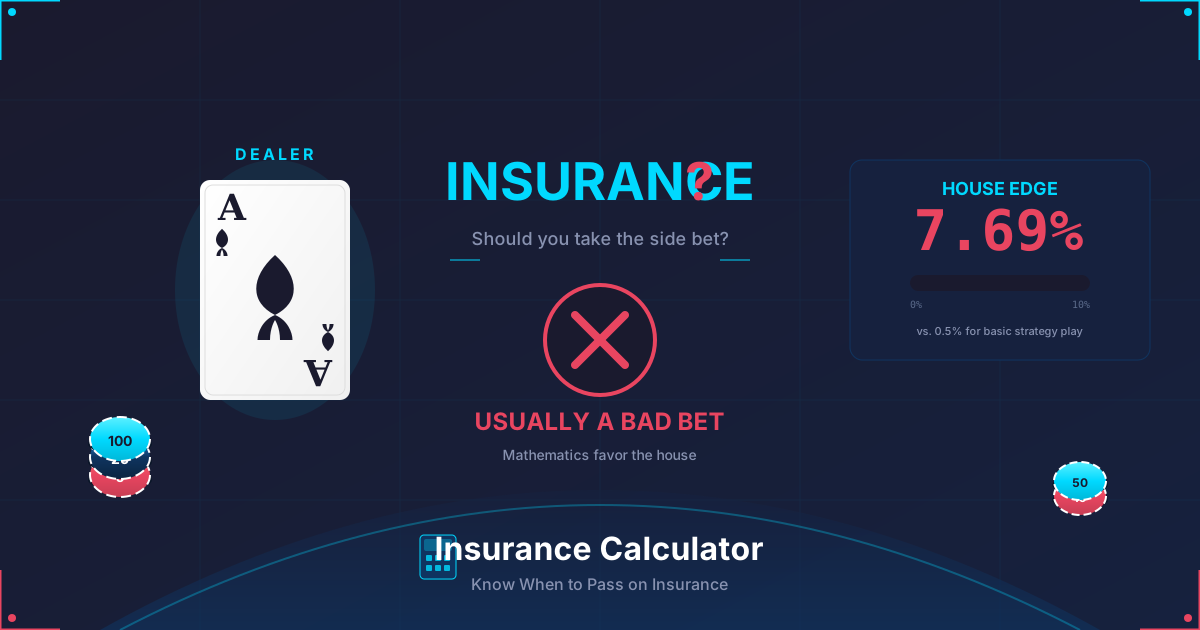
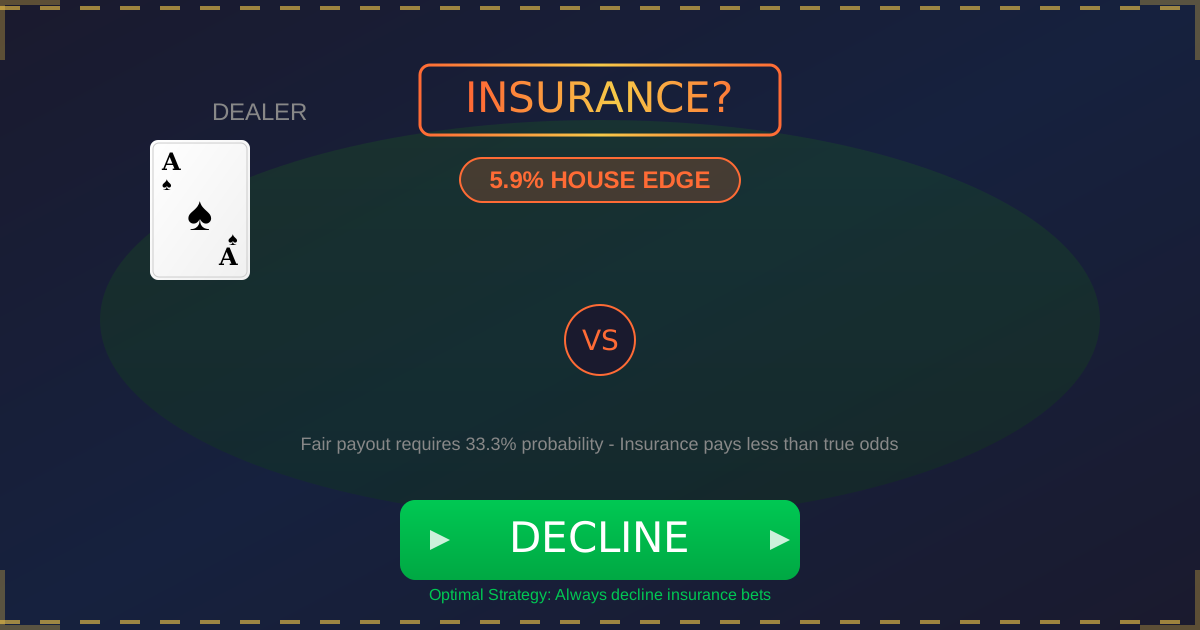
| Insurance | 7.40% |
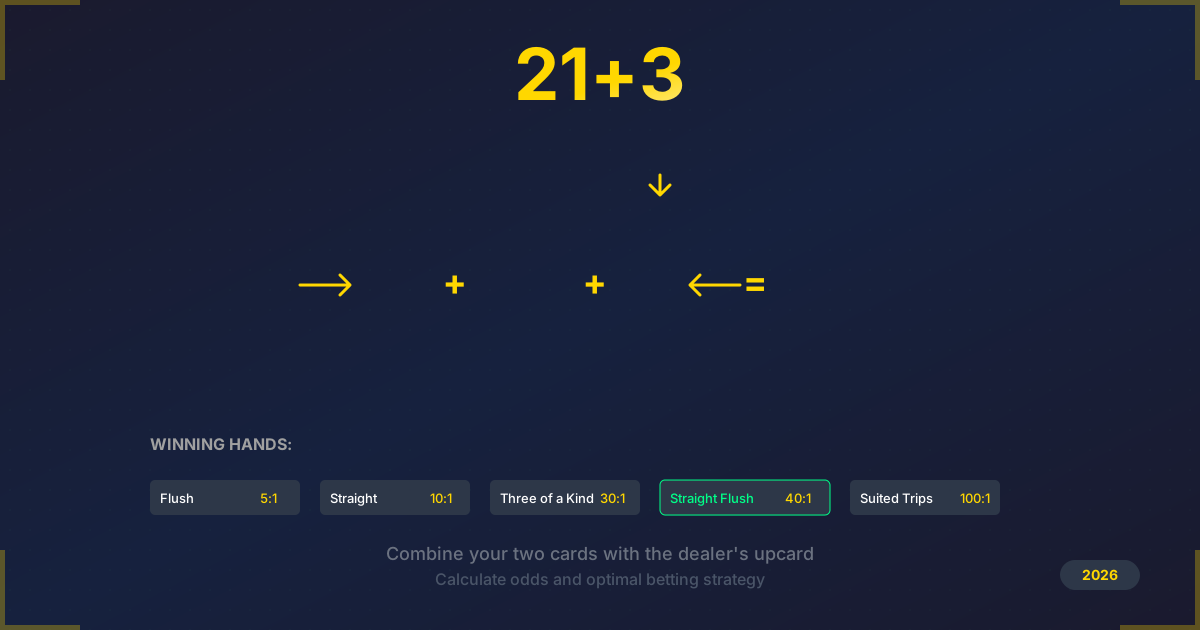
| 21+3 (poker hand) | 3.24%-13.39% |
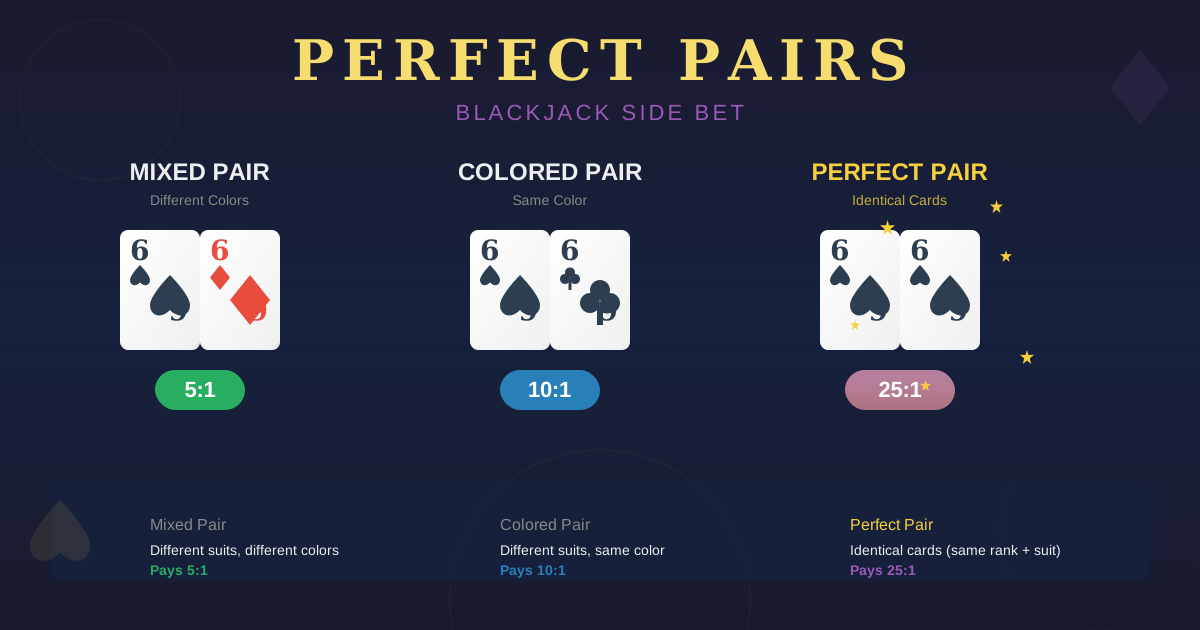
| Perfect Pairs | 5.79%-11.25% |
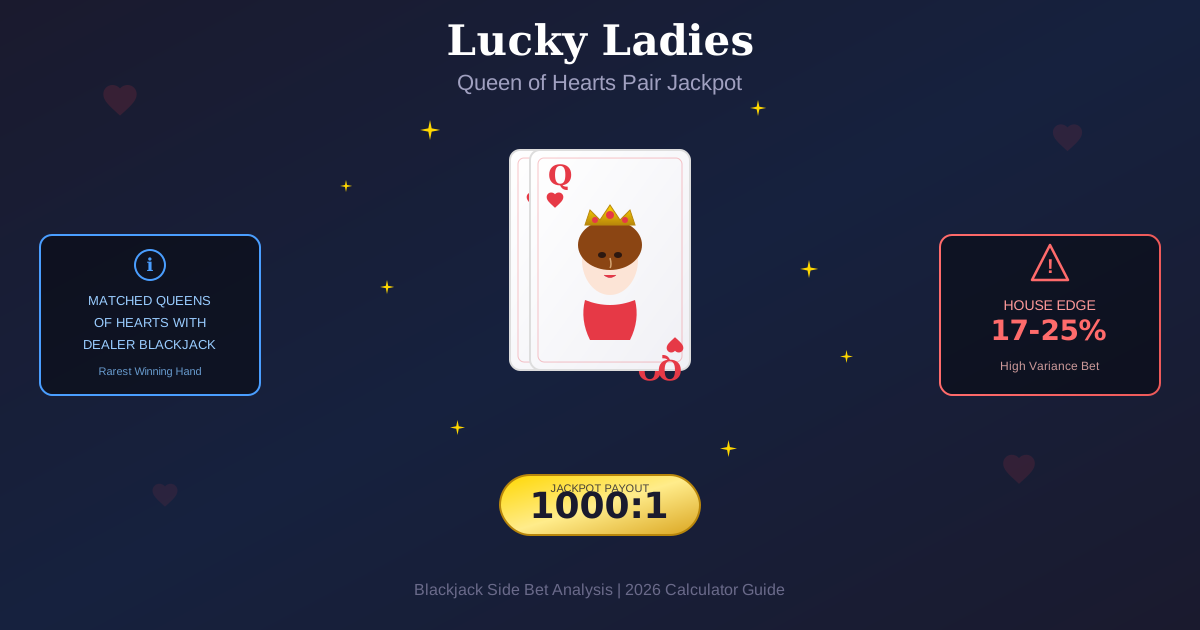
| Lucky Ladies | 17.06%-24.71% |
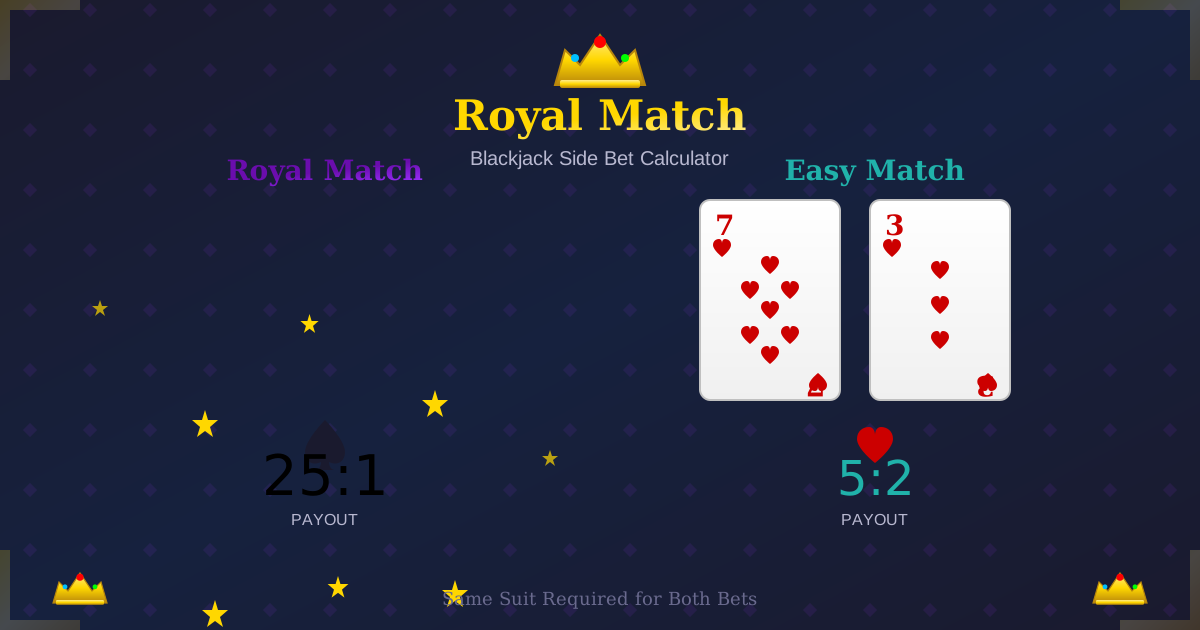
| Royal Match | 3.73%-6.67% |
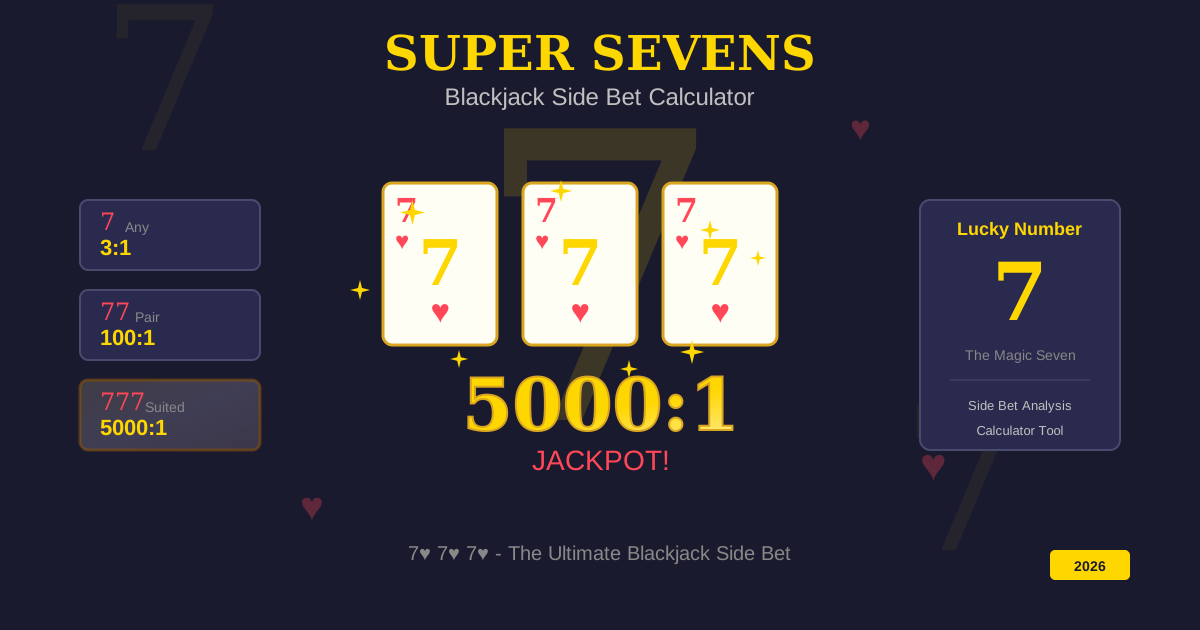
| Super Sevens | 11.40% |
| Bust It | 6.00%-8.00% |
Every side bet you place increases your effective house edge. A player who uses perfect basic strategy (0.50%) but places a $5 Insurance bet every time it is offered (approximately 7.7% of hands) and a $5 Perfect Pairs bet every hand effectively turns a 0.50% game into a 3%+ game.
Analyze any blackjack side bet with the Blackjack Side Bets Calculator.
Baccarat Side Bets
Baccarat has fewer side bets, but they are equally terrible:
| Side Bet | Typical House Edge |
|---|---|
| Tie | 14.36% |
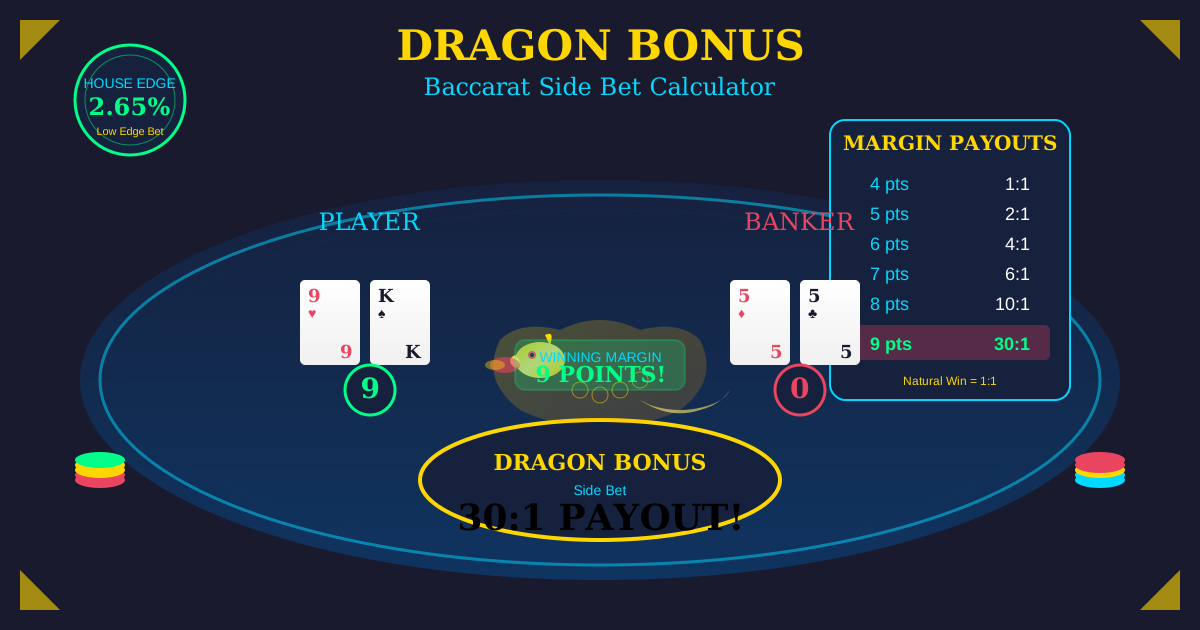
| Dragon Bonus | 2.65%-9.37% |
| Panda 8 | 10.19% |
| Dragon 7 (EZ Baccarat) | 7.61% |
| Lucky Six | 12.00%-13.00% |
| Player/Banker Pair | 10.36%-11.25% |
The Tie bet is by far the most commonly placed bad bet in baccarat. At some tables, as many as 30% of players bet the Tie regularly, paying a 14.36% tax on every Tie wager.
Evaluate baccarat side bets with the Baccarat Side Bets Calculator.
Speed of Play and Table Atmosphere
Blackjack Pace
- Full table (6-7 players): 50-60 hands per hour
- Short-handed (2-3 players): 80-120 hands per hour
- Heads-up: 150-200+ hands per hour
- Continuous Shuffling Machine (CSM): 20-30% faster at any configuration
Blackjack is interactive. You make decisions on every hand. You interact with the dealer and other players. The pace is determined partly by how fast other players act.
Baccarat Pace
- Mini baccarat: 60-80 hands per hour (faster, dealer handles everything)
- Big table baccarat (Punto Banco): 40-60 hands per hour (slower, players handle cards)
- Speed baccarat (online/electronic): 100+ hands per hour
Mini baccarat is typically faster than blackjack, which means more hands per hour and higher hourly expected loss despite the per-hand house edge being fixed. Big table baccarat is slower and more ceremonial.
Impact on Hourly Cost
The speed difference matters significantly:
| Configuration | Hands/Hr | $50 Bet Hourly Loss (Optimal) |
|---|---|---|
| Blackjack full table | 55 | $13.75 (0.50%) |
| Blackjack heads-up | 175 | $43.75 (0.50%) |
| Mini baccarat | 72 | $38.16 (1.06%) |
| Big table baccarat | 50 | $26.50 (1.06%) |
Full-table blackjack with basic strategy is the cheapest option. But heads-up blackjack, despite the lower per-hand edge, costs more per hour than either baccarat format because of the dramatically higher speed.
Comp Value Comparison
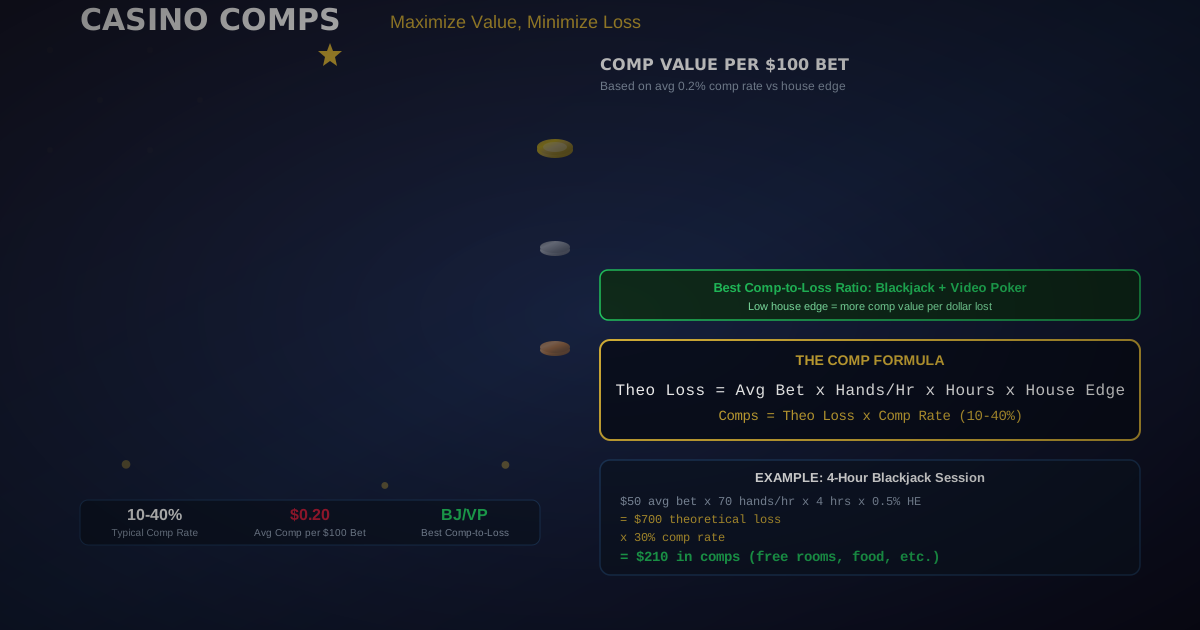
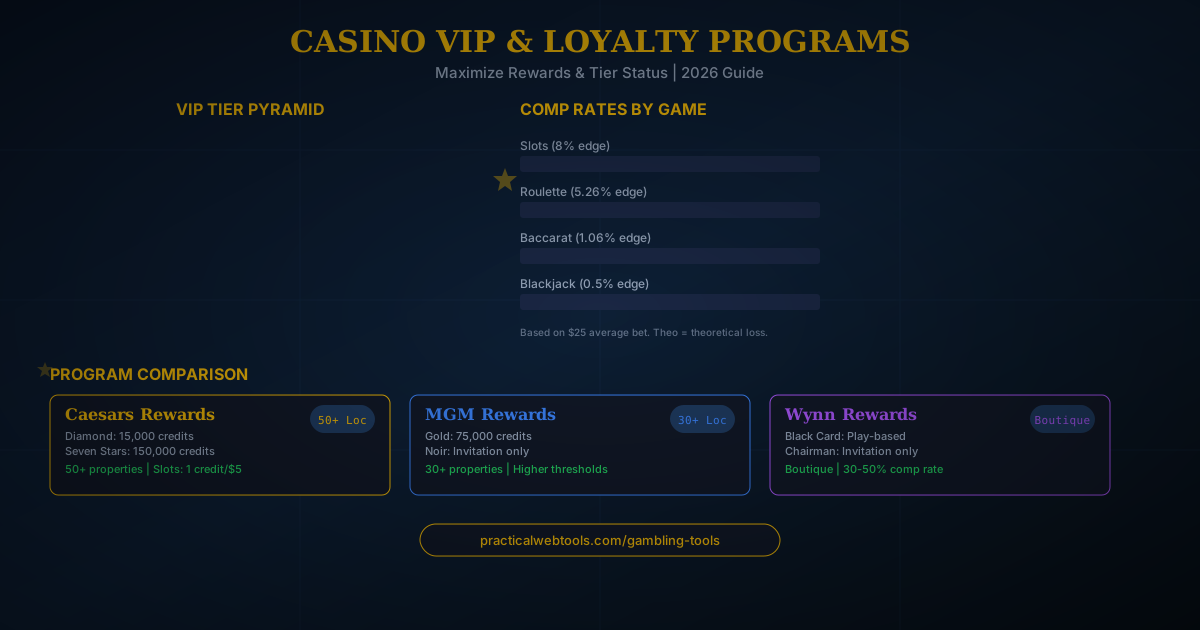
Casino comps are based on your "theoretical loss," which is calculated as:
Theo = Average Bet x Hands Per Hour x House Edge x Hours Played
Casinos typically return 30-40% of your theo as comps (rooms, food, shows, etc.).
Blackjack Comp Calculation
Casinos rate blackjack players at a higher house edge than the theoretical minimum because they know most players do not play perfect strategy. Typical casino-assumed edge: 1.5-2.5%.
Example: $50 average bet, 60 hands/hour, 4 hours, casino assumes 2% edge
- Theo: $50 x 60 x 0.02 x 4 = $240
- Comp value (35%): $84
- Your actual expected loss (perfect strategy): $50 x 60 x 0.005 x 4 = $60
- Net value: You lose $60 but receive $84 in comps = +$24 net
This is why skilled blackjack players sometimes have a positive expected value when comps are included. The casino overestimates their losses.
Baccarat Comp Calculation
Baccarat players are typically rated at the true house edge (1.06% for Banker), and some casinos rate even lower because baccarat attracts high-volume players they want to retain.
Example: $100 average bet, 72 hands/hour, 4 hours, casino assumes 1.06% edge
- Theo: $100 x 72 x 0.0106 x 4 = $305.28
- Comp value (35%): $106.85
- Your actual expected loss: $100 x 72 x 0.0106 x 4 = $305.28
- Net cost after comps: $198.43
Baccarat generates higher comp value in absolute terms because of higher average bets and faster play, but the comp-to-actual-loss ratio is less favorable than blackjack with perfect strategy.
Comp Value Summary
| Scenario | Actual Loss | Comp Value | Net Cost |
|---|---|---|---|
| BJ $50, perfect strategy, 4hrs | $60 | $84 | -$24 (positive!) |
| BJ $50, average player, 4hrs | $300 | $84 | $216 |
| Baccarat $100, Banker, 4hrs | $305 | $107 | $198 |
| Baccarat $50, Banker, 4hrs | $153 | $53 | $100 |
Calculate your expected losses at any bet level with the Blackjack EV Calculator or the Baccarat EV Calculator.
Card Counting: The Blackjack Wild Card
Card counting is the elephant in the room when comparing these games. It exists exclusively in blackjack and can flip the edge to the player.
What Card Counting Does
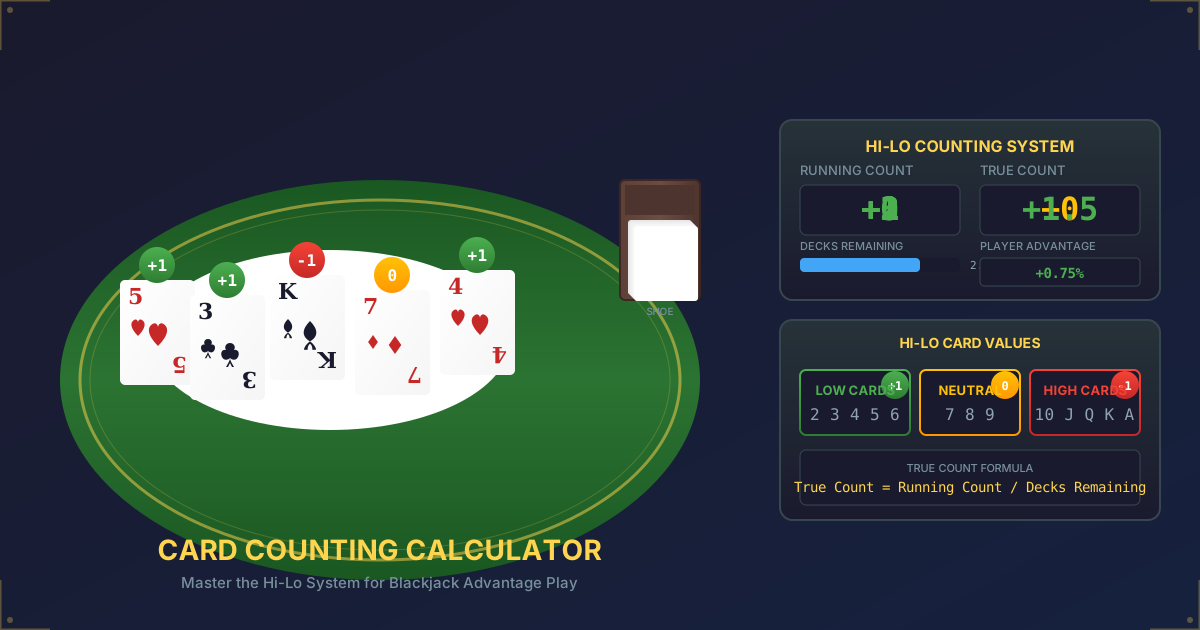
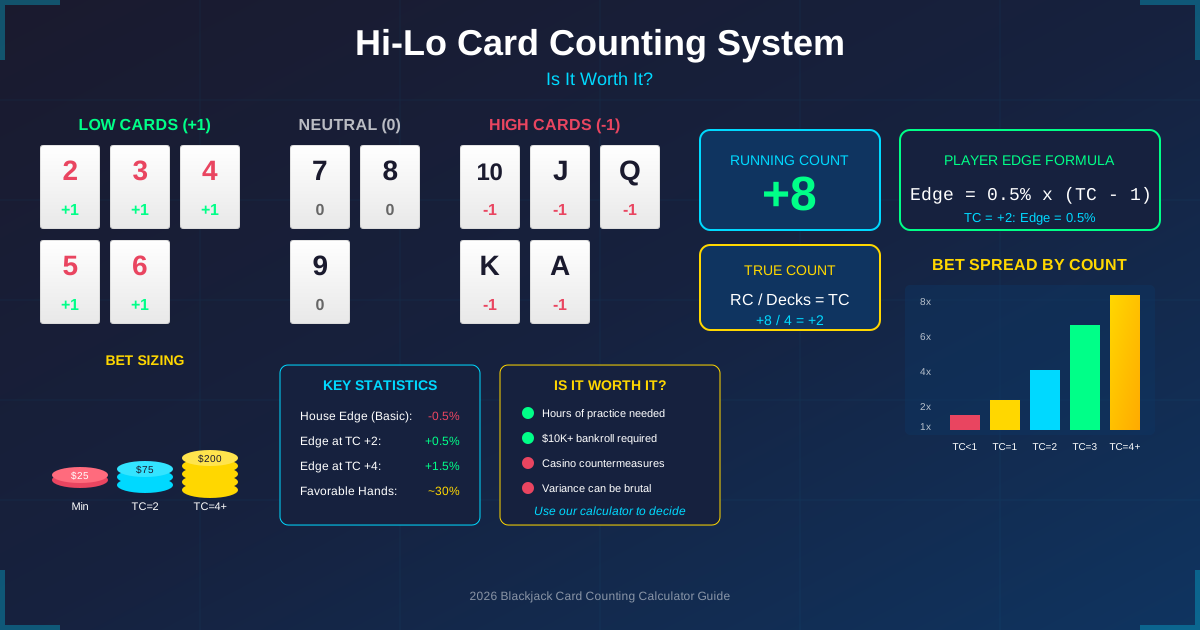
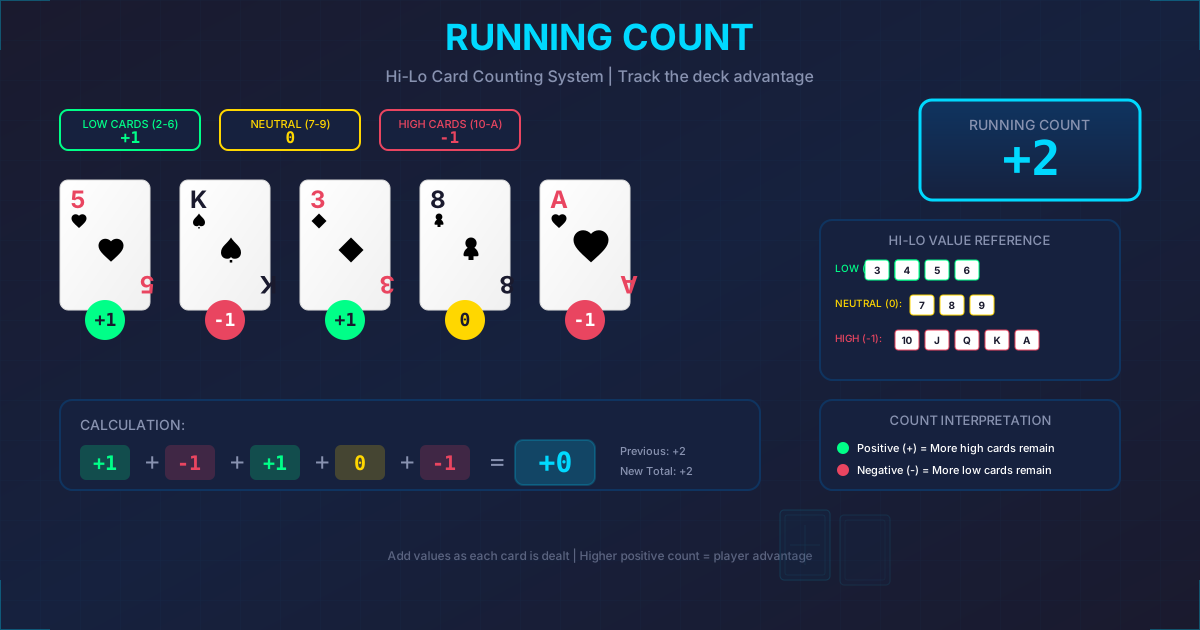
By tracking the ratio of high cards (10s, Aces) to low cards (2-6) remaining in the shoe, a counter can:
- Bet more when the remaining deck favors the player (high-card rich)
- Bet less (or leave) when the deck favors the dealer
- Achieve an expected edge of 0.5% to 1.5% over the house
The Reality of Card Counting in 2026
Modern casino countermeasures have made profitable counting extremely difficult:
| Countermeasure | Impact |
|---|---|
| Continuous Shuffling Machines (CSMs) | Eliminates counting entirely |
| 6:5 blackjack payouts | Reduces counter's edge by ~1.39% |
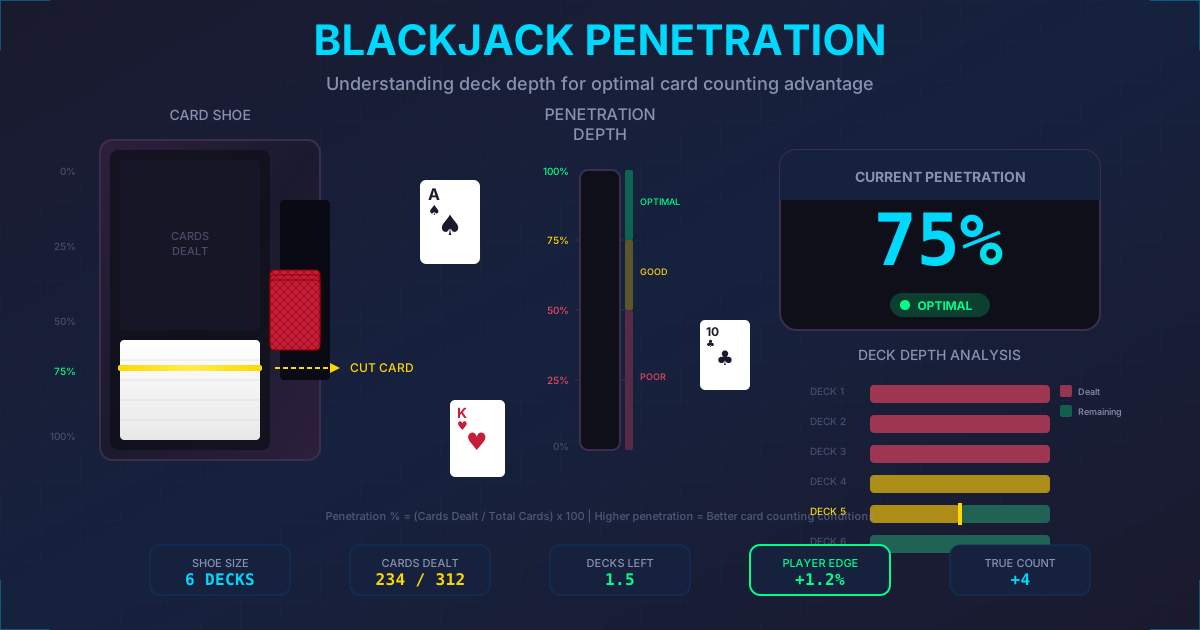
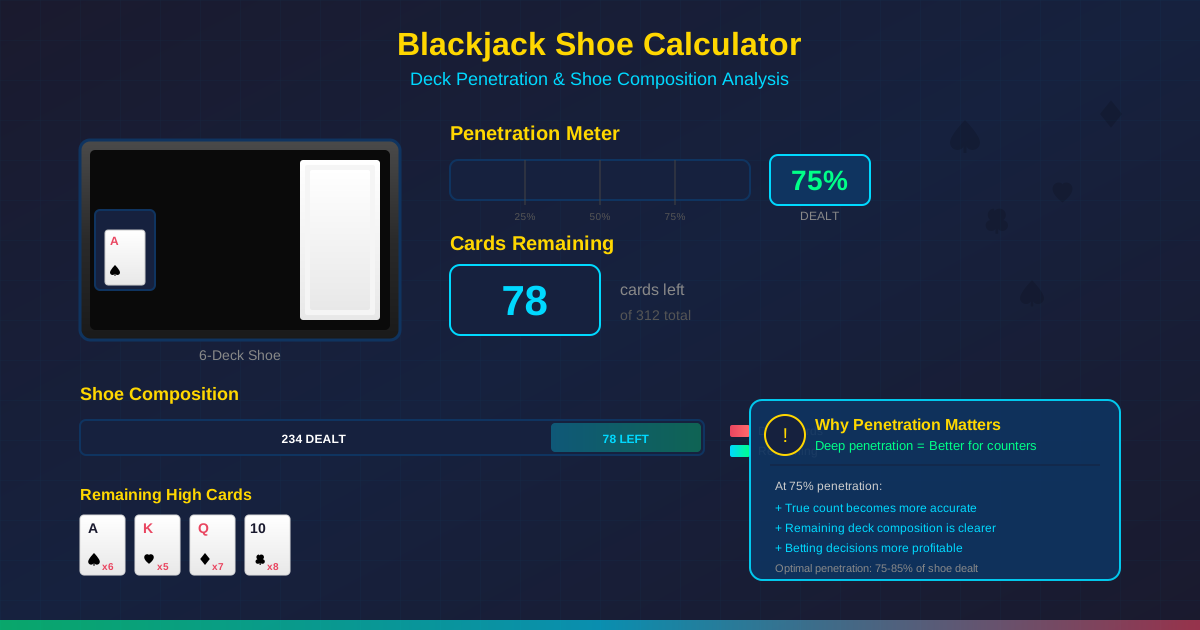
| Shallow penetration (50-60%) | Dramatically reduces edge and frequency of favorable counts |
| Bet spread surveillance | Limits ability to vary bets |
| Facial recognition technology | Identifies known counters |
| Back-offs and bans | Removal from the casino |
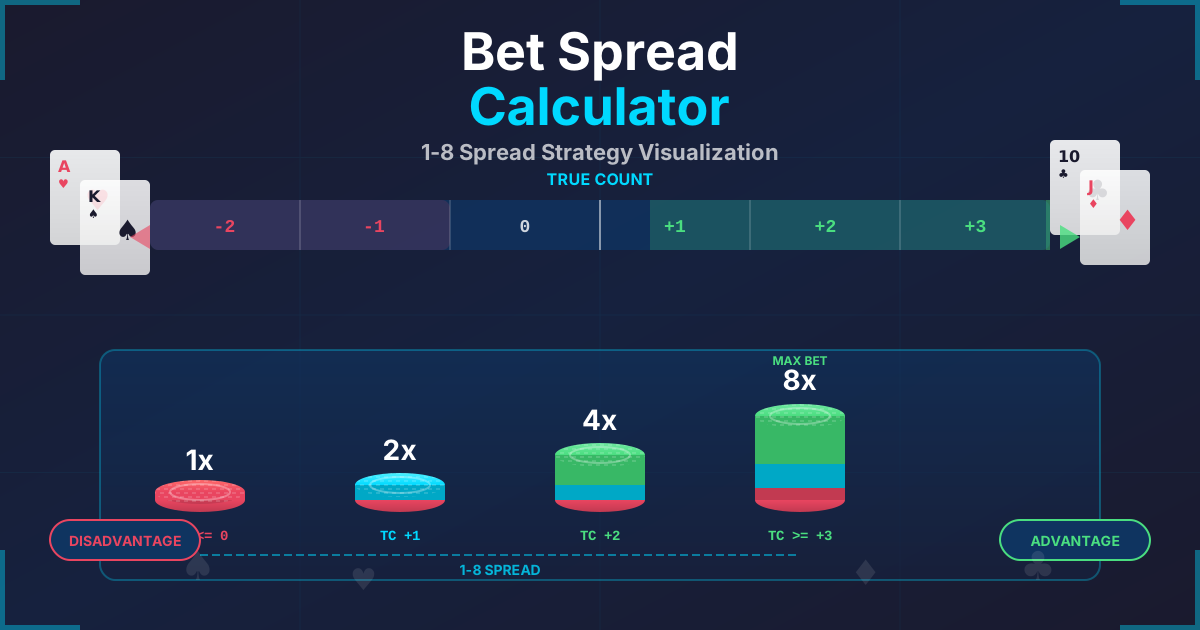
A counter needs a 1:8 or higher bet spread and 75%+ deck penetration to generate meaningful profit. These conditions are increasingly rare in 2026.
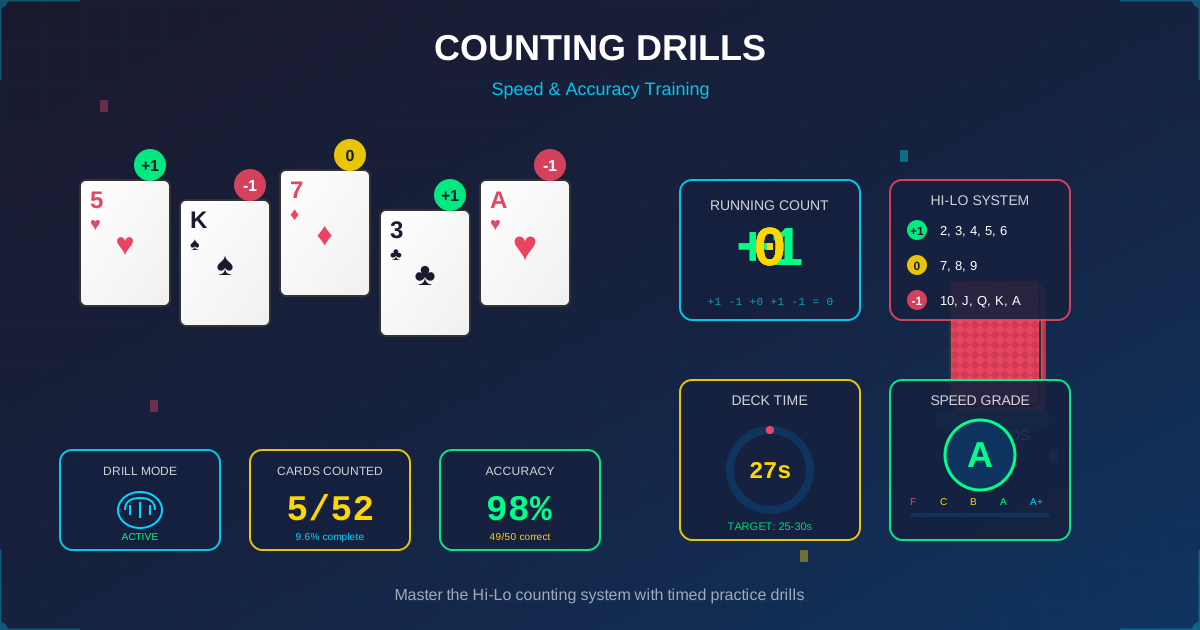
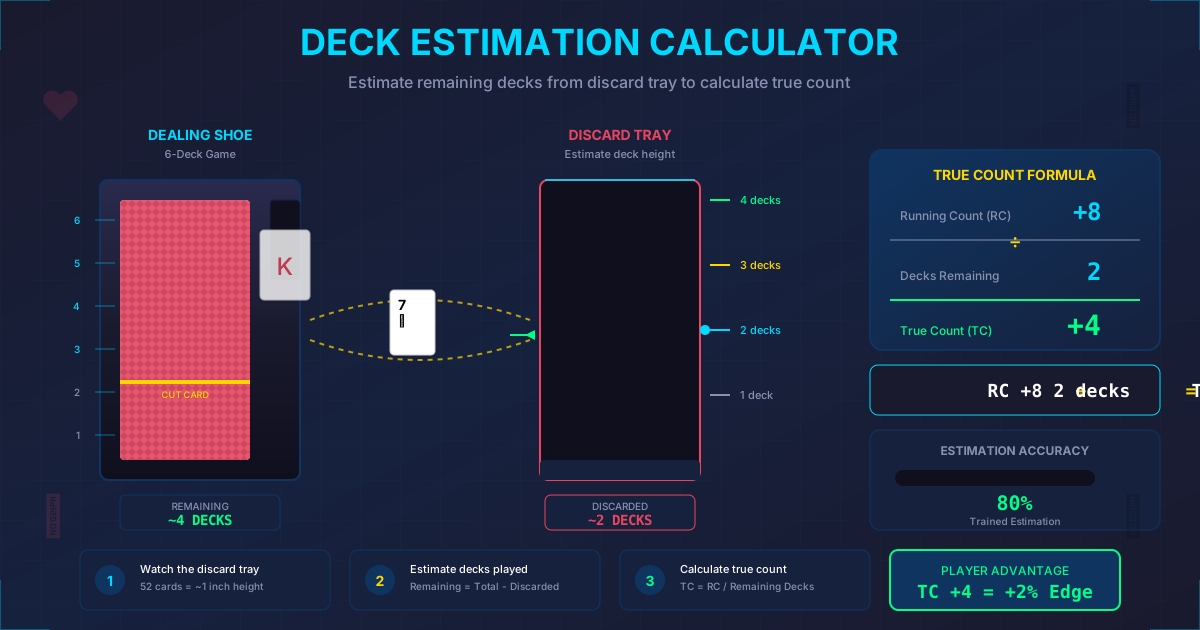
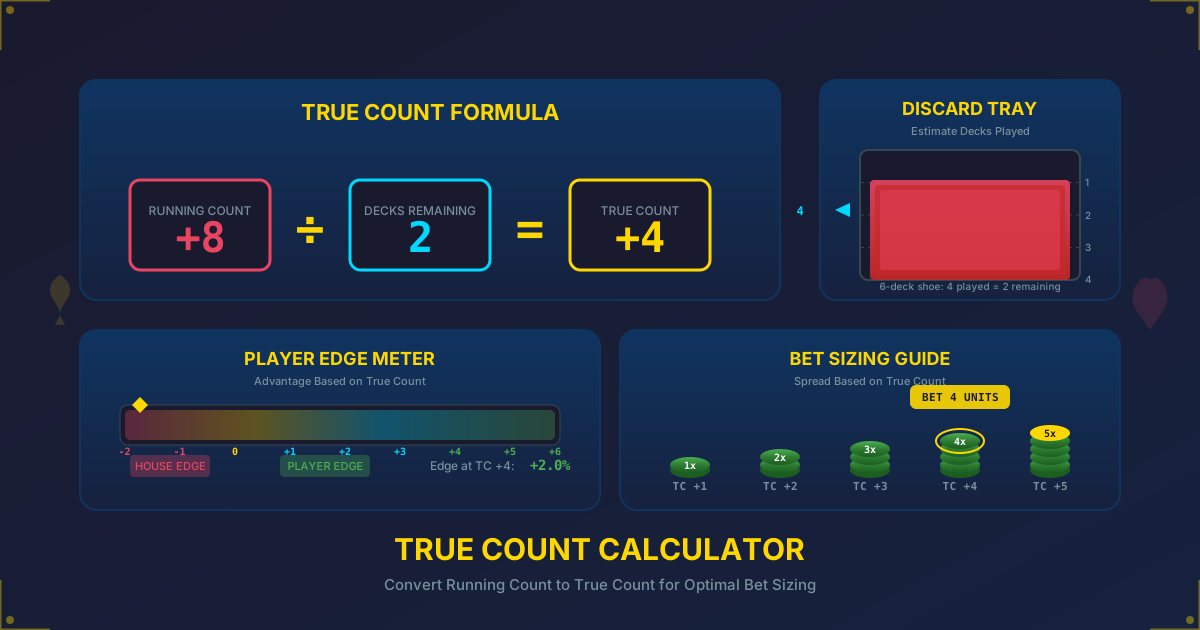
Practice card counting skills with the Hi-Lo Practice Tool and understand true count adjustments with the True Count Calculator.
Can You Count Cards in Baccarat?
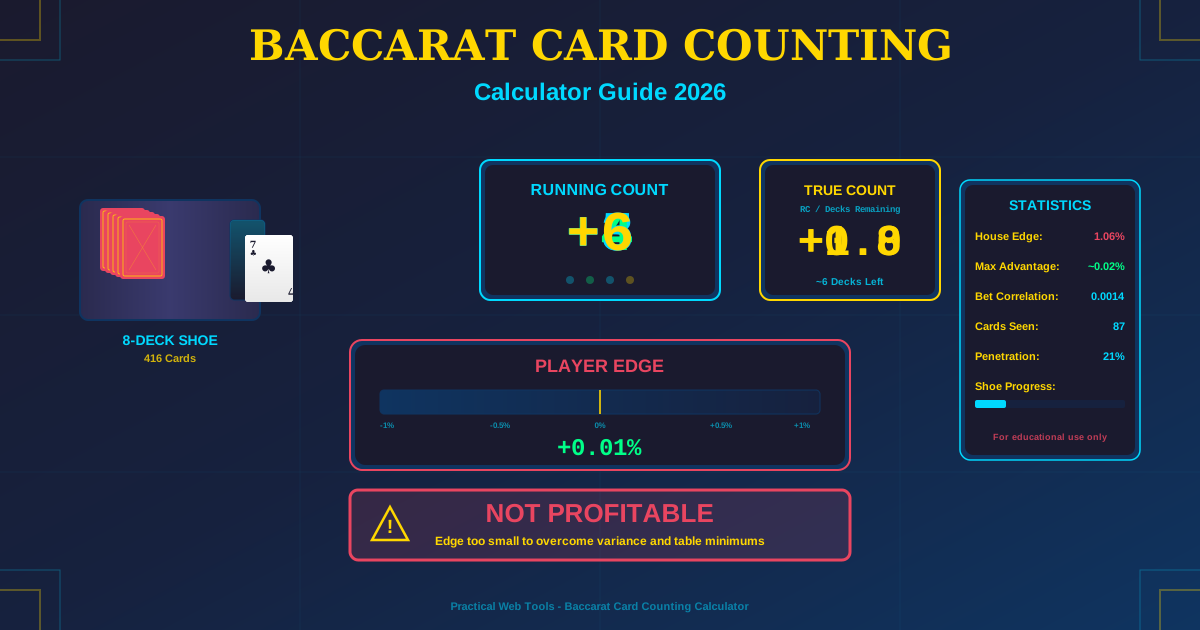
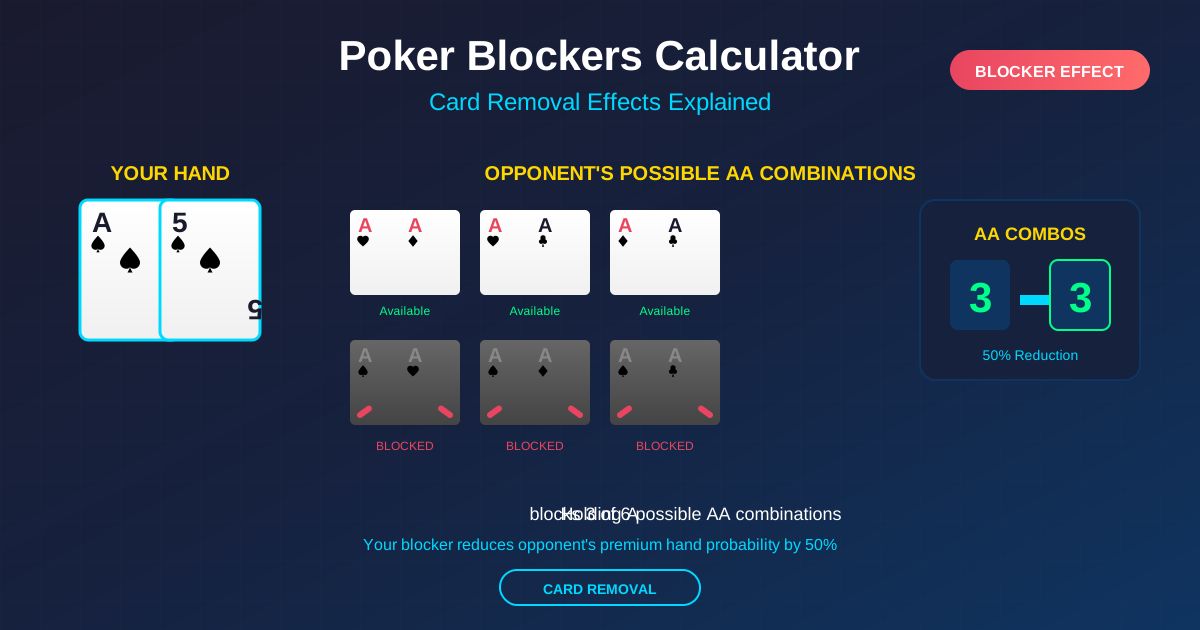
Technically yes, but the edge gained is negligible. Research by Peter Griffin and others has shown that even with perfect baccarat card counting, the maximum edge shift is approximately 0.0019%, making it completely impractical. The information gained by removing cards from a baccarat shoe barely changes the probabilities.
Explore baccarat card counting theory with the Baccarat Card Counting Calculator.
Which Game Is Better? The Decision Framework
Choose Blackjack If:
- You will learn and execute perfect basic strategy. Not "mostly" perfect. Actually perfect, every hand, no deviations.
- You enjoy making decisions. If the interactive, strategic nature of blackjack appeals to you, the engagement alone has entertainment value.
- You play at lower limits. Blackjack minimums ($10-$25) are typically lower than baccarat minimums ($25-$100).
- You want to maximize comp value. Perfect basic strategy players earn more in comps relative to their actual losses than any other table game player.
- You are interested in card counting. This advantage play is only available in blackjack.
Choose Baccarat If:
- You will not invest time learning strategy. If you are being honest with yourself about this, baccarat's guaranteed 1.06% edge beats the 2-4% you will realistically face at blackjack.
- You prefer a relaxed experience. Zero decisions, no mental effort, no possibility of making a costly mistake.
- You are a high-roller. Baccarat accommodates much higher bet sizes and generates strong comp value at high volumes.
- You want lower variance. Baccarat provides steadier, more predictable sessions.
- You want to avoid side bet temptation. Blackjack tables aggressively market side bets. If you lack discipline to ignore them, baccarat's cleaner layout helps.
The Honest Assessment for Most Players
Most casino visitors fall into the "average recreational player" category. They know some basic strategy but make regular errors. They occasionally take insurance. They might play a side bet for fun. They sometimes deviate from the chart because a play "feels wrong."
For this majority, baccarat's Banker bet at 1.06% is mathematically superior to the 2-4% effective house edge they actually experience at blackjack. The savings are substantial: at $50 per hand over a four-hour session, switching from average blackjack to baccarat Banker saves approximately $114-$353 per session.
Size your sessions properly with the Blackjack Session Bankroll Calculator or the Bankroll Volatility Tracker.
Real-World Scenarios
Scenario 1: The Vegas Weekend ($500 Bankroll)
Option A: Blackjack ($25 minimum, basic strategy)
- Expected loss over 8 hours: $25 x 60 x 0.005 x 8 = $60
- Probability of losing entire $500: ~3%
- Expected comp value: ~$56
- Net expected cost: $4
Option B: Baccarat ($25 Banker bets)
- Expected loss over 8 hours: $25 x 72 x 0.0106 x 8 = $153
- Probability of losing entire $500: ~6%
- Expected comp value: ~$46
- Net expected cost: $107
Winner for perfect strategy player: Blackjack by $103
Scenario 2: The "I Know Some Strategy" Player ($1,000 Bankroll)
Option A: Blackjack ($50, average play ~2.5% edge)
- Expected loss over 8 hours: $50 x 60 x 0.025 x 8 = $600
- Probability of losing entire $1,000: ~22%
Option B: Baccarat ($50 Banker bets)
- Expected loss over 8 hours: $50 x 72 x 0.0106 x 8 = $305
- Probability of losing entire $1,000: ~8%
Winner for average player: Baccarat by $295
Scenario 3: The High Roller ($10,000 Bankroll)
Option A: Blackjack ($200, near-perfect play ~0.8% edge)
- Expected loss over 6 hours: $200 x 60 x 0.008 x 6 = $576
- Comp value: ~$504
- Net cost: $72
Option B: Baccarat ($500 Banker bets)
- Expected loss over 6 hours: $500 x 60 x 0.0106 x 6 = $1,908
- Comp value: ~$667
- Net cost: $1,241
Winner for skilled high roller: Blackjack by $1,169
Run your own scenarios with the Expected Value Calculator.
The Commission Question: Does Baccarat's 5% Commission Matter?
One of the most common objections to the Banker bet is the 5% commission on wins. Players see the commission deducted from their winnings and feel they are being penalized.
Here is why this thinking is backward:
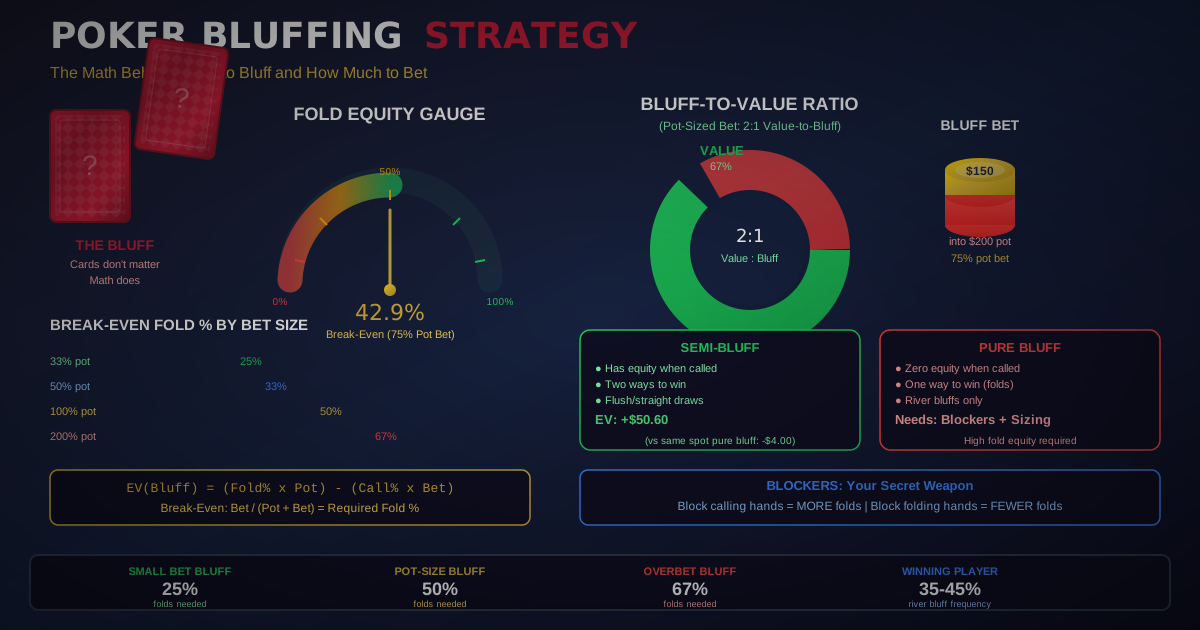
The Banker hand wins 45.86% of non-tie hands. Without any commission, the Banker bet would actually give the player an edge---the casino would lose money. The 5% commission exists precisely because Banker wins more often, and even after the commission, the Banker bet (1.06% edge) is better than the Player bet (1.24% edge).
The commission does not make Banker worse. It is the price of the better bet. Avoiding Banker to skip the commission is like choosing a more expensive product because the cheaper one has a visible price tag.
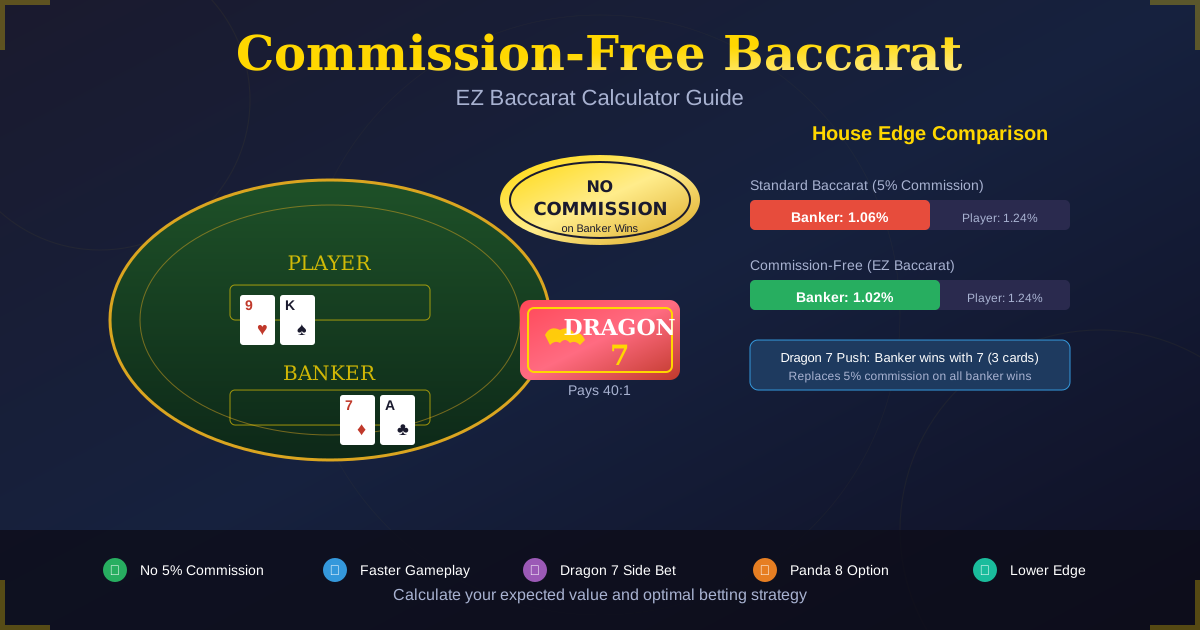
Some casinos offer "EZ Baccarat" or "No Commission Baccarat," which eliminates the commission but pushes (returns bets) when the Banker wins with a total of 7 using three cards. This variant has a house edge of approximately 1.02% on Banker---marginally better than standard. However, the push rule means slightly lower win frequency.
Calculate the commission impact precisely with the Baccarat Commission Calculator.
Frequently Asked Questions
Which game has better odds overall: blackjack or baccarat? It depends entirely on your skill level. Perfect basic strategy blackjack (0.50%) beats baccarat Banker (1.06%). But if you play average recreational blackjack (2-4%), baccarat is significantly better. Be honest about your skill level before choosing. Calculate your specific edge with the Blackjack House Edge Calculator.
Is baccarat purely a game of luck? Yes. There are no player decisions that affect the outcome. The only strategic choice is which bet to place (Banker, Player, or Tie), and the math clearly favors Banker. Everything else---card drawing rules, outcome determination---is fixed by the game's rules. Check the probabilities with the Baccarat Odds Calculator.
Why do high rollers prefer baccarat over blackjack? Several reasons: baccarat accommodates higher bet limits, requires no strategy (eliminating the risk of costly errors under pressure), has a low and fixed house edge, and generates excellent comp value at high volumes. Many high rollers also prefer baccarat's quieter, more private atmosphere.
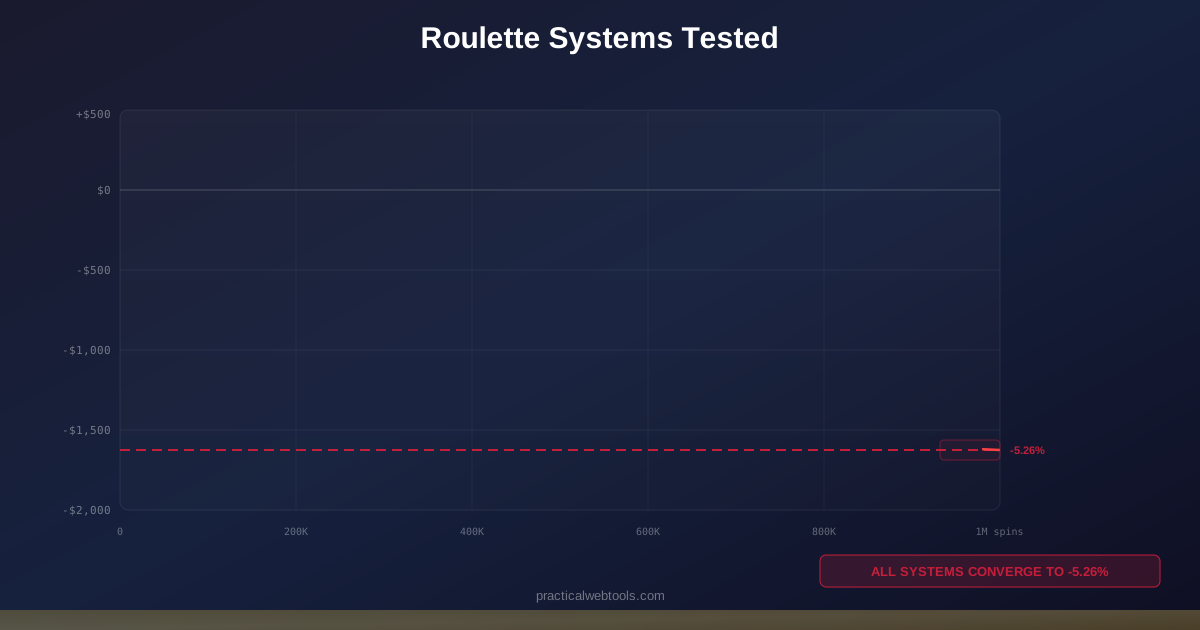
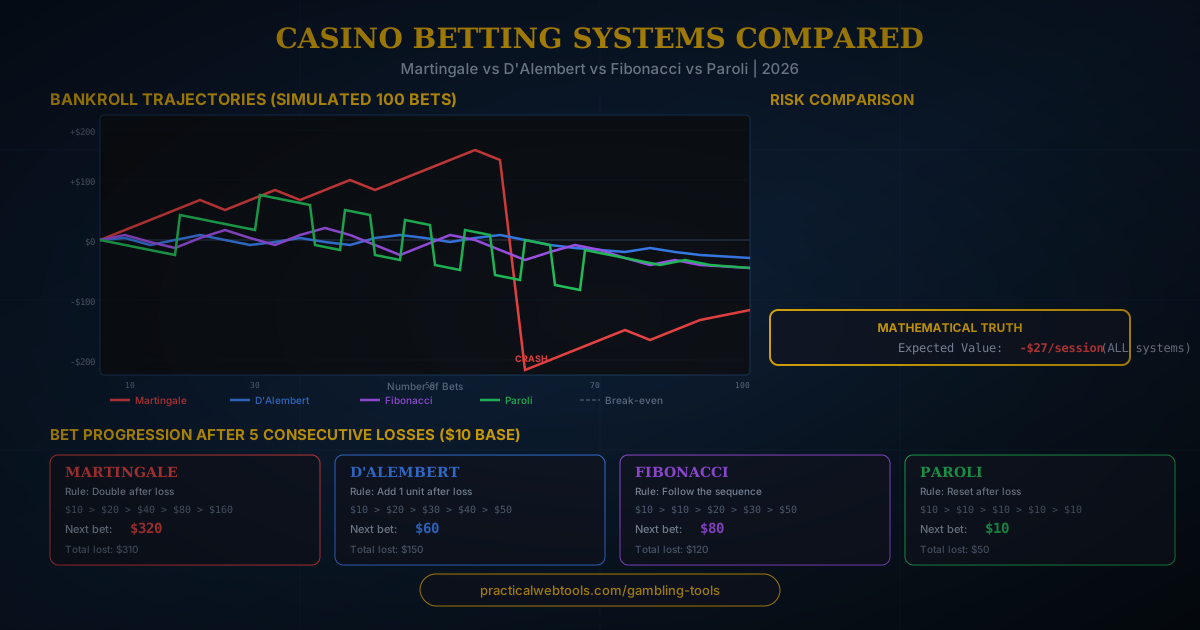
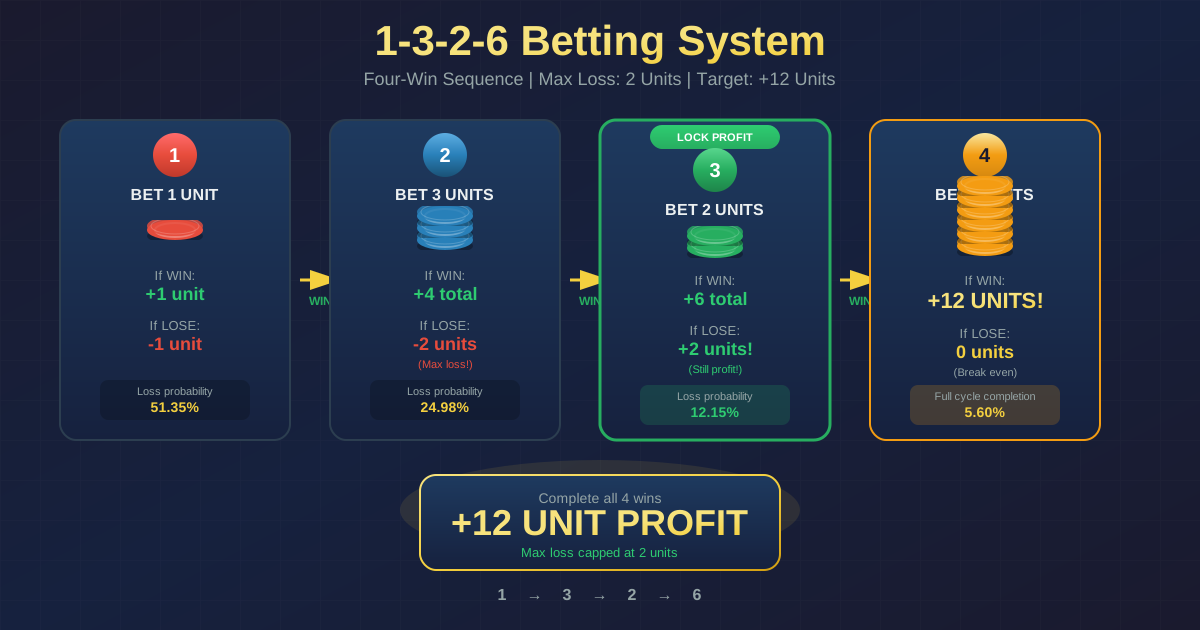
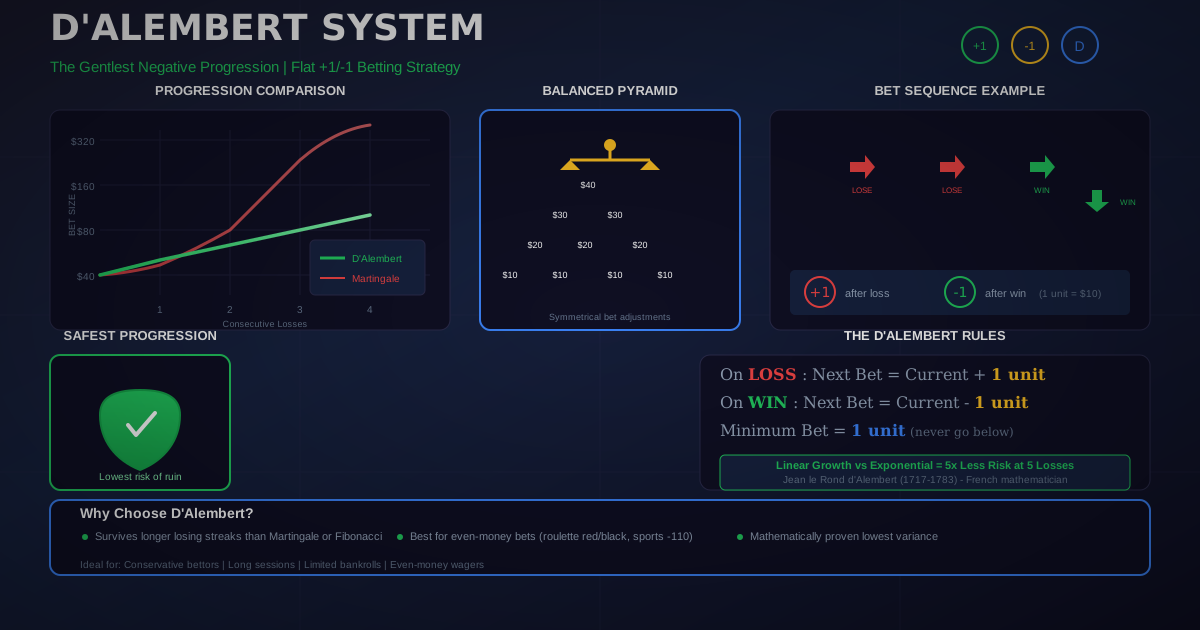
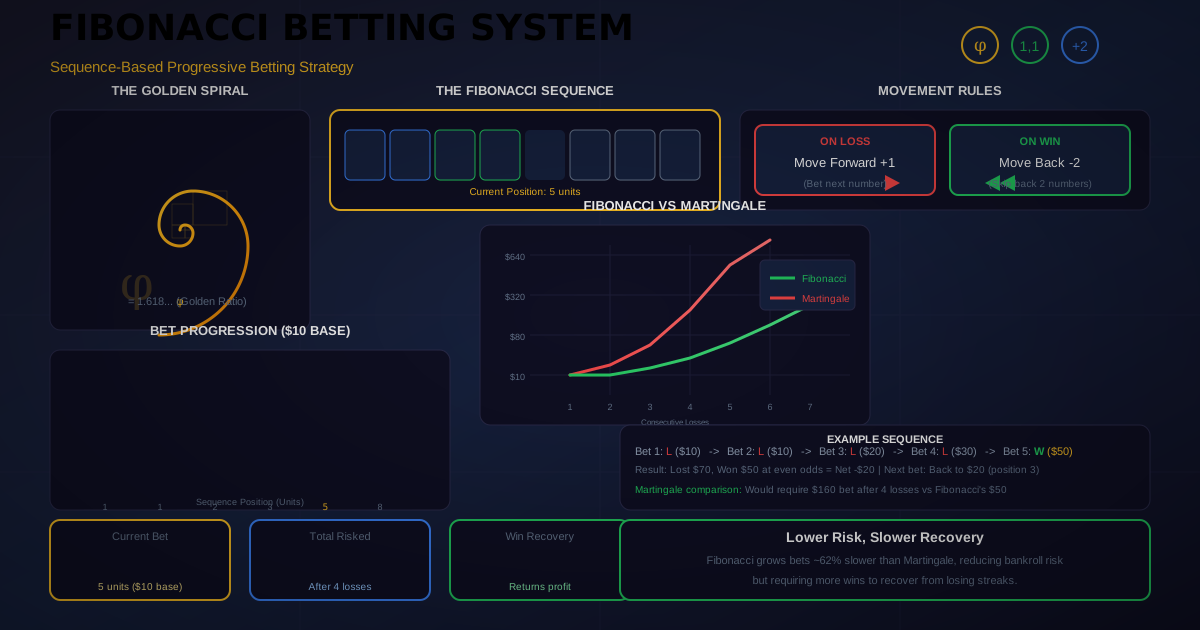
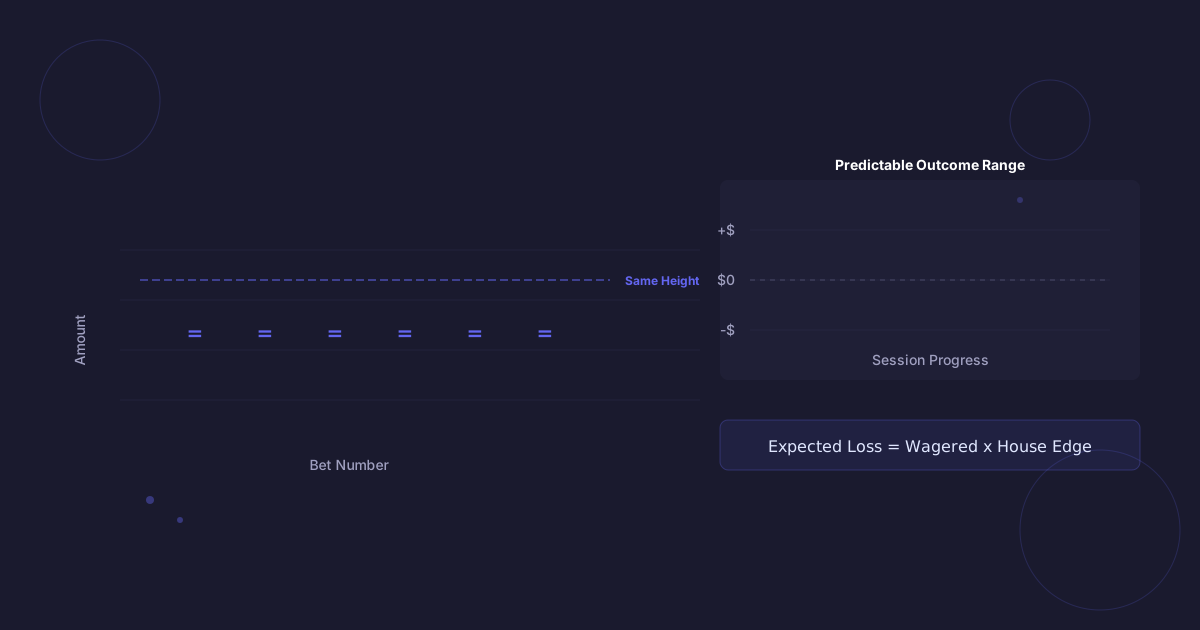
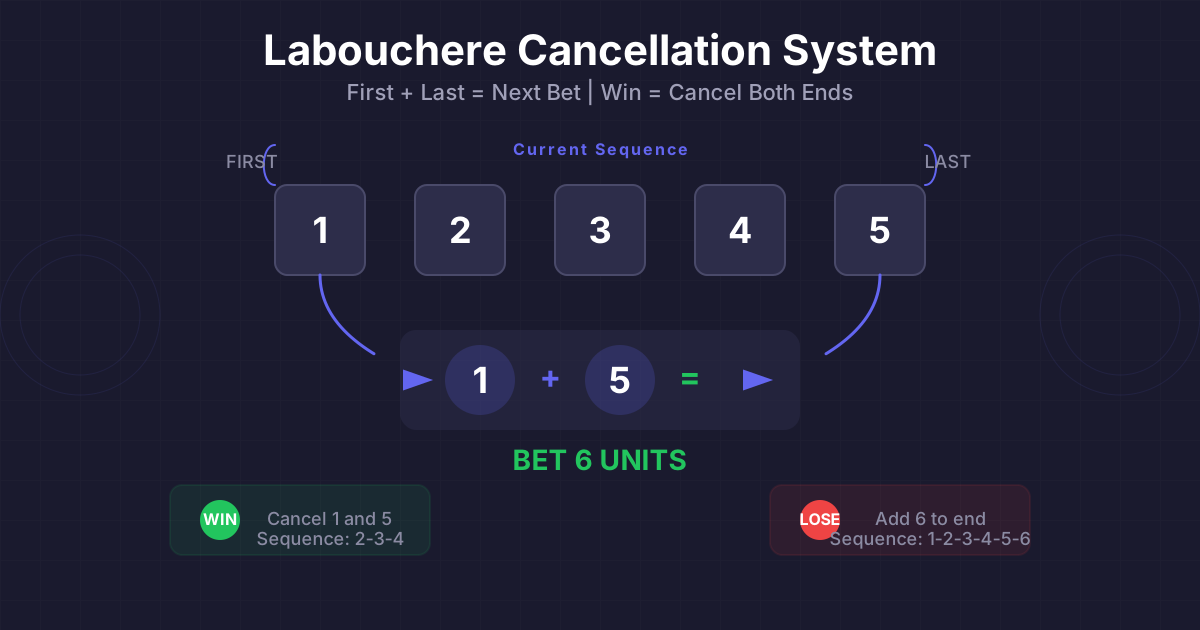
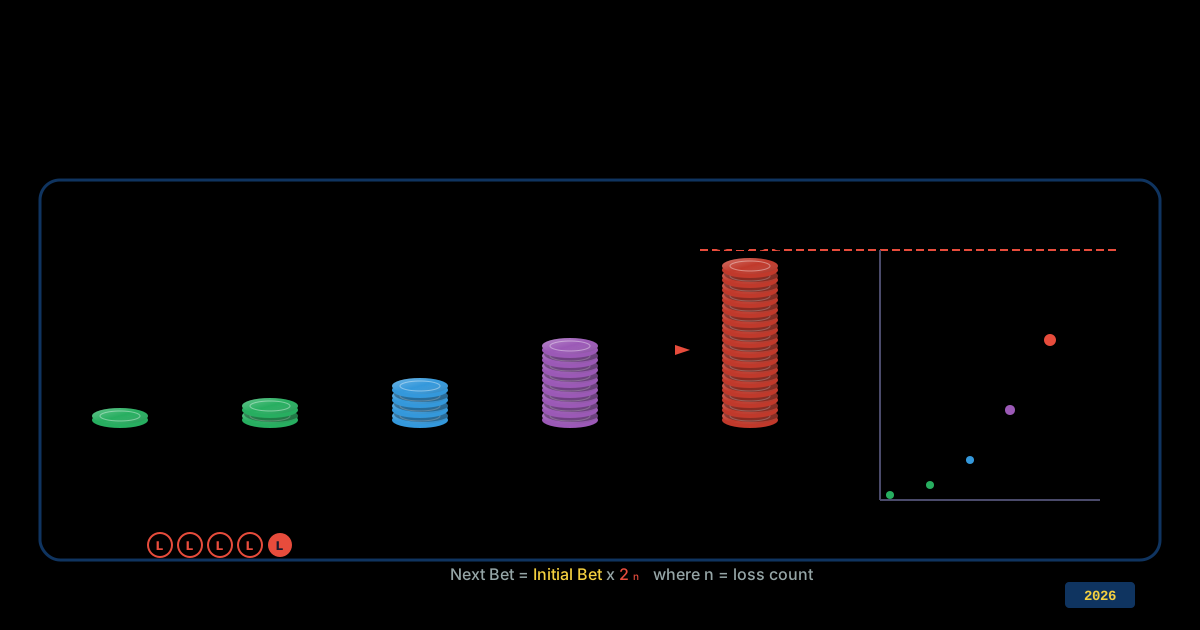
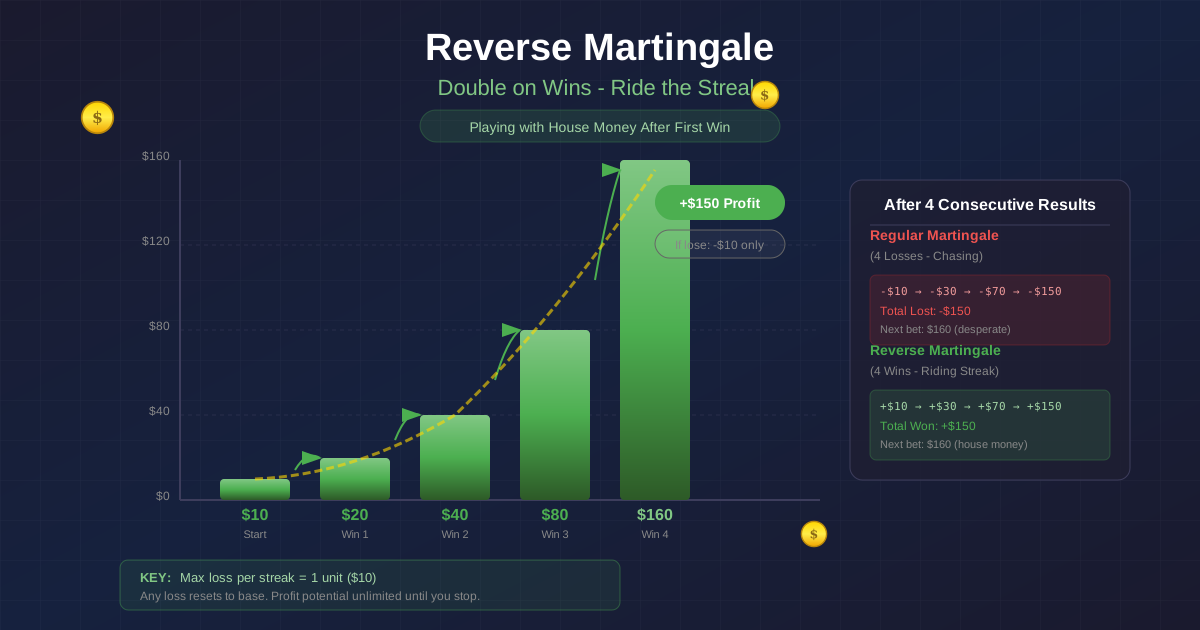
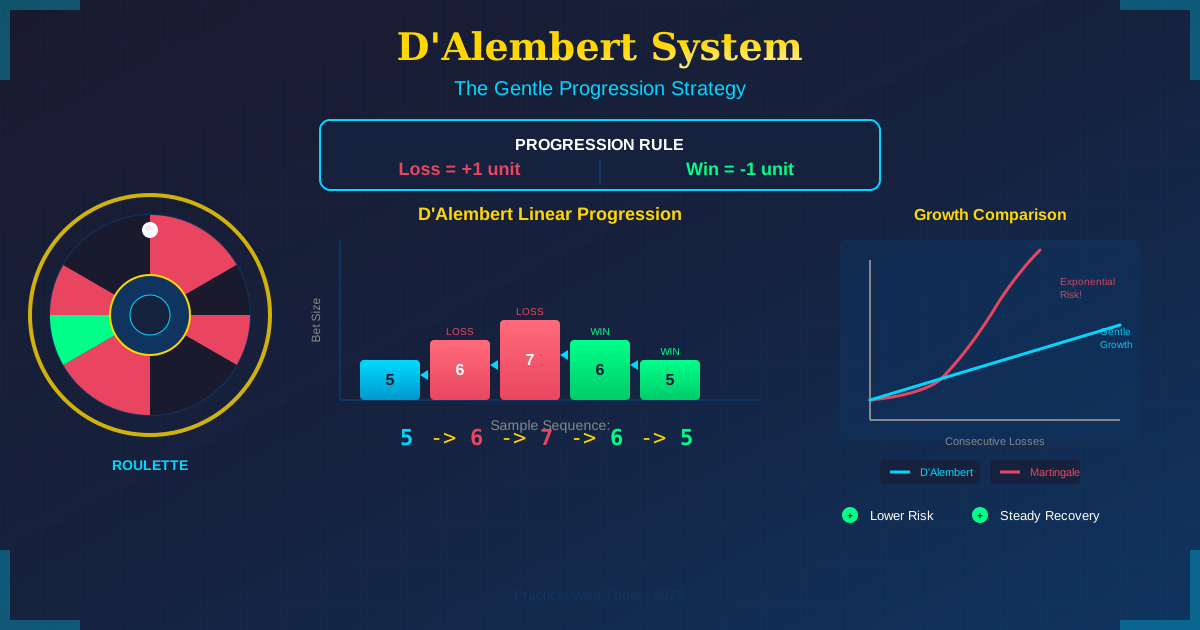
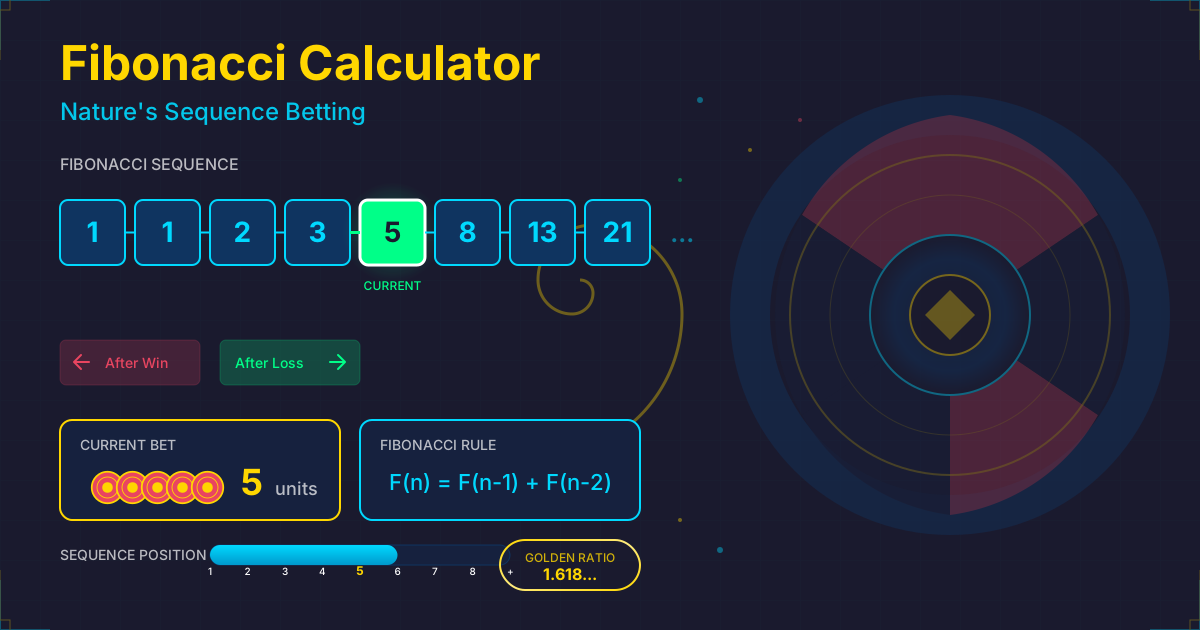
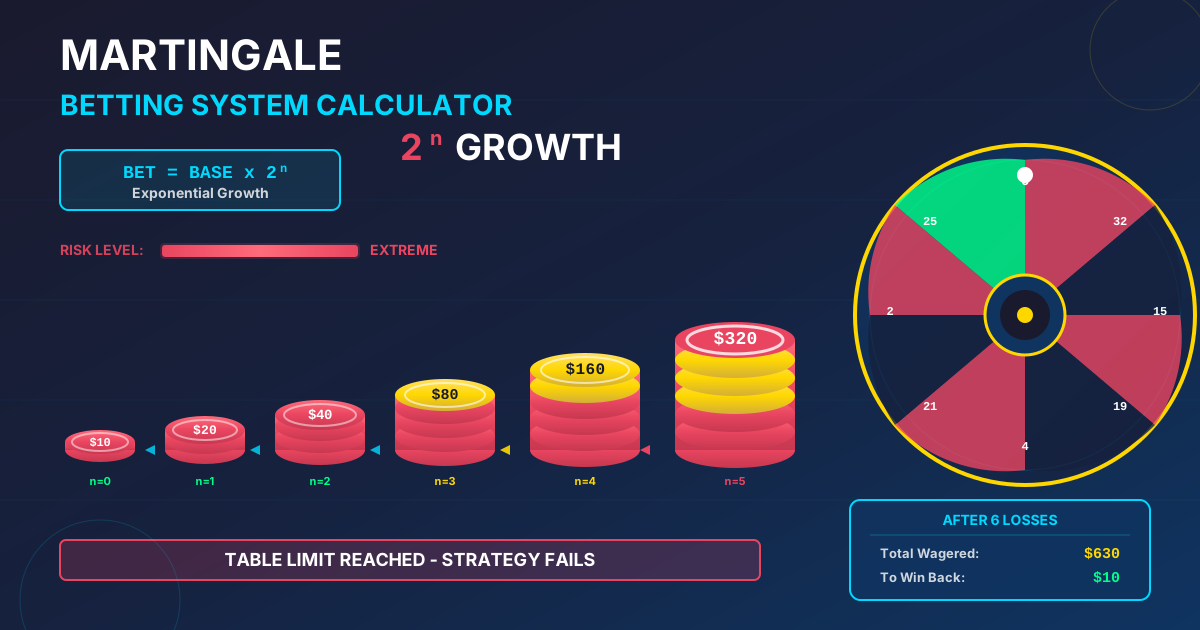
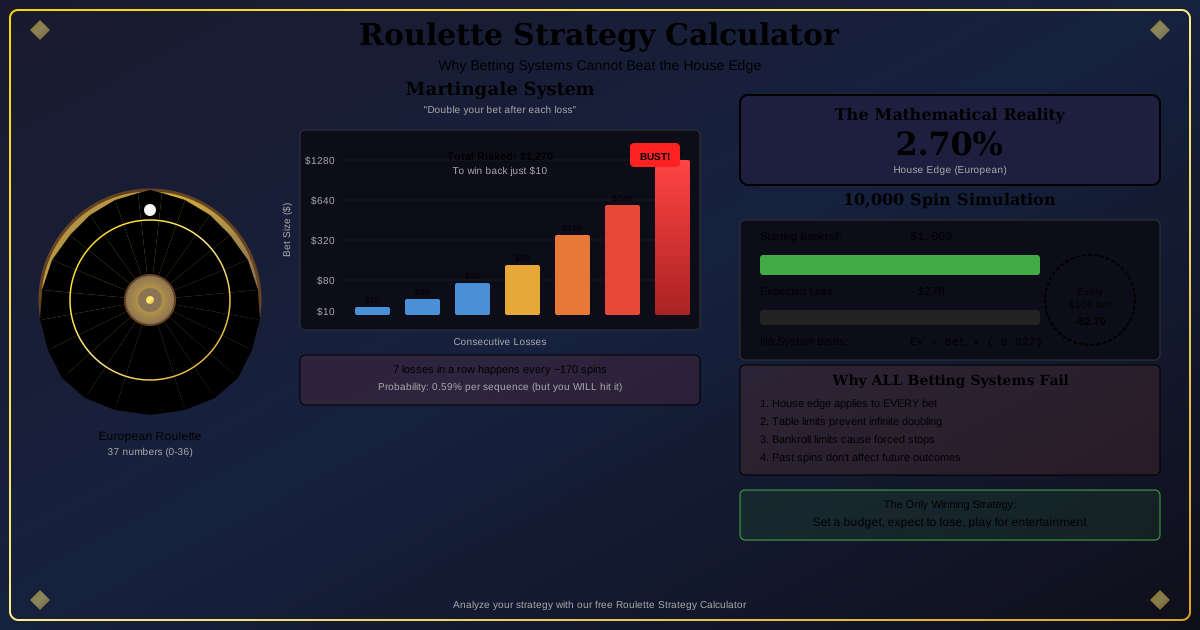
Can I use a betting system to improve my odds at either game? No. No betting system---Martingale, Fibonacci, 1-3-2-6, or any other---changes the expected value of either game. Systems only alter the distribution of outcomes (more small wins with occasional large losses, or vice versa). The expected loss remains House Edge x Total Wagered regardless of bet sizing. Track this yourself with the Bankroll Volatility Tracker.
Should I ever bet Player instead of Banker in baccarat? Mathematically, no. The Banker bet has a lower house edge (1.06% vs. 1.24%) on every single hand. Some players alternate between Banker and Player based on patterns or scorecards, but this is mathematically equivalent to flipping a coin to decide. The difference is small (0.18%), but over thousands of hands, it is real and measurable. Use the Baccarat EV Calculator to see the long-run impact.
How important is it to avoid 6:5 blackjack? Critically important. A 6:5 payout adds 1.39% to the house edge, turning a 0.50% game into a 1.89% game. At that point, you are paying a higher edge than baccarat's Banker bet while also having to execute perfect strategy. If the only blackjack tables available pay 6:5, baccarat is unambiguously the better choice. Verify with the Blackjack House Edge Calculator.
Do blackjack side bets change the comparison? Yes, and badly for blackjack. If you play any side bets, your effective house edge increases dramatically. A player using basic strategy (0.50%) who places a $5 Perfect Pairs side bet on every hand (11.25% edge) effectively faces a blended edge of approximately 3.2%, far worse than baccarat. Analyze any side bet with the Blackjack Side Bets Calculator.
What about online versions of these games? Online blackjack and baccarat typically offer the same mathematical house edges as their physical counterparts, assuming standard rules and certified RNG. The key difference is speed: online games are significantly faster (100-200+ hands per hour), which increases your expected hourly loss proportionally. A 0.50% edge game played at 200 hands per hour costs as much per hour as a 1.67% edge game at 60 hands per hour.
Related Tools
- Blackjack House Edge Calculator: Calculate the exact house edge for any combination of blackjack table rules.
- Baccarat House Edge Calculator: Compare Banker, Player, and Tie bet house edges with commission calculations.
- Blackjack Basic Strategy Chart: Interactive chart showing the correct play for every possible blackjack hand.
- Baccarat Odds Calculator: Run probability calculations for all baccarat outcomes.
- Blackjack EV Calculator: Calculate expected value for specific blackjack hands and decisions.
- Baccarat EV Calculator: Calculate expected value for baccarat bet types over any number of hands.
- Baccarat Commission Calculator: See exactly how the 5% commission affects your returns on Banker bets.
- Blackjack Variance Calculator: Understand the standard deviation and session volatility of blackjack play.
- Expected Value Calculator: General-purpose EV calculator for comparing any gambling scenarios.
- Bankroll Volatility Tracker: Track and compare your actual results to expected values for both games.
- Blackjack Side Bets Calculator: Analyze the house edge on any blackjack side bet.
- Baccarat Side Bets Calculator: Evaluate baccarat side bet house edges and expected values.
- Blackjack Risk of Ruin Calculator: Calculate the probability of losing your entire bankroll based on your edge and bet size.
- Blackjack Session Bankroll Calculator: Determine the right bankroll size for your blackjack sessions.
- Baccarat Card Counting Calculator: Explore why card counting in baccarat provides negligible advantage.
Conclusion
The blackjack-versus-baccarat debate has a definitive answer, but it is not the answer most people expect. Blackjack is the better game if---and only if---you play perfect basic strategy. For the majority of casino visitors who play at average or below-average skill levels, baccarat's Banker bet at 1.06% is the mathematically superior choice.
The honest self-assessment is this: Can you perfectly execute 270 different strategic decisions under the noise, distractions, and emotional pressure of a live casino, without deviation, for hours on end? If yes, play blackjack. If no---and most people should answer no---baccarat gives you better odds with zero effort.
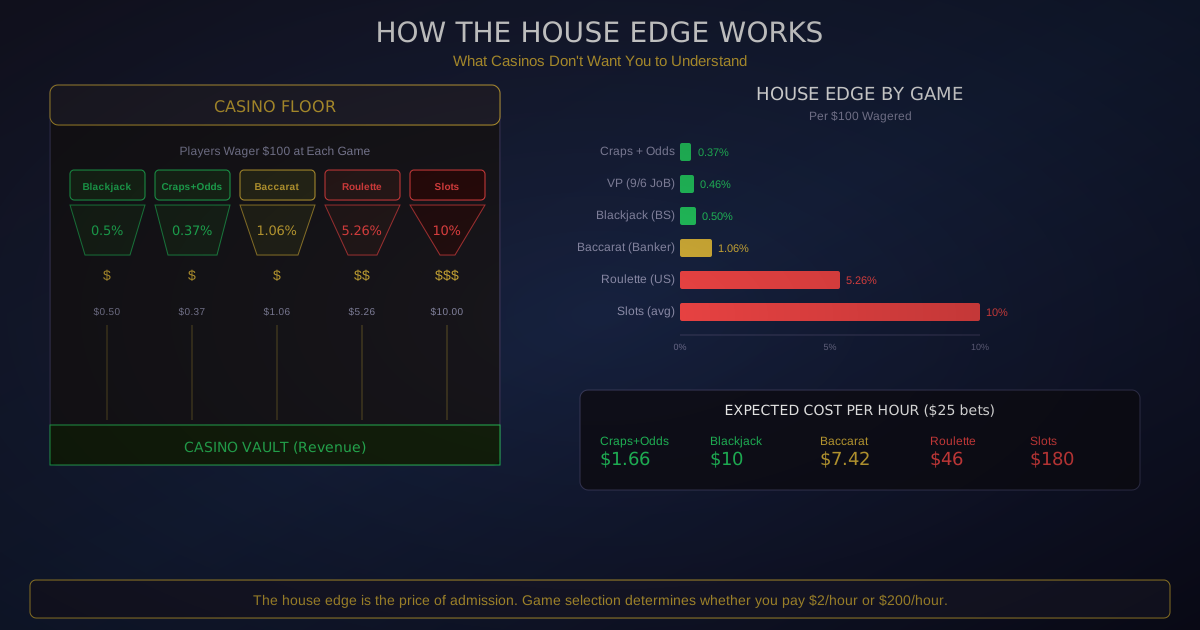
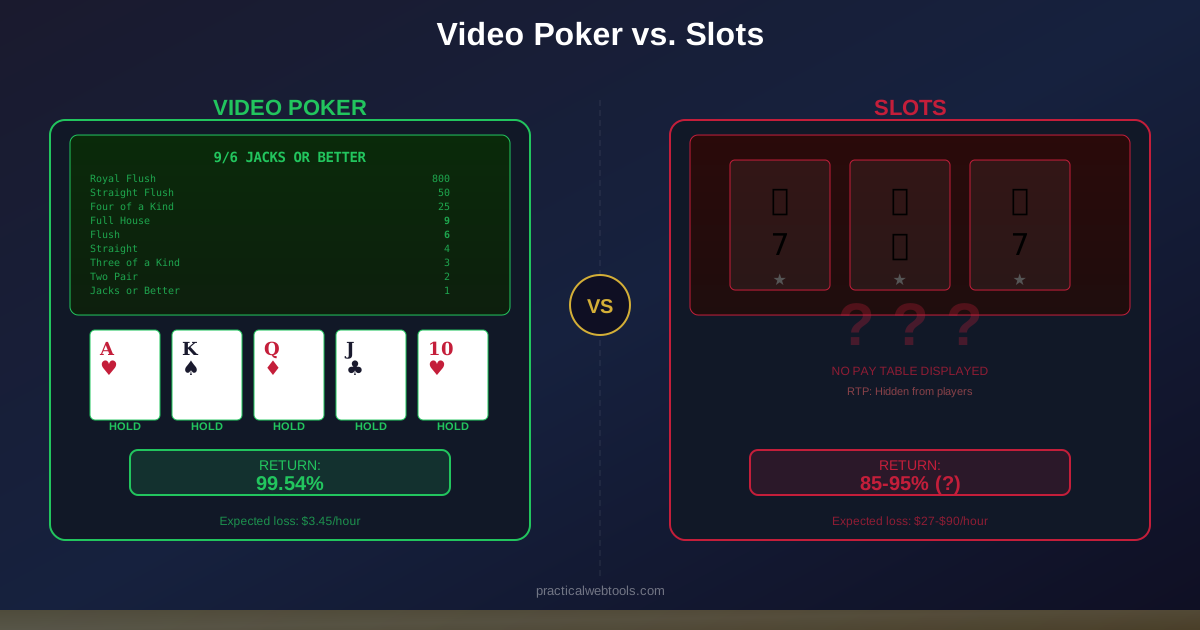
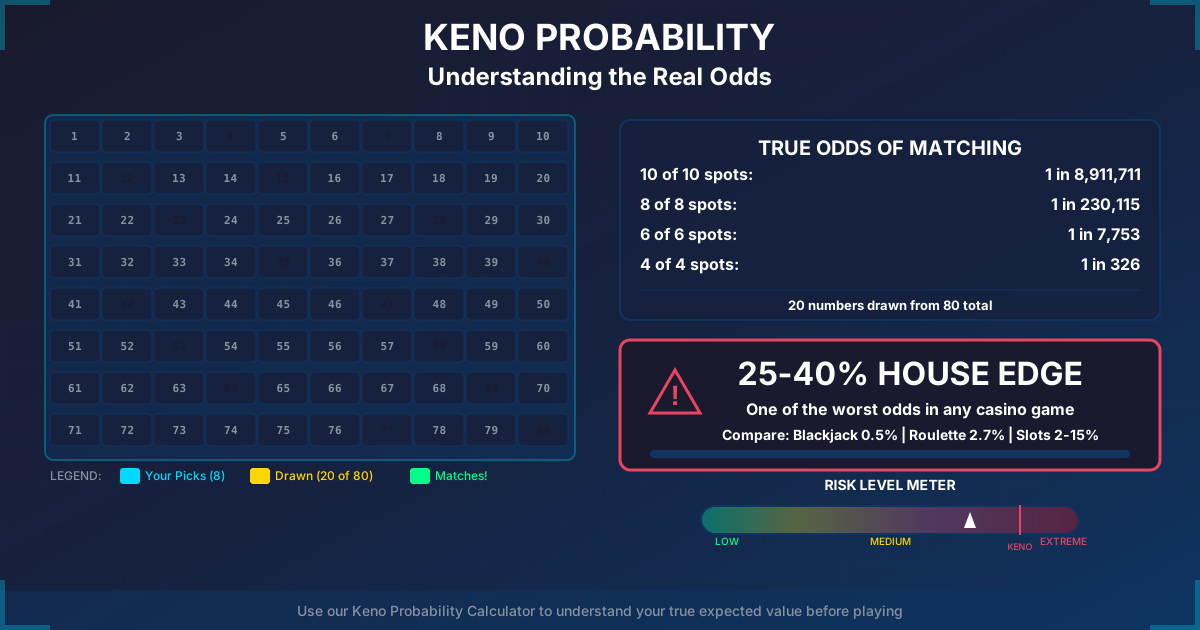
Both games offer respectable house edges compared to the casino floor average. Either one is a dramatically better choice than slots, keno, or most casino side bets. The worst decision is not choosing one over the other. The worst decision is playing either one with side bets, bad strategy, or a betting system you believe will overcome mathematics.
Start your comparison with the Blackjack House Edge Calculator and the Baccarat House Edge Calculator to see the exact numbers for your playing conditions.
Gambling involves risk. This content is for educational and informational purposes only. Always gamble responsibly, set limits you can afford, and seek help if gambling becomes a problem. Visit the National Council on Problem Gambling or call 1-800-522-4700 for support.