Golf Betting Strategy: Outrights, Matchups, and Props Explained (2026)

Golf is one of the most profitable sports betting markets in the world, and most recreational bettors are ignoring it. While the public piles money into NFL sides and NBA totals where sportsbooks have razor-sharp lines and decades of modeling data, professional bettors quietly exploit golf markets where 144-player fields, volatile outcomes, and soft lines create value that simply does not exist in major team sports.
The numbers confirm the opportunity. The PGA Tour reported a 20% increase in golf betting handle for 2025, marking a fourth consecutive year of double-digit growth. Betting on the FedEx Cup Playoffs surged 50% year-over-year, and handle on the Tour Championship at East Lake more than doubled. In 2026, PGA Tour Live Betcast is expanding from six tournaments to twelve, including The Players Championship, delivering over 400 hours of betting-focused content. The market is exploding, but the pricing has not caught up.
Here is why golf is different from team sports betting: a 144-player field means the favorite in any given tournament typically has just a 10-15% chance of winning, yet sportsbooks must price every golfer in the field. The sheer volume of outcomes creates inefficiencies. A model that is even slightly better than the market at evaluating player skill, course fit, and current form can find consistent positive expected value across outrights, matchups, and props.
This guide covers every major golf betting market, the statistical tools you need to evaluate them, and specific strategies for turning data into profitable bets on the PGA Tour and major championships.
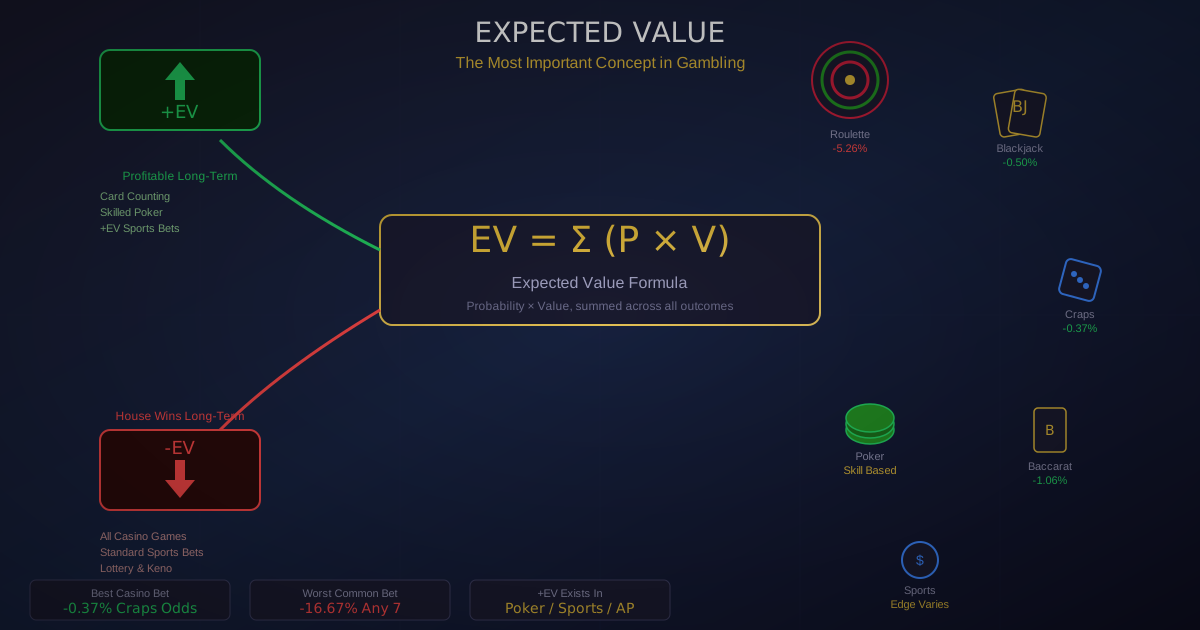
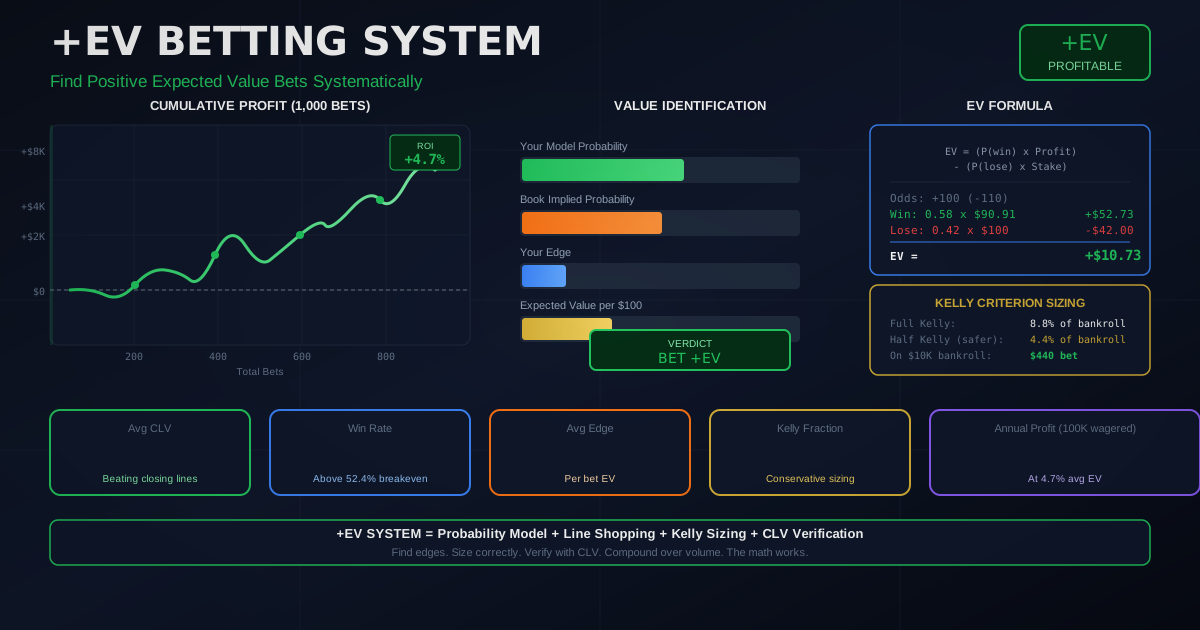
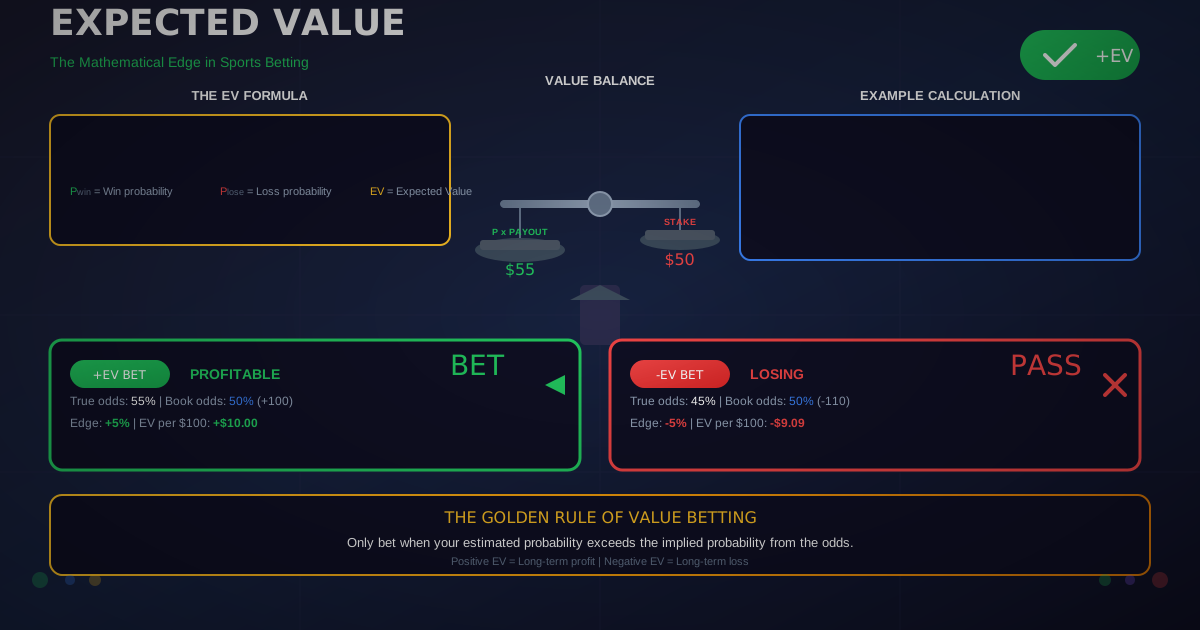
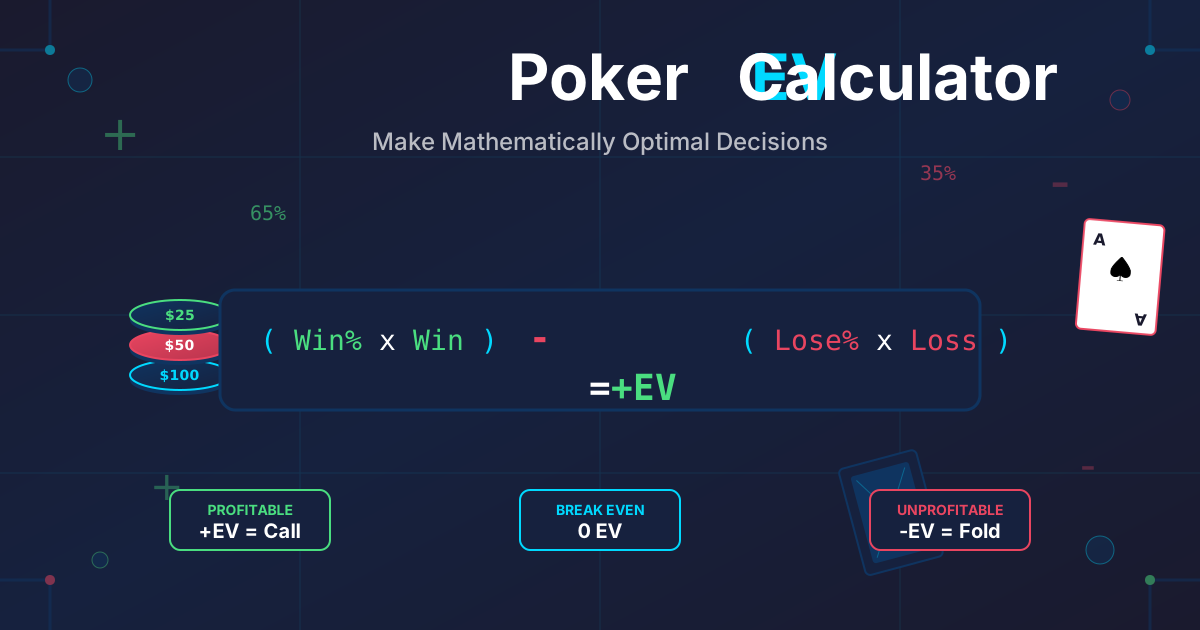
Calculate the expected value of any golf bet instantly with our free Expected Value Calculator.
Golf Betting Markets Explained
Golf offers the richest variety of betting markets in individual sports. Understanding each market type, its mechanics, and where value tends to hide is the foundation of any profitable golf betting strategy.
Outright Winner (Tournament Winner)
The outright winner bet is the most popular and most discussed golf wager. You pick one golfer to win the entire tournament. With fields of 120-156 players, odds range from roughly +600 for a top favorite to +30000 or longer for the deepest longshots.
| Odds Range | Implied Probability | Typical Profile | Example (2026) |
|---|---|---|---|
| +600 to +1200 | 7.7% - 14.3% | Top 5 OWGR, recent winner | Scottie Scheffler +700 at Bay Hill |
| +1400 to +3000 | 3.2% - 6.7% | Top 20 OWGR, strong form | Collin Morikawa +2000 at TPC Sawgrass |
| +3500 to +6000 | 1.6% - 2.8% | Top 50, course specialist | Brian Harman +4000 at a links setup |
| +6500 to +15000 | 0.66% - 1.5% | Mid-tier, volatile ceiling | Taylor Pendrith +8000 at a bomber's course |
| +15000+ | Under 0.66% | Low ranked, longshot flier | Monday qualifier +25000 |
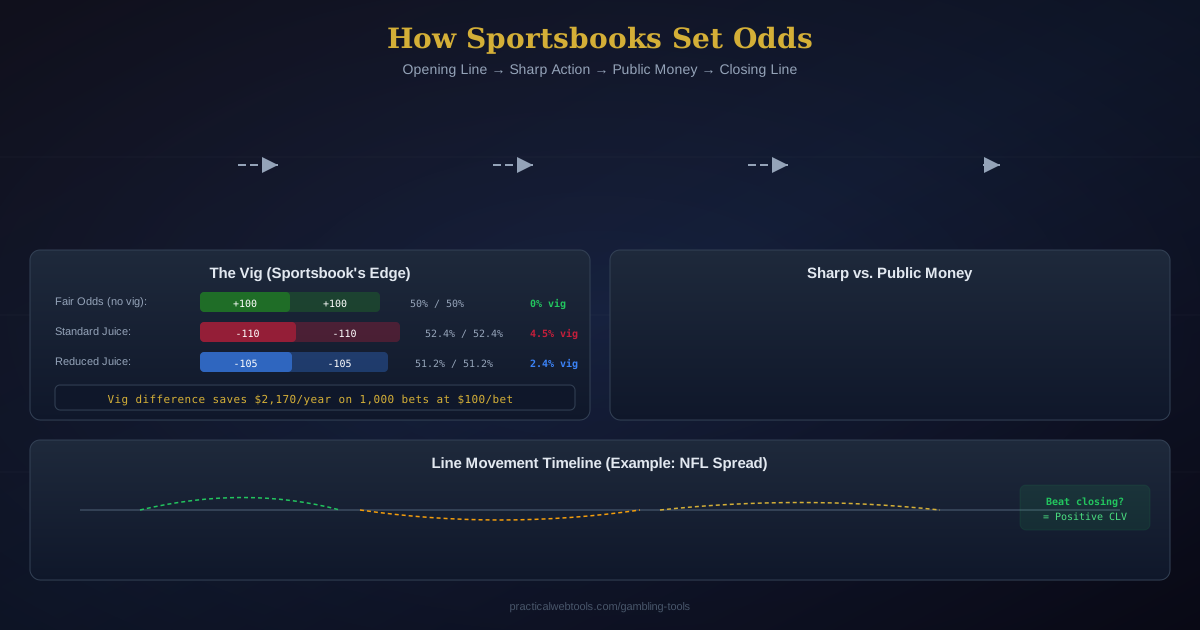
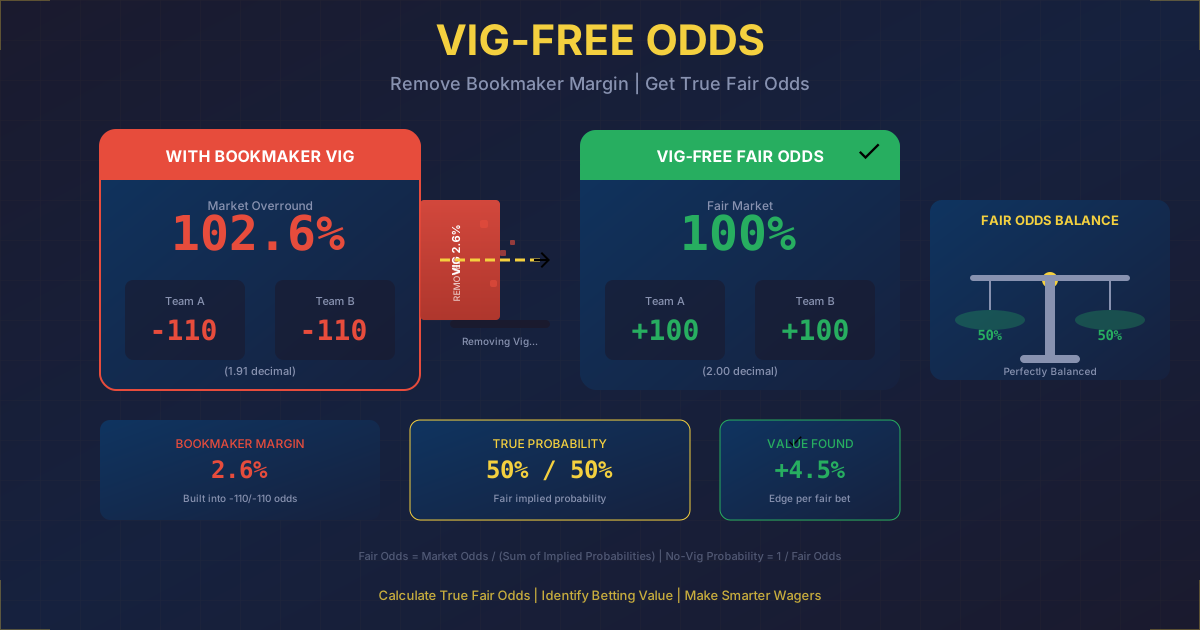
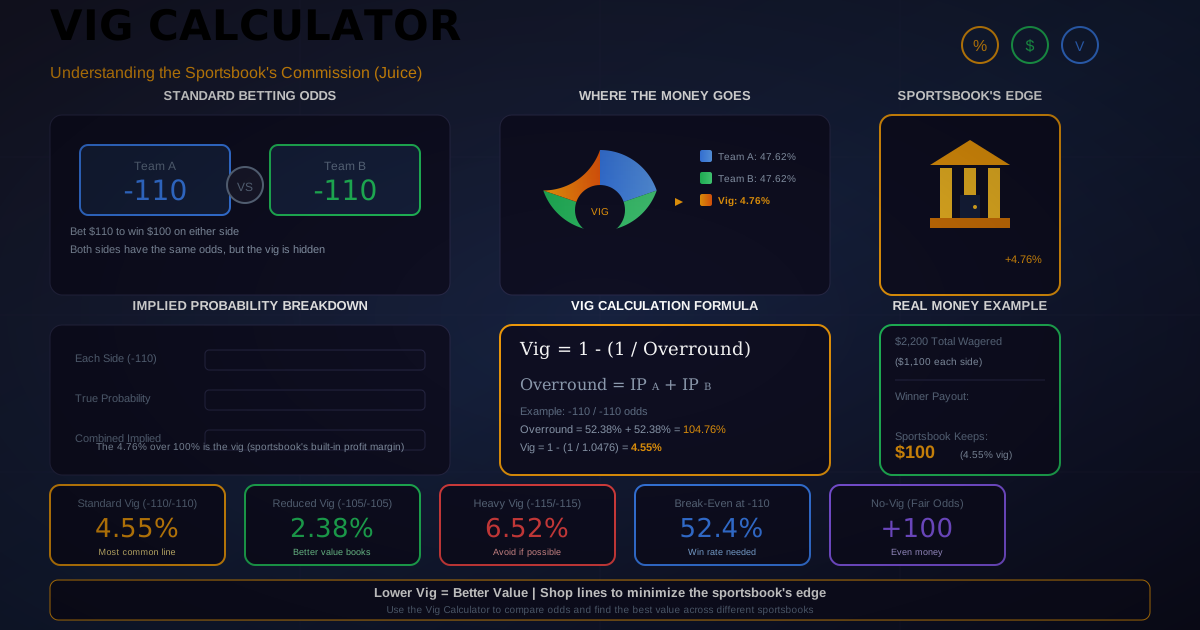
Key insight: Unlike NFL or NBA markets where the vig on a two-way line is 4-5%, outright golf markets carry 20-40% total hold (overround). This sounds bad, but the hold is spread across 144+ players. Individual player odds can be mispriced by 30-50% or more because books cannot perfectly evaluate every golfer in the field. That mispricing is your edge.
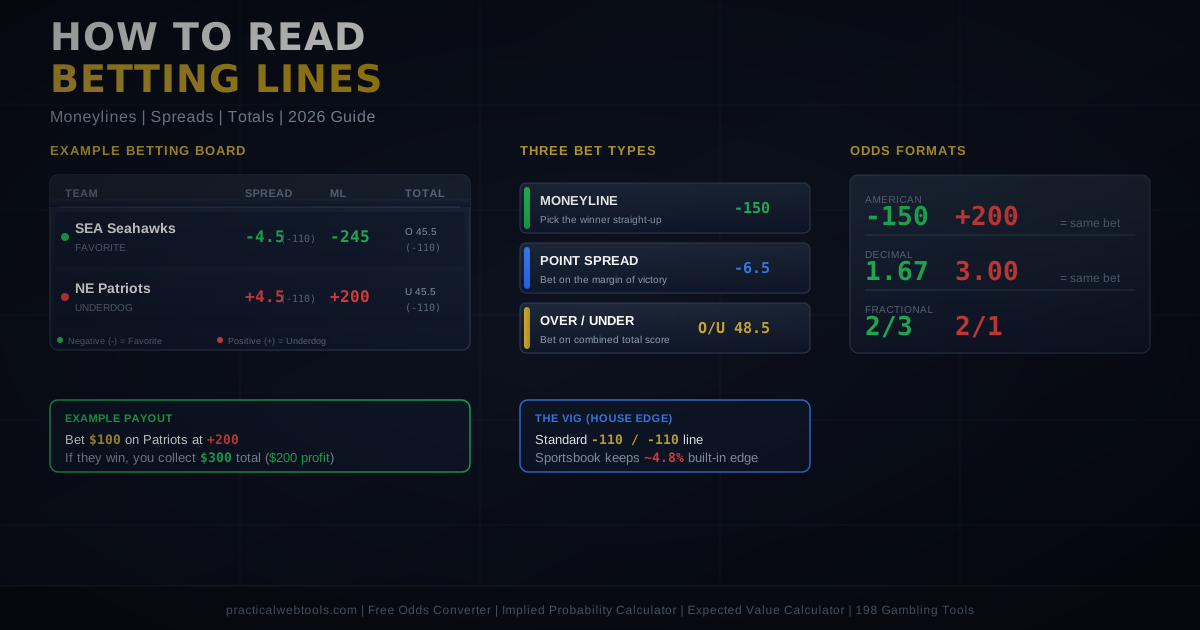
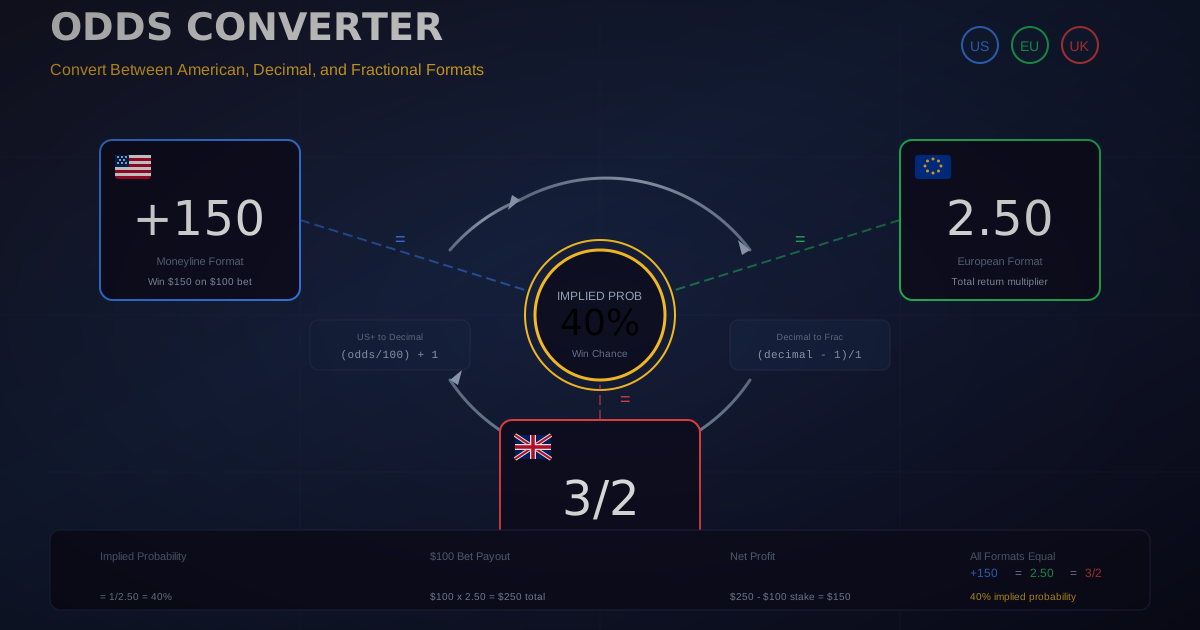
Convert between American, decimal, and fractional odds with our free Odds Converter.
Head-to-Head Matchups (72-Hole and Round Matchups)
Matchup bets pit two golfers against each other. You bet on which golfer will finish with a lower score, either for the full tournament (72-hole matchup) or a single round (18-hole matchup). Ties typically result in a push (dead heat).
| Matchup Type | Duration | Typical Odds Range | Key Advantage |
|---|---|---|---|
| 72-Hole Matchup | Full tournament | -130 to +110 | Largest sample, most predictable |
| 18-Hole Matchup | Single round | -120 to +100 | Weather wave splits, daily form |
| 3-Ball Matchup | Single round, 3 players | +100 to +200 | Higher variance, bigger payouts |
Matchup betting is where many professional golf bettors concentrate their bankroll. The reason is simple: two-way pricing is tighter (lower hold than outrights), and strokes-gained models are highly effective at projecting relative performance between two specific golfers. Data Golf analysis shows that head-to-head matchups account for 75-80% or more of the expected value generated by strokes-gained rating models.
Example: At the 2026 WM Phoenix Open, a sportsbook might offer Xander Schauffele -125 vs. Viktor Hovland. Your strokes-gained model projects Schauffele gaining 0.8 strokes per round tee-to-green on this course type while Hovland averages 0.3. That 0.5 stroke advantage per round, multiplied by four rounds, gives Schauffele a significant edge that translates to roughly 62% win probability in the matchup. At -125 (implied 55.6%), that is a +EV bet worth sizing.
Top 5, Top 10, and Top 20 Finish
Place finish bets let you bet on a golfer finishing within a certain range. These are essentially "softer" versions of outright bets with higher hit rates and lower payouts.
| Bet Type | Typical Odds (Tier 1 Player) | Typical Odds (Tier 2 Player) | Hit Rate Context |
|---|---|---|---|
| Top 5 | -110 to +200 | +250 to +600 | Top players finish T5+ roughly 25-35% of starts |
| Top 10 | -200 to +100 | +150 to +400 | Top players finish T10+ roughly 40-50% of starts |
| Top 20 | -350 to -120 | +100 to +250 | Top players finish T20+ roughly 55-70% of starts |
Value tip: Top 5 and Top 10 markets are often the sweetest spot for positive expected value. Sportsbooks build significant vig into outrights (20-40% hold) but tend to price place finishes more competitively (8-15% hold). A golfer who is overpriced at +2500 to win might simultaneously be excellent value at +350 for a Top 10, because the Top 10 probability is easier to estimate accurately with strokes-gained data.
Make/Miss Cut
The cut typically eliminates the bottom half of the field after 36 holes (top 65 and ties advance). Make/miss cut bets are unique because they only depend on two rounds of play, reducing variance considerably.
| Scenario | What to Look For | Edge Potential |
|---|---|---|
| Make cut (favorite) | Strong ball-striker on an easy course; low cut line expected | Moderate (lines are tight) |
| Make cut (longshot) | Consistent performer, low ceiling but steady; hard to miss | High (books overprice miss) |
| Miss cut (favorite) | Injury concerns, poor course fit, form slump hidden by name value | High (public bias inflates make price) |
| Miss cut (longshot) | First-time course, altitude/travel adjustment, poor recent stats | Low (books already expect miss) |
Example: At the 2025 Masters, a veteran like Rickie Fowler who has struggled with form but still carries name recognition might be priced at -180 to make the cut. If your strokes-gained analysis shows his approach play has declined 0.5 strokes per round over the past six months and Augusta National demands elite iron play, the "miss cut" side at +150 could represent significant value.
Prop Bets
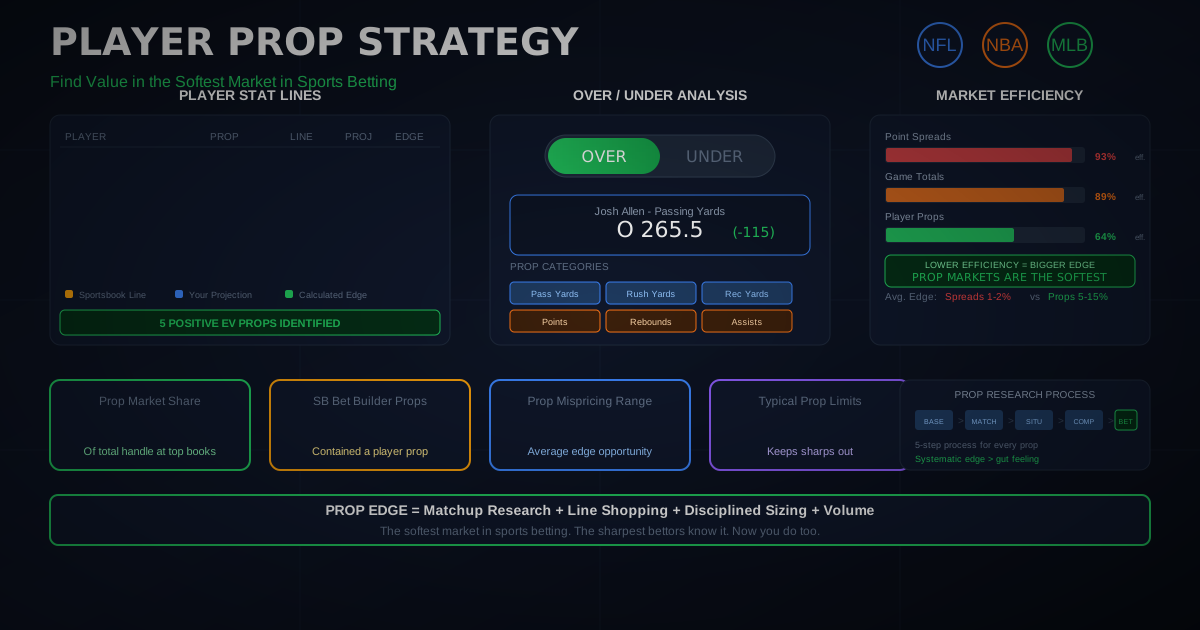
Golf props span a wide range of creative markets. They are often the softest lines in the sport because books invest fewer resources into pricing them precisely.
| Prop Type | Example | Where Value Hides |
|---|---|---|
| First Round Leader (FRL) | Rory McIlroy +2500 FRL | Fast starters, Thursday form |
| Nationality winner | "An American to win" -150 | Field composition analysis |
| Hole-in-one (Yes/No) | Hole-in-one at any par-3: Yes -130 | Par-3 yardage and conditions |
| Top nationality finisher | Best Aussie: Min Woo Lee +300 | Sub-group analysis |
| Round scoring | Under 67.5 Round 1: -110 | Weather and wave splits |
| Birdie or better on hole | Birdie on Hole 16 (par 5): -180 | Hole-specific scoring data |
Evaluate the vig on any prop market using our free Hold/Vig Calculator.
Outright Betting Strategy: Why Longshots Have Value
The mathematical structure of outright golf betting creates a systematic bias that favors the bettor who is willing to embrace variance. Here is why longshots in golf offer more value than in almost any other sport.
The Case for Longshots
In a typical PGA Tour event with 144 players, the pre-tournament favorite might be priced at +600 (implied 14.3% win probability). The bottom third of the field might all be priced between +10000 and +30000. Here is the critical insight: sportsbooks systematically overprice favorites and underprice longshots in golf outright markets.
This is not theory. Data from major odds-tracking services consistently shows that the implied probabilities assigned by sportsbooks to the top 10-15 favorites in a field sum to more than their actual win rates warrant. The excess probability has to come from somewhere, and it comes from underpricing the rest of the field.
Why this happens:
- Public bias: Recreational bettors disproportionately bet on names they recognize (Scheffler, McIlroy, Rahm), forcing books to shade those prices shorter
- Risk management: Books face maximum liability on popular favorites and shorten their prices as a hedge
- Complexity: Accurately pricing 144 individual outcomes is exponentially harder than pricing a two-way team sport line
Bankroll Strategy for Outright Betting
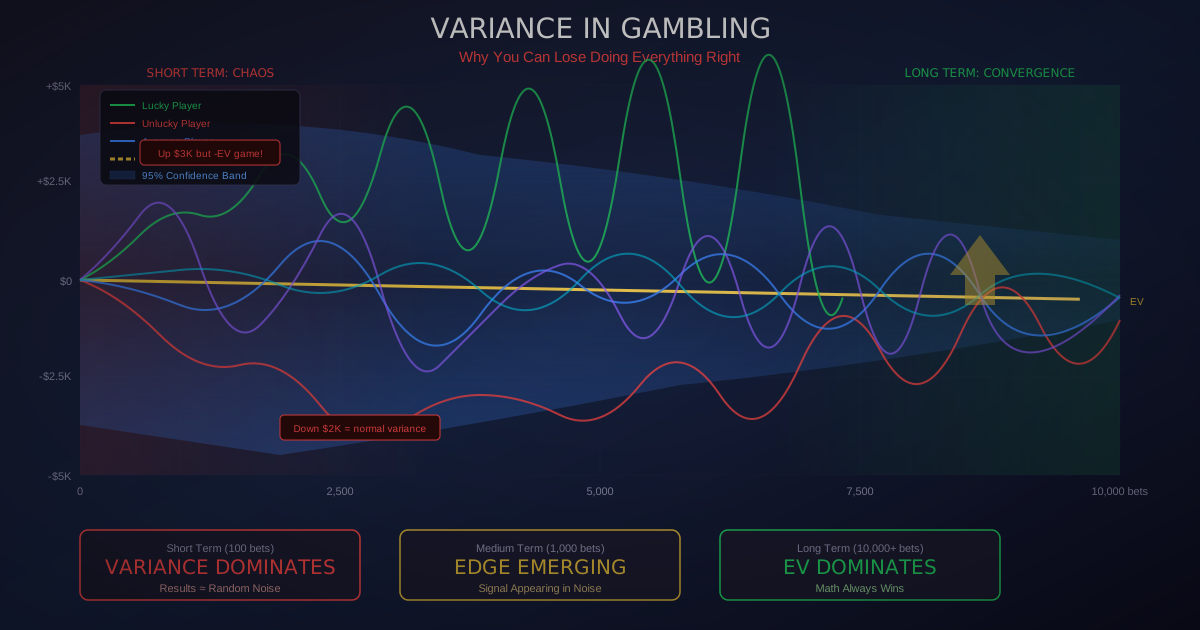
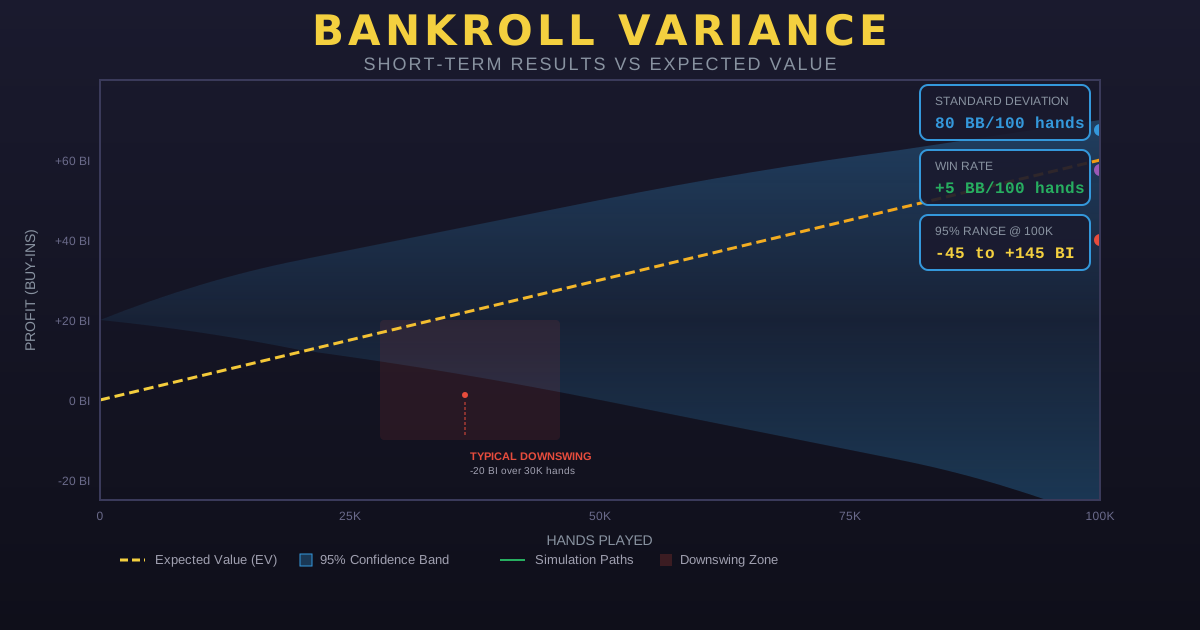
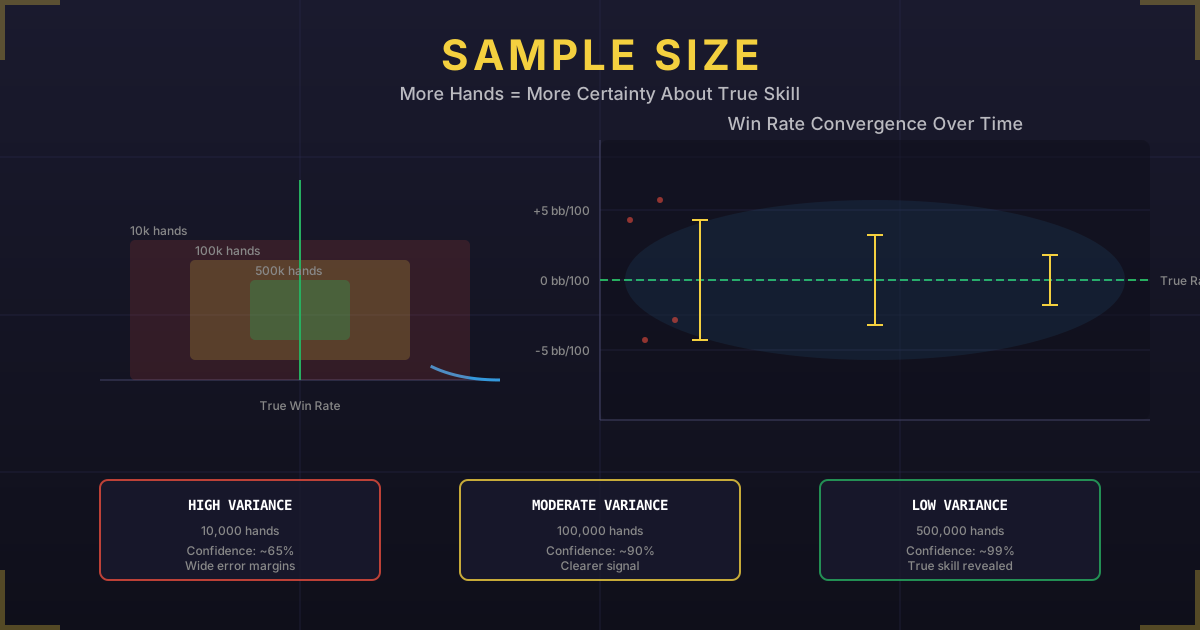
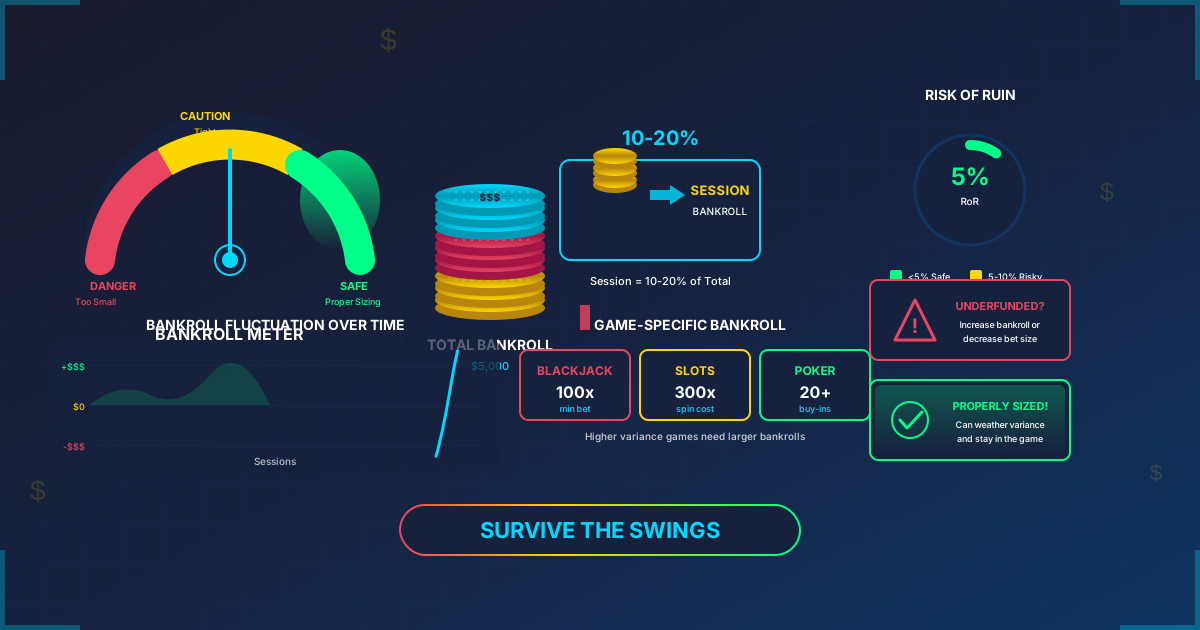
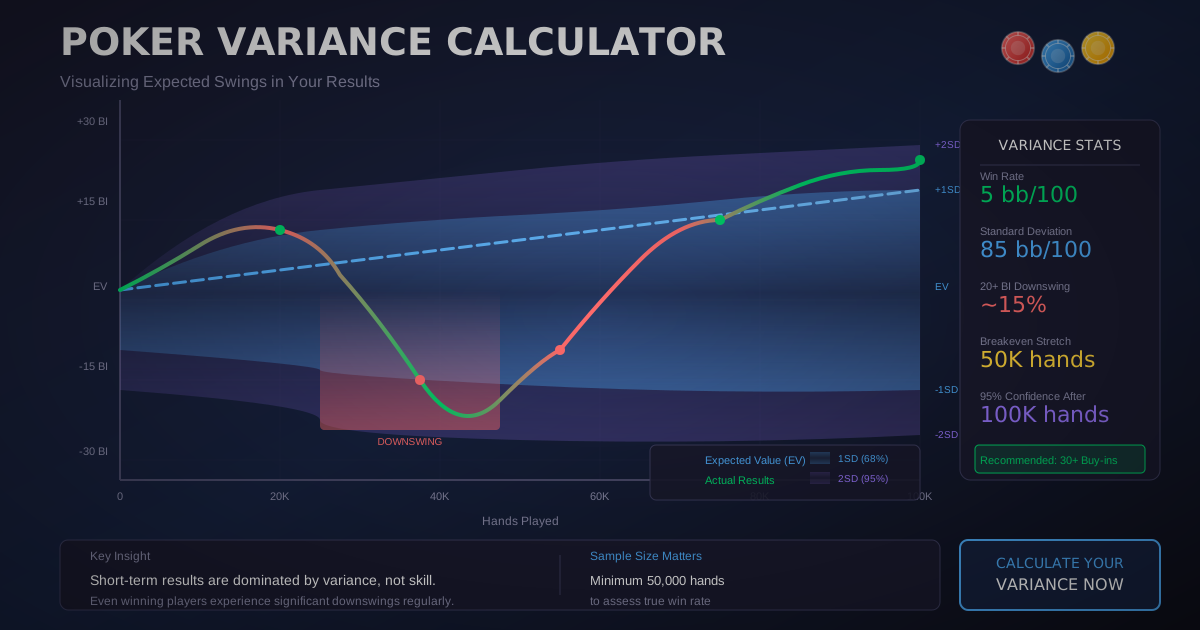
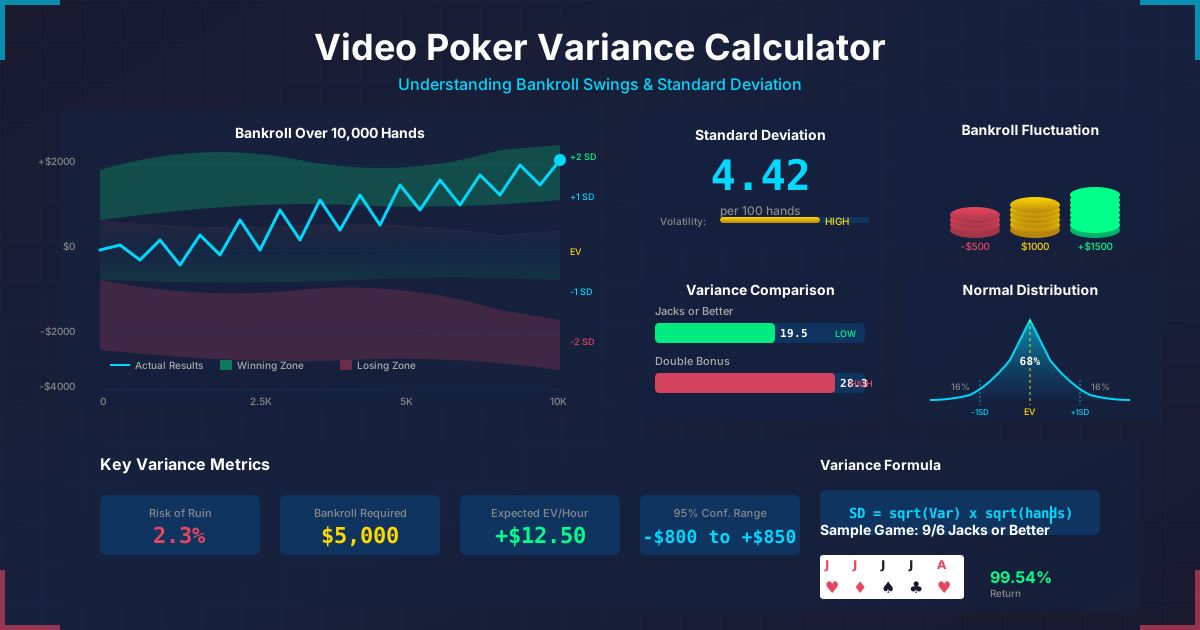
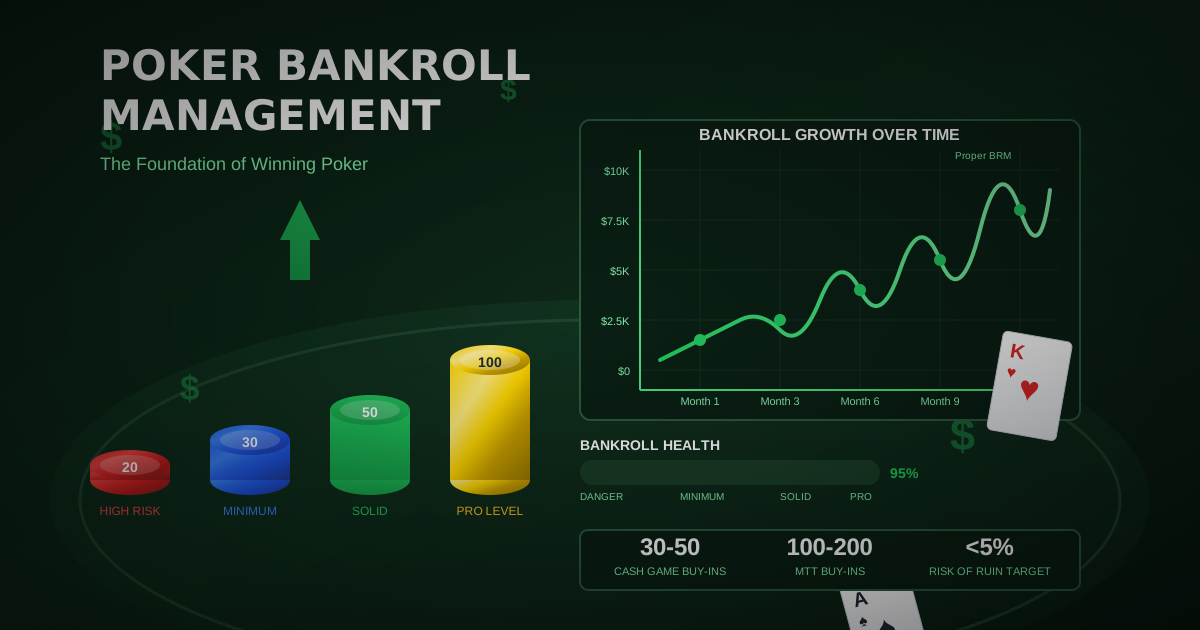
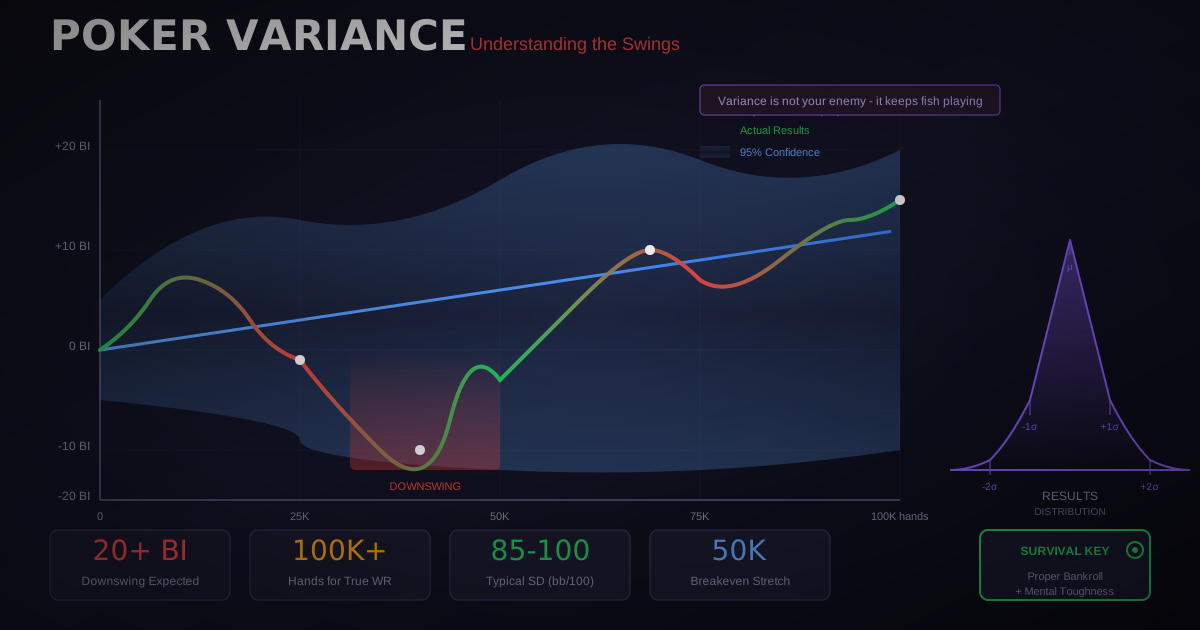
Outright golf betting is inherently high-variance. Even with perfect models, you will experience long losing streaks because the best golfer in the world wins only 15-20% of tournaments entered. Proper bankroll management is non-negotiable.
| Strategy | Stake Size | Bets Per Tournament | Best For |
|---|---|---|---|
| Conservative | 0.25-0.5% of bankroll per bet | 3-5 outrights | Recreational bettors, small bankrolls |
| Standard | 0.5-1.0% of bankroll per bet | 5-8 outrights | Serious recreational, medium bankrolls |
| Aggressive | 1.0-2.0% of bankroll per bet | 2-4 outrights | Model-driven, high-conviction plays |
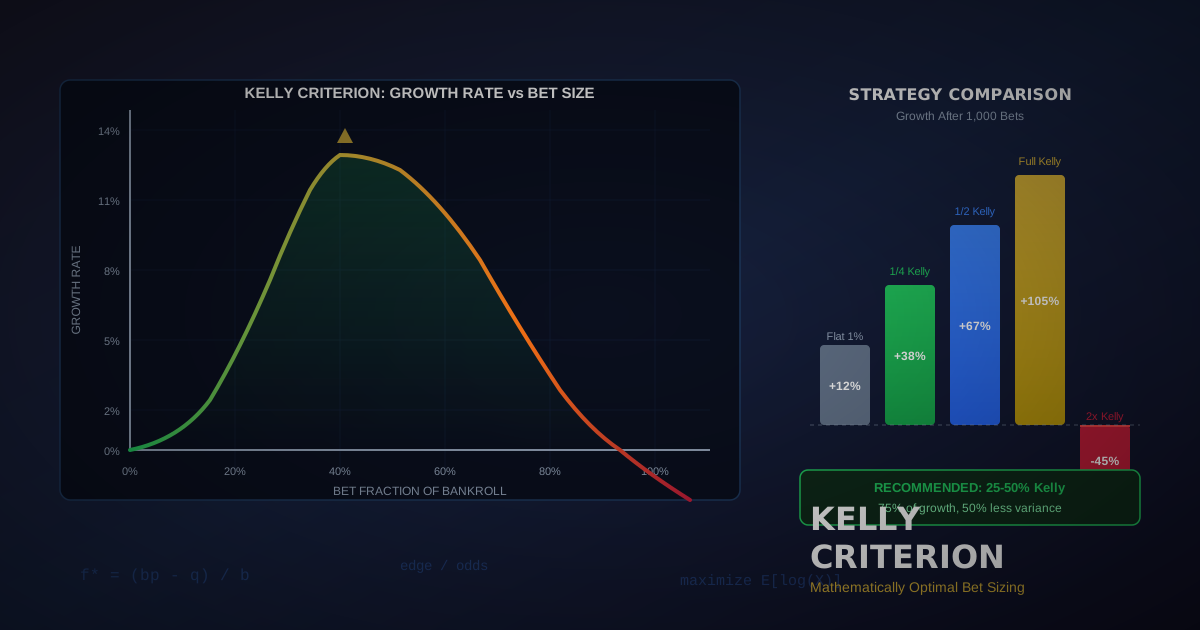
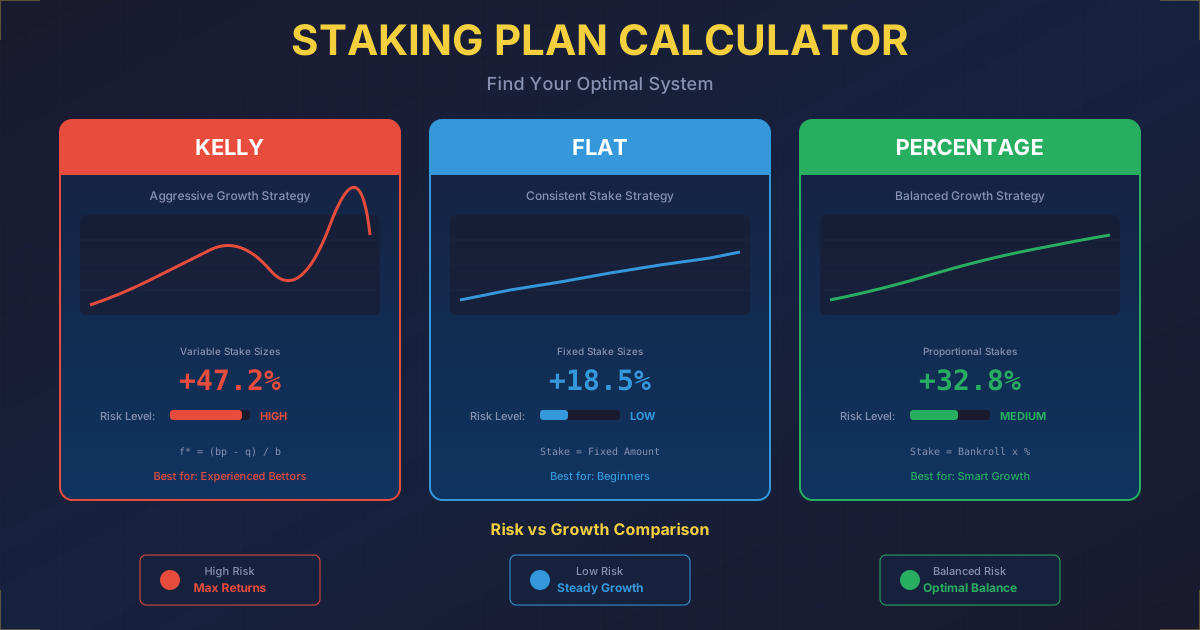
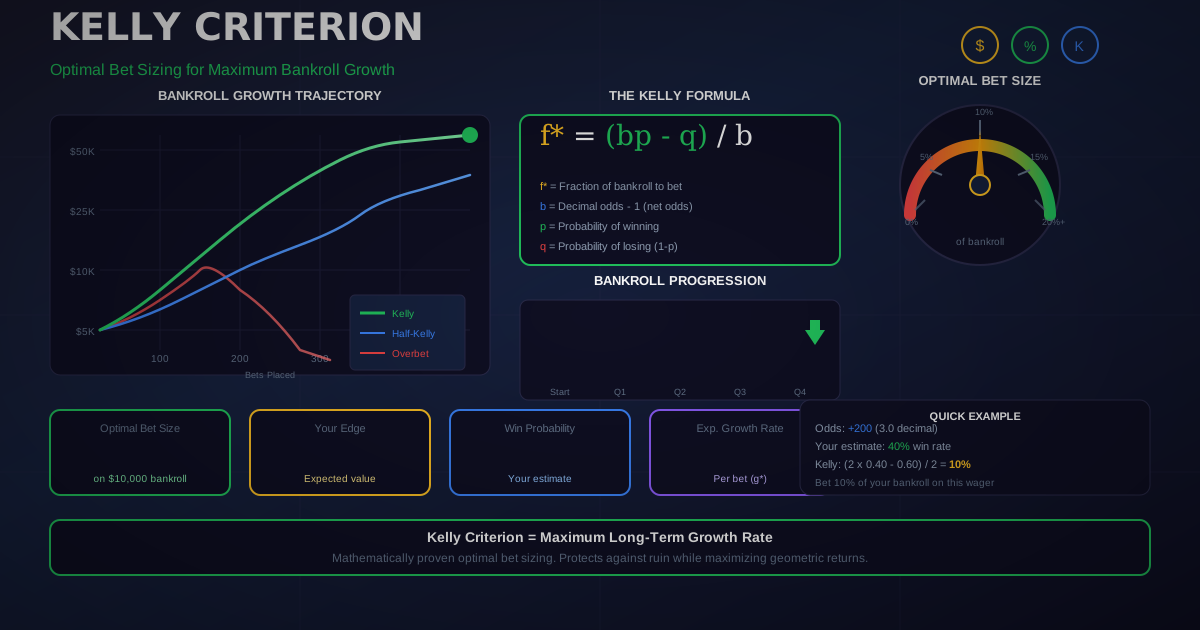
| Kelly Criterion | Variable (based on edge) | Variable | Professionals with accurate probability estimates |
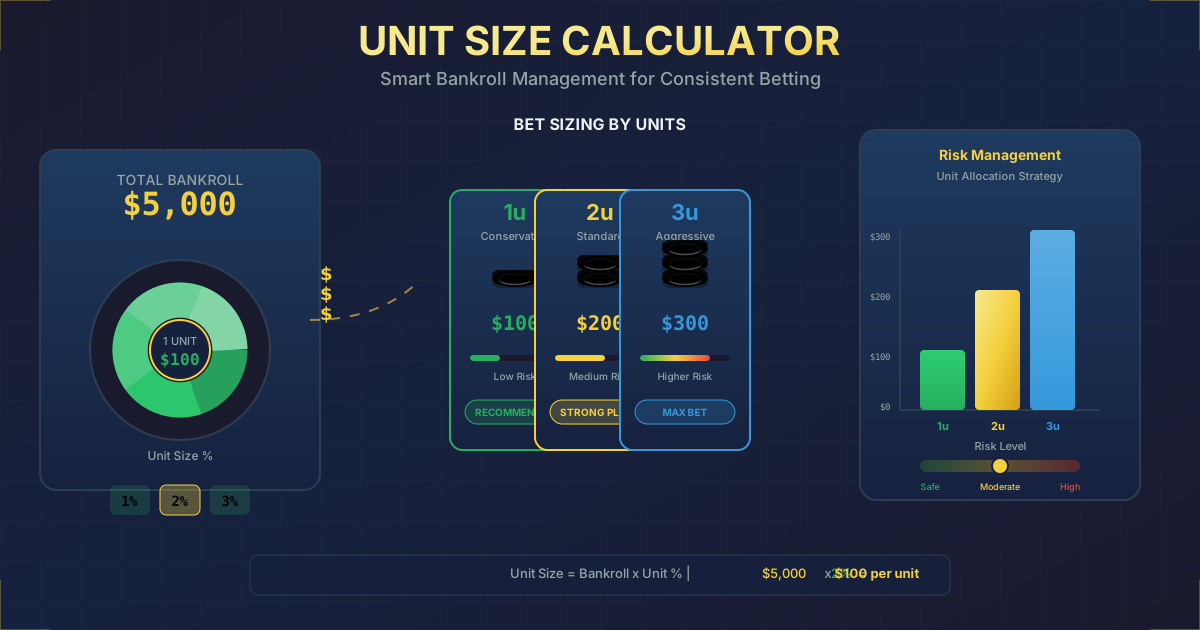
Example: With a $5,000 bankroll using the standard approach, you would bet $25-$50 per outright selection. At a typical event, you might place six outright bets totaling $200. If one golfer at +4000 hits, that single win ($1,000+) covers 5+ tournaments of losses. This is how professional golf bettors operate: they accept many small losses punctuated by large wins.
Determine your optimal bet size for any golf outright using our Kelly Criterion Calculator.
Building an Outright Portfolio
Rather than betting a single golfer to win, smart bettors build "portfolios" of 4-8 outright selections per tournament, diversifying across different odds tiers.
Sample portfolio for a $5,000 bankroll (1% total allocation = $50 per event):
| Selection | Odds | Stake | Potential Profit | Rationale |
|---|---|---|---|---|
| Player A (Tier 1) | +1200 | $10 | $120 | Top-tier talent with strong course fit |
| Player B (Tier 2) | +2500 | $10 | $250 | Hot form, undervalued by market |
| Player C (Tier 3) | +4000 | $10 | $400 | Course specialist returning to familiar venue |
| Player D (Tier 3) | +5000 | $8 | $400 | Statistical profile matches course demands |
| Player E (Tier 4) | +8000 | $7 | $560 | Boom-or-bust talent on a bomber's course |
| Player F (Tier 5) | +15000 | $5 | $750 | Deep value play, overlooked form indicator |
| Total | $50 |
This portfolio approach ensures that a single win at any tier produces meaningful profit relative to the total weekly investment, while limiting downside to 1% of bankroll per event.
Matchup Betting: Head-to-Head Analysis
If outright betting is the lottery ticket, matchup betting is the bread and butter of professional golf wagering. Matchups reduce a 144-player field to a simple question: which of these two golfers will play better?
Why Matchups Are the Sharpest Market
Matchup bets offer structural advantages that make them the preferred market for serious bettors:
- Lower hold: Two-way matchup pricing typically carries 3-6% vig, compared to 20-40% on outrights
- Model accuracy: Strokes-gained projections are highly effective at comparing two specific players
- Reduced variance: You only need your golfer to beat one opponent, not the entire field
- No cut risk (72-hole): Many books void the bet if either player misses the cut, eliminating cut variance
How to Evaluate a Matchup
The core process for evaluating any golf matchup involves four layers of analysis:
Layer 1: Baseline Skill (Strokes Gained Total) Compare each golfer's strokes-gained total over the most recent 24-36 rounds. This establishes who is the better overall player right now.
Layer 2: Course-Specific Fit Adjust for the specific demands of the tournament course. A 450-yard par 4 with water right demands different skills than a 380-yard risk-reward par 4 with undulating greens.
Layer 3: Current Form Weight recent performances more heavily. A golfer coming off three straight top-10 finishes is in a different mental and physical state than one who has missed two of his last three cuts.
Layer 4: Situational Factors Account for weather (afternoon wave in wind), travel (back from a European swing), motivation (defending champion vs. first start at venue), and equipment changes.
Example breakdown:
| Factor | Golfer A: Patrick Cantlay | Golfer B: Tony Finau | Edge |
|---|---|---|---|
| SG Total (last 36 rounds) | +1.85 | +1.62 | Cantlay +0.23 |
| SG Approach (key stat this course) | +1.10 | +0.72 | Cantlay +0.38 |
| Course history (last 4 visits) | T8, T12, T5, T22 | T30, MC, T18, T44 | Cantlay strongly |
| Current form (last 3 starts) | T15, T8, T3 | MC, T25, T12 | Cantlay |
| Weather (PM wave Thursday) | Neutral | Neutral | Push |
| Matchup projection | ~58% win probability | ~42% win probability | Cantlay |
If Cantlay is priced at -115 (implied 53.5%), there is a 4.5% edge. At -130 (implied 56.5%), the edge shrinks to ~1.5% and may not be worth the juice. At -105 (implied 51.2%), it is a strong bet worth sizing up.
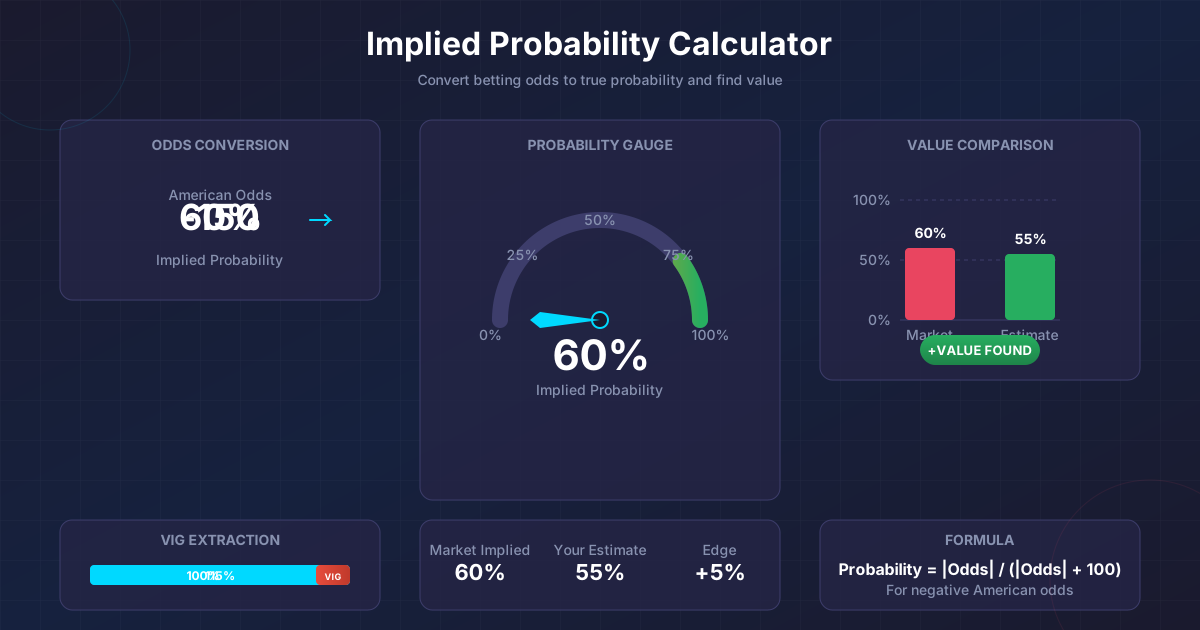
Check implied probability on any matchup line with our Implied Probability Calculator.
Using Strokes Gained for Golf Betting
Strokes gained is the single most important statistical framework for golf betting. Developed by Professor Mark Broadie at Columbia Business School and adopted by the PGA Tour, strokes gained measures how many strokes a player gains or loses relative to the field average on every single shot. It is the golf equivalent of advanced analytics in baseball or basketball.
Strokes Gained Categories Explained
| Category | What It Measures | Predictive Power | Volatility |
|---|---|---|---|
| SG: Off the Tee (OTT) | Driving performance (distance + accuracy combined) | High | Low (sticky) |
| SG: Approach (APP) | Iron play into greens from fairway and rough | Very High | Low (stickiest stat) |
| SG: Around the Green (ARG) | Short game within 30 yards of the green | Moderate | Moderate |
| SG: Putting (PUTT) | Putting performance on the greens | Low-Moderate | Very High (volatile) |
| SG: Tee to Green (T2G) | Combined OTT + APP + ARG (excludes putting) | Very High | Low |
| SG: Total | All shots combined | High | Moderate |
Why SG: Approach Is King
Research from Data Golf shows that 34.7% of scoring dispersion on the average PGA Tour course is explained by SG: Approach alone. That exceeds SG: Off the Tee and SG: Around the Green combined (29.5%). This means a golfer's iron play is the single most predictive factor in tournament performance.
For bettors, this creates a clear hierarchy:
- SG: Approach - most predictive, most stable, most valuable for projections
- SG: Off the Tee - second most important, especially on courses that demand driving
- SG: Around the Green - moderate importance, matters more on courses with tricky green complexes
- SG: Putting - least predictive week to week due to high variance
Why Putting Volatility Creates Betting Value
SG: Putting has a correlation of just 0.29 with made-cut percentage (compared to 0.59 for SG: Approach). This means putting fluctuates wildly from week to week. A golfer who putts lights-out one week will often regress the next.
This creates a predictable market inefficiency:
- A golfer who finishes T3 while putting 2.0 strokes above average will see his outright odds shorten the following week
- But the putting overperformance is unlikely to repeat, meaning his true win probability has not changed as much as the market suggests
- Conversely, a golfer who finishes T40 despite gaining 1.5 strokes tee-to-green but losing 2.0 strokes putting is likely to perform much better the following week
- His odds will be too long because the market overweights the poor result
This is one of the most reliable edges in golf betting: fade putting-driven results and back ball-striking-driven underperformance.
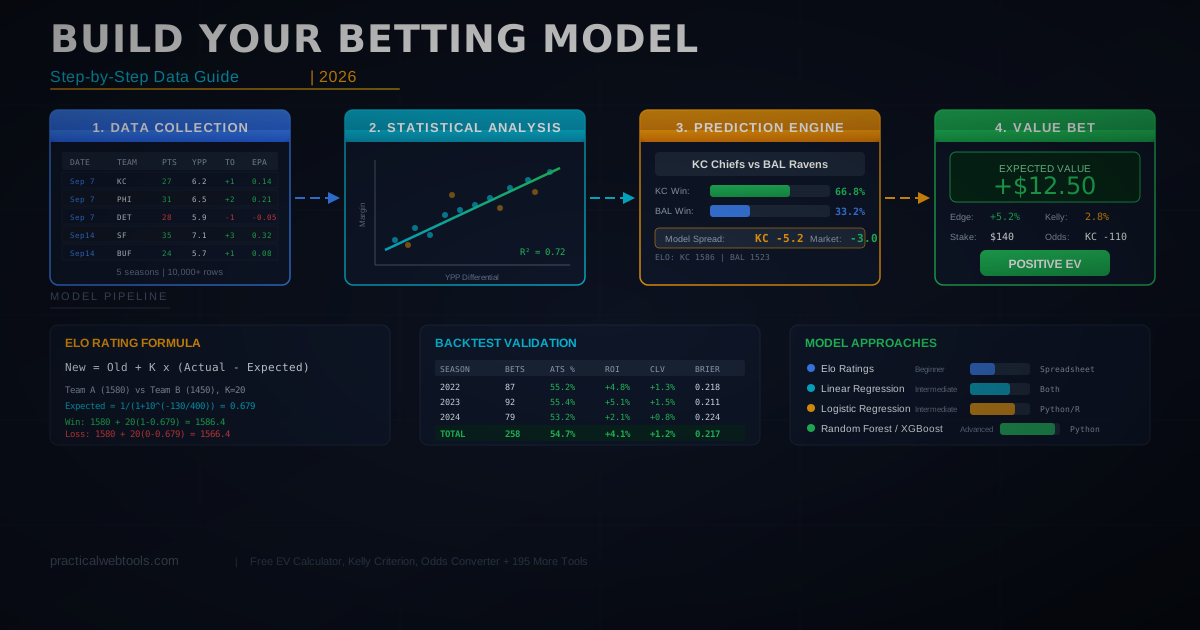
Building a Strokes-Gained Betting Model
A basic strokes-gained model for golf betting evaluates three components:
- Baseline SG (rolling 36-round average): Establishes true player skill
- Recent SG (last 8-12 rounds): Captures current form trends
- Course-adjusted SG: Weights categories based on course demands
Example calculation:
A golfer with these strokes-gained numbers:
- SG: OTT = +0.80 (36-round average)
- SG: APP = +0.95 (36-round average)
- SG: ARG = +0.30 (36-round average)
- SG: PUTT = +0.15 (36-round average)
- SG: Total = +2.20
Playing at a course where approach shots are 40% of the scoring, driving is 30%, around the green is 20%, and putting is 10%:
Course-adjusted projection = (0.95 x 0.40) + (0.80 x 0.30) + (0.30 x 0.20) + (0.15 x 0.10) = 0.38 + 0.24 + 0.06 + 0.015 = +0.695 per round
Over four rounds, this golfer is projected to gain approximately 2.78 strokes on the field. Convert that into a finishing position estimate, then into a win probability, and you have a model-derived number to compare against the sportsbook odds.
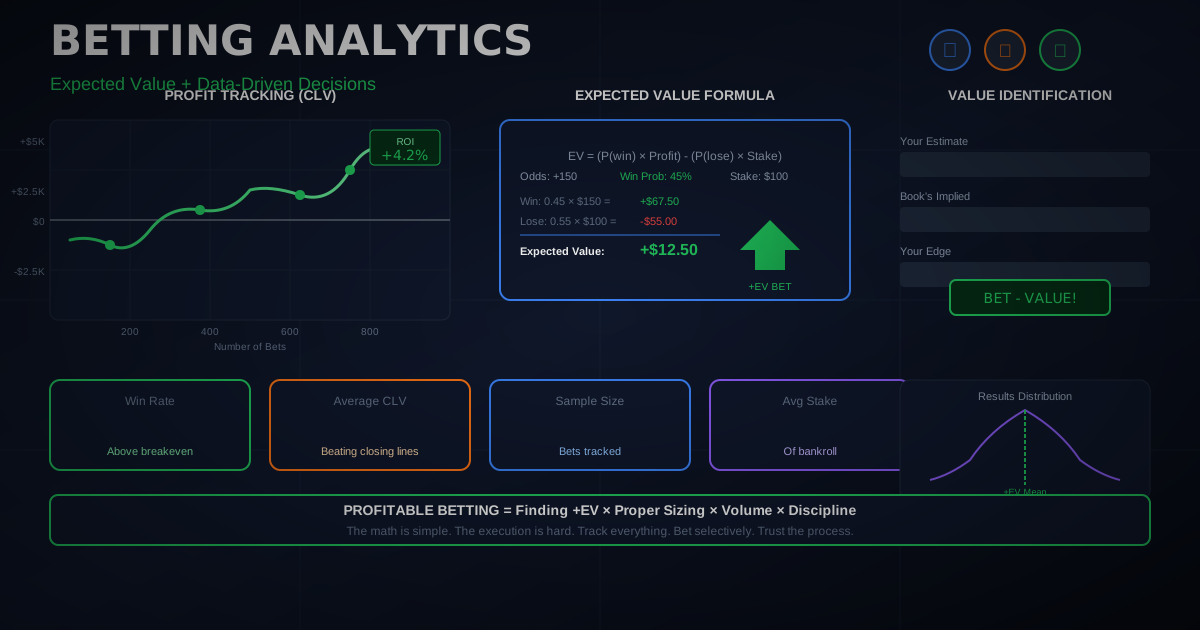
Calculate whether any bet offers positive expected value with our Expected Value Calculator.
Course Form and Course History
"Horses for courses" is one of the oldest clichés in golf, and it exists because it contains real truth. Certain golfers consistently perform well at specific venues, and this effect is measurable and predictable.
Why Course History Matters
Course history captures two things that pure strokes-gained models sometimes miss:
- Intangible comfort: A golfer who has won or contended at a venue develops a positive mental association with the course, the surroundings, and the tournament atmosphere
- Skill-course match beyond statistics: Some course demands are difficult to capture in strokes-gained categories alone (specific green reading, local knowledge of wind patterns, familiarity with unusual hole shapes)
Course History vs. Current Form
PGA Tour data shows that in the 2024 FedExCup season (excluding the first three events), the tournament winner had at least one top-20 finish in his preceding three PGA Tour starts in all but seven occasions. This highlights that current form is the most important predictor of outright success, while course history serves as a valuable tiebreaker and confidence booster.
| Factor | Weight in Model | When It Matters Most |
|---|---|---|
| Current form (last 3-5 starts) | 45-55% | Always, especially for outrights |
| Baseline skill (36-round SG) | 25-35% | Always, foundation of projections |
| Course history (last 3-5 visits) | 10-20% | Stronger at returning venues (Pebble Beach, TPC Scottsdale) |
| Course fit (statistical profile) | 10-15% | Stronger at new venues or redesigned courses |
Course Fit Analysis Template
When a tournament returns to a familiar venue, use this framework to evaluate course fit:
| Course Characteristic | What to Measure | Example: TPC Sawgrass |
|---|---|---|
| Length (yardage) | Advantage to bombers or precision players? | 7,245 yards - rewards accuracy over distance |
| Fairway width | Is driving accuracy or distance more important? | Tight fairways - accuracy paramount |
| Green size and firmness | Large/soft (approach volume) vs. small/firm (precision iron play) | Small, firm island greens - elite APP required |
| Green complexity | Flat (putting skill less relevant) vs. undulating (putting matters) | Severely undulating - putting variance high |
| Par 5 scoring | Reachable in two (eagle opportunities) or layup-and-pitch? | 2 of 4 reachable, birdie/eagle differential important |
| Wind exposure | Links-style exposure or tree-lined protection? | Moderate wind, back nine exposed near water |
| Rough severity | Penalizing misses (bermuda, fescue) or playable? | Moderate rough, but water hazards punish severely |
Cross-reference course history with odds using our Dutching Calculator to spread risk across multiple course specialists.
Weather and Wave Splits as a Betting Edge
Weather is the most underutilized edge in golf betting, particularly for first-round leader (FRL) props, 18-hole matchups, and round scoring totals. Unlike team sports where weather affects both teams equally, golf tournaments use split tee times that create genuinely unequal conditions.
How Wave Splits Work
In a typical PGA Tour event, half the field tees off in the morning (approximately 6:30-9:30 AM) and the other half in the afternoon (approximately 11:30 AM-2:30 PM). Conditions can differ dramatically between waves.
| Weather Factor | Morning Wave Advantage | Afternoon Wave Advantage |
|---|---|---|
| Wind picks up in afternoon | Lower scores, calmer conditions | Higher variance, tougher scoring |
| Rain forecast for morning | Soft greens but poor visibility | Dried-out course, better conditions |
| Temperature swing (cold AM, warm PM) | Ball flies shorter, harder approach shots | Ball carries farther, softer trajectories |
| Poa annua greens | Smoother putting surfaces (less growth) | Bumpier greens, putting lottery |
Applying Weather to Betting
Step 1: Check tee times and wave assignments (available on PGATour.com by Wednesday evening)
Step 2: Check detailed hourly weather forecasts for the course location (wind speed, direction, precipitation timing)
Step 3: Identify significant advantages. A 10-15 mph wind increase between morning and afternoon creates a 1-2 stroke scoring difference across the wave.
Step 4: Adjust FRL and round matchup bets accordingly. If your FRL pick is in the afternoon wave on a day with 25 mph afternoon gusts, that bet loses significant value regardless of player quality.
Example: At the 2025 Open Championship at Royal Portrush, morning wave golfers played in relatively calm 10 mph winds while the afternoon wave faced 25-30 mph gusts off the Atlantic. The scoring average for the morning wave was approximately 2.5 strokes lower. Bettors who identified the weather split and concentrated FRL and round matchup bets on morning wave golfers had a massive structural edge that had nothing to do with player analysis.
Major Championship Betting Strategy
The four men's major championships (Masters, PGA Championship, U.S. Open, The Open) account for the largest betting handles in golf and present unique strategic considerations.
Why Majors Are Different
| Factor | Regular PGA Tour Event | Major Championship |
|---|---|---|
| Field size | 120-156 players | 88-156 players (Masters ~88) |
| Course difficulty | Standard PGA Tour setup | Extreme setups (thick rough, fast greens, hard fairways) |
| Pressure | High | Extreme (career-defining, legacy events) |
| Cut structure | Top 65 and ties | Varies (Masters: top 50 and ties) |
| Green speed | 11-12 on Stimpmeter | 13-14+ on Stimpmeter |
| Rough height | 2-3 inches | 4-6+ inches (U.S. Open) |
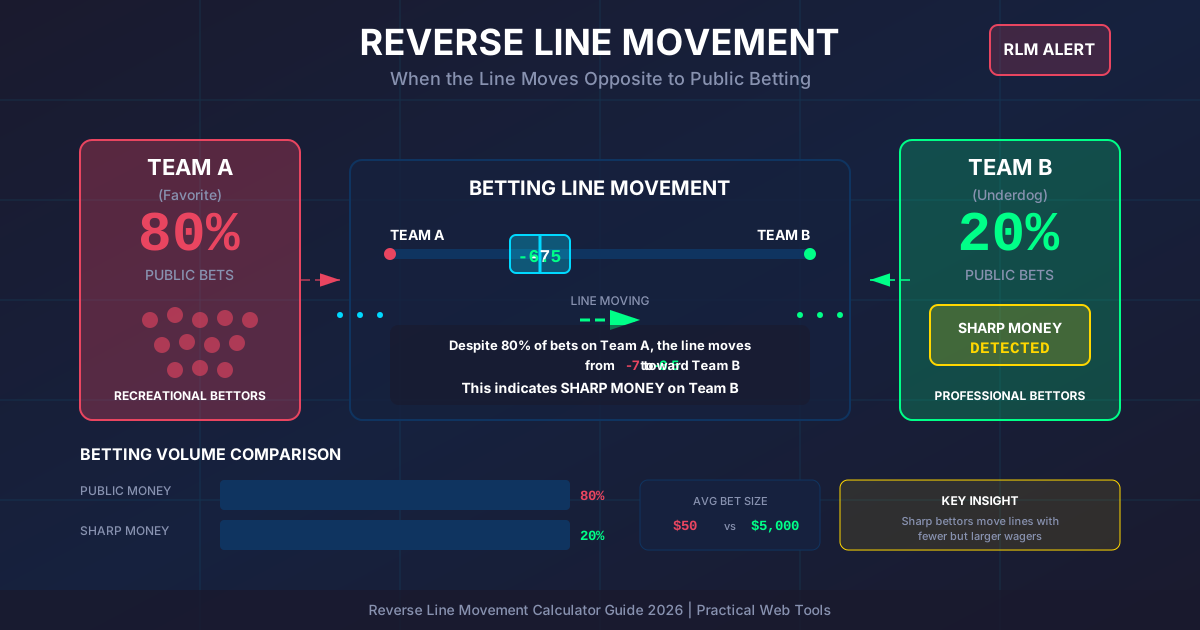
| Market liquidity | Moderate | Very high (sharp money moves lines) |
Major-Specific Strategies
The Masters (Augusta National, April)
- Course plays the same every year with minimal setup changes, making course history extremely valuable
- Emphasize SG: Approach (small, severe greens) and SG: Putting (massively sloped surfaces)
- Left-to-right ball flight is advantageous on multiple key holes
- Par-5 scoring is critical (four par 5s, all reachable, eagle opportunities separate contenders)
- Betting angle: Experienced Augusta players with top-10 course history are consistently undervalued in matchups against first-time participants
PGA Championship (rotating venues, May)
- Courses vary significantly year to year, making course fit analysis essential
- Often set up slightly easier than U.S. Open, favoring aggressive play
- Strong driving is typically rewarded (PGA venues tend to be long)
- Betting angle: PGA Championships produce more longshot winners than any other major; skew outright portfolios toward higher-odds selections
U.S. Open (rotating venues, June)
- USGA setups punish inaccuracy brutally (4-6 inch rough, narrow fairways, firm greens)
- SG: Off the Tee accuracy is paramount; distance matters less when the penalty for missing fairways is severe
- Bogey avoidance matters more than birdie-making
- Betting angle: Bettors overvalue bombers at U.S. Open venues; back precision ball-strikers who keep the ball in play
The Open Championship (links courses, July)
- Links golf rewards creativity, low ball flight, and wind management
- Course history at links venues is exceptionally predictive due to the unique skill set required
- Weather splits between waves can create 3-4 stroke scoring differences
- Betting angle: The Open is the major where course history and links experience matter most; fade first-time Open participants and back seasoned links performers
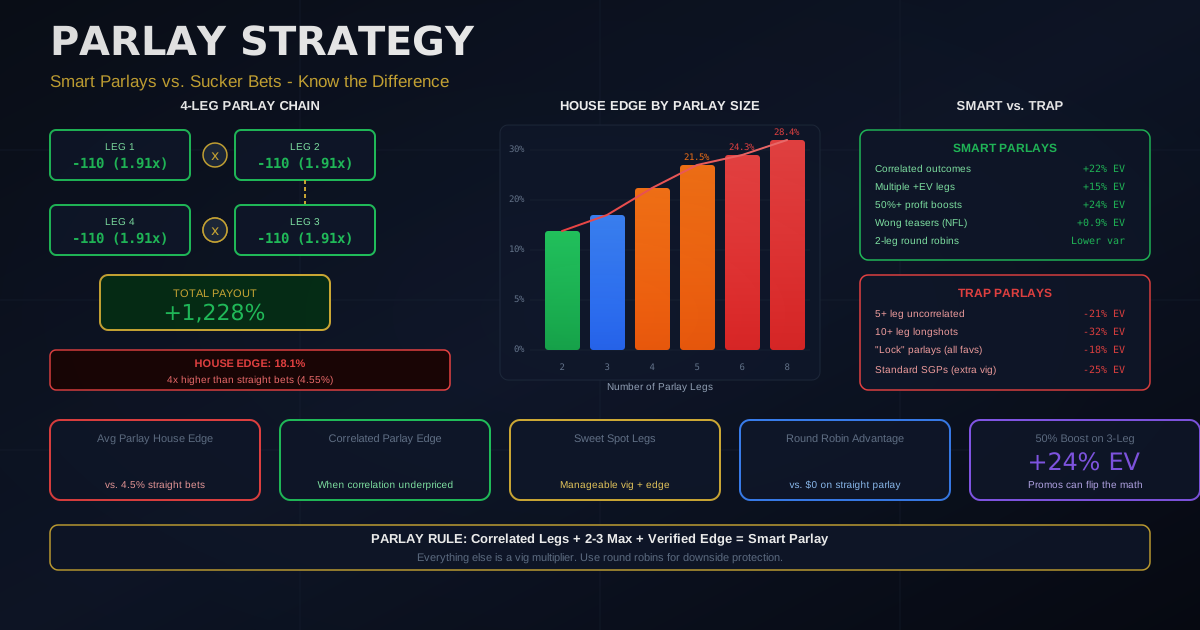
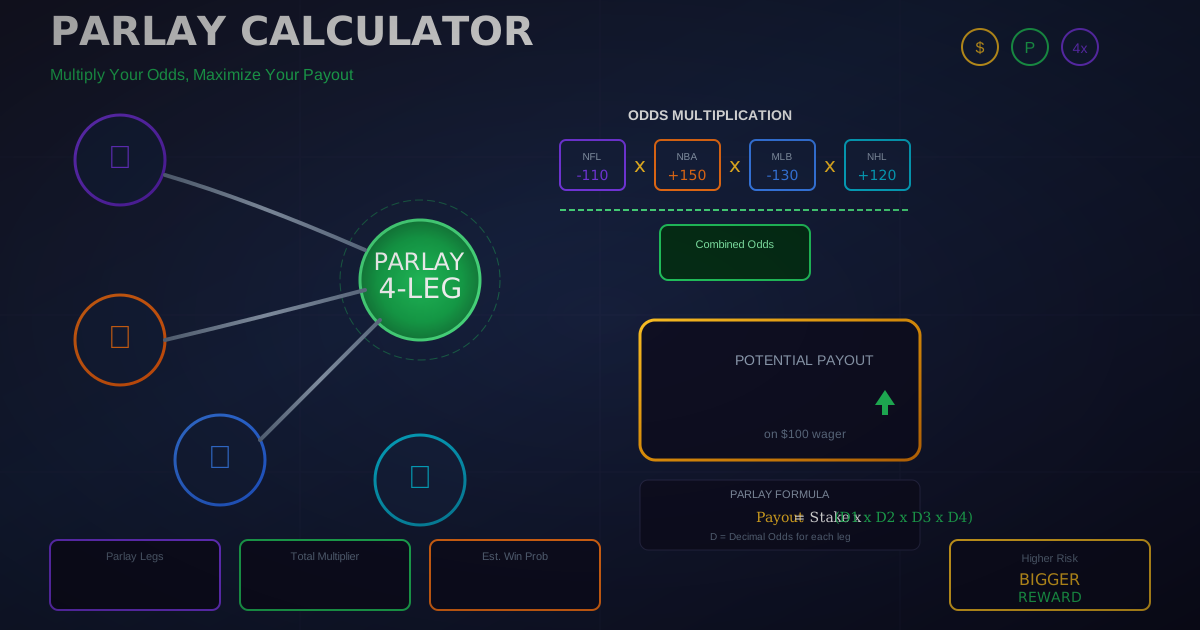
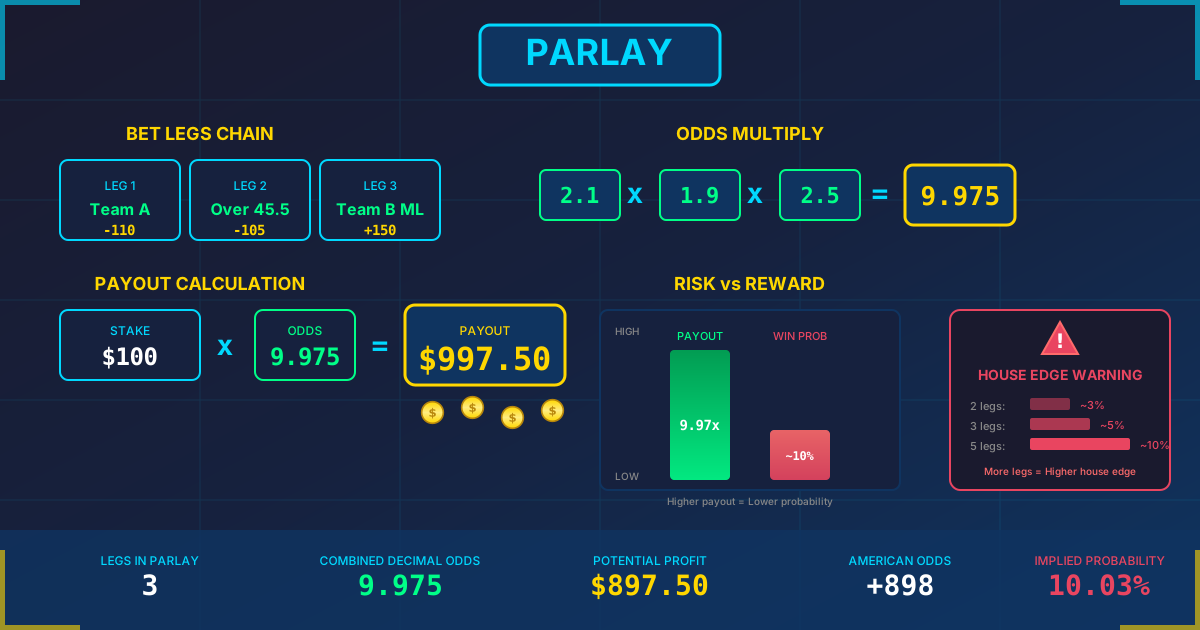
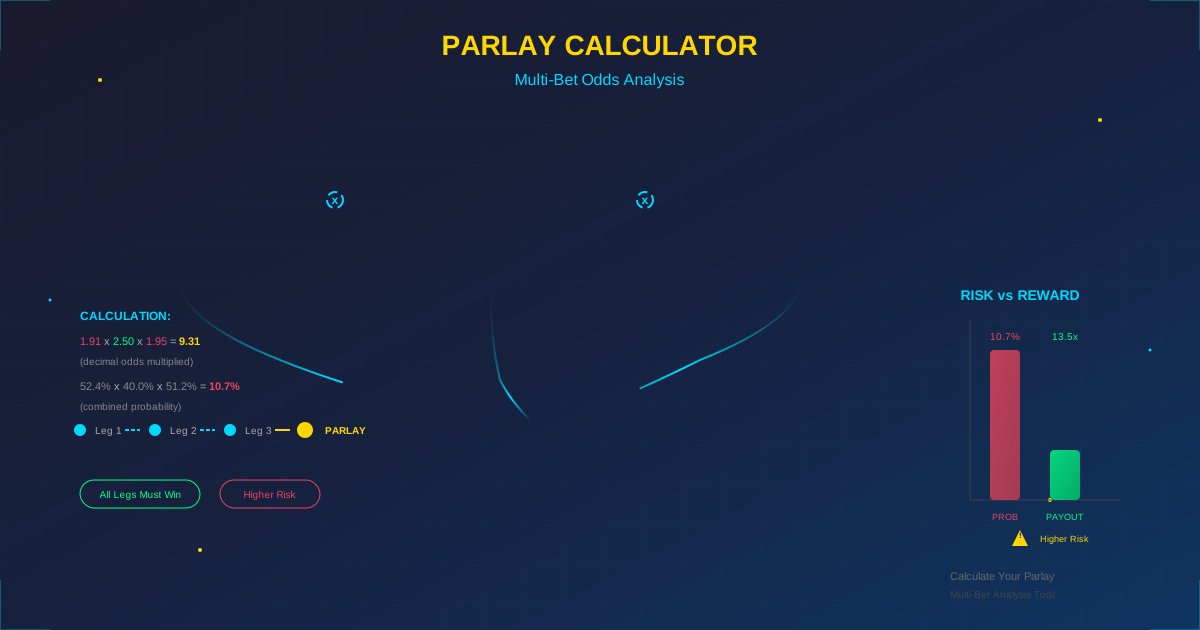
Compare payout scenarios across multiple outright bets with our Parlay Calculator to explore accumulator strategies for majors.
DFS Overlap with Golf Betting
Daily Fantasy Sports (DFS) and golf betting are deeply intertwined, and skills in one translate directly to the other. Many professional golf bettors simultaneously play DFS on platforms like DraftKings and FanDuel, using the same models and research for both.
How DFS Research Improves Betting
| DFS Concept | Betting Application |
|---|---|
| Ownership percentage | Identifies contrarian outright picks (low-owned golfers in DFS are often undervalued in betting markets) |
| Salary-based value | Highlights golfers whose skill level exceeds their market price |
| Correlation stacking | Informs correlated parlays (two golfers with similar course-fit profiles) |
| Ceiling vs. floor analysis | Distinguishes outright candidates (high ceiling) from matchup plays (high floor) |
The Ownership Edge
DFS ownership percentages are published after contests lock, revealing which golfers the public is backing heavily and which are being ignored. Golfers with low DFS ownership often have inflated outright odds in the betting market because the same public that creates DFS chalk also drives betting handle toward favorites.
When a golfer has 2-3% DFS ownership but your model projects him as a top-20 player in the field, his outright odds are almost certainly too long.
Live Tournament Betting (In-Play)
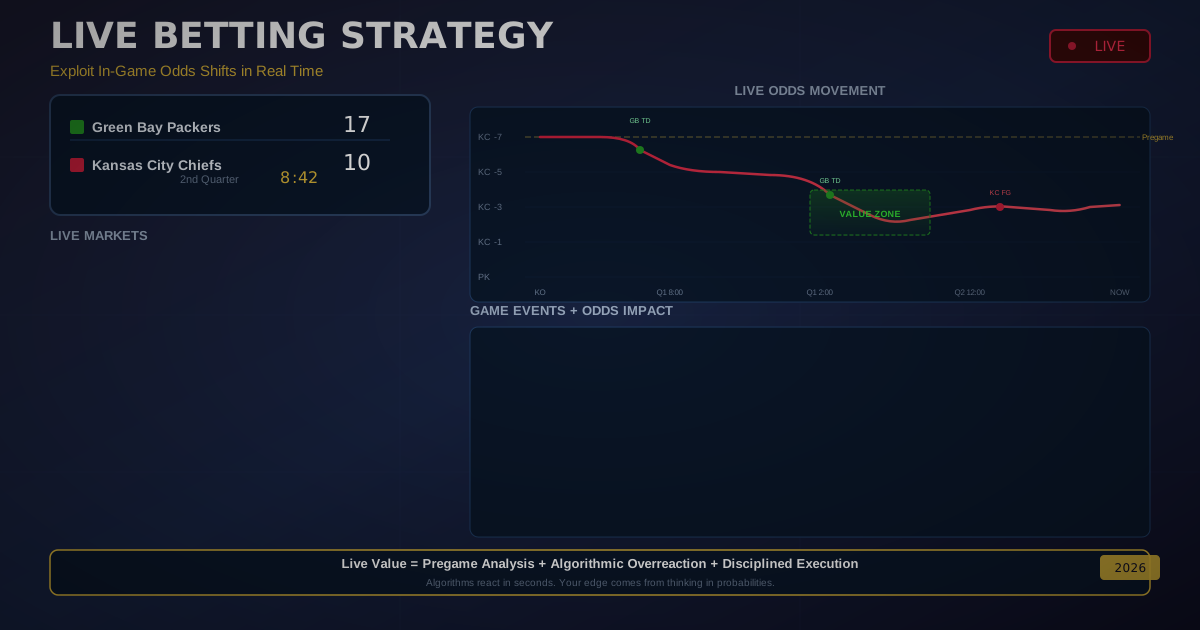
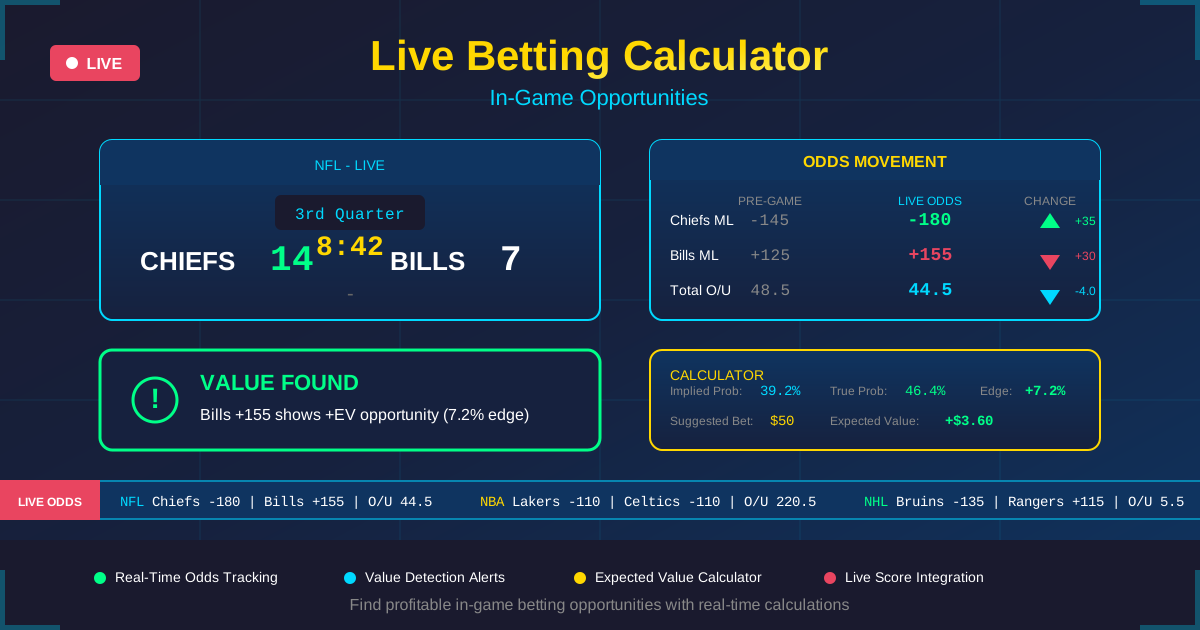
Live golf betting has exploded alongside the PGA Tour Betcast expansion. In-play markets update continuously as golfers play each hole, and they create some of the most extreme value opportunities in all of sports betting.
Why Live Golf Betting Offers Unique Value
- Overreaction to single holes: A golfer makes a double bogey on Hole 3 and his live odds immediately balloon, even if the double was caused by a bad bounce rather than poor play
- Weather shifts: If wind picks up mid-round, live odds adjust slowly for golfers who are already past the exposed holes
- Leaderboard psychology: A golfer who starts birdie-birdie-birdie sees his odds crash, but that hot start may be putting-driven (unsustainable) rather than ball-striking-driven (sustainable)
- Cut line dynamics: As the projected cut line shifts on Friday afternoon, make/miss cut live odds create huge value when the market overprice a golfer's chances of missing after one bad stretch
Live Betting Strategy
Monitor strokes-gained in real time, not the leaderboard. A golfer who is T45 but has gained 2.0 strokes tee-to-green while losing 2.5 strokes putting is playing far better than his position suggests. His live outright odds will be too long because the market is anchored to scoreboard position. If the putting reverts to even slightly below average, he projects to climb 20-30 spots.
Example: At the 2025 PGA Championship, Ludvig Aberg was T50 after Round 1 despite gaining 1.8 strokes tee-to-green. His putting was -2.5 strokes for the round, a historic outlier. His live outright odds ballooned to +8000. Bettors who recognized the ball-striking quality and betting the regression in putting saw him surge into contention over the next three rounds.
Bankroll Management for Golf Bettors
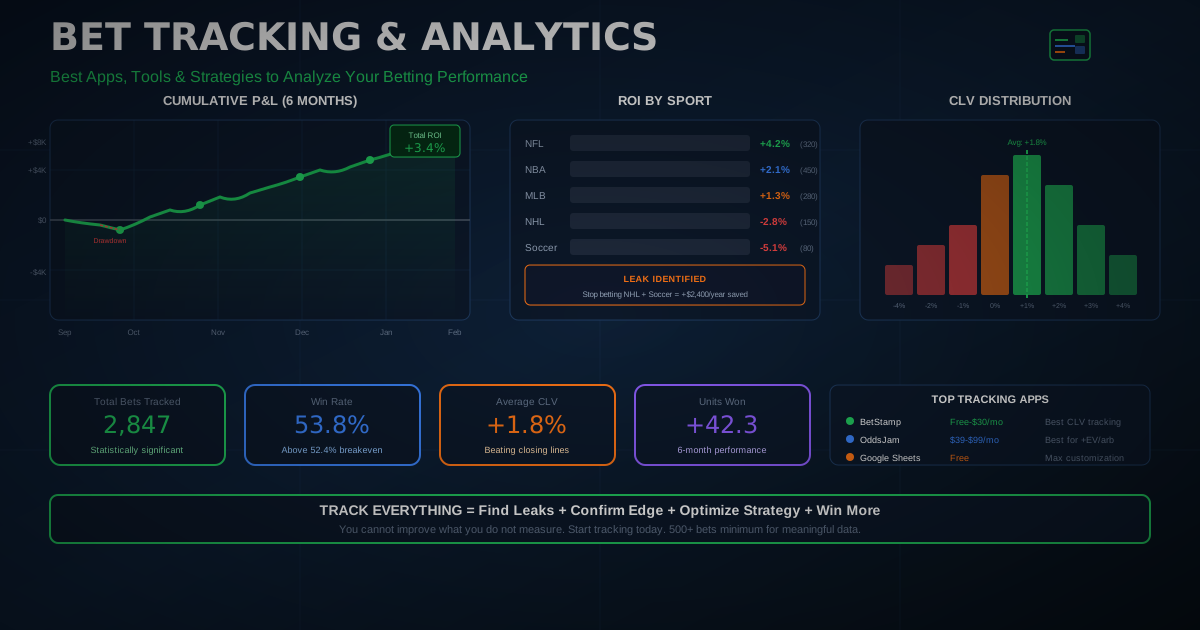
Golf is a high-variance sport that demands disciplined bankroll management. Unlike betting NFL or NBA where you might win 55% of spread bets, golf outright bettors might hit just 3-5% of their selections while still being profitable because of the high odds.
Key Bankroll Principles
| Principle | Guideline | Why It Matters |
|---|---|---|
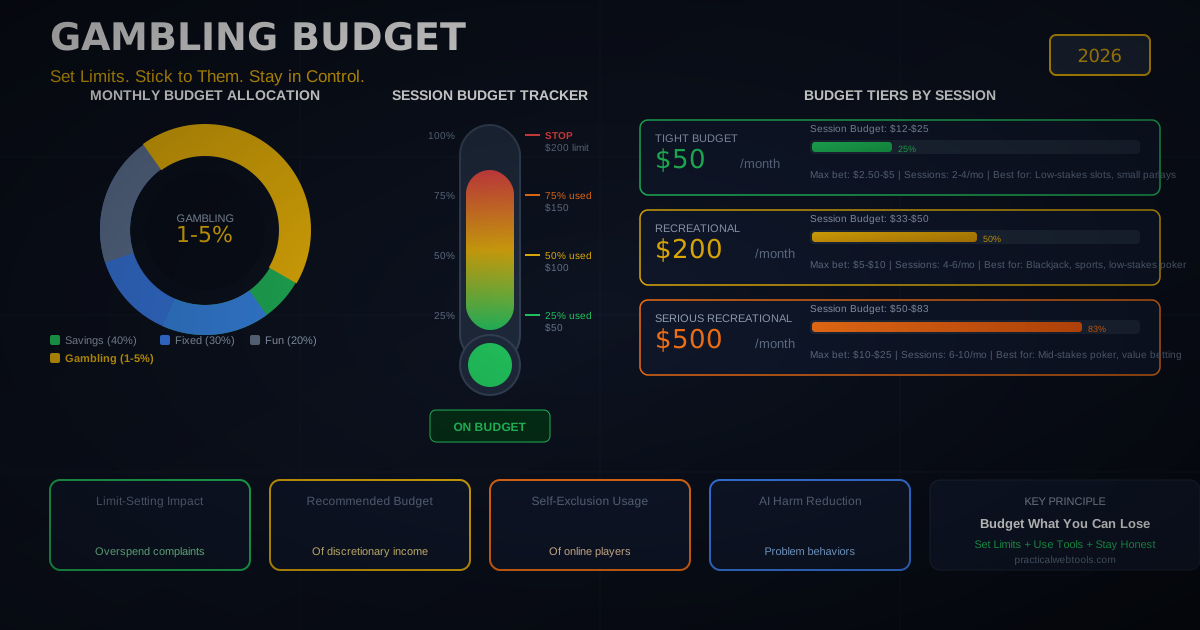
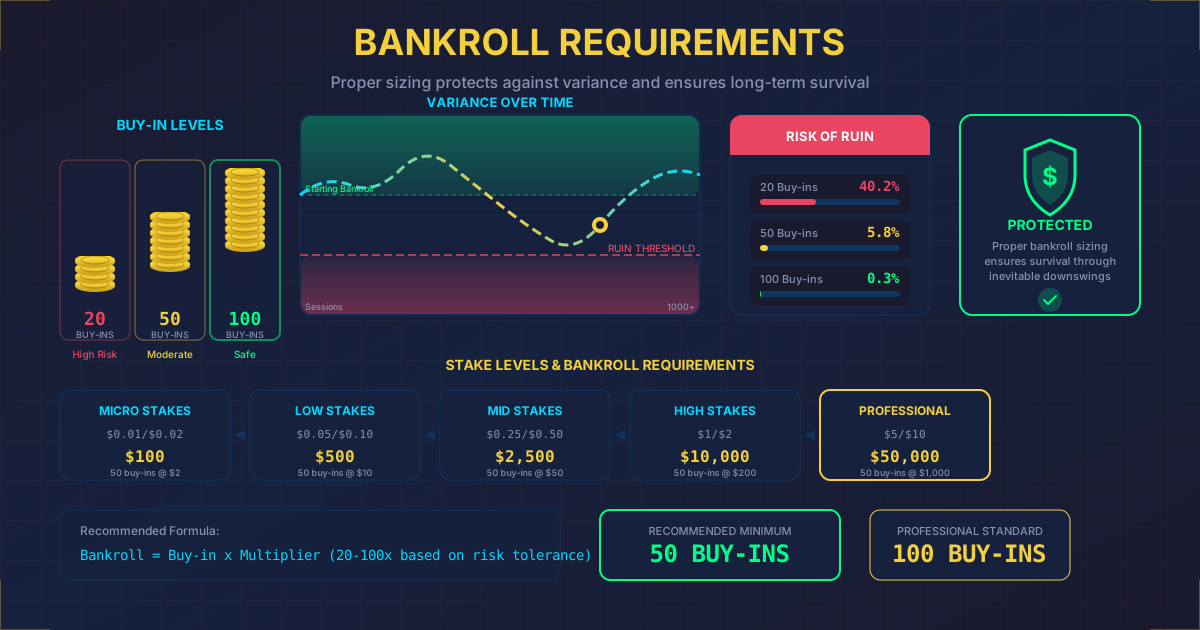
| Total weekly allocation | 1-3% of bankroll | Survive 20+ losing weeks in a row |
| Single outright bet | 0.25-1.0% of bankroll | No single loss should sting |
| Matchup bet sizing | 1-3% of bankroll per bet | Lower variance allows larger sizing |
| Prop bet sizing | 0.5-1.5% of bankroll per bet | Higher vig requires selectivity |
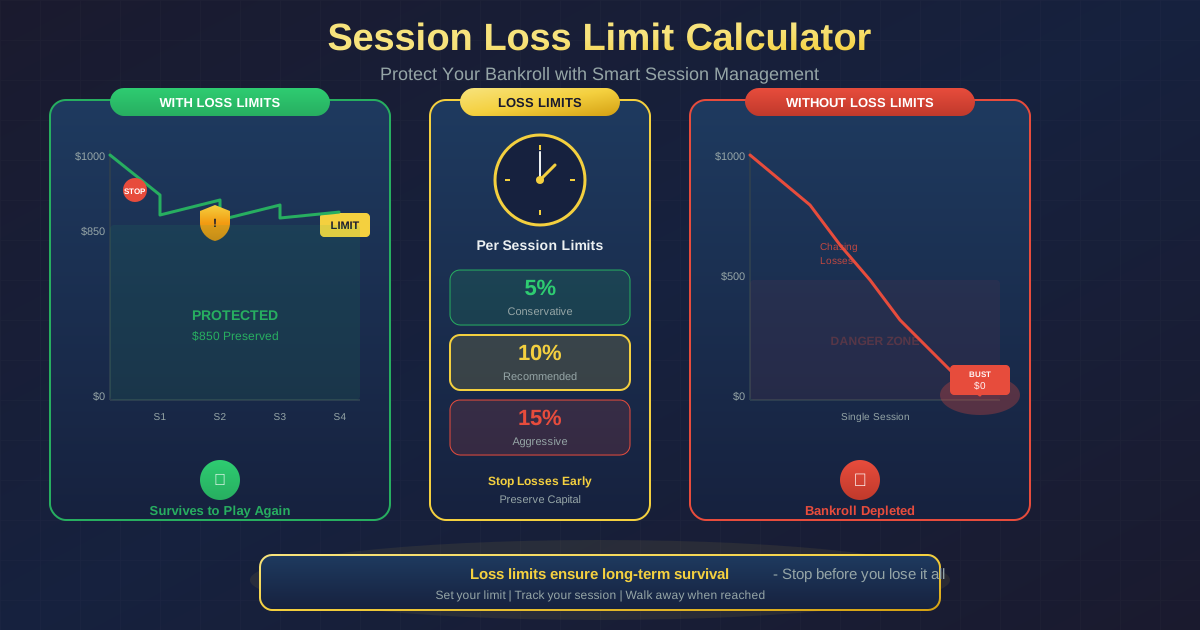
| Loss limit (per event) | 3-5% of bankroll maximum | Prevents chasing at a single tournament |
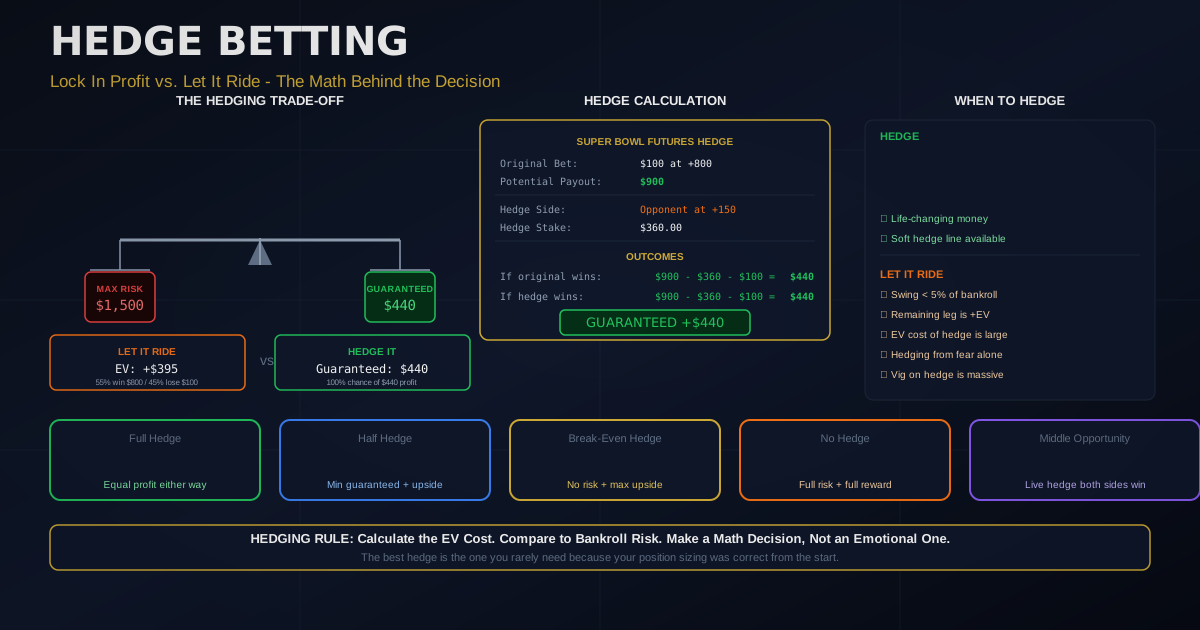
| Winning withdrawal | Take 50% of major wins off the table | Locks in profit, prevents overconfidence |
Example: A bettor with a $10,000 bankroll allocates $200 per tournament week. This might break down as:
- 6 outright bets averaging $12 each = $72
- 4 matchup bets averaging $25 each = $100
- 2 prop bets averaging $14 each = $28
- Total: $200 (2% of bankroll)
If one outright bet at +5000 hits on a $12 stake, the payout is $600. That single win covers three full weeks of betting, and the bettor has a profitable month despite losing every other bet.
Optimize your bet sizing mathematically with our Kelly Criterion Calculator.
Advanced Angle: The "Course Fit Matrix" Approach
For bettors who want to build a systematic edge, the Course Fit Matrix is a structured framework for scoring golfers against course demands. It combines strokes-gained data with course characteristics to produce a composite "fit score."
How to Build a Course Fit Matrix
Step 1: Identify the 5-6 most important course characteristics (e.g., driving distance importance, approach accuracy importance, scrambling difficulty, putting surface type, wind exposure, par-5 scoring importance)
Step 2: Assign weights to each characteristic based on historical scoring data at the venue
Step 3: Score each golfer from 1-10 on each characteristic using strokes-gained data
Step 4: Calculate weighted composite scores and rank the field
| Category | Weight at TPC Sawgrass | Golfer A Score | Golfer B Score | Golfer C Score |
|---|---|---|---|---|
| SG: Approach accuracy | 30% | 9 | 7 | 8 |
| SG: OTT accuracy (not distance) | 25% | 8 | 9 | 6 |
| Scrambling / SG: ARG | 15% | 6 | 7 | 9 |
| Par-5 birdie rate | 15% | 7 | 6 | 8 |
| Putting on bermuda/overseeded | 10% | 5 | 8 | 7 |
| Wind performance history | 5% | 7 | 6 | 5 |
| Weighted Score | 100% | 7.55 | 7.35 | 7.30 |
Golfer A has the highest course-fit score, and if his outright odds are longer than Golfer B or C, he may represent the best value in the field.
Frequently Asked Questions
What is the most profitable type of golf bet?
Head-to-head matchups (72-hole) are the most consistently profitable golf bet type for model-driven bettors. They carry the lowest vig (3-6% compared to 20-40% on outrights), are highly projectable with strokes-gained data, and reduce the variance of a 144-player field to a simple two-player comparison. Outright bets can produce the highest absolute returns on a per-bet basis, but the variance is extreme and requires significant bankroll depth to weather losing streaks.
How important is course history when betting on golf?
Course history is a meaningful factor but should represent only 10-20% of your total analysis. Current form (last 3-5 starts) and baseline skill (rolling strokes-gained averages) are more predictive of future performance. Course history becomes most valuable at courses that return annually (like TPC Sawgrass for The Players Championship or Augusta National for the Masters) where 3-5 years of data exist. At new or heavily redesigned venues, course history has minimal value and course-fit analysis using strokes-gained profiles should replace it.
What strokes-gained metric matters most for golf betting?
SG: Approach is the single most predictive metric, explaining 34.7% of scoring dispersion on the average PGA Tour course. SG: Tee to Green (which combines off-the-tee, approach, and around the green) is the best composite metric because it excludes putting, which is the most volatile category. Professional golf bettors often build models weighted 40-50% toward SG: Approach, 25-30% toward SG: Off the Tee, and 15-20% toward SG: Around the Green, with putting receiving just 5-10% weight because of its week-to-week unpredictability.
How much bankroll should I allocate to golf betting each week?
Conservative bettors should allocate 1-2% of their total bankroll per tournament week, split across 4-8 individual bets. More aggressive model-driven bettors might allocate up to 3%, but exceeding 5% of bankroll on a single tournament week is reckless given golf's inherent variance. A $5,000 bankroll should invest $50-$100 per week, and a single outright bet should never exceed 1% of total bankroll ($50 on a $5,000 bankroll). Matchup bets can be sized more aggressively (1-3% per bet) because the lower variance and lower vig justify it.
Can weather really give you an edge in golf betting?
Yes, weather is one of the most reliable structural edges in golf betting, particularly for first-round leader (FRL) bets and 18-hole matchups. When wind speeds differ by 10-15 mph between morning and afternoon waves, the scoring average gap can reach 2-3 strokes. This is a massive edge because sportsbooks price FRL and round matchup markets based on player skill, not wave-specific conditions. Checking detailed hourly weather forecasts and cross-referencing them with tee time wave assignments is a high-value, low-effort step that most recreational bettors skip entirely.
Is golf DFS or golf betting more profitable?
Both can be profitable with the right approach, and the research overlaps significantly. Golf betting offers better expected value on a per-dollar basis because you are betting against the sportsbook (which has a fixed margin) rather than against other sharp DFS players who may be using the same models and data. DFS tournaments offer higher upside on a single entry (first place in a major DFS contest can pay six figures), but the competition is fierce and the rake is 10-15%. Most professional golf analysts play both, using DFS ownership data to inform contrarian betting picks and using betting model probabilities to identify DFS value.
What makes major championship betting different from regular PGA Tour events?
Major championships feature extreme course setups (thick rough, fast greens, narrow fairways), smaller fields (88-156 players), and significantly higher betting handles. The higher liquidity means lines are sharper and move more quickly, but the extreme conditions also amplify the importance of course fit and course history. The Masters at Augusta National is the most predictable major because the course never changes, making course history exceptionally valuable. The U.S. Open and Open Championship reward specific skill sets (accuracy and links ability, respectively) that create identifiable edges for bettors who study course demands. The PGA Championship has historically produced the most longshot winners, suggesting outright portfolios should skew toward higher-odds selections.
How do I get started with golf betting as a complete beginner?
Start with head-to-head matchups rather than outrights. Pick two golfers in a matchup, research their recent strokes-gained numbers (available free on PGATour.com), check course history if the tournament is at a returning venue, and compare your assessment to the sportsbook line. Bet small (0.5-1% of your bankroll per matchup) and track every bet in a spreadsheet, recording your estimated probability, the implied probability from the odds, and the result. After 50-100 tracked bets, you will have enough data to evaluate whether your process is generating positive expected value. Only then should you consider expanding into outrights and props.
Essential Tools for Golf Bettors
The following free tools on Practical Web Tools are built specifically to help you evaluate golf bets mathematically:
-
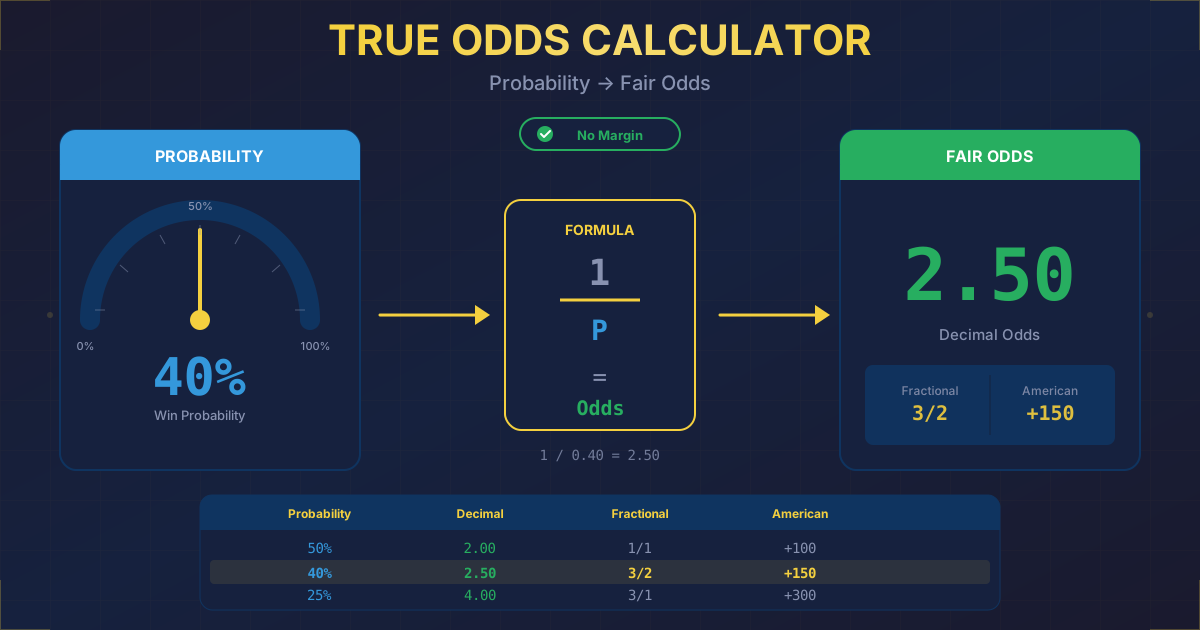
Odds Converter: Instantly convert between American (+150), decimal (2.50), and fractional (3/2) odds formats. Essential when comparing odds across different sportsbooks.
-
Expected Value Calculator: Input your estimated win probability and the sportsbook odds to calculate the expected profit or loss per dollar wagered. The foundation of all profitable betting.
-
Kelly Criterion Calculator: Determine the mathematically optimal bet size based on your edge and odds. Especially critical for golf outrights where bet sizing determines long-term survival.
-
Implied Probability Calculator: Convert sportsbook odds into implied probabilities so you can directly compare them against your model projections.
-
Hold/Vig Calculator: Calculate the total market hold (overround) on any golf betting market. Helps you identify which markets offer the fairest pricing.
-
Parlay Calculator: Calculate potential payouts for multi-leg golf bets, including matchup parlays and correlated prop combinations.
-
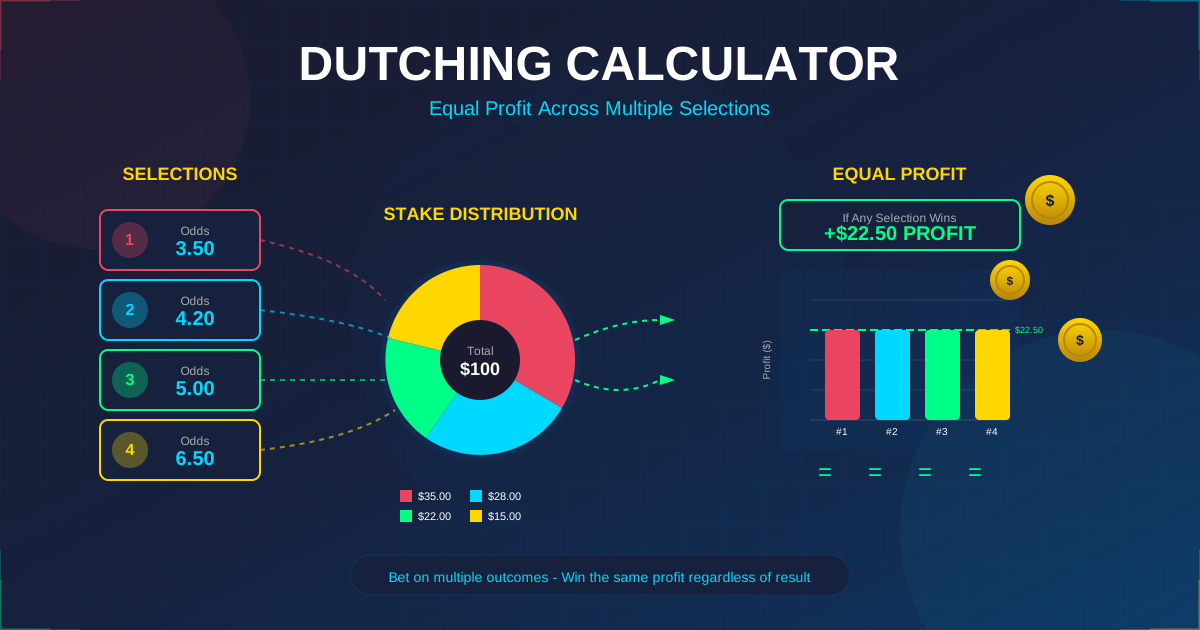
Dutching Calculator: Spread your stake across multiple outright selections to guarantee equal profit regardless of which golfer wins. Essential for outright portfolio construction.
Conclusion
Golf betting rewards the analytical bettor more than almost any other sport. The combination of large fields, volatile outcomes, soft lines on props and longshots, measurable strokes-gained data, and weather-driven structural edges creates a market where mathematical thinkers can find consistent positive expected value.
The key principles to remember:
- Matchups are the foundation of a profitable golf betting portfolio due to low vig and high model accuracy
- Strokes gained: Approach and Tee to Green are the most predictive and stable metrics; discount putting-driven results
- Outright betting requires bankroll discipline and portfolio diversification across odds tiers
- Course fit and course history add 10-20% of your analytical edge, particularly at returning venues and major championships
- Weather and wave splits provide structural edges that require no modeling skill, just diligent preparation
- Live betting offers the most extreme value when the market overreacts to single holes or putting variance
The PGA Tour's betting handle is growing at double-digit rates annually, and the integration of Betcast coverage and real-time strokes-gained data is only going to make golf betting more accessible and more sophisticated. Bettors who build their process on data-driven models today will have a significant head start as the market matures.
Start with matchups, learn strokes gained, track every bet, and let the math compound your edge over time.
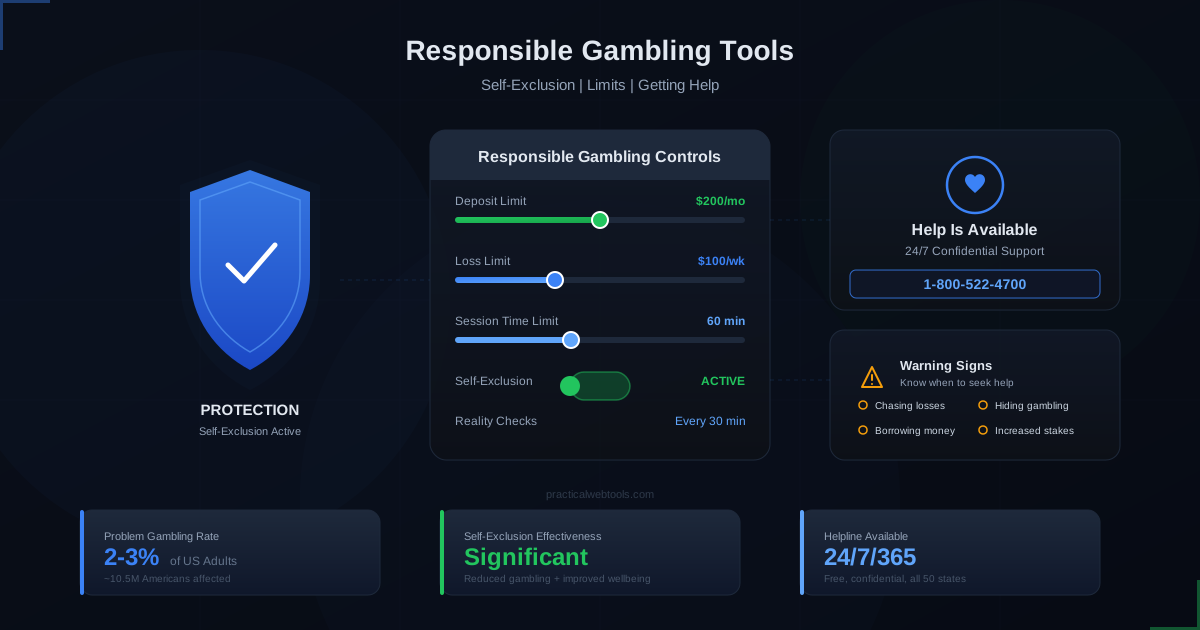
Gambling involves risk. This content is for educational and informational purposes only. Always gamble responsibly, set limits you can afford, and seek help if gambling becomes a problem. Visit the National Council on Problem Gambling or call 1-800-522-4700 for support.