Risk of Ruin: How to Calculate Your Probability of Going Broke (2026)

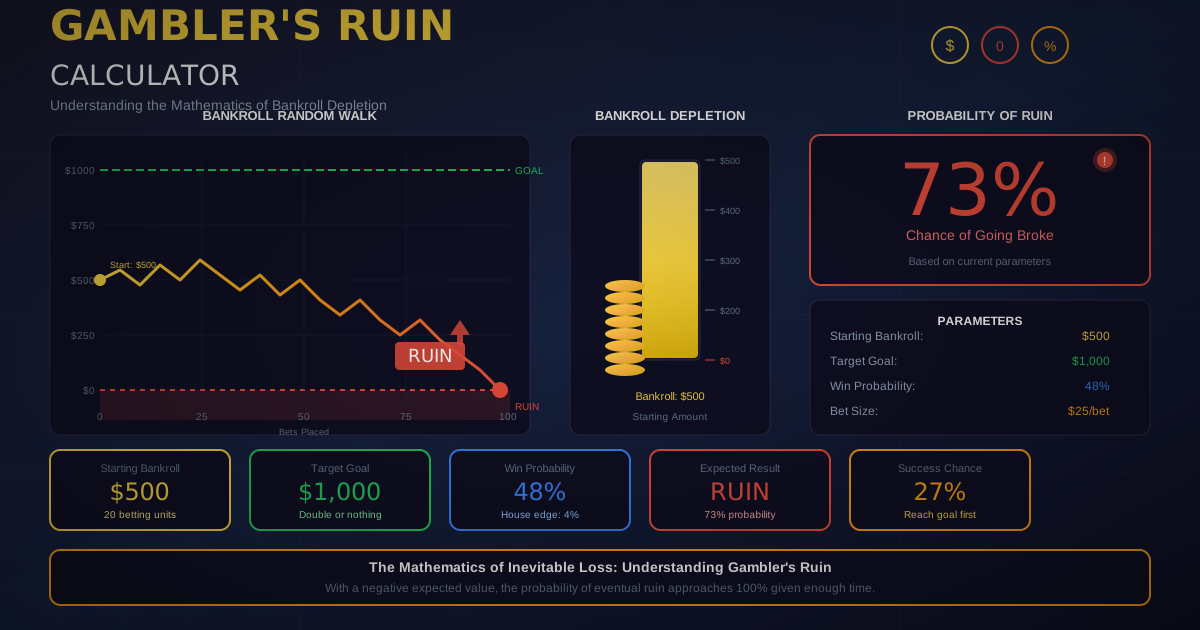
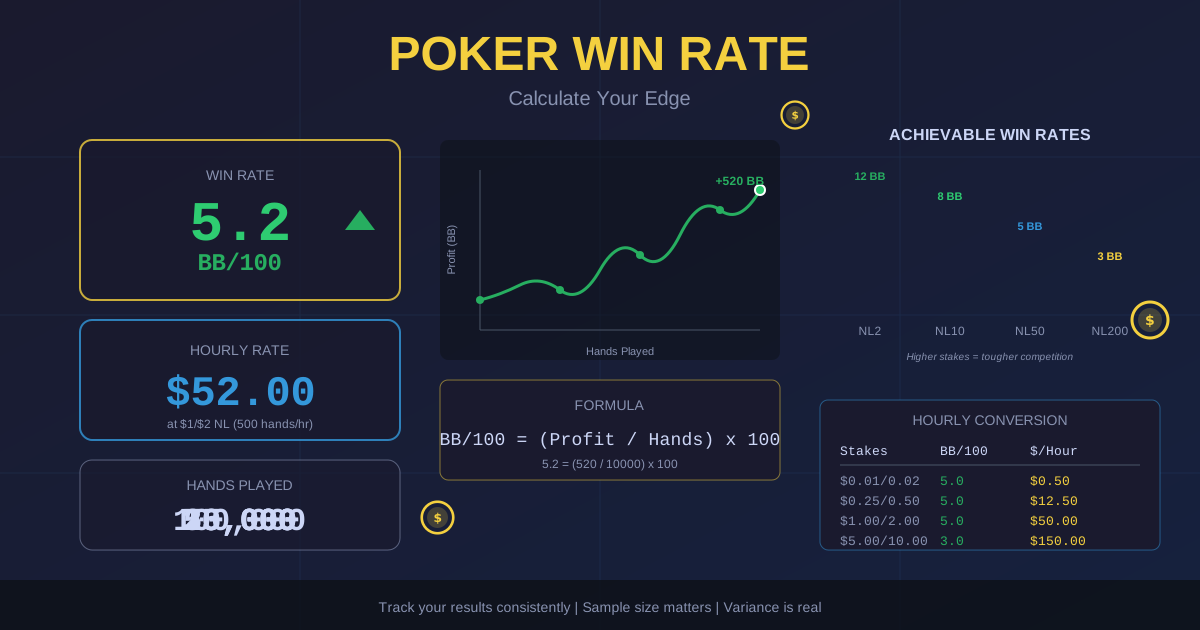
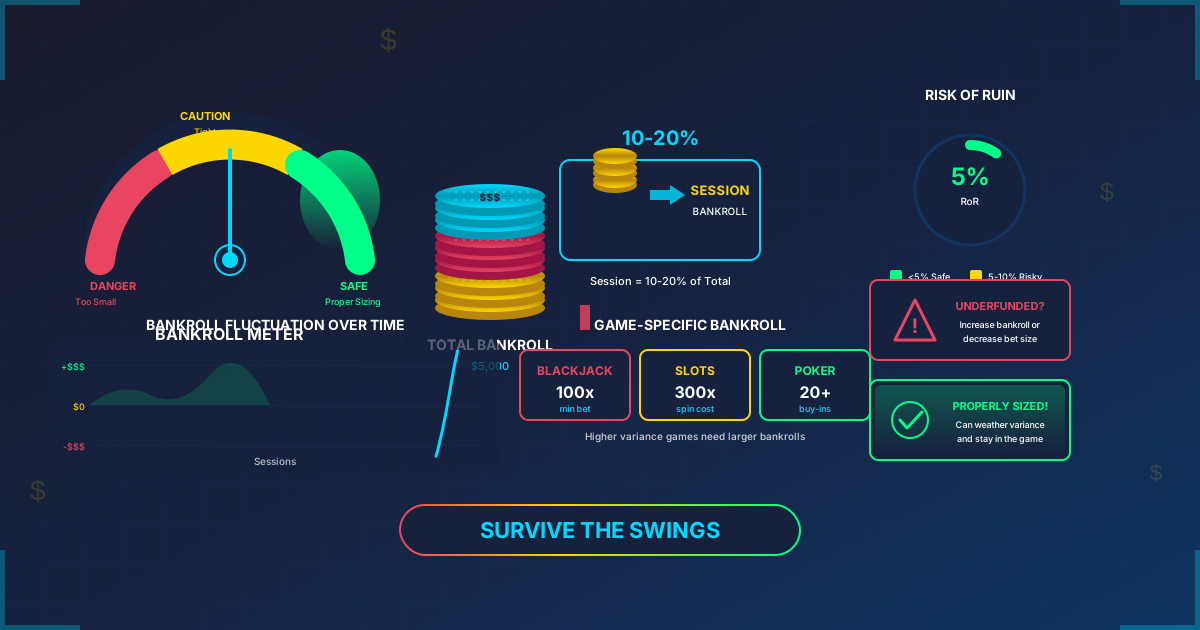
Every gambler with a positive edge will eventually go broke if their bankroll is too small. That is not an opinion or a cautionary tale -- it is a mathematical certainty. Risk of ruin (RoR) is the probability that you will lose your entire bankroll before it grows to a target amount, and understanding it is the single most important concept in professional gambling. A poker player winning 5 bb/100 with a $2,000 bankroll at $1/$2 has a 13.5% chance of going broke. That same player with $5,000 drops to under 1%.
The difference between a winning gambler who stays in action and a winning gambler who goes bust is not skill -- it is bankroll sizing. Risk of ruin quantifies exactly how much money you need to make going broke essentially impossible, and the numbers are more demanding than most people expect.
Whether you play poker, count cards at blackjack, or bet on sports with an edge, this guide gives you the formulas, calculations, and practical recommendations to keep your risk of ruin below the level where variance can end your gambling career.
Calculate your exact probability of going broke with our free Poker Risk of Ruin Calculator or Blackjack Risk of Ruin Calculator.
What Is Risk of Ruin?
Risk of ruin is the probability that a gambler will lose their entire bankroll before reaching a specified profit target -- or in many formulations, the probability of ever going broke given an infinite time horizon. It is expressed as a percentage between 0% and 100%.
A risk of ruin of 5% means there is a 5% chance that normal variance will drain your entire bankroll even though you have a positive expectation. A 0% risk of ruin is mathematically impossible unless you have an infinite bankroll, but at some point the probability becomes so small (0.001% or less) that it is effectively zero for practical purposes.
The concept applies to any form of gambling where you have a positive expected value:
- Poker players with a positive win rate
- Card counters at blackjack with a positive EV
- Sports bettors who consistently find +EV lines
- Advantage players in video poker or other beatable games
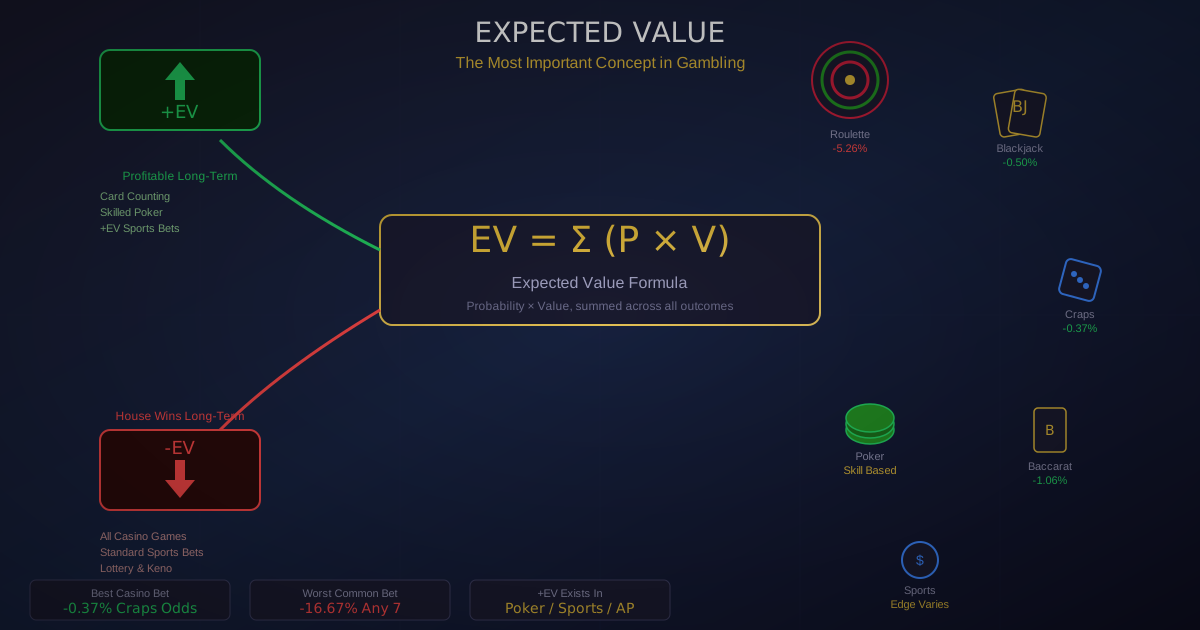
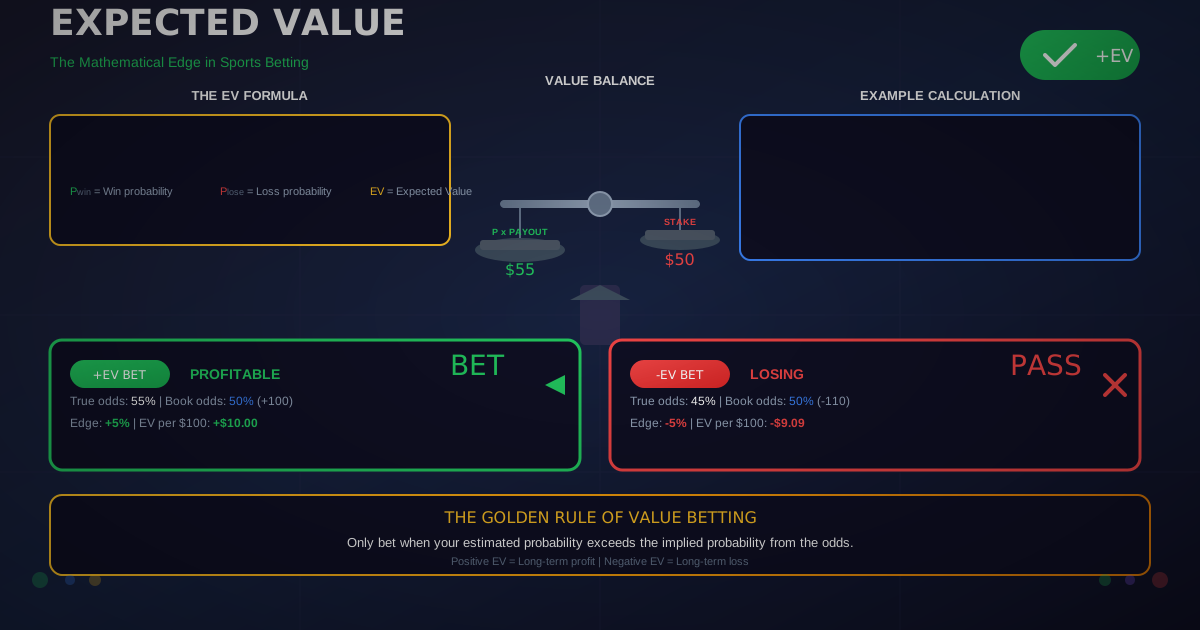
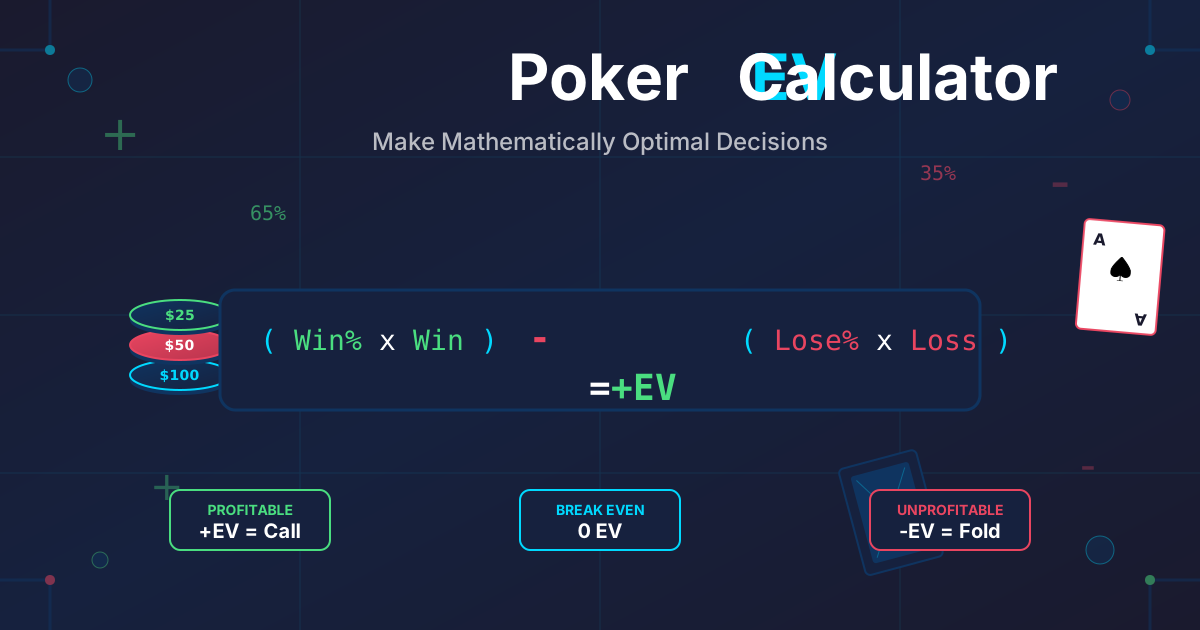
For negative-EV gamblers, risk of ruin is always 100% given enough time. If you do not have an edge, the only question is how long it takes to go broke, not whether it happens. Use our Expected Value Calculator to verify whether your play is actually profitable before worrying about risk of ruin.
The Risk of Ruin Formula
The classic risk of ruin formula for a simple repeated wager with fixed bet sizes is:
RoR = ((1 - edge) / (1 + edge)) ^ (bankroll / bet_size)
Where:
- edge = your advantage expressed as a decimal (e.g., 0.02 for a 2% edge)
- bankroll = your total gambling funds
- bet_size = the amount wagered per bet or unit
Example Calculation
A sports bettor with a 3% edge betting $100 per game with a $5,000 bankroll:
- edge = 0.03
- bankroll / bet_size = 5,000 / 100 = 50 units
- RoR = ((1 - 0.03) / (1 + 0.03)) ^ 50
- RoR = (0.97 / 1.03) ^ 50
- RoR = (0.9417) ^ 50
- RoR = 4.9%
That is roughly a 1-in-20 chance of going broke. For most professional gamblers, this is acceptable but not ideal. Increasing the bankroll to $10,000 (100 units) drops the risk of ruin to 0.24%, which is far safer.
The Generalized Formula for Variable Bet Sizes
For games like poker where bet sizes are not fixed, the formula becomes:
RoR = e ^ (-2 * win_rate * bankroll / variance)
Where:
- win_rate = expected profit per unit of play (e.g., bb/100 hands in poker)
- bankroll = total funds in the same unit as win_rate
- variance = the square of the standard deviation per unit of play
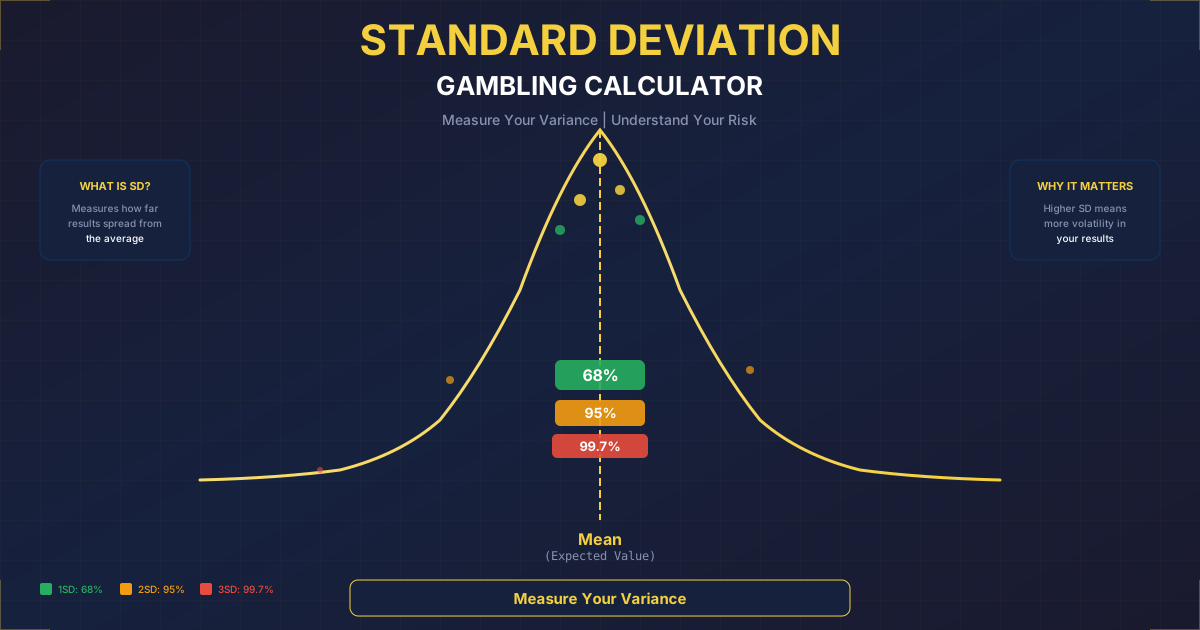
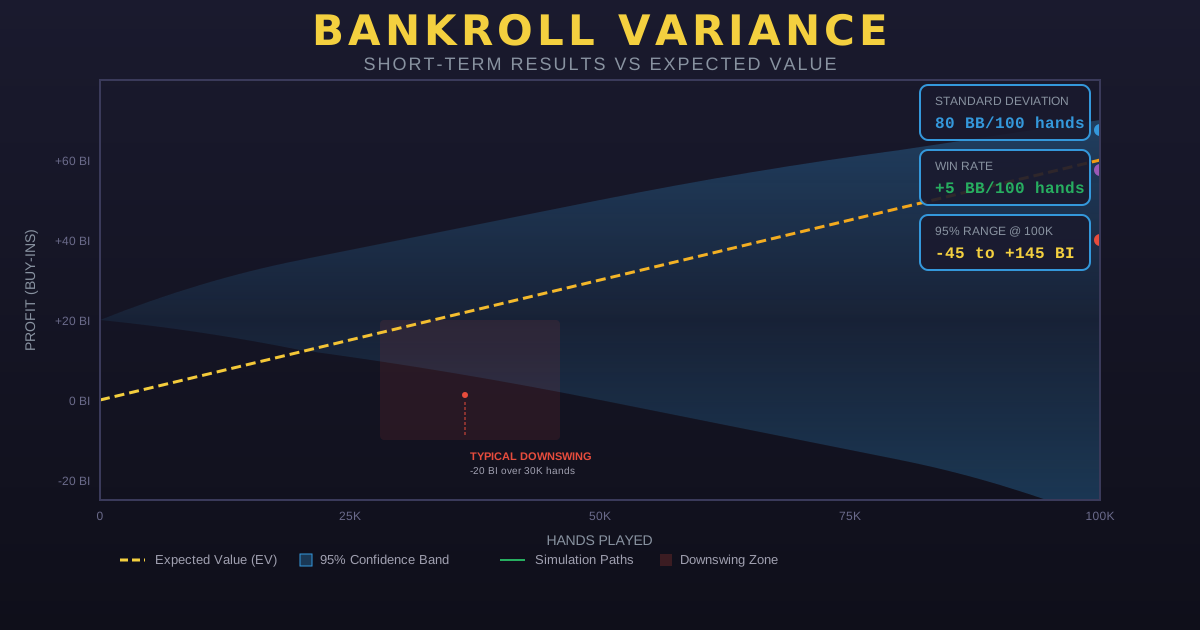
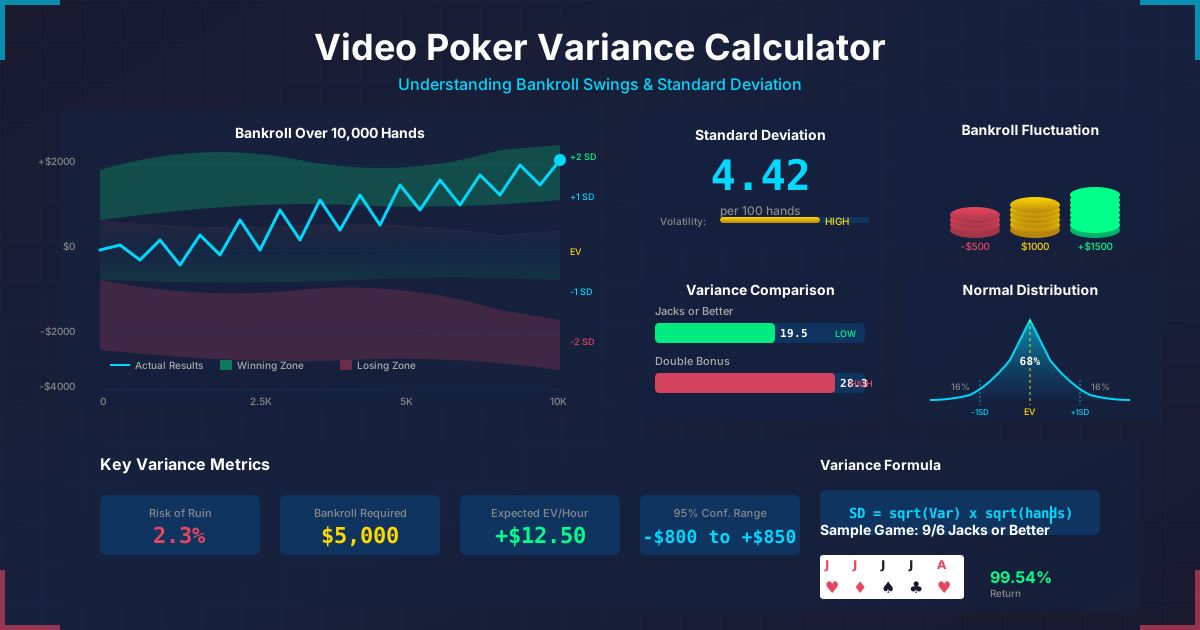
This exponential formula accounts for the fact that variance, not just edge, determines how likely you are to go broke. A player with a high win rate but enormous variance can still have a dangerous risk of ruin.
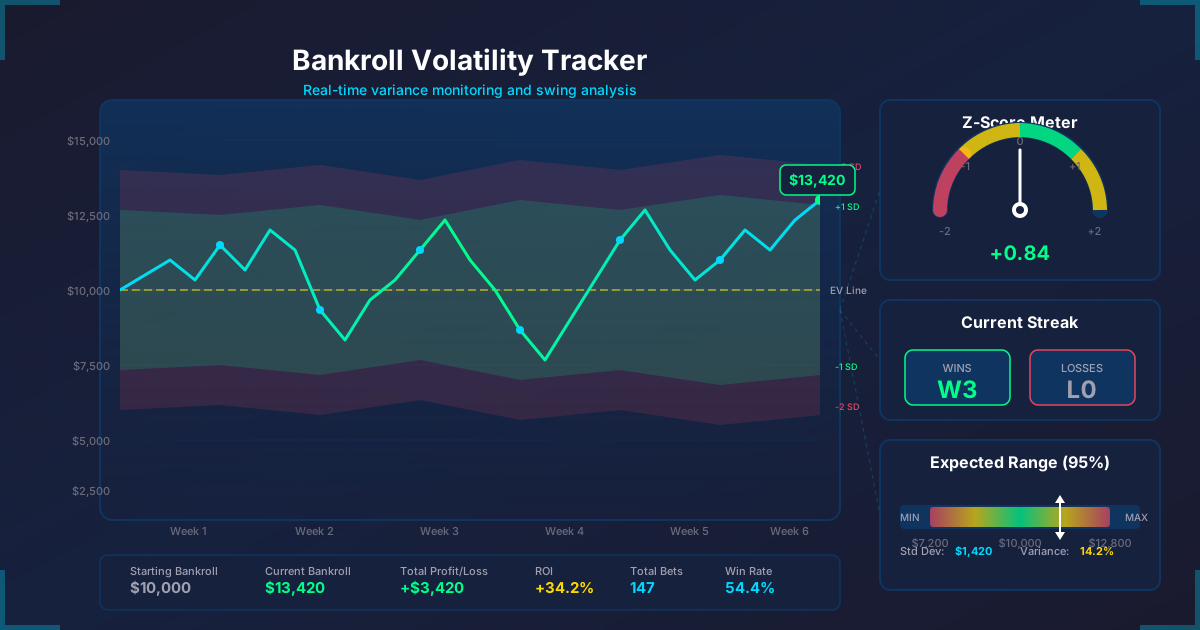
Track your personal variance and win rate data with our Bankroll Volatility Tracker.
Risk of Ruin by Bankroll Size
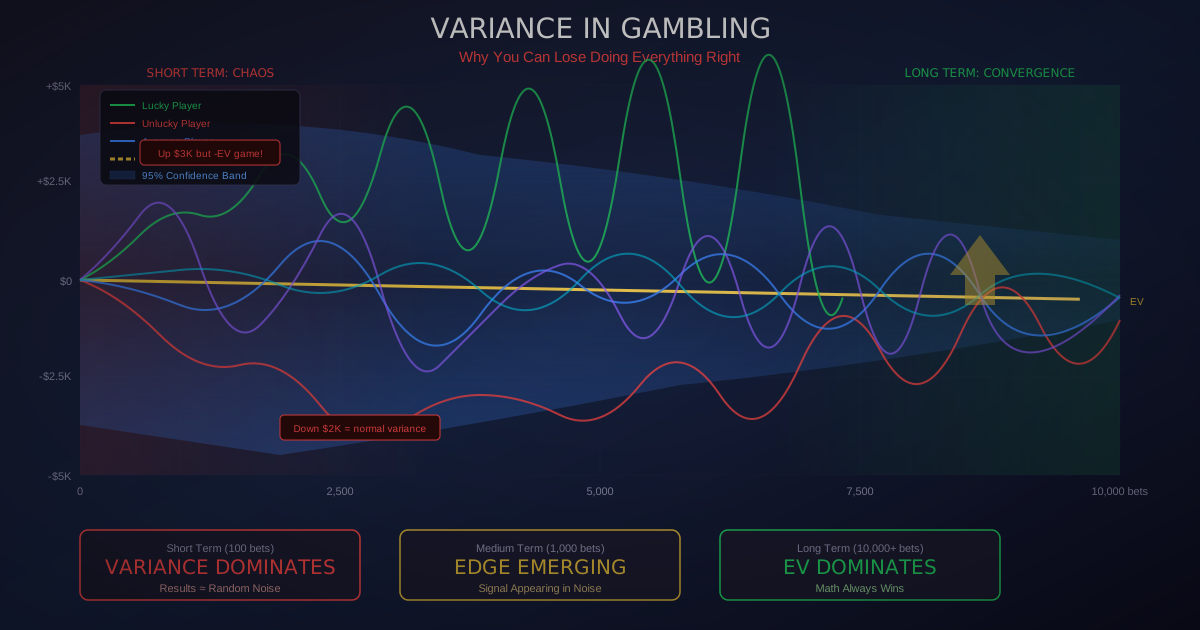
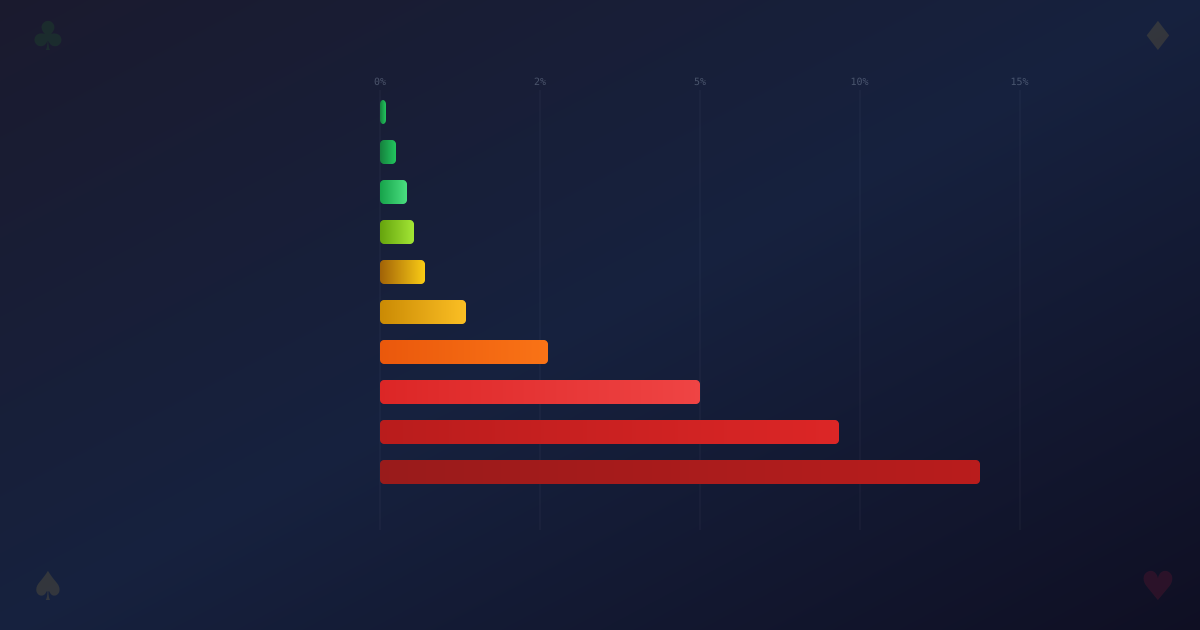
The relationship between bankroll size and risk of ruin is exponential, not linear. Doubling your bankroll does far more than halve your risk of ruin -- it can reduce it by an order of magnitude or more.
Poker Risk of Ruin (5 bb/100 win rate, 85 bb/100 std dev)
| Bankroll (Buy-ins) | Bankroll ($1/$2) | Risk of Ruin | Rating |
|---|---|---|---|
| 10 buy-ins | $2,000 | 79.4% | Extremely dangerous |
| 15 buy-ins | $3,000 | 50.1% | Coin flip |
| 20 buy-ins | $4,000 | 31.6% | Very risky |
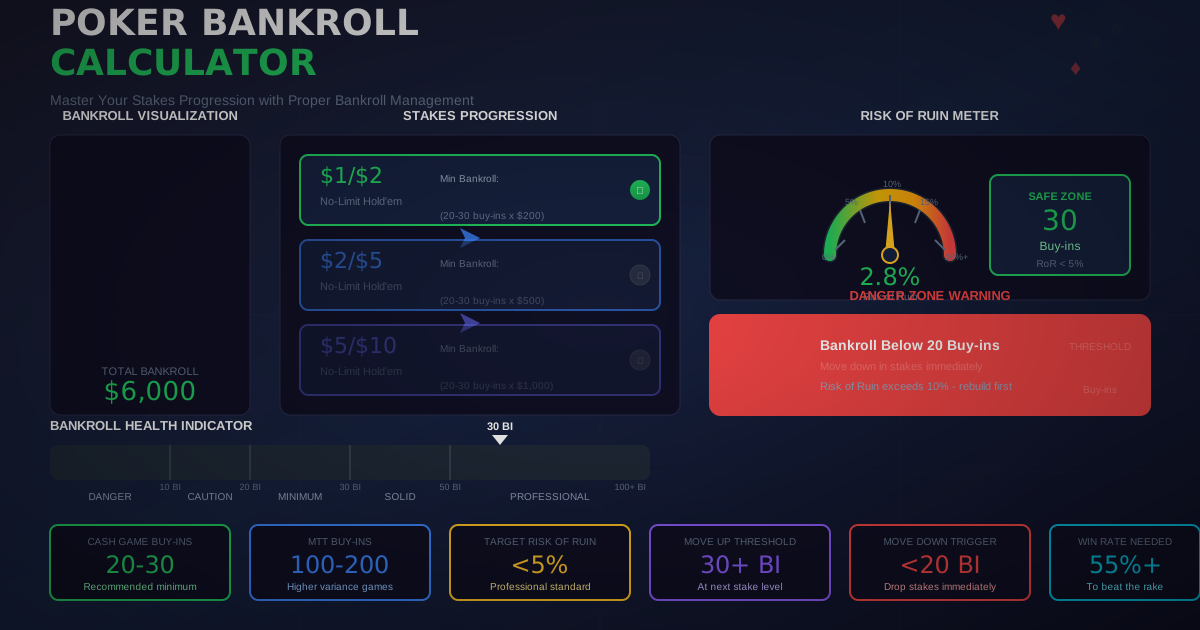
| 30 buy-ins | $6,000 | 12.6% | Risky |
| 40 buy-ins | $8,000 | 5.0% | Acceptable minimum |
| 50 buy-ins | $10,000 | 2.0% | Good |
| 75 buy-ins | $15,000 | 0.18% | Very safe |
| 100 buy-ins | $20,000 | 0.016% | Professional standard |
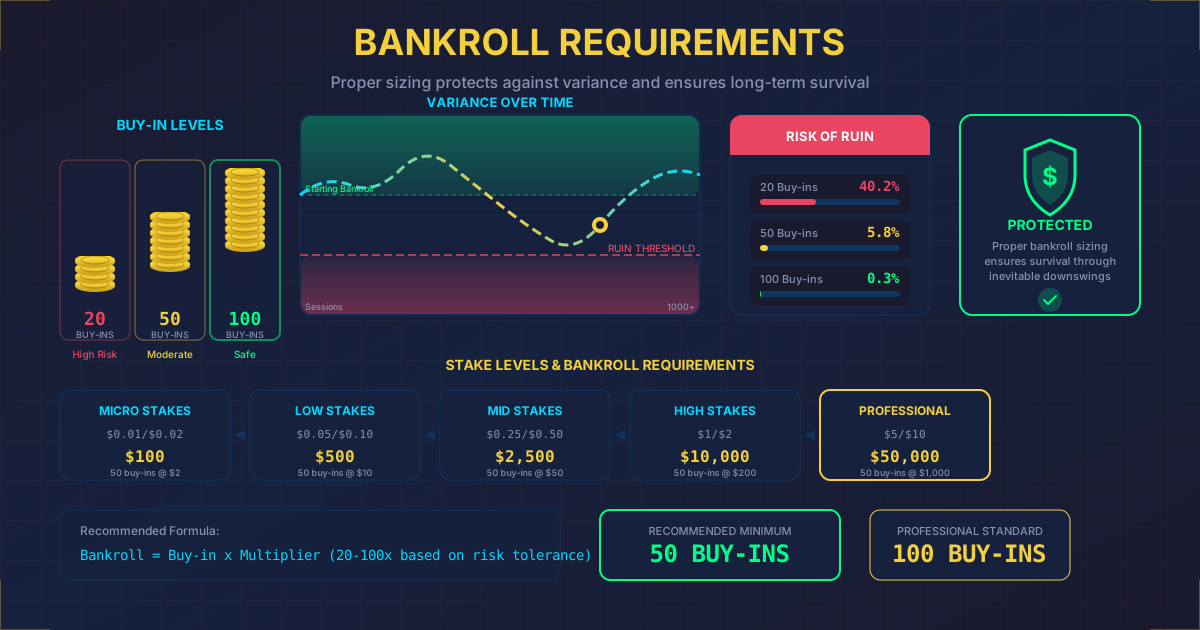
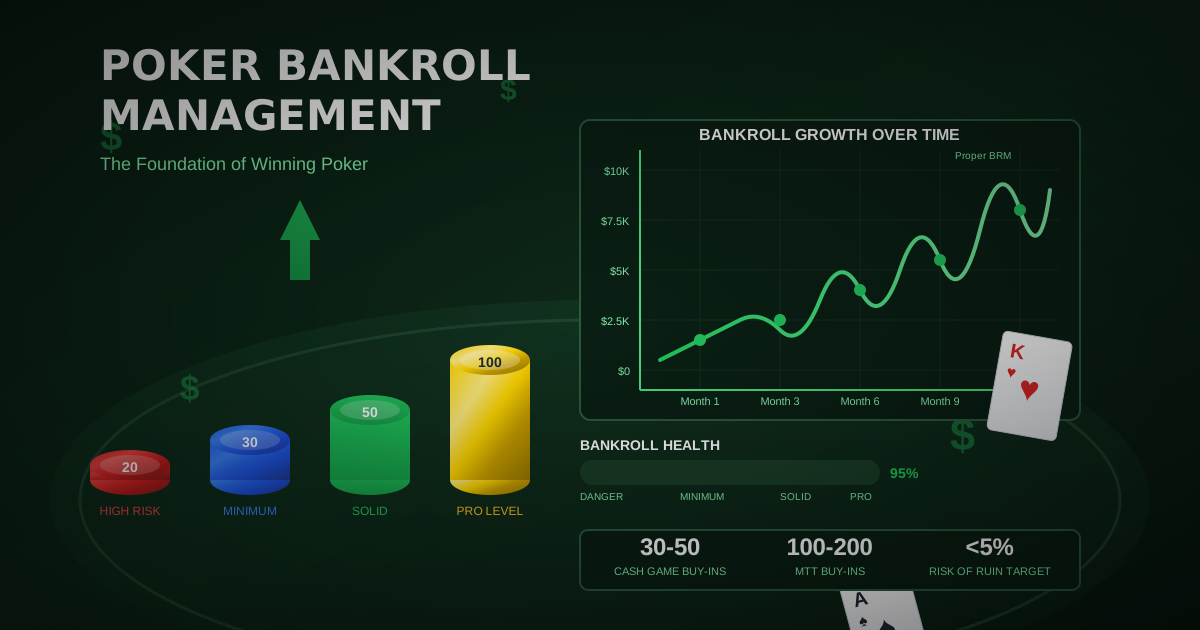
The numbers are stark. At 20 buy-ins, which many recreational players consider adequate, nearly one in three players with a solid 5 bb/100 win rate will go broke. This is why professional poker players maintain 50-100 buy-ins -- not because they are overly cautious, but because the math demands it.
Calculate your exact poker risk of ruin based on your win rate and standard deviation with the Poker Risk of Ruin Calculator.
Blackjack Card Counting Risk of Ruin (1.0% edge, 1-12 spread)
| Bankroll (Units) | Risk of Ruin | Equivalent ($25 min) |
|---|---|---|
| 100 units | 66.1% | $2,500 |
| 200 units | 43.7% | $5,000 |
| 400 units | 19.1% | $10,000 |
| 600 units | 8.3% | $15,000 |
| 800 units | 3.6% | $20,000 |
| 1,000 units | 1.6% | $25,000 |
| 1,500 units | 0.2% | $37,500 |
| 2,000 units | 0.025% | $50,000 |
Card counting requires significantly more bankroll per unit of edge than poker because the bet spread creates enormous variance. A counter spreading 1-12 units with a 1% edge needs roughly 1,000 minimum bet units to keep risk of ruin below 2%.
Run your blackjack-specific calculations with our Blackjack Risk of Ruin Calculator.
How Edge and Variance Interact
Risk of ruin is governed by the ratio of your edge to your variance. A large edge with low variance produces a very low risk of ruin. A small edge with high variance produces a dangerously high one.
The Edge-to-Variance Ratio
The key metric is win rate / standard deviation squared (or equivalently, win rate / variance). This ratio determines the shape of your bankroll trajectory over time.
| Scenario | Win Rate | Std Dev | Ratio | RoR at 50 units |
|---|---|---|---|---|
| Strong poker player | 8 bb/100 | 80 bb/100 | 0.00125 | 0.4% |
| Average poker winner | 5 bb/100 | 85 bb/100 | 0.000692 | 2.0% |
| Marginal poker winner | 2 bb/100 | 90 bb/100 | 0.000247 | 18.3% |
| Card counter (1% edge) | 1 unit/hr | 25 units/hr | 0.0016 | 1.8% |
| Sports bettor (3% edge) | 0.03/bet | 1/bet | 0.03 | 4.9% |
The marginal poker winner at 2 bb/100 needs dramatically more bankroll than the strong player at 8 bb/100, even though both are winners. This is why honestly assessing your edge matters enormously -- overestimating your win rate leads to inadequate bankroll sizing and a much higher risk of ruin than you believe.
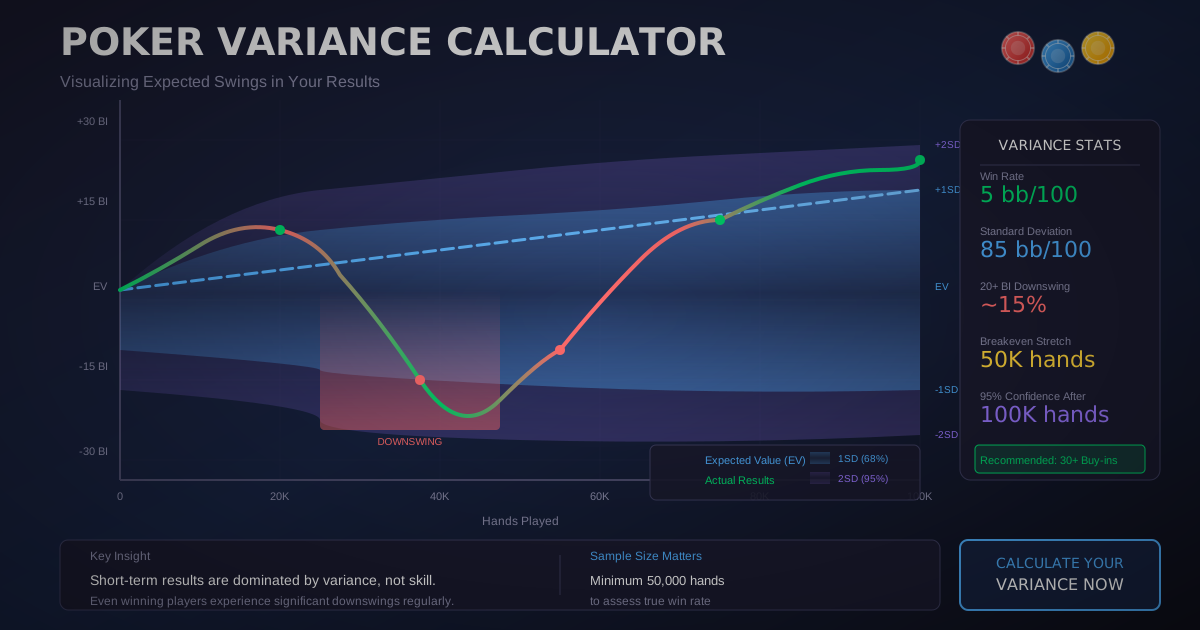
Use the Poker Variance Calculator to understand how your specific win rate and standard deviation create the variance you experience.
Practical Risk of Ruin Examples
Example 1: Online Poker Grinder Moving Up Stakes
Sarah is a $0.50/$1 online poker player with documented stats:
- Win rate: 6 bb/100 over 200,000 hands
- Standard deviation: 82 bb/100
- Current bankroll: $8,000 (80 buy-ins at $100 max)
She wants to move to $1/$2 ($200 max buy-in), where she estimates a 4 bb/100 win rate against tougher competition.
At $1/$2, her $8,000 bankroll = 40 buy-ins.
RoR = e^(-2 * 4 * 40 * 100 / 82^2) = e^(-32,000 / 6,724) = e^(-4.76) = 0.86%
This is an acceptable risk of ruin for a shot-taking approach. However, if her win rate at $1/$2 turns out to be only 2 bb/100 (common when moving up), the risk of ruin jumps to:
RoR = e^(-2 * 2 * 40 * 100 / 82^2) = e^(-16,000 / 6,724) = e^(-2.38) = 9.3%
Nearly a 1-in-10 chance of going broke. Sarah should have a move-down rule at 30 buy-ins ($6,000) and be prepared to drop back to $0.50/$1 if results are poor.
Plan your stake transitions with the Poker Bankroll Requirements Calculator.
Example 2: Blackjack Card Counter Starting Out
Mike has learned Hi-Lo card counting and tested his skills with simulation software. His expected stats at a $15 minimum, 6-deck shoe game with decent rules:
- Edge: 0.8% (after deducting for errors and cover plays)
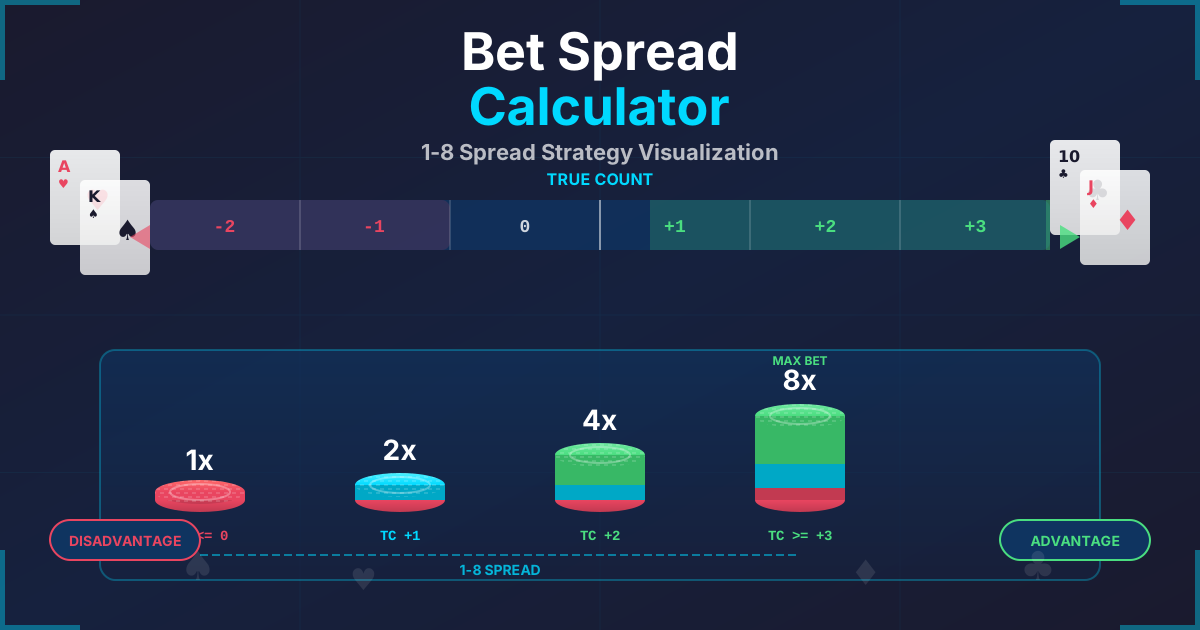
- Bet spread: 1-8 ($15-$120)
- Average bet: $35
- Standard deviation per hand: $85
- Hands per hour: 80
Mike has saved $10,000 for his bankroll.
In bet units of $15, that is 667 units. With his edge and spread:
RoR = approximately 12% (via simulation, since the variable bet spread makes the closed-form formula imprecise)
This is too high for comfort. Mike has two options:
- Increase bankroll to $15,000 (1,000 units): RoR drops to approximately 3%
- Decrease bet spread to 1-6: RoR drops to approximately 5% but hourly rate decreases by 25%
Option 1 is clearly better if he can afford it. He should track his results using the Poker Session Tracker (which works for any gambling session) and use the Blackjack Variance Calculator to compare his actual results against expected variance.
Example 3: Sports Bettor With a Proven Model
David has a sports betting model that has produced a 2.5% ROI over 3,000 tracked bets. His average wager is $200 on a bankroll of $15,000 (75 units).
Using the simplified formula:
- RoR = ((1 - 0.025) / (1 + 0.025)) ^ 75
- RoR = (0.9512) ^ 75
- RoR = 2.3%
This is solid, but David should be cautious about several factors:
- His 2.5% edge might be lower than he thinks (sample size of 3,000 bets has wide confidence intervals)
- If his true edge is only 1.5%, his RoR jumps to 10.5%
- Correlated bets (betting multiple games on the same day) effectively increase his bet size
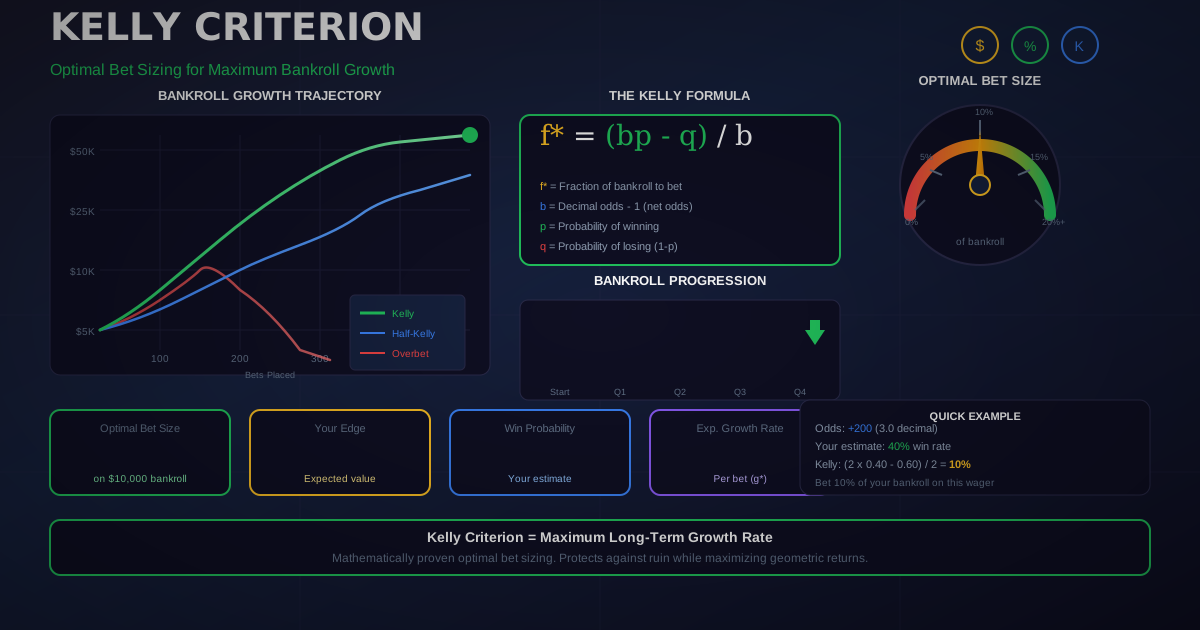
David should consider using fractional Kelly sizing instead of flat betting. The Kelly Criterion Calculator can help him optimize bet sizes while keeping risk manageable.
Example 4: Tournament Poker Player
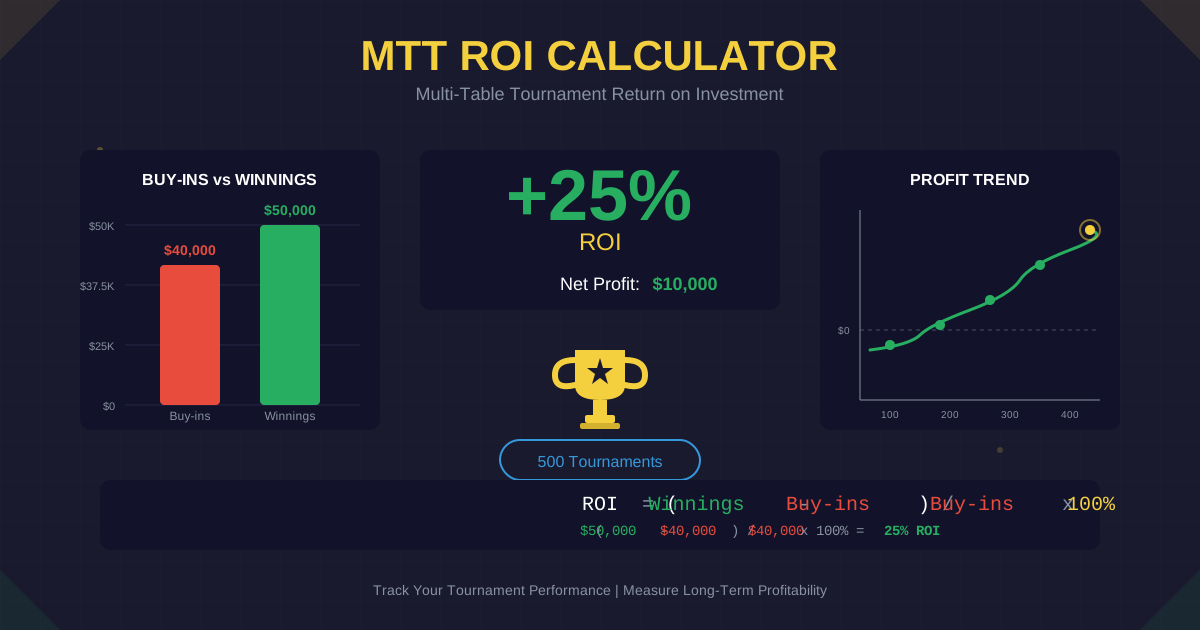
Lisa plays $200 buy-in poker tournaments with a 25% ROI. She has a $20,000 bankroll (100 buy-ins).
Tournament poker is extremely high variance. With a typical tournament player's standard deviation of roughly 300% of buy-in (6x the buy-in for variance per tournament):
RoR = e^(-2 * 0.25 * 100 / 6^2) = e^(-50 / 36) = e^(-1.39) = 24.9%
Even with 100 buy-ins and a very strong 25% ROI, Lisa has a nearly 1-in-4 chance of going broke. This illustrates why tournament specialists need enormous bankrolls -- 200+ buy-ins is the professional standard.
At 200 buy-ins ($40,000): RoR = e^(-2 * 0.25 * 200 / 36) = e^(-2.78) = 6.2%
Still not negligible. Tournament poker is simply a high-variance endeavor. Lisa can use the Poker Downswing Probability Calculator to understand the likely depth and duration of her downswings.
Example 5: The Weekend Poker Player
Tom plays $1/$2 live poker on weekends with a $3,000 bankroll (15 buy-ins). He believes he wins about 10 bb/hr in his soft home game, with a standard deviation of roughly 100 bb/hr.
Per hour: RoR = e^(-2 * 10 * 15 * 200 / (100 * 200)^2)
Converting to buy-in terms with a standard deviation per session of roughly 4 buy-ins and a win rate per session of roughly 0.5 buy-ins:
RoR = e^(-2 * 0.5 * 15 / 16) = e^(-0.94) = 39.2%
Tom has a nearly 40% chance of going broke. For a recreational player, this might be acceptable -- he can always reload from income. But if $3,000 represents money he cannot afford to lose, he needs to either increase his bankroll or play lower stakes.
Tom should use the Poker Hourly Rate Calculator to verify that his perceived win rate matches reality, because overestimating win rates is the most common bankroll management mistake.
Risk of Ruin for Different Gambling Types
Poker Cash Games
The risk of ruin formula works well for poker cash games because sessions are relatively independent and the Central Limit Theorem applies over large sample sizes.
Key factors:
- Win rate in bb/100 (typically 2-10 bb/100 for winning players)
- Standard deviation in bb/100 (typically 70-120 bb/100)
- Bankroll in buy-ins (100 big blinds per buy-in)
Recommended risk of ruin targets:
- Recreational players: under 10% (20-30 buy-ins)
- Semi-professional: under 5% (30-50 buy-ins)
- Professional: under 1% (50-100+ buy-ins)
Use the Poker EV Calculator alongside the risk of ruin calculator to understand how specific hands and decisions contribute to your overall edge.
Blackjack Card Counting
Card counting risk of ruin is more complex because bet sizes vary with the count. The standard approach uses simulation (Monte Carlo methods) rather than closed-form formulas.
Key factors:
- True count edge profile (varies by rules, penetration, and counting system)
- Bet spread (1-8, 1-12, or 1-16 are common)
- Risk-averse index plays (reduce variance at the cost of some EV)
Recommended bankroll minimums:
- 1-8 spread: 800+ minimum bet units
- 1-12 spread: 1,000+ minimum bet units
- 1-16 spread: 1,200+ minimum bet units
The Blackjack Risk of Ruin Calculator handles the simulation-based approach needed for accurate blackjack RoR estimation, and the Blackjack EV Calculator helps you understand the expected value of different rule sets.
Sports Betting
Sports betting risk of ruin is conceptually simpler because bets are independent (assuming you avoid parlays and correlated wagers). The challenge is accurately estimating your edge.
Key factors:
- True edge percentage (2-5% for strong bettors)
- Unit size relative to bankroll
- Number of simultaneous open bets (reduces effective bankroll)
Common pitfalls:
- Overestimating edge from small samples
- Ignoring vig reduction of true edge
- Betting correlated positions that increase effective variance
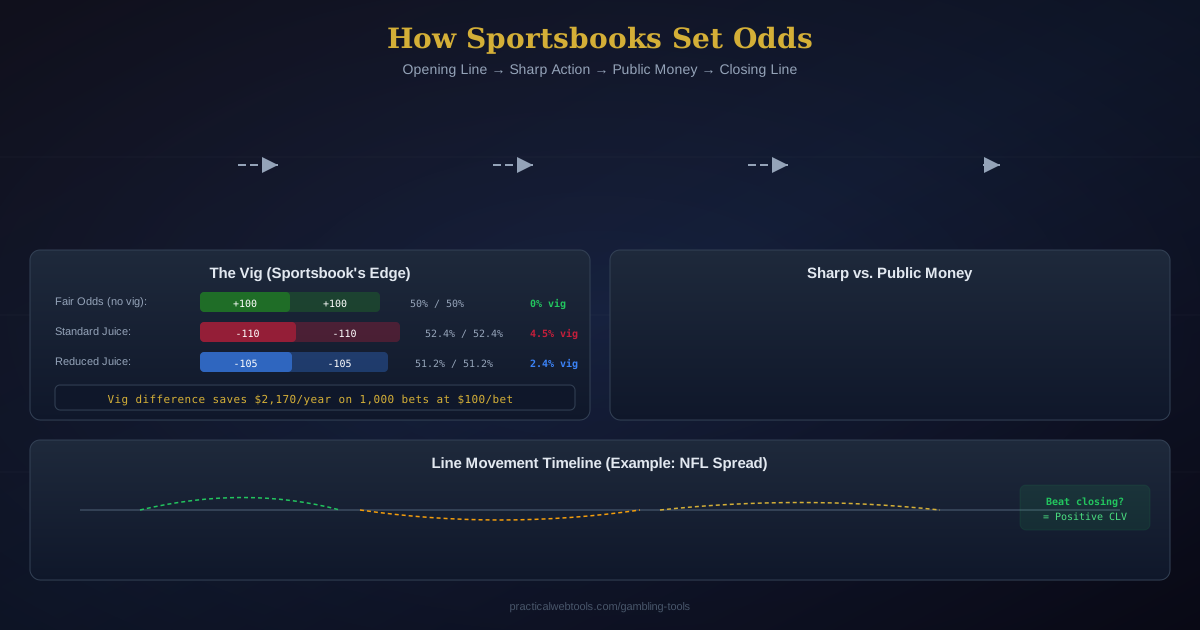
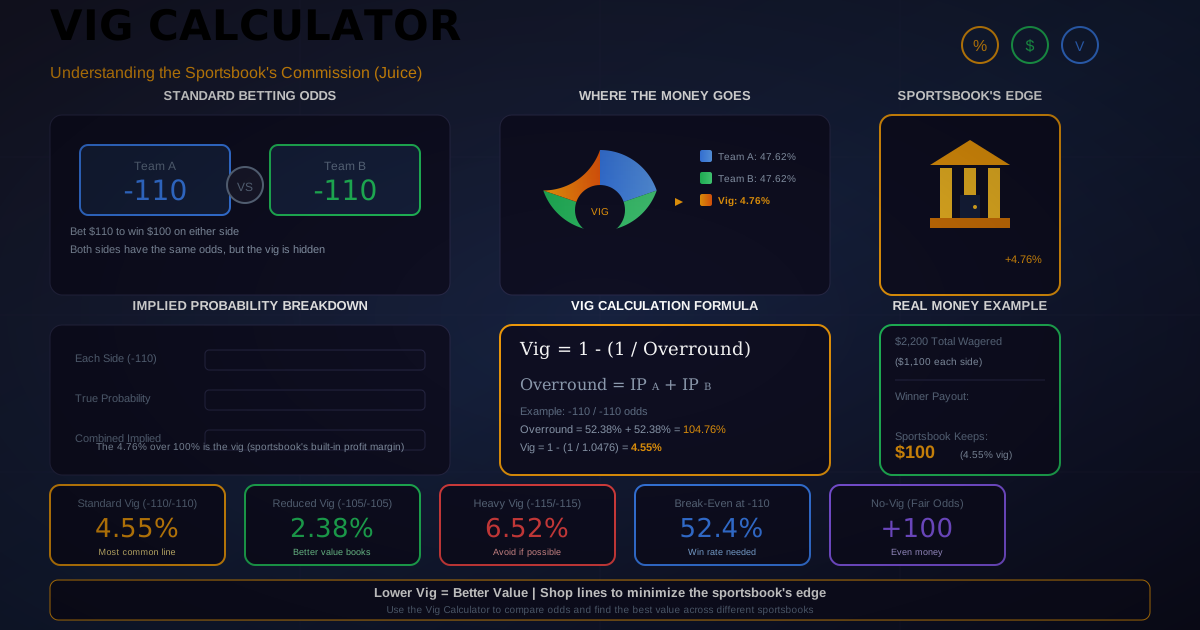
Use the Hold/Vig Calculator to understand how the bookmaker's margin erodes your edge, and the Expected Value Calculator to verify positive expectation before placing bets.
How to Reduce Your Risk of Ruin
1. Increase Your Bankroll
The most straightforward approach. Every doubling of your bankroll roughly squares the reduction in risk of ruin. Going from 30 to 60 buy-ins might take your RoR from 12% to under 1%.
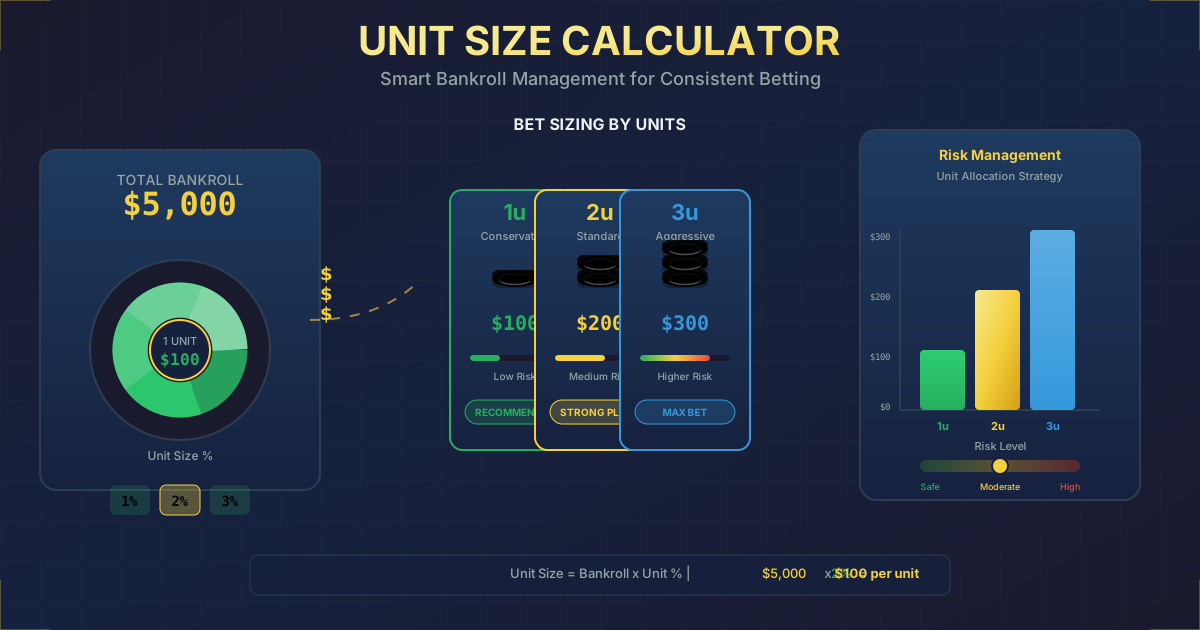
2. Decrease Your Bet Size
Playing lower stakes with the same bankroll has the identical mathematical effect as increasing your bankroll. A $10,000 bankroll at $0.50/$1 (100 buy-ins) is far safer than $10,000 at $1/$2 (50 buy-ins).
3. Improve Your Edge
A higher win rate dramatically reduces risk of ruin. Going from 3 bb/100 to 6 bb/100 can reduce your RoR by 90% or more at the same bankroll level. Study, coaching, and game selection are investments in risk of ruin reduction.
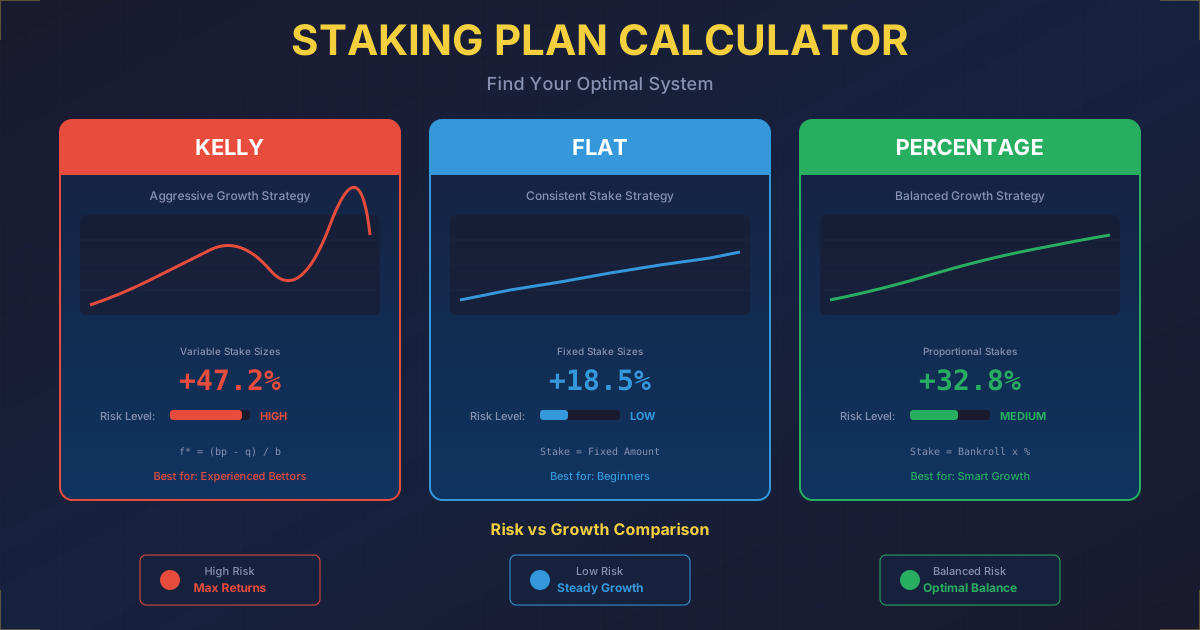
4. Use Kelly Criterion Sizing
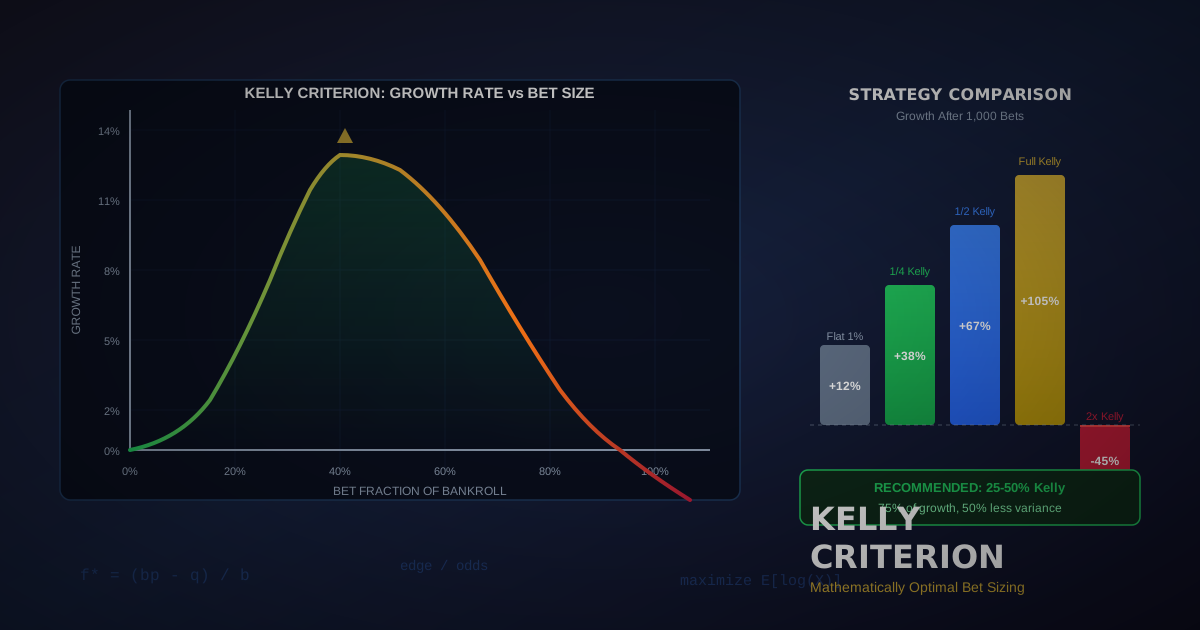
The Kelly Criterion Calculator helps you size bets proportionally to your edge, which mathematically minimizes the probability of ruin while maximizing long-term growth. Fractional Kelly (betting 25-50% of the Kelly-optimal amount) significantly reduces risk of ruin with only a modest reduction in growth rate.
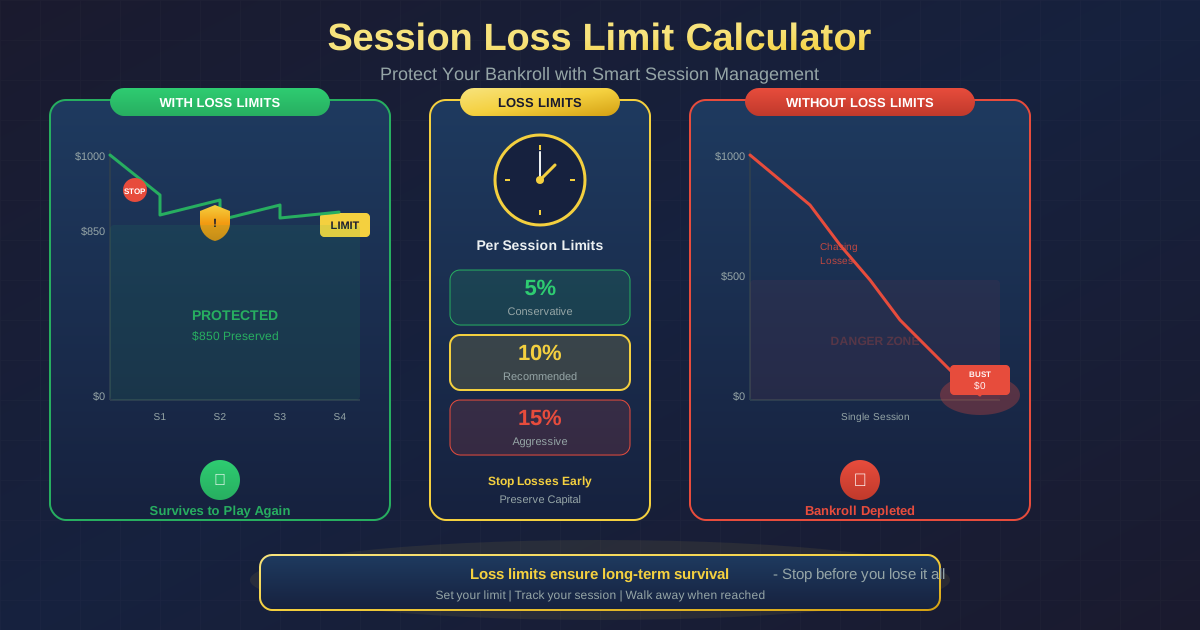
5. Maintain Stop-Loss and Move-Down Rules
Set clear rules for when to drop in stakes. For example:
- Drop down if bankroll falls below 25 buy-ins for current stake
- Move up only when you have 40+ buy-ins for the next stake
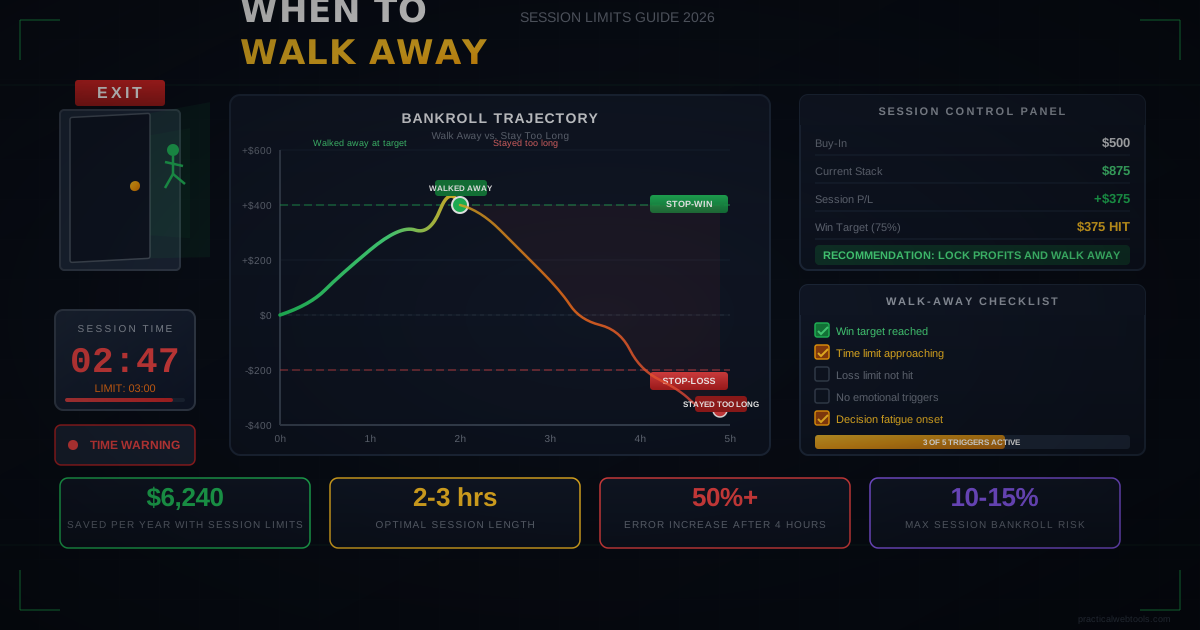
- Never play more than 5% of bankroll in a single session
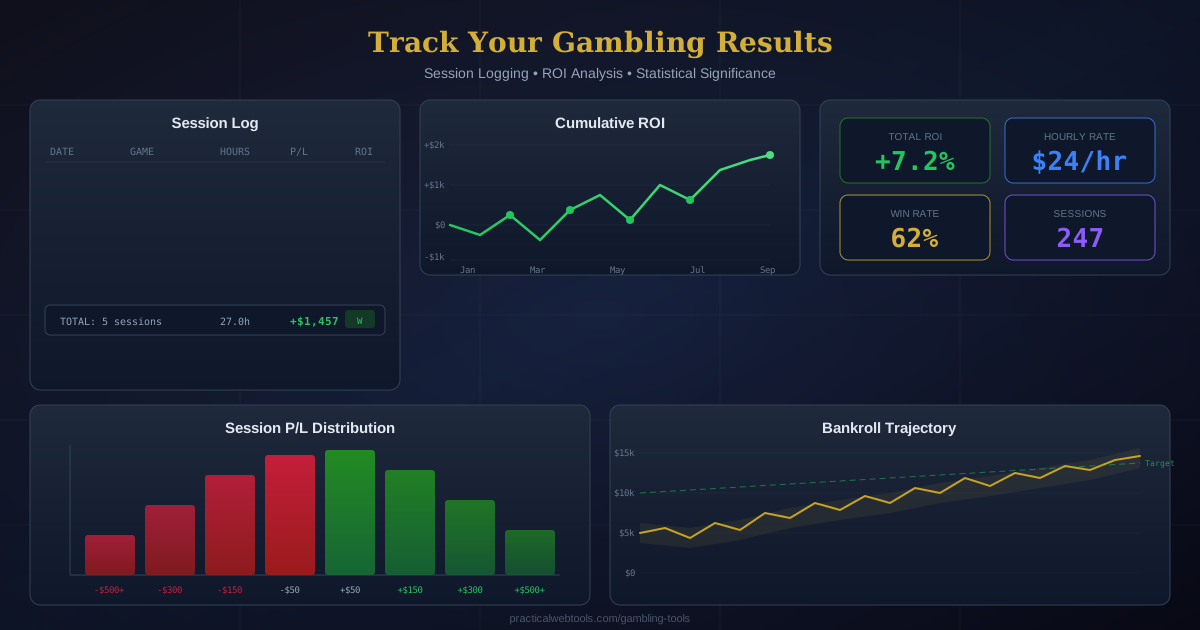
Track your bankroll trajectory over time with the Bankroll Volatility Tracker to ensure you are following your rules.
6. Reduce Variance Where Possible
In poker, playing a tighter style reduces your standard deviation. In blackjack, using risk-averse indices reduces variance at the cost of a small amount of EV. In sports betting, avoiding parlays and props reduces variance.
The Blackjack Session Bankroll Calculator can help you plan individual sessions with appropriate risk levels.
Common Risk of Ruin Mistakes
Mistake 1: Using Insufficient Sample Size to Estimate Win Rate
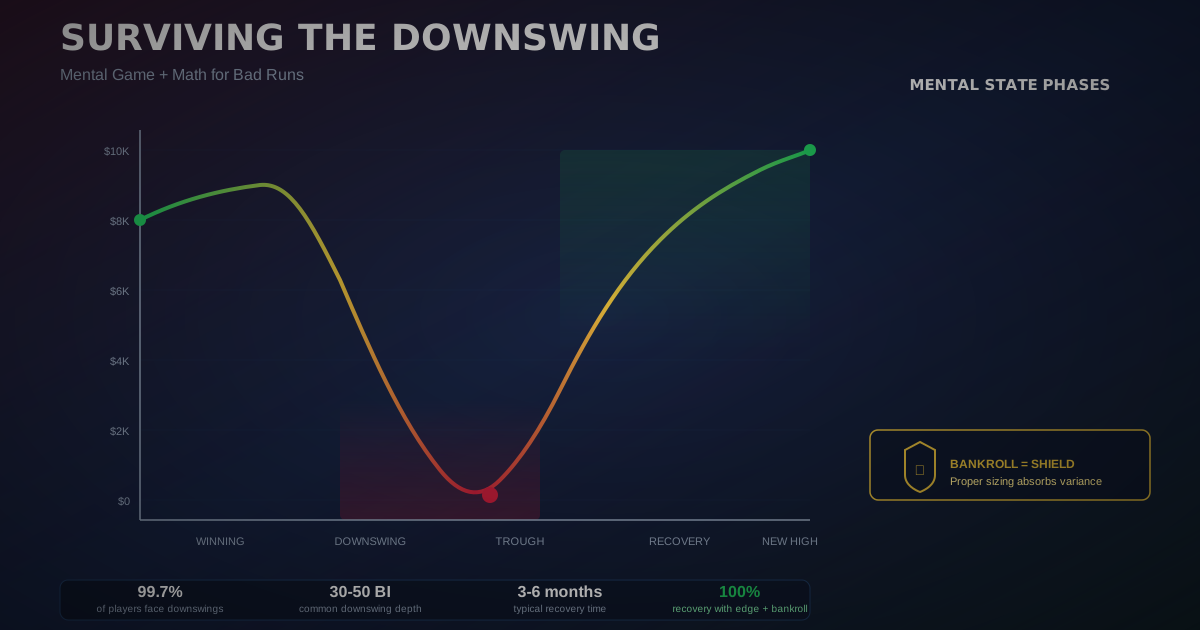
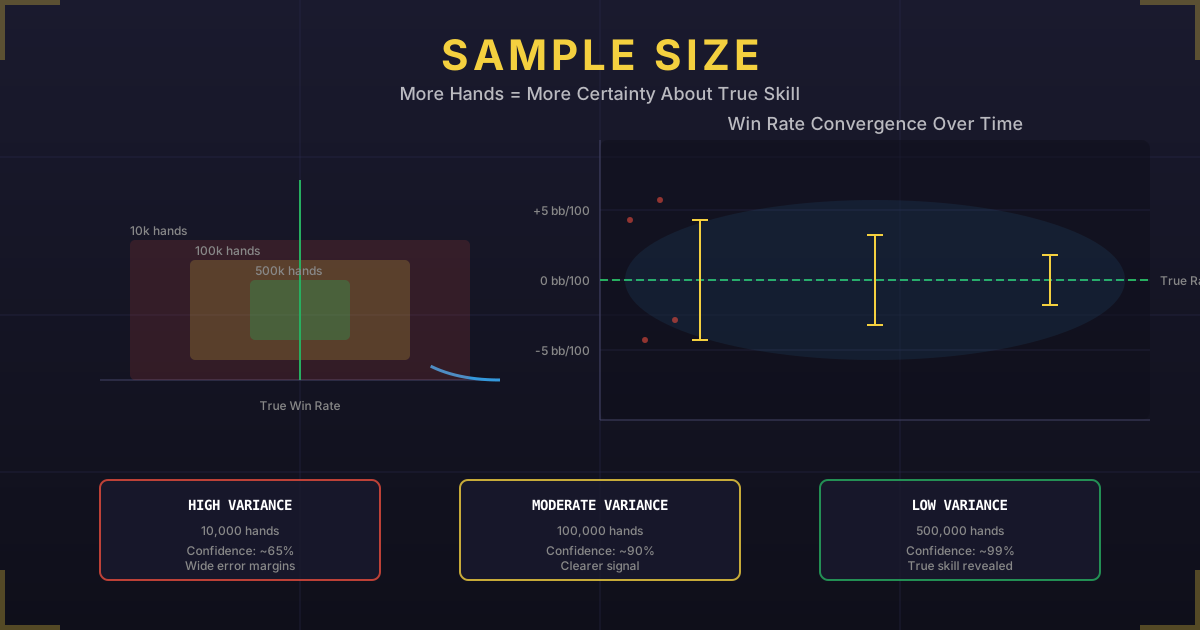
A poker player who has won over 50,000 hands might have a true win rate anywhere from -2 bb/100 to +10 bb/100 if their observed rate is 4 bb/100. Basing bankroll decisions on an uncertain win rate estimate leads to underestimating risk of ruin.
Solution: Use at least 100,000 hands (poker) or 1,000 bets (sports) before relying on results for bankroll calculations.
Mistake 2: Ignoring Tilt and Emotional Play
Risk of ruin formulas assume you always play your A-game. In reality, downswings trigger tilt, which reduces your edge, which increases your true risk of ruin. A player with a 5 bb/100 A-game who drops to 0 bb/100 when tilting has a much higher effective risk of ruin than the formula suggests.
Mistake 3: Conflating Bankroll with Net Worth
Your gambling bankroll must be money you can lose without affecting your life. If losing your bankroll means missing rent, the psychological pressure will affect your play and inflate your true risk of ruin beyond what the formulas predict.
Mistake 4: Forgetting Living Expenses
Professional gamblers must account for the money they withdraw for living expenses. A poker player with a $20,000 bankroll who withdraws $3,000 per month for living has an effective bankroll that shrinks over time if their earn rate does not exceed their burn rate.
Mistake 5: Betting Correlated Positions
Sports bettors who bet multiple games on the same day or bet the same game at multiple books are effectively increasing their bet size per "event," which raises their risk of ruin. Track your exposure carefully.
Risk of Ruin FAQ
What is a safe risk of ruin percentage?
Most professional gamblers target a risk of ruin below 5%, with many aiming for under 1%. The appropriate target depends on whether you can reload your bankroll from other income. A recreational player with a day job might accept 10% because they can replenish funds. A full-time professional should aim for 1% or less because going broke means losing their livelihood.
Does risk of ruin apply to recreational gamblers?
Risk of ruin applies to everyone, but for recreational gamblers playing negative-EV games, the risk of ruin is 100% given enough time. The practical question for recreational players is how long their bankroll will last, not whether they will eventually lose it. The Expected Value Calculator can help you understand your expected losses per session.
Can I have a 0% risk of ruin?
No. As long as there is any variance in your results, there is a nonzero probability of ruin. However, with a sufficient bankroll, the probability can become so small (0.001% or less) that it is effectively zero for all practical purposes. A poker player with 200 buy-ins and a solid win rate has a risk of ruin measured in thousandths of a percent.
How does the number of tables affect risk of ruin in poker?
Playing multiple tables simultaneously reduces your hourly standard deviation (in bb/100 terms) due to the averaging effect, but it may also reduce your win rate slightly due to less focus per table. The net effect on risk of ruin depends on which factor dominates. For most players, 2-4 tables is the sweet spot. The Poker Variance Calculator can model multi-table scenarios.
What happens to risk of ruin if my edge disappears?
If your edge drops to zero or becomes negative, your risk of ruin immediately jumps to 100%. This is why continuously monitoring and improving your game is essential. Regular review sessions and honest self-assessment are critical -- if the games are getting tougher and your win rate is declining, you need to adjust before your bankroll does it for you.
How do withdrawals affect risk of ruin?
Withdrawing profits from your bankroll effectively resets your risk of ruin calculation with a smaller bankroll each time. For professional gamblers who must withdraw for living expenses, the standard approach is to target a risk of ruin assuming a bankroll equal to your current balance minus three to six months of expenses.
Is risk of ruin different for tournaments vs cash games?
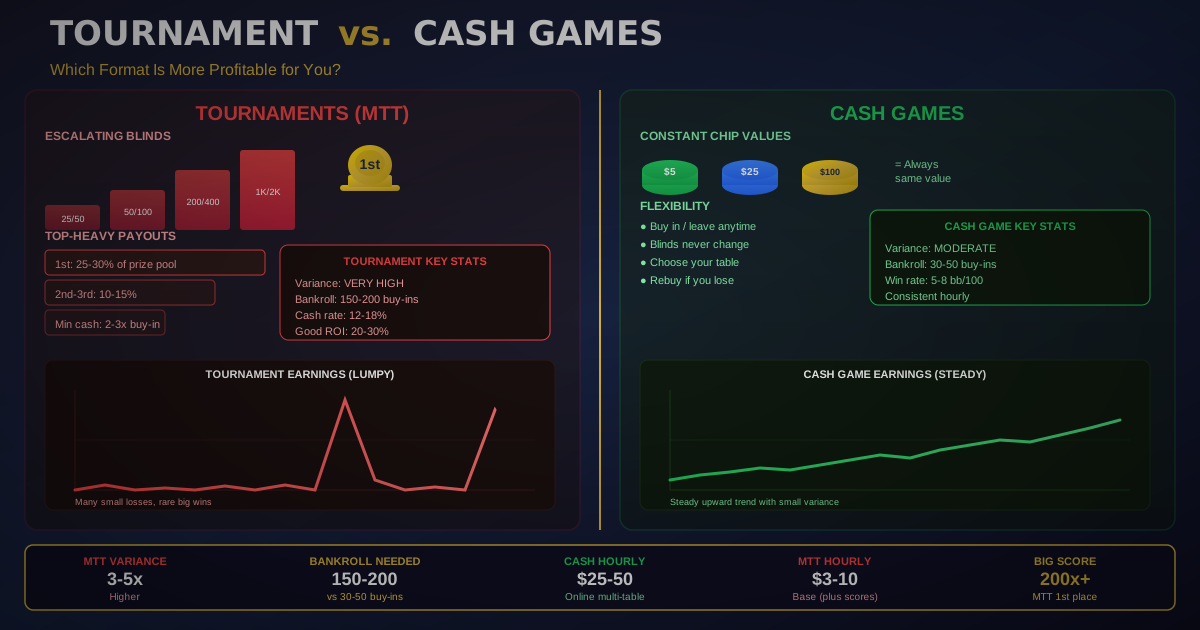
Yes, significantly. Tournaments have much higher variance than cash games, which means tournament players need proportionally larger bankrolls (measured in buy-ins) to achieve the same risk of ruin. A cash game player might need 50 buy-ins for a 2% RoR, while a tournament player might need 200+ buy-ins for the same RoR.
How often should I recalculate my risk of ruin?
Recalculate whenever your bankroll, win rate estimate, or game conditions change significantly. At minimum, review monthly. If you have experienced a 20+ buy-in downswing, recalculate immediately -- your risk of ruin at your new (lower) bankroll level is higher than it was when you started. Use the Poker Session Tracker to maintain up-to-date records for accurate calculations.
Related Tools for Bankroll Risk Management
Managing risk of ruin requires multiple calculations and ongoing tracking. Here are the tools that work together to help you maintain a safe bankroll:
- Poker Risk of Ruin Calculator - Calculate exact RoR based on your poker stats
- Blackjack Risk of Ruin Calculator - Simulation-based RoR for card counters
- Bankroll Volatility Tracker - Monitor your bankroll trajectory over time
- Kelly Criterion Calculator - Optimal bet sizing to minimize ruin probability
- Poker Bankroll Requirements Calculator - Determine the right bankroll for your stakes
- Poker Downswing Probability Calculator - Understand how likely various downswings are
- Poker Variance Calculator - Simulate variance based on your stats
- Blackjack Variance Calculator - Model blackjack session outcomes
- Expected Value Calculator - Verify positive EV before calculating RoR
- Poker Session Tracker - Track sessions for accurate RoR inputs
- Blackjack Session Bankroll Calculator - Plan individual session sizing
- Hold/Vig Calculator - Understand how vig affects your true edge
- Poker EV Calculator - Analyze specific hand equities
- Poker Hourly Rate Calculator - Calculate your actual hourly earn rate
- Blackjack EV Calculator - Evaluate EV under different rule conditions
Conclusion
Risk of ruin is not an abstract mathematical concept -- it is the single most practical calculation in professional gambling. It tells you exactly how much money you need to survive the inevitable downswings that every gambler faces, regardless of skill level.
The formula is unforgiving. A poker player with 20 buy-ins has roughly a 30% chance of going broke even with a solid win rate. Double that to 40 buy-ins and the risk drops to 5%. Double again to 80 buy-ins and it falls below 0.1%. The exponential relationship between bankroll size and survival probability means that slightly more bankroll buys dramatically more safety.
The key takeaways are:
- Always know your risk of ruin number for your current bankroll and stakes
- Target a RoR below 5% for semi-professional play and below 1% for full-time professional play
- Your edge and your variance are equally important -- a small edge with high variance is just as dangerous as no edge at all
- Recalculate regularly as your bankroll, win rate, and game conditions change
Start calculating your risk of ruin right now with our free Poker Risk of Ruin Calculator and Blackjack Risk of Ruin Calculator -- and keep your gambling bankroll safe from mathematical ruin.
Gambling involves risk. This content is for educational and informational purposes only. Always gamble responsibly, set limits you can afford, and seek help if gambling becomes a problem. Visit the National Council on Problem Gambling or call 1-800-522-4700 for support.