Blackjack Counting Drills Calculator: Practice Speed and Accuracy (2026)
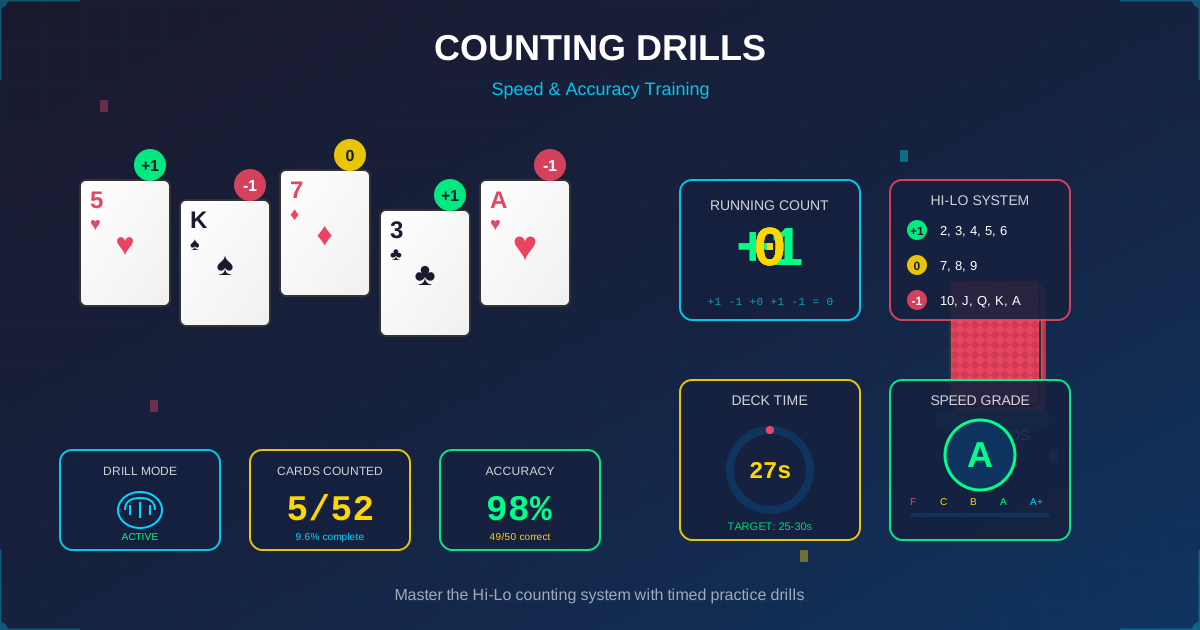
Blackjack Counting Drills Calculator: Training for Casino Speed
Card counting requires speed and accuracy—casinos don't wait for slow counters. Our drill calculator helps you practice Hi-Lo counting, build speed, and verify accuracy before risking real money at the tables.
What Are Counting Drills?
Counting drills are practice exercises to build card counting speed and accuracy. Starting slowly, you work up to casino speed (1-2 seconds per card) while maintaining perfect accuracy. Drills prepare you for real-world conditions.
Quick Answer: Counting drills build speed and accuracy for Hi-Lo system. Target speed: count a deck in 25-30 seconds. Accuracy: must end at 0 for single deck. Practice in pairs and groups of cards. Graduate to distractions (TV, noise) before casino play. Speed without accuracy is worthless.
How to Use Our Calculator
Use the Counting Drills Calculator →
Practice counting with timed exercises.
Step-by-Step Instructions
-
Select Drill Type: Singles, pairs, or full deck
-
Start Timer: Begin counting
-
Record Your Count: Enter final number
-
Check Accuracy: Did you get 0?
-
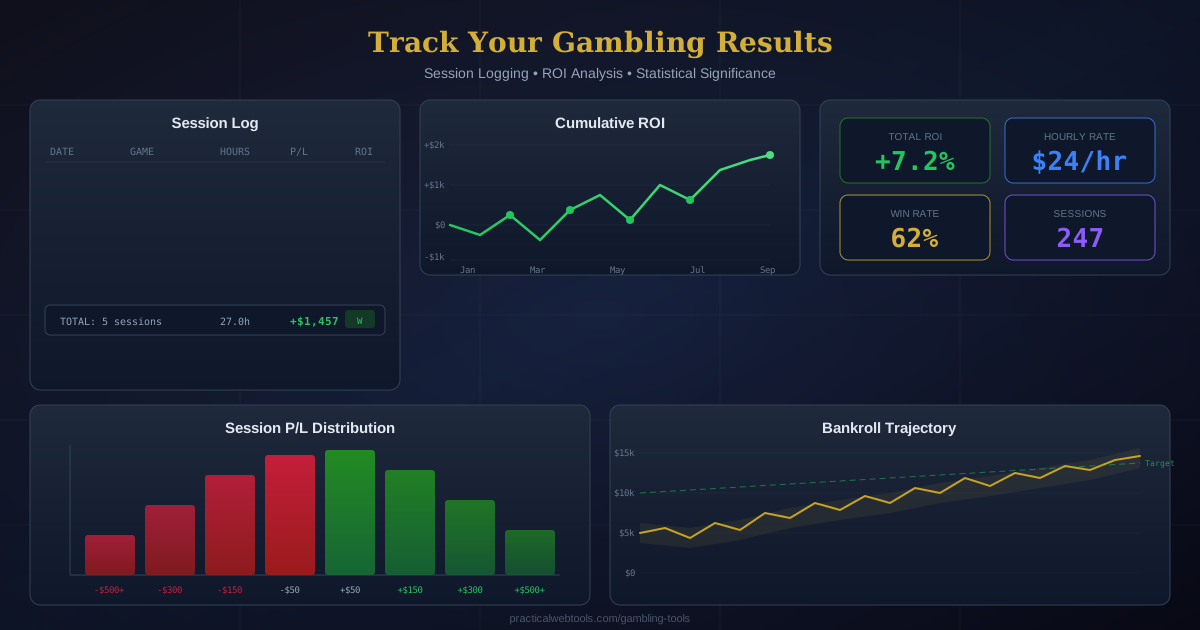
Track Progress: Speed over time
Input Fields Explained
| Field | Description | Example |
|---|---|---|
| Drill Type | Exercise format | Full deck |
| Timer | Elapsed seconds | 28 seconds |
| Your Count | Final result | 0 |
| Correct Count | Expected | 0 |
| Accuracy | Right/wrong | Correct |
| Speed Grade | Performance | Excellent |
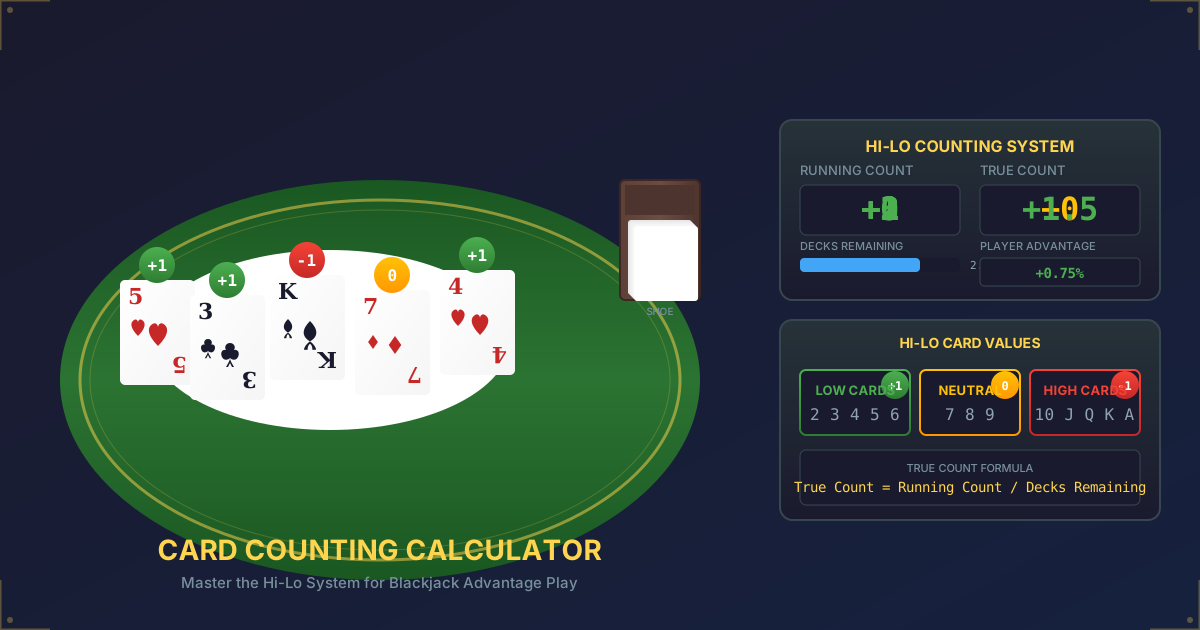
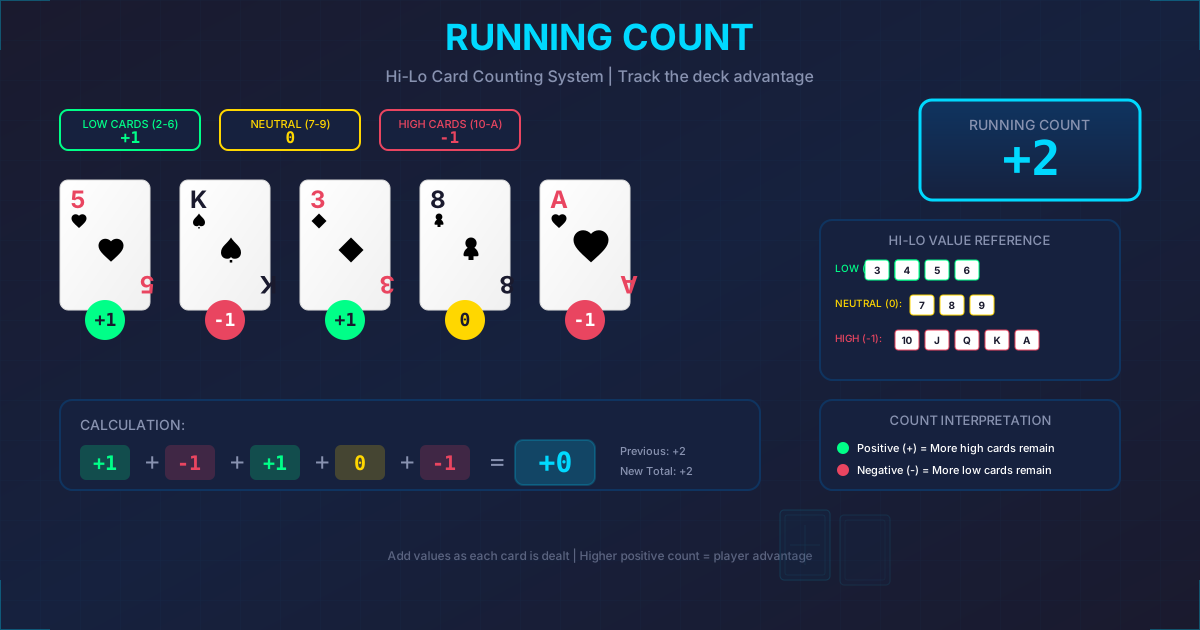
Hi-Lo Card Values Review
The System
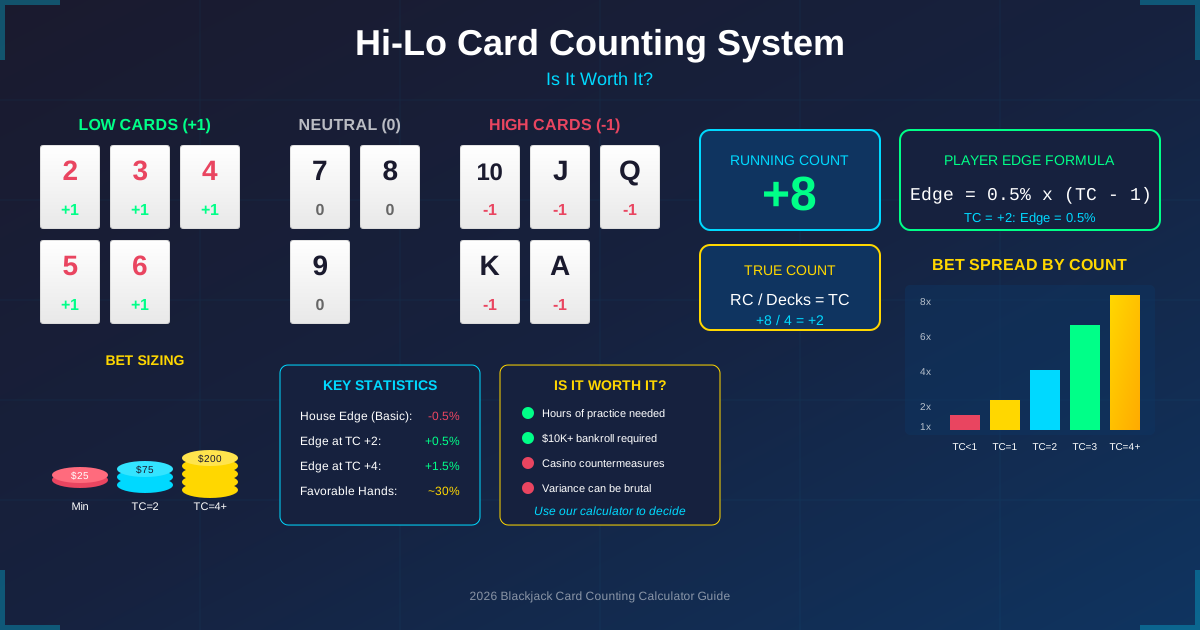
Low cards (2-6): +1
They help the dealer
Removed from deck = better for player

Neutral (7-9): 0
Don't affect count
Don't track

High cards (10-A): -1
They help the player
Removed from deck = worse for player
Why Counts Balance
Single deck:
Low cards (2-6): 20 cards × +1 = +20
High cards (10-A): 20 cards × -1 = -20
Net: 0

Always ends at 0 in balanced system
If not 0, you made an error
Progressive Drill Levels
Level 1: Single Cards
Goal: Identify each card's value instantly

Drill:
Flip one card at a time
Say value aloud (+1, 0, -1)
Work through entire deck

Target: 2 seconds per card
Then 1.5 seconds
Then 1 second
Level 2: Running Count
Goal: Maintain running count through deck

Drill:
Flip cards one at a time
Keep running total
Check final count = 0

Target: Full deck in 60 seconds
Then 45 seconds
Then 30 seconds
Level 3: Card Pairs
Goal: Quickly evaluate two-card combinations

Common pairs:
5, K = +1 + (-1) = 0
3, 7 = +1 + 0 = +1
A, 2 = -1 + +1 = 0

Drill:
Flip two cards simultaneously
Announce net value
Pairs = faster processing
Level 4: Betting Hands
Goal: Count while simulating blackjack

Drill:
Deal to 4-5 positions
Count each hand as dealt
Dealer hand too
Maintain running count

Target: Casino dealing speed
Level 5: Distractions
Goal: Count with noise/interruptions

Drill:
TV on in background
Conversations nearby
Music playing
Simulate casino environment

Accuracy must remain perfect
Speed Benchmarks
Beginner (Learning Phase)
Single deck: 90-120 seconds
Accuracy: 90%+
Focus: Getting values right
Not ready for casino
Intermediate (Practicing)
Single deck: 45-60 seconds
Accuracy: 98%+
Focus: Building speed
Casino ready for slow games
Advanced (Competent)
Single deck: 25-35 seconds
Accuracy: 100%
Focus: Automatic counting
Ready for most casinos
Expert (Professional)
Single deck: 15-25 seconds
Accuracy: 100%
Focus: Camouflage, act natural
Casino counting with cover
Accuracy Verification
Self-Check Methods
Single deck ends at 0
Every time, no exceptions

If count ≠ 0:
You made at least one error
Cannot trust that session's count

Re-drill until 100% accurate
Partner Verification
Have partner deal
They track independently
Compare counts after

Identify disagreements:
Which cards caused errors?
Practice those specifically
Real Practice Examples
Example 1: Speed Drill
Drill: Count single deck as fast as possible
Cards dealt: [Full 52-card deck]

Timer: Started...
Your count: Running total...
Final count: 0

Time: 32 seconds

Evaluation:
Under 30 seconds = Excellent
30-45 seconds = Good
45-60 seconds = Needs work
Over 60 seconds = Keep practicing
Example 2: Pair Cancellation
Drill: Recognize canceling pairs instantly
Common canceling pairs (sum to 0):
A, 2 = -1 + +1 = 0
K, 3 = -1 + +1 = 0
Q, 4 = -1 + +1 = 0
J, 5 = -1 + +1 = 0
10, 6 = -1 + +1 = 0

Pairs that add:
3, 4 = +1 + +1 = +2
K, Q = -1 + -1 = -2
7, 8 = 0 + 0 = 0

Instant recognition speeds counting
Example 3: Multi-Hand Simulation
Drill: Four player hands plus dealer
Hand 1: K, 9 = -1 + 0 = -1
Hand 2: 5, 3 = +1 + +1 = +2
Hand 3: A, J = -1 + -1 = -2
Hand 4: 7, 2 = 0 + +1 = +1
Dealer: 8 up = 0

Running after deal: 0
(All hands cancel out)

Practice maintaining count
While "playing" the hand
Example 4: Error Analysis
Drill result: Ended at +2 (should be 0)
Error analysis:
Missed two +1 cards as 0, or
Miscounted two -1 cards as 0, or
Combination of errors

Common mistakes:
7 counted as +1 (neutral)
9 counted as +1 (neutral)
Speed causing sloppy reads

Solution:
Slow down until accurate
Build speed on accurate foundation
Advanced Drills
Wonging Practice
Simulate mid-shoe entry:

Count from shoe start
But don't "bet" until count positive
Practice counting without playing

Build attention endurance
Prepare for real wonging
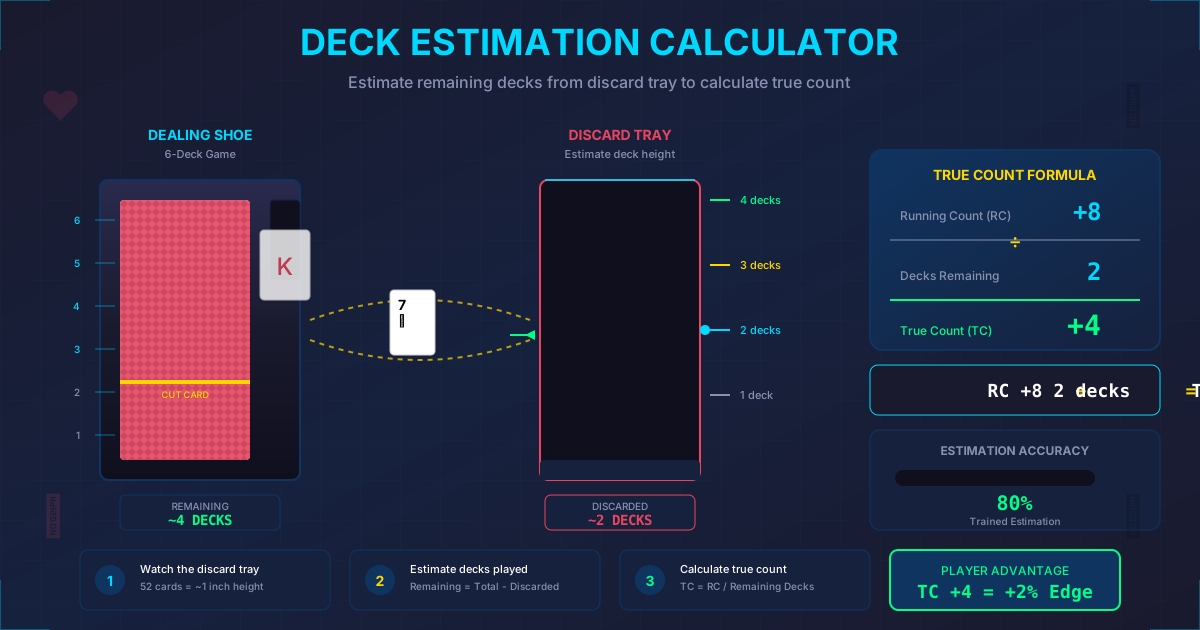
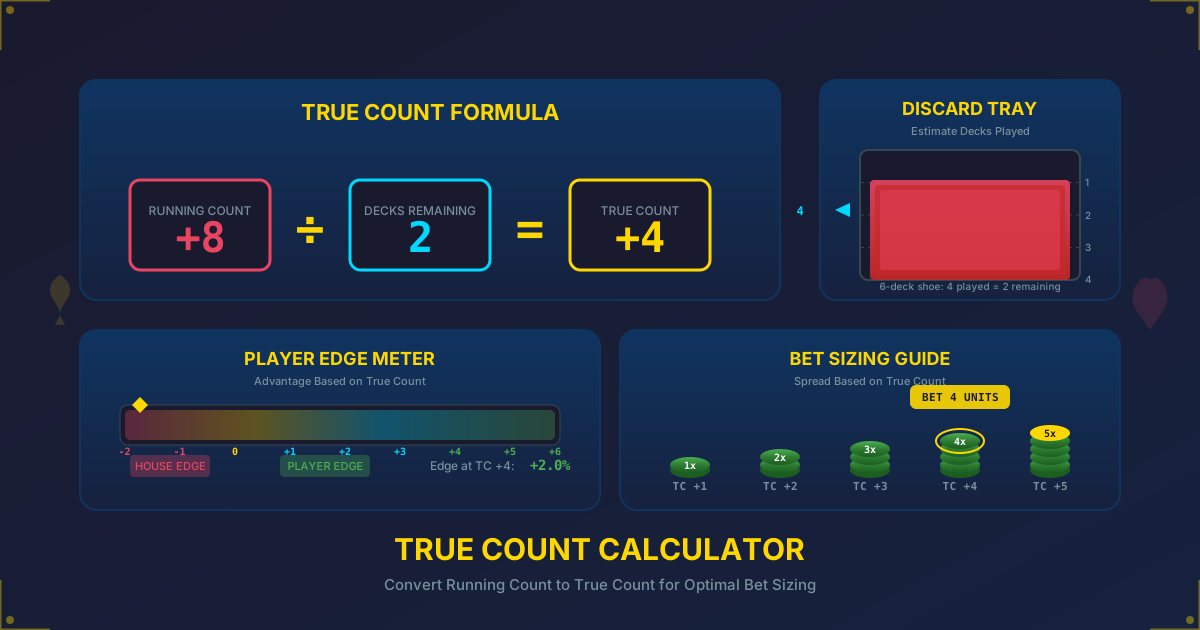
True Count Conversion
After running count drill:
Estimate decks remaining
Calculate true count

Practice:
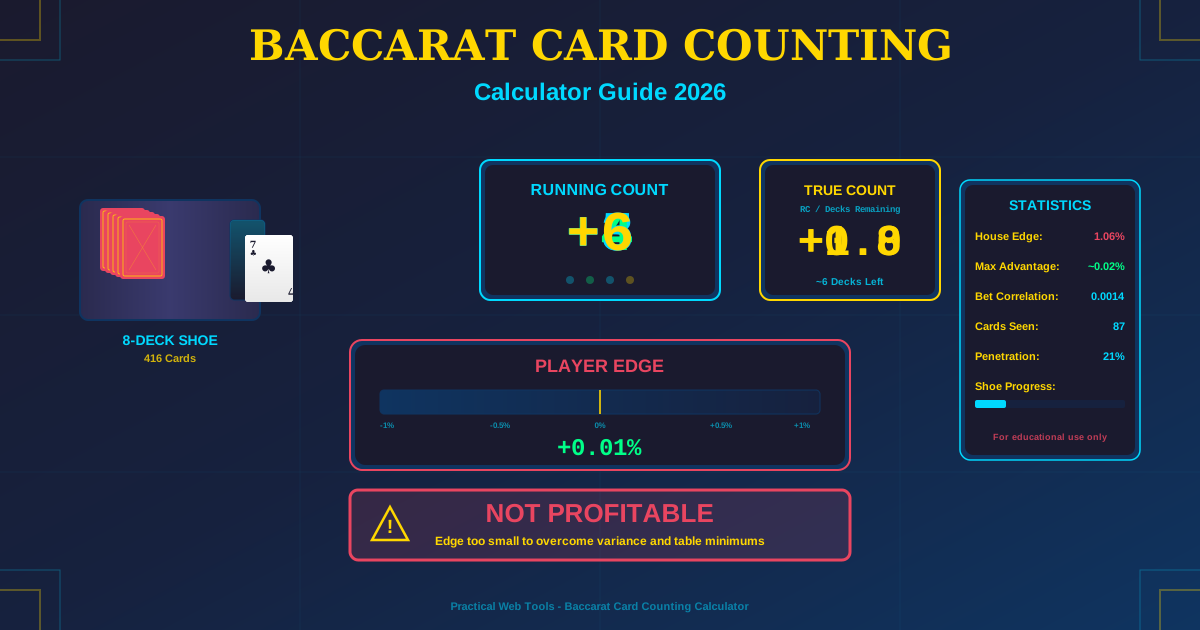
RC: +6, 2 decks left
TC: +3

Speed needed for live conditions
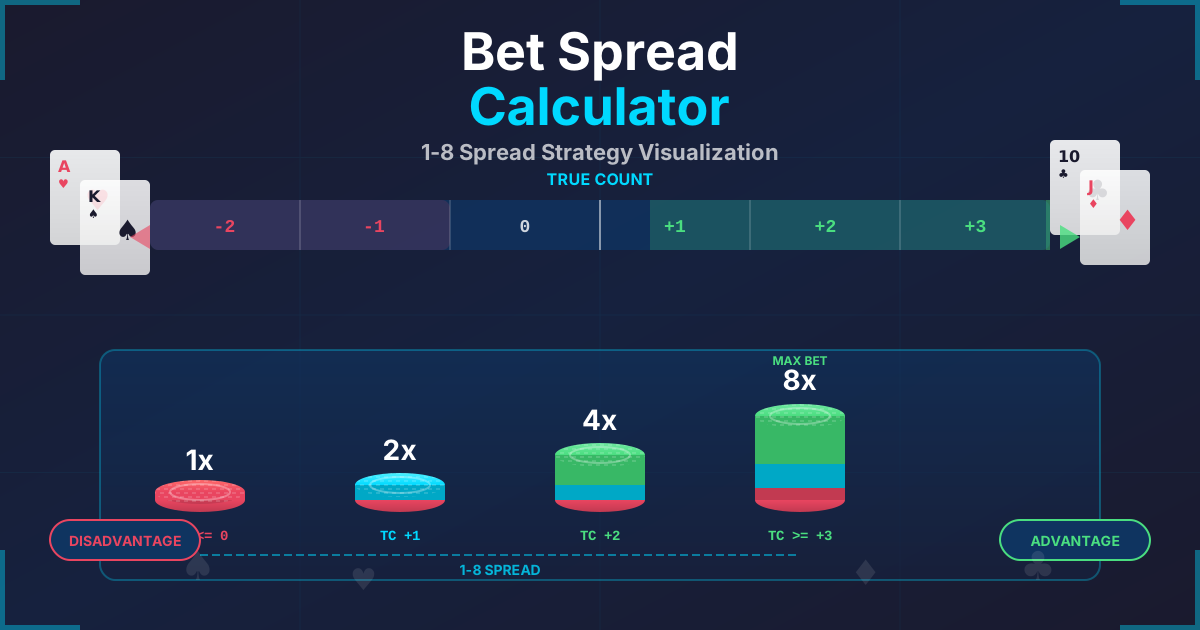
Bet Sizing Drill
Practice bet spread decisions:

TC +0 or less: 1 unit
TC +1: 2 units
TC +2: 4 units
TC +3: 6 units
TC +4+: 8 units

Announce bet size with count
Build automatic responses
Common Mistakes
1. Prioritizing Speed Over Accuracy
Mistake: Race through cards making errors Problem: Inaccurate counts are useless Fix: Slow down until 100% accurate
2. Skipping Pair Drills
Mistake: Only practice single cards Problem: Real dealing is pairs/groups Fix: Master pair values and cancellations
3. No Distraction Practice
Mistake: Quiet room only Problem: Casinos are noisy Fix: Add TV, music, conversation
4. Not Checking Final Count
Mistake: Assume you're right Problem: Errors go unnoticed Fix: Verify deck ends at 0 every time
Frequently Asked Questions
How long until I'm casino ready?
3-6 months of daily practice for most people. Must be accurate at casino speed with distractions.
What if I keep making errors?
Slow down. Speed comes after accuracy. Practice at 50% speed until perfect, then gradually increase.
Should I use a single deck or shoe?
Start with single deck. Move to 6-deck practice once single-deck time is under 30 seconds.
How do I practice true count conversion?
After running count drills are automatic, add deck estimation. Practice estimating discard tray.
Can I use apps for drills?
Yes, counting apps are helpful. But also practice with physical cards—different feel than screens.
When am I ready for the casino?
When you can count a deck in 25 seconds, perfectly, with distractions, while holding a conversation.
Pro Tips
-
Accuracy first: Always, no exceptions
-
Daily practice: 15-30 minutes minimum
-
Physical cards: Not just apps
-
Add distractions: Simulate casino
-
Verify every time: Check for 0
Related Calculators
- Blackjack True Count Calculator - Conversion practice
- Blackjack Card Counting Calculator - Full system
- Blackjack Basic Strategy Calculator - Foundation skills
- Blackjack Expected Value Calculator - EV analysis
- Blackjack House Edge Calculator - Edge breakdown
Conclusion
Card counting at casino speed requires dedicated practice—our drills calculator helps build the speed and accuracy needed for real-world conditions. Start slow, prioritize accuracy, and gradually increase speed.
You're not ready for the casino until counting is automatic. Our drill calculator guides your practice progression from beginner to casino-ready, tracking your speed and accuracy improvements over time.