Crash Gambling Explained: How It Works, the Math Behind It, and Why the House Wins (2026)
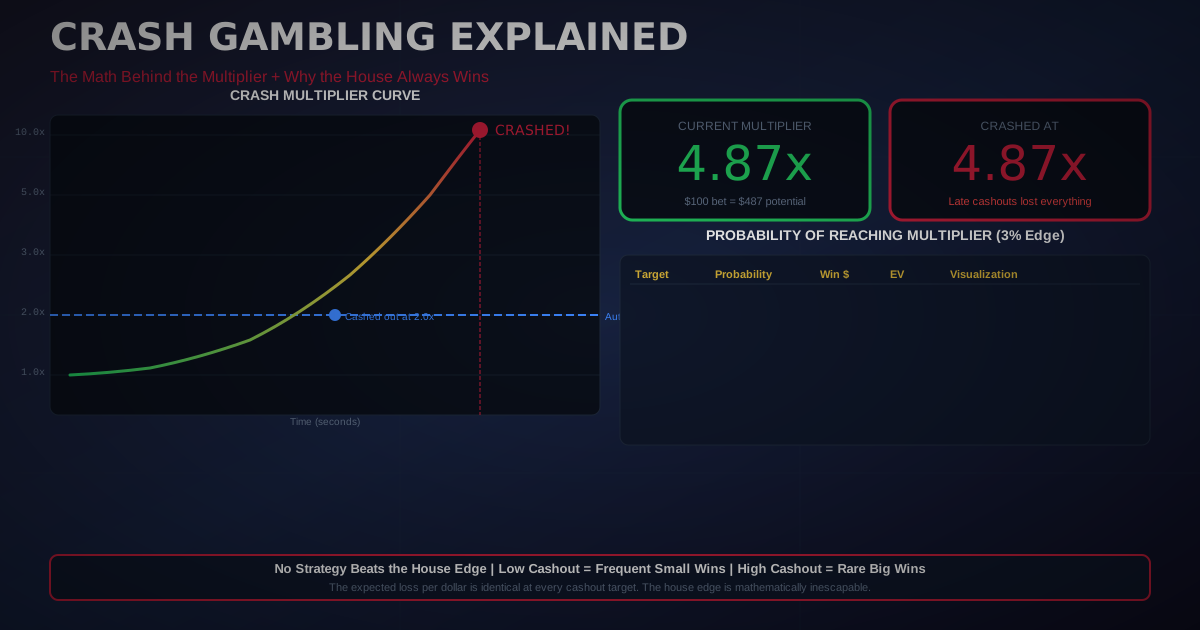
Crash gambling has become one of the fastest-growing forms of online gambling, particularly in the crypto space, yet most players have no idea how the math actually works. The concept is deceptively simple: place a bet, watch a multiplier climb from 1.00x upward, and cash out before it "crashes." If you cash out at 2.00x, your $100 bet becomes $200. If you cash out at 10.00x, it becomes $1,000. But if the multiplier crashes before you cash out, you lose everything.
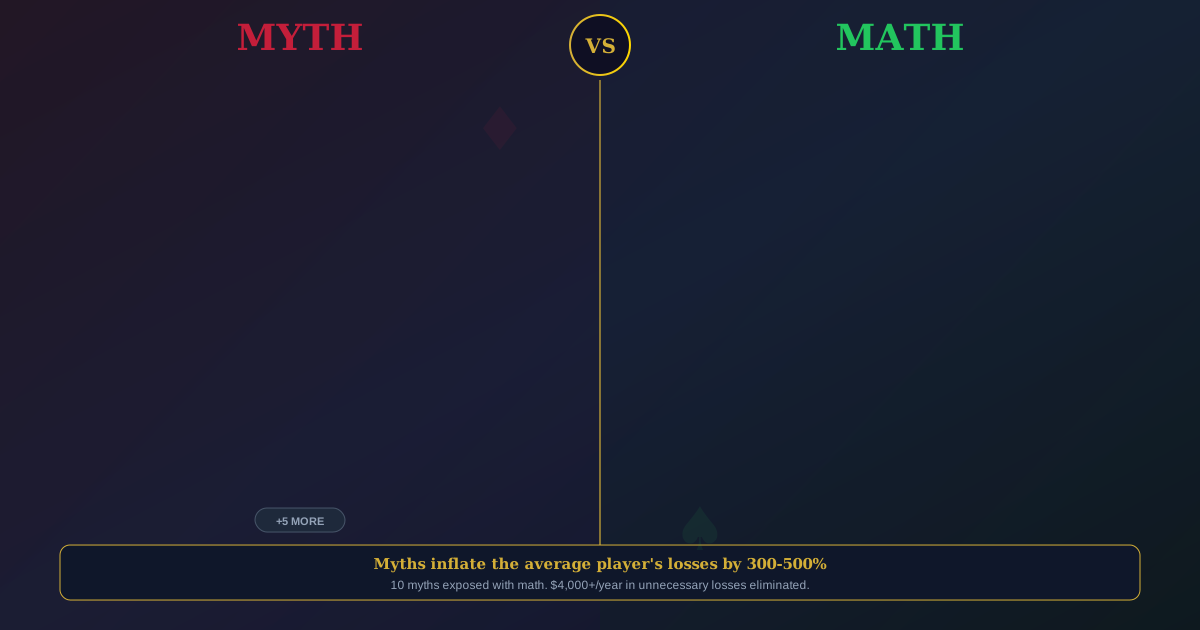
The game feels like pure adrenaline and skill. Surely if you just cash out at a conservative multiplier like 1.50x, you will win most of the time? The reality is that crash games are precisely engineered to ensure the house wins, and the mathematics behind them is both elegant and ruthless. A typical crash game has a house edge of 1-4%, which is actually competitive with traditional casino games, but the psychological design of the game makes players behave in ways that increase their effective losses far beyond that theoretical edge.
This guide explains exactly how crash games work, the provably fair system that ensures randomness, the precise mathematics of the house edge, why every strategy eventually fails, and how crash compares to games like blackjack, roulette, and sports betting.
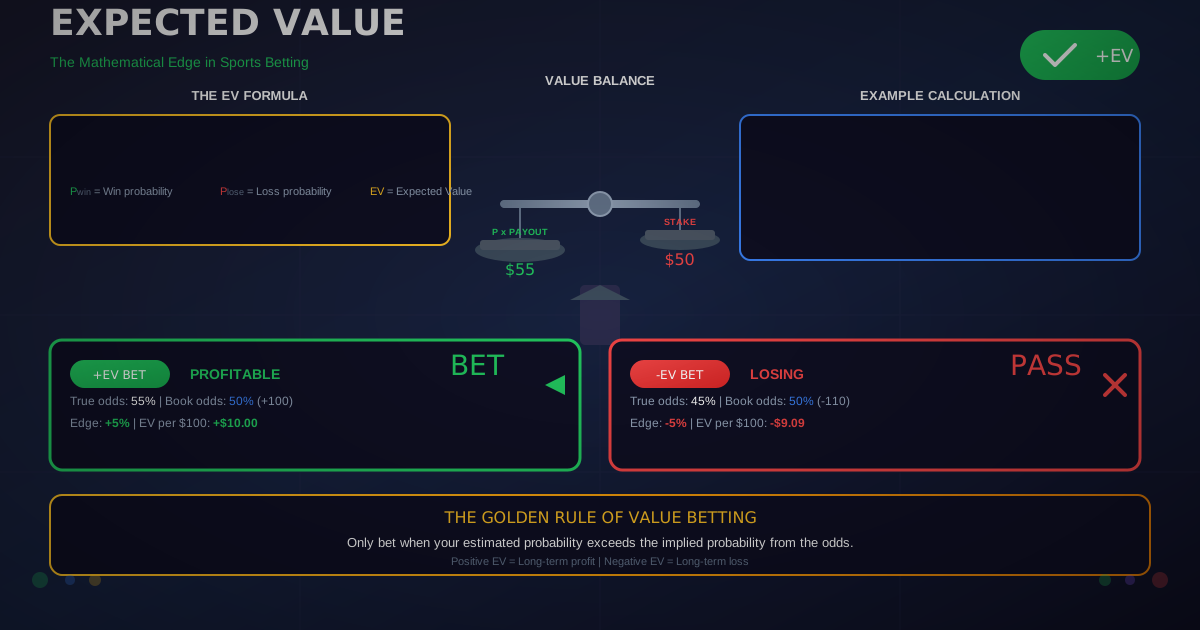
Calculate the expected value of any gambling wager with our free Expected Value Calculator.
How Crash Games Work Mechanically
The Basic Mechanics
Every crash game round follows the same sequence:
- Betting phase: Players place their bets (typically 5-15 seconds)
- Multiplier phase: A multiplier starts at 1.00x and begins climbing
- Cash-out decision: Players can cash out at any time to lock in the current multiplier
- Crash: At some random point, the multiplier crashes. All players who have not cashed out lose their entire bet
- Result: Winners receive their bet times their cash-out multiplier. Losers get nothing.
The Multiplier Curve
The multiplier does not climb linearly. It follows an exponential curve, starting slowly and accelerating rapidly:
| Time Elapsed | Approximate Multiplier | Time to Reach |
|---|---|---|
| 0 seconds | 1.00x | Start |
| 2 seconds | 1.20x | ~2s |
| 5 seconds | 1.60x | ~5s |
| 10 seconds | 2.50x | ~10s |
| 15 seconds | 4.00x | ~15s |
| 20 seconds | 7.00x | ~20s |
| 30 seconds | 20.00x | ~30s |
| 45 seconds | 100.00x+ | ~45s |
The exponential growth creates the illusion that "big multipliers are always just around the corner," which feeds into the gambler's temptation to hold longer. In reality, every additional second of holding increases your risk proportionally.
The Auto-Cashout Feature
Most crash games offer an auto-cashout feature where you set a target multiplier in advance. If the game reaches that multiplier, your bet is automatically cashed out. This removes the emotional decision-making from the equation, but it does not change the expected value.
The Provably Fair System
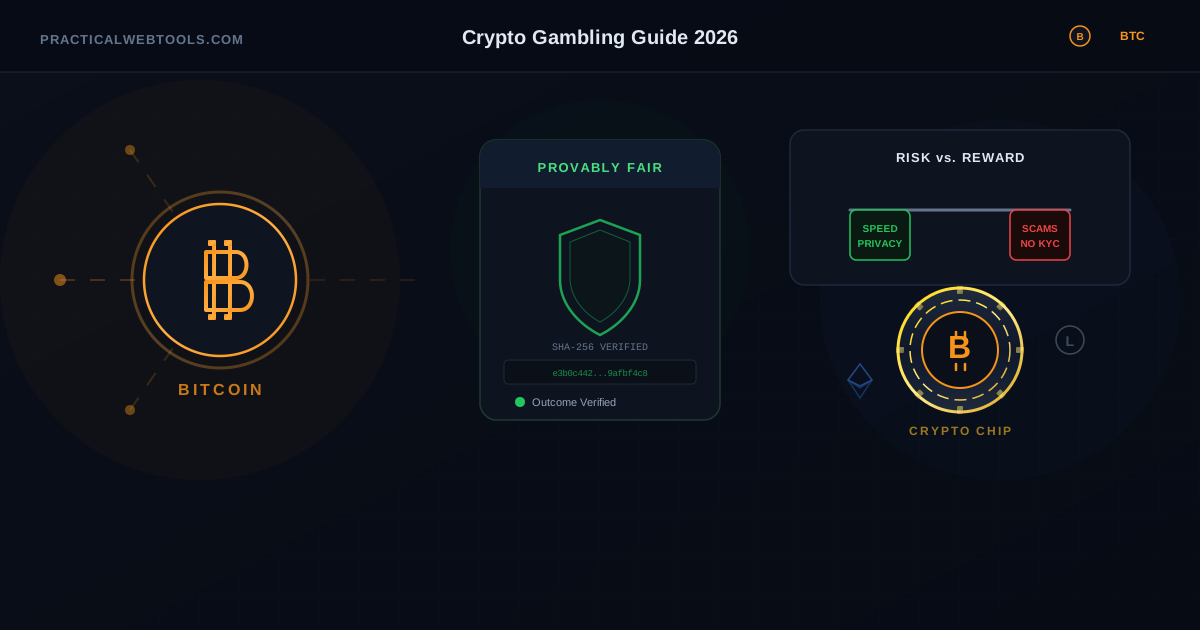
Most legitimate crash games use a "provably fair" system based on cryptographic hash functions. Here is how it works.
How Provably Fair Crash Works
- Server seed: Before the round, the server generates a random seed and publishes its hash (a one-way cryptographic fingerprint)
- Client seed: Each player can contribute their own random seed
- Crash point determination: The crash point is calculated from the combined server seed, client seed, and a nonce (round number)
- Verification: After the round, the server reveals the original seed. Players can verify that the hash matches and independently calculate the crash point
The Crash Point Algorithm
The most common implementation uses a formula like:
crash_point = max(1, floor(2^32 / (hash_value + 1)) x (1 - house_edge) / 100)
This produces a distribution where:
- The probability of crashing before multiplier M = 1 - (1 / M) x (1 - house_edge)
- Higher multipliers are progressively less likely
- The house edge is baked directly into the formula
Is It Actually Fair?
The provably fair system guarantees that:
- The operator cannot change the crash point after bets are placed
- Players can verify every result independently
- The distribution matches the mathematical model
However, "provably fair" does not mean "fair" in the colloquial sense. The system provably implements a game with a built-in house edge. It proves the game is random and not rigged beyond the stated house edge, but that house edge is still there.
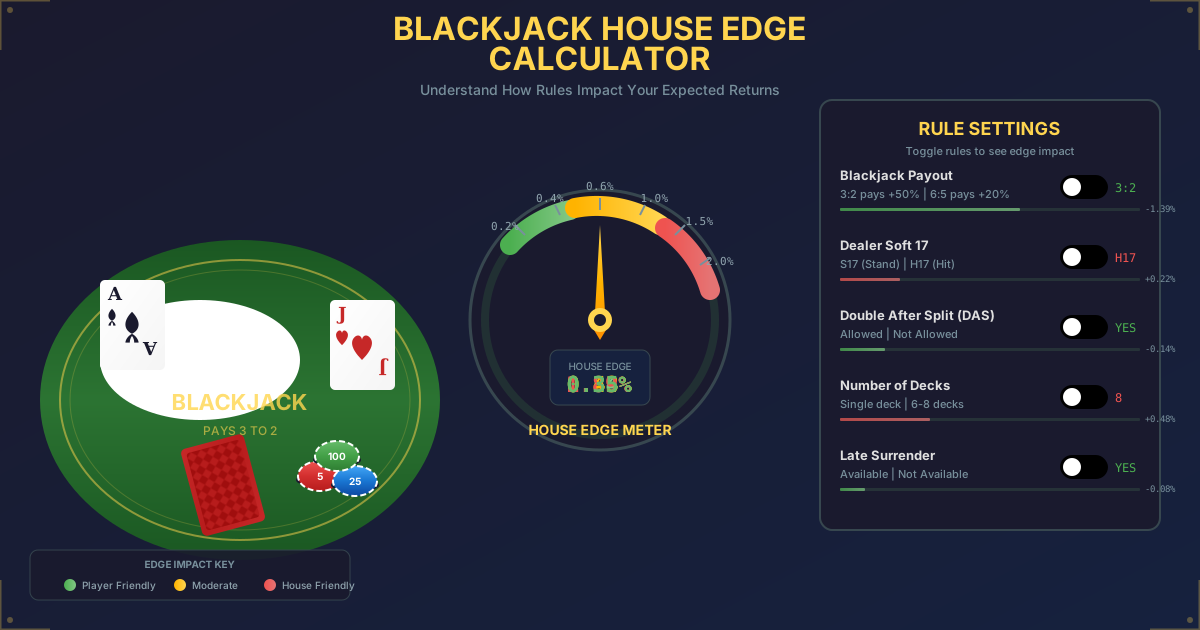
Compare the fairness of crash games to traditional casino games with our Blackjack House Edge Calculator, Roulette House Edge Calculator, and Craps House Edge Calculator.
The Mathematics of Crash Gambling
Probability of Reaching Any Multiplier
With a house edge of H (expressed as a decimal, e.g., 0.03 for 3%), the probability that a round reaches multiplier M or higher is:
P(game reaches M or higher) = (1 - H) / M
For a game with 3% house edge:
| Target Multiplier | Probability of Reaching | Probability of Crashing Before |
|---|---|---|
| 1.00x | 97.0% | 3.0% (instant crash) |
| 1.10x | 88.2% | 11.8% |
| 1.25x | 77.6% | 22.4% |
| 1.50x | 64.7% | 35.3% |
| 2.00x | 48.5% | 51.5% |
| 3.00x | 32.3% | 67.7% |
| 5.00x | 19.4% | 80.6% |
| 10.00x | 9.7% | 90.3% |
| 20.00x | 4.85% | 95.15% |
| 50.00x | 1.94% | 98.06% |
| 100.00x | 0.97% | 99.03% |
| 1,000.00x | 0.097% | 99.903% |
Notice the 3% instant crash probability. In a game with 3% house edge, approximately 3 out of every 100 rounds crash immediately at 1.00x. Every player loses their entire bet in these rounds, regardless of strategy.
Explore probability distributions for any gambling scenario with our Roulette Probability Calculator and Implied Probability Calculator.
Expected Value Calculation
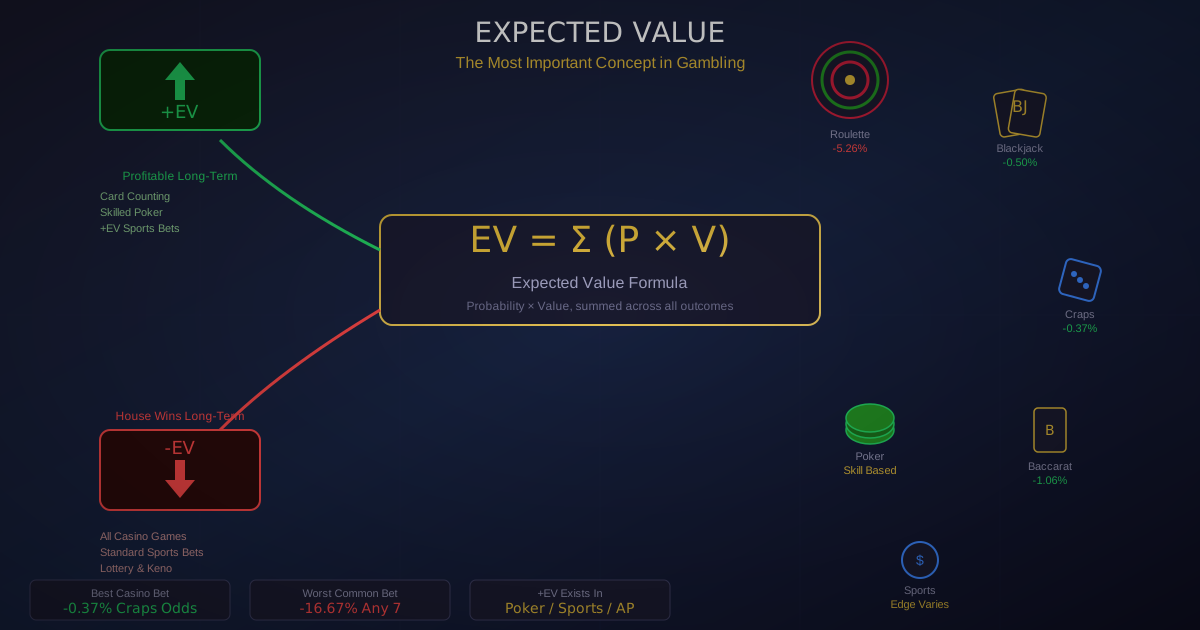
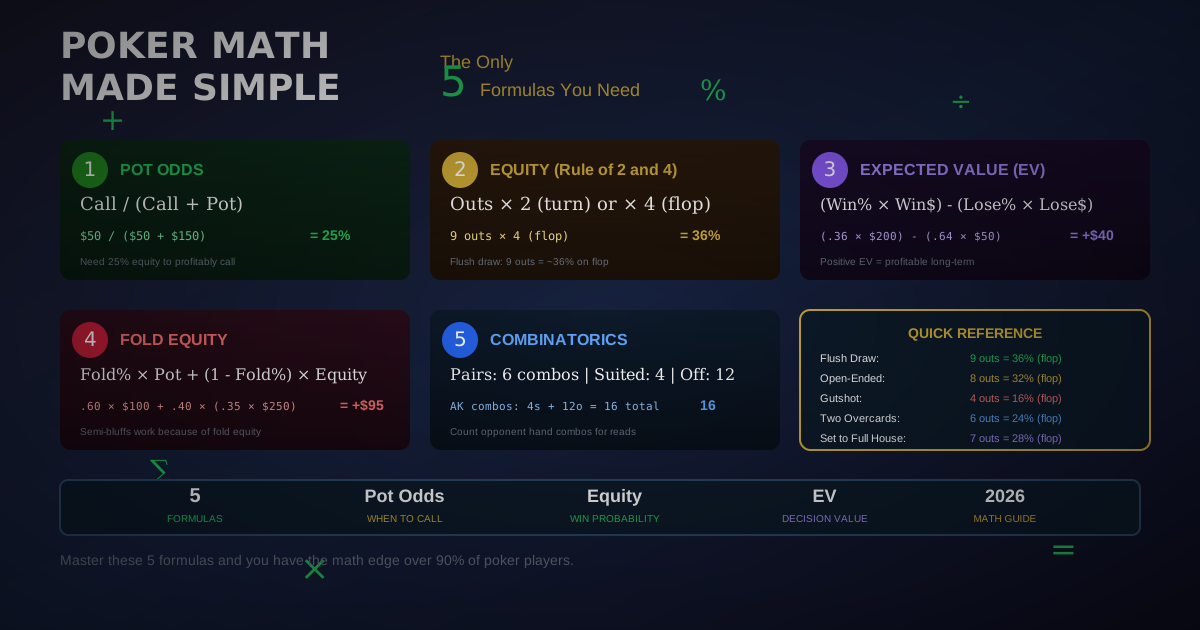
The EV of any crash strategy is always negative (assuming a positive house edge). For a fixed auto-cashout at multiplier M:
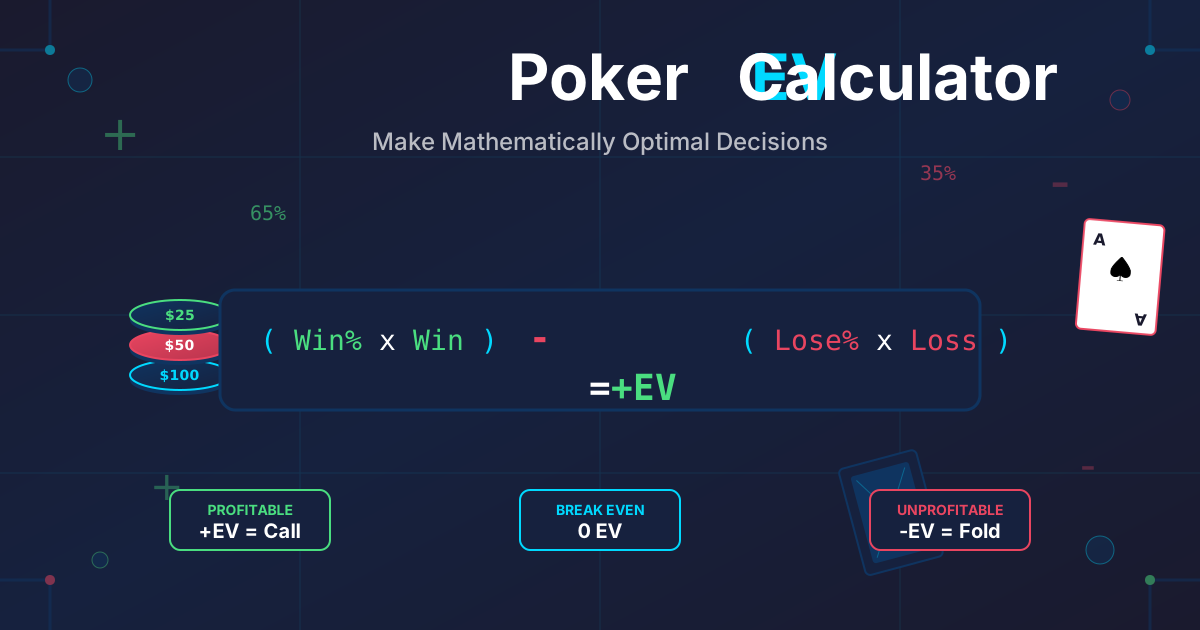
EV = P(reaching M) x (M - 1) x Bet - P(crashing before M) x Bet
Example 1: $100 bet with 2.00x auto-cashout (3% house edge):
- P(reaching 2.00x) = 0.97 / 2.00 = 0.485 (48.5%)
- P(crashing before 2.00x) = 1 - 0.485 = 0.515 (51.5%)
- EV = (0.485 x $100) - (0.515 x $100) = $48.50 - $51.50 = -$3.00
The expected loss is $3.00 per $100 bet, which is exactly the 3% house edge. This holds regardless of the cashout multiplier you choose.
Example 2: $100 bet with 1.50x auto-cashout (3% house edge):
- P(reaching 1.50x) = 0.97 / 1.50 = 0.6467 (64.67%)
- P(crashing before 1.50x) = 0.3533 (35.33%)
- EV = (0.6467 x $50) - (0.3533 x $100) = $32.33 - $35.33 = -$3.00
Same expected loss. The house edge is constant regardless of your strategy.
Example 3: $100 bet with 10.00x auto-cashout (3% house edge):
- P(reaching 10.00x) = 0.97 / 10.00 = 0.097 (9.7%)
- P(crashing before 10.00x) = 0.903 (90.3%)
- EV = (0.097 x $900) - (0.903 x $100) = $87.30 - $90.30 = -$3.00
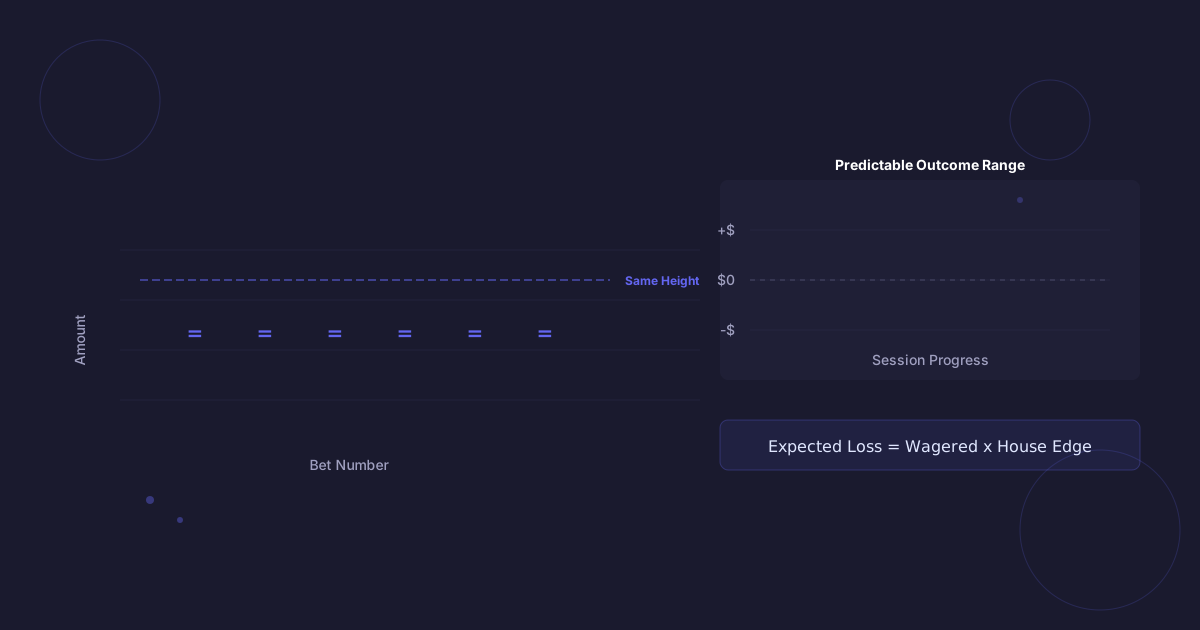
Every strategy produces the same expected loss of $3.00 per $100 bet (3% house edge). The only thing that changes is the variance.
Verify these calculations with our Expected Value Calculator and Roulette EV Calculator.
Variance at Different Cashout Levels
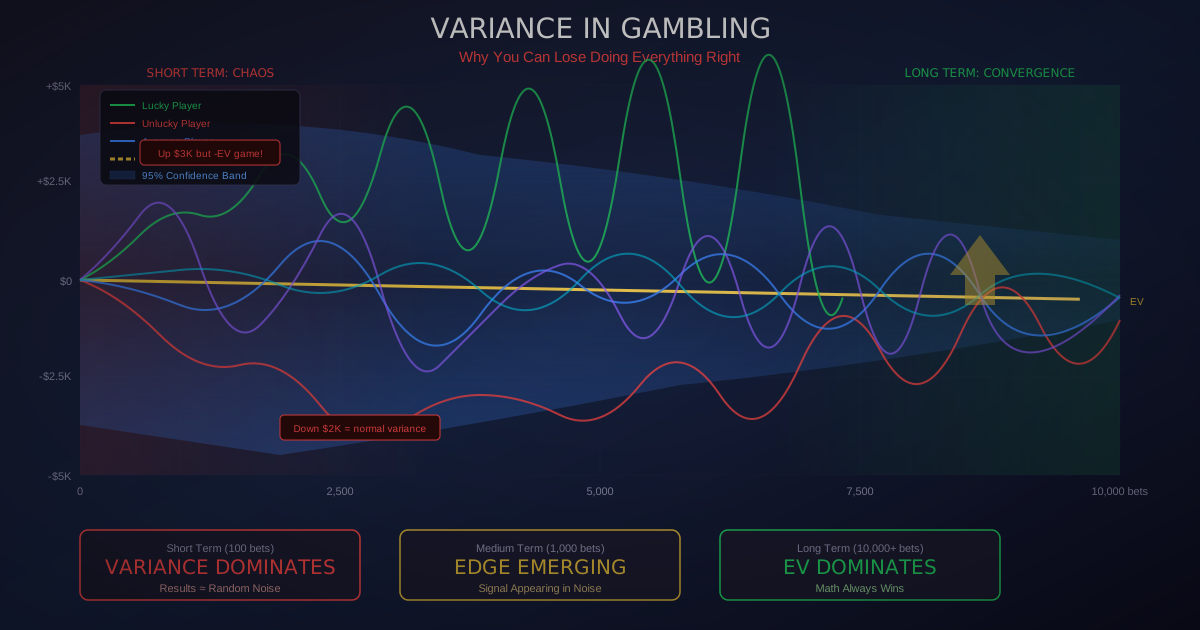
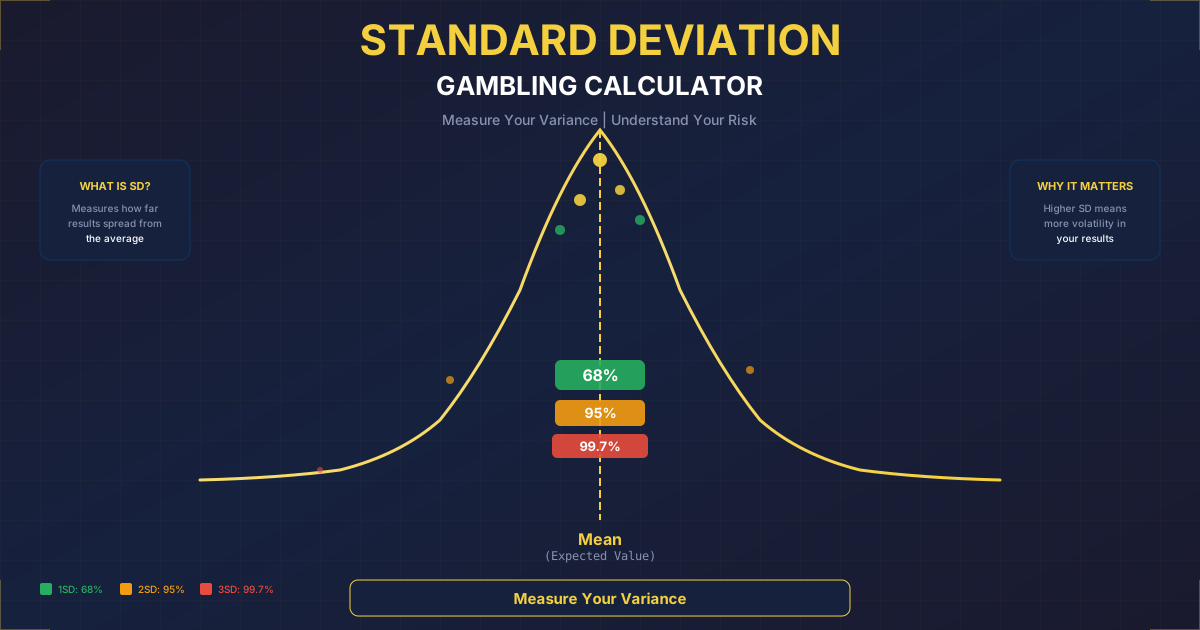
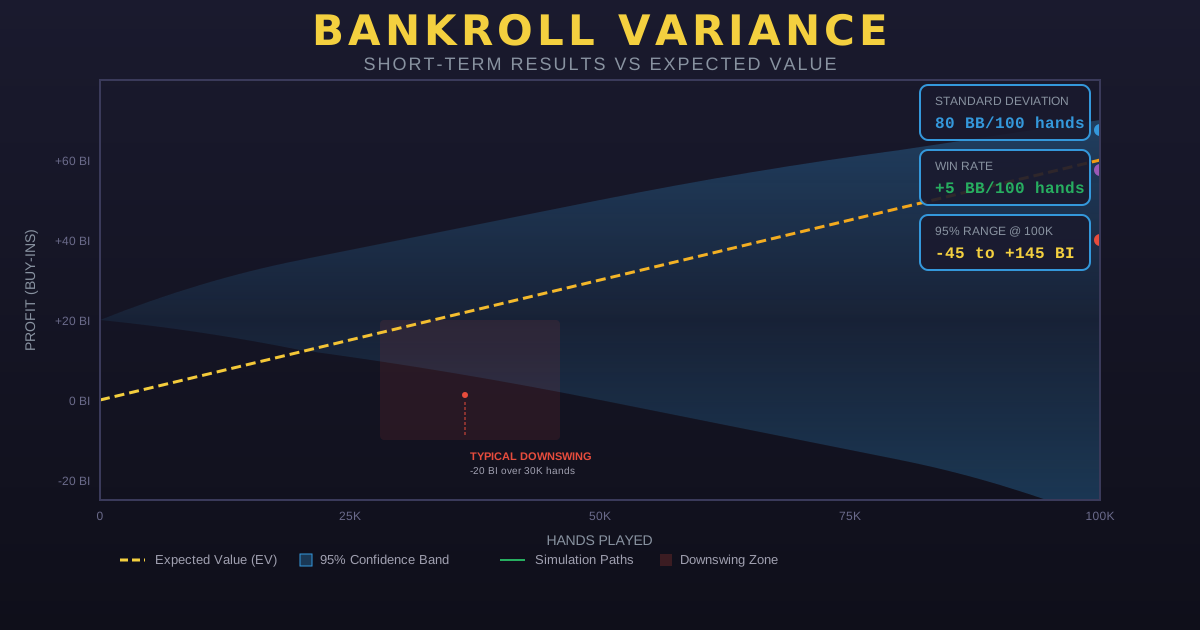
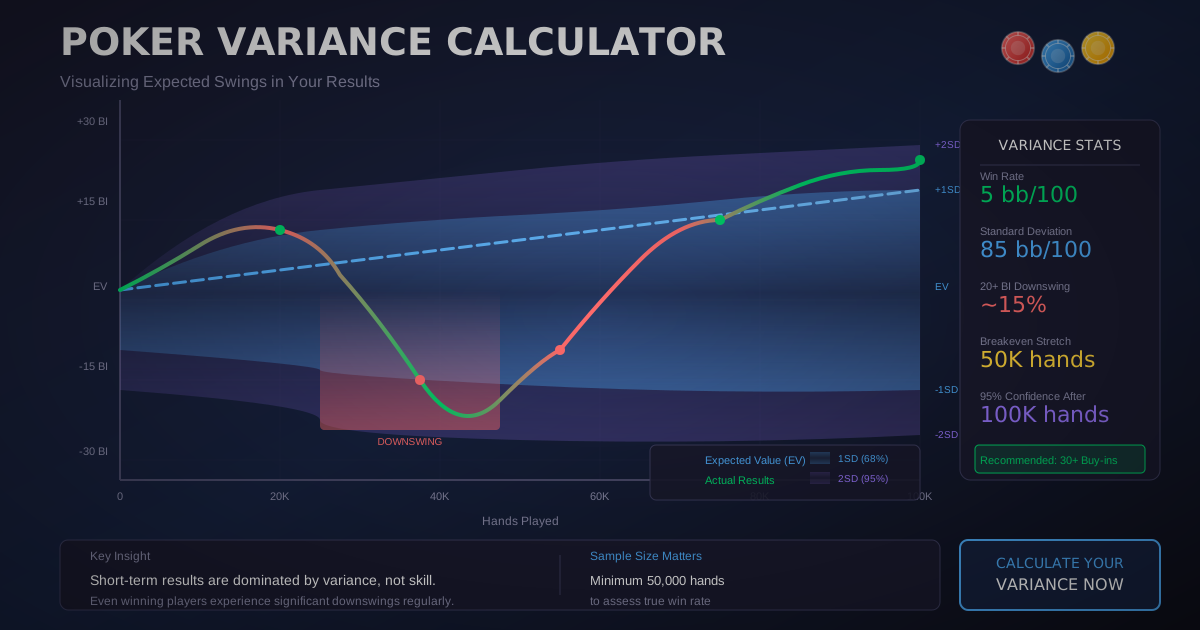
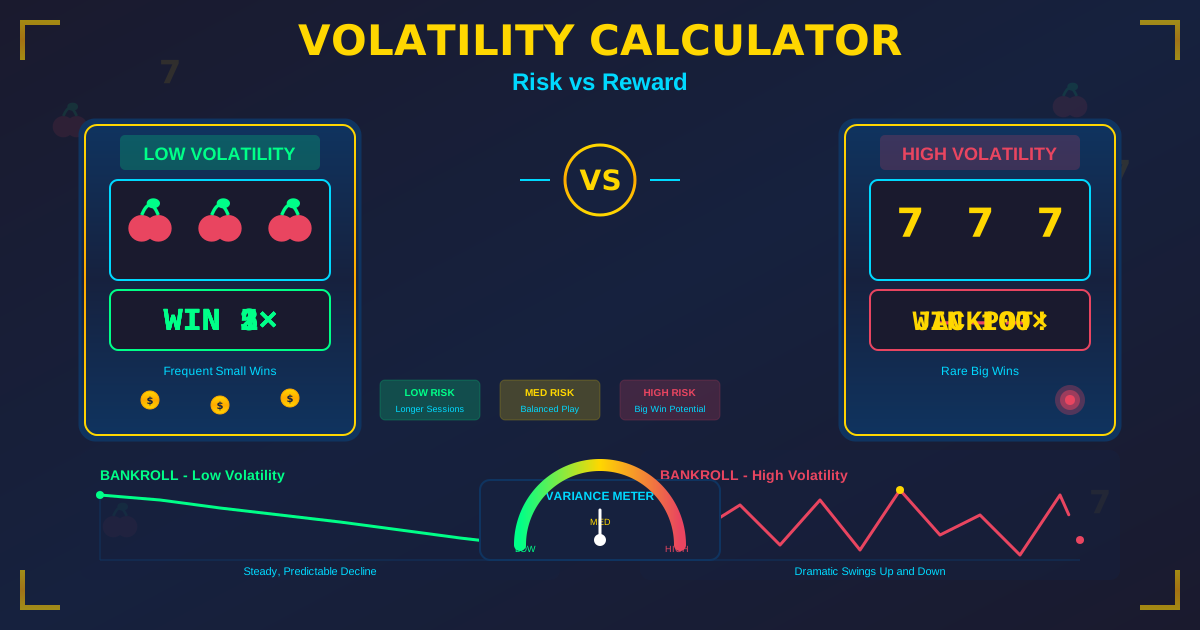
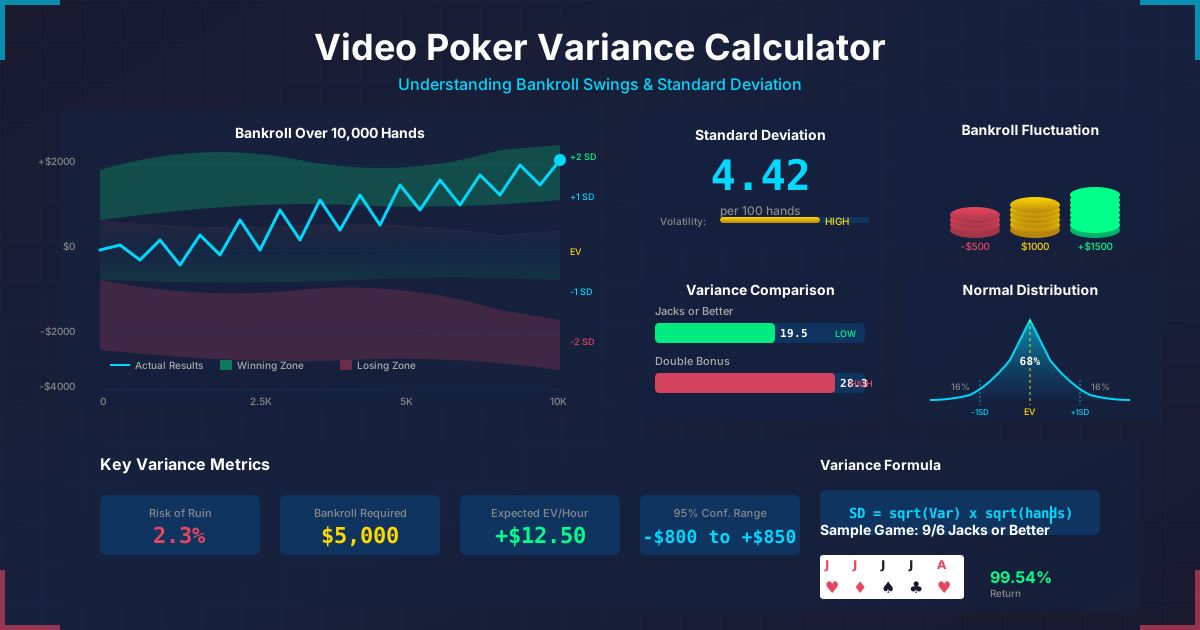
While the expected loss is always the same, the variance (how volatile your results are) changes dramatically:
| Cashout Target | Expected Loss/Bet | Standard Deviation | Winning Frequency |
|---|---|---|---|
| 1.10x | 3% | Low (~$31) | ~88% of rounds |
| 1.50x | 3% | Moderate (~$48) | ~65% of rounds |
| 2.00x | 3% | Moderate (~$50) | ~49% of rounds |
| 5.00x | 3% | High (~$175) | ~19% of rounds |
| 10.00x | 3% | Very High (~$293) | ~10% of rounds |
| 100.00x | 3% | Extreme (~$970) | ~1% of rounds |
Low cashout targets produce many small wins with occasional losses. High cashout targets produce many losses with occasional large wins. Neither is better in terms of expected value.
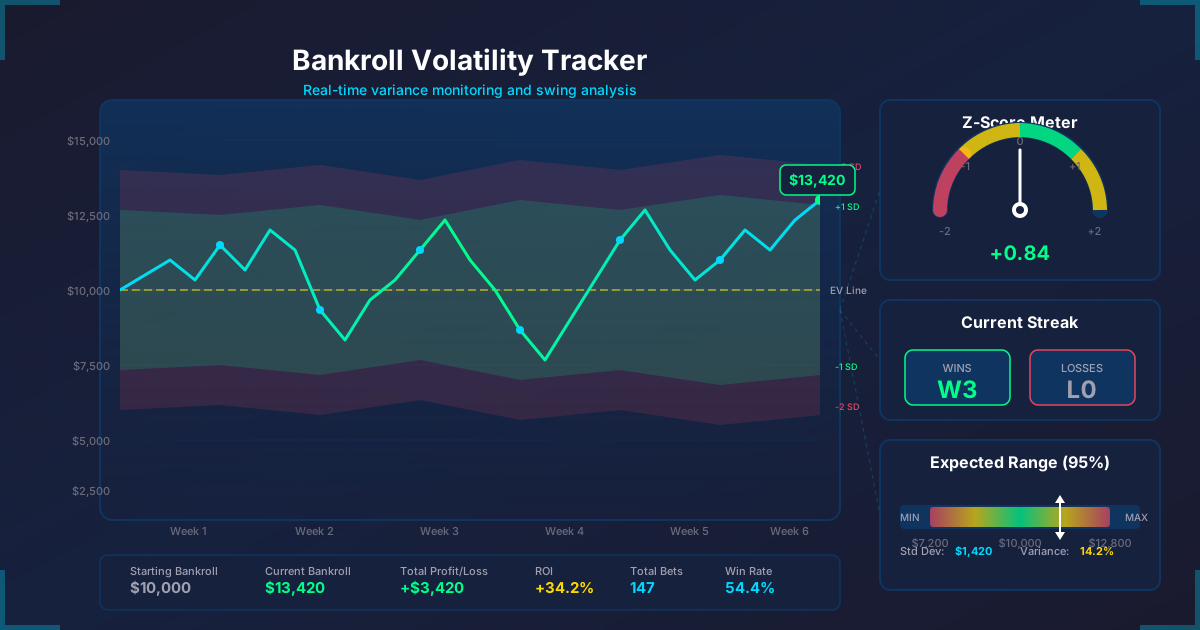
Track your gambling volatility over time with our Bankroll Volatility Tracker.
Popular Crash Strategies (and Why None of Them Work)
Strategy 1: Conservative Low-Multiplier (1.10x-1.30x)
The idea: Cash out early at small multipliers. You "win" 80-90% of rounds with small profits, building steady gains.
The math: With a 1.20x target and 3% house edge:
- Win probability: 0.97/1.20 = 80.8%
- Win amount: $20 per $100
- Lose probability: 19.2%
- Lose amount: $100 per $100
Expected per round: (0.808 x $20) - (0.192 x $100) = $16.16 - $19.20 = -$3.04
Why it fails: You need 5 wins to offset 1 loss. Over 100 rounds, you expect about 81 wins ($1,620 profit) and 19 losses ($1,900 loss). Net: -$280. The many small wins create the illusion of profitability, but the occasional total losses erase all gains plus more.
Real-world example: You play 50 rounds at $100 with 1.20x target:
- Rounds 1-10: Win 9, lose 1. Net: 9 x $20 - 1 x $100 = +$80
- Rounds 11-20: Win 8, lose 2. Net: 8 x $20 - 2 x $100 = -$40
- Rounds 21-30: Win 7, lose 3. Net: 7 x $20 - 3 x $100 = -$160
- Rounds 31-40: Win 9, lose 1. Net: +$80
- Rounds 41-50: Win 8, lose 2. Net: -$40
Total: 41 wins, 9 losses. Net: $820 - $900 = -$80 (1.6% loss rate). Close to the expected -3% loss, with variance making it seem "almost profitable."
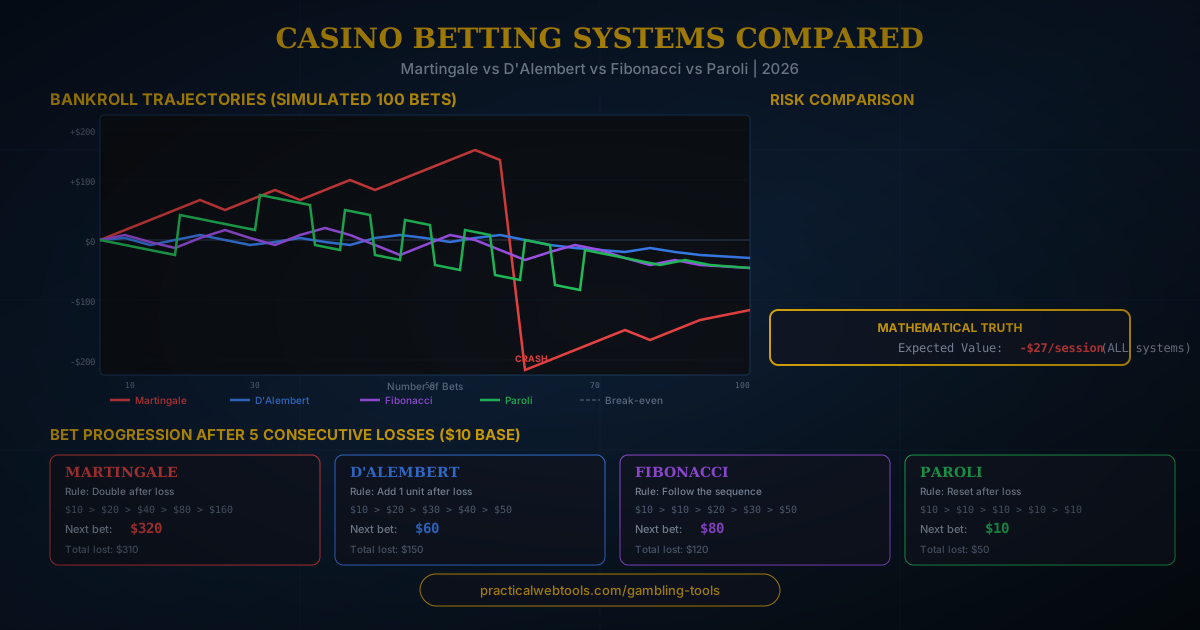
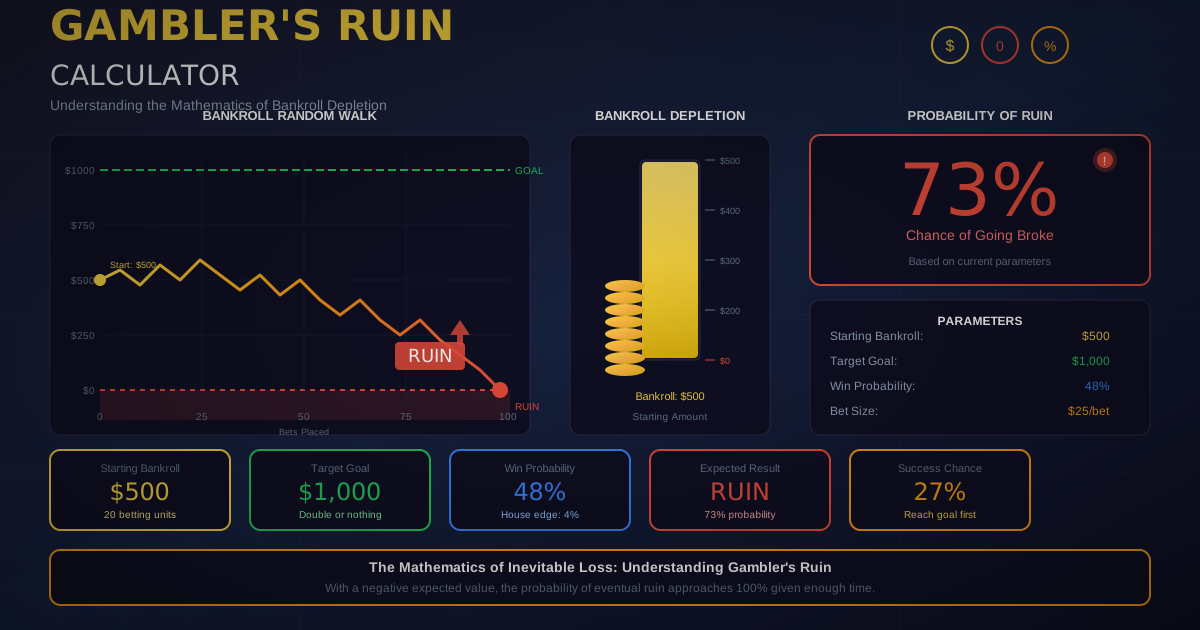
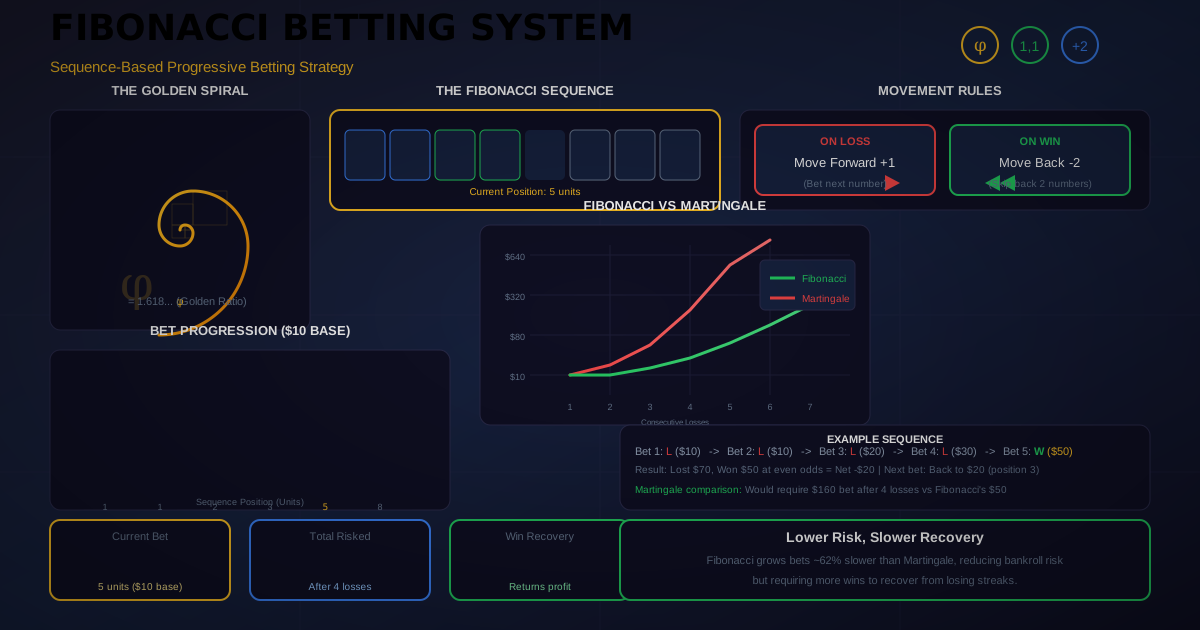
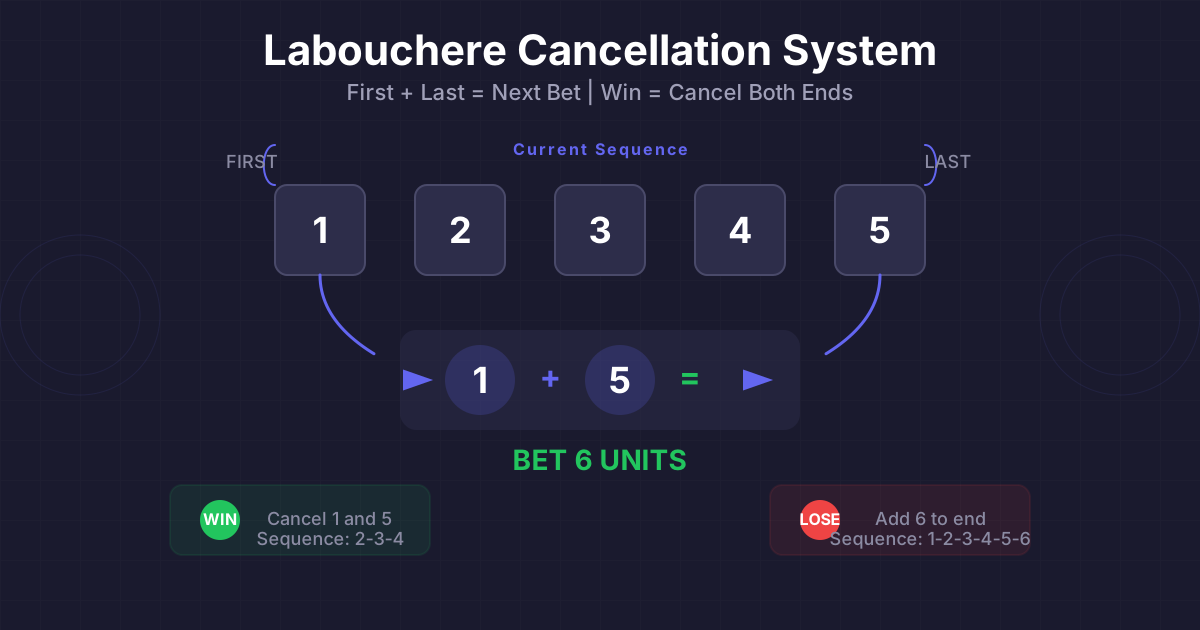
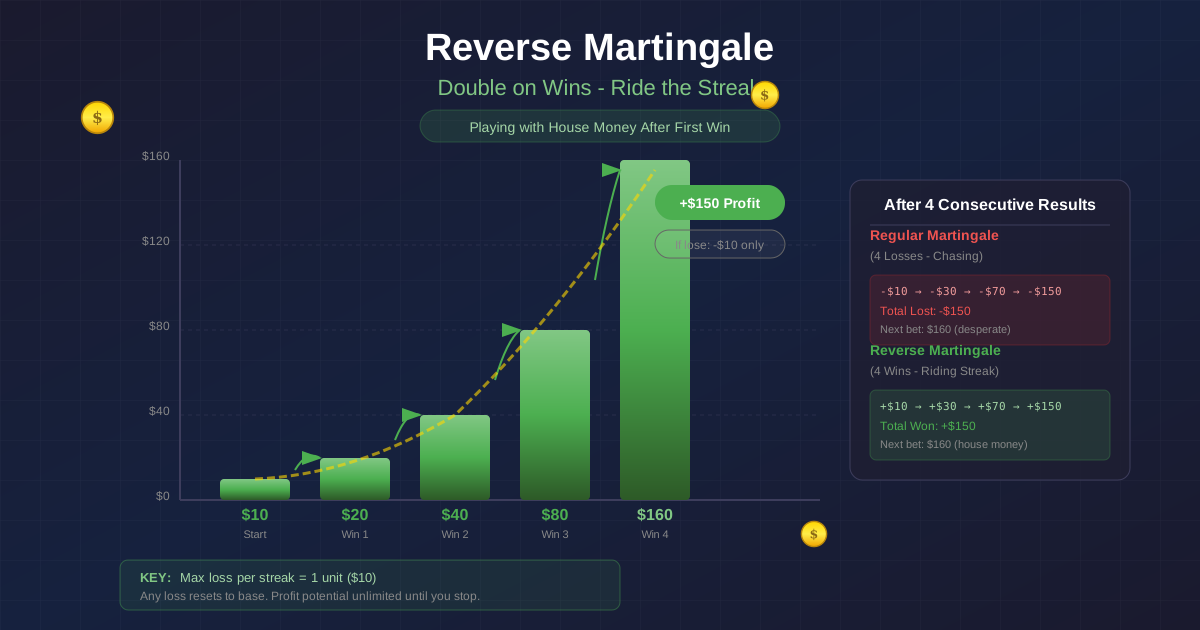
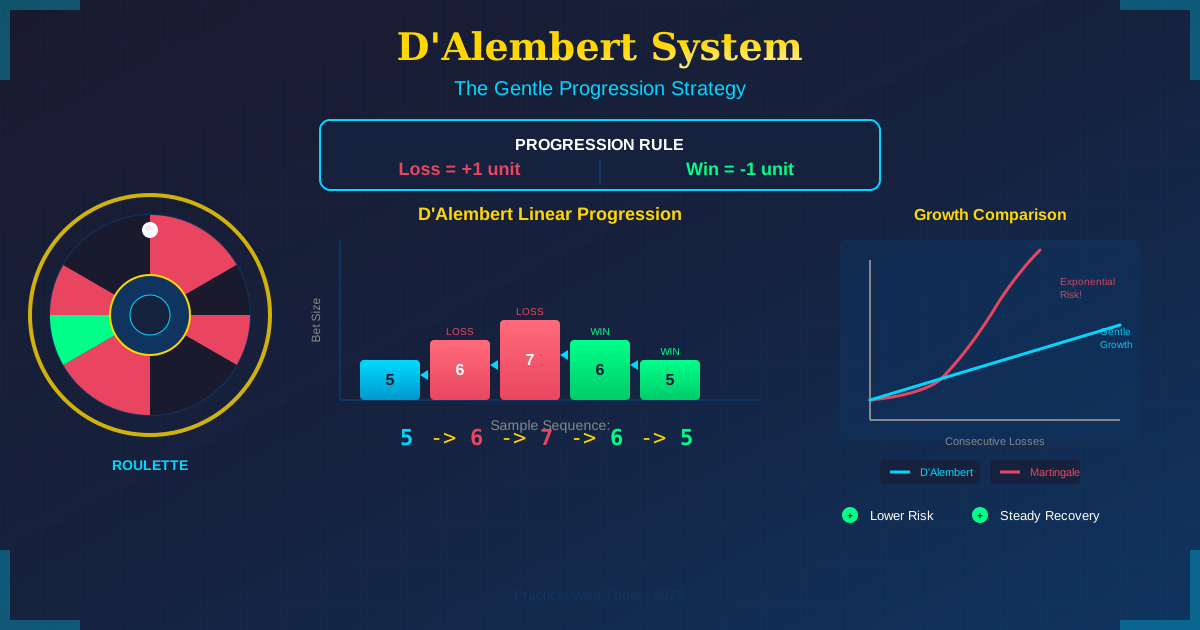
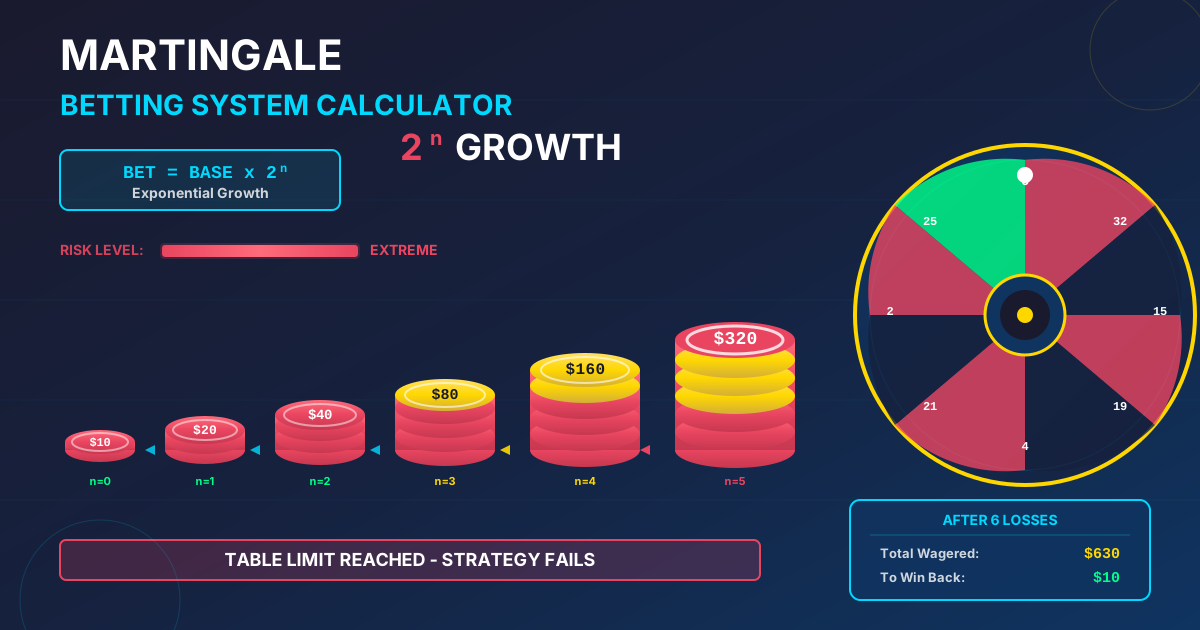
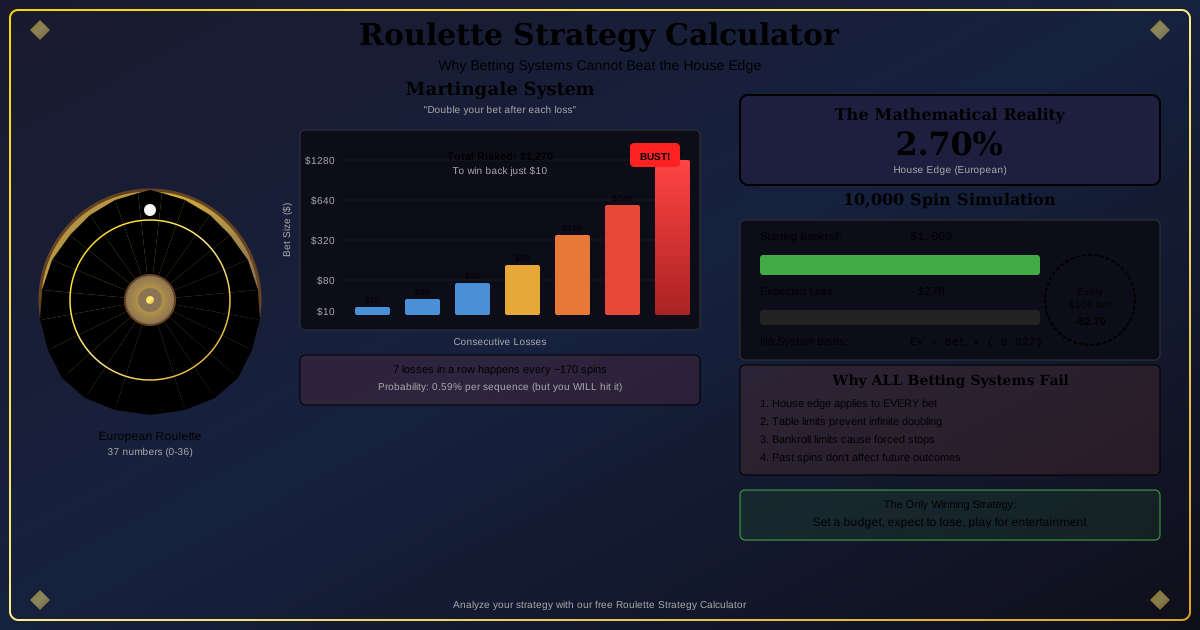
Strategy 2: Martingale Doubling
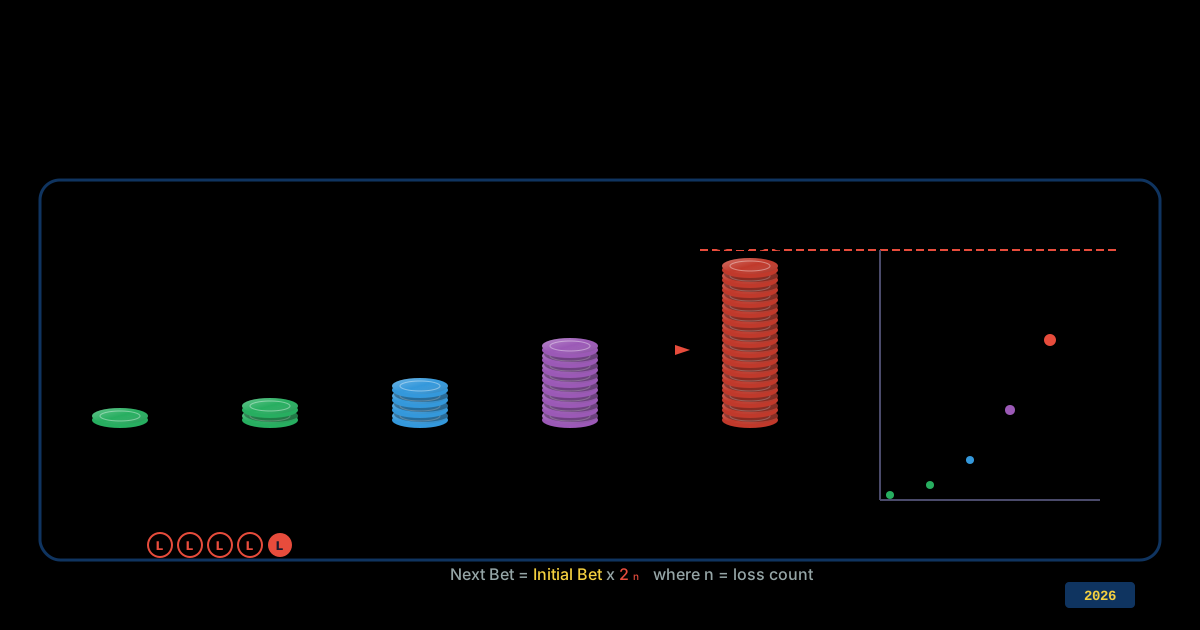
The idea: Start with a small bet. If you lose, double your bet. When you eventually win, the win covers all previous losses plus profit.
The math for 2.00x cashout:
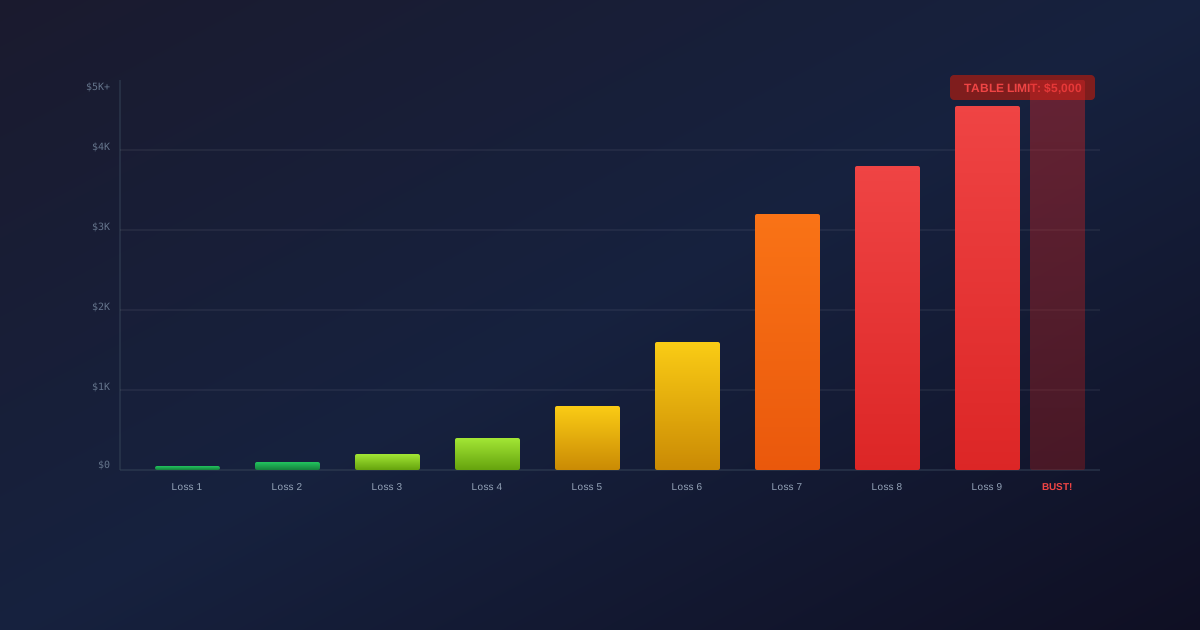
- Bet sequence: $10, $20, $40, $80, $160, $320, $640, $1,280...
- After 7 losses: $1,270 invested
- Win at 2.00x on 8th bet ($1,280): $2,560 return. Net profit: $10.
- Probability of 7 consecutive losses: (0.515)^7 = 1.1%
Why it fails:
- After 7 losses, your next bet is $1,280. Many players hit table limits or bankroll limits before recovering
- A loss streak of 10+ at 2.00x target has a 0.14% probability (occurs roughly once every 714 sequences)
- The catastrophic loss when it fails (-$10,230 after 10 consecutive losses) wipes out hundreds of winning sequences
- The expected value per round is still exactly -3%, regardless of staking
The Martingale creates the illusion of winning by trading many small wins for rare but devastating losses. The EV is unchanged.
Strategy 3: Waiting for "Patterns"
The idea: If the game has crashed early (below 2.00x) several times in a row, the next round is "due" for a high multiplier.
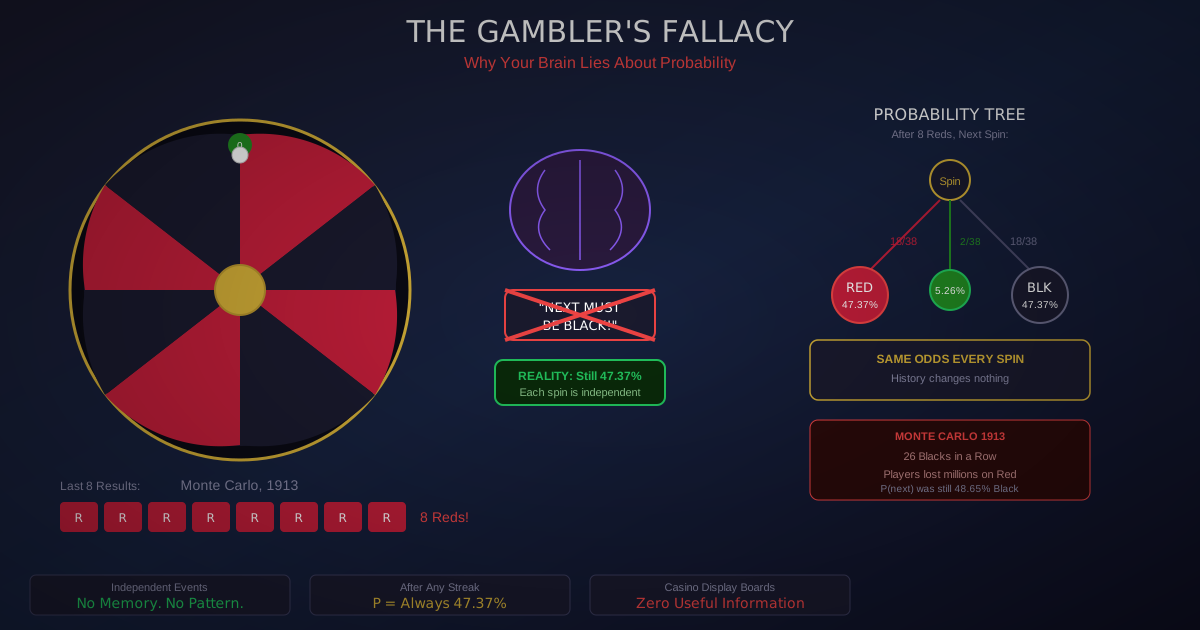
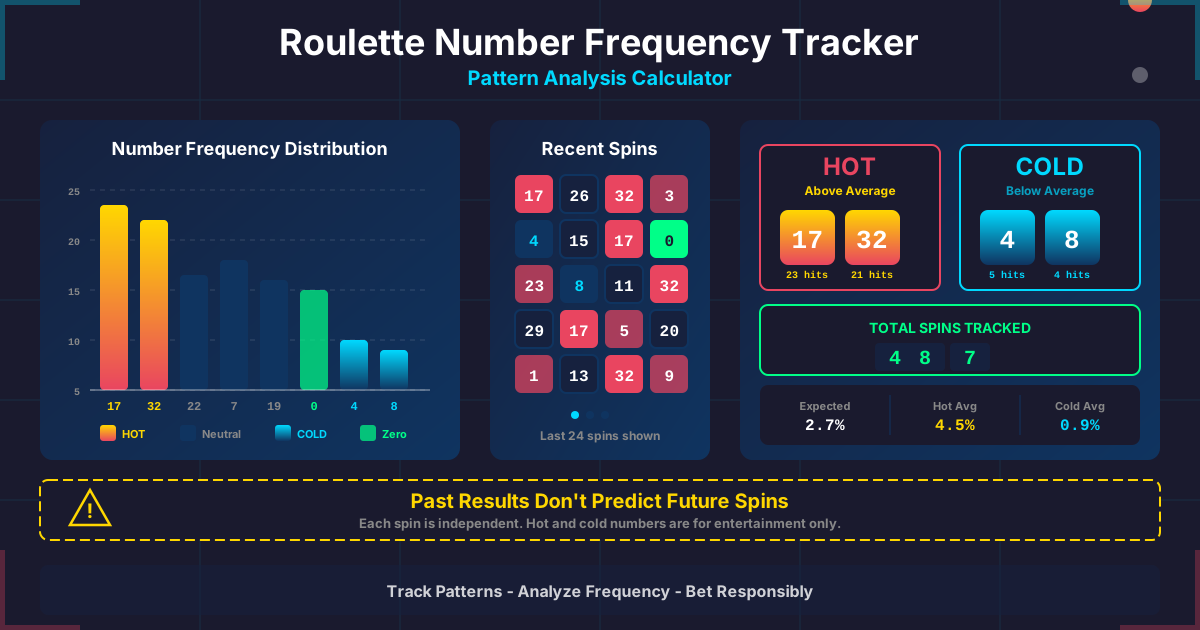
The math: Each round is independently determined by the cryptographic hash. Previous results have zero influence on future results. A crash at 1.01x followed by another at 1.01x has no bearing on whether the next round will be 1.01x or 1,000.00x.
This is the gambler's fallacy, and it is mathematically provably wrong in provably fair systems. The hash function ensures each round is independent.
Strategy 4: The "Wait and Watch" Approach
The idea: Watch several rounds without betting. When you see a pattern you like (several low crashes, or a particular rhythm), jump in.
Why it fails: Same as Strategy 3. There are no patterns. Each round is independent. Watching rounds gives you exactly zero information about future rounds. The human brain is wired to find patterns in random data, but they are illusory.
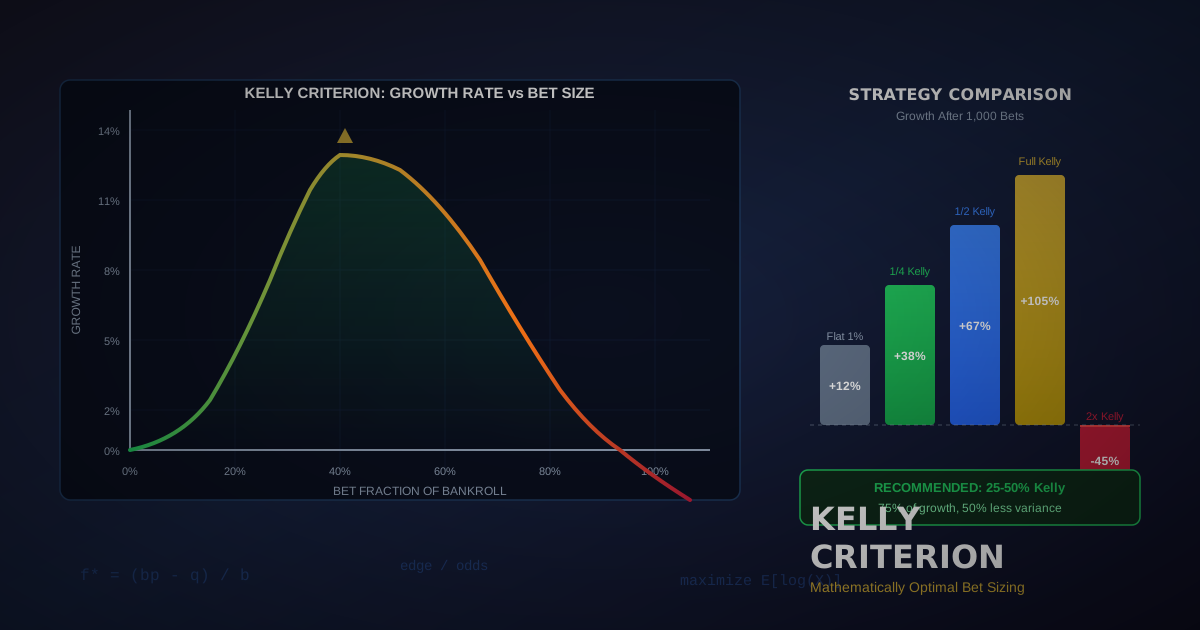
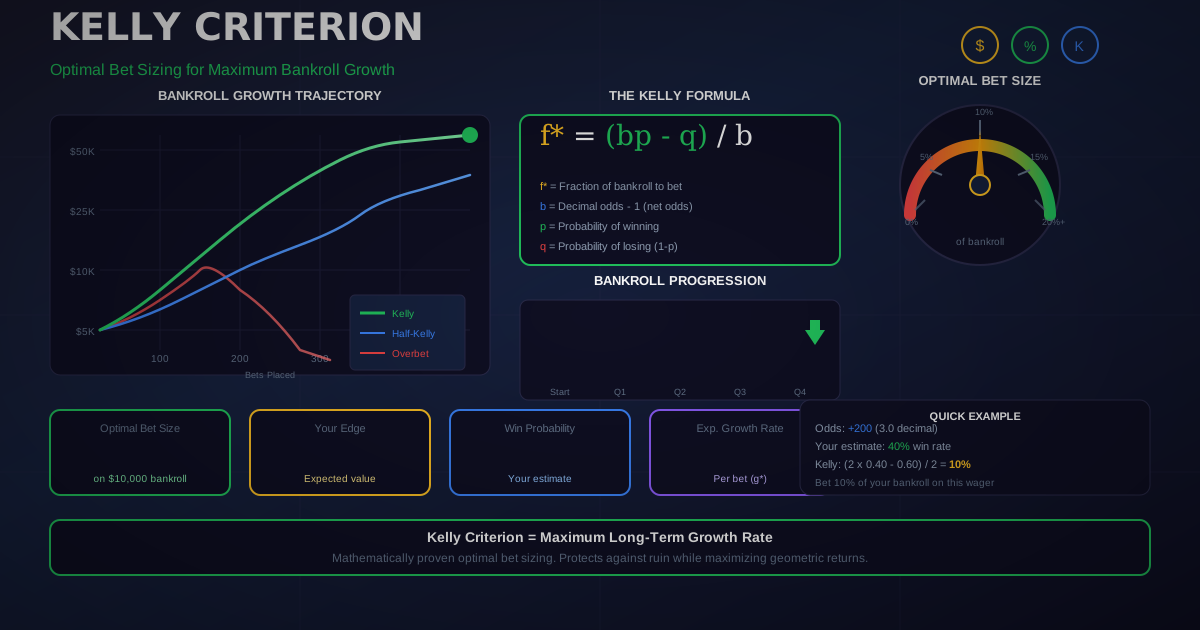
Calculate optimal bet sizing (or more accurately, minimum loss sizing) with our Kelly Criterion Calculator.
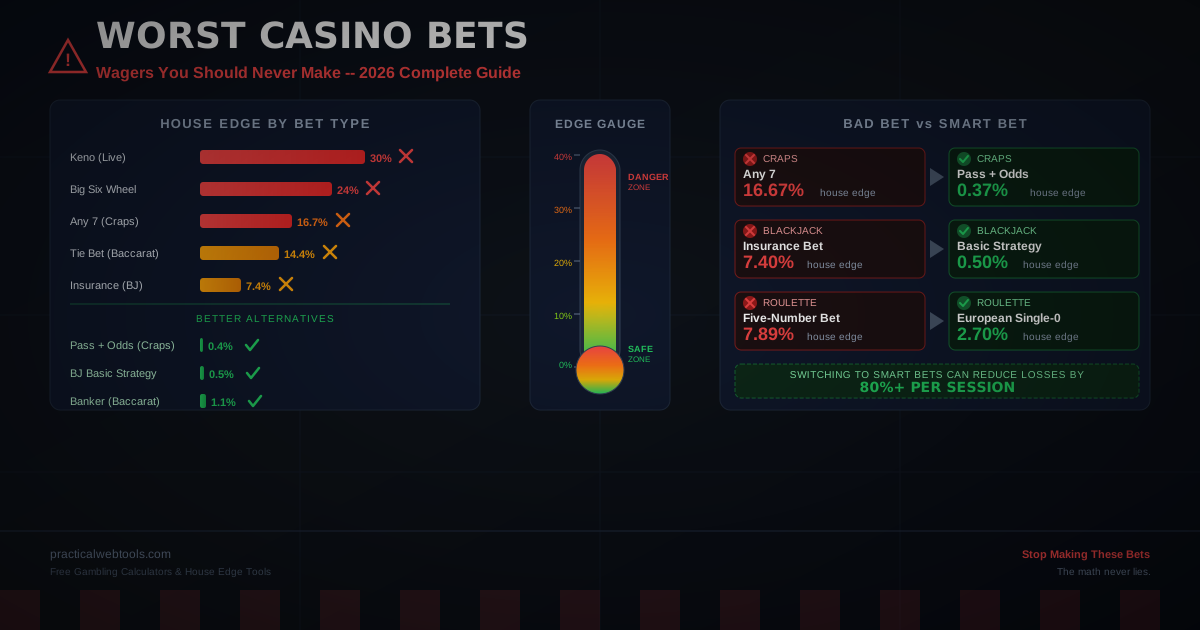
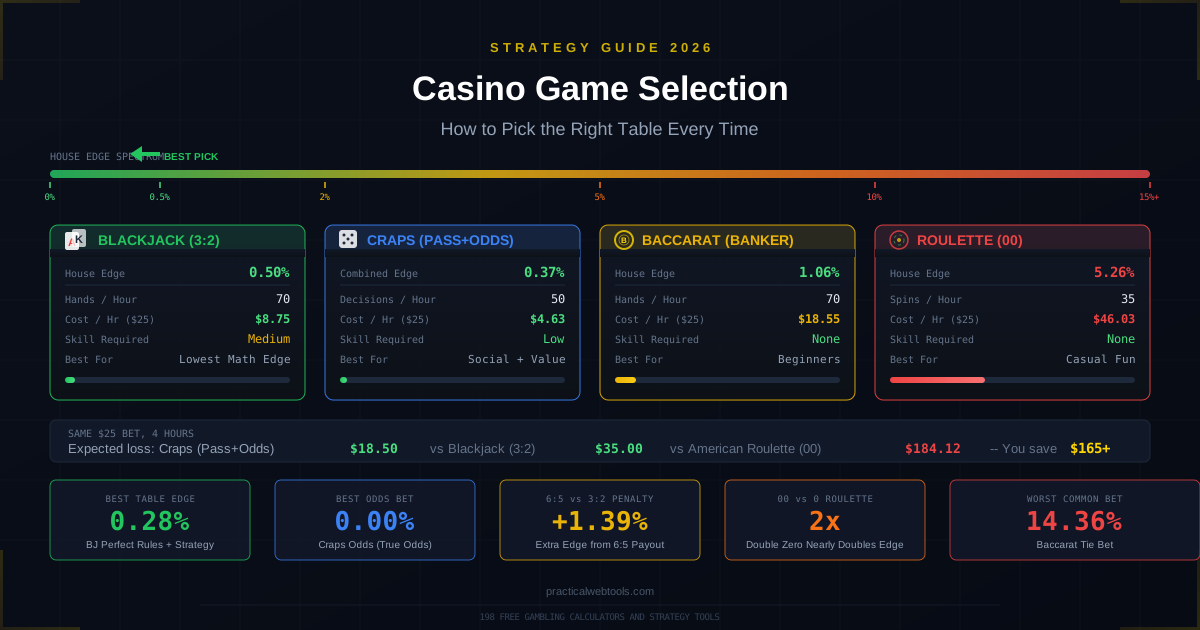
How Crash Games Compare to Traditional Casino Games
| Game | House Edge | Skill Component | Speed | Variance |
|---|---|---|---|---|
| Crash (3% edge) | 3.0% | None (decisions are cosmetic) | Very fast (15-30s/round) | Adjustable |
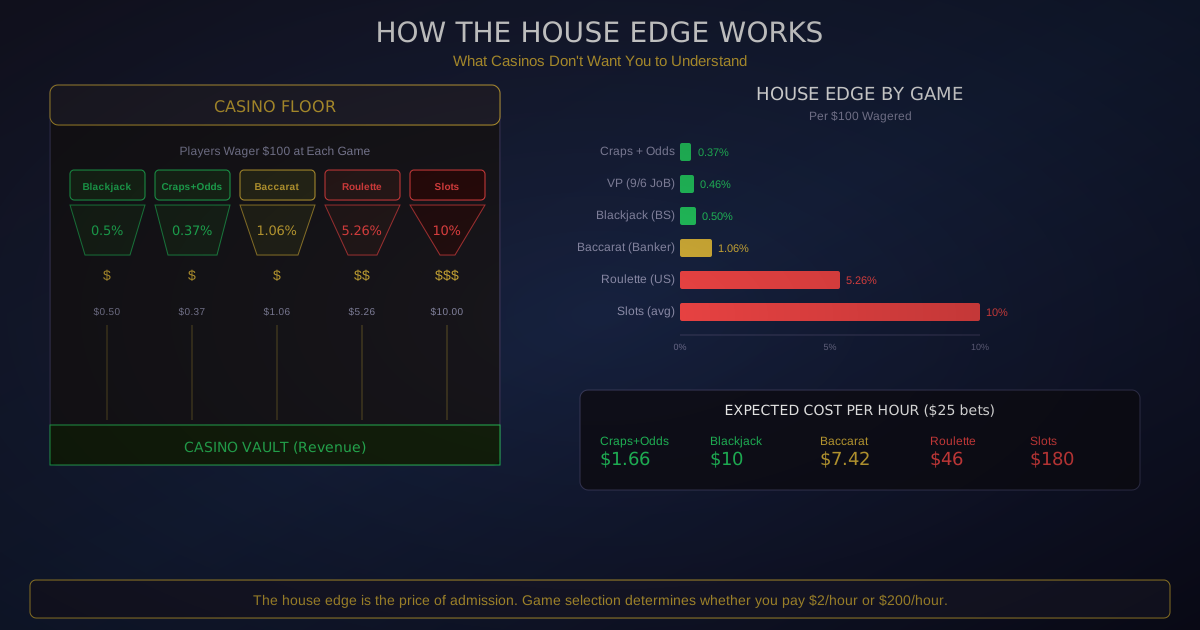
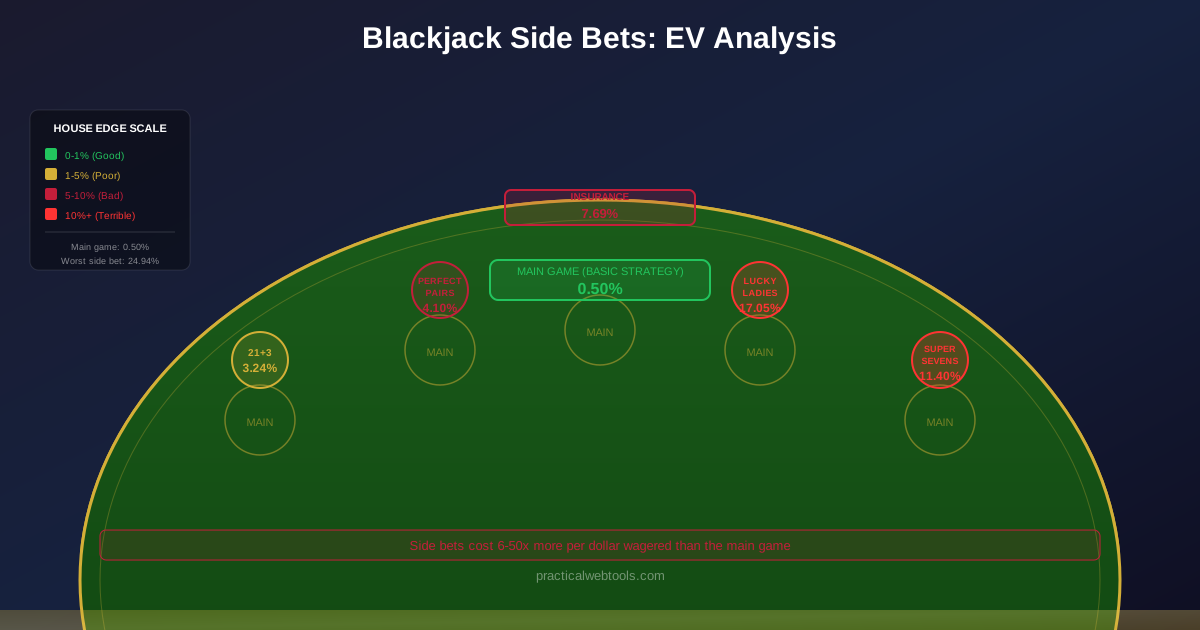
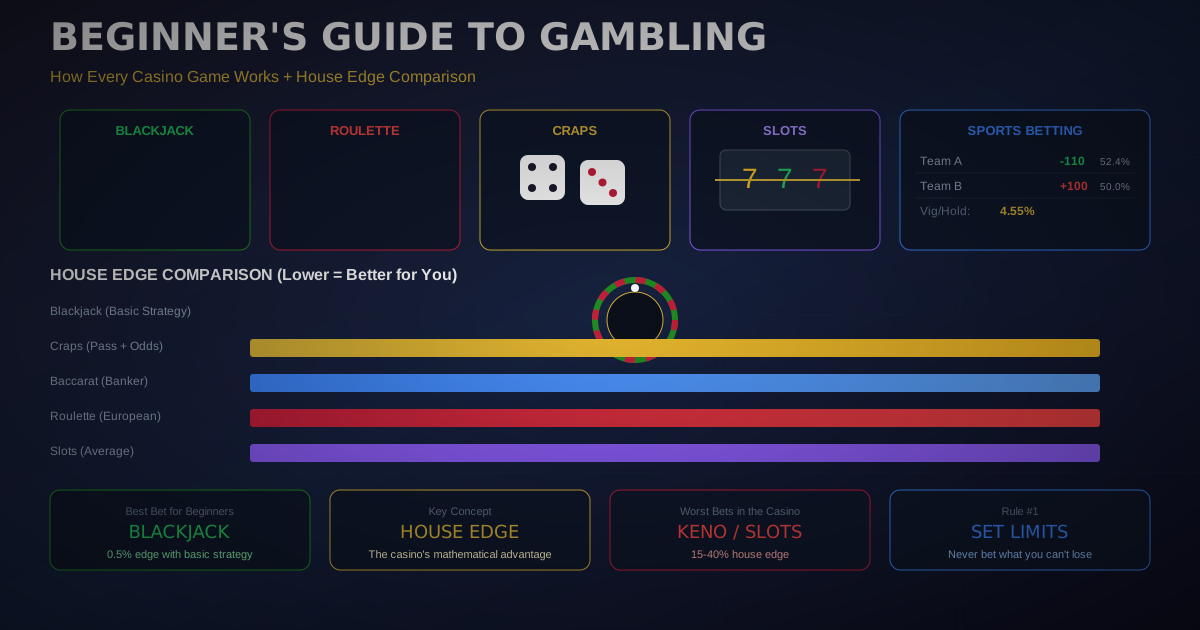
| Blackjack (basic strategy) | 0.5% | Moderate (must learn strategy) | Moderate (~70 hands/hr) | Low-moderate |
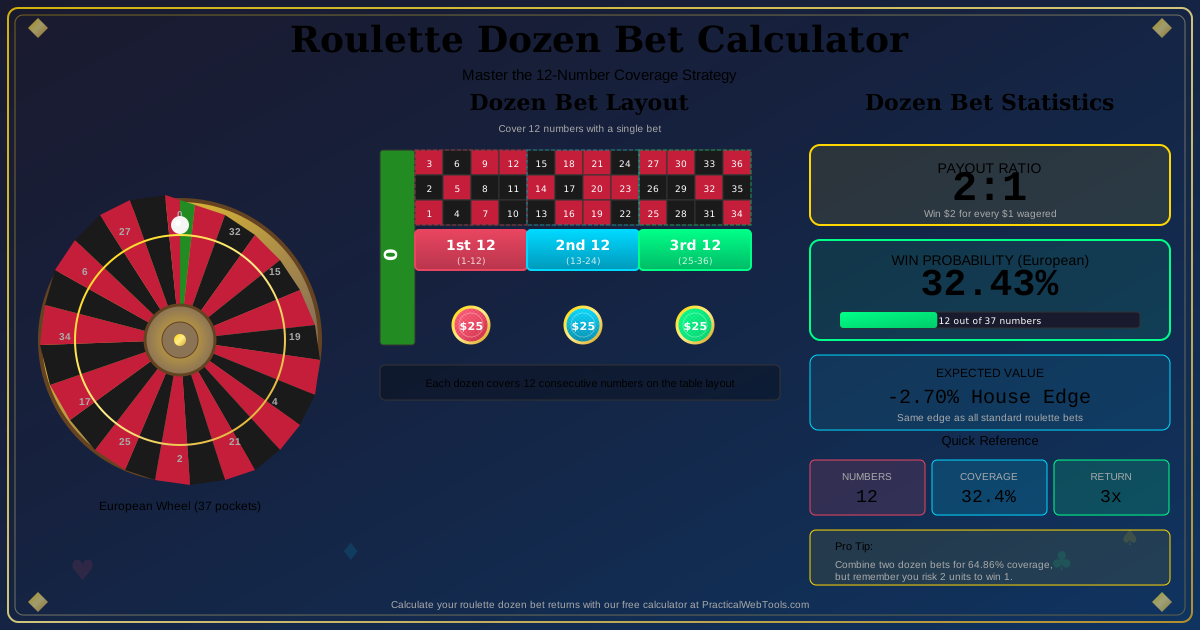
| Roulette (European) | 2.7% | None | Moderate (~35 spins/hr) | Moderate |
| Craps (pass + odds) | 0.4-1.4% | None (simple bets) | Moderate (~50 rolls/hr) | Moderate |
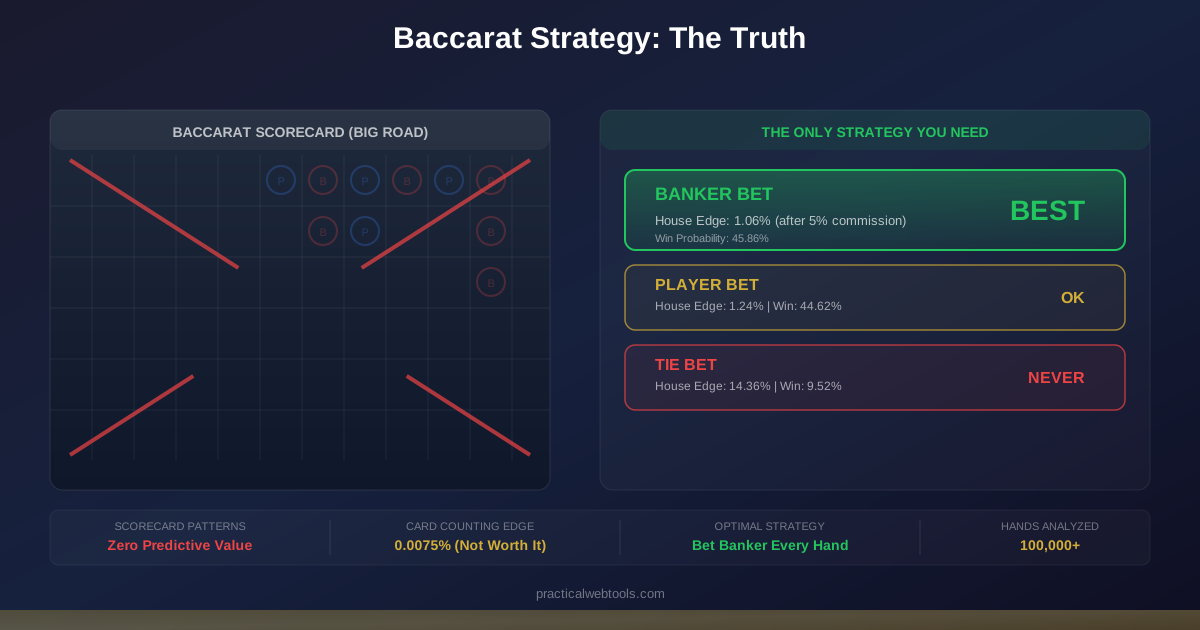
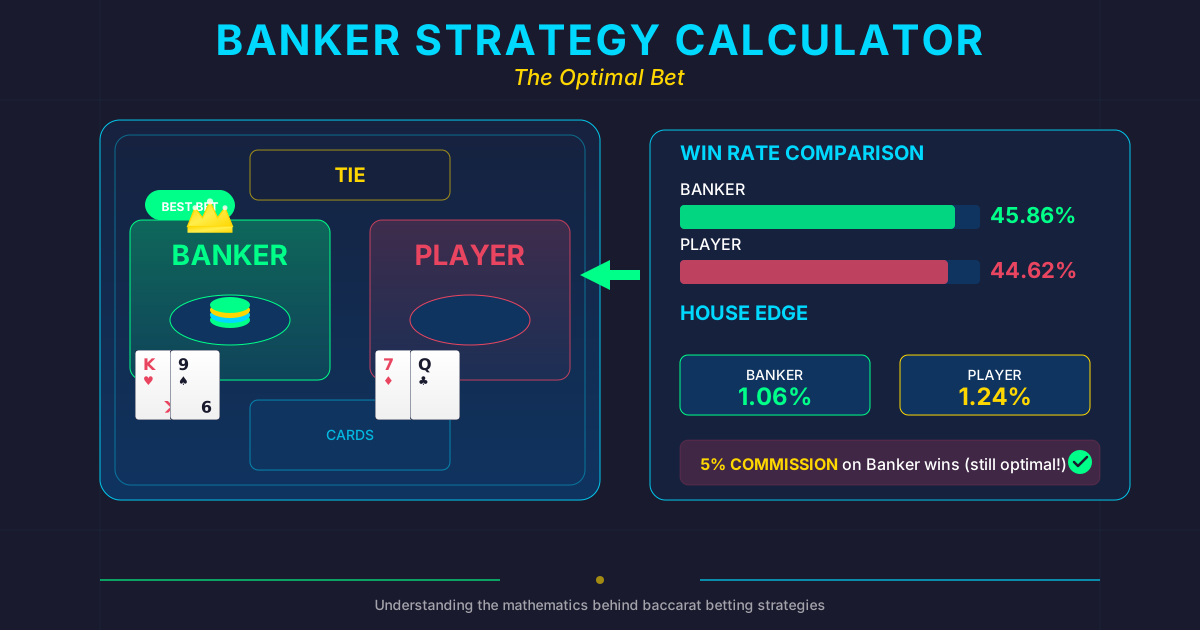
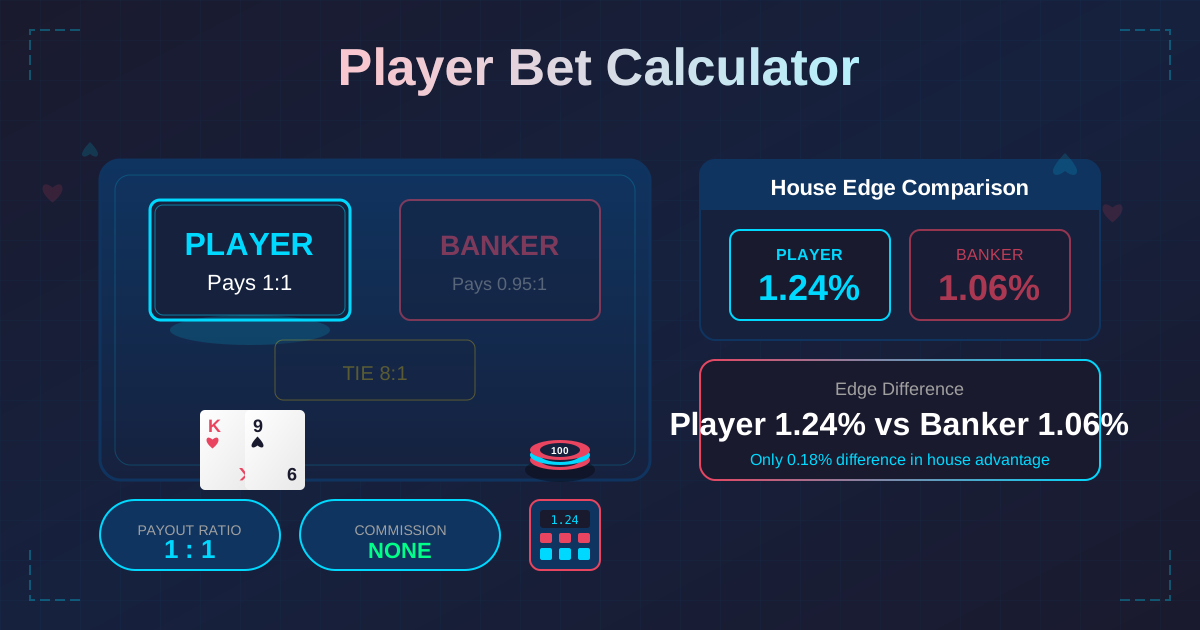
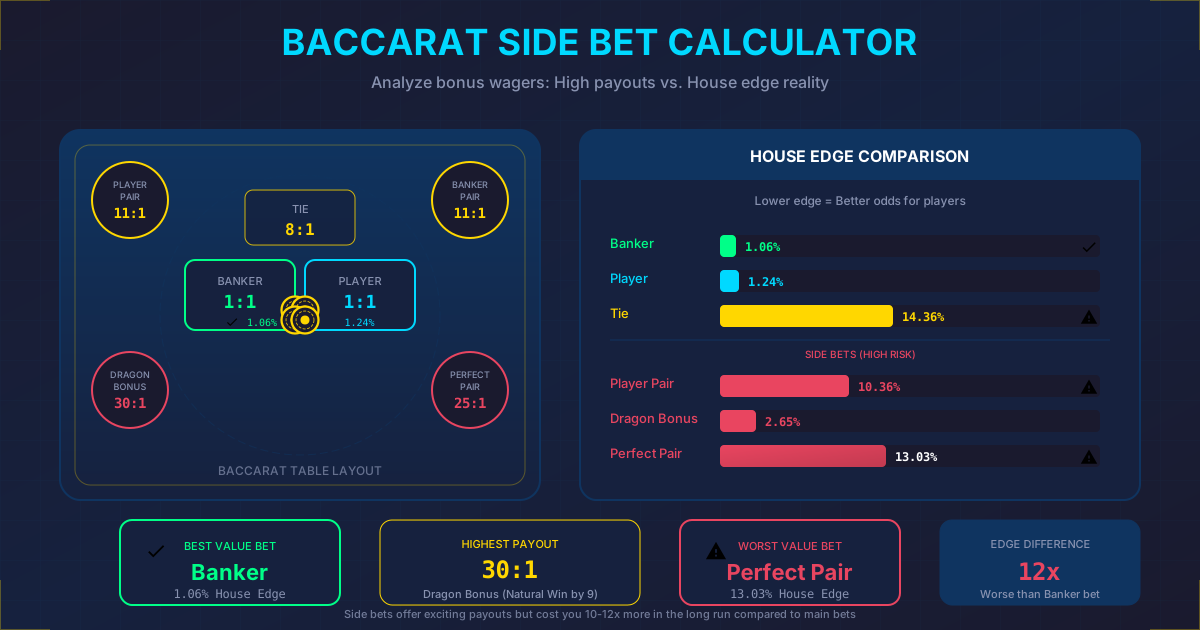
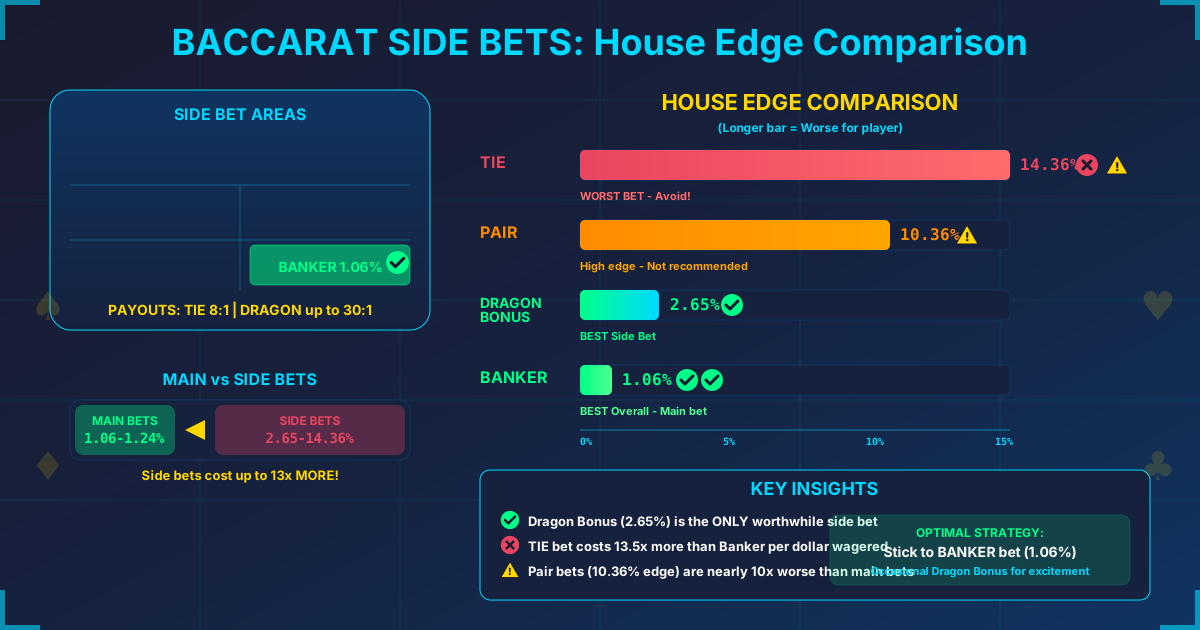
| Baccarat (banker) | 1.06% | None | Moderate (~70 hands/hr) | Low |
| Slots | 2-15% | None | Very fast (~600 spins/hr) | High |
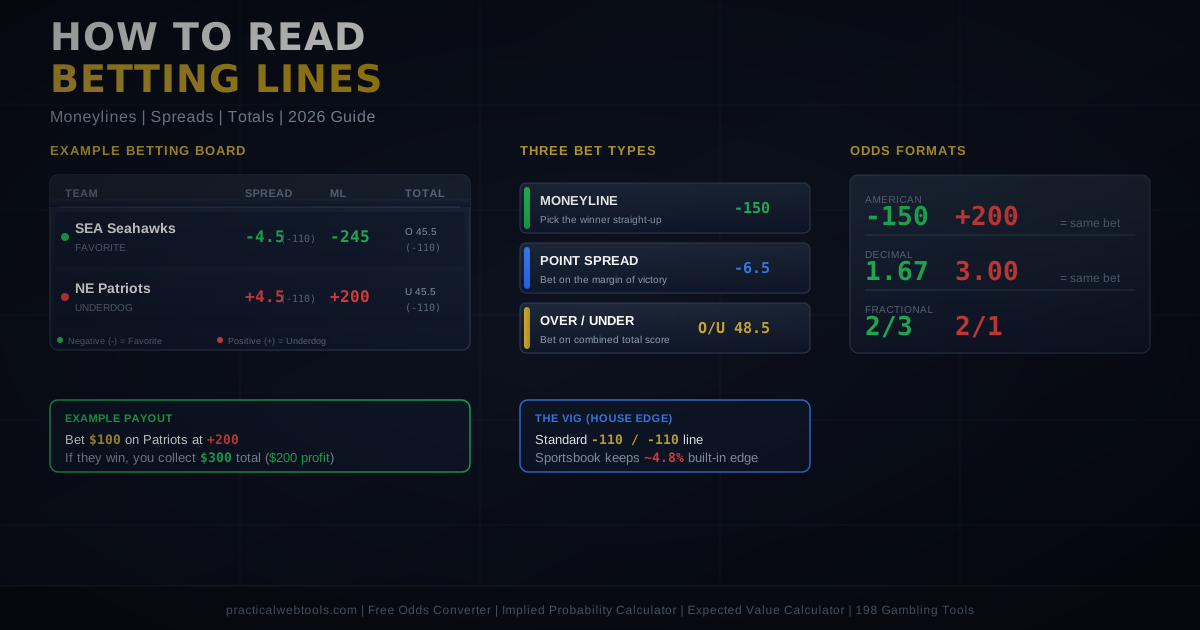
| Sports betting (-110) | 4.55% | High (research required) | Slow (hours to days) | Moderate |
Key comparisons:
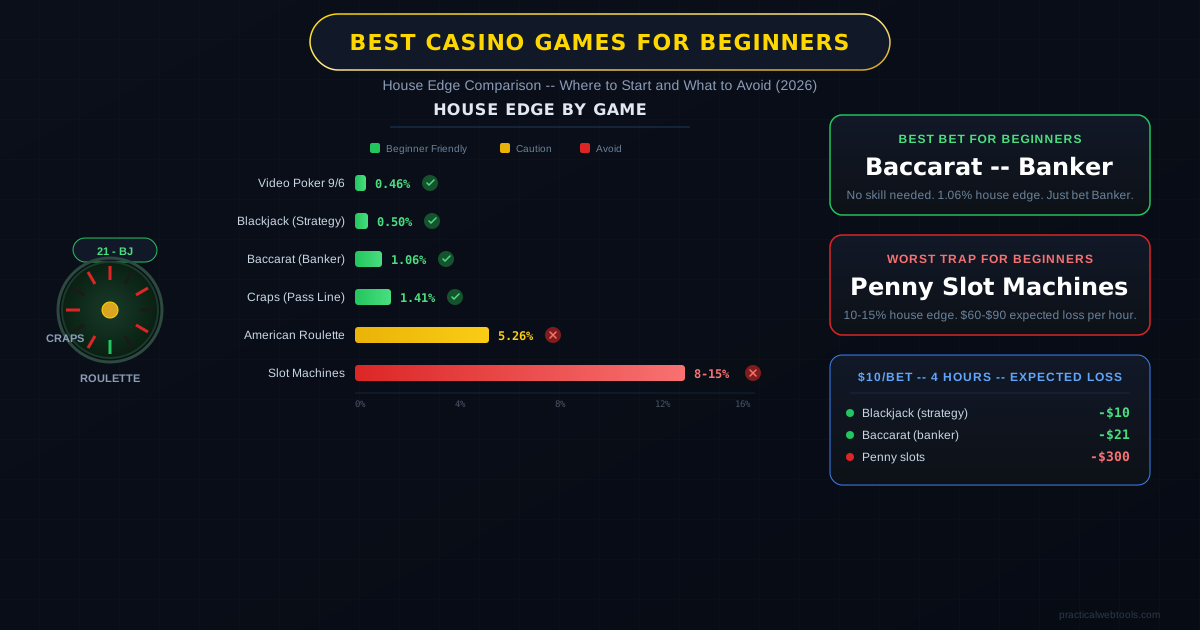
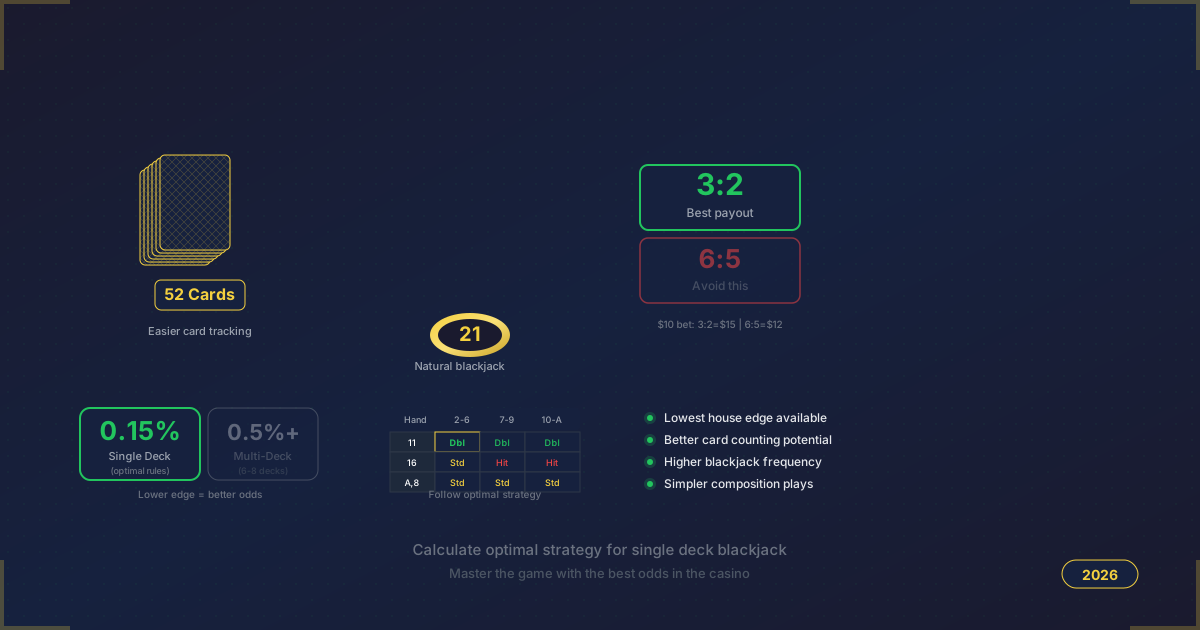
Crash vs. Blackjack: Blackjack has a much lower house edge (0.5% vs. 3.0%) and rewards skill. If you want to minimize losses, blackjack is the clear winner.
Crash vs. Roulette: Similar house edge (3% vs. 2.7%), but roulette is slower, reducing total expected loss per hour.
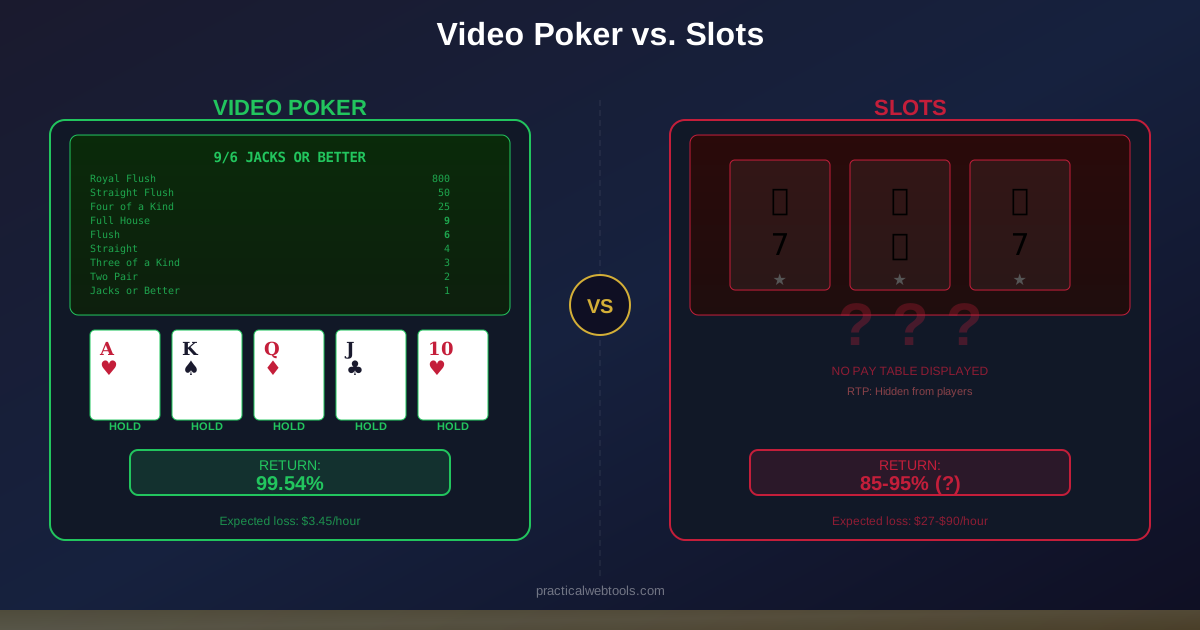
Crash vs. Slots: Crash typically has a lower house edge (3% vs. 5-15%), but the speed of play means your hourly loss can be similar or higher.
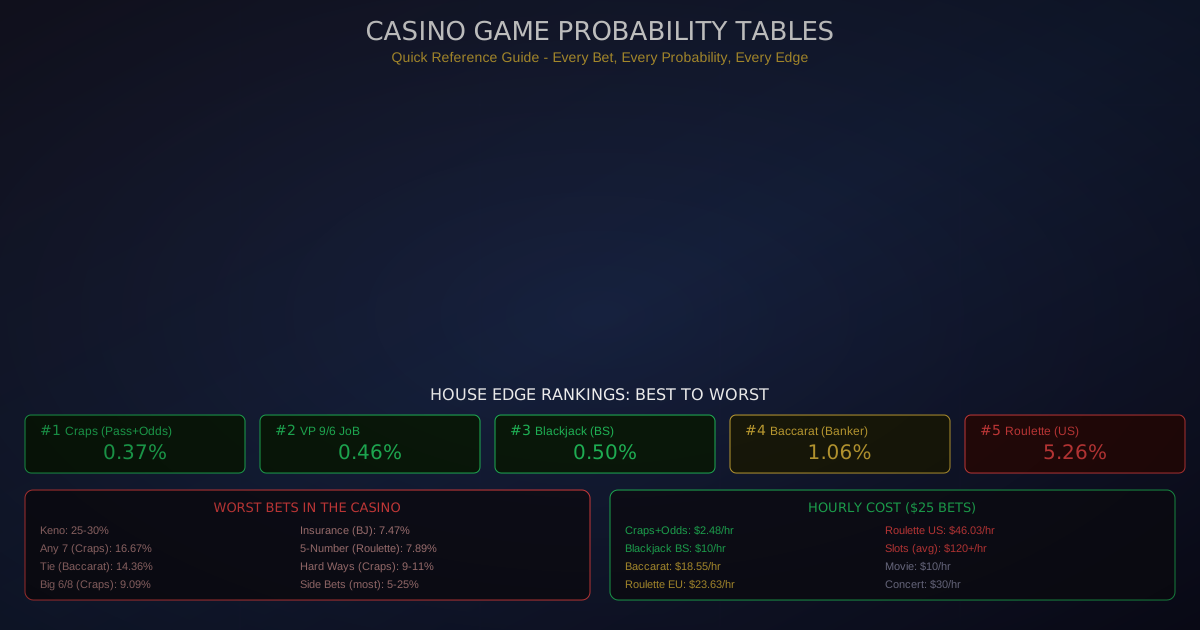
Compare house edges across all casino games with our Blackjack House Edge Calculator, Roulette House Edge Calculator, Craps House Edge Calculator, and Baccarat House Edge Calculator.
Effective Hourly Cost Comparison
The true cost of gambling is house edge multiplied by total amount wagered per hour:
| Game | House Edge | Rounds/Hour | Avg Bet | Hourly Action | Expected Loss/Hour |
|---|---|---|---|---|---|
| Crash (auto play) | 3.0% | 120 | $10 | $1,200 | $36.00 |
| Crash (manual) | 3.0% | 60 | $10 | $600 | $18.00 |
| Blackjack | 0.5% | 70 | $15 | $1,050 | $5.25 |
| Roulette | 2.7% | 35 | $10 | $350 | $9.45 |
| Craps (pass+odds) | 0.6% | 50 | $20 | $1,000 | $6.00 |
| Slots | 8.0% | 600 | $1 | $600 | $48.00 |
Crash gambling on auto play at $10/round costs approximately $36/hour in expected losses. This is more expensive than blackjack, roulette, or craps, but less expensive than most slot machines.
Calculate your expected hourly loss for any game with our Roulette EV Calculator and Expected Value Calculator.
The Psychology of Crash Gambling
Understanding why crash games are so compelling despite negative EV is important for maintaining control.
The "Almost" Effect
When the multiplier crashes at 4.85x and your auto-cashout was set to 5.00x, it feels like you almost won. In reality, the near-miss is meaningless. But the psychological impact makes you believe you were "so close" and encourages you to keep playing.
Variable Reinforcement Schedule
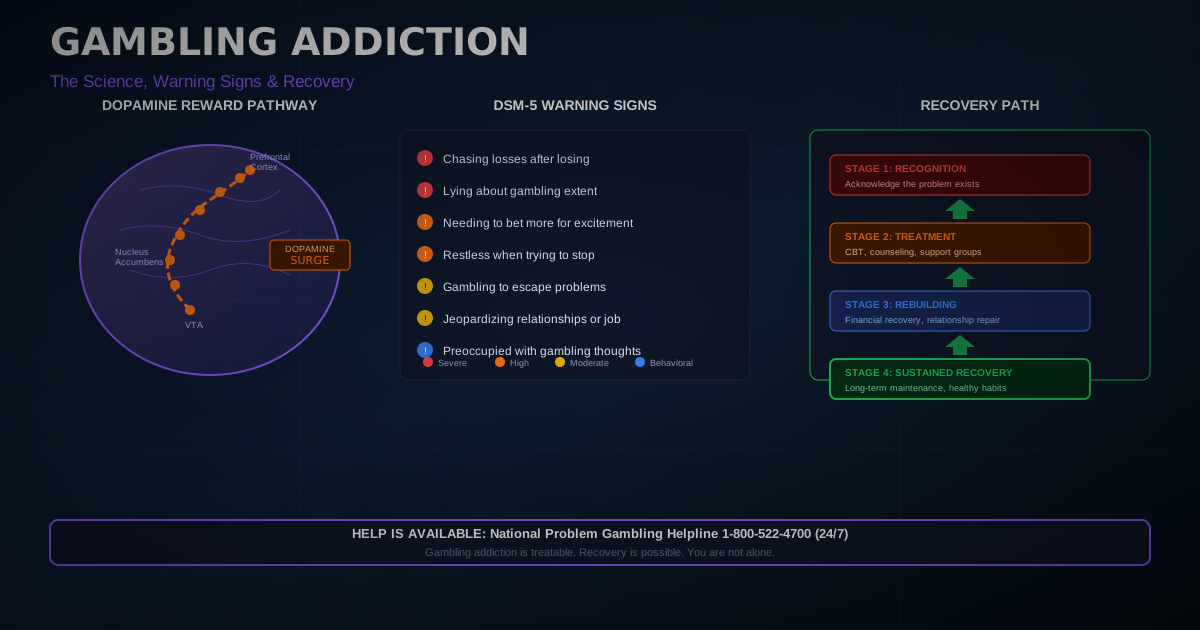
Crash games provide variable rewards. You might win at 1.10x, then lose, then lose, then hit 15.00x. This unpredictable reward pattern is the same mechanism that makes slot machines addictive and is one of the strongest drivers of compulsive gambling behavior.
The Control Illusion
The ability to choose when to cash out creates the feeling that skill is involved. In reality, the optimal strategy (if one existed) is determined purely by mathematics, and all strategies produce the same expected loss. The "decision" of when to cash out is psychologically engaging but mathematically irrelevant.
Speed and Accessibility
Crash games run 24/7 with rounds every 15-30 seconds. The speed of play, combined with cryptocurrency betting (which feels less "real" than physical cash), creates conditions that maximize impulsive behavior and total money wagered.
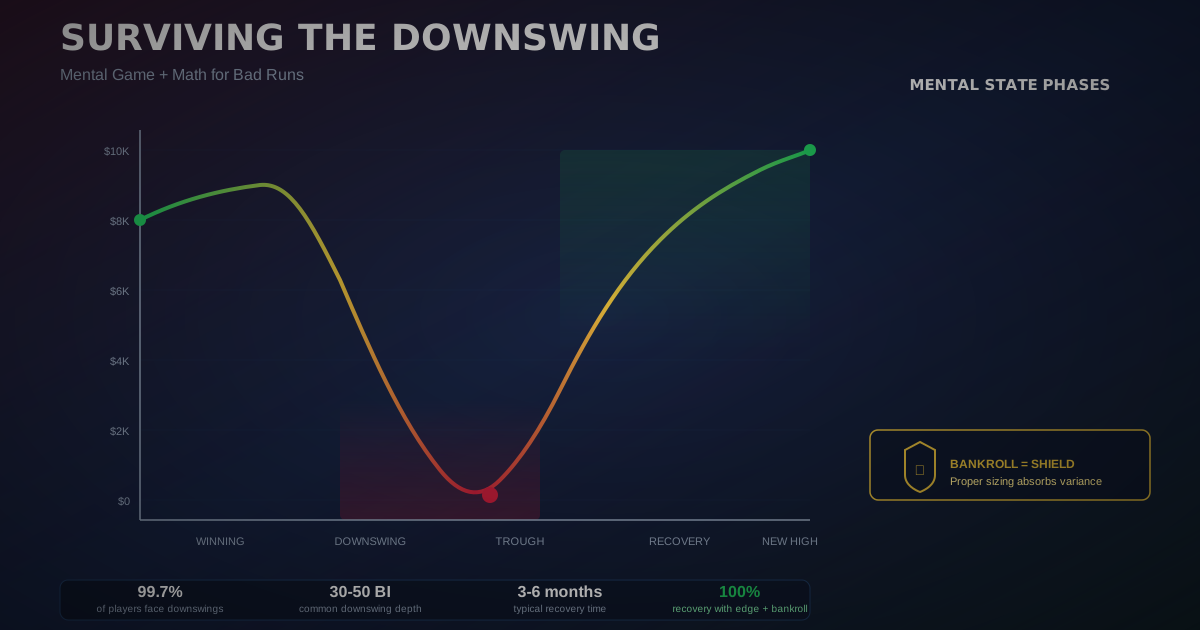
Real-World Psychological Trap Example
A player starts with $500 in Bitcoin on a crash gambling site:
- Hour 1: Playing conservatively at 1.50x, wins 7 out of 10 rounds. Up to $535. Feeling confident.
- Hour 2: Switches to 2.00x for bigger wins. Loses 5 out of 8 rounds. Down to $485. Decides to go for a big hit.
- Hour 3: Goes for 5.00x and 10.00x targets. Loses 12 of 14 rounds. One 5x hit saves a little. Down to $340.
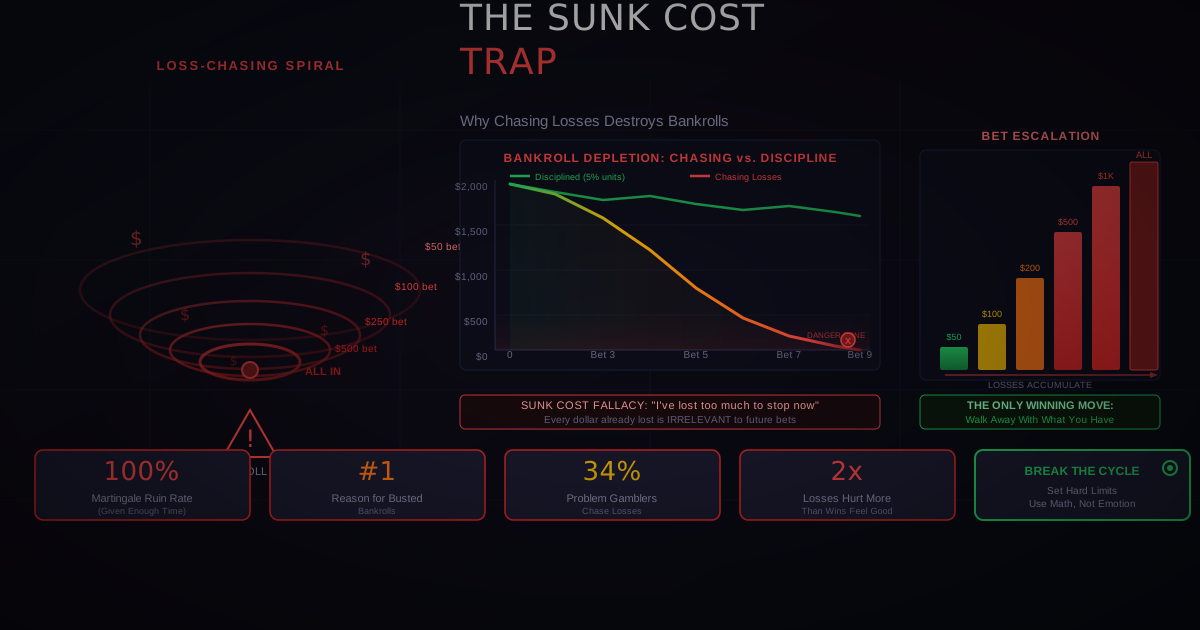
- Hour 4: Now chasing losses. Increases bet sizes. Goes for 3.00x targets with $50 bets. Loses 5 in a row (-$250). Panics, drops to $90.
- Hour 5: Desperate, bets $90 at 10.00x. Crashes at 1.42x. $0 remaining.
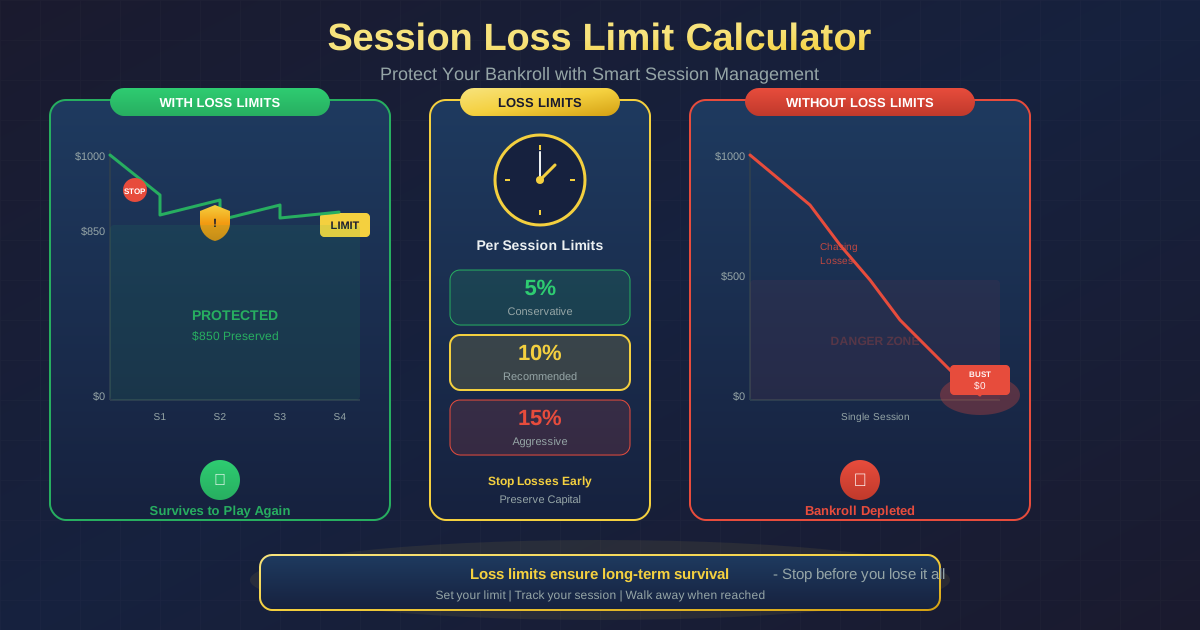
Total session: 5 hours, $500 lost. The mathematical expected loss over that time at 3% house edge and his actual wagering patterns was approximately $80-$120. The behavioral escalation (increased bet sizes, higher targets while chasing) caused actual losses 4-6 times higher than the mathematical expectation.
Crash Gambling and Cryptocurrency
Why Crypto and Crash Games Are Paired
Most crash gambling sites operate with cryptocurrency for several reasons:
- Regulatory arbitrage: Crypto gambling sites often operate in jurisdictions with minimal gambling regulation
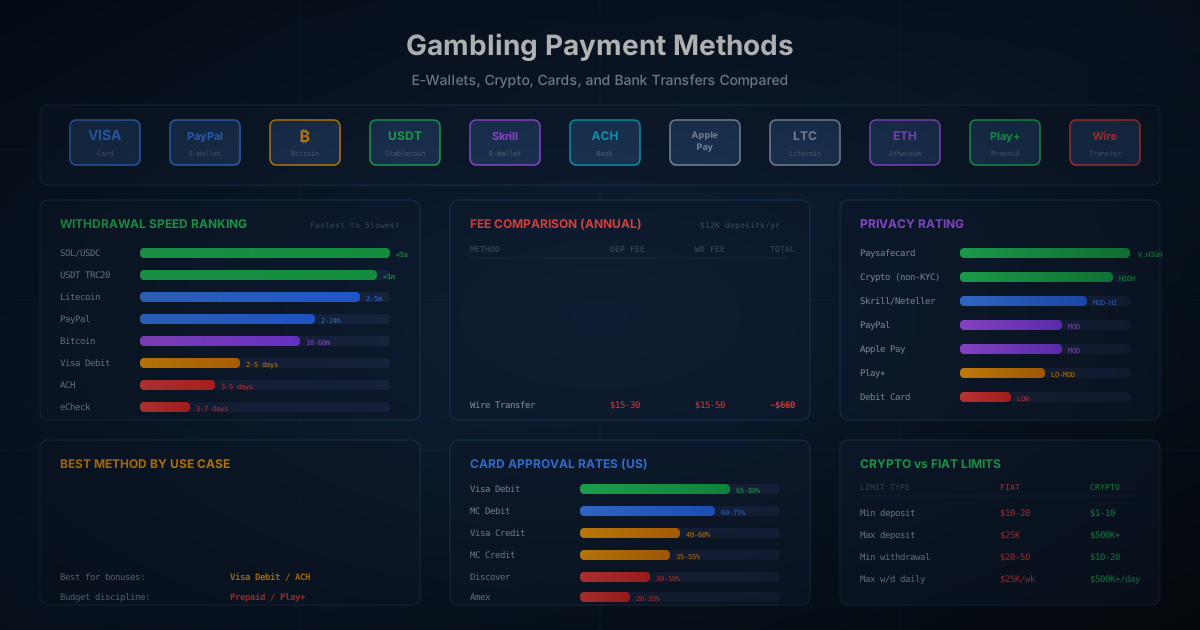
- Fast deposits/withdrawals: Crypto transactions are faster than bank transfers
- Anonymity: Some players prefer not to have gambling transactions on bank statements
- Lower overhead: No payment processor fees means operators can offer slightly better odds
The Additional Risk of Crypto Volatility
If you deposit 0.5 BTC (worth $25,000) and the crash site holds your funds in BTC, you face two risks:
- Gambling losses: The house edge on the game
- Price volatility: Bitcoin could drop 10-20% while your funds are on the site
This double exposure is often overlooked. A player who wins 5% gambling but Bitcoin drops 15% has actually lost money in fiat terms.
Monitor your overall gambling volatility with our Bankroll Volatility Tracker.
Real-World Crypto Crash Example
A player deposits $2,000 worth of Ethereum when ETH is at $2,000 (1.0 ETH):
- Gambling result: After 3 hours of crash, they have 1.05 ETH. A 5% gain in ETH terms.
- ETH price during session: ETH drops from $2,000 to $1,800 (10% decline)
- Actual USD value: 1.05 ETH x $1,800 = $1,890
- Real loss: $2,000 - $1,890 = -$110 despite winning at the casino
The crypto volatility created a bigger loss than the gambling itself. This dual risk is unique to crypto gambling and often ignored by players who track results only in crypto terms.
The House Edge Over Different Time Horizons
Understanding how the house edge compounds over time shows why crash gambling is unsustainable for players:
| Session Length | Rounds (manual) | Total Wagered ($10/round) | Expected Loss (3%) | Loss as % of $500 Bankroll |
|---|---|---|---|---|
| 30 minutes | 30 | $300 | $9 | 1.8% |
| 1 hour | 60 | $600 | $18 | 3.6% |
| 3 hours | 180 | $1,800 | $54 | 10.8% |
| 8 hours (full day) | 480 | $4,800 | $144 | 28.8% |
| 20 hours (weekend) | 1,200 | $12,000 | $360 | 72.0% |
After a full weekend of manual play at $10/round, the expected loss is $360 from a $500 bankroll. With auto play (120 rounds/hour), these numbers double.
The speed of crash gambling is the real danger. A game with a "reasonable" 3% house edge becomes devastating when combined with 60-120 rounds per hour.
Frequently Asked Questions
How does the crash game determine when to crash? The crash point is determined cryptographically before the round begins using a hash chain. The server seed is hashed, combined with a client seed, and run through a formula that produces the crash multiplier. This is done before any bets are placed, making manipulation by the operator mathematically impossible (assuming the provably fair system is implemented correctly).
What is the house edge in crash gambling? Most crash games have a house edge of 1-4%, with 3% being the most common. This means for every $100 you bet, you expect to lose $1-$4 over time. Use our Expected Value Calculator to calculate exact expected losses.
Is there an optimal cashout multiplier? No. The expected loss is identical regardless of which multiplier you target. Whether you cash out at 1.10x or 100.00x, the house edge is the same per dollar wagered. The only difference is variance: low multipliers give frequent small wins, high multipliers give rare large wins.
Can I use a Martingale system to beat crash? No. The Martingale system does not change the expected value. It creates many small wins and rare catastrophic losses that exactly offset those wins, minus the house edge. Over enough rounds, the Martingale player loses at exactly the same rate as the flat bettor. Run the numbers with our Roulette Betting Simulator.
Are crash gambling sites rigged? Legitimate provably fair sites cannot rig individual outcomes because the crash point is determined by cryptographic hashes that players can verify. However, some risks remain: the site could be insolvent (unable to pay large wins), the RNG could have subtle biases, or the stated house edge could be higher than advertised. Always verify provably fair results independently.
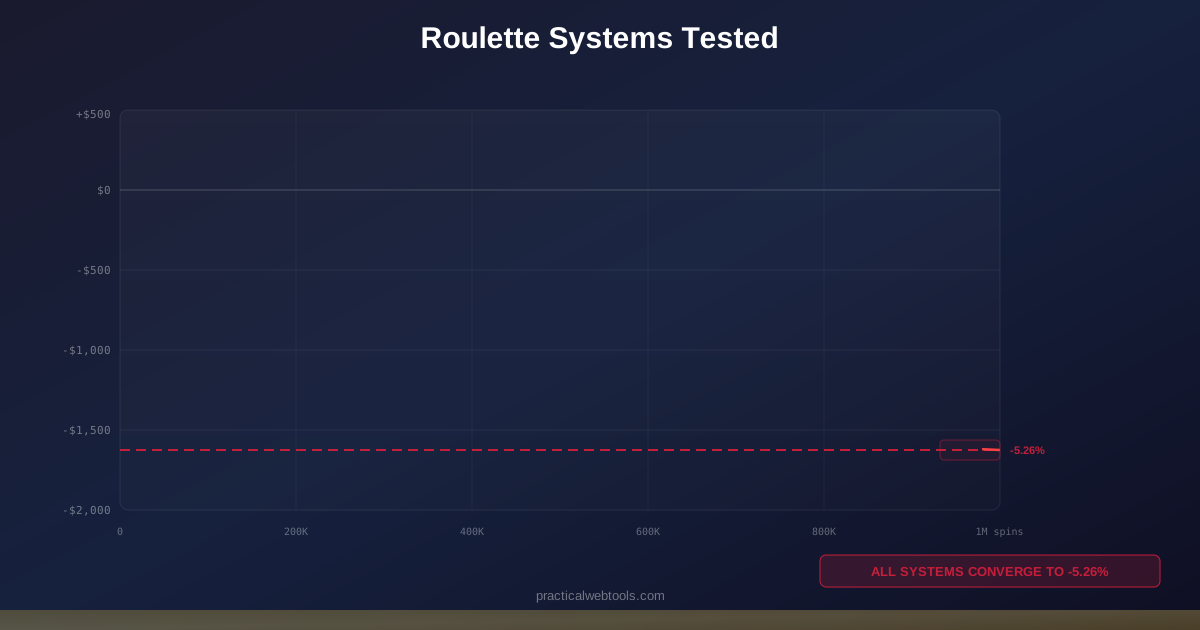
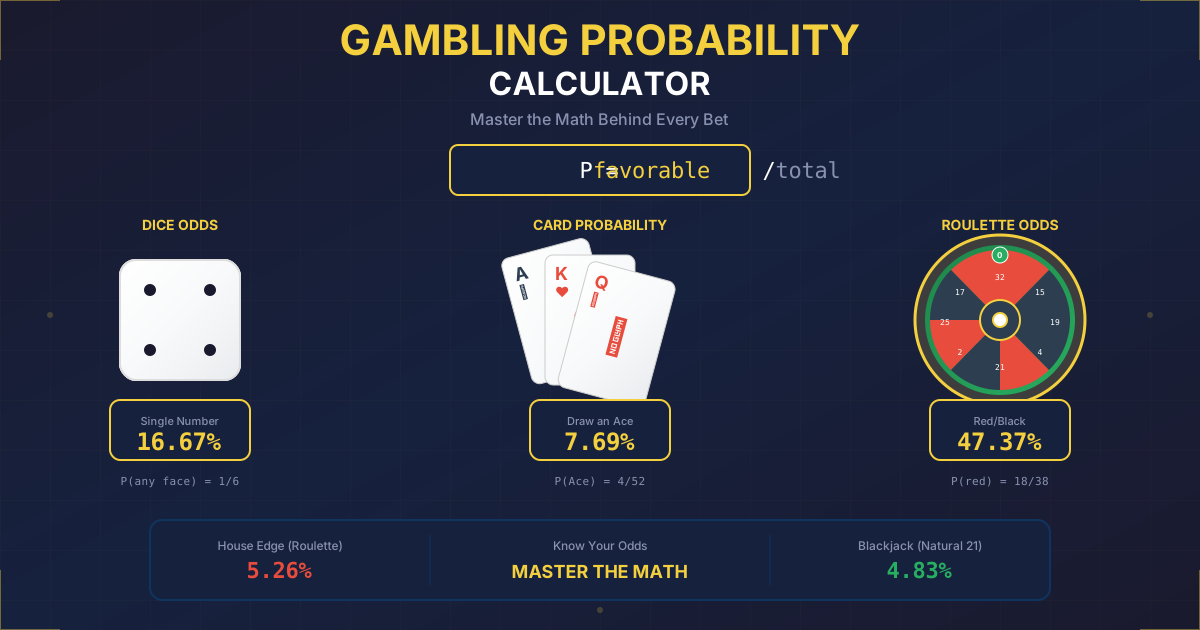
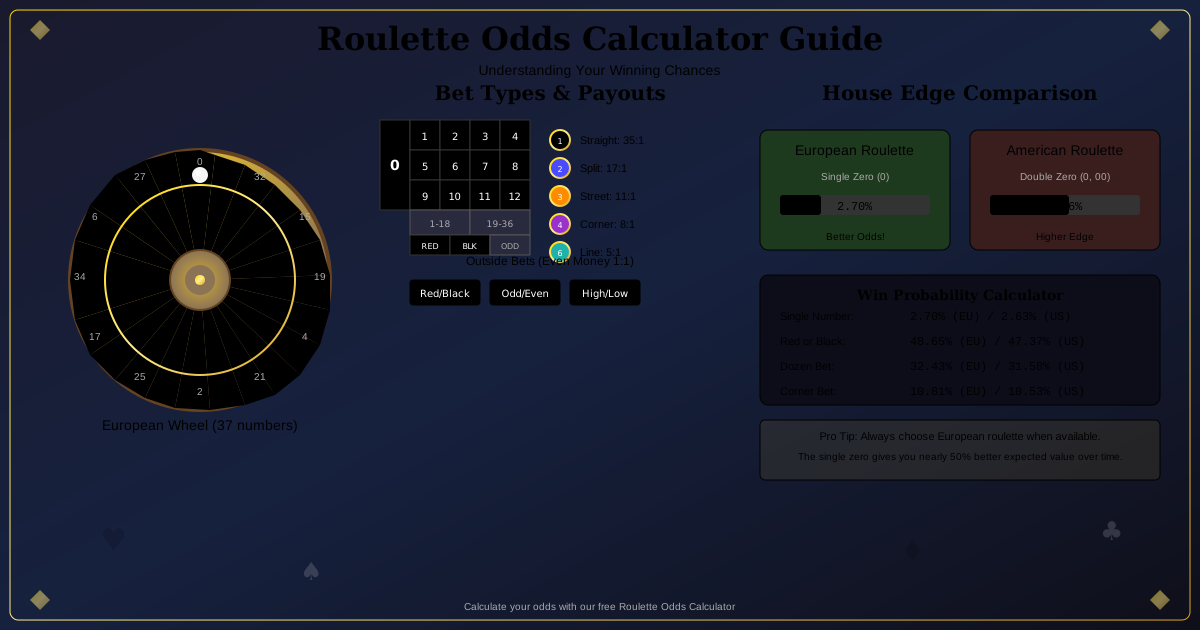
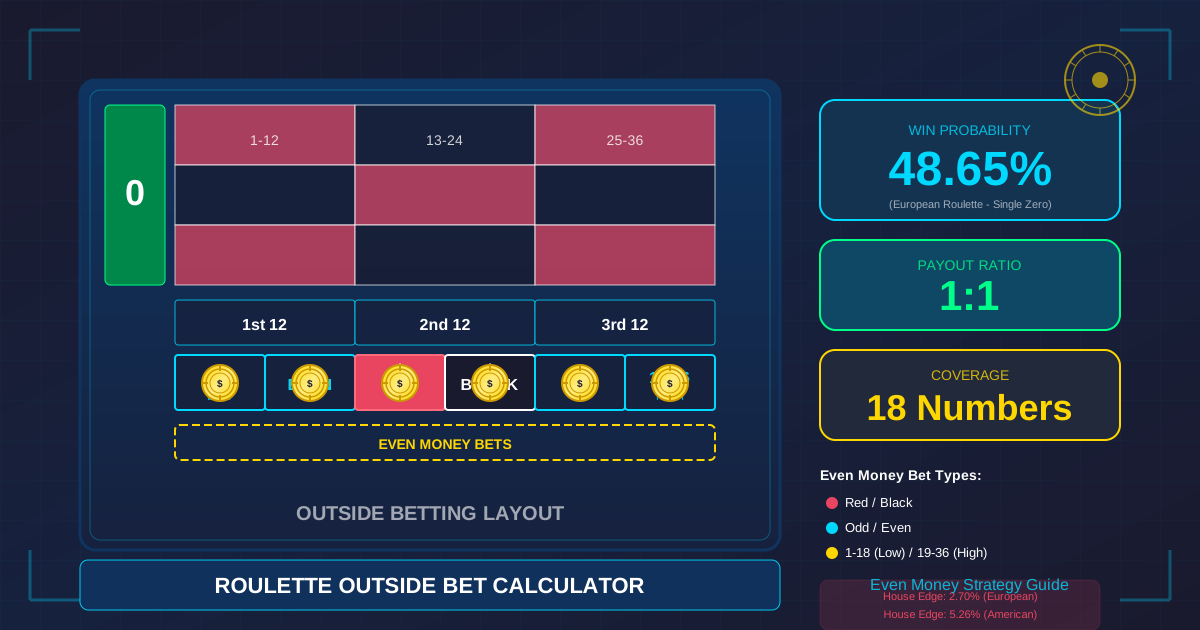
How does crash compare to roulette in terms of house edge? A 3% crash house edge is slightly higher than European roulette (2.7%) and significantly lower than American roulette (5.26%). However, crash games are much faster, so the hourly expected loss can be higher. Compare with our Roulette House Edge Calculator.
What is the probability of the game crashing instantly (at 1.00x)? With a 3% house edge, approximately 3% of rounds crash at or before 1.00x. This means about 3 out of every 100 rounds result in an instant loss for all players, regardless of strategy. Use our Roulette Probability Calculator for comparison probability calculations.
Is crash gambling legal? Legality depends on your jurisdiction. In the United States, online gambling legality varies by state. Most crypto crash gambling sites operate offshore in jurisdictions where they are technically legal. Playing on these sites may or may not be legal in your state. Always check your local laws.
Tools for Analyzing Gambling Games
Expected Value and Probability
- Expected Value Calculator: Calculate EV for any wager
- Implied Probability Calculator: Convert odds to probabilities
- Roulette Probability Calculator: Explore probability distributions
- Roulette EV Calculator: Compare crash EV to roulette EV
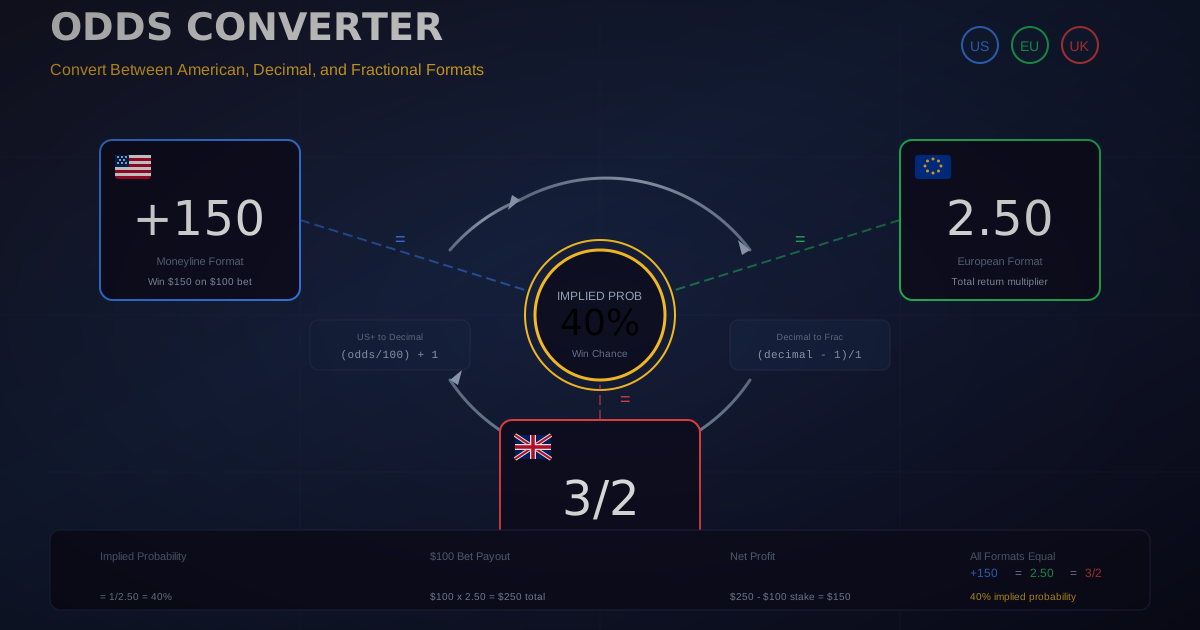
- Odds Converter: Convert between odds formats
House Edge Comparison
- Blackjack House Edge Calculator: Blackjack edge analysis
- Roulette House Edge Calculator: European vs. American
- Craps House Edge Calculator: Every craps bet analyzed
- Baccarat House Edge Calculator: Commission impact
Bankroll and Volatility
- Bankroll Volatility Tracker: Monitor variance and drawdown
- Kelly Criterion Calculator: Optimal (minimum-loss) bet sizing
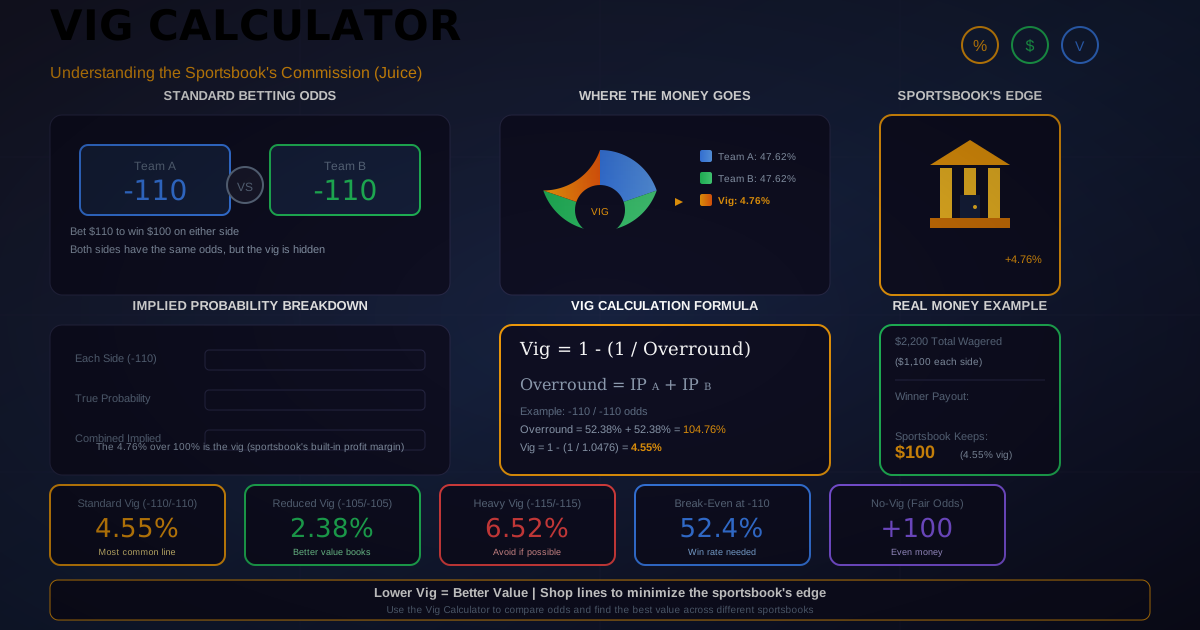
- Hold/Vig Calculator: Understand the operator's edge
- Roulette Betting Simulator: Simulate betting systems
Conclusion: The House Always Wins in Crash
Crash gambling is a well-designed game that combines elegant mathematics with powerful psychological hooks. The provably fair system ensures the game is not rigged, but the house edge ensures the operator profits over time. No strategy, no system, and no pattern recognition can change this.
If you choose to play crash games, understand three things: the house edge is real and unchangeable, every strategy produces the same expected loss per dollar, and the speed of the game amplifies both the fun and the financial damage.
Calculate the true cost of any gambling session with our Expected Value Calculator. Compare crash to traditional games with our Roulette House Edge Calculator. And track your results honestly with our Bankroll Volatility Tracker.
The multiplier goes up. Then it crashes. That is the game. And over time, your bankroll follows the same pattern.
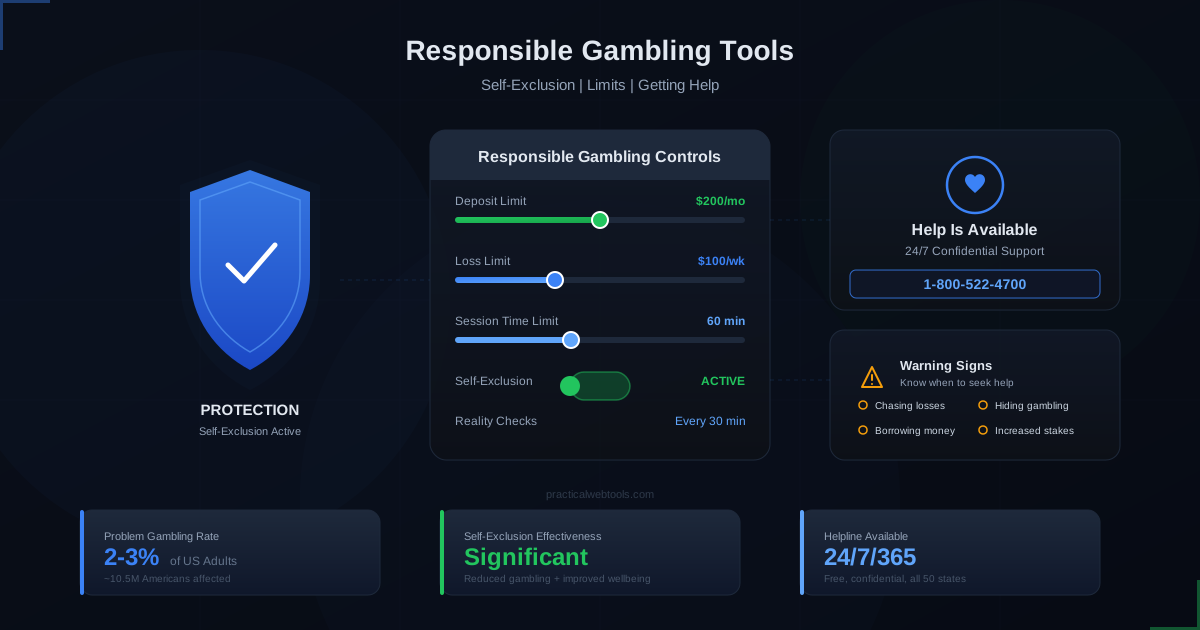
Gambling involves risk. This content is for educational and informational purposes only. Always gamble responsibly, set limits you can afford, and seek help if gambling becomes a problem. Visit the National Council on Problem Gambling or call 1-800-522-4700 for support.