March Madness Betting: Bracket Strategy, Upsets, and First Round Value (2026)
Americans legally wagered over $3.1 billion on March Madness in 2025, and that number is projected to climb again in 2026. The NCAA Tournament is the single largest event on the sports betting calendar outside the Super Bowl -- three weeks of nonstop action across 67 games, where a No. 16 seed can topple a No. 1, a buzzer-beater can obliterate a spread, and a carefully constructed bracket can unravel in the first 48 minutes of play. For bettors, it is both the most exciting and the most dangerous stretch of the year.
The difference between profitable March Madness bettors and the rest comes down to preparation. The tournament rewards those who understand historical seed matchup data, recognize where the public creates value by overreacting to brand names, and deploy disciplined bankroll management across a grueling schedule of 16 games on a single Thursday. This guide covers every angle: first round upset hunting by seed, spread and totals trends by round, bracket pool strategy rooted in game theory, futures market value, live betting approaches, and the common mistakes that drain bankrolls every March.
Whether you are filling out one bracket in an office pool or building a structured betting portfolio across all 67 games, the data below will sharpen your edge.
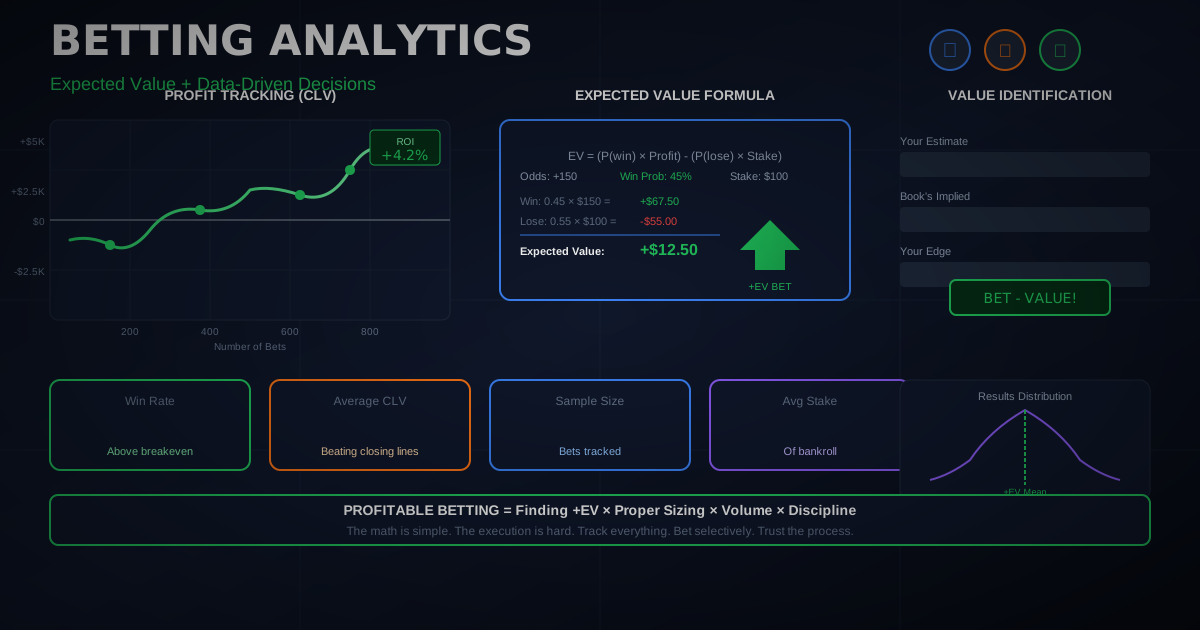
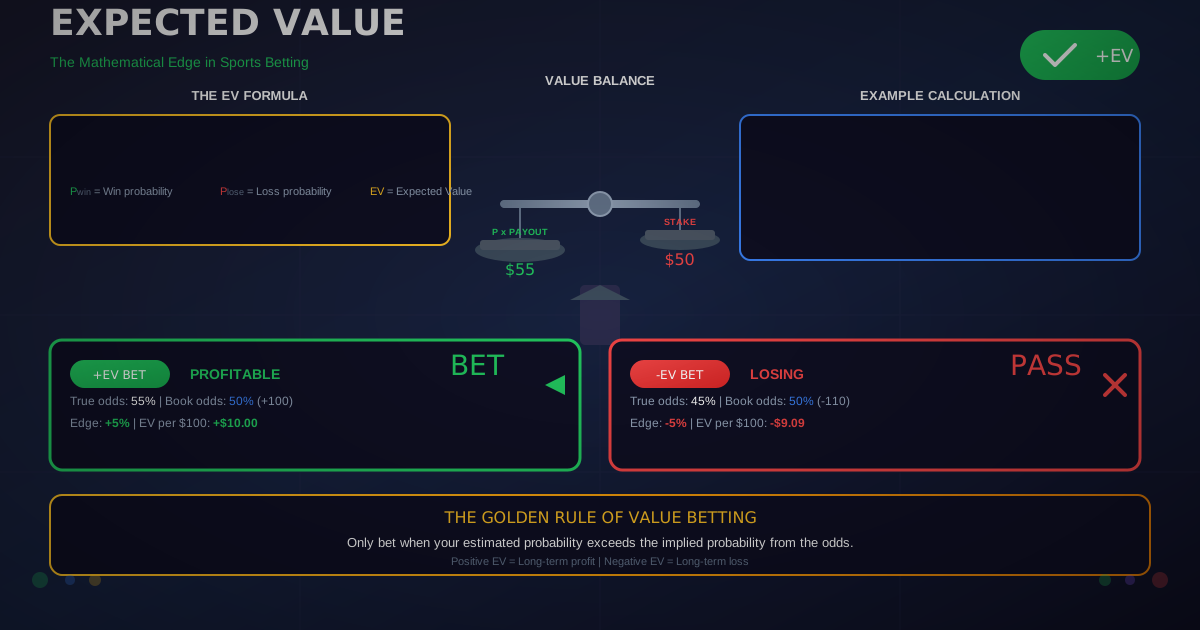
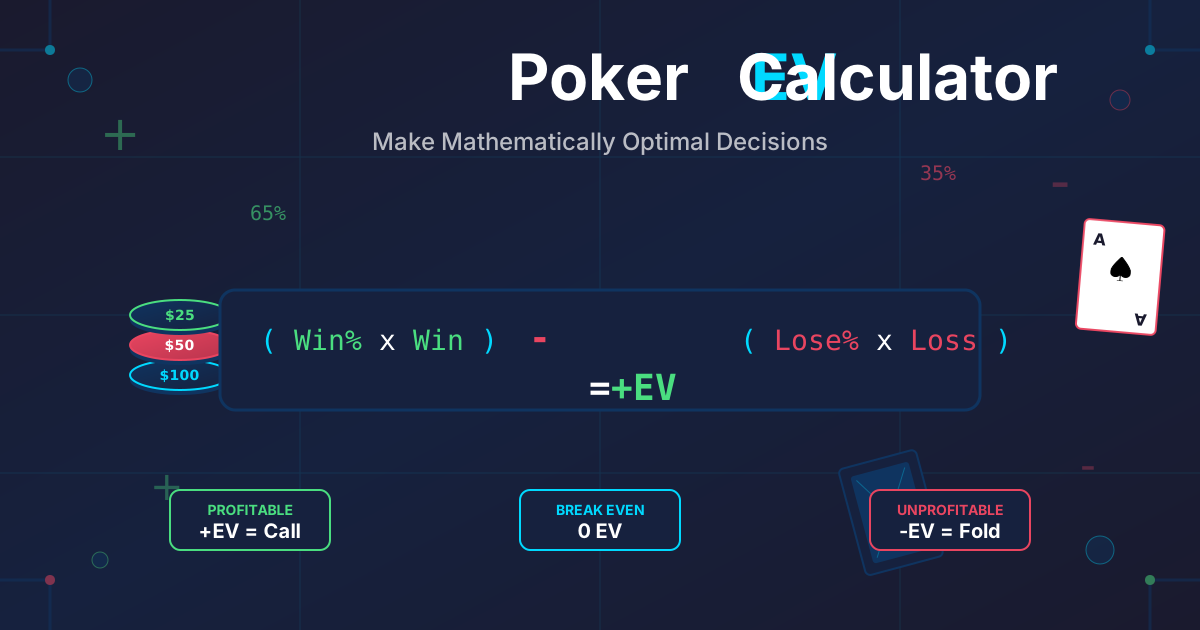
Run the numbers on any bet with our free Expected Value Calculator -- built for exactly this kind of analysis.
March Madness Betting Market Overview: The Numbers Behind the Madness
The legal sports betting landscape has expanded to 38 states and Washington, D.C., and the NCAA Tournament consistently ranks among the top three betting events in the United States. The American Gaming Association estimated $3.1 billion in legal handle for the 2025 tournament, a jump from $2.7 billion in 2024. With additional states launching mobile sportsbooks through early 2026, projections for this year's tournament suggest another record.
But the legal handle only captures part of the picture. The AGA estimates that roughly 97% of all March Madness wagering still flows through offshore books, local bookies, and informal office pools -- putting the total handle in the range of $10-15 billion annually. That volume creates massive liquidity, which means sportsbooks are sharp on marquee games but can leave value in early-round matchups featuring mid-major teams the market does not follow as closely.
2026 Futures Market Snapshot
As of early March 2026, the futures market has settled around a handful of favorites:
| Team | Championship Odds | Implied Probability | Projected Seed |
|---|---|---|---|
| Arizona | +375 to +450 | 18.2% - 21.1% | No. 1 |
| Michigan | +475 to +500 | 16.7% - 17.4% | No. 1 |
| Duke | +700 | 12.5% | No. 1 |
| UConn | +1500 | 6.3% | No. 1 |
| Kansas | +1800 | 5.3% | No. 2 |
| Houston | +2000 | 4.8% | No. 2 |
Arizona has held the favorite position since mid-January, with Michigan close behind. The four projected No. 1 seeds -- Arizona, Michigan, Duke, and UConn -- combine for roughly 55% of the implied championship probability, leaving meaningful value in the field if you believe a lower seed can break through.
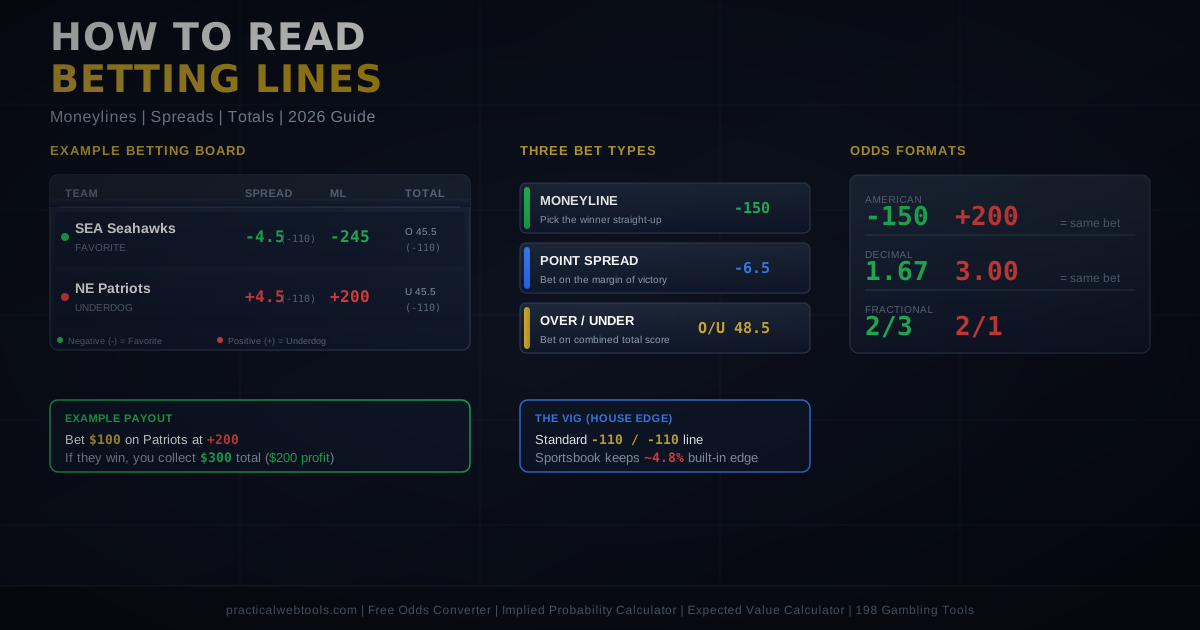
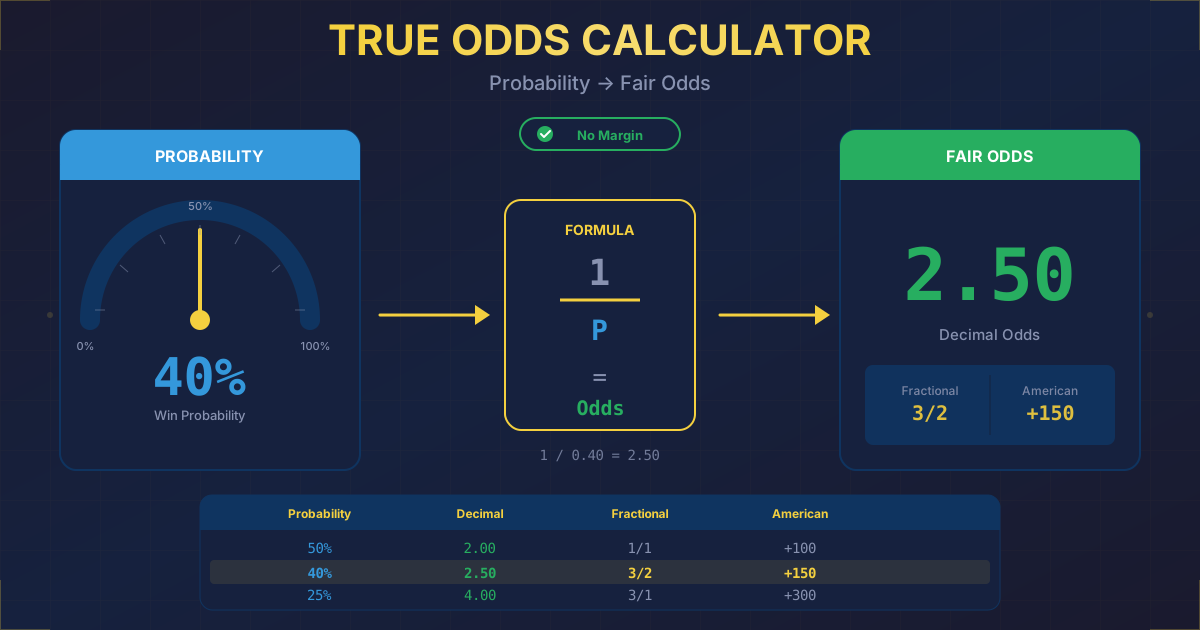
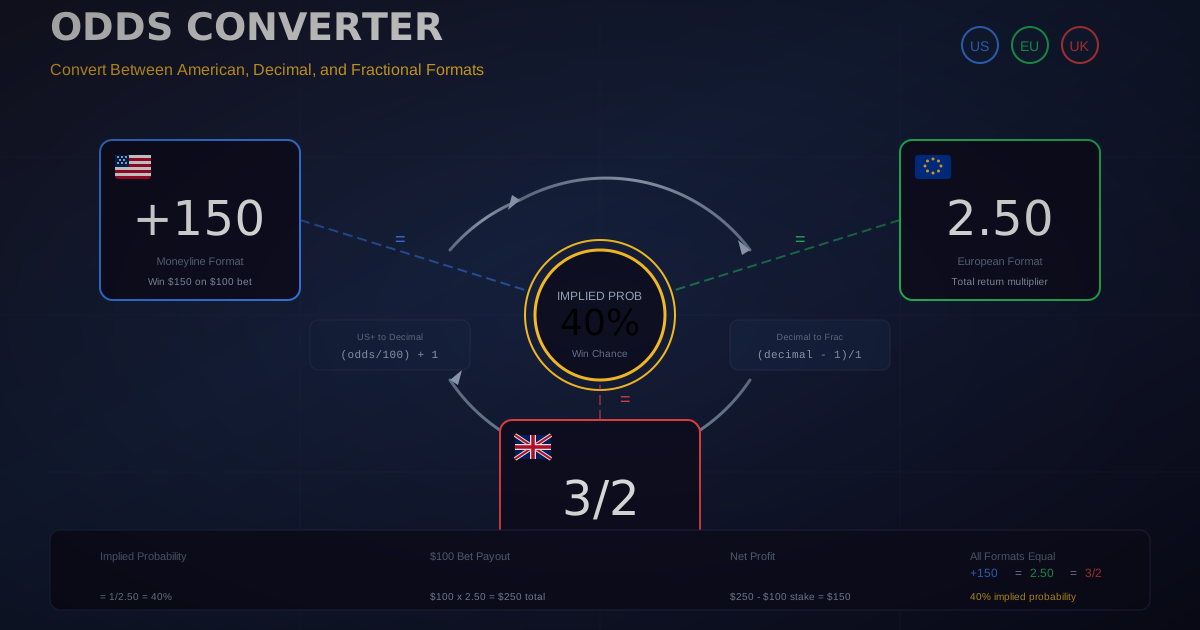
Convert between American, decimal, and fractional odds instantly with our Odds Converter.
First Round Betting Strategy: Upset Hunting by Seed
The first round of the NCAA Tournament (Round of 64) is where the most betting value lives. Sportsbooks must set lines on 32 games, many involving mid-major teams with thin data profiles. The public gravitates toward higher seeds and household names, which inflates lines and creates opportunities for sharp bettors willing to back underdogs.
Historical Upset Rates by Seed Matchup (1985-2025)
The data below spans every NCAA Tournament since the field expanded to 64 teams in 1985. Understanding these base rates is the foundation of intelligent first round betting.
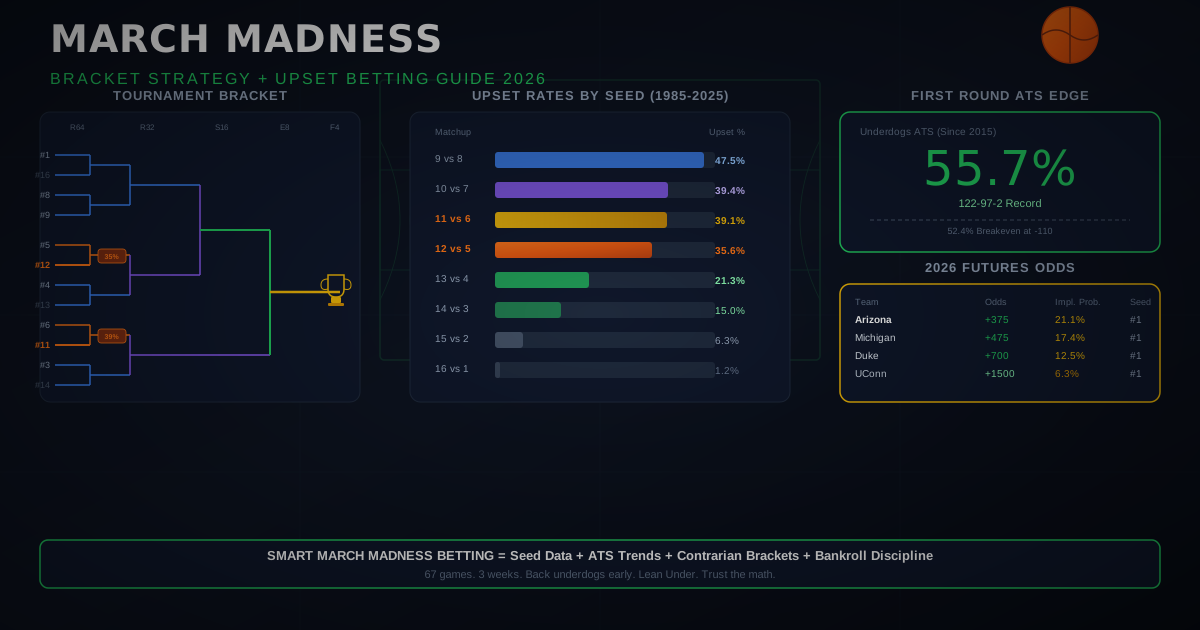
| Matchup | Underdog Win % | Total Upsets | ATS Record (Underdog) | ATS Win % |
|---|---|---|---|---|
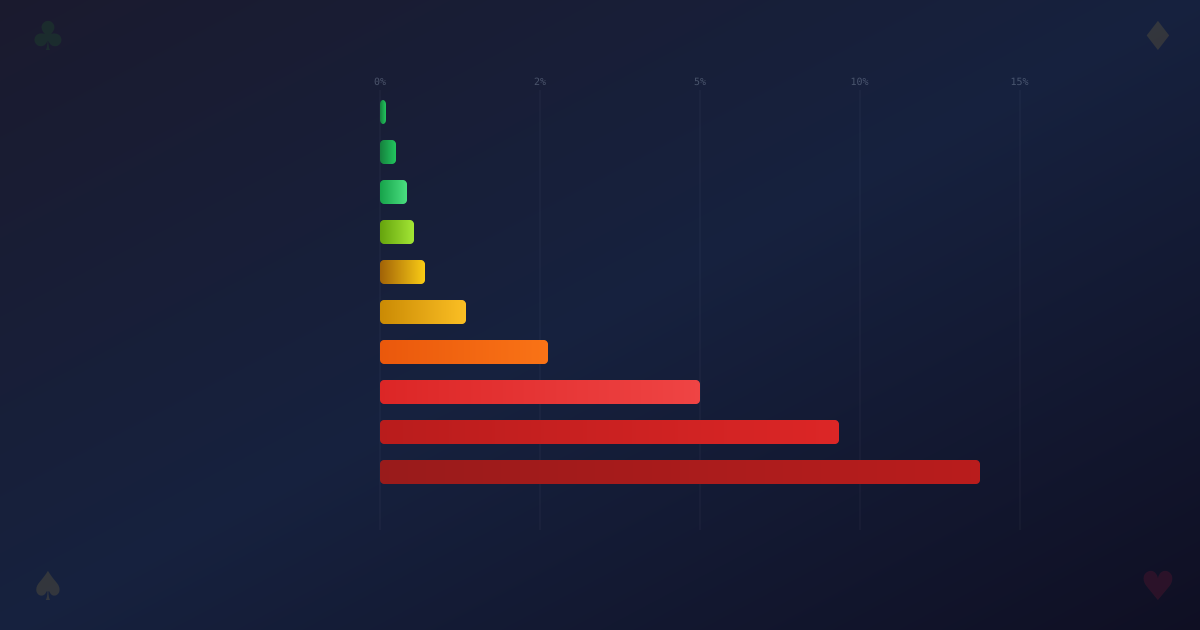
| 16 vs. 1 | 1.2% | 2 of 160 | 72-82-6 | 46.8% |
| 15 vs. 2 | 6.3% | 10 of 160 | 78-76-6 | 50.6% |
| 14 vs. 3 | 15.0% | 24 of 160 | 80-74-6 | 51.9% |
| 13 vs. 4 | 21.3% | 34 of 160 | 82-72-6 | 53.2% |
| 12 vs. 5 | 35.6% | 57 of 160 | 76-65-3 | 53.9% |
| 11 vs. 6 | 39.1% | 62 of 160 | 73-67-4 | 52.1% |
| 10 vs. 7 | 39.4% | 63 of 160 | 73-68-3 | 51.8% |
| 9 vs. 8 | 47.5% | 76 of 160 | 73-68-3 | 51.8% |
Key Takeaways from the Upset Data
The 12-5 matchup is the most famous upset spot in sports -- and the data backs the hype. No. 12 seeds have beaten No. 5 seeds 35.6% of the time, and they cover the spread even more frequently at 53.9%. Over the last 10 tournaments, the rate is even higher: 12-seeds are 24-15-1 ATS in first round matchups against 5-seeds, covering at a 60% clip.
But the 11-6 matchup is actually more productive for upset hunters on the moneyline. At 39.1%, the 11-seed wins more often than the 12-seed, even though the 12-5 upset gets more media attention. The lesson: do not sleep on 11-seeds.
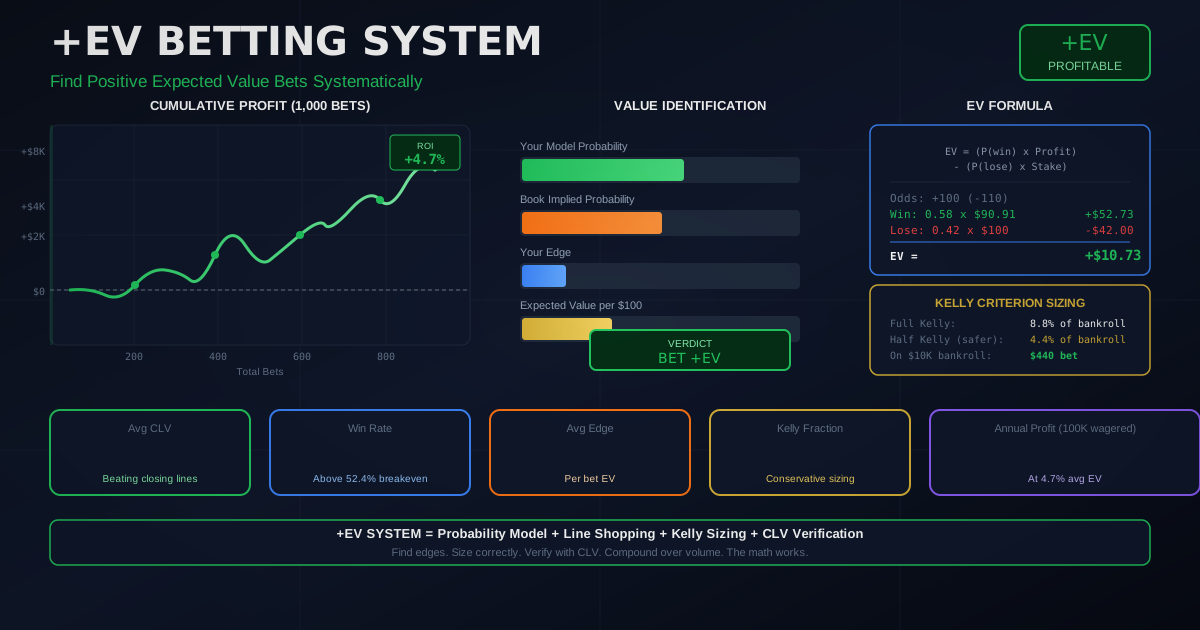
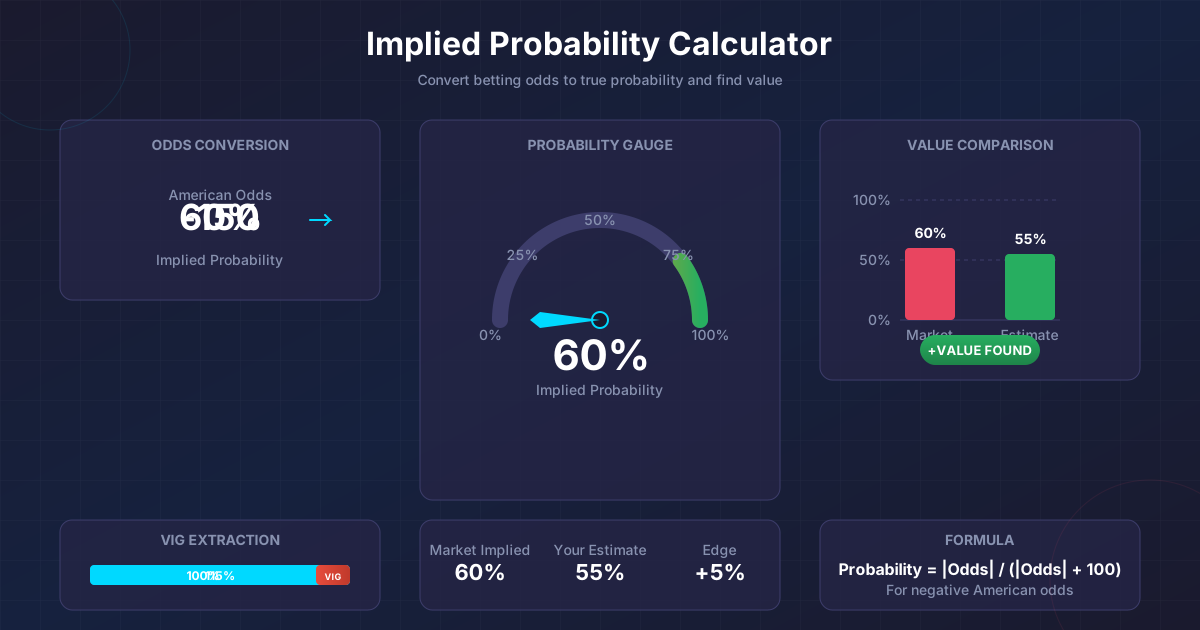
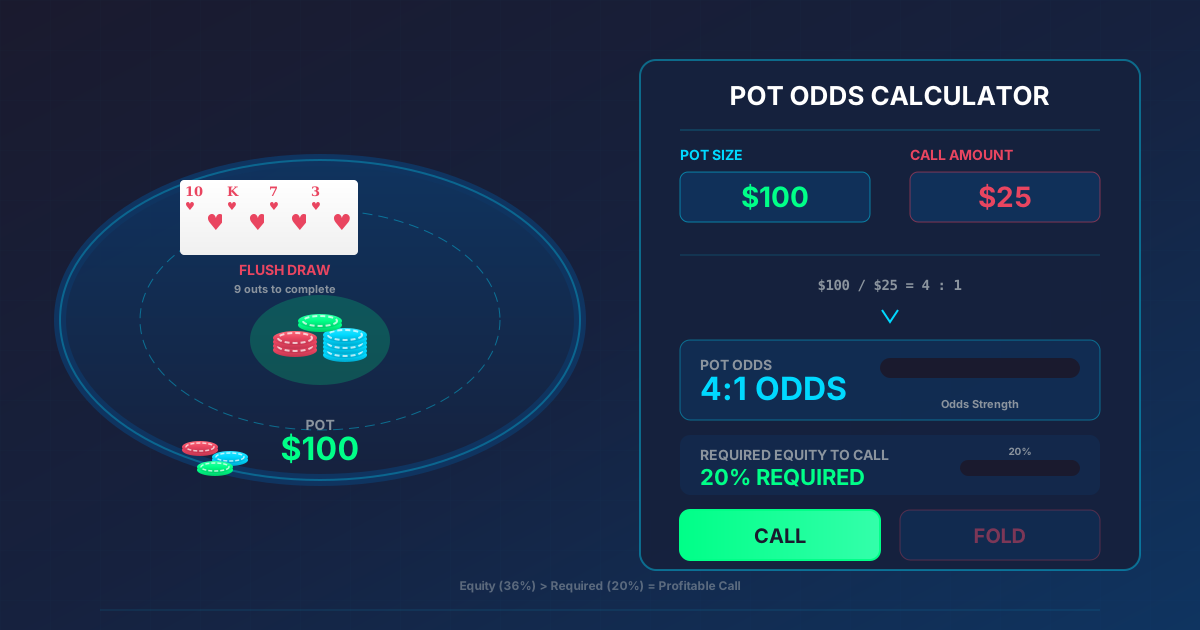
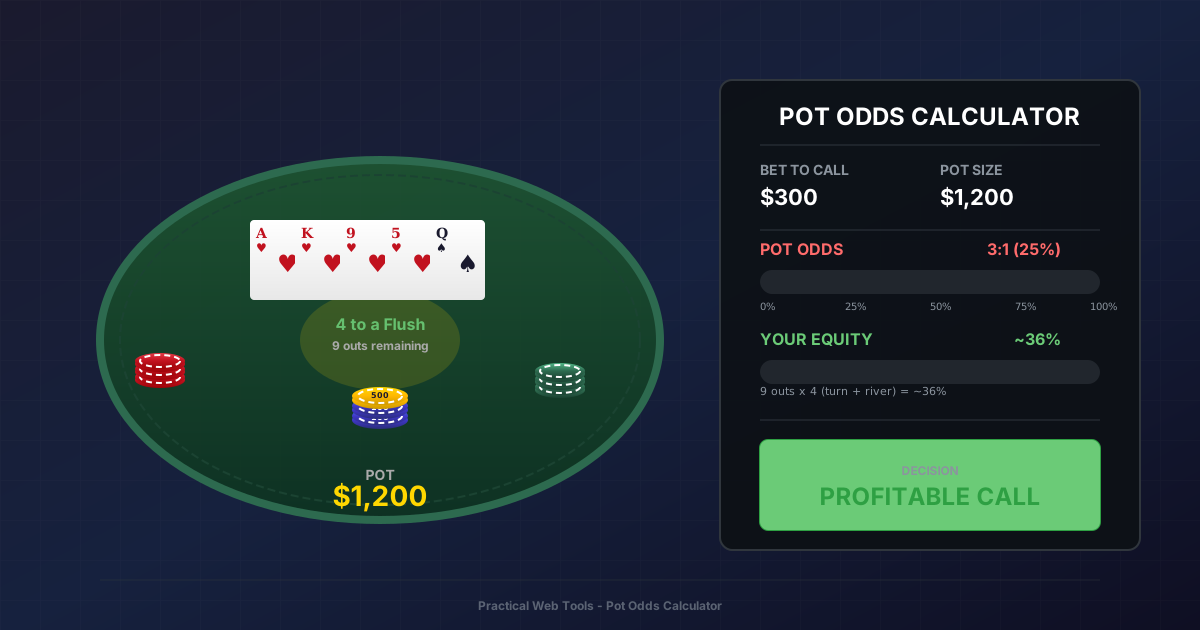
Example: In 2023, No. 13 seed Furman knocked off No. 4 seed Virginia 68-67 on a last-second three-pointer. The moneyline on Furman was +550 ($100 bet returned $650). Bettors who understood the 13-4 historical upset rate of 21.3% recognized that +550 implied only a 15.4% probability -- a clear positive expected value opportunity.
Calculate implied probability from any odds format with our Implied Probability Calculator.
First Round ATS Trends: The Underdog Edge
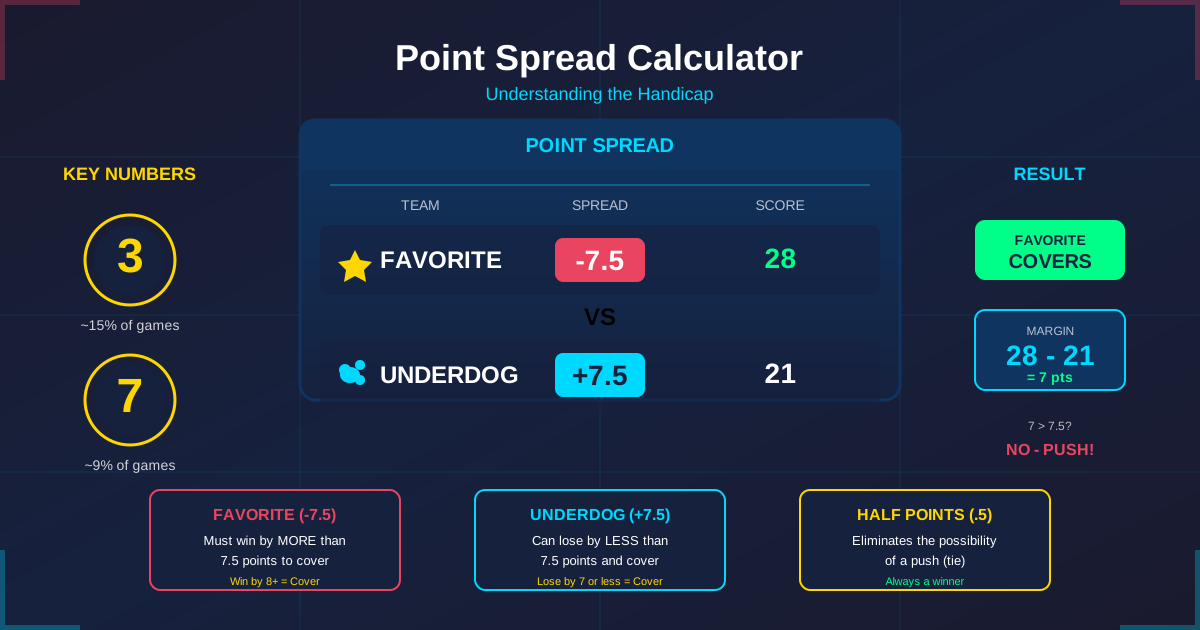
The aggregate ATS data tells a clear story: underdogs perform well in the first round.
- Underdogs overall (since 2015): 122-97-2 ATS (55.7%)
- All-time Round of 64 underdogs: 610-595-25 ATS (50.6%)
- Double-digit underdogs: 244-243-7 ATS (50.1%)
- 12-seeds vs. 5-seeds (last 10 years): 24-15-1 ATS (60.0%)
The recent trend (since 2015) is particularly notable. A 55.7% ATS rate for underdogs across eight tournaments represents significant edge, especially considering that -110 standard juice requires only 52.4% to break even.
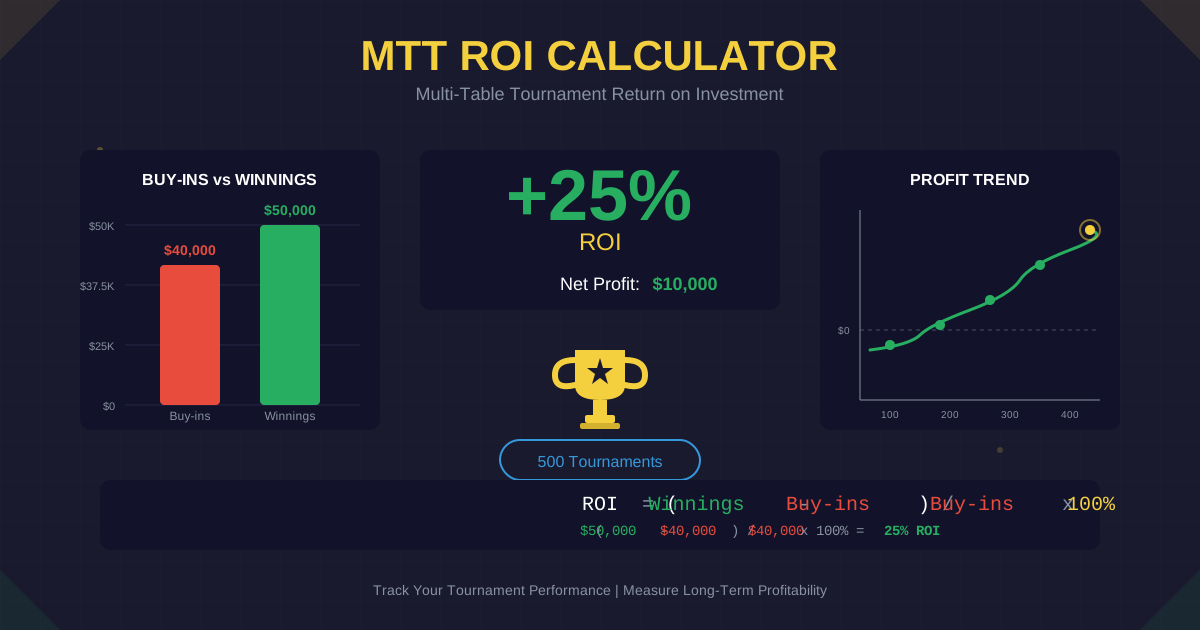
Example: A bettor who placed $110 on every first round underdog ATS since 2015 (221 bets) would have profited approximately $2,365 -- a 9.7% ROI on action. That is a meaningful edge in a market where 2-3% ROI is considered elite for full-season betting.
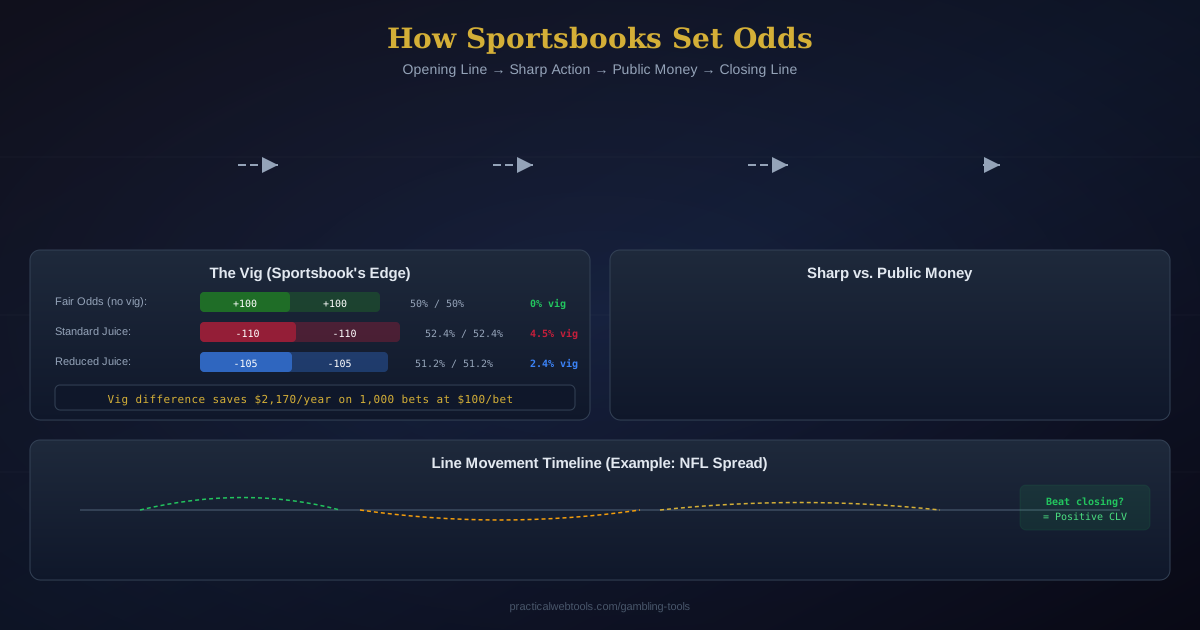
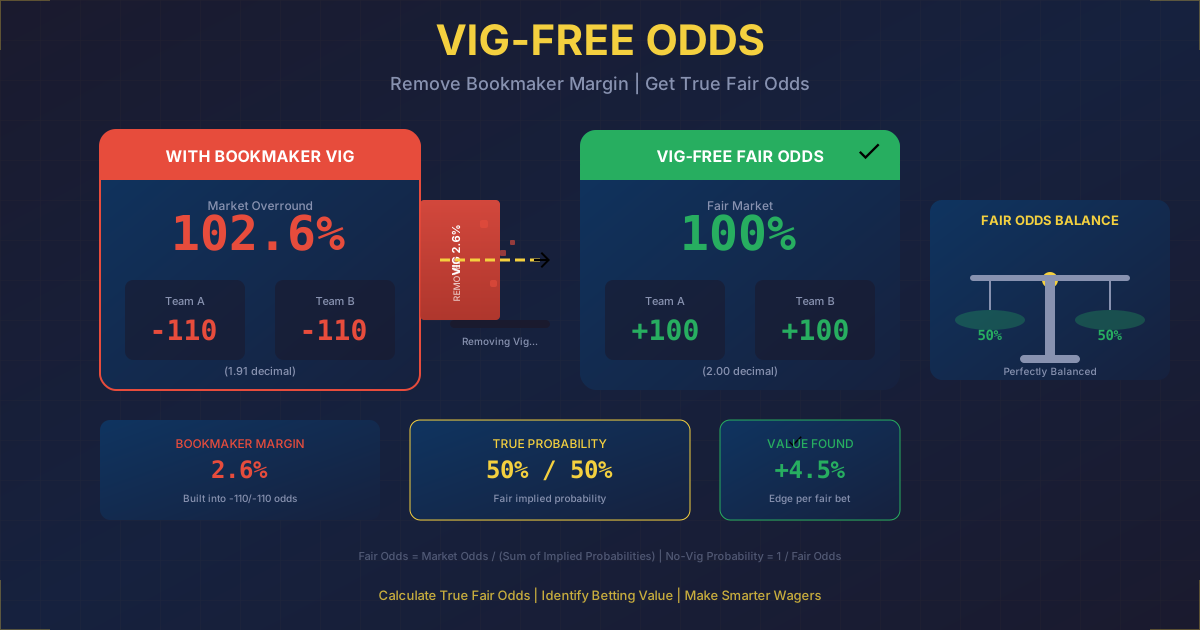
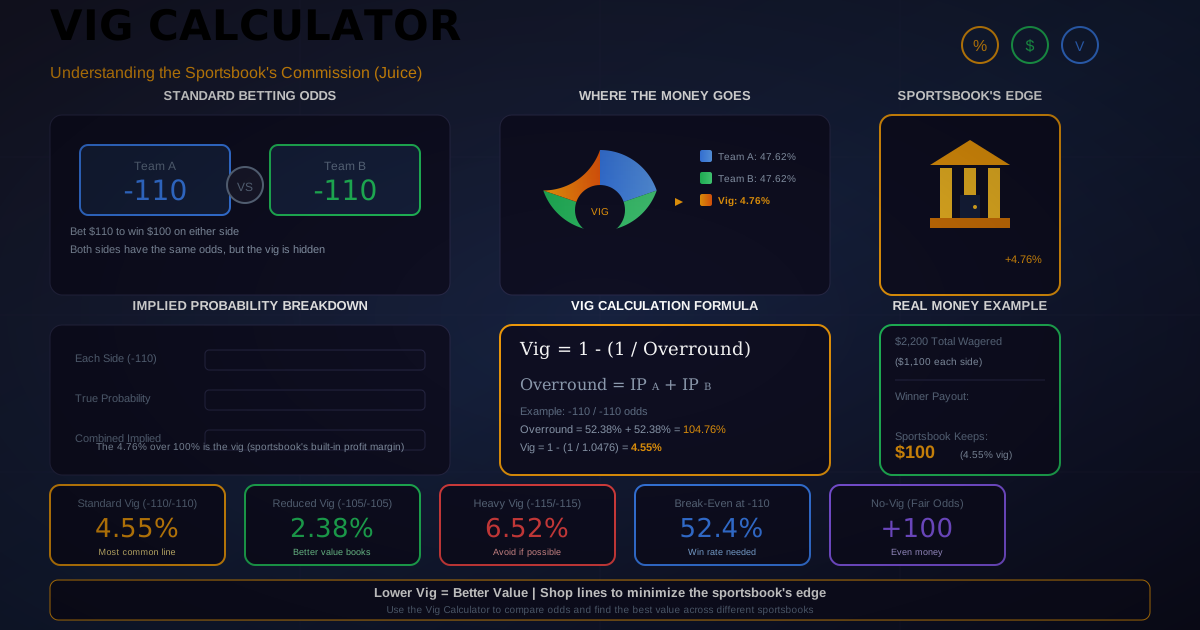
Determine the hold percentage on any two-way line with our Hold/Vig Calculator.
Spread and Totals Analysis by Round
Betting value shifts as the tournament progresses. First round games feature the widest talent gaps and the most public betting mistakes. By the Final Four, lines are razor-sharp.
ATS Performance by Tournament Round
| Round | Favorite ATS % | Underdog ATS % | Over % | Under % | Key Trend |
|---|---|---|---|---|---|
| First Four | 44.0% | 55.8% | 42.0% | 58.0% | Underdogs and Unders dominate |
| Round of 64 | 46.8% | 51.9% | 48.2% | 51.8% | Slight underdog edge |
| Round of 32 | 49.1% | 49.6% | 47.5% | 52.5% | Nearly even, lean Under |
| Sweet 16 | 51.2% | 47.8% | 49.0% | 51.0% | Favorites begin performing |
| Elite Eight | 52.5% | 46.3% | 50.5% | 49.5% | Chalk improves further |
| Final Four | 53.1% | 45.8% | 48.0% | 52.0% | Experienced teams cover |
| Championship | 54.0% | 44.8% | 47.5% | 52.5% | Favorites and Unders |
What This Tells Sharp Bettors
Bet underdogs early, favorites late. The data reveals a clear progression: the underdog edge is strongest in the First Four and Round of 64, then gradually shifts toward favorites as the tournament narrows. This makes intuitive sense -- early rounds feature the largest seed mismatches and the most public overreaction to team names, while later rounds feature battle-tested teams where market pricing is more efficient.
Lean Under throughout. The Under has been a persistent winner across nearly every round. Over the last two tournaments, early-round Unders went 45-26-1 (63.4%). The explanation is pace: tournament games are higher-stakes than regular season, coaching adjustments tighten defenses, and unfamiliar opponents slow possessions.
Example: In the 2025 First Four, all four games went Under. A bettor who blindly played Under in every First Four game since 2015 (games featuring seeds 12 or better) would have hit at a 68.2% rate. At standard -110 juice, that translates to a 28.9% ROI.
First Four and Play-In Games: Hidden Value
The First Four games in Dayton are among the most overlooked betting opportunities of the tournament. Because they happen on Tuesday and Wednesday before the main bracket tips off, casual bettors often ignore them entirely, leaving more efficient pricing for the sharps -- but also some exploitable trends.
First Four Betting Trends (Since 2011)
| Metric | Record | Win % | Notes |
|---|---|---|---|
| Favorites SU | 16-14 | 53.3% | Barely above coin flip |
| Favorites ATS | 12-17-1 | 41.4% | Fade favorites |
| Underdogs ATS | 24-19 | 55.8% | Consistent edge |
| 16-seed games: Underdogs ATS | 14-9 | 60.9% | Strongest trend |
| 10-12 seed games: Favorites ATS | 10-6 | 62.5% | Counter-trend |
| Higher totals (>139): Under | 14-7 | 66.7% | Pace drops in high-stakes |
The split between 16-seed games and 10-12 seed games is crucial. In 16-vs-16 matchups (where both teams are fighting just to make the bracket), the underdog covers at over 60%. But in games between mid-major quality teams (10-12 seeds), the favorite covers more reliably. The explanation: the talent gap is more predictable among better teams, while 16-seed games are genuinely chaotic.
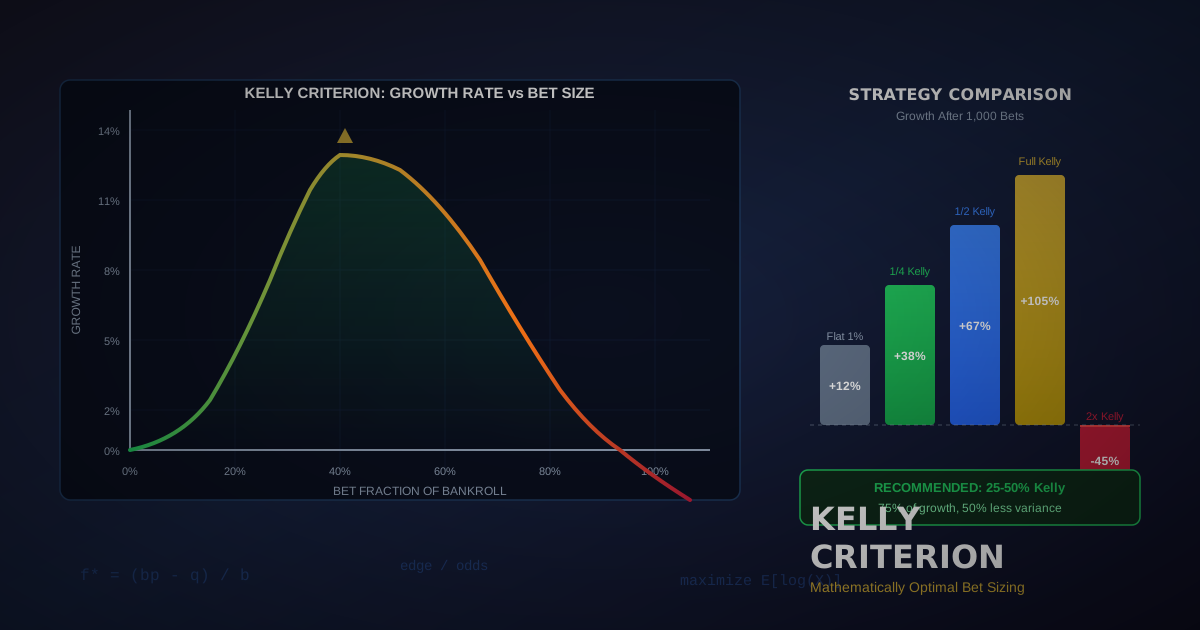
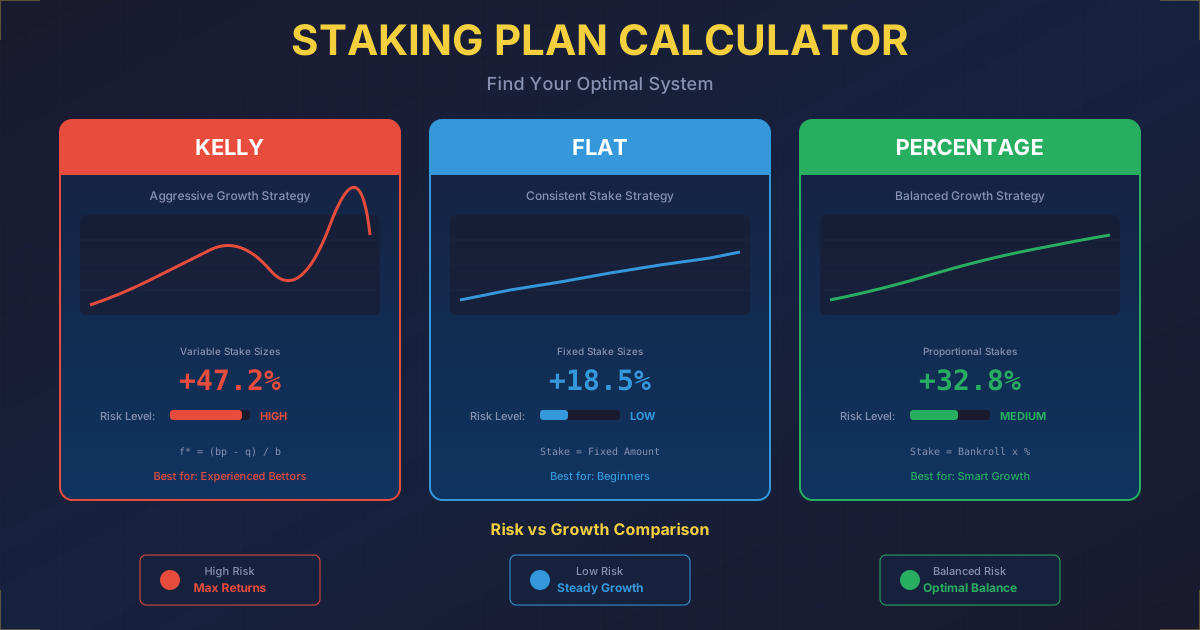
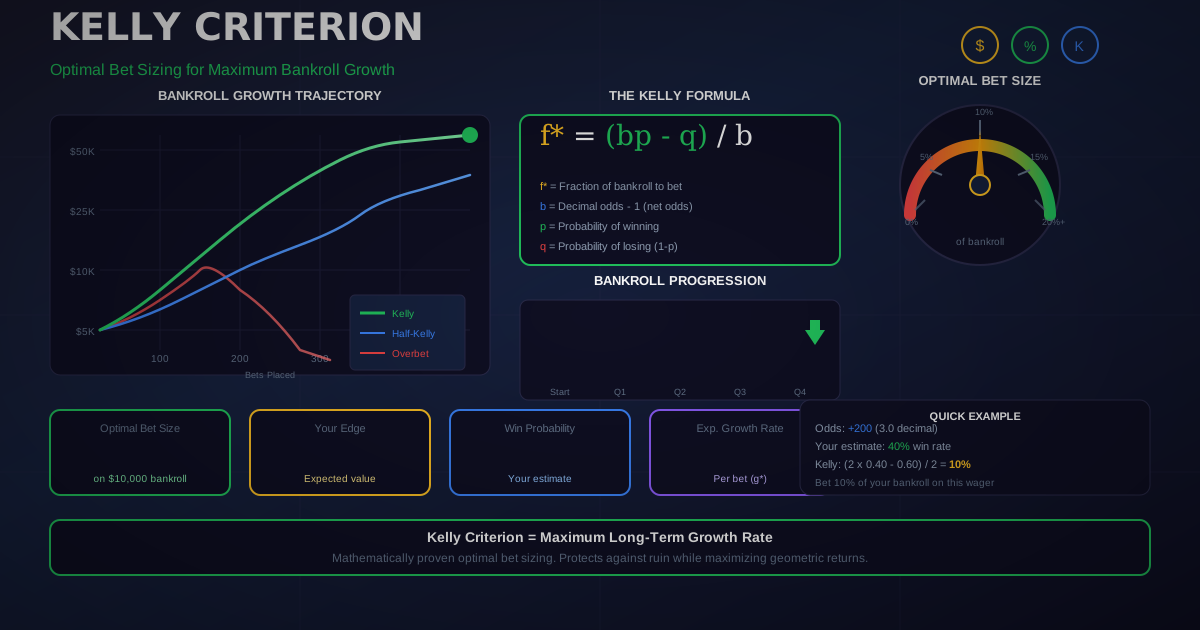
Size your First Four bets properly with our Kelly Criterion Calculator to maximize long-term growth.
Bracket Pool Strategy: Game Theory for Office Pools
Filling out a bracket for a pool is fundamentally different from making individual bets at a sportsbook. In a pool, you are competing against other brackets, not against the house. This means the optimal strategy depends on pool size, payout structure, and what everyone else is picking.
The Game Theory Framework
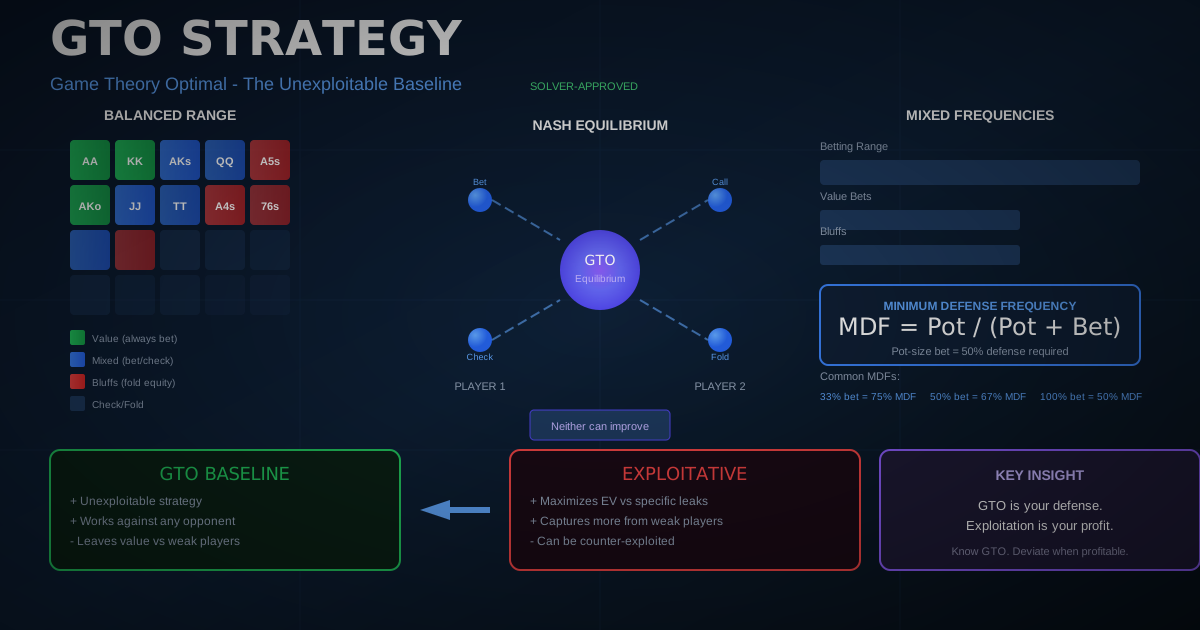
The core principle: you do not need to pick the most likely outcomes -- you need to pick outcomes that maximize your expected value given what the field is doing.
If 80% of brackets in your pool have Arizona cutting down the nets, and Arizona has a 20% chance of winning, Arizona is overowned. If only 5% of brackets have Michigan State winning it all, and they have a 6% chance, Michigan State is slightly underowned and provides better expected value.
Pool Size Strategy Matrix
| Pool Size | Optimal Strategy | Upset Frequency | Championship Pick |
|---|---|---|---|
| 2-10 entries | Mostly chalk, trust seed lines | 1-2 upsets max | Pick the best team |
| 11-50 entries | Moderate contrarian, pick your spots | 3-5 upsets | Slight contrarian lean |
| 51-200 entries | Game theory matters, target leverage | 5-8 upsets | Underowned contender |
| 200+ entries | Maximum contrarian in high-leverage spots | 7-10 upsets | Low-ownership value |
| 1,000+ entries | Extreme differentiation required | 10+ upsets | Unique path to title |
Where to Be Contrarian (and Where Not to Be)
Be contrarian in later rounds. The scoring structure in most pools awards more points for later rounds, meaning a correct Elite Eight or Final Four pick is worth far more than a correct first round pick. Picking a 12-seed to beat a 5-seed in the first round only earns you 10 points in a standard pool, but picking the right Final Four team earns 40-80 points.
Do not be contrarian just for the sake of it. A common mistake in large pools is forcing upsets everywhere. If KenPom gives a No. 3 seed a 78% chance of beating a No. 14 seed, and 75% of the public is picking the 3-seed, there is no value in going against the public -- the public is approximately right. Save your contrarian picks for high-leverage spots where ownership diverges significantly from true probability.
Check public ownership data. ESPN publishes bracket ownership percentages showing what percent of public brackets advance each team to each round. Cross-reference these numbers with KenPom ratings or sportsbook odds to identify teams whose public ownership is significantly below their true advancement probability. Those are your leverage picks.
Example: In the 2023 tournament, only 3.2% of ESPN brackets had Fairleigh Dickinson (No. 16) beating Purdue (No. 1) in the first round. In a pool of 1,000 brackets, picking FDU and being correct meant immediate differentiation from 968 other brackets. While FDU obviously had a very low probability of winning (and an even lower probability of advancing further), the asymmetric payoff in a massive pool made it a defensible contrarian pick for the opening round.
Sweet 16 Advancement Rates by Seed
Understanding how far each seed typically advances helps calibrate bracket expectations.
| Seed | Sweet 16 Rate | Elite Eight Rate | Final Four Rate | Championship Rate | Title Win Rate |
|---|---|---|---|---|---|
| 1 | 85.0% | 65.0% | 41.3% | 24.4% | 16.3% |
| 2 | 70.6% | 47.5% | 24.4% | 13.1% | 6.9% |
| 3 | 56.3% | 31.3% | 10.6% | 5.0% | 2.5% |
| 4 | 47.5% | 25.0% | 8.8% | 3.8% | 1.9% |
| 5 | 33.8% | 15.6% | 5.0% | 1.9% | 0.6% |
| 6 | 28.1% | 12.5% | 2.5% | 1.3% | 0.6% |
| 7 | 18.8% | 8.8% | 3.1% | 1.3% | 0.0% |
| 8 | 15.0% | 6.3% | 1.9% | 0.6% | 0.0% |
| 9 | 12.5% | 5.0% | 1.9% | 0.6% | 0.0% |
| 10 | 13.8% | 5.6% | 1.9% | 0.6% | 0.0% |
| 11 | 11.9% | 5.0% | 1.9% | 0.6% | 0.6% |
| 12 | 8.8% | 2.5% | 0.6% | 0.0% | 0.0% |
The dropoff from a 1-seed to a 2-seed is massive. A 1-seed makes the Sweet 16 at 85% versus 70.6% for a 2-seed. They reach the Final Four at 41.3% versus 24.4%. If your bracket pool scoring weights later rounds heavily, No. 1 seeds are the safest foundation -- but they are also the most owned, which creates the tension at the heart of bracket strategy.
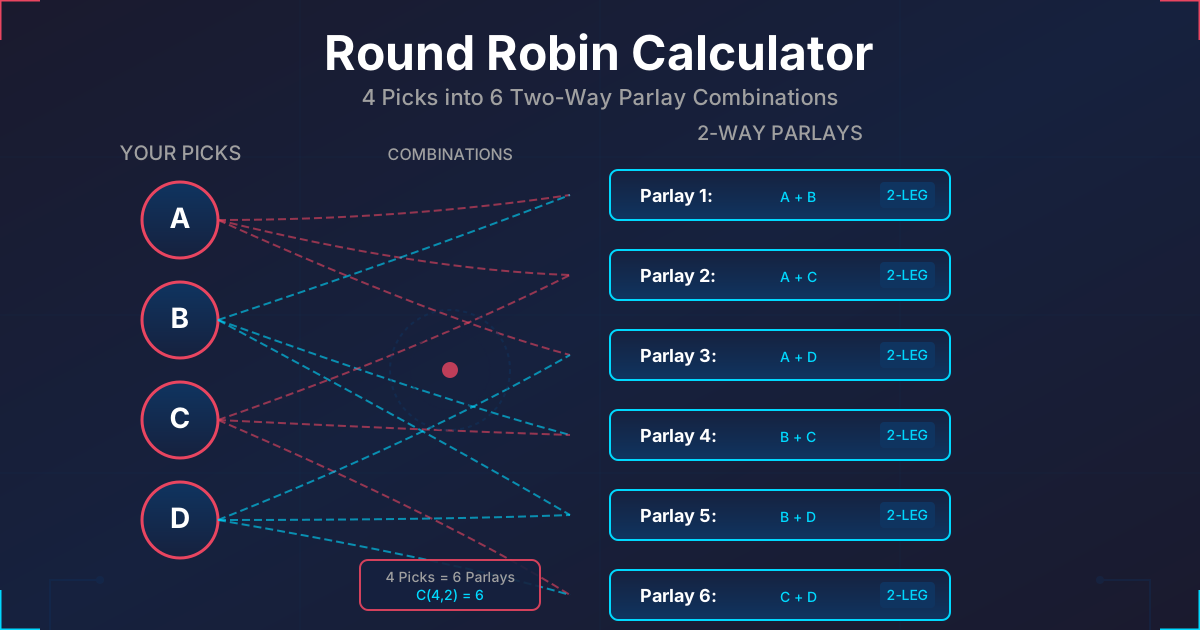
Build round-robin combinations across your bracket with our Round Robin Calculator.
Futures and Outright Winner Betting: Finding Pre-Tournament Value
Championship futures are the single highest-margin market in March Madness. The combined implied probabilities across all 68 teams typically add up to 140-160%, meaning the sportsbook is holding 40-60% in theoretical margin. Despite this, futures bets can still be profitable if you identify mispriced teams.
When to Bet Futures
The best time to bet futures is before the bracket is announced. Once the bracket drops, odds adjust rapidly based on matchups, and value evaporates. If you believe in a team's championship potential, locking in odds early -- even in January or February -- yields the highest potential payouts.
The second-best time is after an upset. When a No. 1 seed loses in the second round, futures odds on the remaining teams in that region collapse. The team that emerges from a busted bracket often faces weaker opposition through the Elite Eight, making them undervalued by the time they reach the Final Four.
Sharp Futures Strategy for 2026
Based on the current odds and tournament projections, here is how sharps are approaching the 2026 futures market:
Arizona (+375 to +450): As the clear favorite, Arizona carries the most public money (14.8% of handle). At +375, the implied probability is 21.1%, but most models give them only 15-18% true probability. The public premium on Arizona means the value is thin -- sharps tend to fade the tournament favorite.
Michigan (+475 to +500): The second-favorite represents better value at the current price. Michigan's odds imply 16.7% probability, and their metrics support a 14-16% true probability. Closer to fair than Arizona, but not a clear positive EV play.
Mid-range value (Houston, Kansas, +1800 to +2000): These teams offer the best risk-reward profile. A No. 2 seed has historically won the championship 6.9% of the time, but +2000 implies only 4.8%. If you believe Houston or Kansas is a legitimate No. 2 seed with above-average title upside, the math works.
Deep sleepers (Florida, Marquette, +3000 to +5000): Historically, No. 3-4 seeds win the championship roughly 2-4% of the time. At +5000 (2.0% implied), you need the team to have at least that much true probability for the bet to break even. These are high-variance plays best sized at 0.5-1% of bankroll.
Evaluate any futures bet with our Expected Value Calculator to ensure positive EV before placing your wager.
Live Betting During March Madness Games
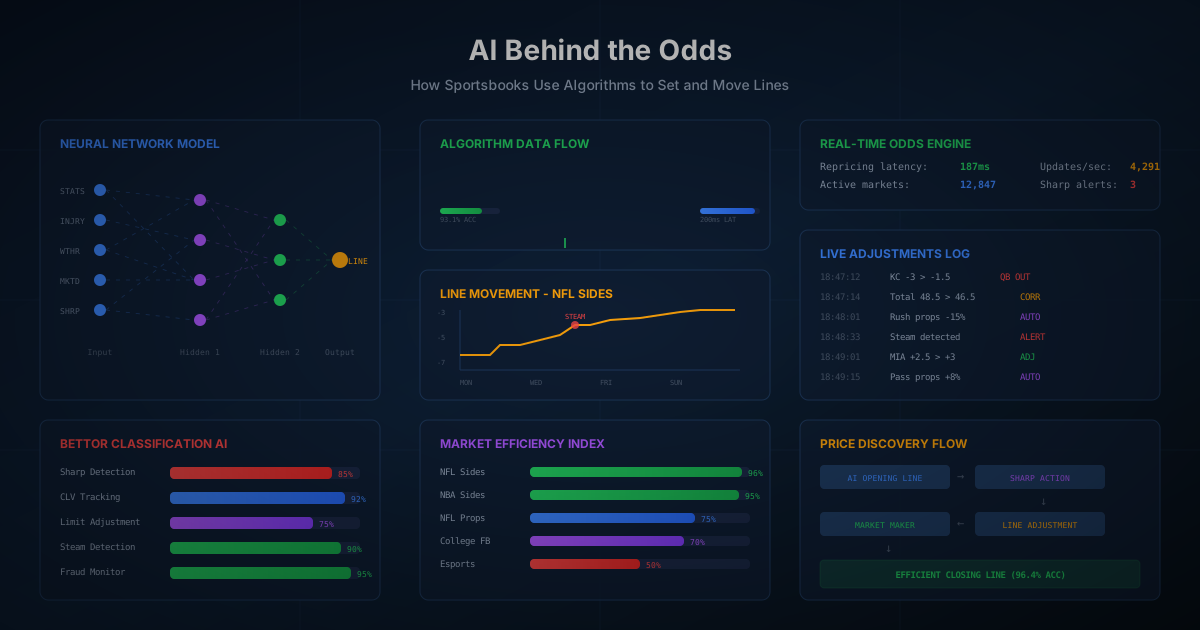
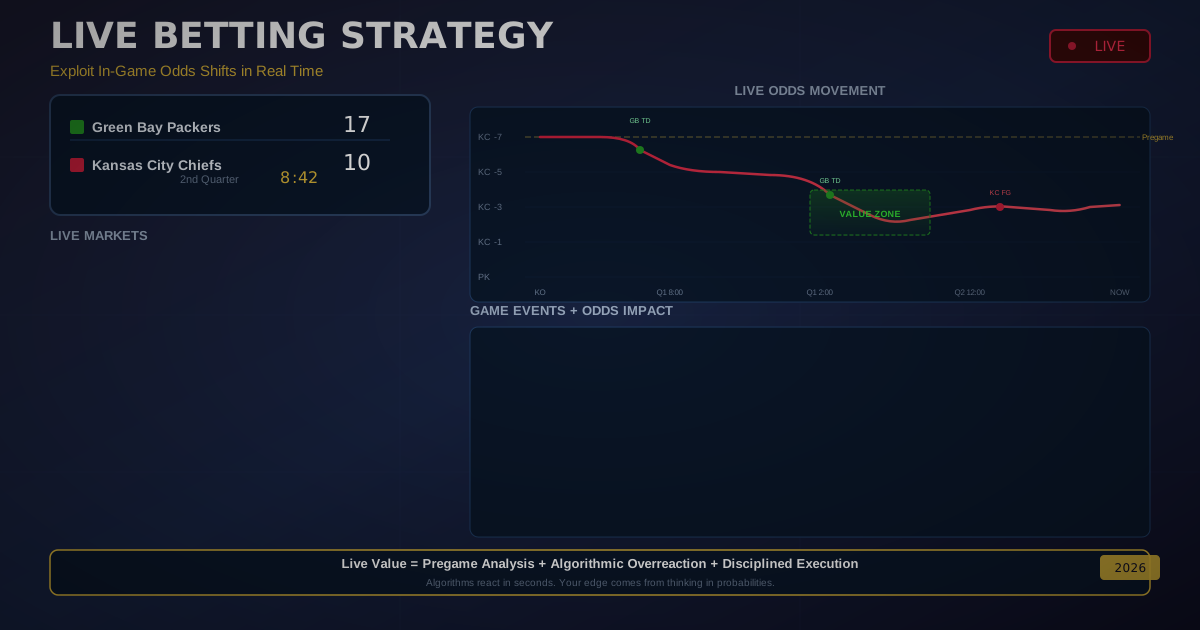
Live (in-play) betting during the NCAA Tournament has exploded in recent years, and it offers some of the juiciest opportunities for prepared bettors. The key advantage: sportsbooks must reprice lines in real-time, and the algorithmic models they use can be slow to adjust to game-specific factors like foul trouble, momentum shifts, and coaching adjustments.
Where Live Betting Value Exists
Back favorites after slow starts. When a No. 1 seed falls behind a No. 16 seed by 8 points early in the first half, the live spread swings dramatically. But the true probability of the 1-seed winning barely changes -- they are still an elite team with a coaching staff that will make adjustments. The public panics, and the live line overreacts.
Example: In 2024, Purdue (No. 1 seed) trailed Grambling State (No. 16 seed) by 6 points with 10 minutes left in the first half. The live spread moved from Purdue -24.5 (pregame) to Purdue -5.5. Purdue won by 28. Bettors who took Purdue on the live line at -5.5 captured nearly 20 points of value.
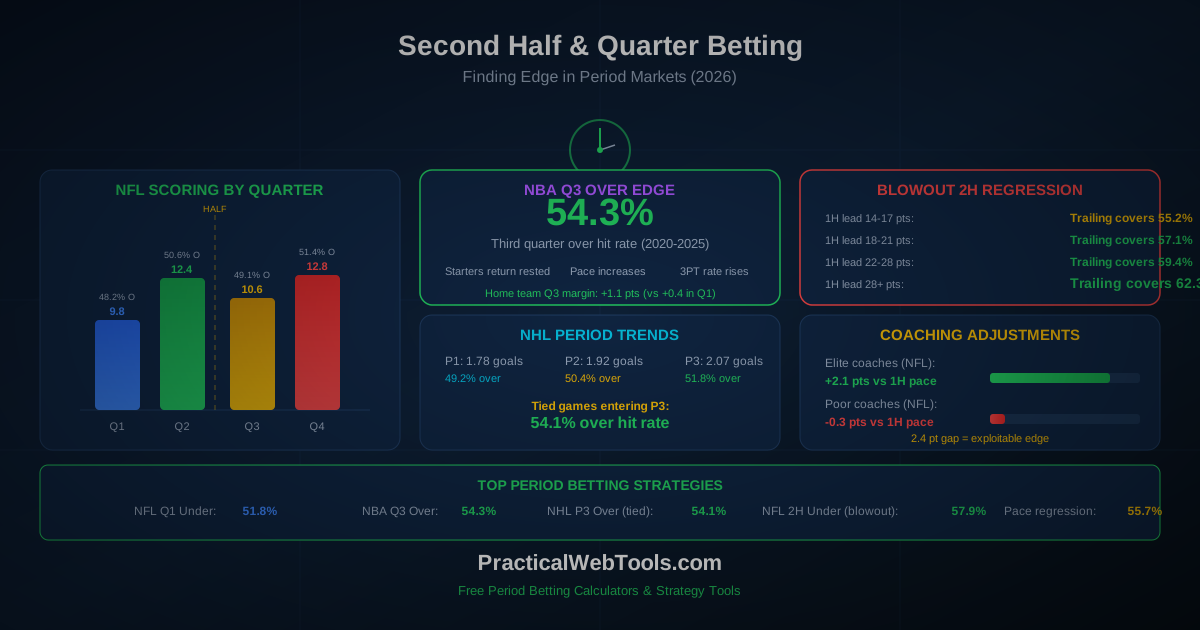
Target second-half Unders after high-scoring first halves. Tournament games with high first-half scoring tend to regress in the second half as coaching adjustments kick in and defenses tighten. If a game has 85 combined points at halftime, the live total will be inflated -- but the second half is likely to play Under as both teams settle into half-court execution.
Bet against teams in foul trouble. If a mid-major's best player picks up his third foul midway through the first half, the live line may not fully account for the impact. Mid-majors are typically less deep than power conference teams, and losing a star player is disproportionately damaging.
Live Betting Bankroll Management
The pace of live betting during March Madness is relentless. With four games running simultaneously on Thursdays and Fridays, it is easy to overtrade. Set clear rules:
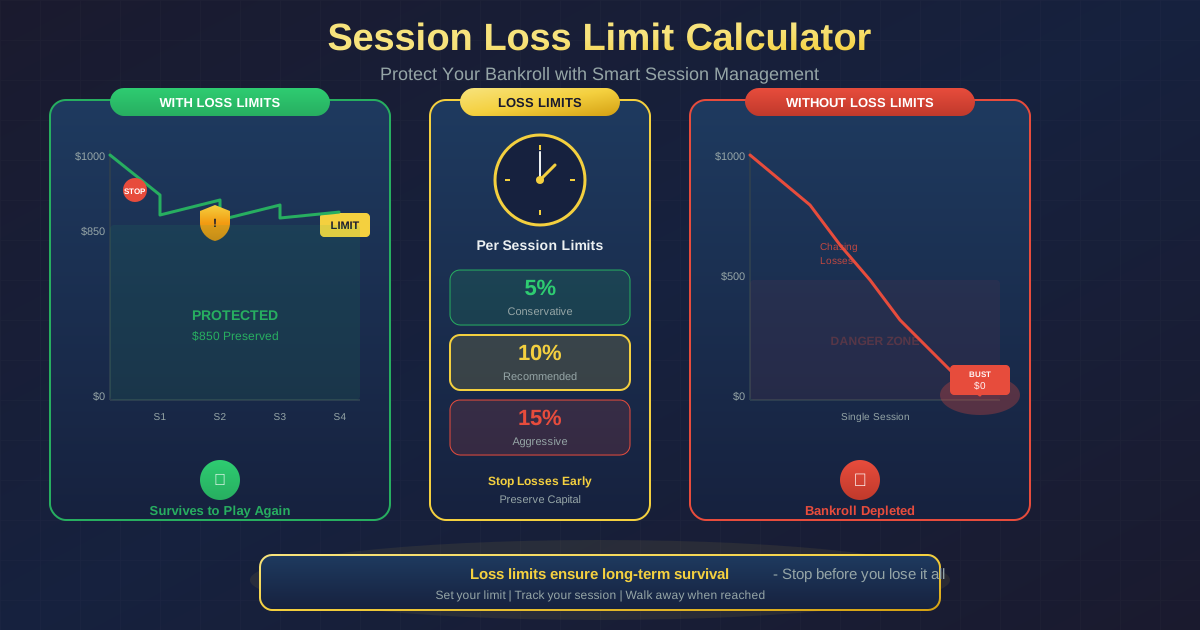
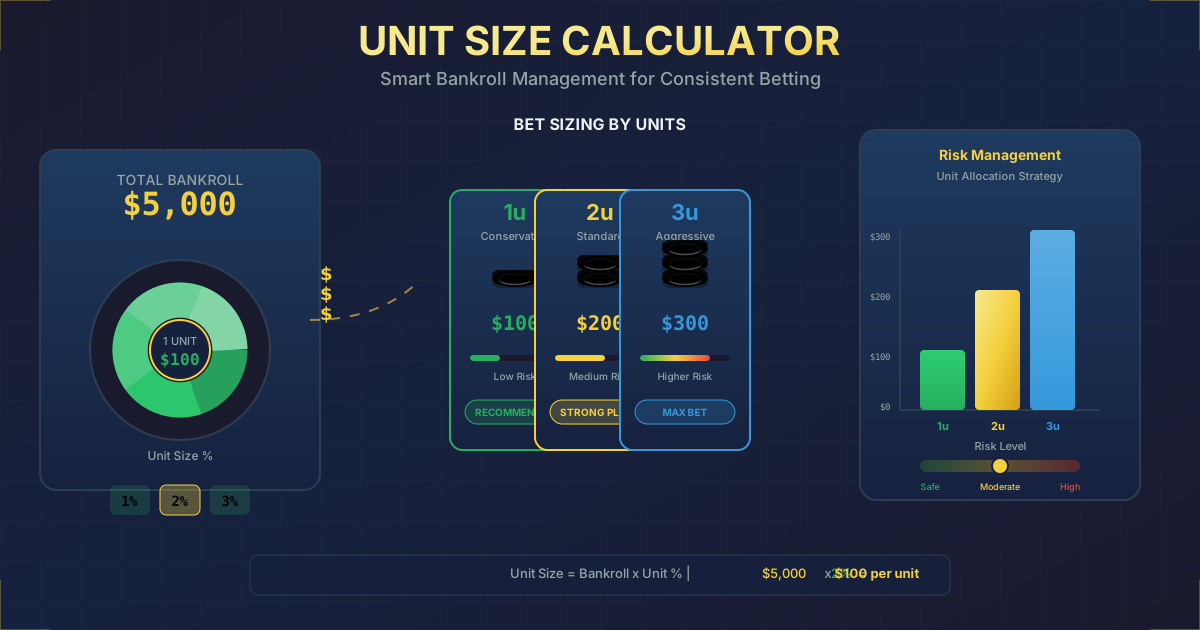
- Cap live bets at 1-2% of bankroll per wager
- Limit total live action per day to 5-10% of bankroll
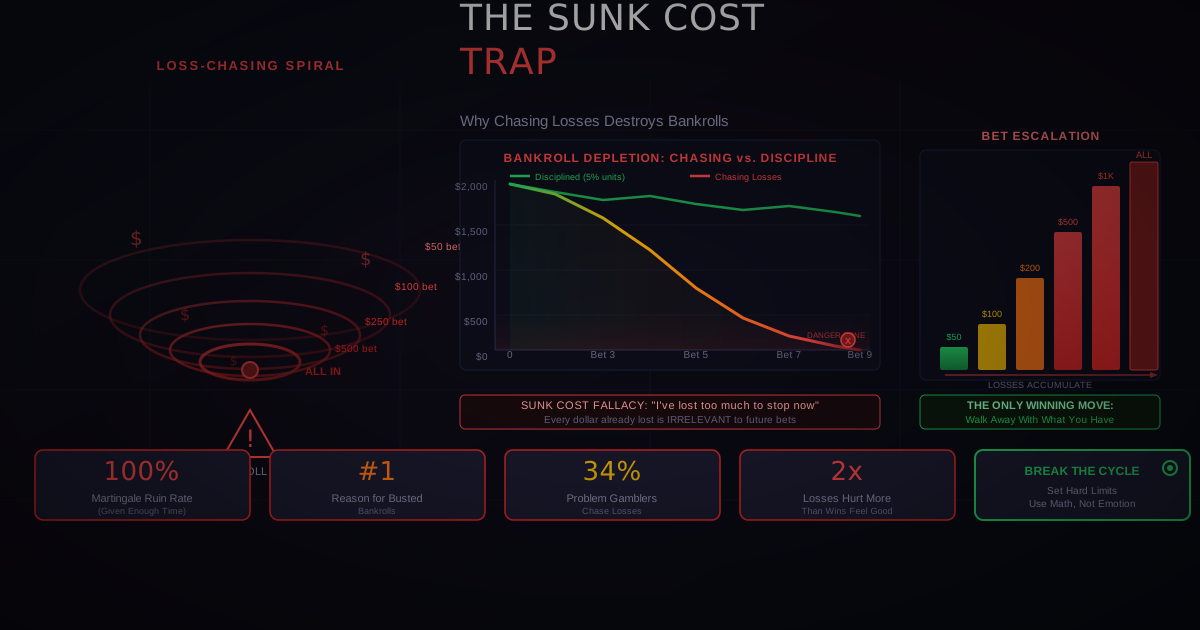
- Never chase a loss from one game by betting another game in progress
- Use a structured staking plan rather than gut-feel sizing
Calculate optimal bet sizing with our Kelly Criterion Calculator -- it works for live bets too.
Round-by-Round Betting Adjustments
Your betting approach should evolve as the tournament progresses. Each round has distinct characteristics that affect where value lies.
Round of 64 (Thursday/Friday of Week 1)
- 32 games across two days -- the most action-packed stretch
- Maximum public betting volume, maximum line inflation on favorites
- Best time for underdog ATS plays, especially 12-5 and 11-6 matchups
- Under bets have strongest historical edge
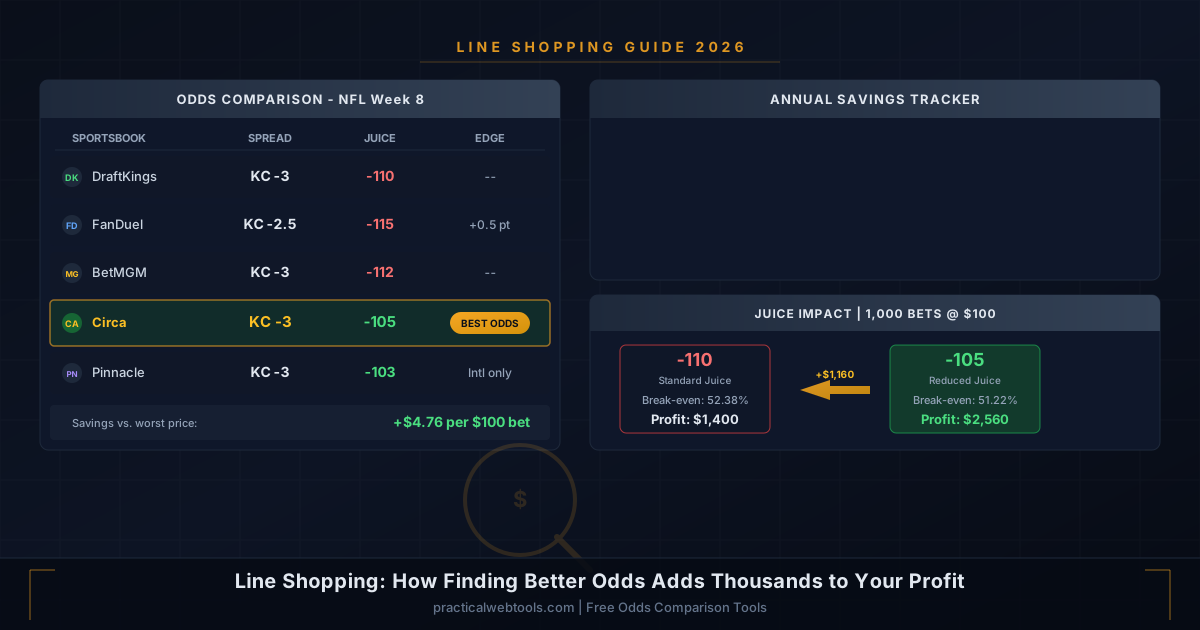
- Line shop aggressively -- the volume of games means books sometimes disagree by 1-2 points
Round of 32 (Saturday/Sunday of Week 1)
- 16 games across two days
- Lines tighten as books have first-round data to recalibrate
- Underdog edge diminishes but does not disappear
- Teams that just survived an upset scare often struggle to cover in their next game (emotional hangover)
- Pace of play data from first round helps calibrate totals
Sweet 16 and Elite Eight (Week 2)
- 8 games, then 4 games -- smaller slate, more attention from sharps
- Lines are significantly sharper; finding value becomes harder
- Experience and coaching quality matter more in these rounds
- Look for matchup-specific edges: tempo mismatches, rebounding differentials, three-point shooting variance
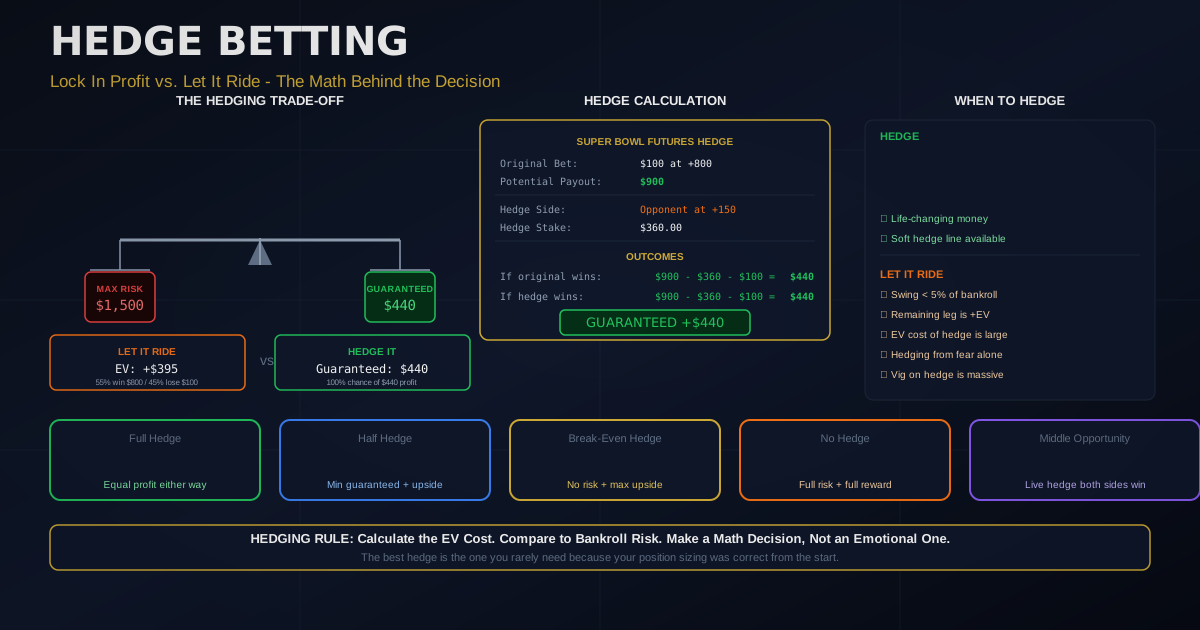
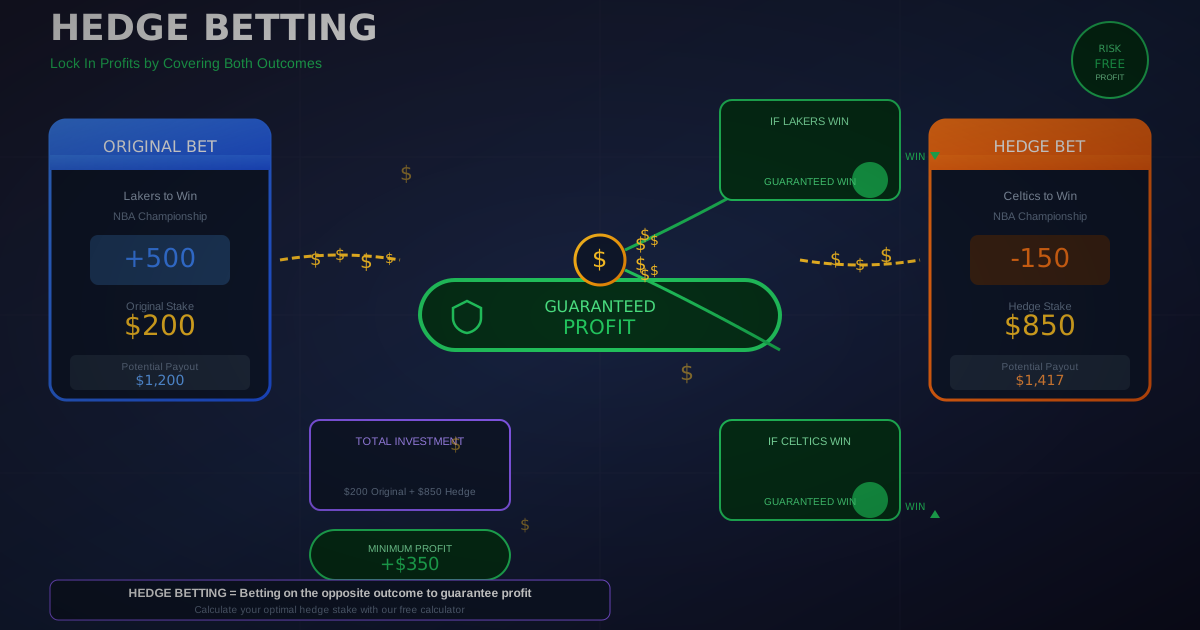
- Hedge opportunities emerge for futures bettors as their teams advance
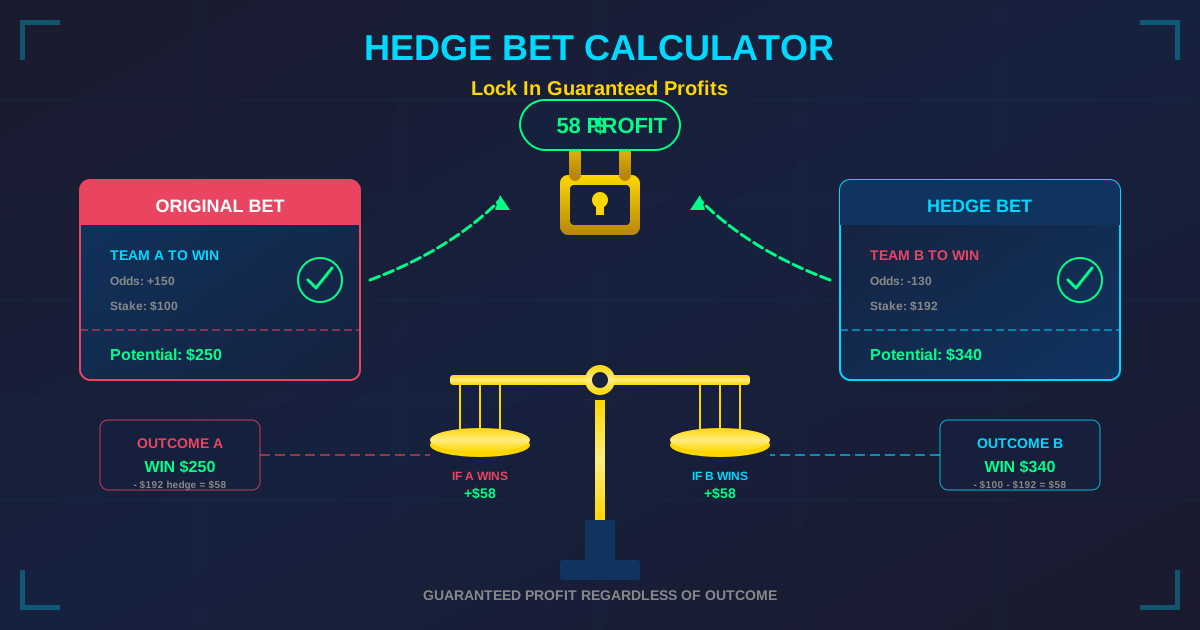
Lock in guaranteed profit on futures positions with our Hedge Calculator.
Final Four and Championship (Week 3)
- 3 games total -- the sharpest lines of the tournament
- Public money floods in on both sides, creating surprisingly balanced books
- Value is scarce; often the best play is no play
- If you have a futures position, this is where hedging decisions become critical
- The Under has historically performed well in the championship game
Common March Madness Betting Mistakes
Even experienced sports bettors make predictable errors during the tournament. Recognizing these patterns in yourself is the first step toward eliminating them.
Mistake 1: Overweighting Regular Season Records
A team that went 28-3 in the regular season is not necessarily better than a team that went 24-7. Conference strength, strength of schedule, and performance metrics (KenPom, NET rankings, BartTorvik) are far more predictive than raw win-loss records. A 28-3 team from a weak conference may be a significantly worse bet than a 24-7 team from the Big Ten or SEC.
Mistake 2: Ignoring the Under
The public loves to bet Overs during March Madness because they associate the tournament with excitement and high-scoring games. But the data consistently shows Unders hitting at a higher rate, especially in the first week. Tournament games are played with higher defensive intensity, and unfamiliarity between opponents naturally slows the pace.
Mistake 3: Chasing Upsets After Upsets
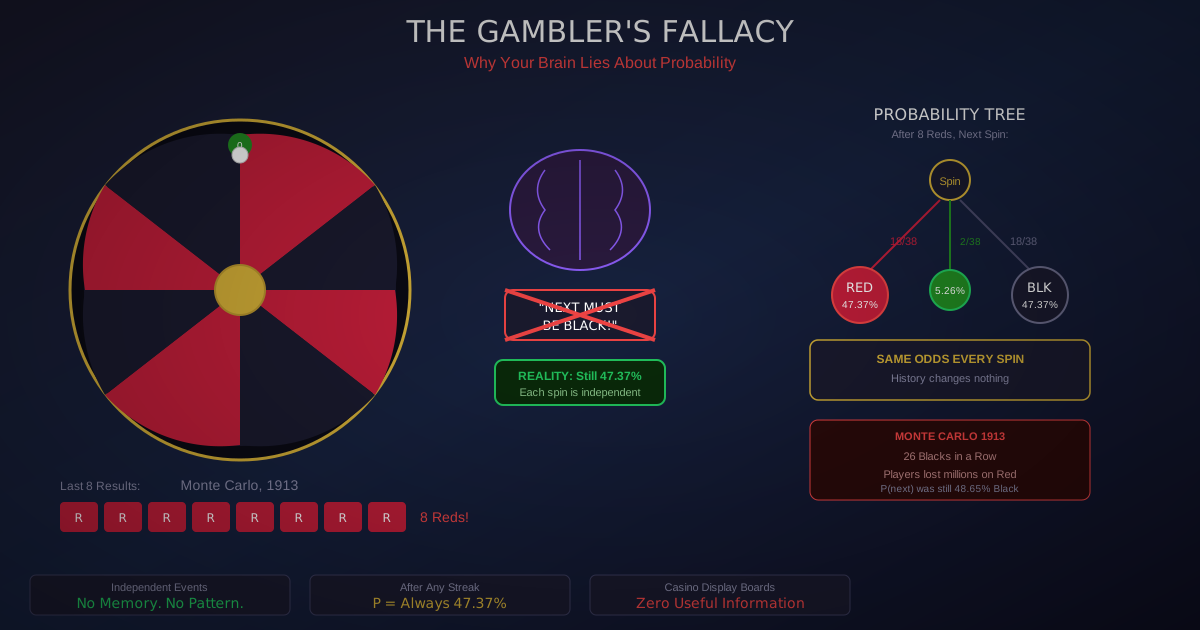
When a No. 15 seed beats a No. 2 seed on Thursday morning, the public immediately starts piling on underdogs in every other game. This emotional overreaction inflates underdog lines for the rest of the day. Each game is independent -- a Cinderella in one region does not make upsets more likely in another.
Mistake 4: Betting Too Many Games
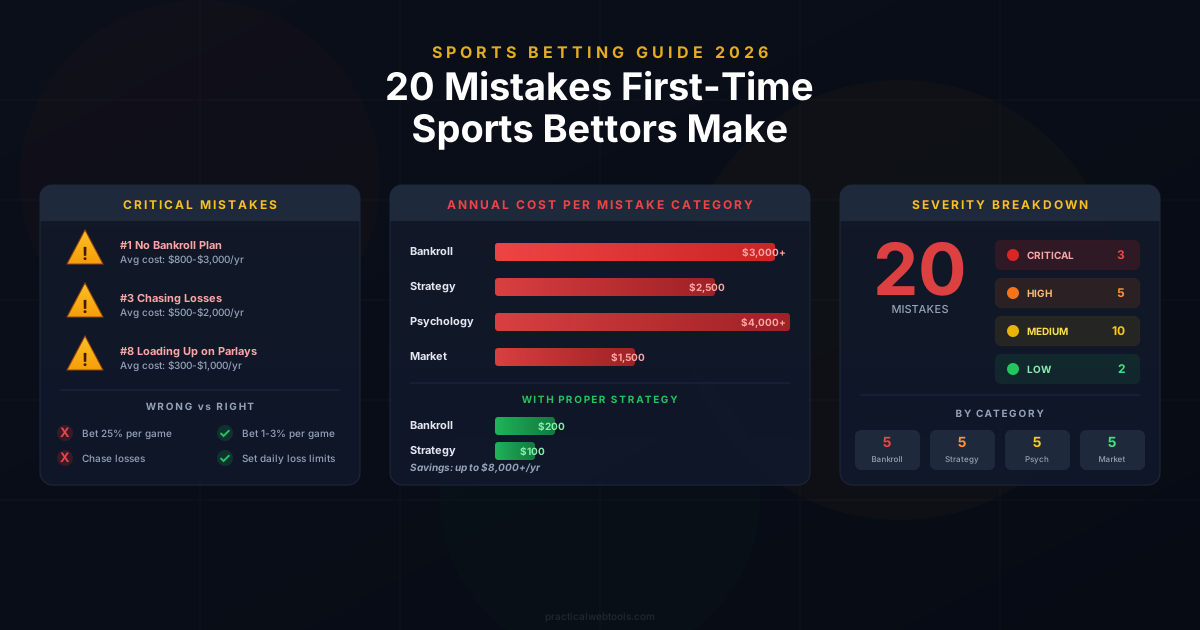
With 16 games on a single Thursday, the temptation to bet every game is overwhelming. But volume for the sake of volume is bankroll destruction. Professional bettors are selective -- they may only find 3-5 genuine edges across 32 first-round games. Having a bet on every game is entertainment, not strategy.
Mistake 5: Not Adjusting Bankroll for Tournament Volume
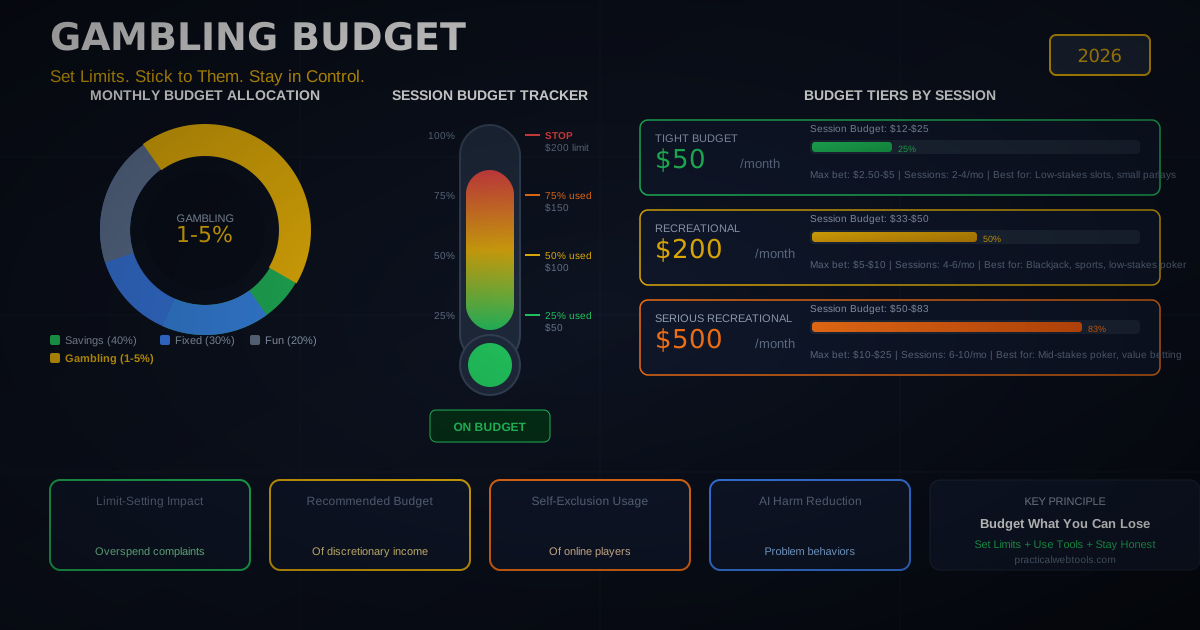
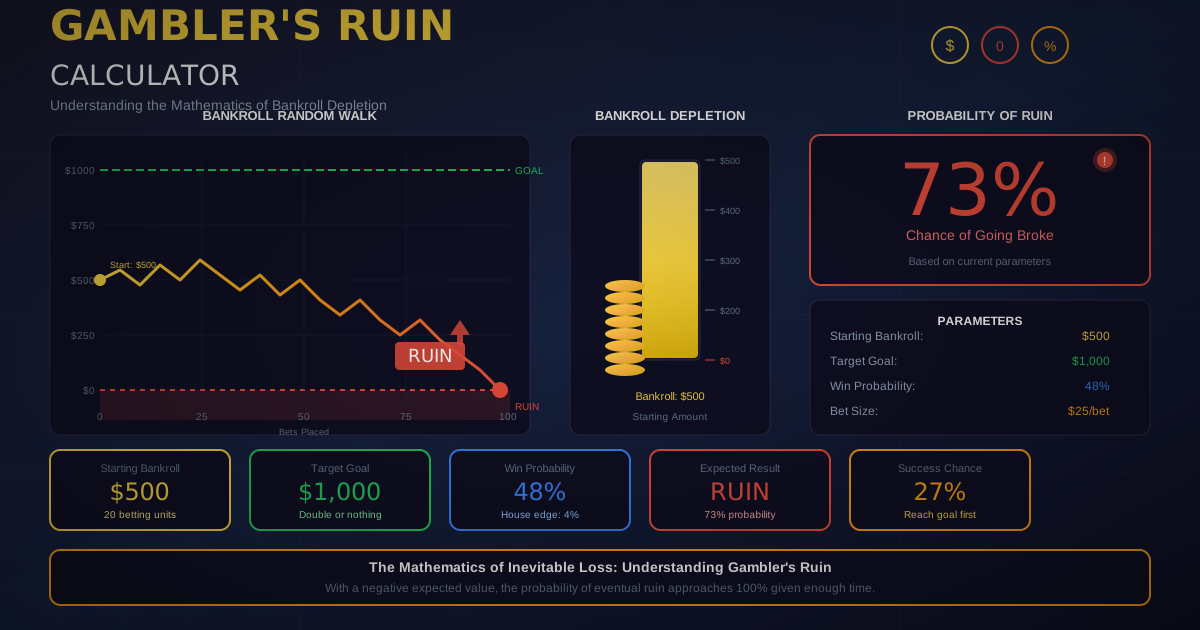
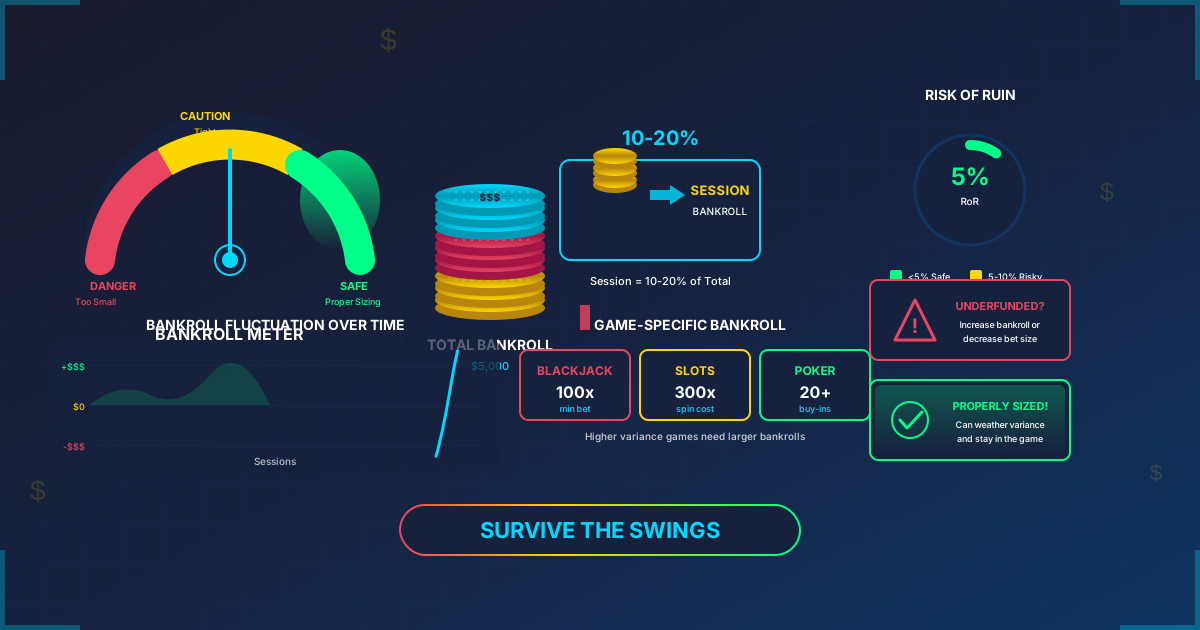
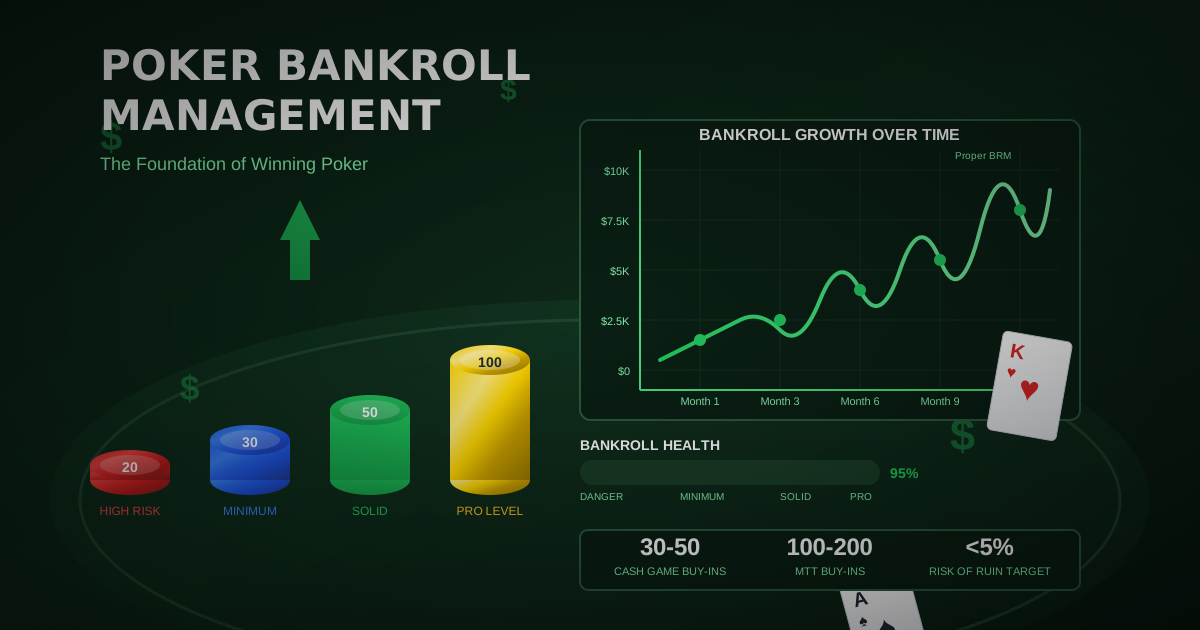
The tournament compresses three weeks of betting into a concentrated period. If your standard bankroll allocation is 2% per bet and you bet 30 games across the tournament, you are risking 60% of your bankroll. Scale down your per-bet sizing to account for the volume, or establish a separate tournament bankroll.
Mistake 6: Falling for Brand Name Bias
Duke, Kentucky, Kansas, and North Carolina consistently attract the most public money regardless of how good they actually are in a given year. Sportsbooks know this and shade lines accordingly. When Duke is a No. 6 seed and the public is still betting them like a No. 2 seed, the line moves against Duke bettors. Fade the brand when the numbers do not support the hype.
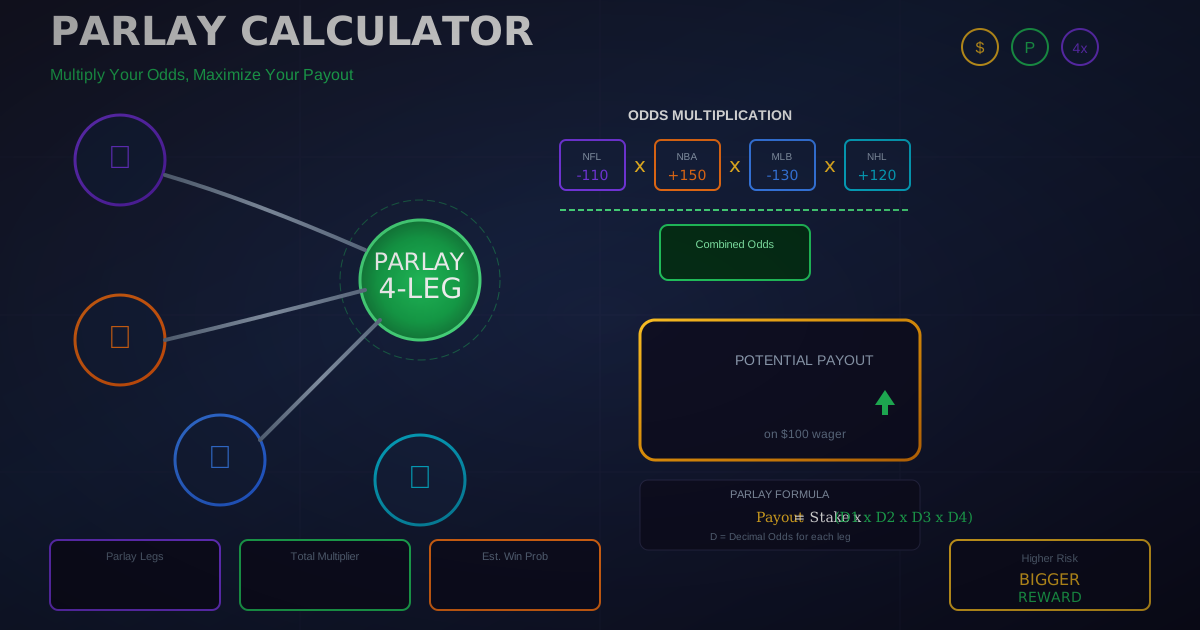
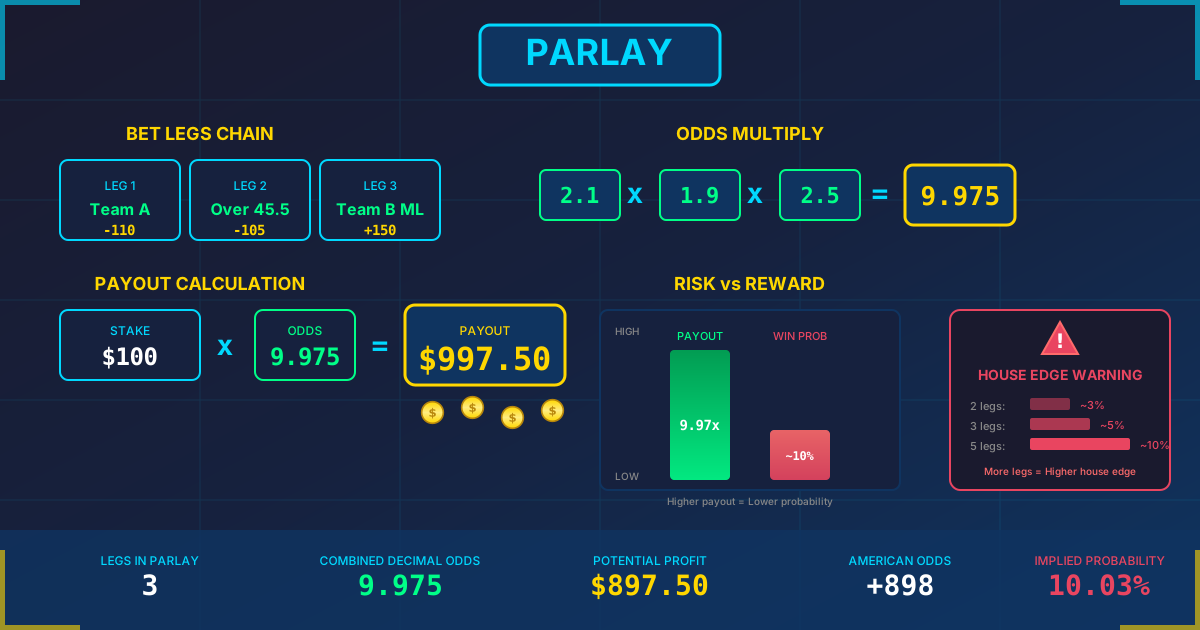
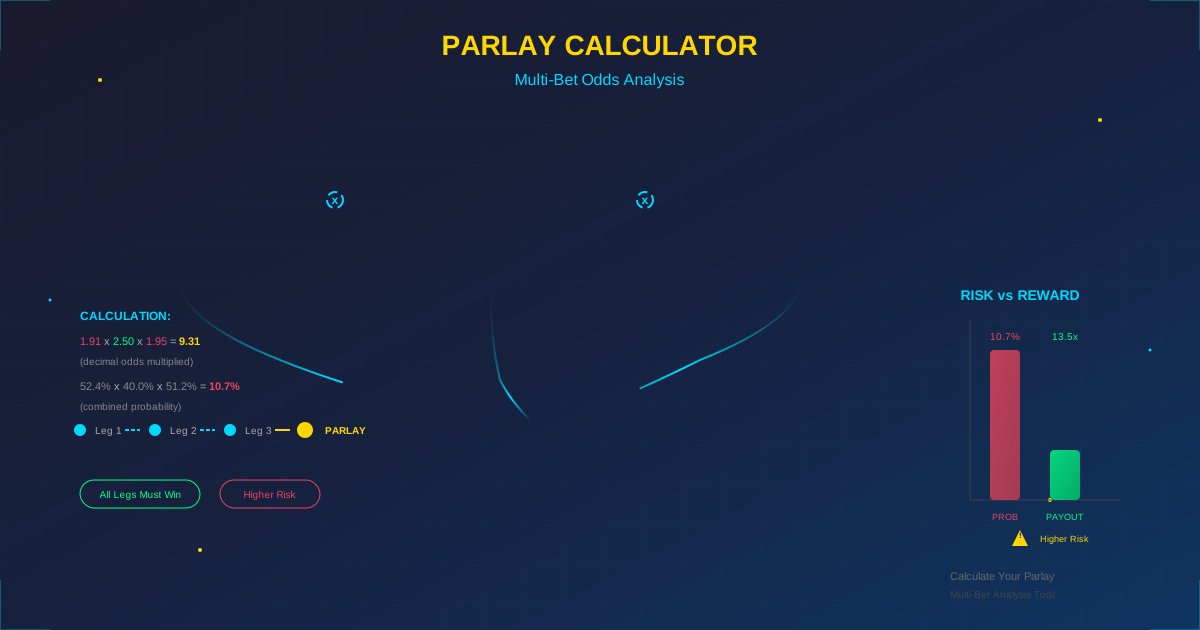
Build multi-leg bets wisely with our Parlay Calculator -- and know the true odds before you click submit.
Advanced Metrics for March Madness Betting
Beyond the basic upset rates and ATS trends, sharp bettors use advanced metrics to find value the public cannot see.
Key Metrics to Track
Adjusted Efficiency Margin (KenPom): The single most predictive metric for tournament outcomes. It measures points scored and allowed per 100 possessions, adjusted for opponent strength. Teams with top-10 adjusted efficiency margins on both offense and defense are the strongest tournament bets.
Turnover Rate vs. Steal Rate: Teams that protect the ball against aggressive defenses survive the tournament. High-turnover teams are vulnerable to early upsets, regardless of seed.
Three-Point Shooting Variance: Three-point shooting is the most volatile statistic in basketball. A team that lives and dies by the three can beat anyone on a hot night -- but can also lose to anyone when shots are not falling. This variance is what makes lower-seeded teams with strong three-point attacks dangerous upset candidates.
Free Throw Shooting in Close Games: Late-game free throw shooting decides a disproportionate number of tournament games. Teams that shoot above 75% from the line in close games (decided by 6 or fewer points) have a significant edge in one-and-done tournament play.
Experience and Tournament History: Upperclassmen-heavy rosters with prior tournament experience outperform young, talented teams at a statistically significant rate. The pressure of the tournament setting is real, and experience mitigates it.
Putting Metrics Together
The best tournament bets combine multiple edges:
- Favorable seed matchup (12 vs. 5 historical upset rate)
- Strong advanced metrics (top-40 KenPom efficiency)
- Public undervaluation (mid-major brand, low bracket ownership)
- Positive expected value (moneyline or spread mispriced relative to true probability)
When three or four of these factors align, you have a strong bet. When only one factor is present, you have a speculation.
Frequently Asked Questions
What is the best seed matchup to bet on for upsets in March Madness?
The 12 vs. 5 matchup is the most reliable upset spot, with 12-seeds winning 35.6% of the time since 1985 and covering the spread 53.9% of the time. However, the 11 vs. 6 matchup actually produces a slightly higher upset rate at 39.1%. Both matchups offer positive expected value for underdog bettors in most years.
How much money is bet on March Madness each year?
The American Gaming Association estimated $3.1 billion in legal wagering on March Madness in 2025, up from $2.7 billion in 2024. However, total wagering (including offshore and informal betting) is estimated at $10-15 billion annually. The tournament is the second-largest single-event betting window in the United States behind the Super Bowl.
Should I bet underdogs or favorites in the first round?
The data strongly favors underdogs against the spread in the first round. Since 2015, first round underdogs are 122-97-2 ATS (55.7%). The edge is most pronounced in the 12-5, 11-6, and 13-4 matchups. However, by the Sweet 16 and beyond, favorites begin to cover more consistently as the talent gap becomes more predictable.
What is the best bracket pool strategy for large pools?
In pools with 200+ entries, game theory is essential. The key is to identify teams whose public bracket ownership is significantly lower than their true probability of advancing. Pick chalk in early rounds (where correct picks are worth fewer points) and be contrarian in the Elite Eight, Final Four, and championship (where correct picks swing the standings). Cross-reference ESPN bracket ownership data with KenPom probabilities to find leverage points.
Is the Under a good bet during March Madness?
Yes. Over the last two tournaments, early-round Unders went 45-26-1 (63.4%). Tournament games feature higher defensive intensity, unfamiliar opponents, and more conservative coaching than regular season games, all of which depress scoring. The Under edge is strongest in the First Four and Round of 64, and persists through the championship game.
When is the best time to bet March Madness futures?
The best value on championship futures exists before the bracket is announced. Once the bracket is released, odds adjust based on projected matchup paths, and value disappears quickly. The second-best window is immediately after a major upset busts a bracket region, as odds on remaining teams in that region may not fully adjust to their improved path.
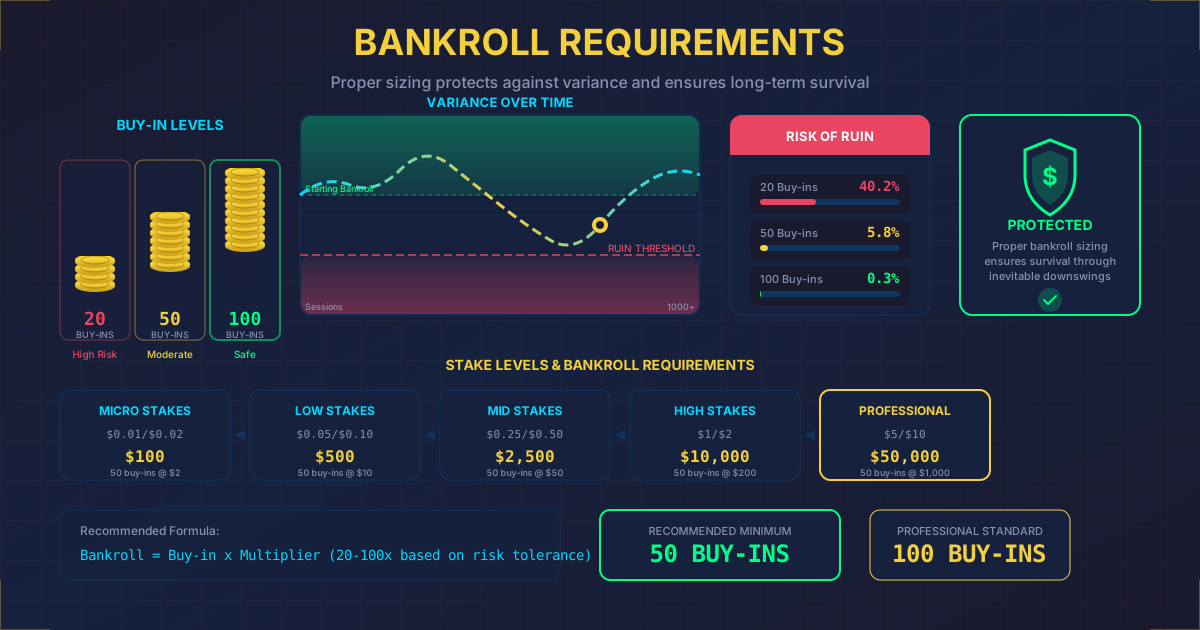
How should I manage my bankroll during the NCAA Tournament?
Set a specific tournament bankroll (separate from your regular sports betting bankroll) and size individual bets at 1-2% of that amount. With 67 games across three weeks, the temptation to overbet is strong. Professional bettors recommend capping total tournament action at 20-30% of your seasonal bankroll and being highly selective rather than betting every game.
Do parlays make sense for March Madness?
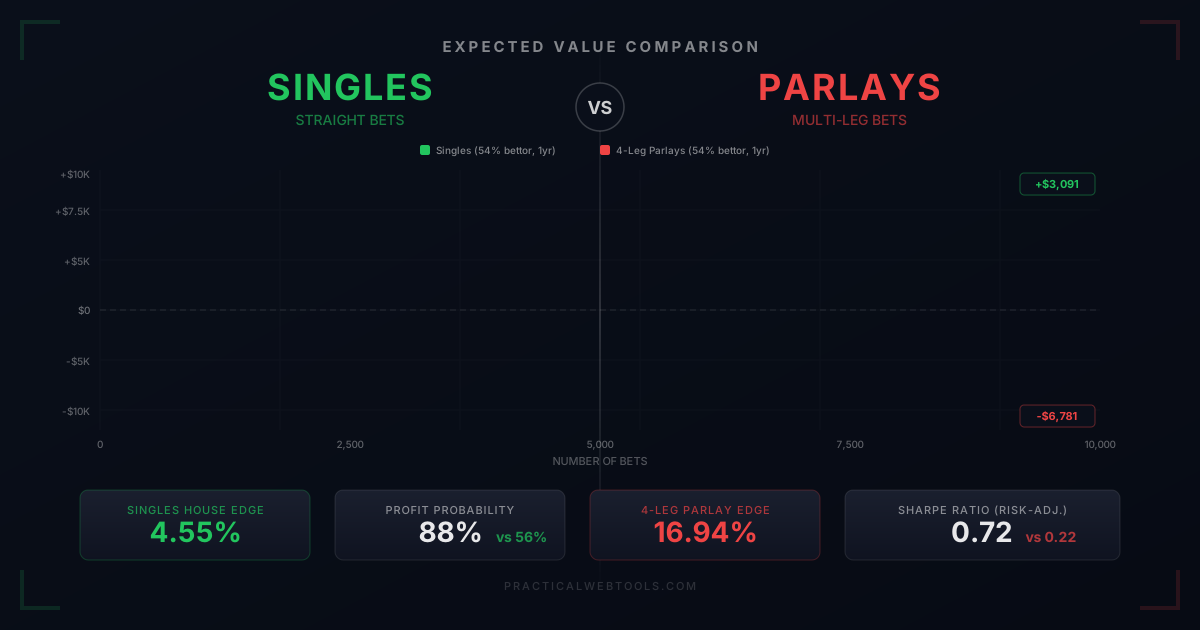
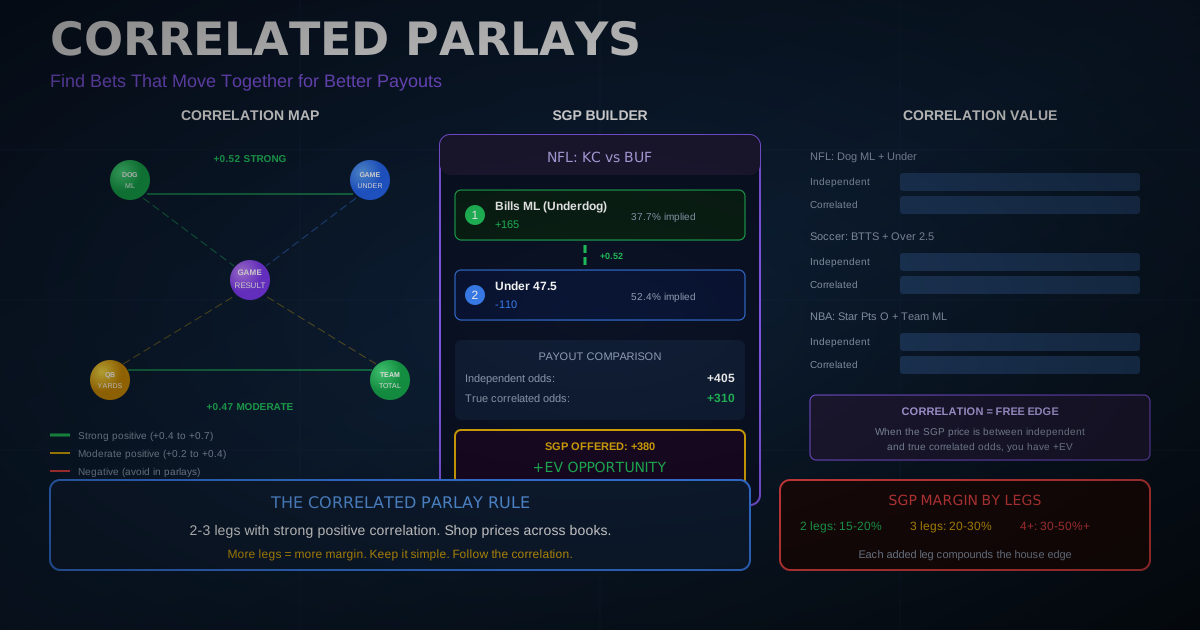
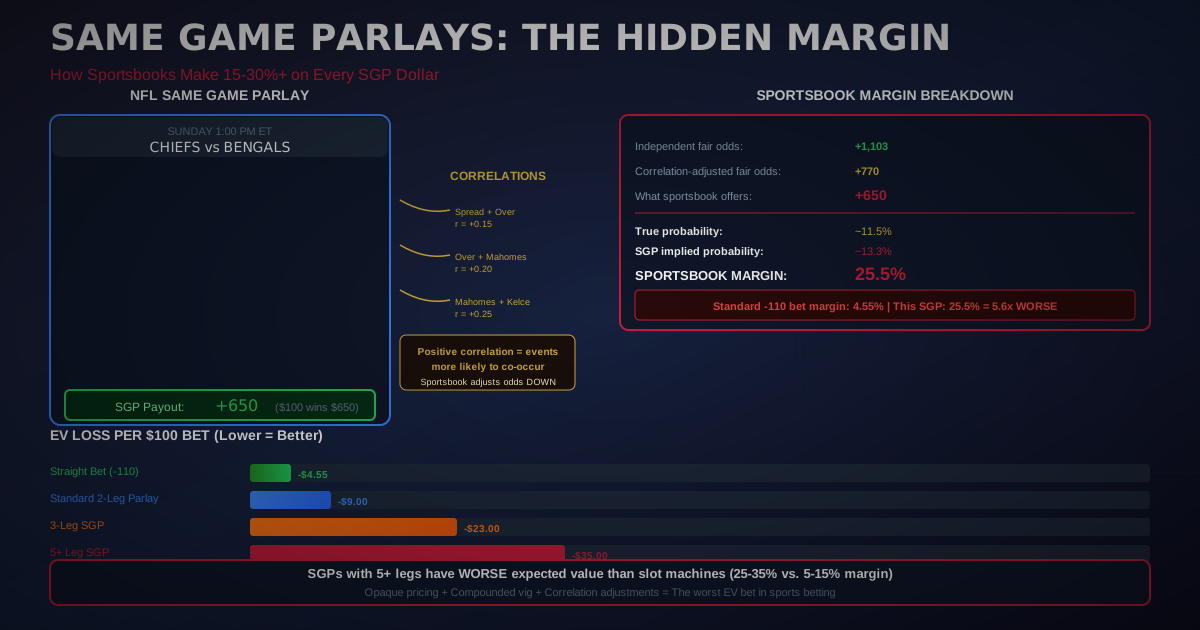
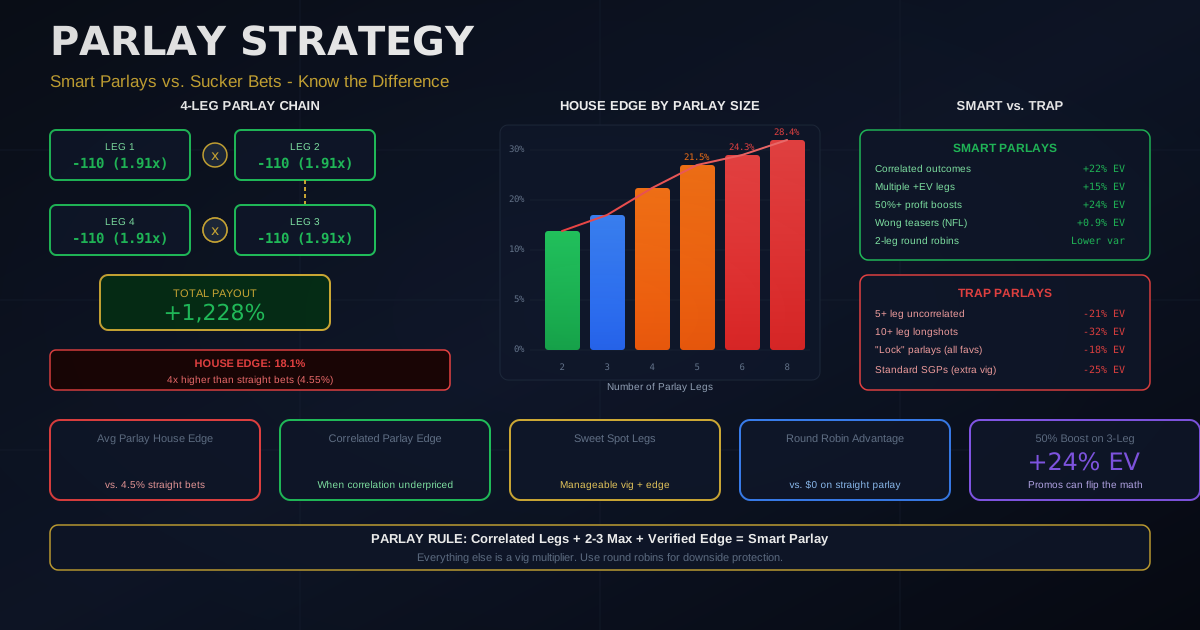
Parlays are generally negative expected value because the sportsbook applies juice to each leg. However, correlated parlays (such as betting a team to win and the Under in the same game, since teams that control the ball and play defense tend to win low-scoring games) can provide value. If you do play parlays, limit them to 2-3 legs and understand the true implied probability with our Parlay Calculator.
Essential Tools for March Madness Betting
Sharpen your tournament betting with these free calculators:
- Expected Value Calculator -- Determine if any March Madness bet has positive expected value before placing it
- Odds Converter -- Convert between American, decimal, and fractional odds across sportsbooks
- Parlay Calculator -- Calculate true payouts and implied probability on multi-leg tournament parlays
- Kelly Criterion Calculator -- Optimize bet sizing based on your edge and bankroll
- Implied Probability Calculator -- See the true implied win probability behind any odds
- Hold/Vig Calculator -- Measure the sportsbook's margin on any two-way line
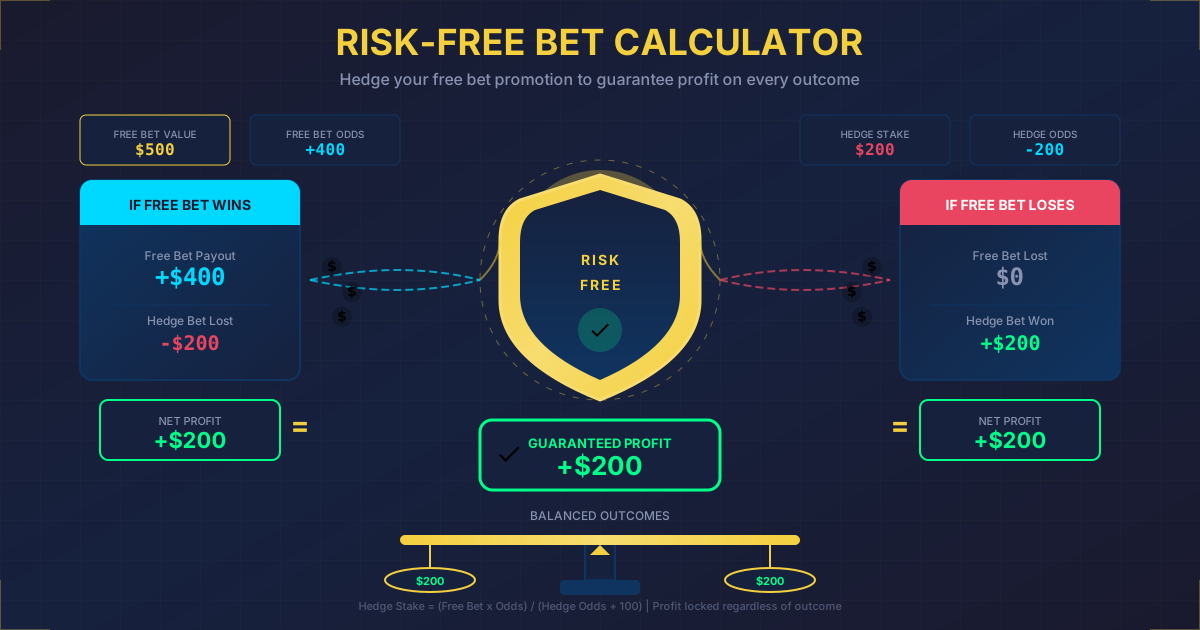
- Hedge Calculator -- Lock in guaranteed profit when your futures bets are still alive deep in the tournament
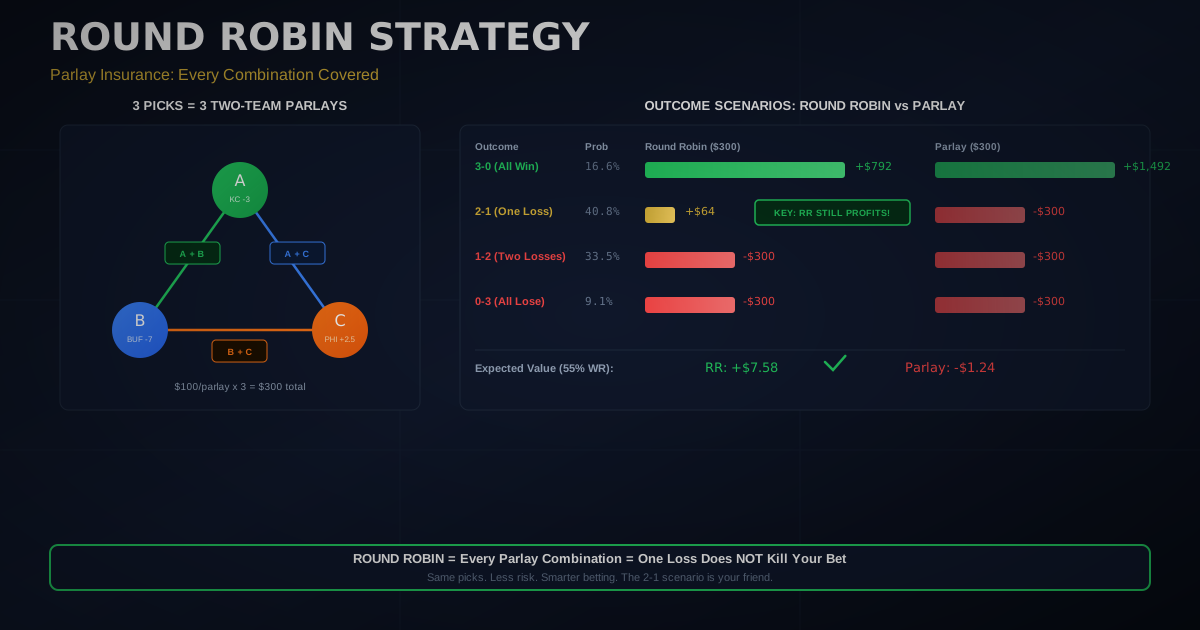
- Round Robin Calculator -- Build structured multi-bet combinations across tournament games
Conclusion
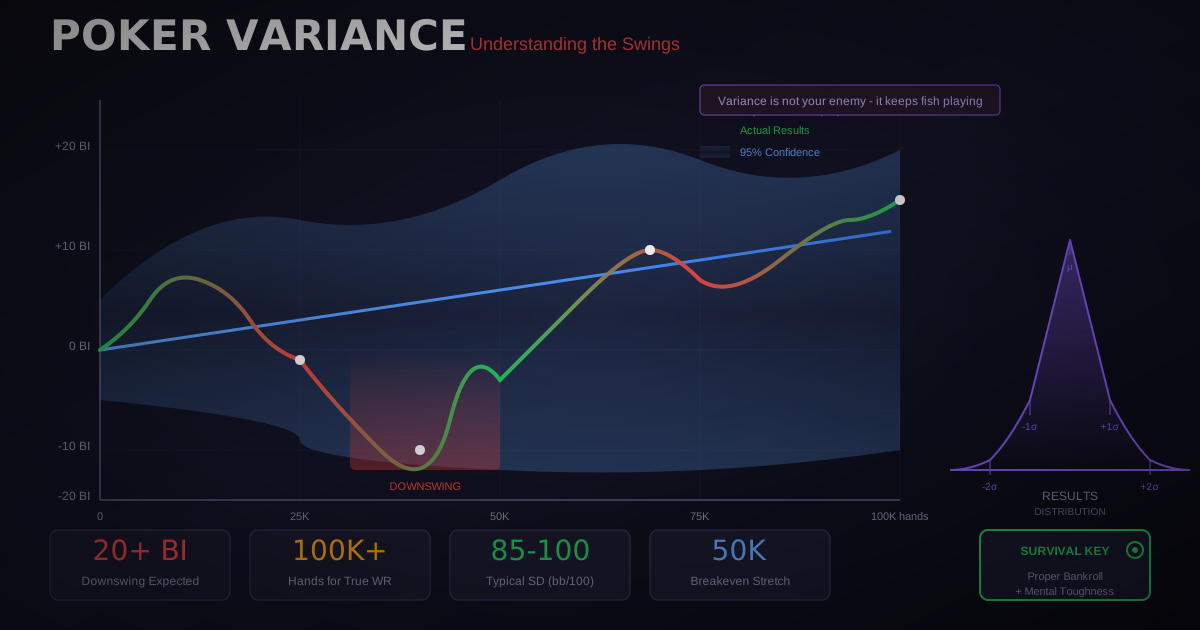
March Madness betting rewards preparation, discipline, and respect for the data. The tournament's unique single-elimination format creates variance that no other sporting event can match -- and that variance creates opportunity for bettors who understand where the public misprice outcomes.
The core principles are straightforward: back underdogs against the spread in the first round, lean Under on totals, be contrarian in bracket pools when pool size demands it, lock in futures value before the bracket drops, and manage your bankroll to survive the full three weeks. The execution -- staying disciplined when your 12-seed pick is down 10 at halftime, not chasing when three of your Thursday bets lose, sizing properly when you find a genuine edge -- is what separates profitable March bettors from the rest.
Use the tools, trust the math, and enjoy the tournament. There is nothing else in sports quite like it.
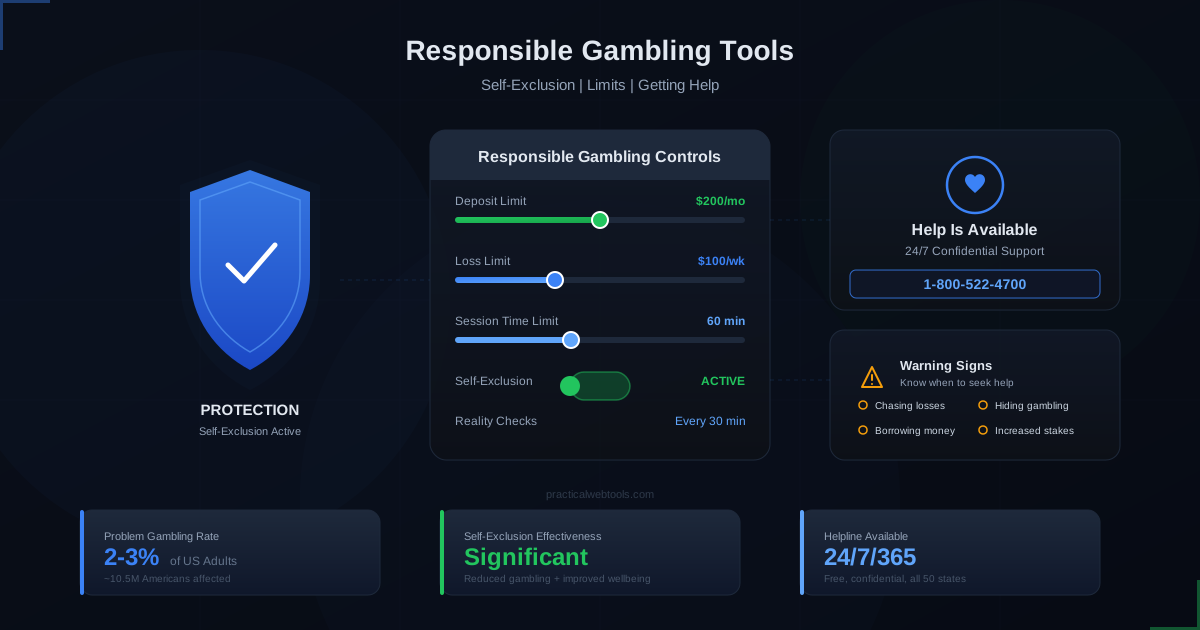
Gambling involves risk. This content is for educational and informational purposes only. Always gamble responsibly, set limits you can afford, and seek help if gambling becomes a problem. Visit the National Council on Problem Gambling or call 1-800-522-4700 for support.