Micro-Stakes Poker Strategy: How to Crush the Lowest Limits (2026)
Micro-stakes poker is where winning careers begin. The 1c/2c through 10c/25c online cash games are not just a stepping stone -- they are a training ground where you can build real skill, develop ironclad discipline, and grow a bankroll from almost nothing into something meaningful. The best part: these games are still highly beatable in 2026.
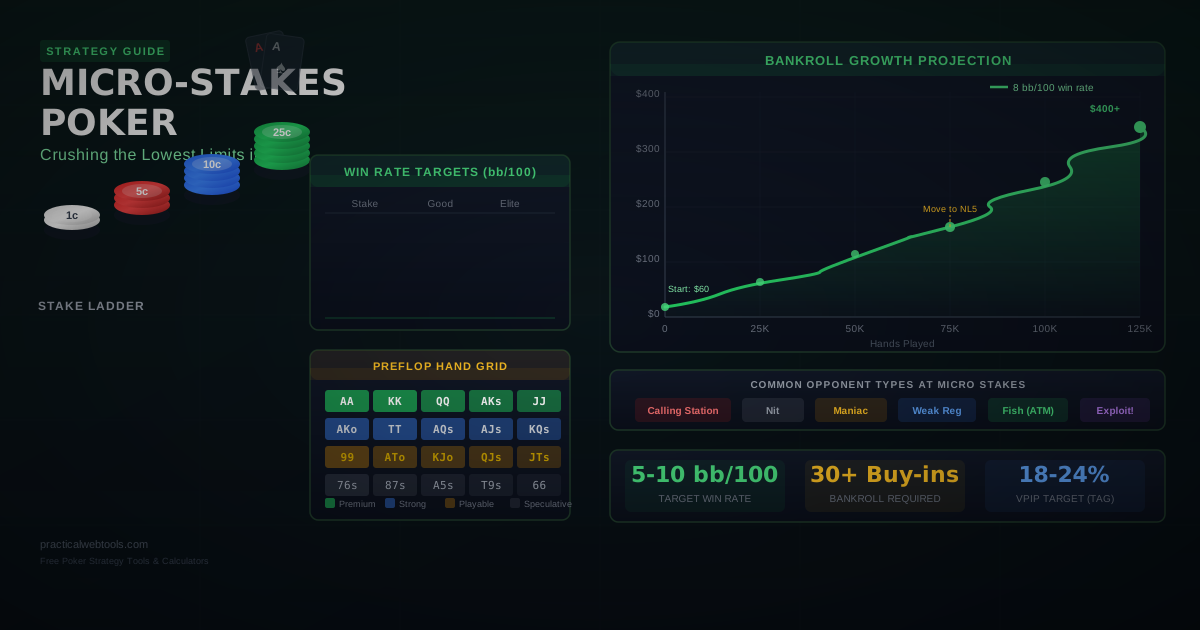
The players at NL2 through NL25 make fundamental, repeated errors that a disciplined player can exploit for consistent profit. They call too much, bluff too little, overvalue weak hands, and ignore position. A solid tight-aggressive strategy targeting these specific leaks can produce win rates of 5-15 bb/100 at the lowest stakes -- numbers that are virtually impossible at higher limits.
Yet most players who sit down at micro stakes never graduate. They play too many hands, try to bluff opponents who never fold, tilt away buy-ins over meaningless pots, and blame bad luck for what is actually bad strategy. This guide eliminates every one of those mistakes with a concrete, actionable approach built for the micro-stakes environment as it exists in 2026.
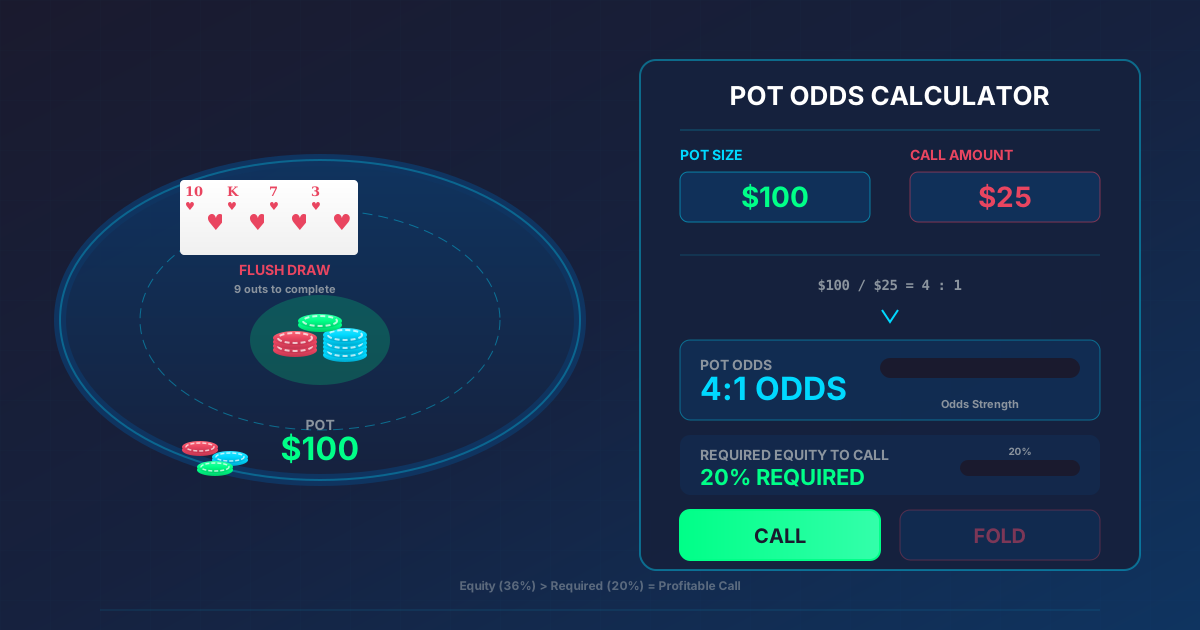
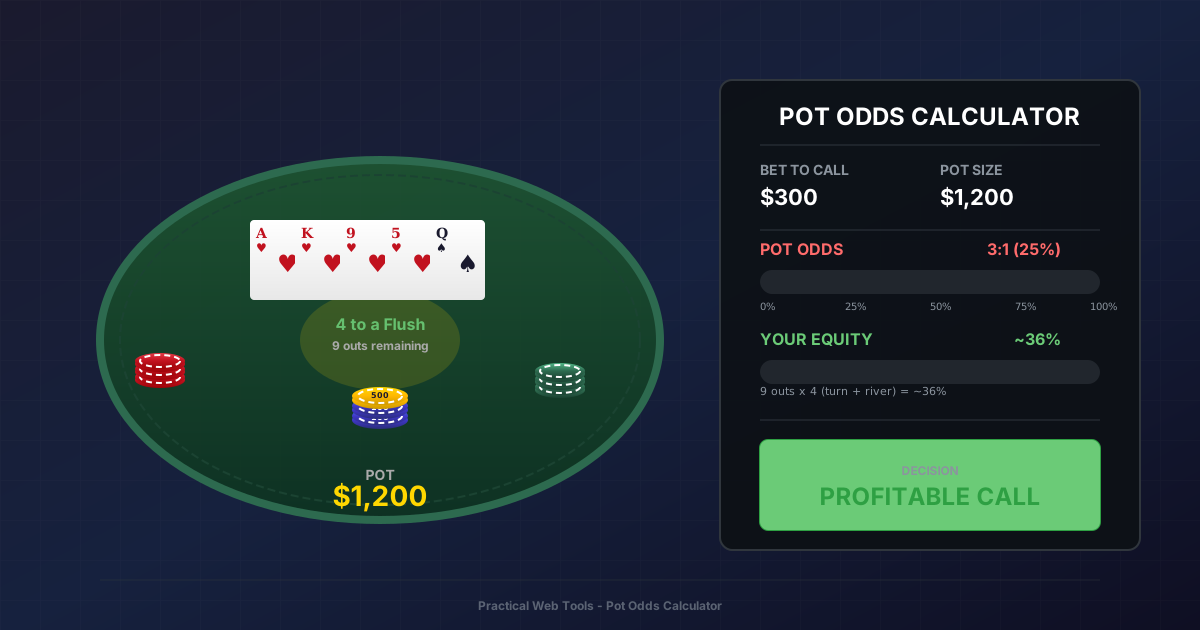
Calculate your edge in any poker situation with our free Pot Odds Calculator -- the essential tool for making mathematically correct decisions at the micro stakes.
What Are Micro Stakes in Online Poker?
Micro stakes refers to the lowest-limit real-money cash games available on online poker sites. These games use blinds ranging from $0.01/$0.02 (NL2) up to $0.10/$0.25 (NL25), with maximum buy-ins typically set at 100 big blinds.
Here is how the micro-stakes landscape breaks down:
| Stake Level | Blinds | Common Name | Max Buy-In (100bb) | Typical Player Pool |
|---|---|---|---|---|
| NL2 | $0.01/$0.02 | 1c/2c | $2.00 | Complete beginners, play-money graduates |
| NL5 | $0.02/$0.05 | 2c/5c | $5.00 | Casual recreational players |
| NL10 | $0.05/$0.10 | 5c/10c | $10.00 | Mix of recs and aspiring grinders |
| NL25 | $0.10/$0.25 | 10c/25c | $25.00 | Tougher field, some semi-regulars |
Some players also include NL50 ($0.25/$0.50) in the micro-stakes category, but the jump in difficulty at NL50 is significant. For the purposes of this guide, micro stakes means NL2 through NL25.
Why the Stakes Matter
At NL2, losing a buy-in means losing $2.00. This near-zero financial risk creates a player pool that treats the game more like free poker than real money. Players limp with any two cards, call raises with gutshot draws, and chase flush draws regardless of price. This loose-passive style is the reason micro stakes are so profitable for a disciplined player.
As you move up to NL10 and NL25, the games tighten slightly. You will encounter more players who have studied basic strategy, use a HUD (heads-up display), and understand concepts like position and continuation betting. But the core leaks -- calling too much and bluffing too little -- persist at every micro-stakes level.
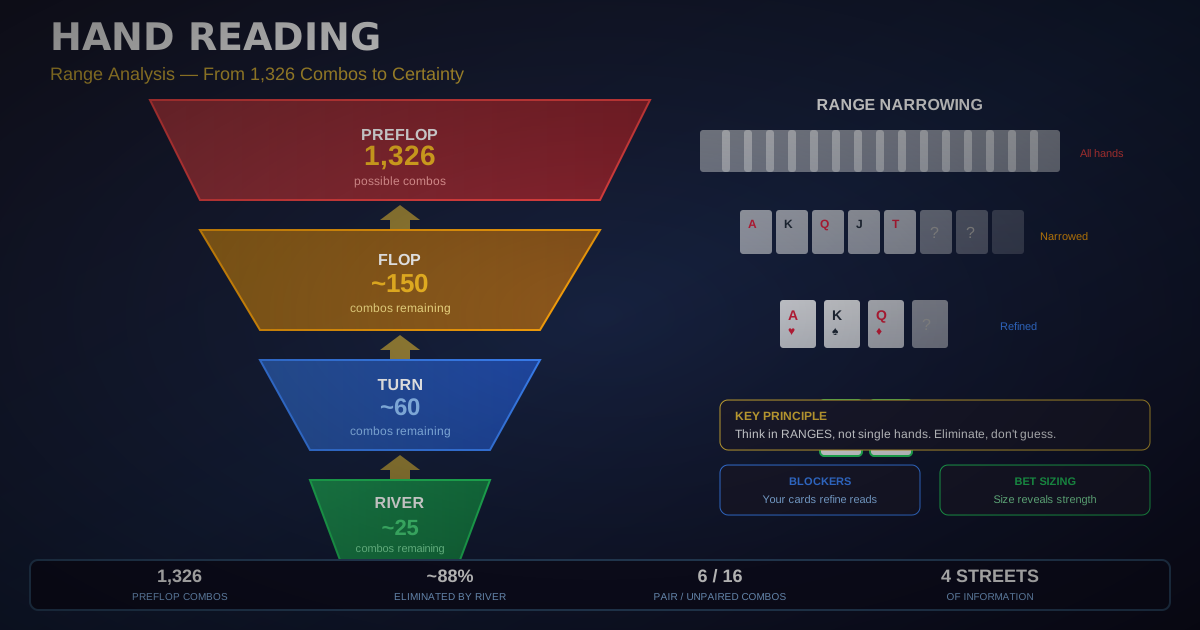
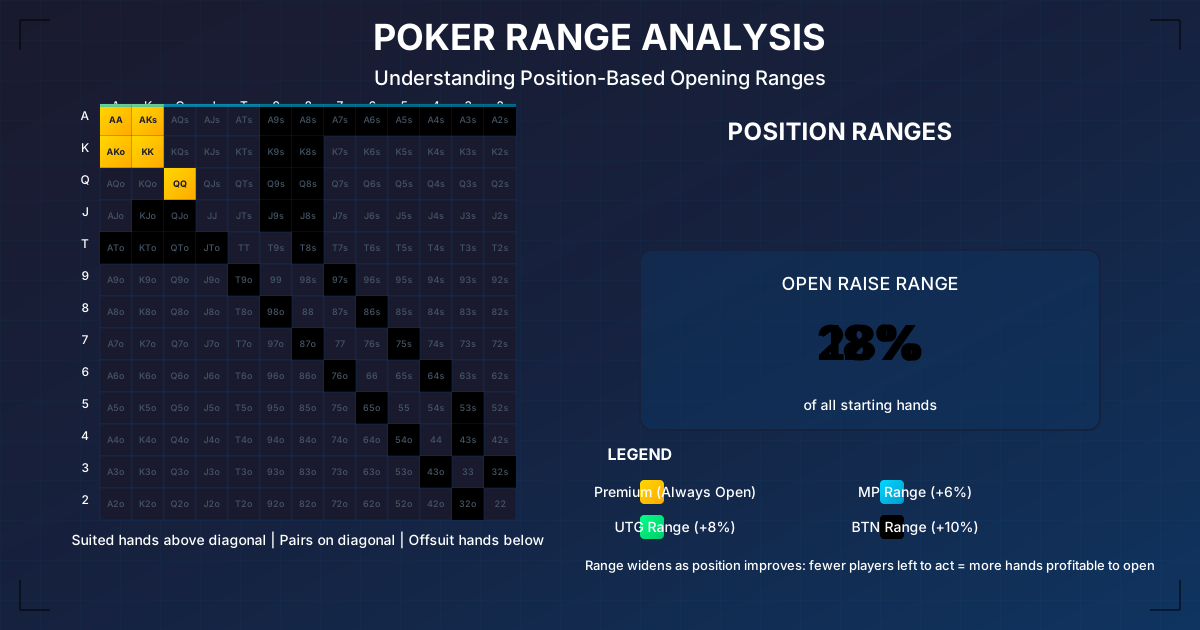
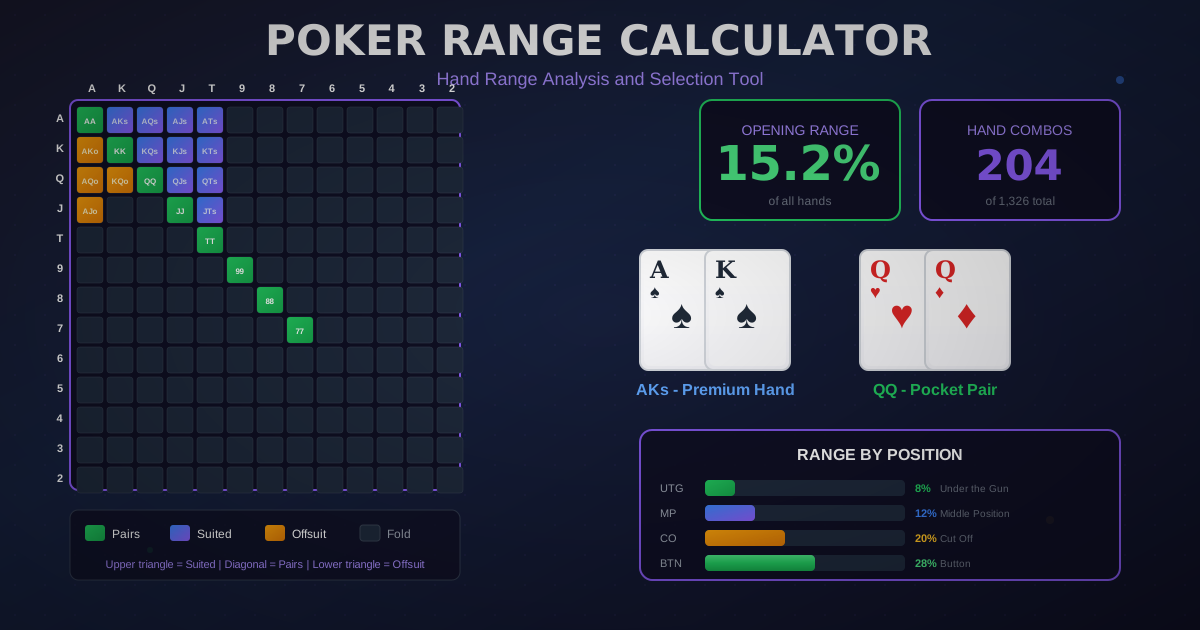
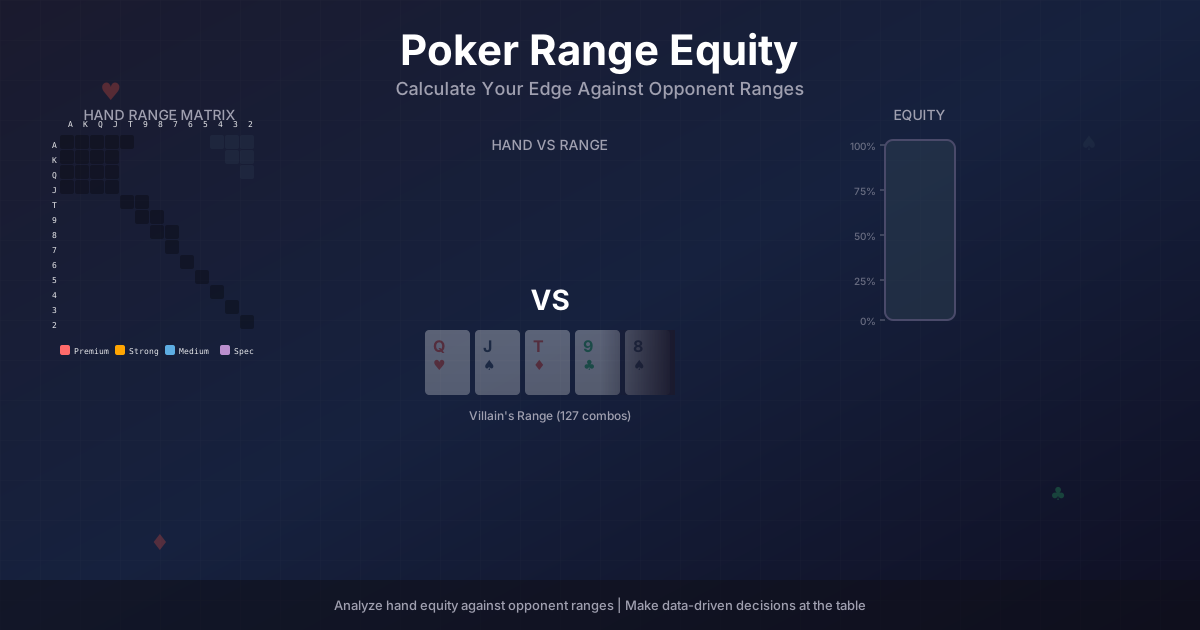
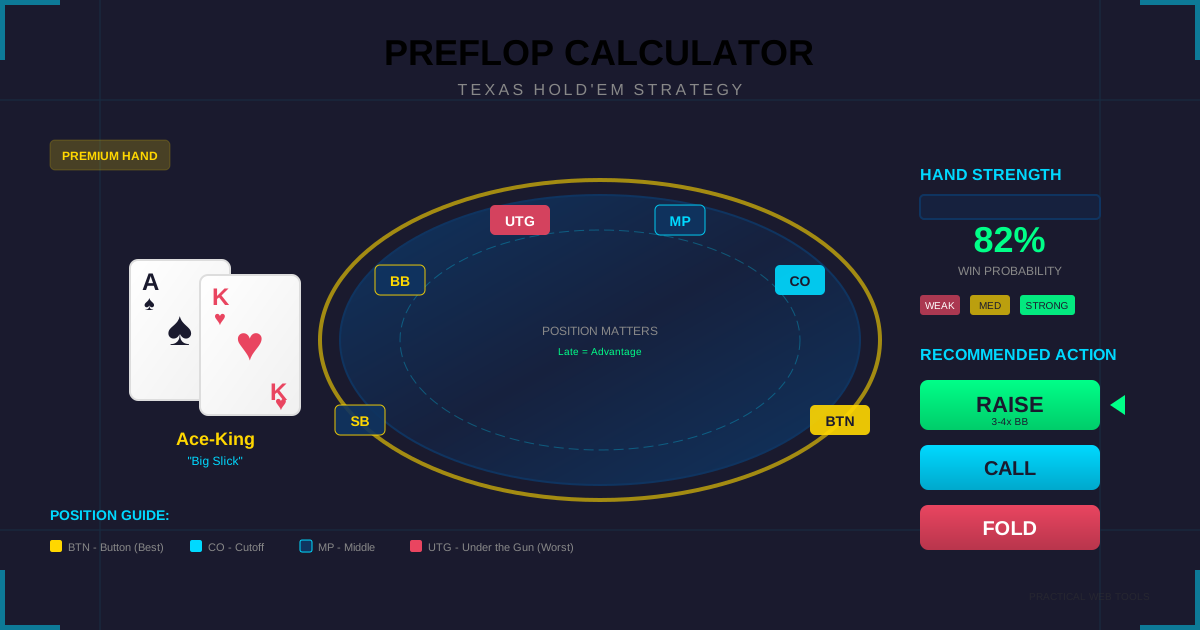
Use our Poker Hand Range Calculator to visualize the exact hands you should be playing from each position.
Why Micro Stakes Are Still Beatable in 2026
There is a persistent myth that online poker is "dead" or that the micro stakes are "unbeatable because of rake." Neither is true. Here is why micro stakes remain profitable:
The Player Pool Constantly Refreshes
New players enter the poker ecosystem every day. They deposit $20-$50, sit at the lowest stakes, and bring all the mistakes that come with zero study. The micro stakes are a revolving door of recreational money that never stops flowing.
The Mistakes Are Enormous
At higher stakes, edges are measured in fractions of a big blind. At NL2 and NL5, players routinely make errors worth 10, 20, or even 50 big blinds in a single hand. Calling all-in with bottom pair, limping pocket aces under the gun, folding to a single bet with the nut flush draw -- these plays happen constantly.
Rake Is Manageable With Rakeback
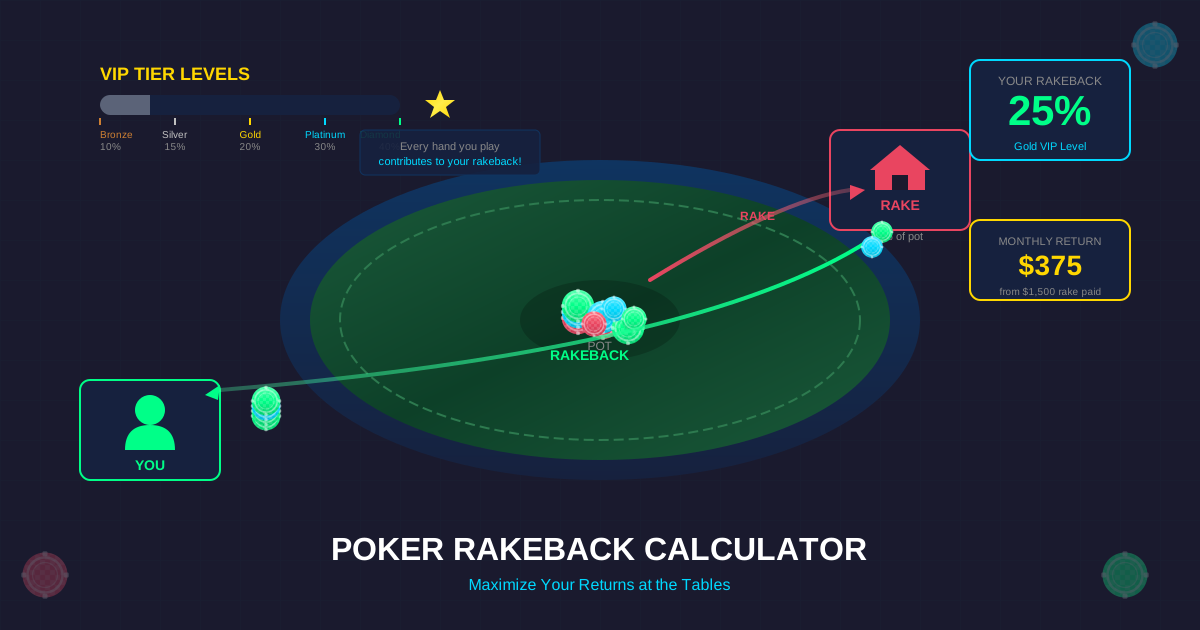
Yes, rake at micro stakes is proportionally higher than at mid or high stakes. Typical rake at NL2-NL10 runs 8-12 bb/100 in effective terms. But with rakeback deals, loyalty programs, and sign-up bonuses, you can recover 20-40% of that rake, reducing the effective cost to 5-8 bb/100 -- entirely manageable for a winning player.
| Stake | Typical Rake (bb/100) | With 30% Rakeback (bb/100) | Net Rake Cost (bb/100) |
|---|---|---|---|
| NL2 | 10-15 | 3-4.5 returned | 6.5-10.5 |
| NL5 | 8-12 | 2.4-3.6 returned | 5.6-8.4 |
| NL10 | 7-10 | 2.1-3.0 returned | 4.9-7.0 |
| NL25 | 5-8 | 1.5-2.4 returned | 3.5-5.6 |
Calculate your rakeback savings across different poker rooms with our Poker Rakeback Calculator.
The Competition Has a Ceiling
Even the "regulars" at NL2-NL10 have significant leaks. Many have learned one or two concepts (like continuation betting) but apply them mechanically without adapting. A player who studies this guide and applies it consistently will hold a meaningful edge over 80%+ of the field at NL2-NL10.
Core Strategy: Tight-Aggressive (TAG) Poker
The single most effective strategy for crushing micro stakes is tight-aggressive play. This means playing a limited selection of strong hands and playing them aggressively -- raising and betting rather than limping and calling.
Why TAG Works at Micro Stakes
-
You enter pots with better hands than your opponents. When the average NL5 player is seeing 35-40% of flops, you see 18-22%. Your average hand strength is dramatically higher.
-
Aggression wins pots your opponents give away. Micro-stakes players fold too much to aggression in some spots (continuation bets on scary boards) and call too much in others (overcalling preflop). TAG exploits both tendencies.
-
You simplify postflop decisions. With a tighter preflop range, you hit stronger hands on the flop and face fewer marginal spots where mistakes are costly.
-
You build bigger pots when you have the advantage. Raising preflop builds a pot that you will win more often, and your opponents pay you off because they think you are "always bluffing."
Your TAG Stats to Target
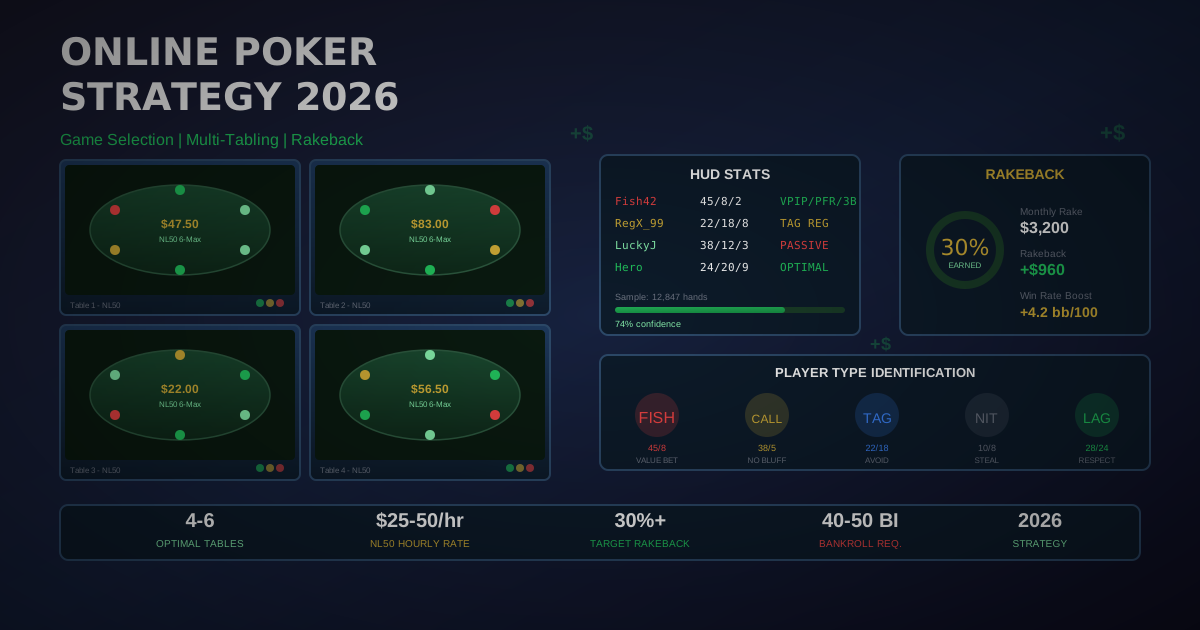
Here are the HUD statistics a winning TAG player should aim for at micro stakes:
| Statistic | Abbreviation | Target Range | What It Means |
|---|---|---|---|
| Voluntarily Put $ in Pot | VPIP | 18-24% | % of hands you play |
| Preflop Raise | PFR | 15-20% | % of hands you open-raise |
| Aggression Factor | AF | 2.5-4.0 | Ratio of bets+raises to calls |
| 3-Bet Percentage | 3Bet | 5-8% | % of time you re-raise preflop |
| Fold to C-Bet | FoldCB | 40-50% | % you fold to continuation bets |
| WTSD (Went to Showdown) | WTSD | 24-28% | % of hands that reach showdown |
If your VPIP is above 28%, you are playing too many hands. If your PFR is below 12%, you are not raising enough. If your aggression factor is below 2.0, you are calling too much and betting too little.
Preflop Hand Selection: The Foundation of Winning
Your preflop hand selection is the single most impactful decision you make at micro stakes. Playing too many hands is the number one leak among losing players at every micro-stakes level.
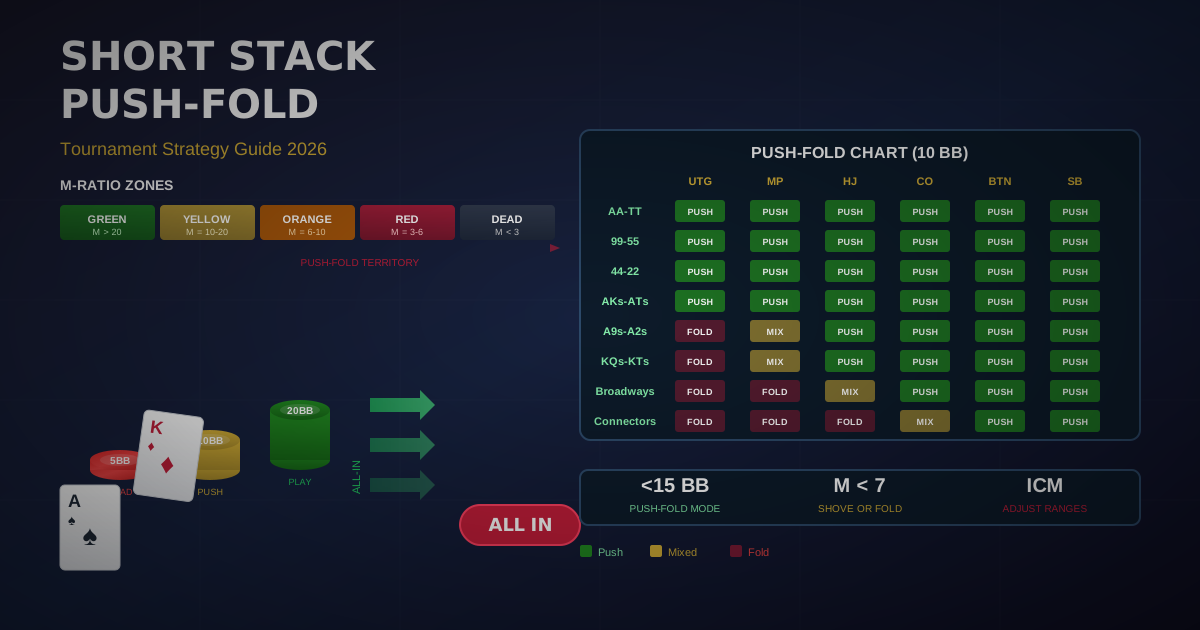
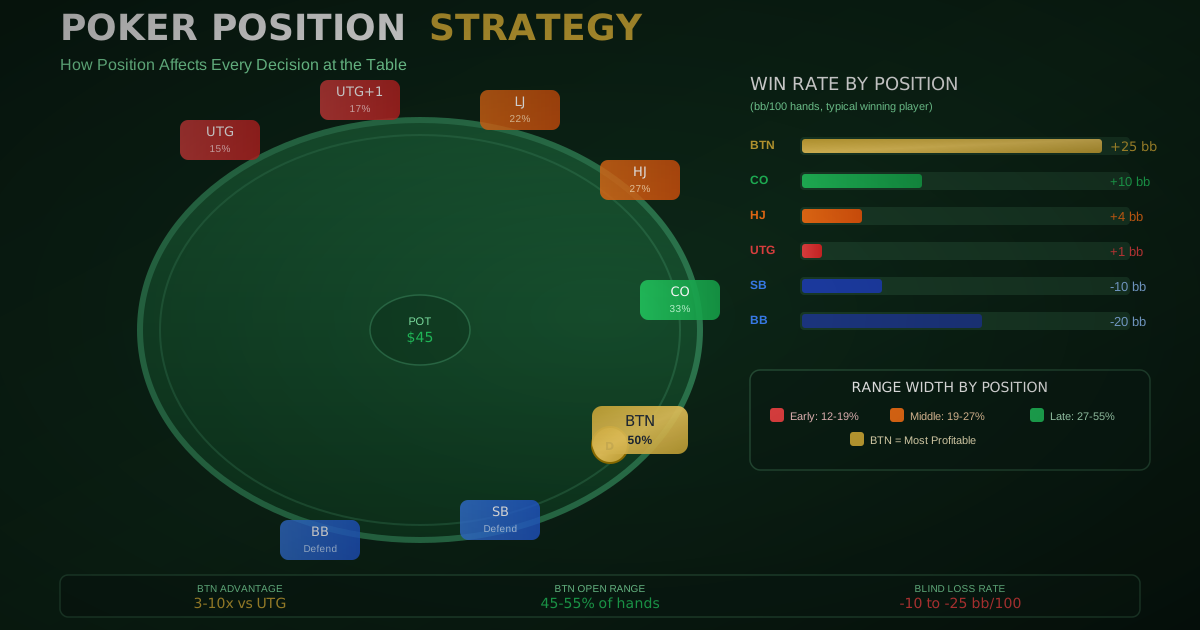
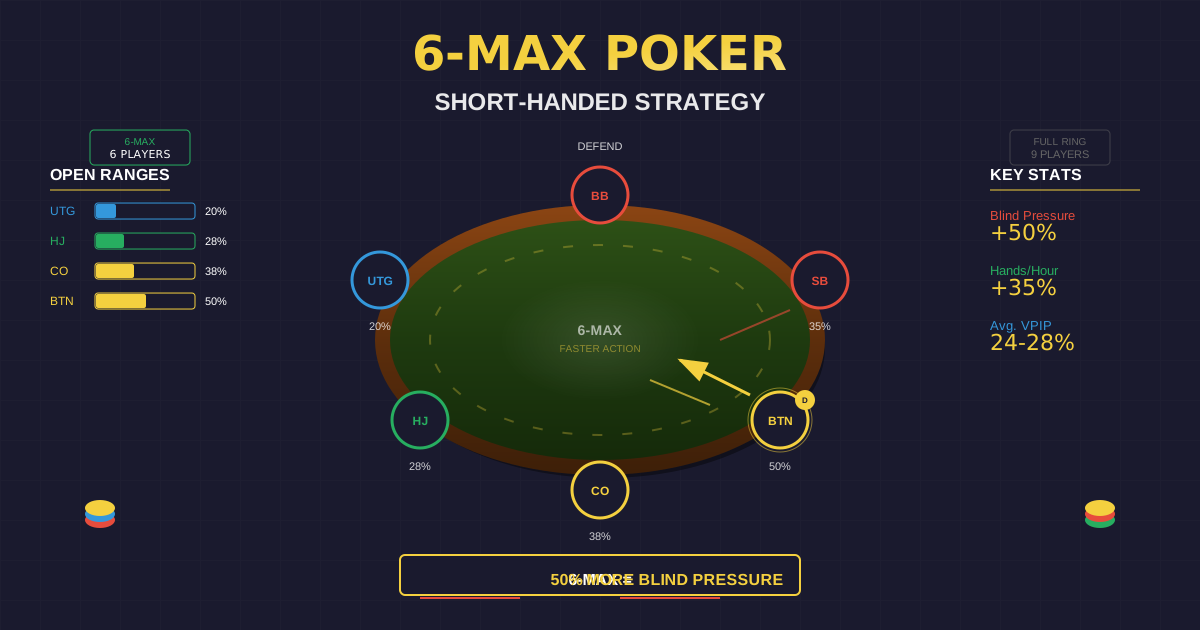
Opening Ranges by Position (6-Max)
The following chart shows which hands to open-raise from each position. At micro stakes, you should almost never open-limp -- either raise or fold.
| Position | Hands to Open-Raise | Approximate % |
|---|---|---|
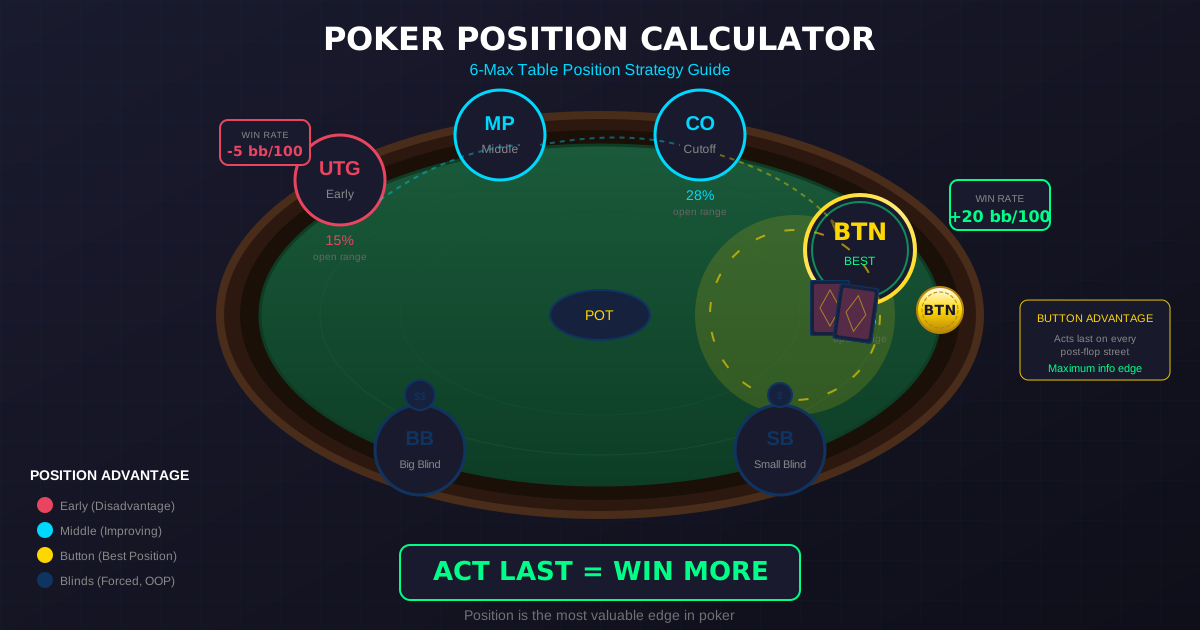
| UTG (Under the Gun) | AA-77, AKs-ATs, KQs, AKo-AJo | ~13% |
| MP (Middle Position) | AA-66, AKs-A9s, KQs-KTs, QJs, AKo-ATo, KQo | ~17% |
| CO (Cutoff) | AA-55, AKs-A7s, KQs-K9s, QJs-QTs, JTs, T9s, 98s, AKo-ATo, KQo-KJo, QJo | ~22% |
| BTN (Button) | AA-22, AKs-A2s, KQs-K7s, QJs-Q8s, JTs-J8s, T9s-T8s, 98s-97s, 87s, 76s, AKo-A8o, KQo-KTo, QJo-QTo, JTo | ~30% |
| SB (Small Blind) | AA-66, AKs-A8s, KQs-KTs, QJs-QTs, JTs, AKo-ATo, KQo | ~18% |
Key Principles:
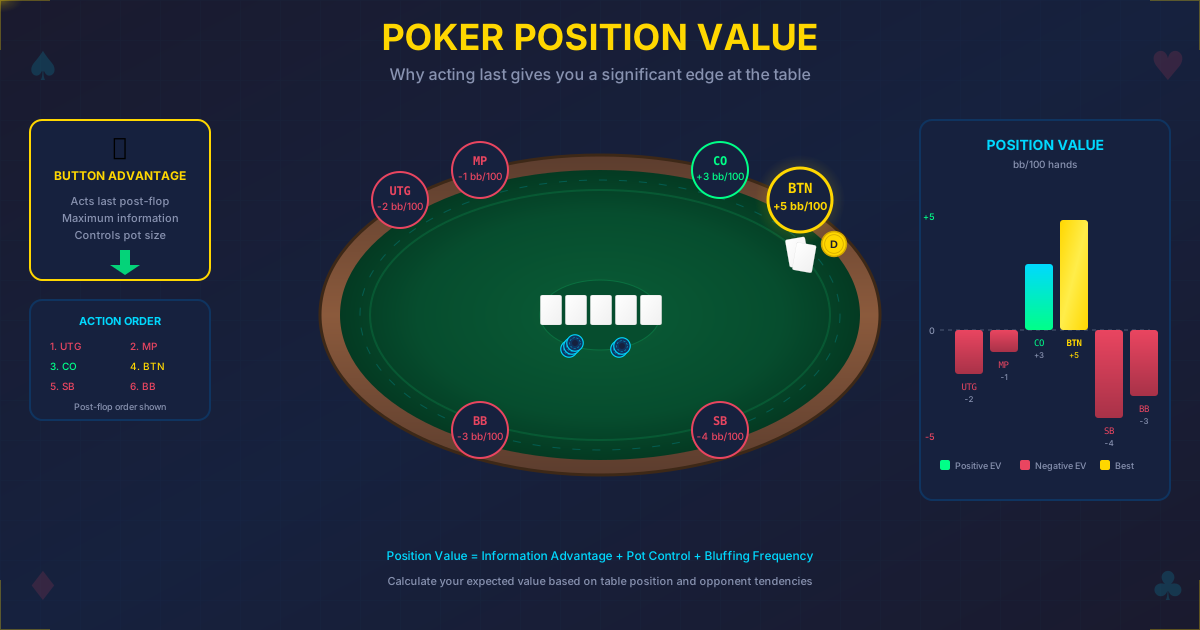
- Tightest from early position, widest from the button. Position is worth more than hand strength in many cases.
- Never open-limp. If a hand is worth playing, it is worth raising. Limping invites multiway pots where edges shrink.
- Raise to 3x the big blind from all positions. If there are limpers ahead of you, add 1bb per limper.
- When in doubt, fold. At micro stakes, folding a marginal hand saves more money than squeezing extra value from it.
Facing a Raise: 3-Betting and Calling Ranges
When an opponent raises ahead of you, your range should tighten significantly:
- 3-Bet (Re-Raise) Value: AA, KK, QQ, AKs, AKo. At NL2-NL10, keep your 3-bet range primarily value-heavy.
- 3-Bet Bluff (Occasionally): A5s, A4s, suited connectors like 76s, 87s. Mix these in sparingly at NL10+ to avoid becoming predictable.
- Flat Call (In Position): JJ-99, AQs-AJs, KQs, suited connectors. Only flat-call when you have position on the raiser.
- Fold Everything Else. Do not call raises out of position with speculative hands at micro stakes. The postflop skill required to profit is simply not there yet for most players.
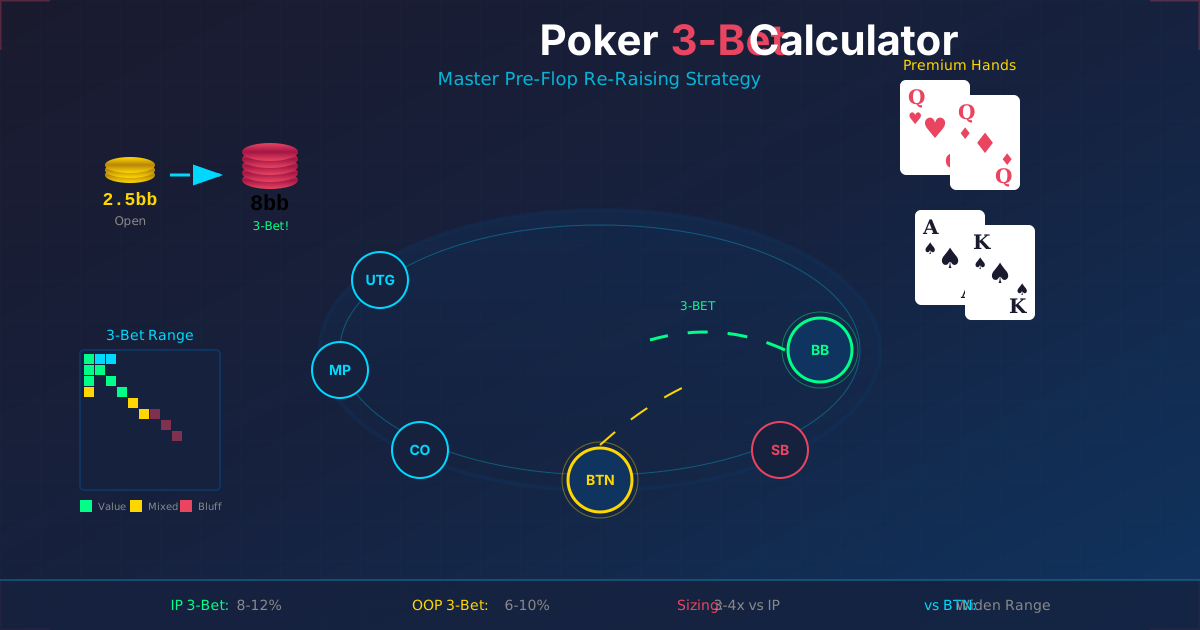
Run your 3-bet scenarios through our Poker 3-Bet Calculator to find the optimal re-raise size.
Postflop Fundamentals: Where Micro-Stakes Money Is Made
Preflop sets the stage, but postflop play is where you extract value from opponents who make massive errors. Here are the core postflop principles for micro stakes.
Continuation Betting (C-Betting)
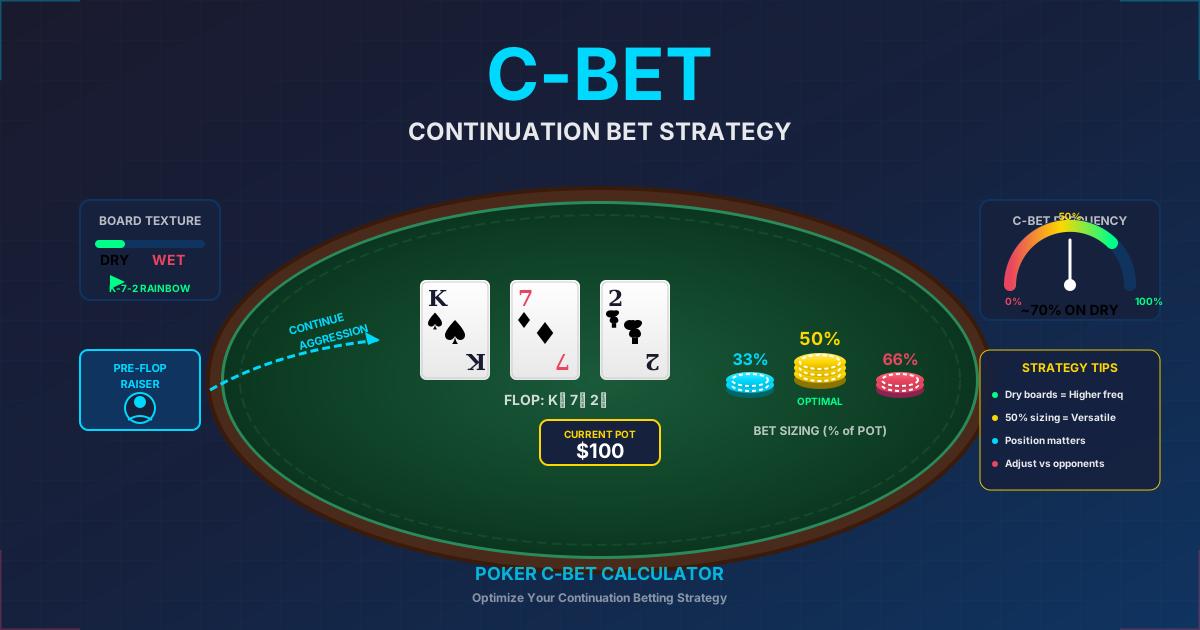
When you raised preflop and get called, you should fire a continuation bet on most flop textures. At micro stakes, a simple c-bet strategy prints money:
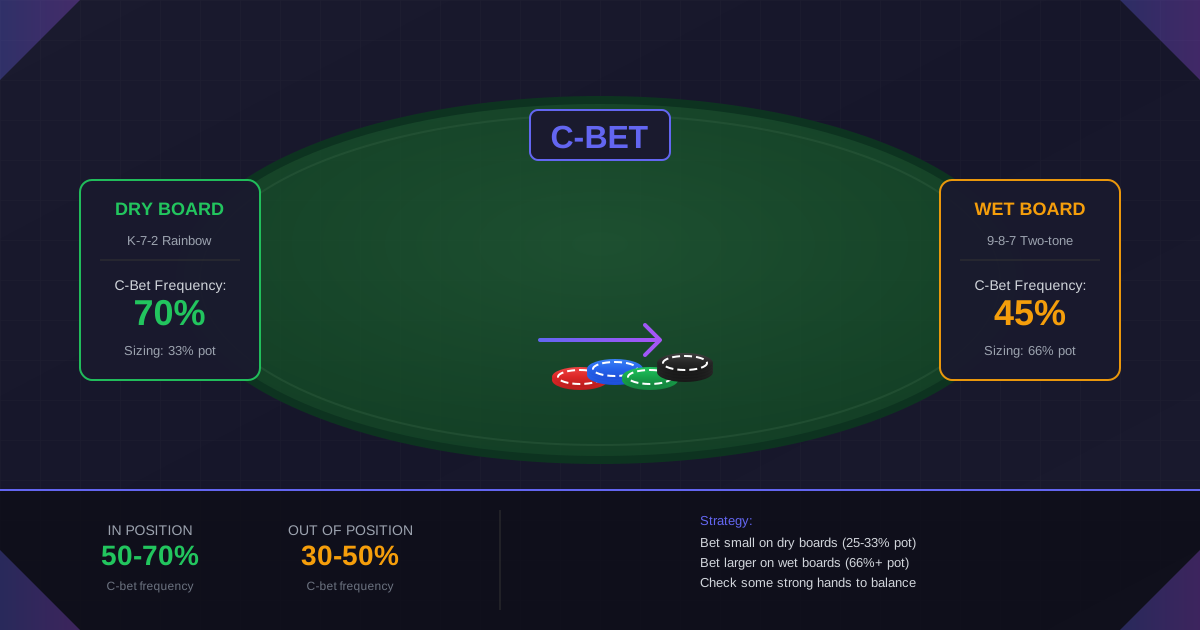
- C-Bet 60-70% of the time on flops where your range has an advantage (A-high, K-high boards).
- Size your c-bet at 50-66% of the pot. Micro-stakes players call regardless of bet size, so there is no need to overbet as a bluff.
- Check more on wet, connected boards (8-7-6 with a flush draw) where your opponent's calling range hits hard.
- Always c-bet with strong hands. Do not slow-play at micro stakes. Your opponents will call you down with second pair anyway.
Value Betting Relentlessly
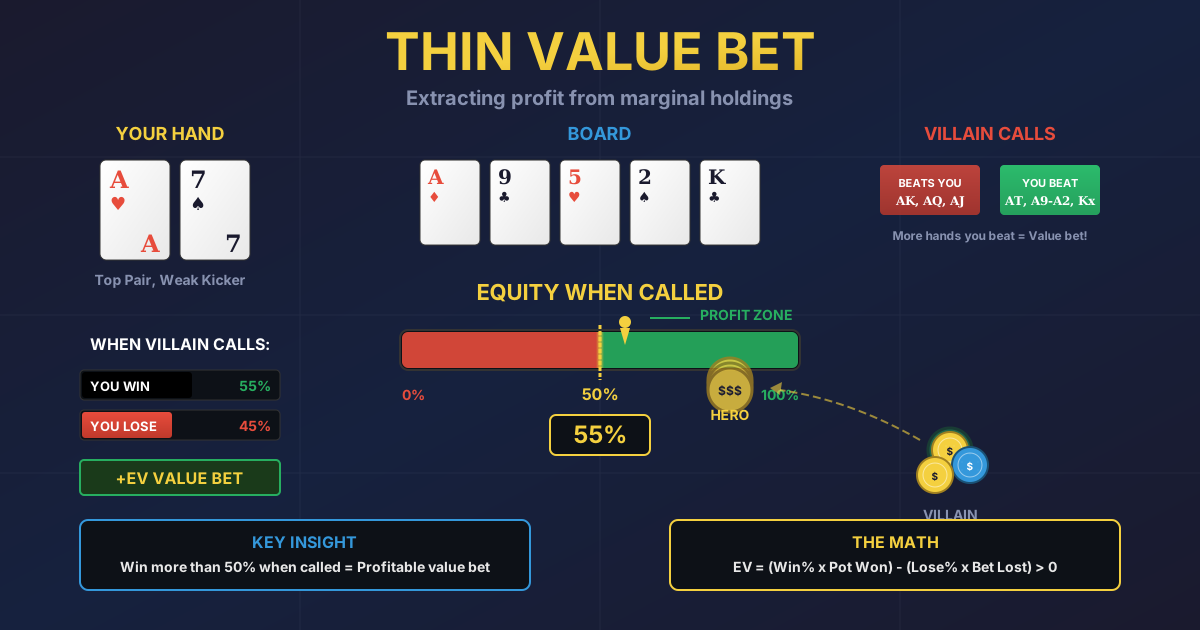
The single biggest adjustment for micro stakes: bet for value more often and with thinner hands than you think is correct.
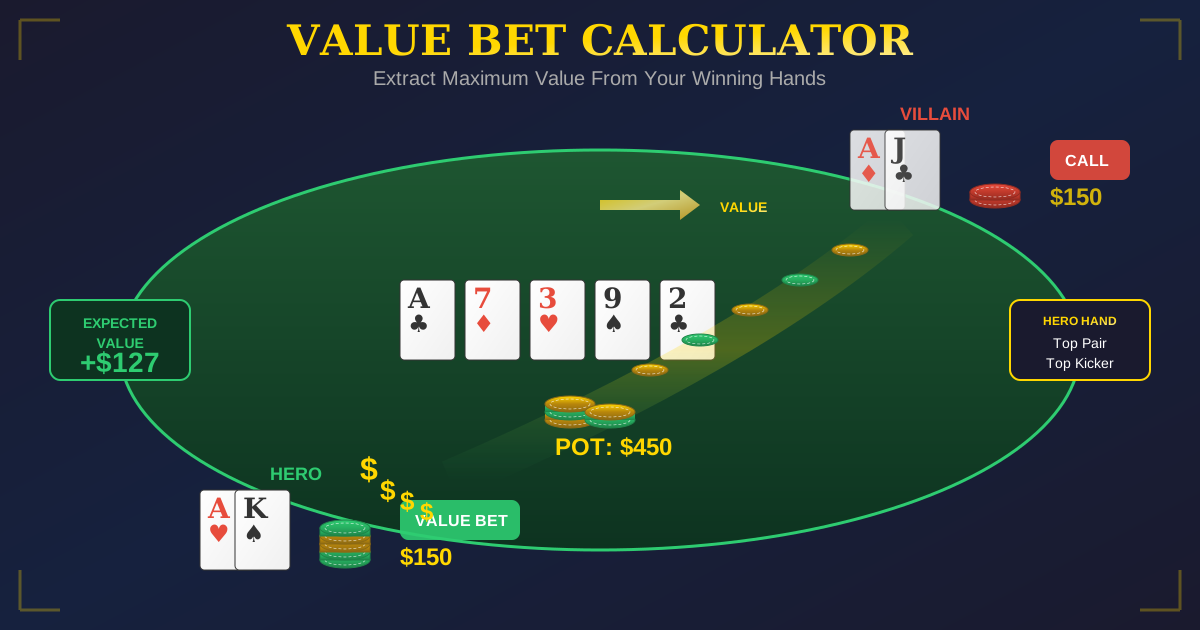
At higher stakes, betting top pair with a weak kicker on the river can be dangerous. At micro stakes, top pair with any kicker is a value bet on most runouts because your opponents will call with middle pair, bottom pair, and even ace-high.
Hand Example 1: Thin Value at NL5
You hold A-Q on a board of Q-7-3-9-2 rainbow. The pot is $0.85 on the river.
- At NL50+, this might be a check for pot control.
- At NL5, this is a $0.55 value bet because your opponent calls with Q-J, Q-T, 99, 77, and sometimes even 9-8 or A-high. You are leaving money on the table by checking.
Hand Example 2: Do Not Slow-Play at NL2
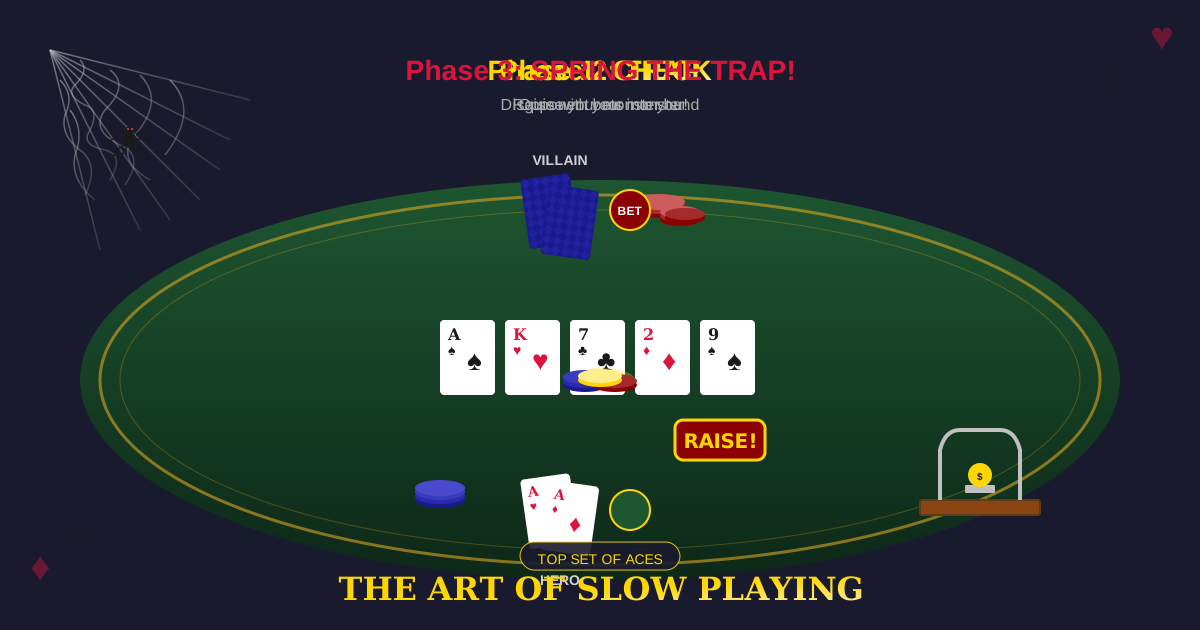
You hold K-K and raise preflop. One caller. Flop is K-8-4 with two hearts. You flopped top set.
- Wrong play: Check to "trap." Your opponent checks behind with a flush draw, and you miss two streets of value.
- Correct play: Bet $0.12 into $0.18. Your opponent calls with any pair, any draw, and sometimes even overcards. Turn brings a 6. Bet $0.30 into $0.42. River is a brick 2. Bet $0.70 into $1.02. Villain calls with 8-7 for second pair. You win the maximum.
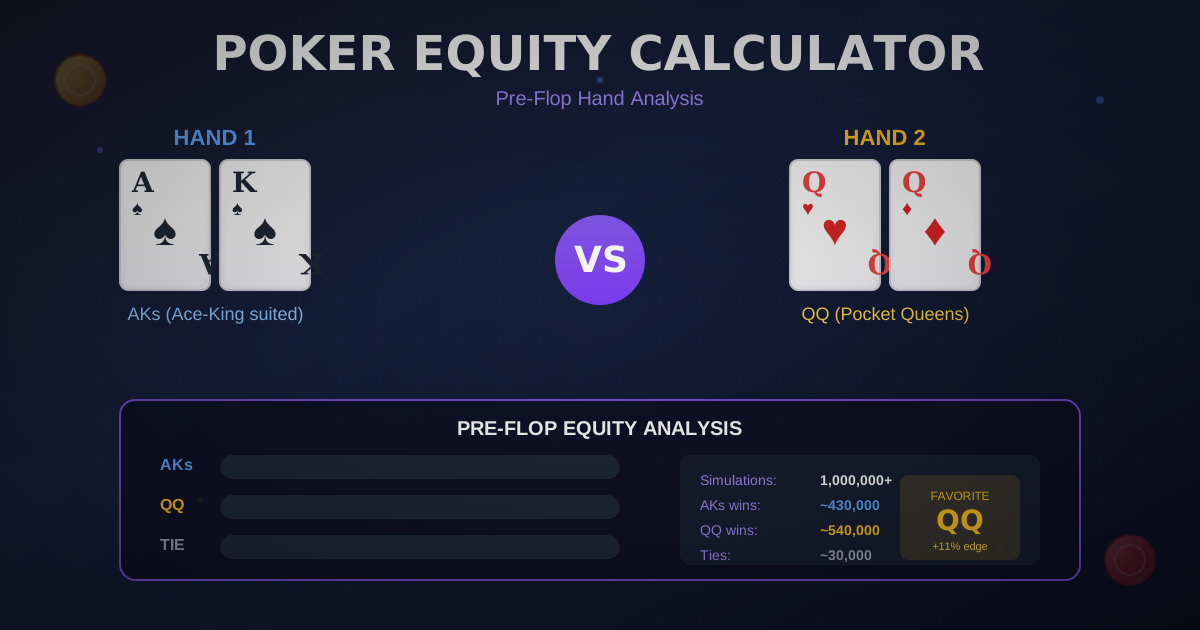
Calculate whether you are getting the right price to call or should be betting for value with our Poker Equity Calculator.
Playing Draws Correctly
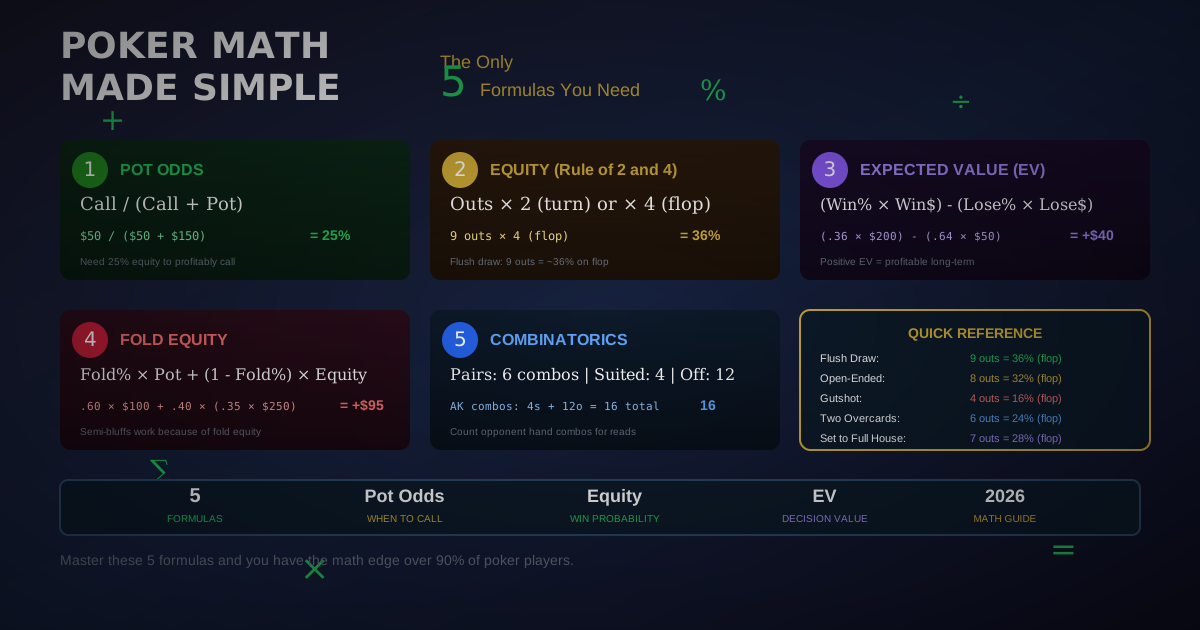
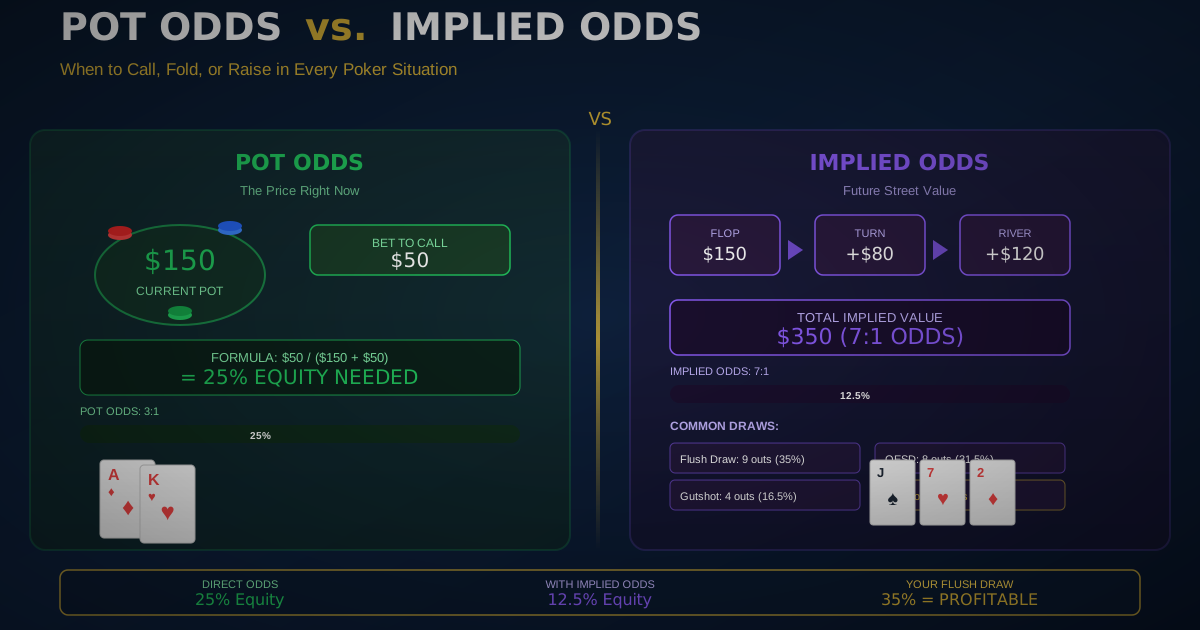
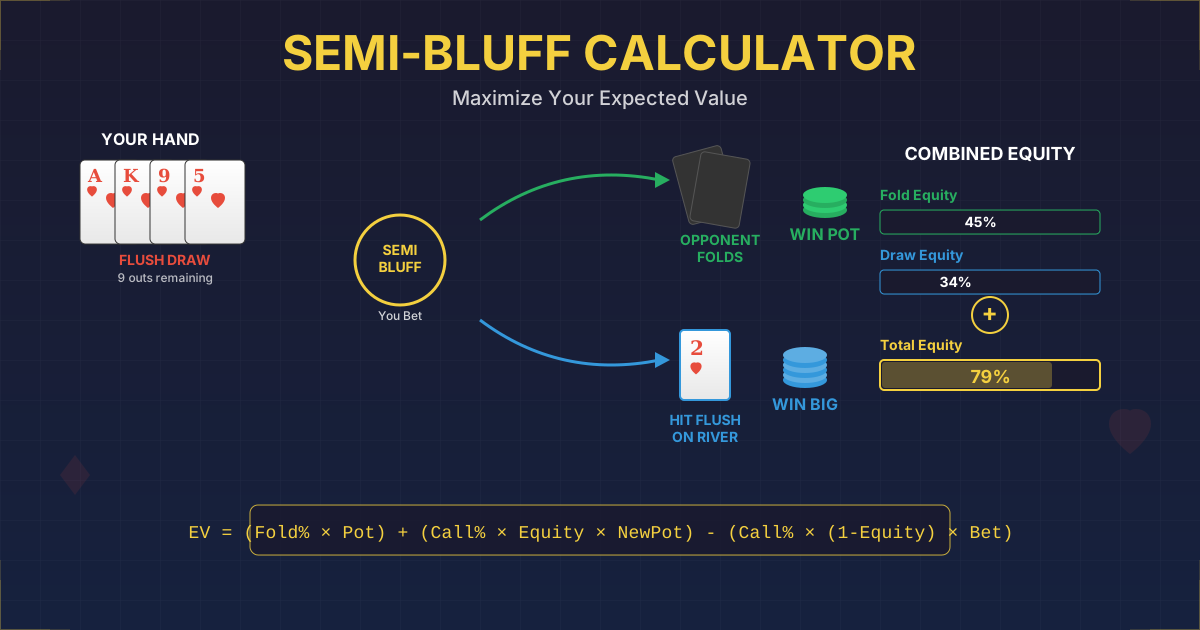
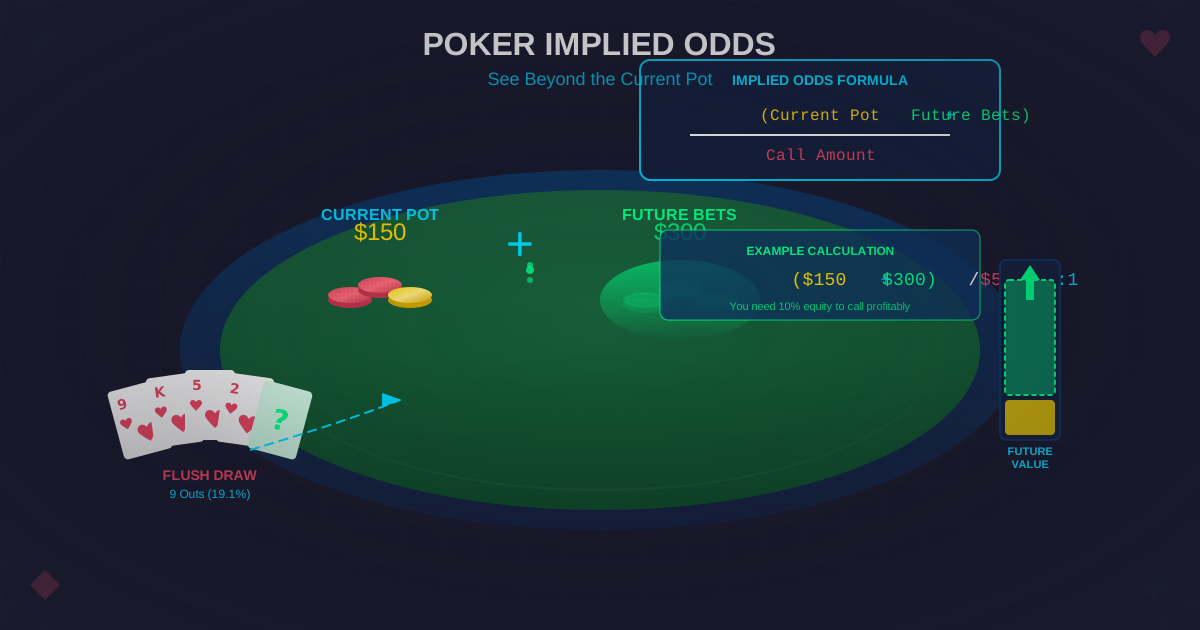
Draw play at micro stakes comes down to simple math. You need to know your outs, your pot odds, and your implied odds.
| Draw Type | Outs | Flop-to-Turn Equity | Flop-to-River Equity |
|---|---|---|---|
| Gutshot Straight Draw | 4 | ~8.5% | ~16.5% |
| Open-Ended Straight Draw | 8 | ~17% | ~31.5% |
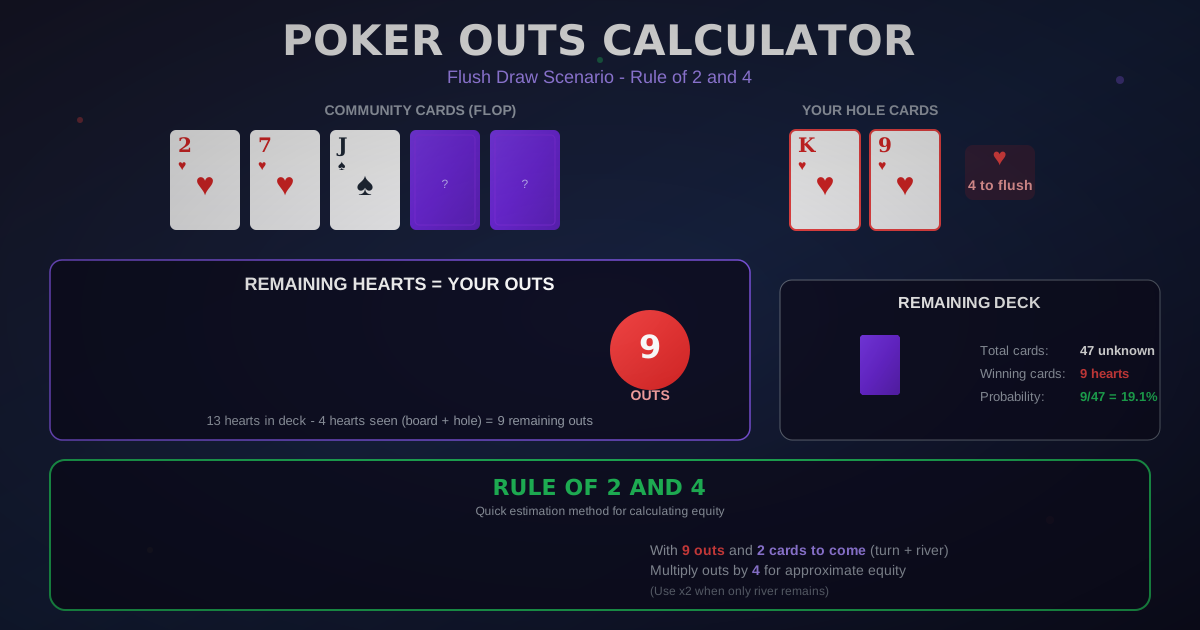
| Flush Draw | 9 | ~19% | ~35% |
| Flush Draw + Gutshot | 12 | ~25% | ~45% |
| Flush Draw + OESD | 15 | ~31% | ~54% |
The Rule of 2 and 4: Multiply your outs by 2 to estimate your equity from flop to turn, or by 4 to estimate equity from flop to river (when you expect to see both cards).
Hand Example 3: Calling With a Flush Draw at NL10
You hold 9h-8h on a board of Kh-5h-2c. Opponent bets $0.50 into a $0.80 pot. You need to call $0.50 to win $1.30.
- Your pot odds: $0.50 / $1.80 = 27.8%
- Your equity with a flush draw (9 outs): ~19% to hit on the turn, ~35% to hit by the river
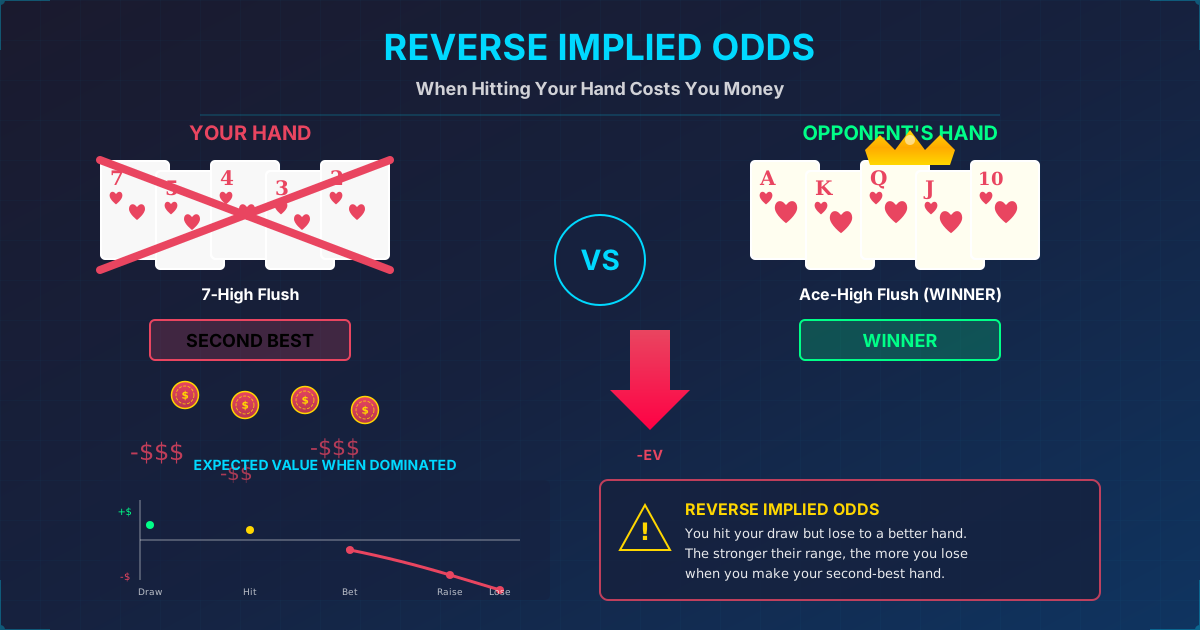
- If you expect to see only the turn, this is a fold on pot odds alone. But if your opponent has a stack of $8.00 behind and will pay off a large bet when you hit, your implied odds make the call profitable.
Crunch the exact numbers with our Implied Odds Calculator and our Poker Outs Calculator.
When to Fold Strong Hands
Micro-stakes players almost never bluff on the river, especially with a raise. When a passive player suddenly shows aggression, believe them.
Hand Example 4: Folding an Overpair at NL5
You hold Q-Q. You raise preflop, one caller. Board runs out A-7-3-T-2. You bet flop and turn, opponent calls both. River 2, you bet $0.80, and opponent raises to $2.40.
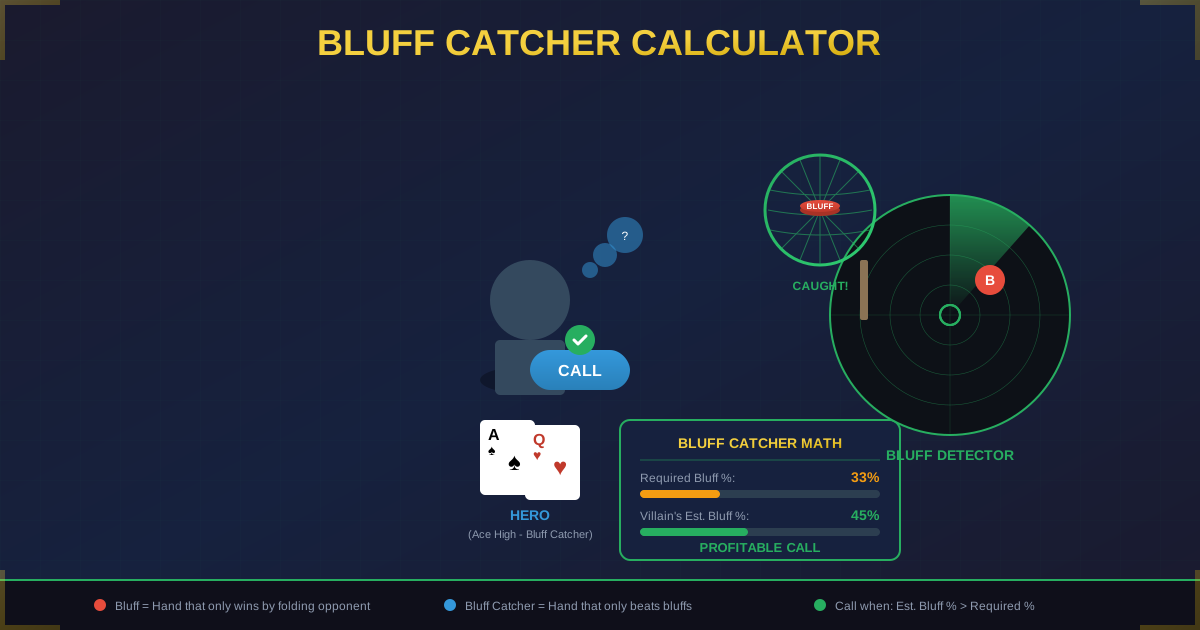
This opponent has played passively the entire hand and is now raising the river. At micro stakes, this is almost always AK, AQ, AT, A7, A3, 77, or 33 -- all hands that beat you. A good player folds Q-Q here and moves on to the next hand. Your queens are a bluff-catcher, and micro-stakes players do not bluff-raise rivers.
Exploiting Common Micro-Stakes Opponent Types
Understanding and categorizing your opponents is the fastest path to profit at micro stakes. Here are the five most common player types you will encounter and exactly how to exploit each one.
The Calling Station (Most Common at NL2-NL10)
Profile: VPIP 40-60%, PFR 5-10%, AF below 1.5. Plays too many hands, calls everything, rarely raises or folds.
How to Exploit:
- Value bet relentlessly. These players call with bottom pair, gutshots, and ace-high. Bet top pair or better on every street.
- Never bluff. They will call. Period. Save your bluffs for opponents who can fold.
- Size your bets larger. Calling stations rarely adjust their calling frequency based on bet size. Bet 70-80% pot for value.
- Do not slow-play. They will not bet for you. Build the pot yourself.
Hand Example 5: Punishing a Calling Station at NL5
You have A-K on a board of A-9-4-6-J. Calling station is in the hand. You bet $0.15 on the flop, $0.35 on the turn, and $0.75 on the river. They call all three streets and show K-9 for second pair. You collect a $2.70 pot that most players would have won less from by checking at some point.
The Nit (Tight-Passive Player)
Profile: VPIP 10-14%, PFR 8-12%, AF 1.5-2.5. Only plays premium hands, rarely bluffs, folds to aggression post-flop unless they have a monster.
How to Exploit:
- Steal their blinds mercilessly. Open wider from the cutoff and button when a nit is in the blinds.
- Fold when they show aggression. If a nit raises or check-raises, they have a strong hand. Respect it.
- Do not pay them off. When a nit bets big on the river, you are behind. Let go of your marginal hands.
- 3-bet their opens lighter since they fold often enough to make it profitable.
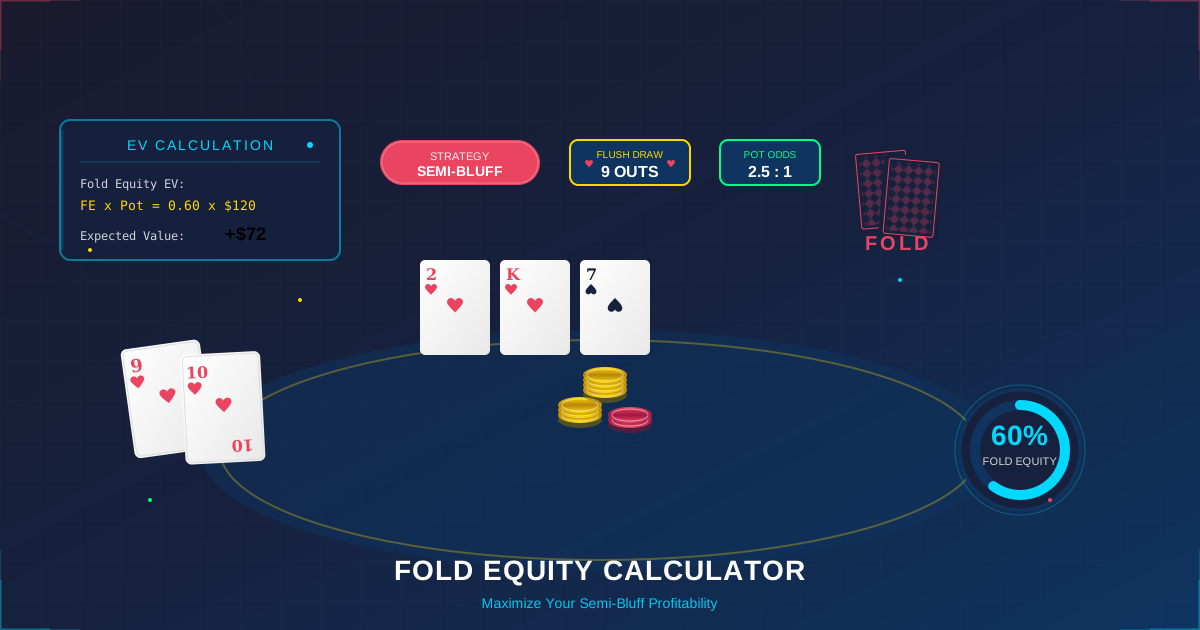
Measure your fold equity against tight players with our Poker Fold Equity Calculator.
The Maniac (Hyper-Aggressive Player)
Profile: VPIP 35-55%, PFR 25-40%, AF 4.0+. Raises constantly, bluffs too often, applies maximum pressure.
How to Exploit:
- Tighten your range and let them hang themselves. Enter pots with strong hands and call down wider than normal.
- Trap with premium hands. Flat-call their preflop raises with AA and KK instead of 3-betting. Let them bluff into your monsters.
- Do not 4-bet light. They will 5-bet shove. Stick to premium holdings.
- Call their c-bets more often. Their high aggression factor means they are betting a very wide range, and you can profit by calling with medium-strength hands.
The Weak Regular (Aspiring TAG with Leaks)
Profile: VPIP 17-22%, PFR 14-18%, AF 2.0-3.0. Has studied basics but plays mechanically -- always c-bets, folds to check-raises, follows a fixed strategy without adapting.
How to Exploit:
- Check-raise their c-bets on boards that favor your calling range. They will fold most of the time.
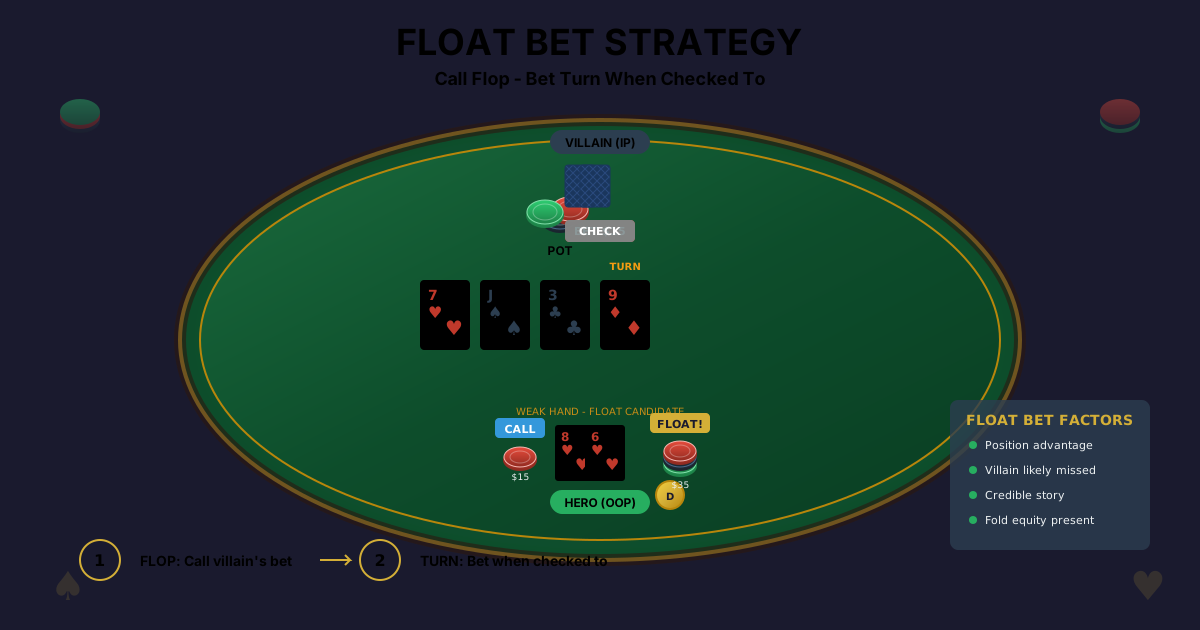
- Float their c-bets in position with the intent of taking the pot away on the turn when they check.
- 3-bet them wider since they fold too much to 3-bets (most weak regs fold 60%+ to 3-bets).
- Attack when they show weakness. A check from a weak reg usually means they have nothing.
The Fish-Maniac Hybrid (The ATM)
Profile: VPIP 50%+, PFR 20-35%, AF 2.0-5.0. Plays almost every hand, raises with junk, calls all-ins with draws.
How to Exploit:
- Isolate them in position. Raise over their limps and calls to get heads-up with position.
- Value bet all three streets with any top-pair or better hand. They will call.
- Be prepared for wild variance. They will suck out on you. It is part of the cost of playing against them. In the long run, you print money.
- Do not tilt when they hit miracle cards. They are your best customers.
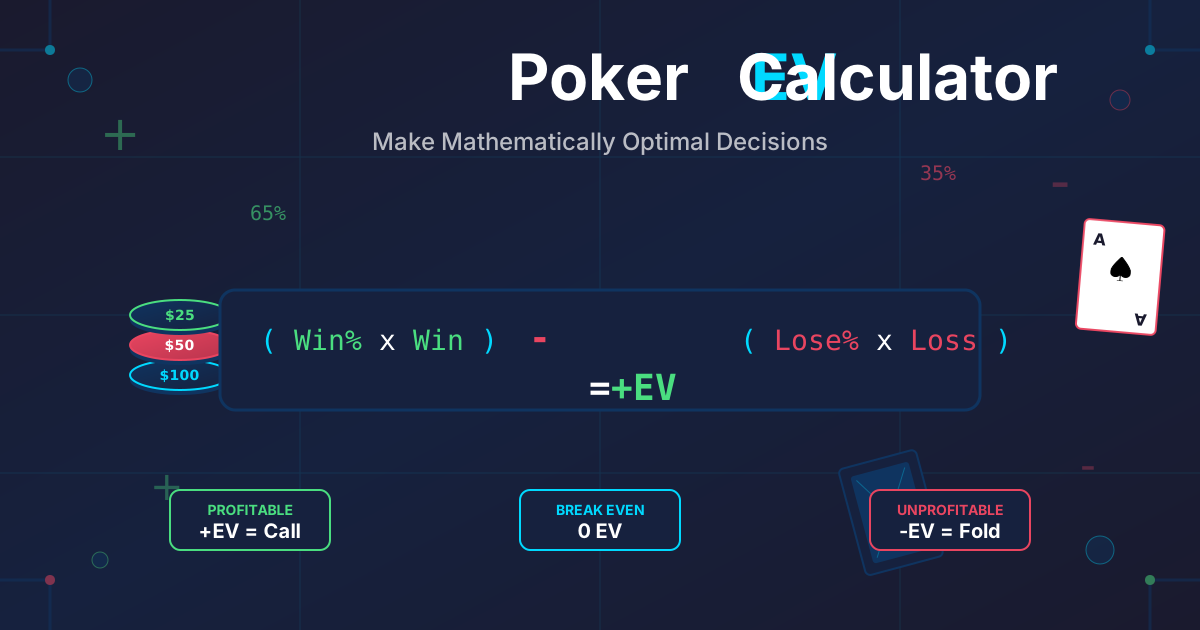
Run the numbers on your expected value in any spot with our Poker EV Calculator.
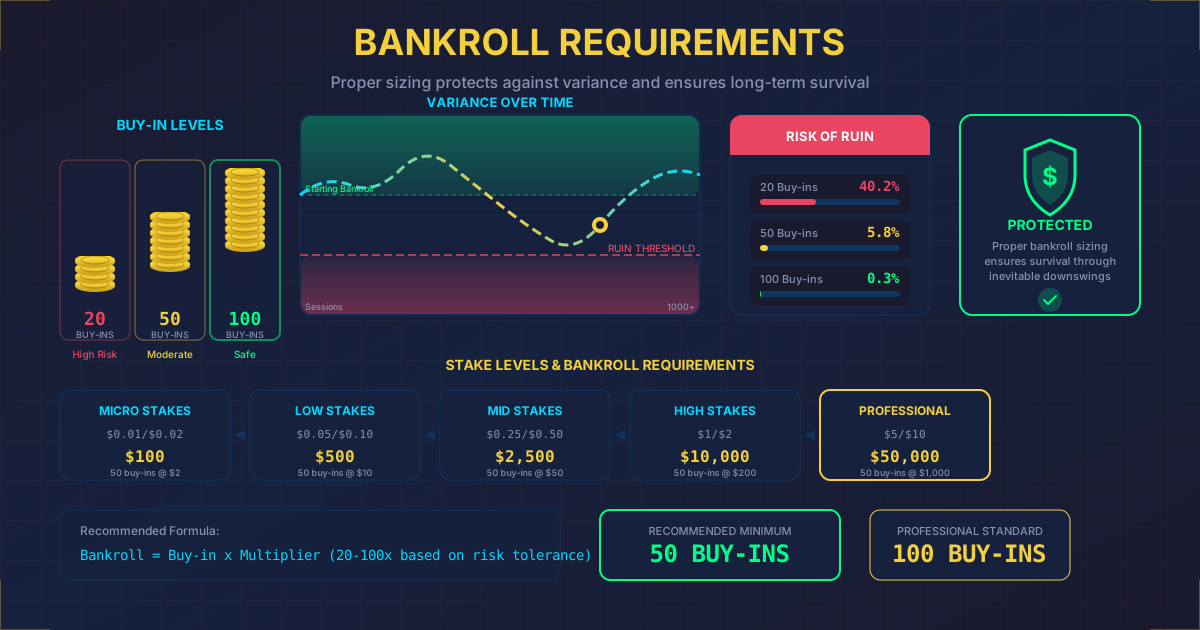
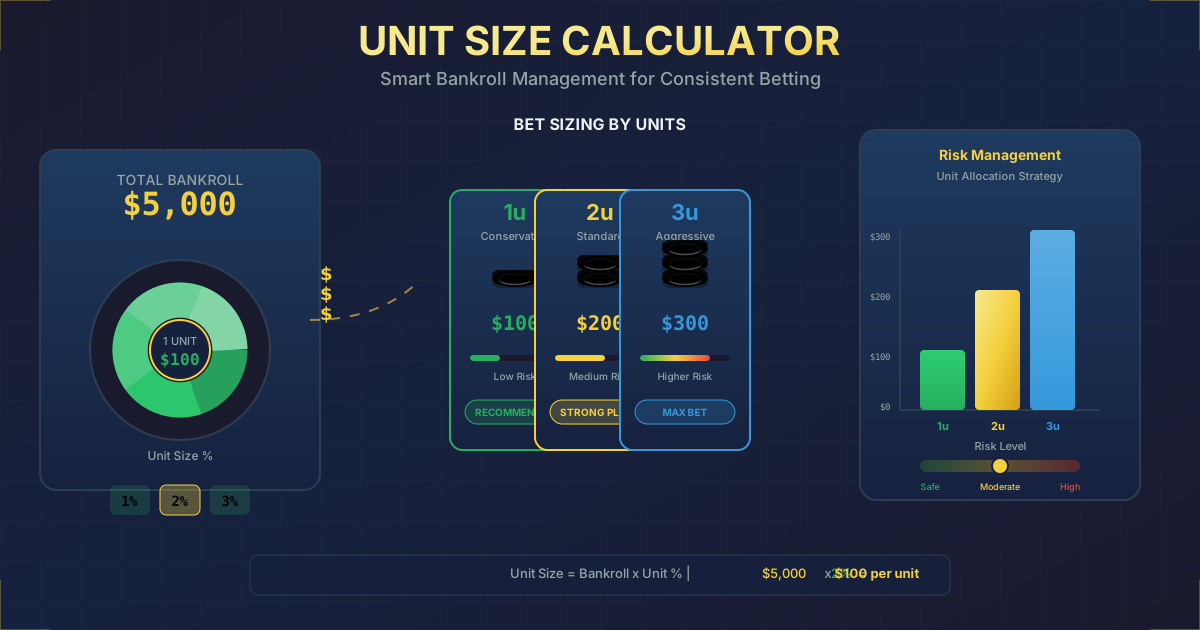
Bankroll Management for Micro Stakes
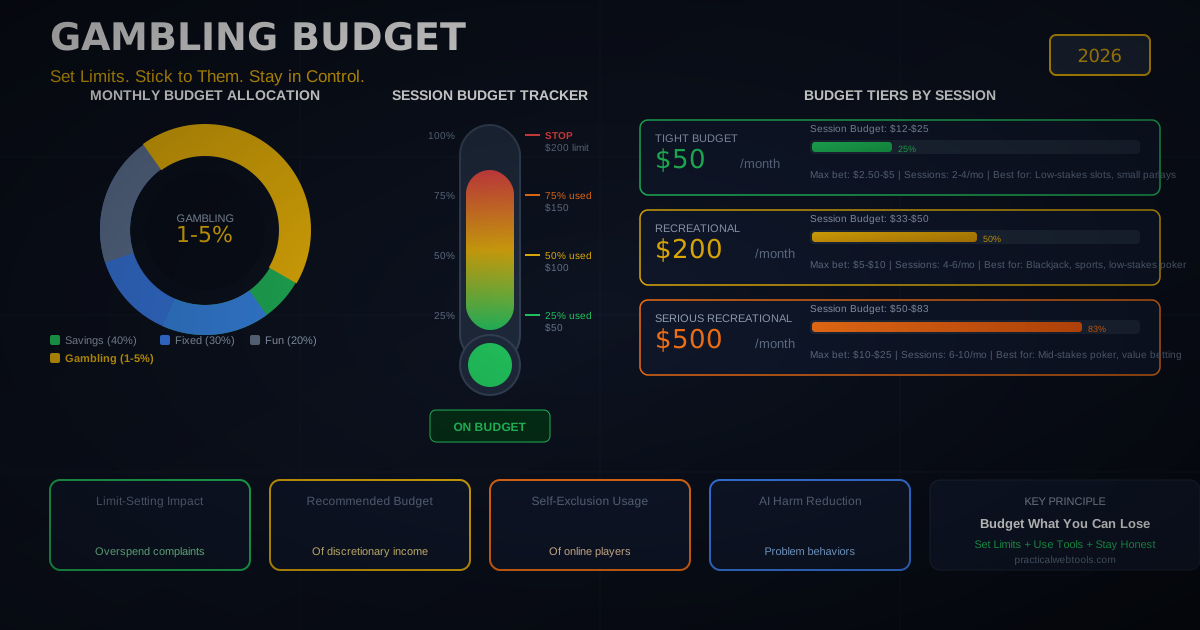
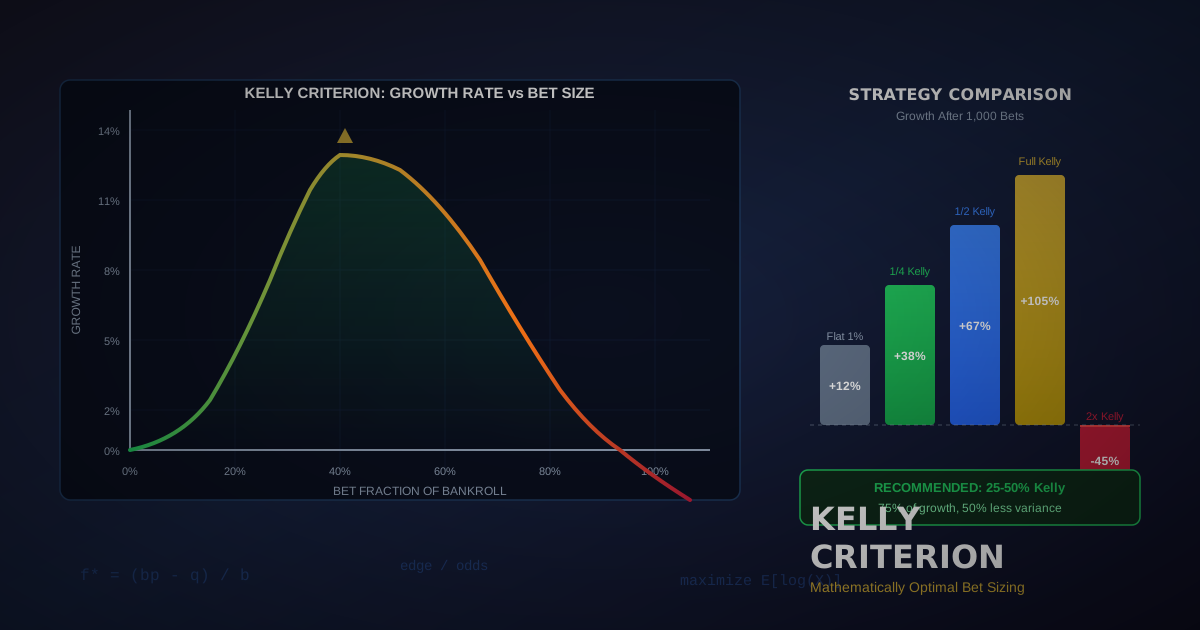
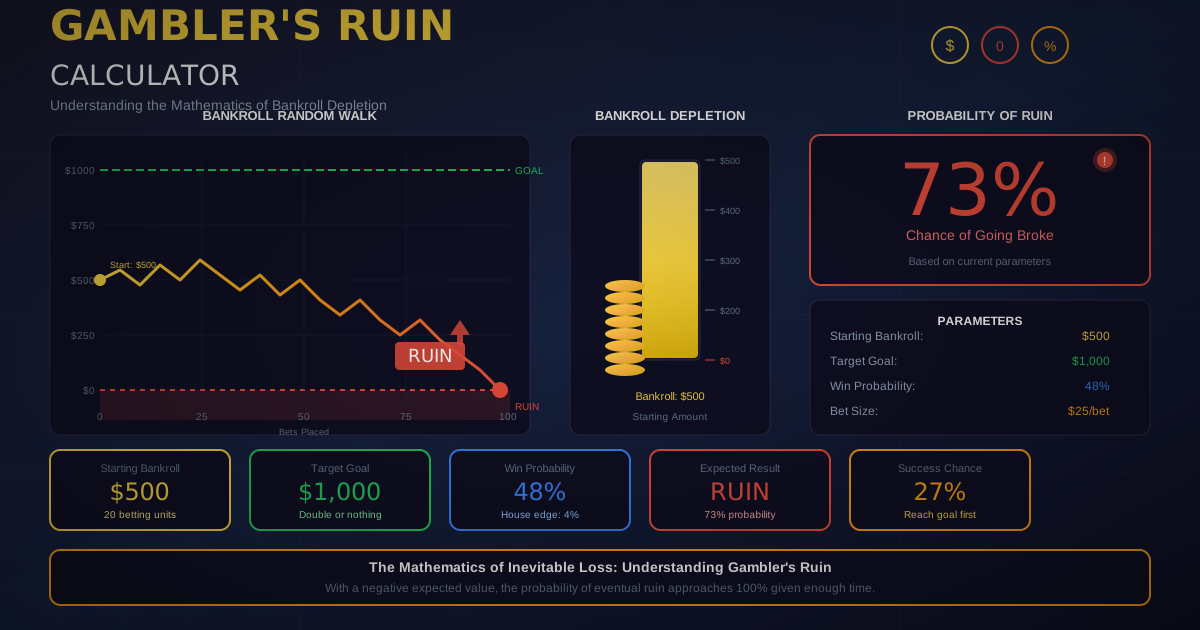
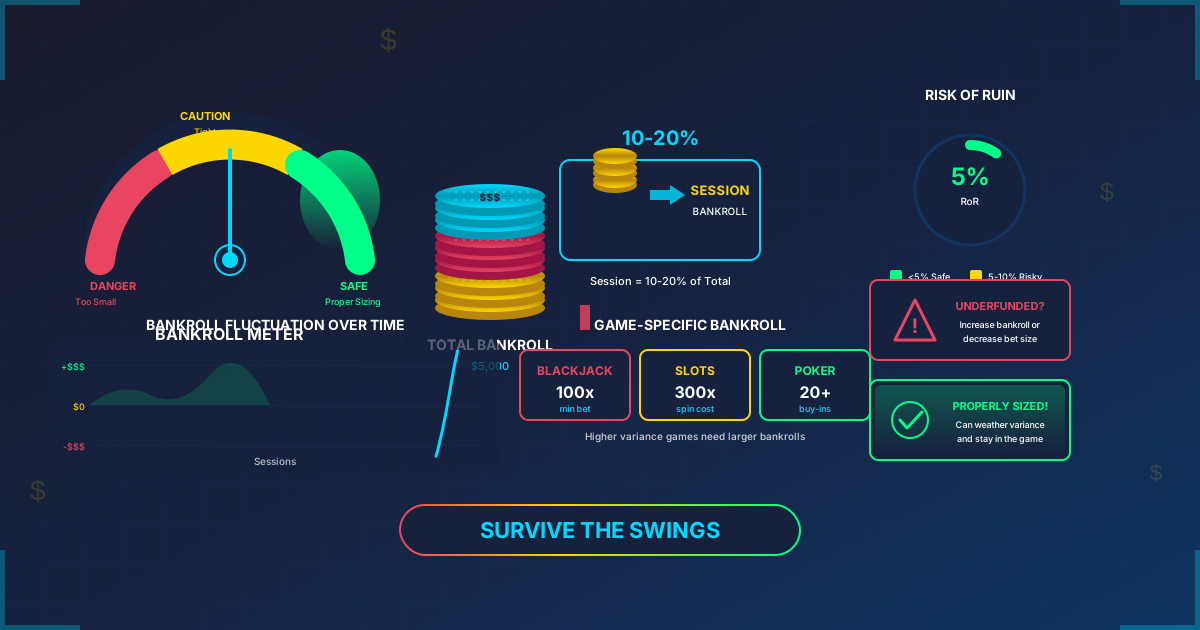
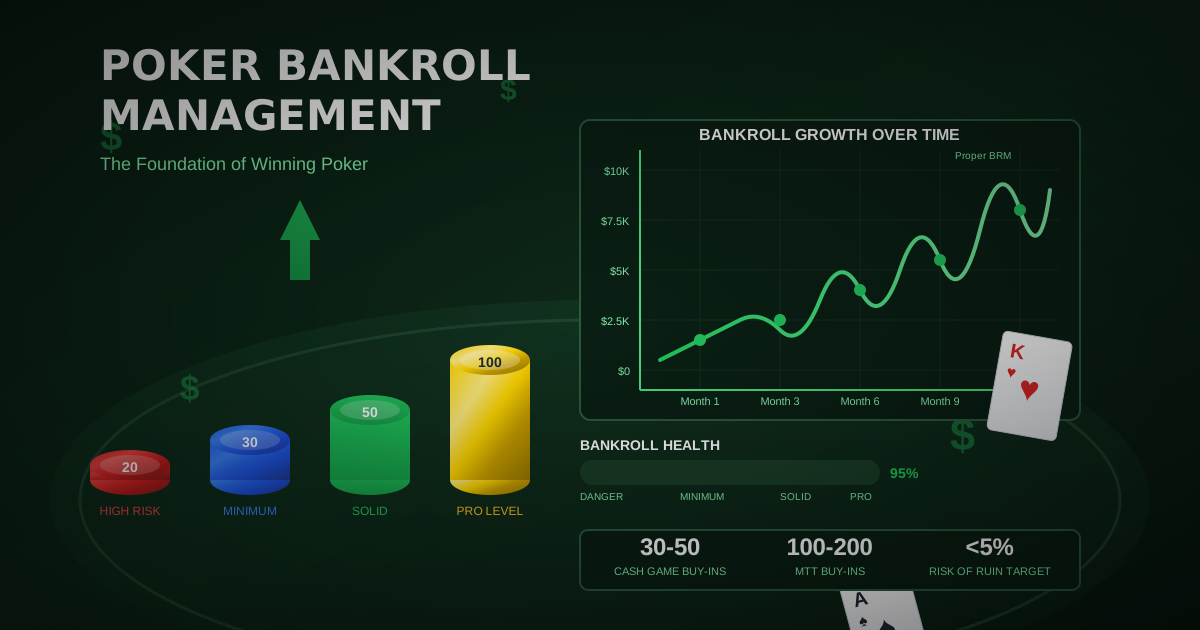
Bankroll management is not glamorous, but it is the difference between a player who builds a bankroll and one who keeps redepositing.
Recommended Bankroll Requirements
| Stake Level | Conservative (40 Buy-Ins) | Standard (30 Buy-Ins) | Aggressive (20 Buy-Ins) |
|---|---|---|---|
| NL2 ($2 buy-in) | $80 | $60 | $40 |
| NL5 ($5 buy-in) | $200 | $150 | $100 |
| NL10 ($10 buy-in) | $400 | $300 | $200 |
| NL25 ($25 buy-in) | $1,000 | $750 | $500 |
Which tier should you choose?
- Conservative (40 buy-ins): Best for beginners, players prone to tilt, or anyone who cannot easily redeposit. This gives you the most protection against downswings.
- Standard (30 buy-ins): The sweet spot for most micro-stakes grinders. Enough padding for normal variance while allowing reasonable advancement.
- Aggressive (20 buy-ins): Only for players with a proven win rate over a large sample (50,000+ hands) who can comfortably redeposit if needed. Higher risk of going broke, but faster progression.
The Drop-Down Rule
If your bankroll drops below 25 buy-ins for your current stake, move down immediately. There is no shame in moving down -- the best professionals do it. Playing under-rolled leads to "scared money" decisions that destroy your win rate:
- You check instead of value-betting because you are afraid of losing the pot.
- You fold to aggression when calling is correct because you "cannot afford" to lose.
- You play shorter sessions and tighter than optimal because every buy-in feels like a significant loss.
Moving down protects your bankroll and your mental game. Move back up when you rebuild to 30+ buy-ins.
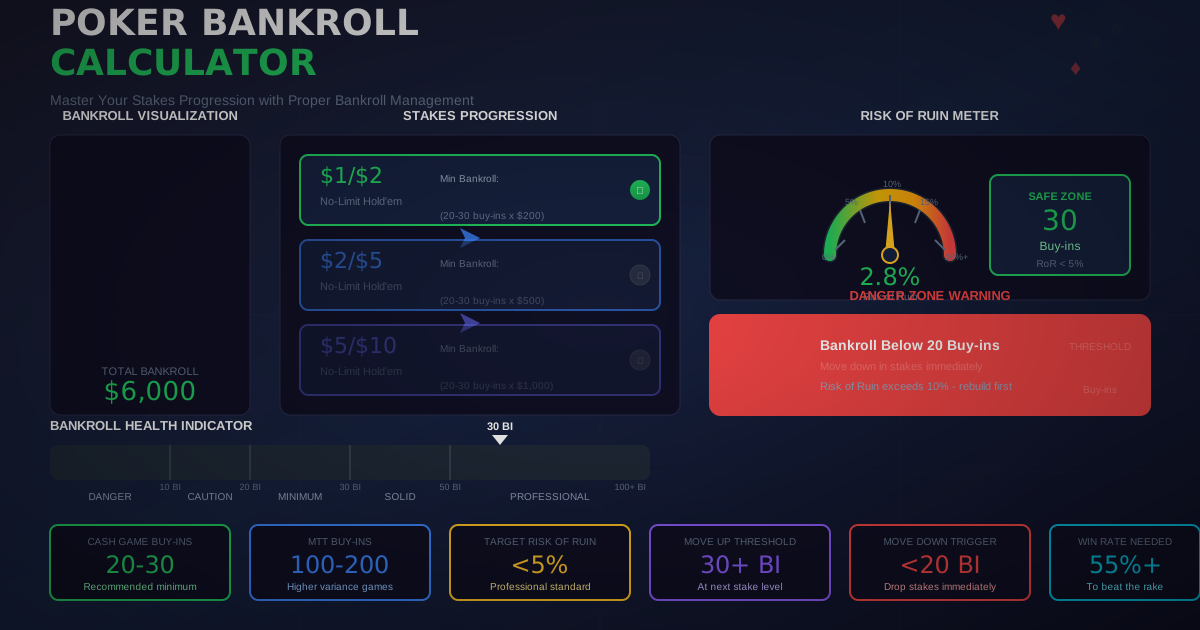
Model your bankroll trajectory under different scenarios with our Poker Bankroll Requirements Calculator.
Dealing With Variance at Micro Stakes
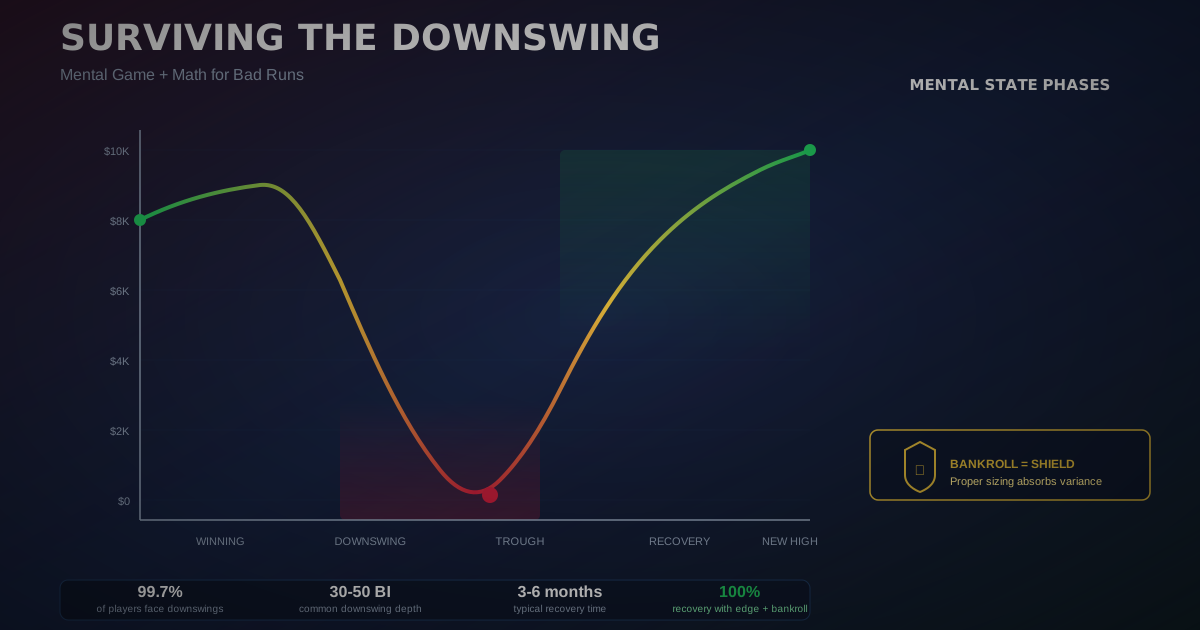
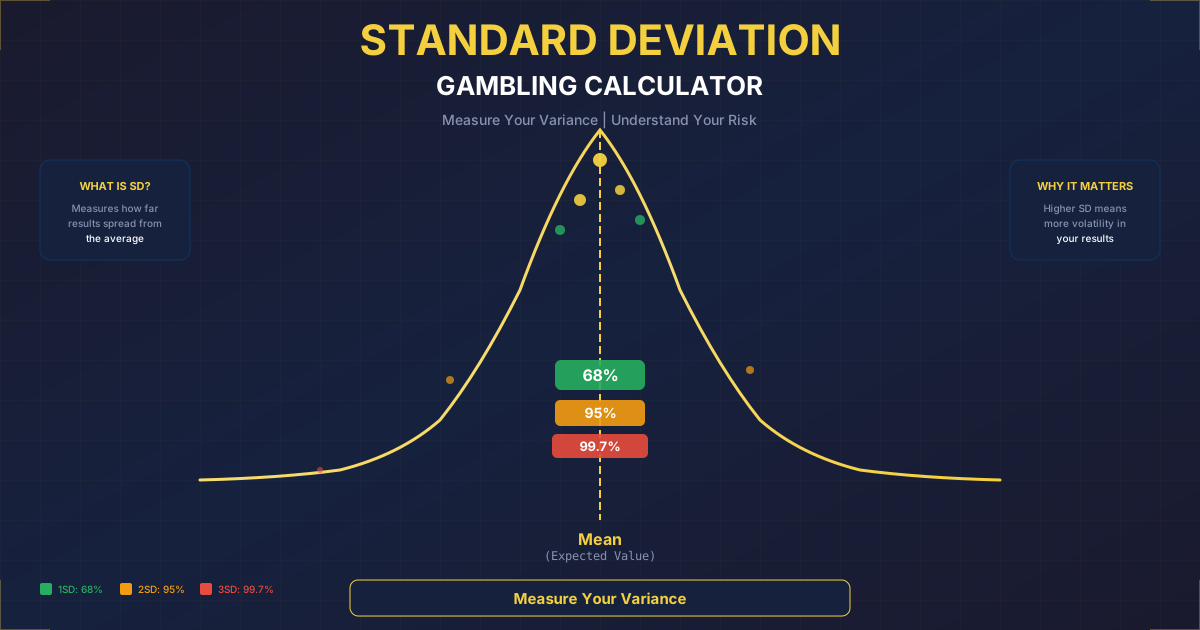
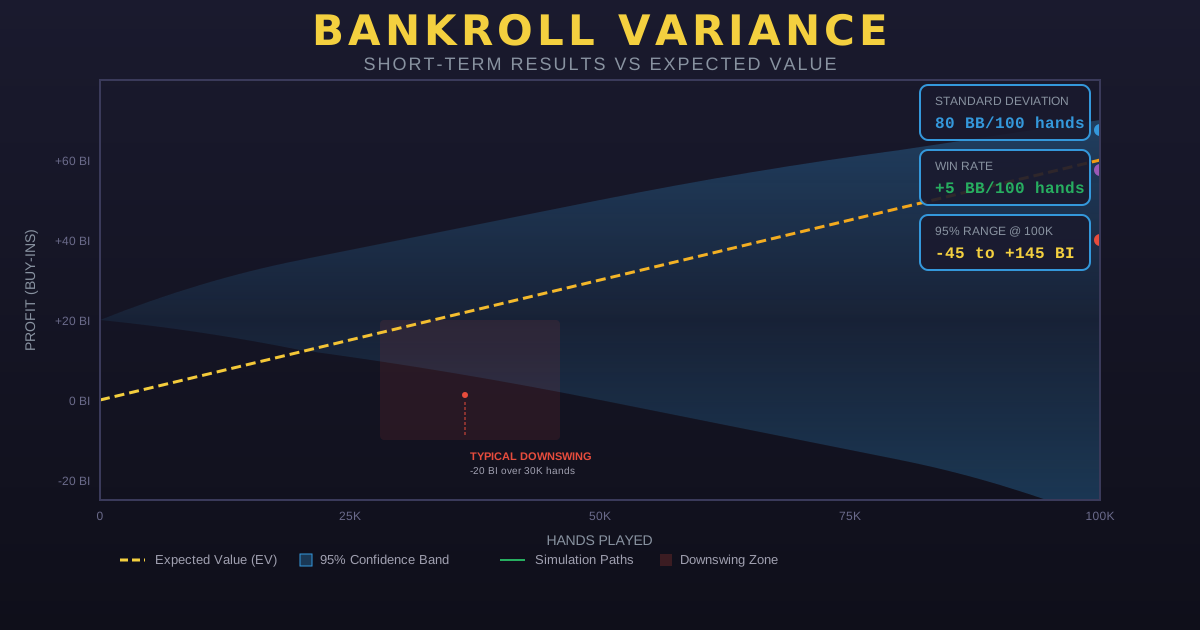
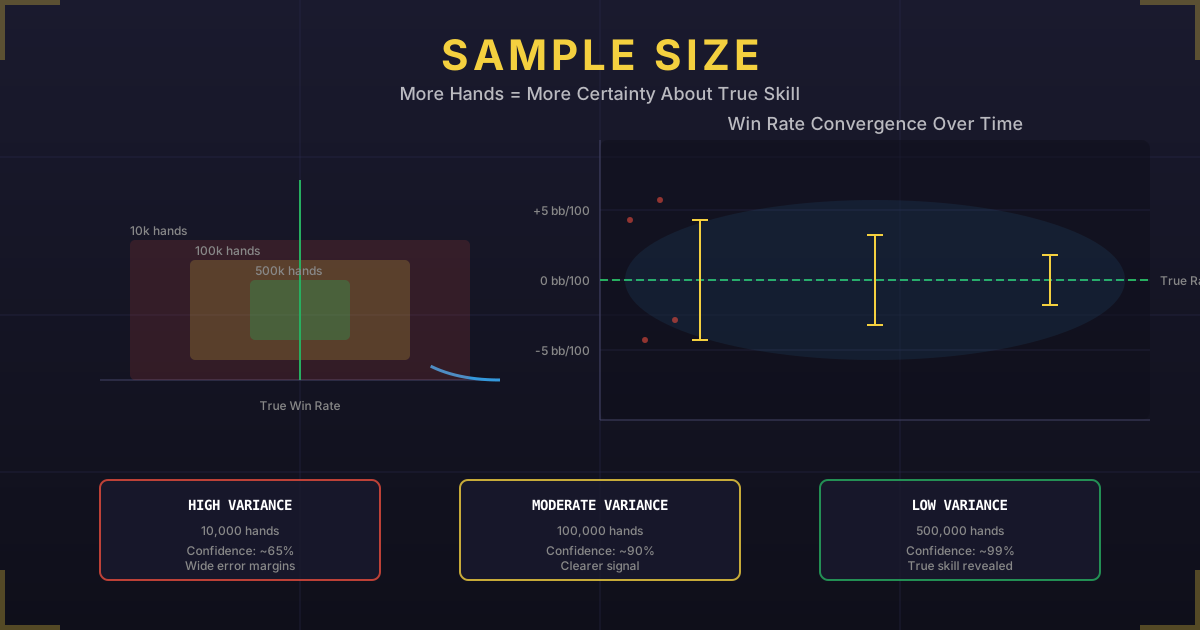
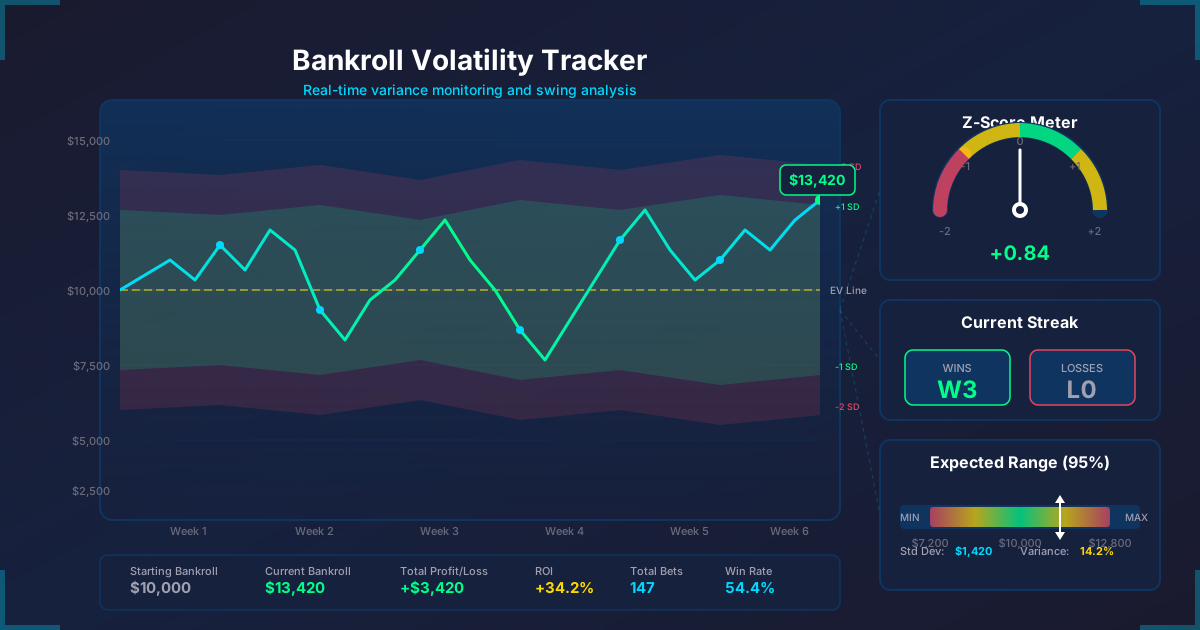
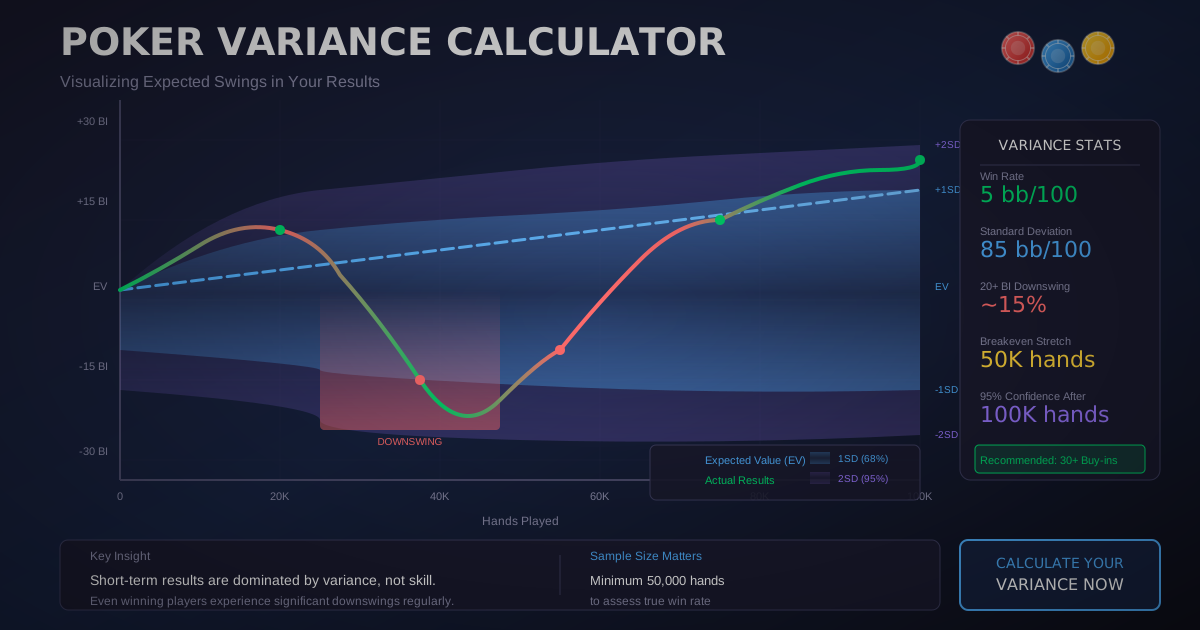
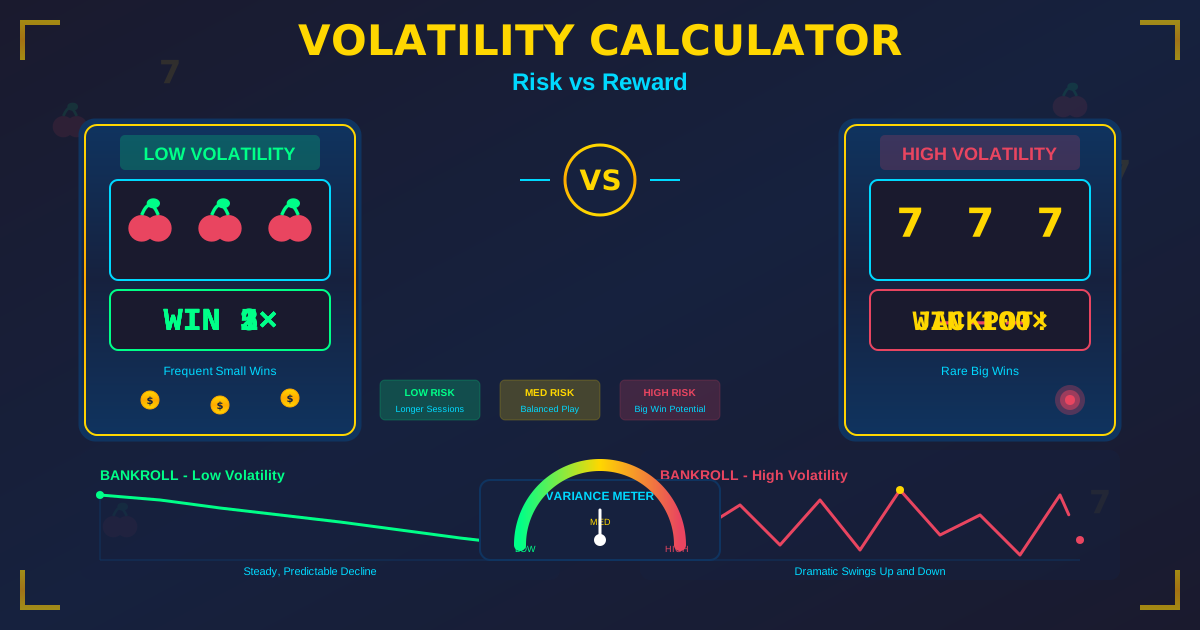
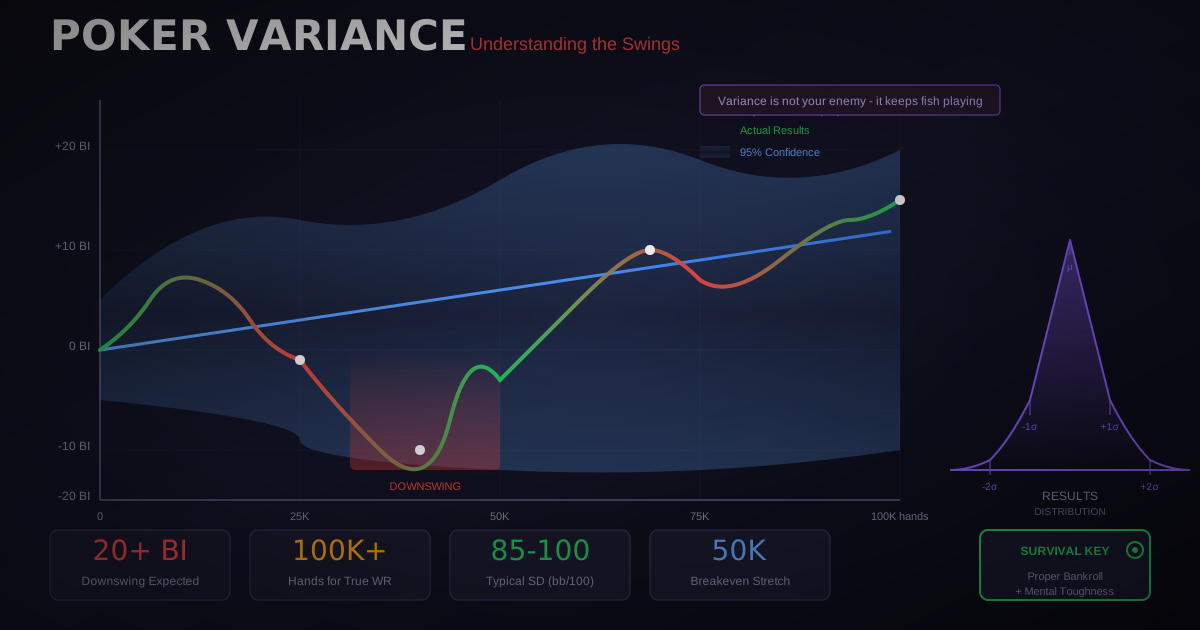
Variance is the short-term deviation from your expected results. Even if you are a strong winning player, you will experience stretches where you lose money -- sometimes for thousands of hands.
What Variance Looks Like in Practice
A player with a solid 8 bb/100 win rate at NL10 (a strong, proven win rate) will still experience:
- A 10 buy-in downswing roughly once every 50,000-75,000 hands
- A 15 buy-in downswing roughly once every 150,000-200,000 hands
- Individual losing sessions regularly, even when playing well
- Stretches of 5,000-10,000 hands where they are a net loser
This is normal. This is math. It does not mean your strategy is broken.
How to Handle Downswings
- Check your sample size. If you have played fewer than 30,000 hands at your current stake, your results are not statistically meaningful. Keep playing.
- Review your biggest losing hands. Use hand history review to confirm you are making correct decisions. If you are, the results will come.
- Take breaks. If you feel frustrated, stop playing. Tilt turns normal downswings into catastrophic ones.
- Stick to your bankroll rules. Drop down if needed. Variance tests your discipline -- pass the test.
- Focus on decisions, not outcomes. Getting your money in with 75% equity and losing does not mean you played badly. It means the 25% happened this time.
Simulate your expected variance over any sample size with our Poker Variance Calculator.
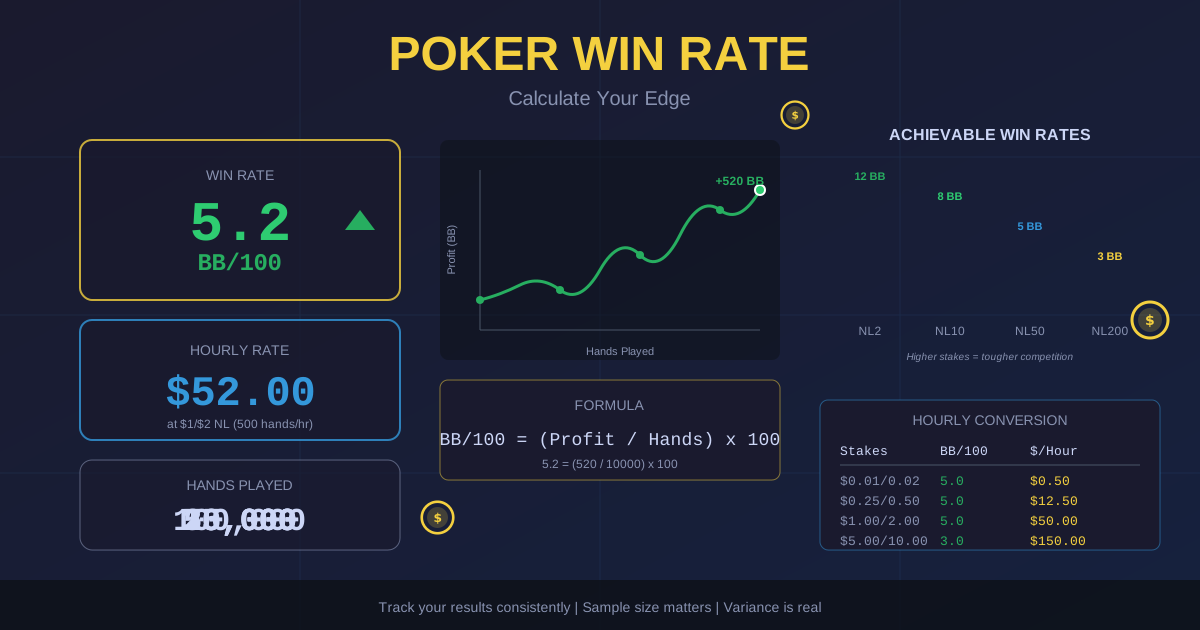
Win Rate Expectations by Stake Level
Here are realistic win rate targets for a disciplined player who studies and applies the strategies in this guide:
| Stake Level | Good Win Rate (bb/100) | Great Win Rate (bb/100) | Elite Win Rate (bb/100) |
|---|---|---|---|
| NL2 | 5-8 | 8-12 | 12-20+ |
| NL5 | 4-7 | 7-10 | 10-15 |
| NL10 | 3-6 | 6-8 | 8-12 |
| NL25 | 2-4 | 4-6 | 6-10 |
A few important notes:
- These win rates assume single-tabling or 2-4 tabling. Mass-multitabling (12+ tables) will reduce your win rate significantly.
- Win rates decrease at every stake level because the player pool gets tougher.
- Rakeback and bonuses are not included. Adding 3-5 bb/100 in rakeback can double your effective win rate at NL2-NL5.
- Achieving elite win rates requires exceptional game selection (playing at peak recreational hours, table selecting, seat selecting).
When to Move Up From Micro Stakes
Moving up too soon is the second most common reason players stall in their poker development (after playing too many hands). Follow these guidelines to ensure you are ready.
The Three Requirements for Moving Up
-
Win rate over a meaningful sample: You should be winning at least 3-5 bb/100 over a minimum of 50,000 hands at your current stake. Anything less and your "win rate" might just be positive variance.
-
Bankroll for the next level: You need at least 30 buy-ins for the stake you are moving to. If you are at NL5 with a $200 bankroll and want to try NL10, you need $300 minimum (30 x $10).
-
Mental readiness: The money at the next level needs to feel insignificant. If losing a $10 buy-in at NL10 bothers you more than losing a $5 buy-in at NL5, you are not ready. The goal is to make the same quality decisions regardless of the stakes.
The Step-Up Method
Instead of jumping full-time to a new stake:
- Take 5 buy-ins from your bankroll and play a trial session (500-1,000 hands) at the new stake.
- If you lose all 5 buy-ins, drop back down. No questions asked.
- If you hold steady or win, continue playing mixed sessions -- some at the new stake, some at the old.
- Once you have 30+ buy-ins and 10,000+ hands at the new stake with a positive win rate, transition fully.
This method limits your downside risk while giving you real experience at the tougher games.
Stake-Specific Adjustments When Moving Up
- NL2 to NL5: Very little adjustment needed. Players are slightly less loose but still highly exploitable. Continue your TAG strategy.
- NL5 to NL10: Expect more c-betting from opponents and fewer limpers. You may need to expand your 3-bet range slightly and tighten your cold-calling range.
- NL10 to NL25: This is the biggest jump. Regulars at NL25 use HUDs, understand 3-bet defense, and apply pressure. You will need to add floats, check-raises, and occasional bluffs to your arsenal. Pure ABC TAG poker starts to show diminishing returns here.
Common Micro-Stakes Mistakes (and How to Fix Them)
Mistake 1: Playing Too Many Hands
If your VPIP is above 28% at micro stakes, you are bleeding money. The temptation to "see a flop" with suited connectors from early position or call a raise with K-J off-suit is real -- but the math says fold. Every time you enter a pot with a weak hand, you start with a disadvantage that even good postflop play cannot overcome consistently.
Fix: Set a hard rule: 22% VPIP maximum until you are consistently profitable.
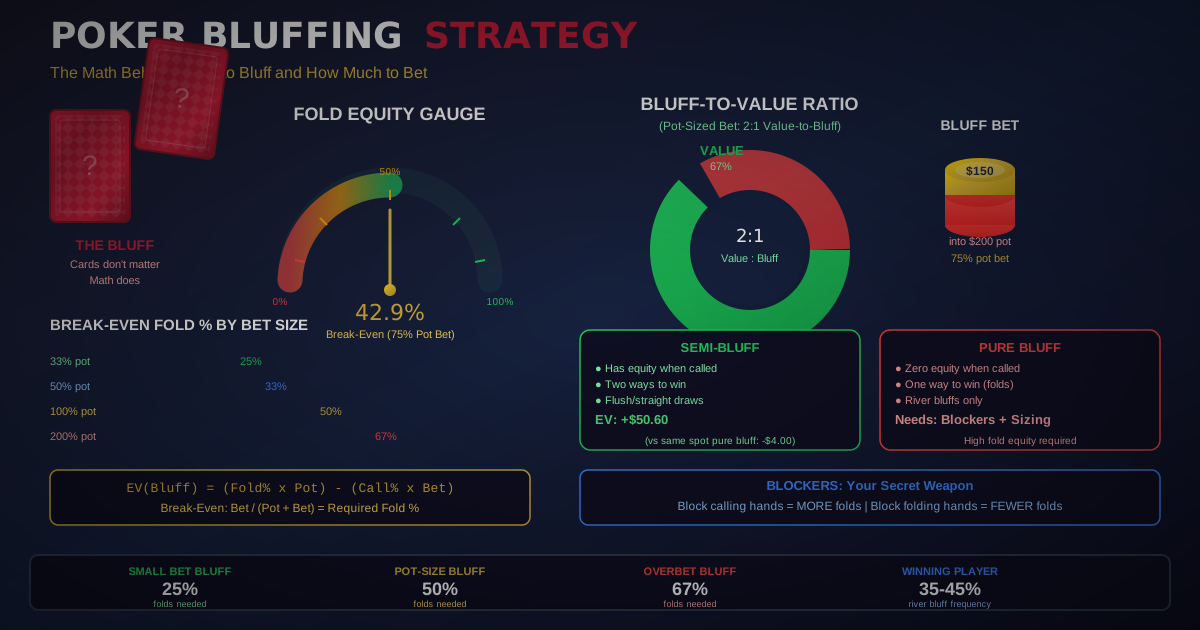
Mistake 2: Bluffing Too Much
Micro-stakes players call too much. This is the defining characteristic of the player pool. If your opponents will not fold, bluffing is literally setting money on fire.
Fix: Limit bluffs to situations where (a) you have real equity (a draw or overcards), (b) the board heavily favors your range, and (c) your specific opponent has demonstrated the ability to fold. At NL2-NL5, conditions (a) and (b) alone are not enough -- you need (c).
Mistake 3: Failing to Value Bet Thin
The flip side of "opponents call too much" is that they pay off your value bets. If you are checking back the river with top pair at micro stakes, you are missing significant EV.
Fix: Default to betting the river with any top pair or better hand unless the board is extremely connected and your opponent has shown unusual aggression.
Mistake 4: Overvaluing Fancy Plays
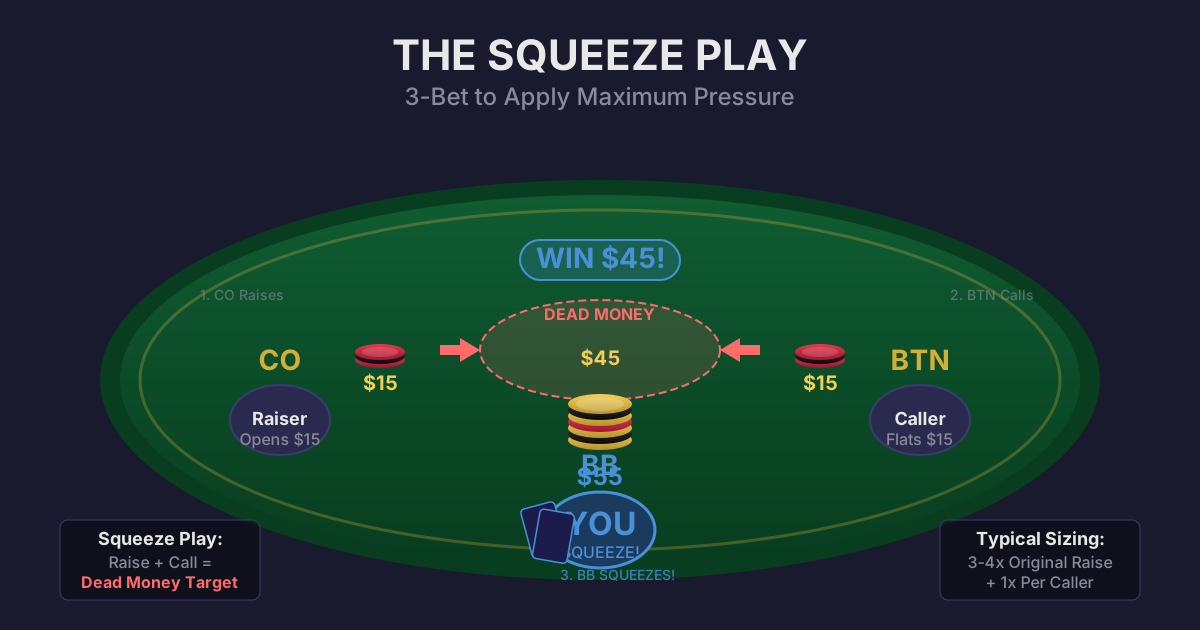
Slow-plays, check-raises as bluffs, triple-barrel bluffs, squeeze plays -- these have their place in poker, but that place is not NL2 through NL10. Your opponents are not paying attention to your image. They are not thinking about your range. They are looking at their own two cards.
Fix: Play straightforward. Bet when you have strong hands. Check or fold when you do not. Save the advanced plays for when you reach NL25+.
Mistake 5: Ignoring Position
Position is the most undervalued concept in micro-stakes poker. Players see a hand like A-T offsuit and want to play it from every position, but A-T from under the gun is a break-even play at best, while A-T from the button is a strong open.
Fix: Track your profit and loss by position. You will find that 70-80% of your winnings come from the button and cutoff. Play more hands there and fewer from early position and the blinds.
Mistake 6: Poor Table Selection
Not all NL5 tables are created equal. A table with two loose fish and four tight nits is a goldmine. A table with six regulars grinding HUD stats against each other is a grind that barely covers rake.
Fix: Before sitting, check the table statistics (average pot size, players per flop). Aim for tables with an average players-per-flop (VPIP) above 30% -- this indicates loose, recreational action.
Mistake 7: Tilting Away Profits
You play a solid four-hour session, build up three buy-ins of profit, and then lose it all in 20 minutes after a bad beat triggers emotional play. This pattern destroys more micro-stakes bankrolls than any strategic leak.
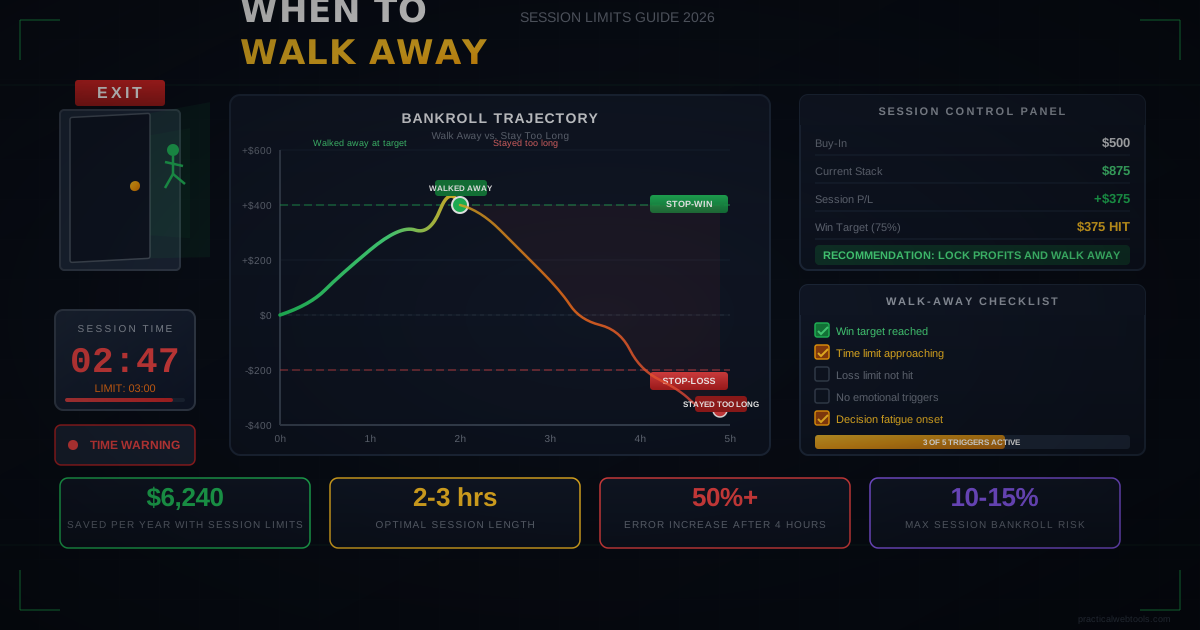
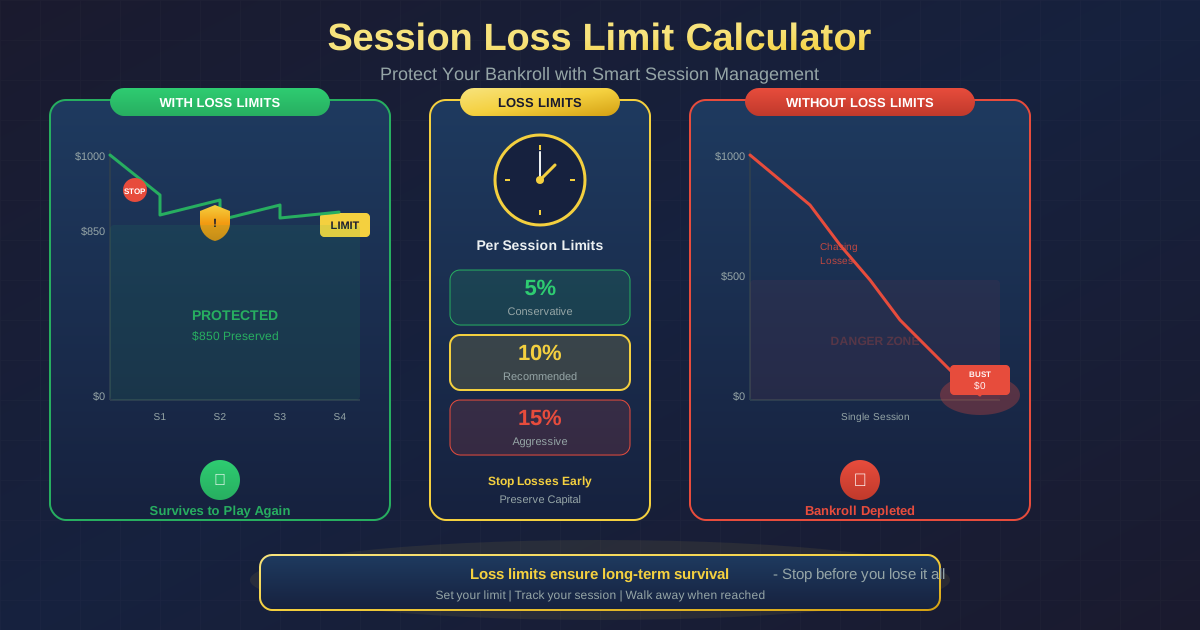
Fix: Set a stop-loss of 3 buy-ins per session. When you hit it, stop playing immediately -- no exceptions. Also set a time limit for sessions (90-120 minutes for beginners). Fresh play is profitable play.
The Importance of Rakeback and Bonuses at Micro Stakes
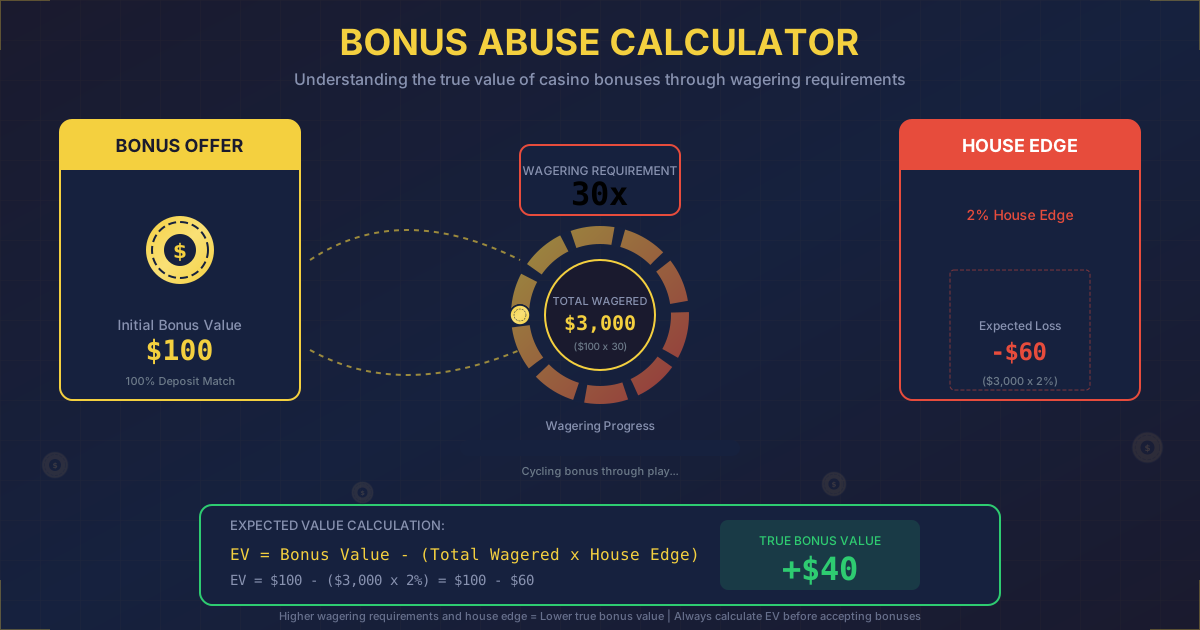
At micro stakes, your actual win rate might be 5 bb/100, but your total earnings from poker include rakeback, deposit bonuses, loyalty rewards, and promotions. These extras can literally double your hourly rate at the lowest stakes.
Typical Rakeback and Bonus Value
| Bonus Type | Typical Value | Impact at NL5 (per 10,000 hands) |
|---|---|---|
| Flat Rakeback (25-30%) | $15-$30 per 10K hands | Adds 3-6 bb/100 |
| Deposit Bonus | $50-$200 (one-time) | Significant for new players |
| Loyalty/VIP Program | $5-$20 per 10K hands | Adds 1-4 bb/100 |
| Leaderboard/Promotion | $10-$50/week (varies) | Variable but meaningful |
How to Maximize Rakeback Value
- Choose the right poker site. Some sites offer flat rakeback deals of 25-33%, while others use tiered VIP programs. Compare effective rakeback rates before committing.
- Track your rake paid. Use your poker tracker to monitor how much rake you are generating. This helps you choose the most profitable site and volume level.
- Clear deposit bonuses efficiently. Most bonuses release in increments based on rake generated. Play at stakes where you can clear the bonus within the time limit.
- Participate in promotions. Many sites run weekly leaderboards, challenges, and freerolls that add extra value for active players.
At NL2 and NL5, rakeback can be the difference between a marginally winning player and a solidly profitable one. Do not leave free money on the table.
Model your total earnings including rakeback with our Poker Rakeback Calculator.
Building a Study Routine for Micro Stakes
Winning at poker is not just about playing -- it is about studying. The players who improve fastest at micro stakes dedicate structured time to off-table learning.
Recommended Study Plan (5-7 Hours/Week)
- Hand History Review (2-3 hours/week): Review your biggest winning and losing pots. Ask: "Did I make the right decision here? What would I do differently?" Focus on spots where you felt uncertain.
- Equity and Odds Practice (1 hour/week): Use equity calculators to drill pot odds, implied odds, and hand-vs-range scenarios until the math is automatic.
- Strategy Content (1-2 hours/week): Read one strategy article or watch one training video per week. Focus on micro-stakes-specific content -- high-stakes strategy often does not apply at the lowest levels.
- Database Analysis (1 hour/week): Analyze your overall stats. Are you leaking money from a specific position? Are you losing too much in 3-bet pots? Data reveals leaks that feel invisible during play.
The 1:1 Study-to-Play Ratio
For every hour you play at micro stakes, spend at least 30-60 minutes studying. This ratio accelerates your learning and prevents you from reinforcing bad habits through repetition alone.
Frequently Asked Questions
How much money do I need to start playing micro-stakes poker?
You can start at NL2 with as little as $40-$60 (20-30 buy-ins). A $100 bankroll gives you a comfortable 50 buy-in cushion at NL2, which is enough to absorb normal downswings while you learn the game. If $40 is too much to risk, many sites offer freerolls and play-money tables where you can practice for free before depositing.
What win rate should I expect at micro stakes as a beginner?
A complete beginner who studies basic strategy should aim for break-even to 3 bb/100 within their first 20,000-30,000 hands. With continued study and discipline, a win rate of 5-8 bb/100 at NL2-NL5 is achievable within 3-6 months. Do not compare yourself to online professionals who post 15+ bb/100 win rates -- those numbers require extreme game selection and thousands of hours of study.
Is it possible to make real money at micro stakes?
Yes, but the hourly rate is modest. A strong NL10 player winning 6 bb/100 and playing 500 hands per hour (4 tables) earns approximately $3.00 per hour in pure poker winnings, plus rakeback. At NL25 with the same win rate and volume, that jumps to about $7.50/hour plus rakeback. Micro stakes are primarily a training ground and bankroll-building exercise, not a livelihood. The real money begins when you graduate to NL50 and above.
Should I play 6-max or full ring at micro stakes?
6-max (6-player tables) is the dominant format online in 2026 and is recommended for most players. You play more hands per hour, face more decisions, and develop skills that translate better to higher stakes. Full ring is a fine choice if you prefer a more patient style, but 6-max forces you to play more aggressively -- a habit worth building early.
How many tables should I play at once?
Start with one table until your decisions feel automatic -- usually after 5,000-10,000 hands. Then add a second table. At micro stakes, 2-4 tables is the sweet spot for most players: enough volume to build a meaningful sample without sacrificing decision quality. Mass-multitabling (8+ tables) reduces your win rate and learning speed. Only consider it once you are a proven winner with a stable strategy.
When should I quit a session?
Quit when you are tired, frustrated, or distracted. Quit after losing 3 buy-ins in a row (your stop-loss). Quit after 90-120 minutes if you are a beginner. Do not quit just because you are winning -- if you are playing well and the table is good, keep going. The only wrong reason to quit is to "protect" your winnings. In poker, every hand is independent.
Is poker software and tracking necessary at micro stakes?
Not strictly necessary, but highly recommended. A basic poker tracker (like PokerTracker 4 or Hold'em Manager 3) with a HUD showing VPIP, PFR, and AF for each opponent will significantly improve your decision-making. More importantly, the hand history database allows you to study and identify your own leaks, which is essential for improvement. Many free trials are available to get started.
How long does it take to beat micro stakes consistently?
Most dedicated players can beat NL2-NL5 consistently within 3-6 months of focused play and study. Beating NL10 typically takes 6-12 months. Reaching a solid win rate at NL25 can take 1-2 years. The timeline depends entirely on how much you play, how much you study, and how honestly you evaluate your own game. Players who blame bad luck and never review their hands take much longer -- or never get there at all.
Essential Tools for Micro-Stakes Players
Take advantage of these free poker tools to sharpen your micro-stakes game:
- Pot Odds Calculator: Instantly calculate whether a call is mathematically profitable.
- Poker Equity Calculator: Compare hand-vs-hand and hand-vs-range equity for any situation.
- Implied Odds Calculator: Factor in future bets when deciding whether to chase a draw.
- Poker Outs Calculator: Count your outs and convert them to winning percentages.
- Poker EV Calculator: Calculate the expected value of any bet, call, or raise.
- Poker Hand Range Calculator: Build and analyze preflop ranges by position.
- Poker 3-Bet Calculator: Find optimal re-raise sizes and frequencies.
- Poker Fold Equity Calculator: Determine how often opponents need to fold to make a bluff profitable.
- Poker Variance Calculator: Simulate downswings and understand the role of luck vs. skill.
- Poker Bankroll Requirements Calculator: Calculate exact bankroll needs for any stake level.
- Poker Rakeback Calculator: Compare rakeback deals and optimize your site selection.
Conclusion
Micro-stakes poker in 2026 rewards the same qualities it always has: patience, discipline, and a willingness to study. The games are not as soft as they were in 2005, but they remain beatable by a wide margin for anyone who applies a tight-aggressive strategy, manages their bankroll responsibly, and commits to continuous improvement.
Start at NL2 or NL5. Follow the hand selection charts in this guide. Value bet relentlessly against calling stations. Fold when passive players show sudden aggression. Never risk more than you can afford at any single stake level. Study your results honestly and fix your leaks methodically.
The path from NL2 to NL25 -- and eventually beyond -- is open to any player who takes it seriously. Every professional poker player started exactly where you are starting now: at the lowest limits, grinding small pots, and learning the fundamentals that would carry them through their entire career.
The question is not whether you can beat micro stakes. You can. The question is whether you have the discipline to do it the right way.
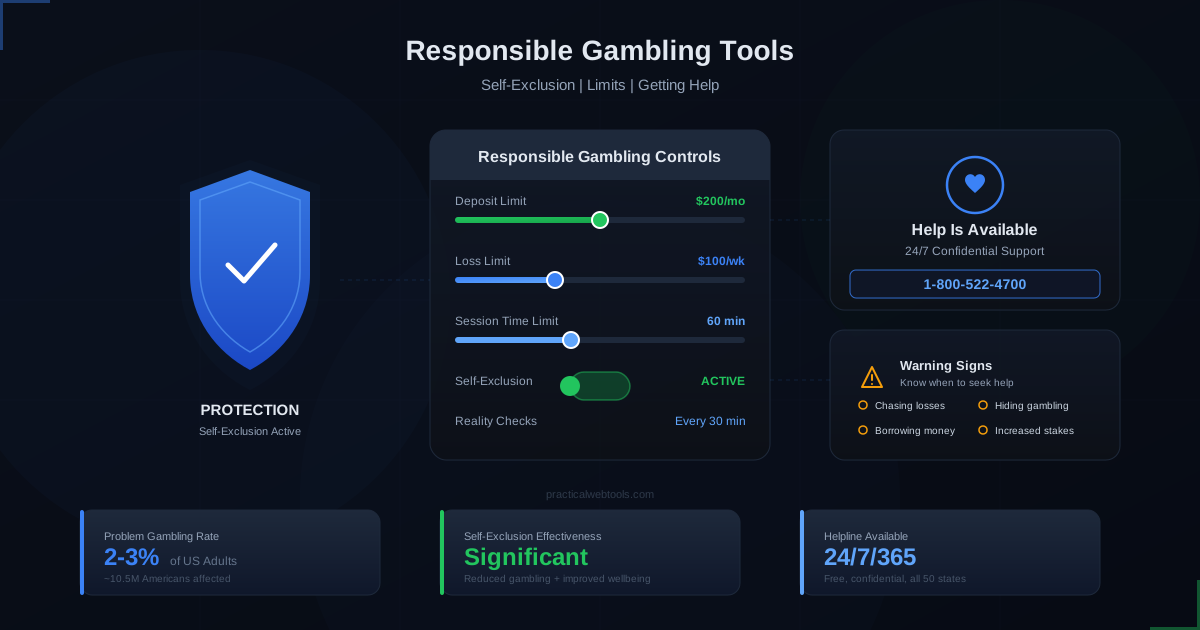
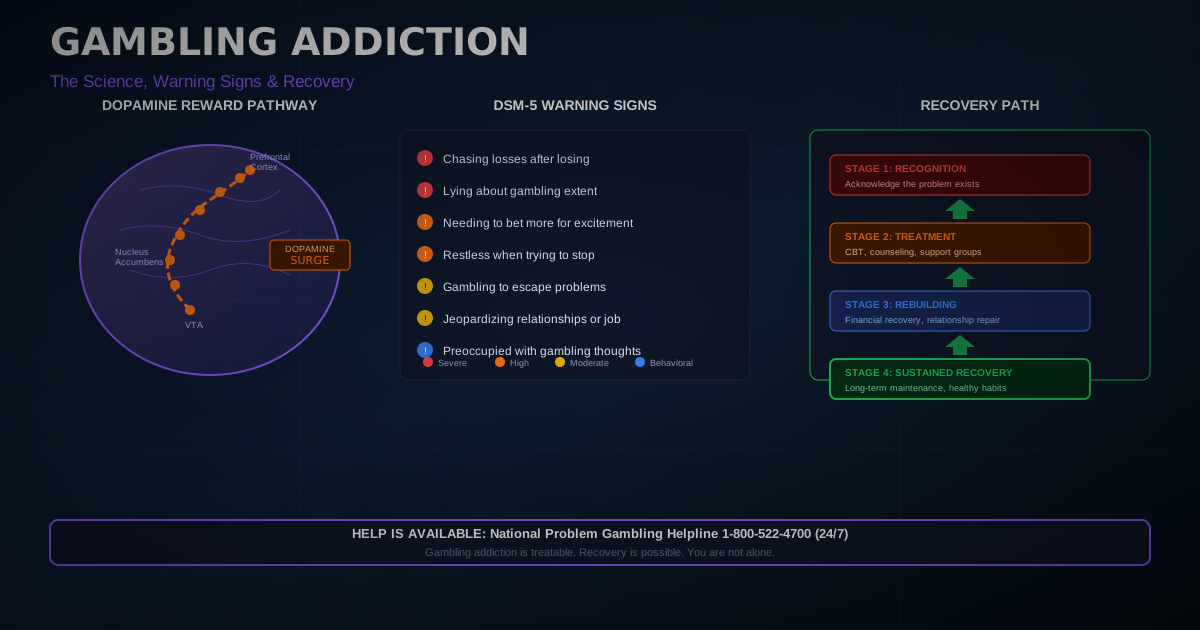
Gambling involves risk. This content is for educational and informational purposes only. Always gamble responsibly, set limits you can afford, and seek help if gambling becomes a problem. Visit the National Council on Problem Gambling or call 1-800-522-4700 for support.