State-by-State Gambling Tax Rates: How Much You Owe and How to Report Winnings (2026)

Every dollar you win gambling is taxable income in the United States, regardless of whether you receive a W-2G form. That $500 sports bet payout, that $200 poker tournament profit, that $50 scratch ticket winner---the IRS considers all of it taxable income. Yet according to tax compliance data, an estimated 60% of recreational gamblers underreport their winnings, often unknowingly, putting themselves at risk of penalties and interest.
The gambling tax landscape is a maze of federal requirements, varying state rates, different reporting thresholds by game type, and complex deduction rules. Whether you hit a $1,200 slot jackpot in Las Vegas, won a $5,000 poker tournament in New Jersey, or cashed a $600 sports betting ticket in Ohio, the tax treatment depends on where you live, where you won, and how much you won.
This guide covers every aspect of gambling taxation in 2026: federal withholding rules, W-2G thresholds for every game type, state-by-state tax rates for all 50 states, how to deduct losses, cryptocurrency gambling tax treatment, professional gambler status, and the record-keeping practices that protect you in an audit.
Calculate your actual take-home amount after federal and state taxes on any win with our free Lottery After-Tax Calculator.
How Does the Federal Government Tax Gambling Winnings?
All gambling winnings are considered taxable income by the Internal Revenue Service, reported on your federal tax return regardless of the amount. The federal government applies both a withholding system and a reporting system to capture gambling income.
Federal Tax Withholding Rules
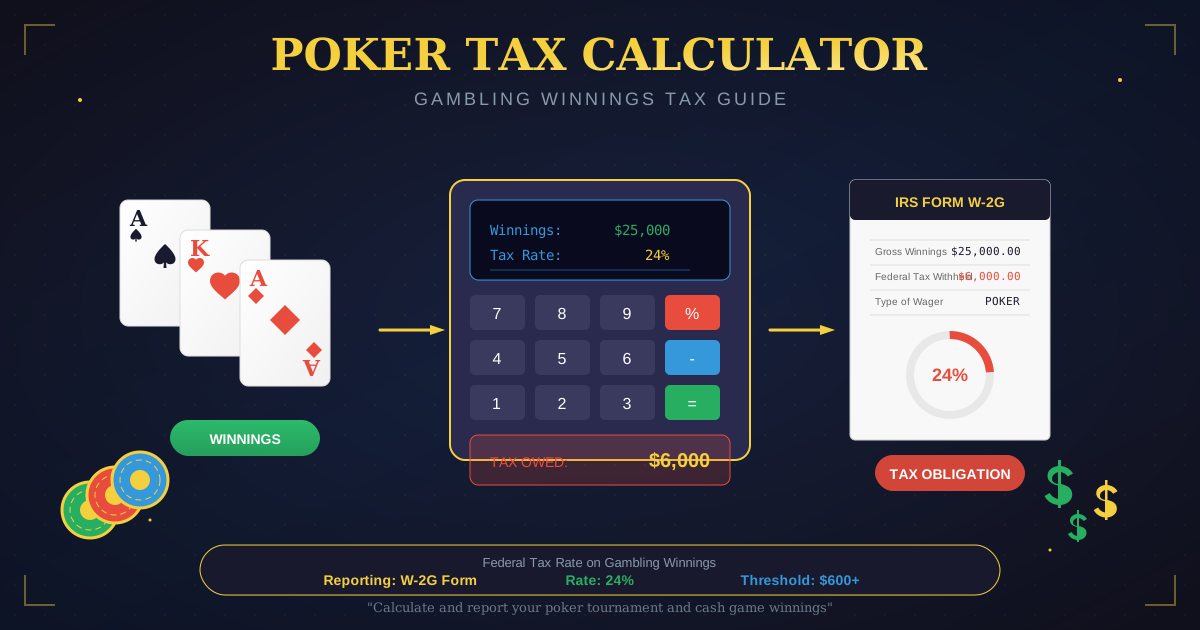
Federal income tax is automatically withheld at a flat rate of 24% on certain gambling winnings. This withholding applies when:
- The winnings exceed $5,000 from wagering transactions (sports betting, poker tournaments, sweepstakes, wagering pools)
- The winnings are at least 300 times the amount of the wager
- The payer is required to issue a W-2G form
However, all gambling winnings are taxable even if they fall below the withholding thresholds. The 24% withholding is not your final tax rate---it is an estimated prepayment. Your actual tax rate depends on your total taxable income and filing status.
| Federal Tax Bracket (2026) | Single Filer Income | Tax Rate | Effective Rate on $10,000 Win |
|---|---|---|---|
| 10% Bracket | $0 - $11,925 | 10% | $1,000 |
| 12% Bracket | $11,926 - $48,475 | 12% | $1,200 |
| 22% Bracket | $48,476 - $103,350 | 22% | $2,200 |
| 24% Bracket | $103,351 - $197,300 | 24% | $2,400 |
| 32% Bracket | $197,301 - $250,525 | 32% | $3,200 |
| 35% Bracket | $250,526 - $626,350 | 35% | $3,500 |
| 37% Bracket | Over $626,350 | 37% | $3,700 |
If you are in the 32% bracket, the 24% withholding is not enough---you will owe additional tax when you file. Conversely, if you are in the 12% bracket, the 24% withholding is too much, and you will receive a refund.
Non-Resident Alien Taxation
Non-resident aliens (visitors to the US) face a flat 30% withholding on gambling winnings, with no option to deduct losses. Some tax treaty countries have reduced rates or exemptions. US-Canada tax treaty provisions allow Canadian gamblers to file a US return to deduct losses against winnings.
Use our Expected Value Calculator to determine whether a bet is profitable after accounting for the tax impact on your winnings.
What Are the W-2G Reporting Thresholds by Game Type?
A W-2G form is issued by the payer (casino, sportsbook, lottery) when gambling winnings meet or exceed specific thresholds. These thresholds vary significantly by game type, which creates confusion for many gamblers.
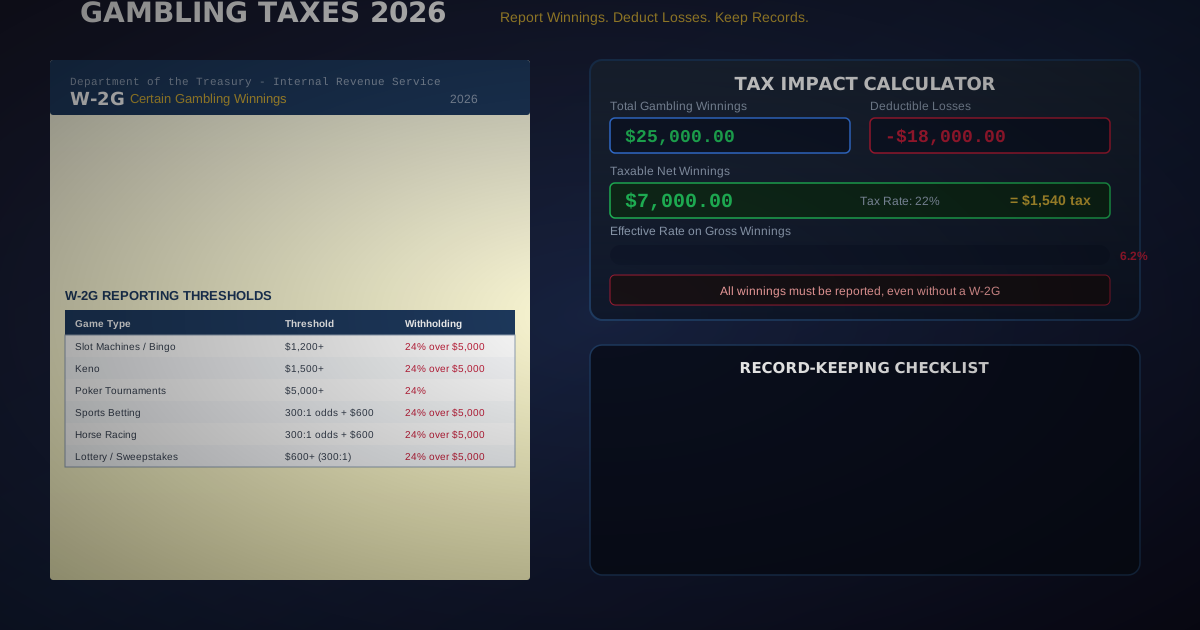
W-2G Thresholds by Gambling Activity
| Game Type | W-2G Threshold | Odds Requirement | Withholding Rate |
|---|---|---|---|
| Slot machines | $1,200+ | None | 24% if $5,000+ net |
| Bingo | $1,200+ | None | 24% if $5,000+ net |
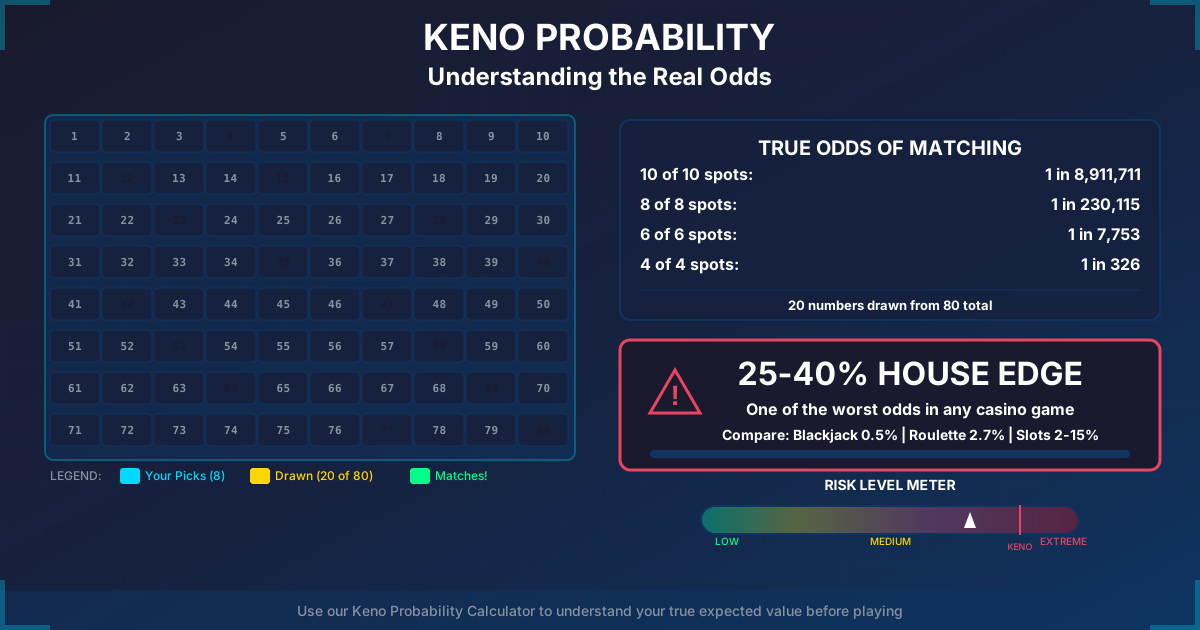
| Keno | $1,500+ | None | 24% if $5,000+ net |
| Poker tournaments | $5,000+ | Net of buy-in | 24% automatic |
| Sports betting | $600+ AND 300:1+ odds | 300:1 payout-to-wager ratio | 24% if $5,000+ |
| Horse racing | $600+ AND 300:1+ odds | 300:1 payout-to-wager ratio | 24% if $5,000+ |
| Sweepstakes/Lottery | $600+ AND 300:1+ odds | 300:1 payout-to-wager ratio | 24% if $5,000+ |
| Table games (blackjack, craps, roulette) | None* | N/A | N/A |
*Table games at traditional casinos generally do not generate W-2G forms because the casino cannot accurately track individual wagers. However, winnings are still fully taxable and must be self-reported.
Critical Point: No W-2G Does Not Mean No Tax
The absence of a W-2G form does not mean the income is tax-free. If you win $1,100 on a slot machine, no W-2G is generated, but the IRS still expects you to report that income. Common situations where you owe tax without receiving a W-2G:
- Slot wins under $1,200
- Sports betting wins under $600 or below 300:1 odds
- Table game wins of any amount
- Poker cash game profits
- Online casino wins under reporting thresholds
- Daily fantasy sports winnings under $600
How W-2G Forms Work in Practice
When you hit a W-2G threshold:
- The payer (casino, sportsbook) asks for your Social Security number and ID
- They issue a W-2G form showing the gross winnings and any tax withheld
- You receive a copy of the W-2G by January 31 of the following year
- The payer also sends a copy to the IRS
- You must report the income on your tax return (Form 1040, Schedule 1)
If you refuse to provide your SSN, the payer withholds at a backup rate of 24% regardless of the amount.
Calculate exact after-tax amounts for any gambling win using our State Lottery Calculator.
What Is the Gambling Tax Rate in Every State?
State tax treatment of gambling winnings varies enormously. Some states tax gambling income at their standard income tax rate, others have special gambling tax provisions, and nine states have no state income tax at all.
Complete State-by-State Gambling Tax Rate Table (2026)
| State | Top Income Tax Rate | Gambling Tax Treatment | Notes |
|---|---|---|---|
| Alabama | 5.0% | Standard income tax | No state lottery; limited legal gambling |
| Alaska | 0% | No state income tax | No state-level gambling tax |
| Arizona | 2.5% (flat) | Standard income tax | Sports betting legal; 10% operator tax |
| Arkansas | 4.4% | Standard income tax | Sports betting legal |
| California | 13.3% | Standard income tax | Highest state rate; no legal sports betting yet |
| Colorado | 4.4% (flat) | Standard income tax | Sports betting legal; 10% operator tax |
| Connecticut | 6.99% | Standard income tax | Sports betting legal |
| Delaware | 6.6% | Standard income tax | Sports betting legal |
| Florida | 0% | No state income tax | Sports betting legal (Seminole) |
| Georgia | 5.49% | Standard income tax | No legal sports betting yet |
| Hawaii | 11.0% | Standard income tax | No legal gambling |
| Idaho | 5.695% (flat) | Standard income tax | No legal sports betting |
| Illinois | 4.95% (flat) | Standard income tax | Sports betting legal; 15% operator tax |
| Indiana | 3.05% (flat) | Standard income tax | Sports betting legal |
| Iowa | 5.7% | Standard income tax | 5% state withholding on wins $1,200+ |
| Kansas | 5.7% | Standard income tax | Sports betting legal |
| Kentucky | 4.0% (flat) | Standard income tax | 6% state withholding on gambling |
| Louisiana | 4.25% | Standard income tax | Sports betting legal |
| Maine | 7.15% | Standard income tax | Sports betting legalized |
| Maryland | 5.75% | Standard income tax | 8.75% state withholding on wins $5,000+ |
| Massachusetts | 5.0% (flat) | Standard income tax; 5% surtax on income over $1M | Sports betting legal |
| Michigan | 4.05% (flat) | Standard income tax | Sports betting legal |
| Minnesota | 9.85% | Standard income tax | No legal sports betting yet |
| Mississippi | 4.7% | Standard income tax | Sports betting legal (retail) |
| Missouri | 4.8% | Standard income tax | Sports betting launching 2026 |
| Montana | 6.75% | Standard income tax | Sports betting legal |
| Nebraska | 5.84% | Standard income tax | Sports betting legal (retail) |
| Nevada | 0% | No state income tax | Sports betting legal |
| New Hampshire | 0% (on earned income) | No tax on gambling winnings | Sports betting legal; 3% tax on interest/dividends only |
| New Jersey | 10.75% | Standard income tax | 3% state withholding on wins $10,000+ (residents) |
| New Mexico | 5.9% | Standard income tax | Tribal sports betting |
| New York | 10.9% | Standard income tax | Plus NYC adds 3.876%; sports betting legal |
| North Carolina | 4.5% (flat) | Standard income tax | Sports betting legal |
| North Dakota | 2.5% | Standard income tax | Sports betting legal (retail) |
| Ohio | 3.5% | Standard income tax | 4% state withholding on wins $5,000+ |
| Oklahoma | 4.75% | Standard income tax | No legal sports betting yet |
| Oregon | 9.9% | Standard income tax | State-run sports betting |
| Pennsylvania | 3.07% (flat) | Standard income tax | Sports betting legal; state taxes all gambling income |
| Rhode Island | 5.99% | Standard income tax | Sports betting legal |
| South Carolina | 6.4% | Standard income tax | No legal sports betting |
| South Dakota | 0% | No state income tax | Sports betting legal (retail) |
| Tennessee | 0% | No state income tax (as of 2021) | Sports betting legal |
| Texas | 0% | No state income tax | No legal sports betting yet |
| Utah | 4.65% (flat) | Standard income tax | No legal gambling of any kind |
| Vermont | 8.75% | Standard income tax | Sports betting legal |
| Virginia | 5.75% | Standard income tax | Sports betting legal |
| Washington | 0% | No state income tax | Tribal sports betting legal |
| West Virginia | 5.12% | Standard income tax | Sports betting legal |
| Wisconsin | 7.65% | Standard income tax | Tribal sports betting |
| Wyoming | 0% | No state income tax | Sports betting legal |
States With No Income Tax (Best for Gamblers)
Nine states have no state income tax, meaning gambling winnings are only subject to federal tax:
| State | Sports Betting Status | Effective Advantage |
|---|---|---|
| Alaska | No legal sports betting | N/A (no legal options) |
| Florida | Legal (Seminole Hard Rock) | Save up to 5-13% vs. high-tax states |
| Nevada | Legal | Save up to 5-13% |
| New Hampshire | Legal | Save up to 5-13% |
| South Dakota | Legal (retail only) | Save up to 5-13% |
| Tennessee | Legal | Save up to 5-13% |
| Texas | Not yet legal | N/A |
| Washington | Legal (tribal) | Save up to 5-13% |
| Wyoming | Legal | Save up to 5-13% |
Highest Combined Tax States for Gambling
| State | State Rate | Federal Rate (24% bracket) | Combined Rate | NYC Surcharge |
|---|---|---|---|---|
| New York (NYC) | 10.9% | 24% | 34.9% | +3.876% = 38.8% |
| California | 13.3% | 24% | 37.3% | N/A |
| Hawaii | 11.0% | 24% | 35.0% | N/A |
| New Jersey | 10.75% | 24% | 34.75% | N/A |
| Oregon | 9.9% | 24% | 33.9% | N/A |
| Minnesota | 9.85% | 24% | 33.85% | N/A |
A New York City resident in the 24% federal bracket pays an effective combined rate of nearly 39% on gambling winnings. The same win in Tennessee or Florida would be taxed at only 24%.
Calculate the exact after-tax payout for any winning amount in your specific state with our Lottery After-Tax Calculator.
How Do You Deduct Gambling Losses on Your Taxes?
Gambling losses are deductible on your federal tax return, but only under specific conditions that many gamblers do not fully understand.
The Core Rule
You can deduct gambling losses up to the amount of your gambling winnings. You cannot create a net gambling loss to offset other income. This means:
| Scenario | Winnings | Losses | Deduction Allowed | Taxable Gambling Income |
|---|---|---|---|---|
| Net winner | $15,000 | $8,000 | $8,000 | $7,000 |
| Breakeven | $10,000 | $10,000 | $10,000 | $0 |
| Net loser | $5,000 | $12,000 | $5,000 (capped at winnings) | $0 |
In the net loser scenario, you cannot deduct the extra $7,000 in losses against wages, investment income, or other income. That $7,000 is simply a non-deductible personal loss.
Itemizing Is Required
Gambling losses are an itemized deduction on Schedule A. This means:
- You must itemize deductions (not take the standard deduction)
- The 2026 standard deduction is approximately $15,000 for single filers and $30,000 for married filing jointly
- Your total itemized deductions (including gambling losses, mortgage interest, state taxes, charitable contributions) must exceed the standard deduction for itemizing to benefit you
Example: If your only itemized deduction is $8,000 in gambling losses, itemizing costs you money because you sacrifice the $15,000 standard deduction to claim $8,000.
Documentation Requirements
The IRS expects detailed records of all gambling activity. Adequate documentation includes:
| Record Type | What to Track | Why It Matters |
|---|---|---|
| Win/loss statements | Annual summaries from casinos and sportsbooks | Baseline documentation |
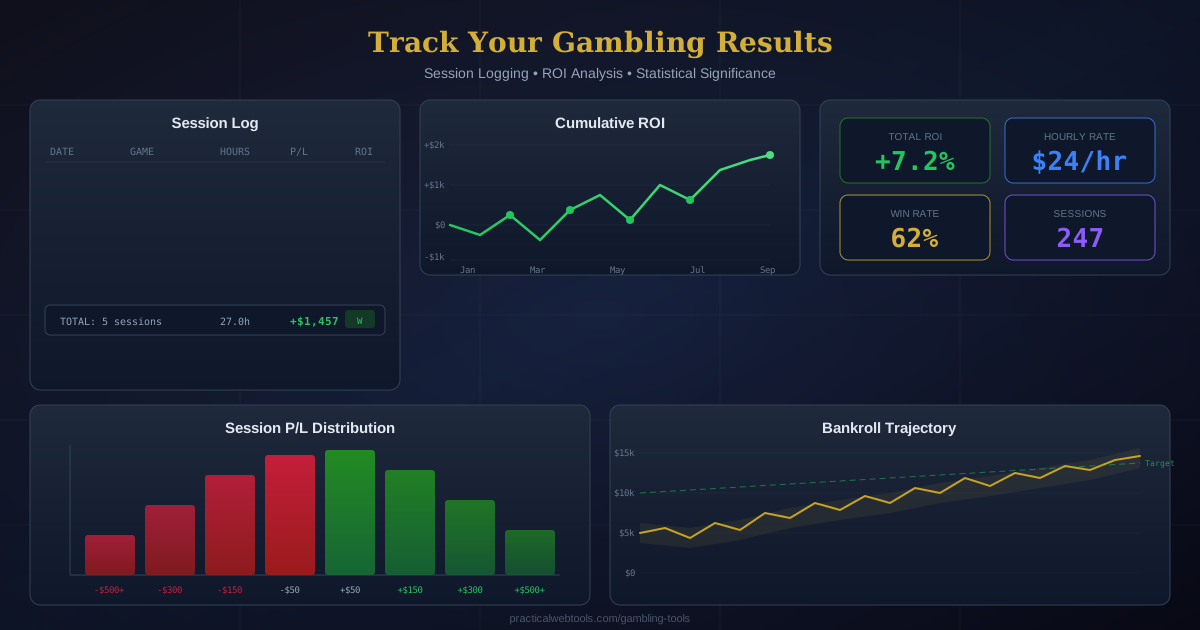
| Session logs | Date, location, type of gambling, time spent, amounts won/lost | IRS recommended format |
| Receipts | Betting slips, ticket stubs, payout receipts | Proof of individual transactions |
| W-2G forms | All W-2G forms received | Must match tax return reporting |
| Bank records | Deposits and withdrawals at casinos, sportsbook transfers | Corroborating evidence |
| Diary | Contemporary log of gambling activity | Best evidence per IRS Publication 529 |
The IRS's Preferred Record-Keeping Method
IRS Publication 529 recommends maintaining a diary or similar record that includes:
- Date and type of gambling activity
- Name and address of the gambling establishment
- Names of other persons present (for poker and similar games)
- Amount(s) won or lost per session
This diary should be maintained contemporaneously---meaning recorded at the time of the activity, not reconstructed later.
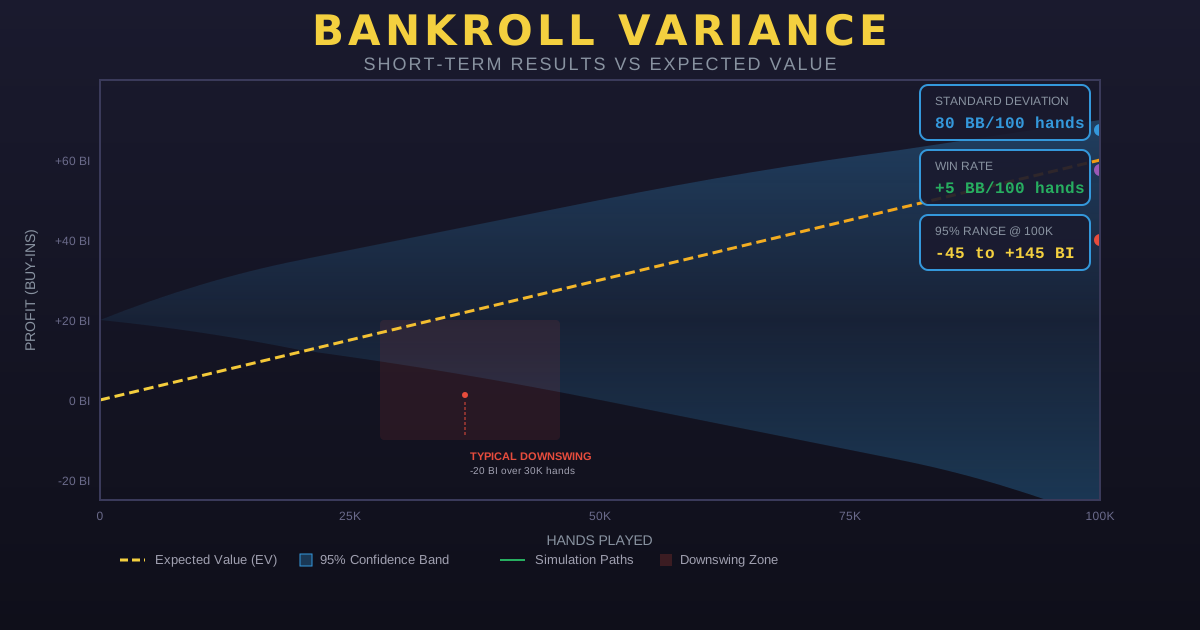
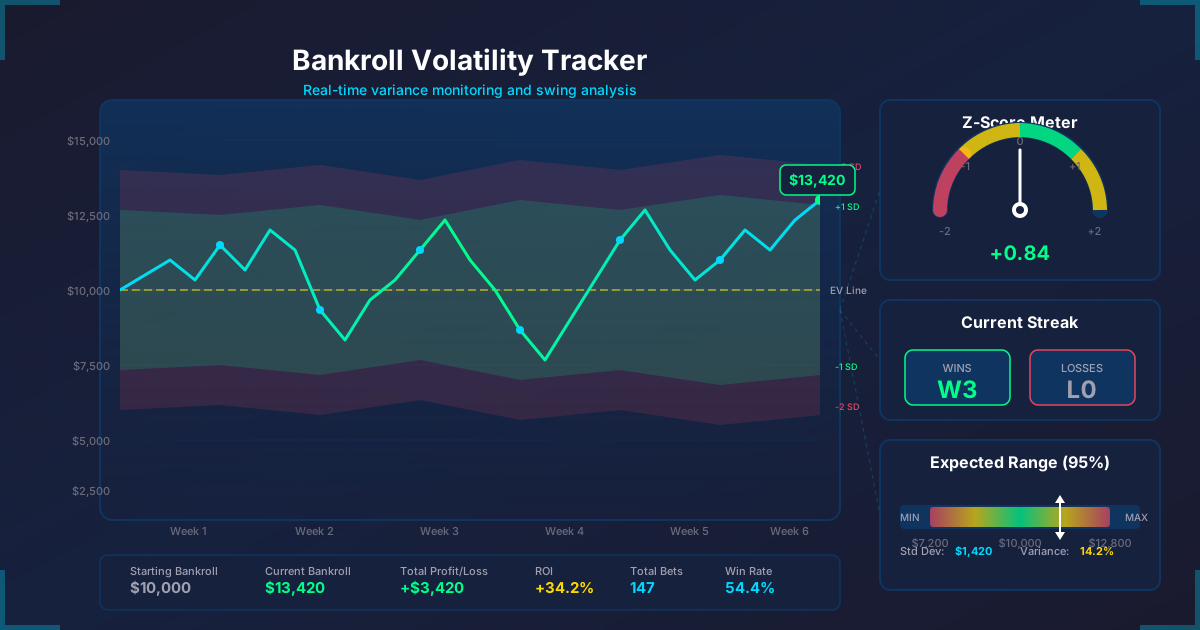
Track your bankroll and performance over time with our Bankroll Volatility Tracker.
How Do Estimated Tax Payments Work for Frequent Gamblers?
If you win significant amounts during the year and insufficient tax is withheld, you may need to make estimated quarterly tax payments to avoid penalties.
When Estimated Payments Are Required
The IRS requires estimated payments if you expect to owe $1,000 or more in tax after subtracting withholding and credits. For gamblers, this situation commonly arises when:
- You win large amounts at table games (no automatic withholding)
- You win frequently at amounts below the W-2G thresholds
- You are in a tax bracket above 24% (withholding is insufficient)
- You have significant sports betting profits without withholding
Estimated Payment Schedule
| Quarter | Income Period | Payment Due Date |
|---|---|---|
| Q1 | January 1 - March 31 | April 15 |
| Q2 | April 1 - May 31 | June 15 |
| Q3 | June 1 - August 31 | September 15 |
| Q4 | September 1 - December 31 | January 15 (next year) |
Safe Harbor Rules
You can avoid estimated tax penalties by paying the lesser of:
- 90% of the current year's total tax liability, or
- 100% of the prior year's total tax liability (110% if AGI exceeded $150,000)
For gamblers with variable income, using 100% of the prior year's liability is often the safer approach.
Calculate your expected long-term results with our Expected Value Calculator to anticipate tax obligations.
How Are Cryptocurrency Gambling Winnings Taxed?
Cryptocurrency gambling has grown significantly, and the tax treatment involves both gambling income rules and cryptocurrency tax rules, creating a complex double layer of taxation.
Crypto Gambling Tax Treatment
When you gamble with cryptocurrency:
-
Deposit: When you deposit Bitcoin or another cryptocurrency to a gambling site, you trigger a taxable disposition of the crypto. If the crypto has appreciated since you acquired it, you owe capital gains tax on the appreciation.
-
Winnings: Gambling winnings paid in cryptocurrency are taxable at the fair market value of the crypto at the time of receipt.
-
Withdrawal: When you later sell or exchange the cryptocurrency winnings, any further appreciation (or depreciation) is a separate capital gain or loss event.
Example: Crypto Gambling Tax Calculation
| Step | Action | Tax Event | Amount |
|---|---|---|---|
| 1 | Bought 0.1 BTC at $30,000 ($3,000) | None | - |
| 2 | Deposited 0.1 BTC when BTC = $40,000 | Capital gain | $1,000 (short or long-term) |
| 3 | Won 0.05 BTC when BTC = $40,000 | Gambling income | $2,000 |
| 4 | Withdrew 0.15 BTC when BTC = $45,000 | Capital gain on 0.05 BTC | $250 |
Total taxable events: $1,000 capital gain + $2,000 gambling income + $250 capital gain = $3,250 in taxable income from what started as a $3,000 investment.
Reporting Crypto Gambling
Crypto gambling winnings are reported as:
- Gambling income on Schedule 1 (Form 1040)
- Crypto dispositions on Form 8949 and Schedule D
- If the gambling site does not issue a W-2G (most crypto casinos do not), you must self-report
The IRS has increased enforcement of cryptocurrency tax compliance, and many exchanges now report user transactions. Failing to report crypto gambling income carries the same penalties as failing to report any other taxable income.
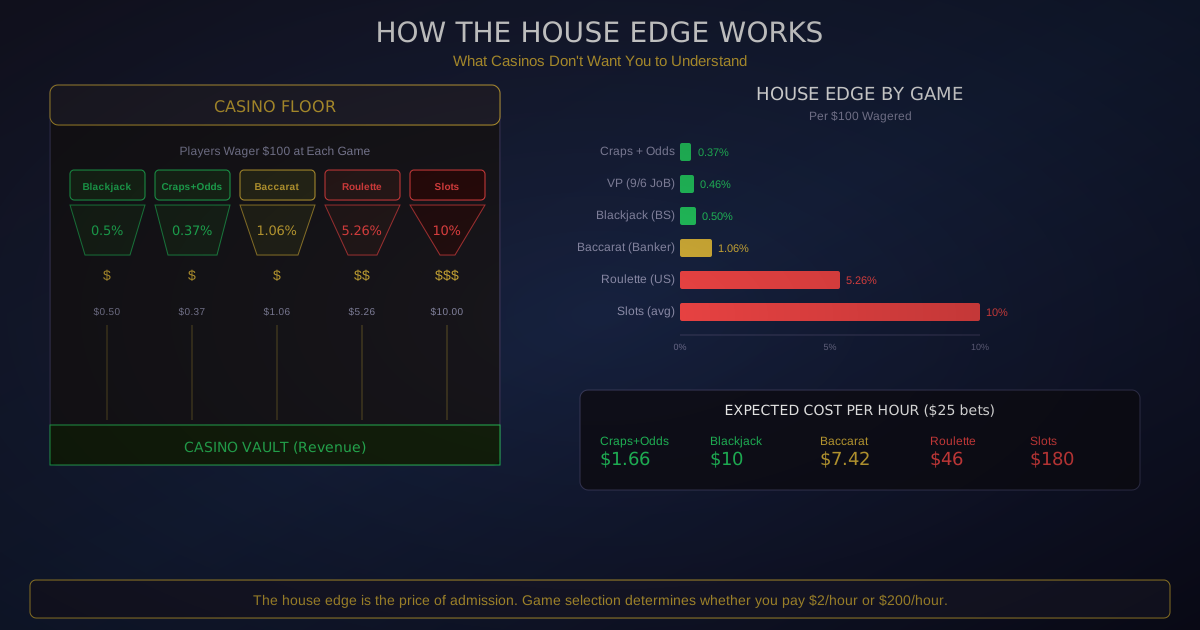
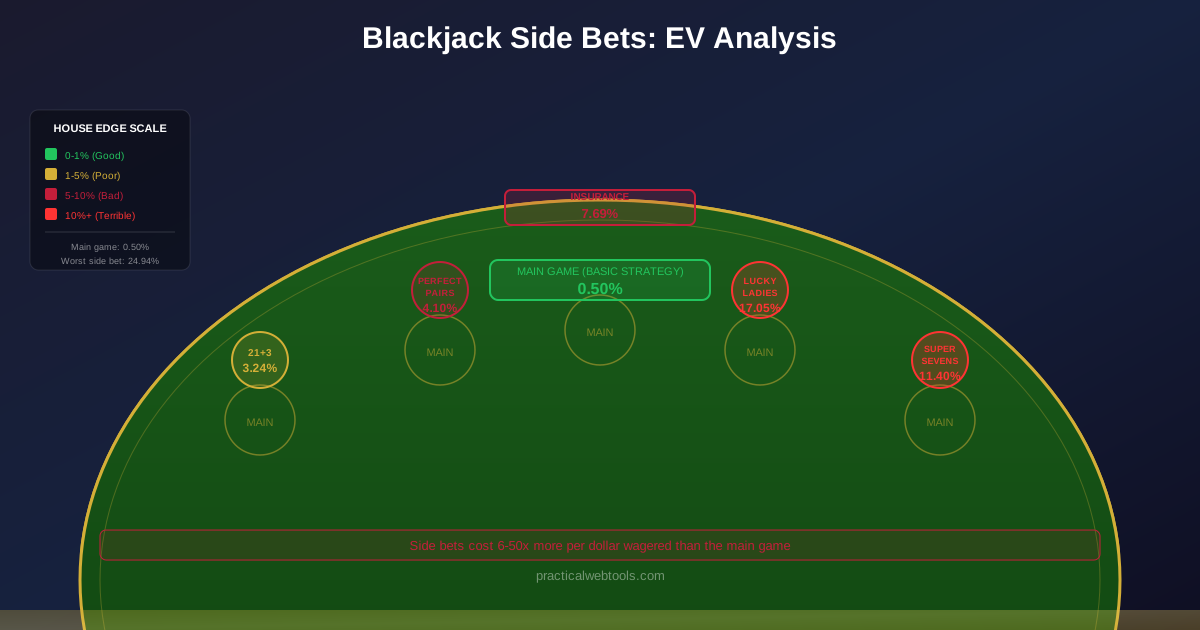
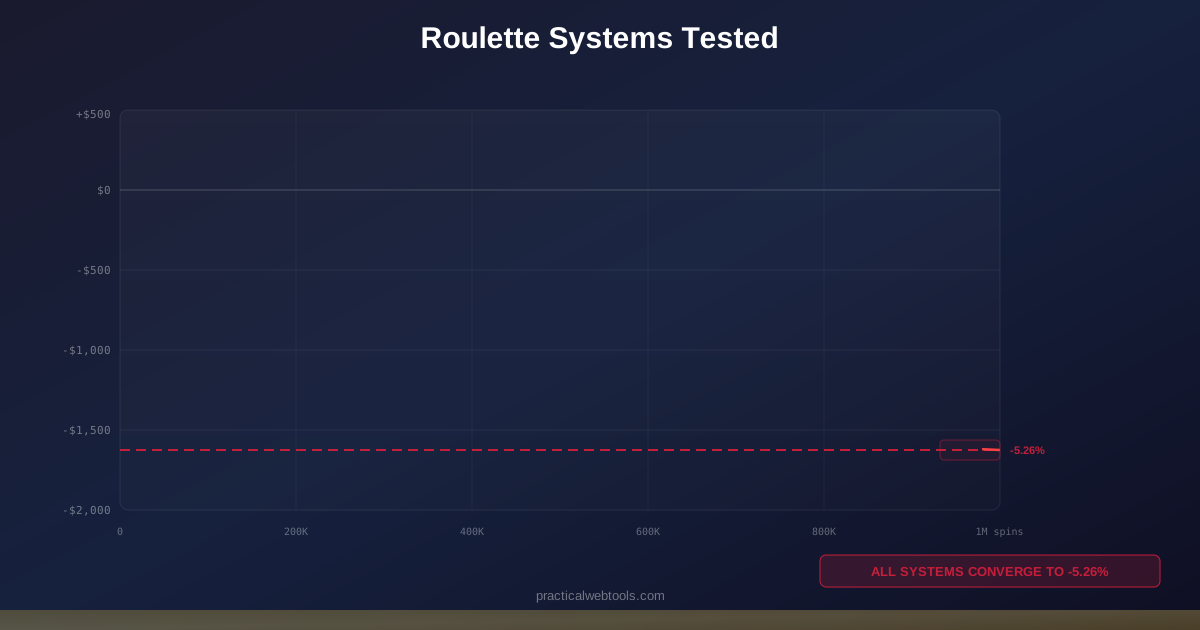
Understand the house edge you are facing with our Roulette House Edge Calculator and Blackjack House Edge Calculator.
How Are Daily Fantasy Sports (DFS) Winnings Taxed?
Daily Fantasy Sports winnings are fully taxable as ordinary income, and the IRS treats them the same as other gambling winnings despite the industry's arguments that DFS is a game of skill.
DFS Tax Reporting Thresholds
DFS platforms like DraftKings and FanDuel issue a 1099-MISC form (not a W-2G) when:
- Net winnings exceed $600 in a calendar year
DFS-Specific Tax Considerations
| Factor | Treatment |
|---|---|
| Entry fees | Deductible as gambling losses (if itemizing) |
| Net winnings | Taxable as ordinary income |
| Bonuses and promotions | Taxable when received |
| Referral bonuses | Taxable as ordinary income |
| Tournament winnings | Taxable; 1099-MISC issued if $600+ |
The Session vs. Annual Debate
A key question for DFS players is whether each contest is a separate gambling session or whether all activity over a period aggregates. The IRS has not provided definitive guidance, but most tax professionals recommend treating each contest as a separate session for reporting purposes.
Evaluate DFS contest entry fees against expected payouts with our Expected Value Calculator.
What Is Professional Gambler Tax Status and How Does It Work?
The IRS recognizes a distinction between recreational gamblers and professional gamblers, and the tax treatment is significantly different.
Recreational vs. Professional Gambler Tax Treatment
| Factor | Recreational Gambler | Professional Gambler |
|---|---|---|
| Winnings reported on | Schedule 1, Line 8b | Schedule C (business income) |
| Losses deductible | Yes, on Schedule A (itemized) | Yes, on Schedule C (against winnings) |
| Loss limitation | Cannot exceed winnings | Cannot create net loss against other income (post-TCJA) |
| Expenses deductible | No | Yes (travel, subscriptions, software, equipment) |
| Subject to self-employment tax | No | Yes (15.3%) |
| Standard deduction impact | Must itemize to deduct losses | Losses deducted on Schedule C; standard deduction preserved |
| Health insurance deduction | No | Yes (self-employed health insurance deduction) |
| Retirement contributions | No special provisions | Can contribute to SEP IRA, Solo 401(k) |
Qualifying as a Professional Gambler
The IRS uses a facts and circumstances test based on factors from the Groetzinger v. Commissioner (1987) Supreme Court case:
- Full-time commitment: Gambling is your primary occupation, not a hobby
- Profit motive: You gamble with the genuine intent and expectation of earning a living
- Regularity and continuity: You gamble on a regular, frequent basis
- Business-like conduct: You maintain records, study strategies, and treat gambling as a business
- Livelihood dependency: Gambling income is a significant portion of your total income
The Self-Employment Tax Trap
A significant downside of professional gambler status is the 15.3% self-employment tax (12.4% Social Security + 2.9% Medicare) on net gambling income up to the Social Security wage base ($168,600 in 2025, adjusted annually).
For a professional gambler with $100,000 in net income, the self-employment tax alone is approximately $15,300, which can more than offset the benefits of deducting expenses and losses more favorably.
Track your performance metrics and determine if professional status makes financial sense with our CLV Tracker.
What Tax Software and Tools Help Gamblers Report Correctly?
Several specialized tools and strategies can help gamblers accurately report their tax obligations.
Casino and Sportsbook Win/Loss Statements
Most casinos and online sportsbooks provide annual win/loss statements if you use a player's card or registered account. These statements summarize your annual gambling activity but have limitations:
| Statement Type | What It Shows | Limitations |
|---|---|---|
| Casino player's card statement | Net win/loss by visit or session | May not capture all activity (unrated play) |
| Online sportsbook statement | All deposits, withdrawals, and bet history | May not match IRS reporting methodology |
| DFS platform 1099-MISC | Net winnings above $600 | Does not detail individual contest results |
| Lottery commission records | All prizes claimed | Does not track losing tickets |
Tax Software Options
| Software | Gambling Features | Price Range |
|---|---|---|
| TurboTax Premier | W-2G import, gambling income/loss guidance | $90-$130 |
| H&R Block Premium | Gambling income reporting, Schedule A guidance | $70-$110 |
| TaxAct+ | W-2G handling, itemized deduction tools | $50-$80 |
| FreeTaxUSA | W-2G reporting, basic gambling guidance | $0-$15 (state filing extra) |
| Keeper Tax | AI-powered deduction finding for gig workers including gamblers | $16/month |
When to Hire a Tax Professional
Consider professional tax help if:
- Your gambling winnings exceed $10,000 in a year
- You won in multiple states
- You are considering professional gambler status
- You have cryptocurrency gambling activity
- You received multiple W-2G forms
- You are undergoing an audit related to gambling income
Use our Poker Bankroll Requirements Calculator to plan your bankroll in a tax-efficient manner.
What Are Common Gambling Tax Audit Triggers?
The IRS uses several indicators to flag returns for gambling-related audits. Understanding these triggers helps you file accurately and defensibly.
High-Risk Audit Triggers
| Trigger | Why It Flags | How to Avoid |
|---|---|---|
| W-2G income not reported | IRS matches W-2G forms to returns | Always report all W-2G income |
| Gambling losses exceeding winnings | Mathematically impossible deduction | Never deduct more than you won |
| Unreasonably large losses | Suggests fabricated deductions | Keep detailed records to support claims |
| Professional status with net losses | IRS questions profit motive | Maintain business records, show positive years |
| Inconsistent reporting year-over-year | Suggests strategic reporting | Report consistently every year |
| Large cash deposits without W-2G | Cash transaction monitoring | Keep records of all gambling cash flows |
| Multi-state gambling without multi-state returns | Suggests unreported state income | File in every state where you won |
Statute of Limitations
The IRS generally has three years from the filing date to audit a return. However, this extends to six years if you underreport gross income by more than 25%, and there is no statute of limitations for fraud or failure to file.
What Happens in a Gambling Audit
If audited, the IRS will request:
- All W-2G forms received
- Win/loss statements from casinos and sportsbooks
- Bank statements showing gambling-related transactions
- Your gambling diary or log
- Receipts, betting slips, and tickets
- Evidence supporting any losses claimed
The key defense in a gambling audit is contemporaneous documentation. Reconstructed records are given less weight than records created at the time of the activity.
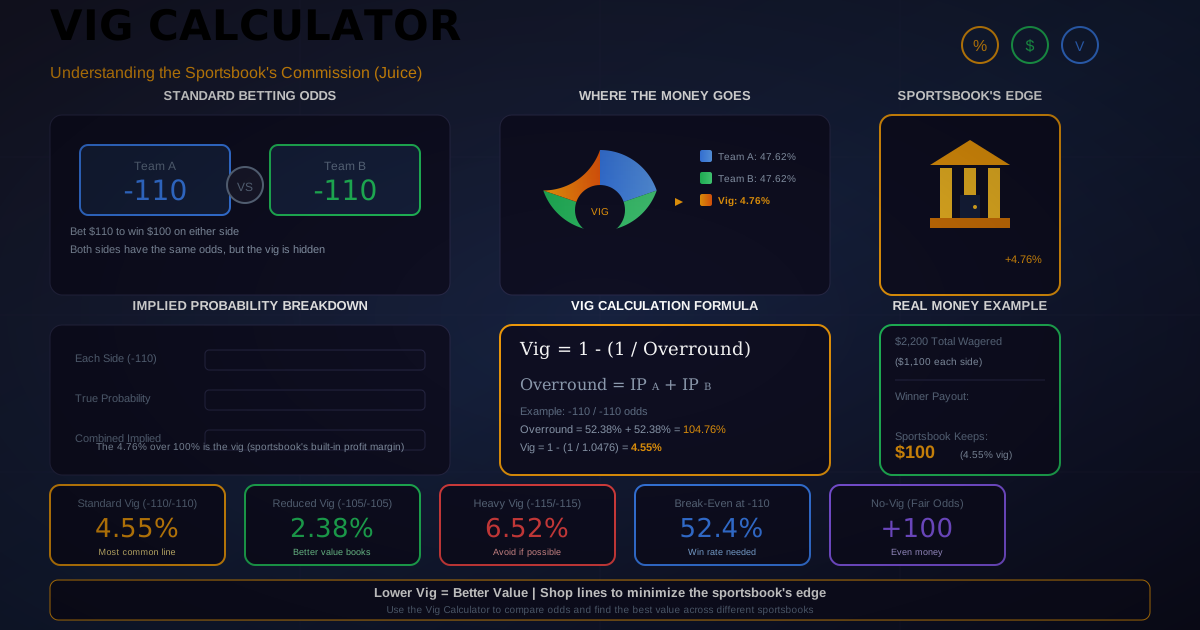
Calculate whether the odds are in your favor before you bet with our Hold/Vig Calculator.
How Do Multi-State Gambling Tax Obligations Work?
If you gamble in multiple states, your tax situation becomes more complex because different states have different rules about taxing non-resident gambling winnings.
Non-Resident Gambling Tax Rules
Most states with income tax require non-residents to pay state tax on gambling winnings earned within their borders. However, the rules for credits and offsets vary:
| Scenario | Tax Treatment |
|---|---|
| Win in your home state | Pay your state's income tax |
| Win in another state (with income tax) | May owe that state's tax; home state usually gives credit |
| Win in a no-income-tax state | Only federal tax; no state tax owed |
| Win in multiple states | File non-resident returns in each state; claim credits on home state return |
Multi-State Filing Example
You live in Illinois (4.95% flat tax) and win $20,000 at a casino in Indiana (3.05% flat tax):
- Indiana requires you to pay 3.05% state tax: $610
- Illinois taxes the income at 4.95%: $990
- Illinois gives you a credit for Indiana tax paid: -$610
- Net Illinois tax owed: $380
- Total state tax: $990 ($610 to IN + $380 to IL)
This means you effectively pay the higher of the two state rates. Gambling in a state with a higher rate than your home state means you pay more in state taxes overall.
States That Do Not Tax Non-Resident Gambling Winnings
A handful of states do not require non-resident gamblers to file or pay state tax on winnings:
| State | Non-Resident Treatment |
|---|---|
| Connecticut | Exempt below certain thresholds |
| Indiana | Taxes non-residents; provides composite filing option |
| Pennsylvania | Does not tax non-resident gambling winnings |
Note: This is a complex area where rules change frequently. Consult a tax professional for your specific multi-state situation.
Compare the expected value of placing bets in different state markets using our Expected Value Calculator.
How Should You Report Sports Betting Winnings Specifically?
Sports betting creates unique tax reporting challenges because of how wagers are settled and how platforms report winnings.
Net vs. Gross Reporting Debate
One of the biggest points of confusion in sports betting taxation is whether winnings should be reported on a per-bet basis or on a net session basis. The IRS addressed this partially in Rev. Proc. 2015-53, but significant ambiguity remains.
| Approach | Method | Example |
|---|---|---|
| Per-bet | Report each winning bet individually | 10 bets, 6 wins ($8,000 total), 4 losses ($5,000) = Report $8,000 income, deduct $5,000 |
| Net session | Calculate net result per session | Same 10 bets in one session = Report $3,000 net income |
Most tax professionals recommend the per-session approach when possible, particularly for slot machines and table games. For sports betting, the per-bet approach is more commonly required because each wager is clearly a separate transaction.
Sportsbook Reporting
Online sportsbooks handle reporting differently:
| Platform Action | Tax Form Issued | Threshold |
|---|---|---|
| Single bet win at 300:1+ odds, $600+ | W-2G | $600 and 300:1 |
| Net annual winnings | 1099-MISC (some platforms) | $600 net |
| Deposits/Withdrawals | None (not taxable events) | N/A |
Record Keeping for Sports Bettors
For sports bettors, maintain:
- Screenshots of all bet slips (winning and losing)
- Monthly account statements from each sportsbook
- Annual win/loss statements
- Transfer records between your bank and sportsbook accounts
- Notes on your betting strategy and rationale
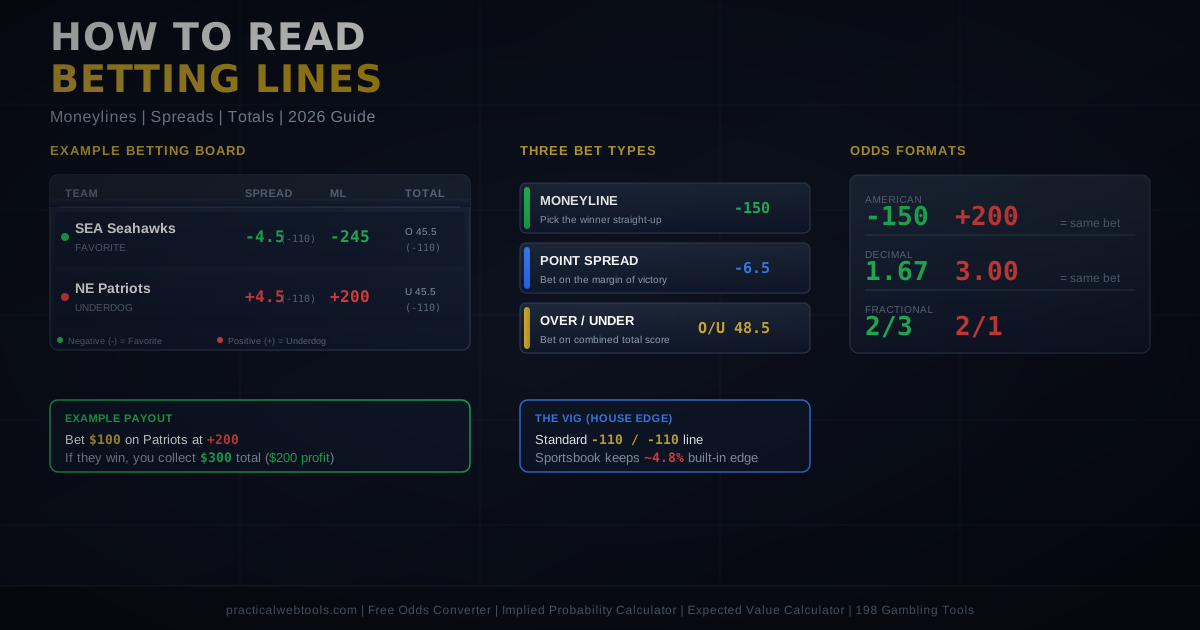
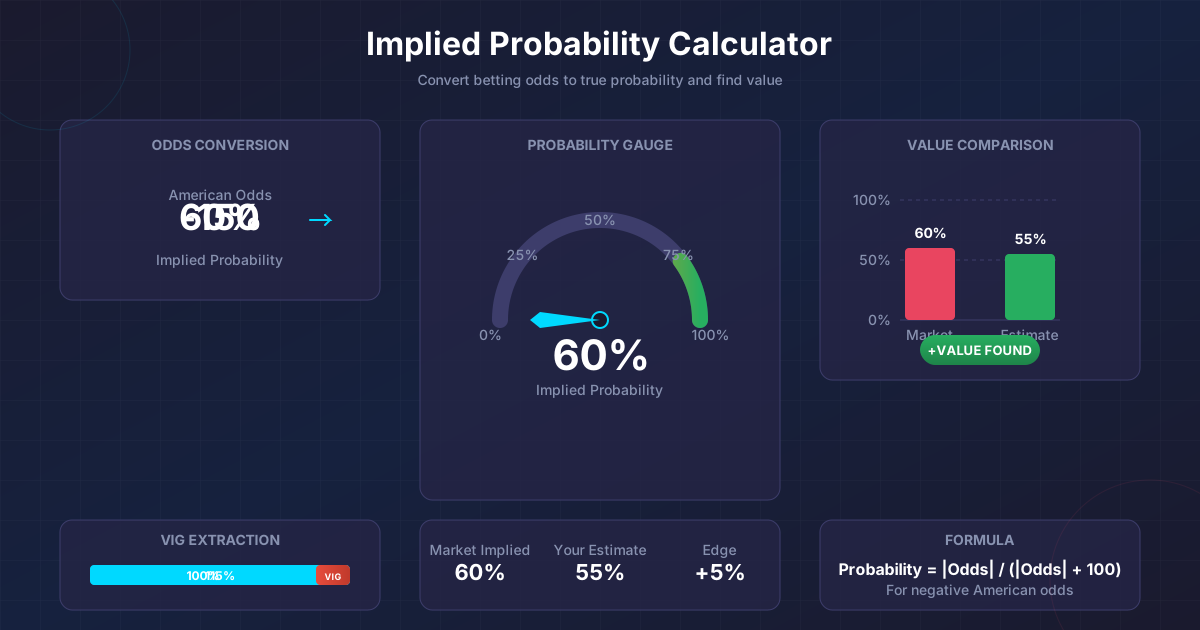
Calculate implied probability and find value in any betting line with our Implied Probability Calculator.
What Deduction Strategies Can Minimize Your Gambling Tax Burden?
While you cannot eliminate gambling taxes, several legitimate strategies can minimize your burden.
Strategy 1: Maximize Loss Documentation
The single most impactful strategy is thoroughly documenting every gambling loss. Many gamblers undercount their losses because they:
- Do not save losing tickets or receipts
- Do not request win/loss statements
- Do not track cash gambling sessions
- Forget about entry fees, tournament buy-ins, and tip expenses
Strategy 2: Strategic Timing
If you have a particularly good gambling year, consider:
- Making charitable contributions (bunching strategy) to exceed the standard deduction threshold
- Prepaying state taxes or mortgage interest to maximize itemized deductions
- Harvesting investment losses to offset capital gains
Strategy 3: Married Filing Strategies
For married couples, gambling deductions follow the spouse who gambled. If one spouse gambles and the other does not:
- Filing jointly: Gambling losses deduct against gambling winnings on the joint return
- Filing separately: Only the gambling spouse can claim the deduction, and that spouse must itemize
Strategy 4: Negotiate Payment Plans
If you owe a large gambling tax bill you cannot pay immediately:
- IRS installment agreements allow payments over 72 months
- Short-term extensions (120 days) are available
- Offer in Compromise may reduce the total amount owed in hardship cases
- Currently Not Collectible status pauses collection if you truly cannot pay
| IRS Payment Option | Requirements | Interest/Penalties |
|---|---|---|
| Short-term extension | Owe $100,000 or less | 0.5% monthly failure-to-pay penalty + interest |
| Installment agreement | Owe $50,000 or less | $31 setup fee (direct debit) + interest |
| Offer in Compromise | Demonstrated inability to pay | $205 application fee; payment based on ability |
| Currently Not Collectible | Genuine financial hardship | Penalties and interest continue to accrue |
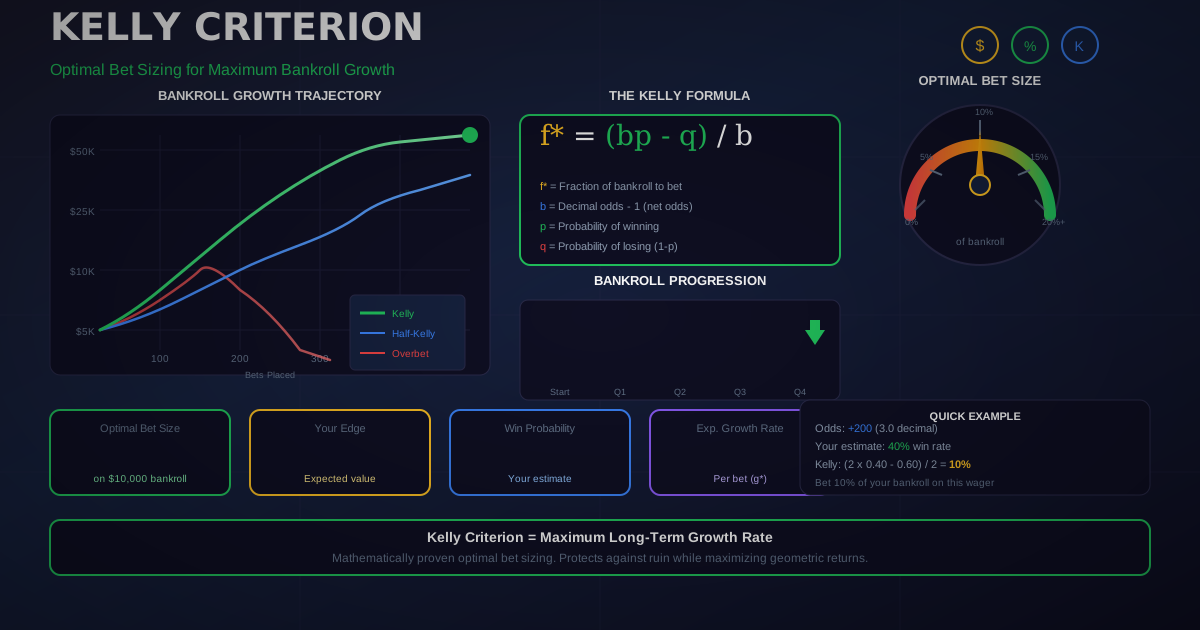
Plan your betting bankroll with tax obligations in mind using our Kelly Criterion Calculator.
Frequently Asked Questions
Do I have to pay taxes on gambling winnings even if I did not receive a W-2G? Yes. All gambling winnings are taxable regardless of whether you receive a W-2G form. The W-2G is a reporting document, not a taxability trigger. Table game winnings, small slot wins, sports bets below the reporting threshold, and poker cash game profits are all taxable and must be self-reported. Use our Lottery After-Tax Calculator to estimate your tax liability on any win amount.
Can I deduct gambling losses if I take the standard deduction? No. Gambling losses are an itemized deduction on Schedule A. You must choose to itemize instead of taking the standard deduction, and your total itemized deductions must exceed the standard deduction ($15,000 for single, $30,000 for married filing jointly in 2026) for this to be beneficial.
What is the federal tax rate on gambling winnings? Gambling winnings are taxed as ordinary income at your marginal tax rate, which ranges from 10% to 37% depending on your total taxable income. The 24% automatic withholding on certain winnings is a prepayment, not the final rate. You may owe more (if your rate is higher) or receive a refund (if your rate is lower).
Do I have to pay state tax on gambling winnings from another state? In most cases, yes. If you win money gambling in a state with income tax, that state typically requires non-residents to pay state tax on the winnings. Your home state usually provides a credit for taxes paid to other states, so you effectively pay the higher of the two rates.
How are online sports betting winnings taxed? Online sports betting winnings are taxed the same as any other gambling winnings: as ordinary income at your federal and state tax rates. The sportsbook will issue a W-2G if your winnings meet the threshold ($600+ at 300:1+ odds, or $5,000+ net from wagering). All winnings below these thresholds are still taxable.
Can I offset gambling winnings with cryptocurrency losses? Cryptocurrency losses can offset cryptocurrency gains (capital losses offsetting capital gains), but they cannot directly offset gambling winnings, which are ordinary income. However, up to $3,000 in net capital losses can offset ordinary income per year.
What happens if I do not report gambling winnings? If you fail to report gambling winnings, especially those documented on W-2G forms, the IRS will likely send a CP2000 notice proposing additional tax plus penalties (20% accuracy-related penalty) and interest. Intentional failure to report is tax evasion, a federal crime.
How do I report gambling winnings from DraftKings or FanDuel? Report all net winnings as gambling income on Schedule 1, Line 8b of Form 1040. If you received a 1099-MISC, the IRS already has a copy. Even if you did not receive a 1099, report all net winnings. DFS entry fees are deductible as gambling losses if you itemize.
Related Gambling Tools
Use these free calculators to analyze bets, understand the math, and plan your gambling activity with tax obligations in mind:
Tax and Payout Calculators
- Lottery After-Tax Calculator: Calculate after-tax payouts for any win amount
- State Lottery Calculator: State-specific tax calculations
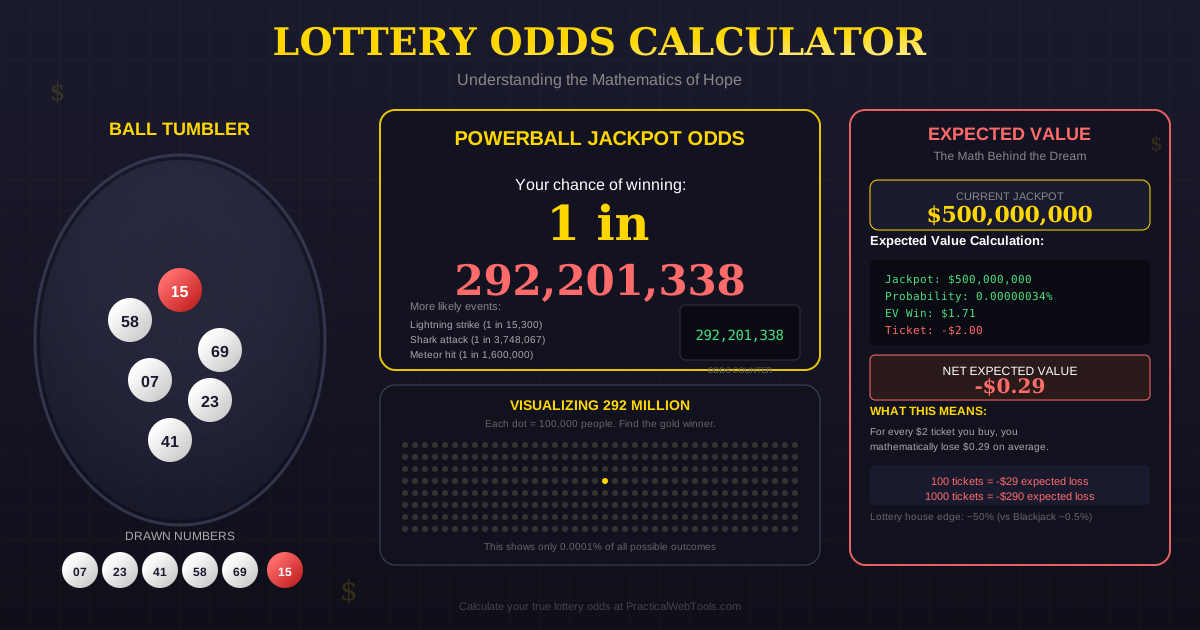
- Lottery Odds Calculator: Understand your actual odds of winning
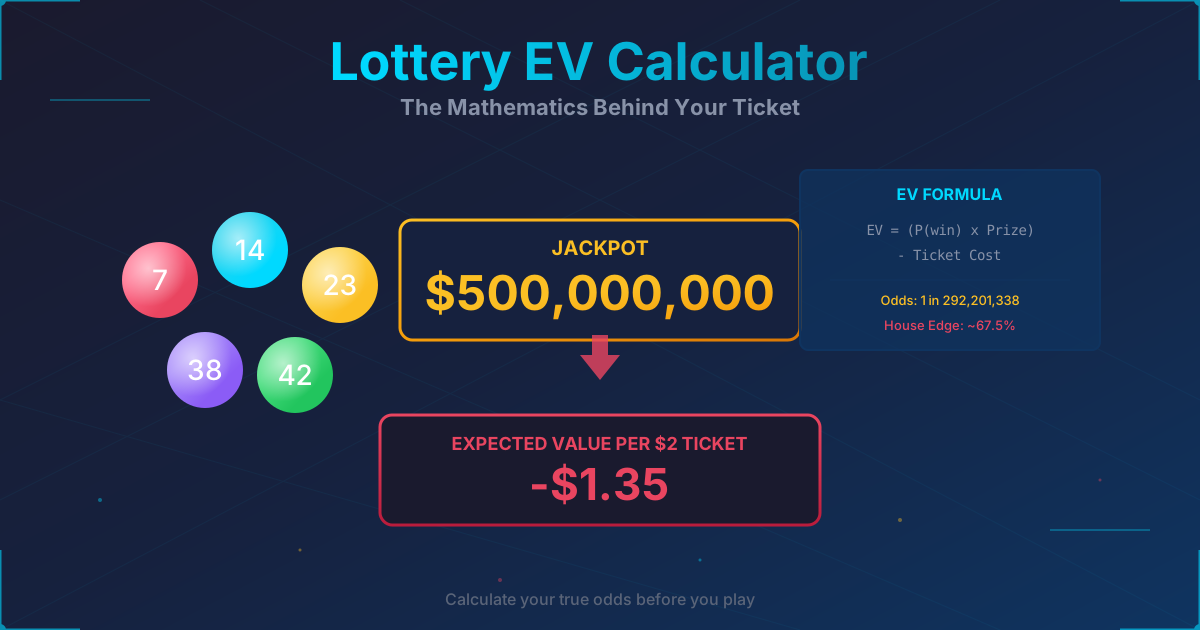
- Lottery EV Calculator: Calculate expected value of lottery tickets
Odds and Probability Tools
- Odds Converter: Convert between odds formats
- Implied Probability Calculator: Find the real probability behind odds
- Hold/Vig Calculator: Calculate the sportsbook's edge
Bankroll and Performance Tools
- Kelly Criterion Calculator: Optimal bet sizing
- Bankroll Volatility Tracker: Track variance and drawdowns
- Expected Value Calculator: Calculate EV for any bet
- CLV Tracker: Track closing line value performance
Game-Specific House Edge Tools
- Roulette House Edge Calculator: Understand roulette odds and edge
- Blackjack House Edge Calculator: Calculate blackjack house advantage
Promotion and Free Bet Tools
- Free Bet Calculator (SNR): Value stake-not-returned free bets
- Free Bet Calculator (SR): Value stake-returned free bets
- Matched Betting Calculator: Extract value from promotions
Take Control of Your Gambling Tax Obligations
Gambling taxes are not optional, and the IRS has increasingly sophisticated tools to identify underreported gambling income. The combination of W-2G reporting, casino player's card tracking, online platform data sharing, and bank transaction monitoring means that the days of unreported gambling income are effectively over.
The good news is that the system is manageable if you approach it proactively. Keep detailed records, save every losing ticket, request win/loss statements, and consult a tax professional if your gambling activity is significant. The tax you save through proper loss documentation and strategic planning can be substantial.
Start by understanding the math behind every bet with our Expected Value Calculator. Calculate your exact after-tax take-home with our Lottery After-Tax Calculator. And track your long-term performance with our CLV Tracker.
Know the rules. Keep the records. Pay what you owe---and not a penny more.
Gambling involves risk and should be approached as entertainment, not as a source of income. Always bet within your means, set strict bankroll limits, and never chase losses. If you or someone you know has a gambling problem, contact the National Council on Problem Gambling at 1-800-522-4700 or visit ncpgambling.org. Must be 21+ to gamble in most US jurisdictions. Please play responsibly.